TV Wall Decor · 15 guides
TV Wall Decor for the Biggest Blank Wall in the House
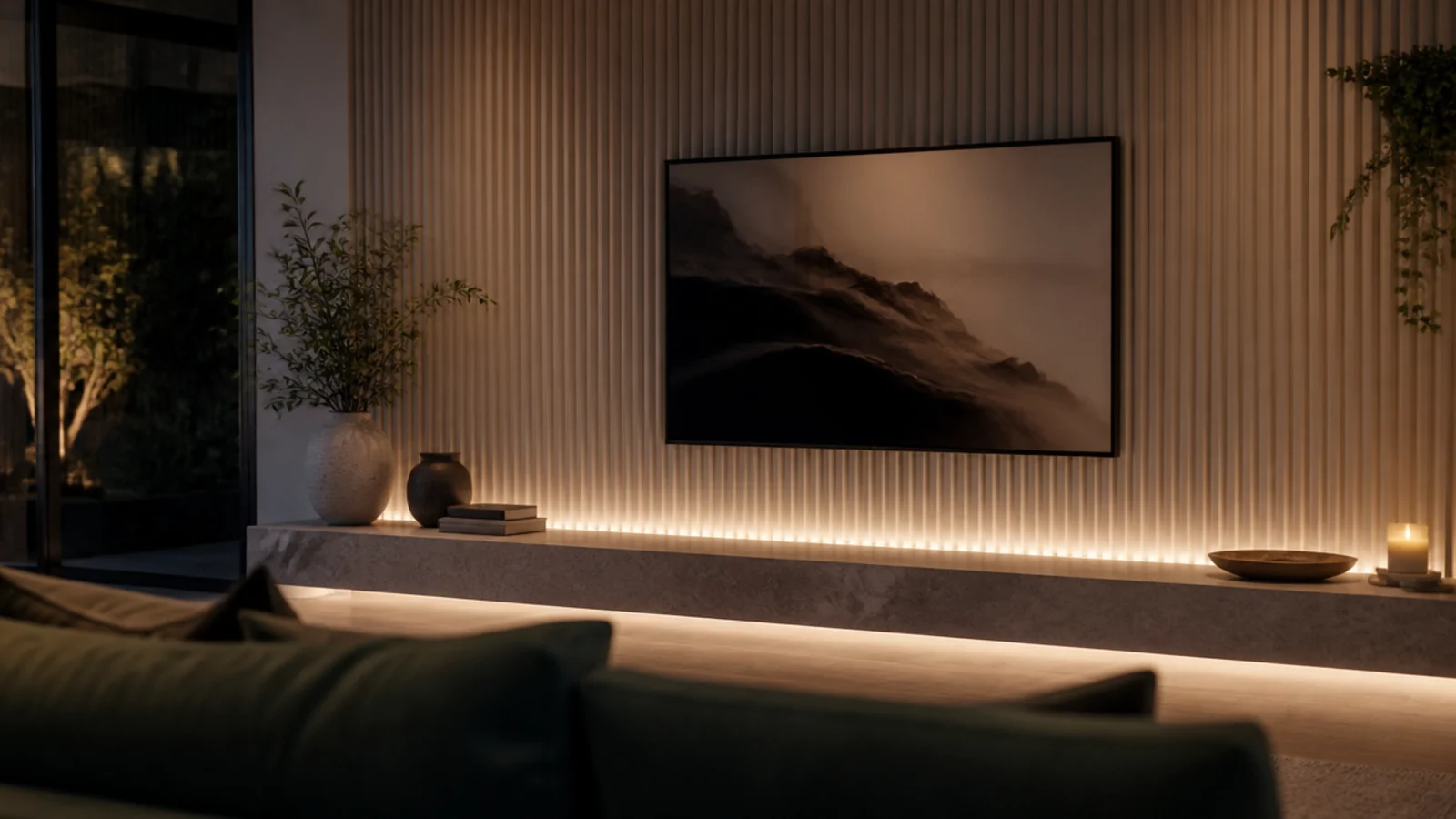
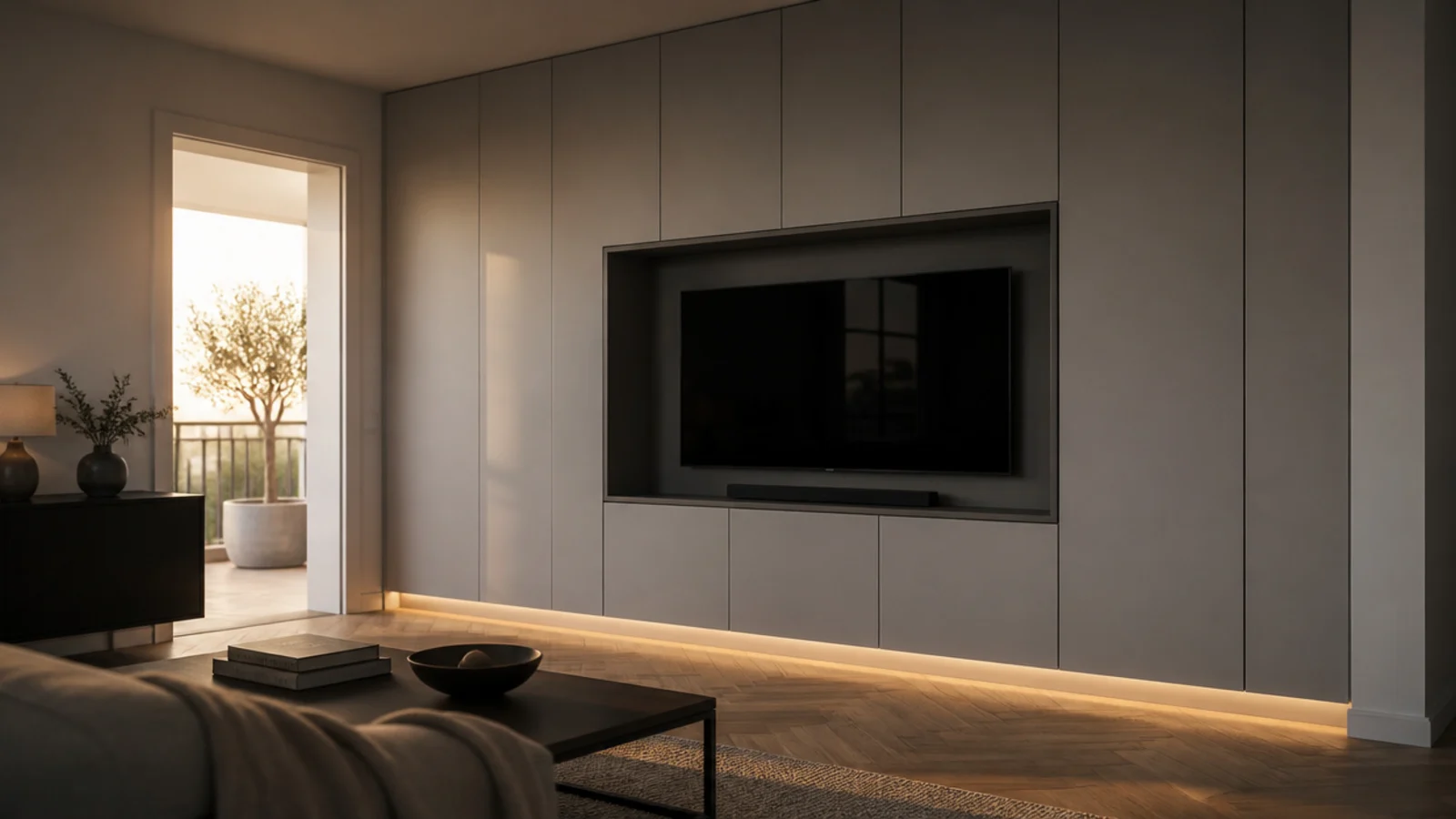
The wall behind a television is the one surface in a living room that everybody looks at and almost nobody decorates. Left bare it makes the screen look like equipment. Treated properly it does the opposite — the wall becomes the feature and the black rectangle stops being the first thing you notice.
The good news is that almost all of this is cheap. The expensive-looking versions are usually thin timber, paint and patience.
Plan the cables before the finish
This is the step that cannot be undone later. If the television is going on the wall, the cable route has to be decided while the wall is still open or before the panelling goes up. A recessed conduit or a pair of brush plates costs very little at that stage and is a demolition job afterwards.
Never bury a standard mains extension lead inside a wall. Use a proper in-wall rated cable and a socket at each end, or run only the low-voltage cables through the wall and keep the power on a visible socket behind the unit.
The numbers that decide the look
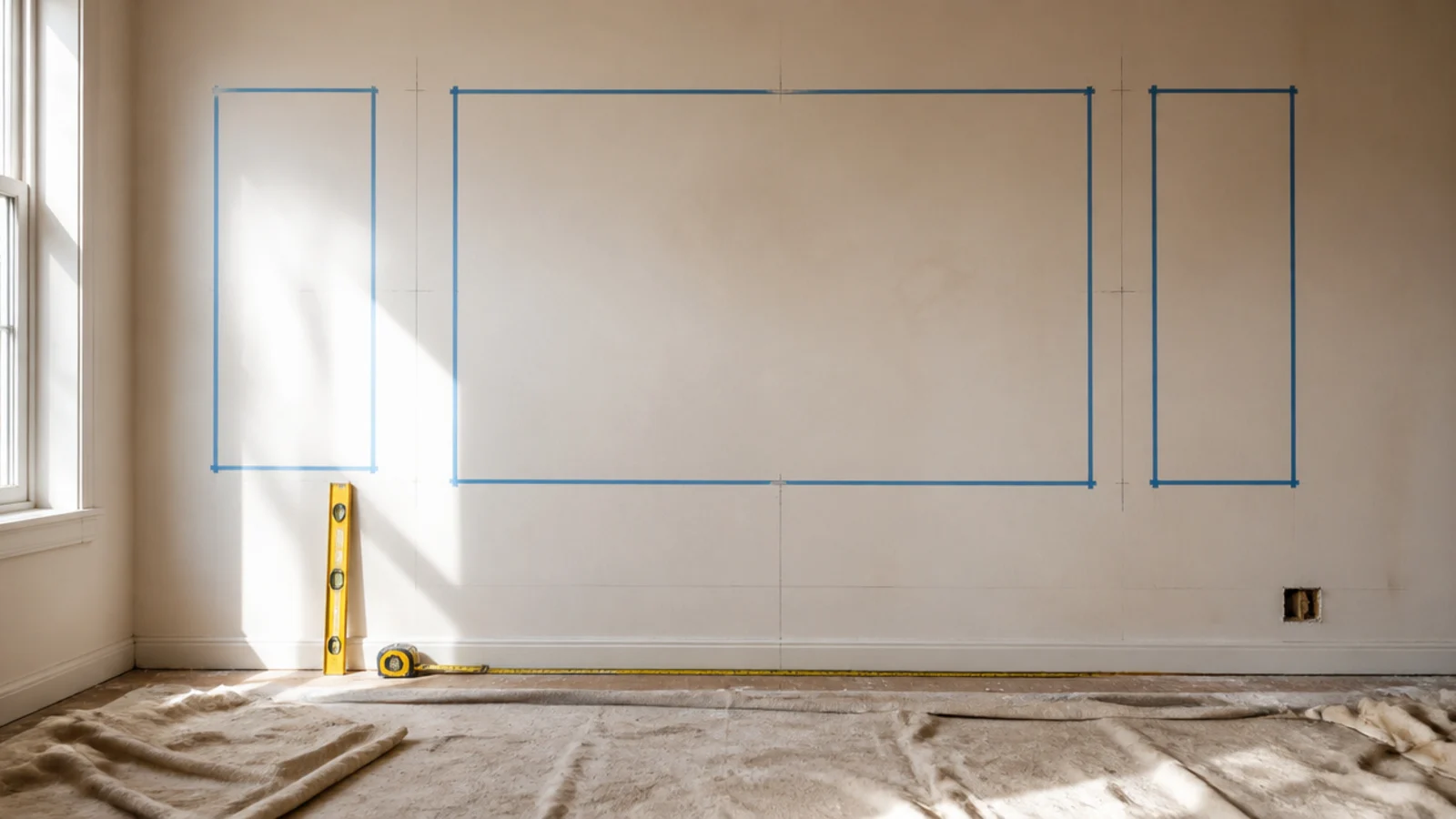
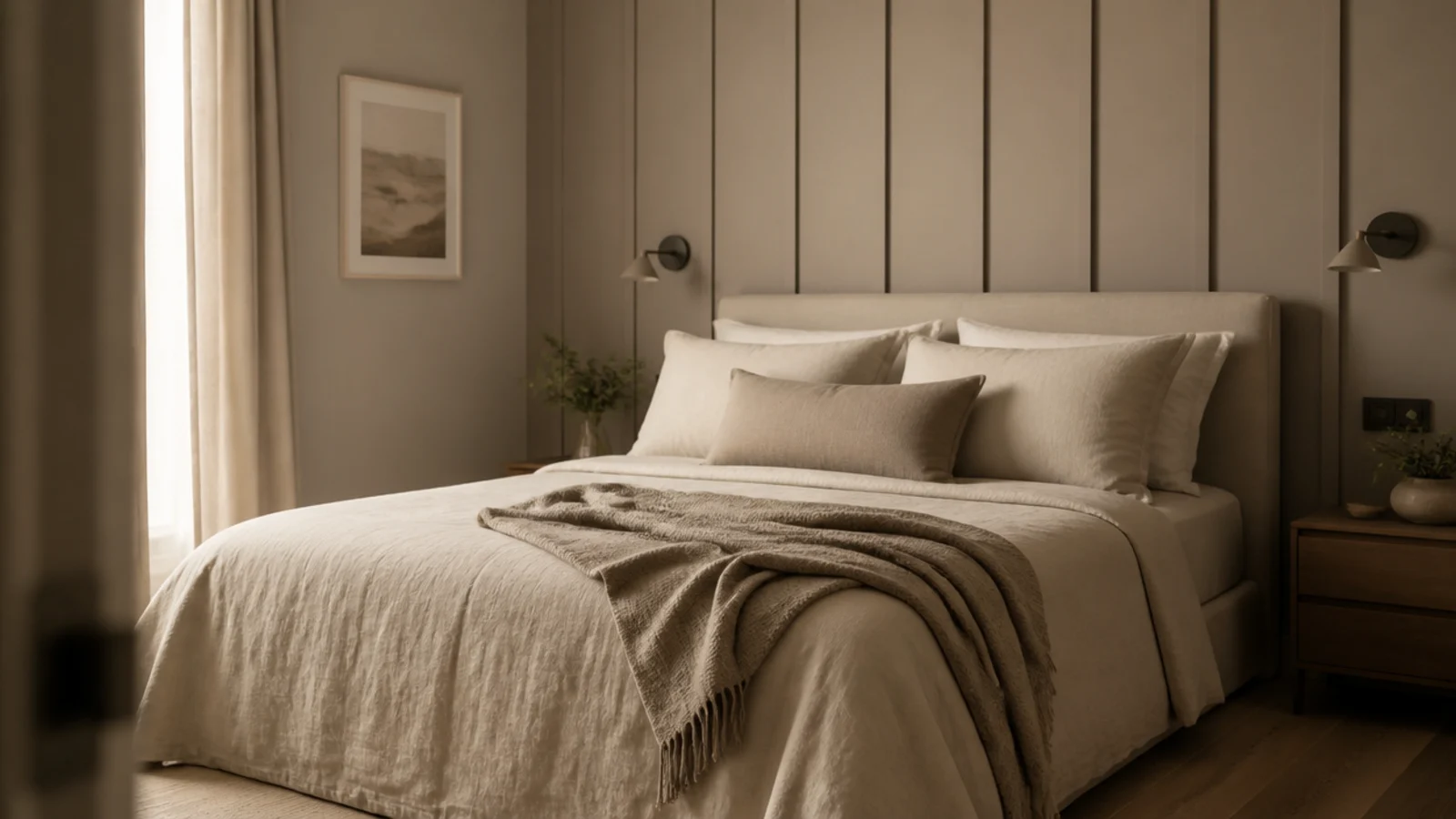
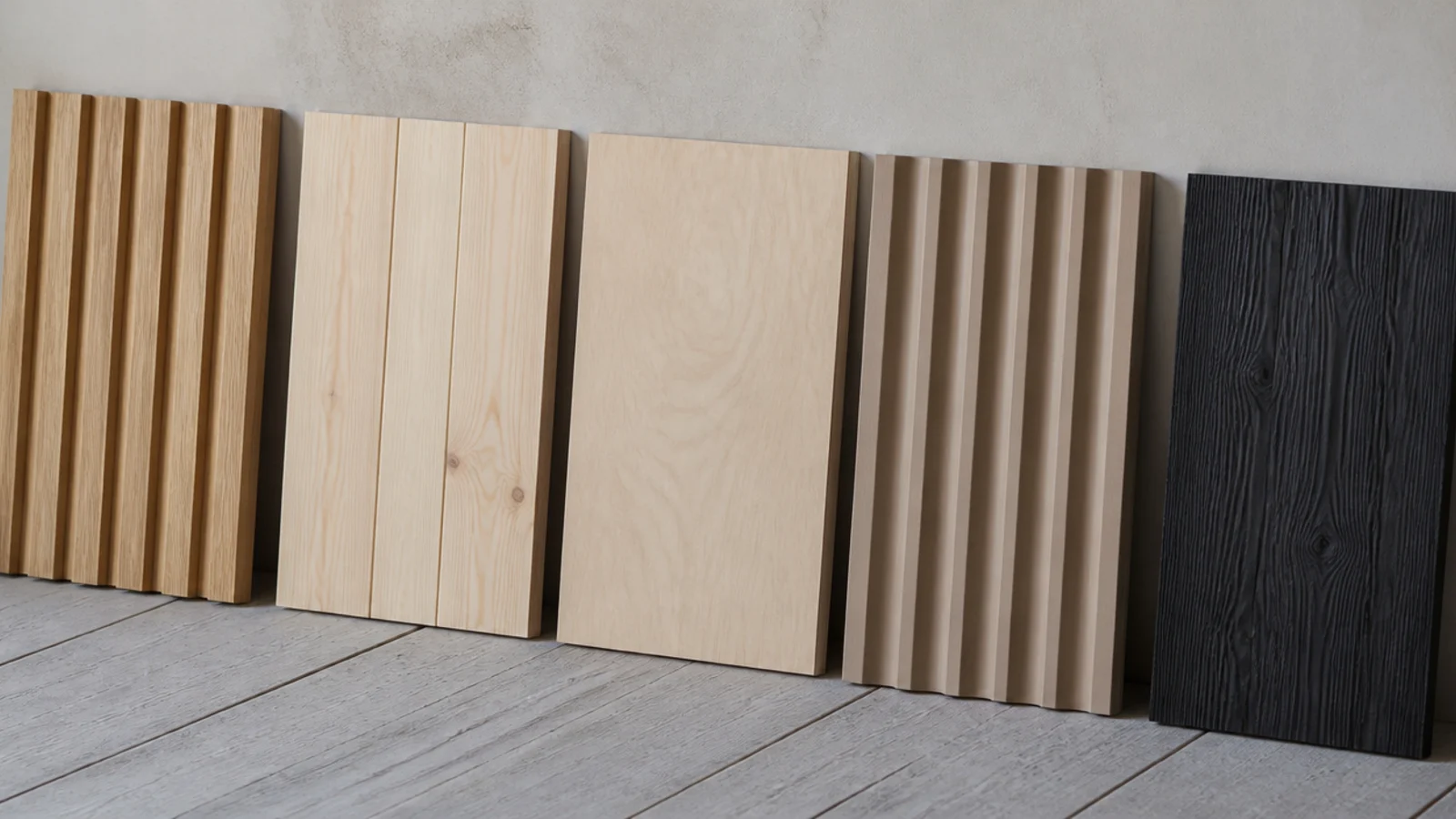
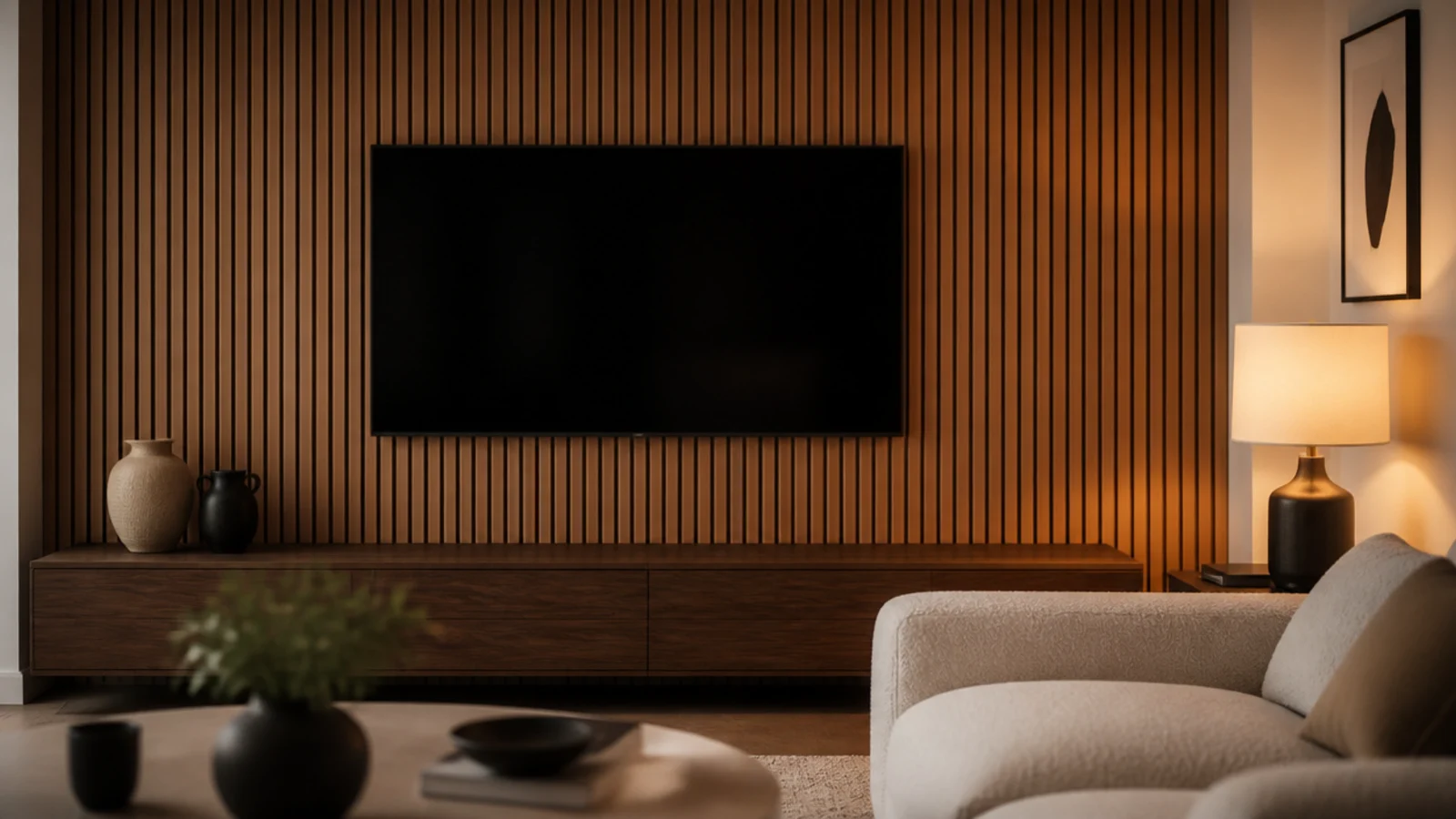
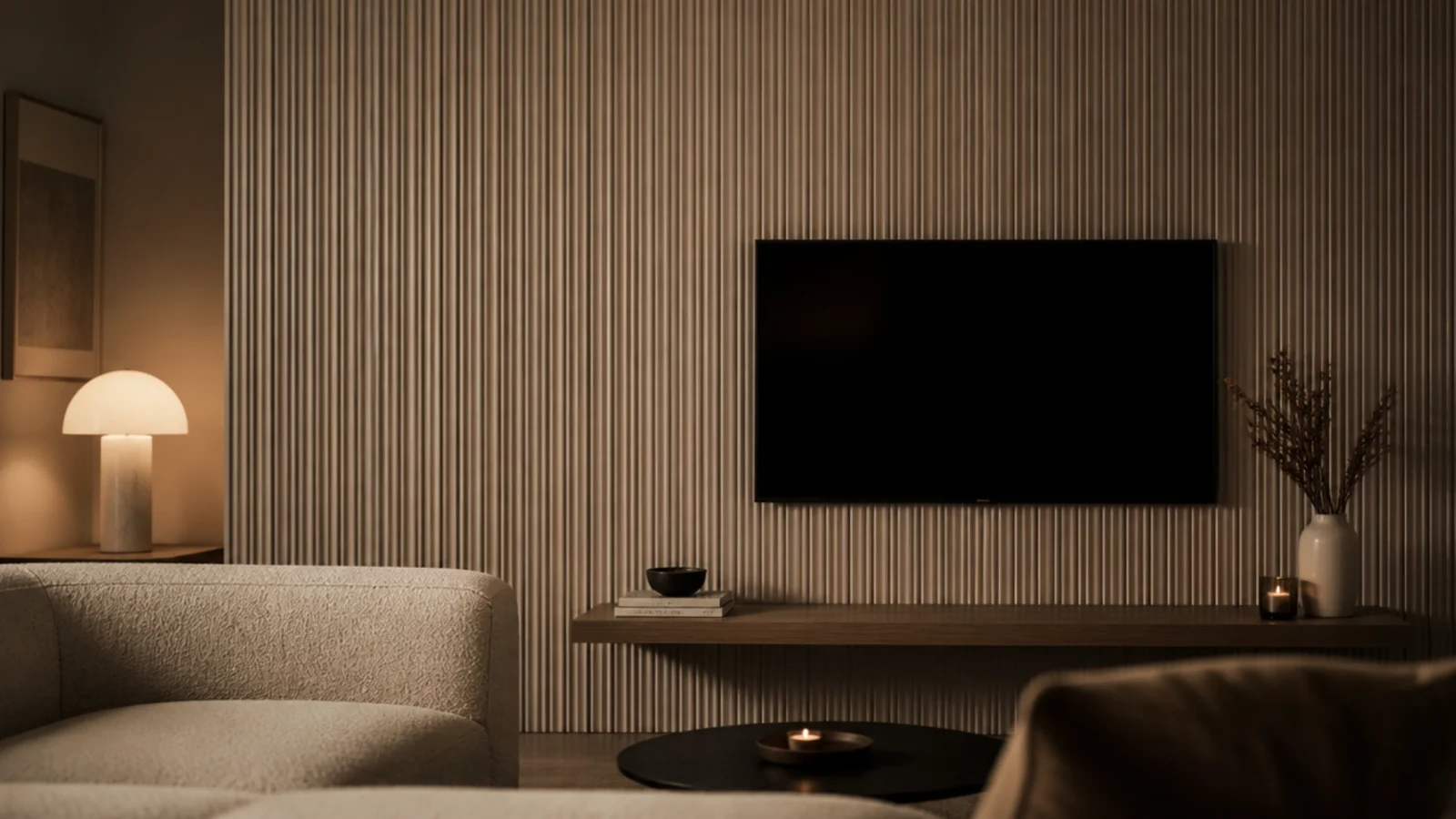
Batten spacing. Slat walls read as deliberate when the gap is consistent and roughly equal to the batten width. Twenty to 40mm battens at a matching gap is the range that looks intentional rather than accidental. Set out from the centre of the wall so the two end battens match, and never start from a corner — walls are rarely square and the error piles up at the far end.
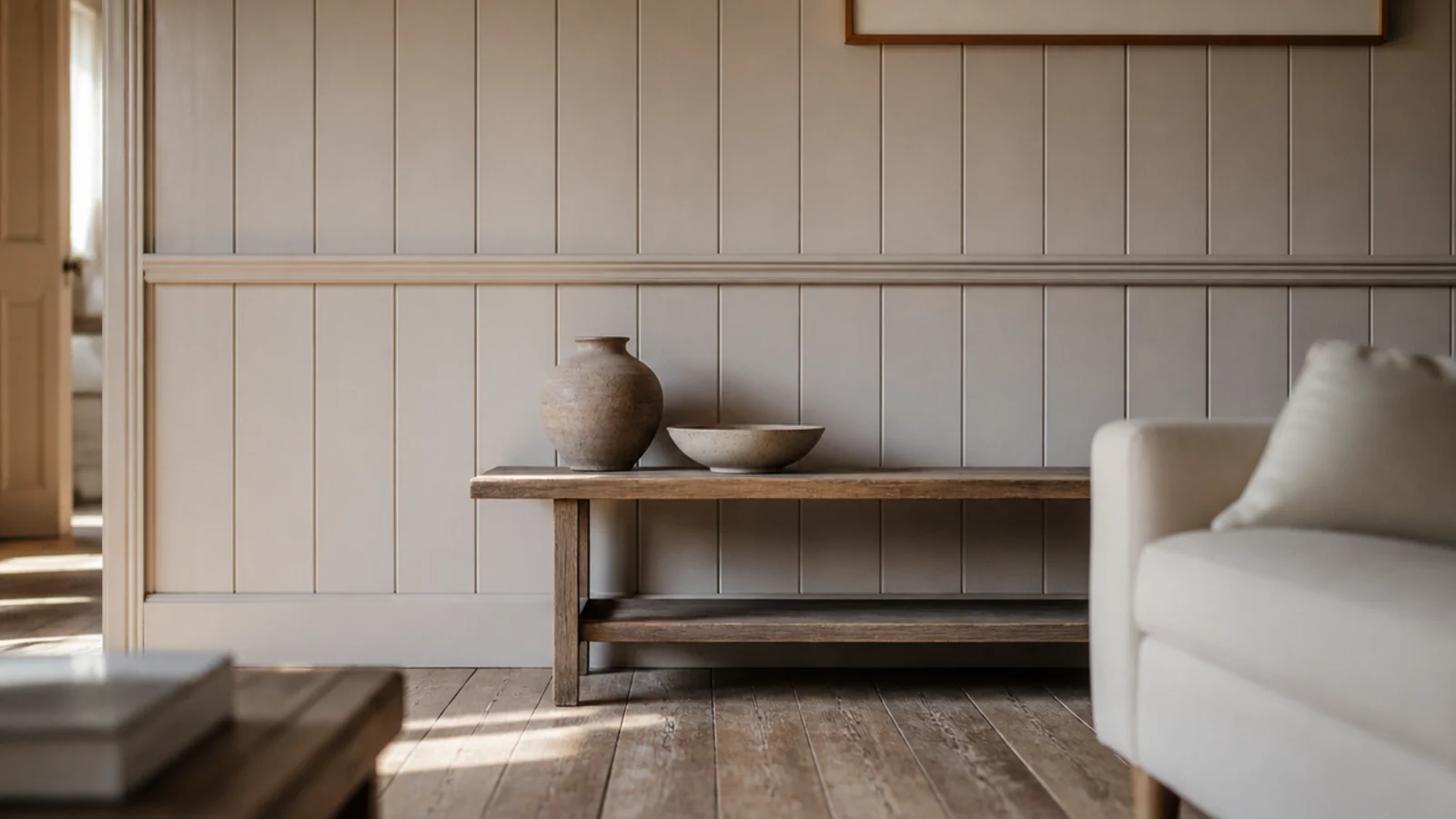
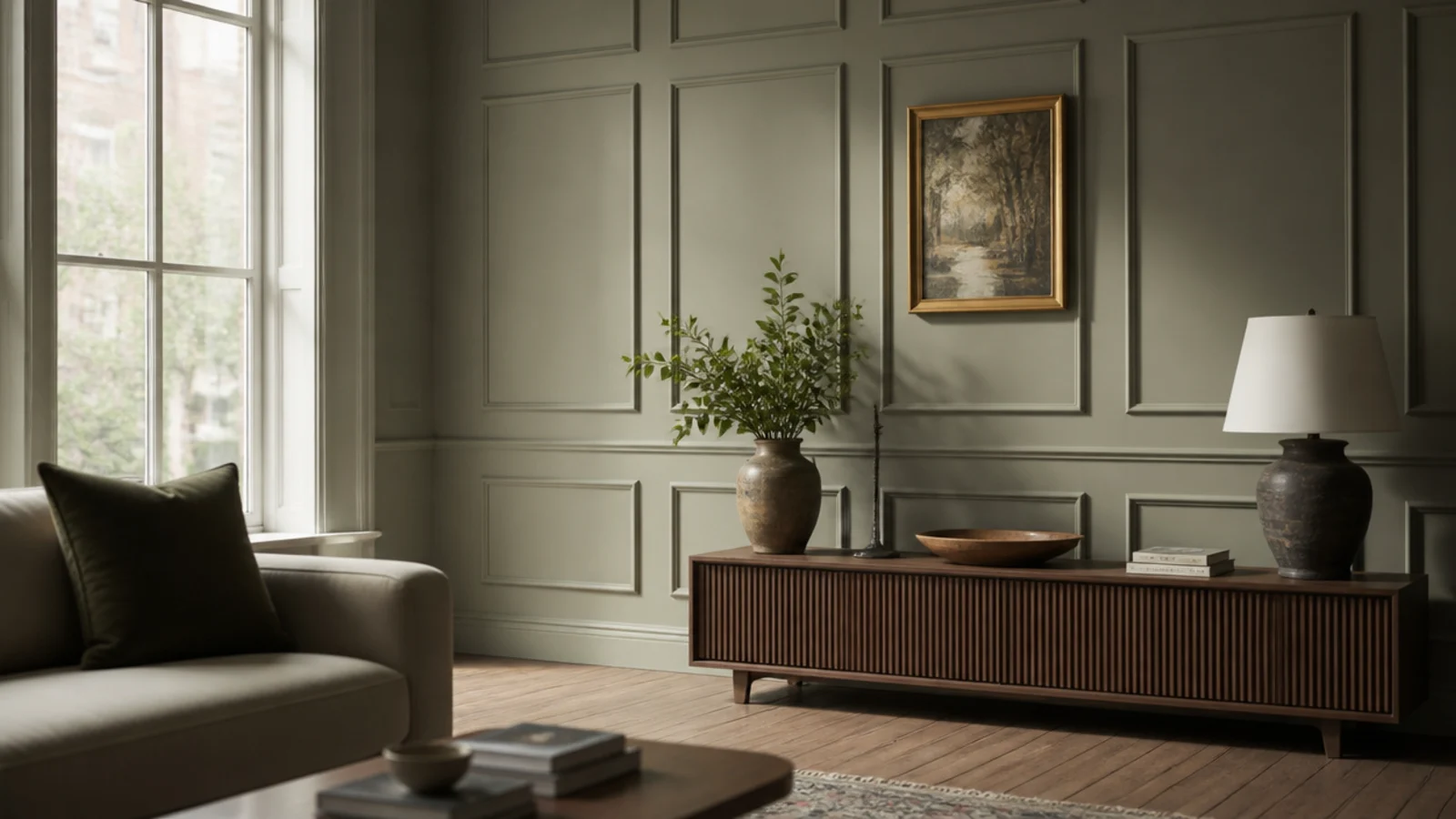
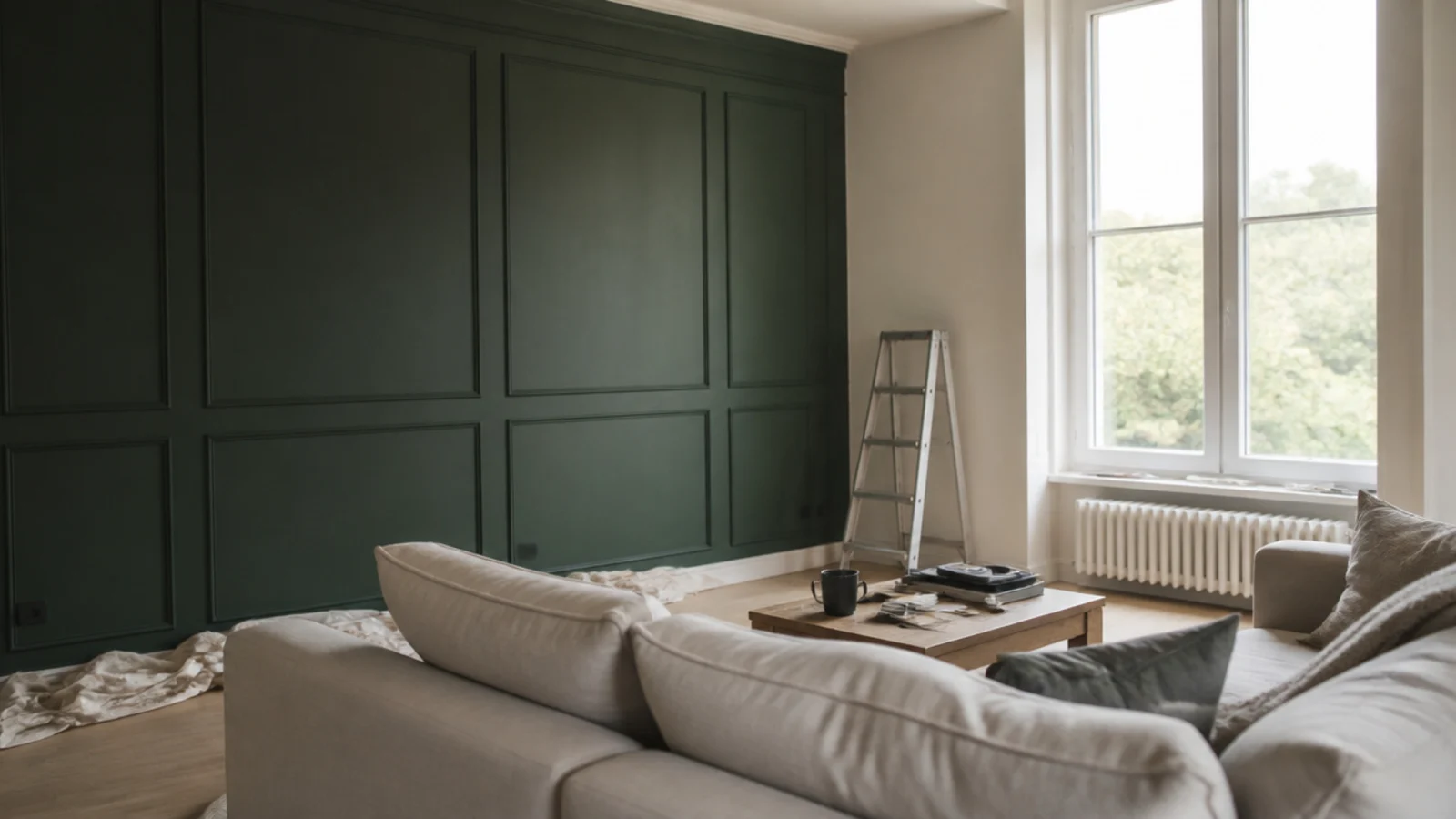
Moulding proportions. Panel boxes look right when the gap around them is even and the bottom rail is slightly deeper than the top. Keep at least 3 inches between panels and the same margin to the ceiling and skirting, then adjust the panel size rather than the margins to make the run fit.
Fixing to the wall type. Into studs at 16-inch centres, screws are fine. Into plasterboard with nothing behind, use grab adhesive plus a few pins for battens and toggle fixings for anything carrying weight. A television bracket goes into timber or masonry, never into plasterboard alone, whatever the packet claims.
Renting?
Plenty of this works without permanent damage. Peel-and-stick panelling, tension-mounted slat frames, removable adhesive moulding and paint that you repaint at the end all give you the look. Avoid textured plaster and anything screwed directly into plasterboard, since both leave repairs that outlast the deposit.
Where these fifteen guides go
Start with the main TV wall guide if the wall is still bare, the panel and moulding guides if you have chosen a direction, and the texture and wood guides for the finishes that carry the most character. The bed-back and sofa-back guides apply the same rules to the other two big blank walls in a home.
Start here
Three guides that answer the question most people arrive with
All TV Wall Decor guides
15 of 15 published
25 Living Room TV Wall Ideas On A Budget
9 min read
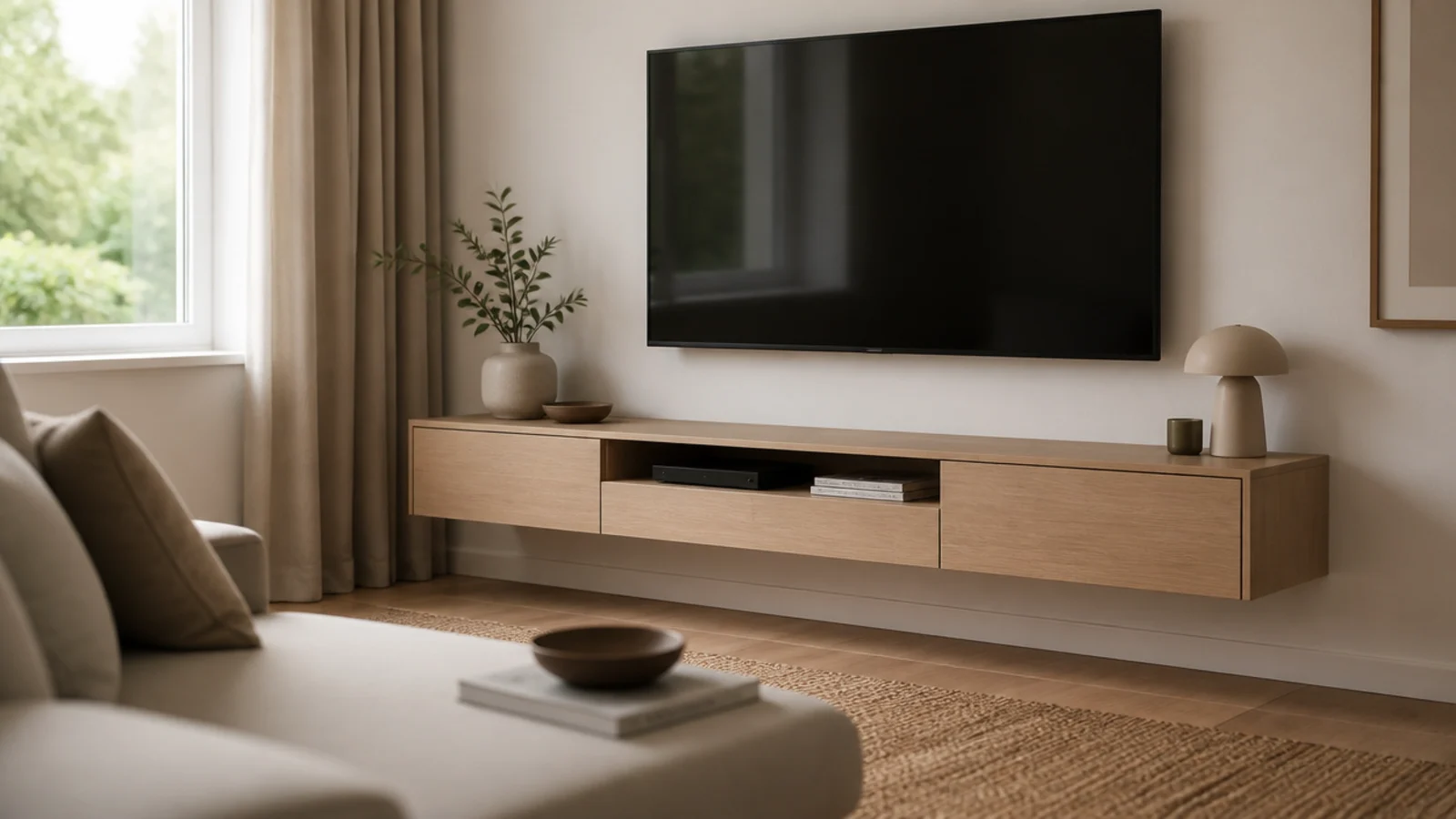
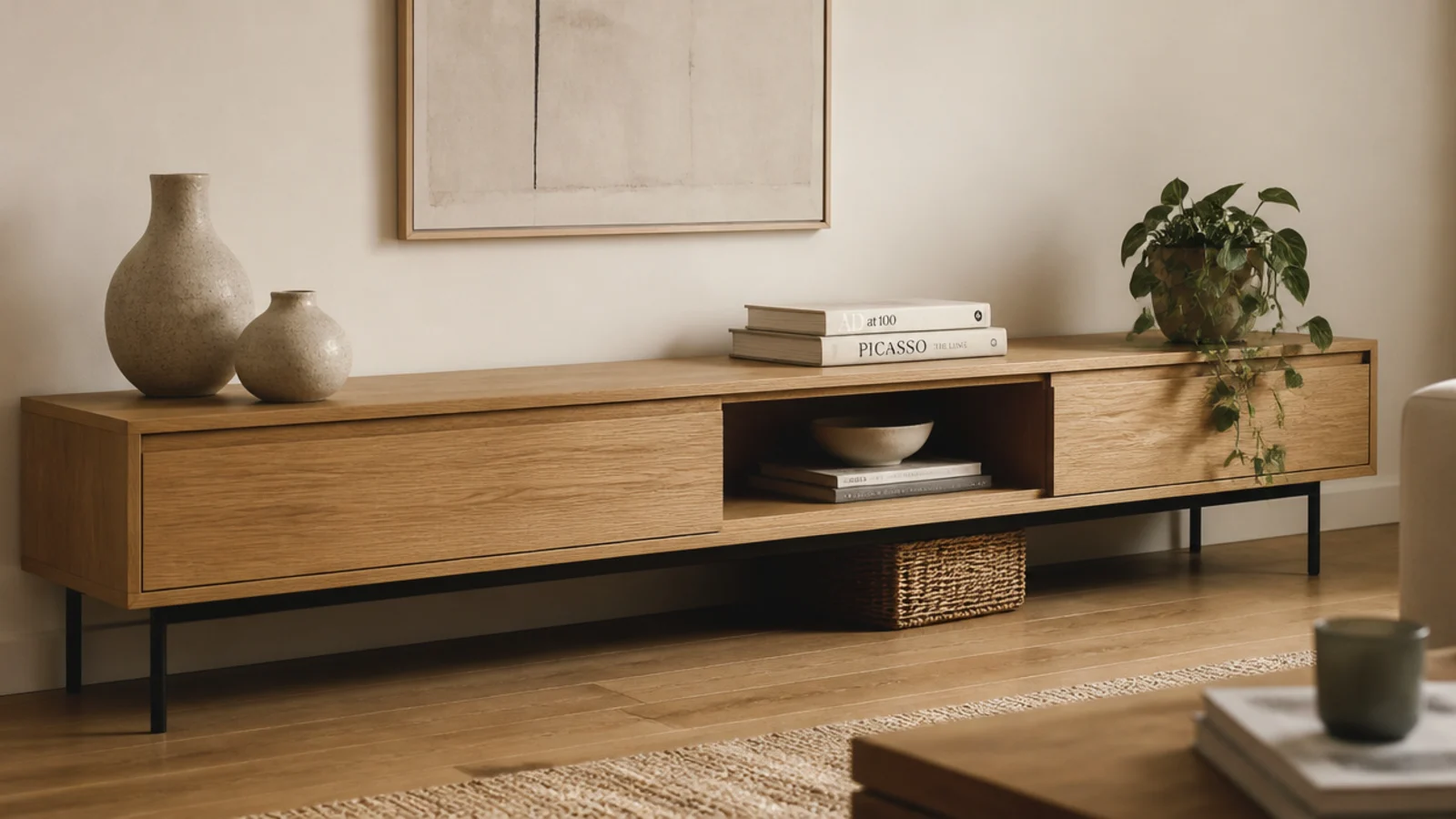
20 Modern TV Wall Units That Look Custom
8 min read