Living Room Built-In Shelves · 15 guides
Living Room Built-Ins That Look Like They Came With the House
Nothing changes a living room as completely as a wall of built-ins, and nothing gives itself away faster when it goes wrong. A shelf too shallow to hold a hardback. A span that smiles in the middle by year two. A quarter-inch gap at the ceiling quietly telling every visitor the whole thing arrived last spring.
These fifteen guides are the numbers, not the mood board. Depths, spacing, spans, clearances, and the one paint decision that does more for the finished look than any hardware you can buy.
Depth and spacing decide everything
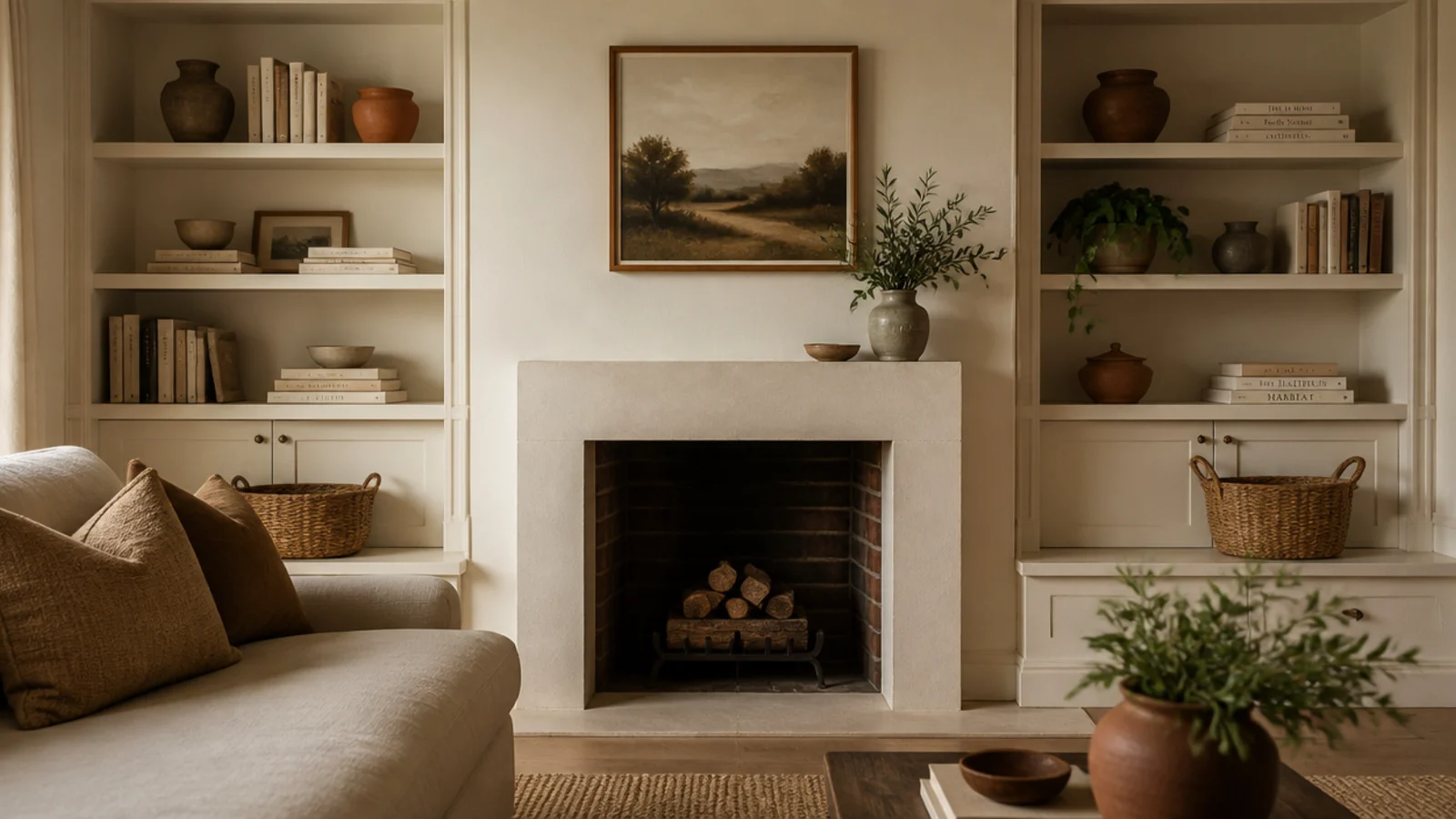
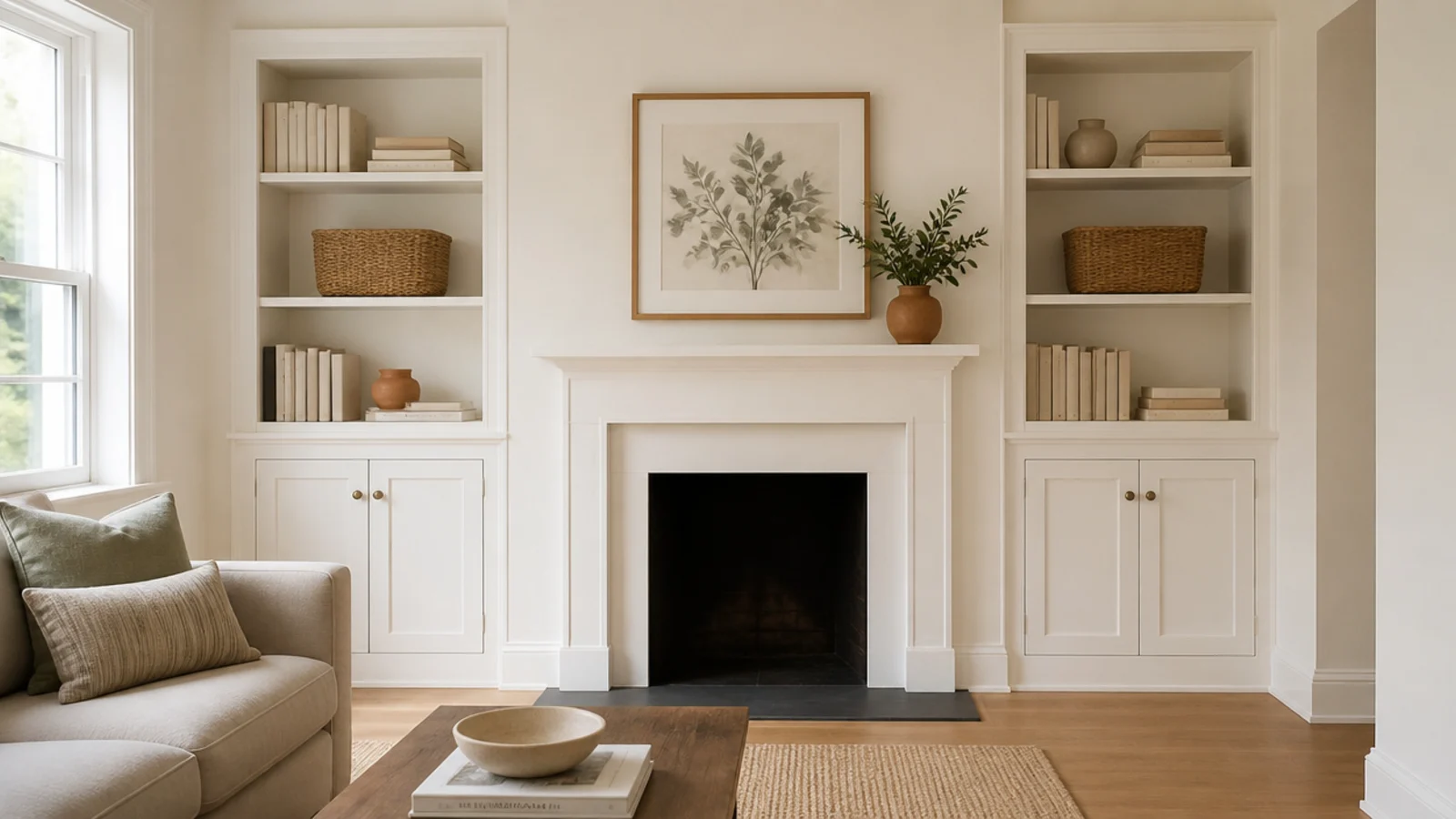
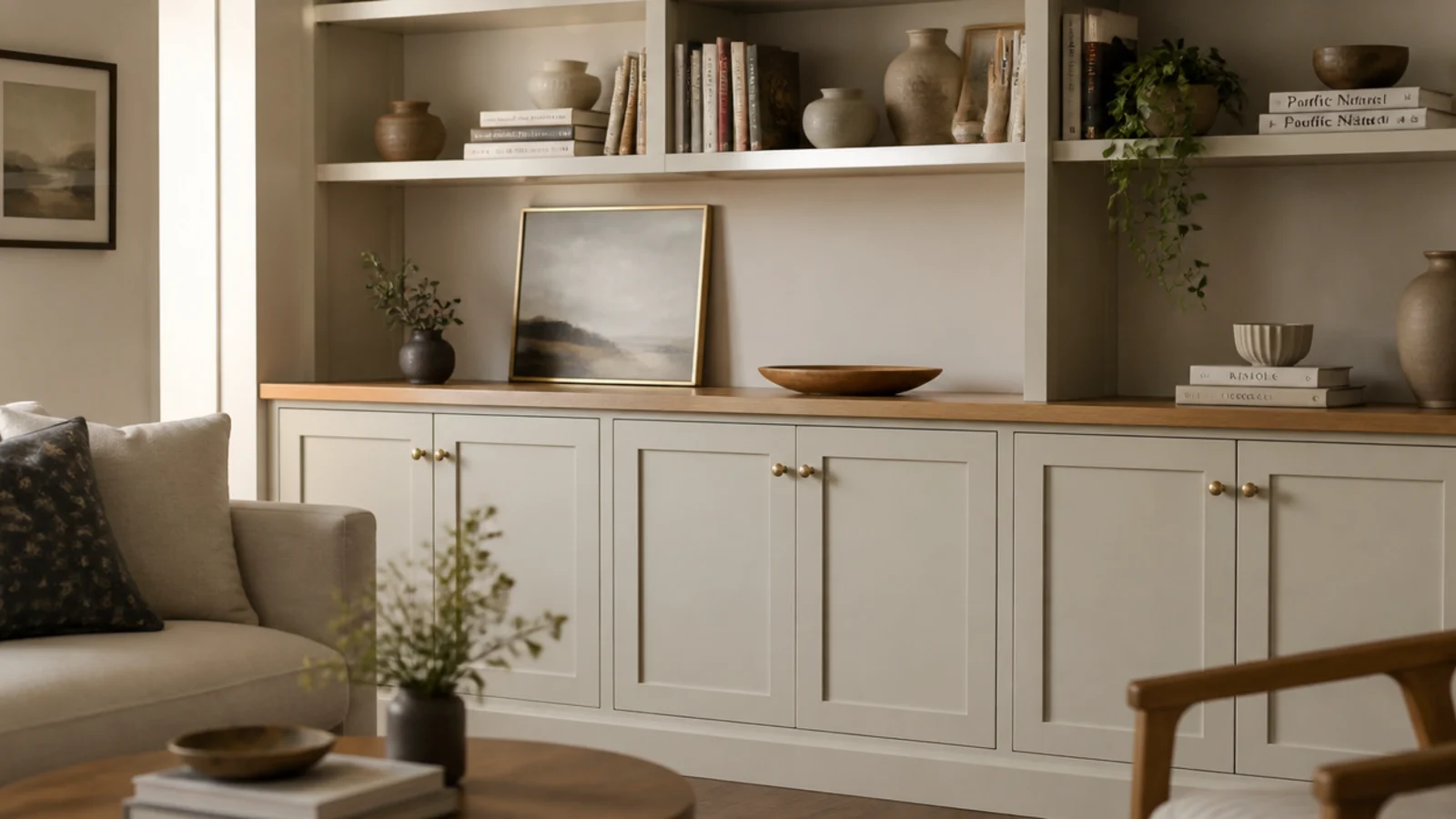
Depth. Eleven to twelve inches is the working number for books — deep enough that a hardback sits fully on the shelf, shallow enough that the run does not eat the room. Go to fourteen or sixteen inches only where a shelf carries baskets, a receiver or a console. Mixing both is normal and looks better: a deep closed base, shallow open uppers.
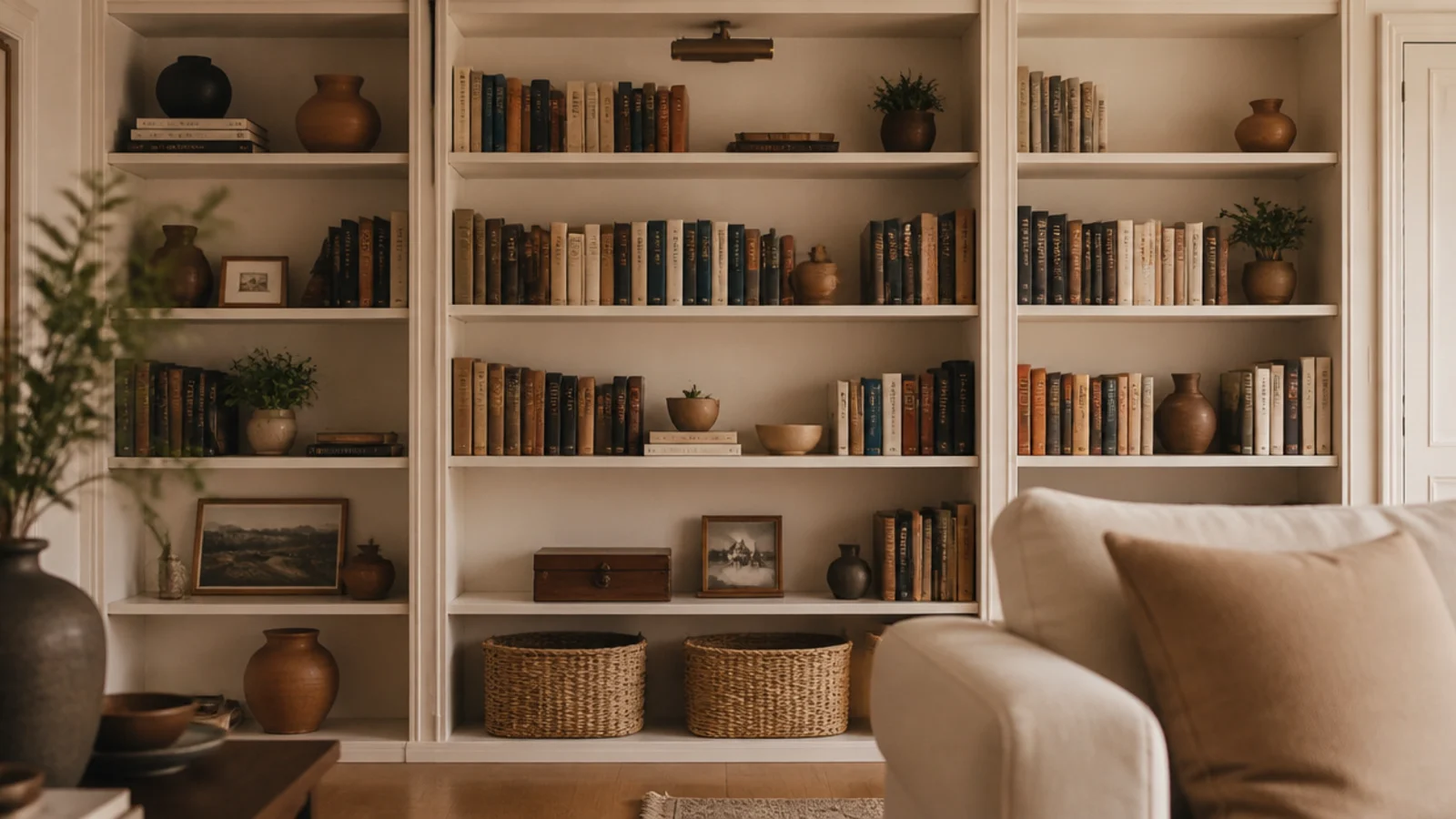
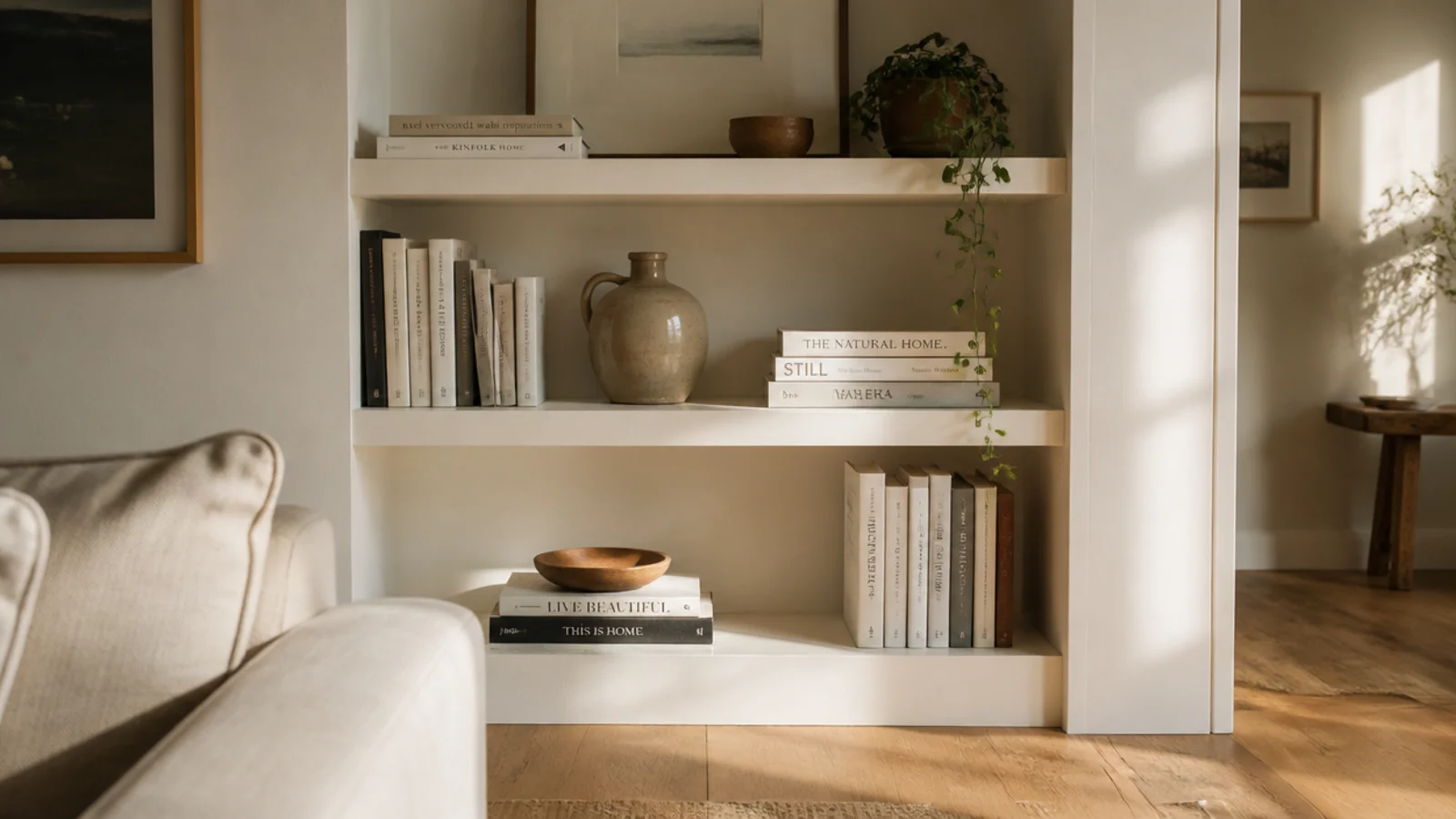
Spacing. Eleven to thirteen inches of clear height between adjustable shelves takes hardbacks standing upright. Drill pin holes so you can move a shelf later. A fixed run at ten inches will annoy you for a decade.
Span is what makes shelves sag
A 3/4-inch plywood shelf starts to sag past a 32-inch span once it is full of books. Two cheap fixes: glue a solid 1x2 lip along the front edge, or put a vertical divider in the middle of the bay. Decide before you cut, not after the paint is on.
Paint is the line between architecture and furniture
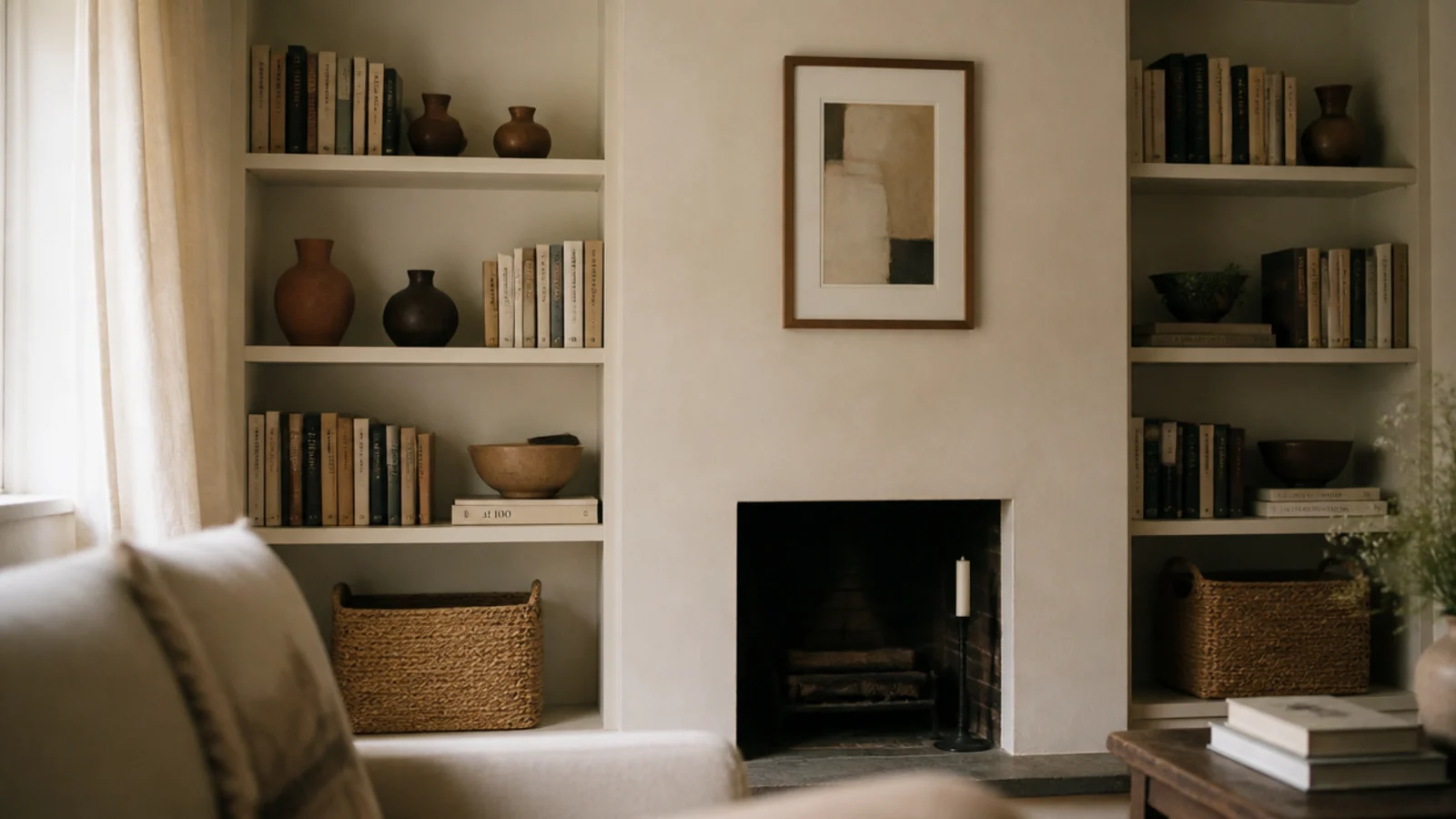
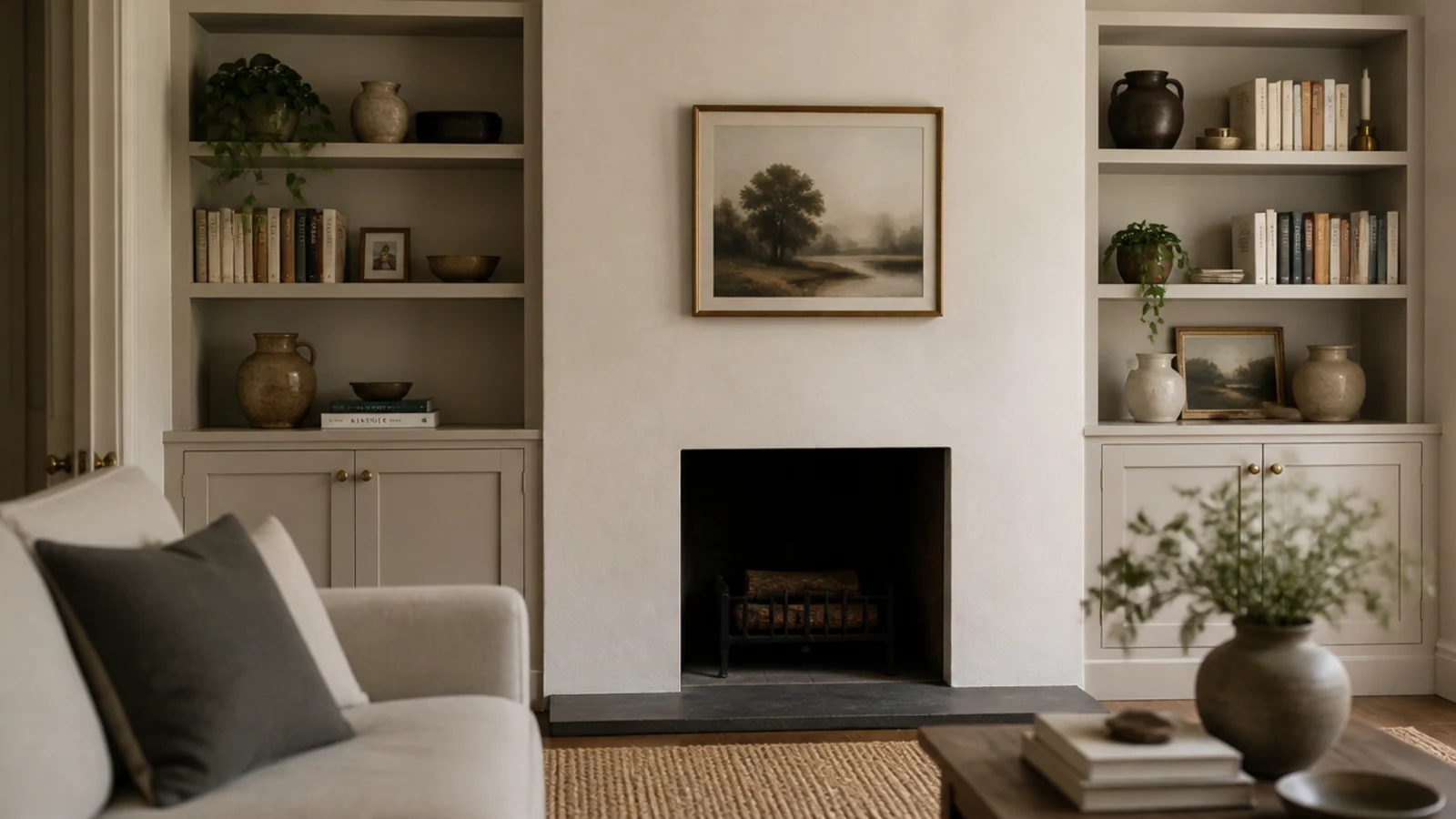
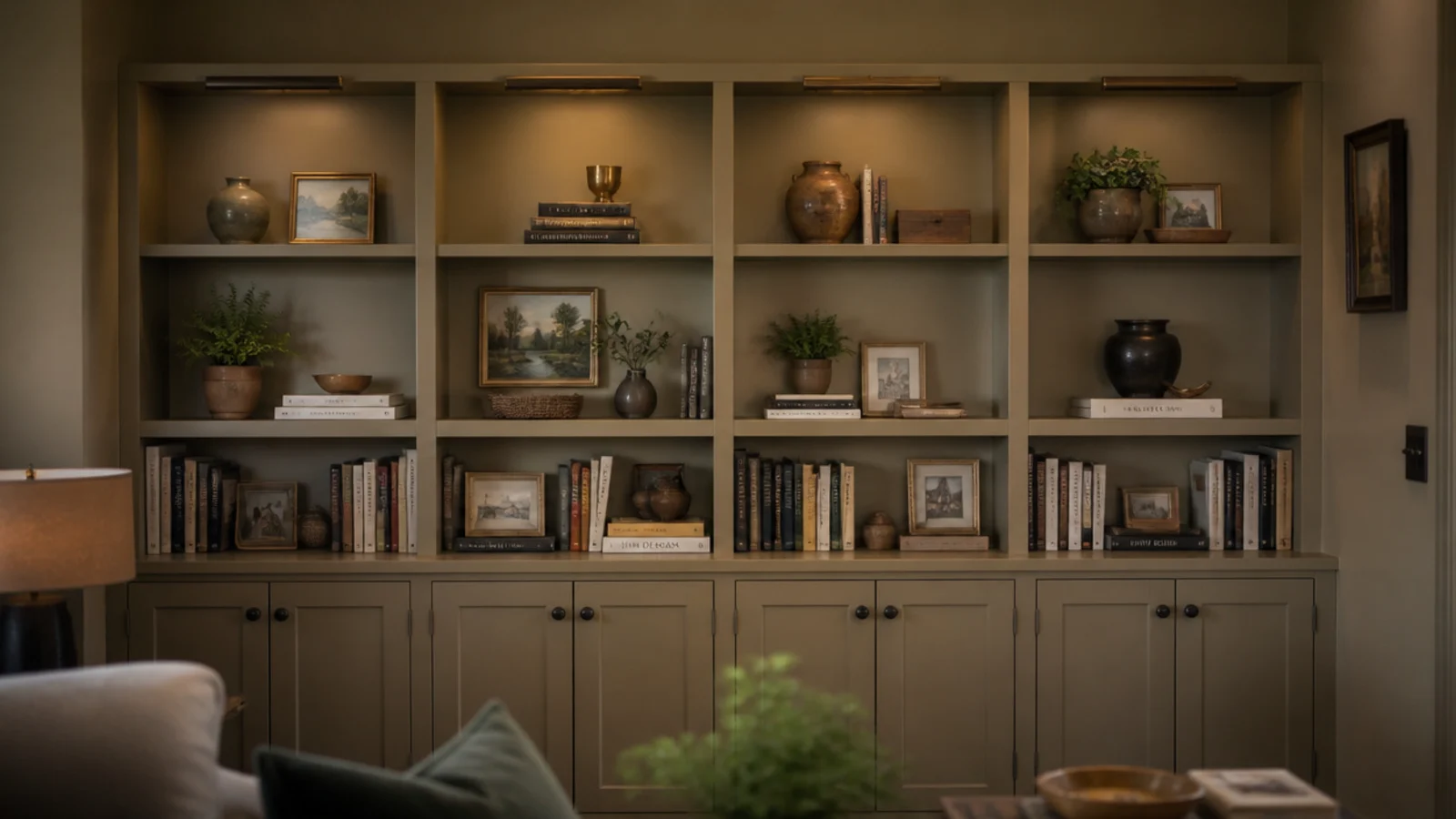
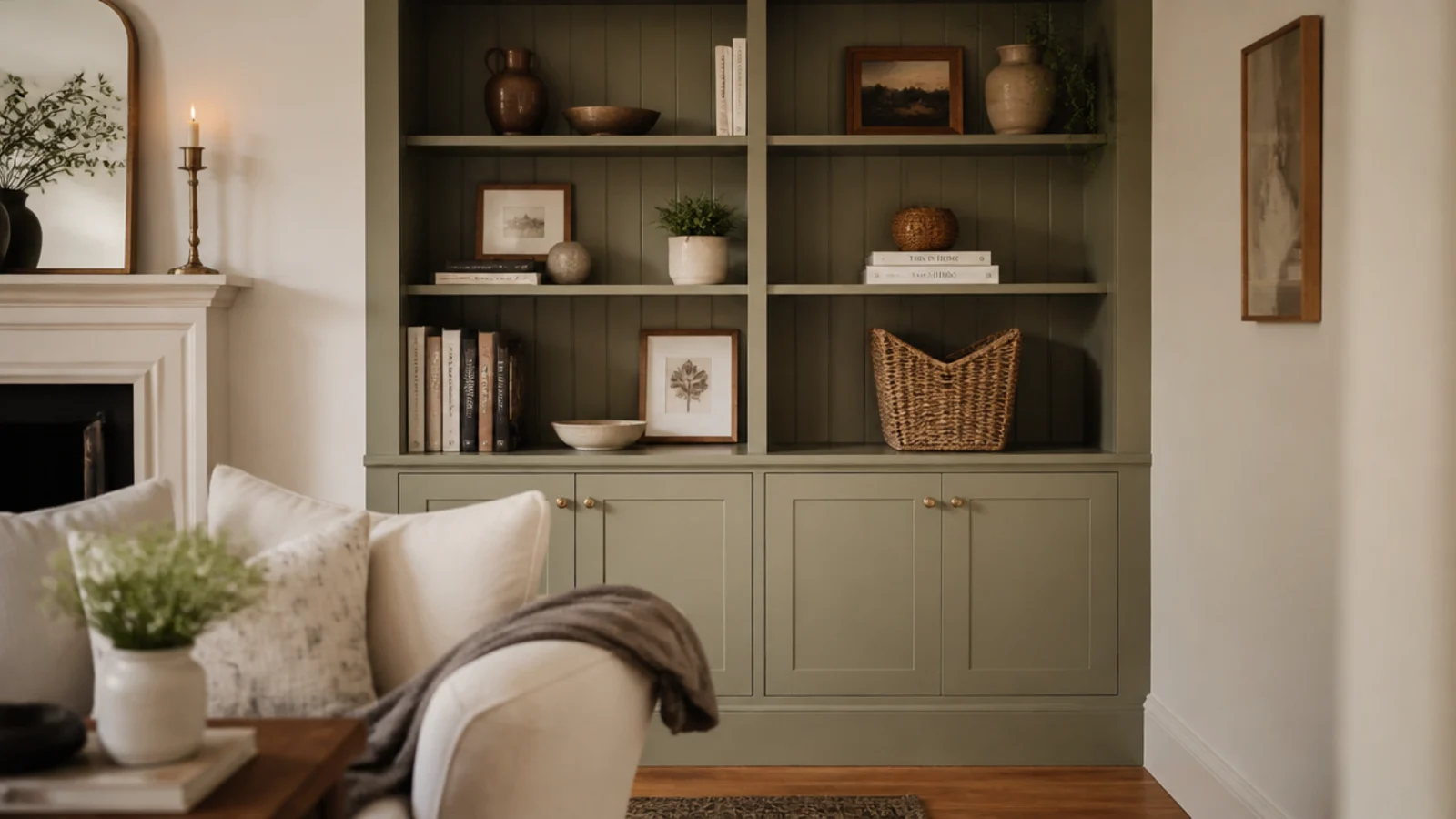
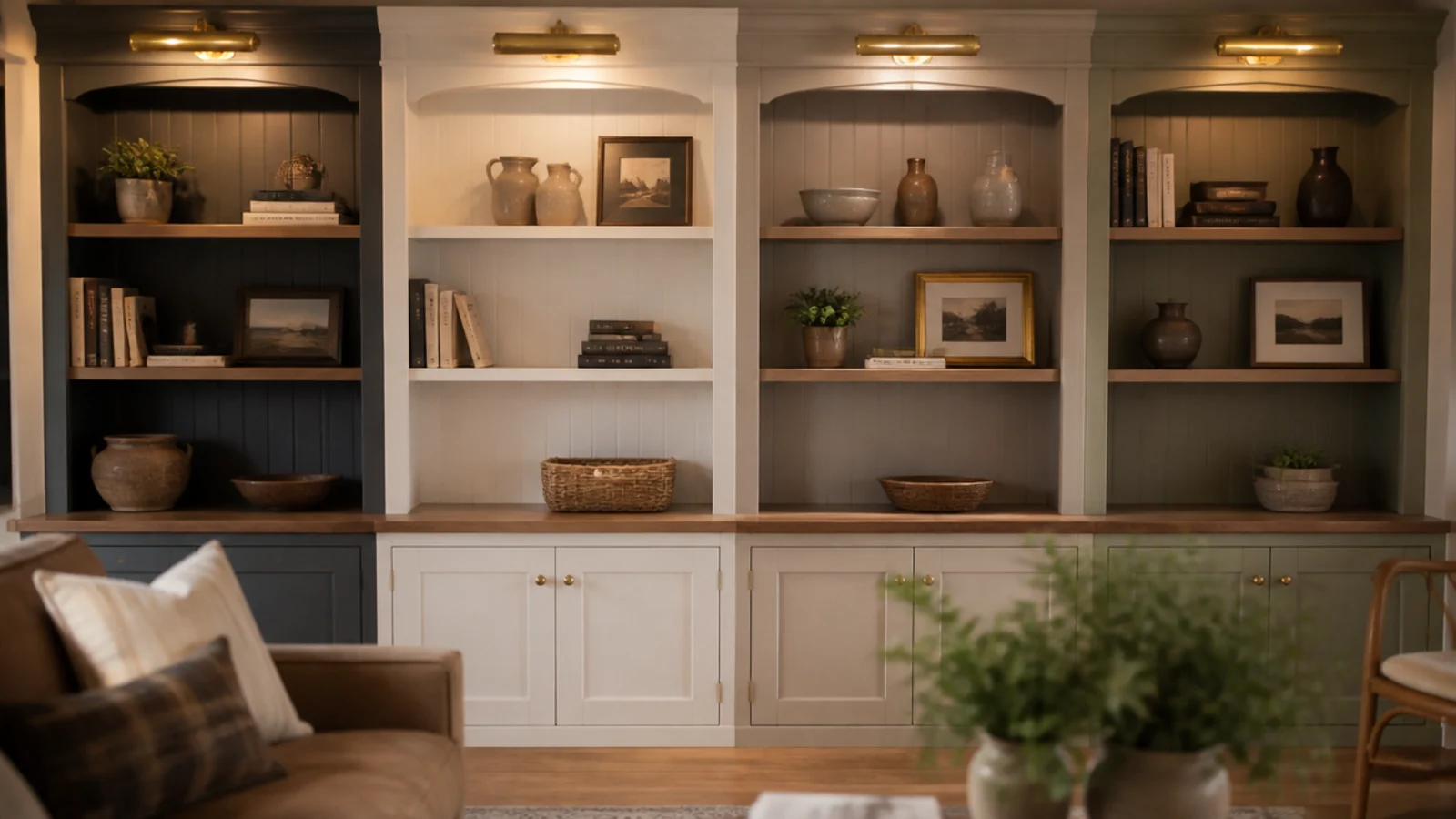
Paint built-ins the same color as the wall, or the same color as the trim. Either one reads as architecture. A contrasting color reads as a bookcase someone pushed into an alcove and hoped nobody would notice.
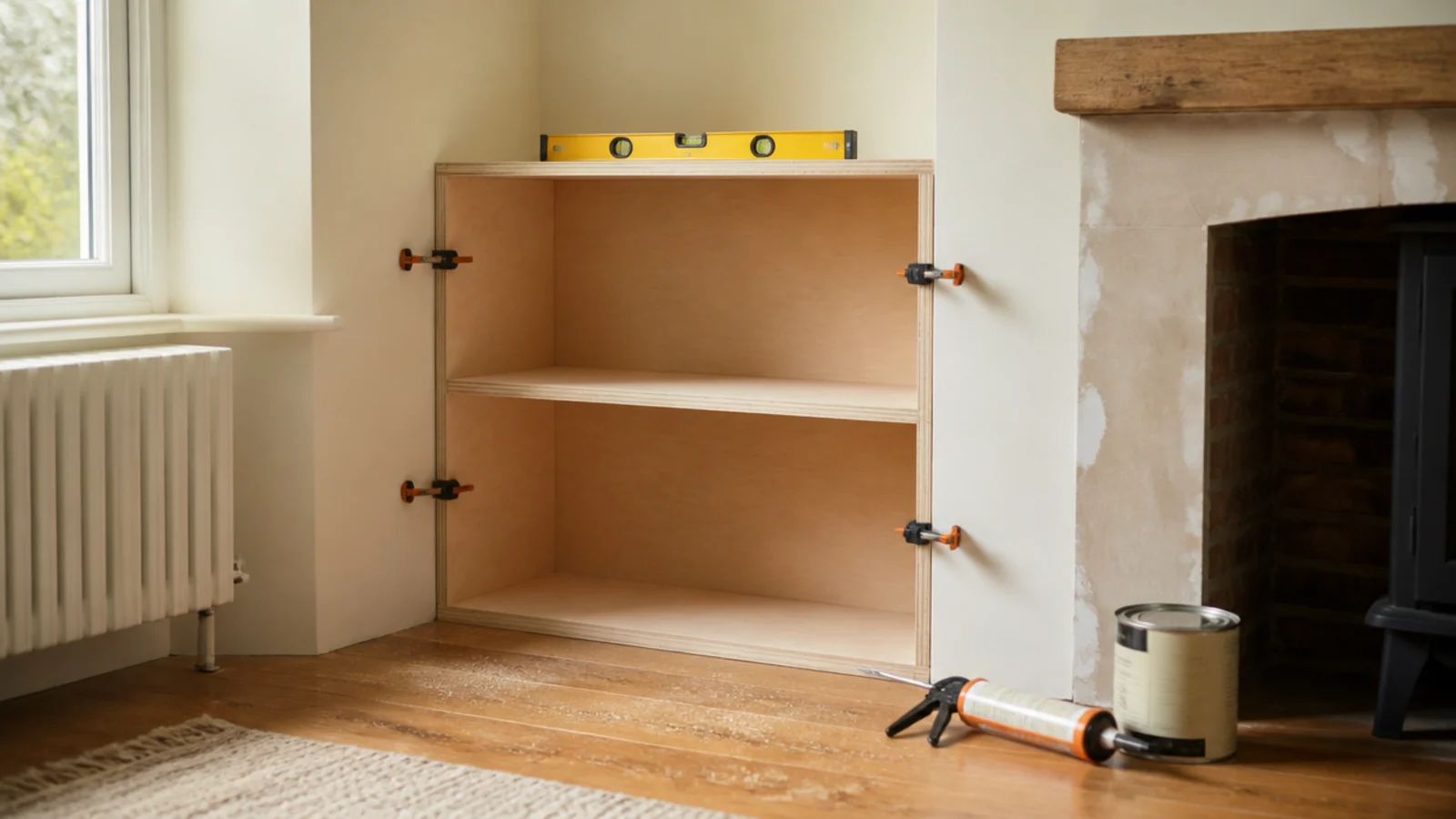
Then scribe. The number one giveaway of a DIY built-in is a gap where it meets the wall or ceiling, so scribe the filler strips to the wall, caulk every joint, and prime before you look at it in daylight.
Fireplaces, budgets and rentals
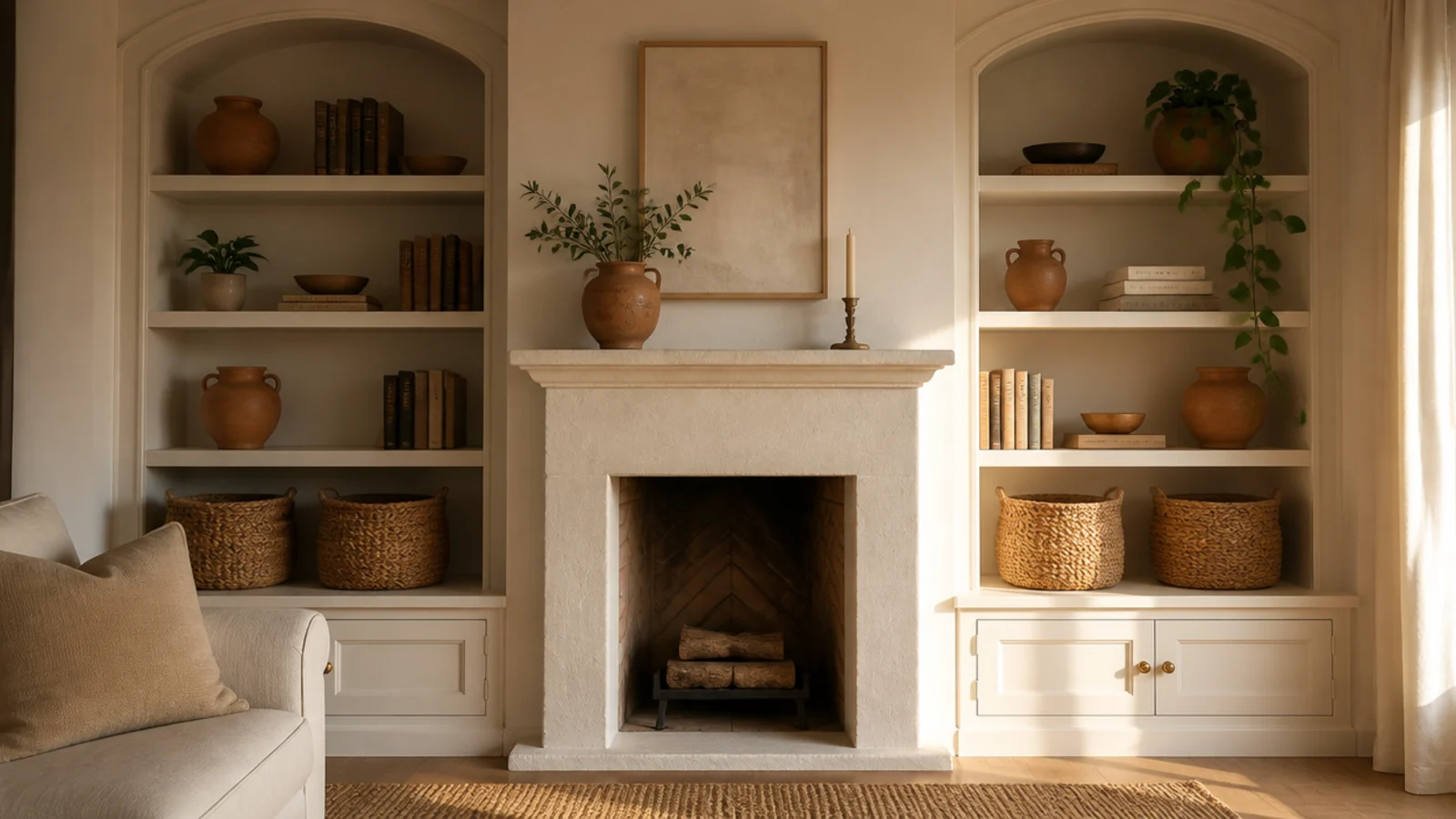
Around a firebox, keep combustible material at least six inches from the opening and follow the clearance label on the appliance itself — mantels and shelf returns are exactly where people get this wrong.
Budget honestly: $150 to $400 trims stock bookcases into one alcove, $500 to $1,200 in materials builds a plywood run with doors, and $2,500 to $6,000 and up buys a cabinetmaker. Renting? Freestanding bookcases, trimmed in with baseboard and a scribed filler and anchored to a stud, give you most of the look and leave with a patch kit.
Start here
Three guides that answer the question most people arrive with
All Living Room Built-In Shelves guides
15 of 15 published