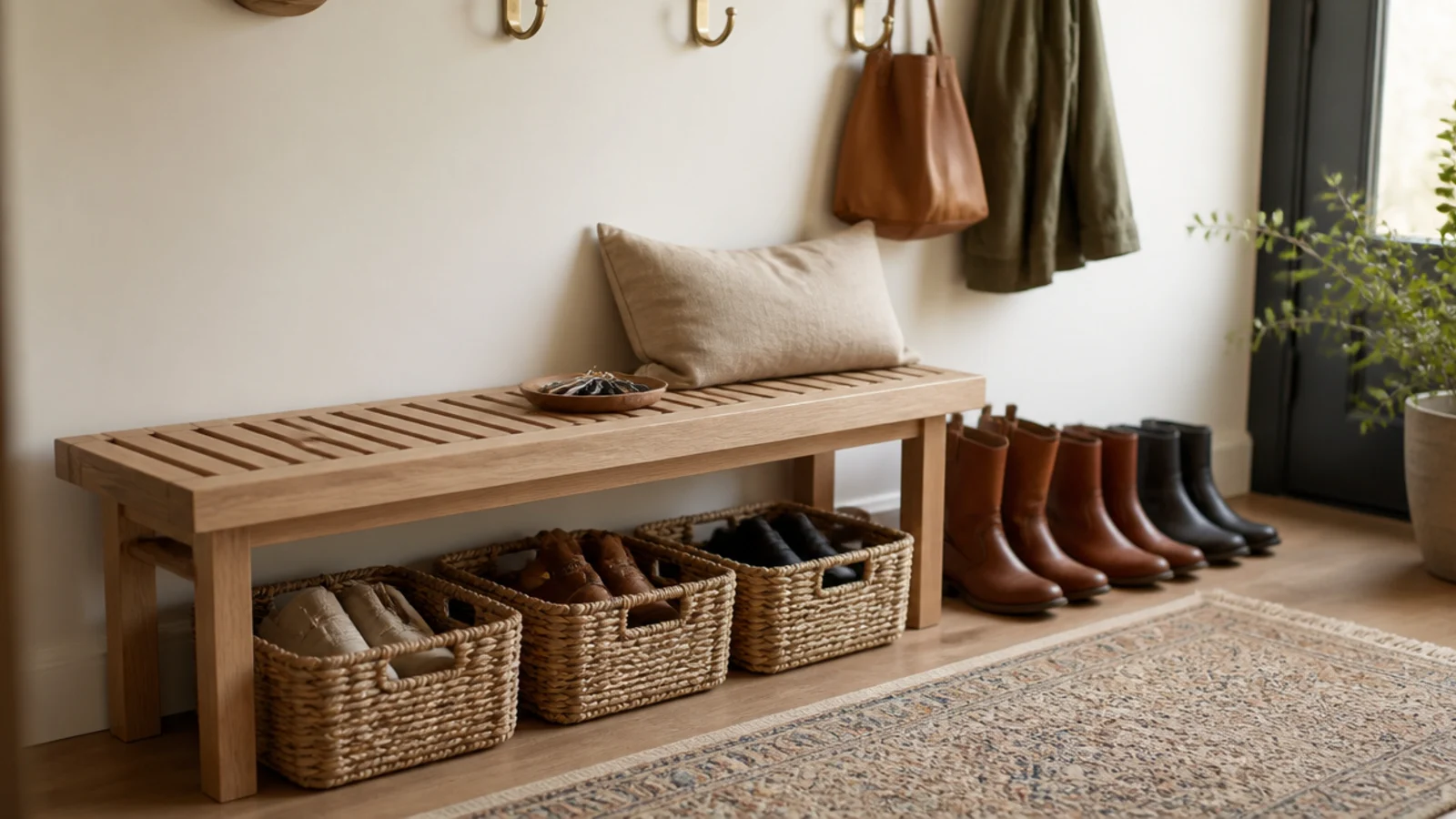
15 Easy Shoe Storage Ideas for Any Home
8 min read

Shoe Storage Ideas · 15 guides
Shoe storage is the one organizing problem that gets worse every year without anybody deciding to make it worse. Somebody buys boots. Somebody outgrows sneakers. A season turns and the sandals do not go away. Eventually there is a pile inside the front door that everybody steps over and nobody owns.
Most shoe storage advice fails because it never asks the only question that matters: how many pairs, and how many of them are boots? A rack rated for twelve pairs holds about seven if four of them are winter boots, and the pile survives.
Before you buy anything, go and count the pairs currently living within six feet of your front door. Not the ones in closets — the ones by the door, because that is the number your entryway has to solve.
For most households the honest figure is two to three pairs per person, plus one seasonal overflow set. A family of four is realistically ten to fourteen pairs at the door in winter and six to eight in summer. Every guide in this board works from that count rather than from a product's optimistic rating.
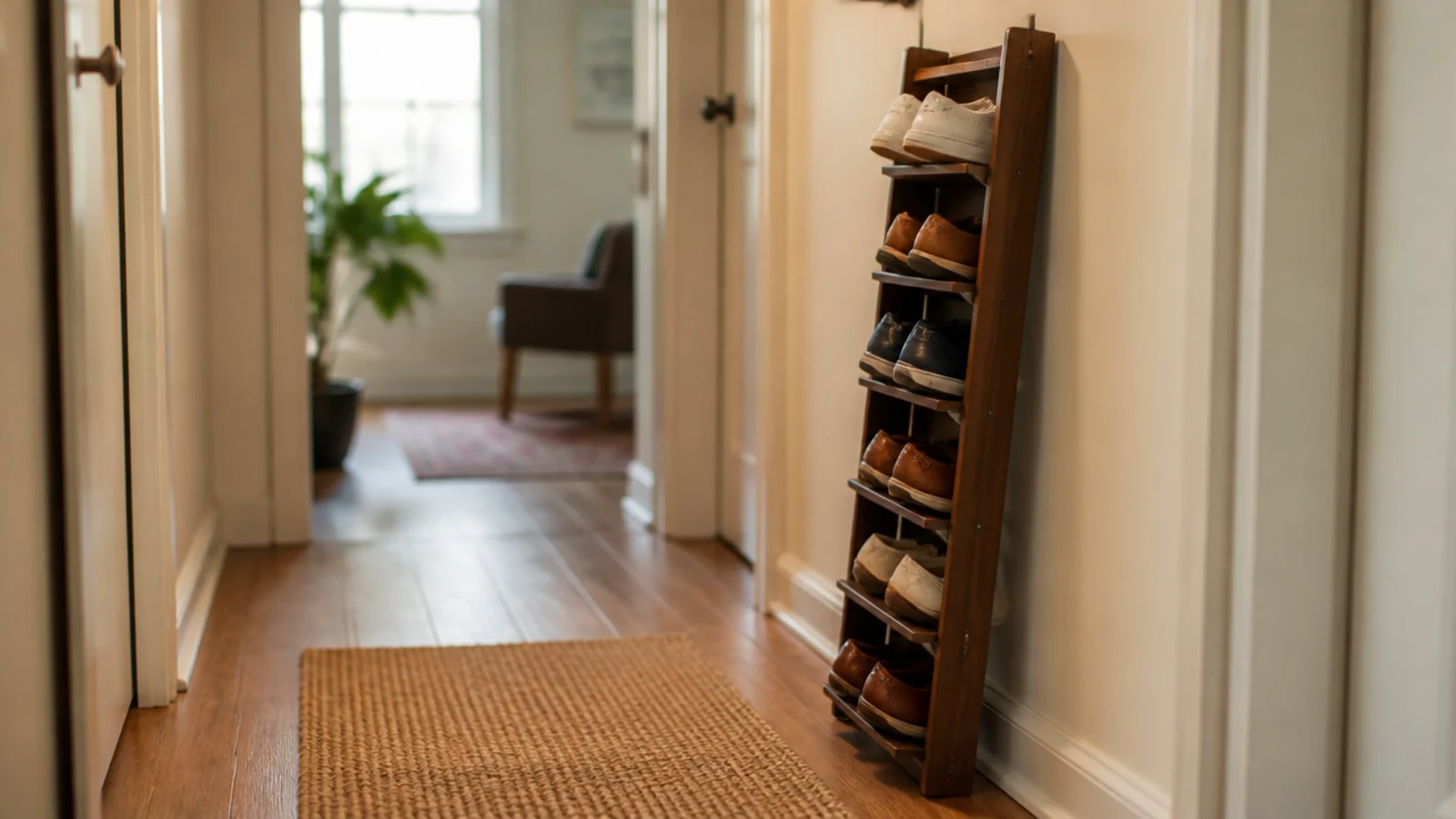
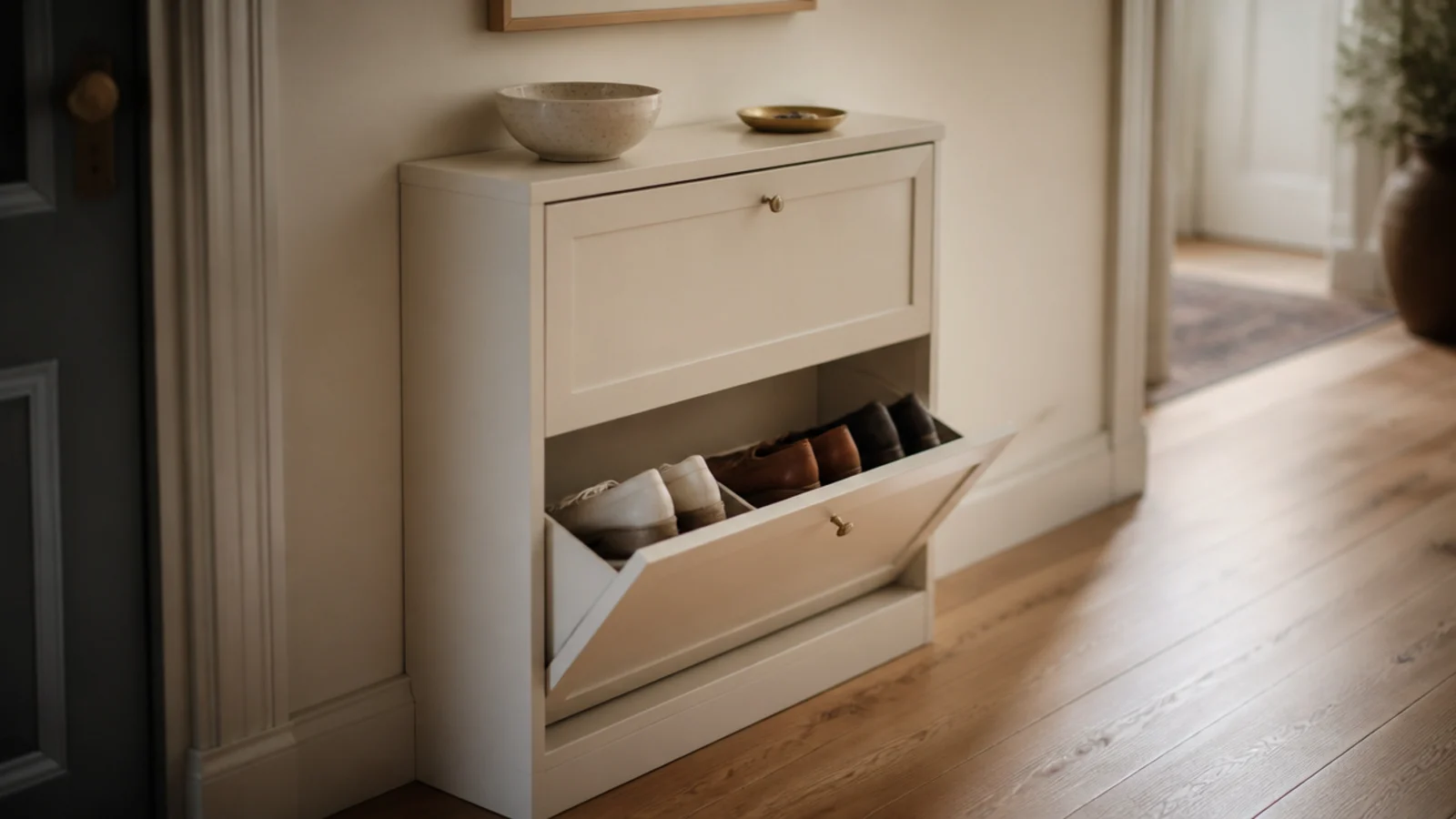
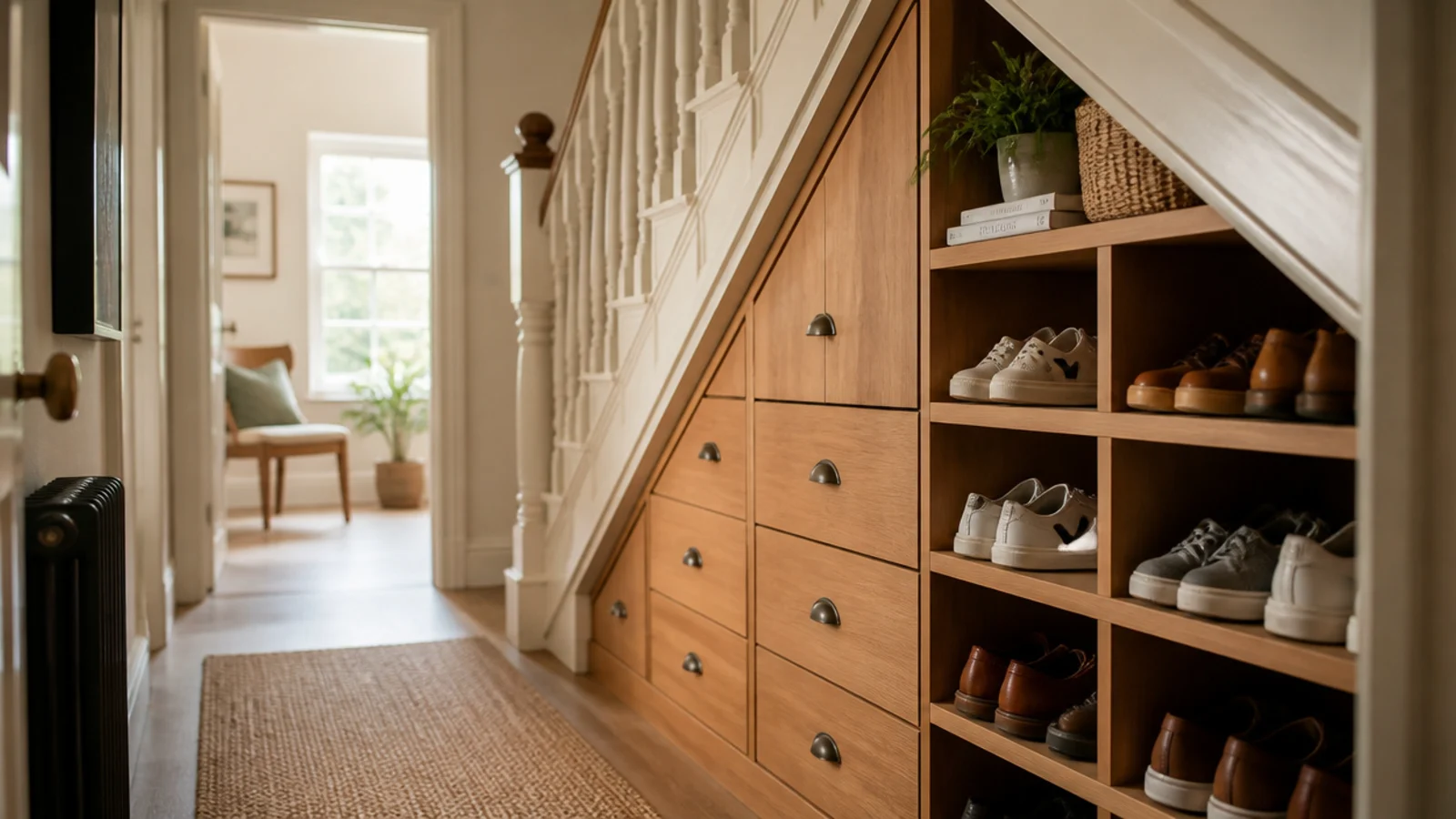
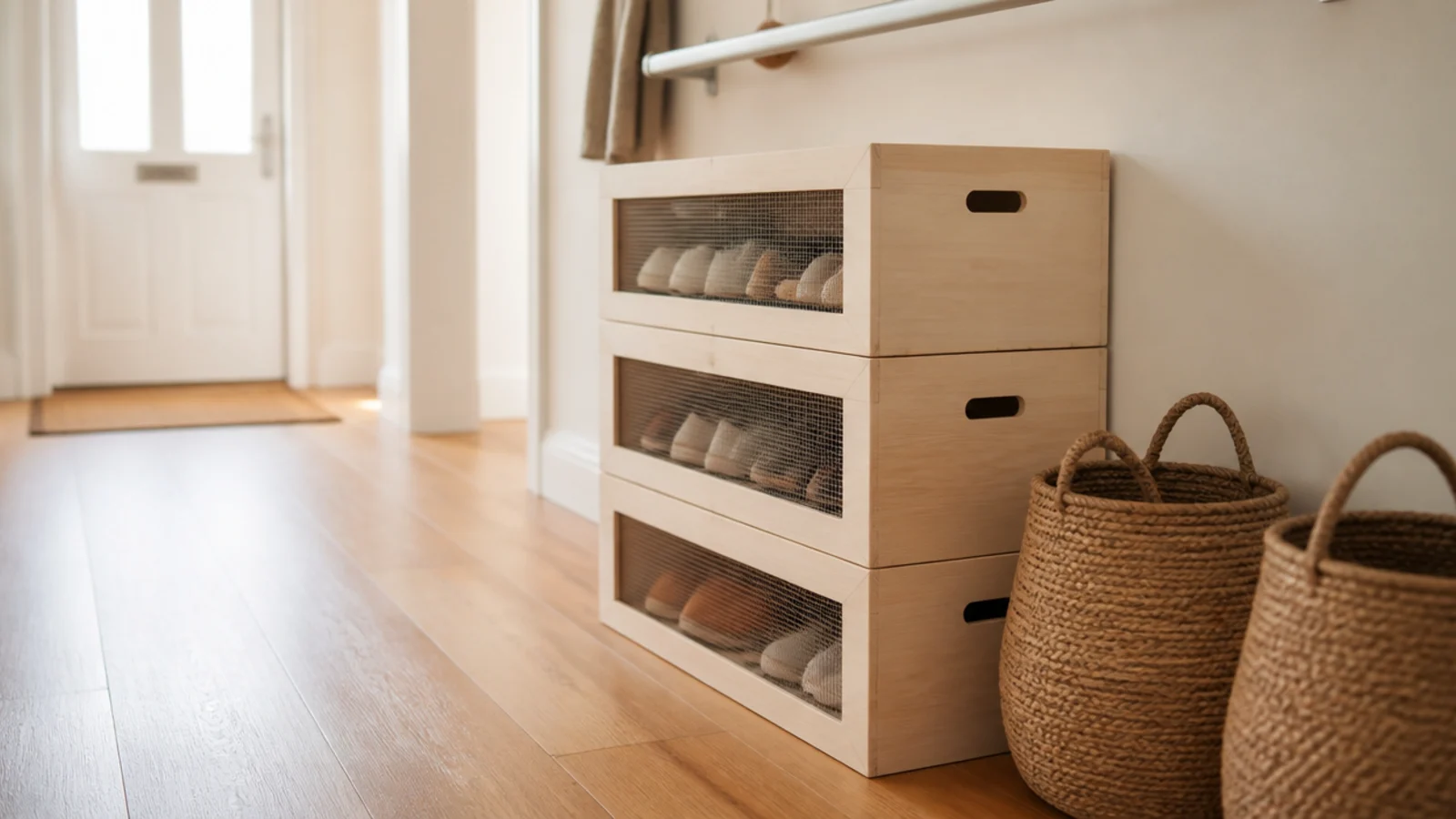
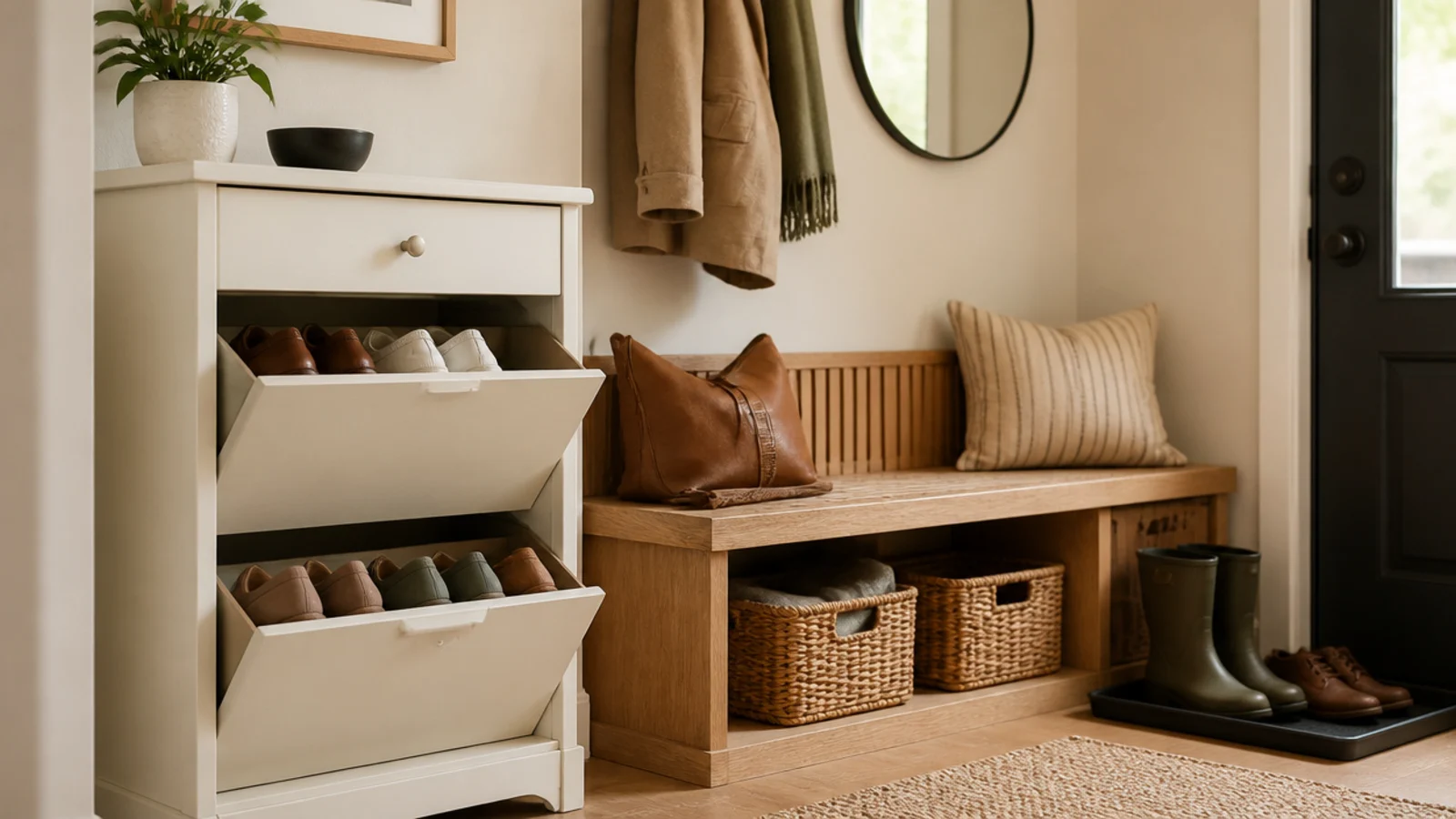
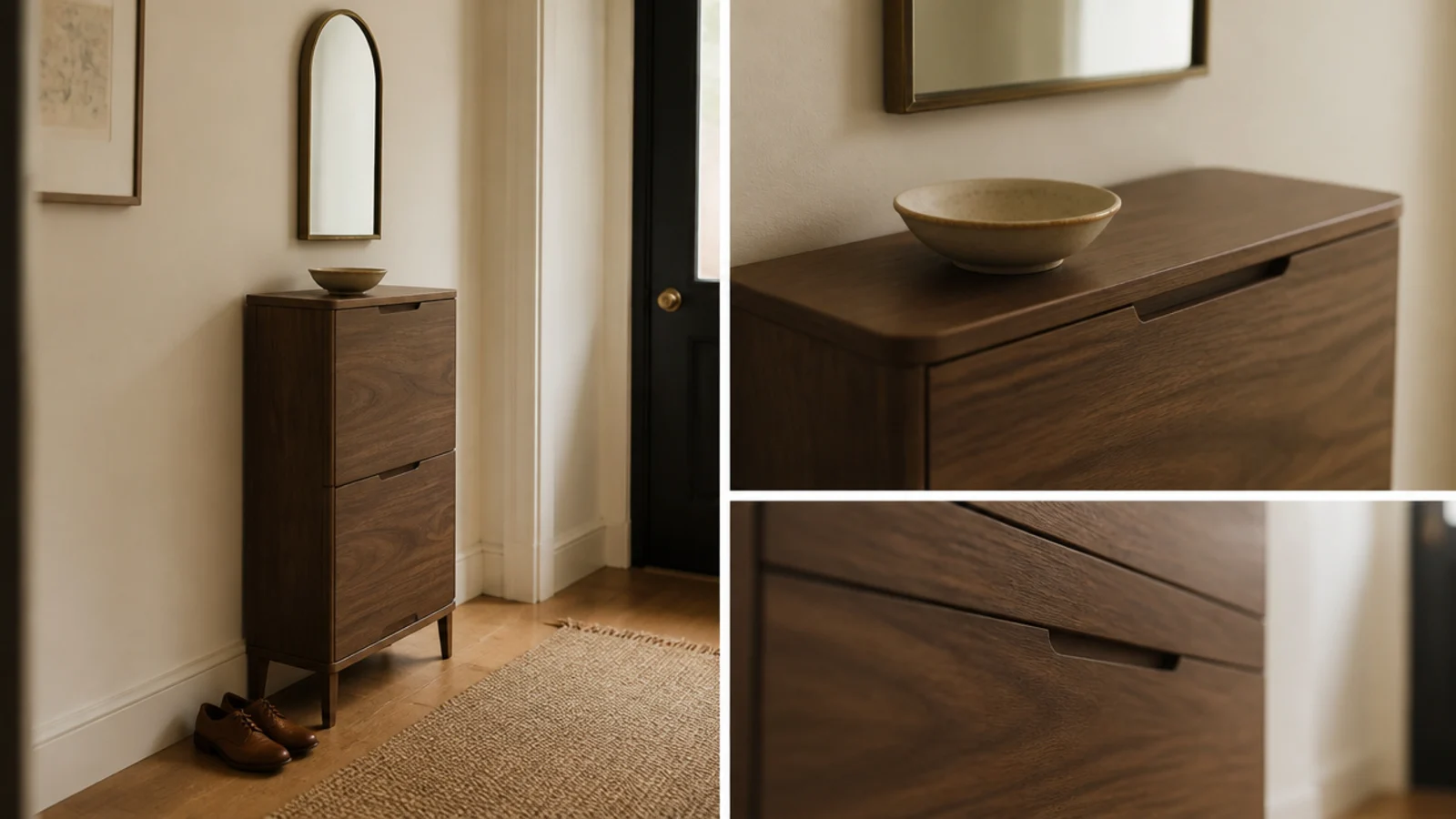
Depth. A men's size 12 sneaker is about 12.5 inches long. Store shoes flat and you need 13 inches of depth; tilt them at 45 degrees and 9 inches is enough. That difference is what makes a slim tilt-out cabinet fit a hallway where an open rack never will.
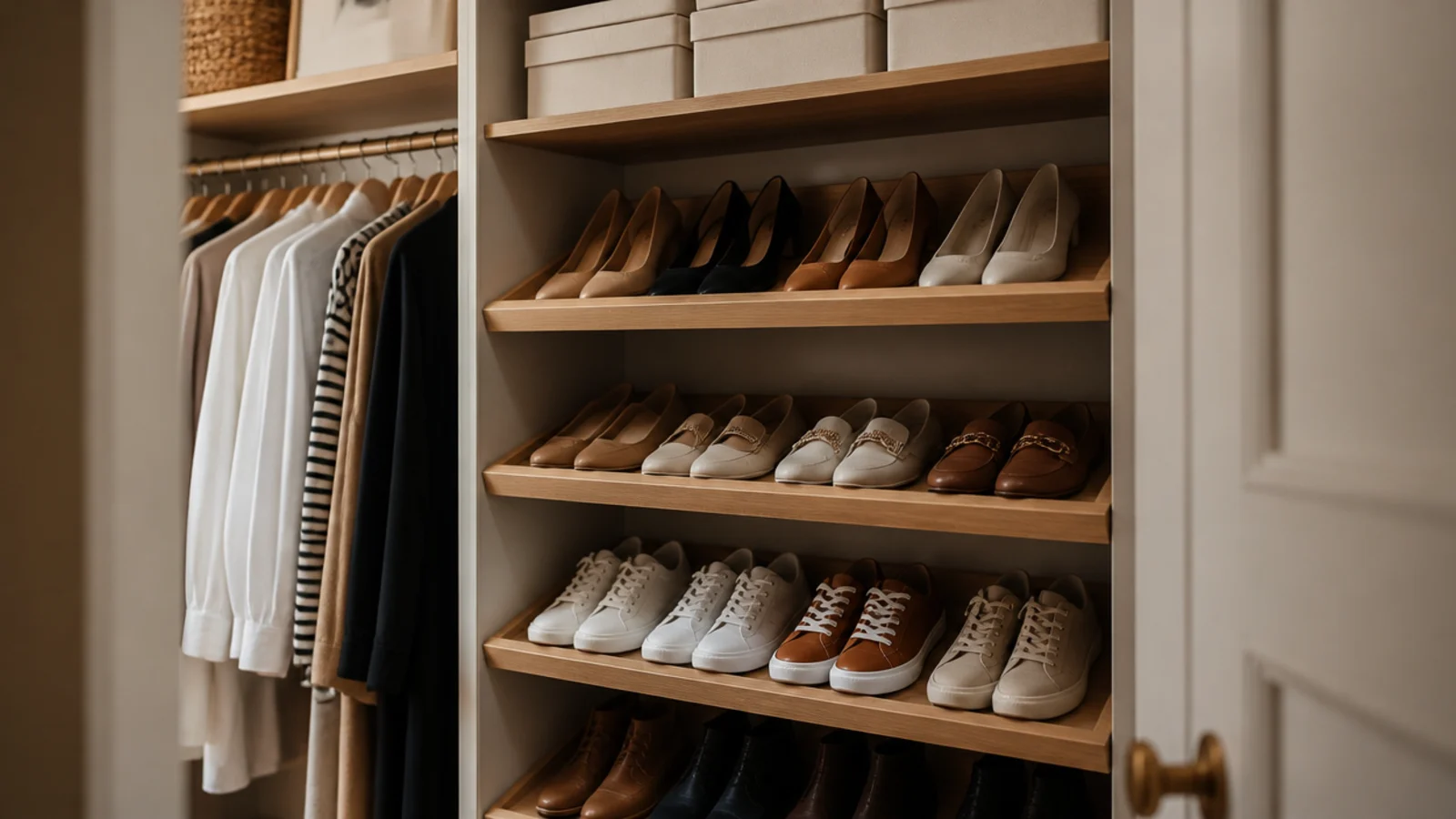
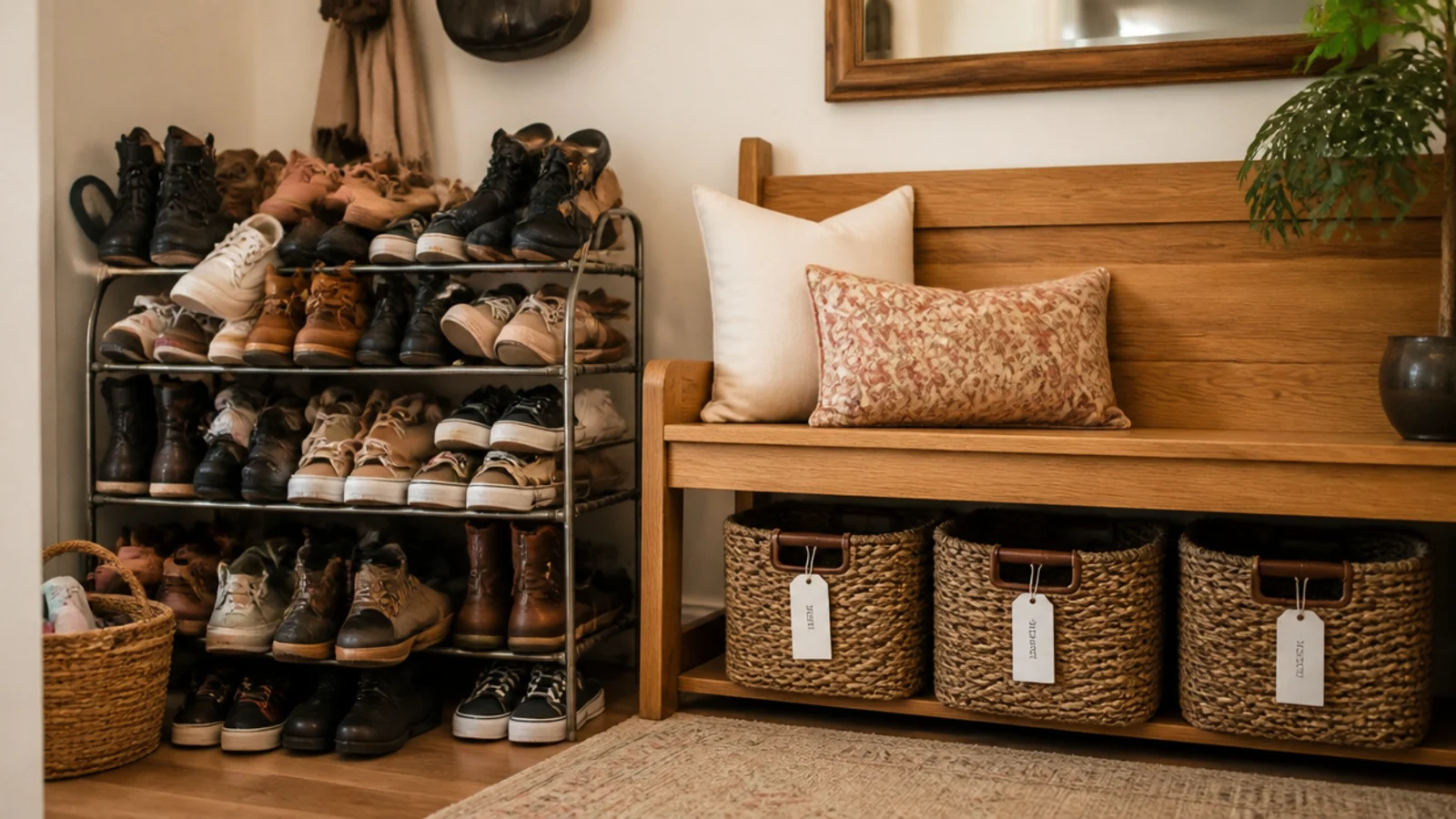
Height per tier. Six inches clears flats and sneakers. Boots need 14 to 16 inches, and knee-high boots need 20. Almost every disappointing shoe rack has evenly spaced 6-inch tiers and nowhere for boots.
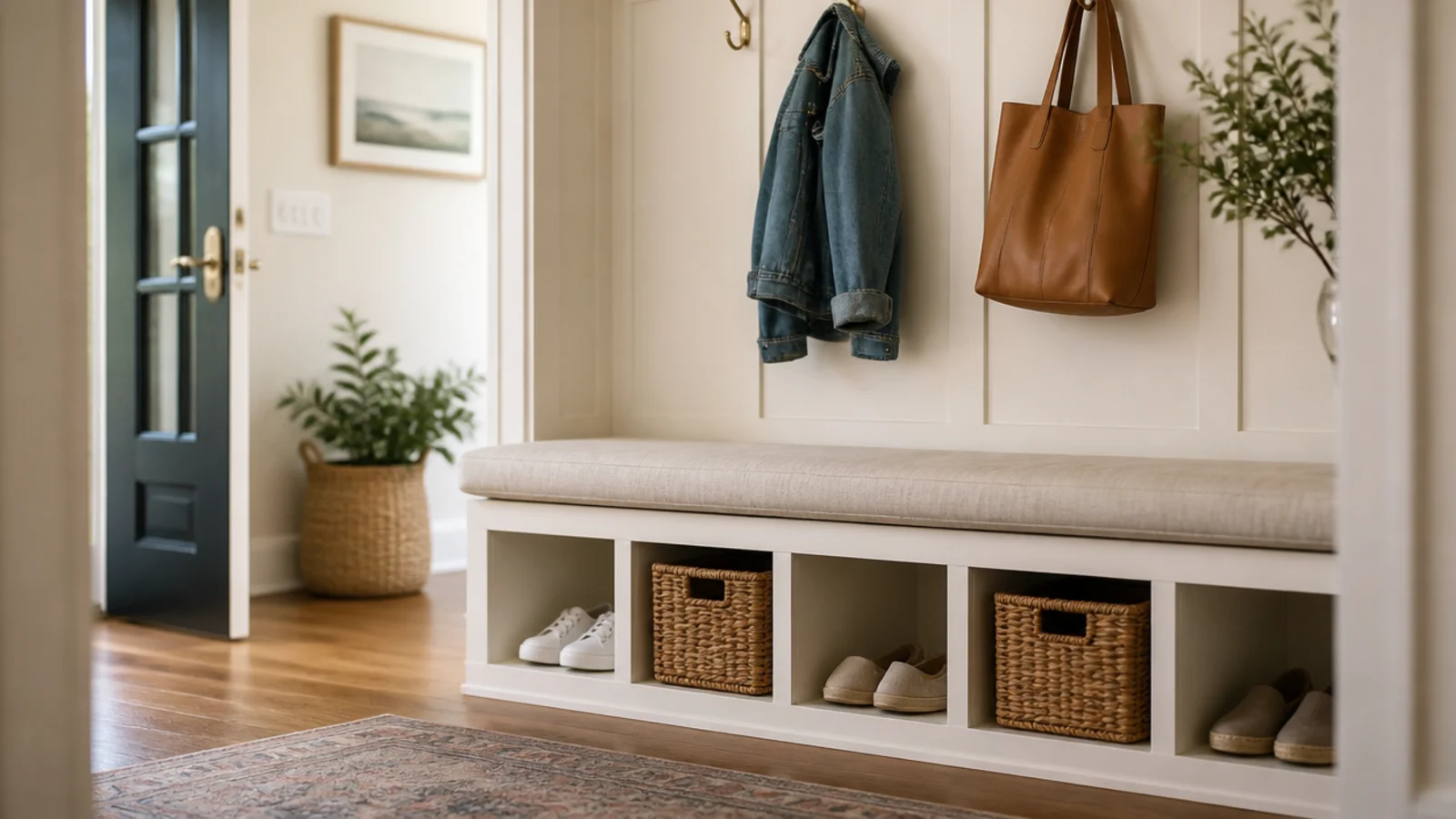
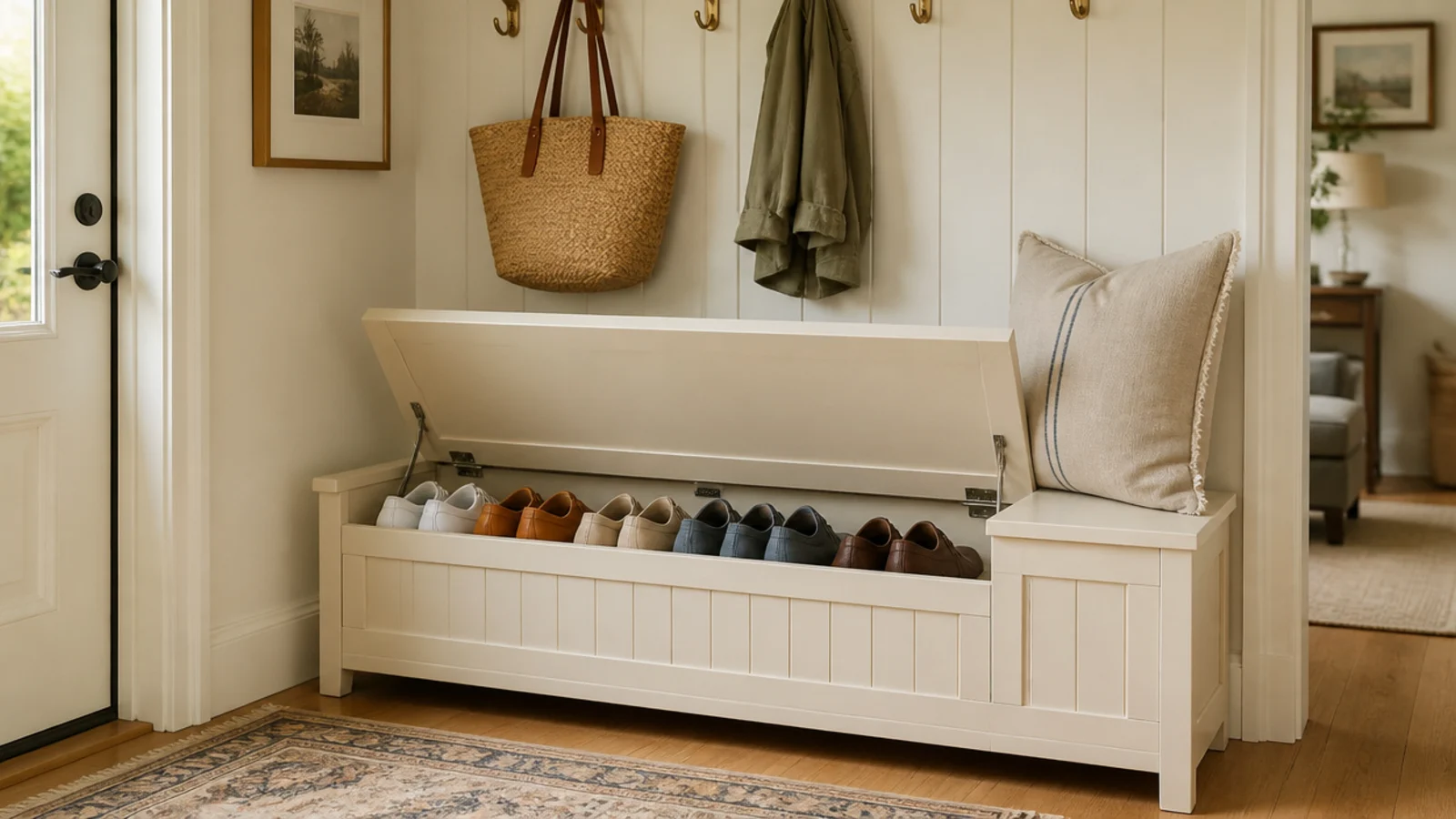
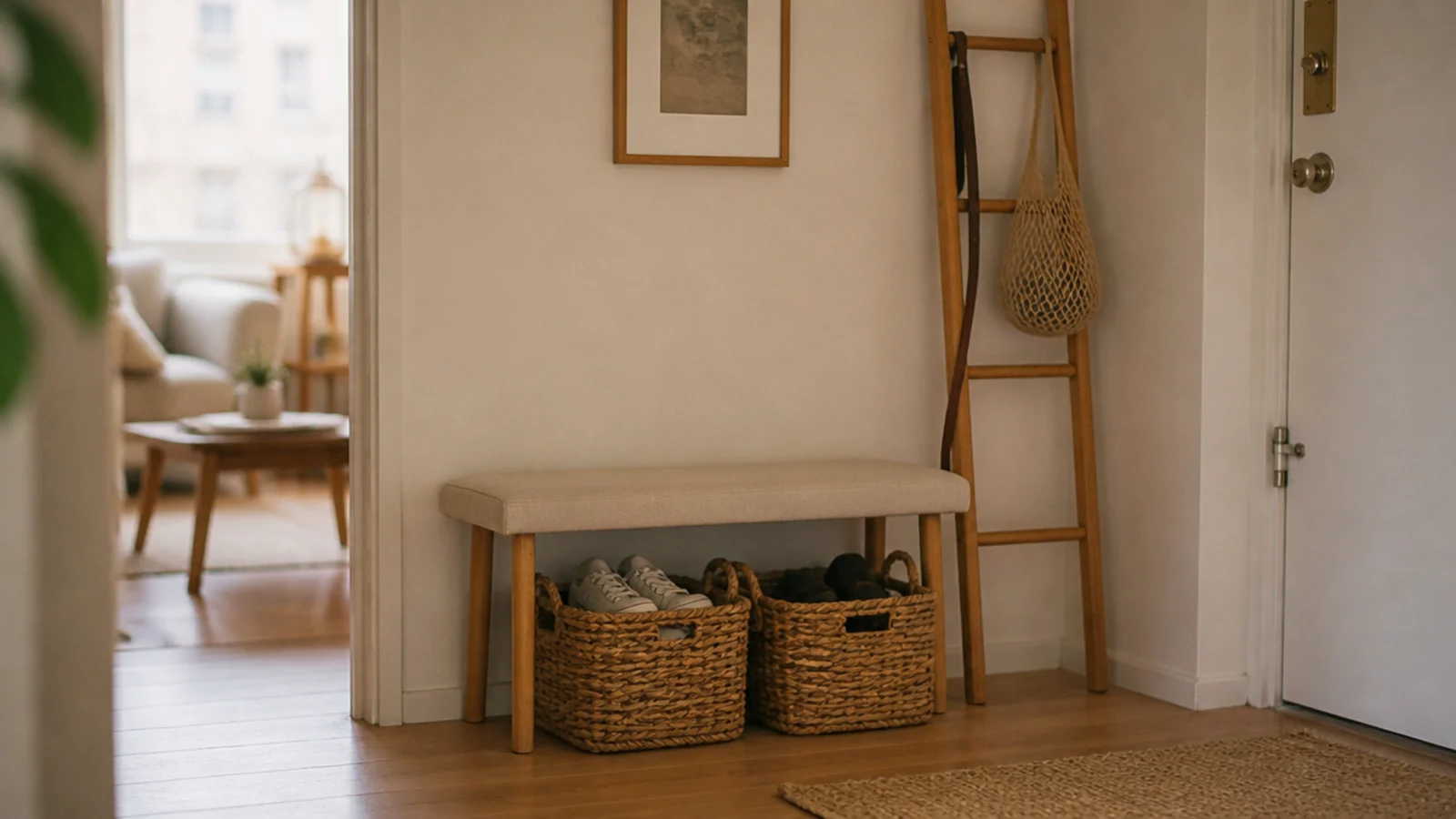
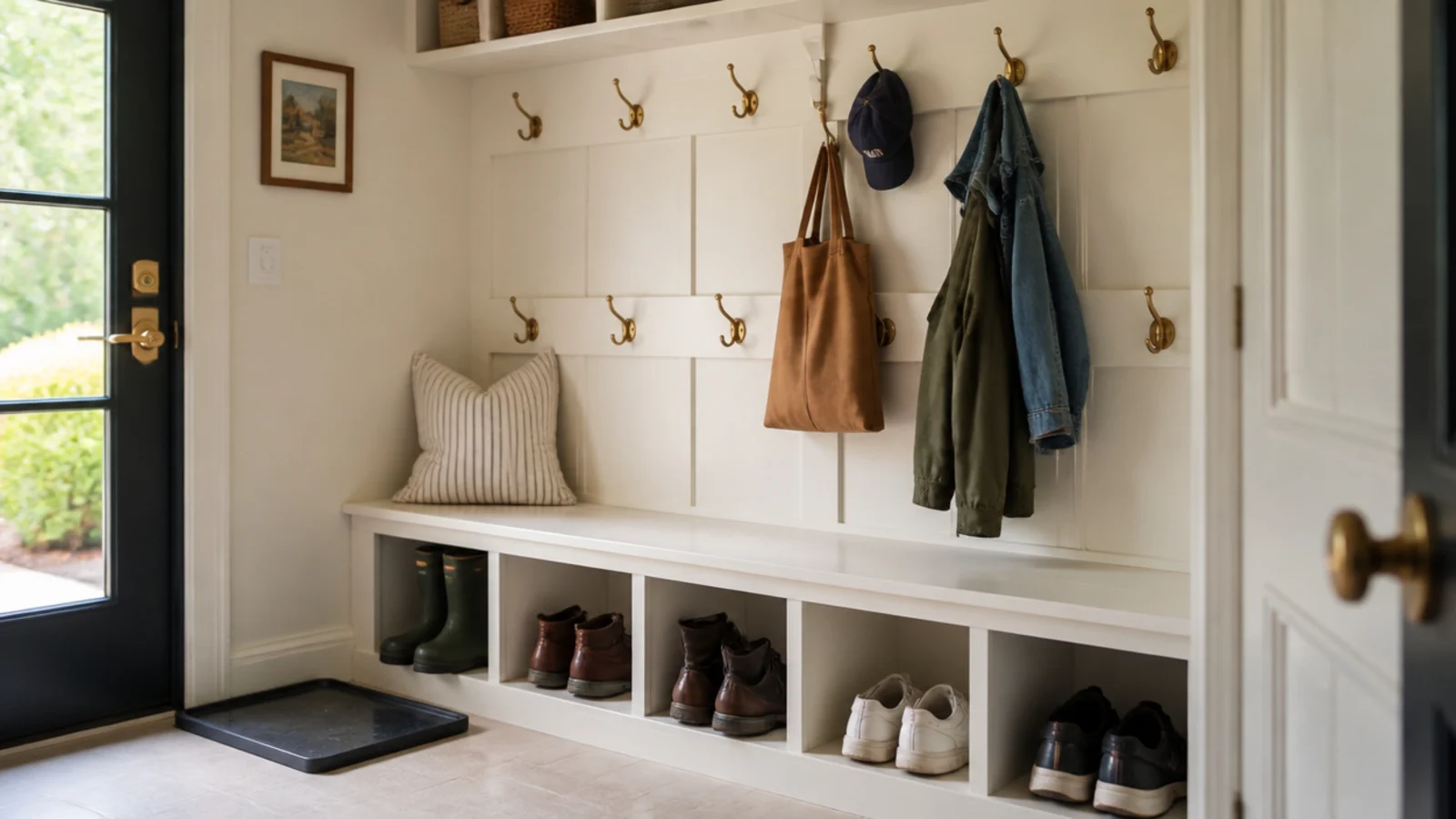
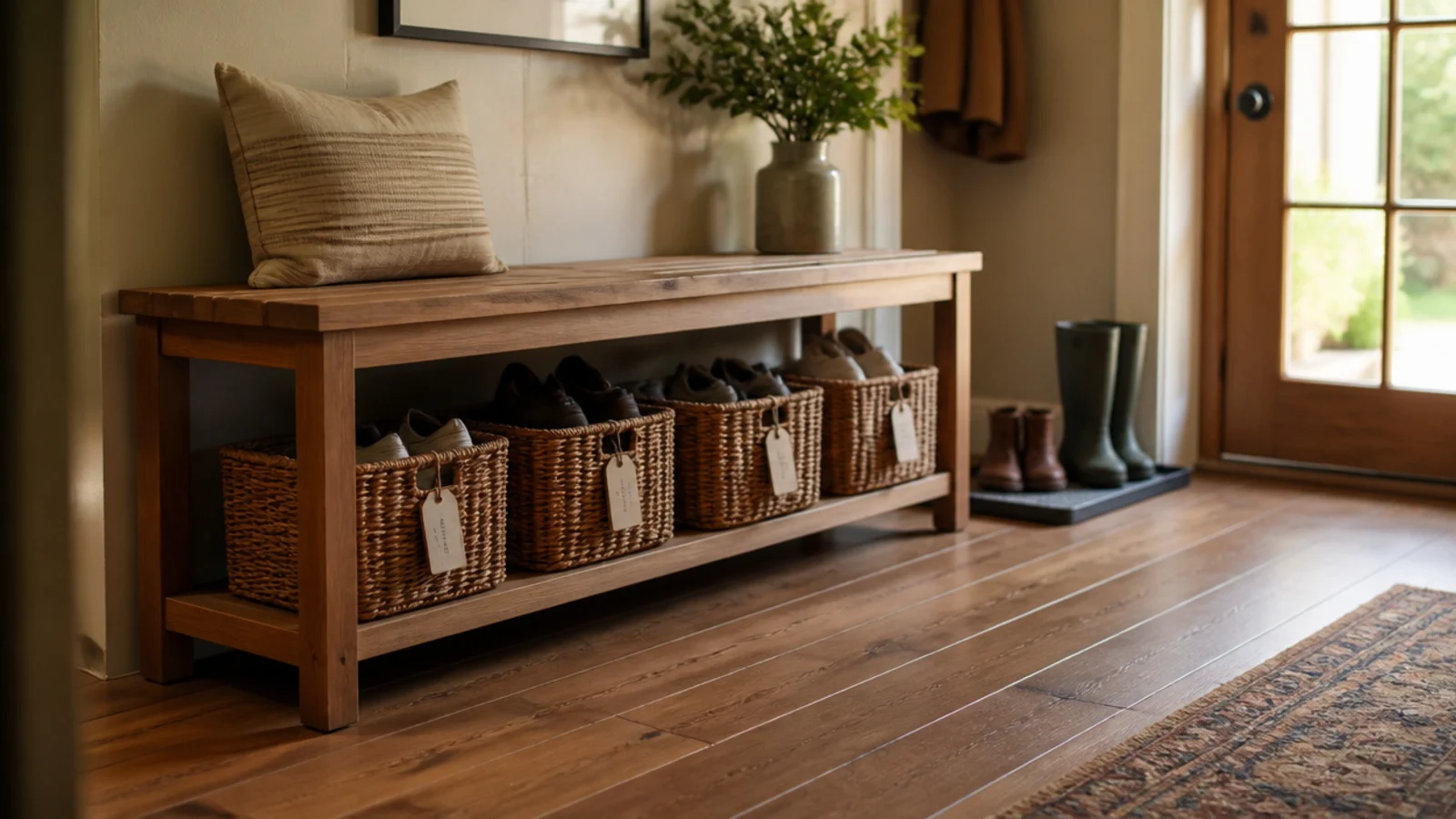
Bench height. Eighteen inches off the floor is the number for a seat you can actually put shoes on from. Higher and children cannot use it; lower and adults struggle to stand up.
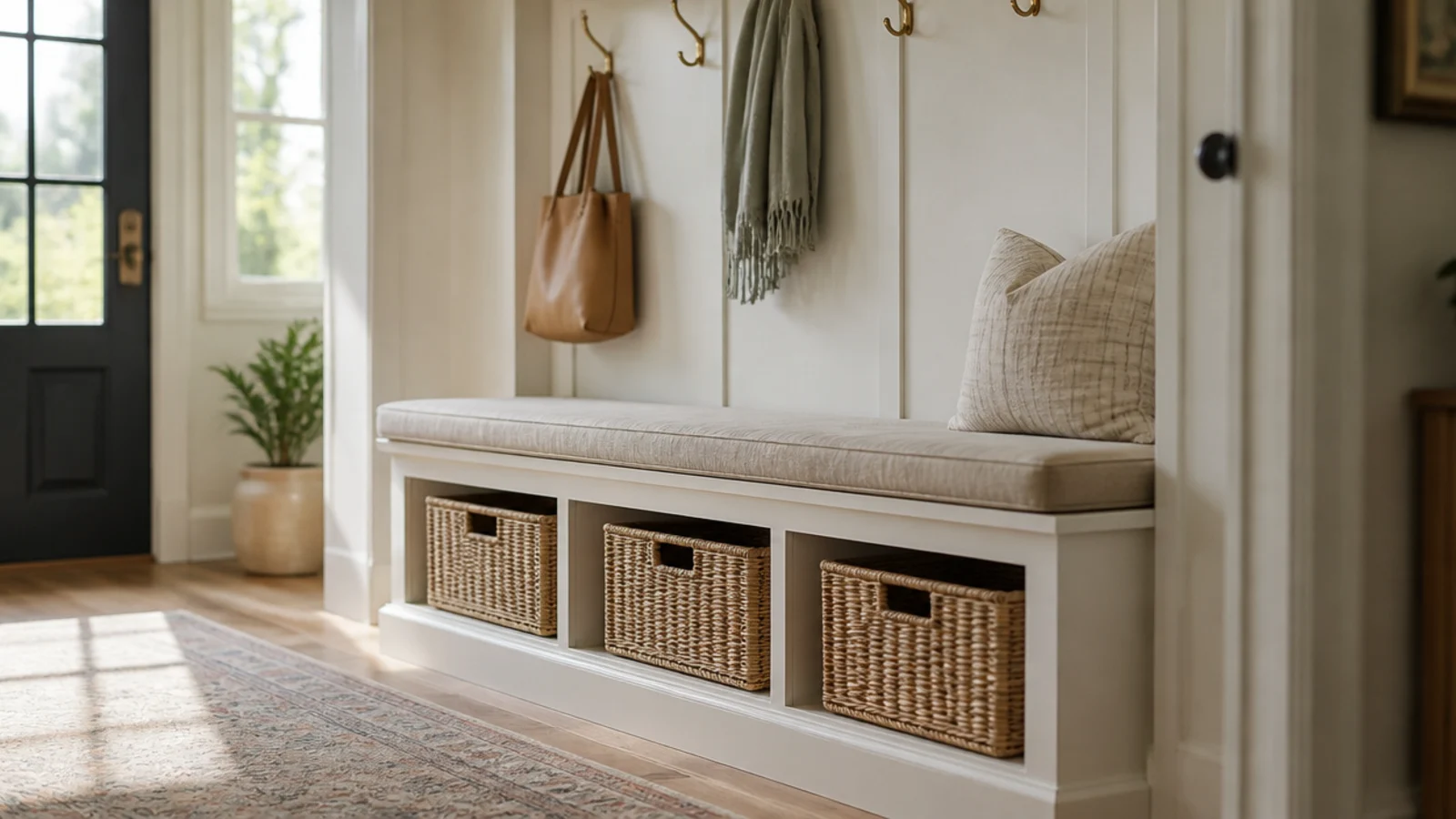
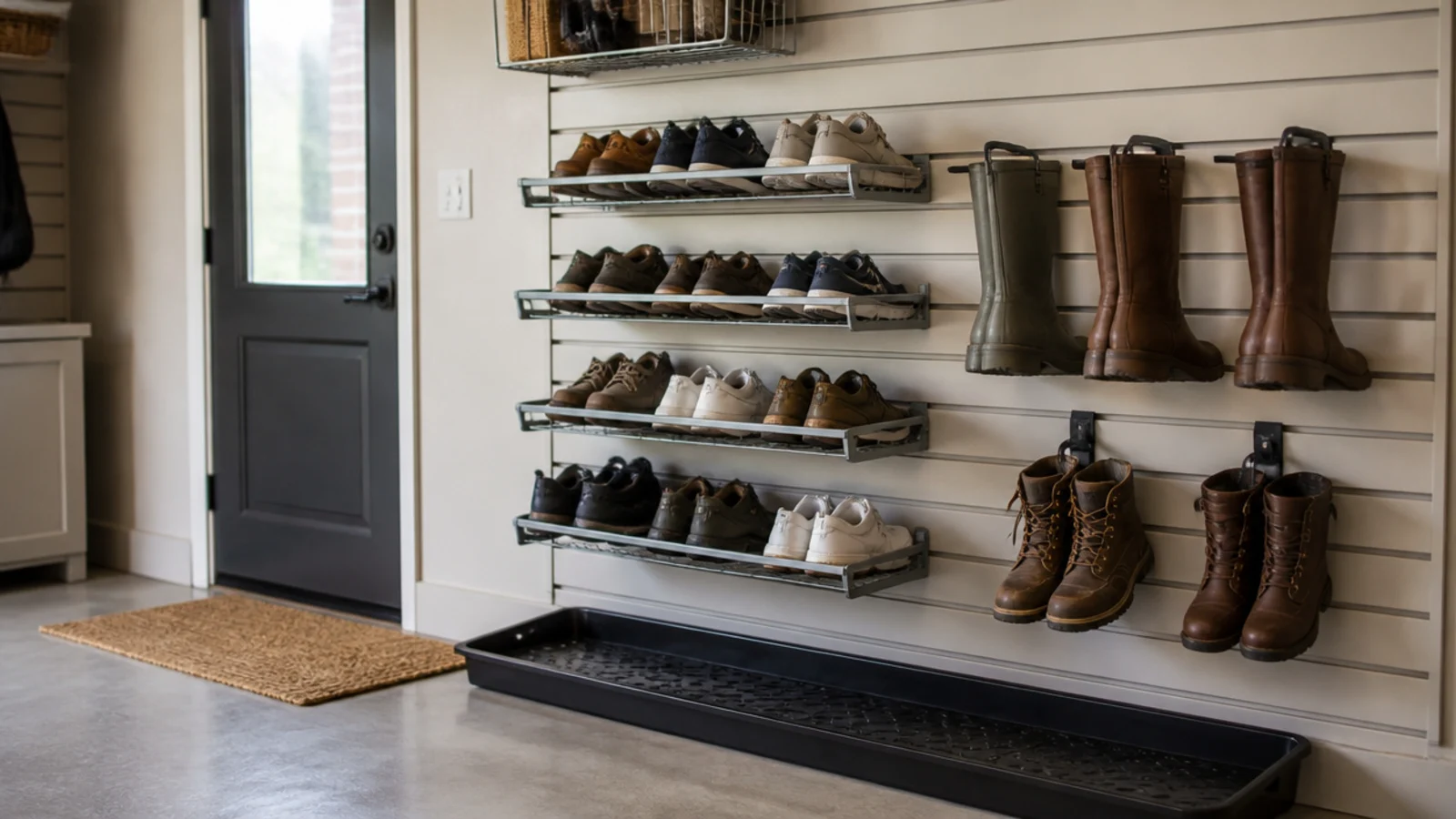
Renters get no-drill benches, freestanding cabinets and over-door racks. Families get open cubbies, because closed doors mean shoes never go in. Small apartments get vertical and tilt-out. Garages and mudrooms get depth and drainage, because wet boots need somewhere to drip that is not a rug.
Work through the guides below in whichever order matches your actual door. The first three are where most people should start.
Start here
15 of 15 published
8 min read
9 min read
10 min read
11 min read
11 min read
8 min read