Shoe Storage Ideas · Listicle
30 Beautiful Shoe Storage Ideas to Steal Today

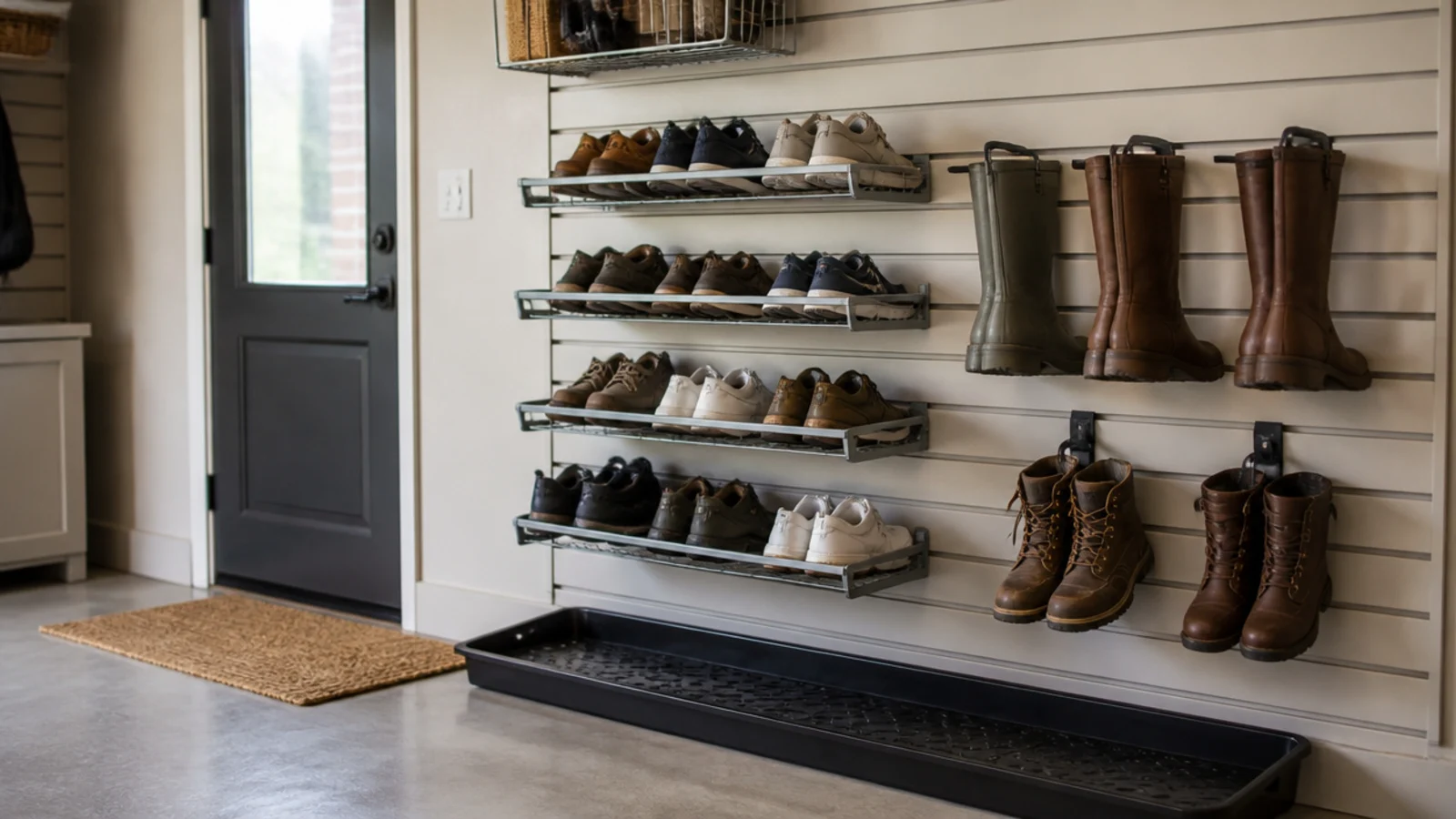
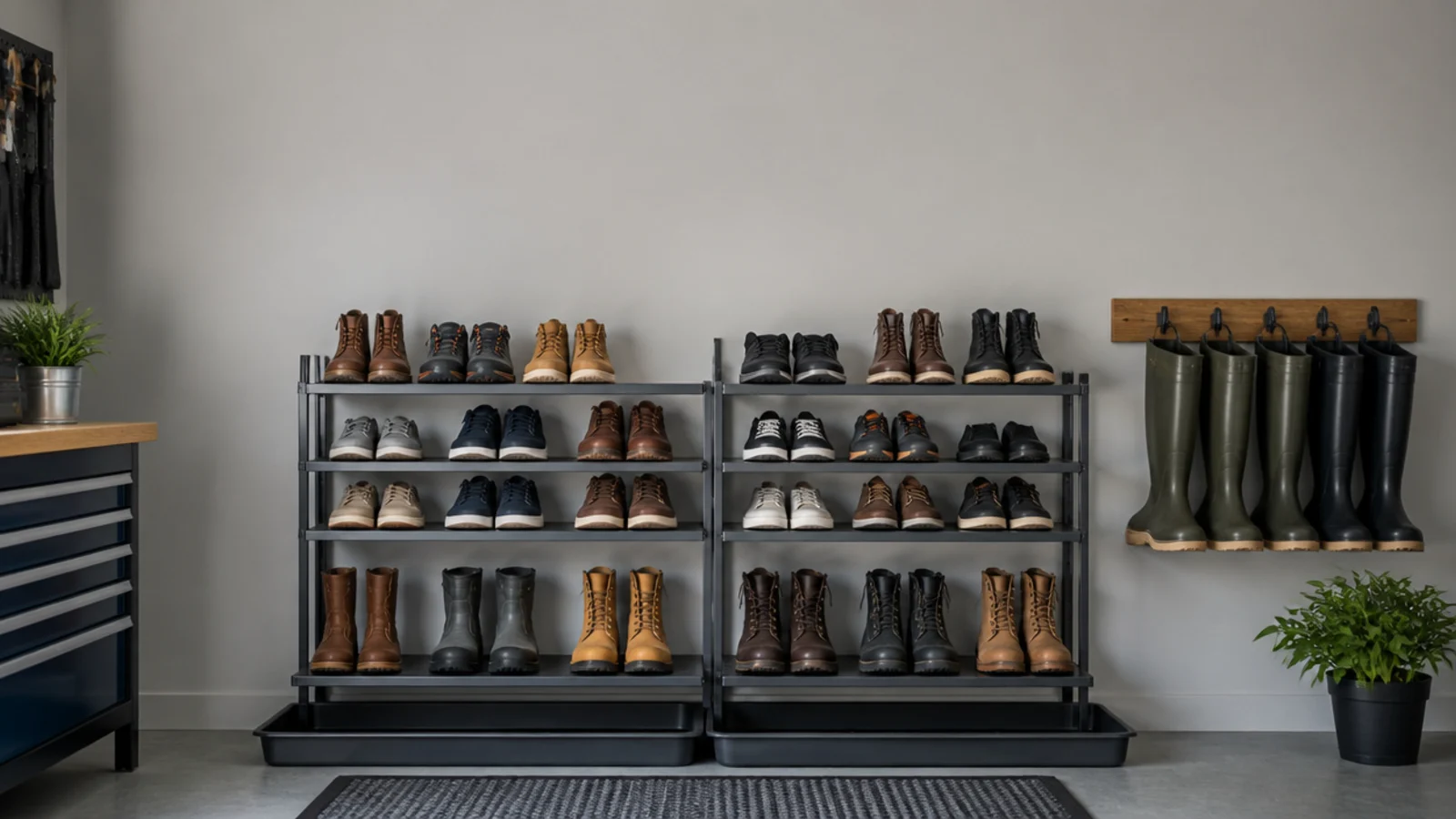
Garage shoe storage has a harder job than anything indoors. The floor is cold concrete, the boots arrive wet, the temperature swings 60 degrees between July and January, and nobody sweeps out there until spring. A rack that works beautifully in a hallway rusts, cracks or sags within two seasons in a garage. These 30 setups are built for the conditions rather than for the photograph.
In this guide32 sections — tap to openHide
- 1.What garage shoe storage has to survive
- 2.A slatwall panel that takes the whole wall
- 3.Track-and-bracket rail shelving
- 4.A drip tray at the house door
- 5.Open wire shelving that drains
- 6.Sealed plywood shelves, never raw
- 7.Raise everything six inches off the slab
- 8.A boot bench at eighteen inches
- 9.Boot bars that hang tall boots upside down
- 10.Ventilated stackable bins
- 11.A gasketed tote for winter gear only
- 12.Overhead shelf for the off-season pairs
- 13.Keep thirty inches clear for the car door
- 14.Pegboard with heavy-duty hooks
- 15.A rolling cart that comes indoors in winter
- 16.A cleat and sports-shoe zone
- 17.A rubber runway from car to door
- 18.A drying rack over the floor drain
- 19.A small fan on a twenty-minute timer
- 20.Keep leather out of the garage entirely
- 21.Cold weather cracks cheap plastic racks
- 22.Color-code the bins because garage light is bad
- 23.Motion-sensor LED strip over the storage
- 24.One locker per person
- 25.The dead corner behind the door swing
- 26.A repurposed kitchen base cabinet
- 27.Steel shelving with adjustable posts
- 28.Tilt bins at child height
- 29.A mud zone with a brush and a hose bib
- 30.A curtain that screens the storage
- 31.A seasonal swap between garage and entry
- 32.Mistakes to Skip
What garage shoe storage has to survive
Four things break shoe storage in a garage, and every idea below answers at least one of them.
Slab moisture. Concrete wicks water upward continuously, even when the surface looks bone dry. Anything resting on it stays faintly damp. Keep every shelf, bin and tray a minimum of six inches off the floor and the problem simply stops.
Water arriving. Boots come in wet and cars drip. Give the water a designated place to go — a lipped tray, a wire rack over a drain, a rubber runway — or it goes across the slab and then indoors on somebody's socks.
Temperature cycling. A garage swings from below freezing to over 100 degrees. That cracks brittle plastic, dries leather and separates glued soles. Rubber, canvas, sports shoes and work boots live out here happily. Leather you care about does not.
Clearance. Leave 30 inches between the shelving face and the car door so it opens fully, and cap depth at 12 inches on any wall you park beside.
Sizing is the same as anywhere else: two to three pairs per person plus one seasonal set, with the rest archived overhead.
Budget tiers below: $ under $60, $$ $60–$150, $$$ $150 and up.
1. A slatwall panel that takes the whole wall
The most flexible system for a wall you will keep rearranging. Panels screw to the studs and accept shelf brackets, hooks and baskets anywhere along the groove.
Around $4 a square foot, and you can move a boot hook in five seconds without a drill. $$–$$$
2. Track-and-bracket rail shelving
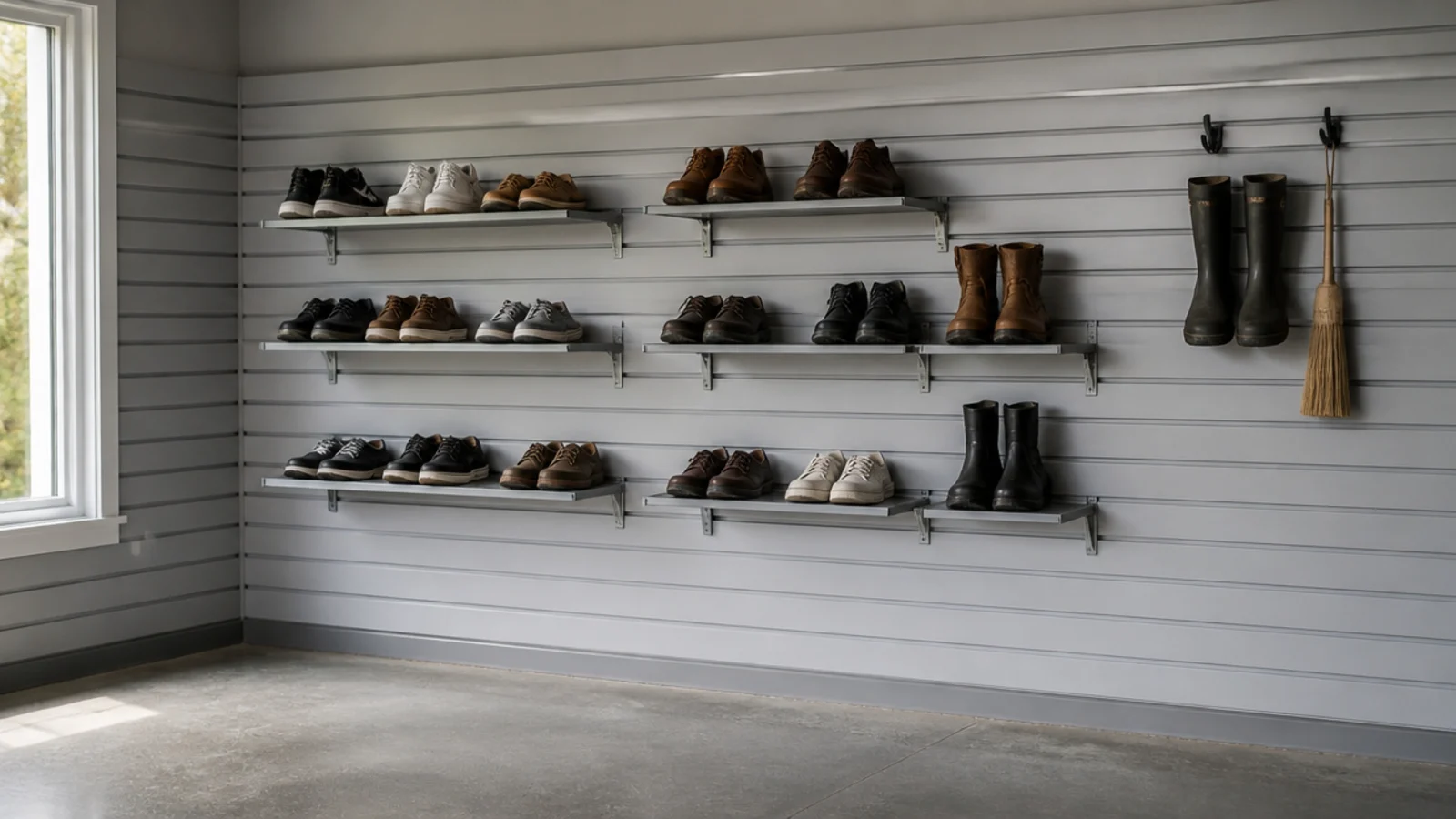
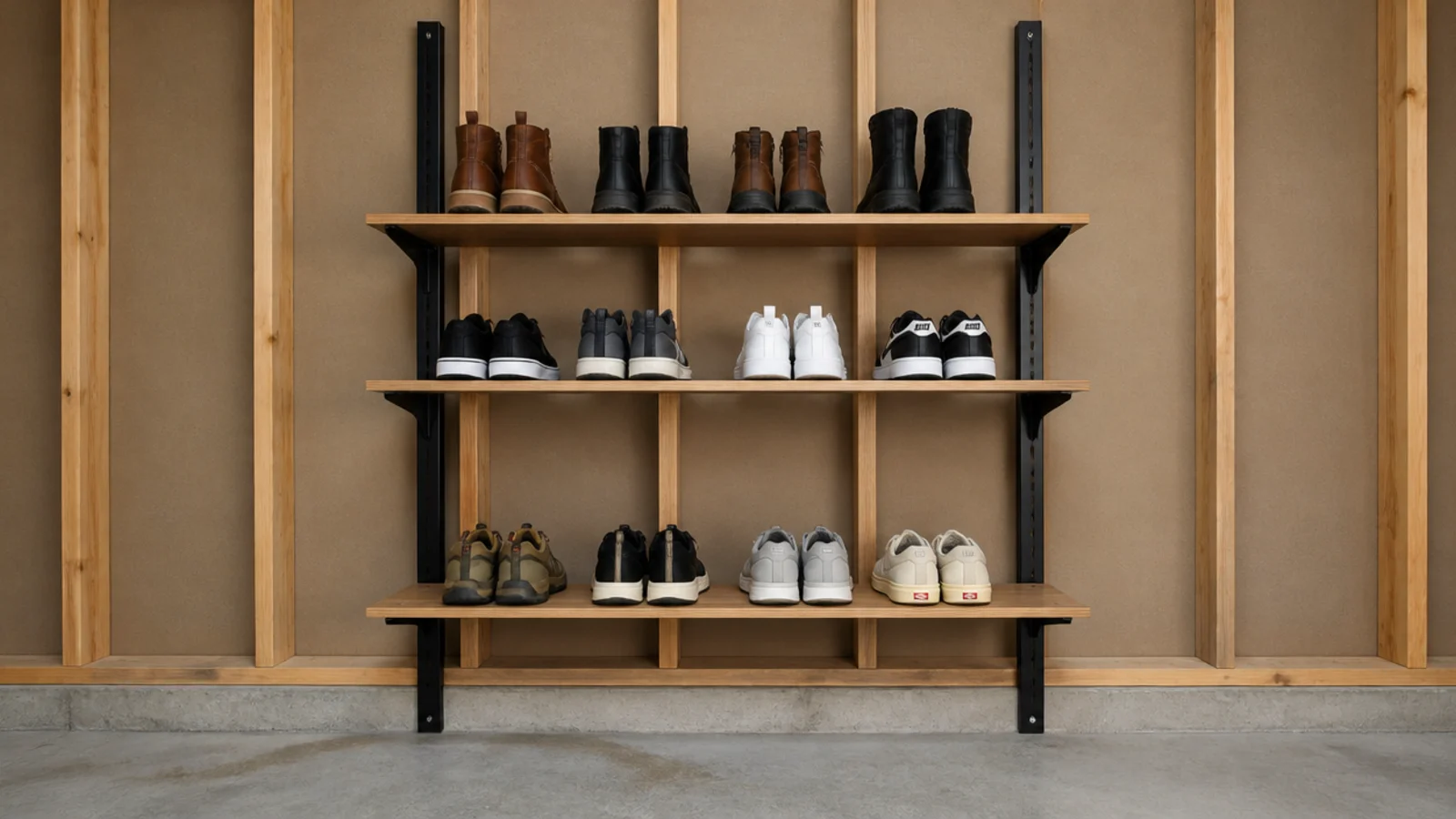
Cheaper than slatwall and stronger per bracket. Two vertical steel tracks lagged into studs carry shelves at any height you like.
Set the lowest shelf at 16 inches for boots and 6-inch gaps above it. Tracks run about $12 each and hold far more than the shelf will. $$
3. A drip tray at the house door
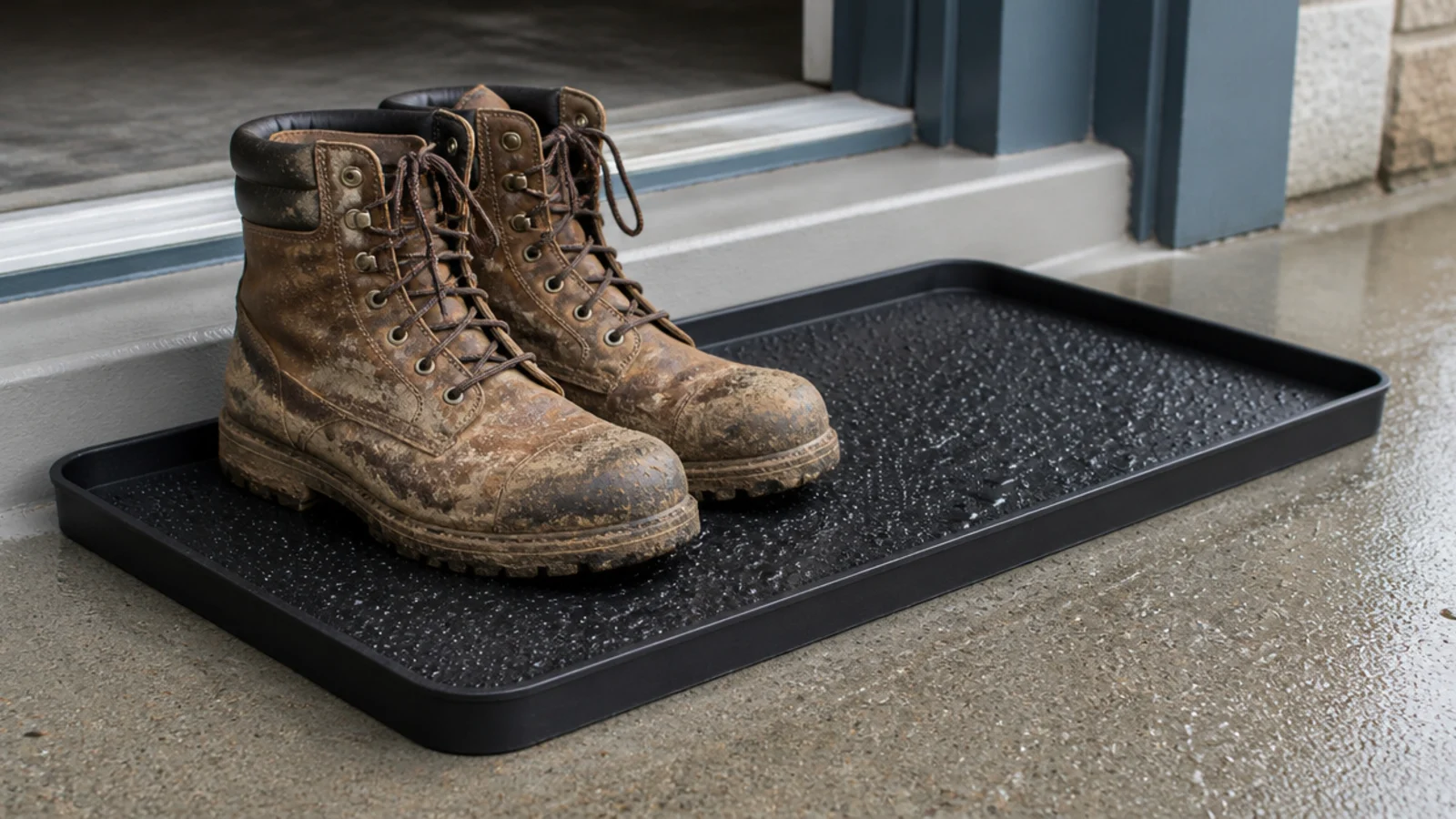
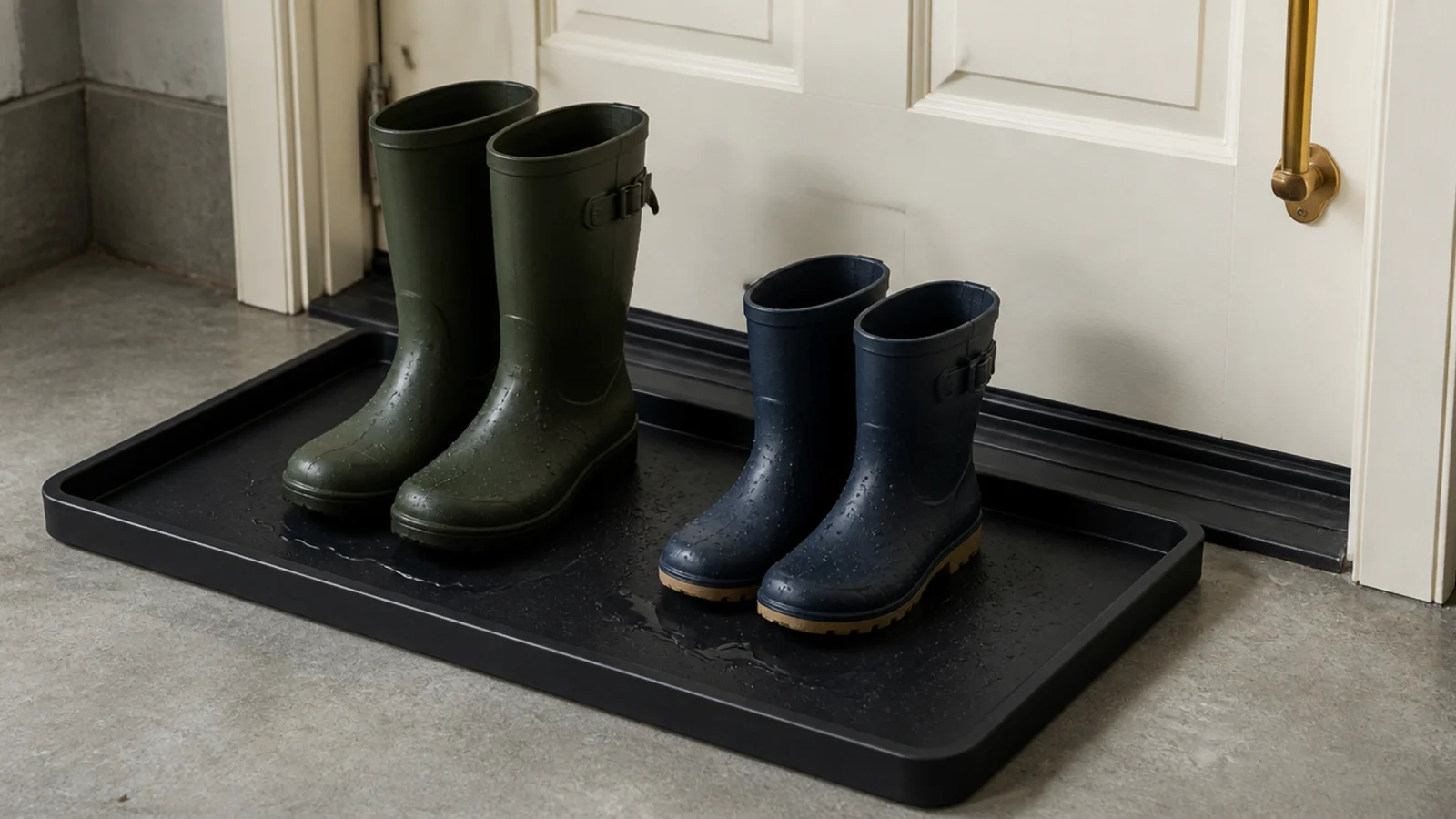
The single highest-value item in a garage. A tray with a raised lip, at least 15 inches deep, sitting just inside the interior door.
Wet boots land there instead of on the slab, and the water never reaches the kitchen floor. Metal or heavy rubber, not thin plastic that cracks in cold. $
4. Open wire shelving that drains
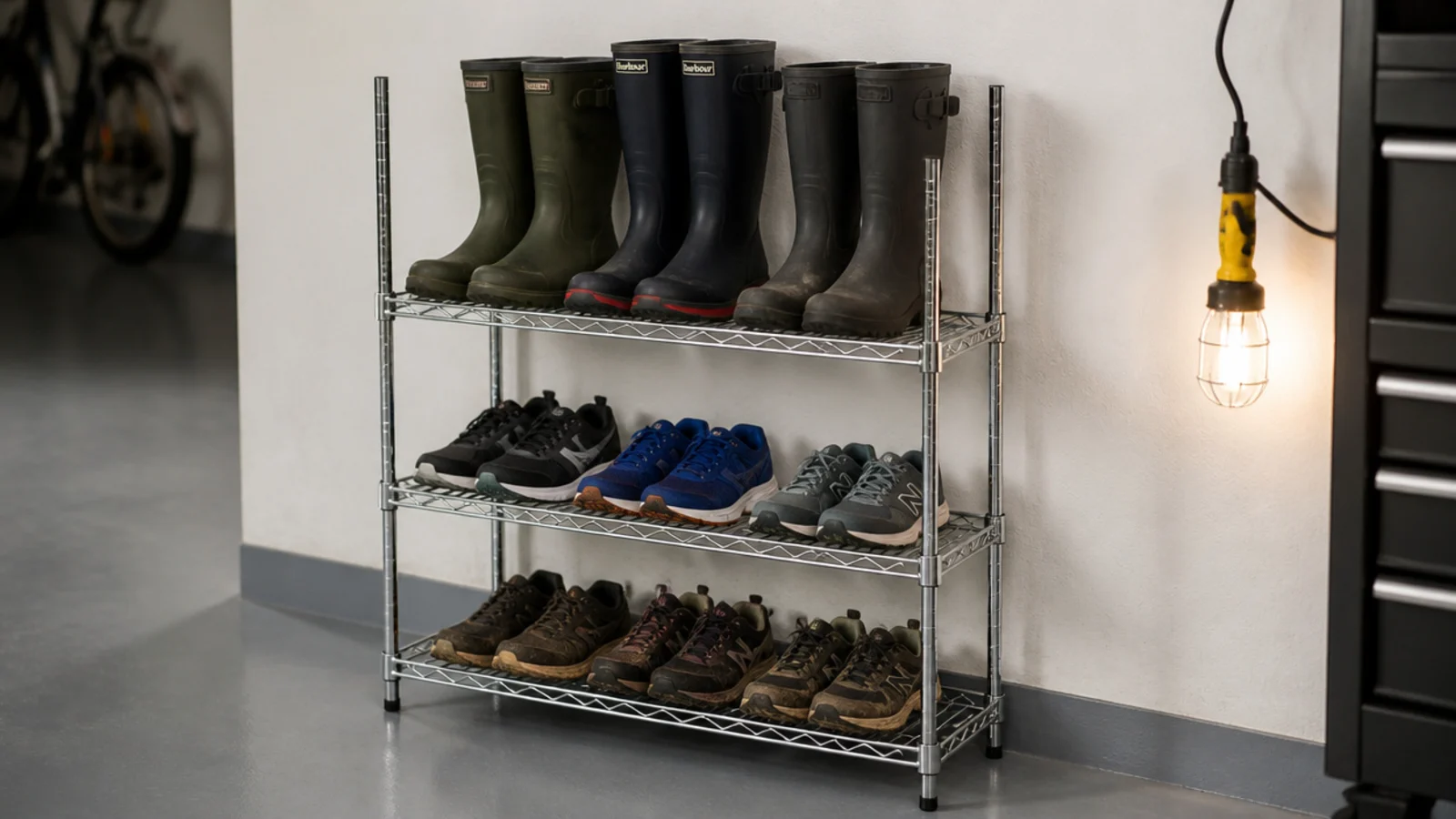
Solid shelves hold a puddle under a wet boot for hours. Wire shelving lets it fall straight through and lets air reach the sole.
Choose galvanized or epoxy-coated wire; bare chrome rusts within a season wherever damp shoes sit. $$
5. Sealed plywood shelves, never raw
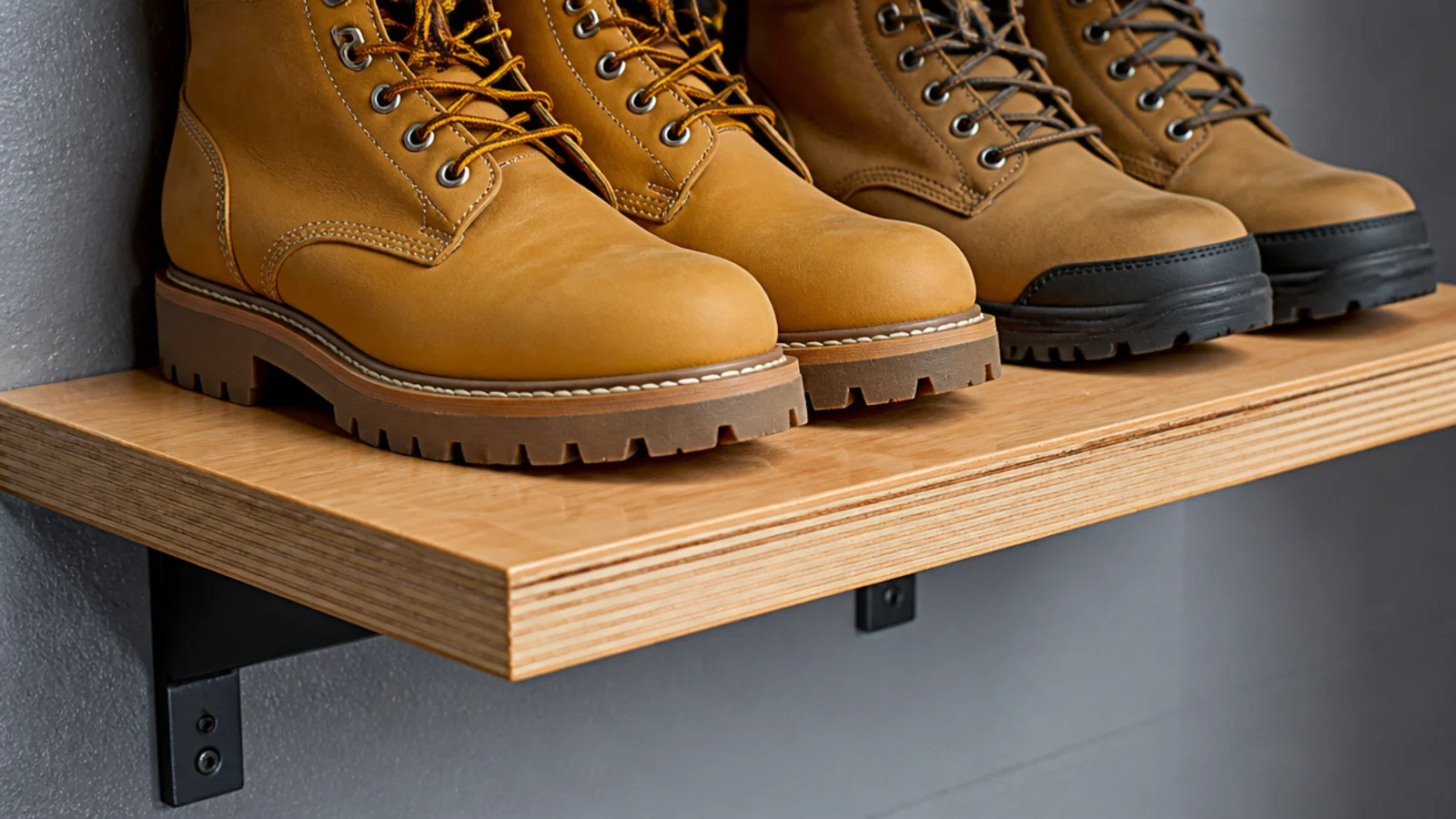
Raw plywood drinks moisture through its edge grain and swells at the corners within a year.
Two coats of water-based polyurethane, edges included, costs about $18 and makes the same shelf last a decade. Sand lightly between coats and pay particular attention to the front edge. $
6. Raise everything six inches off the slab
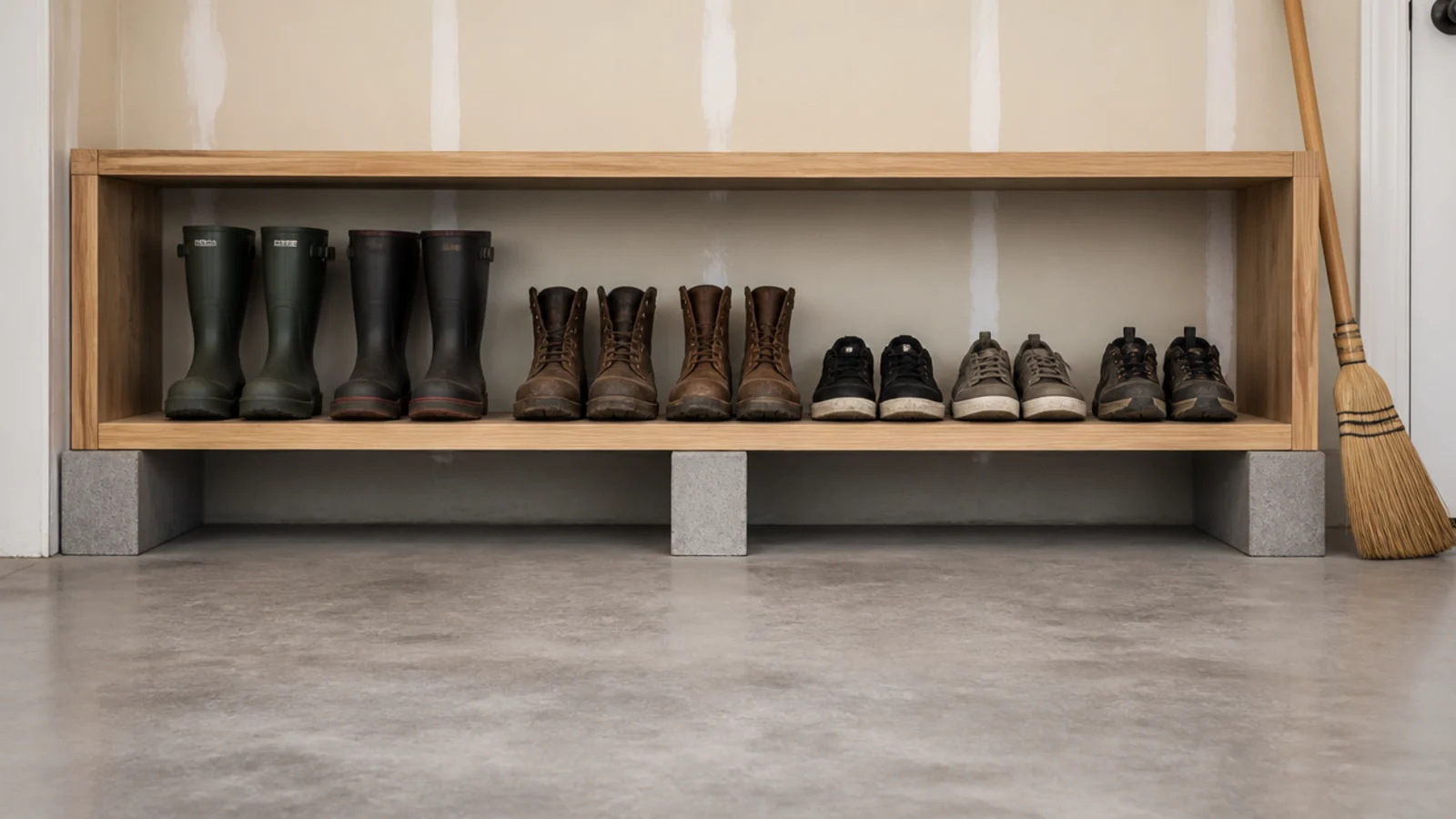
If you take one number from this list, take this one. Six inches of air under every shelf, bin and bench.
It defeats slab wicking, clears car runoff, and lets you sweep or blow the floor in one pass without lifting anything. Blocks, feet or a wall mount all work. $
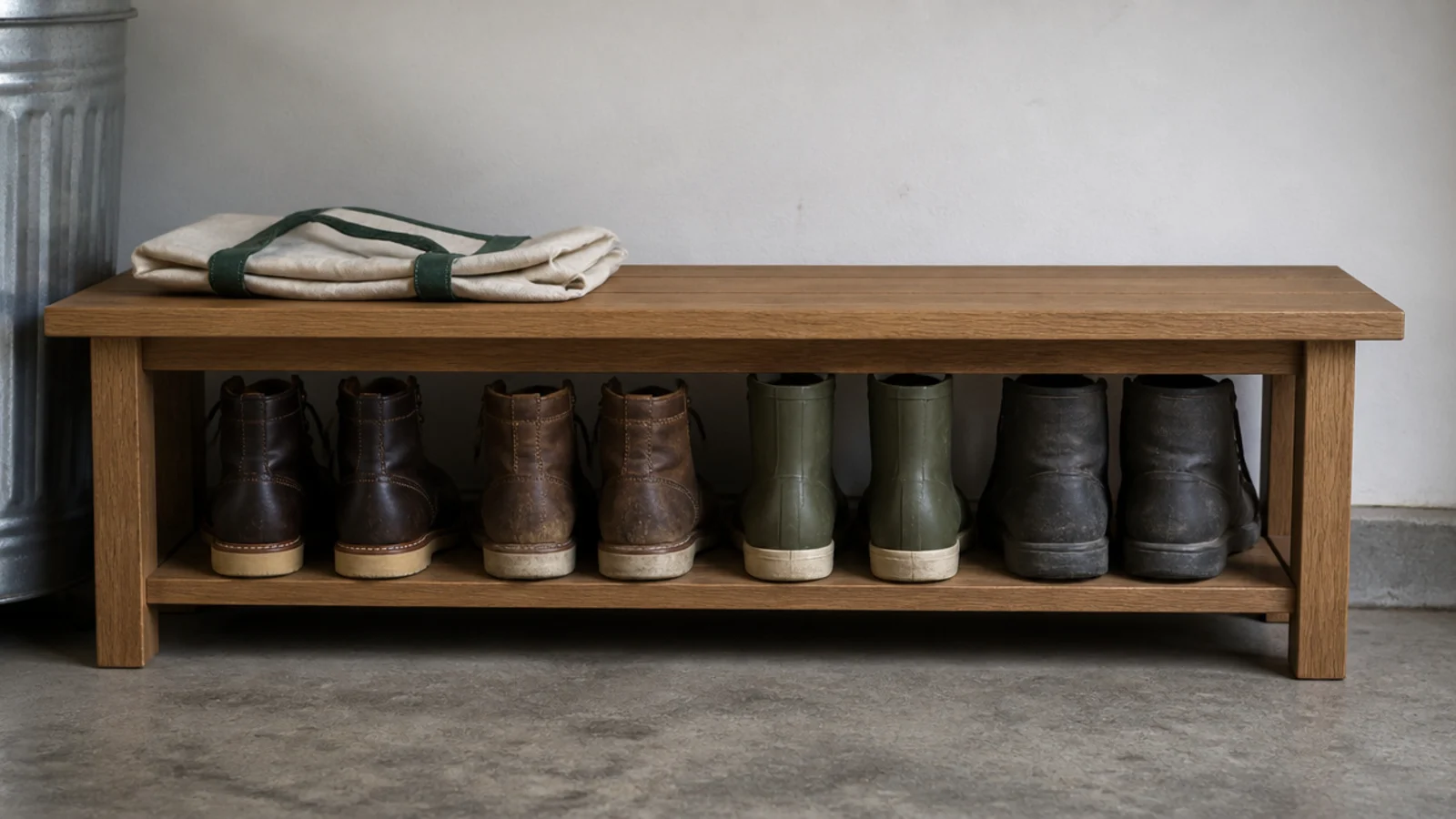
7. A boot bench at eighteen inches
Eighteen inches to the top of the seat is the height that lets an adult pull boots on and off properly.
Build it from sealed 2x4s and plywood for about $45, with an open shelf beneath for four pairs. Skip the cushion out here — it will never fully dry. $–$$
8. Boot bars that hang tall boots upside down
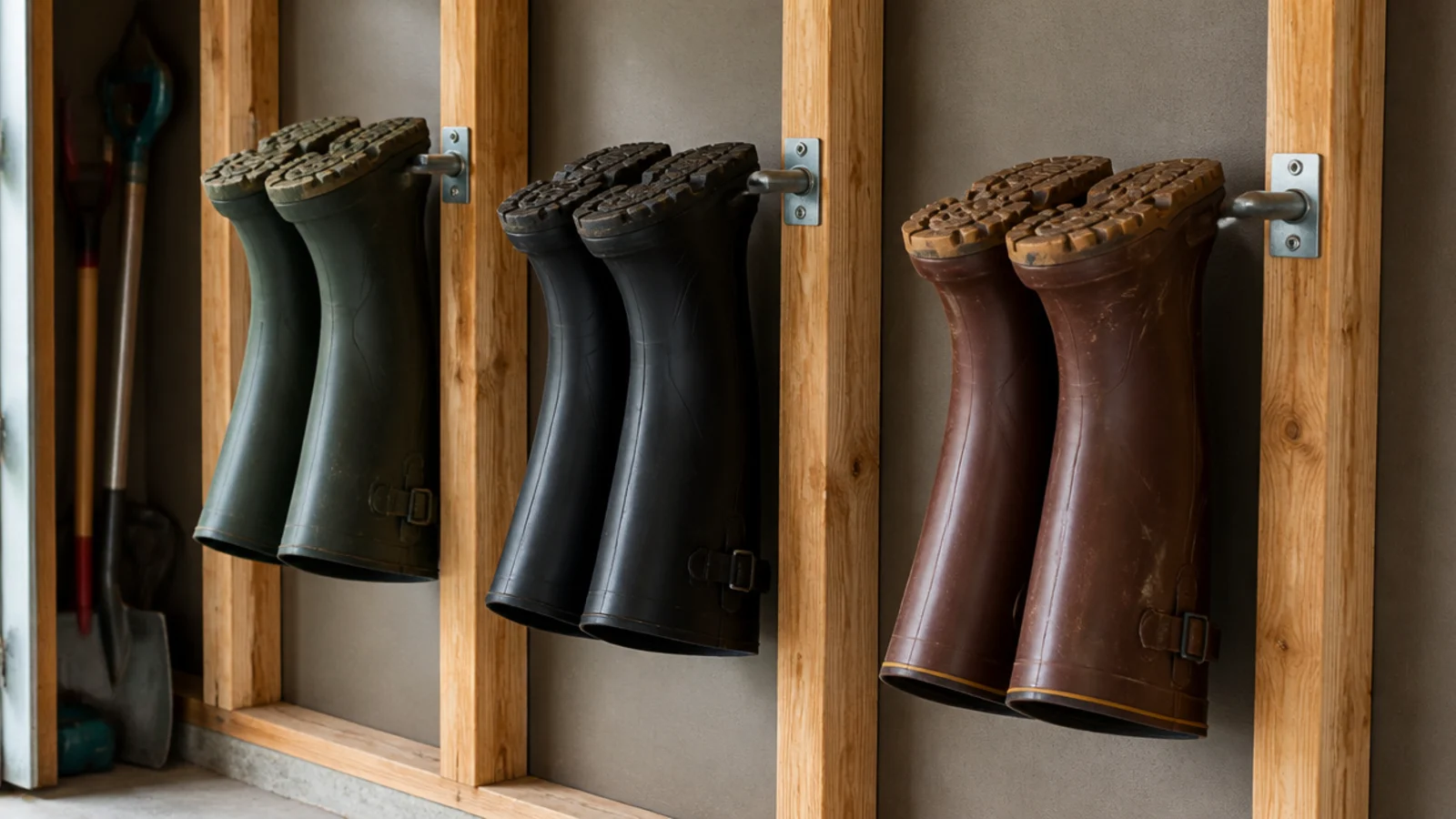
Rubber boots dry from the inside only if the shaft is open and pointing down.
Two steel bars 14 inches apart, lagged into studs, hold six pairs inverted. It costs about $15 in hardware and solves the wet-boot smell more reliably than anything you can spray. $
9. Ventilated stackable bins
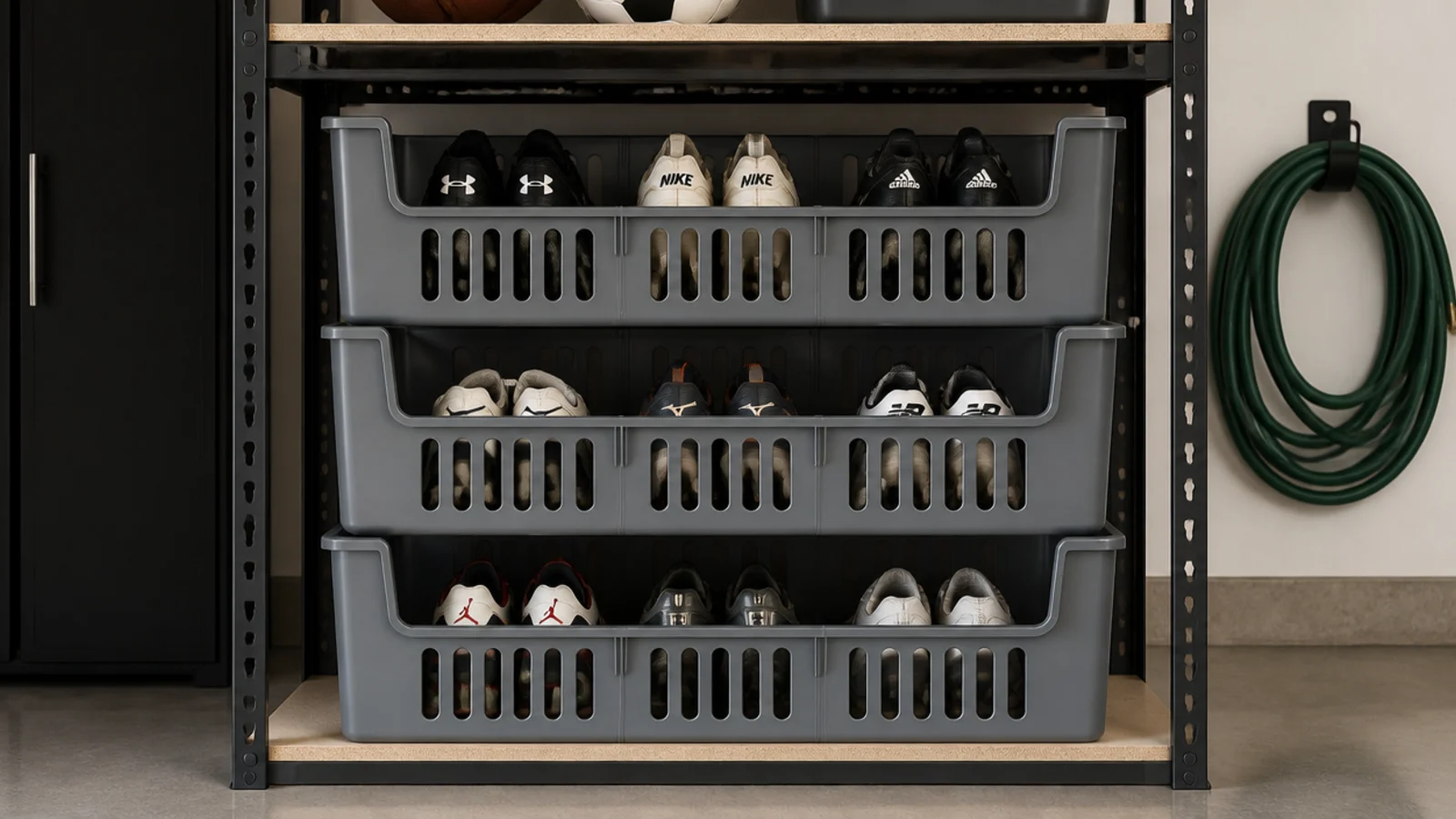
Bins with slotted sides let air keep moving through sports shoes and cleats that never quite dry.
One bin per activity rather than per person, since the gear arrives together. Heavy-duty resin over the thin translucent kind, which goes brittle in the cold. $
10. A gasketed tote for winter gear only
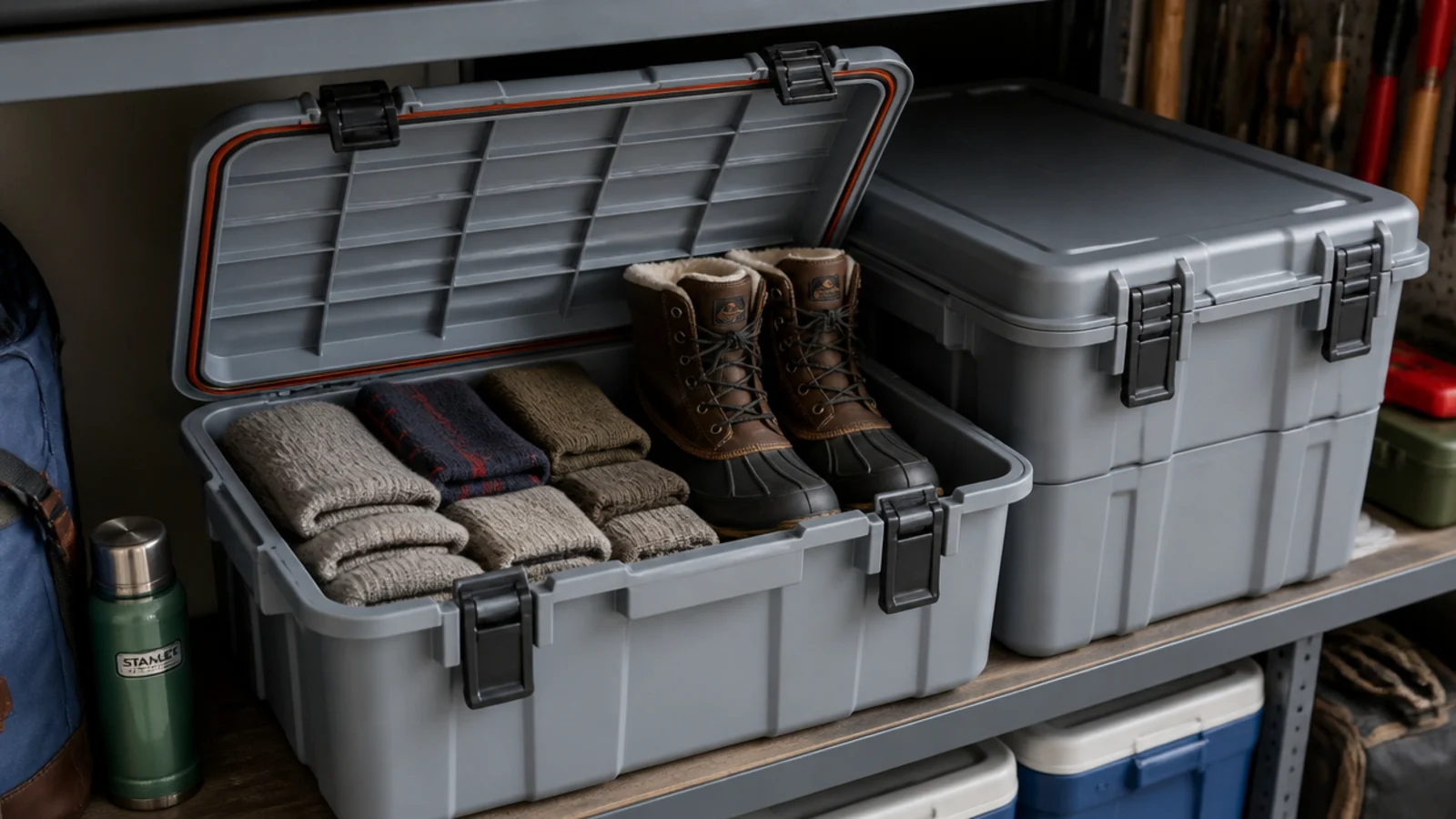
Sealed totes are for dry storage, and only for dry storage.
Snow boots, wool liners and spare laces go in one at the end of the season, completely dry, and come out clean in November. Put a damp pair in and you will regret it for months. $
11. Overhead shelf for the off-season pairs
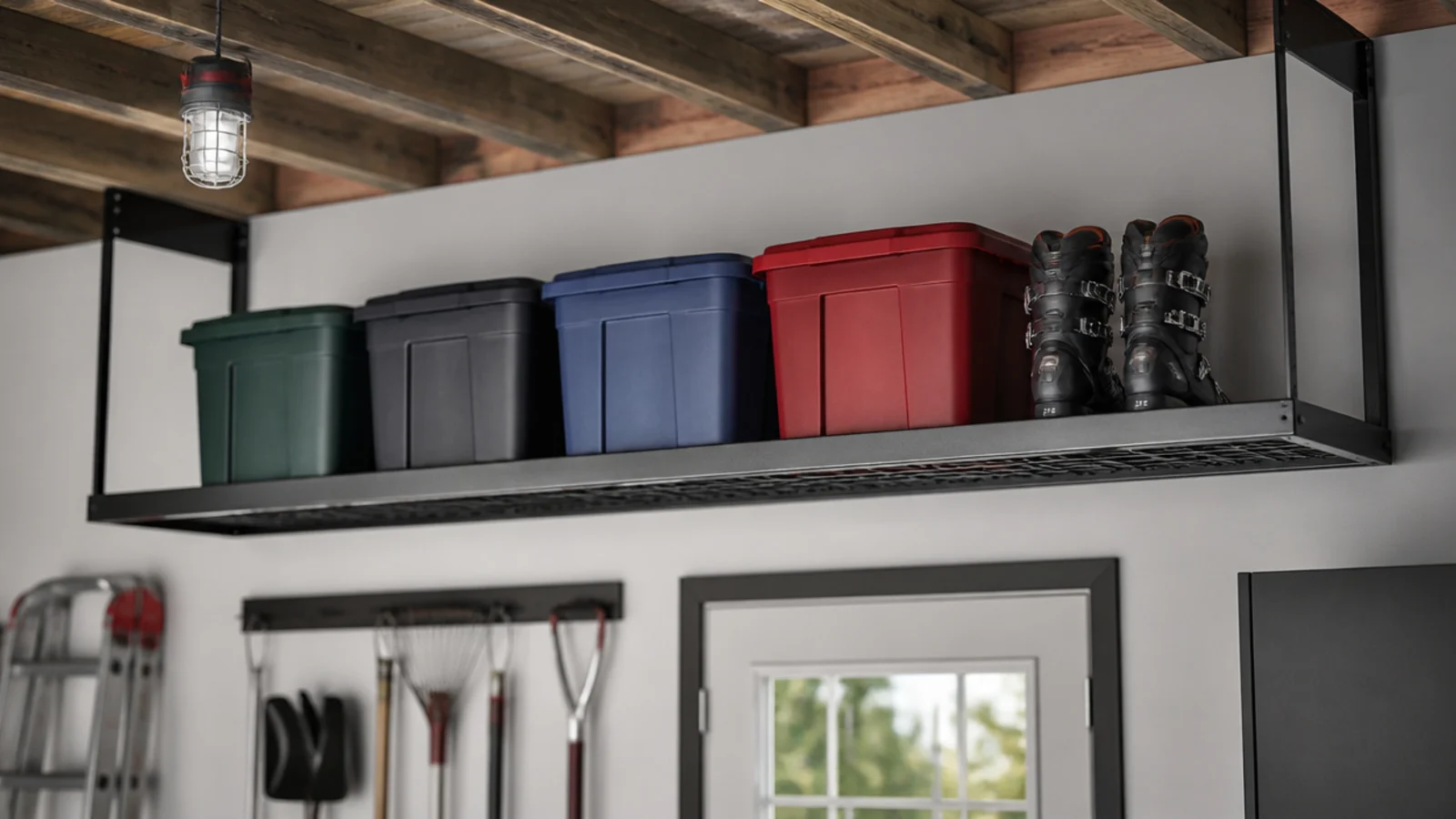
The band above 72 inches is dead space in nearly every garage.
A ceiling-hung platform there holds bins of the pairs you touch twice a year. Keep each bin under 20 pounds because you are lifting overhead, and never store anything up there you need in a hurry. $$
12. Keep thirty inches clear for the car door
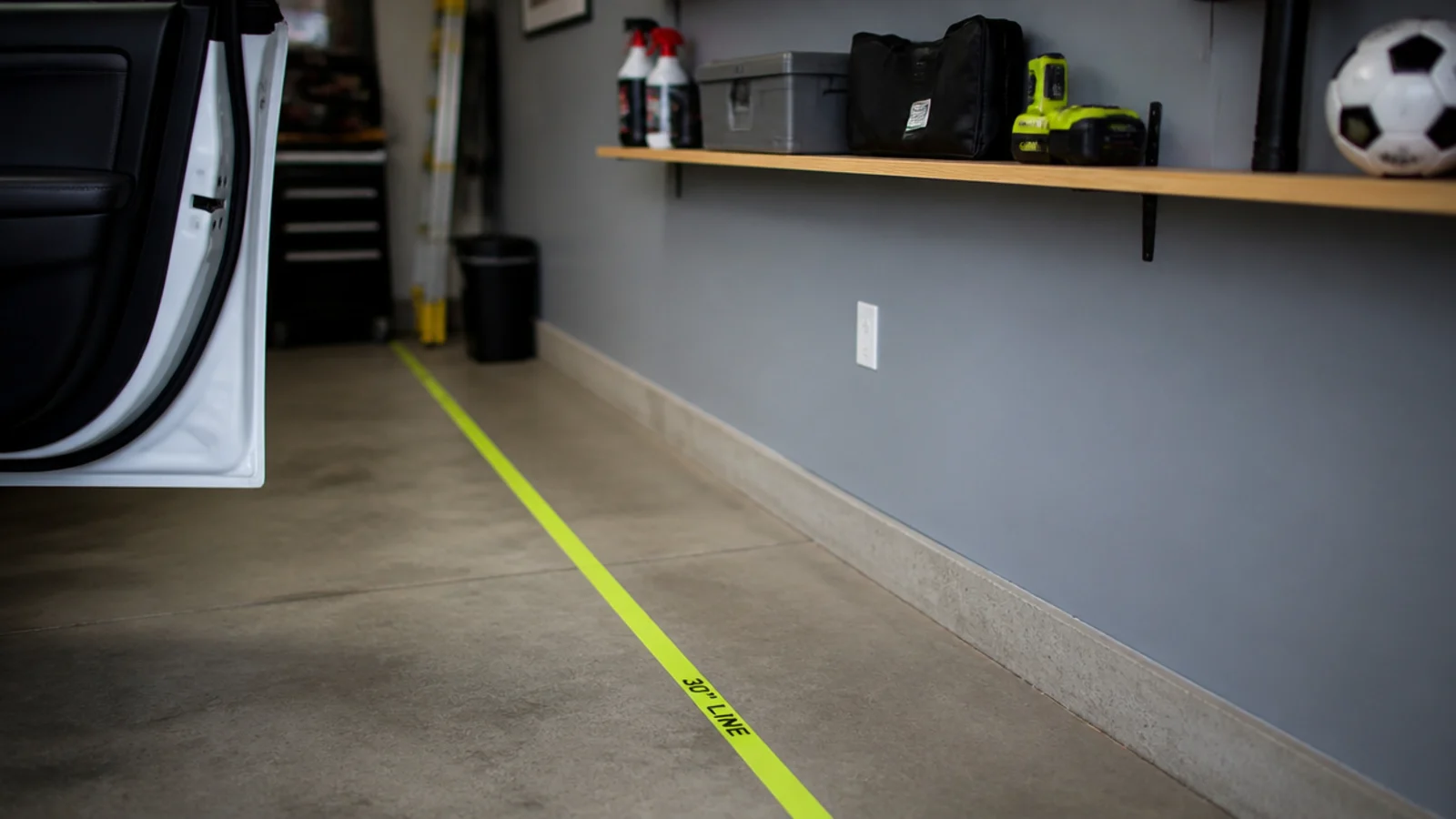
The measurement that decides whether your shelving survives the first month.
Park the car where it actually parks, open the door fully, and mark the floor with tape. Anything inside that line will get hit. If the garage is genuinely tight, move the storage to the wall behind the car. Free
13. Pegboard with heavy-duty hooks
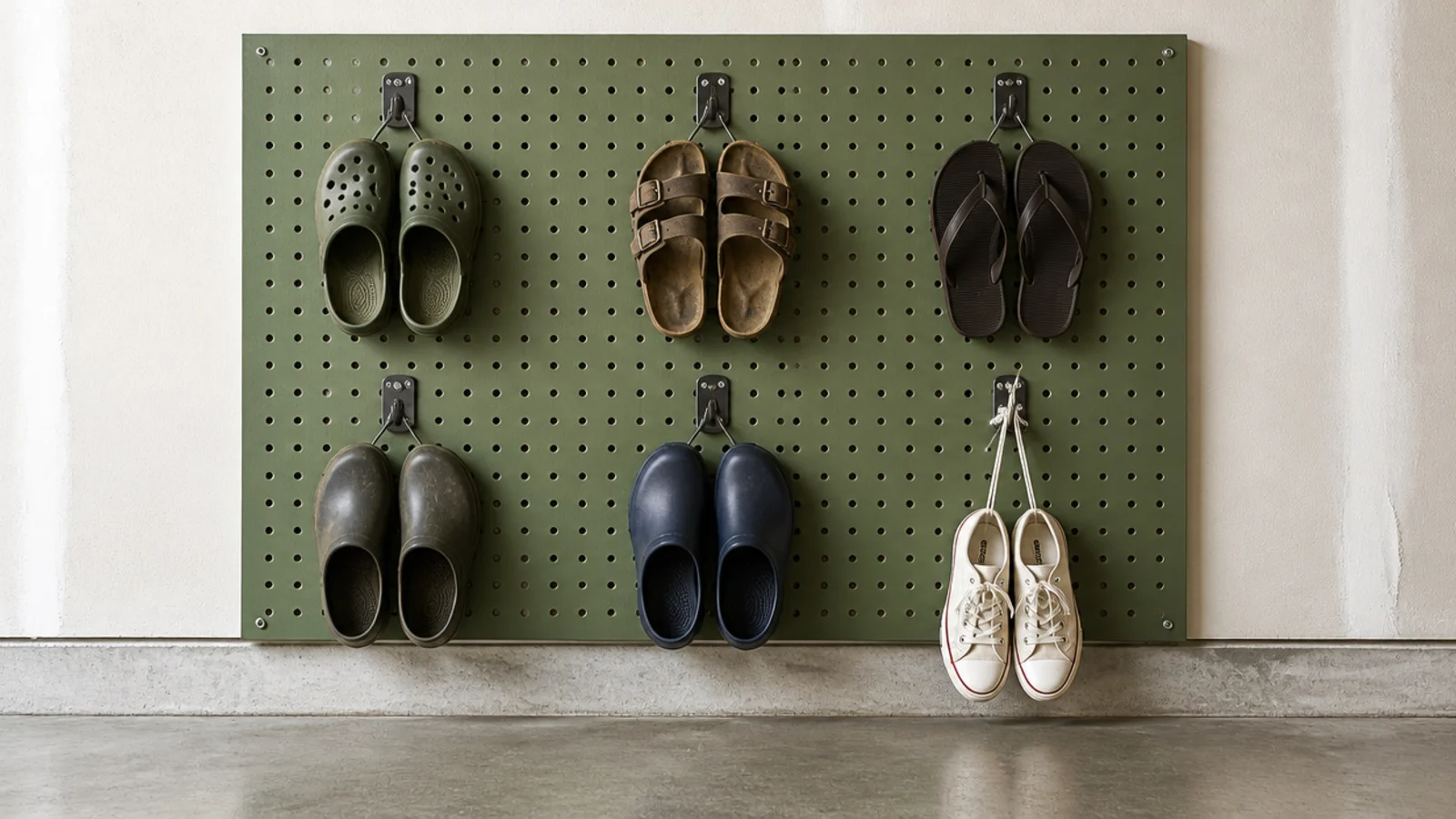
Pegboard suits the light end of the collection — garden clogs, sandals, canvas shoes.
Use steel hooks rather than the wire ones in the starter pack, which bend under anything heavier than a sneaker. Mount the board on furring strips so the hooks have room to seat properly. $
14. A rolling cart that comes indoors in winter
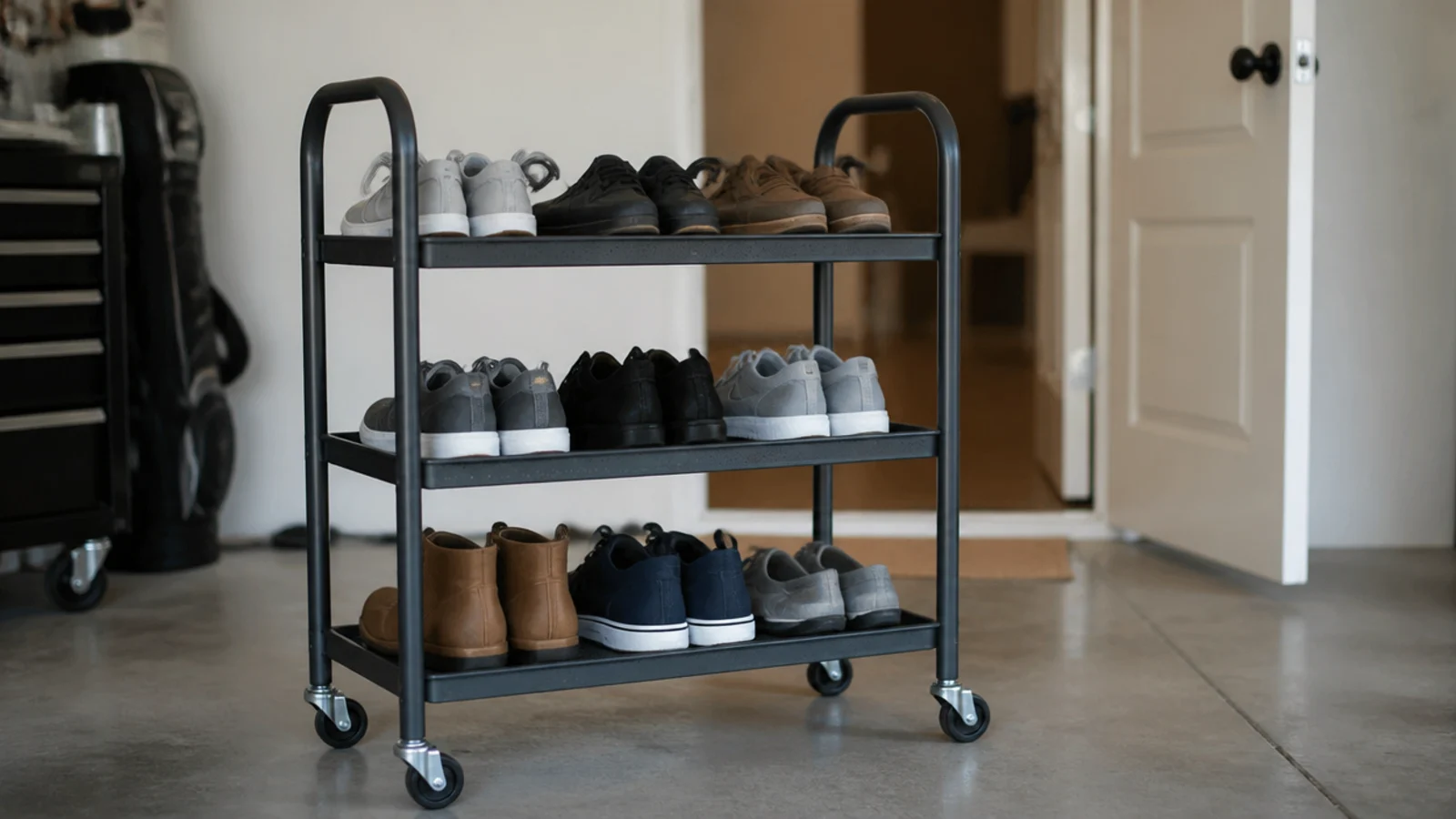
A three-tier steel cart on locking casters lets the whole daily collection move.
Out in the garage from April, parked inside the mudroom door from November, and rolled aside to sweep whenever you like. Powder-coated steel only — chrome wire marks soft soles and rusts. $$
15. A cleat and sports-shoe zone
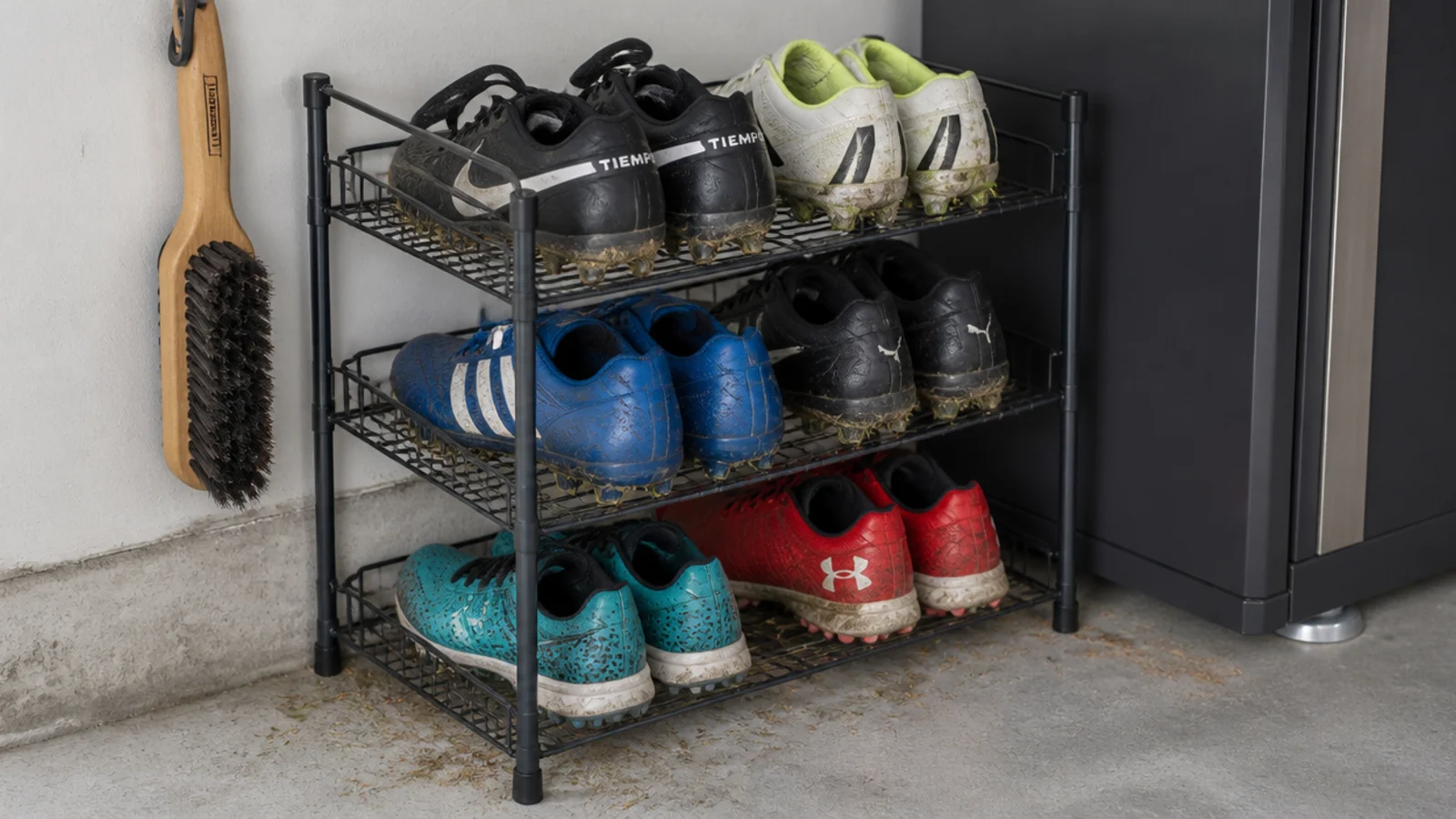
Cleats bring in grass, mud and grit, and they wreck a shared shelf faster than anything else.
Give them one wire tray at the far end of the run with a stiff brush hanging beside it. The rule is simple: brushed before they go on the tray. $
16. A rubber runway from car to door
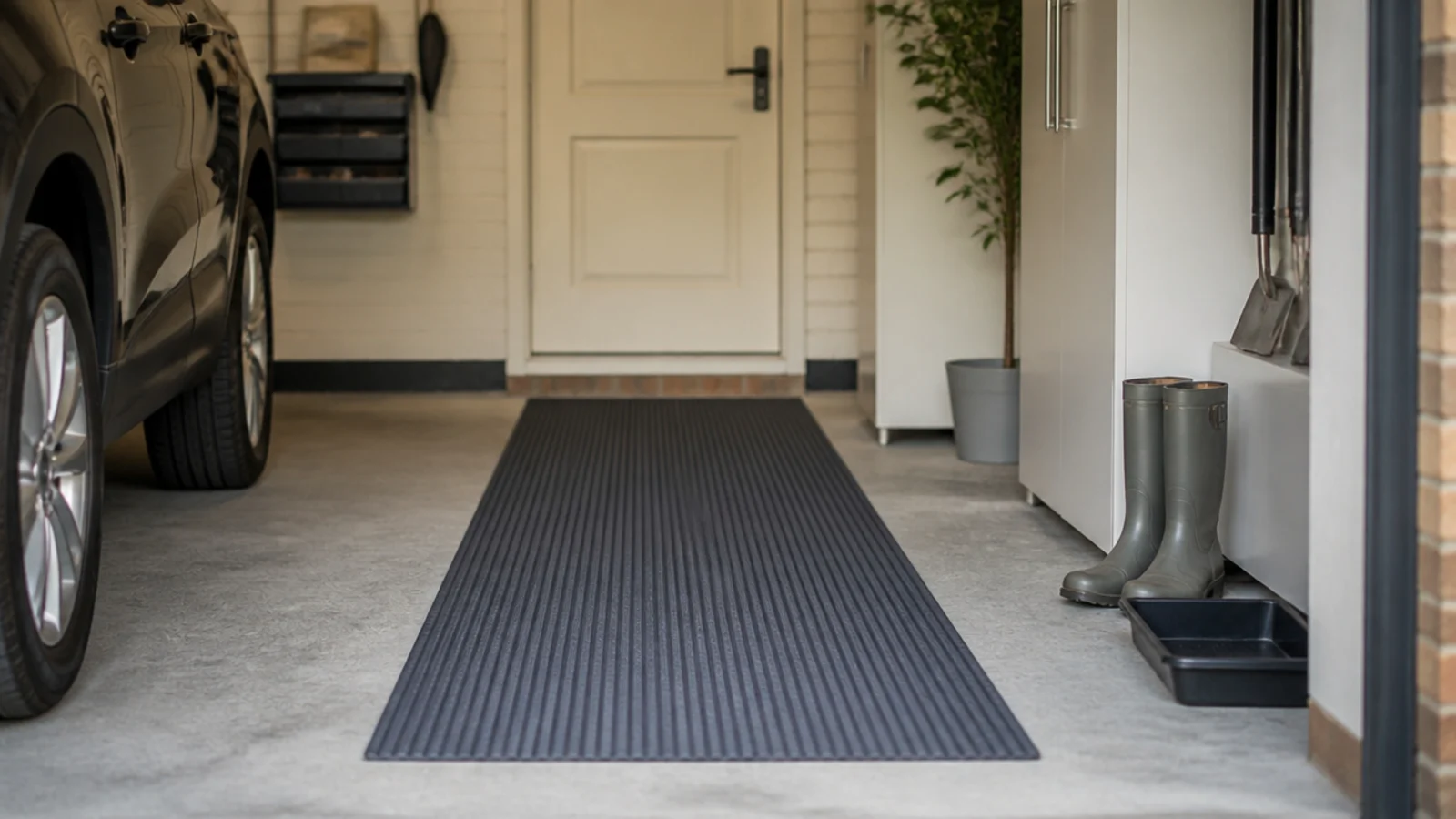
Mud spreads because it has nowhere specific to be.
A ribbed rubber runner laid from the driver door to the house door concentrates every wet footprint onto one washable strip. Roughly $30 for eight feet, and it hoses off outside in two minutes. $
17. A drying rack over the floor drain
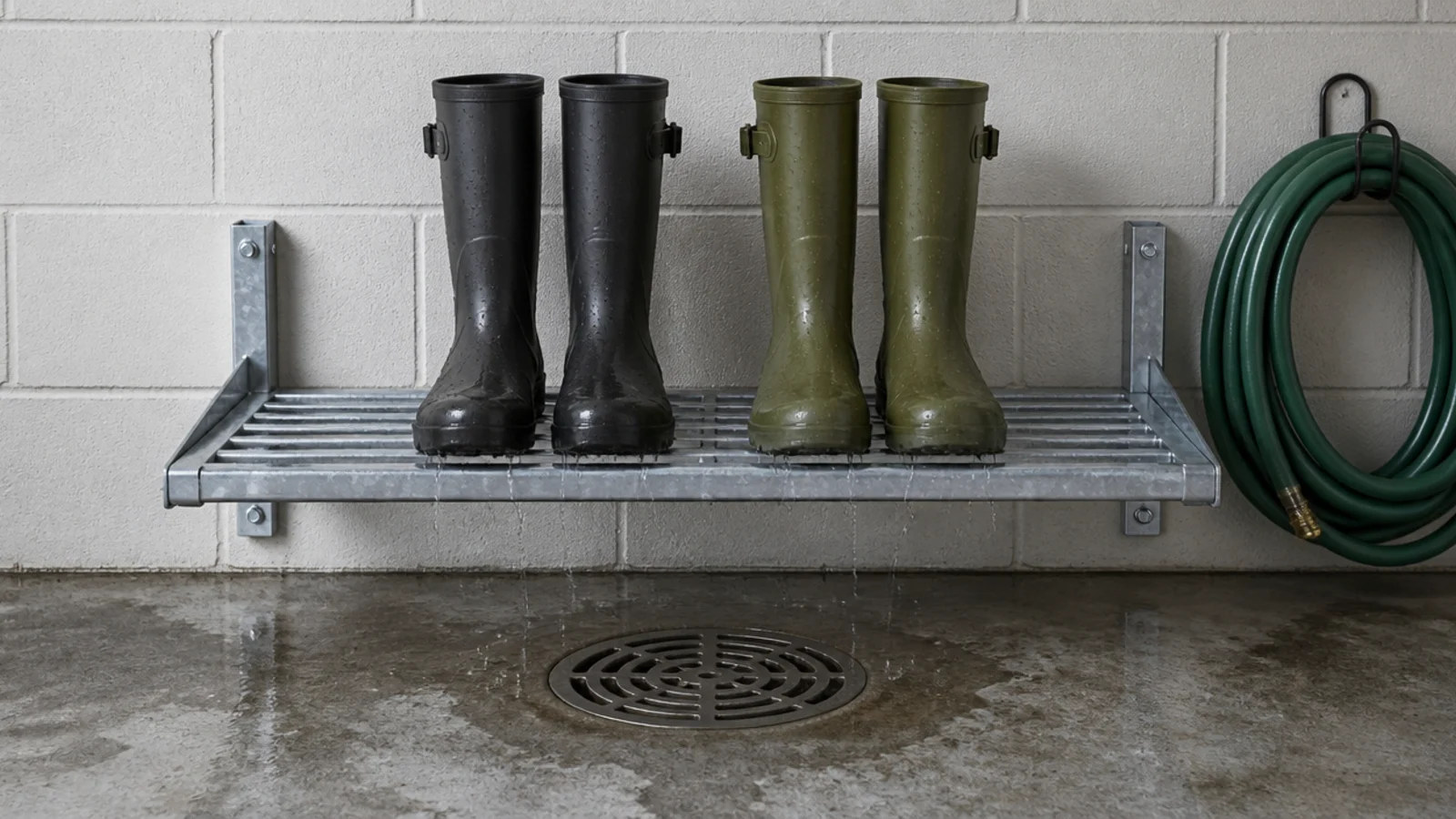
If the garage has a drain, build the wet zone directly above it.
A slatted galvanized rack sitting over the drain takes four pairs of dripping boots and needs no emptying at all. Where there is no drain, a deep lipped tray does the same job with a rinse every few weeks. $–$$
18. A small fan on a twenty-minute timer
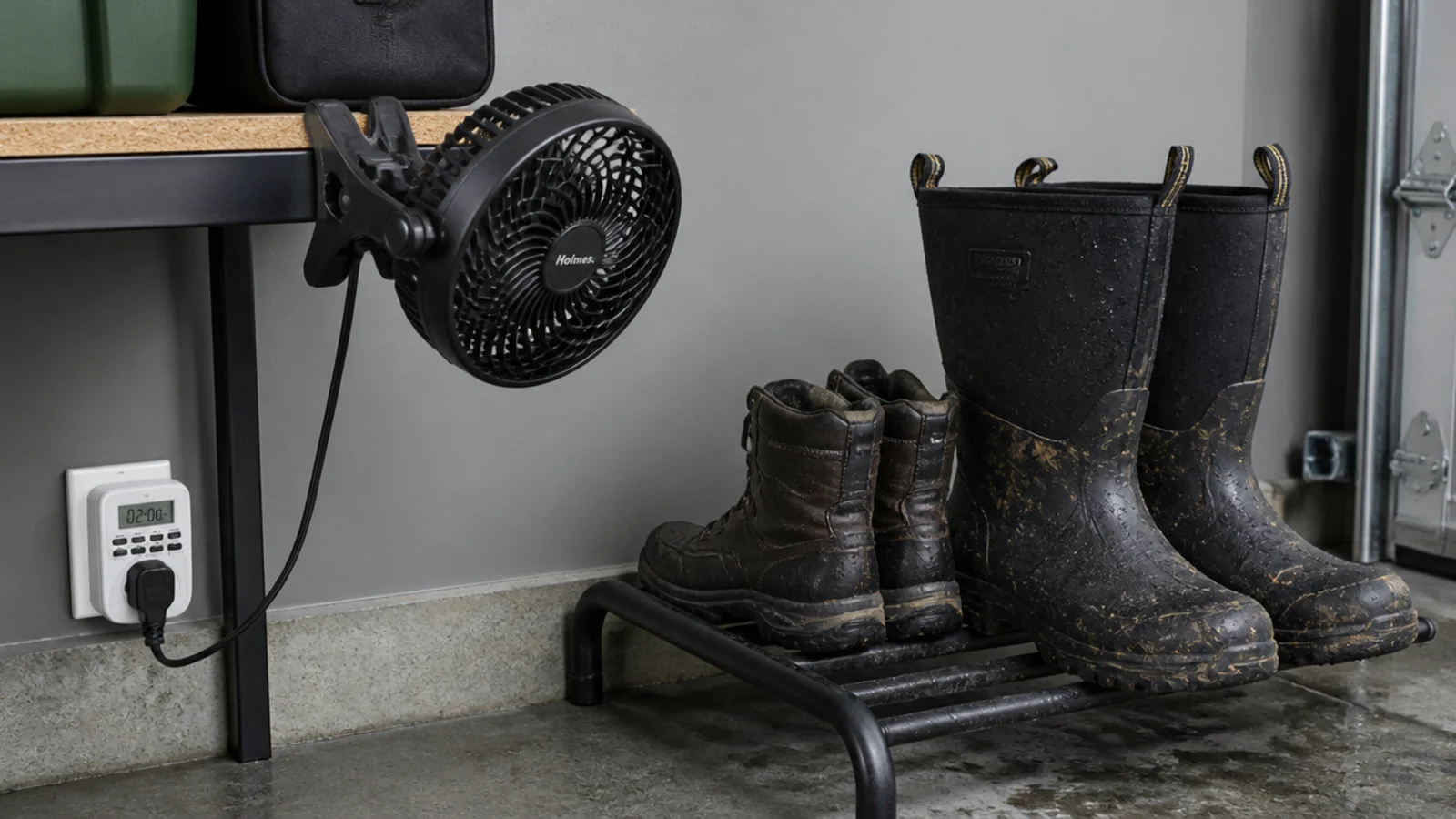
Air movement dries footwear; warmth alone does not.
A $20 clip fan on a plug timer, aimed along the boot rack for twenty minutes after everyone comes in, removes the damp that causes the smell. It costs pennies to run and works better than any deodorizing insert. $
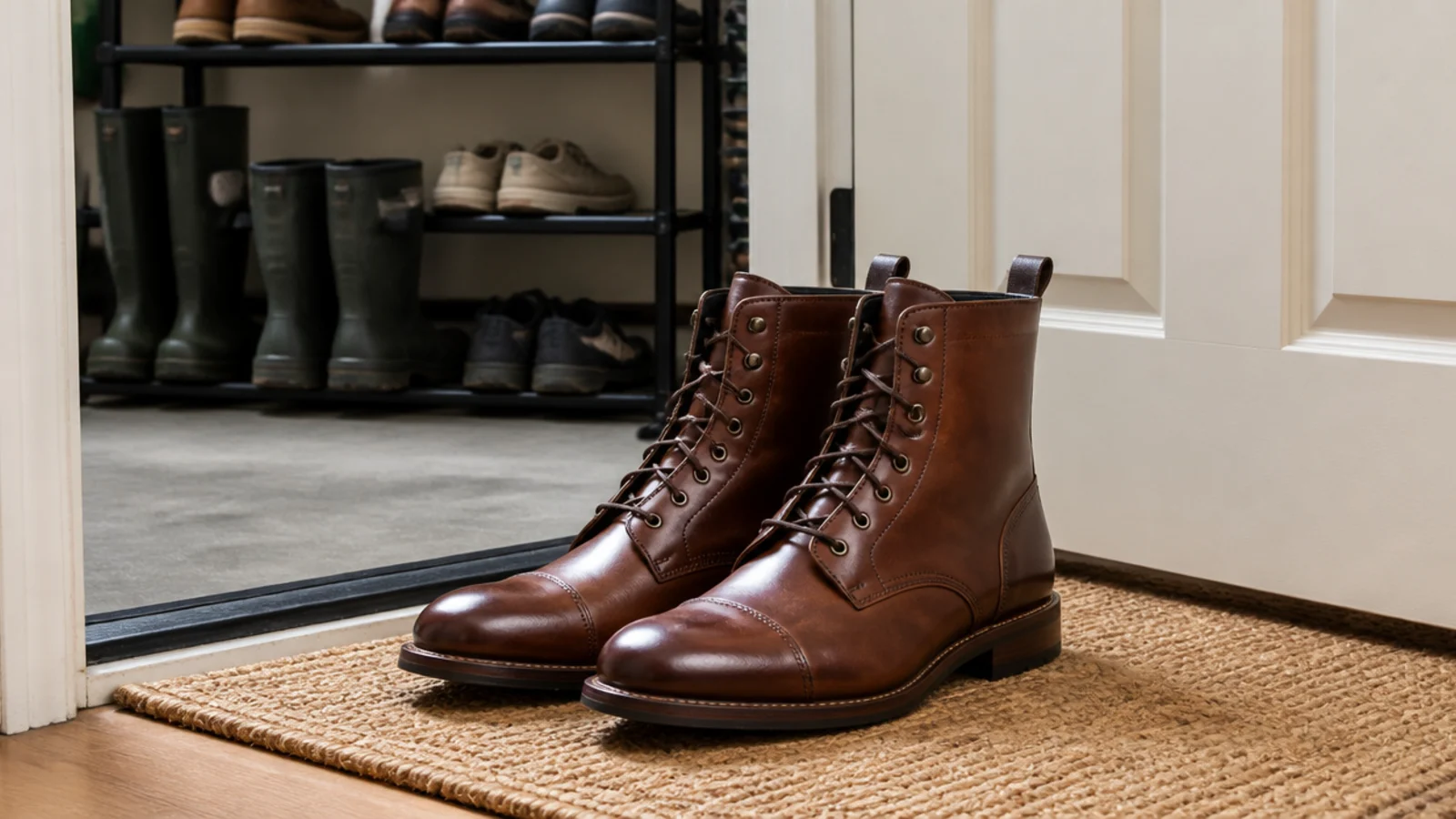
19. Keep leather out of the garage entirely
This is the limit of what garage storage should hold.
Temperature cycling dries leather, cracks finishes and eventually lets glued soles separate. Boots, rubber, canvas and sports shoes are fine. Anything leather you would be sad to lose belongs indoors, even if indoor space is tight. Free
20. Cold weather cracks cheap plastic racks
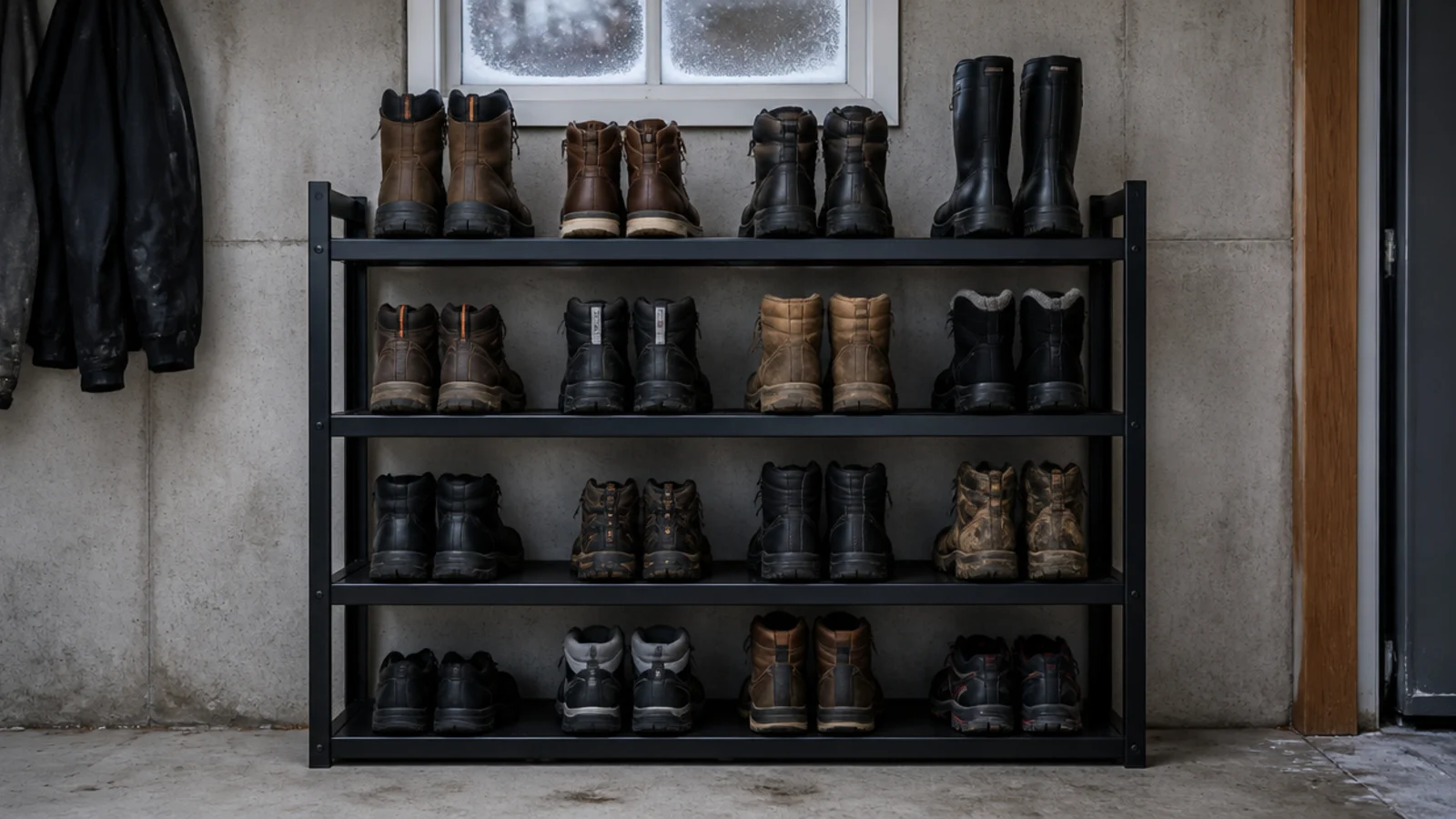
Polypropylene goes brittle below freezing, and a loaded rack cracks at a joint the first time somebody knocks it on a cold morning.
Steel, sealed plywood and heavy-duty resin all take the cycle without complaint. If you already own a light plastic rack, keep boots off it through winter. $$
21. Color-code the bins because garage light is bad
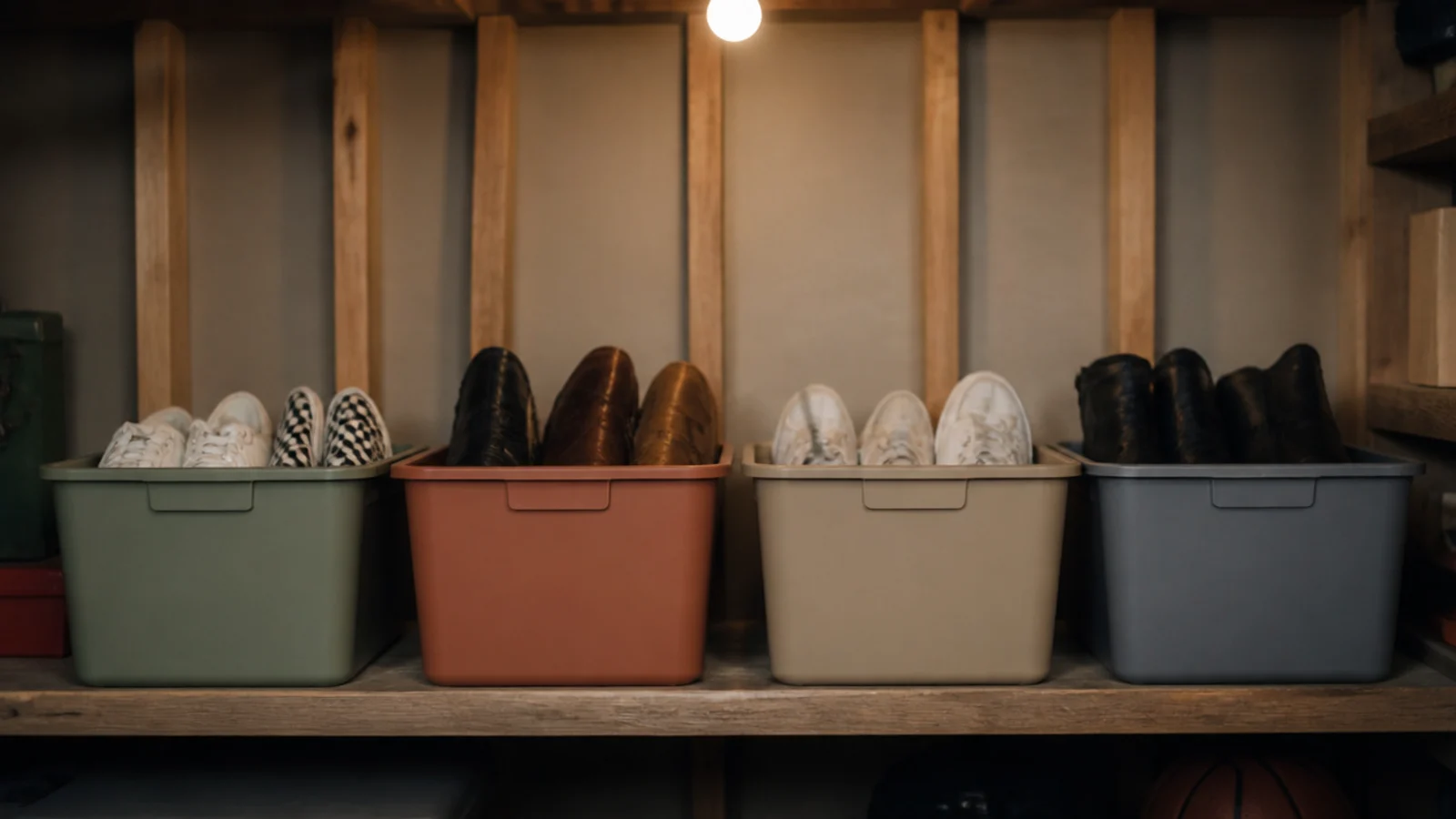
Garages are dim, and dim storage gets used badly.
One bin color per household member reads instantly from across the room in poor light, where written labels do not. Muted sage, terracotta, sand and grey keep it from looking like a playroom. $
22. Motion-sensor LED strip over the storage
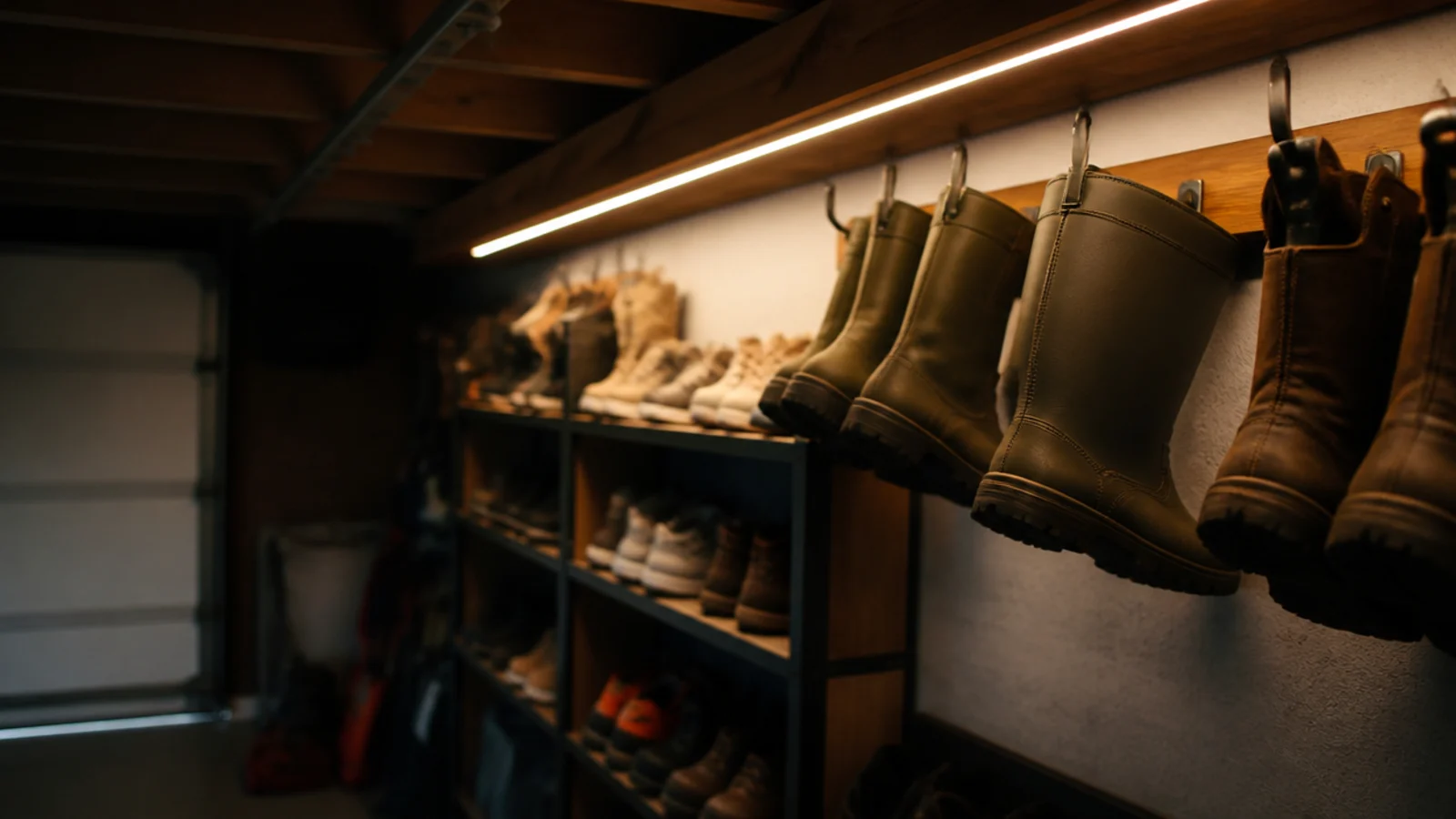
A single overhead bulb throws shadow straight onto the shelves you are trying to see into.
A rechargeable LED strip mounted along the joist above the storage wall lights the shelf faces for about $20. Motion sensing matters here because your hands are usually full of boots. $
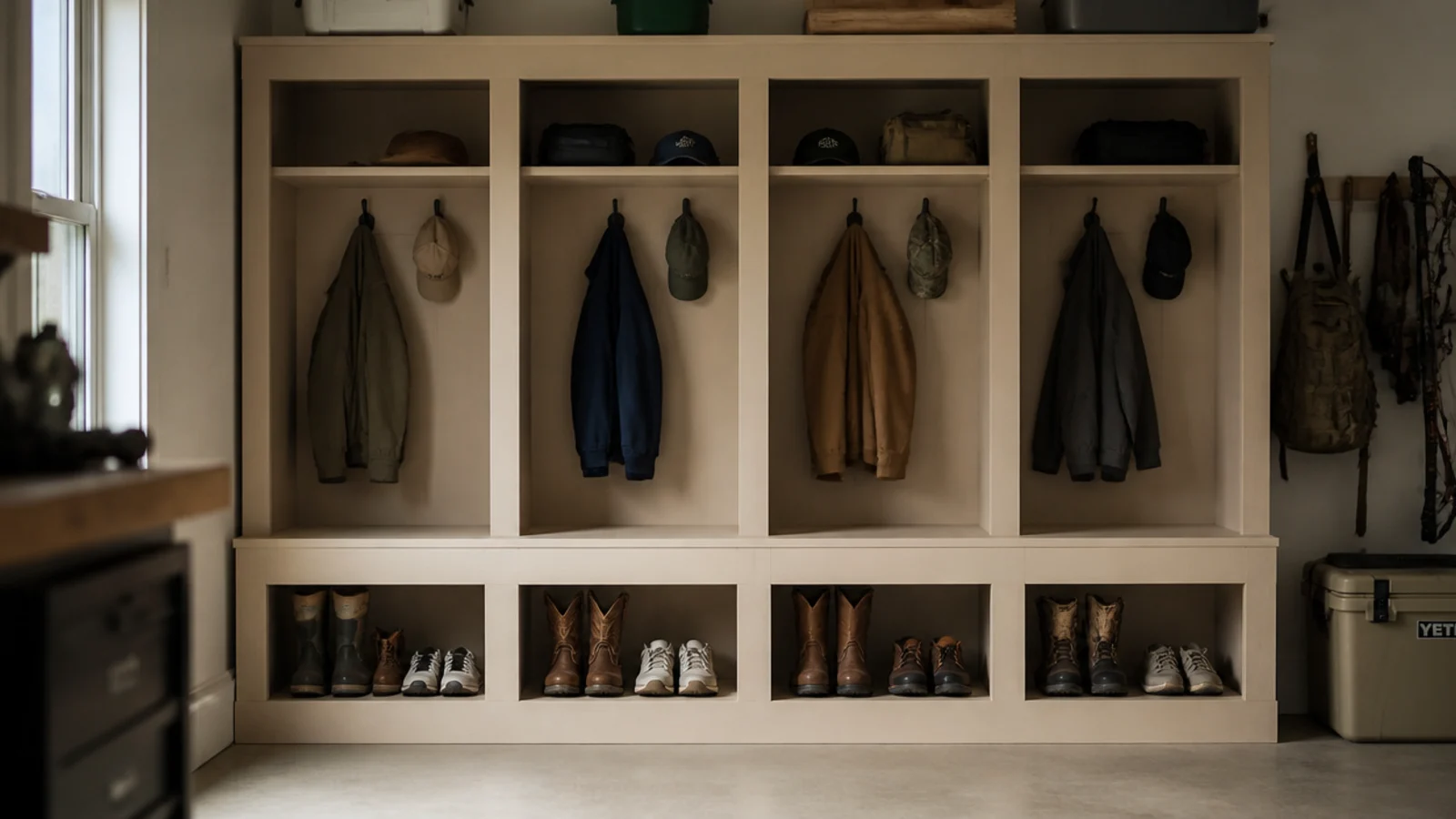
23. One locker per person
Shared shelving fails because nobody owns the overflow.
Four open plywood bays 14 inches wide, built as a run with a bench across the base, give every person a named column. Around $120 in materials for a family of four. There is a build sequence in the DIY shoe storage guide. $$
24. The dead corner behind the door swing
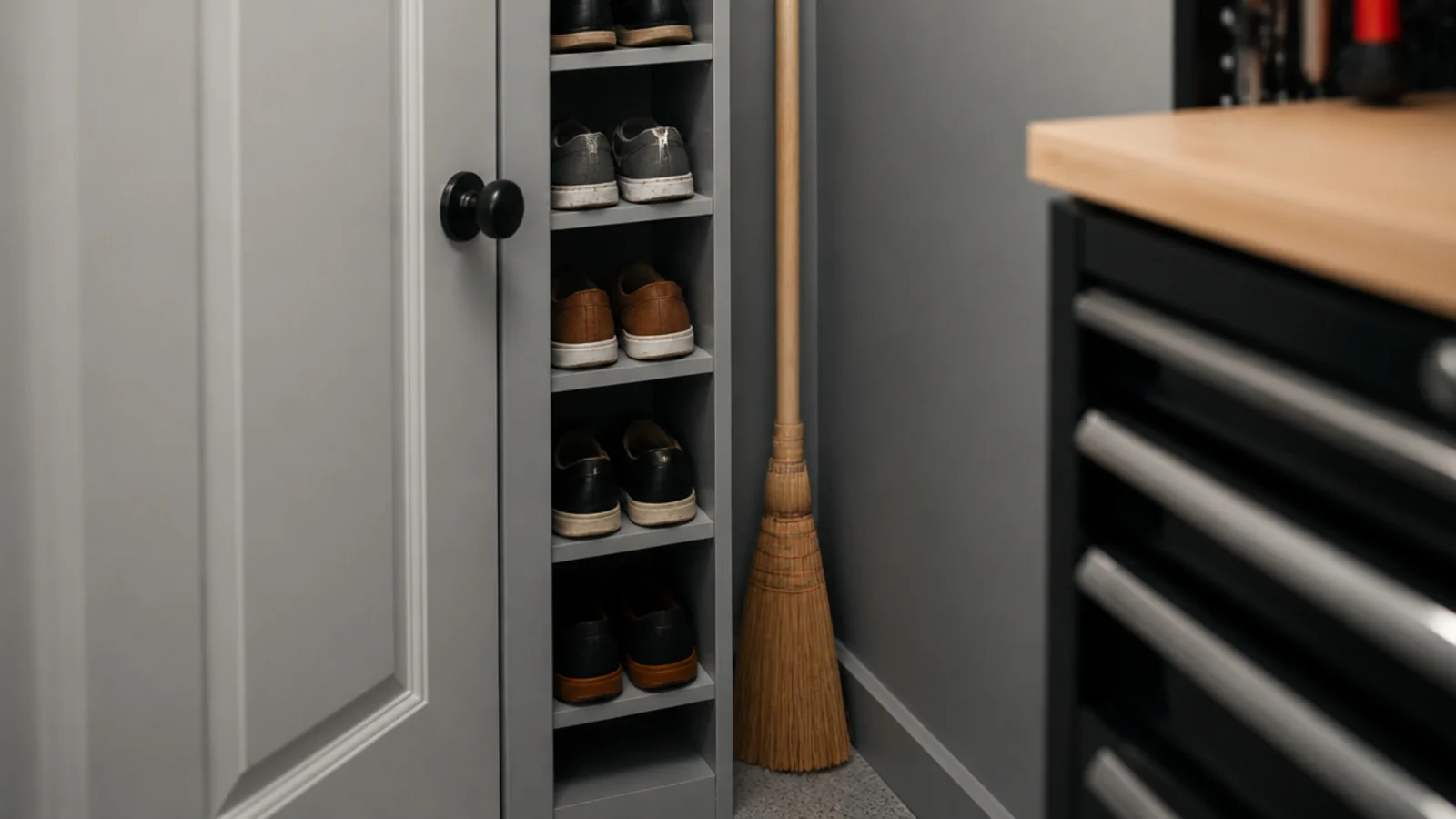
Every garage has one corner nobody has claimed, usually behind the inward swing of the house door.
An eight-inch-deep shelving column fits there without ever being in the way. Open the door fully, measure to the door face, subtract two inches, and build to that number. $
25. A repurposed kitchen base cabinet
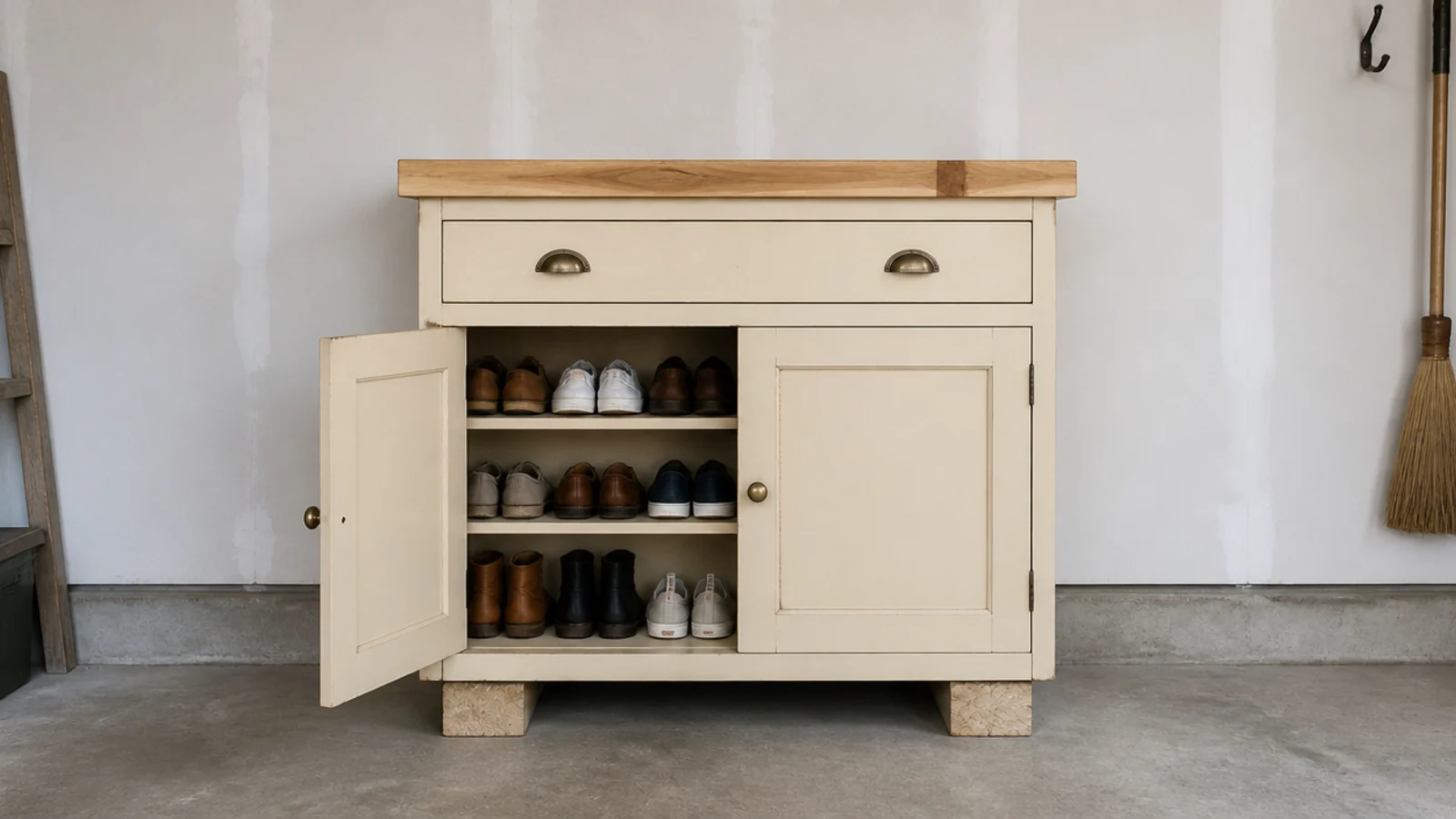
Somebody is giving away a kitchen right now, and a base cabinet makes excellent closed garage storage.
Set it on blocks six inches up, seal the toe-kick, and add an offcut of butcher block on top as a work surface. Free to $30, and it hides the ugliest shoes in the house. $
26. Steel shelving with adjustable posts
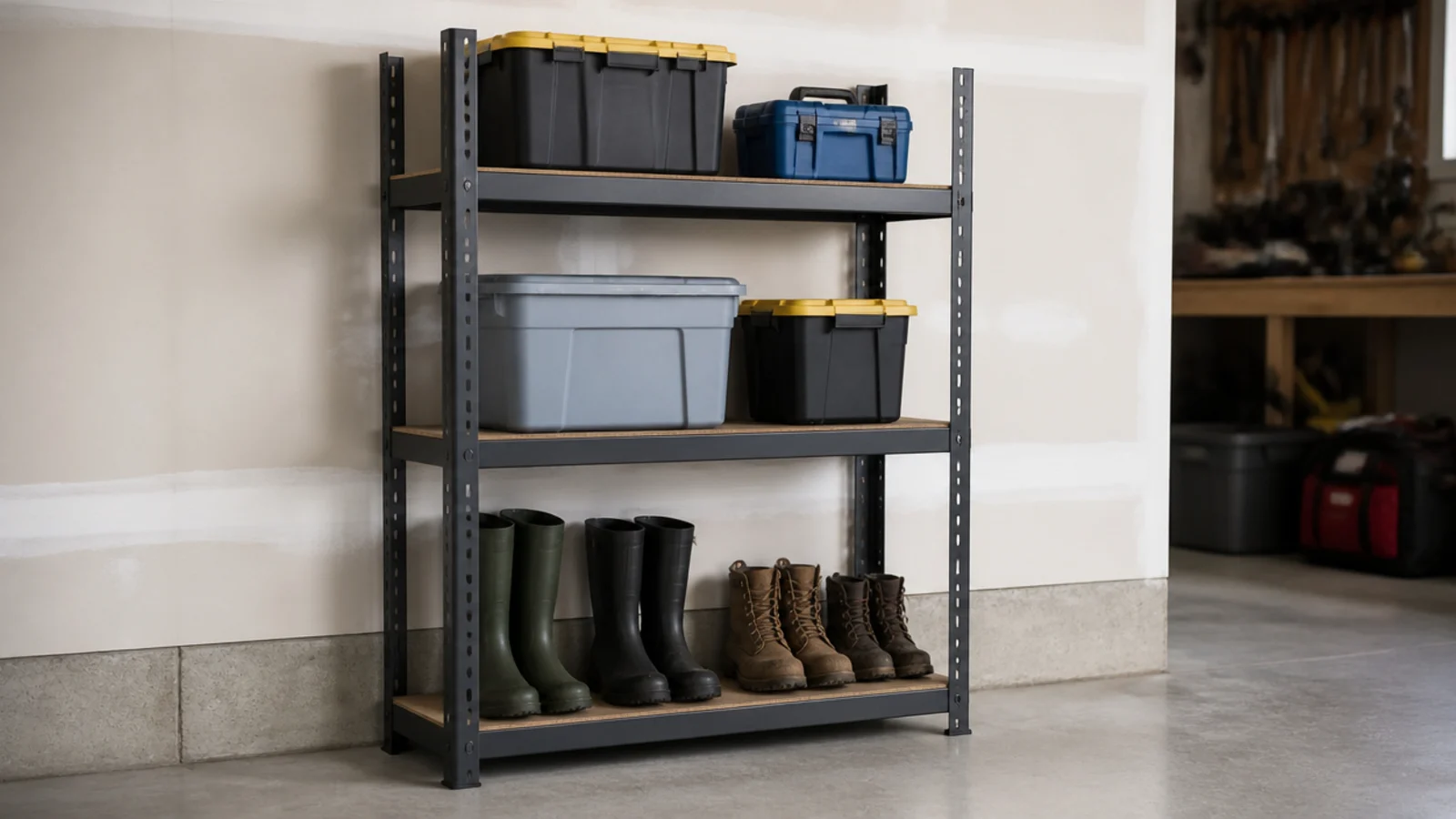
The workhorse. A boltless steel unit with four posts and three decks costs about $90 and carries several hundred pounds.
Set the bottom deck at 16 inches for boots, the next at 6, and the top for bins. It comes apart flat and moves house with you. $$
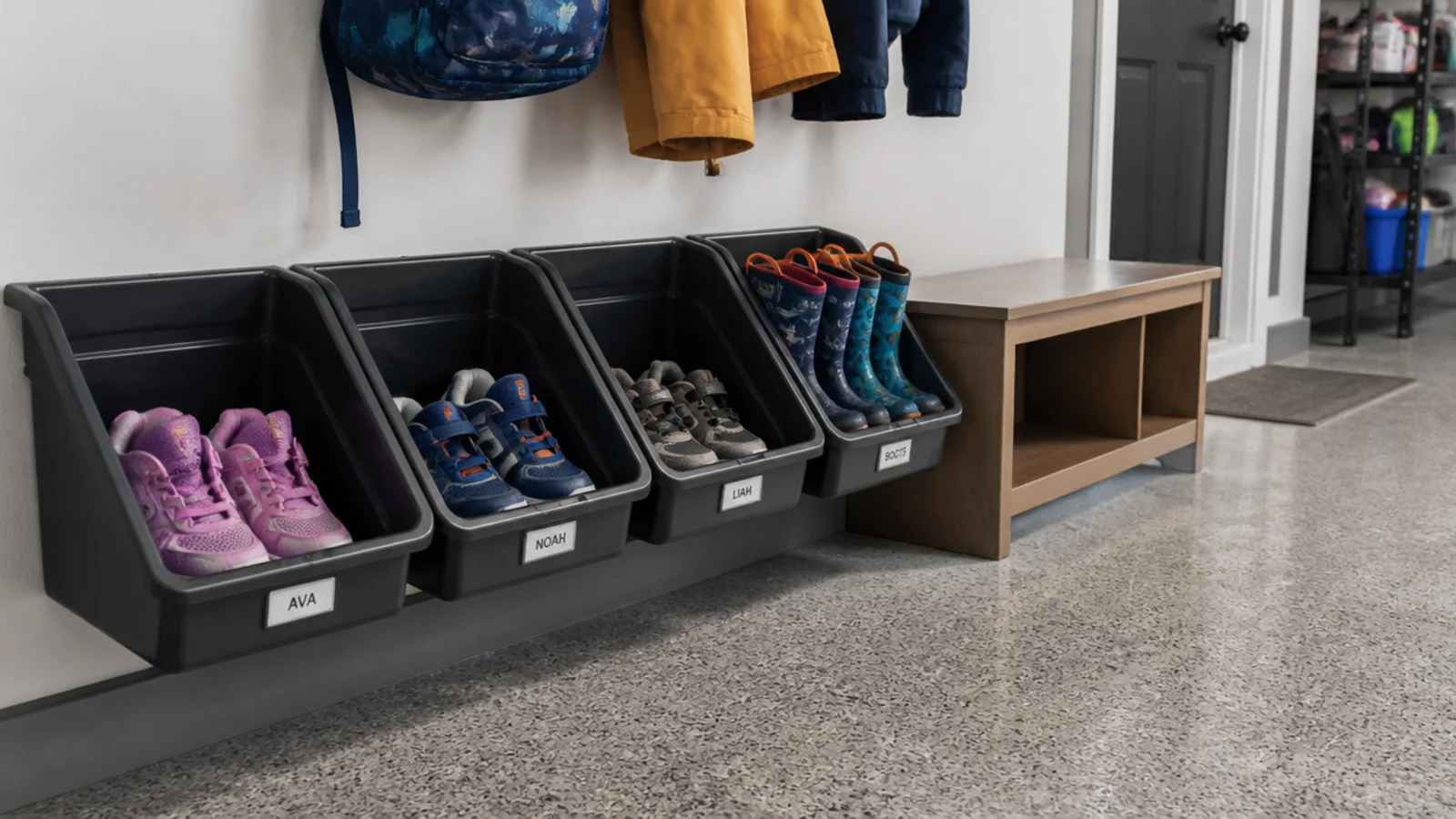
27. Tilt bins at child height
Children will not use storage above 30 inches, and they will not use anything with a lid.
Open-front tilt bins mounted low on the wall let small shoes get thrown in and still land in the right place. Two bins per child is plenty, since anything more just holds outgrown pairs. $
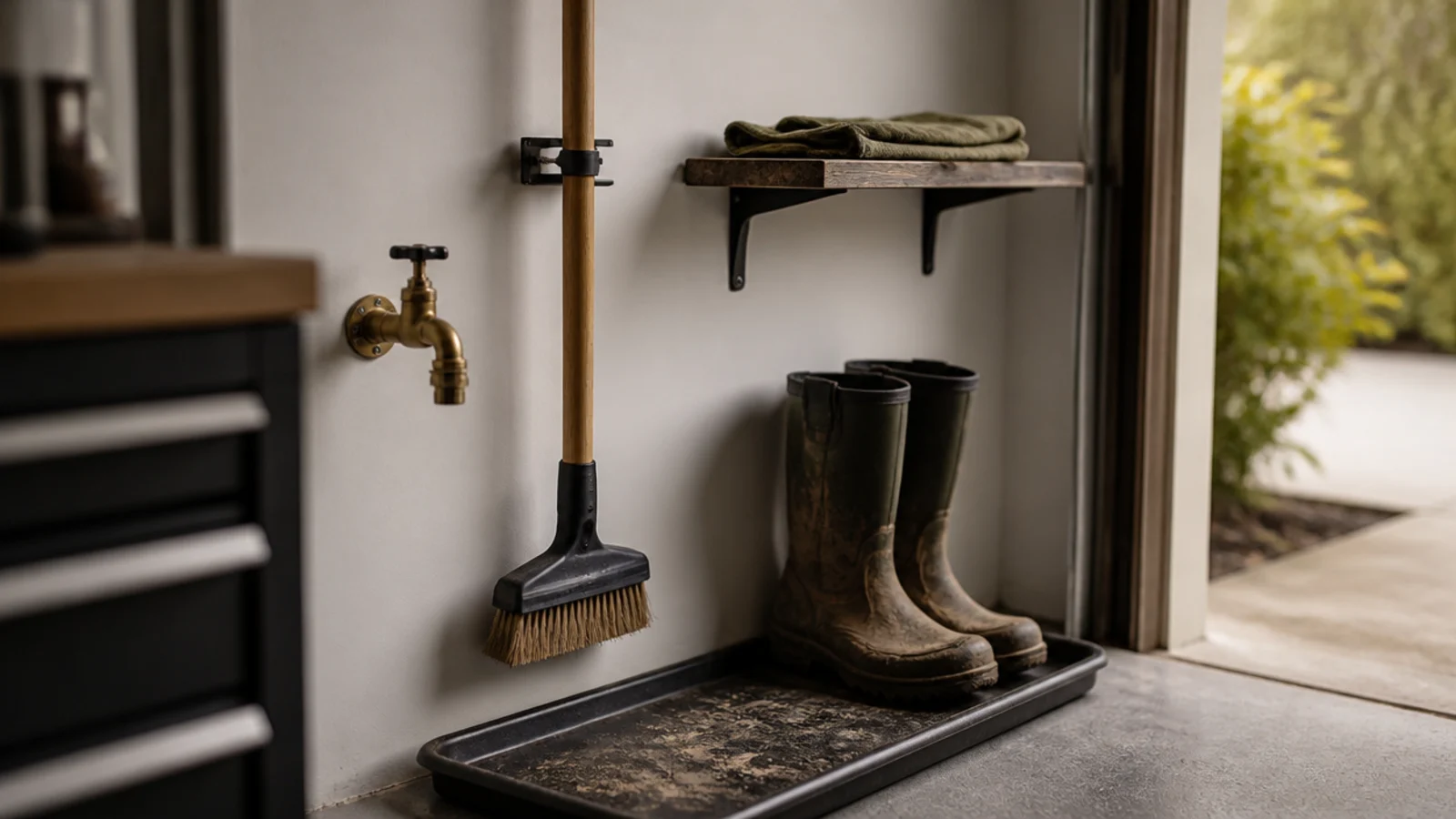
28. A mud zone with a brush and a hose bib
Clean the boots where the mud already is, not at the back door.
A stiff long-handled brush on a hook beside the hose bib, with a lipped tray underneath, turns a five-minute chore into a fifteen-second one. That is the difference between it happening and not. $
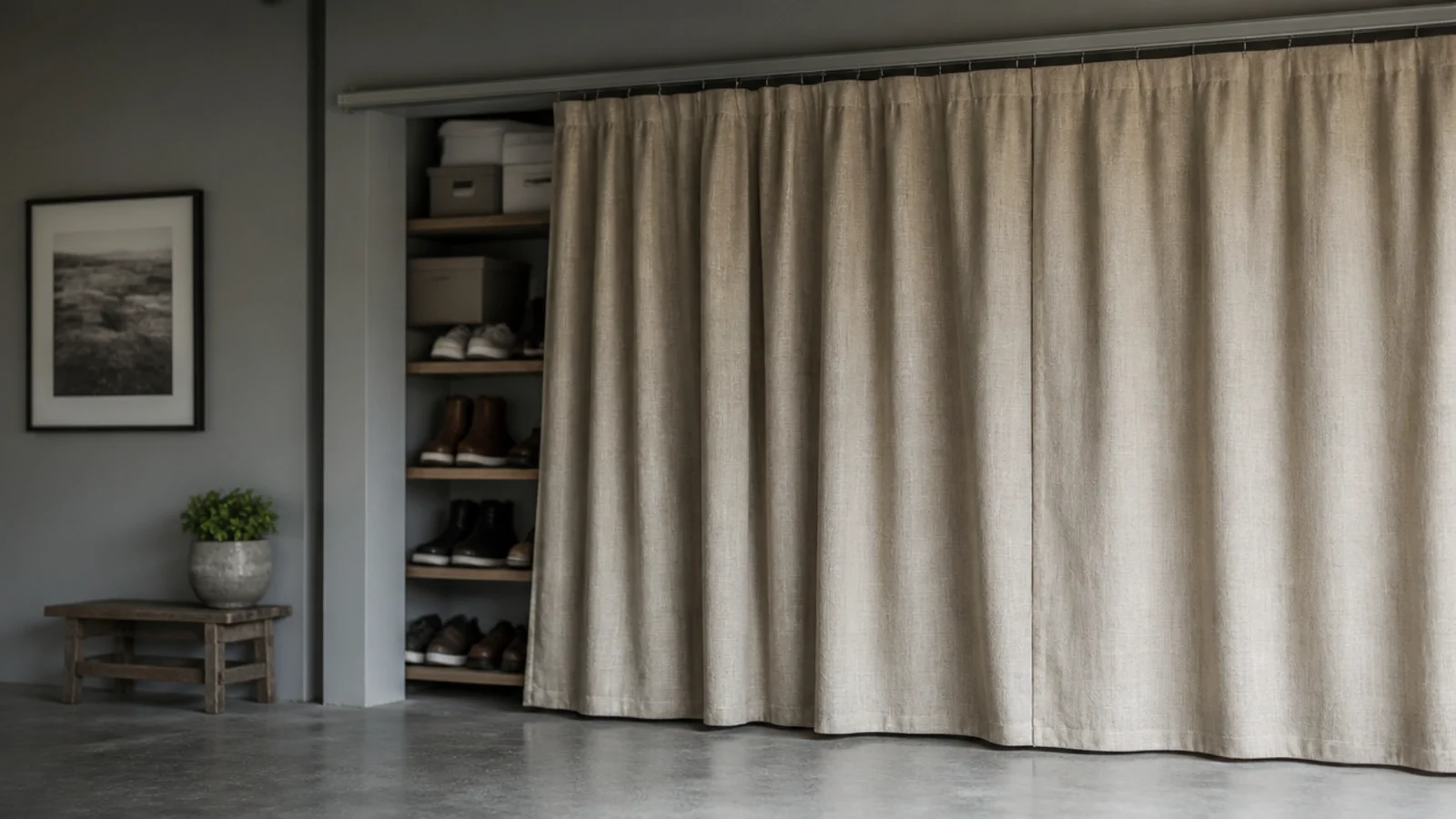
29. A curtain that screens the storage
Garage storage is functional and it looks functional. A curtain fixes that for $30.
Heavy natural linen or canvas on a steel ceiling rail pulls across the whole wall, keeps a surprising amount of dust off, and pushes back in one movement. The same trick works indoors, as hidden shoe storage covers in more detail. $
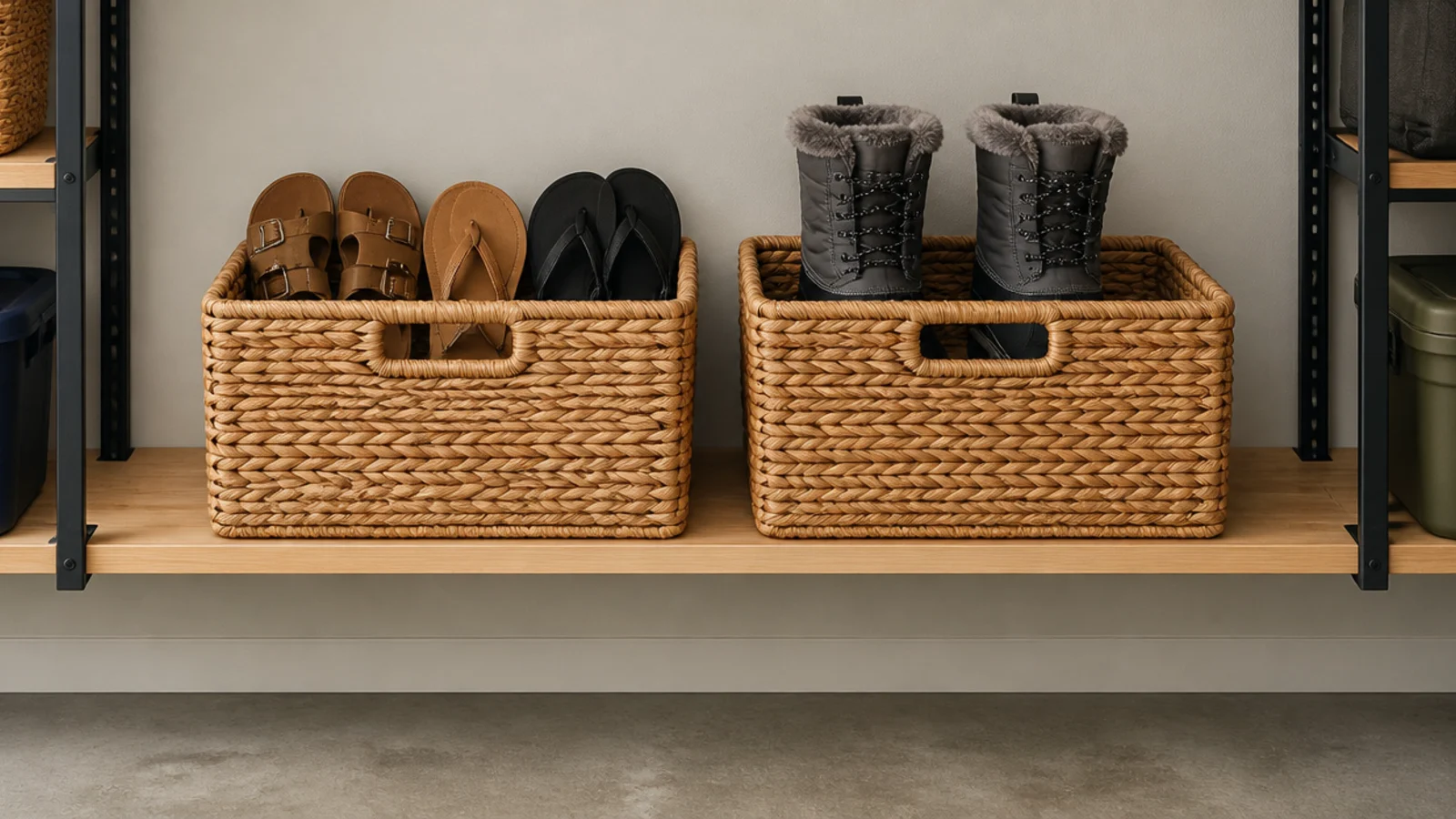
30. A seasonal swap between garage and entry
The habit that keeps both spaces working.
Twice a year, trade the bin of sandals for the bin of snow boots between the garage shelf and the entry. Ten minutes in April and ten in October means neither space is ever holding shoes nobody is wearing. Free
Mistakes to Skip
- Setting shelving directly on the concrete. The slab wicks moisture upward year round, and the bottom shelf stays damp even through a dry summer.
- Storing good leather boots in an unheated garage. The temperature swing dries the leather and eventually separates the sole, and no conditioner brings that back.
- Sealing damp footwear into a gasketed tote. It cannot dry, the smell concentrates, and by spring you are throwing away shoes that were fine in November.
Frequently asked questions
How high off a garage floor should shoe storage sit?
Six inches minimum, and eight is better. A concrete slab wicks moisture upward all year, and anything resting directly on it stays faintly damp even when the floor looks dry. Six inches also clears the water that runs off a wet car and lets you sweep or blow the floor without lifting a single thing off the shelves.
What shoes should never be stored in a garage?
Anything leather you care about, plus glued-sole sneakers and dress shoes. Garages swing from freezing to over 100 degrees, and that cycling dries leather, cracks finishes and eventually separates sole adhesive. Keep boots, yard shoes, sports cleats and rubber footwear out there, and give leather a stable indoor home even if space is tight.
How do I stop wet boots from smelling in the garage?
Give them airflow and a drainage surface, never a sealed bin. A raised wire rack or a lipped tray with a slatted insert lets water drop away and air reach the inside. A small fan on a timer for twenty minutes does more than any spray. Boots sealed into a tote while damp are how the smell starts.
Will a wall-mounted shoe rack hold up in a garage?
Yes, if it is fixed into the studs rather than into drywall alone. Garage walls are often unfinished, which actually helps because the framing is visible. Use lag screws into studs for anything carrying boots, and choose powder-coated steel or sealed wood over bare metal, which rusts fast anywhere damp shoes sit against it.
How much clearance do I need beside a parked car?
Leave 30 inches between the shelving face and the car door so the door can open fully without contact. If the garage is tight, keep storage on the wall behind the car rather than beside it, and cap the depth at 12 inches. Measure with the car parked where it actually parks, not centered.
Do plastic shoe racks survive winter in a garage?
Cheap injection-molded racks often do not. Polypropylene gets brittle below freezing, and a rack loaded with boots can crack at a joint on the first cold morning somebody knocks it. Steel, sealed plywood and heavy-duty resin all handle the cycle. If you already own a plastic rack, keep the heaviest pairs off it in winter.
Get the boots off the slab, give the water somewhere to go, and keep leather indoors. Those three moves solve most of what goes wrong out here, and the rest is just choosing a wall system you will actually rearrange. For the transition zone between garage and house, mudroom shoe storage picks up where this leaves off, and entryway ideas handles the front door version. Save the pin before the next muddy season.
Want more like this? Browse all 15 shoe storage ideas guides — they all use the same measurements and budget tiers.
Pin it for later
Save this to your Shoe Storage Ideas board
Pin it now so it is waiting for you when the tape measure comes out — and so the next person hunting for this idea can find it too.
Save this pinKeep going
More ideas worth saving while you have the tape measure out.