Hanging Lights · 15 guides
Hanging Lights Hung at the Right Height, Every Room
A pendant is one of the few things in a home where the correct answer is a number, not a preference. Hung two inches too low it sits in your eyeline all evening; two feet too high and it stops lighting anything. Almost every hanging light that looks wrong is hung wrong rather than chosen wrong.
The heights, by surface
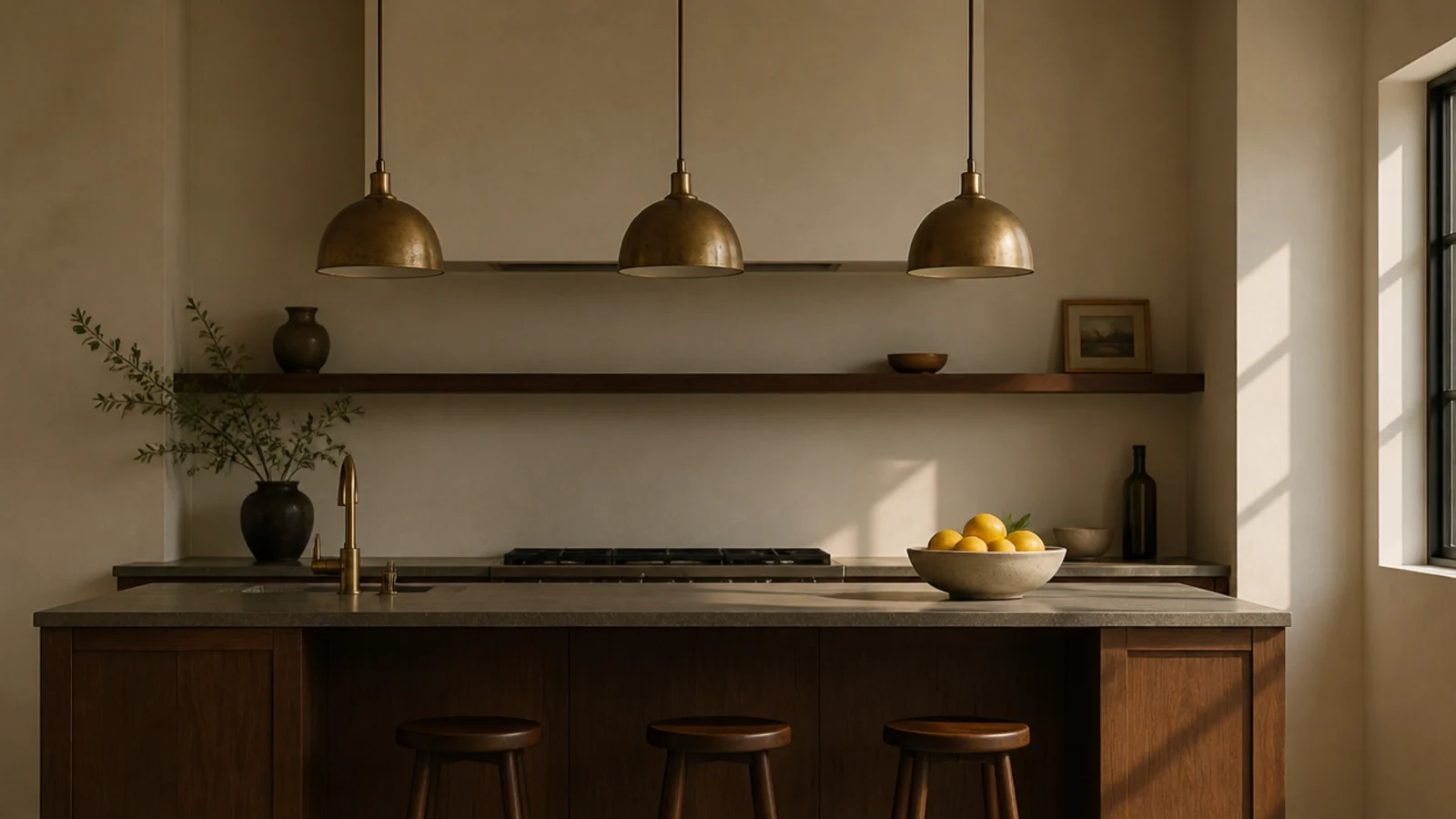
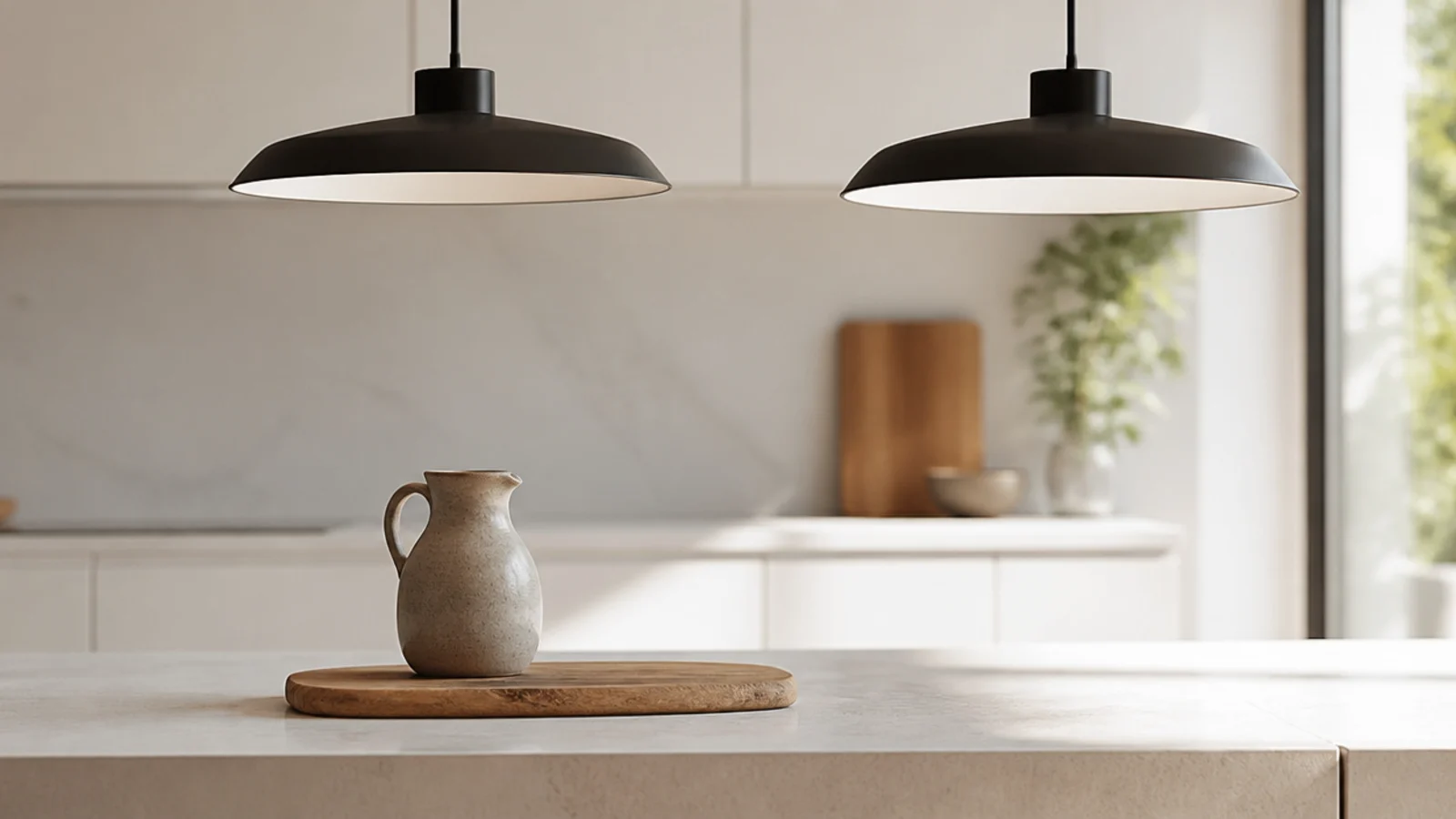
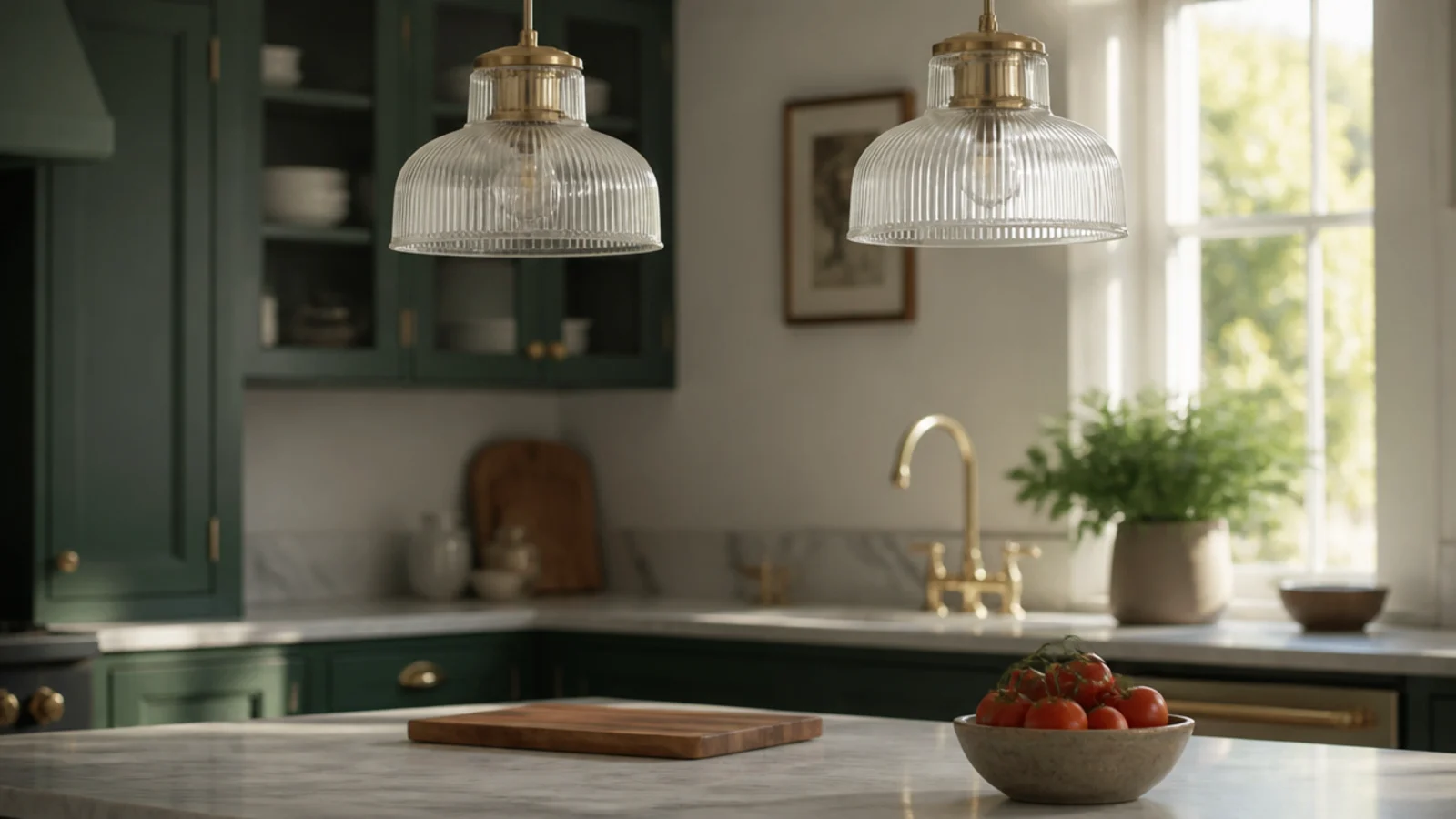
Over a kitchen island — 30 to 36 inches from the countertop to the bottom of the fixture. Taller people and higher ceilings push toward 36; low ceilings and wide shades toward 30. You should be able to see across the island to the person opposite without the shade cutting them in half.
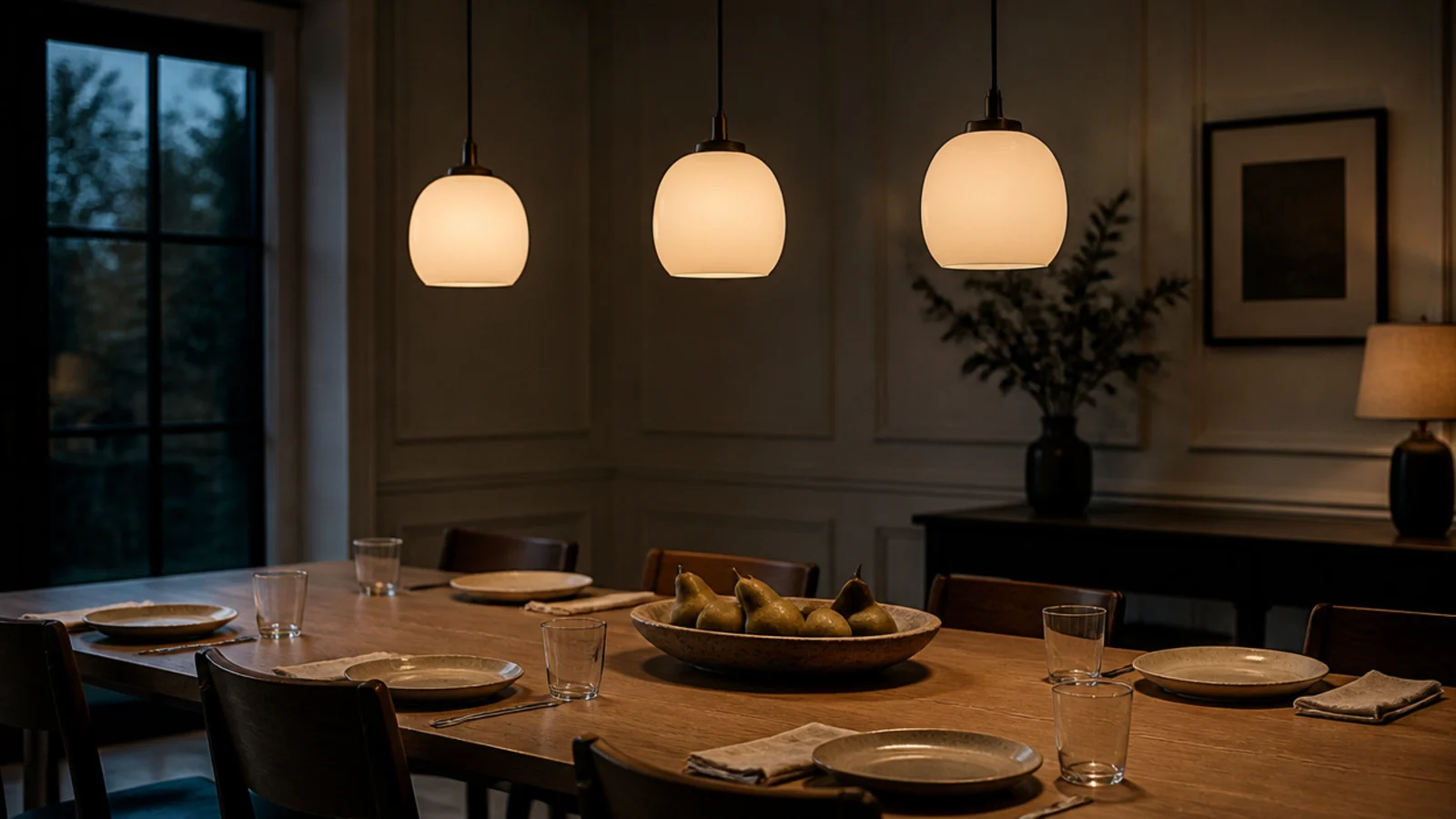
Over a dining table — 30 to 34 inches from the tabletop. Slightly lower than an island because nobody is standing under it and you want the pool of light on the table rather than on the room.
In a room with no surface beneath — keep the bottom of the fixture at least 7 feet off the floor in any walkway. In a hall or a landing that is a clearance rule, not a style choice.
Beside a bed — 24 to 30 inches above the mattress top, close enough that light lands on the page and far enough that sitting up does not mean meeting the shade.
Diameter and spacing
Size the fixture to the surface, not the room. Over a dining table the shade wants to be roughly half to two-thirds the table's width, and never wider than the table minus 12 inches — anything larger gets caught by elbows and heads.
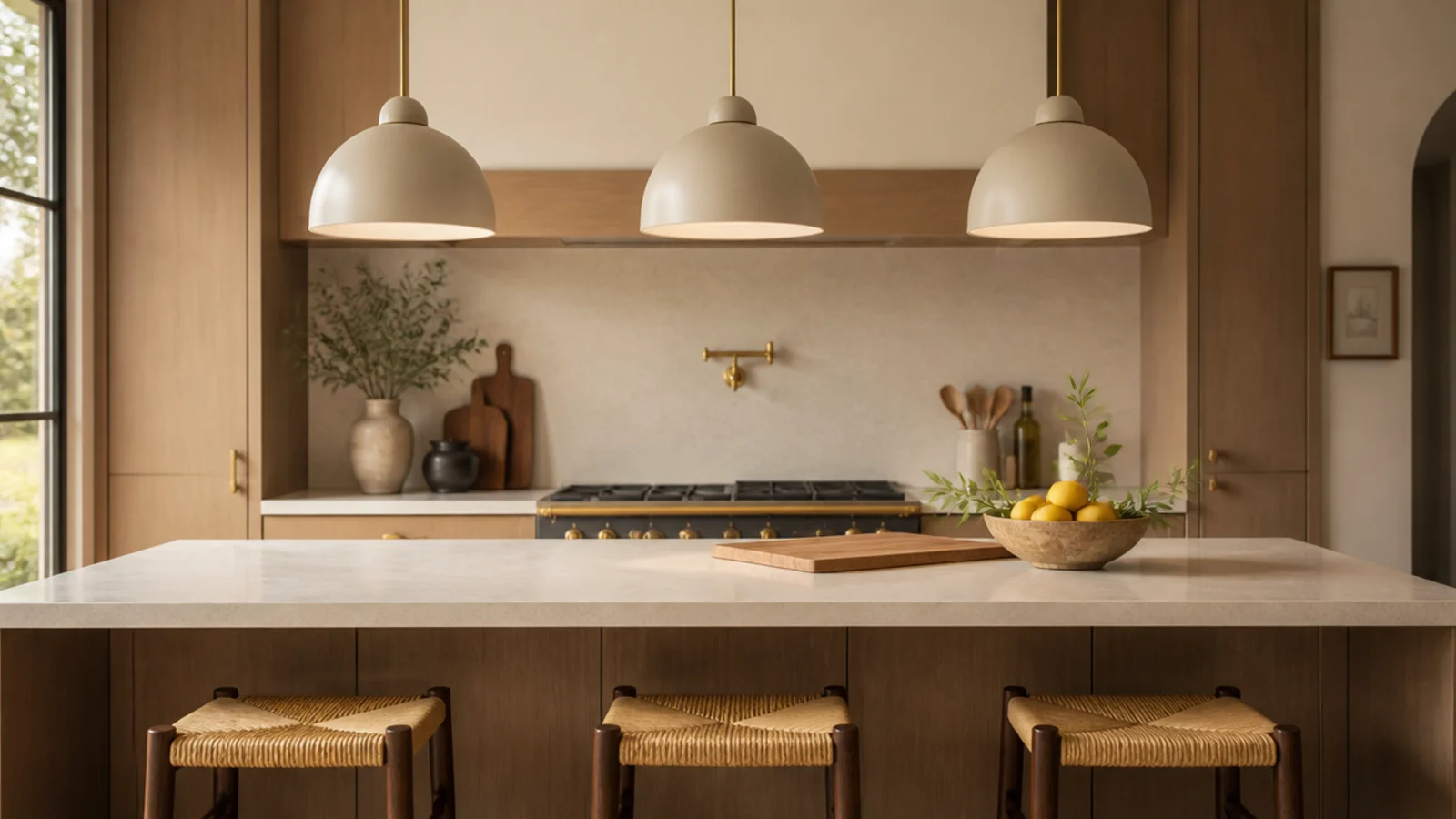
For multiples over an island, allow 24 to 30 inches between centres and keep the outer pendants at least 6 inches in from the island ends. Two pendants suit an island up to about 7 feet; three from 8 feet up. Odd numbers read better over a run and even numbers read better flanking something central.
Light quality
Aim for 2700K in bedrooms and living rooms, 3000K over a kitchen island where you are actually looking at food. A dining pendant wants to be dimmable — the same fixture at full output serves homework and at thirty percent serves dinner, and one of those is why you bought it.
Wiring and where it is not a DIY job
The ceiling box carries the whole weight, so it must be rated for the fixture — a standard box is not a fan box, and a heavy pendant needs a brace. Hard-wiring is licensed work in many jurisdictions; plug-in pendants on a hook and a cord exist for exactly this reason and suit renters well.
In a bathroom the fixture must match the IP rating for its distance from the bath or shower. That is a safety rule with legal force, not a suggestion.
Where these fifteen guides go
Start with the main guide for the heights, the island and dining guides for the two surfaces people get wrong most, and the room guides for bedrooms, offices and bathrooms.
Start here
Three guides that answer the question most people arrive with
All Hanging Lights guides
15 of 15 published