Hanging Lights · Listicle
25 Gorgeous Ceiling Hanging Lights Worth The Splurge

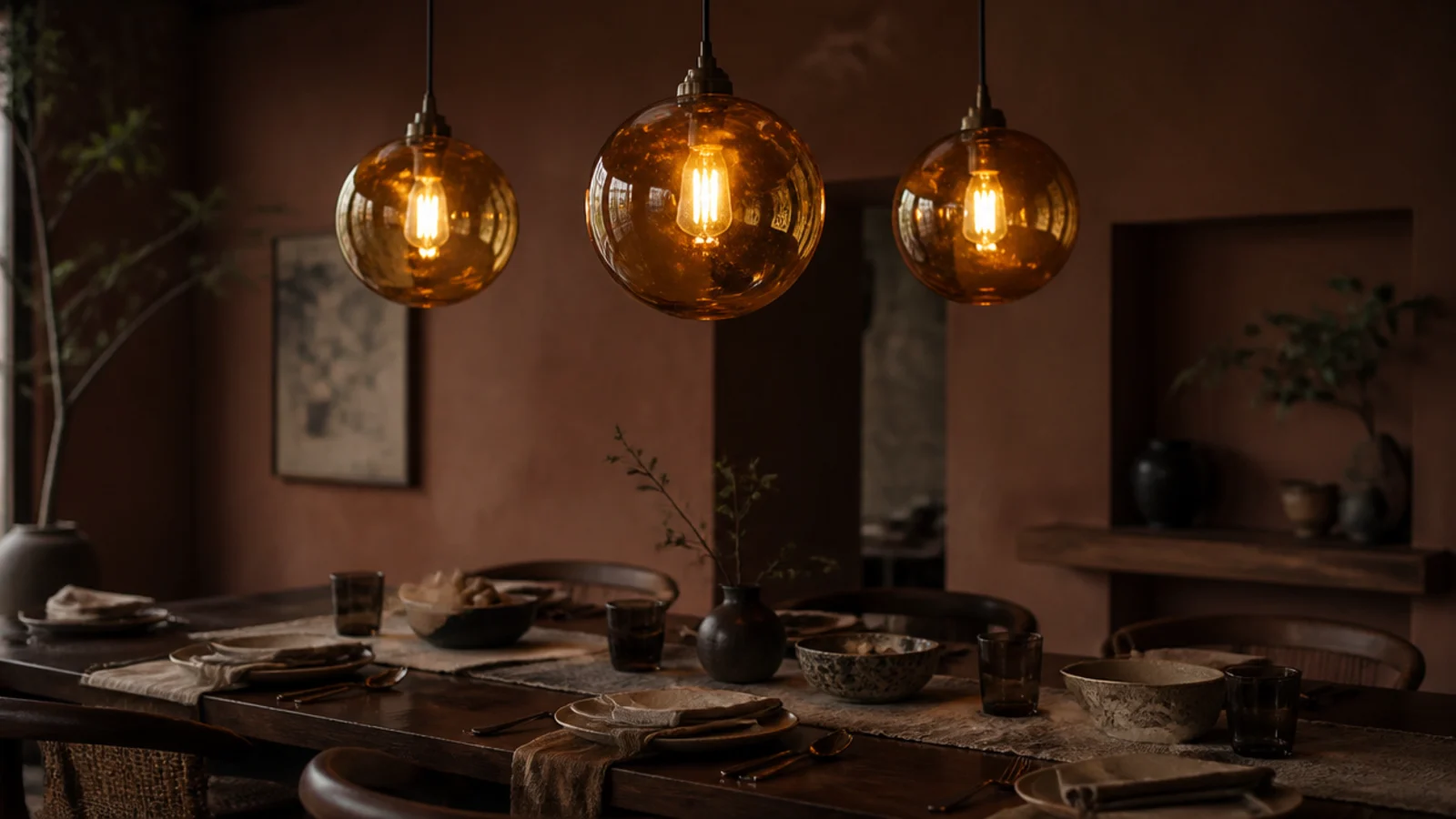
Most lighting money goes on the wrong half of the fixture. People pay for the shape and inherit a sealed LED board, a plated finish that wears through in four years and a driver nobody makes any more. Ceiling hanging lights are worth spending on when the material improves with age and the electrical parts can be replaced — that is really the whole rule. I have specified fixtures at $40 and at $900, and the ones clients still like a decade later have almost nothing to do with the price. Below are twenty-five that hold their value, with the weights, diameters and drops each one needs.
In this guide27 sections — tap to openHide
- 1.What ceiling hanging lights should cost before you commit
- 2.A hand blown glass globe with visible seeds
- 3.Solid brass that will build a patina
- 4.A plaster shade mixed to the ceiling colour
- 5.A long linear bar over a long table
- 6.Alabaster or stone that glows rather than shines
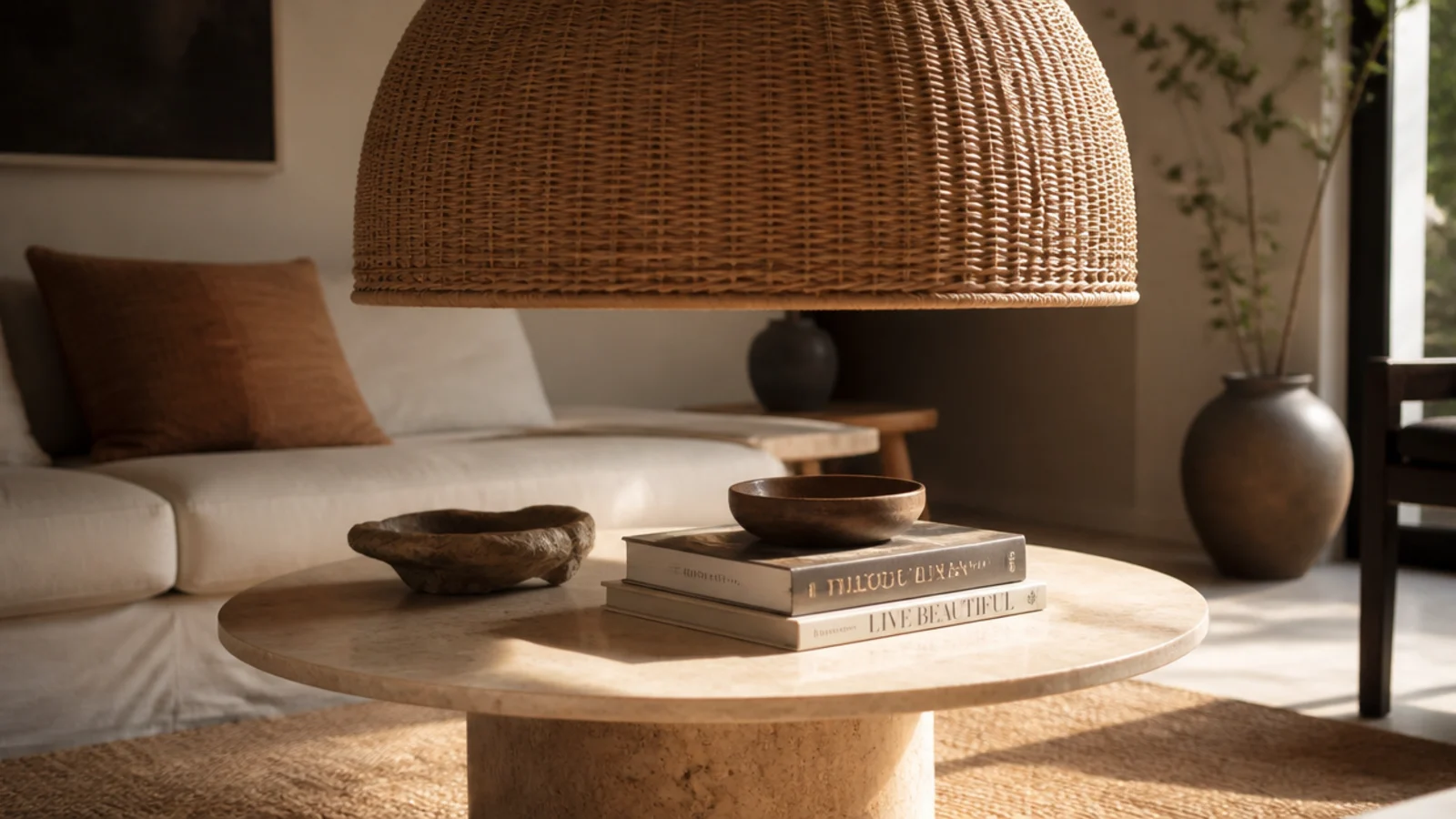
- 7.A tiered rattan lantern in a tall room
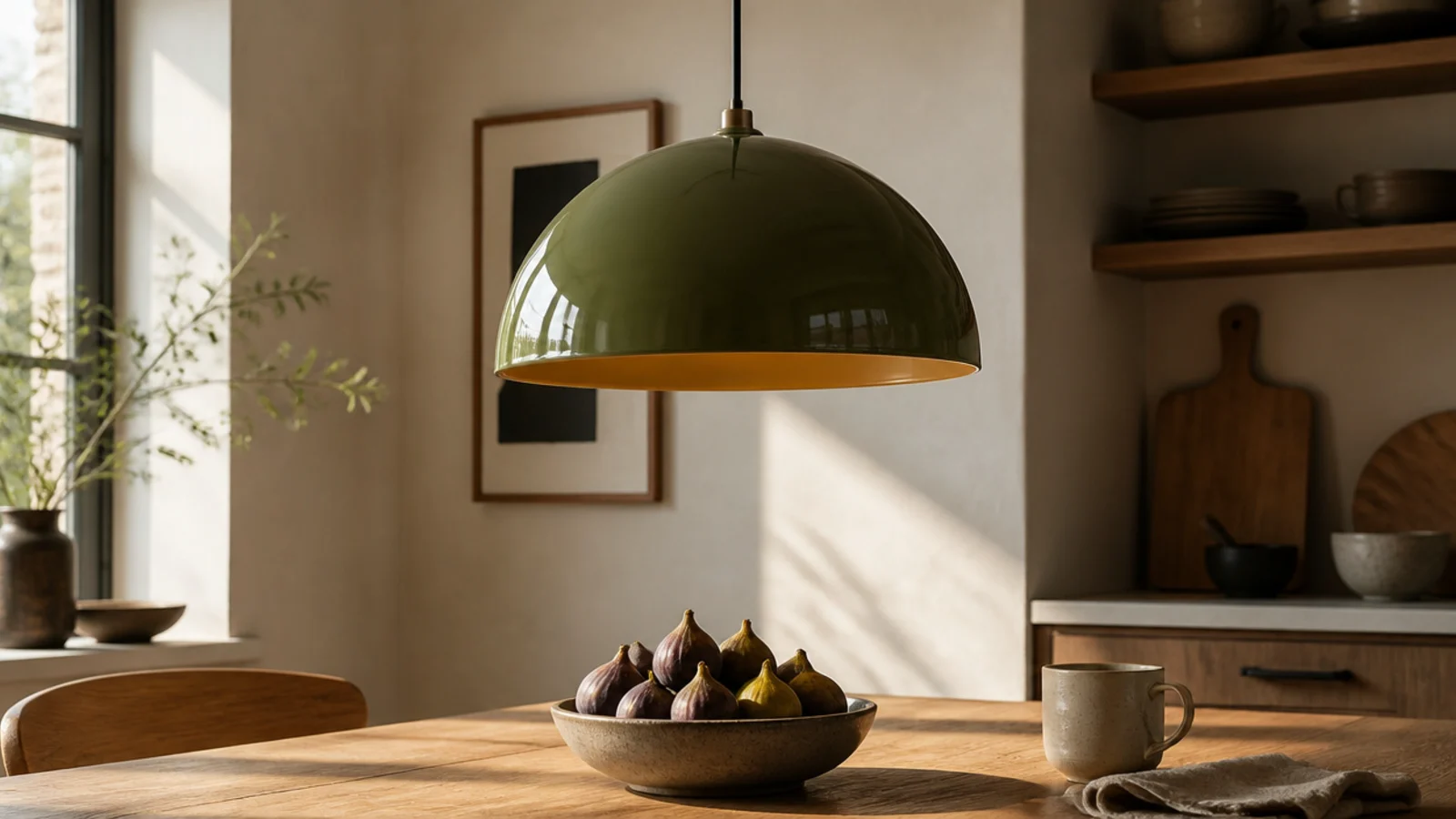
- 8.A glazed ceramic dome with a coloured interior
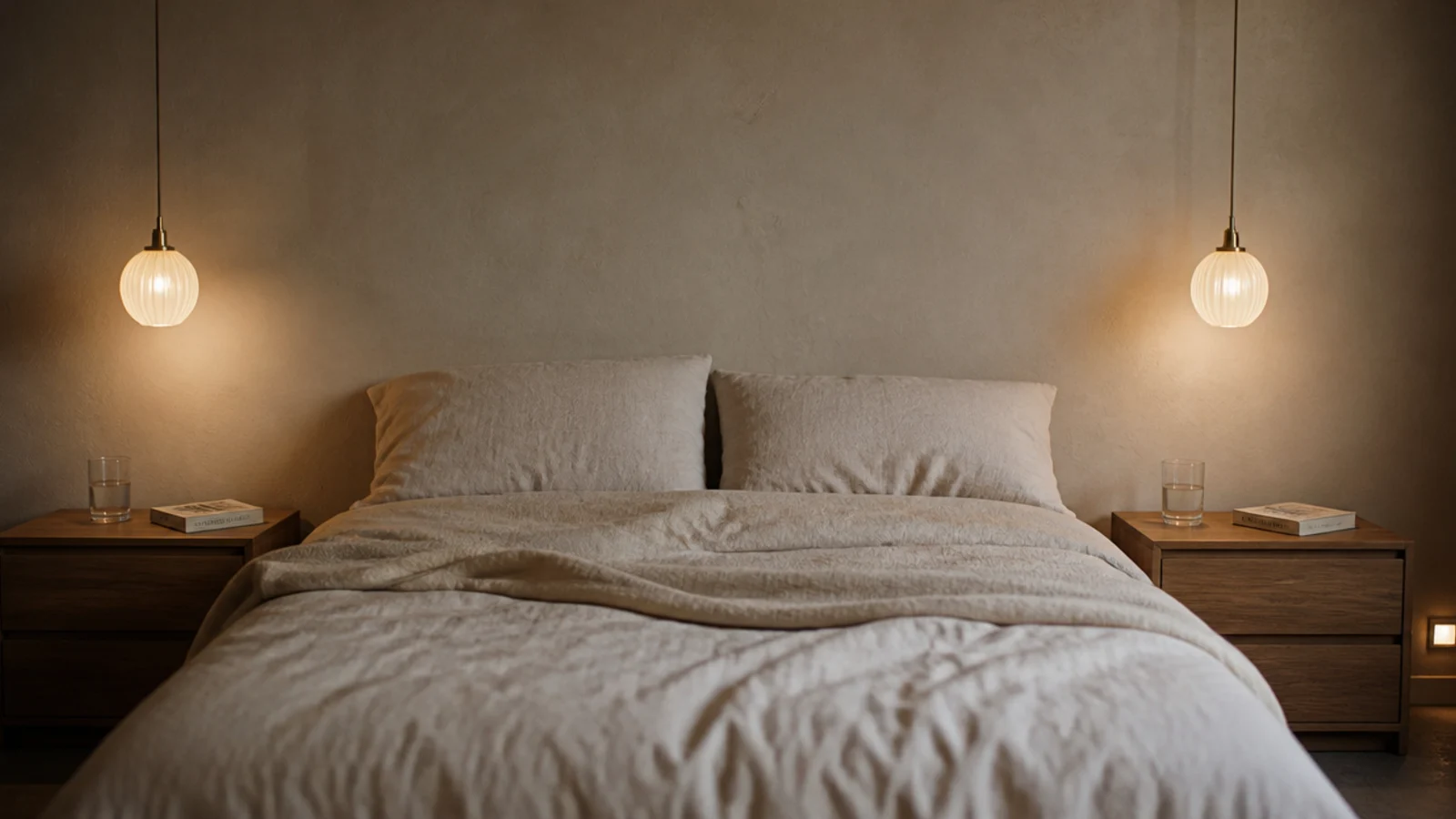
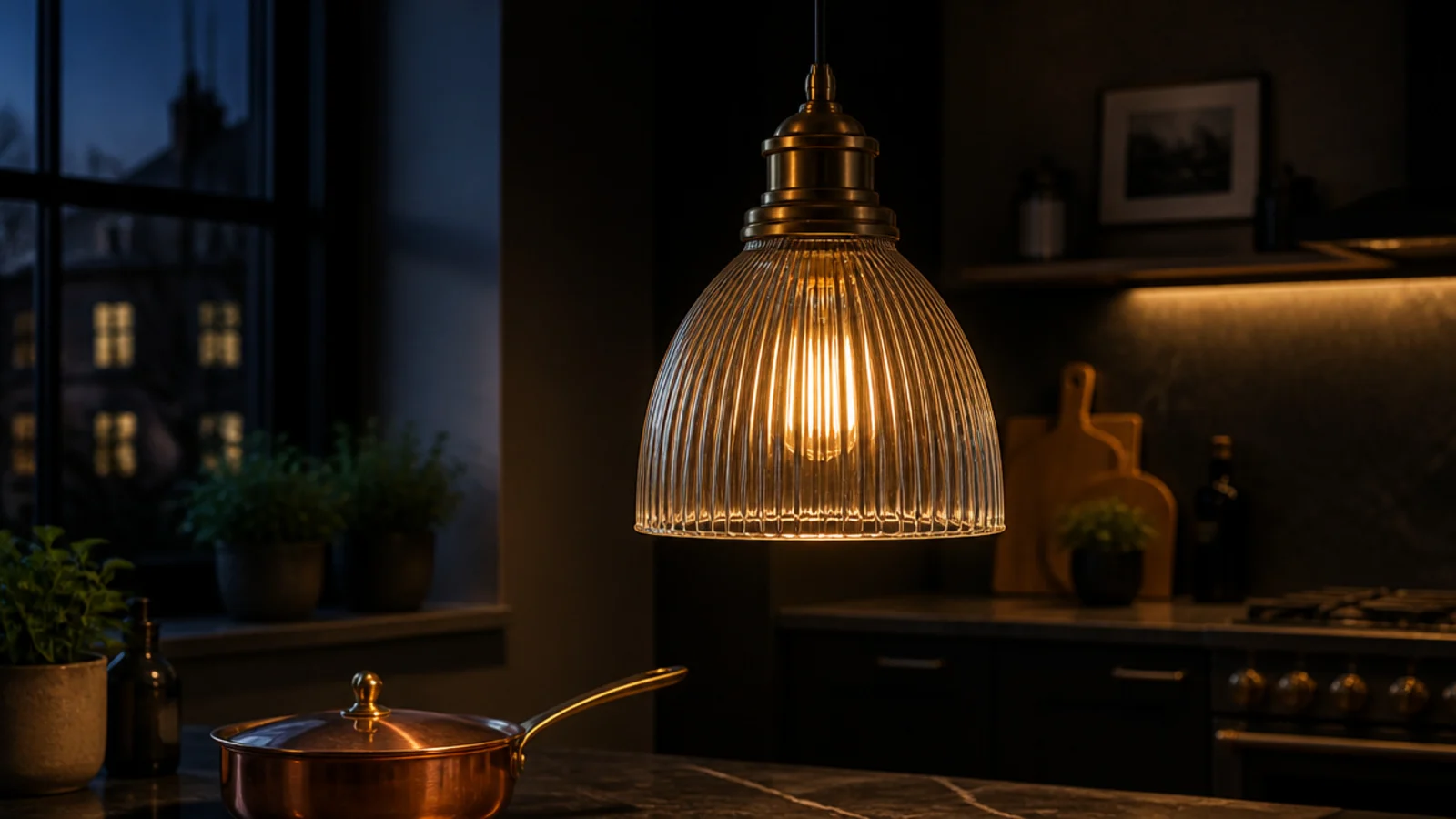
- 9.Fluted glass that hides the filament
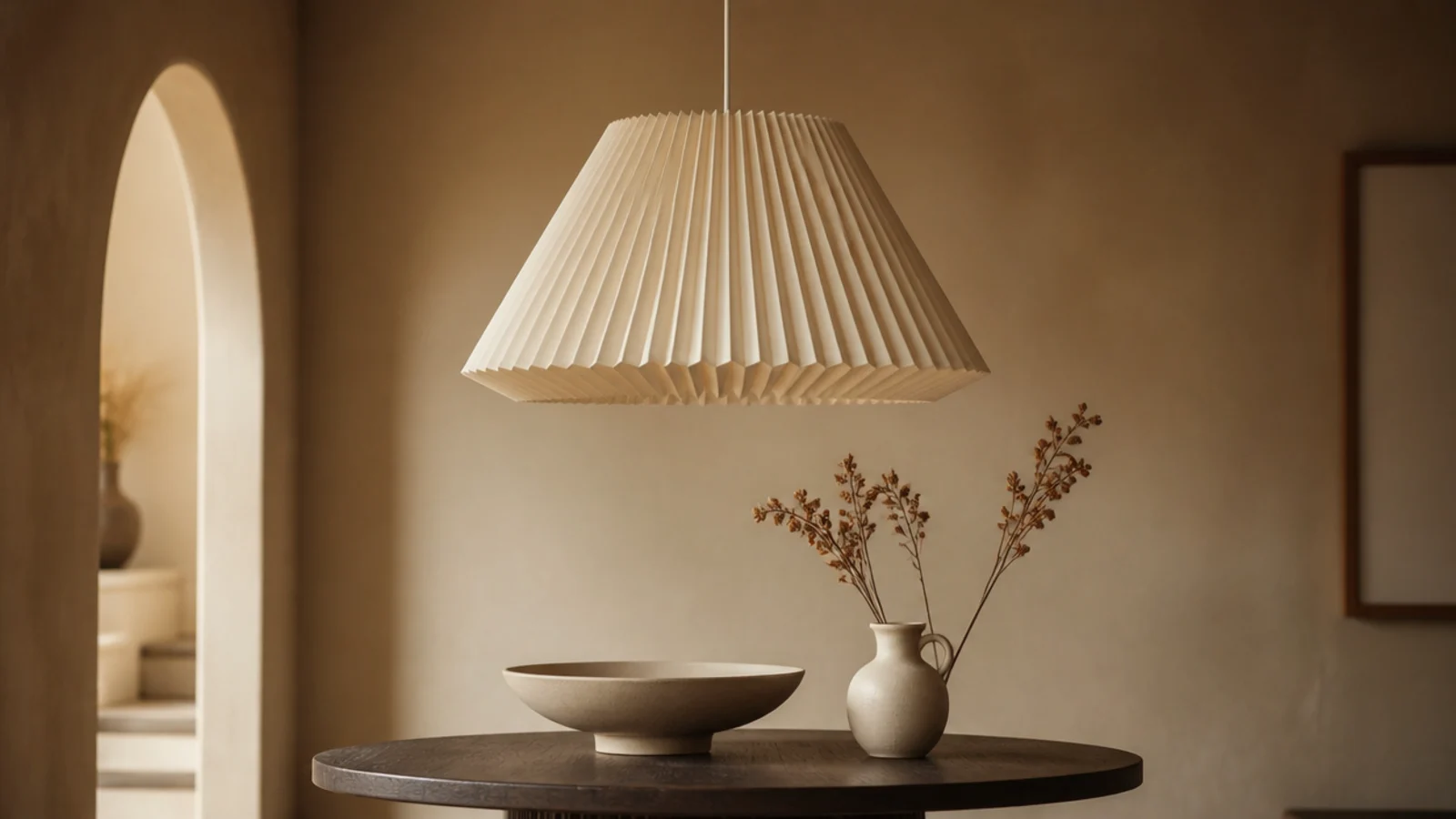
- 10.A pleated fabric shade with a real frame
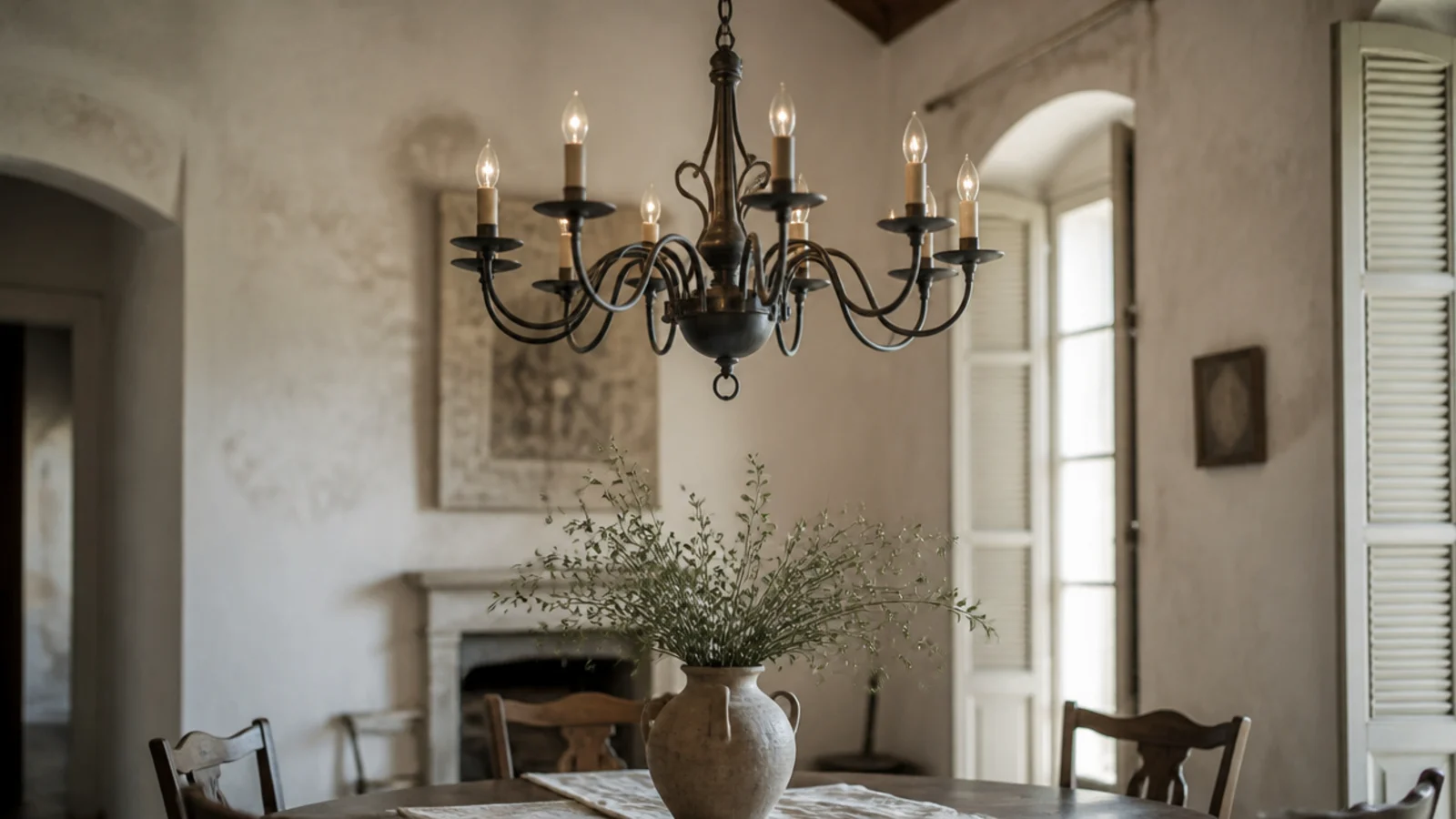
- 11.A chandelier sized by the room rule
- 12.A smoked glass cluster on a custom canopy
- 13.A hand woven paper shade over a stair void
- 14.Blackened steel with a hand applied finish
- 15.A convertible semi flush for a low ceiling
- 16.An integrated LED module you can replace
- 17.A dimming driver that matches your dimmer
- 18.High CRI light over wood and food
- 19.A rod length cut for a sloped ceiling
- 20.A counterweight fixture over a stairwell
- 21.One canopy finish repeated through the house
- 22.A standard socket you can still buy in ten years
- 23.A rated box for a heavy ceiling fixture
- 24.Glass thick enough to survive cleaning
- 25.A chain made to the length you need
- 26.Buying the ceiling hanging light first, not last
- 27.Mistakes to Skip
What ceiling hanging lights should cost before you commit
A splurge fixture is worth it in three situations: it is the only decorative object in the sightline, it is at eye level over a table where people study it, or it is large enough that nothing cheaper reads at that scale.
Diameter. Room length plus width in feet, read as inches. A 14 by 16 foot room takes about 30 inches. Over a table, size to the table at roughly half its width and at least 12 inches narrower than the top.
Drop. 30 to 34 inches above a dining table, 30 to 36 above an island, 7 feet minimum anywhere people walk. Add roughly 3 inches per foot of ceiling above 8 feet.
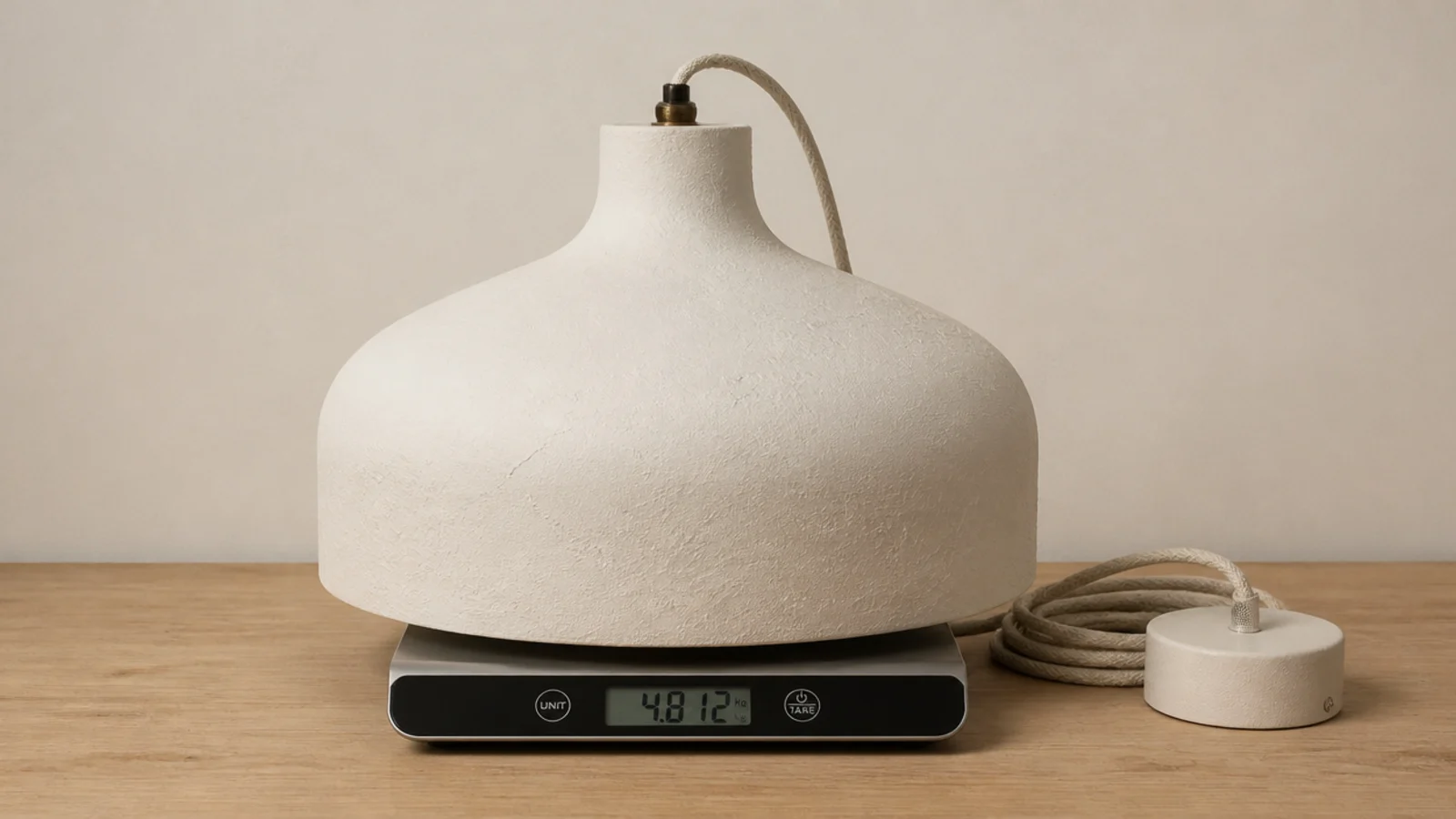
Weight. Standard lighting outlet boxes are listed for 50 pounds. Plaster, stone and thick cast glass reach 20 to 40 pounds without looking heavy, so a rated ceiling box carries the fixture weight only if you have checked the stamp — heavier than that needs a listed box or a brace bar between joists. Connecting it is an electrician's job in most jurisdictions, and a good one will tell you honestly whether your ceiling takes the load.
Price bands. $150 to $300 buys decent solid metal and machine-made glass. $300 to $700 buys hand-blown glass, real plaster, quality rattan and a serviceable socket. Above $700 you are buying scale, stone, or a named workshop. Installation adds $100 to $300.
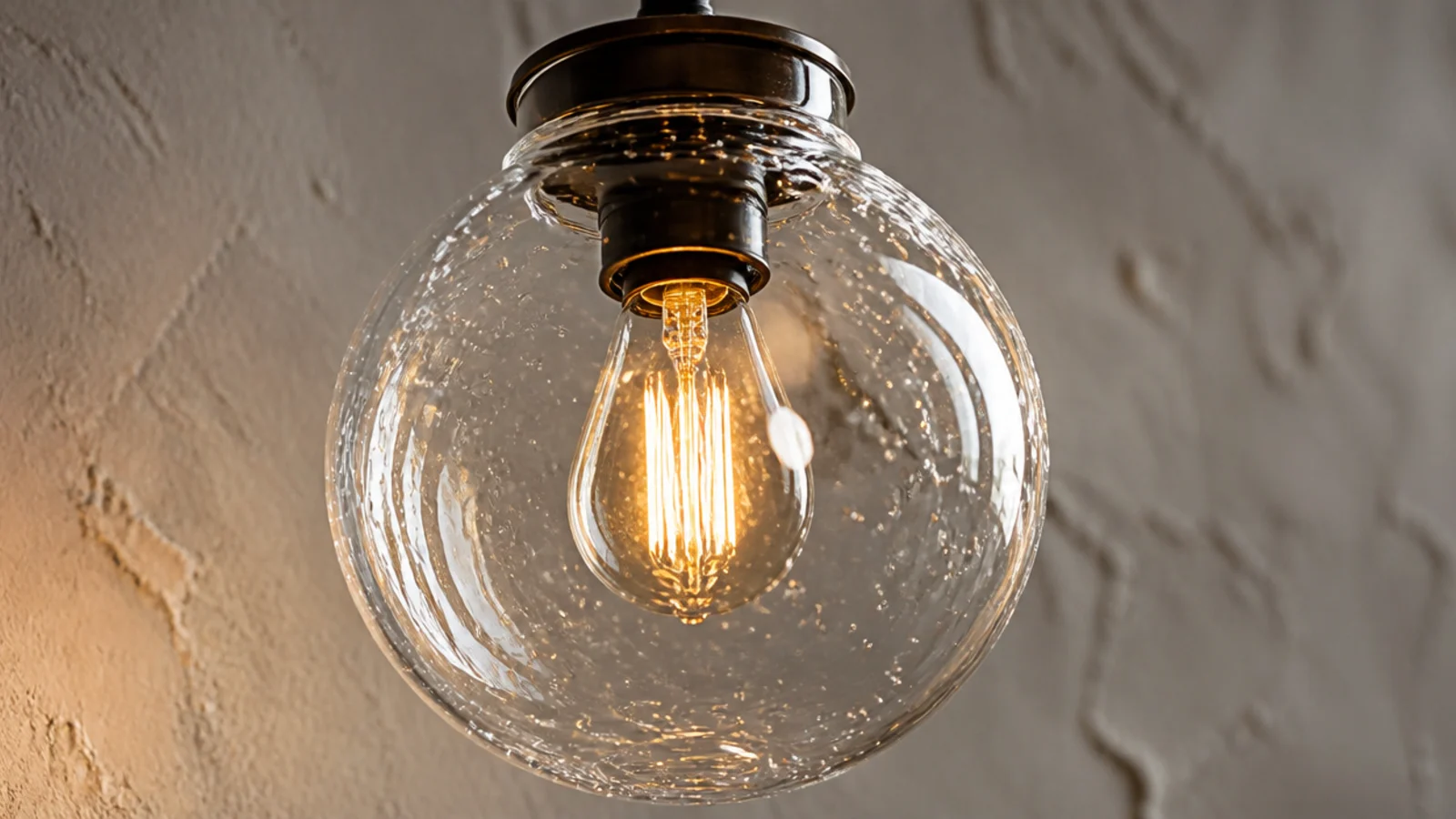
1. A hand blown glass globe with visible seeds
Machine-blown glass is uniform; hand-blown glass has fine bubbles, slight wall variation and a softly irregular profile that catches light unevenly. That irregularity is the whole product. Expect $180 to $450 for a 10 to 14 inch globe, and check the fitting is a standard socket rather than a bonded LED.
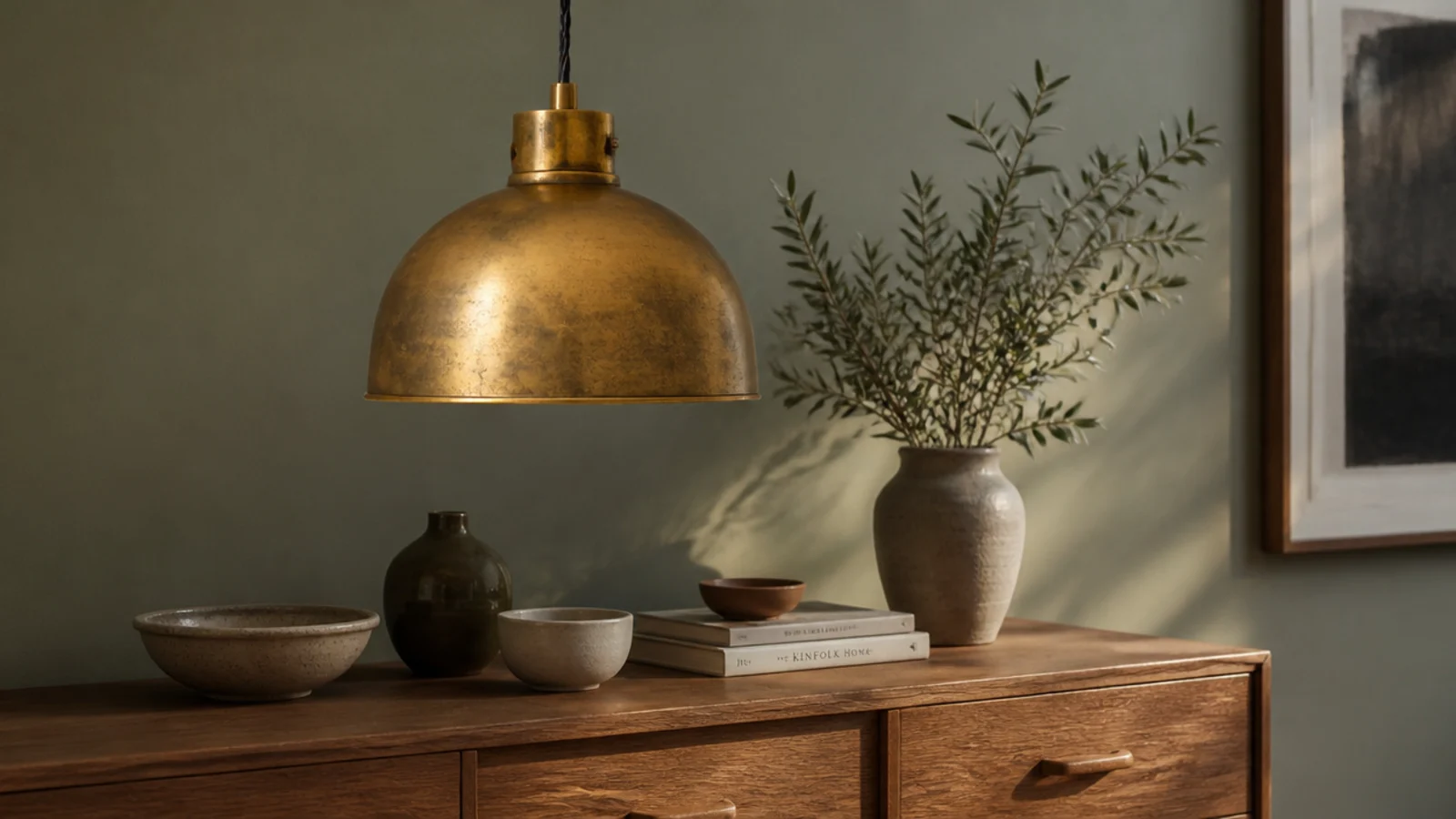
2. Solid brass that will build a patina
Unlacquered solid brass darkens unevenly where hands and air reach it, and looks better every year. Lacquered or plated brass looks identical on day one and wears through at the edges by year four. The weight tells you which you have — solid brass shades run 4 to 9 pounds against 1 to 2 for plated steel.
3. A plaster shade mixed to the ceiling colour
A matte plaster shade in the ceiling tone stops reading as a fixture and starts reading as part of the building. They are heavy for their size — a 14 inch shade runs 12 to 20 pounds — and cost $200 to $500. This is the category where the box rating genuinely matters.
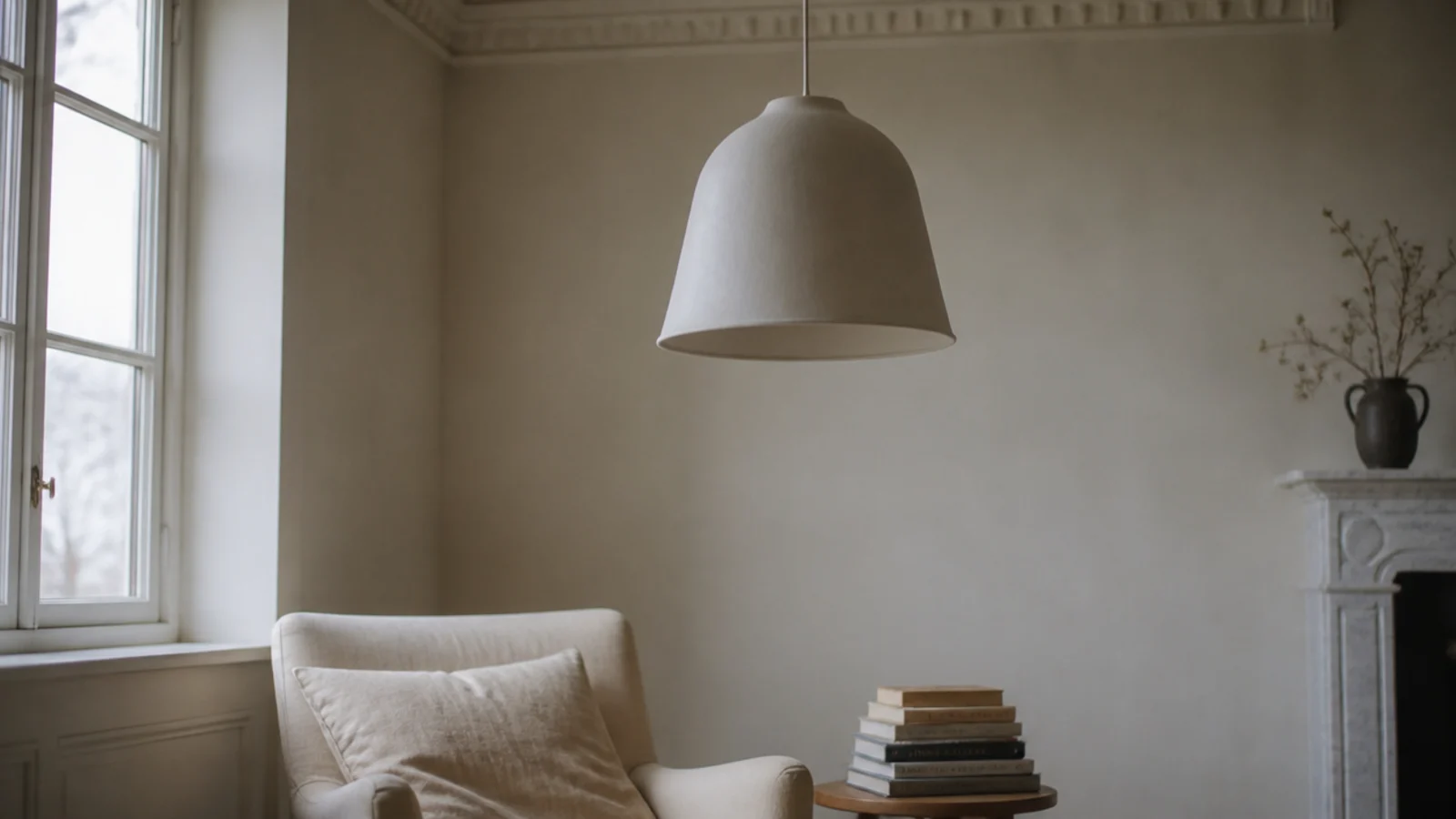
4. A long linear bar over a long table
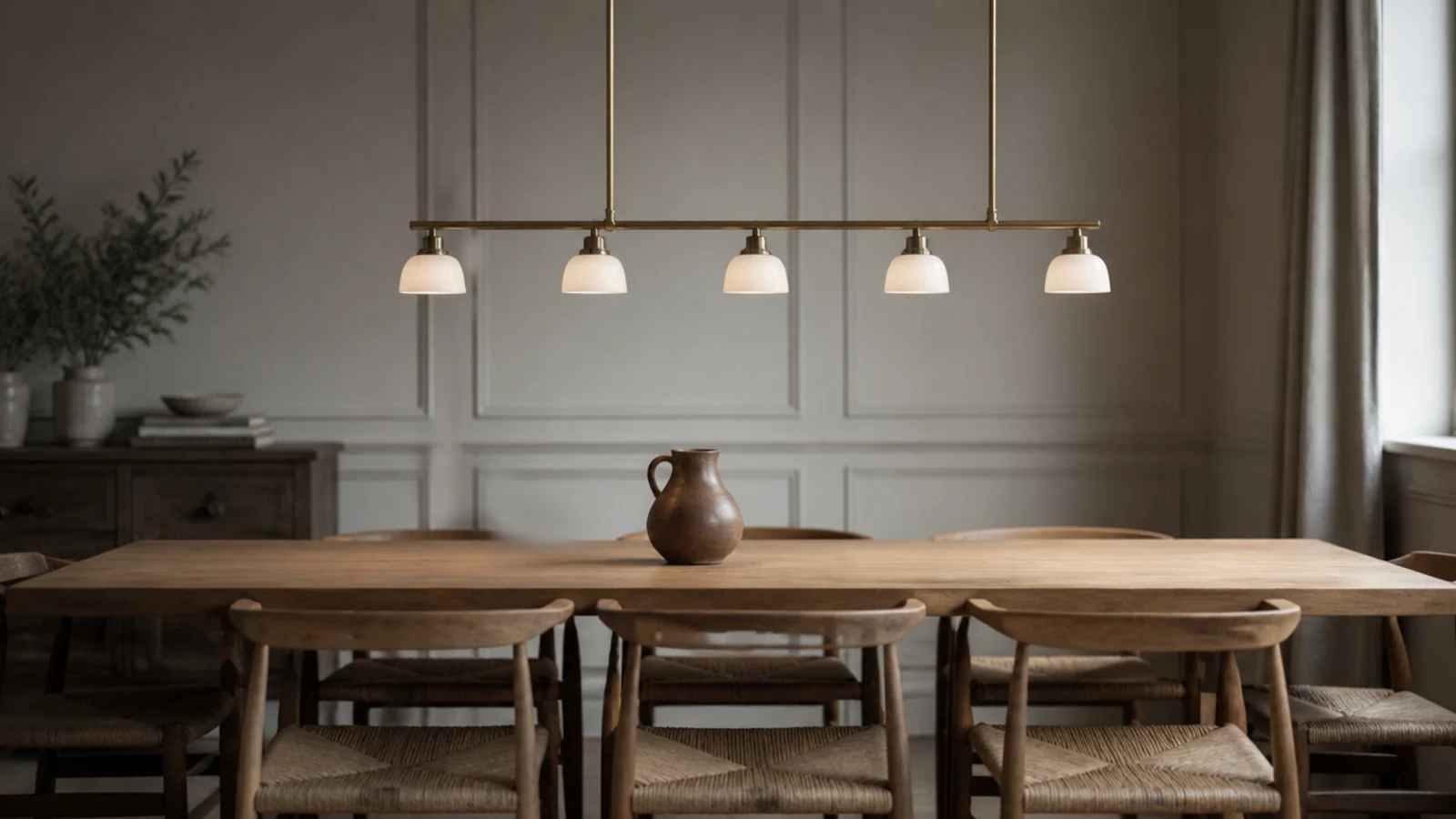
For a table over 84 inches, one bar solves what three pendants complicate. Size the bar to half or two thirds of the table length, hang it 32 inches above the top, and centre it on the table rather than the room. Solid brass versions run $400 to $900; painted steel starts near $200.
5. Alabaster or stone that glows rather than shines
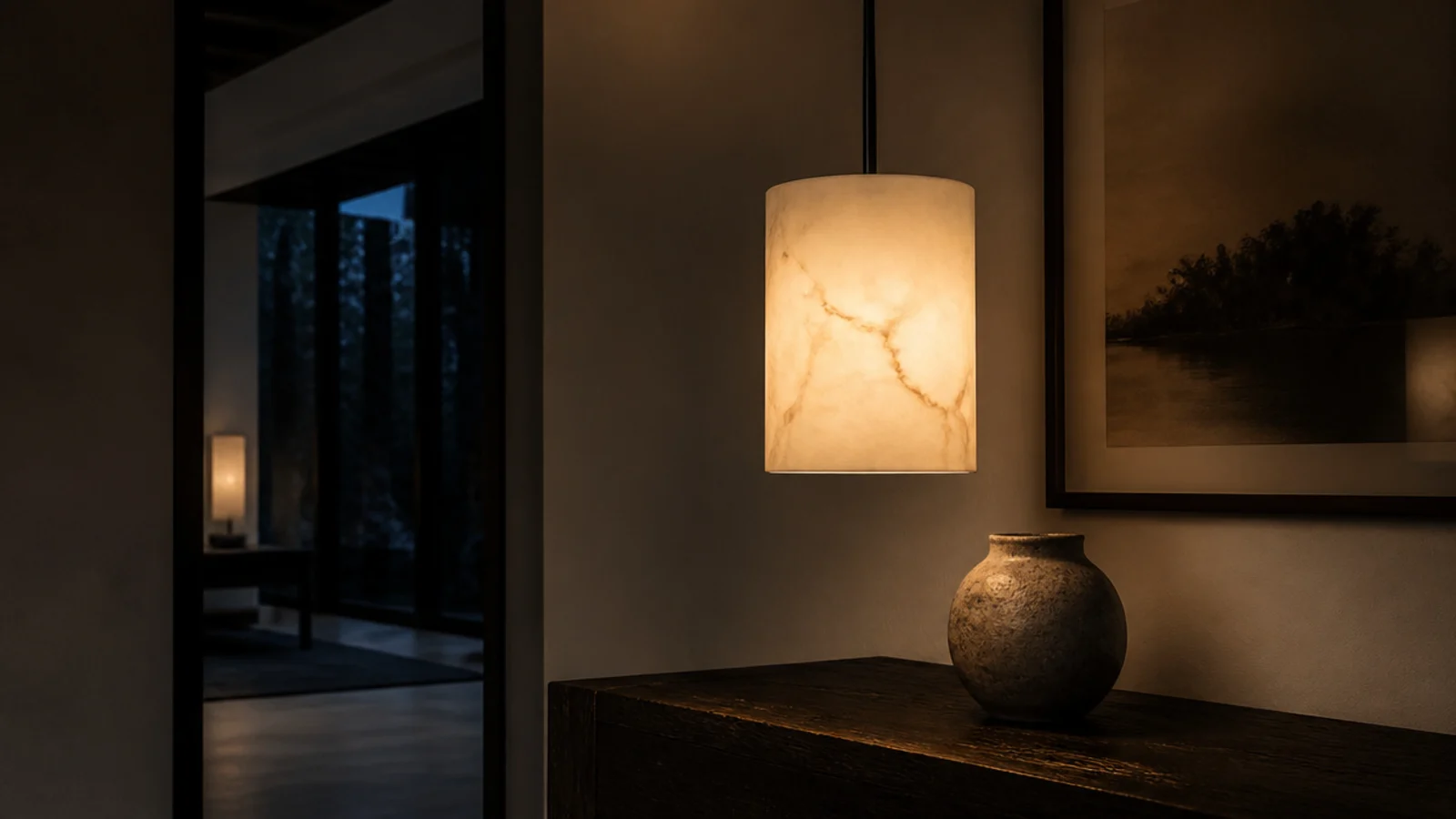
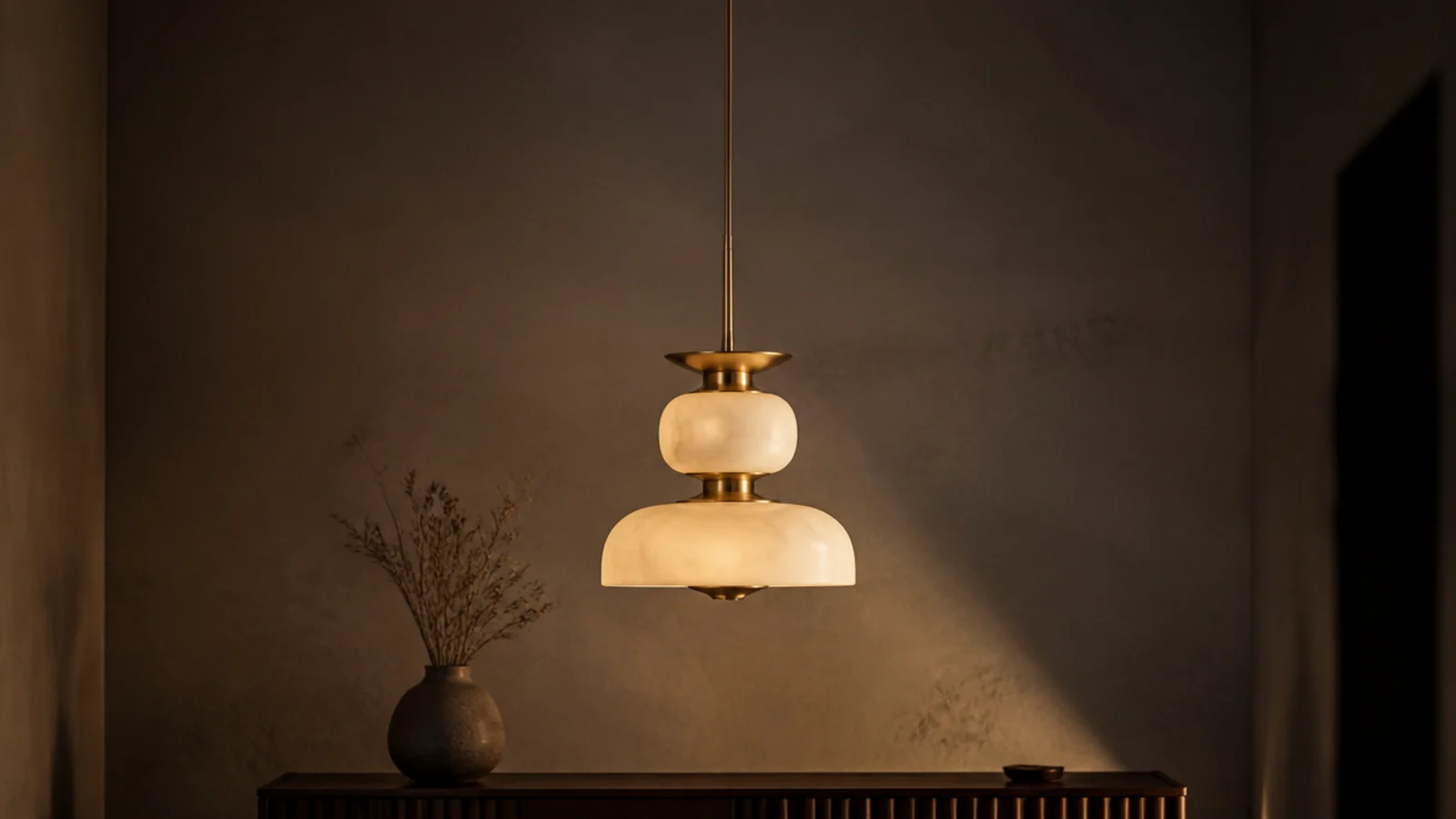
Translucent stone transmits light instead of bouncing it, which produces a warmth no glass matches. Alabaster shades weigh 8 to 25 pounds and cost $300 to $800. Use a bulb no brighter than 600 lumens — the material does the work, and over-lamping makes the veining look harsh.
6. A tiered rattan lantern in a tall room
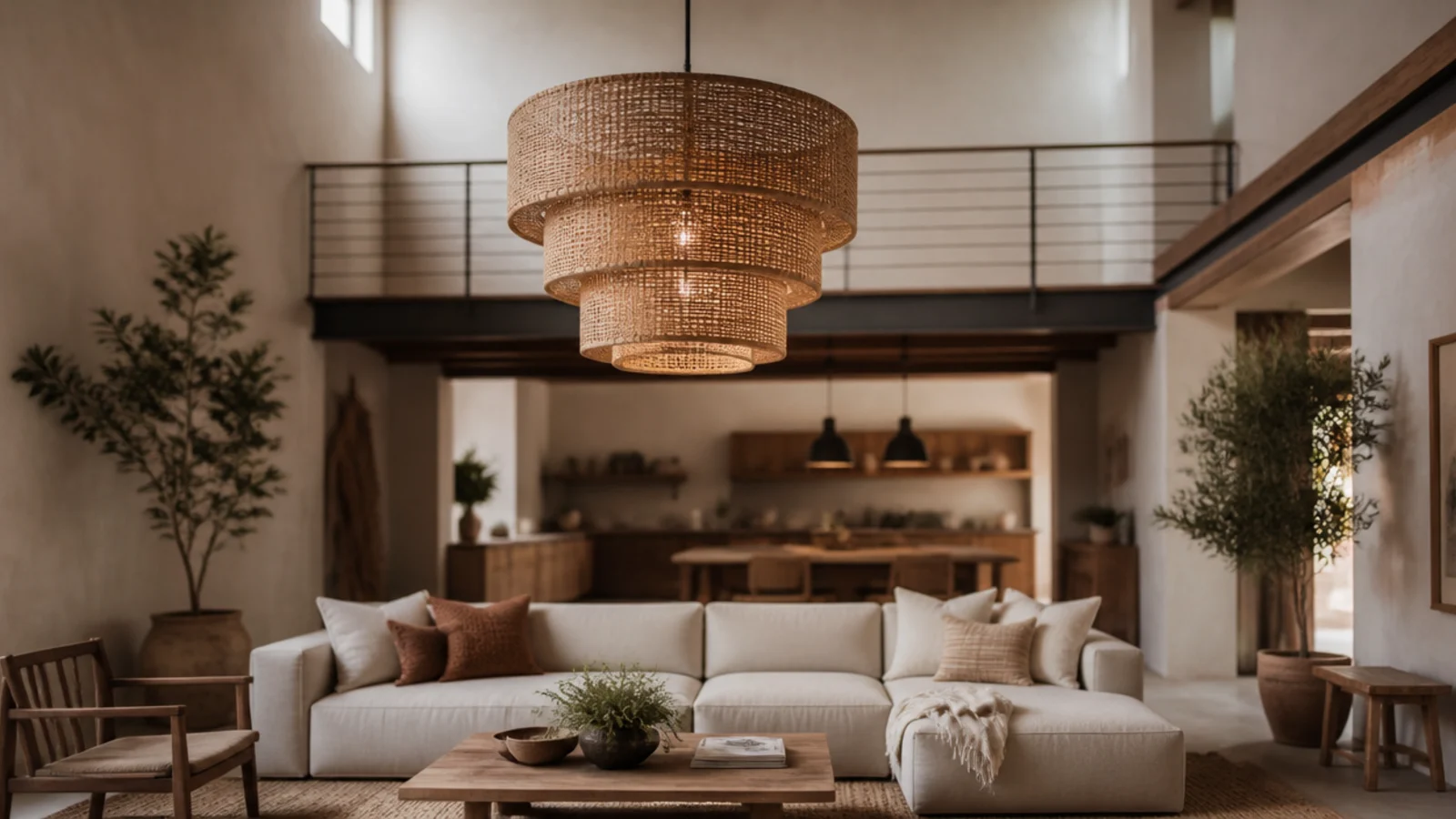
At 28 to 40 inches across, a tiered woven lantern gives a double-height room something to read at mid level. It weighs only 6 to 12 pounds for its size, which is why big rattan is the affordable answer to scale. Expect $200 to $500 and plan on dusting it twice a year.
7. A glazed ceramic dome with a coloured interior
The inner glaze tints everything under the fixture, so an ochre or oxblood interior warms a table beautifully while a white interior stays neutral. Ceramic domes weigh 8 to 18 pounds and chip rather than crack. Budget $250 to $600 for a thrown rather than slip-cast shade.
8. Fluted glass that hides the filament
Ribbed or fluted glass breaks the source into bands, so you get sparkle without a visible filament. It is the best compromise between clear and opal, and it suits a fixture hung at 32 inches over a counter where people look straight at it. Around $150 to $350 per shade.
9. A pleated fabric shade with a real frame
Hand pleating over a rigid frame holds its folds for decades; glued pleats on card sag within two years. Check the maximum wattage printed inside and use LED, which produces a fraction of the heat. Good ones cost $200 to $500 and can be re-covered rather than replaced.
10. A chandelier sized by the room rule
Chandeliers are the fixture people most often buy too small. Use the room rule, then add 2 to 4 inches if the ceiling is over 10 feet. Keep the bottom at 7 feet in any walkway and at 30 to 34 inches over a table. There is a table-specific version in the dining table guide.
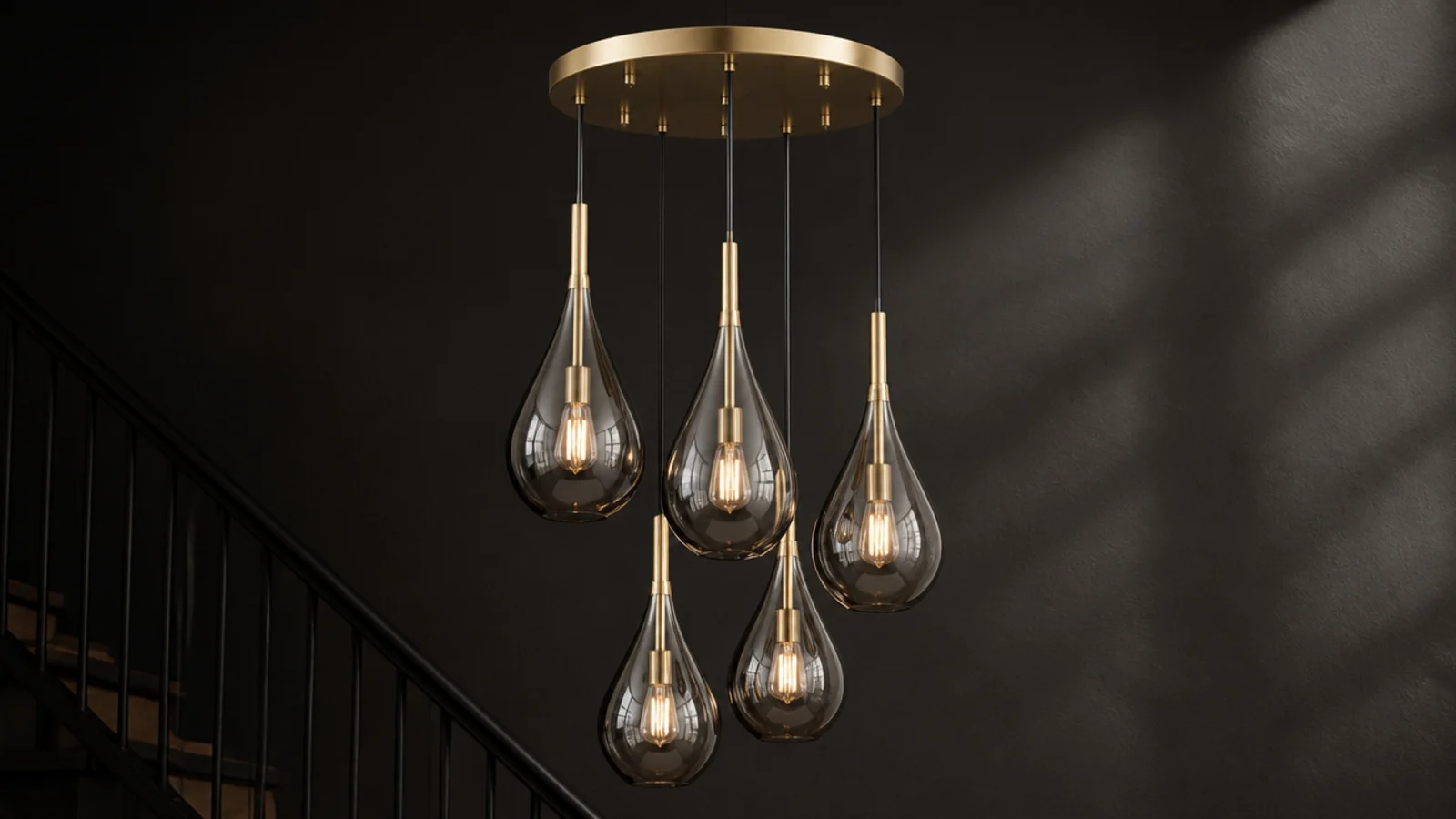
11. A smoked glass cluster on a custom canopy
In a cluster, the canopy is the giveaway. A machined single-piece plate with clean cable exits looks considered; a stamped disc with rubber grommets does not. Stagger the drops by 8 to 12 inches and keep the lowest shade above head height on the stair below.
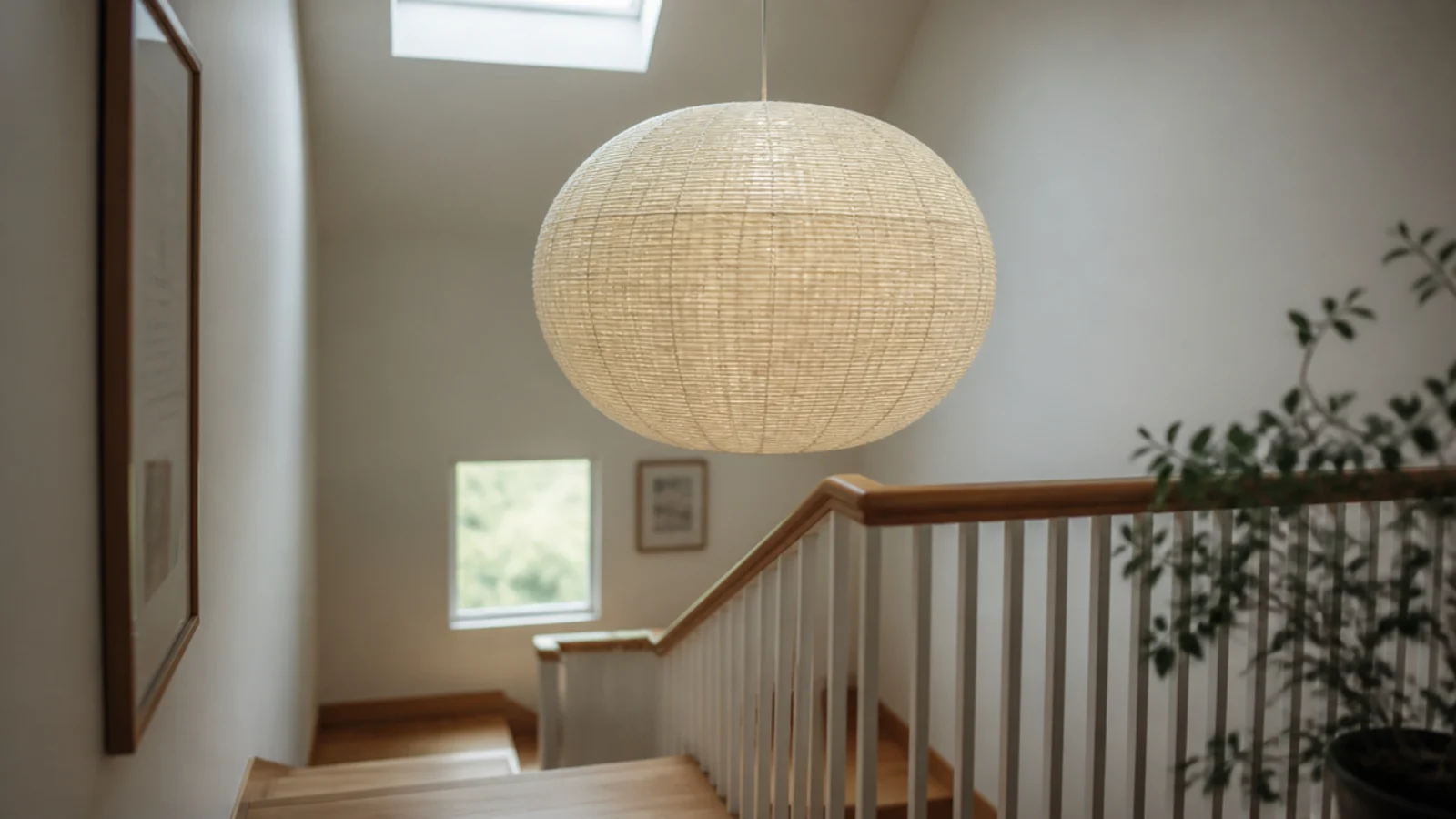
12. A hand woven paper shade over a stair void
Paper is the only material that gives you 36 to 48 inches of diameter at a sane weight — 4 to 8 pounds. In a stair void that scale is exactly what the space wants. Use an LED at least 2 inches clear of the paper, and plan how you will reach it before you hang it.
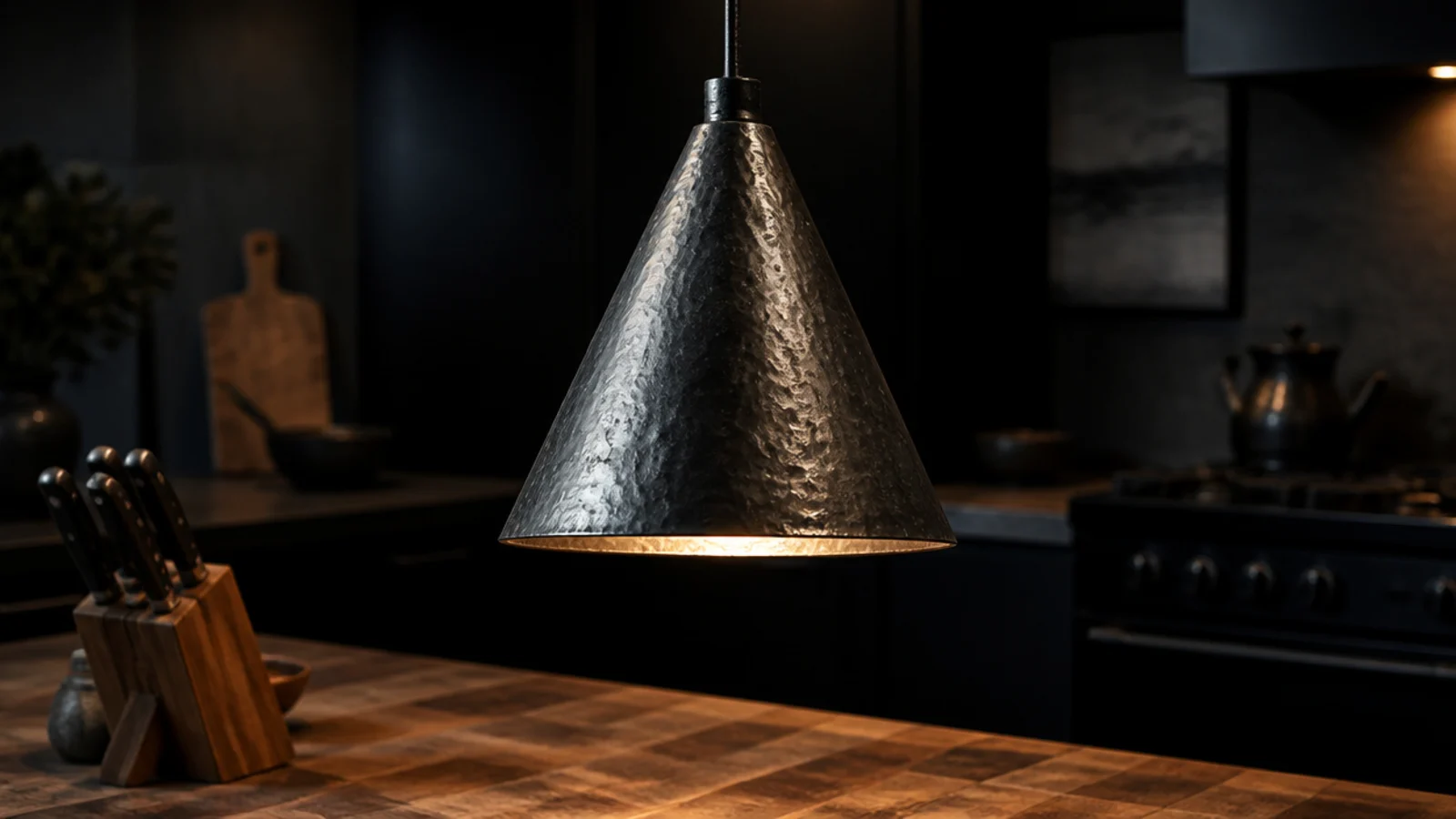
13. Blackened steel with a hand applied finish
Hand-blackened steel has uneven depth and visible tool marks; powder-coated black is flat and even. In an industrial or rustic room the hand-worked version is worth the extra $100 to $200 because it reads as made rather than ordered. The rustic guide covers this material family in depth.
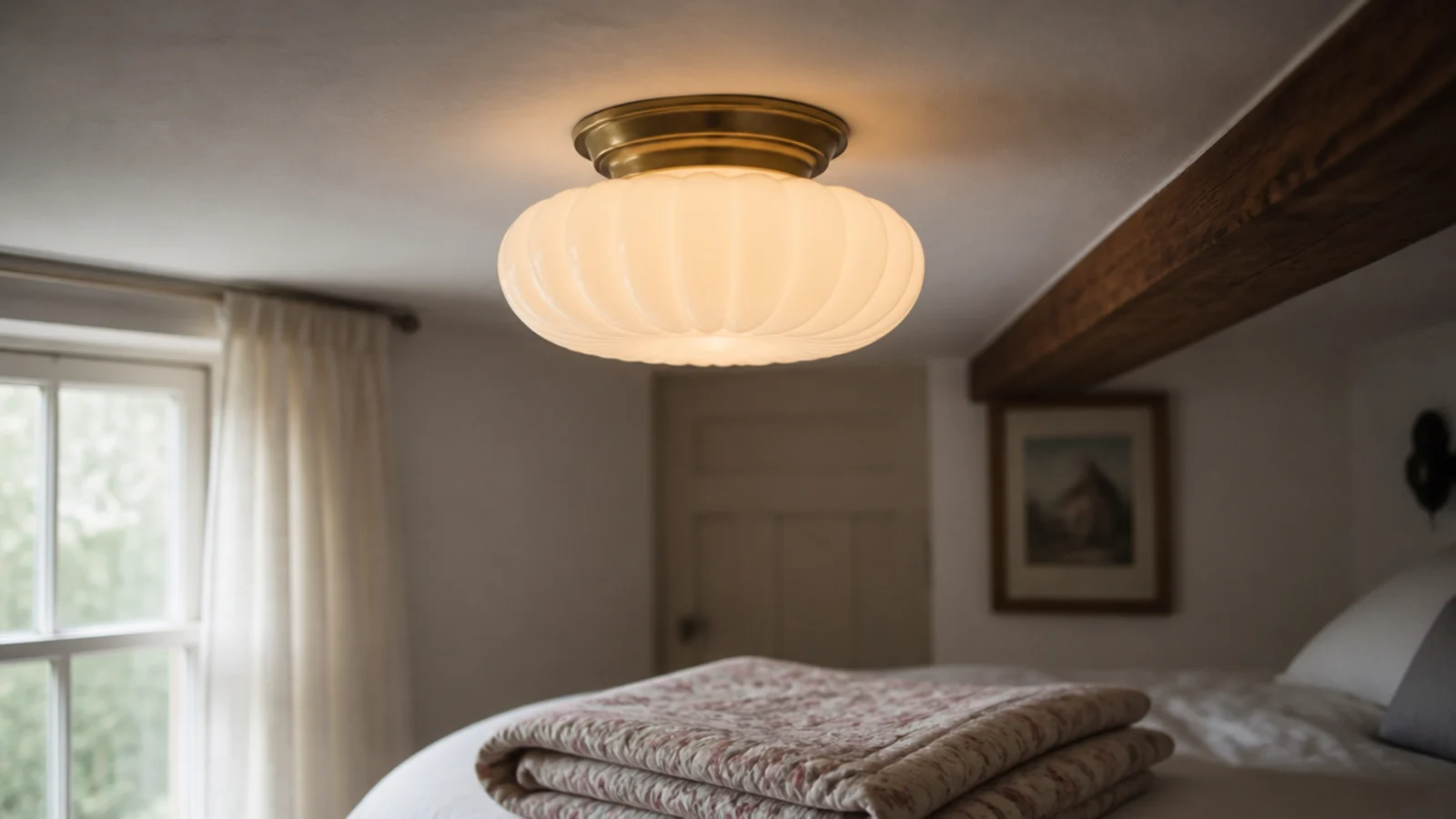
14. A convertible semi flush for a low ceiling
Under 8 feet, a long drop is not an option and most beautiful pendants are ruled out. Convertible fixtures ship with both a stem and a flush canopy, so the same design works at 7 foot 6 or 10 foot. It is the single most useful feature on a spec sheet for older houses.
15. An integrated LED module you can replace
Integrated LED is fine if the module lifts out and the driver is a standard part. Sealed boards bonded into the housing make an expensive fixture disposable somewhere between year eight and year fifteen. Ask the supplier for the module part number before you order — if there is not one, walk away.
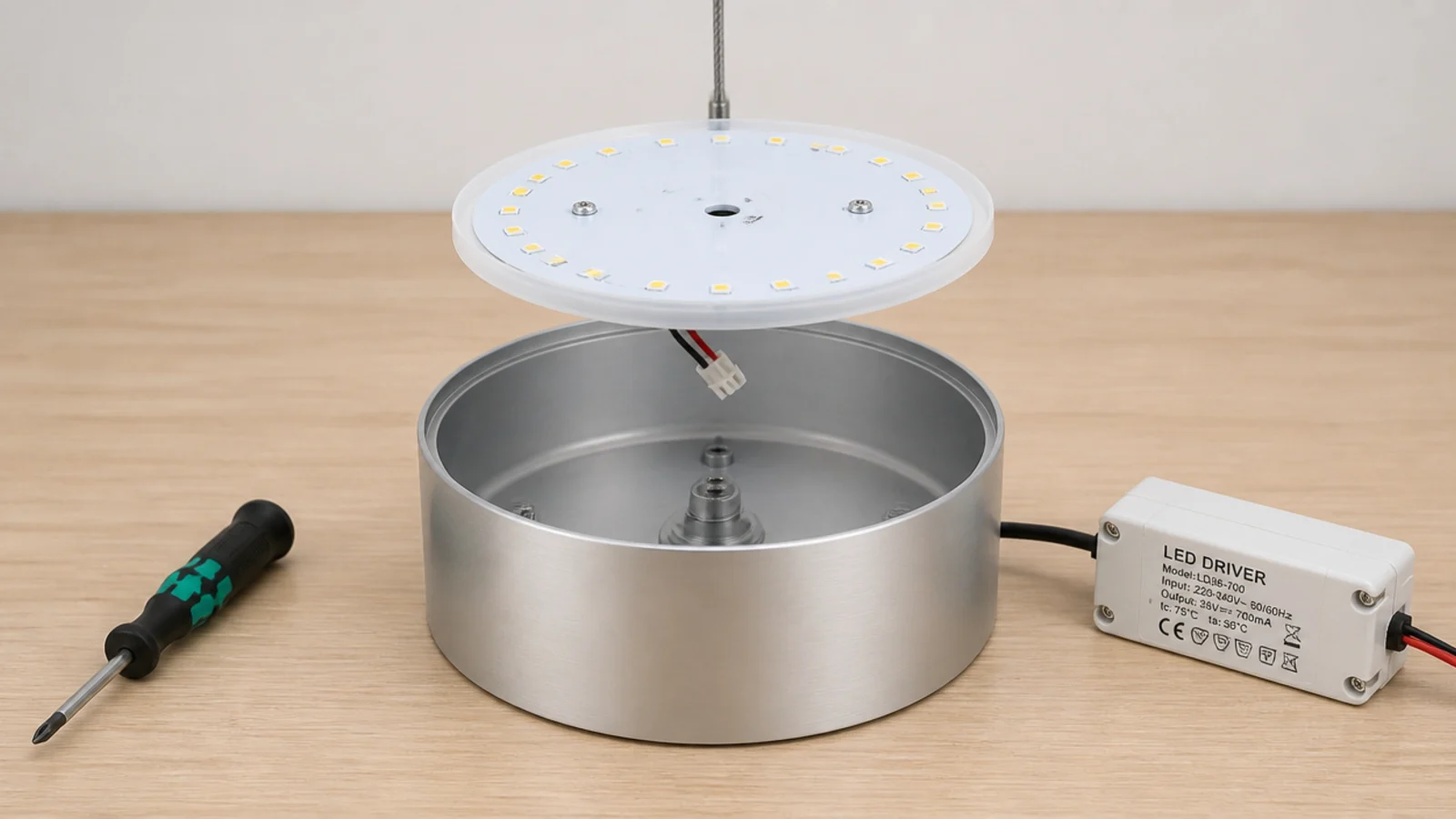
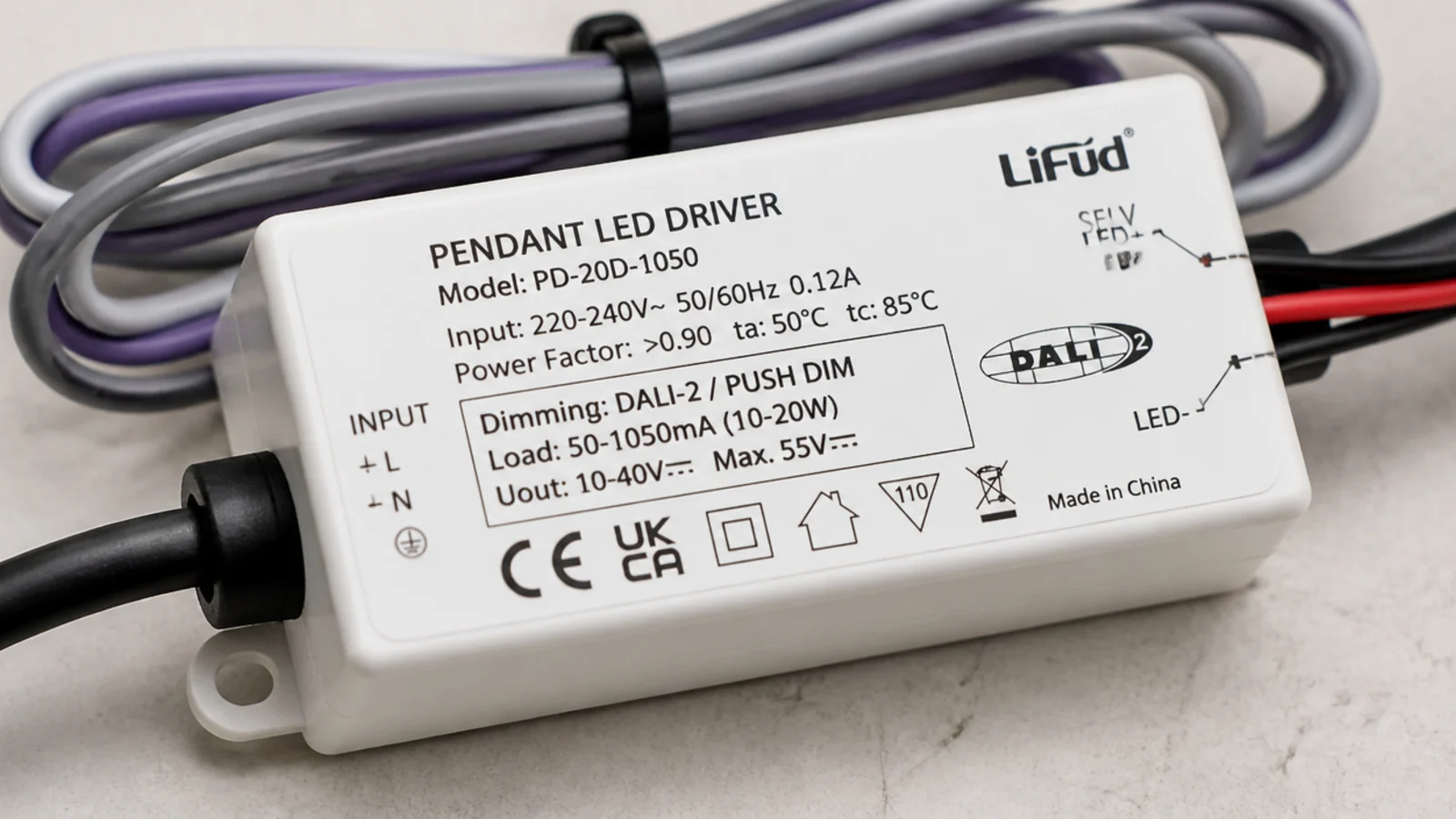
16. A dimming driver that matches your dimmer
Dimming failures are almost always a mismatch. Check the driver type on the label and pair it with the right wall control, and check the minimum load, which is often 10 watts. A trailing-edge dimmer costs $20 to $35 and saves an expensive fixture from flickering all evening.
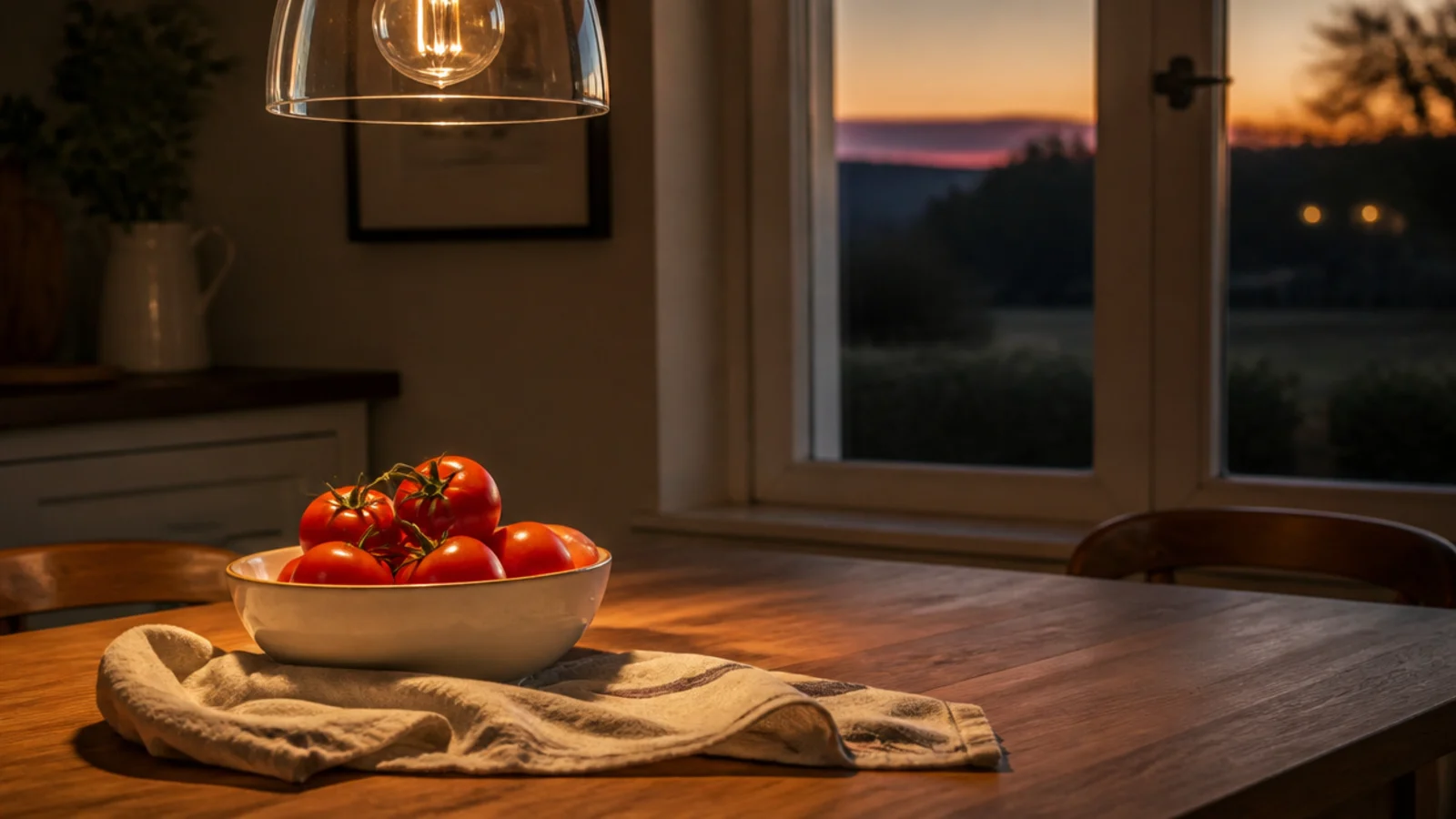
17. High CRI light over wood and food
CRI 90 and above renders reds and browns properly. Under CRI 80, oak reads grey and food reads flat, which undoes the whole point of a beautiful fixture over a table. Good high-CRI bulbs cost $10 to $20 each against $4 for standard ones.
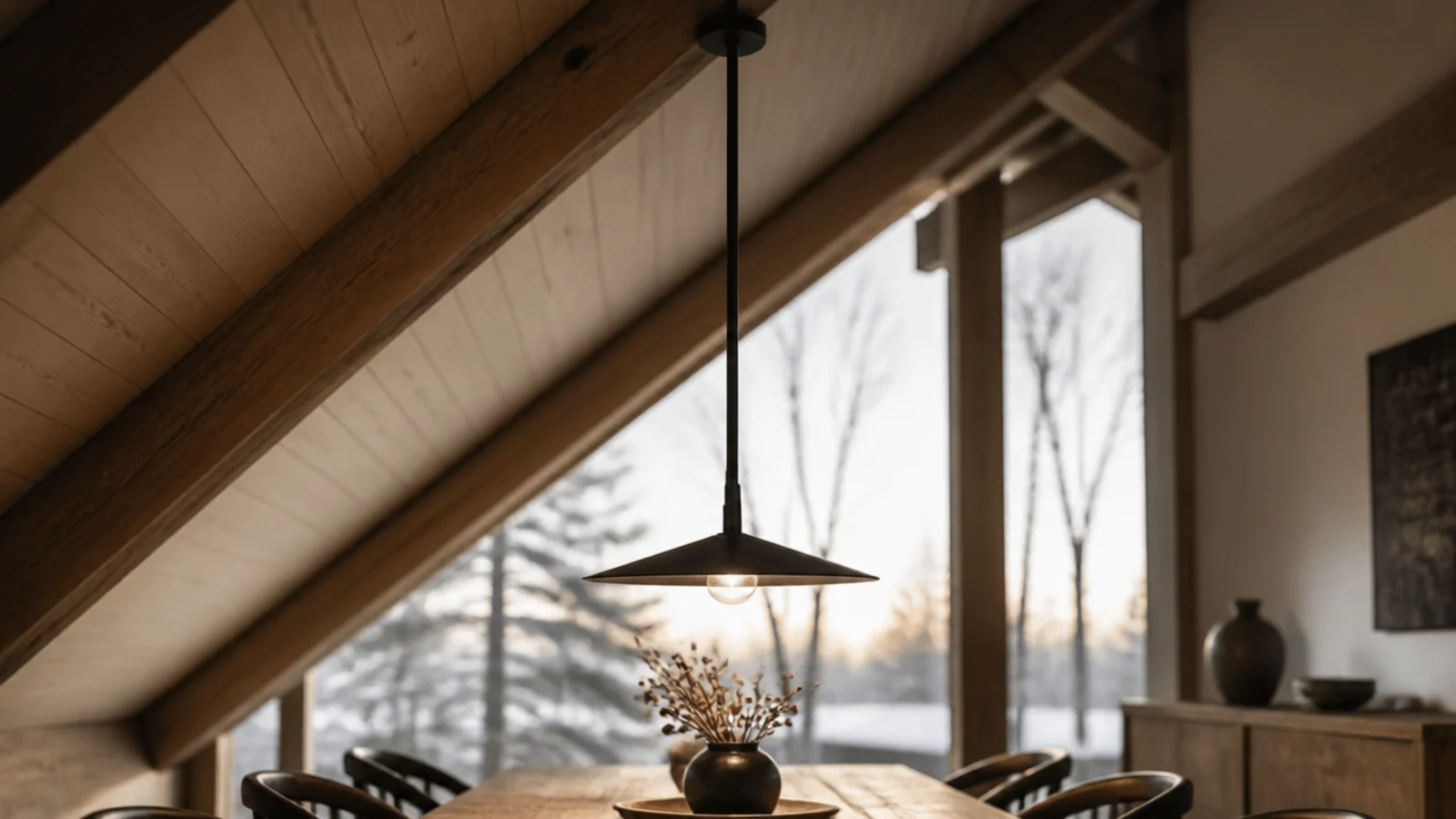
18. A rod length cut for a sloped ceiling
On a pitched ceiling, the rod length has to be calculated from the highest point of the canopy, not the lowest. Order rods in 6 and 12 inch sections plus a sloped adapter rated for the pitch. Measure the angle before ordering, because adapters above 45 degrees are a different part.
19. A counterweight fixture over a stairwell
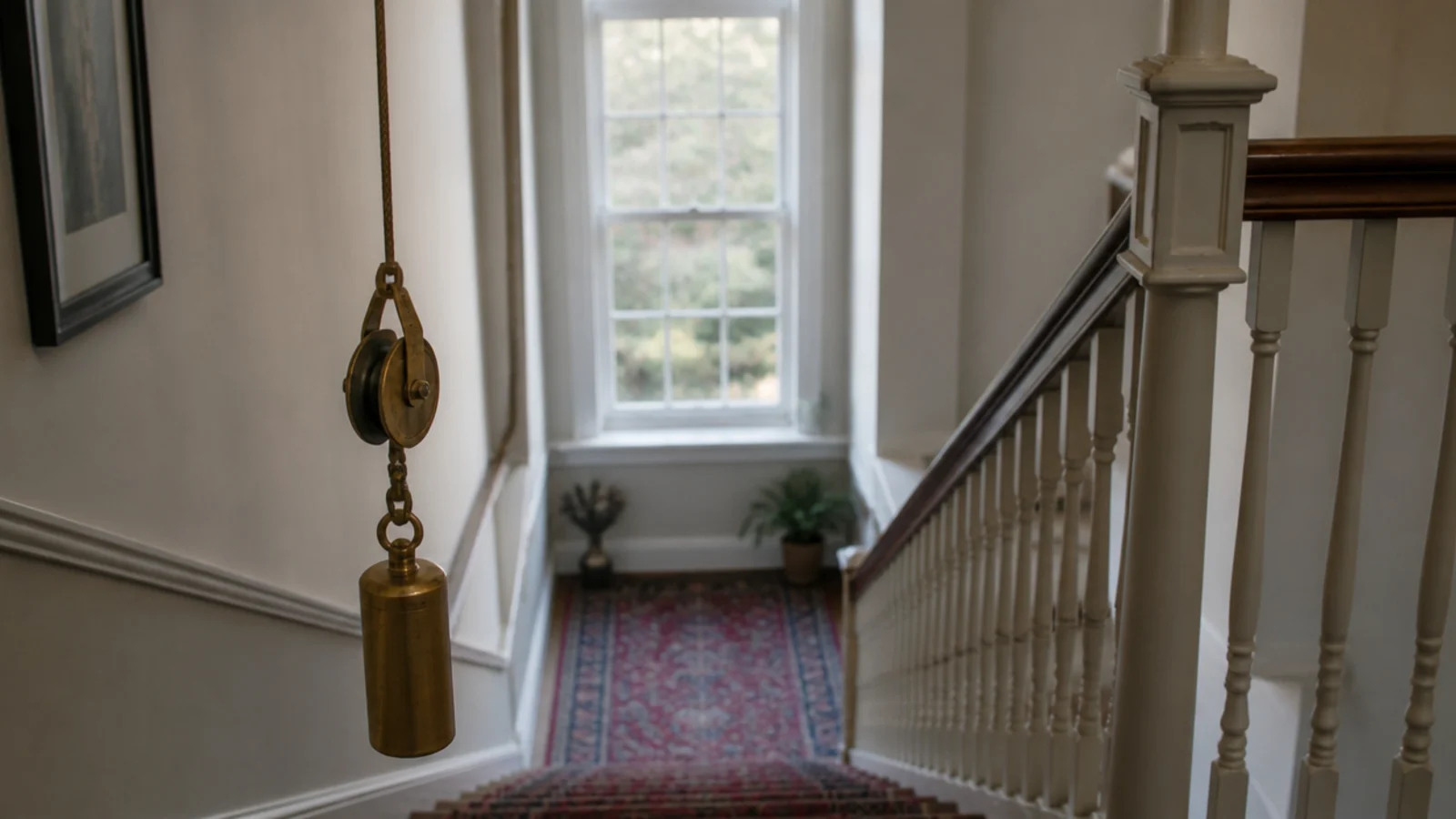
A pulley or counterweight fixture lets you lower the shade to change a bulb, which in a 16 foot stair void is the difference between a fixture you maintain and one you never touch. Set the resting height so the bottom clears the top tread by at least 7 feet.
20. One canopy finish repeated through the house
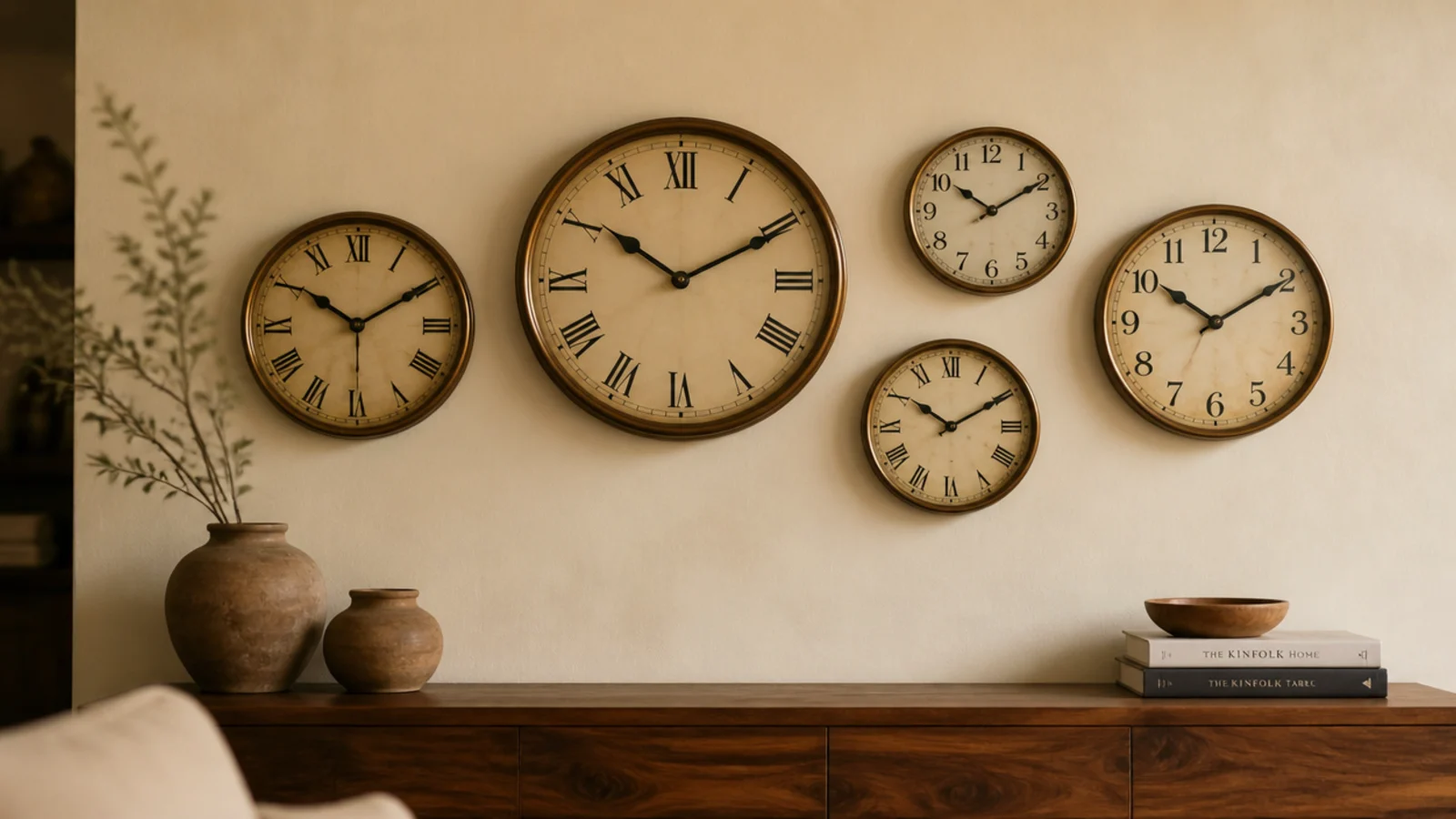
Shades can vary room to room; canopies should not. Repeating one canopy finish — brass, black, or ceiling-matched white — across every fixture is the quietest way to make a house of different lights feel deliberate. A wall clock in the same metal continues the thread at eye level.
21. A standard socket you can still buy in ten years
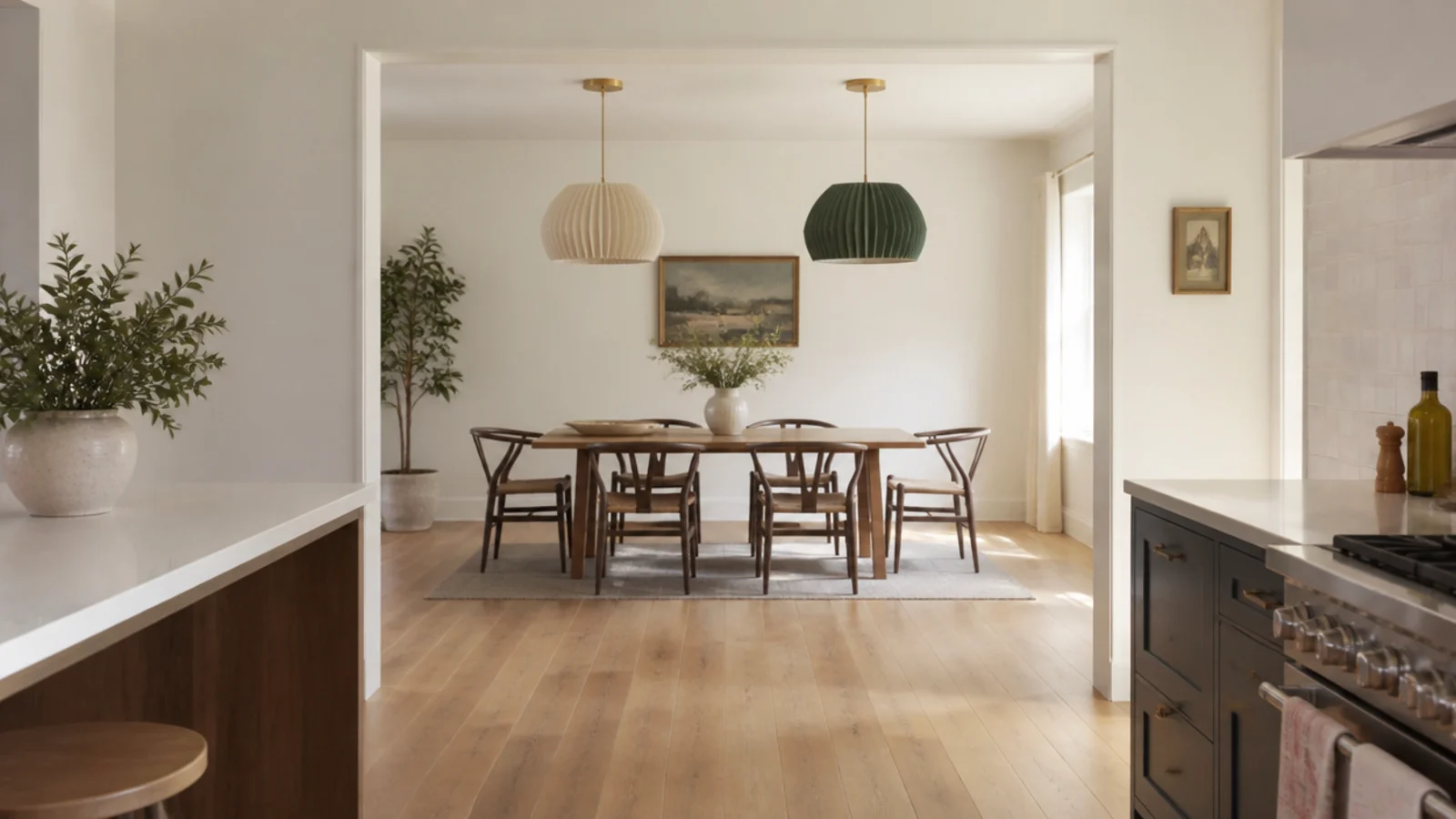
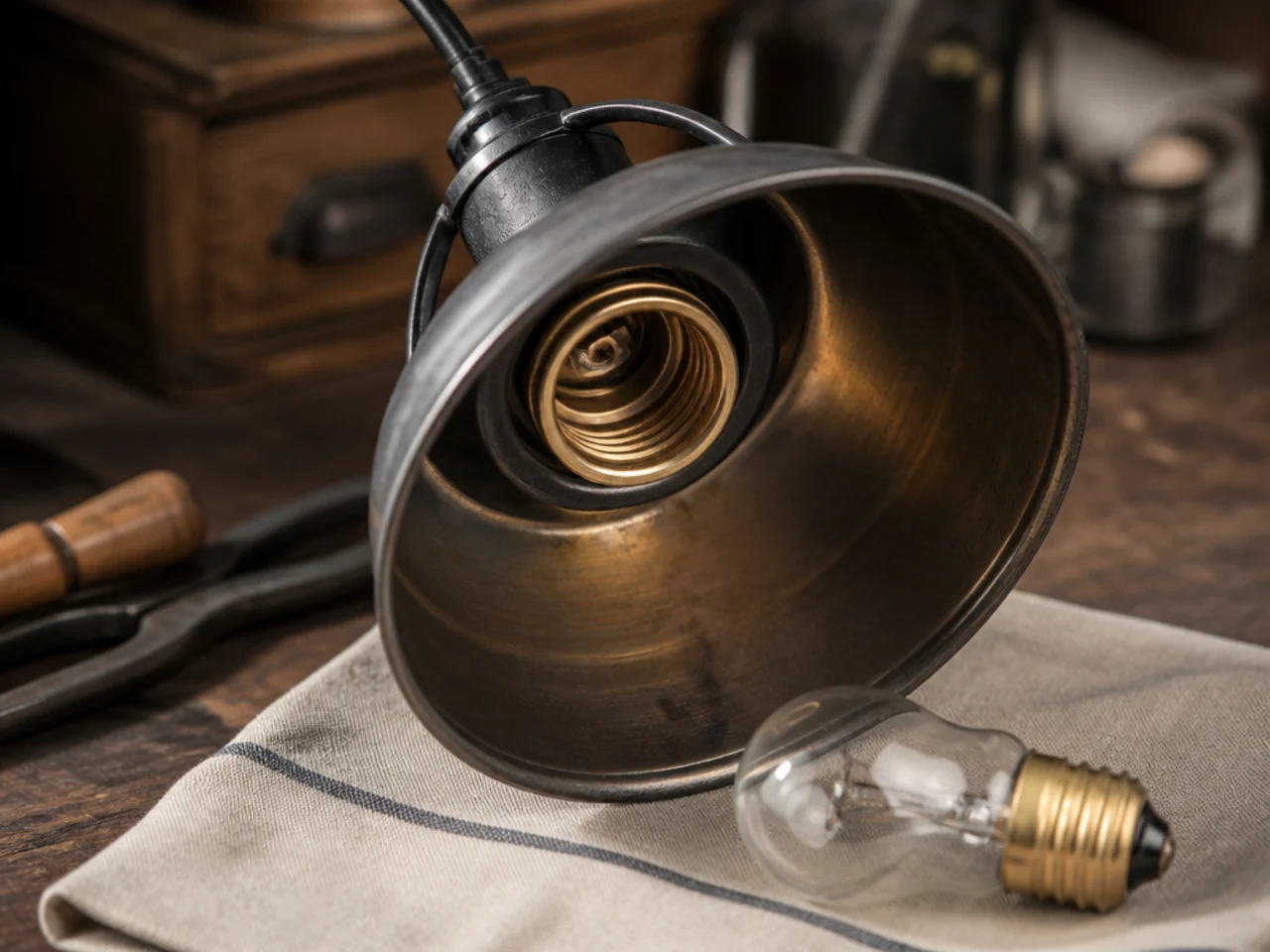
A standard medium screw socket takes any bulb made in the next thirty years. A proprietary lamp or a bonded board takes whatever the maker still stocks. On an expensive fixture this single spec decides whether you own an heirloom or a consumable.
22. A rated box for a heavy ceiling fixture
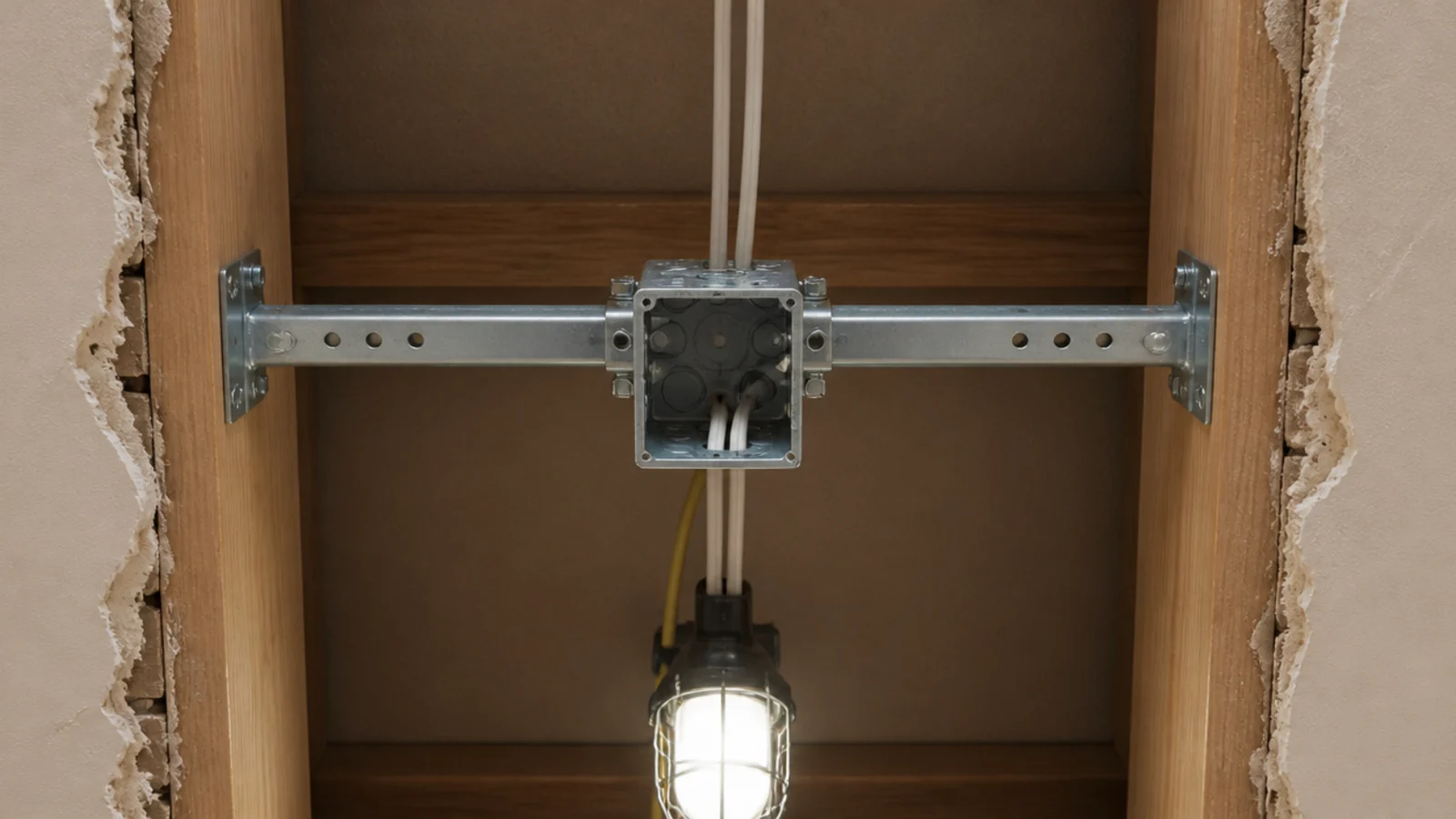
Anything over 50 pounds needs a listed heavy fixture box or an adjustable brace bar fixed between joists, which costs $15 to $30 and takes an electrician twenty minutes from below. Plaster and stone shades reach that weight faster than they look, so weigh before you order.
23. Glass thick enough to survive cleaning
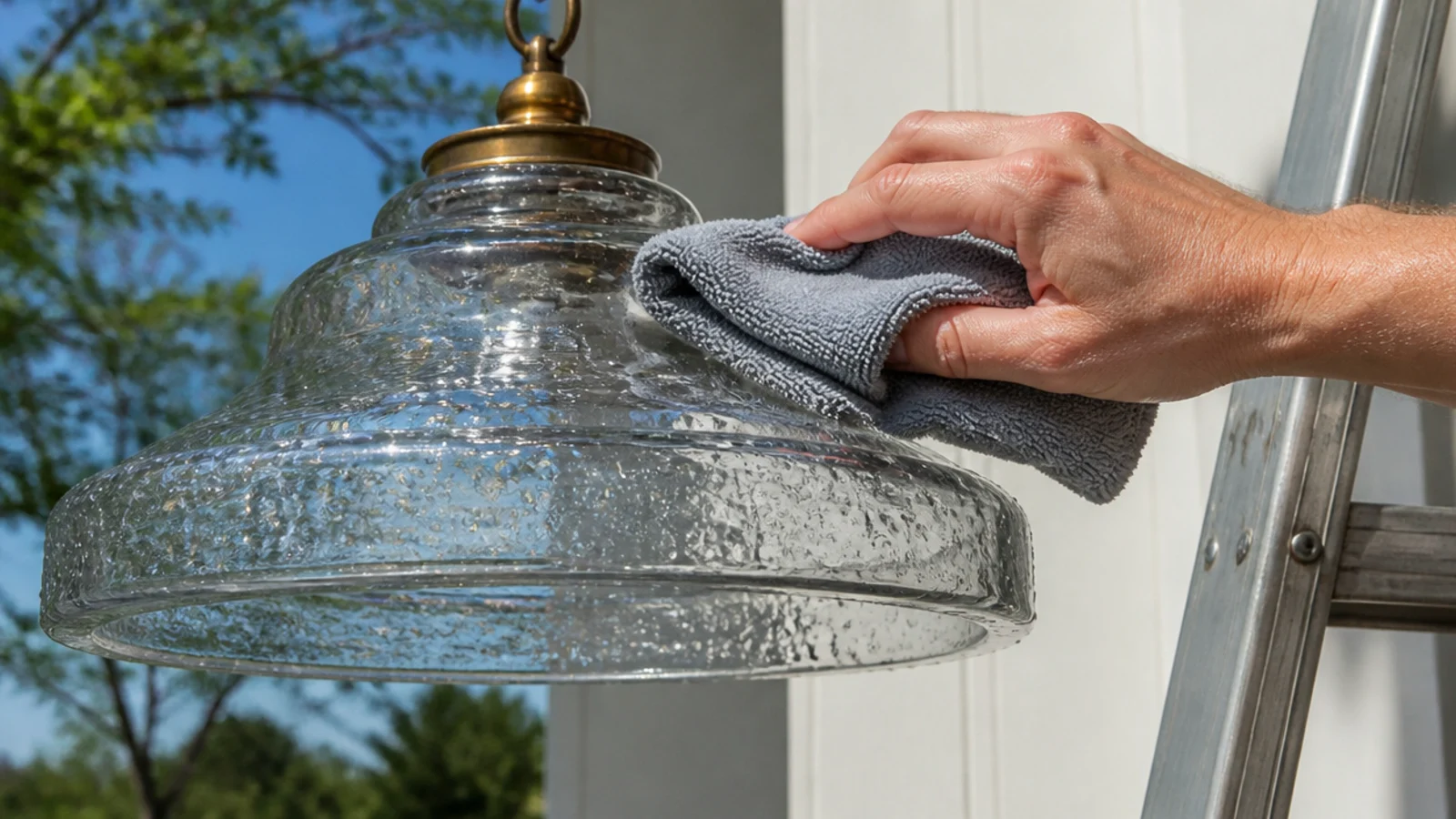
Thin blown glass under 2 millimetres cracks when a cloth catches the rim, usually while somebody is up a ladder. Thick cast or heavy blown glass survives twenty years of cleaning. Weigh a shade in the shop — if it feels like a wine glass, treat it as one.
24. A chain made to the length you need
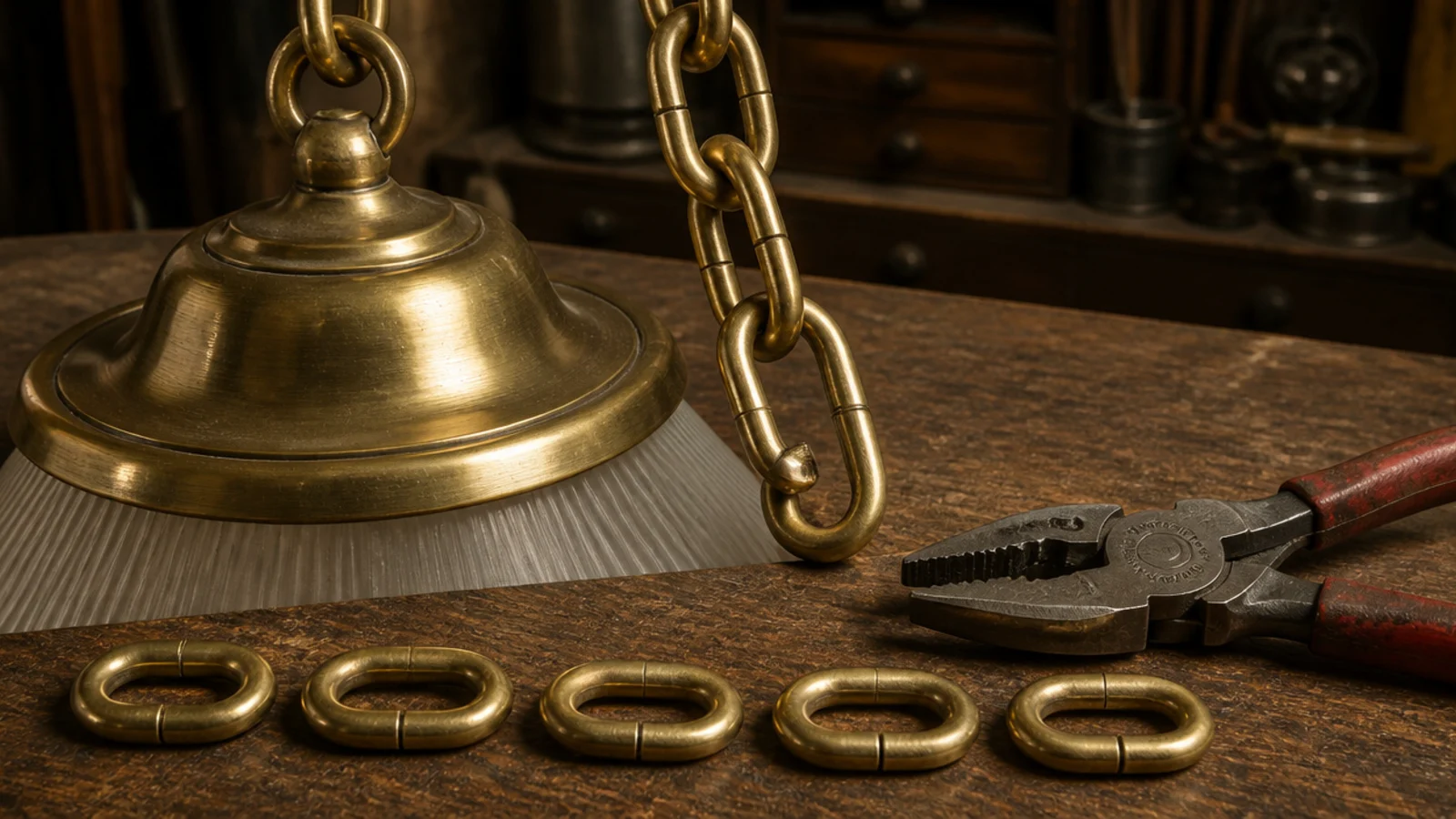
Good chain suspensions come with spare links so the drop is cut to your ceiling, not the box's assumption. Removing links with pliers takes five minutes; living with a fixture four inches too high takes years. Ask for the chain length before ordering rather than after.
25. Buying the ceiling hanging light first, not last
Lighting is nearly always the last line on a renovation budget and the first thing anybody sees. Buy the fixture at the start, when the money is still there, and let the rug and the cushions absorb the compromise instead. A mirror wall is a far cheaper place to make savings than the ceiling.
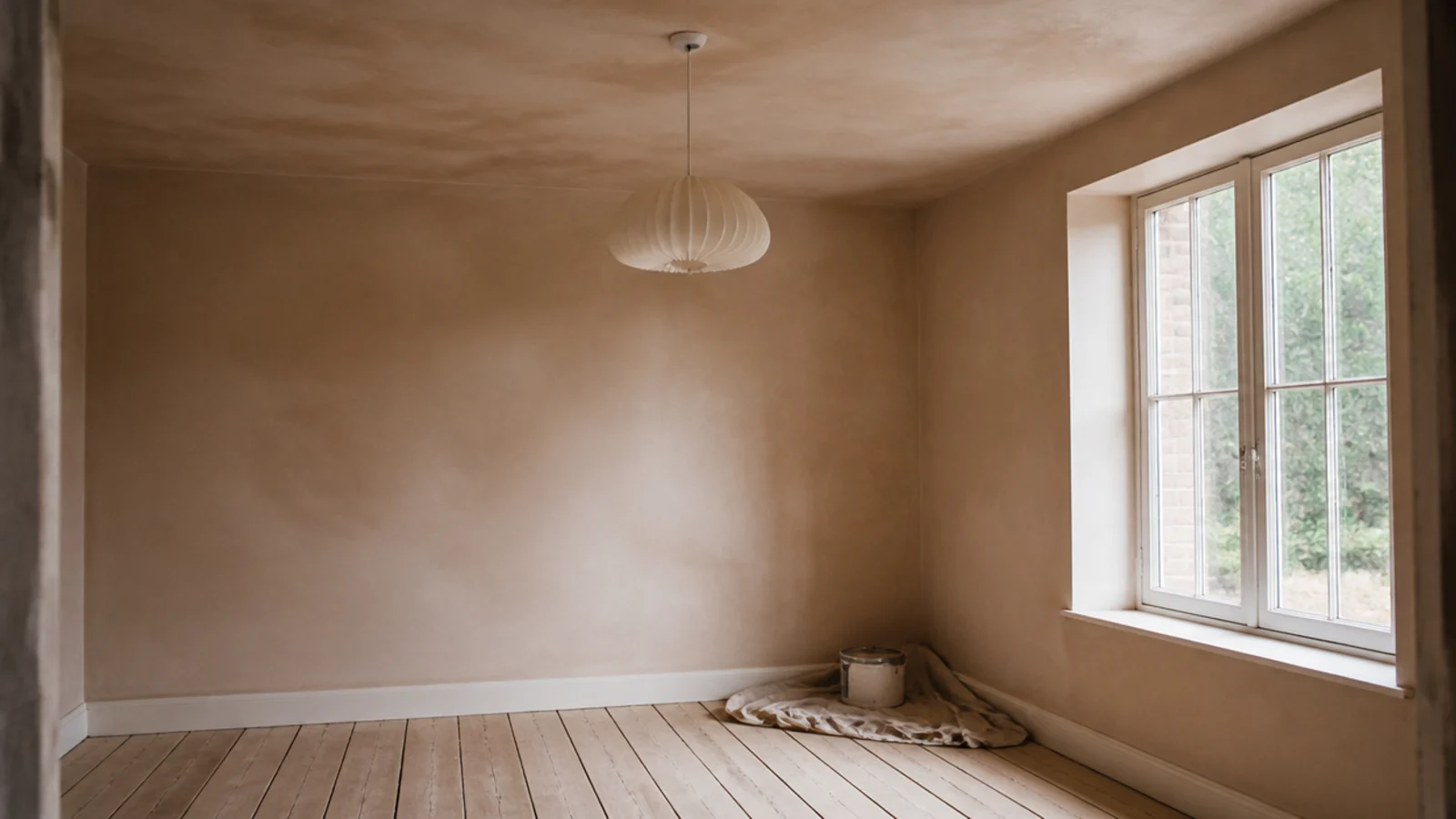
If you are still deciding which room deserves the budget, the main hanging lights guide sets out the drop heights and diameters room by room.
Mistakes to Skip
- Paying for a shape and inheriting a sealed LED board. Ask for the module part number before you order, and treat its absence as a specification.
- Assuming any ceiling takes any fixture. Standard boxes are listed for 50 pounds, and plaster and stone shades pass that faster than they look.
- Buying plated brass because it photographs the same. It does, for about four years, and then it wears through exactly where hands touch it.
- Leaving the light until the end of the budget. It is the object at eye level in every photograph of the room, and the last line on a budget is always the thinnest.
Frequently asked questions
When is an expensive light fixture actually worth it?
When it is the only decorative object in a sightline, when it runs on a serviceable socket rather than a sealed LED module, and when the material improves with age. Hand-blown glass, solid brass, plaster and stone all look better in ten years. Painted plastic and a bonded LED board do not, at any price.
How heavy can a hanging light be?
A standard lighting outlet box is listed to carry 50 pounds, which covers almost every pendant. Above that you need a box specifically listed for the load or a bar brace fixed between joists. Weigh the fixture including the shade before ordering, because stone, plaster and thick cast glass reach 30 pounds surprisingly easily.
What diameter should a ceiling fixture be?
Add the room length and width in feet and read the total as inches. A 14 by 16 foot room takes a 30 inch fixture. Over a dining table, size to the table instead at roughly half its width, and keep the fixture at least 12 inches narrower than the table so nobody knocks it standing up.
Does a high CRI bulb make a visible difference?
Yes, in rooms with wood, textiles and skin tones in them. CRI 90 or above renders reds and browns properly, where a CRI 80 bulb makes oak look grey and food look flat. Expect to pay two to three times more per bulb, which is still trivial against the price of the fixture.
Should I buy an integrated LED fixture?
Only if the LED module is replaceable and the driver is a standard type you can source later. A sealed integrated fixture is disposable the day its board fails, usually somewhere between eight and fifteen years. A standard E26 socket keeps an expensive fixture serviceable indefinitely.
Want more like this? Browse all 15 hanging lights guides — they all use the same measurements and budget tiers.
Pin it for later
Save this to your Hanging Lights board
Pin it now so it is waiting for you when the tape measure comes out — and so the next person hunting for this idea can find it too.
Save this pinKeep going
More ideas worth saving while you have the tape measure out.