Center Table Living Room · Listicle
25 Living Room Center Table Styles Worth Buying

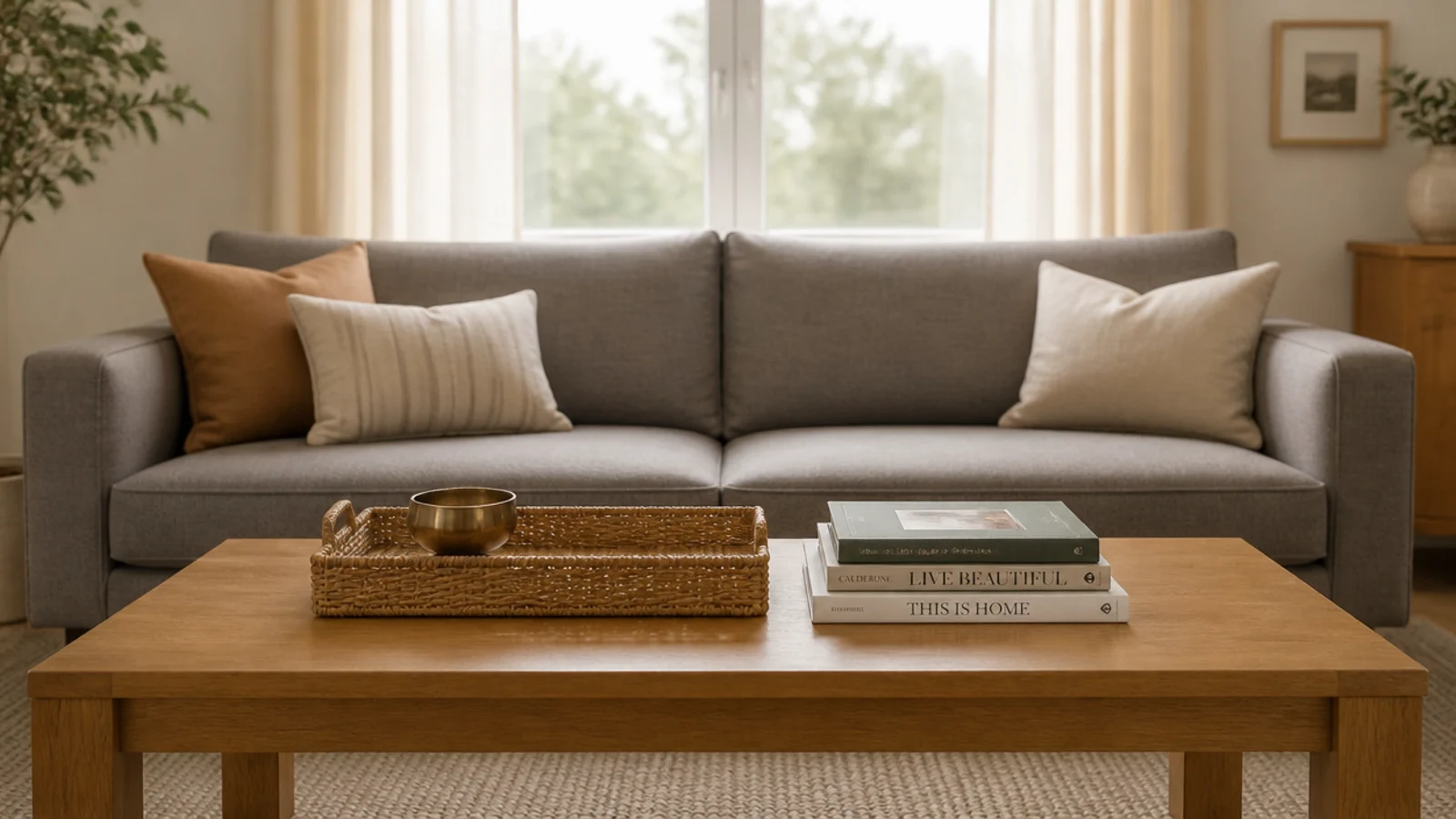
Shape decides more than finish does. A round top and a rectangle of the same footprint behave completely differently in a room where people walk through, and the wrong one gets shoved sideways every evening until it lives at an angle nobody chose. Choosing a living room center table is really choosing between about a dozen archetypes, each with a room it suits and a room it fights. Here are twenty-five worth your money, with the measurement that makes each one work.
In this guide27 sections — tap to openHide
- 1.What a living room center table has to do before it looks good
- 2.The plain rectangle on four legs
- 3.The solid timber drum
- 4.The plinth block
- 5.The waterfall
- 6.The nesting pair
- 7.The nesting trio in graduated heights
- 8.The upholstered ottoman
- 9.The storage trunk
- 10.The lift-top
- 11.The two-tier shelf table
- 12.The drawer table
- 13.The C-table
- 14.The round pedestal
- 15.The oval
- 16.The square for a sectional
- 17.Glass on a metal frame
- 18.Stone on steel
- 19.The cane or rattan drum
- 20.The live-edge slab
- 21.The hairpin-leg mid-century table
- 22.A pair of matching cubes
- 23.The tray-top butler table
- 24.The ceramic garden stool
- 25.A low bench used as a table
- 26.A deliberate cluster of three
- 27.Mistakes to Skip
What a living room center table has to do before it looks good
Three jobs, in order. It has to be reachable from a seat, it has to leave a route through the room, and it has to hold what your household actually puts down. Get those right and almost any style works; get them wrong and the most beautiful piece in the catalogue becomes an obstacle.
Reach comes from height and gap. Measure the sofa cushion with somebody sitting on it — usually 17 to 19 inches, sometimes as little as 15 on a low modern frame — and buy a top within two inches of that. Leave 16 to 18 inches between the sofa front and the table edge. That is close enough to set a mug down without standing, and wide enough to get past.
The route comes from shape. Draw the path people take from the door to the kitchen. If it crosses the seating area, buy round or oval; if it runs along the outside, a rectangle is fine. Main walking routes want 30 to 36 inches of clearance and secondary ones can drop to 24.
Length comes from the sofa. Two-thirds of the sofa width is the working rule: 48 to 56 inches against an 84-inch three-seater. On a sectional, measure the inside of the L instead and expect to want a 40 to 48 inch square or round.
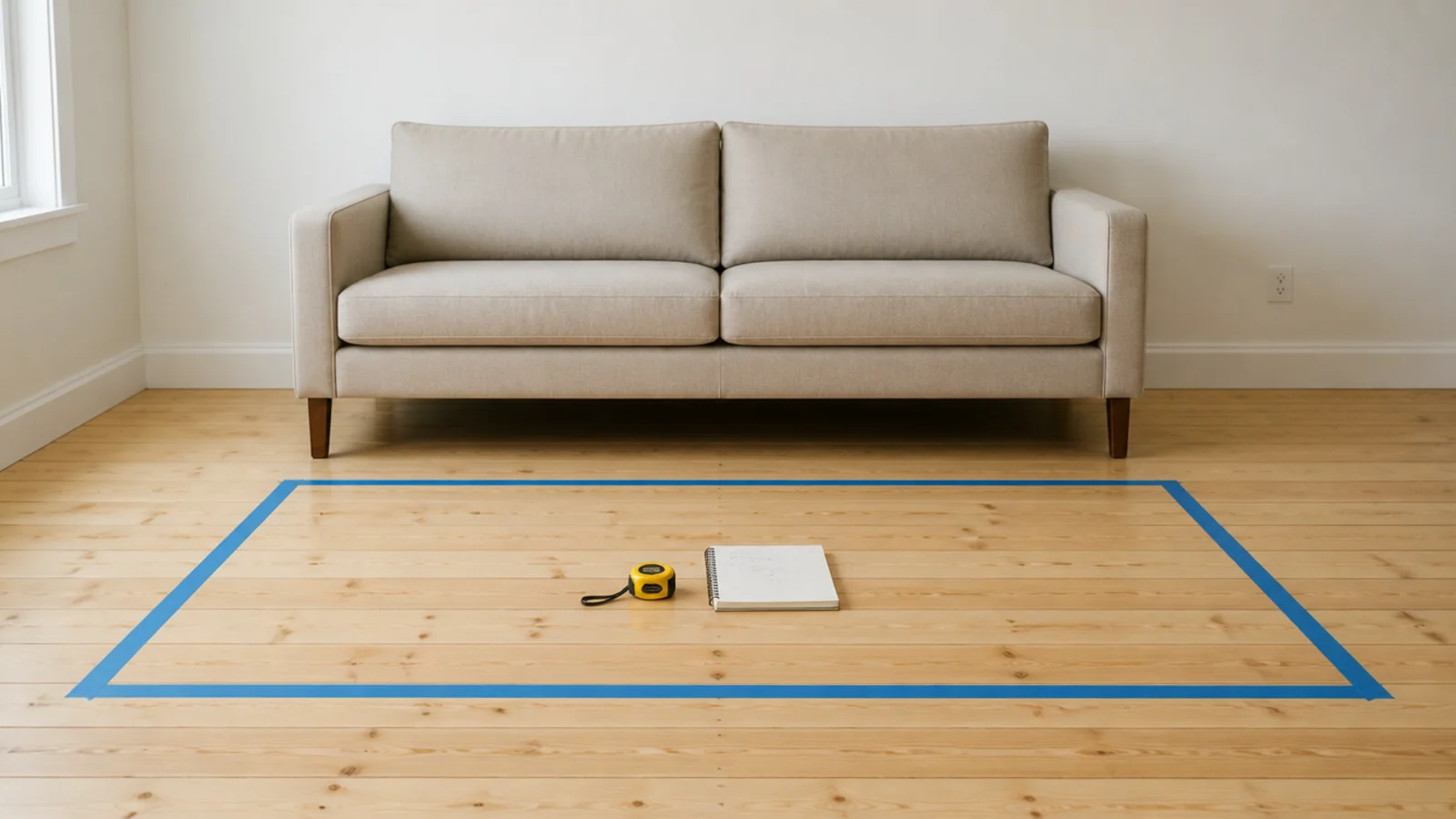
Prices run roughly $80 to $200 for painted board and rattan, $150 to $450 for solid timber, $200 to $500 for glass and metal, and $400 upward for real stone. Before you commit, tape the footprint on the floor and live with the tape for two days. The full center table guide has the rest of the measuring sequence.
1. The plain rectangle on four legs
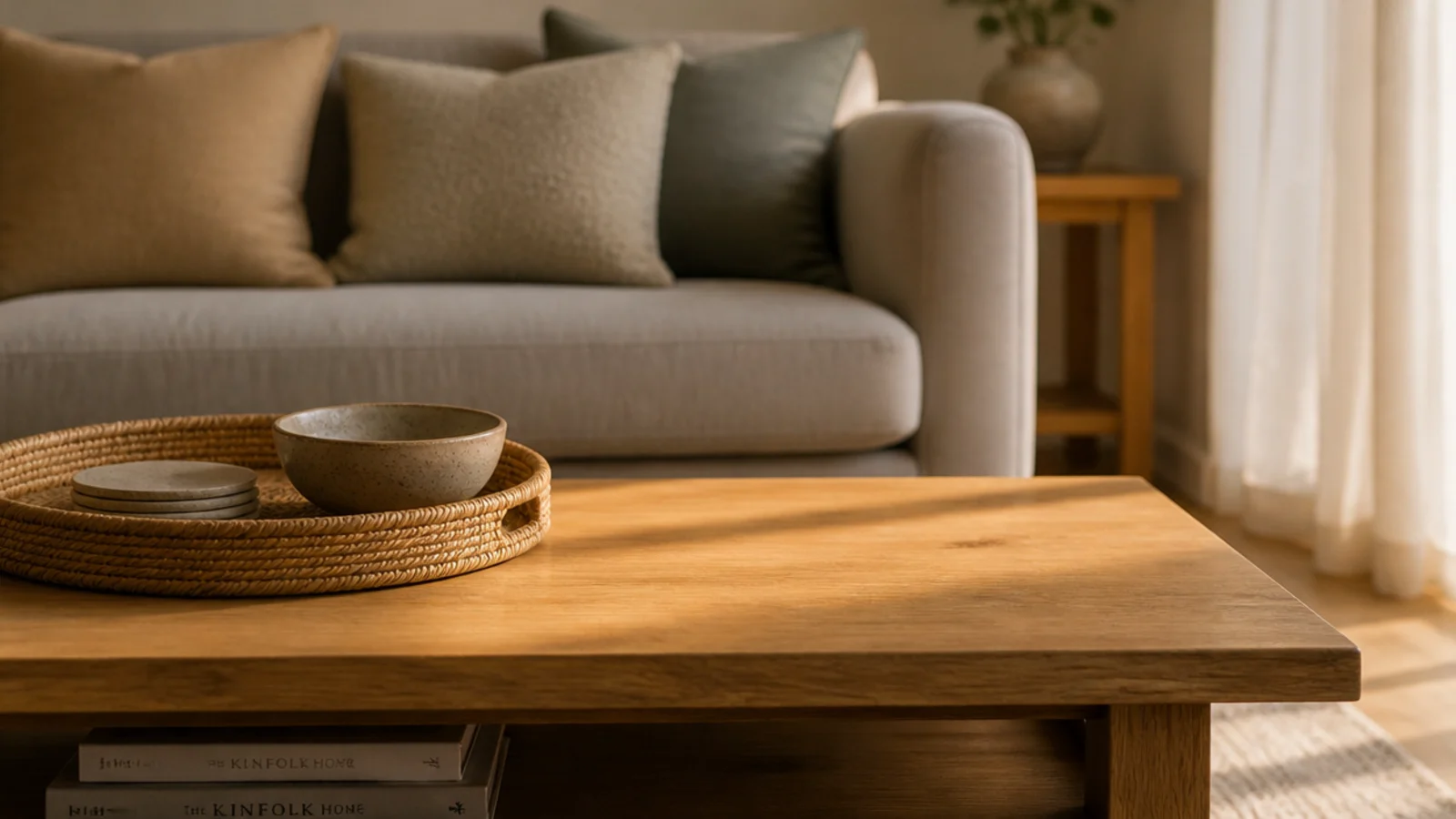
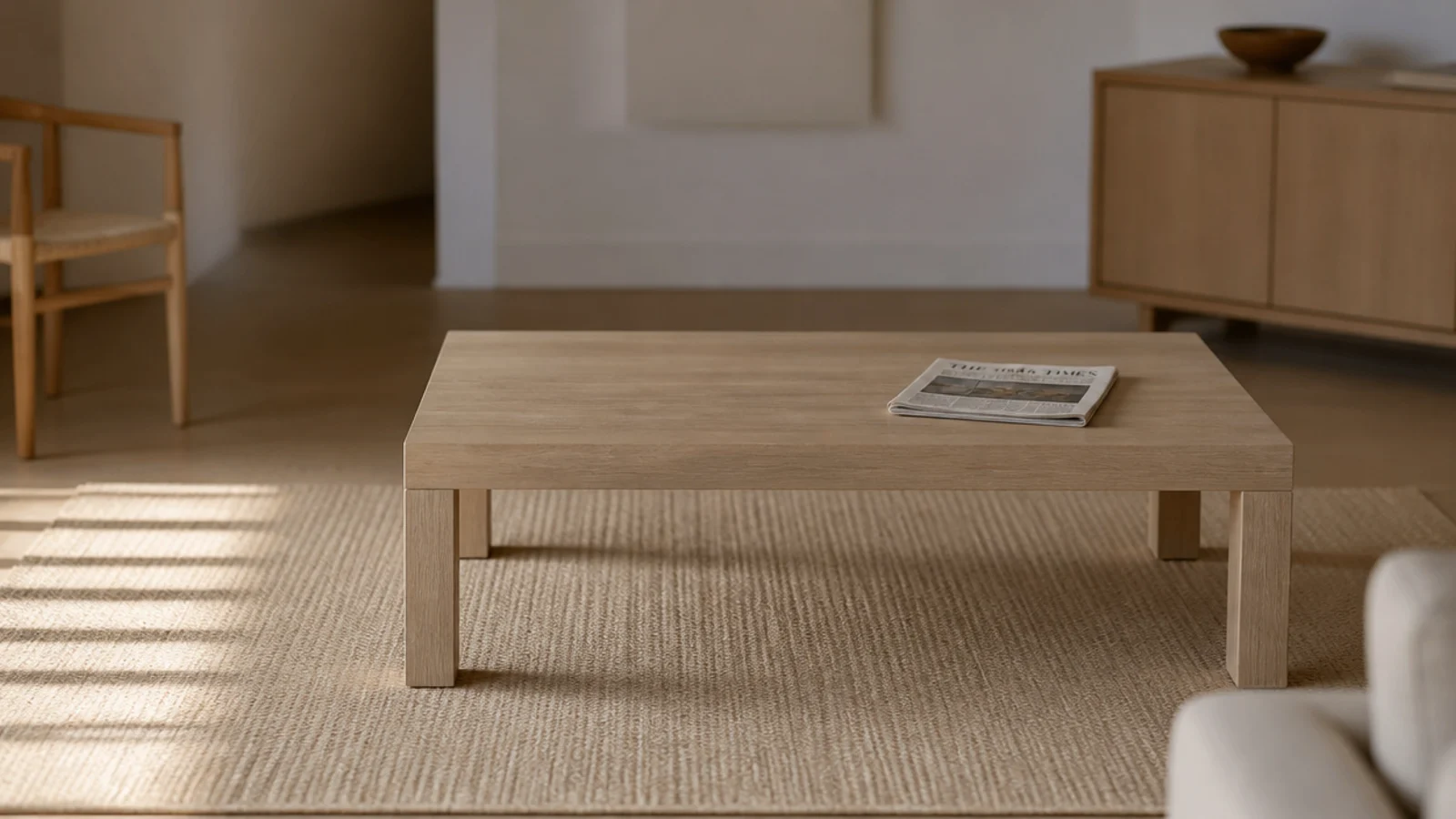
The default for a reason: it suits a straight sofa, holds the most usable surface per inch of floor, and costs the least to build well. Choose one where the legs sit slightly inboard of the corners, which stops shins finding them and makes the top look lighter.
2. The solid timber drum
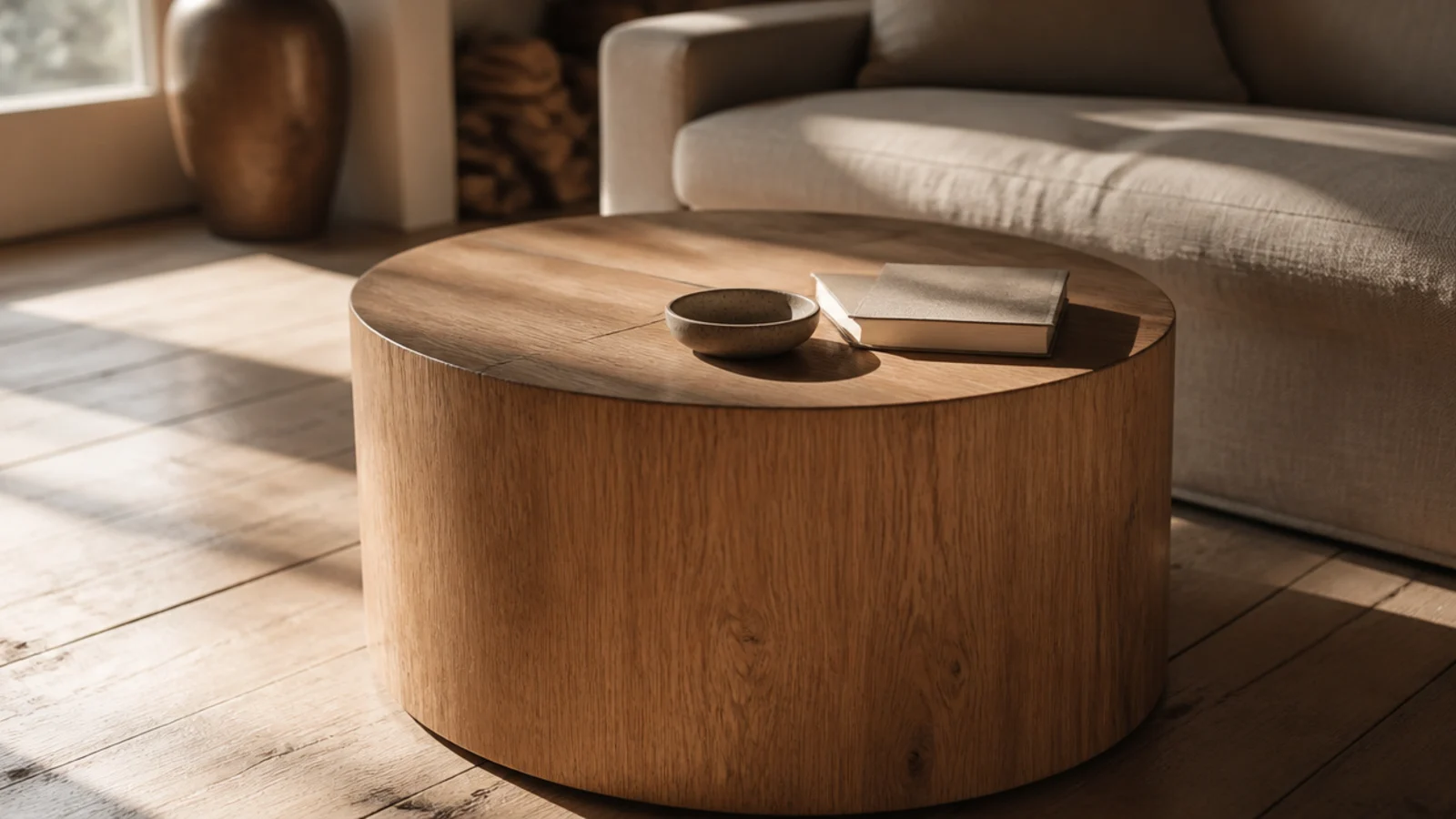
A 32 to 36 inch solid drum weighs 60 to 90 pounds, so it stays exactly where you put it and never rocks. It is the best choice on a thick rug because the whole base bears evenly. The downside is moving it — this is a two-person job.
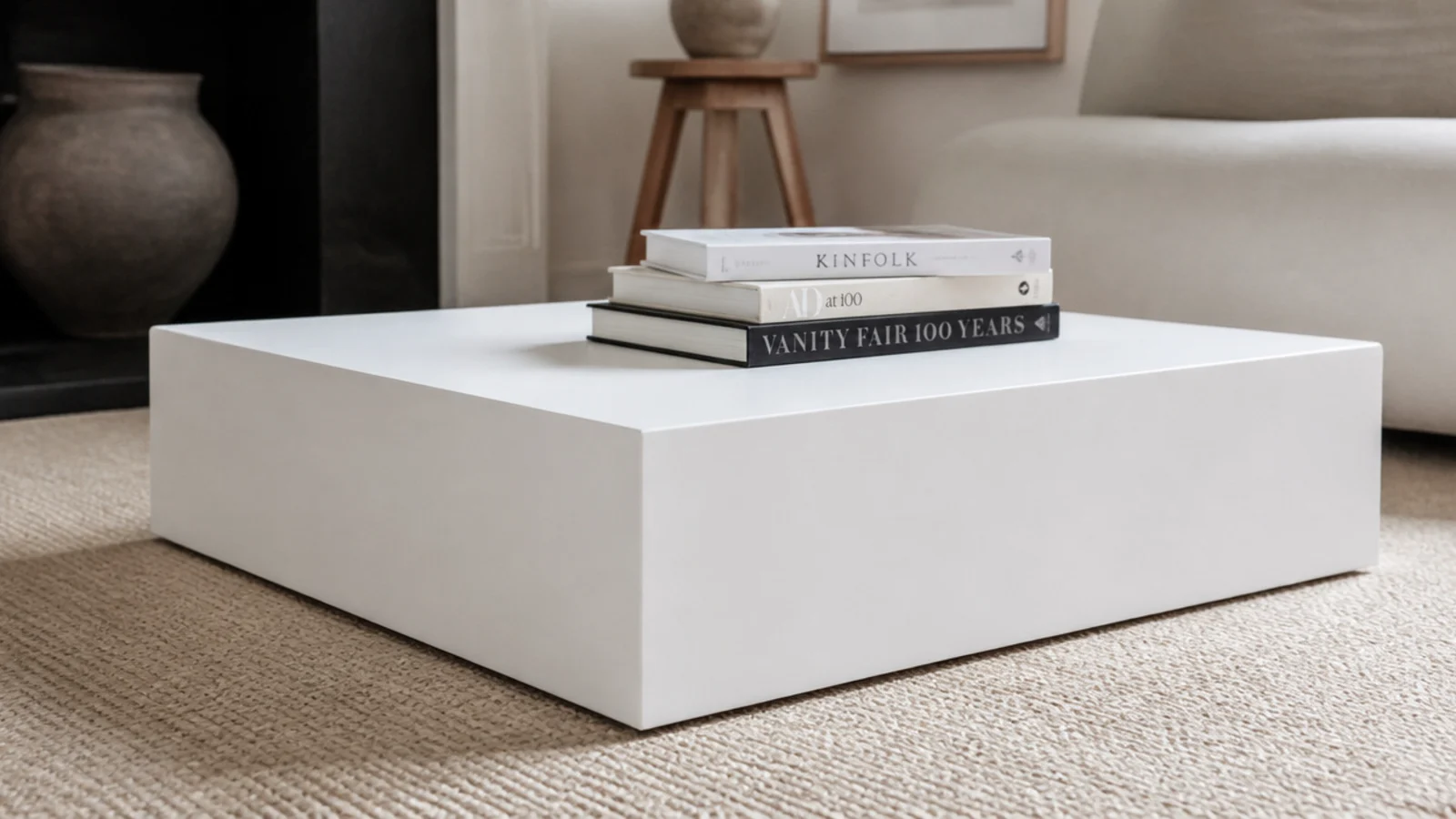
3. The plinth block
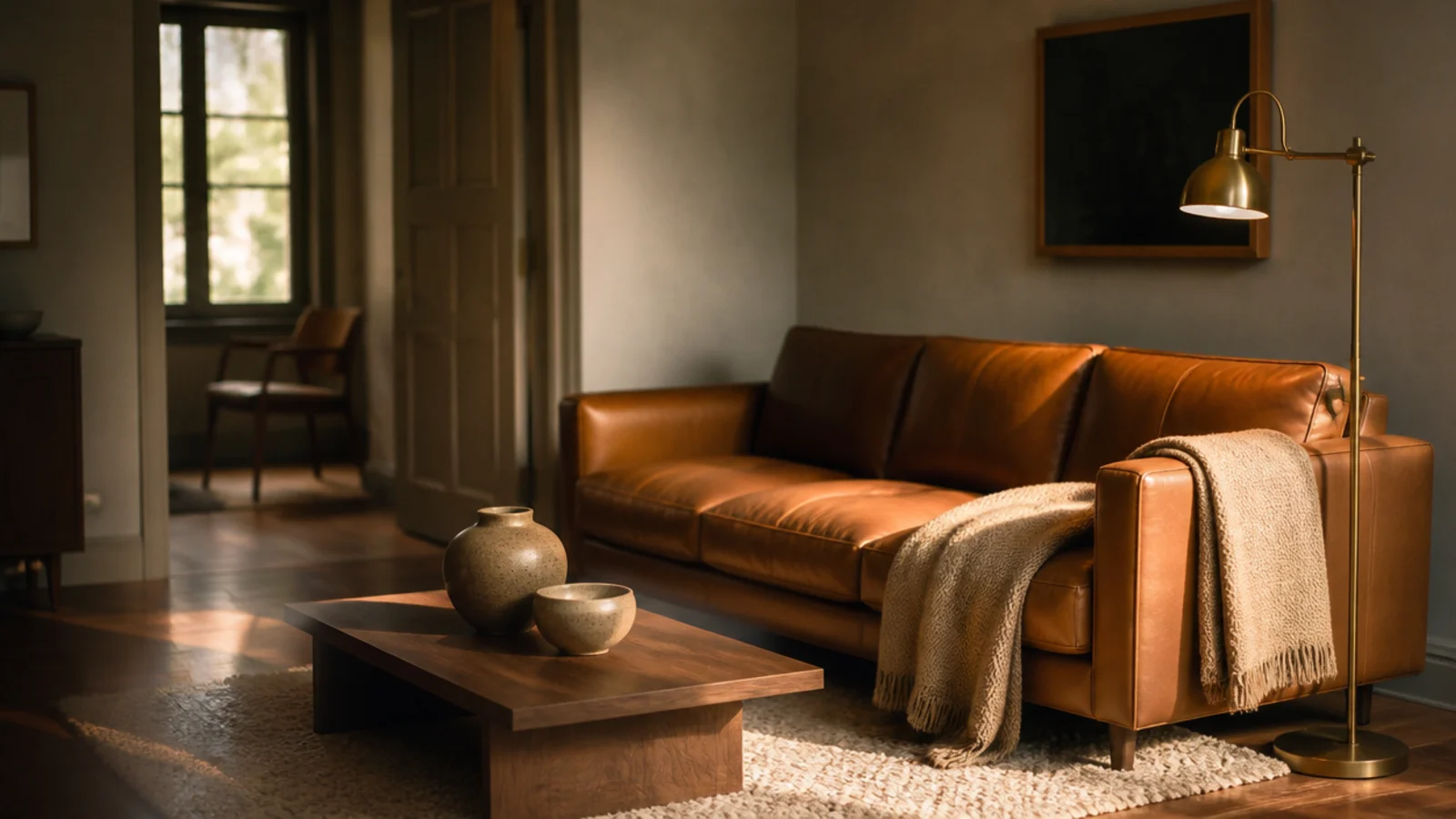
A closed box with no visible legs and nothing underneath to clean around. It reads calm and expensive, hides a cheap substrate under paint or veneer, and gives you the most stable surface on this list. In a small room a plinth can feel heavy, so keep it under about 40 inches long.
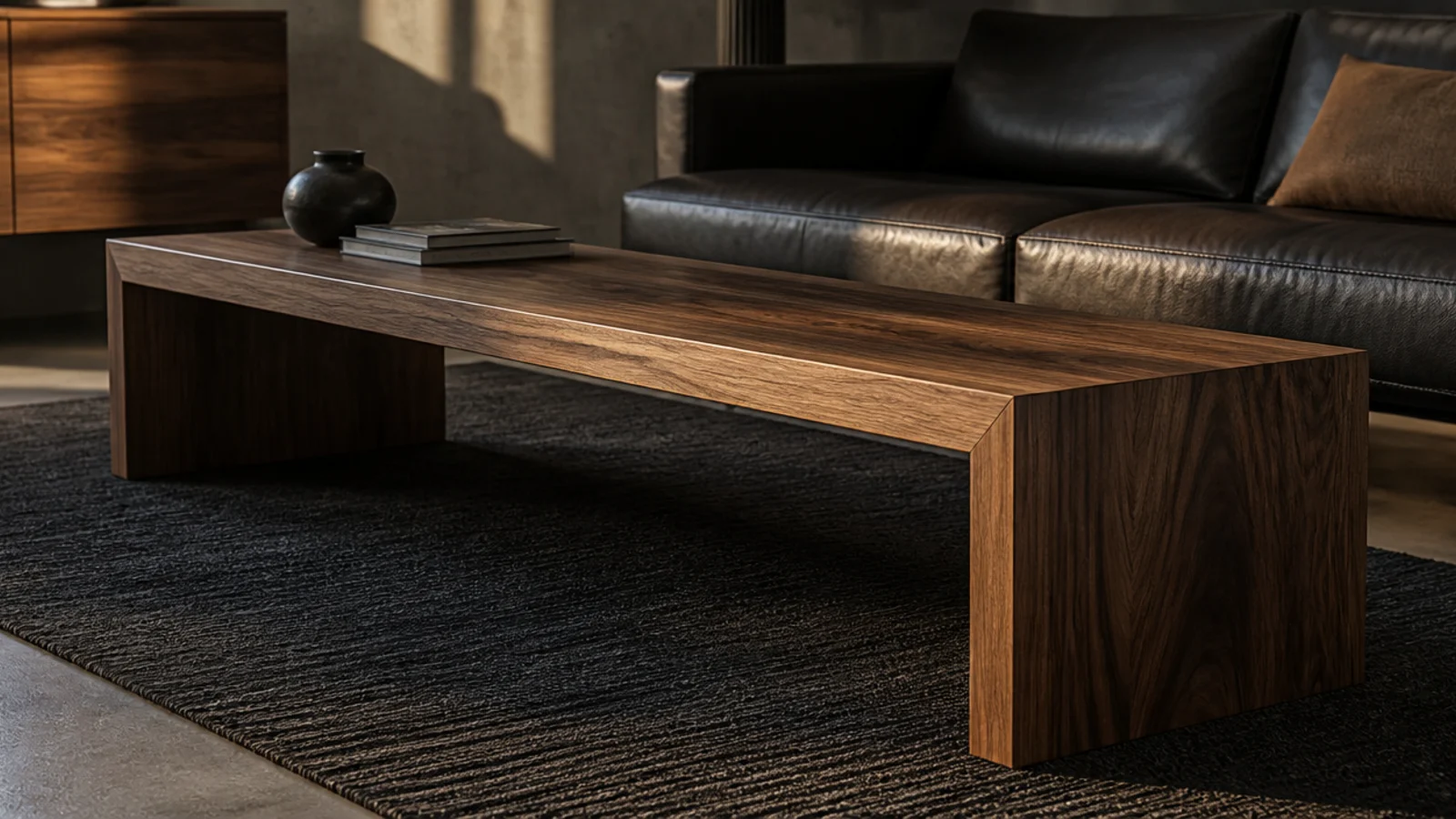
4. The waterfall
Grain runs across the top and turns down the mitred ends to the floor. The mitre is the whole point and also the failure point — check the corner for a tight joint with no filler, because a gapped waterfall mitre only ever gets worse as the timber moves.
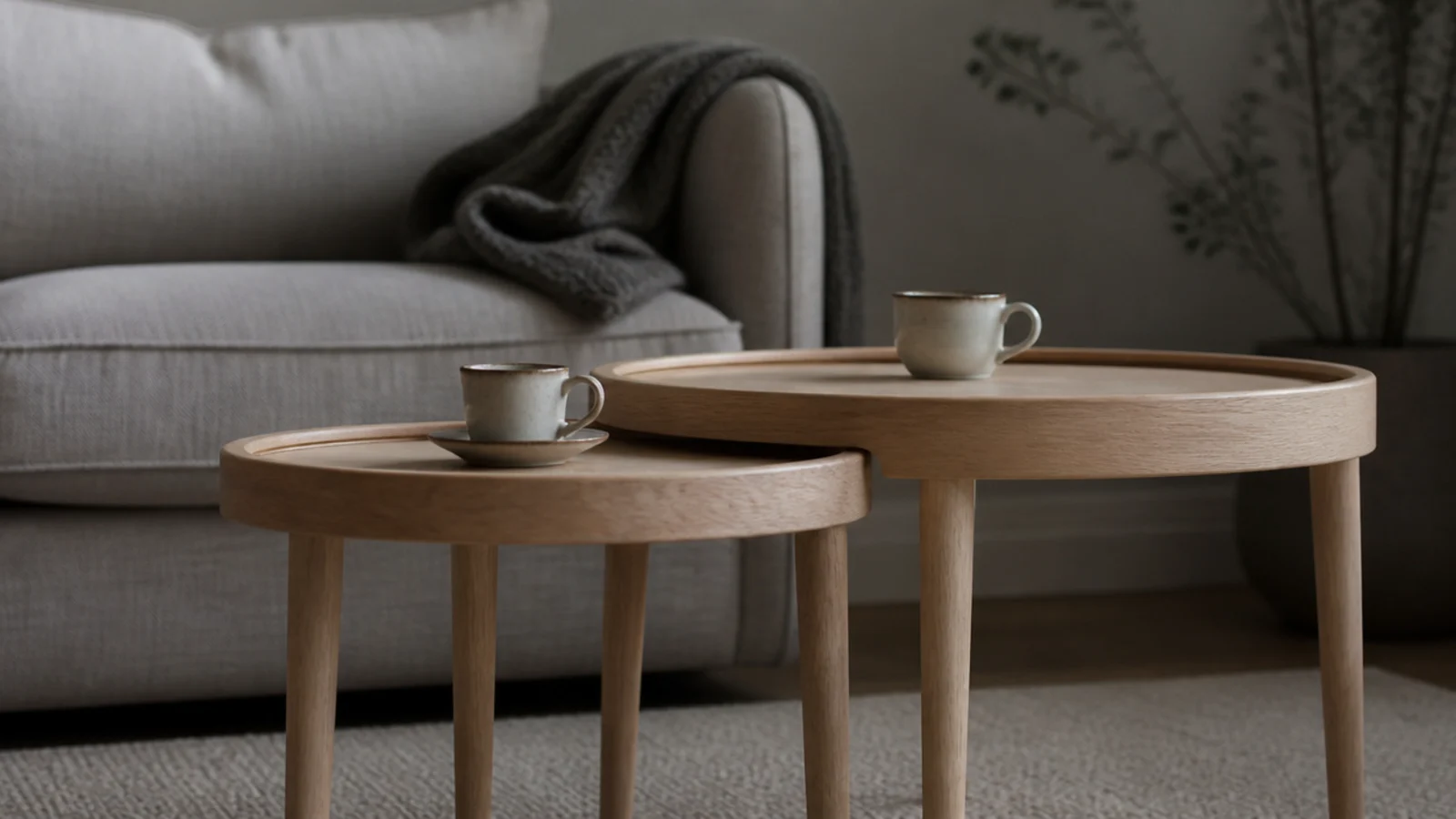
5. The nesting pair
One footprint most of the year, two surfaces when someone visits. Keep the height difference under three inches so both work beside seating. The smaller table also solves the problem of an armchair marooned across the room with nowhere to put a glass.
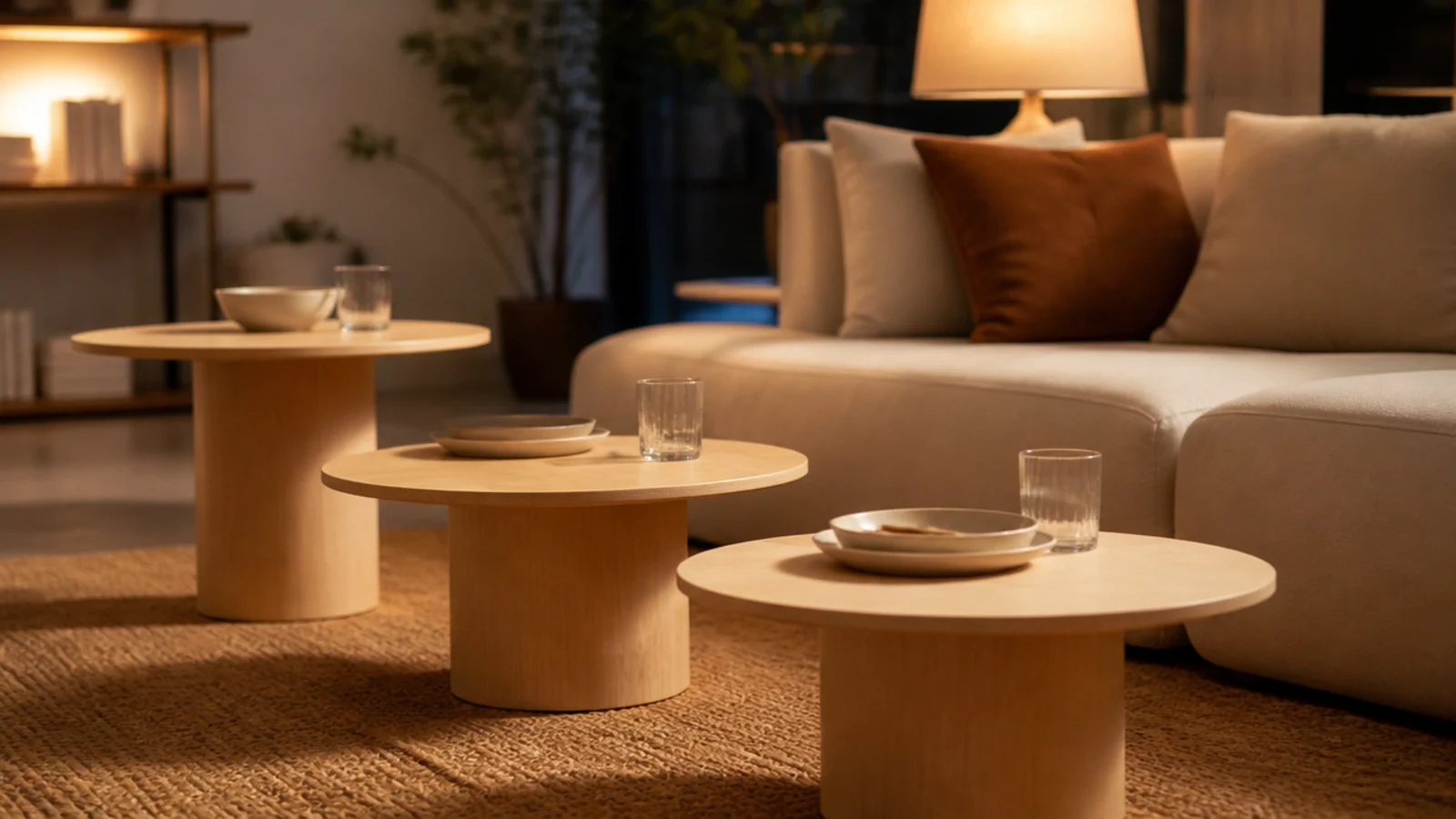
6. The nesting trio in graduated heights
Three tables at roughly 16, 18 and 20 inches that fan out for a party and stack back to one. It is the most useful thing you can own in a flat that regularly holds more people than it has furniture. Check they stack without scraping before buying.
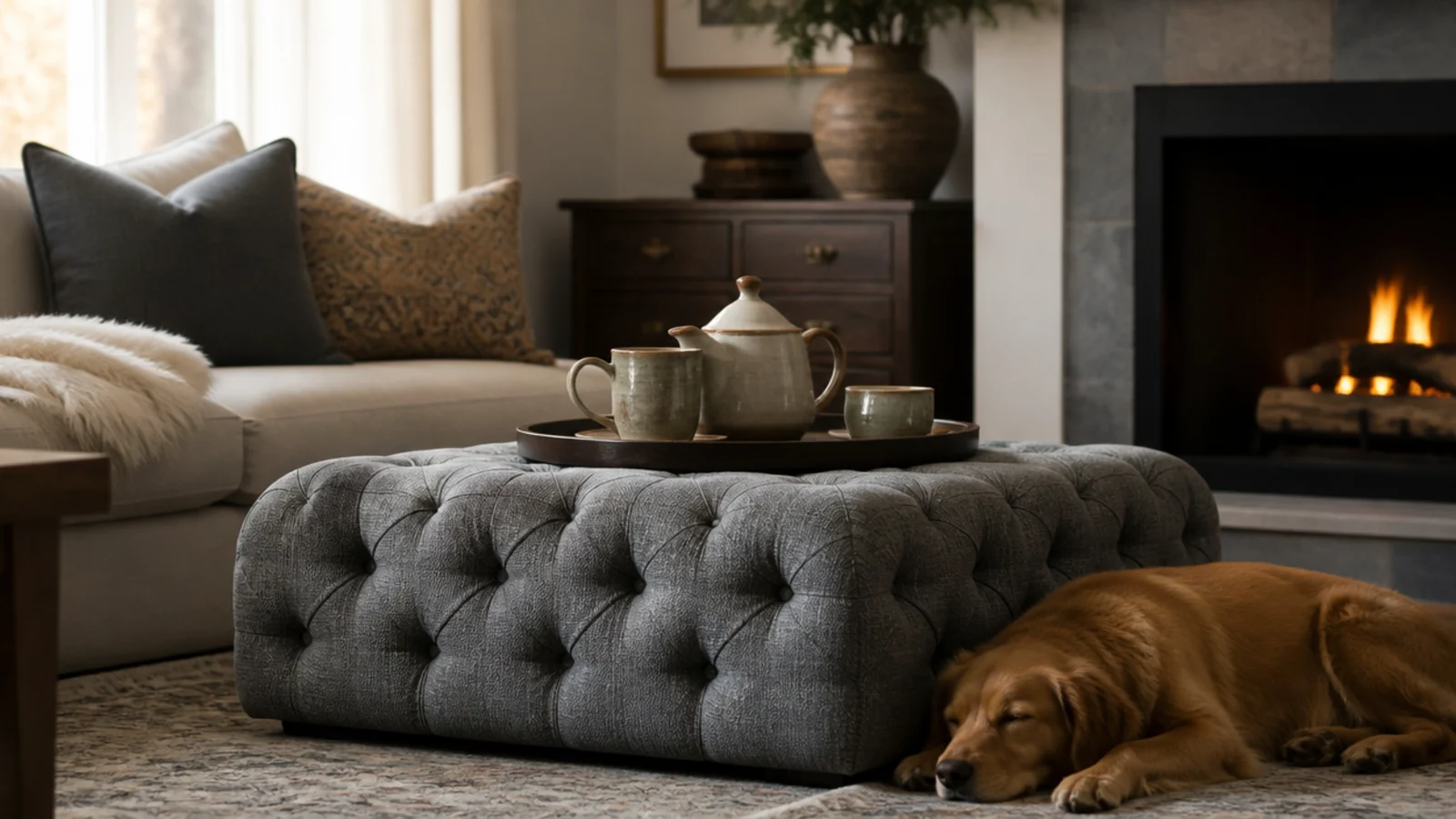
7. The upholstered ottoman
No hard edge at head height, which is why this is the standard answer in a home with toddlers. Buy a rigid tray at least 18 by 24 inches and a fabric rated around 30,000 double rubs. Avoid deep buttoning if drinks get spilled — crumbs live in buttons forever.
8. The storage trunk
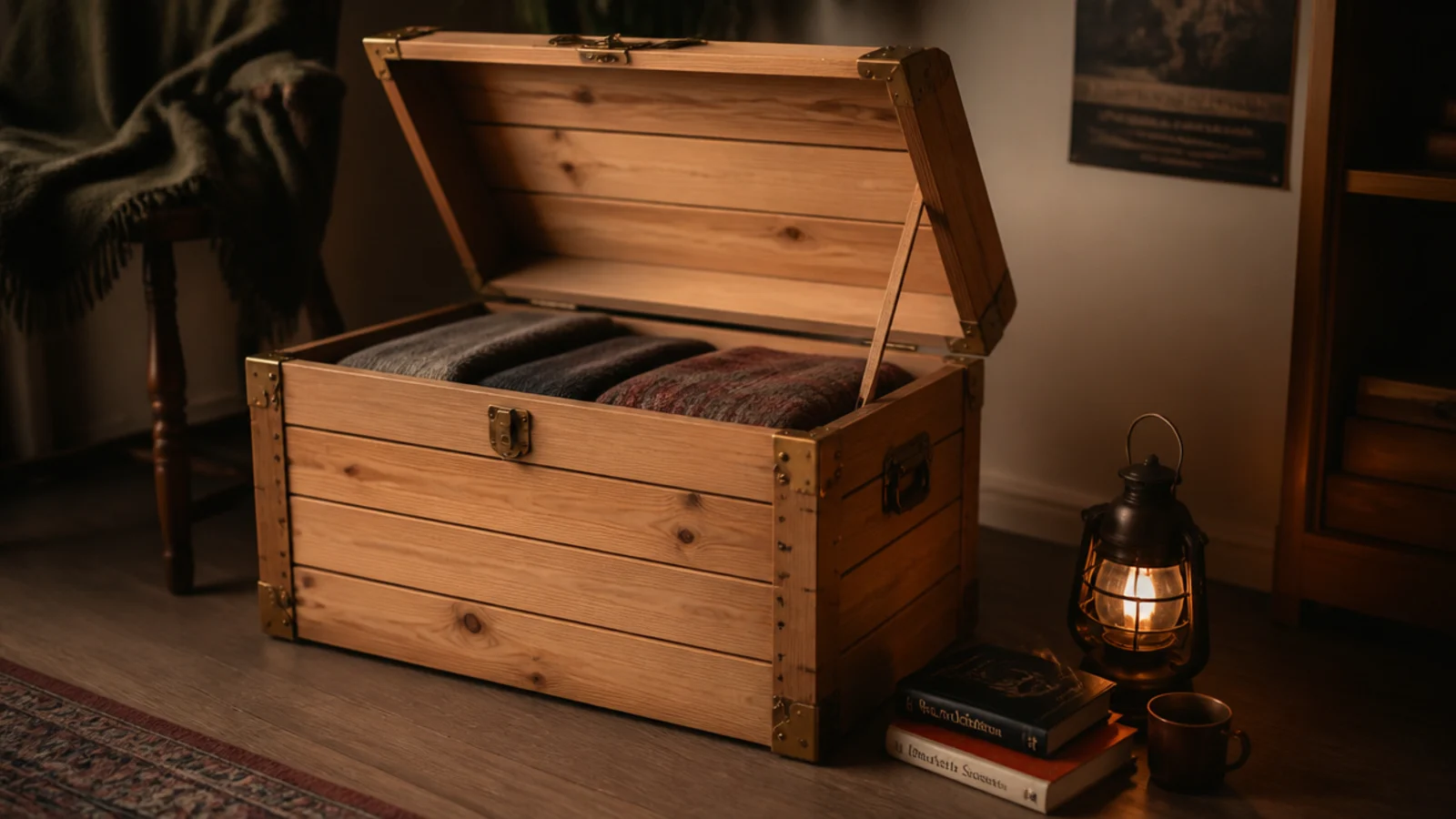
Real volume for blankets, board games and the things nothing else fits, and a flat lid that works as a surface. Treat the storage as seasonal — anything you need daily is a nuisance under a top covered in objects. Insist on a hinge stay.
9. The lift-top
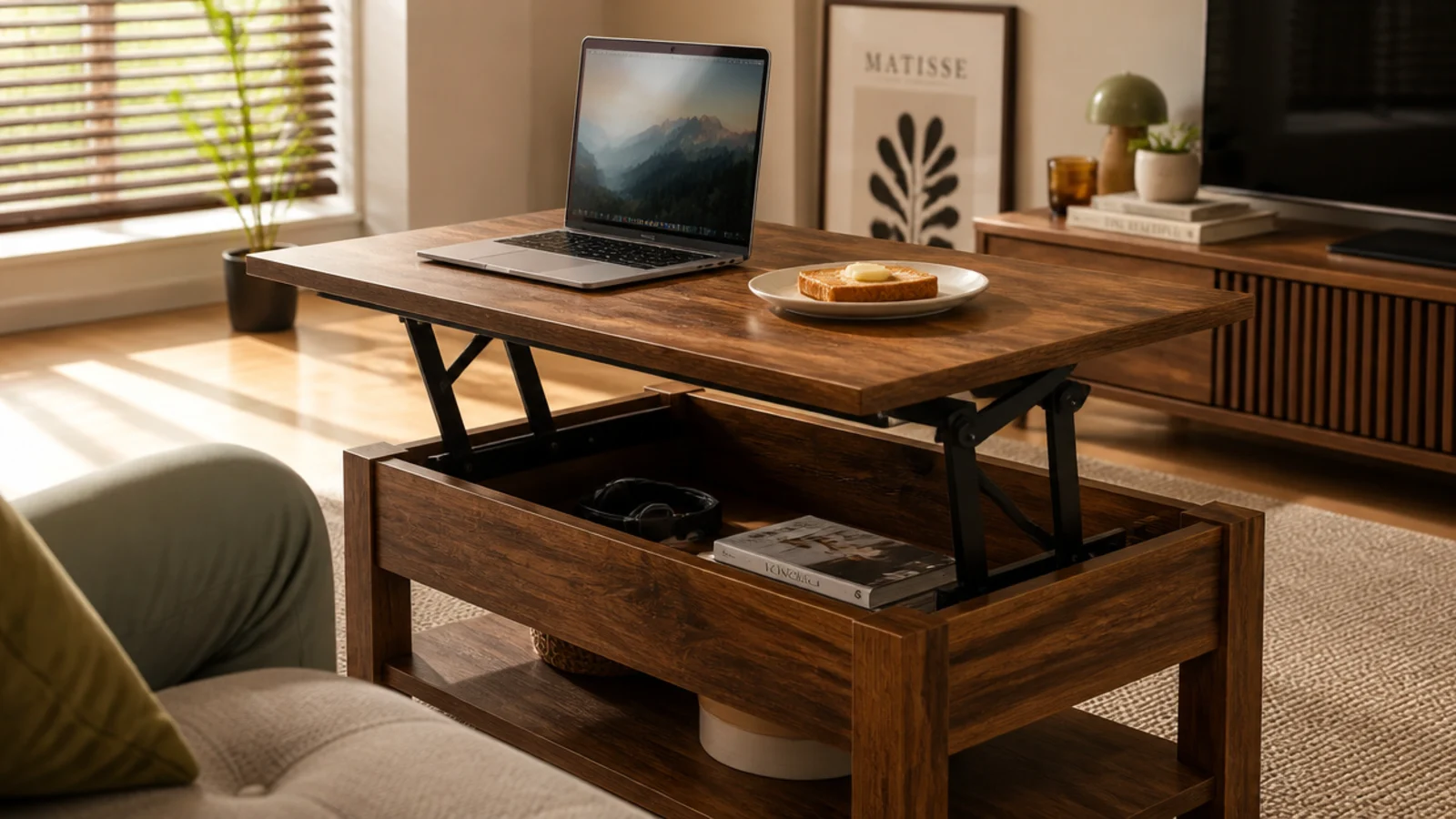
The mechanism raises the top 8 to 10 inches to around 26, which is proper eating height from a sofa cushion. It also gives you hidden storage in the cavity. Check the raised-load rating, usually 30 to 50 pounds, and choose gas struts rather than sprung hinges.
10. The two-tier shelf table
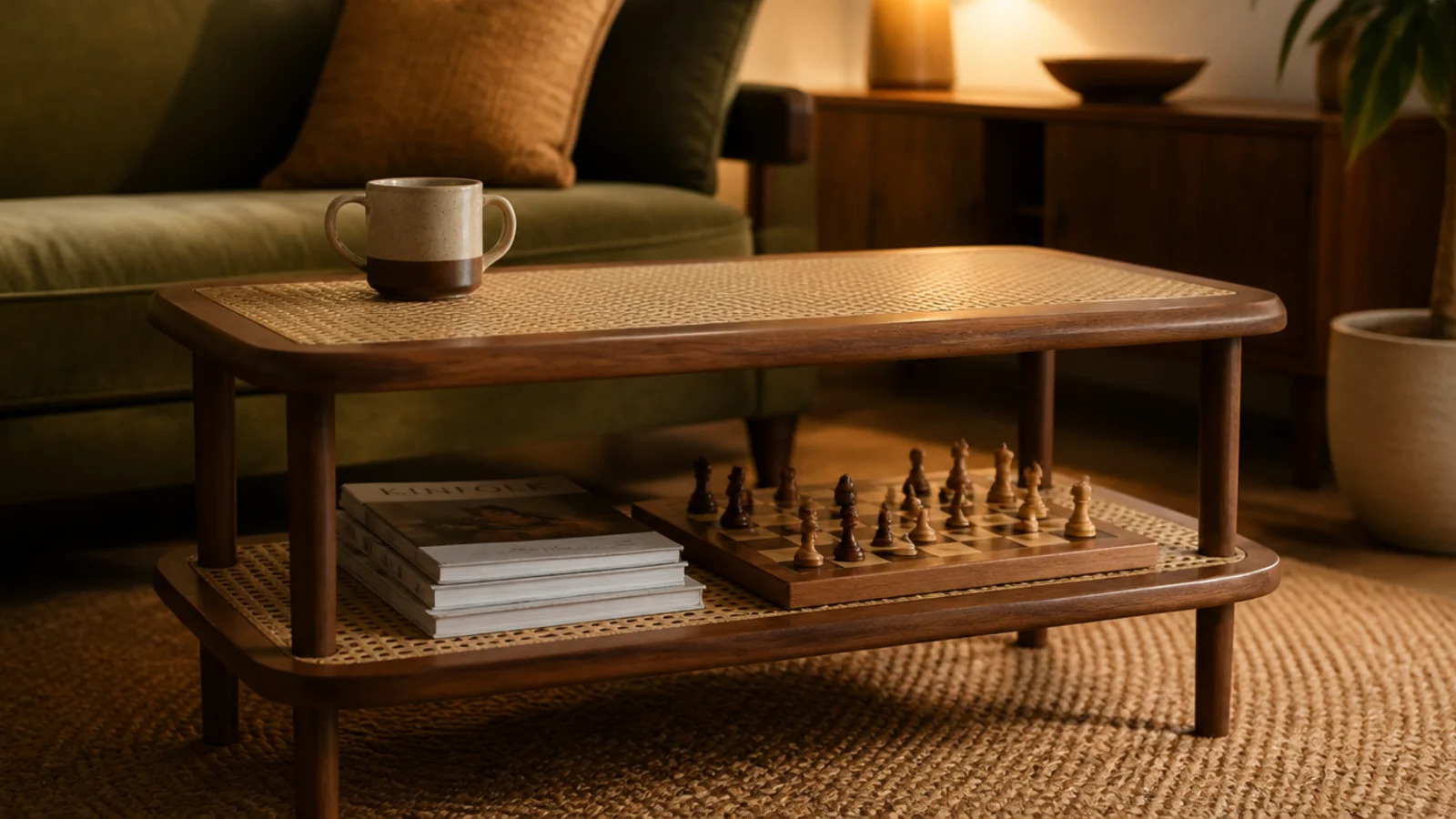
The lower shelf takes the magazines, the remotes and the games box, which keeps the top clear enough to be used. Make sure the shelf is at least 12 inches deep, because a narrow one holds nothing real and just collects dust.
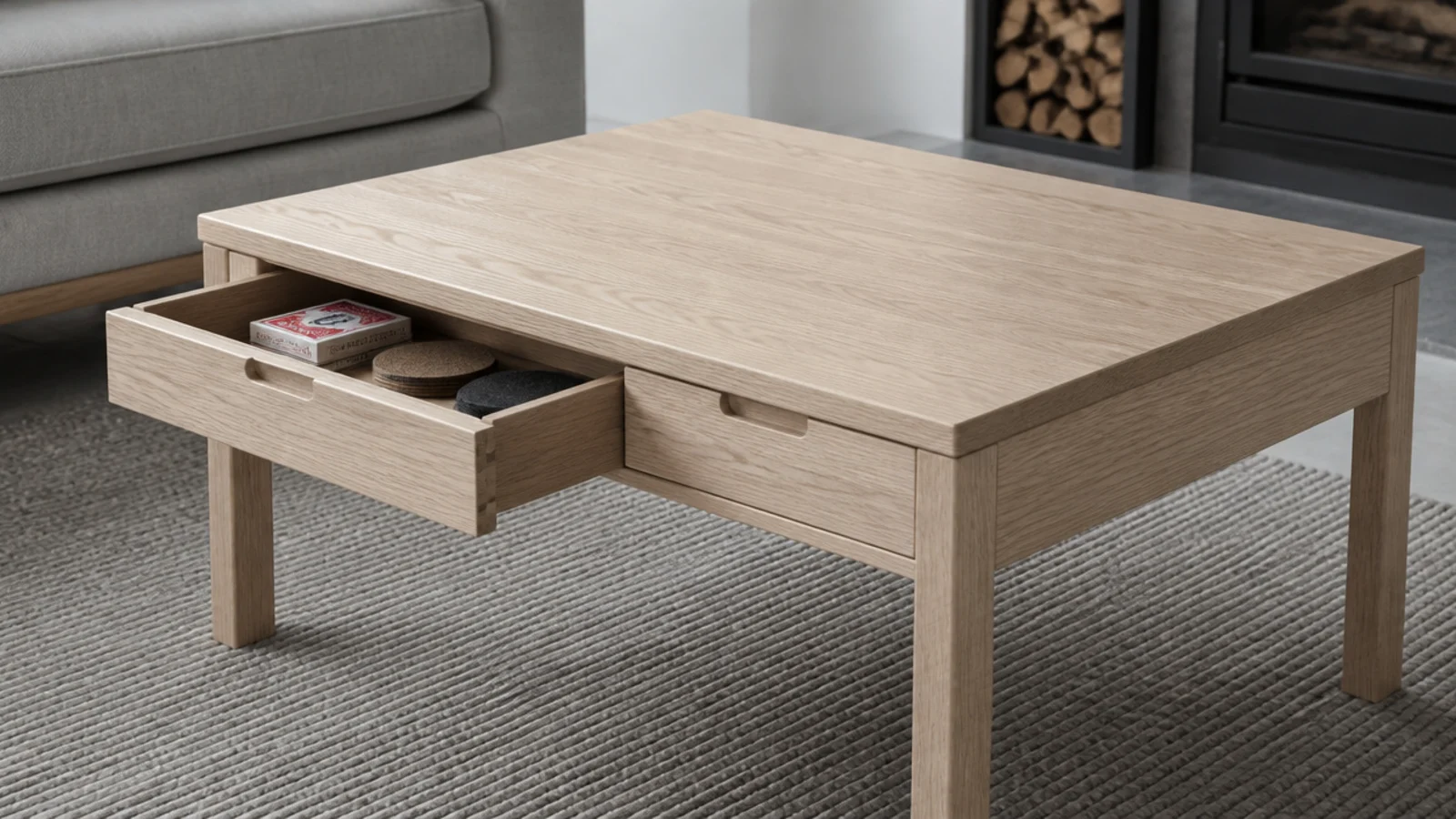
11. The drawer table
Closed storage for the small ugly things — chargers, coasters, batteries, pens. A shallow drawer around four inches deep is enough. Look for a stated runner rating of 35 pounds or more; unrated plastic channels sag once the drawer holds anything.
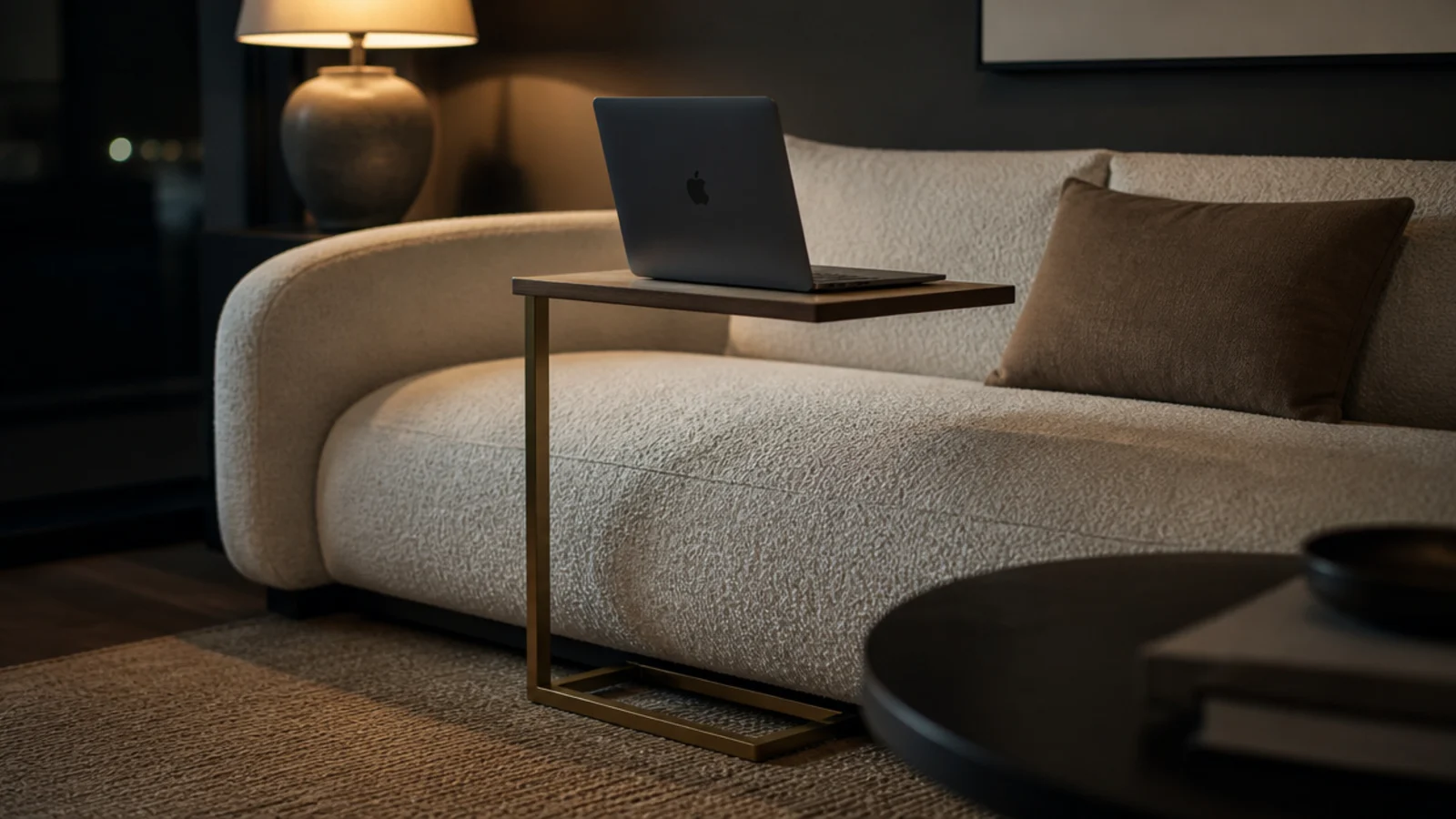
12. The C-table
The base slides under the sofa and the top hovers over the seat, so it takes no extra floor. Measure the clearance under your sofa first — most need 5 to 7 inches, and a skirted or platform base rules it out entirely.
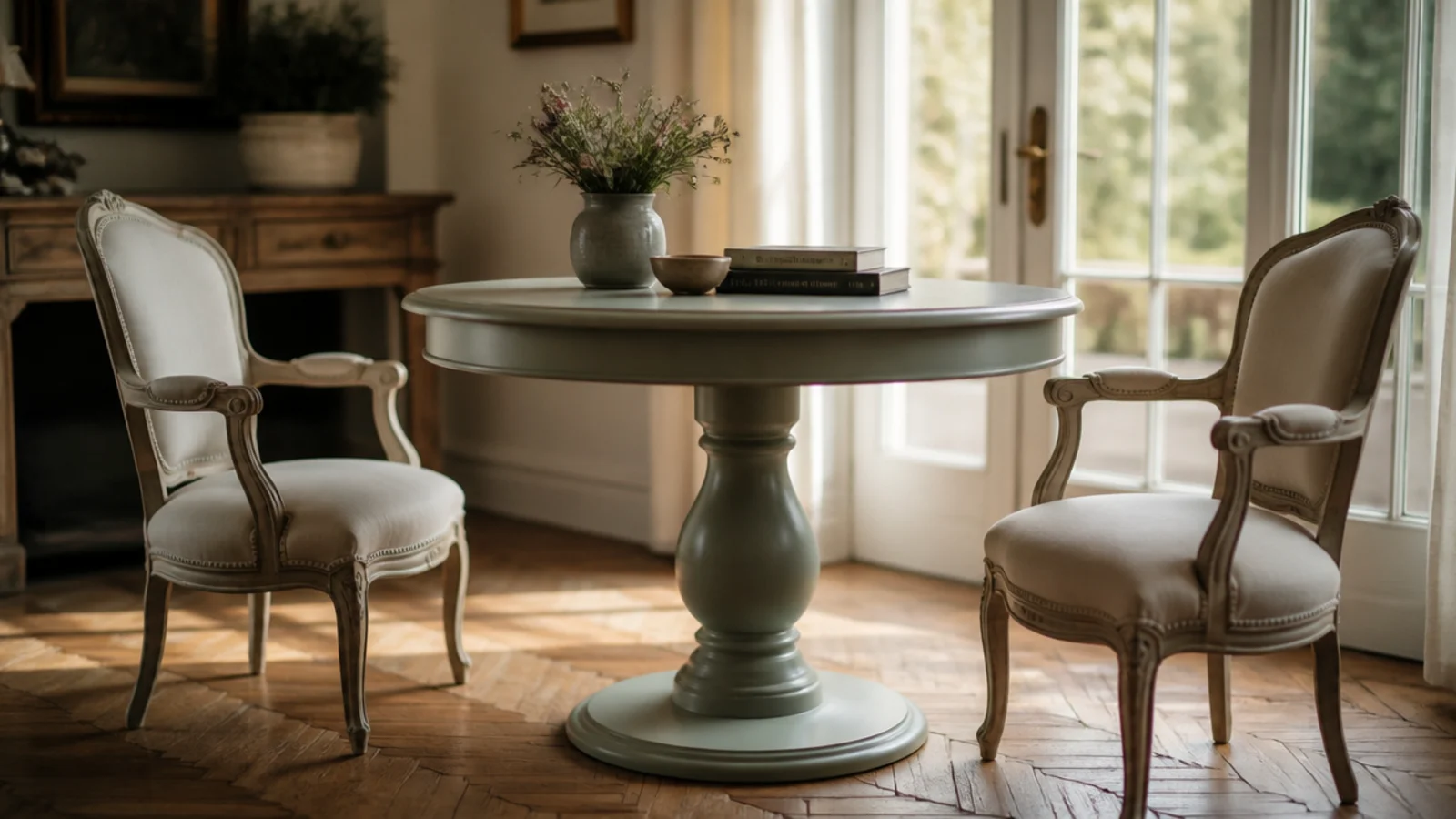
13. The round pedestal
One central foot instead of four legs means more usable floor and no leg to catch. Check the foot is at least half the top diameter, otherwise a heavy elbow on the edge lifts the opposite side. Best shape for a room under 12 feet wide.
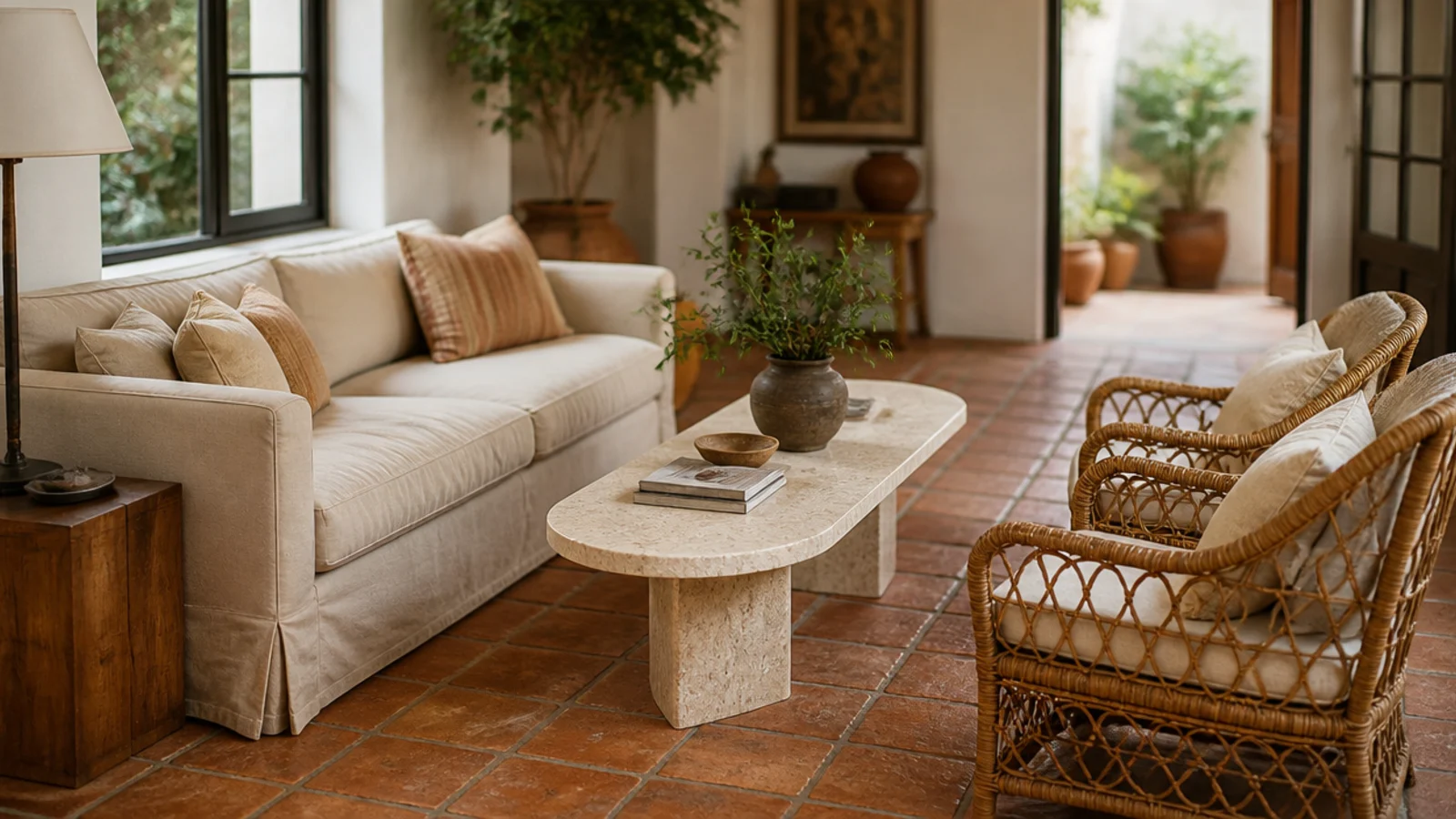
14. The oval
The compromise between the surface area of a rectangle and the traffic behaviour of a round. A 48 by 28 inch oval holds nearly as much as the rectangle it replaces and lets people curve past it. It suits a long narrow room particularly well.
15. The square for a sectional
A sectional swallows a normal rectangle. A 40 to 48 inch square sits inside the L and stays within reach of every seat, including the return. Keep it low — the deeper seat of a sectional usually wants a table at 15 to 16 inches.
16. Glass on a metal frame
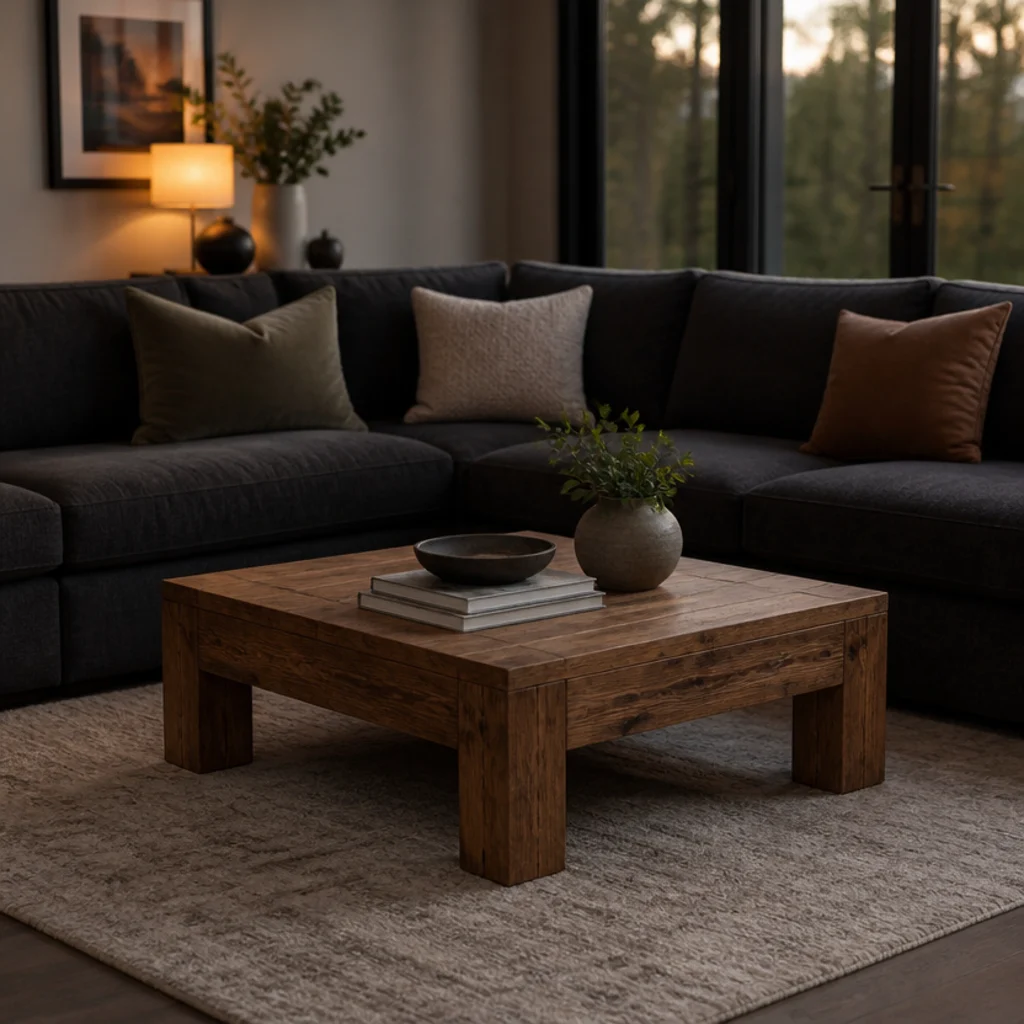
A clear top keeps a good rug visible and makes a small room read larger. Specify tempered glass, half an inch on anything over 40 inches long, with a polished edge. Expect fingerprints, and buy an ammonia-free cleaner at the same time.
17. Stone on steel
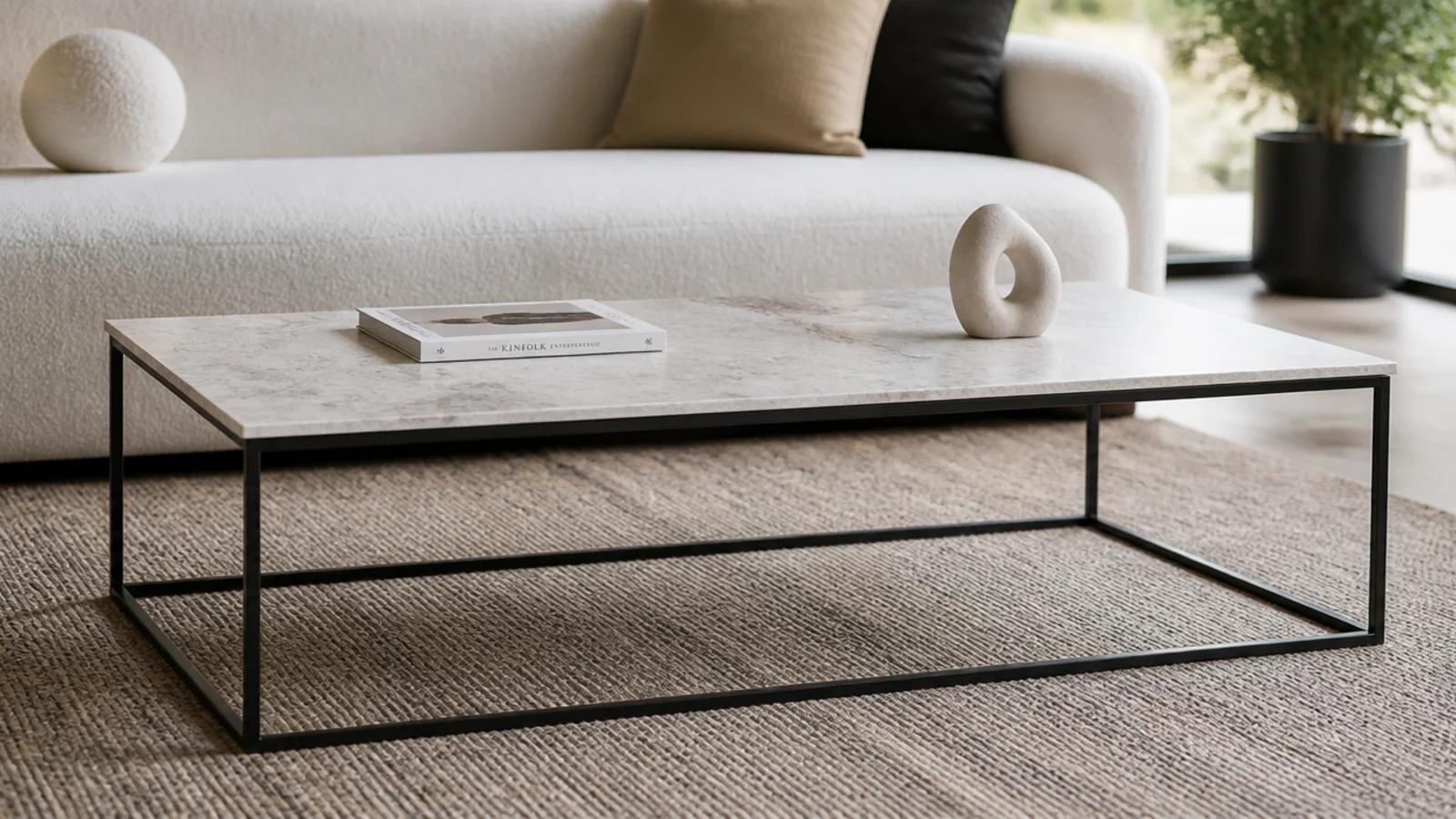
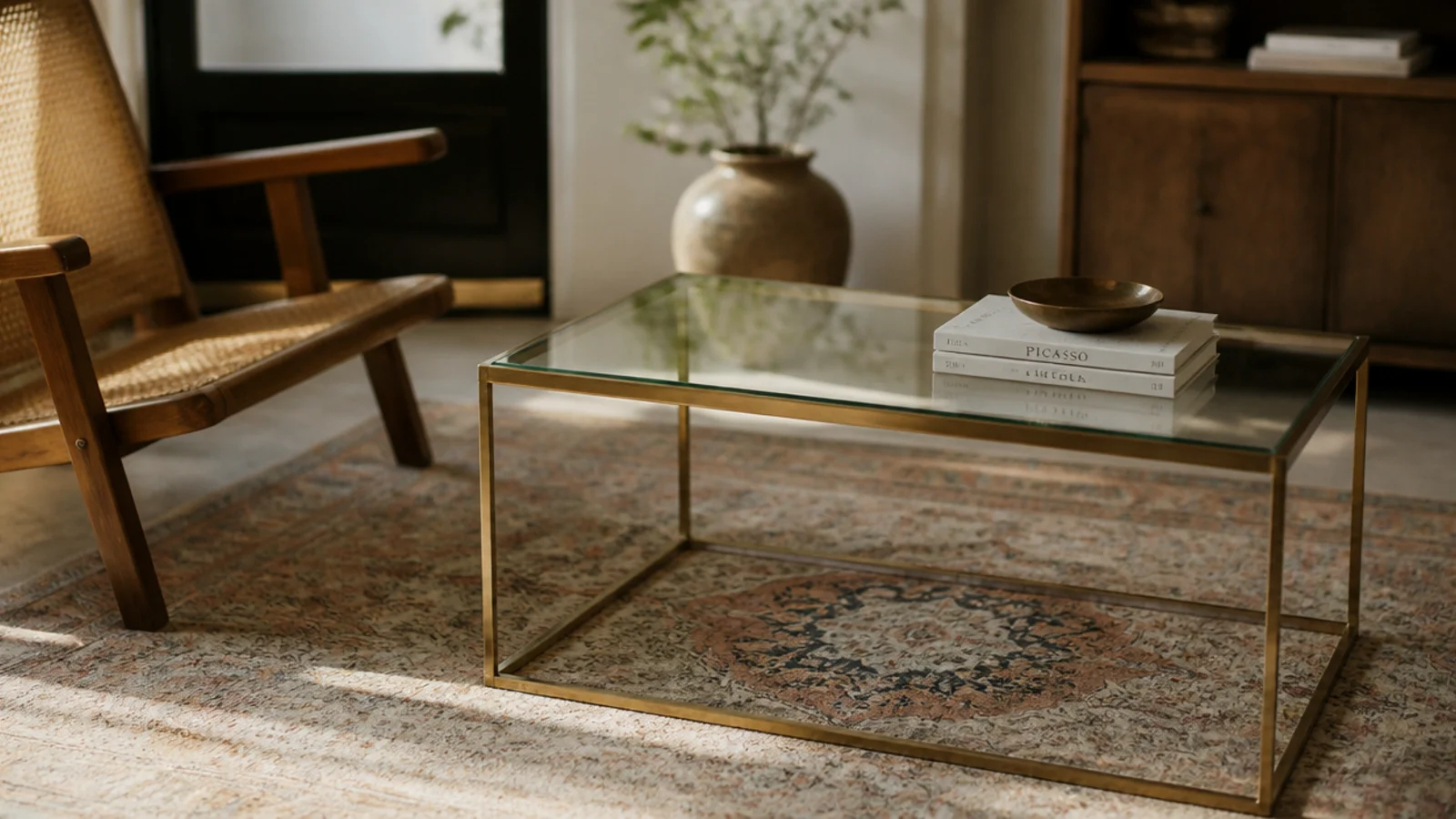
Heavy top, minimal base, and the whole thing reads like it was commissioned. A three-quarter inch stone slab runs around 10 pounds per square foot, so check the frame is rated for it. Marble and travertine want sealing every six to twelve months.
18. The cane or rattan drum
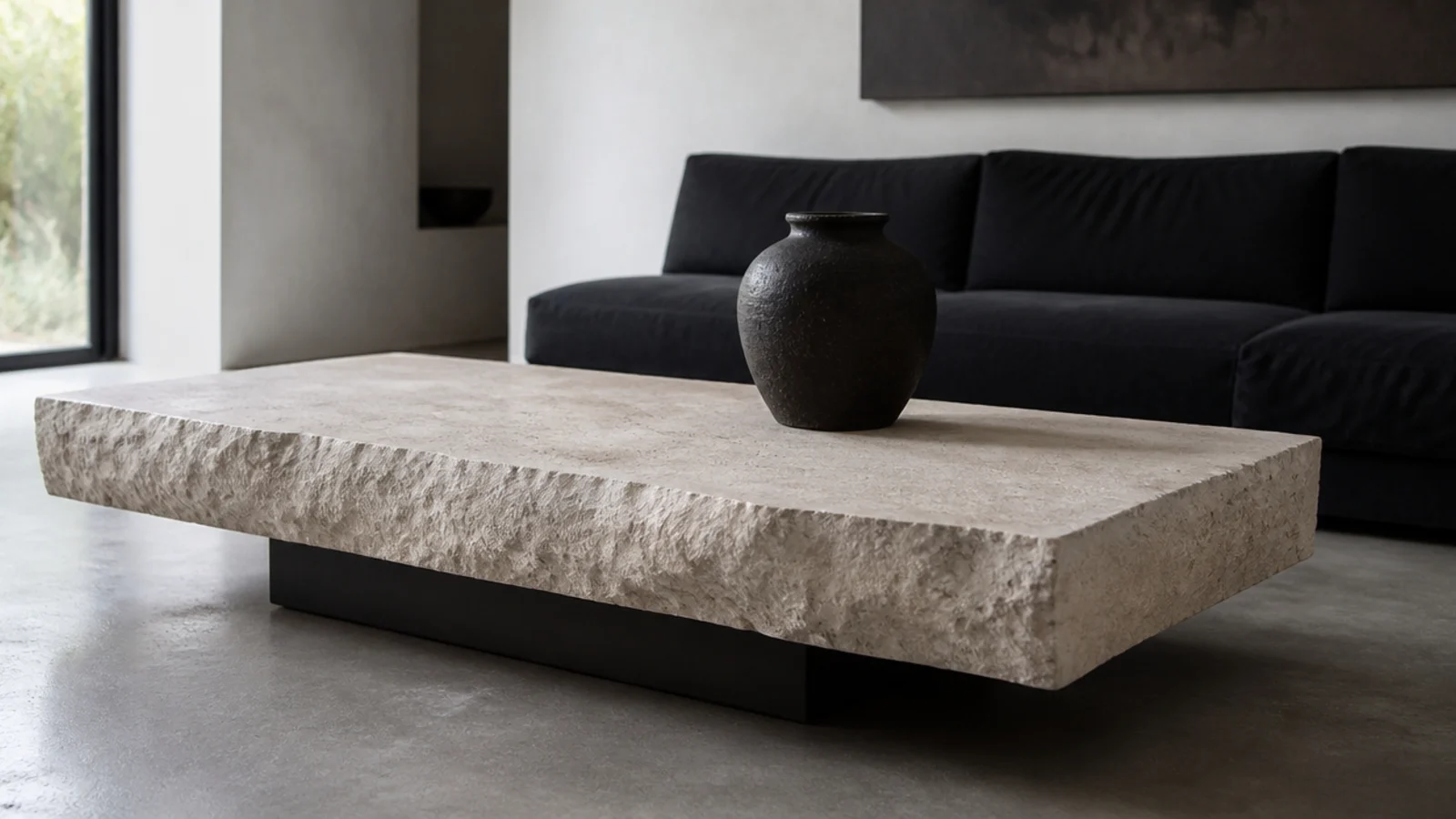
Texture without pattern, and light enough for one person to move. Buy the version with a fitted glass insert, because open weave will not hold a mug level and every crumb finds the gaps. Keep it out of direct sun, which makes cane brittle.
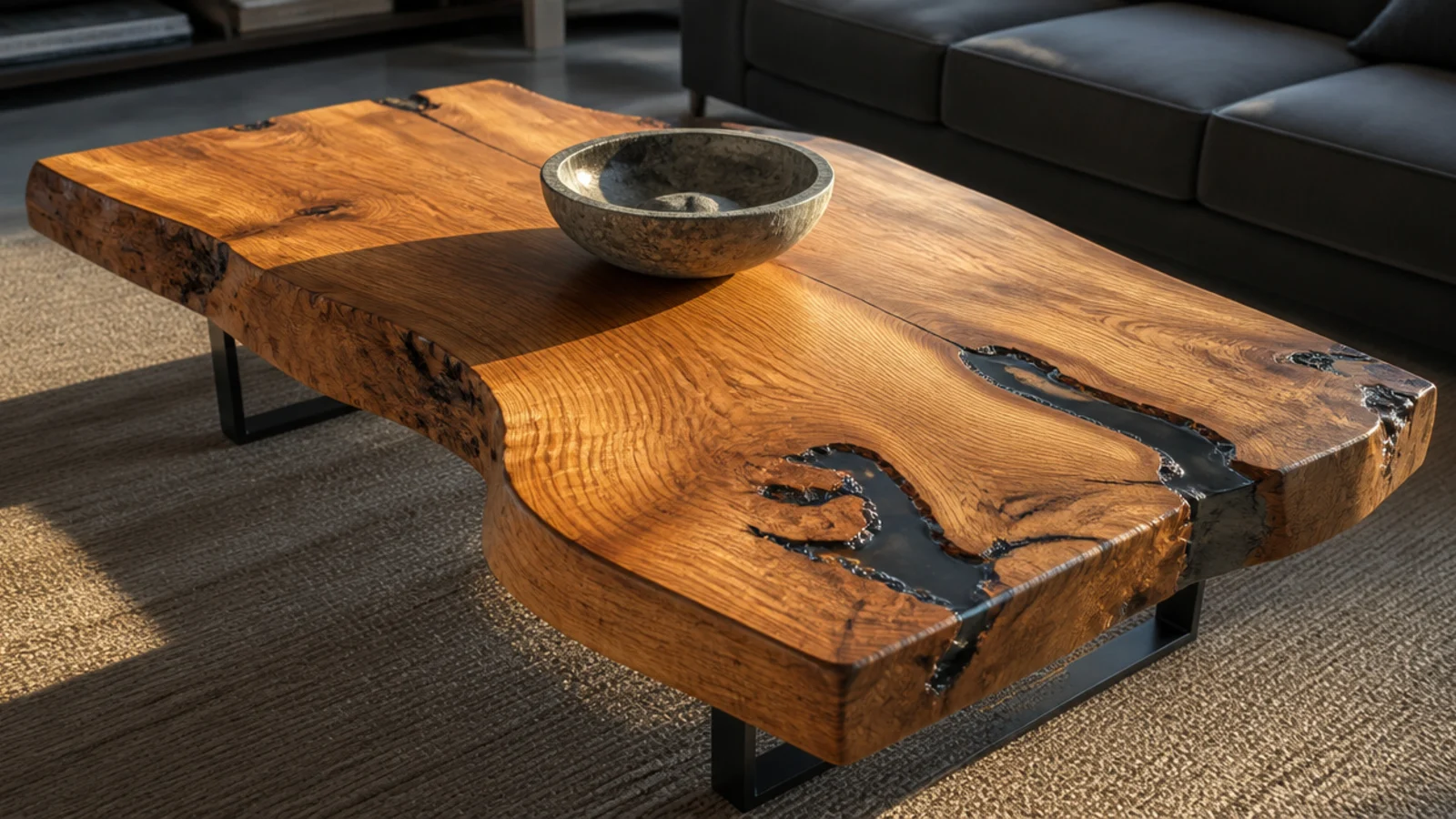
19. The live-edge slab
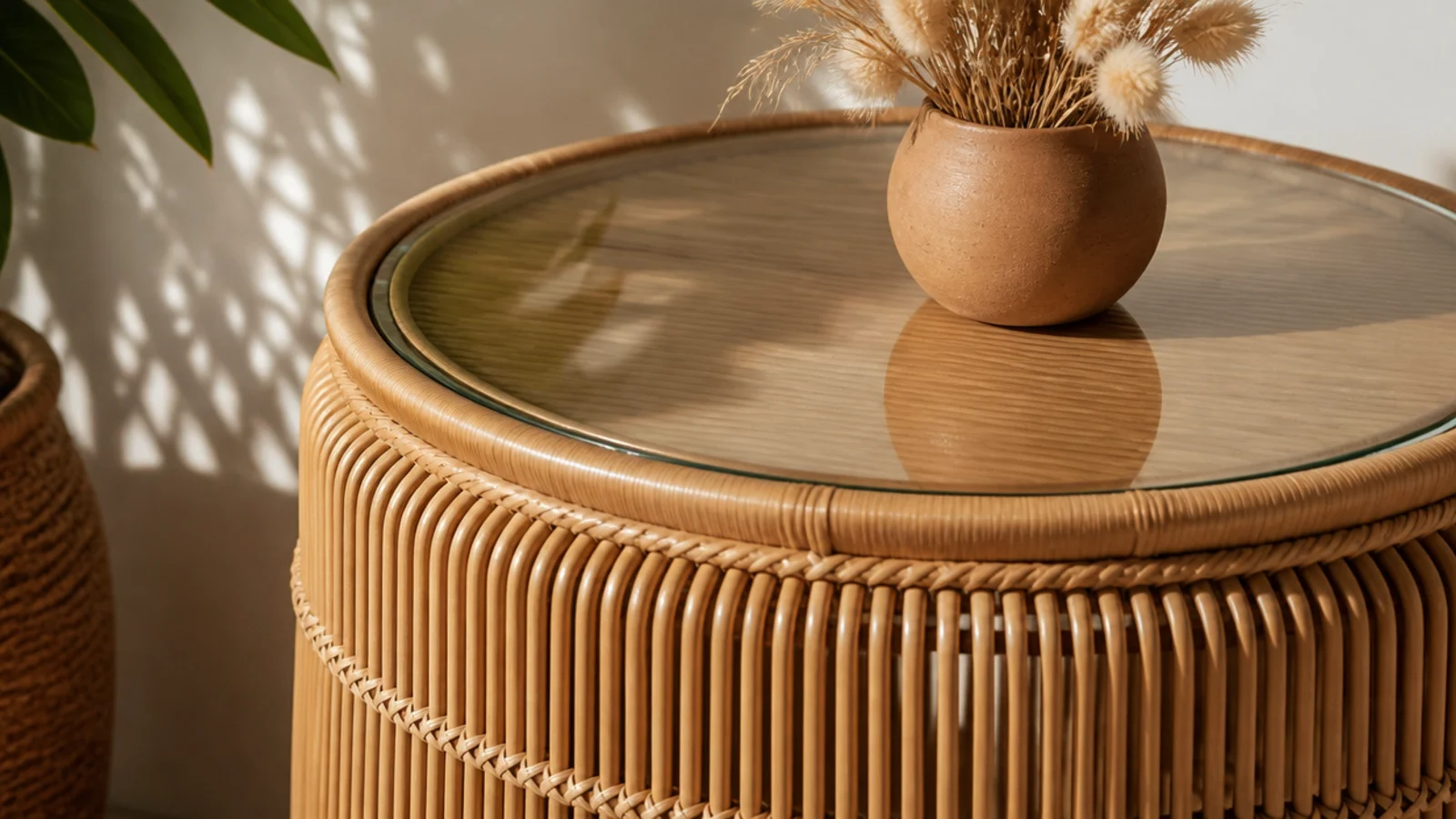
One board, one natural edge, and no two the same. Check any voids have been filled with resin or a butterfly key, and that the slab was kiln dried to 6 to 8 percent moisture. Green timber cups and cracks within a year of arriving in a heated room.
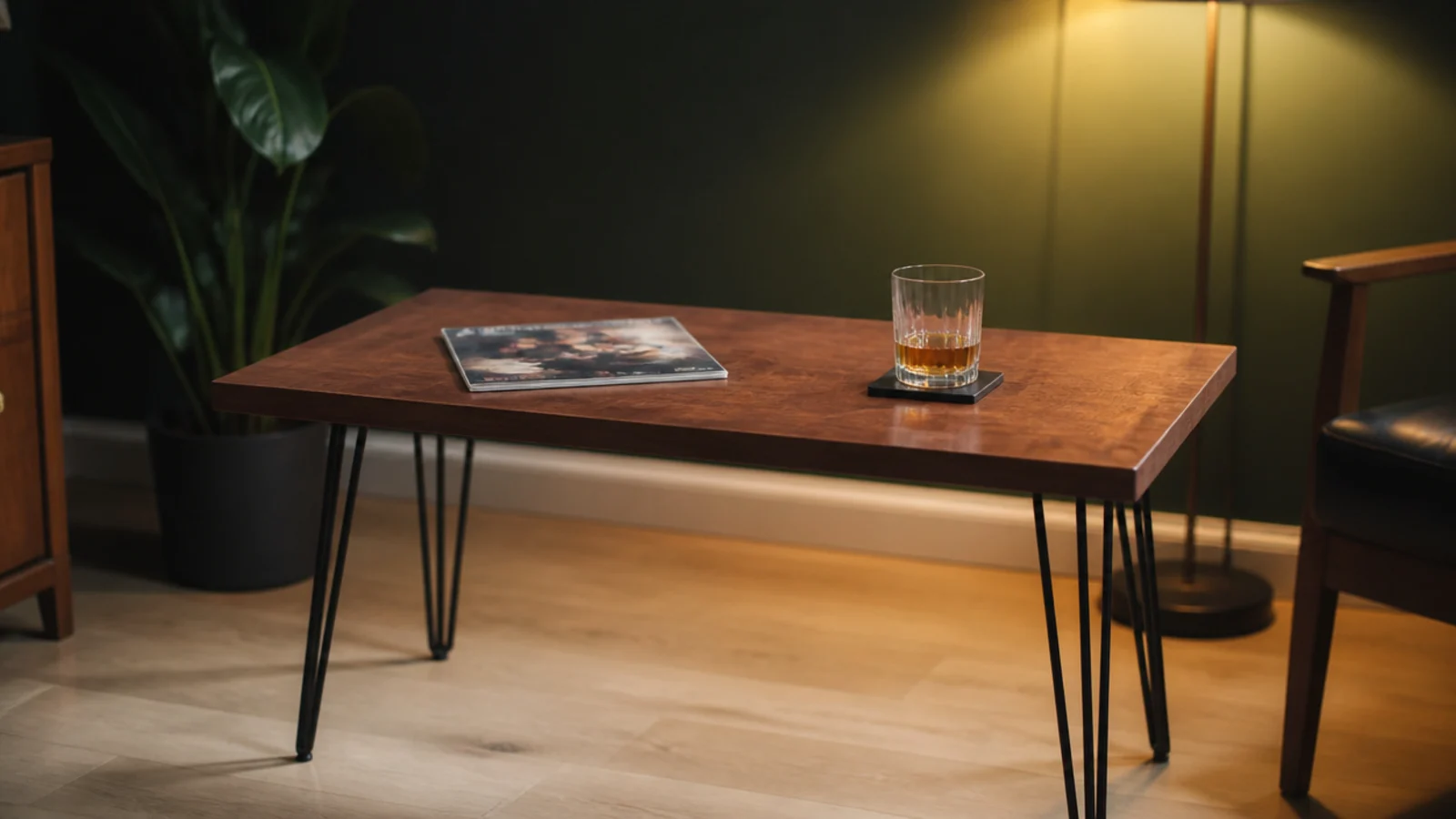
20. The hairpin-leg mid-century table
Three or four steel rods carrying a light top, which leaves almost the whole floor visible. Look for 3/8 inch rod rather than 5/16 on anything over 40 inches, and check the mounting plates go into solid timber rather than into particleboard.
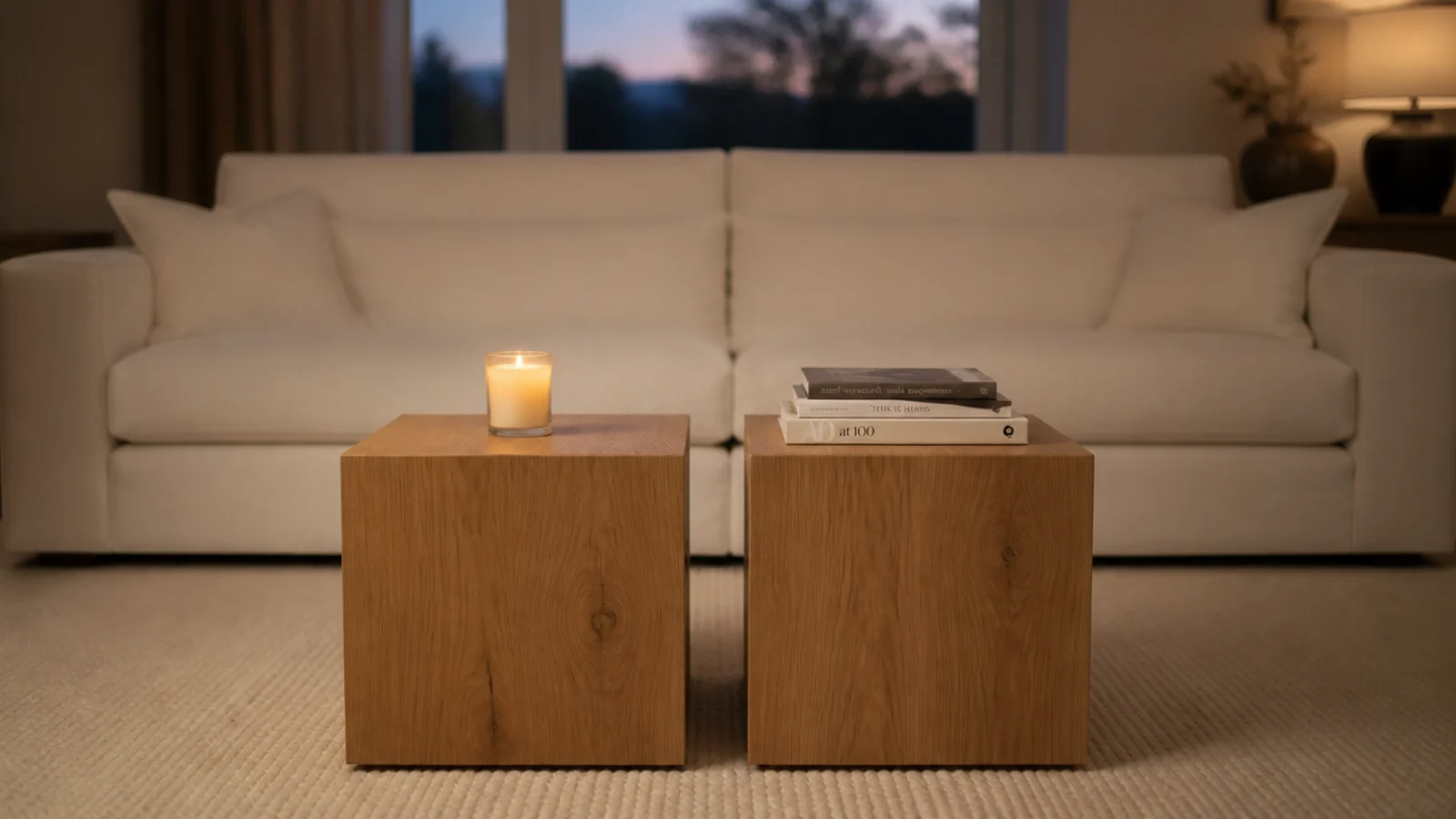
21. A pair of matching cubes
Two 20-inch cubes give the flexibility of small tables with the presence of one large piece. Push them together for a party surface, split them either end of the sofa when the room needs a route through. Both work as extra seating.
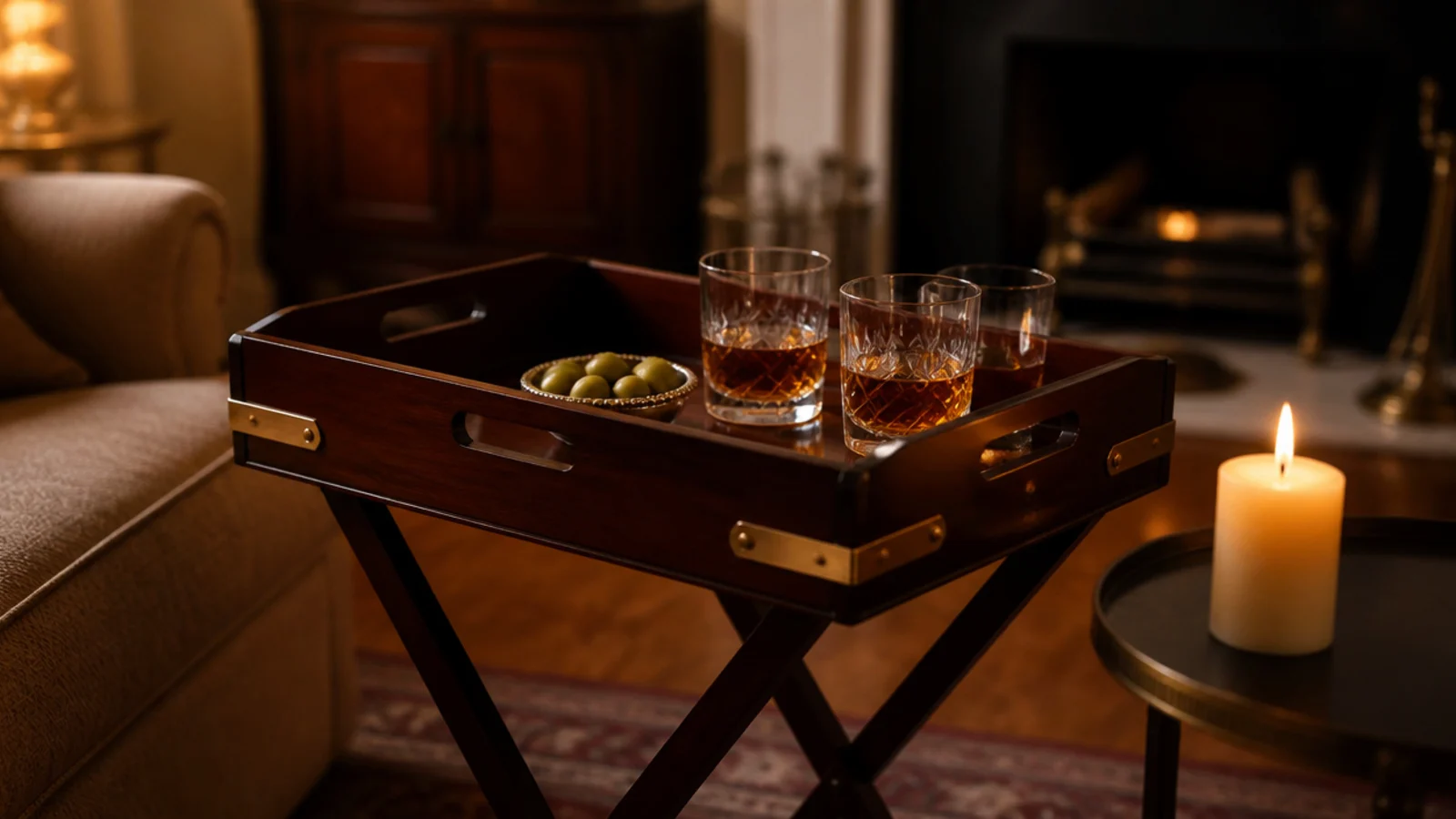
22. The tray-top butler table
The top lifts off and carries to the kitchen, and the folding sides stop a glass sliding off. It is the most sociable table on this list for a room where people actually eat and drink together, and the X-frame folds flat for storage.
23. The ceramic garden stool
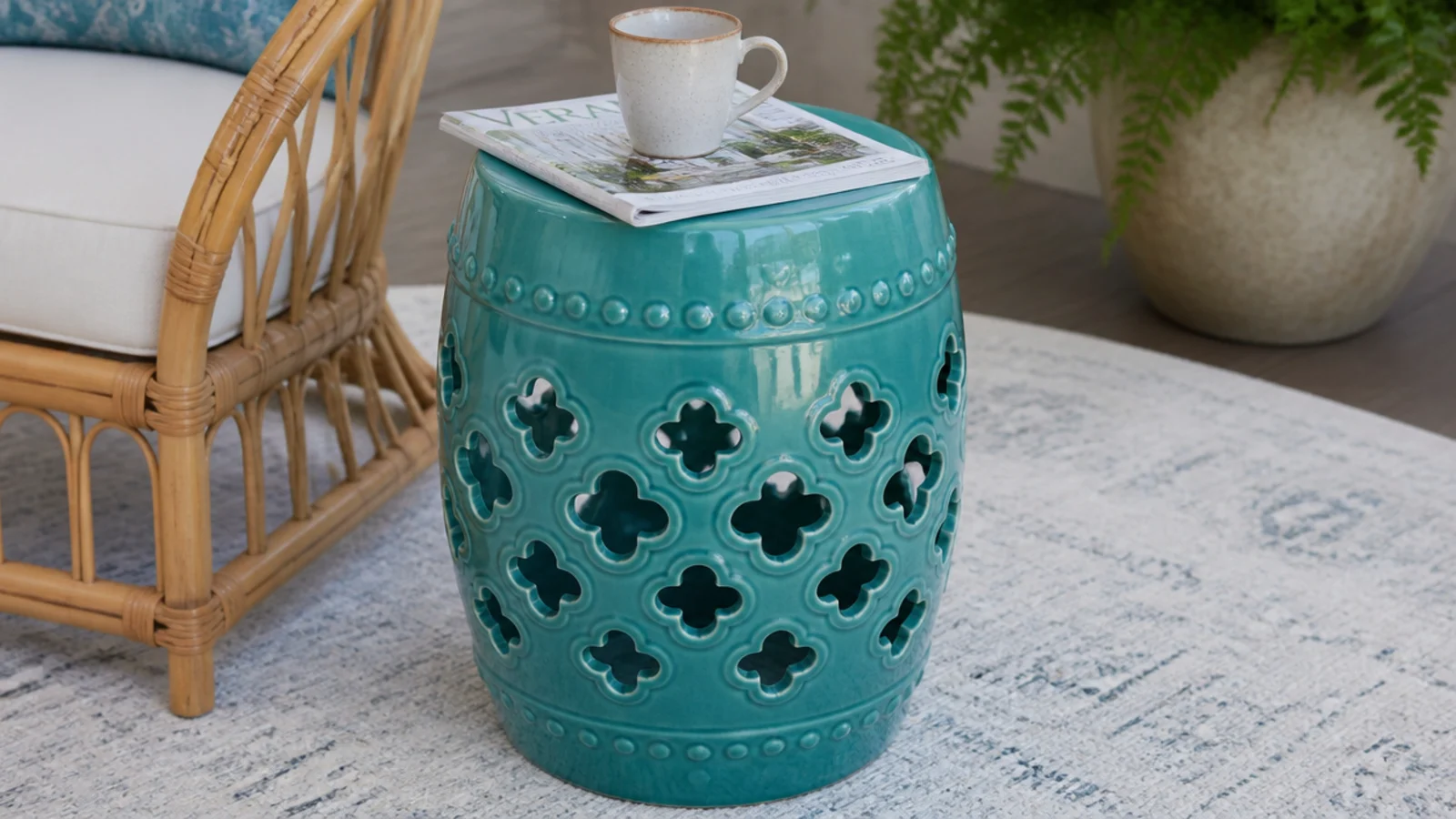
Around 18 inches tall, glazed, unstainable and usually under $90. Too low to be a main table beside a standard sofa, but the perfect second surface next to an armchair. Heavy enough not to tip and impossible to damage with a wet glass.
24. A low bench used as a table
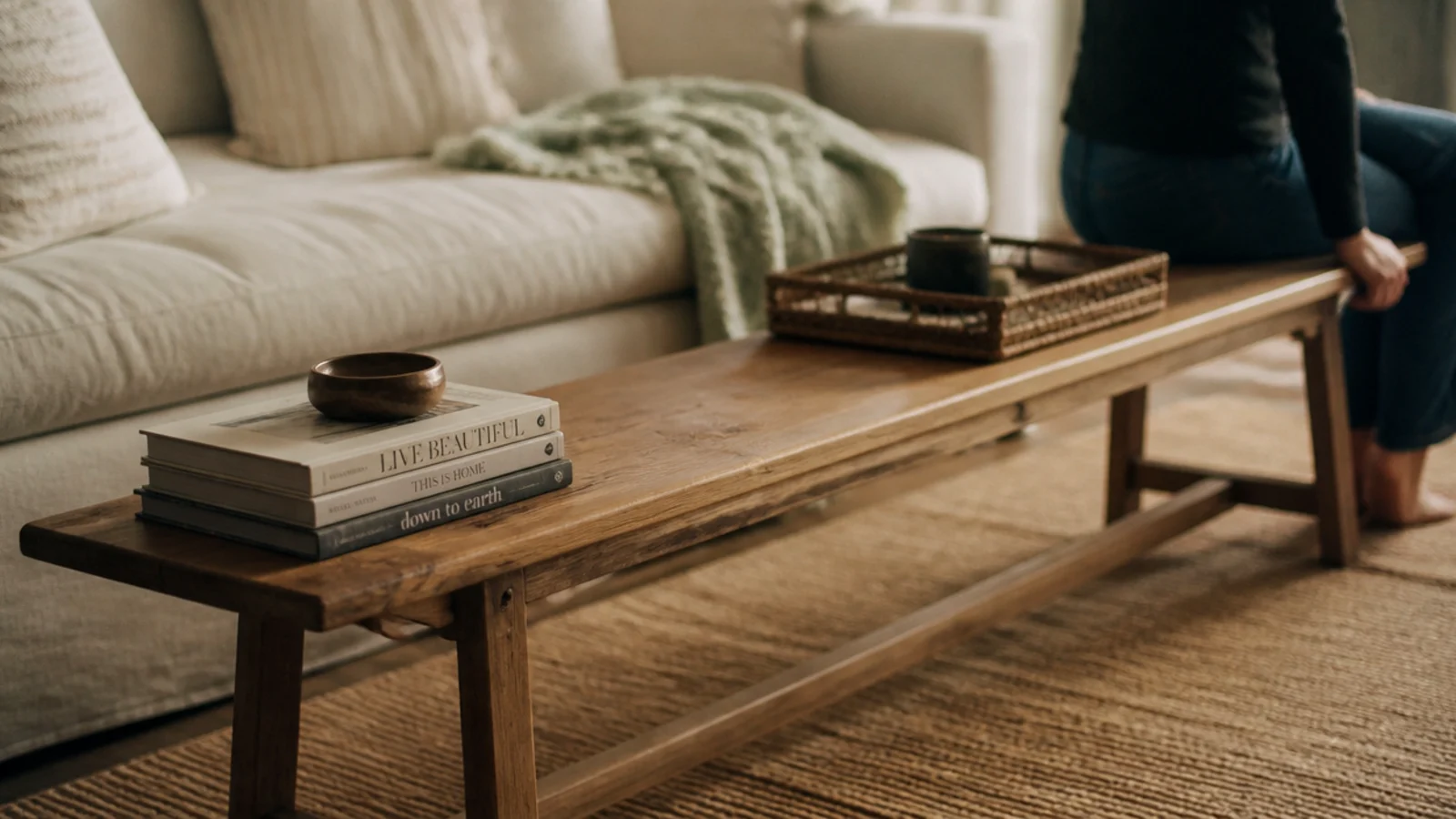
A bench 14 to 16 inches deep gives you length without depth, which suits a narrow room where a normal table would block the route. It also seats two extra people when needed. The rug sizing guide covers keeping all its feet on the pile.
25. A deliberate cluster of three
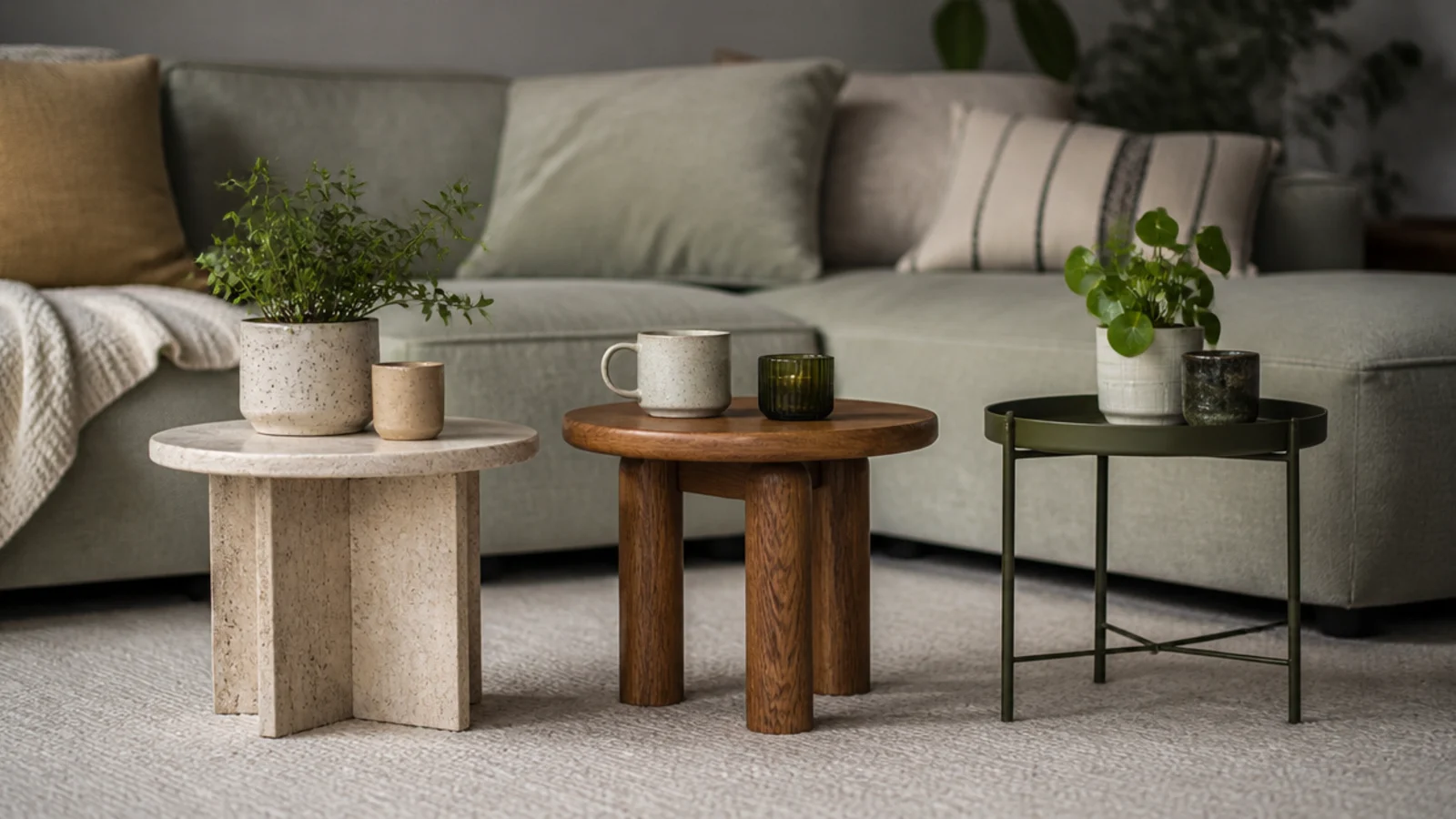
Three unmatched tables at the same height, grouped loosely, behave like one surface but can be pulled apart in seconds. It is the most forgiving arrangement in a room that changes constantly, and it lets you buy one piece at a time.
For the shapes that suit an awkward floor plan, the round table guide works through diameters and clearances, and the decoration guide takes over once the table has arrived. If books are going to end up on the surface anyway, the stacking rules in bookshelf styling ideas apply just as well to a low table.
Mistakes to Skip
- Buying a rectangle for a room people walk through diagonally. The corner catches a shin twice a week, the table ends up permanently askew, and no amount of styling fixes a shape that is wrong for the route.
- Choosing a trunk for daily storage. Every object on the lid has to move before the lid opens, so the storage stops being used within a month and you own a heavy box instead of a table.
- Matching the center table to the side tables and the TV unit. A full suite reads as a catalogue page; shared height and one shared finish reads as a room somebody put together.
- Ignoring the underside of the sofa before buying a C-table. Under five inches of clearance and it simply will not slide in, and that measurement is never in the product listing.
Frequently asked questions
Which center table shape suits a small living room?
A round pedestal or a drum under thirty-four inches across. Both remove the corners that catch hips in a narrow route, and a single central foot gives you more usable floor than four legs do. A nesting pair is the other strong answer because it shrinks back to one footprint.
Is an ottoman a good center table?
It is the best answer in a room with small children, because there is no hard edge at head height. It only works with a rigid tray at least eighteen inches across for drinks, and the upholstery should be rated around thirty thousand double rubs if people sit on it.
What size table works with an L-shaped sectional?
Measure the inside of the L rather than the sofa length. Most sectionals want a square or round table of forty to forty-eight inches, placed to leave sixteen to eighteen inches from every seat front. Two smaller tables often beat one large one because they let people walk through the middle.
Should a center table match the side tables?
No, and a matched suite usually looks like it arrived on one delivery. Keep the heights within two inches of one another and repeat a single material or metal finish across the pieces. Shared height and one shared finish read as considered where identical shapes read as a showroom set.
Is a trunk practical as a center table?
Only for storage you reach a few times a season. Anything with a lid means lifting every object off the top before you can open it, so blankets and board games work and daily items do not. Check the hinge has a stay so the lid cannot drop on a hand.
Want more like this? Browse all 15 center table living room guides — they all use the same measurements and budget tiers.

Pin it for later
Save this to your Center Table Living Room board
Pin it now so it is waiting for you when the tape measure comes out — and so the next person hunting for this idea can find it too.
Save this pinKeep going
More ideas worth saving while you have the tape measure out.