Center Table Living Room · Listicle
25 Round Center Table Living Room Layouts That Fit

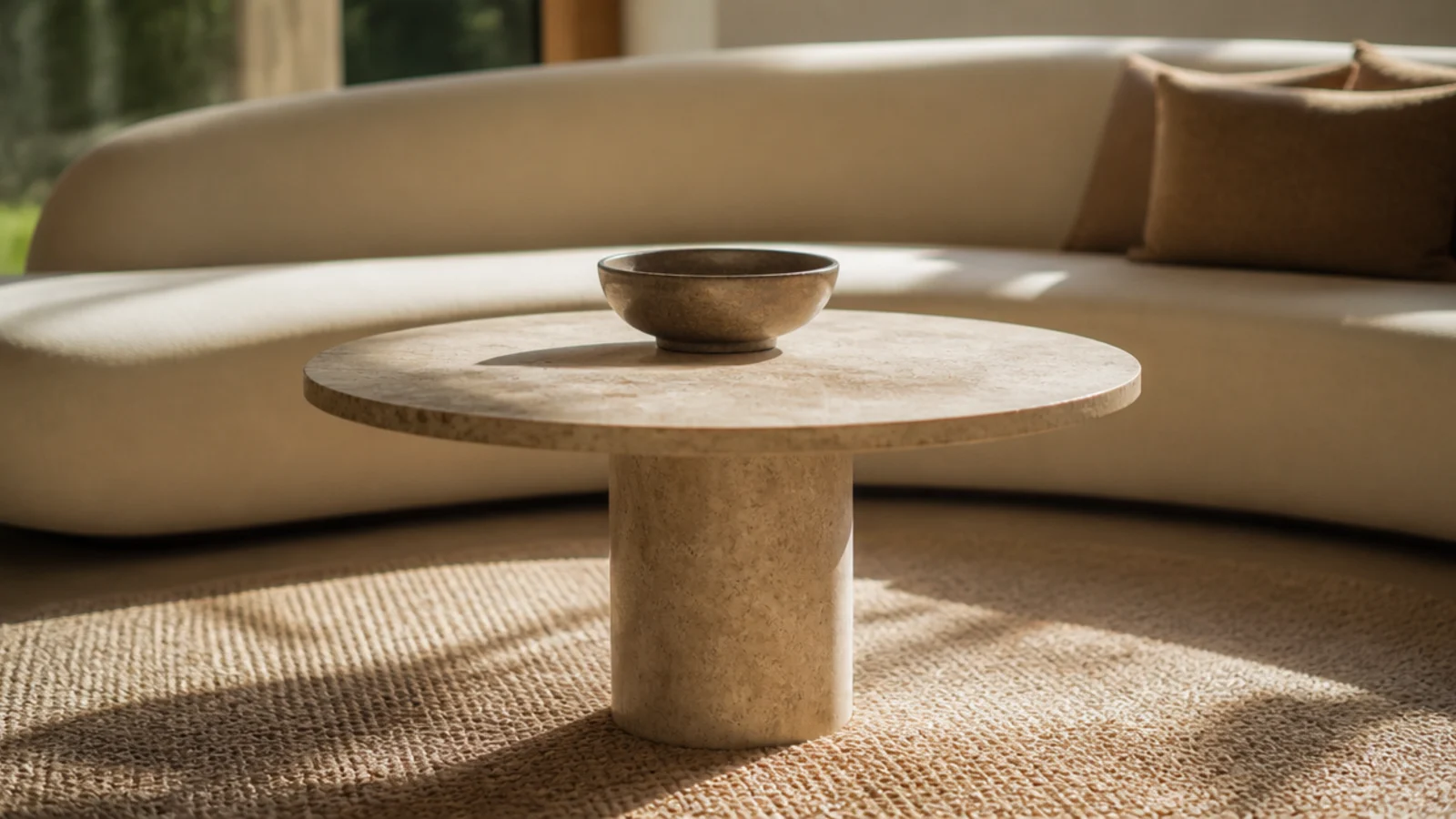
Circles behave differently in a room. There is nothing at shin height to catch, so people walk closer to them, which means a gap that would feel tight around a rectangle feels generous around a curve. That single behavioural fact is why a round center table living room plan works in flats where a rectangular table has to be shoved aside every evening. Here are twenty-five layouts, each with the diameter and the clearance that makes it work.
In this guide27 sections — tap to openHide
- 1.What round center table living room plans get wrong
- 2.Thirty-two to thirty-six inches for a three-seater
- 3.Forty-two to forty-eight inches inside a sectional
- 4.Twenty-four inches in a studio or small flat
- 5.Put the circle where the diagonal route crosses
- 6.A pedestal base for real legroom
- 7.A solid drum on a deep pile rug
- 8.Round table, rectangular rug
- 9.Two small circles instead of one big one
- 10.A conversation circle with two armchairs
- 11.A round nesting pair for guest evenings
- 12.A lower shelf under a round top
- 13.Round marble on a slim metal base
- 14.Round glass to keep a good rug visible
- 15.A rattan drum for warmth in a hard room
- 16.A round ottoman with a firm tray
- 17.Set it off-centre toward the sofa
- 18.A tulip base in a room with a thick rug
- 19.Casters on a round base for party nights
- 20.A demilune against the wall in a corridor room
- 21.Keep twenty-four inches to the nearest wall
- 22.Match the top diameter to the rug width
- 23.Style a round top as a triangle
- 24.One round tray inside a round top
- 25.Round table with four low stools tucked under
- 26.Check the top overhangs the base by six inches
- 27.Mistakes to Skip
What round center table living room plans get wrong
Diameter is the number everybody guesses. For a rectangle the rule is two-thirds of the sofa length; for a circle it is closer to 40 percent. An 84-inch three-seater takes a 32 to 36 inch round. A 96-inch sofa can carry 36 to 42. Inside a sectional, measure across the open corner of the L and expect to want 42 to 48 inches.
Then the clearances. Keep 16 to 18 inches between the sofa front and the nearest point of the table — with a circle that gap opens up as you move sideways, which is exactly why circles feel roomier. A main walking route wants 30 to 36 inches, but past a curved edge 24 inches is genuinely comfortable, where past a corner it is not.
Height does not change with shape. Measure the compressed sofa cushion, usually 17 to 19 inches, and buy within two inches of it. Watch drums in particular — many are built at 18 to 20 inches, which is fine beside a tall sofa and wrong beside a low one.
Finally the base. Four legs on a thick rug sink at four points and the top rocks; a pedestal or drum spreads that load and stays level. If you go pedestal, check the foot is at least half the top diameter. Prices run roughly $120 to $300 for painted timber and rattan, $250 to $500 for solid timber drums, and $400 upward for stone. Sizing the rug first makes all of this easier — the living room rug guide has the overlap numbers.
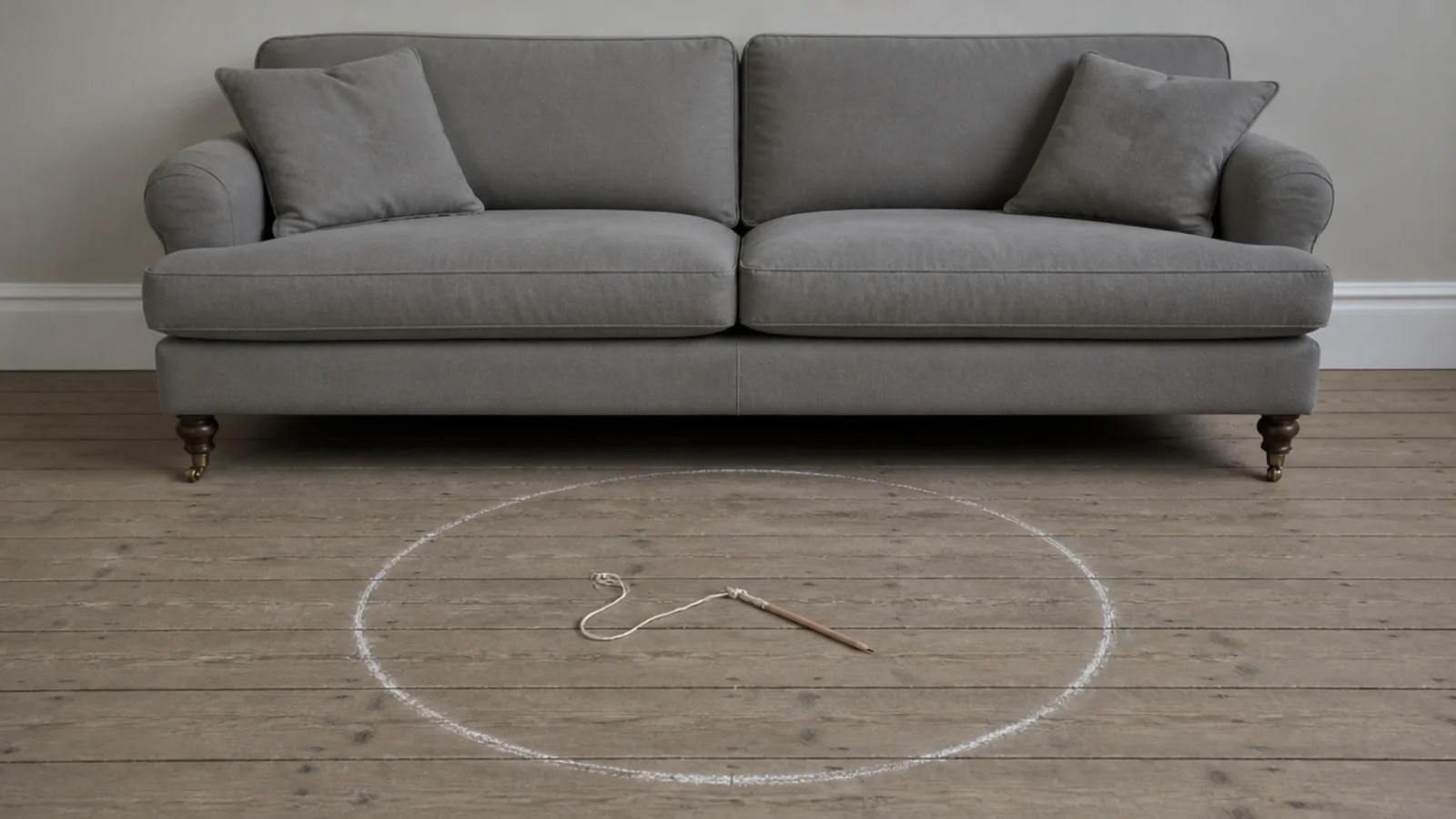
1. Thirty-two to thirty-six inches for a three-seater
The default pairing, and the one that suits most rooms. At 36 inches a round top gives about 7 square feet of surface, close to what a 48 by 24 rectangle offers, while letting people pass on a diagonal. Below 30 inches the outer cushions cannot reach it.
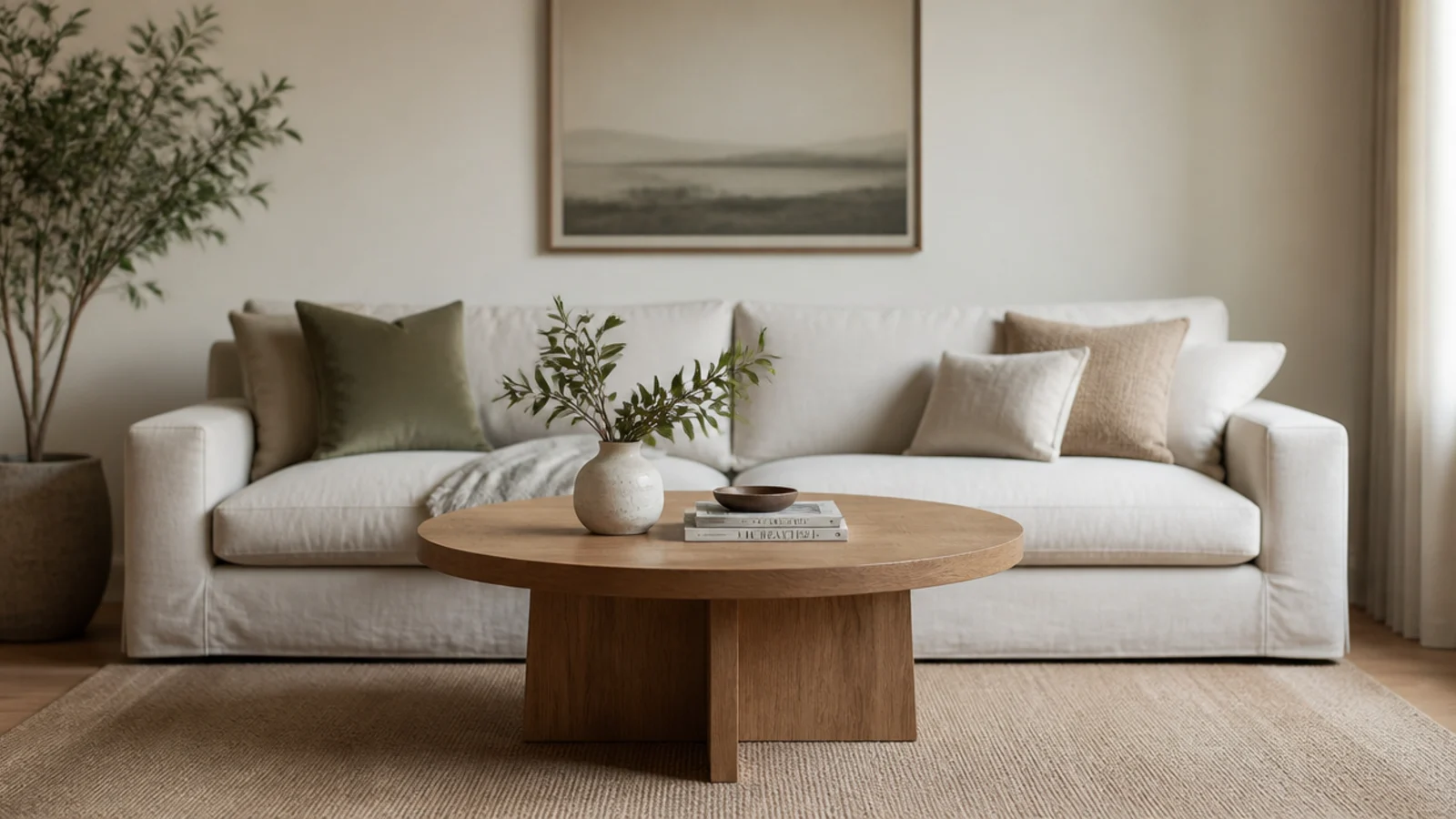
2. Forty-two to forty-eight inches inside a sectional
Deep sectional seats put people further from the middle, so a normal table becomes a stretch. A 44-inch circle inside the L keeps every seat within arm's reach and fills a space that a small table leaves looking empty. Check the walkway around the outside stays above 30 inches.
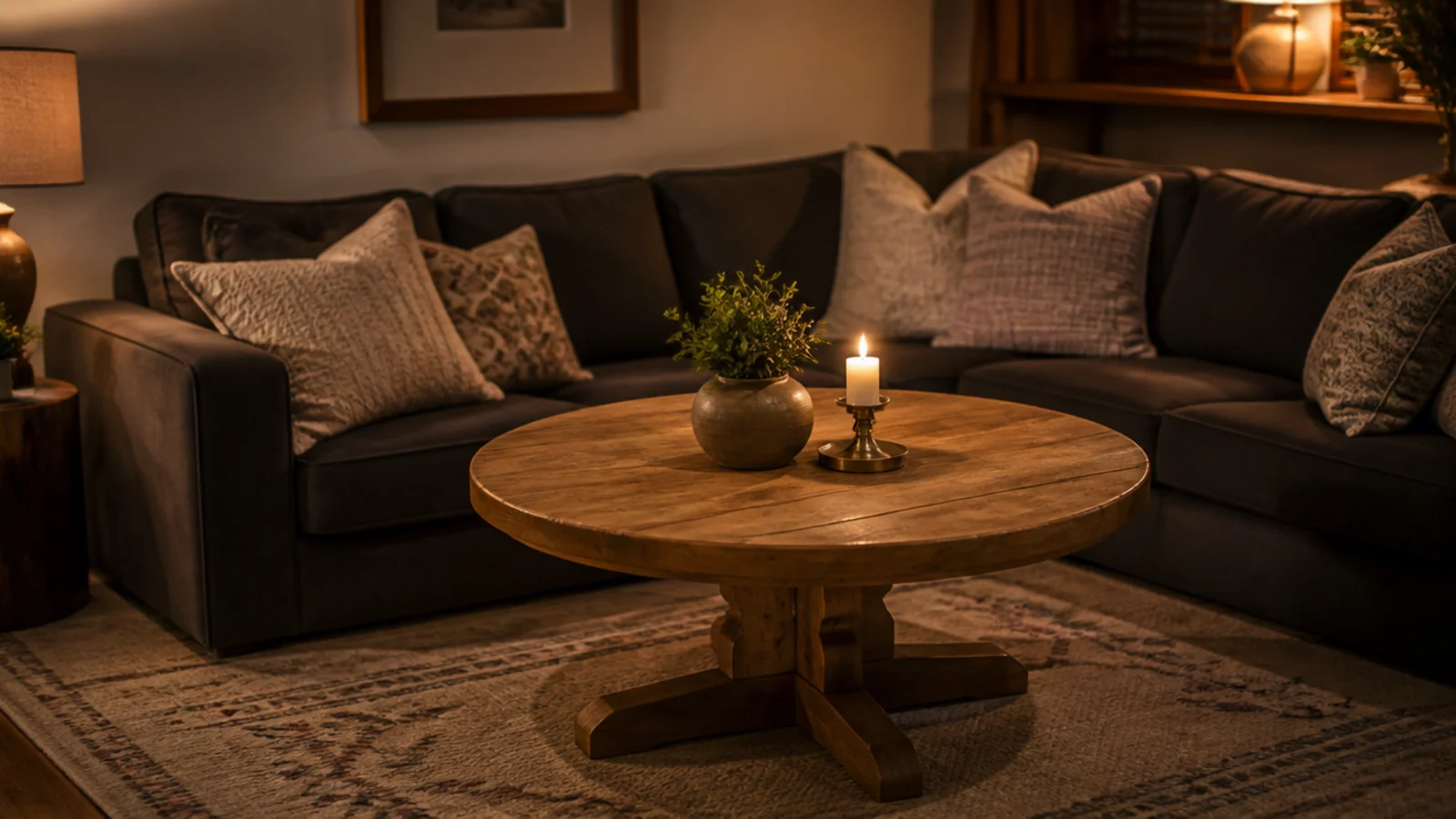
3. Twenty-four inches in a studio or small flat
A 24-inch round is the smallest that still holds two mugs, a bowl and a book without them touching. In a room under about 11 feet wide it buys back the walkway that a rectangle eats, and one person can lift it out of the way entirely.
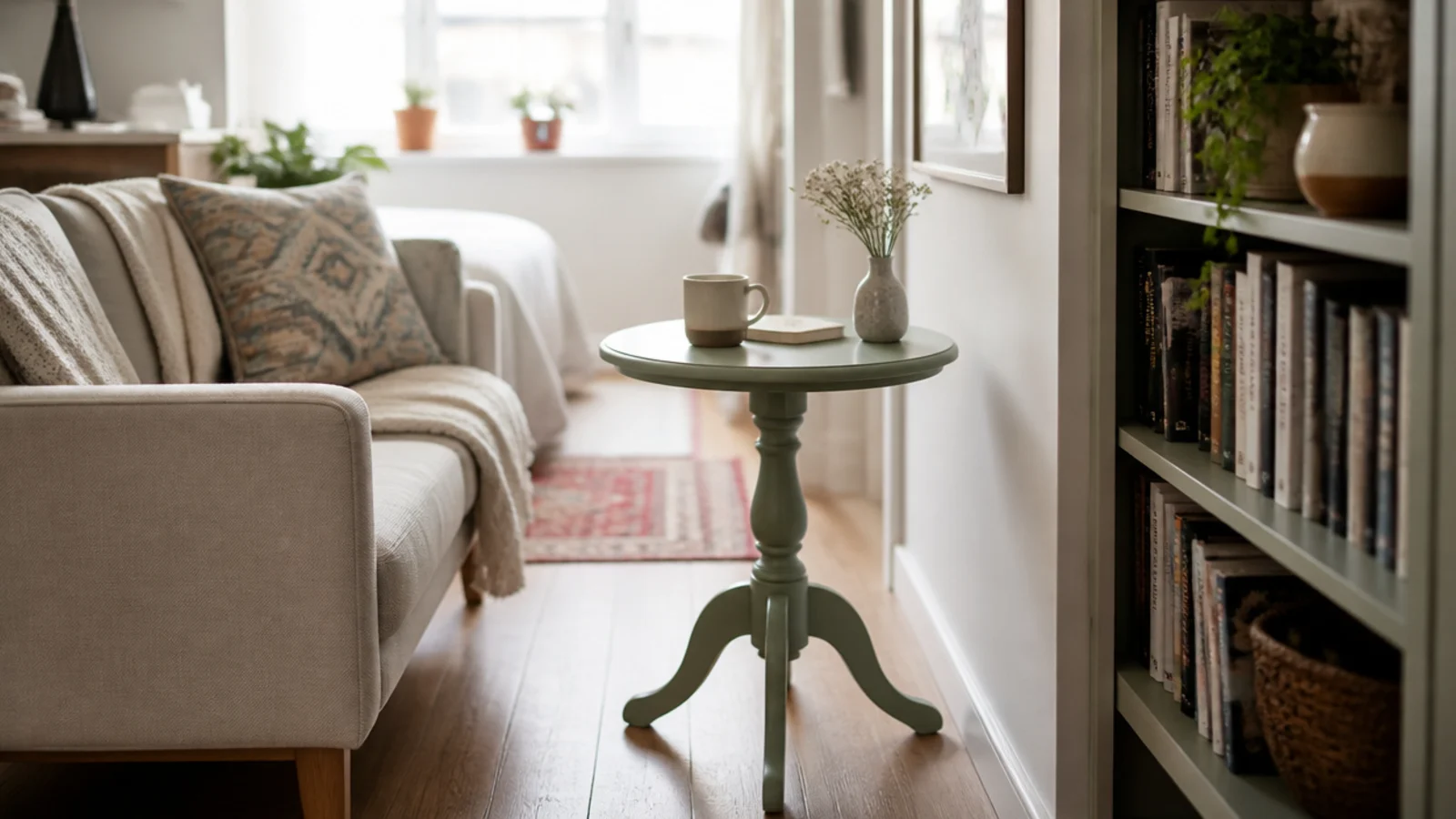
4. Put the circle where the diagonal route crosses
Draw the path people take from the door to the kitchen. If it cuts across the seating area, that is the argument for a round table settled. A curved edge lets people shave the corner instead of stepping around it, which is where rectangles get knocked out of position.
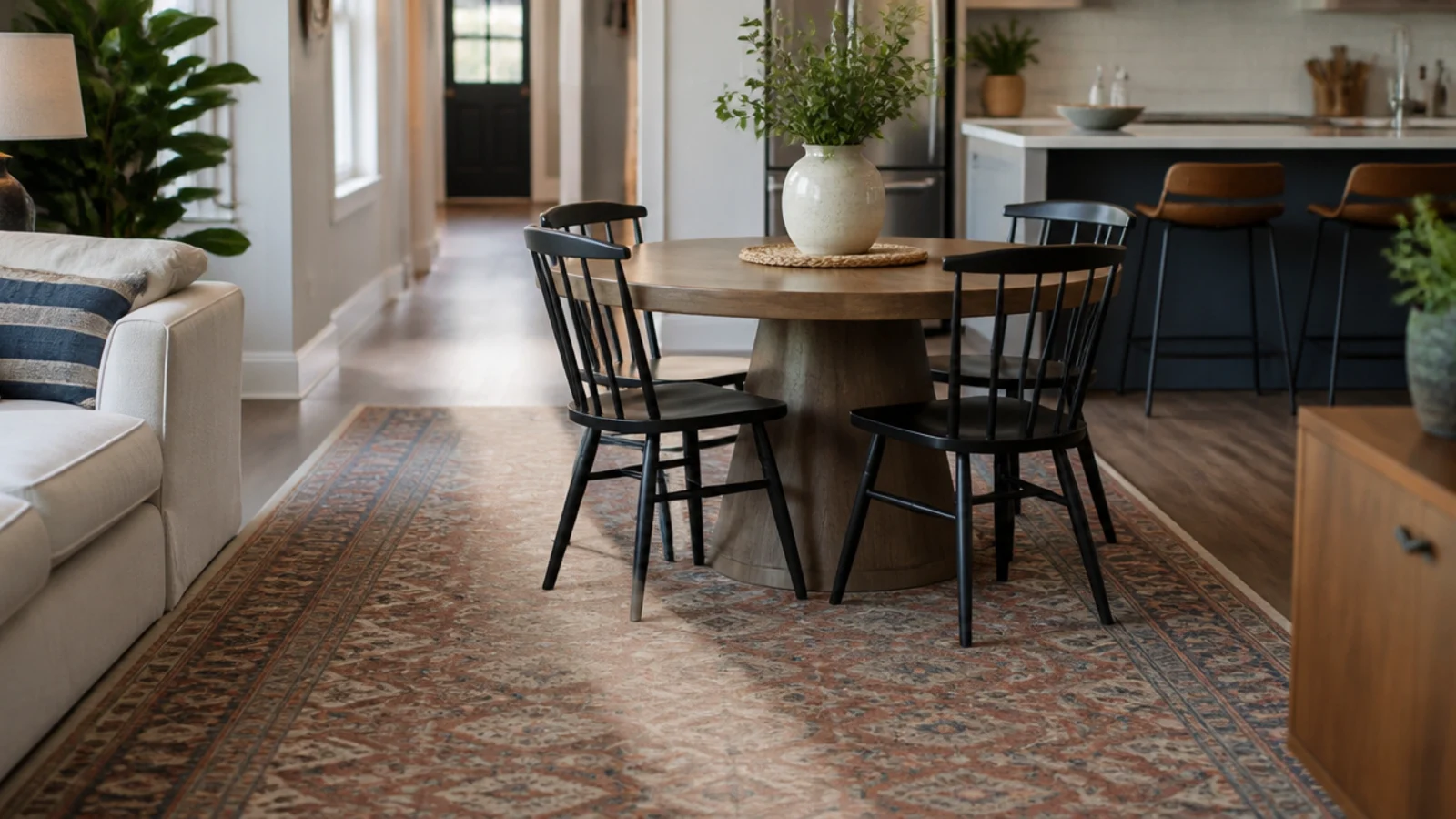
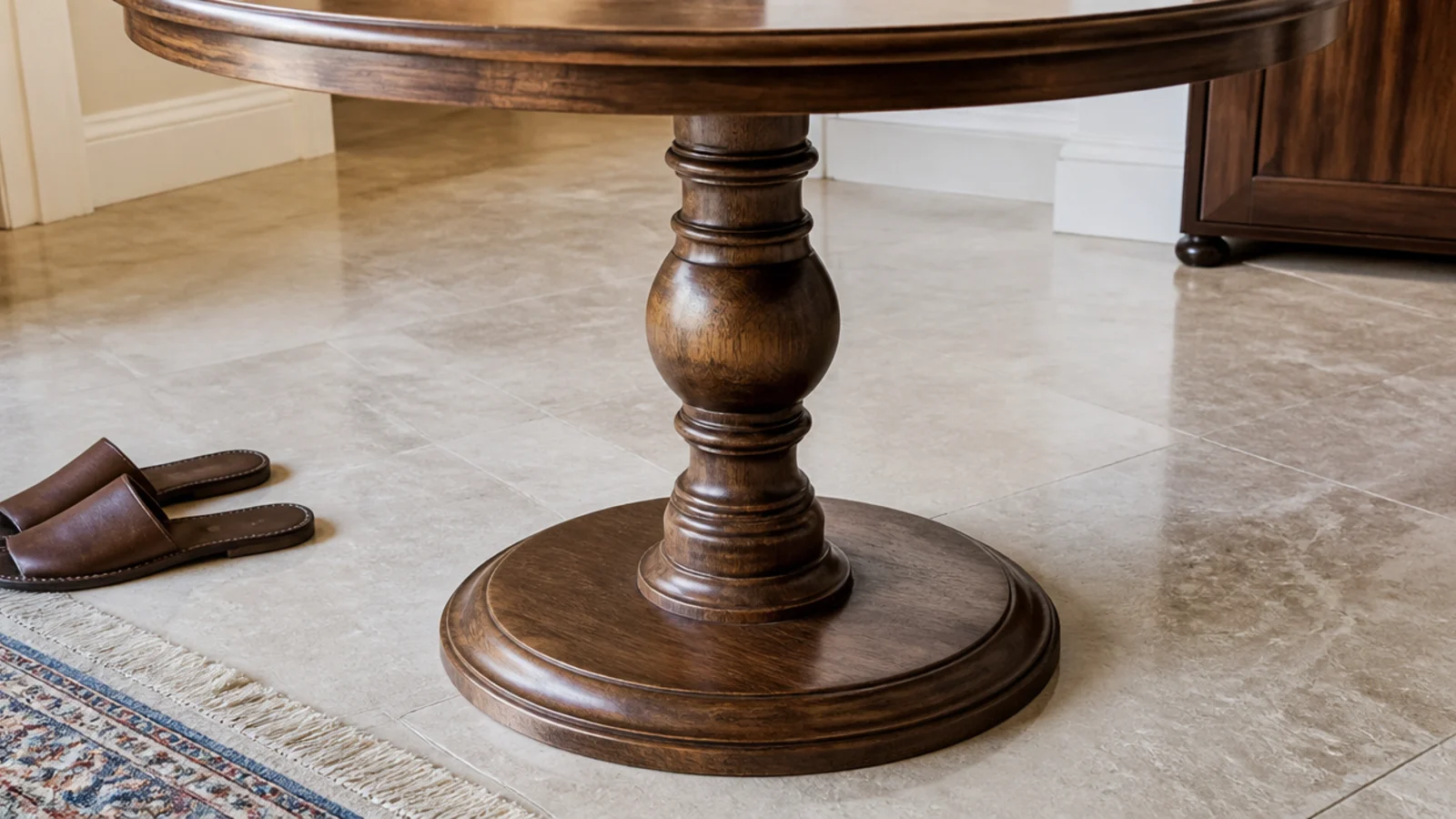
5. A pedestal base for real legroom
One central column means nothing at the perimeter to catch a foot, and chairs can pull right up to the edge. Look for a foot at least half the top diameter — a 36-inch top wants an 18-inch foot — or a heavy elbow on the rim lifts the far side.
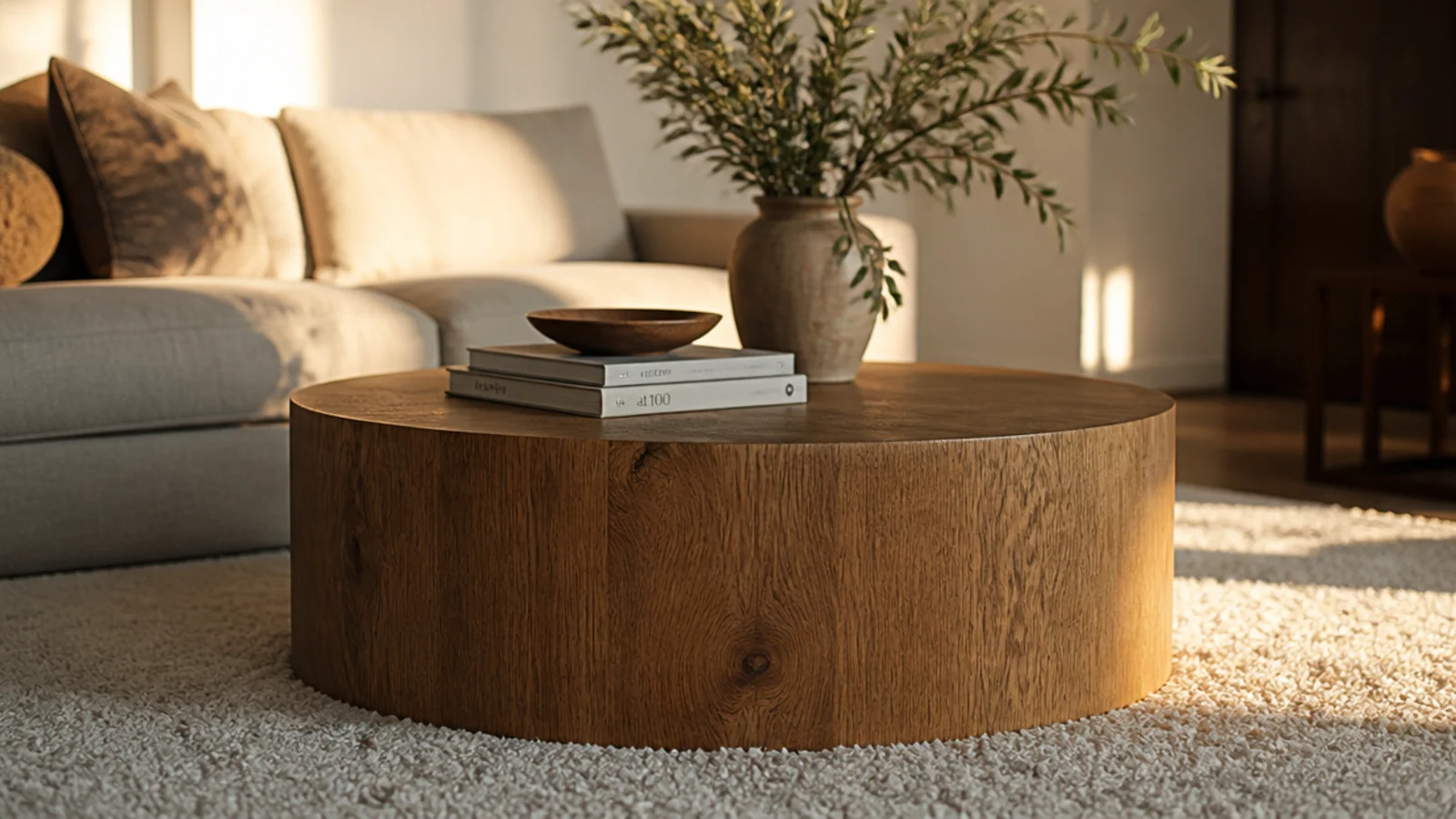
6. A solid drum on a deep pile rug
A drum bears on its whole circumference rather than four points, so it stays level on a high pile where legged tables rock. A 32 to 36 inch solid timber drum weighs 60 to 90 pounds, which also means it never travels when someone puts their feet up.
7. Round table, rectangular rug
The most reliable pairing in a rectangular room. The rug follows the architecture, the table breaks it, and the contrast reads deliberate. Keep 8 to 12 inches of rug showing beyond the table edge all the way round so the circle sits inside a clear border.
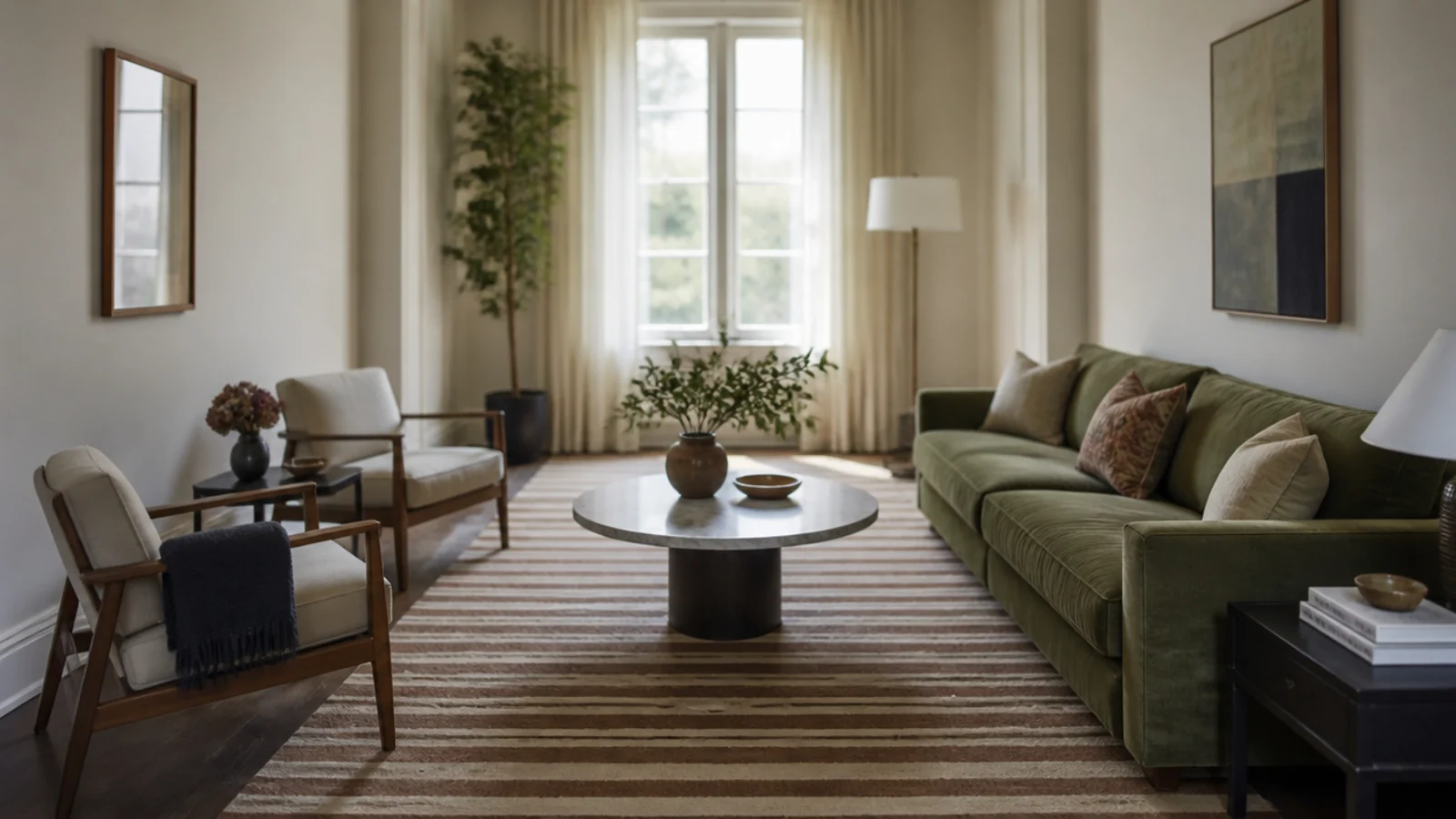
8. Two small circles instead of one big one
Two 20 to 22 inch rounds in front of a long sofa give the same surface as one large table with a walkable gap between them. It is the most flexible answer for a room where people regularly cross from one side to the other.
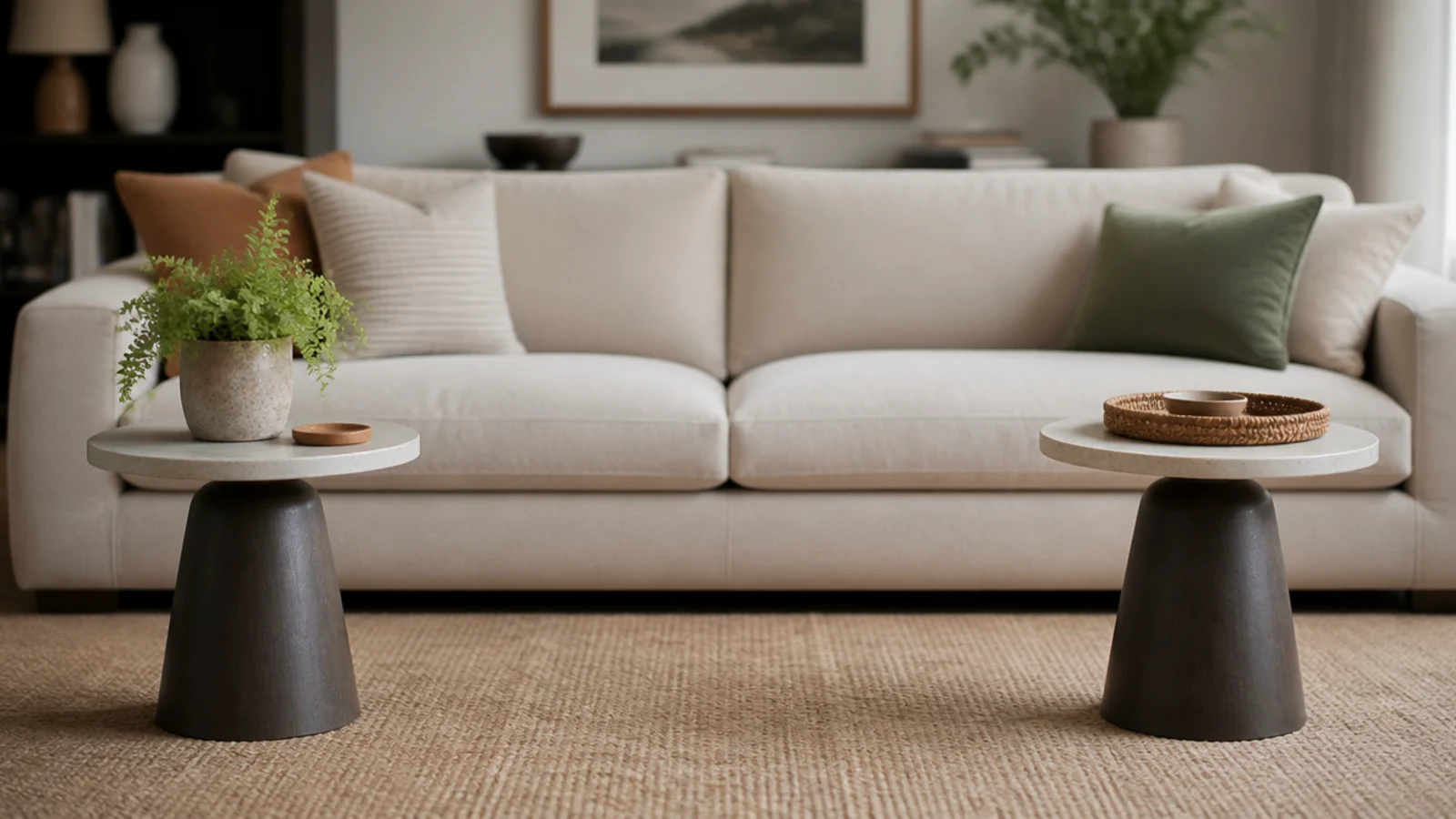
9. A conversation circle with two armchairs
A round table between a sofa and two chairs puts every seat the same distance from the surface, which is the arrangement that actually encourages people to talk. Aim for 16 to 18 inches from each seat front and no more than about 8 feet between facing seats.
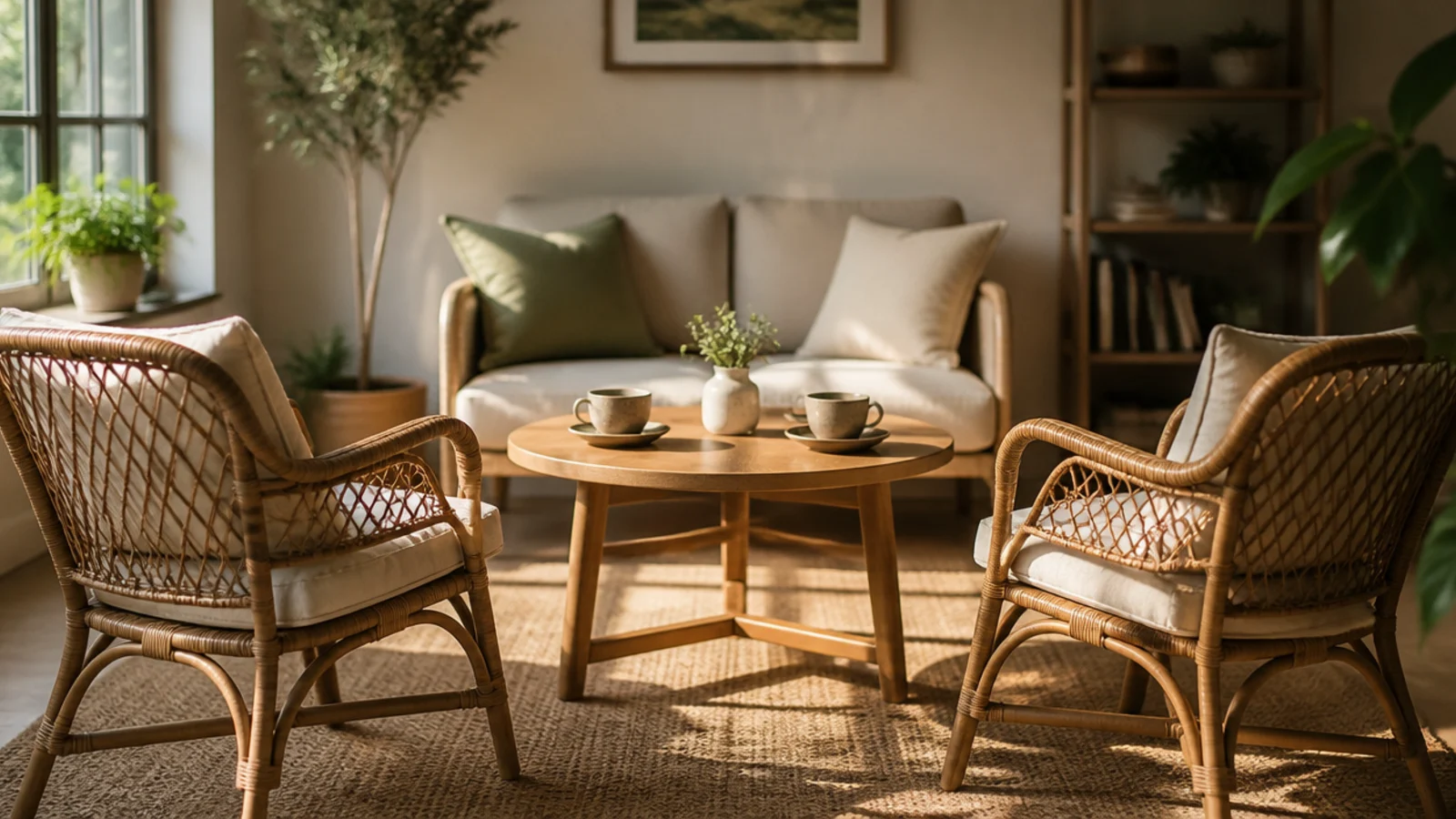
10. A round nesting pair for guest evenings
One circle most of the time, two when the room fills up. Keep the height step under three inches so both still work beside seating. The smaller one usually ends up beside the armchair that has nowhere to put a glass.
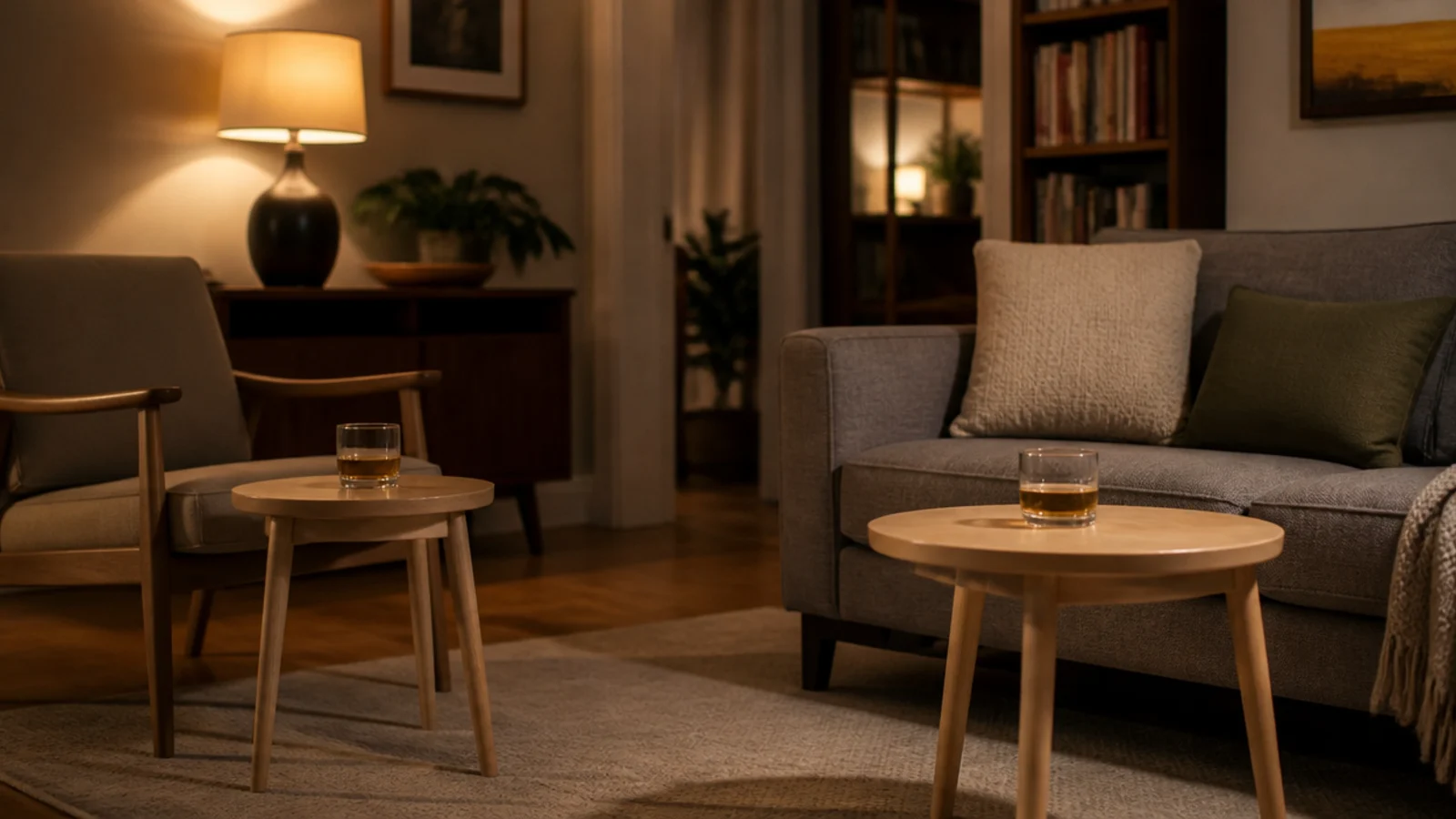
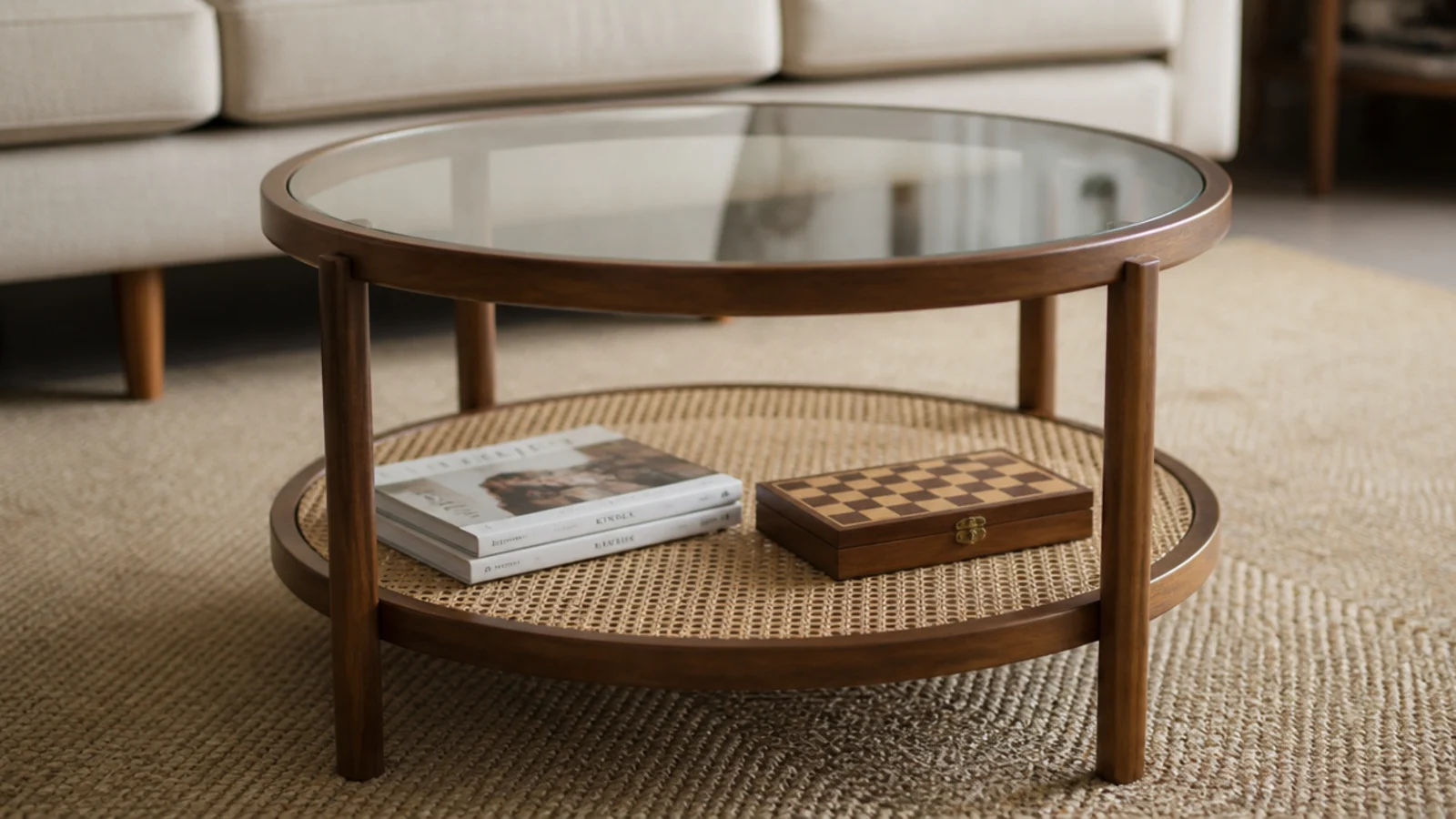
11. A lower shelf under a round top
A circular lower shelf takes magazines, a games box and a folded throw while keeping the top clear enough to use. Twelve inches of shelf depth is the minimum worth having; a narrow ring around a pedestal holds nothing and collects dust.
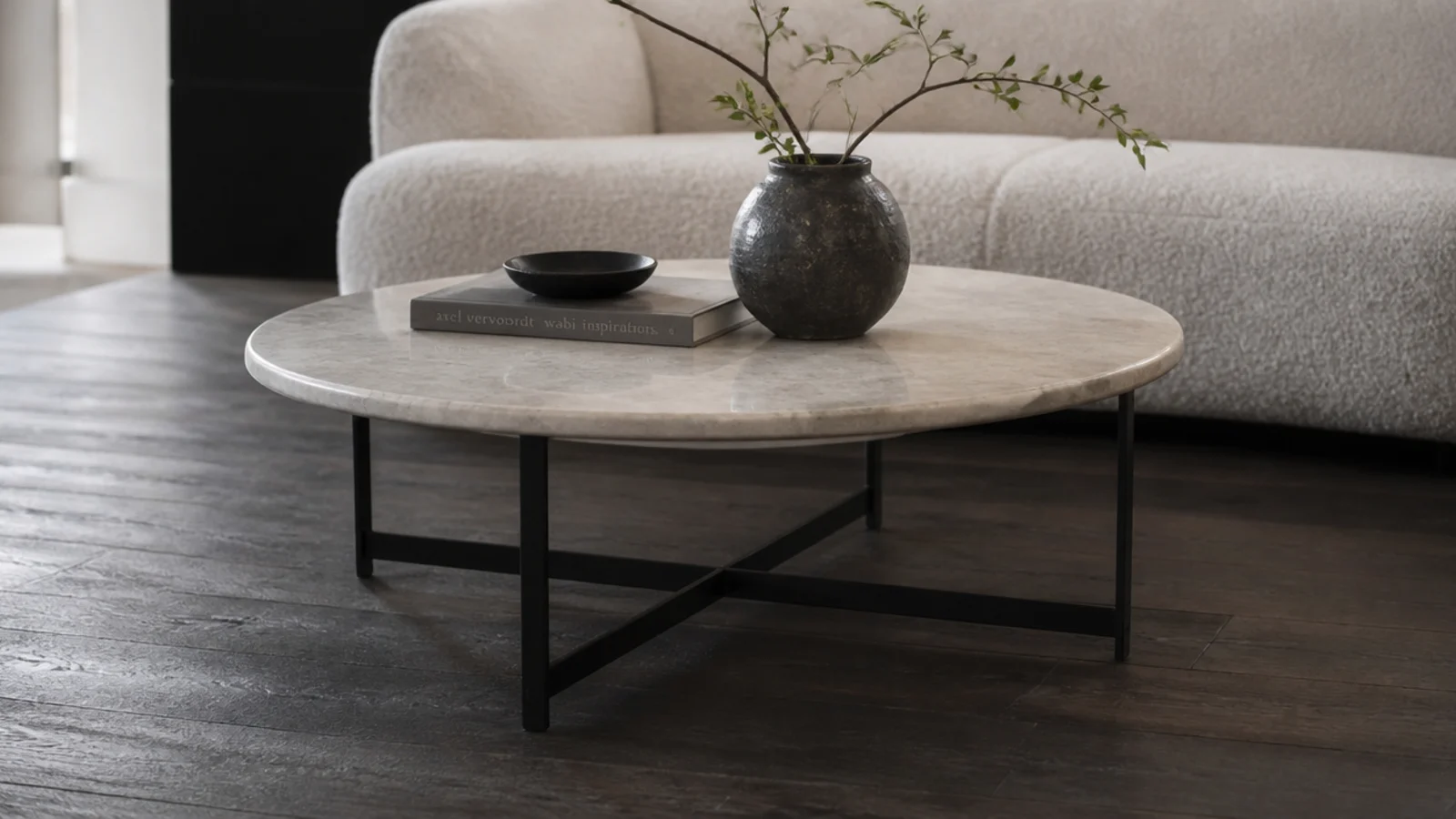
12. Round marble on a slim metal base
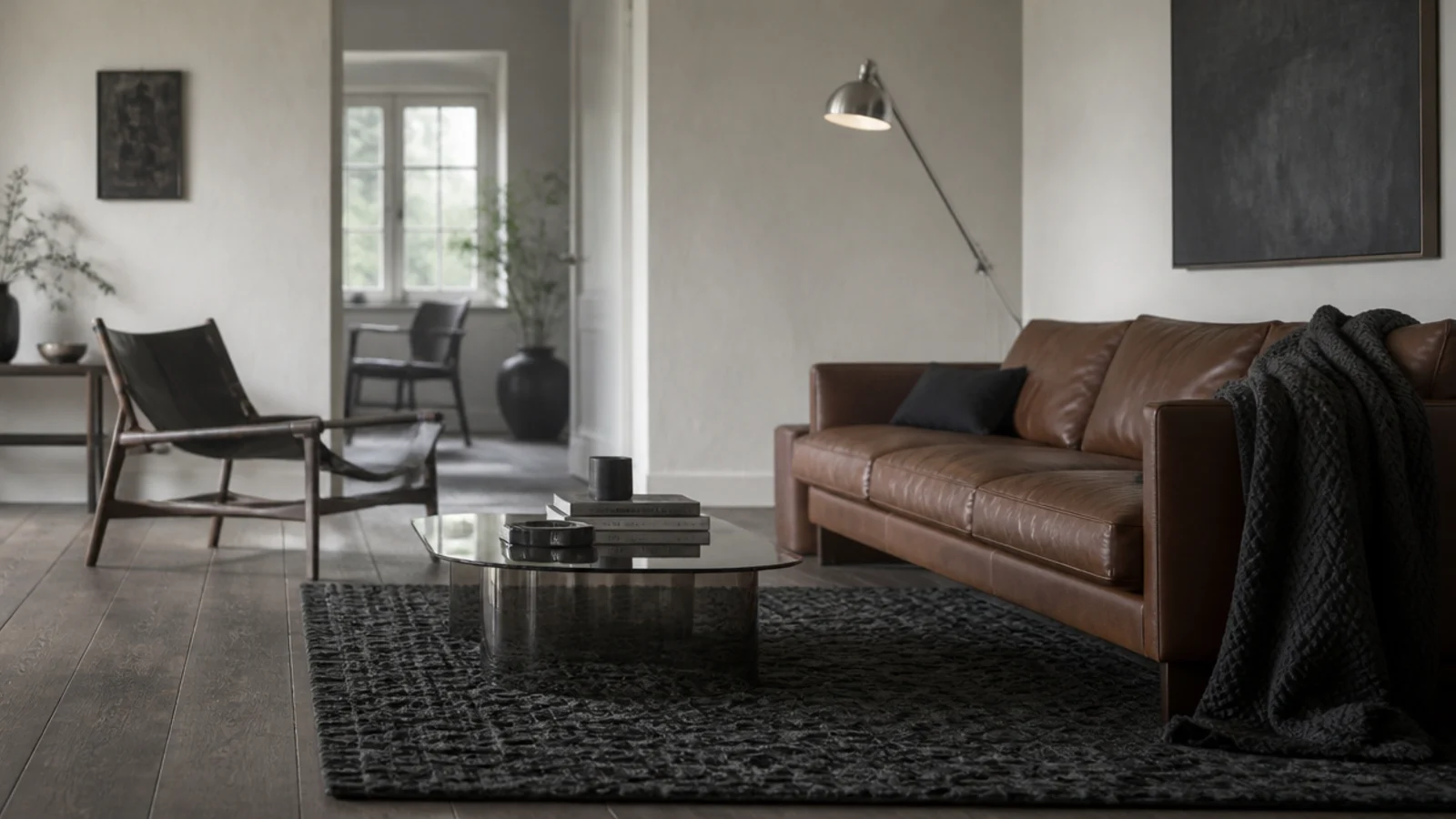
A three-quarter inch stone circle at 36 inches weighs around 75 pounds, so check the frame is built for it. Ask for a honed finish and an eased edge, and seal it on a six to twelve month cycle. The marble table guide covers the routine.
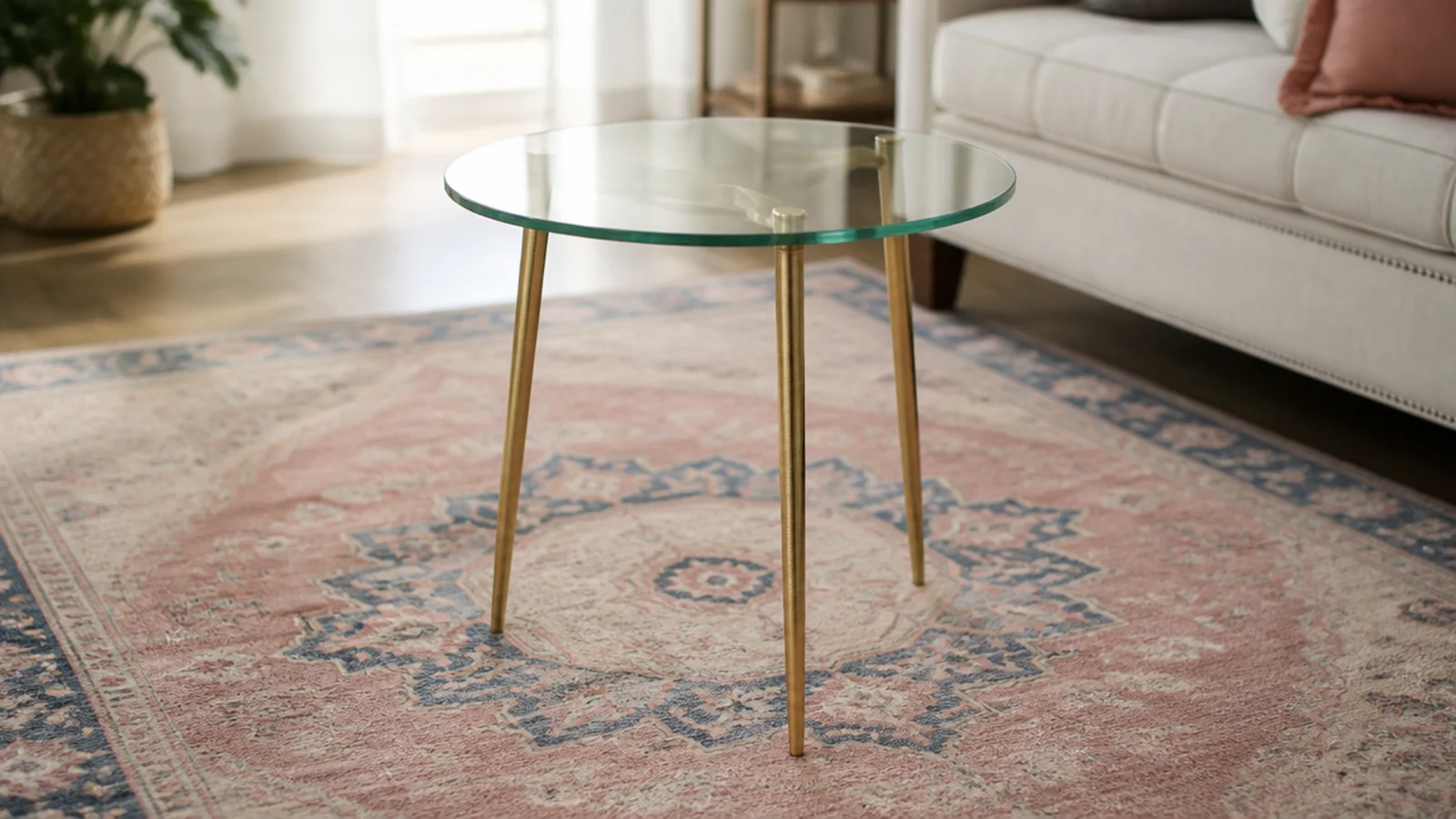
13. Round glass to keep a good rug visible
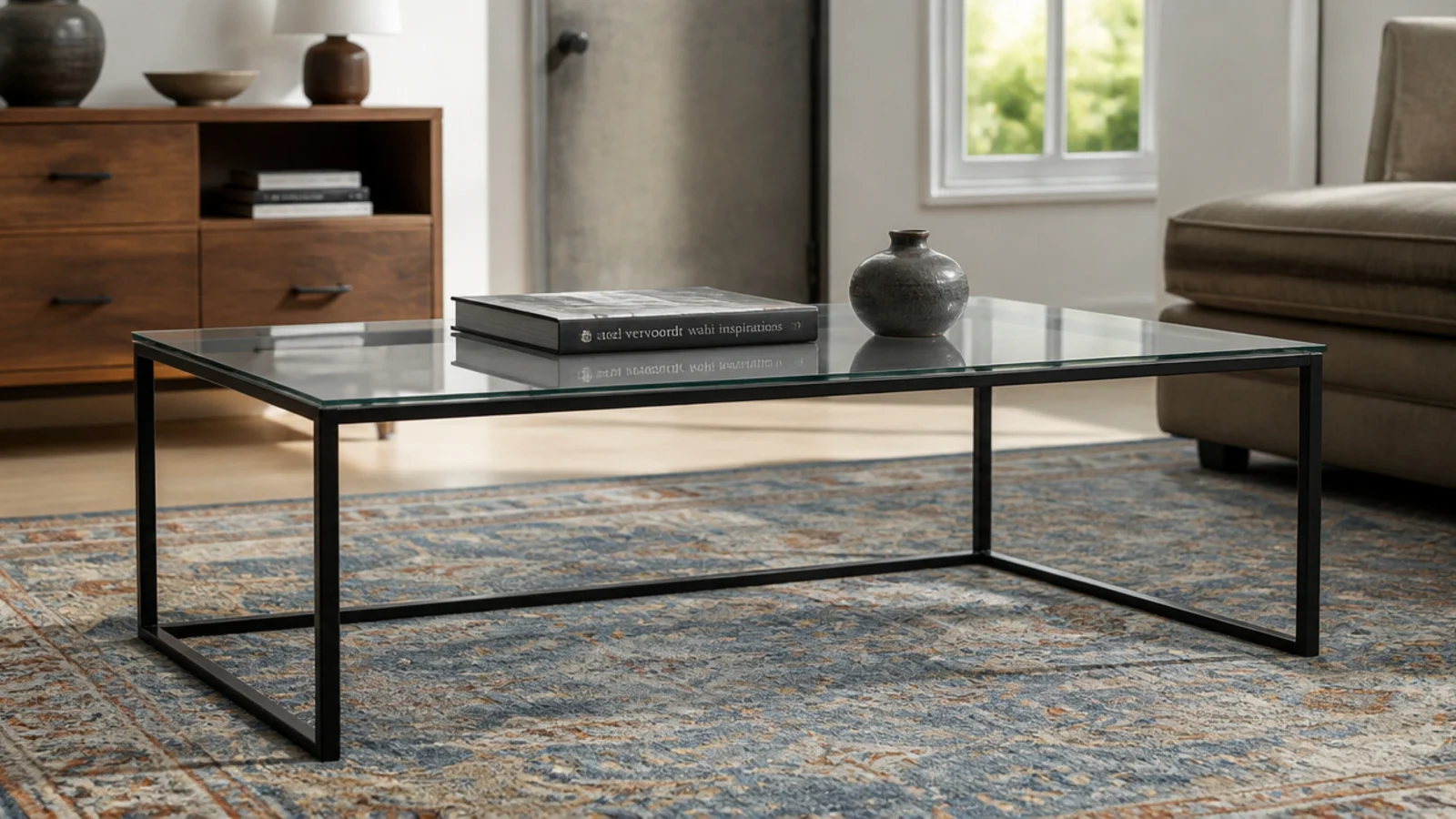
If the rug is the best thing in the room, do not cover it. A round tempered glass top at half an inch keeps the pattern reading through and makes a small room feel larger. Specify a polished edge and expect to clean it far more often than timber.
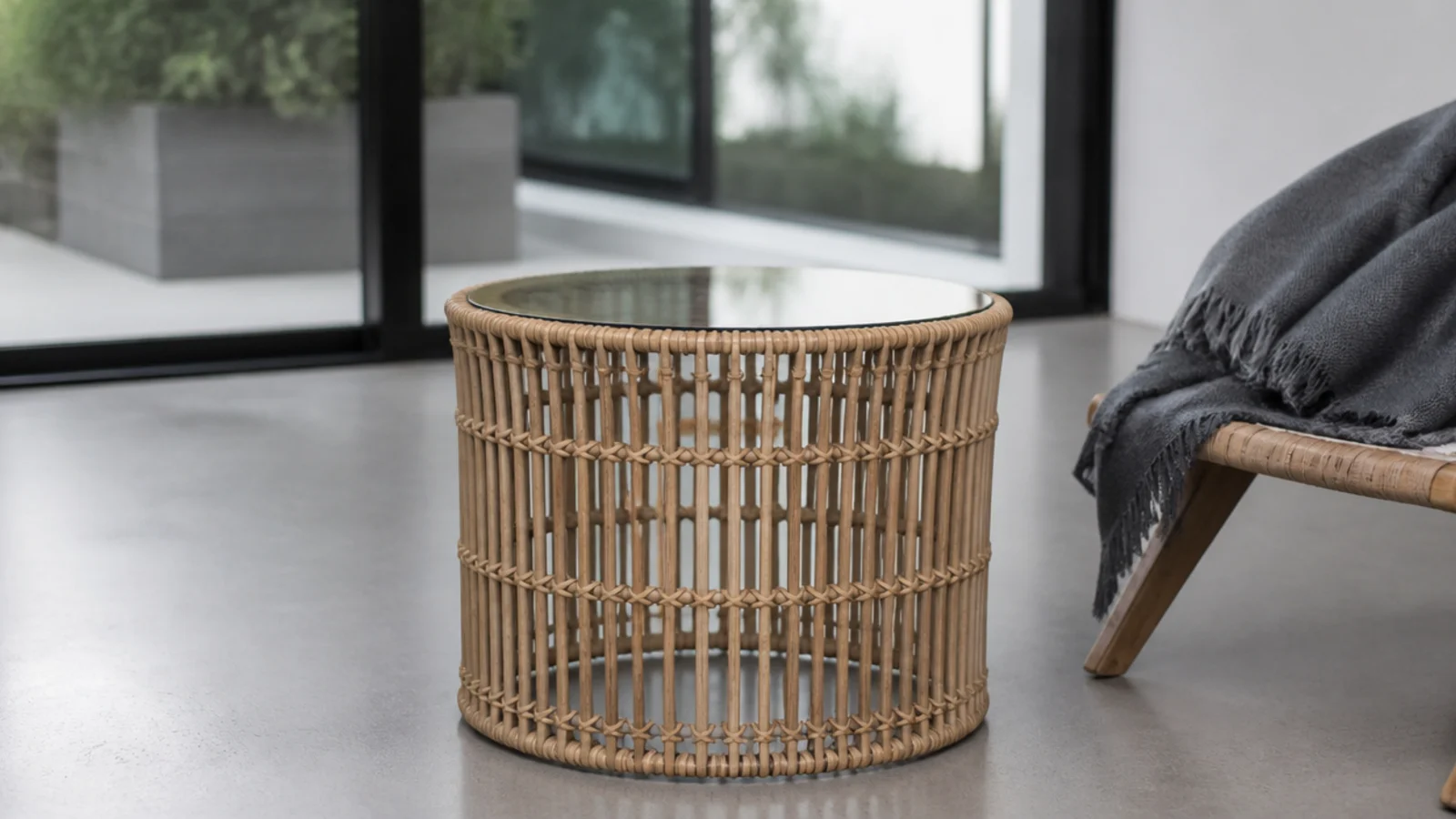
14. A rattan drum for warmth in a hard room
Concrete floors, glass walls and steel frames all need something soft and textural, and a woven drum does it at knee height where you actually touch it. Buy the version with a fitted glass insert so mugs sit level and crumbs stay out of the weave.
15. A round ottoman with a firm tray
No hard edge anywhere, which makes it the standard answer in a room with a crawling baby. Use a rigid circular tray at least 18 inches across for drinks, and choose a tight weave rather than deep buttoning if food is ever involved.
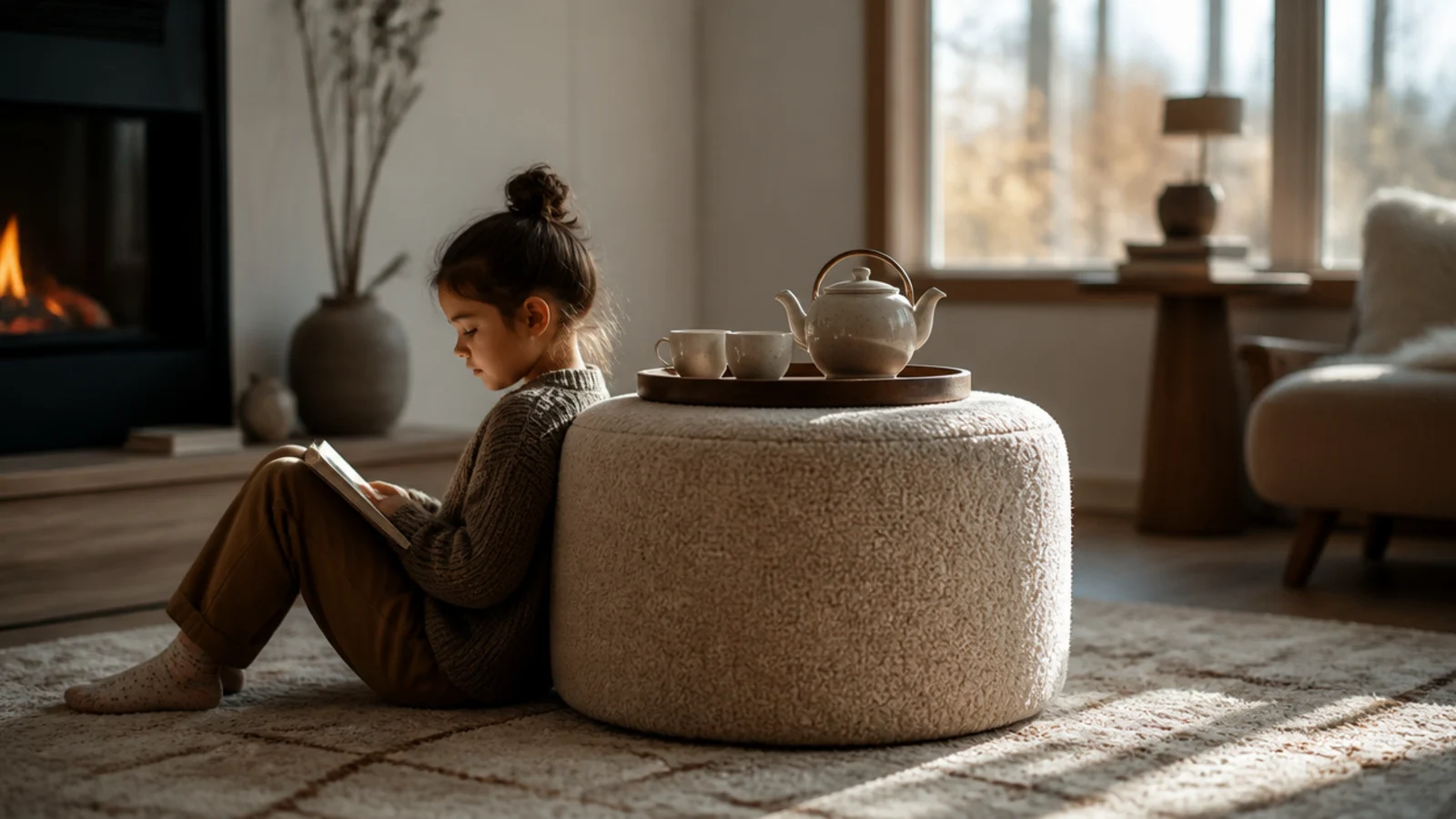
16. Set it off-centre toward the sofa
Rooms are used asymmetrically. Pushing the table two or three inches closer to the sofa people actually sit on, and leaving more floor on the armchair side, makes the arrangement work better even though it measures worse. Nobody notices the offset; everybody notices the reach.
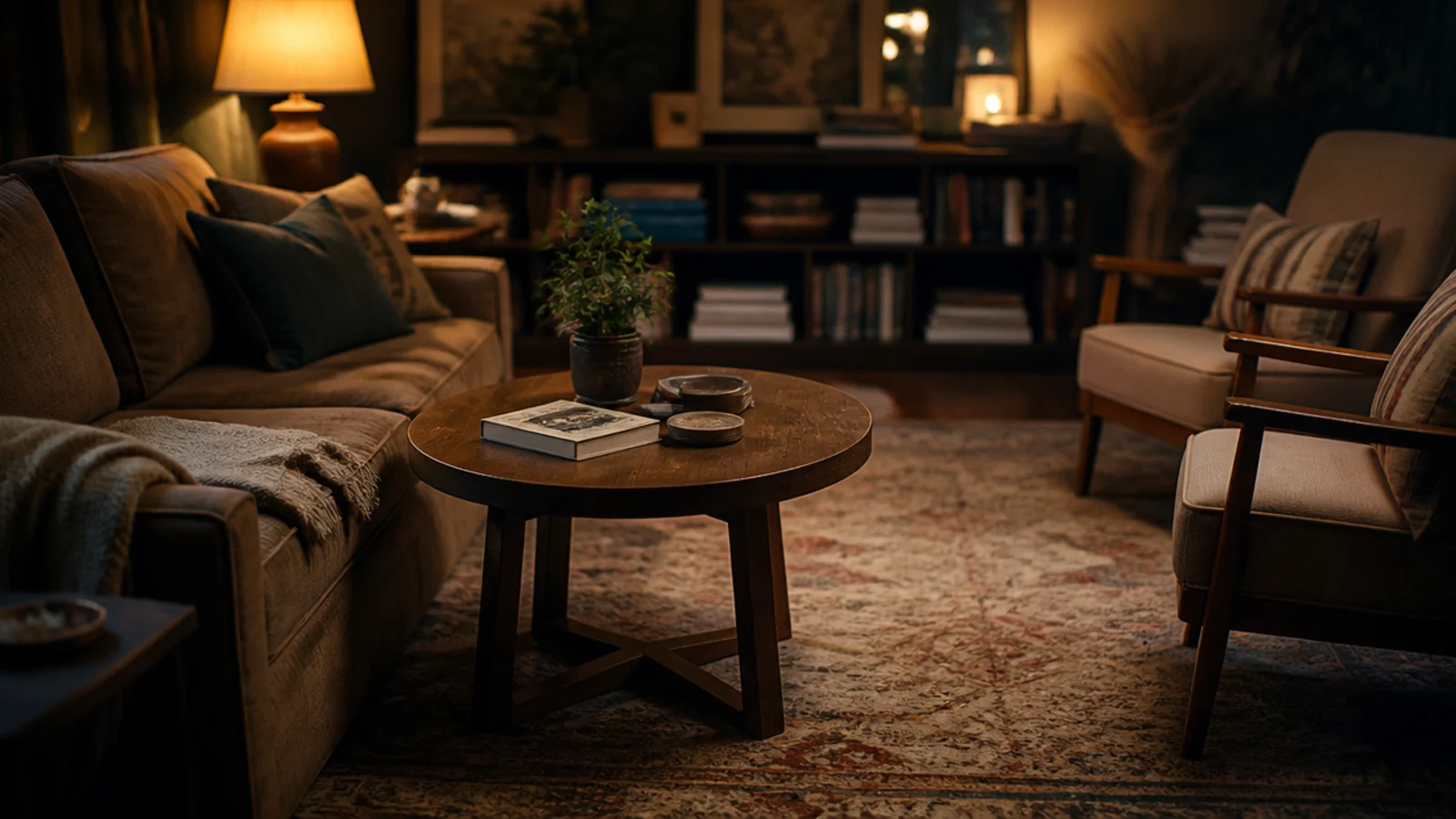
17. A tulip base in a room with a thick rug
A flared pedestal foot spreads the load over a wide ring rather than four points, so it stays level on textured wool. It also sweeps clean easily, which four legs and a stretcher never do.
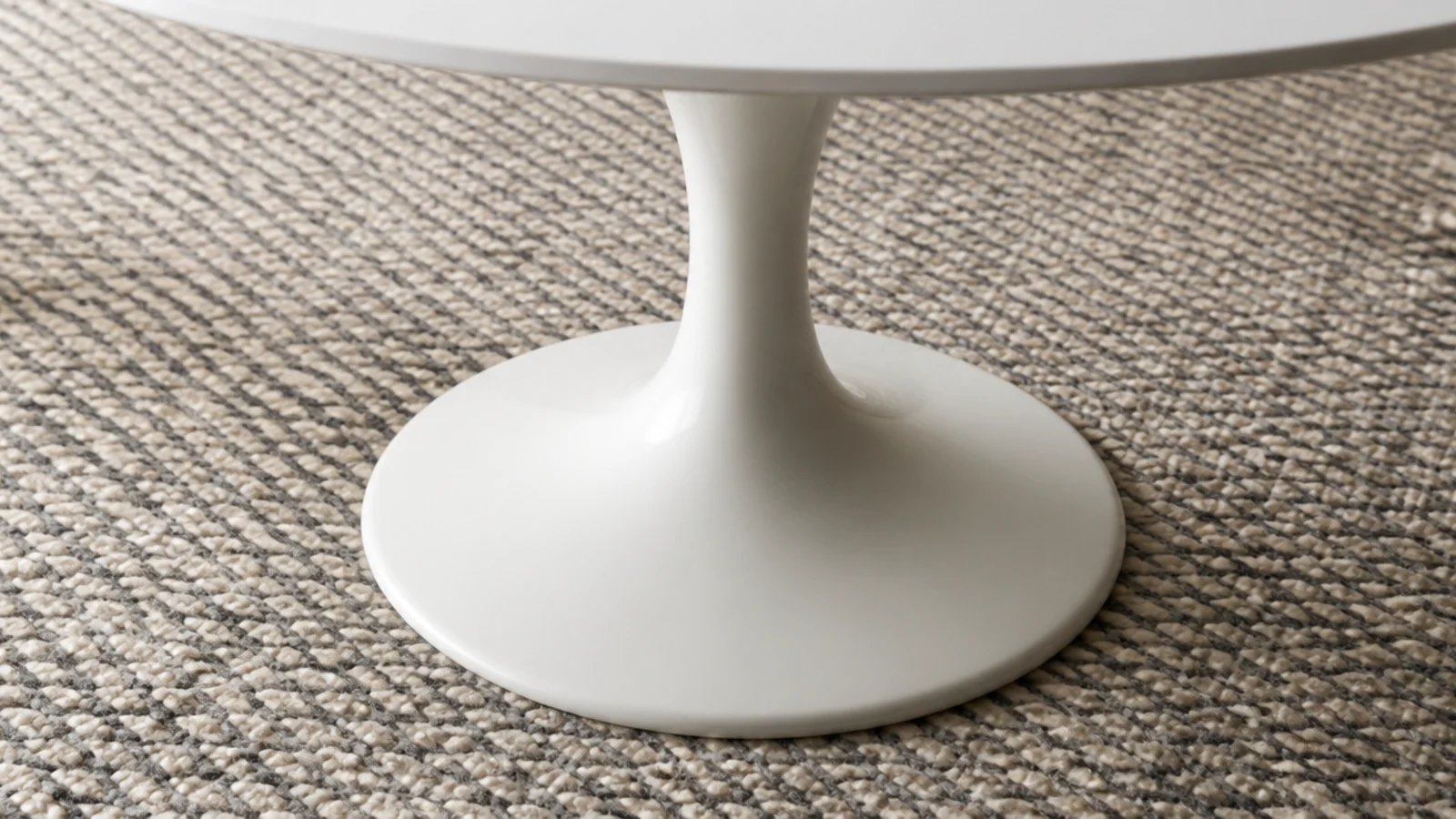
18. Casters on a round base for party nights
Two-inch locking casters let one person clear the middle of the room in seconds. Remember they add about 2.5 inches of height, so order a base that much lower or the top ends up above the sofa cushion line.
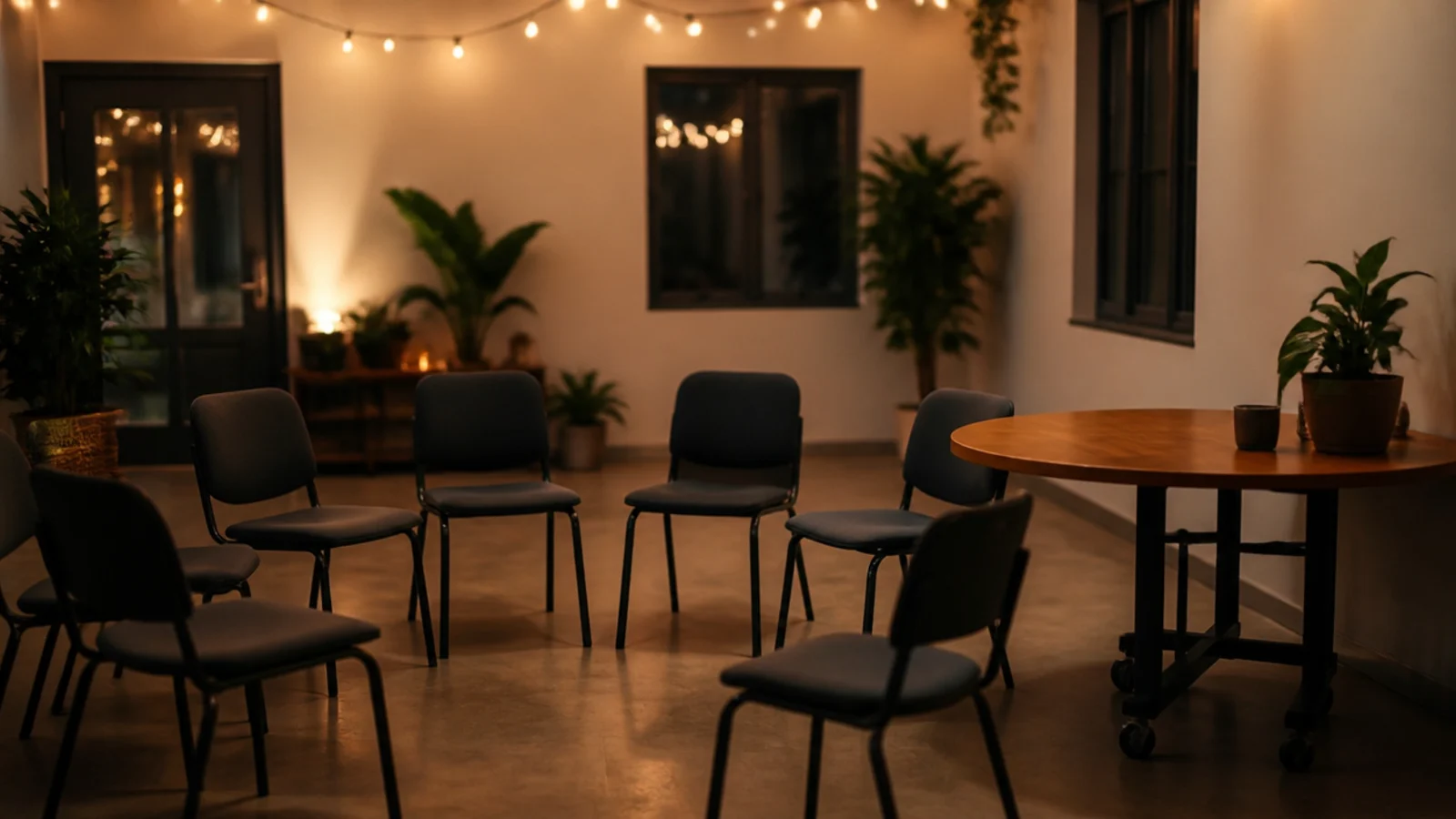
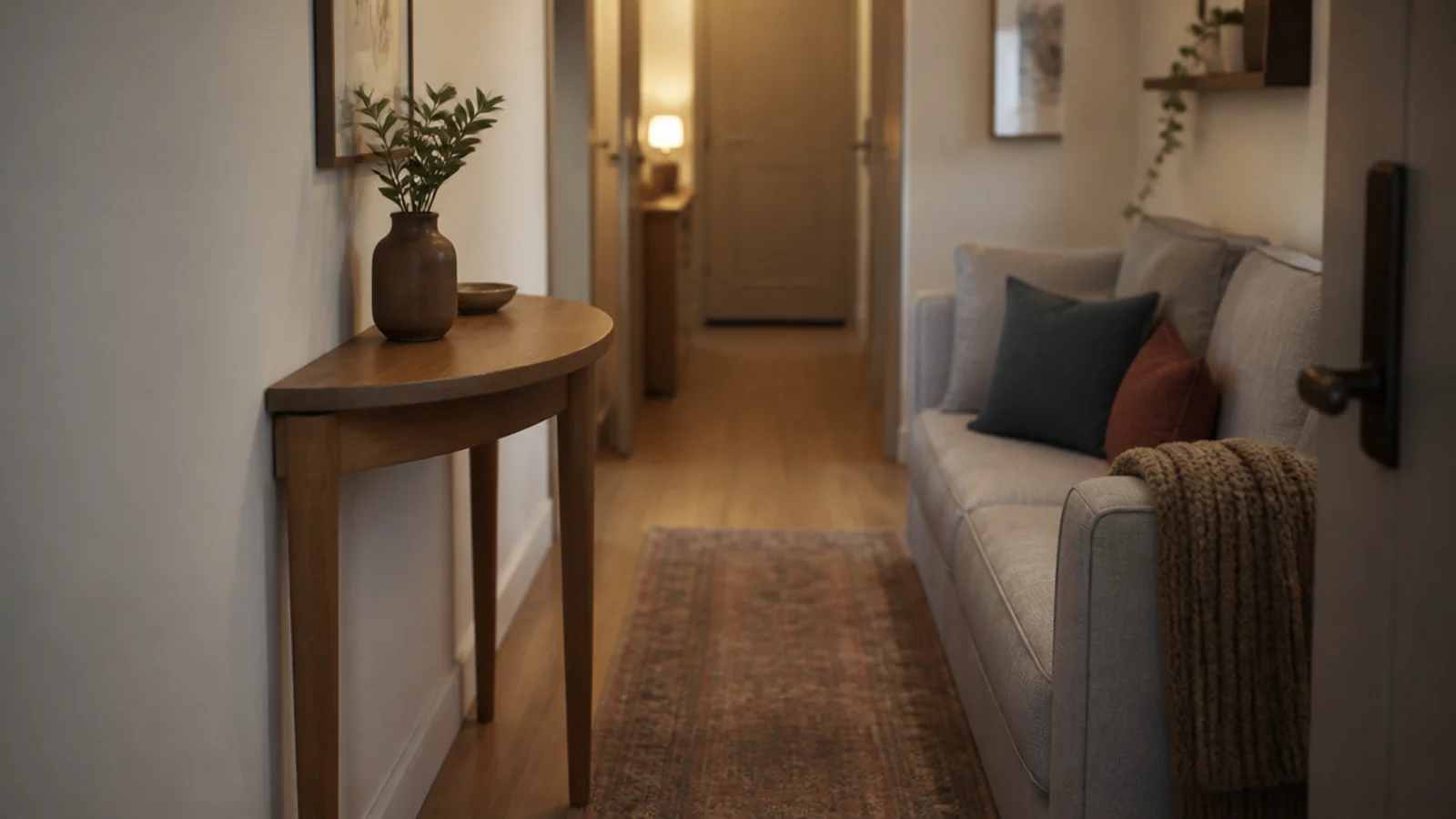
19. A demilune against the wall in a corridor room
In a room under about 10 feet wide, a half-round table flat against the wall gives you a surface without touching the walking strip. It is the shape that rescues narrow through-rooms where a full circle would leave nowhere to walk.
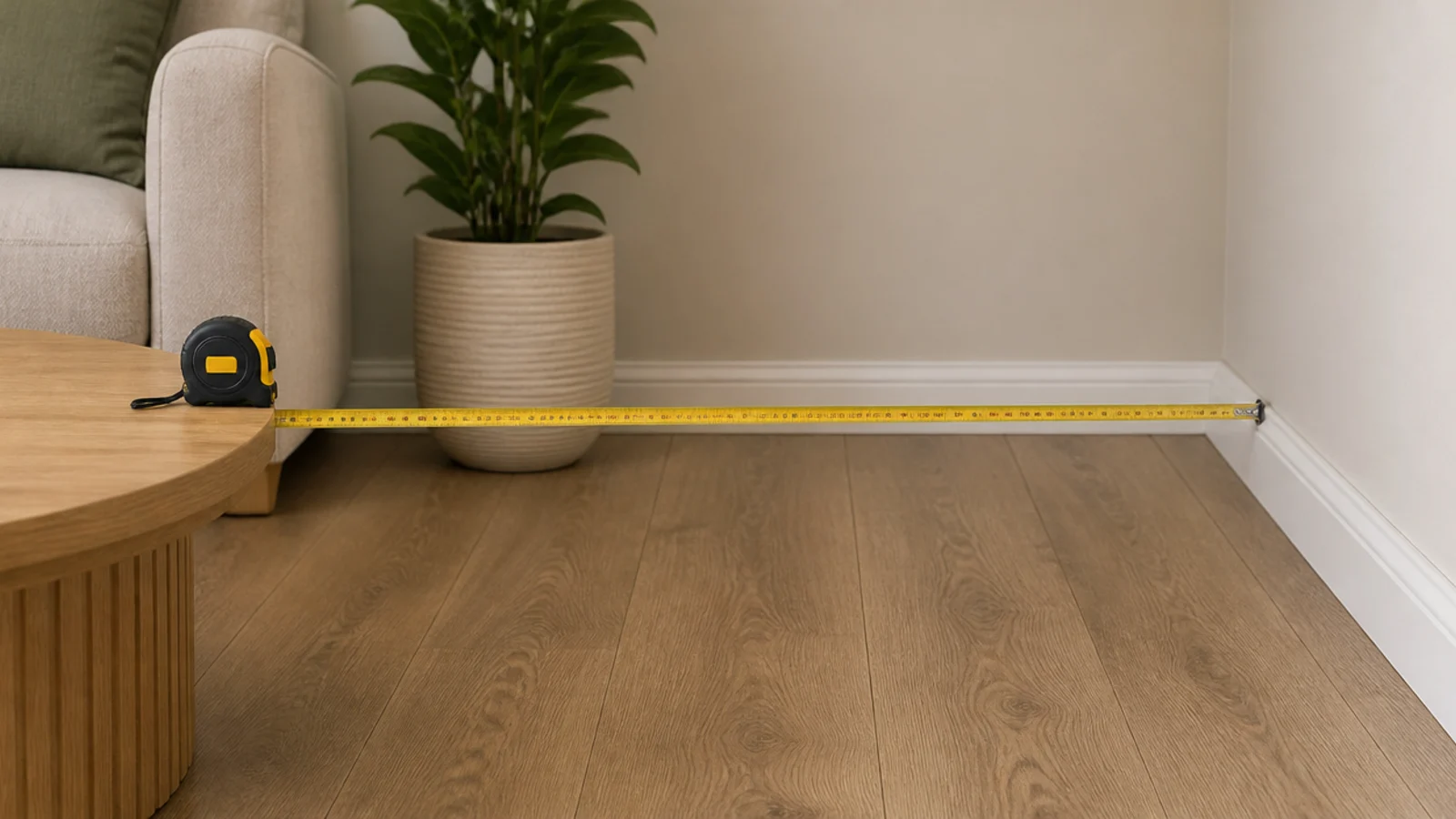
20. Keep twenty-four inches to the nearest wall
A circle that sits too close to a wall or a bookcase creates a pinch point that people shuffle sideways through. Two feet is the working minimum. The circulation rules in the entryway guide apply just as well to a living room route.
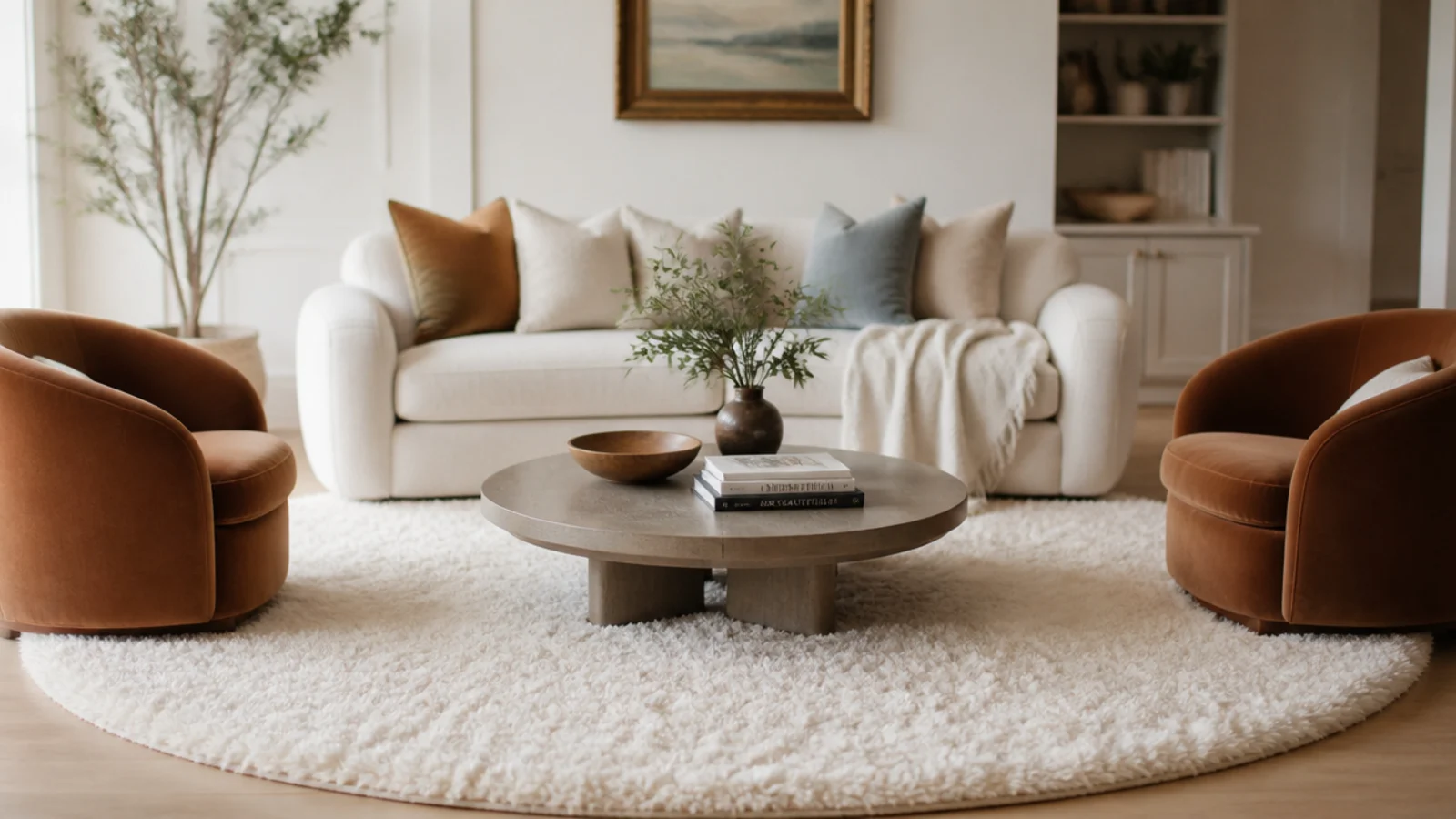
21. Match the top diameter to the rug width
As a rough check, the table should be no more than half the rug width. A 36-inch table wants a rug at least 6 feet across, and ideally 8 by 10 so the front feet of the sofa land on it too. That border of visible pile is what makes the arrangement look anchored.
22. Style a round top as a triangle
Three objects at three unequal points, never a line across the diameter. A line cuts the circle in half visually; a triangle sits inside it. Keep everything under eight inches tall so people can see across the table from opposite seats.
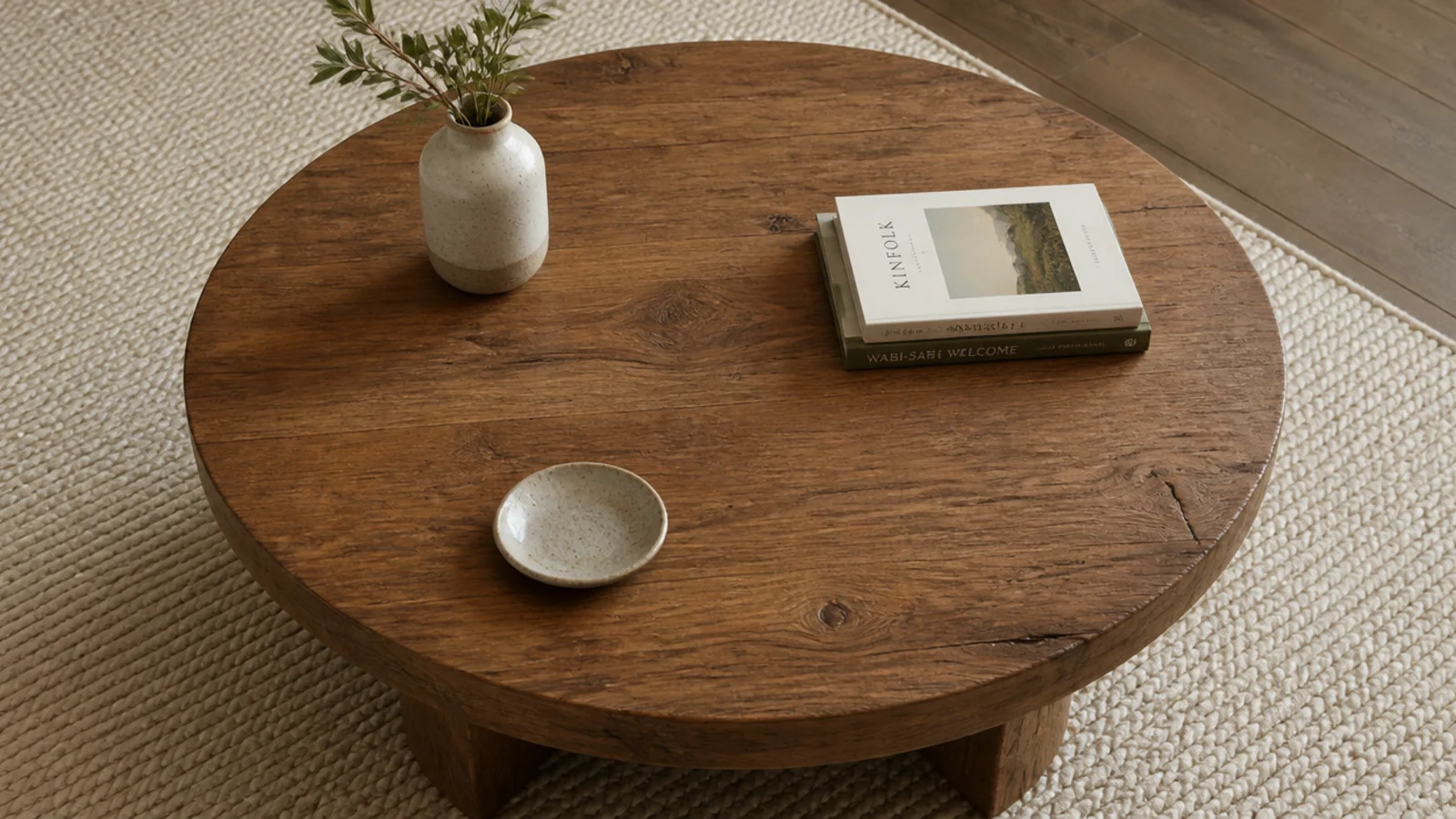
23. One round tray inside a round top
Concentric circles read calm. A round tray around a third of the top diameter — 12 inches on a 36-inch table — gathers the small objects and lifts off in one movement. Set it slightly off-centre so it does not look measured.
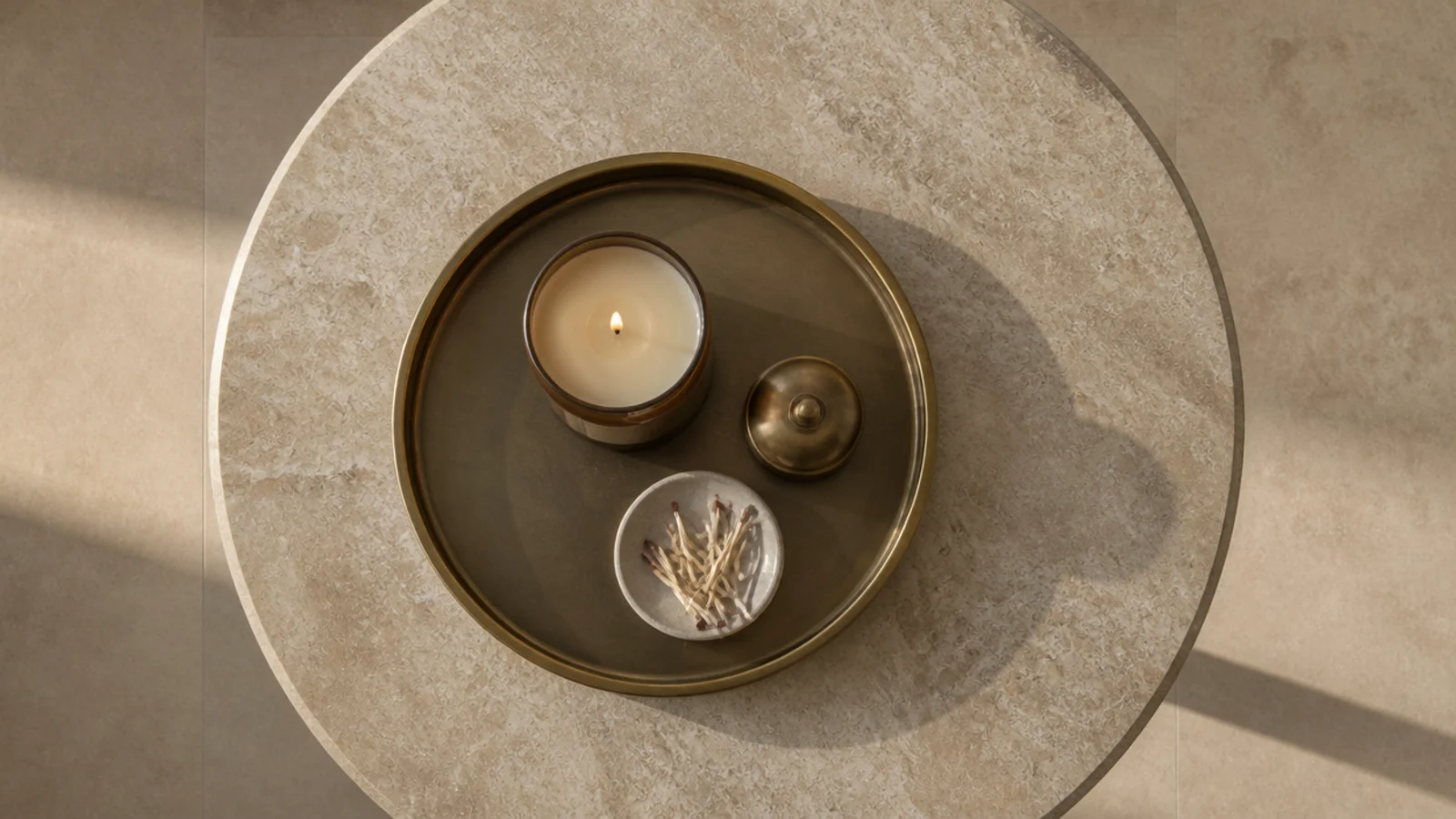
24. Round table with four low stools tucked under
Four 12 to 14 inch stools pushed under the overhang add seating for a full room and disappear the rest of the time. It only works with a pedestal or drum base, because leg stretchers block the space the stools need.
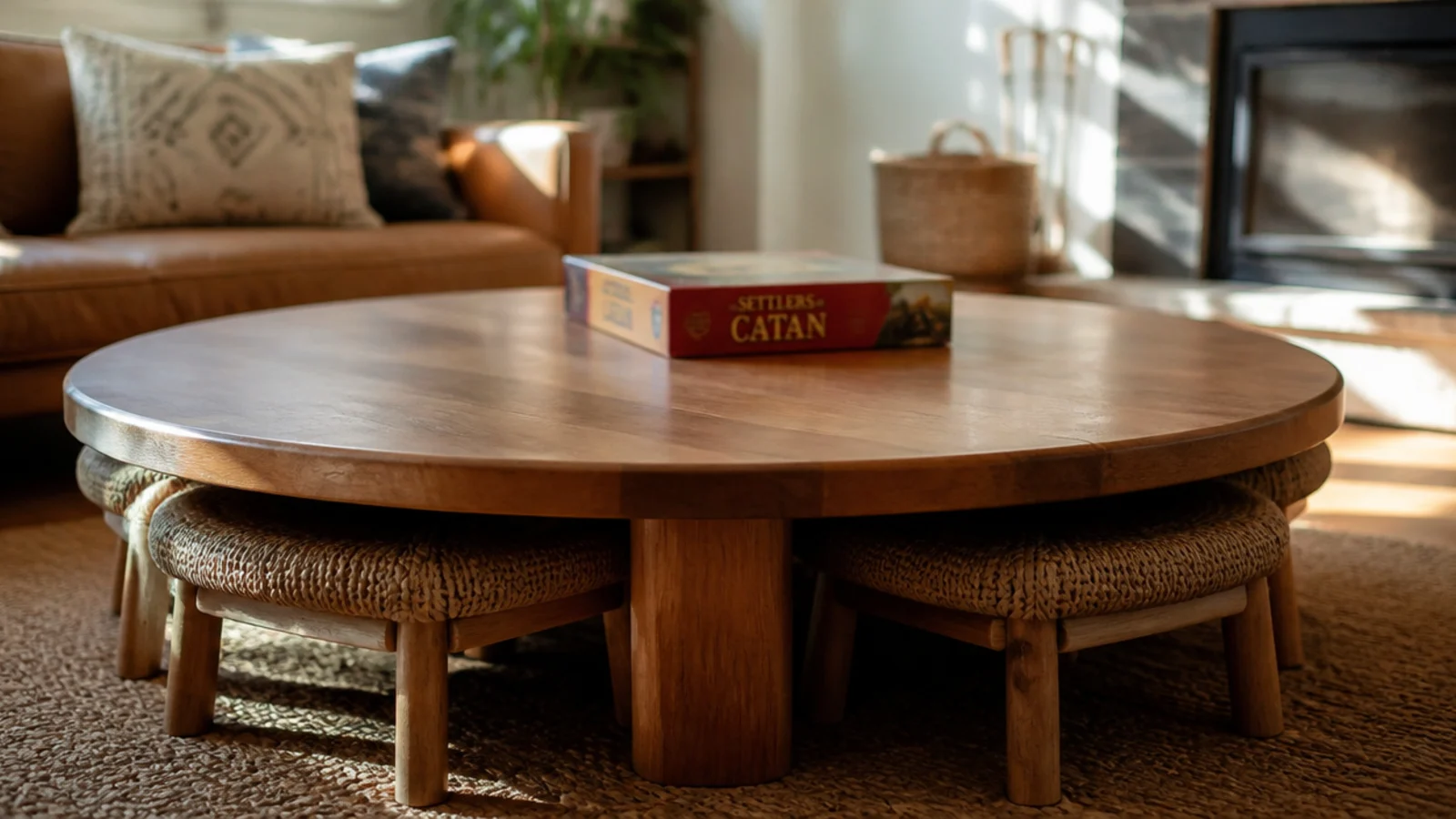
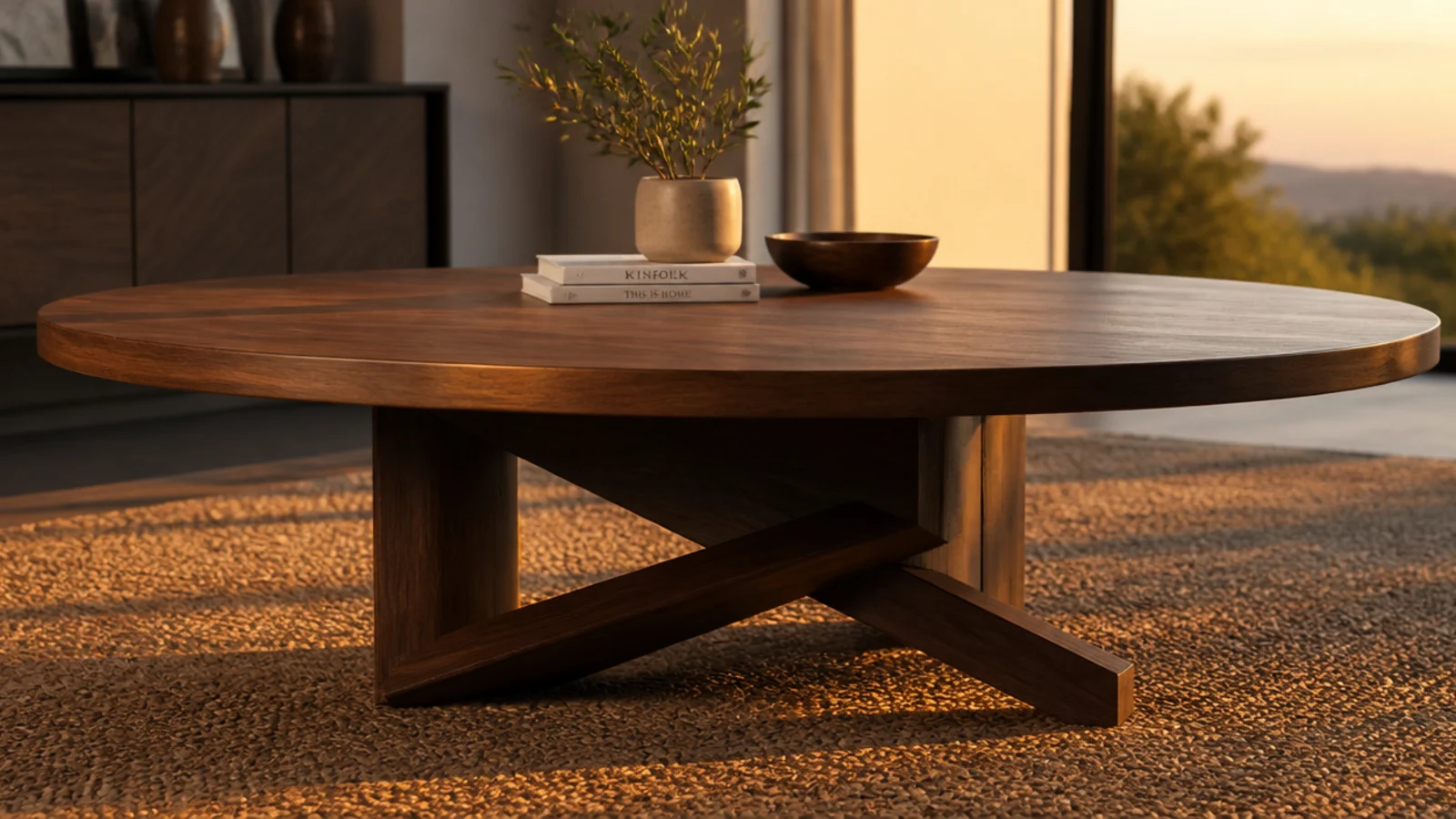
25. Check the top overhangs the base by six inches
Overhang is where knees go. On a 36-inch top, a base no wider than 24 inches leaves a clear six inches all round for feet and legs. Tables that fail this look fine empty and become uncomfortable the moment somebody sits close.
For the sizing rules that apply to every shape, the main center table guide has the measuring sequence, and the glass table guide covers thickness and edge finishes if you want the rug to keep showing through.
Mistakes to Skip
- Buying a round table with a narrow foot. A 36-inch top on a 12-inch base tips when somebody leans on the rim, and no amount of weight in the top makes that safe around children.
- Undersizing the circle for a sectional. A 30-inch table inside a deep L leaves everyone reaching, and the room reads oddly empty in the middle where the table should be.
- Placing the circle dead centre because it measures right. Rooms are used from one side, and a table pushed two inches toward the sofa people actually sit on works far better than a perfectly centred one.
- Assuming a drum is the standard height. Many are built at 18 to 20 inches, which sits above a low modern sofa cushion and makes the whole arrangement look mismatched.
Frequently asked questions
What diameter round center table suits a three-seater sofa?
Thirty-two to thirty-six inches for a sofa around eighty-four inches wide. That is roughly forty percent of the sofa length, which is the round equivalent of the two-thirds rule used for rectangles. Below thirty inches the far seats cannot reach it, and above forty it starts blocking the route past.
Does a round table really save floor space?
It gives back the corners. A thirty-six inch circle covers about seven square feet against eight for a forty-eight by twenty-four rectangle, but the real gain is behavioural — there is no corner at shin height, so people cut closer to it and a walkway of twenty-four inches feels comfortable.
Round table on a round rug or a rectangular one?
Either works, but pick one to be the odd shape. A round table on a rectangular rug looks deliberate; a round table on a round rug inside a square room can read as a bullseye. Whatever you choose, keep eight to twelve inches of rug showing beyond the table on every side.
Is a pedestal base better than four legs?
For legroom and for thick rugs, yes. One central column means nothing to catch a foot on and the load spreads through a single wide foot rather than four points that sink unevenly. Check the foot is at least half the diameter of the top or the table tips when someone leans.
What height should a round center table be?
Within one to two inches of your compressed sofa seat, the same as any other shape. Most land at sixteen to eighteen inches. Round drums are often built slightly taller at eighteen to twenty, so measure before buying rather than assuming the shape sets the height.
Want more like this? Browse all 15 center table living room guides — they all use the same measurements and budget tiers.
Pin it for later
Save this to your Center Table Living Room board
Pin it now so it is waiting for you when the tape measure comes out — and so the next person hunting for this idea can find it too.
Save this pinKeep going
More ideas worth saving while you have the tape measure out.