Entryway & Foyer Ideas · Listicle
15 Easy Entryway Ideas for Any Home

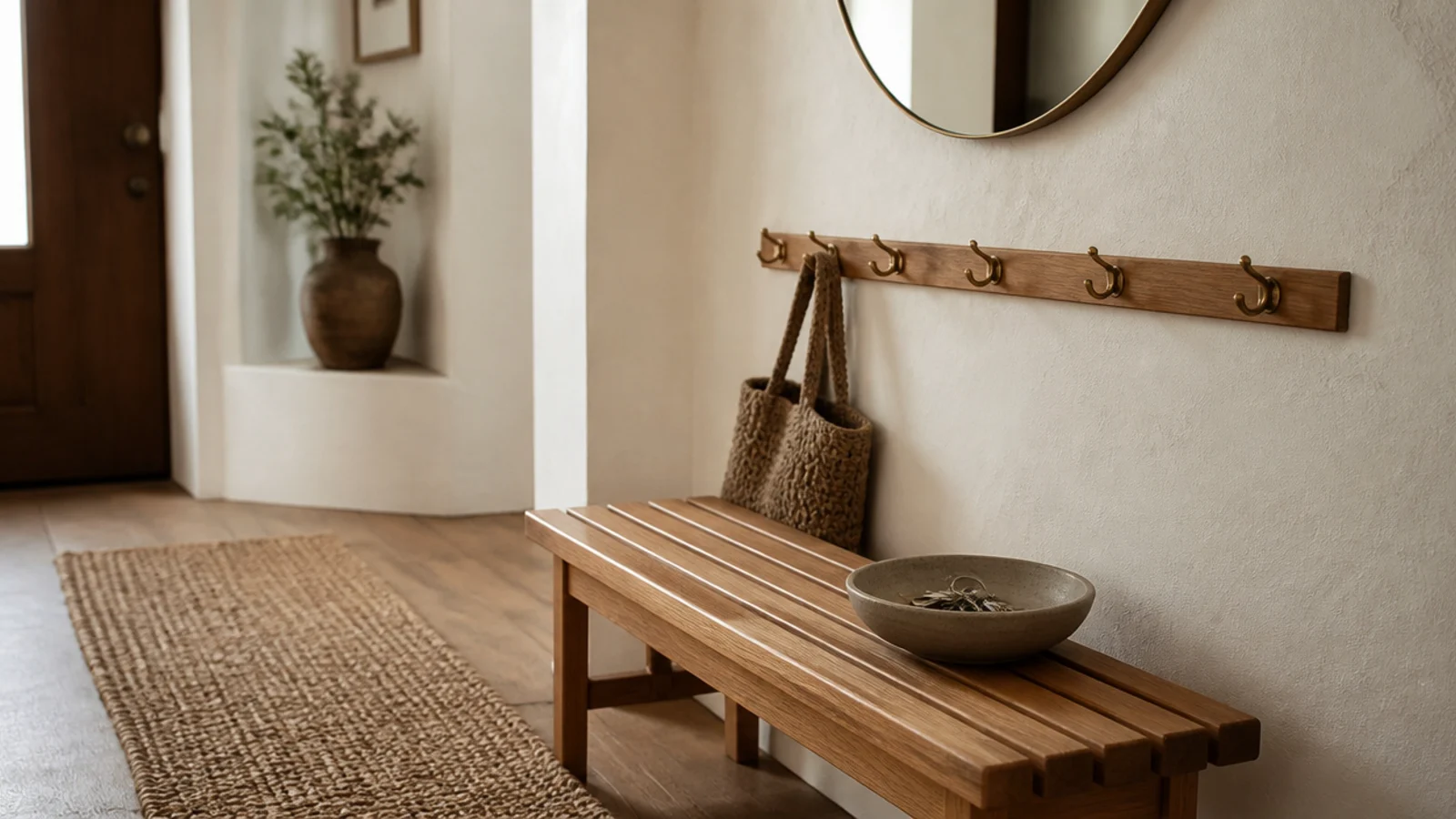
Entryway ideas get judged on how a hall looks in a photograph, but an entry earns its keep on a Tuesday morning when three people leave at once. Mine has failed that test twice. The version that finally worked came down to five jobs, a short list of exact heights, and the discipline to leave things off the wall. Here are fifteen that hold up in a real house.
In this guide17 sections — tap to openHide
- 1.The five jobs behind every good entryway idea
- 2.Pick three of the five jobs and ignore the rest
- 3.A bench at 18 inches high
- 4.A double hook rail at 52 and 40 inches
- 5.A console at 30 to 32 inches and no deeper than 12
- 6.Wall-mounted when the walkway is under 36 inches
- 7.A mirror centred at 57 to 60 inches
- 8.One tray, and only one
- 9.A flat-weave washable runner
- 10.A lamp on the console, not just the ceiling light
- 11.A closed cabinet for the daily shoes
- 12.A basket under the bench for the overflow
- 13.Paint the entry a shade deeper than the hall
- 14.Leave the wall above the hooks emptier than feels right
- 15.A perch stool where a bench will not fit
- 16.A seasonal five-minute edit
- 17.Mistakes to Skip
The five jobs behind every good entryway idea
An entry has five jobs: a place to sit, a place for shoes, a place for coats, a landing surface for small items, and a mirror. A working entry does at least three of them.
Trying to do all five in a four-foot hall is exactly why so many entries feel crowded and unusable. Pick three, do them properly, and let the other two live somewhere with more room.
Then take one measurement before you buy anything. Stand with your back to the entry wall and measure to the nearest thing you walk around — a doorframe, a stair newel, the swing of the front door. That number is your clearance, and it decides everything below.
Under 36 inches, nothing sits on the floor. You go wall-mounted, and the whole entry lives between 30 and 60 inches up the wall. Between 36 and 48 inches, a 12-inch console or a narrow bench fits comfortably. Over 48 inches and you can have both, plus a runner with breathing room on each side.
Four heights carry the rest of this list: an 18-inch bench seat, hooks at 52 inches, a console at 30 to 32 inches, and a mirror centred at 57 to 60. Write them on your hand.
Budget tiers below: $ under $60, $$ $60–$150, $$$ $150 and up.
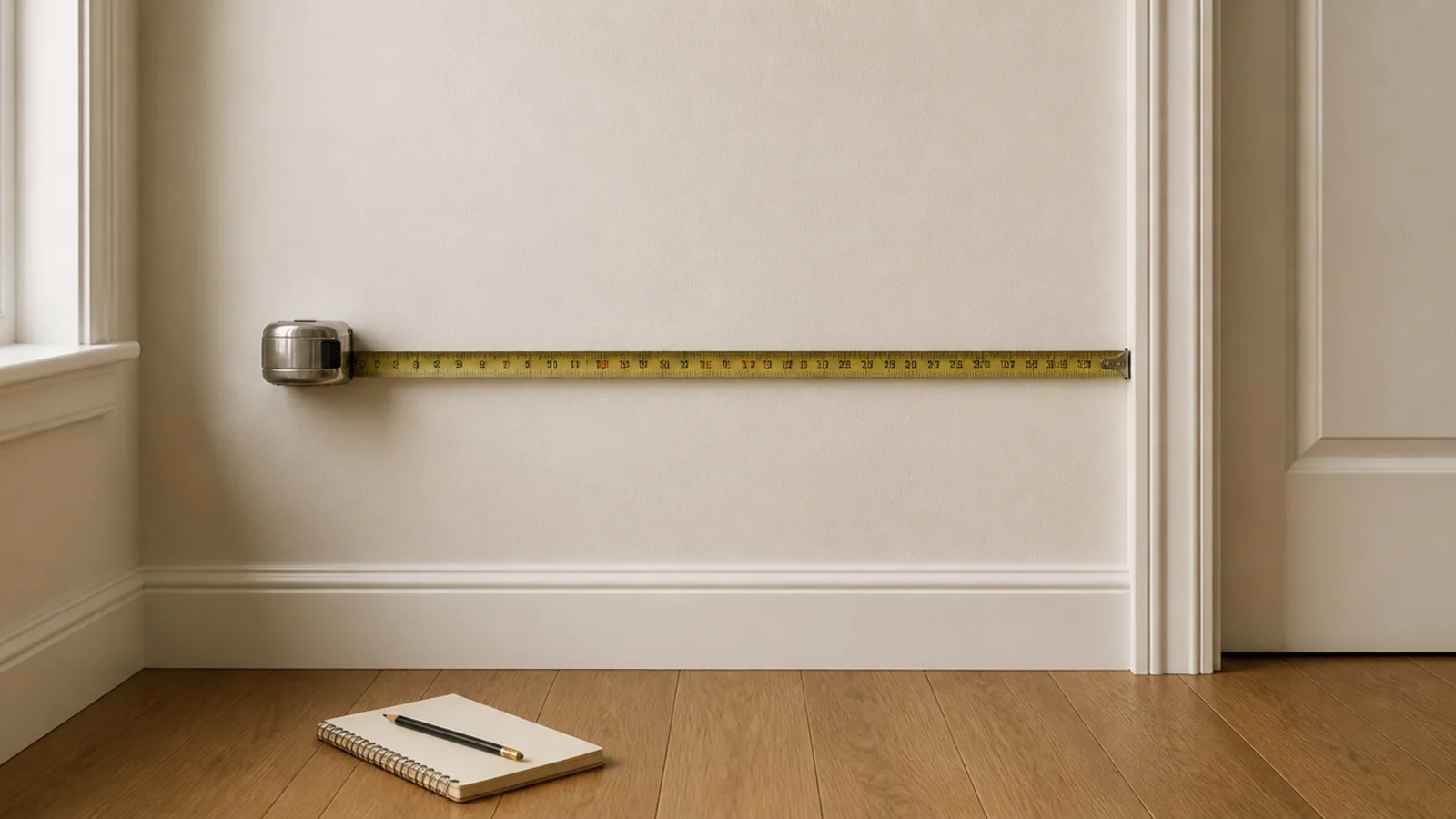
1. Pick three of the five jobs and ignore the rest
Before you buy anything, decide which three jobs your entry is doing. In my 3-foot-wide hall the answer is coats, a landing surface and a mirror. Shoes moved to a cabinet inside the coat closet, and there is nowhere to sit at all.
Three done properly beats five done badly every time. Write your three on a sticky note, put it on the wall, and live with it for a week before you spend anything. It is free, and it prevents the most expensive entryway mistake there is — buying furniture for a job the space cannot hold. Free
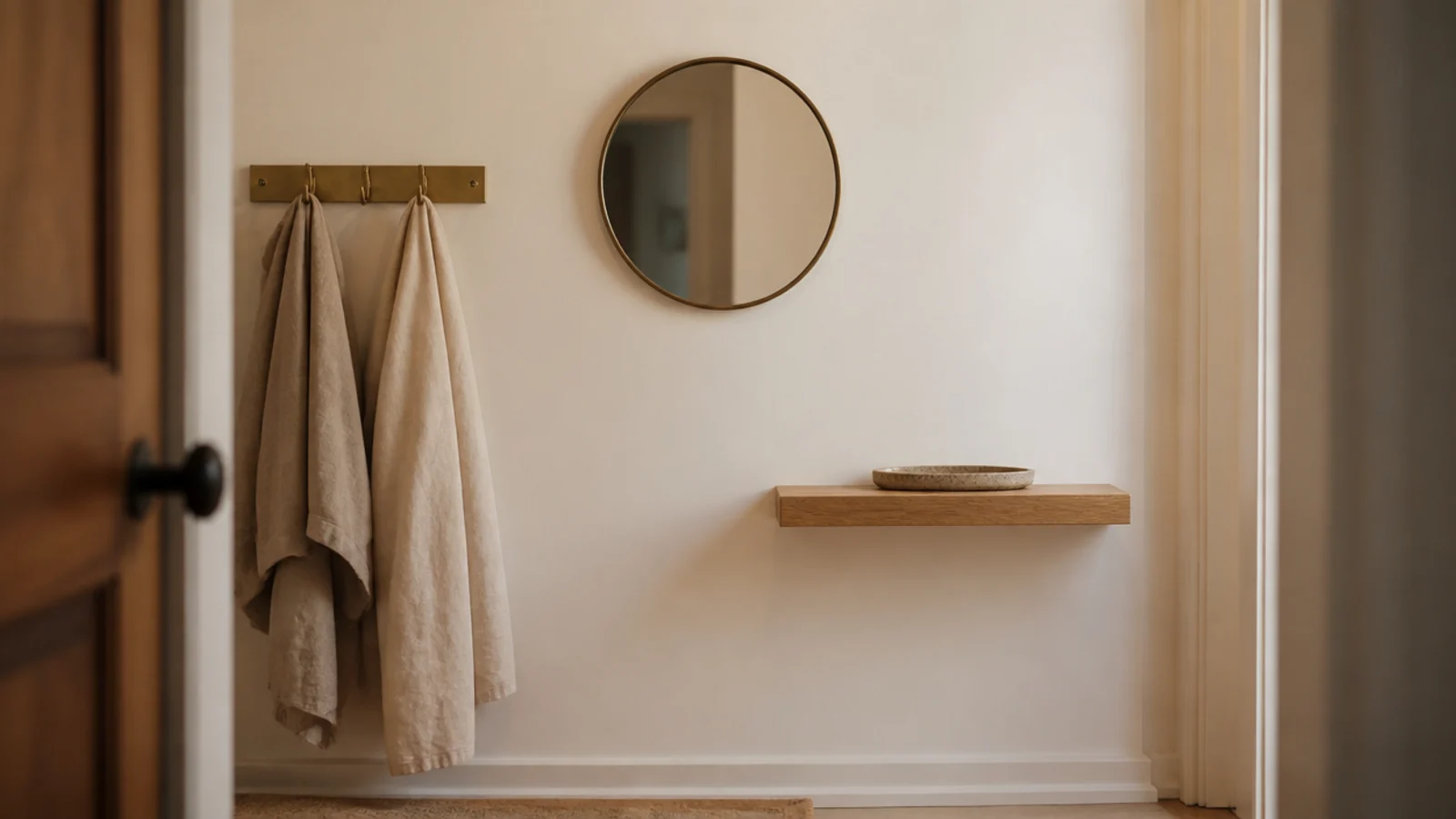
2. A bench at 18 inches high
Eighteen inches off the floor is the seat height an adult can stand up from and a child can climb onto. Higher and small legs dangle; lower and adults struggle back up with a bag in one hand.
Depth matters just as much. Fourteen to 16 inches gives a real seat; anything under 12 is a shelf people lean on. Leave at least 36 inches of walkway in front of it — a bench that narrows the path below that gets shoulder-checked daily until you resent it. $$ for solid wood, $ for a thrifted one you sand and repaint.
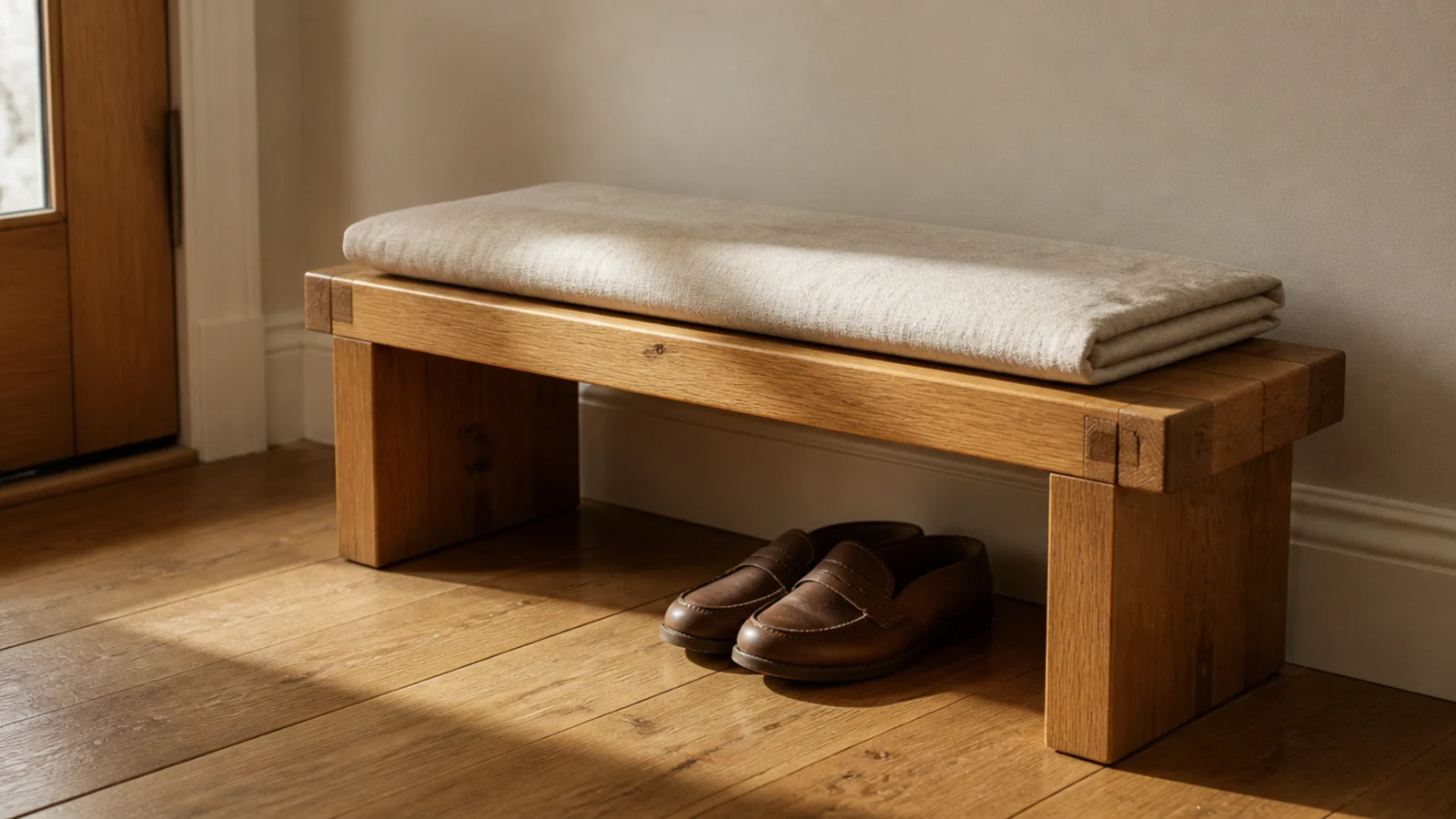
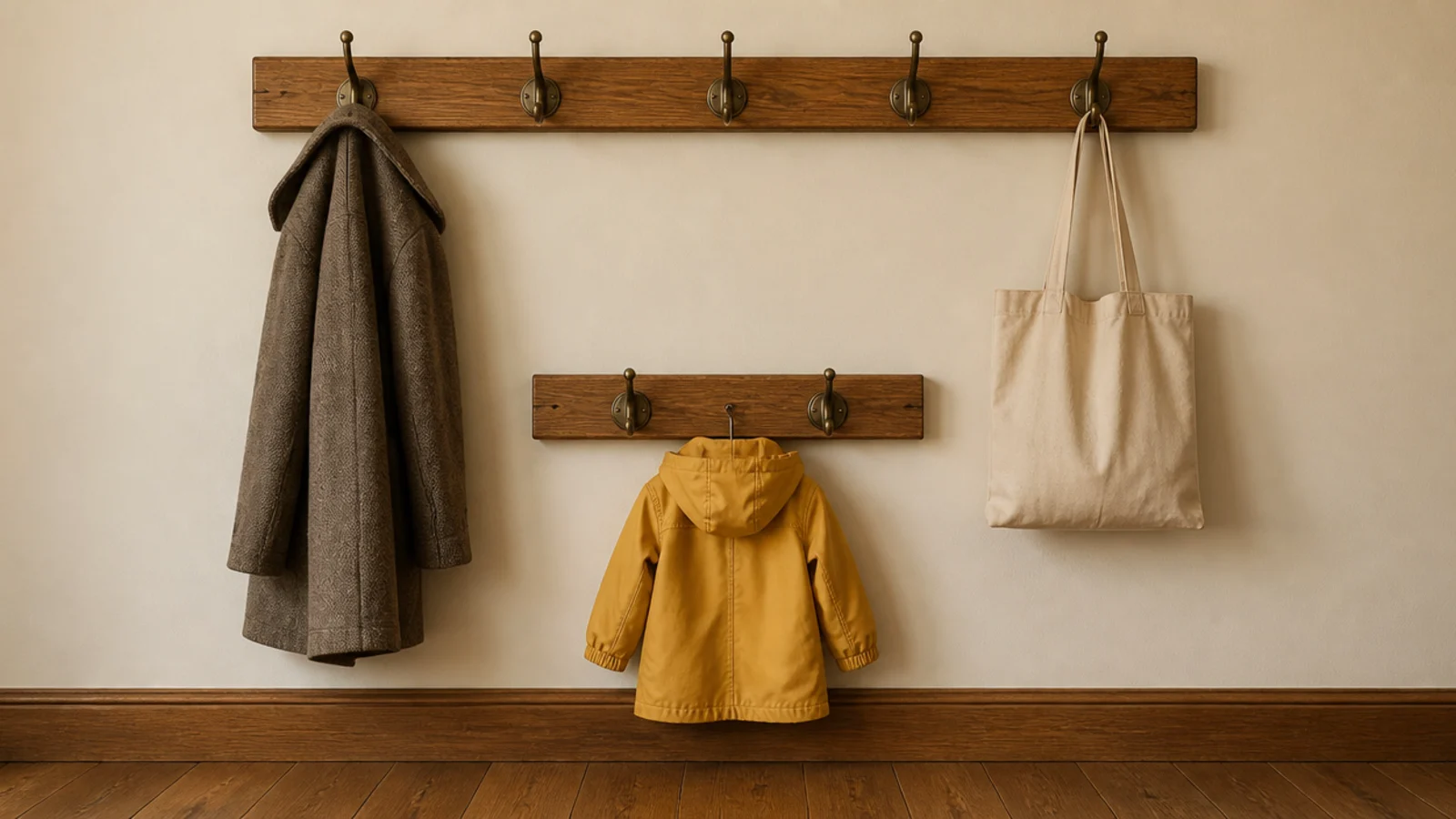
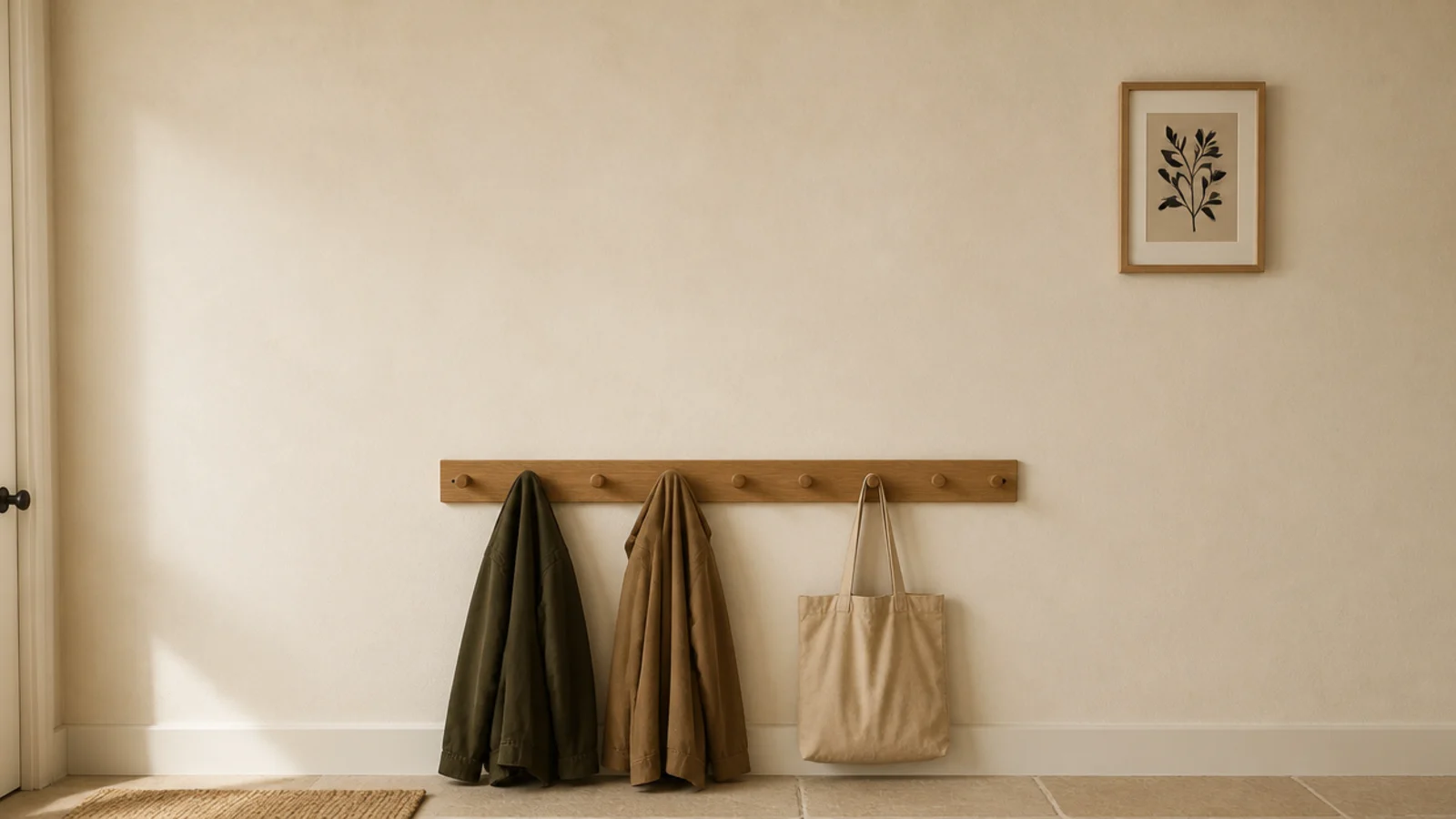
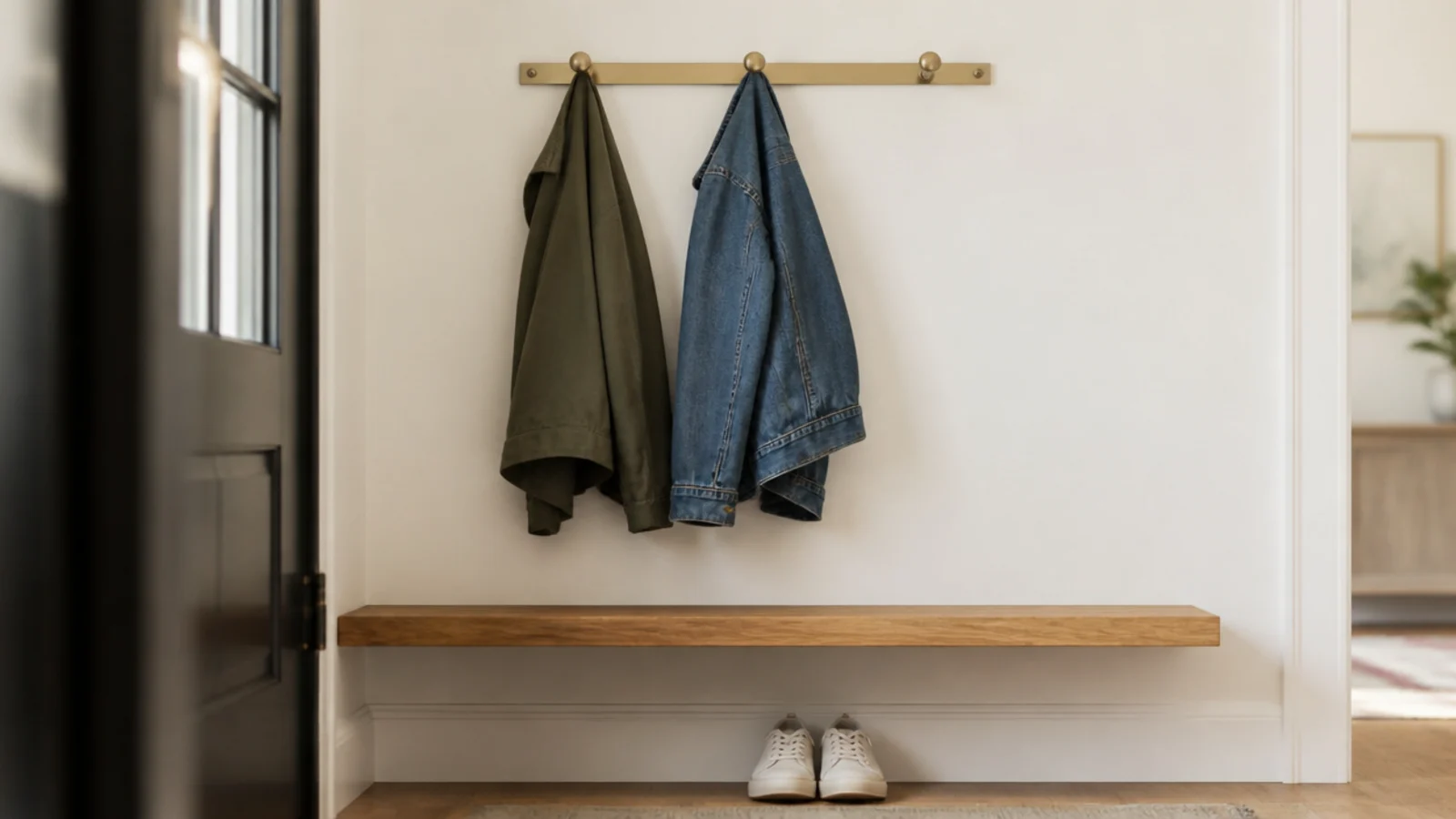
3. A double hook rail at 52 and 40 inches
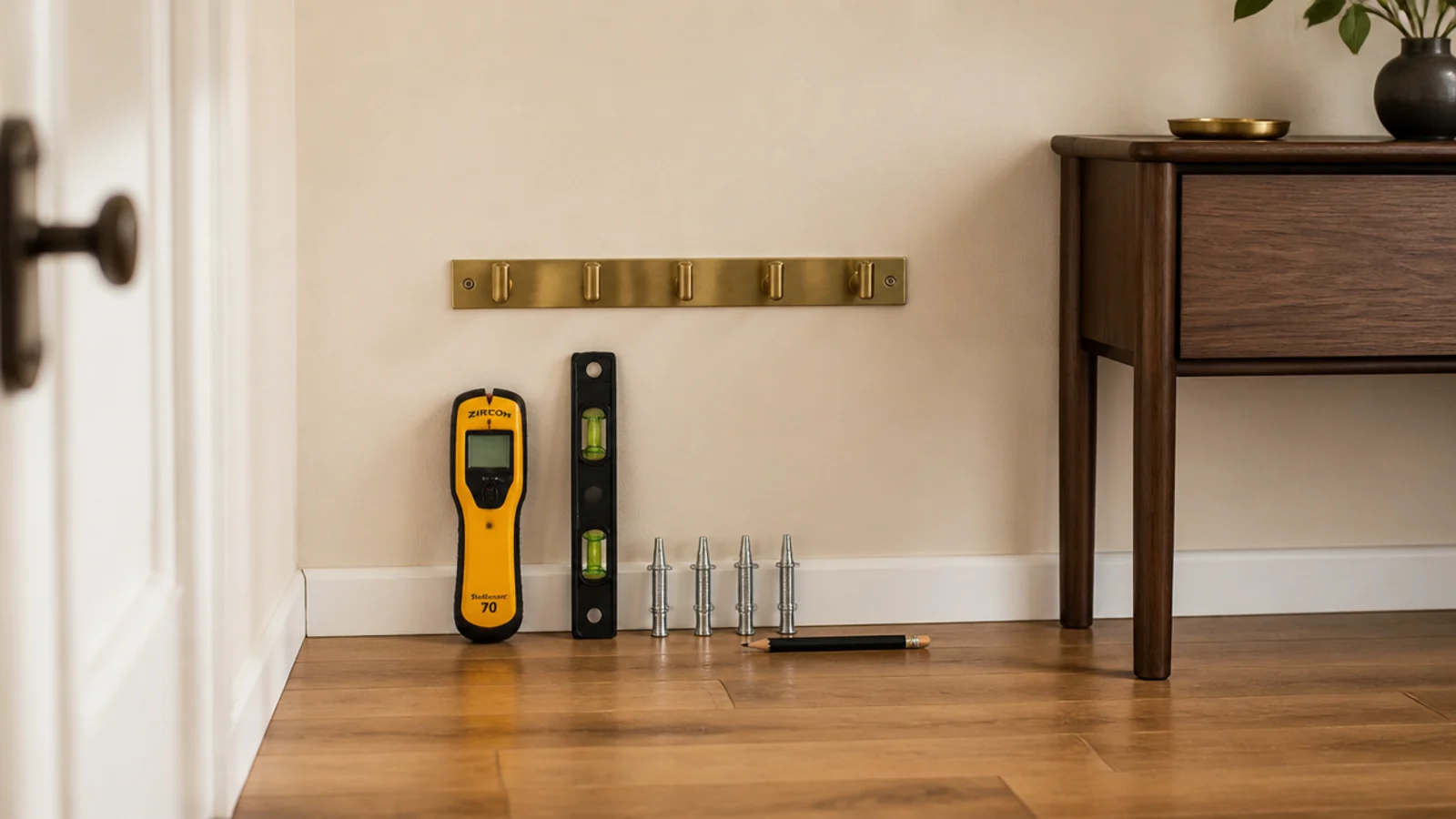
Hooks go at 52 inches from the floor for adults. That height keeps a long coat hem off the floor and clear of a bench seat below.
Add a second rail at 40 inches if there are children, mounted on the same wall directly beneath. A child hangs a coat that is at eye level and drops it on the floor when it is not — the lower rail is the whole difference. Space individual hooks 8 to 10 inches apart, and screw the rail into studs, because a loaded coat rail carries 20 to 30 pounds. $–$$
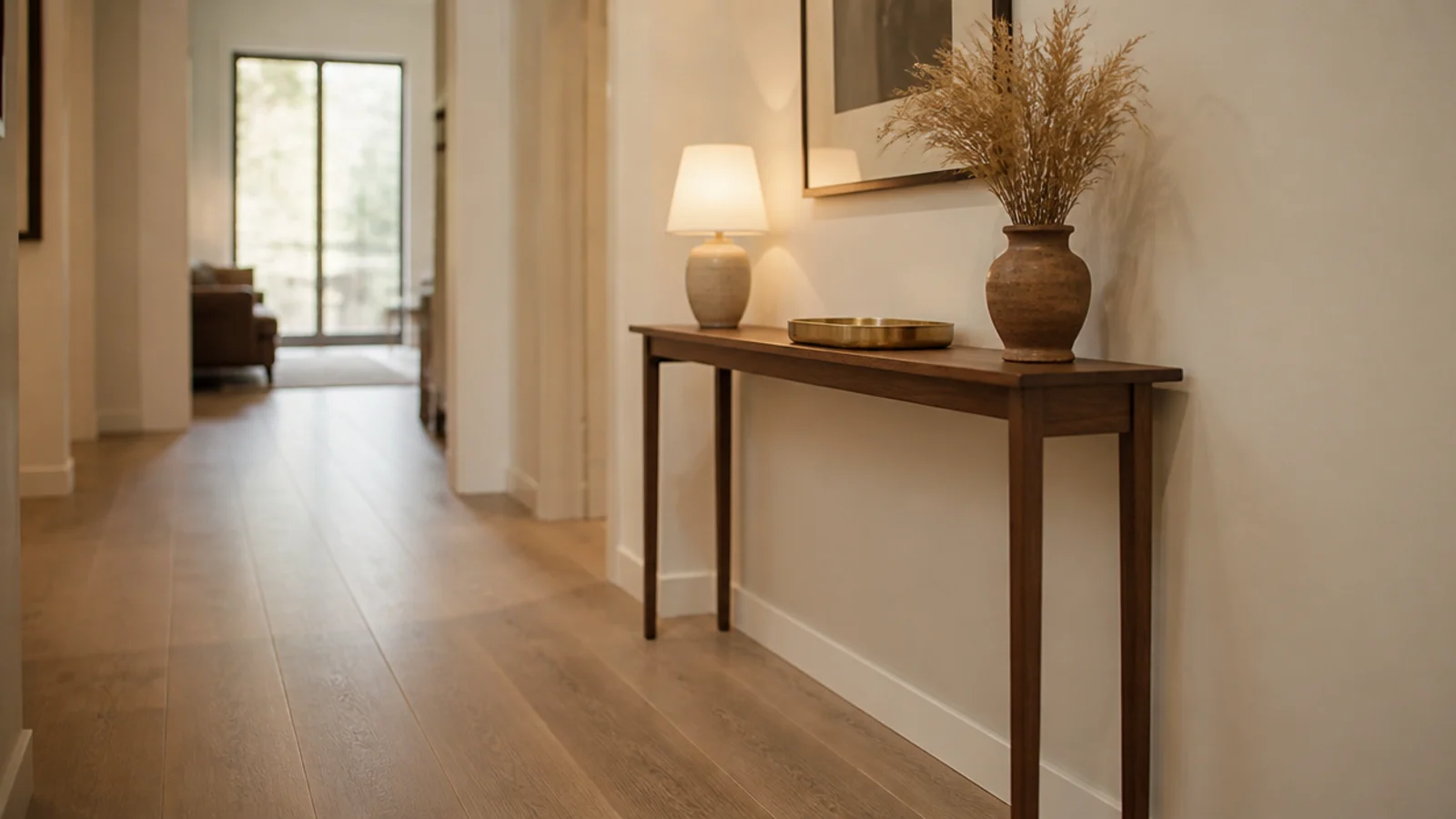
4. A console at 30 to 32 inches and no deeper than 12
A console at 30 to 32 inches high sits where your hand naturally lands, and 12 inches deep is the maximum most halls take before the walkway suffers.
Deeper consoles look generous online and turn a 40-inch hall into a squeeze. Twelve inches still holds a lamp, a tray and a small bowl, with room to set a bag down while you find keys. Look for a lower shelf: it doubles the usable surface without adding a single inch of depth. $$–$$$, or $ for a thrifted console you repaint.
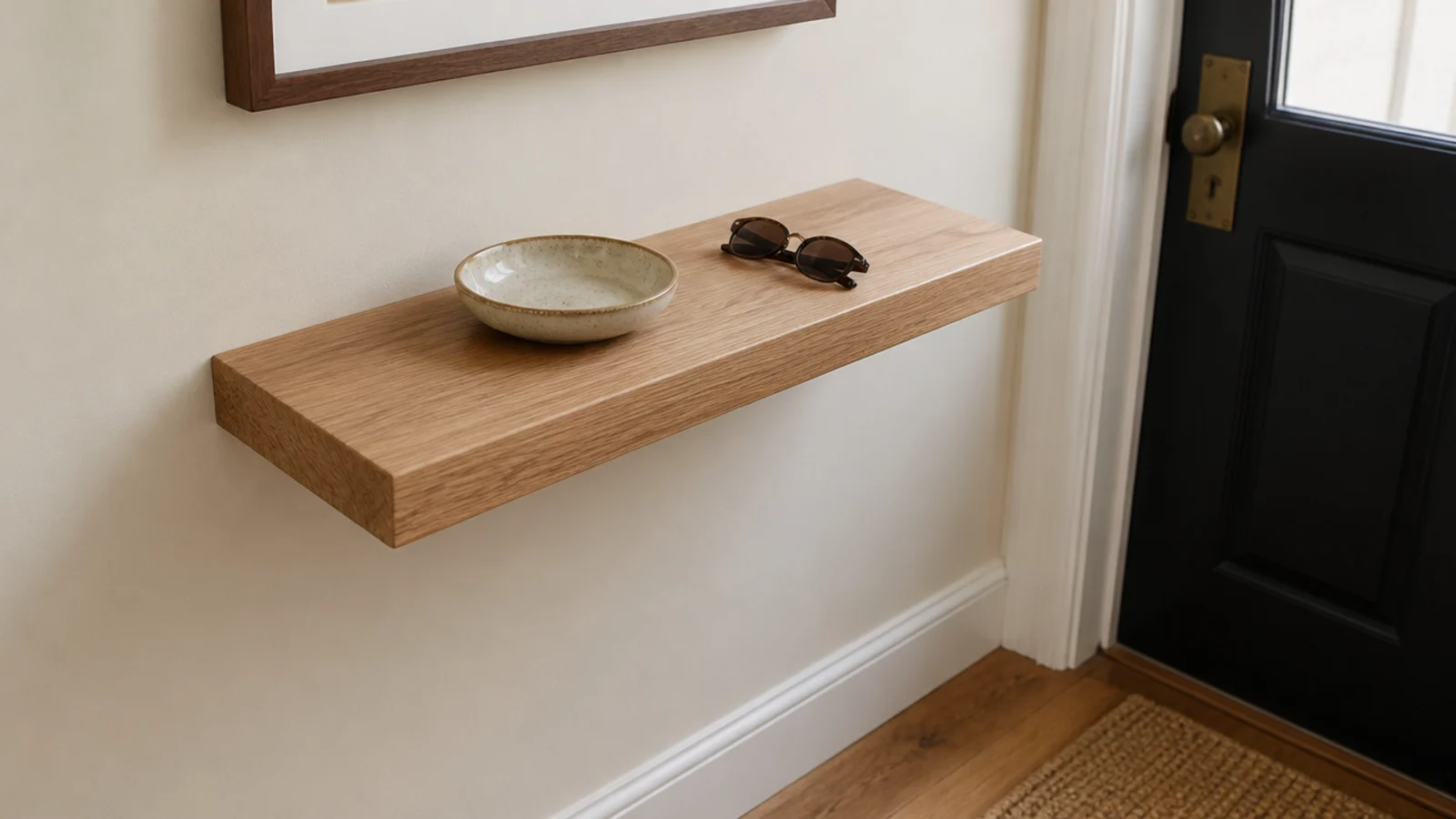
5. Wall-mounted when the walkway is under 36 inches
If your clearance measurement came in under 36 inches, skip the console entirely. Legs are the problem, not the surface.
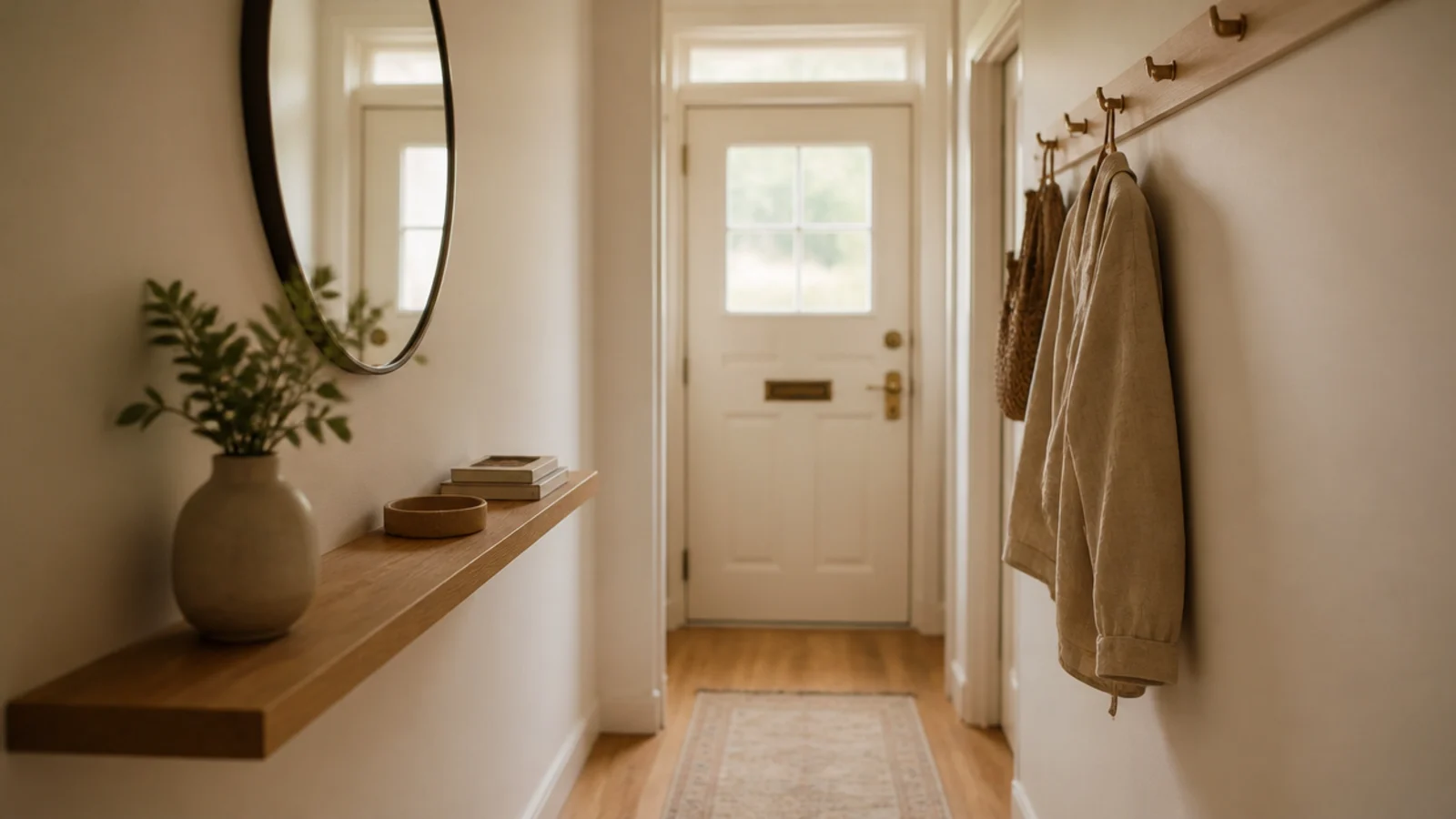
A floating ledge 6 inches deep, mounted at 32 inches high, does the whole landing-surface job with no floor footprint at all. Keep it under 36 inches long so it reads as a detail rather than furniture, and hang it on two toggle bolts if you cannot find a stud. Tight halls get their own full treatment in narrow entryway ideas. $
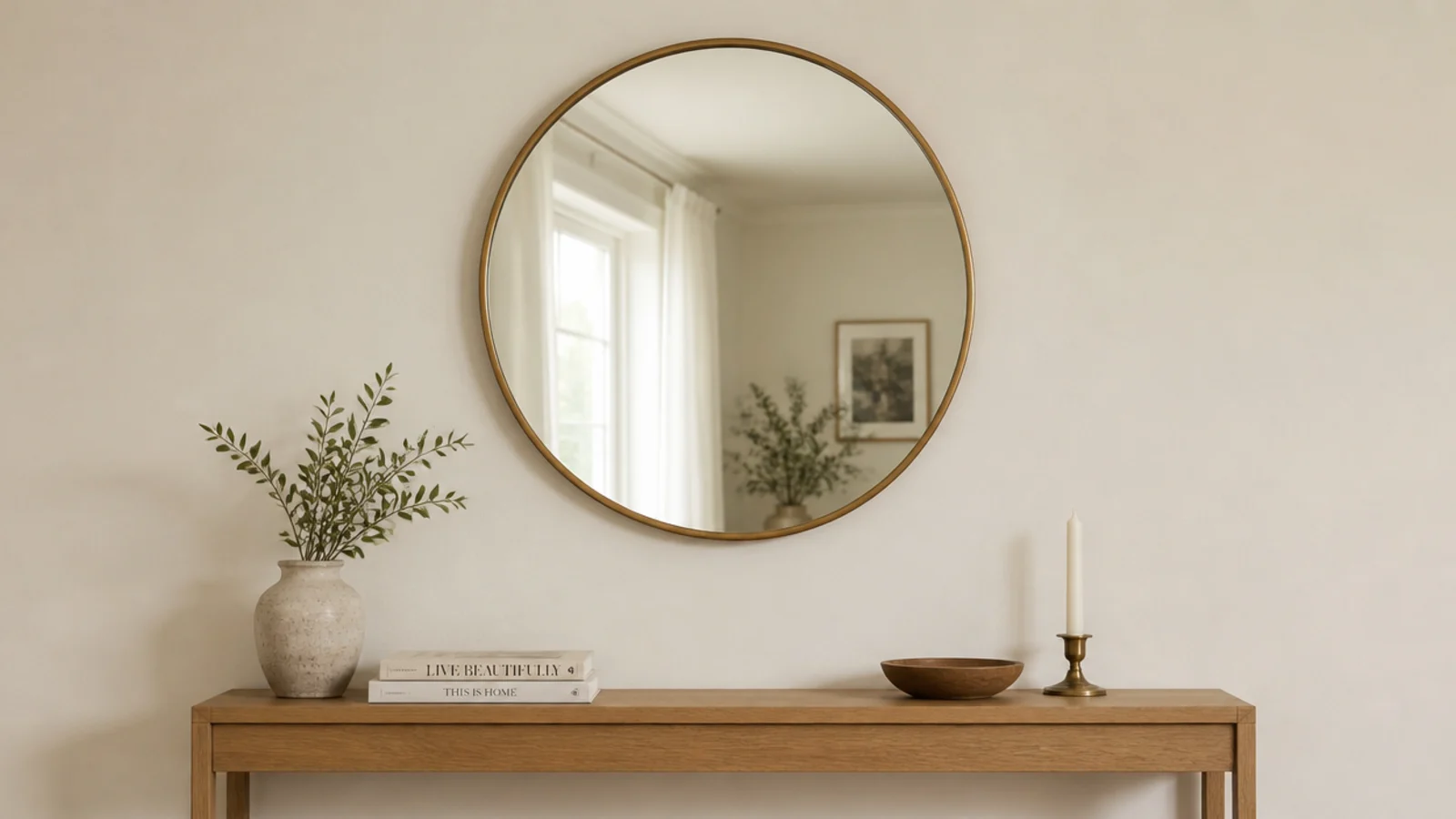
6. A mirror centred at 57 to 60 inches
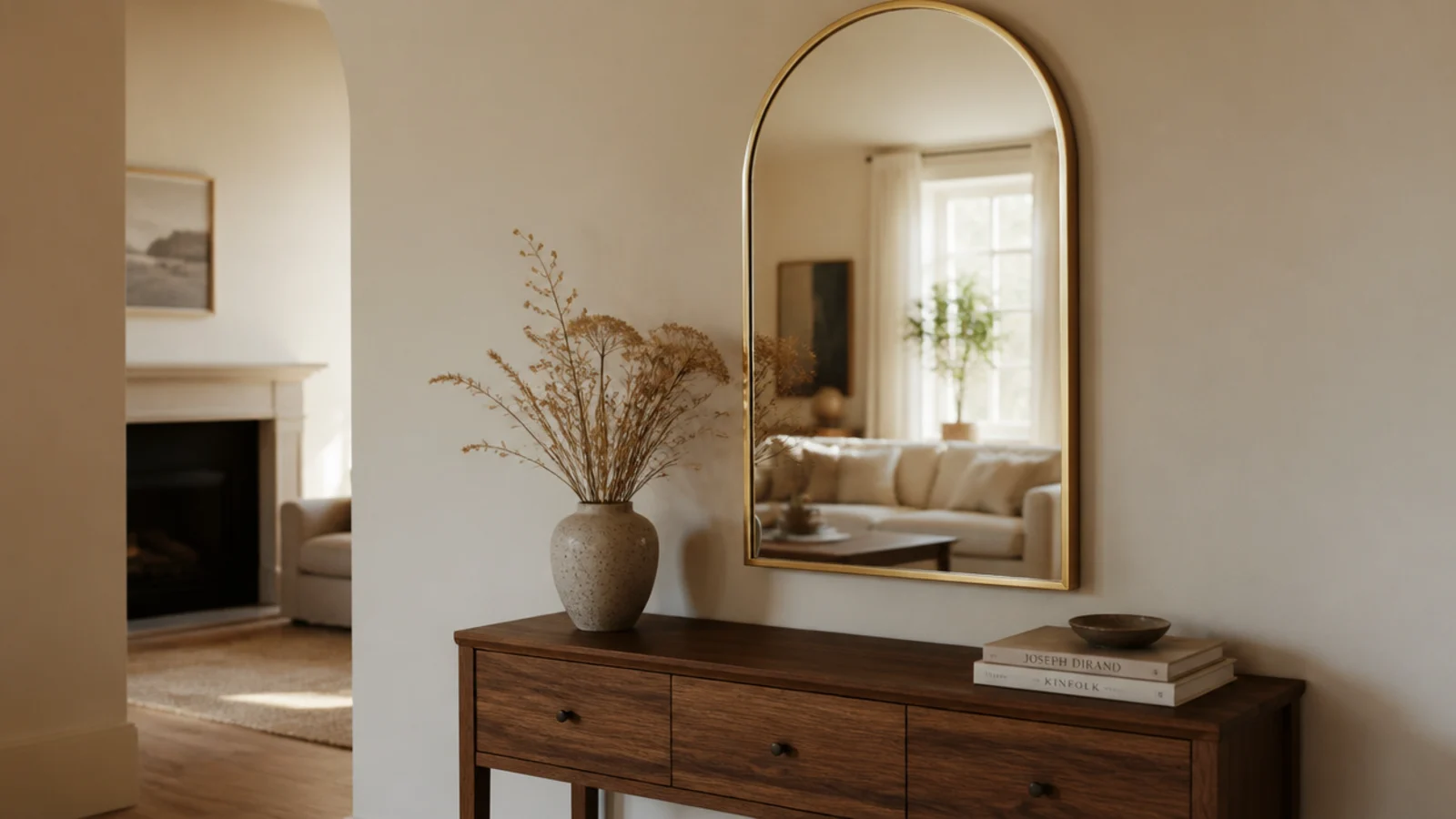
Centre the mirror at 57 to 60 inches from the floor, measured to the middle of the glass. That is gallery height, and it works for the most people in a household without anyone crouching.
Above a console, leave 6 to 8 inches between the console top and the bottom of the frame. Less and the two pieces merge into one heavy block; more and the mirror floats off on its own. A 24-inch round suits a console 36 to 48 inches wide. There is a fuller breakdown in entryway mirror wall decor. $$
7. One tray, and only one
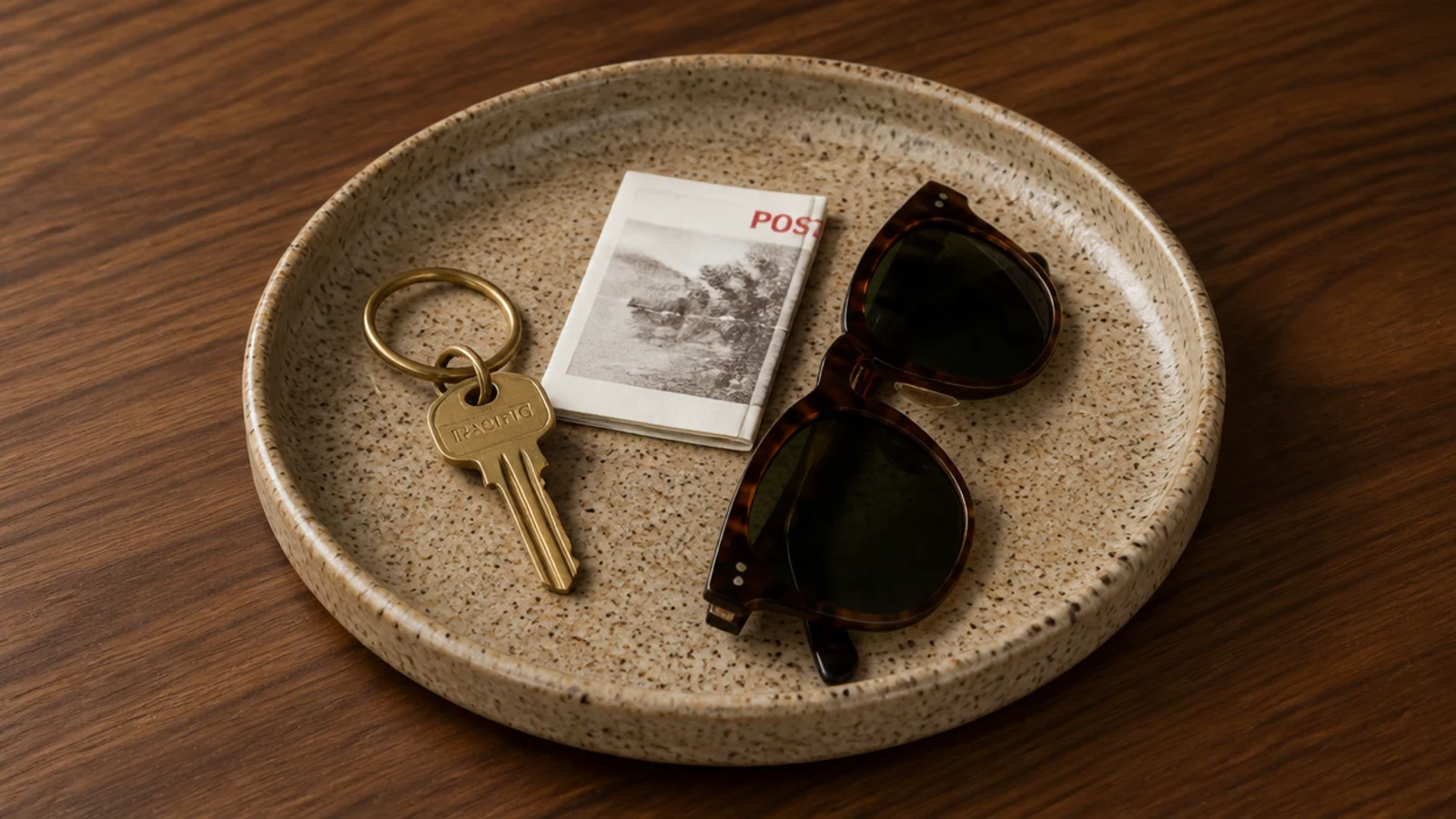
One tray on the landing surface is what stops mail and keys spreading across it. Everything small goes in the tray, and the surface around it stays clear.
Size it around 8 by 12 inches — big enough for keys, sunglasses, a wallet and the day's post, small enough that it fills and forces an edit. Two trays defeat the purpose, because the overflow simply moves next door. Brass, stoneware or woven all work; the single-container rule matters far more than the material. $
8. A flat-weave washable runner
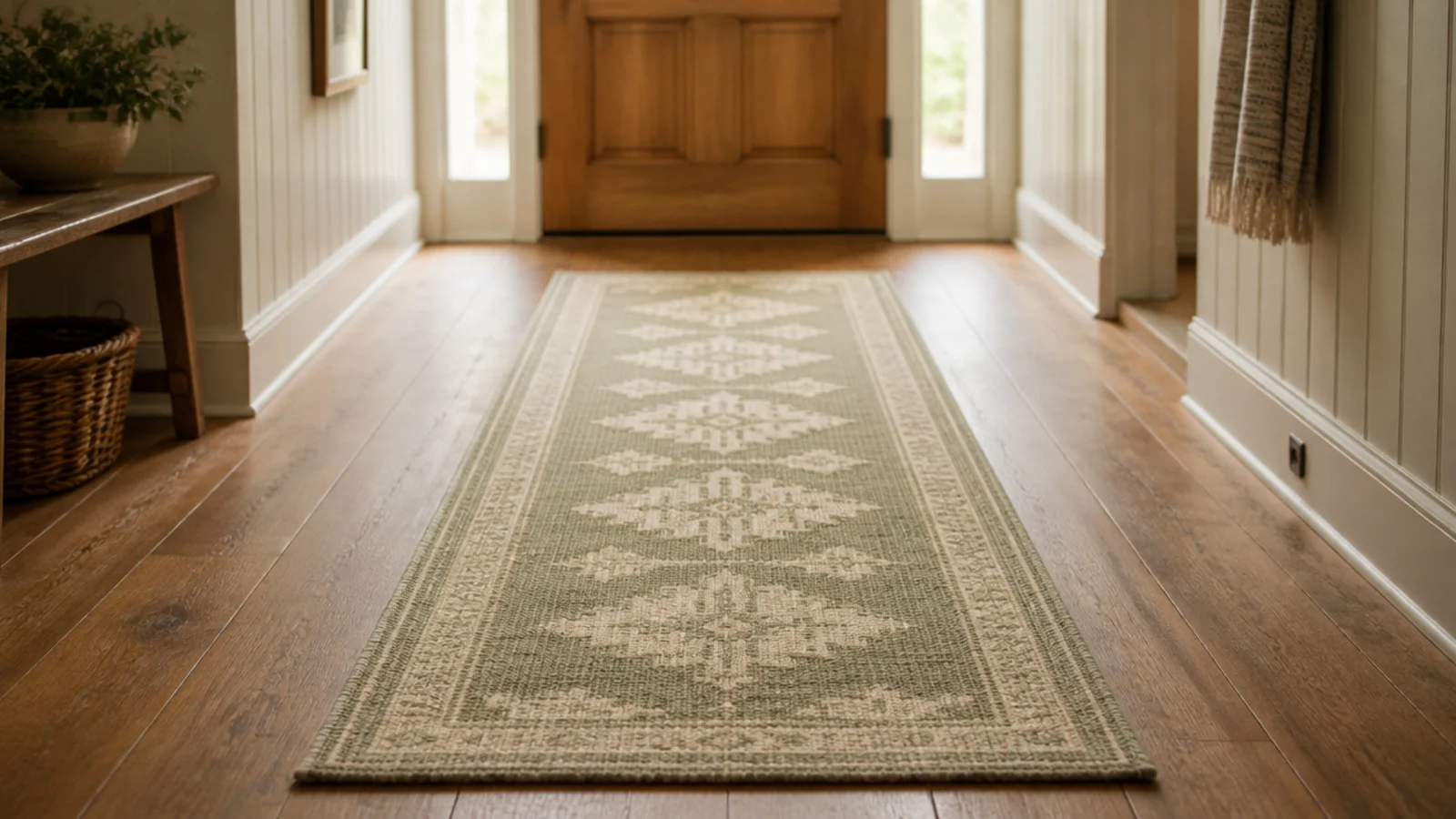
A flat-weave washable runner catches grit at the door and survives being walked on in boots. A deep pile does not — it holds grit at the base, mats down in the traffic lane and looks tired within one winter.
Size it to leave 4 to 6 inches of bare floor on each side, and use a thin non-slip pad underneath regardless of what the label promises. Jute is the honest budget pick; wool flat-weave is the one that lasts a decade. Wash it at every season change. $–$$
9. A lamp on the console, not just the ceiling light
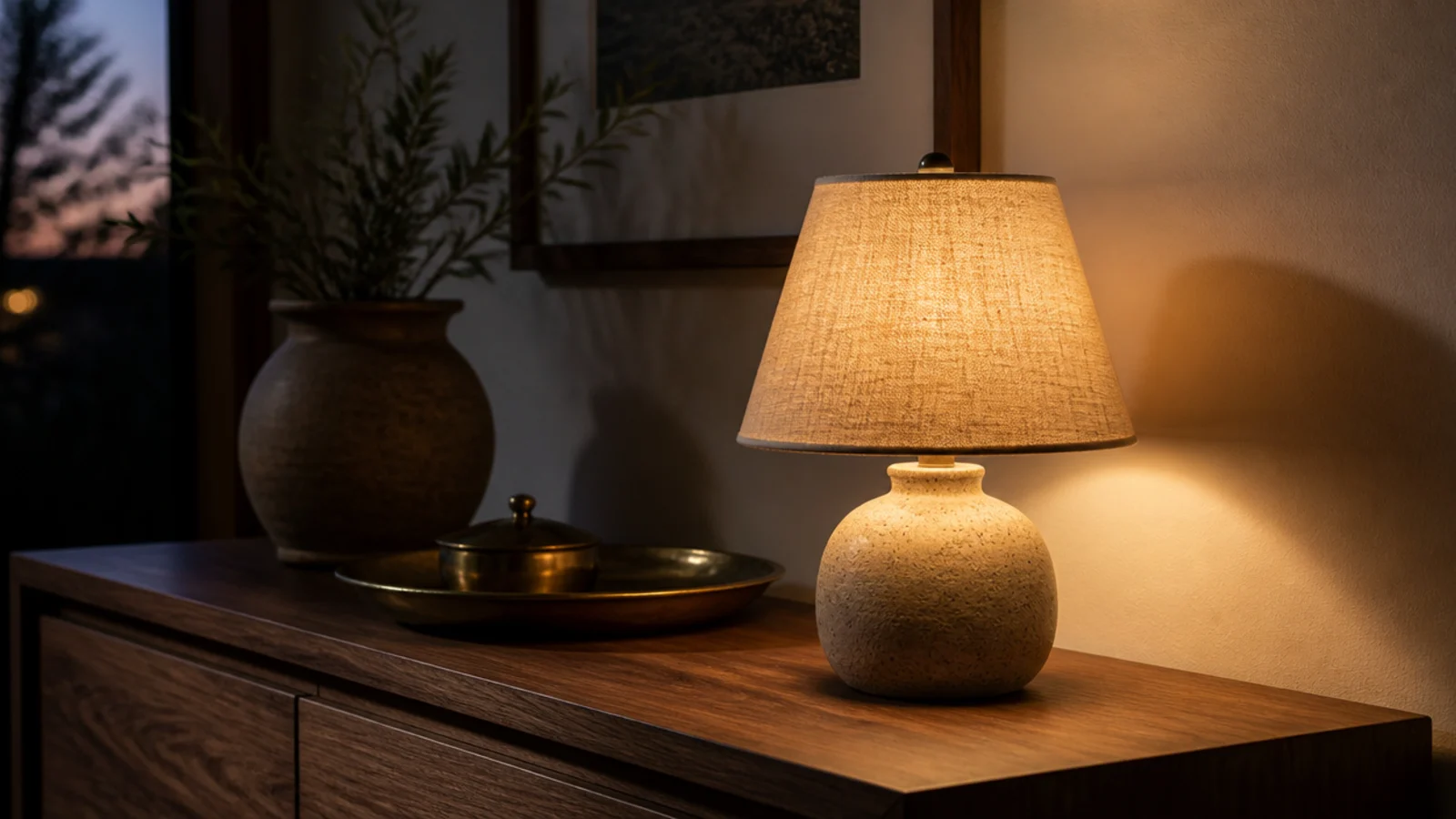
A single ceiling fixture flattens an entry. It lights the floor, leaves every face in shadow, and makes a small hall feel like a corridor at night.
Layer it. A small lamp on the console with a 2700K bulb changes the space after dark more than any object you can hang. No outlet nearby? A rechargeable cordless lamp runs about 20 hours a charge, and a battery picture light over the mirror does the same job for around $30. Put either on a timer and the entry lights itself at dusk. $–$$
10. A closed cabinet for the daily shoes
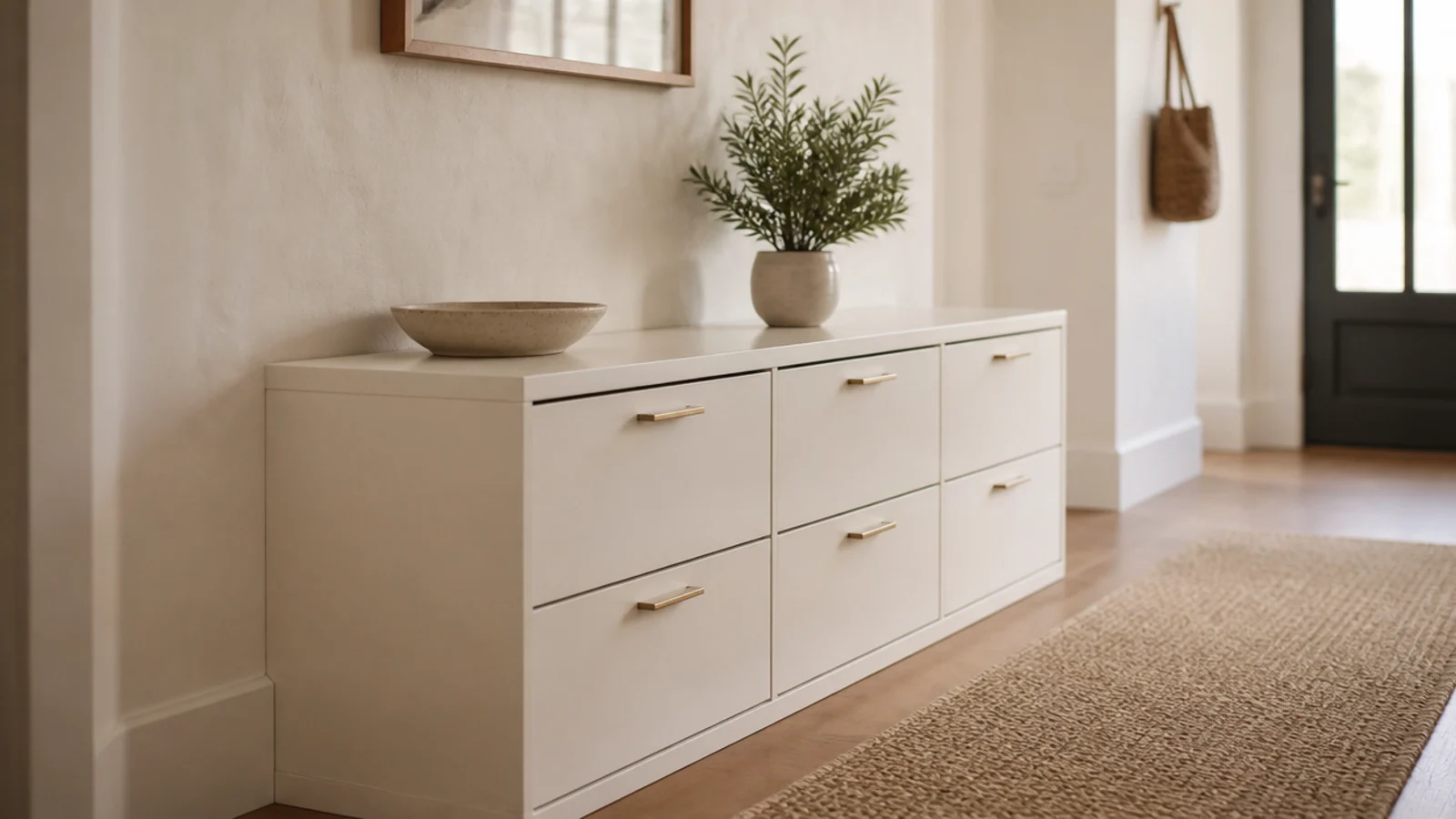
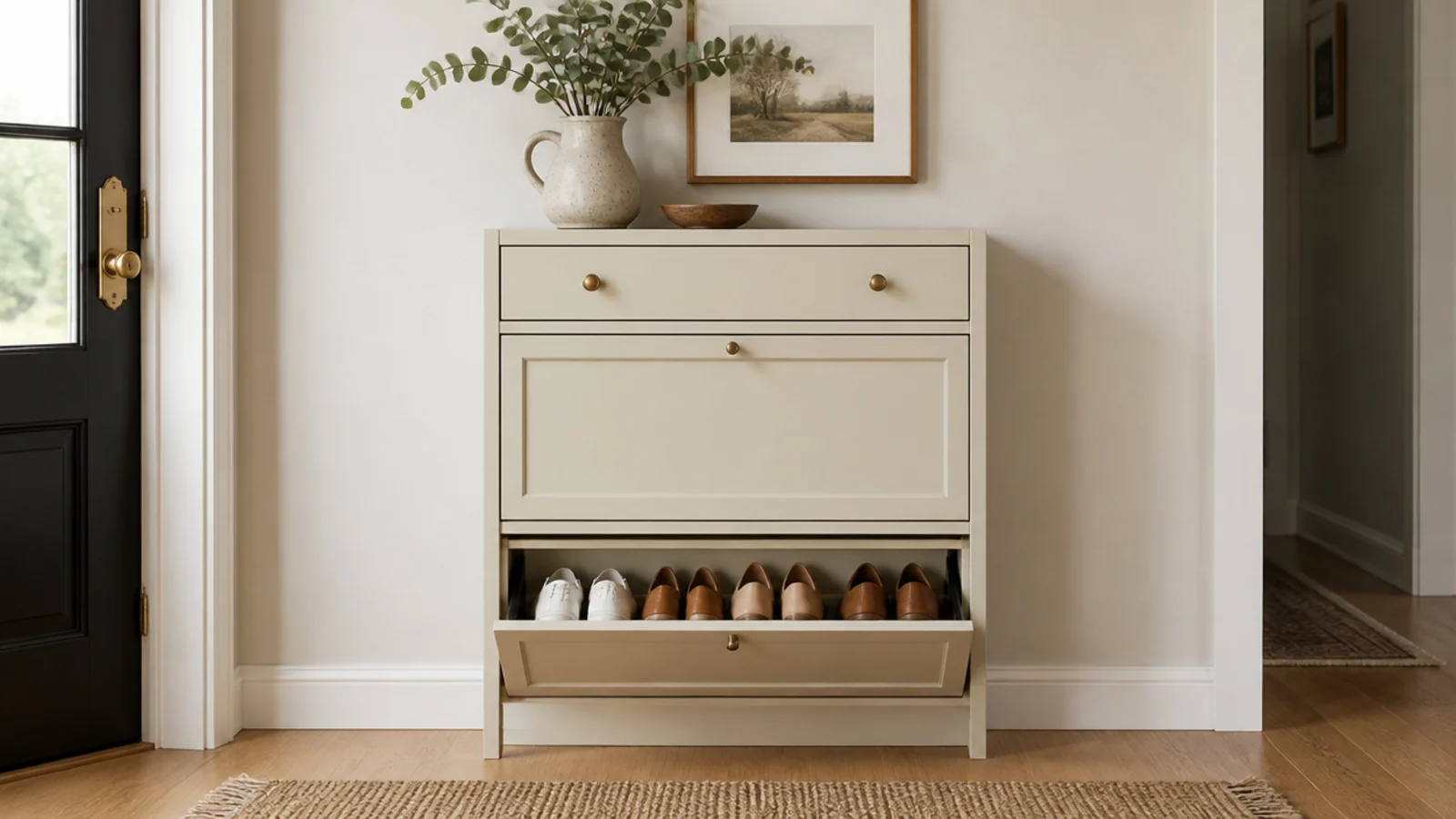
Shoes are the job most entries fail. A slim cabinet 9 inches deep holds shoes tilted at 45 degrees, which is how a 12.5-inch sneaker fits a hallway no open rack could serve.
Two drawers take six to eight pairs of flats and sneakers and no boots at all, so give boots a raised-lip tray on the floor instead. If your household is children in a hurry, open cubbies beat any door, because every door is a step people skip. Entryway shoe cabinets covers the sizing properly. $$
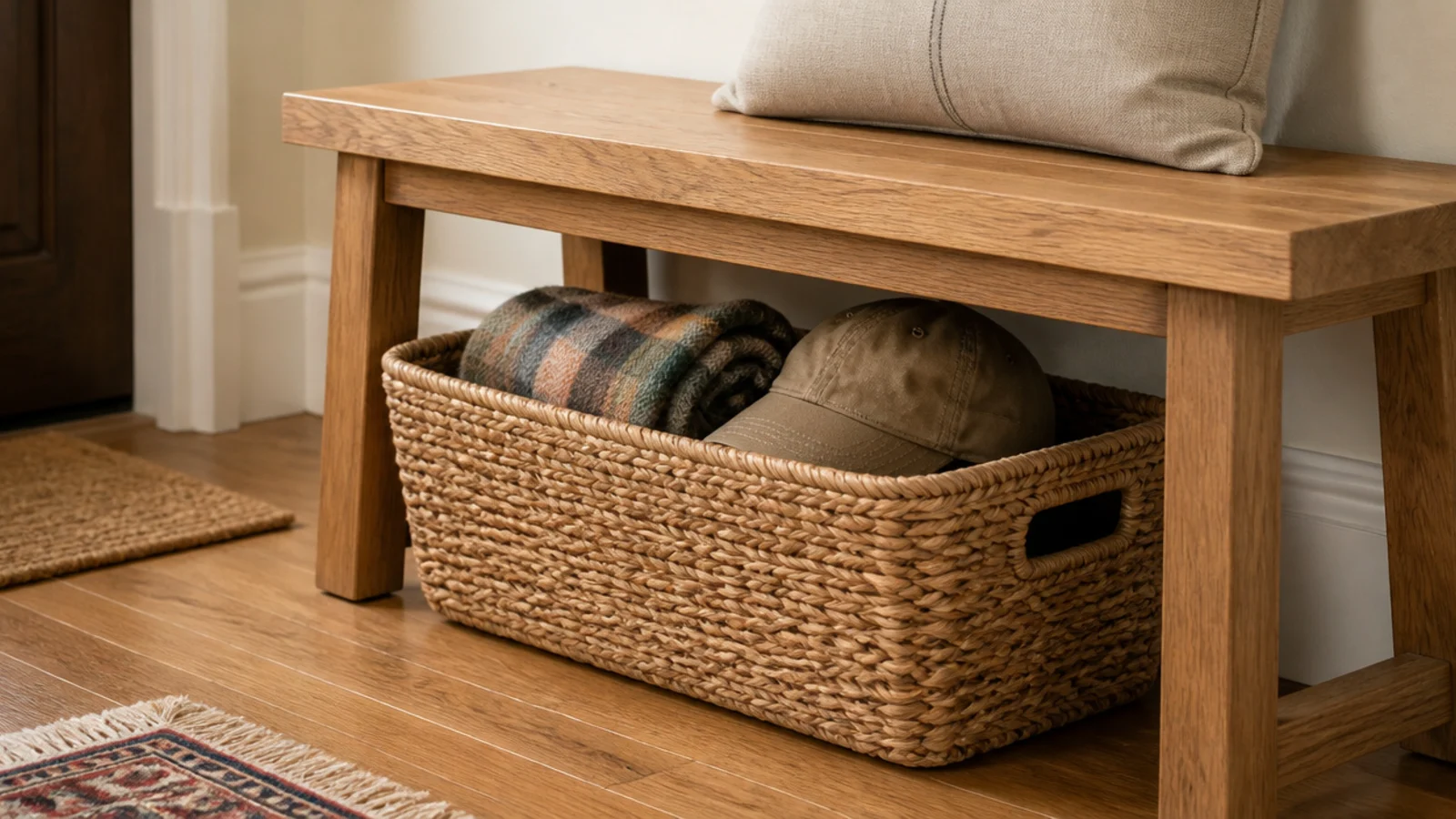
11. A basket under the bench for the overflow
One open basket under the bench absorbs the things with no home — a scarf, a ball cap, the school library book. Without it, those items live on the seat and the bench stops being a seat.
Size it to fill the bench footprint so it reads as built in rather than shoved under. Seagrass or felt, roughly 16 by 12 by 10 inches, holds a surprising amount. Empty it every Sunday, because a basket nobody empties is just a pile with sides. $
12. Paint the entry a shade deeper than the hall
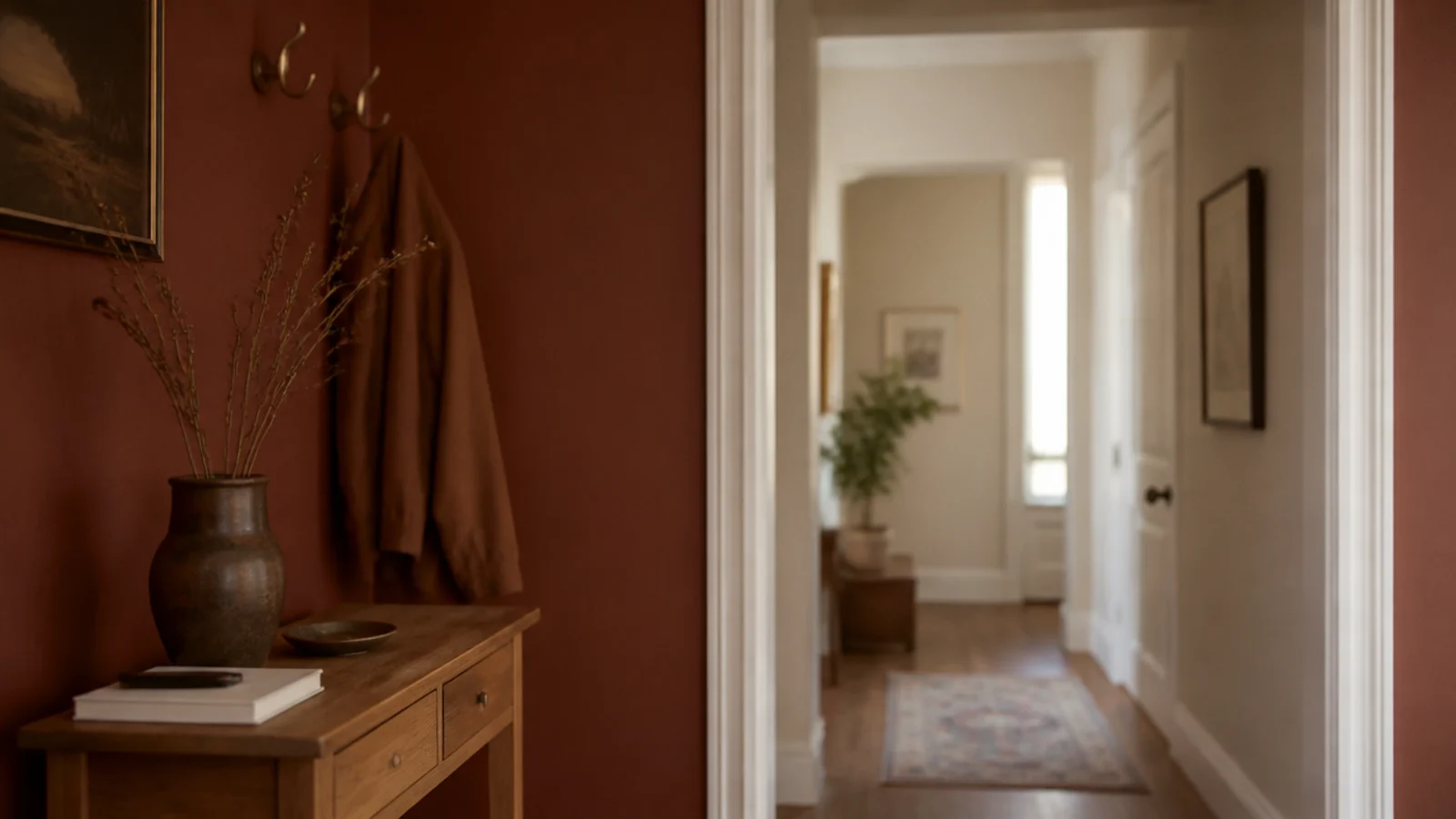
Paint is the cheapest structural change an entry has. Take your hall colour, go two or three steps deeper on the same paint strip, and use it on the entry walls only, stopping cleanly at the first doorframe.
That darker pocket makes the space beyond read brighter and larger, which is the opposite of what most people expect. A quart covers a small entry for about $25. Use eggshell rather than flat, because entry walls get touched constantly and flat paint will not wipe clean. Renters: check the lease and keep the original colour code taped inside a closet door for move-out. $
13. Leave the wall above the hooks emptier than feels right
Style the wall above a hook rail while it is bare and you will hate it by Wednesday, because coats fill that wall visually every single day.
Hang nothing in the 18 inches directly above the rail. Put art higher than that, or move it to the opposite wall where nothing hangs. This single correction fixes more real entryways than any purchase — the entry that looks slightly bare when empty is the one that still looks calm when it is loaded. Free
14. A perch stool where a bench will not fit
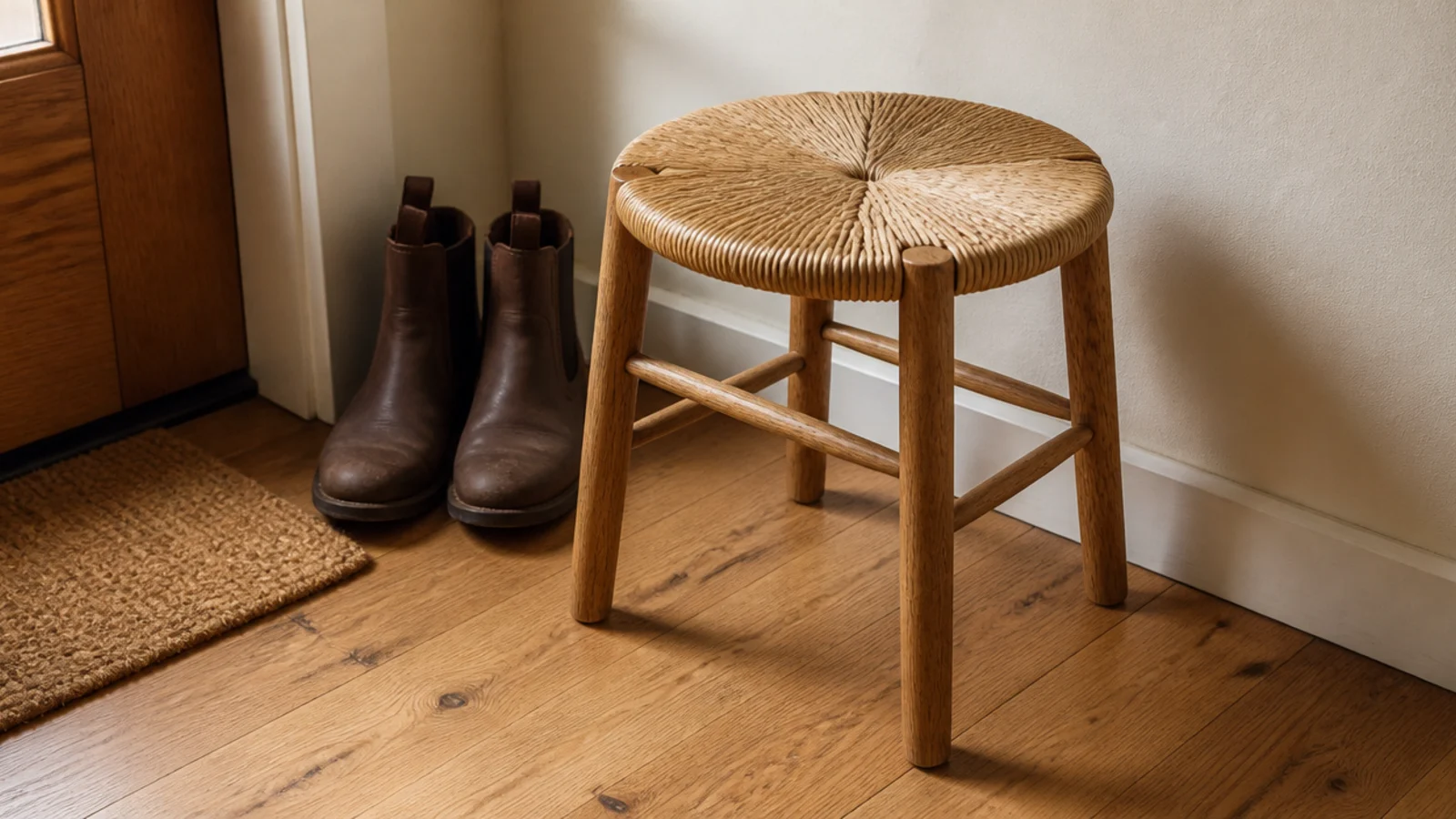
Where there is genuinely no room for a bench, a single stool 18 inches high and about 13 inches across gives you somewhere to put a foot while you deal with laces.
It weighs almost nothing, tucks under a console when it is not in use, and costs a fraction of a bench. Choose a round seat: there are no corners to catch a hip in a tight hall, which matters more than it sounds at 7am. Solid wood or woven rush both wear well. $–$$
15. A seasonal five-minute edit
Four times a year, take everything off the hooks and the landing surface and put back only what is in season. Coats for the wrong weather go to a closet, and so do the shoes.
An entry does not slowly get better or worse at random — it gets worse in one direction, by accumulation. Twenty minutes a year is what keeps every other idea on this list working. Set a repeating reminder for the first Saturday of each season and it happens without any thought. Free
Mistakes to Skip
- Hanging the mirror at eye level for the tallest person in the house. Centre the glass at 57 to 60 inches instead and it works for everyone, including whoever is checking a hem.
- Buying a console deeper than 12 inches because it looked generous online. Every extra inch comes straight out of the walkway, and the walkway is the part you use every day.
- Putting a deep-pile rug at the front door. It traps grit at the base, mats flat in the traffic lane and looks worn out by the end of one winter.
Frequently asked questions
What does every entryway actually need?
An entryway has five jobs — a place to sit, a place for shoes, a place for coats, a landing surface for small items, and a mirror. A working entry does at least three of them. Choose the three that match how your household leaves the house, and move the other two somewhere with more room rather than cramming all five into one wall.
How high should entryway hooks be?
Fifty-two inches from the floor for adults, which keeps a long coat hem clear of the floor and of a bench seat underneath. Add a second rail at 40 inches if children live there, mounted on the same wall directly below. Space individual hooks 8 to 10 inches apart, or coats compress into one lump that nobody wants to reach into.
How deep can an entryway console table be?
Twelve inches is the maximum most halls take, at 30 to 32 inches high. Every extra inch of depth comes straight out of the walkway, and the walkway is the part you use daily. If you have under 36 inches of clearance from the wall to the nearest thing you walk around, skip the console and mount a 6-inch ledge instead.
What height should an entryway mirror hang at?
Centre the glass at 57 to 60 inches from the floor. That is standard gallery height and it works for the most people in a household without anyone crouching. Above a console, leave 6 to 8 inches between the console top and the bottom of the frame — closer and the two pieces merge into a single block.
What kind of rug works best at a front door?
A flat-weave washable runner. It catches grit at the door and survives being walked on in boots, and it goes in a machine at the change of every season. Deep pile does the opposite: it holds grit down at the base, mats flat in the traffic lane and looks tired within a single winter, however good it looks on day one.
Choose your three jobs, get the four heights right, and the entry works before you style a single object. For the surface itself, entryway table decor covers trays, lamps and layering in detail, and the step-by-step entryway project takes you from a bare wall to a finished hall over one weekend. Save the pin so the heights are with you in the hardware aisle.
Want more like this? Browse all 15 entryway & foyer ideas guides — they all use the same measurements and budget tiers.
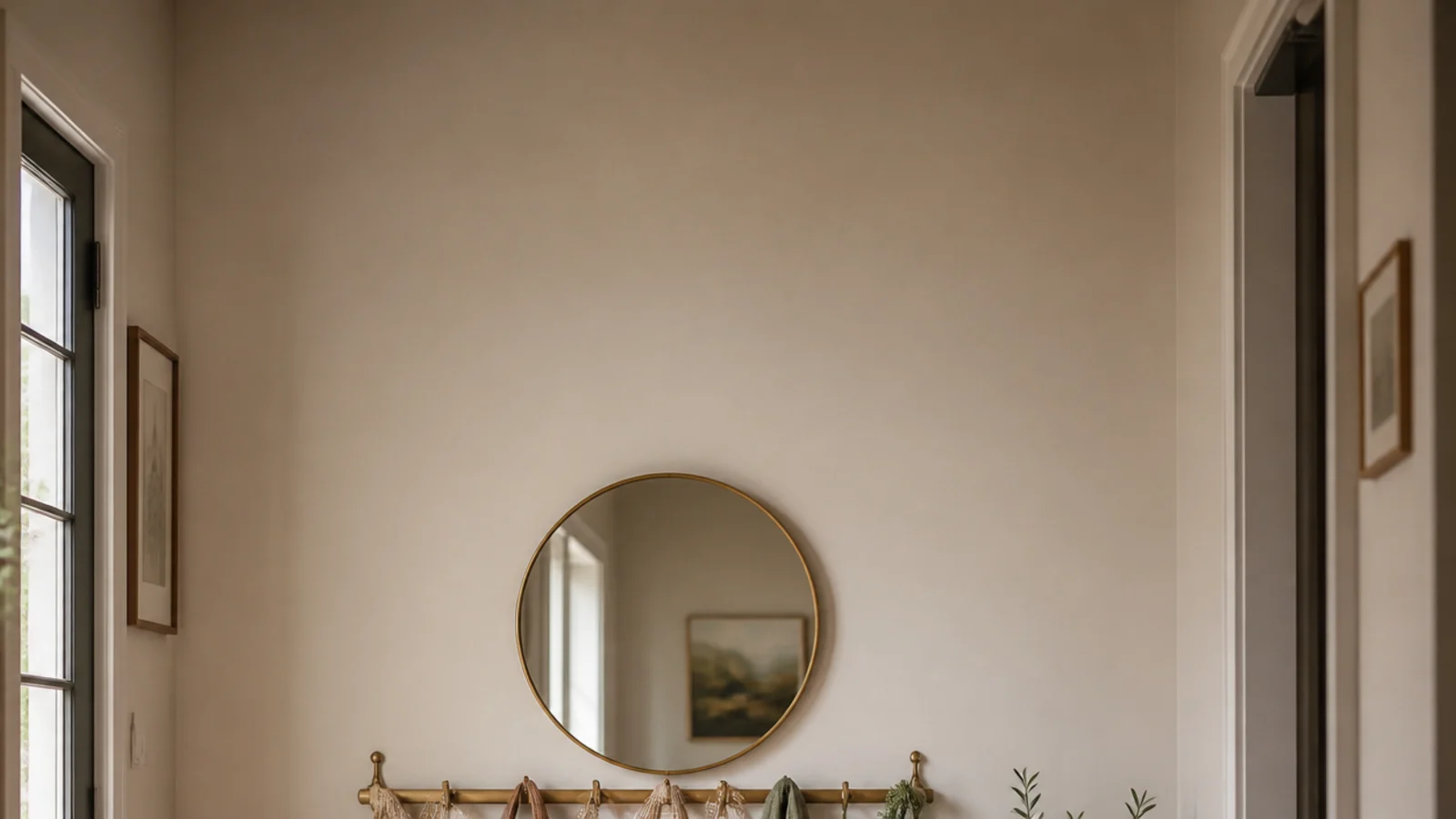
Pin it for later
Save this to your Entryway & Foyer Ideas board
Pin it now so it is waiting for you when the tape measure comes out — and so the next person hunting for this idea can find it too.
Save this pinKeep going
More ideas worth saving while you have the tape measure out.