Entryway & Foyer Ideas · Listicle
15 Cozy Entryway Ideas That Look Pricey

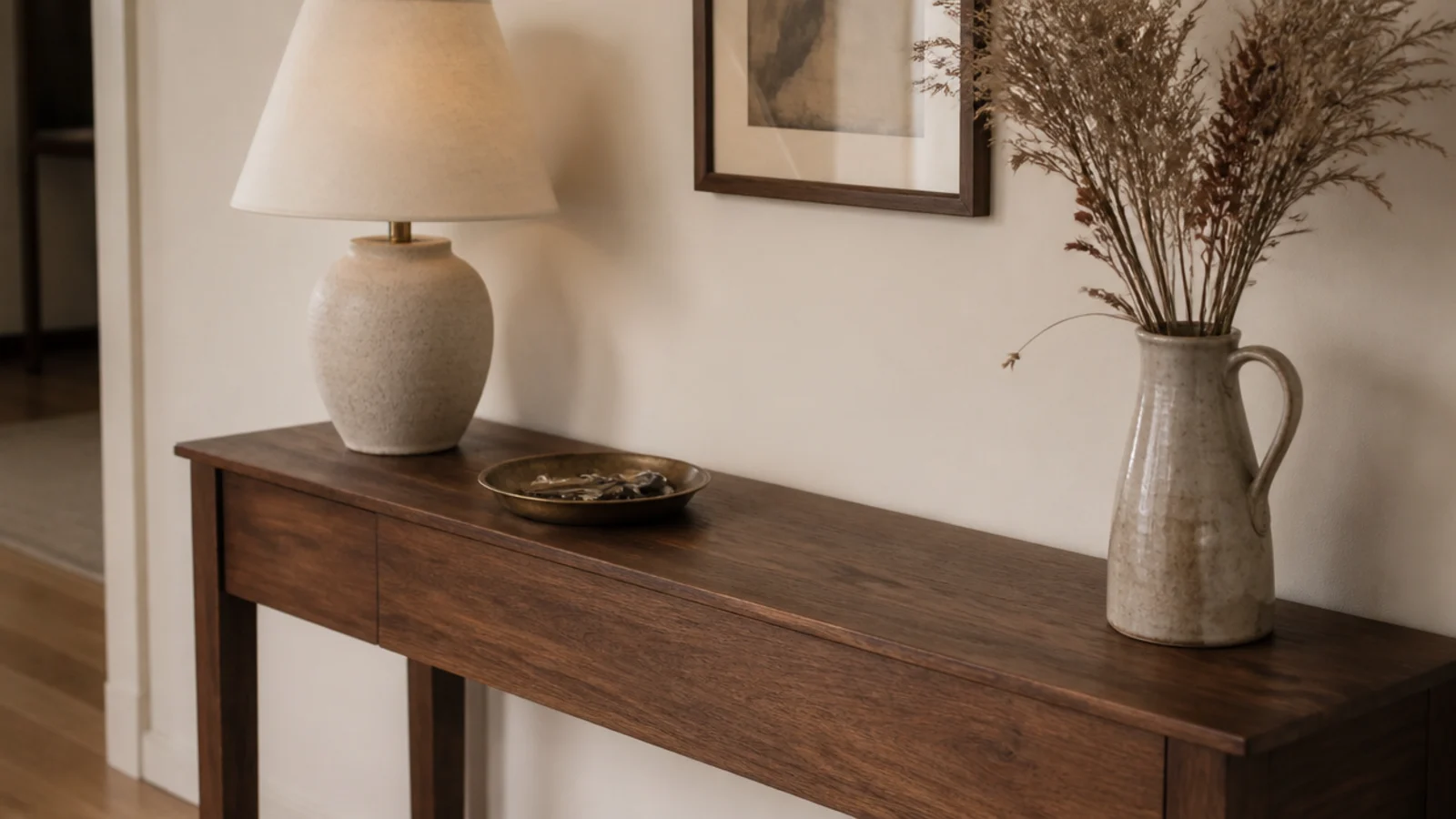
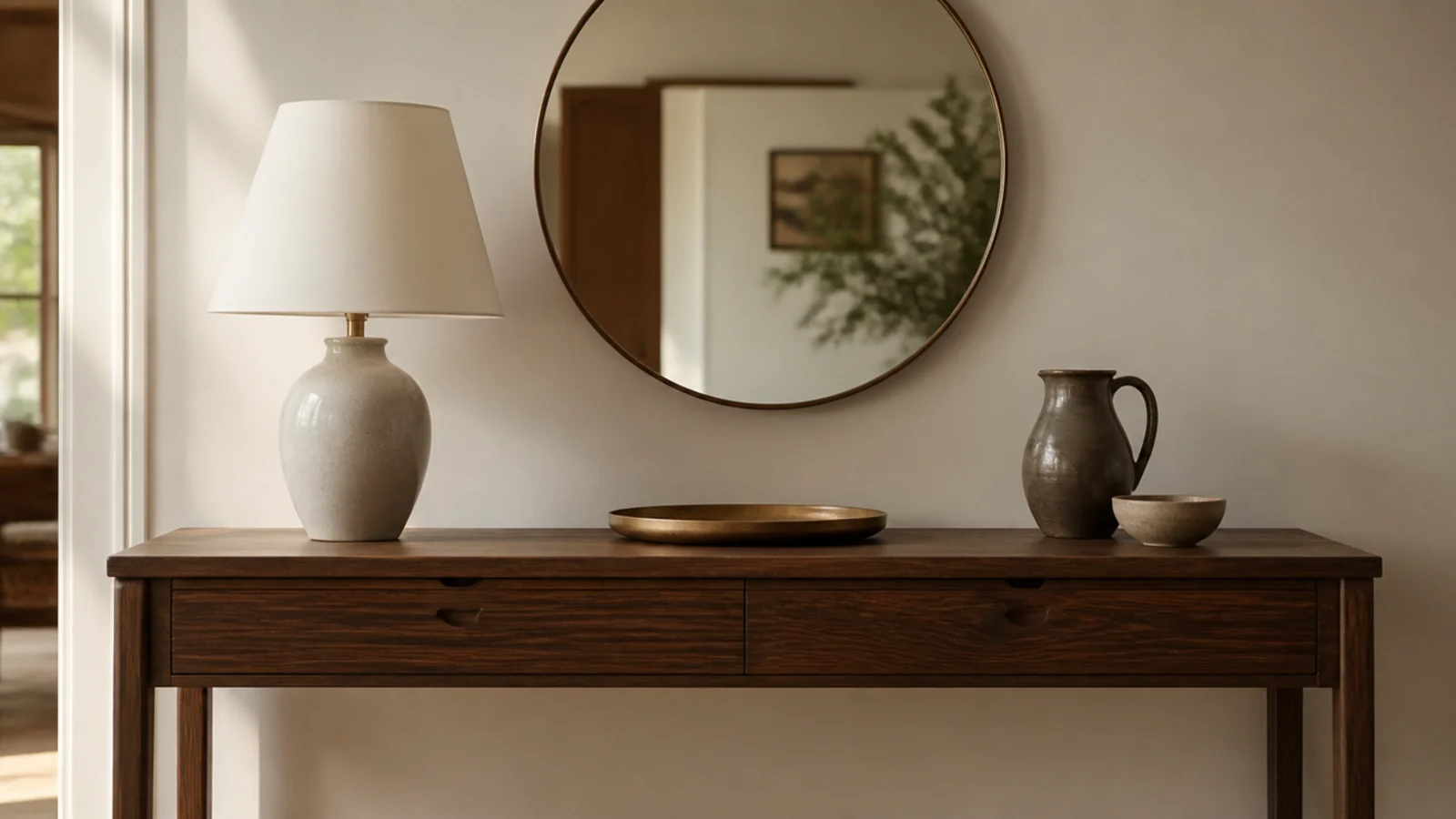
Entryway table decor is the one styling job that has to survive being used. A console that photographs beautifully and has nowhere to set a bag down is a shelf with a lamp on it. The versions that look expensive all follow the same handful of rules about height, spacing and how much of the surface stays bare. Here are fifteen, in the order I apply them.
In this guide17 sections — tap to openHide
- 1.What separates expensive-looking entryway table decor from clutter
- 2.Leave a third of the surface empty
- 3.The lamp anchors one end
- 4.The tray goes at the opposite end
- 5.Three heights, odd numbers
- 6.One tall vessel carries the height
- 7.Two books as the riser
- 8.A bowl inside the tray for keys
- 9.A lidded box for the unlovely essentials
- 10.Repeat one metal three times
- 11.Three materials, no more
- 12.Mind the gap to the mirror
- 13.Hide the cable
- 14.The lower shelf holds baskets, not display
- 15.Change one object per season
- 16.Photograph it, then remove two things
- 17.Mistakes to Skip
What separates expensive-looking entryway table decor from clutter
Almost every console that looks cheap is over-filled rather than badly furnished. Removing two objects usually does more than replacing the table.
Start with the table itself. A console at 30 to 32 inches high sits where your hand naturally lands, and 12 inches deep is the maximum most halls take before the walkway suffers. Under 36 inches of clearance between the wall and whatever you walk around, skip the console entirely and mount a 6-inch ledge — the styling rules below all still apply.
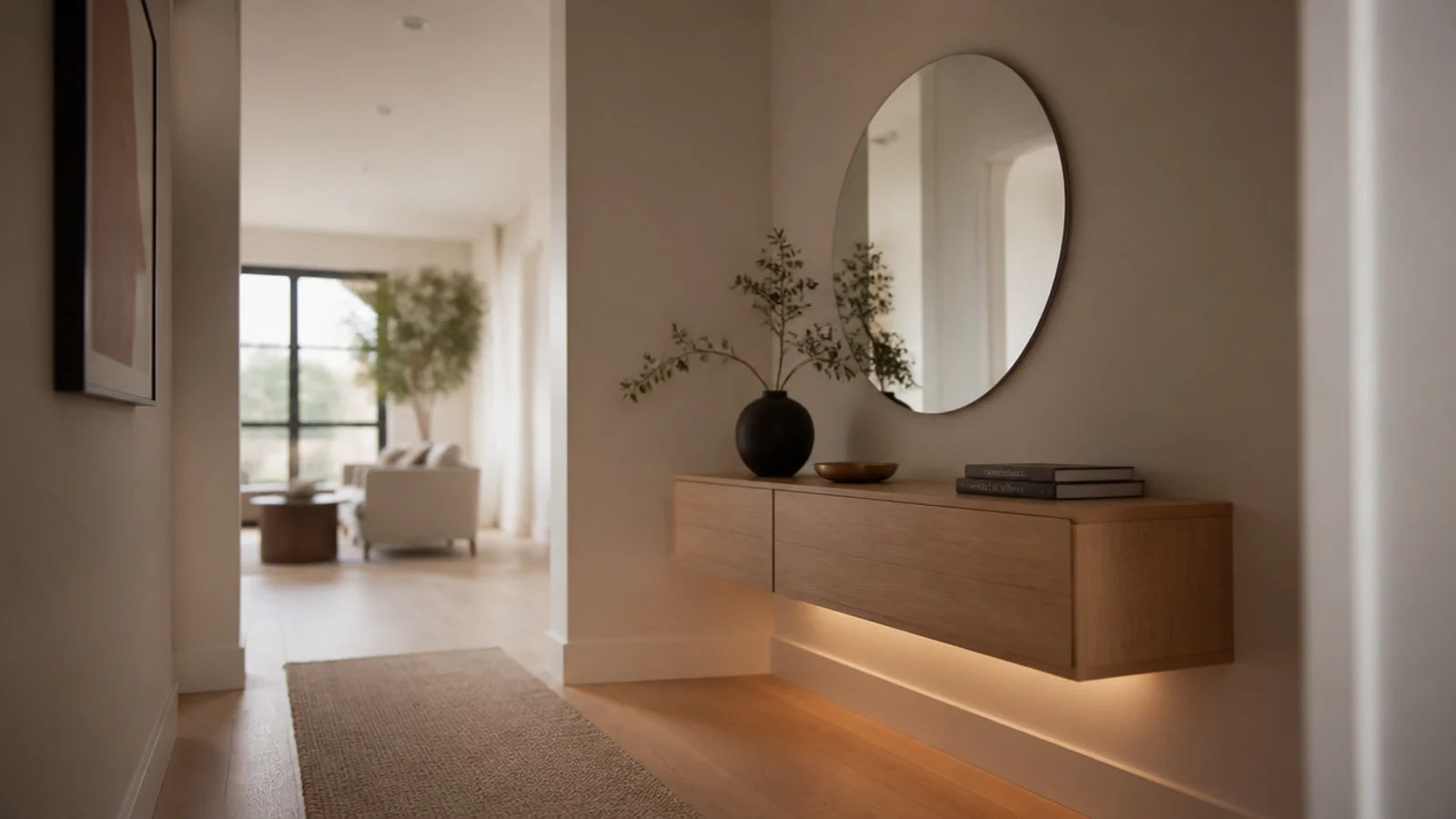
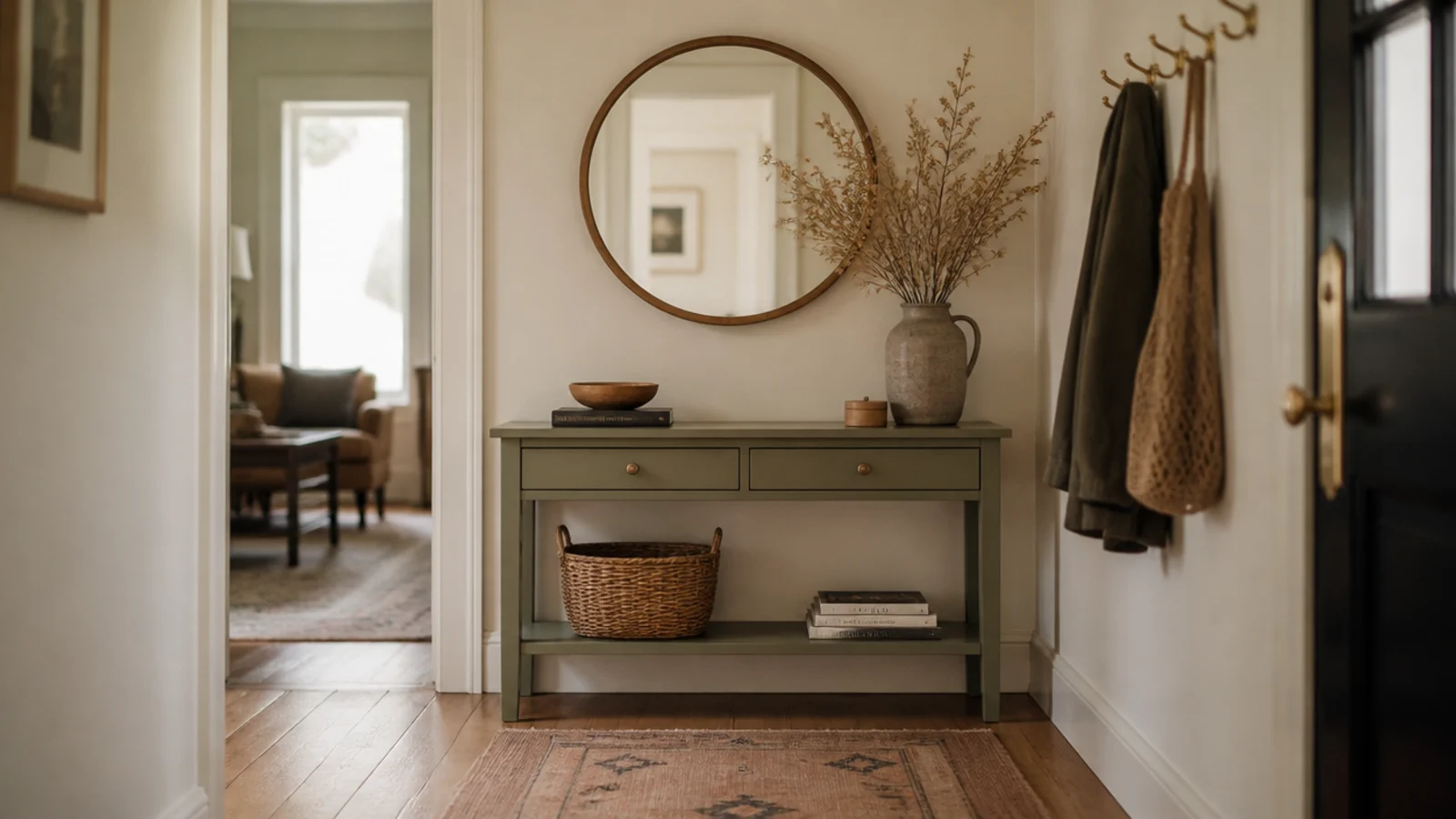
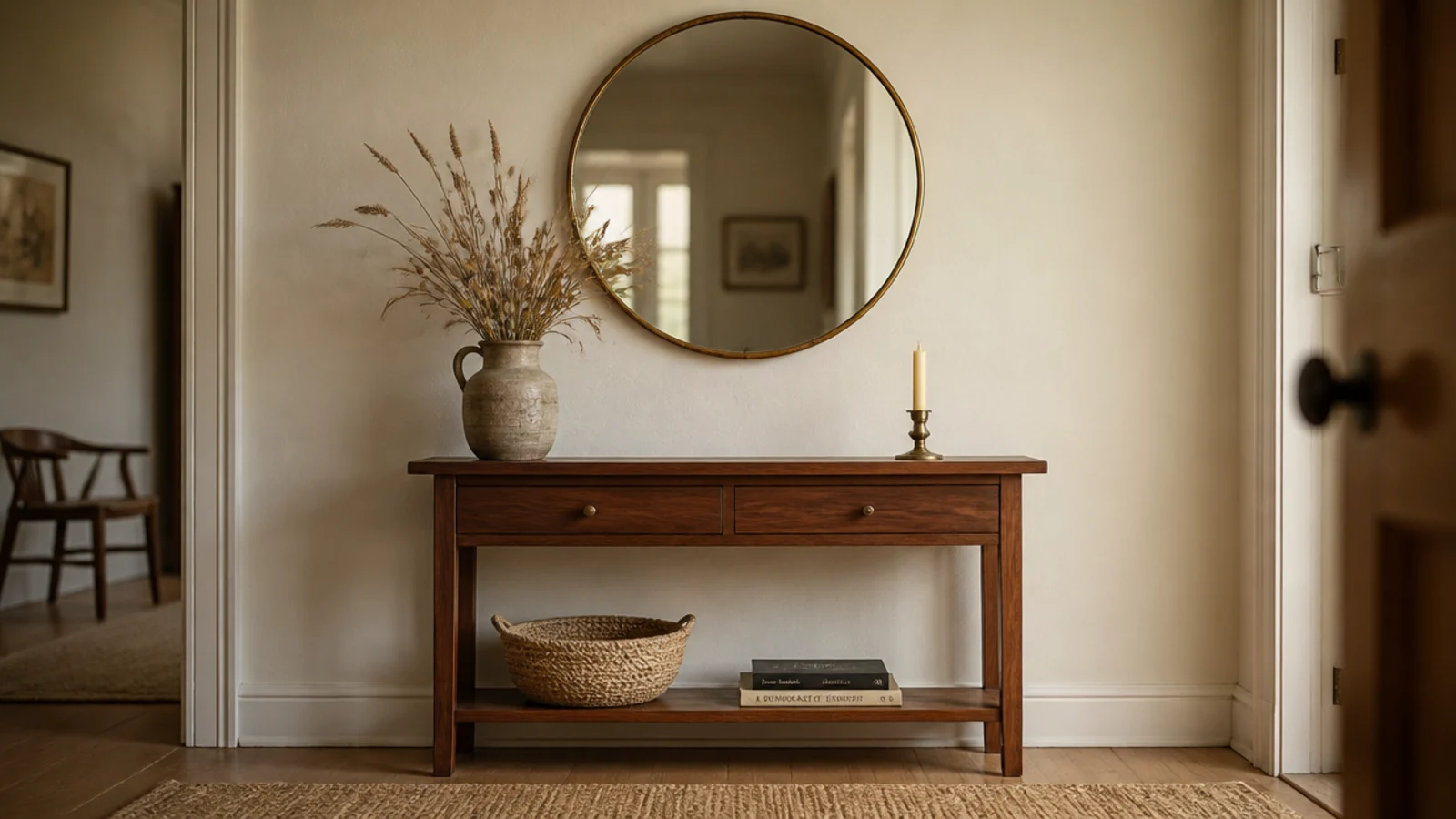
Then set the frame. A mirror centred at 57 to 60 inches, with 6 to 8 inches of bare wall between the console top and the bottom of the frame. That band of wall is what stops the two pieces reading as one heavy block.
The formula underneath everything here is short: a lamp, one tray, one tall vessel, and a third of the surface left empty. Five objects is the ceiling on a 36 to 48-inch console, and three is often better.
Budget tiers: $ under $60, $$ $60–$150, $$$ $150 and up. A whole console styled from thrift and one new lamp lands comfortably in $$.
1. Leave a third of the surface empty
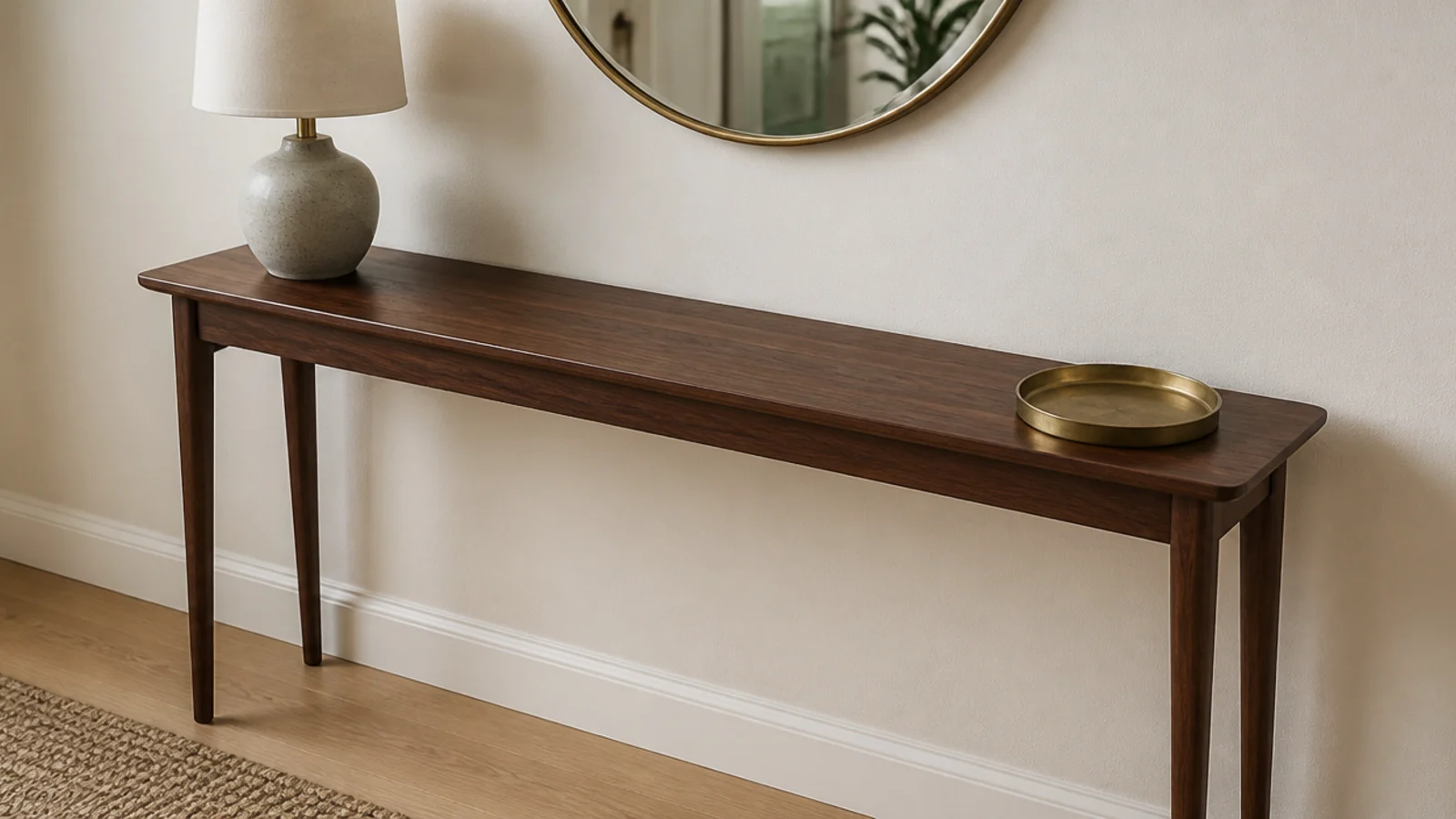
The bare third is the most expensive-looking thing on the table, and it is free. It is also the part you use — the spot where a bag, a coffee cup or a bag of groceries lands while you find your keys.
Group everything into the other two-thirds rather than spacing objects evenly across the whole top. Even spacing reads as a display shelf; grouping with a deliberate gap reads as a room somebody lives in. If the surface has no gap, you will create one daily by shoving things aside, and that is how arrangements come apart. Free
2. The lamp anchors one end
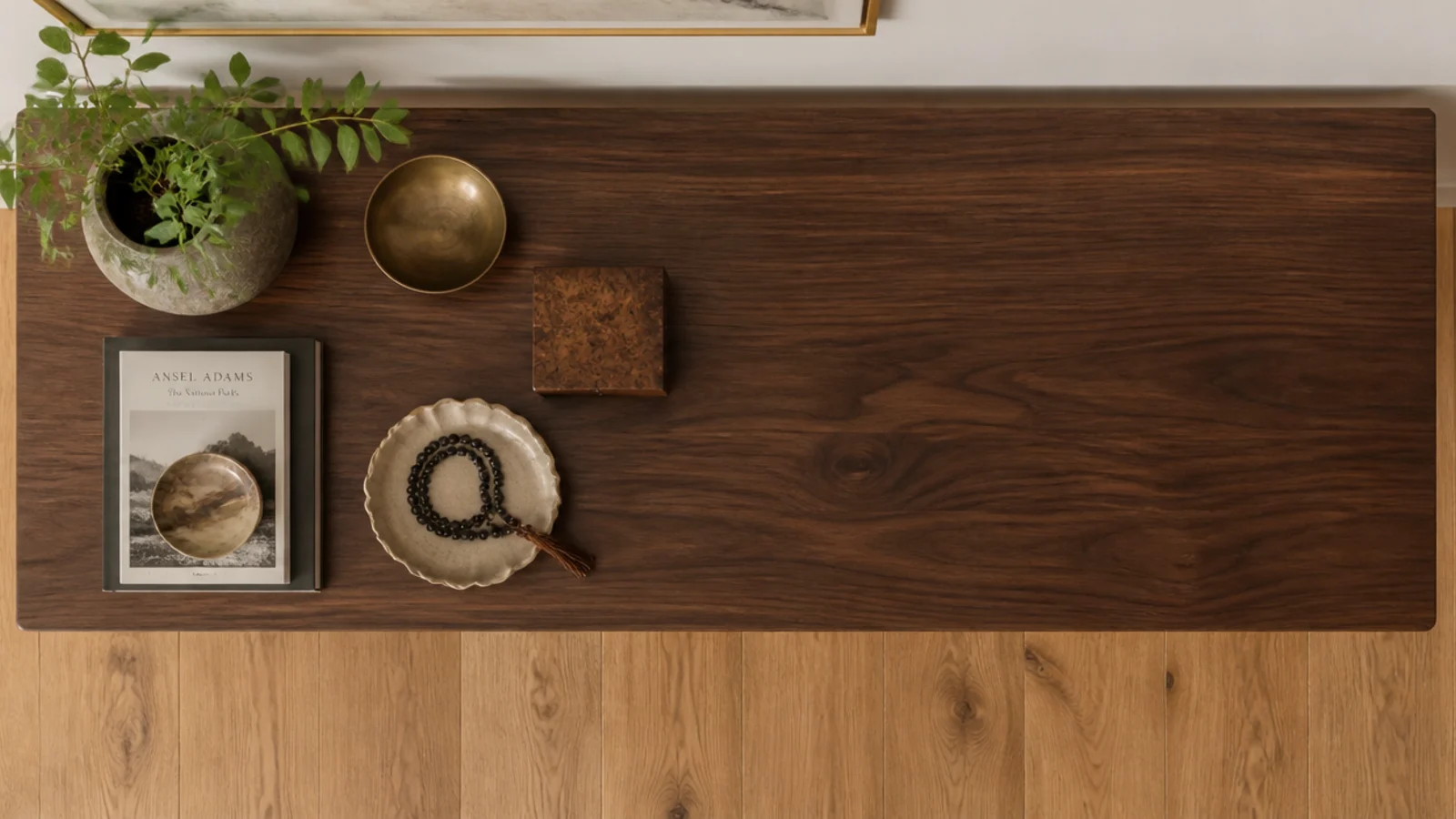
Every good console arrangement has one object with real visual weight, and a lamp is the easiest way to get it. Put it at one end rather than the centre.
A ceramic or stoneware base around 15 to 18 inches tall works on a standard console without blocking a mirror behind. Warm 2700K bulb, always — a single ceiling fixture flattens an entry, and this lamp is what fixes that after dark. If there is no outlet, a rechargeable cordless lamp runs about 20 hours a charge and costs $30 to $60. $–$$
3. The tray goes at the opposite end
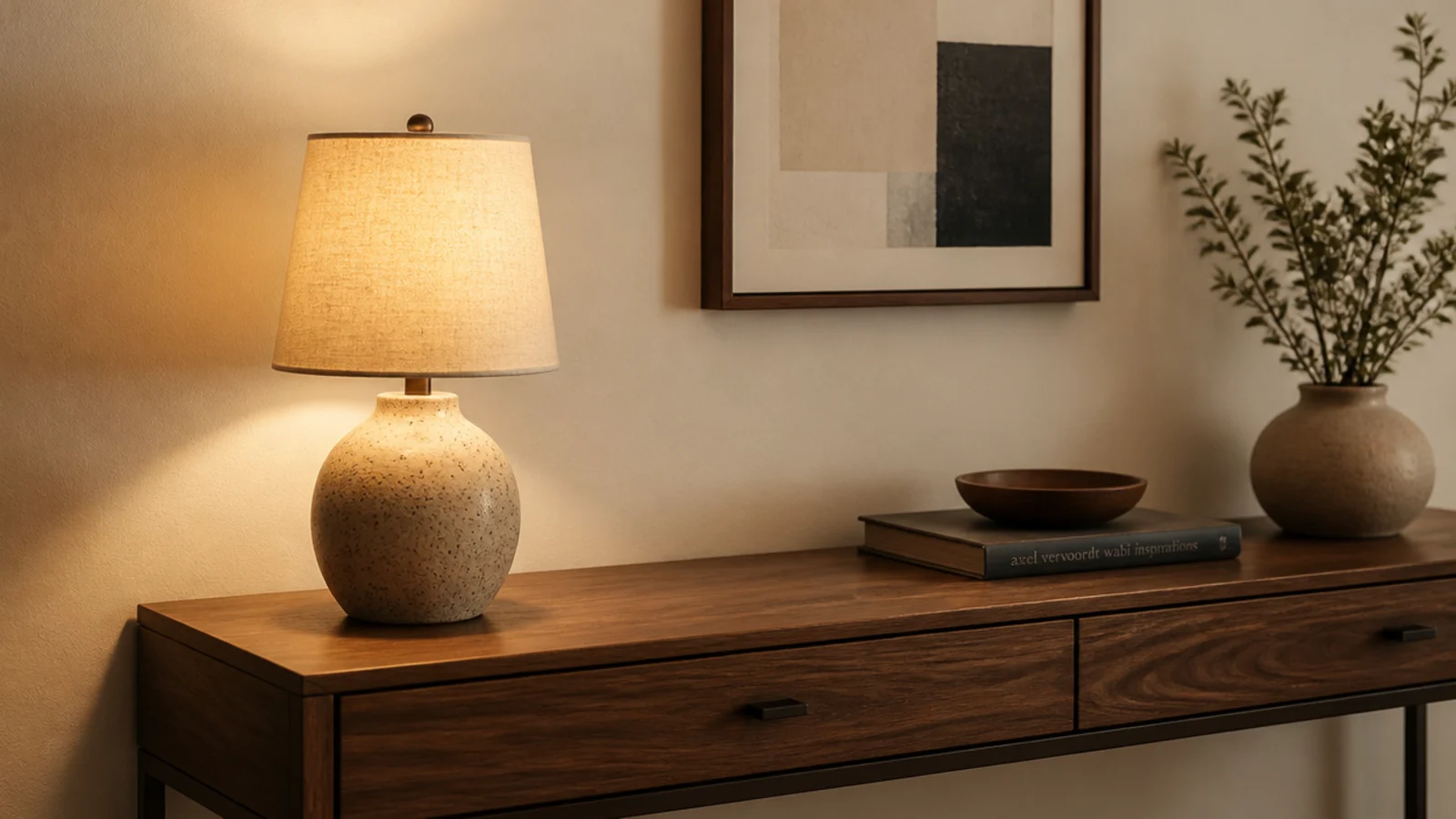
One tray on the landing surface is what stops mail and keys spreading across it. Put it at the far end from the lamp so the two heavy elements balance.
Roughly 8 by 12 inches is right. Small enough that it fills within a week and forces an edit, big enough for keys, sunglasses, a wallet and the day's post. Two trays defeat the purpose entirely, because the overflow simply moves next door and you end up with two piles instead of one. $
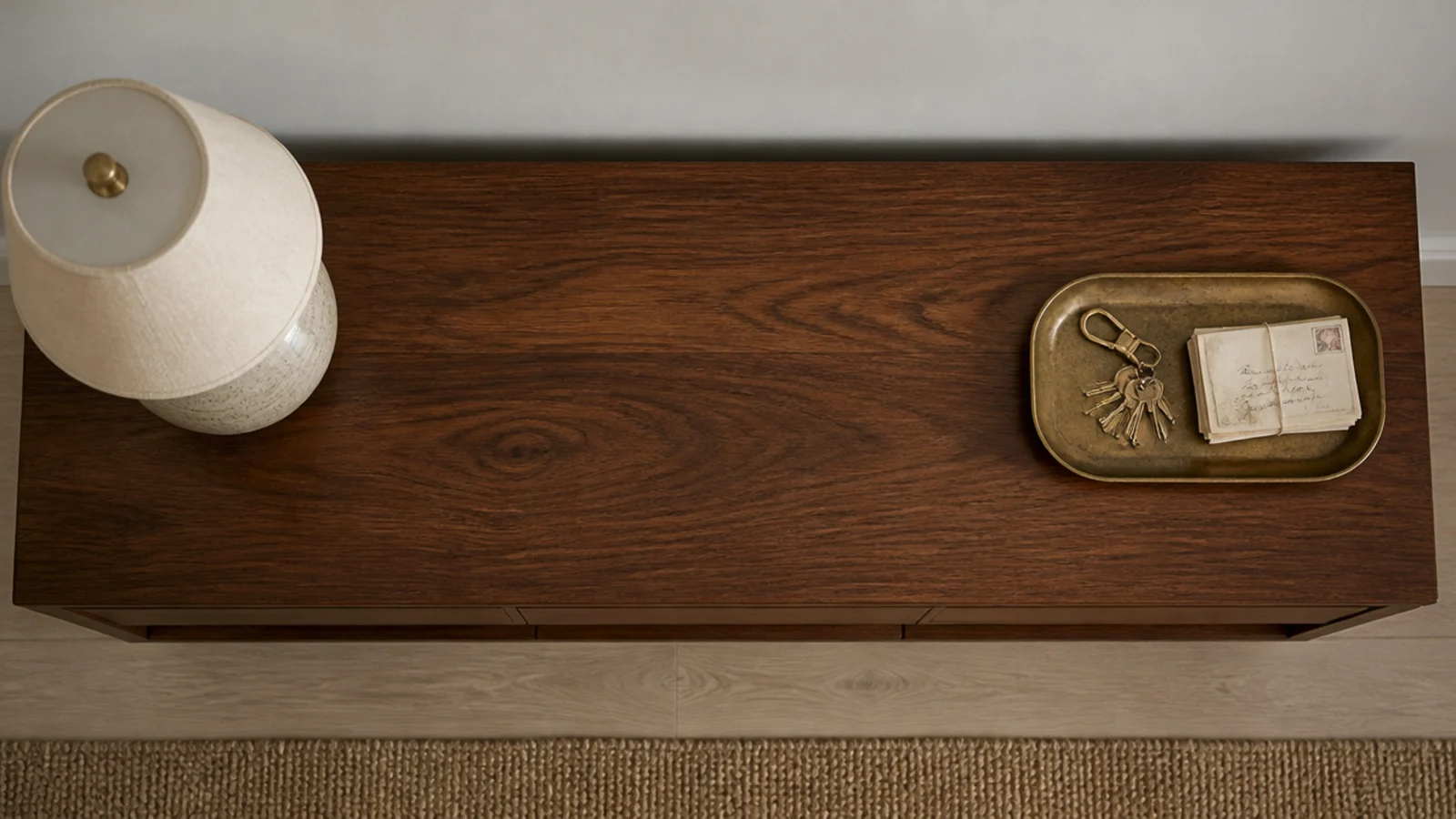
4. Three heights, odd numbers
Three objects at three clearly different heights: something tall, something low and wide, something soft. Groups of three read as intentional; groups of two read as a mistake and groups of four read as storage.
Make the height difference obvious. If your tall object is 14 inches and your medium is 12, the eye reads them as the same. Aim for a genuine step — 16, 9 and 4 inches, for example. Keep everything except the tall piece under 18 inches so the mirror behind stays visible. Free
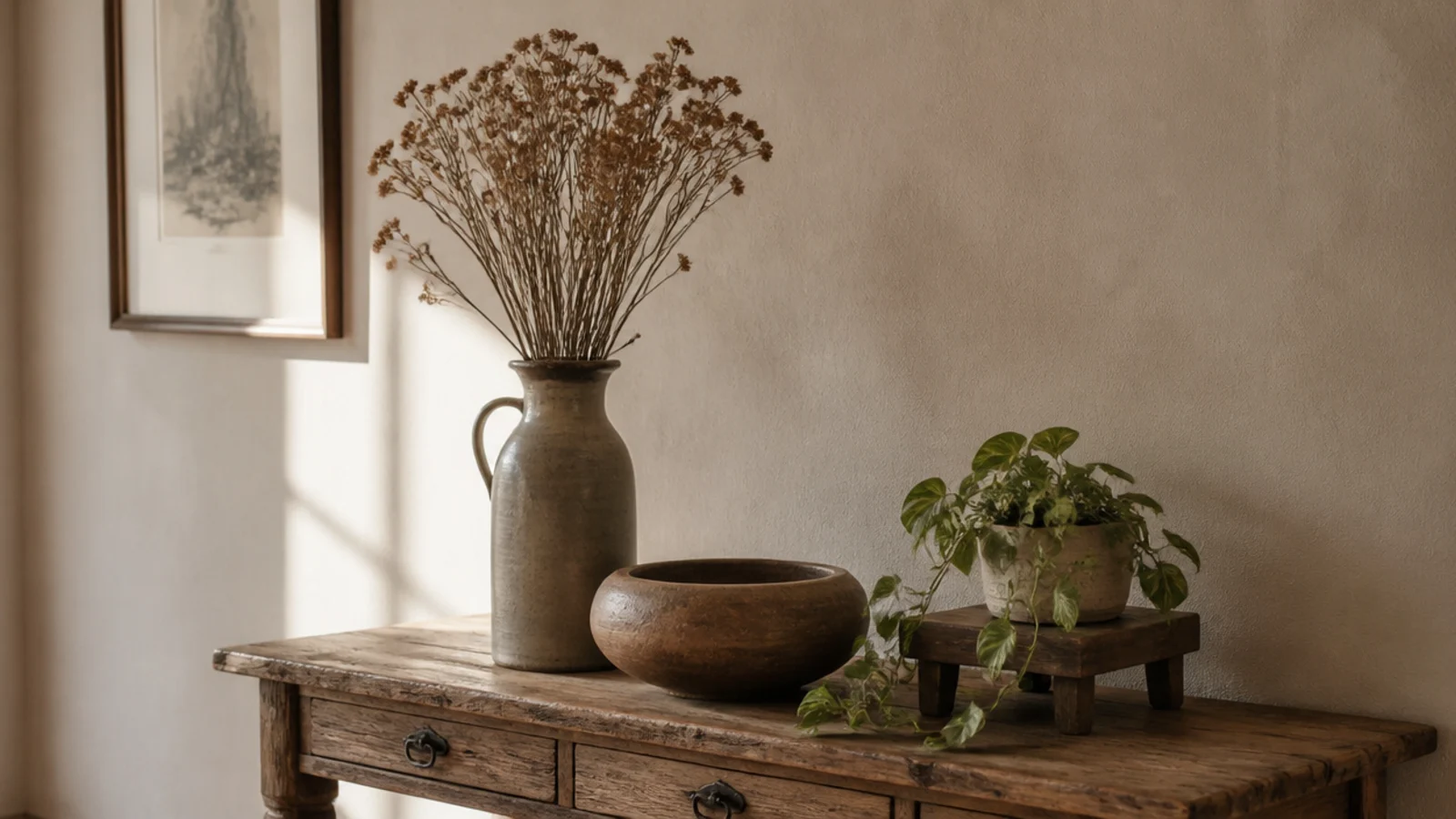
5. One tall vessel carries the height
A jug or vase of stems is the cheapest height you can buy. Dried grasses cost about $12 and last two years, where fresh flowers in a dim hall last four days.
Cut the stems so they reach roughly 1.5 times the height of the vessel — shorter looks stumpy, taller starts to lean. A speckled stoneware jug 8 to 10 inches tall is the shape that works with the most arrangements, and thrift shops are full of them for $6 to $12. $
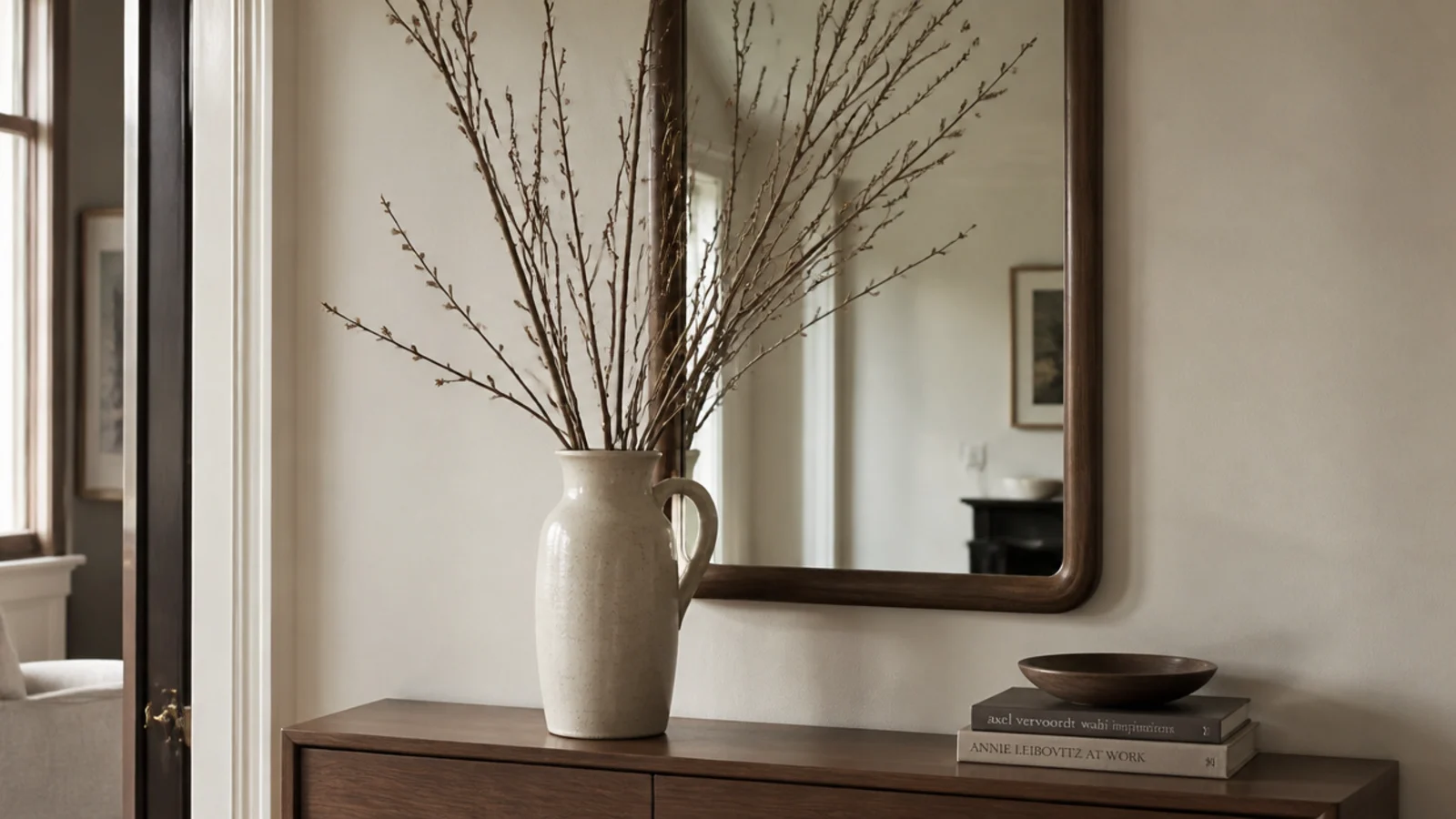
6. Two books as the riser
Two hardbacks lying flat under a bowl or a small plant lift it two inches, and that lift is what turns three separate objects into a composed group.
Use plain cloth-bound books, or turn the fore-edges out if the covers are loud. This is the trick every stylist uses and nobody notices, because a riser reads as intent rather than as a prop. It costs nothing, and it is the fastest fix for an arrangement that feels flat. Free
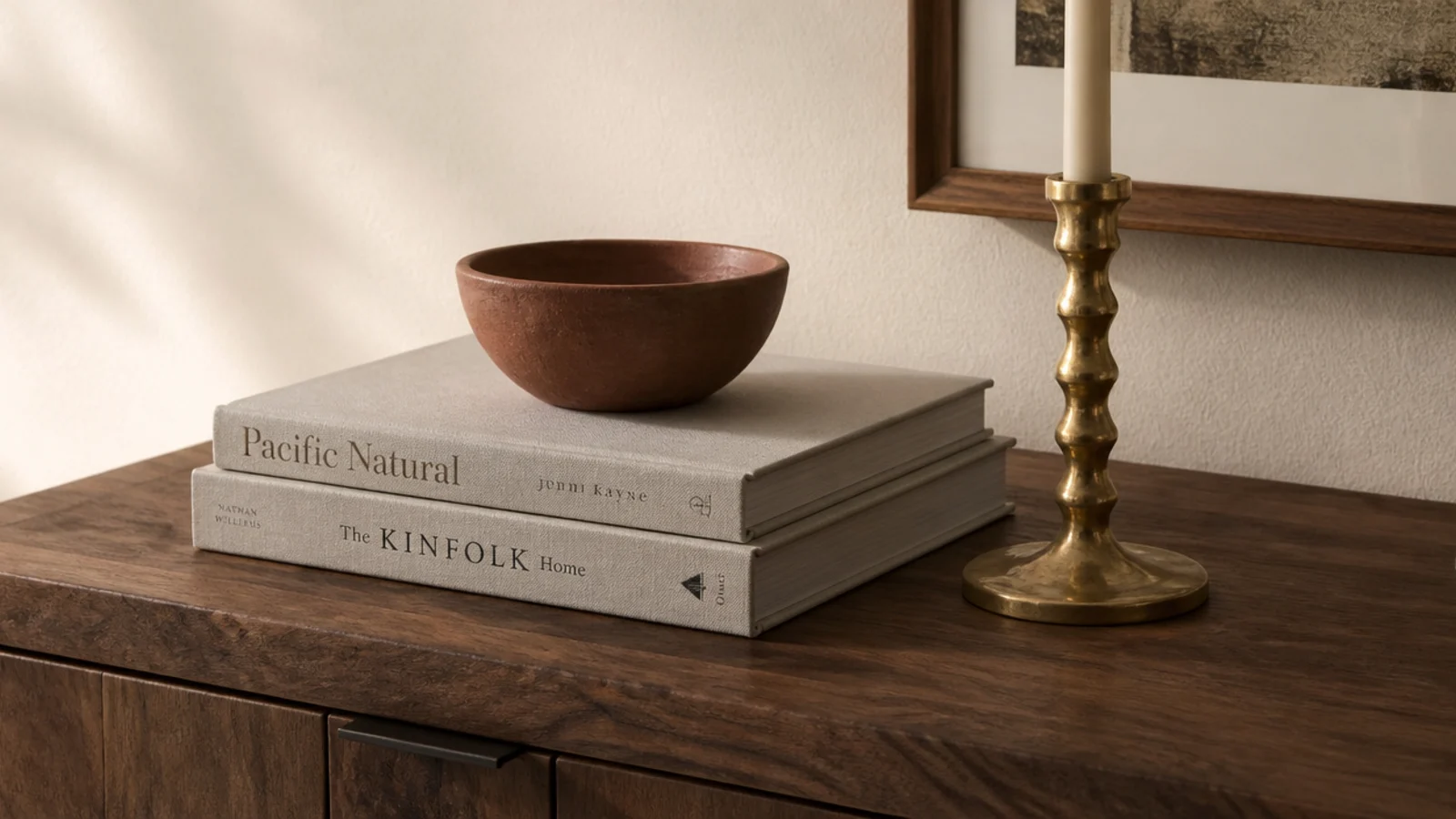
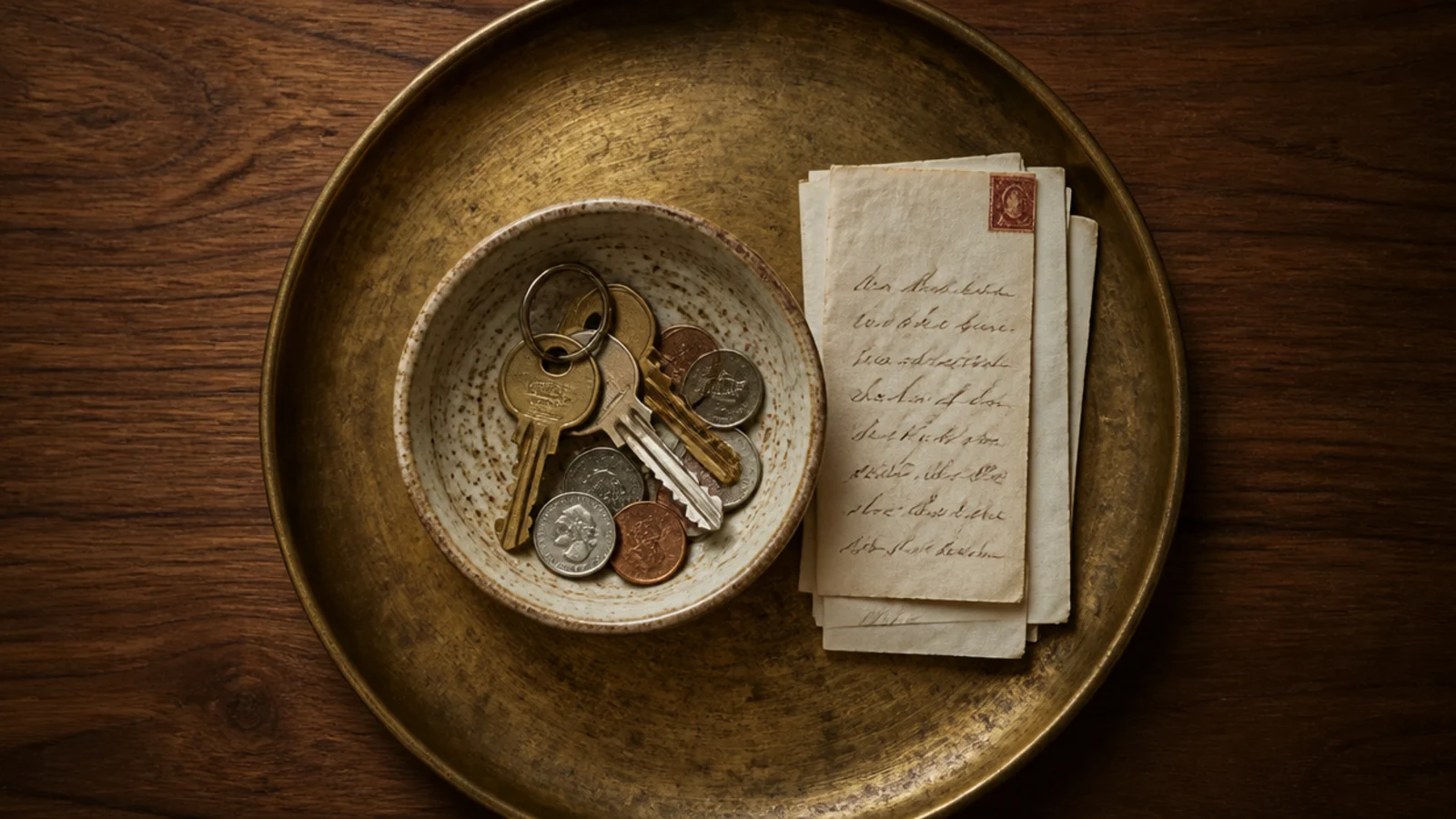
7. A bowl inside the tray for keys
Keys loose in a tray slide, scratch and end up under the post. A small stoneware bowl inside the tray gives them a defined home, and the double containment is what stops the tray becoming a junk drawer with no sides.
Four inches across is plenty. Choose something with a bit of depth so keys drop in rather than skate out. It is a $6 object that makes a $200 console look considered, and the sound of keys landing in ceramic is genuinely satisfying. $
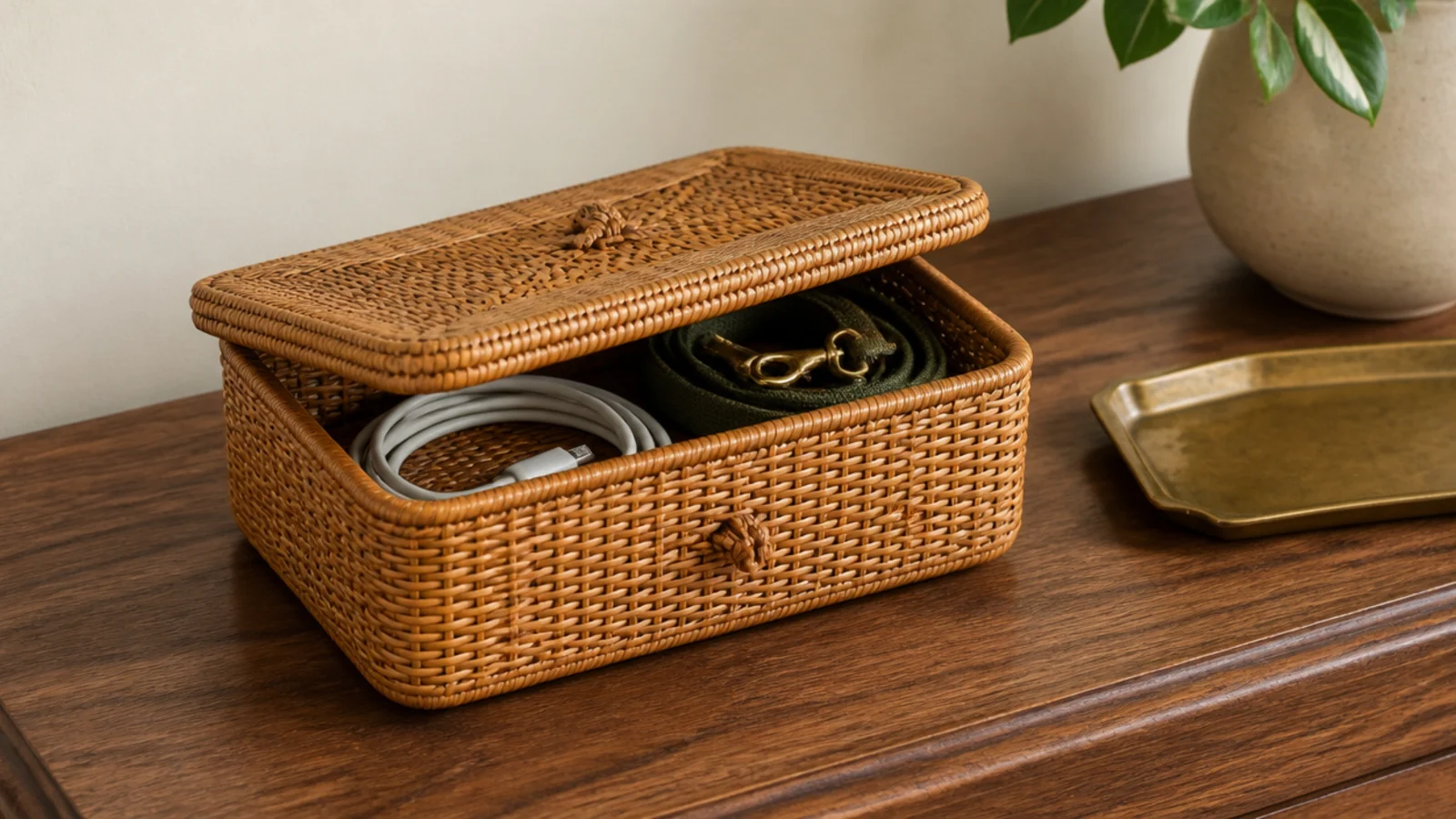
8. A lidded box for the unlovely essentials
Every entry has objects that must live there and look terrible — charging cables, sunscreen, dog bags, a spare mask. A lidded rattan or wooden box takes all of them.
Roughly 8 by 6 by 4 inches sits comfortably on a console without dominating. A lid, not a basket, because open baskets at eye level display exactly what you were hiding. This is the object that lets the rest of the arrangement stay minimal without you moving anything to a drawer. $
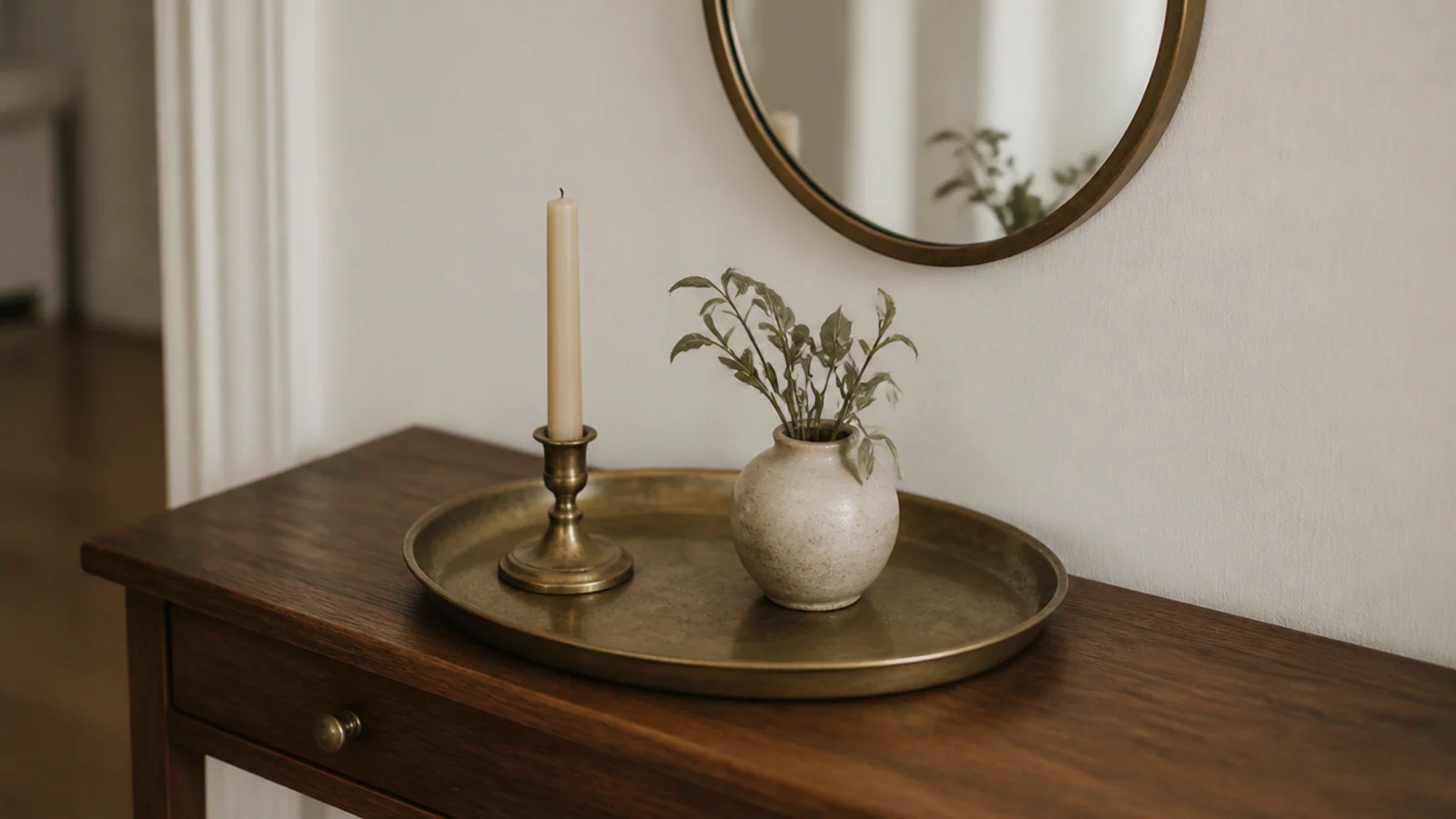
9. Repeat one metal three times
Pick one metal and use it three times across the entry — the tray, a candlestick and the mirror frame, say. Repetition is what makes a mixed group look composed rather than collected.
Aged brass is the most forgiving with wood and warm walls; matte black works better in a cooler, more modern hall. Mixing two metals is fine if each appears more than once, but a single lonely chrome object among brass reads as an oversight every time. Round frames are covered in round mirror wall decor. $
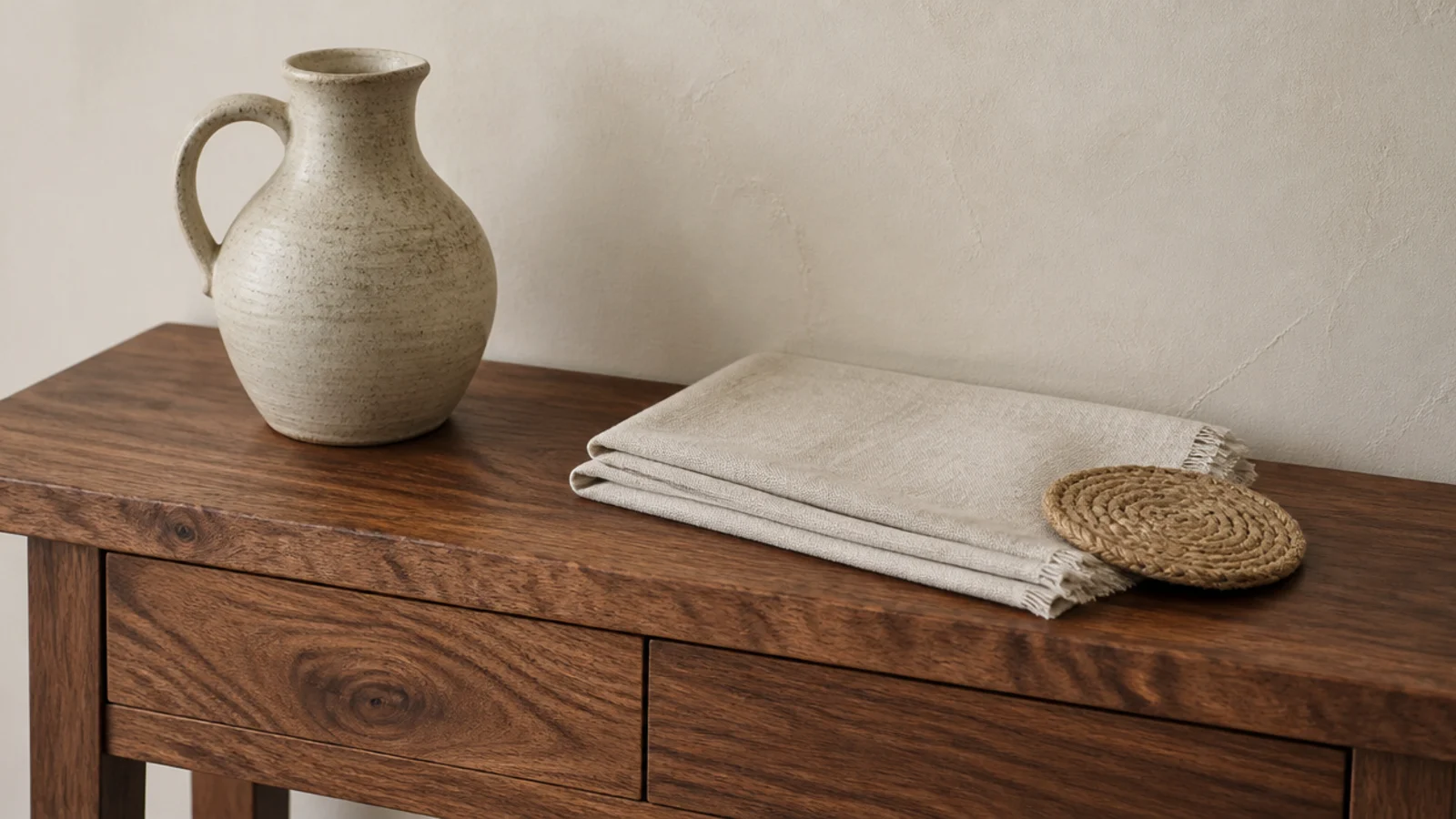
10. Three materials, no more
Wood, stoneware and linen. Or oak, brass and jute. Three materials in one vignette is the ceiling before a surface starts to look busy no matter how few objects sit on it.
This is why expensive-looking entries often have fewer materials than cheap ones, not more. If you want variety, get it from shape and height rather than from surface finish. Texture repeats — a woven basket below and a jute coaster above — pull the whole arrangement together. Free
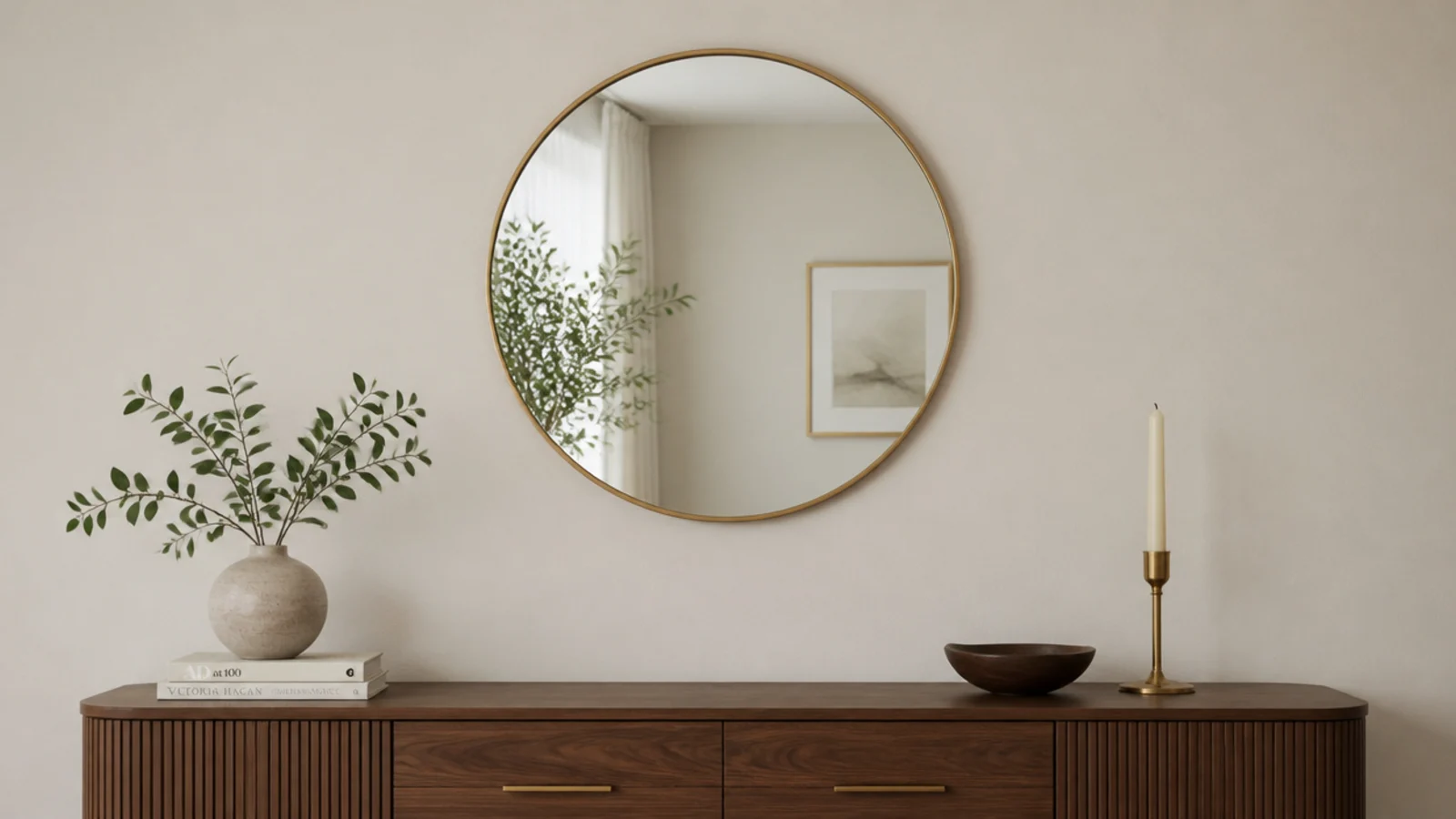
11. Mind the gap to the mirror
Six to eight inches between the console top and the bottom of the mirror frame, with the middle of the glass at 57 to 60 inches from the floor.
Closer than 6 inches and the console and mirror merge into one heavy block that makes the wall feel lower. Further than 8 and the mirror floats away on its own. Size the mirror to roughly two-thirds the width of the console — a 24-inch round suits a 36 to 48-inch table. $$
12. Hide the cable
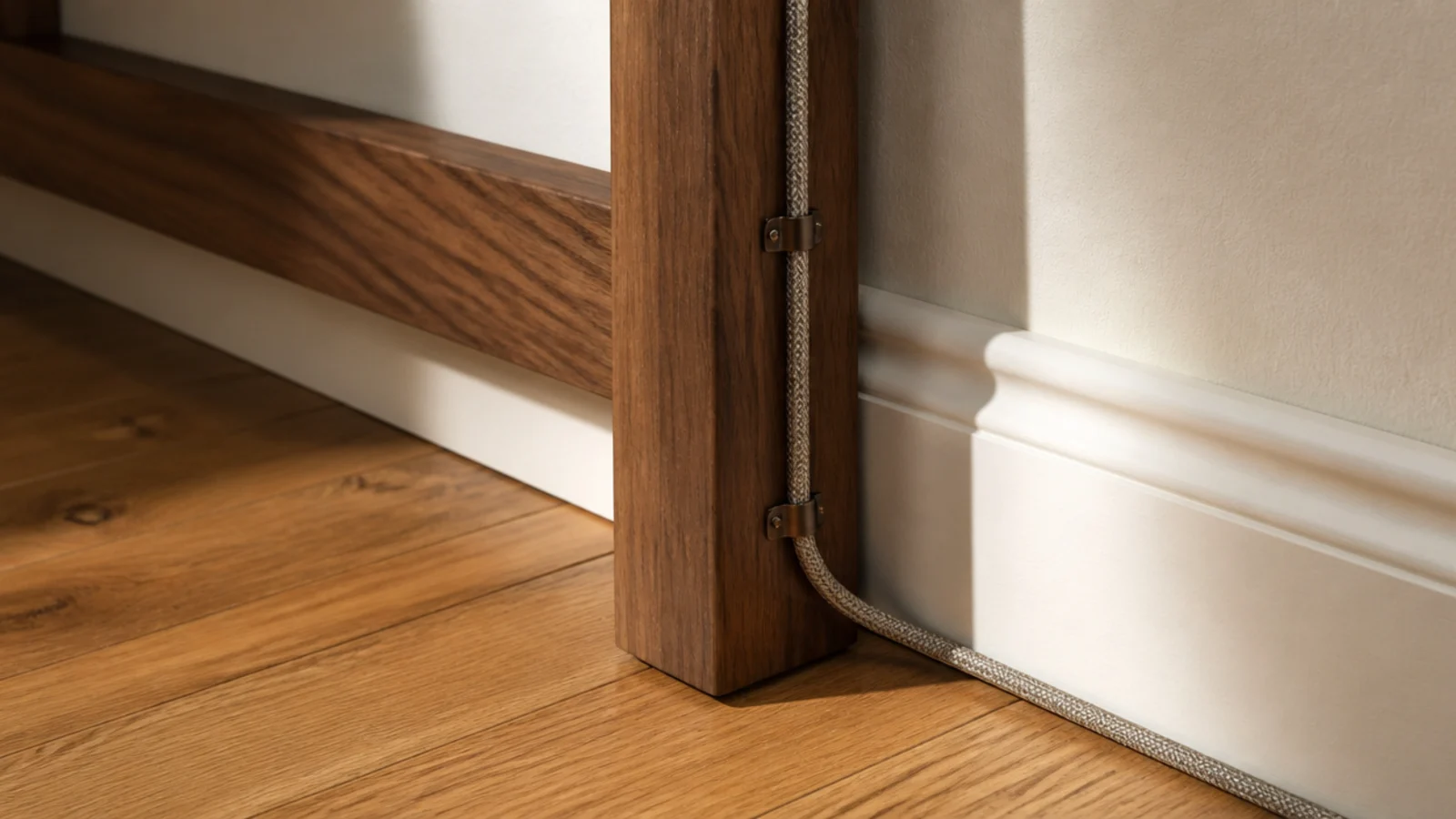
A visible lamp cable undoes every other decision on this list. Run it down the back leg with two small adhesive clips and tuck it behind the baseboard.
Fabric-covered cords in cream or black look intentional where a white plastic cord never will, and a replacement cord kit costs about $15. If the outlet is genuinely awkward, this is when a cordless lamp earns its money. Five minutes of tidying does more than any accessory purchase. $
13. The lower shelf holds baskets, not display
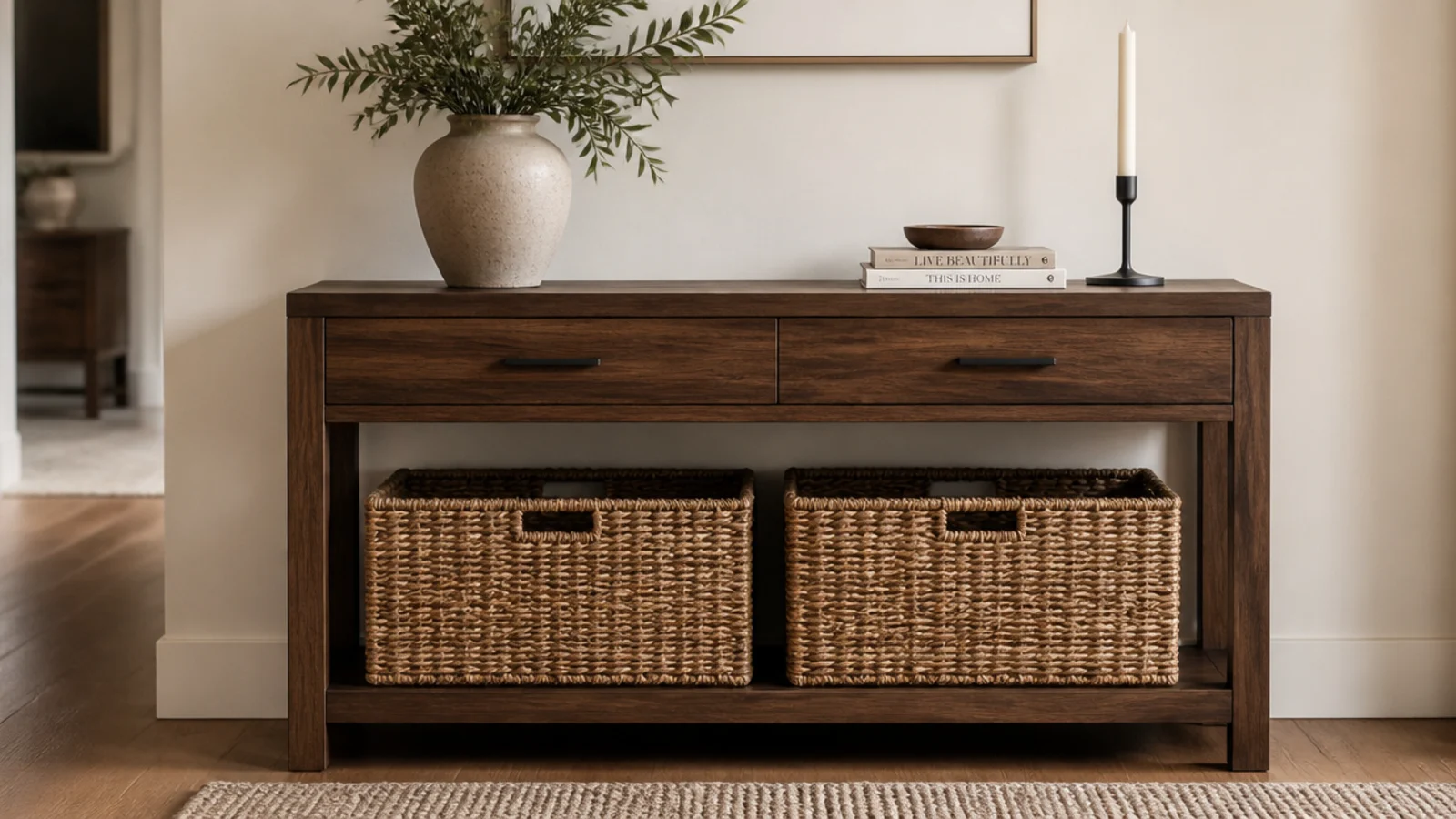
If your console has a lower shelf, use it for storage and keep the styling to the top. Two matching baskets underneath read as calm; three assorted objects read as overflow.
Seagrass or felt, sized to nearly fill the shelf so they look built in rather than shoved under. Gloves, hats and dog things live there. Keeping the display on one level and the storage on the other is what makes a small entry look organised rather than staged. $
14. Change one object per season
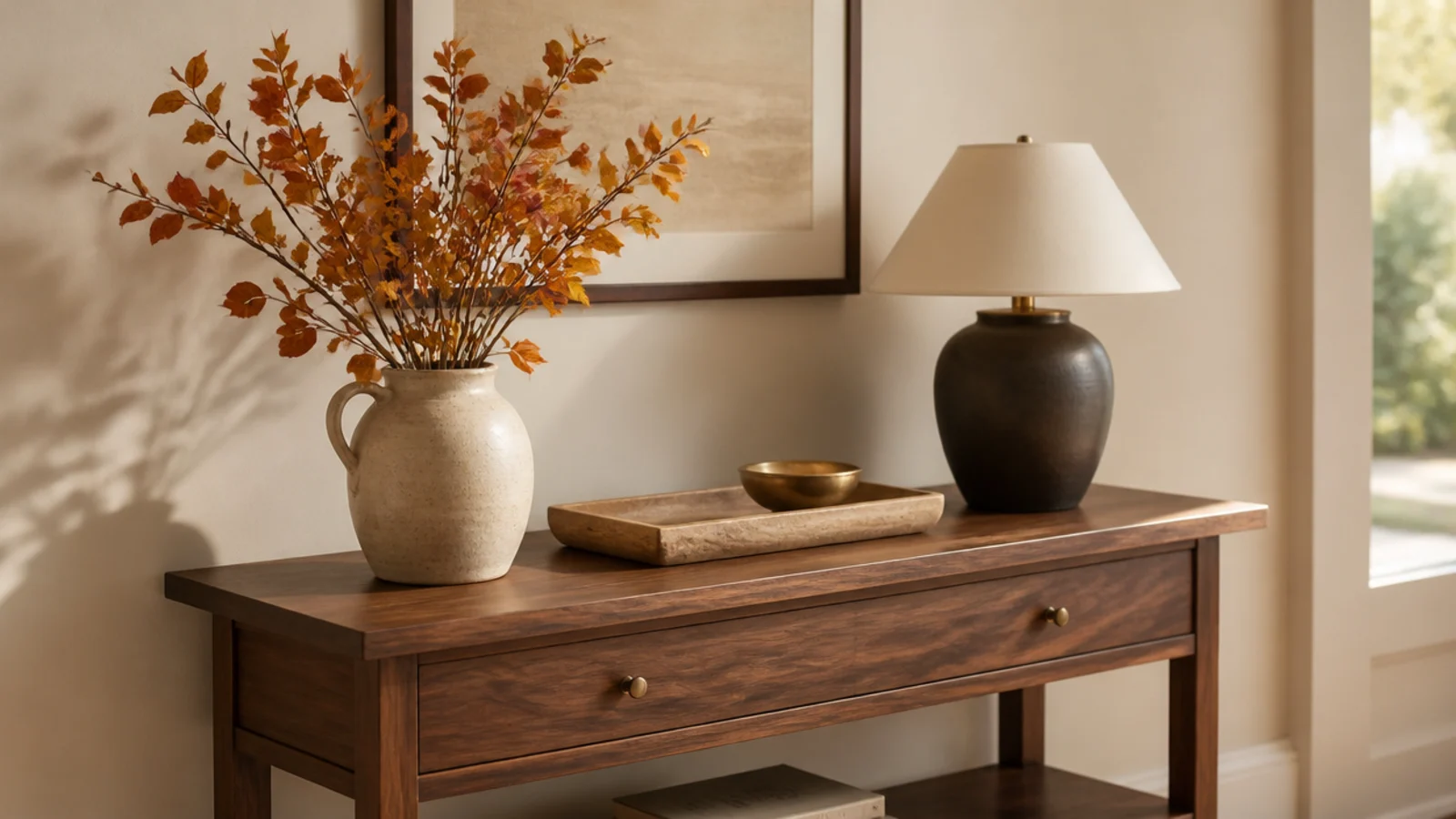
Swap the stems and nothing else. Branches in spring, grasses through summer, seed heads in autumn, evergreen in winter — same jug, same lamp, same tray.
One change reads as attentive; four changes read as a themed display. It also keeps the cost of seasonal decorating at about $10 a year. The rest of the arrangement should be things that earn their place in every month, which is a useful filter when you are tempted by a seasonal object. $
15. Photograph it, then remove two things
Take a photo on your phone at standing height. The camera flattens the arrangement and shows you what your eye has learned to skip past.
Then remove two objects and look again. Almost every console I style improves at that point, and mine is no exception. If it looks bare, put one back — but only one. The full set of heights behind all this styling lives in fifteen entryway ideas. Free
Mistakes to Skip
- Spacing objects evenly across the whole surface. It reads as a display shelf and leaves nowhere to set a bag down, so the arrangement gets shoved apart daily anyway.
- Using two trays or two bowls. The overflow simply moves to the second container, and you end up managing two piles instead of editing one.
- Hanging the mirror so it touches the console. Under 6 inches of wall between them, the pieces read as one heavy block and the whole wall feels lower.
Frequently asked questions
What should I put on an entryway table?
A lamp, one tray and one tall vessel is the whole reliable formula. The lamp anchors one end, the tray takes keys and post at the other, and the vessel gives you height in between. Everything else is optional, and a third of the surface should stay bare so there is somewhere to set a bag down.
How do you make a console table look expensive?
Repetition and restraint. Repeat one metal three times across the arrangement, limit yourself to three materials, and leave a third of the surface empty. Cheap-looking consoles are almost always over-filled rather than badly furnished — removing two objects usually does more than buying a better one.
How high should a mirror hang above an entryway table?
Leave 6 to 8 inches between the console top and the bottom of the frame, with the middle of the glass centred at 57 to 60 inches from the floor. Closer than 6 inches and the two pieces merge into one heavy block. Further apart and the mirror floats off on its own.
How many things should be on an entryway table?
Five objects at most on a 36 to 48 inch console, and three is often better. Count a stack of books as one object and a tray with its contents as one. Beyond five the surface stops reading as styled and starts reading as the place things get put down and forgotten.
How do you keep an entryway table from getting cluttered?
One tray, sized around 8 by 12 inches. Everything small goes inside it and the surface around it stays clear. A tray that fills up within a week forces the edit, which is exactly the point — two trays defeat it entirely, because the overflow just moves next door.
Get the lamp, the tray and one tall thing right and the console will look expensive whatever it cost — everything after that is subtraction. For what belongs on the wall around it, entryway wall decor covers art placement and hook heights, and boho entryway ideas takes the same rules somewhere warmer and more layered. Save the pin so the ratios are with you next time you restyle.
Want more like this? Browse all 15 entryway & foyer ideas guides — they all use the same measurements and budget tiers.
Pin it for later
Save this to your Entryway & Foyer Ideas board
Pin it now so it is waiting for you when the tape measure comes out — and so the next person hunting for this idea can find it too.
Save this pinKeep going
More ideas worth saving while you have the tape measure out.