Floating Shelves · 15 guides
Floating Shelf Ideas for Every Blank Wall in the House
A floating shelf is the cheapest thing you can do to a blank wall and the easiest thing in the house to get wrong. The whole look depends on hiding the support, and hiding the support is exactly what makes the shelf weak. Almost every sagging shelf you have ever seen failed for the same three reasons, and none of them was the shelf.
So this board starts with numbers, not styling. Every guide names a depth, a fixing, a real weight limit and a budget tier before it tells you what to put on top.
The fixing decides everything
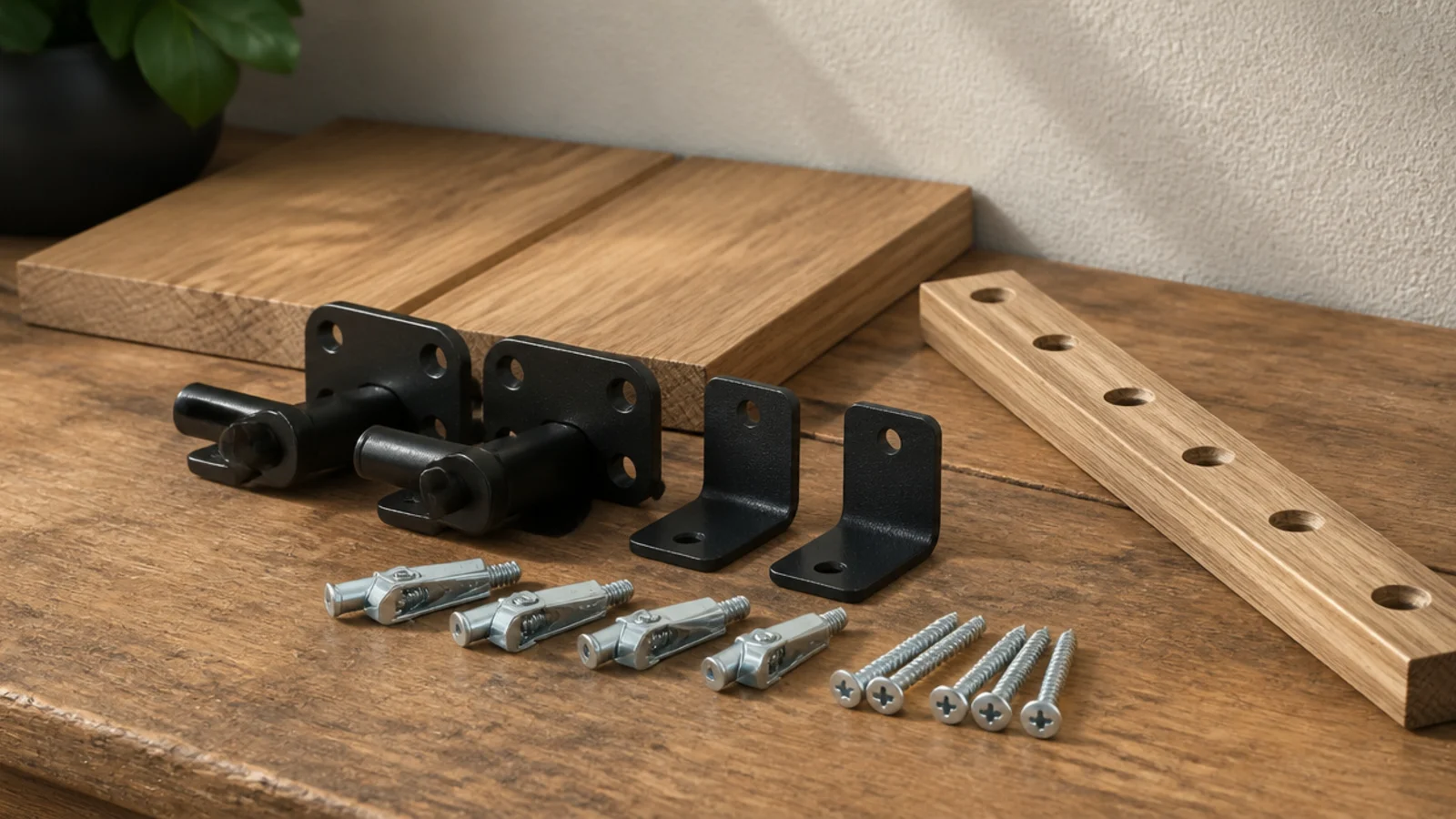
Pick the anchor before you pick the shelf. A concealed rod bracket landing in a stud carries 30 to 40 pounds on a 24-inch shelf, which is a full row of hardbacks. Toggle bolts in half-inch drywall carry 25 to 35 pounds each. The plastic plugs supplied in most kits carry about 10 pounds, and they are the usual cause of sagging — not thin boards, not cheap brackets, those plugs.
Studs sit 16 inches on center in most US framing, which is a gift on a straight wall. Size the shelf at 32 or 48 inches and both ends land on solid wood.
Depth and thickness are structural, not stylistic
Leverage rises with depth. A 12-inch floating shelf puts roughly twice the pull-out force on its fixings as a 6-inch one carrying the same weight. Six inches where you walk past, eight where you do not, and treat 12 inches as a decision that has to be earned with framing.
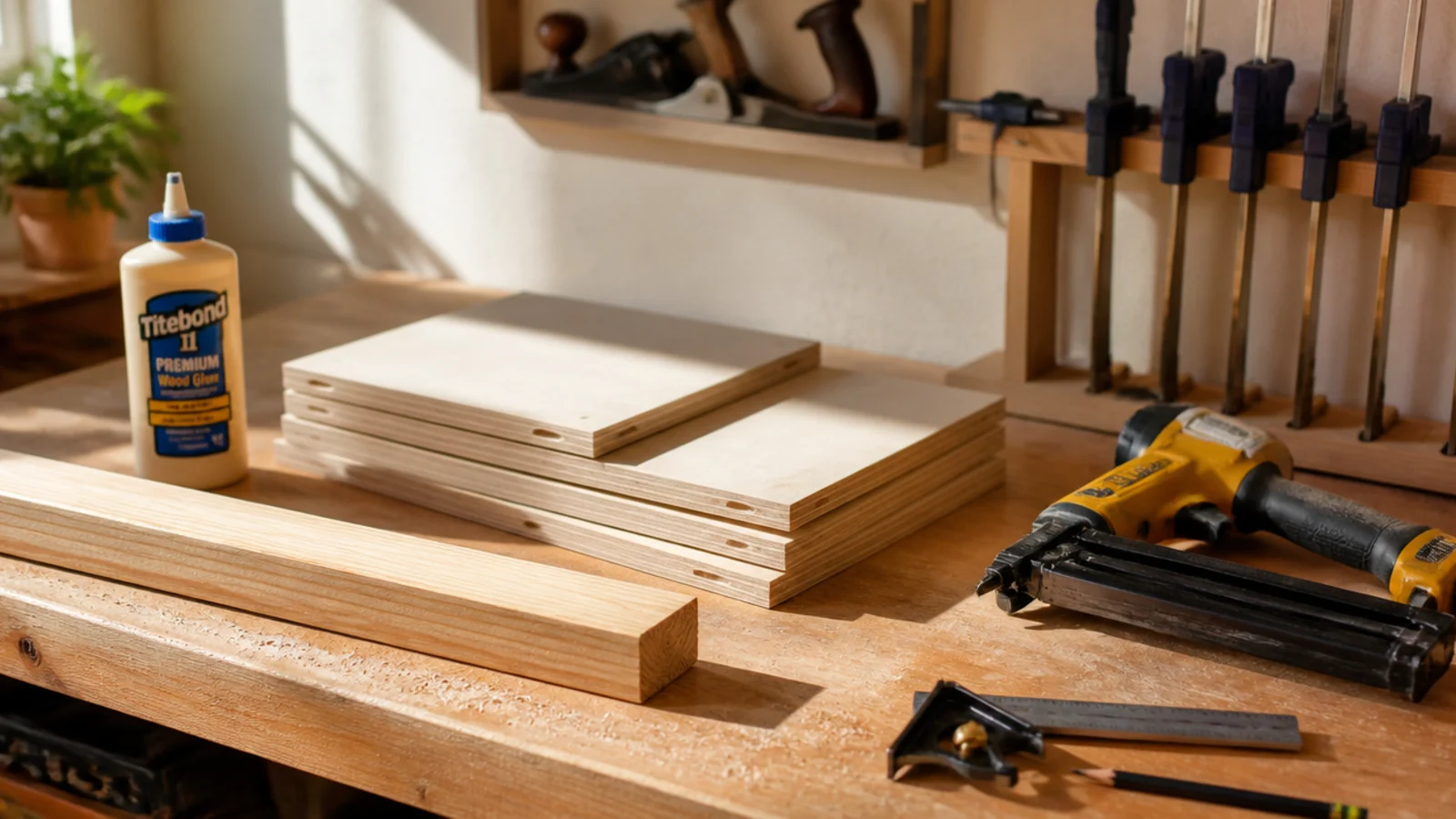
Thickness sets your span. Three-quarter-inch stock crosses 24 inches without visible deflection; half-inch stock bows at about 18. If you want the chunky look, a built-up hollow box gives a 1.5 to 2-inch front edge at half the weight and half the cost of solid timber.
Spacing, materials, and the two rooms with rules
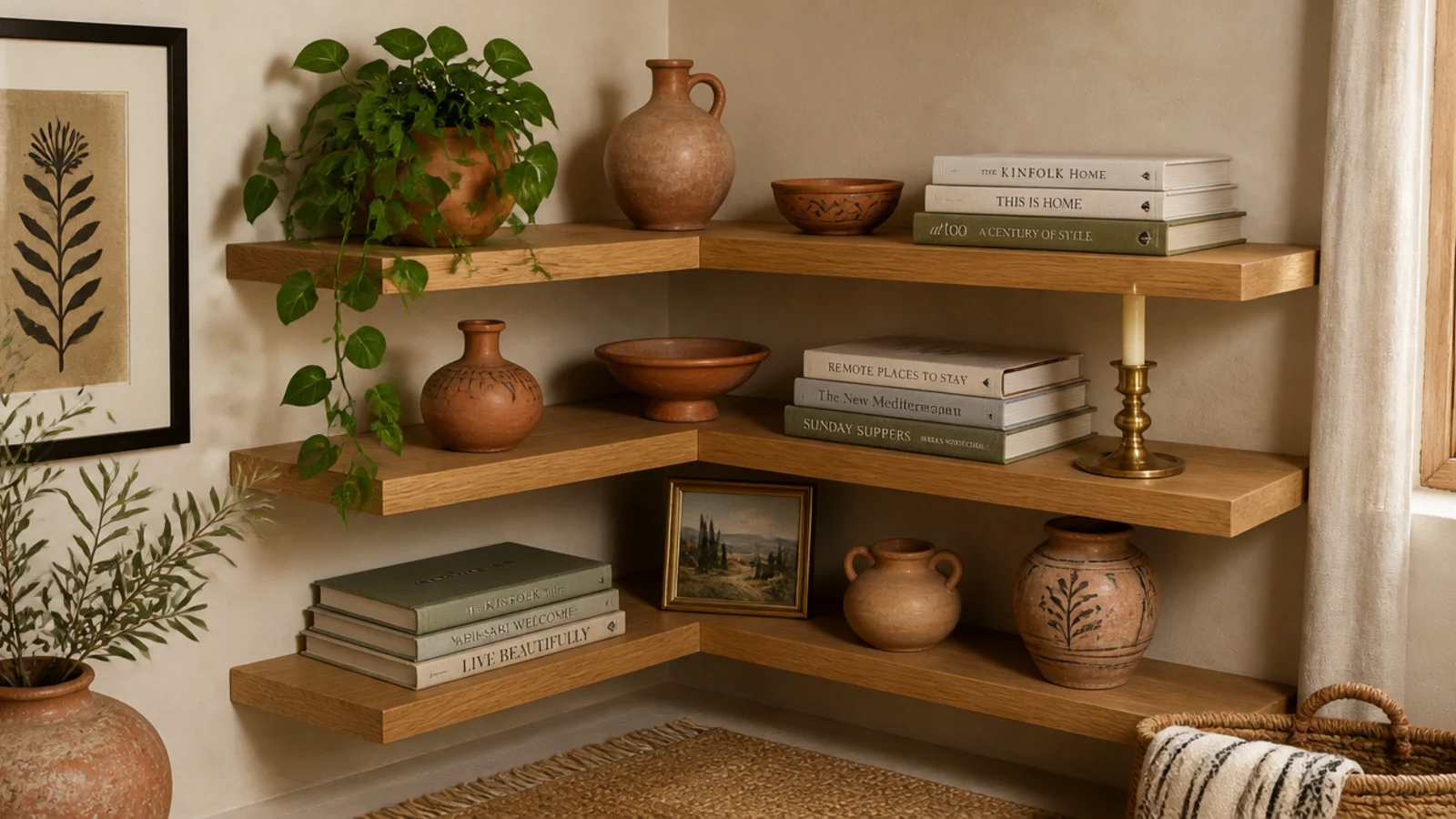
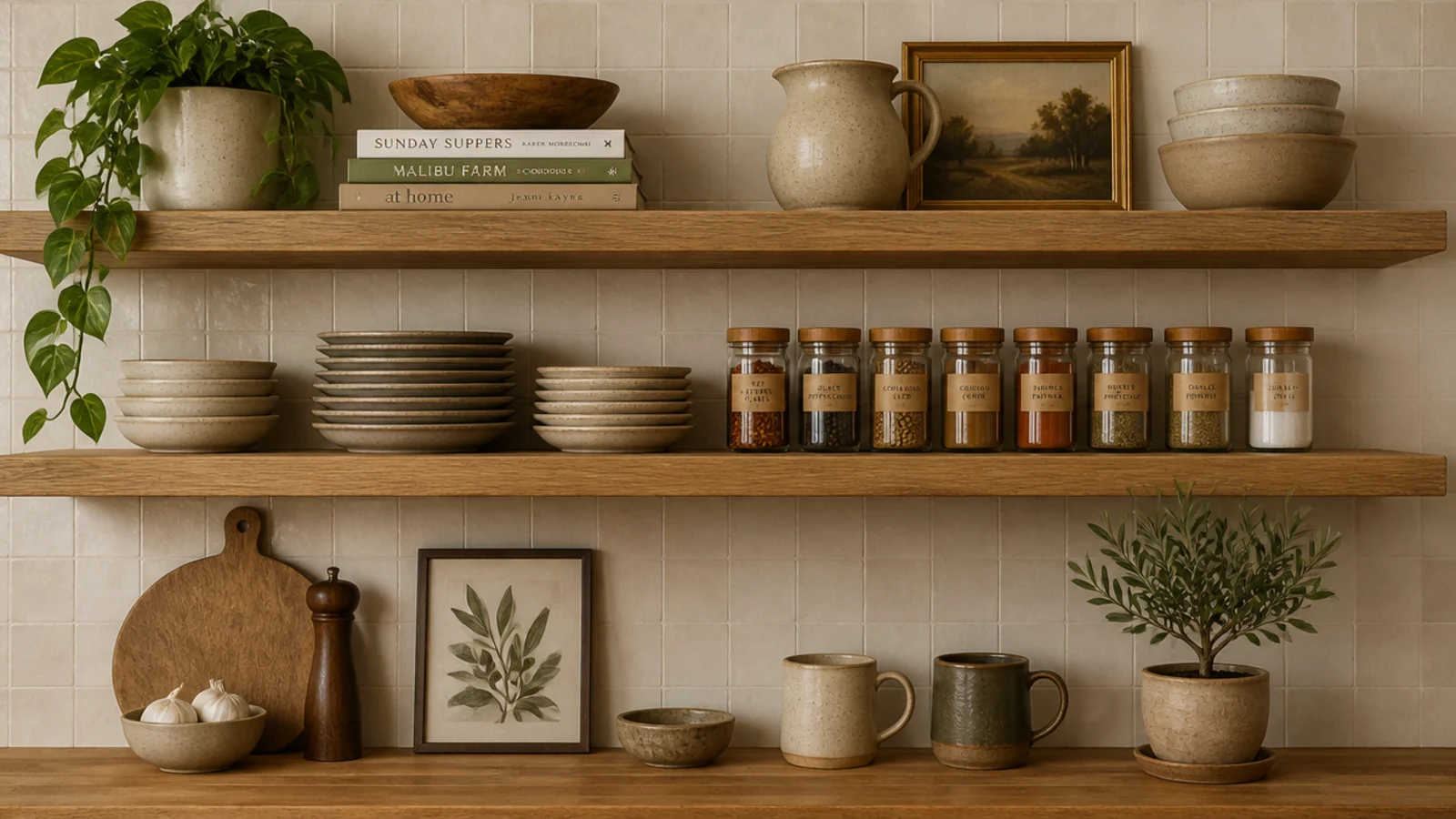
Leave 13 inches of clear height between tiers and a standing hardback fits with room to spare. Below 10 inches a shelf becomes a filing slot.
Painted-out L brackets read as floating from every normal viewing angle for a third of the price of a rod system — nobody crouches to check the underside of a shelf. In bathrooms, use sealed teak, bamboo, solid surface or powder-coated steel, and never raw pine or MDF, which swells and never recovers. Above a TV, keep the shelf at least 6 inches clear of the screen top and drill a 1-inch cable pass-through near the back edge.
Get those numbers right and the styling is the easy part.
Start here
Three guides that answer the question most people arrive with
All Floating Shelves guides
15 of 15 published
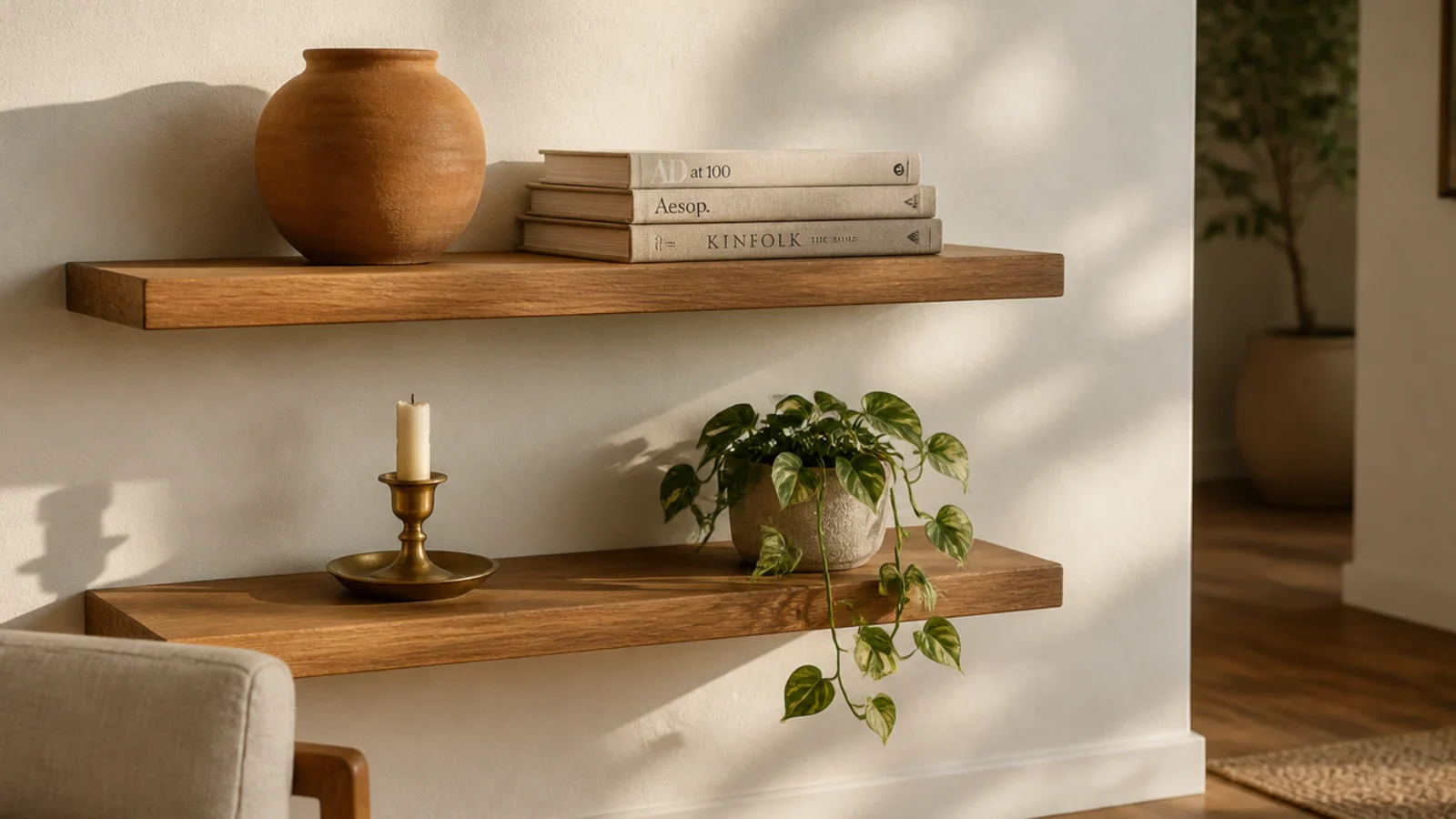
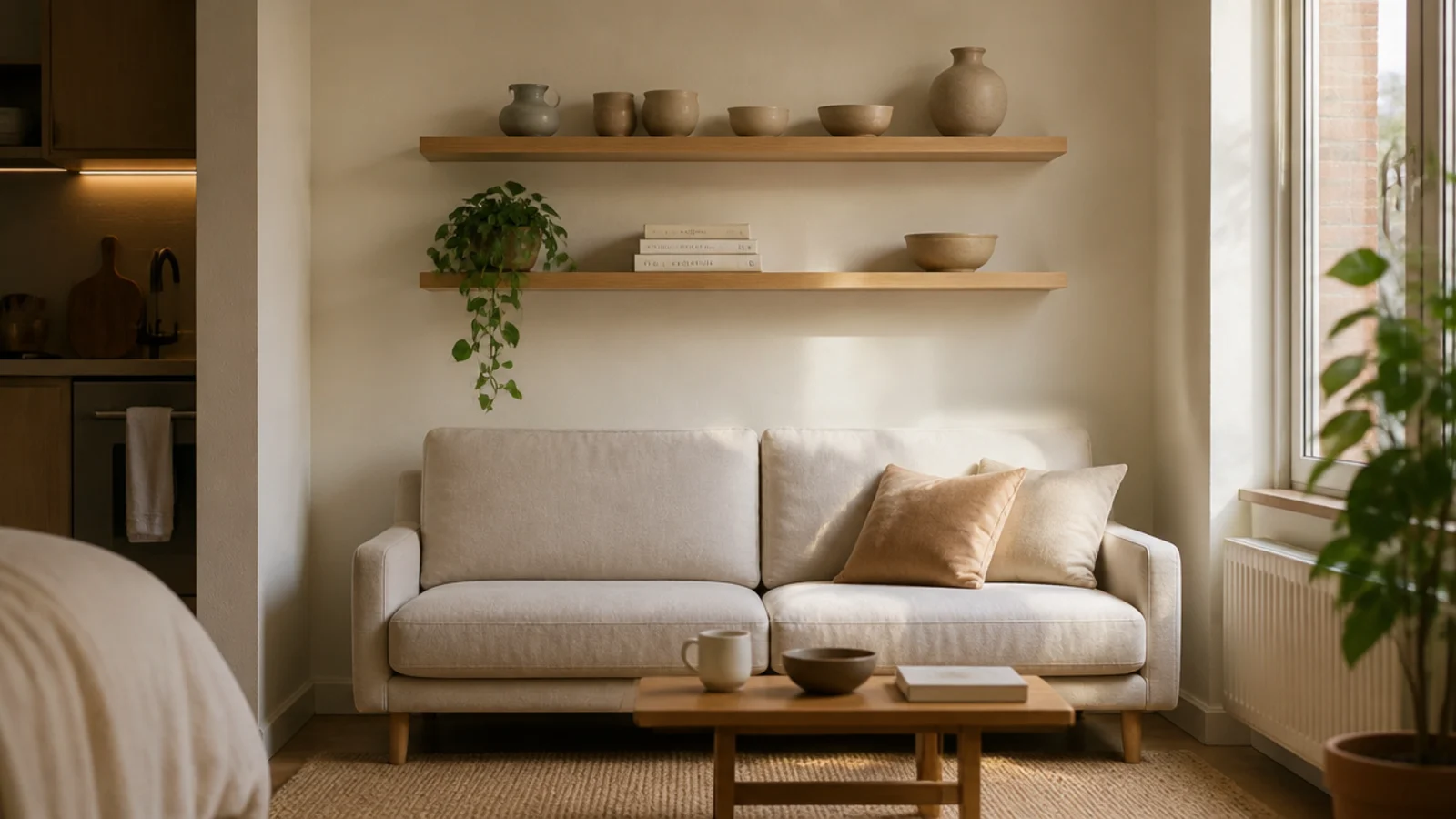
30 Simple Floating Shelf Ideas on a Budget
11 min read
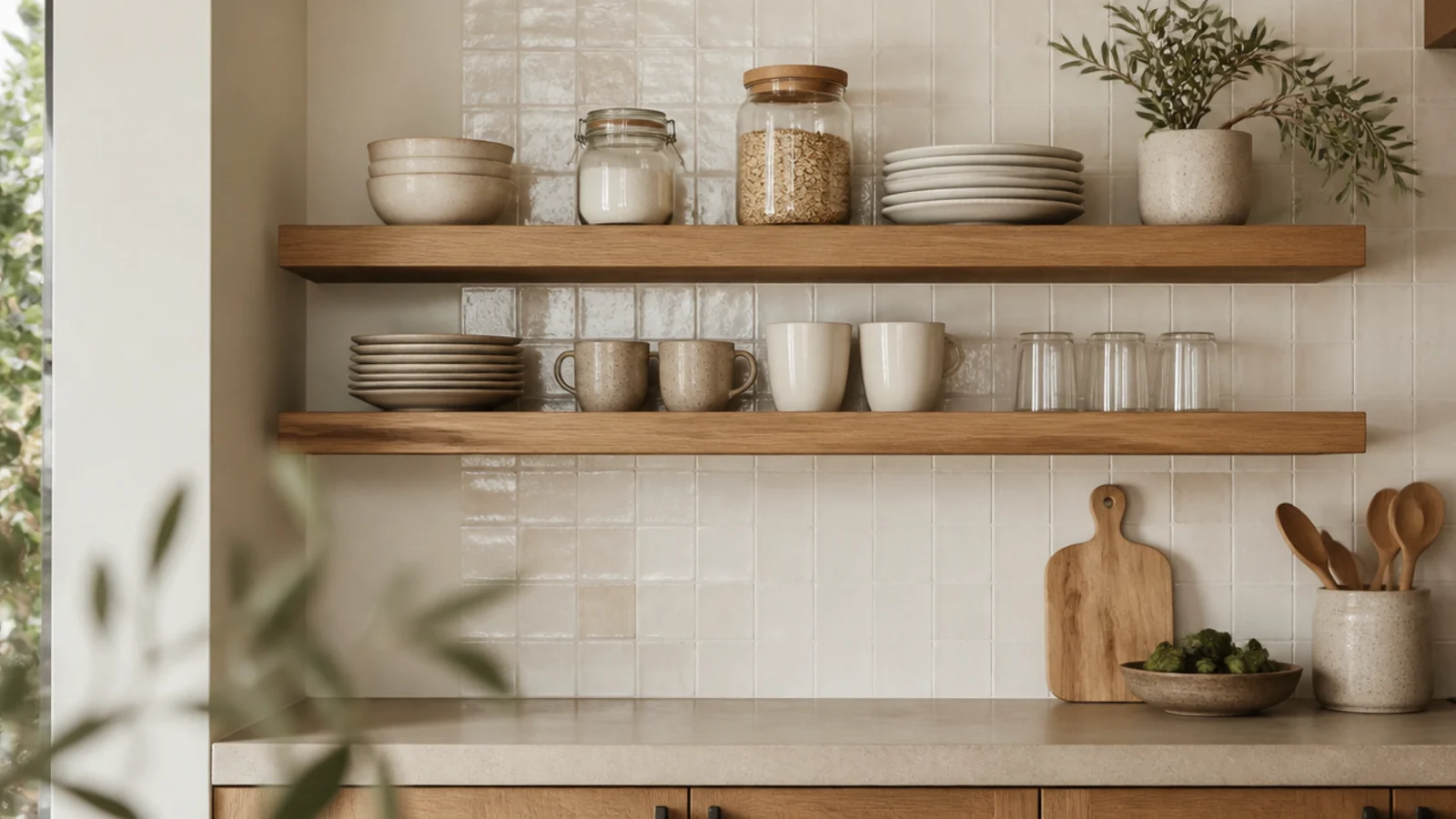
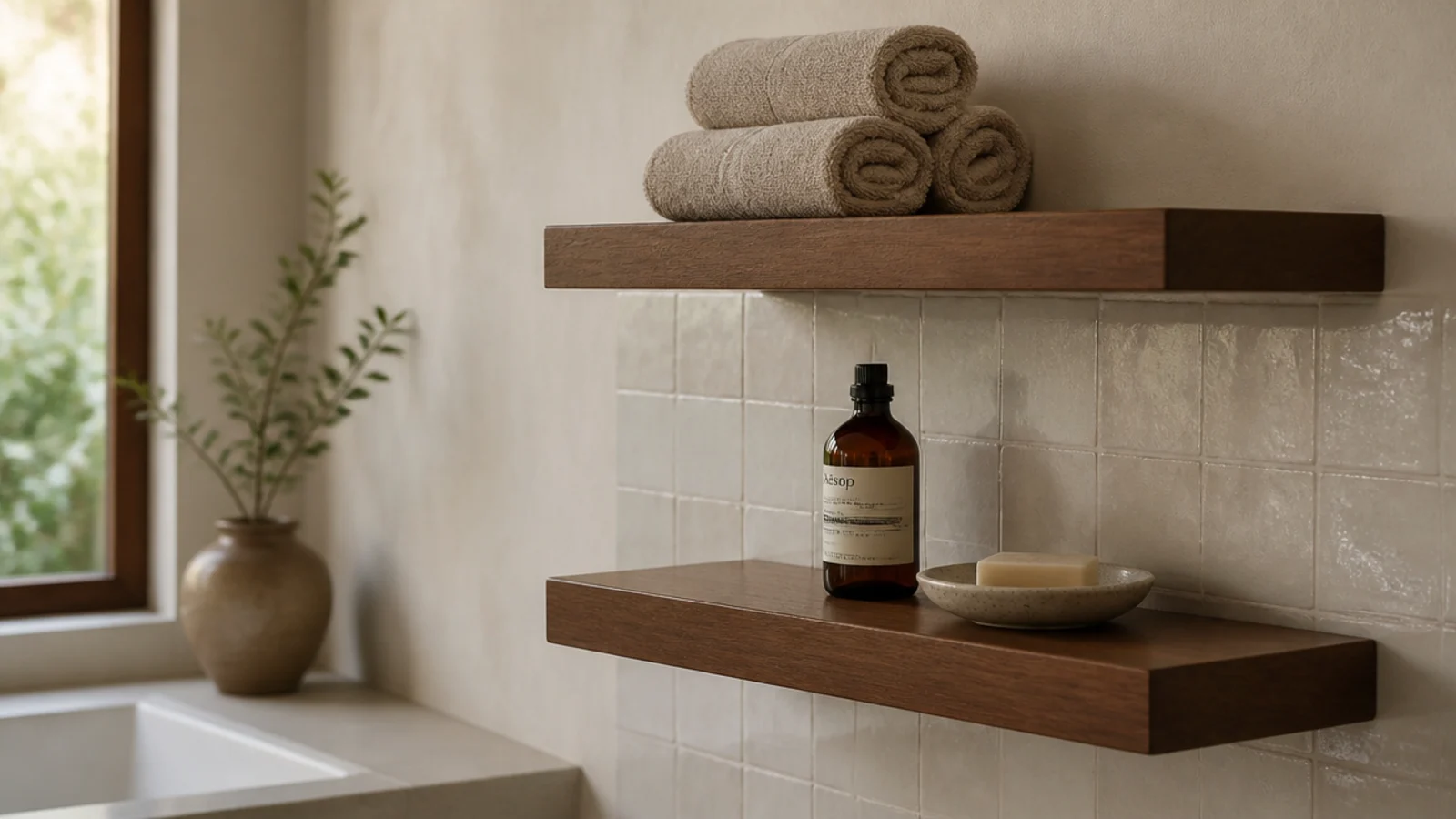
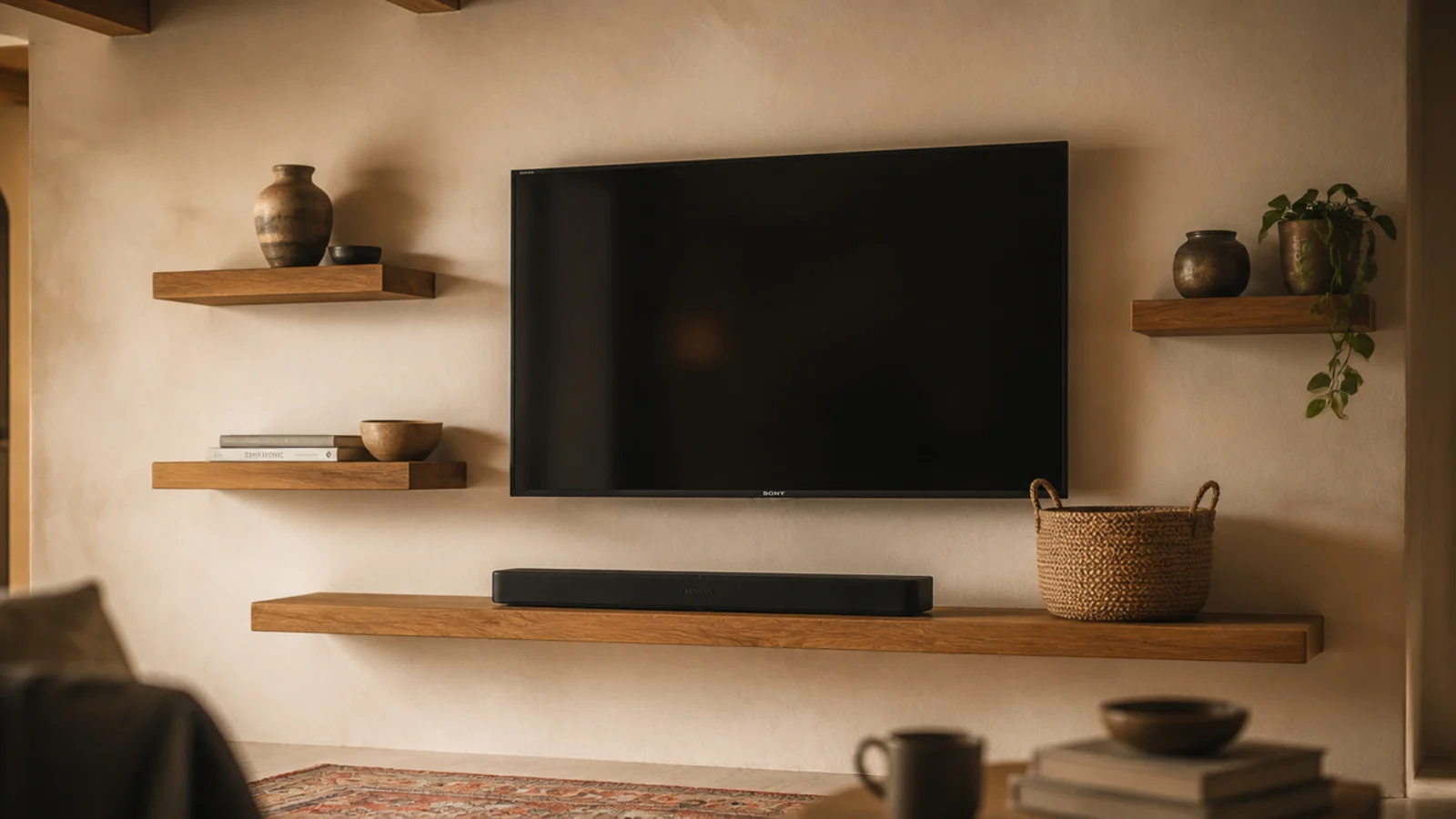
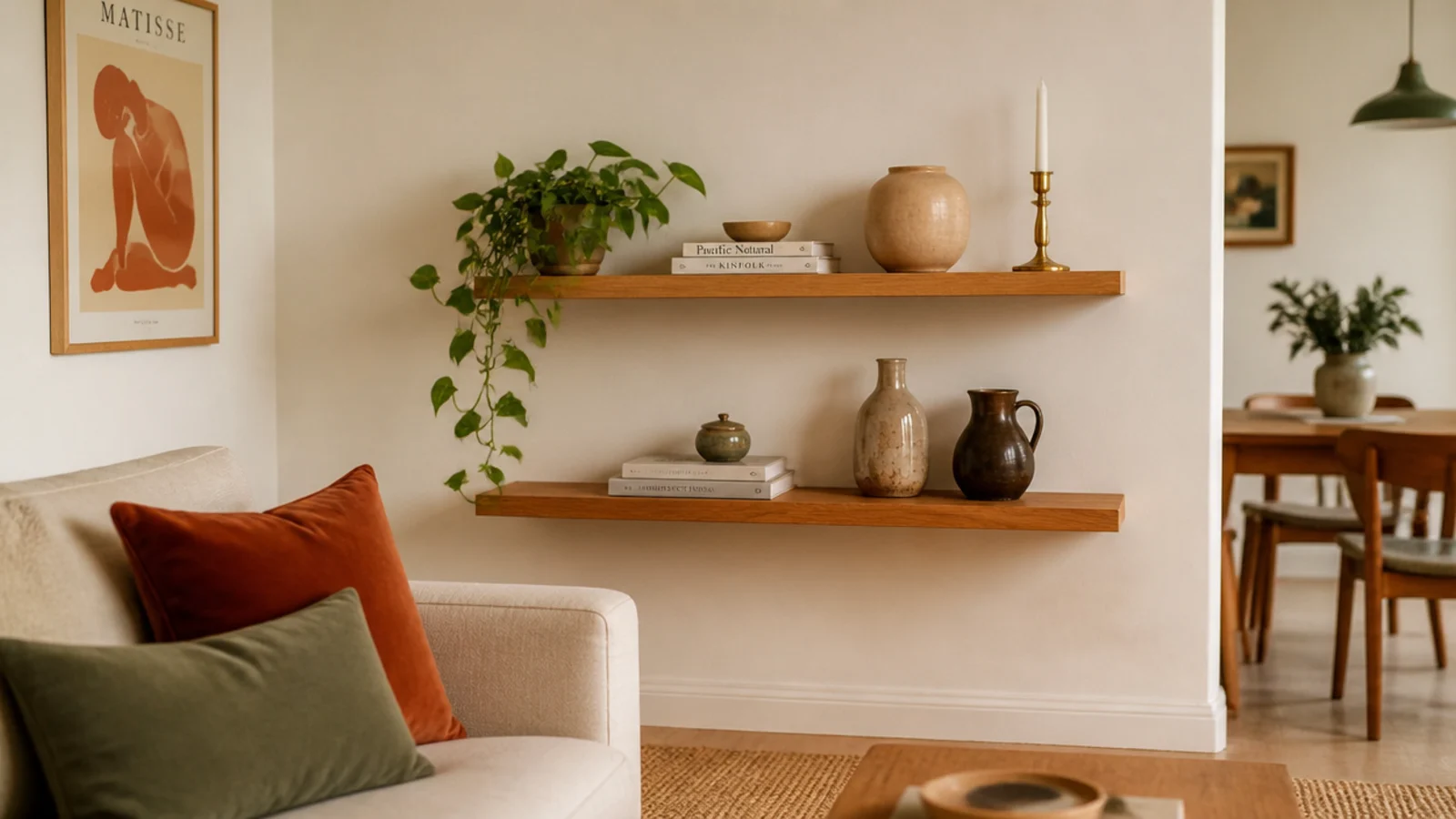
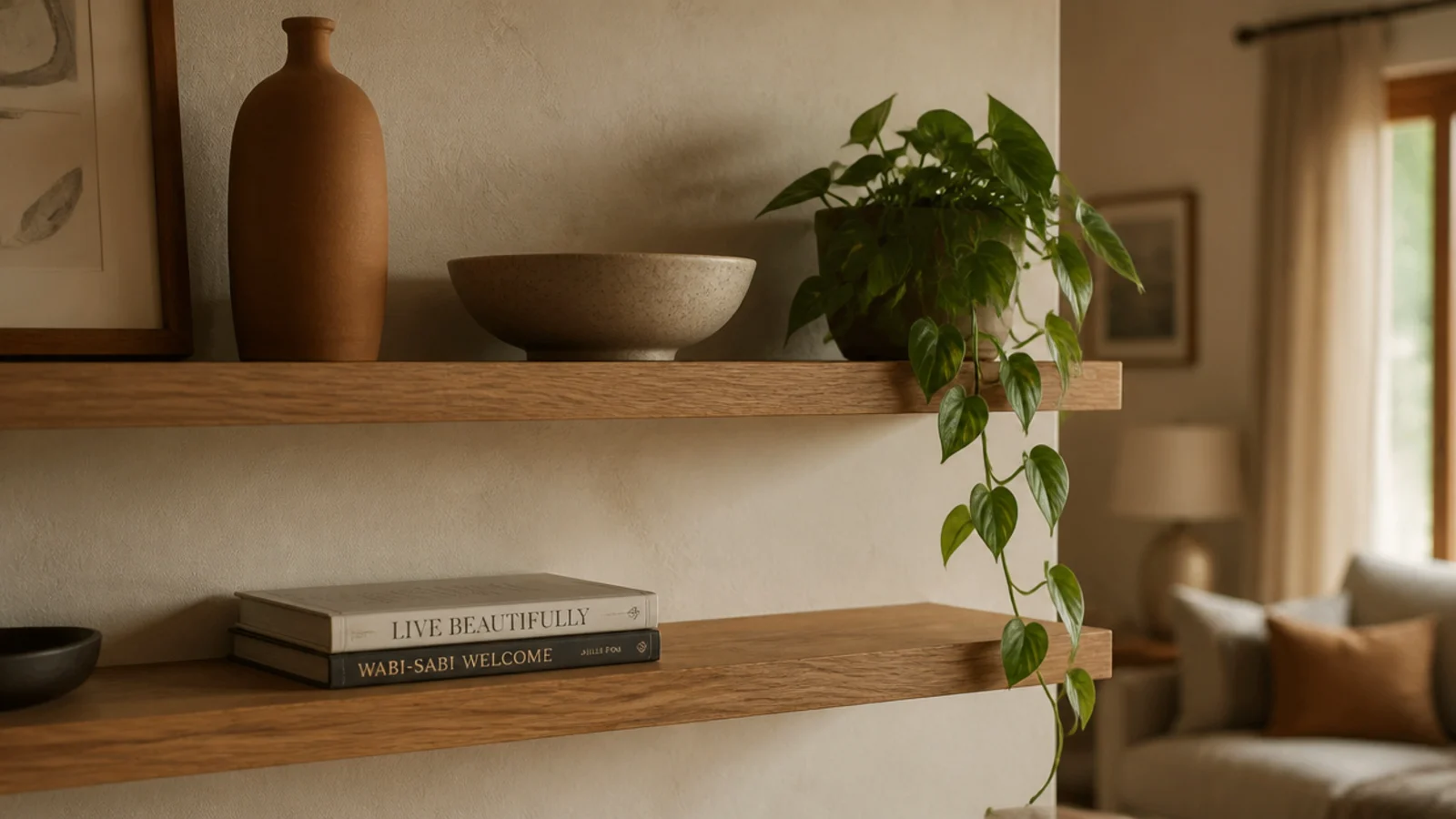
25 Dreamy Floating Shelf Ideas for Any Home
10 min read
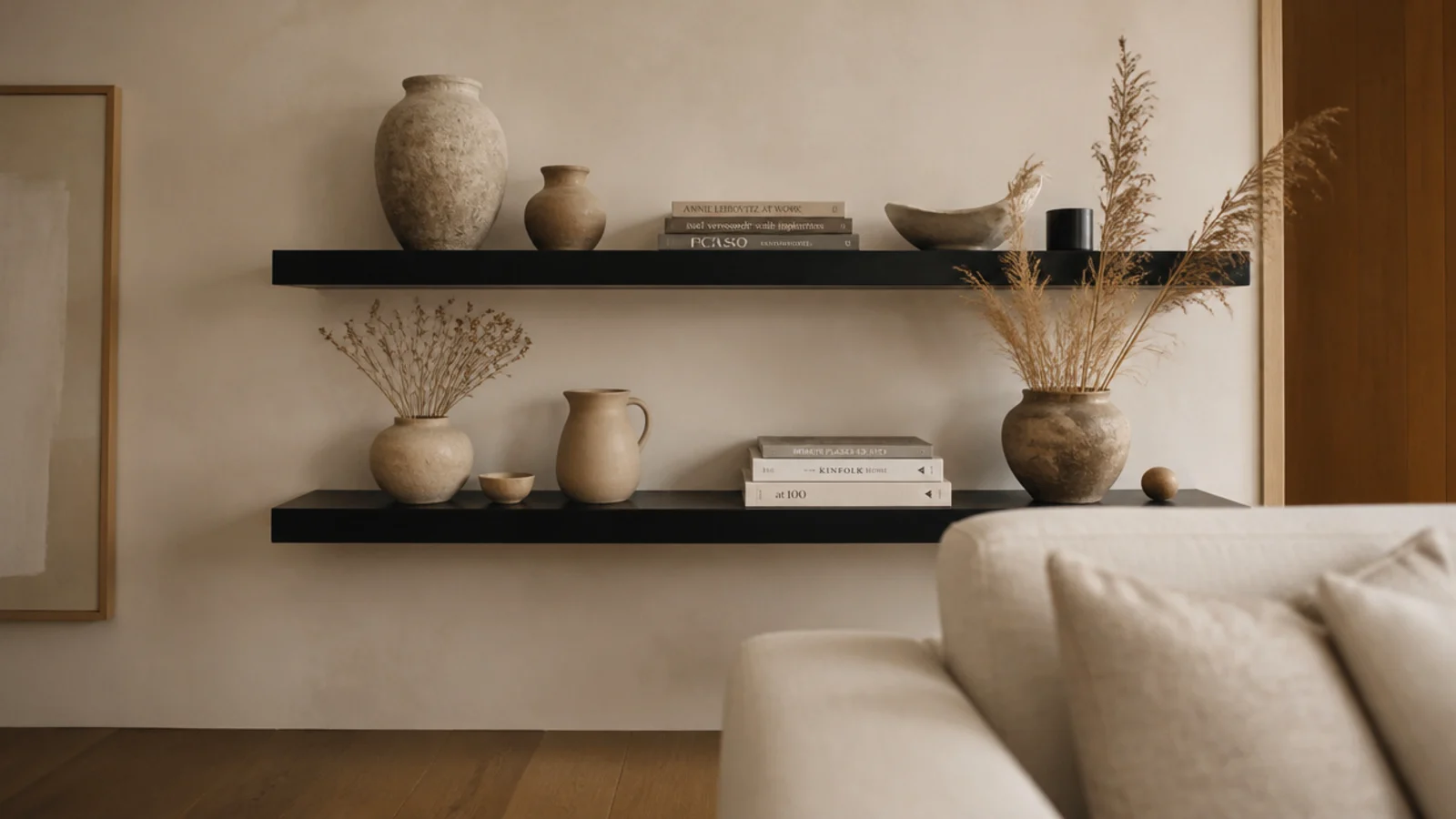
30 Stylish Floating Shelf Ideas to Copy Now
11 min read
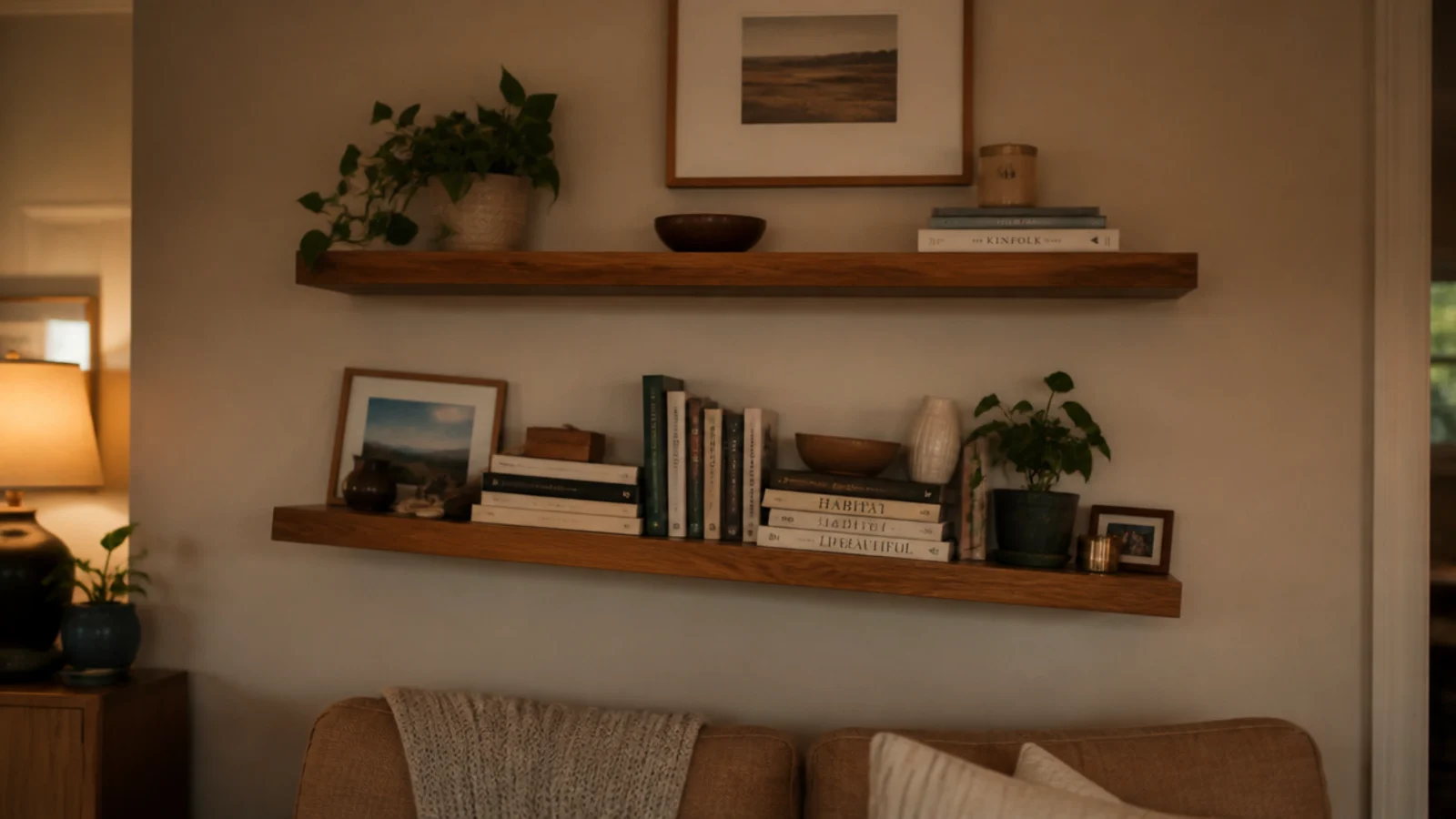
20 Floating Shelf Before and After Makeovers
10 min read