Floating Shelves · Listicle
30 Stylish Floating Shelf Ideas to Copy Now

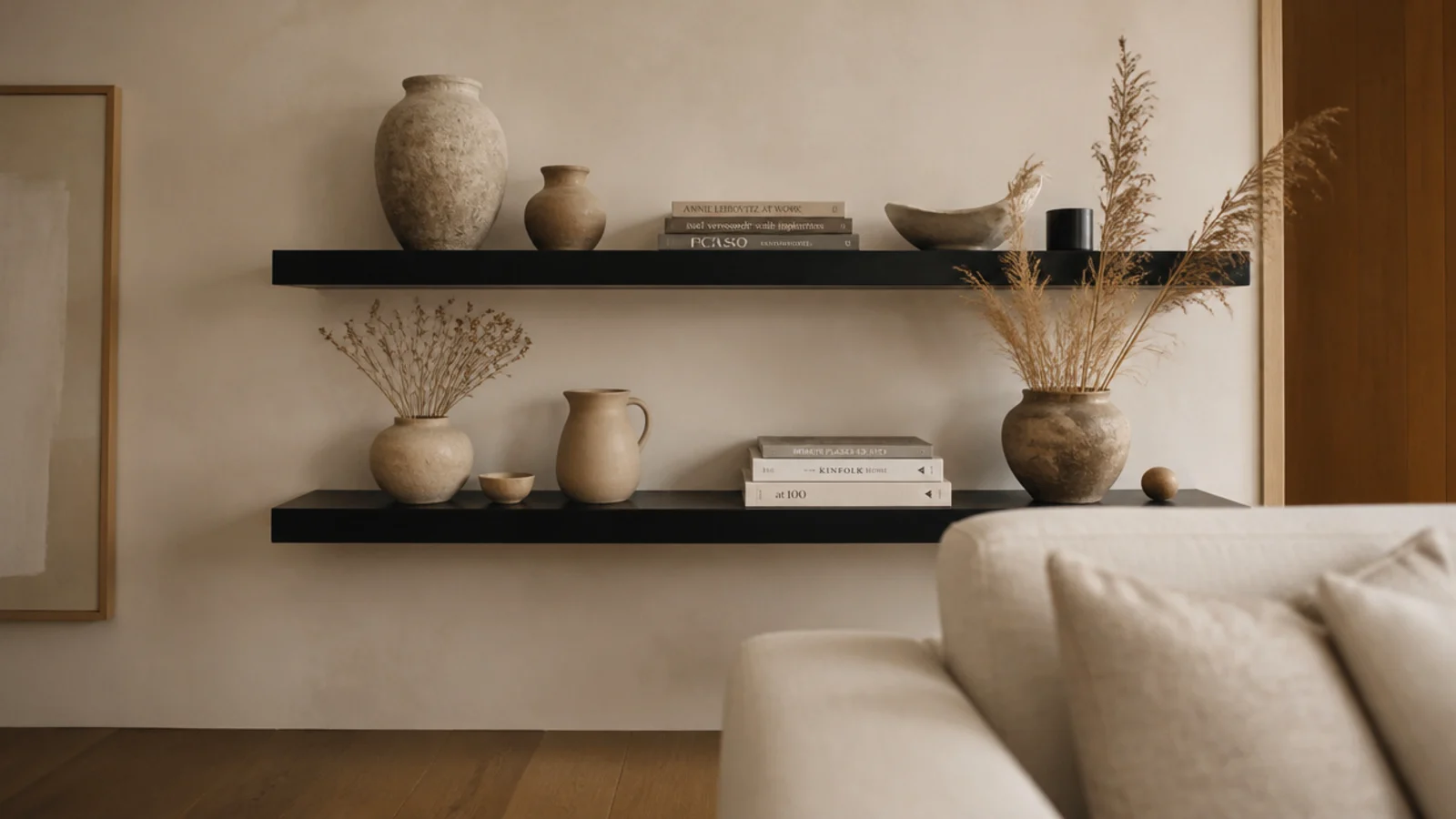
Black floating shelves are the fastest way to give a soft, neutral room a bit of spine — and the fastest way to make it feel heavy if you get the depth or the finish wrong. I have hung them in a white kitchen, on a charcoal bedroom wall and across a brick chimney breast, and the successful versions all obeyed the same handful of rules. Here are thirty worth copying.
In this guide32 sections — tap to openHide
- 1.Where black floating shelves work best
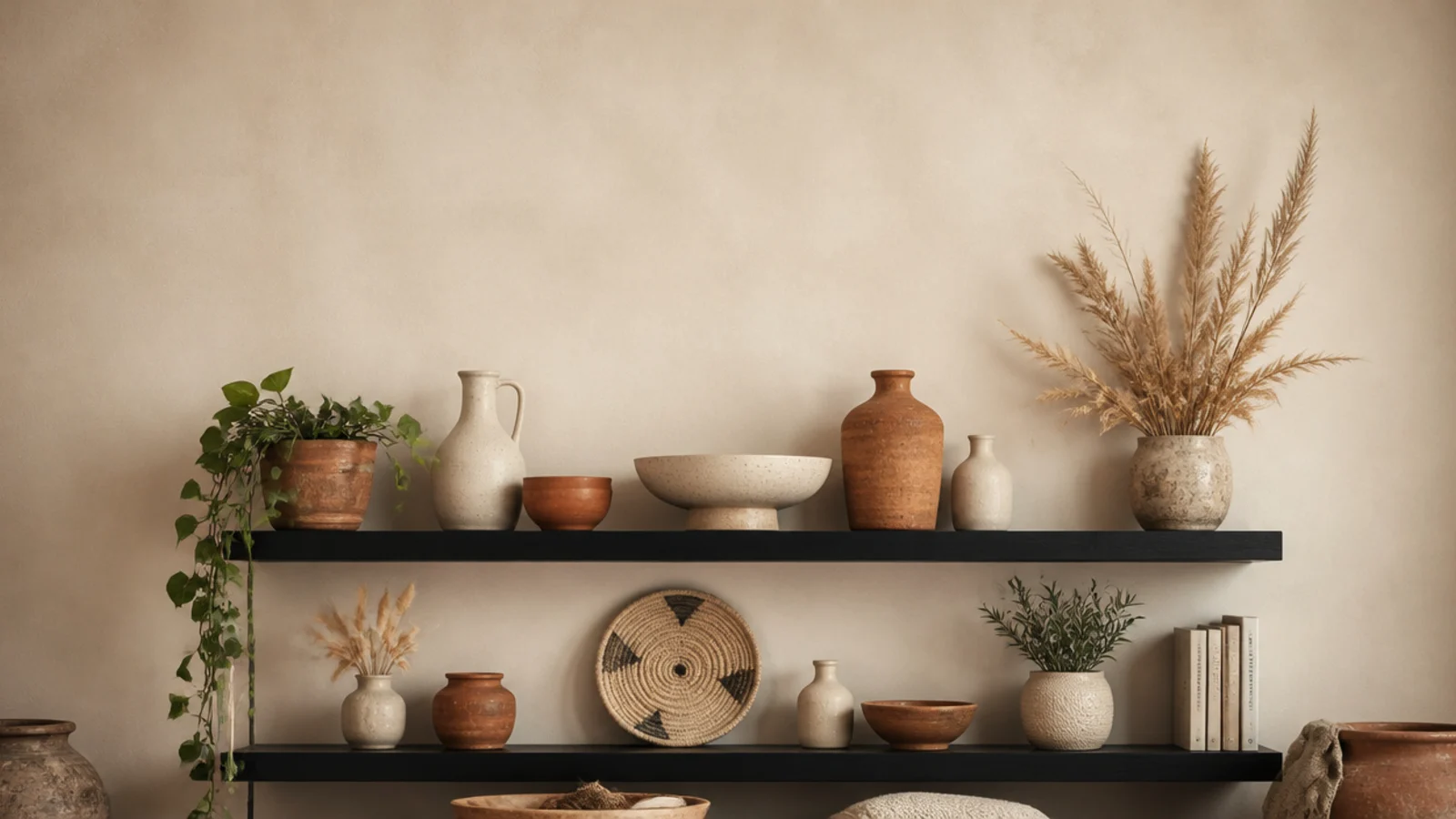
- 2.Matte black against a warm cream wall
- 3.Black-stained oak instead of painted board
- 4.Powder-coated brackets left deliberately visible
- 5.A black shelf under a wall-mounted TV
- 6.A black picture ledge with black frames
- 7.Black shelves in a white-tiled kitchen
- 8.Tone on tone against a dark painted wall
- 9.Black pipe brackets under a warm wood board
- 10.Powder-coated steel in the bathroom
- 11.A black bedside shelf at mattress height
- 12.A thin steel plate shelf for a modern room
- 13.A hidden LED strip under a black shelf
- 14.Black shelves where a mantel used to be
- 15.Two-tone: black bracket, oak board
- 16.Black shelves flanking a window
- 17.A run of black ledges down a hallway
- 18.A black bar shelf with brass accents
- 19.Black shelves above a home desk
- 20.Black baskets on the lowest shelf
- 21.Black shelves stepped up a stairwell
- 22.Black shelves against exposed brick
- 23.Matte over satin, every time
- 24.A low black shelf in a kids room
- 25.A black entry shelf with hooks below
- 26.Black shelves in the laundry room
- 27.A chunky black box shelf
- 28.Terracotta pots against a black board
- 29.One long black shelf across a whole wall
- 30.Black shelves that match the window frames
- 31.Run the cables inside a painted channel
- 32.Mistakes to Skip
Where black floating shelves work best
Dark shelves work by contrast, so the wall behind them is half the design. Warm cream and soft white give the crispest line. A deep charcoal or ink wall does the opposite — the shelf recedes and the objects appear to float, which is calmer and works beautifully in a bedroom. Cool grey is the pairing to avoid, because black against grey reads as accidental.
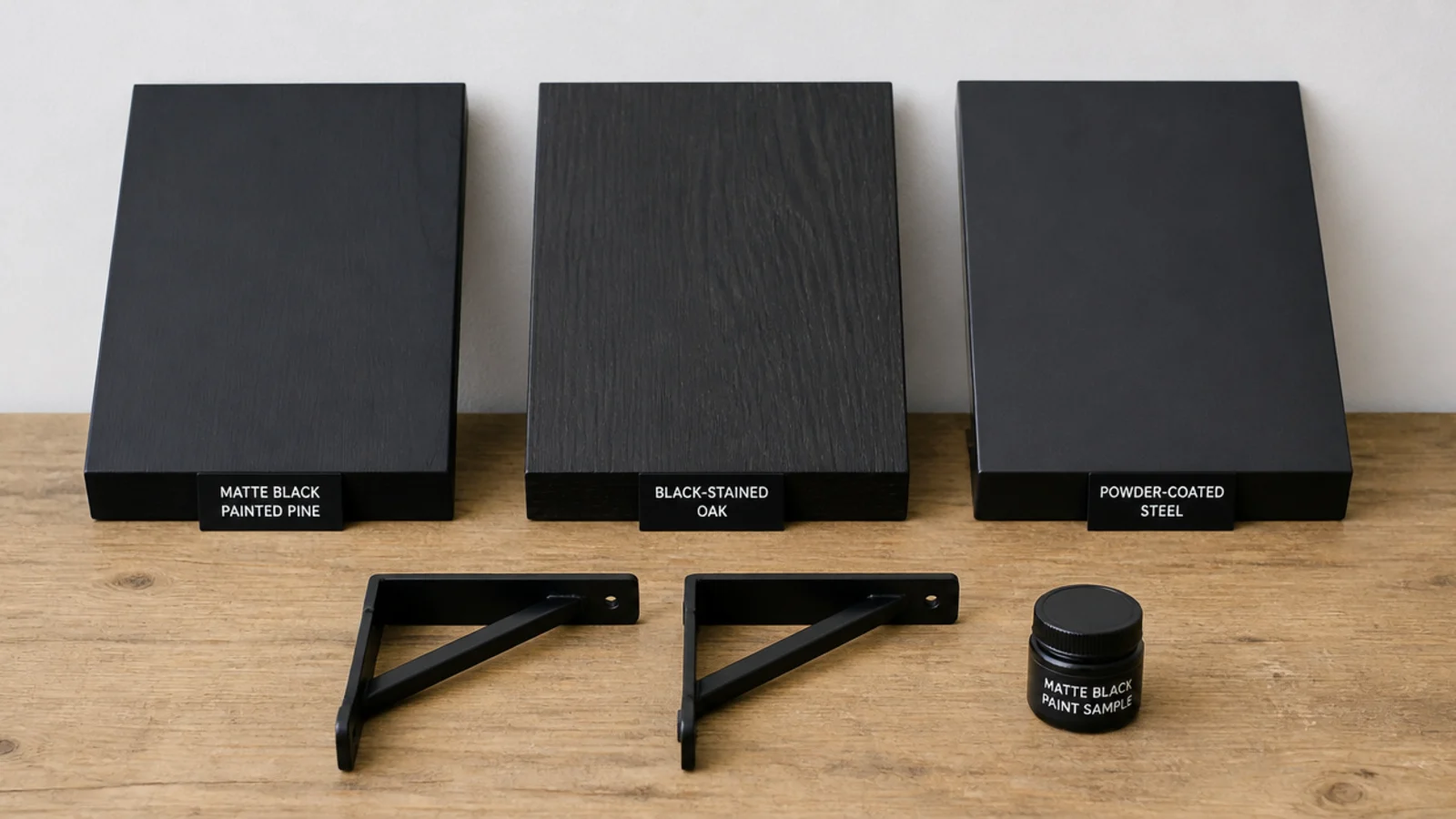
Finish matters more than material. Matte or eggshell on wood, powder coat on steel. Gloss shows fingerprints, dust lines and every flaw in the board underneath.
Keep the depth honest. A dark shelf reads visually heavier than a pale one at the same size, so 6 to 8 inches is usually plenty. Depth is also leverage: a 12-inch shelf doubles the pull-out force of a 6-inch one at the same load.
The fixings do not care what color the shelf is. A concealed rod bracket into a stud carries 30 to 40 pounds on a 24-inch shelf, toggle bolts in half-inch drywall carry 25 to 35 pounds each, and the plastic plugs from the box carry about 10 pounds and cause most sagging.
Budget tiers: $ under $40, $$ $40 to $120, $$$ $120 and up for steel or hardwood.
1. Matte black against a warm cream wall
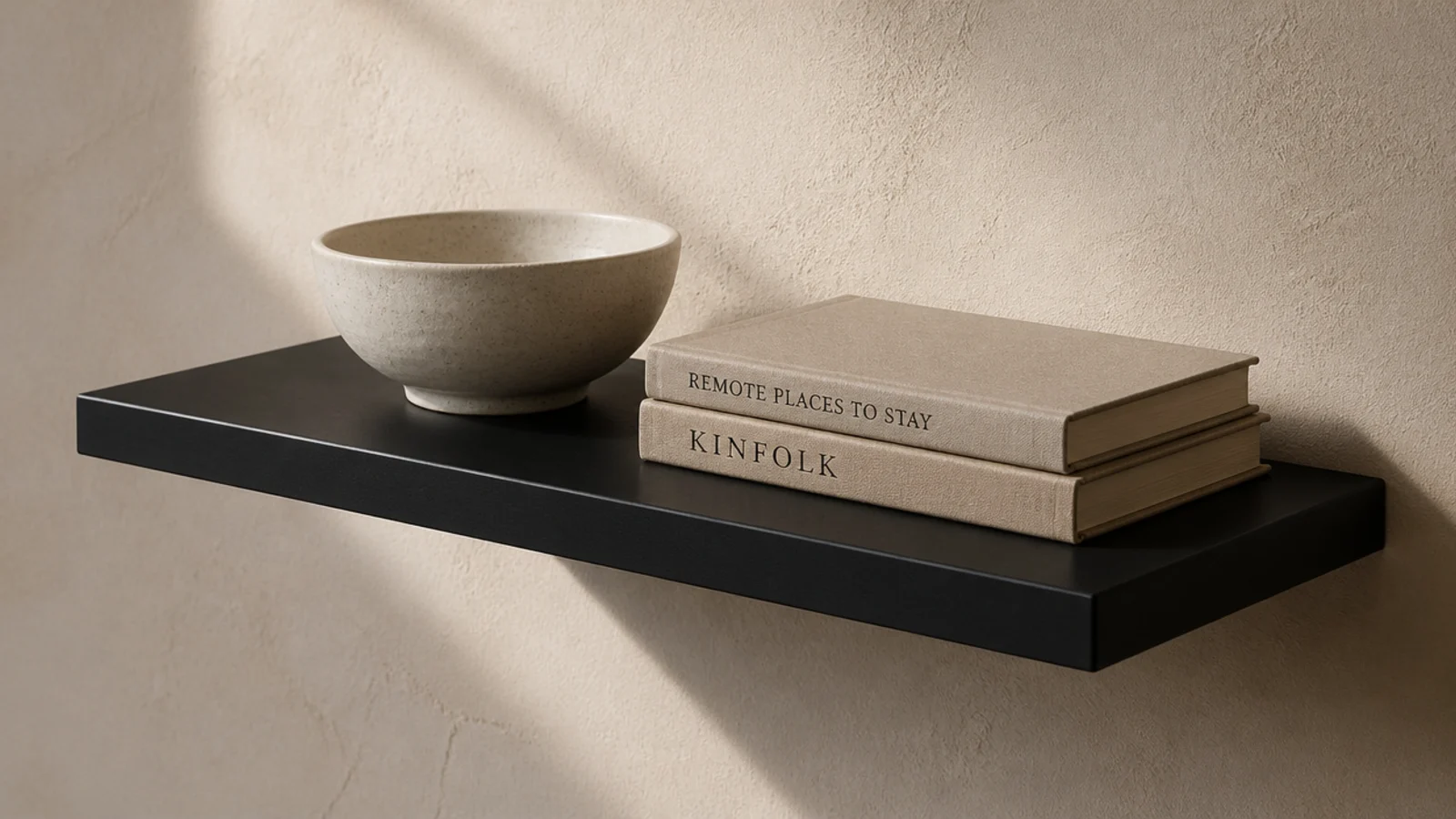
The classic pairing and still the best. A dead matte board on warm cream plaster gives a hard, graphic line without any sheen to distract from it.
Keep the board to 24 or 36 inches and 6 deep. Style it with pale stoneware and sand-colored books so the contrast runs both ways.
2. Black-stained oak instead of painted board
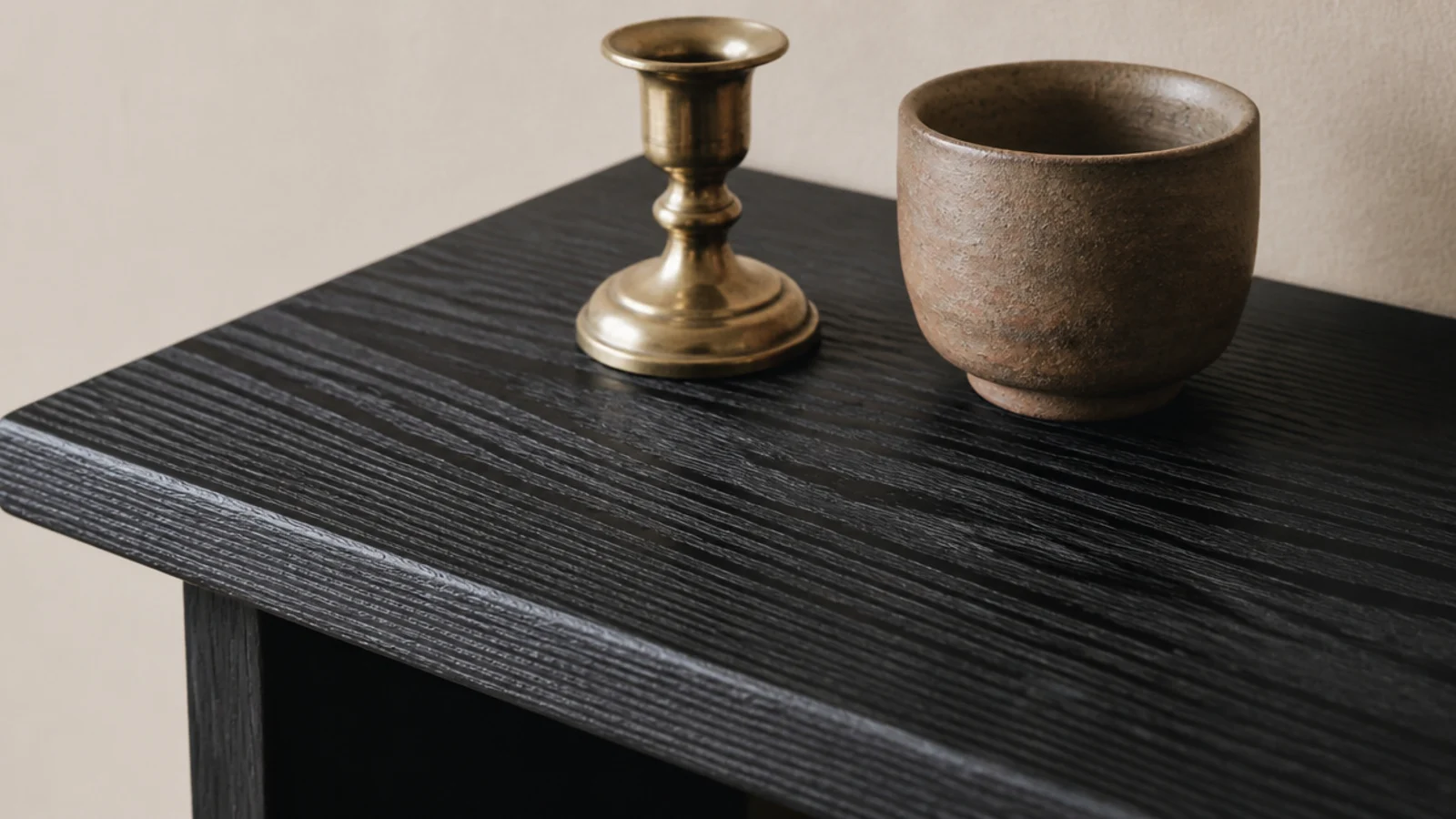
Paint hides grain. A black stain or hardwax oil lets the oak texture show through, which stops the shelf reading as a flat rectangle.
Expect $30 to $60 for a 24-inch oak board plus $15 for stain. It is the version that still looks good close up, which matters at eye level.
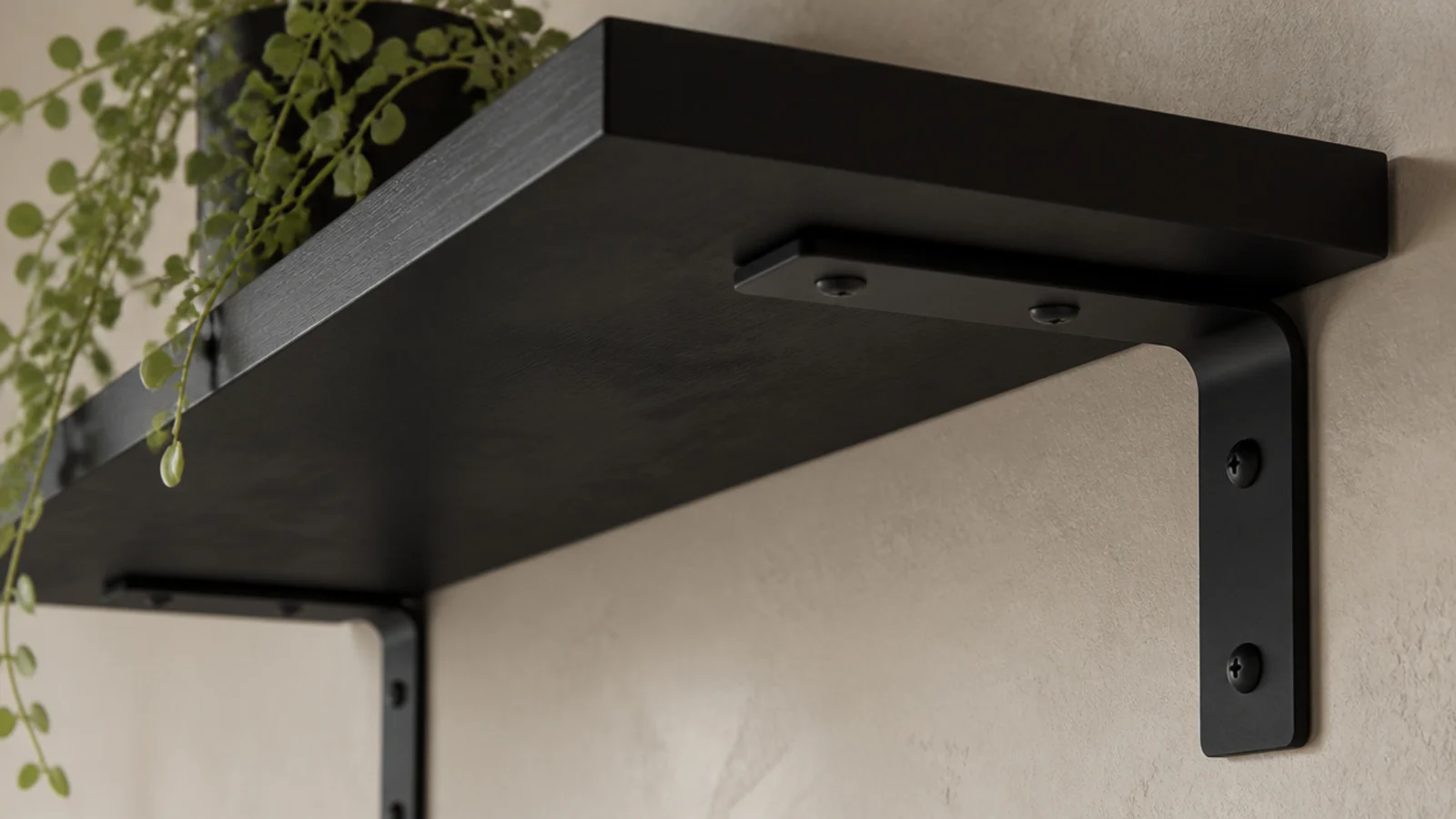
3. Powder-coated brackets left deliberately visible
Concealed hardware is not the only answer. Black L brackets under a black board disappear into the shelf as one object, which costs a fraction of a concealed rod system.
Buy powder-coated rather than painted steel — the coating survives knocks that paint chips off. Check the arm reaches within an inch of the front edge, or the board will set nose-down.
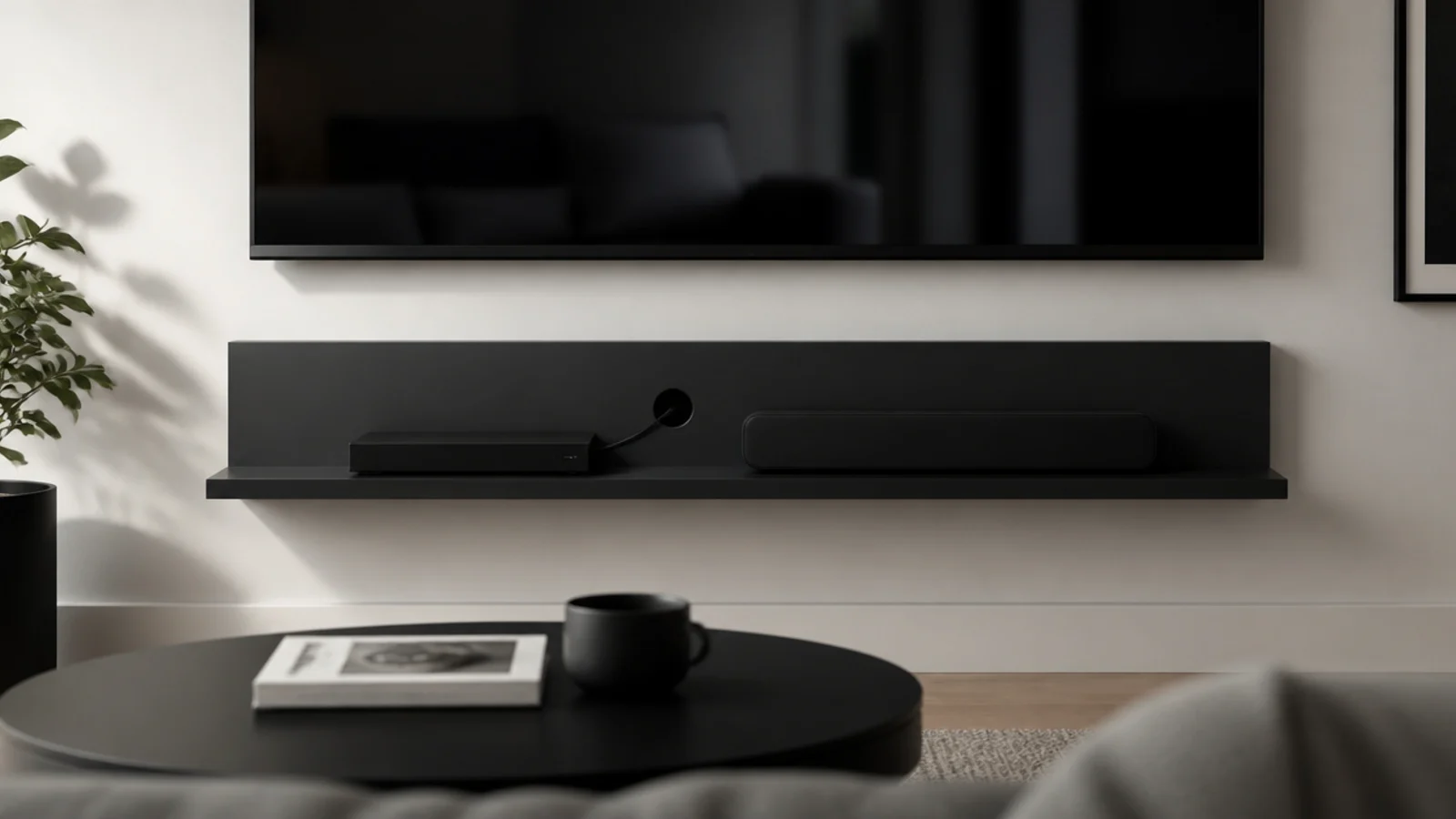
4. A black shelf under a wall-mounted TV
Black media boxes on a black shelf under a black screen stop registering entirely, which is the whole trick.
Go 10 to 12 inches deep and fix into two studs. Drill one grommet at the back for cables. There is more on this arrangement in floating shelves around a TV.
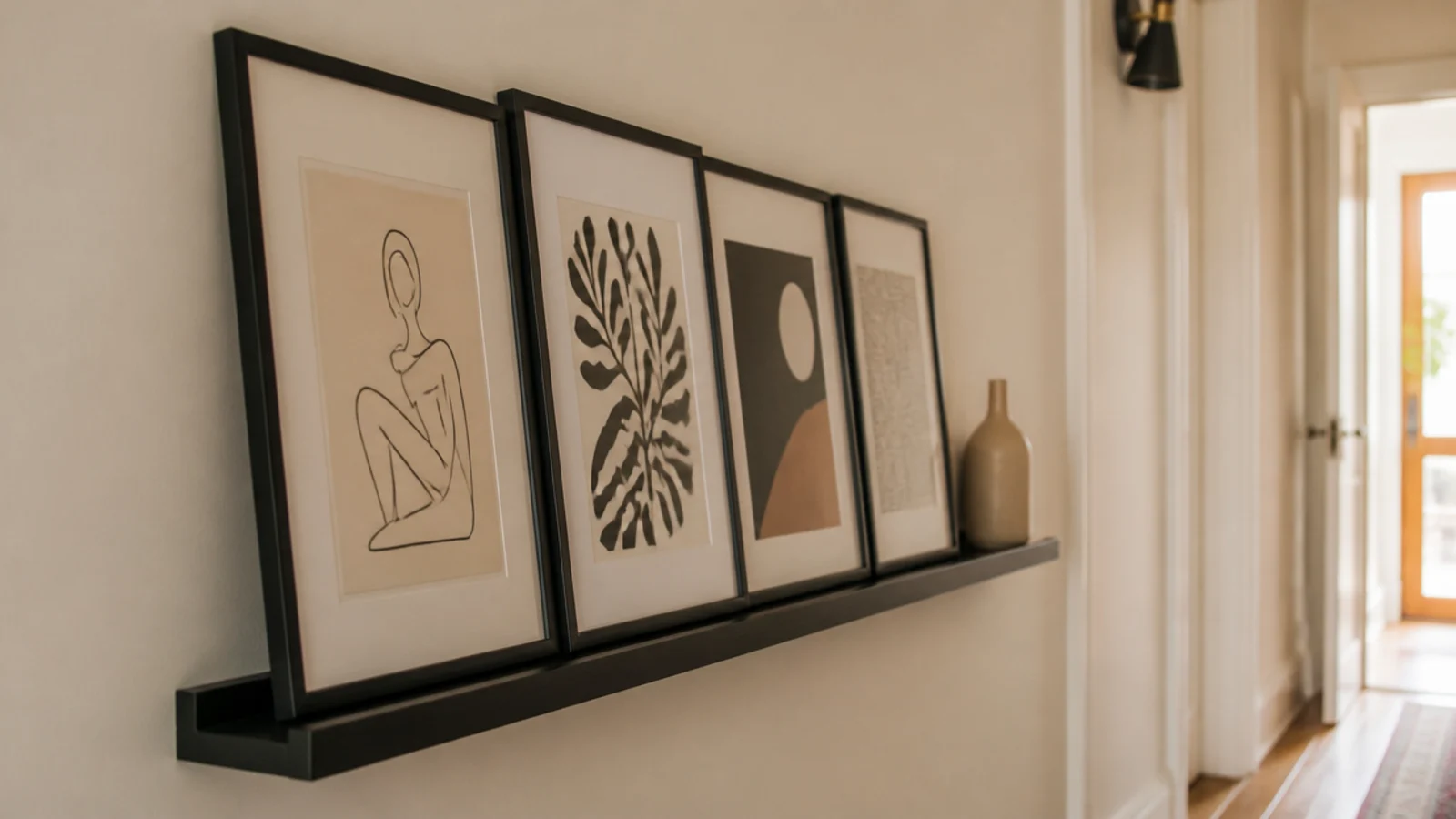
5. A black picture ledge with black frames
Match the ledge to the frames and a leaning gallery reads as one deliberate installation rather than a pile of pictures.
Three inches deep with a front lip is all you need. Overlap the frames slightly and stick to two sizes across the whole run. Fix into a stud at each end and keep the total load under 20 pounds.
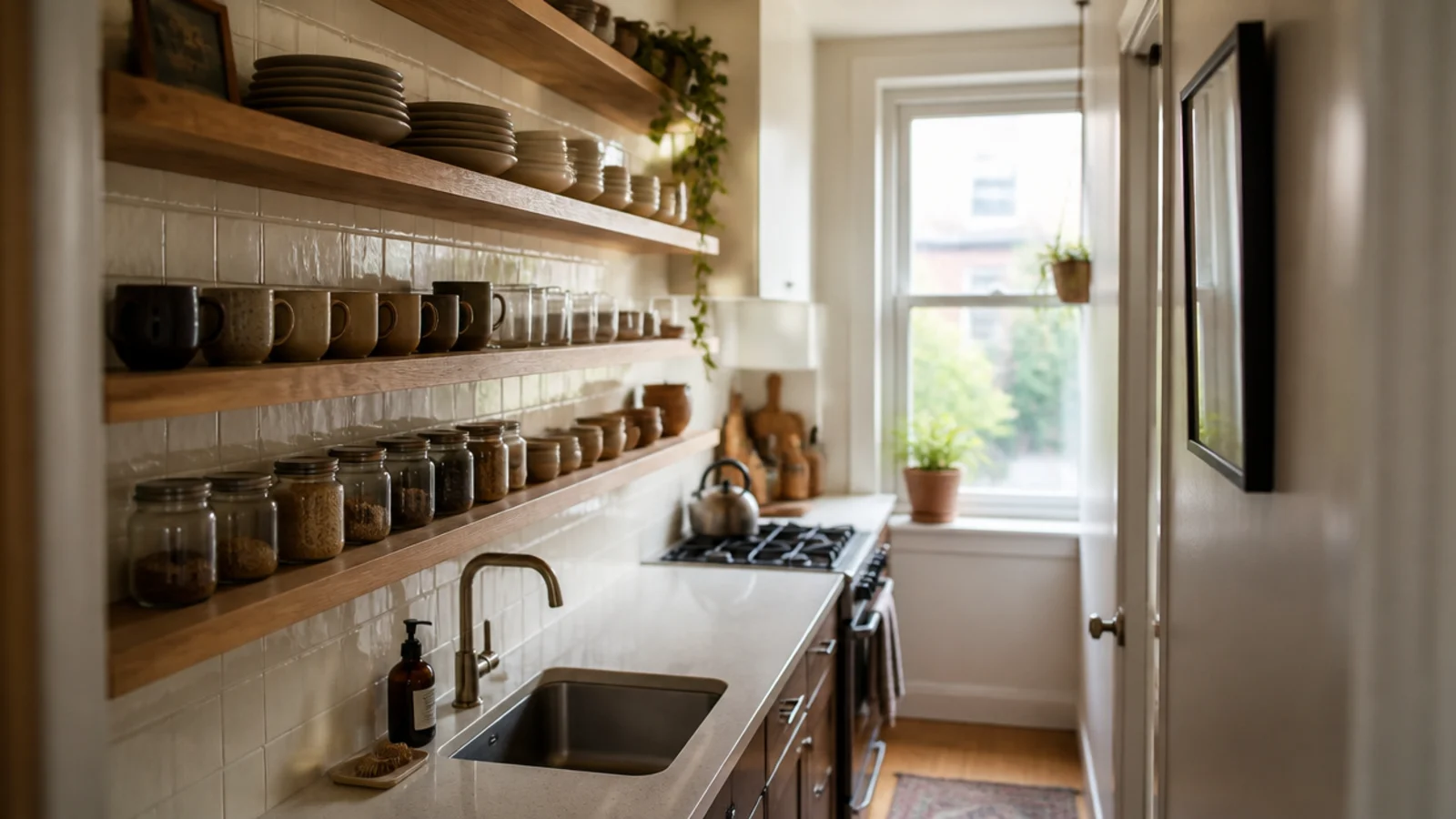
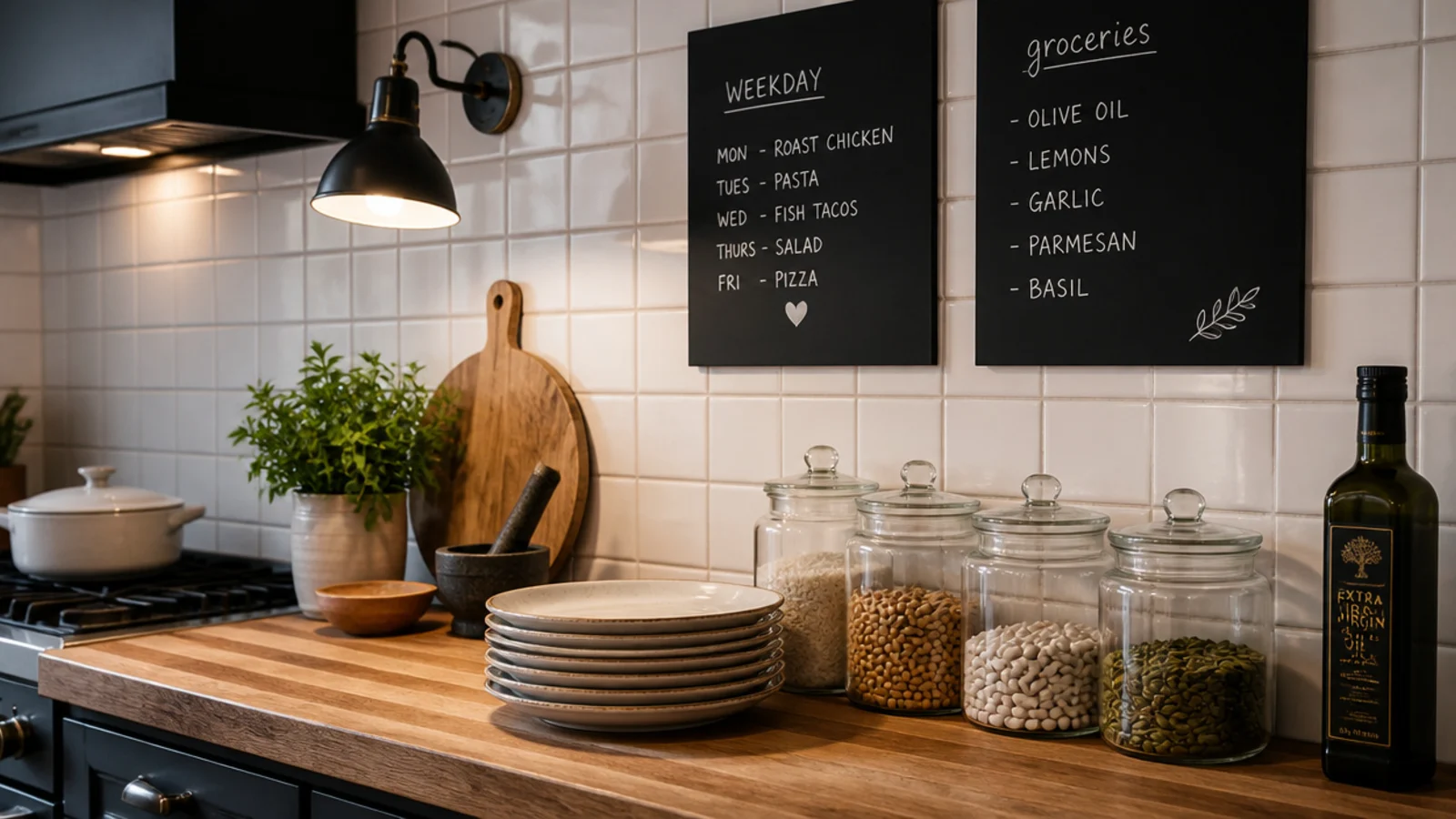
6. Black shelves in a white-tiled kitchen
A white kitchen with white tile has no anchor. Two black boards give it one immediately.
Mount them 11 and 22 inches above the counter and store daily plates, glasses and jars only. Use sealed or powder-coated finishes — steam and grease find raw painted MDF fast. Three-quarter-inch stock spans 24 inches between fixings without dipping.
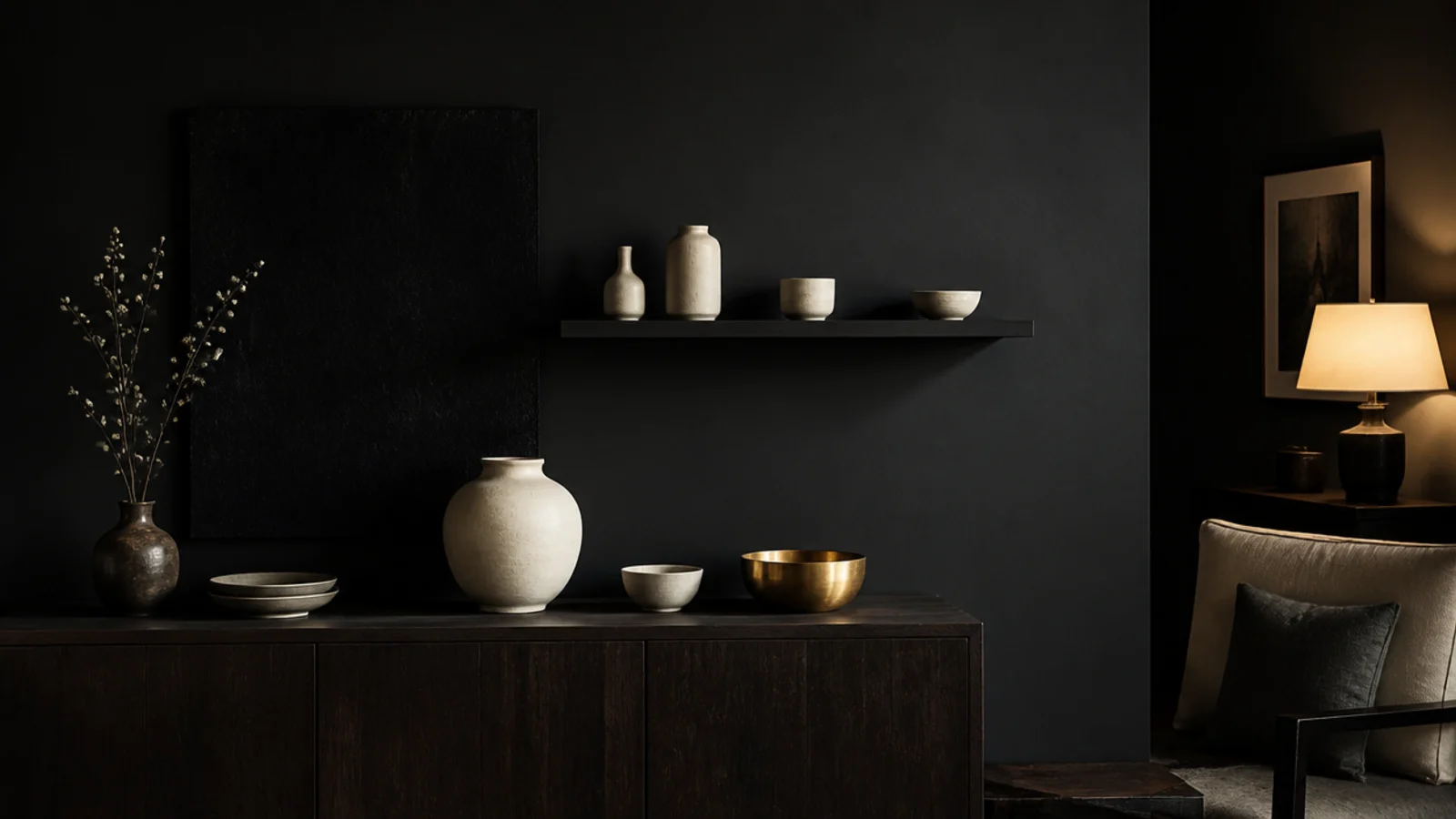
7. Tone on tone against a dark painted wall
Paint the wall the same depth of black or charcoal and the shelf almost disappears. What you see is pale pottery apparently suspended in the dark.
It is quieter than high contrast and remarkably forgiving of imperfect brackets. A sample pot covers the strip behind two shelves.
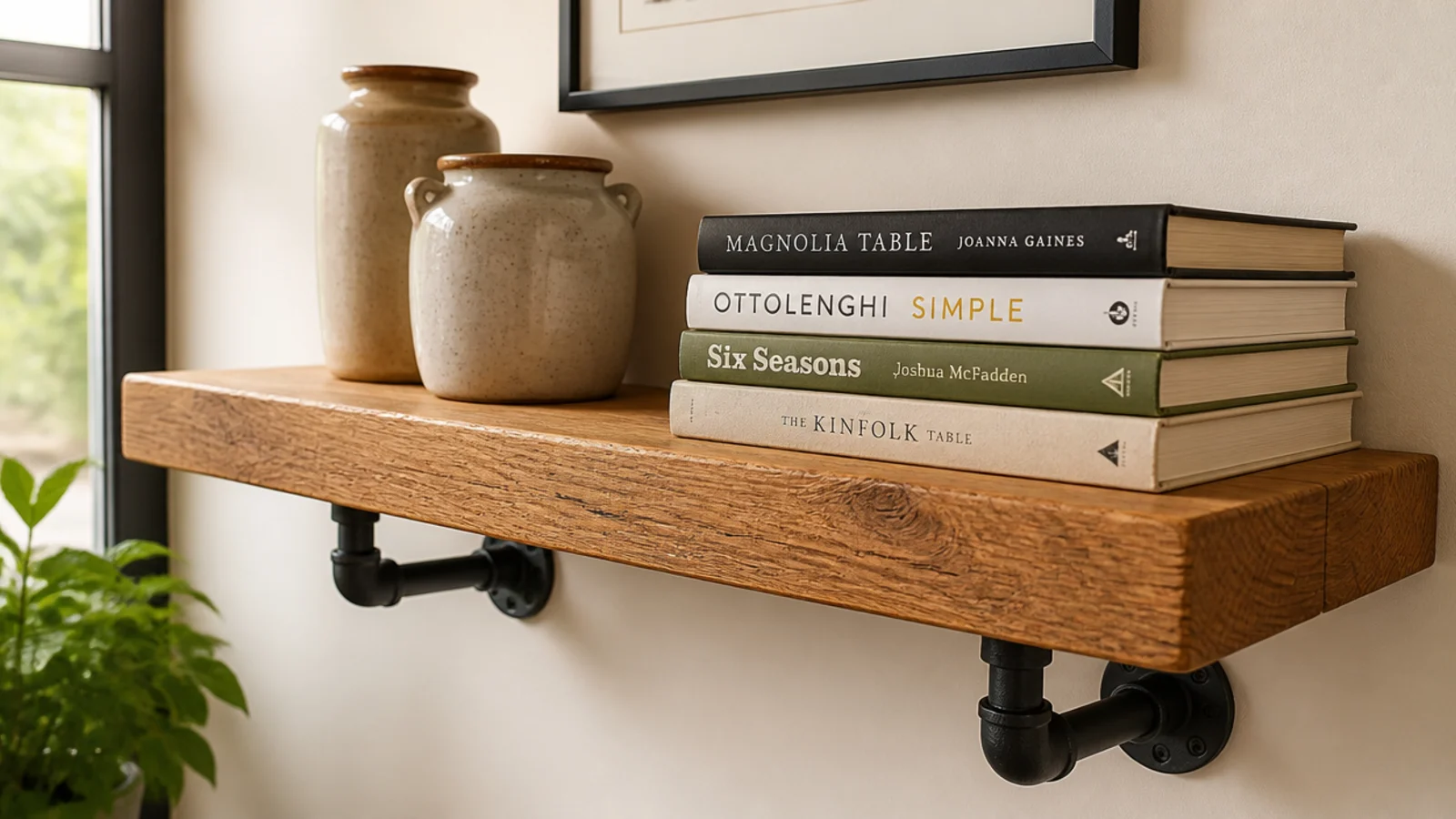
8. Black pipe brackets under a warm wood board
The two-tone that never dates: black iron hardware, warm oak or reclaimed board. The metal does the structure, the wood does the warmth.
Pipe brackets carry serious weight, but they still need studs or toggles. Buy black malleable iron rather than coated steel, which chips at the threads. Expect $20 to $35 a pair.
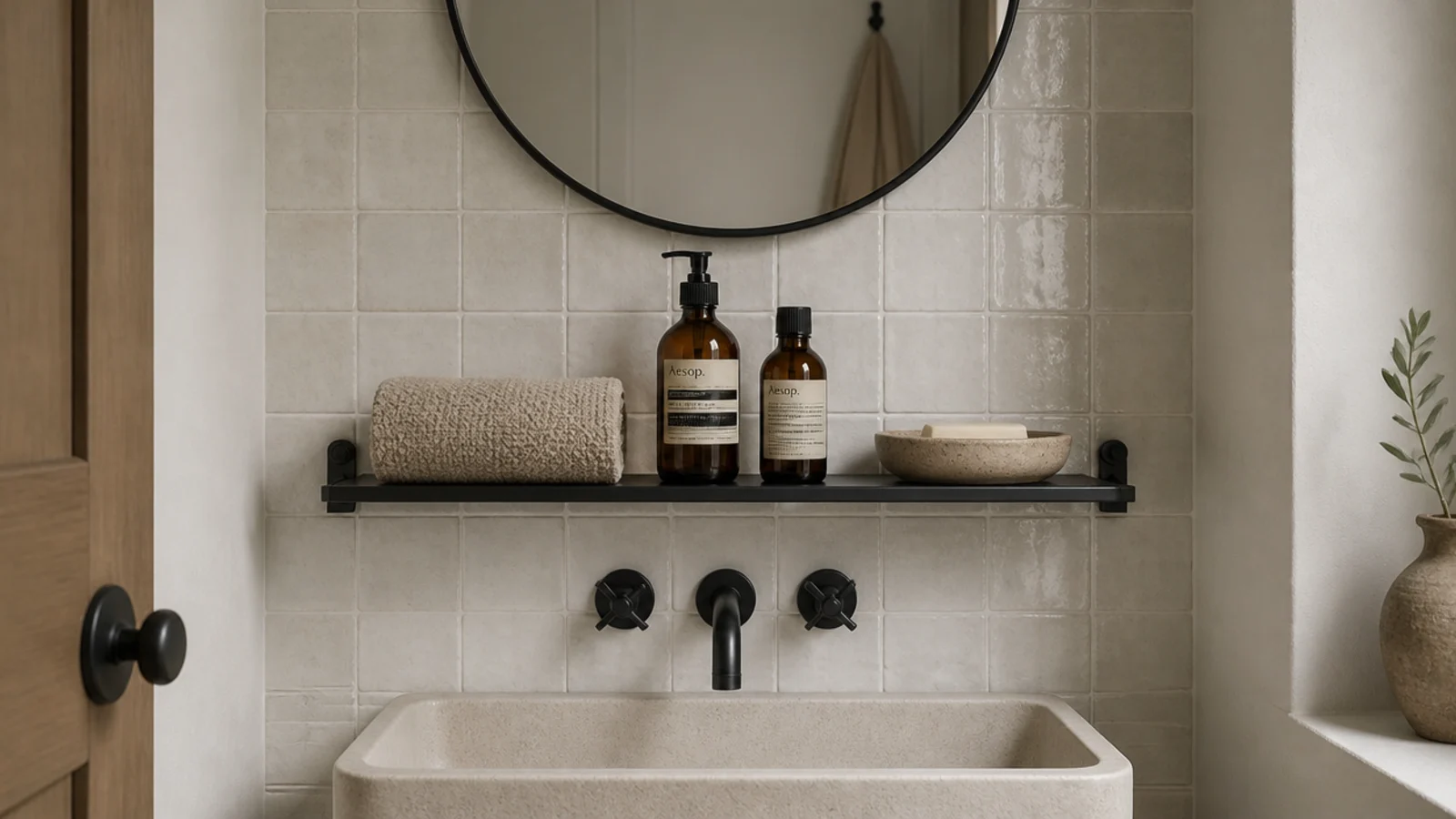
9. Powder-coated steel in the bathroom
Bathrooms need sealed teak, bamboo, solid surface or powder-coated steel. Black powder coat is the one that also looks sharp against pale tile.
Keep it to 5 or 6 inches deep so it clears the shower door swing, and never put raw pine or MDF in a room with no window.
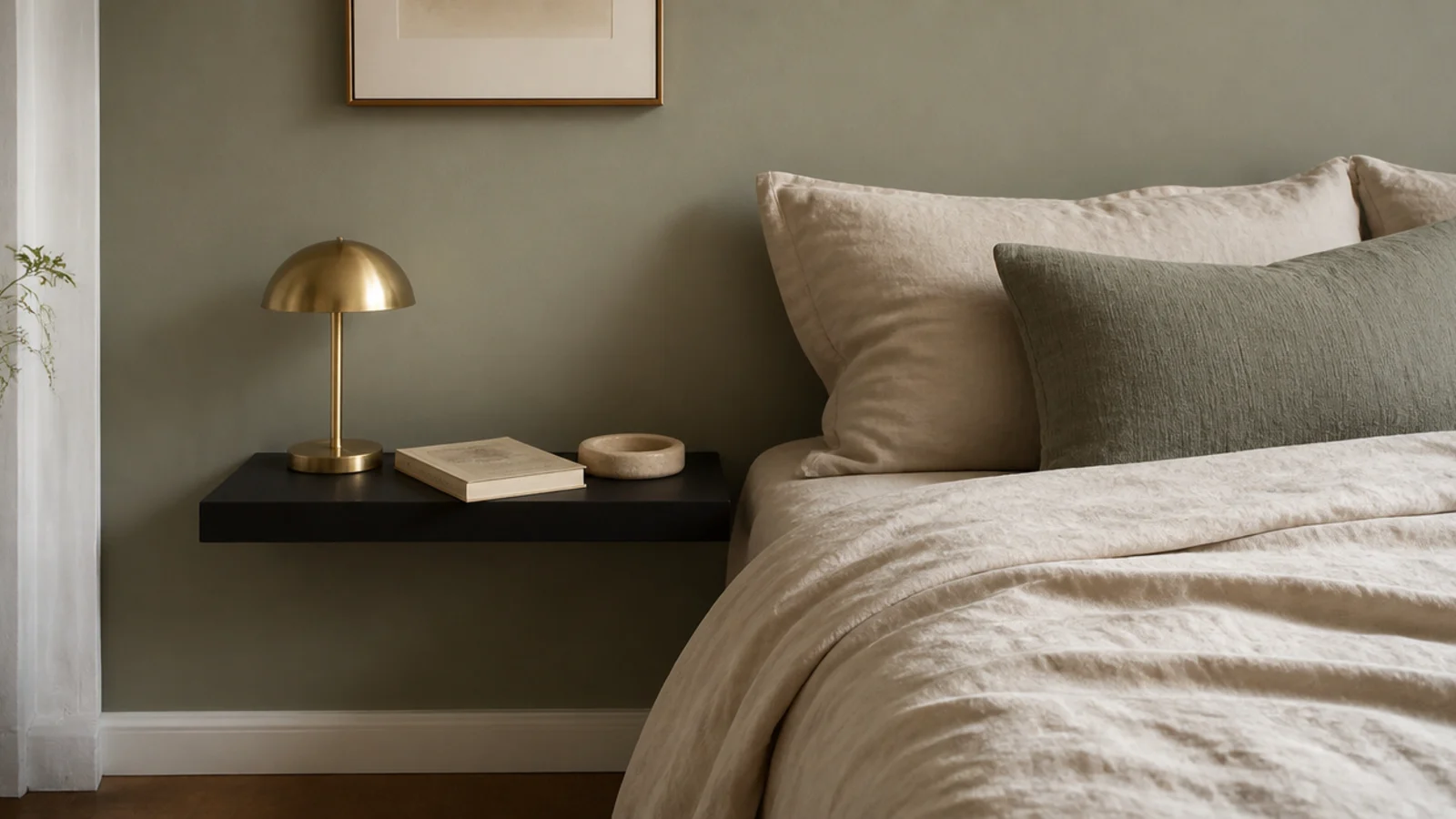
10. A black bedside shelf at mattress height
A slim black board beside a bed replaces a nightstand and gives the floor back. Mount it level with the top of the mattress — that is where your hand lands in the dark.
Twelve inches long and 7 deep holds a lamp, a book and a glass.
11. A thin steel plate shelf for a modern room
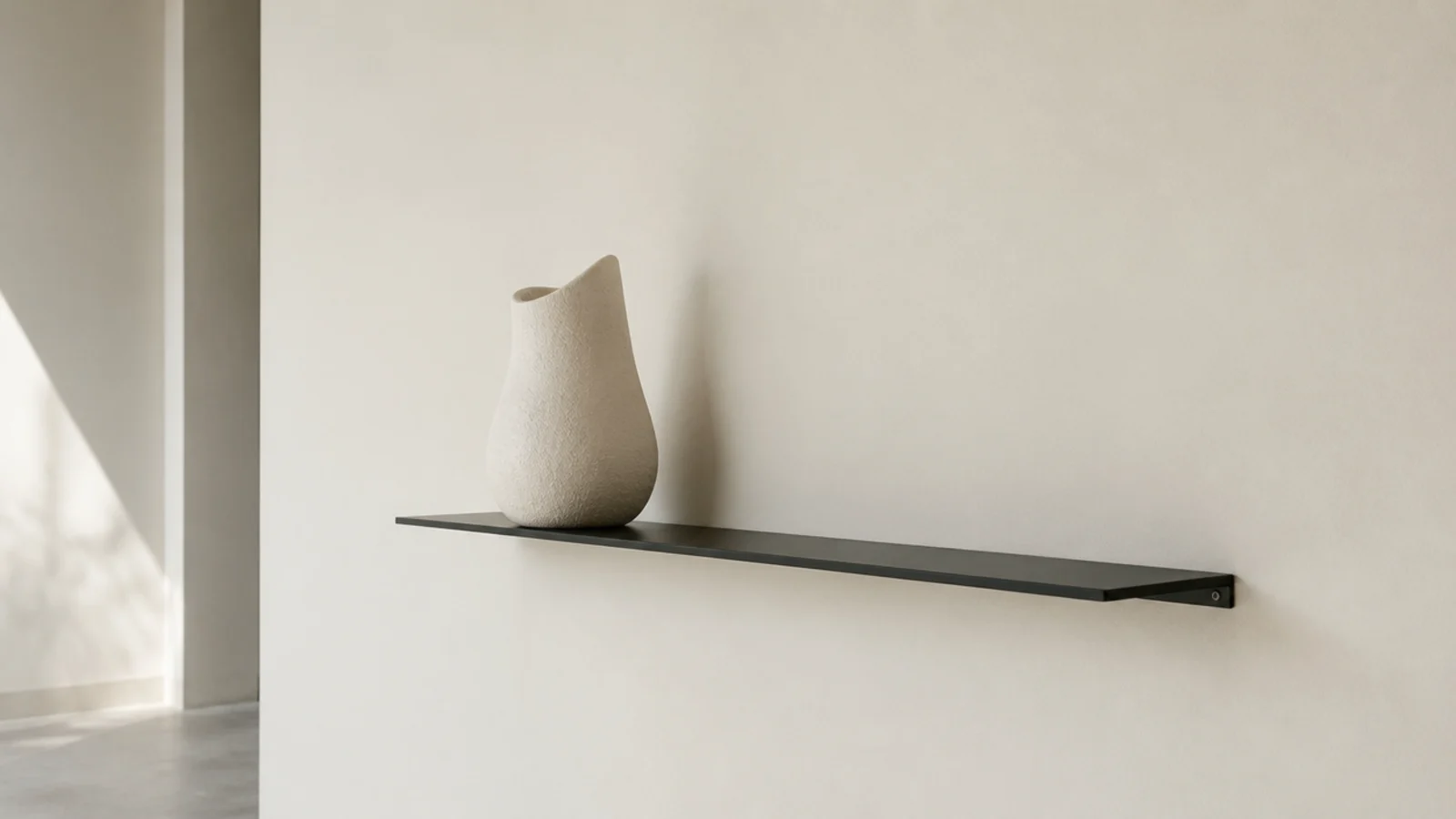
Quarter-inch folded steel gives a line no wooden shelf can match: 18 inches deep at the wall and almost invisible from the side.
It is the most expensive option here at $90 to $180, and the only one that genuinely looks like architecture. One object on it, nothing more.
12. A hidden LED strip under a black shelf
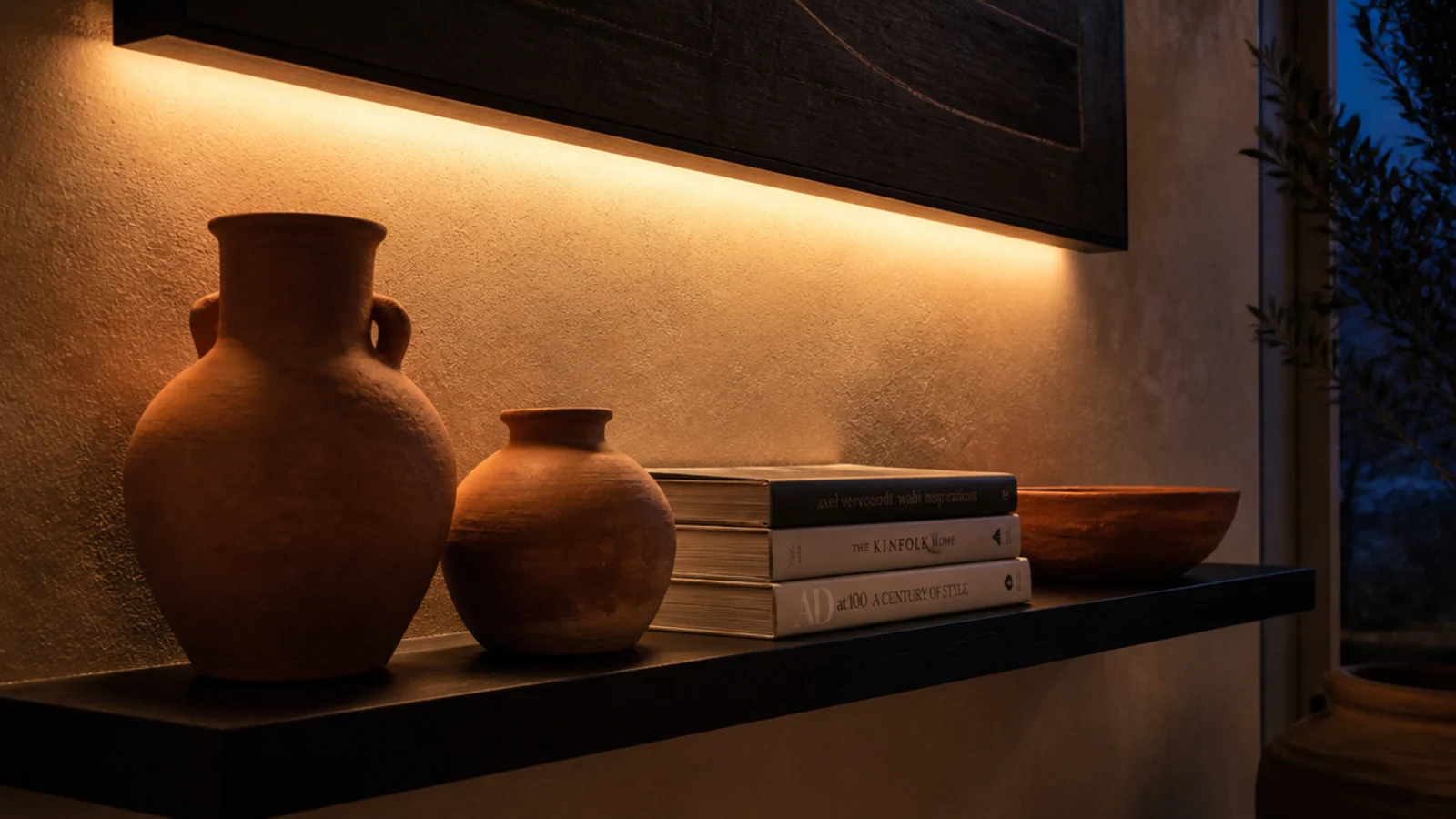
Black absorbs light, so a dark shelf in a dim corner can read as a void. A warm 2700K strip fixed under the front edge fixes that for about $15.
Cool white makes terracotta and walnut look grey. Warm is the only setting worth using here.
13. Black shelves where a mantel used to be
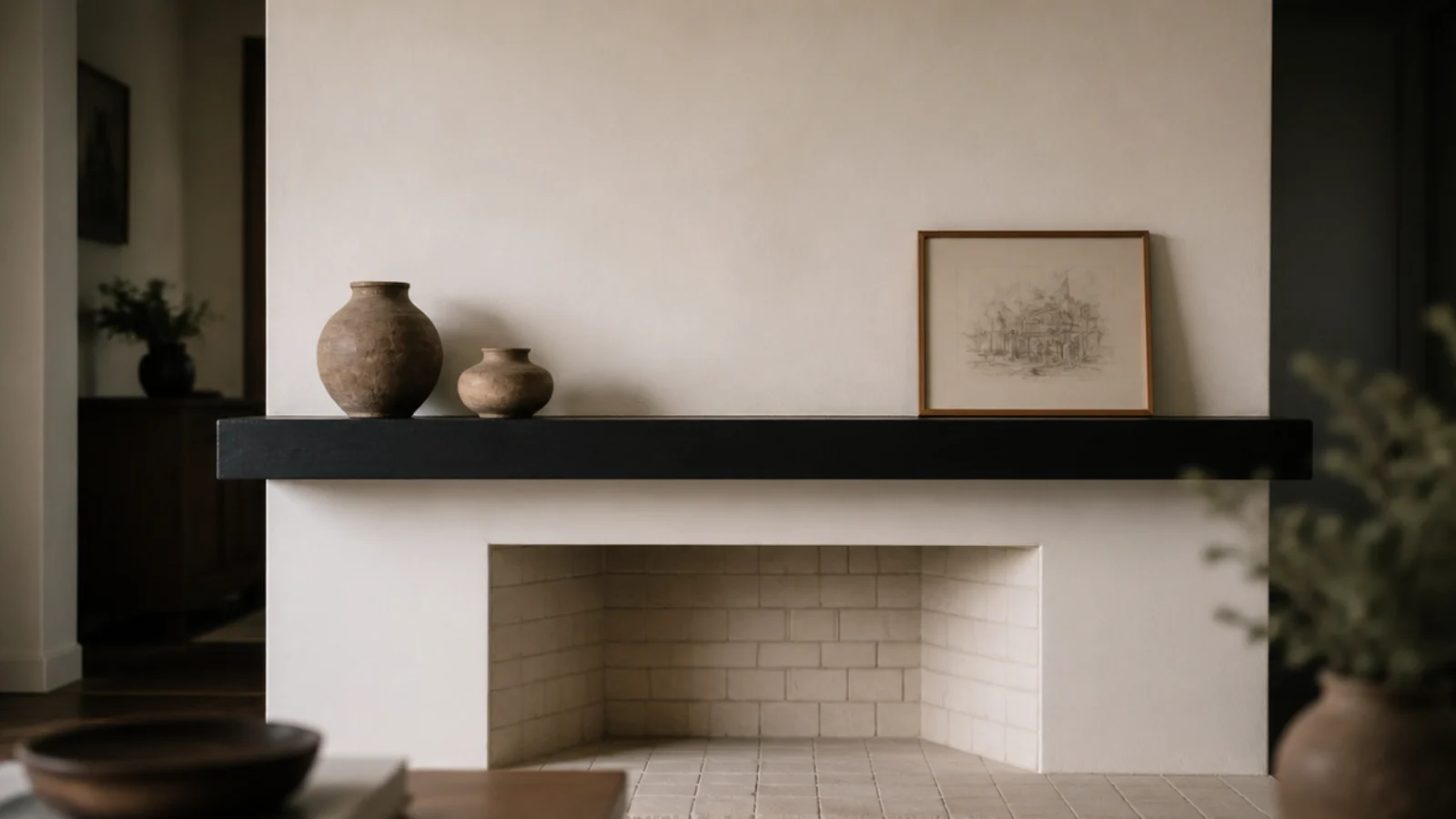
Replacing a heavy timber mantel with a clean black board across a chimney breast modernises a whole room in an afternoon.
Run it the full width of the breast, 6 inches deep, and fix into the masonry with sleeve anchors rather than drywall plugs. Keep the ends square and unreturned so the board reads as a beam.
14. Two-tone: black bracket, oak board
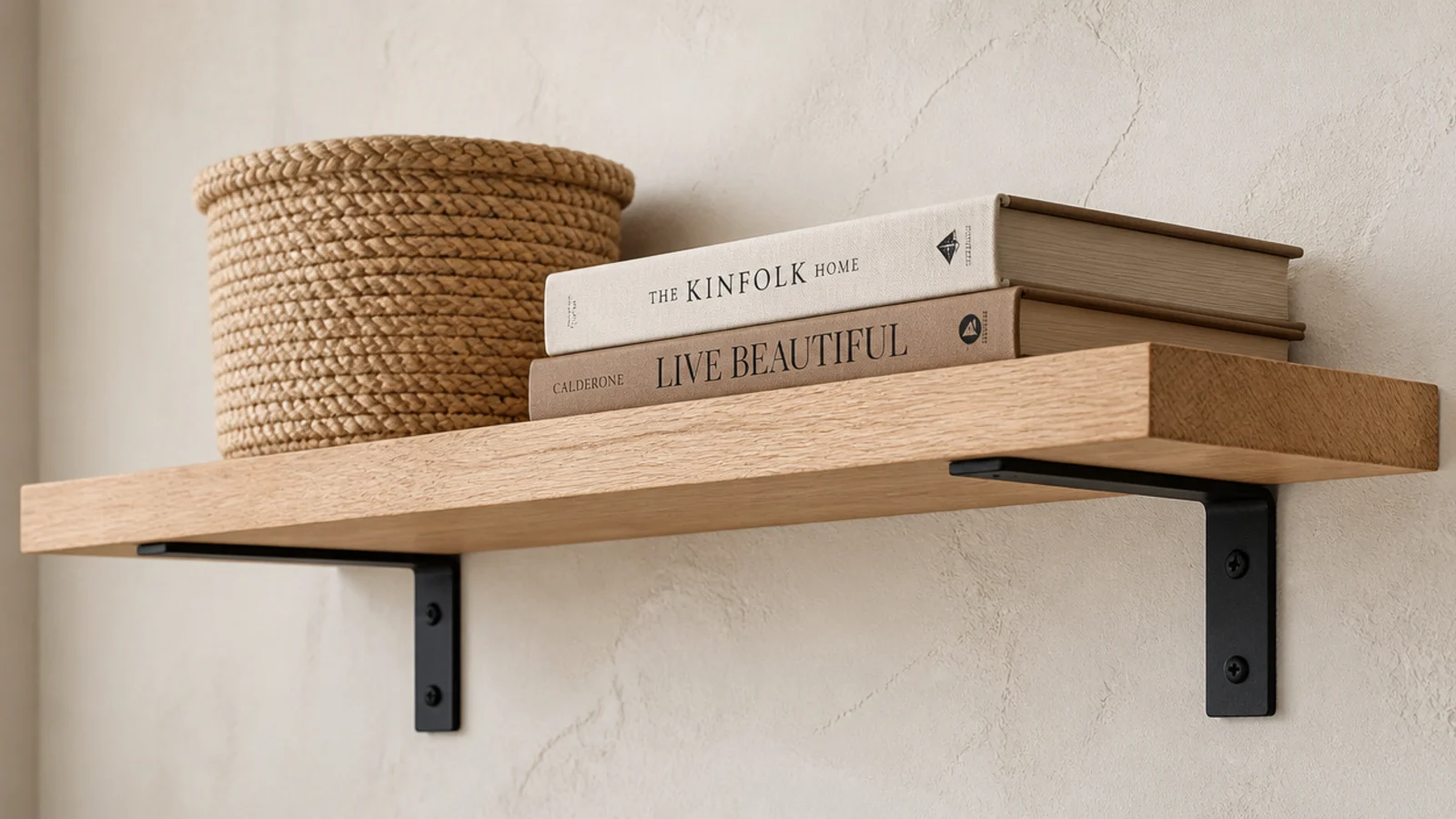
If a whole black shelf feels too heavy, keep the board pale and take the color down to the hardware.
Slim black flat-bar brackets under a warm oak shelf read as intentional in a way that bare steel never does. It is the compromise that suits a room with a lot of wood already.
15. Black shelves flanking a window
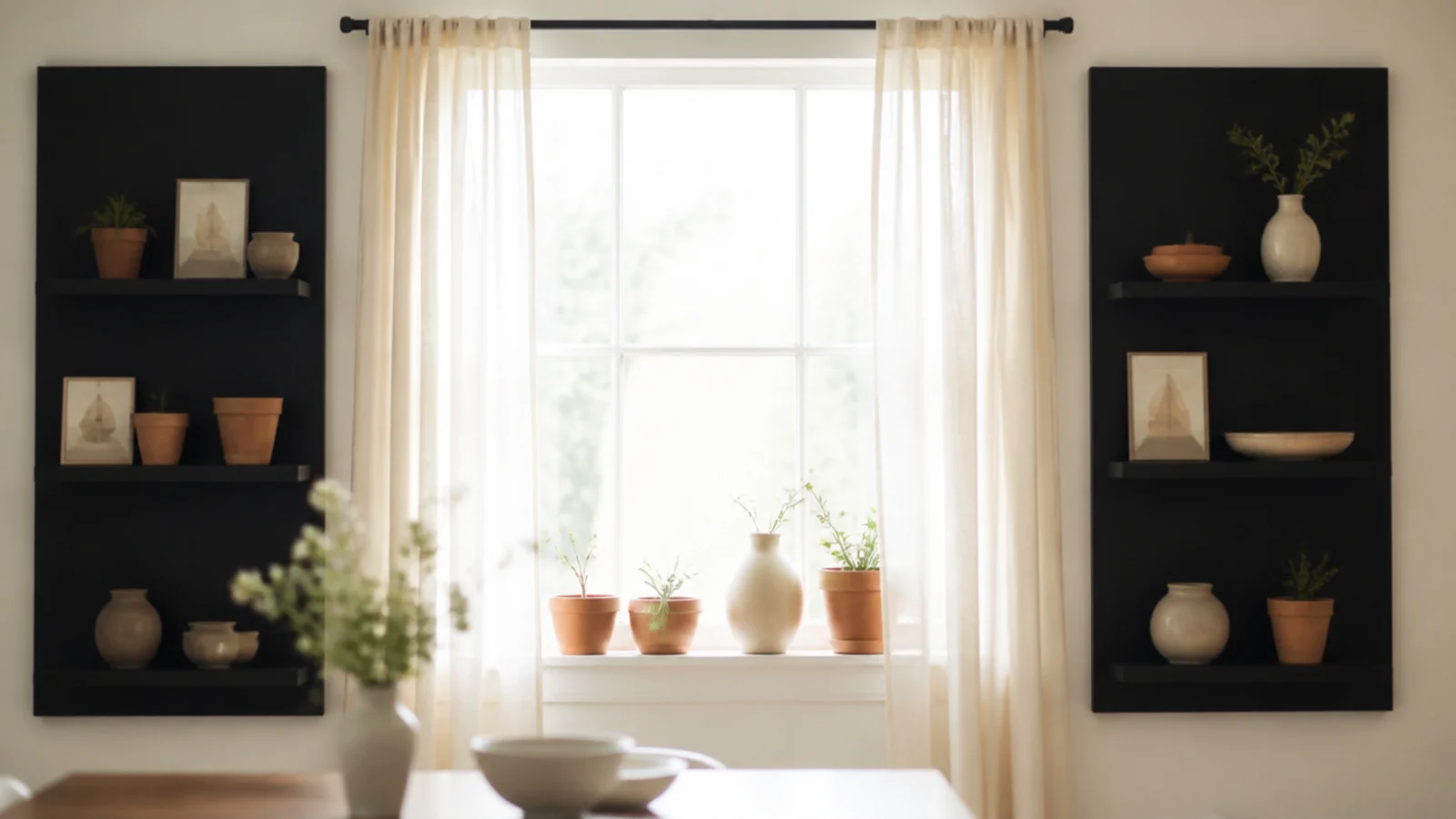
Two matching boards either side of a window, at the same height, turn the window into a framed centrepiece.
Keep them short — 18 to 24 inches — and style them almost identically. Symmetry is the point here, and it is the one place I break the rule about avoiding matched pairs.
16. A run of black ledges down a hallway
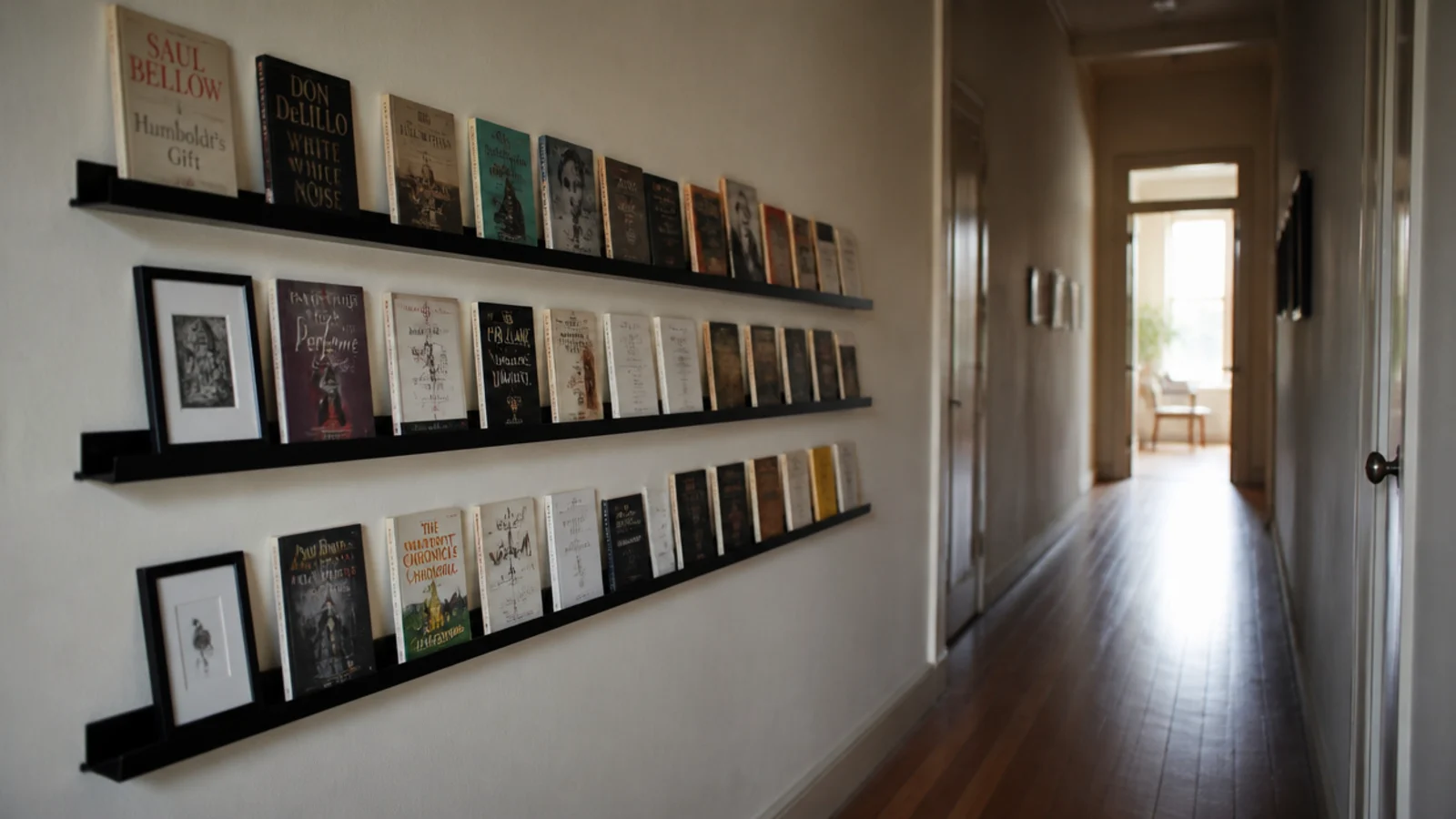
Hallways feel narrow because the walls are blank. Three shallow black ledges at the same height give the eye a line to travel.
Four inches deep never catches a shoulder. Fix into every stud you cross and keep the load to books and small frames. Hold one consistent height along the whole wall, whatever the door heads do.
17. A black bar shelf with brass accents
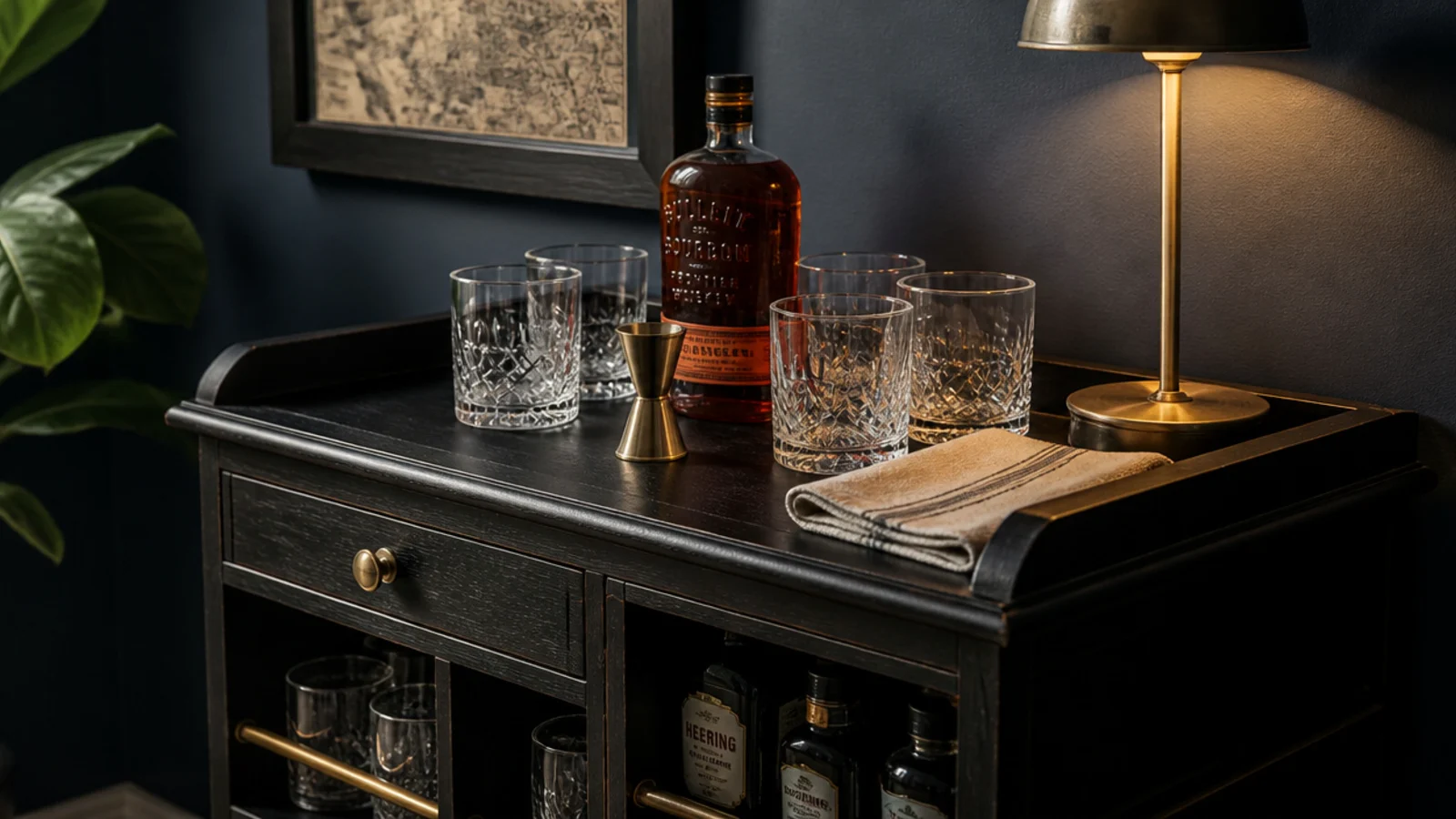
One black board at 42 inches, glassware, an amber bottle and a small brass jigger. That is a home bar in about 30 inches of wall.
Brass against black is the warmest accent available, and two brass pieces are enough for the whole shelf. Leave 14 inches of clearance above it so tall bottles stand upright.
18. Black shelves above a home desk
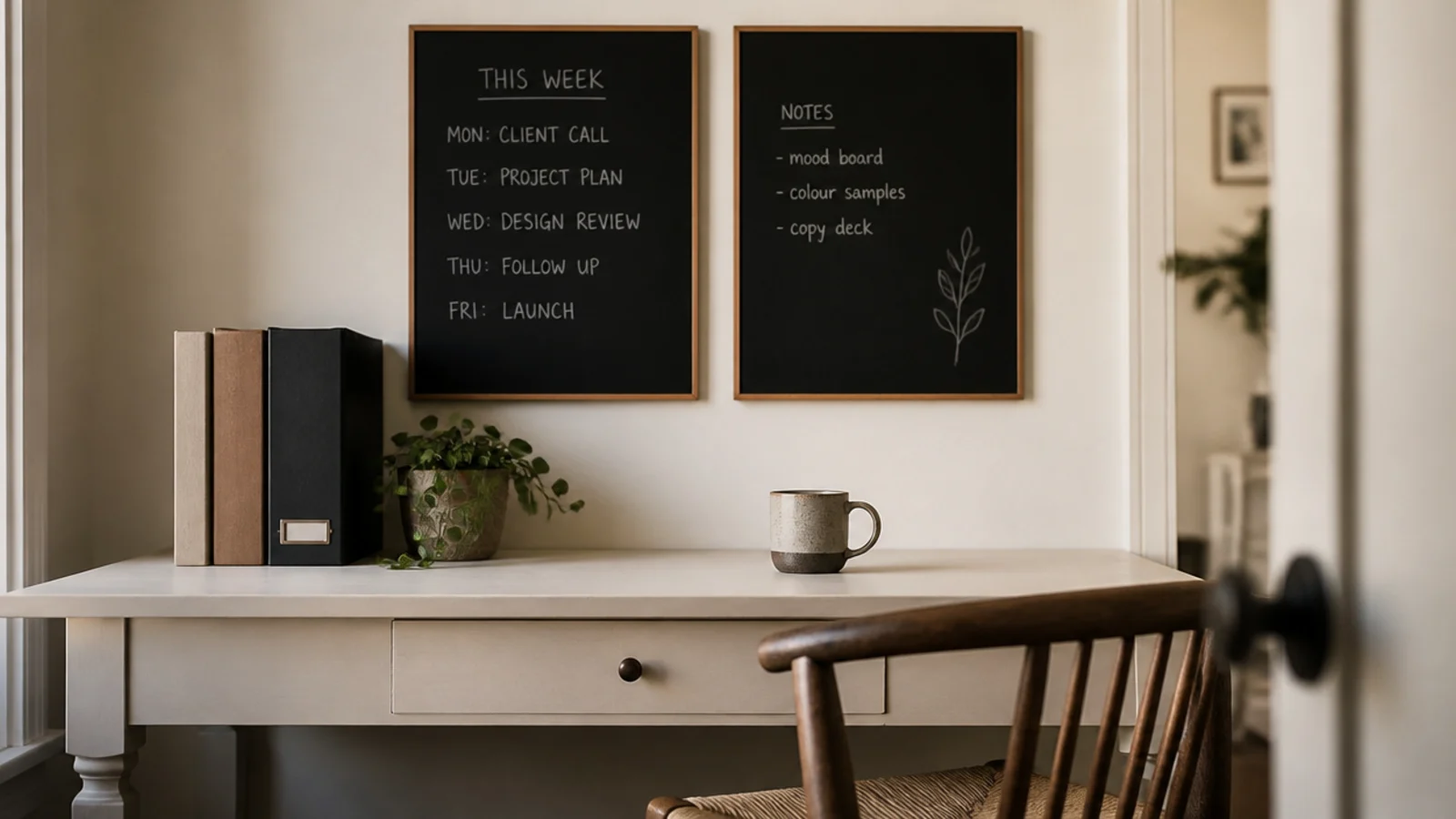
Two boards 16 inches above the desk clear a monitor and keep the surface free. Black hides cable clips, chargers and the general mess of a working desk.
Fix into studs — reference books are heavier than they look, and a desk shelf gets loaded gradually until it fails.
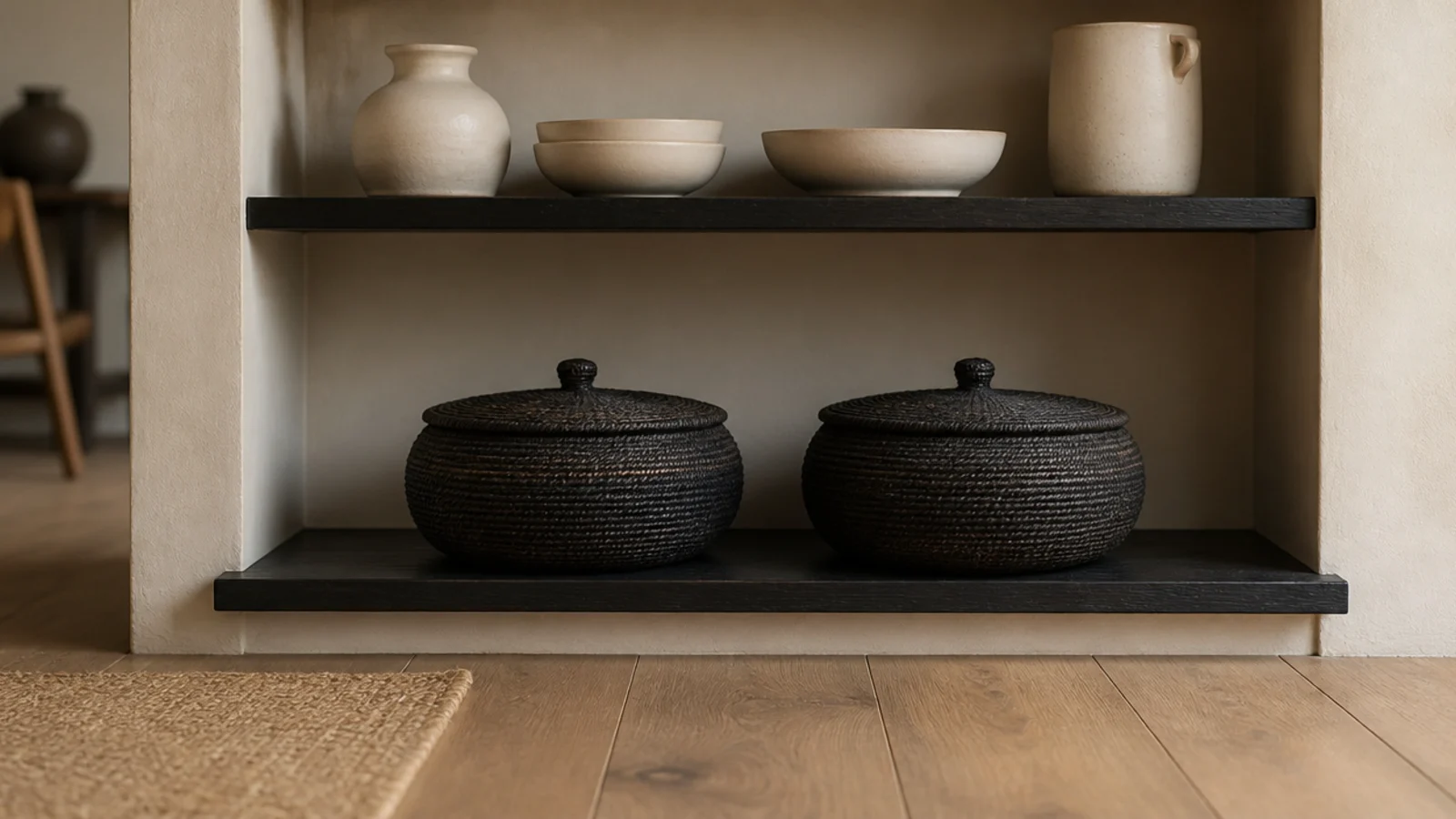
19. Black baskets on the lowest shelf
Weight belongs low, both for the wall anchors and for how the run reads. Two dark lidded baskets on the bottom board hide chargers and paperwork.
They also make everything above look lighter by contrast, which is the cheapest way to balance a heavy dark run. Measure the basket height before you set the shelf spacing, not after.
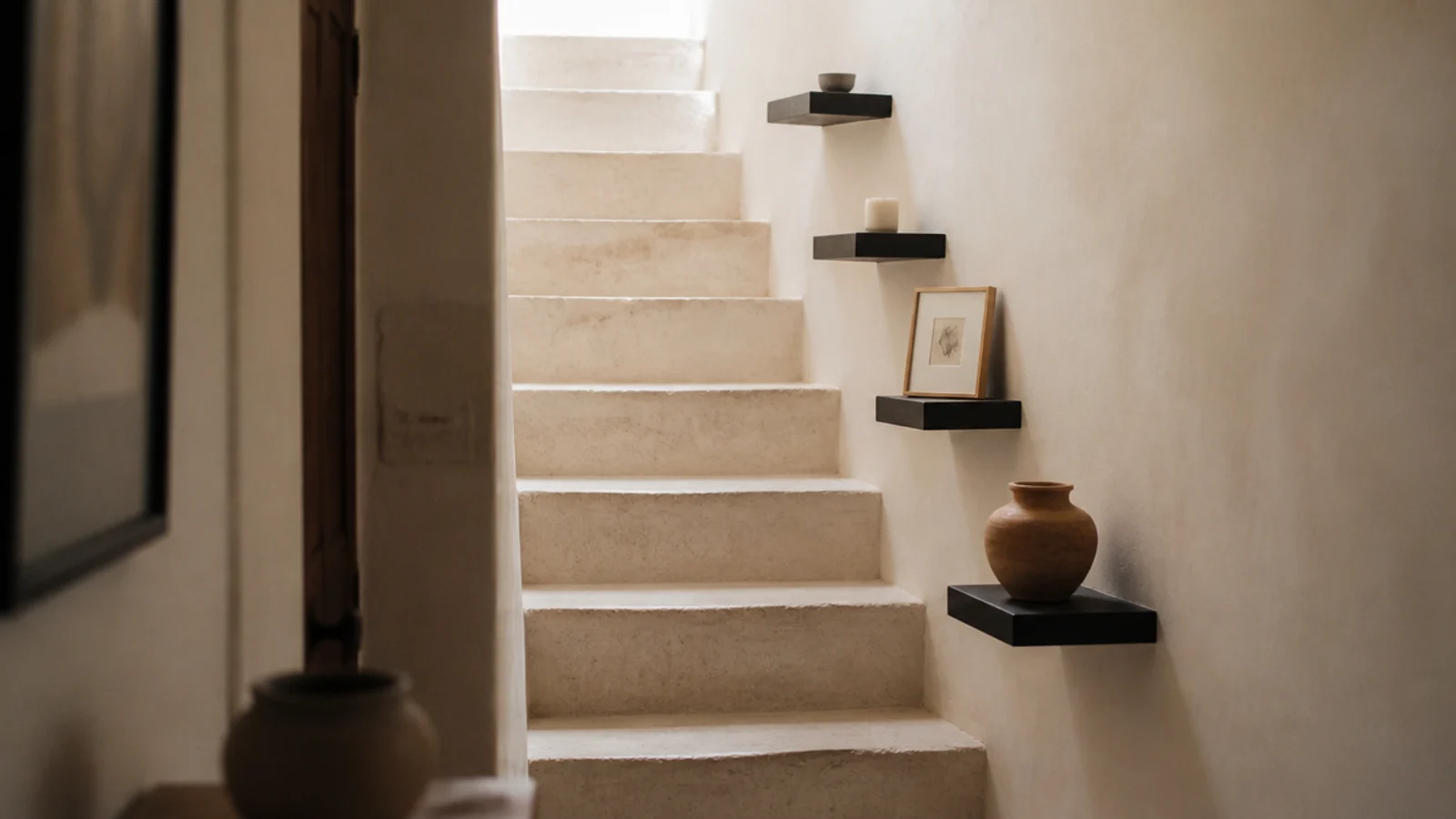
20. Black shelves stepped up a stairwell
Stairwell walls are tall and impossible to furnish. Four short black boards climbing in step with the treads solve that.
Set each one 16 inches above the tread nose below it, keep all four the same length, and put one object on each. The rhythm is the design.
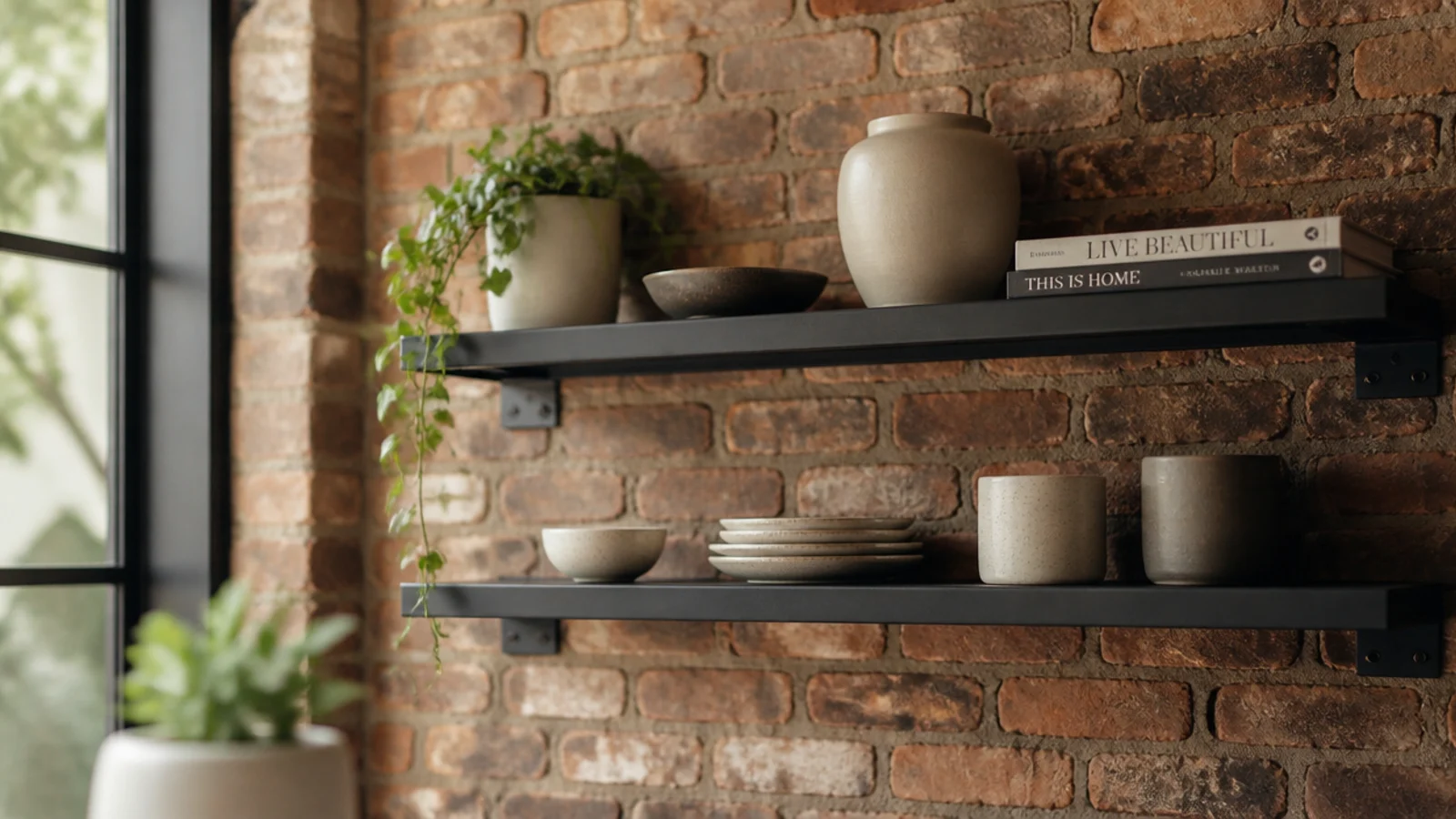
21. Black shelves against exposed brick
Brick is visually busy. A black steel shelf quiets it, where a wooden one competes with the warm tones already in the wall.
Use sleeve anchors into the brick itself, never into the mortar joints, and pre-drill with a masonry bit at low speed. Test one anchor first, because soft old brick crumbles where engineering brick does not.
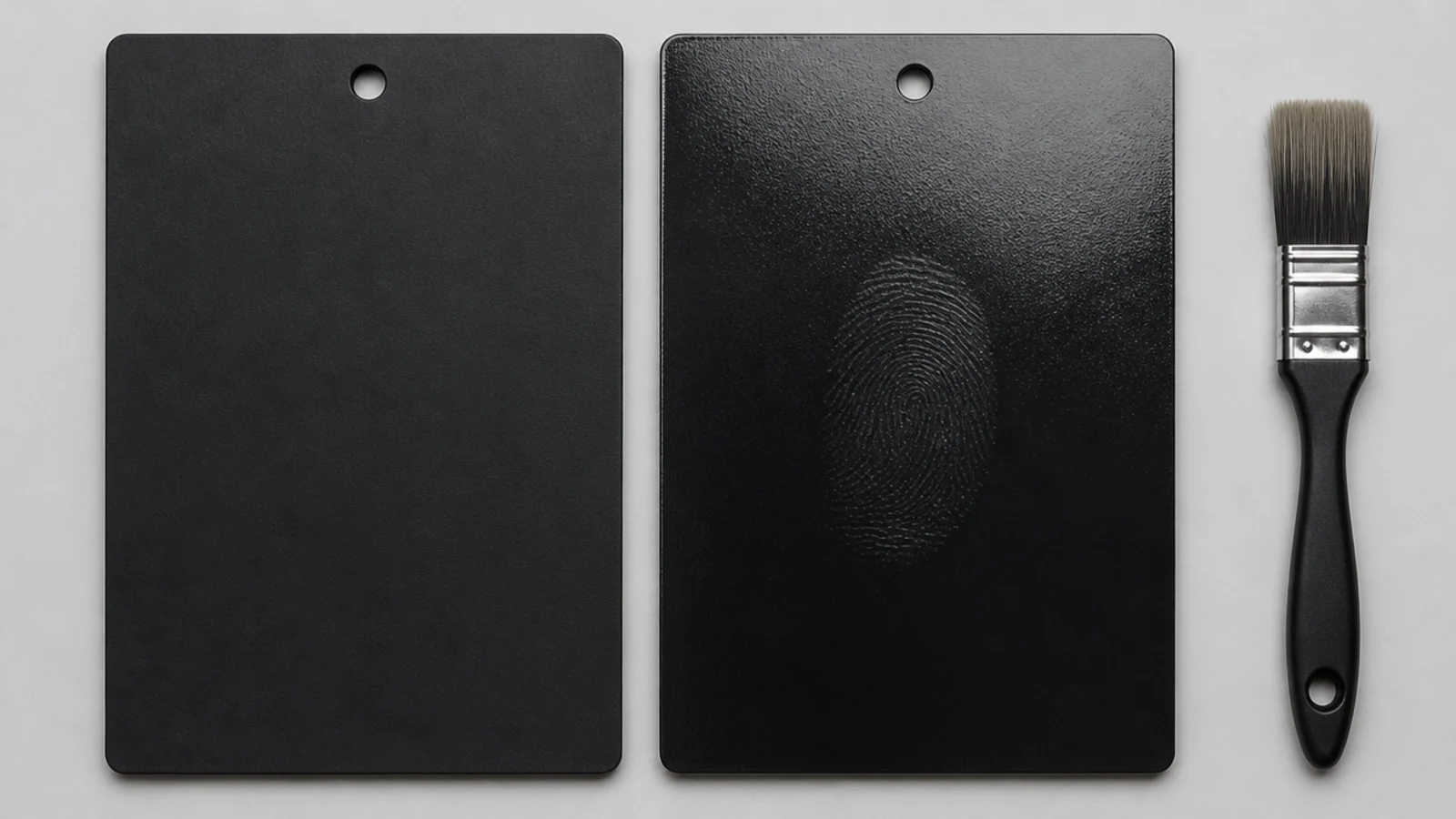
22. Matte over satin, every time
If you take one finish decision from this list, take this one. Satin and gloss black show every fingerprint, dust line and imperfection in the board.
Matte forgives all three and photographs far better. A sample pot of matte black covers two 24-inch shelves for under $12. Brush a test patch on an offcut and look at it under your own lamps.
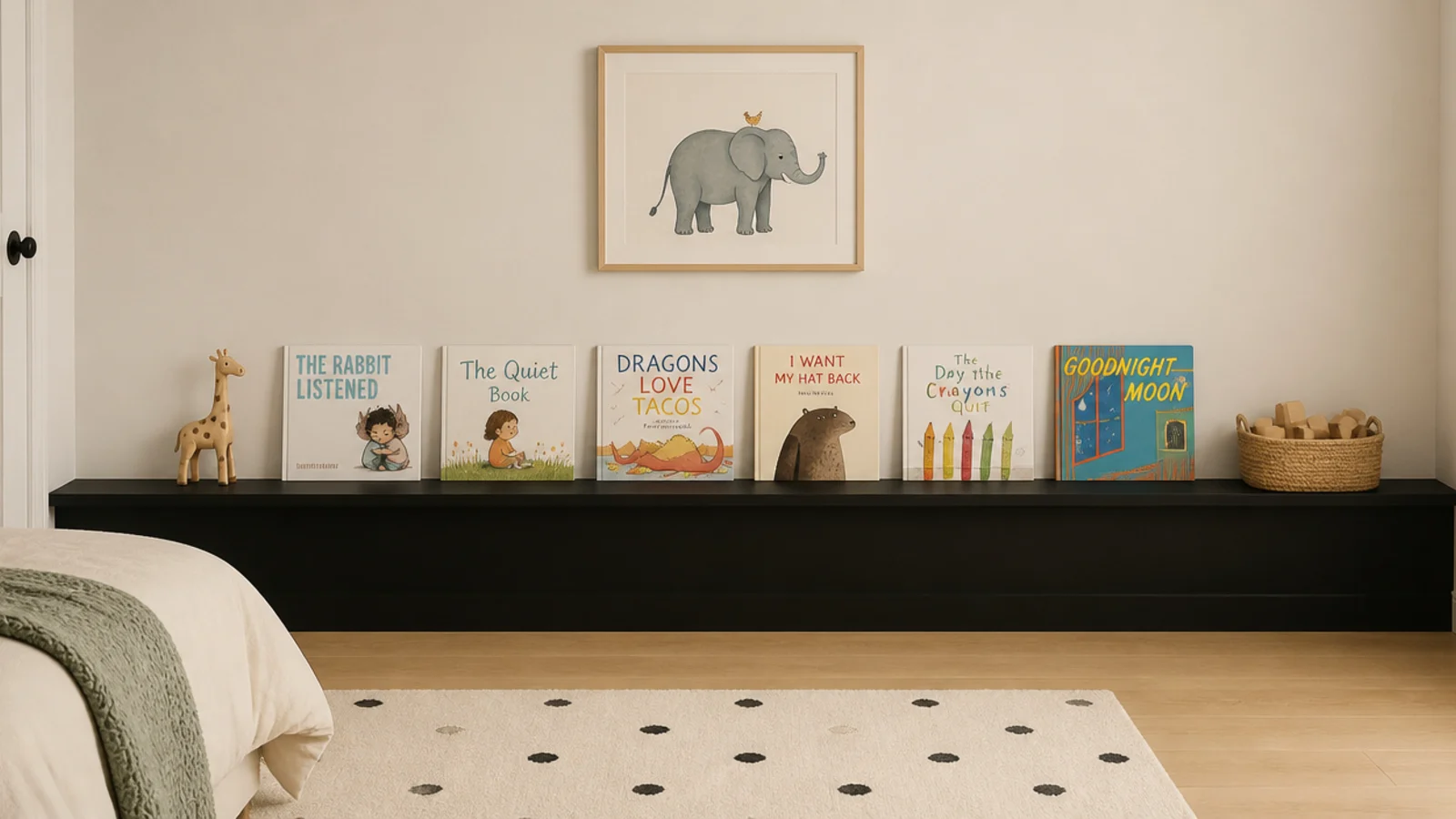
23. A low black shelf in a kids room
Cap the top board at 36 inches so a small child can reach it without climbing, and use a forward-facing ledge so books are chosen by cover.
Black wipes clean better than pale paint, which in a child's room is a genuine argument. Round the front edge or add a soft bumper strip at head height.
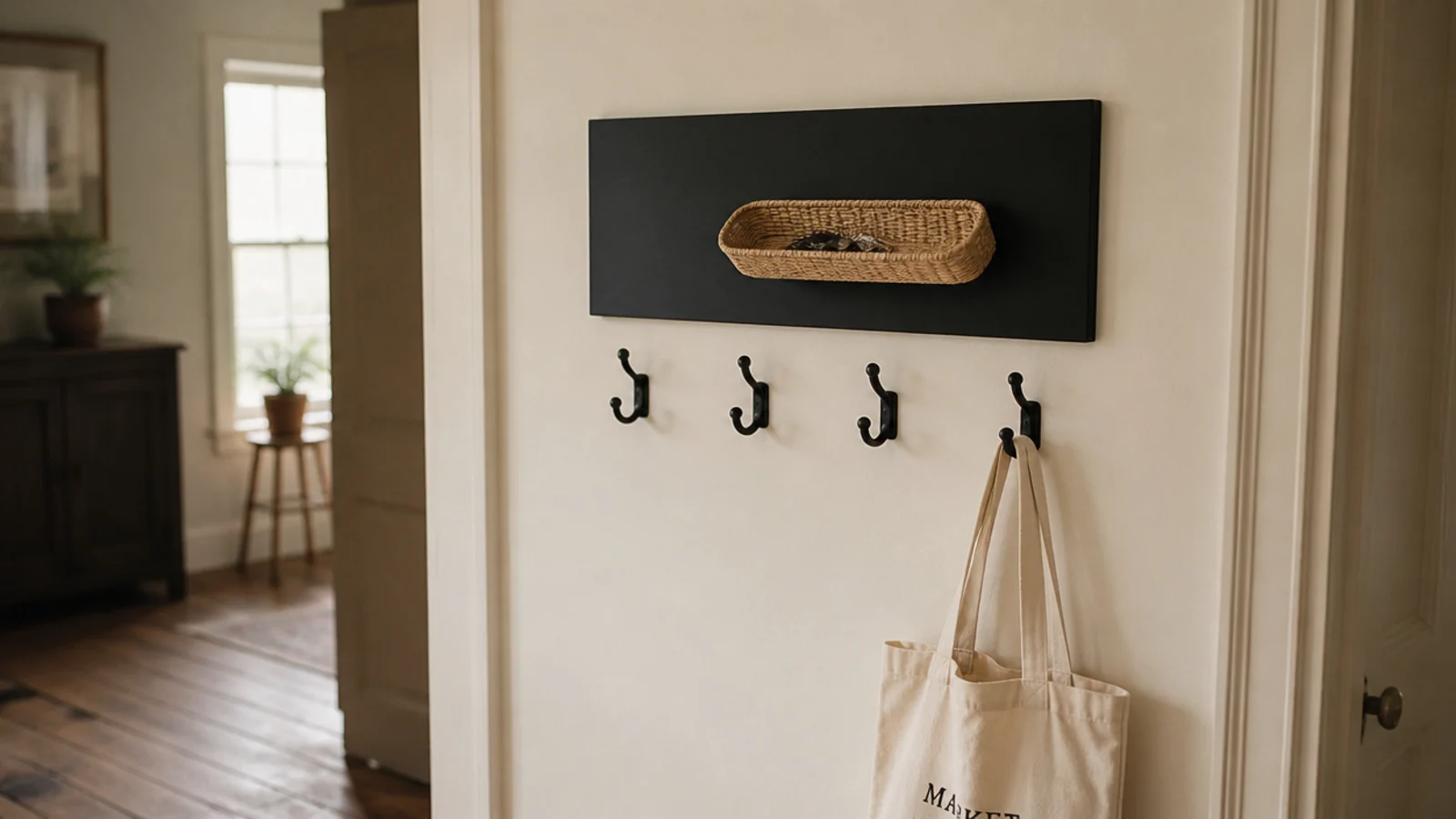
24. A black entry shelf with hooks below
A board at 52 inches with four matching hooks 14 inches under it gives an entry a drop surface and a coat rail in one dark line.
Add one pale tray on top for keys. Without a raised edge, small things slide off within a week. Keep the board 6 inches deep so the doorway does not narrow.
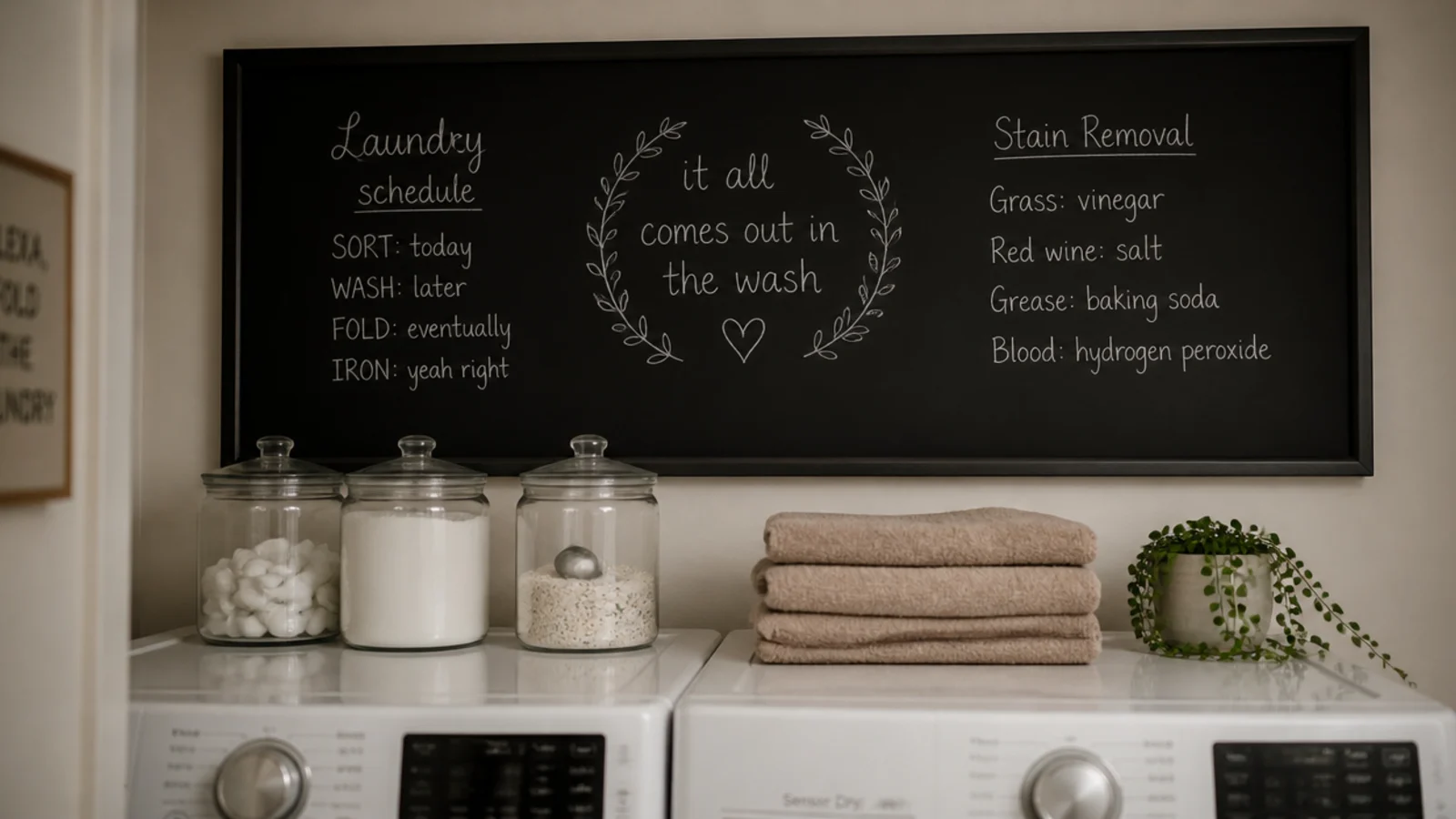
25. Black shelves in the laundry room
The wall above a washing machine is the most wasted surface in most homes. One black board at 60 inches turns it into storage that also looks deliberate.
Go 10 inches deep and add a small lip — vibration walks objects toward the edge over a few months. Choose sealed or powder-coated finishes, because laundry rooms run humid.
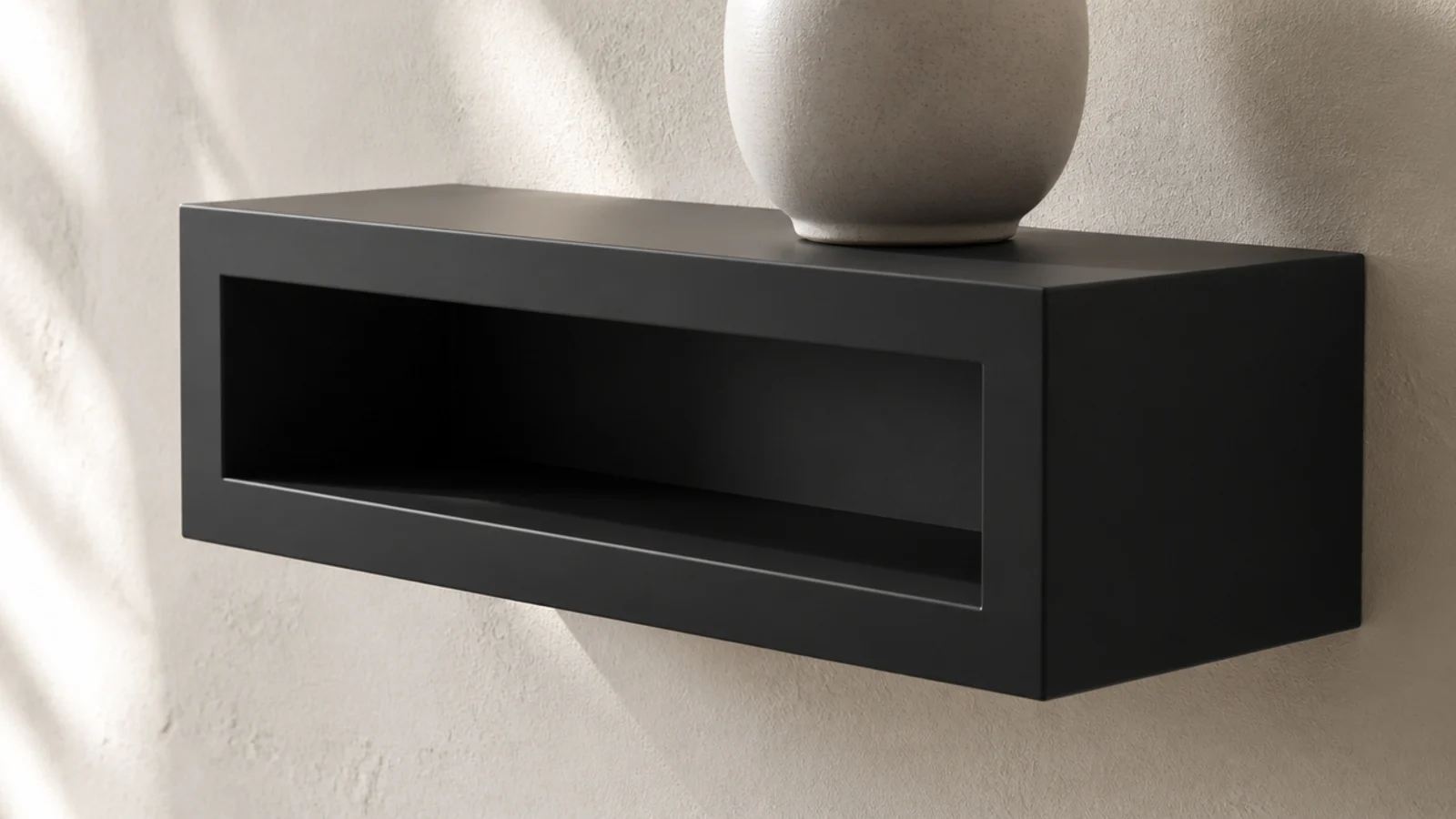
26. A chunky black box shelf
Thick black stock is expensive. Build a hollow box from 1x2 pine skinned in quarter-inch ply and you get a 1.5 to 2 inch front edge for a third of the price.
Fill the seams, sand flush, then paint matte black. Painted boxes hide the joint completely; stained ones never do.
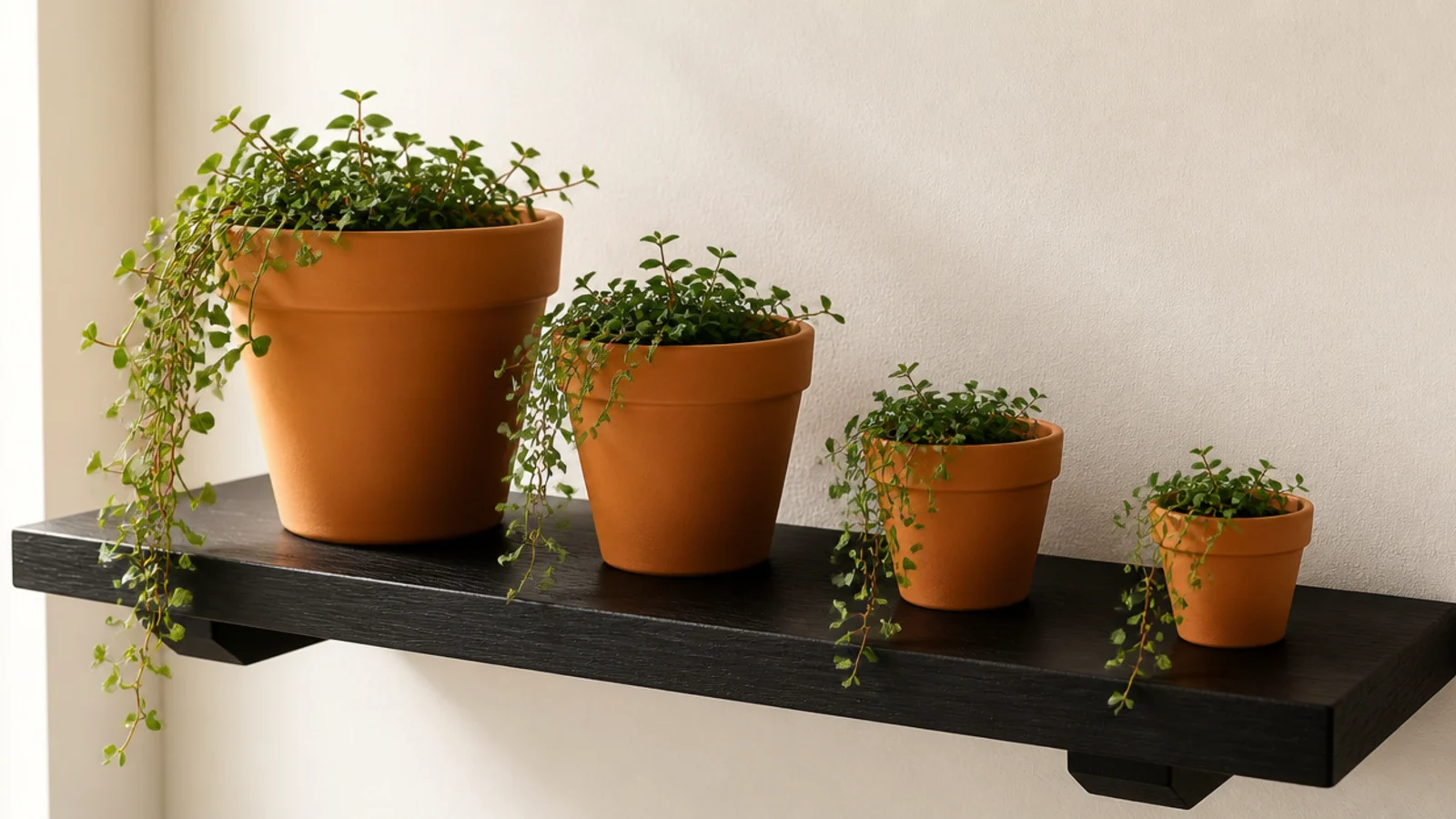
27. Terracotta pots against a black board
The warmest contrast available, and the cheapest. Plain unglazed clay pots at about $3 each glow against a dark shelf in a way glazed ceramics never manage.
Four pots in graduated sizes on one board is a complete arrangement. Add a saucer under each one, and expect to water a little more often, because terracotta wicks moisture.
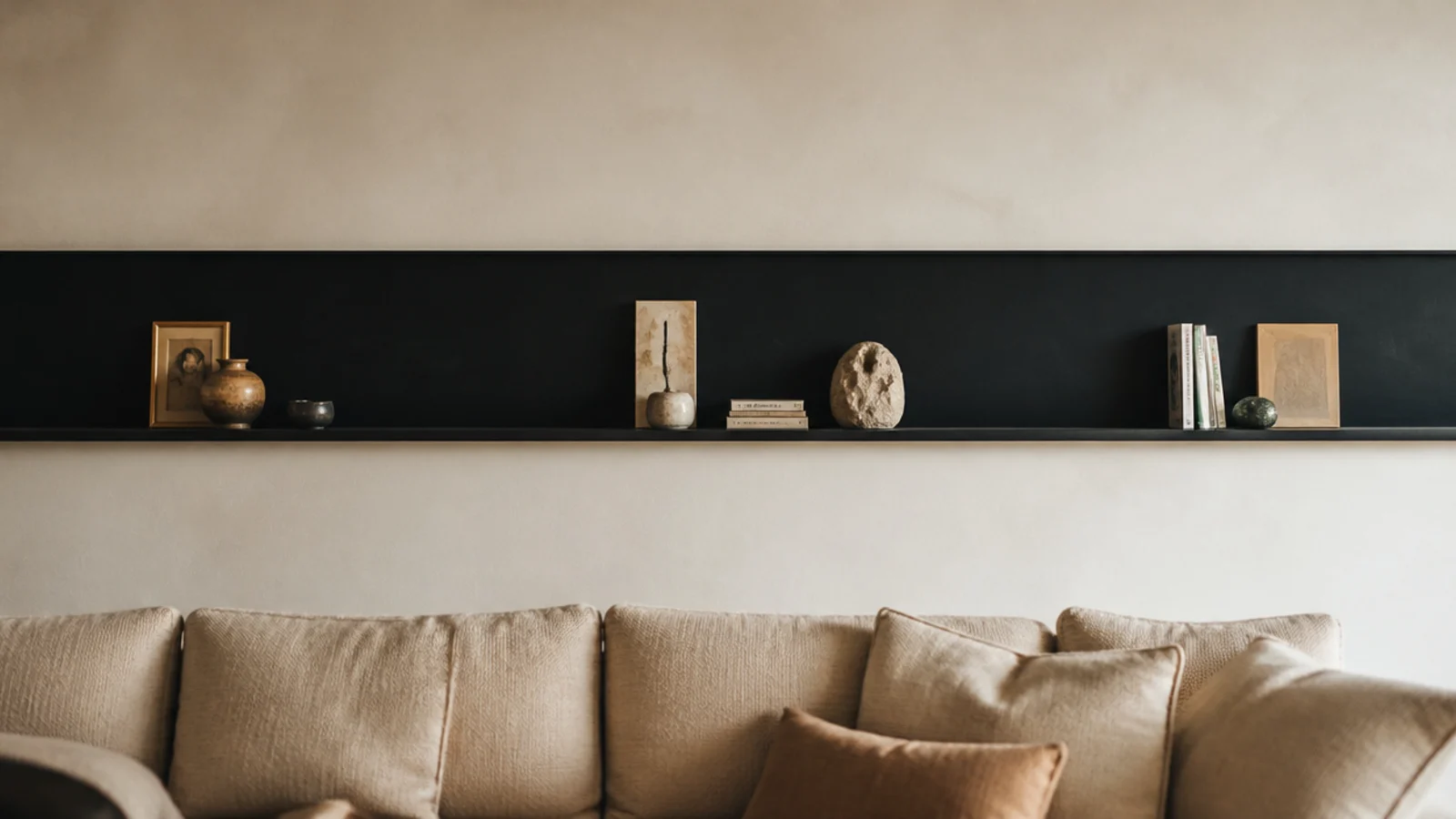
28. One long black shelf across a whole wall
Instead of three short boards, run one continuous shelf nearly wall to wall at 60 inches. The unbroken horizontal makes the room read wider.
Support it into every stud along the run. Style it in three tight clusters with real gaps between them, as covered in floating shelf styling.
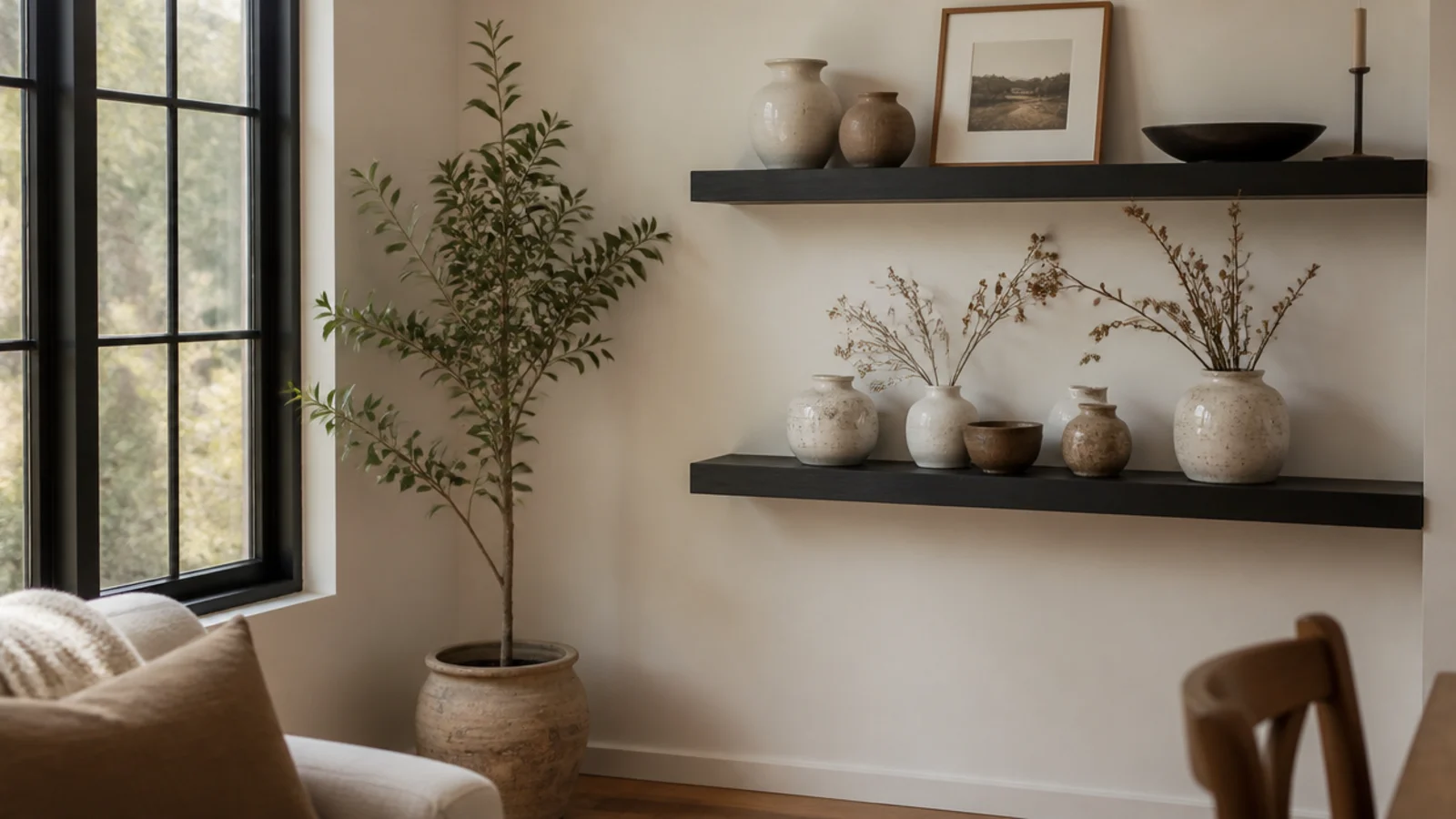
29. Black shelves that match the window frames
If a room already has black window frames, door handles or a black light fitting, black shelves stop looking like a trend and start looking like a scheme.
Repeating a dark tone three times in a room is what makes it read as deliberate rather than as one bold object.
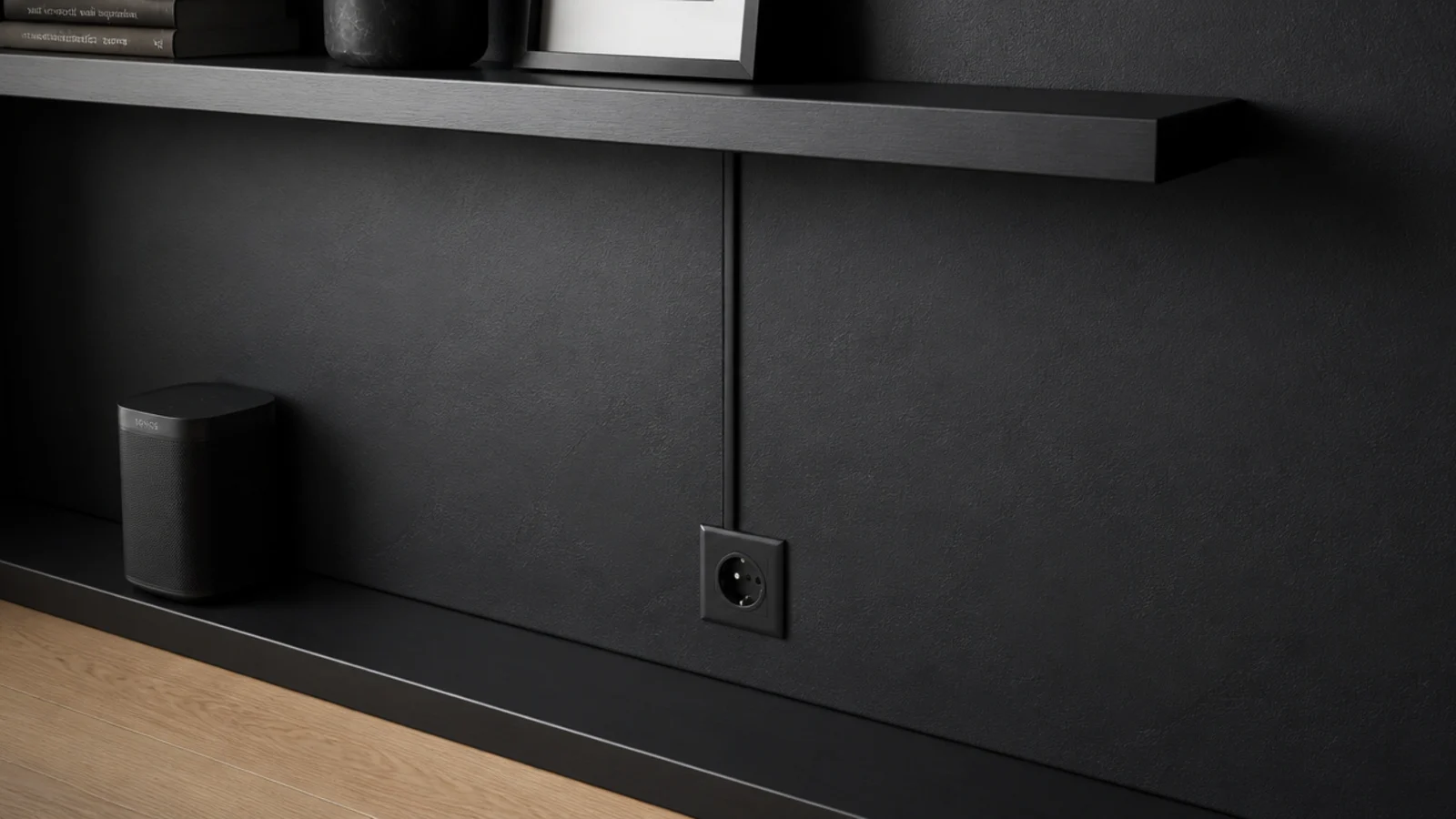
30. Run the cables inside a painted channel
Any shelf holding electronics needs a cable plan before it needs styling. An adhesive channel painted the same black as the shelf disappears completely against a dark wall.
Twelve dollars and ten minutes, and it undoes the single most common thing that makes a good shelf look messy.
Mistakes to Skip
- Choosing gloss black because it looks sharp in the shop. Under real room light it bounces every overhead lamp and shows every fingerprint within a day.
- Going 12 inches deep in black. Depth doubles the pull-out force on the anchors and a deep dark shelf visually hangs over the room like a shelf twice its size.
- Pairing black shelves with a cool grey wall. The combination looks accidental rather than designed; warm cream or a proper dark wall both work far better.
Frequently asked questions
Do black floating shelves make a room look smaller?
Only if the wall behind them is pale and the shelves are deep. A dark shelf on a cream wall creates a hard line your eye stops at, which shortens the wall visually. Keep them under 8 inches deep, run them long rather than stacking many, and the contrast reads as architectural rather than heavy.
What finish should black shelves be?
Matte or eggshell for wood, powder-coated for steel. Gloss black shows every fingerprint, every dust line and every imperfection in the board underneath, and it bounces overhead light in a way that flattens the shape. A dead matte finish reads as expensive; a shiny one reads as flat-pack almost immediately.
How much weight can a black steel floating shelf hold?
Steel shelves are usually stronger than their fixings. A concealed rod bracket into a stud carries 30 to 40 pounds on a 24-inch shelf, toggle bolts in half-inch drywall carry 25 to 35 pounds each, and supplied plastic plugs manage about 10 pounds. Buy the shelf for looks and buy the fixings for the load.
What color walls suit black floating shelves?
Warm cream and soft white give the crispest contrast and suit a modern room. Painting the wall behind them a deep charcoal or ink instead makes the shelves nearly disappear and the objects float, which is calmer in a bedroom. Cool grey is the one to avoid, because black against grey looks accidental rather than chosen.
Can I just paint my existing shelves black?
Yes, and it is the cheapest version of this whole list. Sand lightly, prime any knots in pine, then two thin coats of matte or eggshell in black. Paint the brackets in the same finish so they read as one object. A sample pot covers two 24-inch shelves and costs under $12.
Start with one board on the wall you look at most, in matte black, no deeper than 8 inches, and see how the contrast sits before you commit to a whole run. If you want the same look without paint, wood floating shelves for renters covers the reversible versions, and for a dark scheme that turns a corner, floating corner shelves has the geometry. Save the pin before you pick a paint.
Want more like this? Browse all 15 floating shelves guides — they all use the same measurements and budget tiers.
Pin it for later
Save this to your Floating Shelves board
Pin it now so it is waiting for you when the tape measure comes out — and so the next person hunting for this idea can find it too.
Save this pinKeep going
More ideas worth saving while you have the tape measure out.