Corner Shelf Ideas · Listicle
30 Stylish Corner Shelf Ideas to Copy Now

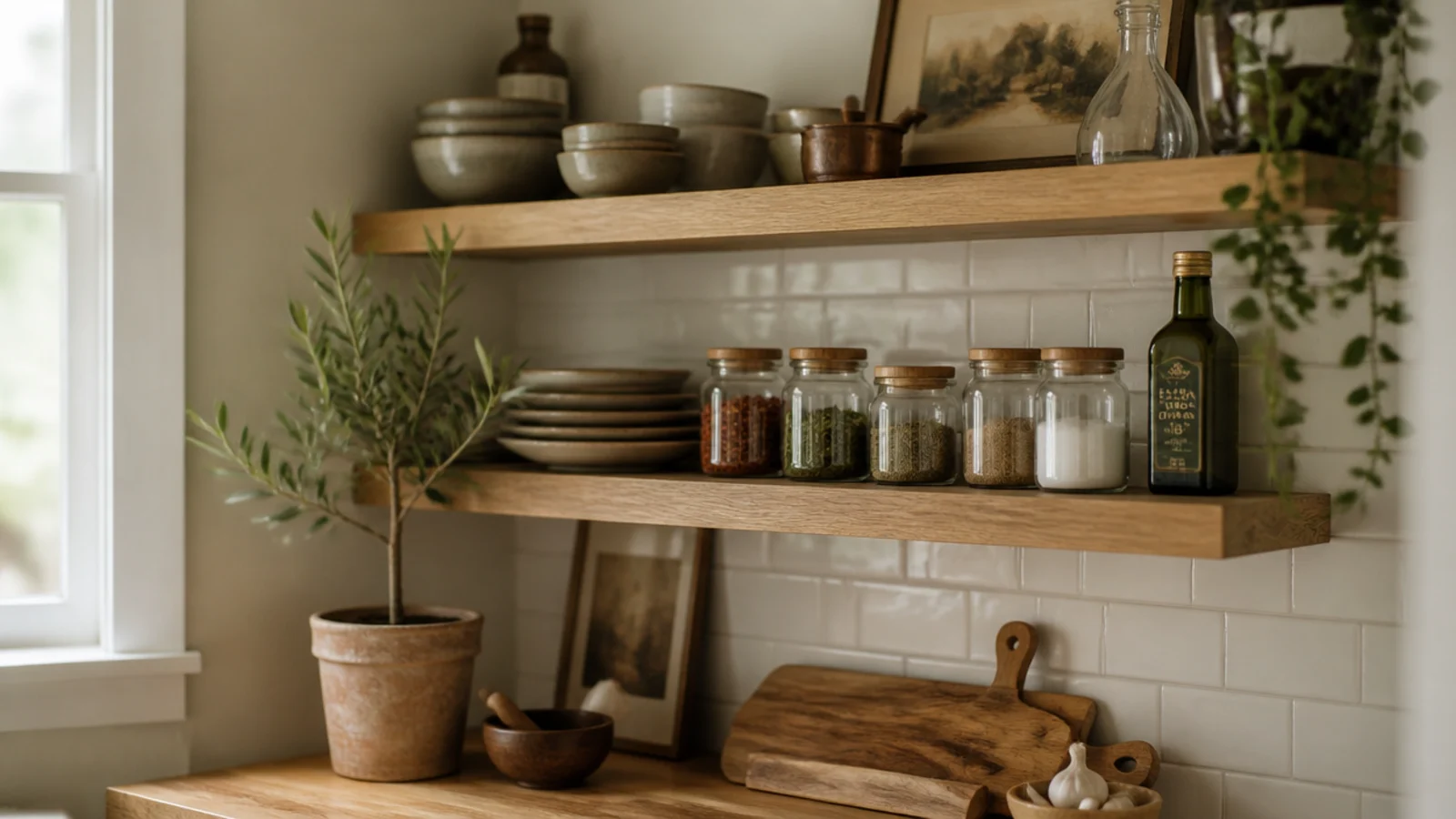
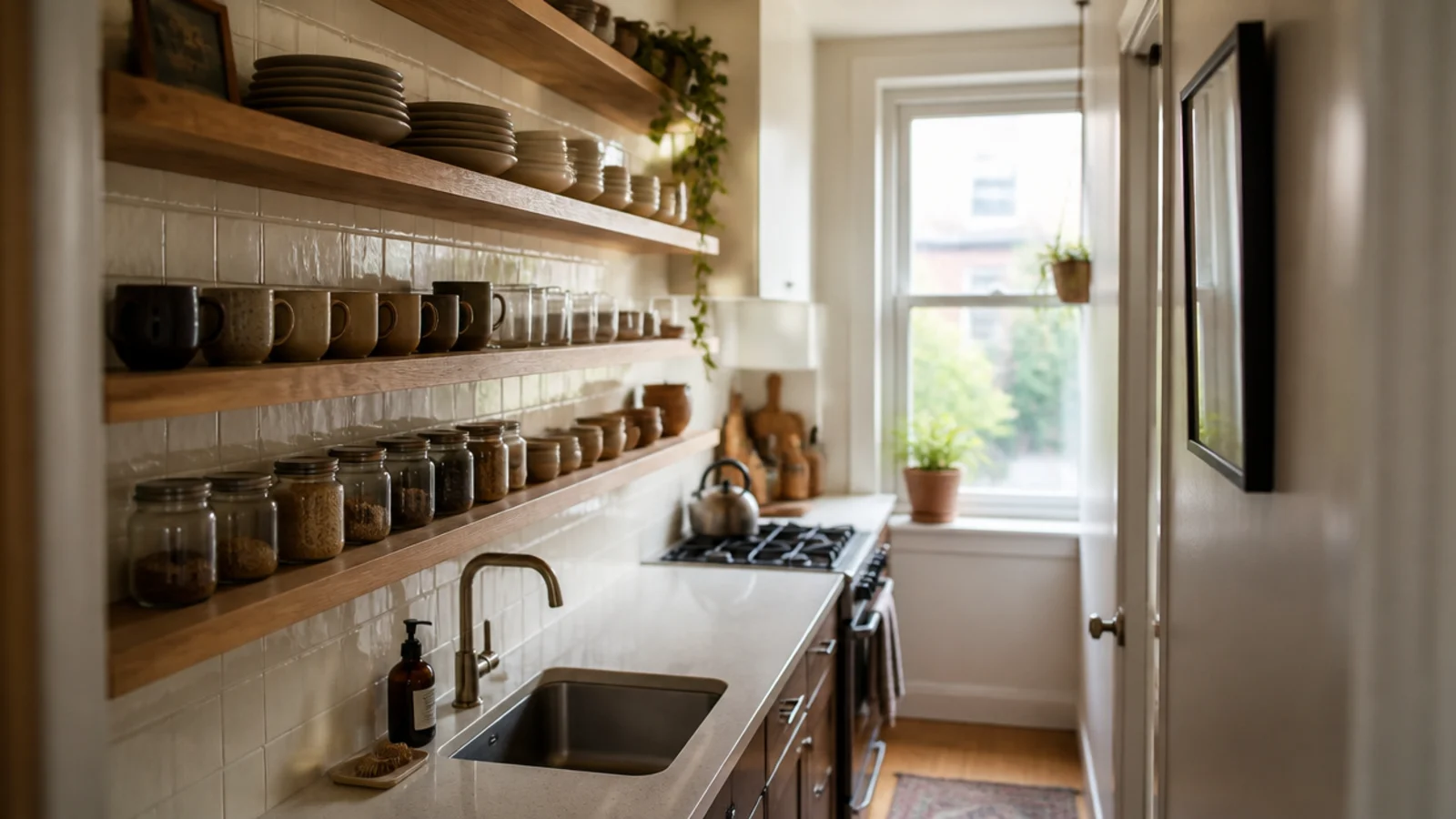
Kitchen corner shelf ideas fail for one reason more than any other: people style them like a living room. A kitchen shelf that holds only pretty things collects grease and never gets wiped, because nobody has a reason to touch it. These 30 setups all start from what you actually cook with, and every one names the height, the finish or the distance from the stove that makes it work.
In this guide32 sections — tap to openHide
- 1.Planning kitchen corner shelf ideas around how you actually cook
- 2.Two shelves at 18 and 32 inches above the counter
- 3.Daily spices only, in matching jars
- 4.Oil and vinegar within one arm sweep of the stove
- 5.A mug peg rail under the lower shelf
- 6.Open shelves instead of one upper cabinet
- 7.A shelf above the kitchen sink corner
- 8.A shelf over the coffee maker
- 9.Everyday plates stacked in the corner
- 10.Cookbooks well away from the stove
- 11.A herb shelf in the window corner
- 12.A cutting board leaning at the back
- 13.A bowl of whatever is in season
- 14.A shelf above the range hood corner
- 15.A glass and wine shelf
- 16.An under-cabinet corner shelf
- 17.A thick shelf above a butcher block
- 18.A utensil crock in the corner
- 19.A shelf for the radio or speaker
- 20.A pot rail fitted under the shelf
- 21.Glass jars of dry goods
- 22.A shelf above the dishwasher corner
- 23.A small plant shelf by the kitchen window
- 24.A shelf above a corner bar cart
- 25.A dedicated tea and coffee corner
- 26.Shelves inside the pantry corner
- 27.A low snack shelf kids can reach
- 28.A shelf over the bin pull-out
- 29.A slim shelf in the fridge gap
- 30.A backsplash ledge that runs the corner
- 31.A towel rail under the corner shelf
- 32.Mistakes to Skip
Planning kitchen corner shelf ideas around how you actually cook
Three things decide whether a kitchen shelf stays usable or becomes a grease shelf.
Height above the counter. Eighteen inches to the first shelf clears a stand mixer and most small appliances. If nothing large lives on that stretch, drop it to 14 and gain height above. Second shelf 12 to 14 inches above the first.
Distance from the stove. Anything within about four feet of a burner will get an airborne film of grease. That is not a reason to avoid shelves there — it is a reason to put things you wash weekly in that zone and decorative pieces at the far end. A shelf of everyday plates near a stove stays clean because the plates cycle through the dishwasher.
Finish. Water-based polyurethane or hardwax oil. Both resist water and grease and wipe clean. Clear wax is the wrong choice in a kitchen — it offers almost no protection and softens near heat. Seal every face including the underside and the cut ends.
Weight is the other thing people underestimate. A stack of ten dinner plates is around 12 pounds, so anything holding dishes wants at least one bracket in a stud and three-quarter-inch stock minimum.
1. Two shelves at 18 and 32 inches above the counter
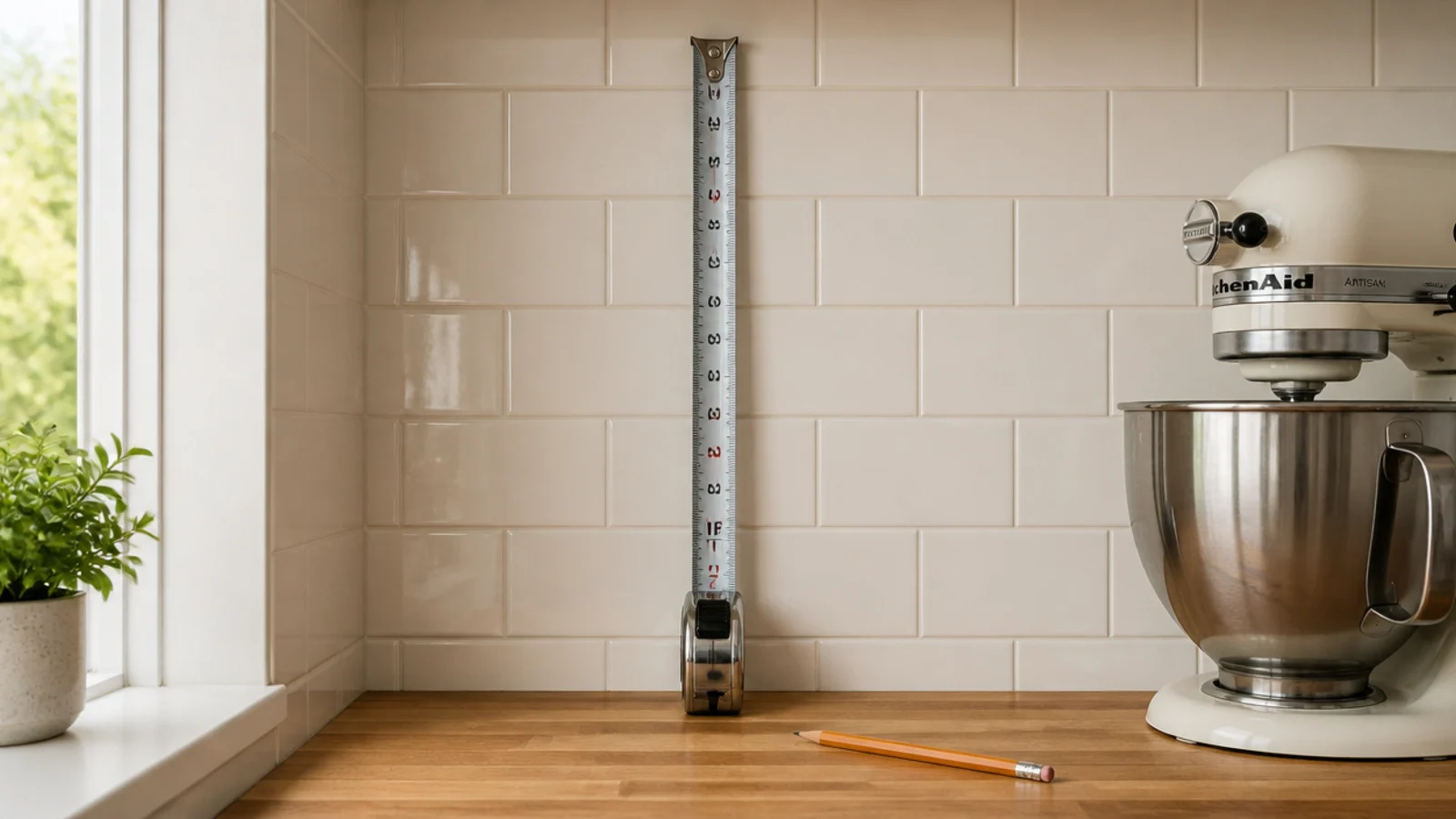
The standard that works in most kitchens. Eighteen inches clears appliances, and the 14-inch gap above takes tall jars and bottles.
Measure your own tallest counter item before committing. A stand mixer or a tall kettle sets the number, not a chart.
2. Daily spices only, in matching jars
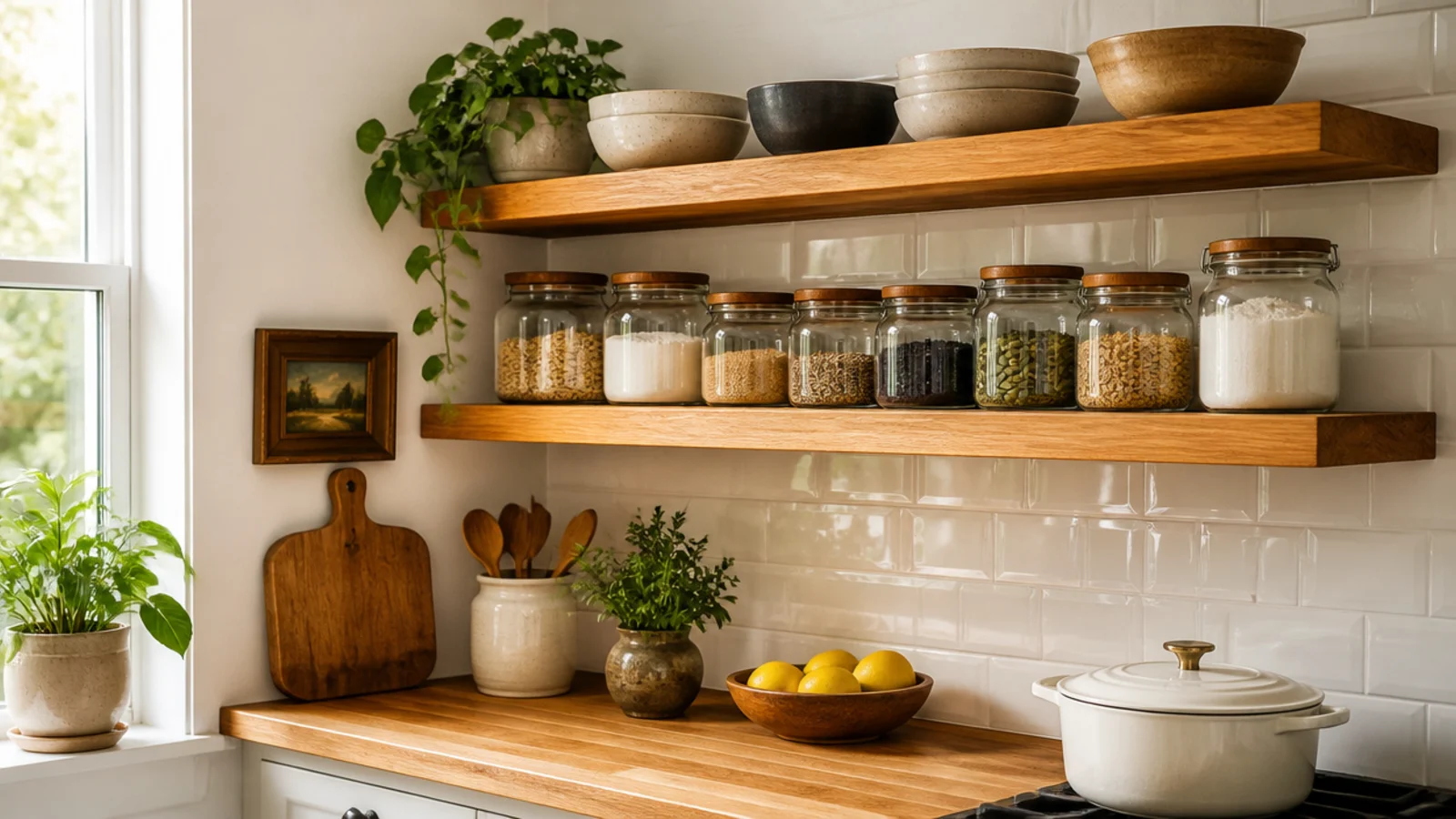
Matching glass jars with simple labels look calm and make cooking faster. The rule that matters: only decant what you genuinely refill.
Jars you resent refilling sit half empty within two months and start looking neglected. Keep the twice-a-year spices in a cupboard.
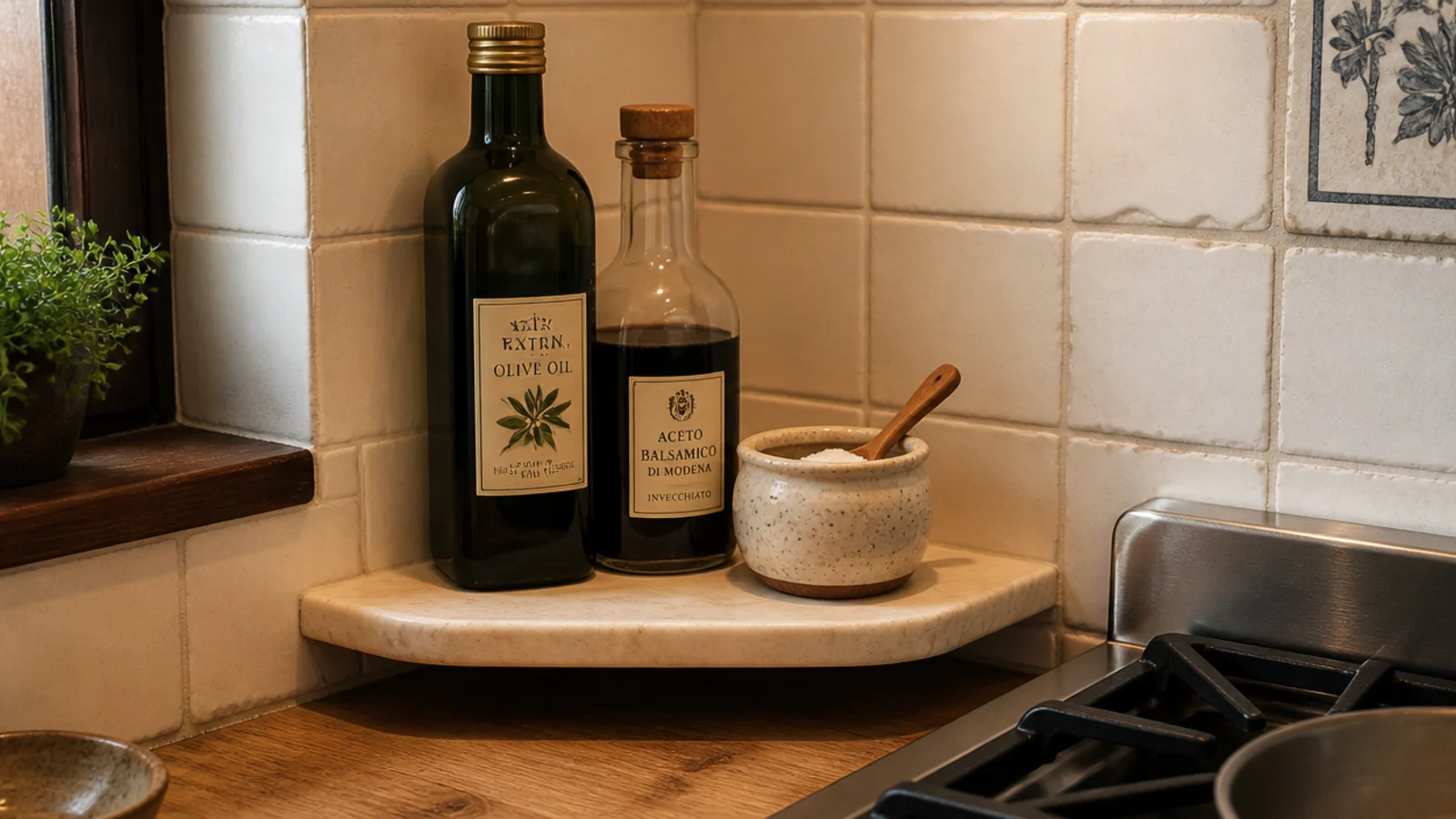
3. Oil and vinegar within one arm sweep of the stove
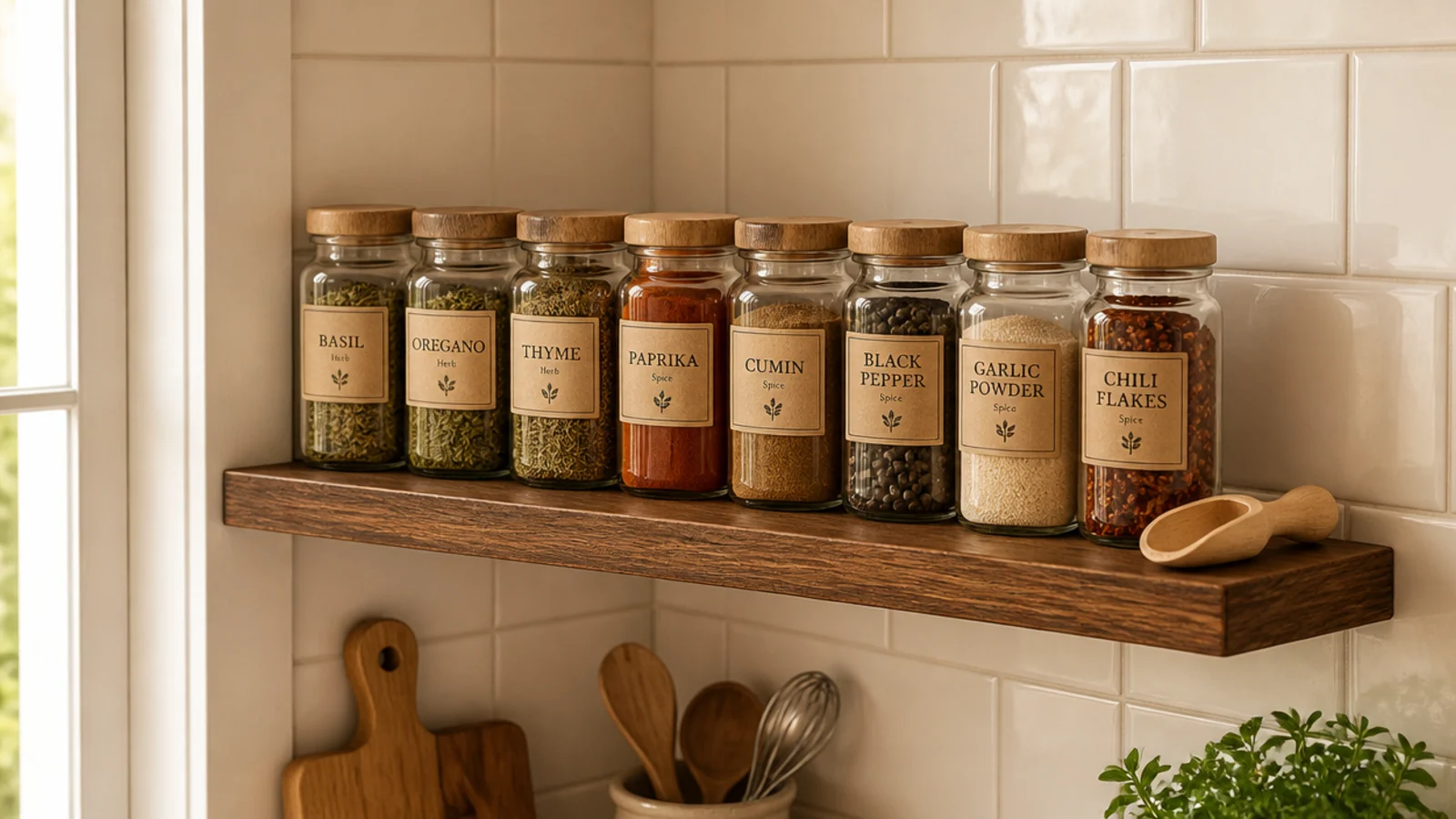
Close enough to grab mid-stir, and that is the entire point of a shelf in a working kitchen.
Use dark glass or ceramic for oil — light degrades it faster than heat does. Wipe the bottles weekly and they never build up the sticky film that makes people give up on open shelving.
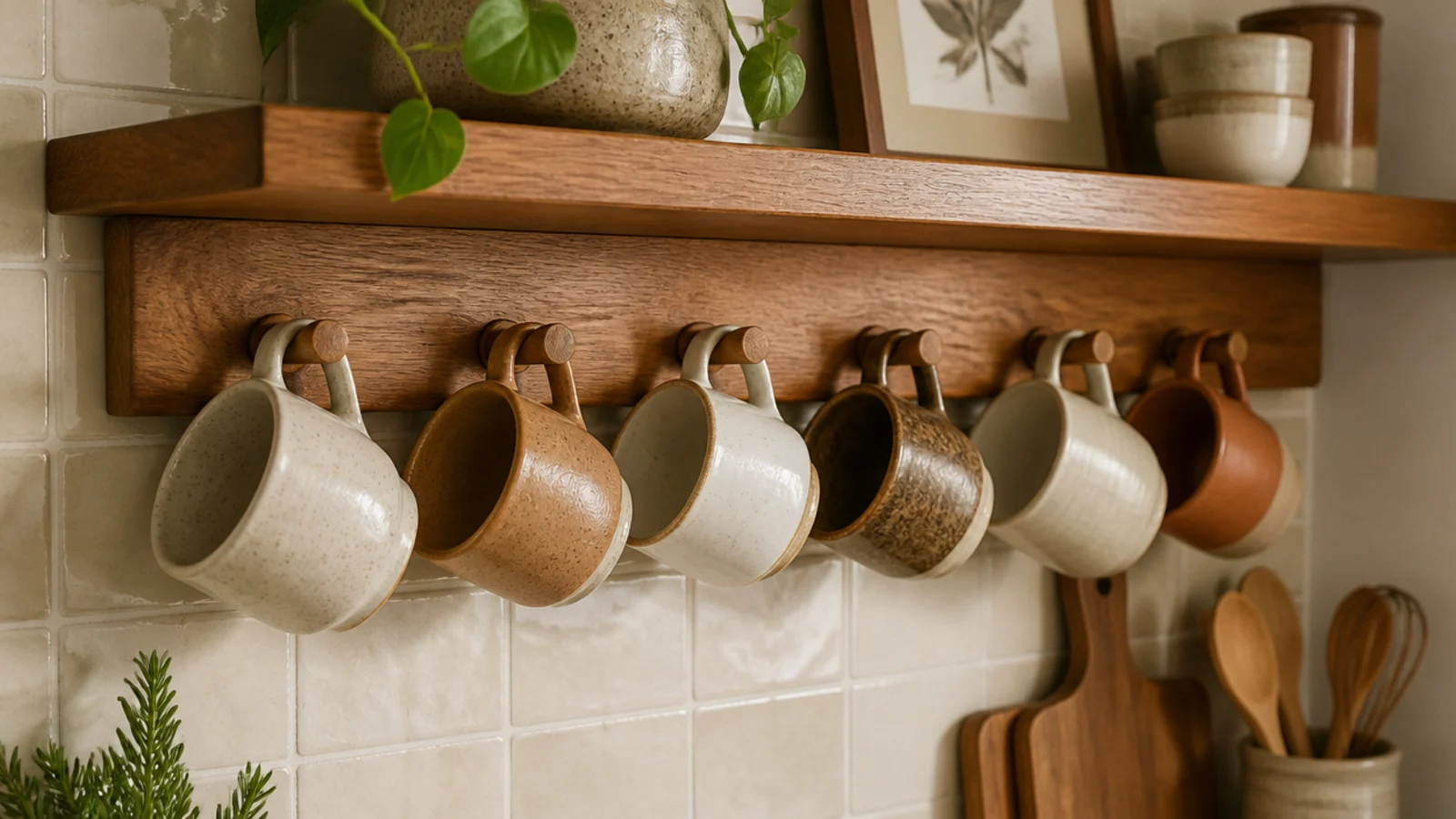
4. A mug peg rail under the lower shelf
A wooden peg rail fitted underneath holds six mugs in the space one takes on a counter.
Use short screws — three-quarters of an inch — or they come through the top face. Space the pegs at least four inches apart or the mugs knock together.
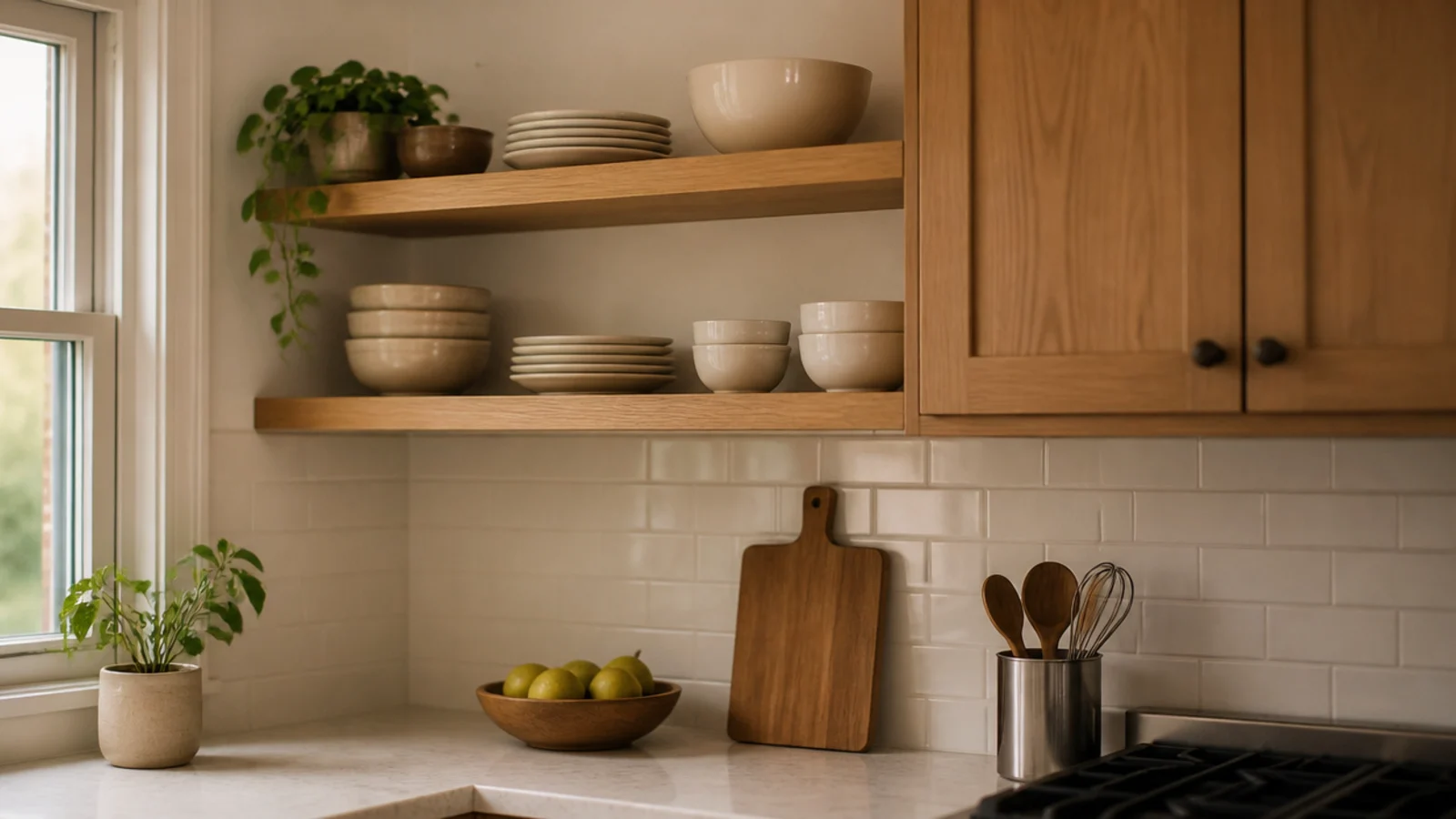
5. Open shelves instead of one upper cabinet
Remove one cabinet, not the whole run. A single stretch of open shelving in a corner gives you the airy look without losing the storage you rely on.
Choose the corner furthest from the stove for your first attempt. If you love it after six months, take down another.
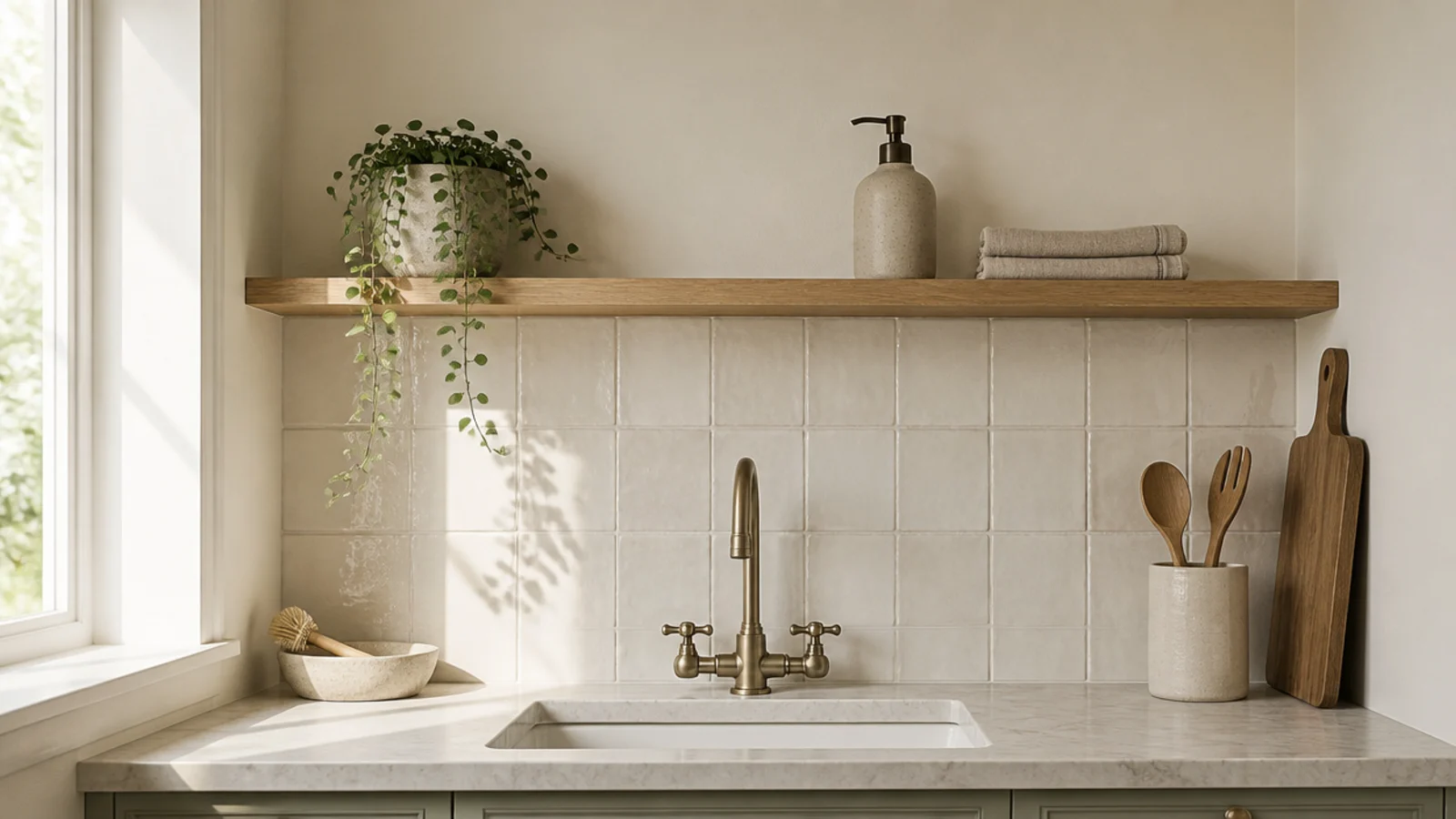
6. A shelf above the kitchen sink corner
Above a sink is the one place a kitchen shelf gets splashed rather than greased. Put a plant, a soap dispenser and a cloth there.
Nothing that hates water, nothing paper, and nothing you have to move every time you wash a large pan.
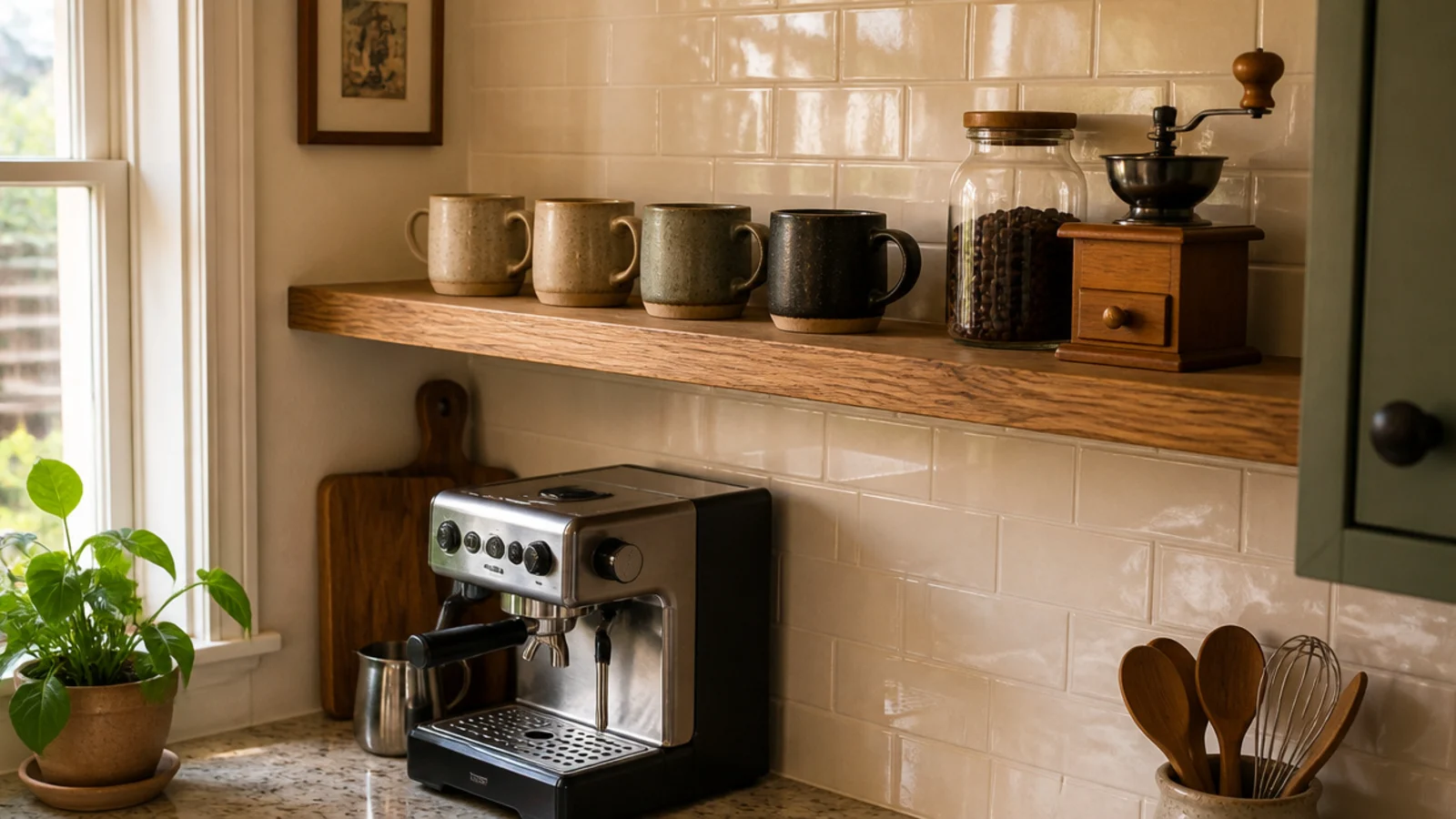
7. A shelf over the coffee maker
Mugs, beans and a grinder directly above the machine, so everything for one cup sits within a single reach.
Mount the shelf at least six inches above the tallest point of the machine so steam disperses rather than hitting the shelf underside. There is a full coffee corner setup if this is your priority corner.
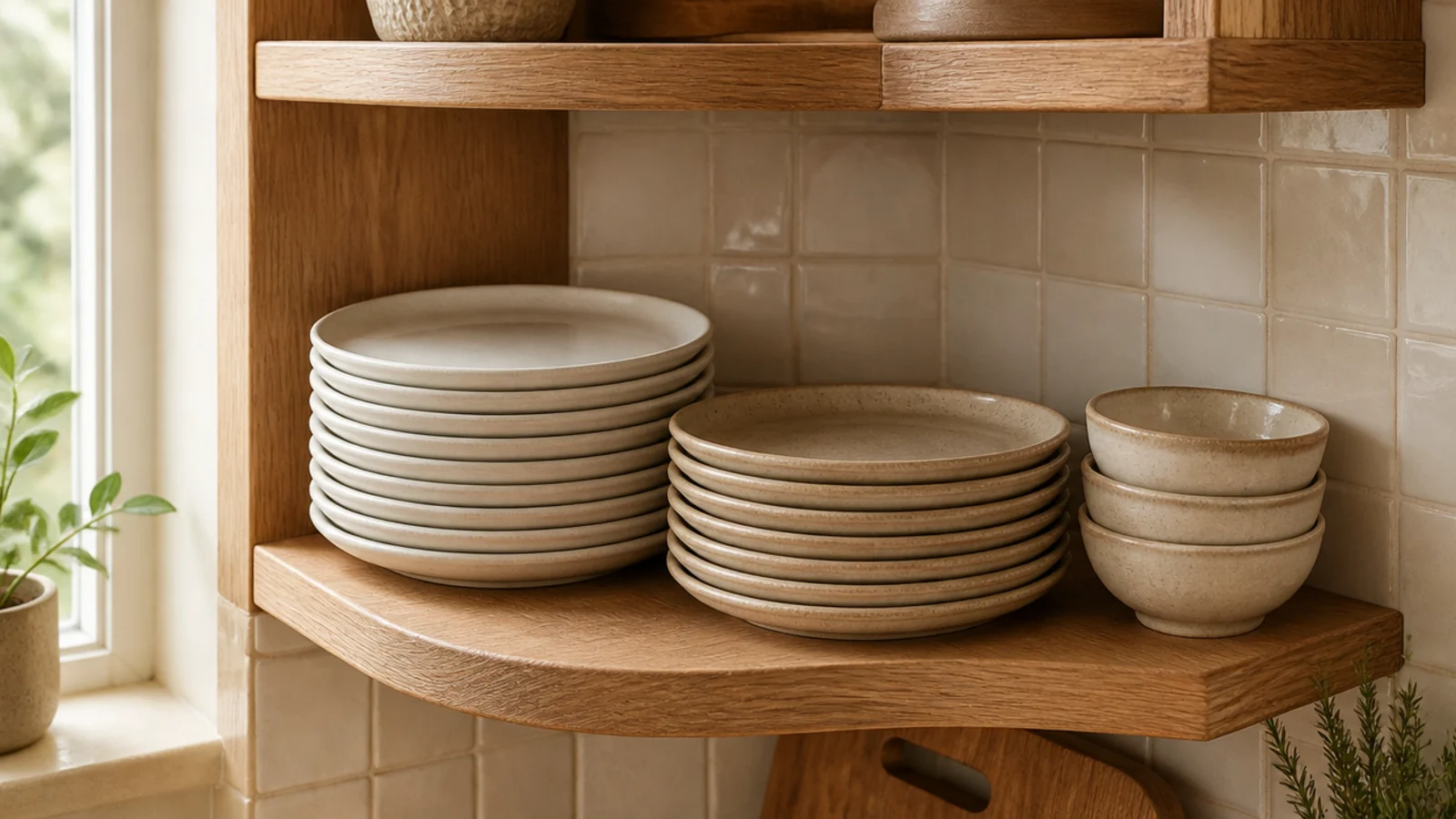
8. Everyday plates stacked in the corner
Open plate storage only works for plates you use daily, because the cycle through the dishwasher keeps them clean.
Two stacks of five rather than one of ten — shorter stacks are easier to lift with one hand and put less point load on the shelf.
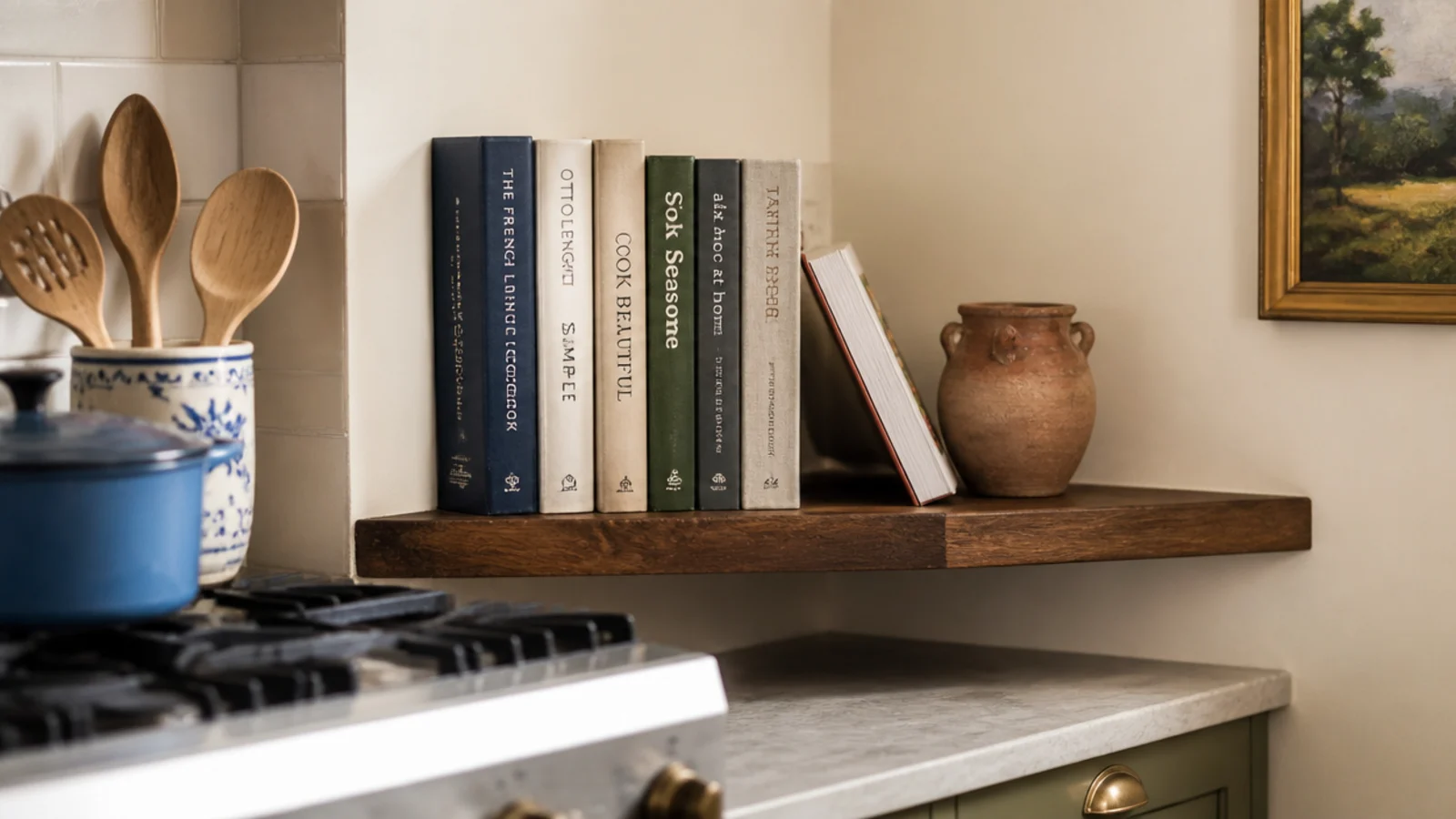
9. Cookbooks well away from the stove
Paper absorbs grease permanently and cannot be cleaned. Put cookbooks at the far end of a run, or on the opposite wall entirely.
A row of upright books with one leaning open on a stand gives a kitchen corner warmth that pottery alone does not.
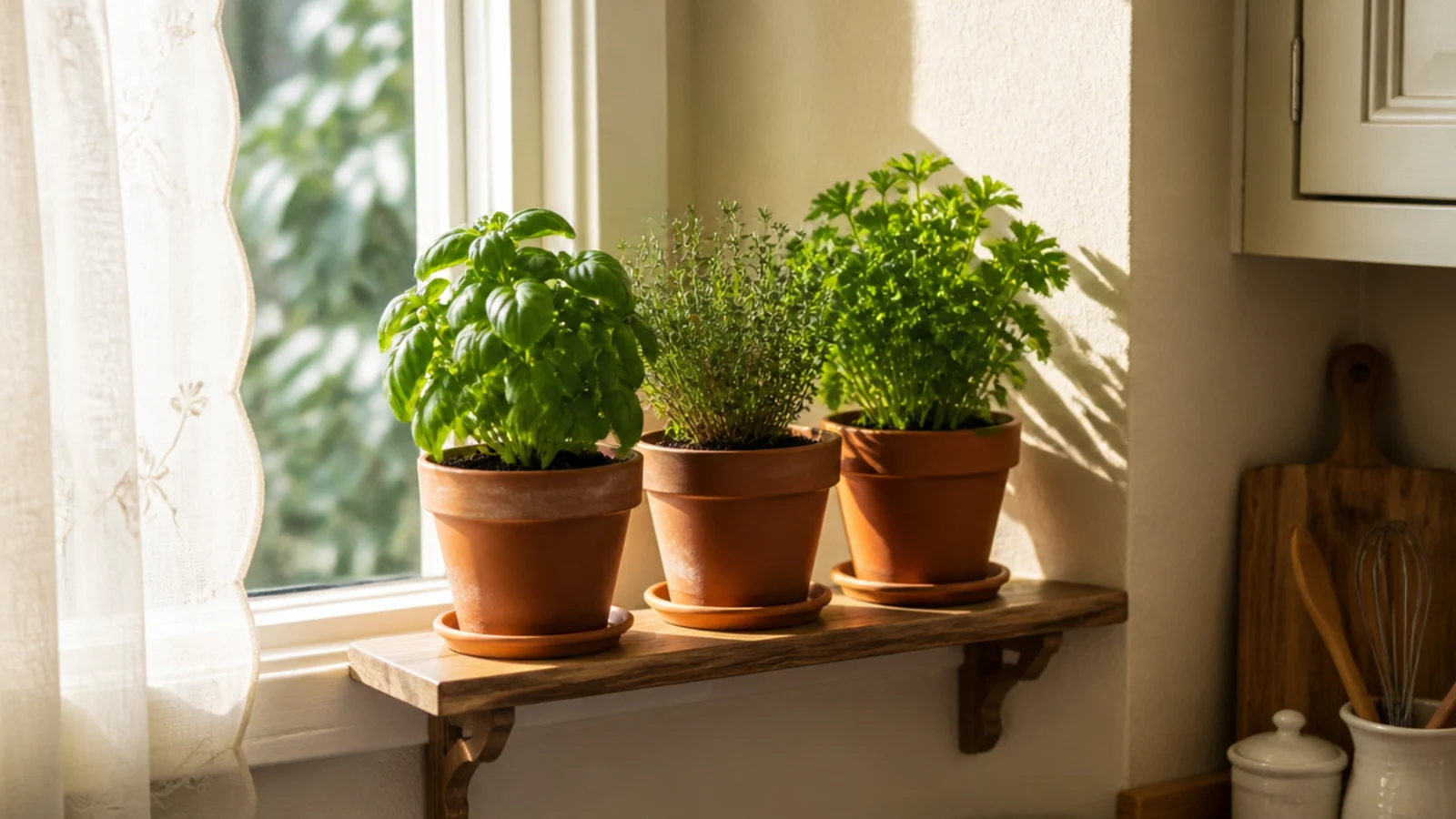
10. A herb shelf in the window corner
Living herbs need four or more hours of direct light, so a window corner is the only place they genuinely survive indoors.
Basil, thyme and parsley in terracotta, watered from the base. Away from the window, buy dried and stop fighting it.
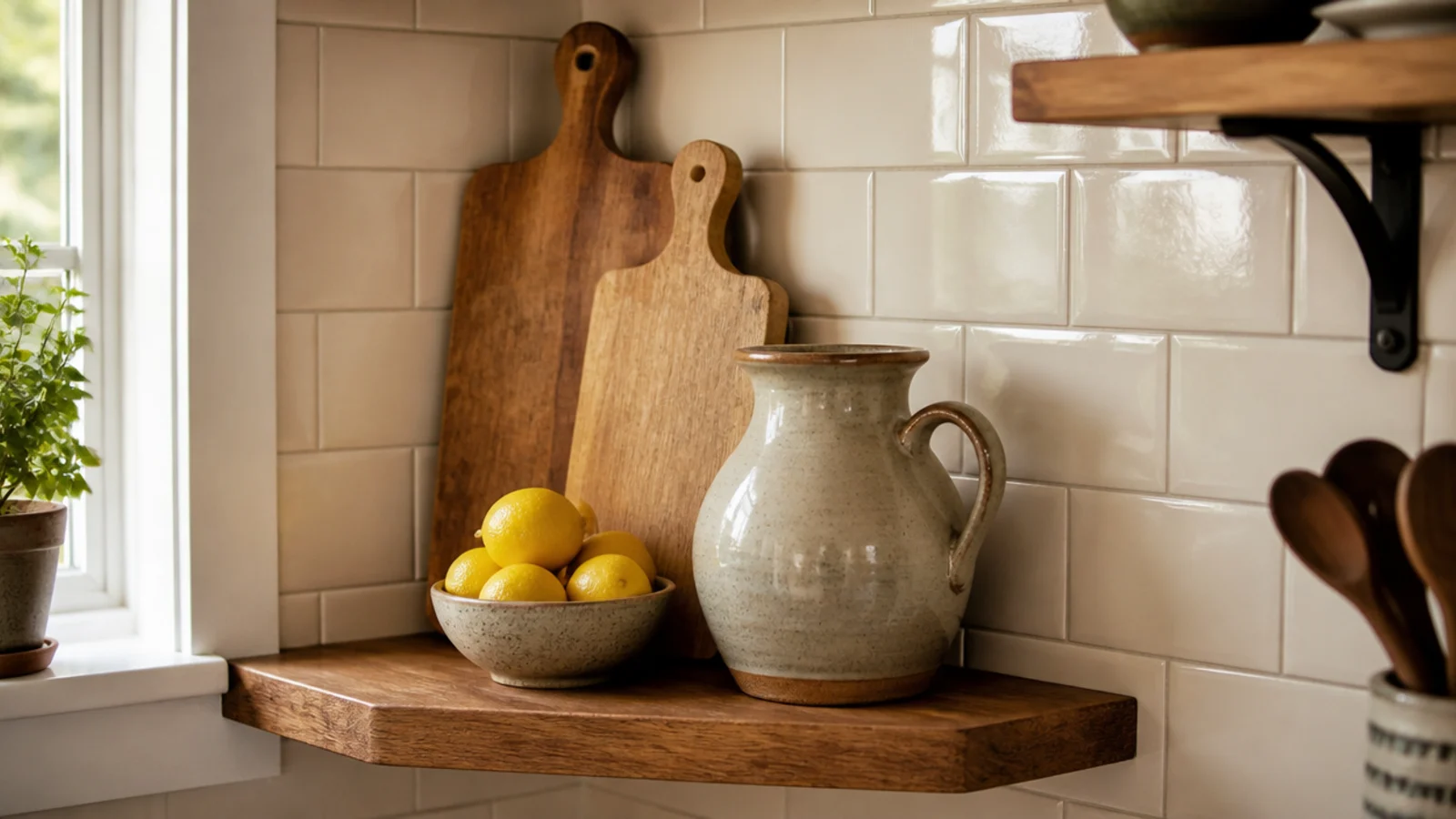
11. A cutting board leaning at the back
Two wooden boards leaning upright at the back of a shelf give a shallow kitchen shelf a backdrop and a large soft shape against all the jars.
Store them dry and stand them on edge so air circulates behind. A board lying flat on a shelf stays damp and eventually warps.
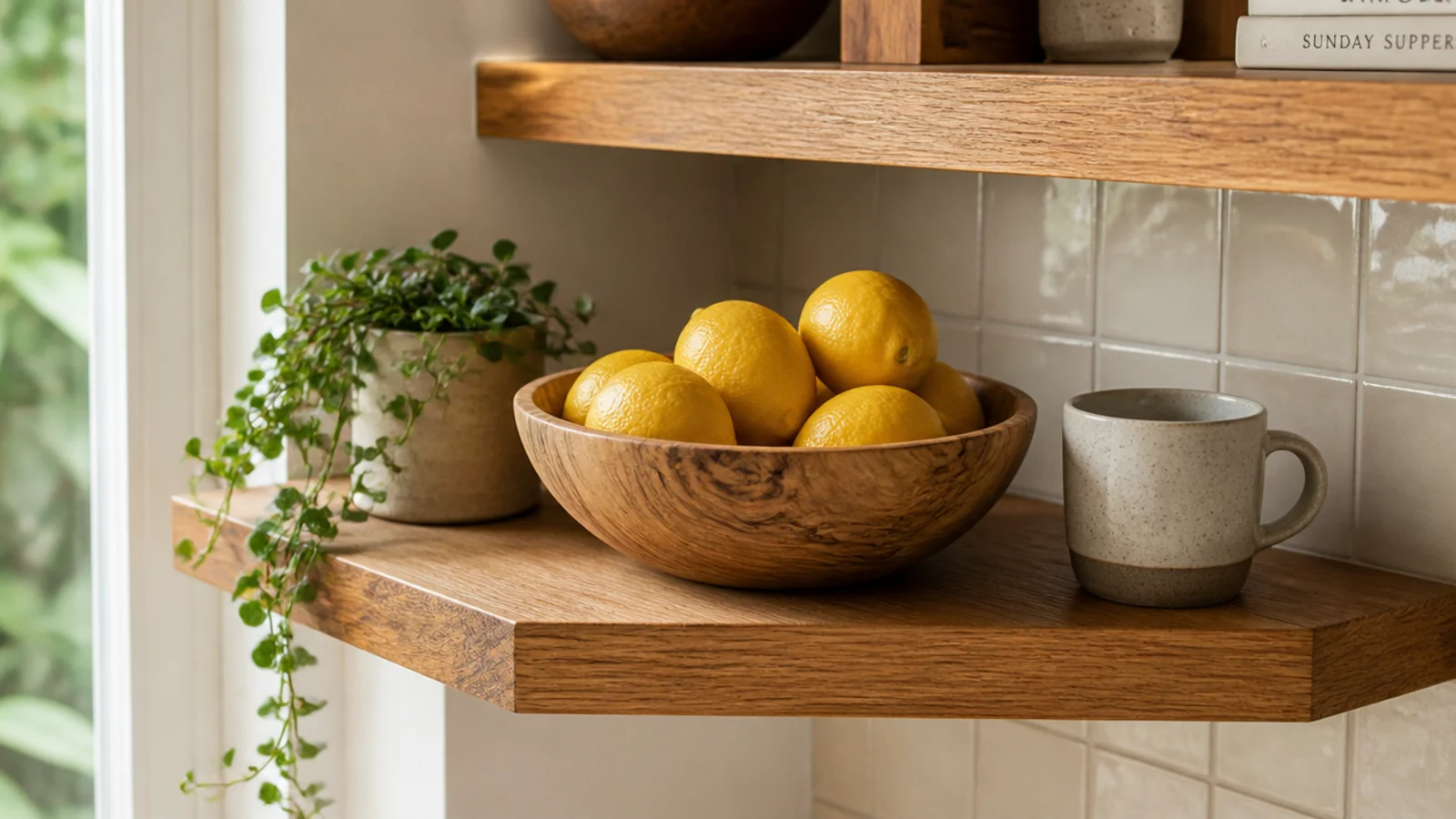
12. A bowl of whatever is in season
Lemons in winter, plums in late summer, apples in autumn. Fruit is the cheapest color in a kitchen and it changes on its own schedule.
Five or six pieces reads as styling; twenty reads as storage. A shallow wooden bowl suits a shelf better than a deep one.
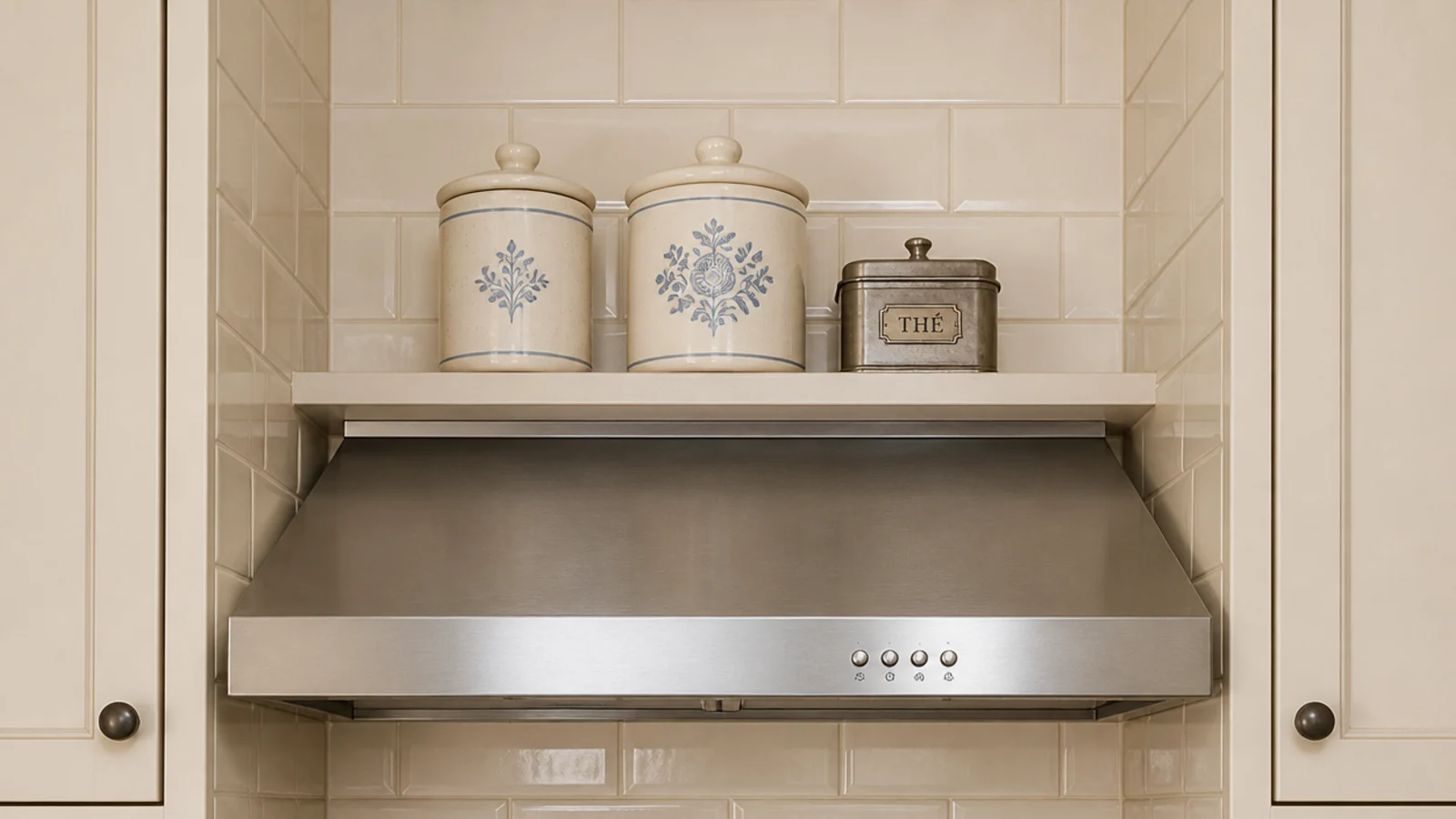
13. A shelf above the range hood corner
Heat rises hard here, so use ceramic, metal or glass only — no wood, no candles, nothing wax-based.
Keep it to canisters and tins you use, and expect to wipe this one more often than any other shelf in the kitchen.
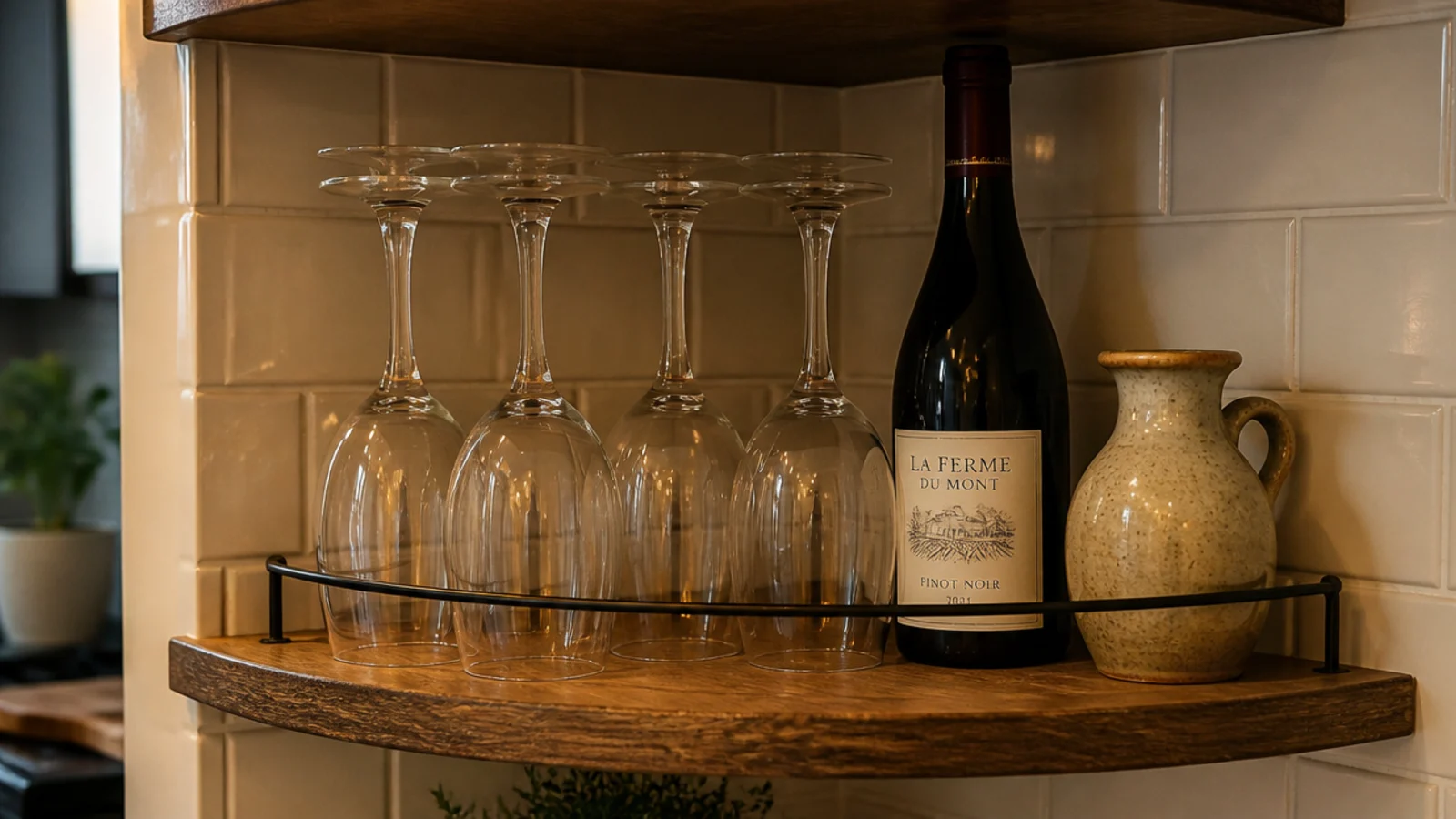
14. A glass and wine shelf
Glasses stored upside down stay dust-free, and a shelf keeps them out of the cabinet where they get chipped.
Put this at the far end from the stove. Glass shows an airborne grease film faster than any other material in a kitchen.
15. An under-cabinet corner shelf
The gap between the underside of an upper cabinet and the counter is a shelf nobody claims.
A slim three-inch ledge there holds small jars and a cloth while leaving the counter workable. Mount it to the cabinet underside rather than the wall for the cleanest result.
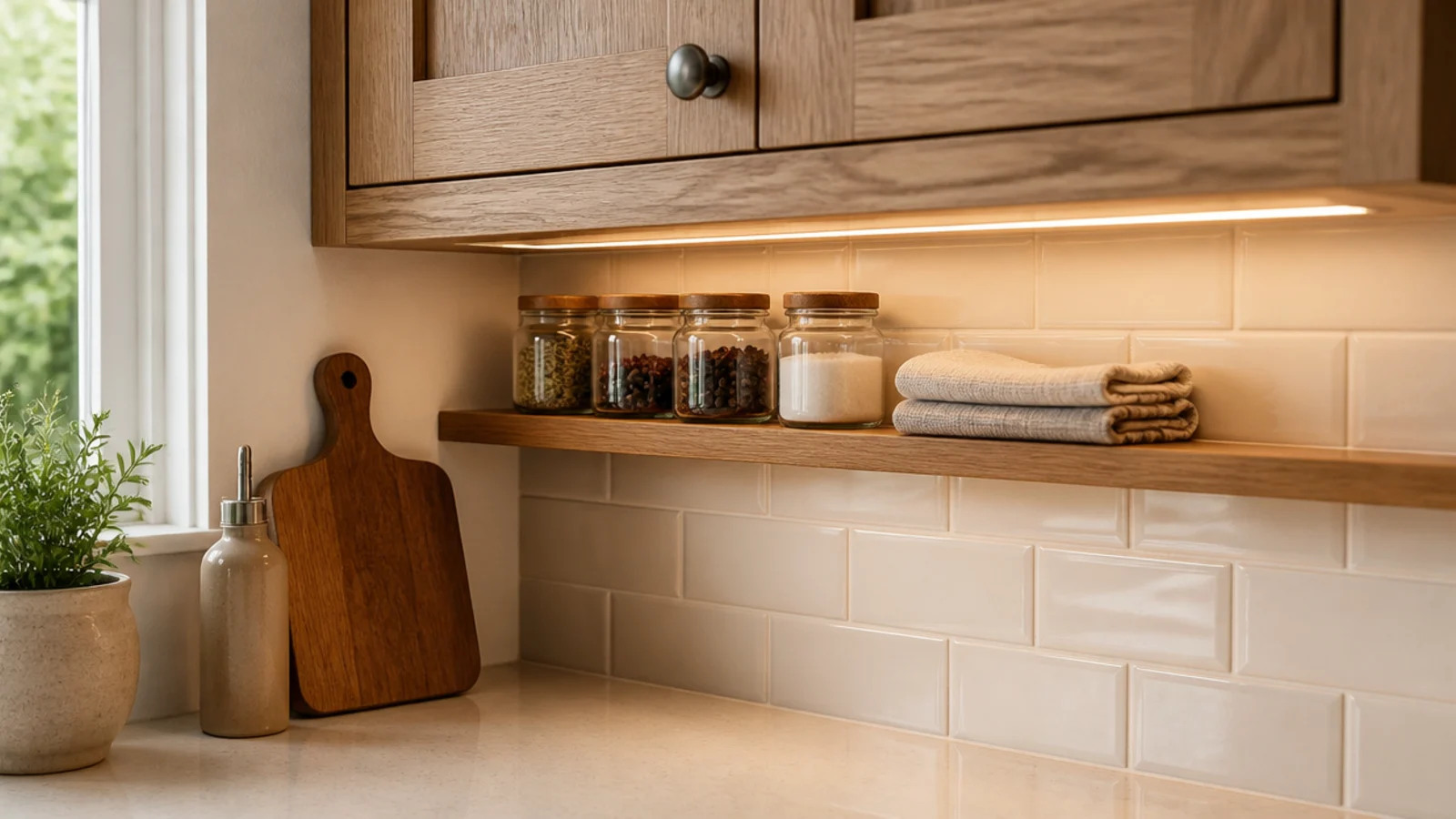
16. A thick shelf above a butcher block
Matching the shelf wood to a wooden counter ties the corner together in a way that contrasting timber never does.
Worktop offcuts are sold at a steep discount and arrive already thick. Oil every face before mounting, underside included. More on species in wooden corner shelves.
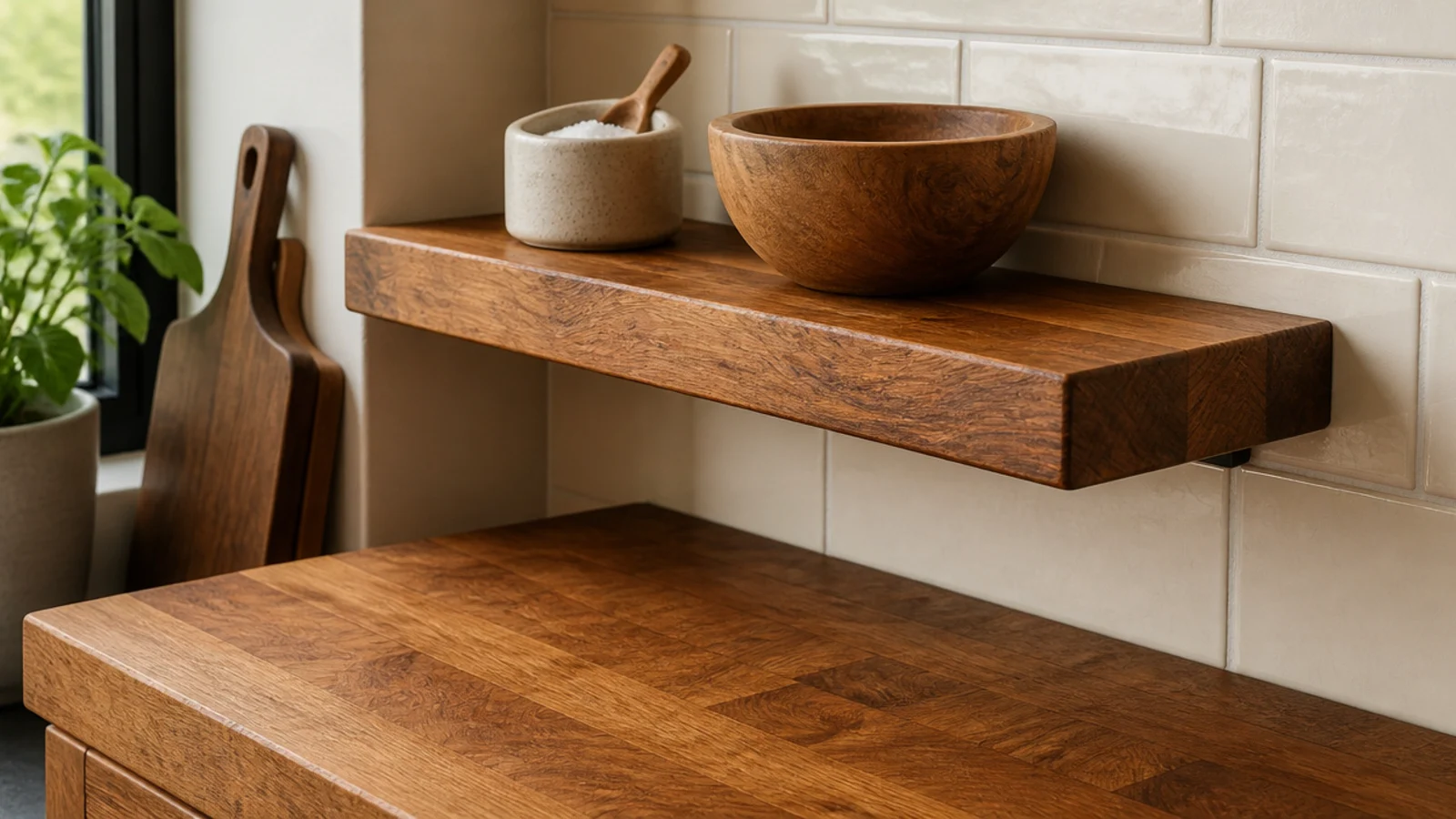
17. A utensil crock in the corner
One large crock, handles upward, on the lowest shelf nearest the stove. It is the most-used object in most kitchens and it belongs within reach.
Keep it to the eight utensils you actually use. A crock stuffed with twenty means you fish through it every time.
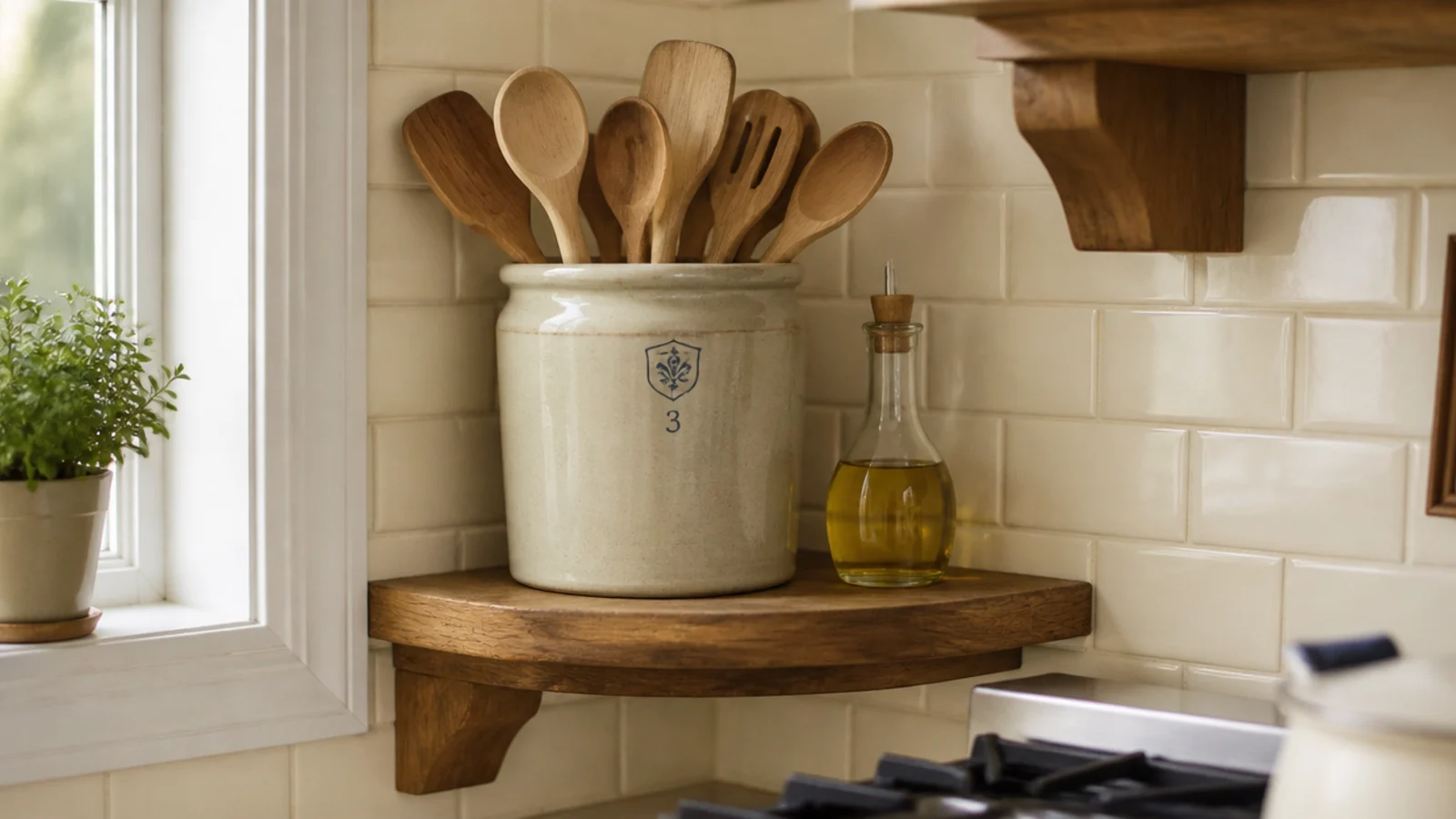
18. A shelf for the radio or speaker
High, dry, and away from the sink. A small speaker on a kitchen shelf is one of those additions that quietly changes how much time people spend cooking.
Keep the cable planned — run it inside a channel painted the wall color, or use a rechargeable one.
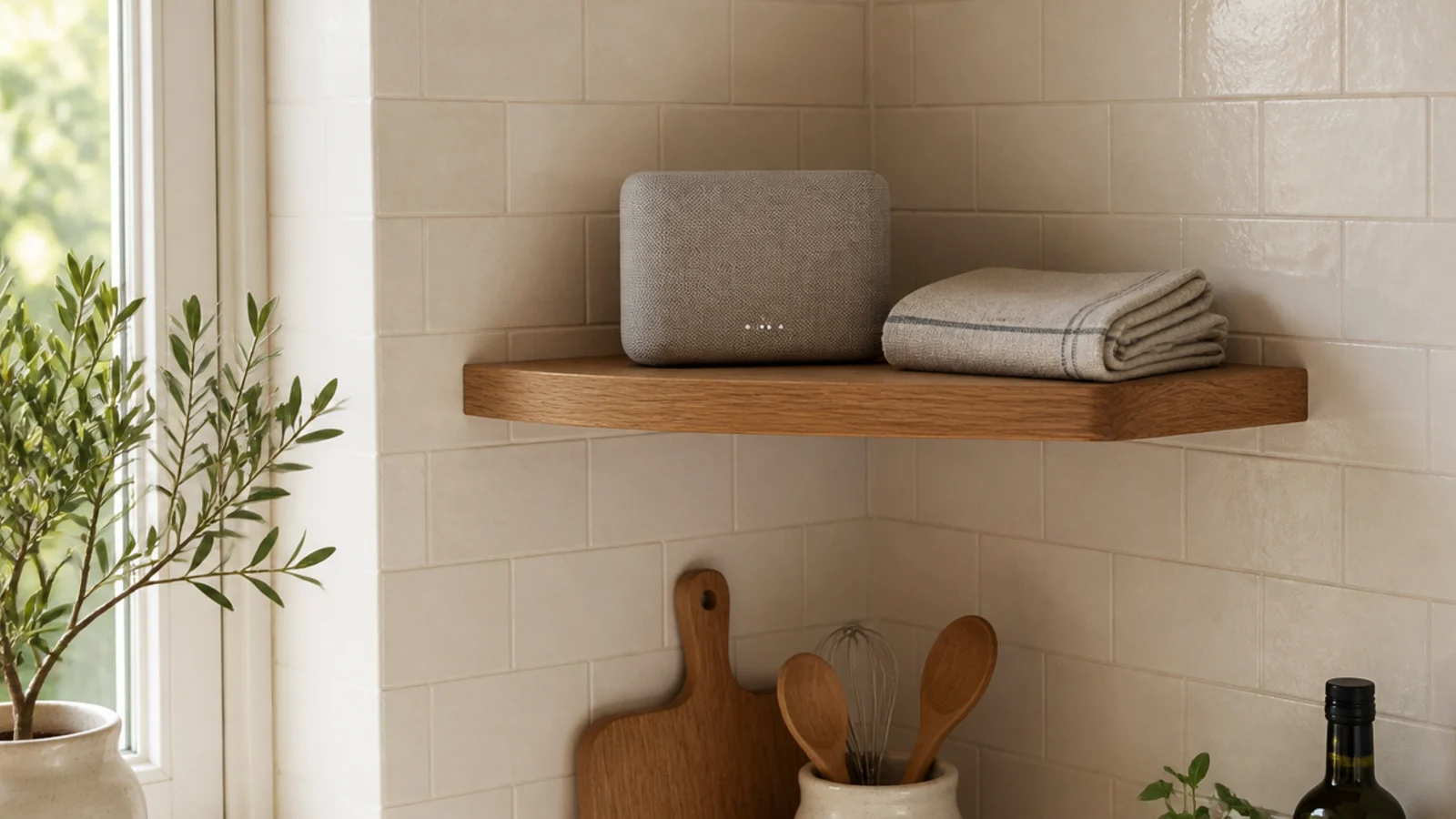
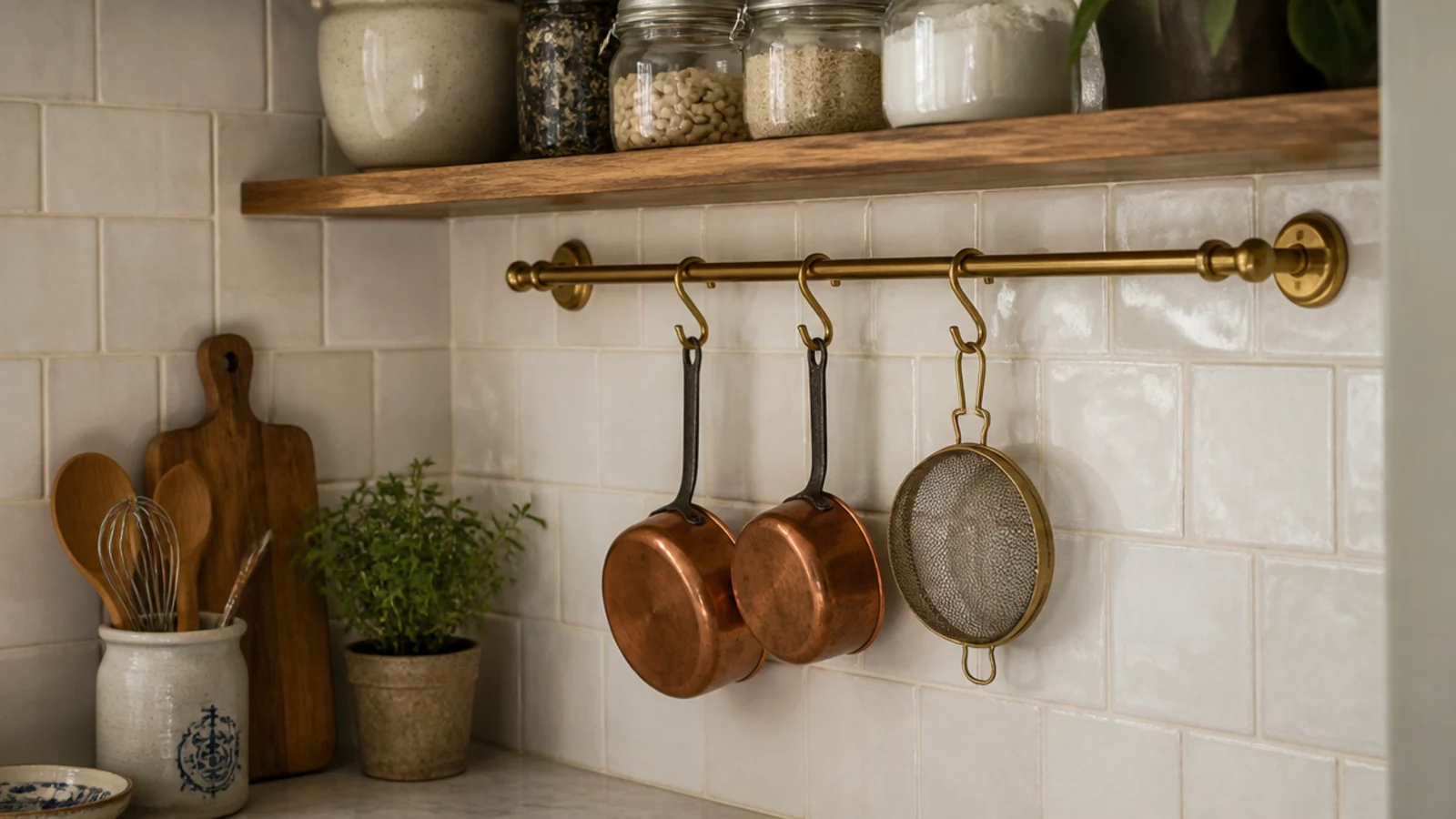
19. A pot rail fitted under the shelf
A brass or steel rail under a shelf with S-hooks holds pans you use daily and frees a whole cupboard.
Only hang what you use weekly. Hanging pans are a dust and grease magnet, and the ones you never touch will show it within a month.
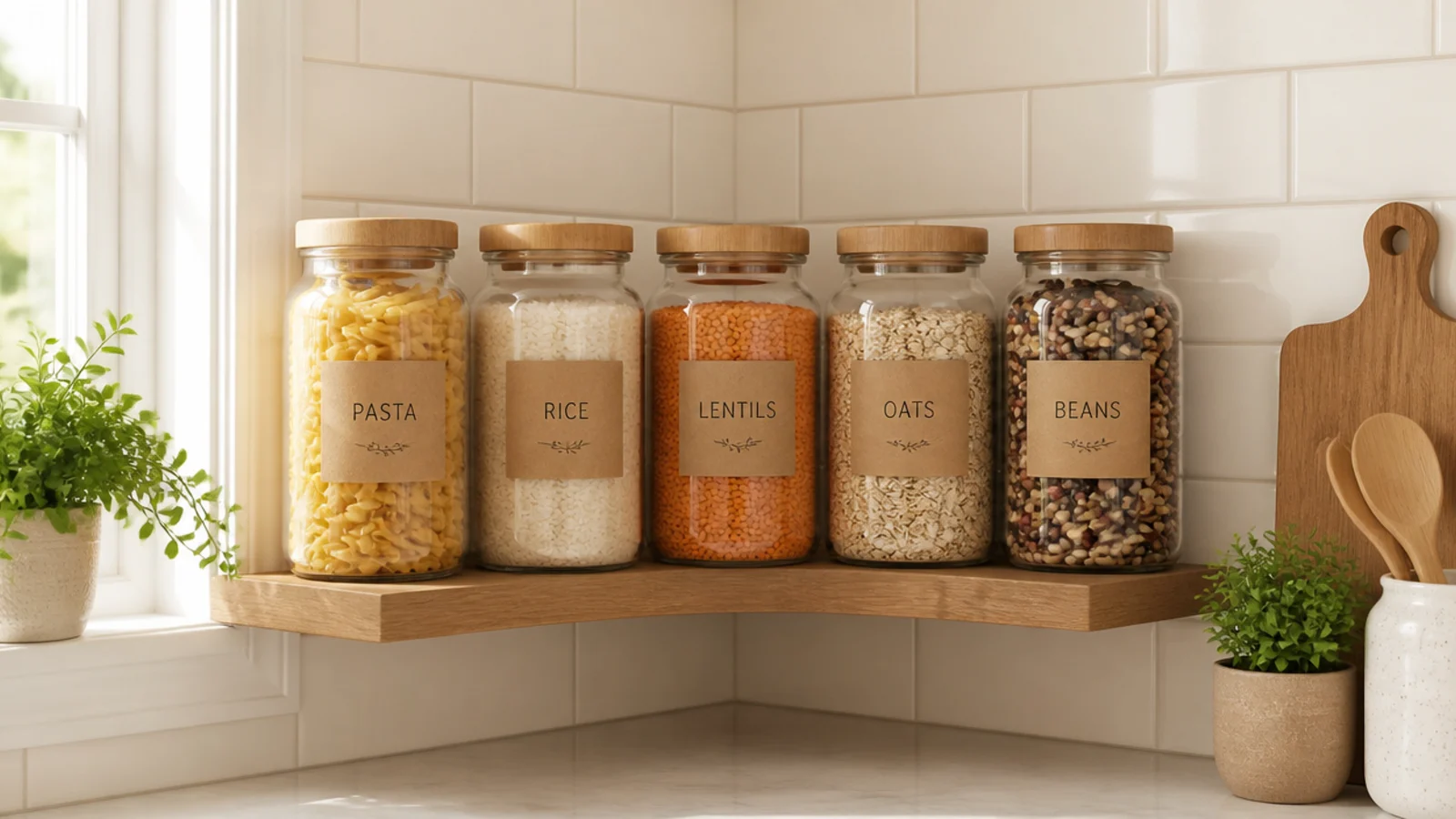
20. Glass jars of dry goods
Pasta, rice, lentils and oats in plain glass give you warm neutral texture and genuine utility at the same time.
Recycled sauce jars work perfectly with the labels soaked off. Keep to four or five — a full wall of jars stops reading as texture and starts reading as a bulk store.
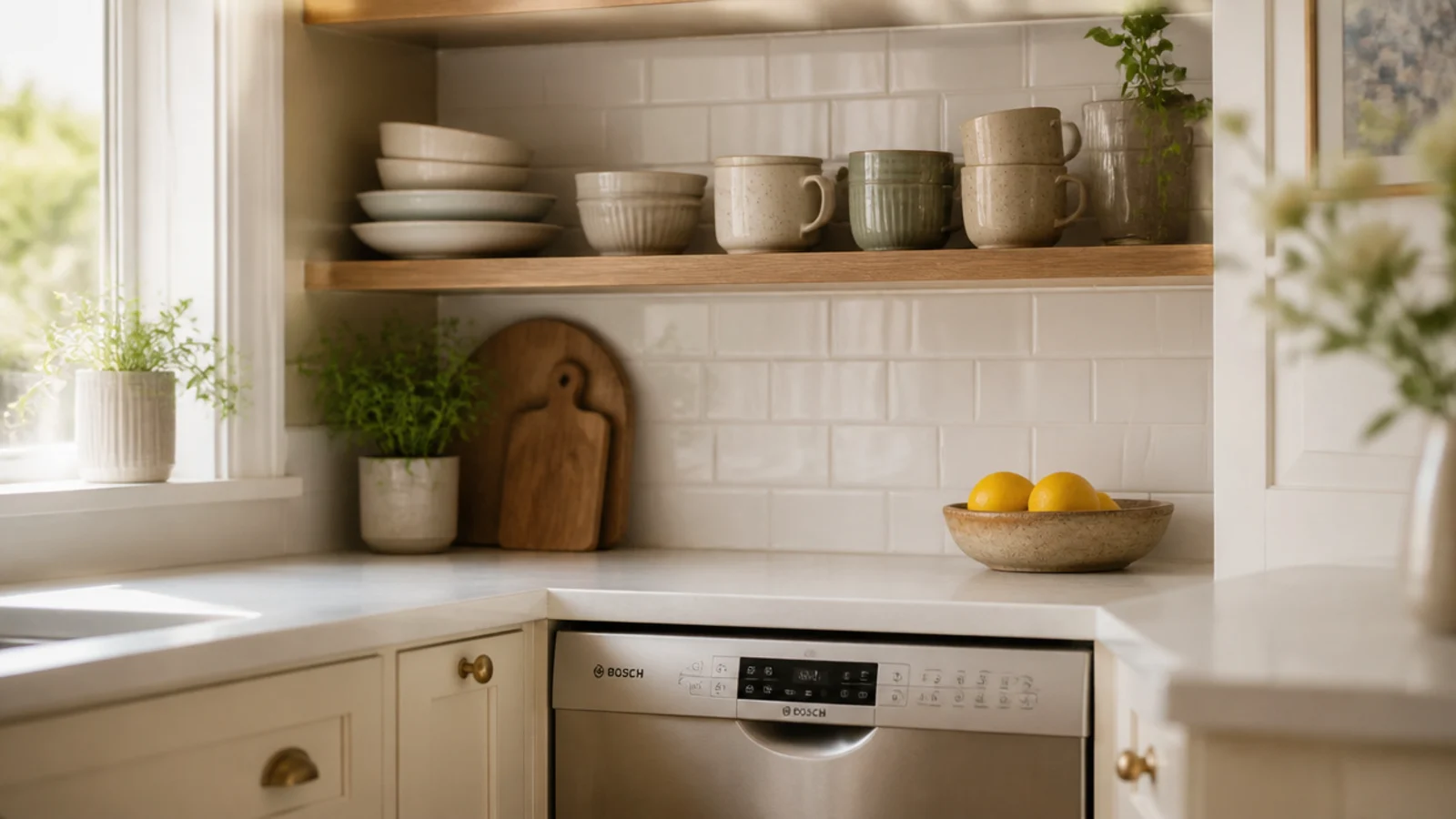
21. A shelf above the dishwasher corner
Putting things away where you unload halves the walking in a kitchen, which sounds trivial until you cook every day.
Everyday bowls and mugs, at a height you can reach without stretching while the dishwasher door is open.
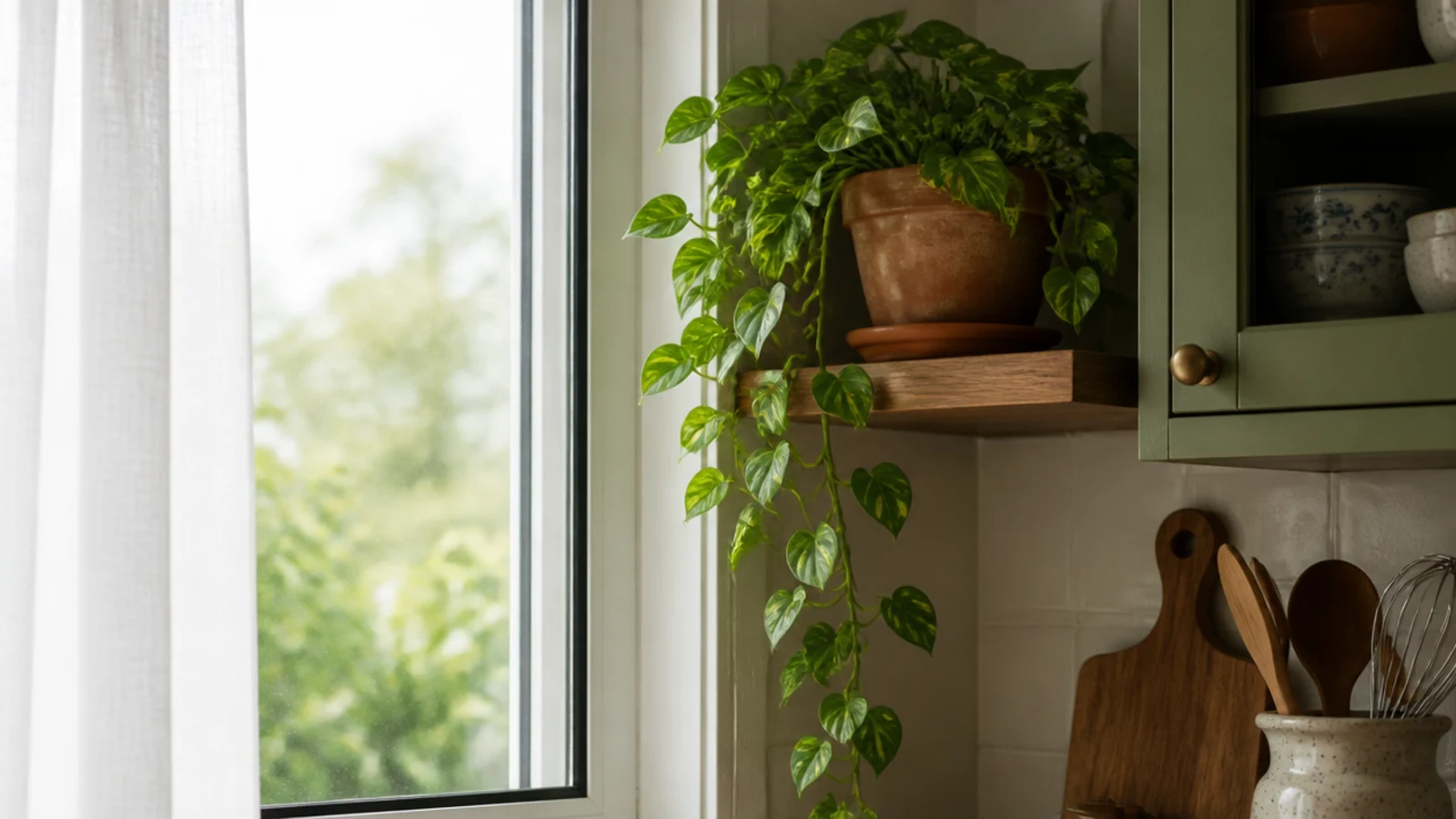
22. A small plant shelf by the kitchen window
Kitchens are humid and warm, which suits pothos, spider plants and ivy far better than most herbs.
Choose something trailing so it softens the hard lines of tile and cabinetry. Terracotta over plastic, always, and keep it clear of the sink splash zone.
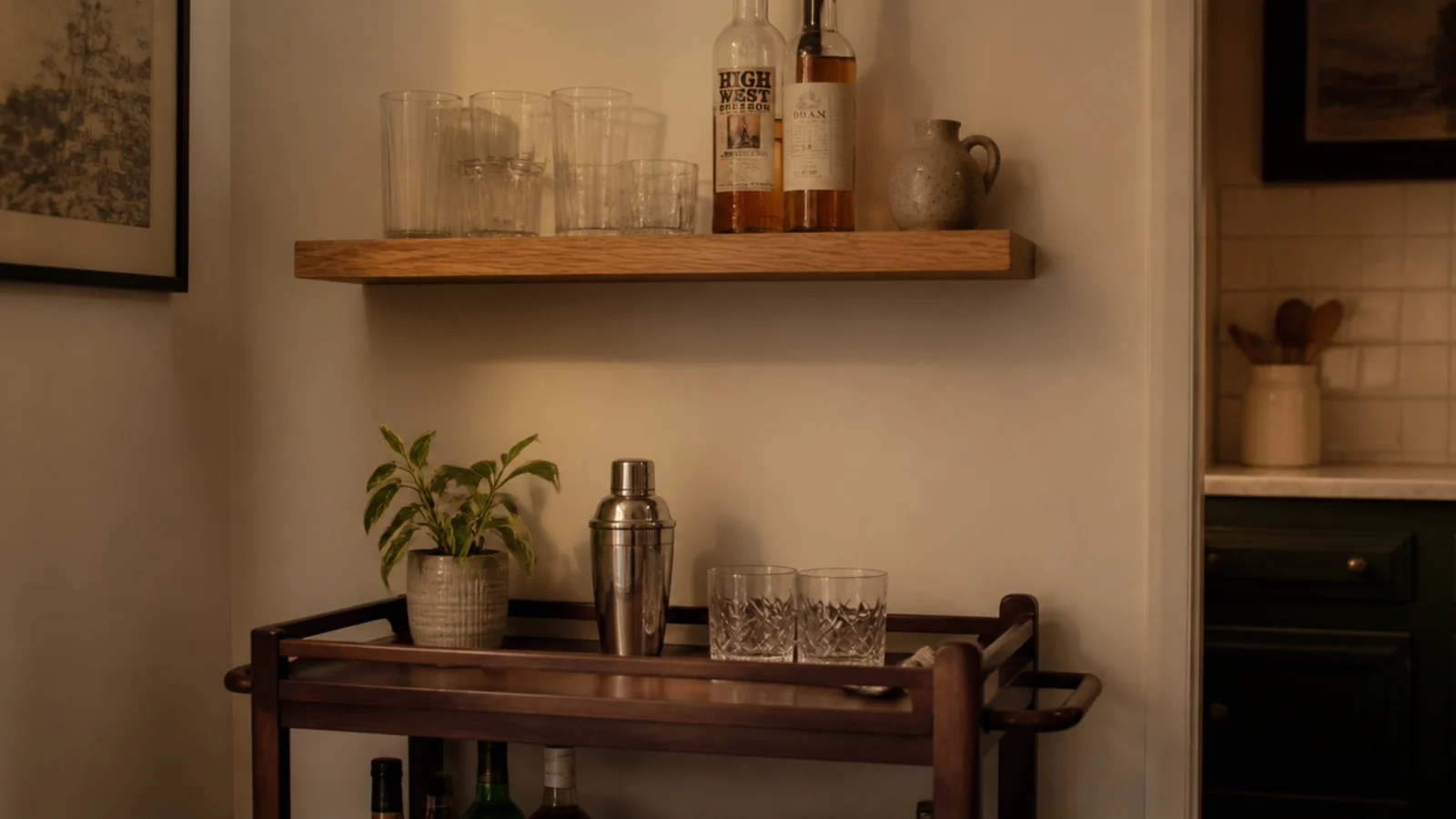
23. A shelf above a corner bar cart
A cart below and a shelf above turns a kitchen corner into a drinks station without a single cabinet.
Glasses and a jug on the shelf, bottles and ice on the cart. Keep the shelf at 52 inches so you can reach across the cart to it comfortably.
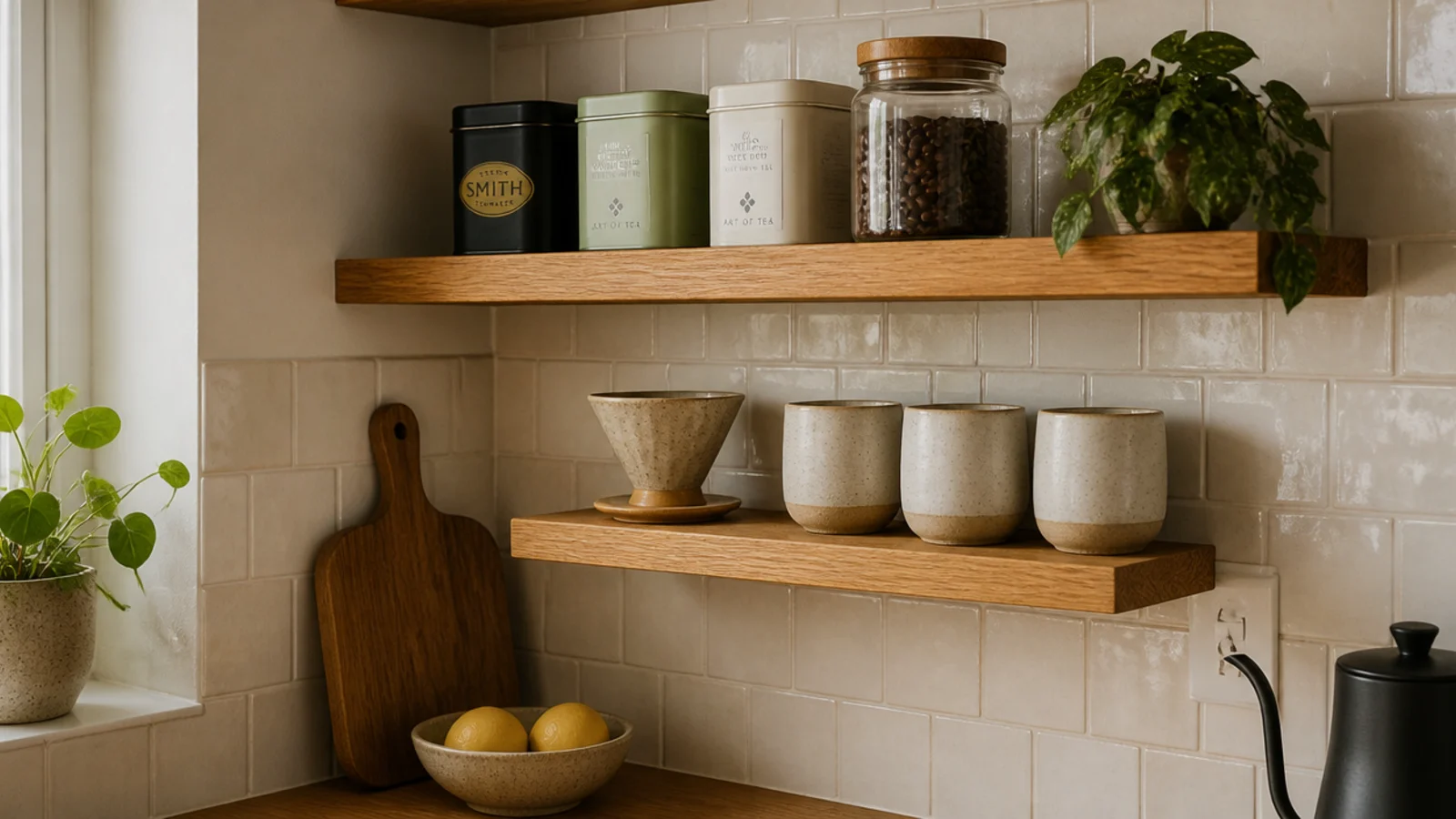
24. A dedicated tea and coffee corner
Group by ritual rather than by category — everything for the morning drink in one place, regardless of whether it is a tin, a jar or a cup.
Ritual grouping stays tidy far longer than category grouping, because you put things back where you used them rather than where they technically belong.
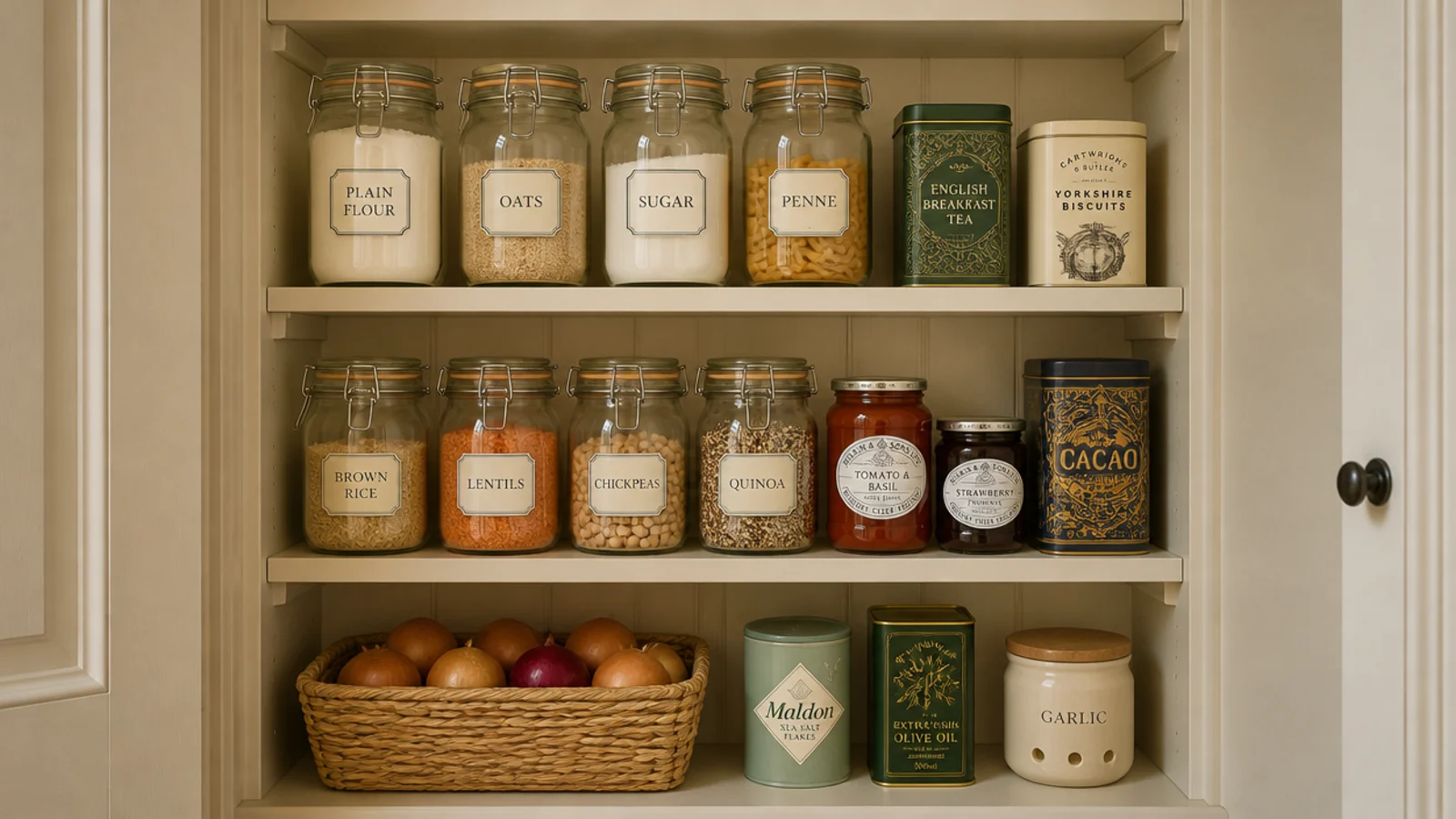
25. Shelves inside the pantry corner
The back corner of a pantry, behind the door swing, is the deepest dead space in most kitchens.
Three small shelves there hold jars, tins and a basket of onions. Keep them shallow so nothing gets lost at the back, which is how pantry corners become archaeology.
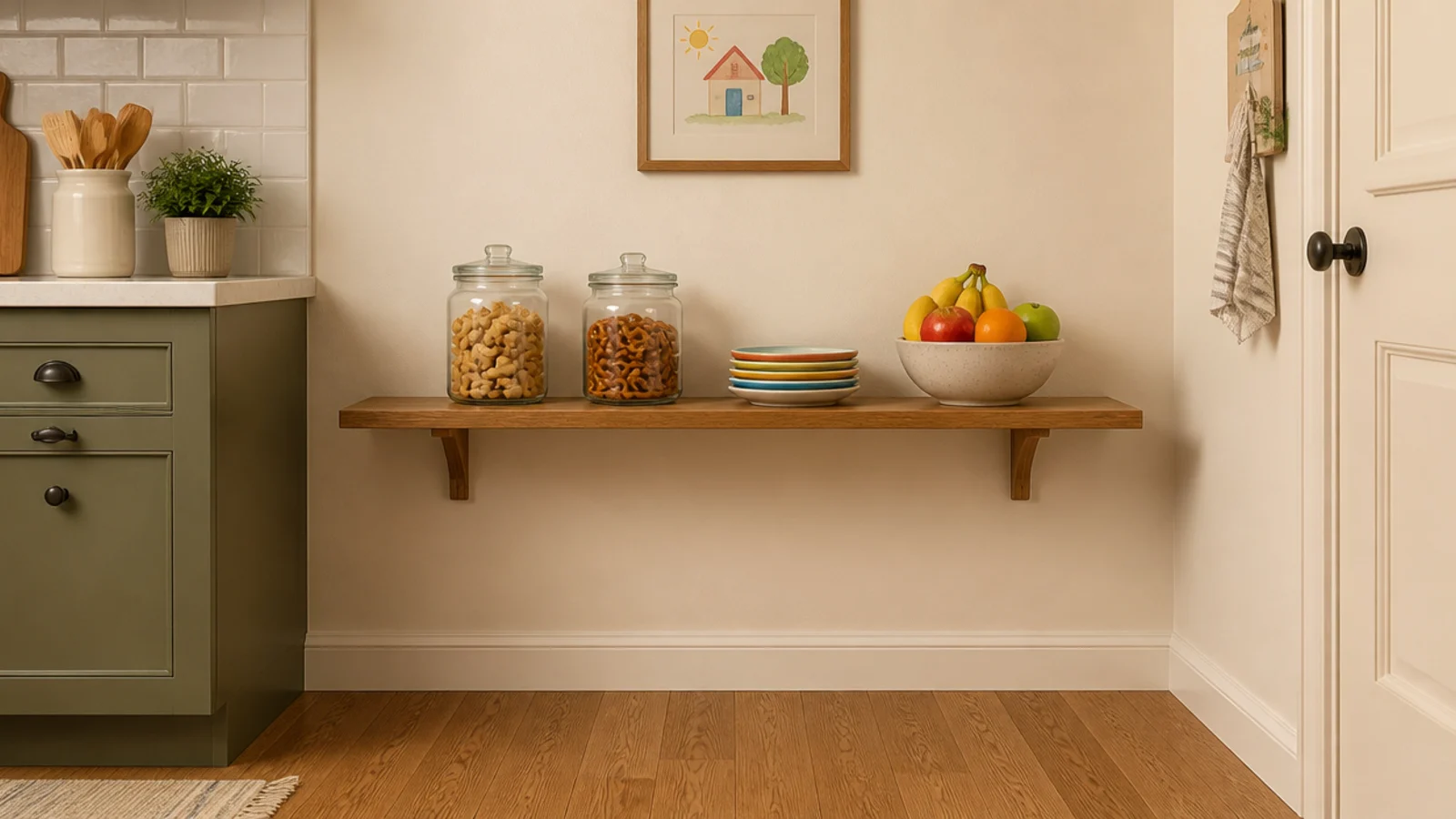
26. A low snack shelf kids can reach
Cap it at 36 inches, load it with the snacks and small plates they are allowed, and they stop asking you to reach things.
It also keeps the fridge door closed. Anchor the shelf into a stud — children lean on things at exactly the wrong angle.
27. A shelf over the bin pull-out
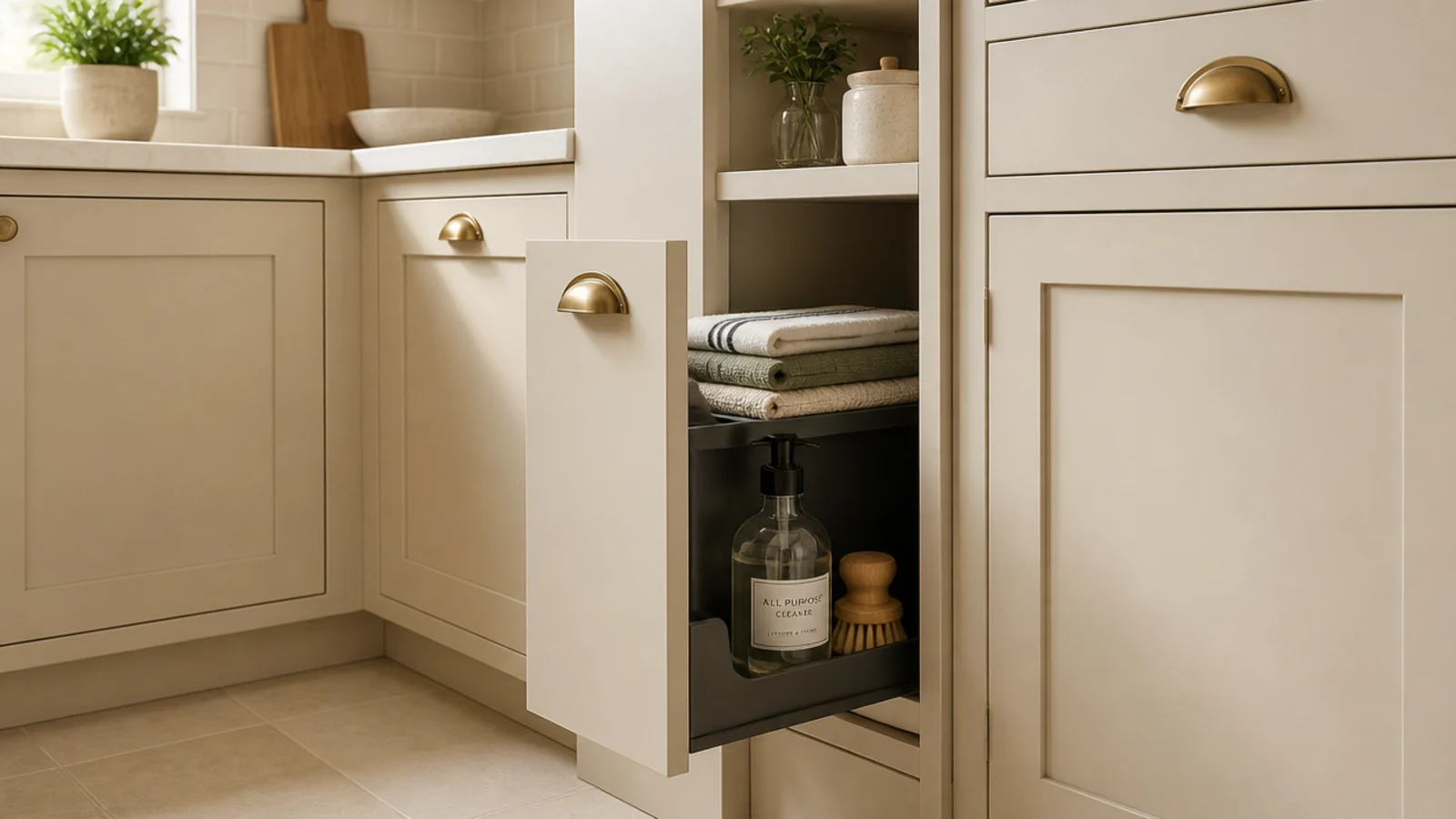
A small shelf above a concealed bin holds cloths, cleaner and a brush, which is exactly where you want them.
Nothing edible and nothing decorative here. This is a working shelf and treating it as one keeps it clean.
28. A slim shelf in the fridge gap
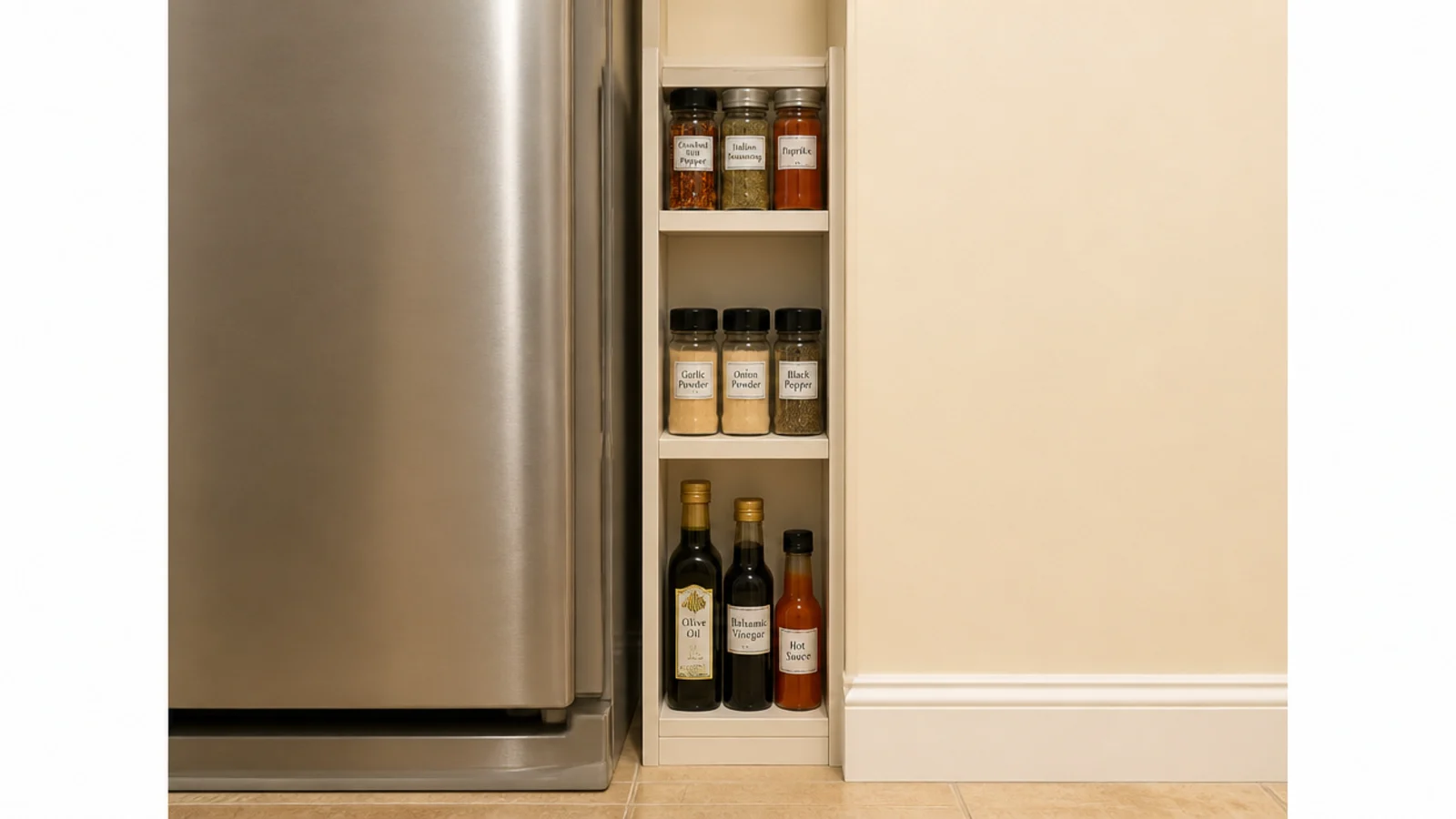
The six-inch gap beside a refrigerator is usually pure waste. Three slim shelves there hold spice jars and small bottles.
Measure carefully — an inch matters — and check the fridge door still opens fully to its stop before you fix anything.
29. A backsplash ledge that runs the corner
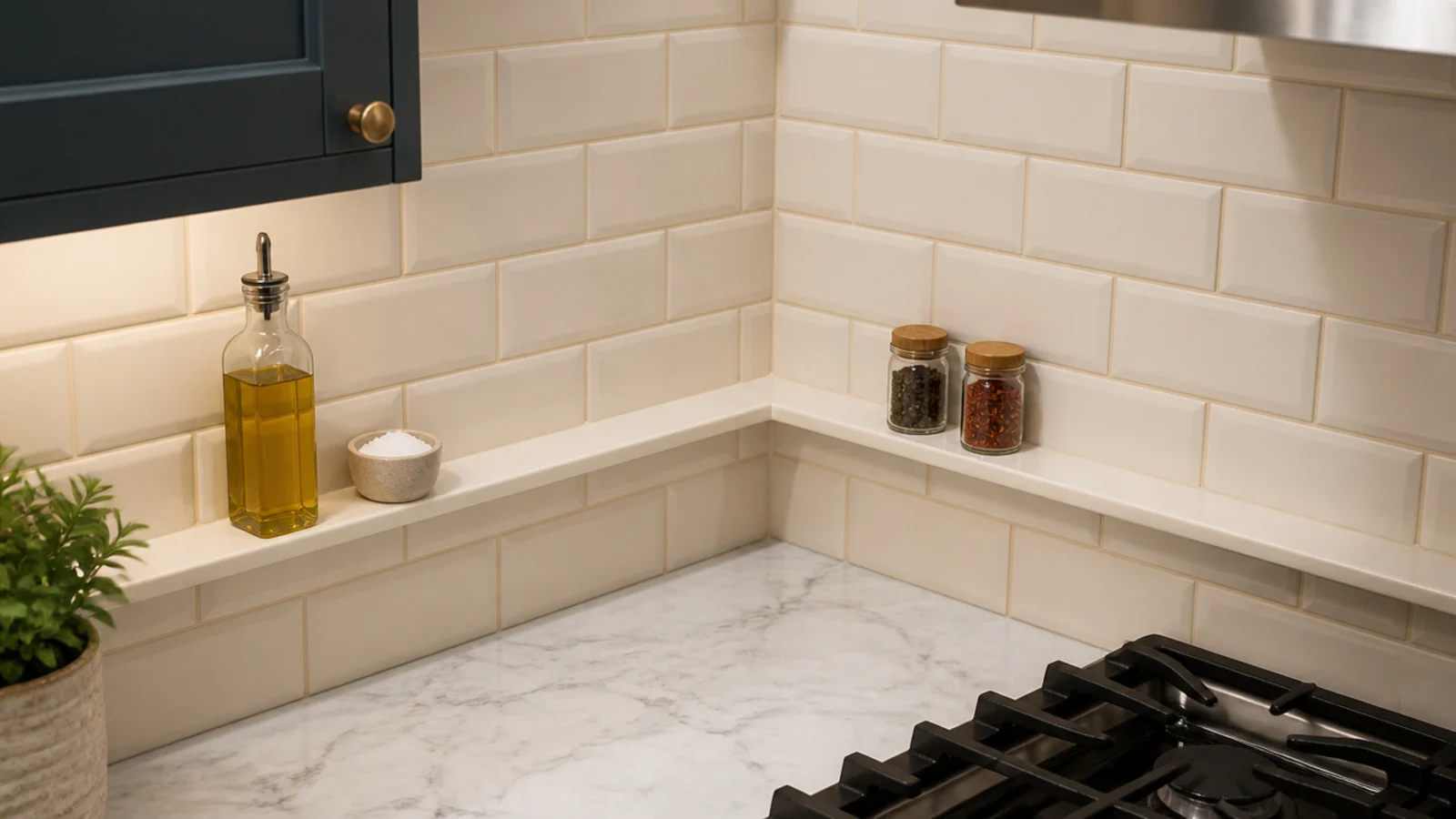
A three-inch ledge running continuously along the backsplash and around the corner holds oils, salt and daily spices without eating counter space.
Three inches is deliberate: deep enough for bottles, shallow enough that you can still work and wipe behind them.
30. A towel rail under the corner shelf
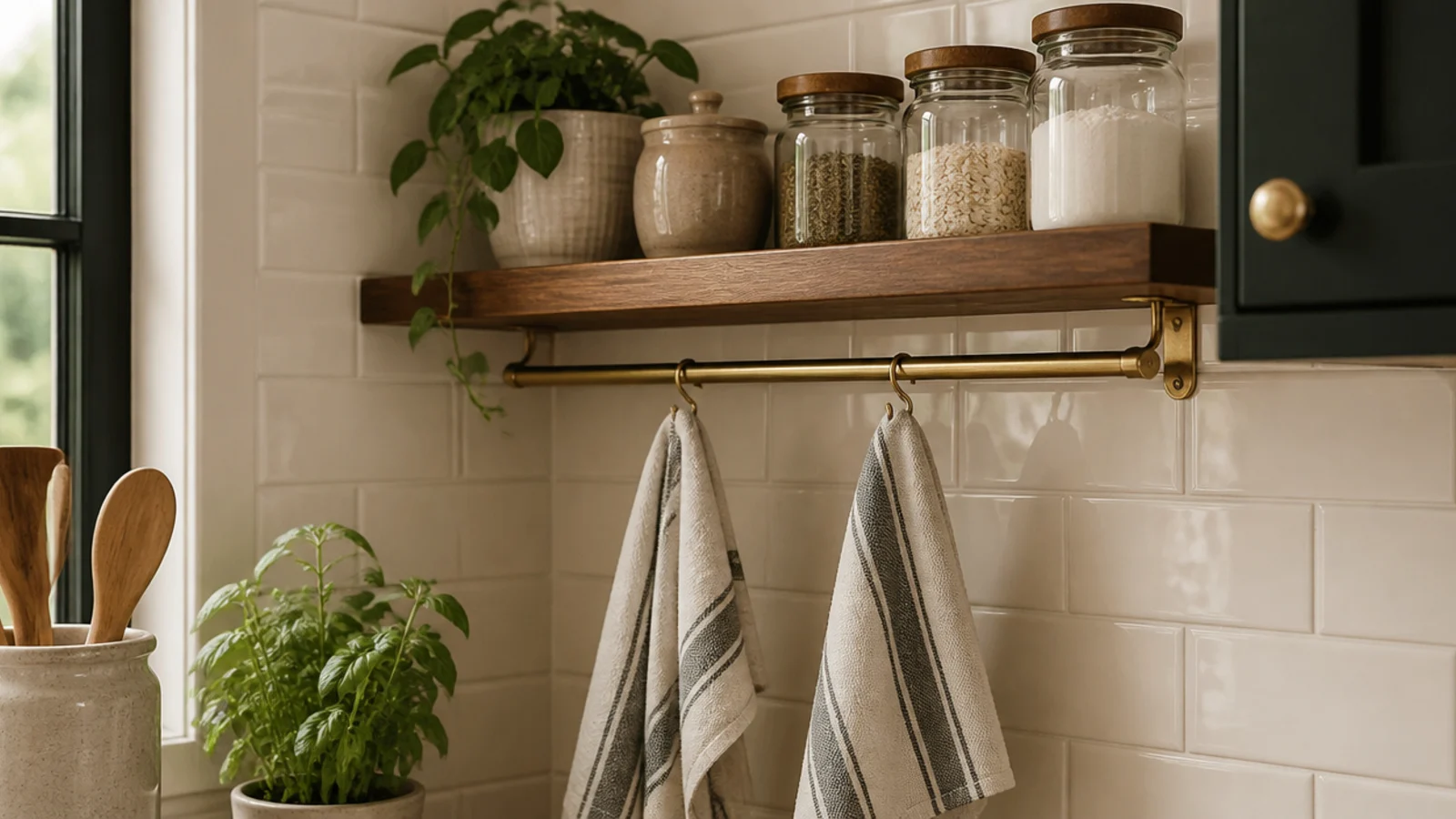
A slim rail under the lowest shelf gives dish towels somewhere to hang and dry properly instead of sitting damp on a counter.
Two towels maximum. Any more and the rail becomes visual noise directly at eye level, which undoes everything else on the shelf above it.
Mistakes to Skip
- Putting purely decorative objects on a shelf near the stove. Nothing there gets washed, so it collects grease in full view and quietly ruins the whole look.
- Using clear wax or raw wood as a kitchen shelf finish. Neither resists grease, and once it soaks in the board cannot be cleaned properly.
- Mounting the first shelf at 14 inches when a stand mixer lives underneath. Measure your tallest counter item before you mark anything.
Frequently asked questions
How high should kitchen corner shelves be above the counter?
The first shelf at 18 inches above the countertop, which clears a stand mixer and most small appliances, and the second 12 to 14 inches above that. If you have no large appliances on that stretch of counter you can drop the first shelf to 14 inches and gain useful height on the shelves above.
Do open kitchen shelves get greasy?
Anything within about four feet of a stove will, yes. That is not a reason to avoid them, it is a reason to plan them: put everyday items you wash regularly near the stove and decorative pieces further away. Sealed or oiled wood wipes clean; raw or waxed wood absorbs grease and cannot be cleaned properly.
What finish should kitchen corner shelves have?
Water-based polyurethane or a hardwax oil, both of which resist water and grease and wipe down without marking. Skip clear wax in a kitchen — it offers almost no protection and softens with heat. Seal every face including the underside and the cut ends, or the board will cup over a humid summer.
How much weight can a kitchen corner shelf hold?
Plates are heavier than most people plan for — a stack of ten dinner plates is around 12 pounds. Get at least one bracket into a stud for anything holding dishes, and use three-quarter-inch stock minimum. Toggle bolts in half-inch drywall carry 25 to 35 pounds each and are fine for jars and spices.
Are open corner shelves practical instead of upper cabinets?
In a small kitchen, yes, if you are honest about what goes on them. Open shelves work when they hold things you use weekly, because constant use keeps them clean and looking lived-in. They fail when they hold things you use twice a year, which then sit collecting grease and dust in full view.
What should I put on a kitchen corner shelf?
Daily items first: everyday plates, mugs, the oils and spices you actually cook with. Then one or two things that are simply nice to look at — a wooden bowl, a small plant, a leaning board. If a shelf holds only decorative objects in a working kitchen, it will collect grease and nobody will ever wipe it.
Start with one shelf above the counter you use most, at 18 inches, holding only things you touch weekly — that single shelf will tell you within a month whether you want more open storage. For placement elsewhere see fifteen corner shelf ideas, for what goes on them see corner shelf styling, and for a full kitchen wall rather than one corner see kitchen shelf ideas. Save the pin for the next kitchen reshuffle.
Want more like this? Browse all 15 corner shelf ideas guides — they all use the same measurements and budget tiers.
Pin it for later
Save this to your Corner Shelf Ideas board
Pin it now so it is waiting for you when the tape measure comes out — and so the next person hunting for this idea can find it too.
Save this pinKeep going
More ideas worth saving while you have the tape measure out.