Kitchen Shelf Ideas · Listicle
15 Easy Kitchen Shelf Ideas for Any Home

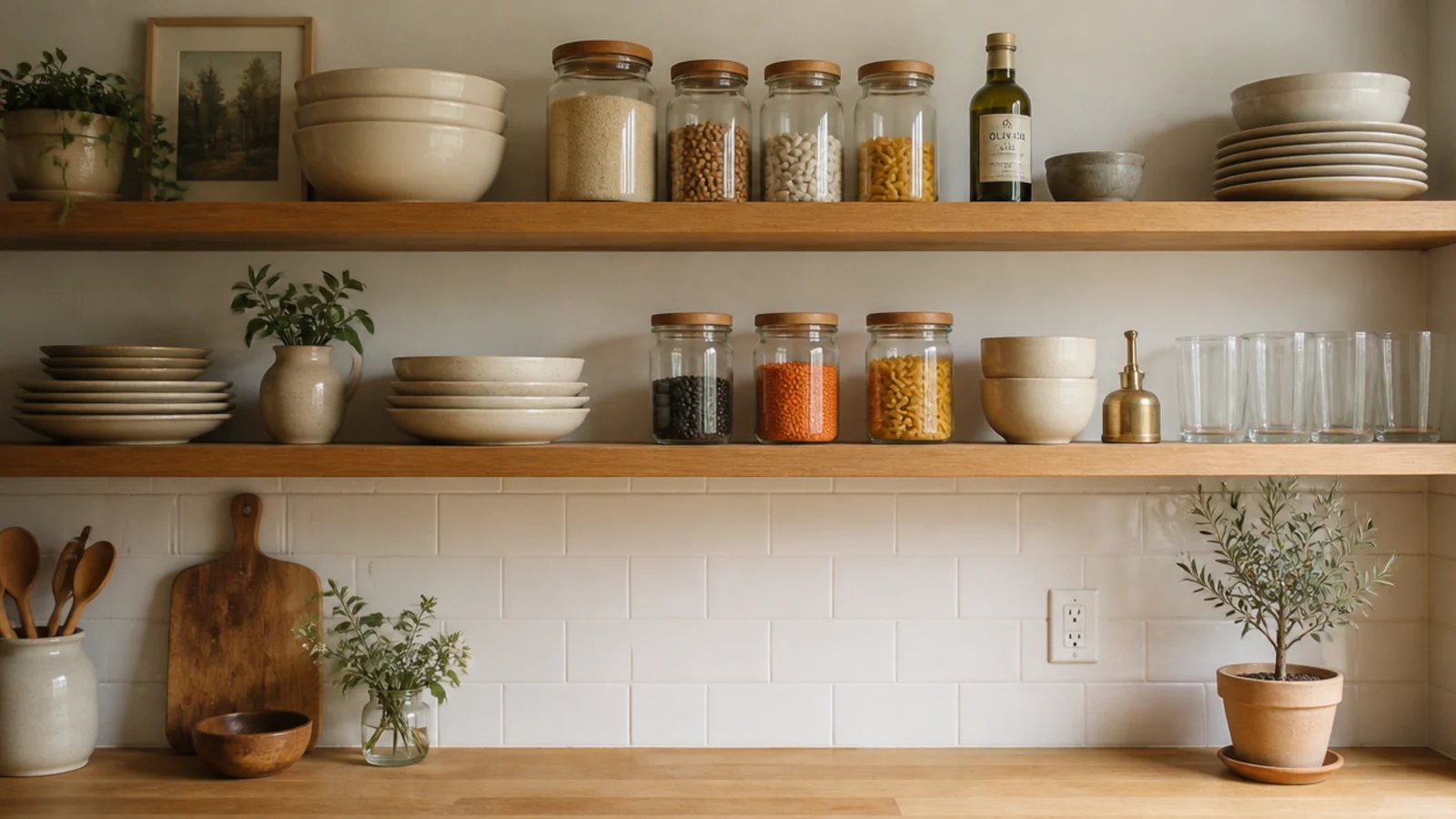
Kitchen shelf ideas get chosen for how they look and abandoned for how they live. A shelf 14 inches above the counter fights a stand mixer every morning. A shelf two feet from a burner grows a film nobody wipes. I have opened up three kitchen walls now, two of them in rentals, and the ones that stayed all got the same handful of numbers right. Here are fifteen that survive daily cooking.
In this guide17 sections — tap to openHide
- 1.Where kitchen shelf ideas belong on a full wall
- 2.One long shelf across the whole backsplash run
- 3.A pair of shelves flanking the window over the sink
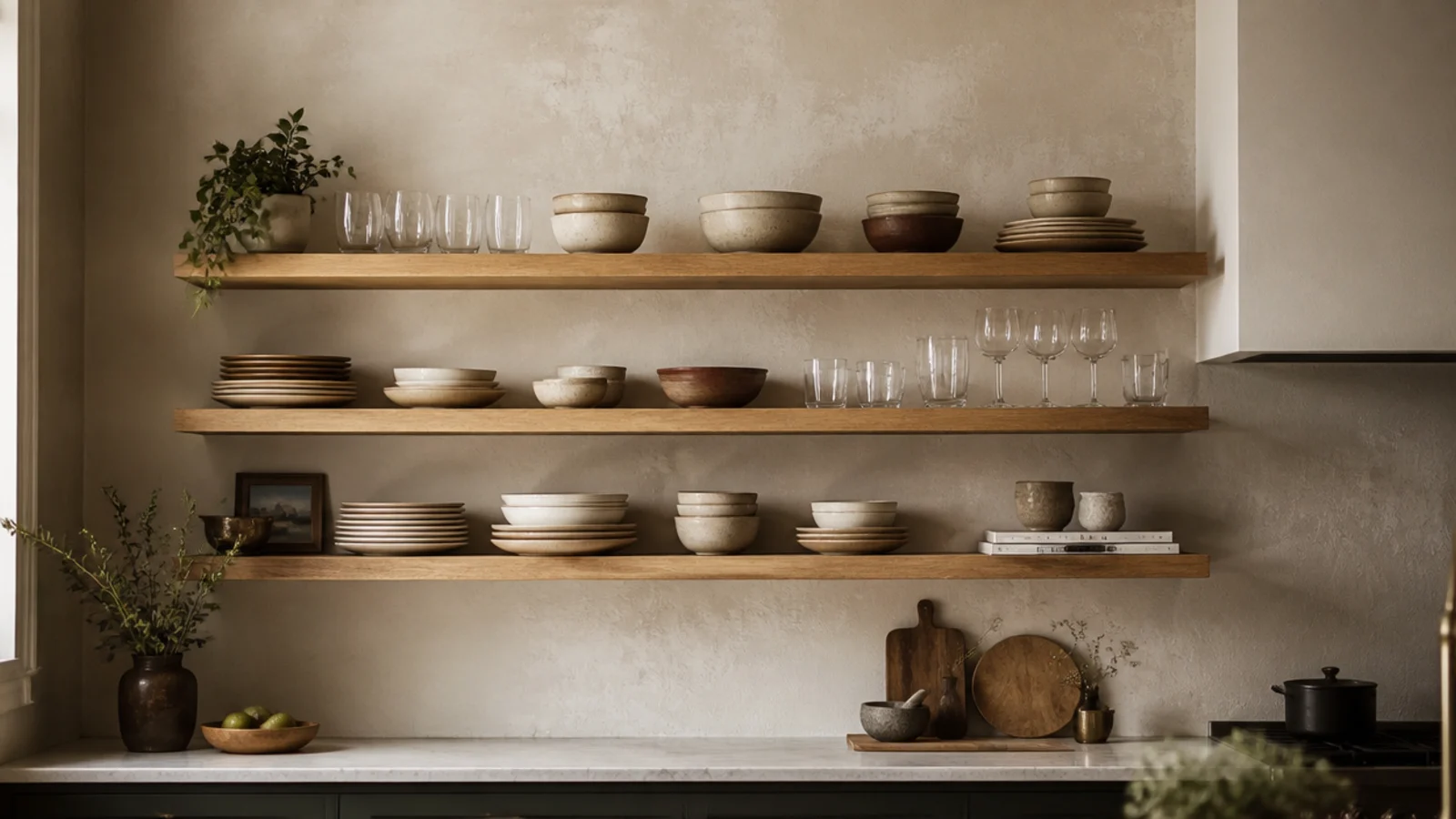
- 4.A full wall of shelves where the uppers came down
- 5.A three-inch ledge that runs the backsplash
- 6.A plate shelf mounted stud to stud
- 7.A shelf run above the breakfast bar
- 8.A shelf above the kitchen doorway
- 9.Two shelves either side of the range, none above it
- 10.A shallow pantry wall you can read at a glance
- 11.A shelf that stops at the fridge line
- 12.The dead eighteen inches under the ceiling
- 13.An appliance shelf above the toaster run
- 14.A ledge run for boards and trays
- 15.A freestanding shelf unit for renters
- 16.A stepped shelf run under a sloped ceiling
- 17.Mistakes to Skip
Where kitchen shelf ideas belong on a full wall
A corner is a small decision. A whole wall is a commitment, and four numbers decide whether you keep it.
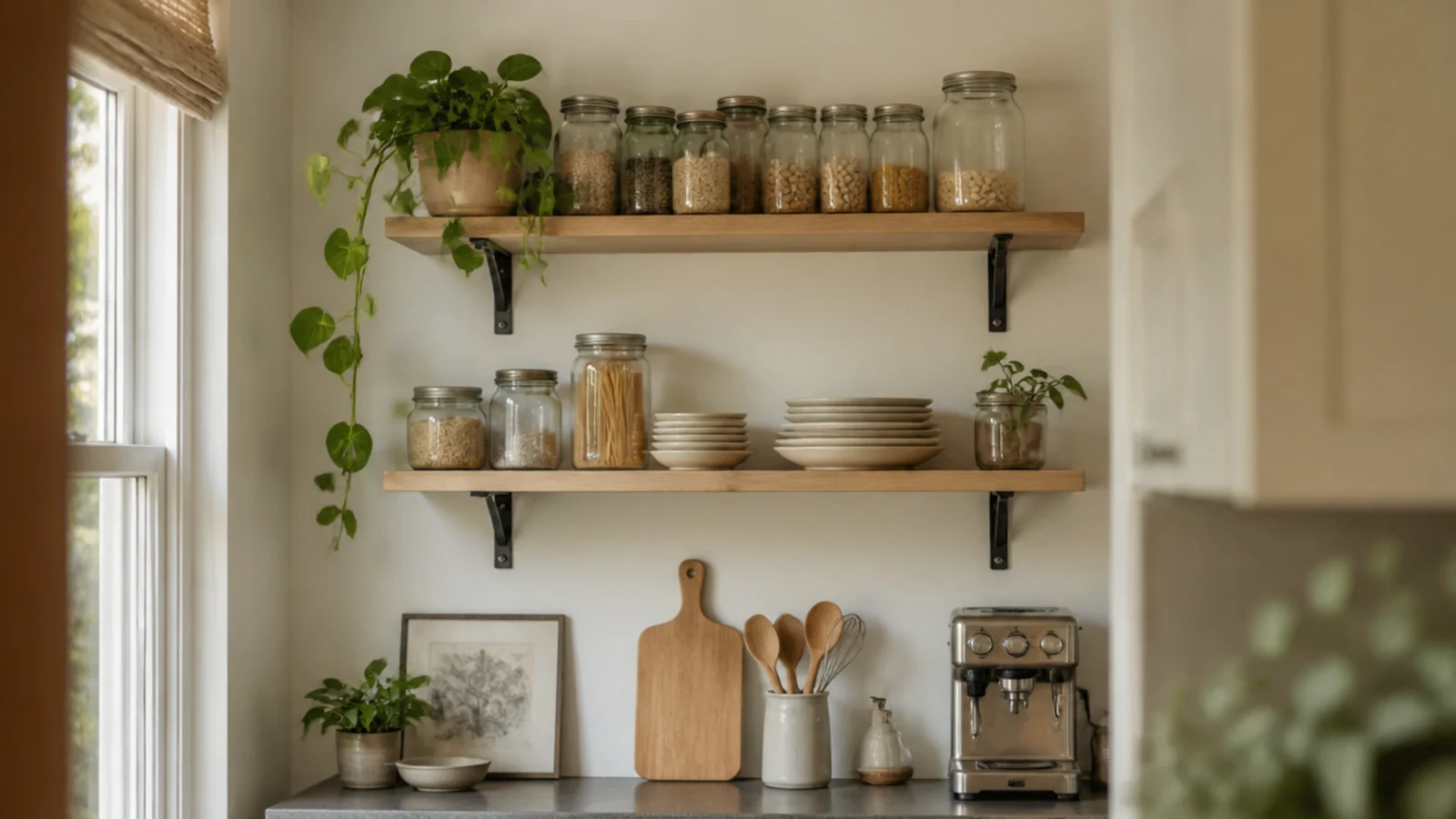
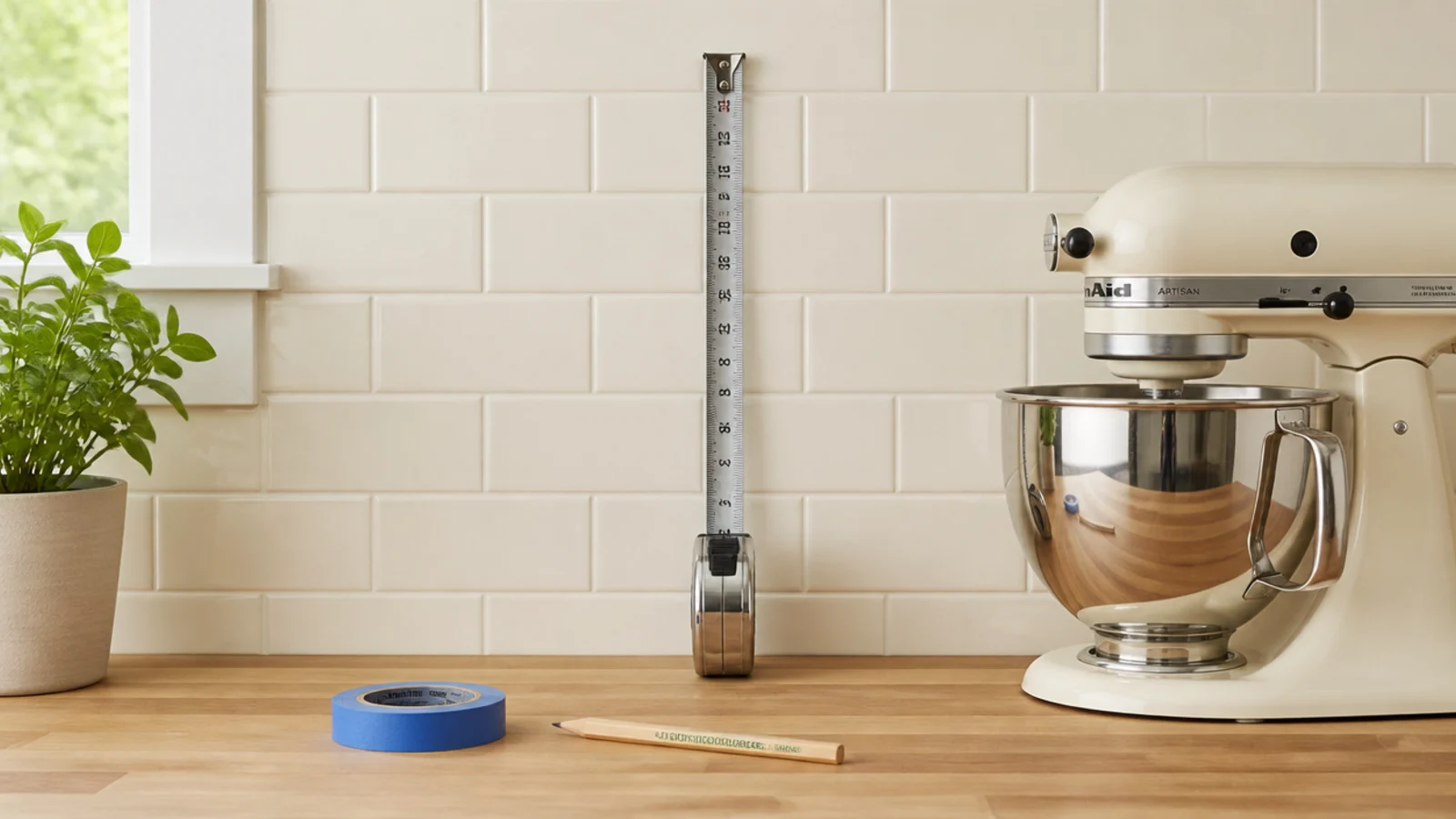
Height. First shelf at 18 inches above the countertop. That clears a stand mixer and most small appliances, which is the clearance nobody checks until the mixer will not fit. Second shelf 12 to 14 inches above the first.
Distance from the stove. Anything within about four feet of a burner picks up an airborne grease film. Put things you wash weekly in that zone and decorative pieces at the far end. Above a range hood, ceramic, metal or glass only — never wood, never anything wax-based.
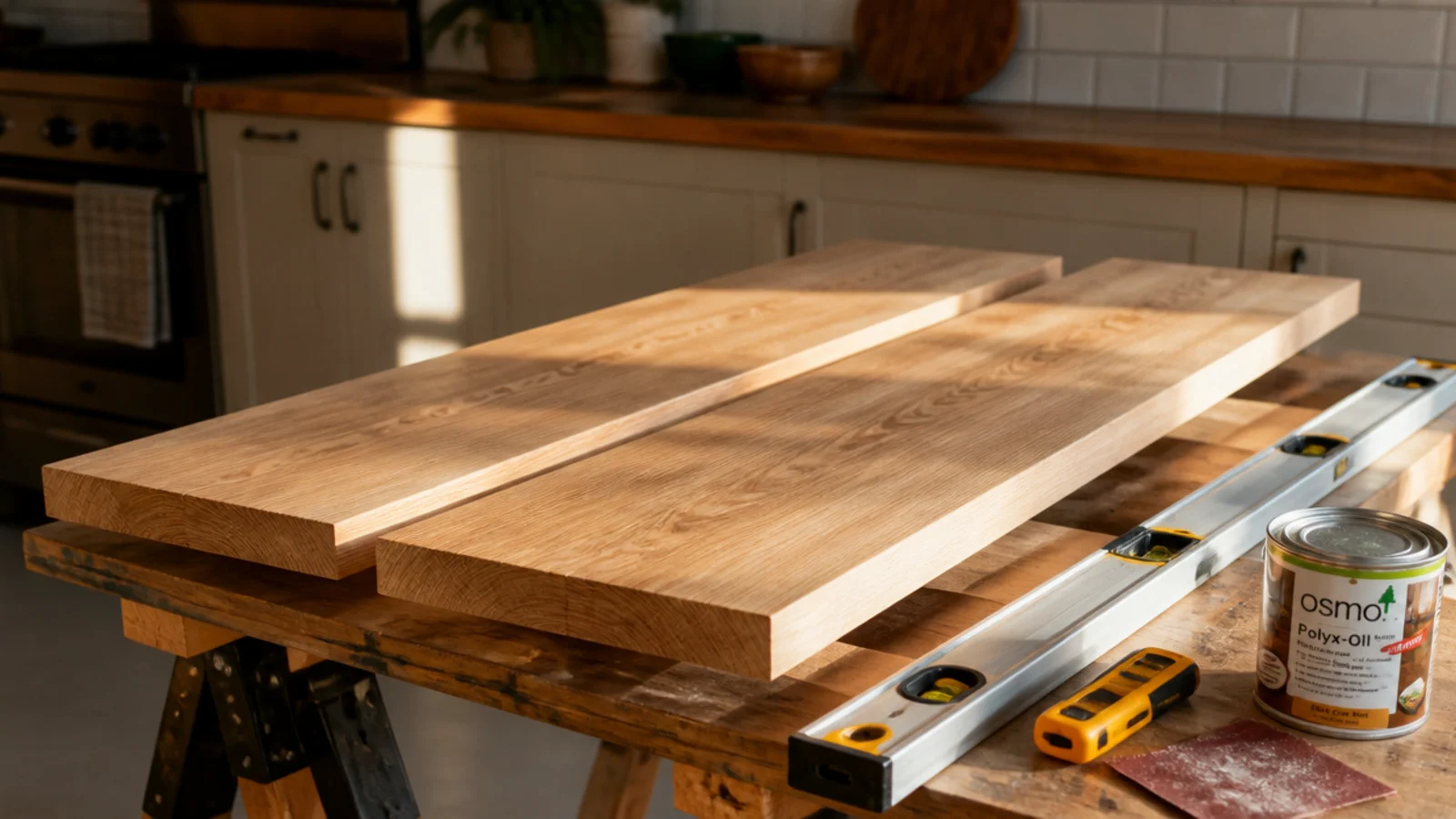
Finish. Water-based polyurethane or hardwax oil, never clear wax. Wax gives almost no protection and softens near heat. Seal every face including the underside and the cut ends, or the board cups.
Weight. A stack of ten dinner plates is around 12 pounds, so anything holding dishes wants at least one bracket in a stud and three-quarter-inch stock minimum.
Budget-wise, a single six-foot pine shelf with brackets runs $35 to $55 ($), a two-tier solid oak run is $110 to $200 ($$), and a full wall in thick walnut with concealed hardware starts around $450 ($$$).
1. One long shelf across the whole backsplash run
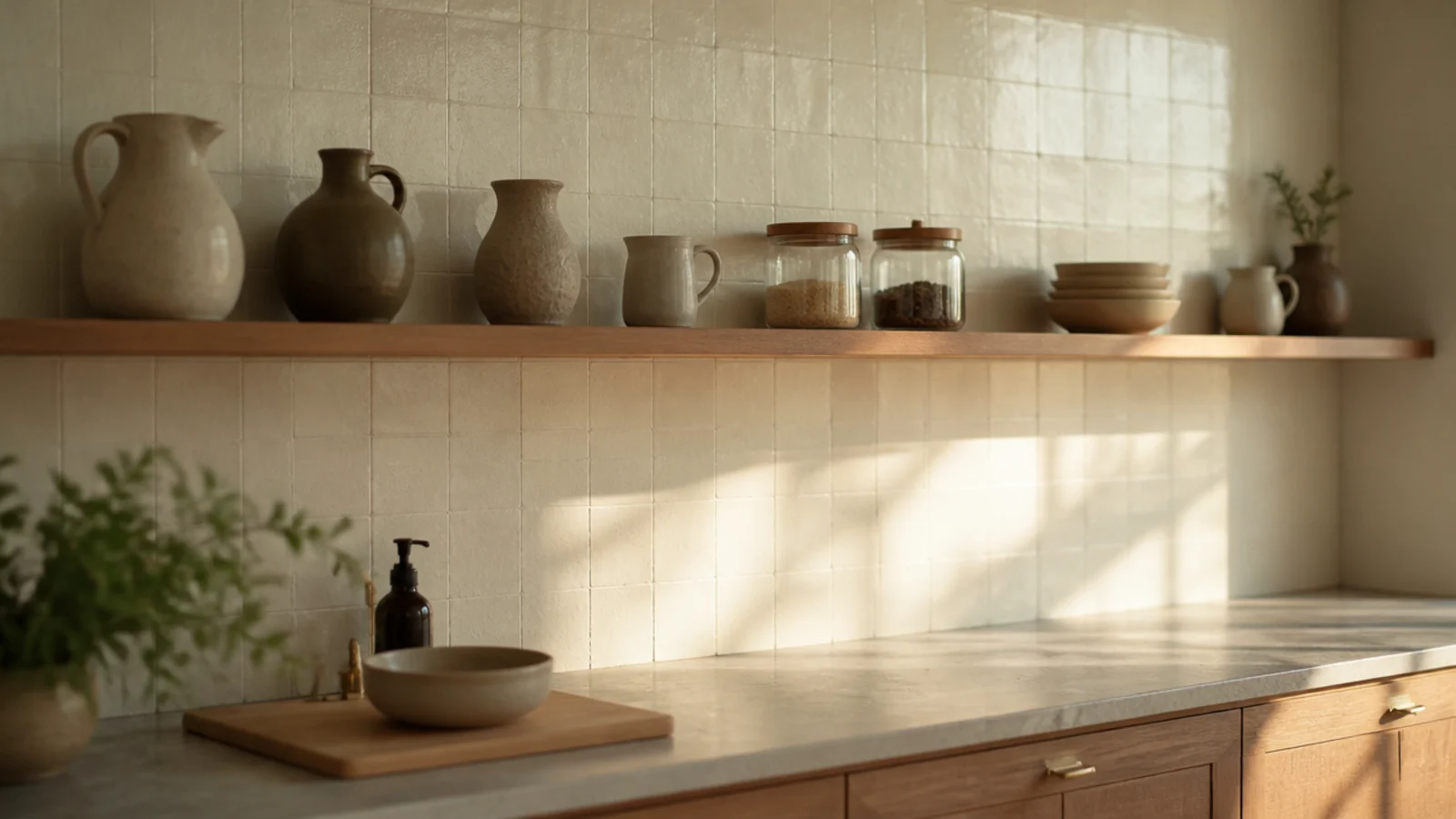
A single shelf that runs wall to wall reads as architecture. Two short shelves with a gap between them read as an afterthought, every time.
Run it at 18 inches above the counter in three-quarter-inch solid stock, 8 inches deep. Put a bracket every 32 inches and land at least one in a stud, because a run this long gathers weight far faster than you plan for. Keep the loading even along the length — a heavy cluster at one end makes a perfectly level shelf look like it is sagging even when it is not.
2. A pair of shelves flanking the window over the sink
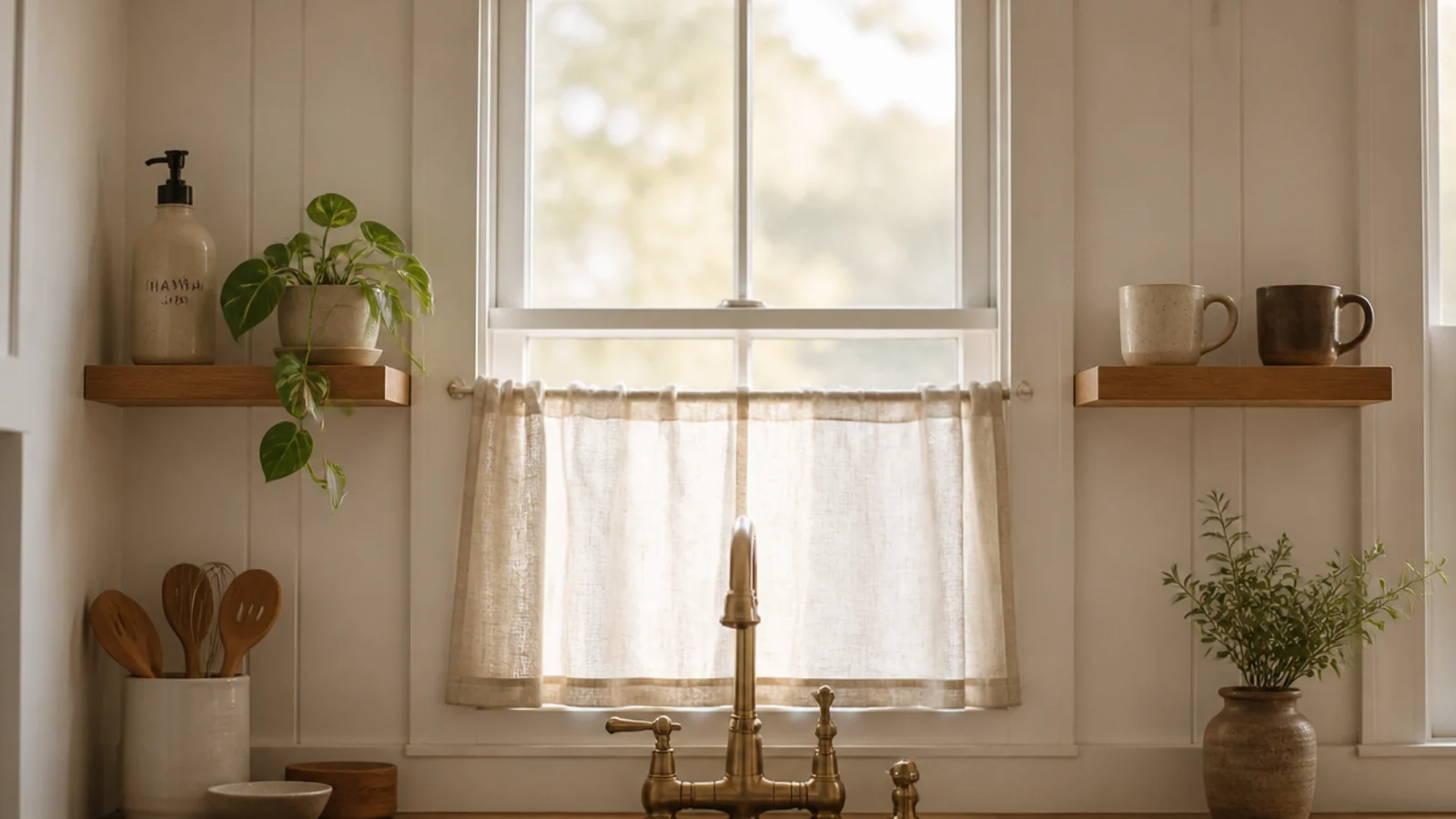
Most kitchens waste the two strips of wall either side of the sink window. Two 24-inch shelves there, 5 to 6 inches deep, add storage without touching the glass or the light.
Everything on them gets splashed rather than greased, so stock them accordingly: stoneware, a soap bottle, a small trailing plant. No paper, no baskets, nothing that stains. Line the shelf tops with the window sill height and the whole arrangement reads as part of the frame instead of two shelves that happened to land nearby.
3. A full wall of shelves where the uppers came down
Taking down a bank of upper cabinets is the biggest visual change available in a kitchen, and it is reversible if you keep the doors in the garage.
Three tiers at 18, 32 and 46 inches above the counter covers the same storage as most cabinet runs. Expect to patch and repaint the wall first — cabinet backs hide fifteen years of unfinished plaster. Load the lowest tier with everyday dishes and the top with the things you touch monthly. There is a full plan for this in kitchen shelves instead of cabinets.
4. A three-inch ledge that runs the backsplash
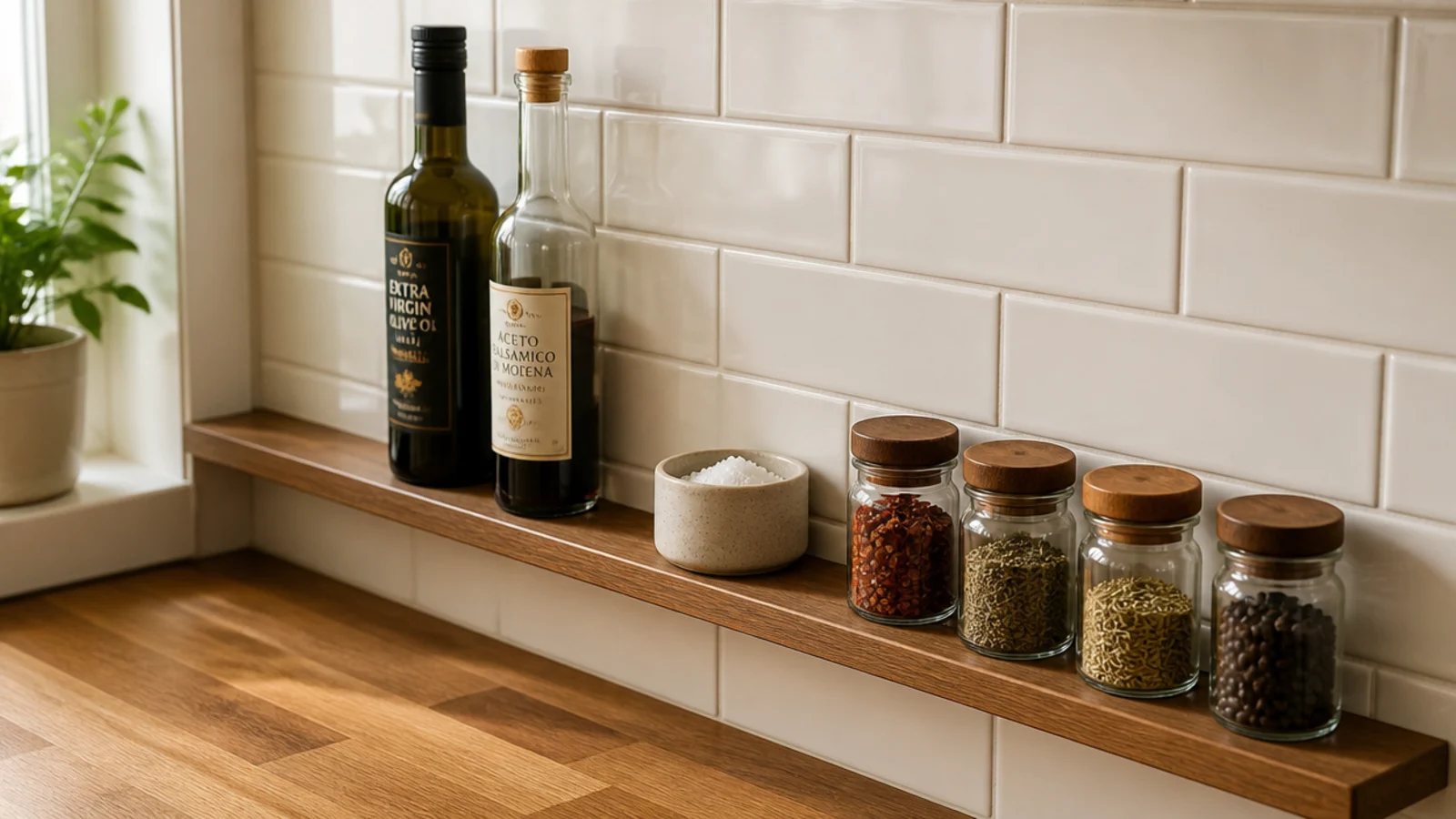
The smallest useful shelf in a kitchen. A slim 3-inch ledge running the length of the backsplash holds oils and the spices you cook with daily without eating any counter space.
Three inches is the deliberate number: deep enough for a bottle to sit stable, shallow enough that you can still work and wipe behind it. Mount it 11 inches above the counter so a bottle stands upright underneath the wall cabinets. Painted MDF works here at around $20 for a six-foot run, because nothing heavy ever goes on it.
5. A plate shelf mounted stud to stud
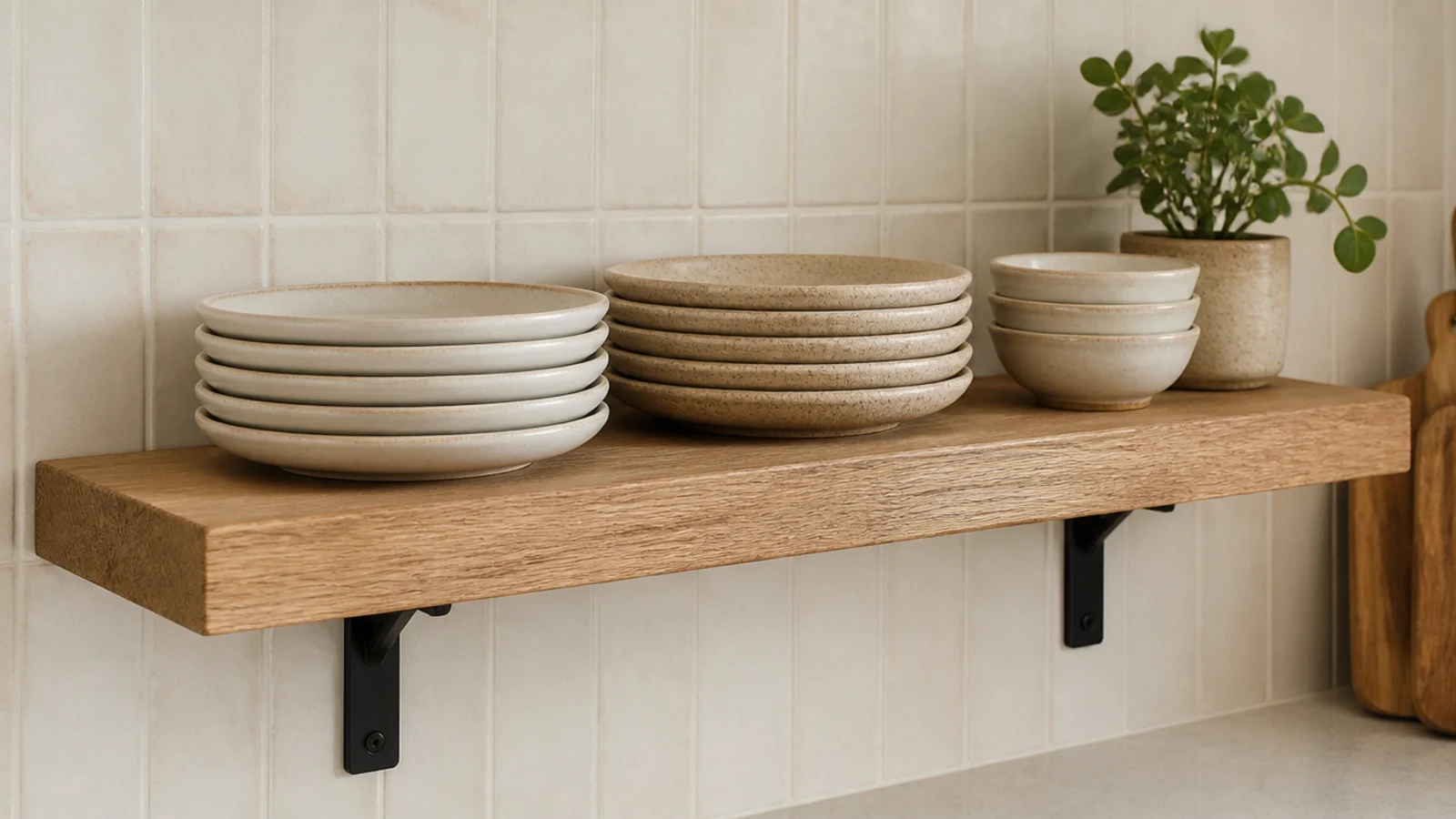
Everyday plates on an open shelf stay clean because they cycle through the dishwasher constantly. The catch is weight: ten dinner plates run about 12 pounds, and most people stack twenty.
Mount this one specifically to hit studs — 16 inches apart in most homes — rather than positioning it for looks and hoping. Three-quarter-inch stock minimum, 10 inches deep so nothing overhangs. Two stacks of five beat one stack of ten: easier to lift one-handed and much kinder to the point load in the middle of the board.
6. A shelf run above the breakfast bar
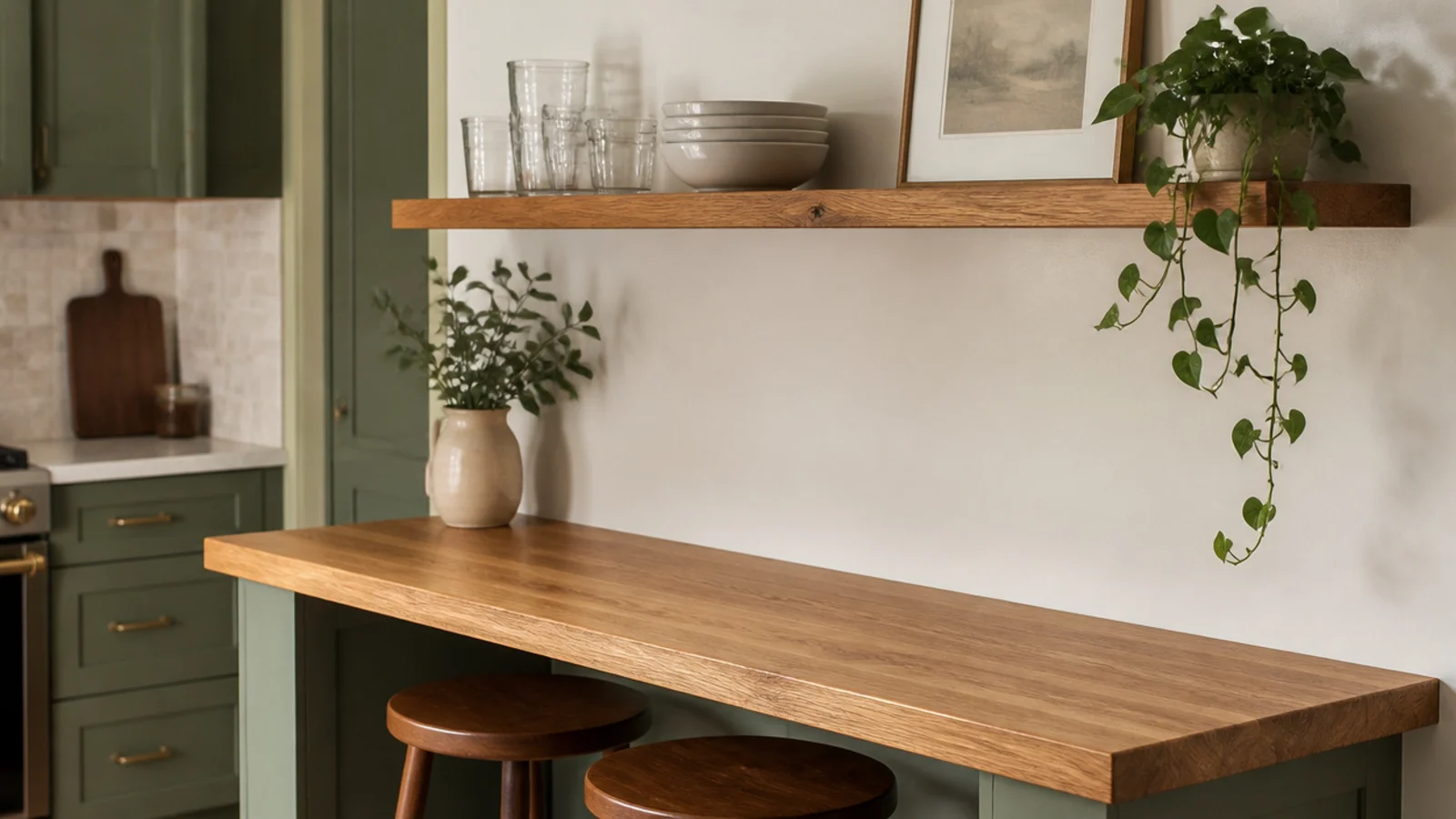
A peninsula or breakfast bar has a wall behind it that usually holds nothing at all. Shelves there put glasses and bowls within reach of both the cook and whoever is sitting down.
Mount the first shelf 20 inches above the bar top so nobody knocks it leaning back. Remember it gets read from both sides, so avoid anything with an obvious front and back. Glasses, small bowls and a plant work; a row of framed prints does not.
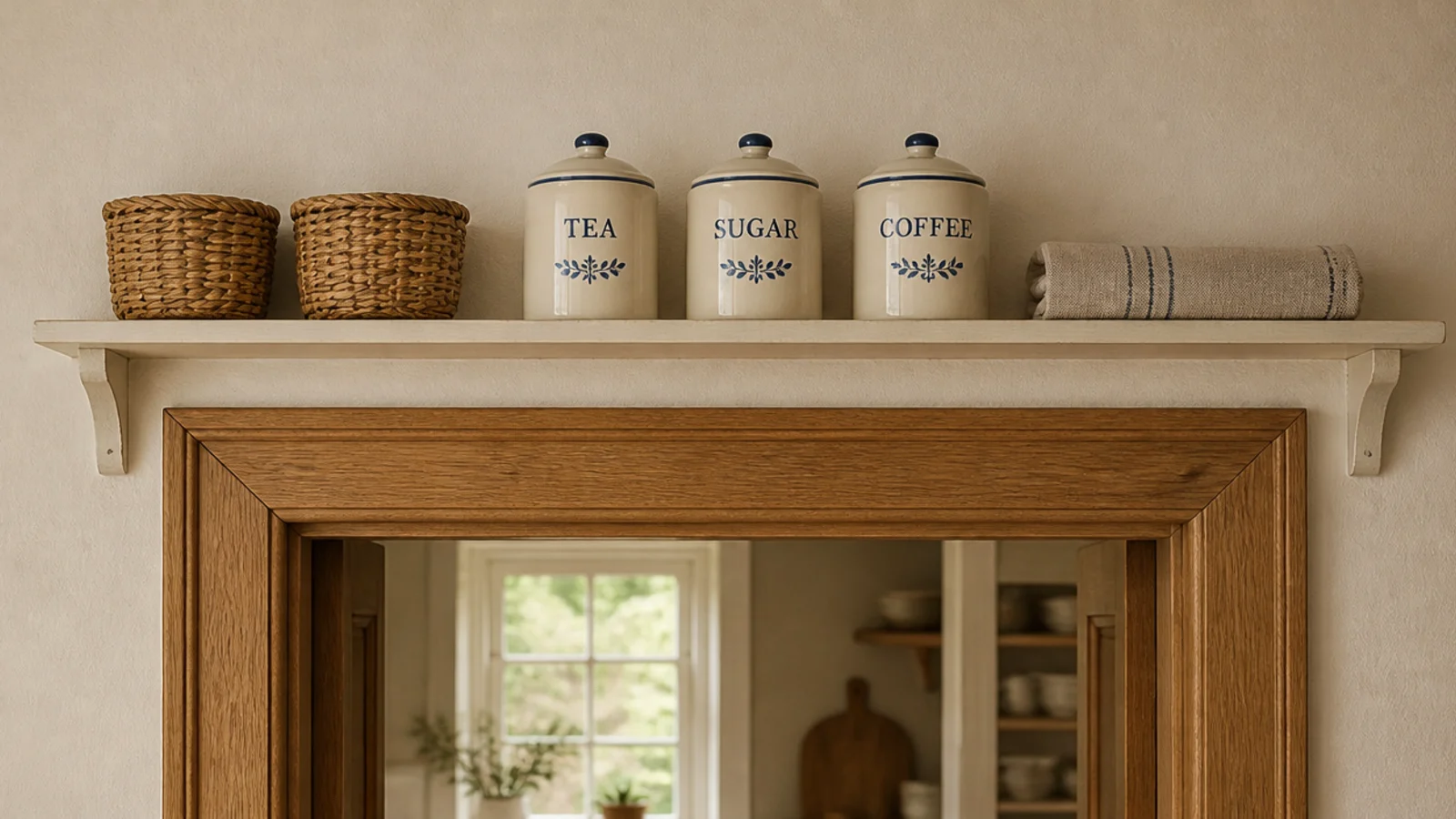
7. A shelf above the kitchen doorway
The strip of wall above a door frame is genuinely free space in every kitchen, and almost nobody uses it.
A shelf there wants to be 8 to 10 inches deep and mounted about 4 inches above the casing so it reads as deliberate rather than crammed. Because it is out of reach, it is the right place for the things you use monthly — spare tins, the big platters, backup napkins. Keep it visually calm: baskets and matched containers, not a row of miscellaneous objects at ceiling height.
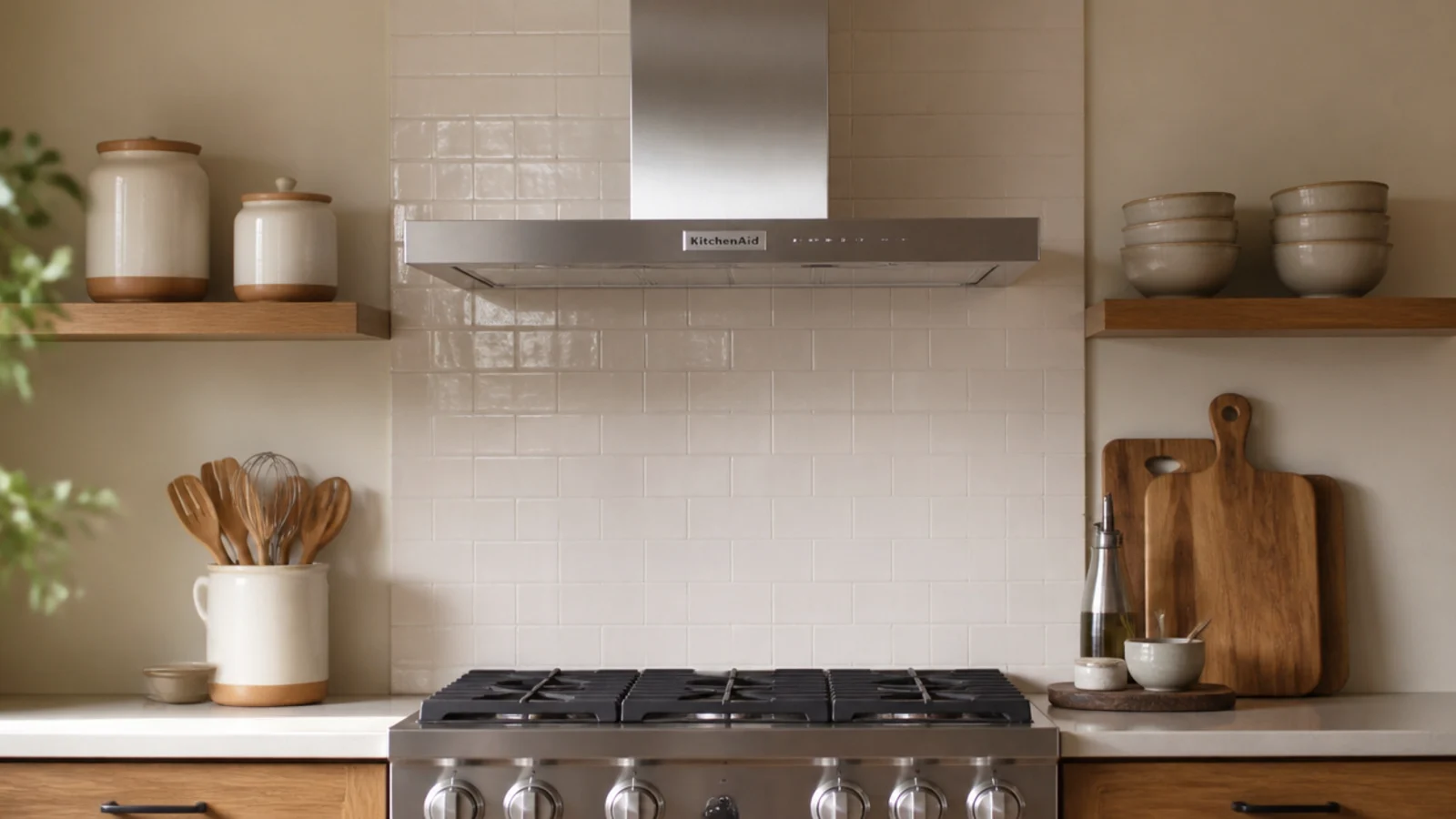
8. Two shelves either side of the range, none above it
The wall directly above a hood is the hottest, greasiest square footage in the house. Flank it instead of filling it.
Two shelves at matching heights either side of the range frame the cooking zone and give you somewhere for the crock, the salt and the oils you reach for mid-stir. If you do put a shelf above the hood, it is ceramic, metal or glass only — no wood, no candles, nothing wax-based. Expect to wipe those flanking shelves weekly, and stock them with things that welcome it.
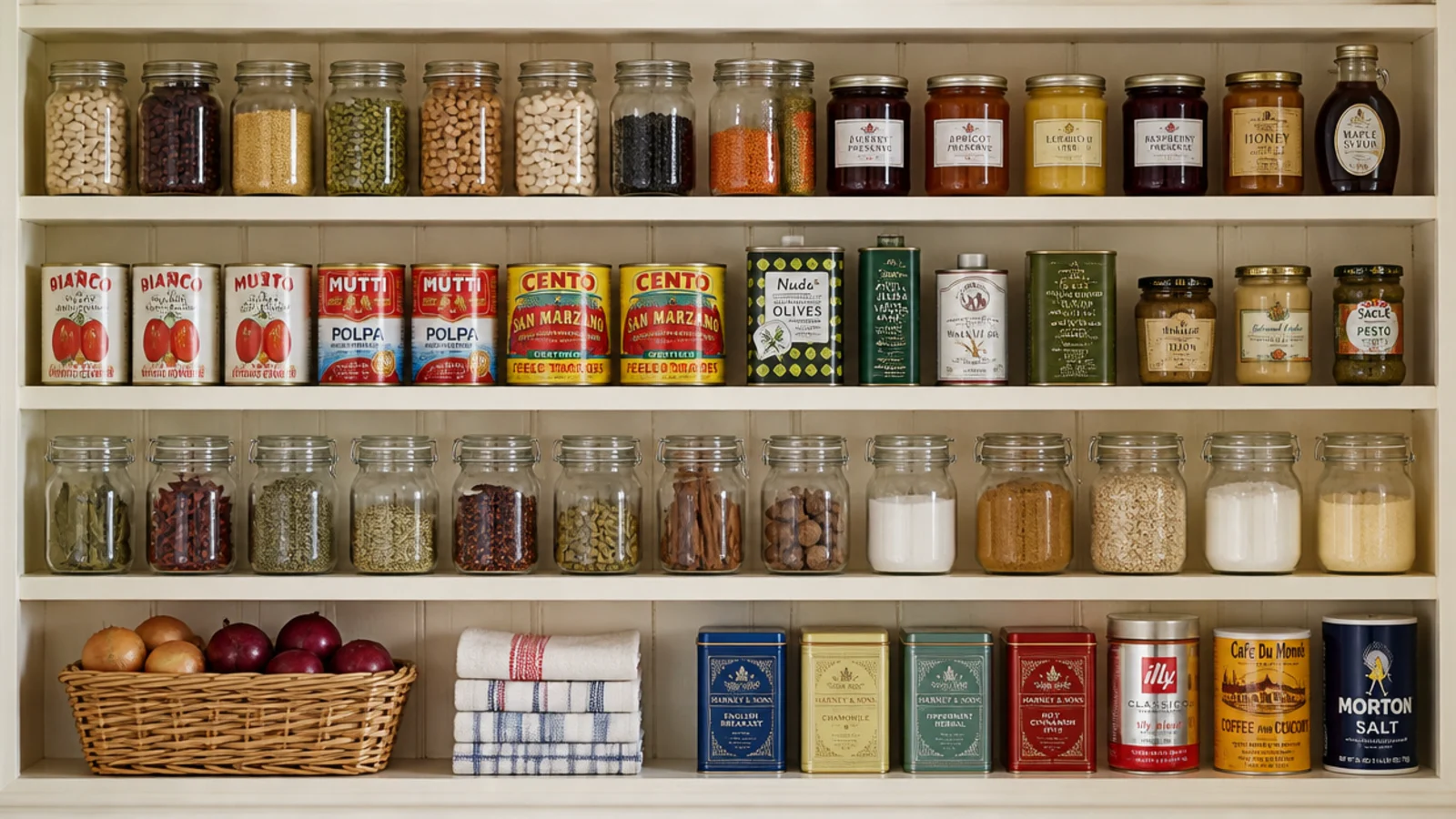
9. A shallow pantry wall you can read at a glance
Deep pantry shelves become archaeology. Six inches deep, in single rows, is what keeps a pantry usable for years.
Run shallow shelves floor to ceiling on one wall, spaced 11 inches apart for jars and 14 for cereal boxes and bags. Everything sits in one row, so nothing hides behind anything else and you stop buying a fourth jar of cumin. Painted plywood at $8 a board makes this the cheapest storage upgrade in a kitchen ($).
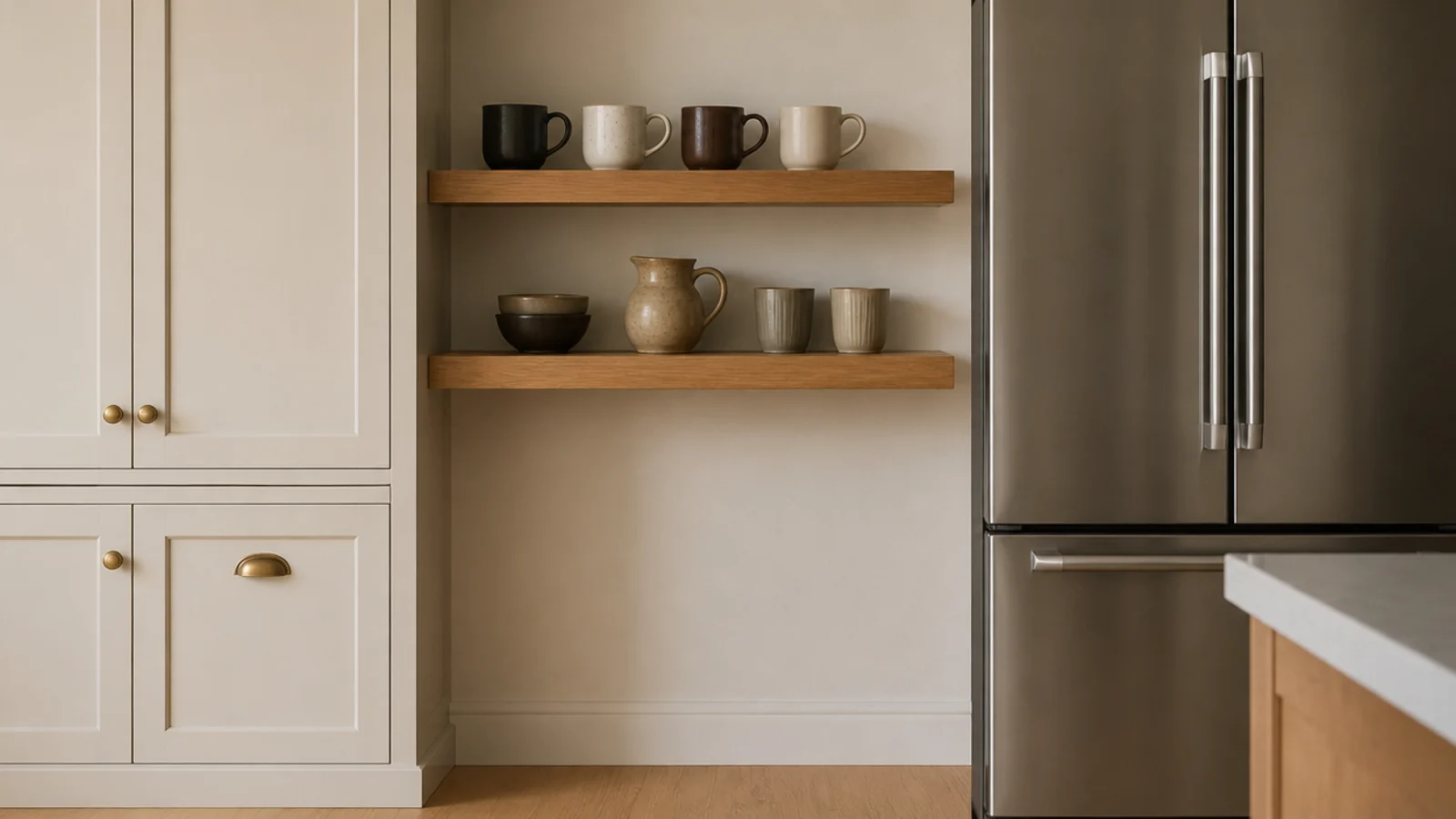
10. A shelf that stops at the fridge line
Where a shelf run meets a tall refrigerator, stop it in line with the front face of the fridge rather than running it into the side panel.
That single alignment is what makes a kitchen look planned. A shelf that dies awkwardly against a fridge side reads as a mistake, while a shelf that lines up with the front face reads as a designed edge. Same rule for a tall pantry cupboard or a full-height oven housing — end the run on a vertical line that already exists.
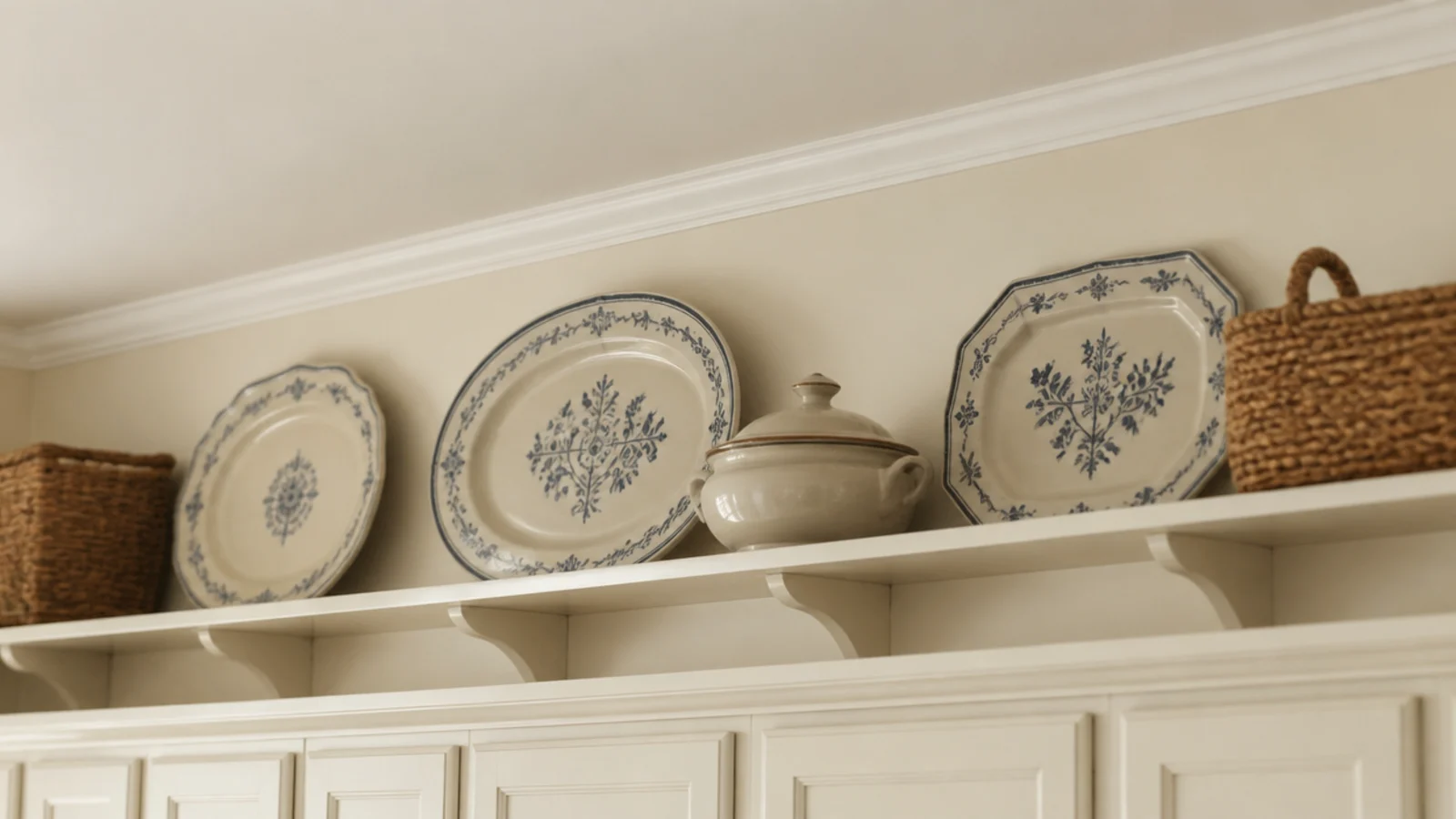
11. The dead eighteen inches under the ceiling
Most kitchens have a band of wall between the top of the cabinets and the ceiling doing absolutely nothing.
A shelf up there holds the platters, the tureen and the seasonal serving pieces you use four times a year — high, out of the sightline, and off your working shelves. Keep it to large, simple shapes: small objects at that height turn into visual clutter you cannot even identify from the floor. Anchor into studs, since anything you store up there is awkward to lift down.
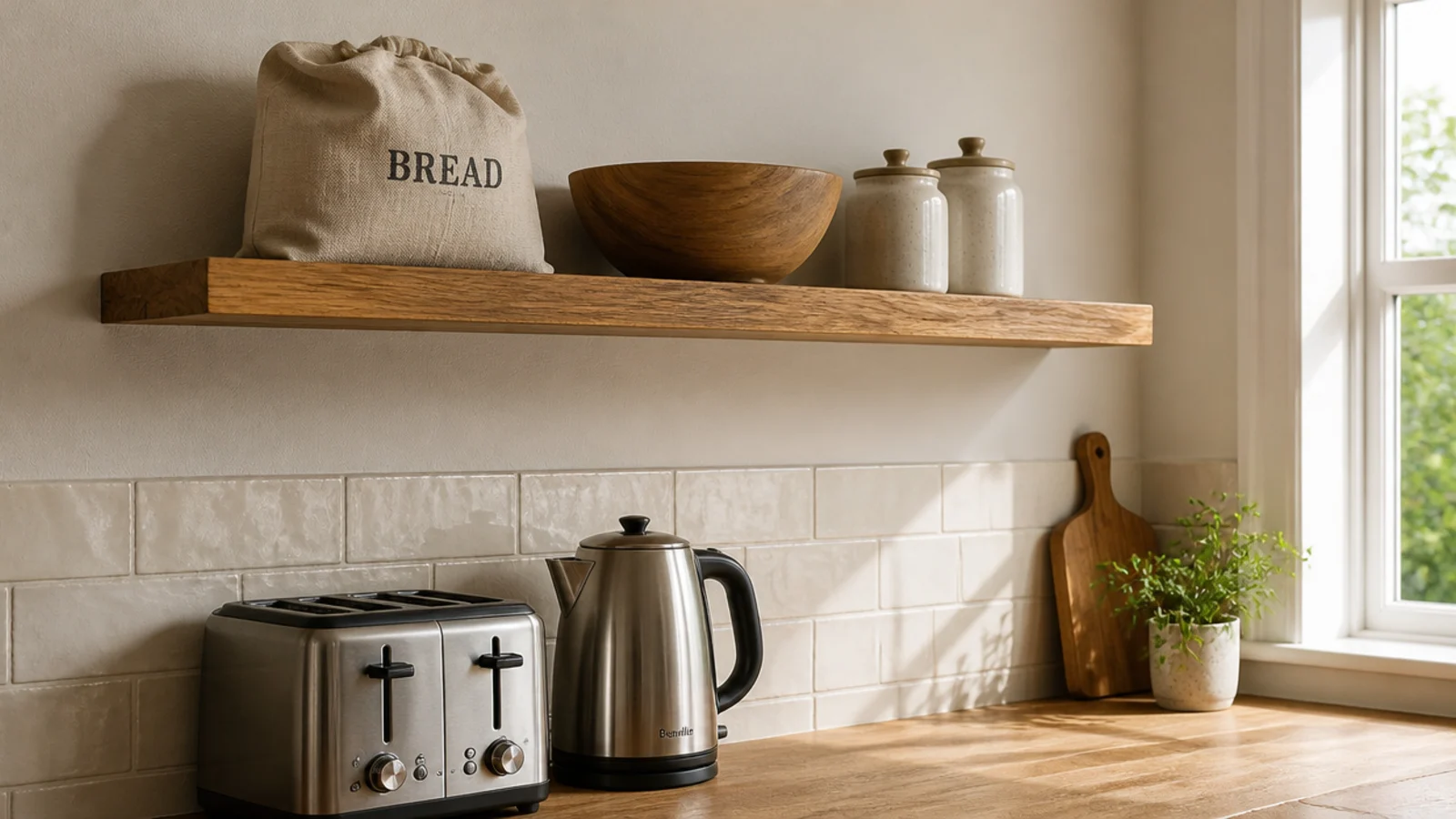
12. An appliance shelf above the toaster run
The stretch of counter where the toaster, kettle and blender live is usually the most chaotic wall in a kitchen. A shelf above it collects everything that belongs to those appliances.
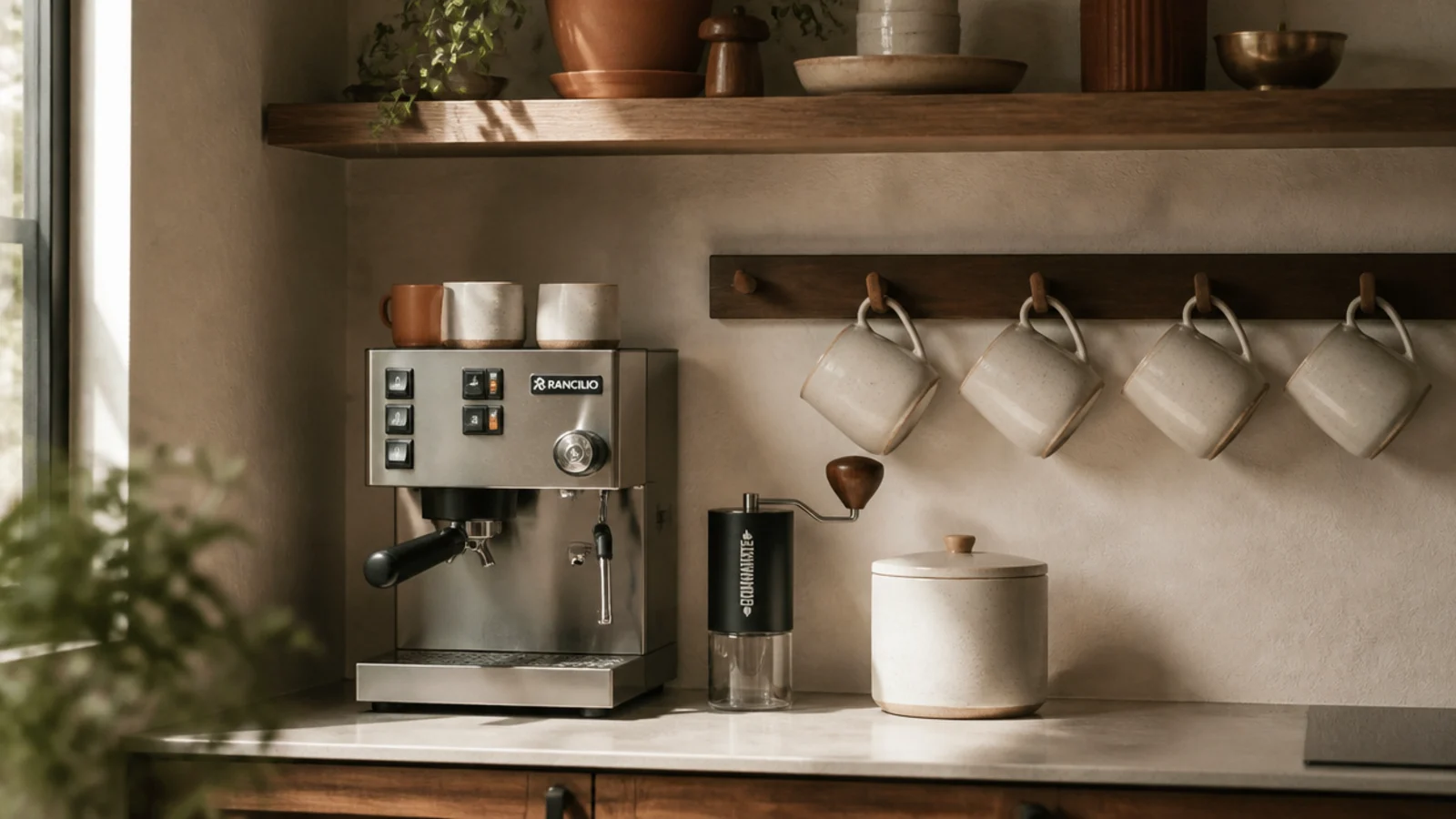
Leave at least 10 inches of clearance above the tallest steam source. Kettle steam hits a shelf underside repeatedly and lifts any finish that is not properly sealed — this is exactly where hardwax oil earns its money. Bread, filters, mugs and the bags of coffee go up top; the counter below stays clear enough to actually use.
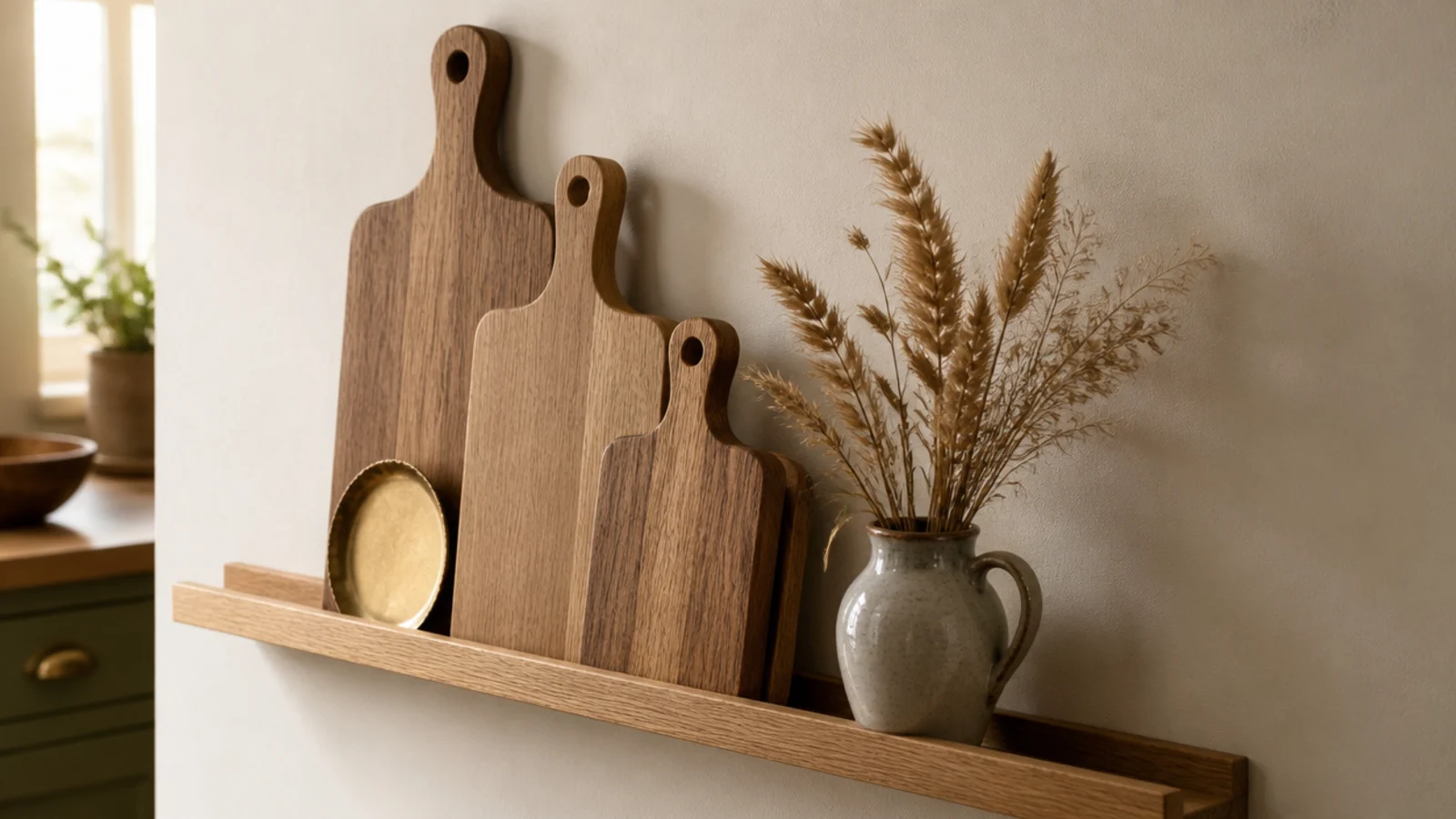
13. A ledge run for boards and trays
A narrow ledge with a raised lip, 3 to 4 inches deep, turns cutting boards and serving trays into wall texture instead of cupboard clutter.
Lean them overlapping slightly, biggest at the back. Stand them on edge rather than flat so air moves behind them and the wood dries properly — a board lying flat on a shelf stays damp and eventually warps. This works especially well on the wall opposite the stove, where nothing gets a grease film and the wood keeps its color.
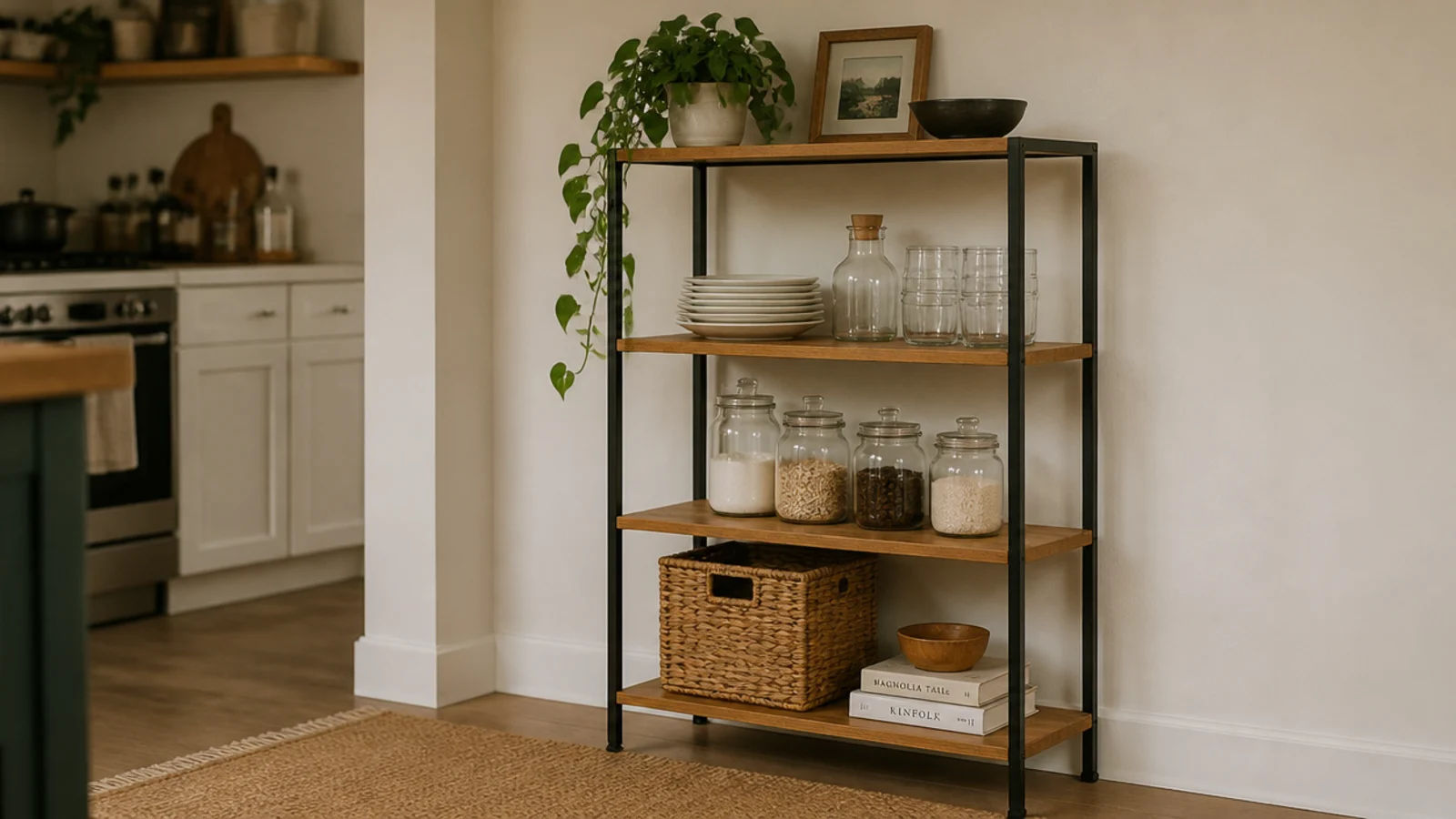
14. A freestanding shelf unit for renters
If drilling is off the table, a freestanding unit against a kitchen wall carries far more than any adhesive strip and leaves the plaster untouched.
Look for 12 to 14 inches deep, four tiers, with a solid top rather than wire. Put the heaviest things on the bottom two tiers to keep the center of gravity low, and run one anti-tip strap into the wall if there are kids around — one small hole beats a toppled unit. Expect $70 to $160, and it comes with you ($$).
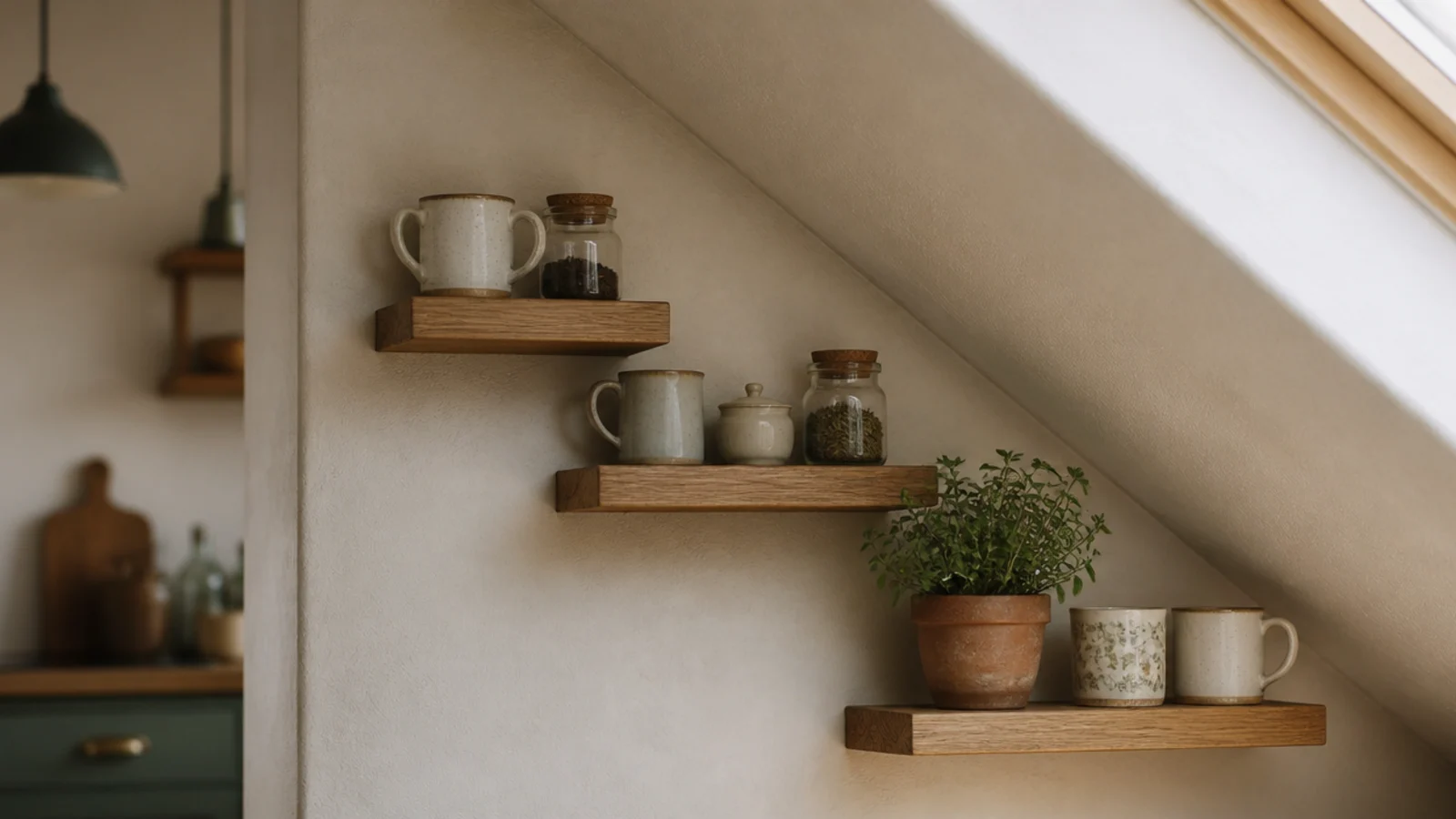
15. A stepped shelf run under a sloped ceiling
Attic and loft kitchens lose a whole wall to the slope. Stepping short shelves down in sequence follows the angle instead of fighting it.
Three shelves, each shorter than the last, dropping in 12-inch steps, reads as intentional joinery. Keep the tallest items at the high end and the mugs at the low end so nothing is stored where you cannot stand upright. For the same trick on straight walls, floating kitchen shelves covers the concealed-bracket version.
Mistakes to Skip
- Shelving things you use twice a year. Open storage only stays clean through use — the roasting tin you never touch sits collecting grease in full view.
- Finishing only the top face of a board. The underside draws moisture at a different rate and the shelf cups within a humid season, usually after it is loaded.
- Setting the first shelf at 14 inches when a stand mixer lives underneath. Measure your tallest counter appliance before a single mark goes on the wall.
Frequently asked questions
How high should a kitchen shelf be above the counter?
Put the first shelf 18 inches above the countertop. That clears a stand mixer and most small appliances, which is the measurement people discover too late. The second shelf sits 12 to 14 inches above the first, enough to stand a tall bottle or a jar of pasta upright. If nothing large lives on that stretch of counter, you can drop the first shelf to 14 inches.
Do kitchen shelves near the stove get greasy?
Anything within about four feet of a burner collects an airborne film of grease, yes. Plan around it rather than avoiding it. Put items you wash weekly in that zone, because the wash cycle keeps them clean, and keep decorative pieces at the far end of the run. Above a range hood use ceramic, metal or glass only, never wood or anything wax-based.
What is the best finish for kitchen shelves?
Water-based polyurethane or a hardwax oil. Both resist water and grease and wipe down without marking or clouding. Clear wax is the wrong product in a kitchen because it offers almost no protection and softens near heat. Seal every face including the underside and the cut ends, or the board draws moisture unevenly and cups within a humid season.
How much weight can a kitchen shelf actually hold?
More than people think, but only if the anchor is right. A stack of ten dinner plates is around 12 pounds, so anything holding dishes needs at least one bracket landed in a stud and three-quarter-inch stock as a minimum thickness. Toggle bolts in half-inch drywall carry 25 to 35 pounds each and handle jars, spices and mugs comfortably.
Are open kitchen shelves practical for daily cooking?
They are, for the things you use weekly. Constant use is what keeps an open shelf clean, because everything on it cycles through the sink before a film has time to build. They stop working the moment you shelve the roasting tin you use twice a year, which then sits gathering dust and grease in full view of the room.
Start with the wall you cook at most, one shelf, 18 inches up, holding only things you touch weekly. A month of that tells you more than any amount of planning. For what goes on it, kitchen shelf styling has thirty arrangements, and if you want to build rather than buy, the step-by-step kitchen shelf project covers cuts and anchors. The same brackets on a straight living room wall are covered in floating shelf ideas. Save the pin so the numbers come with you.
Want more like this? Browse all 15 kitchen shelf ideas guides — they all use the same measurements and budget tiers.

Pin it for later
Save this to your Kitchen Shelf Ideas board
Pin it now so it is waiting for you when the tape measure comes out — and so the next person hunting for this idea can find it too.
Save this pinKeep going
More ideas worth saving while you have the tape measure out.