Floating Shelves · Listicle
15 Easy Floating Shelf Ideas for Any Home

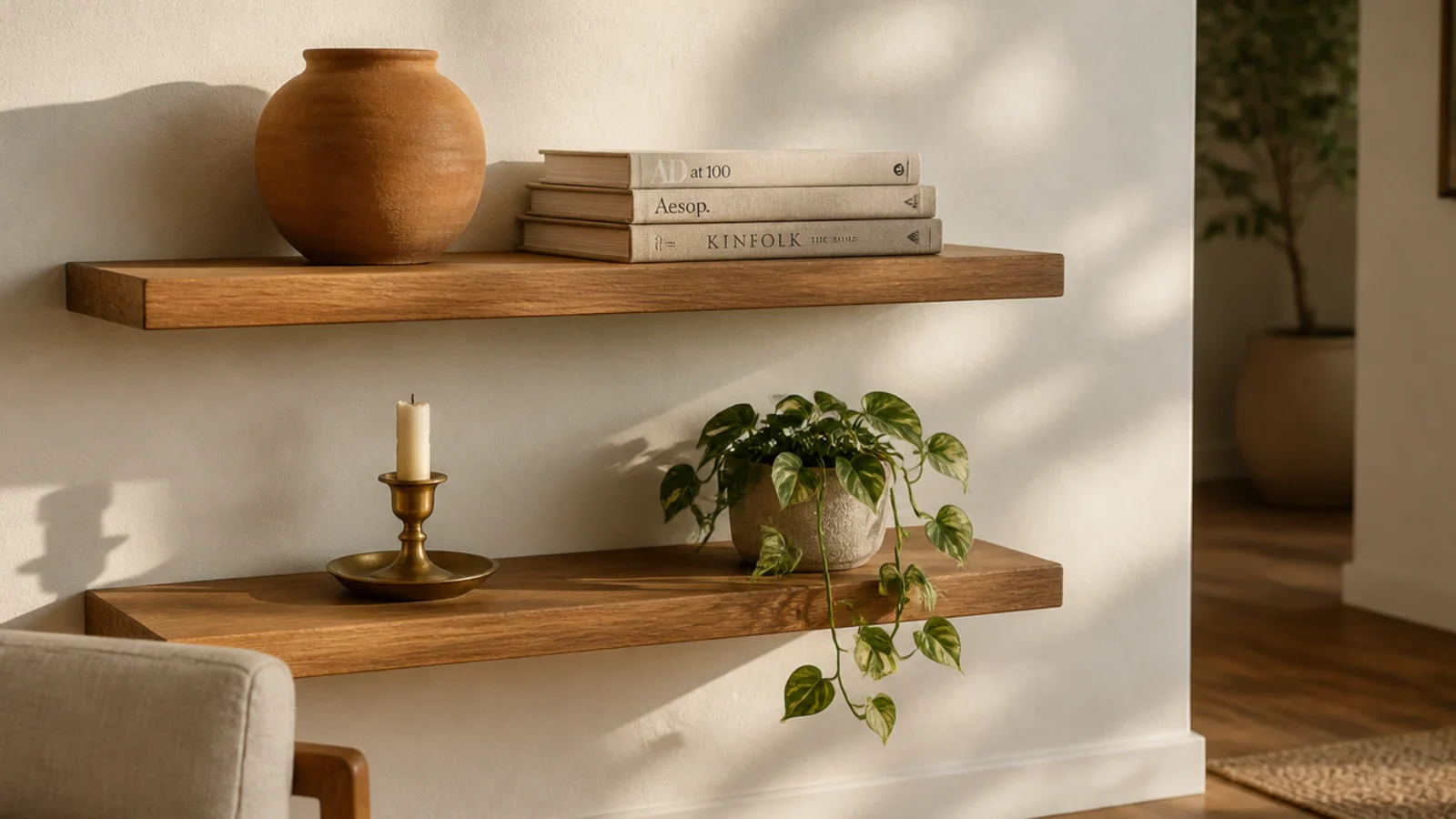
Floating shelf ideas nearly always fail at the wall rather than at the styling. I have put these up in four rentals and two houses, and the ones still perfectly level years later all share three numbers: a depth that respects leverage, a board thick enough for its span, and a fixing rated for what actually goes on it. Here are fifteen placements worth the holes, each with those numbers attached.
In this guide17 sections — tap to openHide
- 1.Where floating shelf ideas actually earn their wall
- 2.One long shelf above the sofa
- 3.A matched pair flanking the window
- 4.A chunky built-up box shelf
- 5.A three-inch picture ledge down the hallway
- 6.A floating mantel above the fireplace
- 7.Two shelves above the kitchen counter
- 8.A bedside shelf instead of a nightstand
- 9.A drop shelf by the front door
- 10.A shelf above the desk
- 11.A sealed shelf over the toilet tank
- 12.A stair-step run up the stairwell wall
- 13.A shelf above the doorway
- 14.A shelf that spans an alcove wall to wall
- 15.A lipped laundry shelf above the machines
- 16.A no-drill shelf for renters
- 17.Mistakes to Skip
Where floating shelf ideas actually earn their wall
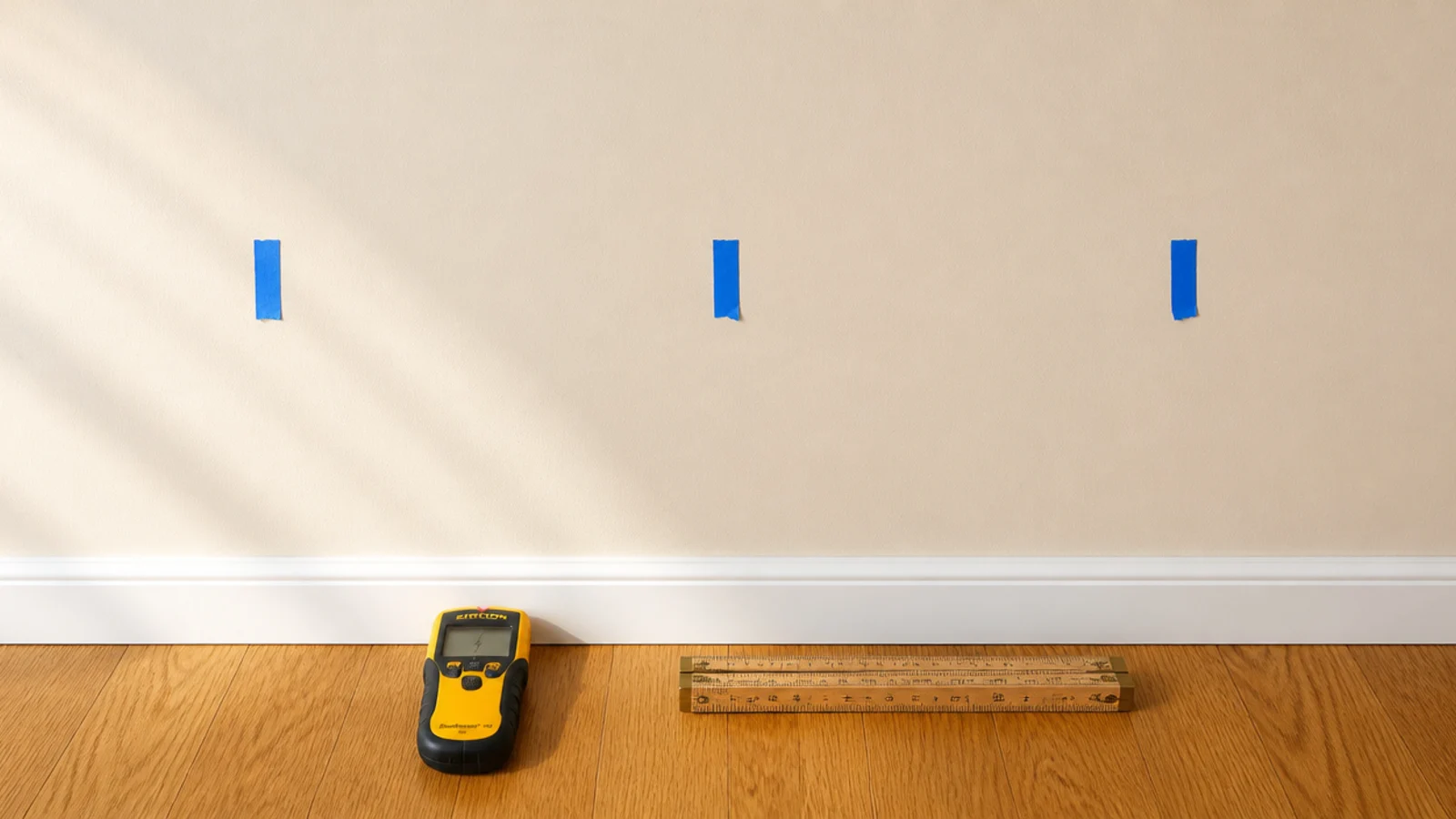
A straight wall is far kinder than a corner, because framing is predictable. Studs sit 16 inches on center in most US homes, so if you set a shelf out from one marked stud you can land both ends on solid wood at 32 or 48 inches. That single decision doubles what the shelf will carry.
Depth is structural, not decorative. Leverage rises with depth, so a 12-inch floating shelf puts roughly twice the pull-out force on its fixings as a 6-inch one holding the same weight. Six inches where you walk past, eight where you do not.
Thickness sets your span. Three-quarter-inch stock crosses 24 inches without visible deflection; half-inch stock bows at about 18 and never recovers. Leave 13 inches of clear height between tiers and a standing hardback fits with room above it.
Then the fixing, which is the whole ballgame. A concealed rod bracket into a stud carries 30 to 40 pounds on a 24-inch shelf. Toggle bolts in half-inch drywall carry 25 to 35 pounds each. The plastic plugs in the kit carry about 10 pounds and cause almost every sagging shelf you have ever seen.
Budget-wise, a plain board on painted-out L brackets runs $18 to $30 ($), a concealed rod set runs $60 to $120 ($$), and a built-up box run across a whole wall starts around $250 in materials ($$$).
1. One long shelf above the sofa
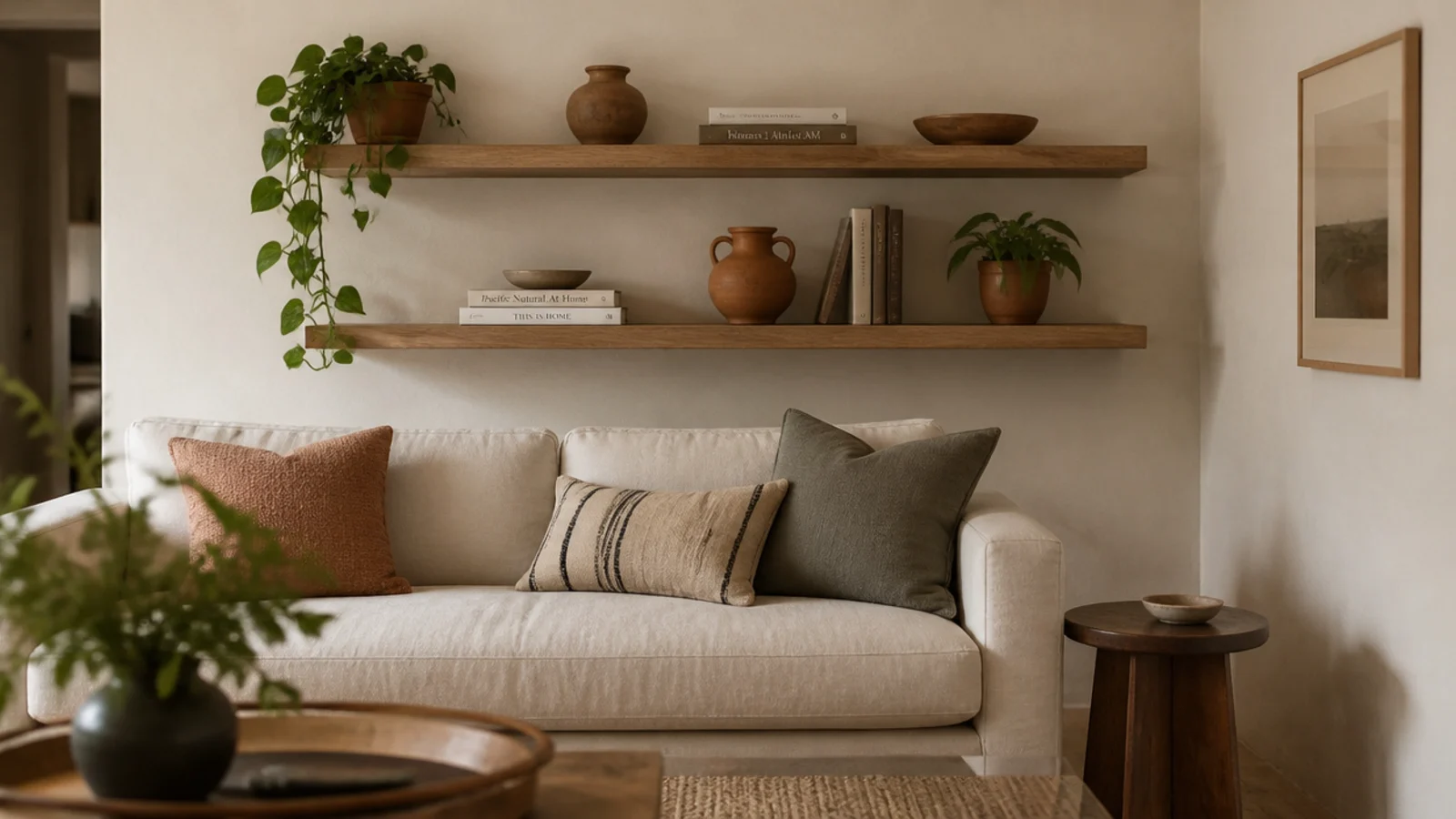
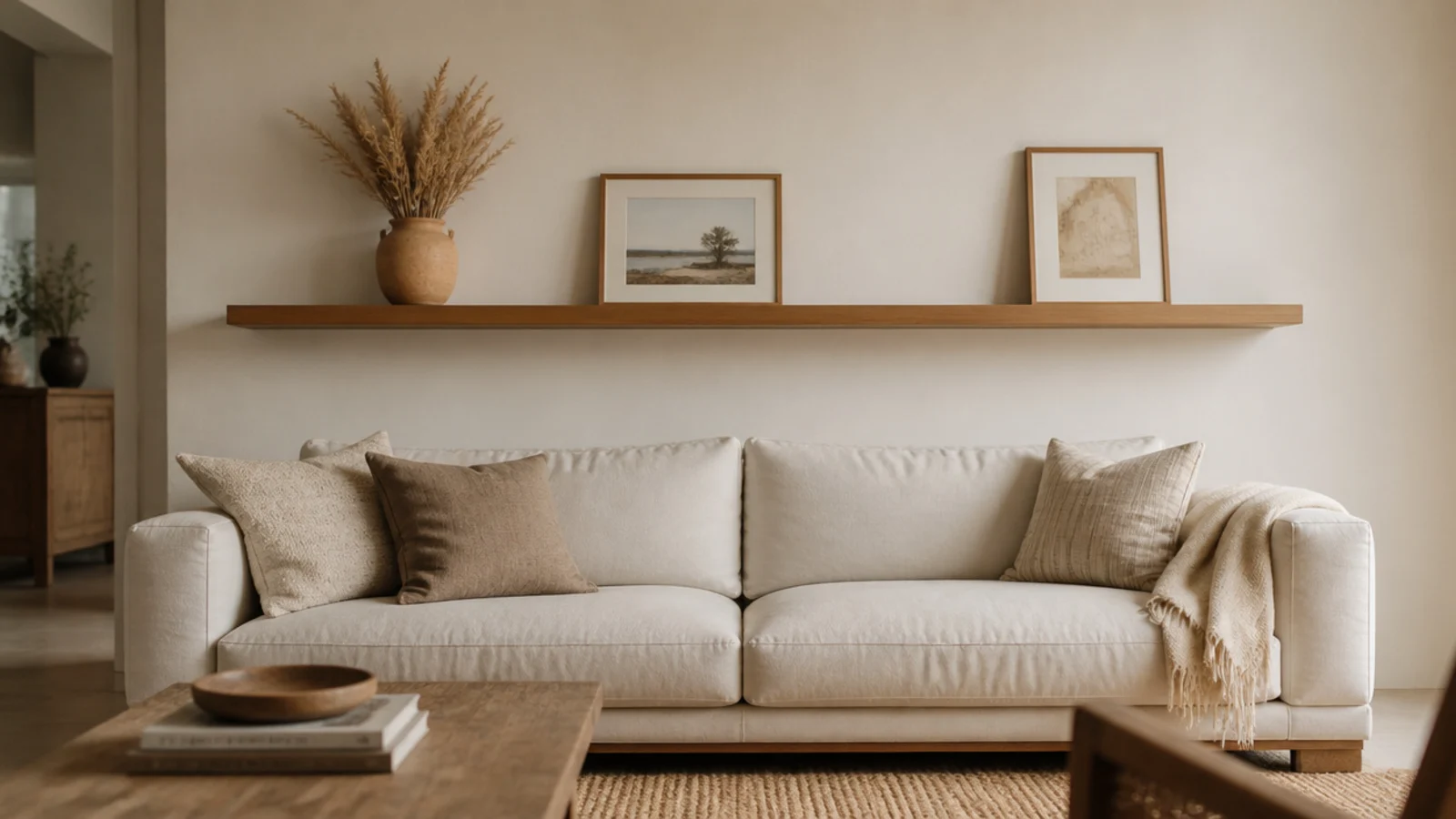
The wall above a sofa wants one confident line, not a cluster. Size the shelf to roughly two thirds of the sofa width — 48 inches above a 72-inch sofa — and mount it 10 to 12 inches above the back cushions.
Eight inches deep is plenty, and at 48 inches you can catch three studs, which takes the whole thing well past 40 pounds. Style it with three objects spaced widely apart rather than six crowded together. This shelf is seen from a seated position all evening, so restraint reads as expensive.
2. A matched pair flanking the window
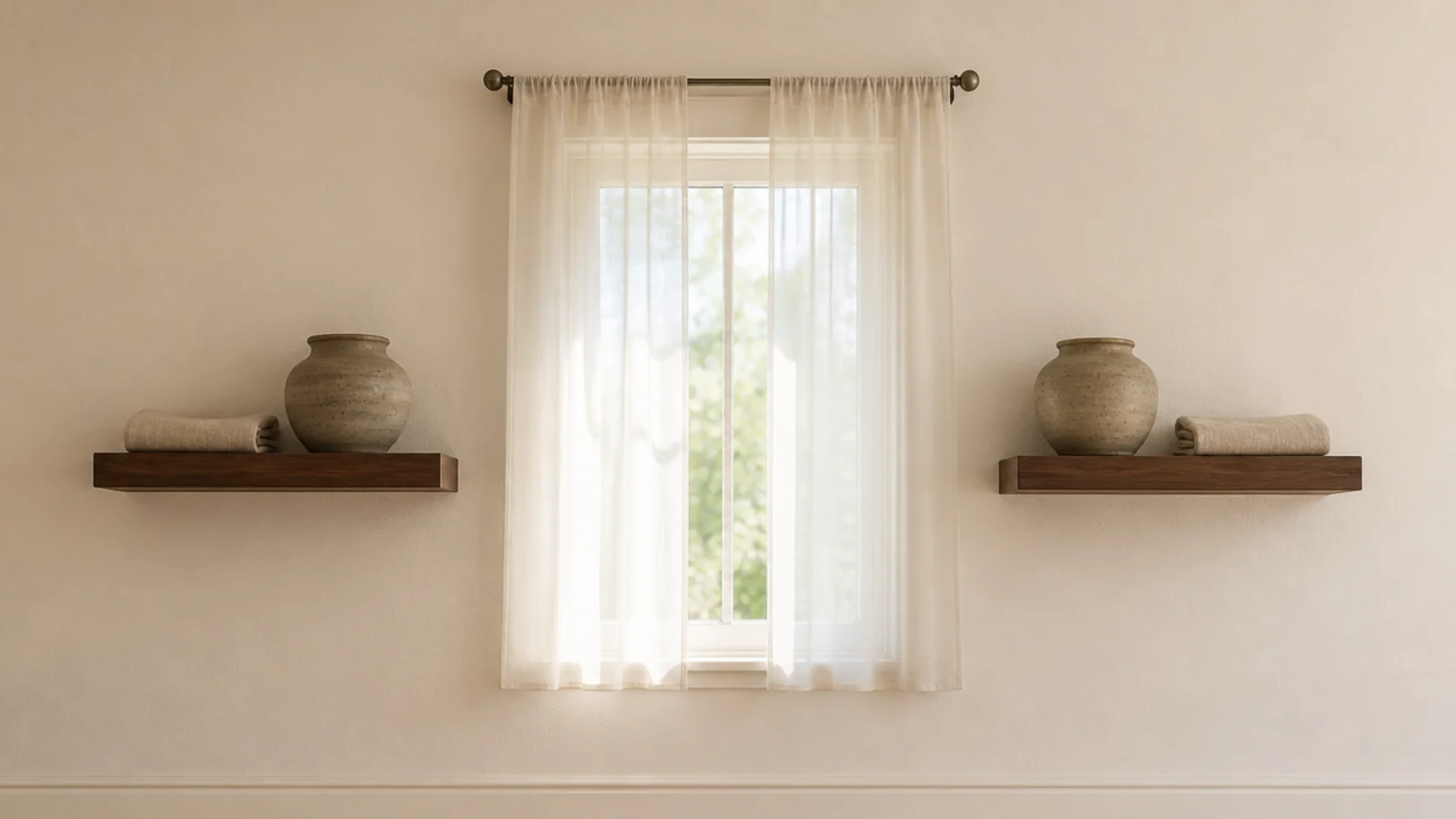
Two short shelves, one on each side of a window, at exactly the same height, turn an awkward wall into a symmetrical one. Keep them modest — 18 to 24 inches long, six deep — so they do not crowd the curtain stack.
Align the shelf line with something already in the room: the top of the window casing, or a picture rail. Matching an existing line is the difference between a wall that looks planned and one that looks decorated in stages.
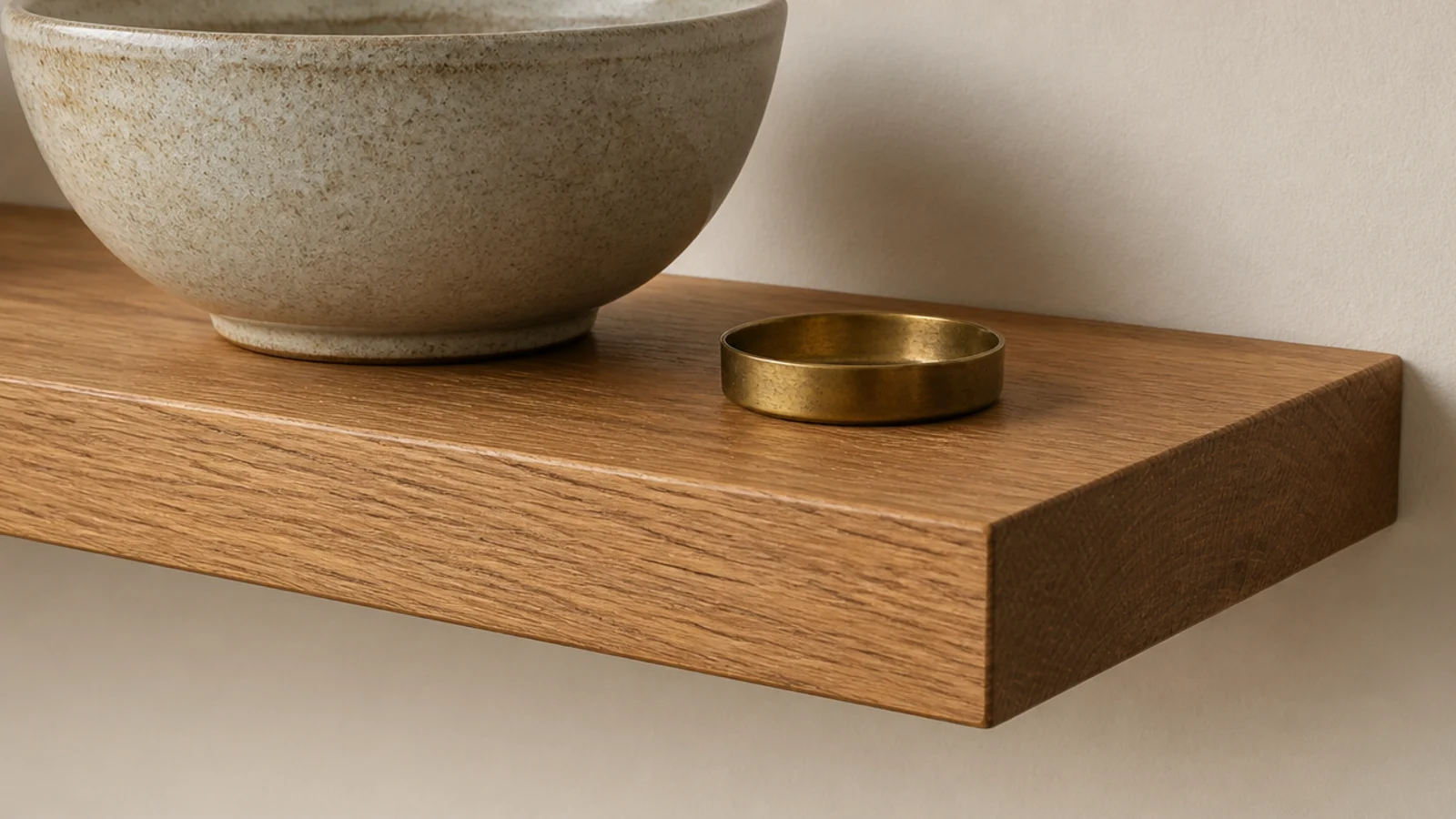
3. A chunky built-up box shelf
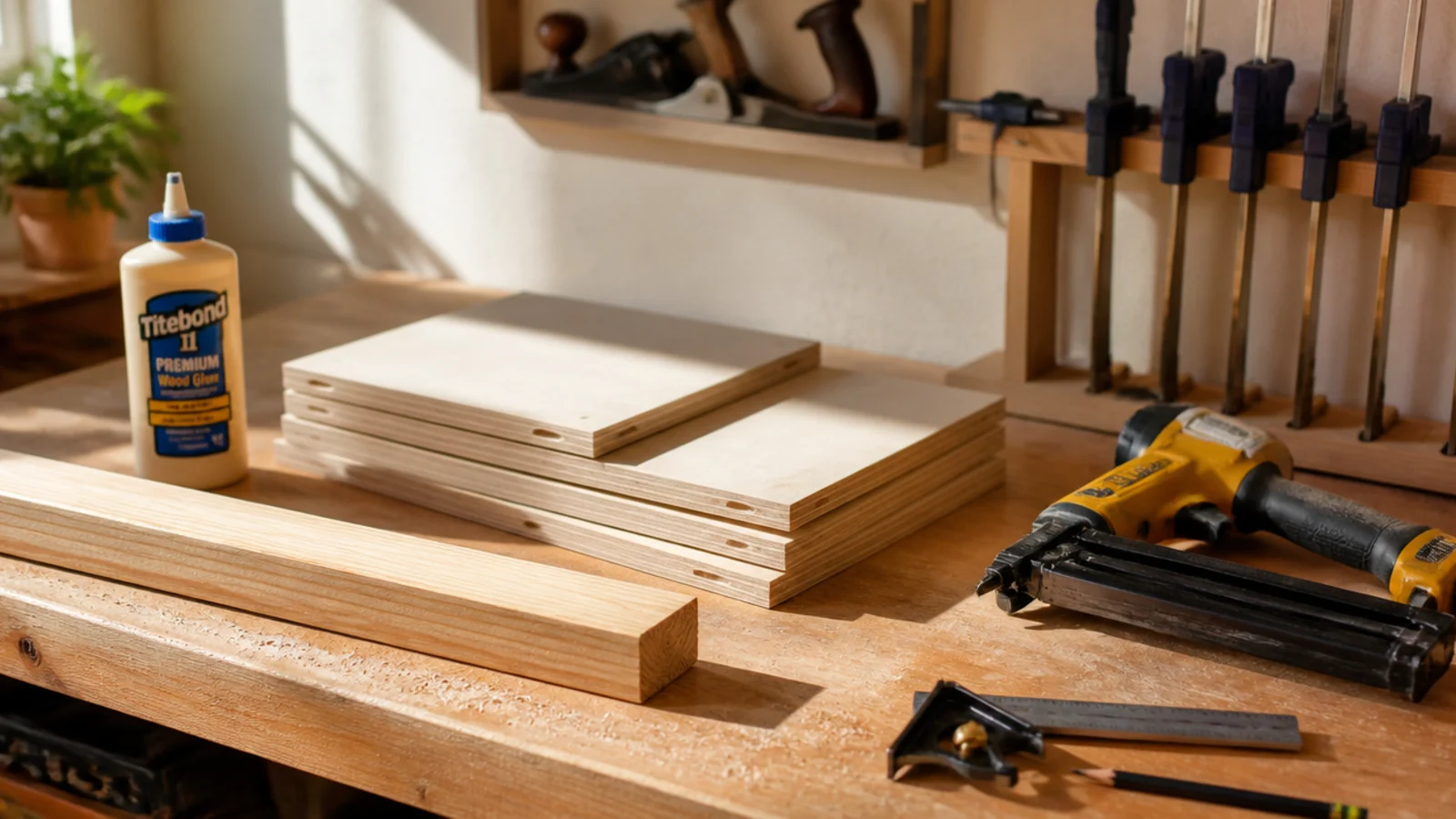
The thick slab look costs a fortune in solid timber and weighs enough to work against you. Build a hollow box instead: a plywood frame screwed to the wall, wrapped in quarter-inch skins with a solid front edge.
A built-up box gives you a 1.5 to 2-inch front edge at half the weight and half the cost of solid stock, and the internal frame is what carries the load rather than the skin. It is the single best-value upgrade in this list, and the full method is in the floating shelf build.
4. A three-inch picture ledge down the hallway
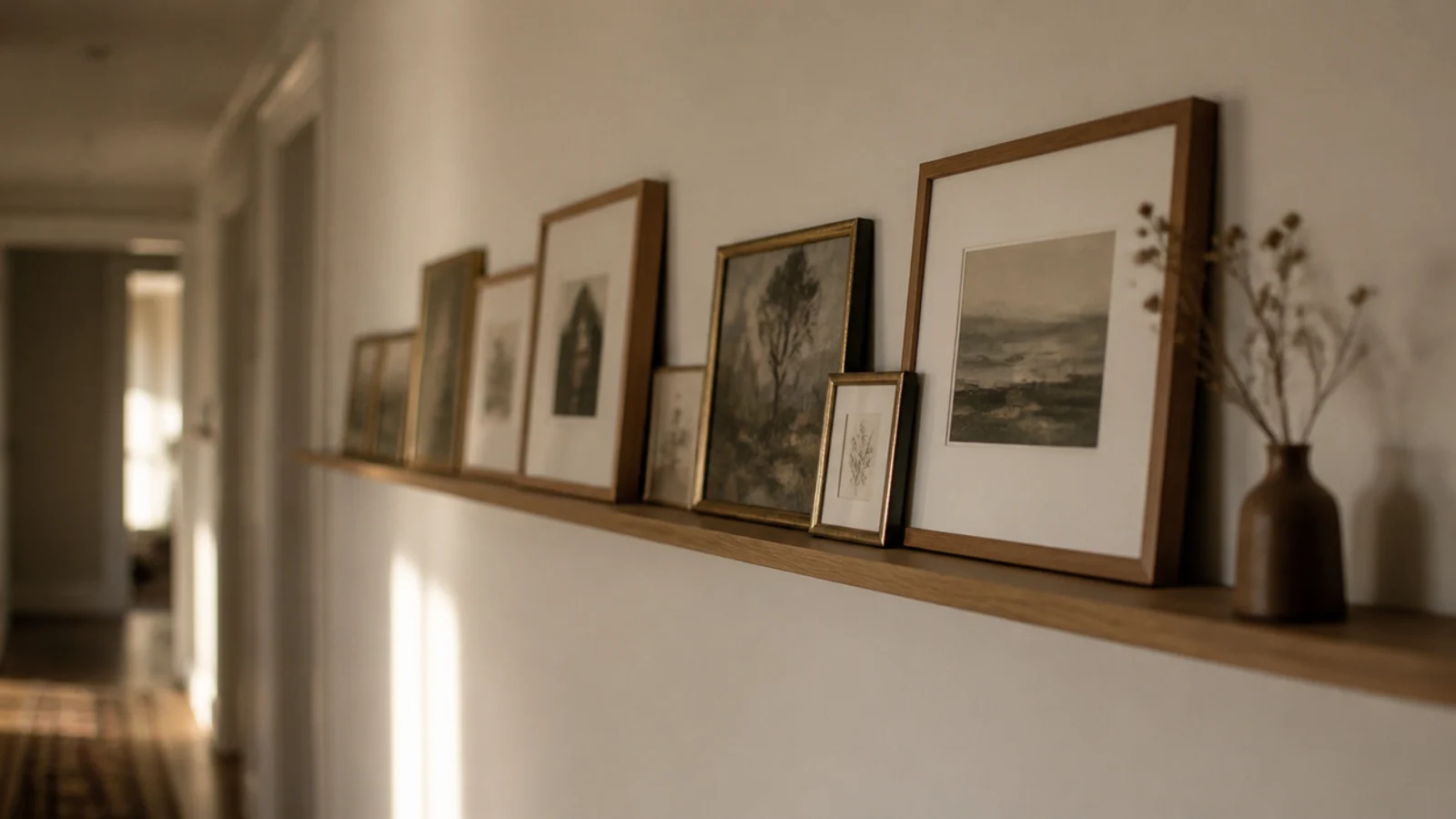
Hallways are the most underused walls in any house, and they are too narrow for anything deep. Three inches with a half-inch lip is the answer: enough for frames up to 11x14 leaning back, shallow enough that nobody catches a shoulder.
Run it at 58 inches to the top surface so the art sits at standing eye level. Overlap the frames slightly and keep to two frame finishes. You can restyle the whole hallway in five minutes without patching a hole.
5. A floating mantel above the fireplace
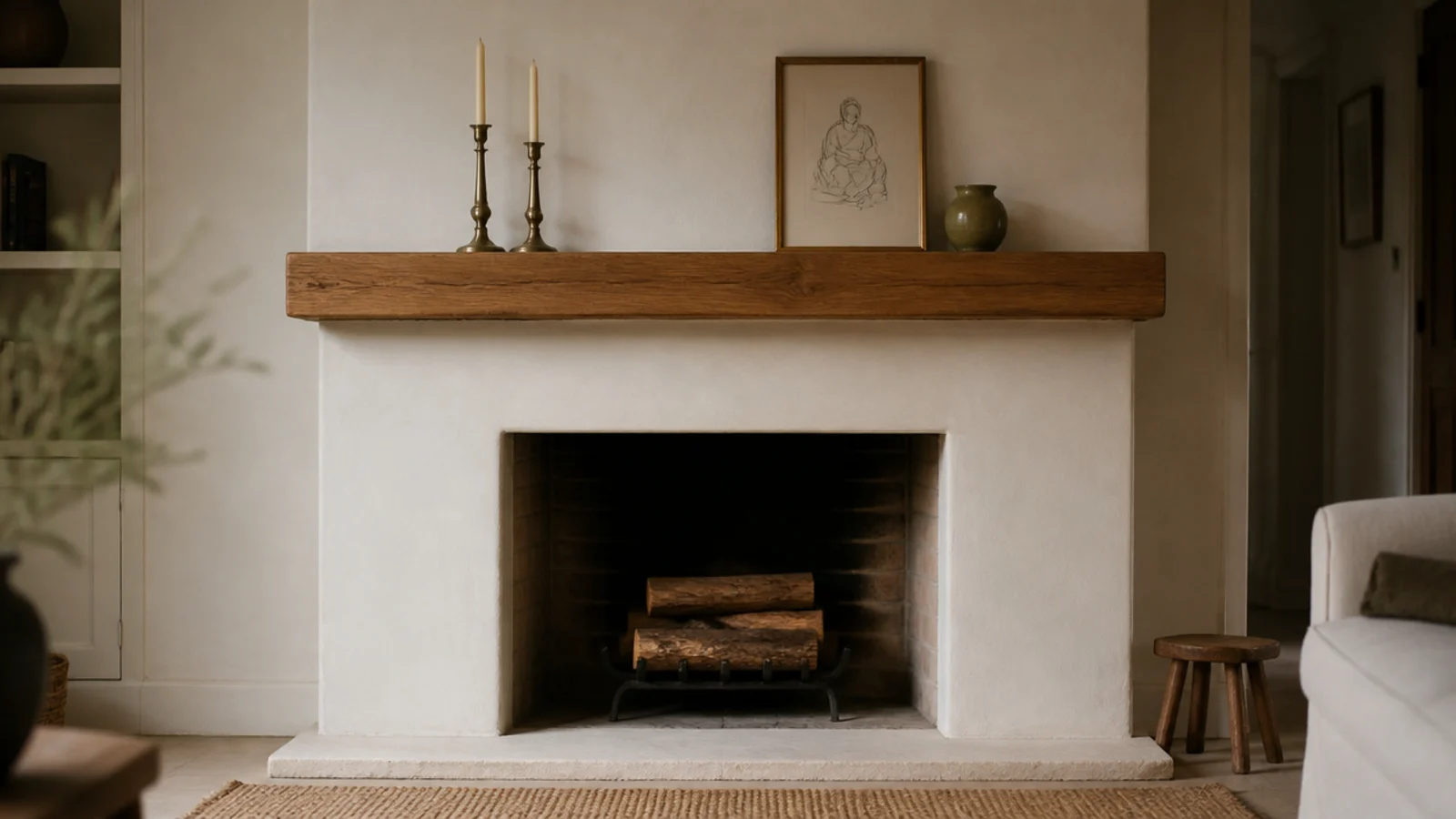
A plain fireplace with no mantel looks unfinished, and a chunky floating shelf fixes it for around $60. Use solid wood 1.5 inches thick or a built-up box, and run it two to four inches wider than the firebox opening on each side.
Keep 12 inches of clearance above a working firebox and check your local code before you commit. Fix into masonry with sleeve anchors, not drywall plugs — brick carries more than any shelf will ever ask of it.
6. Two shelves above the kitchen counter
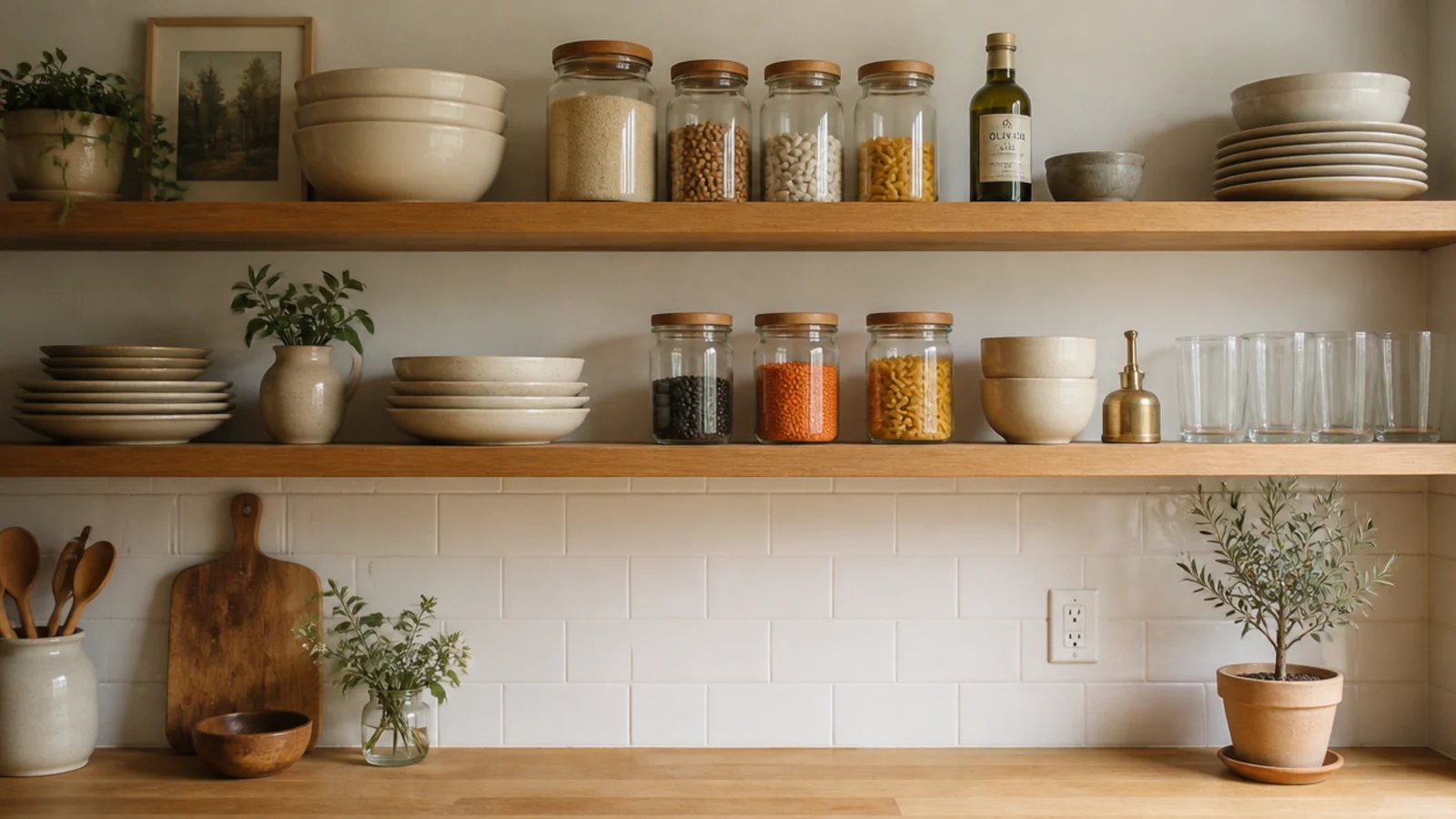
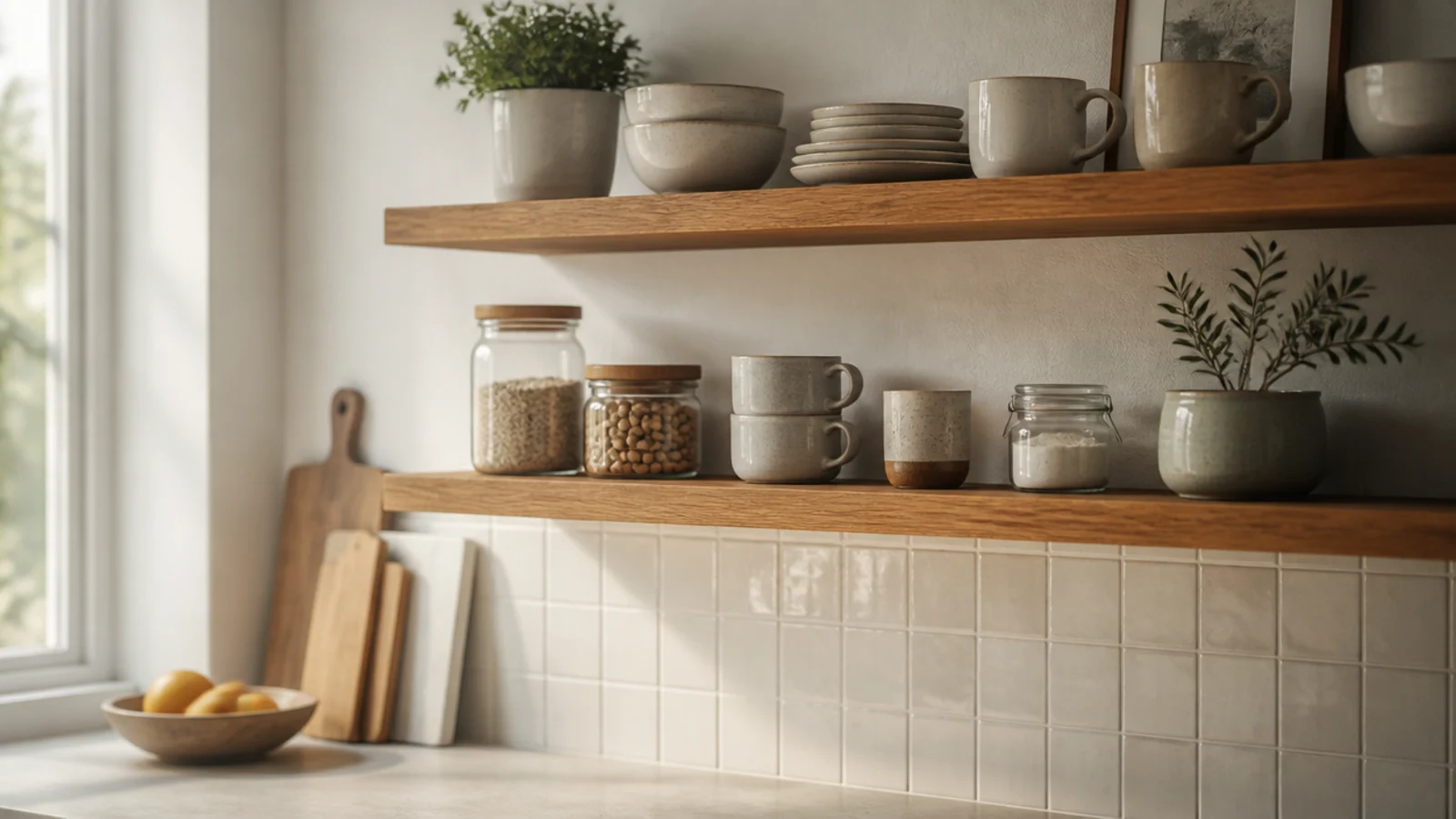
Replacing one wall cabinet with two open shelves makes a small kitchen breathe. Mount the first 20 inches above the counter so a kettle and a stand mixer still fit under it, and the second 13 inches above that.
Ten dinner plates weigh about 12 pounds, so a plate shelf has to reach framing. Keep the top shelf for things you use weekly and the lower for daily mugs. There is a room-specific guide to floating shelves in the kitchen with twenty more of these.
7. A bedside shelf instead of a nightstand
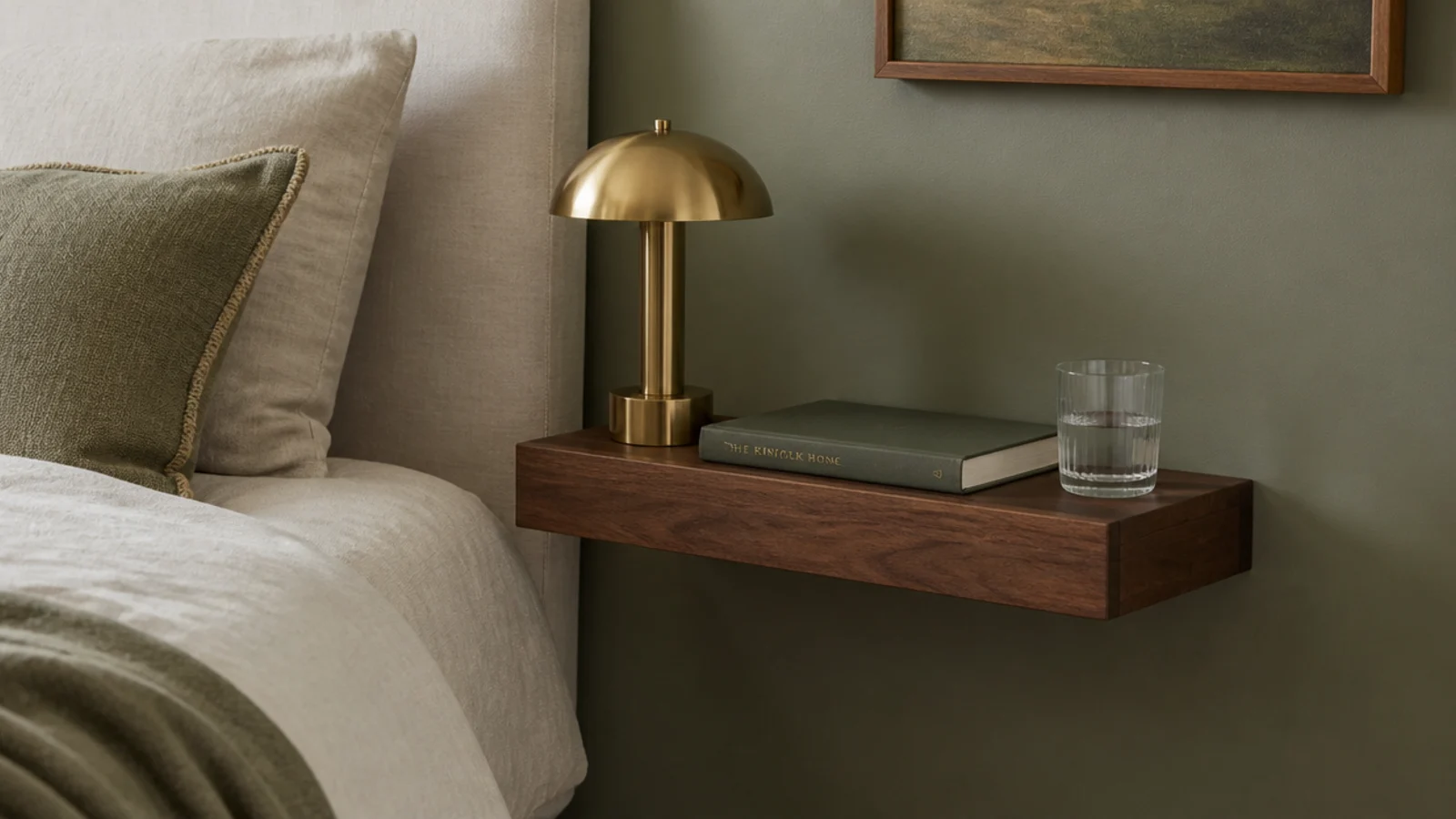
In a small bedroom, a shelf beats a nightstand you cannot walk around. Mount it level with the top of the mattress rather than the headboard — that is where your hand actually lands in the dark.
Twelve inches long and seven deep holds a lamp, a book, a glass and a small dish. Add a 1-inch cable pass-through near the back edge and the charger cable disappears behind the bed instead of looping over the front.
8. A drop shelf by the front door
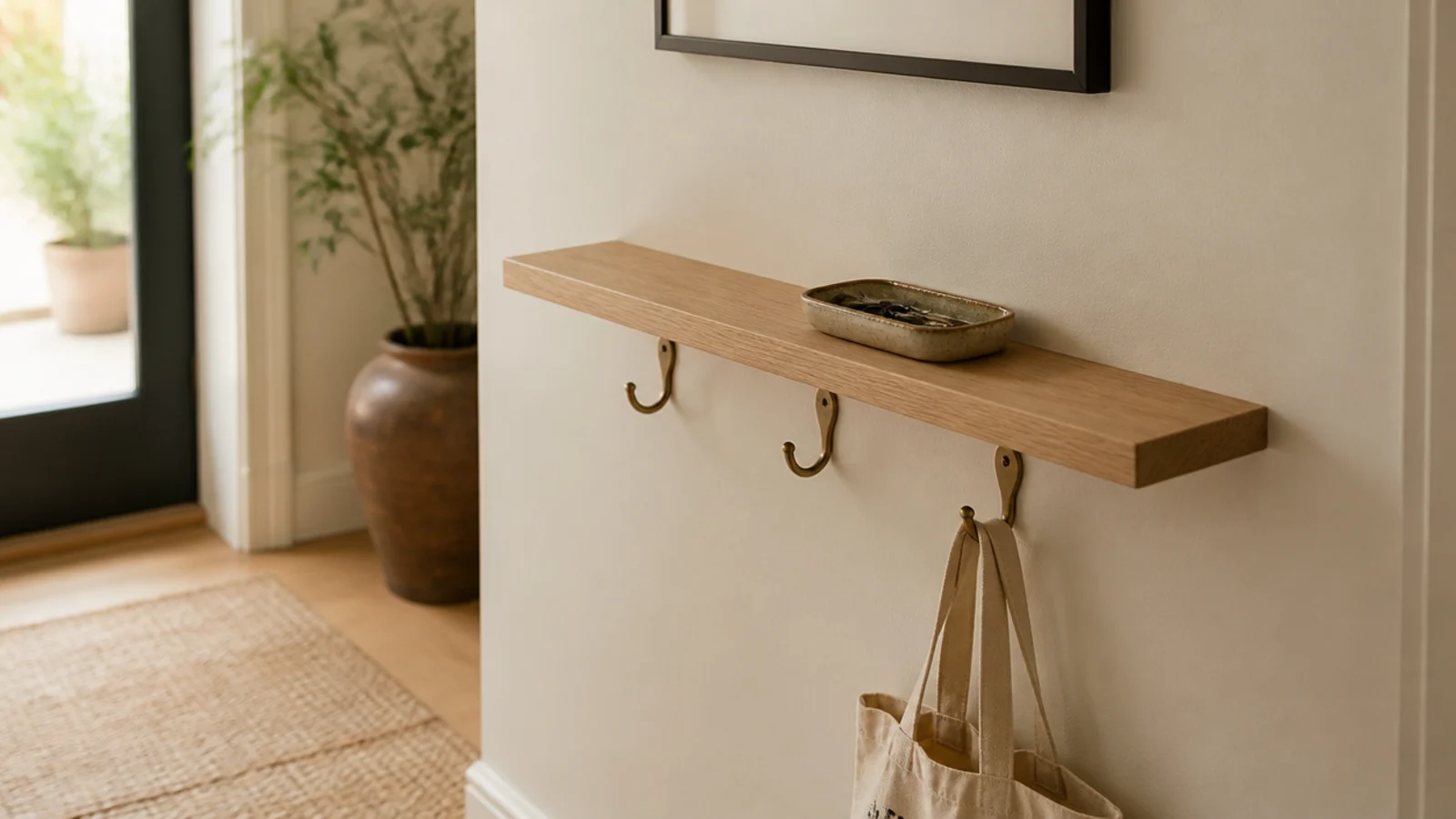
Keys, mail and sunglasses land inside the door whether you plan for it or not. A shelf at 52 inches with a row of hooks 14 inches below it gives all of that a home in six inches of depth.
Put one shallow tray on the shelf. Without it, small things slide to the edge and off. Six inches of depth is plenty and keeps the shelf clear of the door swing, which matters more in a narrow hall than any amount of styling.
9. A shelf above the desk
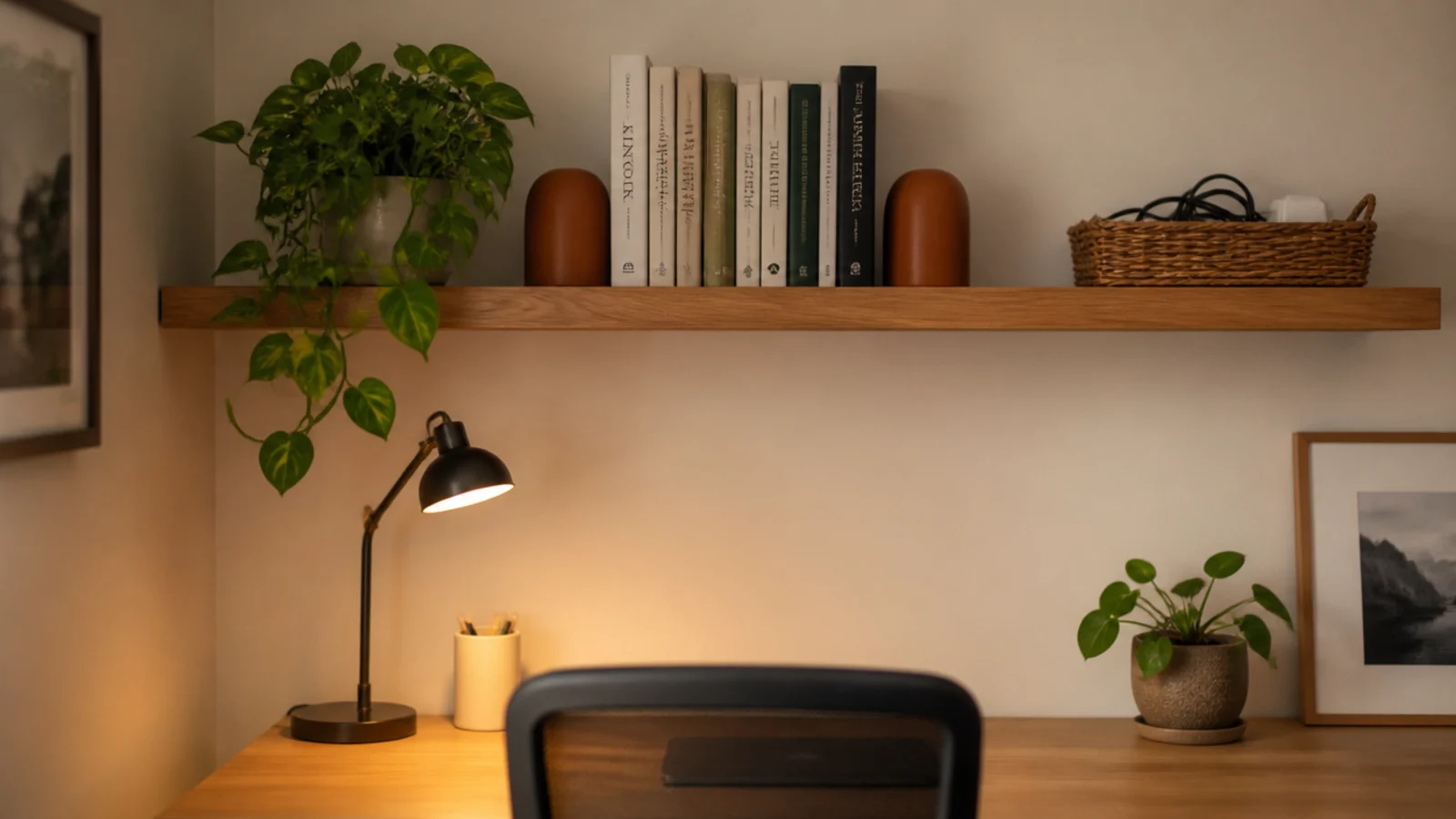
Twenty inches above the desktop clears a monitor and still leaves the shelf inside easy reach. Ten inches deep takes upright books, a printer paper box or a small basket of cables.
Get both fixings into studs here. Desk shelves collect the heaviest things in the house — reference books, hard drives, a stack of files — and they are also the shelf you lean on when you stand up. If it wobbles at all, add a third fixing before you load it.
10. A sealed shelf over the toilet tank
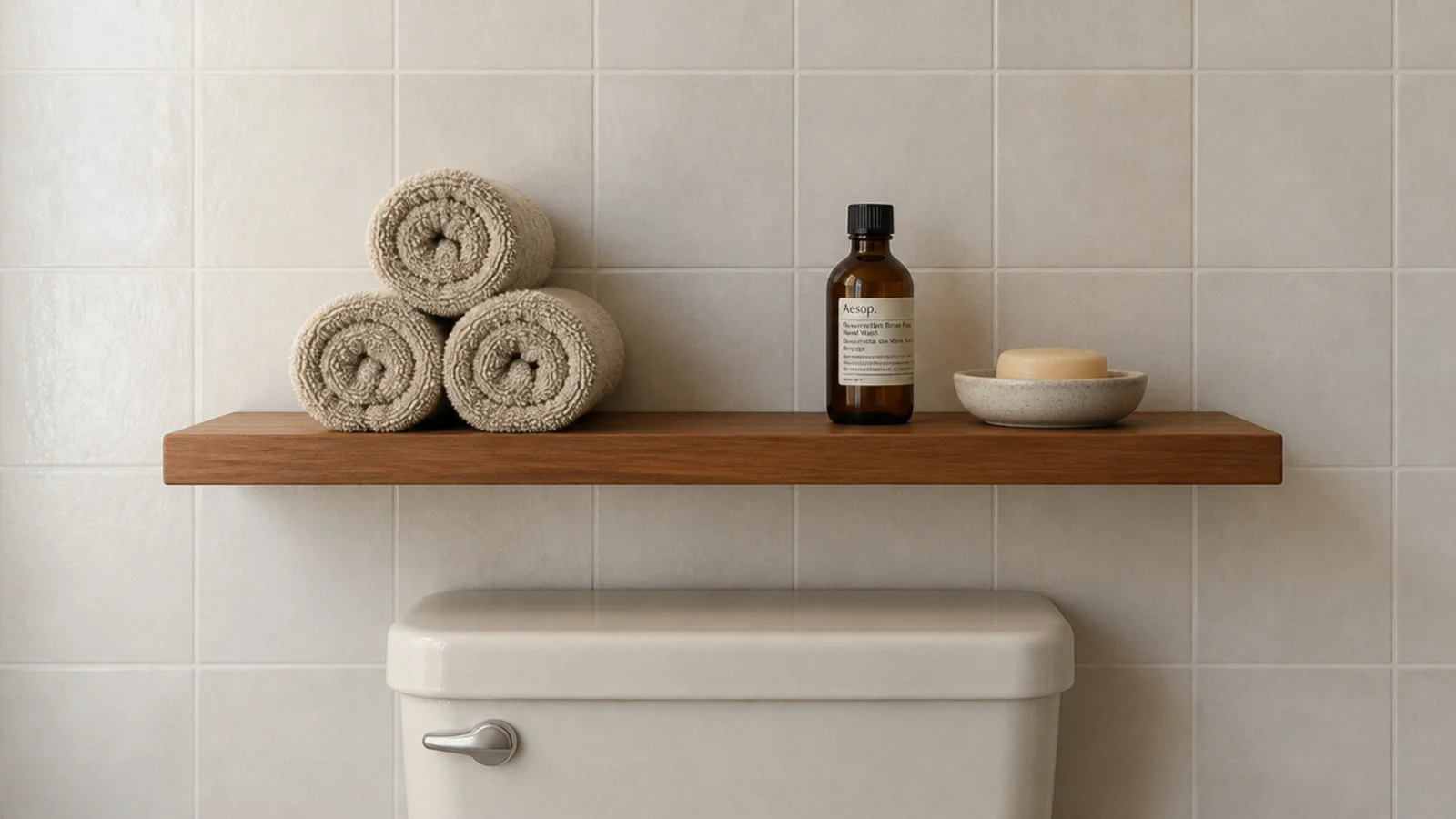
The wall above a tank is dead space in every bathroom. A slim shelf 10 to 12 inches above the lid holds rolled towels and the bottles that otherwise clutter the vanity.
Material is the whole decision. Sealed teak, bamboo, solid surface or powder-coated steel survive a room with no window. Raw pine and MDF do not: MDF swells at the edges within a season and never goes back. Five inches deep clears your shoulder when you stand up.
11. A stair-step run up the stairwell wall
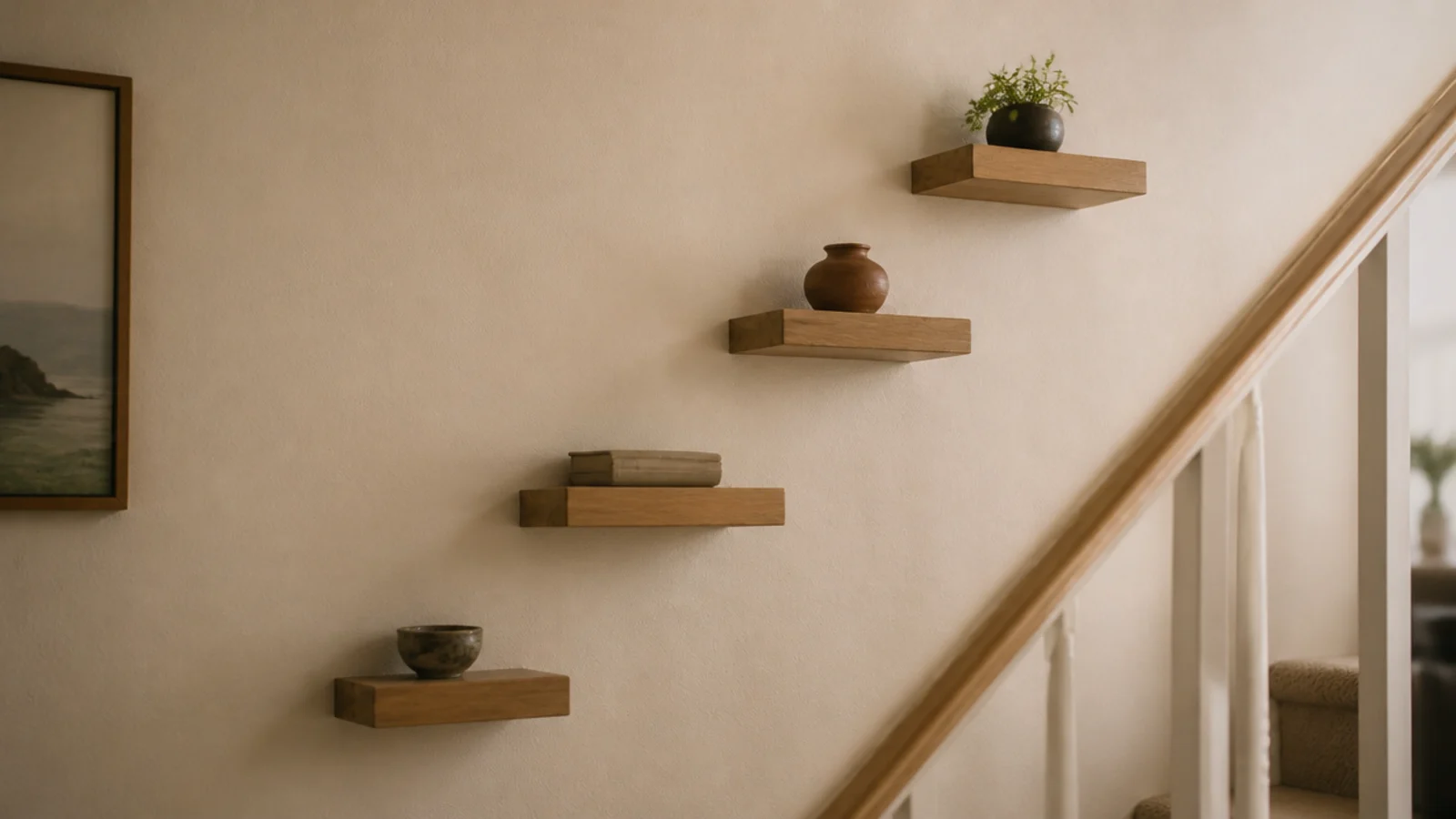
Stairwell walls are tall, blank and impossible to hang art on convincingly. Four short shelves climbing at the pitch of the stairs solve it, each 12 to 16 inches long, spaced to follow the treads.
One object per shelf. The rhythm is the whole effect and loading them destroys it. Fix into studs where you can, because this is a wall people brush past with laundry baskets and suitcases.
12. A shelf above the doorway
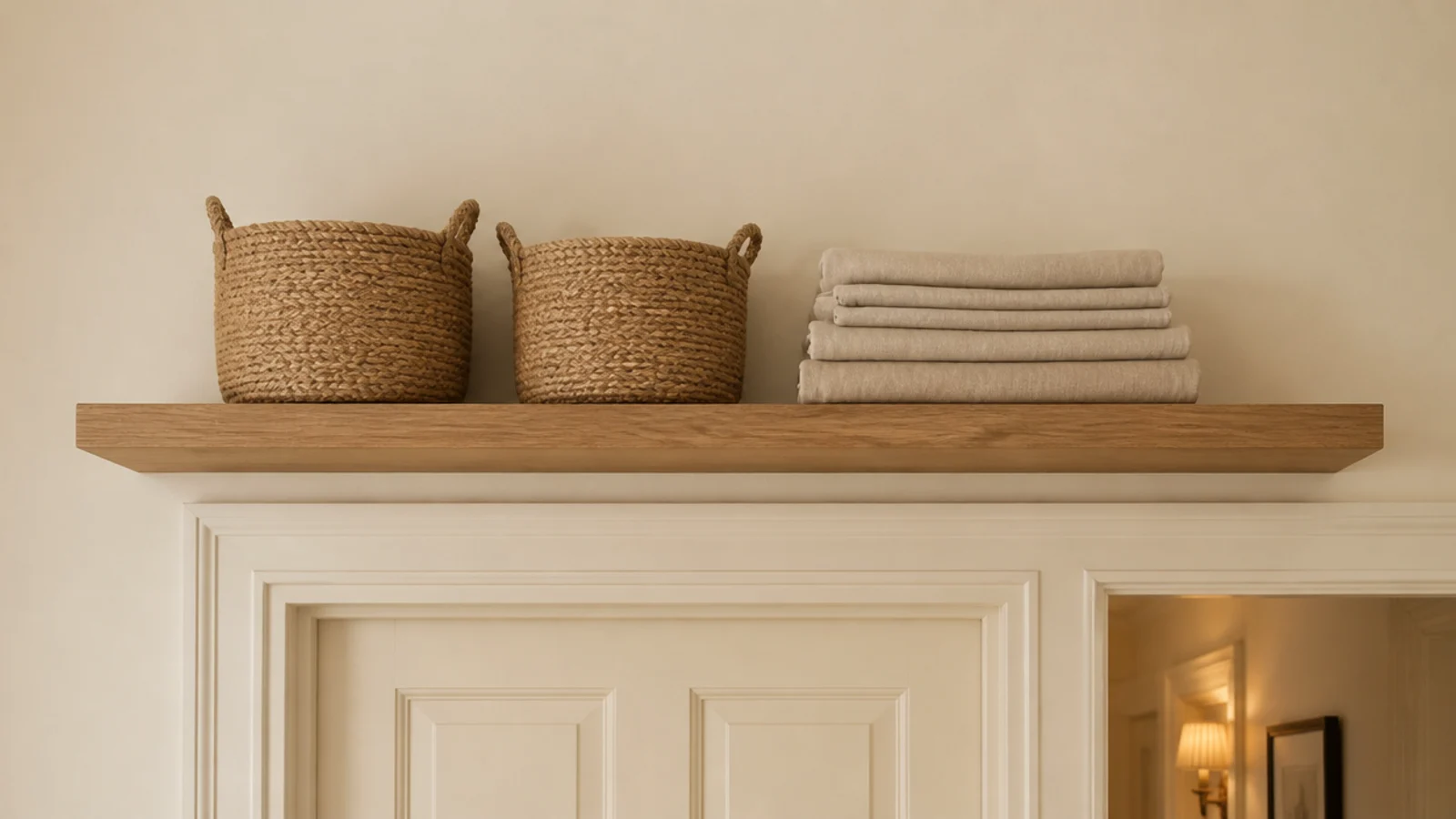
The band of wall above a door is between six and eighteen inches of free storage in almost every room. Use it for the things you need twice a year: spare bedding, seasonal decor, board games.
Keep it to the width of the doorframe so it reads as part of the joinery. Baskets rather than loose items, because you will be looking up at the underside of everything. Nothing heavy — this is a shelf you cannot see, and forgetting what is on it is the point.
13. A shelf that spans an alcove wall to wall
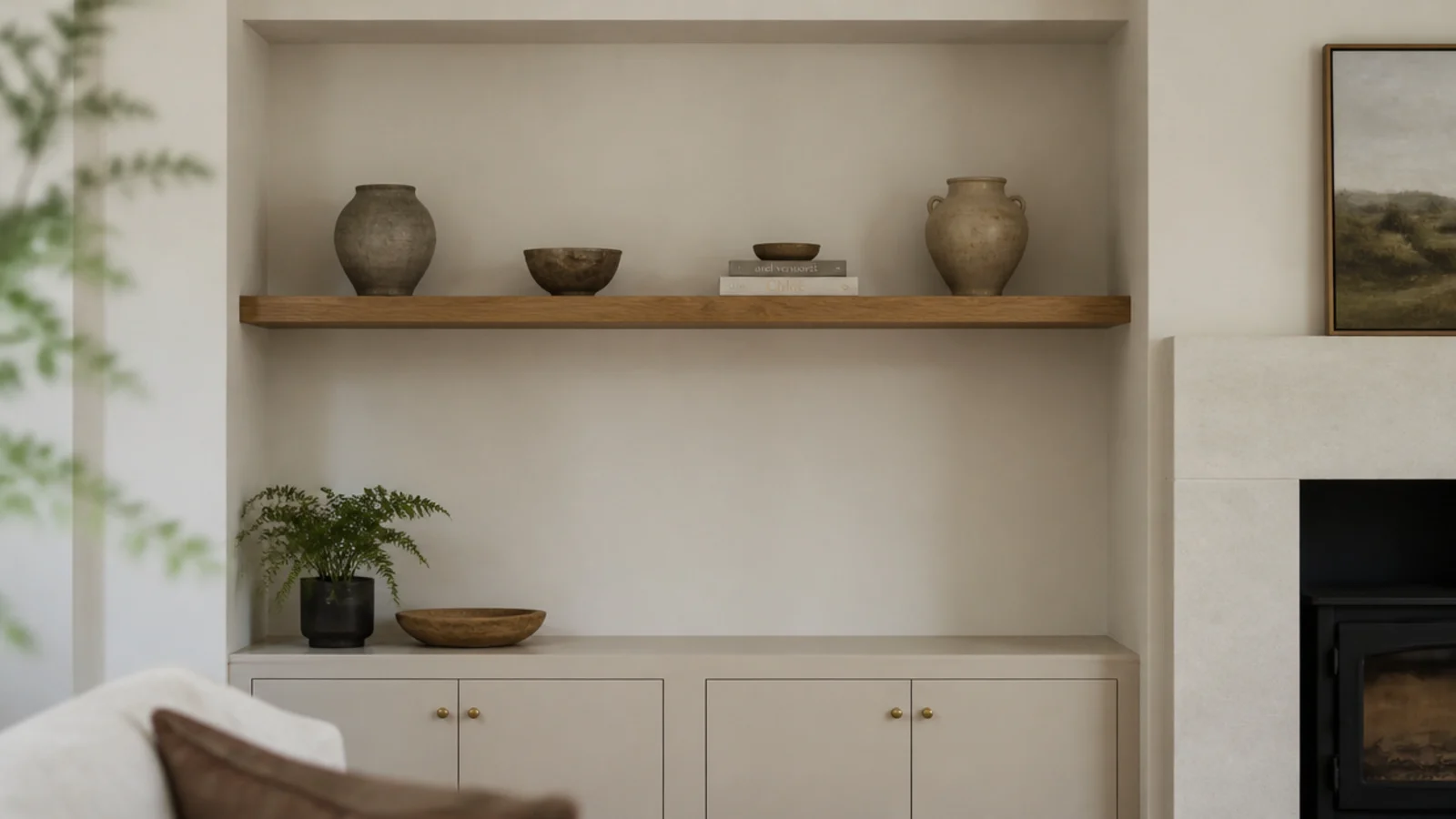
The recess beside a chimney breast is the one place a floating shelf can look genuinely built in, because both ends land on solid returns and the shelf reads as architecture.
Measure both walls separately at the front and the back of the alcove; they are rarely parallel. Cut a quarter inch shy, then caulk the gap once it is level. Paint it the wall color and nobody will believe it was not always there.
14. A lipped laundry shelf above the machines
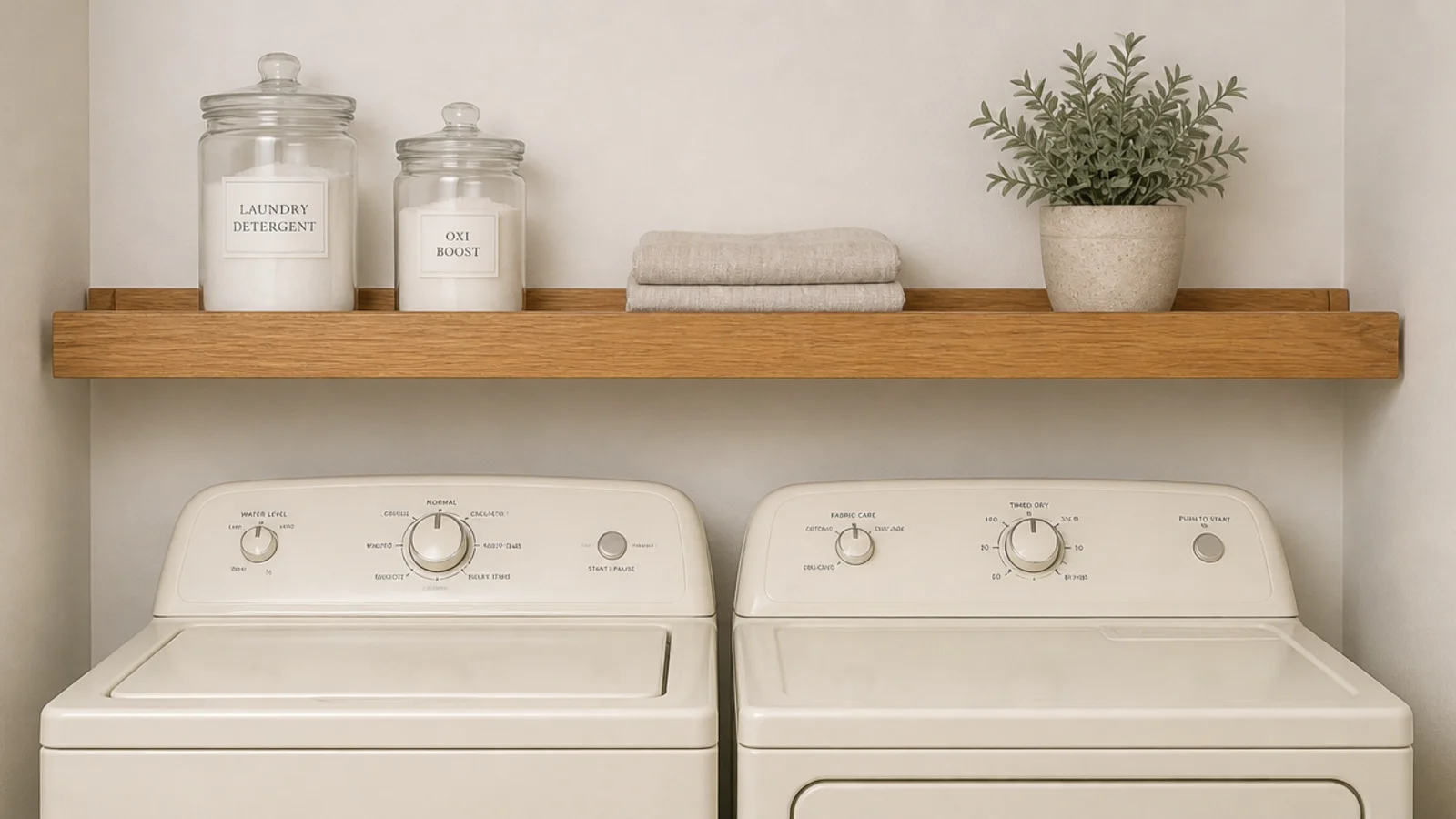
Machines vibrate, and a flat shelf above them slowly walks its contents to the edge. A half-inch lip along the front is a two-dollar fix that saves a bottle of detergent.
Mount 16 inches above the machine tops so you can still open a top-loading lid, and keep it 10 inches deep for jars and folded linens. Solid wood or coated steel, since laundry rooms get steamy and particle board is done for.
15. A no-drill shelf for renters
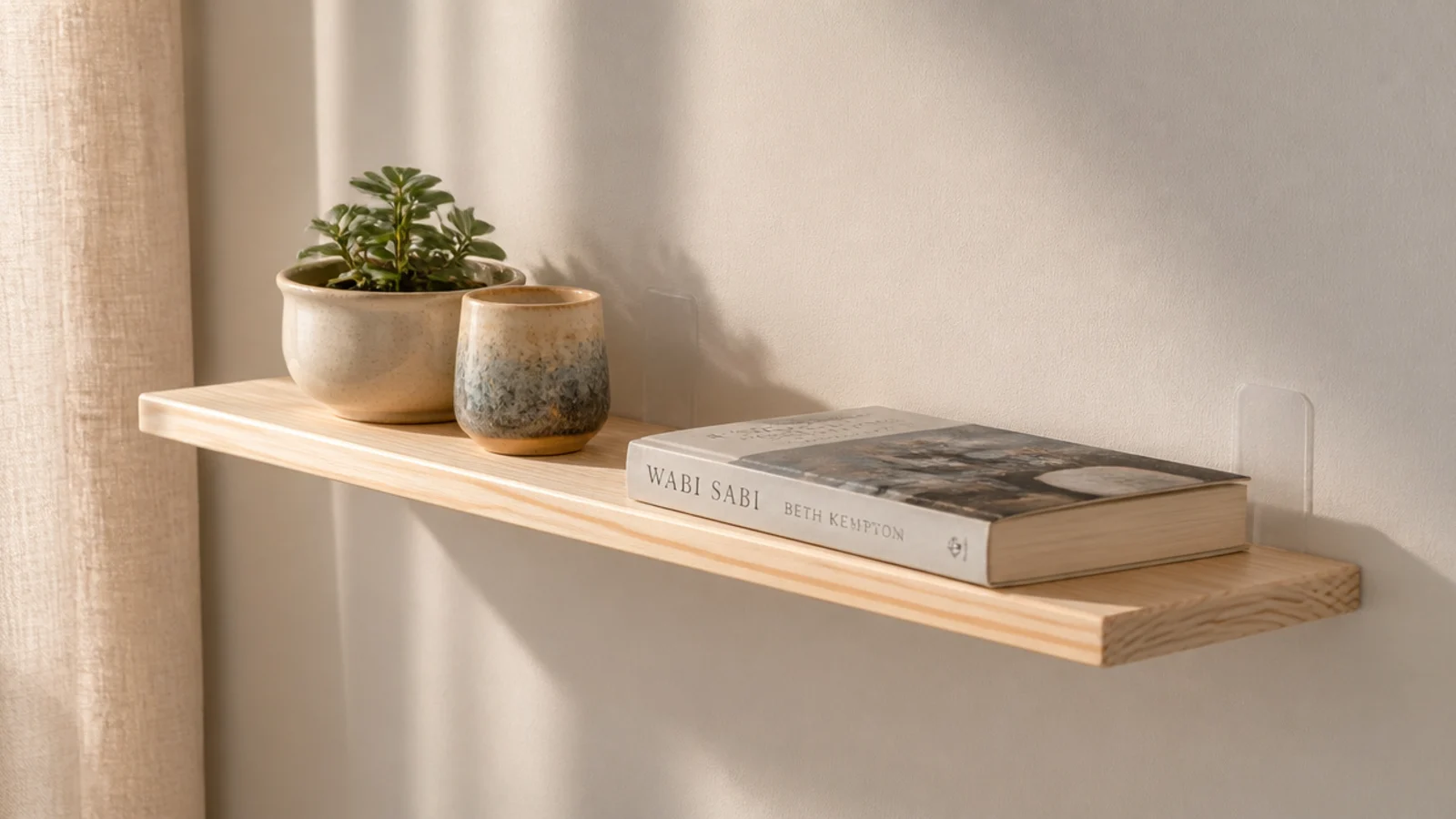
If drilling is genuinely off the table, be honest about the ceiling on what adhesive can do: about 15 pounds per pair of heavy-duty strips. That is a light six-inch shelf holding two ceramics, not books.
Clean the wall with alcohol first, press for 30 seconds, and wait an hour before loading. Test the paint in a hidden spot — flat builder-grade paint peels off the drywall paper and takes the shelf with it. Compare that against four filled pinholes and drilling usually wins.
Mistakes to Skip
- Using the plastic plugs from the kit. Rated at about 10 pounds, and the reason most floating shelves tip forward within a year.
- Choosing 12 inches of depth because the board came that wide. Every extra inch multiplies the pull-out force on the fixings, and nobody notices the missing two inches.
- Spanning 36 inches with a half-inch board. It will bow within a month under anything real, and a sagging shelf cannot be un-sagged.
Frequently asked questions
How much weight can a floating shelf hold?
It depends entirely on the fixing. A concealed rod bracket landing in a stud carries 30 to 40 pounds on a 24-inch shelf. Toggle bolts in half-inch drywall carry 25 to 35 pounds each. The plastic plugs supplied in most kits carry about 10 pounds and are the usual reason a shelf slowly tips forward.
How deep should a floating shelf be?
Six inches anywhere you walk past, eight inches where you do not. Depth matters more than people expect because leverage rises with it — a 12-inch floating shelf puts roughly twice the pull-out force on its fixings as a 6-inch one holding the same weight. Save 12 inches for shelves that reach real framing.
Do floating shelves need to hit a stud?
For anything above about 20 pounds, yes. Studs sit 16 inches on center in most US framing, so a 32 or 48-inch shelf can land both ends on solid wood if you set it out from a marked stud. Where framing genuinely will not cooperate, toggle bolts carry 25 to 35 pounds each and cost about a dollar.
Why do floating shelves sag in the middle?
The board is too thin for the span. Three-quarter-inch stock crosses 24 inches without visible deflection, while half-inch stock starts to bow at about 18. Adding a middle bracket helps a little, but the real fix is thicker stock or a built-up hollow box, which stiffens the whole span from the front edge.
Can renters put up floating shelves?
Yes. Two small holes per bracket fill in seconds with lightweight spackle, and most leases care far more about big anchors than about pinholes. If you cannot drill at all, heavy-duty adhesive strips rated to 15 pounds per pair hold a light 6-inch shelf with ceramics on it, but never books.
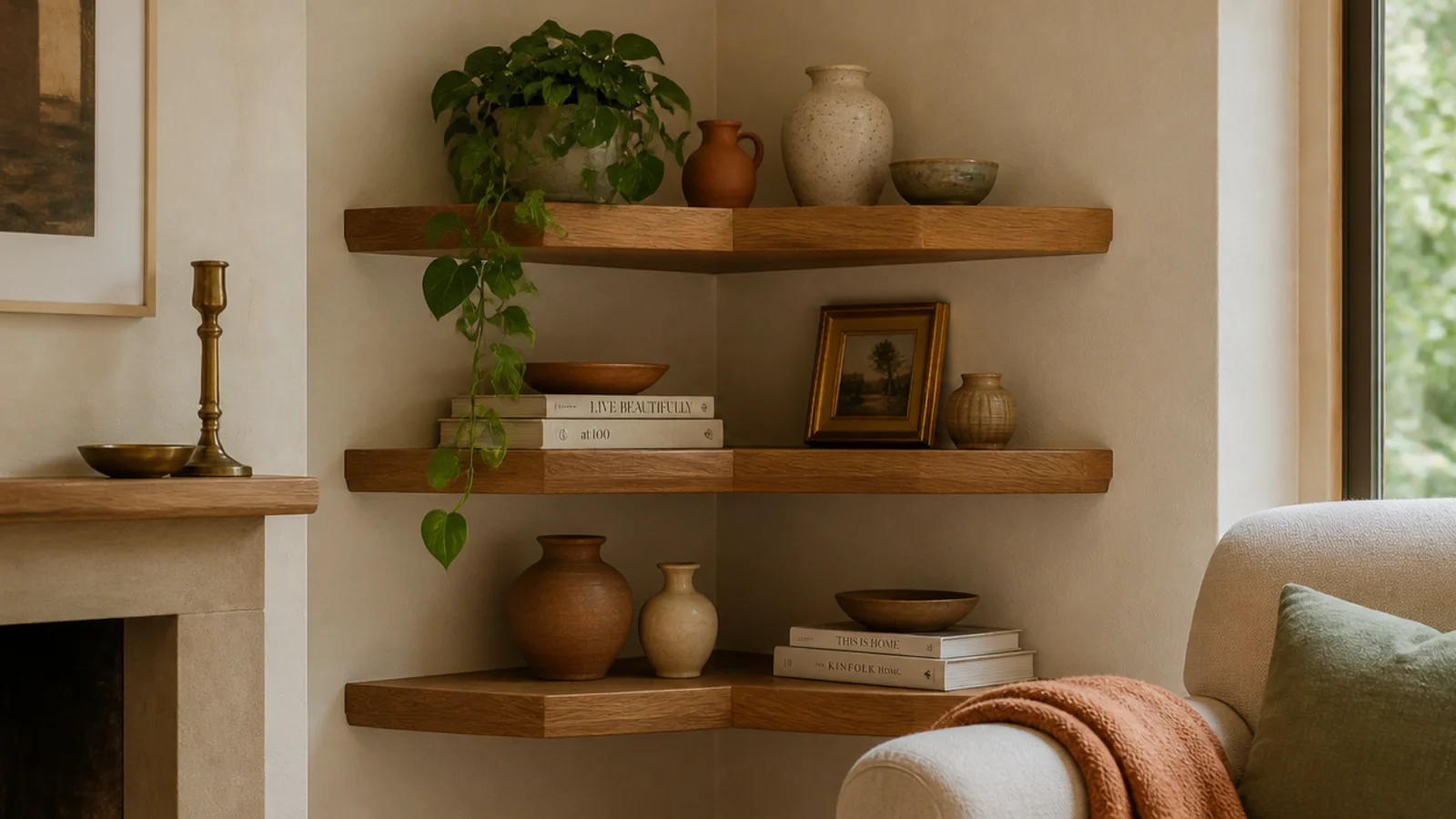
Start with the wall that annoys you most and put up one shelf properly rather than three in a hurry. If you want to build rather than buy, the twenty-step floating shelf build covers the cut list and the anchors, floating shelf styling covers what goes on top, and if your problem wall is actually a corner, floating corner shelves handles that geometry. Save the pin so the depths and weight ratings are with you in the aisle.
Want more like this? Browse all 15 floating shelves guides — they all use the same measurements and budget tiers.
Pin it for later
Save this to your Floating Shelves board
Pin it now so it is waiting for you when the tape measure comes out — and so the next person hunting for this idea can find it too.
Save this pinKeep going
More ideas worth saving while you have the tape measure out.