Floating Shelves · Listicle
20 Genius Floating Shelf Ideas for a Cozy Home

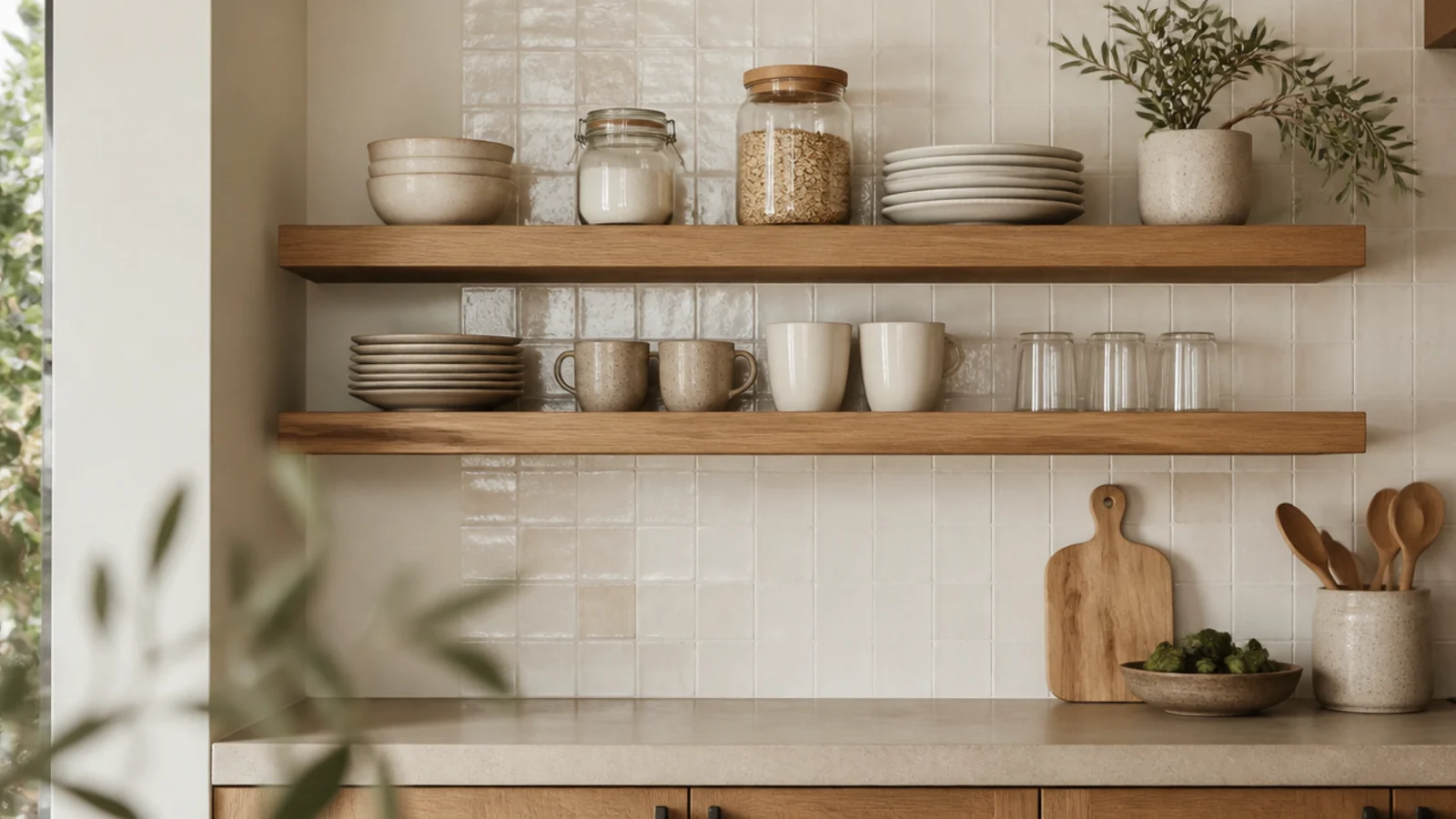
Floating shelves in a kitchen have to earn their wall twice: once as storage and once as something you look at every single day while you cook. I have lived with open shelves in three kitchens, including one directly beside a gas range, and the rules that came out of it are all about clearance, material and what you allow onto them. Twenty ideas, every one with numbers.
In this guide22 sections — tap to openHide
- 1.Where floating shelves in a kitchen actually pay off
- 2.One long run along the whole backsplash
- 3.Two shelves where one wall cabinet used to be
- 4.A plate shelf fixed straight into studs
- 5.A mug shelf beside the kettle
- 6.A shelf across the window above the sink
- 7.A four-inch spice run on the backsplash
- 8.A brass rail under the shelf for utensils
- 9.A shelf above the range with real clearance
- 10.A five-inch run for a galley kitchen
- 11.A coffee station on two shelves
- 12.A shelf cut from the same material as the counter
- 13.A shelf above the fridge
- 14.A cookbook ledge with a lip
- 15.A mini shelf under the wall cabinets
- 16.Powder-coated steel for a hardworking wall
- 17.Plug-in lighting under the lowest shelf
- 18.A shelf in the breakfast nook
- 19.A pantry wall of shallow jar shelves
- 20.A shelf for boards and linens on edge
- 21.A no-drill shelf for a rental kitchen
- 22.Mistakes to Skip
Where floating shelves in a kitchen actually pay off
Height first, because it is the mistake that cannot be undone once the tile is drilled. Leave 20 inches of clear space between the countertop and the first shelf so a kettle and a stand mixer still fit underneath. Space a second shelf 13 inches above the first and a standing cookbook fits with air to spare.
Depth next. Ten inches takes dinner plates, eight suits mugs and glasses, four or five is plenty for spices on the backsplash. Leverage rises with depth, so a 12-inch shelf puts roughly twice the pull-out force on its fixings as a 6-inch one holding the same weight.
Then weight, which people always underestimate here. A stack of ten dinner plates is about 12 pounds, and nobody stops at one stack. A concealed rod bracket into a stud carries 30 to 40 pounds on a 24-inch shelf, toggle bolts in half-inch drywall carry 25 to 35 pounds each, and the plastic plugs in the kit carry about 10 pounds and cause almost every sagging shelf.
Material decides how the shelf ages. Sealed hardwood, butcher block or powder-coated steel wipe clean; raw pine near a range stains within a season. Three-quarter-inch stock crosses 24 inches without visible deflection, and half-inch bows at about 18.
Budget: a pine board on painted-out L brackets runs $20 to $35 a shelf ($), oak or butcher block on concealed rods runs $70 to $140 ($$), and a full run in solid wood or steel starts around $300 ($$$).
1. One long run along the whole backsplash
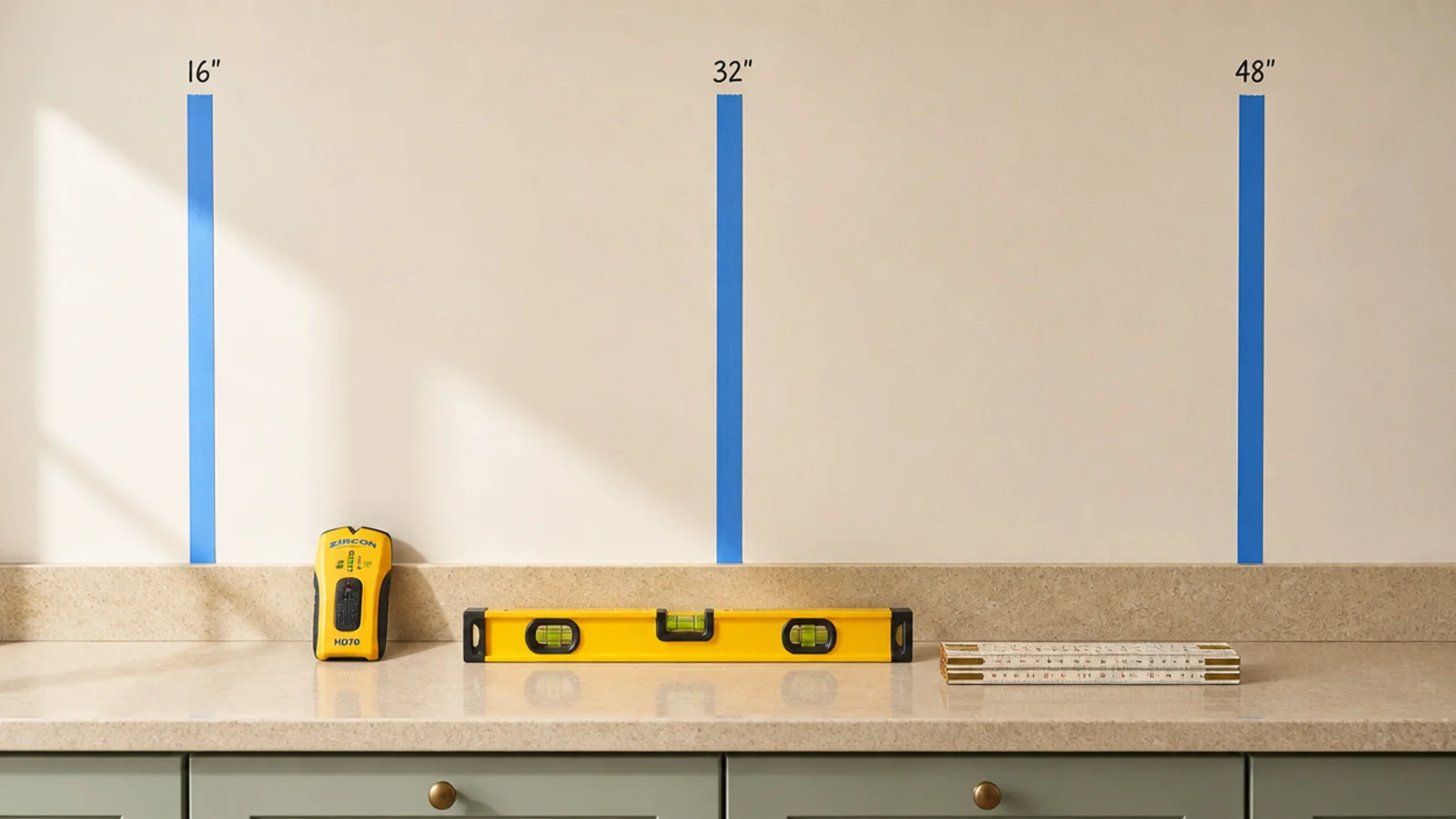
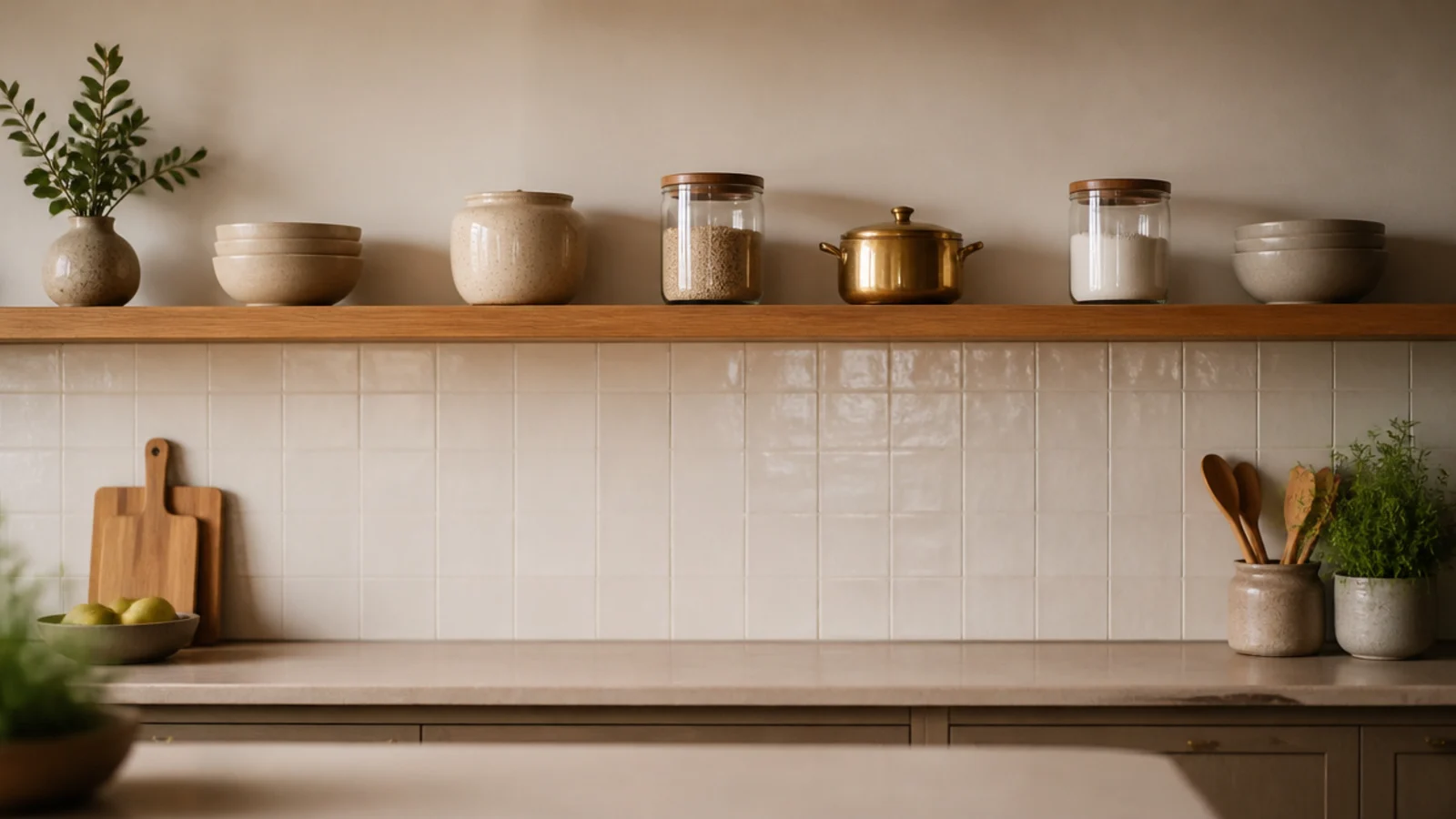
A single unbroken shelf spanning the counter reads far calmer than three short ones with gaps between. The long horizontal line is what makes an open-shelf kitchen look designed rather than improvised.
Run it at 20 inches above the counter and support it every 24 inches. On a 6-foot span that means four fixings, and you can catch four studs at 16-inch centers if you set the ends out carefully.
Space objects along it in loose groups with real gaps, rather than filling it evenly. Even spacing turns the whole wall into a shop display.
2. Two shelves where one wall cabinet used to be
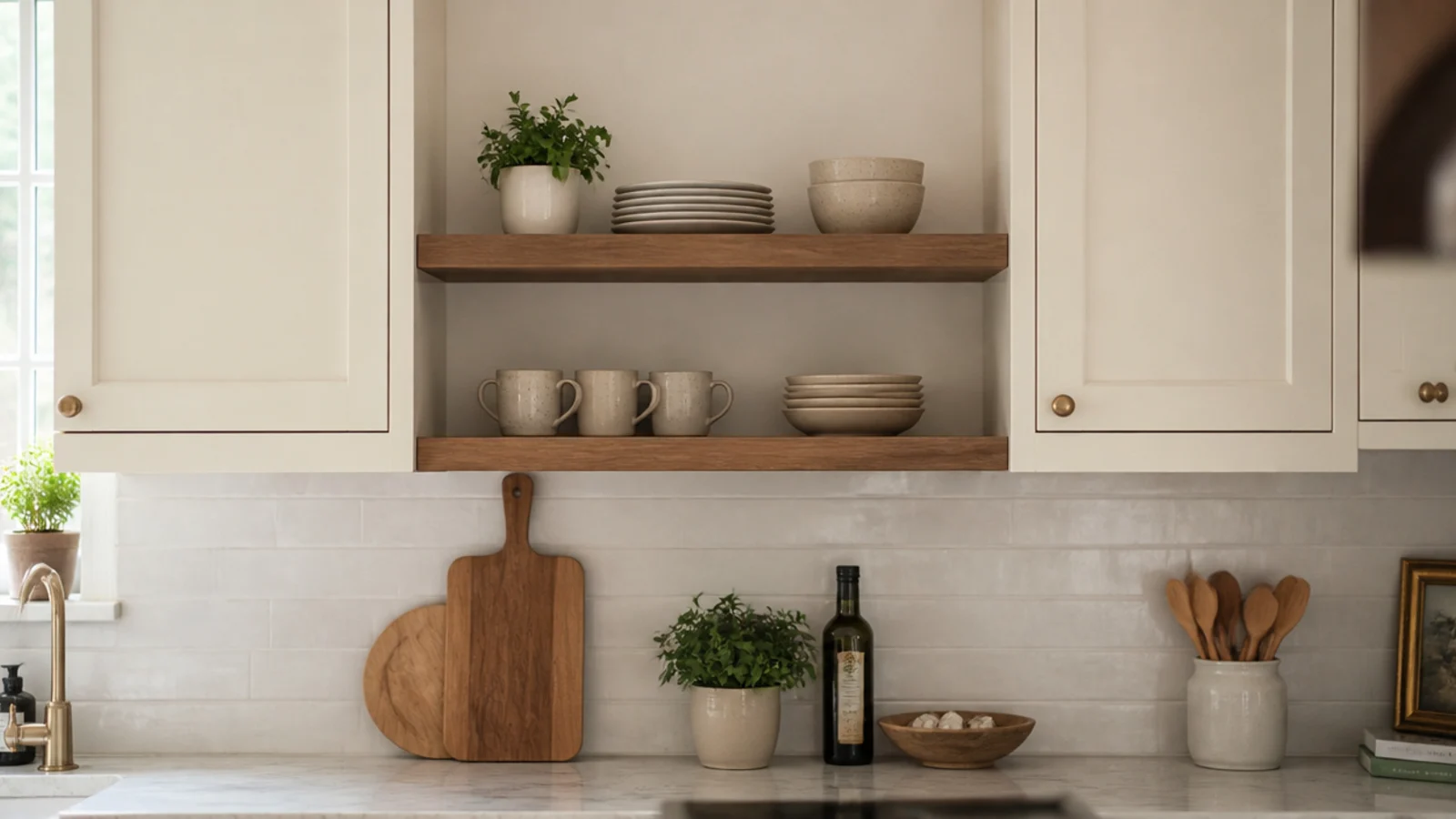
Removing a single upper cabinet and replacing it with two shelves gives back the same storage while opening the wall visually. It is the highest-impact hour you can spend in a small kitchen.
Patch and paint the wall first — cabinets always leave unfinished plaster and old fixing holes behind them. Then set the first shelf 20 inches above the counter and the second 13 above that.
Keep the cabinet doors that remain and the shelves in the same tone, or paint the shelves the wall color so the gap reads as intentional.
3. A plate shelf fixed straight into studs
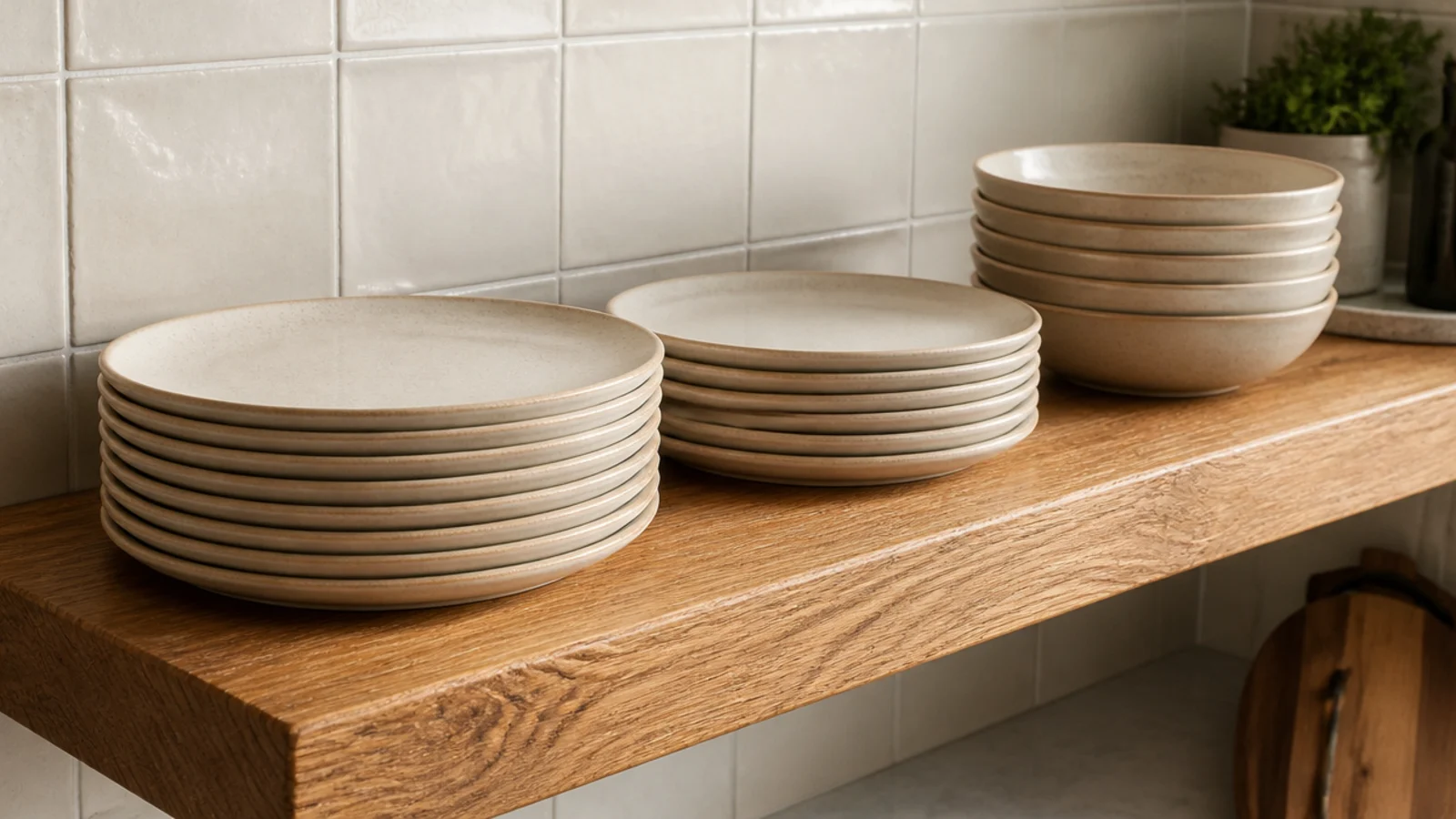
This is the shelf that has to be right. Two stacks of plates, a stack of bowls and a few serving pieces easily reaches 30 pounds, which is at the top of what a rod bracket into a stud will carry.
Use 3/4-inch stock minimum at 10 inches deep, and get every fixing into framing — no plastic plugs, no exceptions. Keep the run to 32 inches so both ends land on studs.
Stack plates no more than eight high. Beyond that they are awkward to lift down one-handed, and a shelf you dread using stops earning its wall.
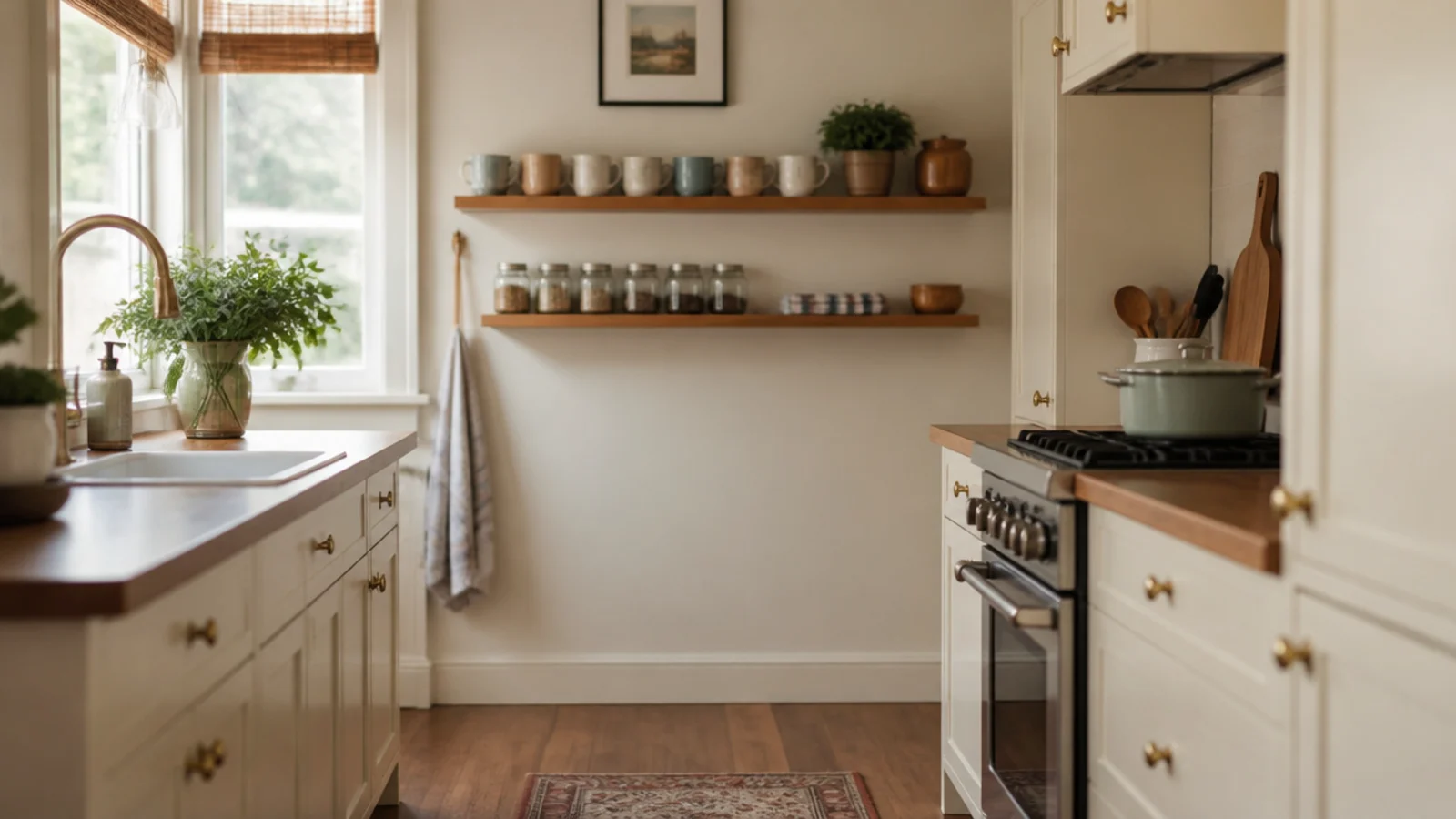
4. A mug shelf beside the kettle
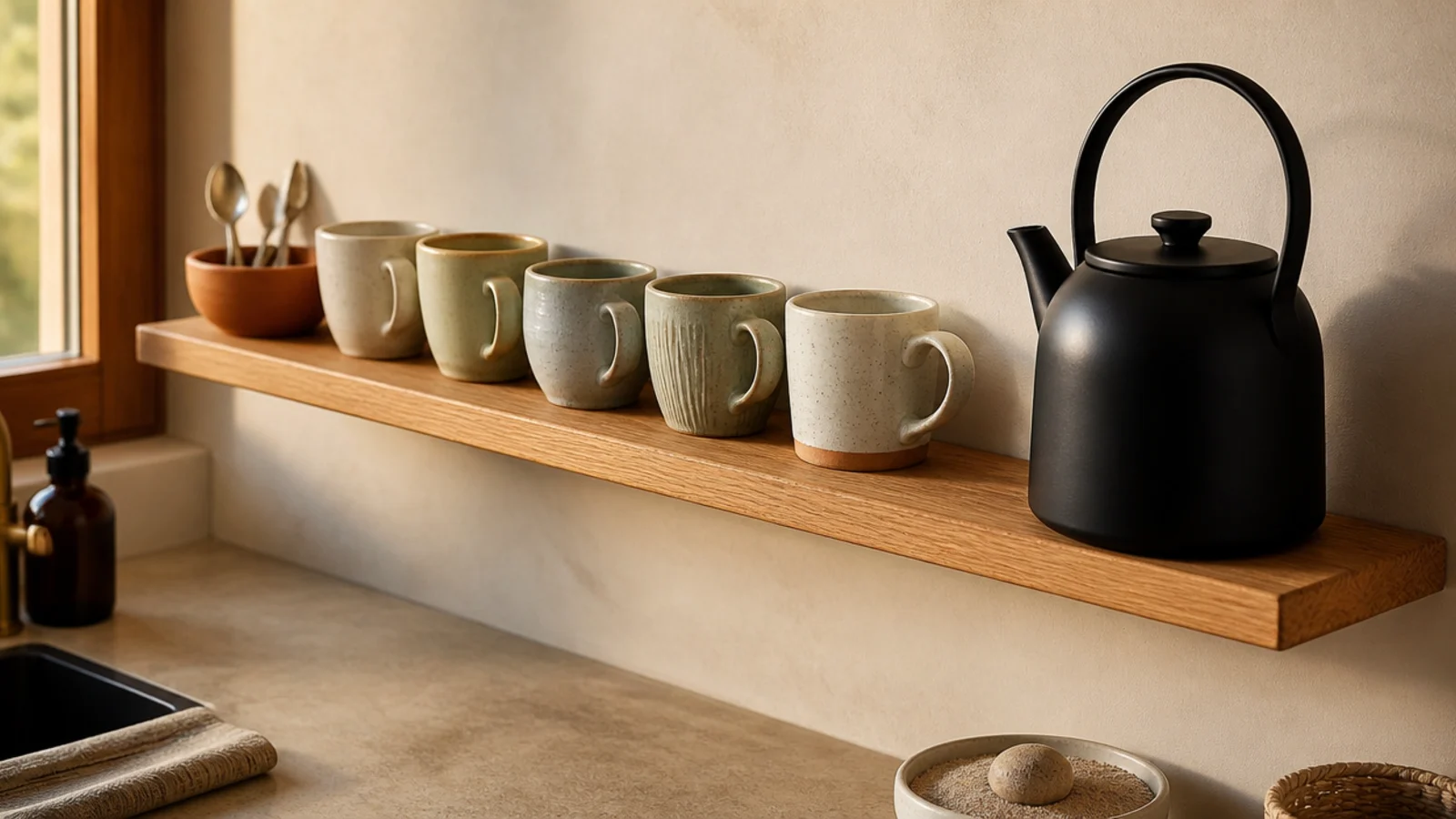
The mugs you use every day should be within one arm sweep of the kettle, and nothing else should be on that shelf. This is the single most useful shelf in my kitchen.
Sixteen to 20 inches long, six deep, mounted 20 inches above the counter. Six mugs, maybe a small dish for spoons, and stop.
Mismatched thrifted mugs in one glaze family look better than a matched set and cost about $2 each. The repetition of the glaze does the work, not the matching.
5. A shelf across the window above the sink
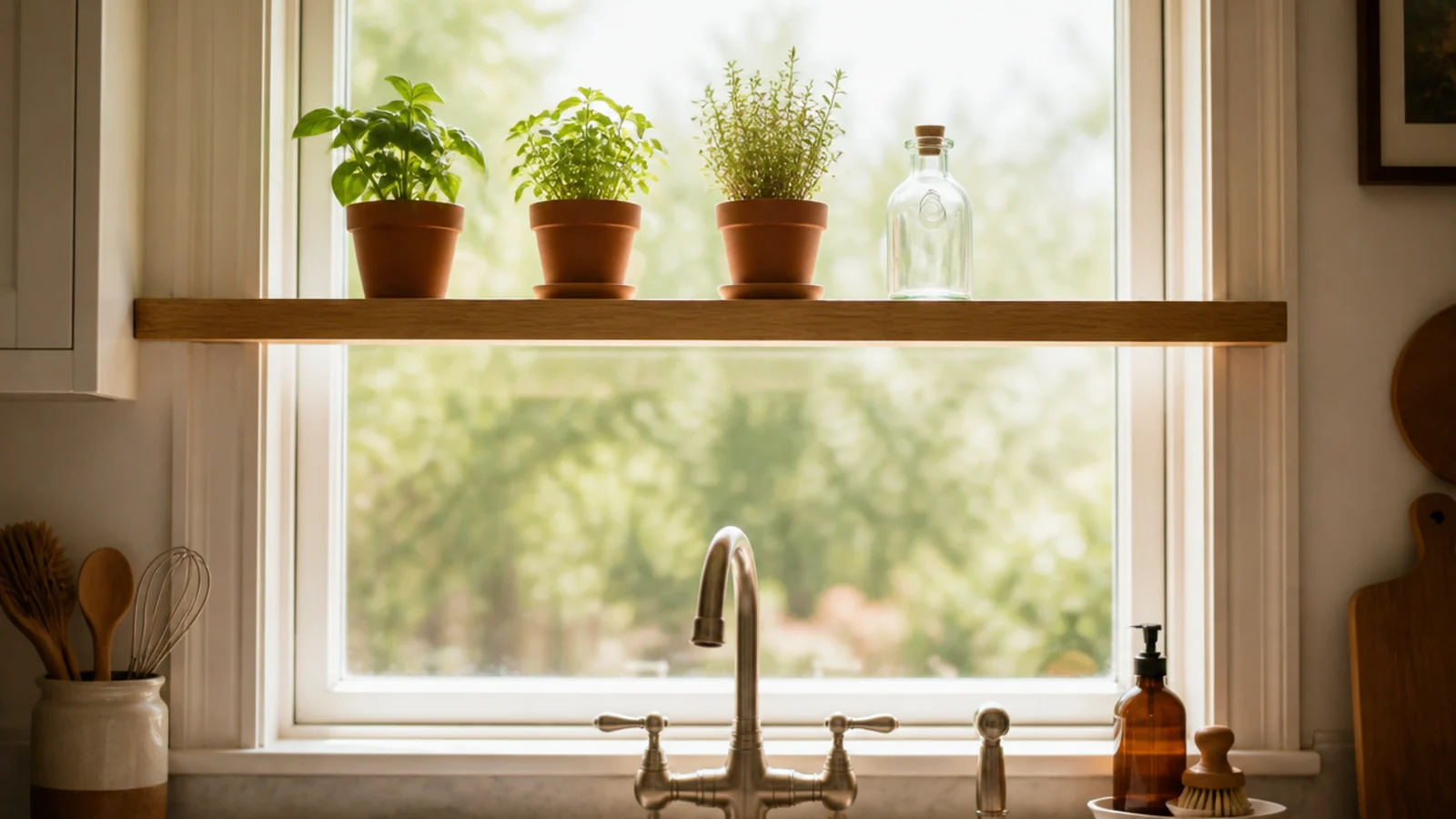
A window over the sink is prime herb-growing light, and a slim shelf across the upper third uses it without blocking the view.
Keep it to four inches deep and mount it inside the reveal if there is one, so it does not interrupt the frame. Small terracotta pots of basil, mint and thyme sit happily there year round.
Use saucers, and check for a curtain track or blind mechanism before you drill. Window reveals are also the one spot where you may hit a header rather than a stud.
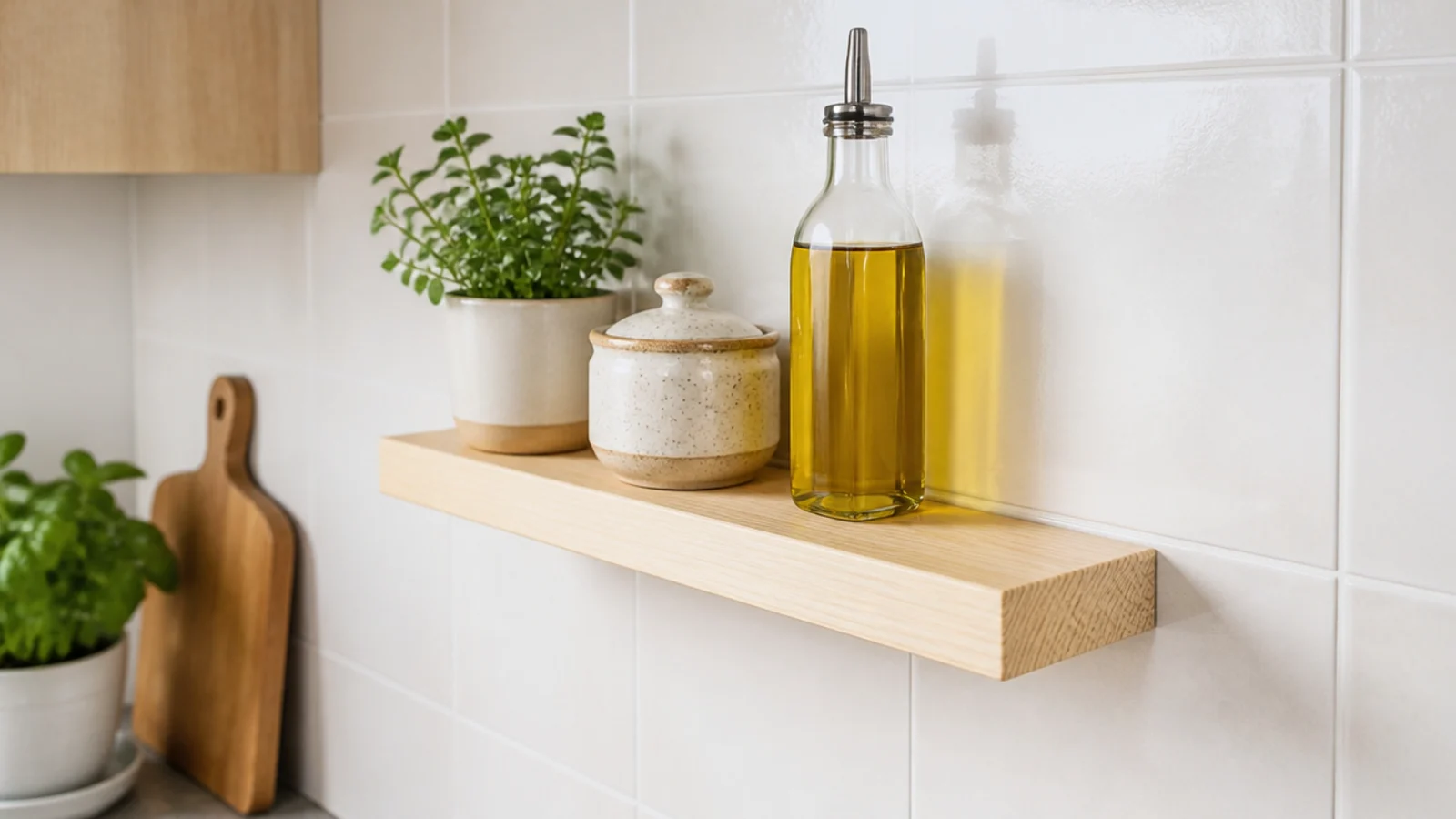
6. A four-inch spice run on the backsplash
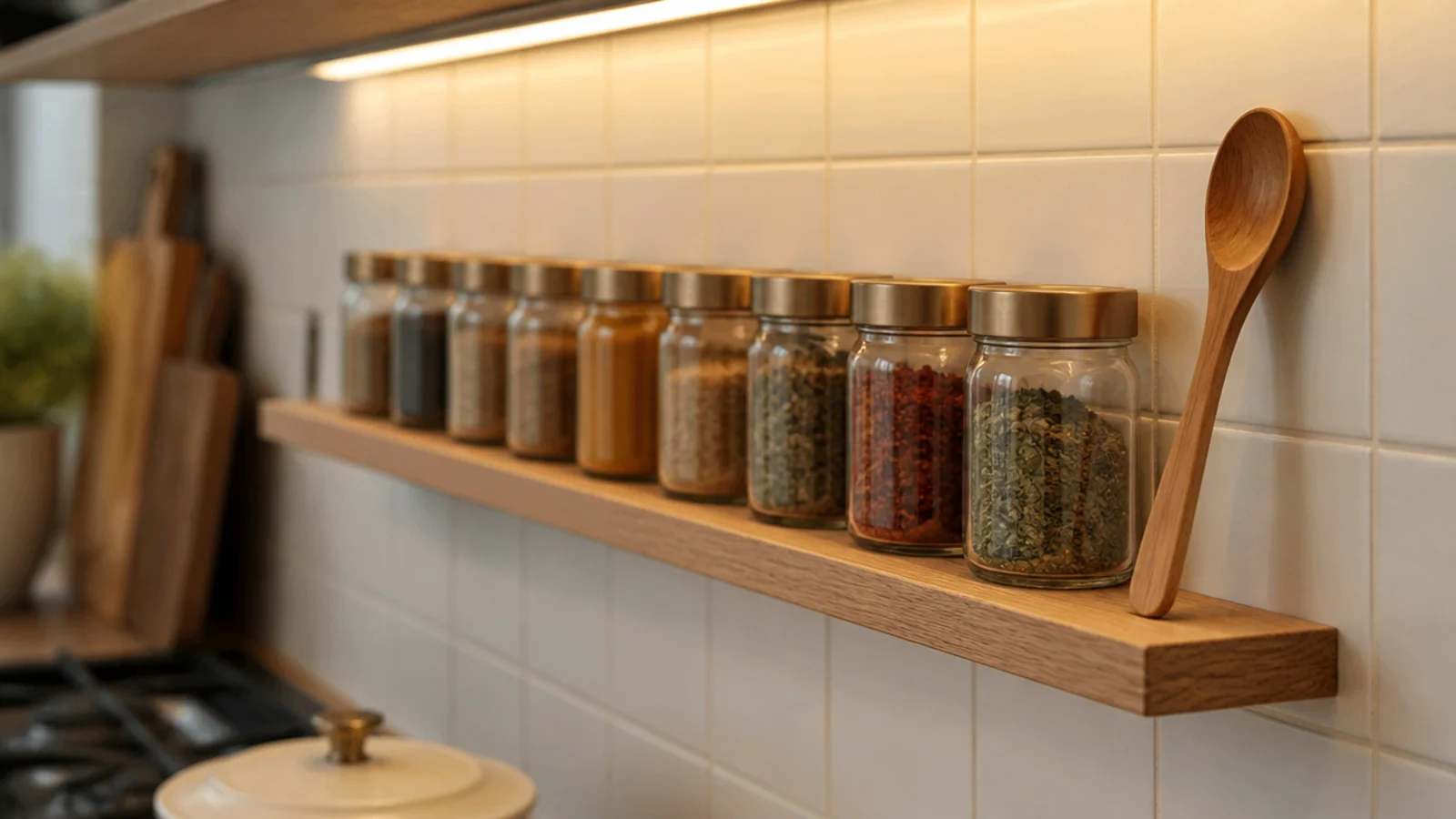
Spice jars are about 2.5 inches wide, so a four-inch shelf holds them with room to grip. That shallow depth means it can sit low — 11 inches above the counter — without ever getting in your way.
One row, one deep. The moment spices go two deep you cannot see the back row and you buy duplicates for years.
Decant only if you will genuinely refill. Mismatched jars you actually use beat matching jars you resent.
7. A brass rail under the shelf for utensils
The underside of a shelf is storage you have already paid for. A slim rail with S-hooks holds spoons, a sieve and a linen towel in the space nothing else can use.
Fix it with three-quarter-inch screws or they come through the top face. Ask me how I know.
Keep it to the tools you reach for daily. A crowded rail turns into visual noise faster than a crowded shelf, because it sits at eye level over the counter.
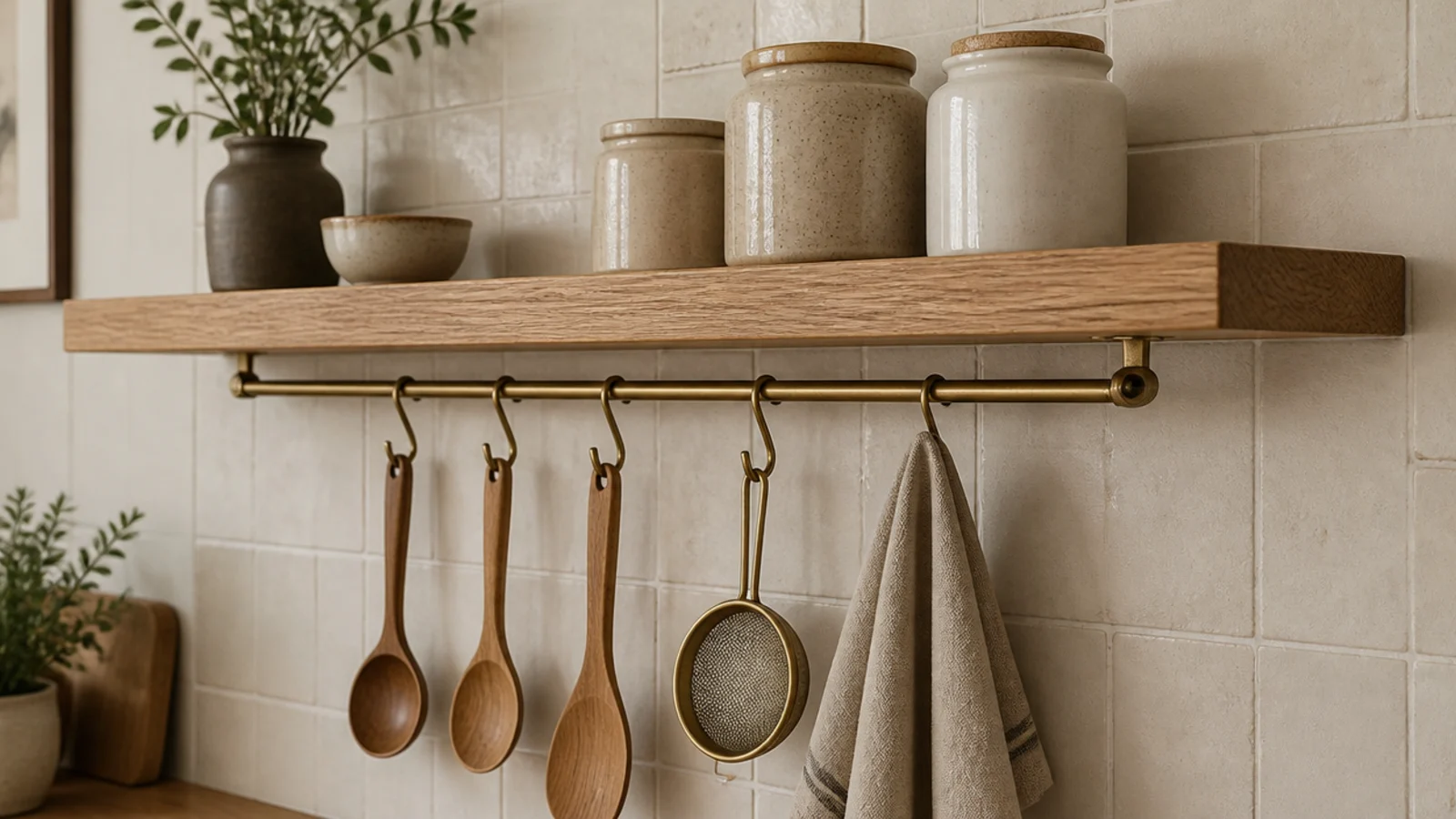
8. A shelf above the range with real clearance
You can shelve above a range, but the numbers are not negotiable: 30 inches from the burner surface to the underside of anything combustible, or 24 inches if the underside is protected. Check your local code and your range manual.
Use solid wood with a wipeable finish, or steel. Nothing laminated, because repeated heat cycles lift the edges permanently.
Only put things up there you will wash regularly — ceramic canisters, a brass pot. Grease finds everything within about six feet of a burner.
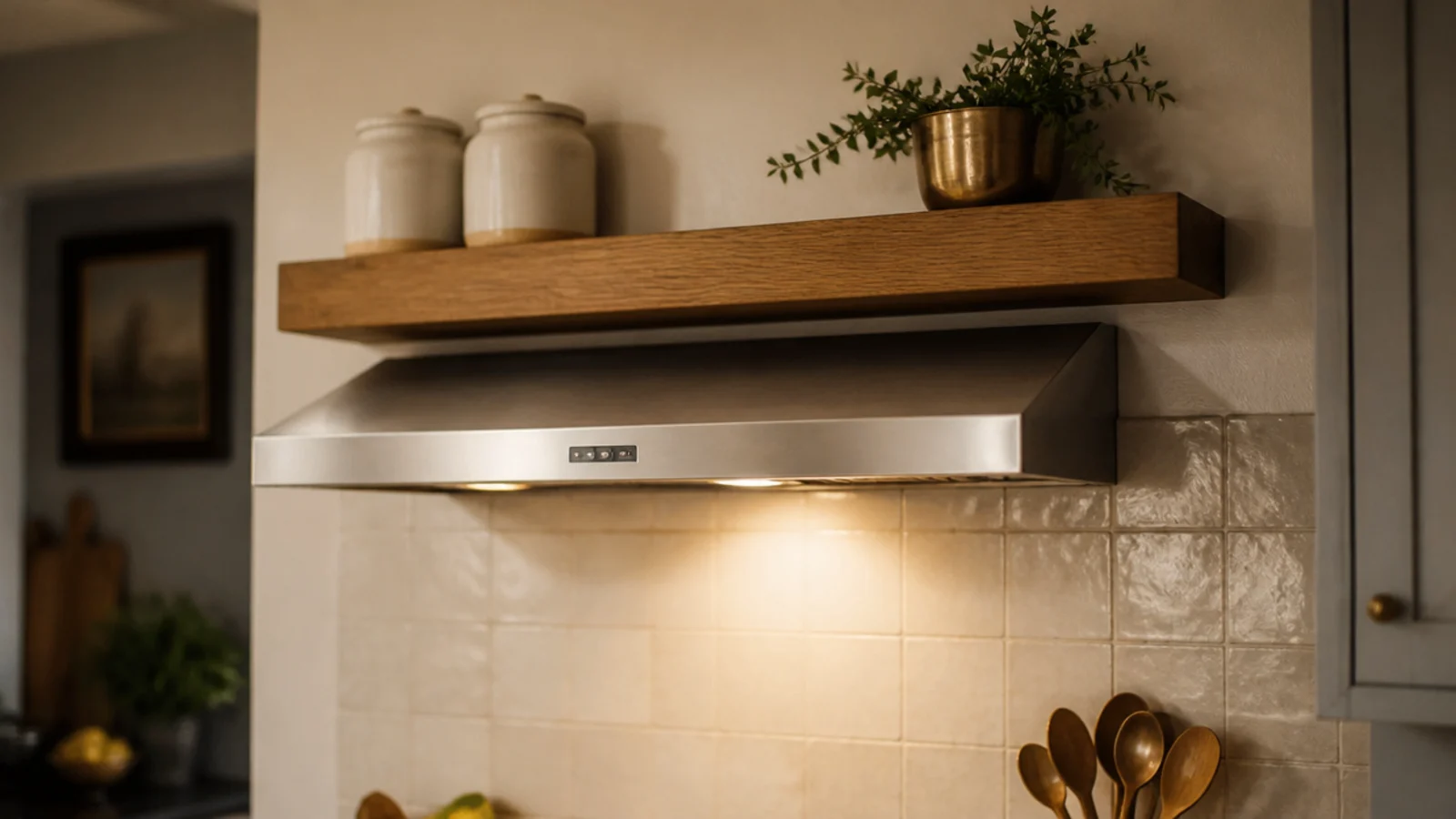
9. A five-inch run for a galley kitchen
In a galley, the aisle is usually 36 to 42 inches and two people have to pass. A 10-inch shelf steals a quarter of that at shoulder height.
Five inches is the honest maximum on the wall you walk past. It holds small jars, glasses, mugs and a row of bowls — enough to replace a cabinet without narrowing the room.
Run it high, at 22 inches above the counter, so the counter itself stays fully usable underneath.
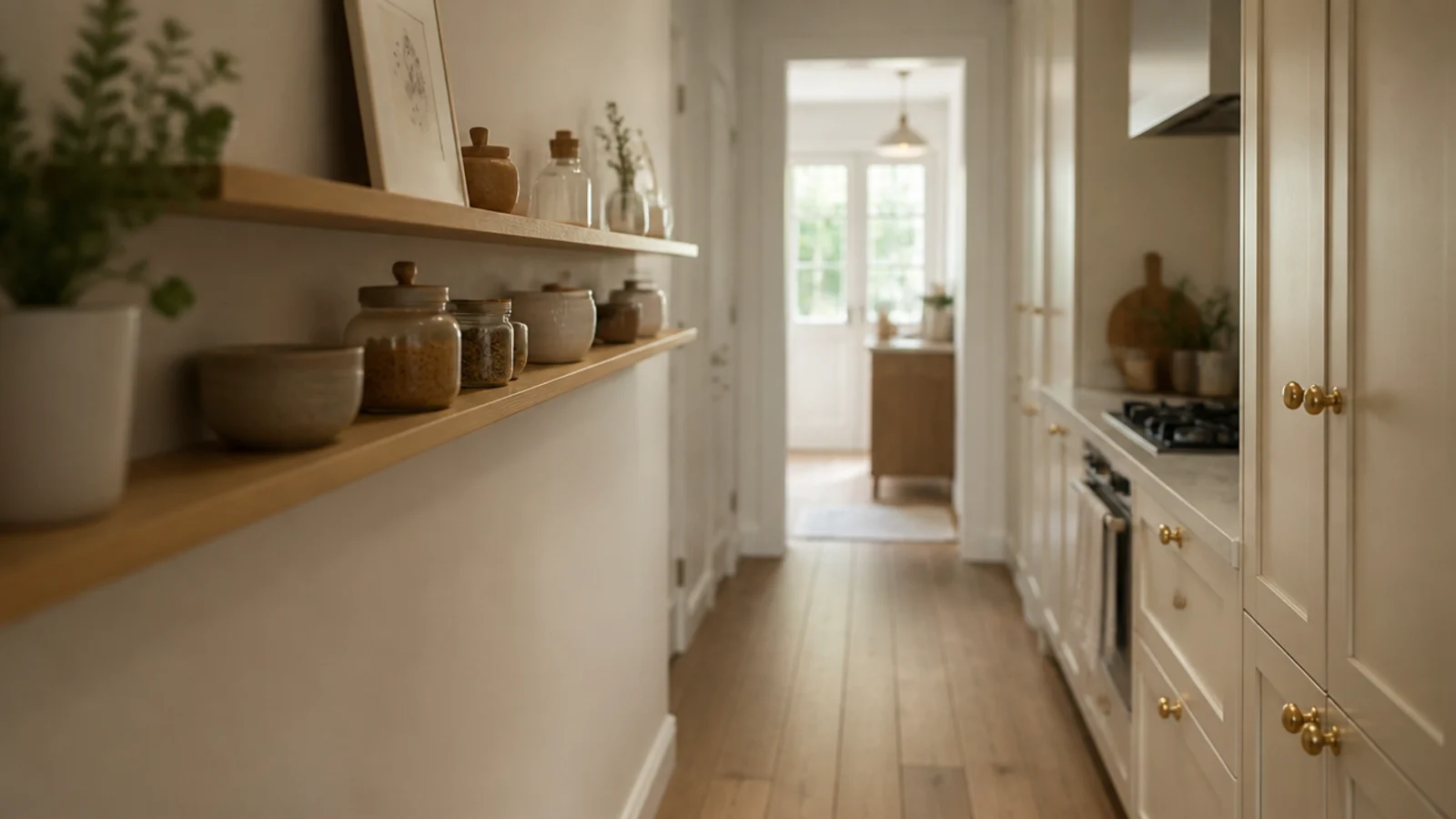
10. A coffee station on two shelves
Two shelves and a foot of counter make a coffee station that keeps mugs, beans and the grinder off the main prep area. Mount the lower shelf 18 inches above the counter so a tall machine fits underneath.
Everything for one cup should sit inside a single arm sweep — that is the whole test.
Add a small tray under the machine. It catches grounds and lets you lift the entire station off in one movement when you wipe the counter.
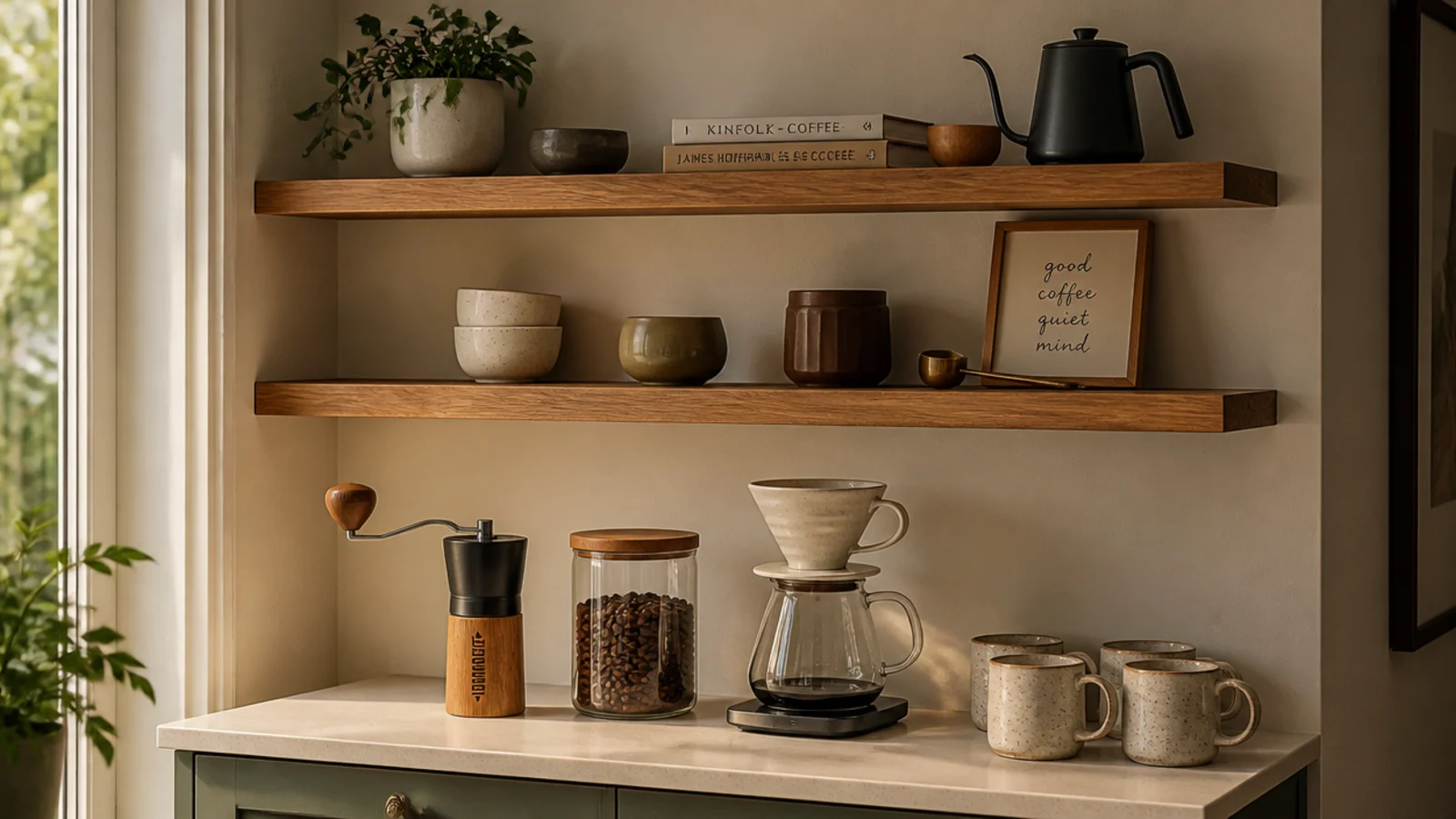
11. A shelf cut from the same material as the counter
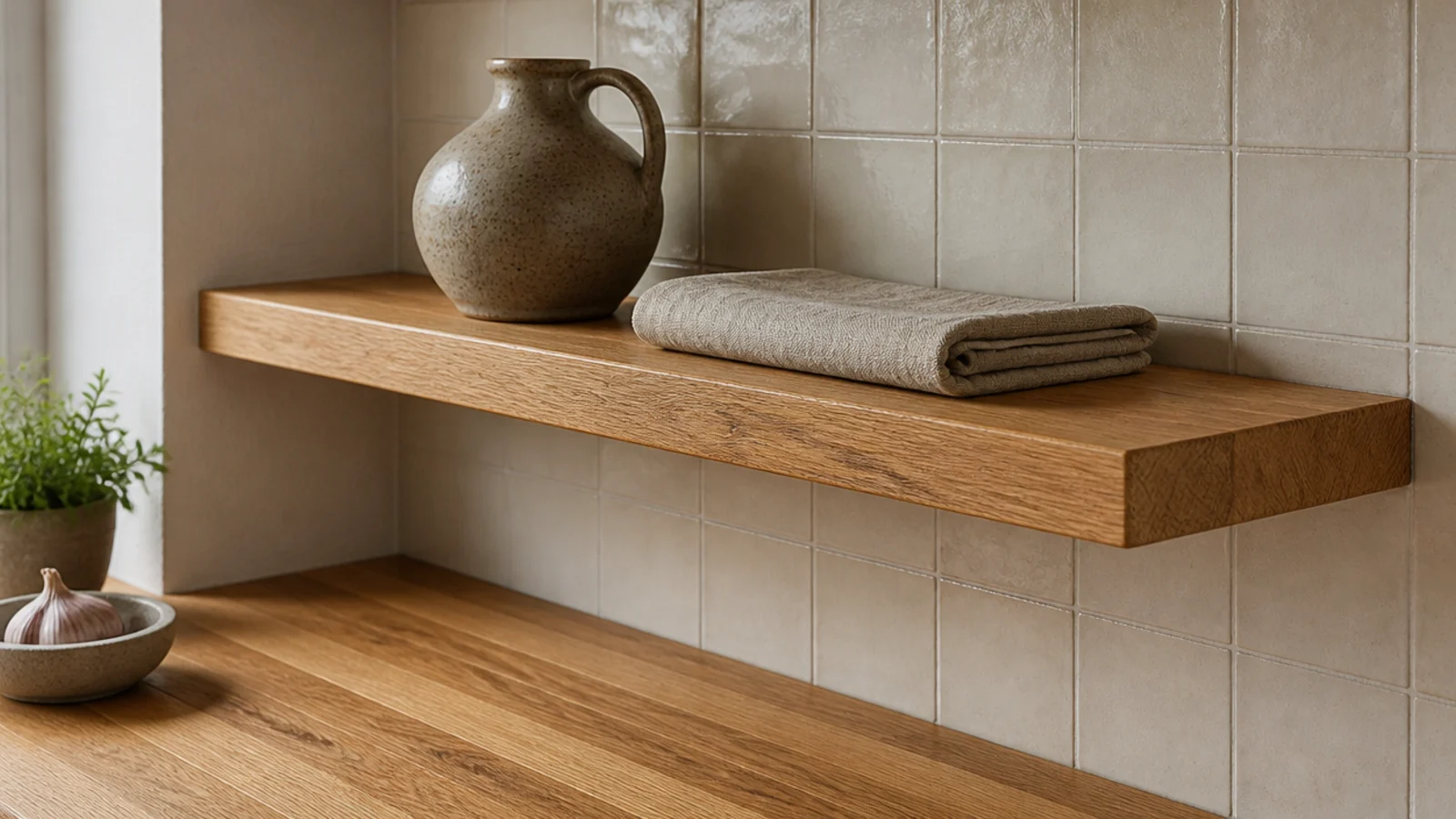
If you have butcher block counters, a shelf cut from a worktop offcut in the same species and finish reads as though the kitchen was designed with it.
Offcuts are sold at a steep discount and arrive an inch or more thick, which gives you a chunky front edge for very little. Oil every face including the underside before mounting.
The same trick works with a solid-surface counter — most fabricators sell sink cutouts cheaply, and they are ideal near water.
12. A shelf above the fridge
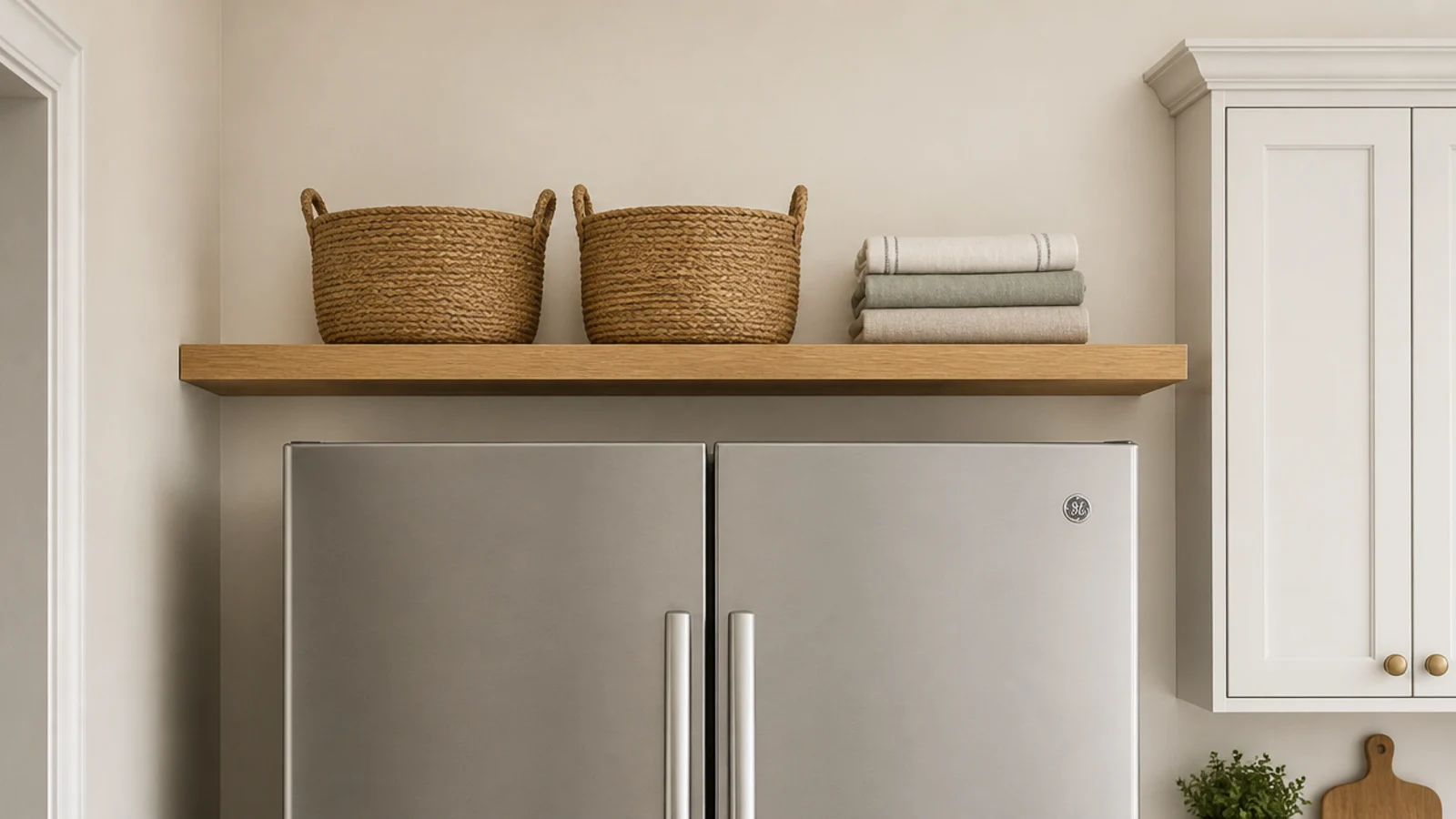
The wall above a fridge is dead space in nearly every kitchen, and it is high enough that you will only ever see the underside of what is on it.
Baskets, not loose items. Two woven jute boxes hold the roasting bags, spare foil and picnic gear that clog a lower cabinet.
Keep it light — nothing you would not want to catch — and match the shelf depth to the fridge depth so it does not project into the room.
13. A cookbook ledge with a lip
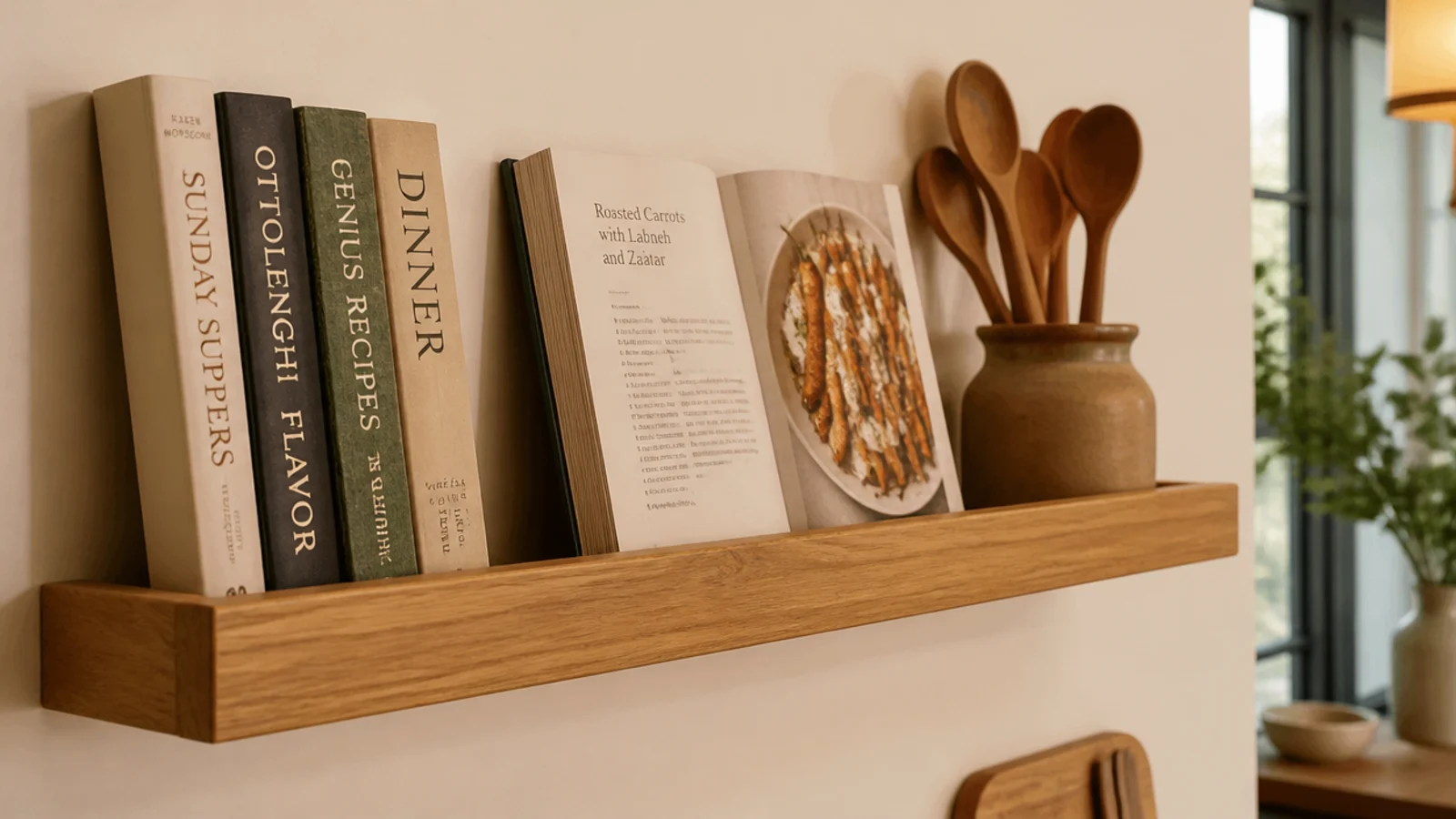
Cookbooks are heavy and they slide. A ledge with a half-inch lip along the front lets them lean back safely and holds one open at eye level while you cook.
Eight inches deep, 24 to 30 long, and mounted at 54 inches so you can read a propped-open page standing up.
Keep it away from the range. A book left open beside a burner is a genuine fire risk, and steam warps pages within a month.
14. A mini shelf under the wall cabinets
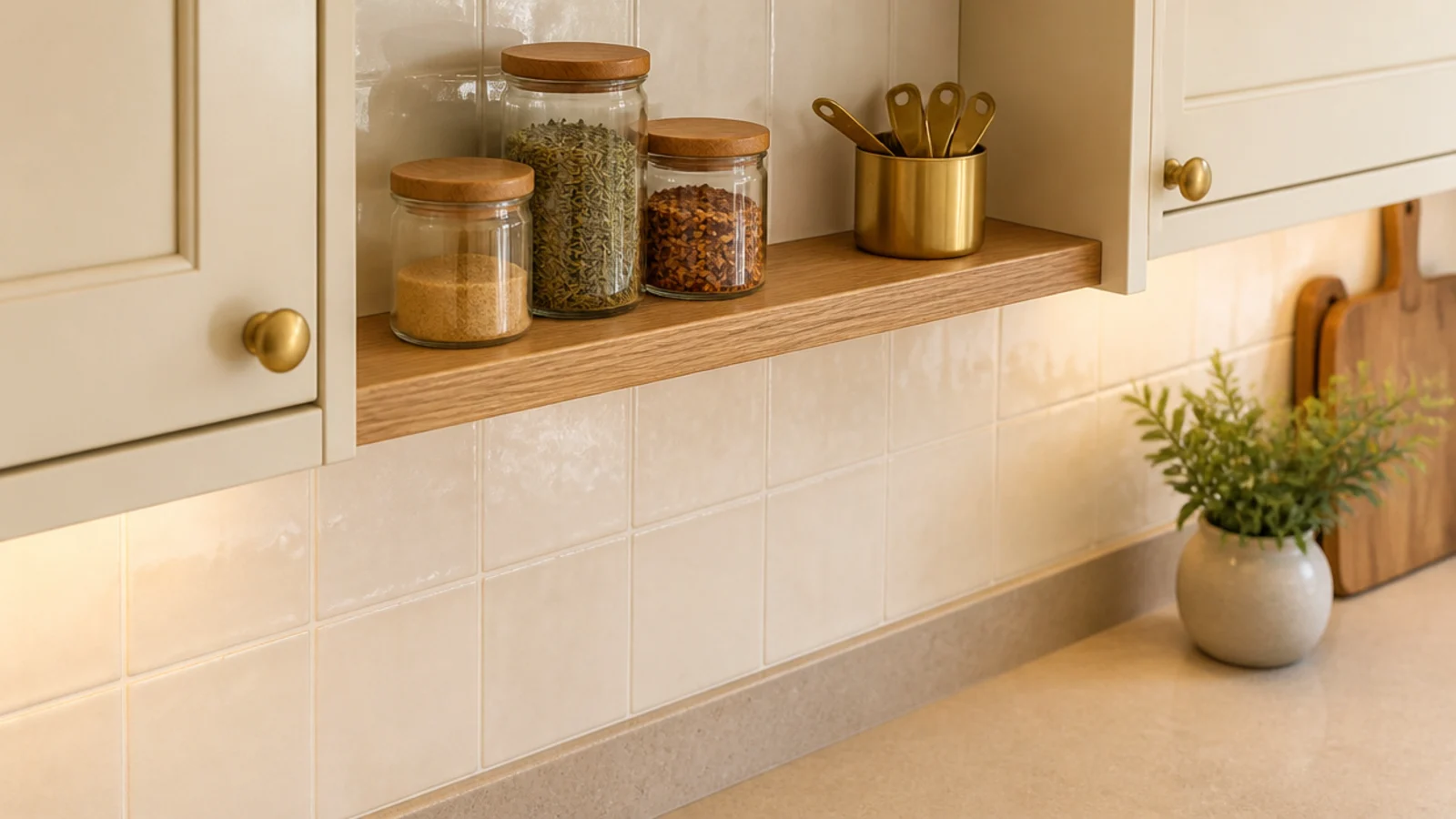
The band between the bottom of a wall cabinet and the counter is usually 18 inches of unused wall. A very slim shelf at three inches deep, tucked up under the cabinet, holds small jars and bottles without touching the workspace.
Fix it into the cabinet rail rather than the tile if you can reach one — fewer holes, and no drilling through glaze.
This is the single best trick in a rental kitchen you cannot modify heavily.
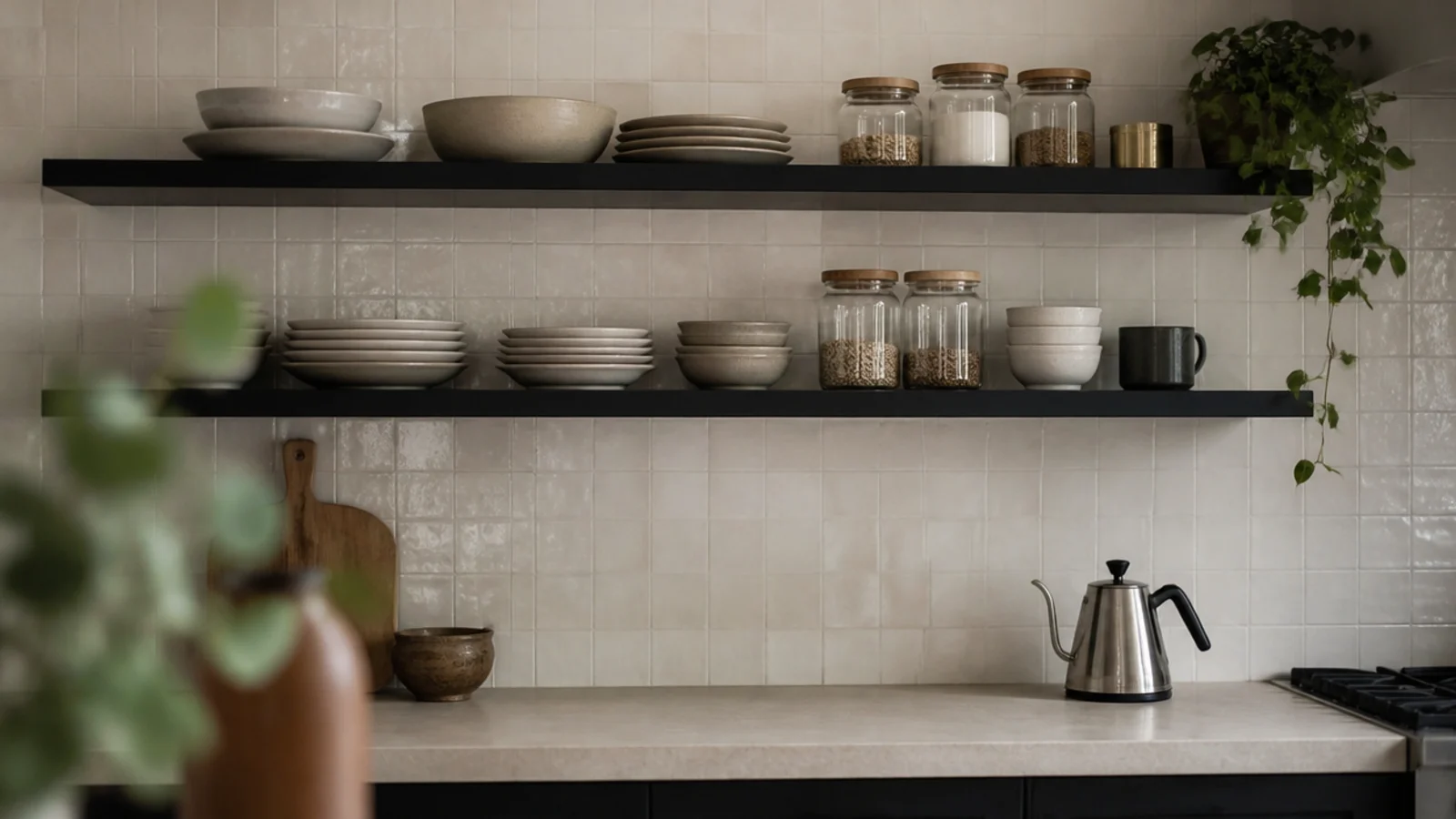
15. Powder-coated steel for a hardworking wall
Near a sink or a range, steel outlives wood. Powder-coated shelves wipe clean, never swell, and carry more per bracket than a timber shelf of the same thickness.
Matte black reads modern beside cream tile; a warm off-white disappears entirely. Expect $40 to $80 a shelf, which is more than pine and less than oak.
Match the finish to something else in the room — the faucet, the handles, a pendant — or it will read as an orphan.
16. Plug-in lighting under the lowest shelf
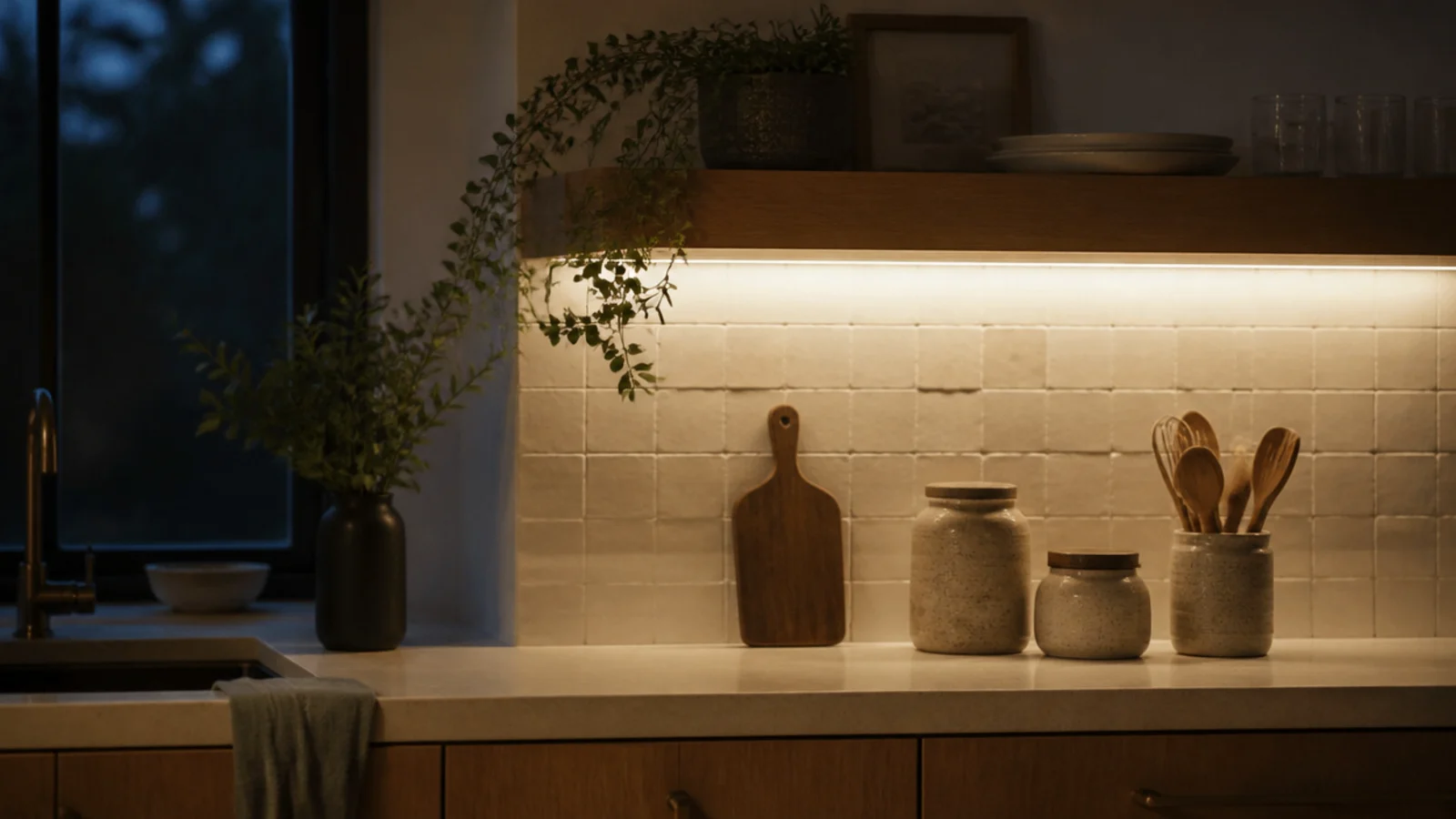
Open shelves cast shadow onto the counter below, which is the one genuine drawback compared with cabinets. A light strip under the lowest shelf fixes it for about $20.
Use 2700K warm white. Cool light drains oak and terracotta of color and makes food look grey.
Plug-in strips need no wiring, which keeps this renter-friendly. Run the cable down the corner of the backsplash and it disappears completely.
17. A shelf in the breakfast nook
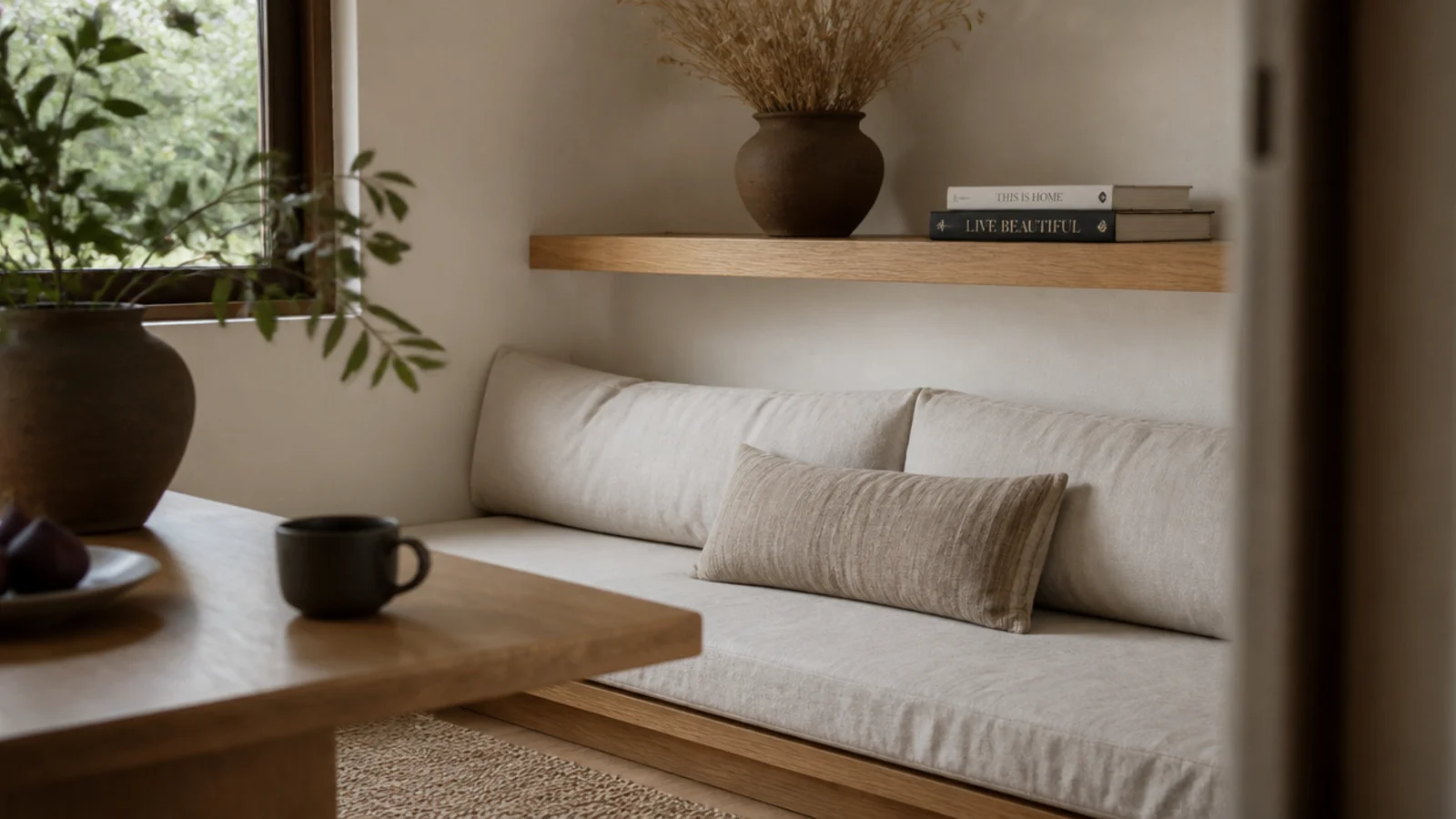
A nook bench and a shelf above it turn a dead end of the kitchen into a place people sit. Keep 20 inches of clear height above the seat back so nobody catches their head sitting up.
Six inches deep, maximum. Anything deeper hangs into the space where shoulders go.
Style it softly — a clay vase, a couple of books — rather than with kitchen equipment. This corner should feel like a room, not like storage.
18. A pantry wall of shallow jar shelves
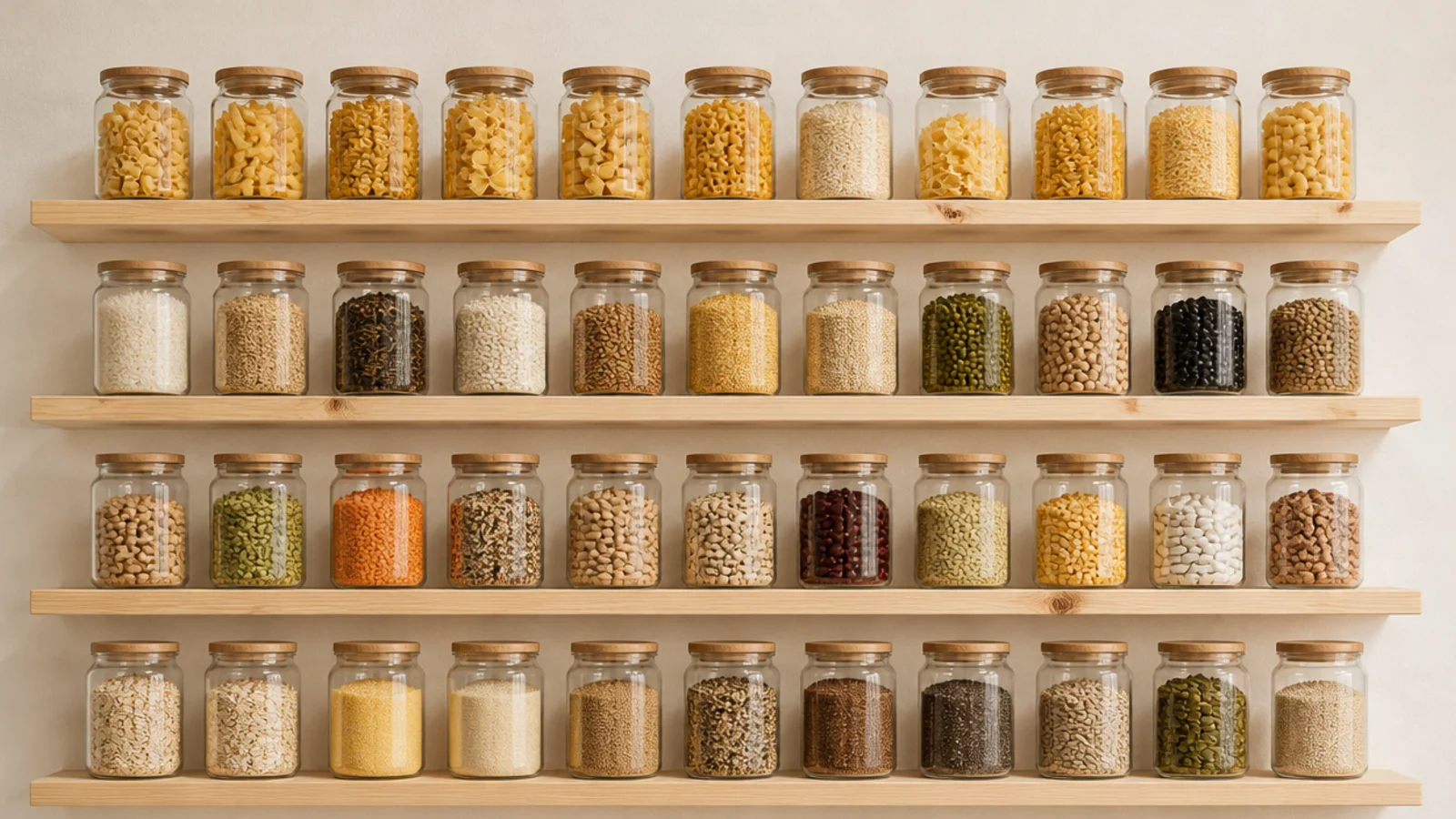
Deep pantry shelves hide food at the back until it expires. Shallow floating shelves, one jar deep at five inches, mean you see everything you own at a glance.
Space them 11 inches apart for standard jars and pack them tightly; this is the one place where a full shelf looks right.
Pine is fine here since it is away from steam. Four shelves across a 30-inch wall costs about $45 and replaces a whole cupboard.
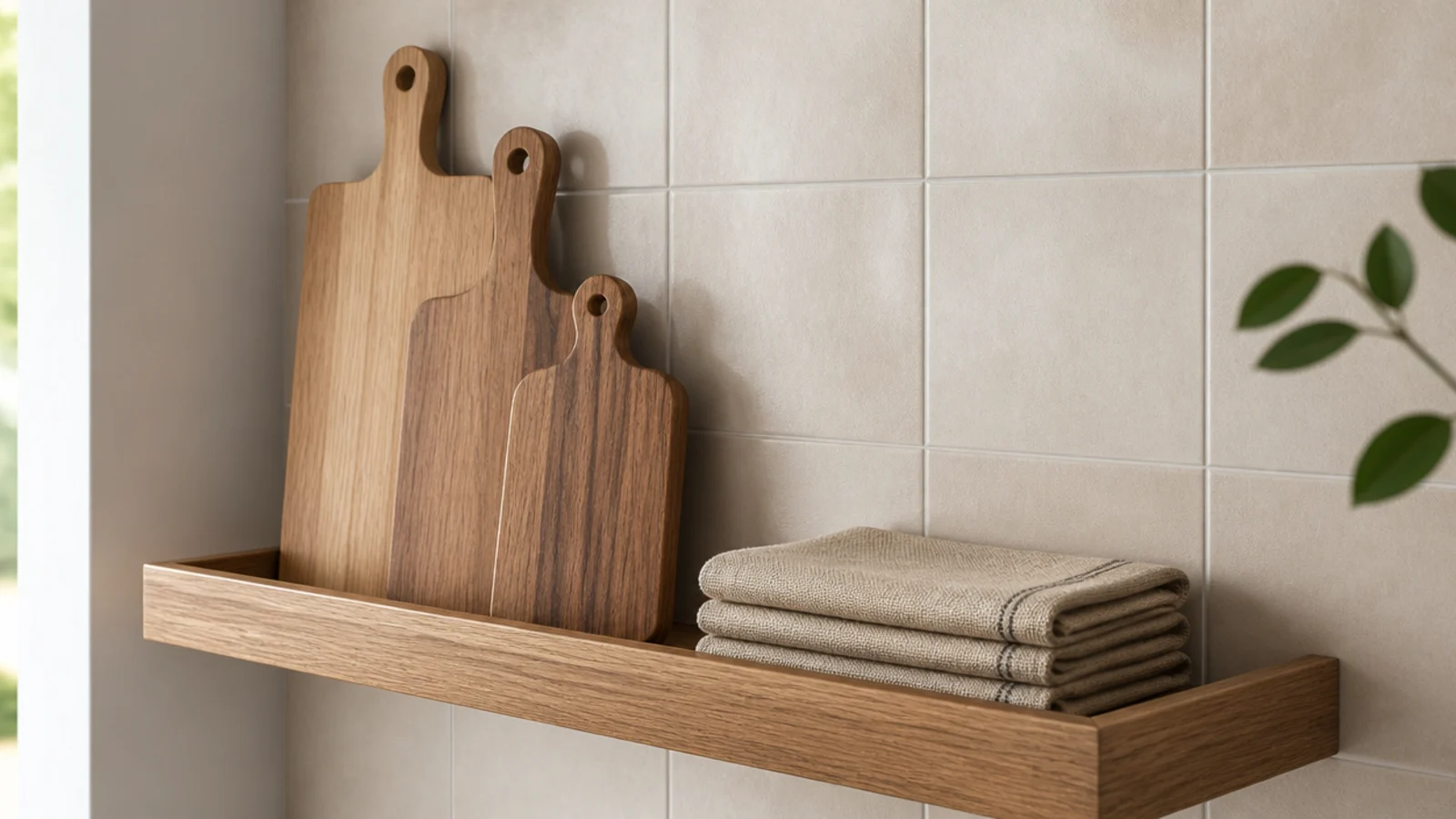
19. A shelf for boards and linens on edge
Chopping boards stored flat stay damp and warp. Stood on edge with a half-inch lip holding them, they dry evenly and last years longer.
An eight-inch shelf with a lip takes three boards upright plus a stack of folded linen towels beside them.
Mount it near the sink but not directly above it, so drips land on the counter rather than on the boards below.
20. A no-drill shelf for a rental kitchen
Adhesive strips top out at about 15 pounds per pair, which rules out plates and jars but works for a light shelf of small ceramics or herbs.
Clean the wall with alcohol, press for 30 seconds and wait an hour before loading. Never mount an adhesive shelf directly above a counter you use, because the failure mode is sudden.
If your lease allows small holes, four filled pinholes and a properly fixed shelf beat any no-drill compromise. There is more on this in floating shelves for a small space.
Mistakes to Skip
- Mounting the first shelf less than 18 inches above the counter. The kettle will not fit, and you will resent the shelf every morning.
- Putting plates on plastic plugs. About 10 pounds each is the honest rating, and a shelf of dinnerware is triple that.
- Using raw pine or unfinished MDF beside a sink or range. Both stain and swell within a season, and no amount of oil brings them back.
Frequently asked questions
How high should kitchen floating shelves be above the counter?
Twenty inches of clear height above the countertop for the first shelf. That leaves room for a kettle, a stand mixer and a tall bottle without knuckles hitting the underside. Space any second shelf 13 inches above the first, which takes a standing cookbook or a row of tall jars with air to spare.
Can floating shelves hold dinner plates?
Yes, but only into framing. A stack of ten dinner plates is around 12 pounds, and most people put two stacks plus bowls on the same shelf. A concealed rod bracket into a stud carries 30 to 40 pounds on a 24-inch shelf; the plastic plugs supplied in most kits carry about 10 pounds and will not do this job.
Do open kitchen shelves get greasy and dusty?
Within about six feet of a range, yes. The fix is honest: only shelve what you use weekly, so everything gets washed by rotation instead of sitting. Choose a wipeable finish such as hardwax oil or water-based poly rather than raw wood, and give the shelf a two-minute wipe when you clean the counter.
What depth should a kitchen floating shelf be?
Ten inches takes dinner plates and cereal bowls; eight is right for mugs and glasses; four or five is enough for a spice run on the backsplash. Remember that leverage rises with depth, so a 12-inch shelf puts roughly twice the pull-out force on its fixings as a 6-inch one holding the same weight.
Are floating shelves a good idea in a small kitchen?
They are usually the best idea available. Replacing one upper cabinet with two open shelves gives you the same storage while opening the wall visually, which matters more in a galley than anywhere else. Keep the run shallow at five to eight inches so nobody catches a shoulder passing behind the cook.
Take one cabinet down and live with two shelves before you commit to a whole wall — that trial tells you honestly whether you are an open-shelf household. For the build itself, the twenty-step floating shelf project covers the cut list and anchors, floating shelf styling keeps it looking calm, and there is a whole board on open kitchen shelves if this is the room you are rethinking. Save the pin so the clearances are with you at the wall.
Want more like this? Browse all 15 floating shelves guides — they all use the same measurements and budget tiers.
Pin it for later
Save this to your Floating Shelves board
Pin it now so it is waiting for you when the tape measure comes out — and so the next person hunting for this idea can find it too.
Save this pinKeep going
More ideas worth saving while you have the tape measure out.