Floating Shelves · Listicle
20 Creative Floating Shelf Ideas Anyone Can Do

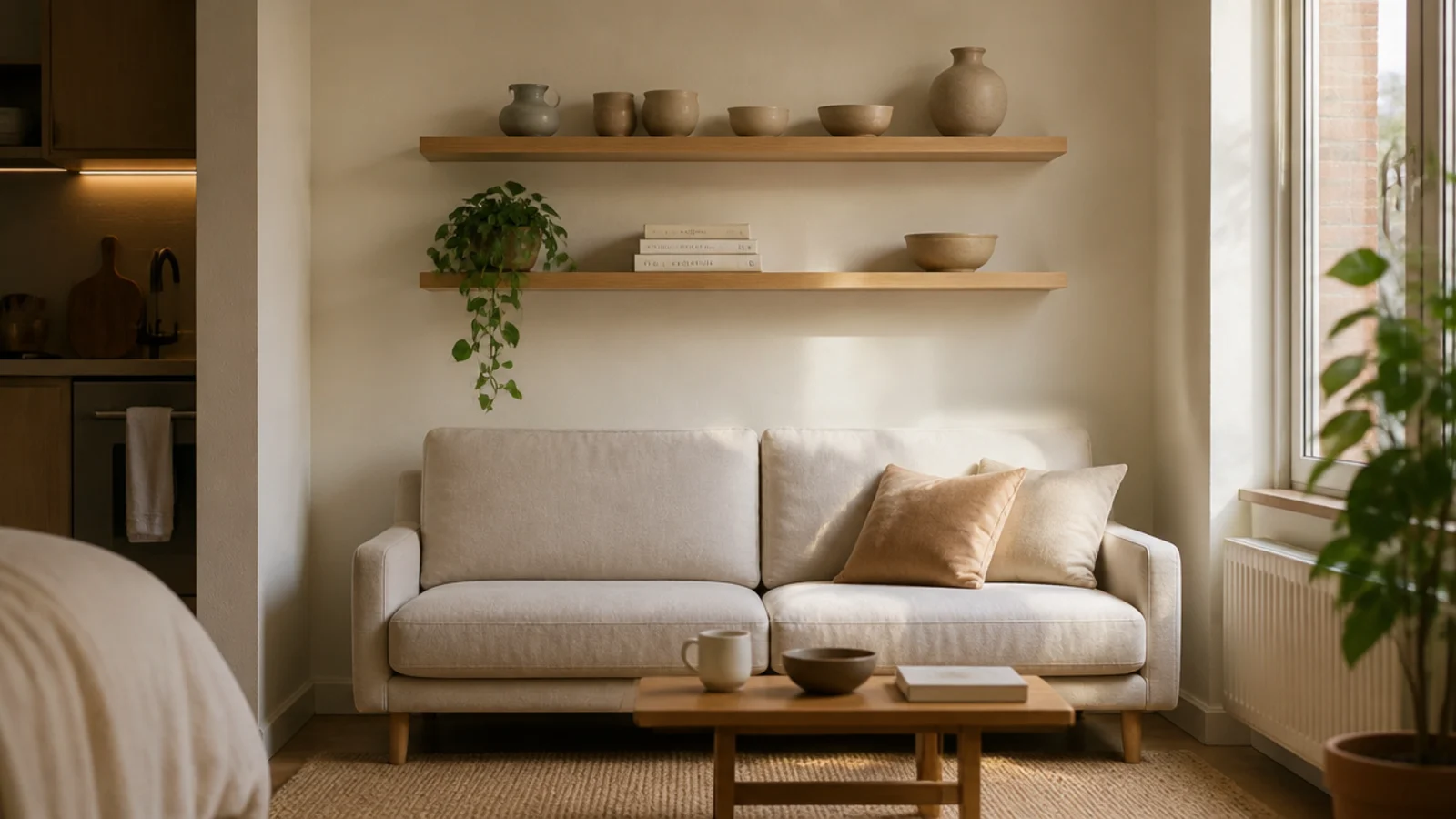
Floating shelves in a small space have to earn every inch they take, which is why the versions that work are usually shallower, longer and lower than people expect. I have laid shelves out in a 380-square-foot studio and in a hallway 32 inches wide. These twenty put storage on walls that were doing nothing, without making the room feel any tighter than it already was.
In this guide22 sections — tap to openHide
- 1.Where floating shelves in a small space beat furniture
- 2.Three shelves in the wall above the toilet
- 3.A four-inch ledge running the length of a hallway
- 4.A shelf that replaces the entryway console
- 5.A desk return on the wall beside the desk
- 6.One shelf under a wall-mounted TV
- 7.A second shelf inside the closet above the rod
- 8.A shelf above the window frame
- 9.Two shelves in the narrow strip beside a doorway
- 10.A drop-leaf shelf that becomes a dining table
- 11.Open shelves where an upper cabinet used to be
- 12.Shelves above the bed instead of nightstands
- 13.A stair-step run climbing a stairwell wall
- 14.One long shelf above the sofa back
- 15.A shoe ledge inside the front door
- 16.A plant ledge across the window
- 17.A shelf that turns a landing into a reading nook
- 18.A micro shelf under the upper cabinets
- 19.A vanity ledge in a bathroom with no counter
- 20.A shelf that spans an alcove wall to wall
- 21.A shelf that hides the router and the cables
- 22.Mistakes to Skip
Where floating shelves in a small space beat furniture
The trade is always the same: a shelf gives you surface without a footprint. A nightstand takes about three square feet of floor. A shelf at the same height takes none, and in a room where the bed already touches two walls, that is the entire argument.
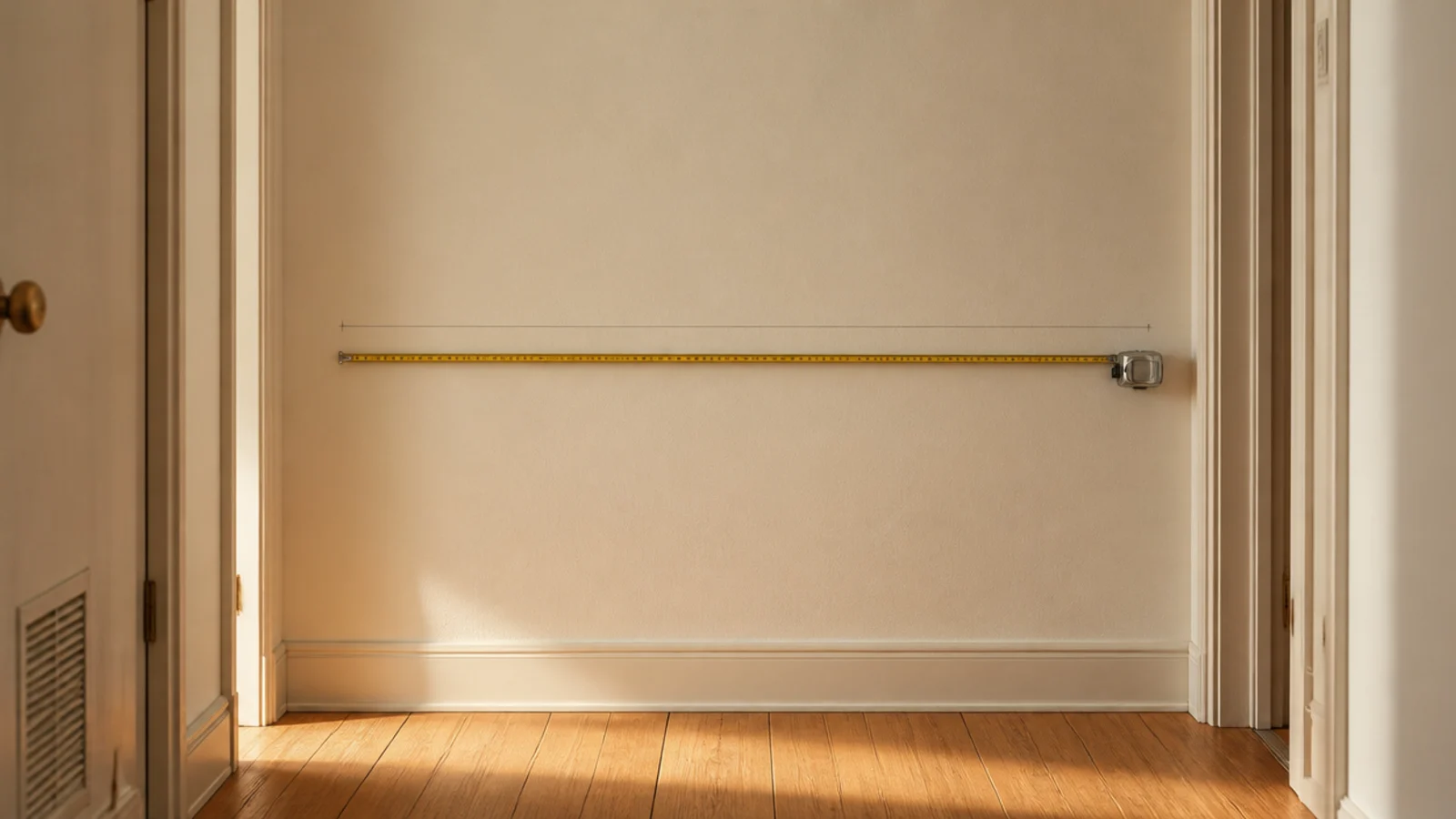
Depth is the decision that matters most. Stand where you walk and measure to the nearest thing you go around. Under 30 inches of clearance means a 4 to 6 inch shelf. Between 30 and 40 inches, 8 is comfortable. Only go past that where nothing passes by.
Depth is also load. Leverage rises with depth, so a 12-inch shelf doubles the pull-out force of a 6-inch one at the same weight, which is why deep shelves are the ones that tear out of drywall.
For fixings: a concealed rod bracket into a stud carries 30 to 40 pounds on a 24-inch shelf, toggle bolts in half-inch drywall carry 25 to 35 pounds each, and the plastic plugs from the box carry about 10 pounds and cause most sagging.
Budget tiers below: $ under $40, $$ $40 to $120, $$$ $120 and up.
1. Three shelves in the wall above the toilet
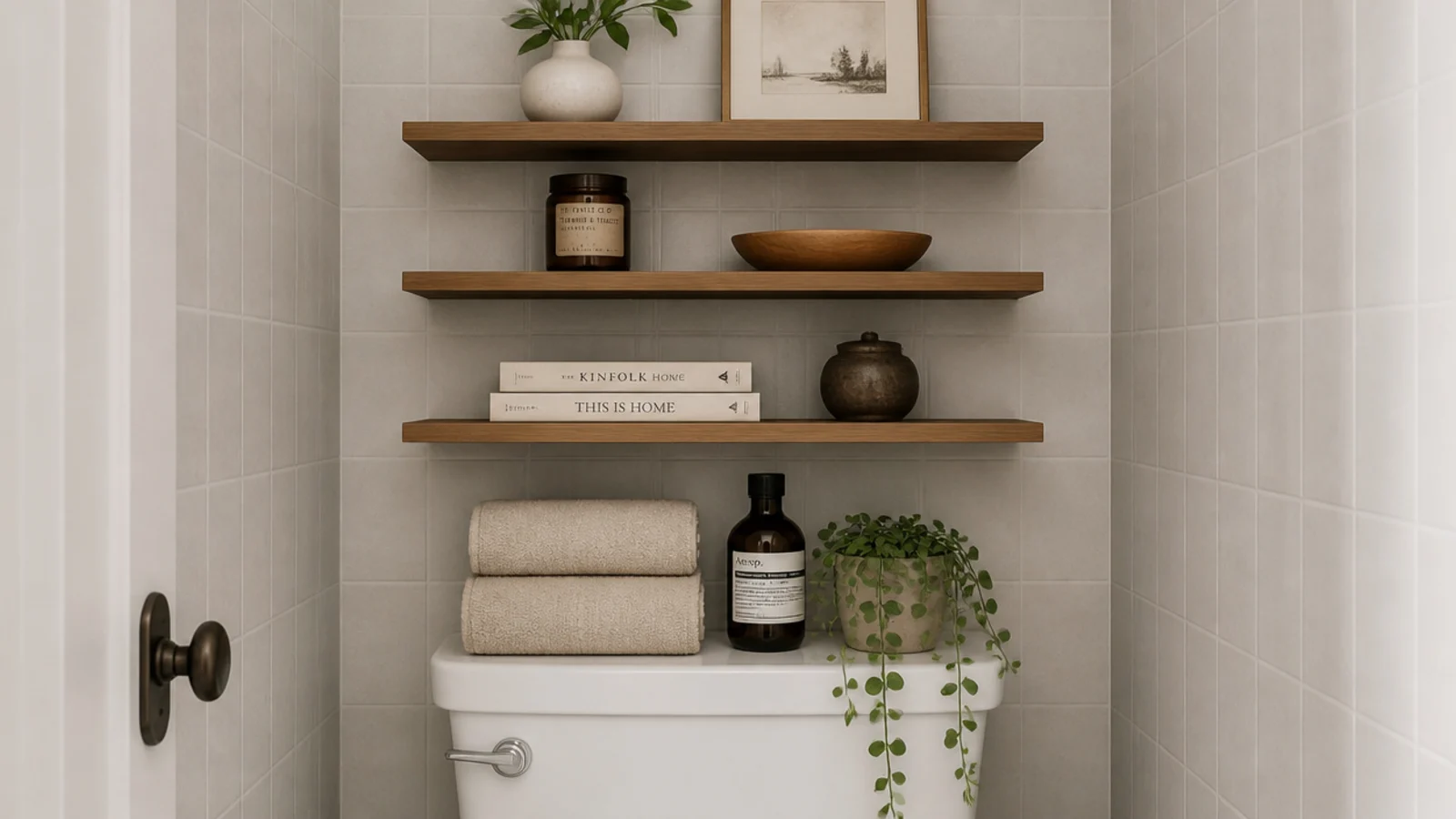
Thirty inches of dead wall sits above every toilet in the country. Three boards, 6 inches deep, spaced 11 inches apart, turn it into the only bathroom storage a small flat needs.
Start the lowest one 12 inches above the tank so the lid still lifts. Use sealed teak, bamboo or powder-coated steel — raw pine and MDF swell in a room with no window. Around $30 to $60 for the run.
2. A four-inch ledge running the length of a hallway
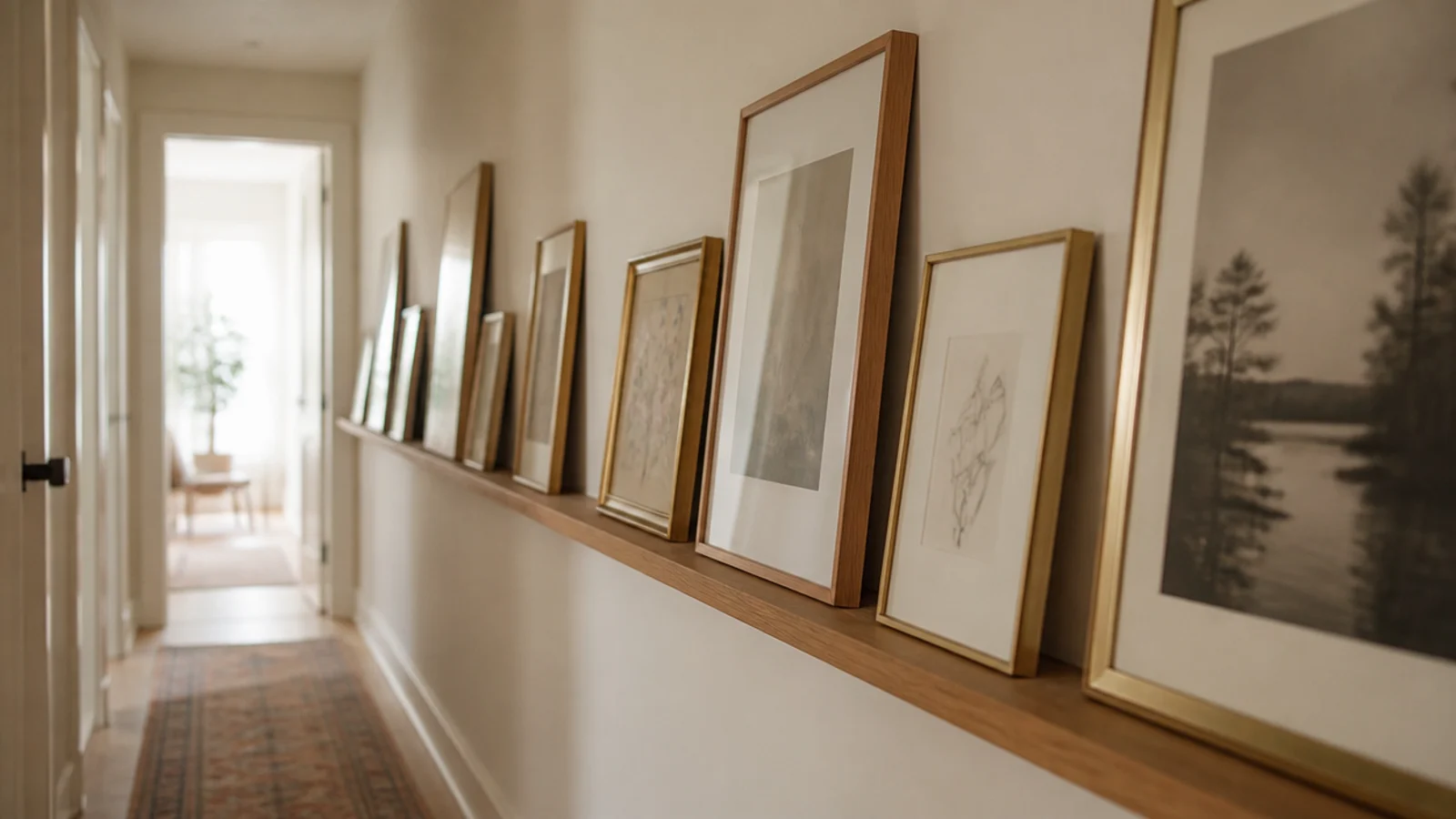
Hallways feel narrow because the walls are blank, not because they are narrow. A continuous 4-inch ledge at 60 inches gives the eye something to travel along and holds leaning art you can restyle in five minutes.
Four inches never catches a shoulder, which is the whole reason it works here. Fix into every stud you cross — usually three or four on a 10-foot run — and keep the load light.
3. A shelf that replaces the entryway console
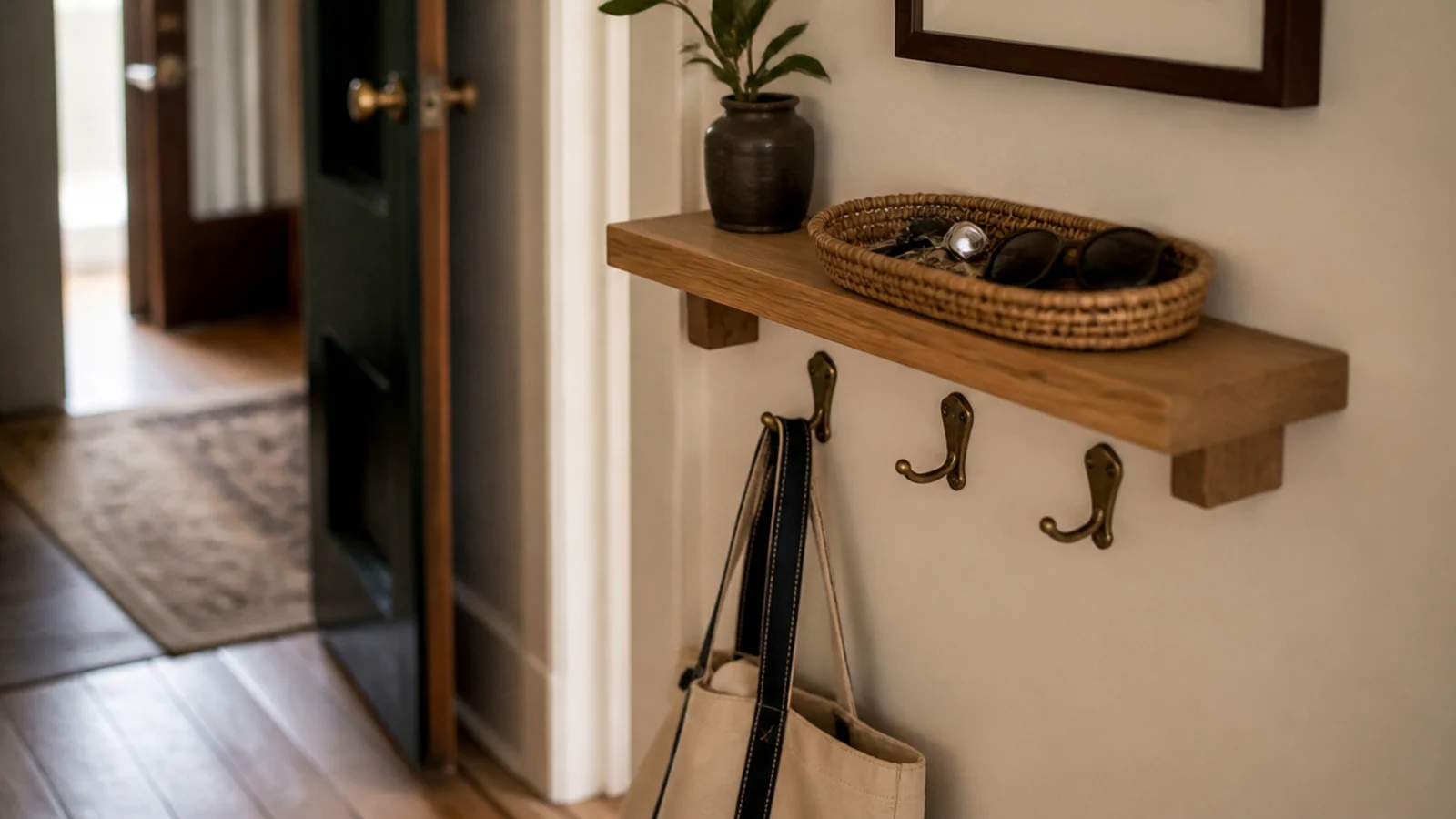
A console table in a small entry is a shin magnet. One board at 30 inches deep-set to 10 inches gives you the same drop surface with nothing under it.
Add a row of hooks 14 inches below and one shallow tray on top. Without a raised edge, keys and mail slide to the back and onto the floor. Total cost around $45, and the floor stays clear for shoes and a vacuum.
4. A desk return on the wall beside the desk
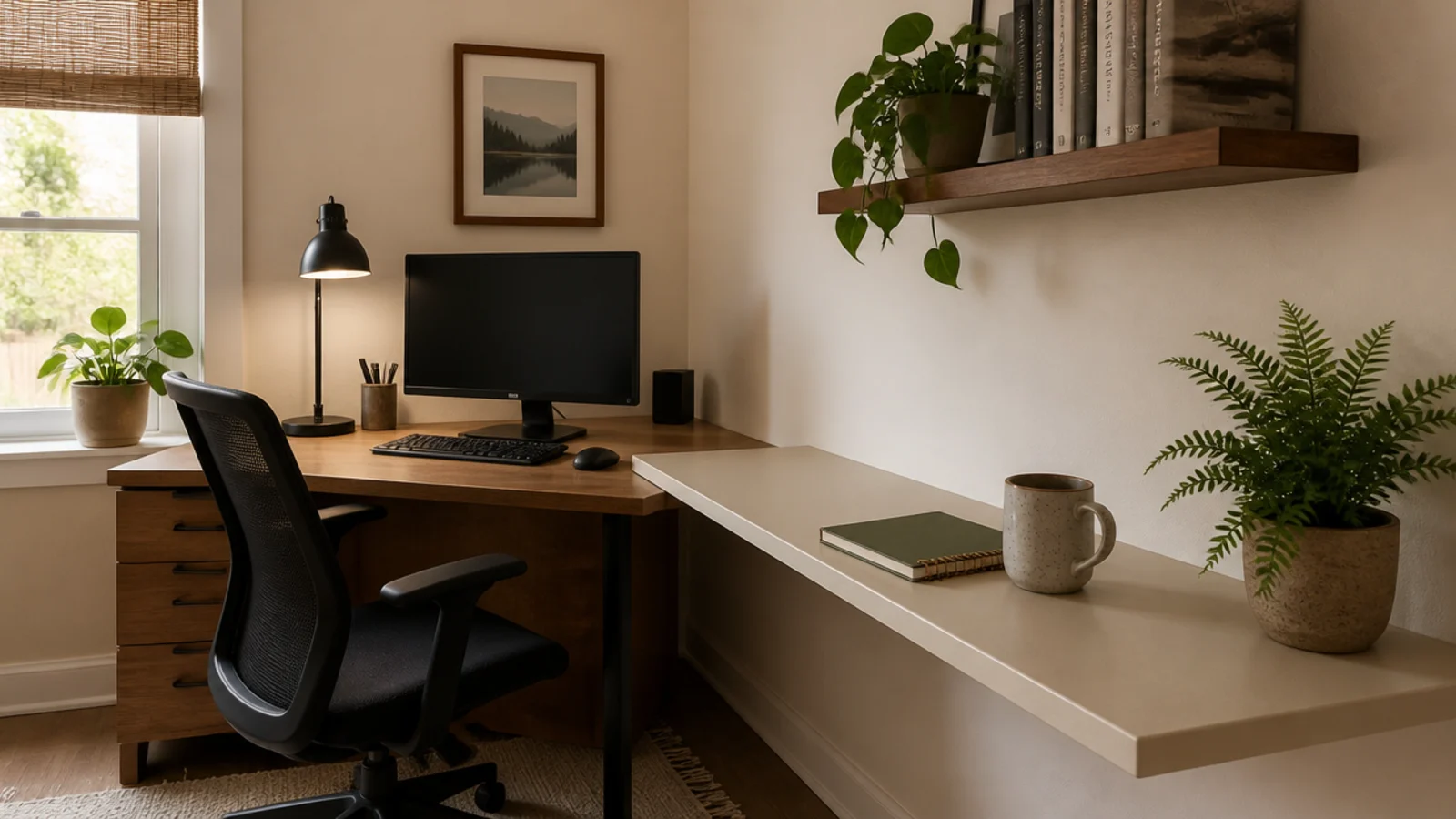
Mount a board at exactly desk height — 29 to 30 inches — on the wall running away from the desk, and the work surface effectively doubles.
Ten inches deep is right: enough for a notebook, a mug and a plant, not enough to become a dumping ground. Because the top sits level with the desk, your eye reads one continuous surface rather than two objects, which is what keeps a small office from looking cluttered.
5. One shelf under a wall-mounted TV
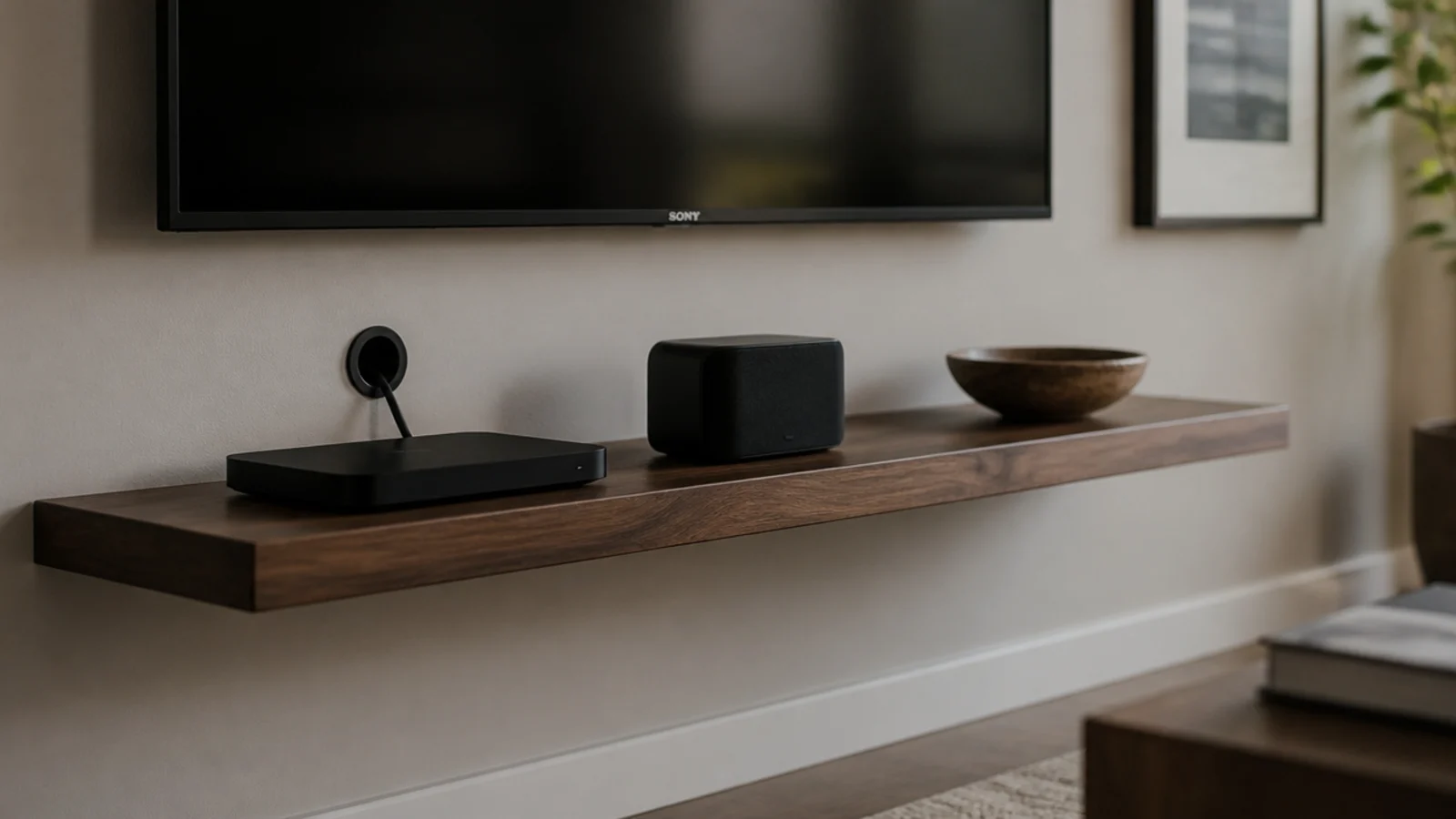
A media console eats the best wall in a small living room. One deep board 8 inches below the TV holds a streaming box, a soundbar and nothing else.
Go 10 to 12 inches deep here and fix into two studs, because electronics plus a bracket load is real weight. Drill a single grommet hole at the back for cables. That one hole is what separates a floating shelf from a shelf with a spaghetti problem.
6. A second shelf inside the closet above the rod
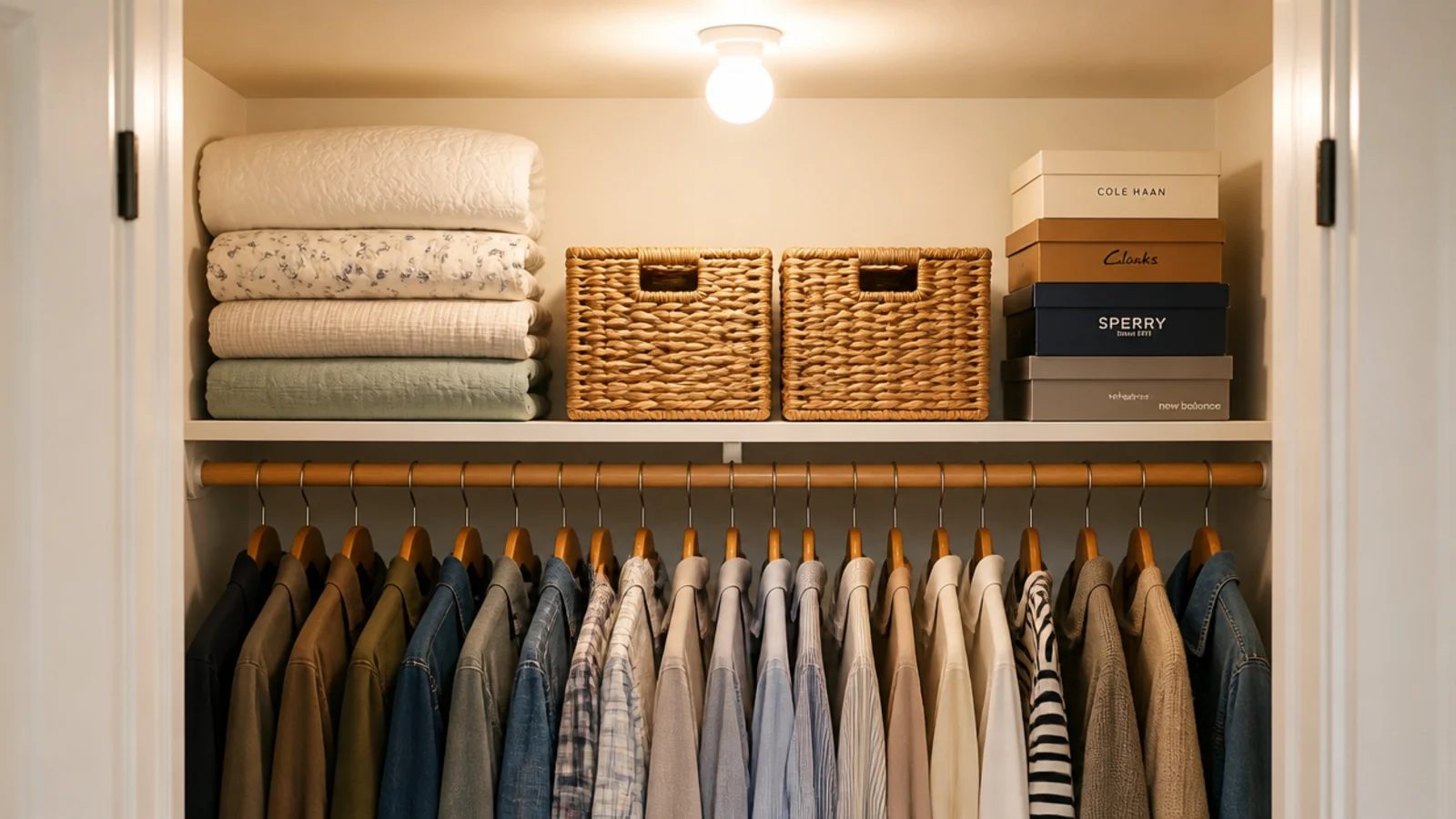
Almost every reach-in closet wastes 12 inches between the top shelf and the ceiling. A second board up there swallows out-of-season bedding, spare pillows and the suitcase.
Use plywood or solid pine at three-quarter inch and run it wall to wall on cleats — a cleat along the back and both ends carries far more than brackets ever will. It costs about $25 and it is the highest-value shelf in this list.
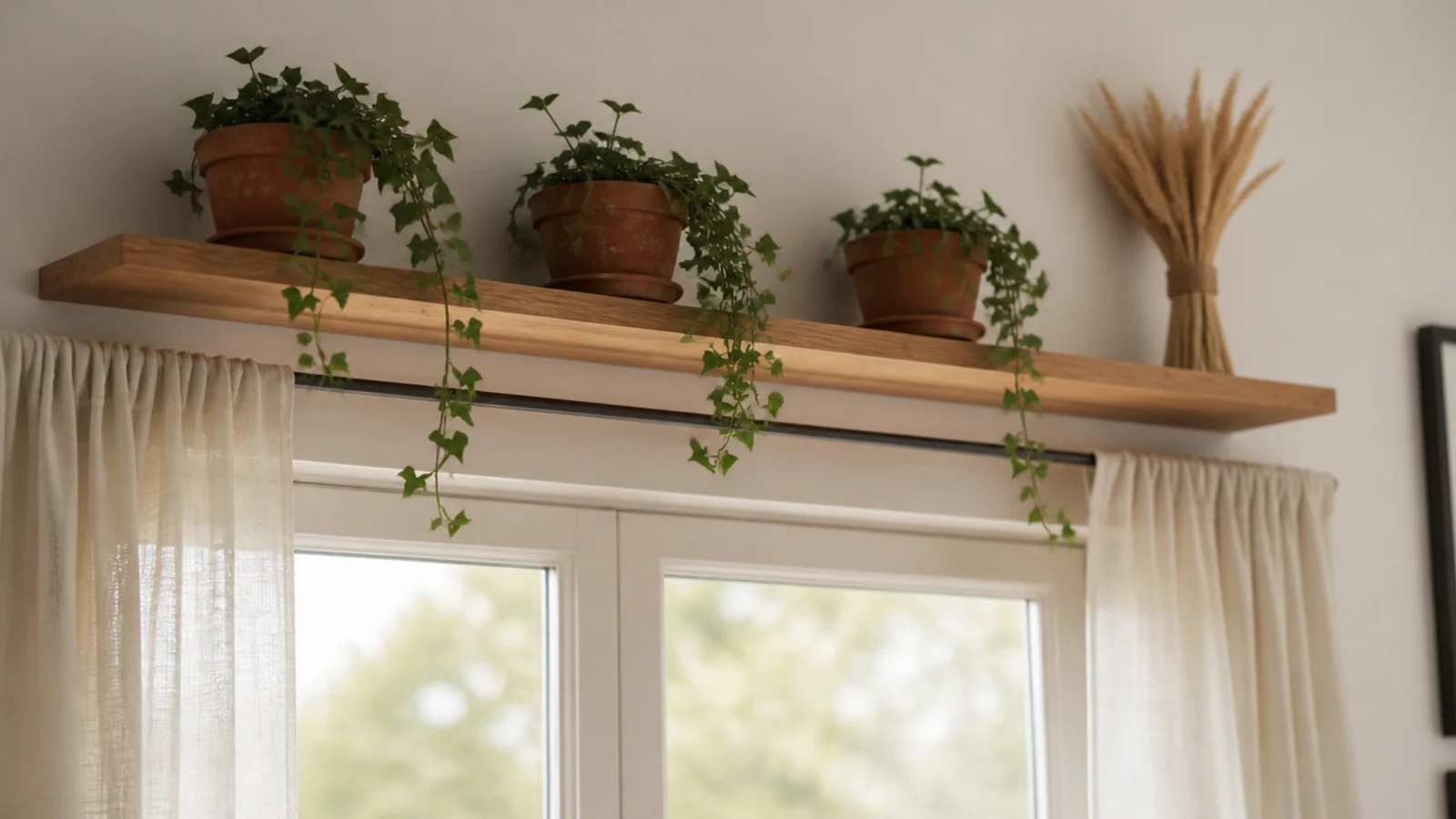
7. A shelf above the window frame
The band of wall above a window is usually 12 to 18 inches of nothing. A slim board across it draws the eye up and makes a low ceiling read taller.
Keep it to 5 inches deep and light: small pots, dried stems, a couple of framed pieces. Anything heavy up there is both hard to reach and a bad idea over glass. Match the shelf to the window trim and it looks original to the room.
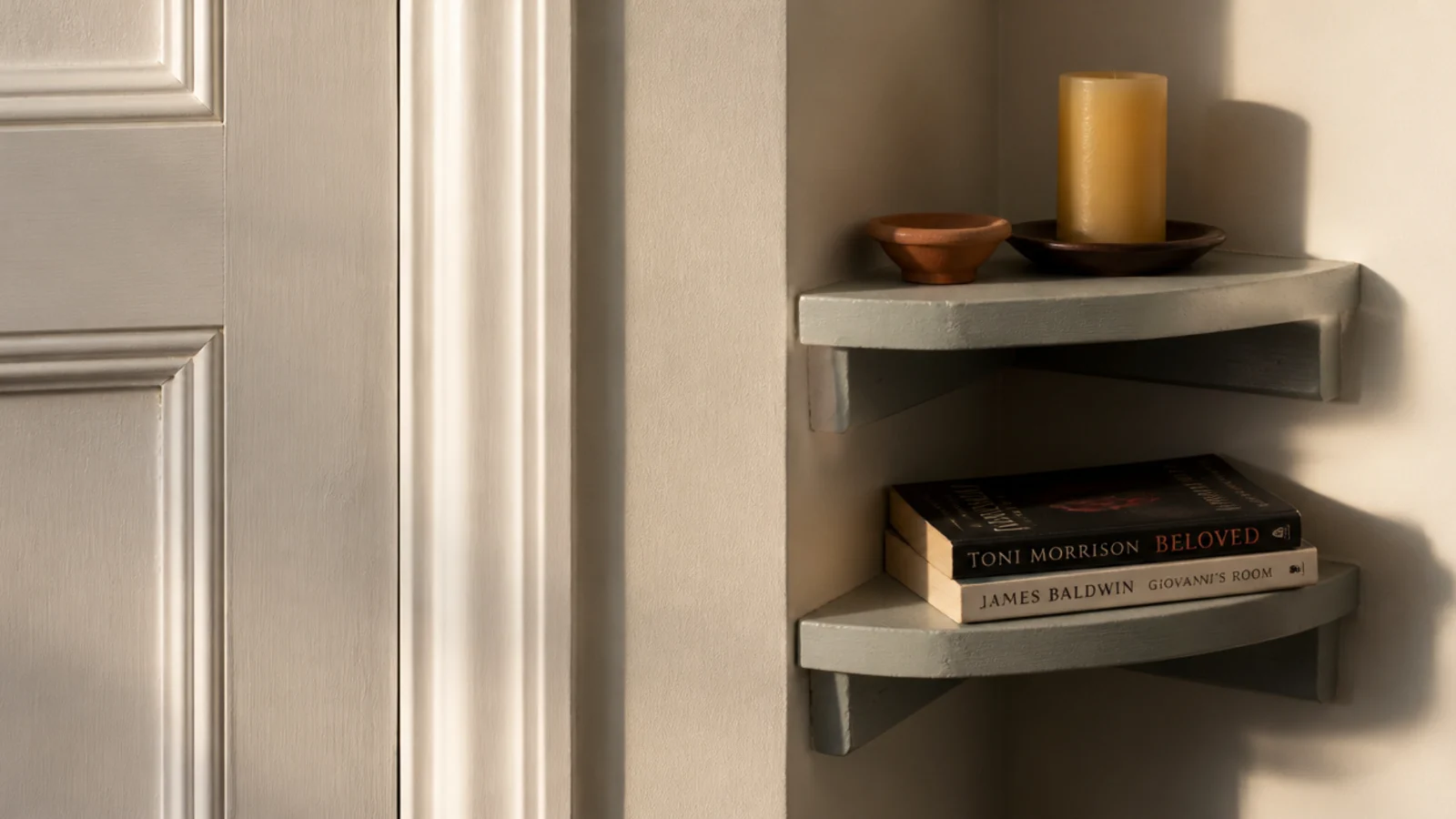
8. Two shelves in the narrow strip beside a doorway
That awkward 12-inch column of wall next to a door is a shelf waiting to happen. Two short boards there hold a candle, a small dish and two books, and they make the doorway look framed rather than accidental.
Short spans mean you can use half-inch stock without any bow. One fixing per board is genuinely enough at this size, which keeps the hole count down in a rental.
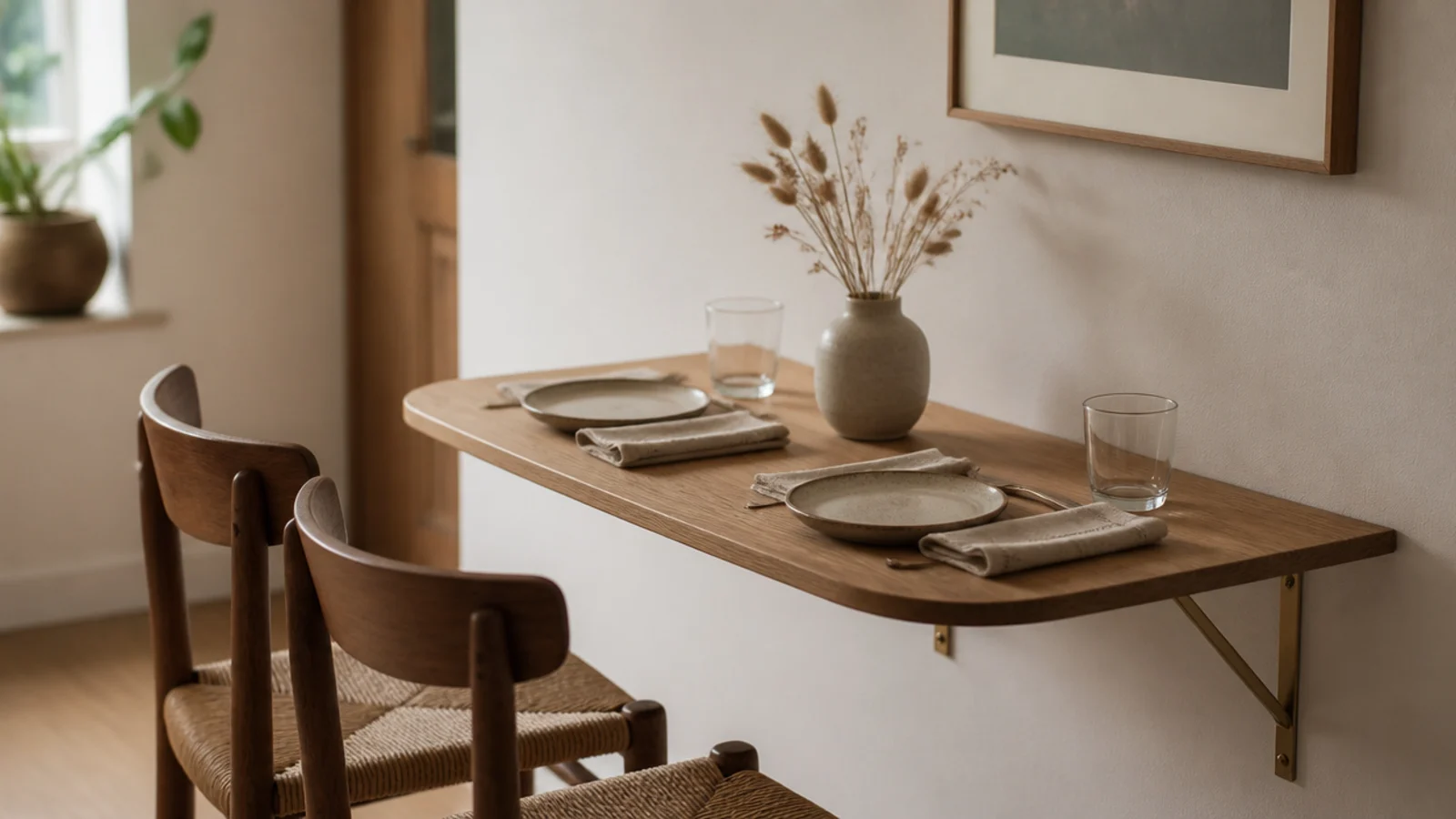
9. A drop-leaf shelf that becomes a dining table
A hinged board on folding brass supports sits flat against the wall at 4 inches deep, then drops down to a 16-inch dining surface for two.
Mount the hinge line at 30 inches. Use three-quarter-inch hardwood and fix the hinge rail into two studs, because a table is a load that moves. Expect $60 to $110 in materials and hardware, and expect it to be the thing guests comment on in a studio.
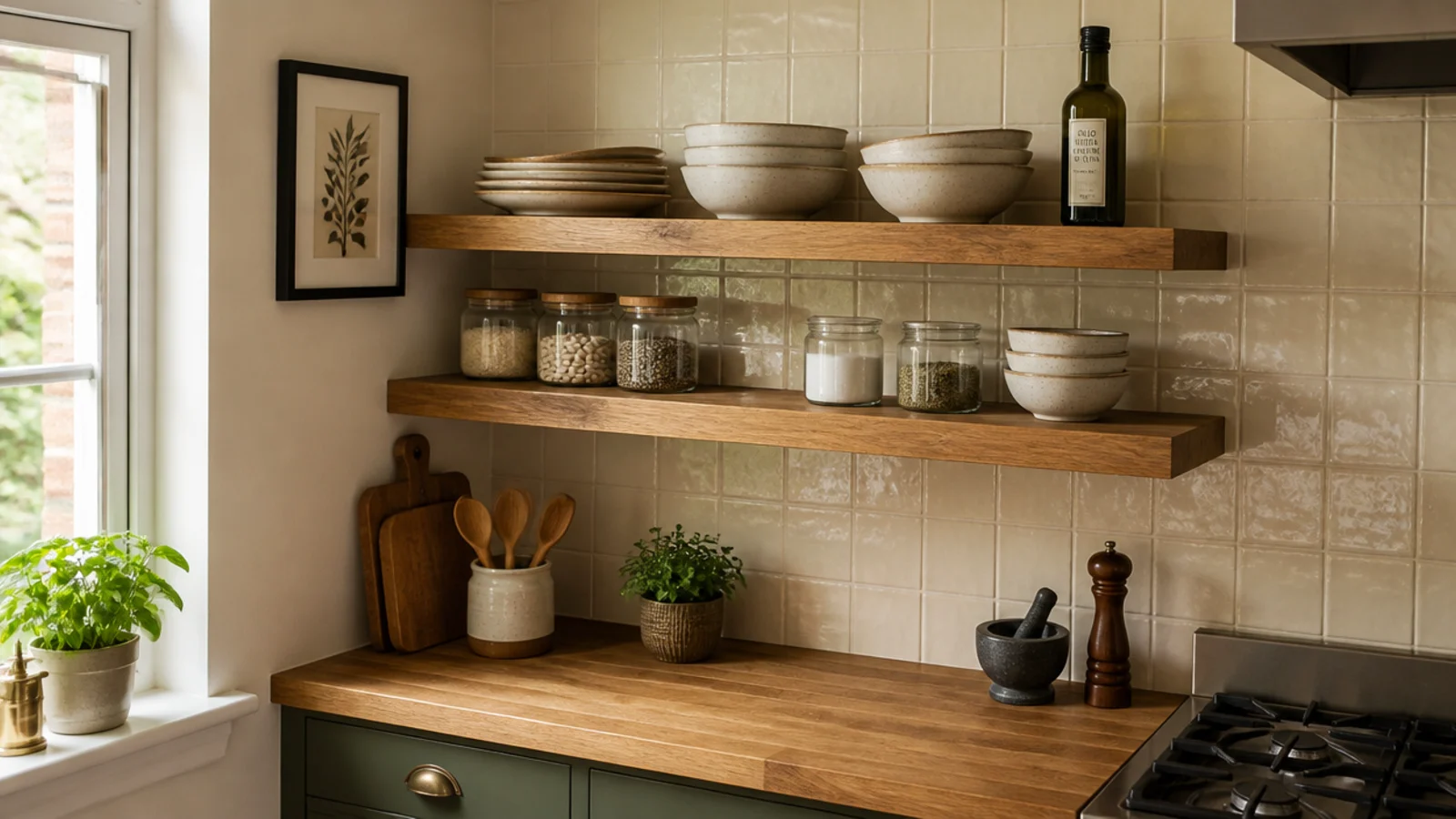
10. Open shelves where an upper cabinet used to be
Pulling one upper cabinet and replacing it with two boards makes a galley kitchen feel noticeably wider, because the wall comes back.
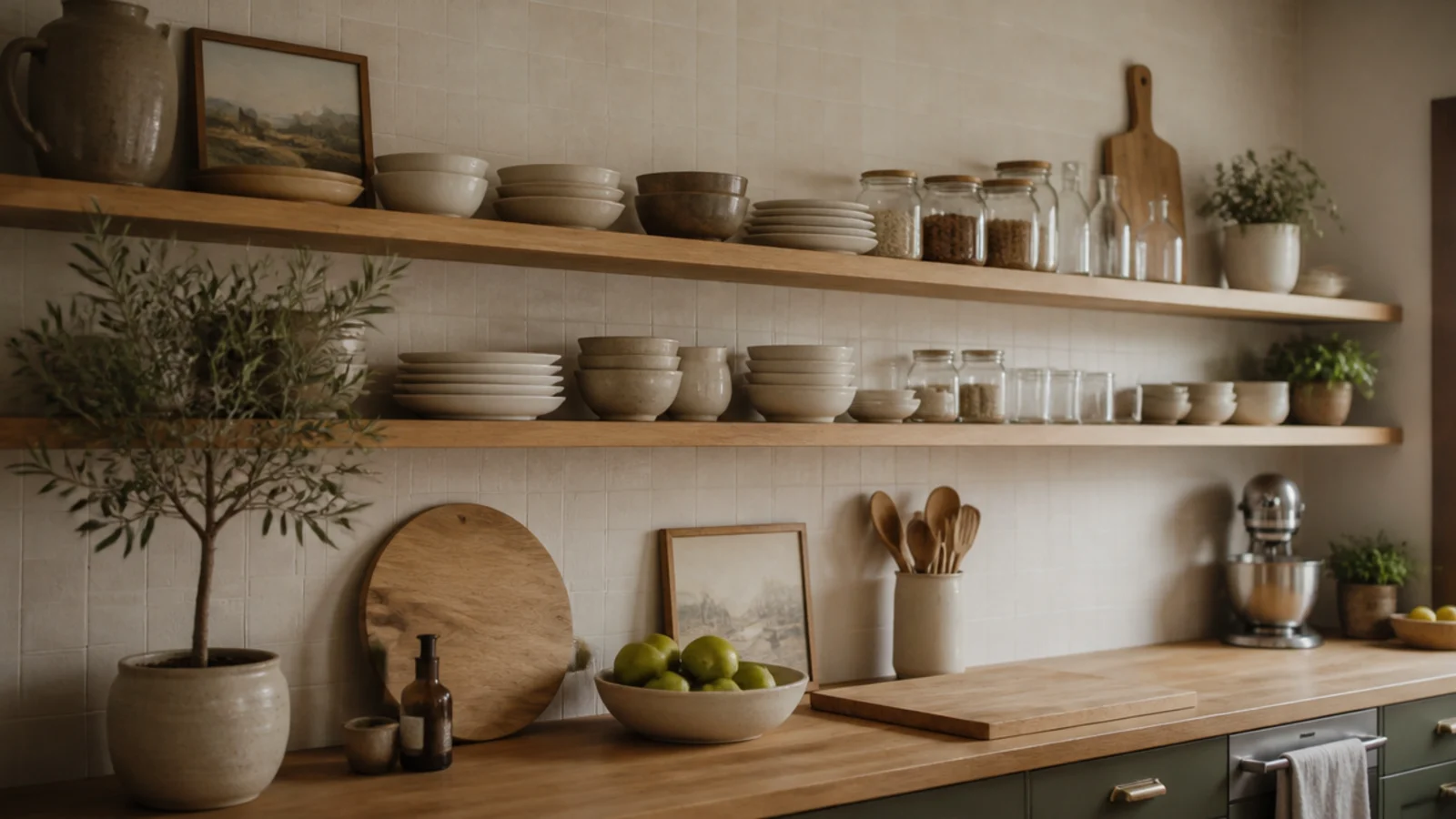
Keep the shelves at the cabinet depth you removed, usually 11 to 12 inches, and mount them on the cabinet's existing stud line. Store daily plates and glasses only — anything you use twice a year belongs behind a door. There is more on this in floating shelves in the kitchen.
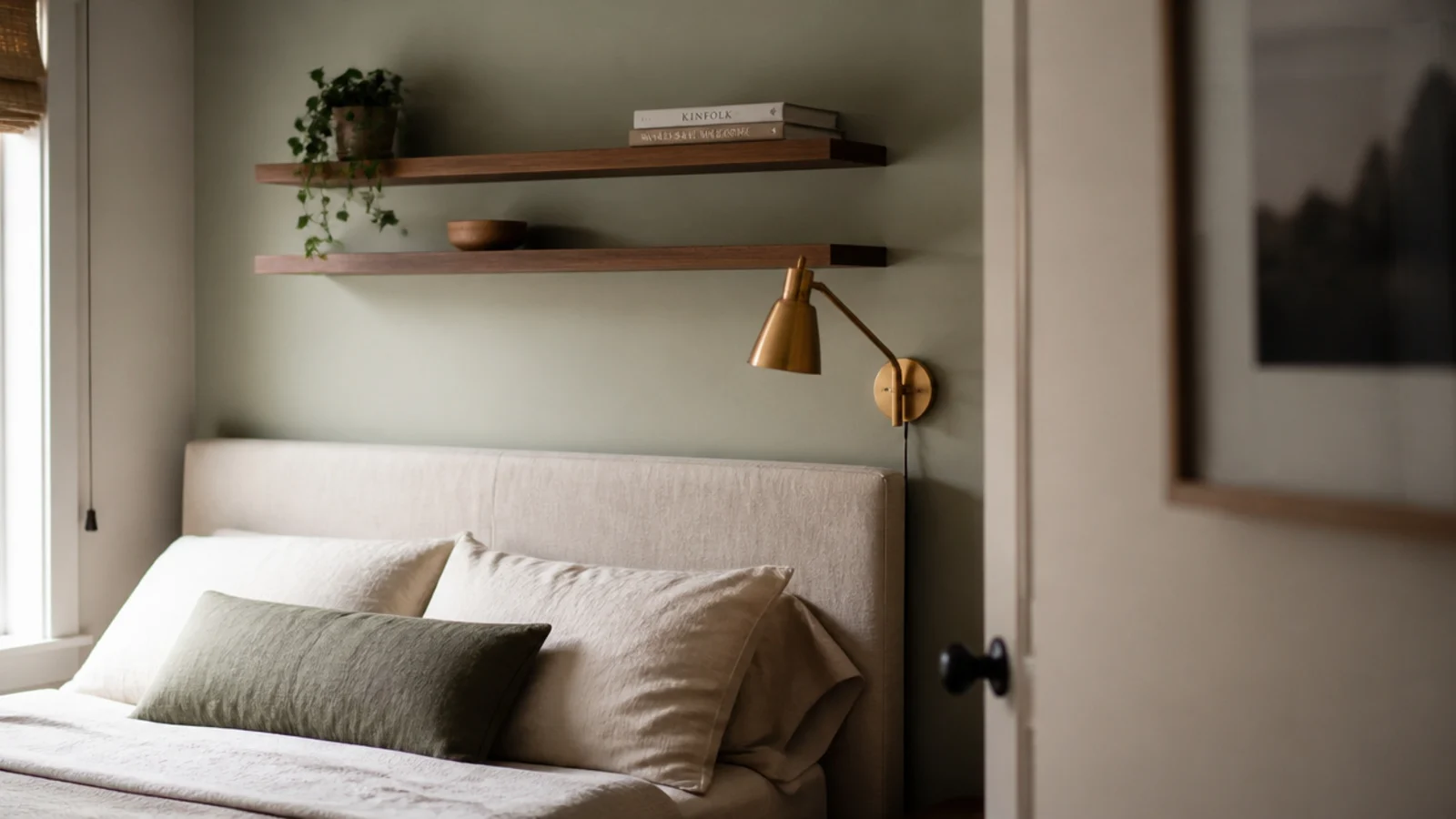
11. Shelves above the bed instead of nightstands
In a bedroom where the bed sits between two walls, shelves above the headboard replace both nightstands and give the floor back.
Mount them 14 to 16 inches above the headboard so nobody sits up into a board. Keep the depth to 6 inches and put nothing heavy or breakable up there. A small brass lamp, a book and a dish is the whole brief.
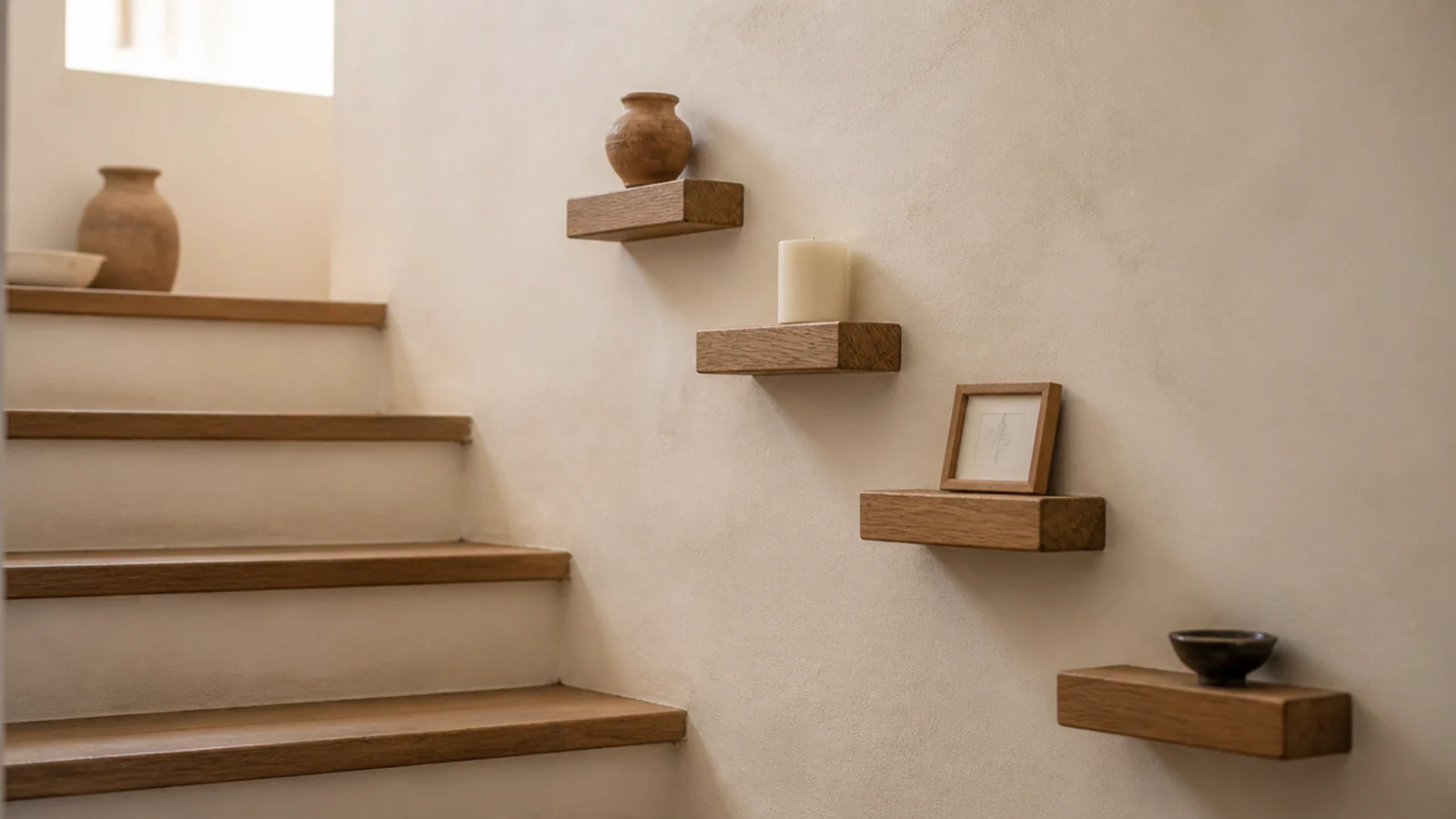
12. A stair-step run climbing a stairwell wall
Stairwell walls are tall, blank and impossible to furnish. Four short boards that climb in step with the treads turn that into the best-looking wall in a small house.
Set each board 16 inches above the tread nose below it and keep them all the same length. One object per shelf. The rhythm of the steps is doing the work, and adding more just muddies it.
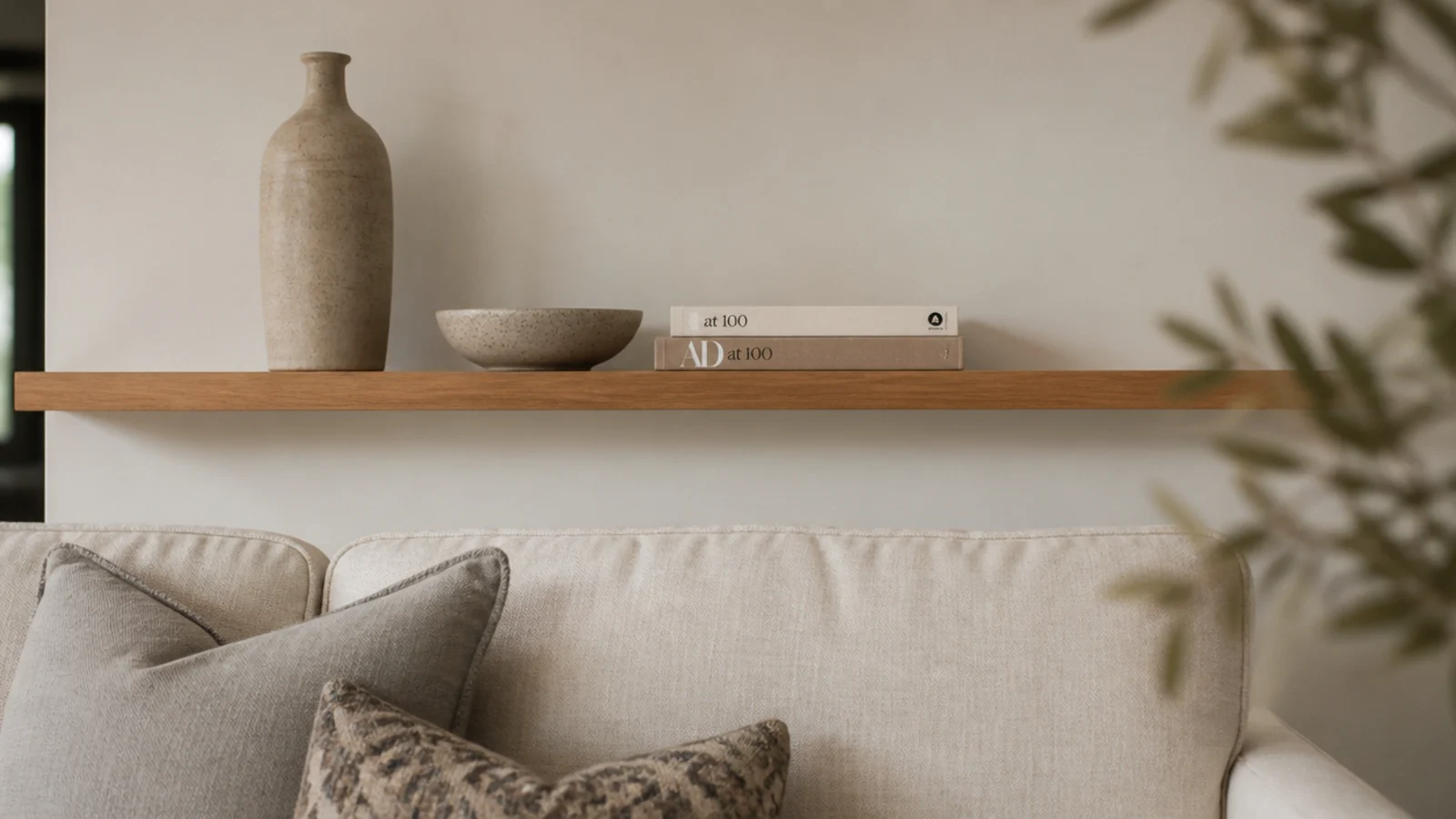
13. One long shelf above the sofa back
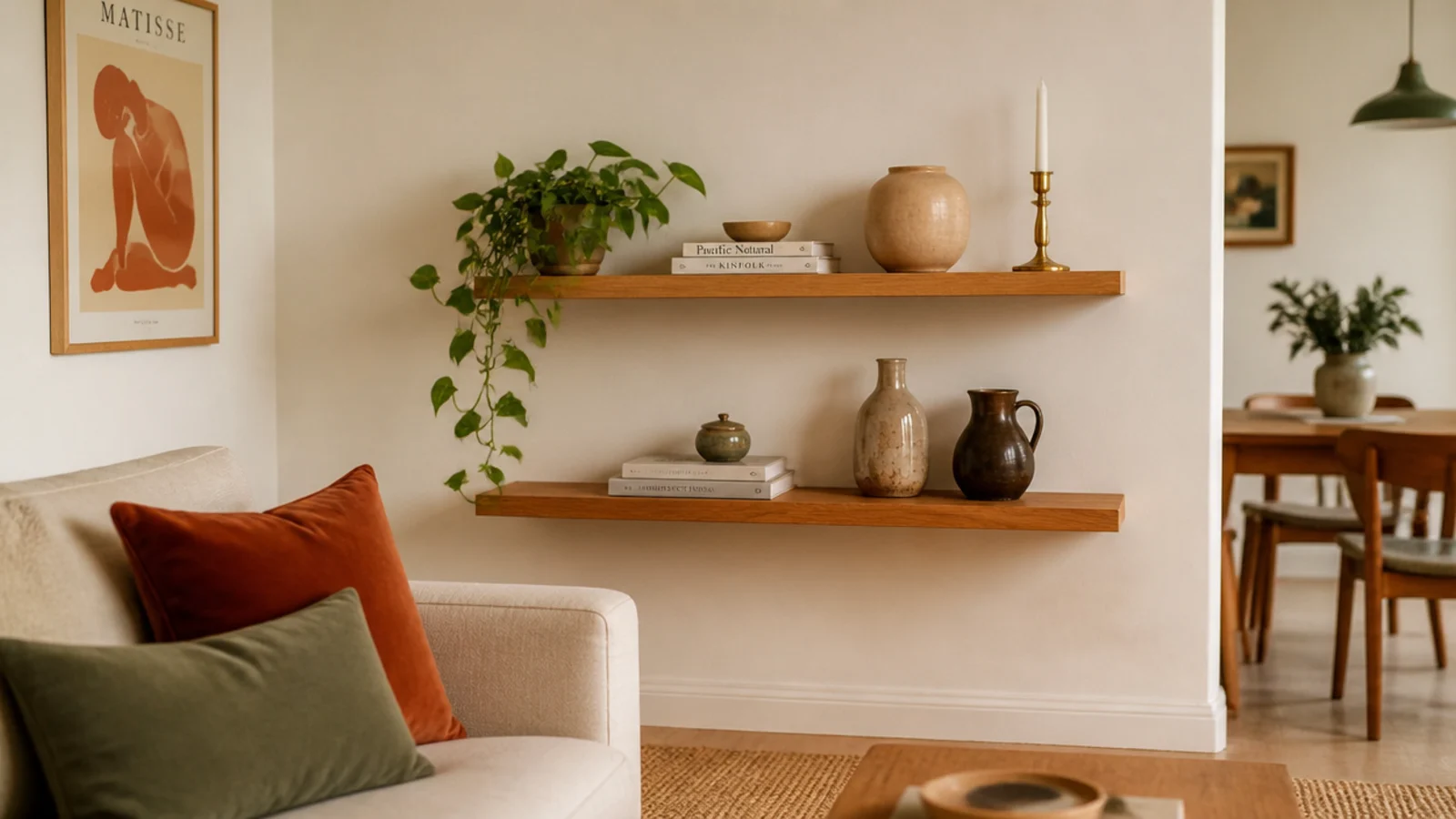
The instinct in a small room is a gallery wall. A single long board 10 to 12 inches above the sofa back is calmer, cheaper and far easier to change.
Run it to roughly two-thirds of the sofa width and centre it. Three objects at three heights, grouped rather than spread. This is the fastest way to make a rented living room look considered, and it is covered further in floating shelf styling.
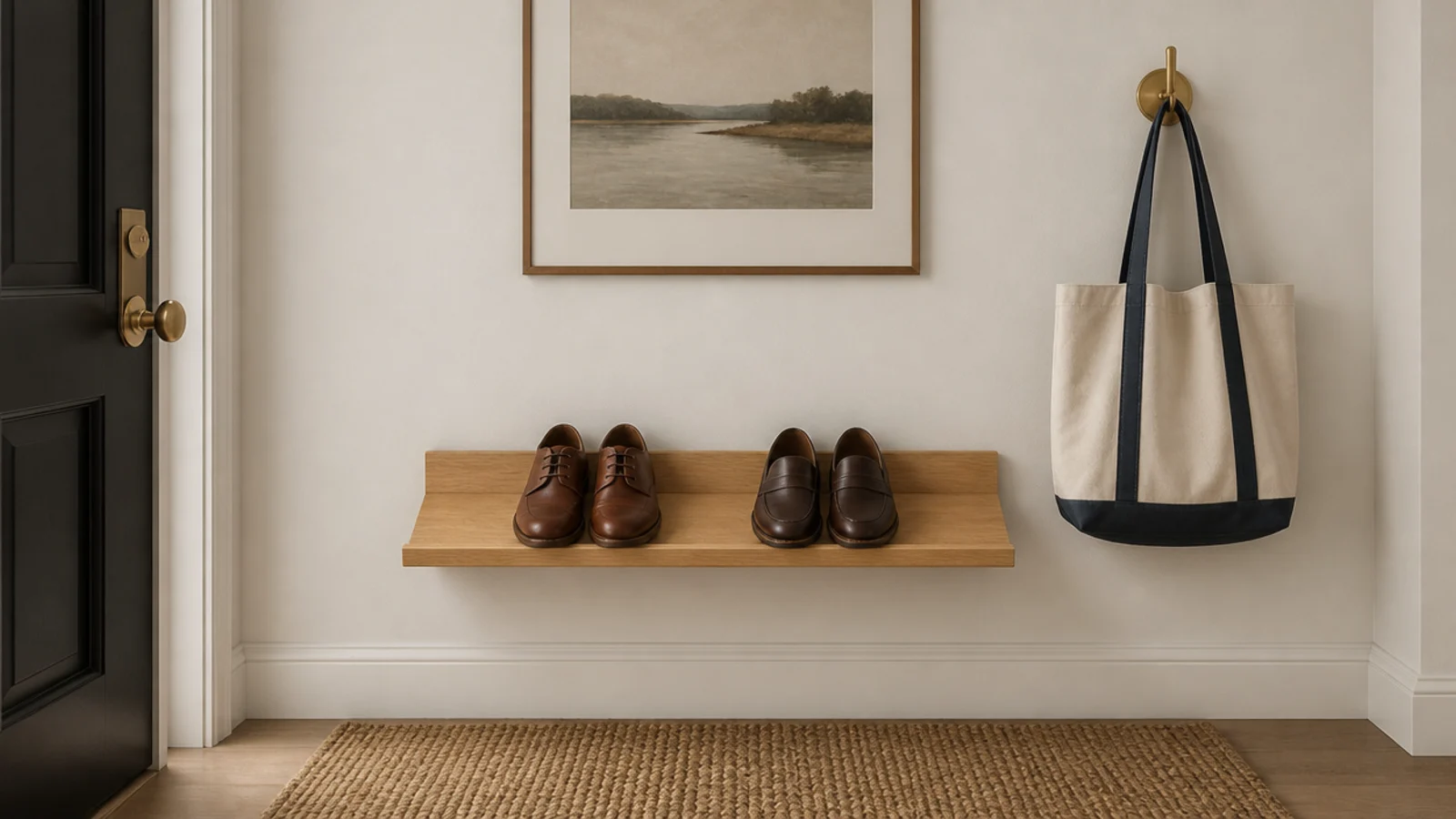
14. A shoe ledge inside the front door
Shoes in the walkway make a small entry feel half its size. A low angled ledge at 6 inches off the floor holds two or three pairs off the ground and out of the path.
Angle the board slightly back and add a front lip so heels catch. Fix it low into studs where possible, because this shelf gets kicked. Around $20 in materials and it stops the daily pile completely.
15. A plant ledge across the window
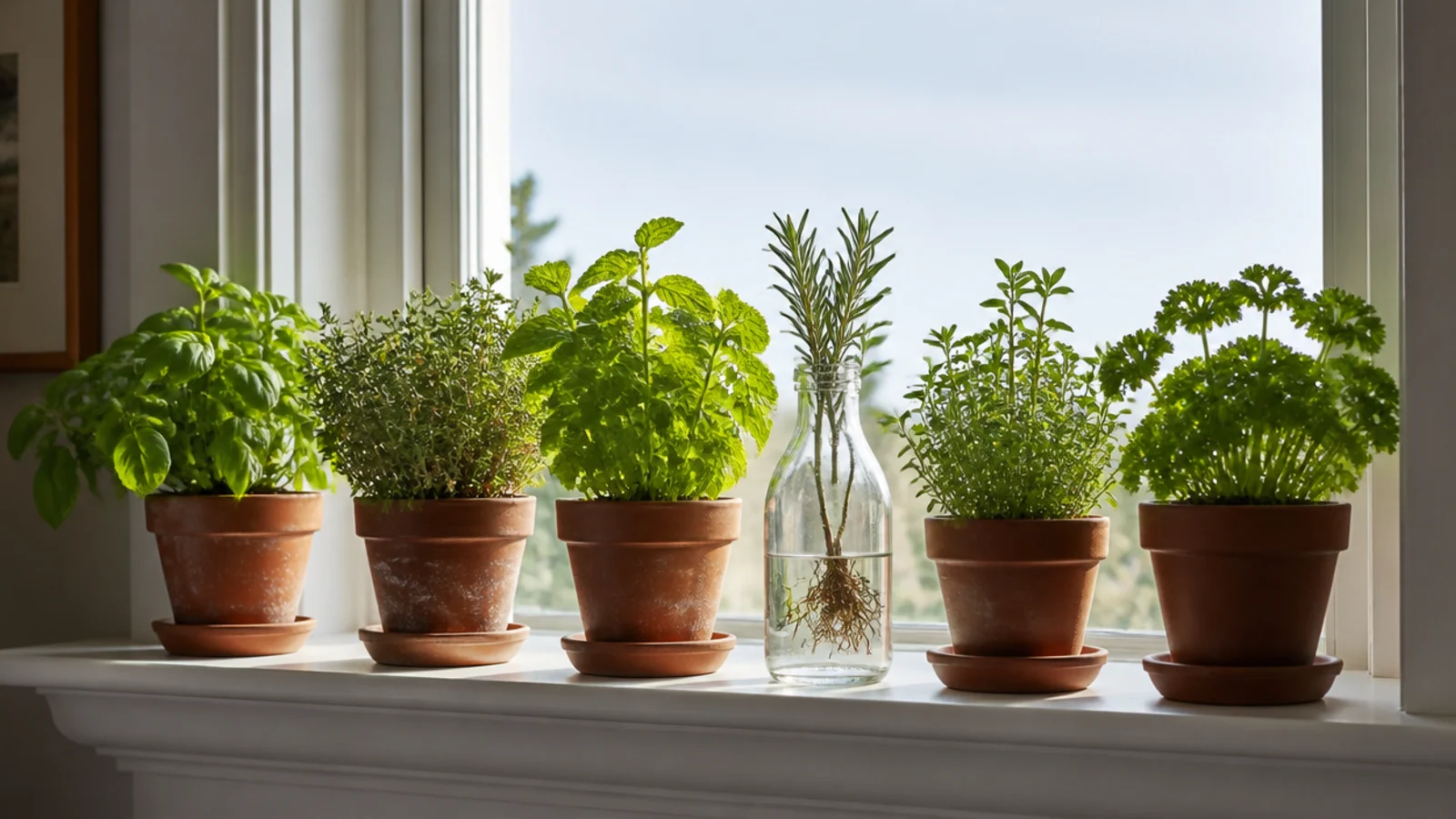
If your windowsill is 2 inches deep or nonexistent, a slim ledge across the lower third of the window gives plants the light without stealing furniture surface.
Use a 4-inch painted board with a lip, fixed into the window frame studs on each side. Small pots only, and put a saucer under every one. Backlit leaves against a bright window are the best free decoration in a small room.
16. A shelf that turns a landing into a reading nook
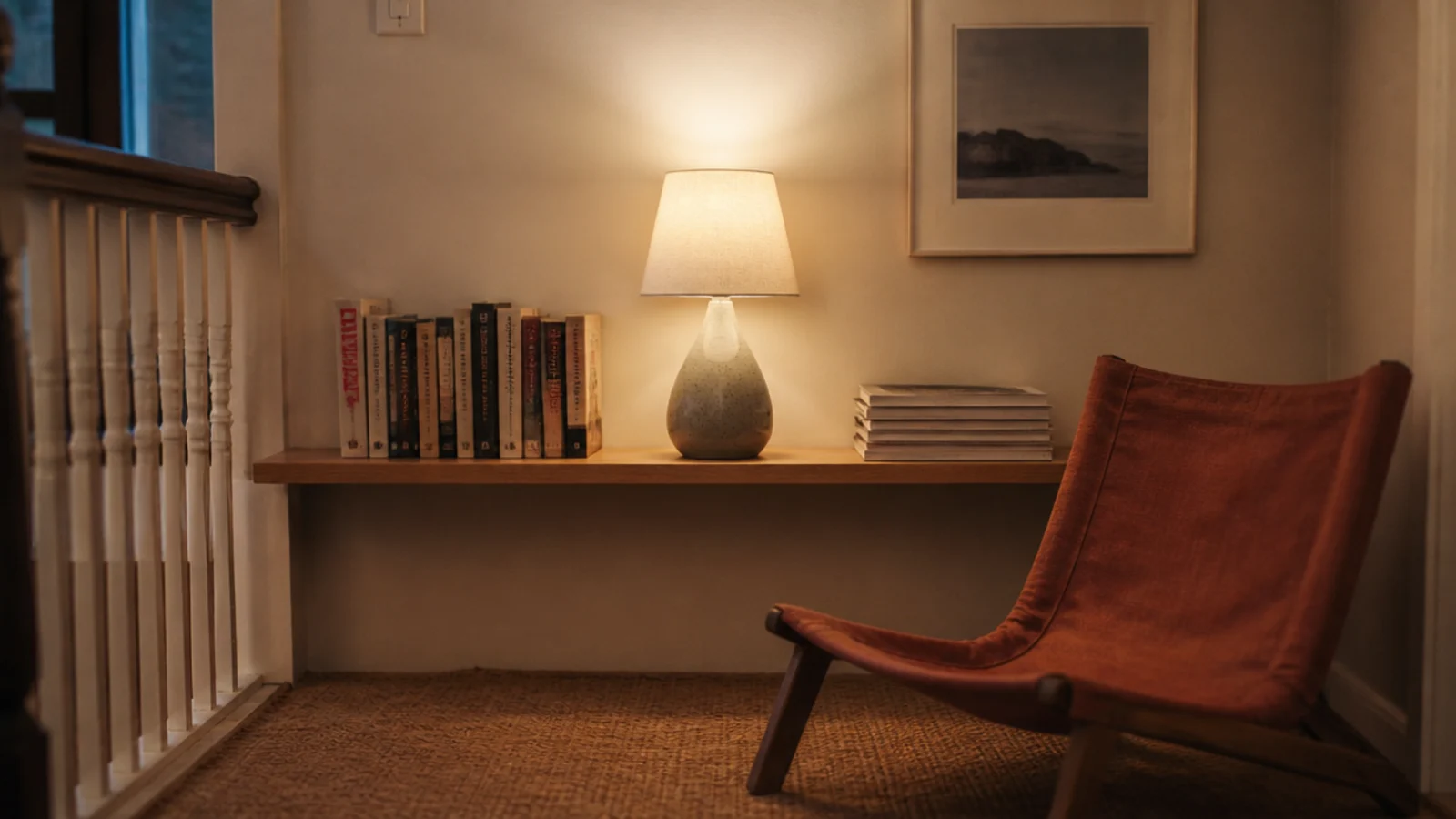
A landing is a room that nobody has claimed. One board above a low chair, a lamp and a stack of paperbacks turns three square feet into somewhere people actually sit.
Mount the shelf 16 to 18 inches above the chair back so you can lean without hitting it. Keep it to 8 inches deep. A warm 2700K bulb does more here than any object on the shelf.
17. A micro shelf under the upper cabinets
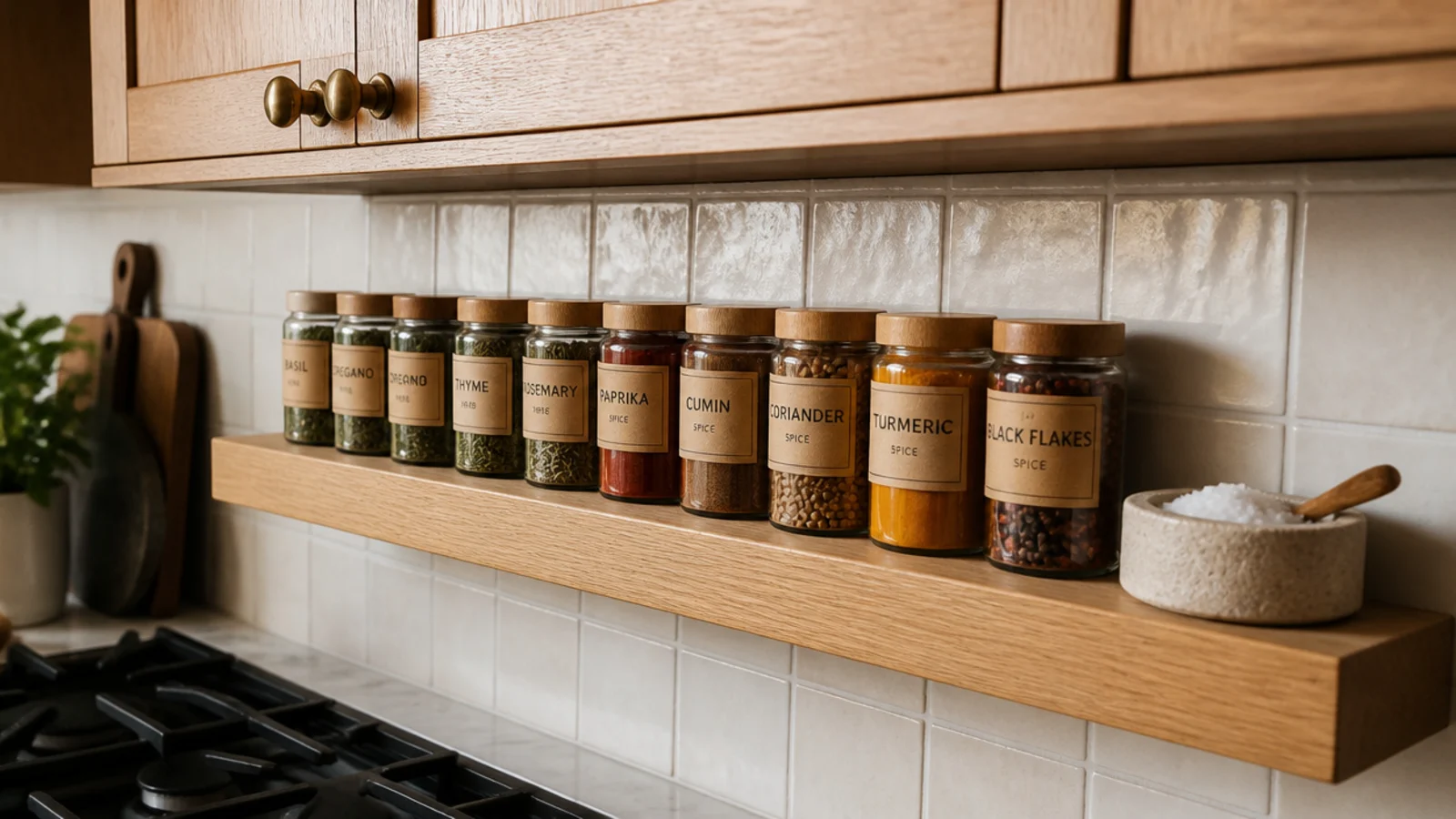
The 15 inches between counter and cabinets is prime real estate that most kitchens ignore. A 3-inch ledge fixed under the cabinet bottoms holds the spices and oils you reach for daily.
Screw up into the cabinet base rather than into the wall — no anchors, no patching, and it comes off in a minute. Keep it to jars you refill; the moment a rarely used spice lands there, the ledge starts collecting.
18. A vanity ledge in a bathroom with no counter
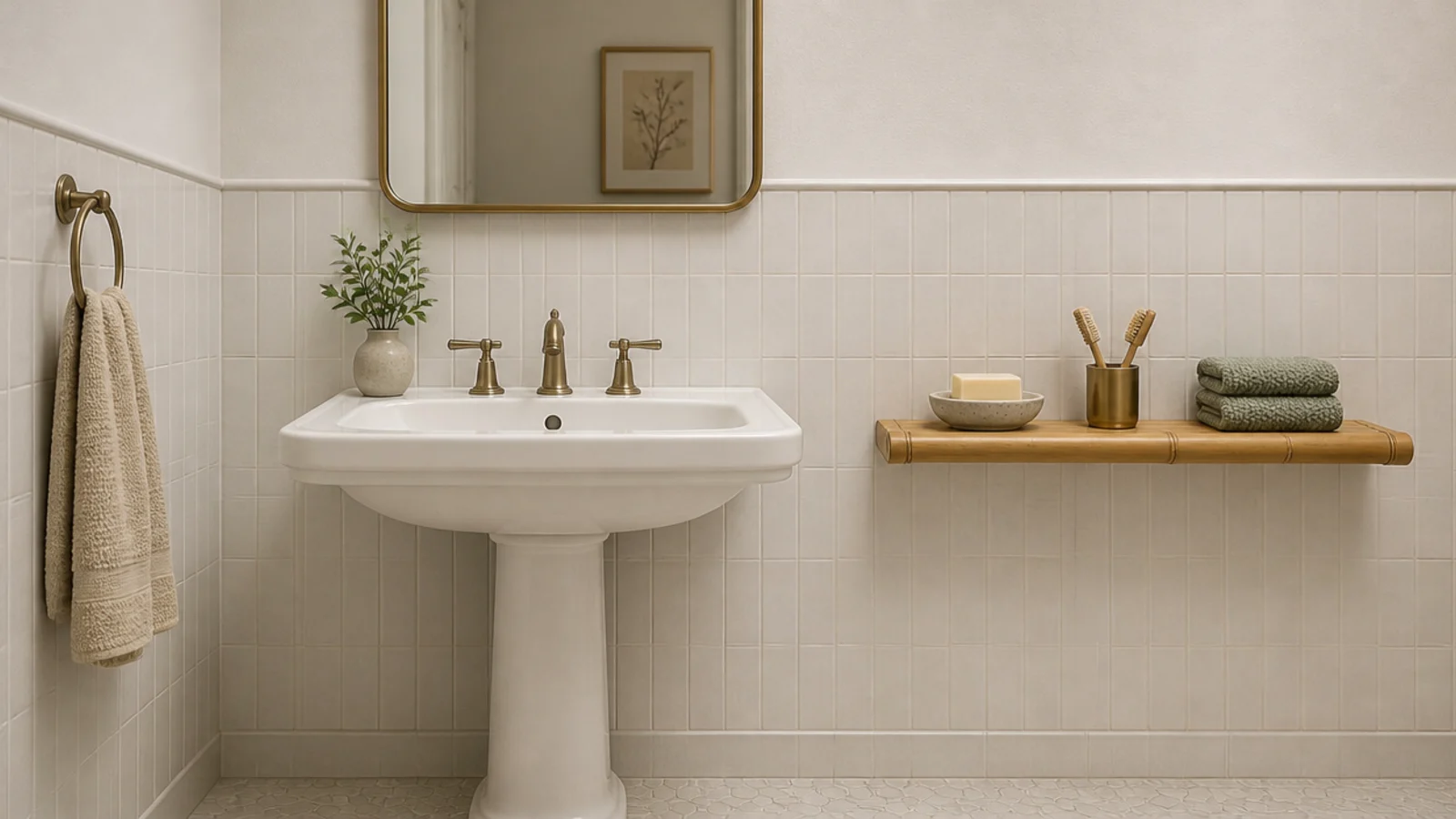
Pedestal sinks are beautiful and useless. A short sealed ledge on the adjacent wall at 40 inches gives you the missing counter without changing the plumbing.
Six inches deep, in sealed teak, bamboo or solid surface. Add a small lip if you keep anything round on it. This is a $25 fix for a problem people usually solve by replacing the whole sink.
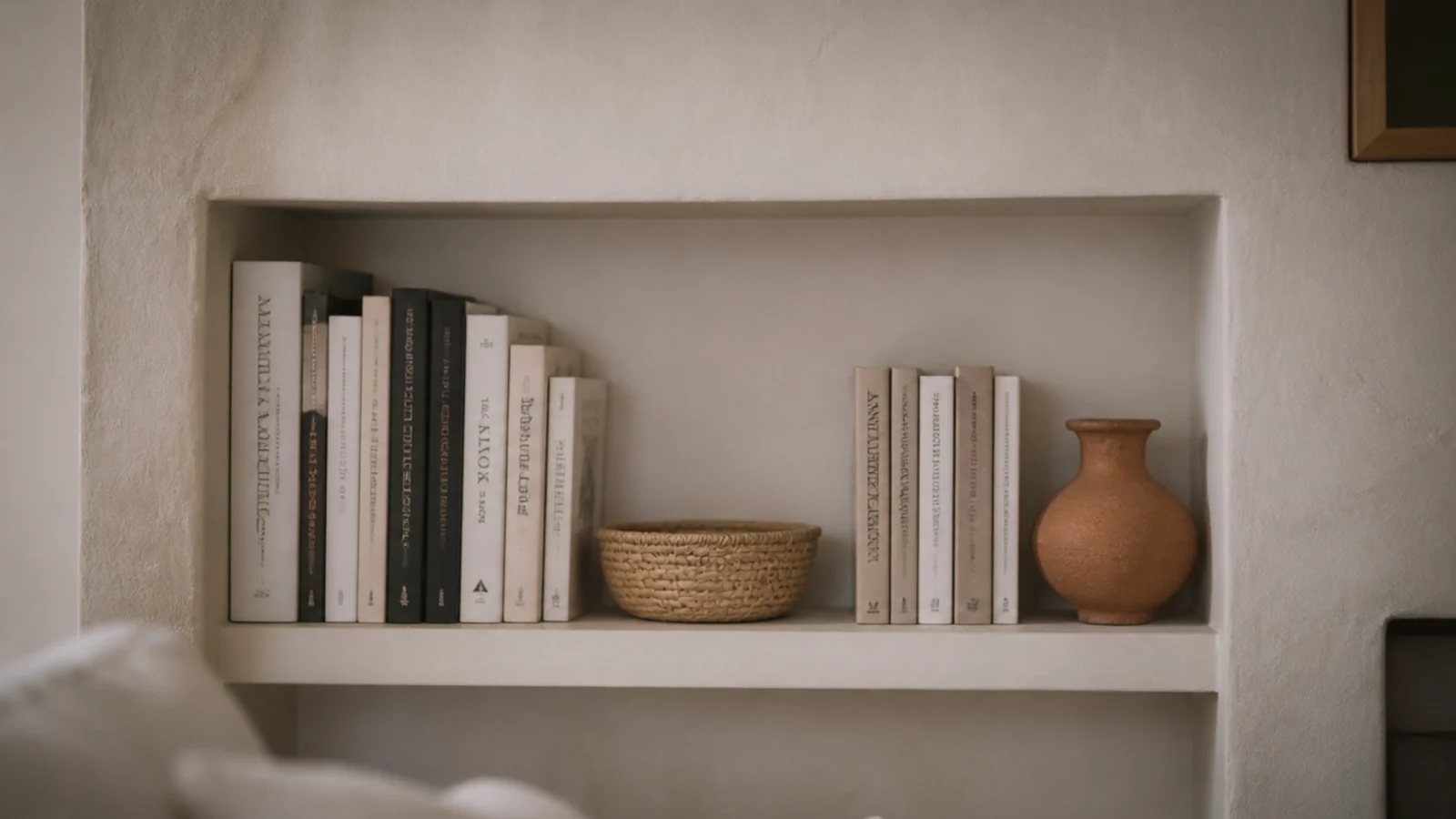
19. A shelf that spans an alcove wall to wall
A board cut to fit exactly wall to wall in a shallow alcove reads as built-in joinery rather than a shelf, because there is no visible end.
Support it on a cleat along the back and both ends and you need no brackets at all. Paint it and the surrounding wall the same color so the whole recess reads as one piece. Materials run $30 to $50 per shelf.
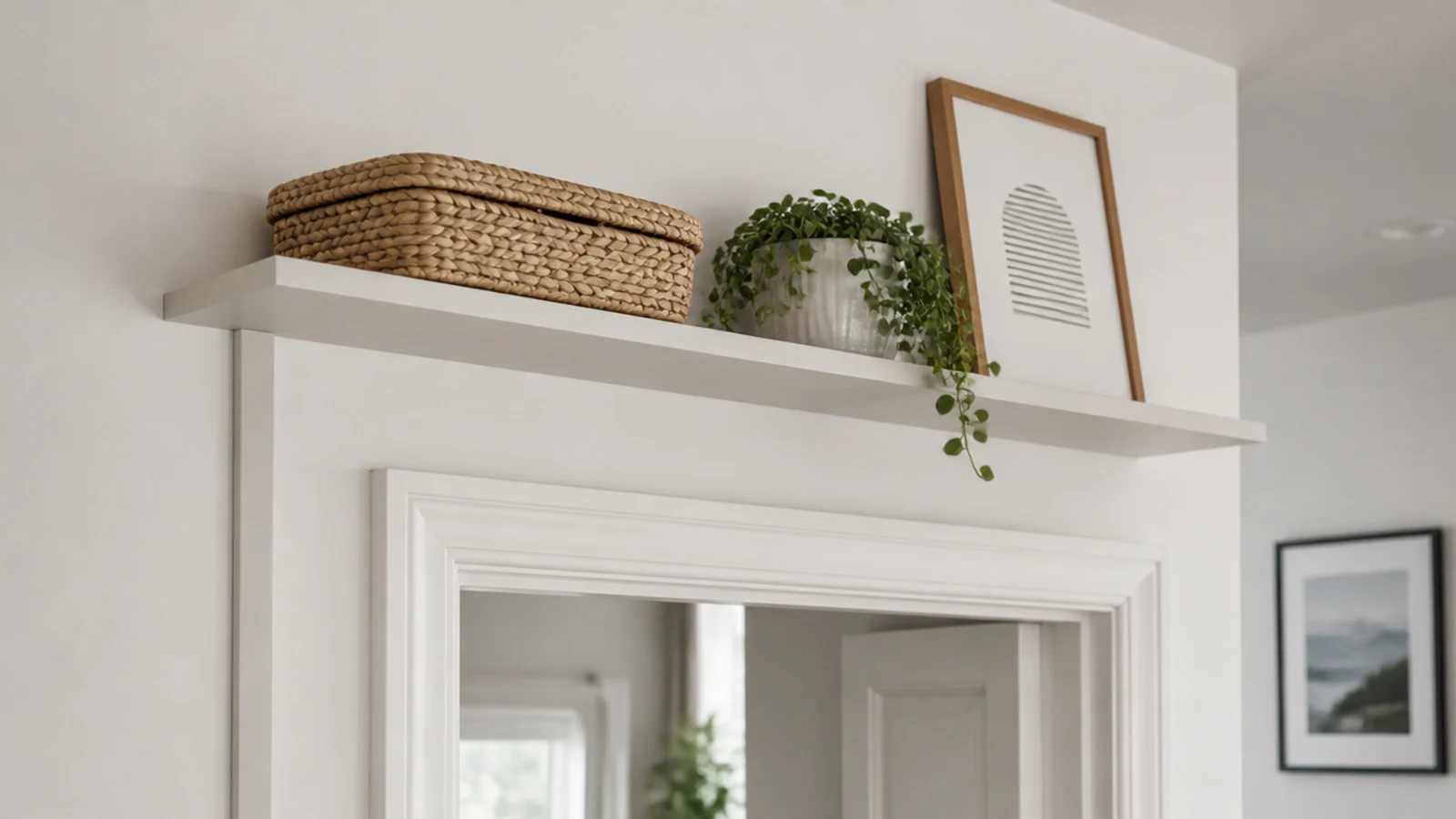
20. A shelf that hides the router and the cables
Small flats have nowhere to put the router, so it sits on the floor collecting dust. A high shelf near the door with a shallow lidded basket on it solves that permanently.
Better signal, no visible box, and one adhesive cable channel painted the wall color runs the lead down out of sight. Keep the shelf at 70 inches or higher so it is above eye level and stops registering.
Mistakes to Skip
- Choosing a 12-inch depth in a room where you walk past the shelf. You will clip it within a week, and the extra depth doubles the pull-out force on the anchors for no real gain.
- Hanging shelves high because the low wall is occupied. A shelf above 6 feet is storage you cannot reach, and in a small room it visually drops the ceiling.
- Filling every shelf to the ends. In a compact space a full board reads as a cupboard with the door missing; leaving a third empty is what makes it look deliberate.
Frequently asked questions
How deep should a floating shelf be in a small room?
Four to six inches for hallways, behind doors and anywhere you walk past. Eight inches for living rooms and bedrooms with a clear walkway. Depth also drives leverage, so a 12-inch shelf pulls twice as hard on its anchors as a 6-inch one carrying the same load. Shallow shelves hold far more than people expect and never catch a shoulder.
Do floating shelves make a small room look bigger?
They do, because they move storage off the floor and floor area is what your eye reads as room size. A shelf holding what used to sit in a basket on the ground genuinely opens a small room up. Paint the shelves the same color as the wall to make them recede further, and keep the top surface clear of clutter.
How much weight will a shelf hold in a narrow hallway?
The fixing sets the limit. A concealed rod bracket into a stud carries 30 to 40 pounds on a 24-inch shelf. Toggle bolts in half-inch drywall carry 25 to 35 pounds each. Supplied plastic plugs manage about 10 pounds and cause most sagging. In a hallway keep loads light anyway, because people brush past shelves there daily.
What is the best height for shelves above a sofa or bed?
Ten to twelve inches above a sofa back, and 14 to 16 inches above a headboard so nobody sits up into it. Above a desk, 16 to 18 inches clears a monitor and a mug. The rule underneath all three is simple: leave enough clearance that you never think about the shelf while using the furniture below.
Can floating shelves replace furniture in a studio?
For nightstands, consoles and small desks, yes, and the floor space you get back is worth more than the surface you lose. A shelf at mattress height replaces a nightstand entirely. A 10-inch deep board at 30 inches replaces an entry console. Anything that needs drawers or carries over 40 pounds still wants real furniture.
Start with the wall you pass most and put up one shallow board at a height you can reach without stretching. Small rooms reward restraint more than any other kind — one long shelf almost always beats three short ones. The affordable renter-friendly ideas guide covers no-drill options, and if the space you are fixing is an awkward corner rather than a flat wall, corner shelves for small spaces has the measurements. Save the pin so the depths are with you when you measure.
Want more like this? Browse all 15 floating shelves guides — they all use the same measurements and budget tiers.
Pin it for later
Save this to your Floating Shelves board
Pin it now so it is waiting for you when the tape measure comes out — and so the next person hunting for this idea can find it too.
Save this pinKeep going
More ideas worth saving while you have the tape measure out.