Floating Shelves · Listicle
15 Affordable Floating Shelf Ideas for Renters

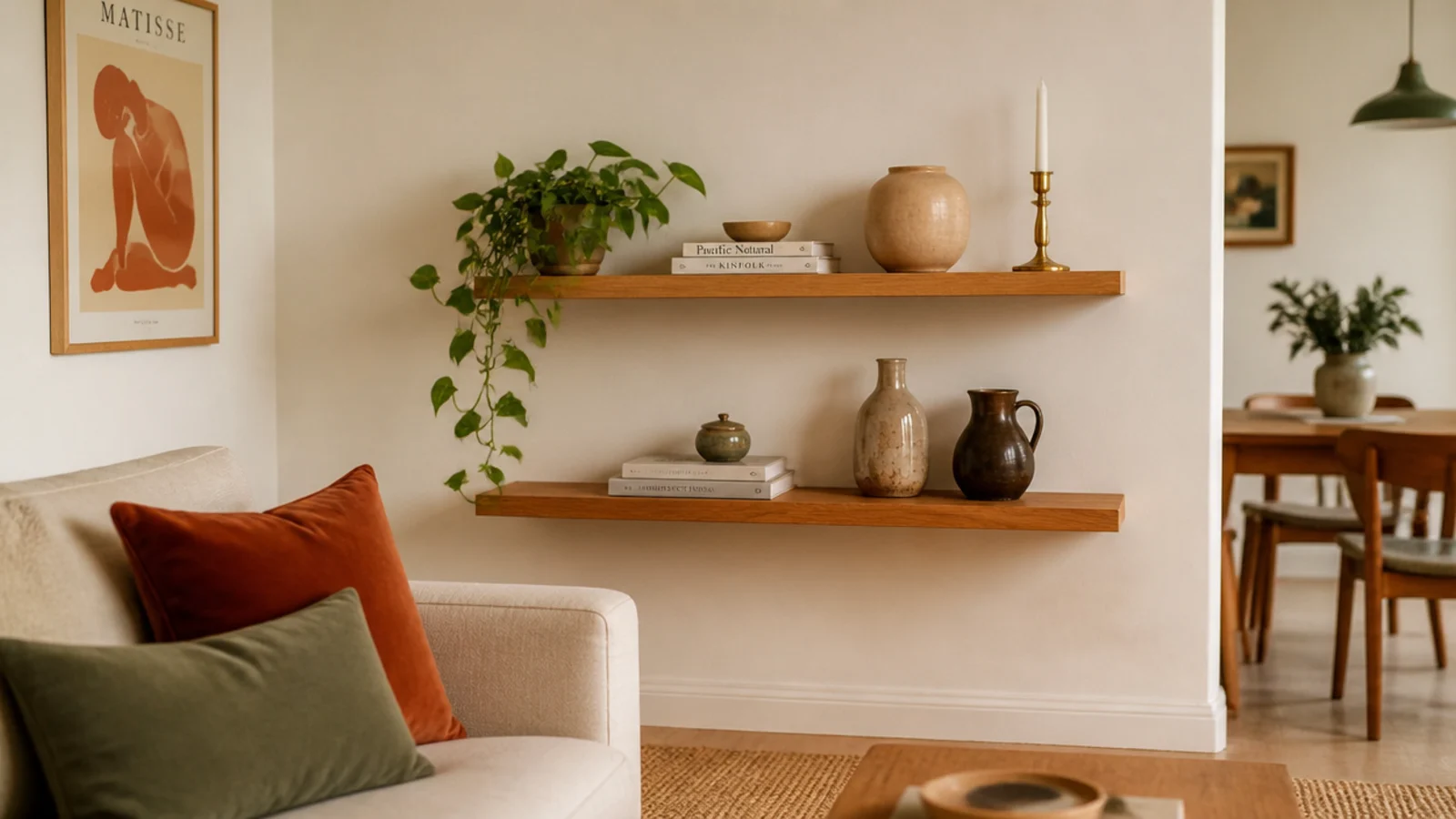
Wood floating shelves are the rare rental upgrade that pays you back twice: they fix a bare wall now, and they leave with you later. Every idea below is built around two numbers your landlord cares about — how many holes you make and how wide they are — and one number you care about, which is how much the shelf will genuinely carry before it starts to dip.
In this guide17 sections — tap to openHide
- 1.Where wood floating shelves earn their place in a rental
- 2.One 24-inch oak shelf on a single stud
- 3.Painted-out L brackets under a pine board
- 4.A no-drill picture ledge on adhesive strips
- 5.A shallow bamboo shelf above the doorway
- 6.A leaning ladder shelf with zero holes
- 7.A French cleat that moves with you
- 8.Toggle bolts when the studs are in the wrong place
- 9.A butcher block offcut as a chunky shelf
- 10.A bedside shelf instead of a nightstand
- 11.Sealed teak in the rental bathroom
- 12.A thrifted board with new brackets
- 13.A built-up hollow box for a thick front edge
- 14.Two shelves above the radiator with real clearance
- 15.A shelf over the washer in a laundry nook
- 16.A rope-hung shelf for the lightest load
- 17.Mistakes to Skip
Where wood floating shelves earn their place in a rental
A shelf in a rental is a trade. You are buying storage and a styled wall in exchange for a small, repairable amount of damage, so the goal is to make that trade as cheap as possible.
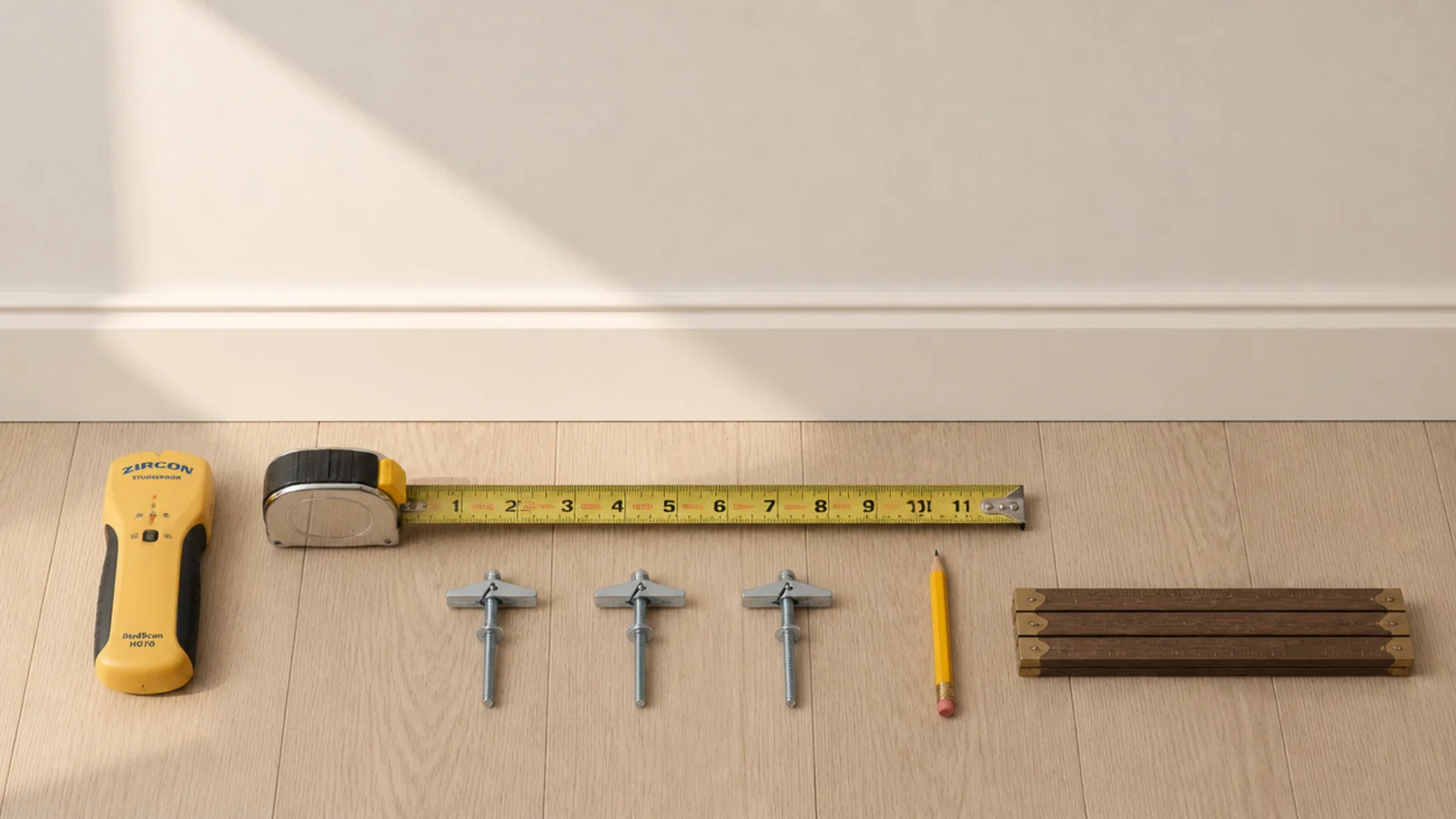
Start with the stud. A concealed rod bracket screwed into framing carries 30 to 40 pounds on a 24-inch shelf, and that is two holes total for a shelf that holds real books. Studs usually sit 16 inches apart, so run the stud finder along the whole wall before you decide where the shelf goes — moving a shelf 4 inches to catch a stud is free, and no anchor beats framing.
Where the framing lands in the wrong place, toggle bolts in half-inch drywall carry 25 to 35 pounds each. The plastic plugs in the box carry about 10 pounds and are behind most of the sagging people blame on the shelf. Throw them away before you open anything else.
Then depth. Leverage rises with depth, so a 12-inch shelf doubles the pull-out force of a 6-inch one at the same load. Deep shelves are the ones that fail in drywall.
Budget tiers here: $ under $40 for a single board and brackets, $$ $40 to $120 for a pair with concealed hardware, $$$ $120 and up for hardwood or a built-up box.
1. One 24-inch oak shelf on a single stud
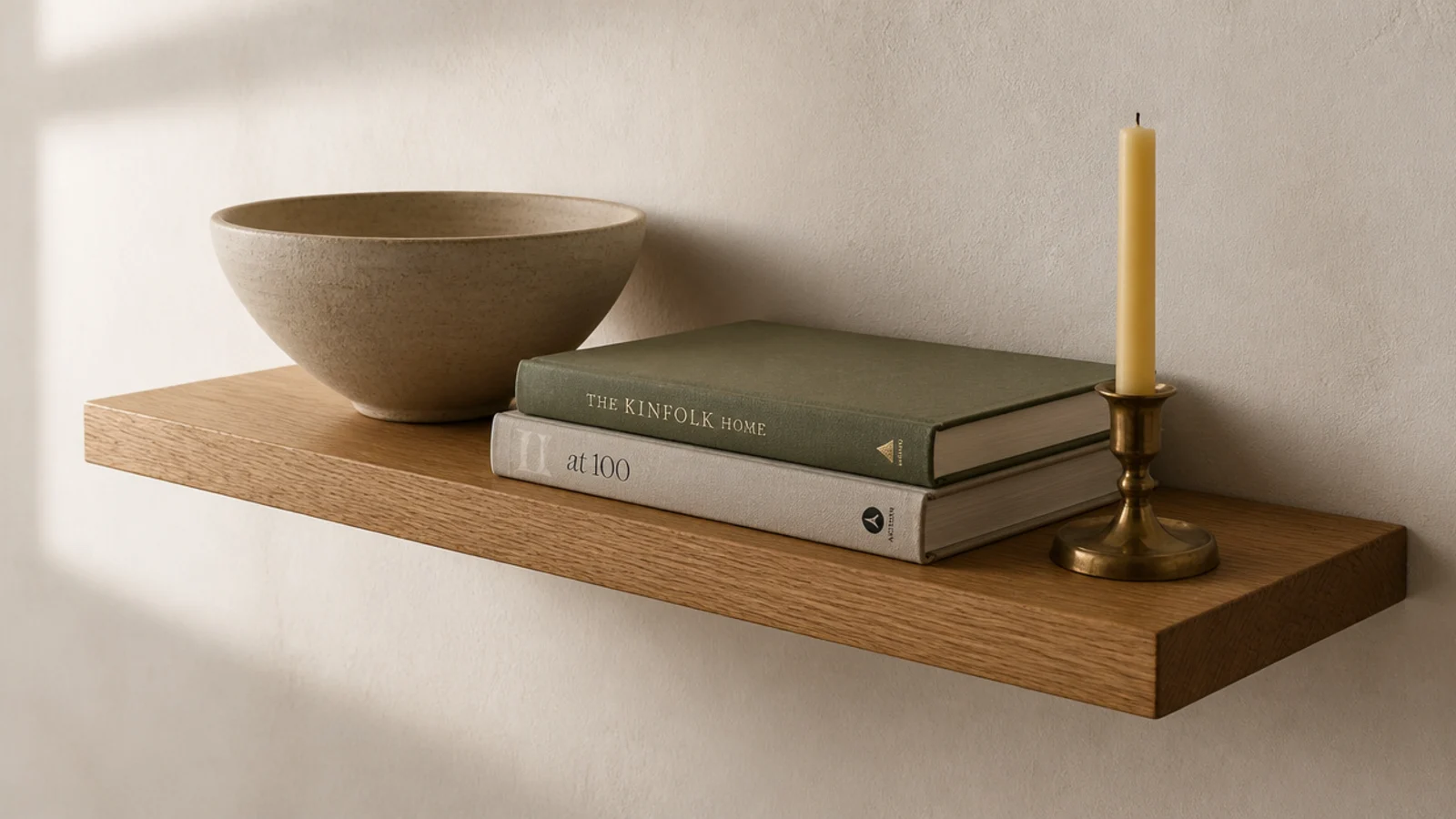
The cheapest good outcome in this whole list. One three-quarter-inch oak board, 24 inches long and 8 deep, on a concealed rod bracket screwed into a single stud.
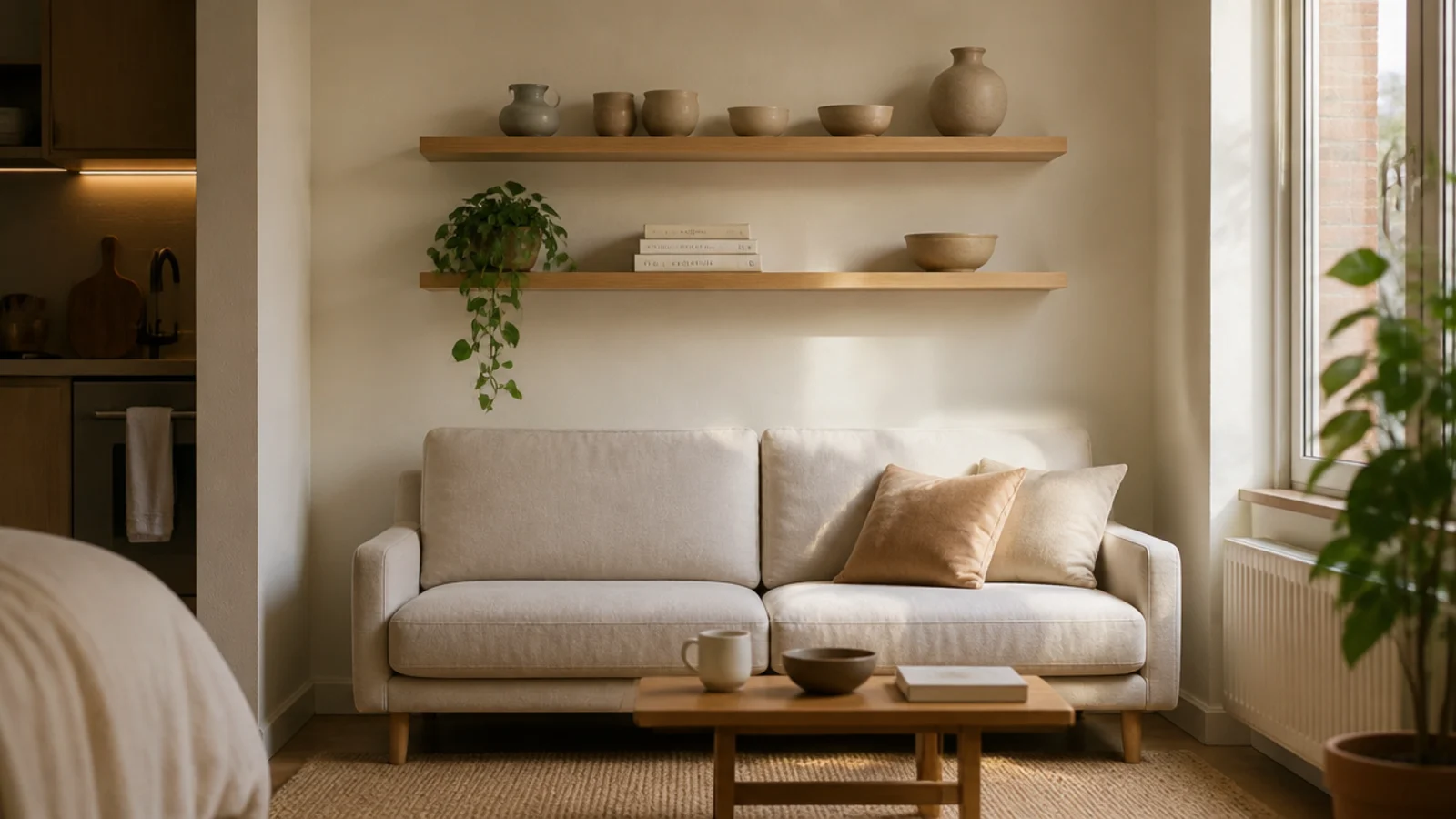
Two holes. That is the entire lease liability, and the shelf takes 30 to 40 pounds — enough for a row of hardbacks and a lamp. Mount it around 48 inches from the floor above a sofa, or 16 to 18 inches above the back of a chair where your hand actually lands.
Oak at that thickness spans 24 inches without visible deflection. If you go longer than 24, add a second fixing rather than trusting the board.
2. Painted-out L brackets under a pine board
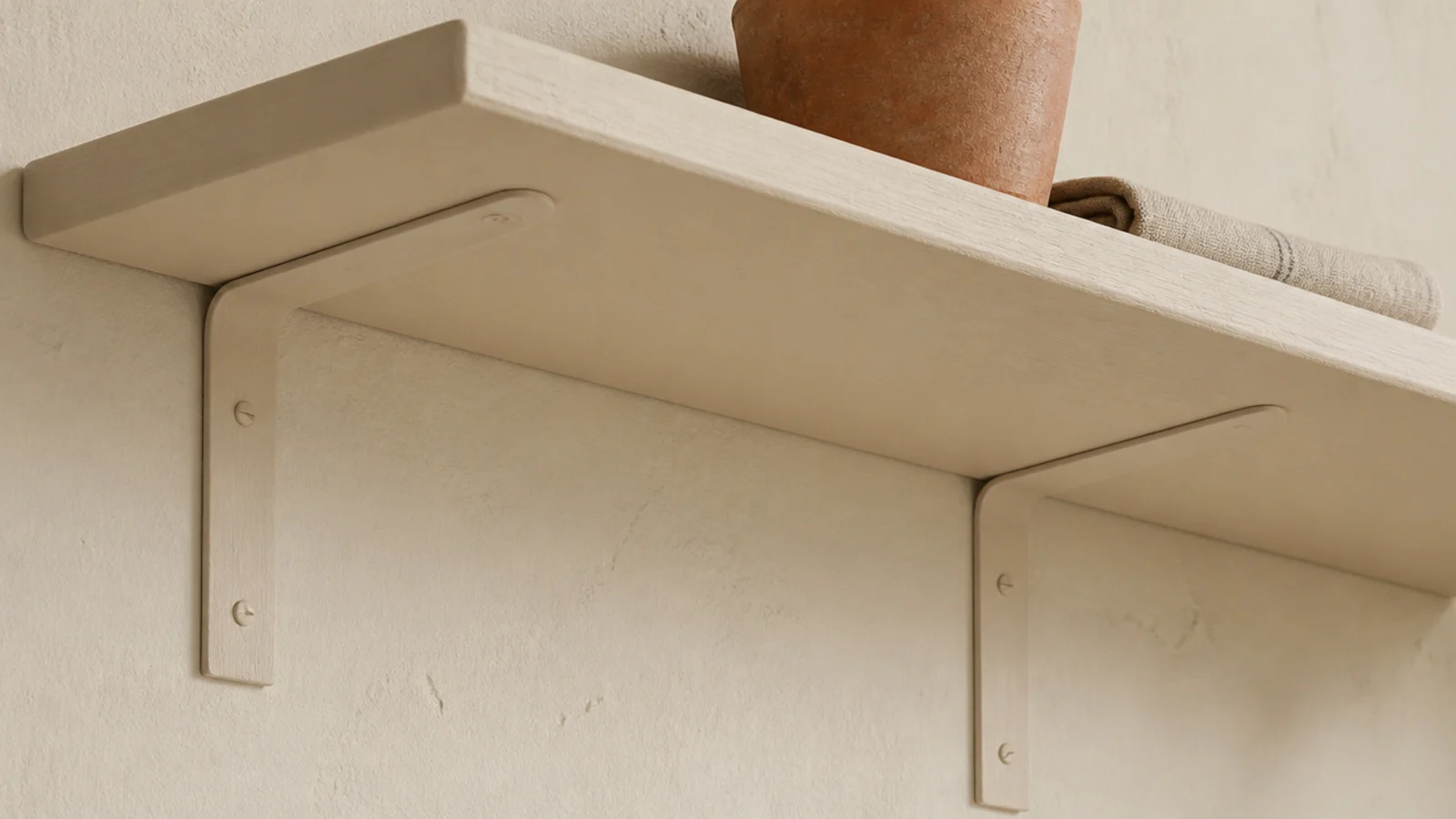
Concealed hardware costs money. Visible steel L brackets cost $8 a pair and carry more, and the fix for how they look is a sample pot of the wall color.
Painted-out L brackets read as floating from any normal viewing angle, because your eye stops registering hardware that matches the plaster behind it. Two coats on the bracket plates before you hang anything is a fifteen-minute job.
Pine at three-quarter-inch runs $12 to $20 for 24 inches and takes paint or a warm stain equally well. This is the $ version of idea one, and honestly it holds more.
3. A no-drill picture ledge on adhesive strips
If your lease is genuinely zero-holes, this is the one that works — with limits I want to be blunt about.
Heavy-duty adhesive strips cap out near 15 pounds per pair and they fail on flat builder-grade paint, which is exactly what most rentals have. Test one strip on hidden wall first and pull it after a day.
Keep the ledge to 3 inches deep with a front lip, and put leaning art, two small ceramics and nothing else on it. Clean the wall with rubbing alcohol, press for 30 seconds, wait an hour before loading. Around $18 to $30 all in.
4. A shallow bamboo shelf above the doorway
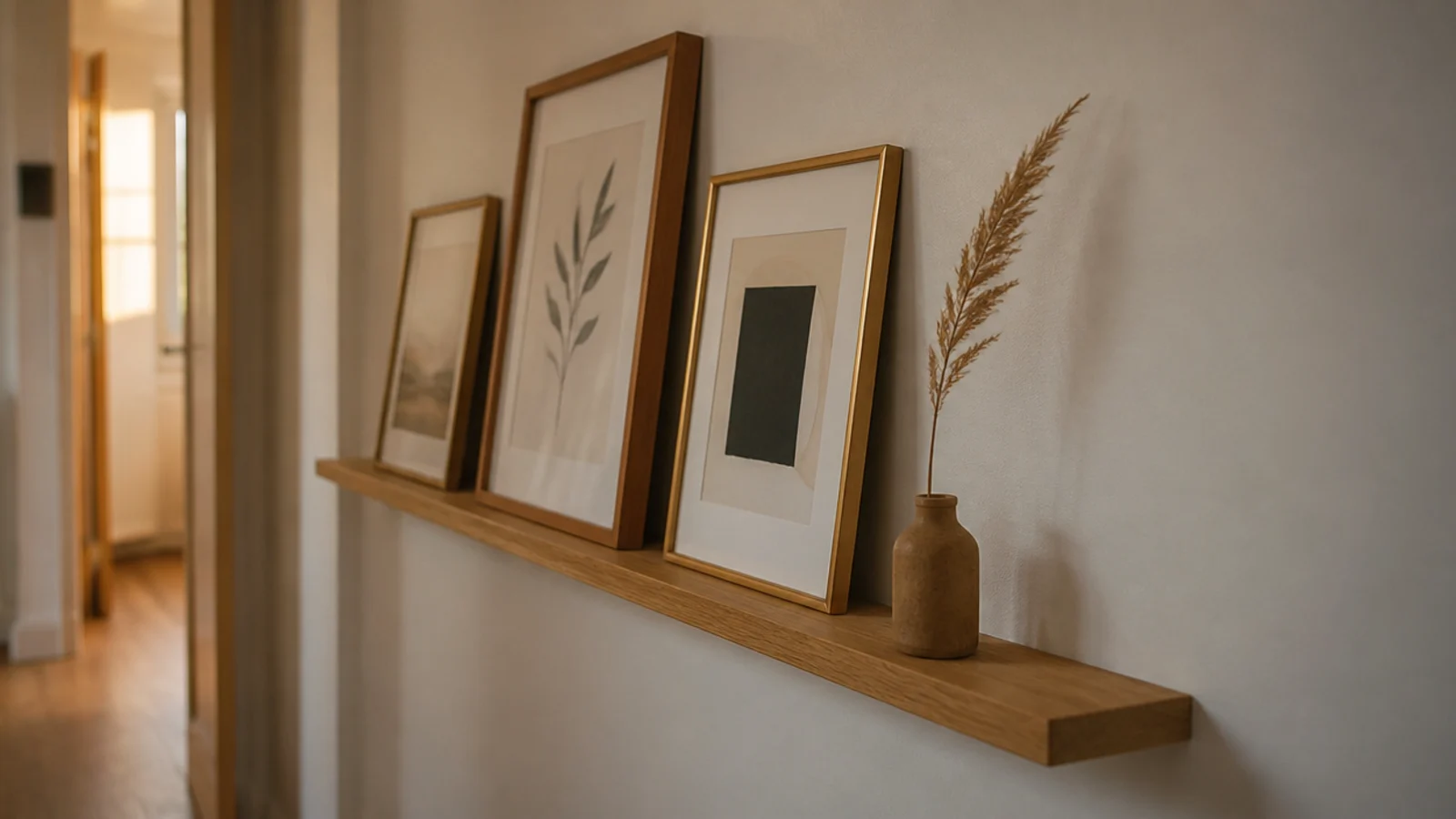
The strip of wall above a door is dead in every apartment I have lived in. A 4-inch deep board across it holds paperbacks, baskets and the things you own but rarely need.
Bamboo is the pick here because it is light, cheap and stable, and light matters when the shelf sits above head height. Keep the total load under 20 pounds and use two fixings into the door header, which is solid framing in almost every wall.
Nothing breakable goes above a door. Doors slam, and the wall above one moves more than you would think.
5. A leaning ladder shelf with zero holes
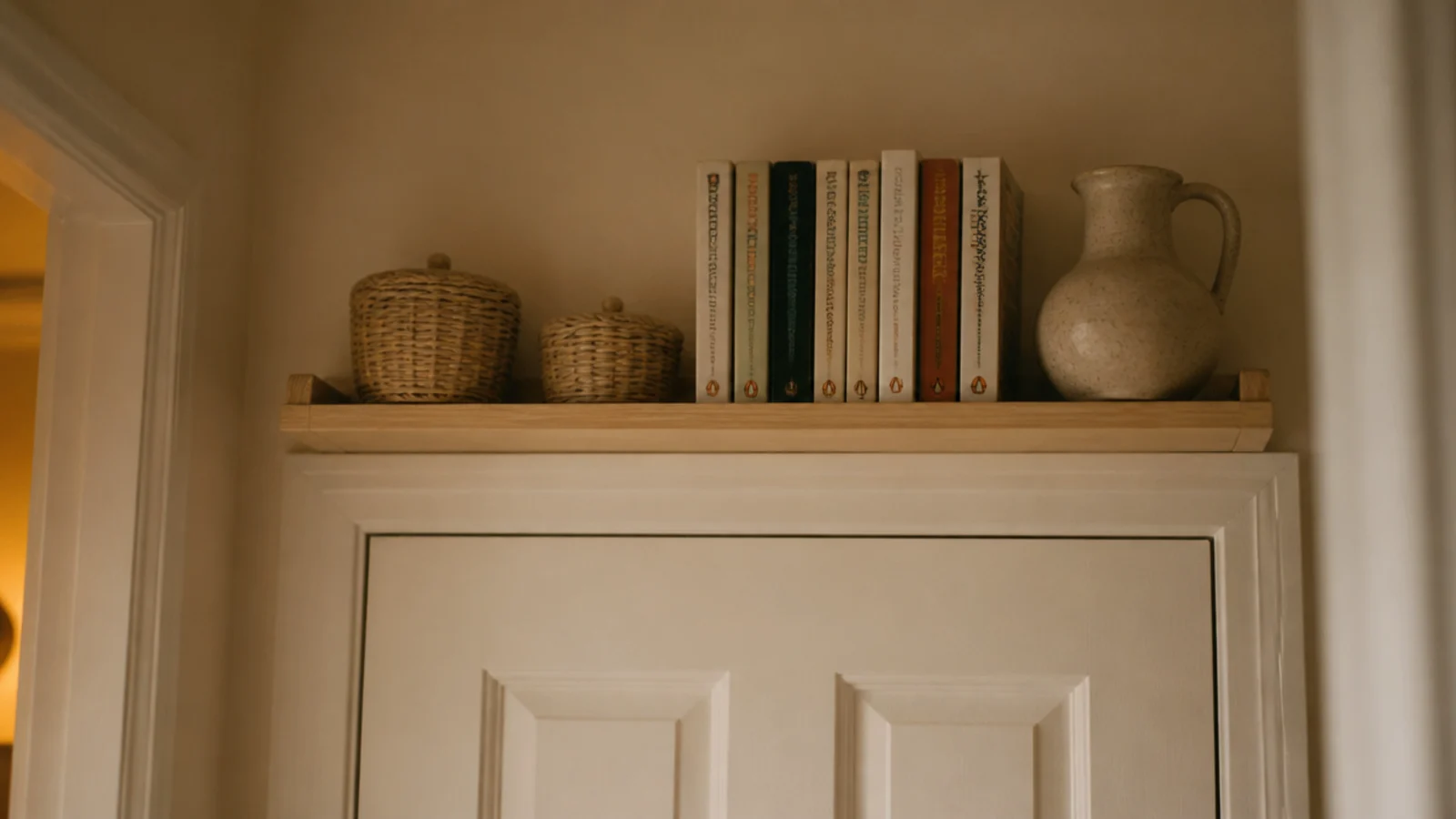
Where drilling is off the table entirely, stop fighting the wall. A five-rung oak ladder leaning at roughly 15 degrees carries far more than any adhesive and needs nothing but a felt pad under each foot.
Load the bottom rung heaviest to keep the center of gravity low. Trailing plants belong on rungs two and four so the greenery falls between the levels instead of stacking into a block.
Expect $45 to $90, and it goes in the moving van as furniture rather than as a wall repair job.
6. A French cleat that moves with you
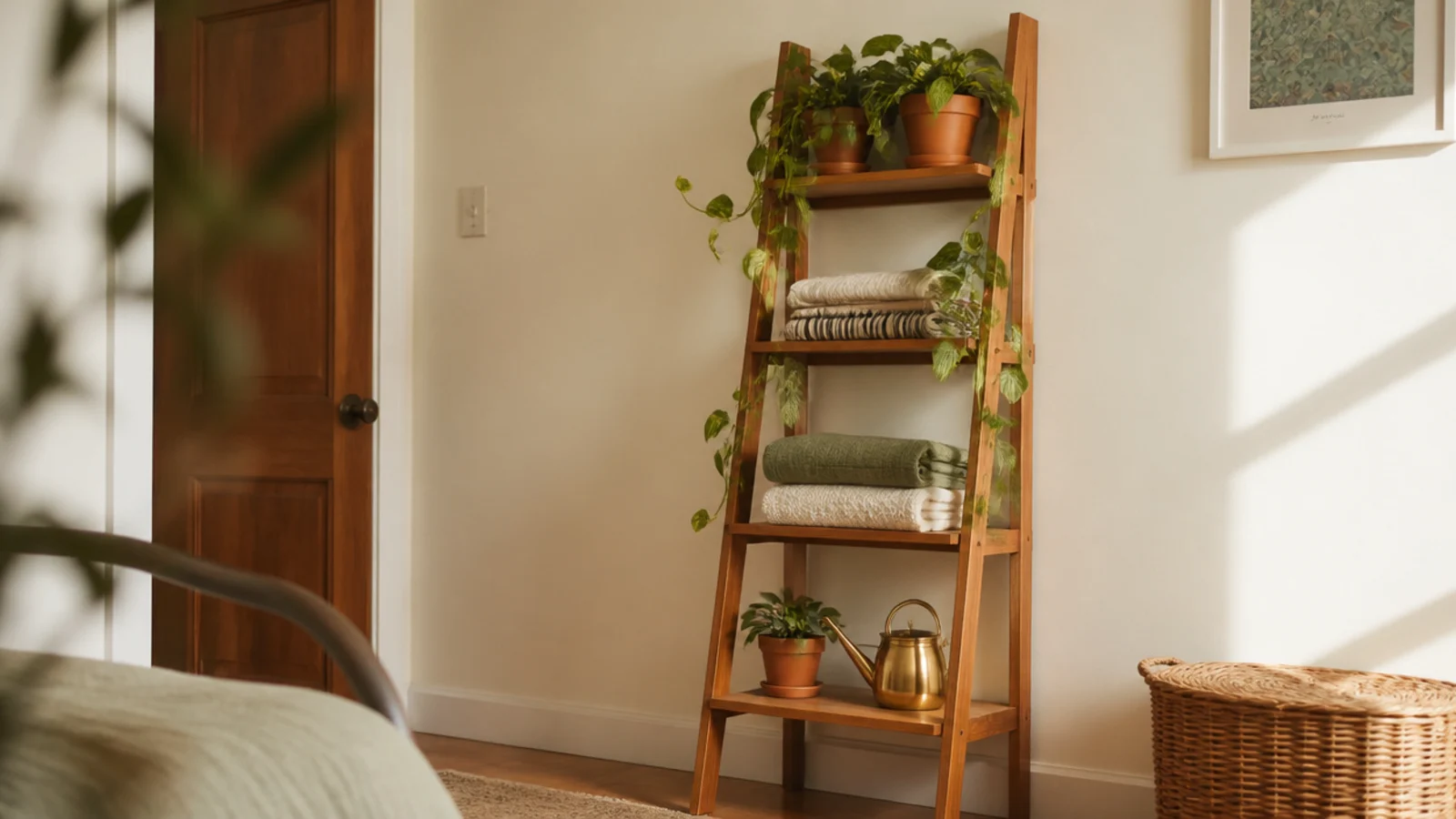
A French cleat is two matching 45-degree bevels: one strip screwed to the wall, the other glued under the shelf. The shelf drops on and lifts straight off.
This is the renter version of built-in shelving, because one line of holes serves any shelf you build afterward. When you move, you fill one strip of holes rather than a scattered constellation of them.
Cut the bevel on a $20 circular saw guide or ask the lumber counter to rip it. A cleat into two studs holds more than any concealed rod, which is why kitchens use them for heavy open shelving.
7. Toggle bolts when the studs are in the wrong place
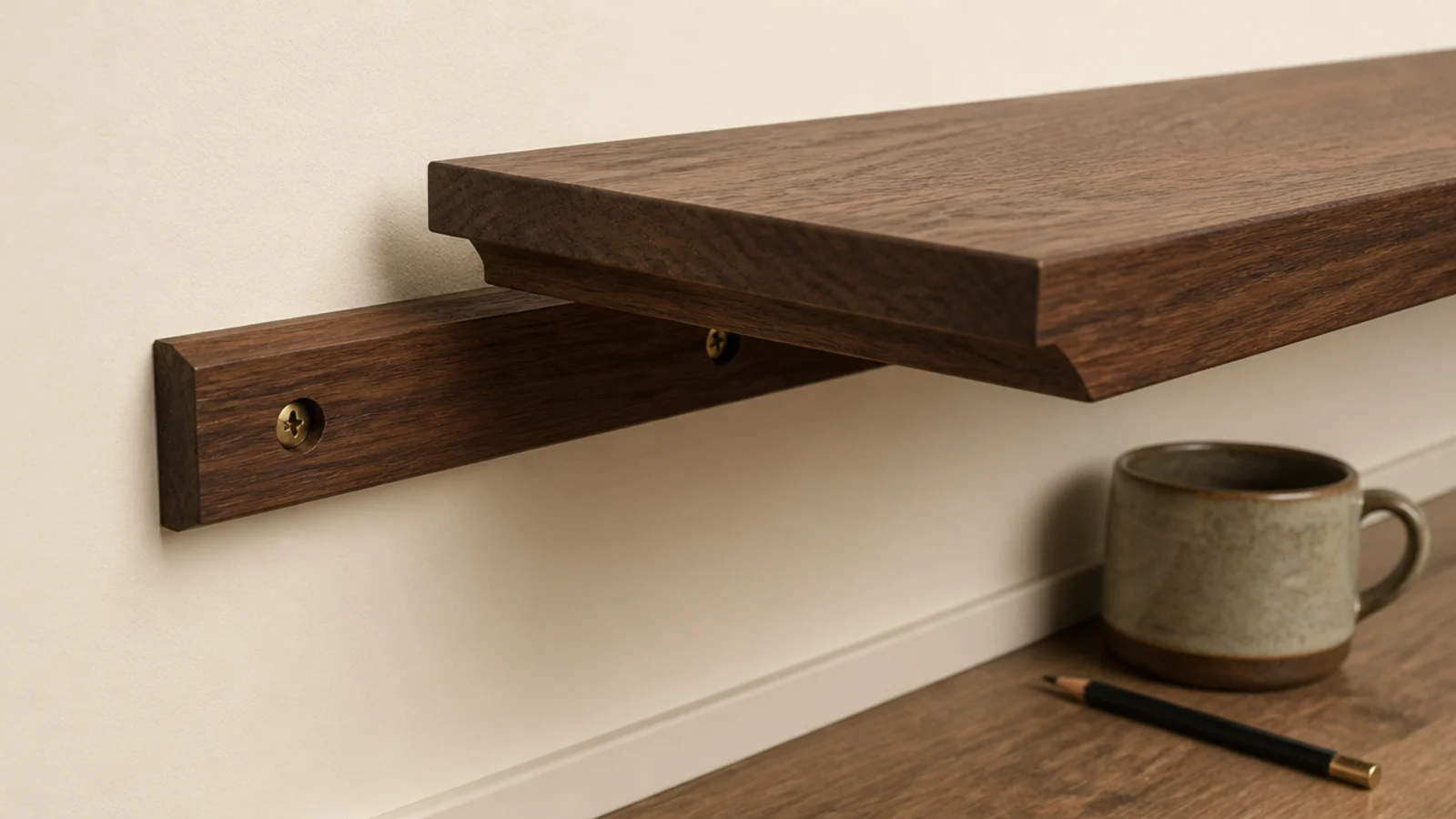
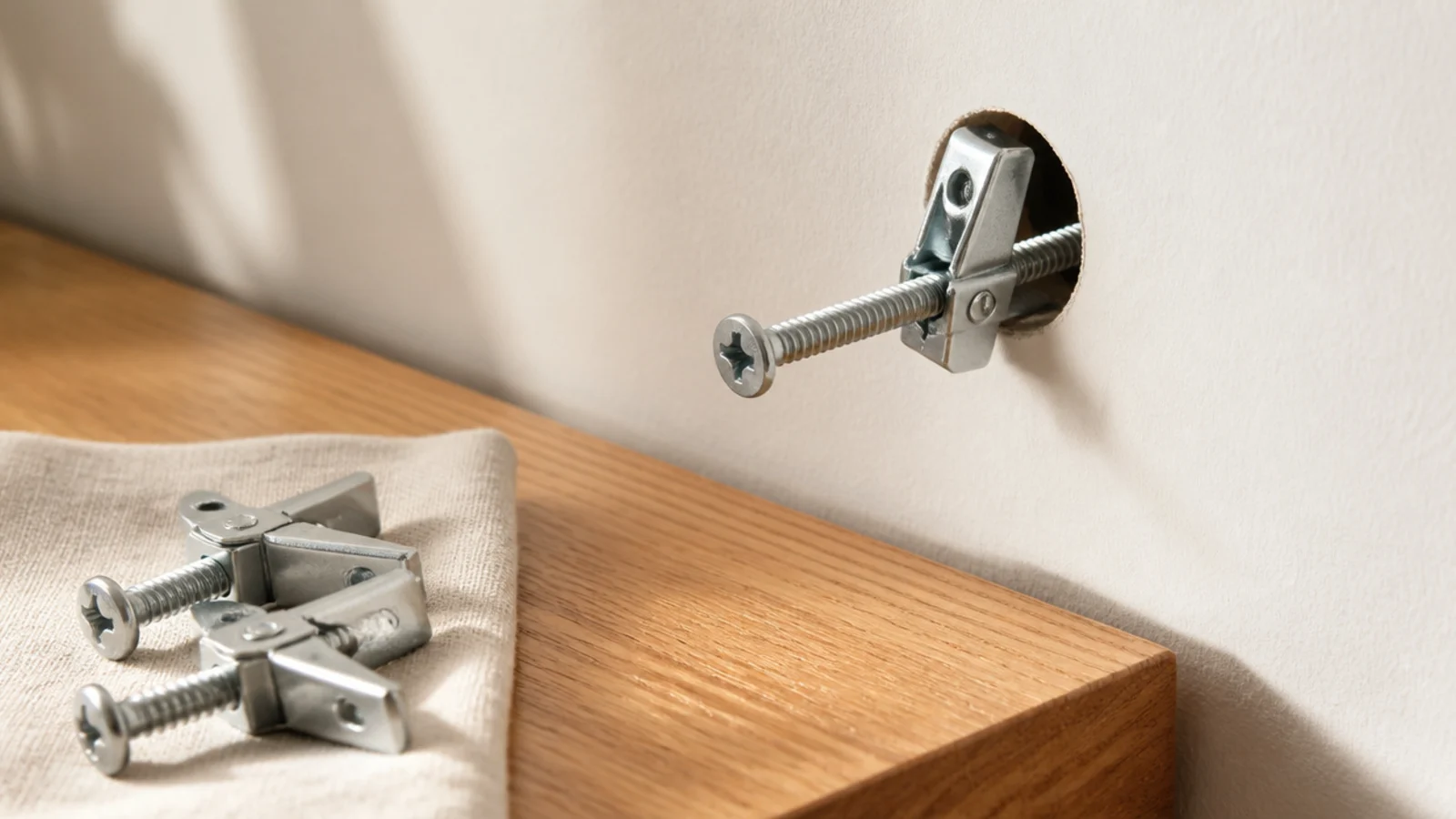
Sometimes the only place a shelf makes sense is 9 inches from the nearest stud. That is what toggle bolts are for.
Each one carries 25 to 35 pounds in half-inch drywall, so a pair carries a shelf of books comfortably. They cost about a dollar. The trade is a wider hole — around half an inch — which needs two thin passes of filler on move-out rather than one thick one.
Keep the shelf to 8 inches deep with toggles. Leverage is what pulls anchors out of drywall, and depth is leverage.
8. A butcher block offcut as a chunky shelf
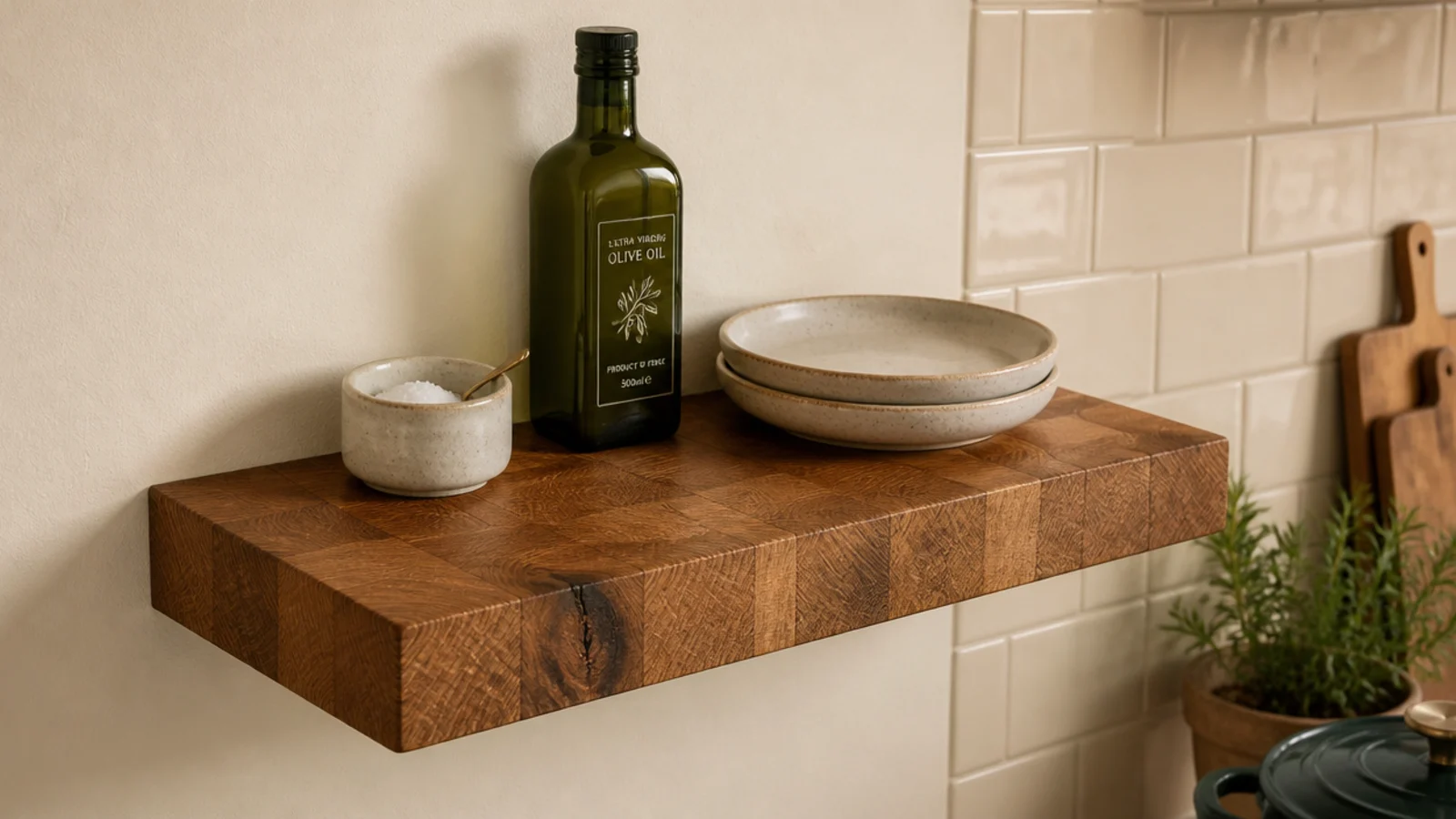
Countertop fabricators and big-box stores sell butcher block offcuts for a fraction of a full slab, usually $15 to $35 for a piece long enough to make a substantial shelf.
The appeal is thickness. A 1.5-inch block reads as a custom carpentry piece rather than a board on brackets, and it never bows. The cost is weight: sand the ends, oil it, and put it on studs or toggles only, never plugs.
Check the cut ends for glue lines that have opened. Offcuts get stacked outdoors and moisture finds the joints first.
9. A bedside shelf instead of a nightstand
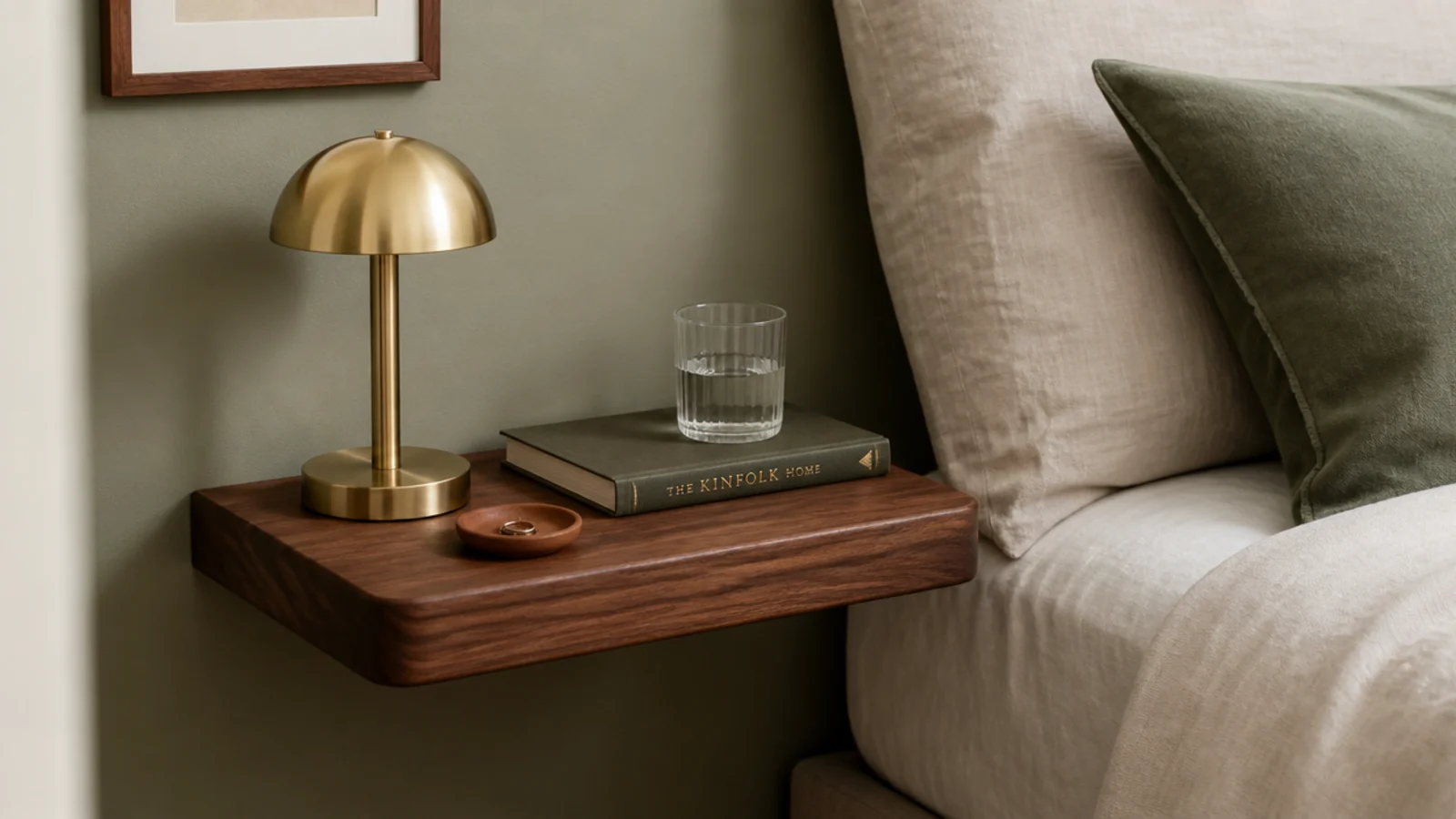
In a small rental bedroom, a floating shelf beats a nightstand you have to edge around. Mount it level with the top of the mattress, not the headboard — that is where your hand lands in the dark.
Twelve inches long and 7 deep holds a lamp, a book, a glass and a small dish. Add a second board 14 inches above it if the wall feels bare.
Total floor footprint: zero, which in a room where the bed already touches two walls is the entire point. There is more on tight-wall layouts in floating shelves for a small space.
10. Sealed teak in the rental bathroom
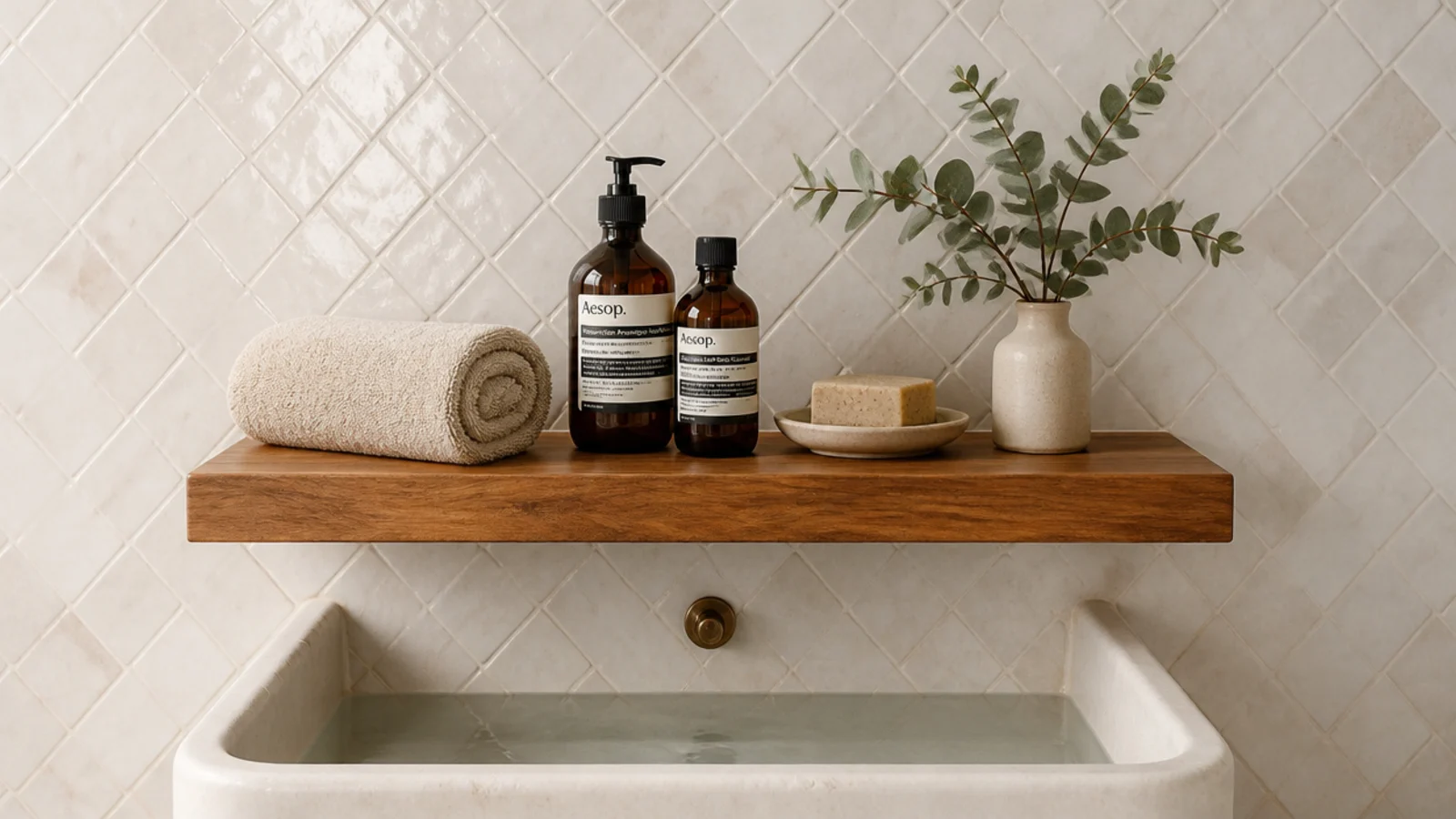
Bathrooms punish the wrong wood. Raw pine and unsealed MDF swell and stain within a season in a room with no window, and you will be the one paying for that at move-out.
Sealed teak, bamboo, solid surface or powder-coated steel are the four materials that survive. Teak is the warm one and it costs $25 to $50 for a small board.
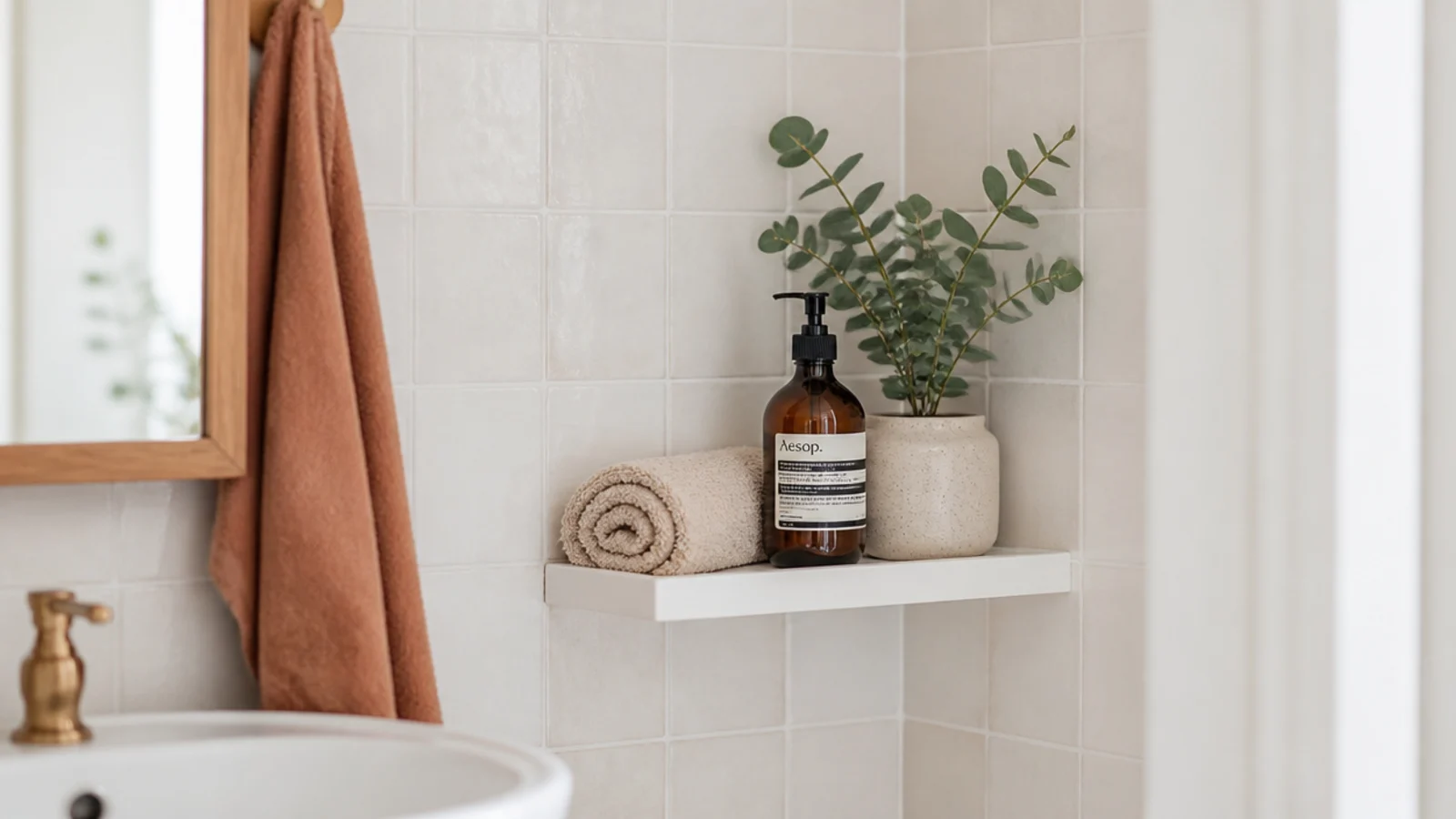
Keep it to 5 or 6 inches deep so it clears the shower door swing, and mount the lower shelf at 48 inches so a towel hanging from it clears the tank.
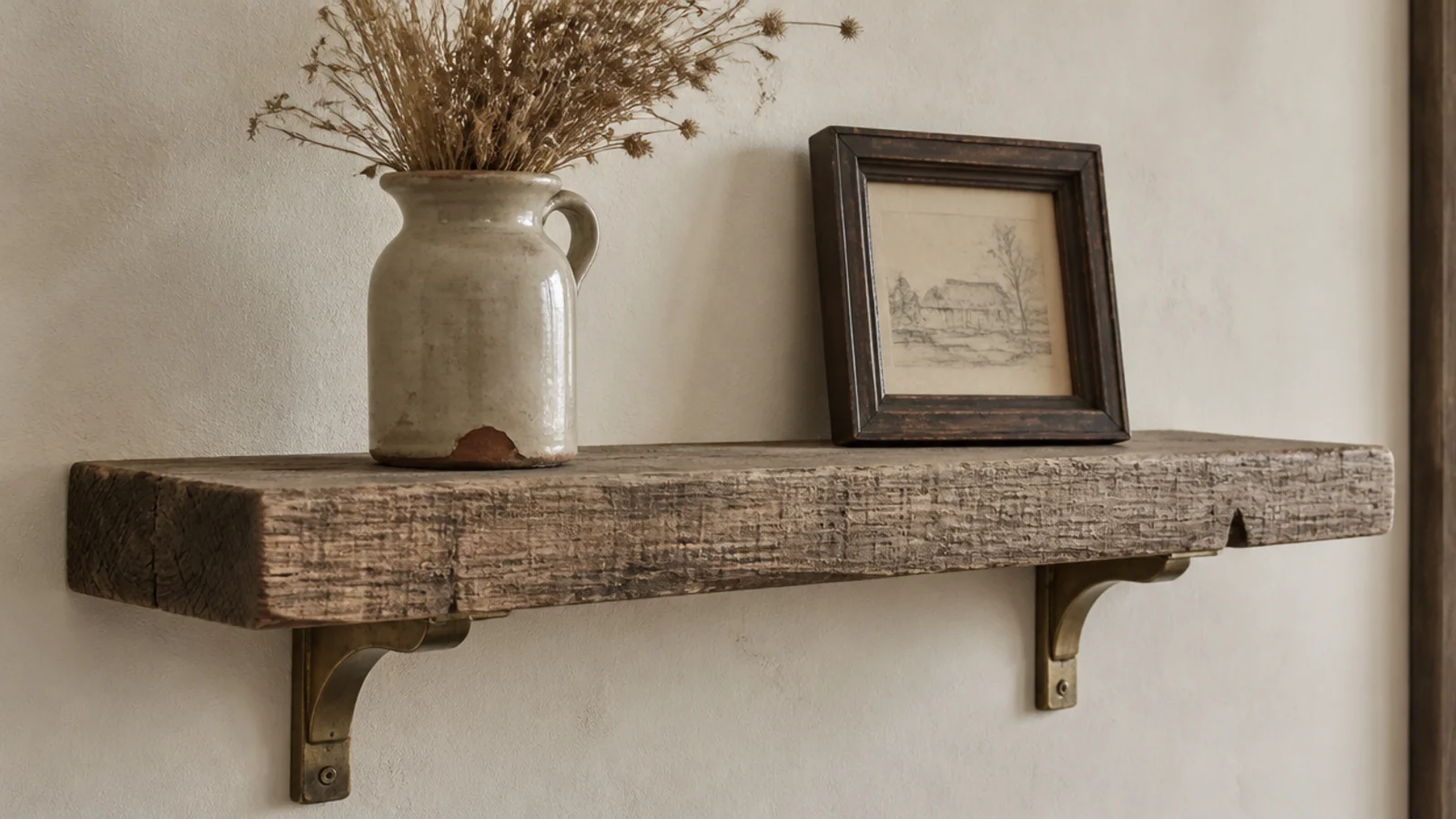
11. A thrifted board with new brackets
Thrift stores and salvage yards are full of solid wood in the wrong shape — an old table leaf, a shelf from a broken bookcase, a length of scaffold board. Five dollars, sometimes free.
Cut it to length, sand to 180 grit, and put the money you saved into decent brackets instead. Hardware is what fails; wood is what you can find.
Check for old screw holes on the underside and orient them downward. Check for woodworm holes and leave anything with them behind. This is the $ end of floating shelf ideas and often the best-looking one.
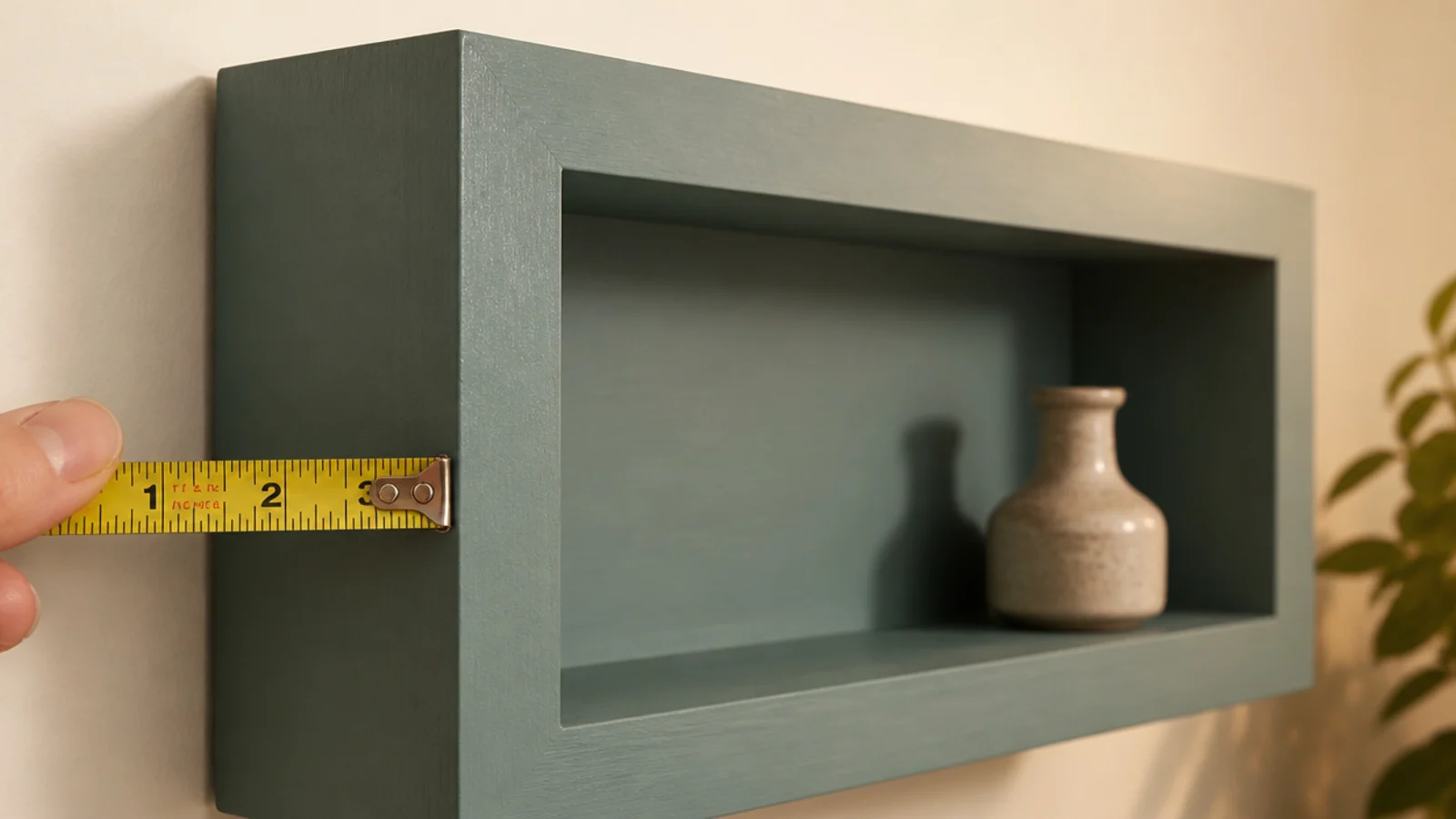
12. A built-up hollow box for a thick front edge
Thick lumber is expensive. A hollow box is not. Build a simple frame from 1x2 pine, skin it in quarter-inch ply or MDF, and you get a shelf with a 1.5 to 2 inch front edge for a third of the price of solid stock.
It looks like an architect specified it. It weighs almost nothing, which means the fixings carry the load rather than the shelf.
Fill the seams, sand flush, and paint. Stained boxes show the seam; painted ones never do. Budget $25 to $40 in materials for a 36-inch box.
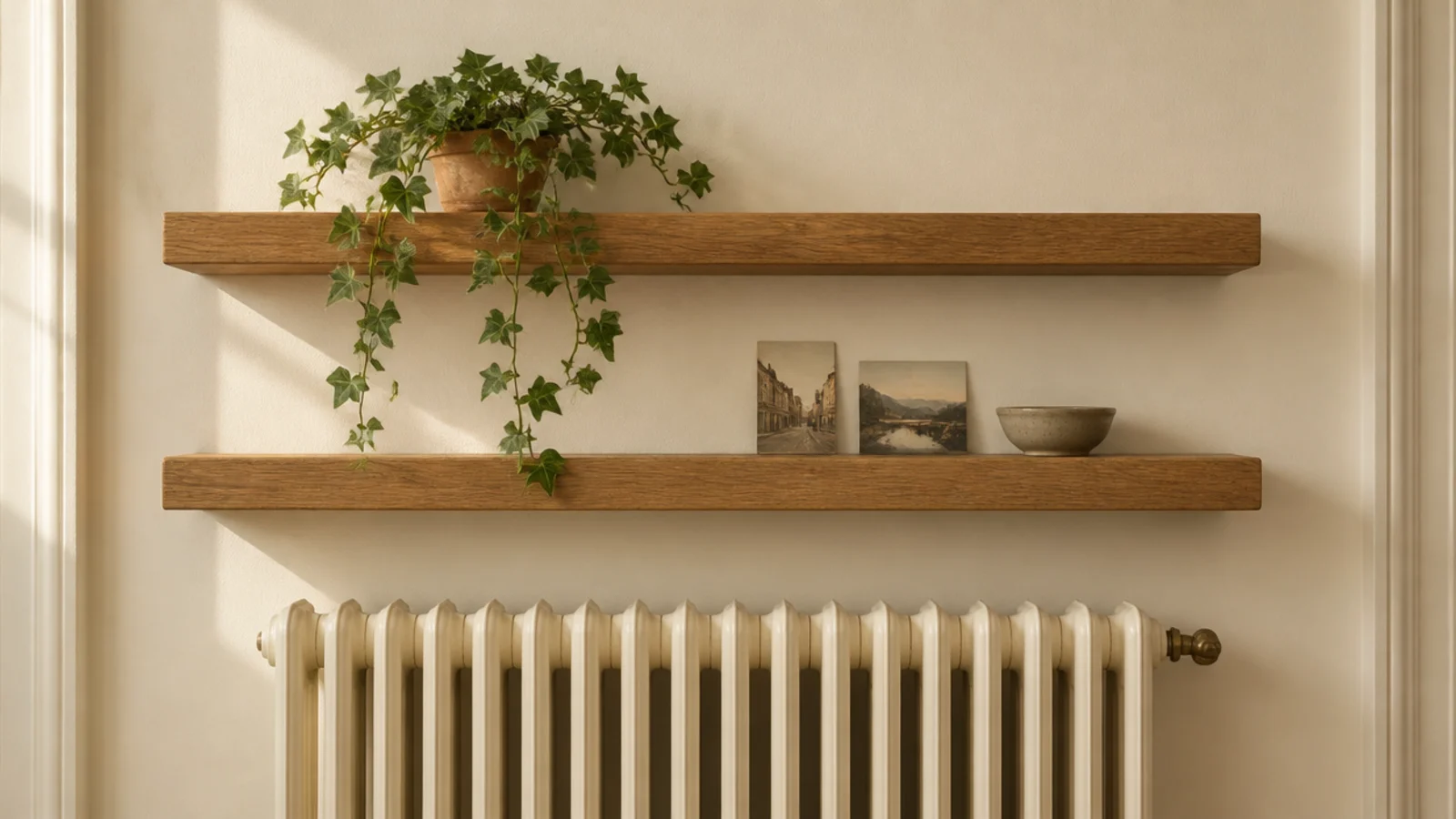
13. Two shelves above the radiator with real clearance
A radiator on a straight wall kills the best storage height in the room. Two boards above it get that wall back.
Leave at least 4 inches of clear air between the radiator top and the shelf underside so heat can rise, and use solid wood or metal rather than anything laminated — repeated heat cycles lift laminate edges permanently.
Skip candles and vinyl up there for obvious reasons. Trailing ivy, ceramics and framed prints handle the warmth without complaint, and the wall stops looking like a utility zone.
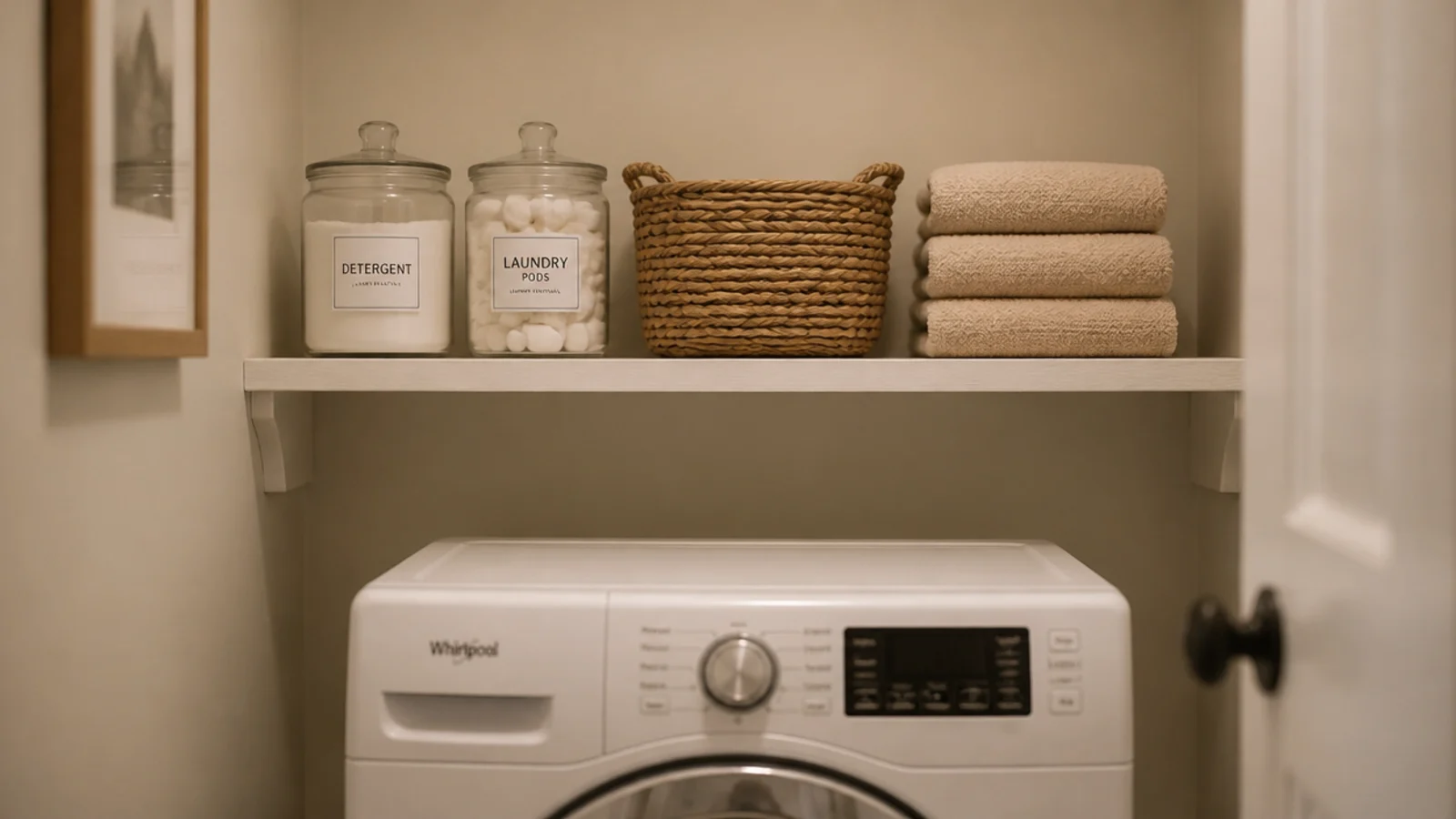
14. A shelf over the washer in a laundry nook
The wall above a washing machine is the most wasted surface in a rental. One board at 60 inches turns it into the only laundry storage you need.
Go 10 inches deep here, because nothing walks past it and the depth takes detergent bottles standing upright. Fix into studs if you can find them; laundry walls often have blocking behind the machine hookups.
Add a small lip or a shallow basket at each end. Vibration is real, and a smooth board will walk things to the edge over a few months.
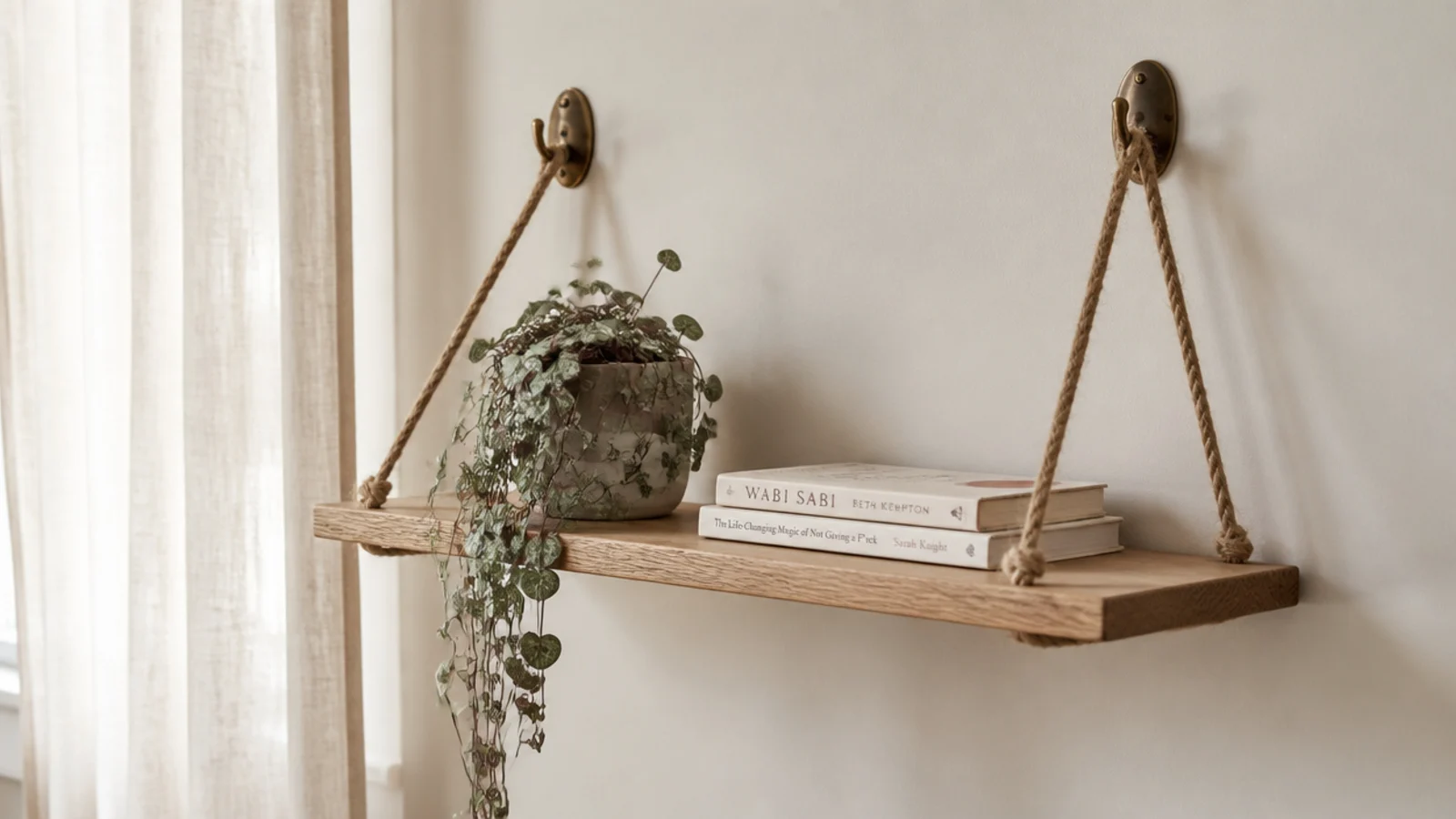
15. A rope-hung shelf for the lightest load
Two hooks, two lengths of jute rope, and a slim board with four drilled holes. It costs about $15 and it looks far more considered than it has any right to.
Be honest about the load: this is a 10-pound shelf. One trailing plant, two paperbacks, a small frame. The hooks are the limit, not the rope.
It suits a rental because the hooks go into a single stud or a pair of small anchors, and the holes are the size of a pencil tip. Style it like a hanging planter that happens to be flat.
Mistakes to Skip
- Trusting the supplied plastic plugs. They carry about 10 pounds, they creep out of drywall over weeks, and they are the single most common cause of a sagging shelf.
- Buying a 12-inch deep board because it looks generous. Depth is leverage — a 12-inch shelf pulls twice as hard on the anchors as a 6-inch one carrying the same weight.
- Using half-inch stock over a 24-inch span. It bows at roughly 18 inches under books, and no bracket in the world fixes a board that is too thin.
Frequently asked questions
Can renters put up wood floating shelves without drilling?
Yes, within honest limits. Heavy-duty adhesive strips cap out near 15 pounds per pair and refuse to stick to flat builder-grade paint, so they suit a shallow ledge with two ceramics rather than books. A leaning ladder shelf or a freestanding unit carries far more and leaves the wall untouched entirely. Always test one strip on hidden paint before you trust a whole shelf to it.
How much weight can a floating shelf actually hold?
The fixing decides it, not the board. A concealed rod bracket screwed into a stud carries 30 to 40 pounds on a 24-inch shelf. Toggle bolts in half-inch drywall carry 25 to 35 pounds each. The plastic plugs supplied in the box carry roughly 10 pounds and cause most of the sagging people blame on cheap shelves.
What wood should I buy for cheap floating shelves?
Three-quarter-inch pine is the honest budget choice at roughly $12 to $20 for a 24-inch length, and it takes paint beautifully. Oak costs about double and earns it if the shelf stays stained. Skip veneered particle board on any shelf whose front edge you will brush past, because the chip is permanent and impossible to touch up.
How do I patch shelf holes when the lease ends?
Screw holes take one pass of lightweight spackle, a light sand and a dab of the original paint, which is a ten-minute job per shelf. Toggle bolt holes are wider and need two thin passes rather than one thick one so the filler does not sink. Photograph the wall color code at move-in and the whole thing stays trivial.
How thick does a floating shelf need to be?
Three-quarter-inch stock spans 24 inches with books on it and stays visually straight. Half-inch stock starts bowing at about 18 inches, which is why so many cheap shelves dip in the middle. If you want a chunky look without paying for thick lumber, build a hollow box around a thin frame and get a 1.5 to 2 inch front edge cheaply.
Pick the wall you look at most and start with one board, properly fixed. A single shelf on a stud costs under $40, takes twenty minutes and leaves two holes you can fill in ten. The best floating shelf brackets guide covers the hardware in detail, and if your rental has an awkward corner rather than a clean wall, floating corner shelves has that version. Save the pin below so the weight numbers are with you in the aisle.
Want more like this? Browse all 15 floating shelves guides — they all use the same measurements and budget tiers.
Pin it for later
Save this to your Floating Shelves board
Pin it now so it is waiting for you when the tape measure comes out — and so the next person hunting for this idea can find it too.
Save this pinKeep going
More ideas worth saving while you have the tape measure out.