Kitchen Shelf Ideas · Listicle
15 Affordable Kitchen Shelf Ideas for Renters

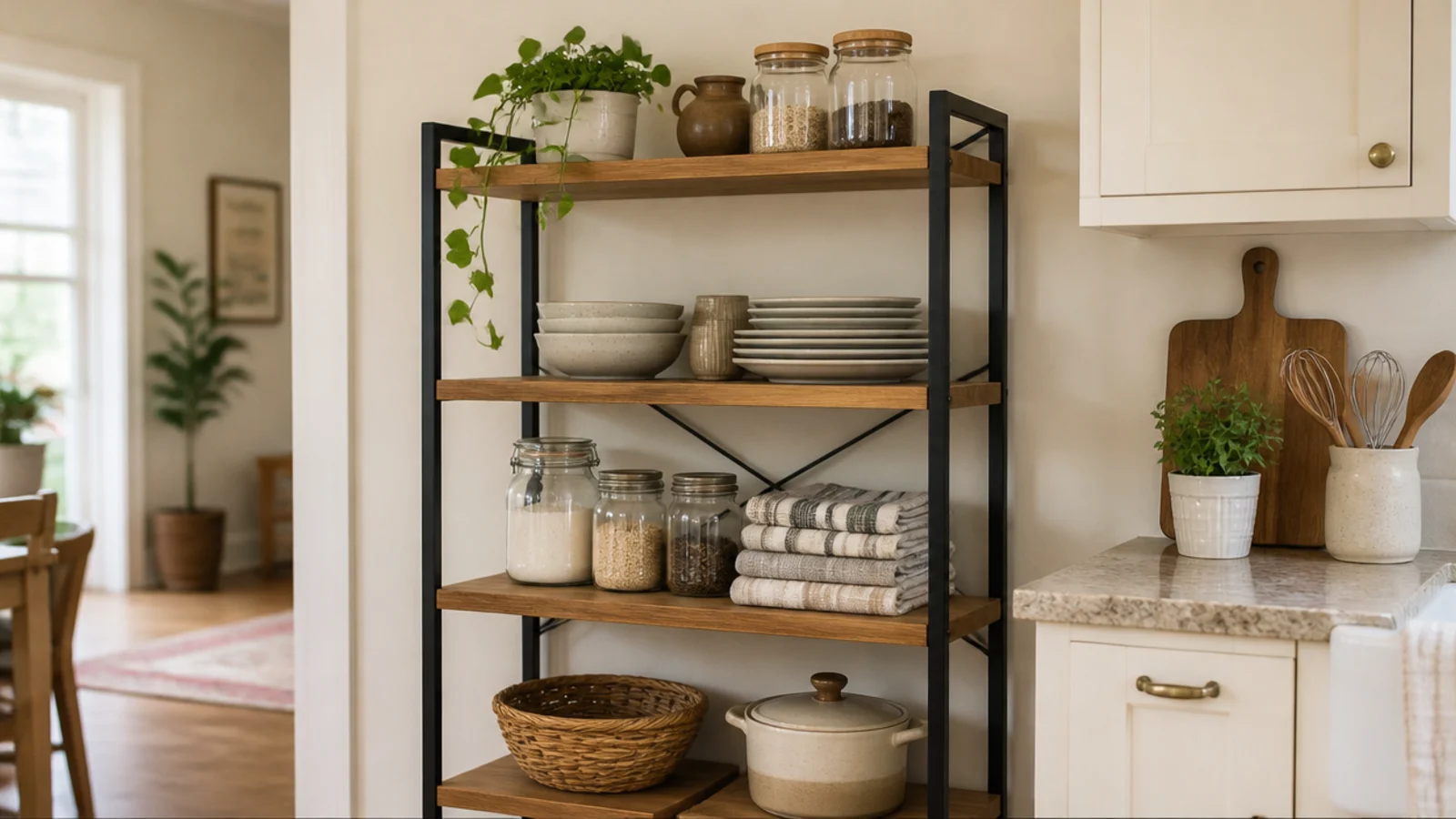
Kitchen shelf decor gets complicated the moment a lease says no holes in the walls. Every idea below either stands on the floor, sits on the counter, hangs off something already there, or peels away cleanly on move-out day. I have rented four kitchens and none of them let me drill, so all fifteen of these are things I actually lived with — honest weight limits attached.
In this guide17 sections — tap to openHide
- 1.Where kitchen shelf decor works in a rental without a single hole
- 2.A countertop riser that adds a shelf without a hole
- 3.Over-cabinet baskets that use the soffit gap
- 4.A three-inch adhesive backsplash ledge with honest limits
- 5.A freestanding rack on the blank kitchen wall
- 6.Tension-rod shelving across a window recess
- 7.An over-the-sink shelf that bridges the basin
- 8.A leaning ladder shelf beside the fridge
- 9.A slim rolling cart for the twelve-inch gap
- 10.Stackable crates as a modular shelf tower
- 11.An over-the-door rack on the pantry door
- 12.A magnetic shelf on the fridge side panel
- 13.Cabinet risers that double what fits inside
- 14.Adhesive mug hooks under an upper cabinet
- 15.A small hutch top set on the counter
- 16.Under-shelf baskets that clip onto what is there
- 17.Mistakes to Skip
Where kitchen shelf decor works in a rental without a single hole
Four things decide whether a renter shelf is worth buying.
What carries the load. Floor-standing and counter-standing units hold 30 to 60 pounds a tier because the weight goes straight down through the legs. Anything stuck to a wall is borrowing that wall's paint, and builder-grade flat paint gives up first.
How close it sits to the stove. Anything within about 4 feet of a burner picks up an airborne grease film. Put things you wash weekly in that zone and keep decorative pieces at the far end of the run.
The finish. Seal bare wood with water-based polyurethane or a hardwax oil before anything goes on it, and coat every face including the underside and the cut ends. Clear wax has no place in a kitchen — it softens near heat and grease soaks straight through. An unsealed underside is exactly why boards cup.
What it holds. Ten dinner plates weigh around 12 pounds, which is more than any adhesive strip should carry. Dishes belong on something standing on the floor or the counter.
Budget: $ under $35 covers risers, baskets and ledges. $$ $35 to $120 covers carts, ladder shelves and racks. $$$ $120 and up buys a freestanding unit good enough to take to the next place.
1. A countertop riser that adds a shelf without a hole
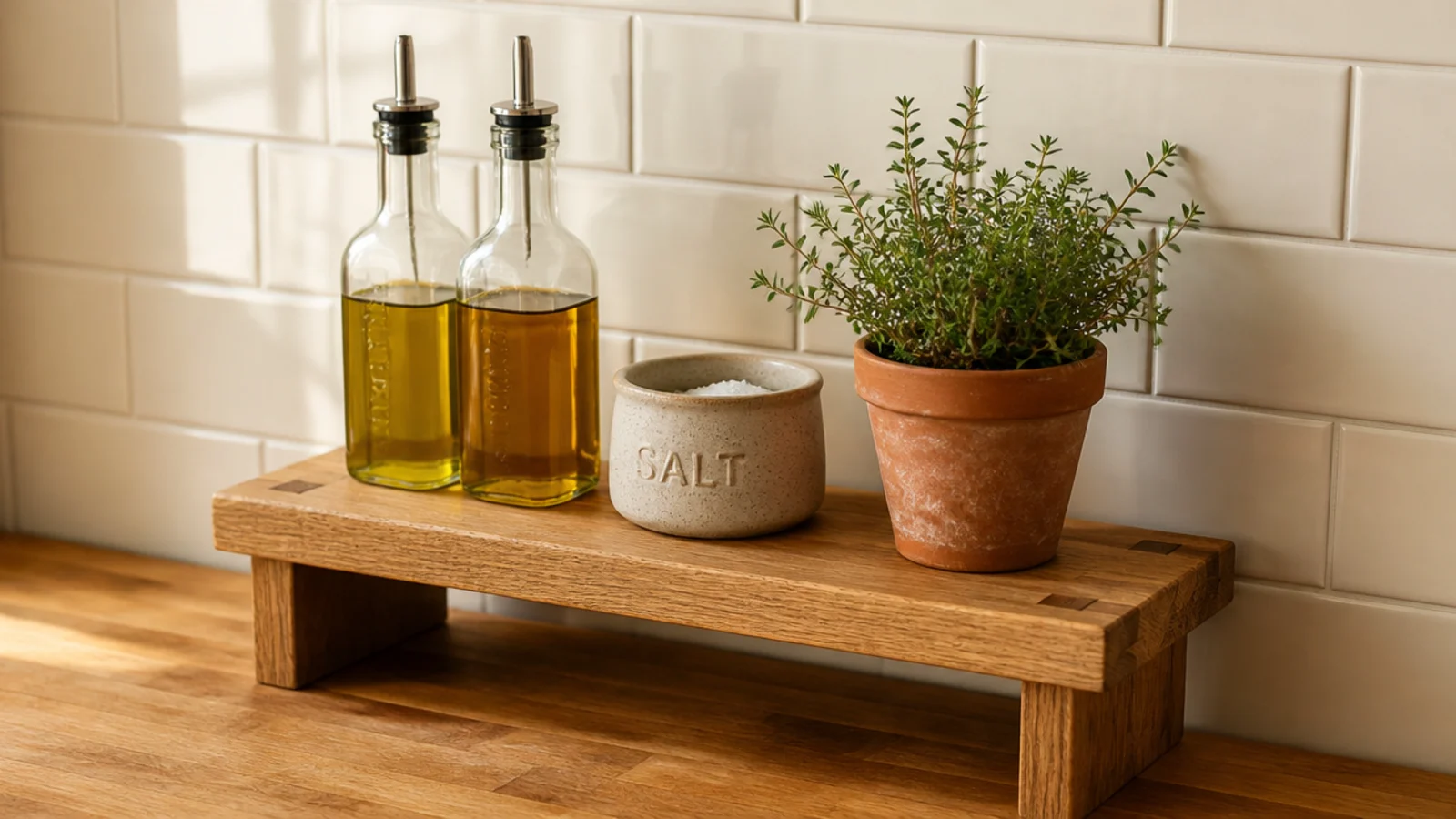
A riser is a shelf on legs that stands on the counter — usually 20 to 30 inches wide, 6 inches deep and 8 to 10 inches tall. It lifts jars and oils off the work surface and leaves the counter underneath still usable.
Choose solid oak or powder-coated steel over hollow bamboo, which bows under a row of jars within a year. Expect $18 to $35 ($).
Stand it against the backsplash on the run you prep on least, usually the sink side. Keep anything that hates a splash off the top.
2. Over-cabinet baskets that use the soffit gap
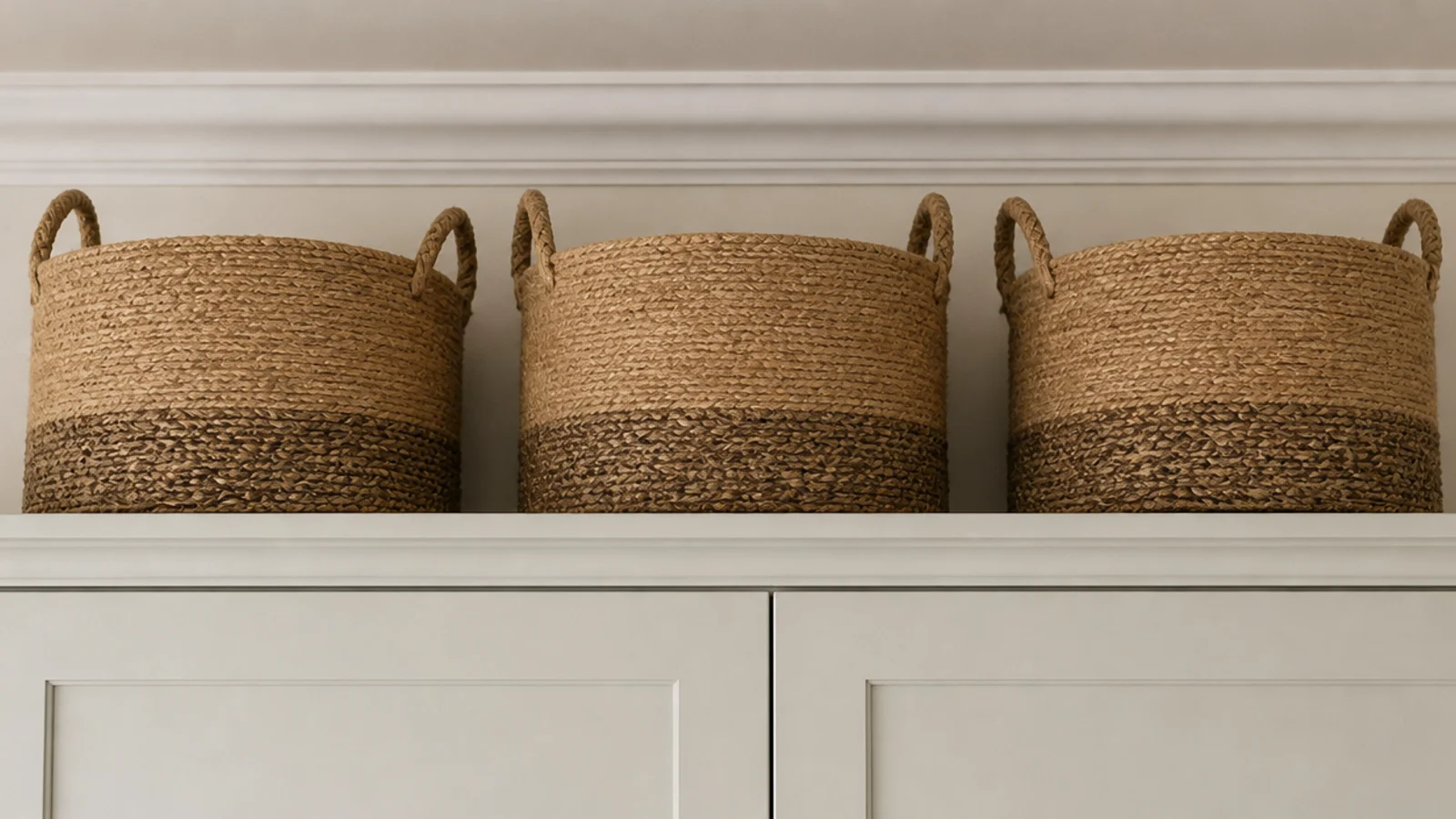
Most rentals leave 12 to 18 inches of dead air between the top of the upper cabinets and the ceiling. Three matching baskets up there turn it into real storage without touching a wall.
Measure the gap and subtract 2 inches so you can actually lift a basket out. Seagrass and jute at $12 to $20 each look intentional in a row of three; a single basket looks forgotten.
Store what you rarely need — spare bakeware, picnic gear, the big stockpot. This is the one zone where twice-a-year items belong.
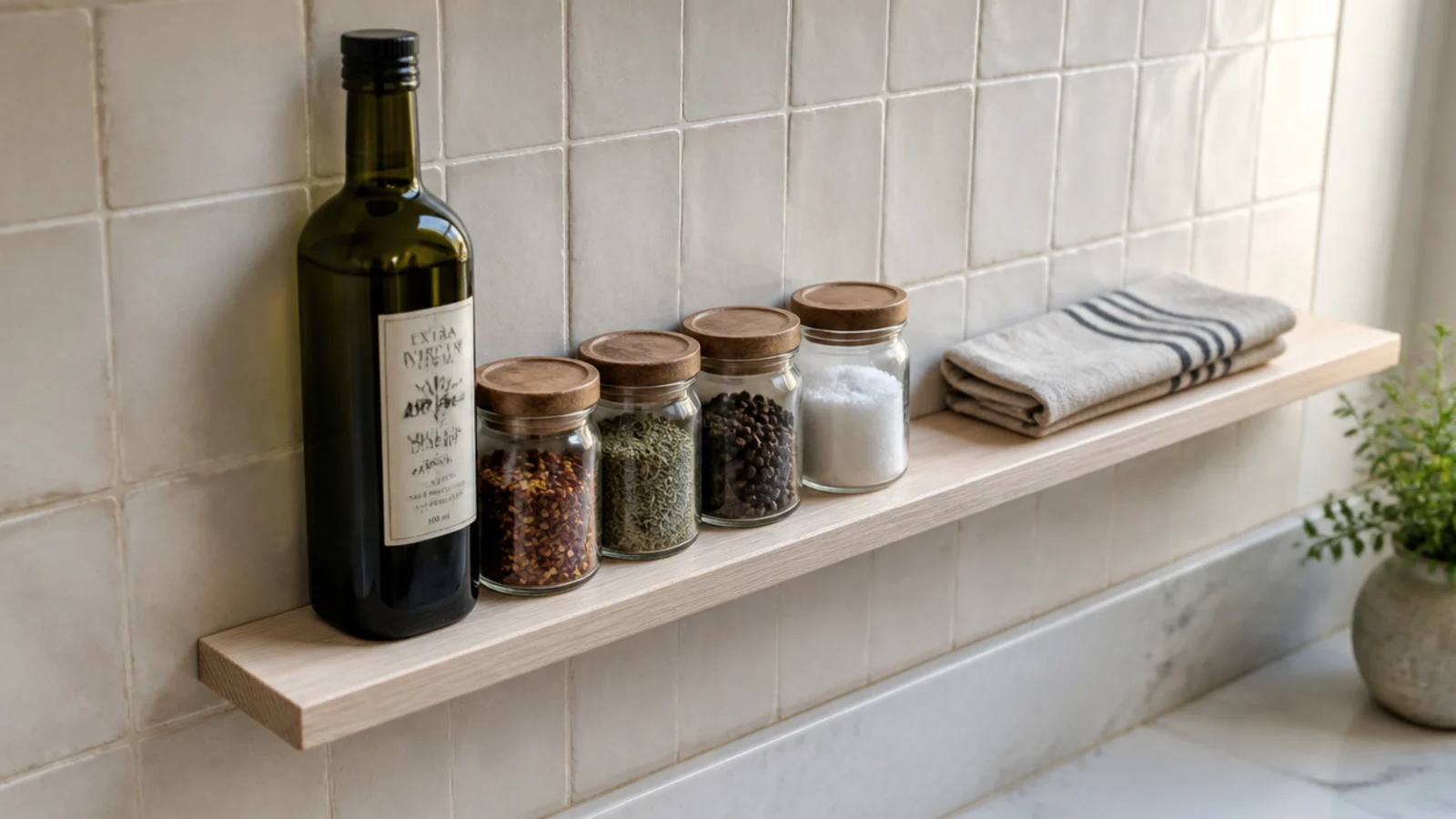
3. A three-inch adhesive backsplash ledge with honest limits
A 3-inch ledge running along the backsplash holds oils and daily spices without eating a single inch of counter. It is the most useful shelf in a small rental kitchen, and the one people over-load.
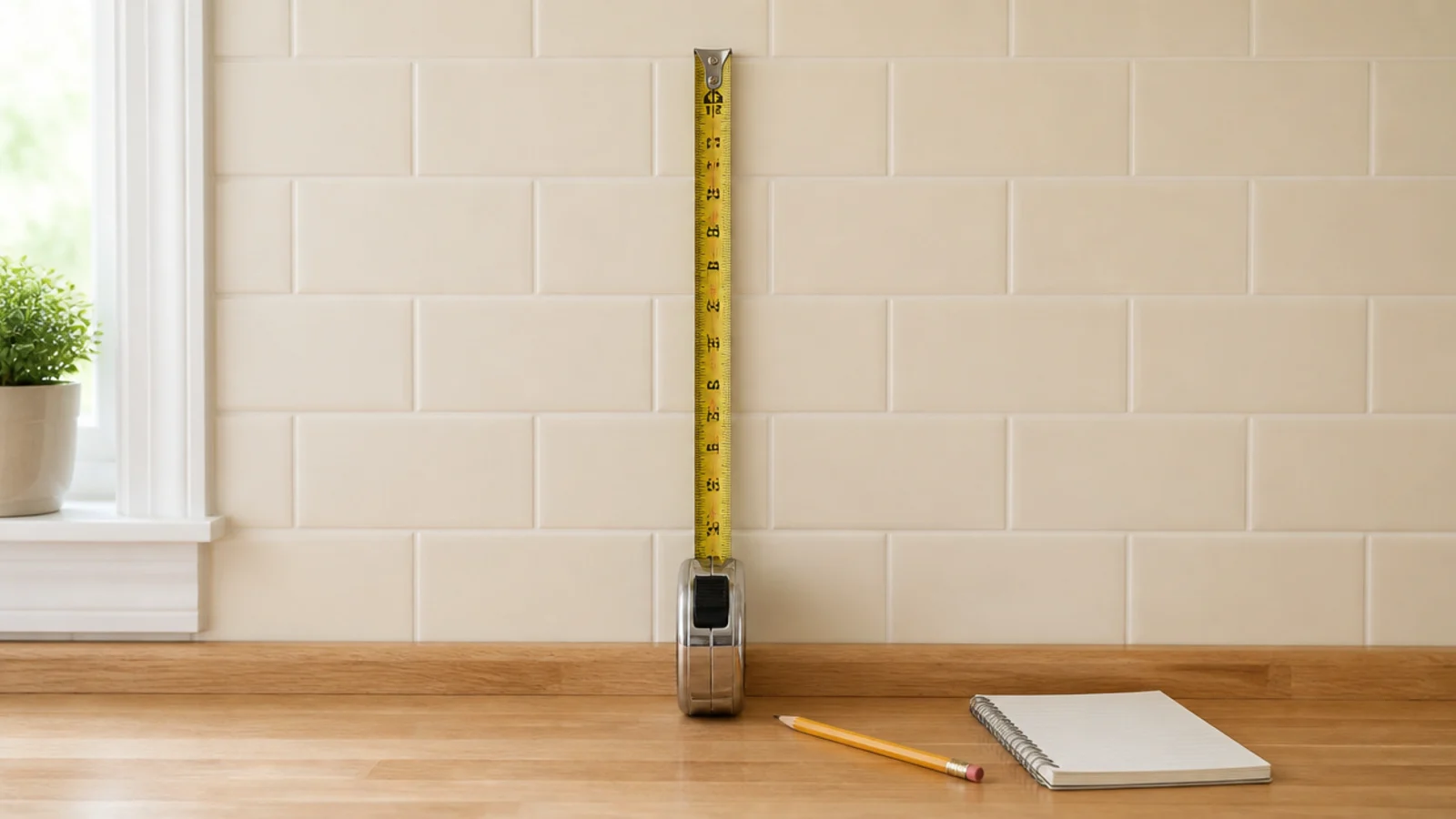
Heavy-duty strips are honestly rated at about 15 pounds per pair. Clean the tile or paint with rubbing alcohol, press for 30 seconds, then wait a full hour before loading. Test on hidden paint behind the fridge first — flat builder-grade paint peels away with the strip.
Remove it later with a hair dryer on low, pulling slowly at 45 degrees.
4. A freestanding rack on the blank kitchen wall
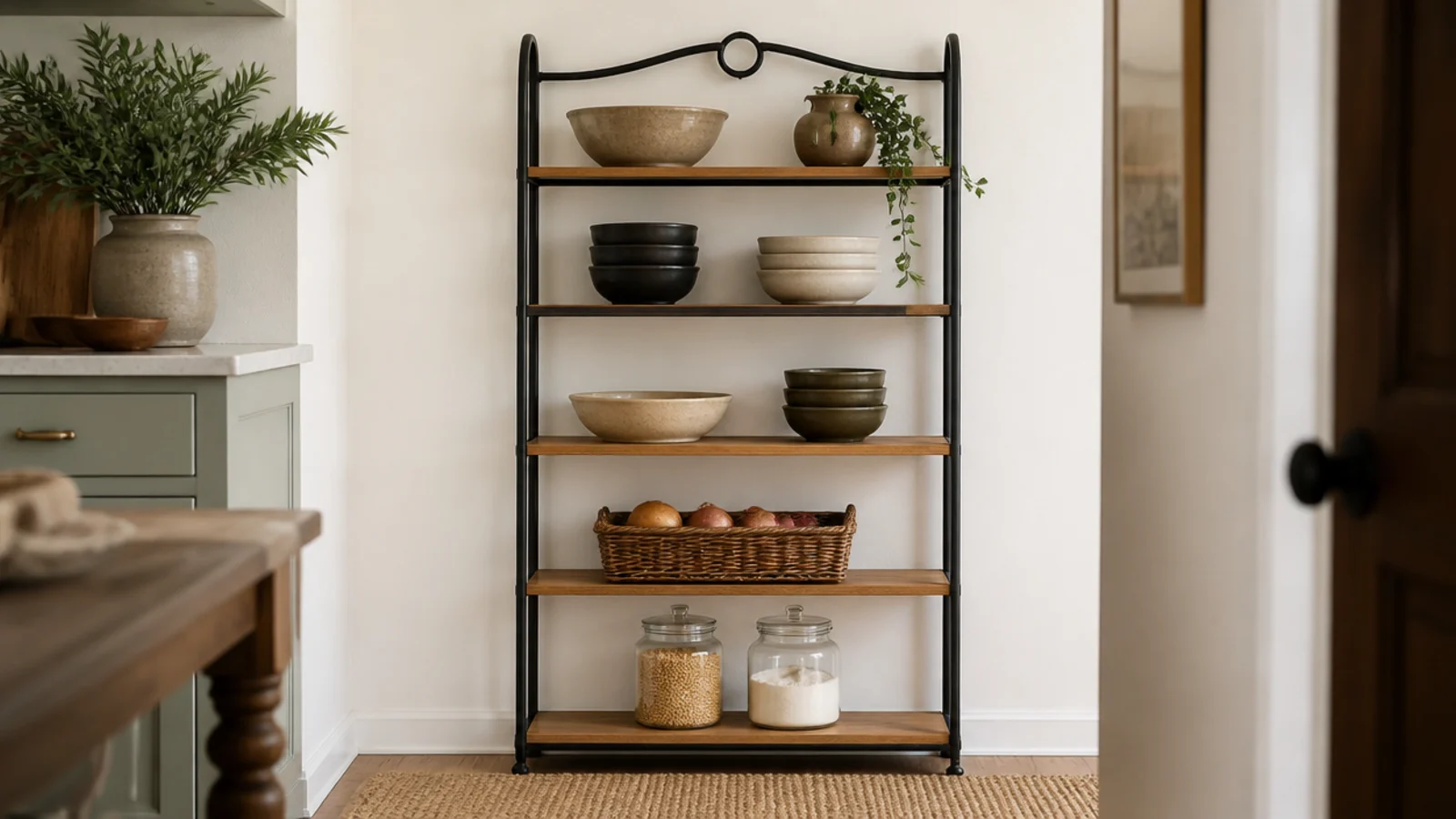
Almost every rental kitchen has one blank wall doing nothing. A freestanding baker's rack about 36 inches wide and 16 deep fills it with four tiers of real capacity, and the entire load sits on four feet.
Look for a welded frame rather than bolted tubing, which racks sideways once loaded. Put the heaviest tier at waist height, since that is where you reach a hundred times a week. Budget $70 to $140 ($$).
If there are kids around, one anti-tip strap and one small screw is worth the patching.
5. Tension-rod shelving across a window recess
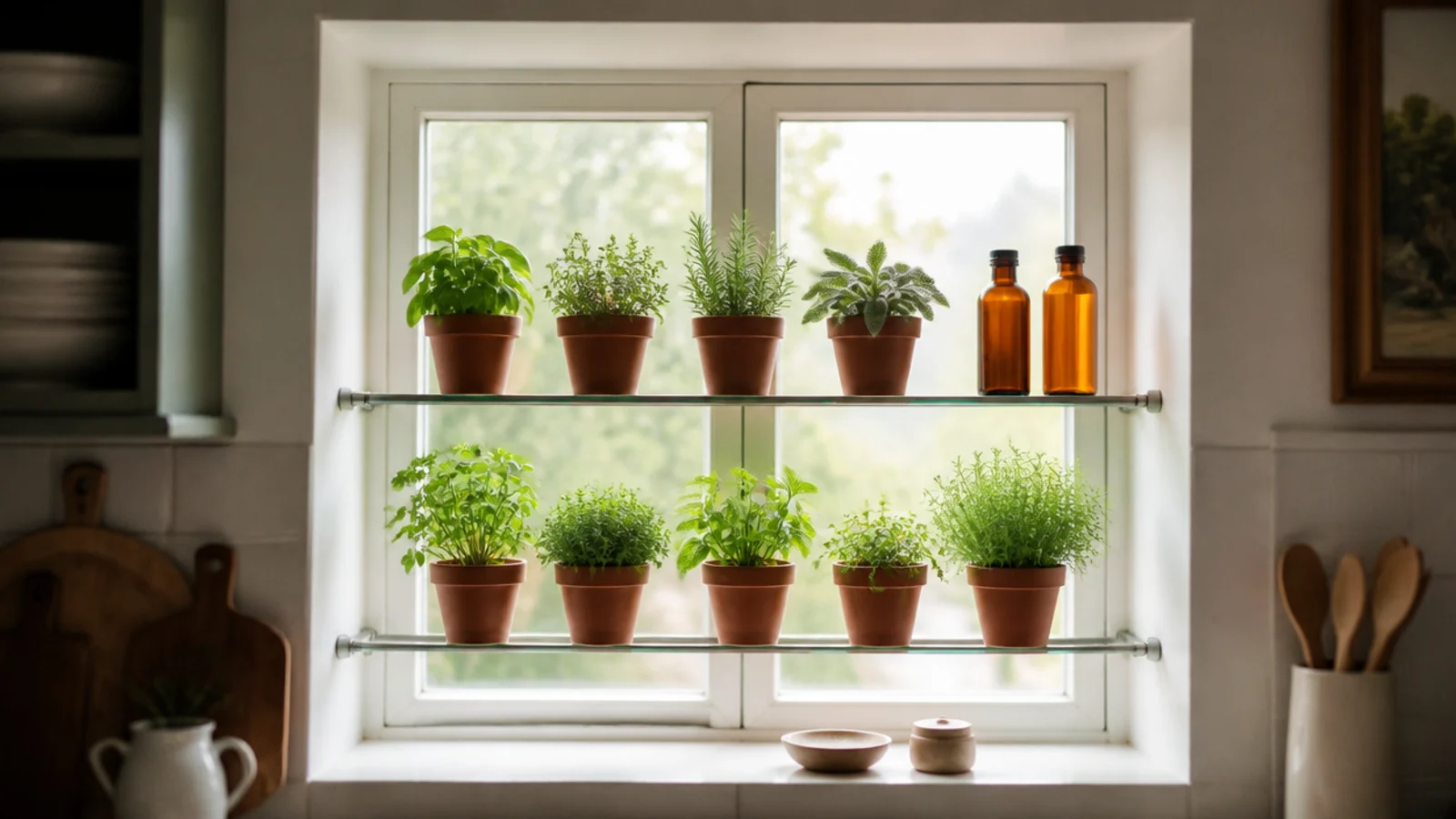
A deep window reveal is a shelf waiting to happen. Two tension rods cut to the reveal width, with a slim glass or wood shelf resting across each pair, gives you two levels of storage in a bright spot for under $25.
Keep the load light — 5 to 8 pounds per level — and check the rods weekly for the first month. Glass shelves let light through and keep the window from feeling blocked.
Herbs go here and nowhere else, since they need four hours of direct light to survive indoors.
6. An over-the-sink shelf that bridges the basin
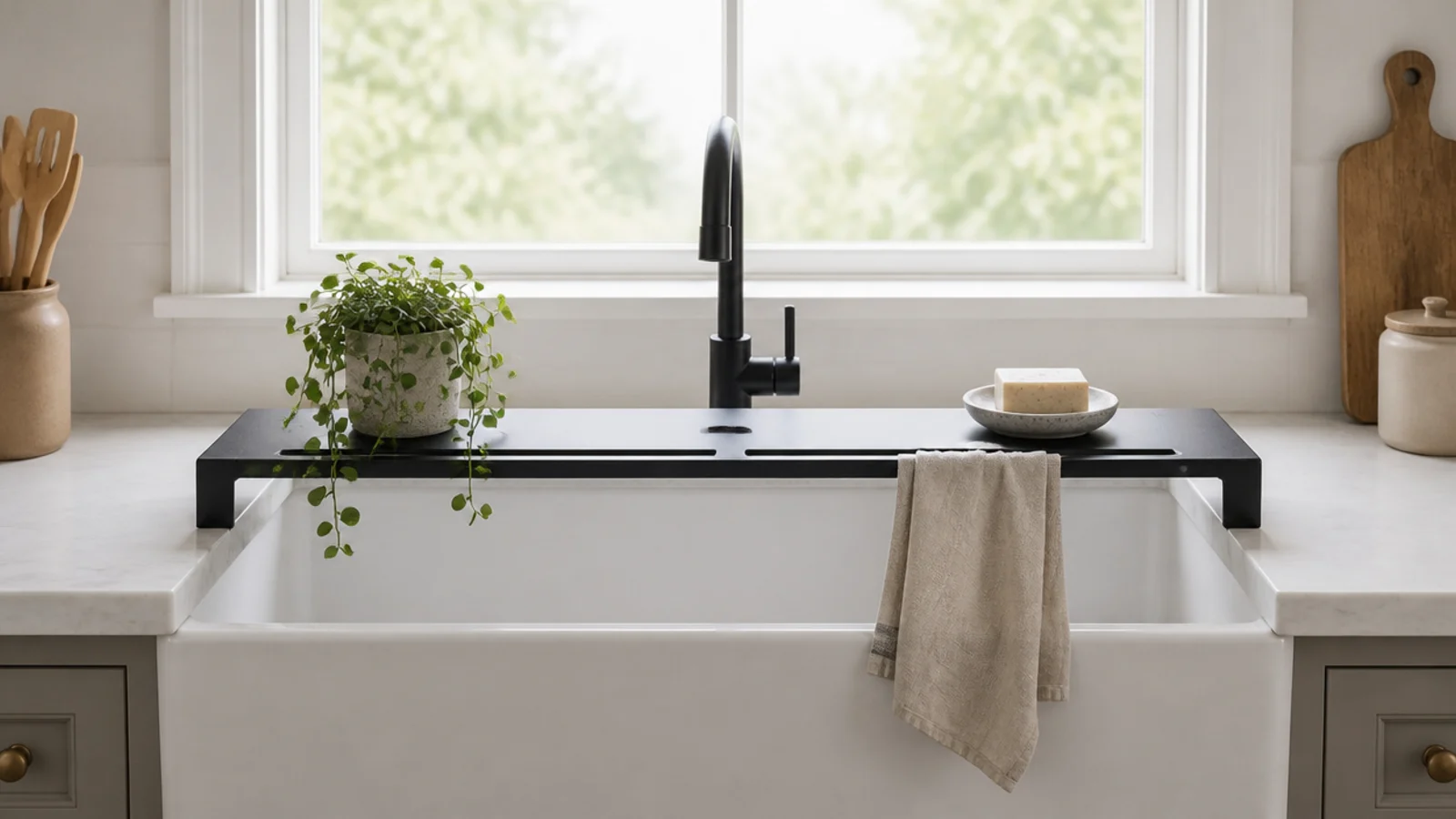
A bridging shelf rests on both counter edges and spans the sink, which is dead space every other hour of the day. Most adjust between 25 and 40 inches wide.
Use it for a draining plant, a soap dish and a cloth — anything that will not be ruined by a splash. Stainless or powder-coated steel only, since this is the wettest spot in the room and coated MDF swells at the cut edges.
It lifts straight off when you need to fill a stockpot. Around $25 to $45.
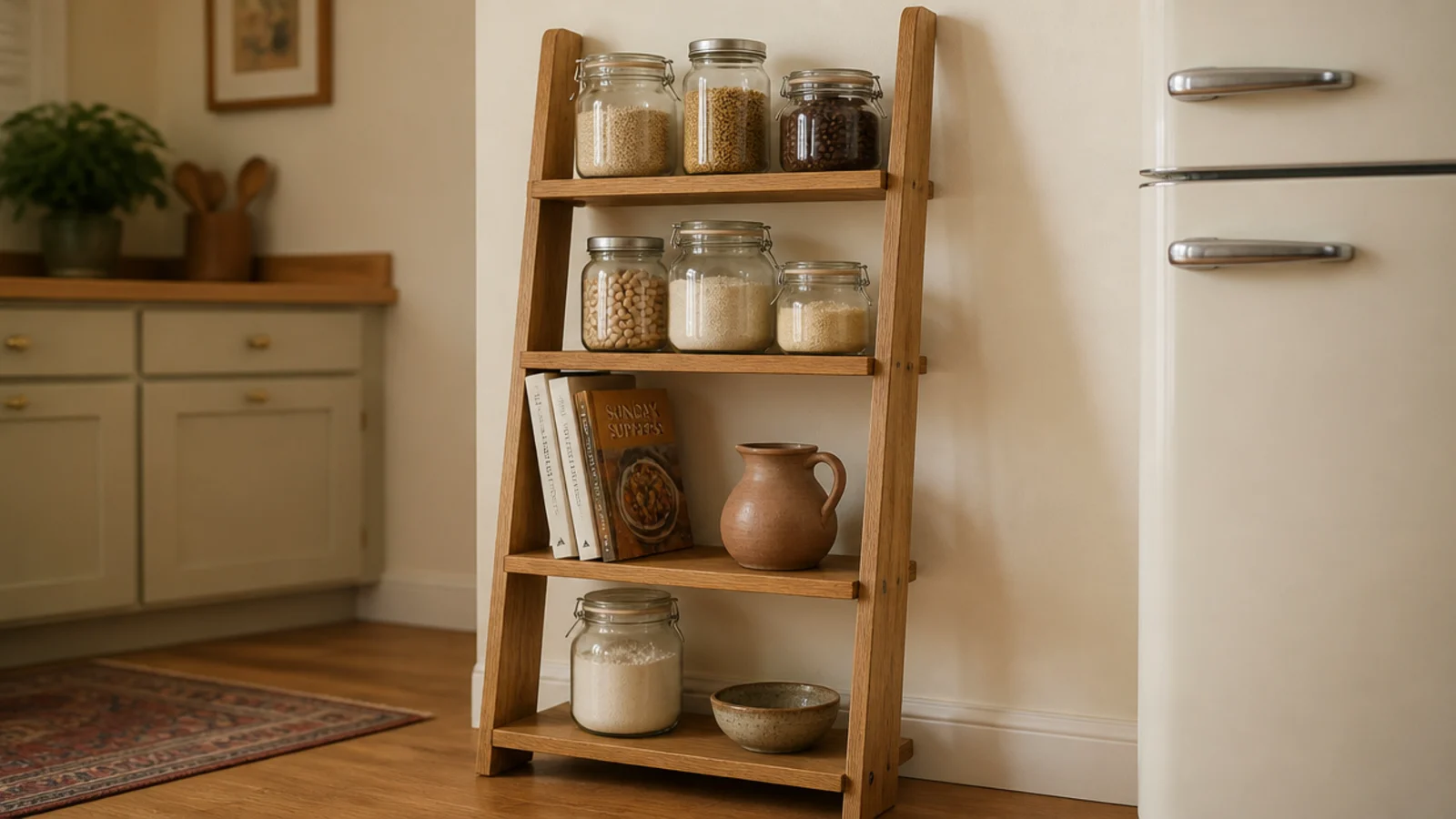
7. A leaning ladder shelf beside the fridge
A four-rung ladder shelf leaning at roughly 15 degrees is stable against a flat wall, needs nothing but a felt pad under each foot, and reads as furniture rather than storage.
Heaviest items on the bottom rung, always. Rungs two and four take jars and cookbooks — well away from the stove, since paper absorbs grease permanently and cannot be cleaned.
Look for depths of 10 inches at the base tapering upward, which keeps it out of a narrow walkway. Expect $45 to $95.
8. A slim rolling cart for the twelve-inch gap
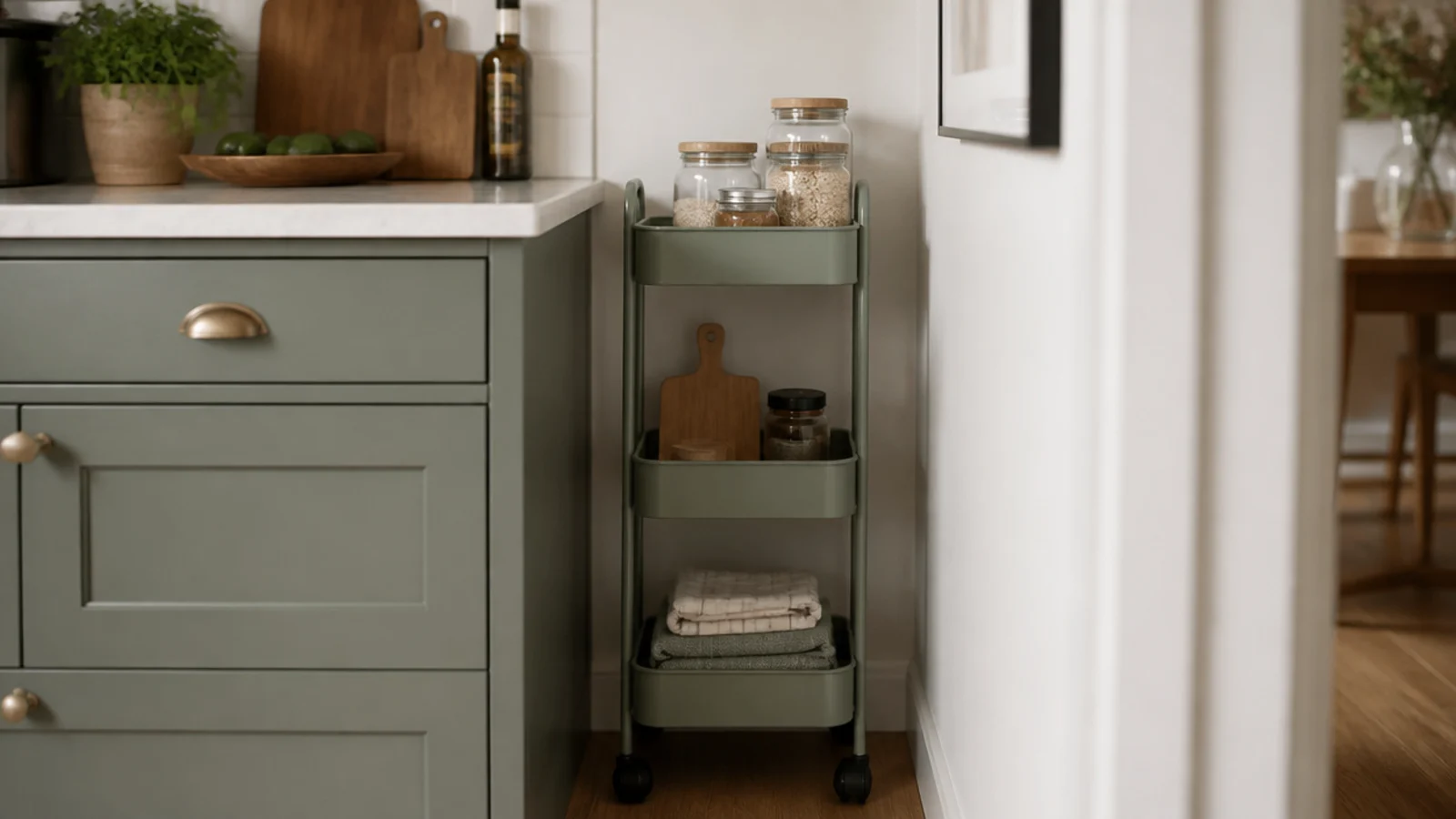
The gap between a counter run and the wall or fridge is usually 10 to 14 inches of pure waste. A three-tier rolling cart sized to it turns that into a pull-out pantry.
Measure the narrowest point, including any baseboard, and subtract half an inch. Locking casters matter here — an unlocked cart wanders every time you open the fridge.
Load the bottom tier heaviest so it does not tip on the way out. Around $30 to $60, and it becomes a bathroom cart in the next apartment.
9. Stackable crates as a modular shelf tower
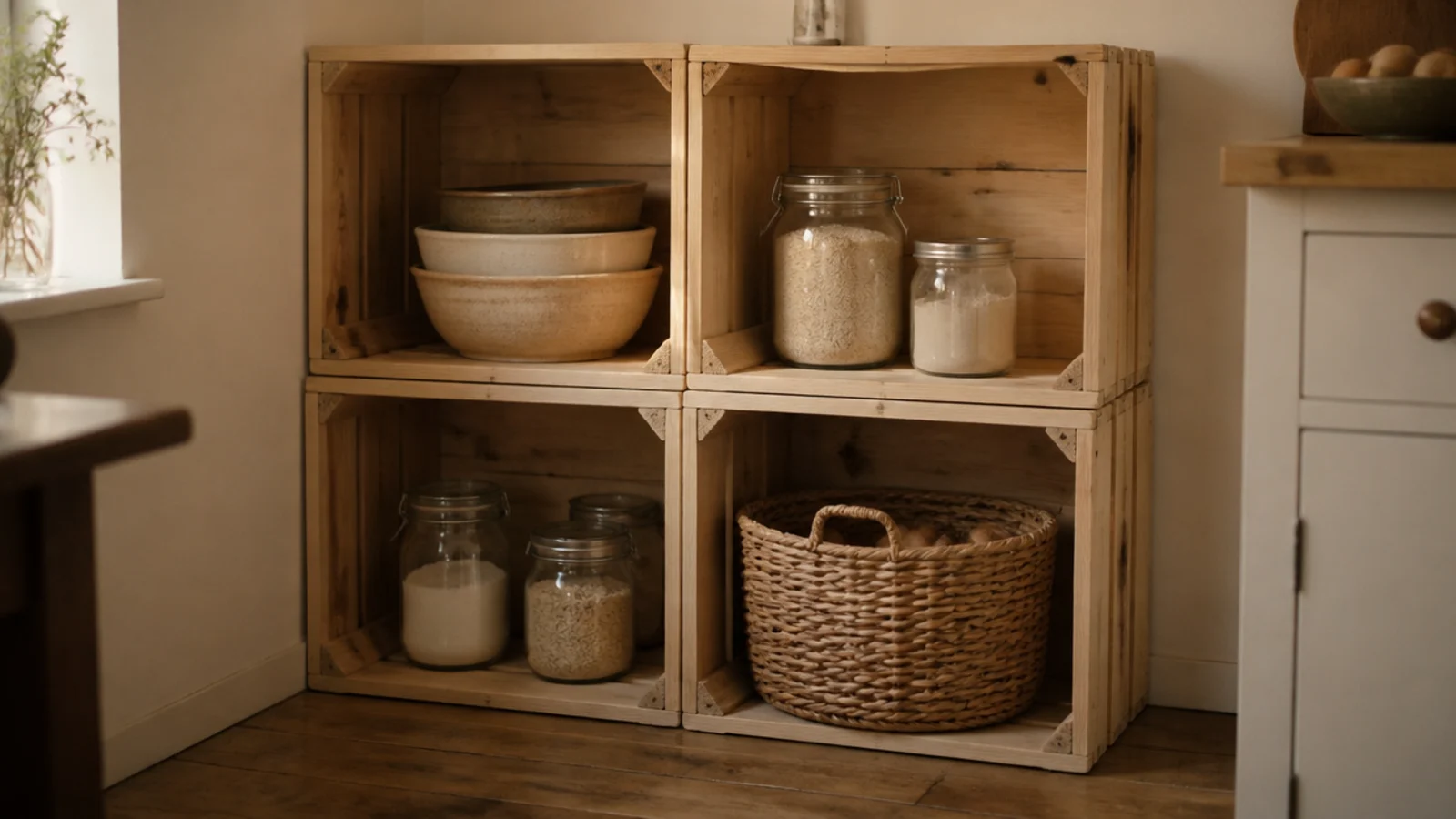
Plain pine crates at $12 to $15 each stack into open cubbies that cost a fraction of a shelving unit and reconfigure in every place you live.
Sand the inside edges, then seal with water-based polyurethane on every face including the underside — untreated pine in a kitchen absorbs grease and stains within a season. Two wide by two high is the sweet spot; three high needs a strap.
Turn one crate on its side as a dedicated slot for cutting boards standing on edge.
10. An over-the-door rack on the pantry door
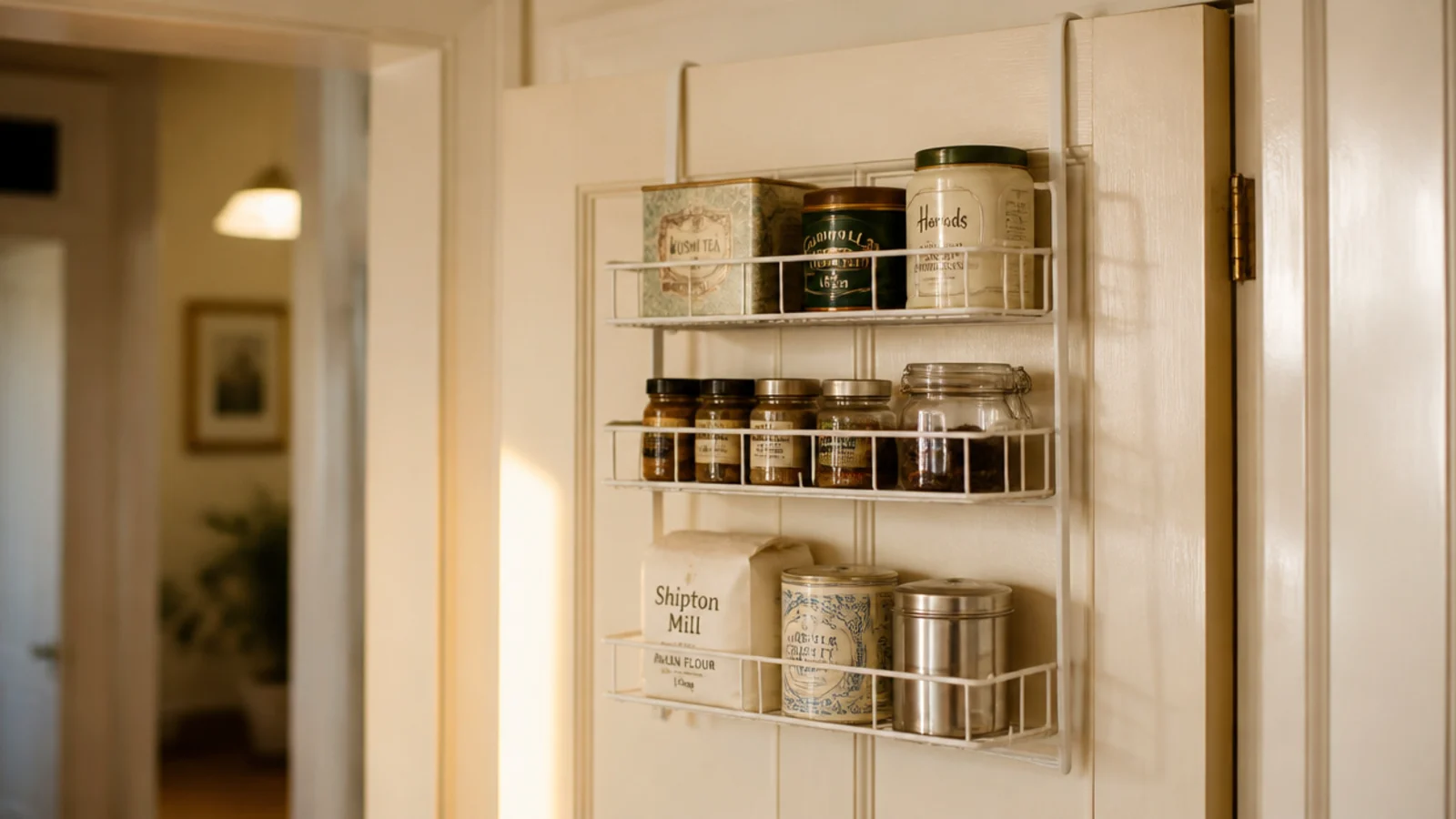
A wire rack that hooks over the top edge of a pantry or closet door adds four narrow shelves in a footprint of 4 inches, with no fixings at all.
Check the door closes properly first. Anything deeper than 4 inches will foul the frame, and a rack loaded with tins will make a hollow door swing hard.
Keep it to lightweight packets, tins and small jars — 20 pounds spread across the whole rack. Add self-adhesive felt where the hooks sit so the paint survives. Around $20 to $35.
11. A magnetic shelf on the fridge side panel
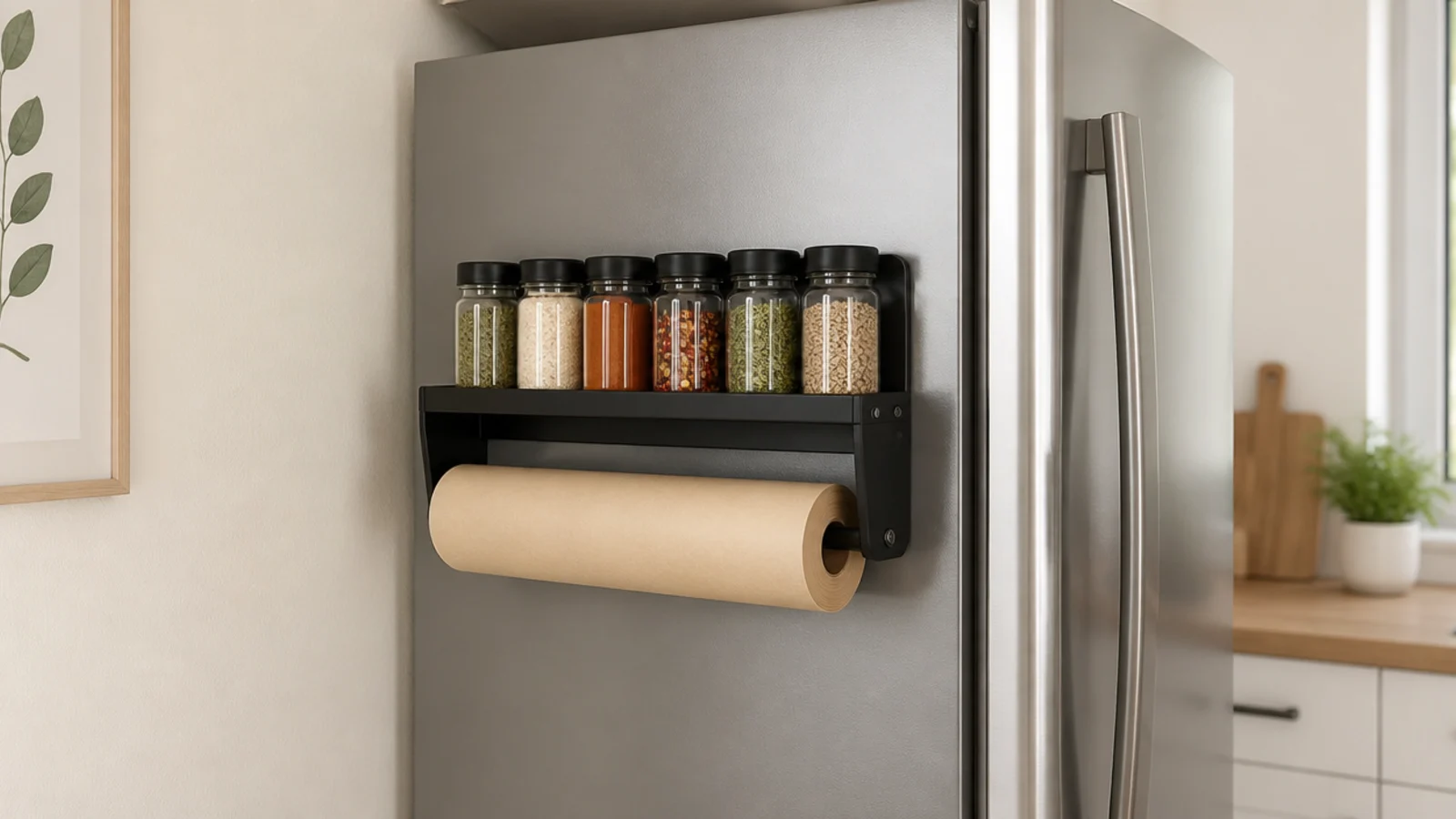
If the fridge sits in a run with one flank exposed, that flank is the last free vertical surface in the kitchen. A magnetic shelf or caddy sticks to it, holds 5 to 10 pounds, and leaves nothing behind.
Spices are the obvious answer, plus a paper towel bar underneath. Wipe the panel with rubbing alcohol first so the magnets sit flush.
Check the fridge is actually steel — many newer doors are, but some flanks are painted composite. A fridge magnet from the drawer answers it in two seconds.
12. Cabinet risers that double what fits inside
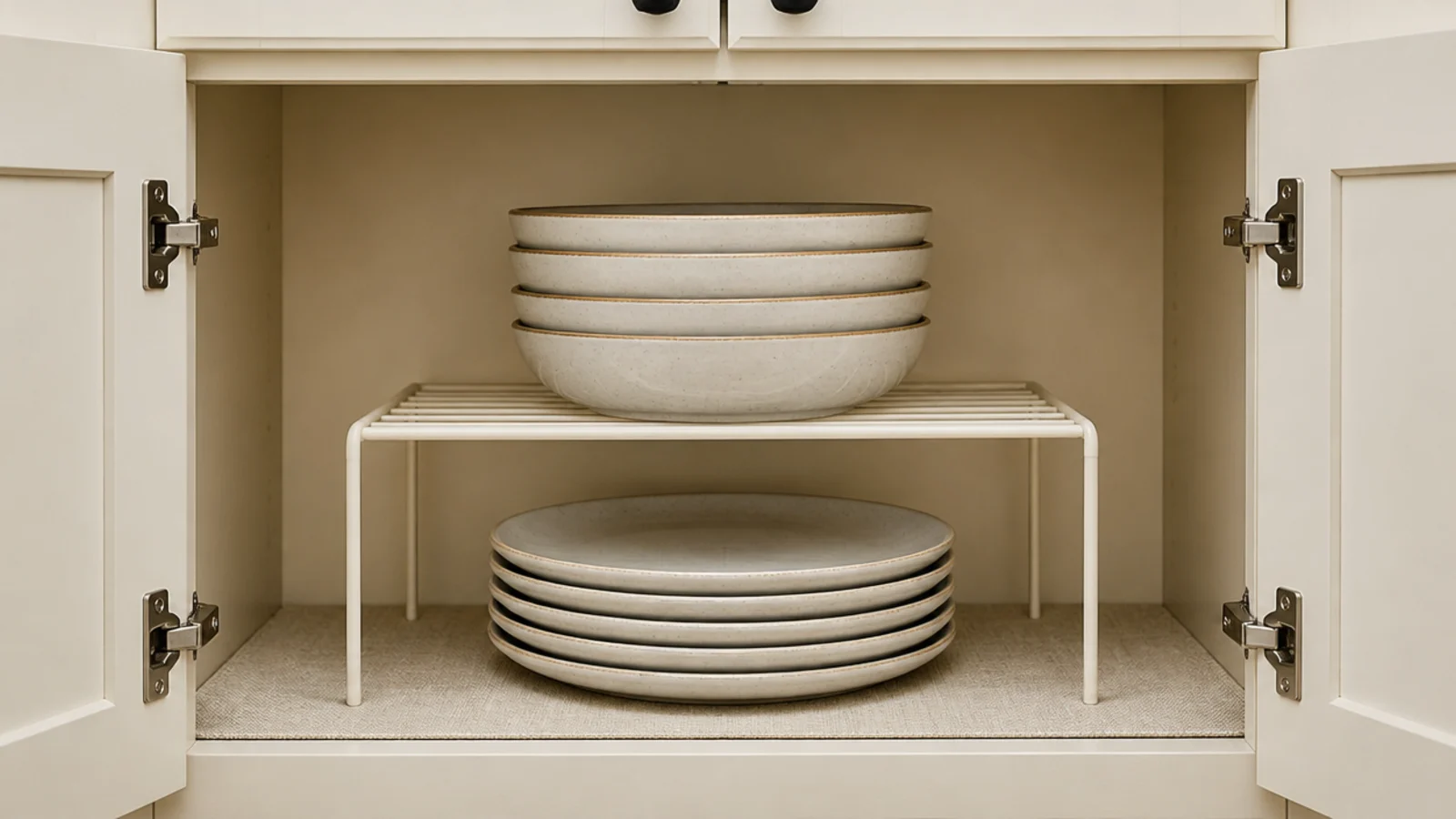
Before adding shelves to the walls, look inside the cabinets you already have. Most rental cabinets waste 6 to 8 inches of headroom above each stack.
A coated wire riser at $8 to $15 lifts bowls above plates, so both stay reachable without lifting one to get the other. Two risers usually free up an entire shelf elsewhere.
Measure the internal height before you buy, then subtract an inch for lifting clearance. This is the cheapest storage in the whole article.
13. Adhesive mug hooks under an upper cabinet
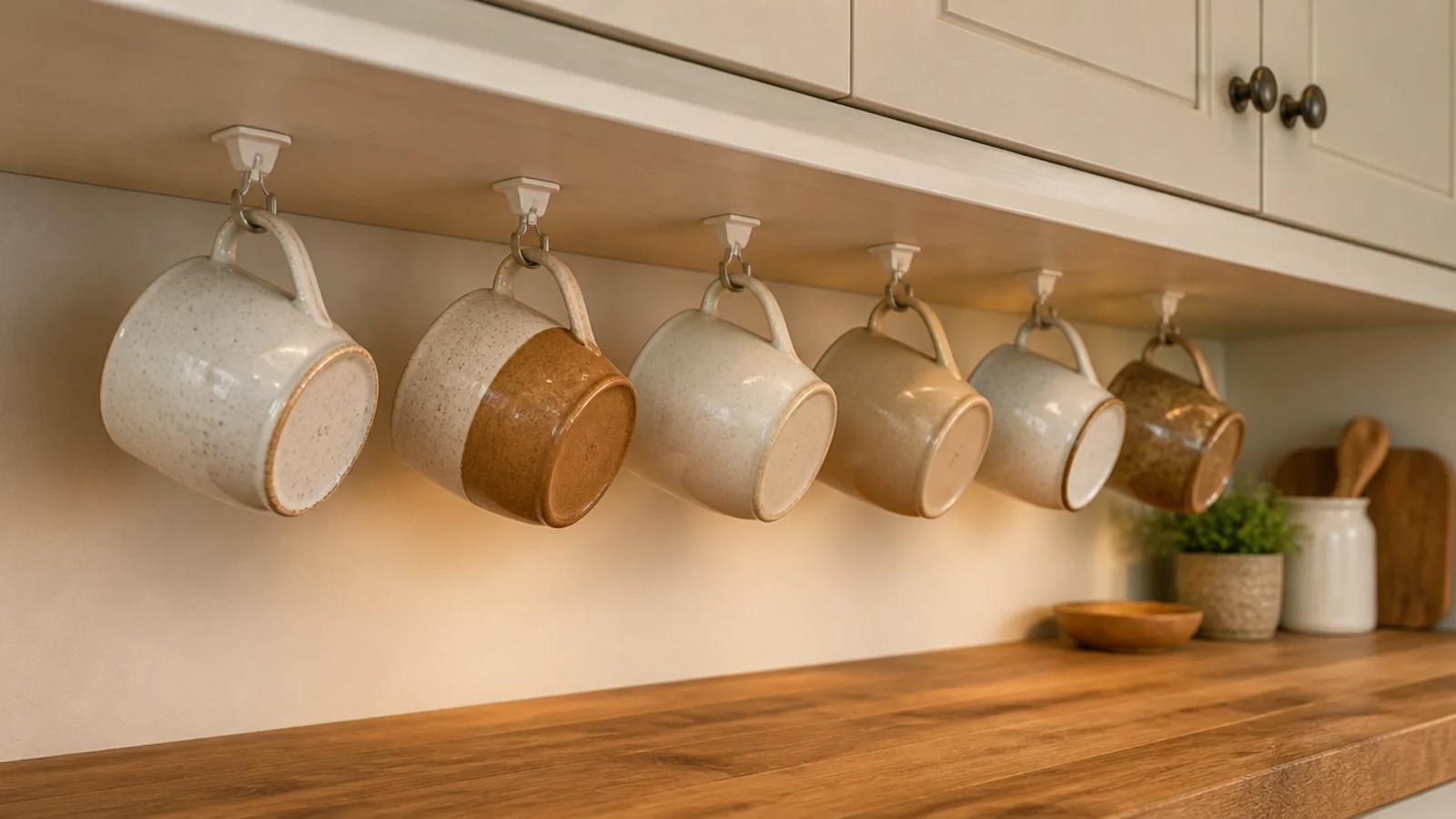
Small adhesive hooks on the underside of an upper cabinet hold six mugs in the space one takes on a counter. Because the cabinet is a smooth factory finish, adhesive performs far better there than on painted drywall.
Rate each hook at 3 pounds and space them 4 inches apart so the mugs do not knock. Keep them above a run you do not chop on, or you will catch the handles with your knuckles.
Total cost is under $12, and everything comes off with a hair dryer.
14. A small hutch top set on the counter
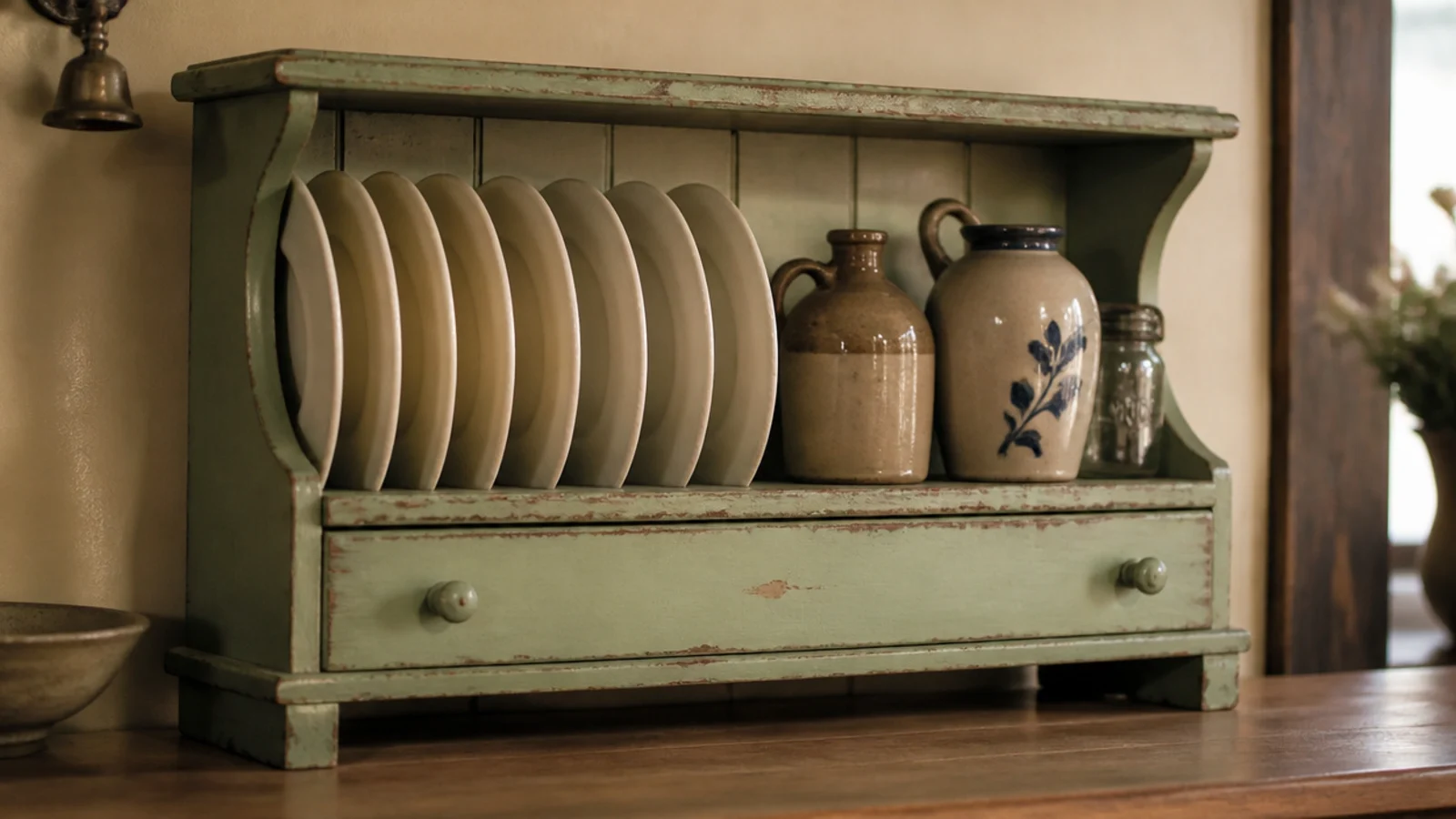
A thrifted hutch top — the upper half of an old dresser or a small plate dresser — set directly on a counter gives you built-in-looking shelving for $30 to $80 with no installation at all.
Look for one under 14 inches deep so it leaves working counter in front. Paint it the wall color and it reads as joinery rather than furniture.
Plates stood on edge with a small dowel in front look right here, and they weigh nothing on a piece already resting on solid counter.
15. Under-shelf baskets that clip onto what is there
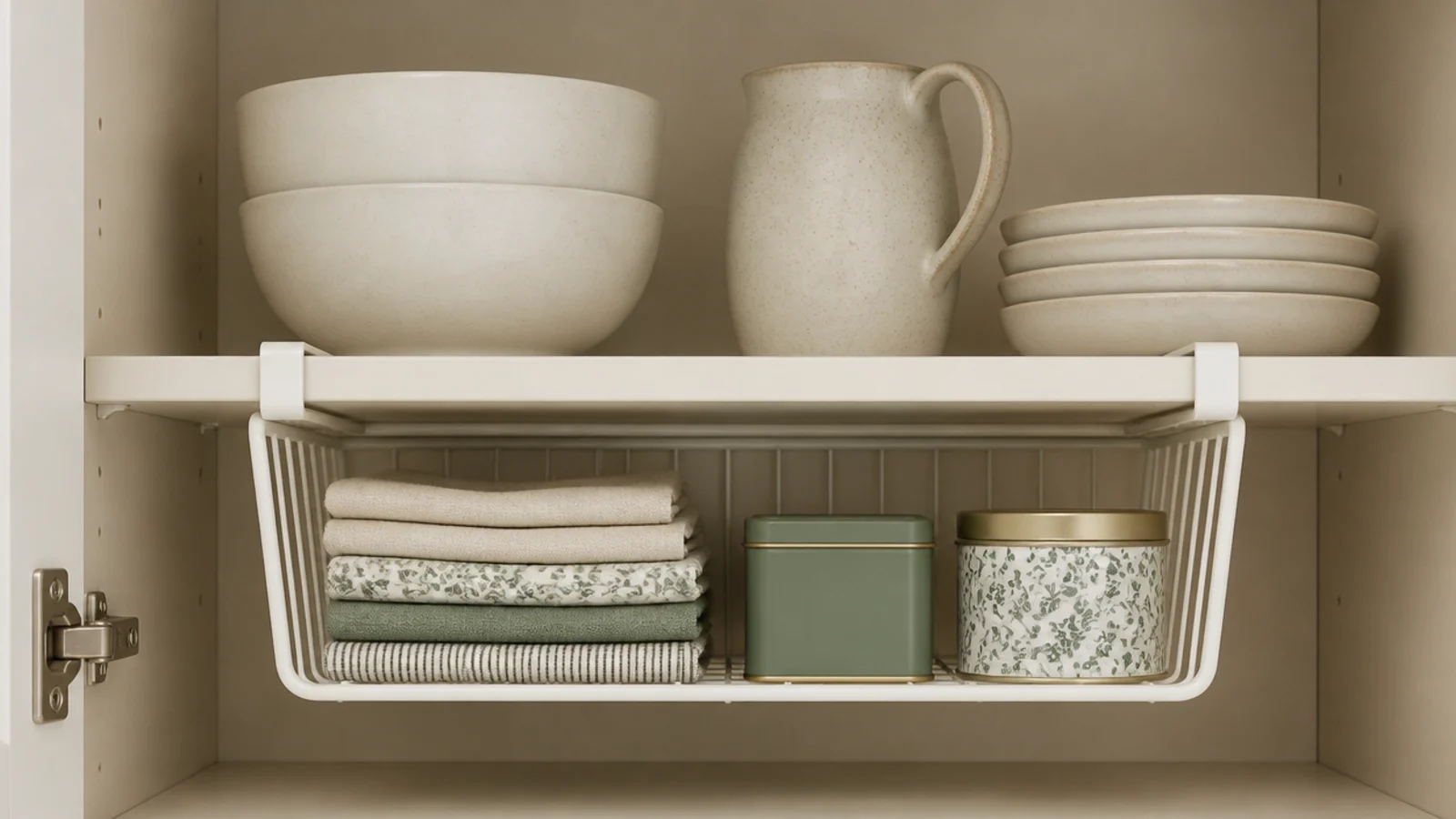
A clip-on wire basket slides onto an existing cabinet shelf and hangs beneath it, adding a whole layer to a cabinet without touching the structure.
They come in 8, 12 and 16-inch widths and hold about 5 pounds. Use them for linens, foil and small tins — anything light and flat that otherwise gets buried behind taller things.
The trick is choosing one whose hook depth matches your shelf thickness, usually five-eighths to three-quarters of an inch. Around $8 each, and no tools whatsoever.
Mistakes to Skip
- Hanging plates or dishes from adhesive strips. Ten dinner plates are about 12 pounds and a warm humid kitchen softens adhesive — this is the failure that costs a deposit and a dinner service at once.
- Testing adhesive on the most visible wall. Try it behind the fridge for three days first, because flat builder-grade paint peels off in sheets and you cannot patch that invisibly.
- Leaving crates or open pine unsealed. Bare wood in a kitchen absorbs grease within a season and no amount of scrubbing brings it back.
Frequently asked questions
How can renters add kitchen shelves without drilling?
Put the load on the floor or the counter instead of the wall. Baker's racks, leaning ladder shelves, rolling carts and countertop risers all carry real weight because gravity does the work. Tension poles and over-the-sink bridges use pressure rather than fixings. Adhesive ledges are the true zero-hole option but cap out around 15 pounds per pair of strips, so they suit oils and spices rather than dishes.
How much weight can adhesive kitchen shelves really hold?
Heavy-duty strips are honestly rated at about 15 pounds per pair, and a kitchen is harder on them than a bedroom because warm humid air softens the adhesive. Ten dinner plates alone weigh around 12 pounds, so plates are out. Oils, daily spices, a small plant and a folded cloth are well within range. Clean the wall with rubbing alcohol, press for 30 seconds and wait an hour before loading.
Will adhesive shelves damage rental paint?
It depends entirely on the paint, not the strip. Satin and eggshell finishes usually release cleanly. Flat builder-grade paint often comes away with the strip and takes a patch of drywall paper with it. Test on a hidden spot behind the fridge first, leave it three days, then pull. When removing, warm the strip with a hair dryer on low and pull slowly at a 45-degree angle.
What is the best renter shelf for dishes and plates?
Something standing on the floor. A baker's rack or a rolling cart carries 30 to 60 pounds a tier because the load goes straight down into the legs rather than pulling on drywall. Keep plate stacks to five high so you can lift them one-handed, and put the heaviest tier at waist height where you actually reach for them.
How high should a renter kitchen shelf sit above the counter?
Eighteen inches from the countertop to the underside of the first shelf clears a stand mixer and most small appliances, and a second shelf sits 12 to 14 inches above that. A countertop riser is the exception, since it stands on the surface and only needs to clear whatever slides underneath it, usually 8 to 10 inches.
Do open kitchen shelves work in a small rental?
Yes, provided everything on them is used weekly. Constant use keeps open shelving clean and looking lived-in, which is the whole trick. Anything you touch twice a year sits collecting an airborne grease film in full view. In a rental that also means fewer objects to wrap and box when the lease ends, which is its own quiet argument.
Start with the riser and the cabinet risers — under $50 together, no adhesive, and they buy back more counter than anything else here. If you want the wall-mounted versions for when you own the place, small kitchen shelf ideas covers tight layouts and kitchen shelf styling covers what goes on them. For a rental coffee setup on the same principle, coffee corner decor is the companion piece. Save the pin for your next apartment tour.
Want more like this? Browse all 15 kitchen shelf ideas guides — they all use the same measurements and budget tiers.
Pin it for later
Save this to your Kitchen Shelf Ideas board
Pin it now so it is waiting for you when the tape measure comes out — and so the next person hunting for this idea can find it too.
Save this pinKeep going
More ideas worth saving while you have the tape measure out.