Floating Shelves · Listicle
30 Beautiful Floating Shelf Ideas to Steal Today

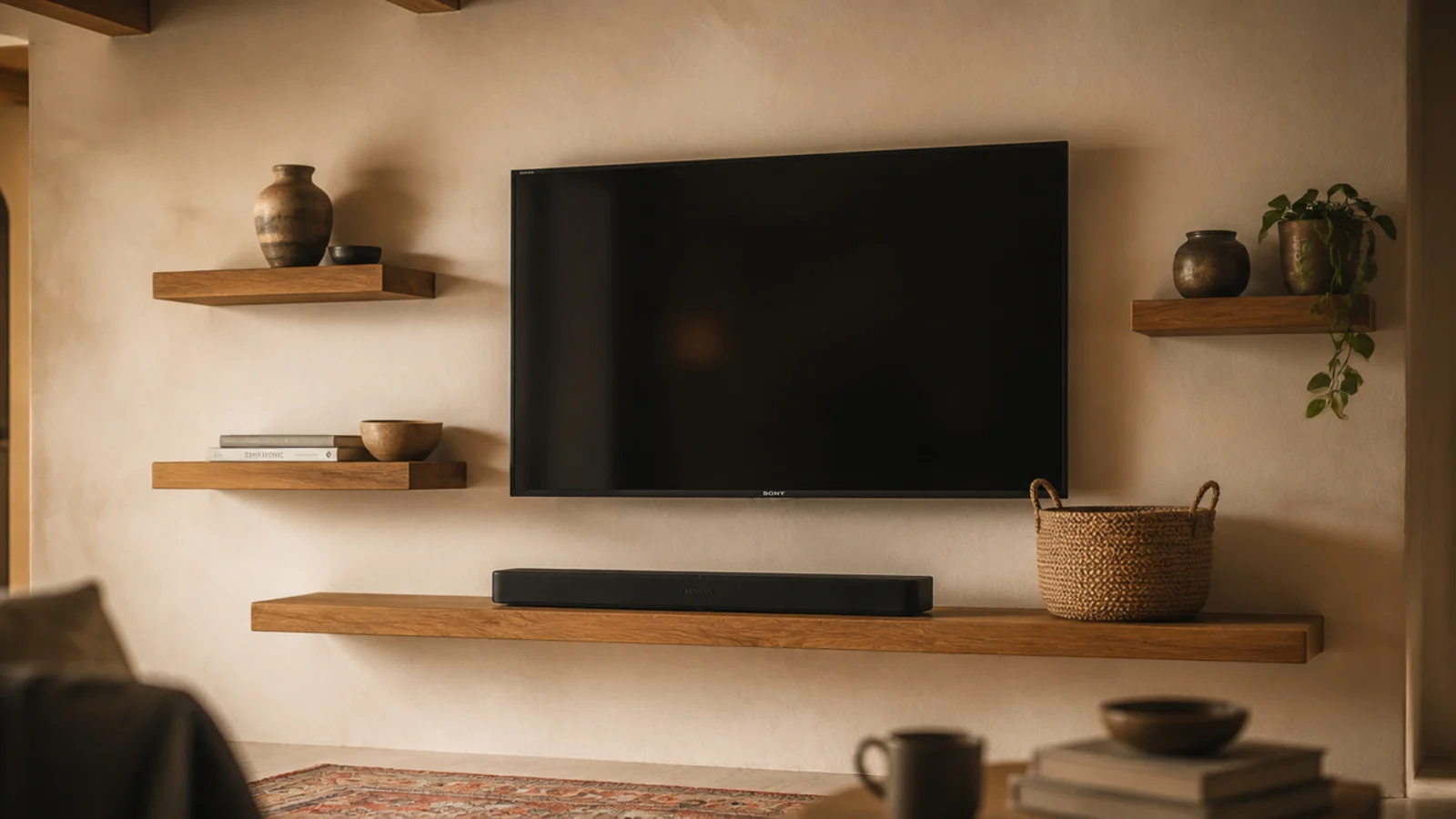
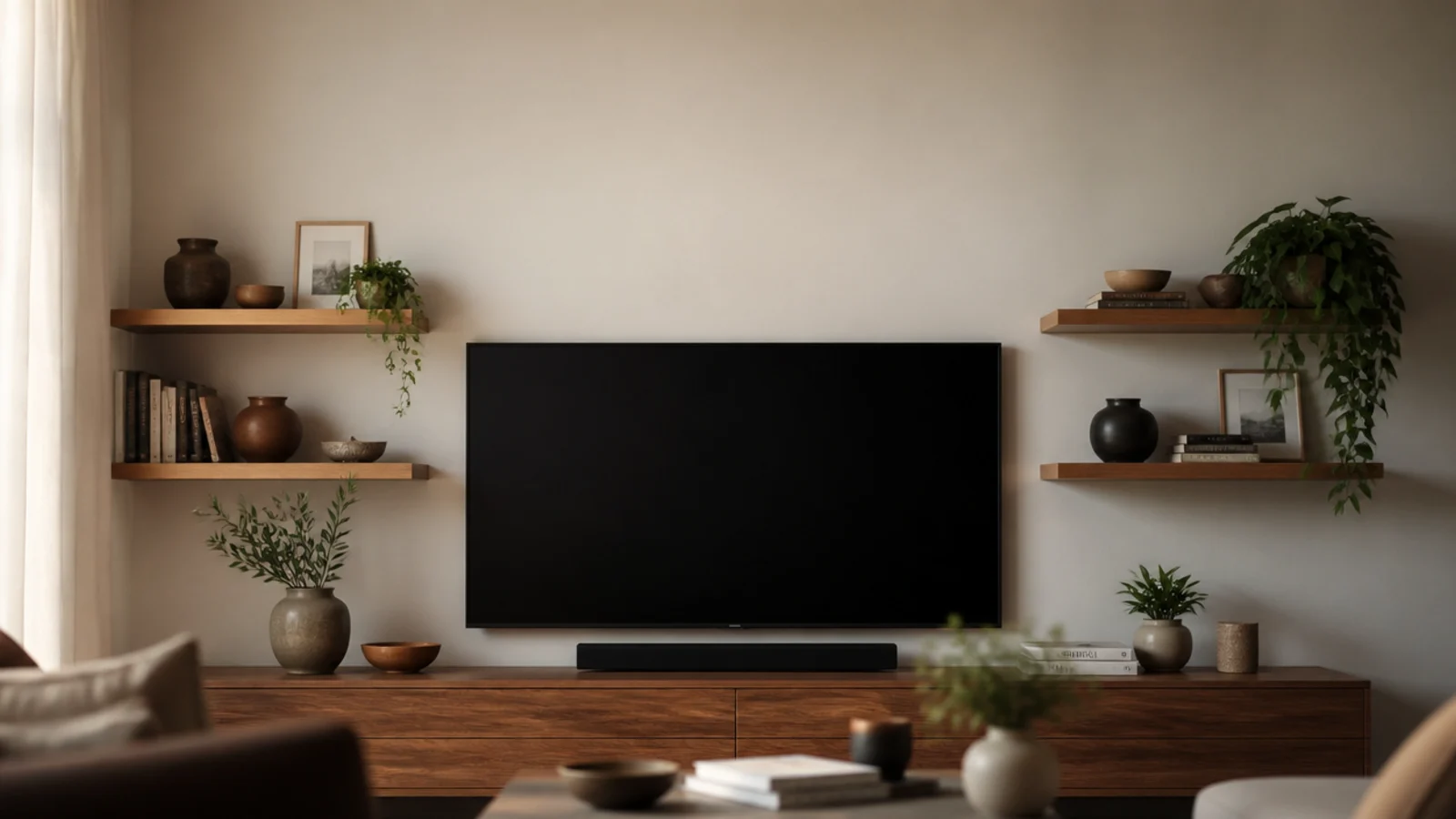
Floating shelves around a TV have a job no other shelf has: they need to make a black rectangle look like it belongs in a room full of wood, linen and clay. Get the clearances and the cable route right and the screen stops being the first thing anyone sees. Thirty ideas here, each with a height, a depth and a fixing.
In this guide32 sections — tap to openHide
- 1.What floating shelves around a TV have to solve
- 2.One shelf under the TV instead of a console
- 3.A matched pair flanking the screen
- 4.An asymmetric stack on one side only
- 5.Shelves stepping up beside the screen
- 6.A full-width shelf above the TV
- 7.A dedicated soundbar shelf
- 8.A ventilated shelf for the console and boxes
- 9.Drill a one-inch cable pass-through
- 10.A paintable raceway down the wall
- 11.Hide the power strip under the shelf
- 12.Dark shelves on a dark painted panel
- 13.Black metal brackets under oak boards
- 14.A built-up box media wall
- 15.Vinyl storage beside the screen
- 16.Books beside the screen to soften it
- 17.Plants that break the black rectangle
- 18.Picture ledges that frame the TV
- 19.Bias lighting behind the screen
- 20.Size the shelf to the screen, not the wall
- 21.A gallery wall that absorbs the screen
- 22.Align shelves with the top and bottom of the screen
- 23.A low shelf for controllers and games
- 24.A shelf under a fireplace-mounted TV
- 25.The one-wall apartment arrangement
- 26.A shelf for a projector instead of a screen
- 27.A renter-friendly no-drill version
- 28.Two boards and painted brackets for under $45
- 29.One closed basket for every remote
- 30.A deeper shelf for a turntable
- 31.Style the wall so the screen is not the point
- 32.Mistakes to Skip
What floating shelves around a TV have to solve
Start with clearances, because they cannot be changed later. Keep any shelf at least 6 inches clear of the top of the screen — screens push heat upward and a shelf tight to the bezel traps it as well as looking cramped. Four to six inches at the sides, and 10 to 12 inches below if the shelf holds a console you reach into.
Screen height matters too. The center of the panel wants to sit around 42 inches from the floor for a sofa-height view, which sets everything else on the wall.
Then cables, which is where most media walls fall apart. Drill a 1-inch pass-through near the back edge of any shelf carrying a box, and run the rest down a paintable raceway. That single hole is the difference between tidy and almost tidy.
Loads are modest but real: soundbars are 5 to 9 pounds, consoles 7 to 10, a turntable about 12. A concealed rod bracket into a stud carries 30 to 40 pounds on a 24-inch shelf and toggle bolts carry 25 to 35 pounds each, while the plastic plugs in the kit carry about 10 pounds and cause almost all sagging. Depth costs you as well — a 12-inch shelf puts roughly twice the pull-out force on its fixings as a 6-inch one.
Budget: two boards on painted-out L brackets run $25 to $45 ($), a matched concealed-rod pair runs $70 to $150 ($$), and a full built-up box media wall starts around $350 ($$$).
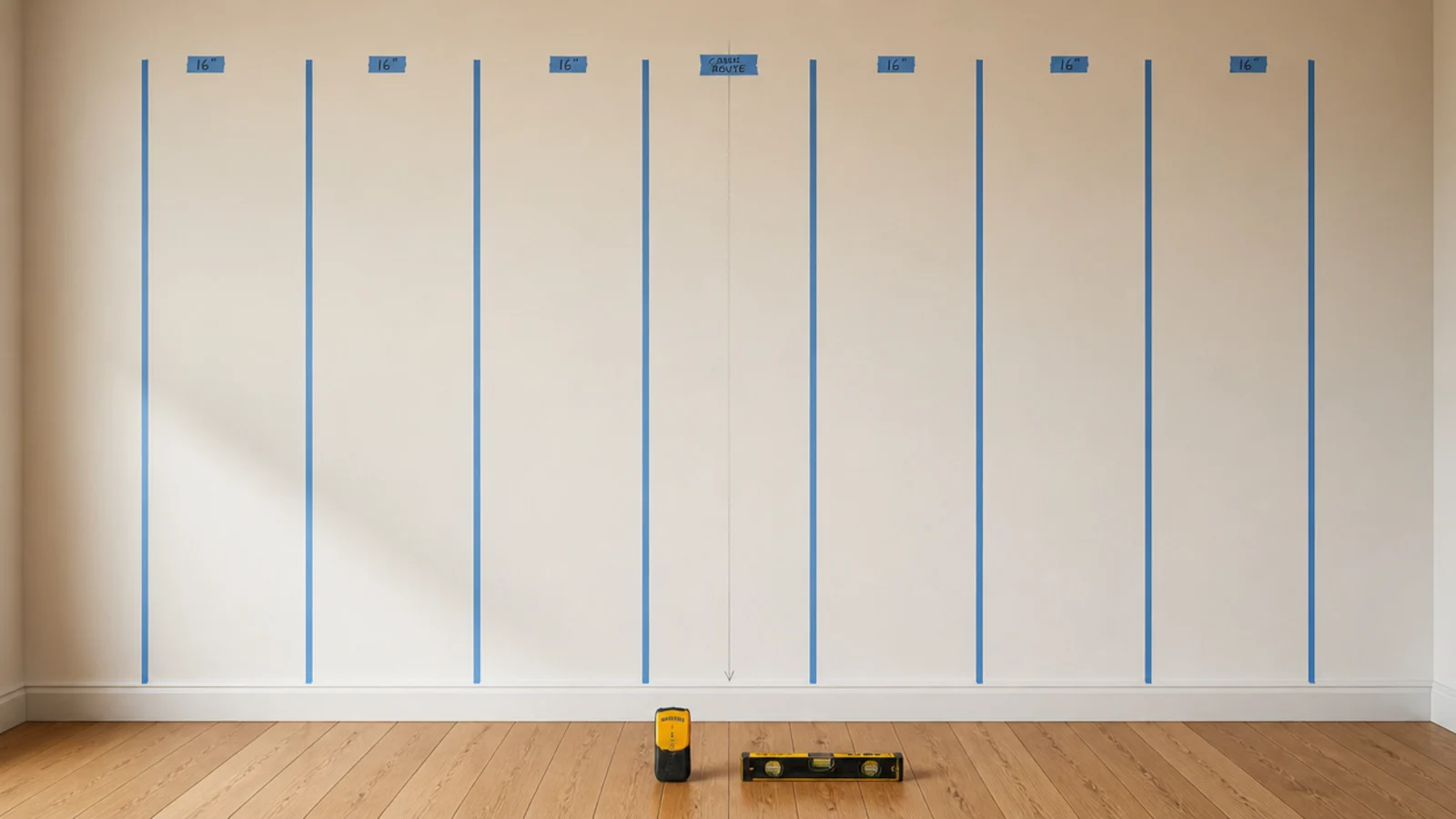
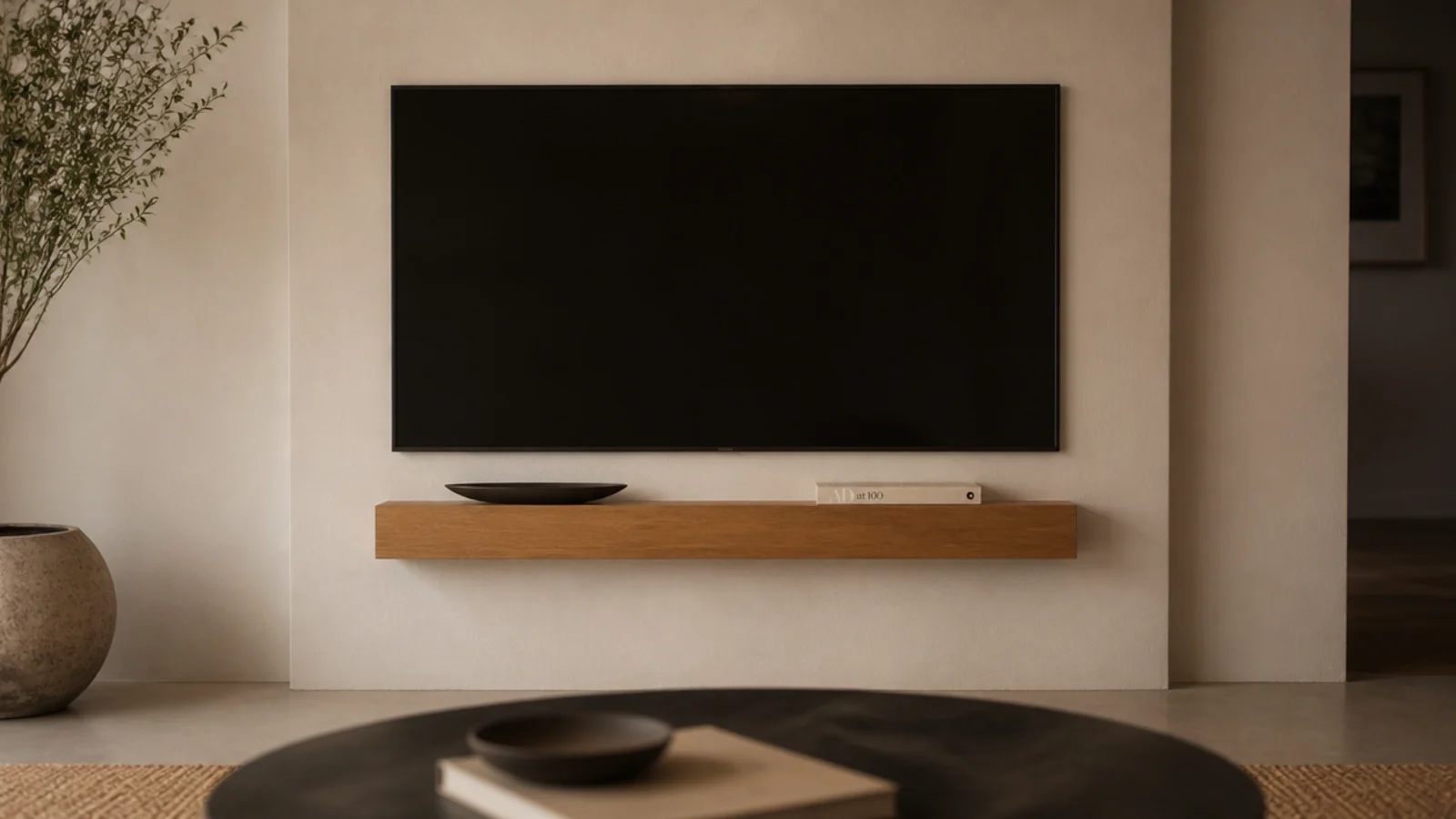
1. One shelf under the TV instead of a console
A 10-inch-deep shelf beneath a wall-mounted screen does everything a media console does and gives you the entire floor back, which in a small room reads as square footage.
Mount it 10 to 12 inches below the panel so you can reach a box without knuckles hitting the screen. Every fixing into framing.
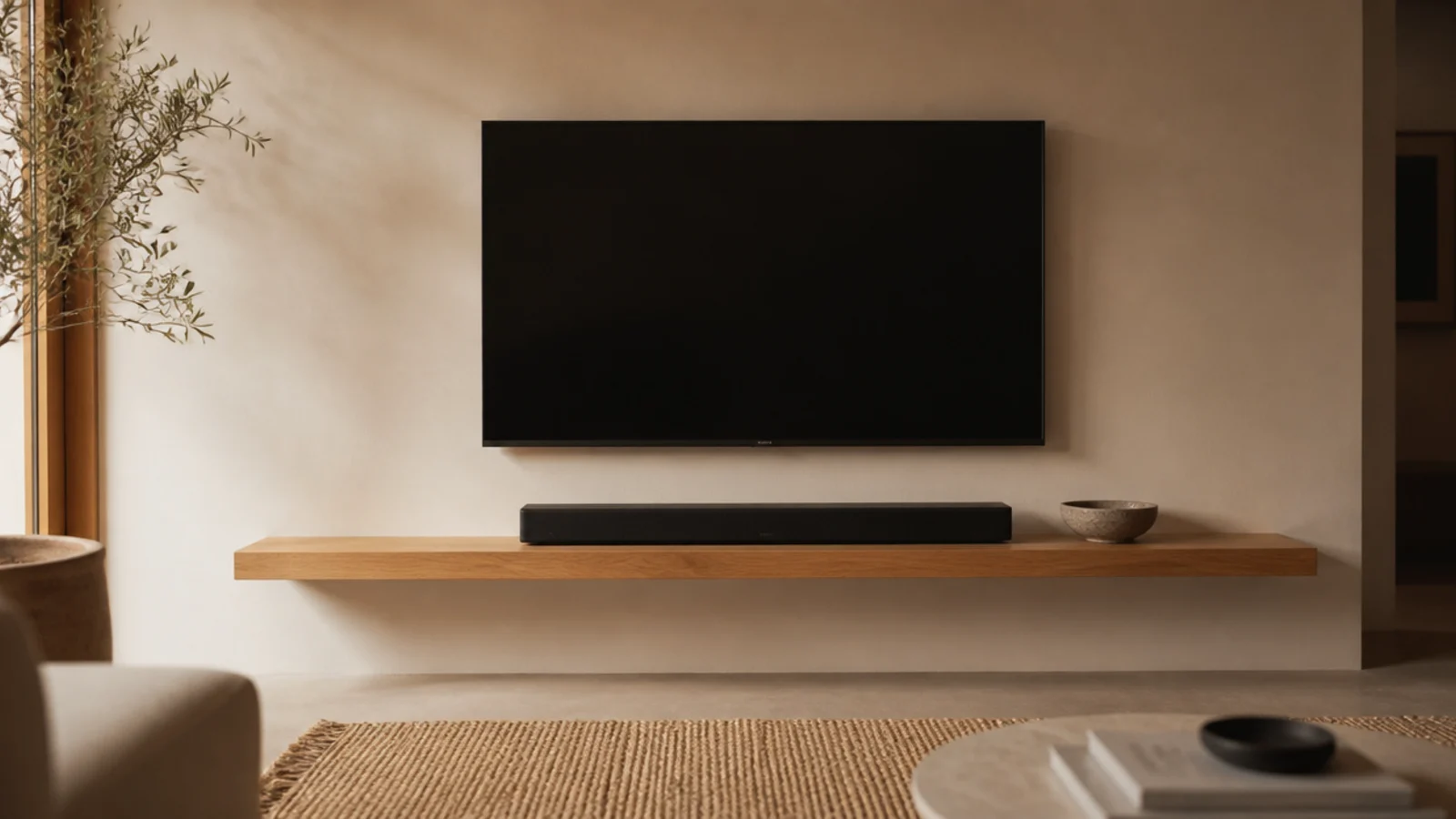
2. A matched pair flanking the screen
Two shelves either side, at the same height, make the television look framed rather than stuck on. Size each to roughly half the screen width — about 28 inches beside a 55-inch panel.
Keep them shallow at six inches so they do not shadow the screen edge or catch a shoulder passing behind the sofa.
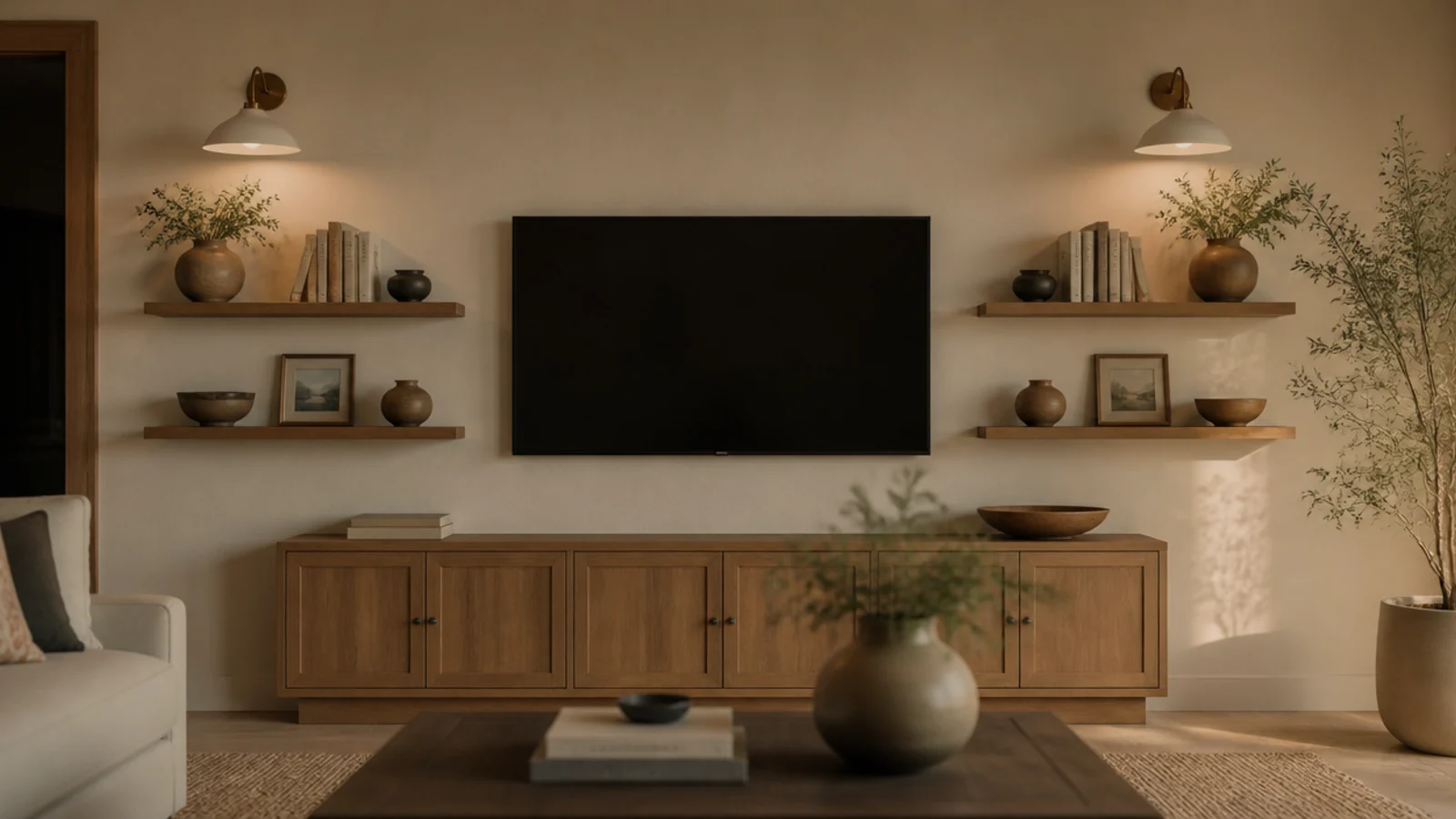
3. An asymmetric stack on one side only
Forced symmetry on a narrow wall makes both sides look squeezed. Stack two or three short shelves on one side and leave the other genuinely empty.
The bare wall is doing real work: it gives the eye a rest and stops the arrangement competing with the screen for attention.
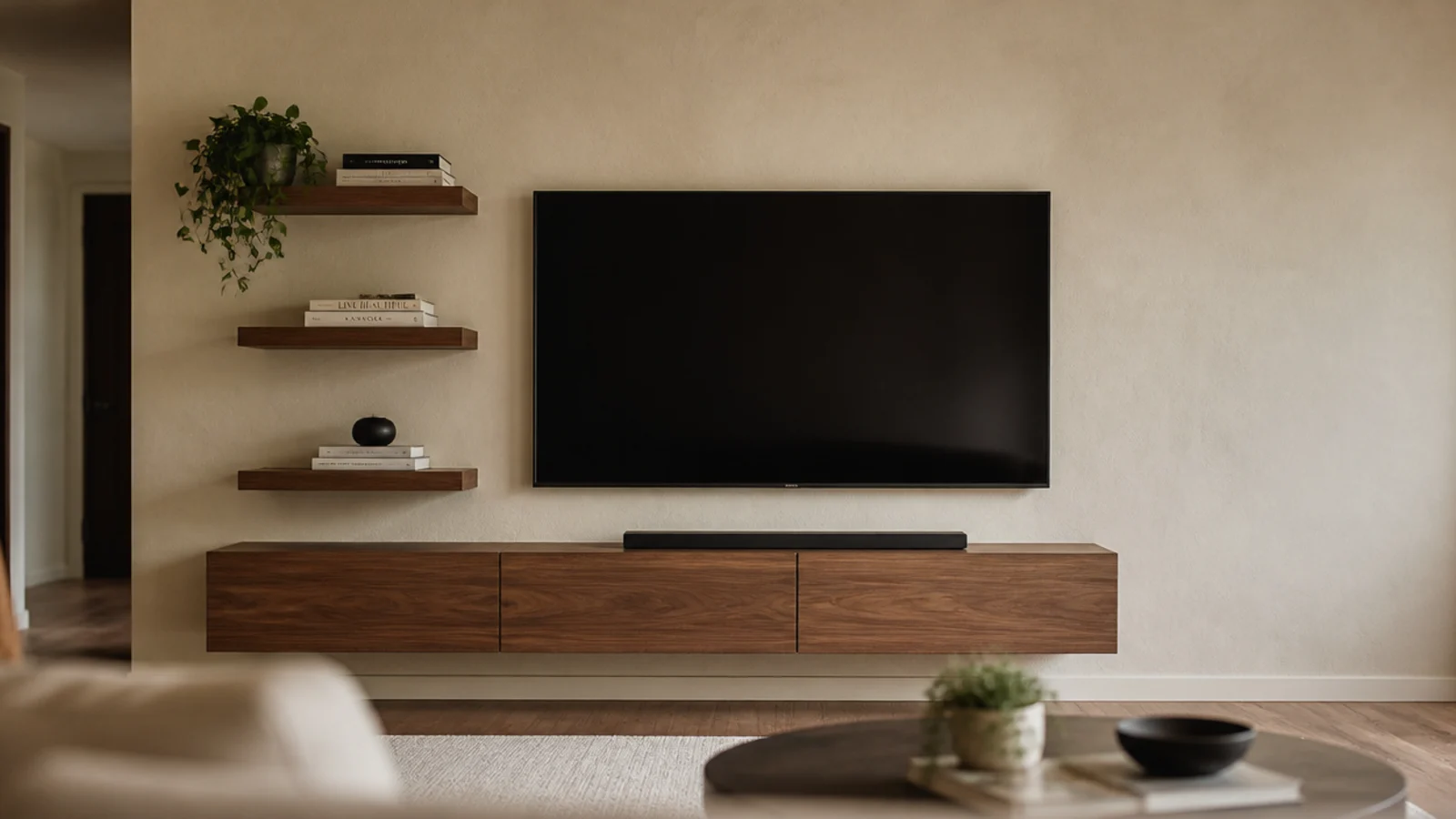
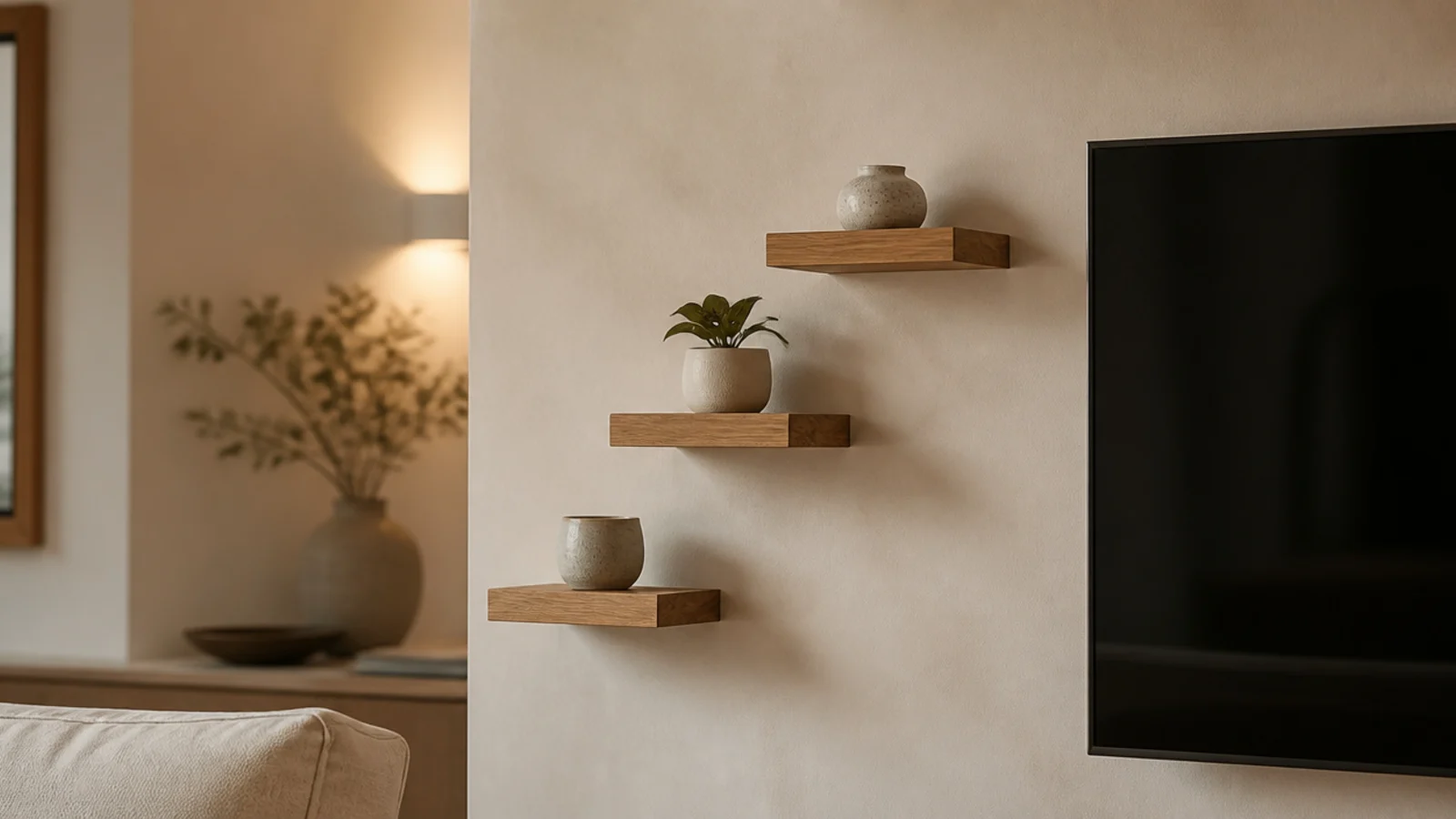
4. Shelves stepping up beside the screen
Three short shelves climbing in a stepped line beside the panel lift your eye away from the black rectangle without adding visual bulk.
Keep each one to 14 or 16 inches with a single object on it. The rhythm is the effect, and loading them destroys it immediately.
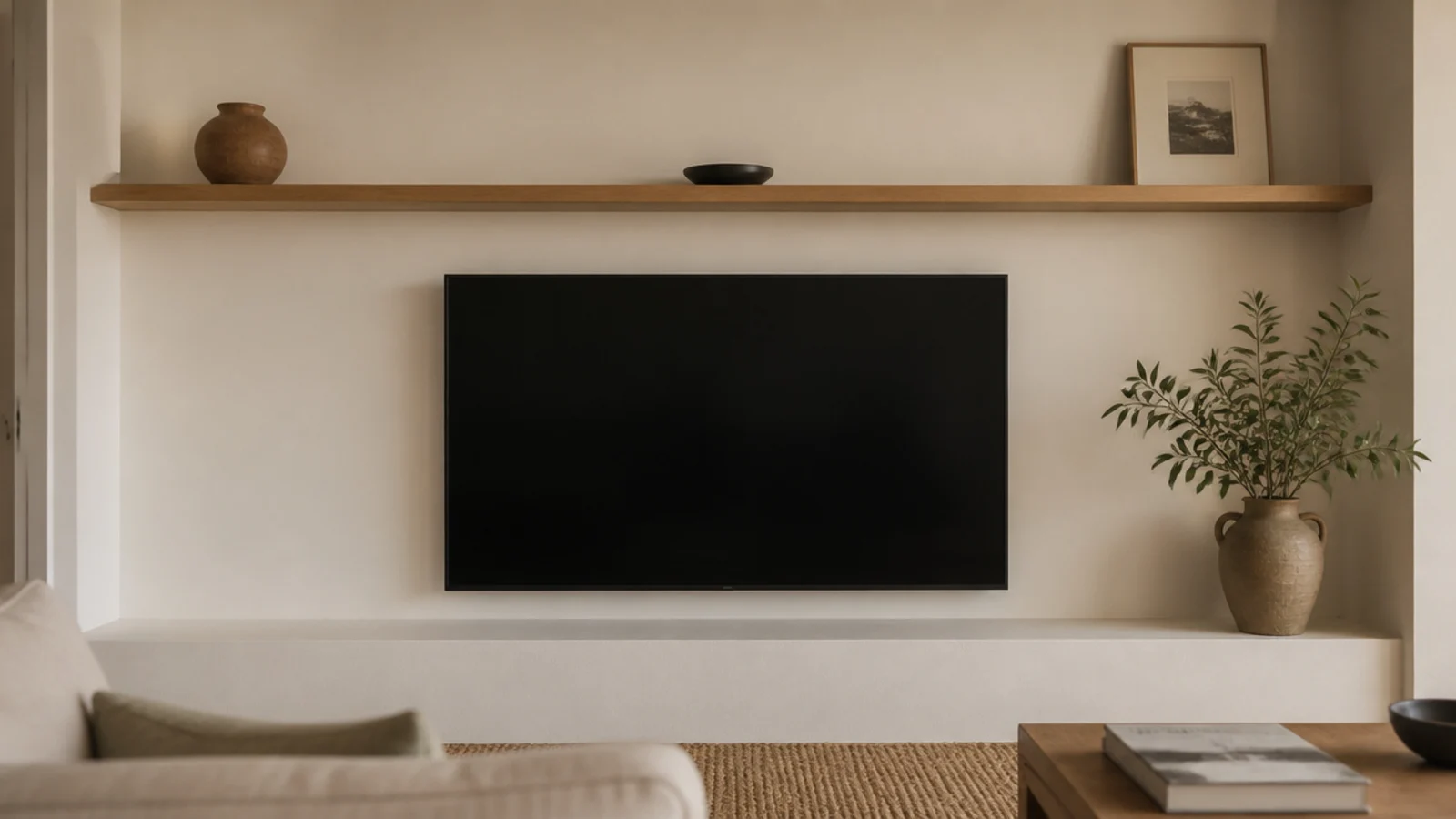
5. A full-width shelf above the TV
A long shelf running above the screen ties the whole wall together, provided you leave at least 6 inches of clear air above the panel.
Space three objects widely along it rather than filling it. This shelf sits high, so anything small simply disappears from a seated position.
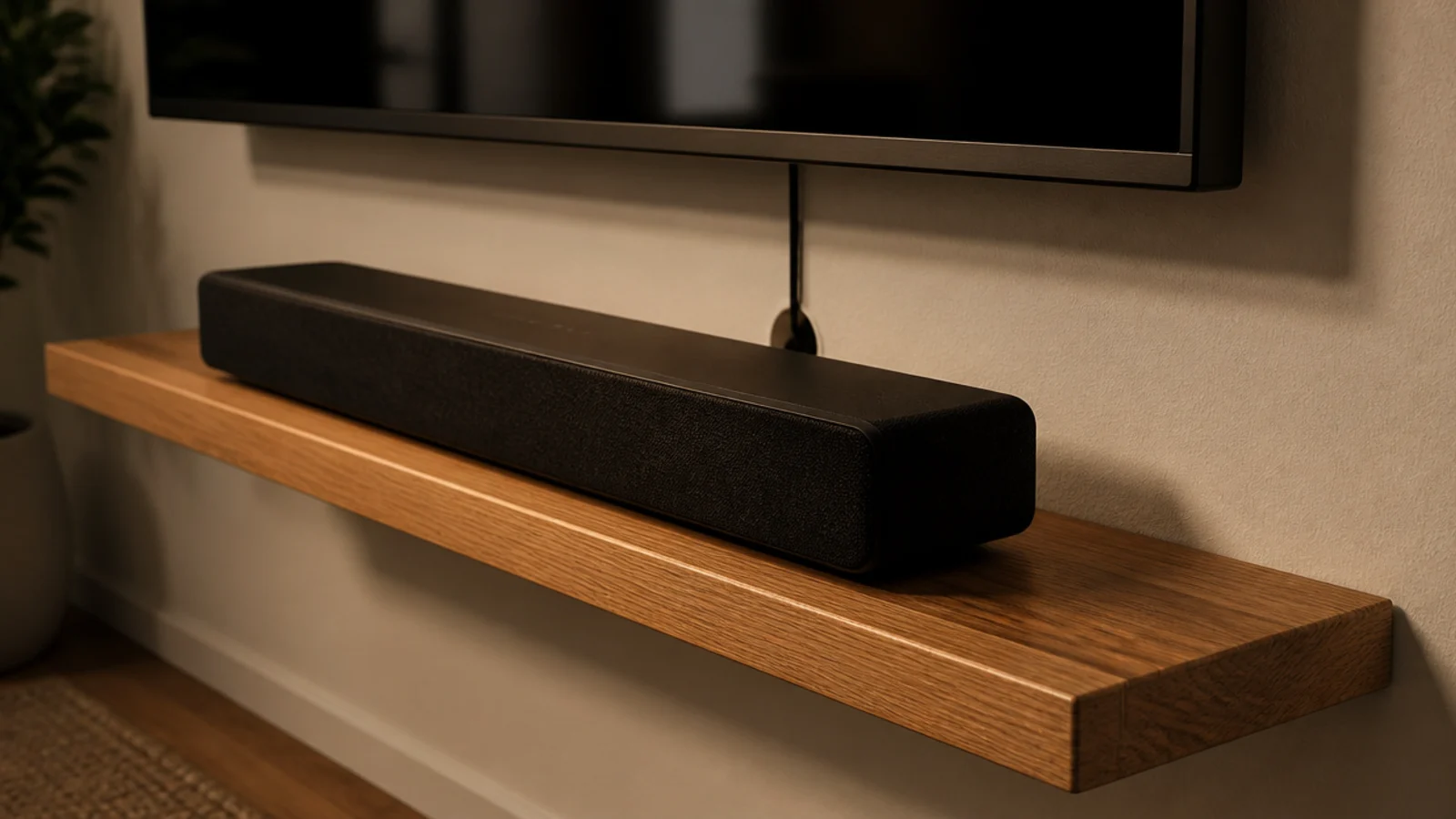
6. A dedicated soundbar shelf
Soundbars sound better on a solid surface than clamped to a bracket, and a six-inch shelf is all one needs. Set it 4 to 6 inches below the panel.
Feed the cable through a hole at the back edge. Most bars are 5 to 9 pounds, so a single stud fixing at each end is comfortable.
7. A ventilated shelf for the console and boxes
Games consoles and streaming boxes run hot and throttle themselves in a closed cabinet. An open shelf with air on every side is genuinely better for them.
Ten inches deep, and space the boxes a hand's width apart. Route the cables through one hole rather than letting each find its own way down.
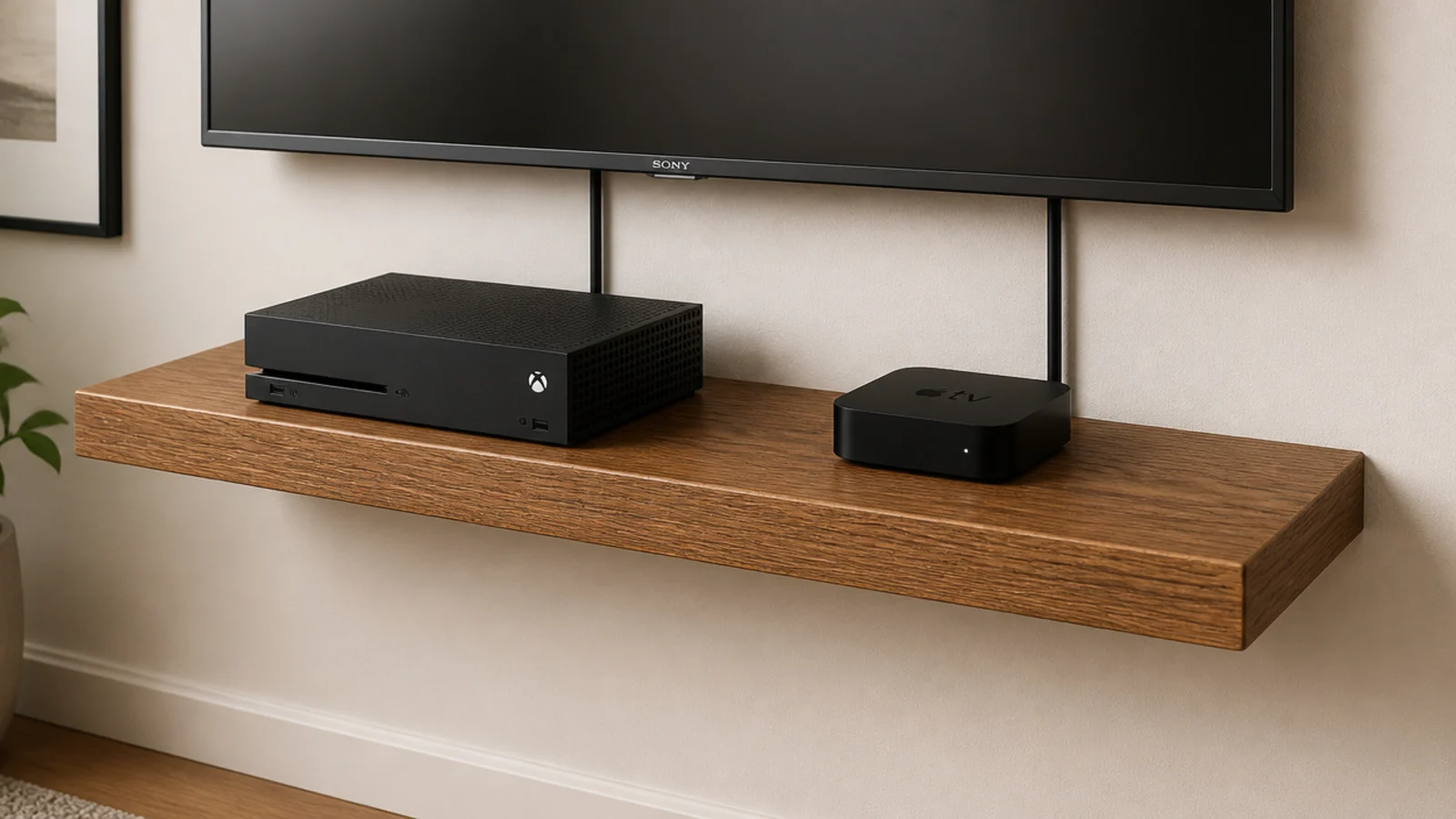
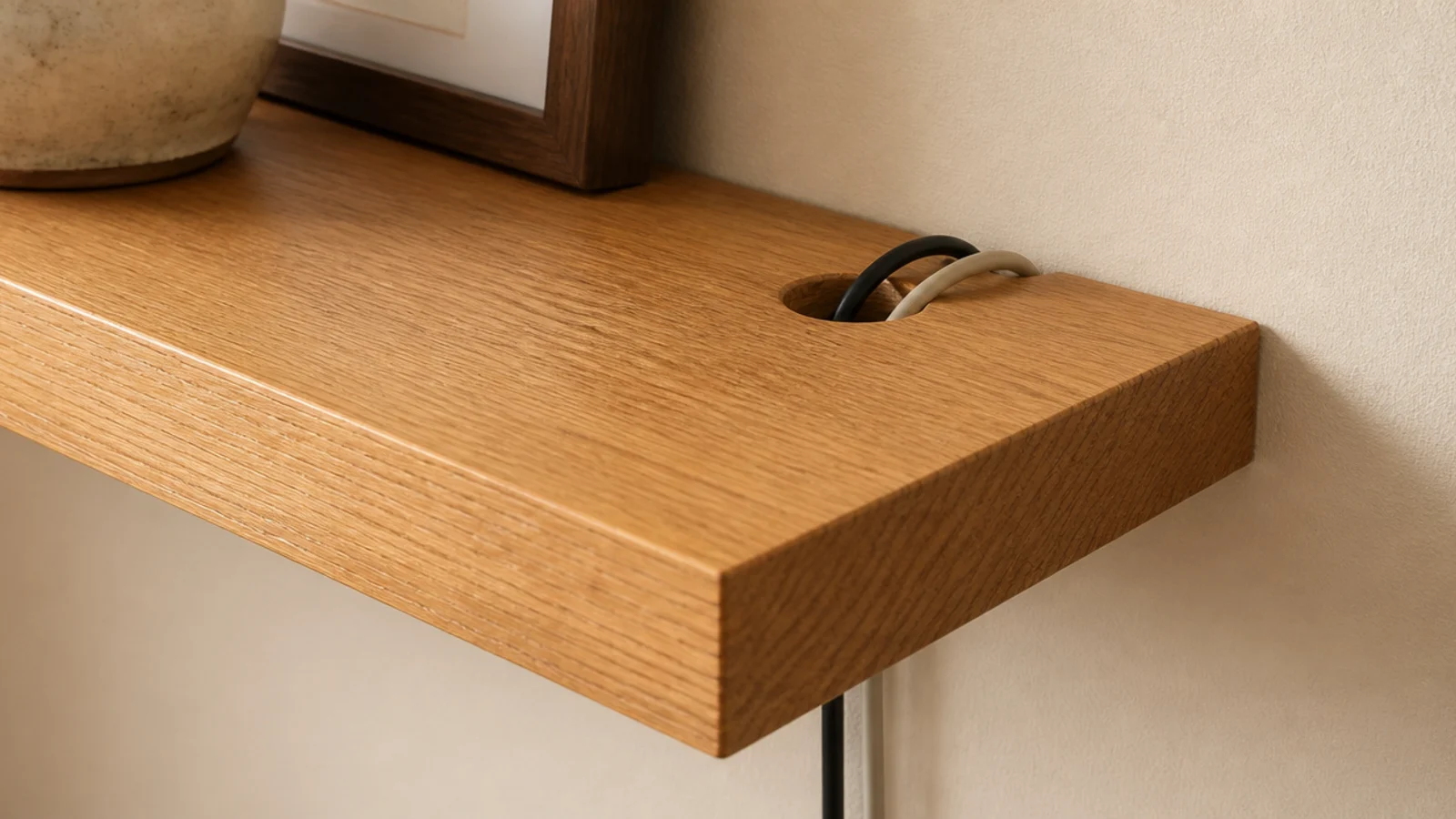
8. Drill a one-inch cable pass-through
One clean hole near the back edge takes every cable down the wall instead of across the front of the shelf. It is the single highest-impact thing on this list.
Drill from the top face into scrap wood so the underside does not tear out, then sand the edge smooth so it will not scuff the cables over time.
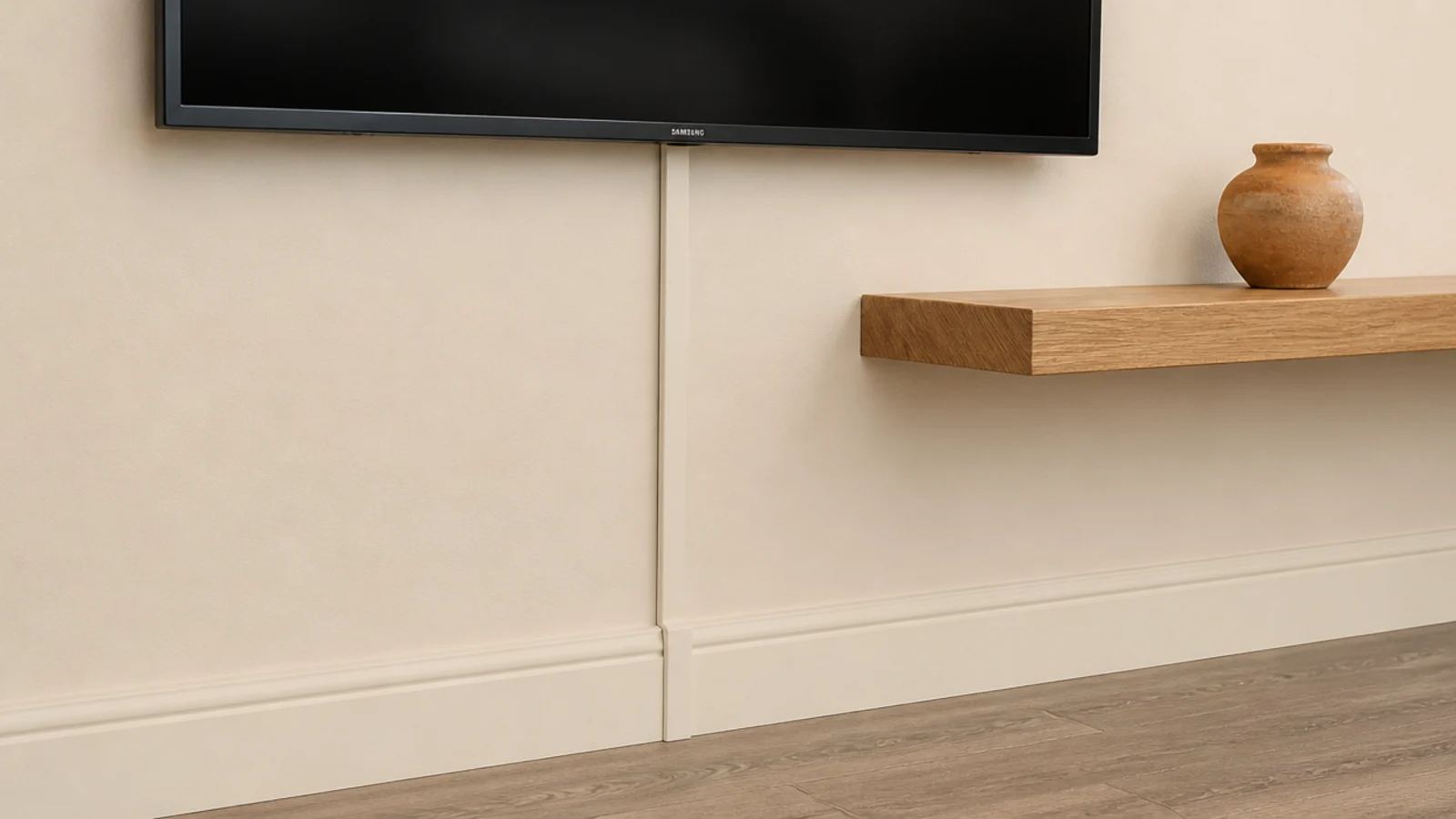
9. A paintable raceway down the wall
If you cannot run cables inside the wall, a slim surface raceway painted the exact wall color reads as nothing at all from three feet away.
Prime it first — bare PVC rejects wall paint. Two coats, and the vertical line disappears into the plaster completely. Total cost about $12.
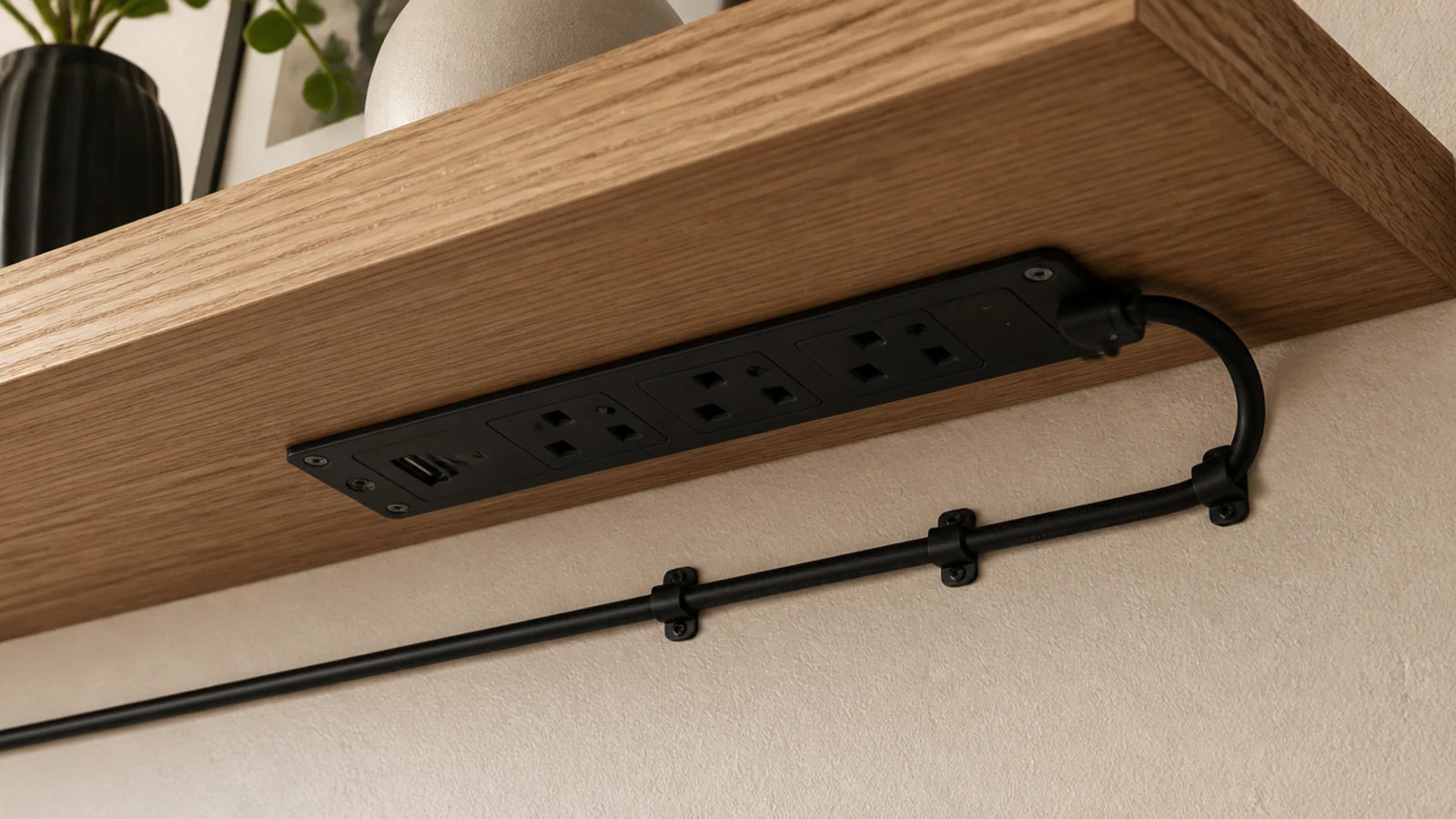
10. Hide the power strip under the shelf
Strap a slim power strip flat to the underside of the lower shelf with two cable clips and the whole tangle leaves the floor at once.
Use three-quarter-inch screws for the clips or they come through the top face. This costs $6 and changes the wall more than any object you could buy.
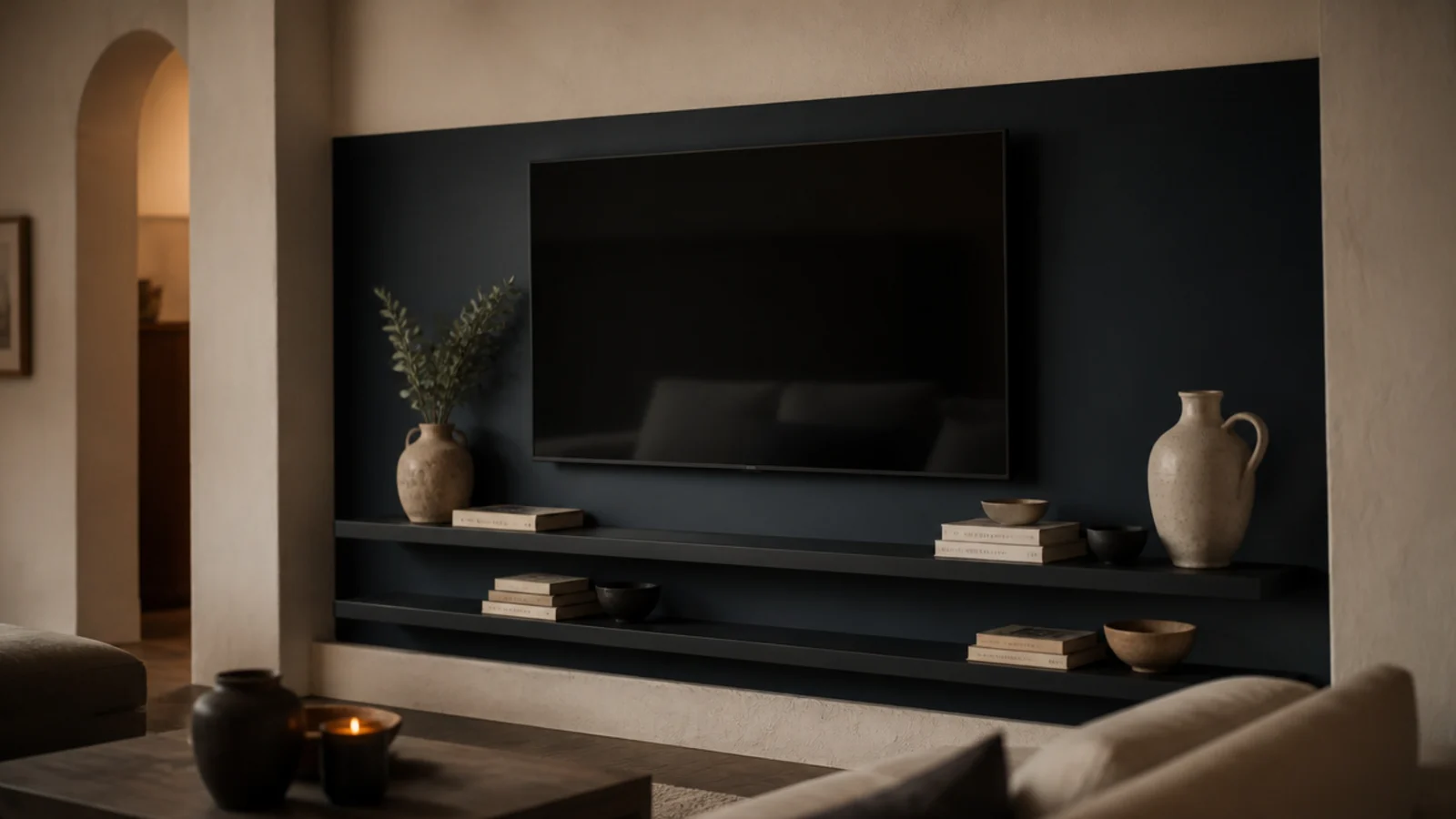
11. Dark shelves on a dark painted panel
Paint a panel of wall behind the TV in a deep ink, clay or forest tone and mount black shelves on it, and the screen stops reading as a hole in the room.
Take the panel wider than the shelves so it reads as a deliberate block. A quart of paint and two hours does it.
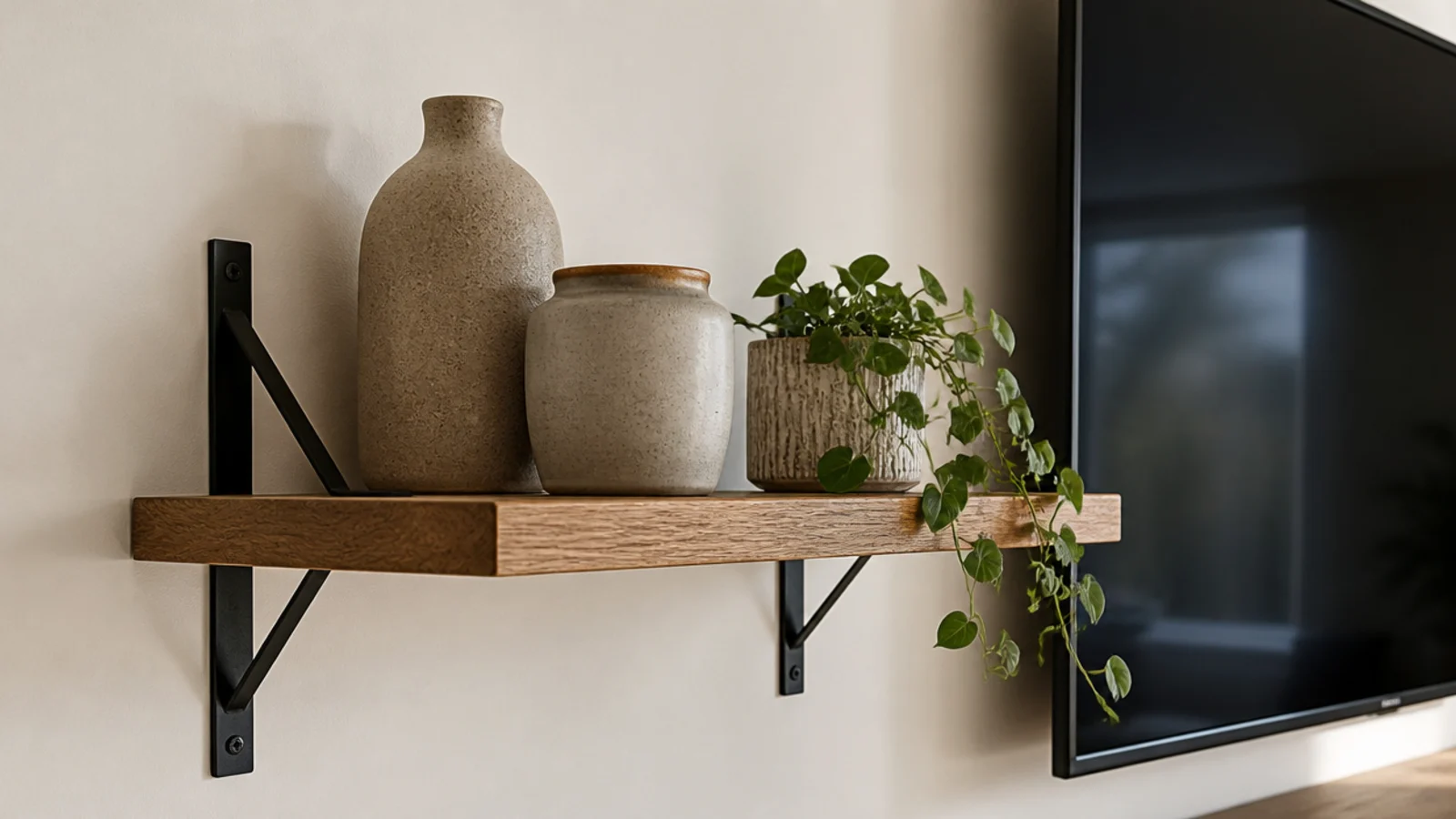
12. Black metal brackets under oak boards
When hardware has to show, match it to the screen bezel rather than the wood. Slim black brackets under a warm oak board look like a decision.
Choose the smallest bracket rated for the load, usually 30 pounds a pair. Big decorative brackets pull the eye straight to the hardware.
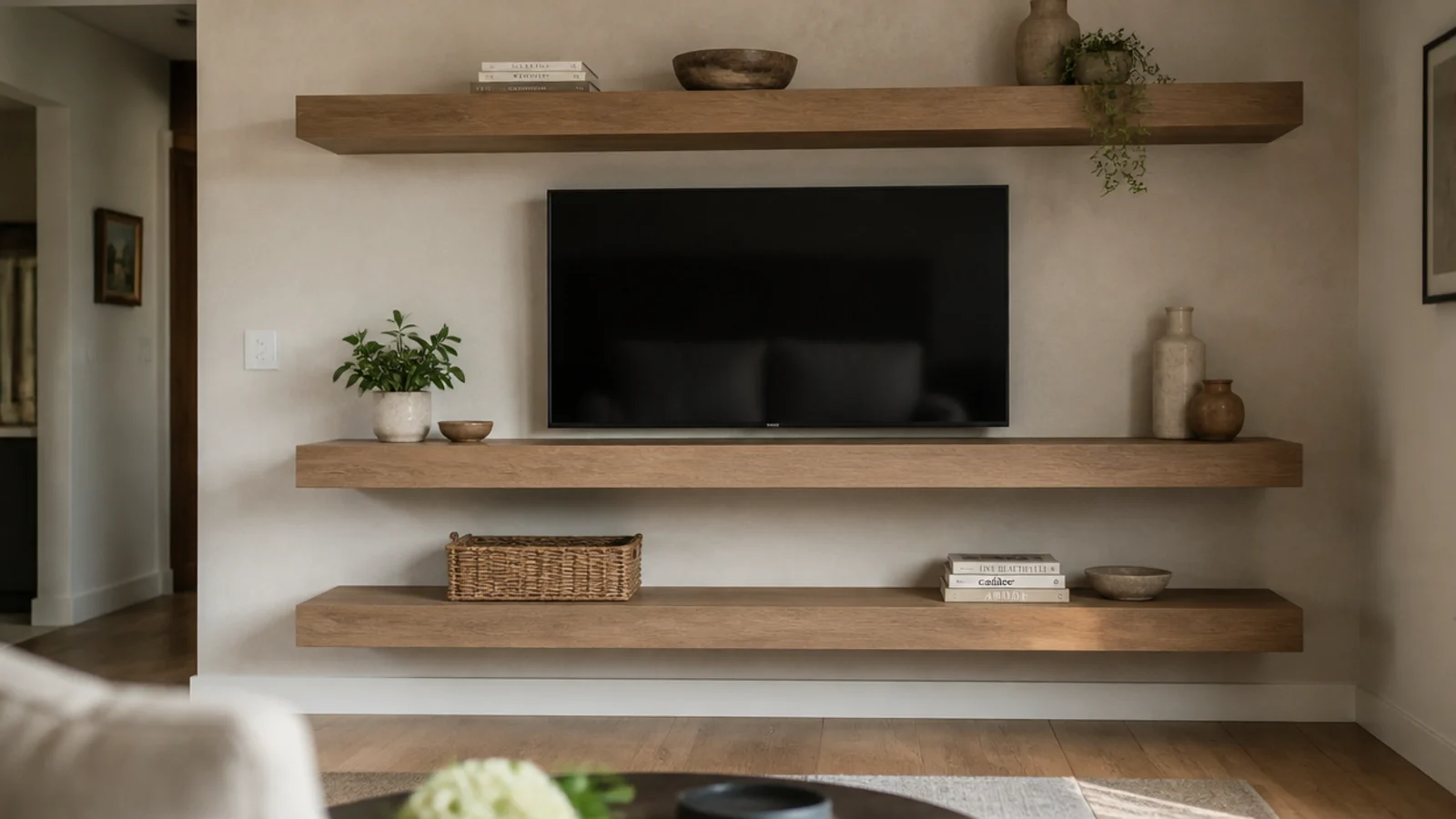
13. A built-up box media wall
Three thick box shelves with a 1.5 to 2-inch front edge make a media wall look joinery-built for a fraction of joinery money.
A built-up hollow box gives that edge at half the weight and cost of solid timber, and the internal frame carries the load. The method is in the floating shelf build.
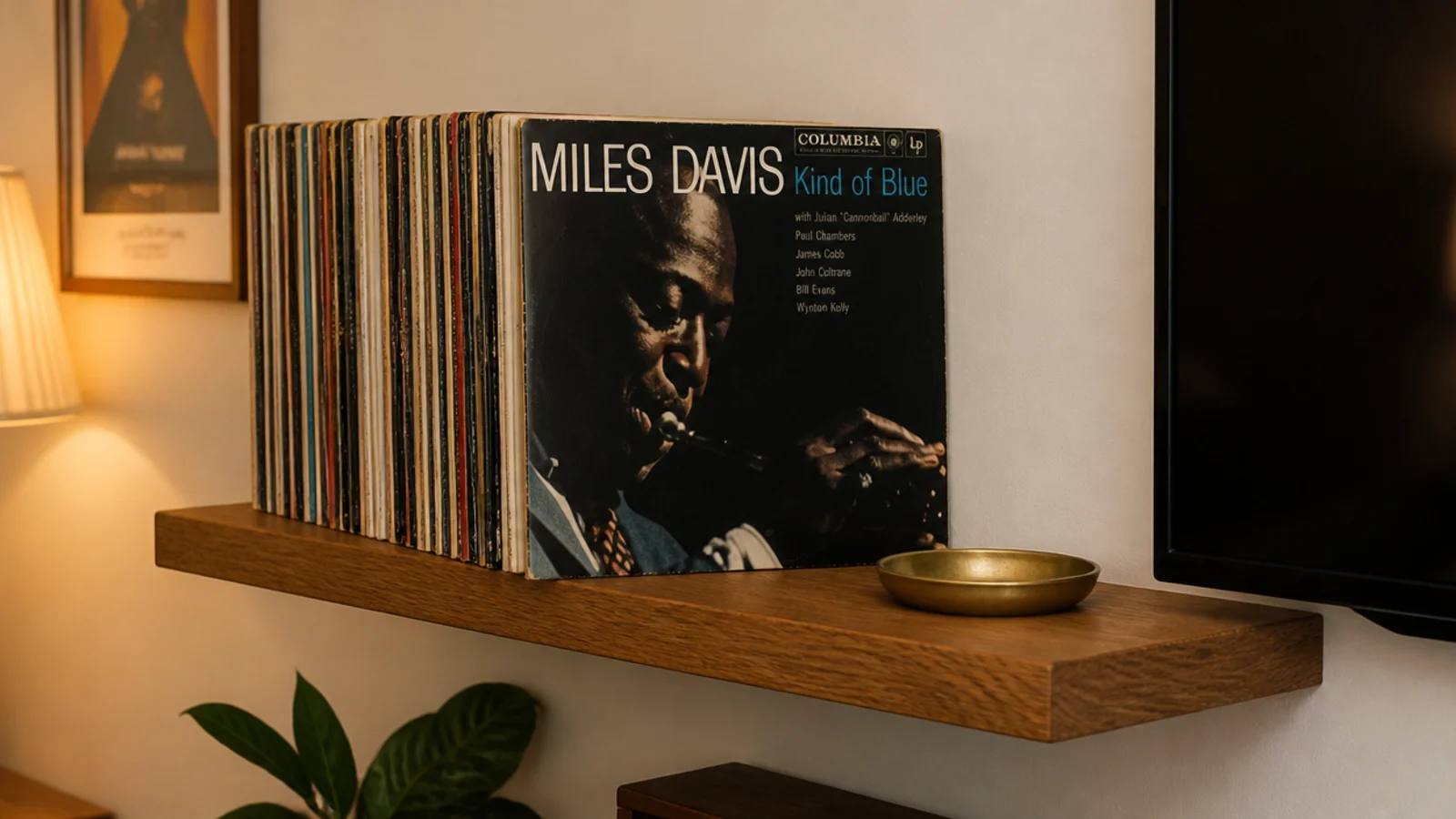
14. Vinyl storage beside the screen
Records need 13 inches of clear height and 13 inches of depth, which is more than a standard shelf gives you.
They are also dense — about 35 pounds per 24-inch run — so both fixings go into studs. Turn one sleeve cover-out for color beside all that black.
15. Books beside the screen to soften it
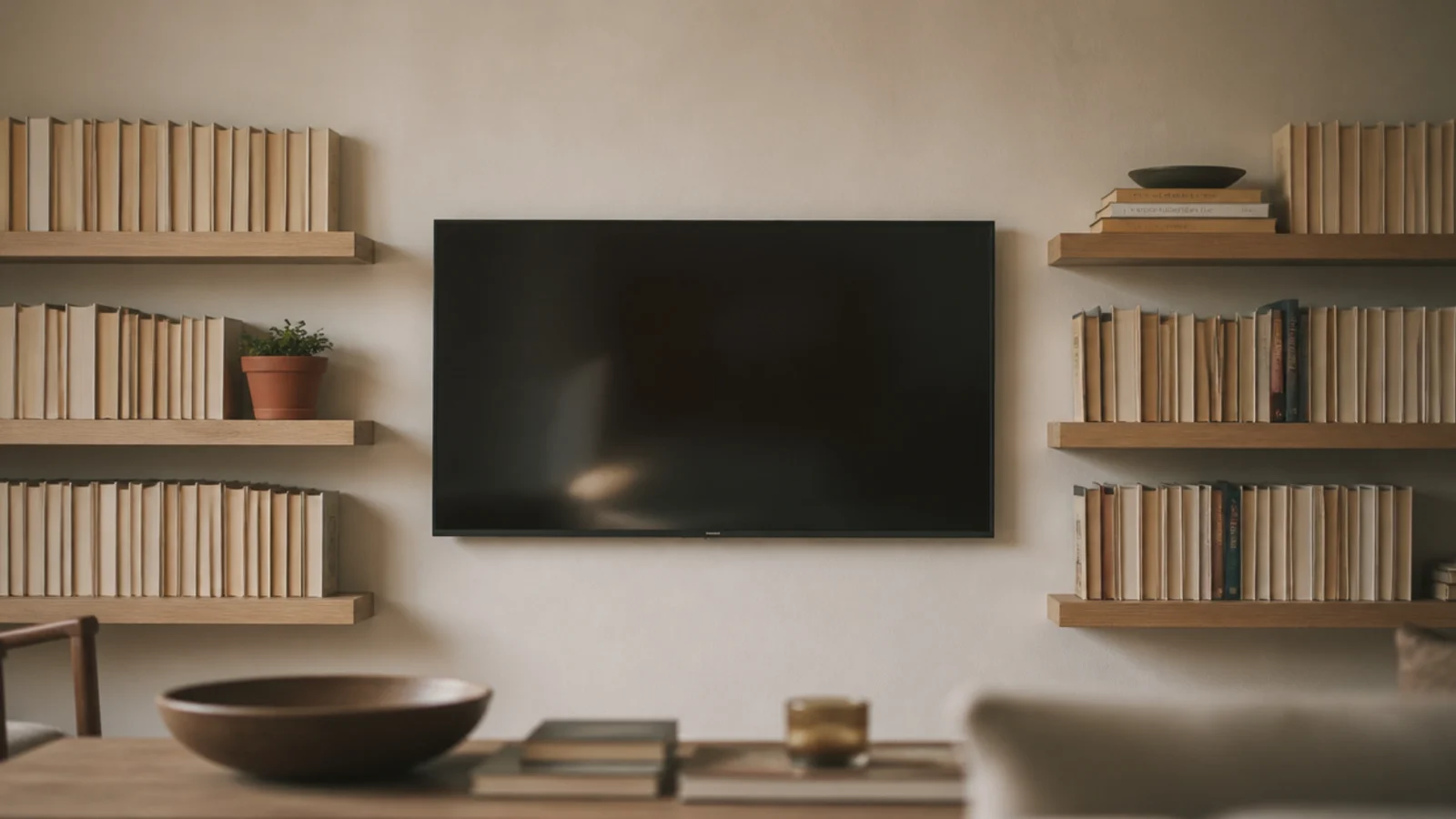
Paper and cloth spines are the cheapest way to break up a hard black panel, and most people already own them.
Fill the shelves properly rather than styling them sparsely here; a full book shelf beside a screen reads warm, while three lonely objects read staged. Turn a few stacks page-edge out.
16. Plants that break the black rectangle
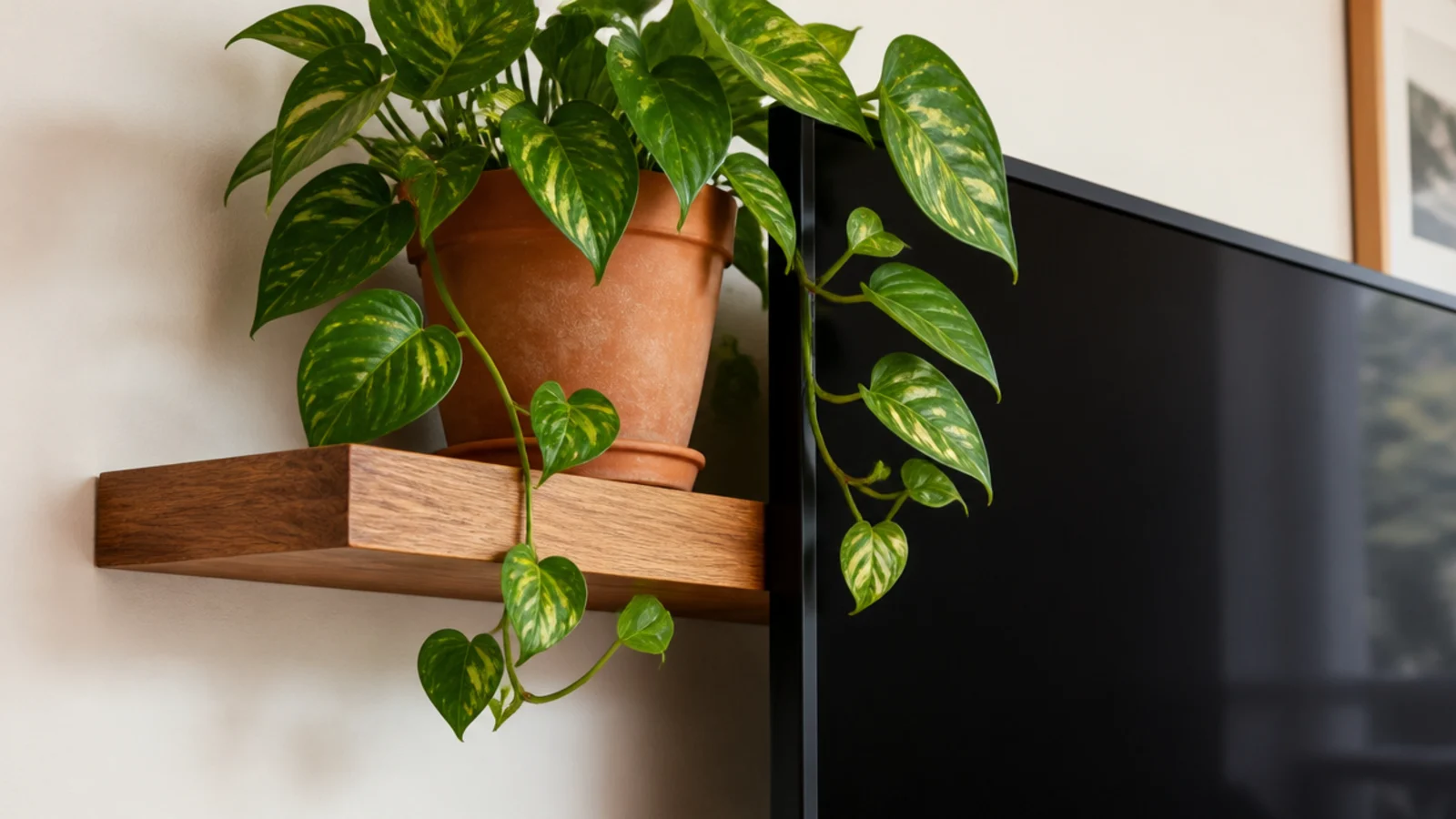
A trailing plant whose leaves fall across the upper corner of the screen does more to soften a TV wall than any amount of furniture.
Pothos, ivy and string of pearls all work. Keep it on a shelf beside the panel rather than above it, so the leaves are not sitting in rising heat.
17. Picture ledges that frame the TV
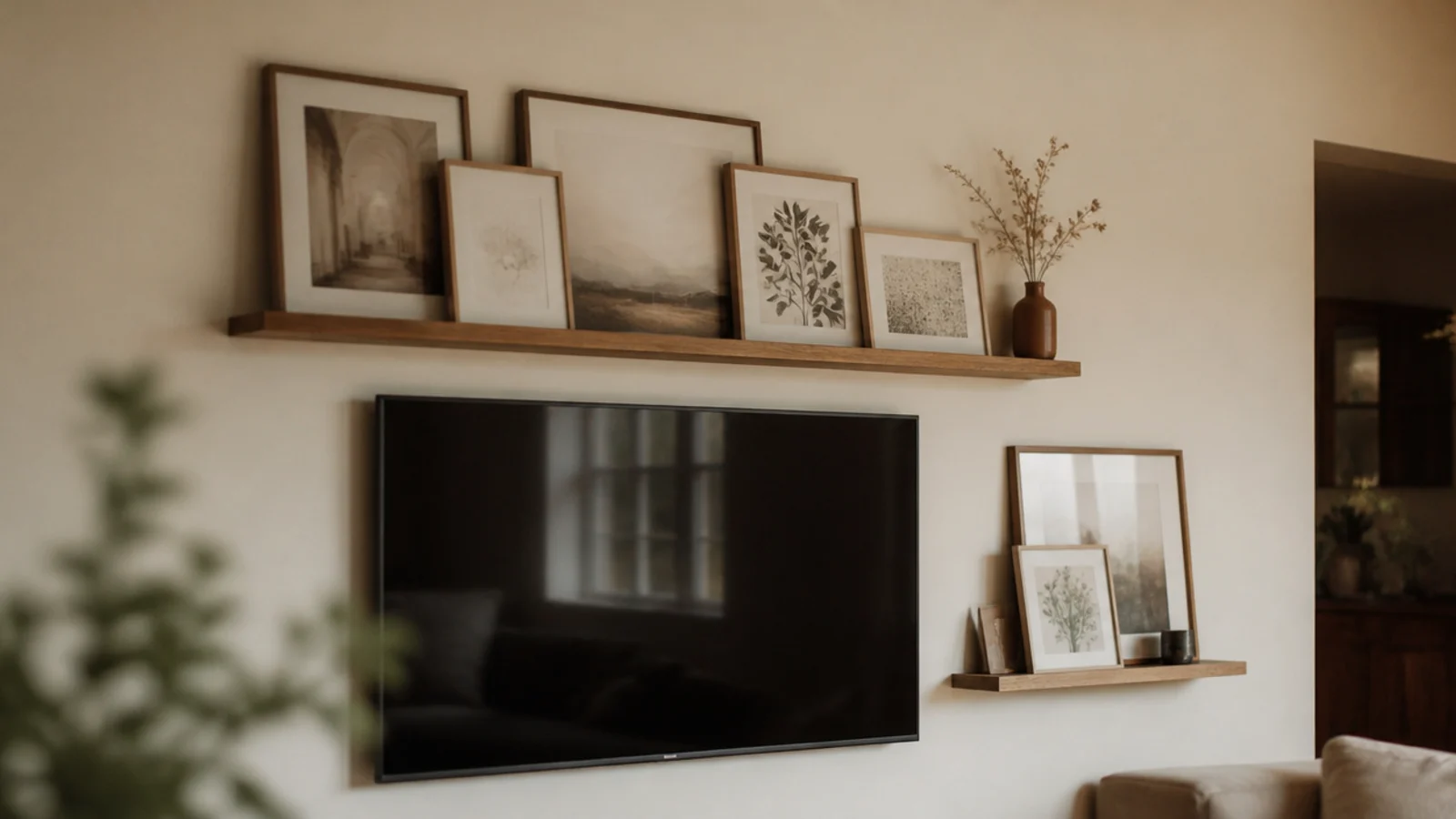
Narrow ledges holding leaning art turn the screen into one element in a composition rather than the whole event.
Three inches deep with a half-inch lip. Mix frame sizes but keep to two finishes, and let one frame overlap the shelf line above so the arrangement feels casual.
18. Bias lighting behind the screen
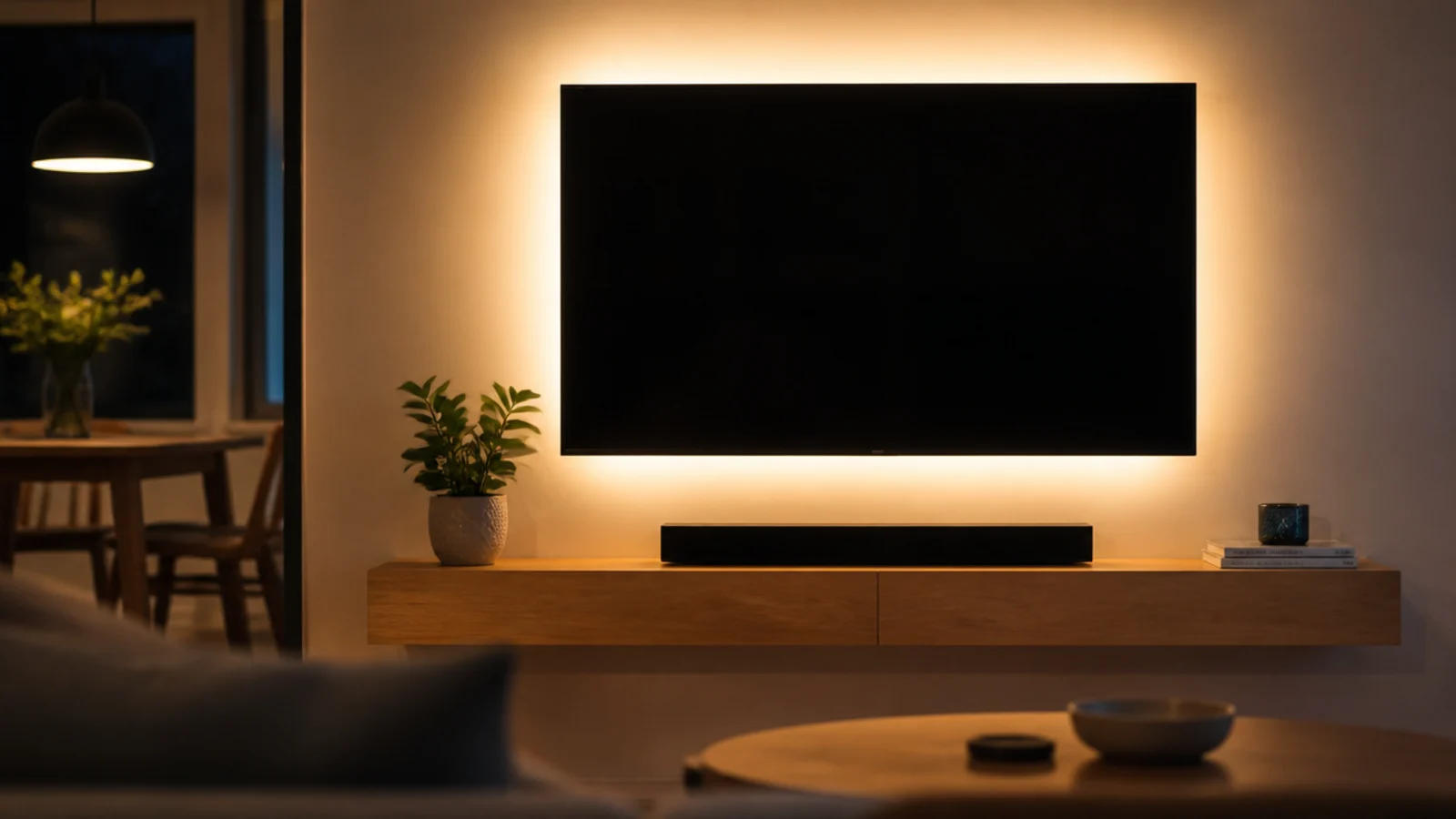
A warm light strip stuck to the back of the panel throws a glow onto the wall that cuts eye strain and makes night viewing far more comfortable.
Use 2700K. Cool white behind a screen makes the whole wall look blue and drains every wood tone in the room.
19. Size the shelf to the screen, not the wall
The most common mistake on a media wall is a shelf running the full wall width, which strands the television in the middle of a long empty line.
Cut it to the screen width, or a little wider. Relating the two makes the pair read as one object instead of two unrelated ones.
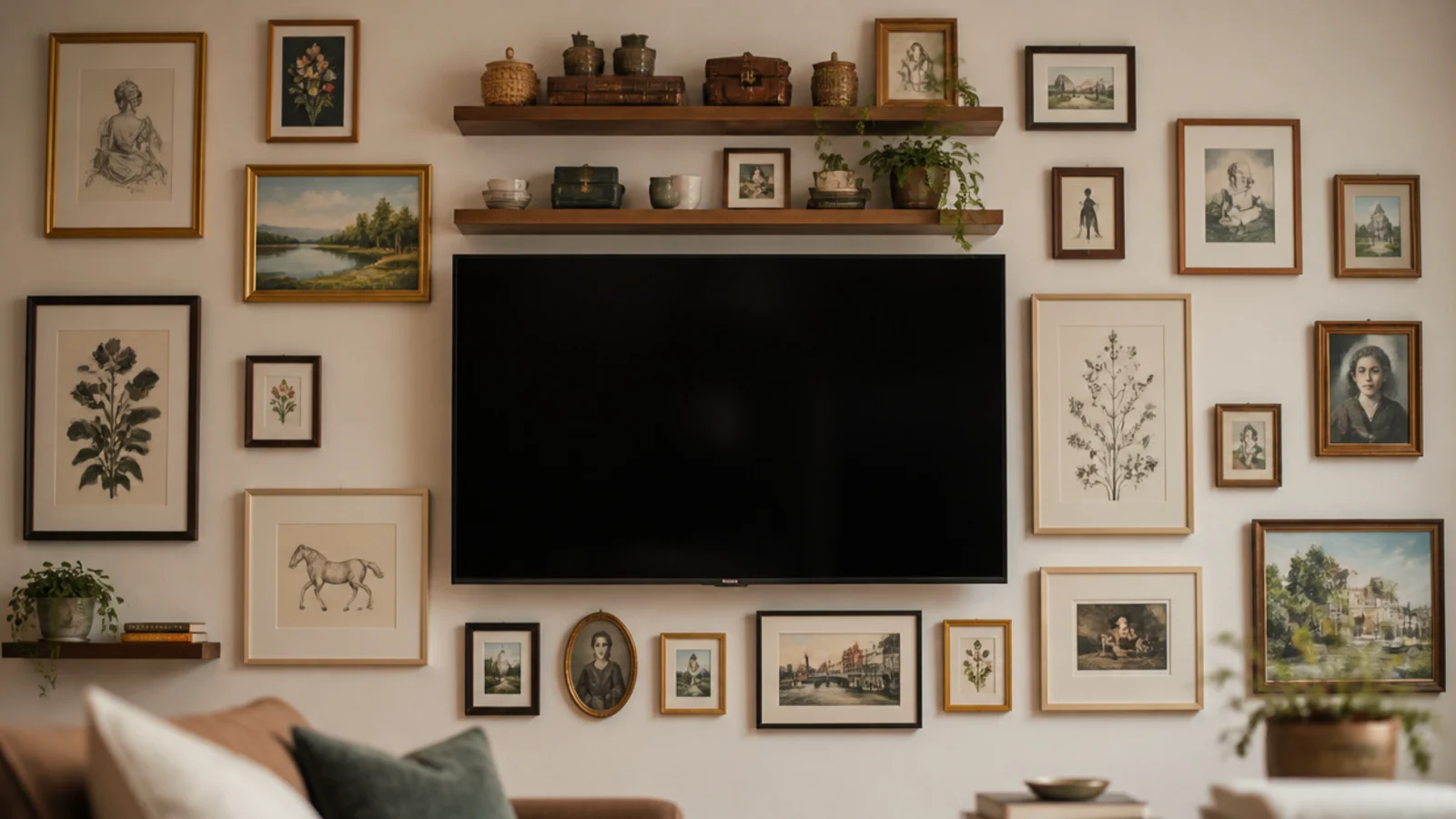
20. A gallery wall that absorbs the screen
Surround the panel densely with small framed prints and two short shelves and the eye stops singling it out — it becomes one dark rectangle among many.
Keep gaps between frames tight, around two inches, and hang the whole group as a block rather than spreading it across the wall.
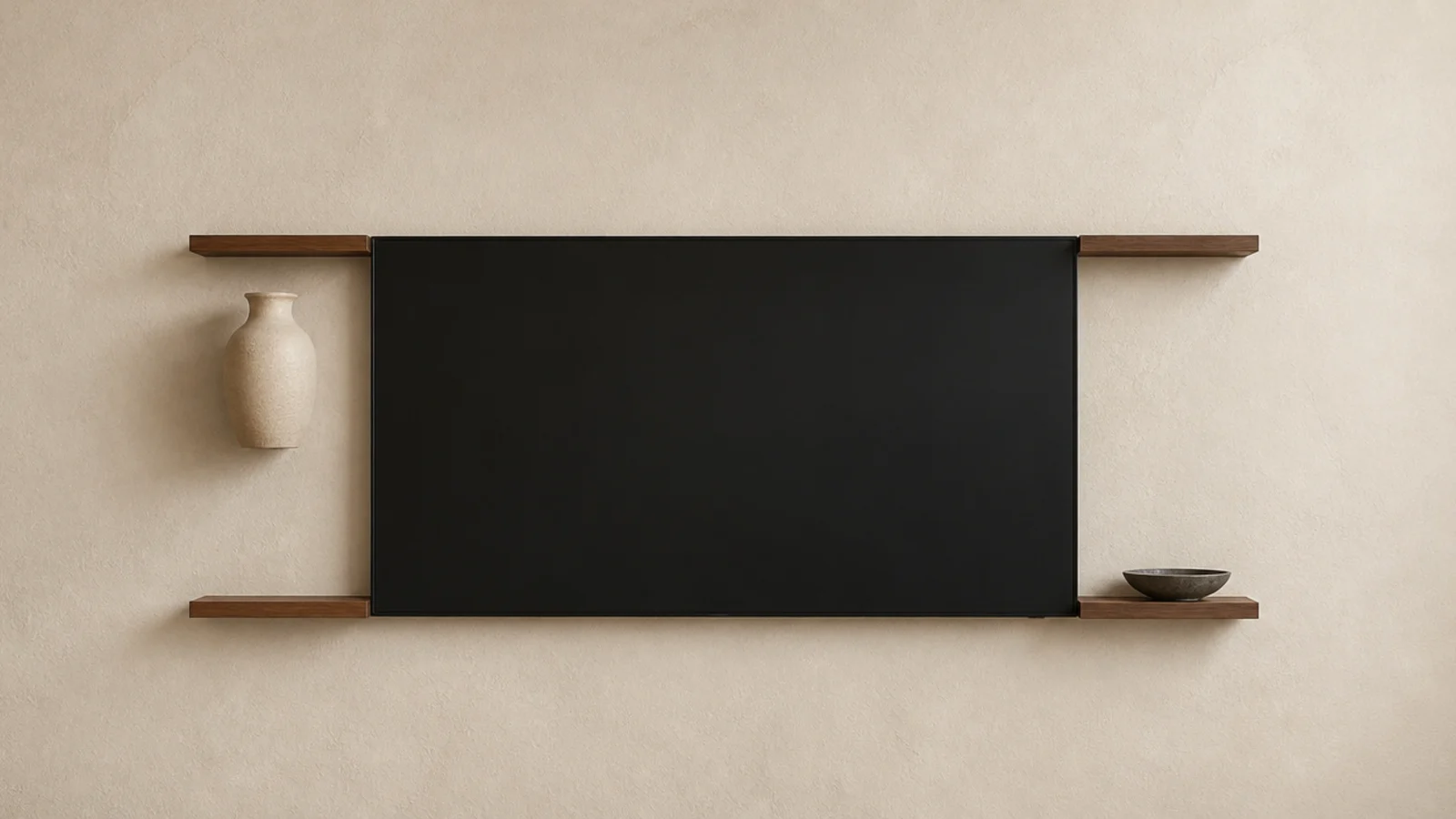
21. Align shelves with the top and bottom of the screen
Set one shelf at exactly the height of the panel top and another at the bottom edge. Borrowed lines cost nothing and instantly make a wall look planned.
It works best with a pair either side. The screen edges become the horizontal grid the whole wall is built on.
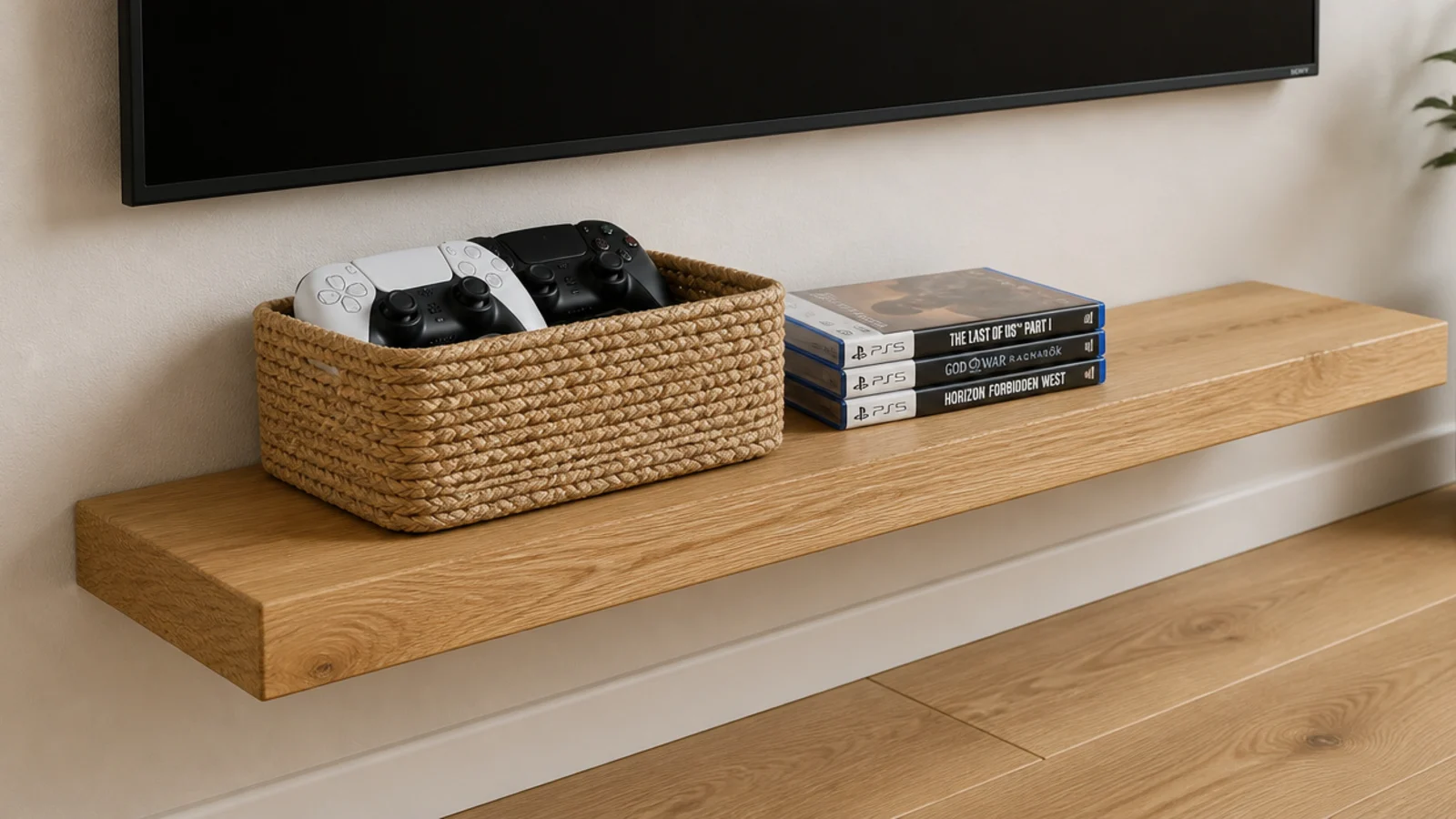
22. A low shelf for controllers and games
Put a shelf at 24 inches with one open basket on it and the controllers, cases and cables that migrate across the floor finally have a home.
Ten inches deep so a basket sits fully on it. Low enough that children can put things away, which is the only version that gets used.
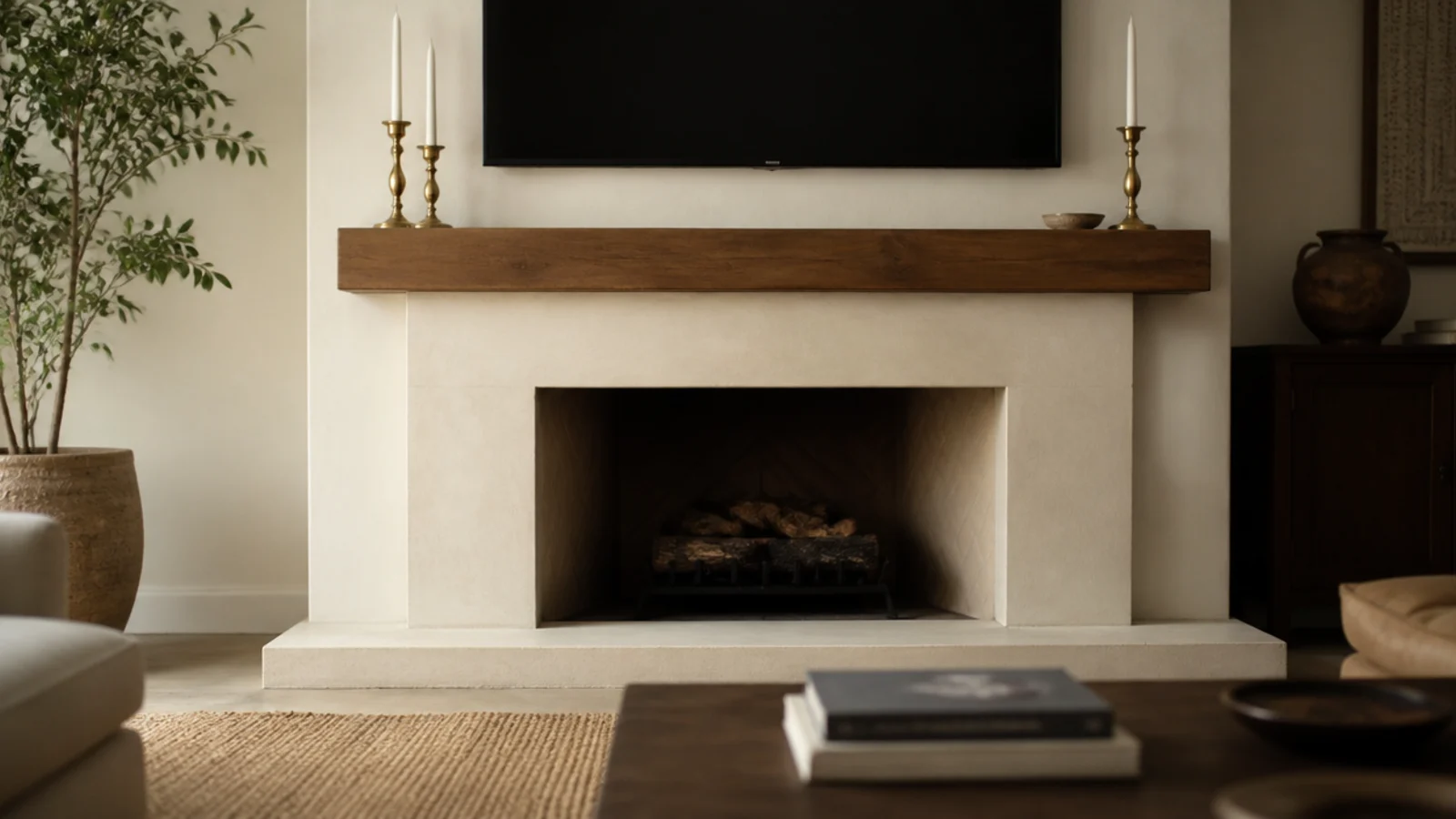
23. A shelf under a fireplace-mounted TV
Mounting a screen above a fireplace needs a shelf between them, both to break up the stack and to give the mantel line back.
Keep 12 inches above a working firebox, use solid wood 1.5 inches thick, and check your local code. Fix into masonry with sleeve anchors, never drywall plugs.
24. The one-wall apartment arrangement
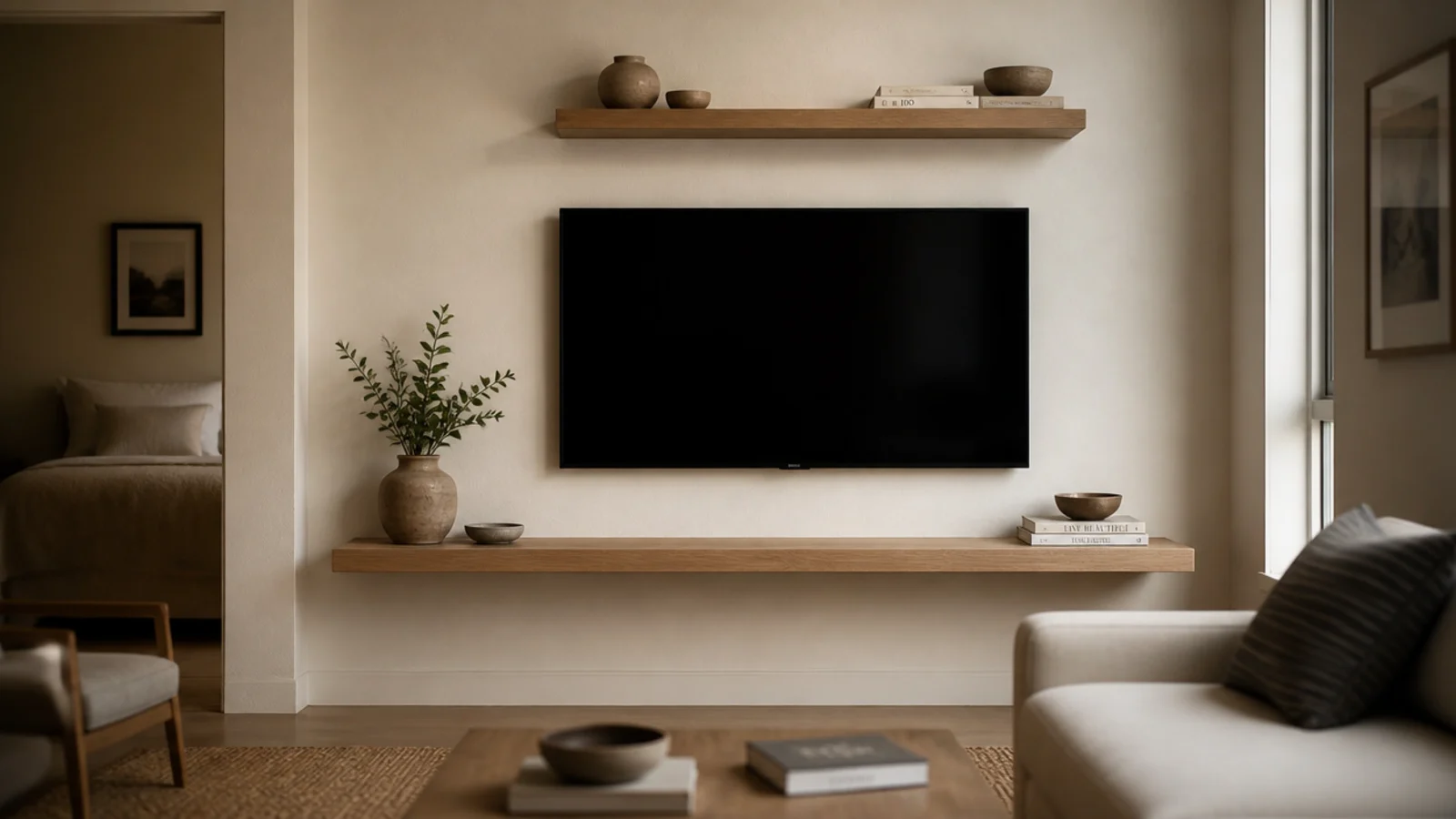
In a studio or small apartment where one wall does everything, restrict yourself to two horizontal lines: one shelf below the screen, one above.
Anything more turns the only wall in the room into visual noise. Six inches deep, and let the empty plaster do half the work.
25. A shelf for a projector instead of a screen
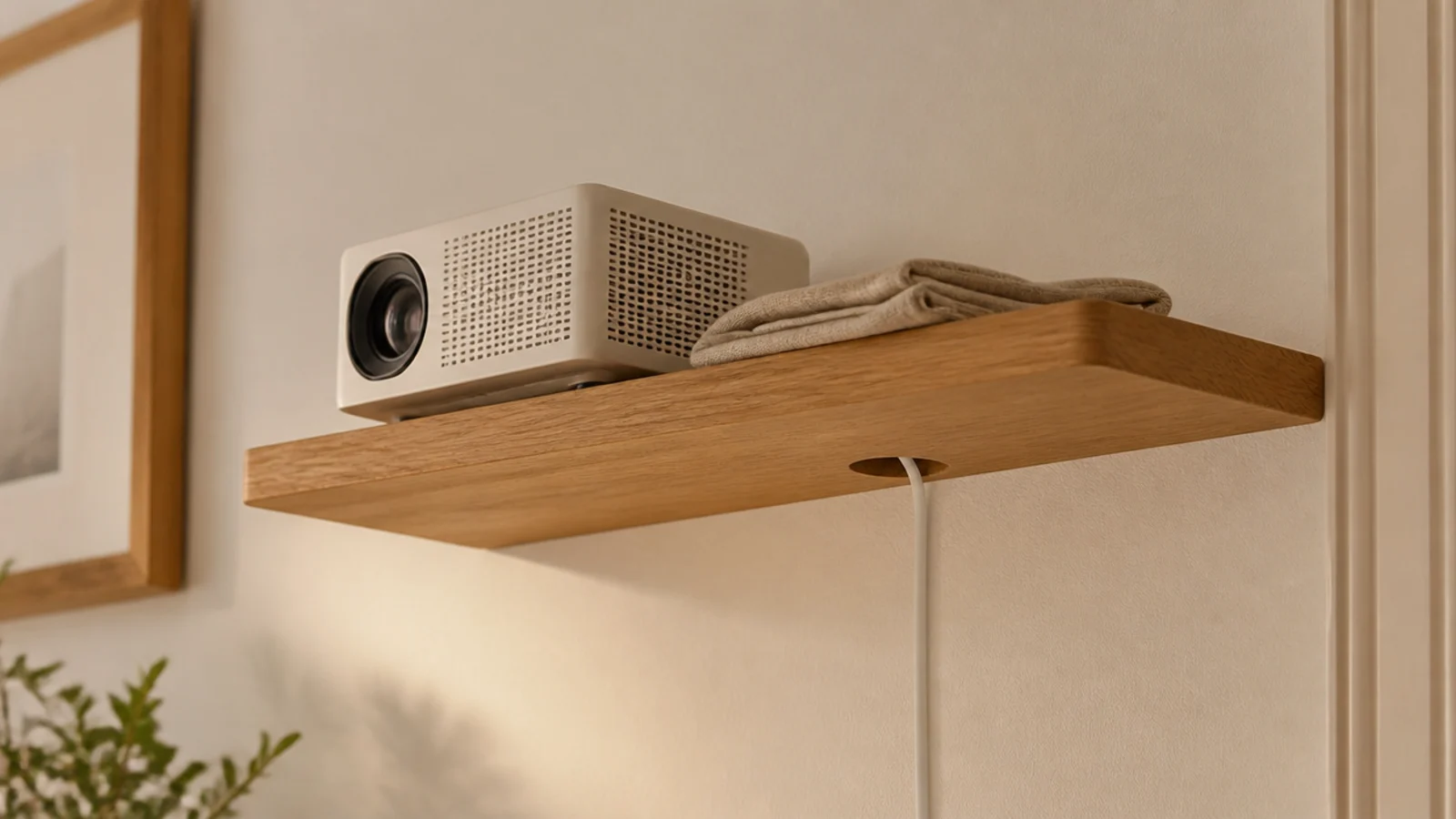
If you can live with a projector, the whole wall becomes available for shelving and the black rectangle disappears entirely.
A small shelf at 78 inches on the opposite wall holds most short-throw units. Drill a 1-inch hole for the cable and paint a raceway down to the outlet.
26. A renter-friendly no-drill version
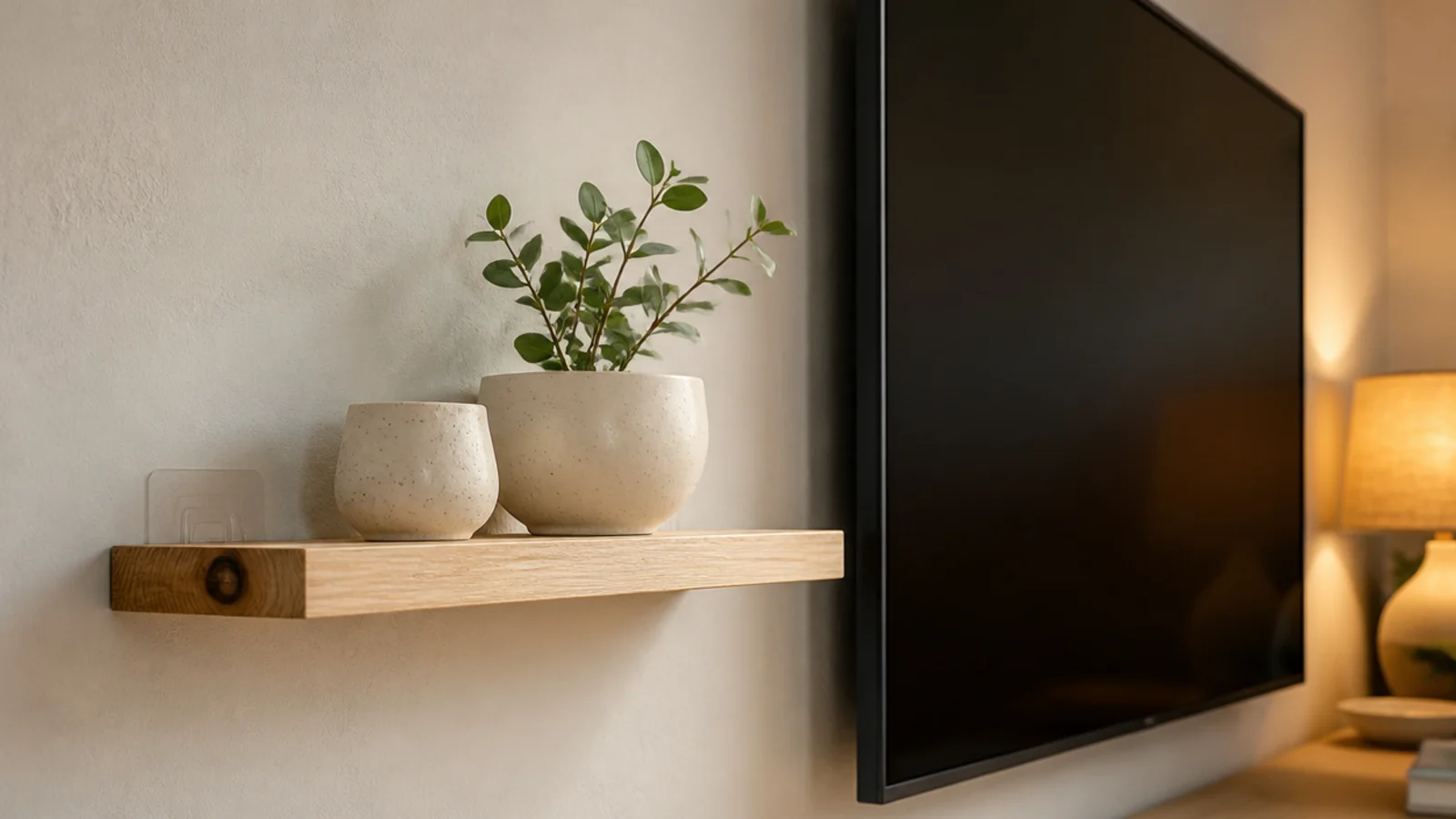
Adhesive strips top out at about 15 pounds per pair, which rules out every piece of electronics. Use them for decor beside the screen and nothing else.
Clean with alcohol, press for 30 seconds, wait an hour. Never put a box or a soundbar on one, however light it feels in your hand.
27. Two boards and painted brackets for under $45
Two pine boards and four L brackets painted the exact wall color get you the floating look for the price of one bracket kit.
Painted-out brackets read as floating from every normal viewing angle, and nobody crouches beside a television to check the underside of a shelf.
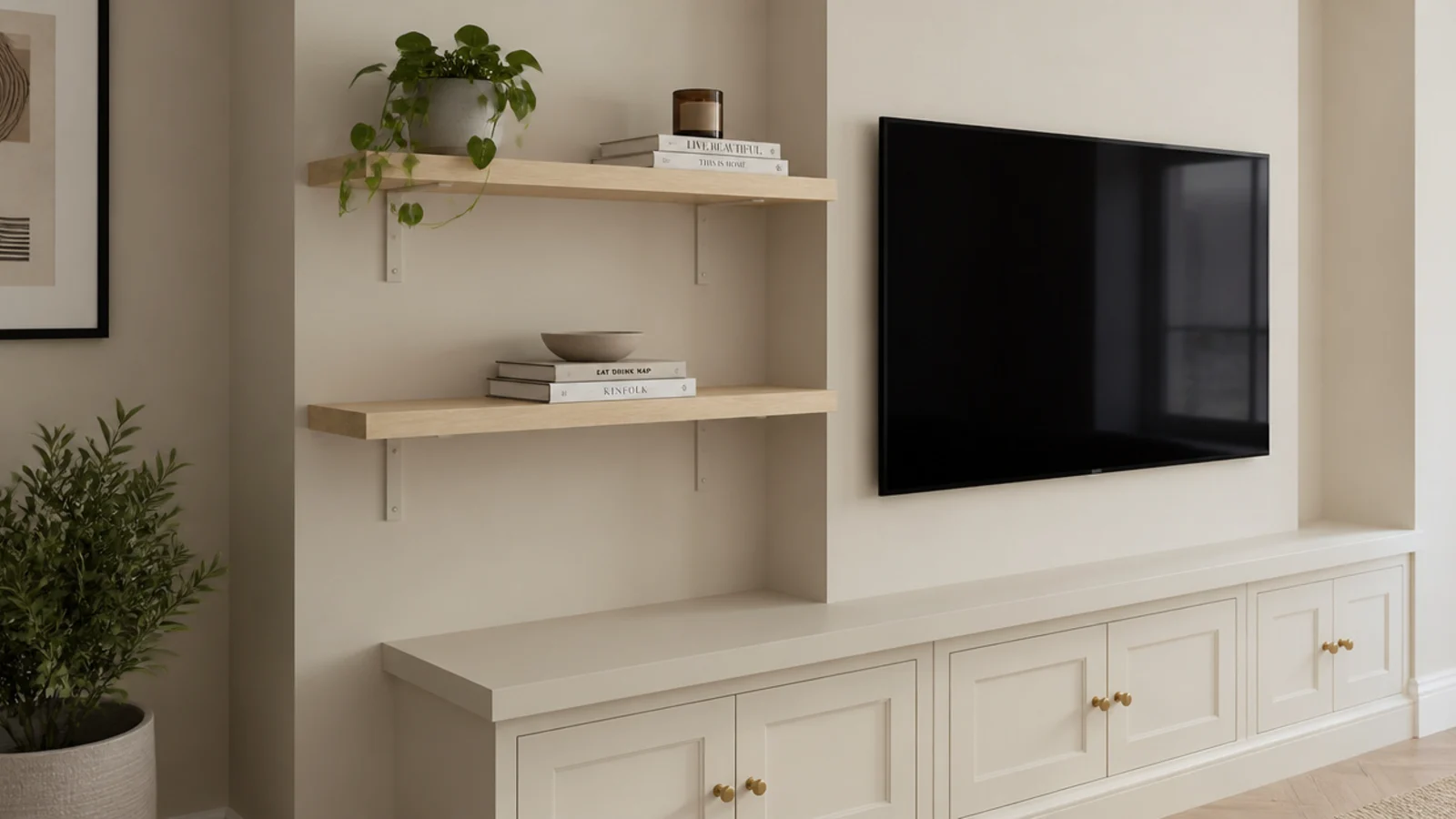
28. One closed basket for every remote
Remotes, headphones and charging cables will land on this wall daily. One small lidded basket absorbs all of it and reads as texture rather than storage.
Put it at one end of the lower shelf, never in the middle. This single container is what lets a styled media wall survive real evenings.
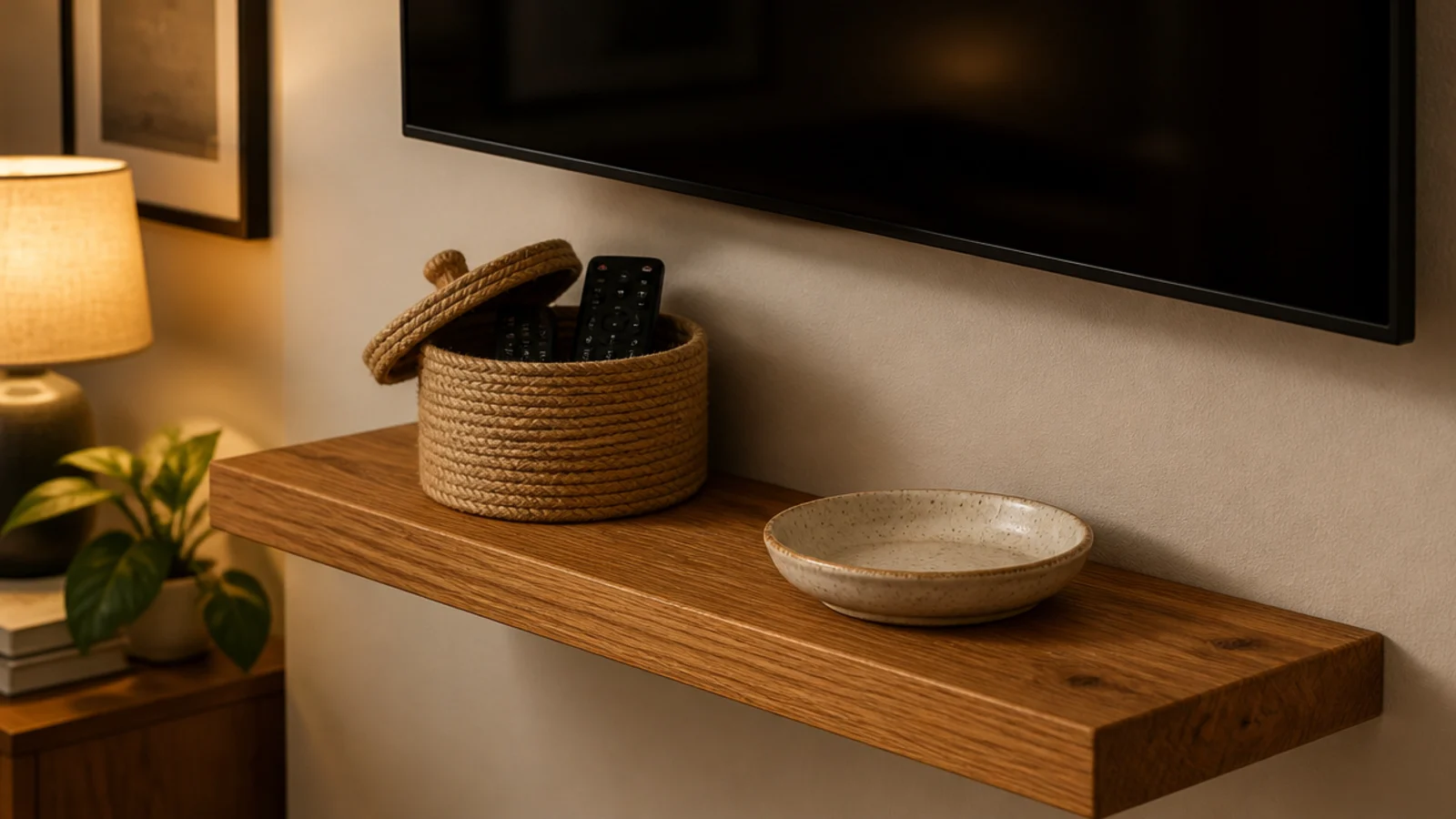
29. A deeper shelf for a turntable
A turntable needs about 16 inches of depth and a genuinely rigid shelf, because vibration makes the needle skip.
Get every fixing into a stud and use 3/4-inch stock minimum, or a built-up box. Keep it away from the speakers, and never mount it above the soundbar.
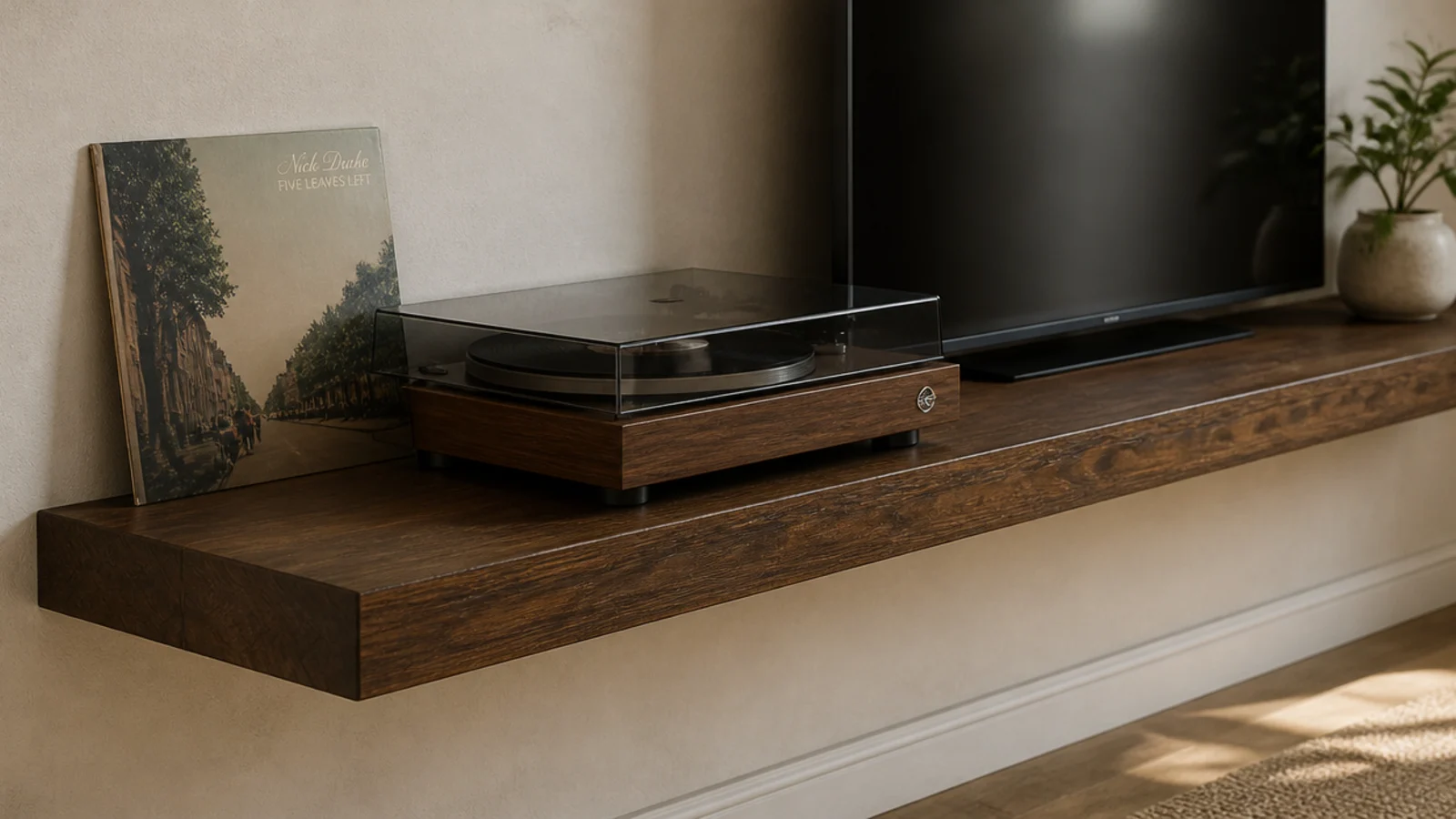
30. Style the wall so the screen is not the point
Finish by balancing the black: warm wood, paper spines, one clay vessel, something green trailing. Three materials repeating across the shelves is enough.
Then check the wall from the doorway with the TV off. If your eye lands on the screen first, add one more warm object and take one hard one away. There is more of this in floating shelf styling.
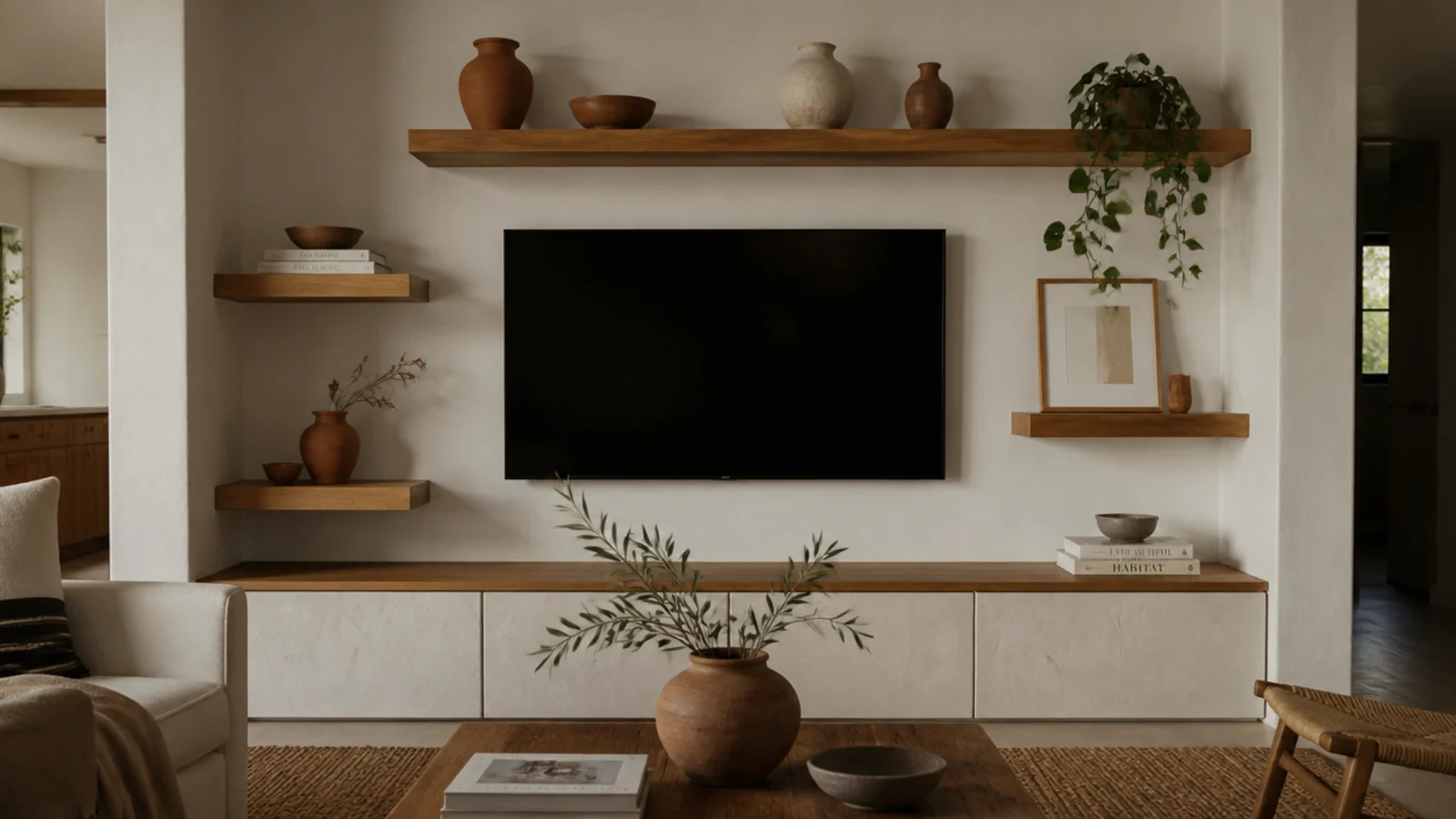
Mistakes to Skip
- Mounting a shelf tight above the screen. Less than 6 inches traps rising heat and makes the panel look wedged into the wall.
- Running a shelf the full width of the wall. The television ends up marooned in the middle of a long empty line, which is the most common media wall mistake.
- Putting a console or soundbar on plastic plugs. About 10 pounds is the honest rating, and electronics falling off a shelf is an expensive way to learn it.
Frequently asked questions
How far should a shelf be from the TV?
At least 6 inches clear of the top of the screen, and 4 to 6 inches from either side. Screens throw heat upward and a shelf sitting tight above the bezel traps it, as well as looking cramped. Below the screen, 10 to 12 inches of clearance leaves room to reach a console without knuckles hitting the panel.
How do you hide cables on a floating shelf under a TV?
Drill a 1-inch pass-through near the back edge of the shelf and run everything down through it. Pair that with a paintable cable raceway on the wall, or an in-wall cable plate if your framing allows it. The 1-inch hole is the piece people skip, and it is the difference between tidy and almost tidy.
Will a floating shelf hold a soundbar or a games console?
Easily, if it reaches framing. Most soundbars are 5 to 9 pounds and consoles 7 to 10, so a shelf fixed into a stud with a concealed rod bracket carrying 30 to 40 pounds has plenty of margin. What kills these shelves is the plastic plugs in the kit, rated around 10 pounds total.
How wide should shelves either side of a TV be?
Relate them to the screen, not the wall. A pair roughly half the screen width each looks balanced beside a 55-inch TV, so around 26 to 30 inches. Matching the full wall width makes the television look marooned in the middle of a long empty line, which is the most common mistake on this wall.
What depth should a shelf under a TV be?
Ten inches if it holds a console, a box or a turntable, and six is enough for a soundbar alone. Depth costs you structurally too, since a 12-inch shelf puts roughly twice the pull-out force on its fixings as a 6-inch one carrying the same weight, so take the depth you need and no more.
Mount the screen first, then live with the bare wall for a week before you commit to shelf positions — the right heights become obvious once you have sat in front of it a few evenings. For the rest of the room, floating shelves in the living room covers the sofa wall and the small-space tricks, and if your television sits in an awkward angle instead of a flat wall, floating corner shelves solves that geometry. Save the pin so the clearances are with you when you drill.
Want more like this? Browse all 15 floating shelves guides — they all use the same measurements and budget tiers.
Pin it for later
Save this to your Floating Shelves board
Pin it now so it is waiting for you when the tape measure comes out — and so the next person hunting for this idea can find it too.
Save this pinKeep going
More ideas worth saving while you have the tape measure out.