Floating Shelves · Listicle
25 Budget-Friendly Floating Shelf Ideas for Small Spaces

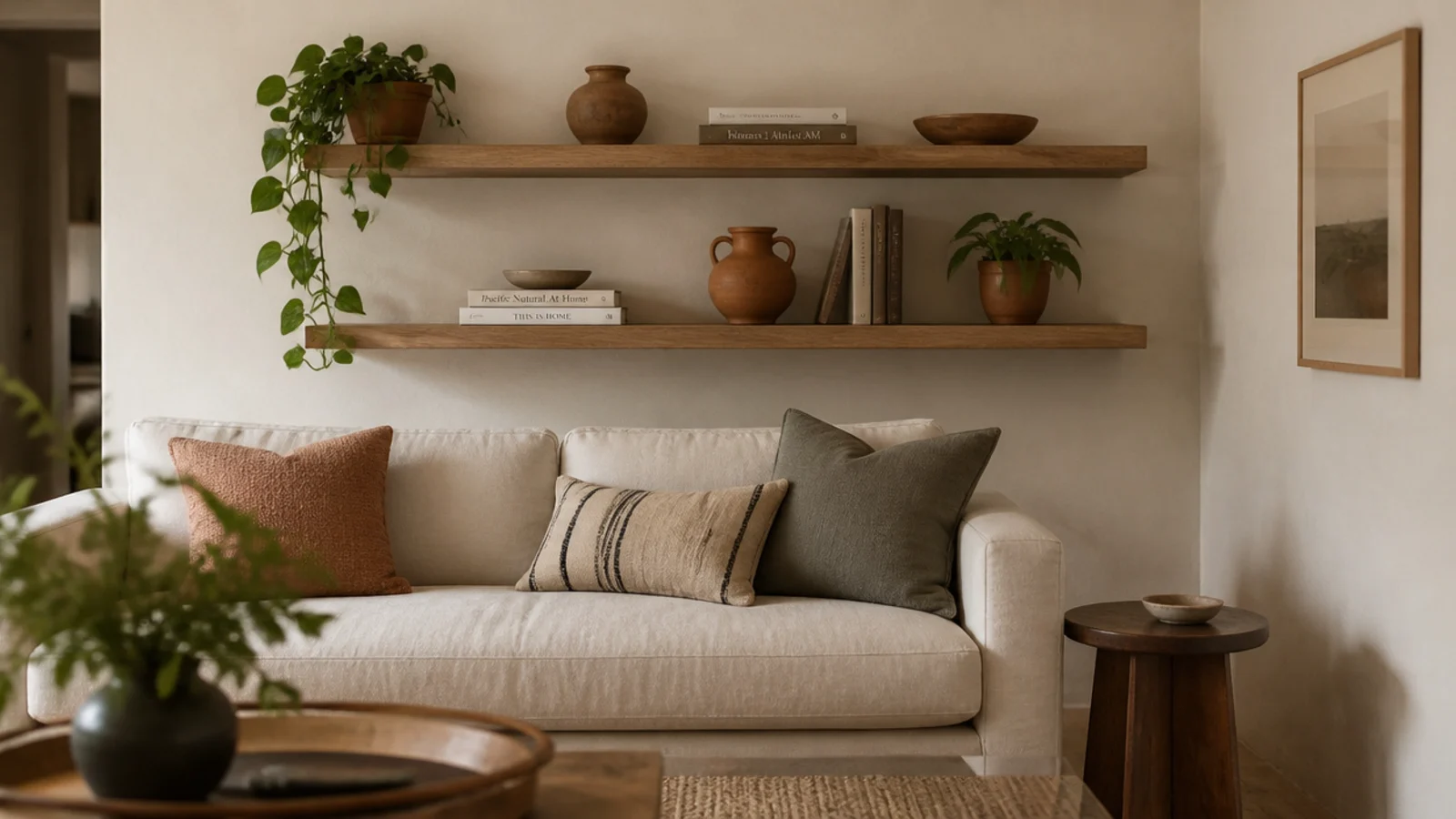
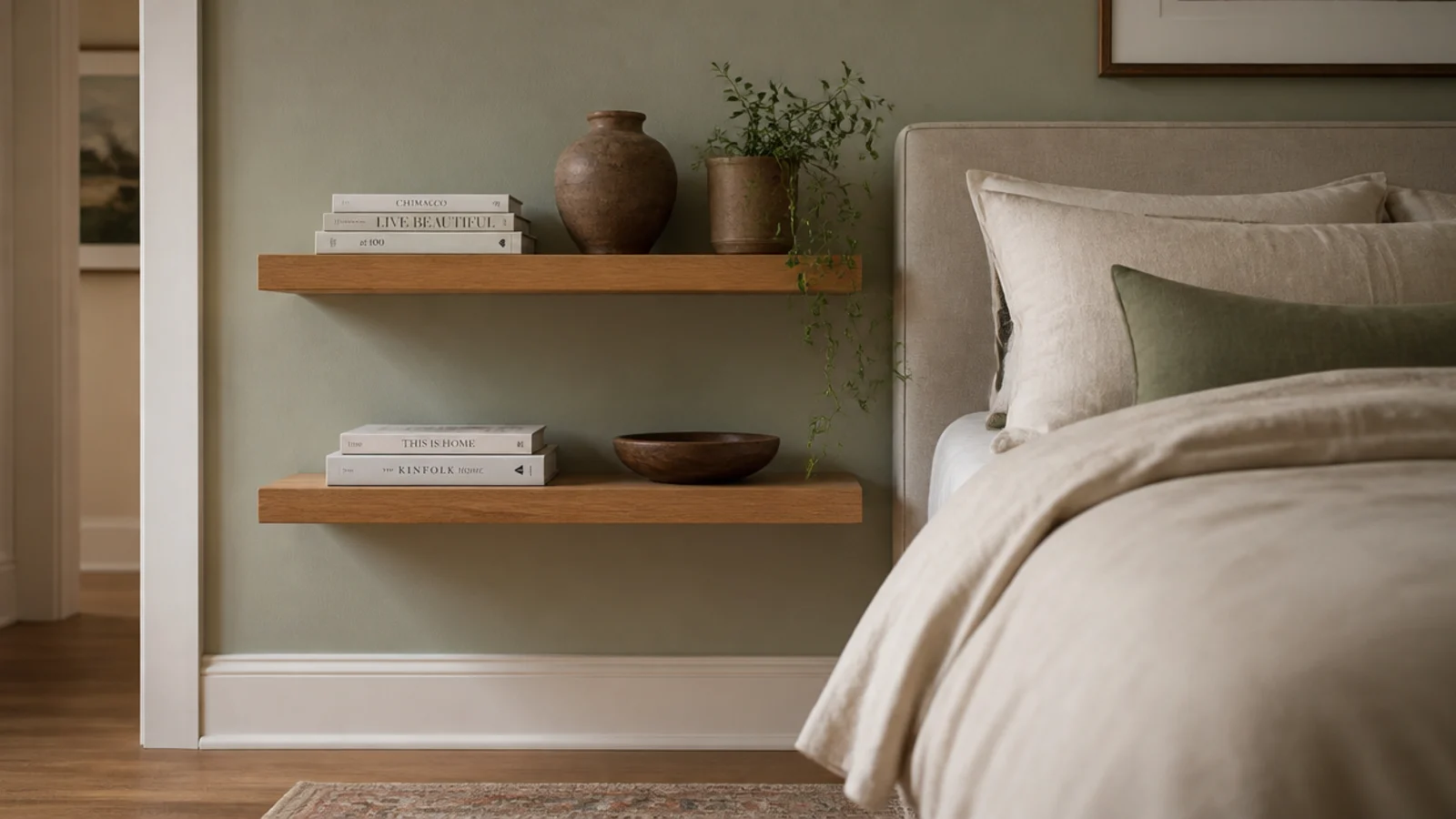
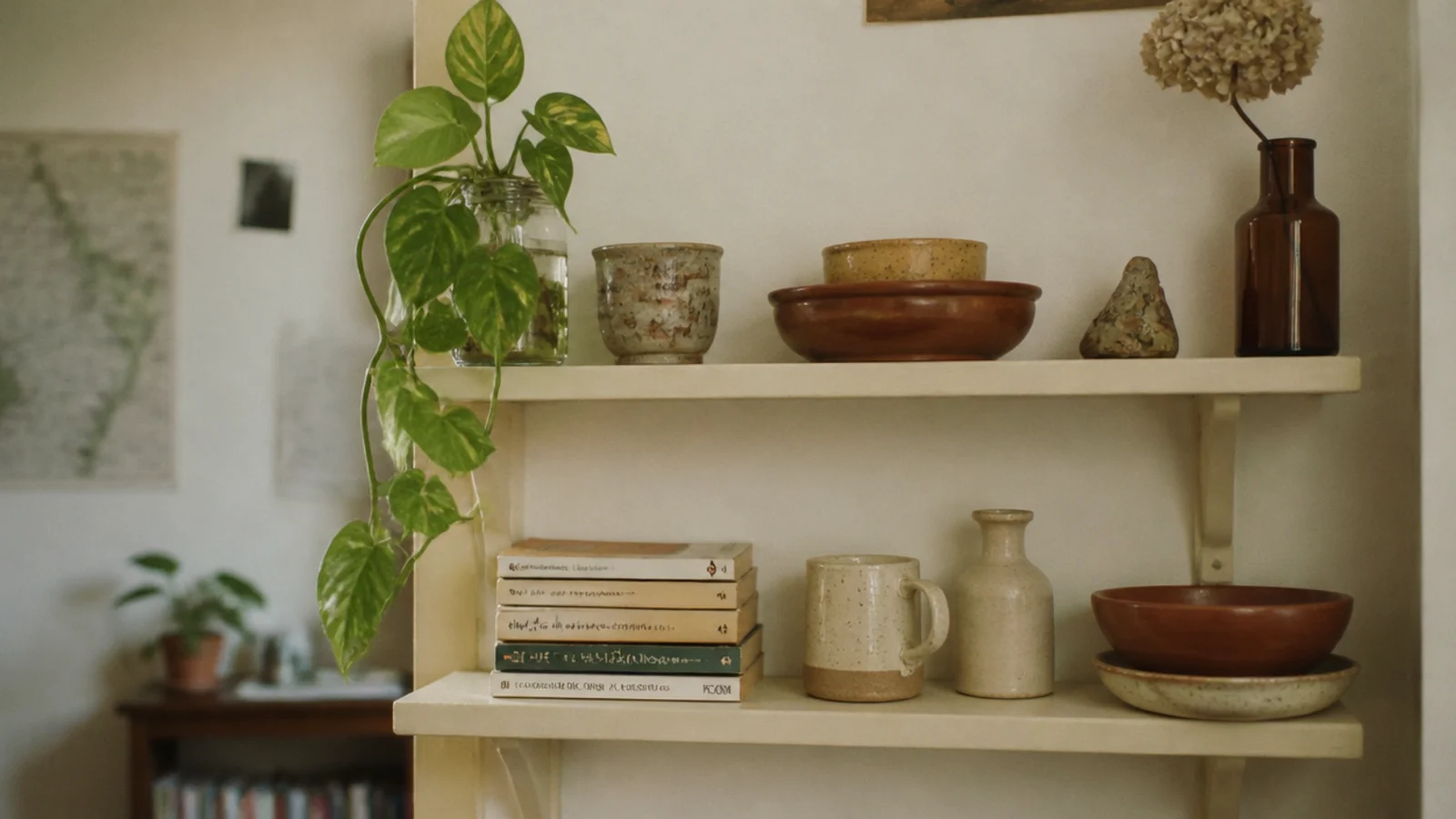
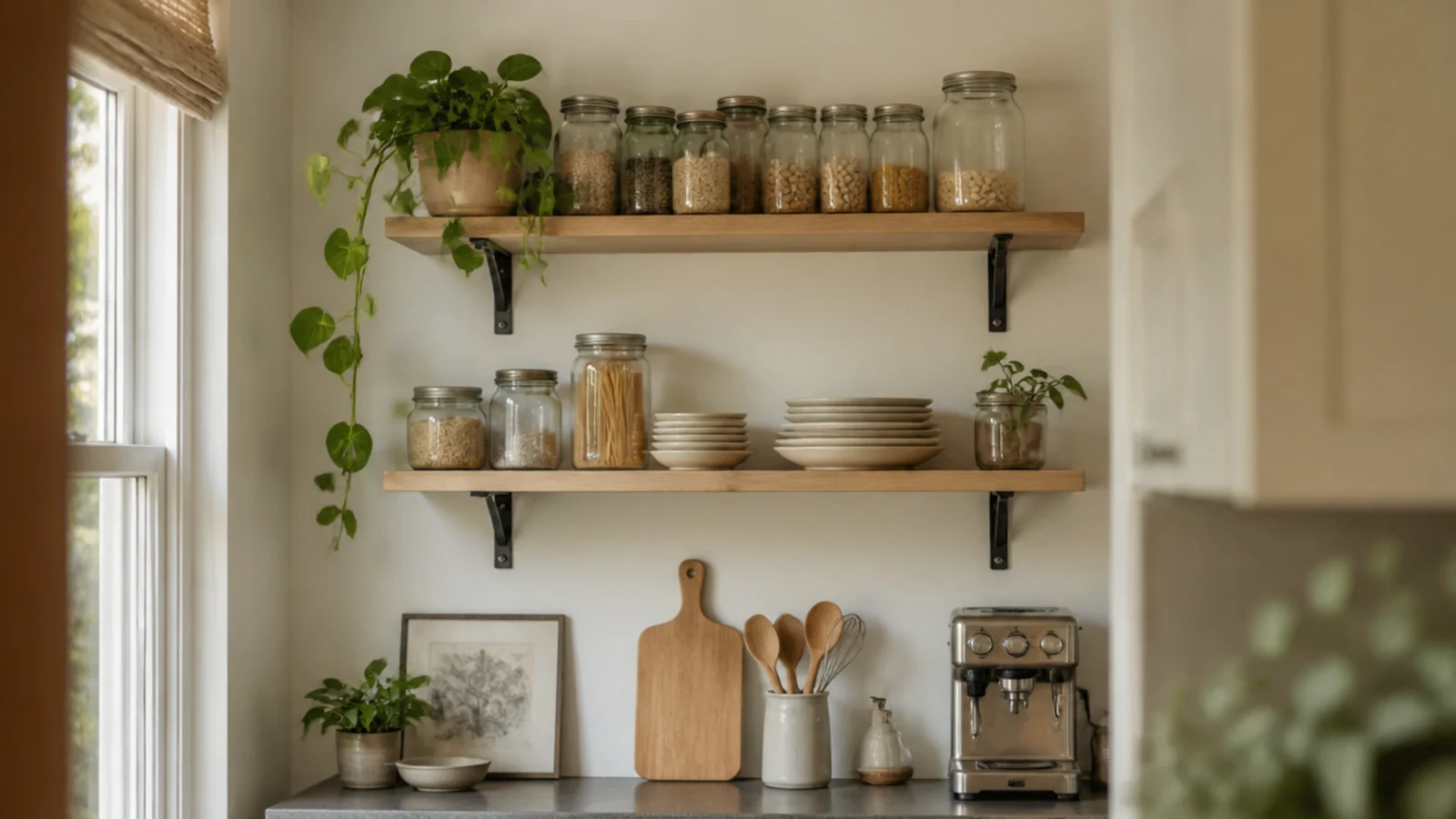
Floating shelves in a living room do something no cabinet can: they store things without eating the floor, and floor area is exactly what your eye reads as room size. Every idea here is budget-first, most of them under $40 a shelf, and each one names a depth, a span and a fixing so the shelf is still level in five years. Small rooms first.
In this guide27 sections — tap to openHide
- 1.Why floating shelves suit a small living room better than a cabinet
- 2.Two shelves stacked above one end of the sofa
- 3.Run the shelf line at door-head height
- 4.A slim shelf instead of a console table
- 5.A low ledge just above the baseboard
- 6.A three-shelf mini library wall
- 7.A record shelf sized for LPs
- 8.A plant shelf in the brightest strip of wall
- 9.Two shelves either side of a doorway
- 10.A shelf across the wall behind an armchair
- 11.A gallery ledge instead of hanging art
- 12.Stair treads as ready-made chunky shelves
- 13.Paint the shelves the exact wall color
- 14.Leave black brackets visible on purpose
- 15.A shelf above a low sideboard
- 16.A ventilated shelf for the router
- 17.A shelf that hides the power strip
- 18.A landing shelf beside the sofa arm
- 19.Overlap two shelf lengths for asymmetry
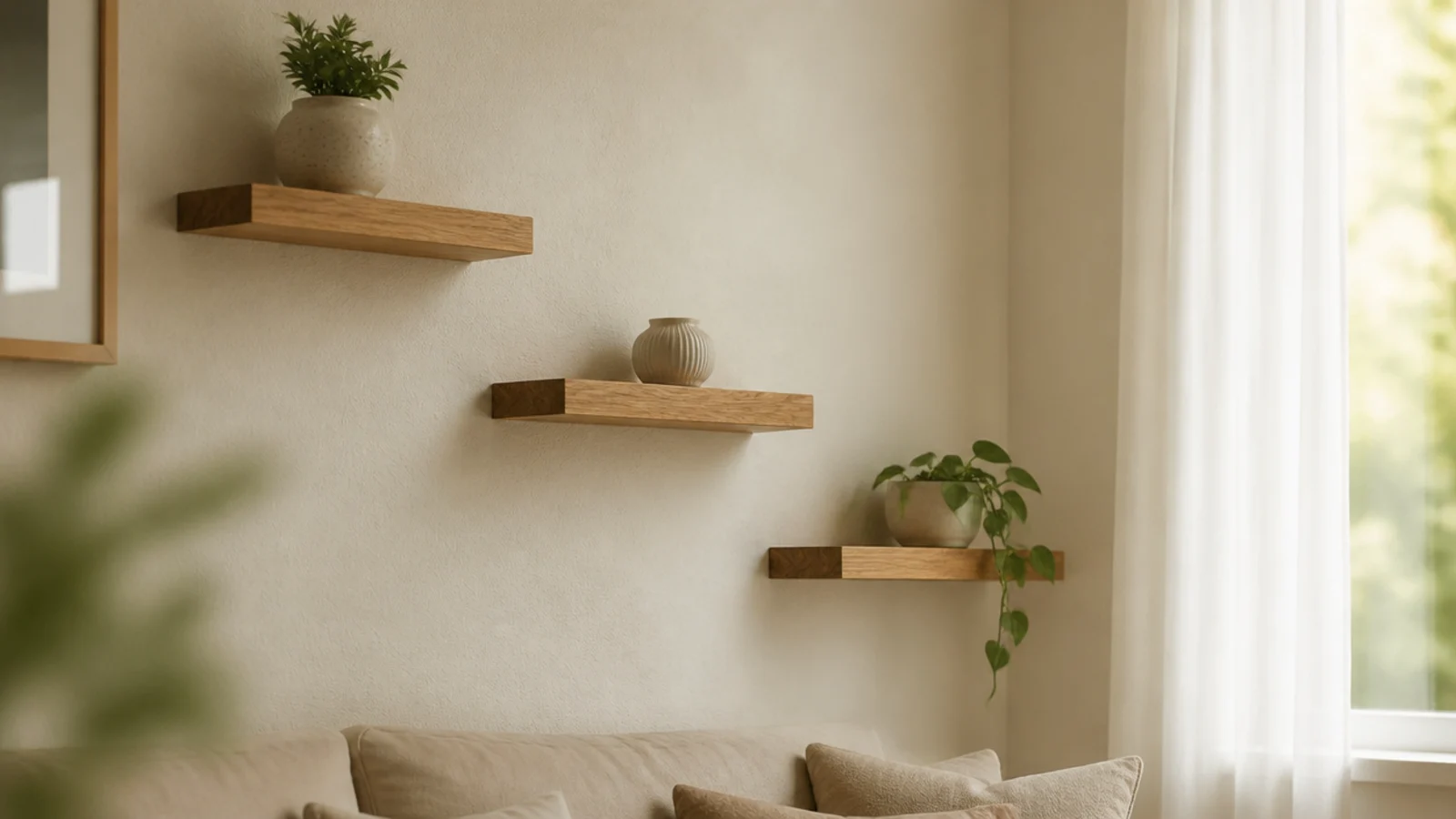
- 20.Shelves that step down toward the window
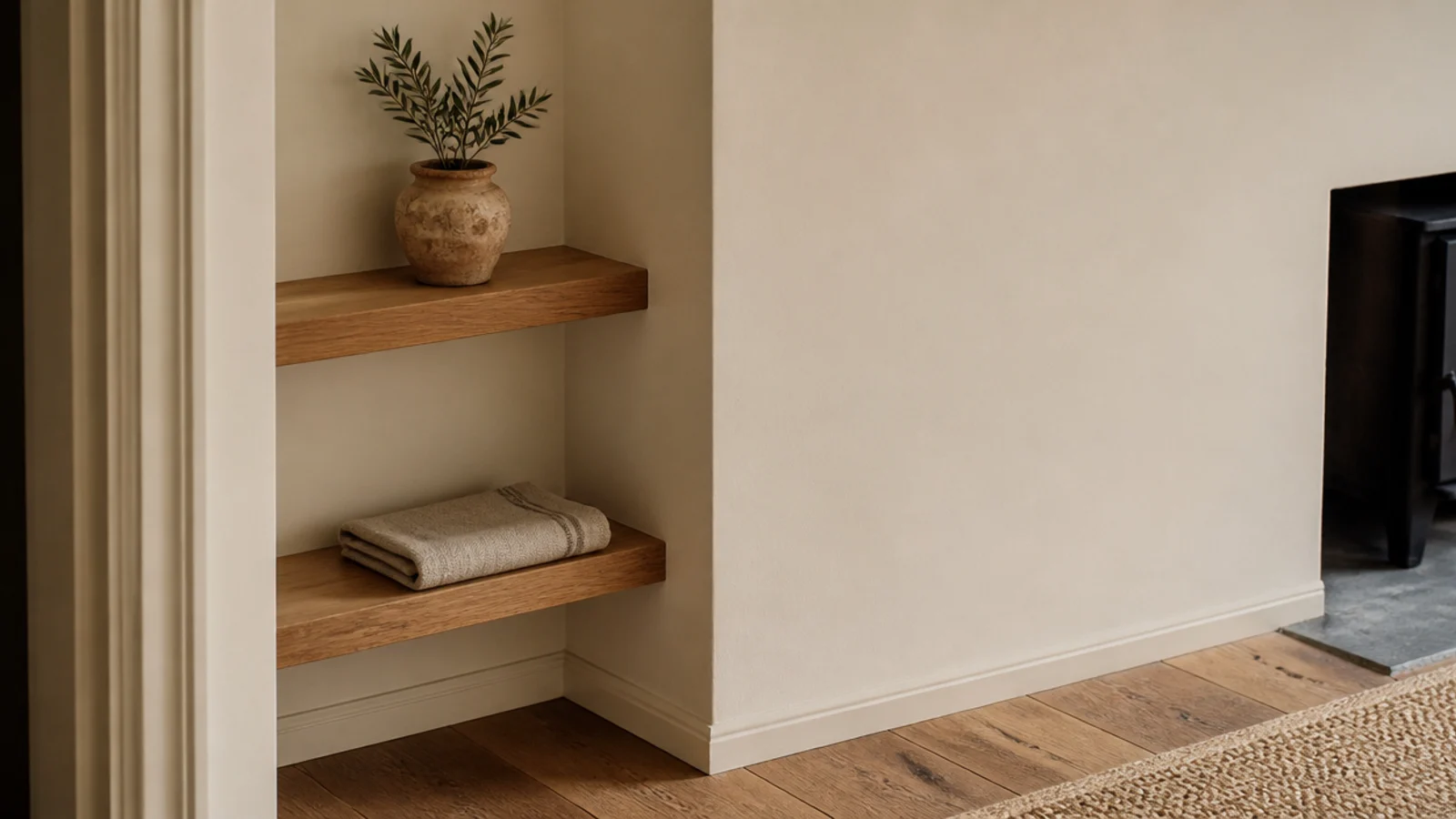
- 21.The dead strip beside a chimney breast
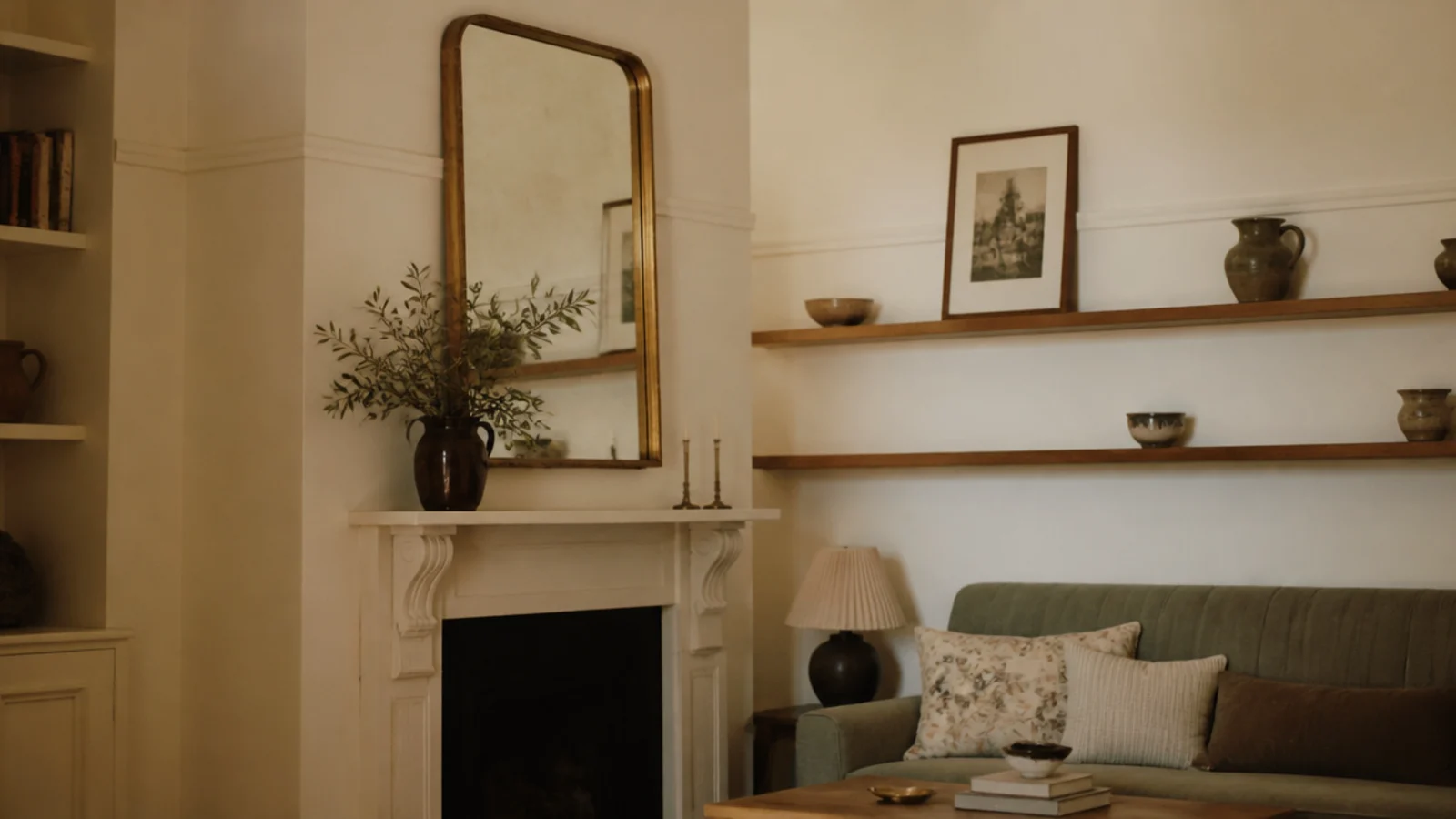
- 22.Shelves at picture-rail height in a period room
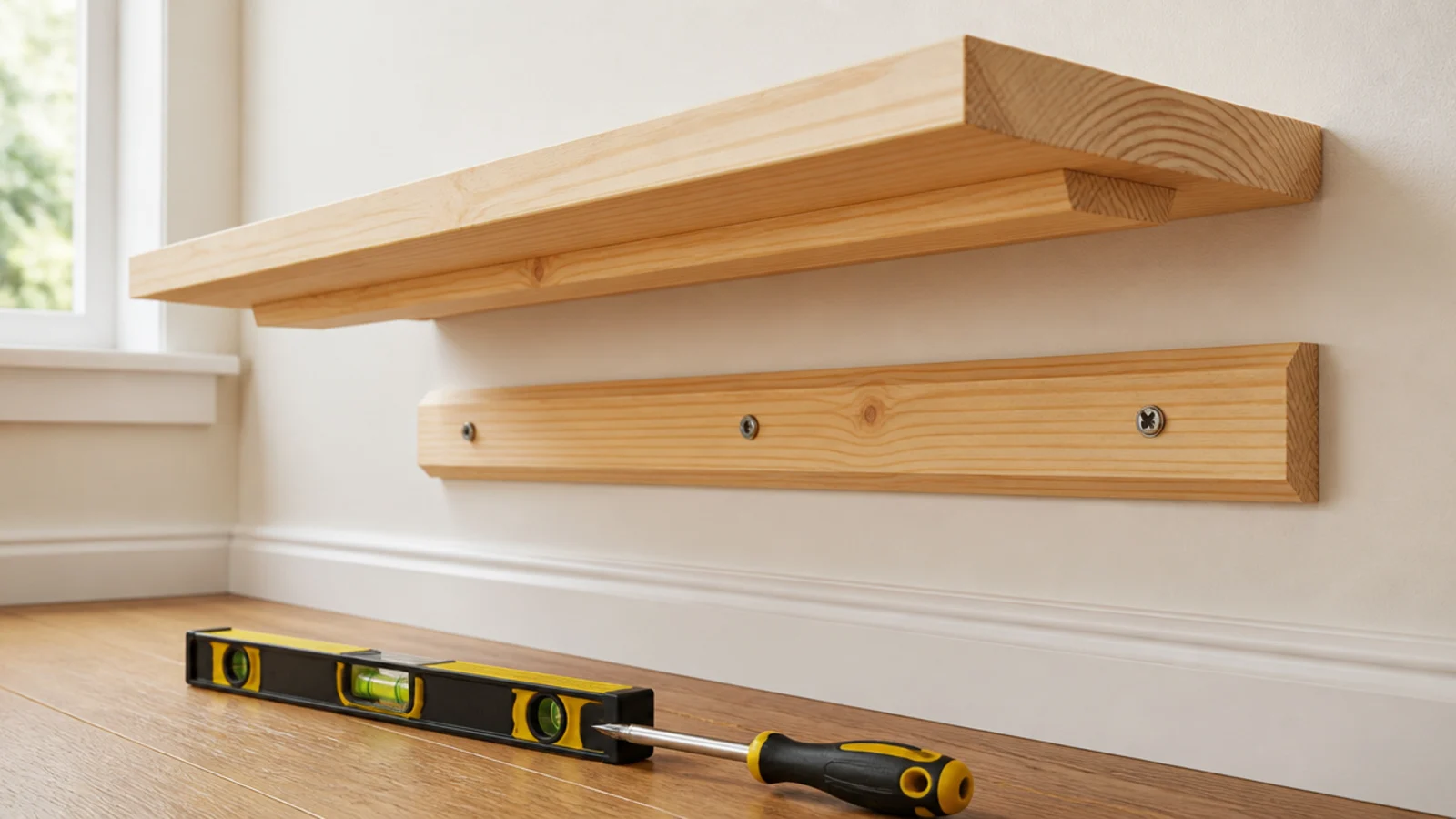
- 23.A French cleat shelf for a rental
- 24.A shelf under a wall-mounted mirror
- 25.One long board cut into three shelves
- 26.A deep shelf that doubles as a desk
- 27.Mistakes to Skip
Why floating shelves suit a small living room better than a cabinet
A sideboard takes 16 inches of floor. A shelf takes none, and in a room under 140 square feet that difference is the whole argument.
Straight walls also make the engineering easy. Studs sit 16 inches on center in most US framing, so a 32 or 48-inch shelf lands both ends on solid wood if you set it out from one marked stud. That single choice takes the shelf from decorative to genuinely useful.
Depth is where small rooms get punished. Leverage rises with depth, so a 12-inch shelf puts roughly twice the pull-out force on its fixings as a 6-inch one holding the same weight — and in a tight room you also clip a deep shelf with your shoulder. Six inches on a walkway wall, eight behind furniture.
Thickness sets your span: three-quarter-inch stock crosses 24 inches without visible deflection, half-inch bows at about 18. Leave 13 inches of clear height between tiers so a hardback stands up.
On fixings, be honest. A concealed rod bracket into a stud carries 30 to 40 pounds on a 24-inch shelf, toggle bolts carry 25 to 35 pounds each in half-inch drywall, and the plastic plugs in the kit carry about 10 pounds and cause most sagging.
Budget tiers: a plain board on painted-out L brackets is $18 to $30 ($), a concealed rod set is $60 to $120 ($$), and a full wall run in built-up boxes starts around $250 ($$$).
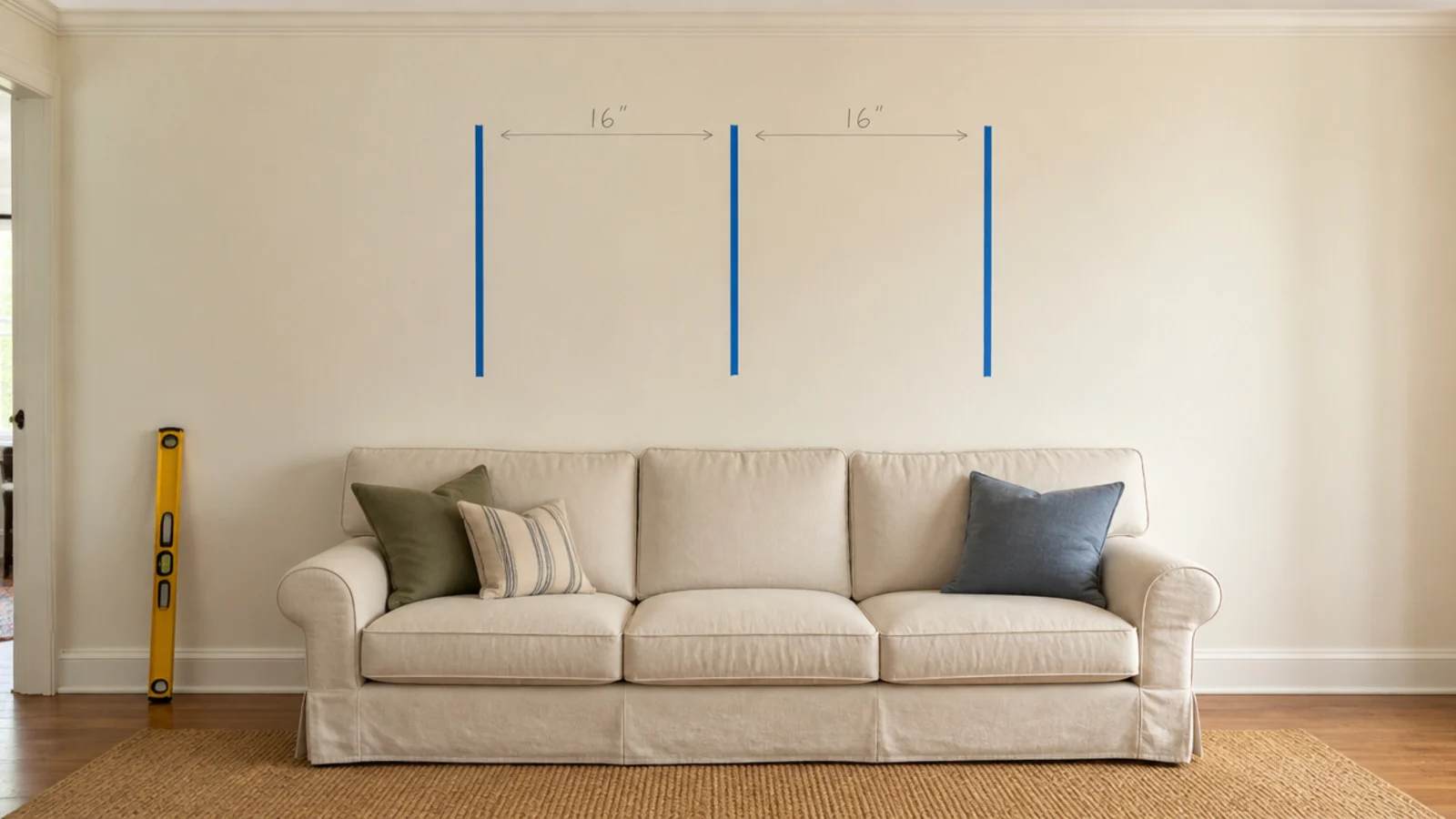
1. Two shelves stacked above one end of the sofa
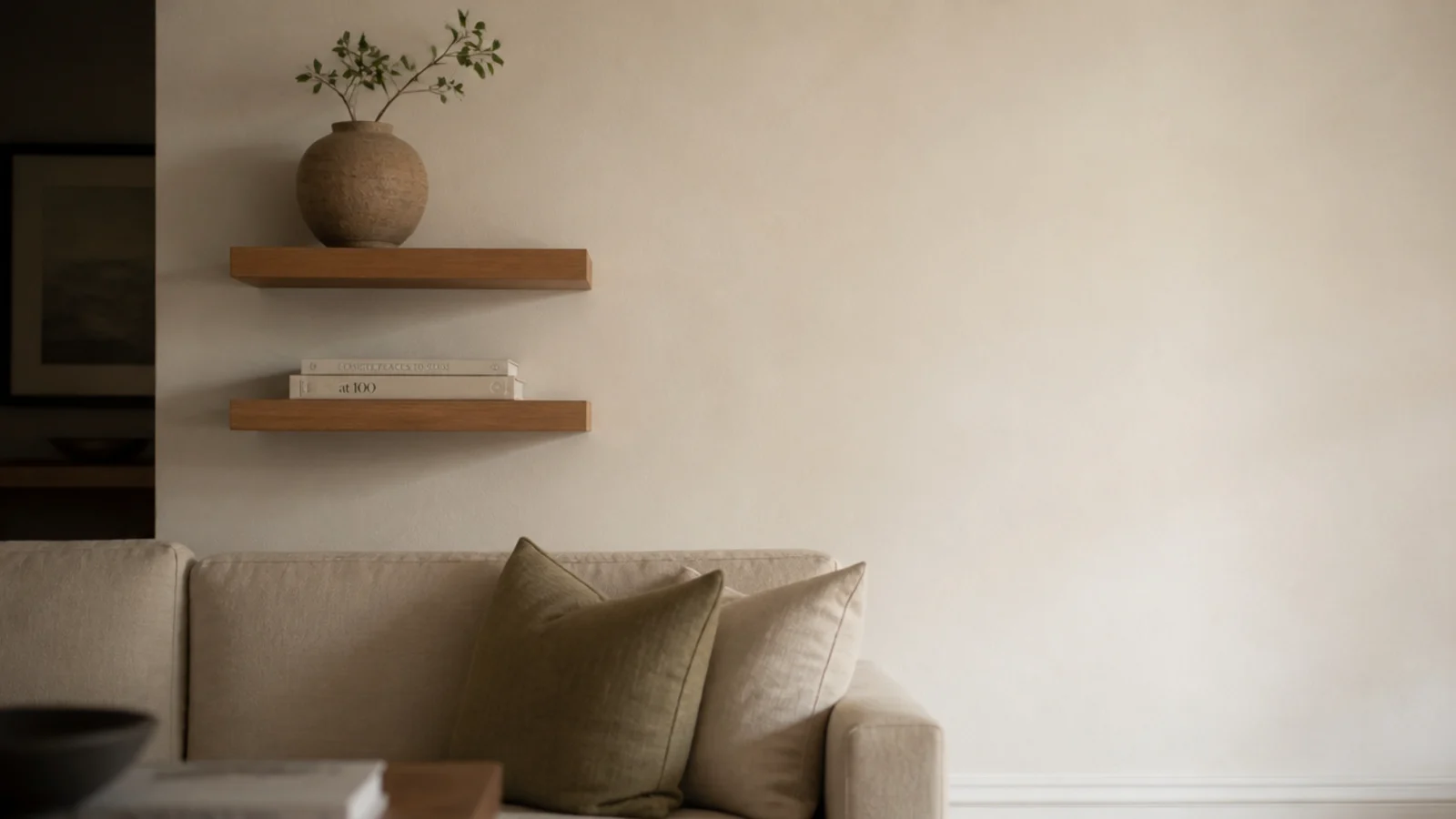
A centred pair above a sofa is the obvious move and it flattens a narrow room. Stack two 24-inch shelves above one end instead, 13 inches apart, and leave the rest of the wall bare.
The empty half is what makes the wall feel wide. Keep both shelves to six inches deep so nobody leaning back on that end catches a shoulder.
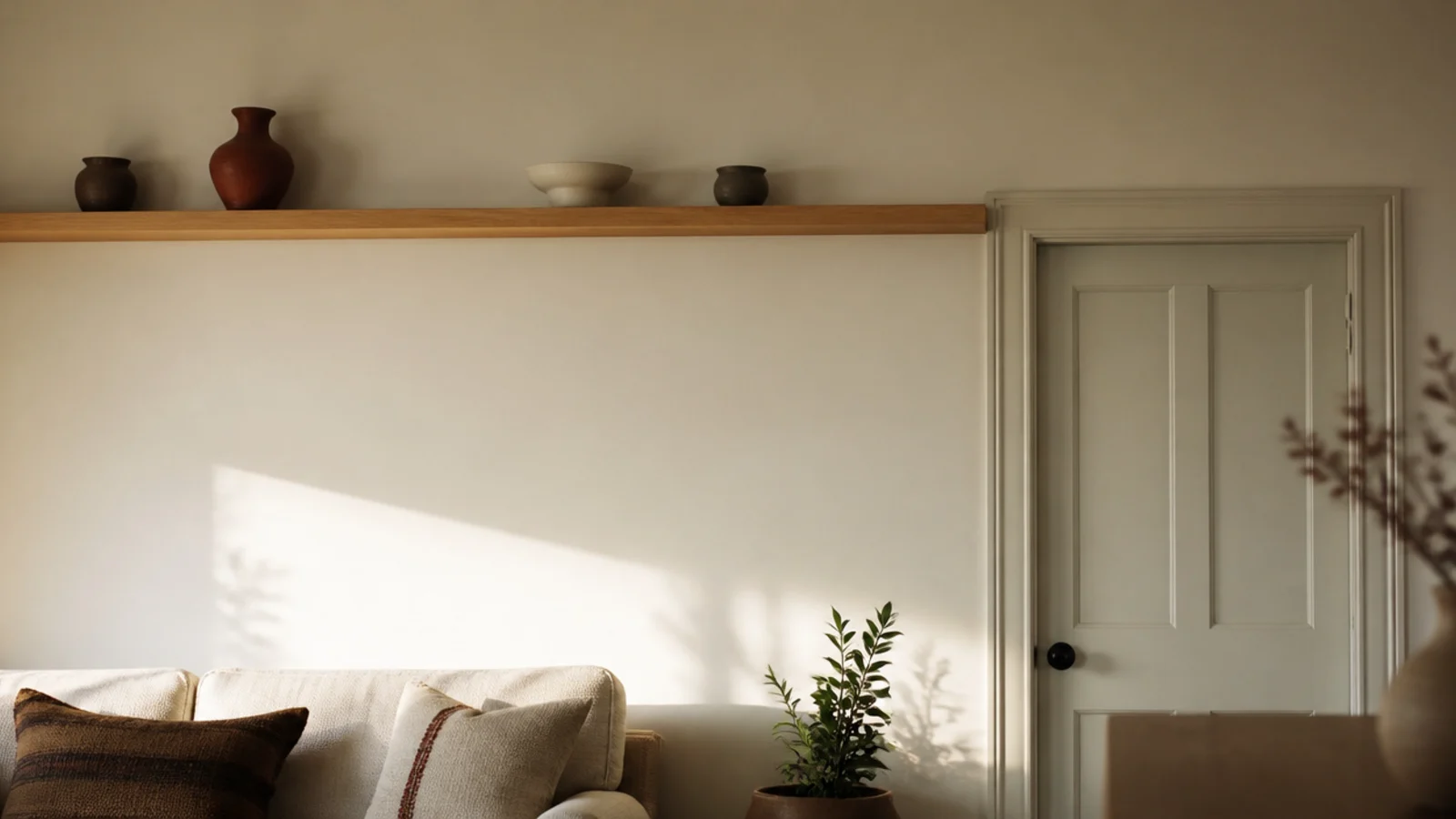
2. Run the shelf line at door-head height
Look at the top of the nearest door casing — usually 80 inches from the floor — and set your shelf at exactly that height. Borrowed lines are free and they do more for a room than any object you put on the shelf.
At that height, use it for the light, seasonal things you rarely lift down. Baskets, not books.
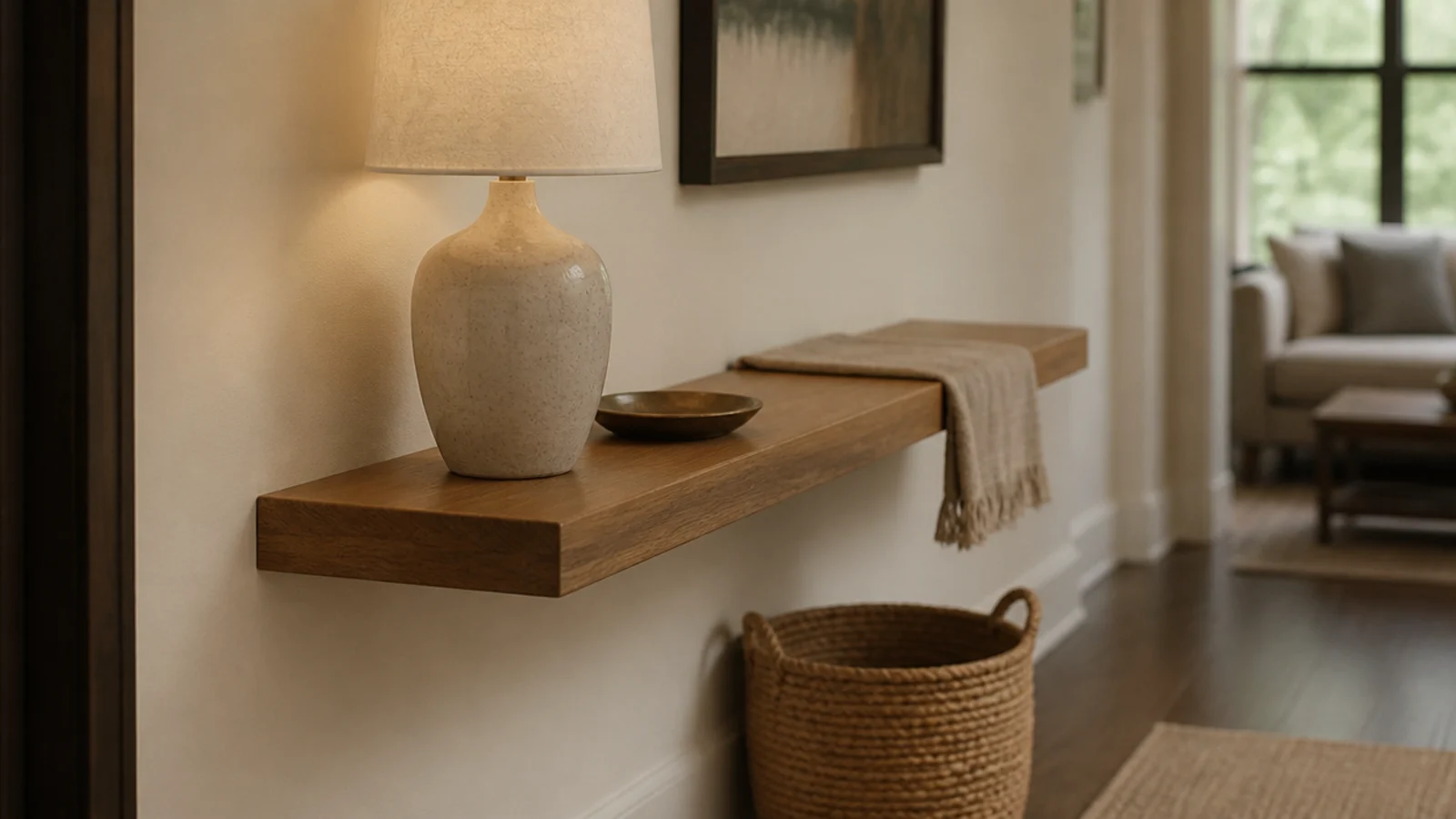
3. A slim shelf instead of a console table
A console table costs $150 and 14 inches of walkway. A 10-inch-deep shelf at 30 inches high does the same job with no legs in the way of your feet.
Get every fixing into a stud, because this is a shelf people lean on. A lamp, a tray and a basket underneath, and the entry side of a small living room is finished for around $45.
4. A low ledge just above the baseboard
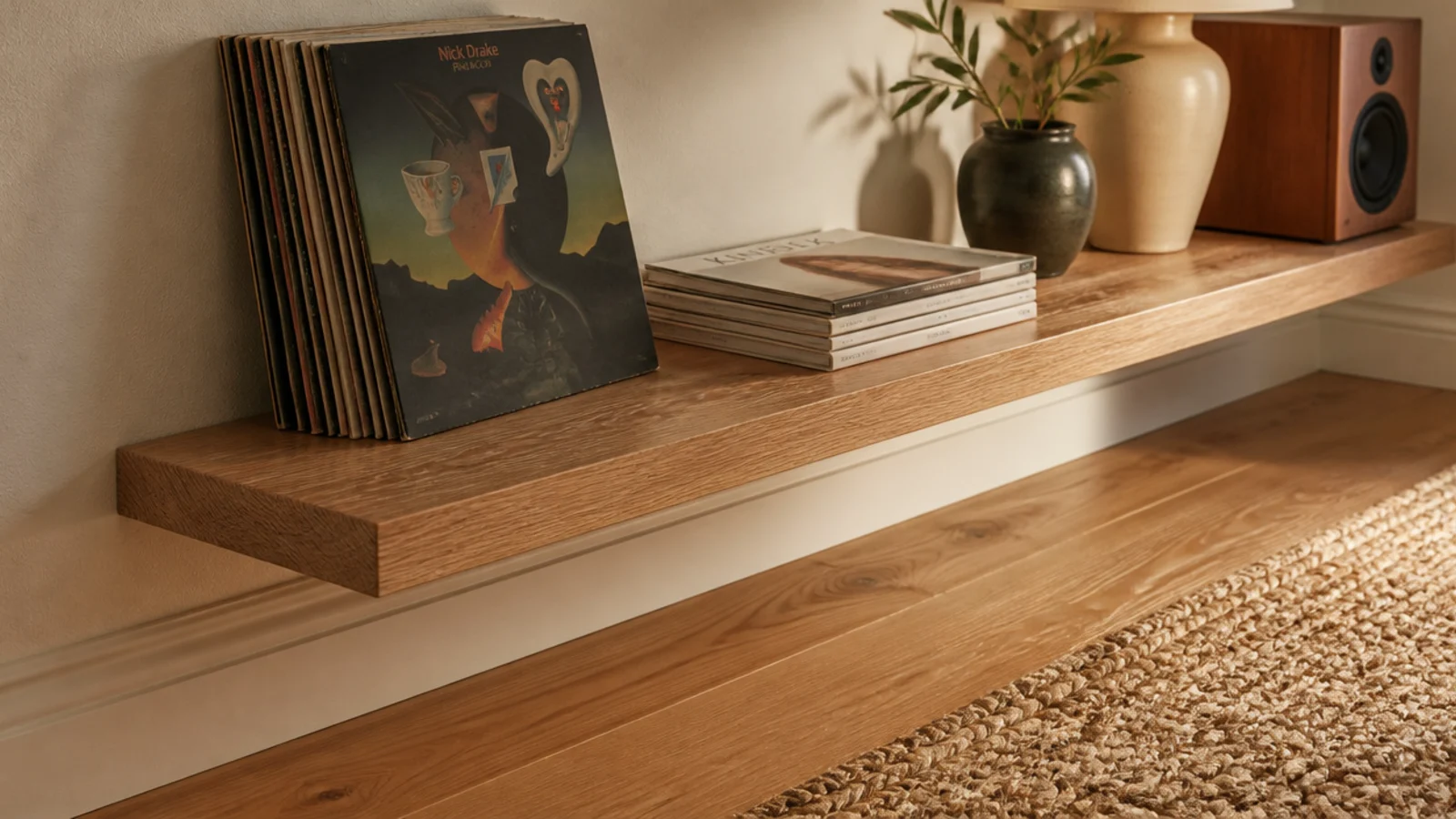
Storage at knee height keeps the sightline across the room completely open, which is why low furniture makes small rooms feel bigger.
Mount a 10-inch-deep board about 12 inches above the baseboard for records, magazines and big art books lying flat. Skip this one if you have a crawling baby or a large dog with a tail.
5. A three-shelf mini library wall
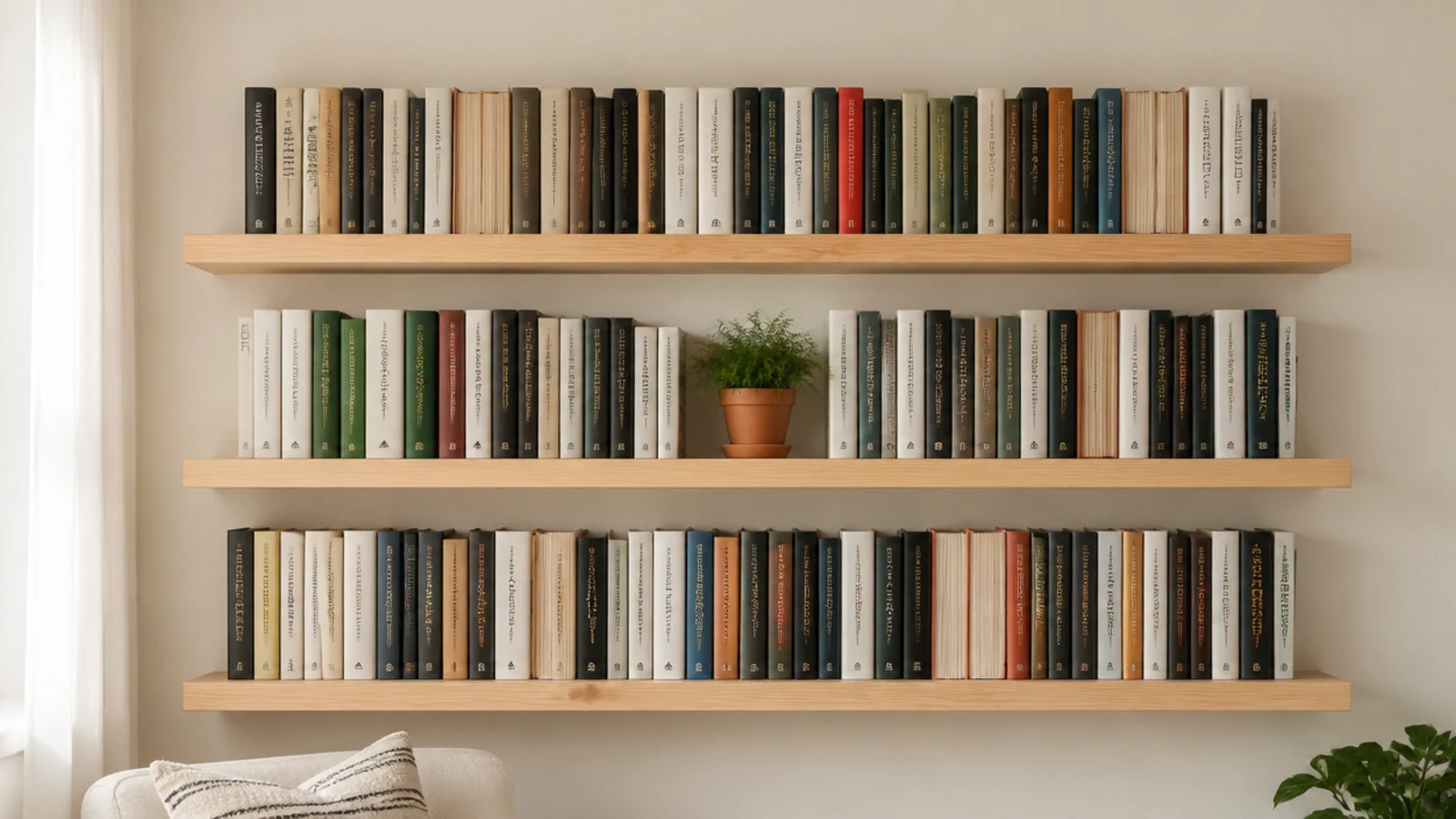
Three shelves at 13-inch spacing hold more books than most $200 bookcases and cost about $60 in pine and brackets.
Run them all the same length and centre them on the wall. Books are heavy — a 32-inch run of hardbacks is roughly 25 pounds — so every bracket needs framing or a toggle bolt, never a plastic plug.
6. A record shelf sized for LPs
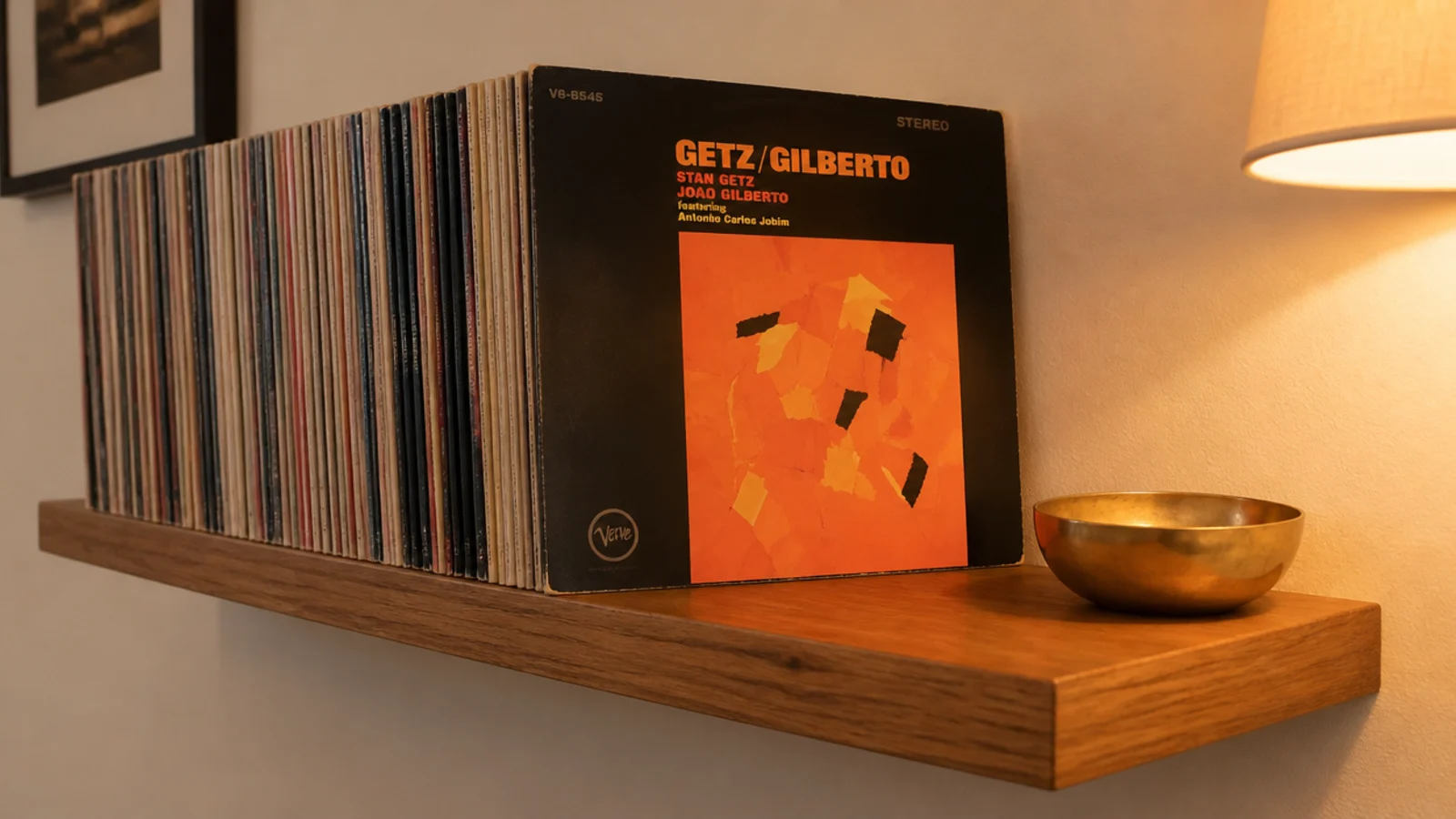
Vinyl sleeves are 12.4 inches square, so the usual 12-inch spacing does not work. Give records 13 inches of clear height and a 13-inch depth so nothing overhangs the front edge.
Records are also dense: a 24-inch run weighs about 35 pounds. Two fixings into studs, minimum, and turn one sleeve cover-out.
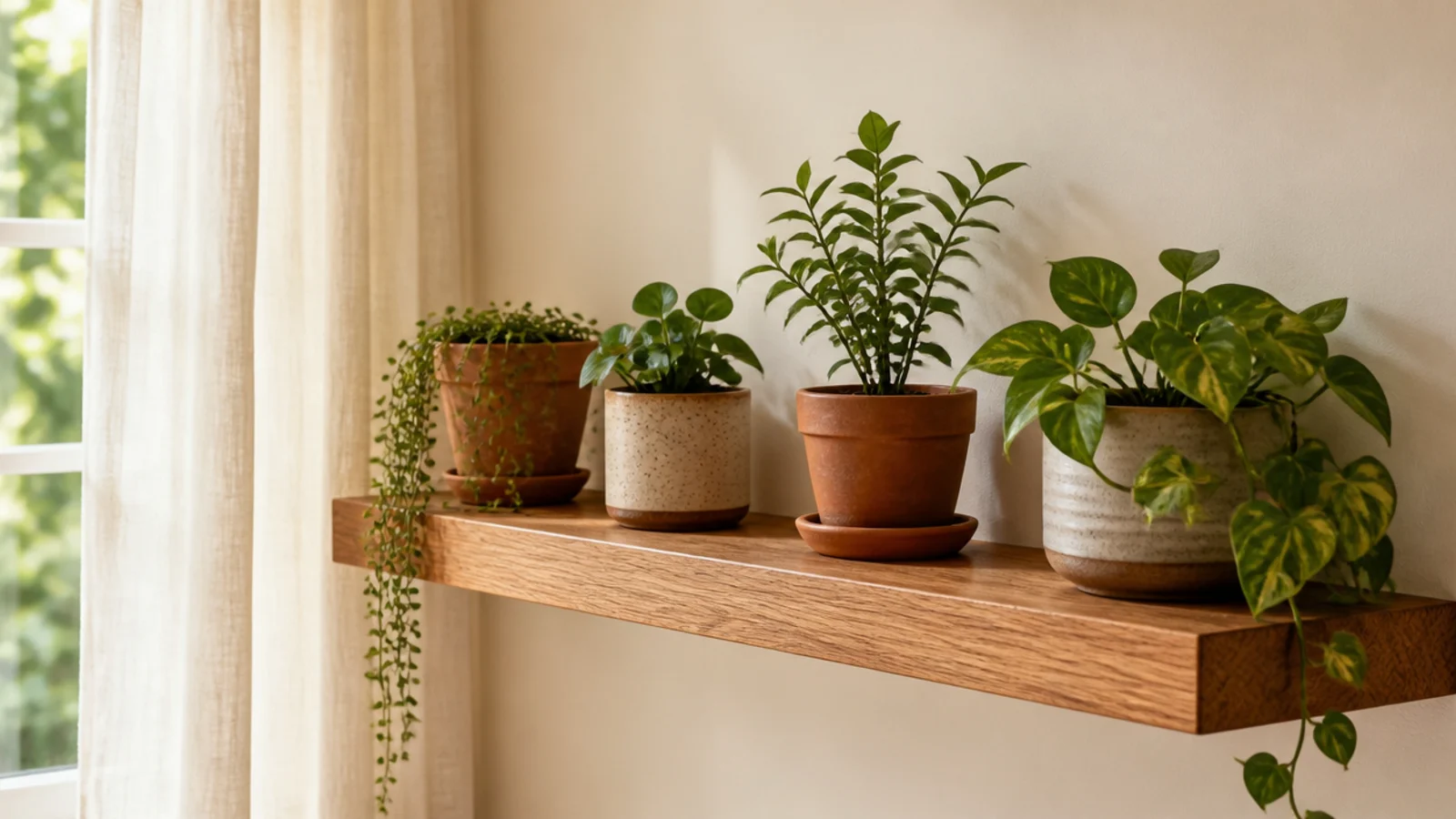
7. A plant shelf in the brightest strip of wall
Plants belong roughly two feet back from the glass, where the light is bright and indirect rather than scorching. A 24-inch shelf at that spot holds four small pots.
Use saucers under everything. Water marks on a finished shelf are permanent, and one repotting accident will cost you the finish you spent an evening on.
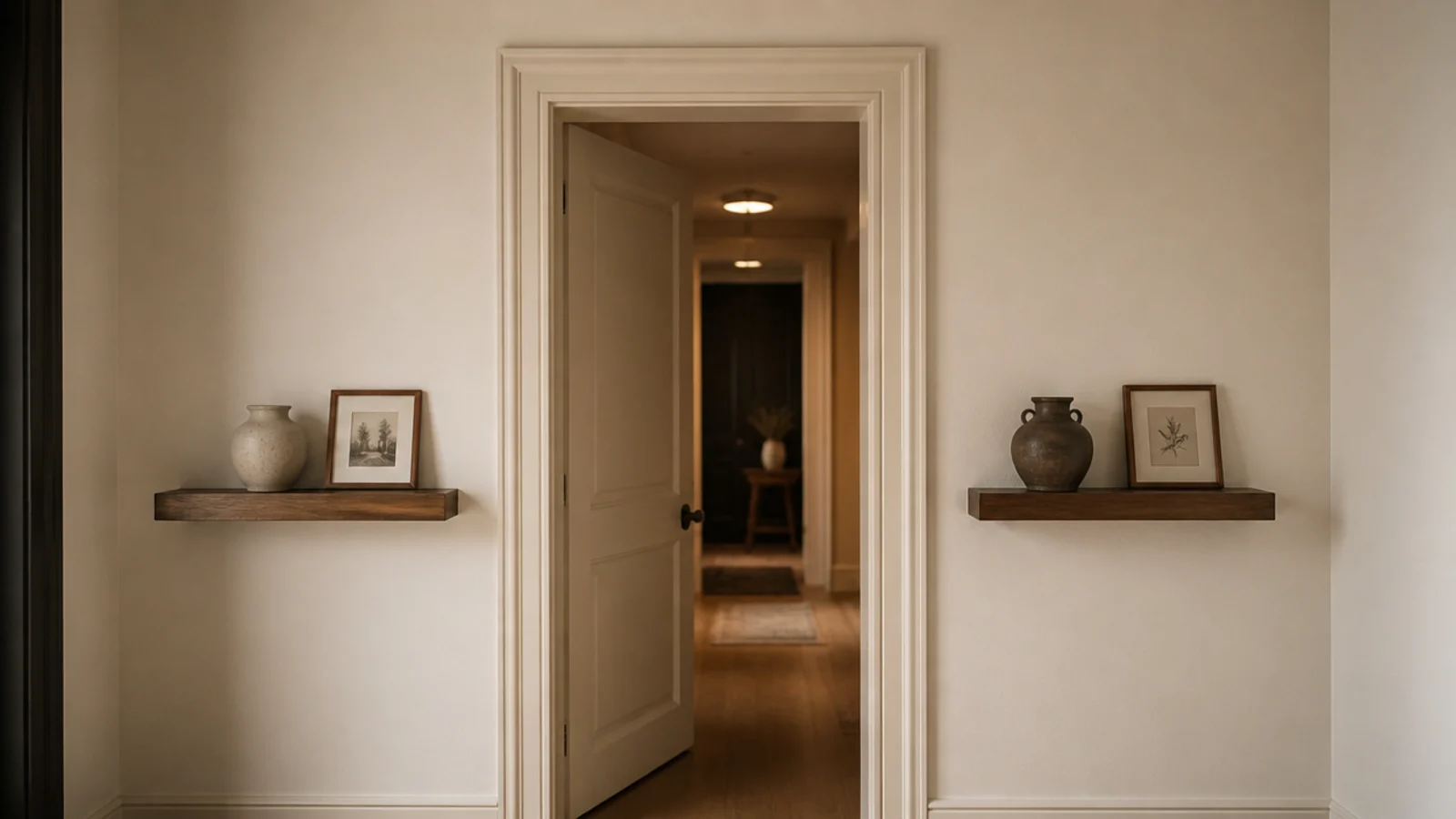
8. Two shelves either side of a doorway
Doorways cut a wall into two useless slivers. A short shelf on each side at the same height turns those slivers into a frame.
Keep them under 20 inches long and five deep so nobody clips them walking through. This is the cheapest way to make a plain builder wall look considered.
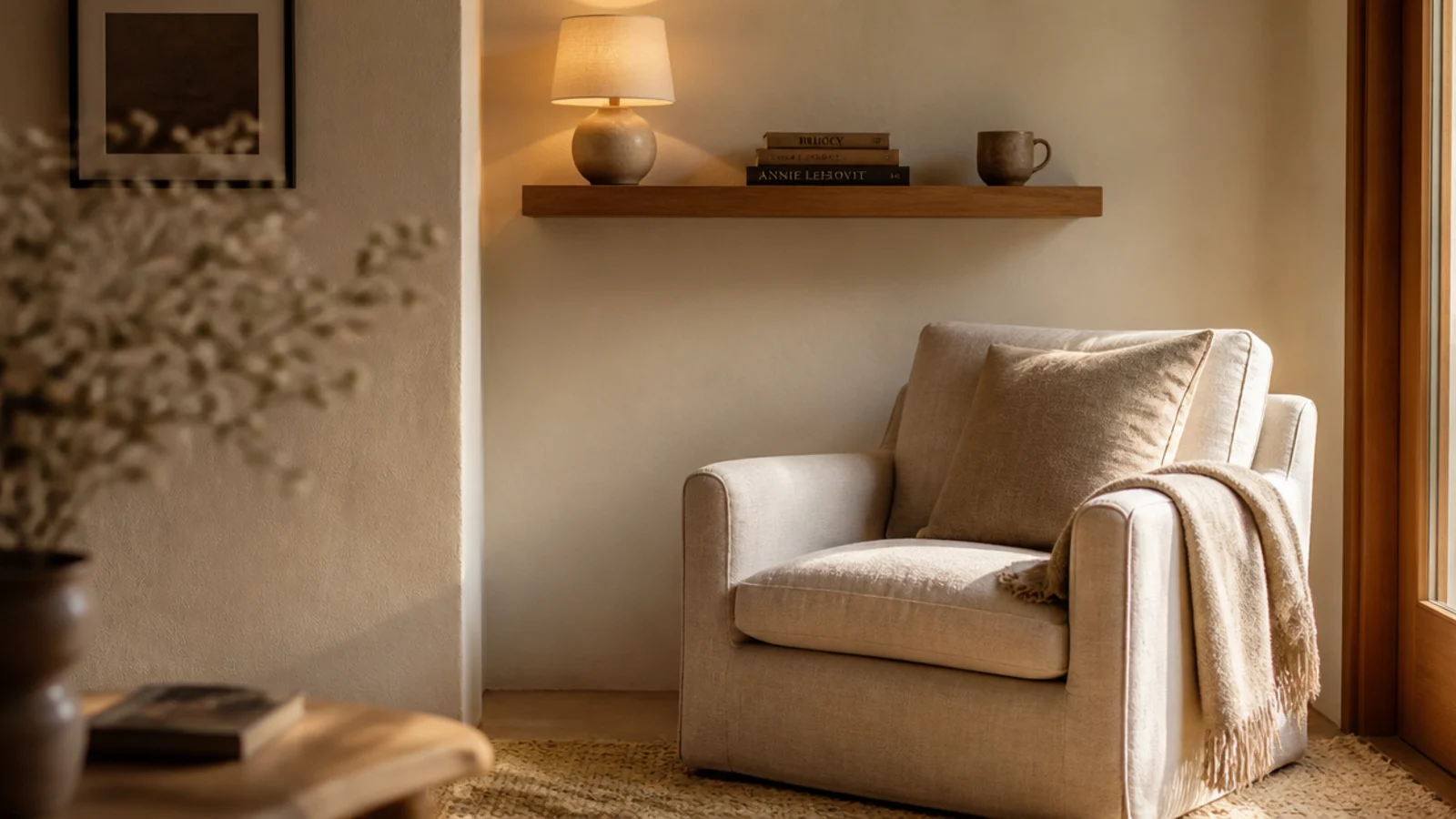
9. A shelf across the wall behind an armchair
One shelf 18 inches above the chair back puts a lamp, a book and a mug within reach and saves a side table entirely.
Twenty-four inches long, eight deep. Anything longer starts to loom when you lean back. A small ceramic lamp with a warm bulb does more for the room at night than the ceiling light ever will.
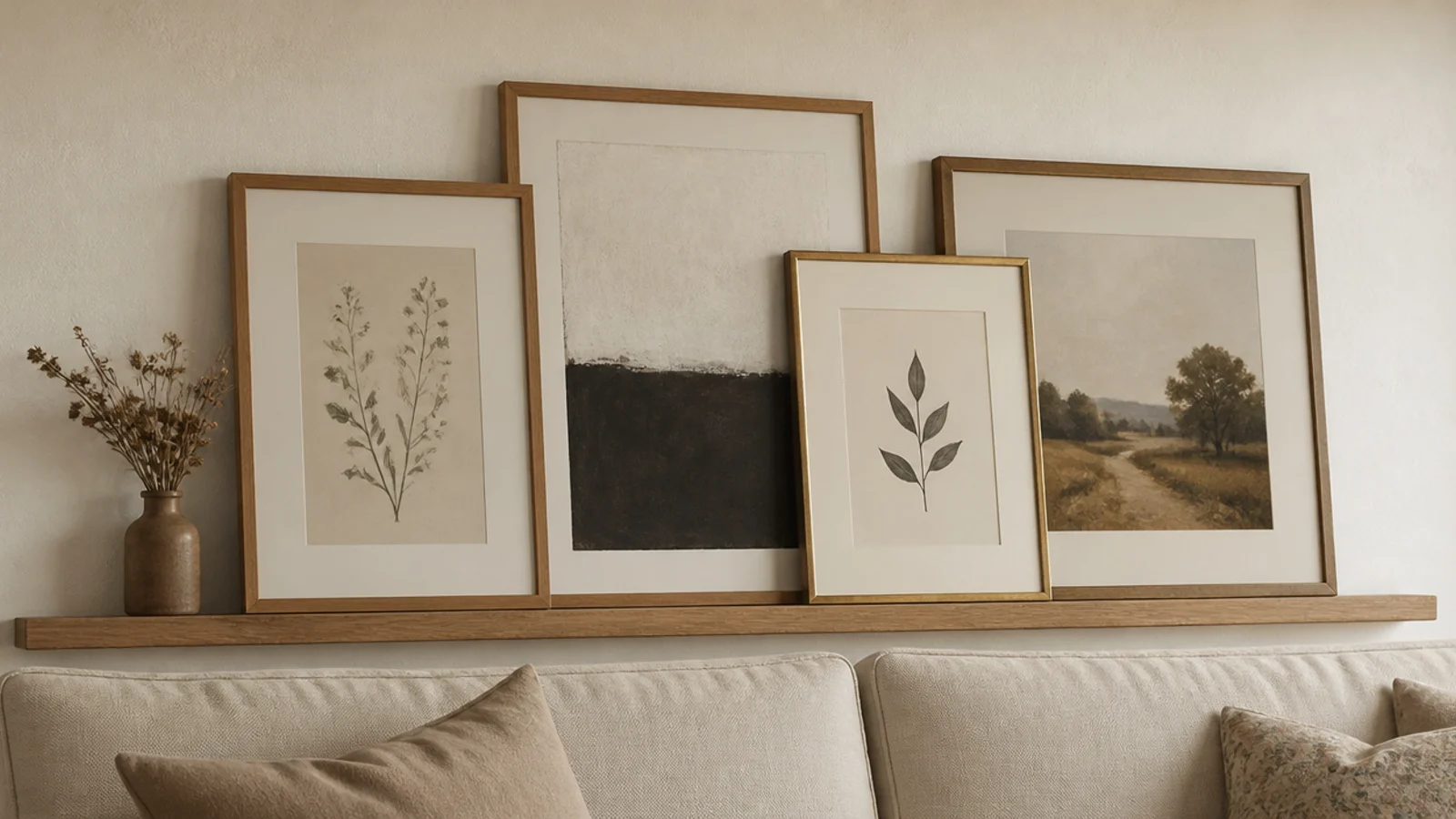
10. A gallery ledge instead of hanging art
A three-inch ledge with a half-inch lip lets you lean art rather than hang it, and change the whole wall in five minutes without patching.
Run it at 58 inches to the top surface above a sofa. Overlap the frames slightly and keep to two frame finishes so a mixed set still reads as one arrangement.
11. Stair treads as ready-made chunky shelves
Stair treads are sold in every home center at about an inch thick with a rounded bullnose front edge already sanded — which is the expensive-looking detail, done for you.
They come in 36 and 48-inch lengths for $20 to $35. Seal them and mount on concealed rods. It is the fastest route to a chunky shelf without building a box.
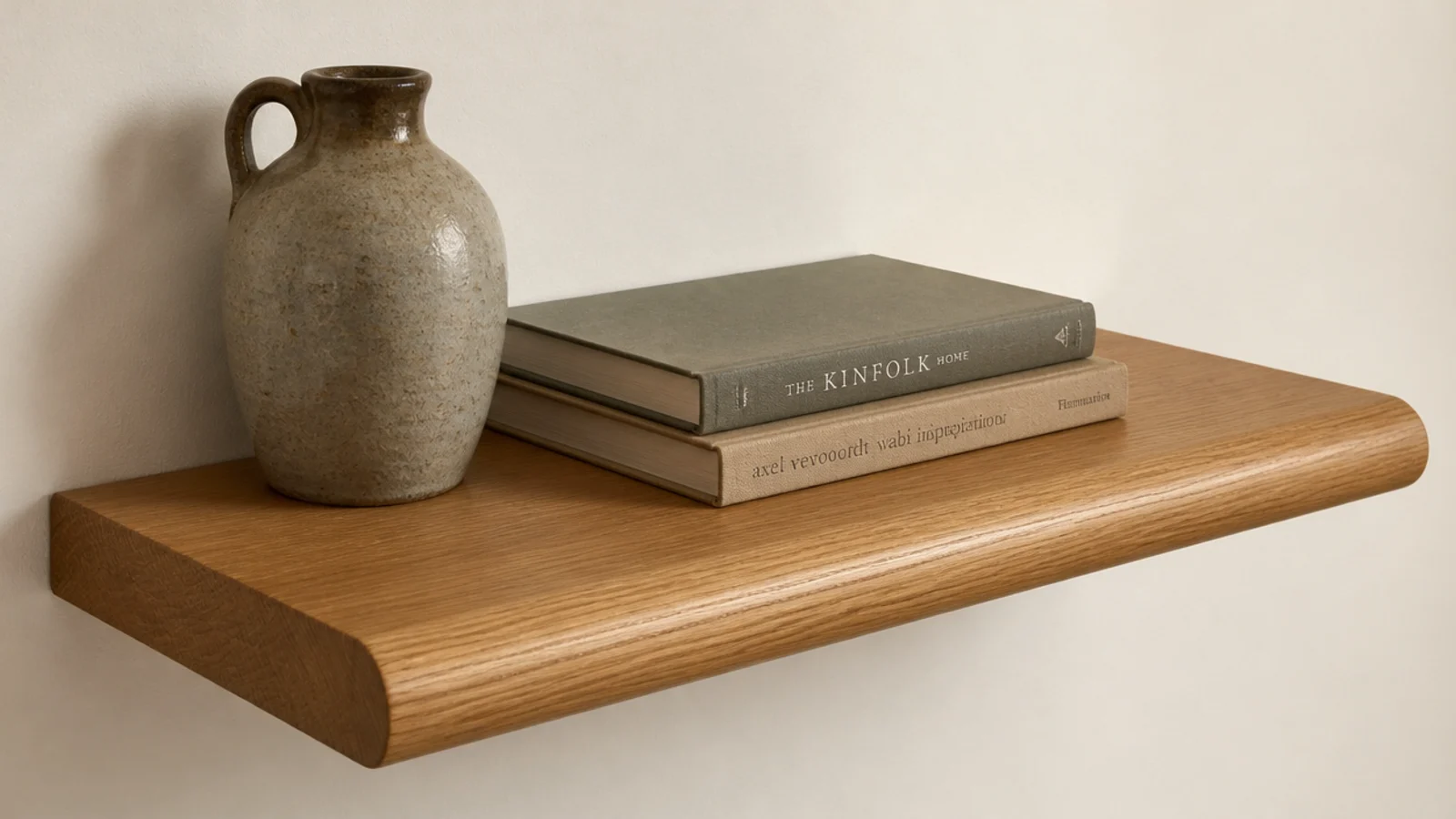
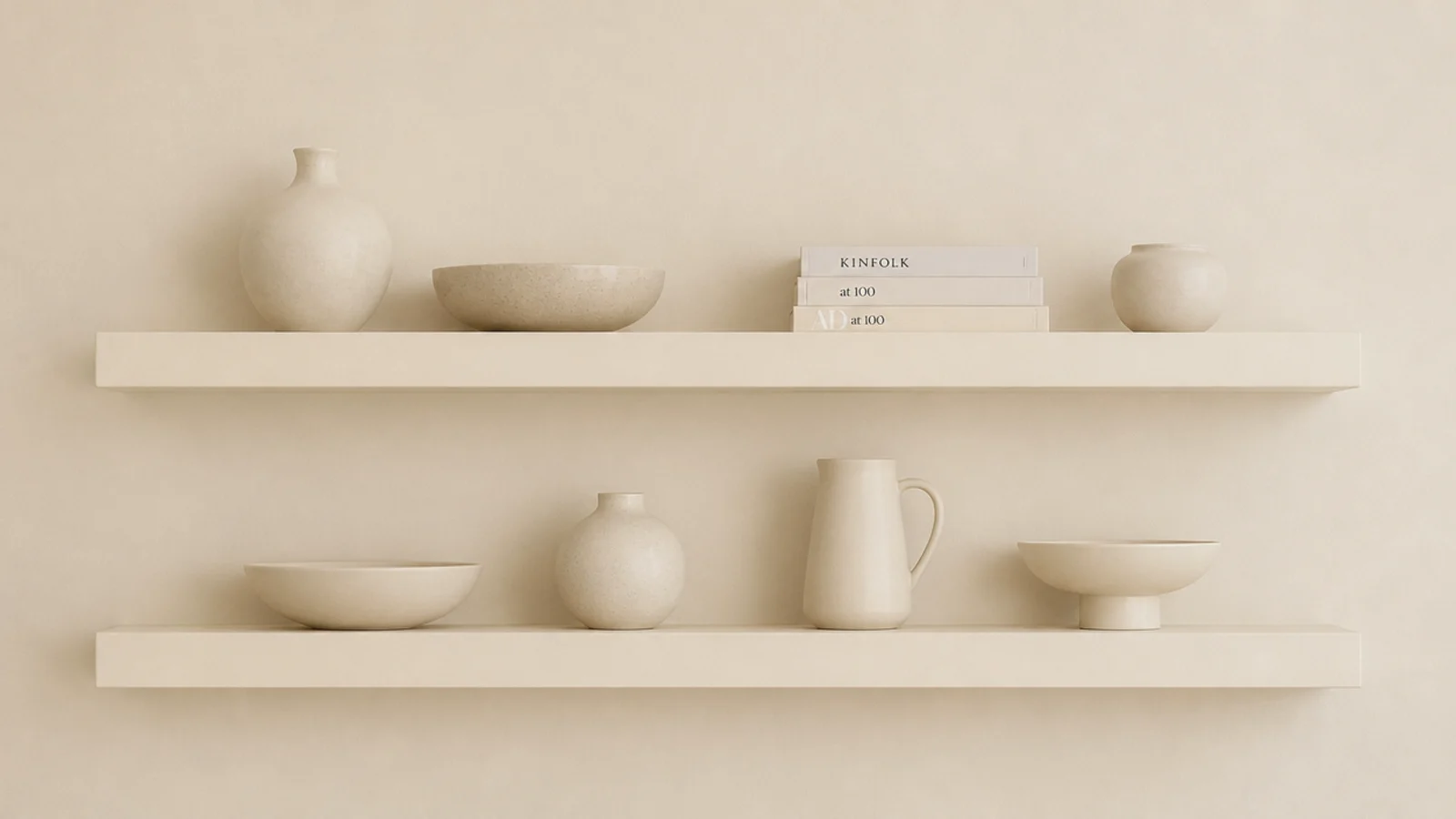
12. Paint the shelves the exact wall color
A shelf painted the wall color reads as architecture; a contrasting shelf reads as furniture stuck to the wall. In a small room, matched paint is the difference between built-in and added.
Prime the cut edges of any engineered board first or they drink paint and stay rough. Two thin coats, sanded lightly between.
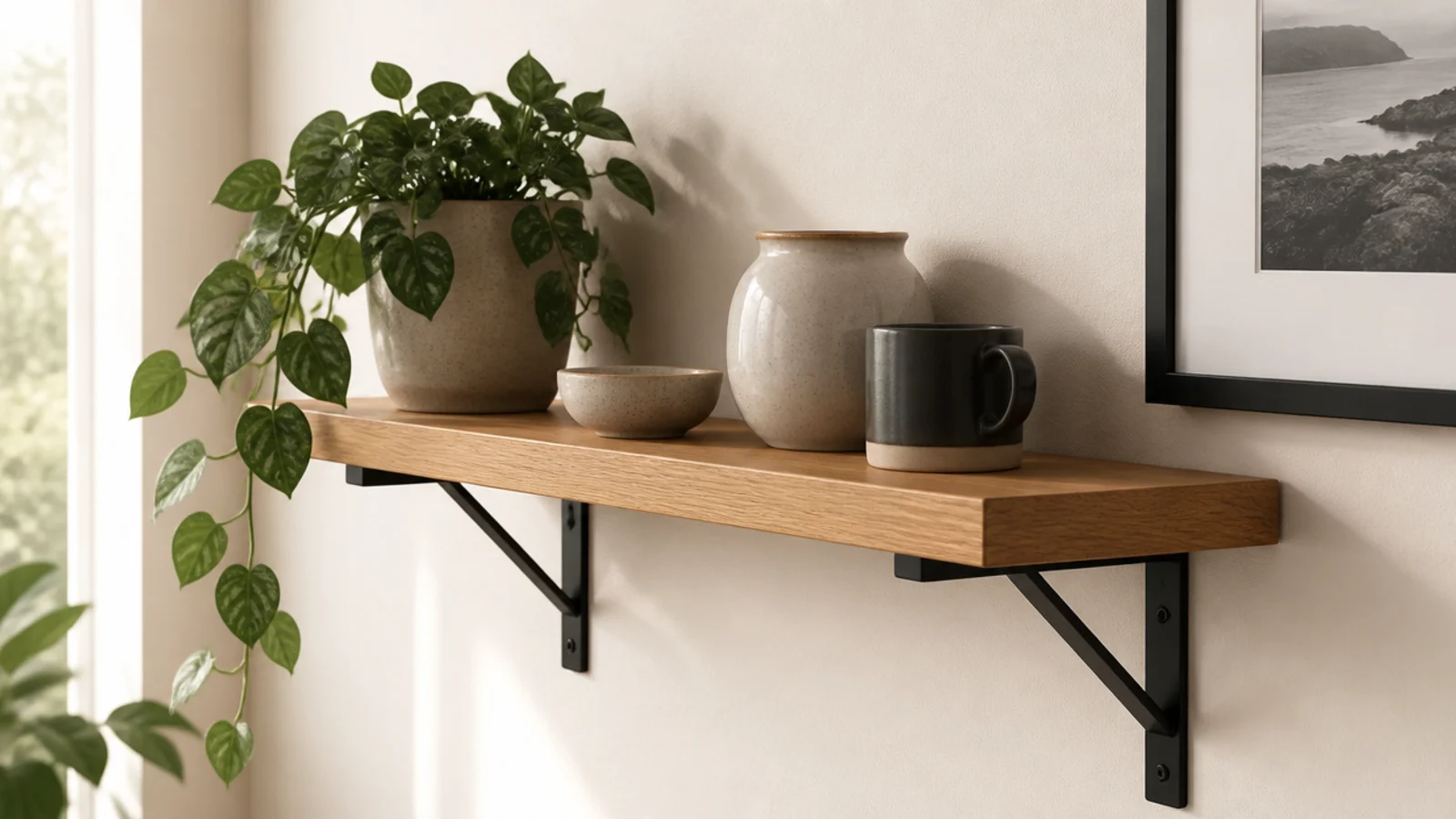
13. Leave black brackets visible on purpose
If you cannot hide the hardware, commit to it. Slim matte black brackets under a warm oak board look intentional, especially if something else in the room is black.
Choose the smallest bracket rated for the load — usually 30 pounds a pair — rather than a big decorative one. Understated hardware reads as design; oversized hardware reads as hardware.
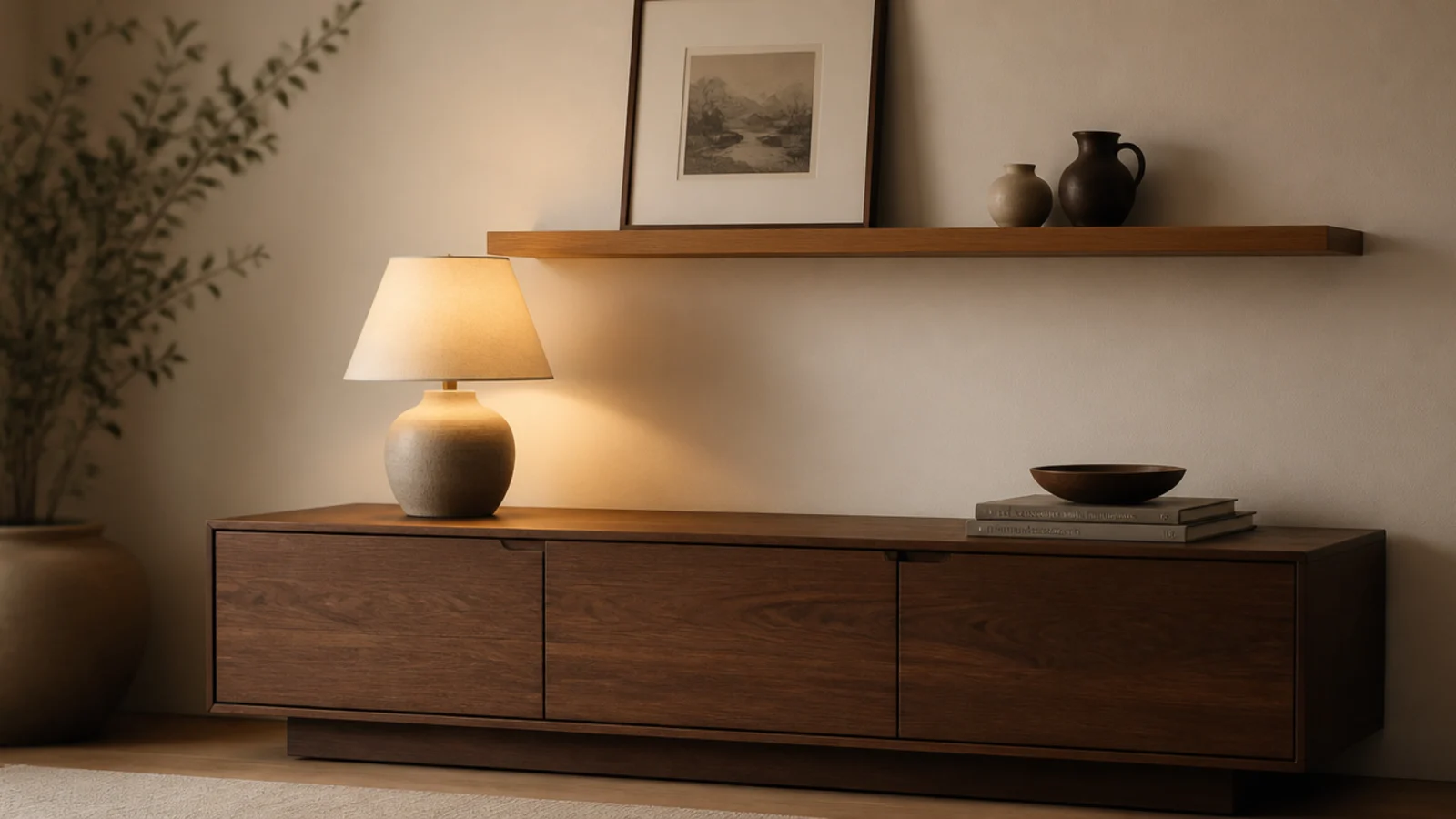
14. A shelf above a low sideboard
Twenty inches above a sideboard top leaves room for a table lamp underneath while keeping the shelf inside easy reach.
Match the shelf length to the sideboard width rather than the wall width. Two objects that relate to each other read as a vignette; two objects at different widths read as a mistake.
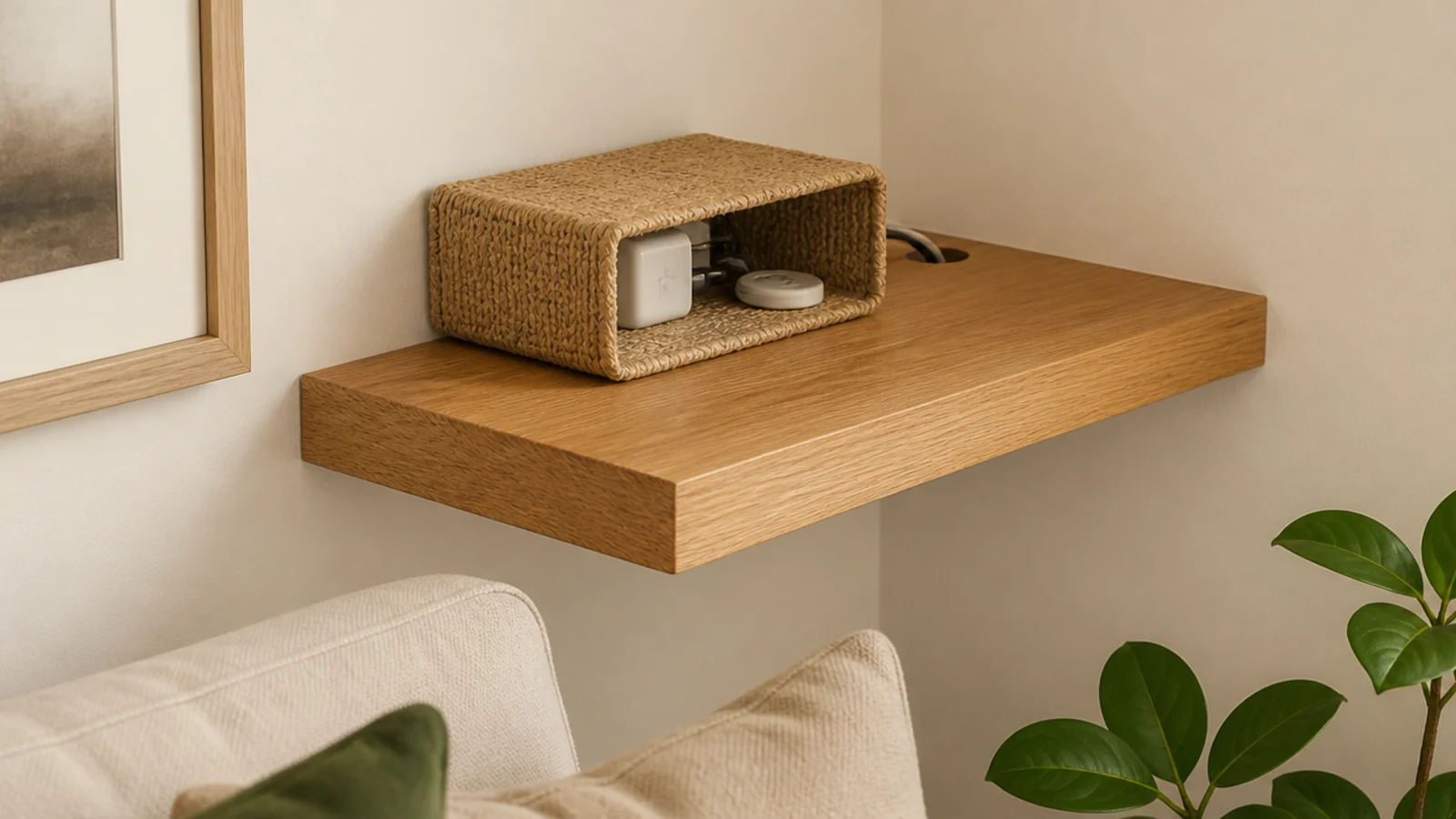
15. A ventilated shelf for the router
Routers run hot and look terrible, and hiding one in a closed cabinet halves the signal. A high shelf with an open-sided basket solves both.
Drill a 1-inch cable pass-through near the back edge so the cable drops straight down the wall. Mount it at 68 inches or above, where nobody looks.
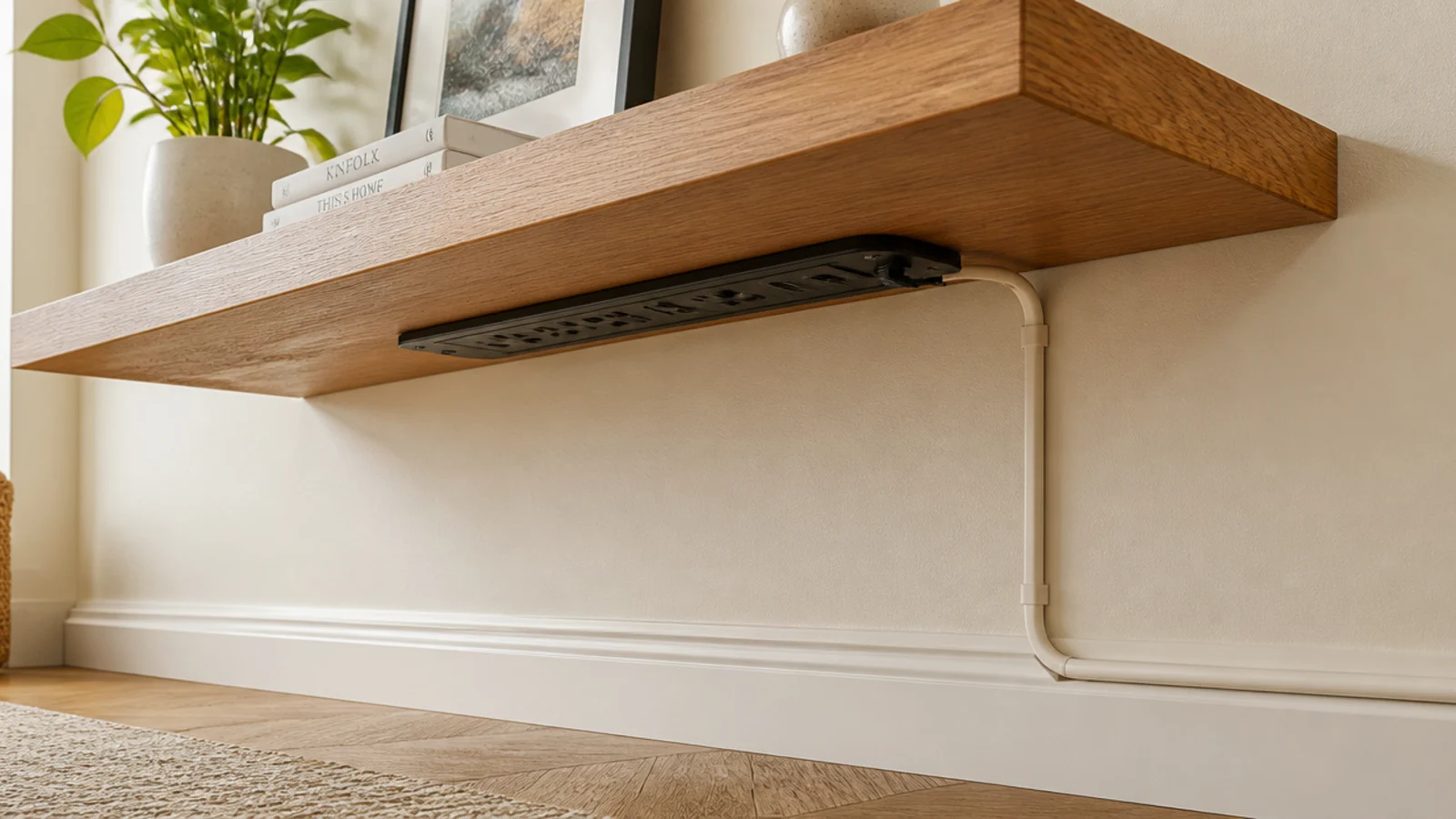
16. A shelf that hides the power strip
Strap a slim power strip flat to the underside of a shelf with two cable clips and every cord in that corner disappears at once.
Use short screws — three-quarters of an inch — or they come through the top face. This one costs $6 and makes a bigger visual difference than anything you can put on top.
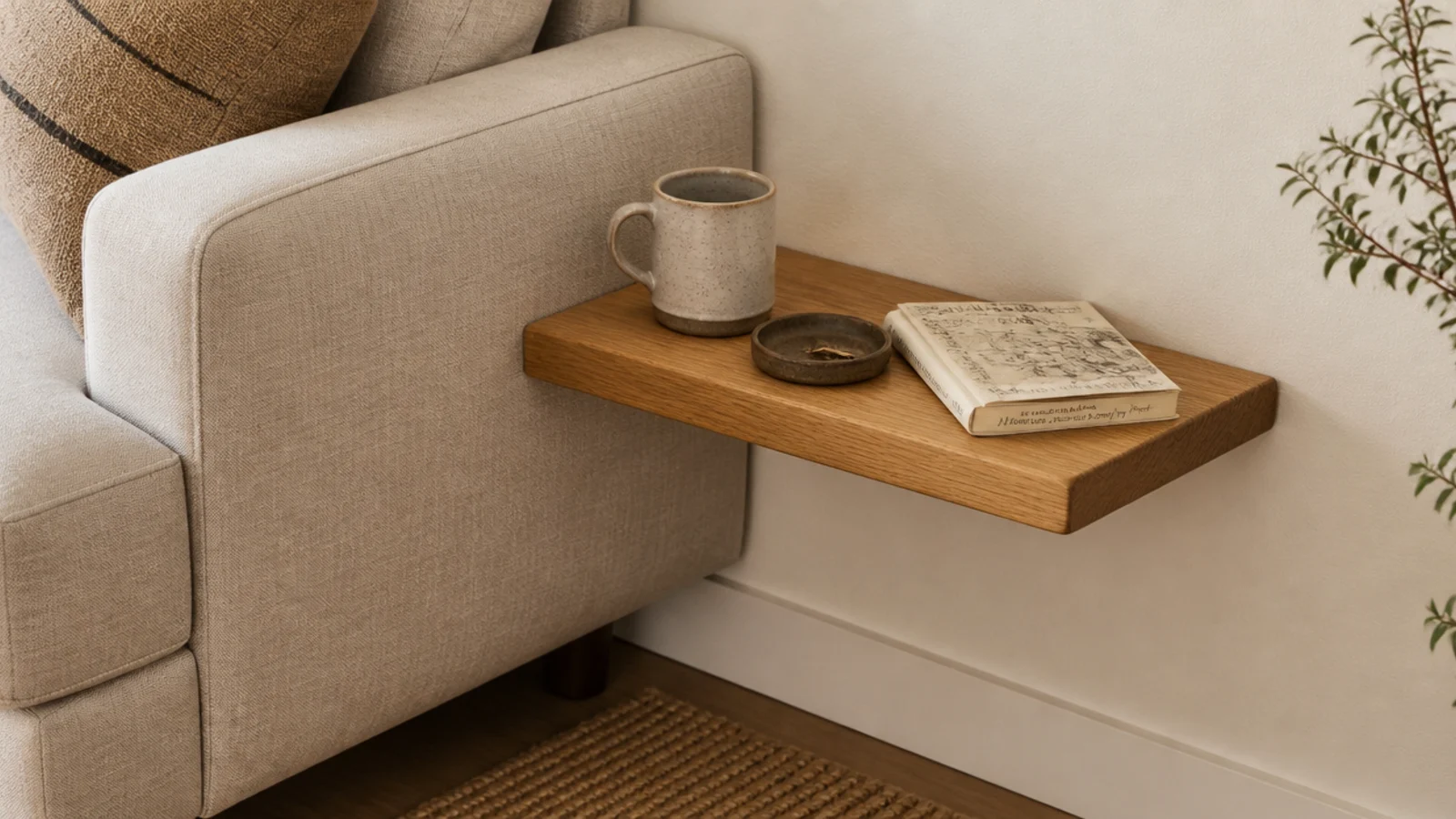
17. A landing shelf beside the sofa arm
A tiny shelf at armrest height, roughly 26 inches, catches the mug, the remote and the book that otherwise live on the floor.
Twelve inches long and six deep is enough. In a room too small for a side table, this is the single most useful shelf in the house.
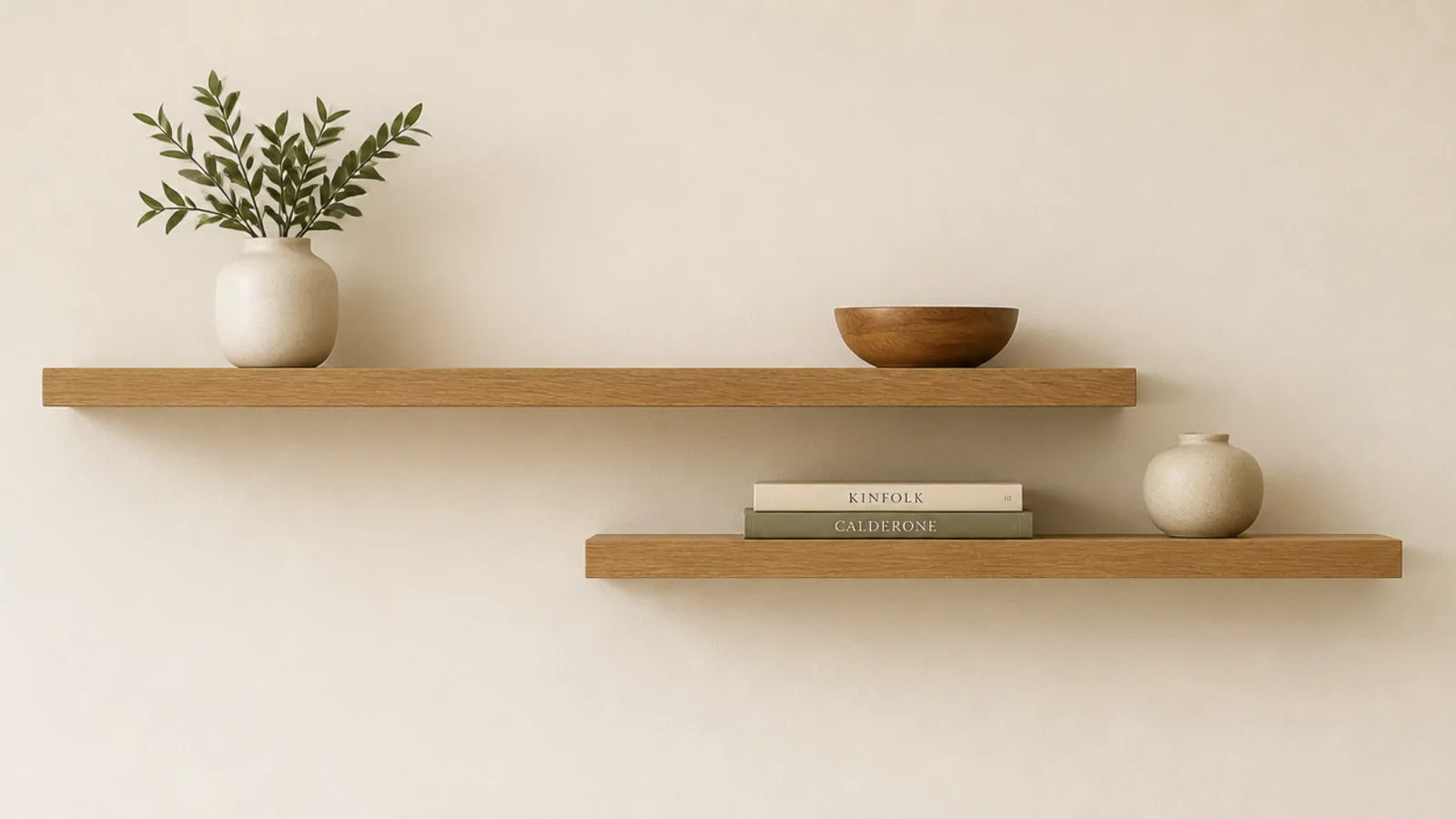
18. Overlap two shelf lengths for asymmetry
Two matching shelves stacked dead in line look like a shop fitting. Use one long and one short at different heights, overlapping by about a foot at one end.
The overlap is what ties them together visually. It costs nothing, needs no extra hardware, and it is the difference most people notice but cannot name.
19. Shelves that step down toward the window
Three short shelves descending in a stepped line toward a window pull your eye across the room and toward the light, which makes a small space feel deeper.
Keep each shelf to 16 inches and put one object on each. The pattern is the point, and loading them up destroys it immediately.
20. The dead strip beside a chimney breast
The narrow band of wall between a chimney breast and the corner is free real estate in almost every older living room.
Measure it before you shop — it is usually 10 to 16 inches wide, which is offcut territory and often free from the scrap bin. Two short shelves there finish a wall that otherwise looks unresolved.
21. Shelves at picture-rail height in a period room
If the room has a picture rail, set the shelf at exactly that height rather than fighting it. The rail is already telling your eye where the horizontal line lives.
Fix through the plaster into framing, not into the rail itself. Old rails are pinned into lath and will not hold a loaded shelf.
22. A French cleat shelf for a rental
A French cleat is two mitred battens: one screwed to the wall, one on the shelf. The shelf lifts straight off, and the wall carries one tidy line of holes instead of eight.
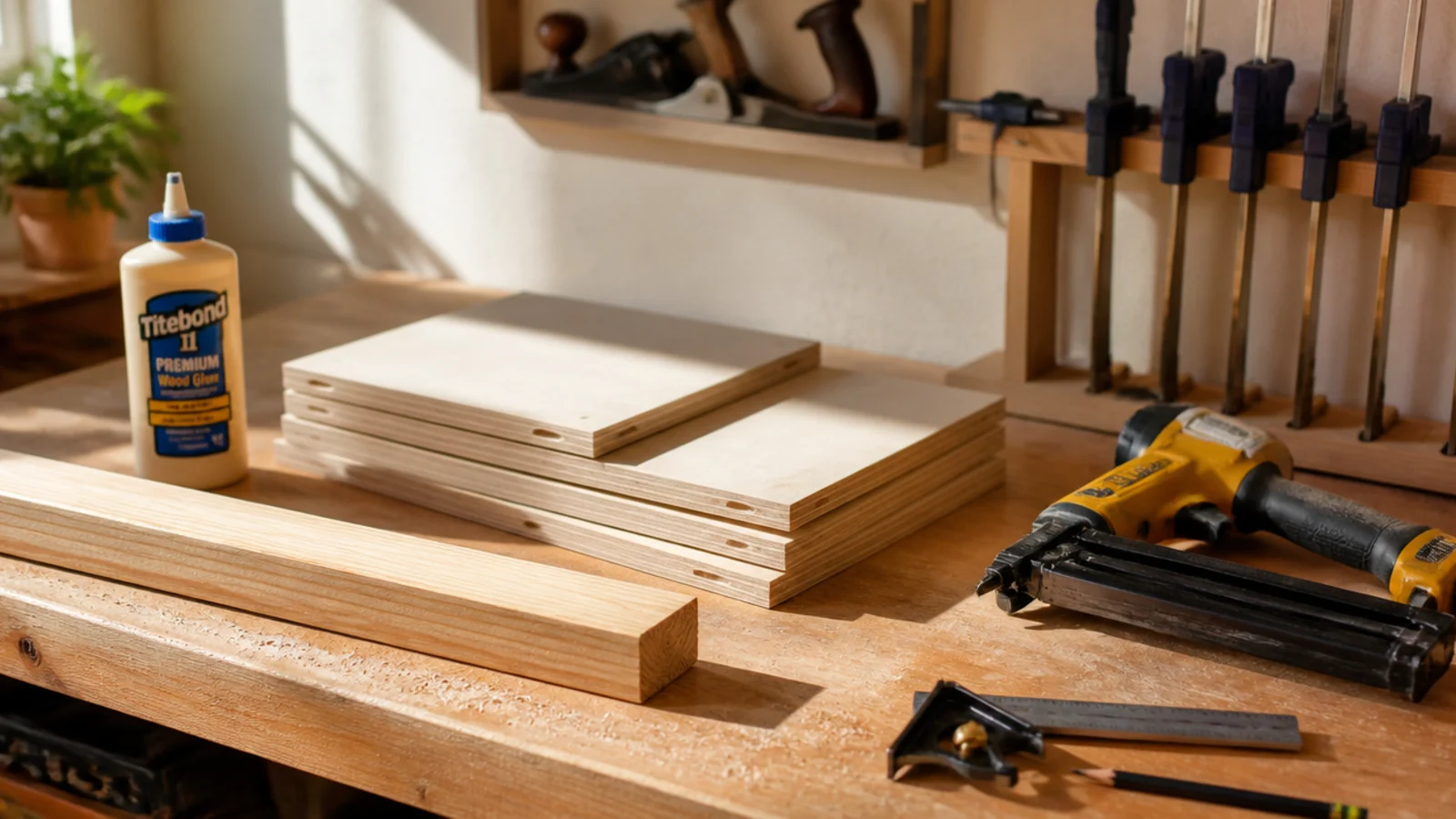
It also lets you swap shelf boards seasonally on the same cleat. Total cost is a $6 offcut, and there is a full walkthrough in the floating shelf build.
23. A shelf under a wall-mounted mirror
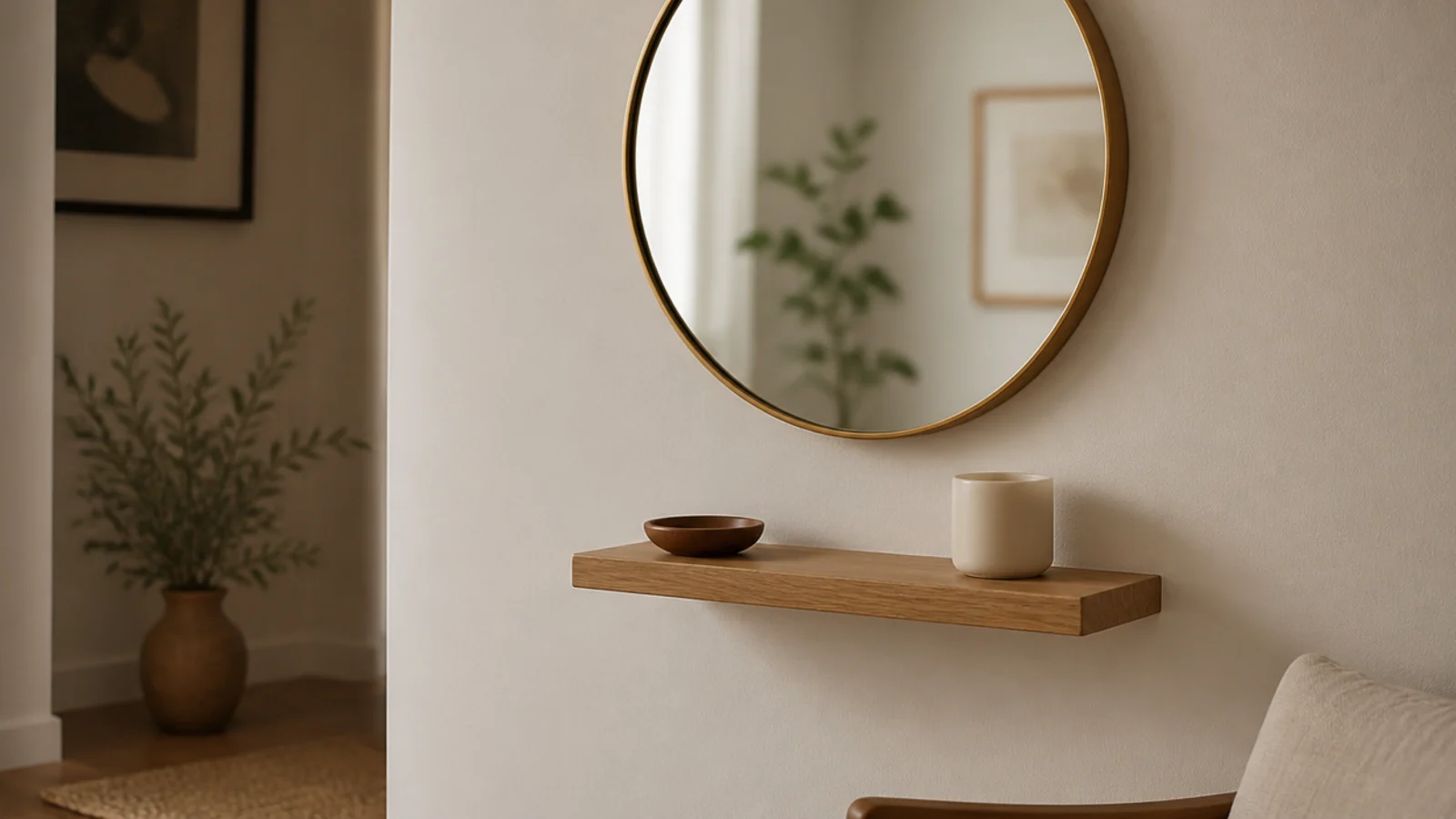
A round mirror over a short shelf makes a self-contained vignette on a wall with nothing else on it — useful in a boxy rental living room.
Leave six inches between the mirror frame and the shelf top. Closer than that and the two objects read as one crowded shape rather than a considered pair.
24. One long board cut into three shelves
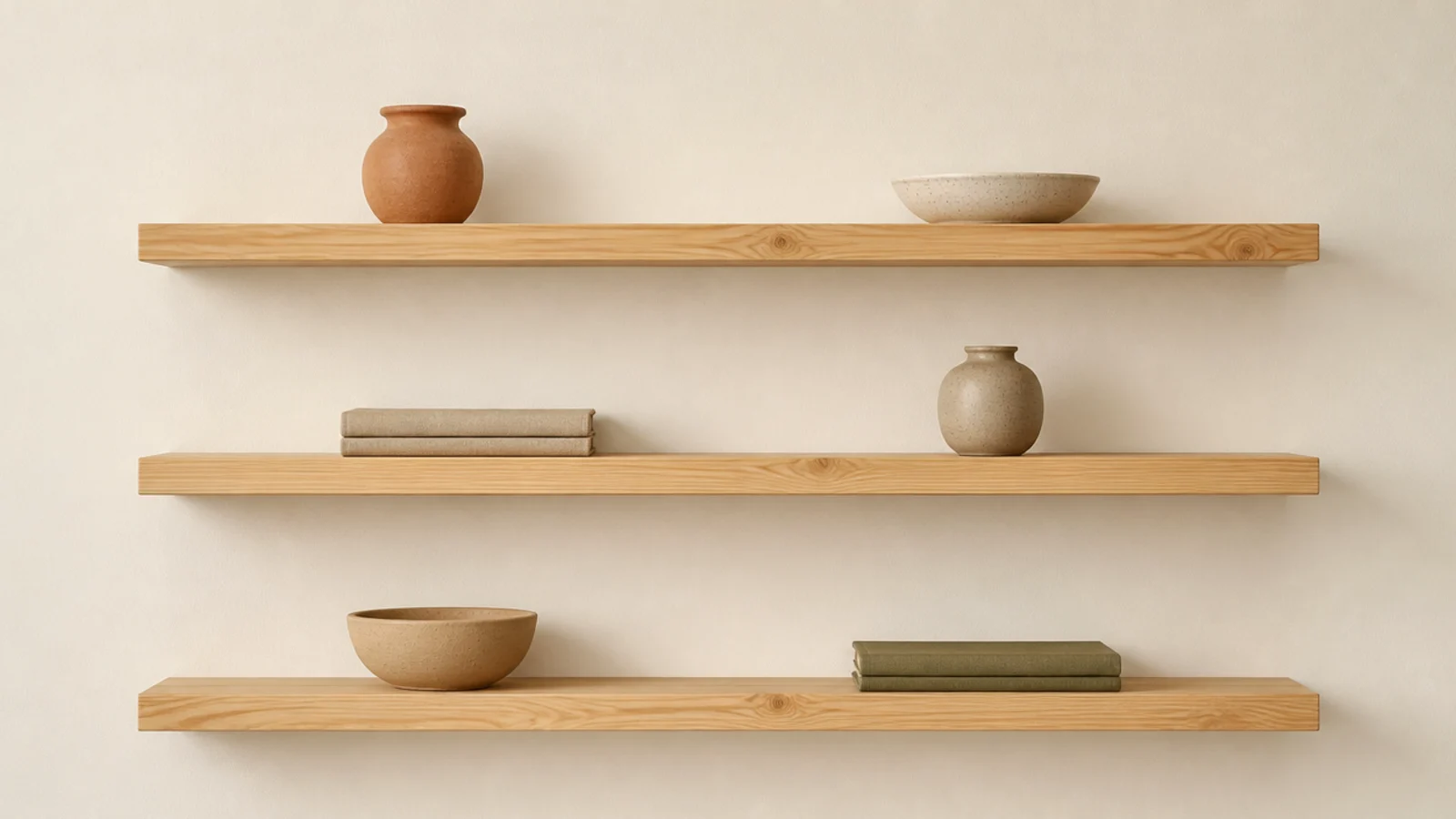
An eight-foot pine board costs about $22 and gives you three 30-inch shelves with a little waste. Most home centers will cut it for free if you bring measurements.
Sand the ends, round the front edges, and finish all faces including the underside so the boards do not cup. Three shelves, under $25 plus hardware.
25. A deep shelf that doubles as a desk
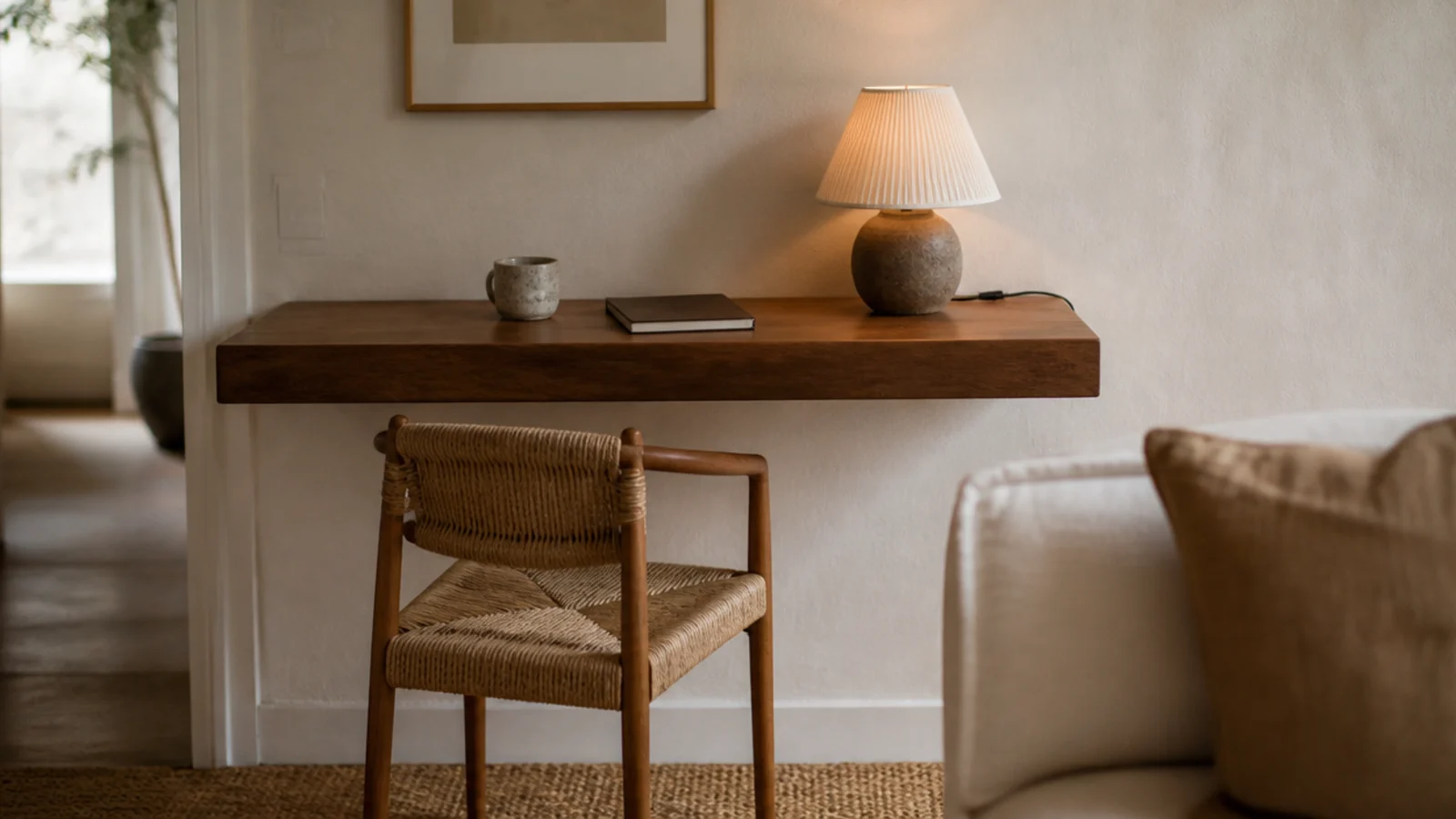
In a living room doing double duty as an office, a 20-inch-deep shelf at 29 inches high is a desk with no legs to work around.
This one needs every fixing in framing and a third support mid-span, because people lean on desks with their whole weight. Once it is up, floating shelf styling keeps it looking like furniture rather than an office.
Mistakes to Skip
- Hanging a shelf the full width of the wall above a sofa. It makes the wall look wider and the room narrower, and the shelf stops relating to the furniture.
- Loading a rental adhesive shelf with books. Fifteen pounds per pair of strips is the honest ceiling, and a failure takes a patch of drywall paper with it.
- Choosing shelf depth by what the store sells rather than by walkway width. In a small living room a 12-inch shelf gets clipped daily and eventually loosens.
Frequently asked questions
How high should a floating shelf be above a sofa?
Ten to twelve inches above the back cushions. Lower than that and people knock it with their heads leaning back; higher and the shelf floats away from the sofa and stops reading as one arrangement. Size the shelf to roughly two thirds of the sofa width so it looks related to the furniture underneath it.
Are floating shelves strong enough for books?
Yes, if the fixings reach framing. A concealed rod bracket into a stud carries 30 to 40 pounds on a 24-inch shelf, which is a full row of hardbacks. Toggle bolts in half-inch drywall carry 25 to 35 pounds each. The plastic plugs supplied in most kits carry about 10 pounds and will not hold a book row.
Do floating shelves make a small living room look bigger?
They do, because they move storage off the floor, and floor area is what your eye reads as room size. A shelf holding what used to live in a basket on the ground genuinely opens a small room up. Paint the shelves the same color as the wall and they recede further still.
What is the cheapest way to get floating shelves?
A plain pine board on two L brackets painted the wall color, around $18 to $30 a shelf. Painted-out brackets read as floating from every normal viewing angle because nobody crouches to inspect the underside. A true concealed rod system costs about three times as much for a difference you only see lying on the floor.
How long can a floating shelf be without sagging?
Three-quarter-inch stock crosses 24 inches without visible deflection, and half-inch stock starts to bow at about 18. For a longer run, either add a fixing every 24 inches or build up a hollow box, which gives a 1.5 to 2-inch front edge and stiffens the whole span for half the cost of solid timber.
Pick one wall, mark the studs, and let the framing choose the shelf length — that decision does more for the finished result than any bracket upgrade. For placement in every other room, fifteen floating shelf ideas covers the whole house, and if the wall you are staring at is really an inside corner, corner shelves for small spaces handles that geometry properly. Save the pin so the spans and ratings are with you in the aisle.
Want more like this? Browse all 15 floating shelves guides — they all use the same measurements and budget tiers.
Pin it for later
Save this to your Floating Shelves board
Pin it now so it is waiting for you when the tape measure comes out — and so the next person hunting for this idea can find it too.
Save this pinKeep going
More ideas worth saving while you have the tape measure out.