Corner Shelf Ideas · Listicle
25 Budget-Friendly Corner Shelf Ideas for Small Spaces

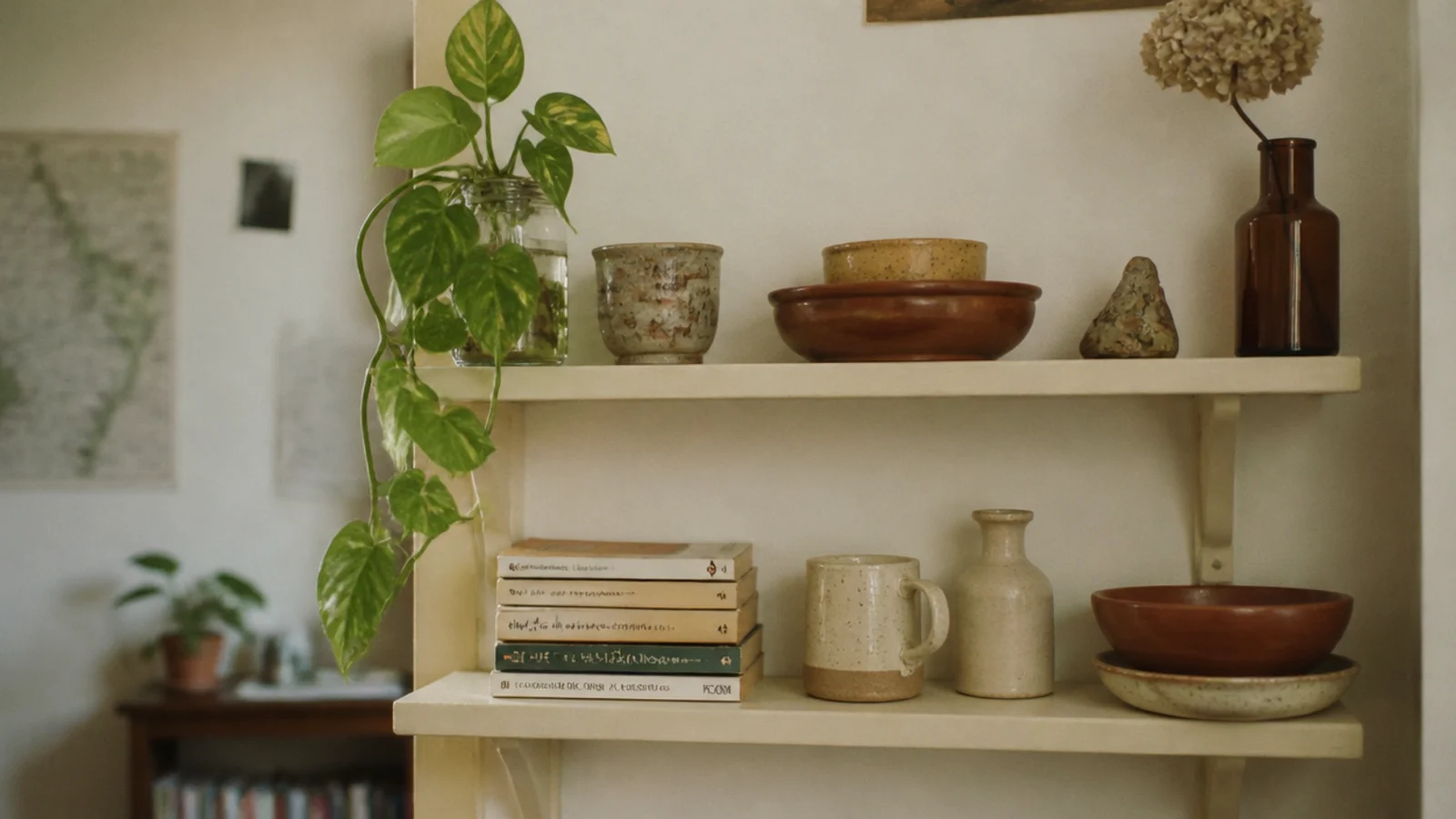
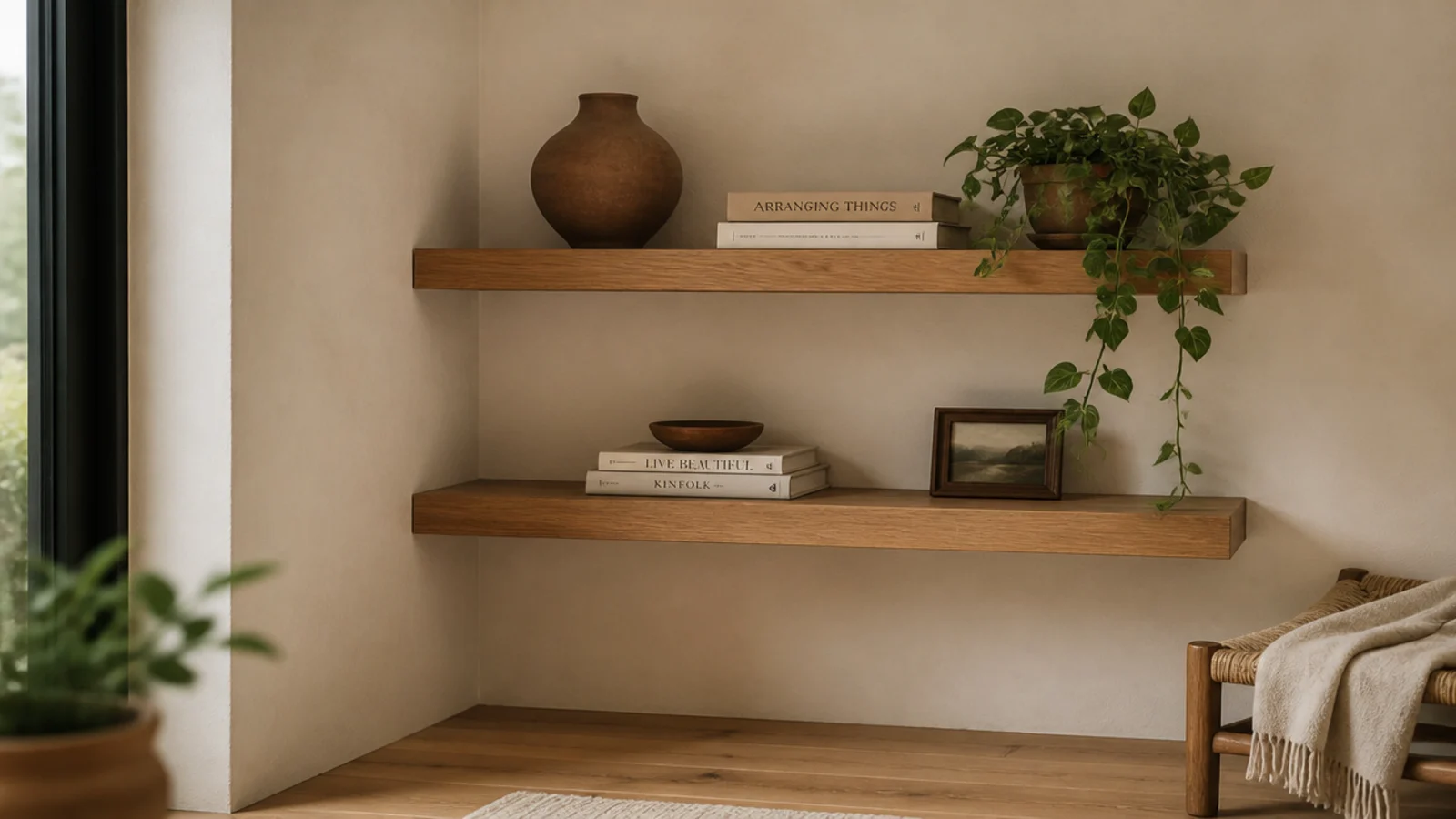
Corner shelf decor is where a small space either gains character or loses another three square feet to clutter. The difference is almost never money. I have styled corners with $200 of new pottery that looked worse than corners built entirely from thrift finds and things already in the house. Here are 25 ideas that stay under $40 each — most under $10 — and are chosen specifically for rooms where every inch shows.
In this guide27 sections — tap to openHide
- 1.How to plan corner shelf decor on a small budget
- 2.Thrift stoneware in one color family
- 3.Use books as risers under objects
- 4.One dried stem in a narrow bottle
- 5.Paint the shelf the exact wall color
- 6.Peel-and-stick paper behind the shelves
- 7.A clay saucer as a catch-all tray
- 8.Propagate a plant in a glass jar
- 9.Turn paperback spines to the wall
- 10.Three thrifted candle holders at three heights
- 11.One basket for the things that are not pretty
- 12.Repeat one brass object three times
- 13.Lean postcards instead of framing art
- 14.Add a small mirror to bounce light
- 15.A wooden bowl of whatever is in season
- 16.Rolled linen napkins in a small crock
- 17.Repot plastic nursery pots into terracotta
- 18.Use a magazine stack as a plinth
- 19.Decant pantry staples into plain glass jars
- 20.One sculptural branch from outside
- 21.A tile sample as a coaster tray
- 22.Pressed leaves in a clip frame
- 23.A vintage tin as a planter
- 24.A chipped mug as a brush or pen holder
- 25.Paint only the front edge of the shelf
- 26.A battery puck light under the top shelf
- 27.Mistakes to Skip
How to plan corner shelf decor on a small budget
Before buying anything, do one pass through the whole house and gather every candidate object into a single pile on the floor. Vases, bowls, books, small frames, boxes, jars, plants. Most people own plenty of good pieces — the problem is that they are scattered across five rooms, so none of them read as deliberate.
From that pile, pull everything in one color family. In a warm neutral room that usually means clay, sand, cream and wood. Set the rest aside without judging it; you are not throwing anything out, you are just editing this corner.
Then apply the small-space rule that matters most: fewer, larger objects. Three medium pieces per shelf read calmer than eight small ones, even though they cover more surface. Small rooms punish visual noise far harder than they punish a big object.
Only now make a shopping list, and it will be short. Usually one trailing plant, one tray, and something with height. Budget tiers for everything below: $ under $10, $$ $10–$25, $$$ $25–$40. Almost nothing here needs the top tier.
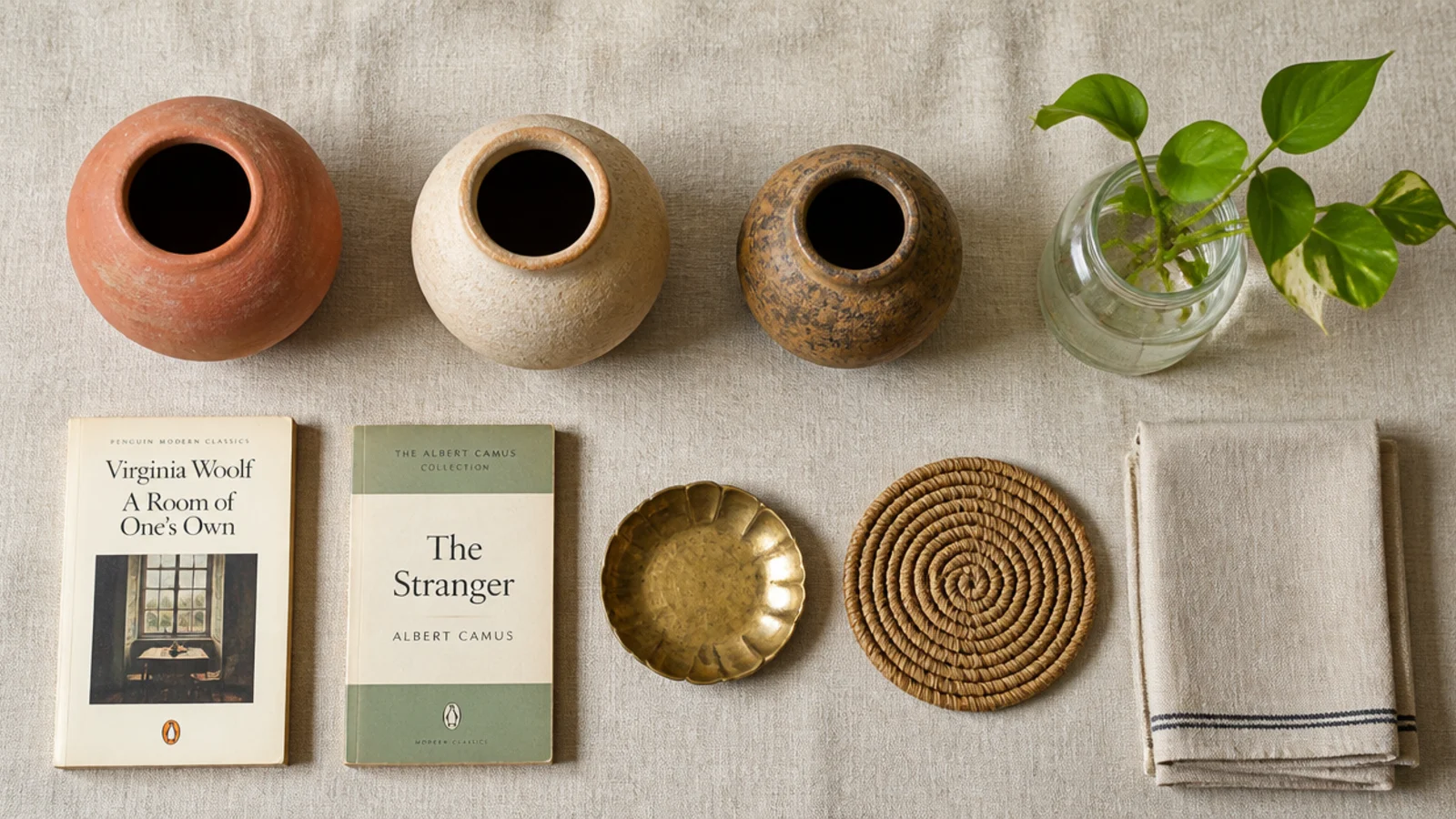
1. Thrift stoneware in one color family
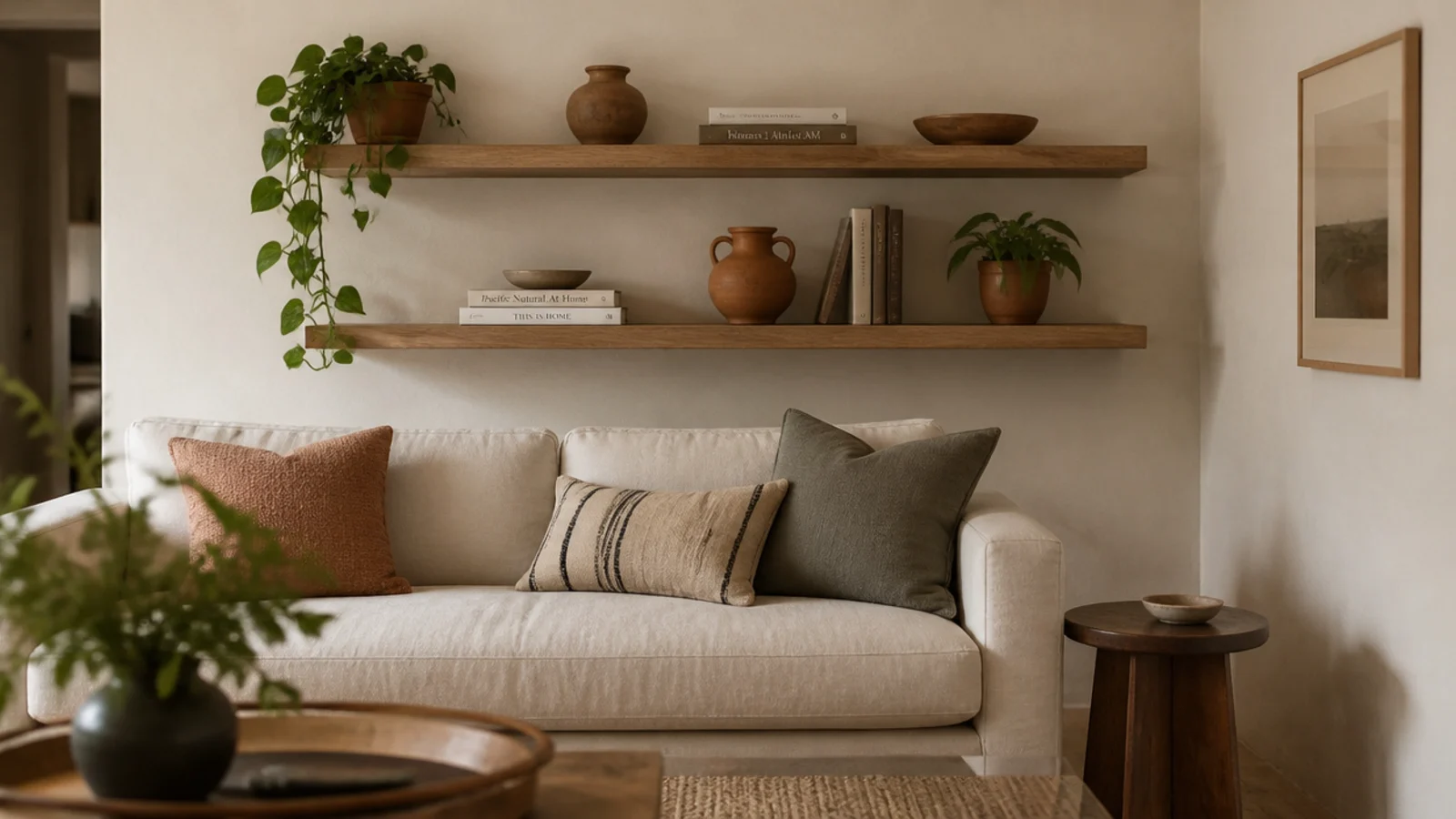
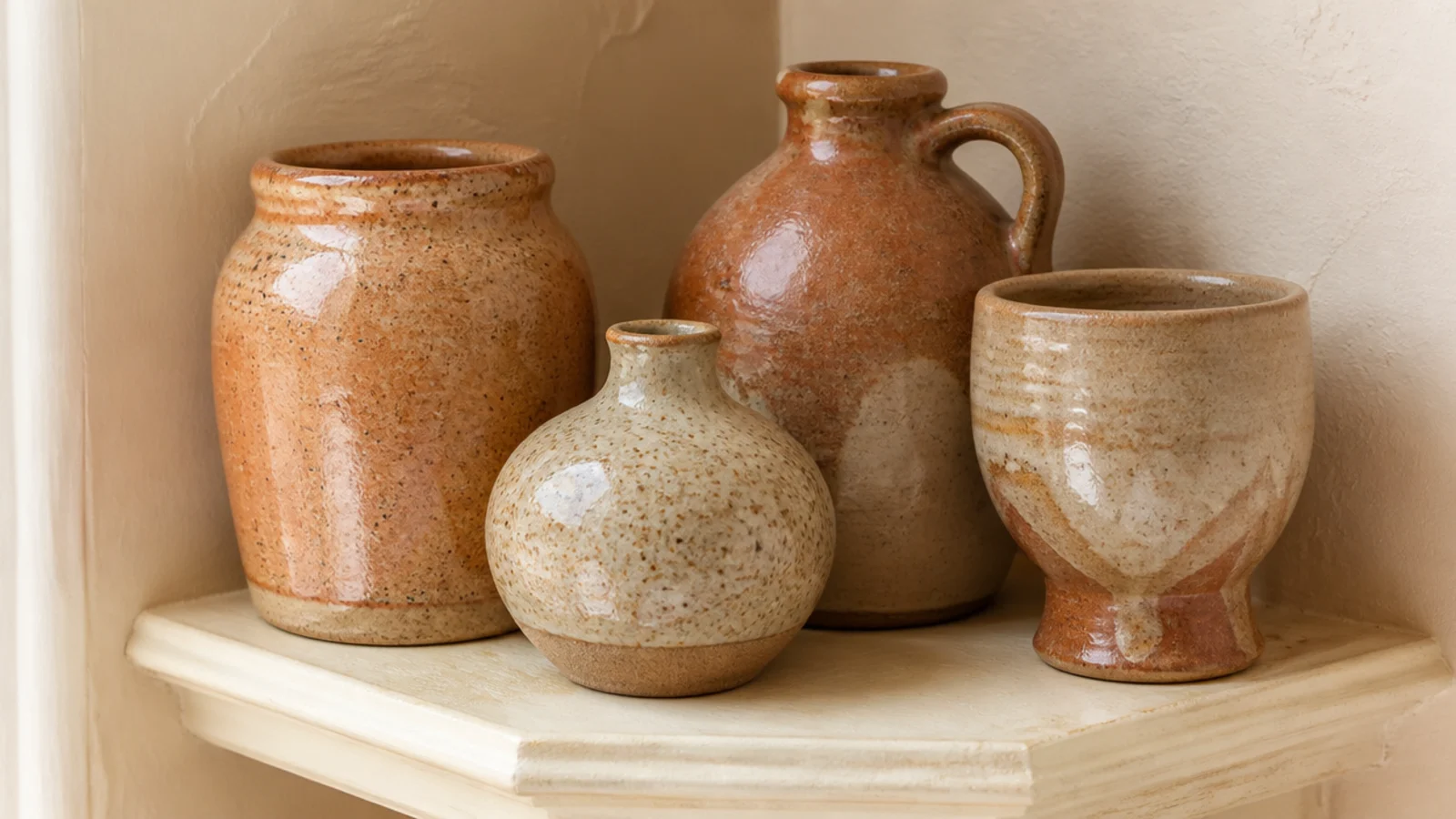
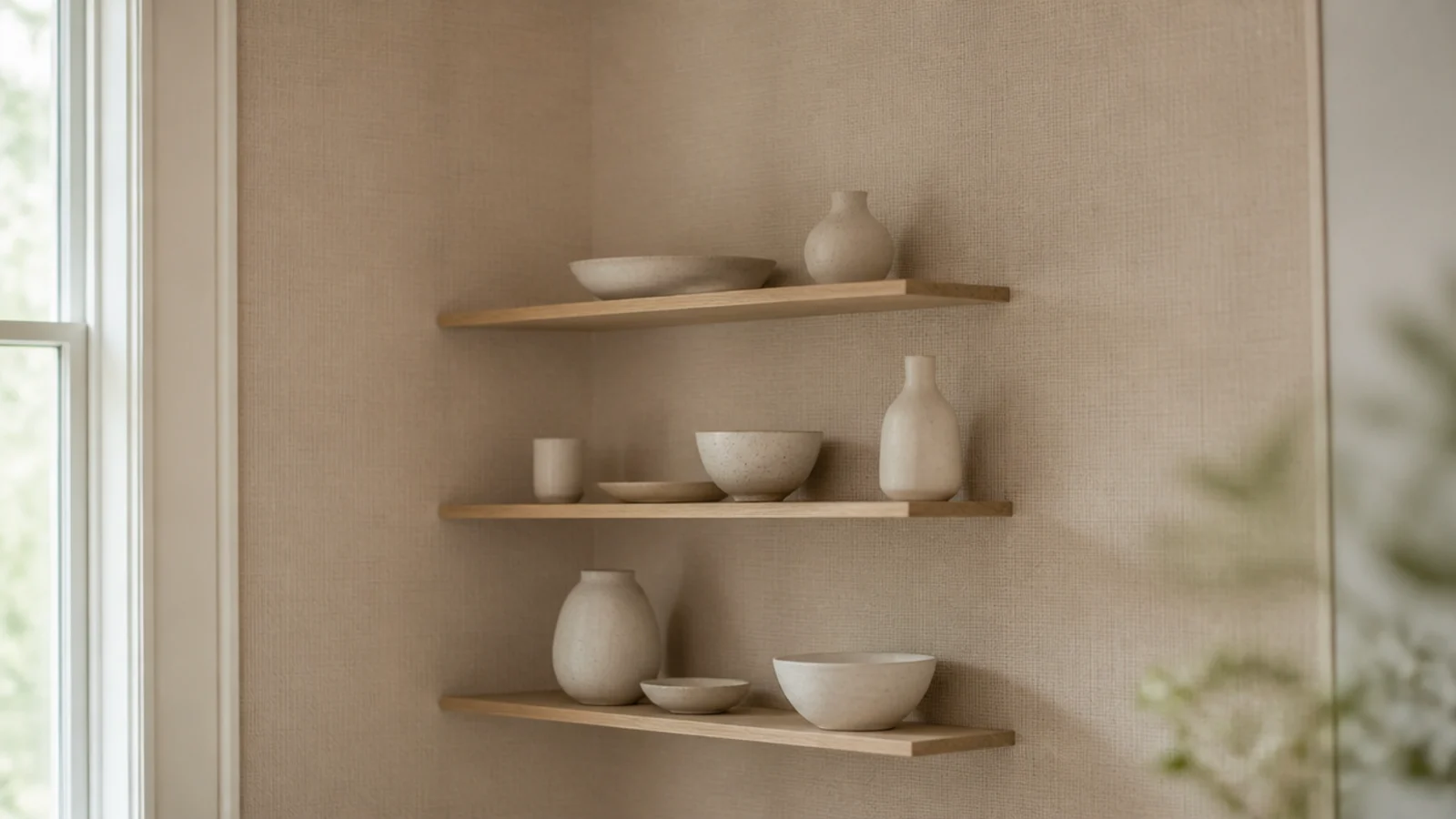
Buy mismatched shapes in matching tones. Four thrifted vessels in warm clay and sand glazes will read as a collection even though no two came from the same place, because your eye groups by color long before it groups by form.
Thrift stores price pottery by size, not style, so small good pieces run $2 to $5. Skip anything with a maker's mark you recognise — you are paying for the name, not the glaze. $
2. Use books as risers under objects
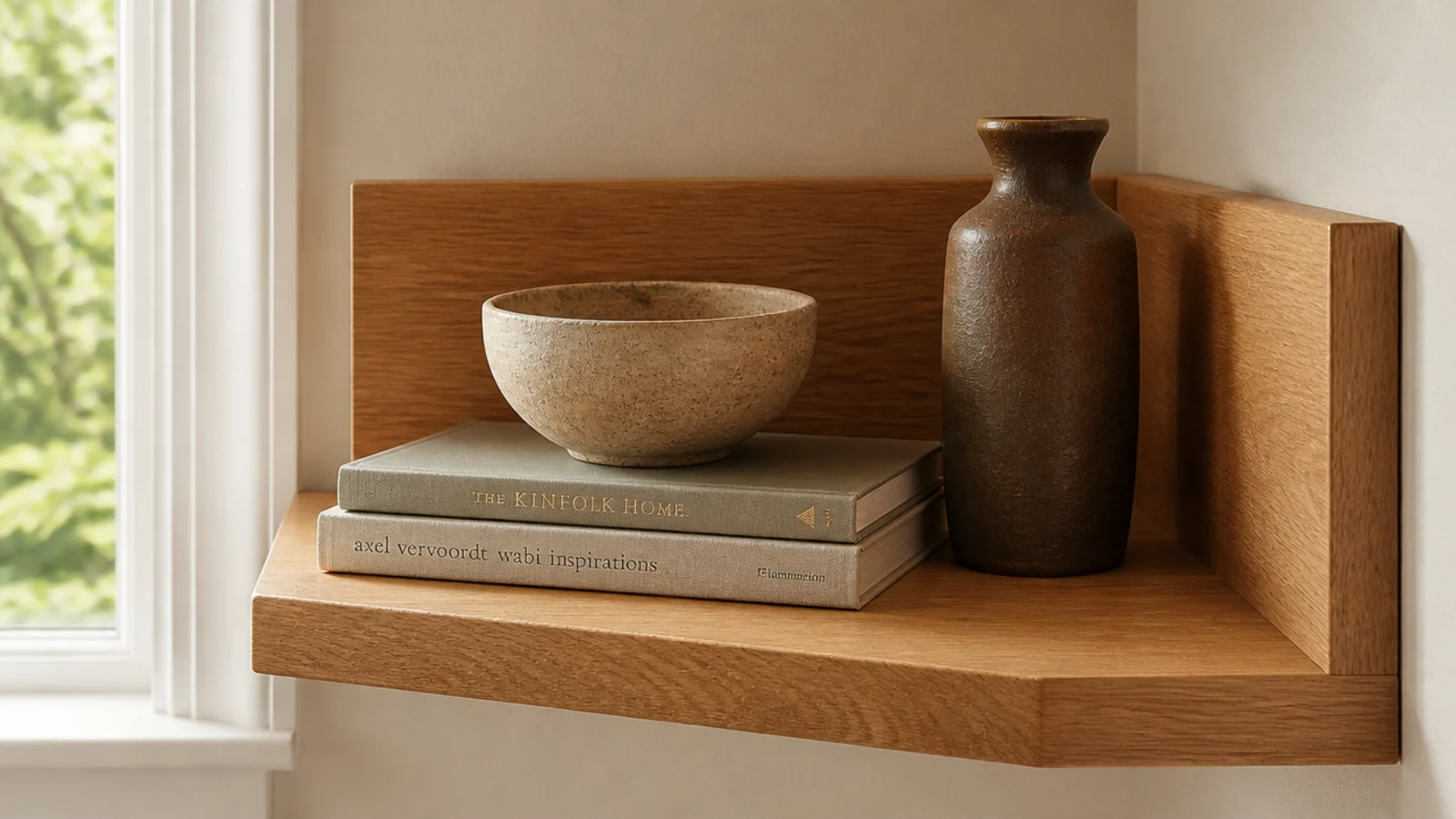
Height variation is the single biggest thing separating styled from stacked, and you already own the solution. Two hardbacks lying flat lift a small bowl by about two inches, which is enough to turn it into a focal point.
Use books whose covers work with your palette, or remove the dust jackets — the cloth binding underneath is almost always a better neutral. Free
3. One dried stem in a narrow bottle
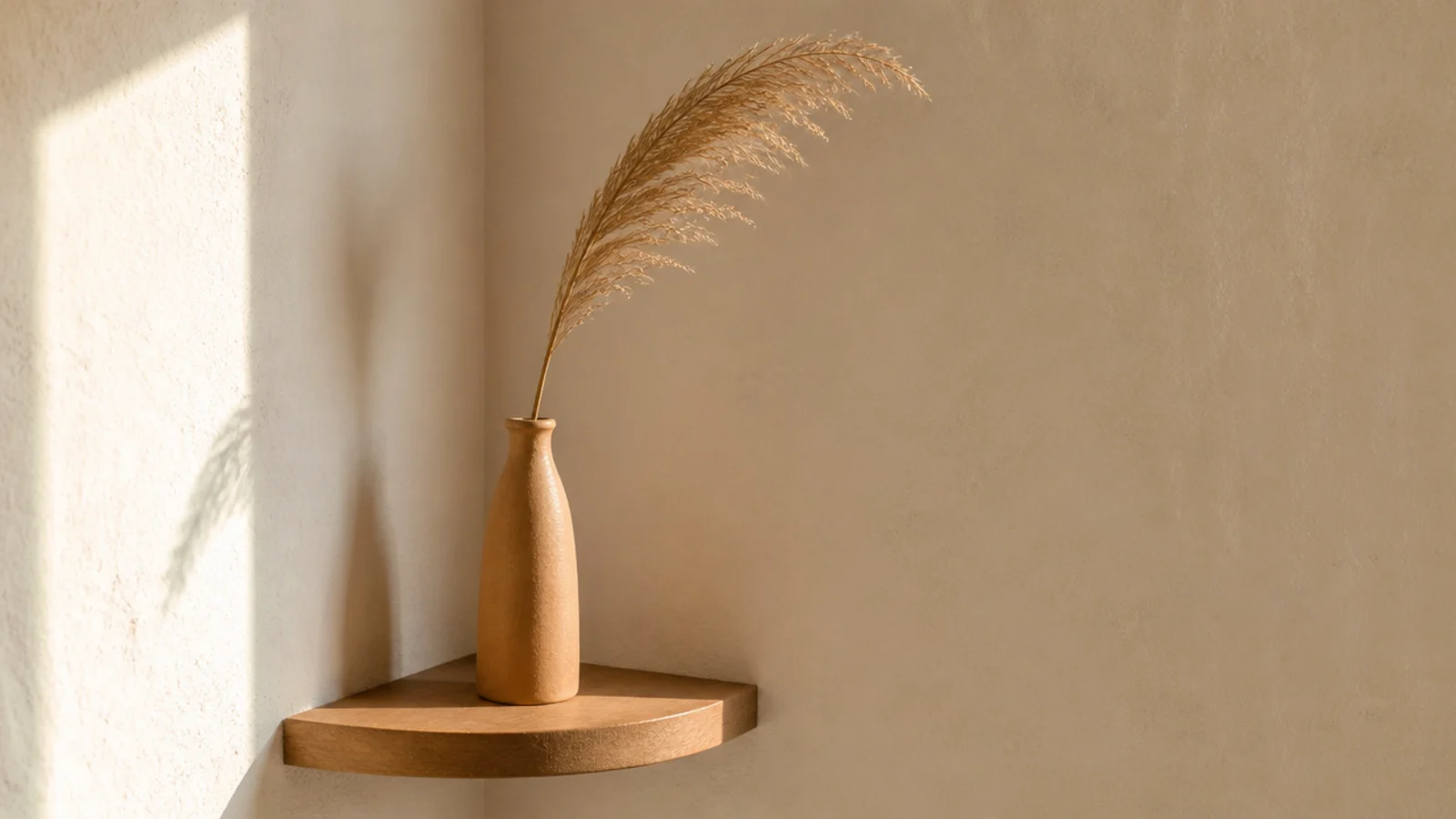
A single tall dried stem in a slim bottle does something a full bouquet cannot: it draws a line upward without adding bulk. In a small room that vertical line is doing real work.
Pampas, wheat or bunny tails cost $2 to $4 a stem at a craft store and last for years. One stem, one bottle, one shelf left otherwise empty. $
4. Paint the shelf the exact wall color
Free if you have leftover paint, and it changes how the whole corner reads. A shelf that matches the wall behaves like architecture; a shelf in a contrasting color behaves like furniture stuck to a wall.
Take a paint chip from the wall to be matched at any hardware store, or use a sample pot. In small rooms this is the highest-impact free change available. Free–$
5. Peel-and-stick paper behind the shelves
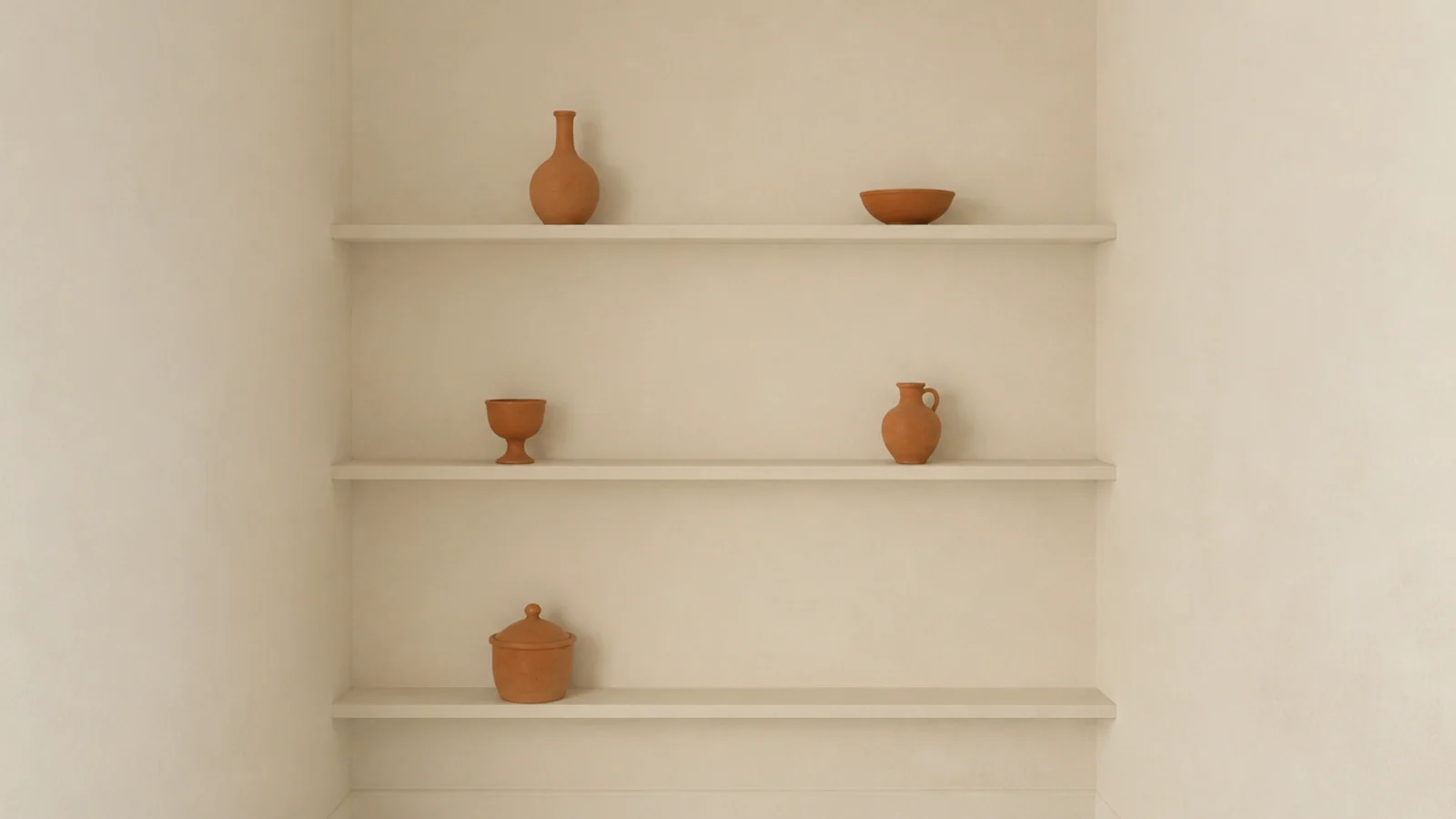
Covering just the two wall faces behind a corner shelf gives the display a backdrop and makes shallow shelves feel intentional rather than bare.
Choose texture, not pattern — a warm sand grasscloth look adds depth without competing with the objects. A single roll covers a corner and comes off cleanly at move-out, which matters if you rent. $$
6. A clay saucer as a catch-all tray
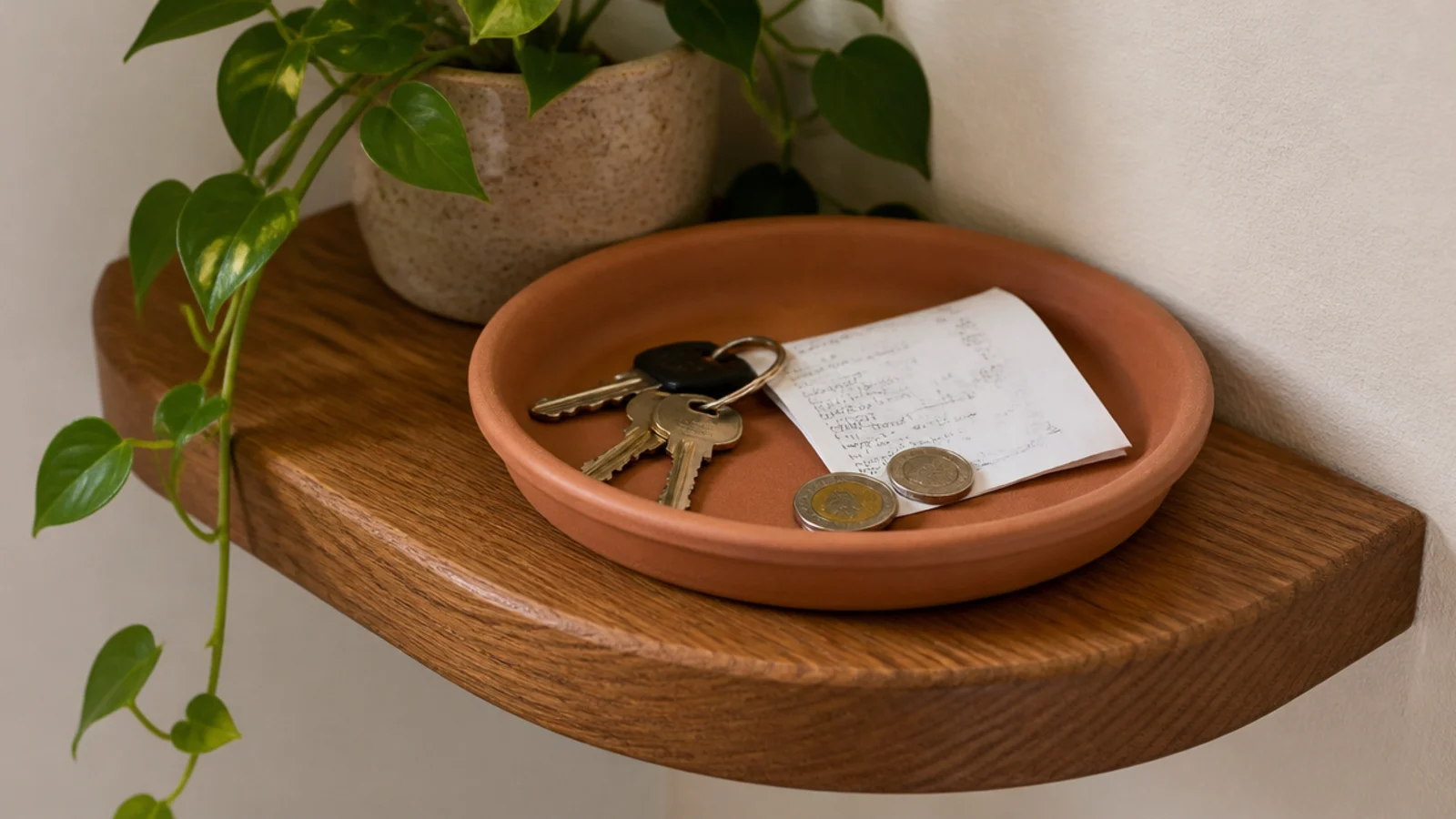
The terracotta saucers sold under plant pots are the best cheap trays in any store. Unglazed clay, gently curved edge, warm color, and about $6 for a wide one.
Use it to corral keys, coins and small objects so they read as one thing instead of five. Any shelf near a door needs one, or small items slide off and scatter. $
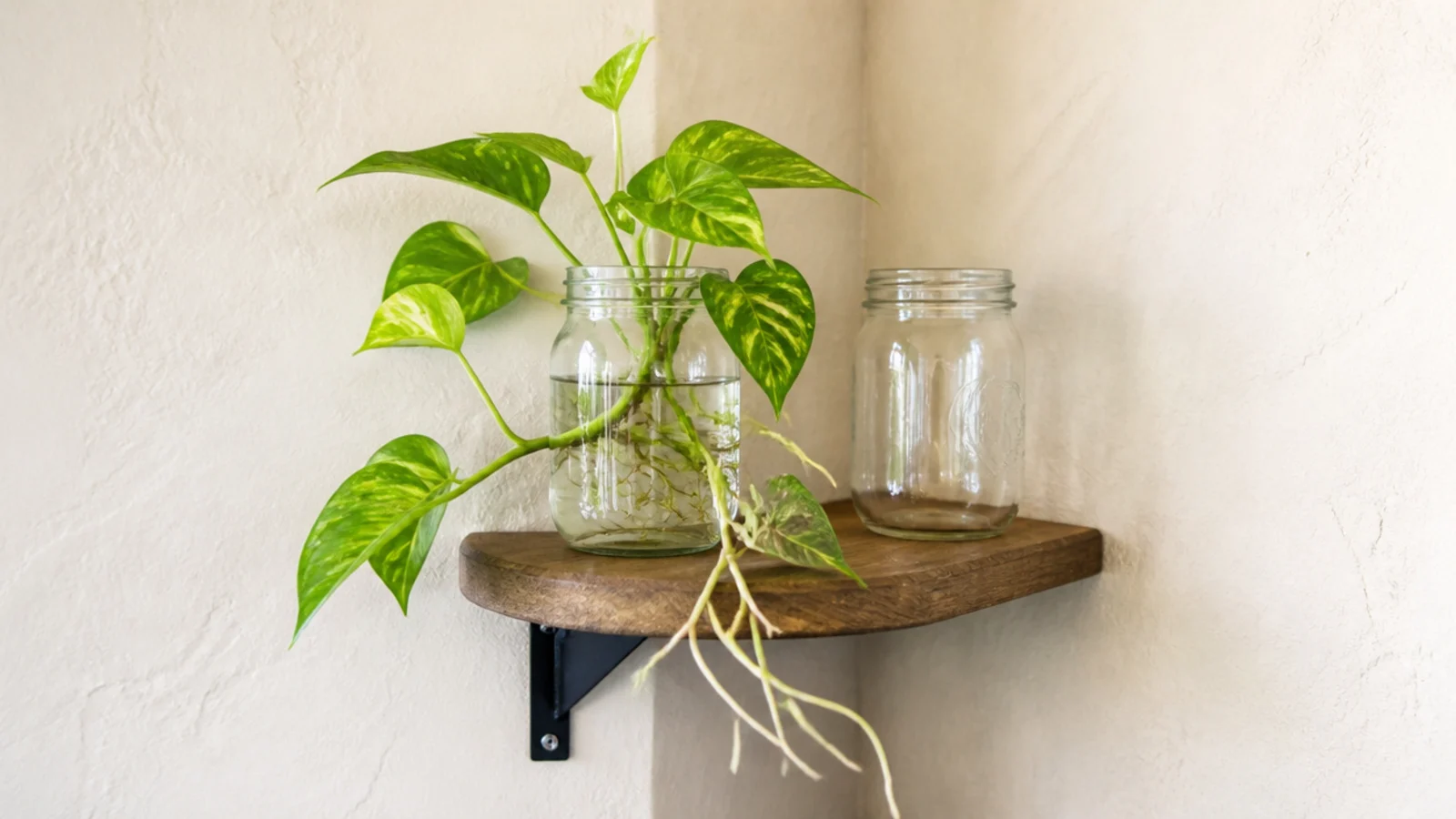
7. Propagate a plant in a glass jar
Cuttings in water are free greenery that visibly changes every week. Pothos, philodendron and tradescantia all root in plain tap water in a week or two.
Use a clear glass jar so the roots show; that is the whole appeal. Once rooted, pot them up and start again — one plant supplies a corner indefinitely. Free
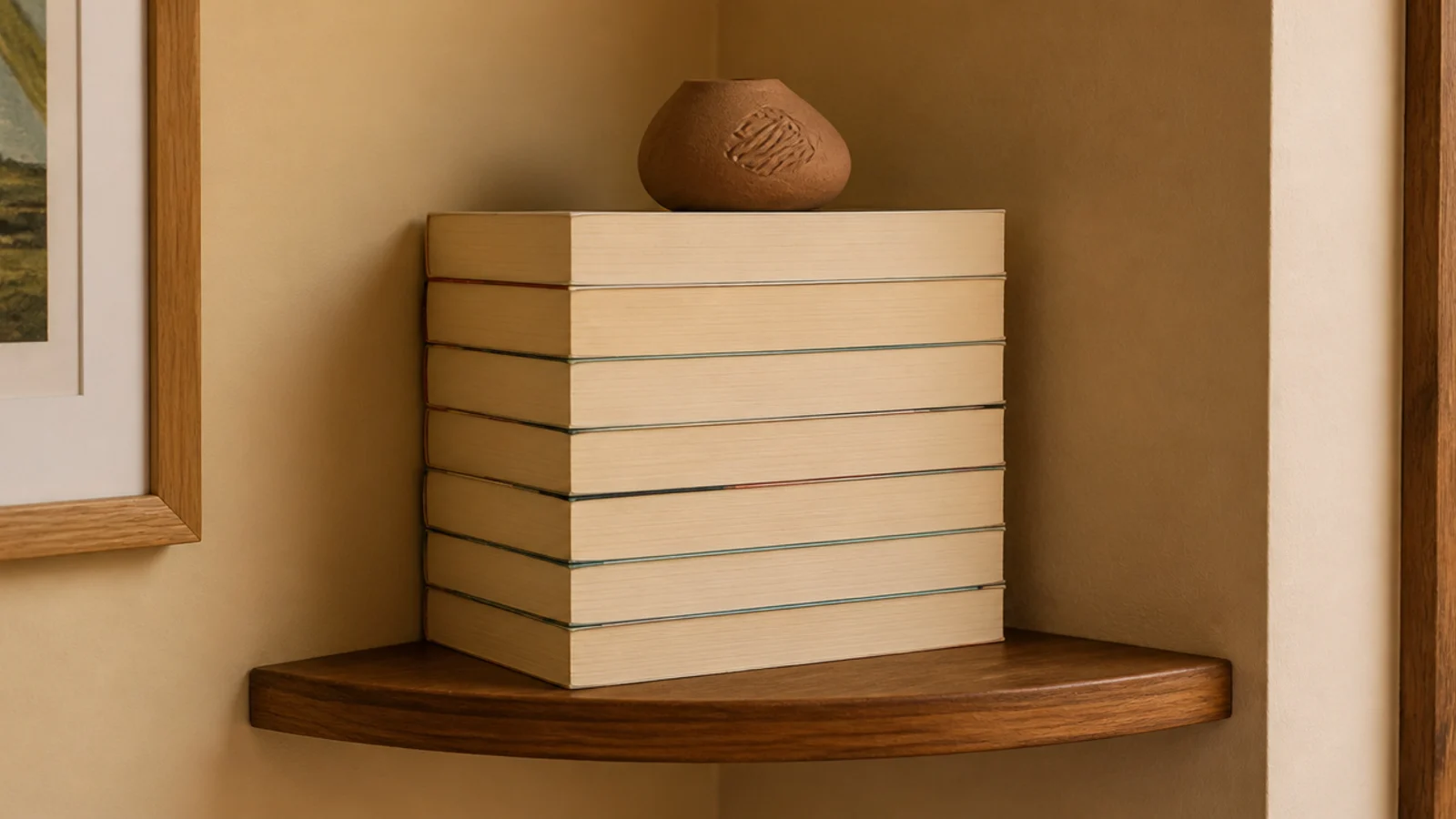
8. Turn paperback spines to the wall
Controversial, and it works. A stack of paperbacks turned page-edge out gives you a soft cream block of texture instead of a jumble of competing spine colors.
Use it for books you are not currently reading and keep it to one stack per corner. Colored spines are lovely in a full bookcase and chaotic on a single small shelf. Free
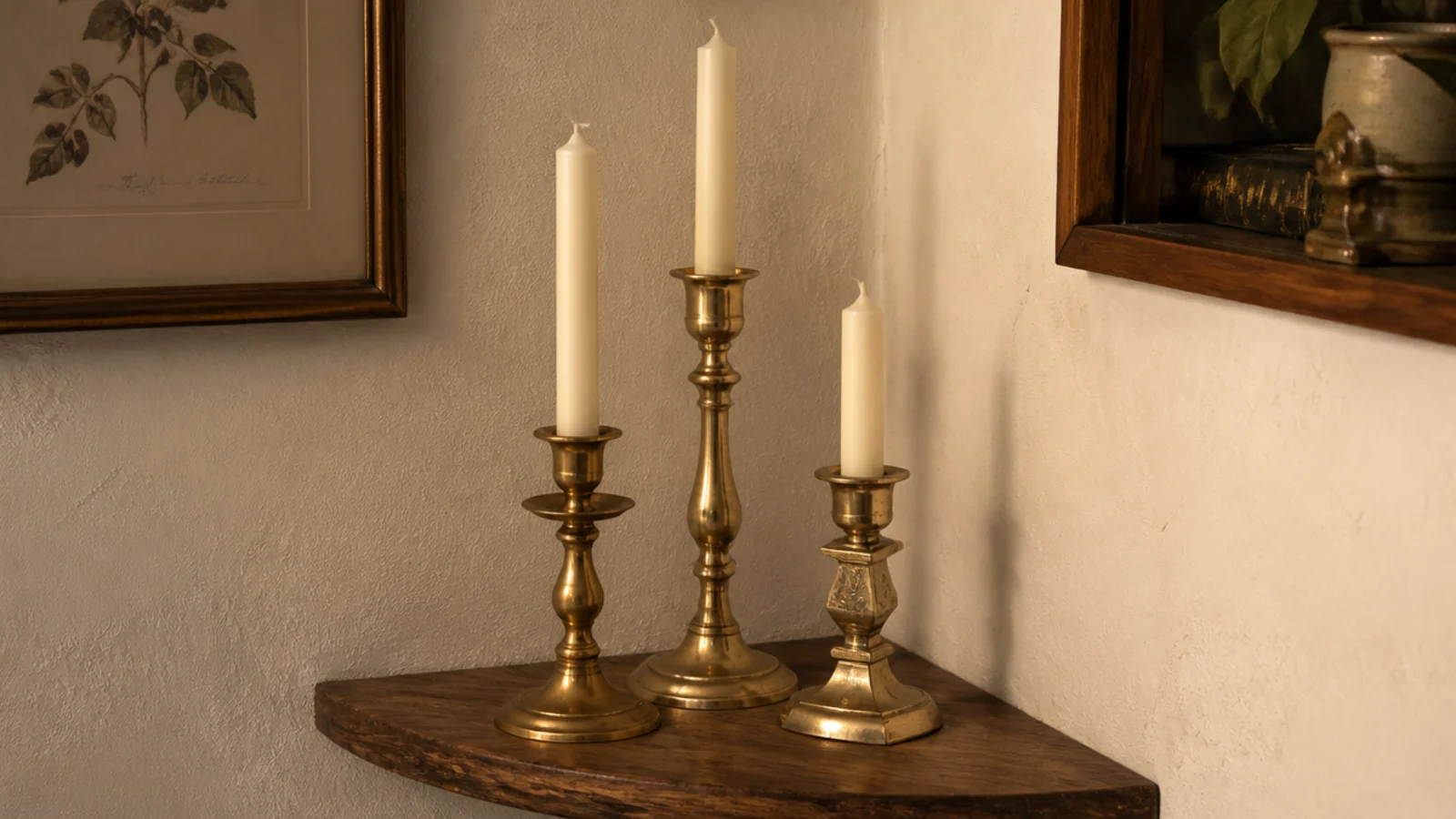
9. Three thrifted candle holders at three heights
Brass candle holders are one of the most reliably cheap thrift finds — $1 to $4 each — and they solve height variation instantly.
Buy three that are obviously different heights and shapes, then put identical candles in all three. Mismatched holders with matching candles read as collected; matching holders with mismatched candles read as a mistake. $–$$
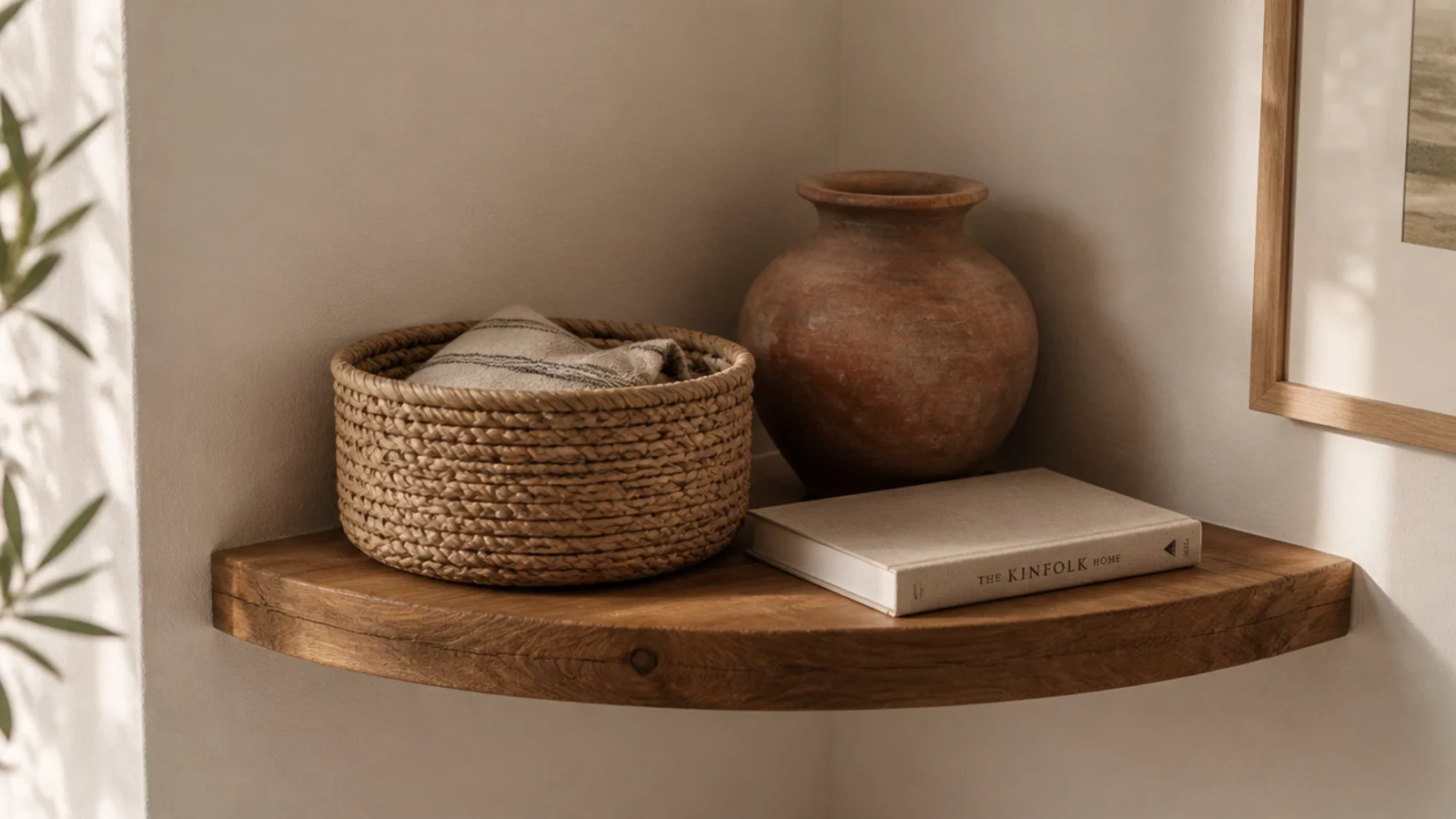
10. One basket for the things that are not pretty
Every corner shelf needs one place where things can disappear. A small lidded or deep woven basket takes chargers, remotes, hair ties and receipts and turns them into texture.
Six to eight inches across is enough. Anything larger stops being a styling object and becomes storage, which is a different job. $$
11. Repeat one brass object three times
Pick a single material and place it three times across the display at different points. Three brass items among clay and wood creates a rhythm your eye follows around the corner.
This is why professionally styled shelves look composed with mismatched objects: repetition, not matching. It costs nothing if you already own the pieces. Free
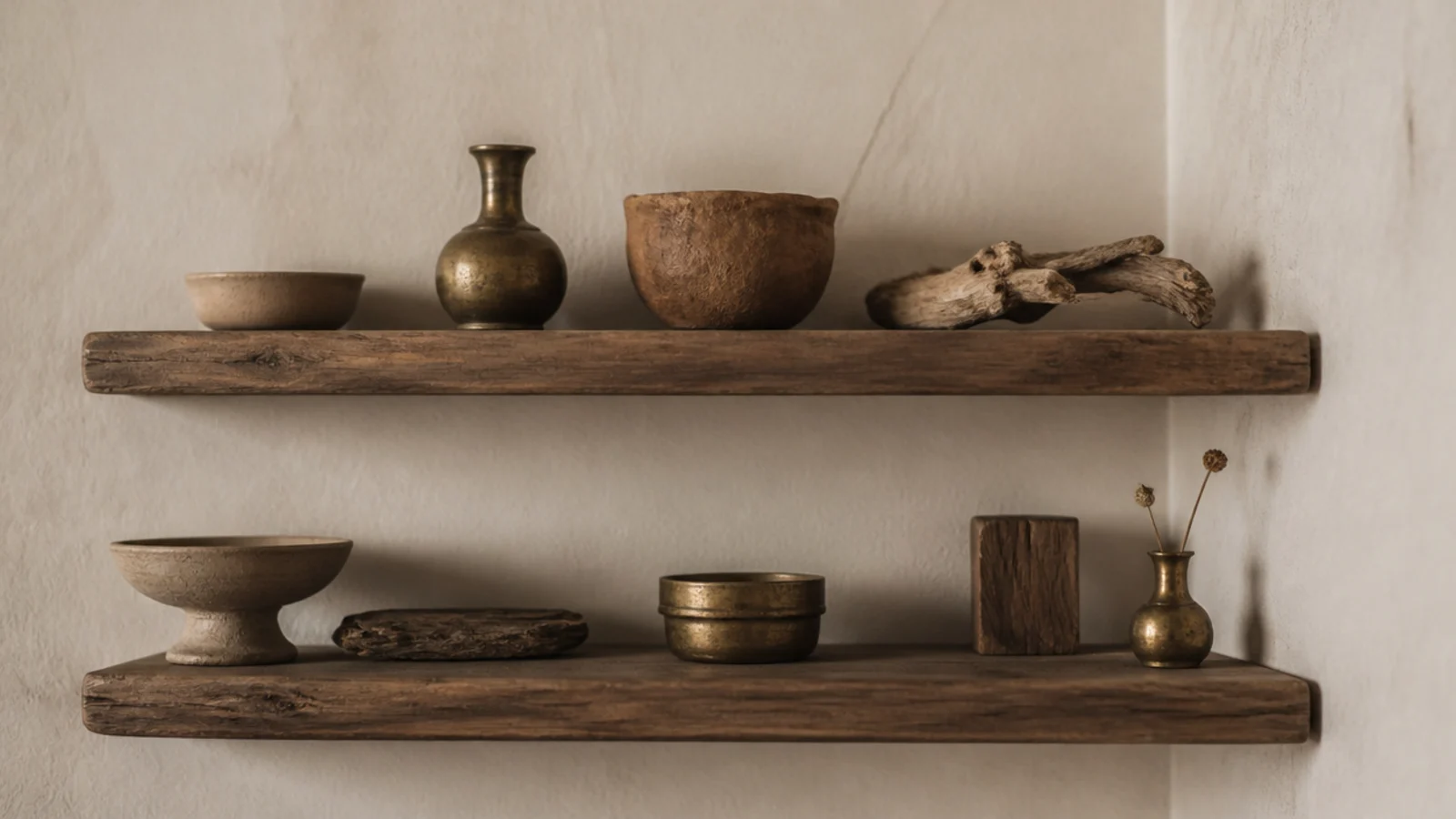
12. Lean postcards instead of framing art
Framing is expensive and permanent. Leaning a few postcards or small prints against the wall costs nothing and can change monthly.
Overlap them slightly so they read as one arrangement, and anchor the row with a small heavy object at one end so nothing slides. Gallery gift shops sell excellent postcards for $2. $
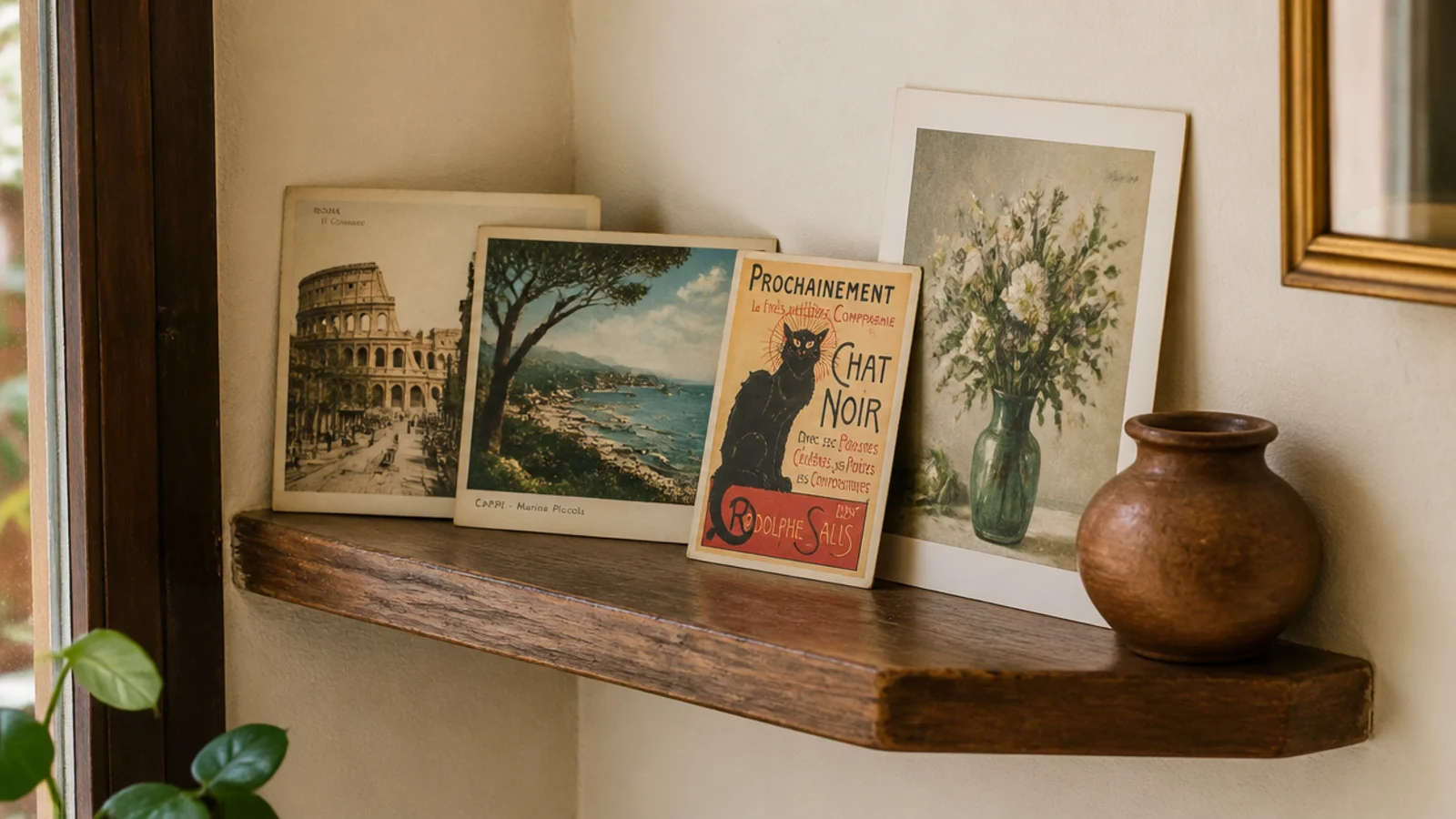
13. Add a small mirror to bounce light
Corners are the darkest part of any room by definition. A small round mirror propped on a shelf catches light from the nearest window and throws it back onto whatever is around it.
Eight to ten inches is plenty. Thrift stores are full of them at $8 to $15, and a brass or wood frame keeps it warm rather than clinical. $$
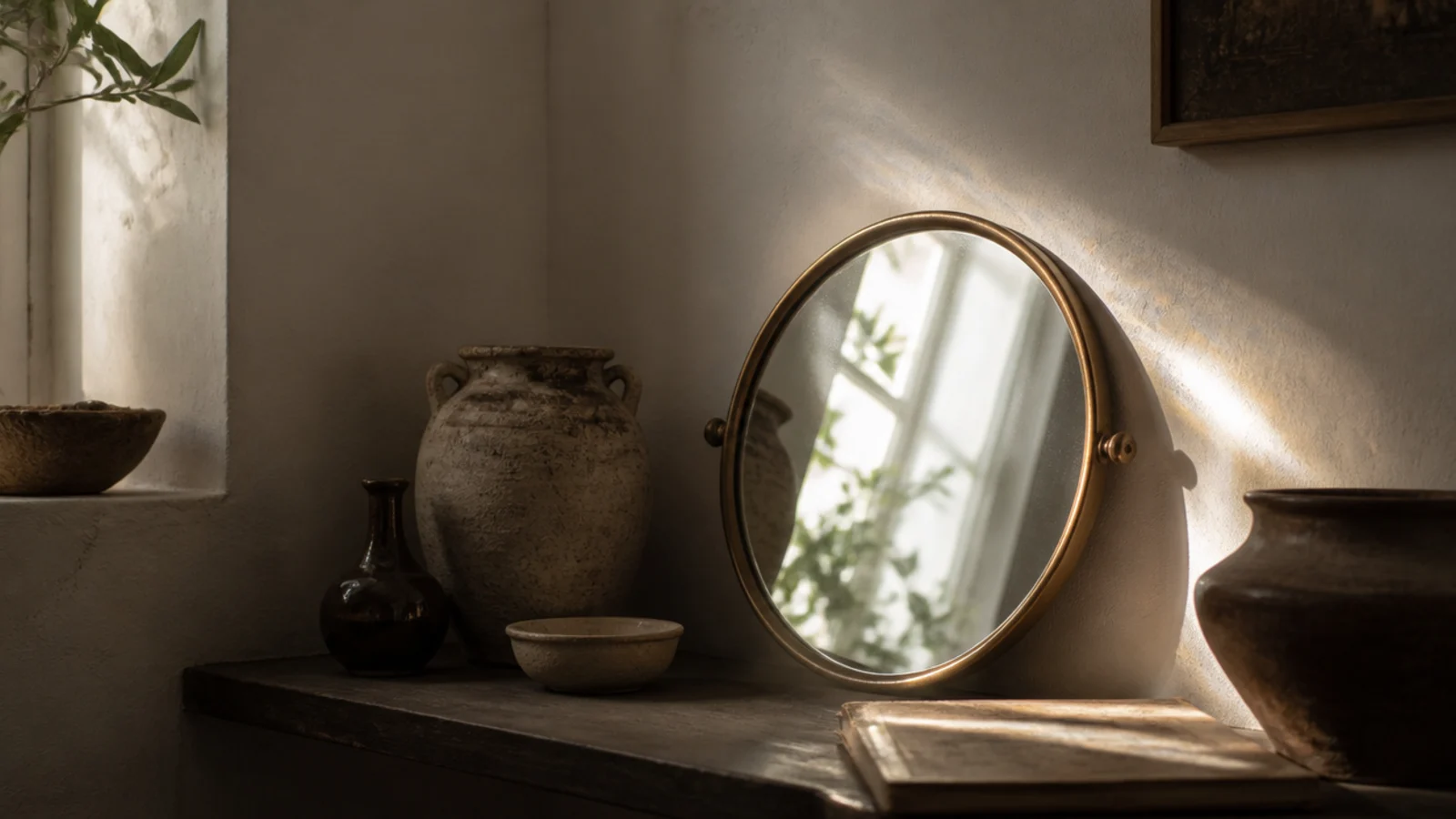
14. A wooden bowl of whatever is in season
Seasonal fruit is the cheapest color available and it changes on its own schedule. Lemons in winter, plums in late summer, apples in autumn.
Use a shallow wooden or clay bowl and do not overfill it — five or six pieces reads as styling, twenty reads as storage. It also means the corner shelf gets used, which keeps it honest. $
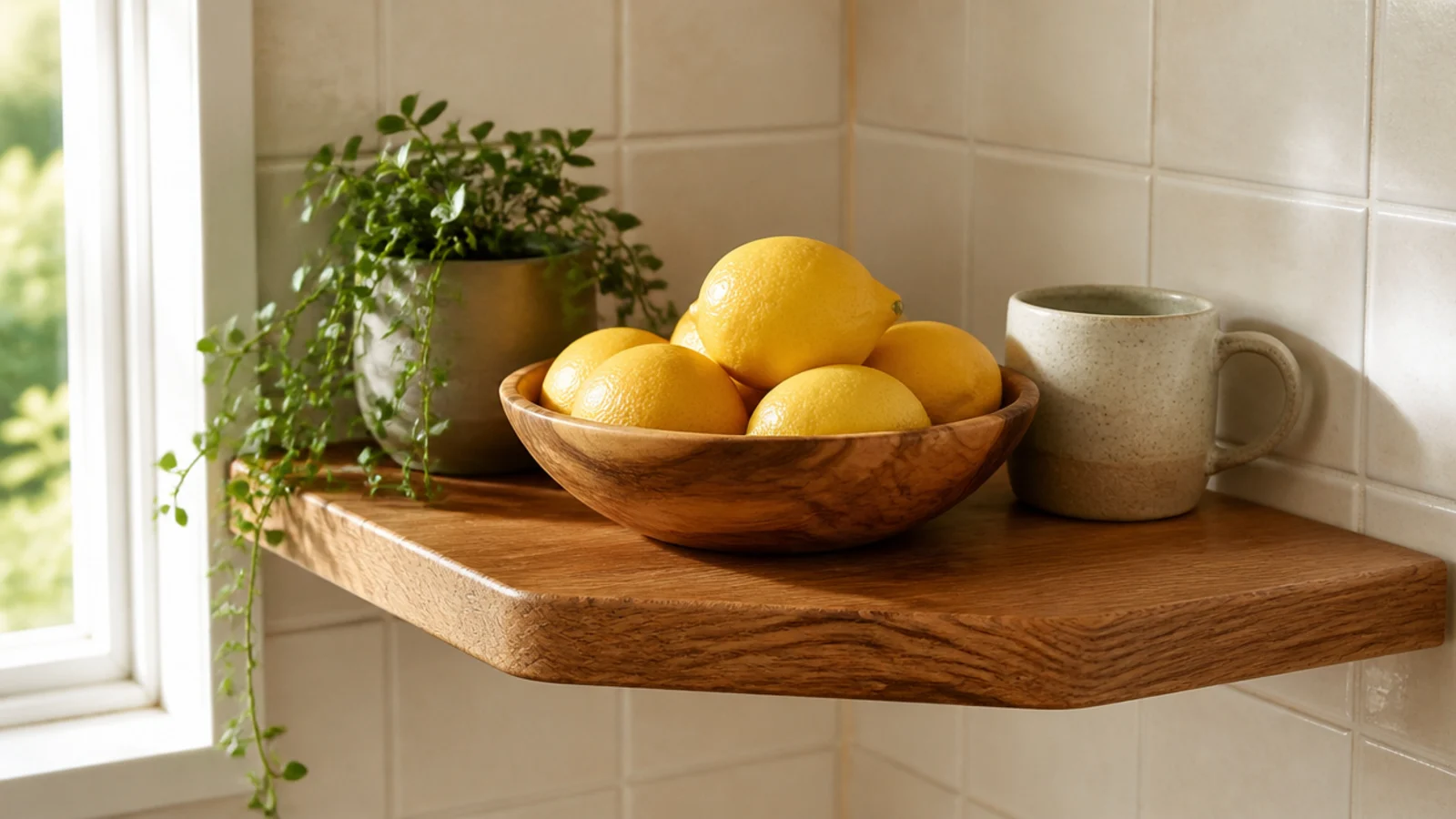
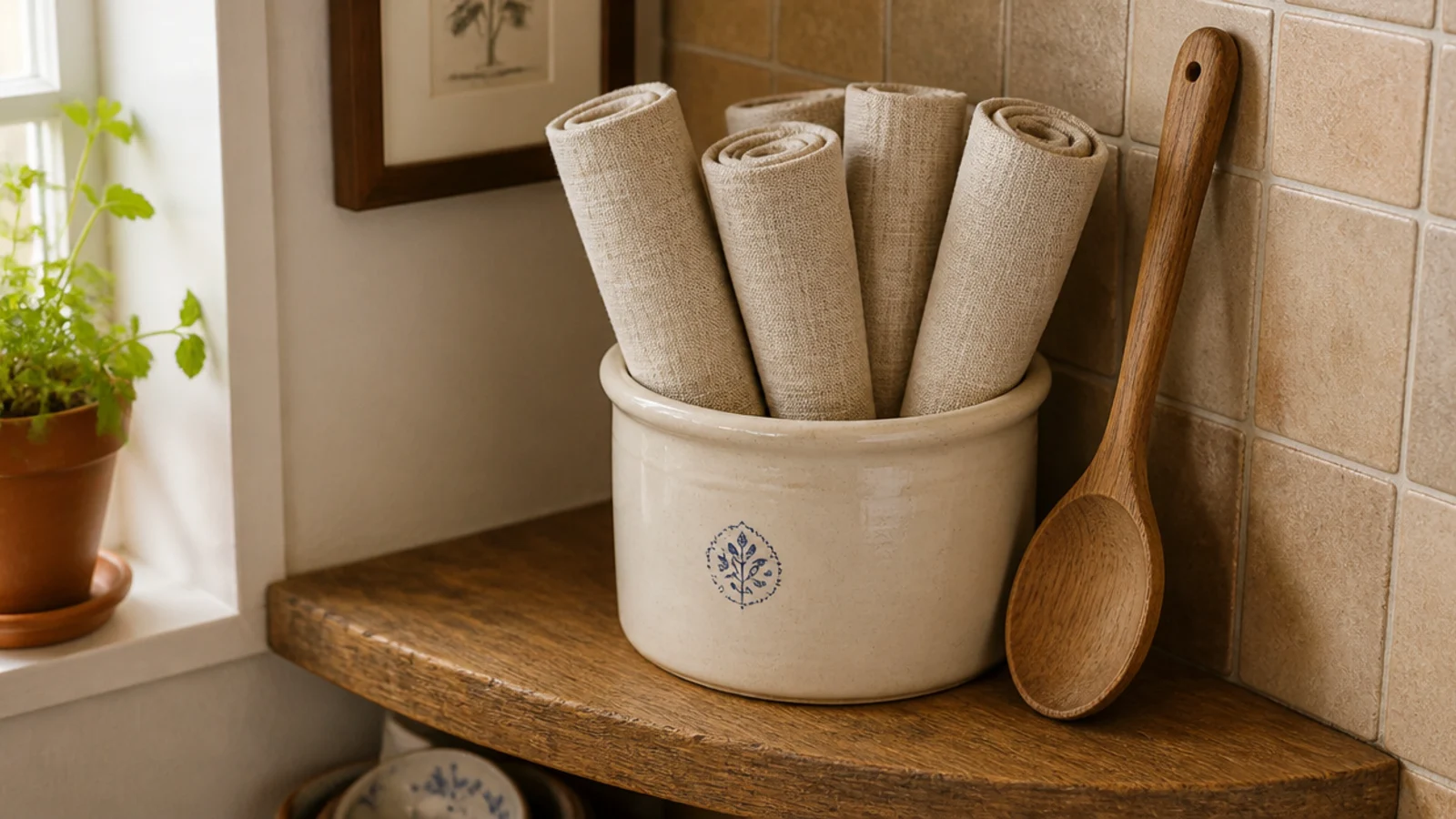
15. Rolled linen napkins in a small crock
In a kitchen or dining corner, four rolled linen napkins standing in a small crock adds soft texture at zero cost if you already own the napkins.
Roll rather than fold, and stand them upright so you get the vertical line. Any small ceramic pot works — an old jam jar with the label soaked off is fine. Free–$
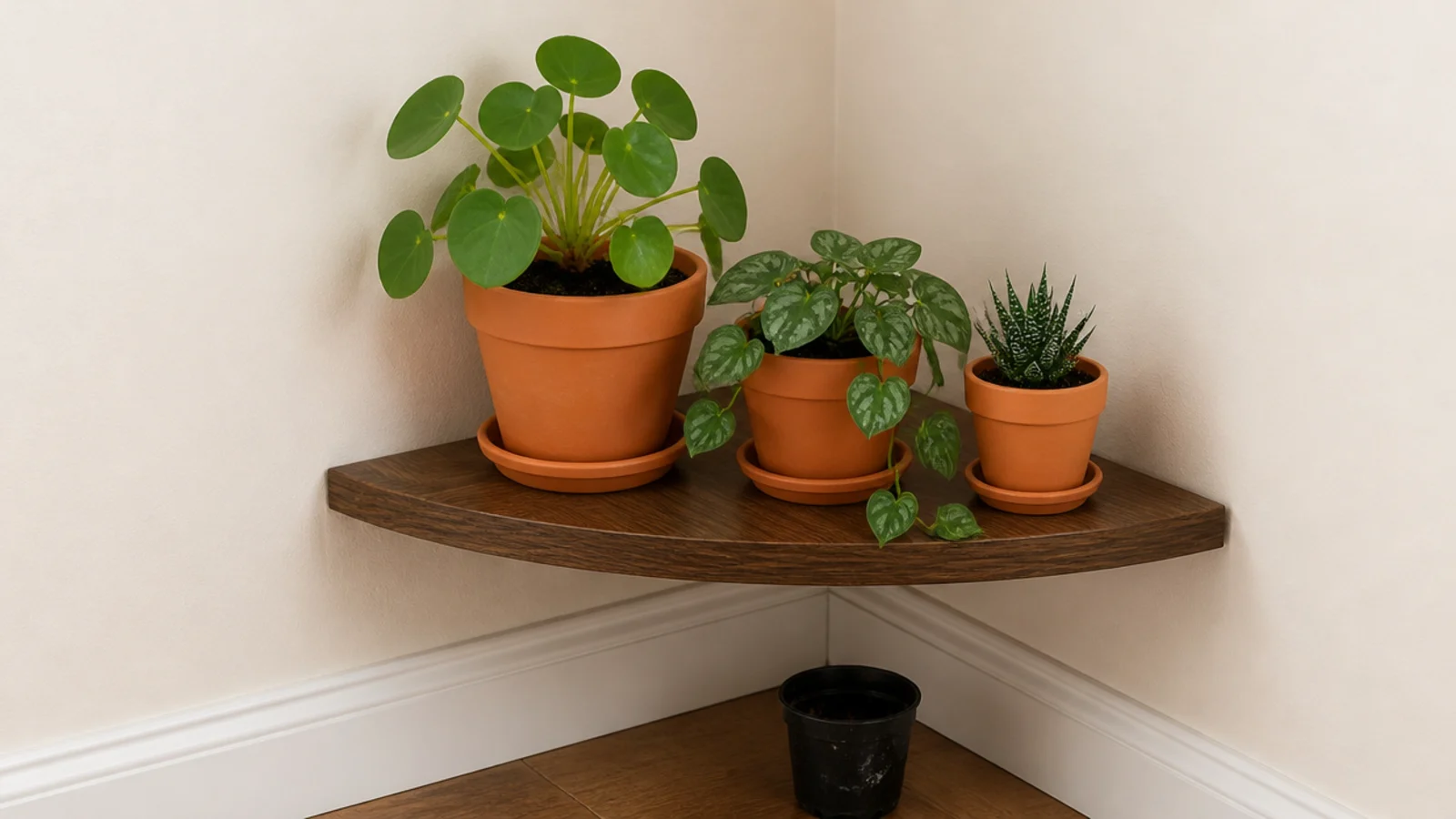
16. Repot plastic nursery pots into terracotta
Nothing cheapens a shelf faster than a black plastic nursery pot, and nothing fixes it more cheaply than plain unglazed terracotta at $2 to $4 a pot.
Buy three in graduated sizes. Unglazed clay also breathes, so it is genuinely better for the plant, and it develops a chalky patina over a year that looks far more expensive than it was. $
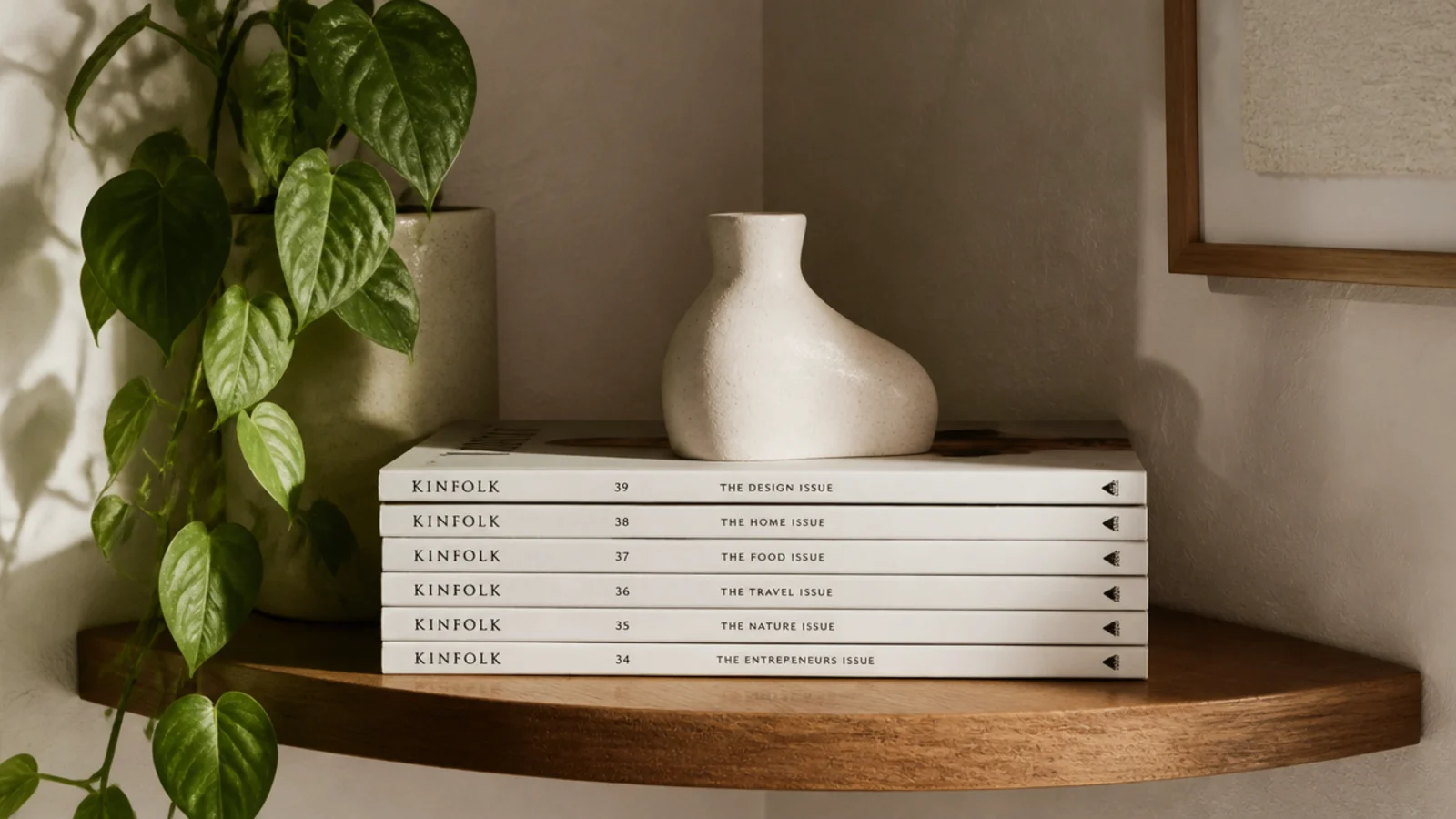
17. Use a magazine stack as a plinth
A neat stack of magazines lying flat is a free plinth that lifts a small object into view and adds a horizontal block against all the vertical shapes.
Keep the stack to five or six and square the edges. Magazines with plain spines work best; anything with heavy cover text competes for attention. Free
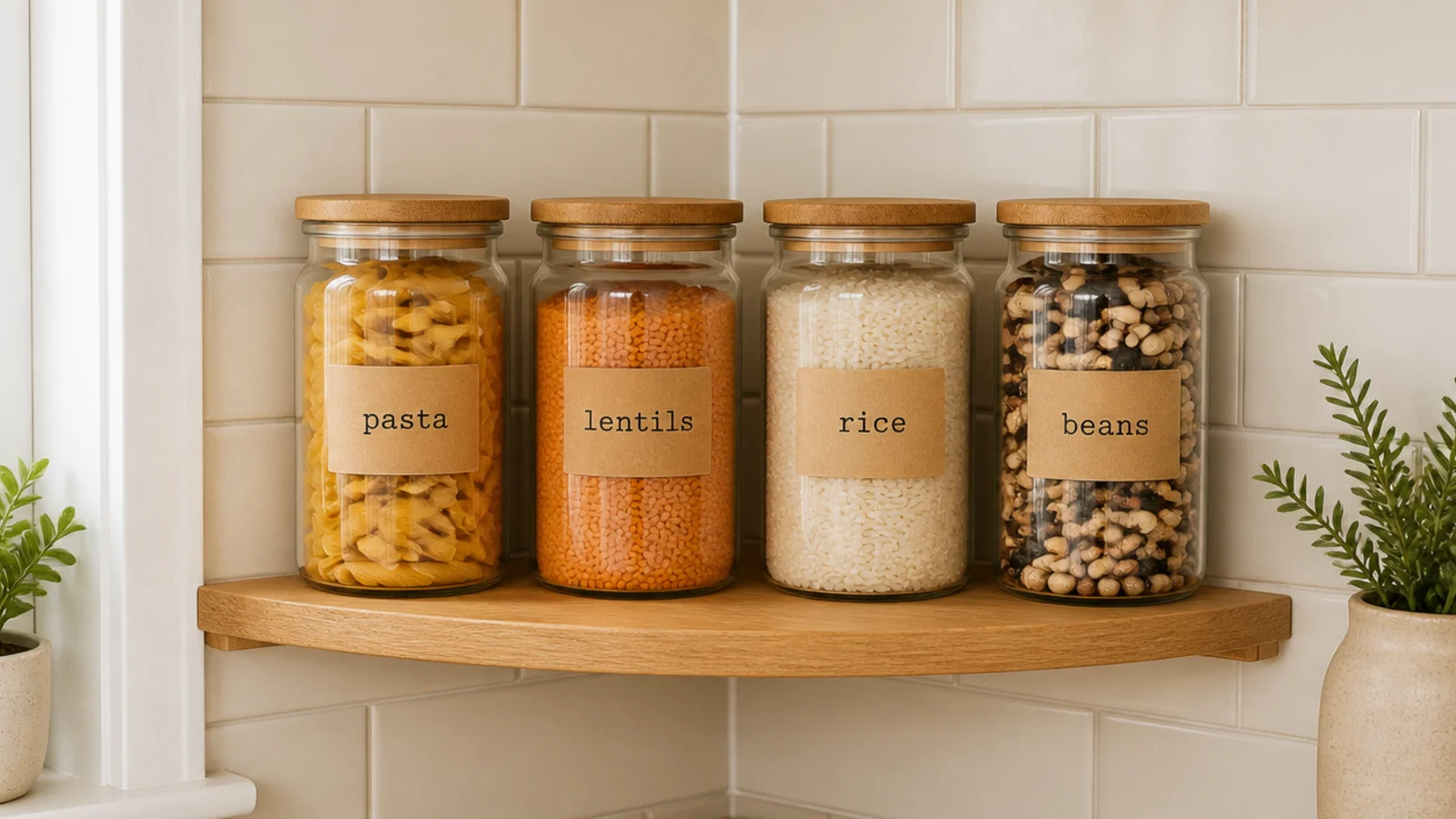
18. Decant pantry staples into plain glass jars
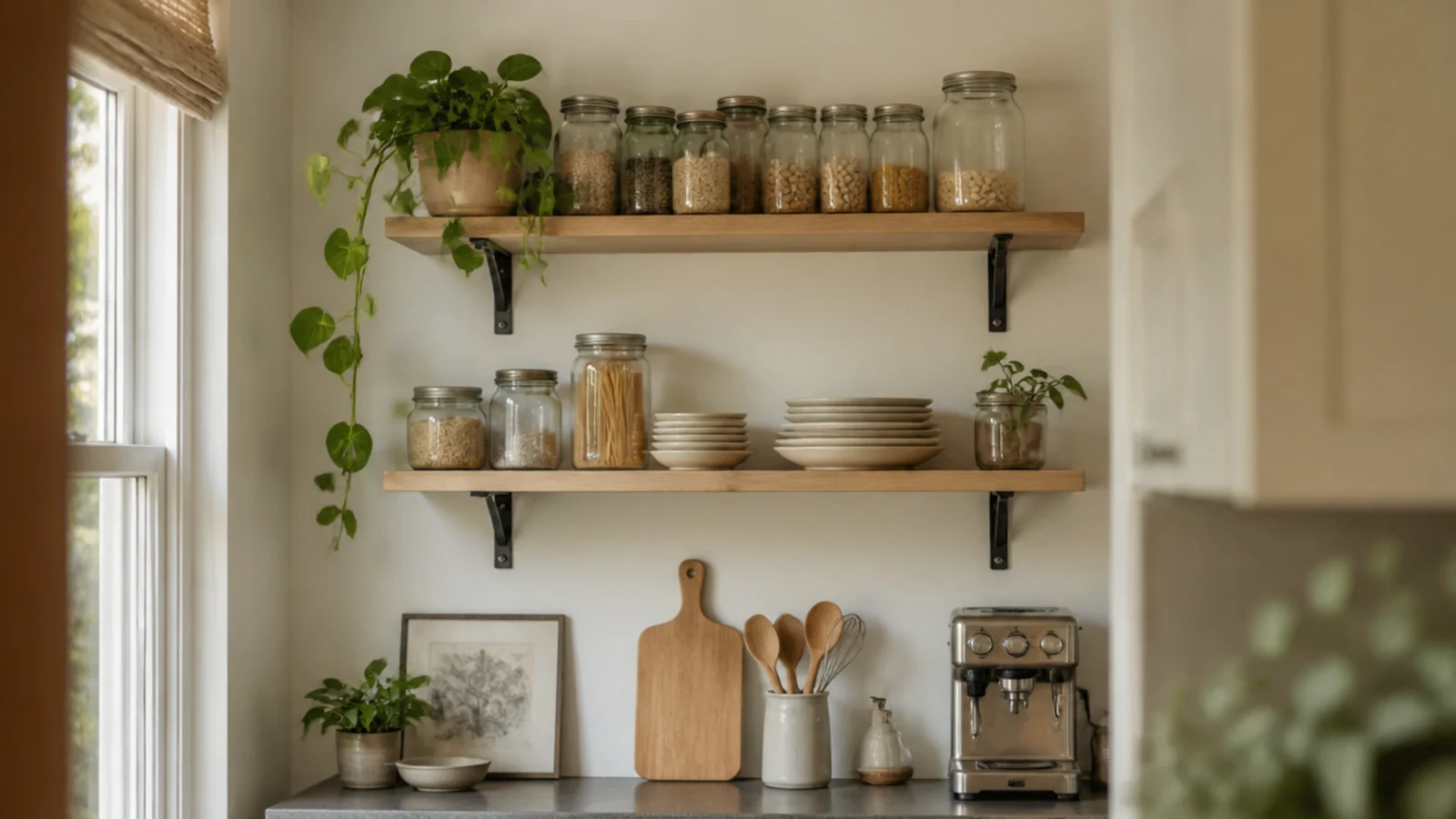
On a kitchen corner shelf, four plain jars of pasta, lentils, rice and beans give you warm neutral texture and actual utility.
The rule that matters: only decant what you genuinely refill. Jars you resent refilling end up half empty and looking neglected within a month. Recycled pasta sauce jars work perfectly. Free–$
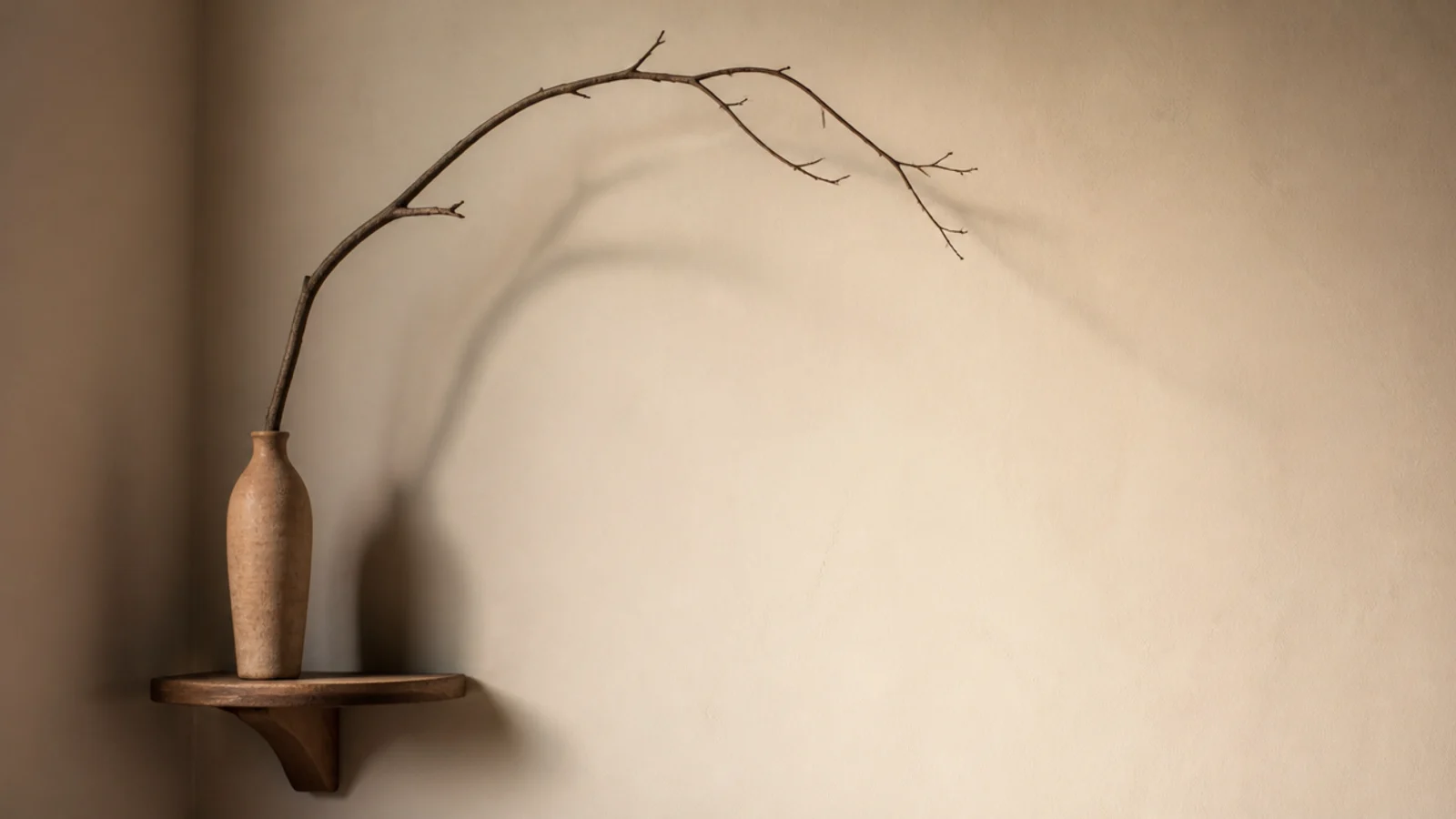
19. One sculptural branch from outside
A single bare curved branch in a tall vessel is the most dramatic free thing you can put on a shelf. It draws a line across the wall and casts a shadow that changes through the day.
Look for a curve rather than a straight stick, cut it cleanly, and let it dry indoors for a week before styling. It will last all winter. Free
20. A tile sample as a coaster tray
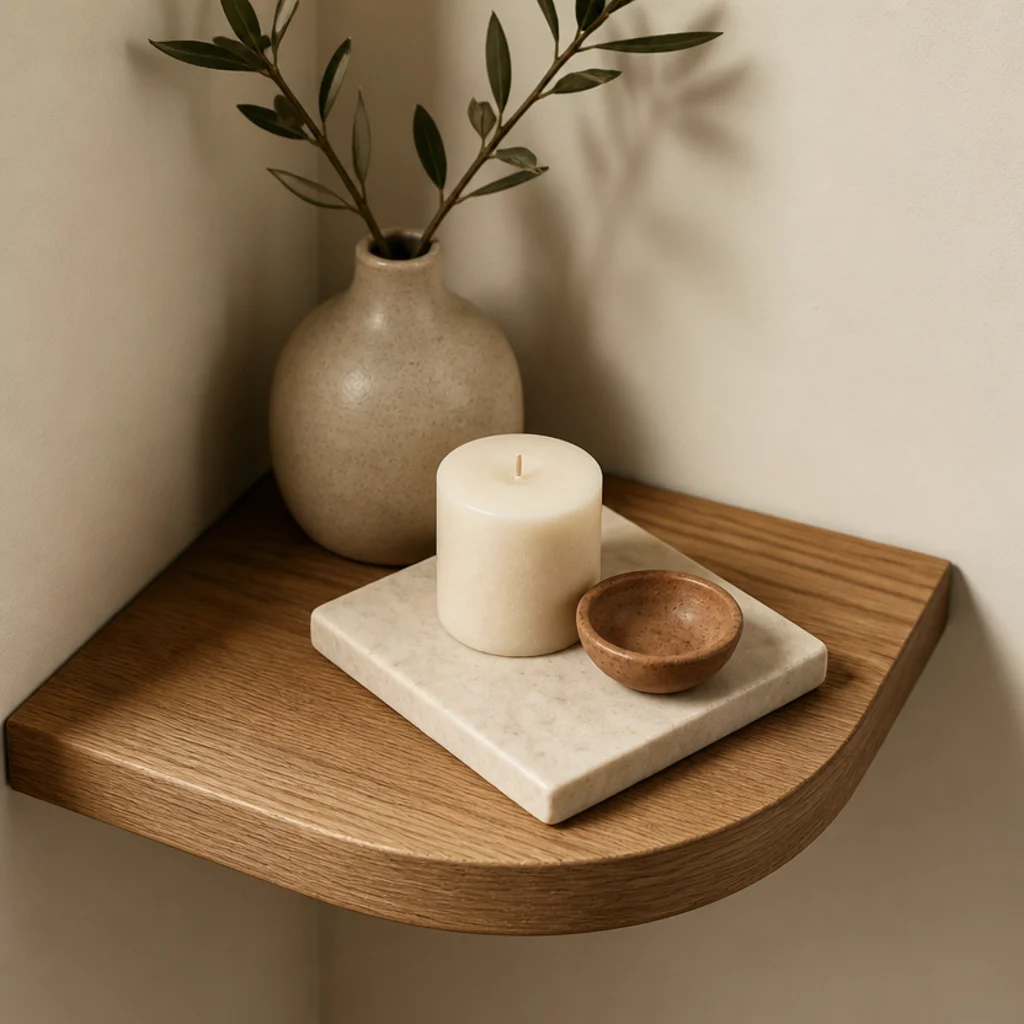
Tile showrooms and hardware stores hand out or heavily discount sample squares. A four-inch piece of honed marble or slate makes a small tray with real weight and texture.
Use it under a candle or a small dish. It is one of the very few ways to get genuine stone onto a shelf for under $5, and often for nothing at all. Free–$
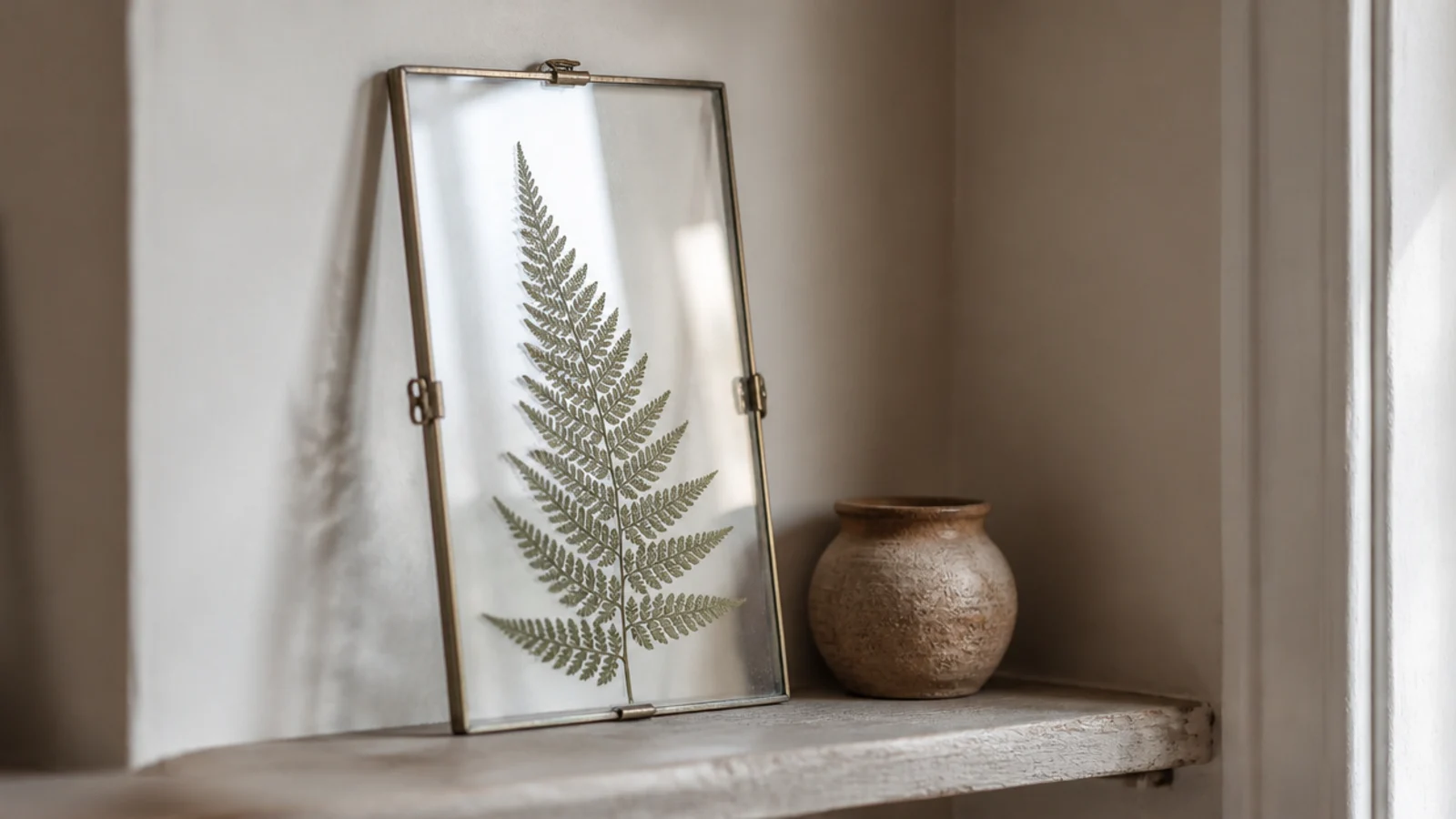
21. Pressed leaves in a clip frame
A pressed fern frond or single leaf between two panes of a glass clip frame gives you botanical art for the price of the frame — usually $4 to $8.
Press leaves flat between heavy books for two weeks first. Leaning it rather than hanging it keeps the corner flexible and means no holes. $
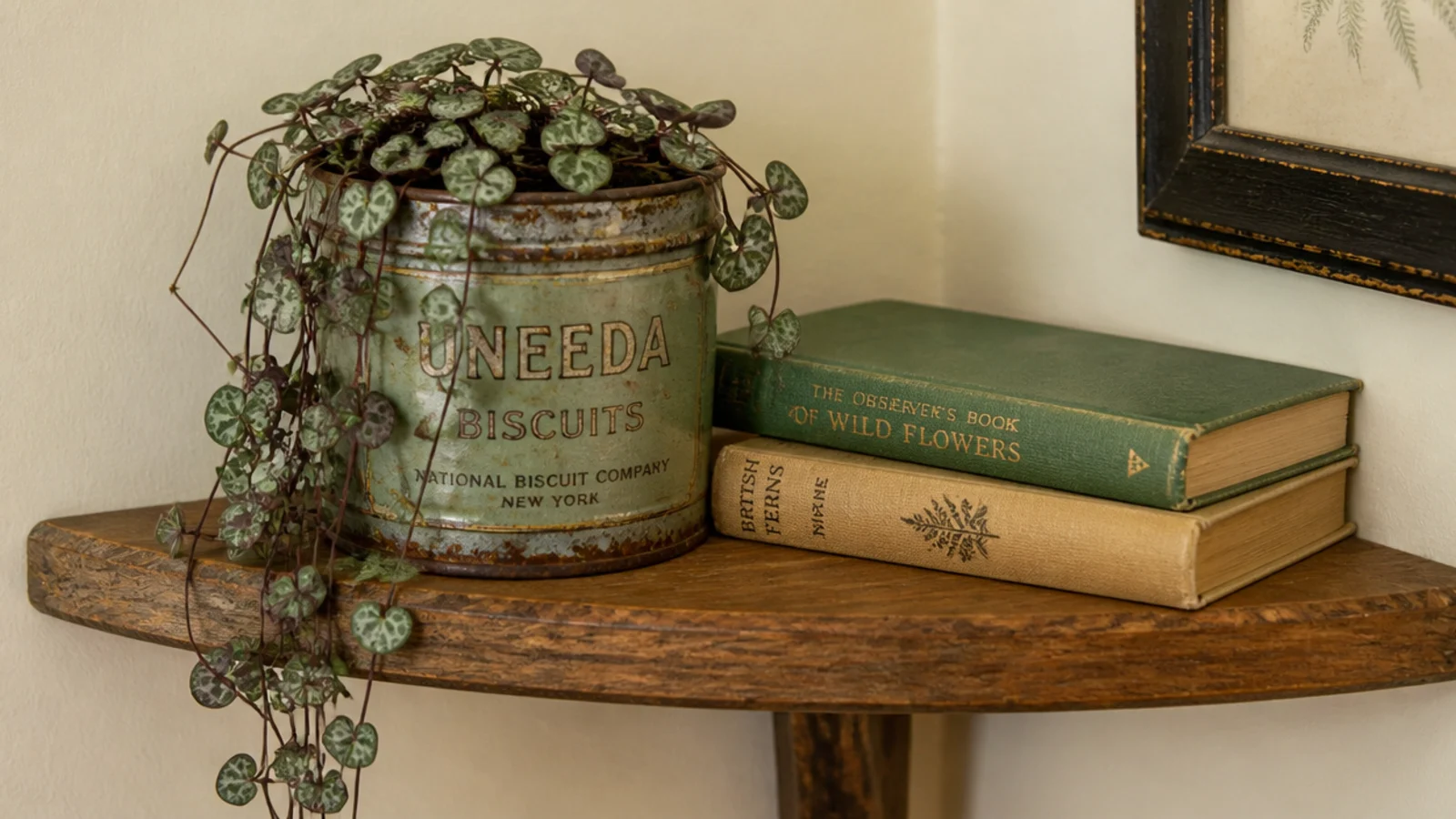
22. A vintage tin as a planter
Old tins with worn paint have a patina no new object can fake, and thrift stores sell them for a dollar or two.
Use one as a cachepot with the plastic nursery pot hidden inside — no drainage holes needed and no rust rings on the shelf. Trailing plants suit them best because the leaves soften the hard metal edge. $
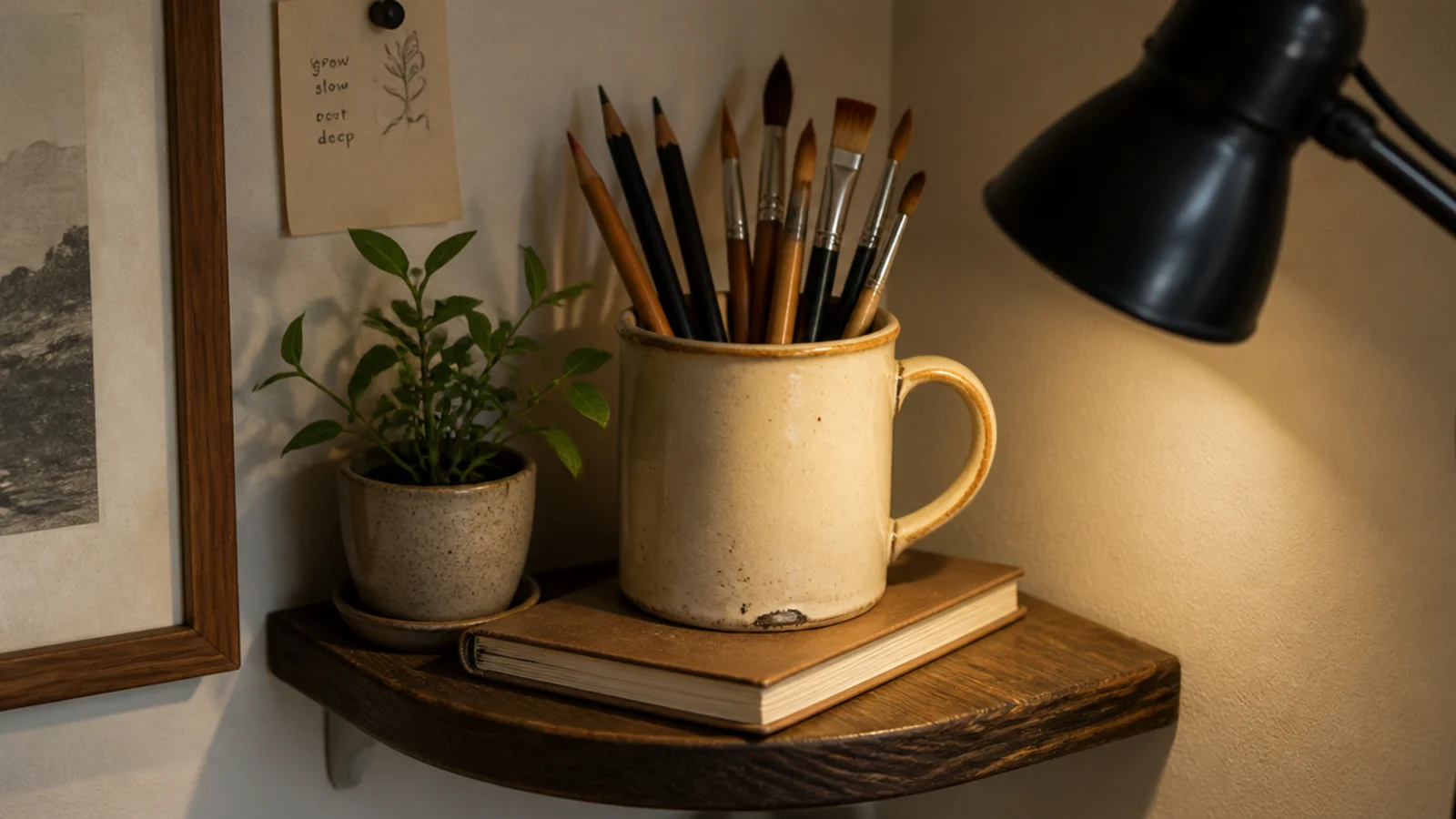
23. A chipped mug as a brush or pen holder
The mug with the chipped rim you cannot bring yourself to throw out finally has a job. Full of pens, brushes or wooden spoons, the chip stops being damage and becomes character.
This works best on a desk or kitchen corner shelf where the contents are genuinely used. On a purely decorative shelf it just reads as a broken mug. Free
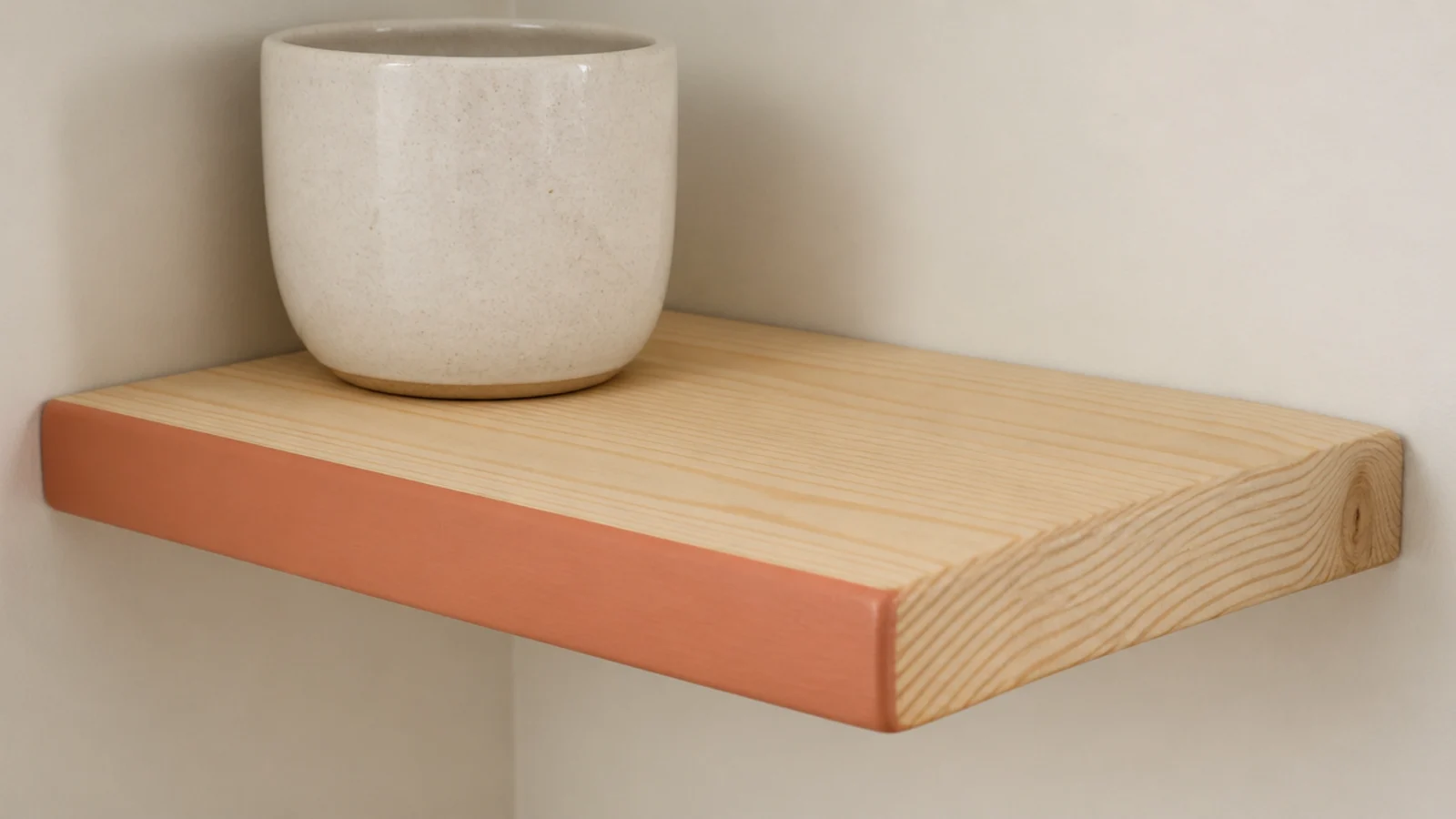
24. Paint only the front edge of the shelf
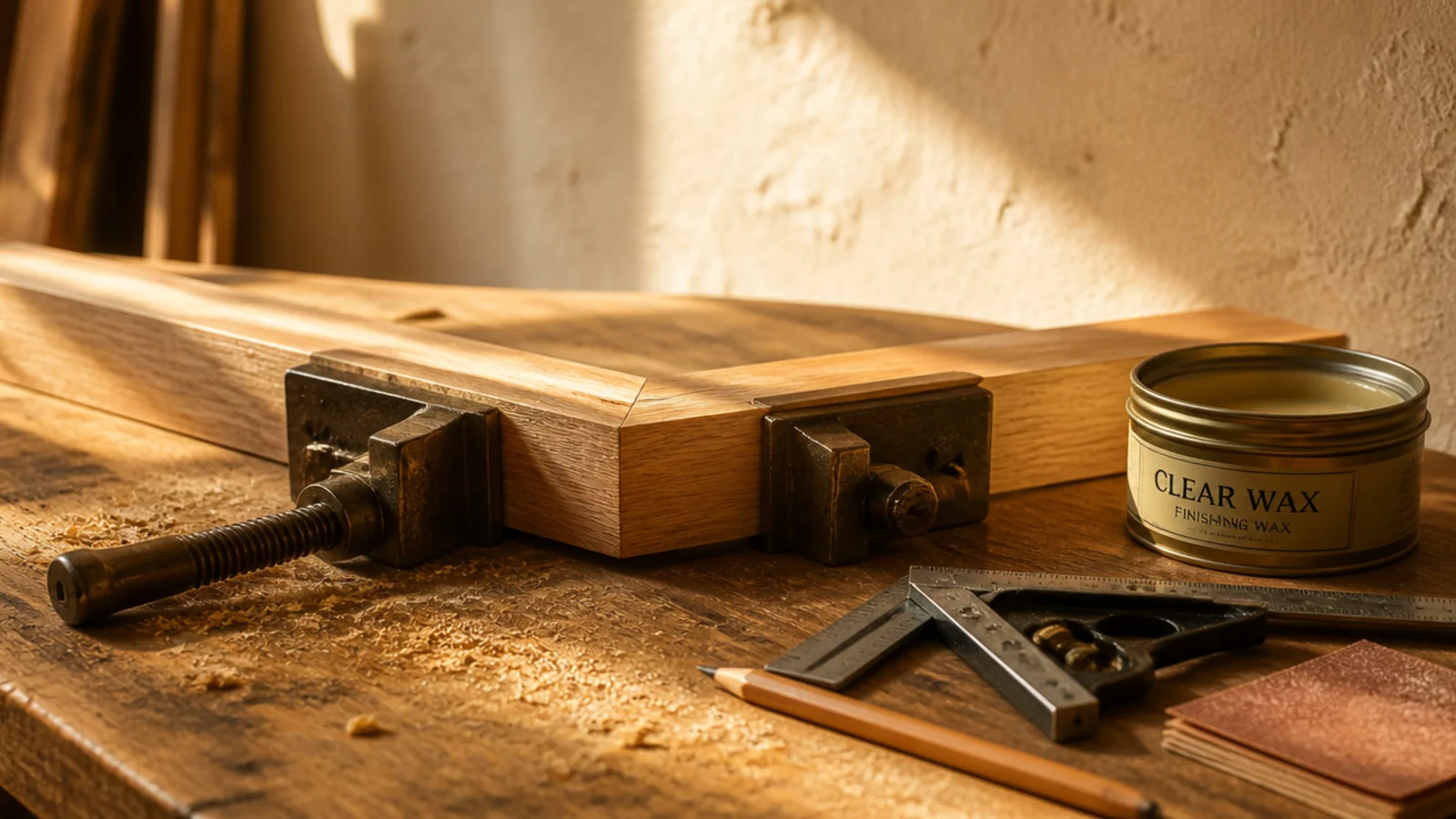
A $12 pine board with its front edge painted a soft clay or sage looks deliberate in a way a bare pine board never does. The wood face stays natural, and the painted edge reads as a design decision.
Two coats from a sample pot, masked with painter's tape. It takes twenty minutes and it is the cheapest way to make a basic shelf look designed. More on this in corner shelf styling. $
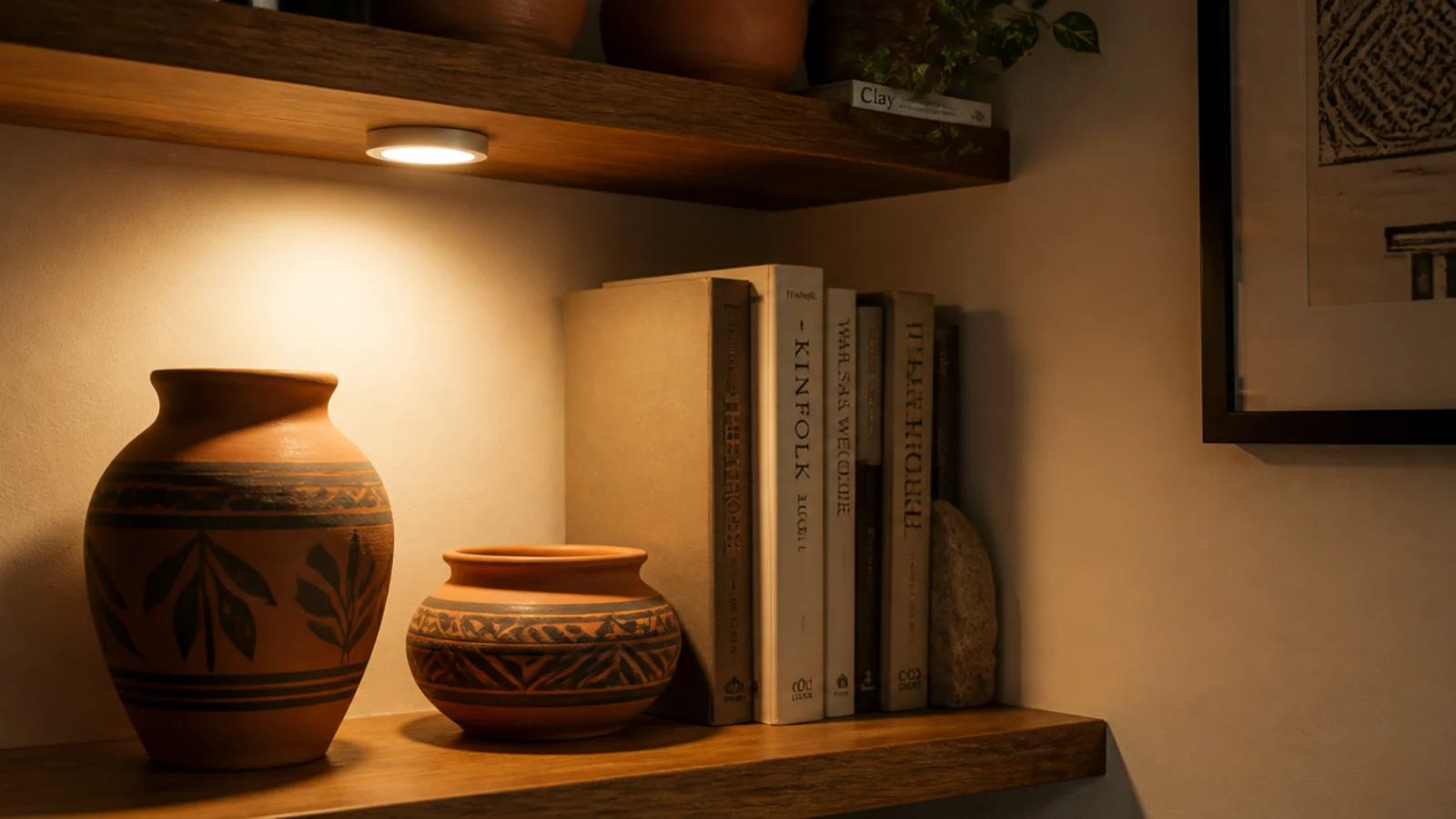
25. A battery puck light under the top shelf
Ten dollars of warm light does more for a dark corner than fifty dollars of objects. A stick-on battery puck under the upper shelf pools light onto everything below it.
Buy warm white at 2700K, not daylight — cool light makes clay and wood look grey. Rechargeable versions save you buying batteries twice a year. $$
Mistakes to Skip
- Buying a matching decor set. Sets look styled in the box and lifeless on a wall, because nothing in them varies in height, texture or age.
- Filling every inch because the objects were cheap. Cost has no bearing on how much a small room can absorb — a third of every shelf still needs to be empty.
- Using cool-white light in a warm neutral corner. It turns terracotta grey and undoes every material choice you made.
Frequently asked questions
How do I decorate a corner shelf cheaply?
Shop your own house first, then fill the gaps at a thrift store. Pull three objects you already own in one color family, add height with books you already have, and buy only what is missing — usually one trailing plant and one tray. A genuinely good corner shelf display costs under $25 if you buy secondhand pottery instead of new.
What should I put on a corner shelf in a small room?
Fewer, larger objects. Small rooms punish clutter, so three medium pieces per shelf read far calmer than eight small ones, even though they take up more surface. Keep everything within one or two material families — clay and wood, or glass and brass — so the corner reads as one composition instead of a collection.
How deep should corner shelves be in a small space?
Six inches for anywhere within reach of a doorway, eight if you have at least 30 inches of clear walkway. Six inches sounds tiny and holds paperbacks, mid-size pottery, framed photos and most plants comfortably. The extra two inches of depth costs you far more in a small room than it gains you in storage.
Can I decorate a corner shelf without buying anything?
Usually yes. Take everything off, gather every candidate object from the whole house into one pile, then rebuild using only three per shelf at three different heights. Most people own more than enough — the problem is that the good pieces are scattered across five rooms where none of them read as intentional.
What is the cheapest way to make corner shelves look expensive?
Paint the brackets the wall color and leave a third of every shelf empty. Both are free, and together they do more than any purchase. After that, a $6 clay saucer used as a catch-all tray and a single trailing plant will lift a corner more than $60 of small decorative objects.
Start with the free ideas — paint the brackets, edit down to three objects, add height with books — and only then spend anything. In a small space the removing does more than the buying. For placement by room, see fifteen corner shelf ideas; for tight footprints specifically, corner shelves for small spaces goes further; and the same styling rules apply on a straight wall in floating shelf decor. Save the pin for your next thrift run.
Want more like this? Browse all 15 corner shelf ideas guides — they all use the same measurements and budget tiers.
Pin it for later
Save this to your Corner Shelf Ideas board
Pin it now so it is waiting for you when the tape measure comes out — and so the next person hunting for this idea can find it too.
Save this pinKeep going
More ideas worth saving while you have the tape measure out.