Corner Shelf Ideas · Listicle
15 Easy Corner Shelf Ideas for Any Home

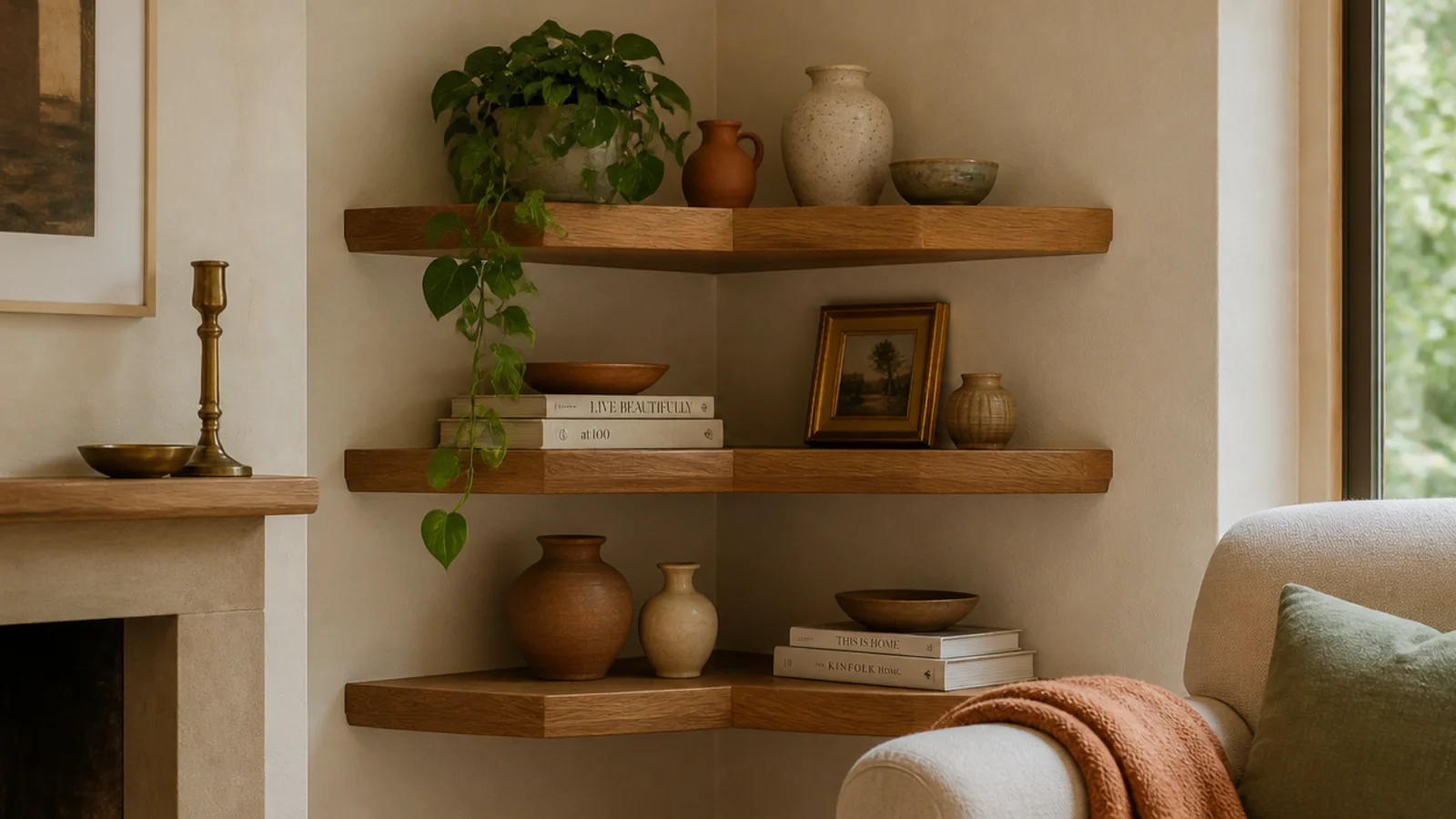
Corner shelf ideas solve the one problem almost every room has: a corner doing absolutely nothing. I have put shelves in the corners of five apartments and two houses now, and the ones that worked all shared the same three numbers — a depth that clears the walkway, spacing you can actually stand a book in, and an anchor rated for more than the box promises. Here are fifteen that earn their wall.
In this guide17 sections — tap to openHide
- 1.Where corner shelf ideas actually earn their keep
- 2.Three-tier floating shelves in the living room corner
- 3.A reading corner shelf above the chair
- 4.A slim five-inch shelf for the bathroom corner
- 5.A leaning plant ladder for the sunny corner
- 6.A spice and oil shelf in the kitchen corner
- 7.A bedside corner shelf instead of a nightstand
- 8.A shelf that hides the radiator corner
- 9.A drop-zone corner shelf by the front door
- 10.A floor-to-ceiling corner bookshelf column
- 11.A low shelf under the corner window
- 12.A behind-the-door corner shelf
- 13.A coffee corner on two shelves
- 14.A low corner shelf in a kids room
- 15.A picture ledge that wraps the corner
- 16.A freestanding corner etagere with no drilling
- 17.Mistakes to Skip
Where corner shelf ideas actually earn their keep
A corner shelf pays off when it holds something you reach for, in a spot you already walk past. That rules out the corner behind the door you never open and the one your dining chairs back into.
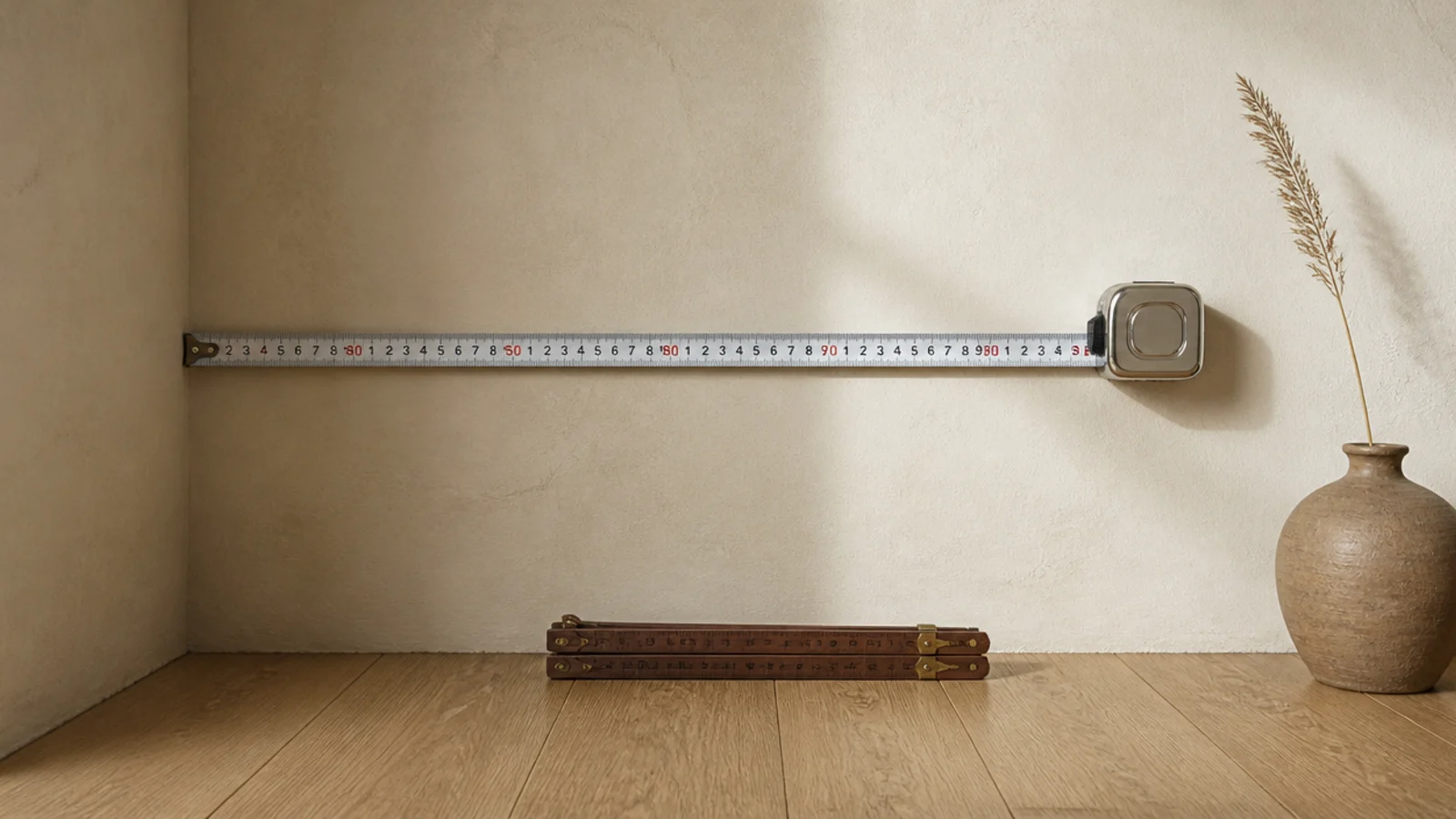
Start by measuring the walkway, not the wall. Stand in the corner and measure from each wall to the nearest thing you walk around — a sofa arm, a doorframe, the swing of a door. If that gap is under 30 inches, cap your shelf at six inches deep. Between 30 and 40 inches, eight inches is comfortable. Over 40 inches, you can go to ten or twelve.
Then find your studs. In an interior corner, studs usually sit 1.5 inches back from the corner on each side, which is exactly where a corner bracket wants to land — but framing varies, and in older homes it varies a lot. If the stud finder gives you nothing usable, toggle bolts in half-inch drywall carry 25 to 35 pounds each, which covers almost any decorative corner shelf.
Budget-wise, a single solid wood shelf with real brackets runs $25 to $45 ($), a three-tier floating set runs $60 to $120 ($$), and a built-in column runs $300 and up in materials ($$$).
1. Three-tier floating shelves in the living room corner
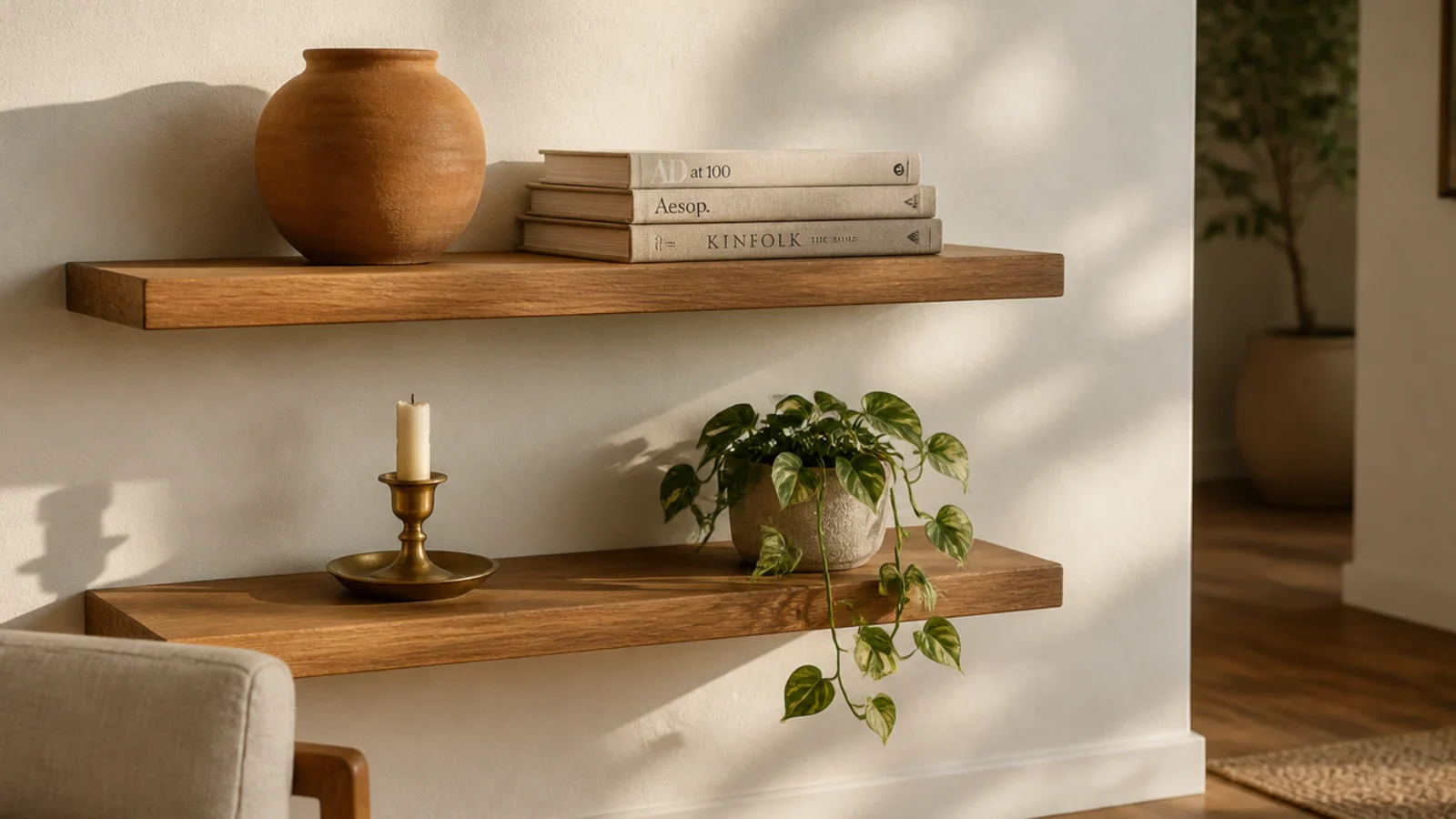
This is the version most people picture, and it works because the tiers stagger. Cut or buy three shelves at decreasing lengths — roughly 24, 20 and 16 inches along each wall — and mount them 13 inches apart. The shortest goes on top. That taper stops the stack reading as a block and gives your eye a line to climb.
Solid oak or walnut at eight inches deep holds pottery and books without bowing. Skip veneered particle board here; the front edge chips within a year and you will see it every day.
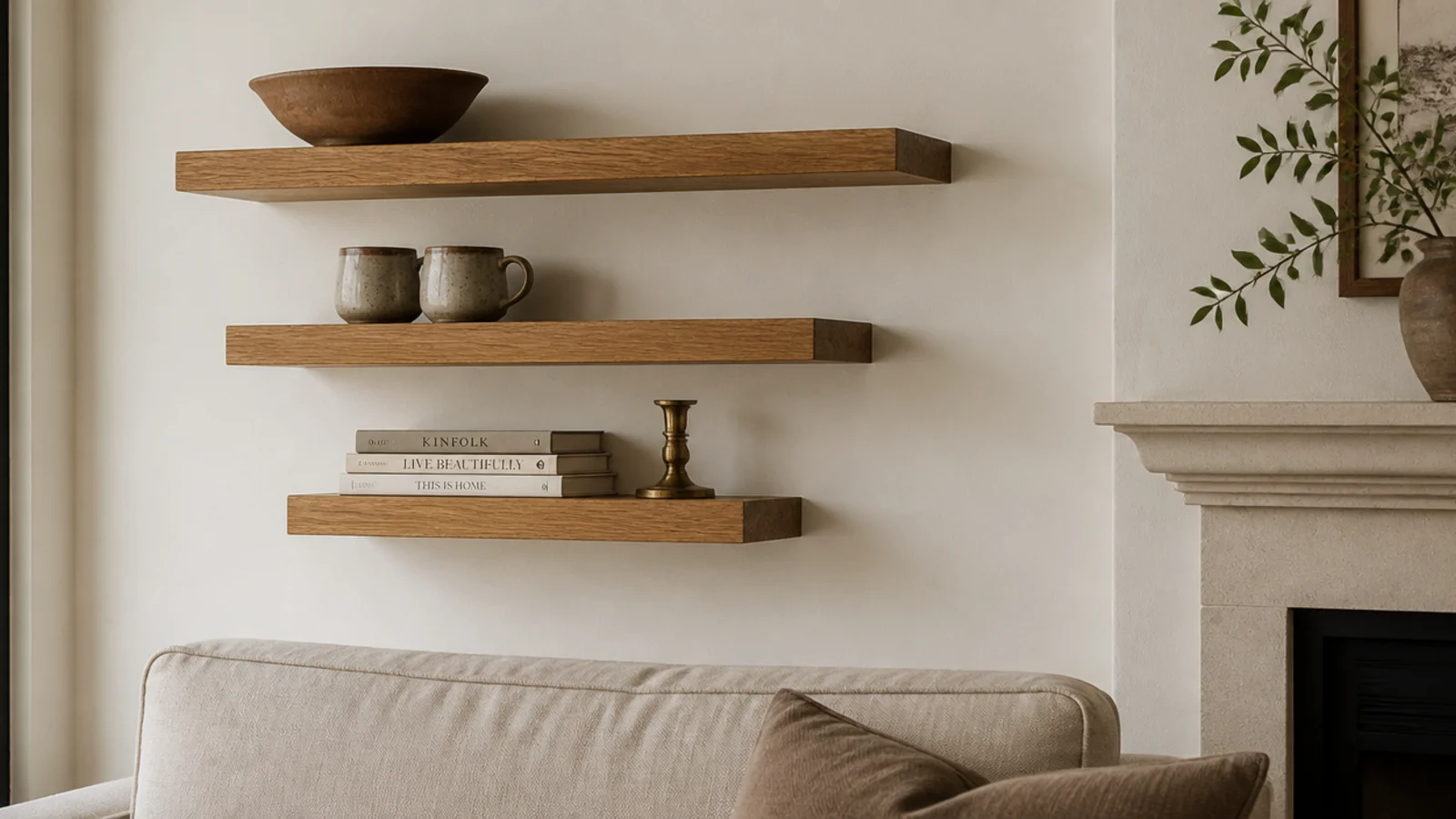
Not every corner needs three shelves, though. Sometimes one is the whole answer.
2. A reading corner shelf above the chair
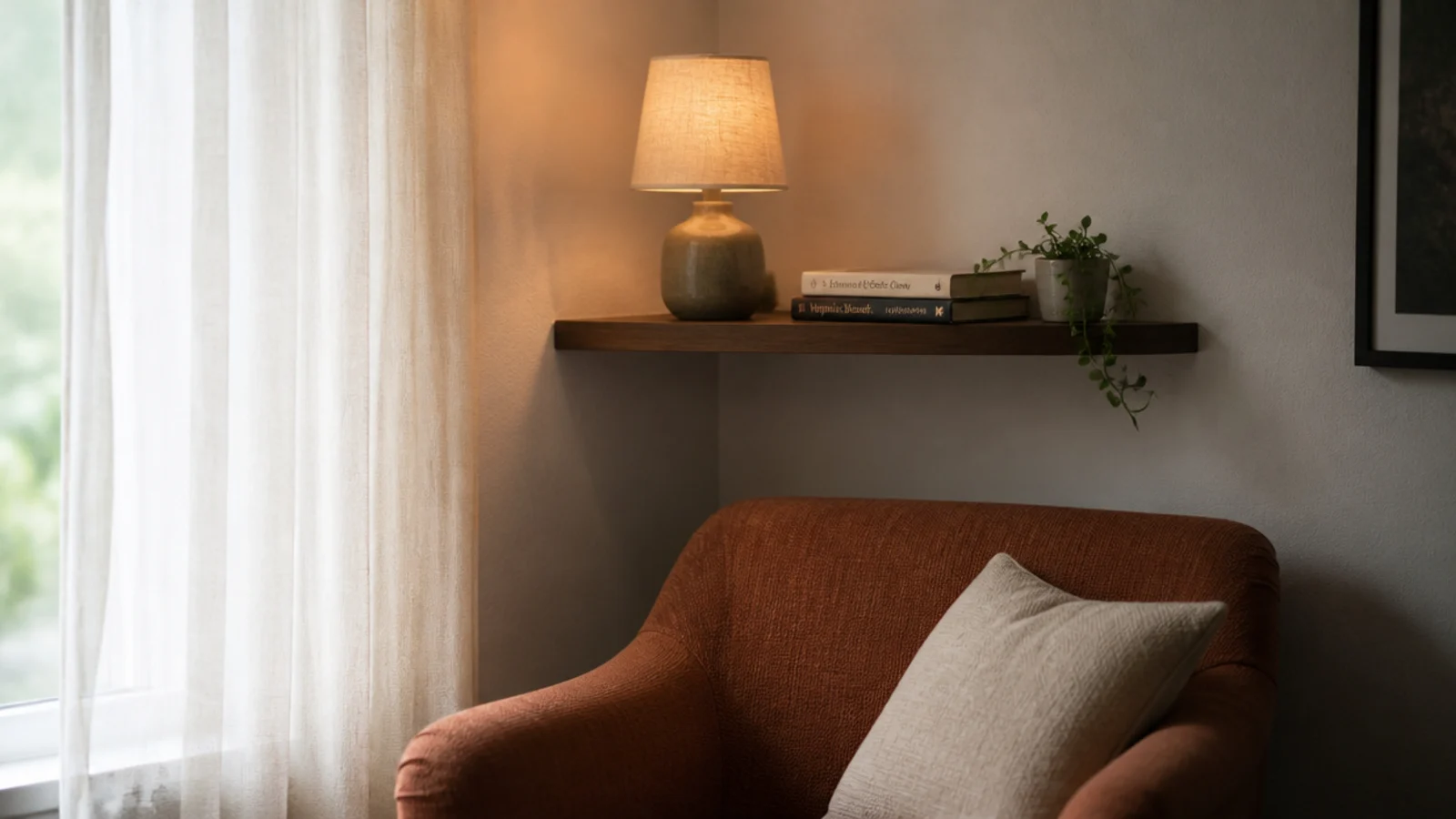
One shelf, mounted 16 to 18 inches above the back of a chair, does more than a full unit. It puts a lamp, a book and a mug exactly where you reach without a side table eating floor space.
Keep it to 24 inches long and eight deep. Anything longer starts to loom over your head when you lean back. A small ceramic lamp with a warm bulb turns the corner into the spot everyone fights over — that single lamp does more for a room at night than the ceiling light ever will.
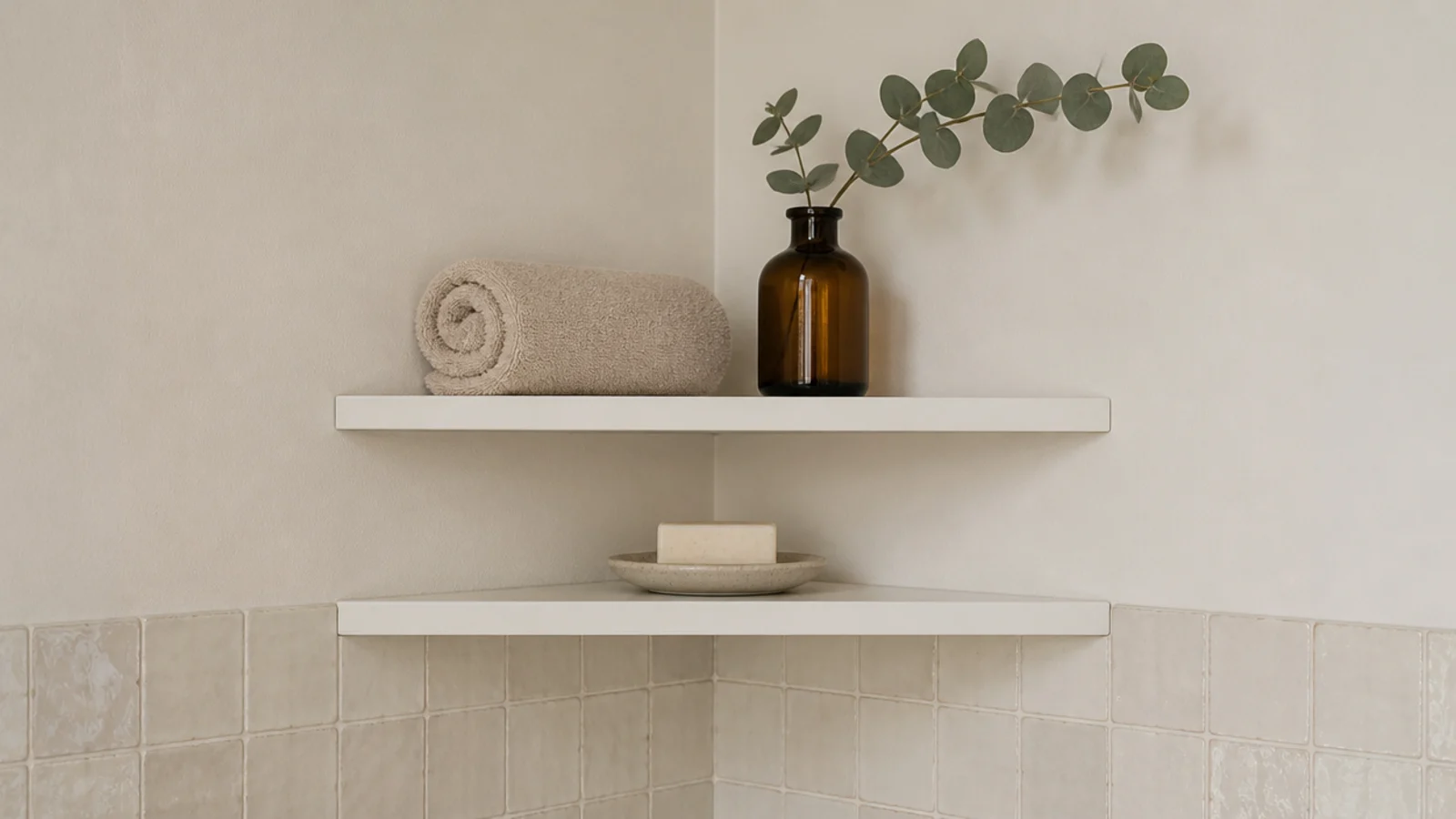
3. A slim five-inch shelf for the bathroom corner
Bathroom corners punish deep shelves. You catch them with an elbow getting out of the shower, and anything on them ends up damp.
Five inches is the number. It holds a rolled towel, a soap dish and a small bottle, and it stays clear of the shower door swing. Choose sealed wood, powder-coated metal or solid surface — raw pine swells and stains within a season in a room with no window. Mount the lower shelf at 48 inches so a towel hanging from it clears the toilet tank. There is a whole guide to bathroom corner shelves that survive the humidity if that is the corner you are fixing.
4. A leaning plant ladder for the sunny corner
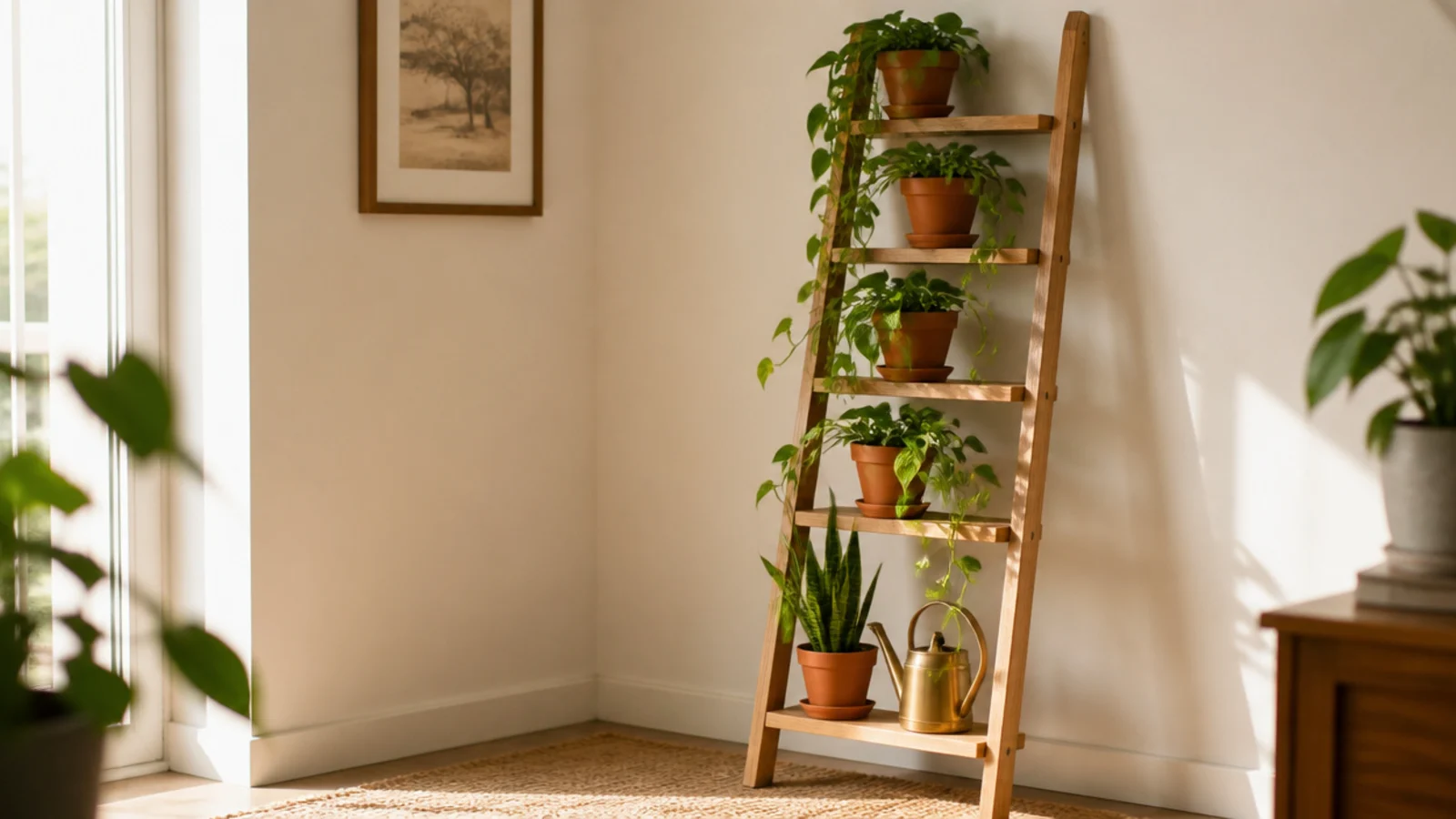
If the corner gets real light and you cannot drill, lean a ladder shelf into it. A five-rung oak ladder leaning at roughly 15 degrees holds a surprising amount, sits stable against two walls, and needs nothing but a felt pad under each foot.
Put the heaviest pot on the bottom rung, always. Trailing plants belong on rungs two and four so the greenery falls between the levels instead of stacking. Cost runs $45 to $90, and it walks out with you on lease day.
5. A spice and oil shelf in the kitchen corner
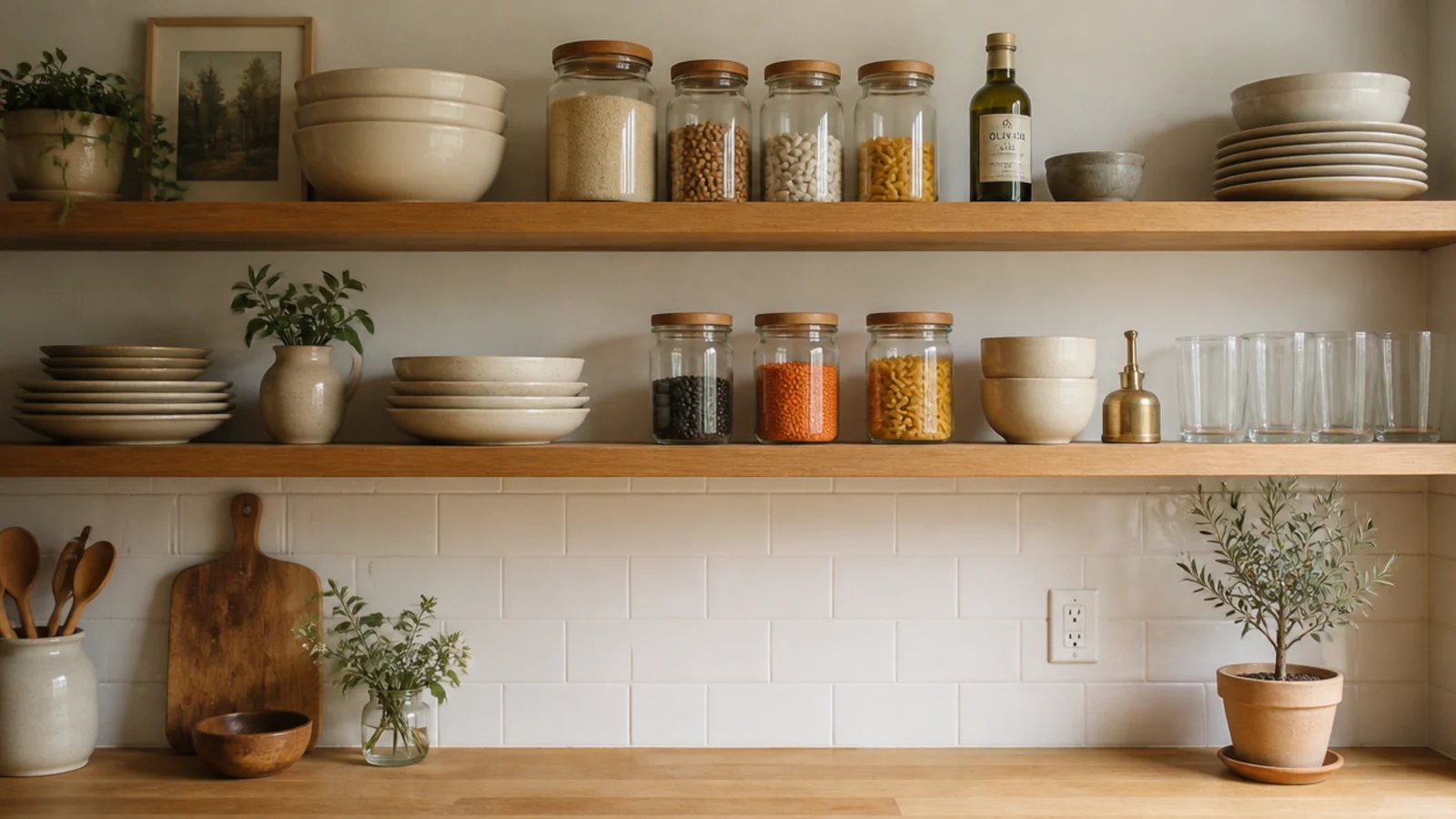
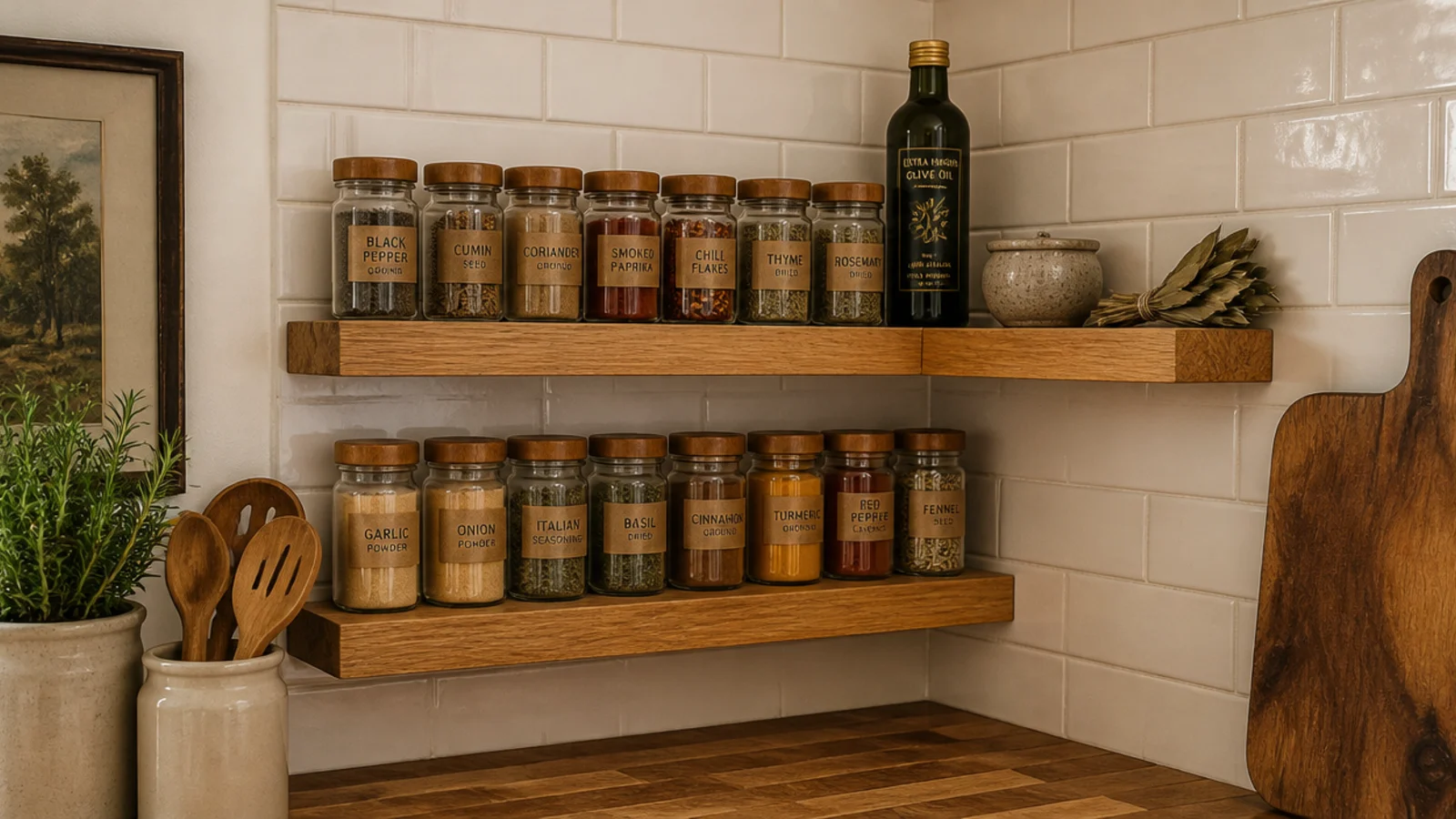
The dead corner behind a counter is prime real estate for the things you reach for while cooking. Two shelves at six inches deep, mounted 11 and 22 inches above the counter, put spices and oil at eye level without blocking your prep space.
Decant into matching jars only if you will actually refill them — mismatched jars you use beat matching jars you resent. Keep it to daily items. The moment you shelve the paprika you use twice a year, the corner starts collecting instead of working.
6. A bedside corner shelf instead of a nightstand
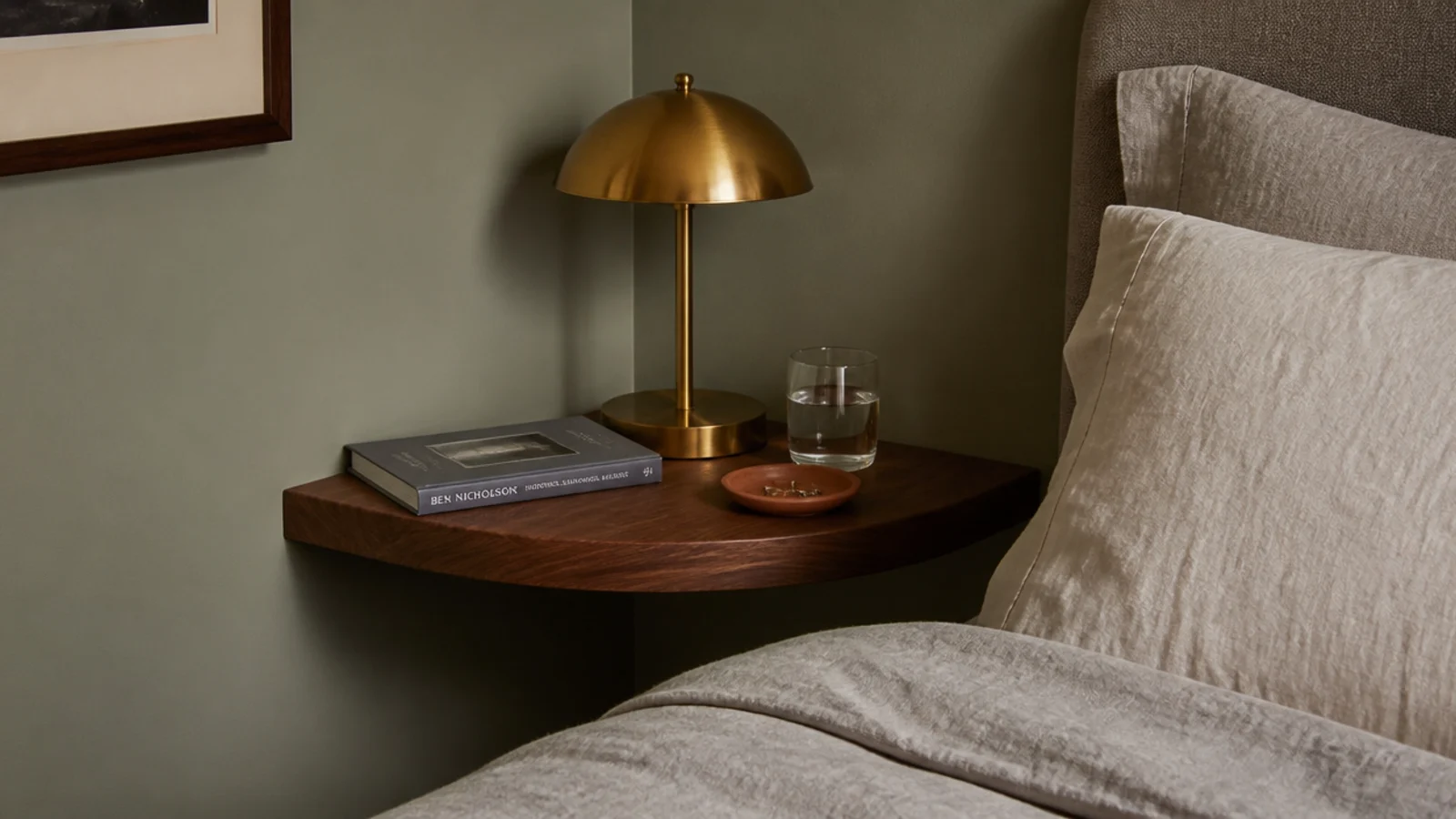
In a bedroom where the bed has to sit in a corner, a floating shelf beats a nightstand you cannot walk around. Mount it level with the top of the mattress, not the headboard — that is the height your hand naturally lands at in the dark.
Twelve inches long and seven deep holds a lamp, a book, a glass and a small dish. Add a second shelf 14 inches above it for a plant if the wall feels bare. Total footprint: zero.
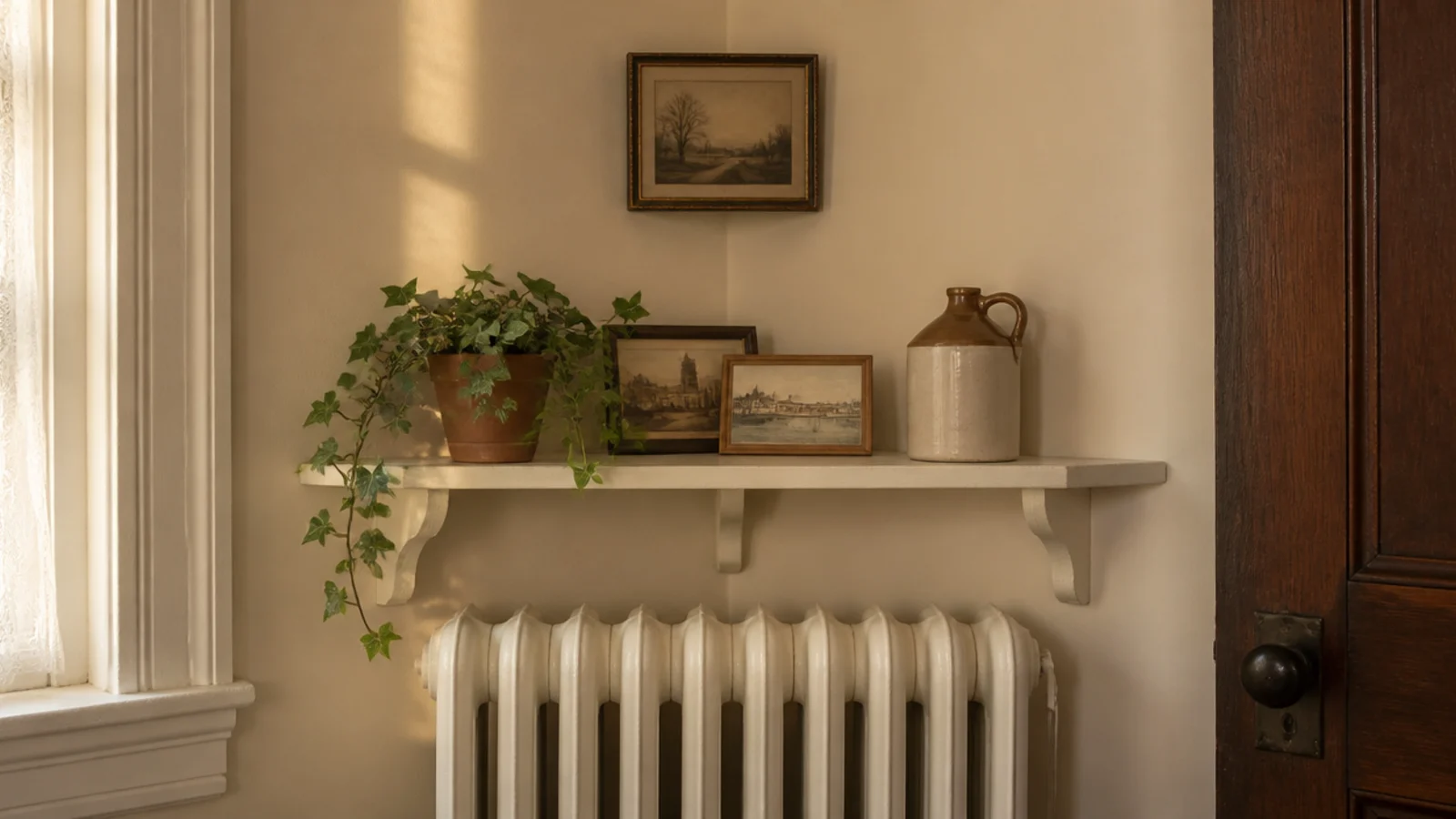
7. A shelf that hides the radiator corner
A corner radiator is an eyesore that cannot move. A shelf above it turns it into a plinth.
Leave at least four inches of clear air between the radiator top and the shelf underside so heat can rise, and choose solid wood or metal rather than anything laminated — repeated heat cycles lift laminate edges. Skip candles and vinyl records up here for the obvious reason. Trailing ivy, ceramics and framed prints handle the warmth without complaint.
8. A drop-zone corner shelf by the front door
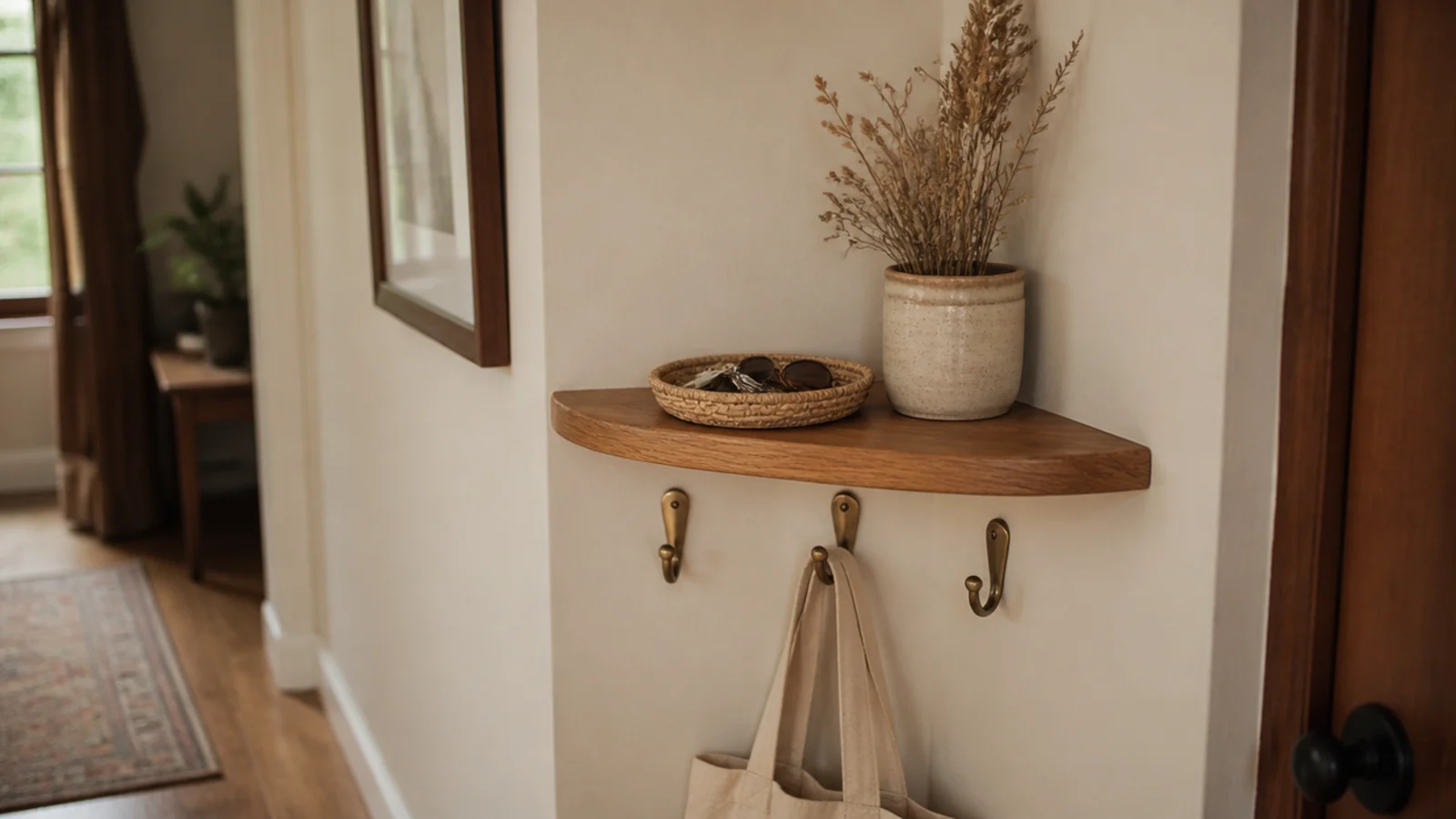
The corner just inside the door is where keys, mail and sunglasses land whether you plan for it or not. Give it a shelf at 52 inches and a row of hooks 14 inches below.
One shallow tray on the shelf catches everything small; without it, the shelf becomes a ledge things slide off. Six inches deep is plenty and keeps the corner from narrowing the doorway. This is the same logic behind a proper entryway drop zone — the corner just does it in less space.
9. A floor-to-ceiling corner bookshelf column
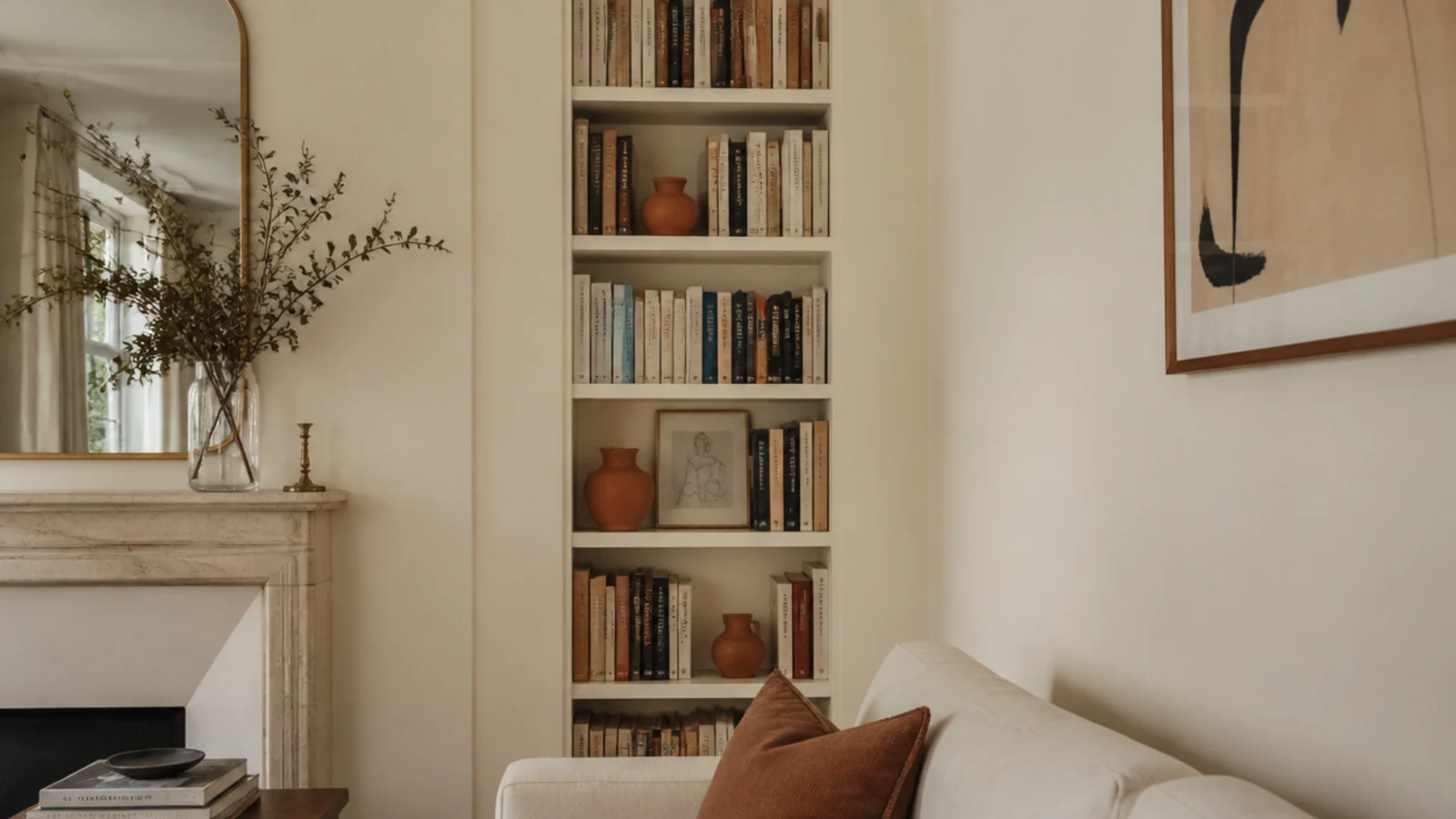
When a corner is genuinely out of the traffic path, go all the way up. A slim column — 10 inches deep, running floor to ceiling — holds an astonishing number of books in a footprint the size of a side table.
Paint it the exact wall color. A column that matches the wall reads as architecture; a column in a contrasting color reads as furniture crammed in a corner. Group books by height rather than color and leave one shelf two-thirds empty for a piece of pottery. That empty shelf is what stops the whole column feeling heavy.
10. A low shelf under the corner window
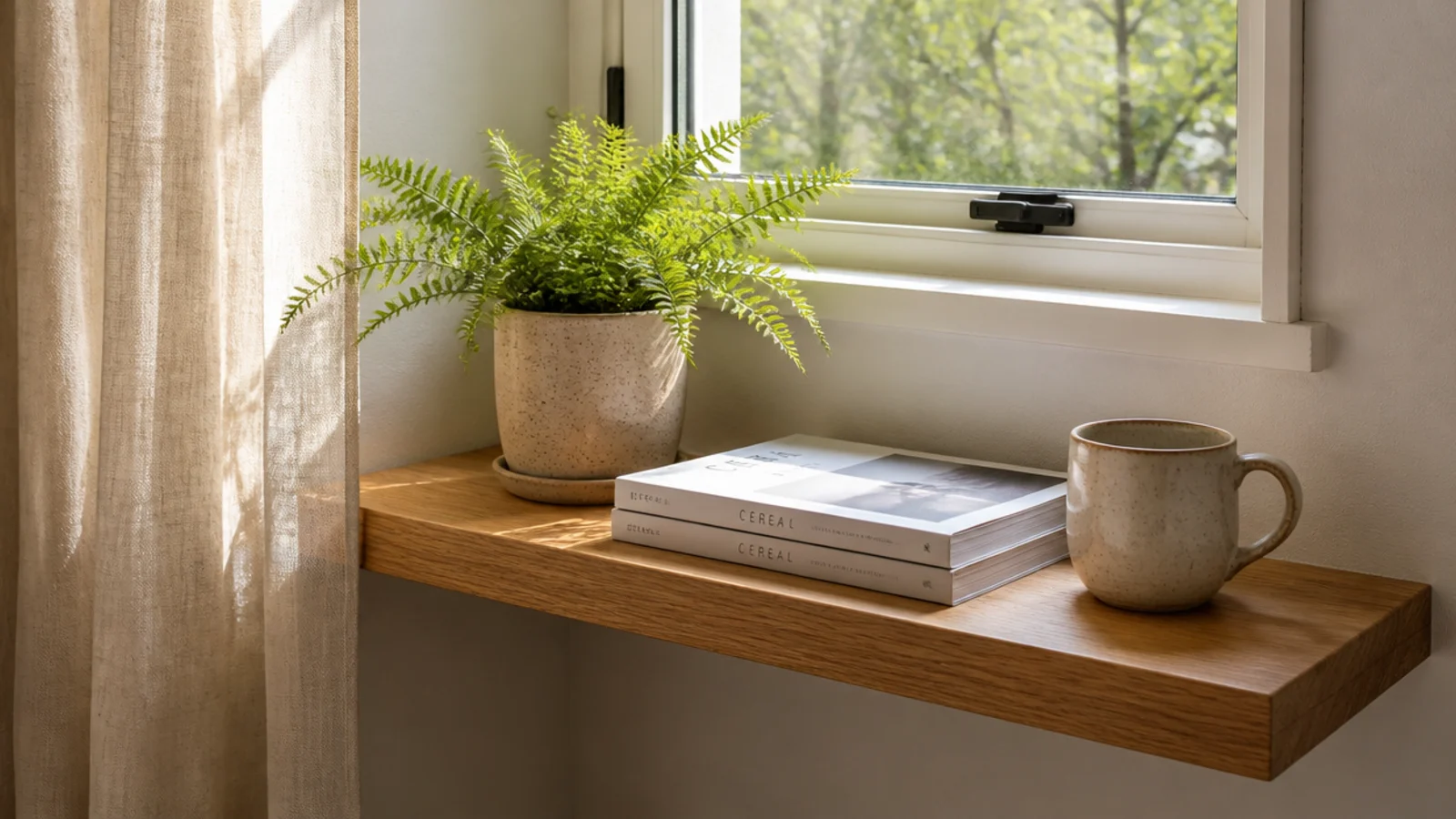
Where two walls meet under a window, a low shelf catches the light without blocking it. Keep the top surface at least three inches below the sill.
At 10 inches deep it takes a plant that likes bright indirect light, a stack of magazines and a mug. This is the one corner where I break the odd-numbers rule — a row of small pots along a low shelf under a window looks intentional at any count, because the window frame is already doing the composition for you.
11. A behind-the-door corner shelf
The wall behind an open door is free storage nobody uses. The catch is the door swing, and it sets your maximum depth absolutely.
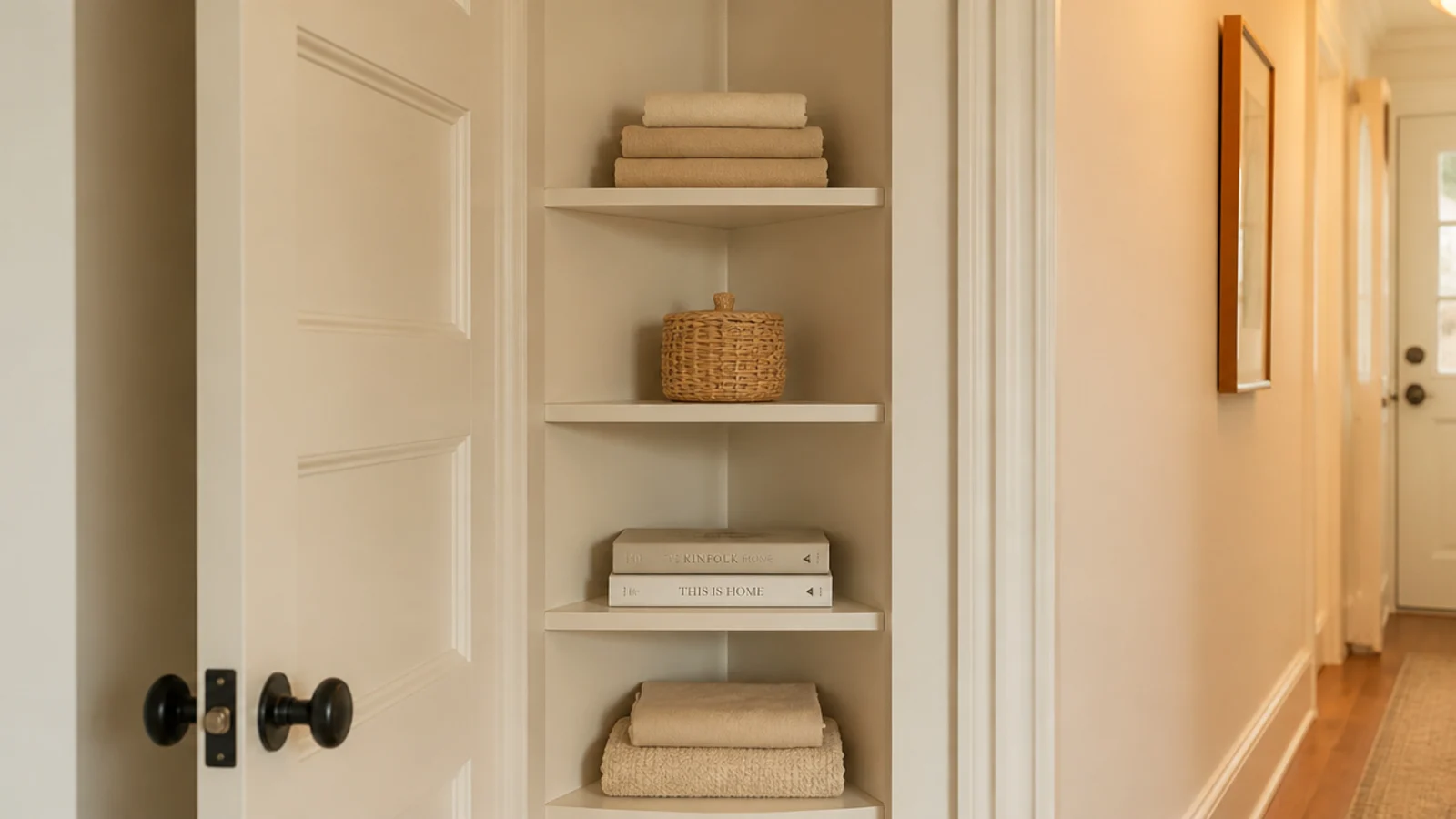
Open the door fully, measure from the wall to the door face, subtract two inches, and that is your depth — usually four or five. Use it for folded linens, a basket of chargers, or overflow books. Nothing breakable: doors get pushed harder than people think, and a four-inch shelf has very little margin.
12. A coffee corner on two shelves
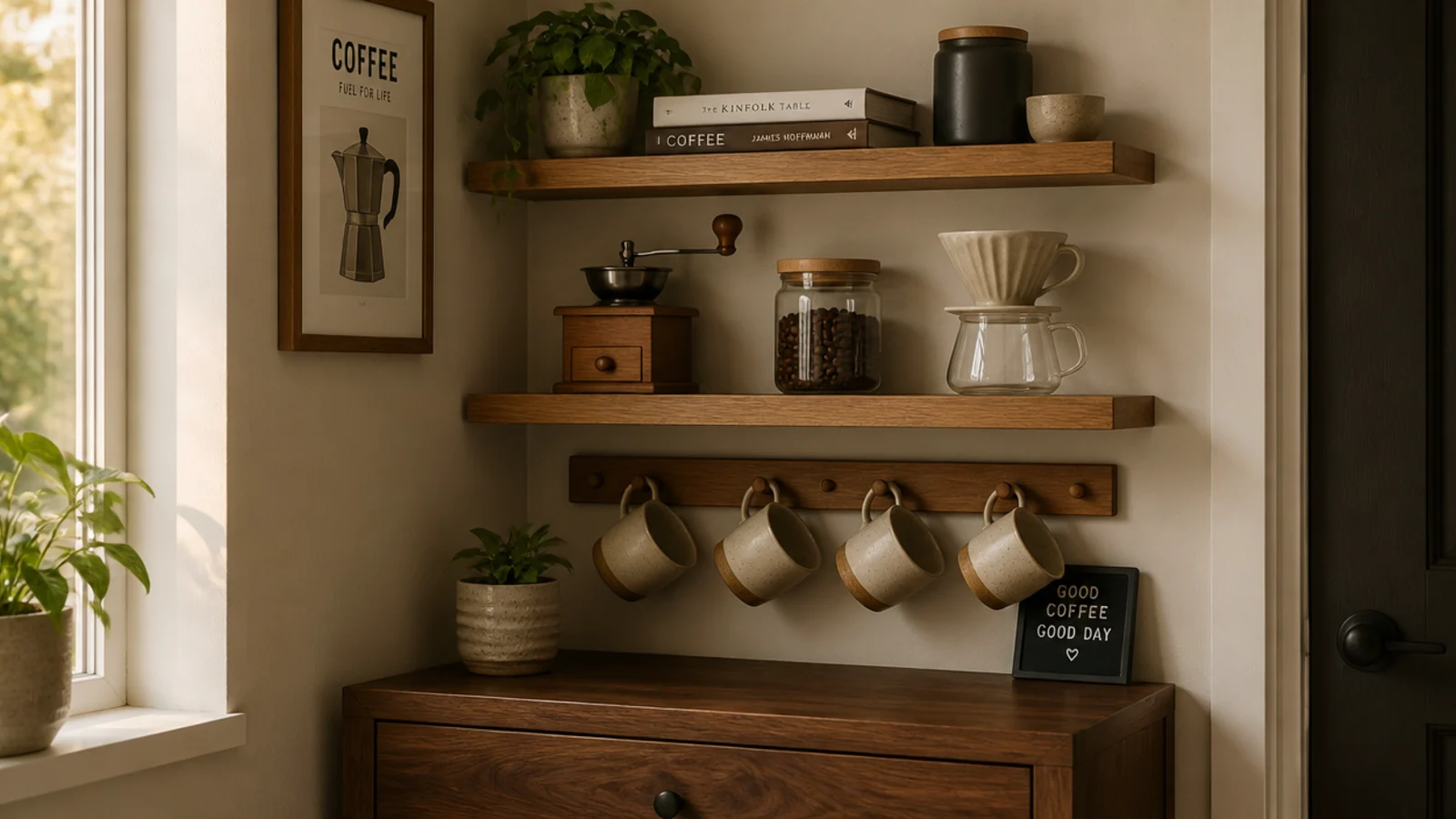
Two shelves and a small cabinet turn a kitchen corner into a coffee station that keeps mugs off the counter. Mount the lower shelf 14 inches above the cabinet top so a tall machine fits underneath, and the second 12 inches above that.
Add a peg rail under the lower shelf for mugs — it holds six in the space one mug takes on a counter. Everything you need for one cup should sit inside a single arm sweep. There is a full coffee corner setup guide if this is the corner you care most about.
13. A low corner shelf in a kids room
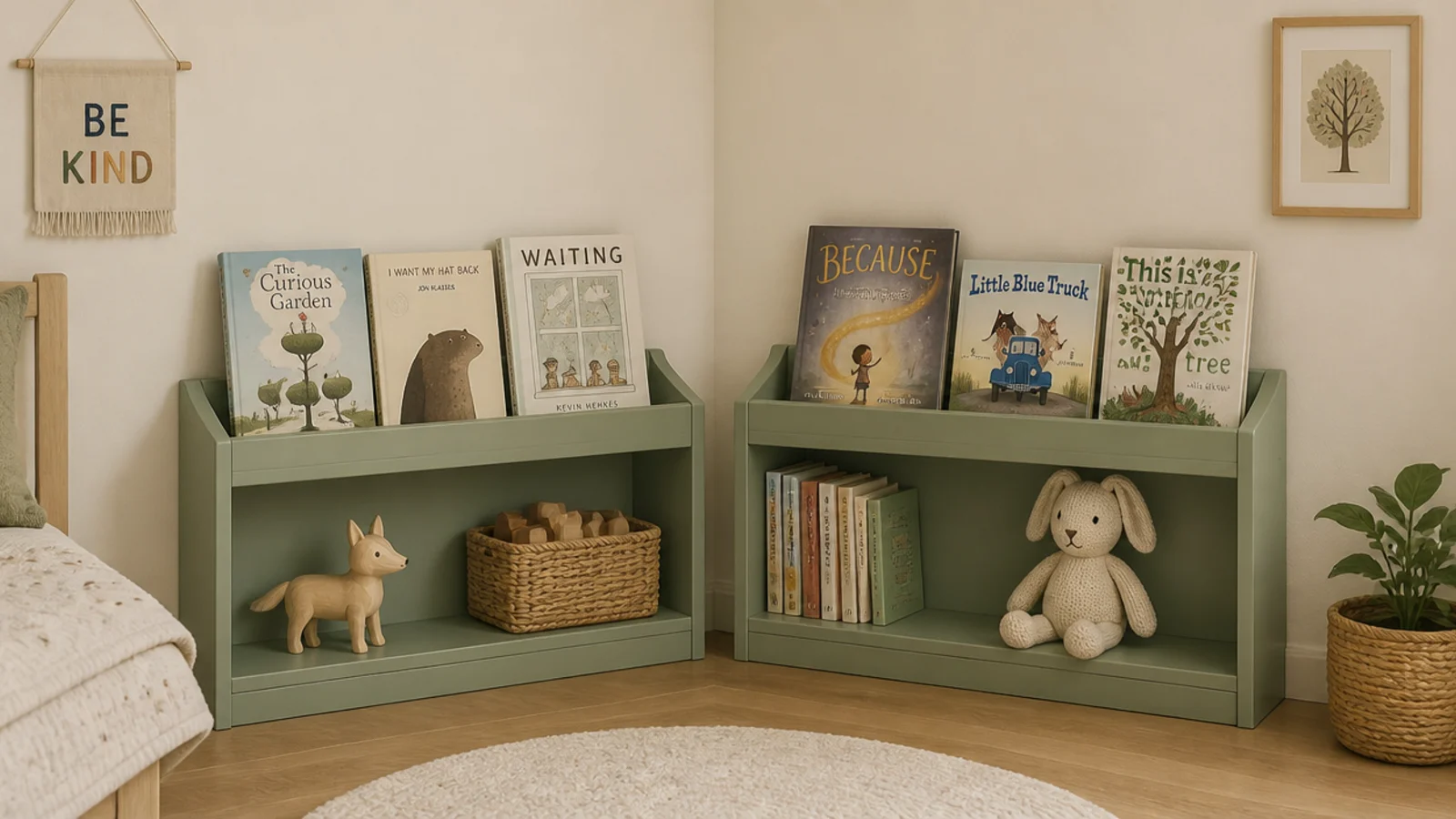
Height is the whole design here. Cap the top shelf at 36 inches so a small child can reach it without climbing, and anchor the unit to the wall regardless of how heavy it is.
Forward-facing picture book ledges work better than spine-out shelves for anyone under six — they choose by cover. Two shelves is enough. A third just becomes the place things get hidden.
14. A picture ledge that wraps the corner
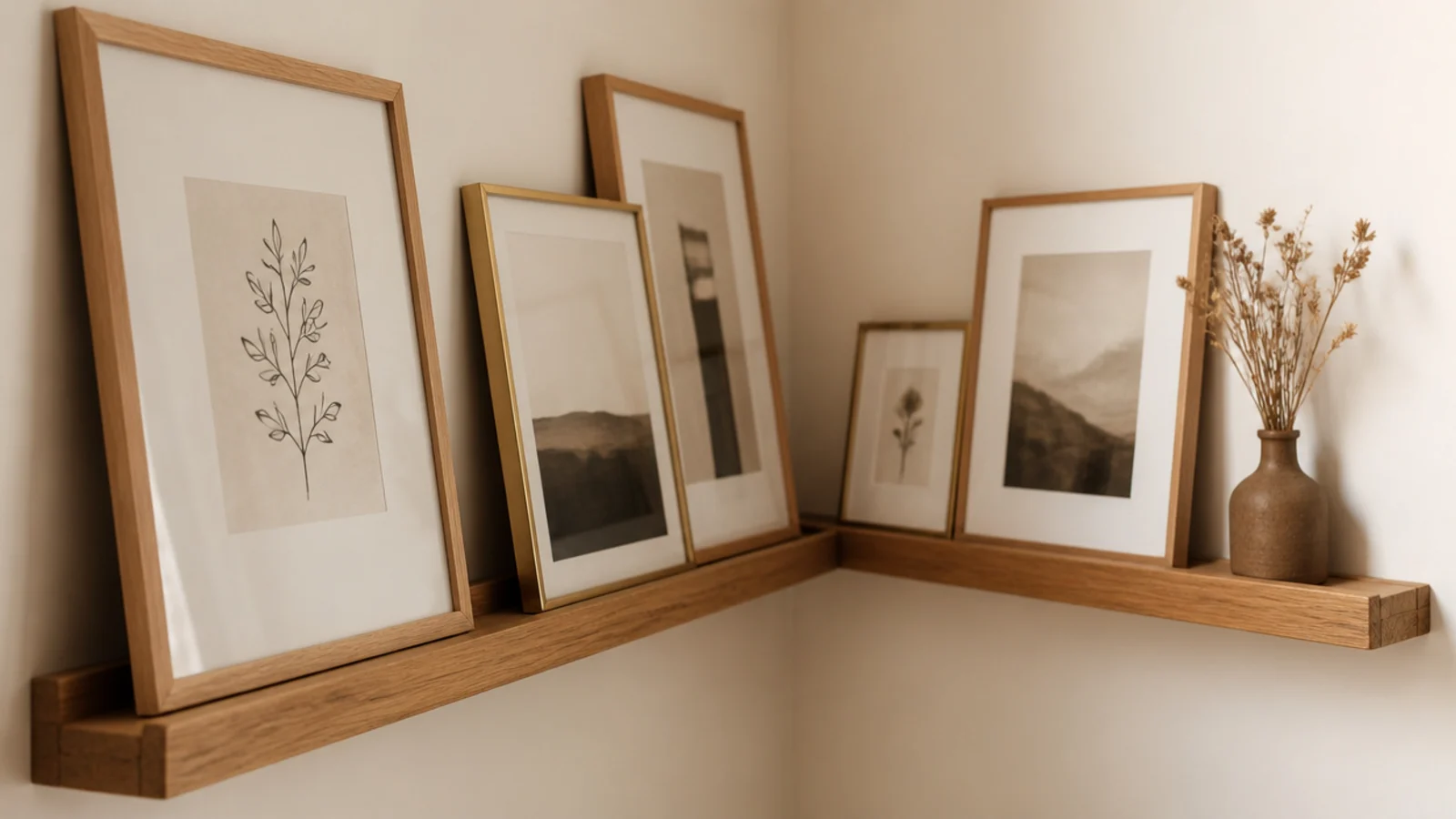
Instead of hanging art across a corner, run a narrow picture ledge along both walls at the same height and let the frames lean.
Three inches deep with a lip is all you need. Overlap the frames slightly where they meet the corner so your eye reads one continuous line rather than two separate walls. Mix frame sizes but keep to two frame finishes — oak and brass, or black and oak. And you can restyle the whole thing in five minutes without patching a single hole.
15. A freestanding corner etagere with no drilling
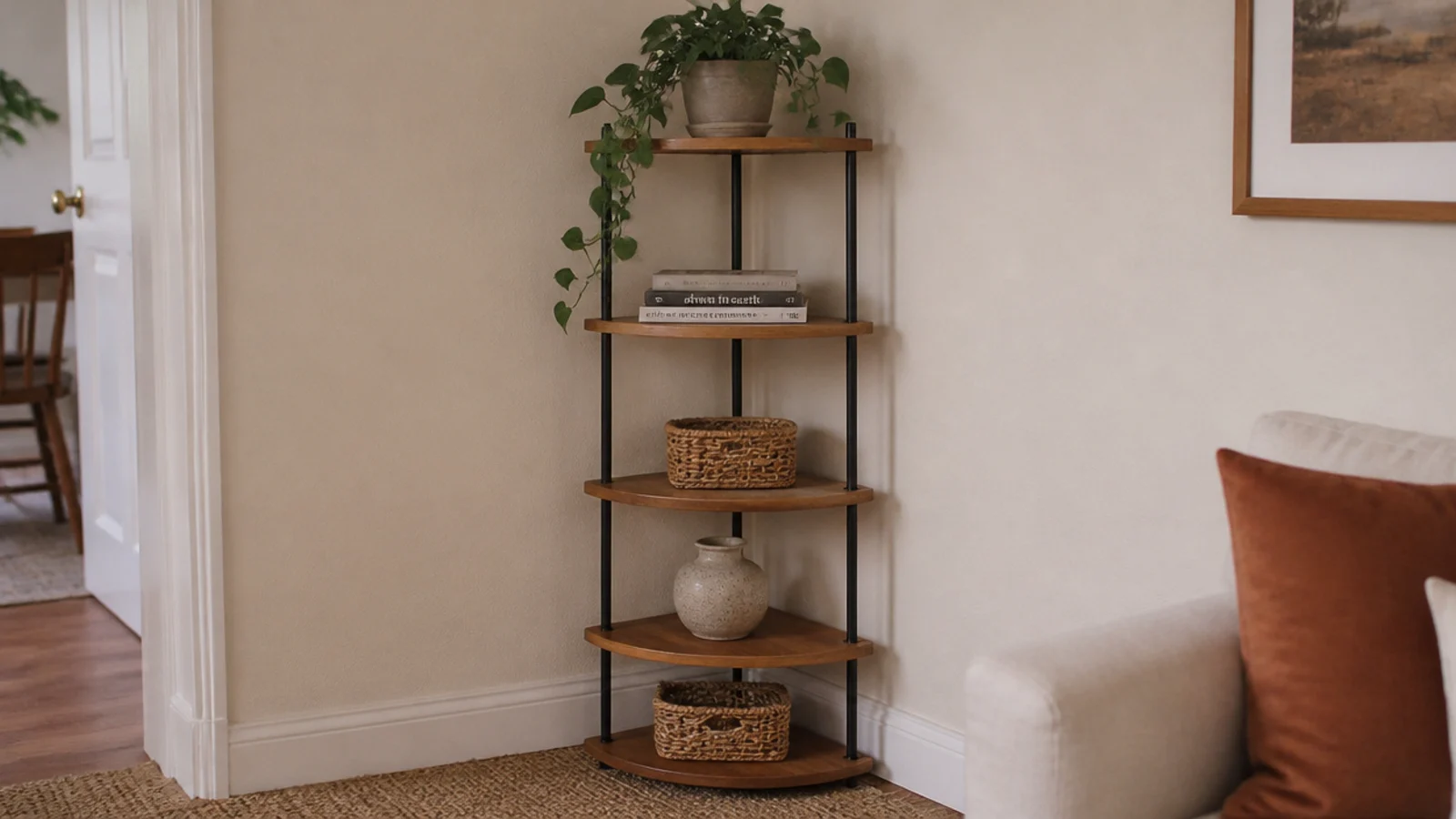
If drilling is off the table entirely, a freestanding corner etagere is the honest answer. Five tiers of oak and thin black metal, roughly 68 inches tall, carries far more than any adhesive solution and leaves the wall untouched.
Look for a triangular footprint rather than a square one — square units waste four inches of corner. Put the heaviest items on the bottom two tiers to keep the center of gravity low, and if there are kids or pets around, run one anti-tip strap into the wall. One small hole beats a tipped shelf.
Mistakes to Skip
- Using the plastic anchors that come in the box. They are rated for about 10 pounds and they are the reason most corner shelves sag. Toggle bolts cost $4 and carry three times as much.
- Choosing a 12-inch depth in a corner you walk past. You will clip it with your shoulder within a week and keep clipping it for years.
- Spacing the tiers evenly at eight inches because it looks neat empty. Nothing you own fits in eight inches, and the shelf ends up holding trinkets by default.
Frequently asked questions
How deep should a corner shelf be?
Eight to ten inches is right for a living room or bedroom corner — deep enough for books, framed photos and mid-size pottery without crowding the walkway. Drop to five or six inches in a bathroom, hallway or anywhere within arm's reach of a doorway. Save twelve inches for a corner that sits genuinely out of the traffic path, like behind a chair.
How much weight can a corner shelf hold?
It depends entirely on the anchor, not the shelf. A bracket screwed into a stud carries 40 to 50 pounds comfortably. Toggle bolts in half-inch drywall carry 25 to 35 pounds per bolt. The plastic plugs included in most shelf boxes carry about 10 pounds and are the single most common reason corner shelves sag.
Can renters put up corner shelves without drilling?
Yes, with honest weight limits. Heavy-duty adhesive strips rated to 15 pounds per pair hold a light 6-inch shelf with ceramics on it. A freestanding corner etagere carries far more and leaves the wall untouched. Tension-mounted corner units work in a true 90-degree corner with floor and ceiling both solid. Test any adhesive on hidden paint first — flat builder-grade paint peels.
How far apart should corner shelves be spaced?
Twelve to fourteen inches of clear height between tiers. That lets a hardback stand upright with a small plant on top of it and still leaves visual breathing room. Under ten inches and the shelf reads as a filing slot. Keep the top shelf about twelve inches below the ceiling so the stack does not feel jammed against it.
What should I actually put on a corner shelf?
Three objects per shelf, at three different heights, is the reliable default: something tall like a vase or taper, something low and wide like a stacked pair of books, and something soft like a trailing plant to break the hard line. Leave roughly a third of each shelf empty — the empty space is what makes it read as styled rather than stored.
Do corner shelves make a small room look bigger?
They do, because they move storage into space that was already dead and off the floor. Floor area is what your eye reads as room size, so a corner shelf holding what used to sit in a basket on the ground genuinely opens a small room up. Keep the shelves the same color as the wall to make them recede further.
Pick the corner that annoys you most and start there — one shelf, measured properly, changes how the whole room reads. If you want the full build rather than a bought set, the step-by-step corner shelf project walks through cutting and mounting, and corner shelf styling covers what to put on it once it is up. Save the pin below so the numbers are with you in the hardware aisle.
Want more like this? Browse all 15 corner shelf ideas guides — they all use the same measurements and budget tiers.

Pin it for later
Save this to your Corner Shelf Ideas board
Pin it now so it is waiting for you when the tape measure comes out — and so the next person hunting for this idea can find it too.
Save this pinKeep going
More ideas worth saving while you have the tape measure out.