Corner Shelf Ideas · Listicle
20 Creative Corner Shelf Ideas Anyone Can Do

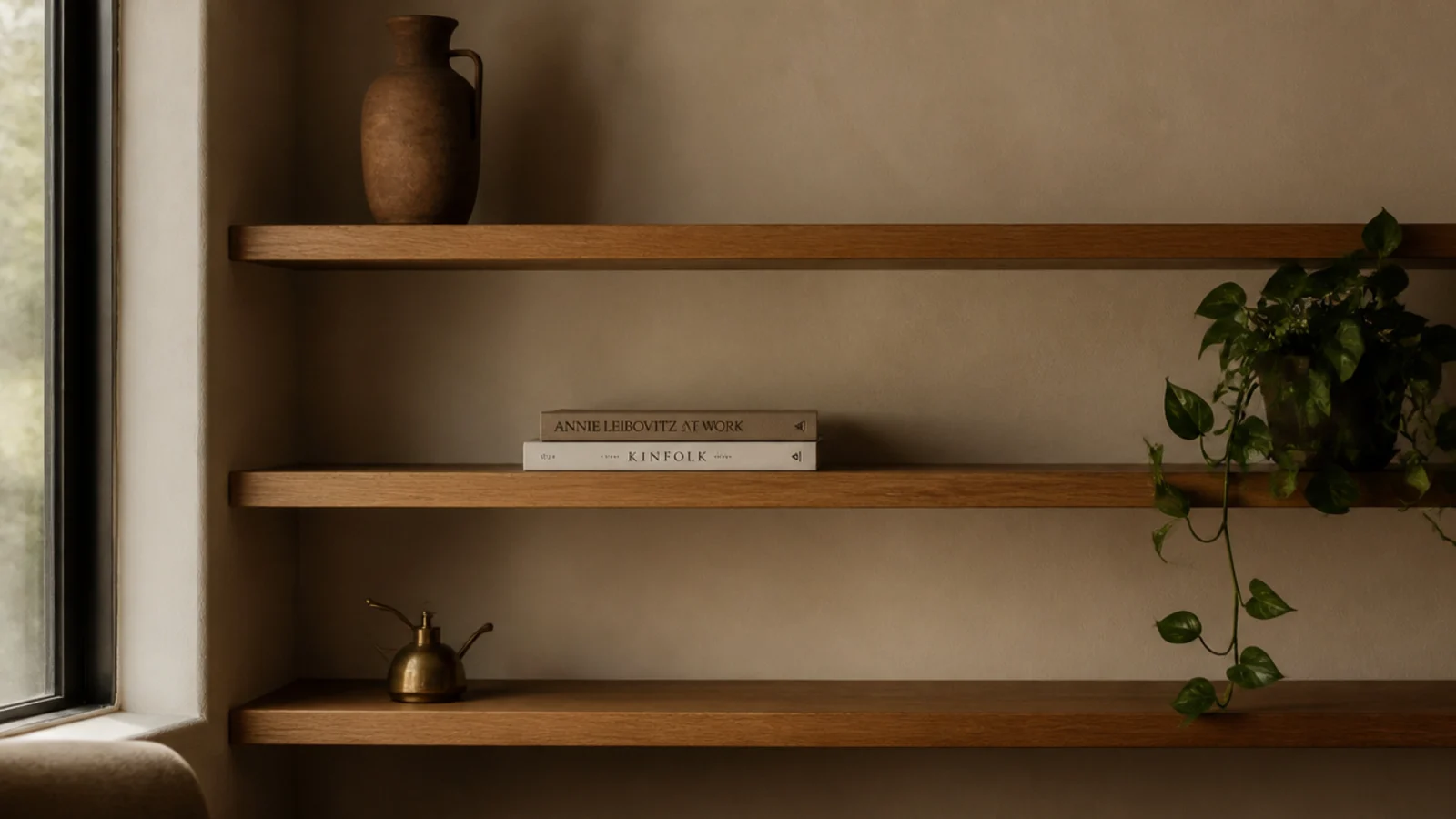
Corner shelf styling is the part people redo four times and still feel is wrong, usually because they are adjusting objects when the actual problem is quantity. Everything below is a technique rather than a shopping suggestion — you can do all 20 tonight with what you already own, and most of them take under five minutes.
In this guide22 sections — tap to openHide
- 1.The three rules corner shelf styling actually depends on
- 2.Three objects at three clearly different heights
- 3.Build a triangle across the whole stack
- 4.Leave a third of every shelf empty
- 5.Repeat one material exactly three times
- 6.Layer front to back with a leaning piece
- 7.Give the corner one oversized anchor
- 8.Use books flat as a plinth
- 9.Use books upright as a vertical stop
- 10.Keep every group an odd number
- 11.Put three textures on every shelf
- 12.Let something trail over the front edge
- 13.Break the top line with one tall element
- 14.Run the empty space on a diagonal
- 15.Repeat one accent color three times
- 16.Turn one book cover out as a landing point
- 17.Corral small items on a single tray
- 18.Double the scale gap between neighbours
- 19.Keep the eye-level shelf the emptiest
- 20.Rotate seasonally instead of adding
- 21.Photograph it before you commit
- 22.Mistakes to Skip
The three rules corner shelf styling actually depends on
Every technique in this article is a variation on three ideas, and if you only remember these, the corner will be fine.
Vary the height. Three objects at three clearly different heights — something tall, something low and wide, something soft. If two objects are within an inch of each other, one of them is wrong. This is the rule that fixes the most corners.
Leave a third empty. Empty space is what signals that objects were chosen rather than stored. It costs nothing and almost nobody does enough of it. In a small room, push toward half.
Repeat, do not match. One material appearing exactly three times across the display creates a rhythm your eye reads as intentional, while the objects themselves stay mixed. Matching sets look lifeless because nothing varies.
One process note before the techniques: when a corner looks wrong, take everything off and start again from empty. Ten minutes rebuilding beats an hour nudging, because nudging relocates a problem rather than solving it. Start with the largest object, place it slightly off-centre on the middle shelf, and build outward from there.
1. Three objects at three clearly different heights
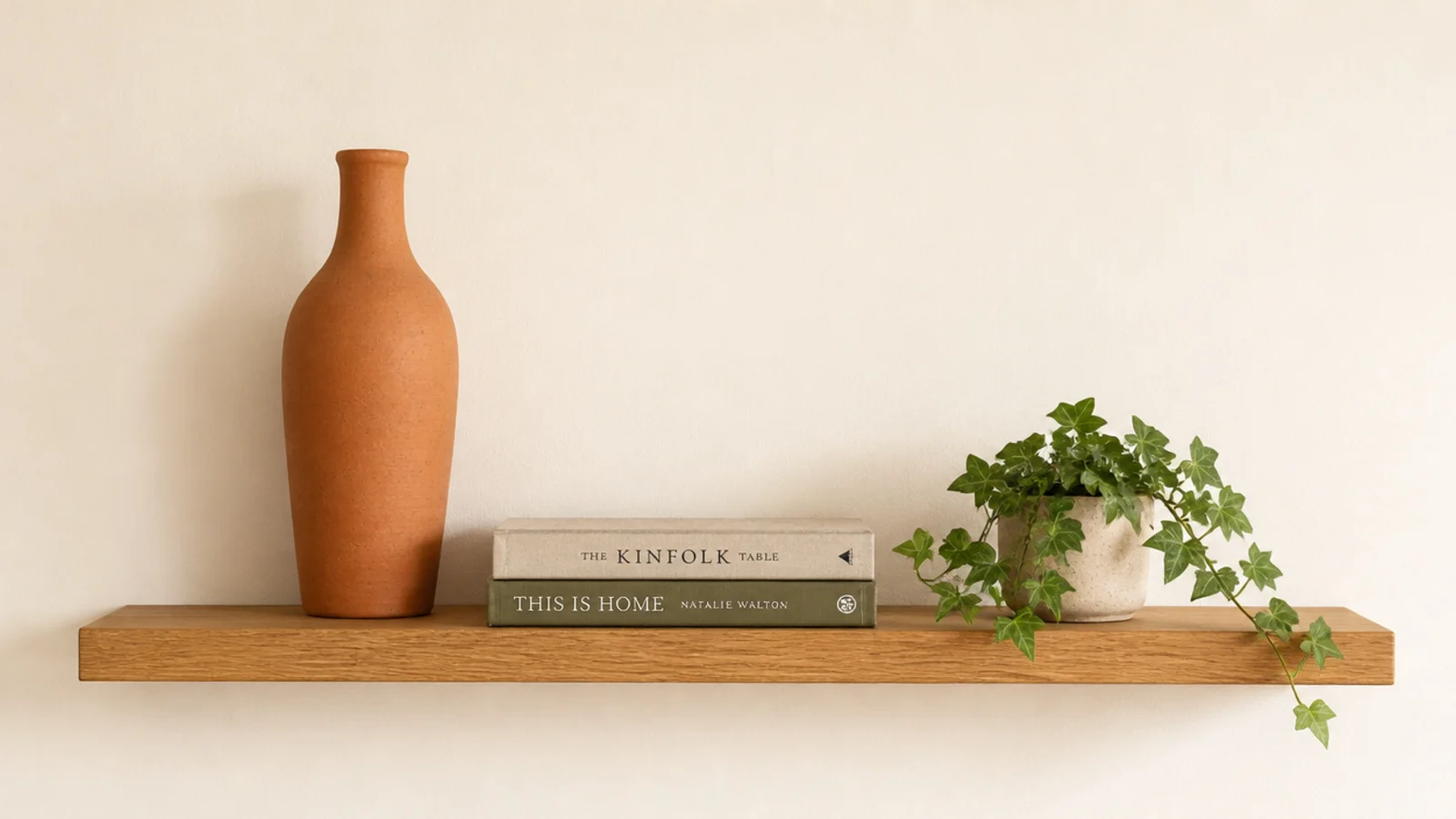
The foundational move. Something tall — a vase, a taper, a bottle. Something low and wide — two books lying flat, a shallow bowl. Something soft — a trailing plant, a folded cloth.
Test it by squinting. If two shapes read at the same height, swap one. Your eye needs a descending line to follow, and equal heights give it nowhere to go.
2. Build a triangle across the whole stack
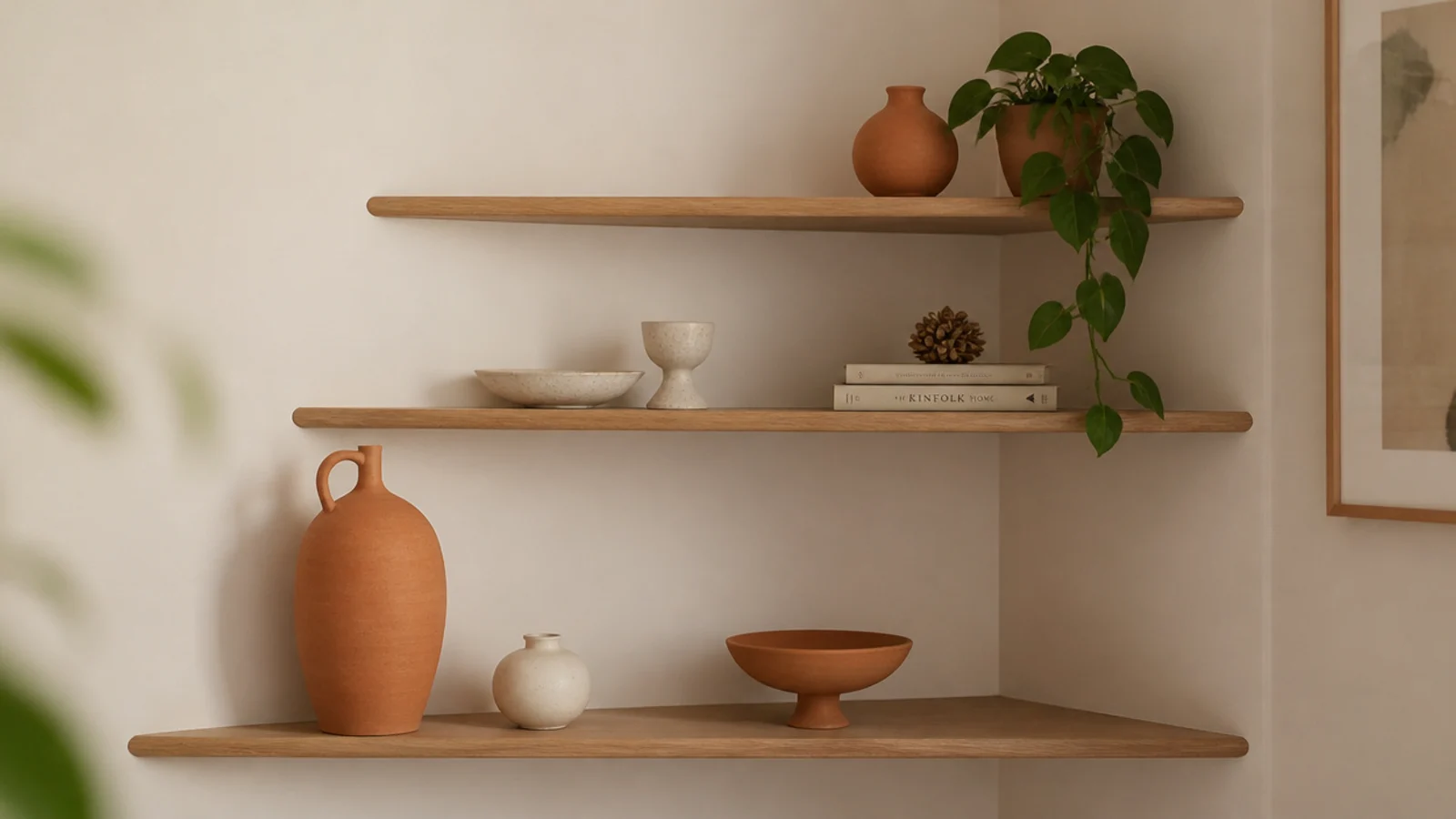
Once each shelf works, step back and look at the unit as one composition. Place the tallest elements so they form an implied triangle across all three shelves — low on one side at the bottom, high on the other at the top.
This is the step that separates three well-styled shelves from one well-styled corner.
3. Leave a third of every shelf empty
Group your objects tightly at one end or in the centre, then leave a genuine gap. Not a polite two-inch gap — a third of the shelf.
The instinct is to spread objects evenly across the width. Resist it. Evenly spaced objects read as inventory; tightly grouped objects with a real gap read as styled.
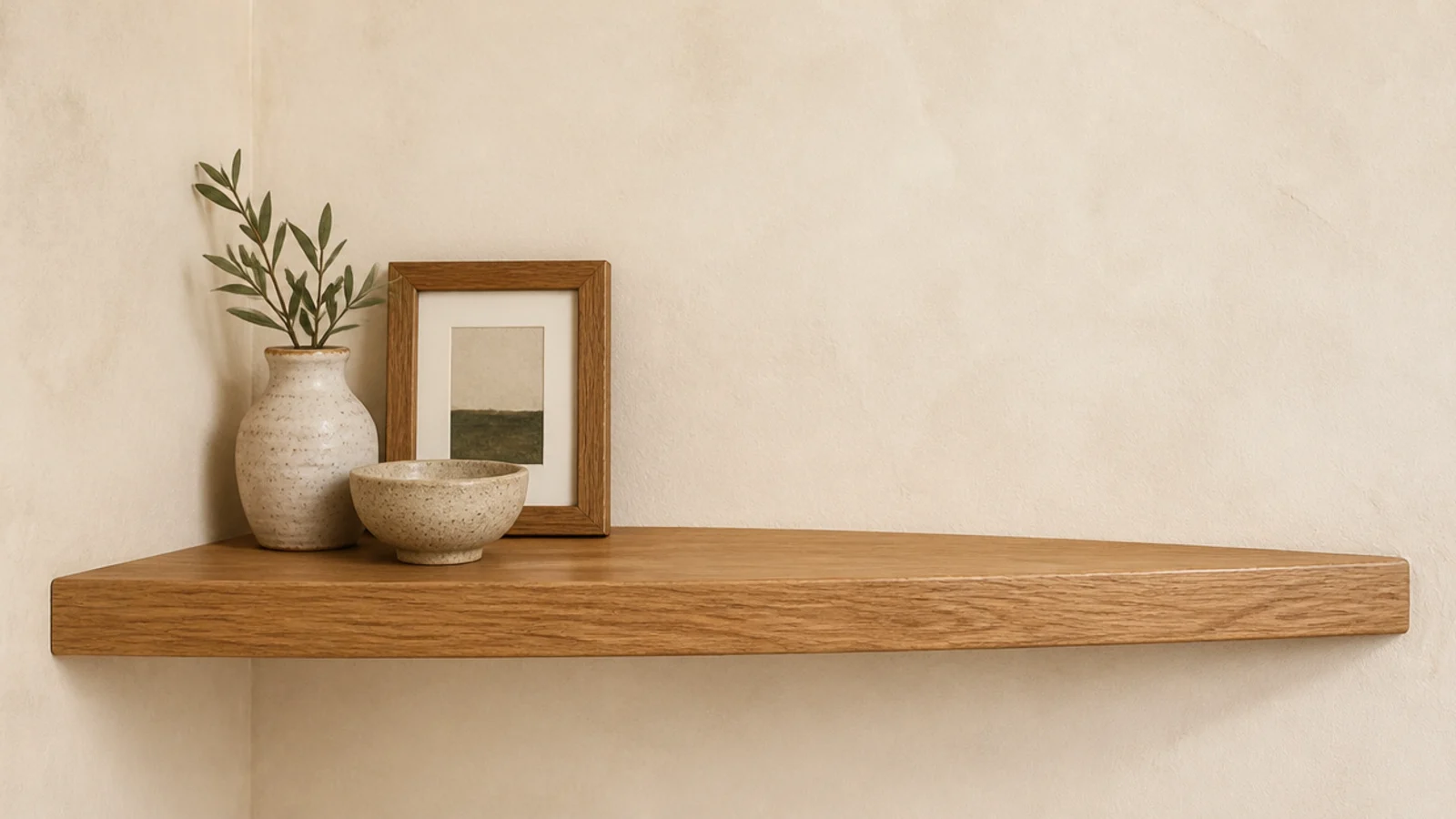
4. Repeat one material exactly three times
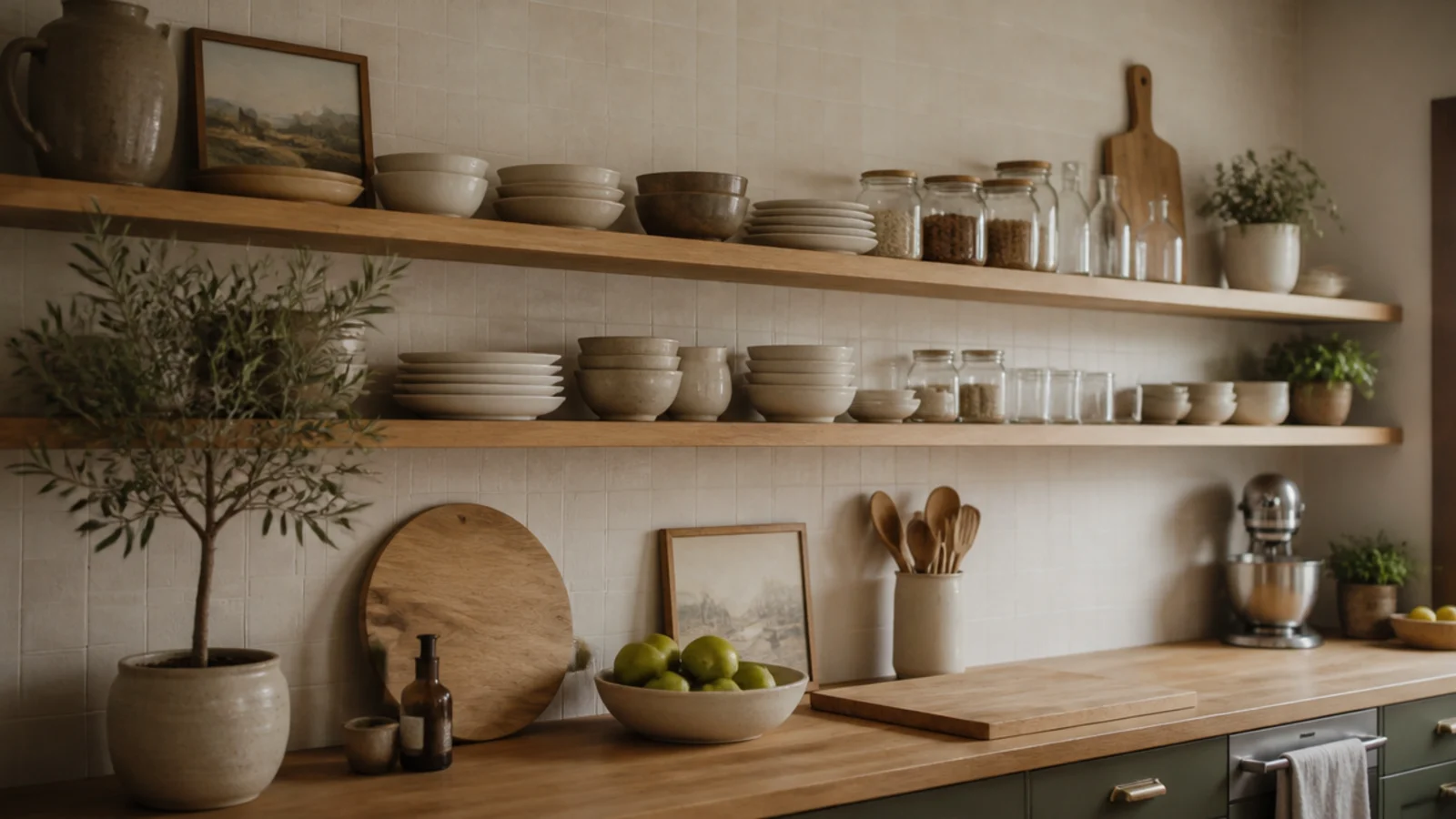
Choose brass, black metal, glass or pale ceramic and place it three times, widely spaced across the display.
Three is the number. Twice reads as coincidence, four times starts to read as a set. This single technique is why professionally styled shelves look composed while containing nothing that matches.
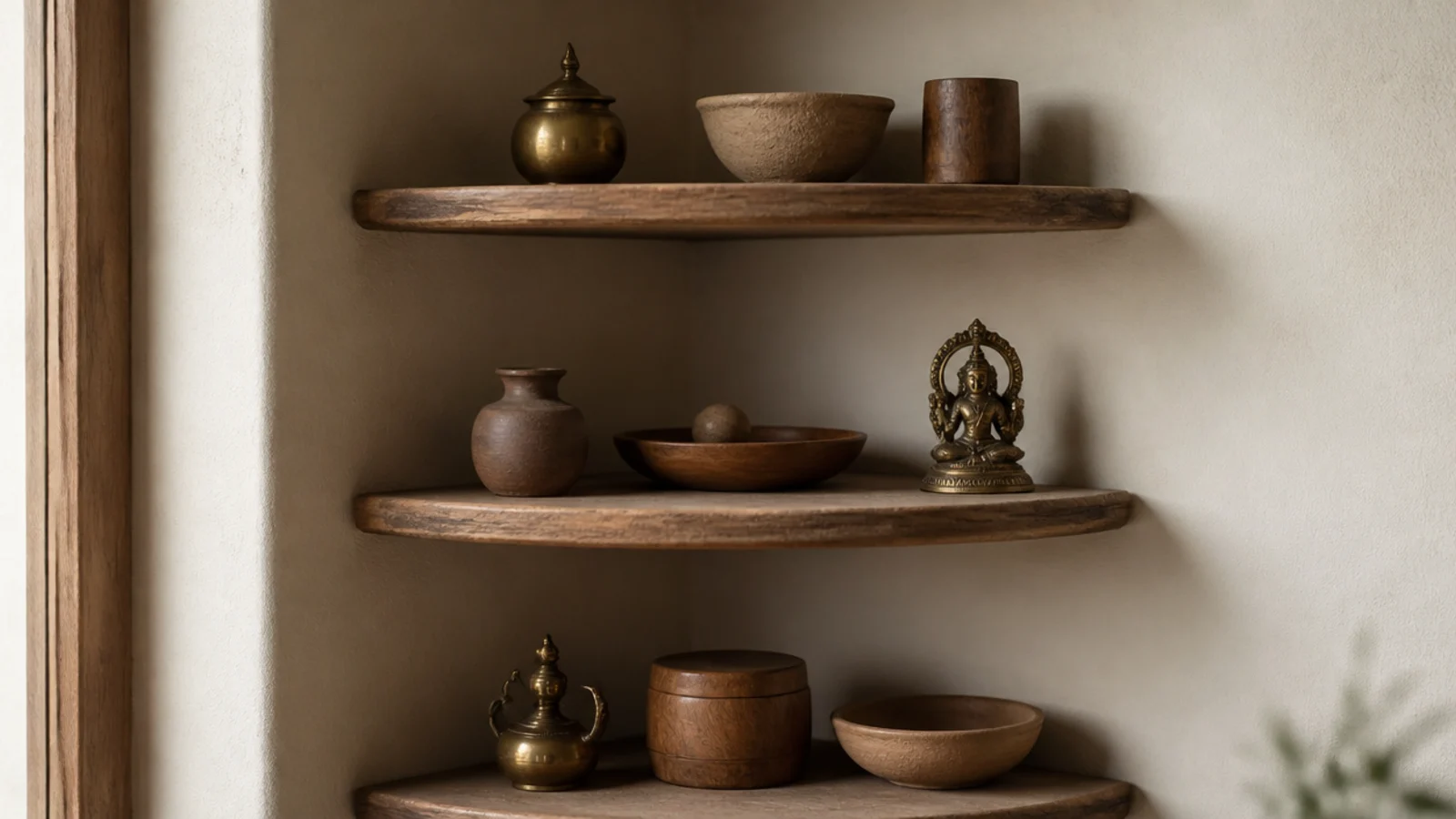
5. Layer front to back with a leaning piece
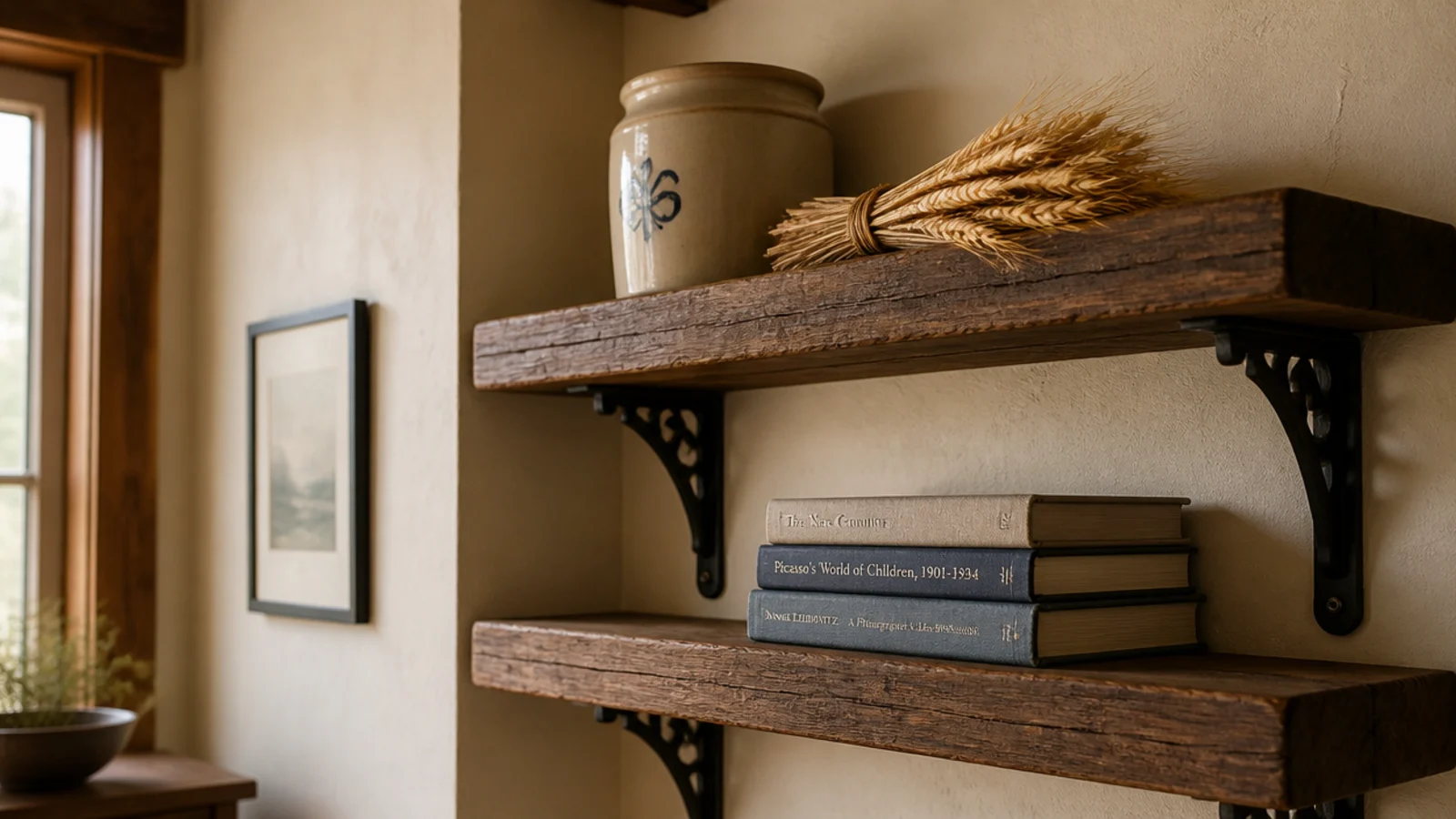
Depth is what photographs as designed. Lean a framed print or a wooden board against the wall and place two objects partly in front of it so they overlap.
On a shallow shelf this matters even more — layering makes a six-inch shelf look deeper than it is, where a straight row makes it look like a ledge.
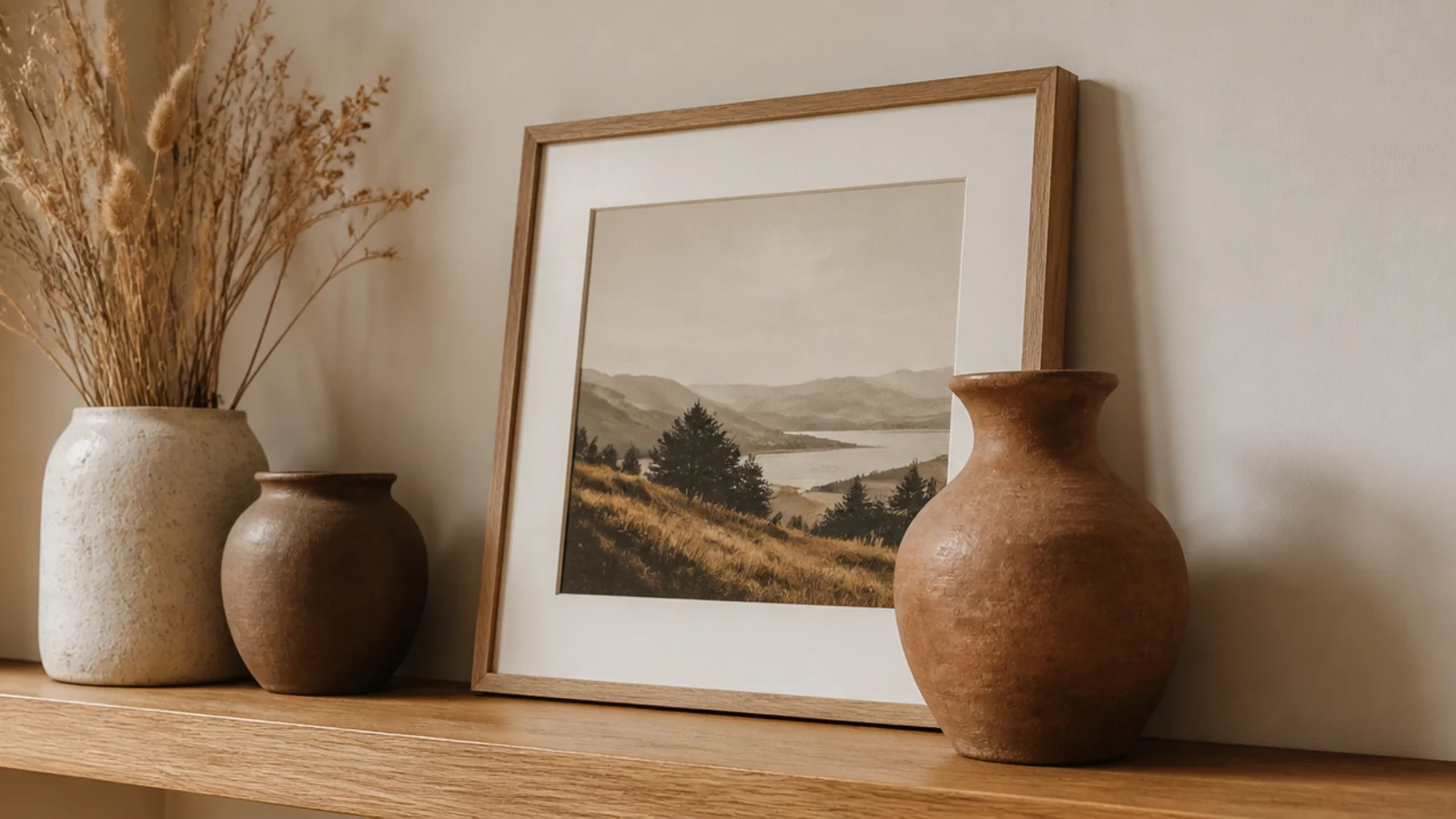
6. Give the corner one oversized anchor
One object noticeably bigger than feels comfortable. On a 24-inch shelf, that means roughly 10 to 12 inches tall.
Large objects are cheaper secondhand than people expect, because most homes have nowhere to put them. One anchor object does more for a corner than five carefully chosen small ones — and there is a whole list of budget sources in corner shelf decor.
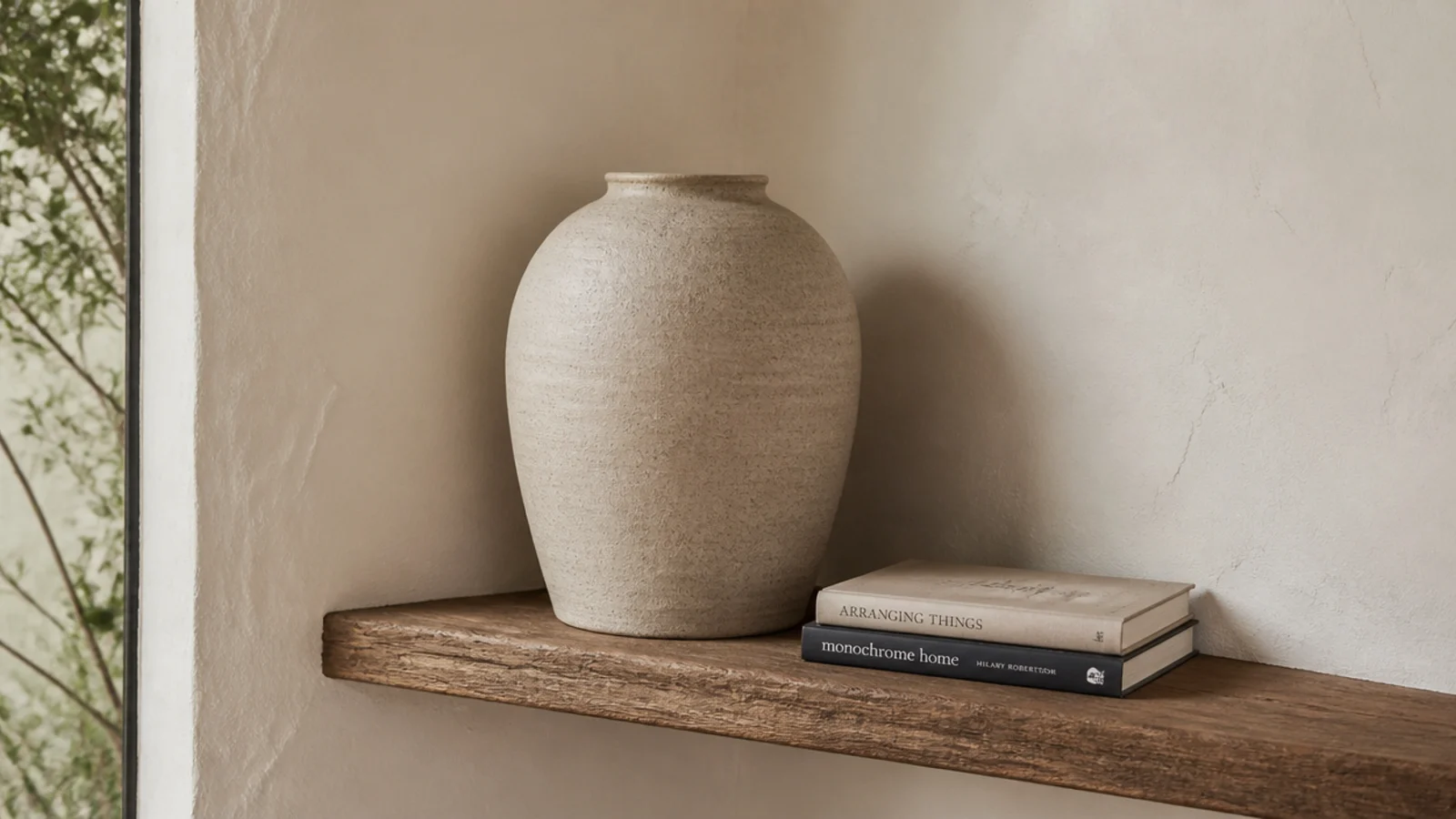
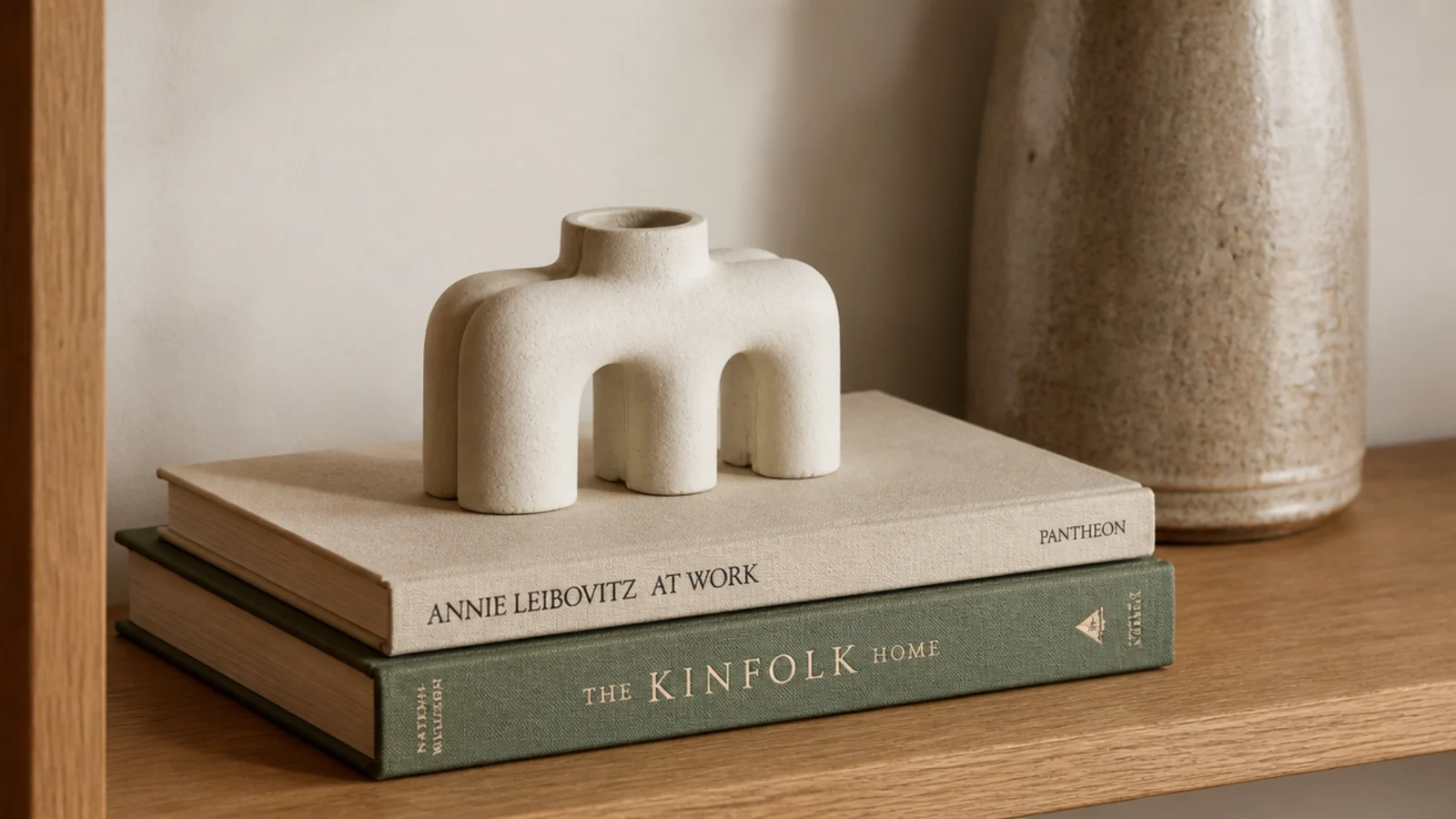
7. Use books flat as a plinth
Two hardbacks lying flat raise a small object about two inches and turn it from a trinket into a focal point.
Pick books whose bindings suit the palette, or take the dust jackets off — the cloth underneath is almost always a better neutral than the printed cover.
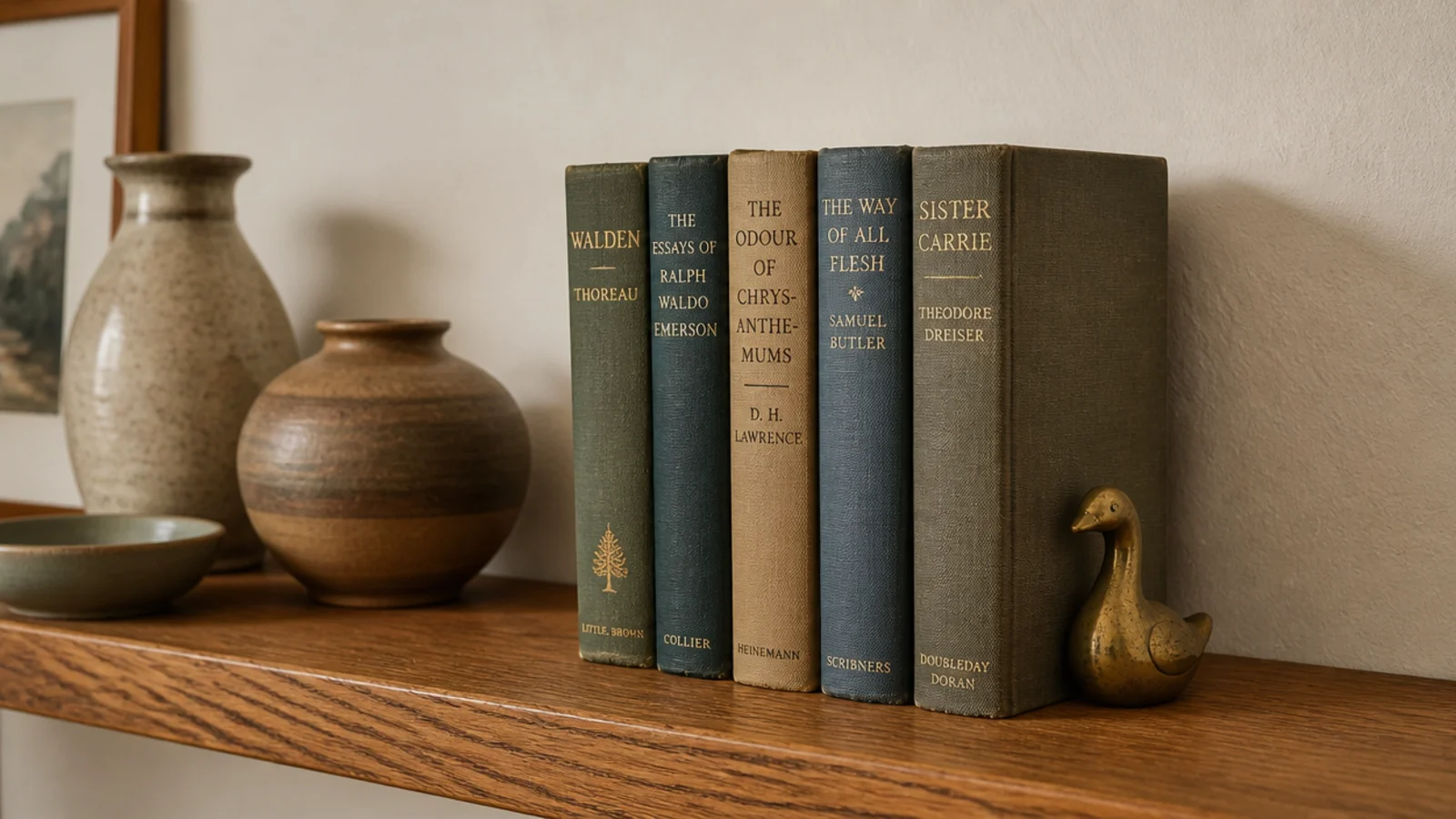
8. Use books upright as a vertical stop
A short row of upright books at one end gives a loose arrangement an edge to finish against, the way a bookend does.
Four to six books is enough. More than that and the row stops being a styling element and becomes storage, which changes what the whole shelf is doing.
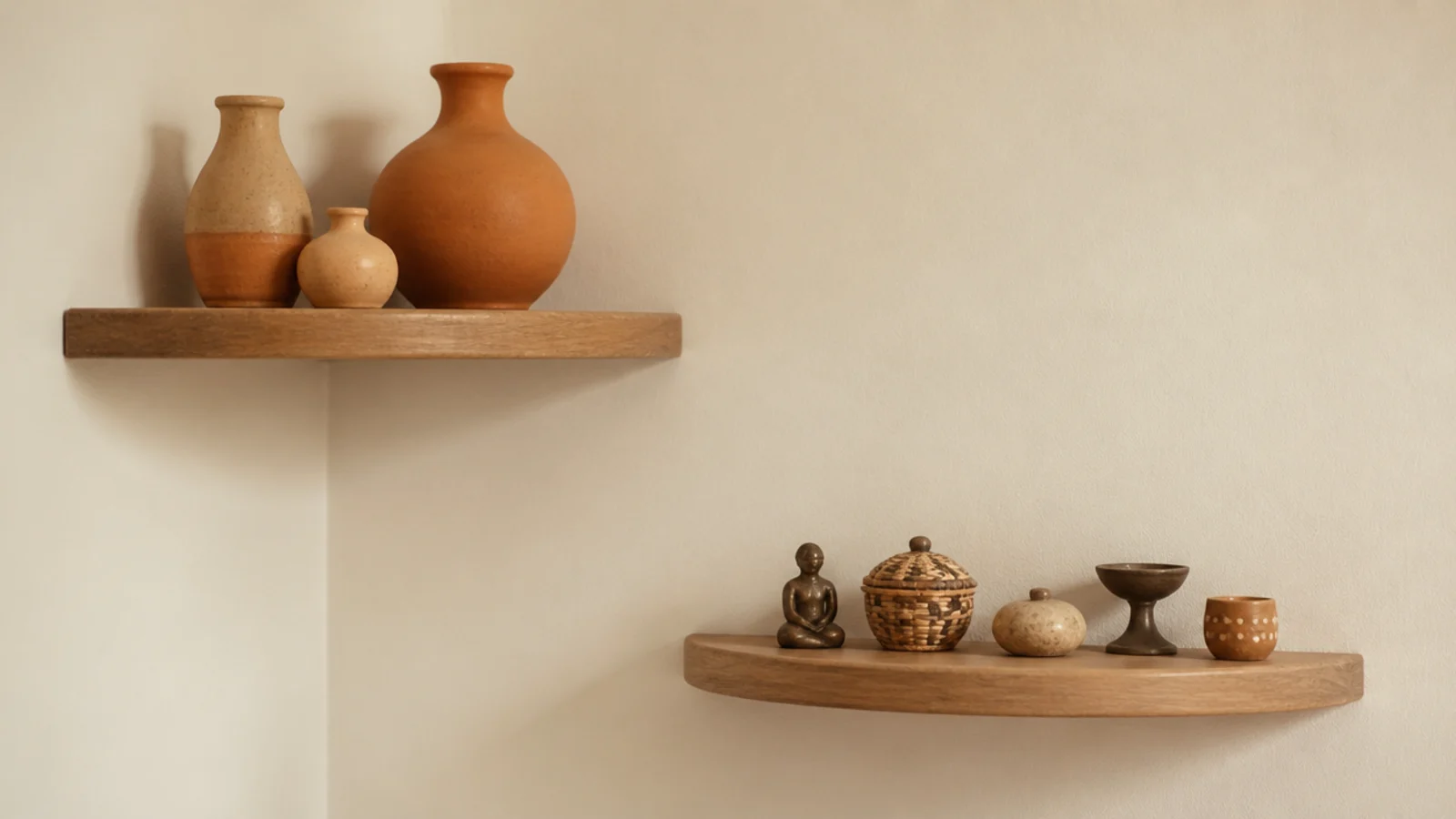
9. Keep every group an odd number
Three, five, seven. Odd numbers force your eye to move around a group looking for the pattern; even numbers resolve instantly and read as arranged.
This applies within a shelf and across the unit. If you own a pair of something, split them across different shelves rather than standing them together.
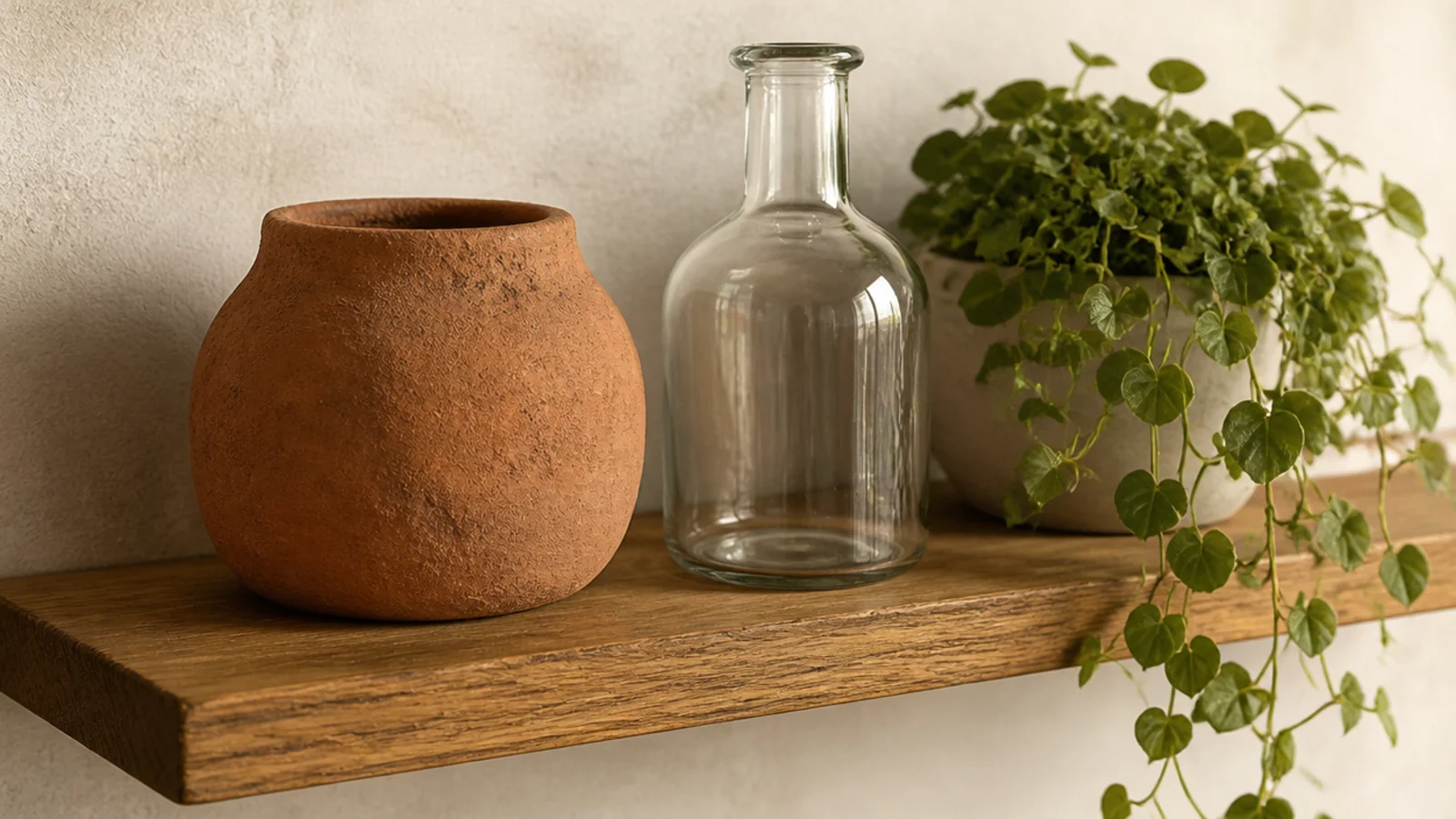
10. Put three textures on every shelf
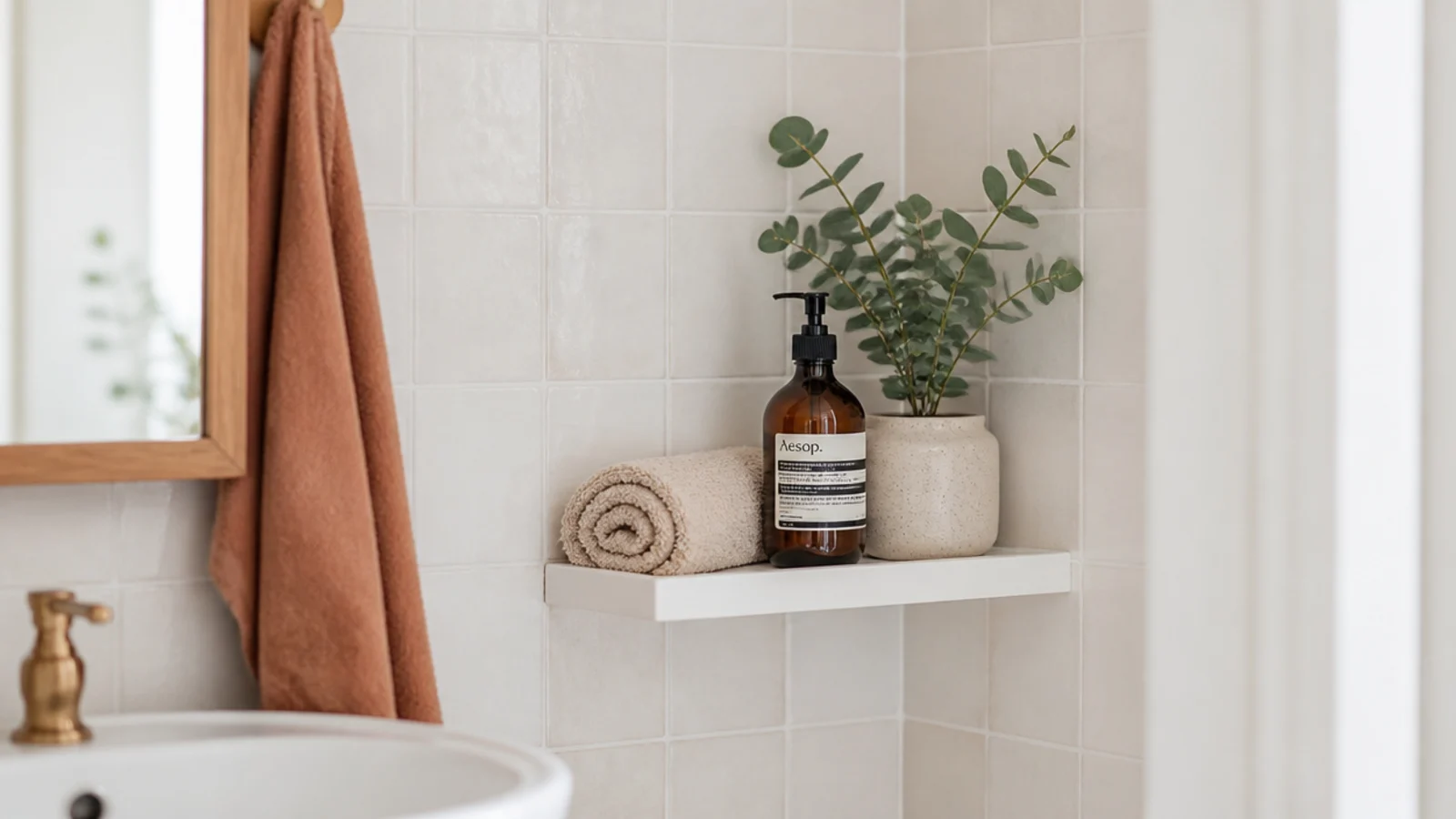
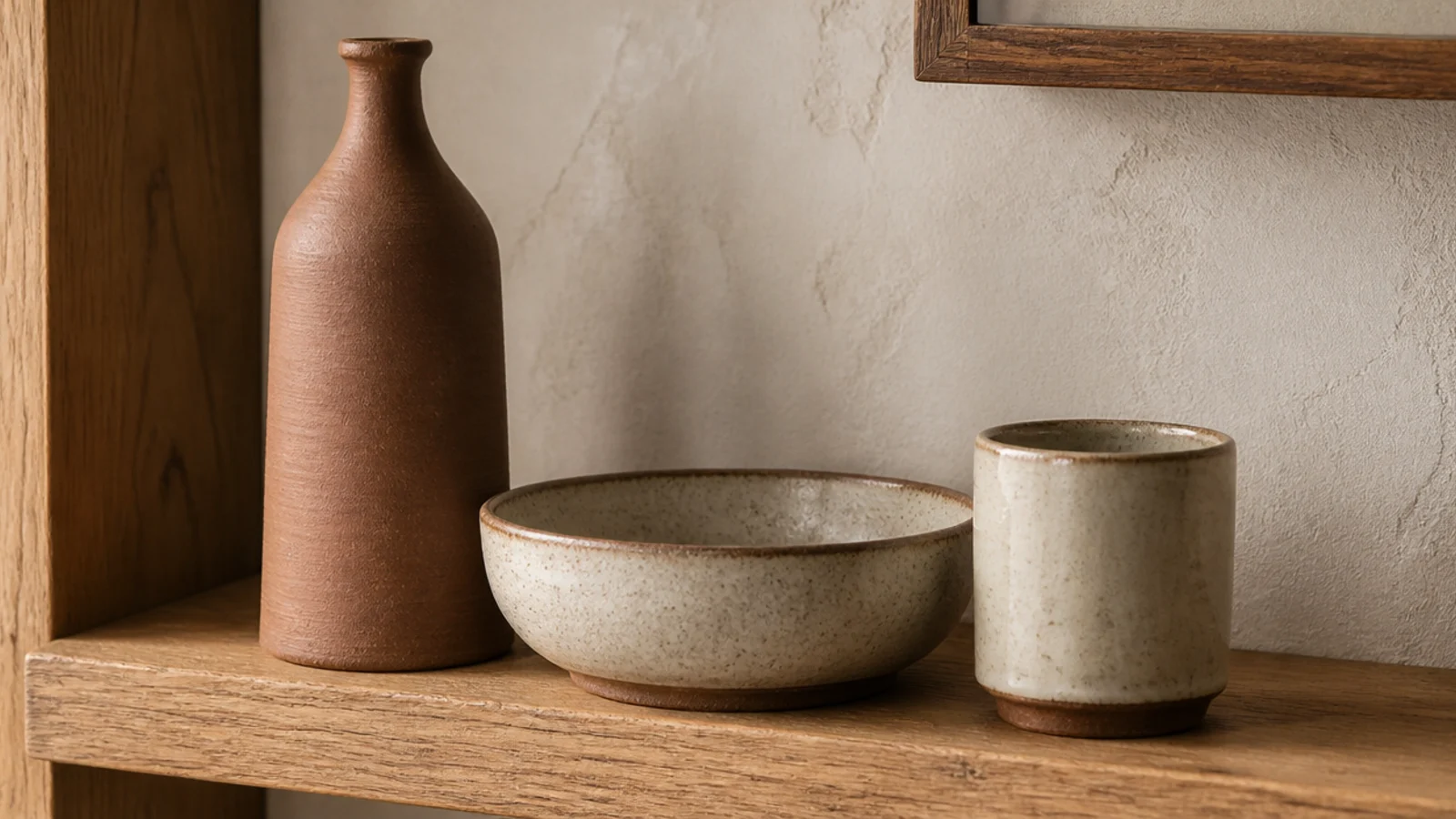
Something hard and rough — unglazed terracotta, stone, reclaimed wood. Something smooth — glass, glazed ceramic, brass. Something living or soft — a plant, dried stems, folded linen.
Texture is what a photograph cannot fully carry and a room absolutely can. A shelf of three glazed ceramics is technically well arranged and completely flat in person.
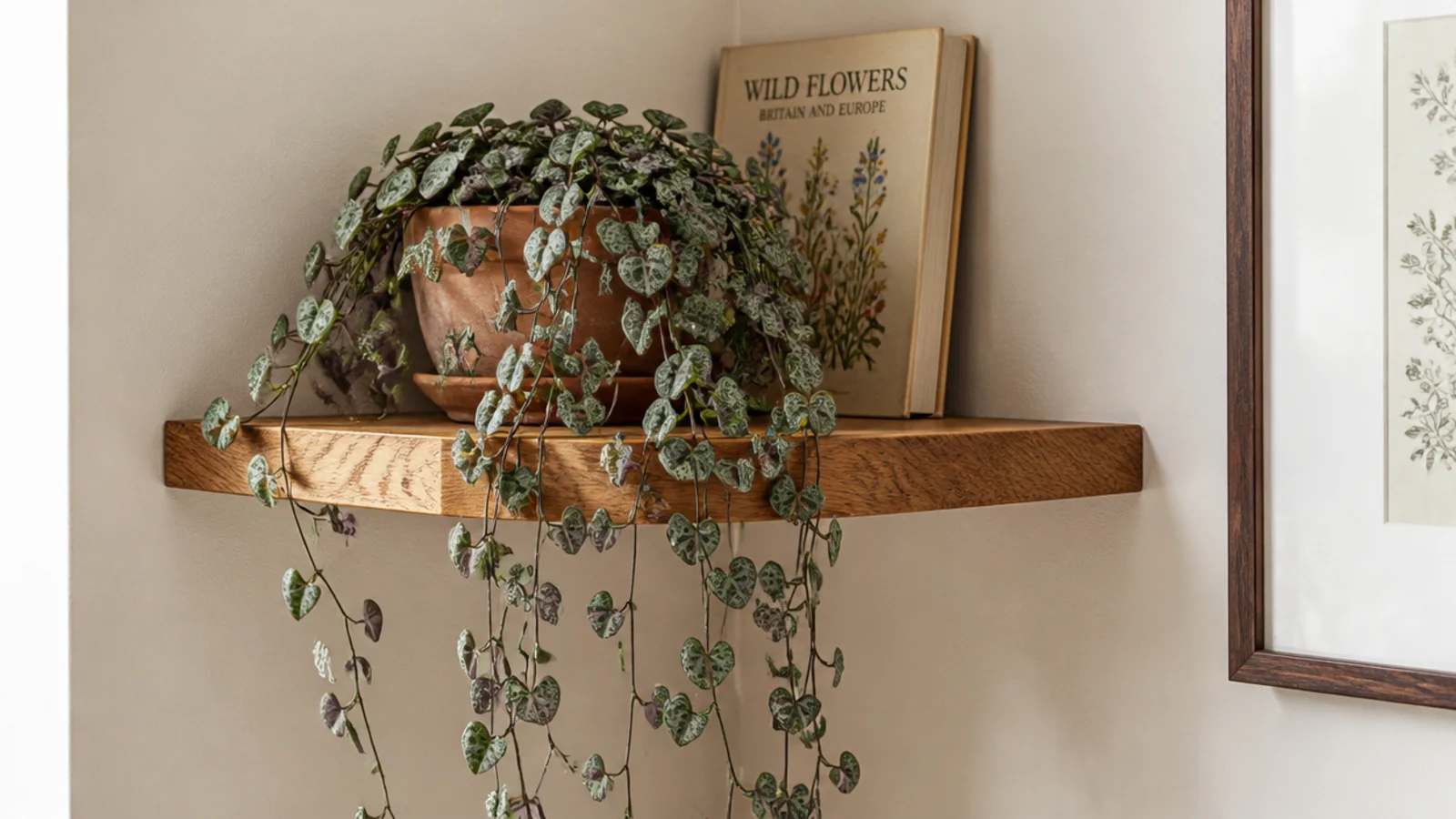
11. Let something trail over the front edge
Every shelf needs one thing that breaks the horizontal front line. A trailing plant is the easiest, but a draped cloth, a length of beads or a book that overhangs slightly all work.
Without it, the shelf edges read as a hard grid. With it, the whole stack softens immediately.
12. Break the top line with one tall element
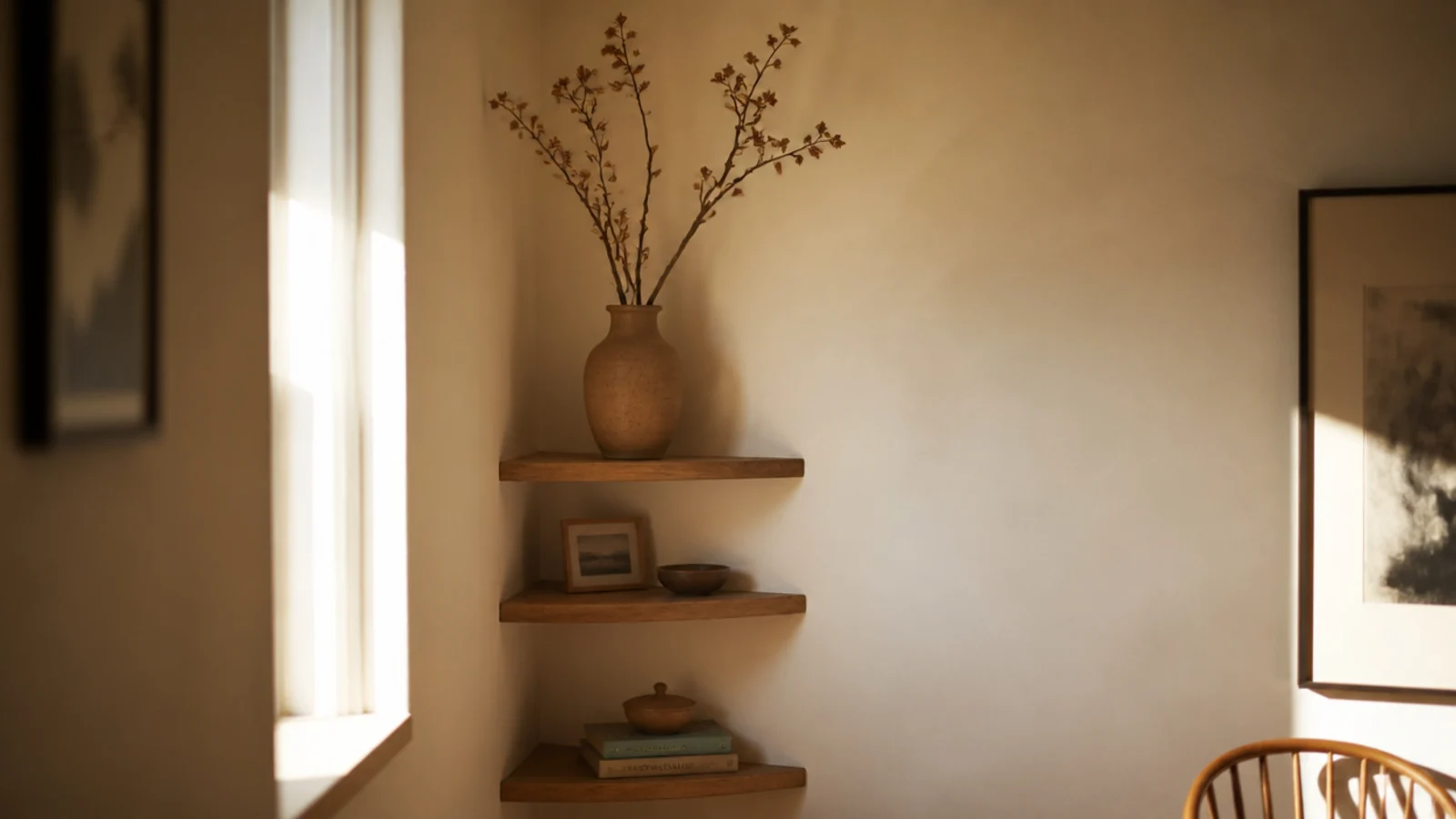
One object on the top shelf that rises well above shelf height — a branch, tall dried stems, a slim vase — stops the stack reading as a closed box.
Keep it to one. Two tall elements up top makes the corner feel top-heavy, especially under an eight-foot ceiling.
13. Run the empty space on a diagonal
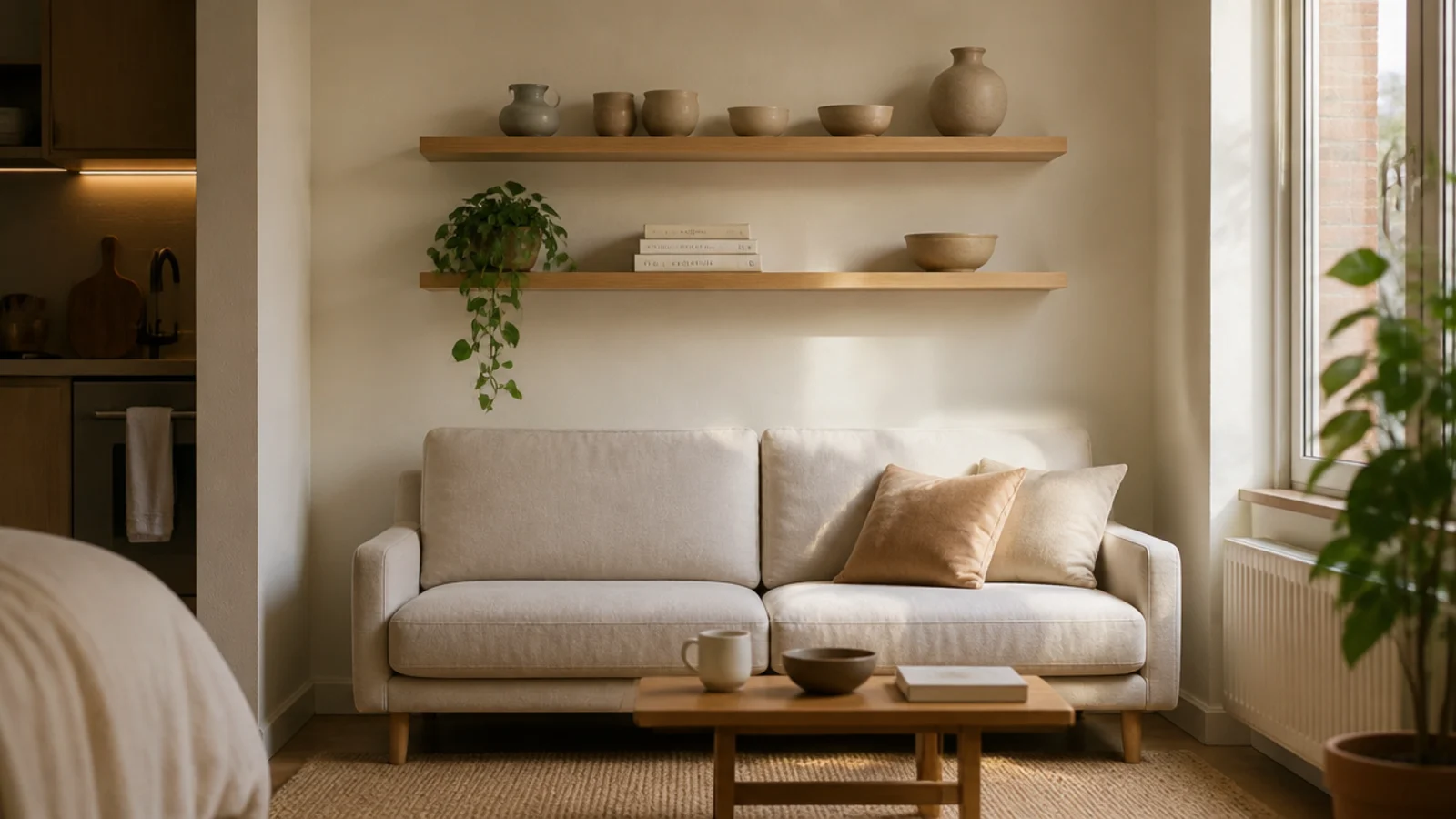
Put the clear gap on the left of the top shelf, centre of the middle, right of the bottom. The negative space itself now forms a diagonal down the stack.
It sounds fussy and it takes thirty seconds. It is the single most effective way to give a static shelf unit a sense of movement.
14. Repeat one accent color three times
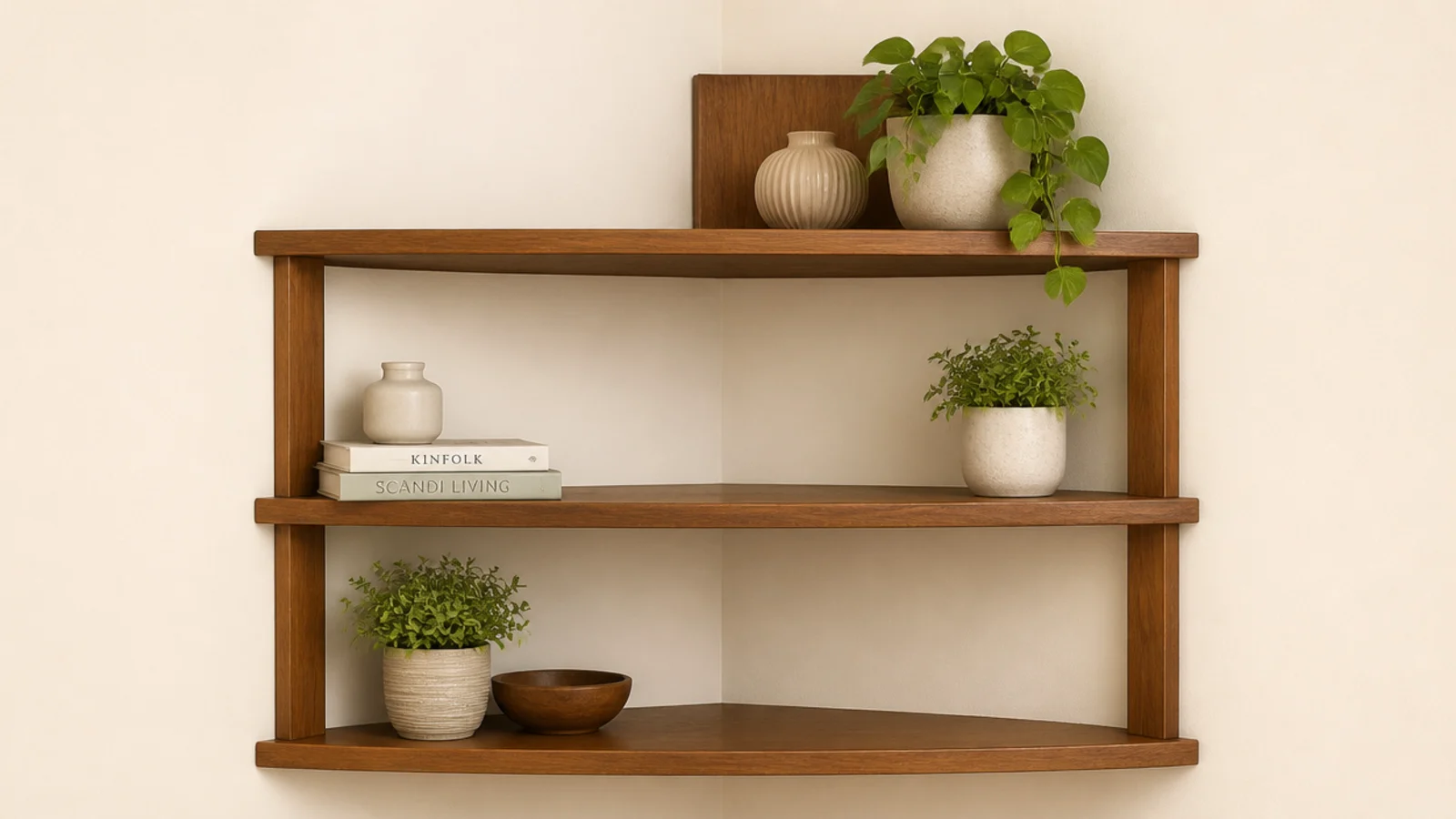
In a warm neutral corner, pick one accent — terracotta, olive, deep blue — and let it appear exactly three times: a pot, a book spine, a small dish.
One accent repeated reads as a scheme. Three different accents read as leftovers. This is the colour equivalent of the material-repetition rule and works the same way.
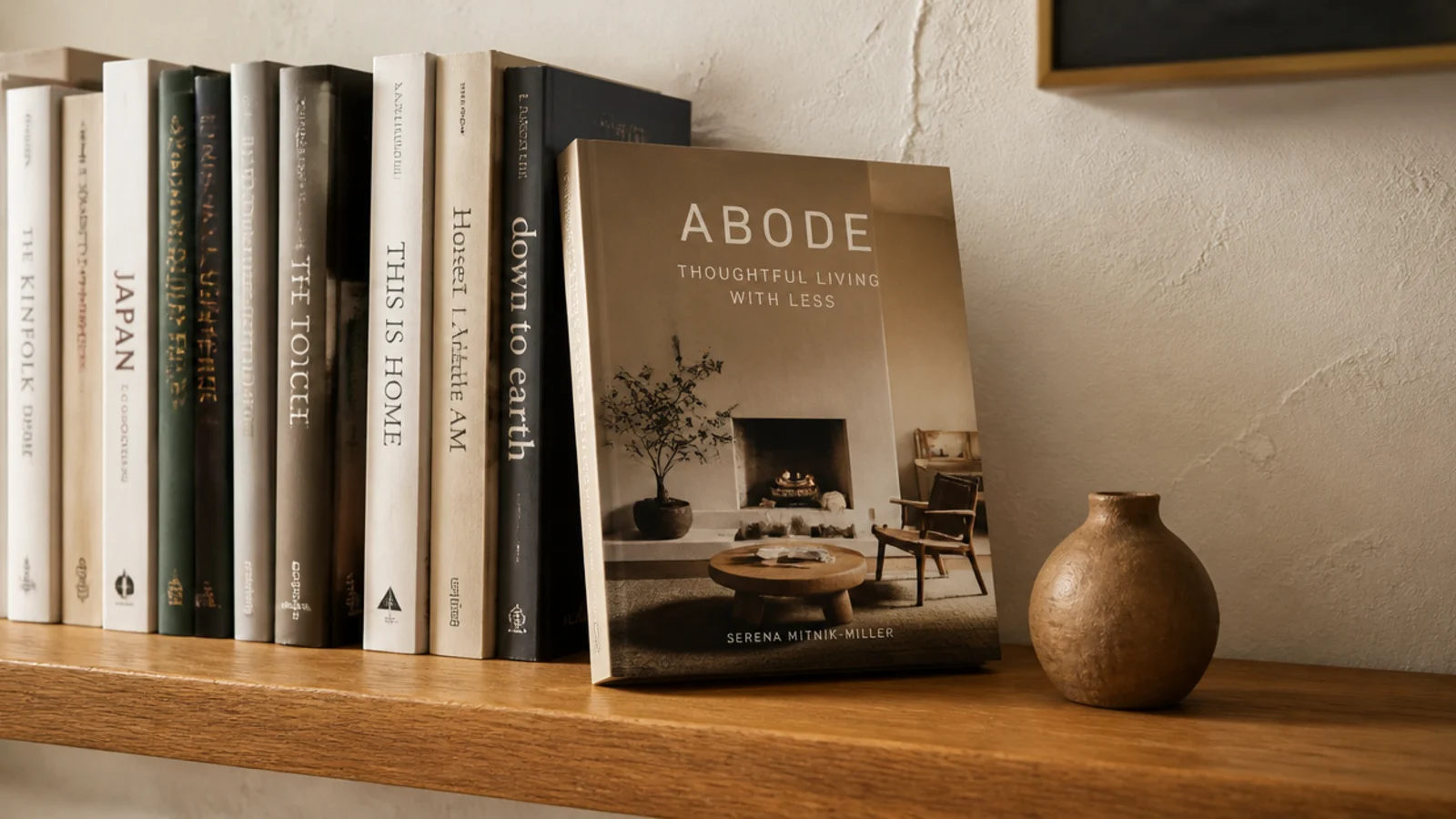
15. Turn one book cover out as a landing point
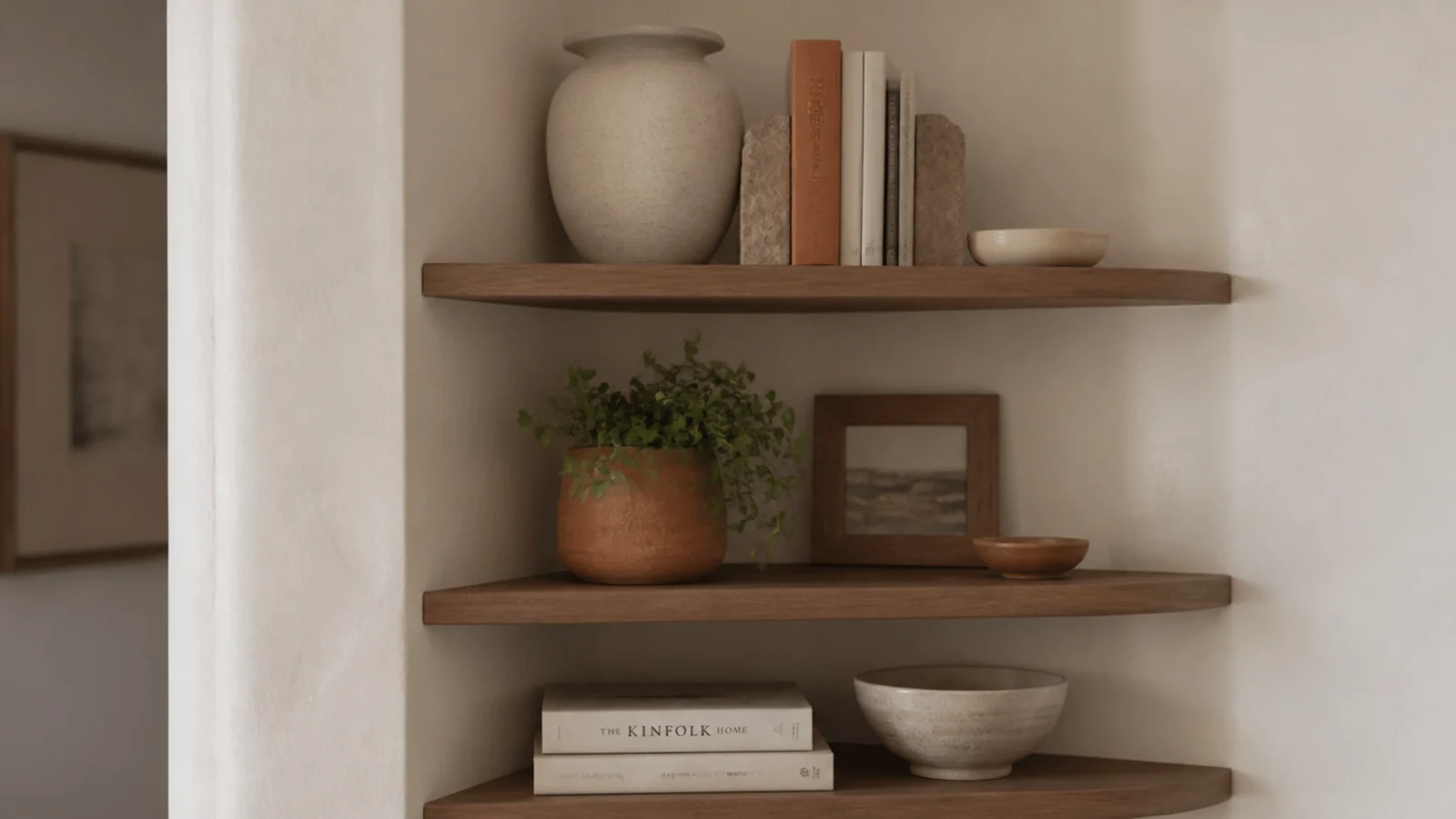
In a row of spines, turn a single book cover-out and lean it slightly forward.
It gives the eye somewhere to land and breaks the visual noise of mixed spine colours. Choose one with a quiet cover — a busy cover creates a new problem while solving the old one.
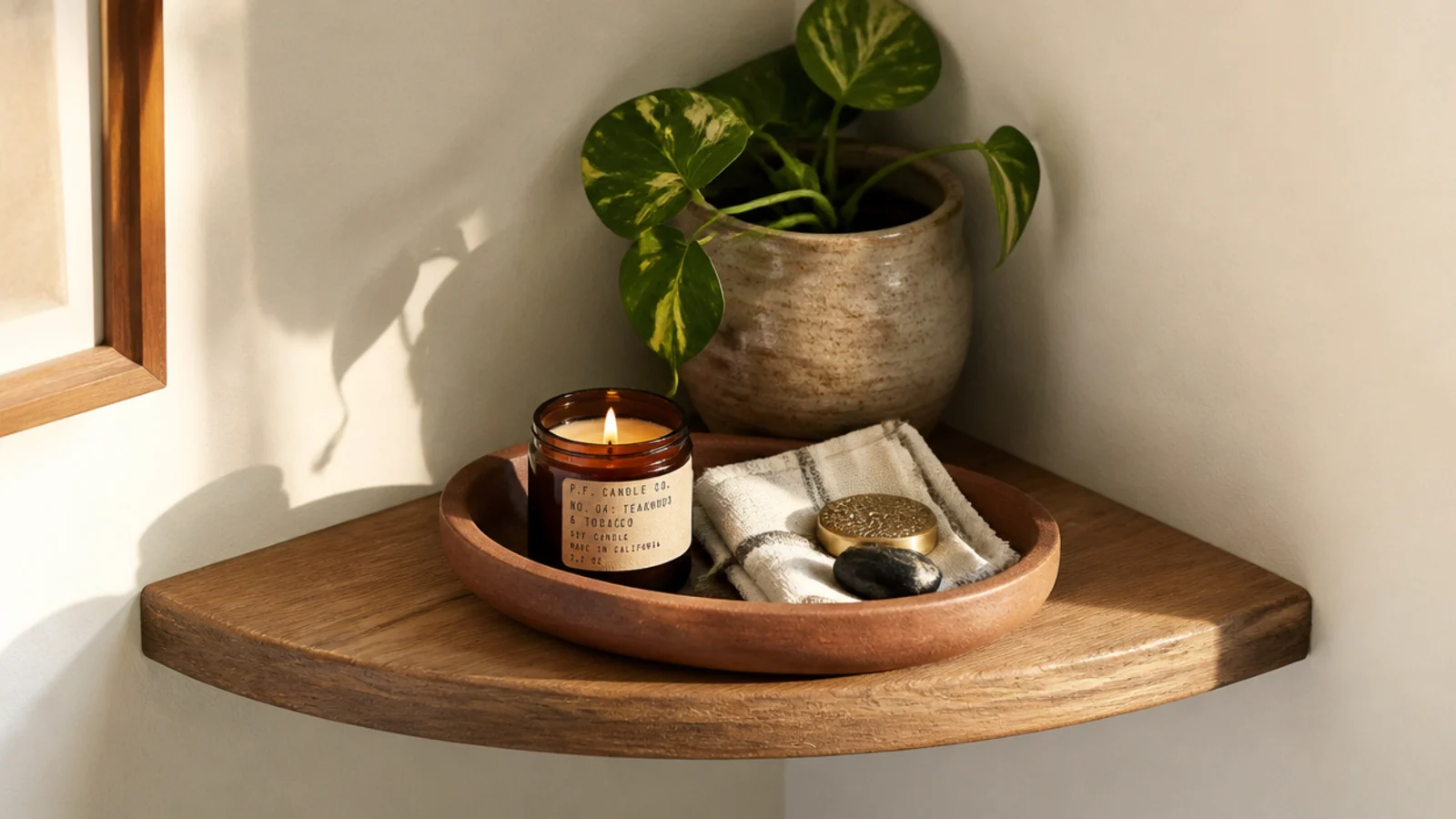
16. Corral small items on a single tray
Five small objects scattered across a shelf read as clutter. The same five on a tray read as one composed object.
A shallow clay plant saucer costs about $6 and is the best small tray available. Any shelf that collects keys, jewellery or matches needs one, or things slide off and scatter.
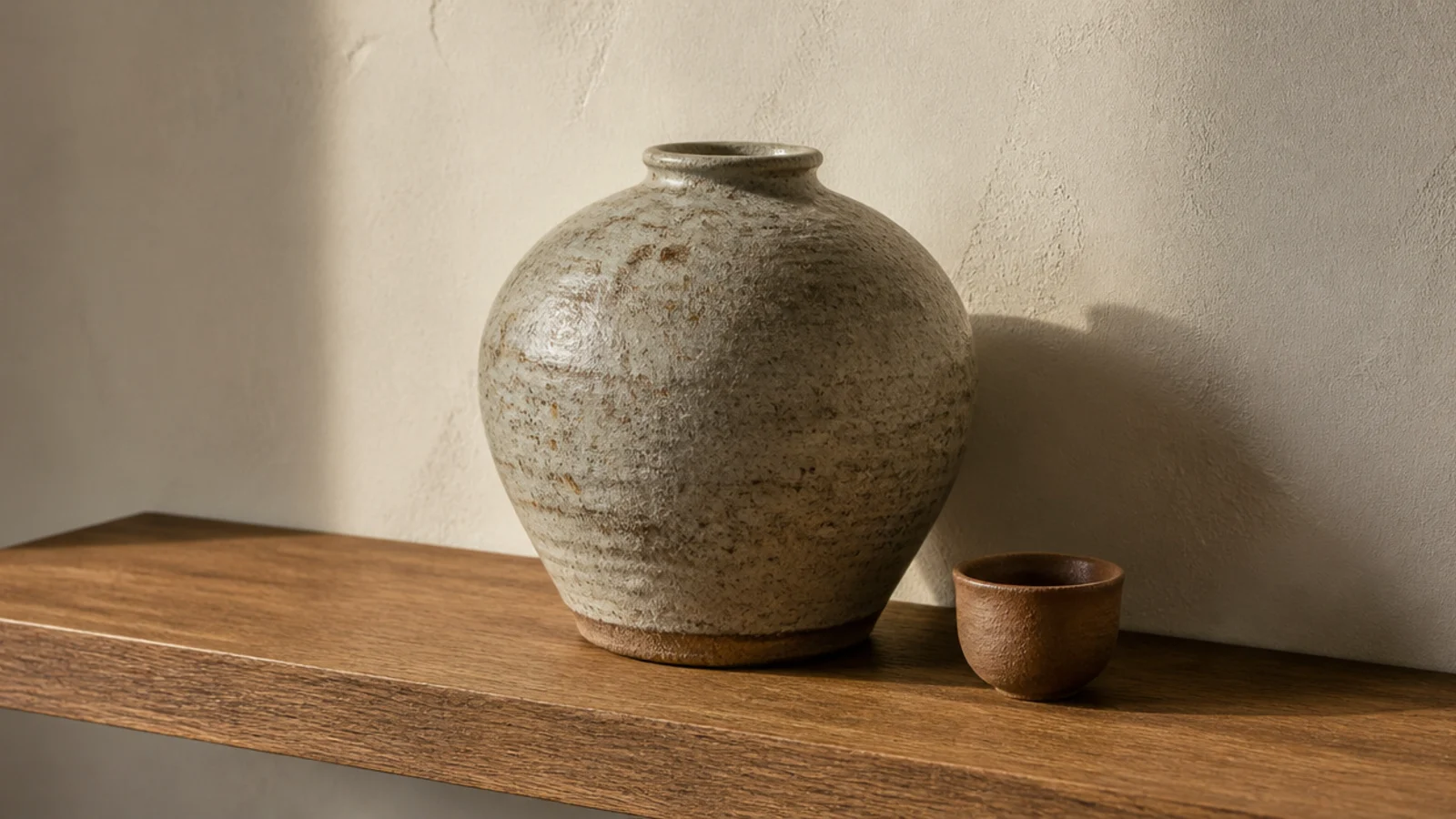
17. Double the scale gap between neighbours
Objects sitting next to each other should differ in size by roughly half, not slightly. A large vessel beside a small cup works; a large vessel beside a slightly smaller vessel looks like an accident.
When a shelf feels vaguely wrong and you cannot say why, this is usually it. Two objects of similar-but-not-equal size read as a mistake rather than a decision.
18. Keep the eye-level shelf the emptiest
Whichever shelf sits at the eye level of someone using the room — seated in a living room, standing in a hallway — should hold the least.
Restraint at the level people actually look sets the tone for everything above and below it, and lets you get away with fuller shelves elsewhere.

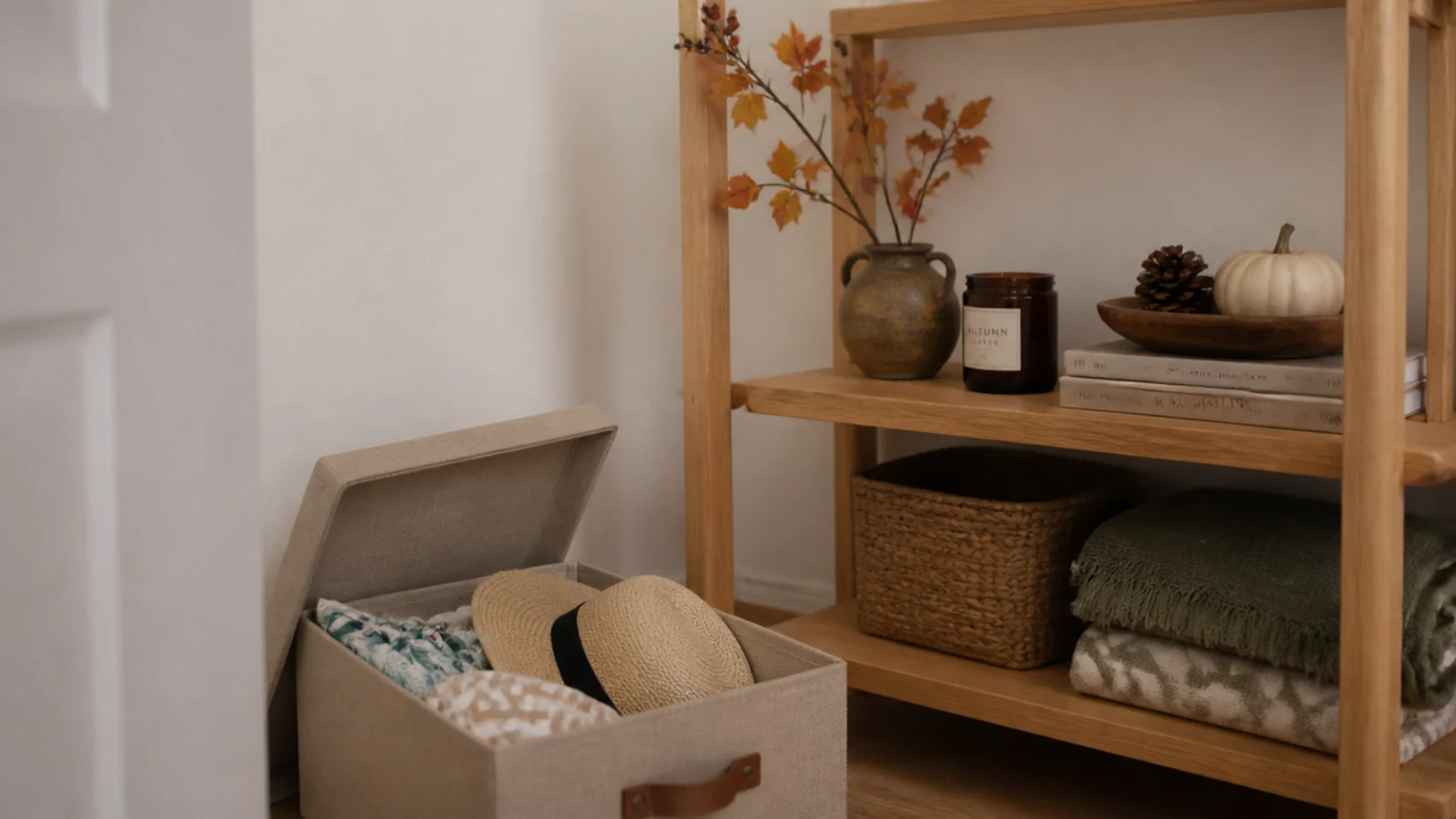
19. Rotate seasonally instead of adding
Keep a box of styling objects and swap rather than accumulate. Autumn gets dried grasses and darker pottery; spring gets glass and green.
The rule is one in, one out. Corners degrade over years not because people style them badly but because they keep adding without ever removing.
20. Photograph it before you commit
Take a photo on your phone and look at that instead of the shelf. The camera flattens depth and desaturates slightly, which is exactly what reveals objects sitting at the same height, gaps that are not quite gaps, and the one thing leaning at an angle you had stopped noticing. Turn the phone to greyscale for an even harsher read.
I do this on every job. The photo shows me in two seconds what standing in the room takes twenty minutes to notice.

Mistakes to Skip
- Spreading objects evenly across the shelf width. Even spacing reads as inventory; tight groups with a real gap read as styled.
- Buying a matching decor set. Nothing in a set varies in height, texture or age, which removes every tool this article depends on.
- Adding one more thing to fix a shelf that feels off. Nine times out of ten the fix is removing something, not adding.
Frequently asked questions
How do I style a corner shelf so it does not look cluttered?
Three objects per shelf at three clearly different heights, with about a third of the surface left empty. Most cluttered shelves are not badly arranged, they are simply overfull. If you take a third of the objects off and the shelf immediately looks better, that was the whole problem.
What is the rule of three in shelf styling?
Group objects in threes rather than pairs or fours, because odd numbers read as composed and even numbers read as arranged. Combine it with three different heights and you have the single most reliable styling rule there is: something tall, something low and wide, something soft that breaks the line.
Should everything on a corner shelf match?
No — matching sets look lifeless because nothing varies in height, age or texture. What should repeat is one material, three times, across the display. Repetition creates rhythm your eye reads as intentional while the objects themselves stay mixed. That is exactly why professionally styled shelves look composed while holding nothing that matches.
How much empty space should a styled shelf have?
Roughly a third of every shelf surface. Empty space is what tells a viewer the objects were chosen rather than stored, and it is free. In a small room push it further — closer to half — because tight spaces register visual density far more harshly than large ones.
How do I style a corner shelf that is only six inches deep?
Work in layers front to back rather than side to side. Lean a frame or a board against the wall, place one medium object in front of it and one small object beside that. A shallow shelf styled in overlapping layers looks deeper than it is; the same shelf styled in a straight row looks like a ledge.
Where do I start when a corner shelf looks wrong?
Take everything off and start with the biggest object, placing it slightly off-centre on the middle shelf. Build outward from there in threes. Starting from empty takes ten minutes and works far more reliably than nudging an existing arrangement, which usually just relocates the problem.
Try rules one, three and four tonight on a single shelf — heights, empty space, one repeated material — and see how far that gets you before touching anything else. For the shelves themselves see fifteen corner shelf ideas, for budget objects to style with see corner shelf decor, and every rule here works identically on a straight wall in floating shelf styling. Save the pin for the next restyle.
Want more like this? Browse all 15 corner shelf ideas guides — they all use the same measurements and budget tiers.

Pin it for later
Save this to your Corner Shelf Ideas board
Pin it now so it is waiting for you when the tape measure comes out — and so the next person hunting for this idea can find it too.
Save this pinKeep going
More ideas worth saving while you have the tape measure out.