Floating Shelves · Listicle
25 Dreamy Floating Shelf Ideas for Any Home

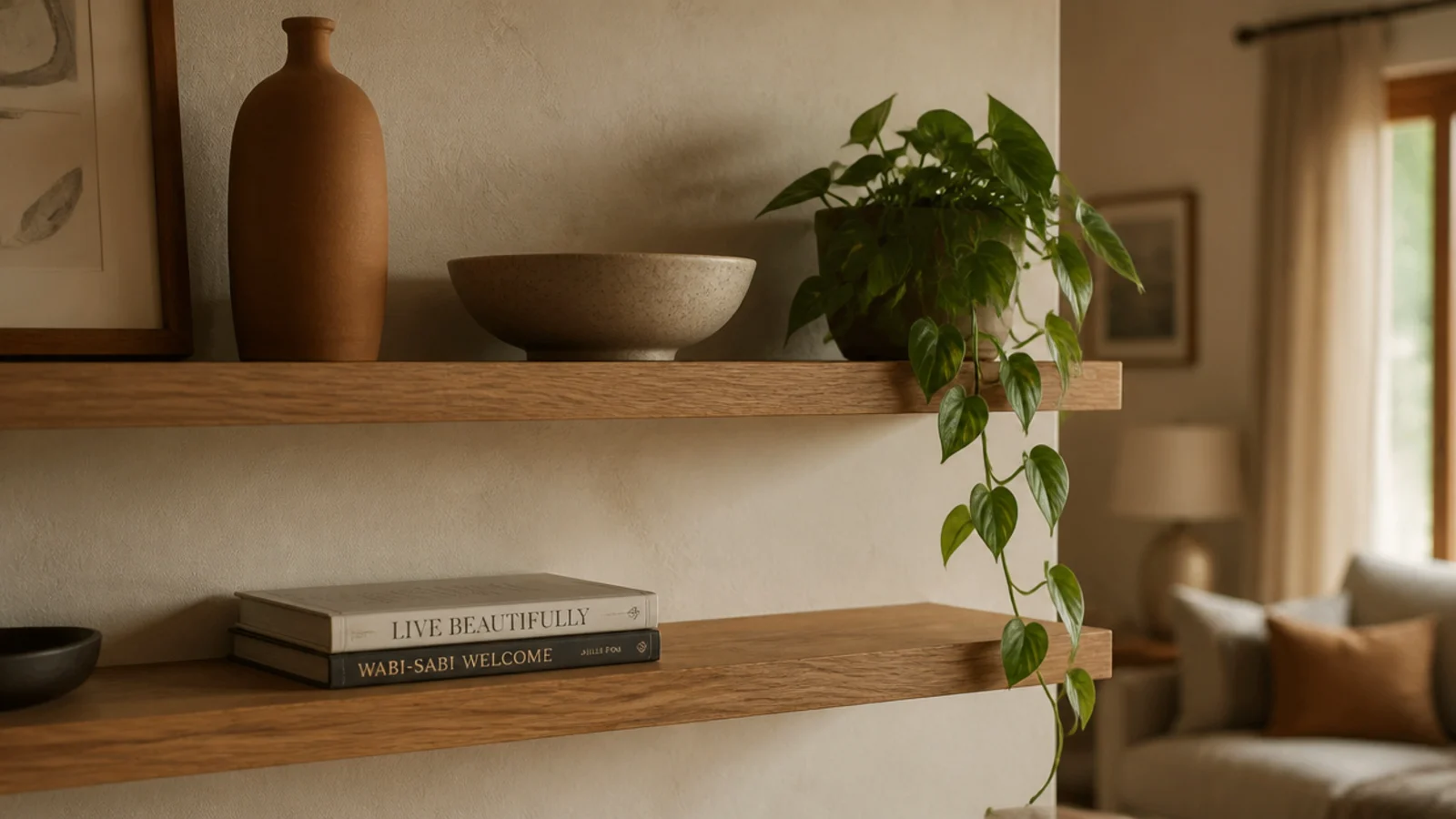
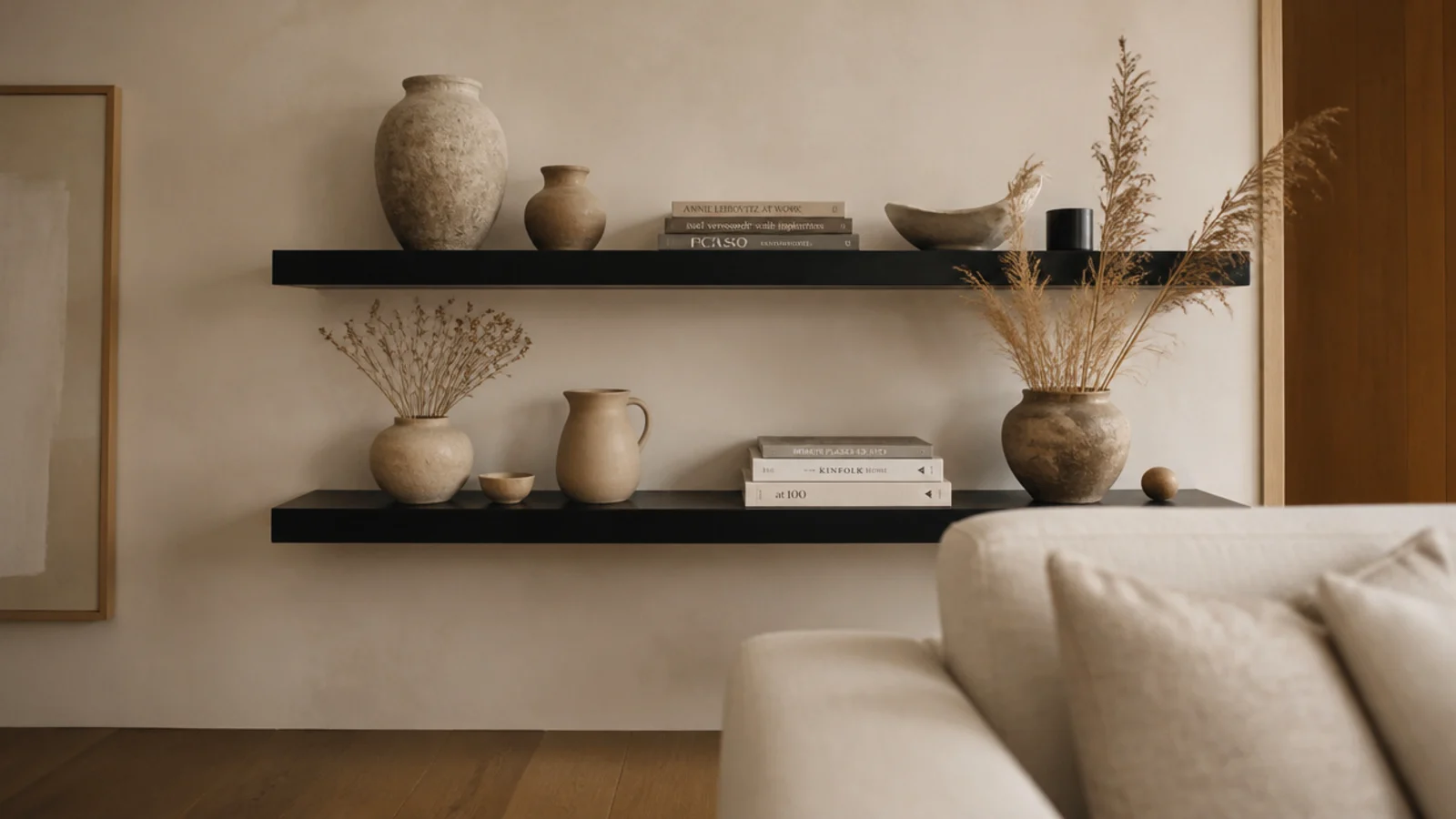
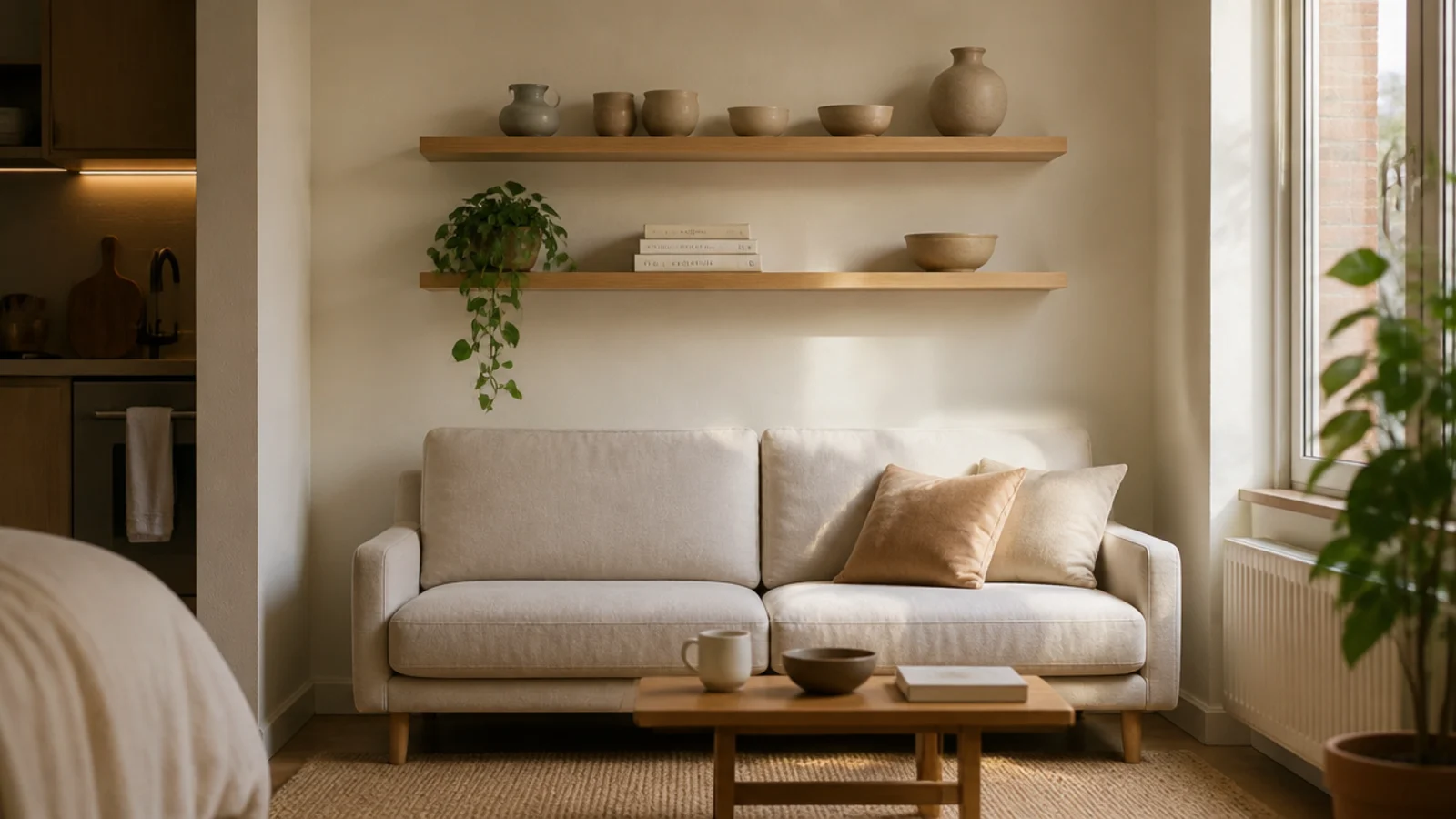
Floating shelf decor goes wrong in exactly one way: too many things, all at the same height. Fix that and a $30 board starts reading like joinery. I have styled shelves in my own homes and in a lot of other people's, and almost every good result came from taking objects off rather than buying more. Here are twenty-five arrangements that hold up in real rooms.
In this guide27 sections — tap to openHide
- 1.What floating shelf decor actually needs to work
- 2.Three objects at three different heights
- 3.Break the top line with one tall vessel
- 4.Books lying flat as a plinth
- 5.One trailing plant per run, never more
- 6.Lean art at the back instead of hanging it
- 7.Repeat one material three times
- 8.Group tightly and leave a real gap
- 9.A pair of jars in mismatched sizes
- 10.Terracotta instead of nursery pots
- 11.One shallow tray to contain the small things
- 12.Add one brass object per shelf
- 13.Put the candle at an odd height
- 14.Dried stems instead of fresh flowers
- 15.Take the paper jackets off hardbacks
- 16.Give one sculptural object room to breathe
- 17.Anchor the bottom shelf with baskets
- 18.Light the shelf from underneath
- 19.Pull one color from the room
- 20.Vary the silhouettes, not just the heights
- 21.Leave one shelf completely empty
- 22.Keep a seasonal swap box
- 23.Hide the cables before you style anything
- 24.Choose texture over shine
- 25.Paint the wall behind the shelf
- 26.Style it from where you actually sit
- 27.Mistakes to Skip
What floating shelf decor actually needs to work
Your eye reads a shelf as a shape before it reads any of the objects. That shape wants a high point, a low point and something soft to break the horizontal line — which is why the tired advice about styling in threes is actually structural rather than decorative.
The second rule is emptiness. Leave roughly a third of every board genuinely bare. Empty space is what tells a visitor the arrangement was chosen rather than accumulated, and it is completely free.
Third, group rather than space. Four objects clustered at one end with a real gap beside them look composed. The same four spread evenly across 36 inches look like inventory on a shop shelf.
Practically: keep the heaviest object on the lowest board, keep breakables above 48 inches if there are small hands in the house, and keep anything you use daily within arm's reach at 42 to 60 inches. The rest is arrangement you can change on a Sunday.
Budget tiers here are small: $ under $15 per object, $$ $15 to $50, $$$ $50 and up for one anchor piece per room.
1. Three objects at three different heights
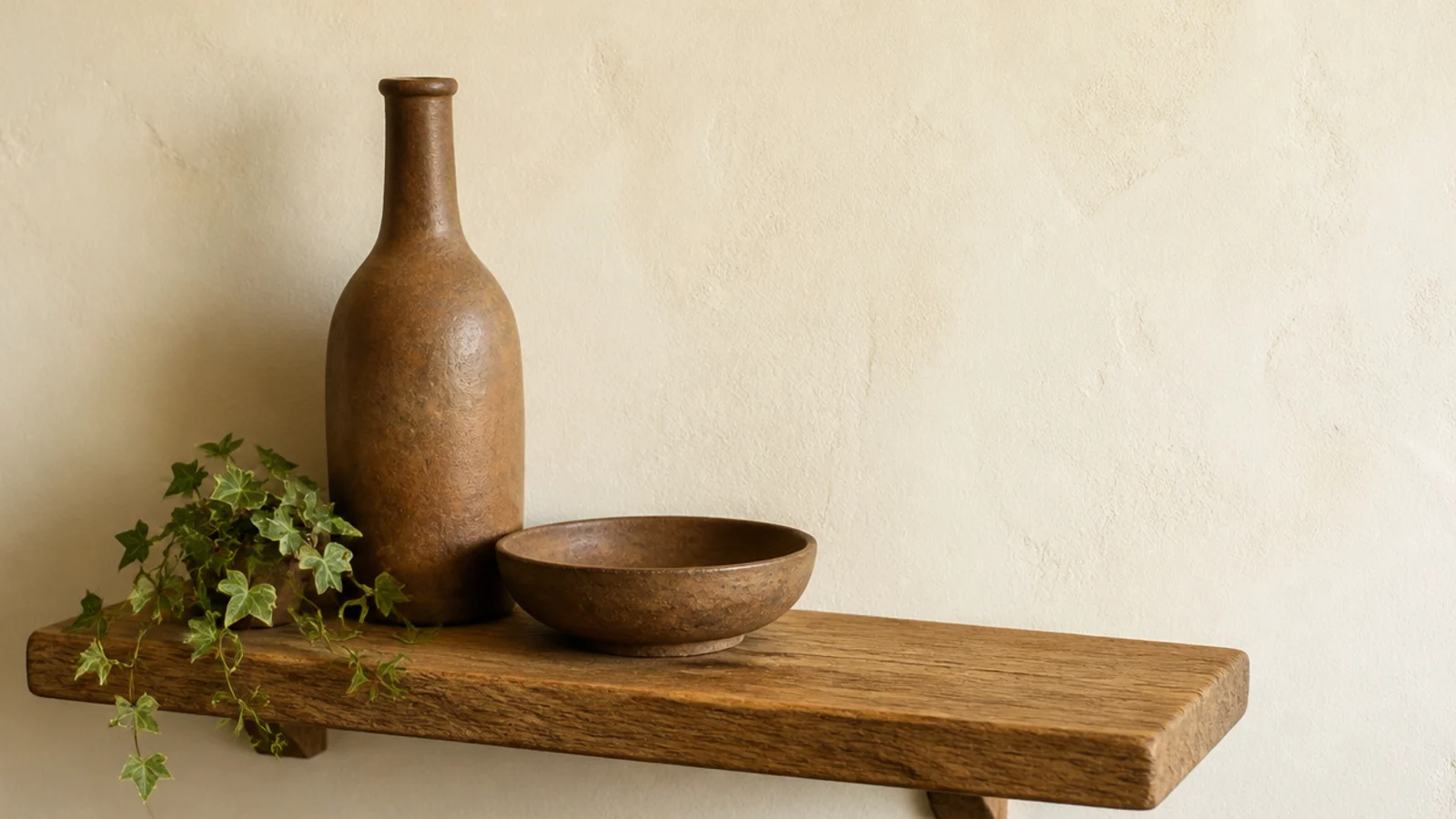
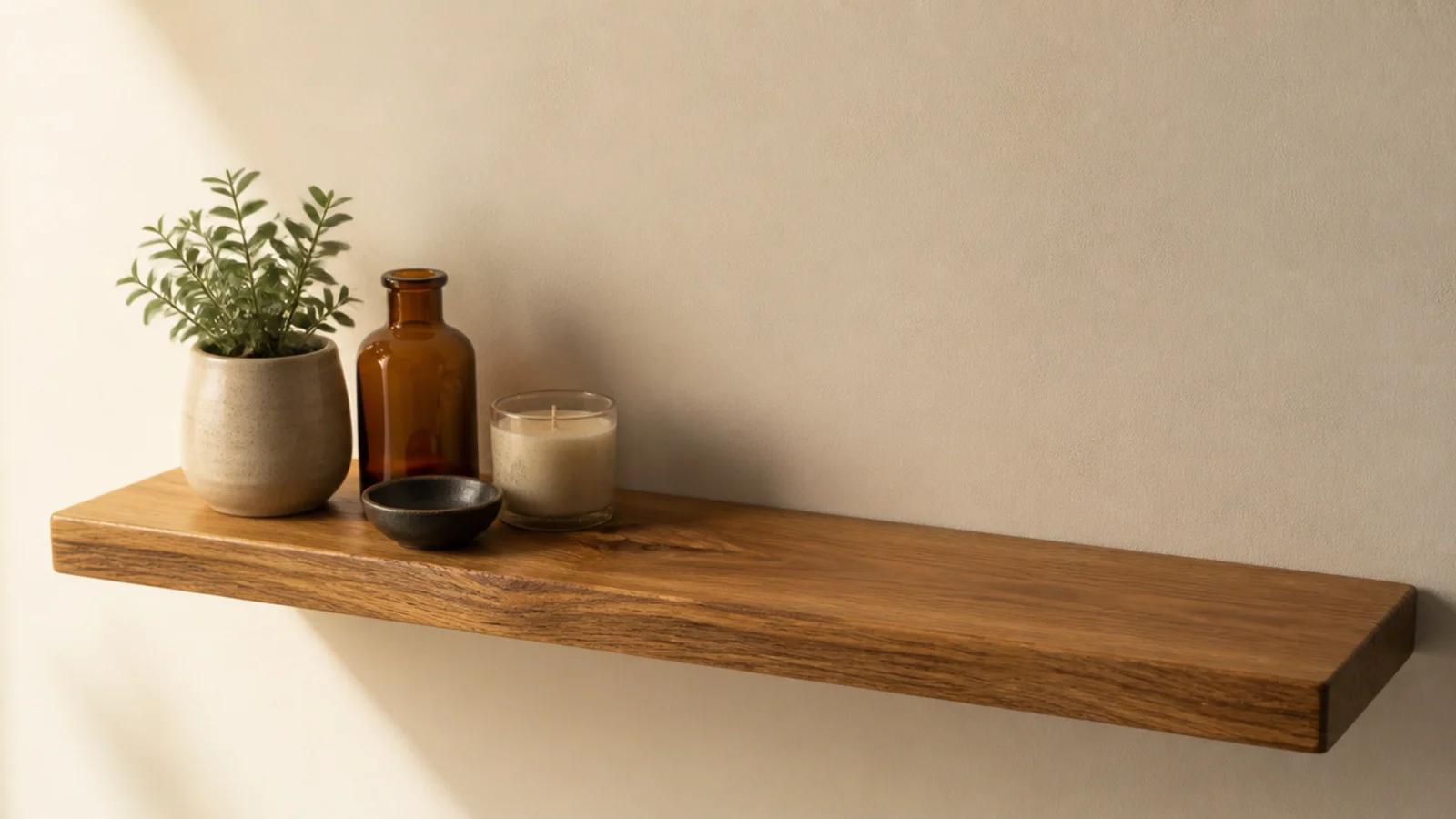
The default that never fails. Something tall — a vase, a bottle, a taper. Something low and wide — two books lying flat, a shallow bowl. Something soft — a trailing plant or a folded linen.
Three heights give your eye a path. Objects at one height give it a wall. If you only take one thing from this list, take this.
2. Break the top line with one tall vessel
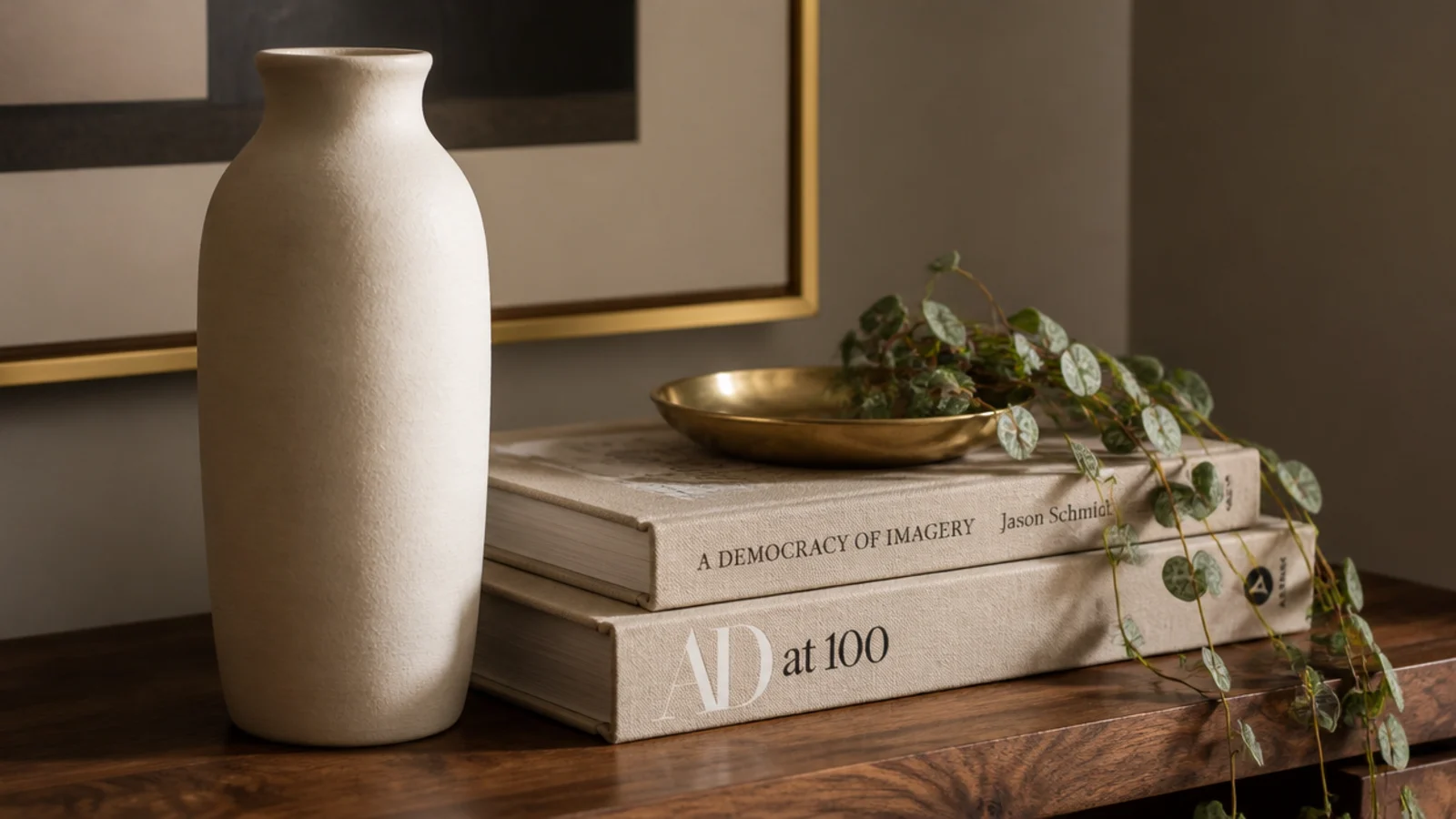
A shelf run is a series of horizontal lines, and horizontal lines flatten a wall. One vessel tall enough to rise 6 to 8 inches above everything else fixes that instantly.
A narrow clay bottle at 14 inches costs around $18 and does more than any three small pieces. Put it a third of the way along the board rather than in the centre.
3. Books lying flat as a plinth
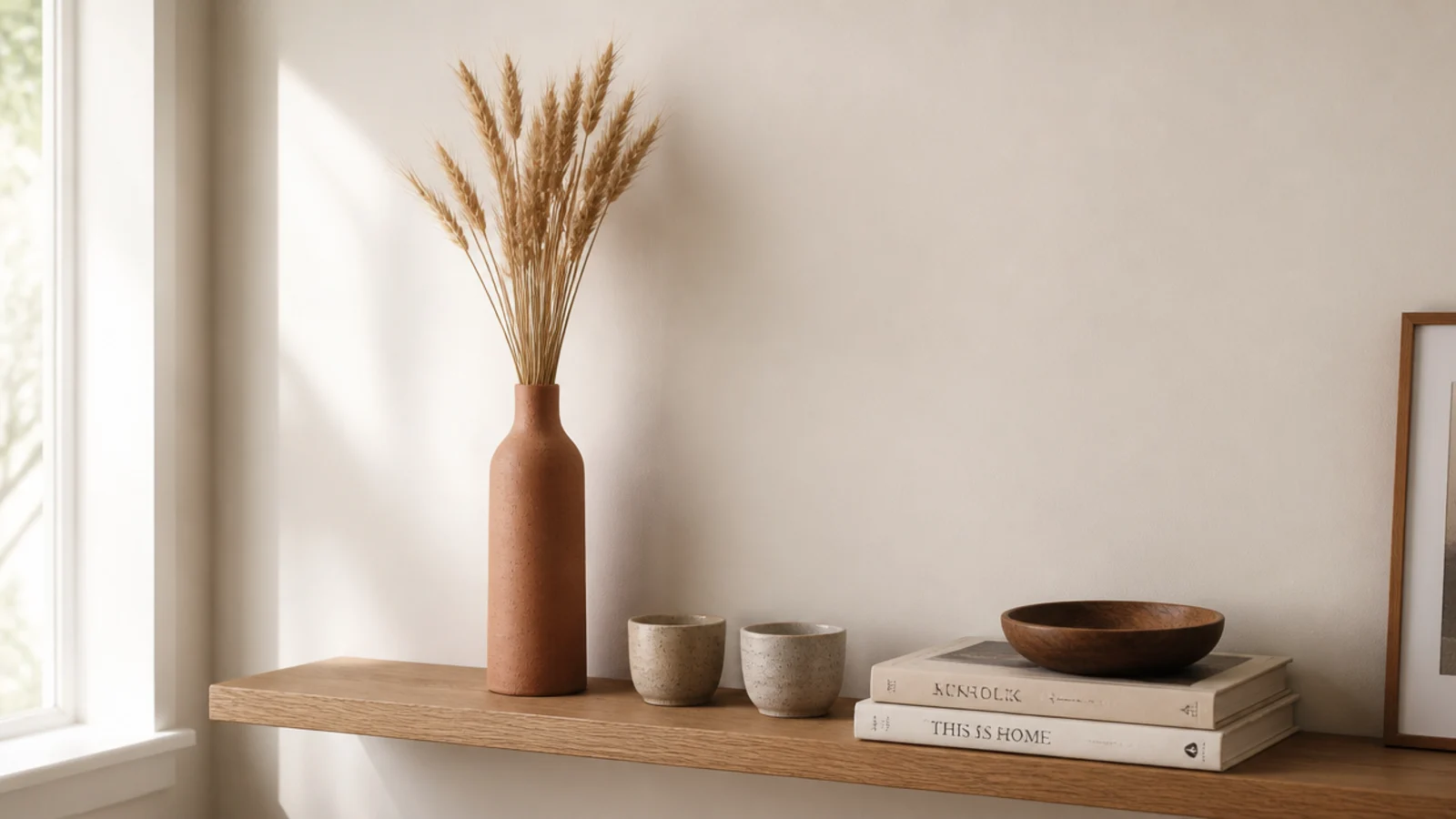
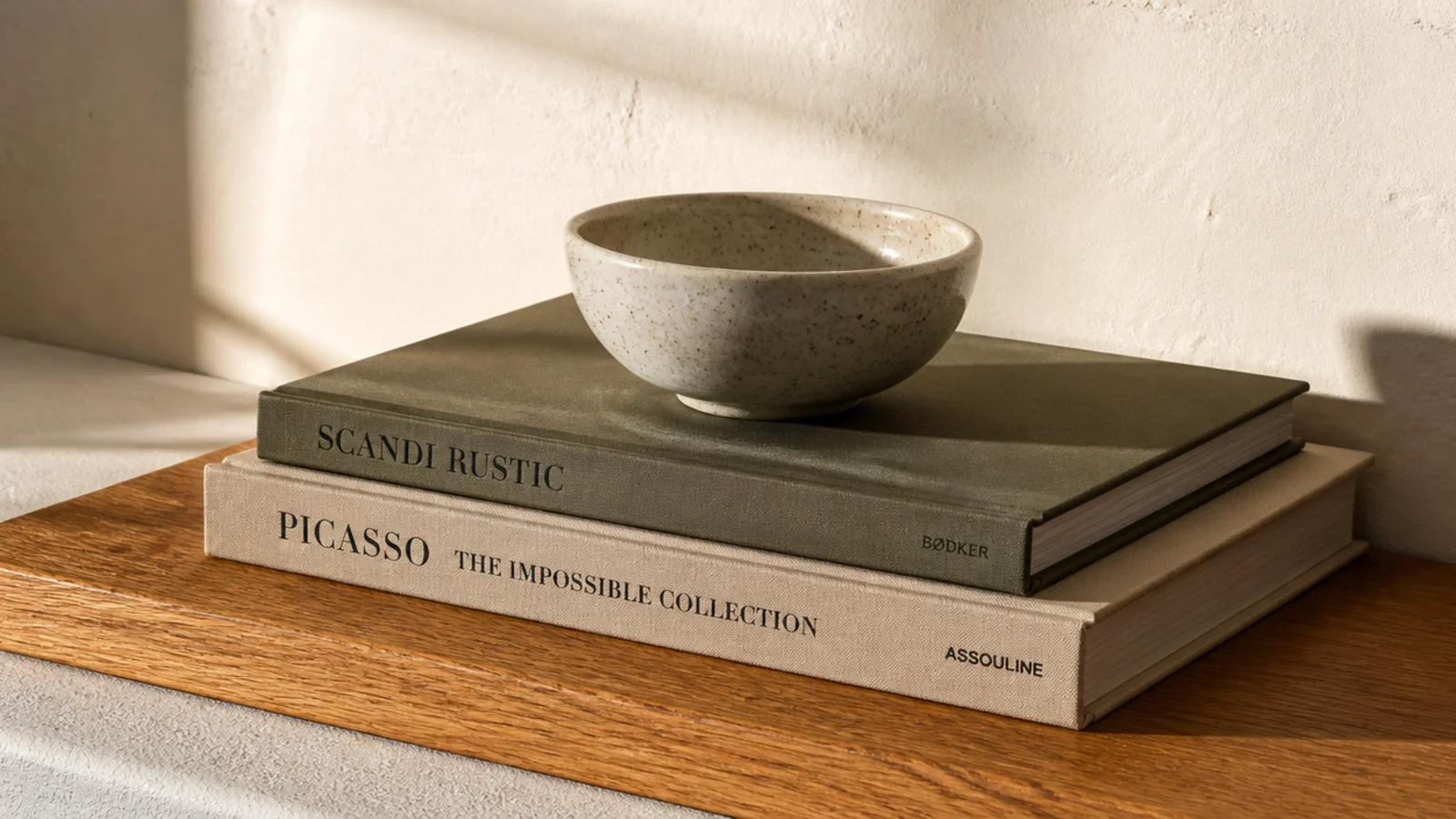
Two hardbacks lying flat lift a small object into view and give it a base, which is the difference between a bowl on a shelf and a bowl being shown.
Stack no more than three. Turn the spines inward if the covers are loud. This is the cheapest height trick in decorating and you already own the materials.
4. One trailing plant per run, never more
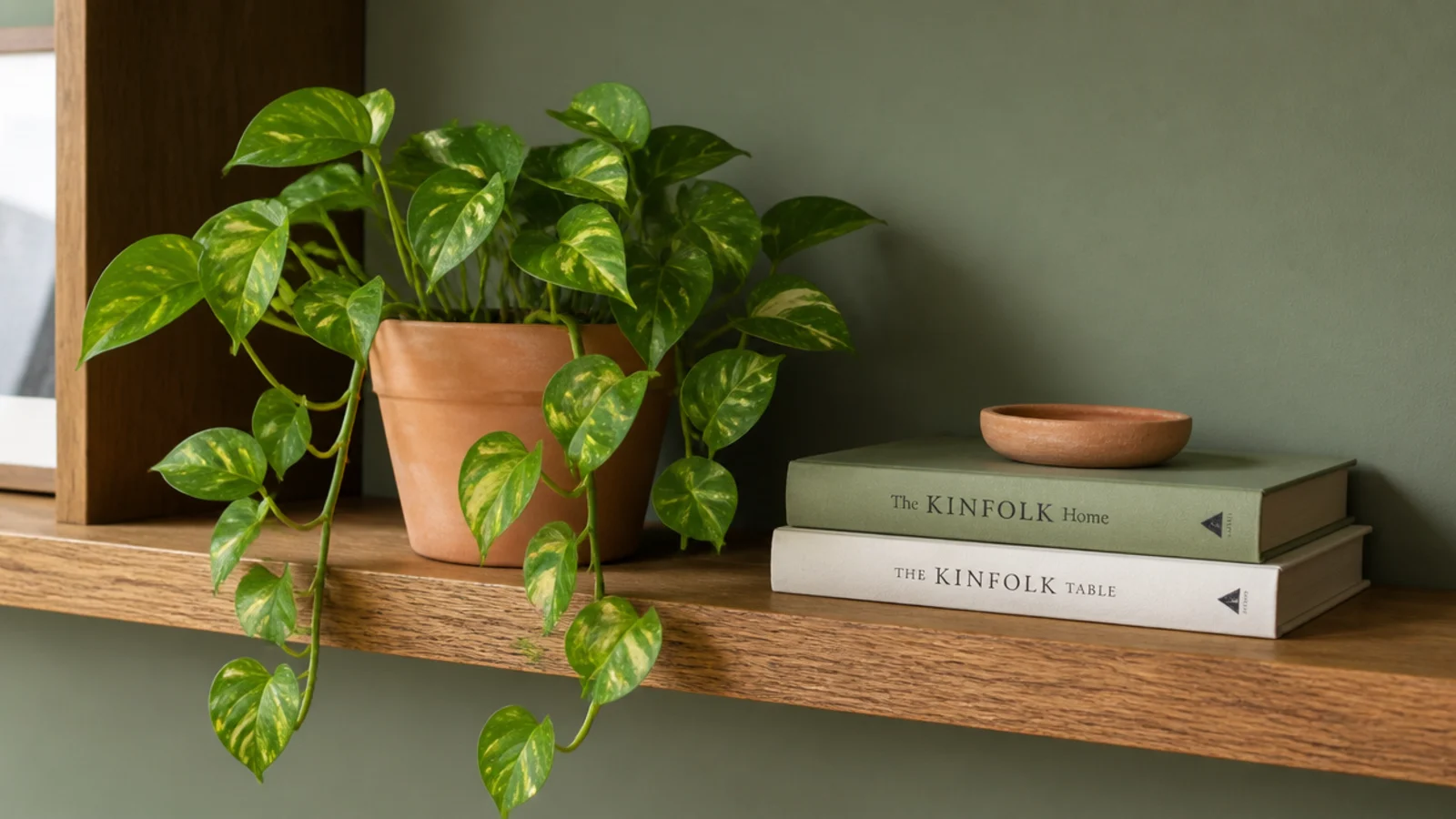
Greenery breaks the hard front edge of a board better than anything else, and a pothos or string of hearts will do it for under $12.
One per run of shelves, though. Two trailing plants stop reading as a soft detail and start reading as a jungle that needs watering. Put it on the highest shelf so the vines have somewhere to fall.
5. Lean art at the back instead of hanging it
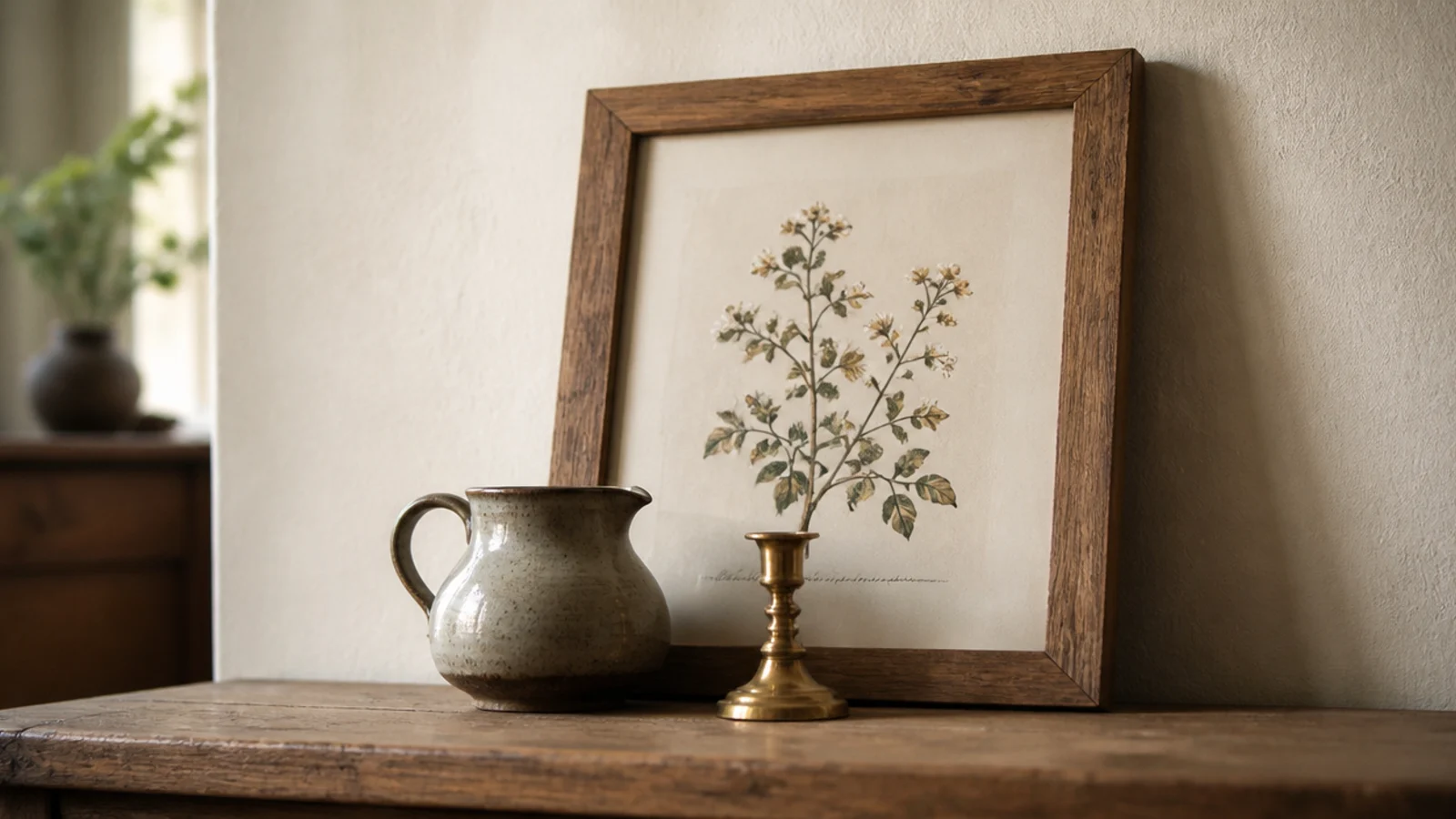
A framed piece leaning against the wall behind your objects adds depth and costs zero extra holes. Overlap it slightly with a vase in front so the layers read as intentional.
Use a frame at least 10 inches wide or it will look lost. Keep to two frame finishes across a whole wall — oak and brass, or black and oak.
6. Repeat one material three times
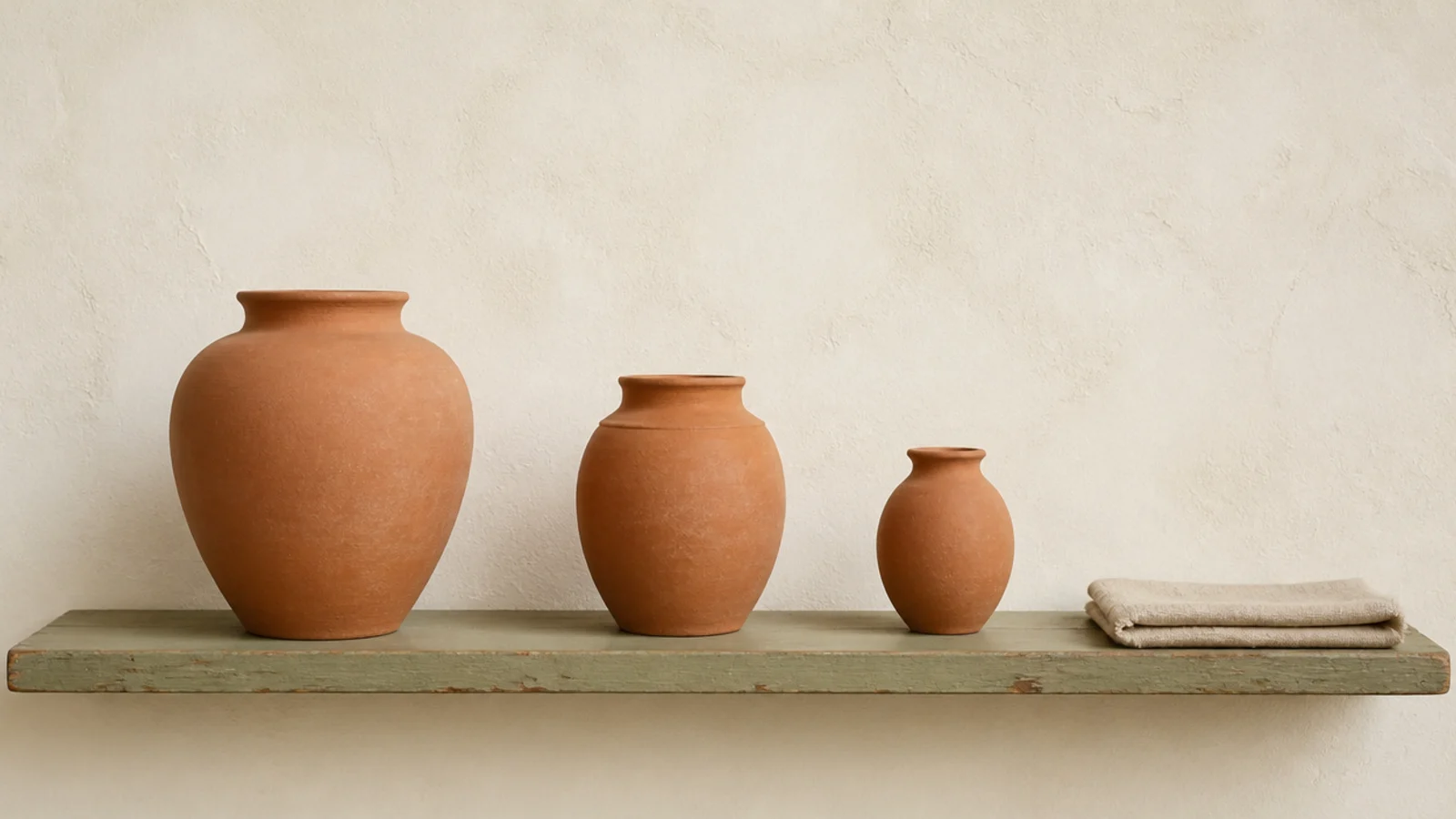
Three terracotta pieces in different sizes read as a collection. One terracotta pot, one glass jar and one metal tin read as whatever was nearby.
Repetition is what makes cheap objects look chosen. Charity shops and garden centres are full of plain unglazed clay at $3 to $8 a piece, and three of them beat one expensive vase almost every time.
7. Group tightly and leave a real gap
Objects want to touch, or nearly touch. Push a cluster together so the pieces overlap visually, then leave 12 inches or more of clear board beside them.
Even spacing is the single most common styling mistake I see. It comes from a good instinct — fairness — that has no place on a shelf.
8. A pair of jars in mismatched sizes
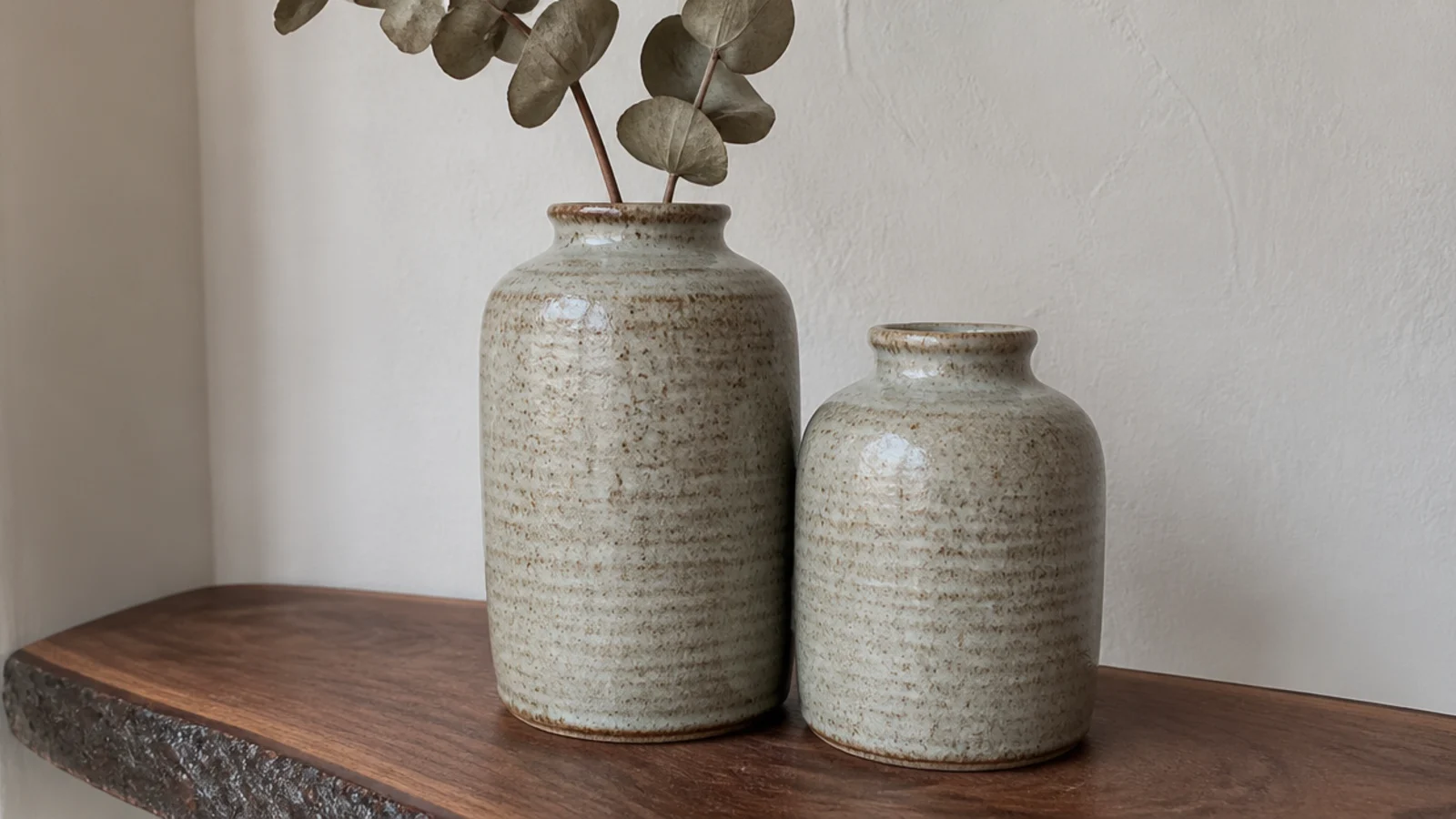
Matching pairs read as a showroom. The same glaze in two clearly different heights reads as a home that collected them.
Look for a 6-inch and a 10-inch in the same family and stand them shoulder to shoulder. Put a single dried stem in the taller one. Around $25 for the pair at a thrift store or a discount homeware aisle.
9. Terracotta instead of nursery pots
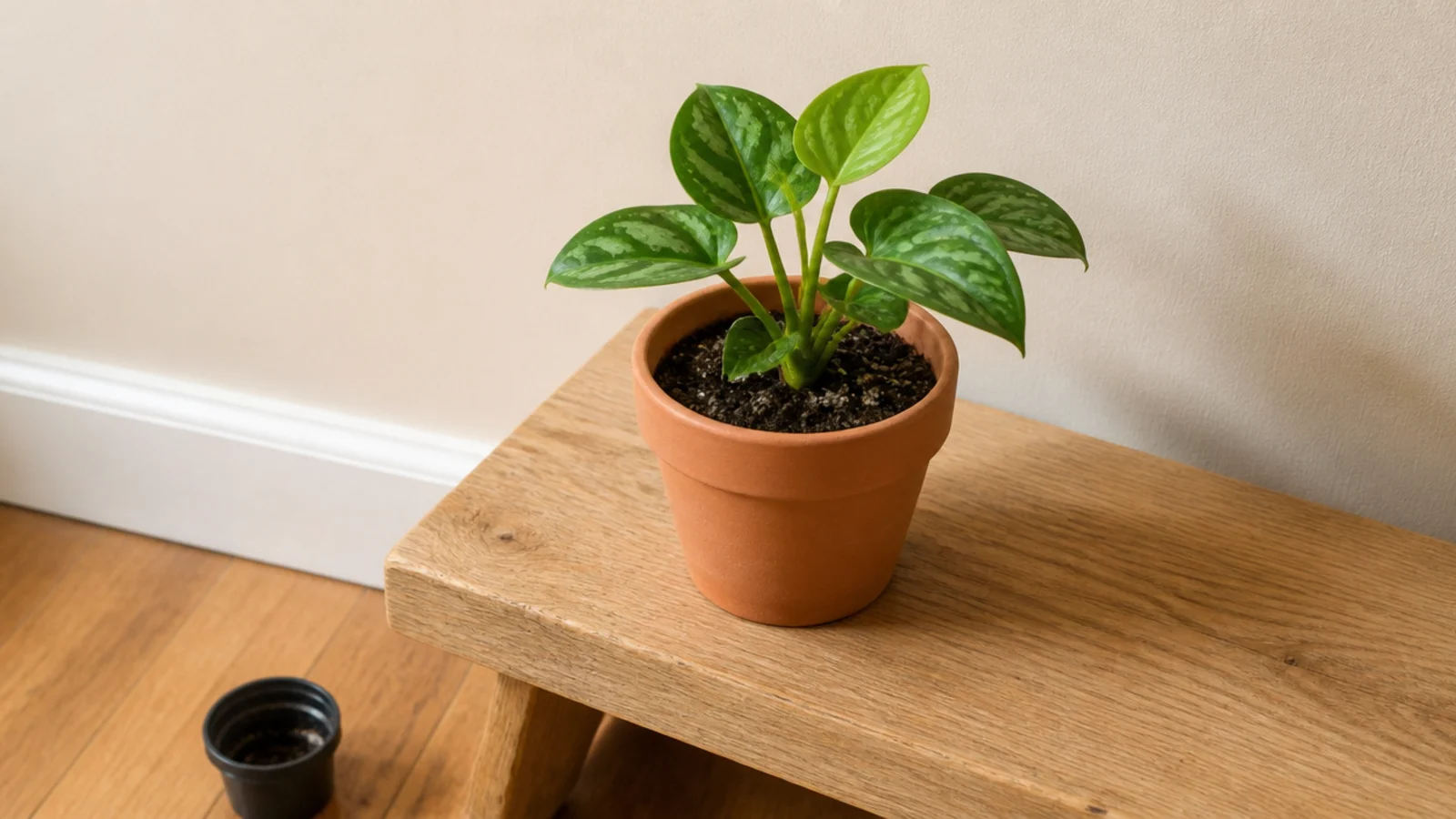
Black plastic nursery pots undo every other decision on a shelf. Plain unglazed terracotta costs about $3 each and instantly looks like you meant it.
Buy one size up from the nursery pot, drop the plant in still in its plastic, and add a handful of gravel underneath. No repotting, no mess, ten seconds per plant.
10. One shallow tray to contain the small things
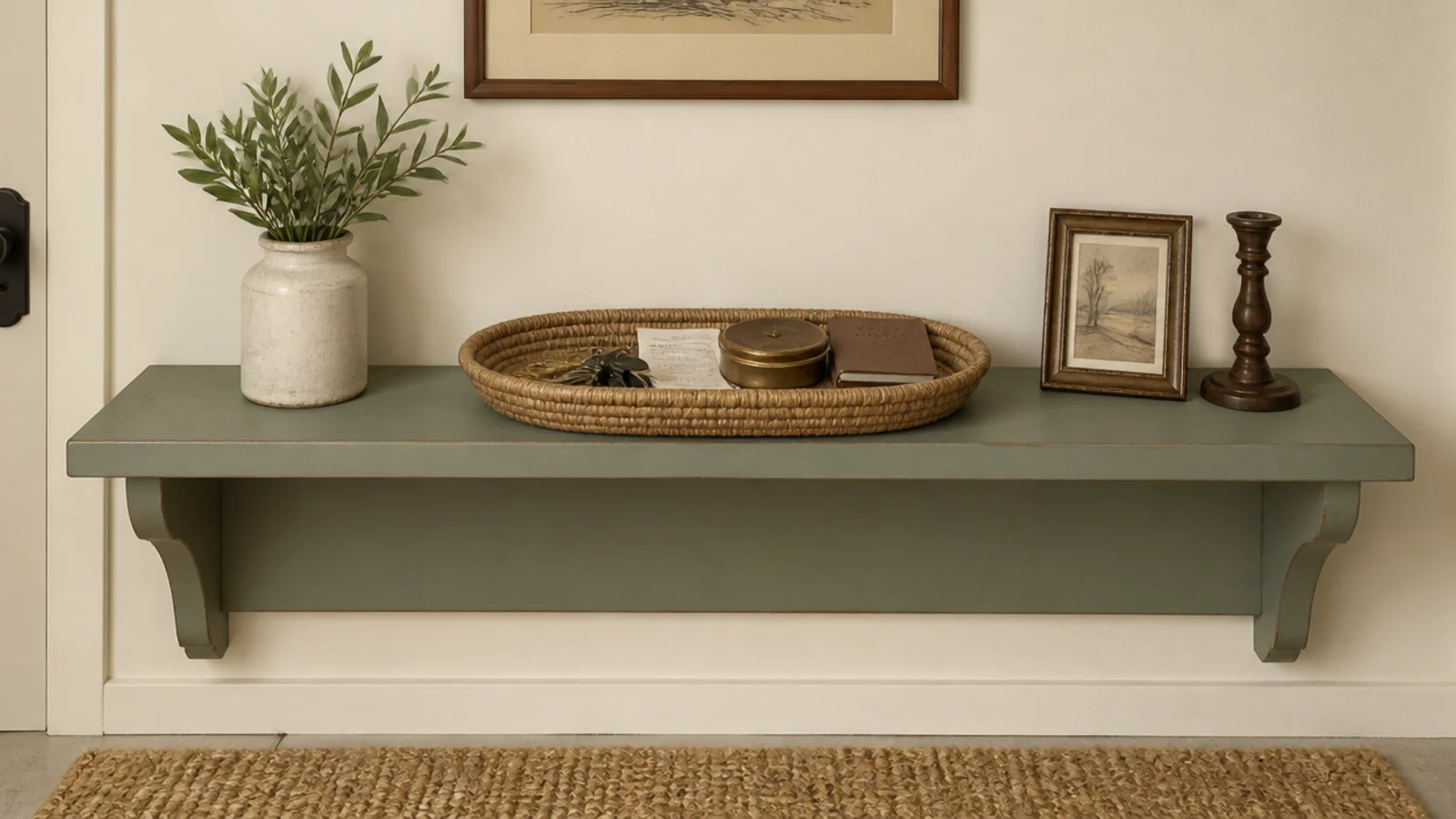
Any shelf that catches keys, cables or coins needs a raised edge. Without one, small items slide to the back and off the front.
A woven or wooden tray at 8 by 12 inches turns six pieces of clutter into one deliberate object. This is the whole trick behind an entry shelf that stays tidy, and it costs about $15.
11. Add one brass object per shelf
A shelf styled entirely in matte ceramics and linen goes flat under artificial light. One small metal piece — a candlestick, a bowl, a picture frame — catches a highlight and gives the eye somewhere to land.
Aged brass suits warm woods. Blackened steel suits cool greys and painted boards. One piece per shelf is the whole dose.
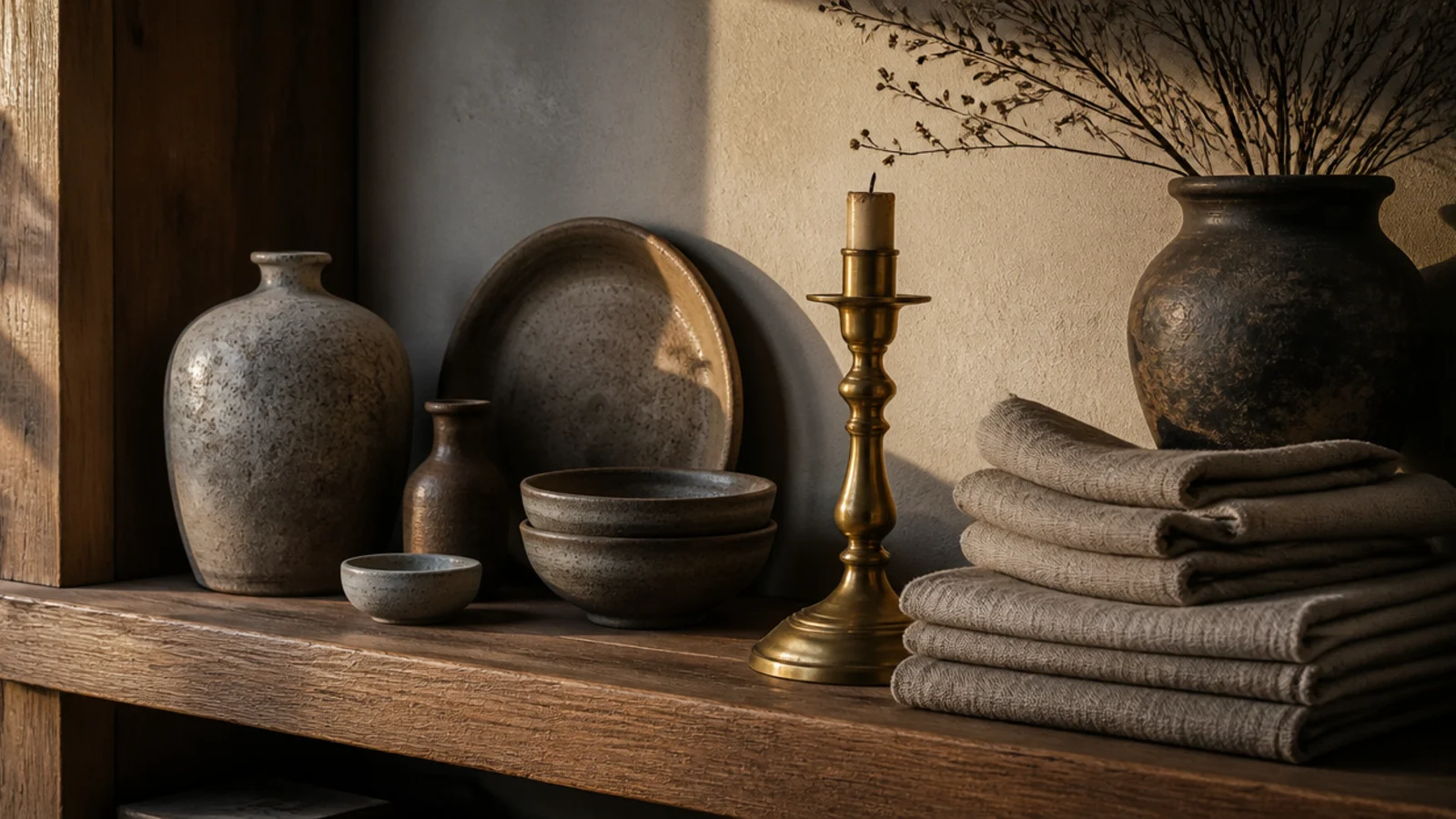
12. Put the candle at an odd height
A taper in a small holder adds 10 inches of height for about $4, which makes it the cheapest vertical in decorating.
Do not centre it, and do not light it under a wooden shelf — the underside of the board above will scorch faster than you expect. Unlit tapers are a styling object; lit ones need 3 feet of clear air.
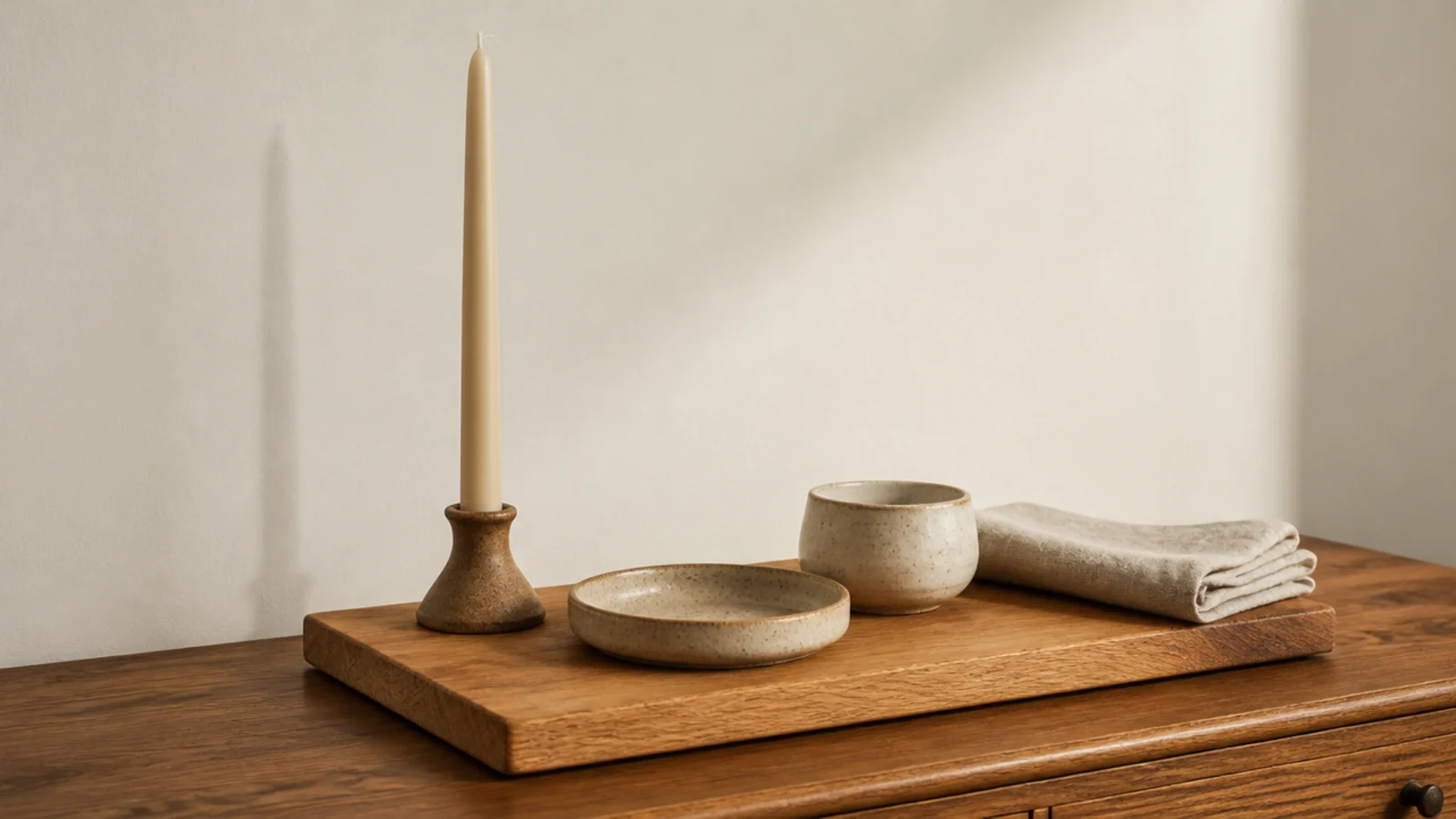
13. Dried stems instead of fresh flowers
Fresh flowers on a shelf last four days and drip. Dried wheat, bunny tails or eucalyptus last a year and hold their shape.
Buy one bunch at $10 to $15 and split it between two vessels. Trim the stems so roughly a third of the height sits below the rim — full-height stems in a short vase always look top-heavy.
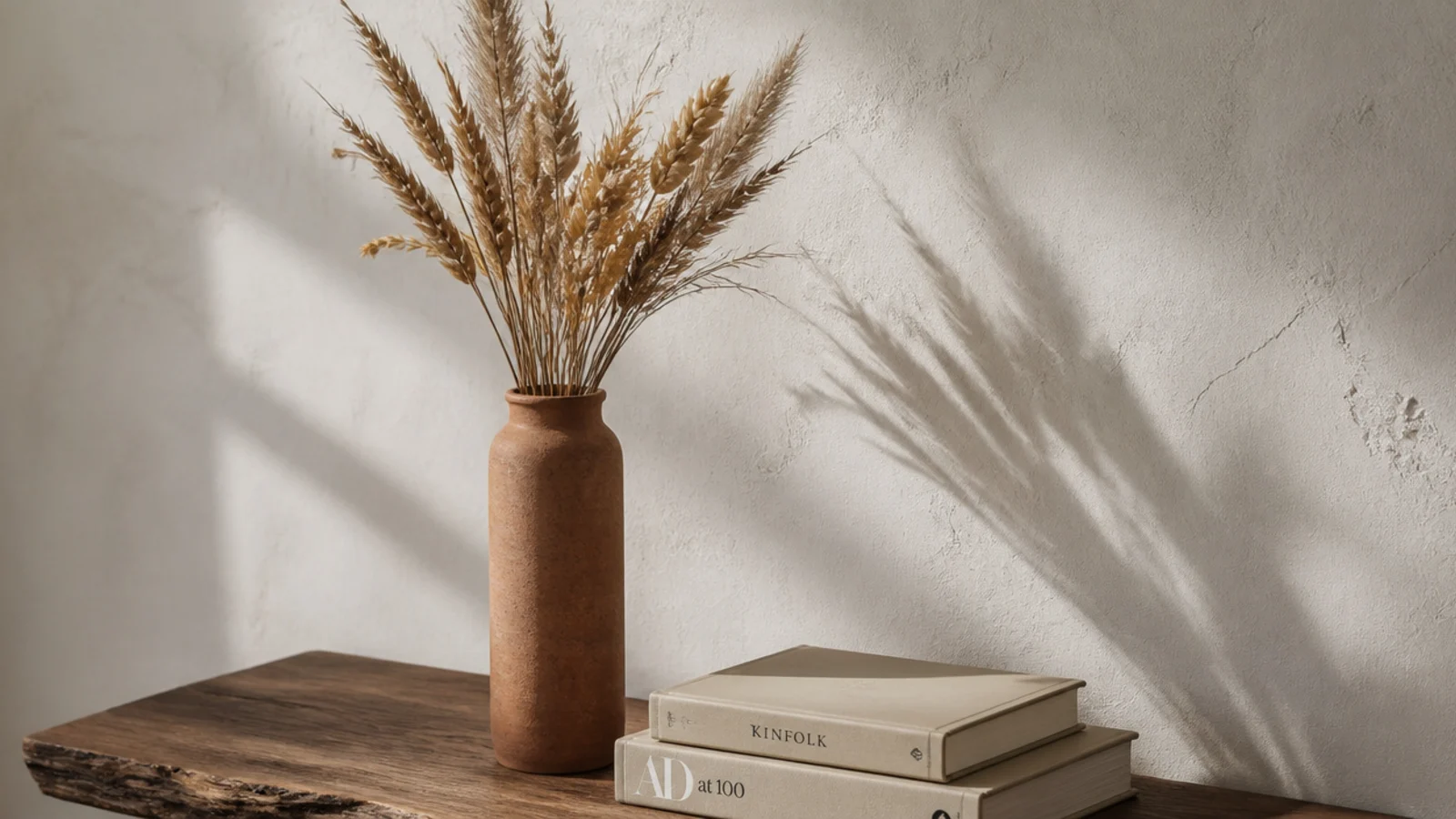
14. Take the paper jackets off hardbacks
Under almost every printed dust jacket is a cloth or paper board in a plain muted color, usually far better looking than the cover art.
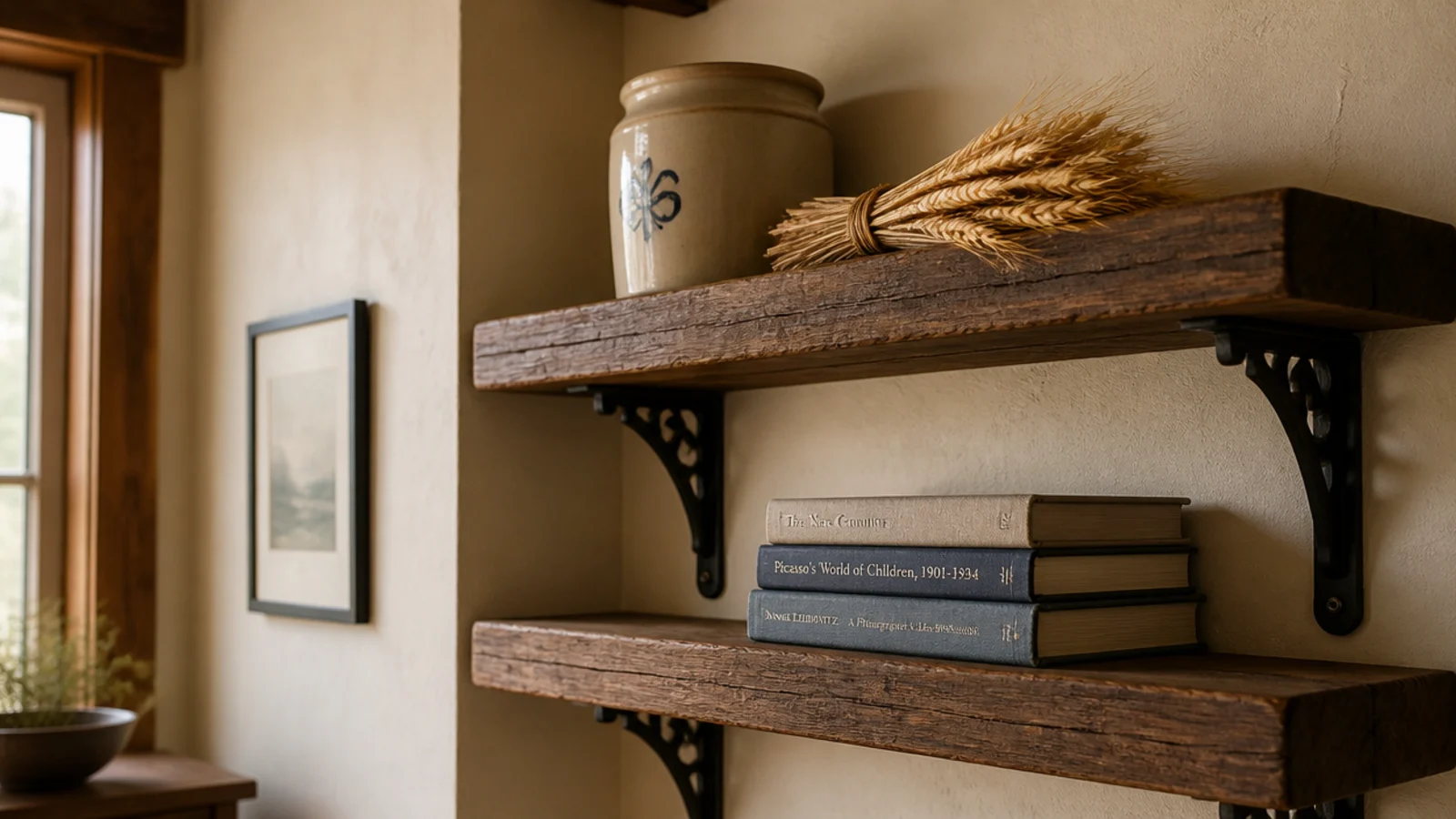
Ten seconds per book, zero cost, and a stack of eight suddenly coordinates. Keep the jackets in a drawer if you care about resale value. This one change makes more difference to a bookish shelf than any object you could buy.
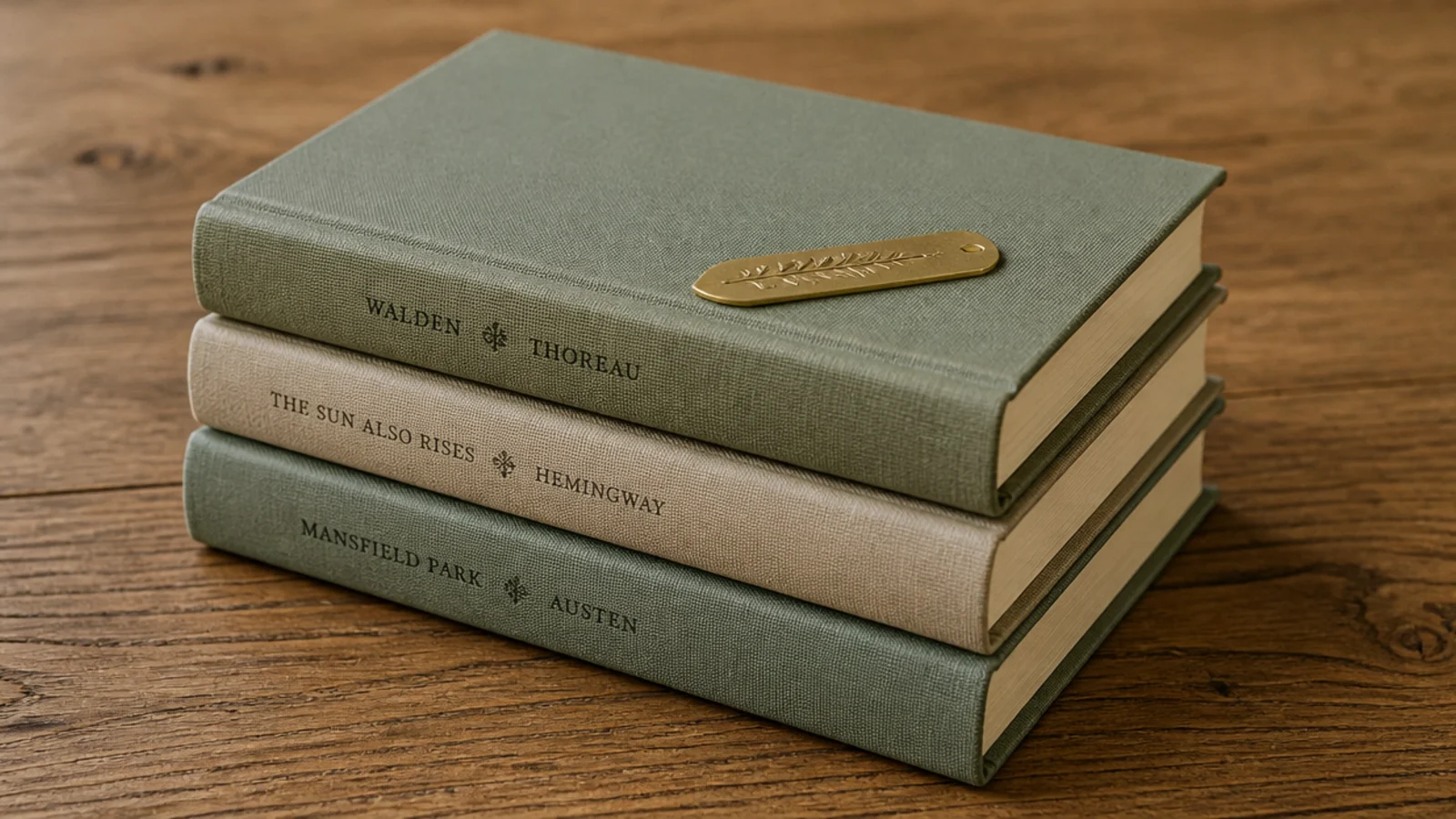
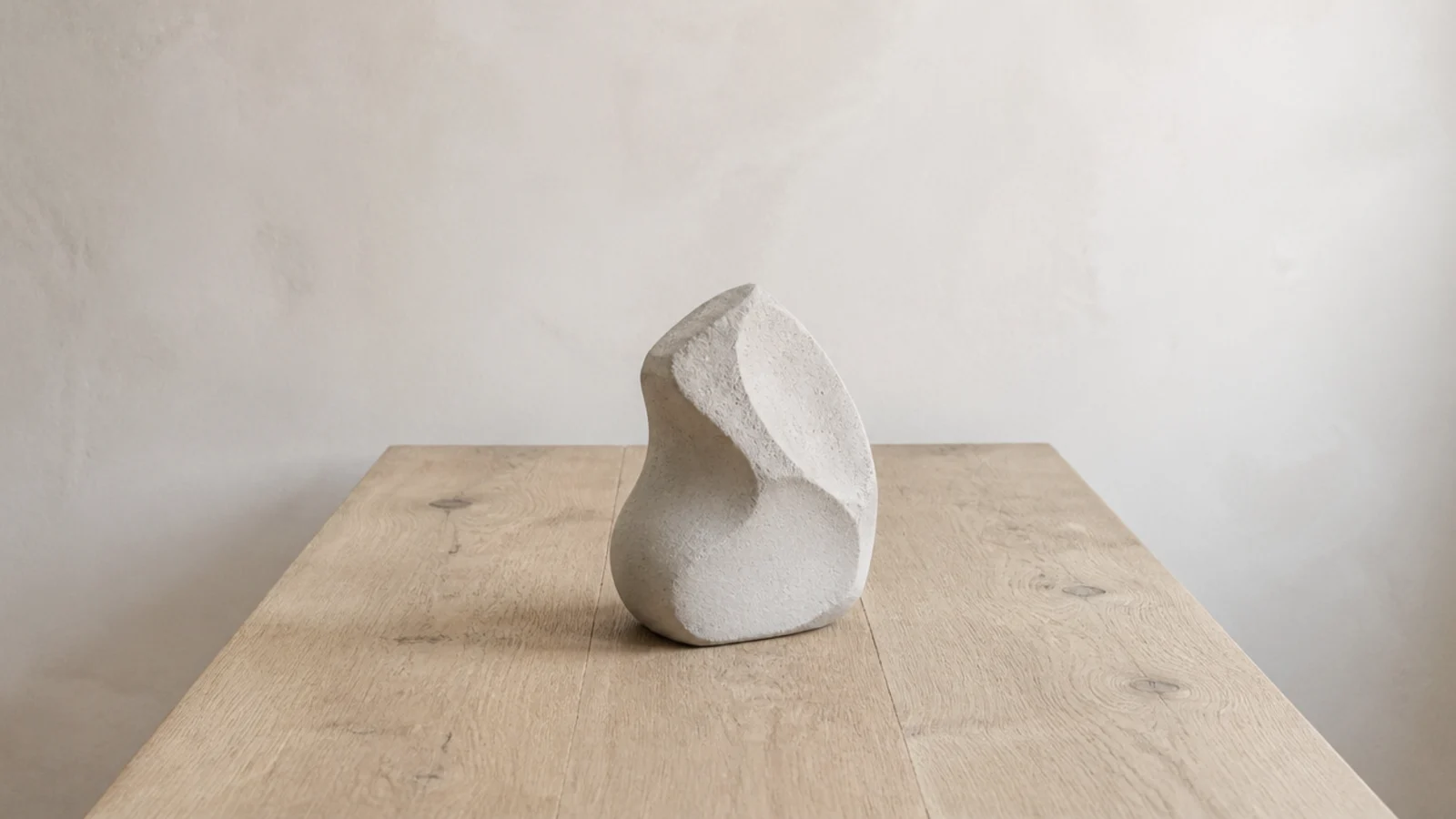
15. Give one sculptural object room to breathe
If you own one genuinely beautiful thing, put it alone on a board with nothing else at all.
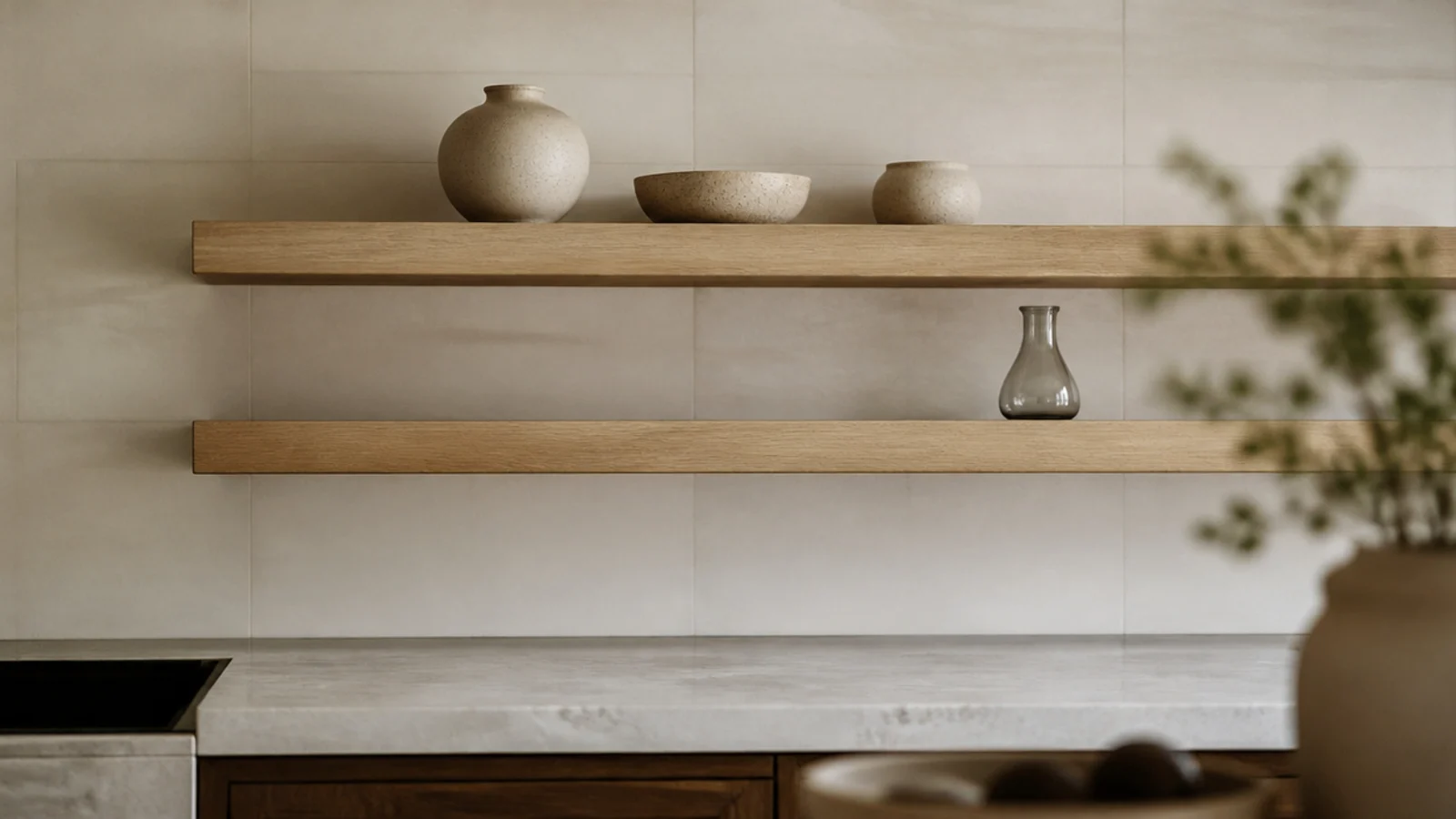
Space is what signals value. A single stone form or hand-thrown vessel in the middle of an empty 30-inch shelf reads as deliberate in a way that the same object in a group never will. This is where floating shelf styling earns its keep.
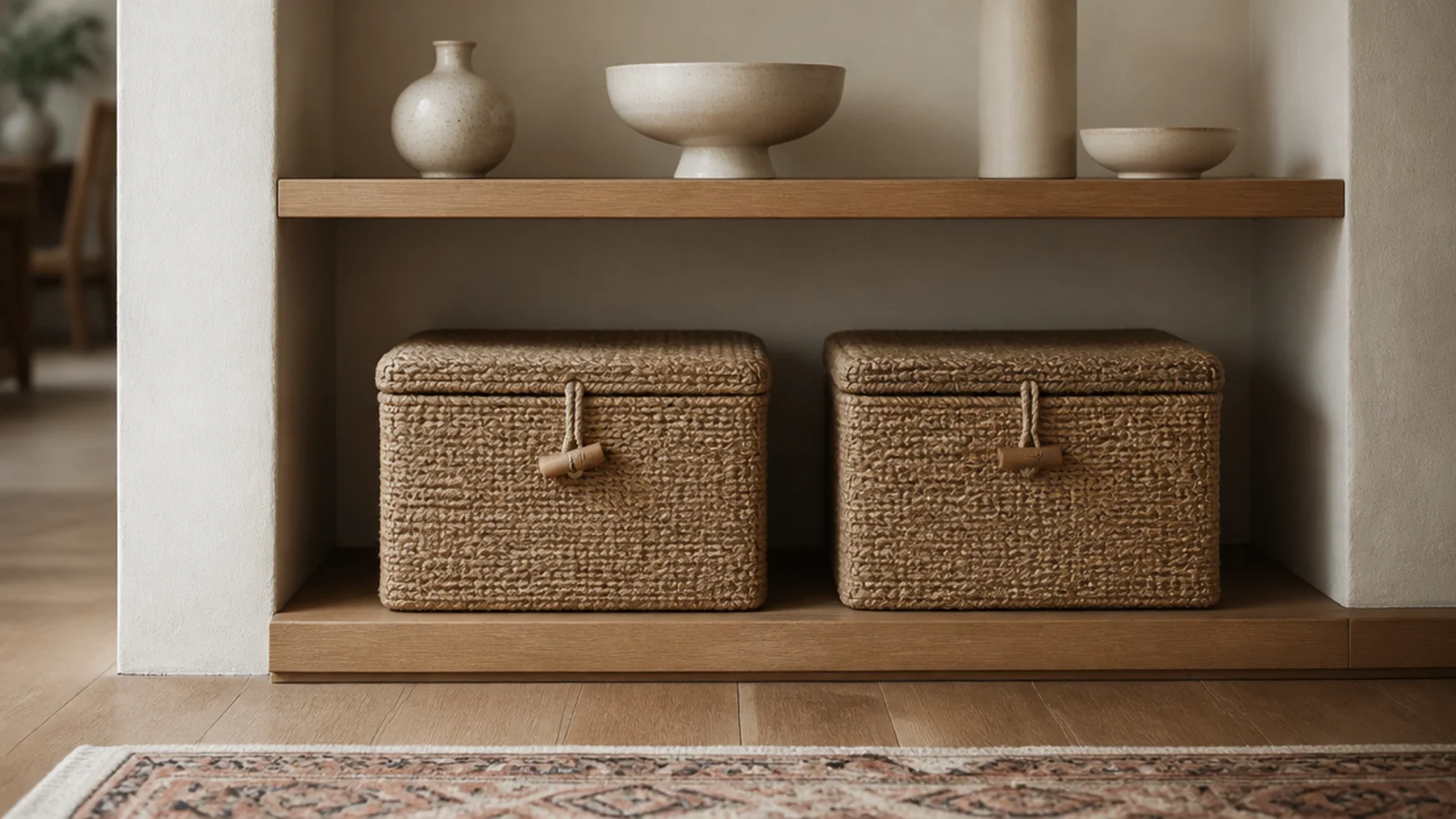
16. Anchor the bottom shelf with baskets
The lowest board in a run should be the visually heaviest, both for balance and because weight low is safer on any wall anchor.
Two lidded jute baskets do that job and hide cables, chargers and the things you cannot make beautiful. Around $20 each, and they make the shelves above look lighter by contrast.
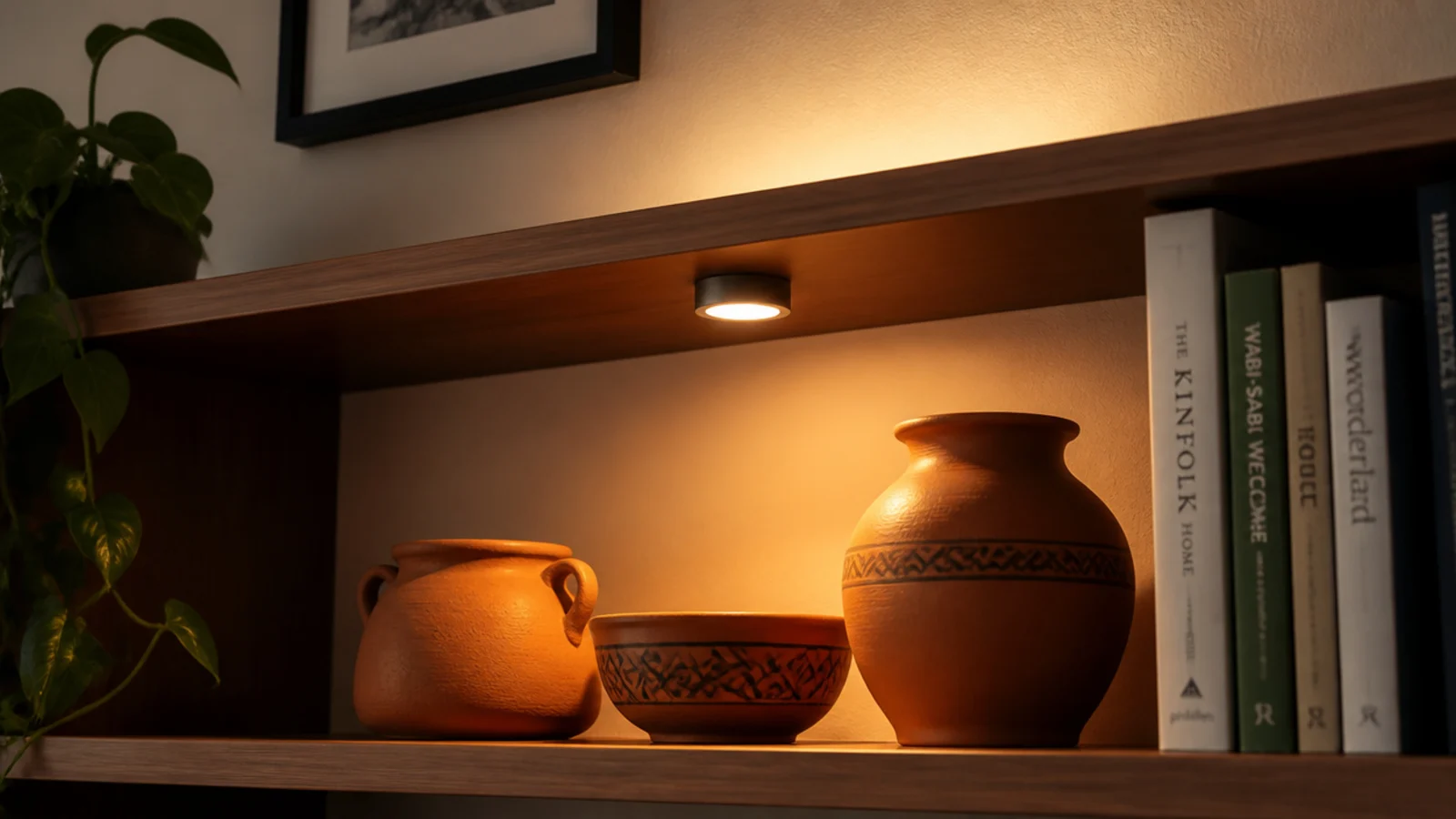
17. Light the shelf from underneath
A stick-on rechargeable puck light at 2700K, fixed under the top board, is the best $10 you will spend on a wall.
Cool white bulbs at 4000K make terracotta and walnut read grey, which is why some carefully chosen shelves still look flat. Warm light brings the clay back. Check the light before you blame the objects.
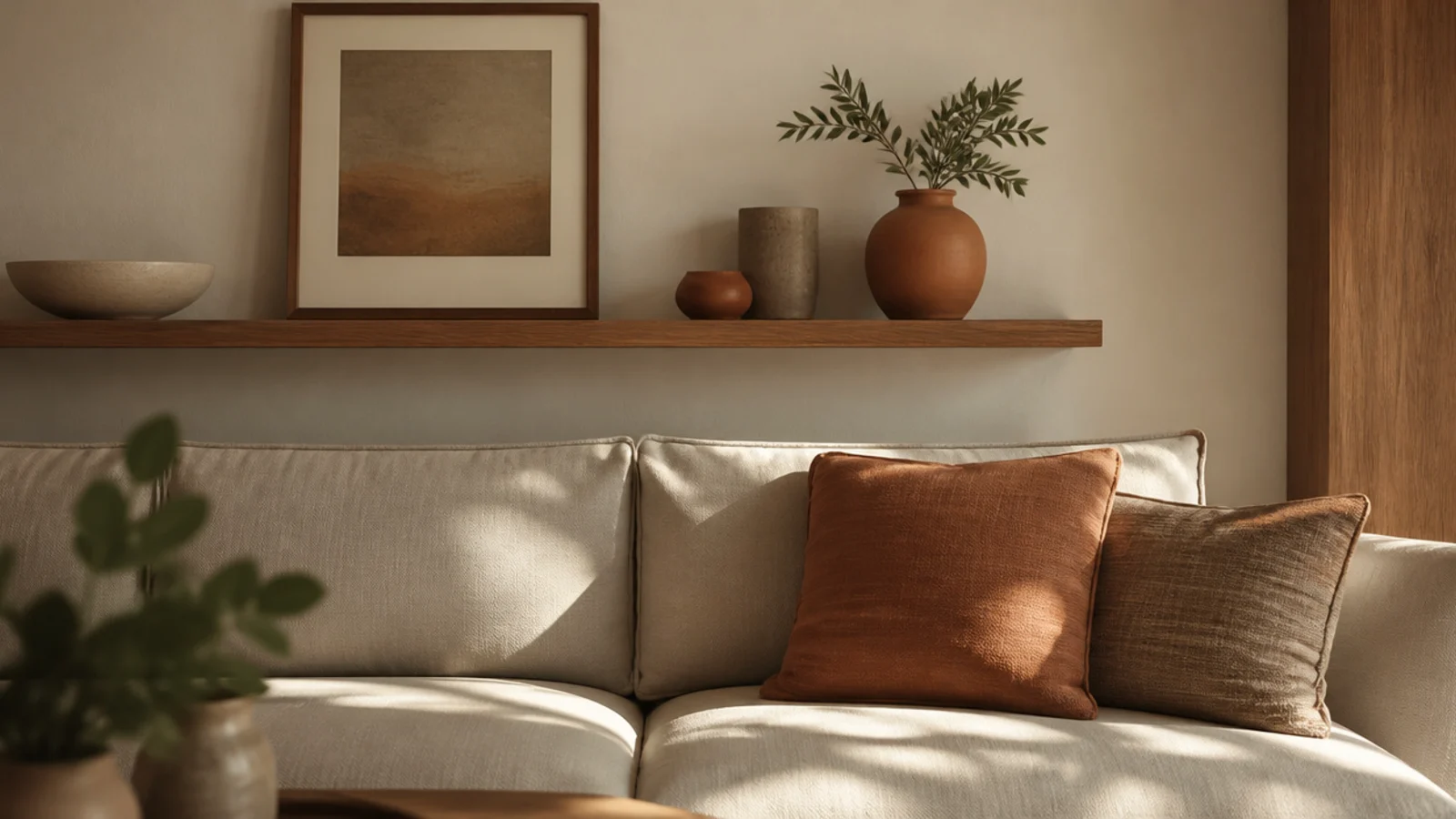
18. Pull one color from the room
Shelf objects should echo something already present — a cushion, a rug, a print — rather than introducing a new palette.
Pick one accent and repeat it twice on the shelves. Rust with cream, sage with oak, or ink blue with brass all work. This is why floating shelves in a living room look best when they borrow rather than compete.
19. Vary the silhouettes, not just the heights
Three objects of different heights but identical shapes still look monotonous. Aim for one round, one straight-sided and one irregular or soft.
Silhouette is what you actually see from across a room, before color or material register. Squint at the shelf from the doorway — if the outline reads as one blur, change a shape rather than a color.
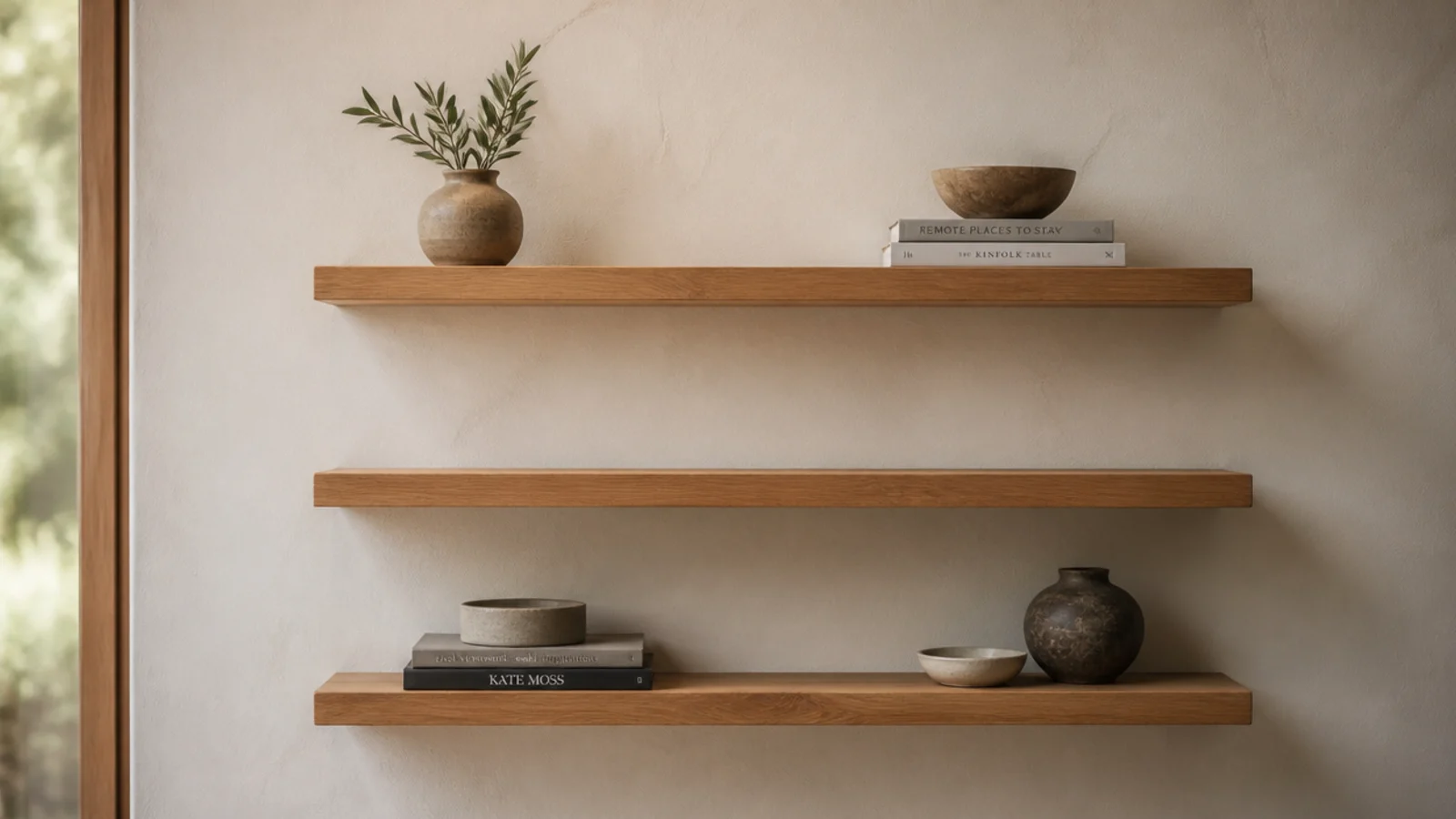
20. Leave one shelf completely empty
In a run of three, styling only two is the most confident thing you can do. The empty board reads as breathing room and makes the other two look chosen.
It also gives you somewhere to put a mug down, which matters more in real life than it does in photographs. Make it the middle board if the run is symmetrical, and the bottom one if it is not.
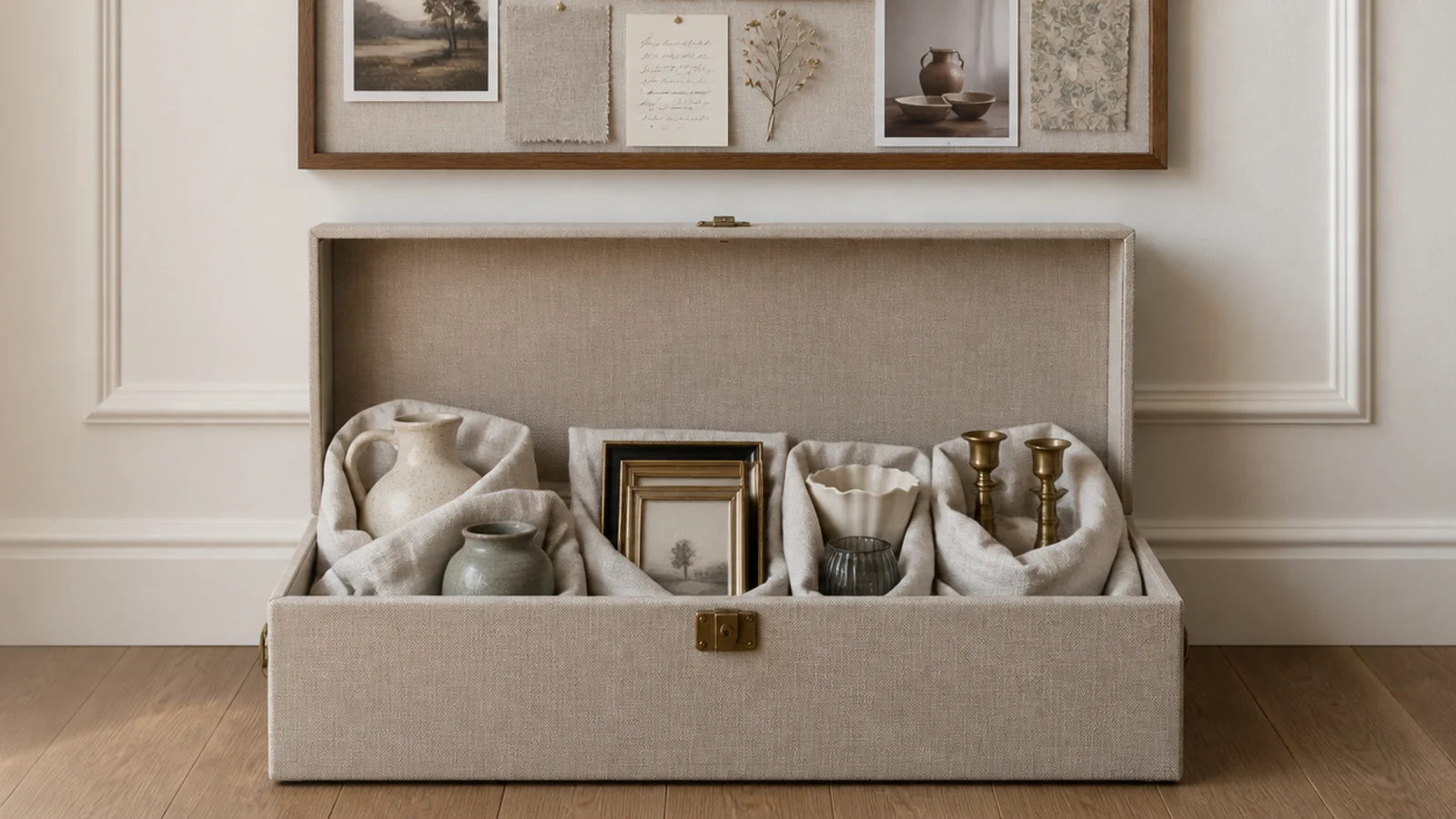
21. Keep a seasonal swap box
Collections grow because nobody has anywhere to put the things they are not using. One lidded box under the bed solves it.
Rotate half the objects twice a year — heavier clay and candles in autumn, glass and greenery in spring. Same possessions, completely different wall, and no money spent. This is how a shelf stays interesting for years.
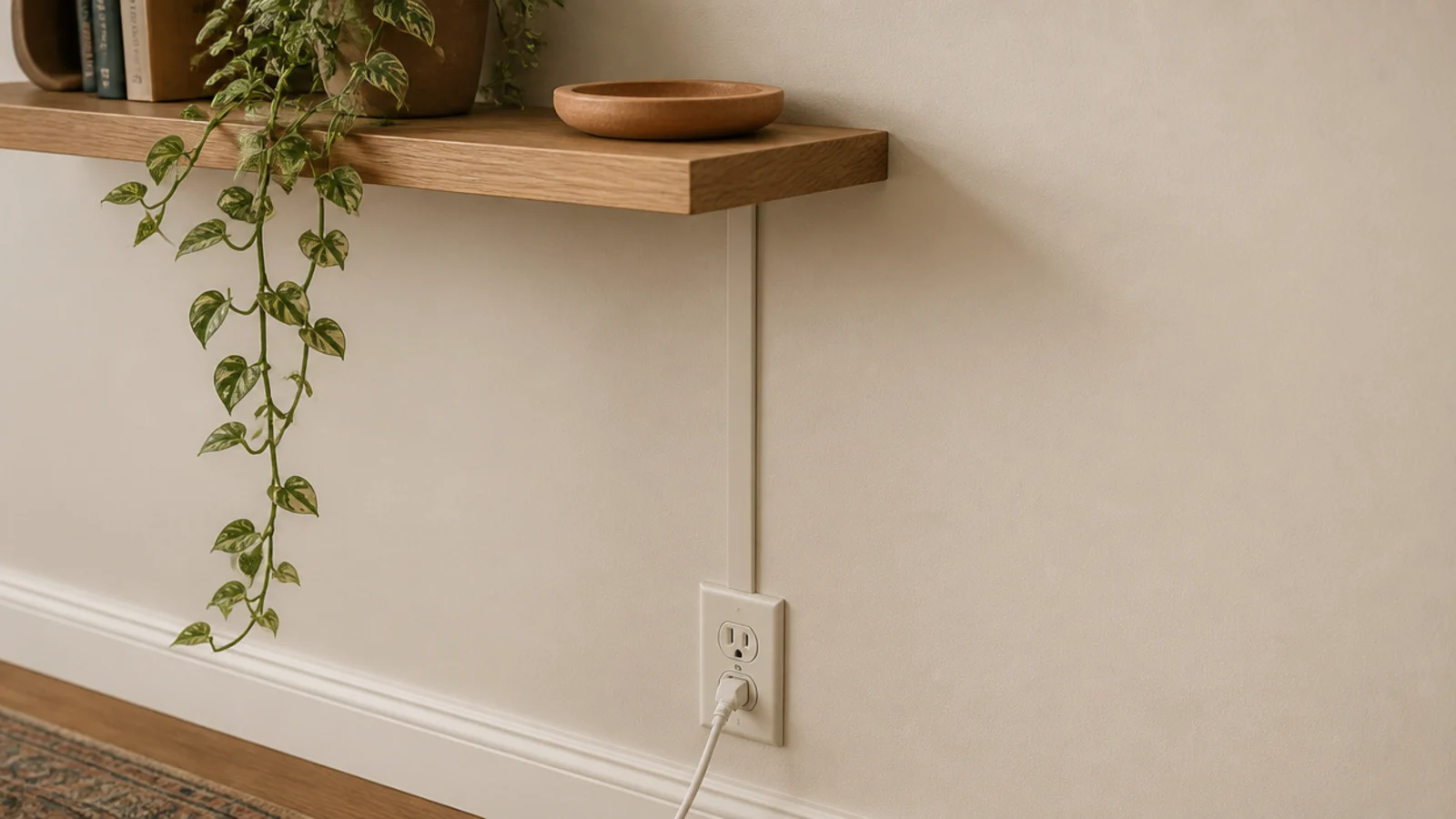
22. Hide the cables before you style anything
A beautifully arranged shelf with three white cables hanging down the wall is a badly styled shelf. Nothing you place on top will fix it.
An adhesive cable channel painted the wall color costs about $12 and takes ten minutes. Run it down the least visible vertical line. Do this first, then style.
23. Choose texture over shine
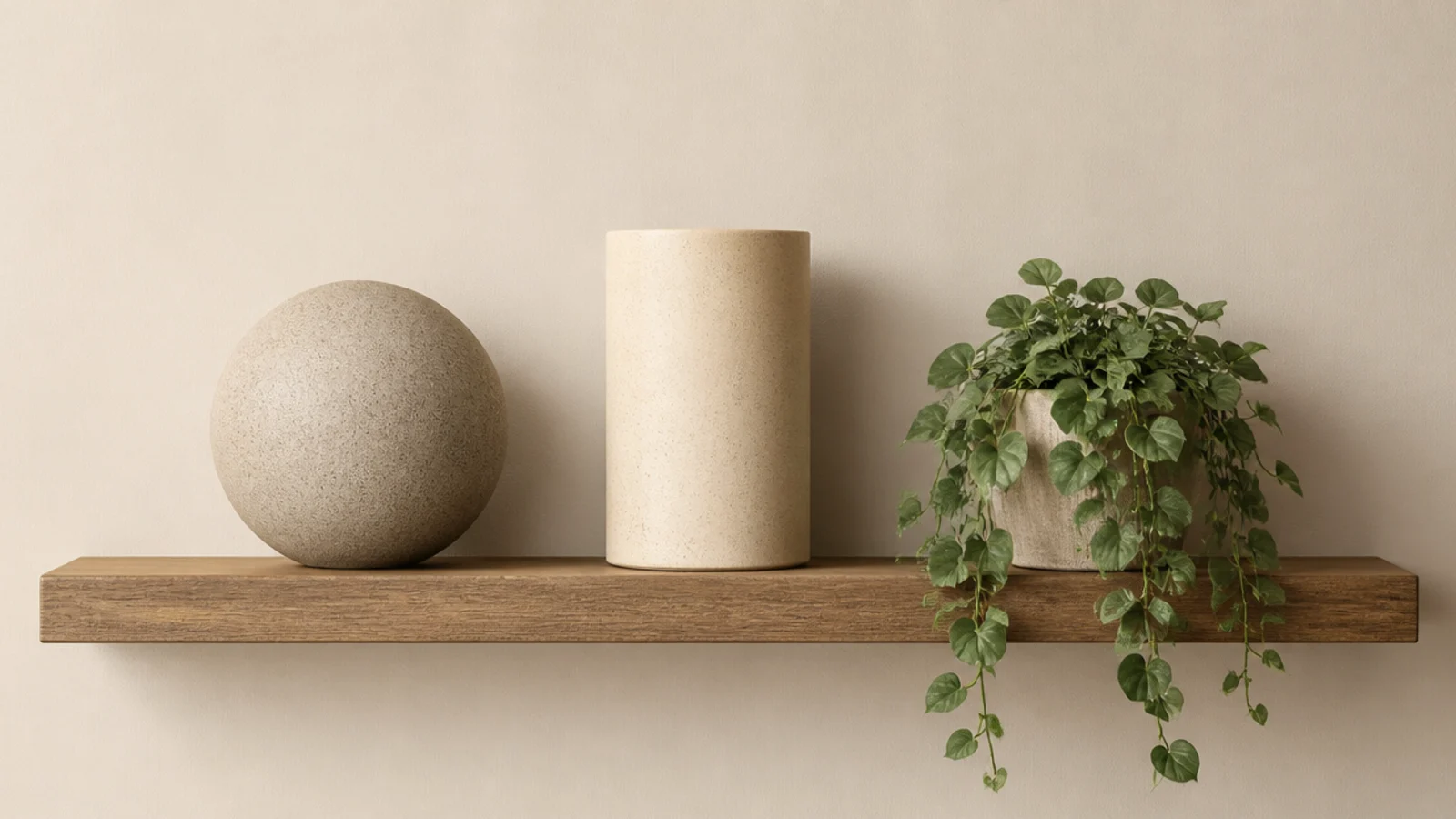
Matte, speckled, unglazed and woven surfaces photograph and read richer than glossy ones, because texture holds light instead of bouncing it.
One or two glossy pieces are a highlight. A whole shelf of them looks like a display cabinet. Mix a rough linen, an unglazed clay and a raw wood grain on the same board and the arrangement gains depth with no extra objects.
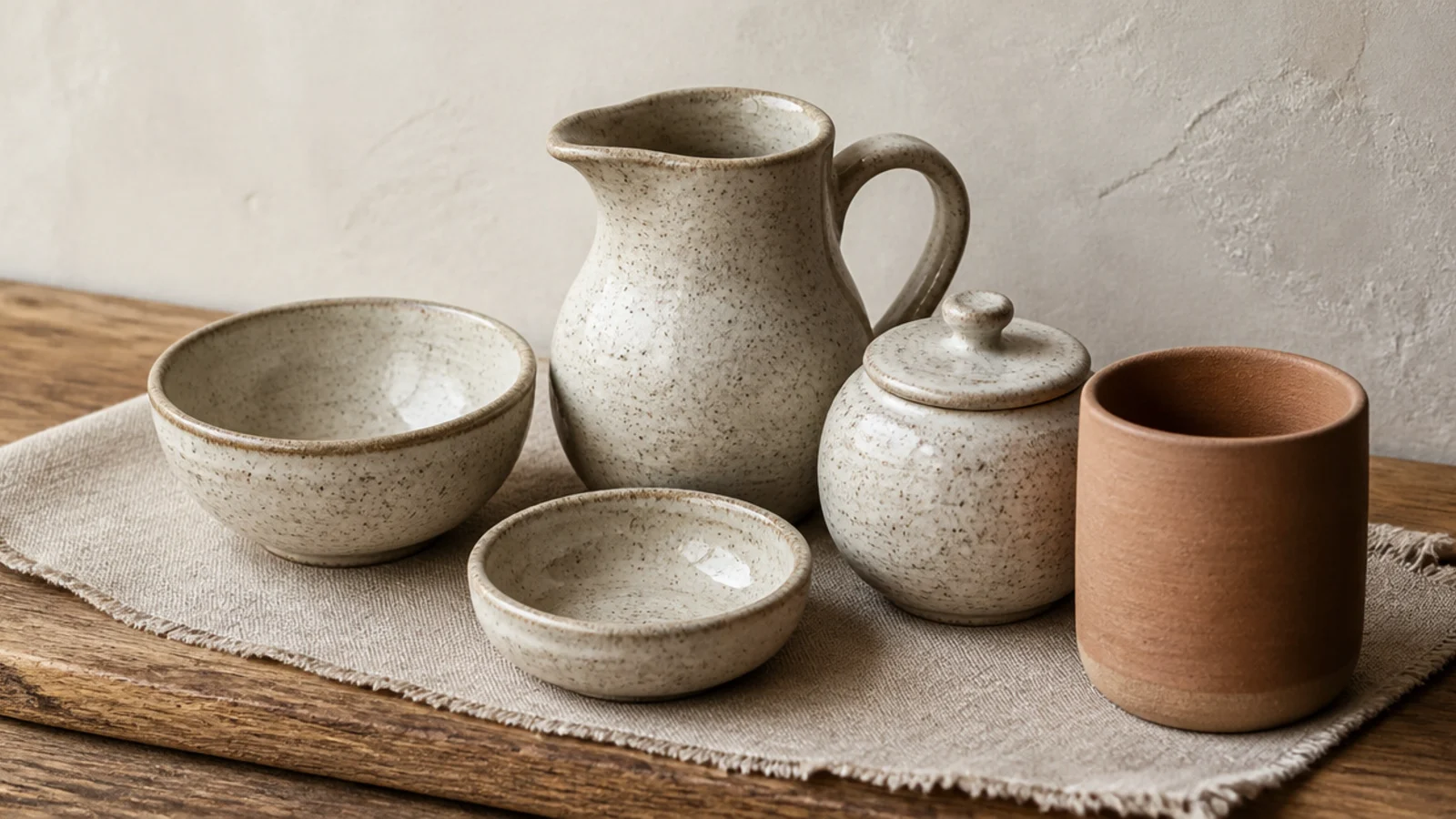
24. Paint the wall behind the shelf
Painting the strip of wall behind a shelf run in a deeper tone makes pale objects step forward and turns the whole thing into a feature.
A sample pot covers the area behind two shelves. Muted sage, clay or a soft ink blue all work with warm wood. It costs $9 and looks like a design decision because it is one.
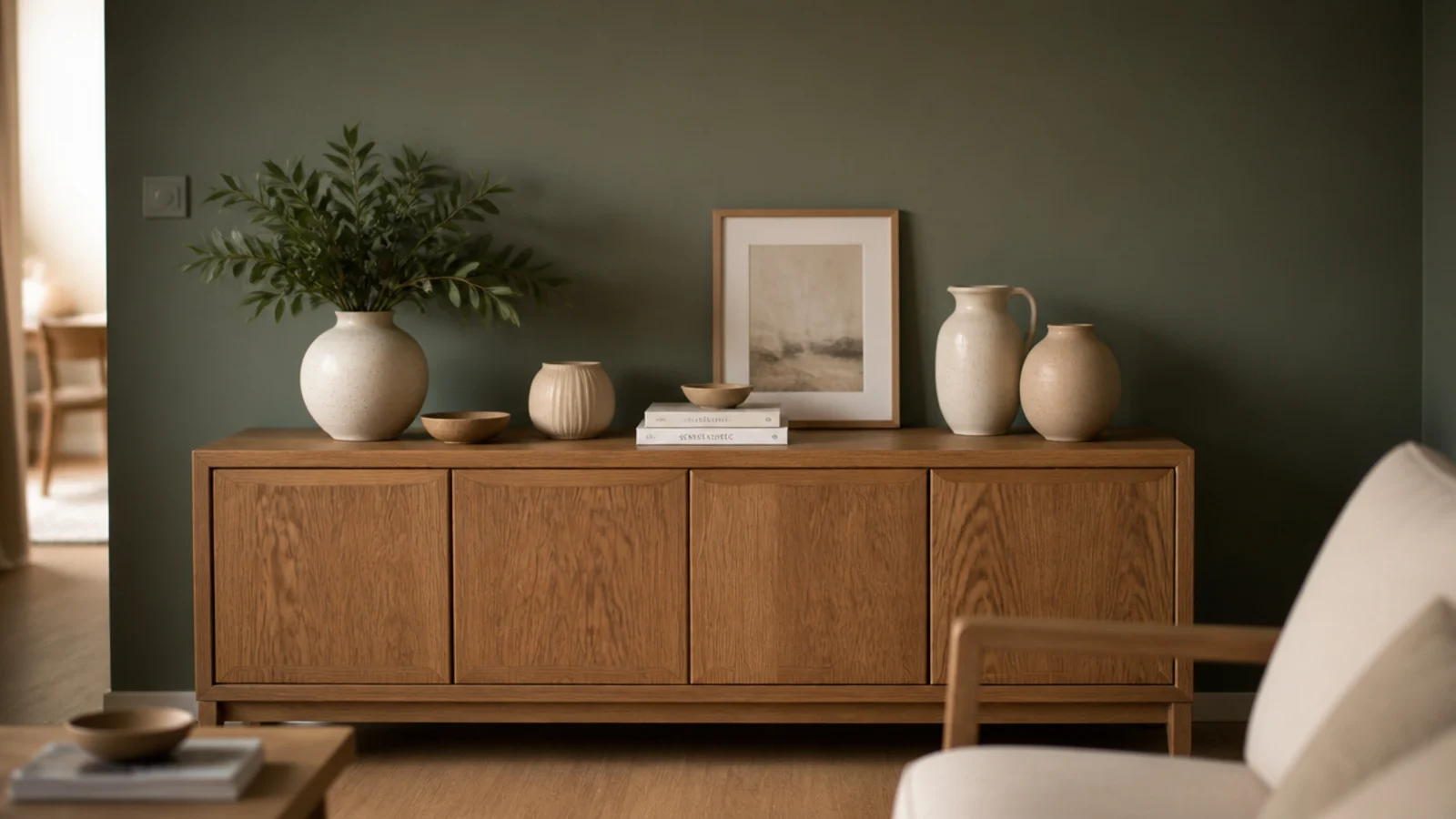
25. Style it from where you actually sit
Everyone styles shelves standing up, close, at eye level. Nobody ever looks at them that way again.
Sit on the sofa. Stand in the doorway. Check both angles before you finish, because objects that overlap beautifully from three feet often separate into a scattered row from ten. Adjust for the view you will actually have.
Mistakes to Skip
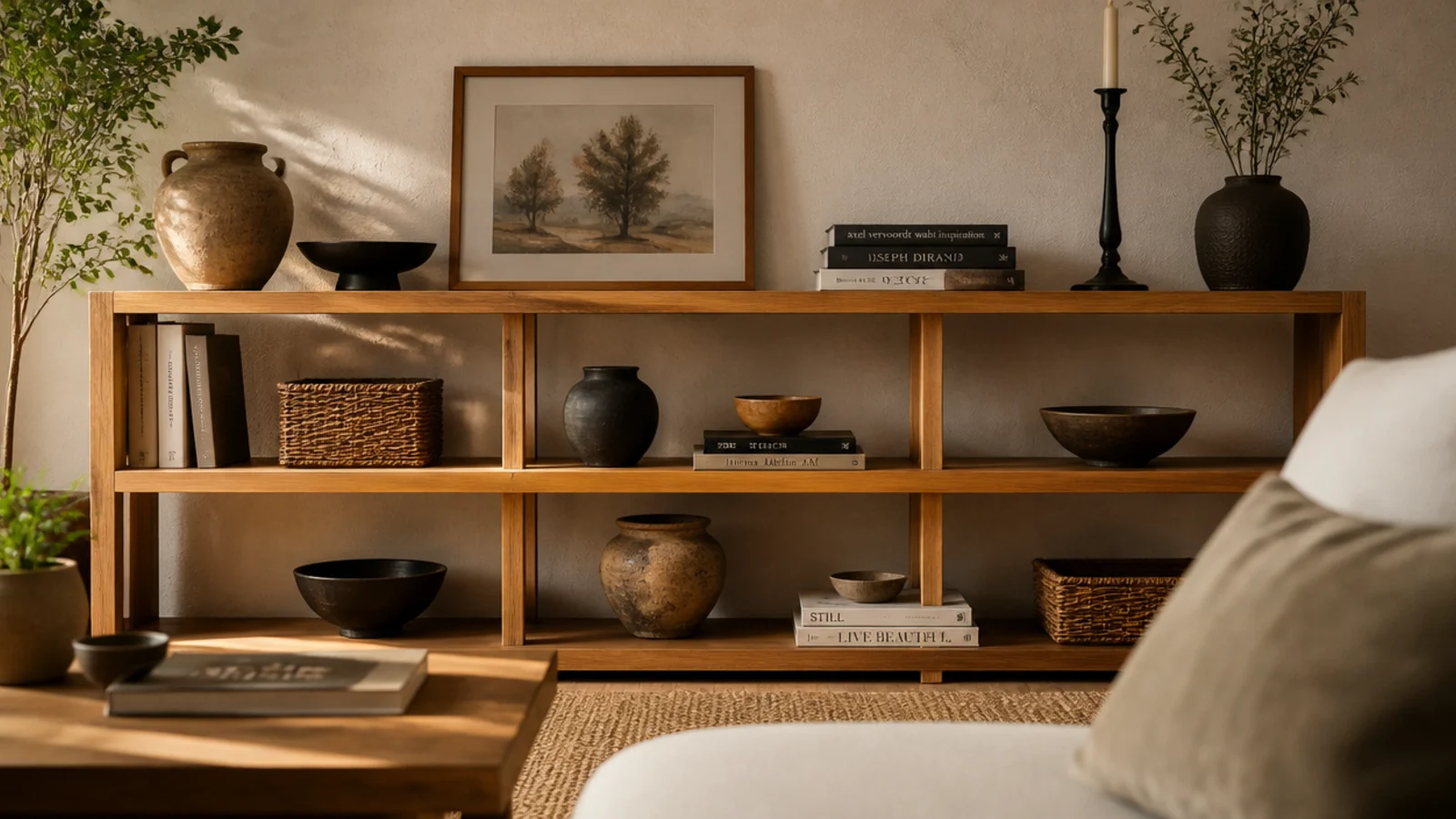
- Spacing objects evenly along the board. Even spacing reads as a shop display; tight clusters with real gaps between them read as a home.
- Buying new objects before editing the ones you own. Most shelves that look wrong are overfull rather than badly stocked, and removal is free.
- Styling with a cool 4000K bulb in the room. It drains warmth out of terracotta and walnut, and people replace perfectly good pottery trying to fix it.
Frequently asked questions
How many objects should go on a floating shelf?
Three per 24 inches of shelf, at three clearly different heights, is the reliable default. Something tall like a vase, something low and wide like two stacked books, something soft that trails over the edge. Two objects read as a mistake and five start to read as storage. Leave roughly a third of the board genuinely empty.
What should I put on floating shelves in a living room?
Things you would still like if nobody saw them: a few real books, one or two pieces of pottery with texture, a trailing plant and one framed piece leaning at the back. Keep breakables above 48 inches and away from door swings. Group objects tightly in clusters rather than spacing them evenly across the whole board.
How do I make cheap shelf decor look expensive?
Repeat one material three times, swap black plastic nursery pots for plain terracotta at about $3 each, take the paper jackets off hardbacks, and add one warm 2700K light under the top shelf. Those four changes cost under $30 together and do more than any single purchase. Texture always photographs richer than shine.
Should shelf decor match the wall or the furniture?
Pull the shelf color from the trim or the wall so the board recedes, then let the objects carry the color from something already in the room — a cushion, a rug, a piece of art. Matching nothing is what makes a shelf look bolted on. Matching everything makes it look like a showroom display.
How often should I restyle a floating shelf?
Twice a year is plenty. Keep a small box of the pieces you rotated out and swap seasonally rather than buying more, which is how collections stay interesting without growing. The only rule is to take everything off before you restyle, because nudging an existing arrangement relocates the problem instead of solving it.
Clear one shelf completely, put back three things at three heights, and stop there for a week before you add anything. That single exercise teaches more than any list. For the boards themselves, affordable renter-friendly shelf ideas covers what to buy and how to hang it, and if the wall you are styling turns a corner, corner shelf decor has the version that handles two planes. Save the pin for your next restyle.
Want more like this? Browse all 15 floating shelves guides — they all use the same measurements and budget tiers.
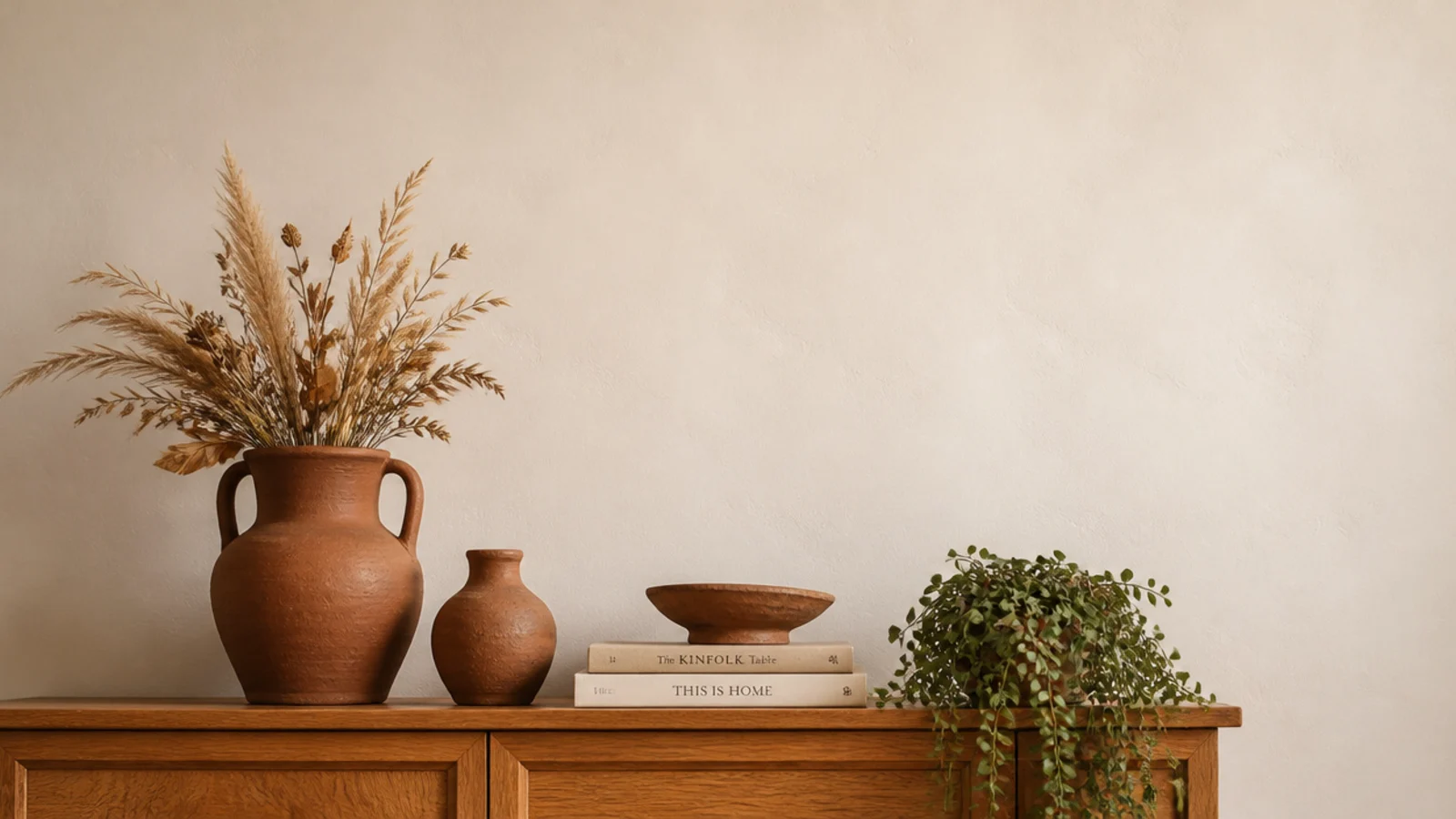
Pin it for later
Save this to your Floating Shelves board
Pin it now so it is waiting for you when the tape measure comes out — and so the next person hunting for this idea can find it too.
Save this pinKeep going
More ideas worth saving while you have the tape measure out.