Kitchen Shelf Ideas · Listicle
25 Dreamy Kitchen Shelf Ideas for Any Home

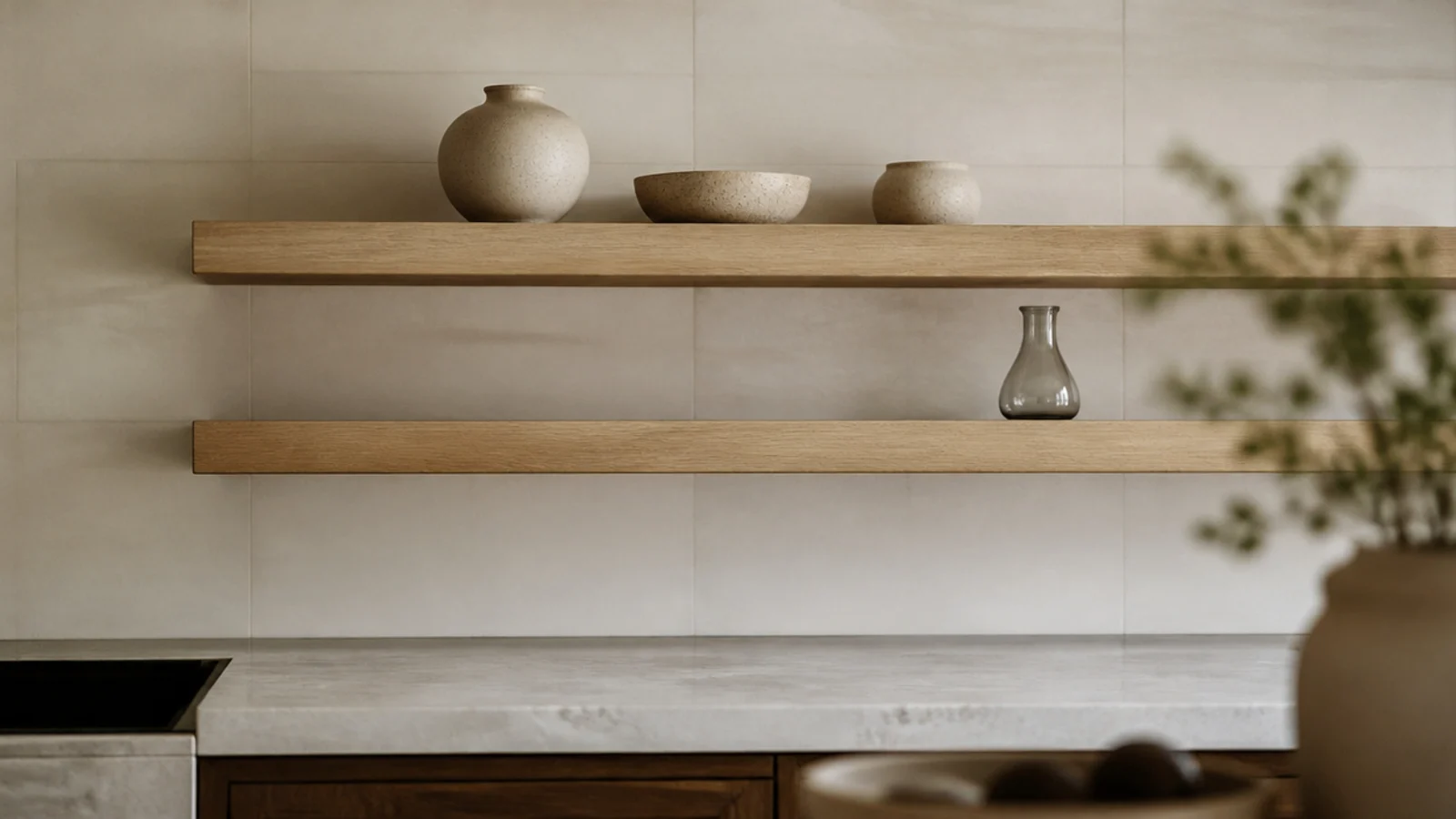
Modern kitchen shelves live or die on two decisions: how thick the board reads, and how little you are willing to put on it. Everything else — the wood, the stone, the light — is detail on top of those. These 25 ideas cover the edges, brackets, lighting and finishes that separate a shelf that looks designed from a board on brackets.
In this guide27 sections — tap to openHide
- 1.What separates modern kitchen shelves from ordinary ones
- 2.A single thick slab with a mitred edge
- 3.Hidden rod brackets and nothing else on the wall
- 4.A matte black steel channel shelf
- 5.A shelf cut from the same stone as the counter
- 6.A linear light washing down the tile
- 7.A recessed niche shelf in the backsplash
- 8.A micro-ledge in the same tile as the wall
- 9.Fluted or reeded wood on the shelf front
- 10.Rift-sawn white oak with straight grain
- 11.A shelf painted the cabinet color
- 12.A brass edge trim on a pale shelf
- 13.A shelf that returns down the wall
- 14.A quarter-inch blackened steel plate shelf
- 15.Glass shelves on brushed nickel standoffs
- 16.A shelf integrated into the hood surround
- 17.A shelf that hides an outlet strip underneath
- 18.One asymmetric shelf as the only decoration
- 19.Concealed lighting inside a shelf reveal
- 20.A two-tone shelf, pale top and dark underside
- 21.A routed finger channel instead of a rail
- 22.A shelf that stops short of the corner
- 23.A shelf floating in front of a window
- 24.A concrete or terrazzo shelf slab
- 25.A magnetic knife strip on the shelf underside
- 26.Deliberate negative space, one shelf and three objects
- 27.Mistakes to Skip
What separates modern kitchen shelves from ordinary ones
Four details do almost all of it.
Apparent thickness. Anything under an inch reads as a bookshelf part. An inch and a half to two and a half inches reads as architecture, and you can fake it with a mitred box around a hollow core so the weight stays sane.
The load path. Concealed rod brackets need thick stock and, ideally, studs. A lag screw into framing carries 40 to 60 pounds per fixing, a toggle bolt in half-inch drywall carries 25 to 35, and the plastic plugs in the box carry about 10. Ten dinner plates weigh 12 pounds, so plan for a stud on any dish shelf and use three-quarter-inch stock minimum.
Placement relative to the stove. Everything within roughly 4 feet of a burner picks up an airborne grease film. Weekly-washed items go there, decorative pieces go at the far end. Above a range hood, ceramic, metal or glass only.
Finish. Water-based polyurethane or hardwax oil, on every face including the underside and the cut ends. Clear wax softens near heat and lets grease through, and an unsealed underside is why boards cup.
Budget: $ under $50 for a painted board with hidden cleats, $$ $50 to $200 for thick hardwood with concealed rods, $$$ $200 and up for stone, steel or integrated lighting.
1. A single thick slab with a mitred edge
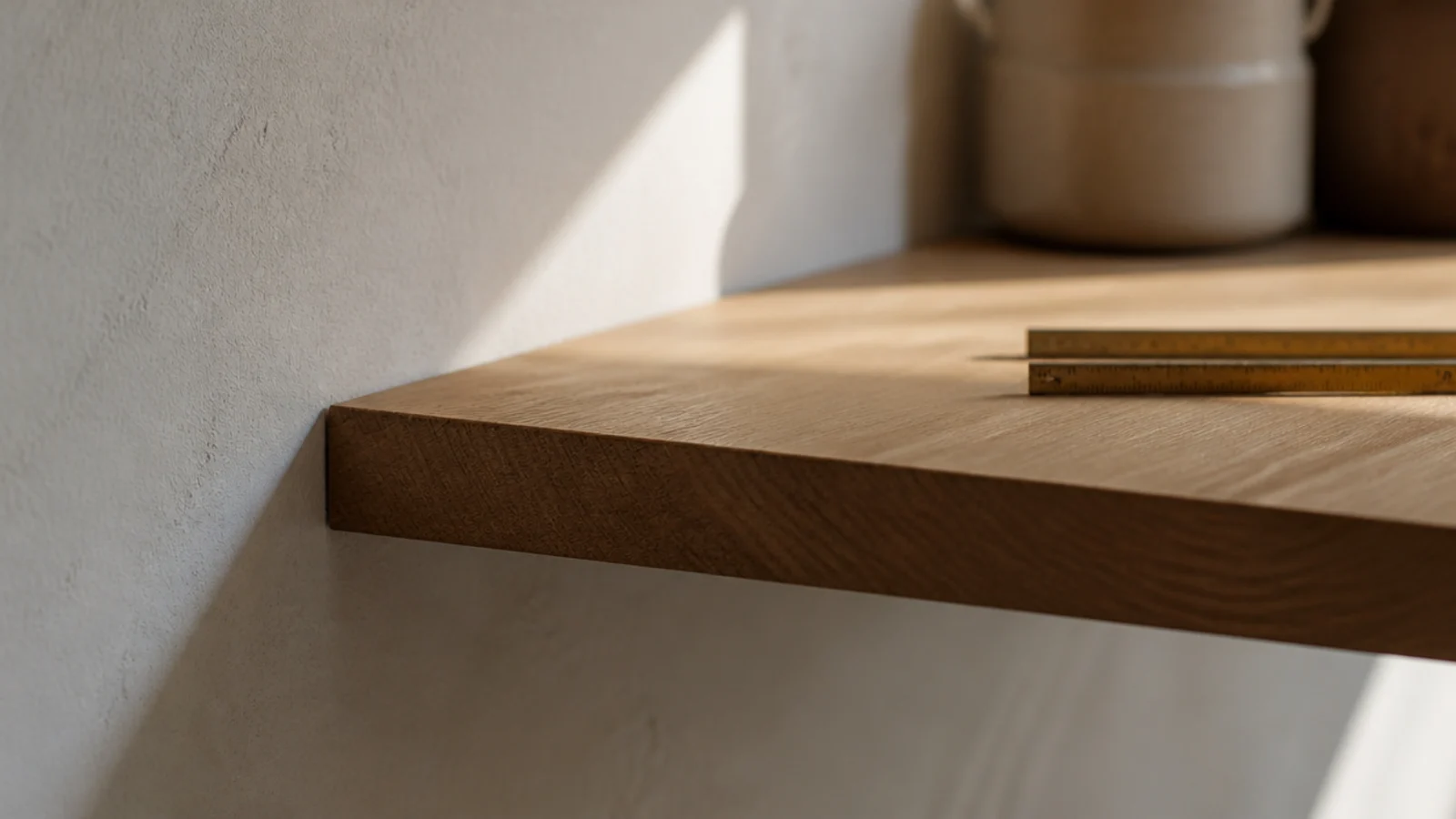
Two inches of apparent thickness changes a shelf from utility to architecture. You rarely need two inches of solid timber to get it.
A mitred box — a three-quarter-inch top and front returning at 45 degrees around a hollow core — gives the same crisp edge at a third of the weight. Glue the mitre, tape it tight, and the joint disappears once oiled.
2. Hidden rod brackets and nothing else on the wall
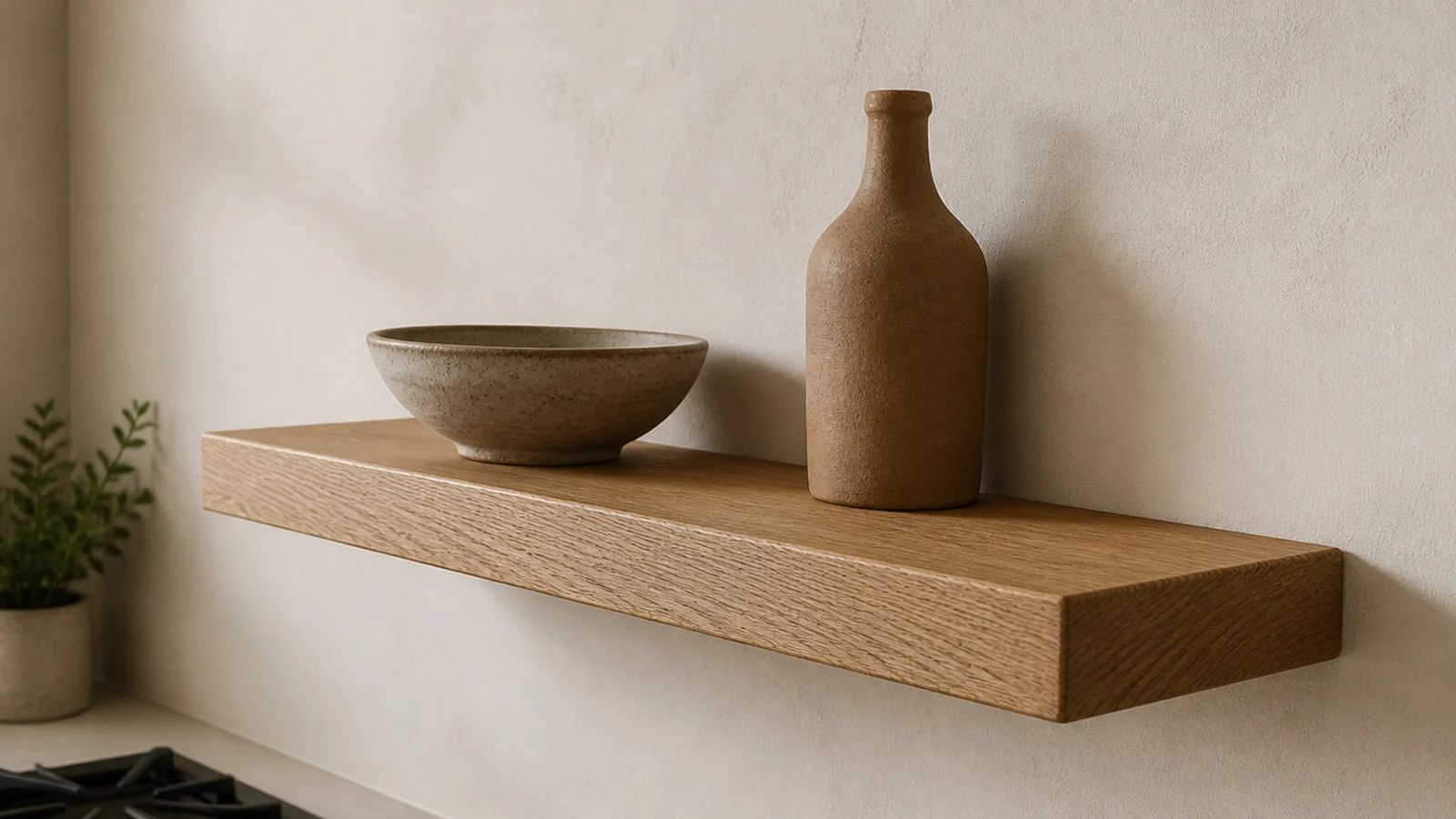
Concealed brackets are a steel plate with rods that slide into holes drilled in the back edge of the board. Nothing is visible, which is the entire appeal.
They demand an inch and a half of stock and holes drilled dead square. Into drywall alone this is the weakest common setup, so land at least two rods in studs and keep the load to jars and mugs.
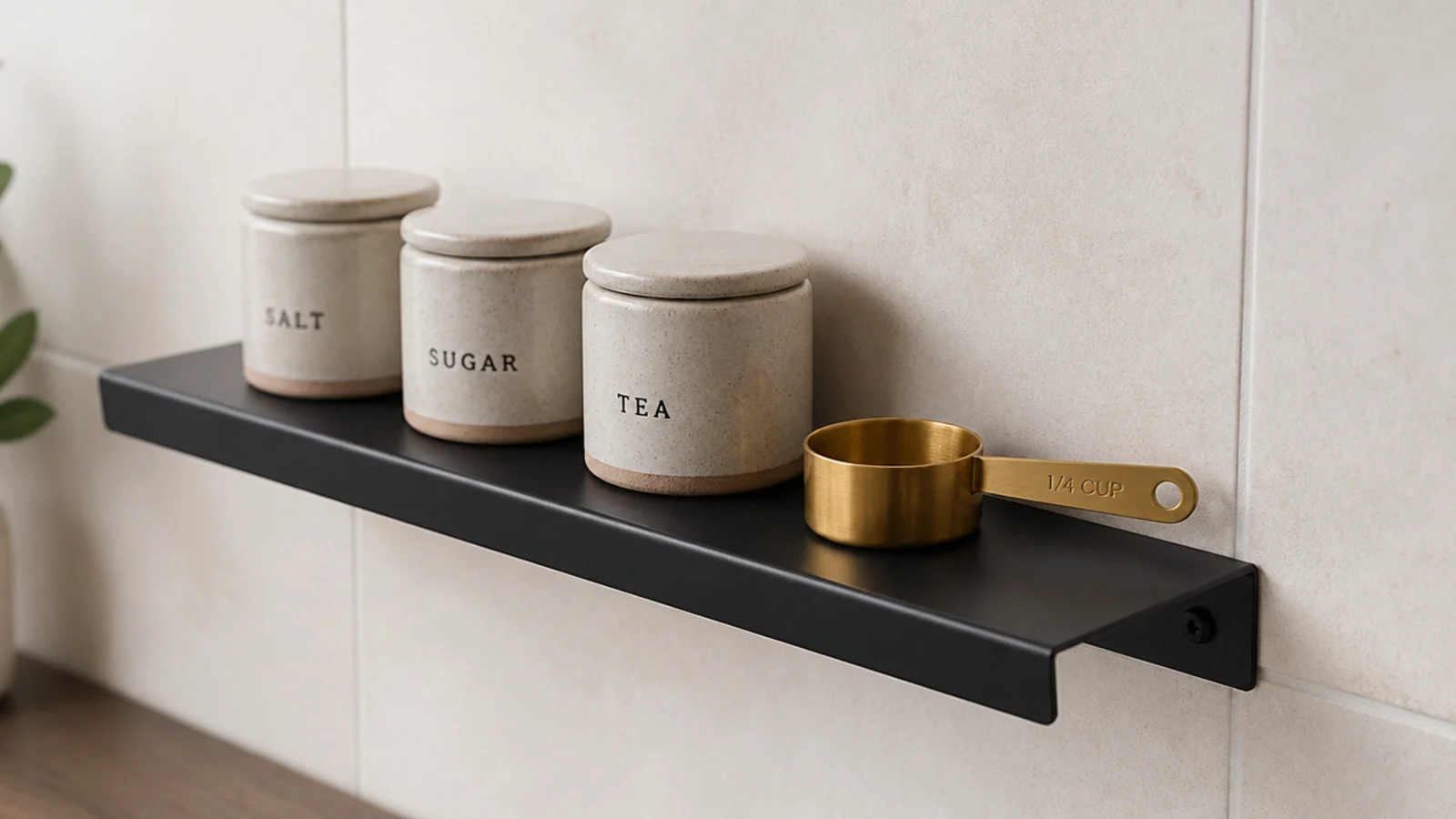
3. A matte black steel channel shelf
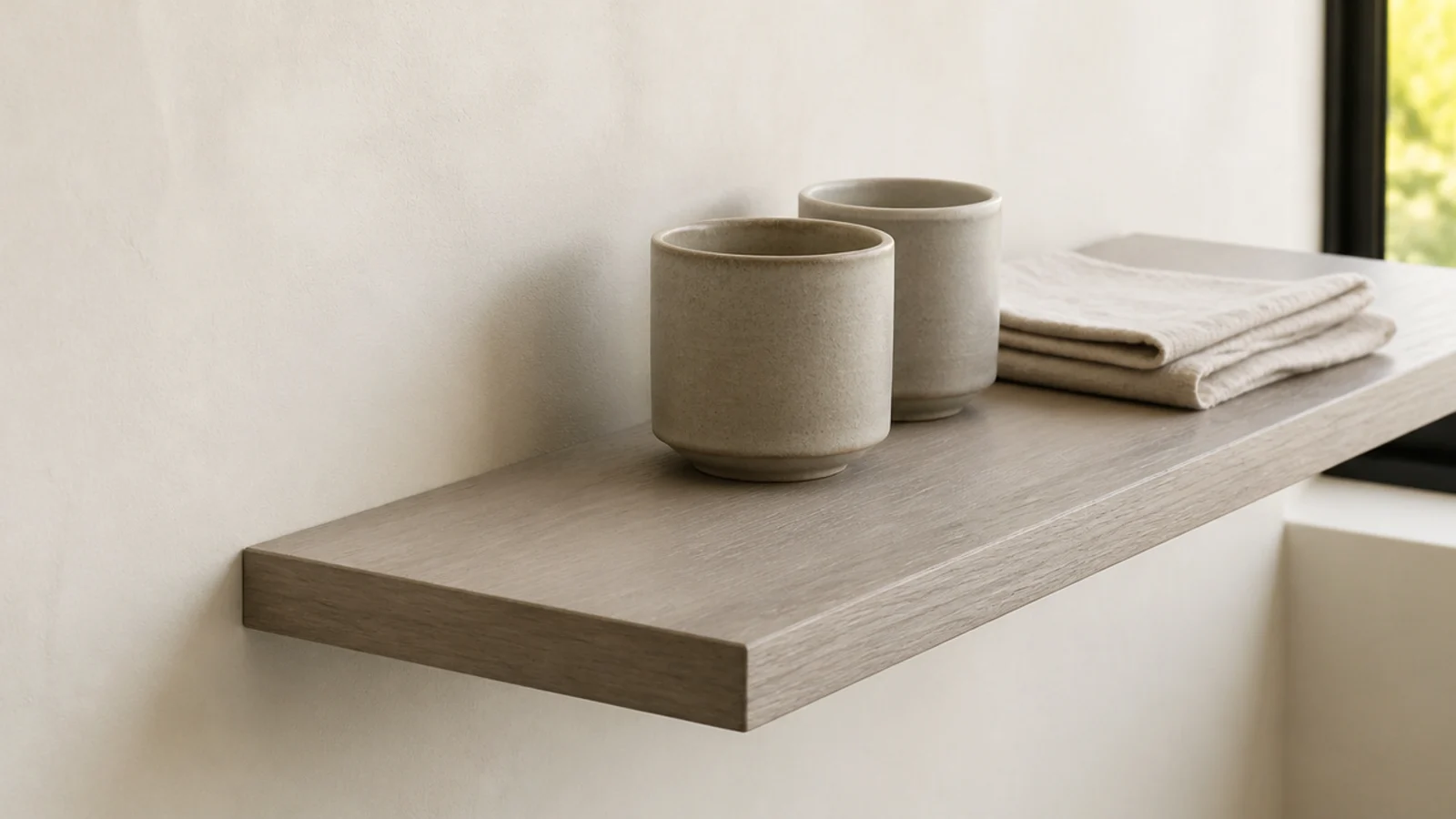
A folded steel channel gives you a shelf only a quarter inch thick that still spans 4 feet without deflection, because the folded edges do the work.
Powder-coated matte black survives kitchen humidity where raw steel spots. Fabricated to size it runs $90 to $180 ($$), which is fair for something that will outlive the kitchen around it.
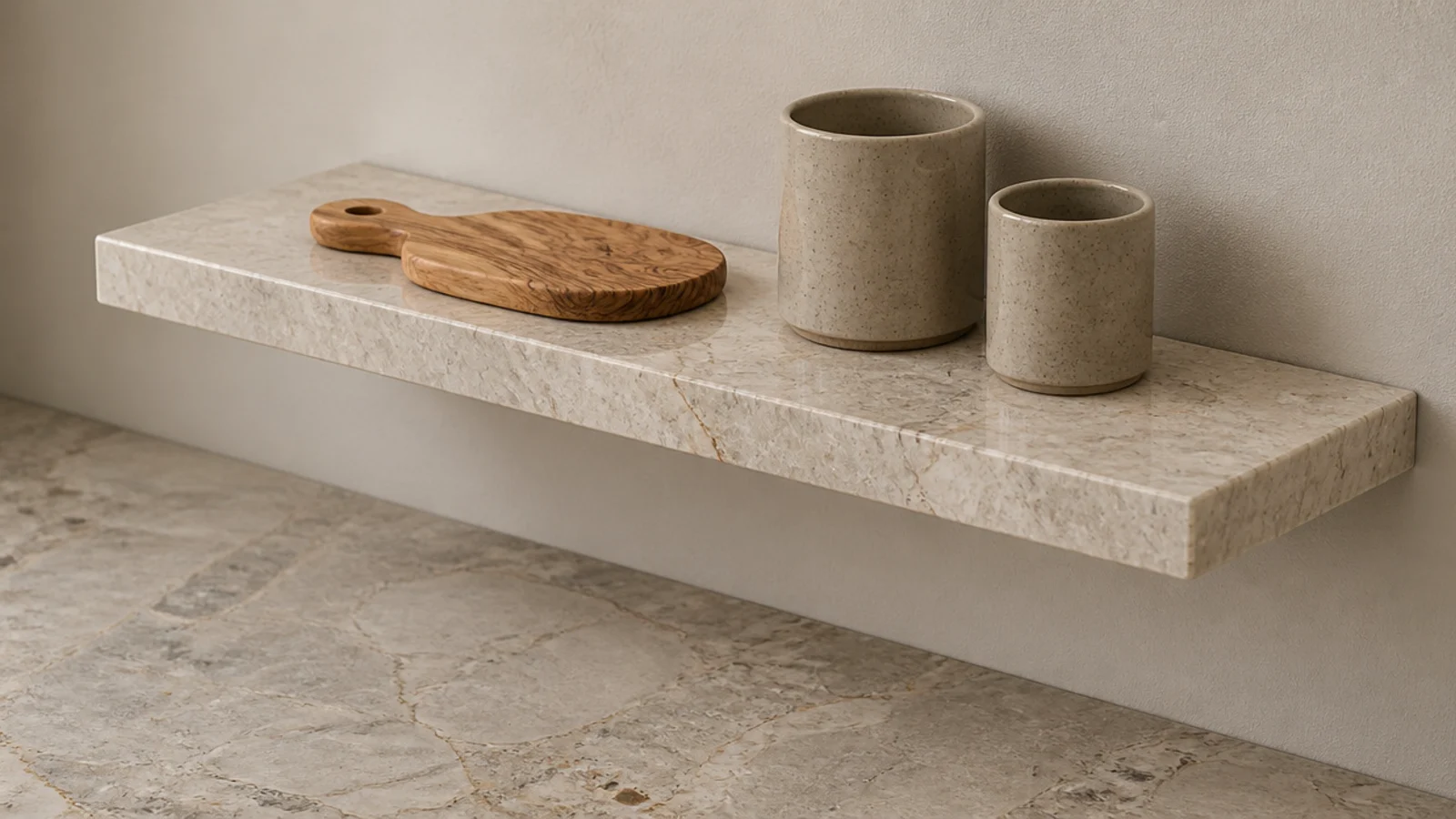
4. A shelf cut from the same stone as the counter
Fabricators keep offcuts, and a 30-inch length of the stone already on your counter is often sold at a steep discount or thrown in with the job.
Ask for a 3/4-inch slab with a polished front edge and let them drill for concealed pins. It is heavy — plan for studs, always — and it makes the most expensive-looking shelf in a kitchen for very little.
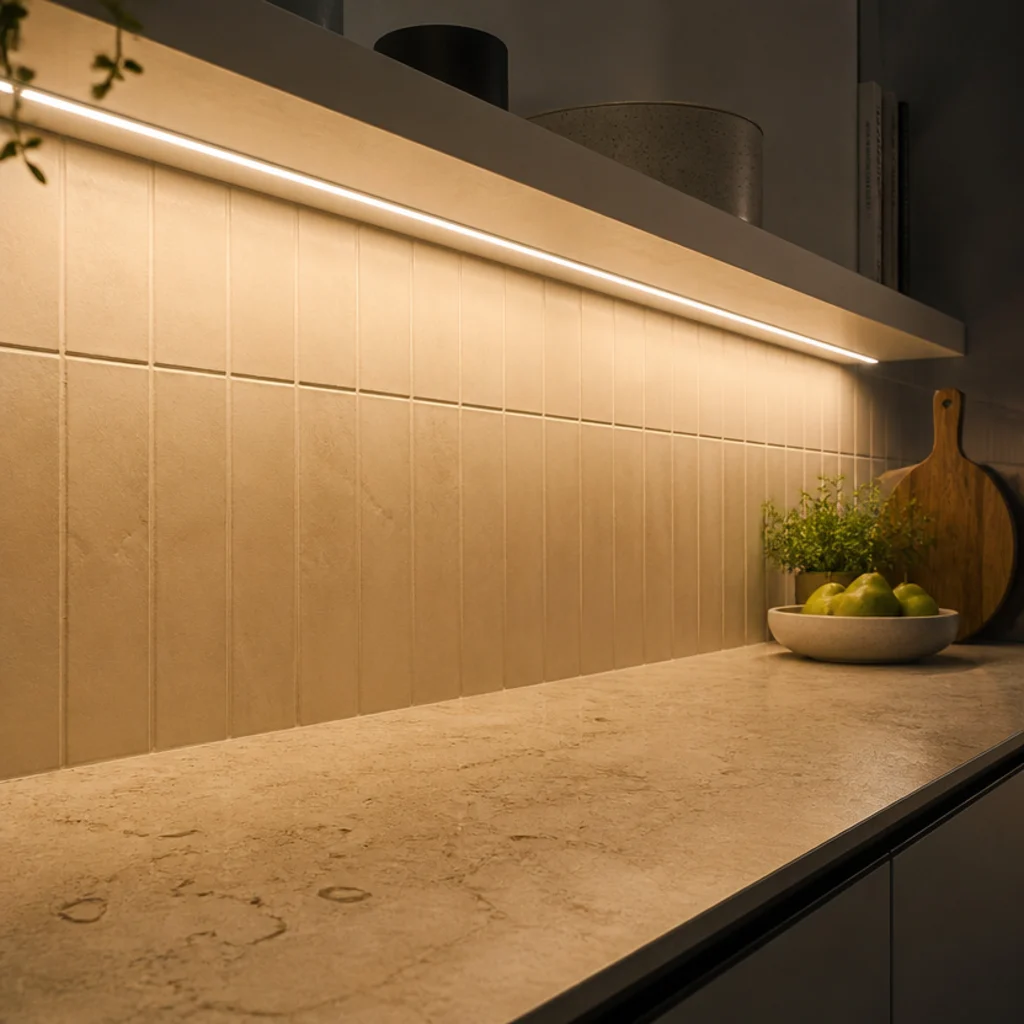
5. A linear light washing down the tile
An aluminium channel with a frosted diffuser under the front lip turns a shelf into the best task light in the kitchen for about $25.
Choose 2700K to 3000K. Cool white makes oak and terracotta read grey and undoes every material decision above it. The diffuser matters as much as the strip — without it you see dots, and dots are what makes lighting look cheap.
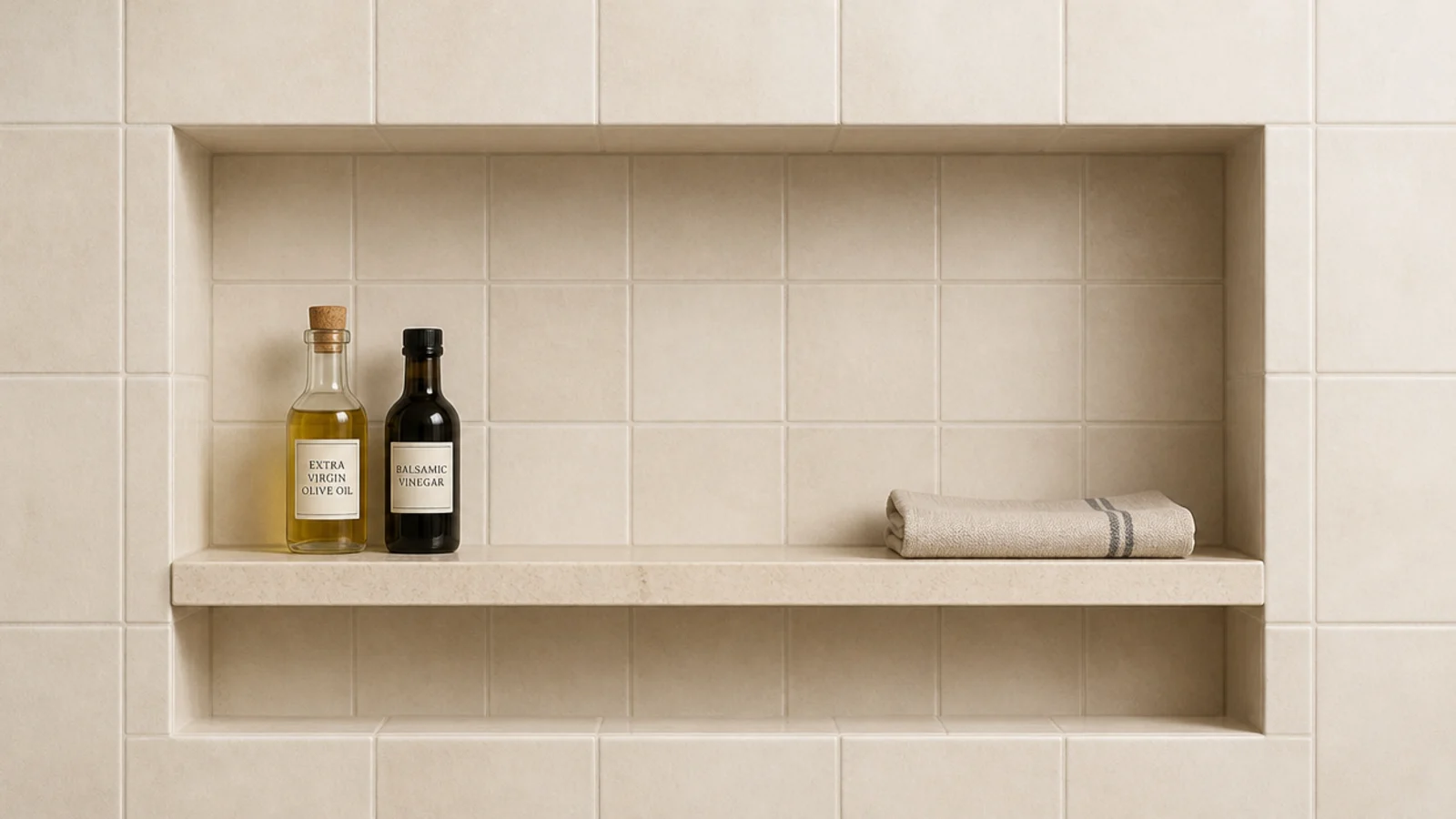
6. A recessed niche shelf in the backsplash
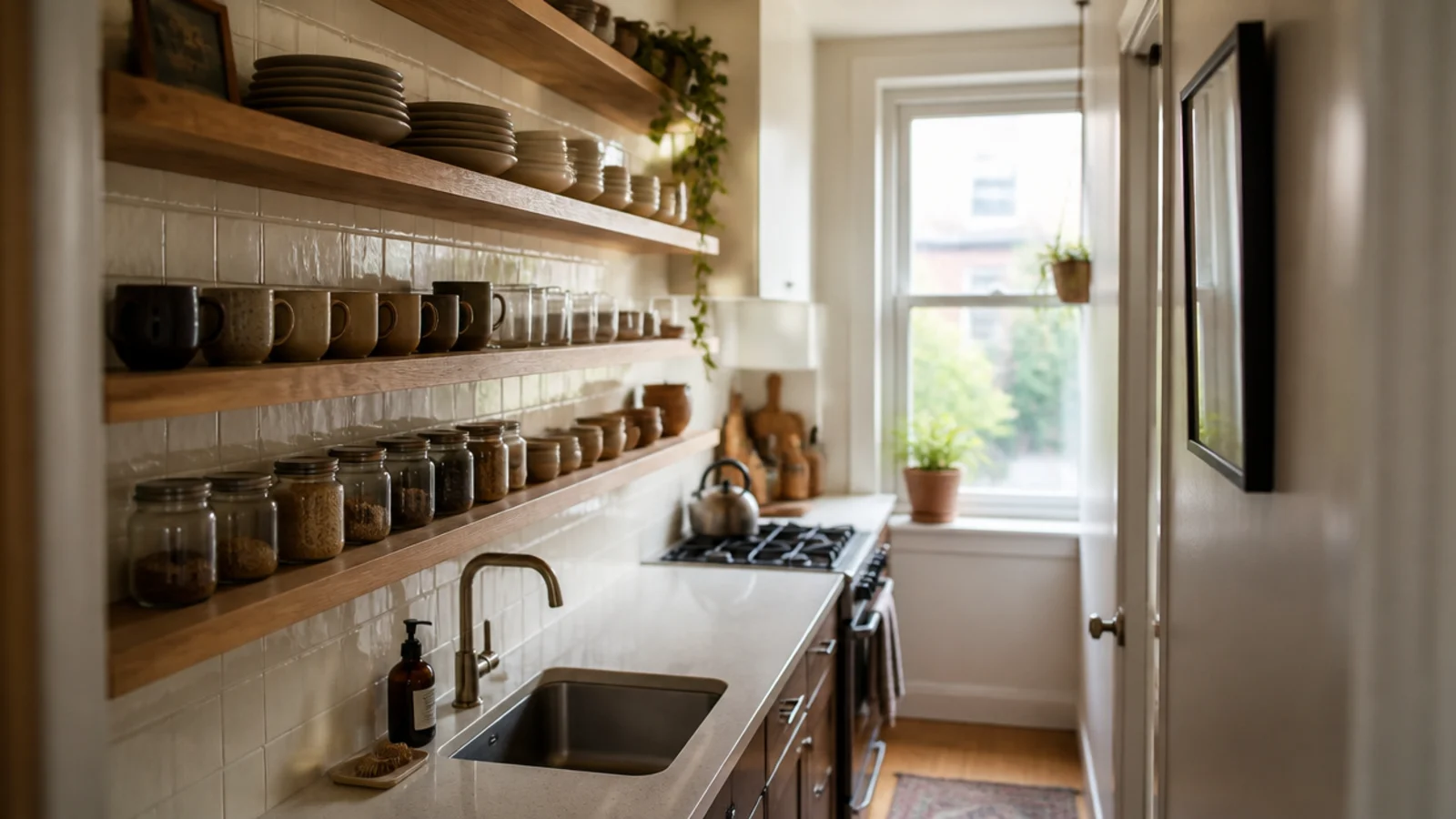
A niche set into the wall between studs gives you a shelf with zero projection into the room, which is the most modern move available in a narrow galley.
Standard stud bays give you about 14 inches of width and 3 to 4 inches of depth. Tile the interior in the same tile as the wall and the whole thing reads as a considered absence rather than an addition.
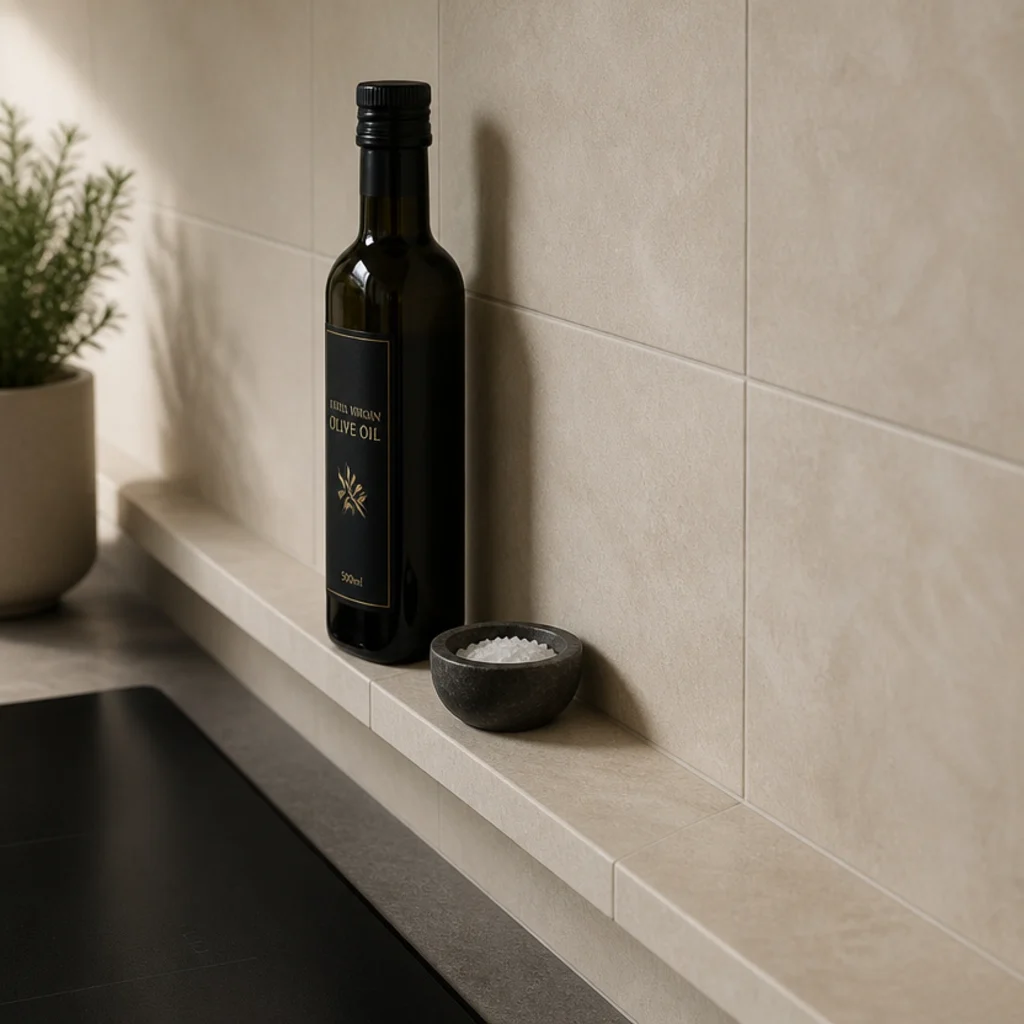
7. A micro-ledge in the same tile as the wall
A ledge clad in the backsplash tile reads as part of the wall rather than something hung on it. Three inches deep holds oils and daily spices without eating counter space.
Build the core from marine ply, waterproof it, then tile the top and front with the same material. Slope the top a degree toward the room so spills run off rather than pool at the back.
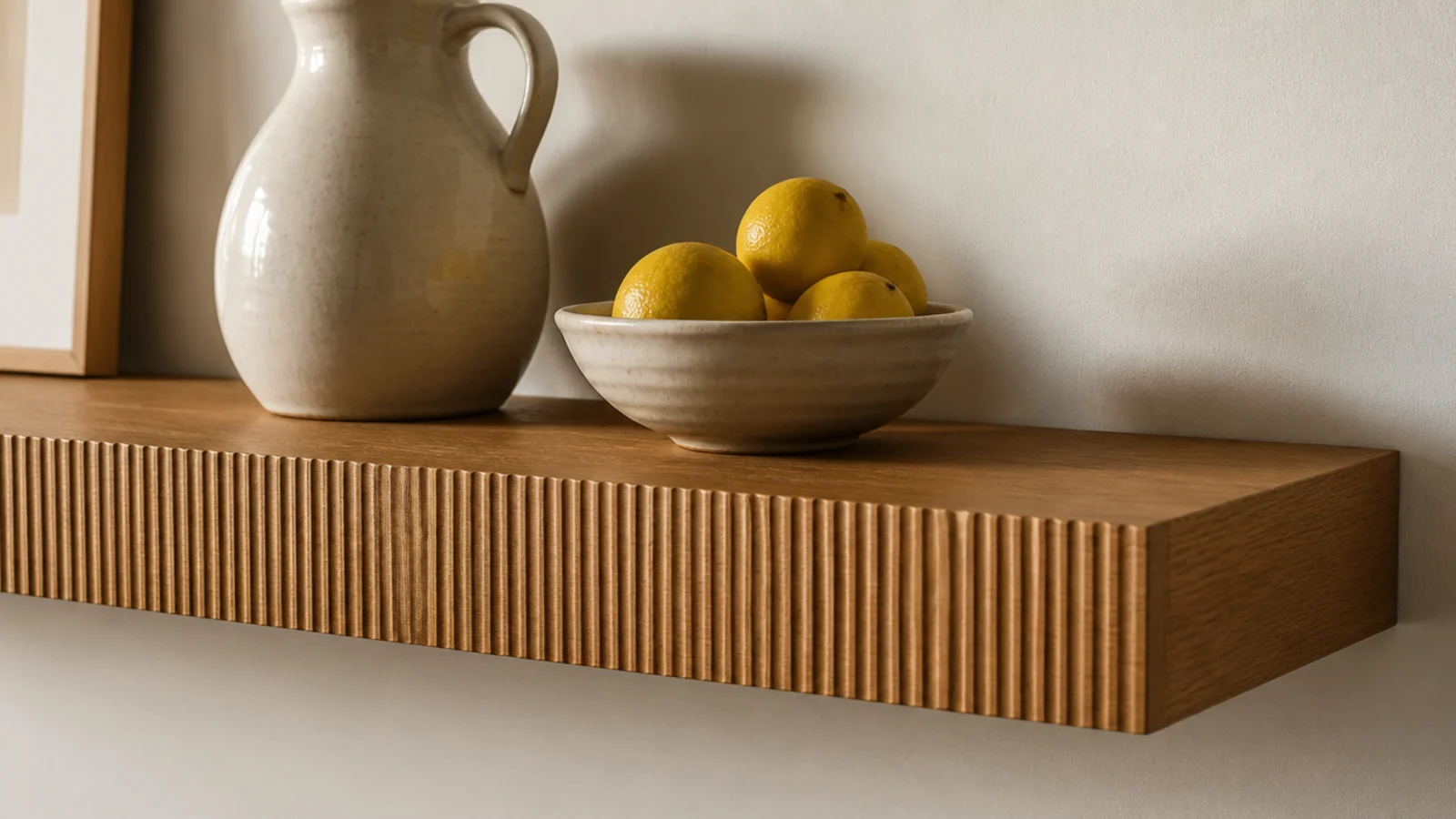
8. Fluted or reeded wood on the shelf front
Reeded front faces add shadow and rhythm to a flat wall without adding a single object, which is exactly what a minimal kitchen needs.
Buy reeded panel and rip a 2-inch strip for the shelf front, or run a round-over bit repeatedly. Keep the flutes vertical on the front edge, not horizontal, so crumbs and grease do not sit in the channels.
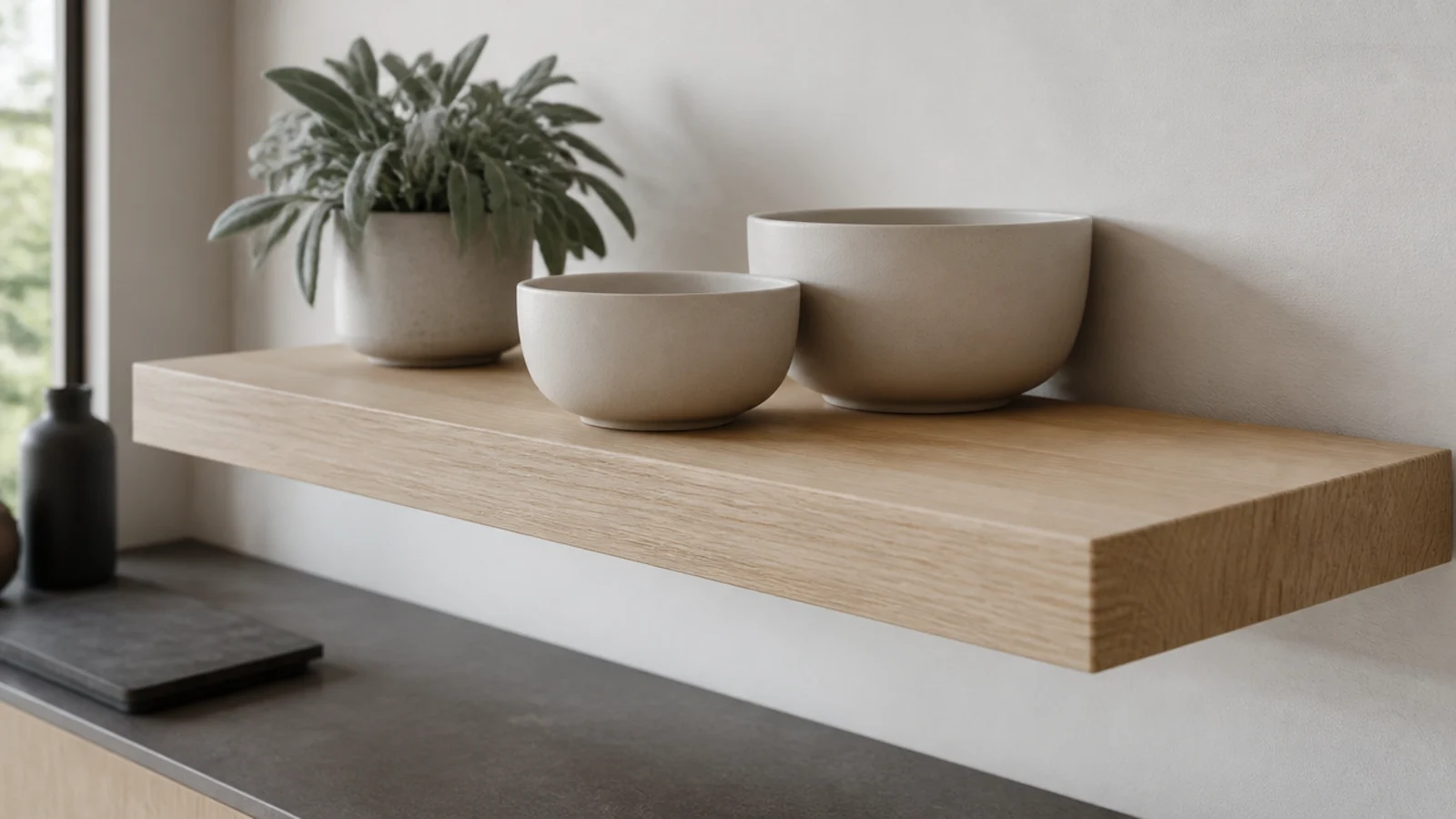
9. Rift-sawn white oak with straight grain
The same species reads completely differently depending on the cut. Rift-sawn white oak gives dead-straight grain that stays quiet across a long span, where plain-sawn cathedral figure pulls the eye everywhere.
Expect to pay 30 to 50 percent more per board foot. On a single visible shelf that premium is real money well spent, and it is the difference most people cannot name but always notice.
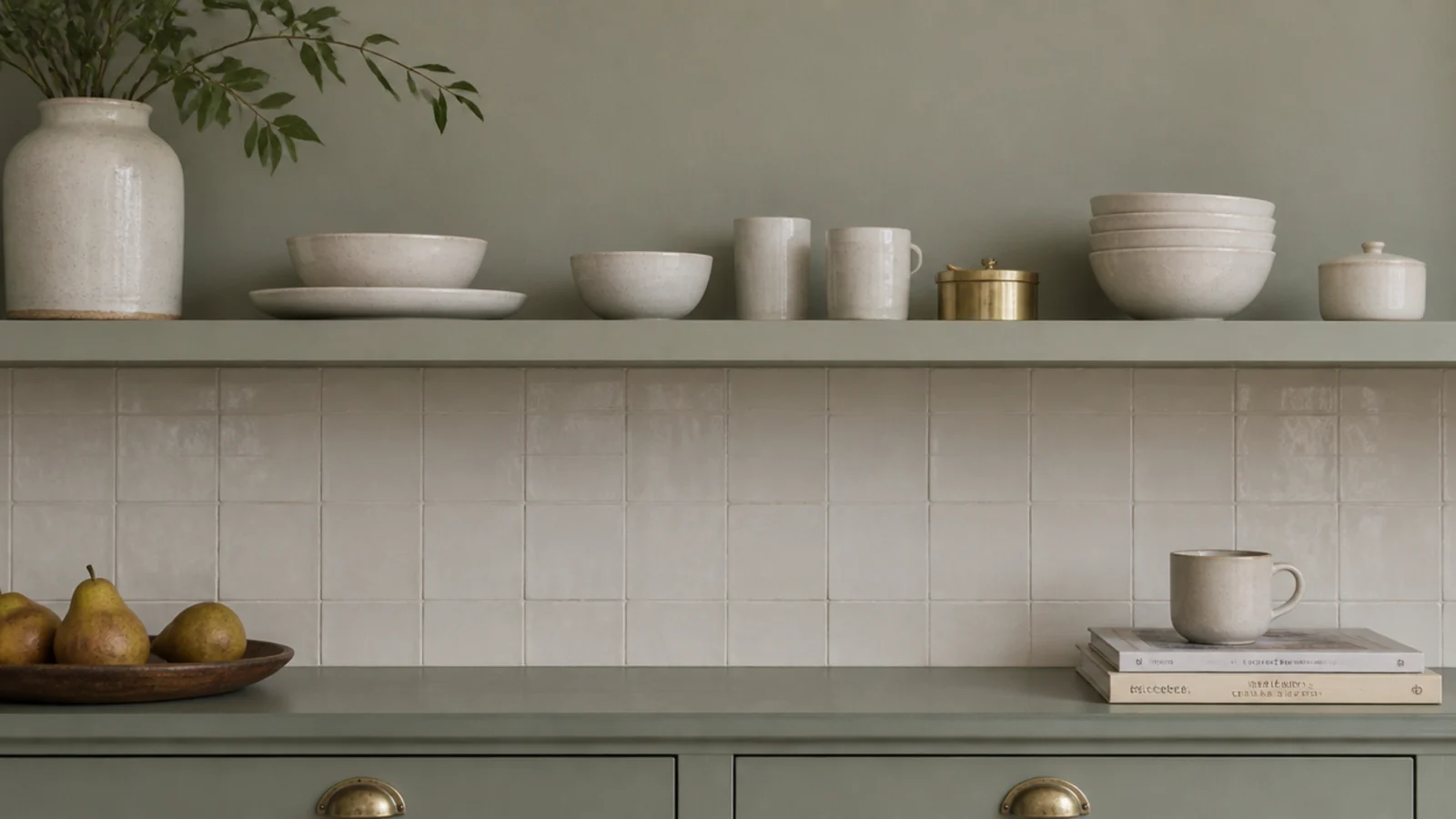
10. A shelf painted the cabinet color
Painting a shelf the exact shade as the cabinetry below makes a whole wall read as one volume rather than furniture plus additions.
Use a cabinet-grade acrylic or hardwearing eggshell, not wall emulsion, which marks the first time a plate slides across it. Two thin coats on every face including the cut ends. A sample pot and an hour is all it costs.
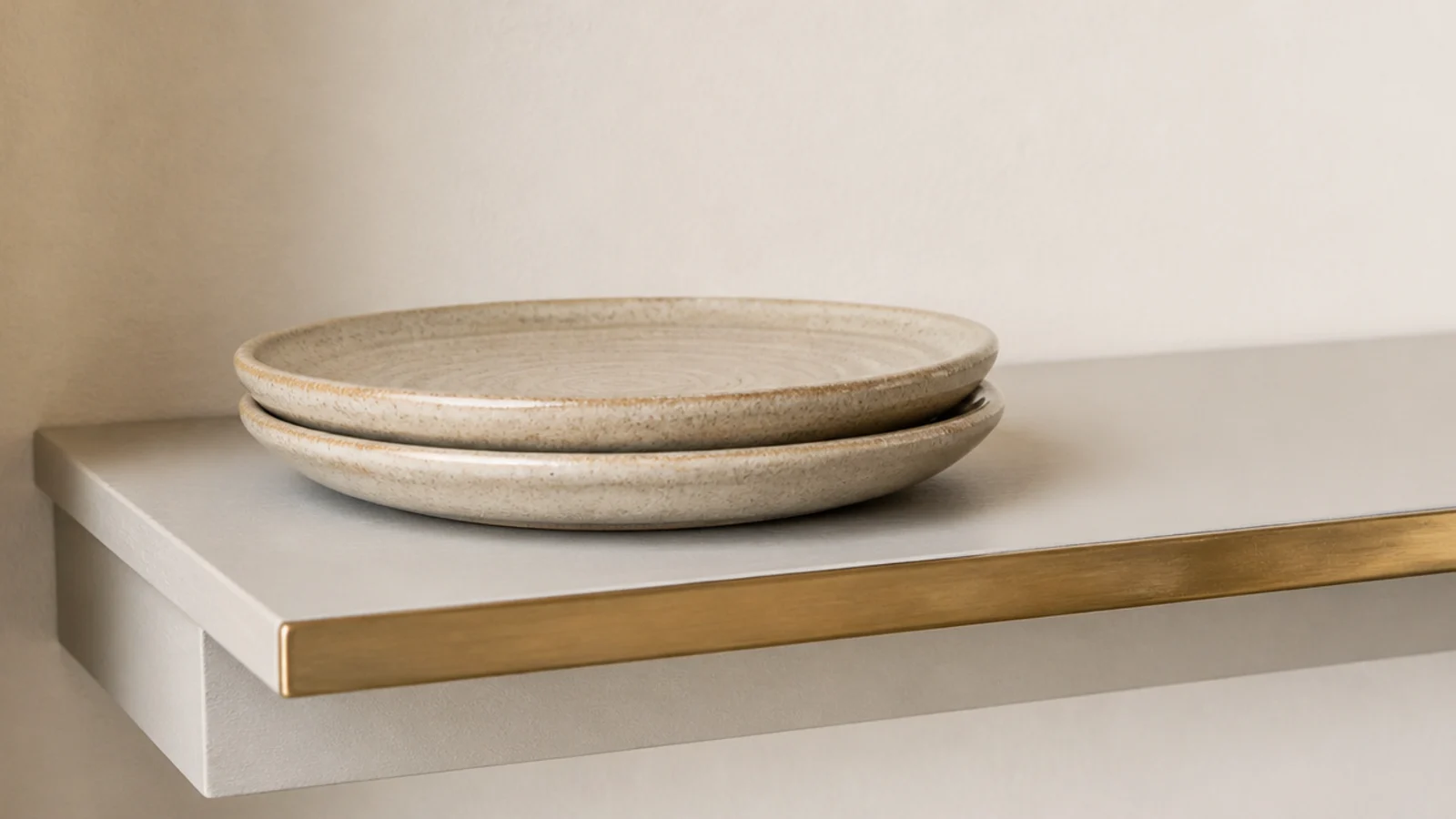
11. A brass edge trim on a pale shelf
A 3mm unlacquered brass strip inlaid along the front edge is a detail you notice without being able to say why, and it warms up an otherwise cool palette.
Rout a shallow rebate, bed the strip in epoxy, and file it flush. Unlacquered brass will patina unevenly where hands touch it, which is either the appeal or the reason to buy lacquered instead.
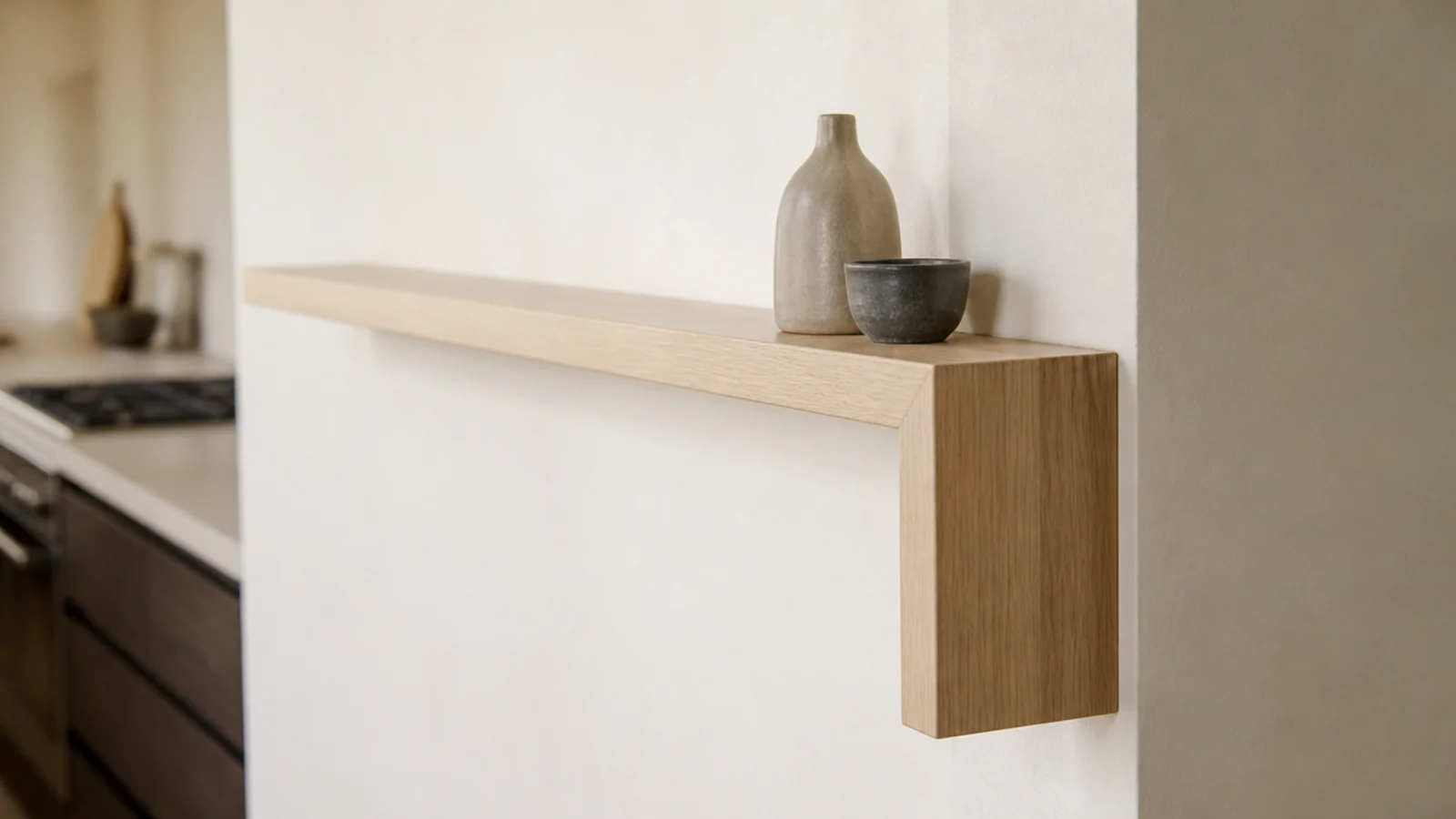
12. A shelf that returns down the wall
Where a shelf run reaches the end of a wall, turning it and continuing vertically down to the counter closes the composition instead of leaving a board hanging in space.
Mitre the corner so the grain wraps. The vertical leg needs no bracket — it sits on the counter and takes the load. It also gives you a natural bookend for whatever sits at the end of the run.
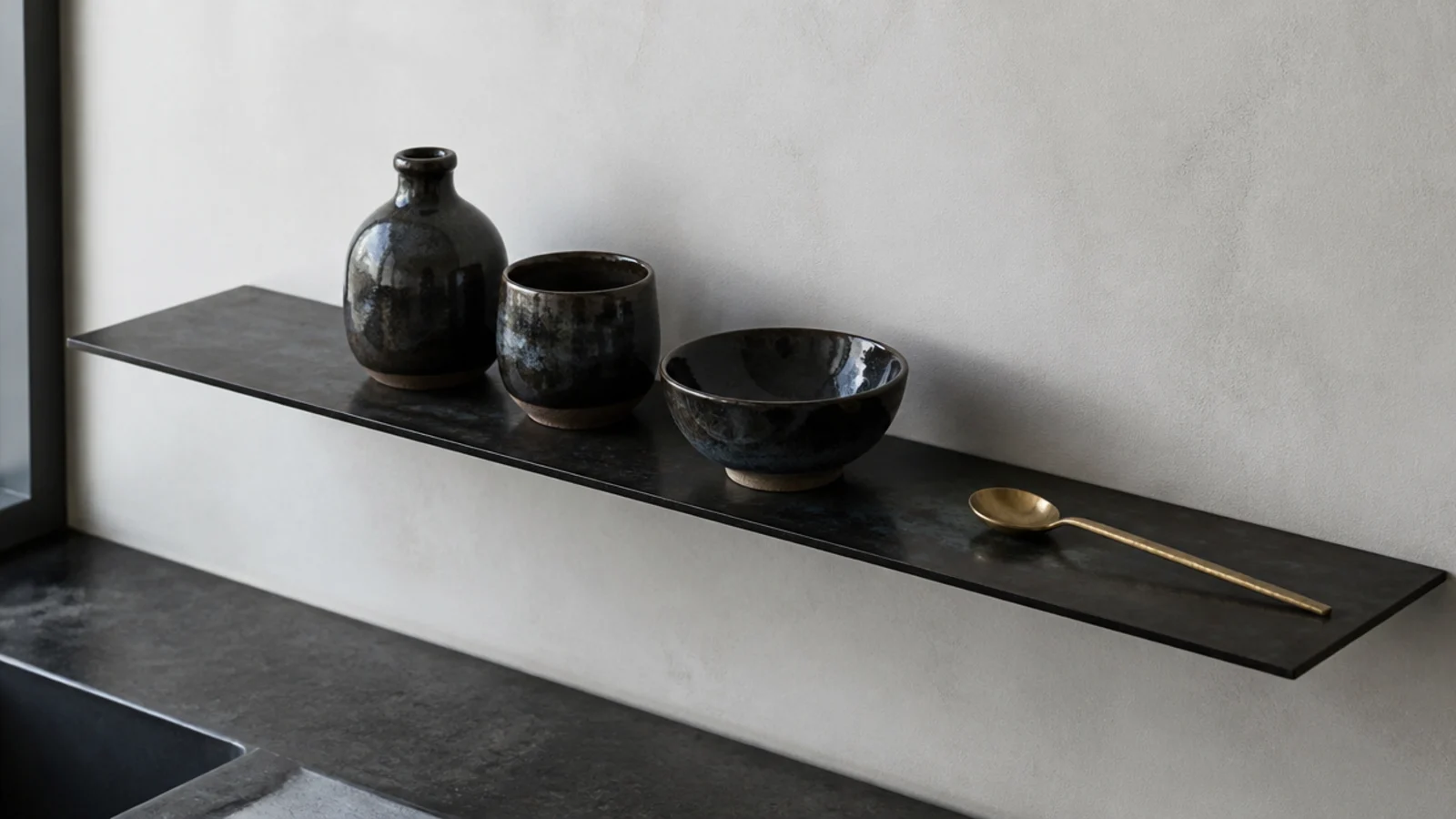
13. A quarter-inch blackened steel plate shelf
Solid plate is the thinnest shelf that will hold real weight, spanning 36 inches at a quarter inch thick with no visible deflection.
Blackened or hot-rolled steel with a wax finish gives a soft mottled surface rather than flat black. It is cold to the touch and heavy to handle — get help hanging it, and get the fixings into studs without exception.
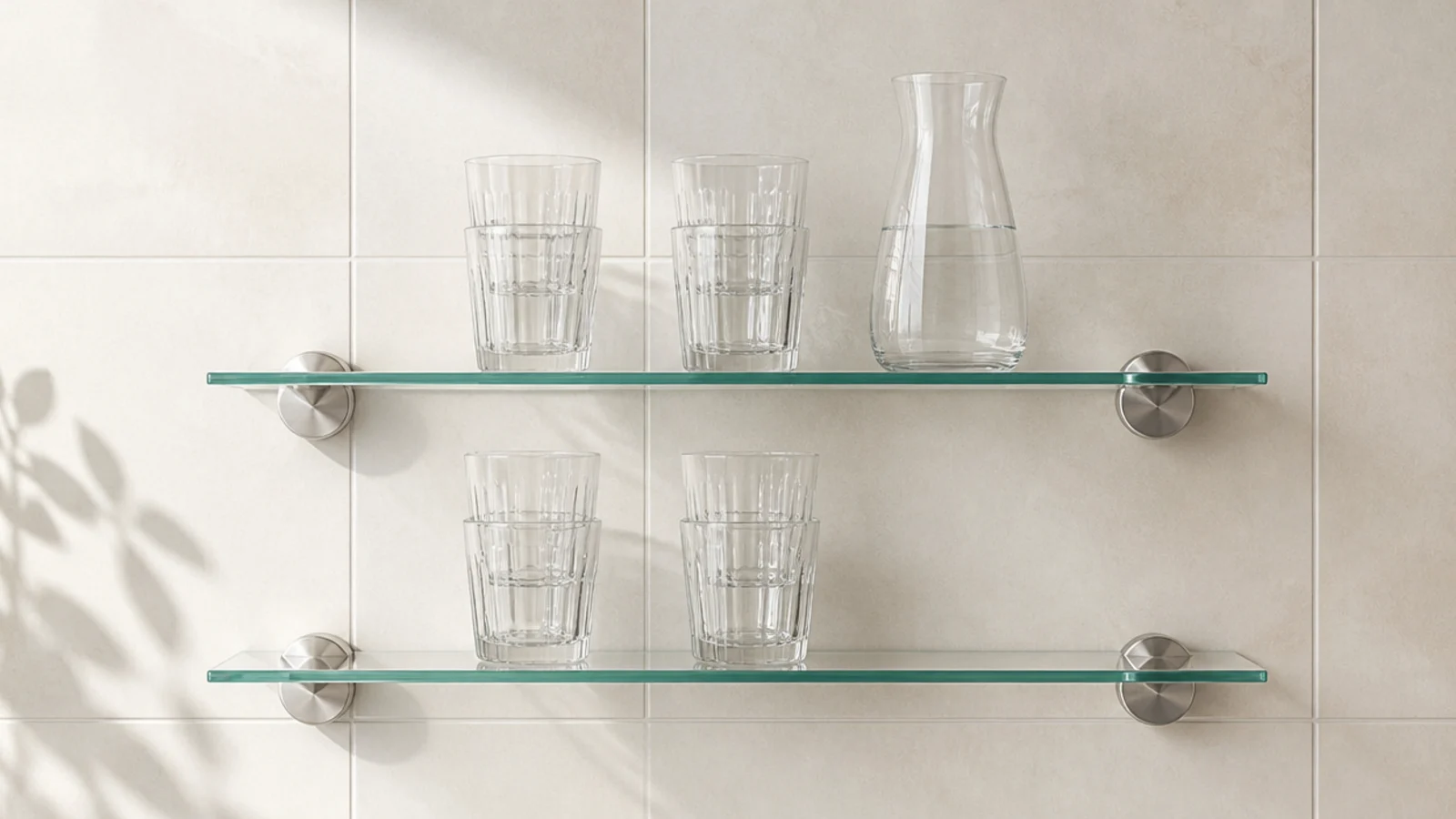
14. Glass shelves on brushed nickel standoffs
Clear tempered glass keeps a small or dark kitchen visually open because your eye reads straight through to the tile behind.
Use 10mm toughened glass with polished edges and standoff fixings rather than channel, so light passes all the way around. Glass shows an airborne grease film faster than any other material, so put it at the far end from the stove and wipe it weekly.
15. A shelf integrated into the hood surround
If your range has a plastered or boxed hood surround, forming a shelf as part of that same volume is the most seamless option available.
Keep the shelf at least 12 inches above the hood, and stock it with ceramic, metal or glass only — heat rises hard here and anything wax-based will soften. Plan it before the plasterer arrives, since retrofitting means cutting the surround open.
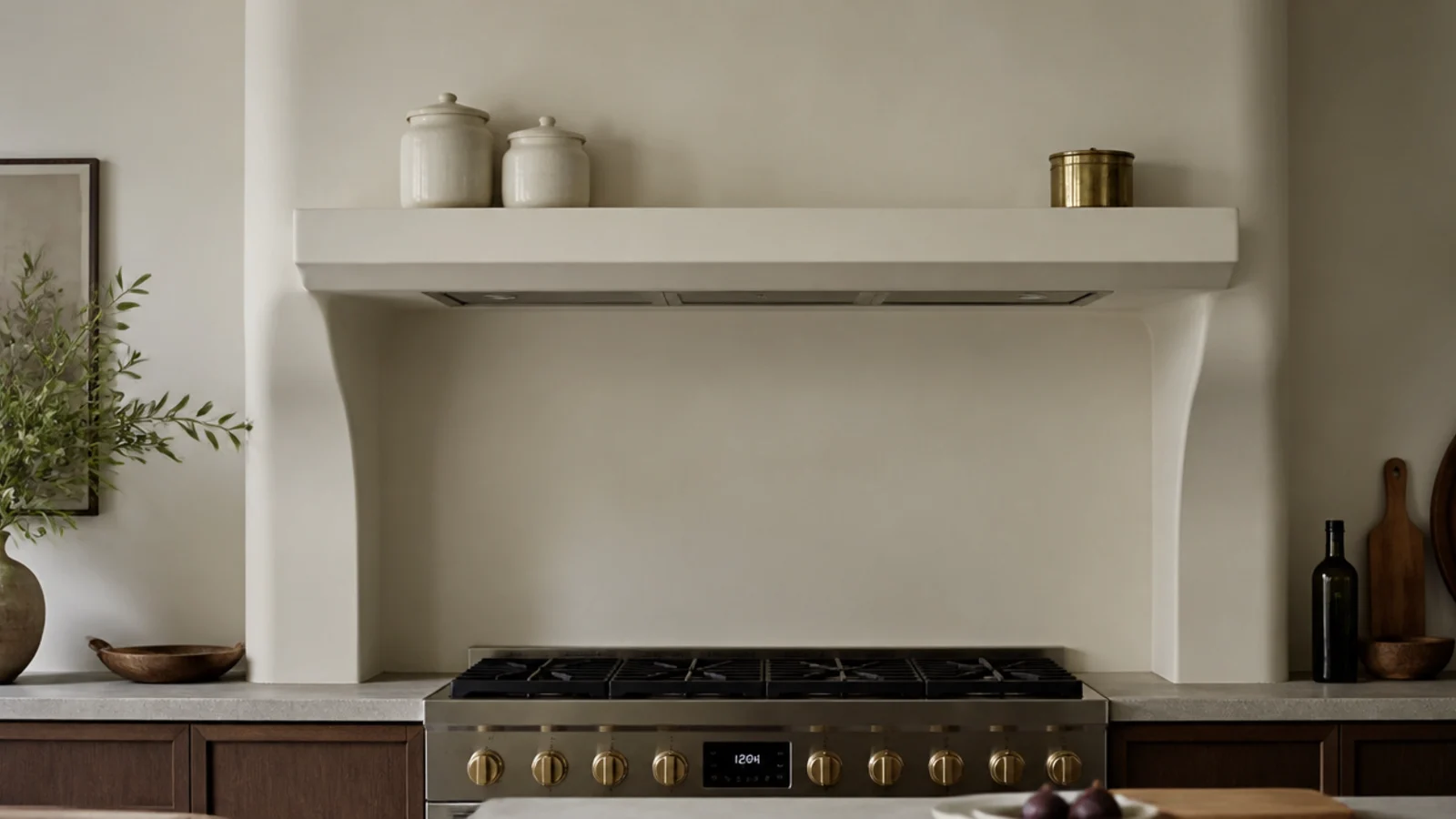
16. A shelf that hides an outlet strip underneath
A slim power track rebated into the underside of a shelf gets sockets off the backsplash entirely, which is the single biggest visual gain in a modern kitchen.
Have an electrician terminate it. Position the track at the back of the rebate so plugs drop behind whatever sits on the counter, and leave 2 inches of clearance for the plug bodies.
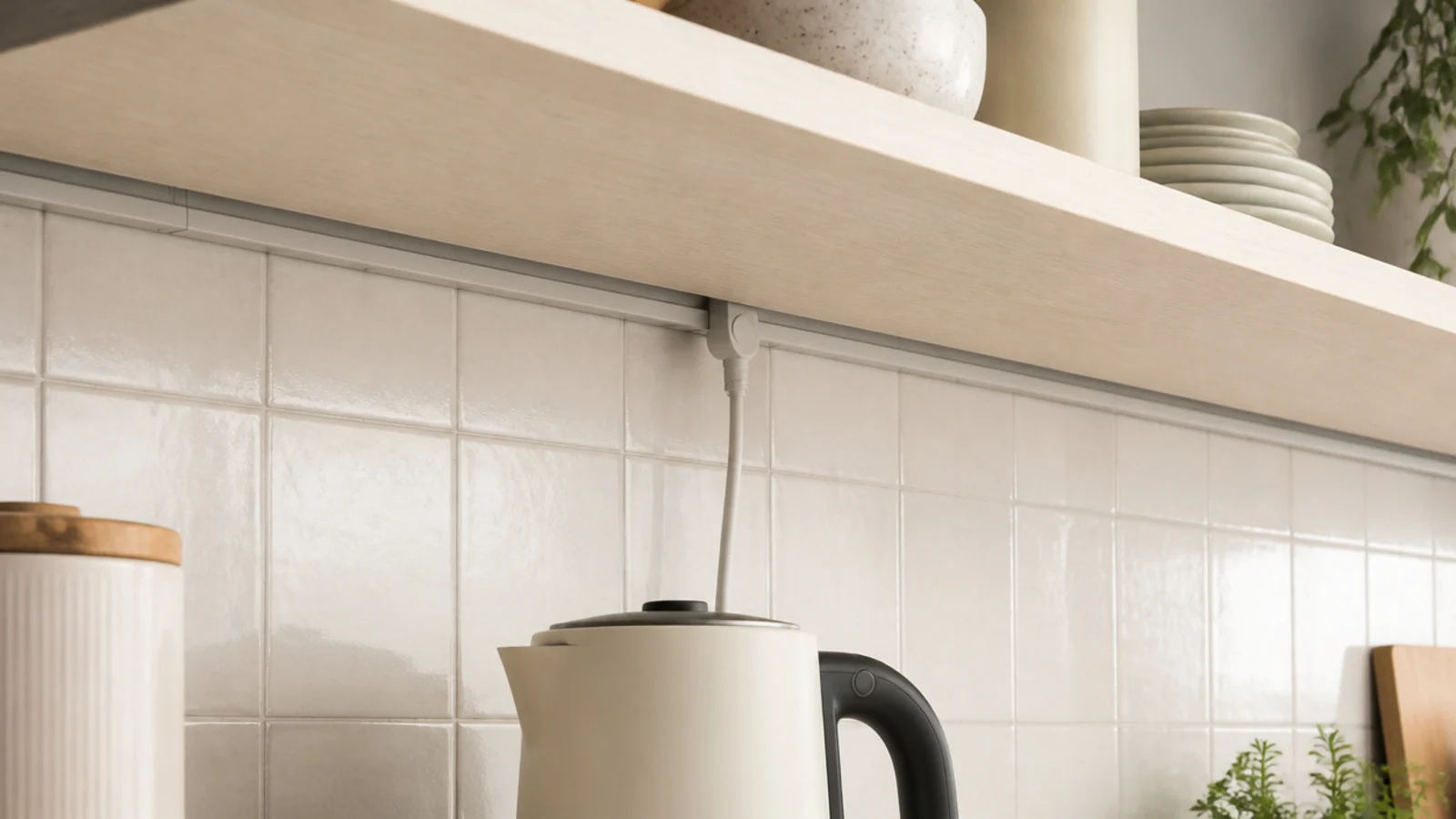
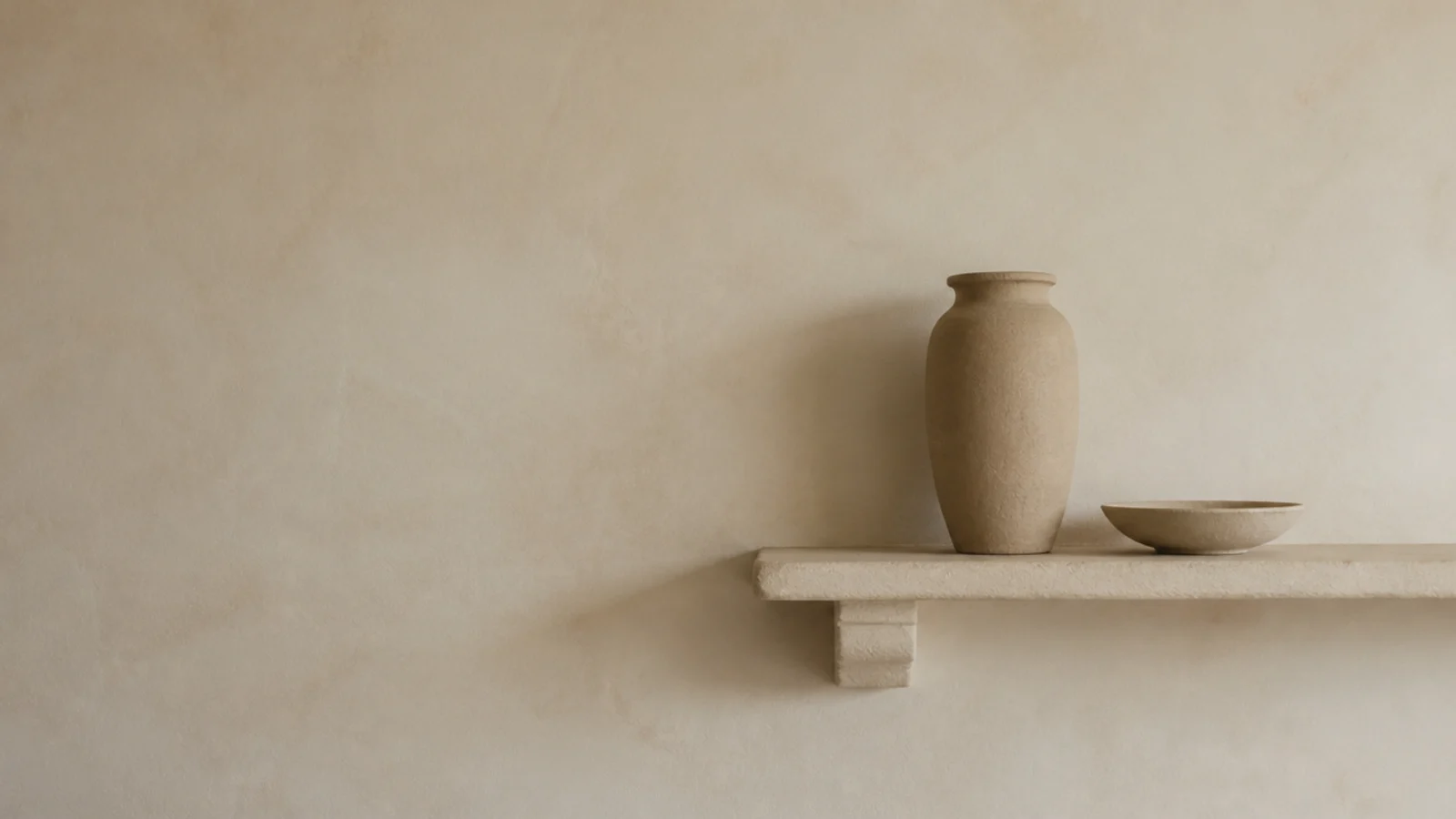
17. One asymmetric shelf as the only decoration
A single shelf placed deliberately off centre on a large wall reads as a composition. The same shelf dead centre reads as a default.
Try it at roughly a third of the way along the wall, with the longer empty span toward the window. One tall object at the short end and nothing else. This costs less than any other idea here and changes a room the most.
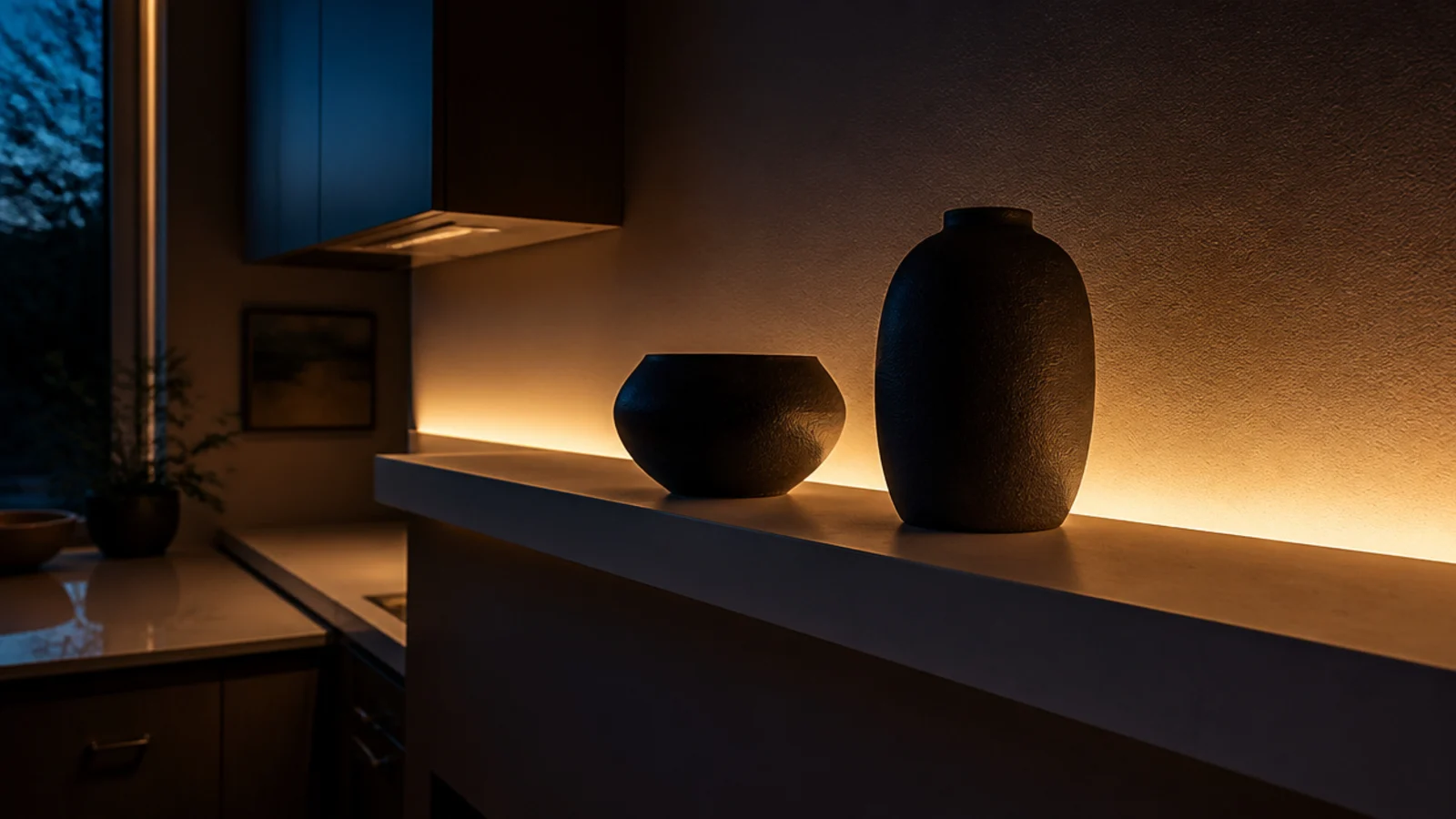
18. Concealed lighting inside a shelf reveal
Holding a shelf half an inch off the wall on a hidden cleat and lighting the gap behind makes the board float at night in a way no under-shelf light can.
The strip sits on the cleat facing the wall so you never see the source. Keep the reveal consistent along the length — a gap that varies from 10mm to 15mm is worse than no gap at all.
19. A two-tone shelf, pale top and dark underside
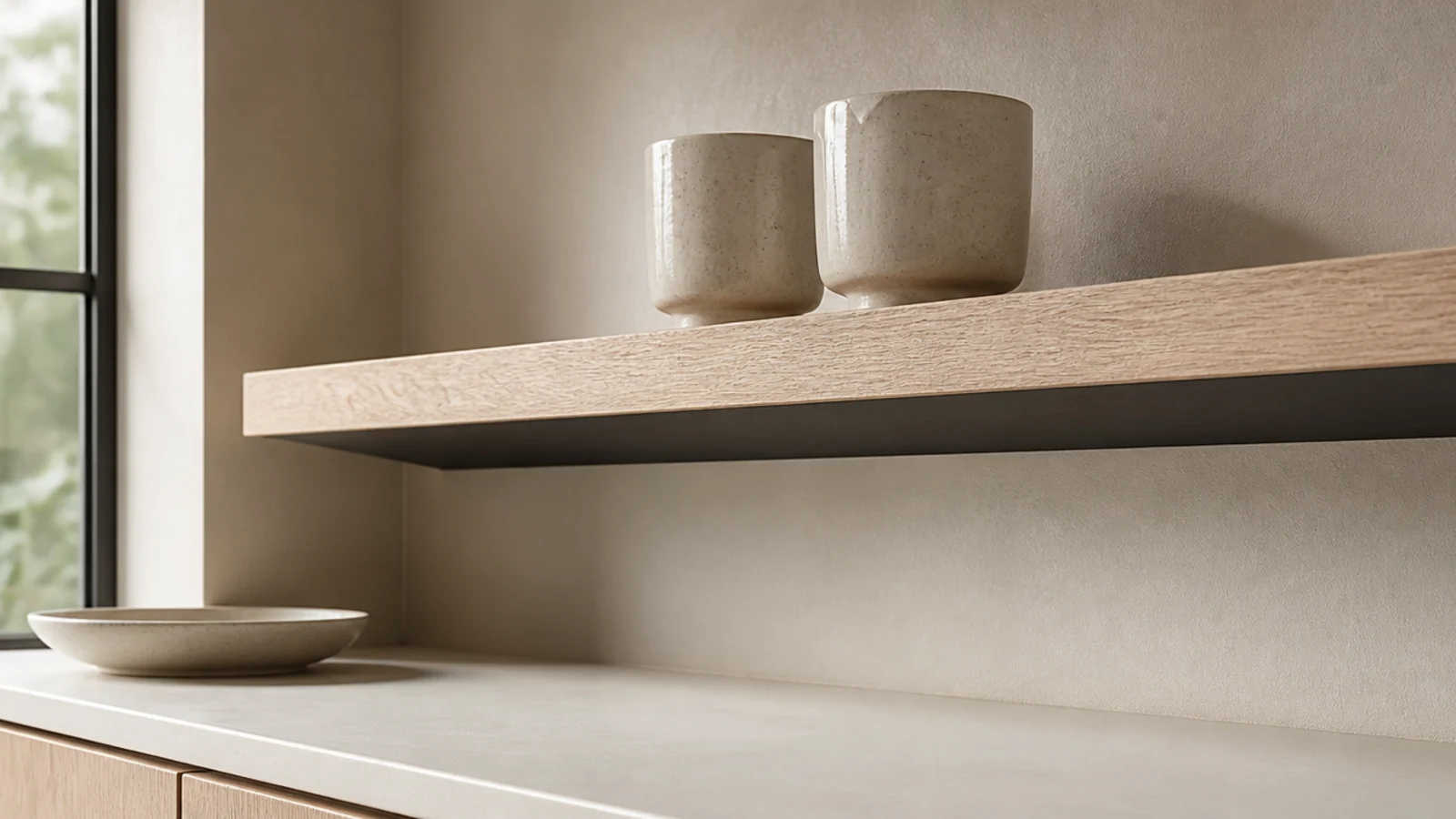
Painting the underside of a pale shelf a deep charcoal deepens the shadow line and makes the board read thinner and sharper from standing height.
It costs a sample pot and it is completely invisible until you notice it. Works best on shelves mounted above eye level, where the underside is what you actually see from across the room.
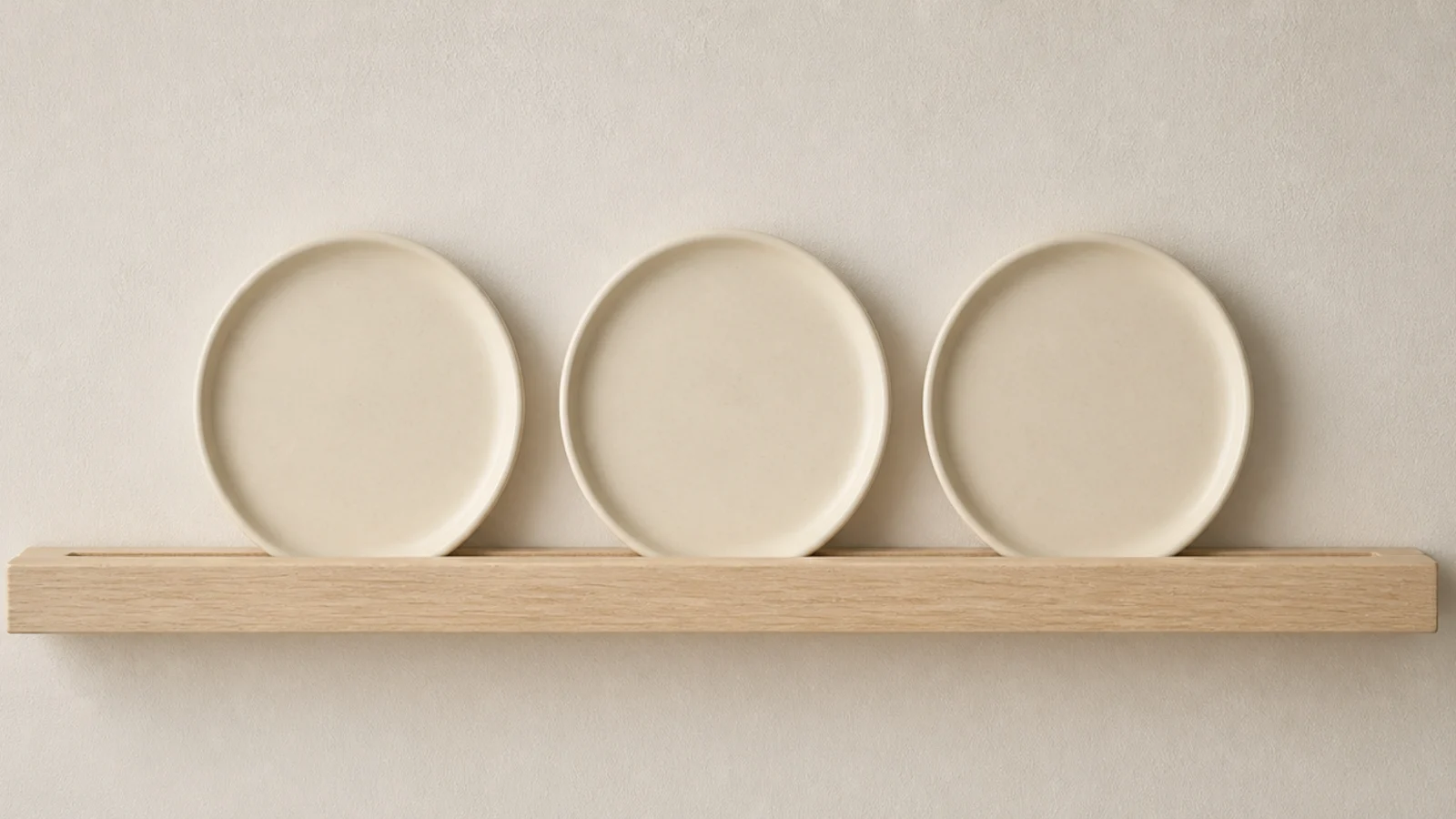
20. A routed finger channel instead of a rail
A shallow groove routed along the length of a shelf holds plates upright on edge without a rail interrupting the front line.
Set the groove a quarter inch deep and three-eighths wide, an inch from the back edge. It also stops bowls creeping forward when a drawer slams. On a painted shelf, seal the groove thoroughly — it is the first place a finish fails.
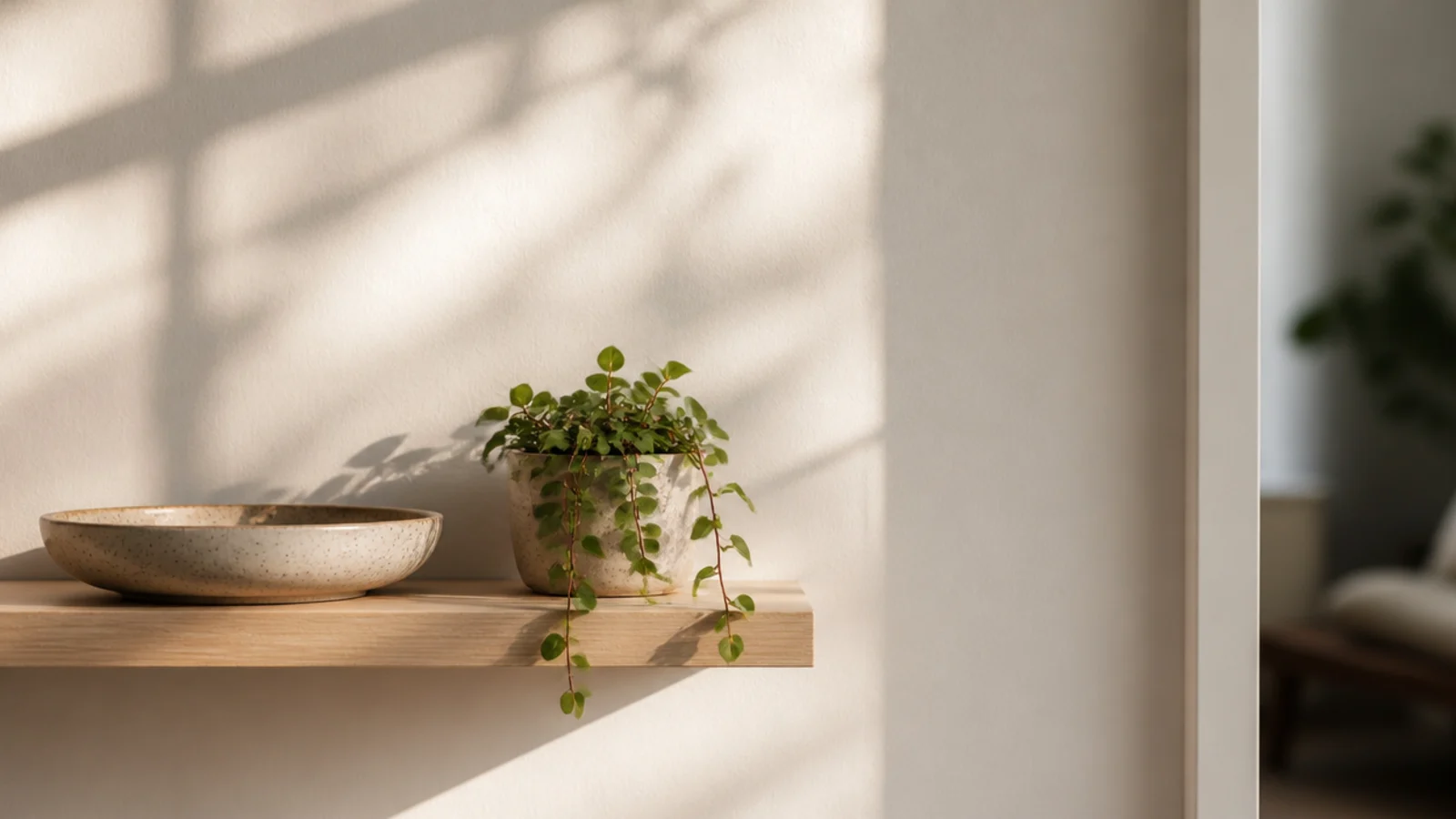
21. A shelf that stops short of the corner
Running a shelf hard into a corner forces a scribed joint and traps a dead 8 inches nobody can reach. Stopping 3 to 4 inches short leaves a clean reveal instead.
The gap reads as deliberate and lets the wall corner stay visible, which keeps a small kitchen from feeling boxed. It also means one less awkward cut on a wall that is probably not square anyway.
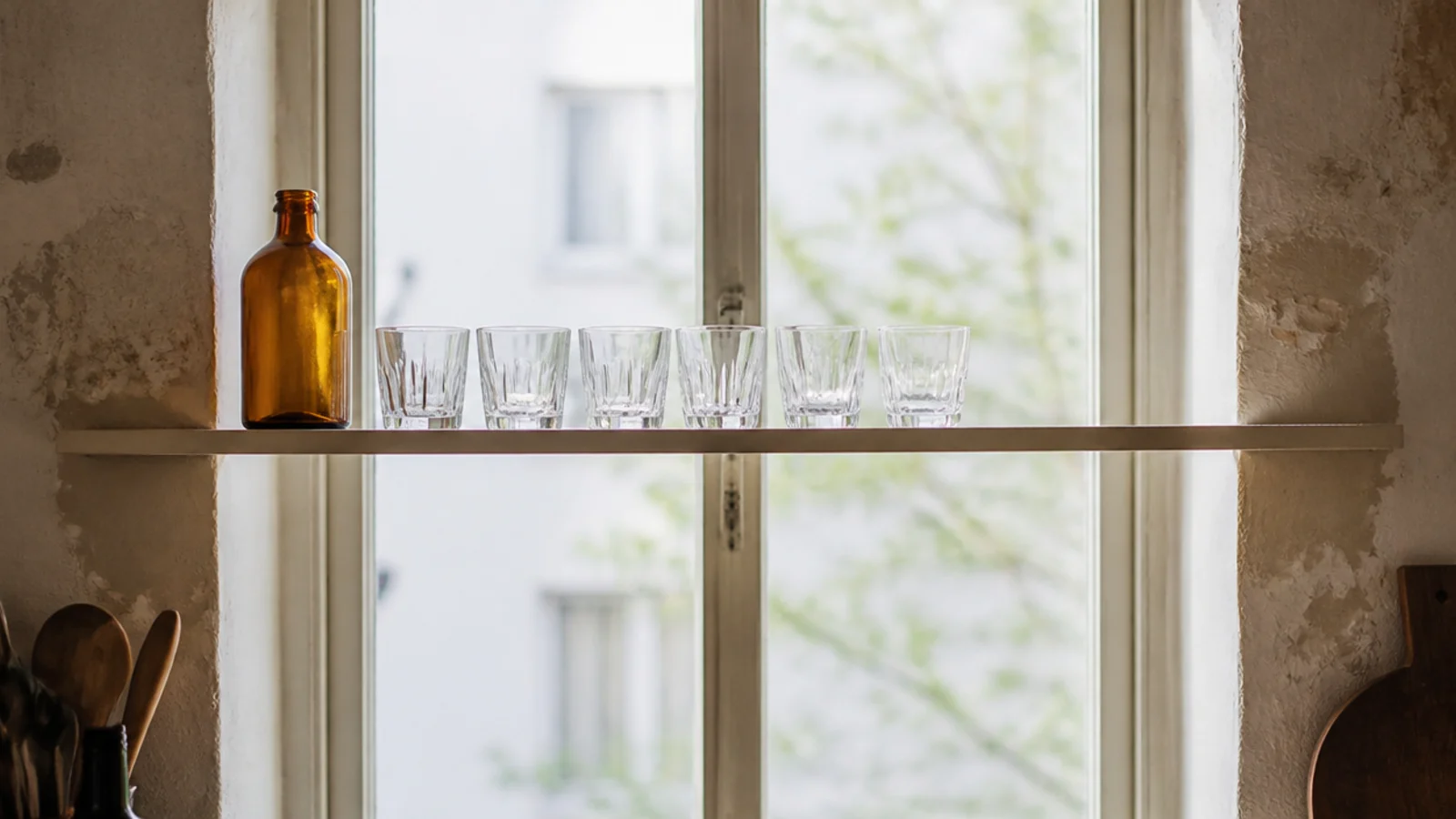
22. A shelf floating in front of a window
Crossing a window with a slim shelf sounds wrong and looks wonderful, because everything on it becomes backlit for half the day.
Keep it 4 inches deep, in glass or a pale timber, and use only translucent objects: tumblers, an amber bottle, a glass carafe. Fix into the window reveals rather than the frame itself so nothing interferes with the opening.
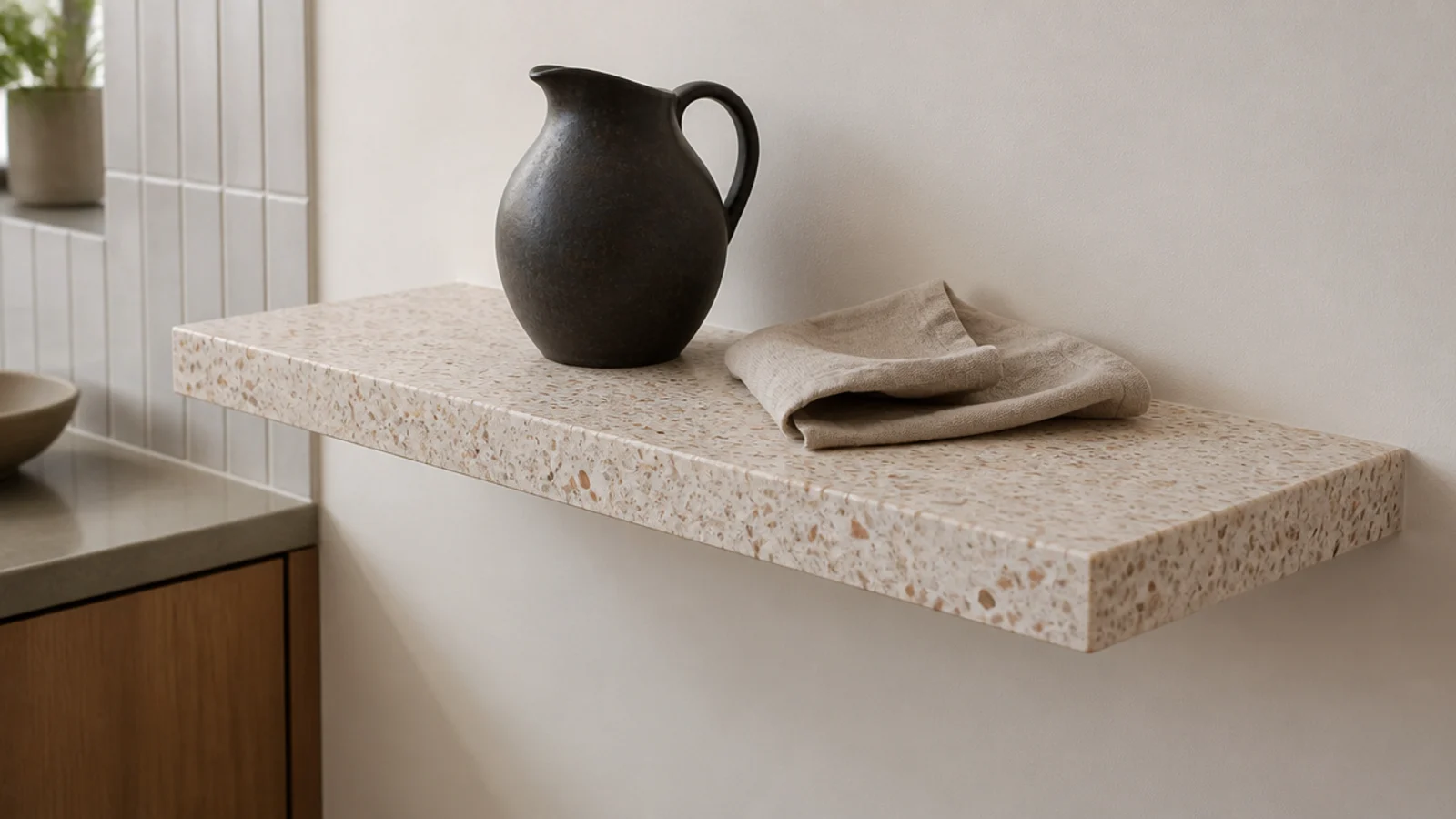
23. A concrete or terrazzo shelf slab
Terrazzo brings warm speckled pattern to a kitchen without patterning a whole wall, and a 30-inch shelf is a manageable amount of a material that overwhelms at counter scale.
Seal it — unsealed cement absorbs oil permanently. Weight is the constraint: a 30-inch terrazzo slab is 25 to 40 pounds empty, so this one wants studs and a helper. Around $120 and up.
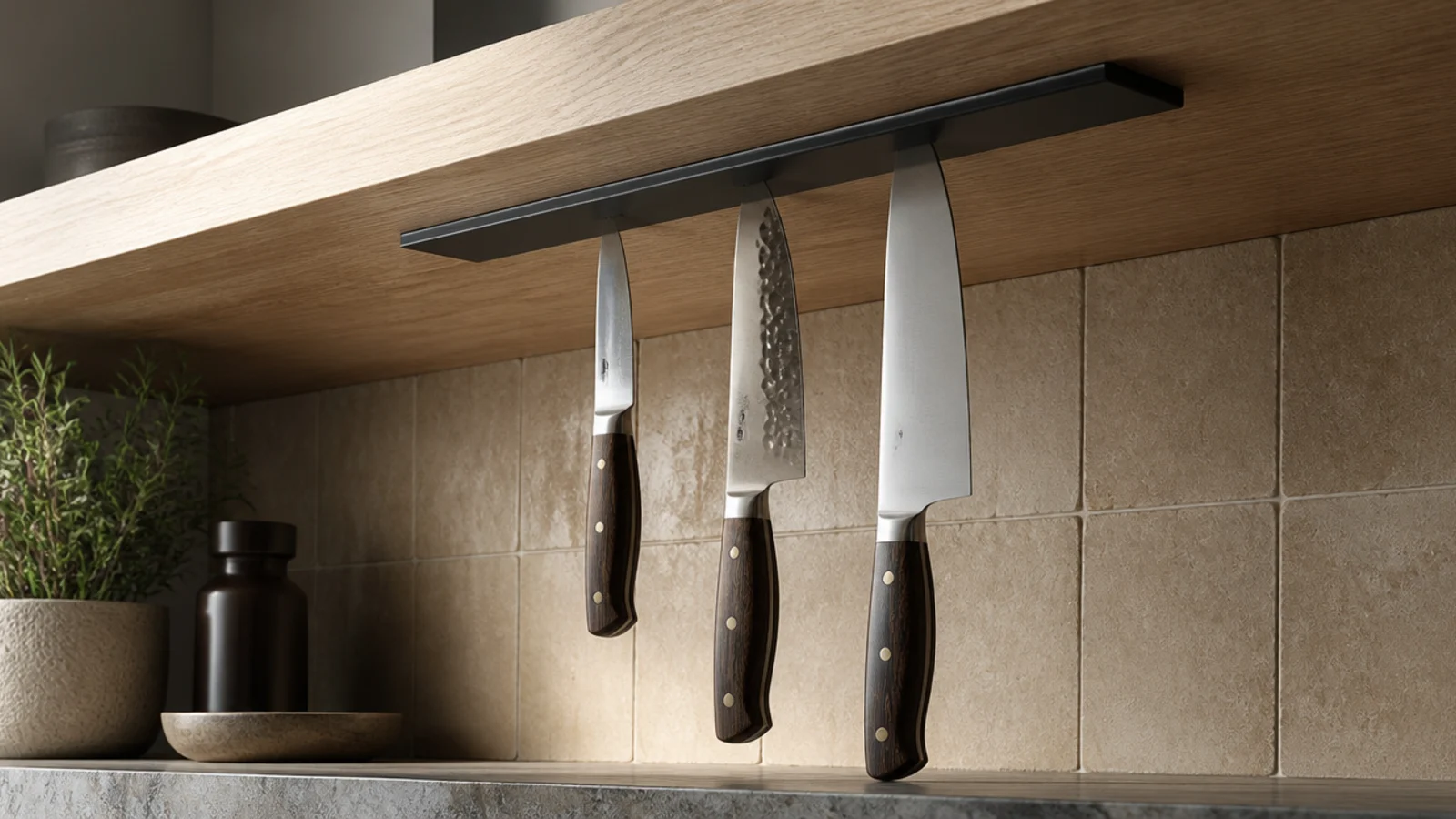
24. A magnetic knife strip on the shelf underside
The underside of a shelf is the last unused surface in a kitchen. A slim magnetic strip there keeps knives off the counter without a block eating space.
Mount it toward the back so blades sit inside the shelf line and nobody catches a knuckle. Use short screws — three-quarters of an inch — or they come through the top face. Around $25.
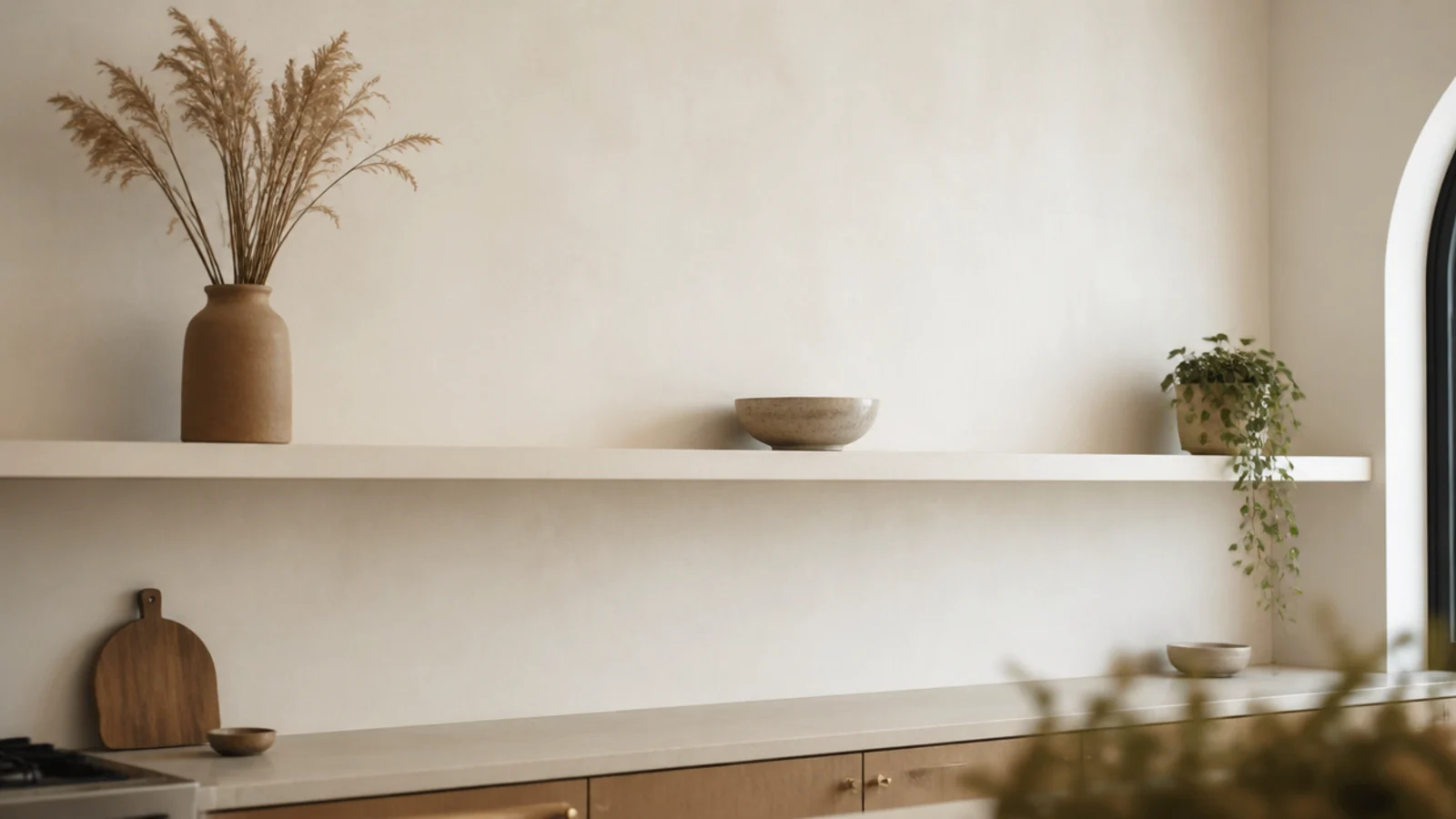
25. Deliberate negative space, one shelf and three objects
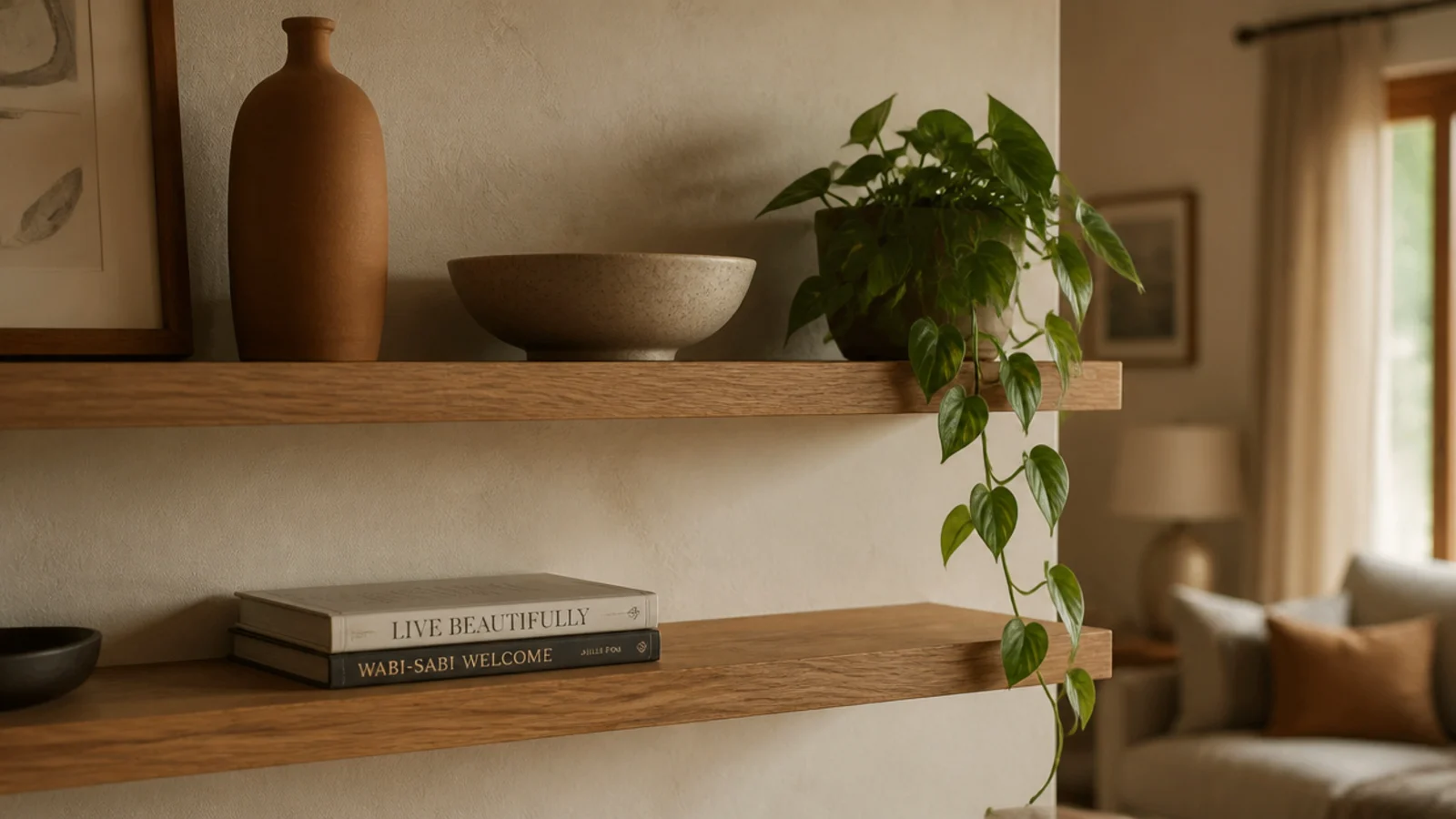
The most modern thing you can do to a shelf is leave most of it empty, and it is the hardest to actually commit to.
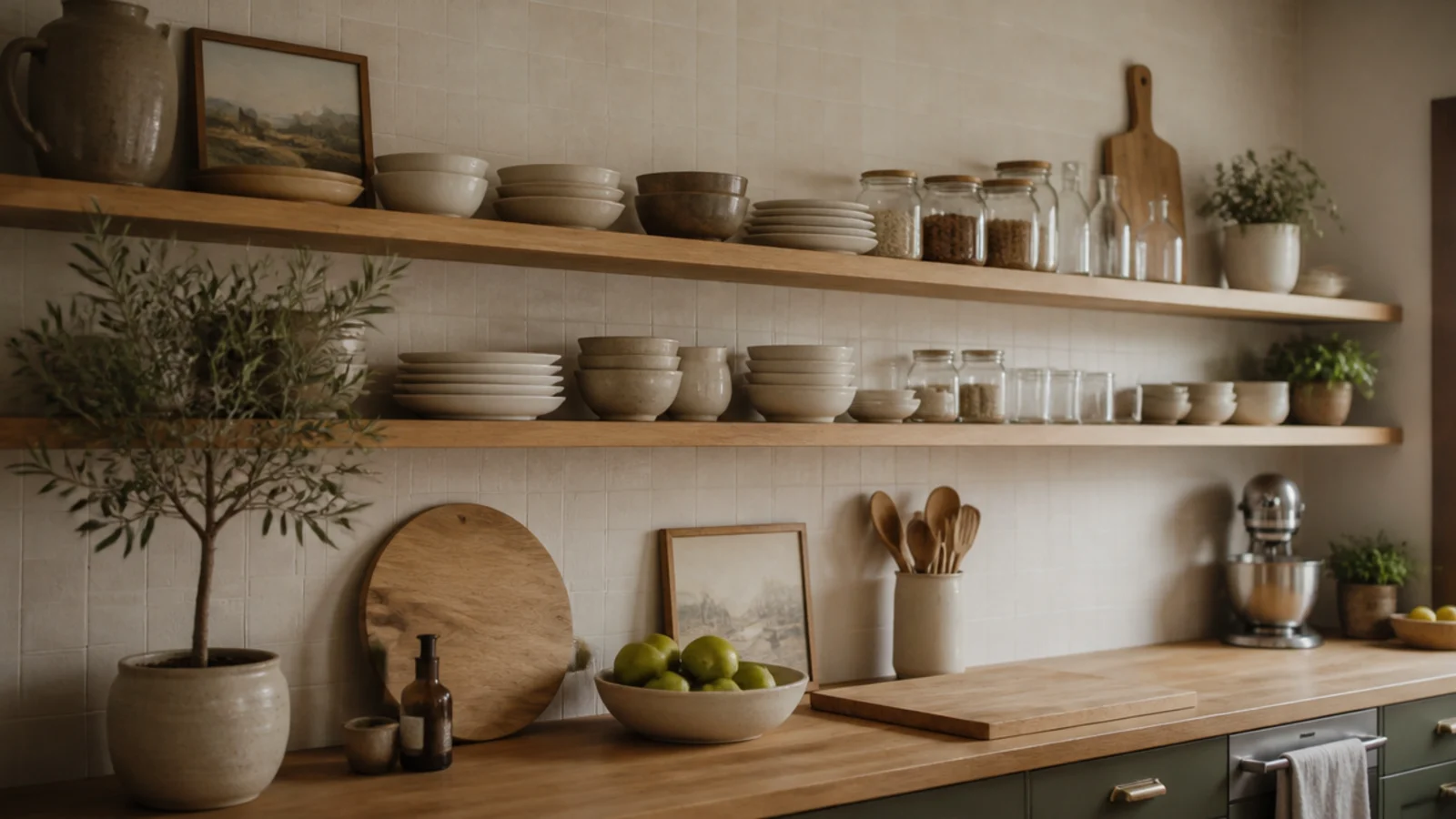
One tall object, one low wide one, one soft or living thing, grouped toward one end. The rest stays bare. Take a photo after styling — a picture shows you the clutter your eye has already stopped noticing. There is more method in kitchen shelf styling.
Mistakes to Skip
- Choosing concealed rod brackets and then mounting into drywall alone. It is the weakest common configuration, and the sag shows first at the end furthest from a stud.
- Lighting a warm timber shelf with a 4000K strip. Oak and terracotta both go grey under cool white, and people replace the pottery before they replace the bulb.
- Putting purely decorative objects on the stretch nearest the stove. Nothing there gets washed, so it quietly collects grease in full view of everyone.
Frequently asked questions
What makes a kitchen shelf look modern rather than rustic?
Three things: a thicker slab with a crisp square or mitred edge, no visible hardware, and restraint in what sits on it. Rustic reads through texture and visible brackets, modern reads through mass and a clean shadow line. The board itself is usually the same wood in both cases, so it is the detailing and the edit that decide.
How thick should a modern floating kitchen shelf be?
An inch and a half minimum for concealed rod brackets, since the rods have to pass through the board. Two to two and a half inches reads properly substantial on a long wall. You can fake the thickness with a mitred box built around a hollow core, which keeps the weight down and the shadow line the same.
Do modern open shelves work in a kitchen you actually cook in?
They do if everything on them is used weekly. Constant use keeps open shelving clean, which is why a stack of everyday plates near the stove stays fine and a decorative vase does not. Anything within about 4 feet of a burner picks up an airborne grease film, so place the purely beautiful pieces at the far end of the run.
What is the best finish for a modern kitchen shelf?
A hardwax oil for wood you want to look matte and natural, or water-based polyurethane where you want a tougher film. Both resist water and grease. Never use clear wax in a kitchen — it softens near heat and lets grease through. Seal every face including the underside and the cut ends, or the board will cup.
How do I keep a modern shelf from looking bare?
Give it one tall object, one low wide object and one soft or living thing, then stop. Bare and empty are different problems: empty is too few objects across a long span, bare is objects with no height difference. A single 14-inch vase on a 6-foot shelf reads as intention rather than absence.
Can modern shelves hold heavy dishes safely?
Ten dinner plates weigh about 12 pounds, so yes with the right load path. A lag screw into a stud carries 40 to 60 pounds per fixing, a toggle bolt in half-inch drywall carries 25 to 35, and the plastic plugs in the box carry roughly 10. Concealed rod brackets into drywall alone are the weakest common option.
Decide the thickness and the load path first — those two are permanent, and every finish choice after them is reversible with a sander and a Sunday. For the concealed-hardware detail in depth see floating kitchen shelves, for tight layouts see kitchen shelves for small spaces, and for the same detailing elsewhere in the house, floating shelf decor covers it. Save the pin before you pick a board.
Want more like this? Browse all 15 kitchen shelf ideas guides — they all use the same measurements and budget tiers.
Pin it for later
Save this to your Kitchen Shelf Ideas board
Pin it now so it is waiting for you when the tape measure comes out — and so the next person hunting for this idea can find it too.
Save this pinKeep going
More ideas worth saving while you have the tape measure out.