Kitchen Shelf Ideas · Listicle
30 Stylish Kitchen Shelf Ideas to Copy Now

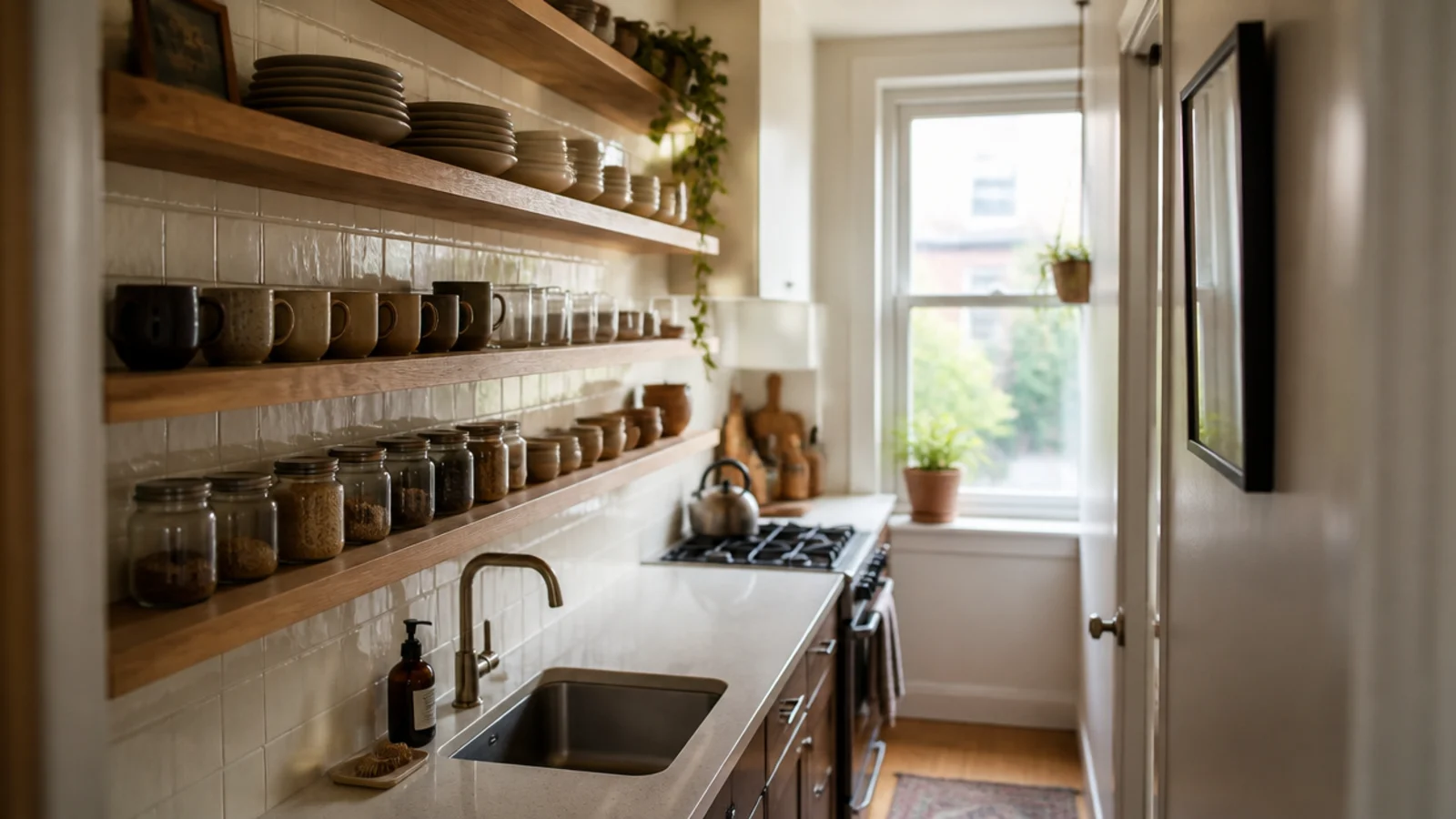
Kitchen shelves for small spaces have to justify every inch they take, which is why the numbers matter more here than anywhere else in the house. Depth, height and spacing decide whether a shelf gives a tiny kitchen back its counter or quietly makes the room feel narrower. These 30 ideas each name the measurement that makes them work.
In this guide32 sections — tap to openHide
- 1.How to plan kitchen shelves for small spaces before you buy
- 2.Six inches deep instead of ten
- 3.A run that goes all the way to the ceiling
- 4.The five-inch strip beside a window
- 5.A shelf inside the sink cabinet door
- 6.A shelf on the exposed end panel of a cabinet run
- 7.A pull-out shelf in the six-inch filler gap
- 8.A shelf under the window sill
- 9.One shelf above the prep zone, not three
- 10.A shelf that doubles as a plate rack
- 11.Hooks screwed into the shelf front edge
- 12.A fold-down shelf that becomes a table
- 13.A high shelf at sixty inches down a galley
- 14.A shallow pantry of five-inch shelves
- 15.A shelf above the washing machine
- 16.Open shelves inside a doorless alcove
- 17.A shelf that gets the microwave off the counter
- 18.Uneven spacing sized to what you own
- 19.A shelf sized to one exact stack of bowls
- 20.A wall track system with movable shelves
- 21.A half-depth shelf under the upper cabinets
- 22.A linen curtain across a working shelf
- 23.A shelf above the radiator with clearance
- 24.A shelf that becomes a breakfast bar
- 25.A ten-inch-high shelf behind the faucet
- 26.A lip that props a cookbook open
- 27.Baskets on a shelf instead of loose jars
- 28.A shelf painted the wall color to disappear
- 29.A mirrored panel behind a shelf
- 30.A vertical slot for boards and trays
- 31.A shelf run that continues into the hallway
- 32.Mistakes to Skip
How to plan kitchen shelves for small spaces before you buy
Four decisions carry the whole thing.
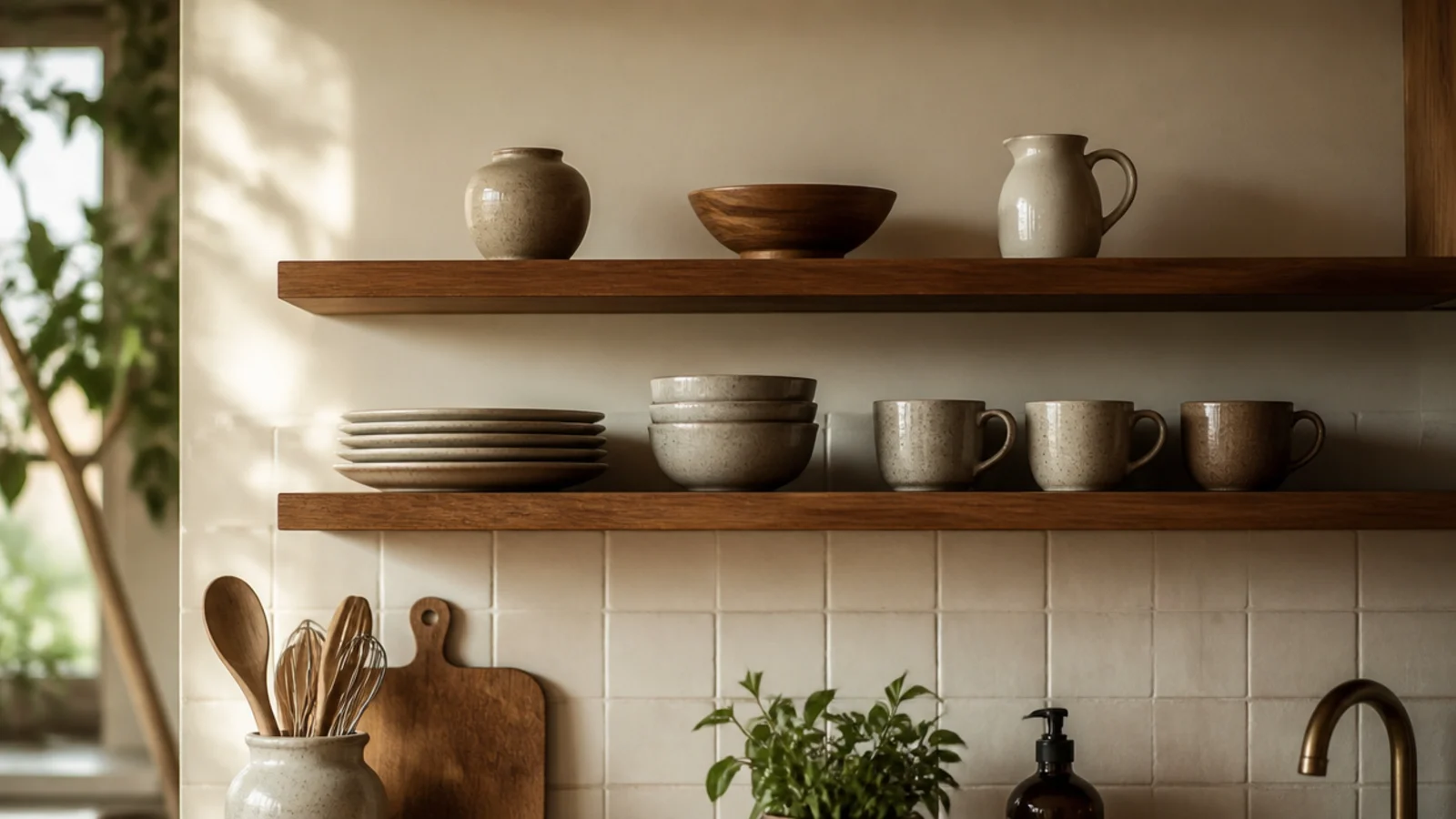
Depth. Six inches is the working number in a galley or any run you pass within arm's reach. It holds dinner plates, mugs, jars and small bowls. Ten or twelve inches only makes sense above a counter you never walk along.
Height. Eighteen inches from the countertop to the underside of the first shelf clears a stand mixer, with the second 12 to 14 inches above that. If nothing tall lives on that stretch, drop the first to 14 and gain a third shelf above.
Distance from the stove. Everything within about 4 feet of a burner collects an airborne grease film. Put weekly-washed items in that zone and keep decorative pieces at the far end. Above a range hood, use ceramic, metal or glass only.
Load and finish. Ten dinner plates weigh around 12 pounds, so dish shelves need a bracket in a stud and three-quarter-inch stock minimum. Seal with water-based polyurethane or hardwax oil on every face including the underside and cut ends — never clear wax, and never an unsealed underside, which is what makes a board cup.
Budget: $ under $40 for a single shallow board and brackets, $$ $40 to $150 for a full run in solid wood, $$$ $150 and up for track systems, pull-outs and mirrored backs.
1. Six inches deep instead of ten
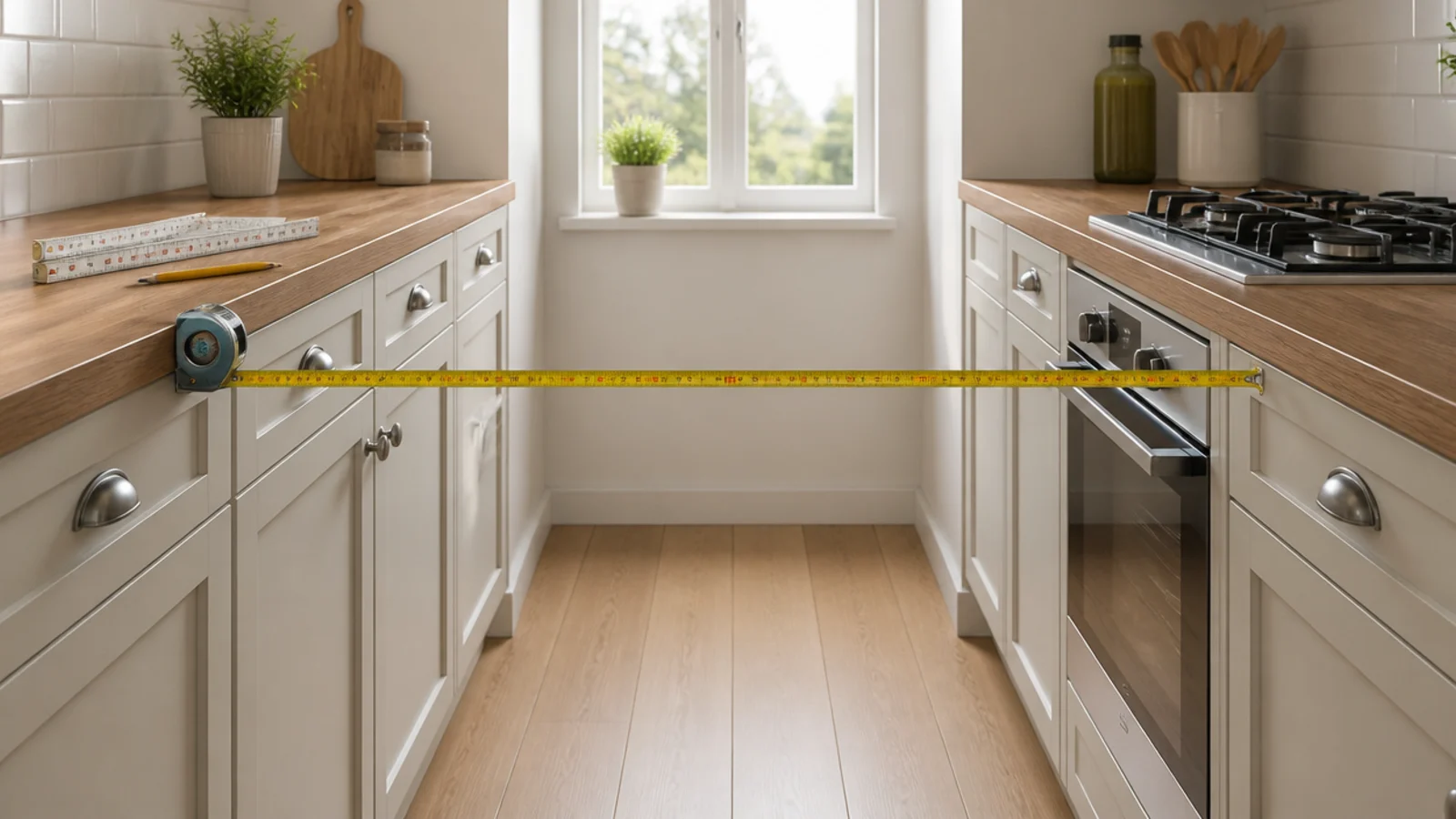
The most useful decision in a small kitchen. A 6-inch shelf takes a dinner plate, a mug, a jar and a small bowl, which covers almost everything you would put on it.
It also keeps your shoulder clear in a galley under 40 inches wide, and lets daylight reach the counter underneath. Deep shelves in small kitchens shade the exact surface you work on.
2. A run that goes all the way to the ceiling
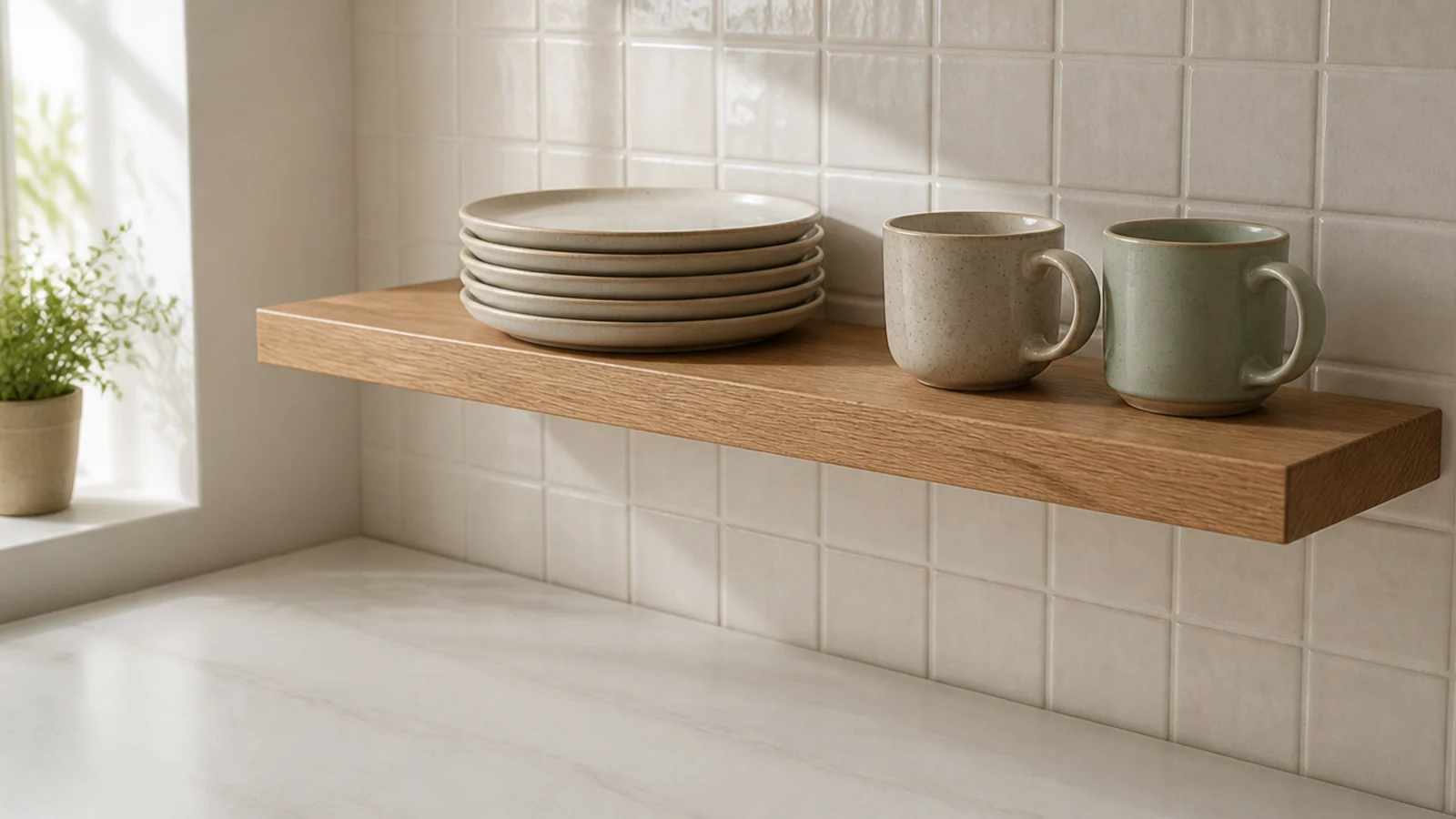
Most kitchens waste 18 to 24 inches above the cabinets. Running shelves to the ceiling instead reclaims it and pulls the eye upward, which makes a low room read taller.
Keep everyday items below 60 inches and put the twice-a-year things up top.
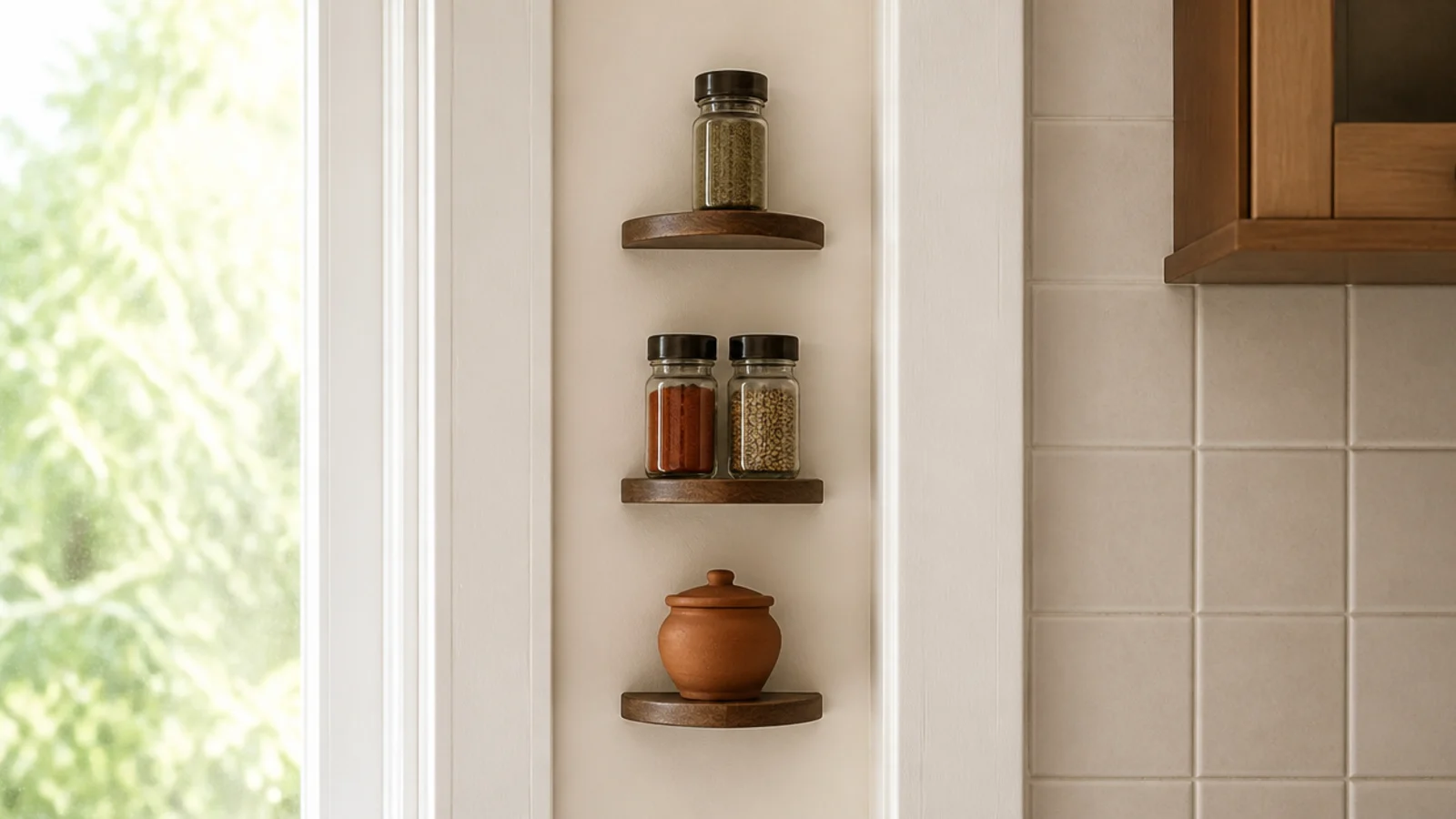
3. The five-inch strip beside a window
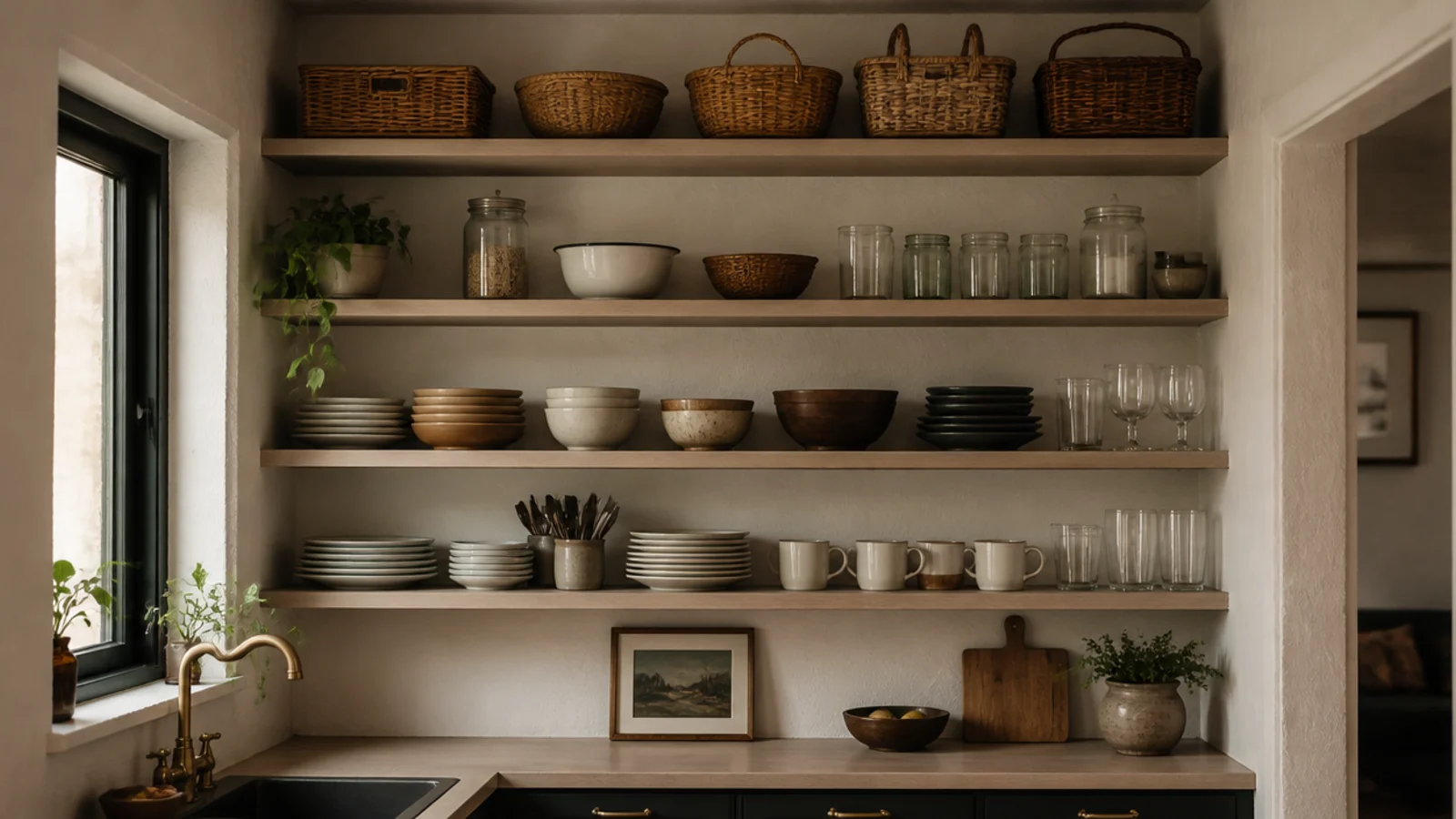
The leftover wall between a window frame and a corner is usually 5 to 8 inches — enough for three tiny shelves holding a full spice collection.
Cut the boards to the exact strip width and use small L brackets underneath. Because the shelves are so short, drywall anchors are genuinely fine here as long as nothing heavy goes on.
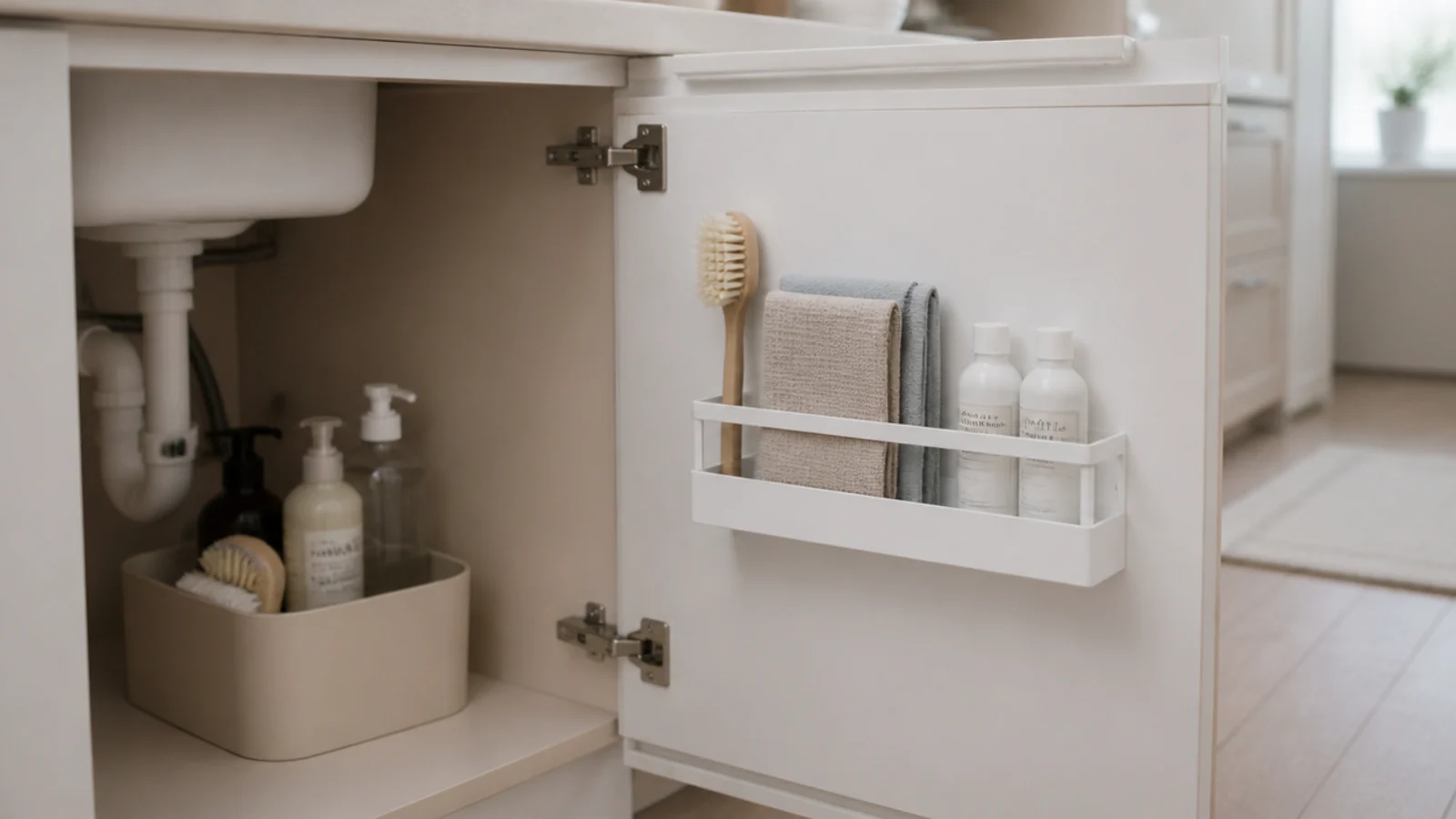
4. A shelf inside the sink cabinet door
Before adding anything to the walls, look at the inside of the doors you already have. A slim rack there holds cloths, a brush and two bottles in space that is currently air.
Keep it under 3 inches deep so it clears the plumbing when the door swings shut. Around $12, and it is the single easiest win in a tiny kitchen.
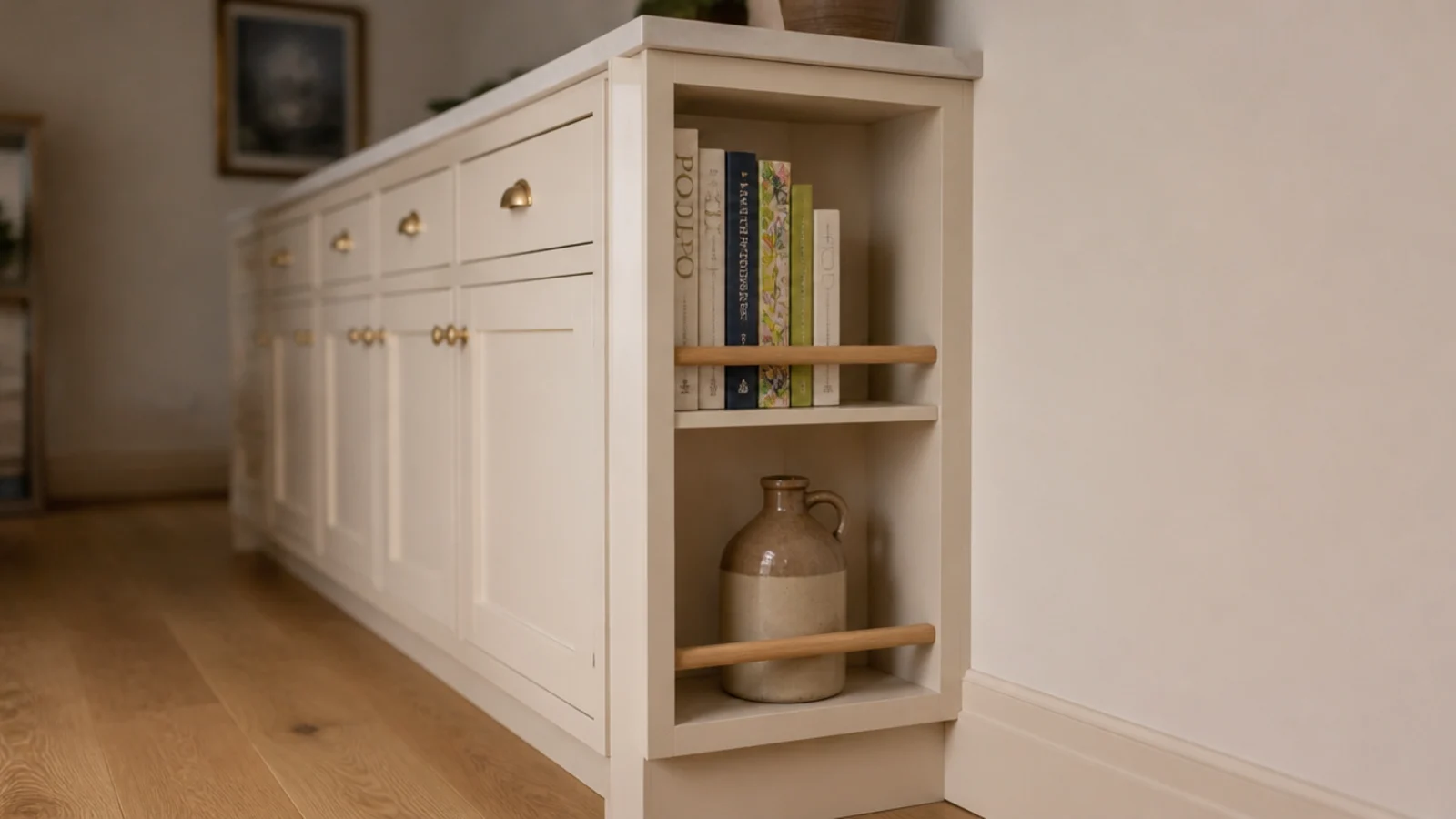
5. A shelf on the exposed end panel of a cabinet run
The side of the last cabinet in a run is a small blank wall that nobody claims. Two short shelves there hold cookbooks or a jug without touching the room's circulation.
Screw into the cabinet panel itself rather than the wall, using short screws that will not come through the inside face. Keep the depth under 8 inches so nothing catches a passing hip.
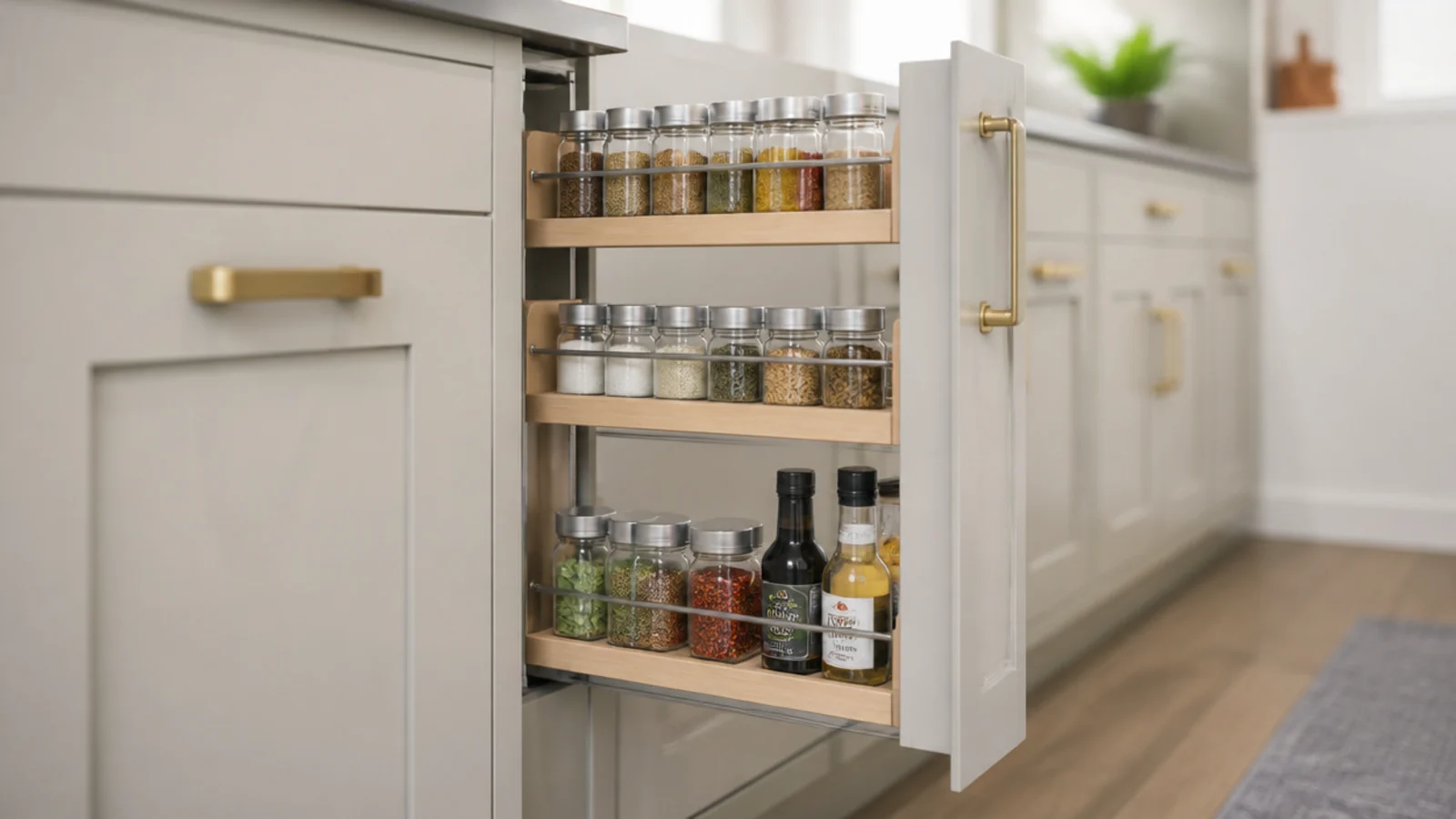
6. A pull-out shelf in the six-inch filler gap
Kitchens are full of 4 to 8-inch filler panels covering nothing. A slim pull-out rack turns that gap into a spice pantry that holds thirty jars in a footprint the size of a book.
Measure the gap and cabinet depth before ordering, and check the neighbouring door clears at full extension. Around $70 to $130 ($$).
7. A shelf under the window sill
The wall between a sill and the counter is dead space in every kitchen. A shelf there stays below the glass so the light stays uninterrupted.
Keep the top surface at least 2 inches below the sill and the depth at 5 inches. Bowls, cloths and a small pot suit it; nothing tall enough to block the view when you are washing up.
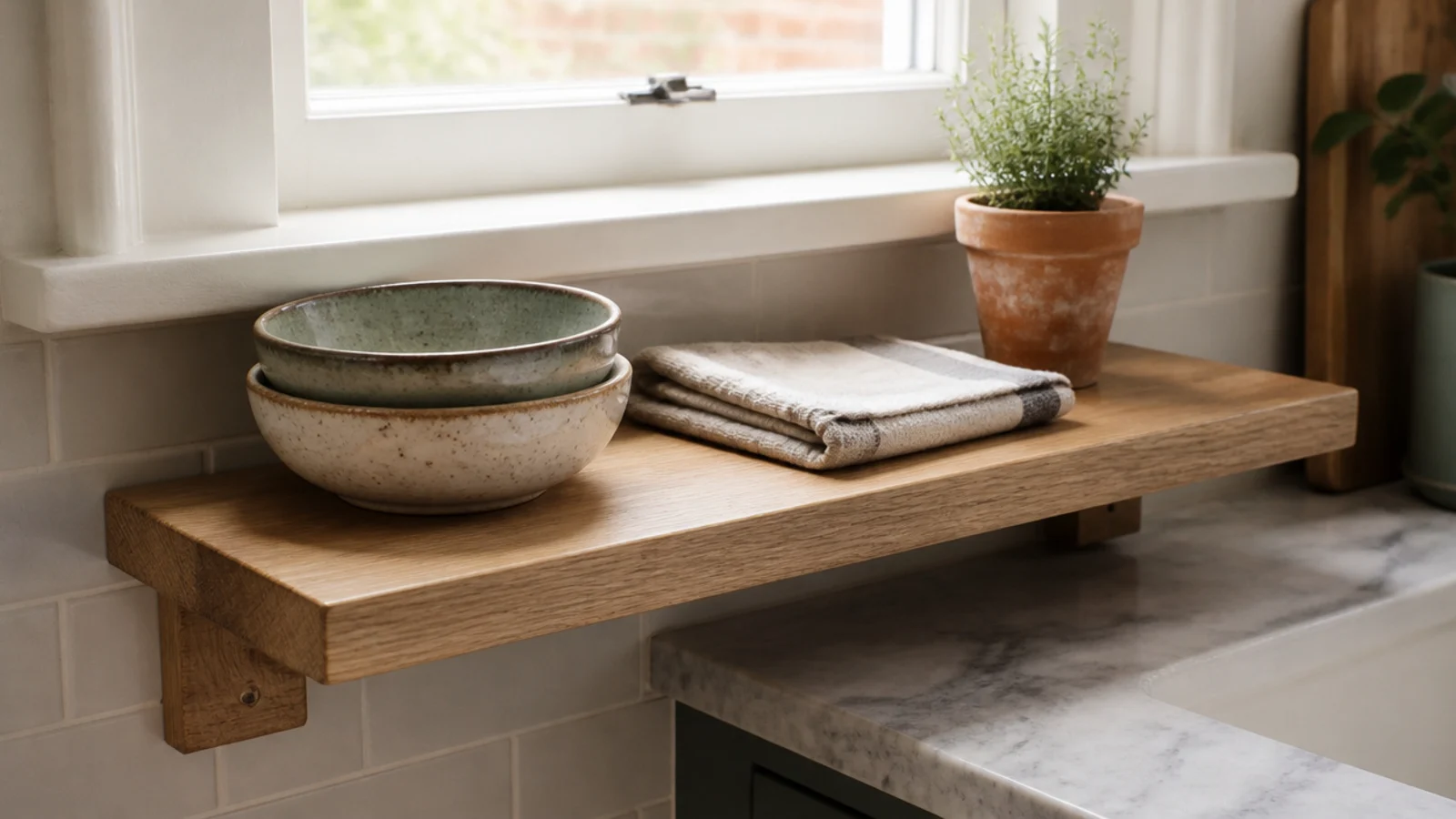
8. One shelf above the prep zone, not three
The temptation in a small kitchen is to fill every wall. Above the counter you actually chop on, restraint pays better than storage.
One shelf mounted high, at 20 inches or more above the counter, leaves headroom for a mixing bowl, a raised board and your own elbows.
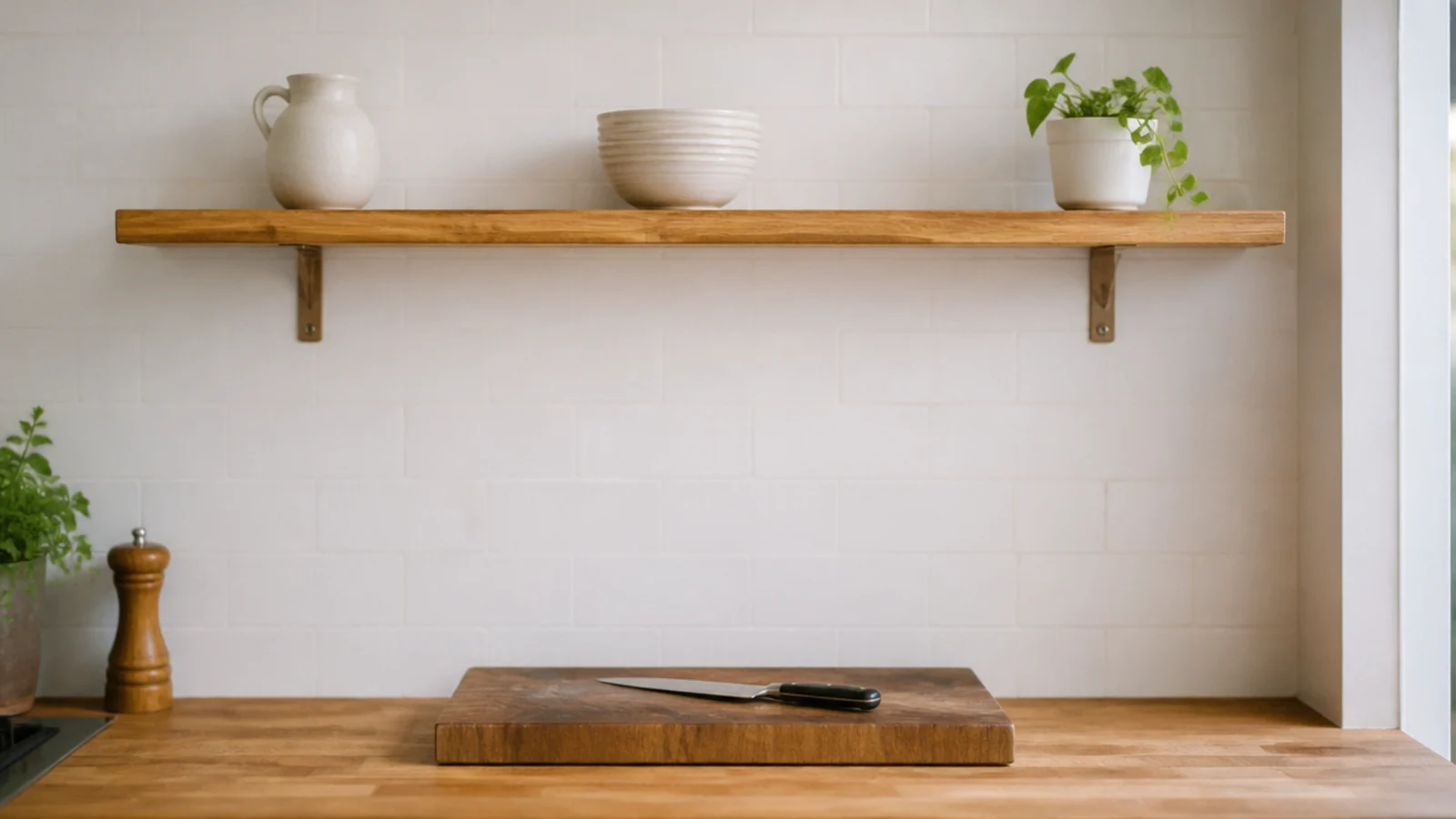
9. A shelf that doubles as a plate rack
Slim vertical dowels set into a shelf hold plates upright on edge, which takes about a third of the depth a flat stack needs.
Space the dowels an inch and a quarter apart for standard dinner plates. Fitted above a sink, it drains as well.
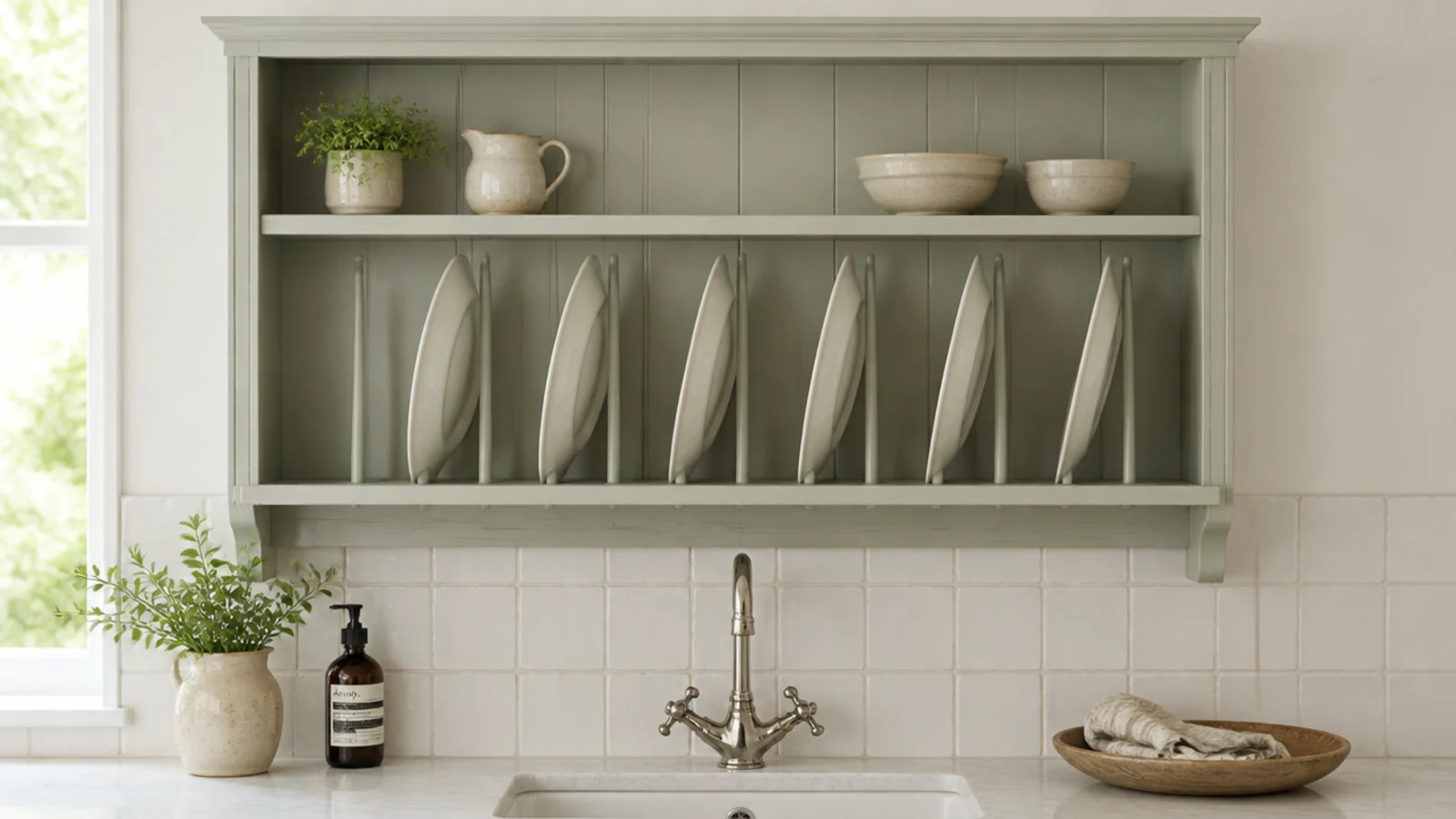
10. Hooks screwed into the shelf front edge
The front edge of a shelf is storage you already own. Four small cup hooks hold four mugs underneath whatever sits on top.
Use hooks with a shank under half an inch on a three-quarter-inch board, and pre-drill. Keep them off the run you chop on, or you will catch handles with your knuckles.
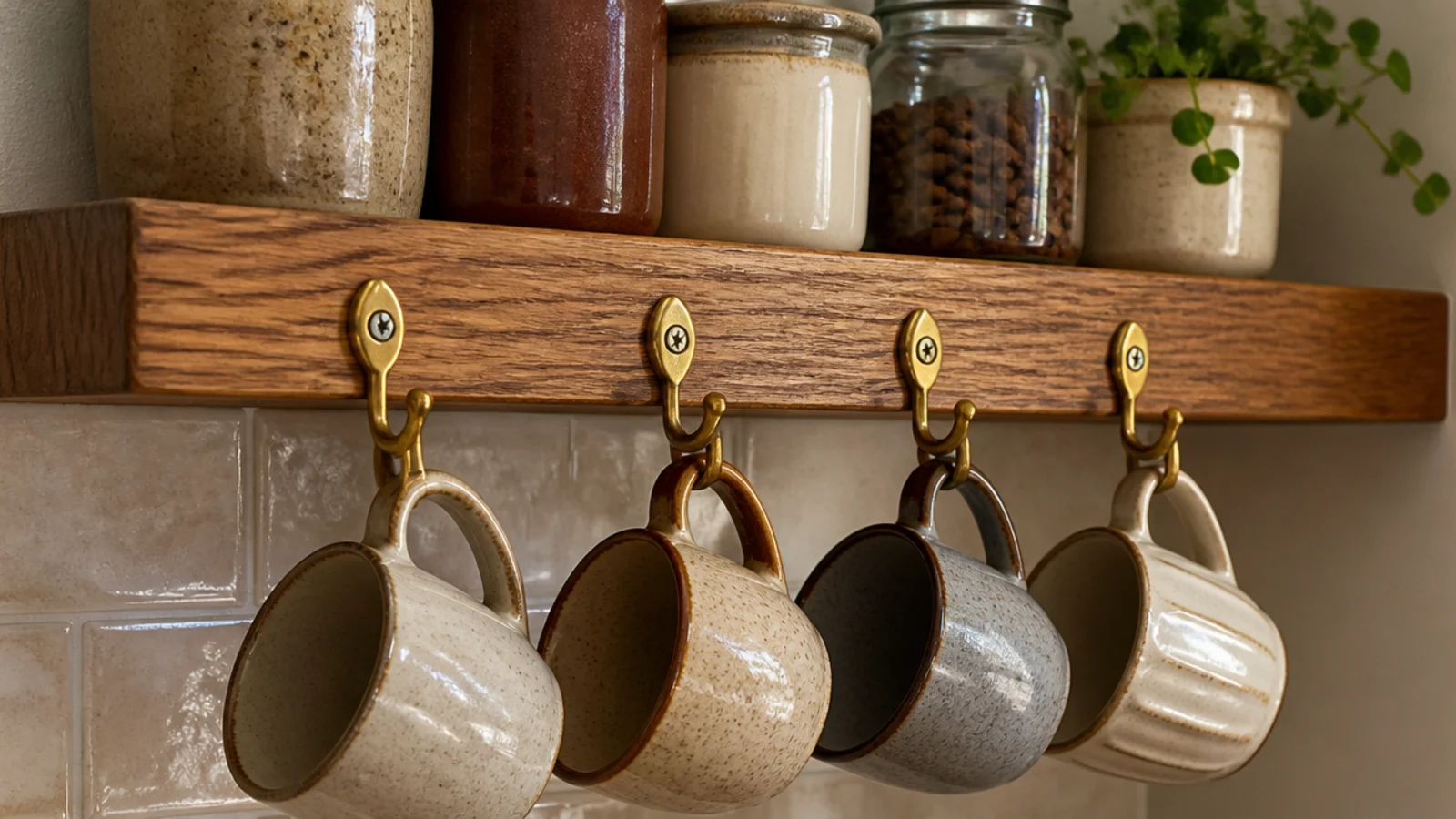
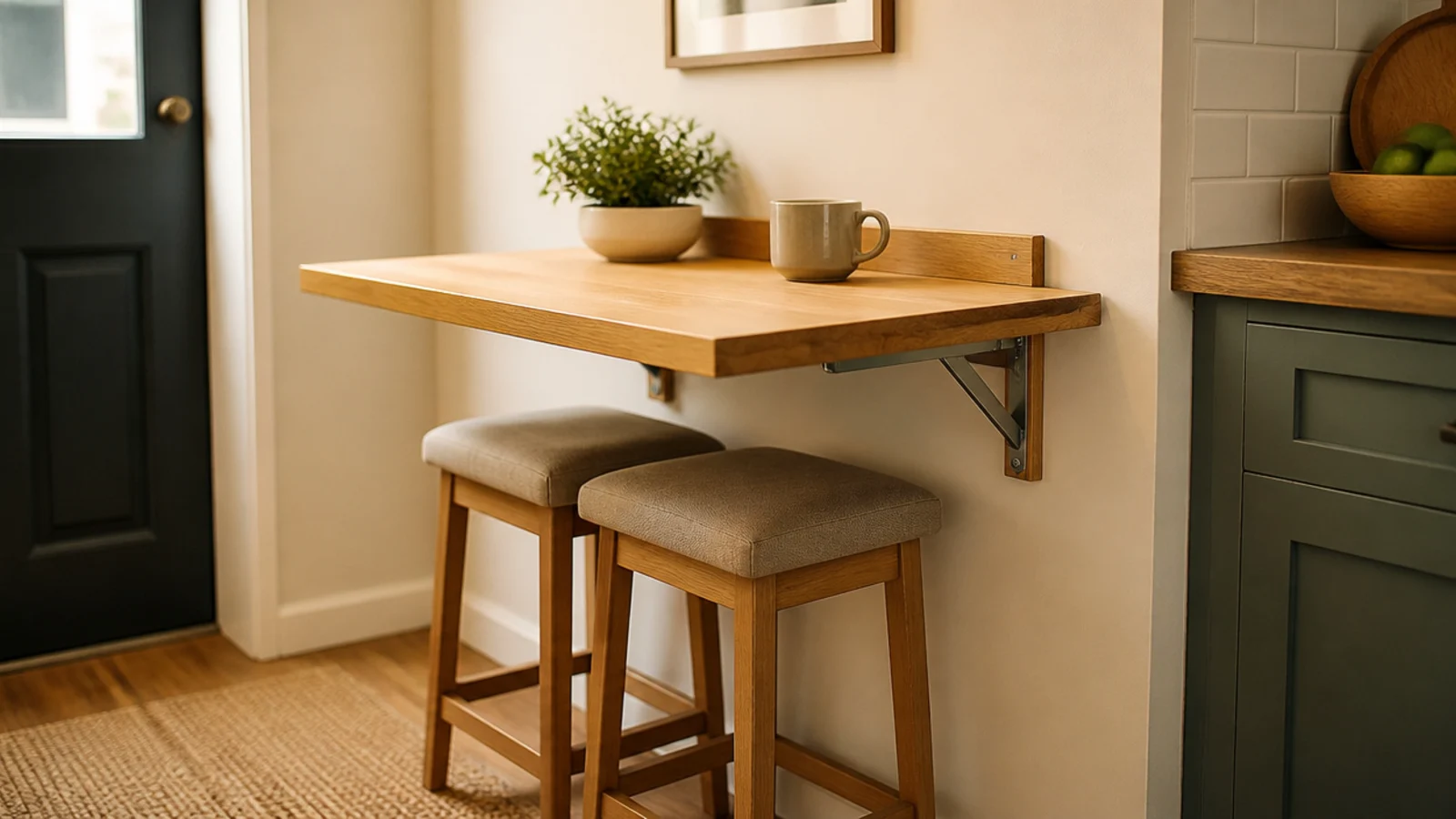
11. A fold-down shelf that becomes a table
A hinged board on drop-leaf brackets sits flat against the wall as a 4-inch ledge and folds down to a 16-inch table for two.
Fix the hinge line at 30 inches for dining height. Use drop-leaf or gate brackets rated to 50 pounds, into studs — this one gets leaned on.
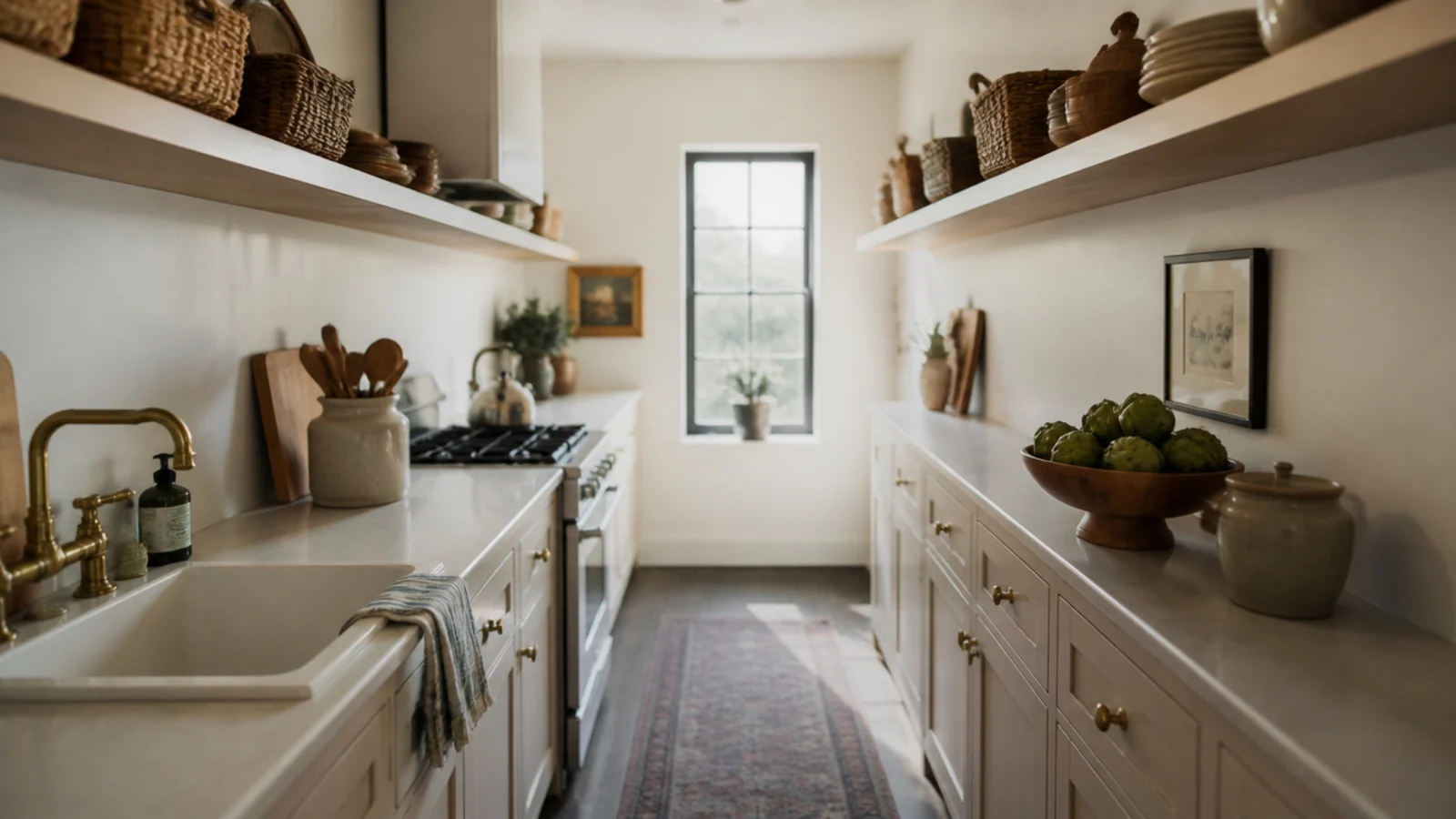
12. A high shelf at sixty inches down a galley
In a galley narrower than 40 inches, a shelf at head height costs you nothing in walkway because nobody walks through their own shoulders.
Run one continuous board at 60 to 66 inches, 6 inches deep, for baskets, platters and the things you reach for weekly rather than daily.
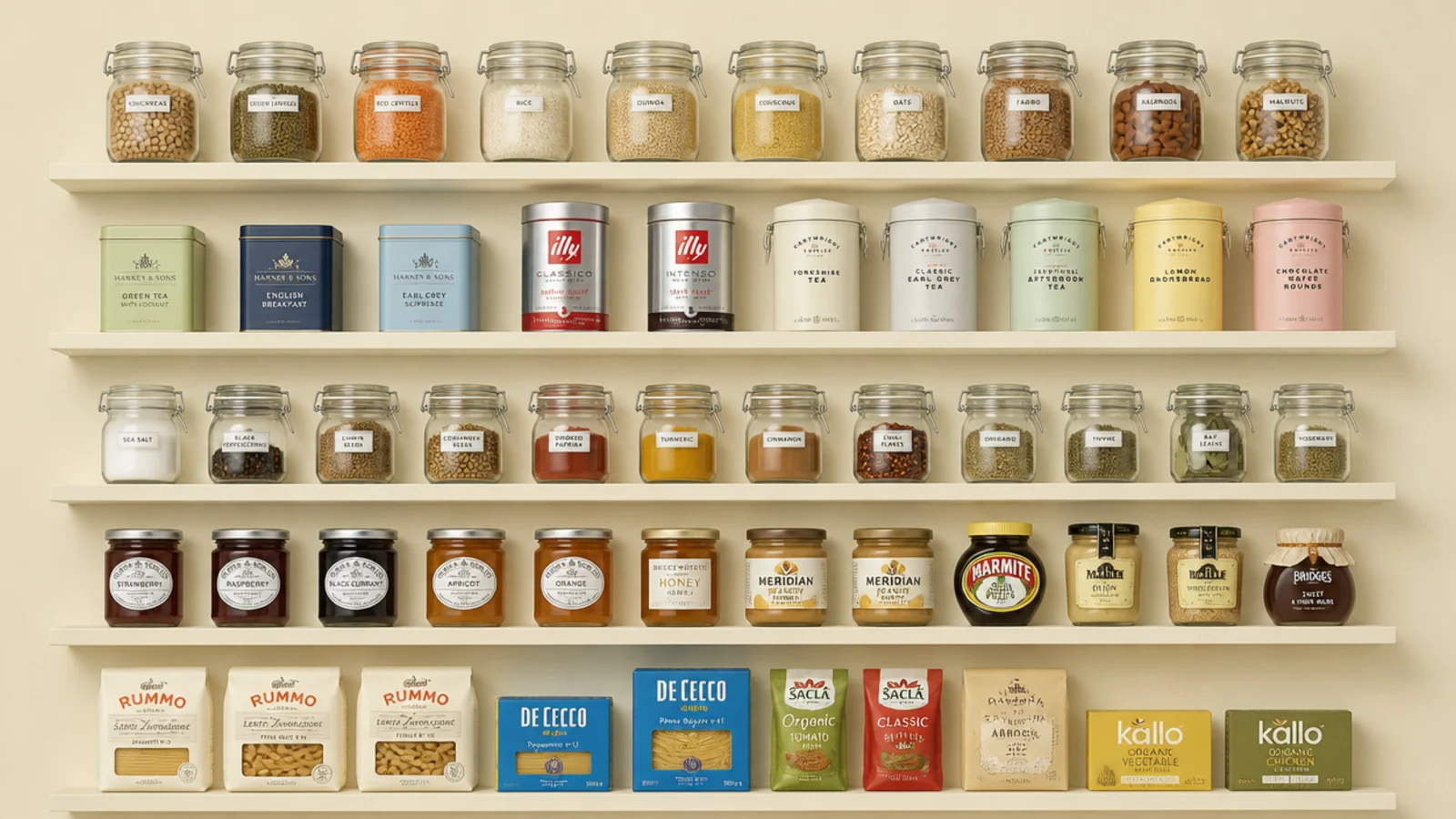
13. A shallow pantry of five-inch shelves
Five shallow shelves on a bare wall hold more usable food storage than a deep cupboard, because everything sits in a single row and nothing hides at the back.
Five inches takes most cans, jars and packets standing up. Space the tiers 10 to 12 inches apart, and paint the whole wall and shelves one color so the contents provide the pattern.
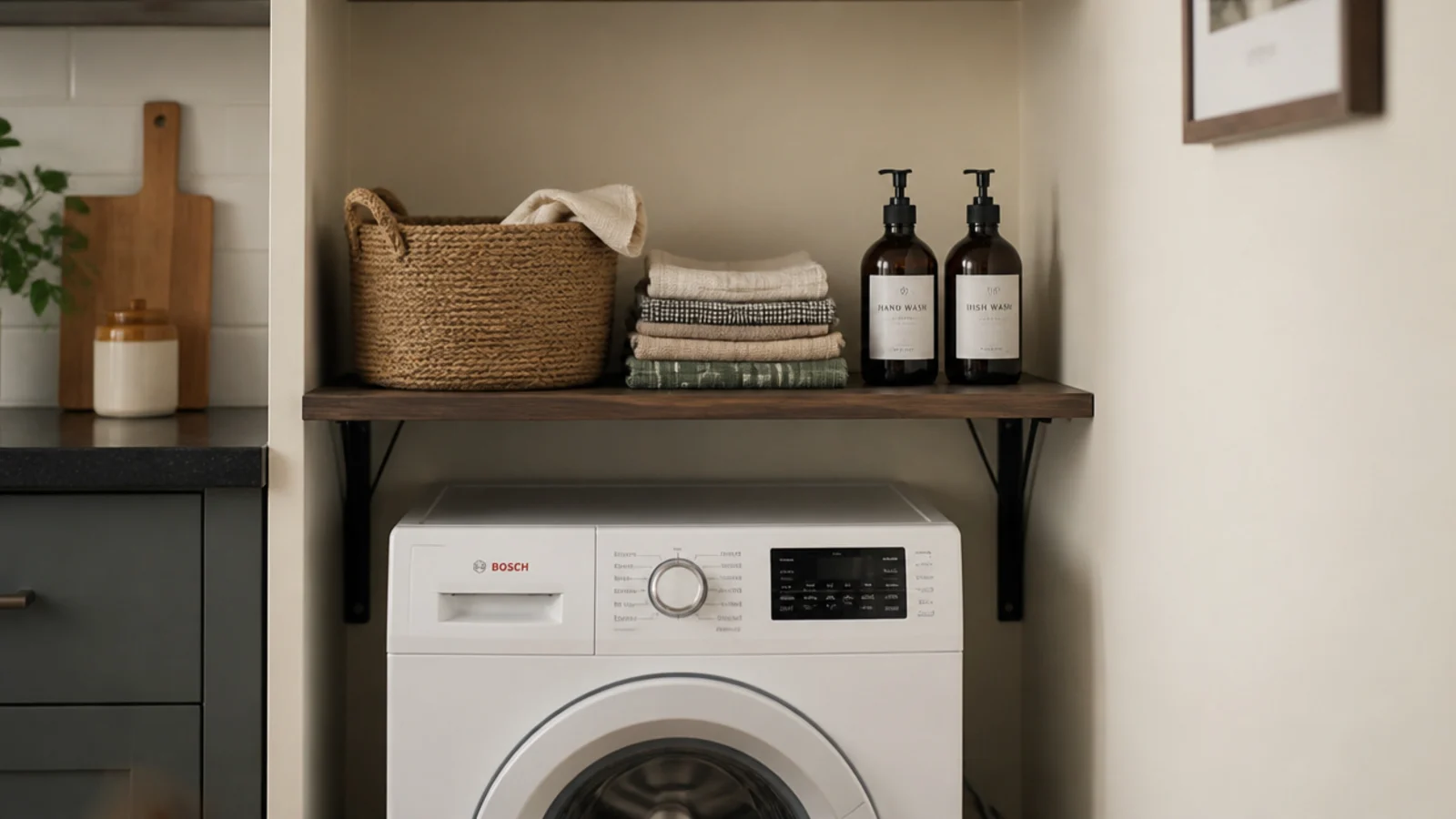
14. A shelf above the washing machine
Where a washer sits in the kitchen, there is usually 10 to 16 inches of dead wall above it. A sturdy shelf there holds detergent, cloths and a basket.
Fix into studs and leave 2 inches of clearance above the machine, since a spin cycle moves it more than you expect. Add a small lip so nothing walks off the front edge.
15. Open shelves inside a doorless alcove
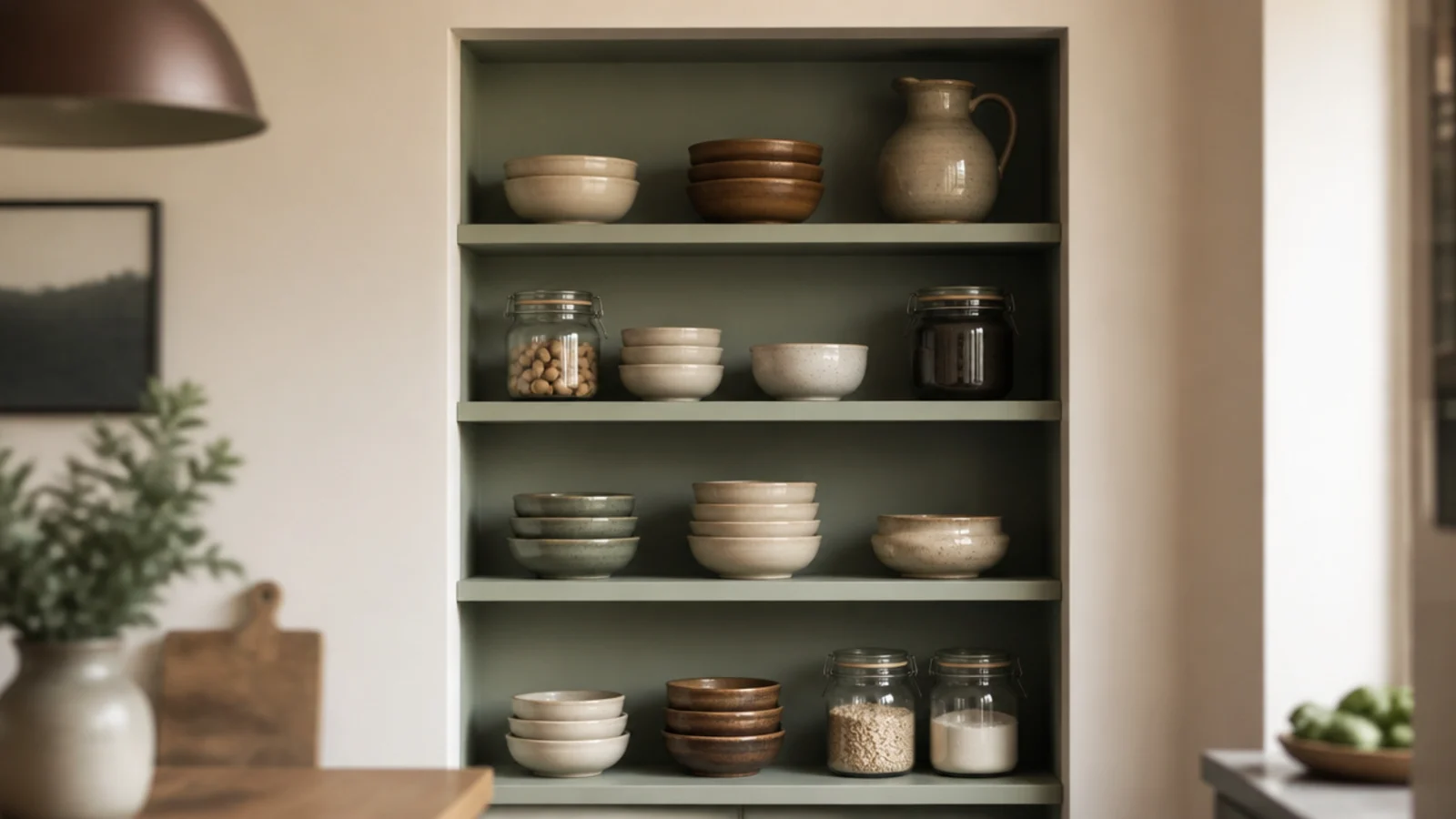
An alcove is already framed on three sides, which makes it the cheapest shelving in any kitchen — boards on cleats, no brackets at all.
Paint the alcove interior a shade darker than the wall so the shelves read as a considered volume. Leave the door off entirely; in a small kitchen, a swinging door needs clearance you do not have.
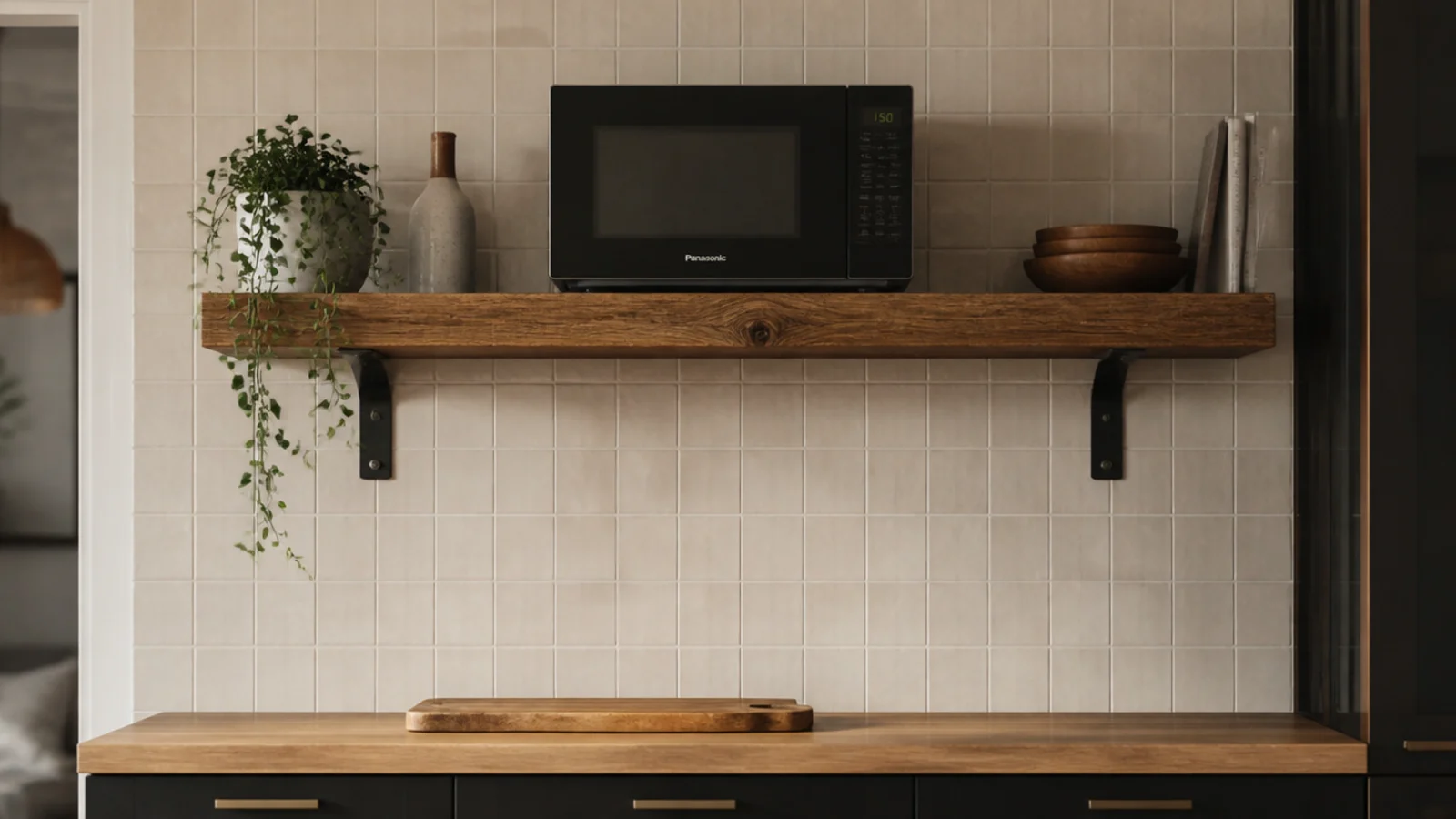
16. A shelf that gets the microwave off the counter
A microwave eats roughly two square feet of the most valuable surface in a small kitchen. A shelf on heavy steel brackets takes it back.
Rate the shelf for 50 pounds minimum, fix into two studs, and use inch-and-a-half stock. Keep the front of the appliance at or below 54 inches so you can see into it and lift a hot dish out safely.
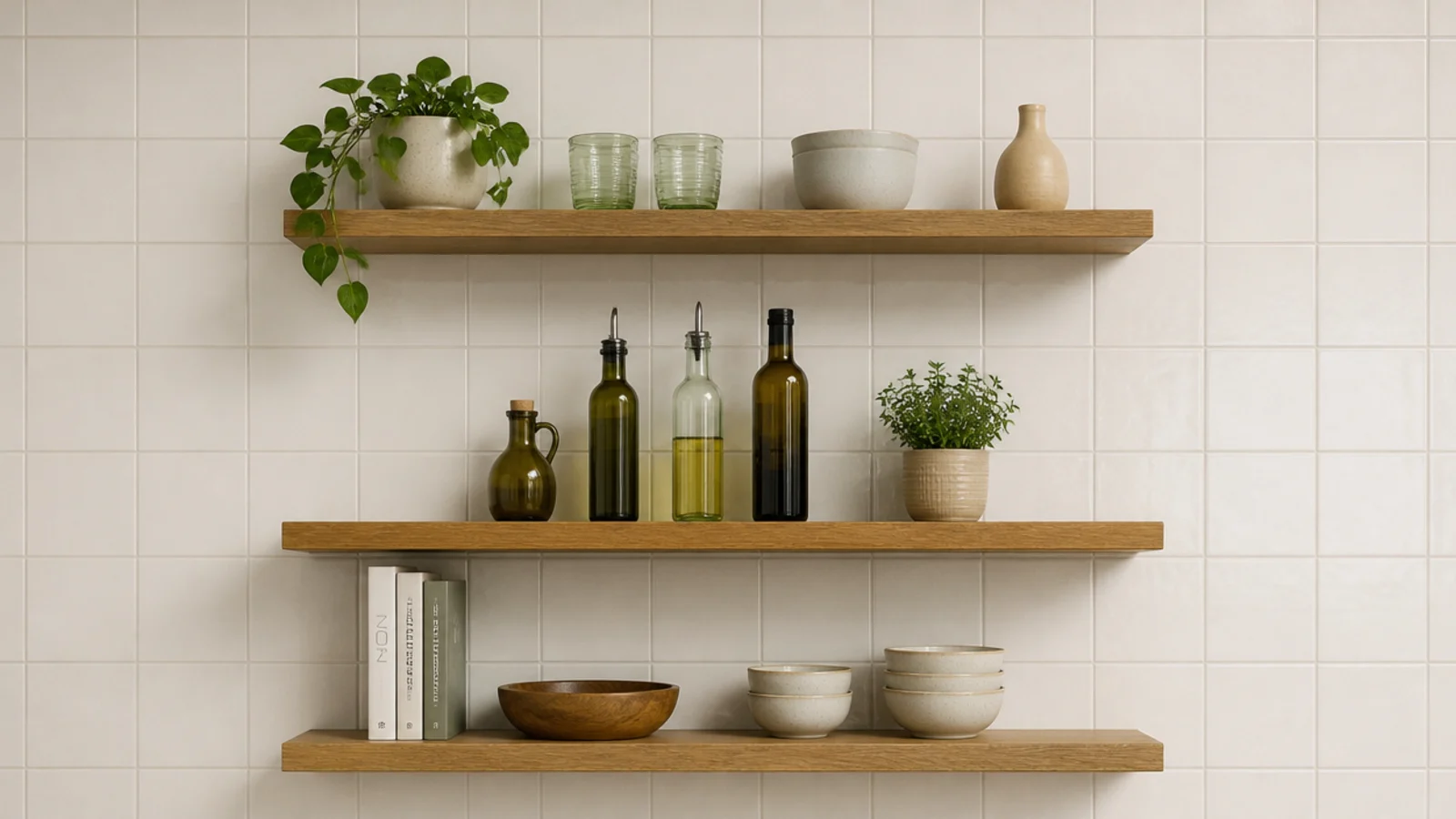
17. Uneven spacing sized to what you own
Evenly spaced shelves look tidy on an empty wall and then fit almost nothing. Measure your tallest bottle, your plate stack and your mugs, and space the tiers to those.
A 15-inch gap, an 11-inch gap and a 9-inch gap looks less neat on paper and holds far more in reality. Nobody notices uneven spacing once the shelves are loaded.
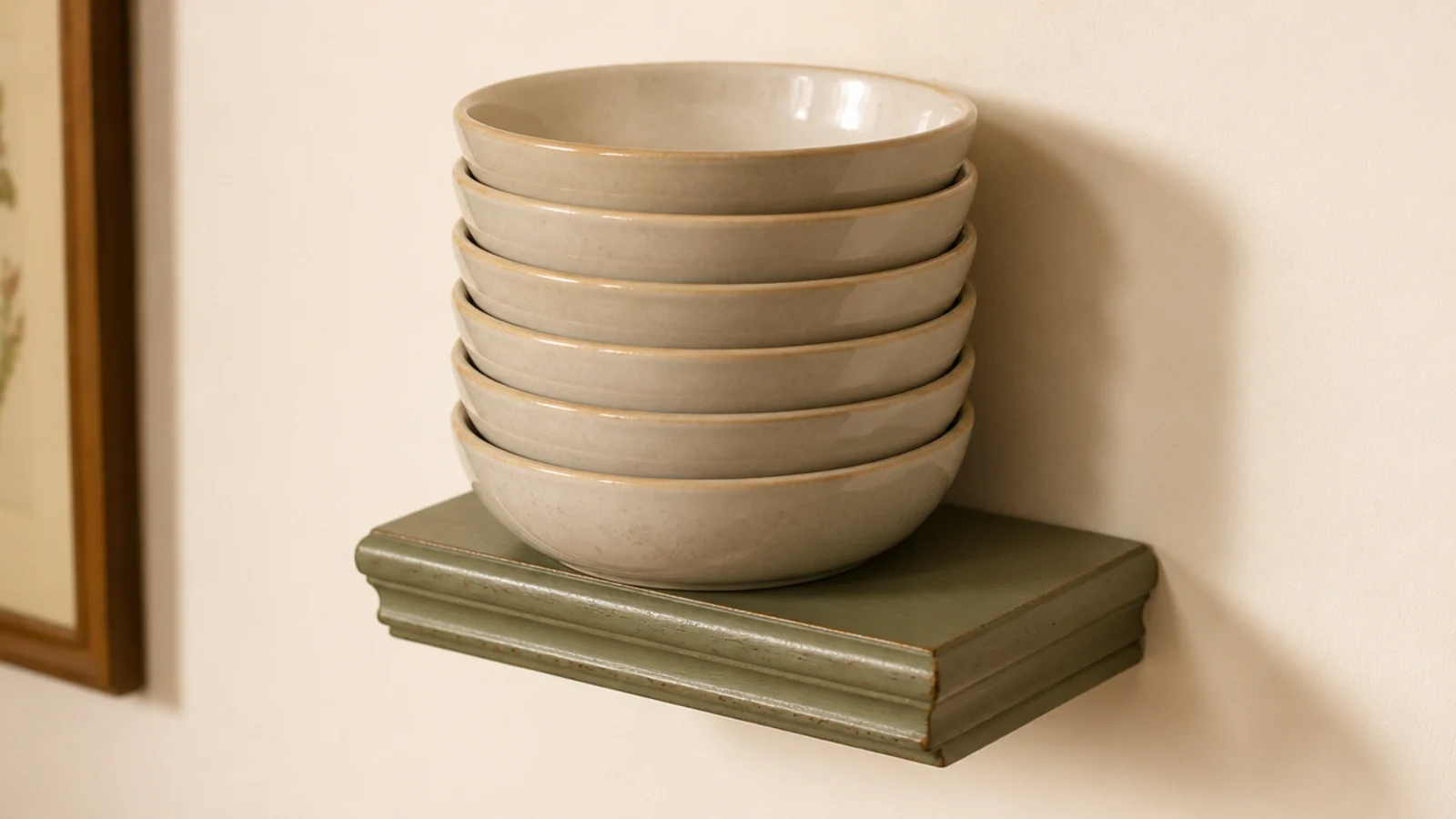
18. A shelf sized to one exact stack of bowls
A shelf cut to the width of a single stack of everyday bowls never becomes a dumping ground, because there is physically no room for anything else.
Cut it 2 inches wider than the stack, mount it at the height you reach naturally, and it stays right.
19. A wall track system with movable shelves
Slotted wall tracks with hooked brackets let you move a shelf in ten seconds when what you store changes, which in a small kitchen it constantly does.
Two tracks fixed into studs carry 60 pounds or more across three shelves. Choose a slim track profile in black or the wall color.
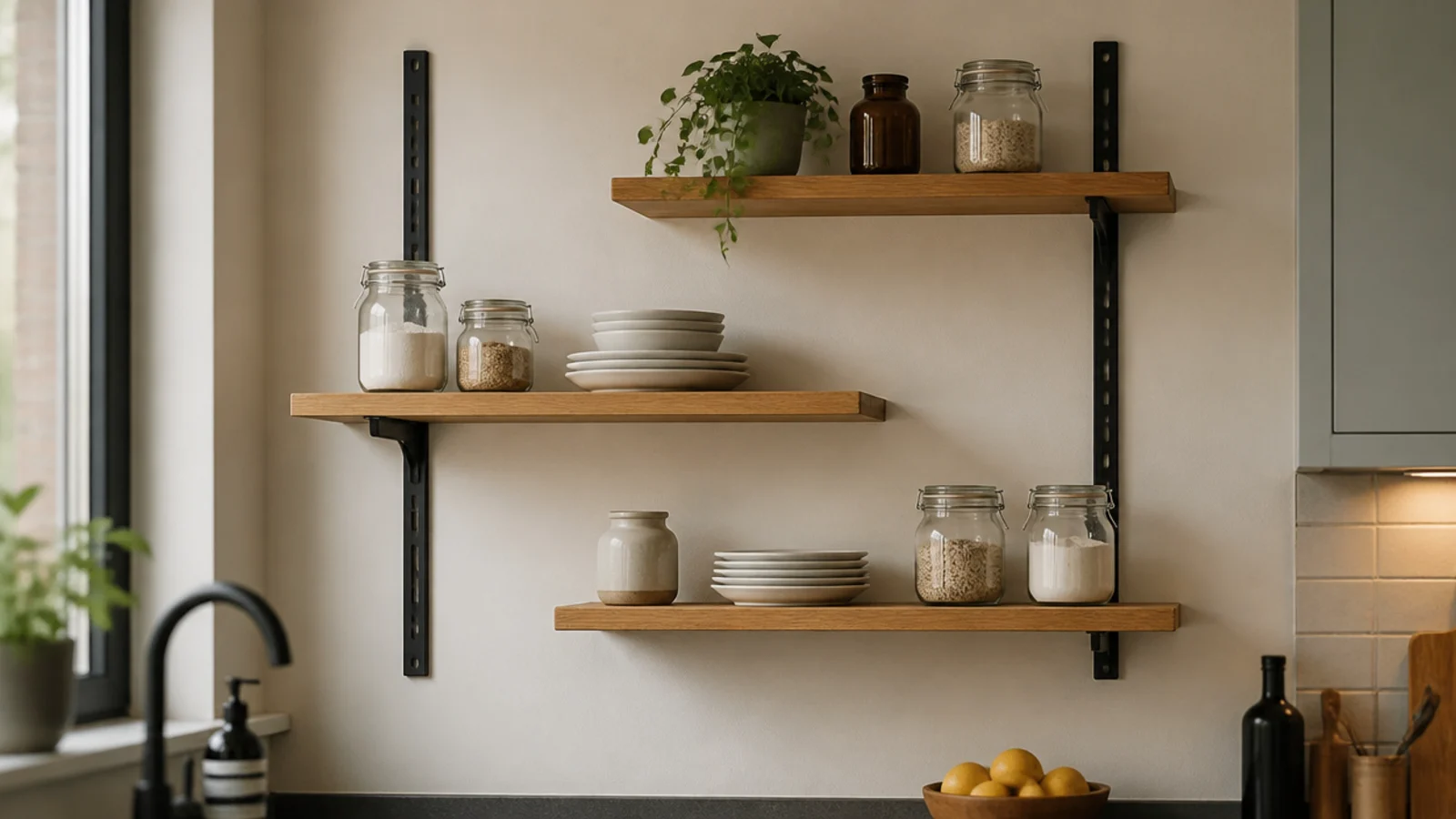
20. A half-depth shelf under the upper cabinets
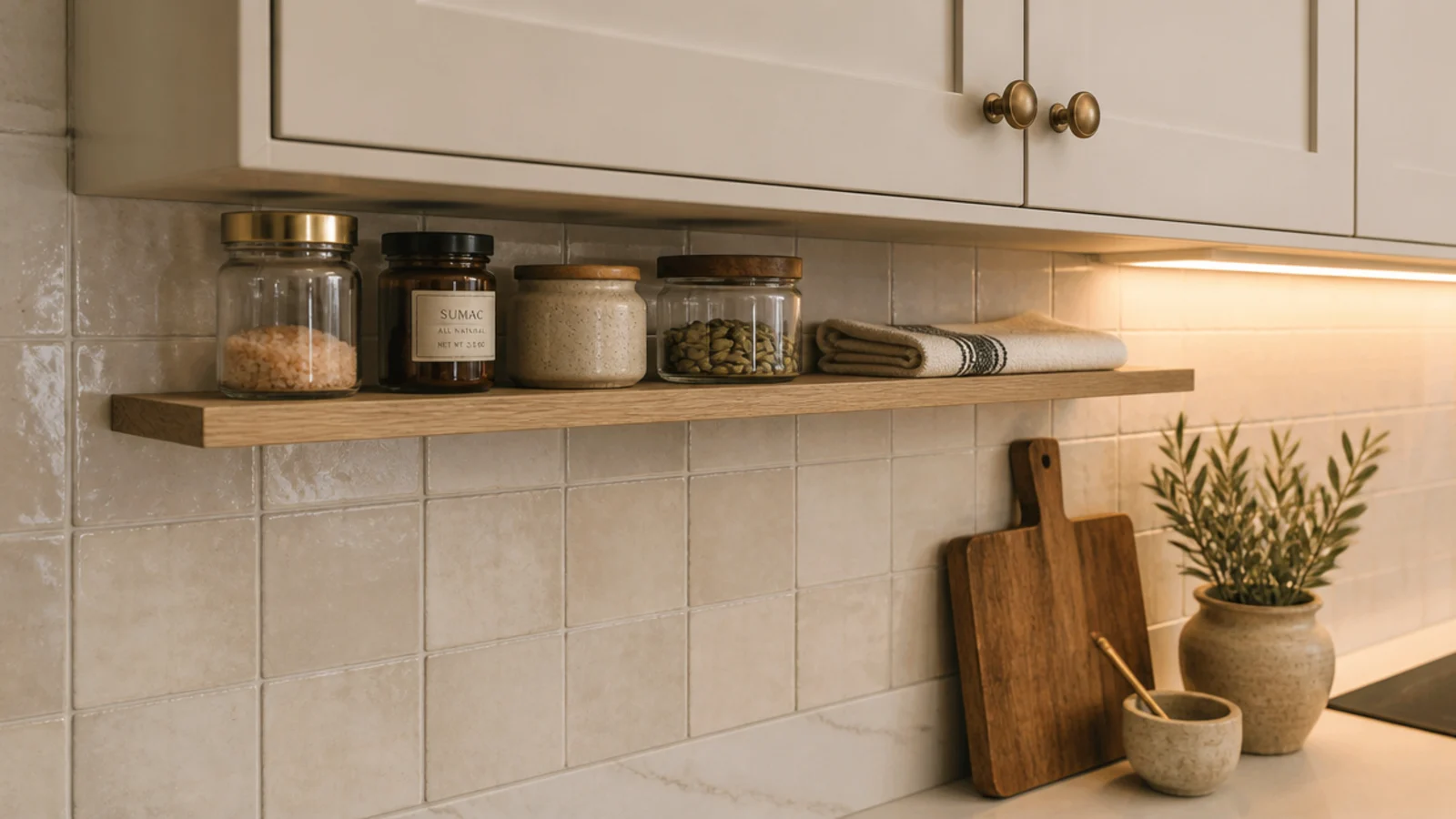
The gap between the underside of an upper cabinet and the counter is a shelf nobody claims. A 4-inch board there holds daily jars and a cloth while leaving the counter workable.
Mount it to the cabinet underside rather than the wall for the cleanest result. Keep it toward the back so you still have a full depth of usable counter in front.
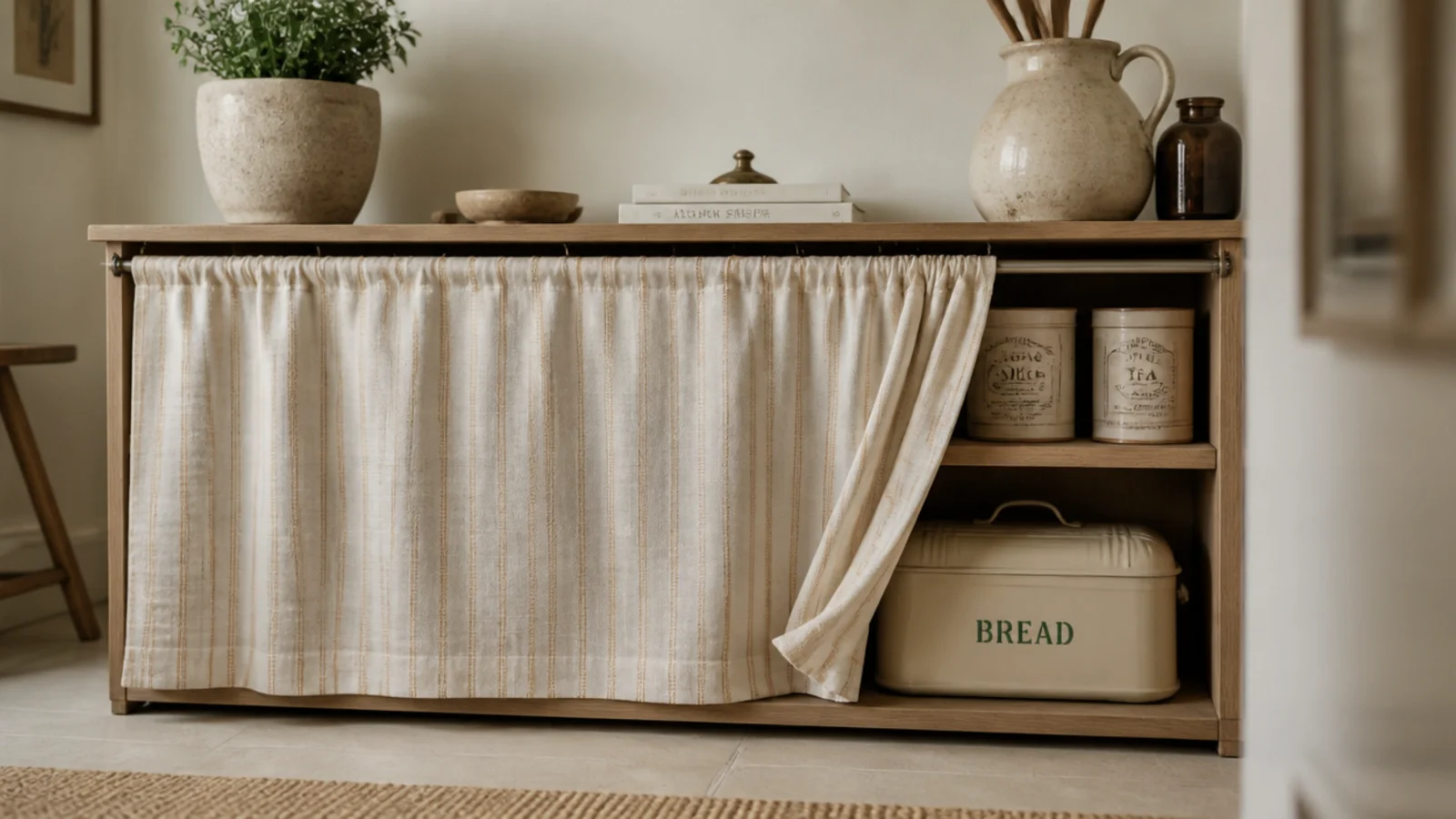
21. A linen curtain across a working shelf
Not every shelf needs to look good. A slim rod and a linen curtain across a low shelf hides bulk packets, tins and the bread bin for around $15.
Use a natural linen in a warm sand or a soft stripe, hemmed to finish half an inch above the shelf below.
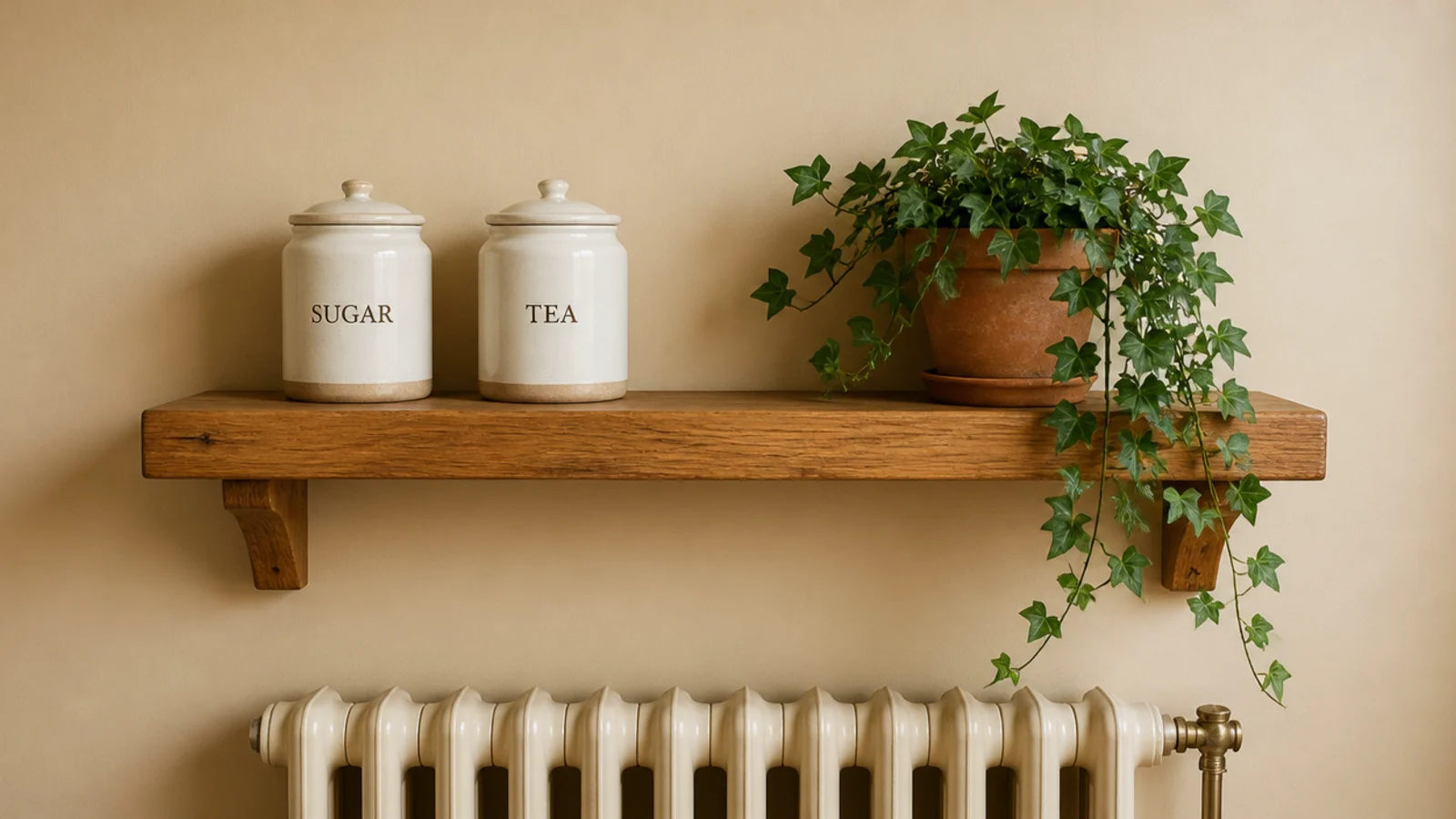
22. A shelf above the radiator with clearance
A kitchen radiator is an eyesore that cannot move, and a shelf above it turns it into a plinth.
Leave at least 4 inches of clear air between the radiator top and the shelf underside, and use solid wood or metal rather than anything laminated, since repeated heat cycles lift laminate edges. Trailing ivy and ceramics cope; candles do not.
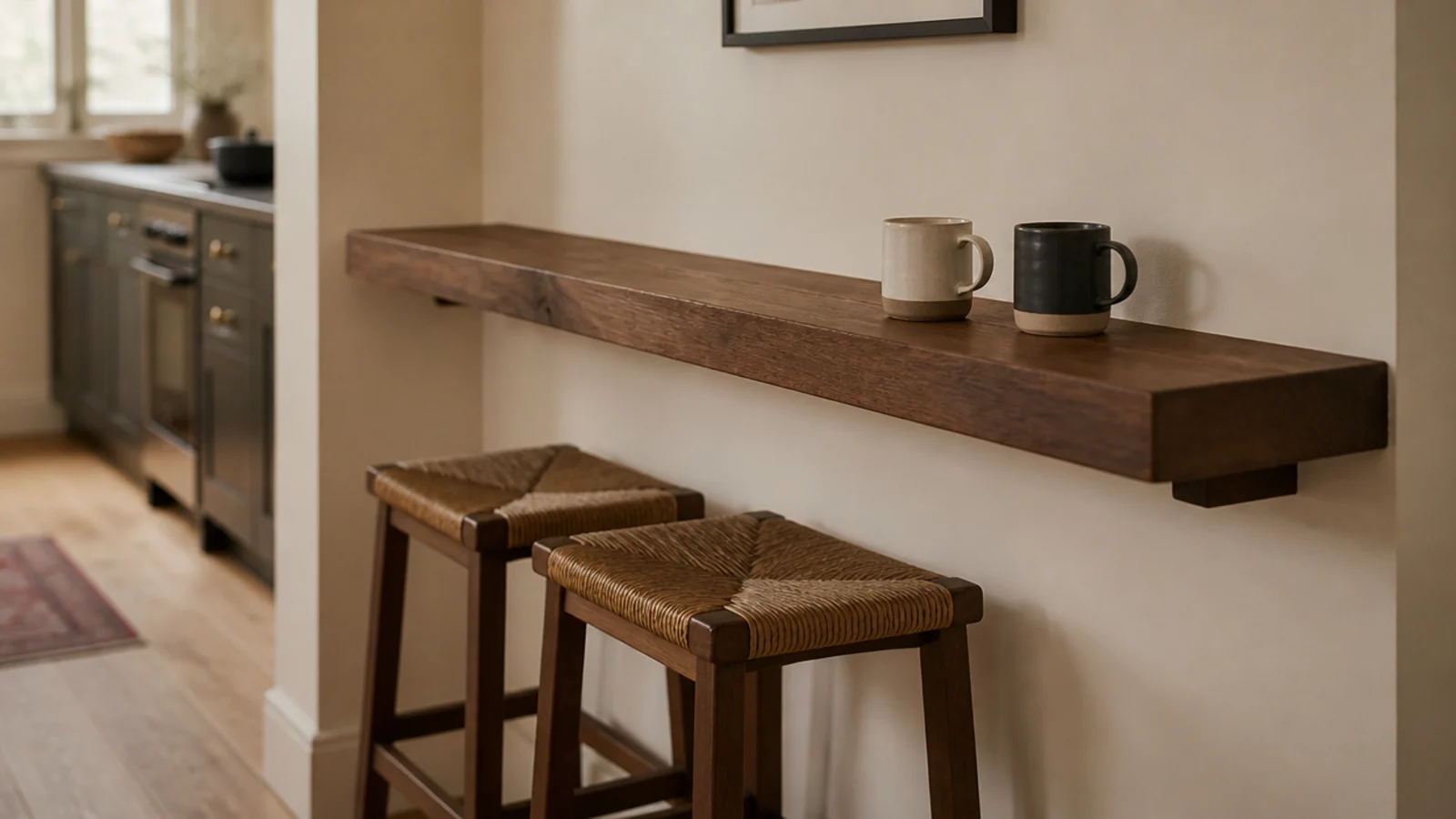
23. A shelf that becomes a breakfast bar
A deep board fixed at 42 inches along a blank wall gives you seating for two without a table taking floor.
Twelve to 14 inches deep is enough to eat from. Use folding or heavy steel brackets into studs, allow 24 inches of width per person, and choose backless stools that tuck fully underneath.
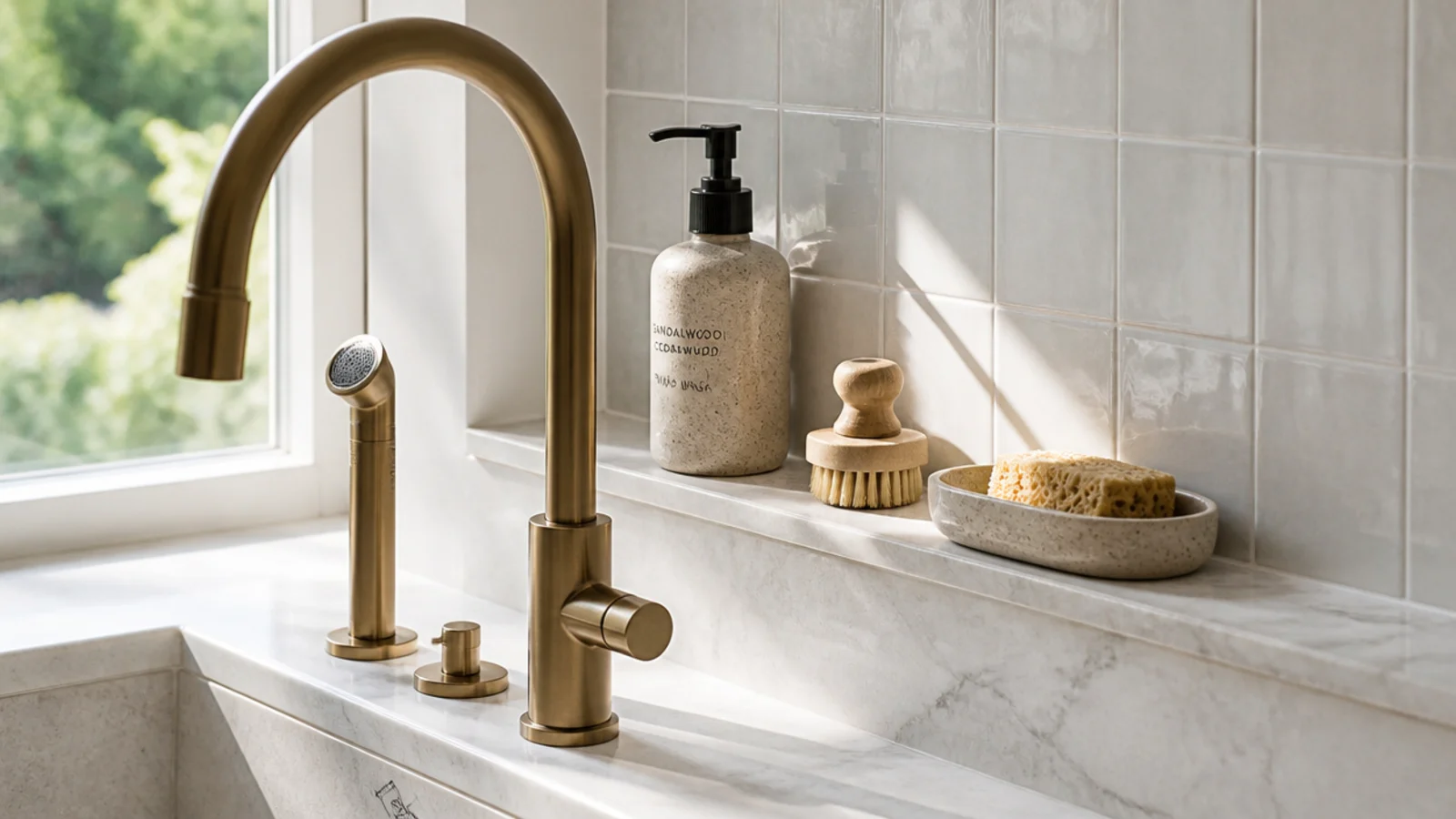
24. A ten-inch-high shelf behind the faucet
A very low ledge running behind the tap holds soap, a brush and a sponge dish and gets all of it off the counter edge where it puddles.
Ten inches above the counter clears most faucet bodies. Three inches deep is plenty, and a sealed or solid surface material matters here — this is the wettest 12 inches in the kitchen.
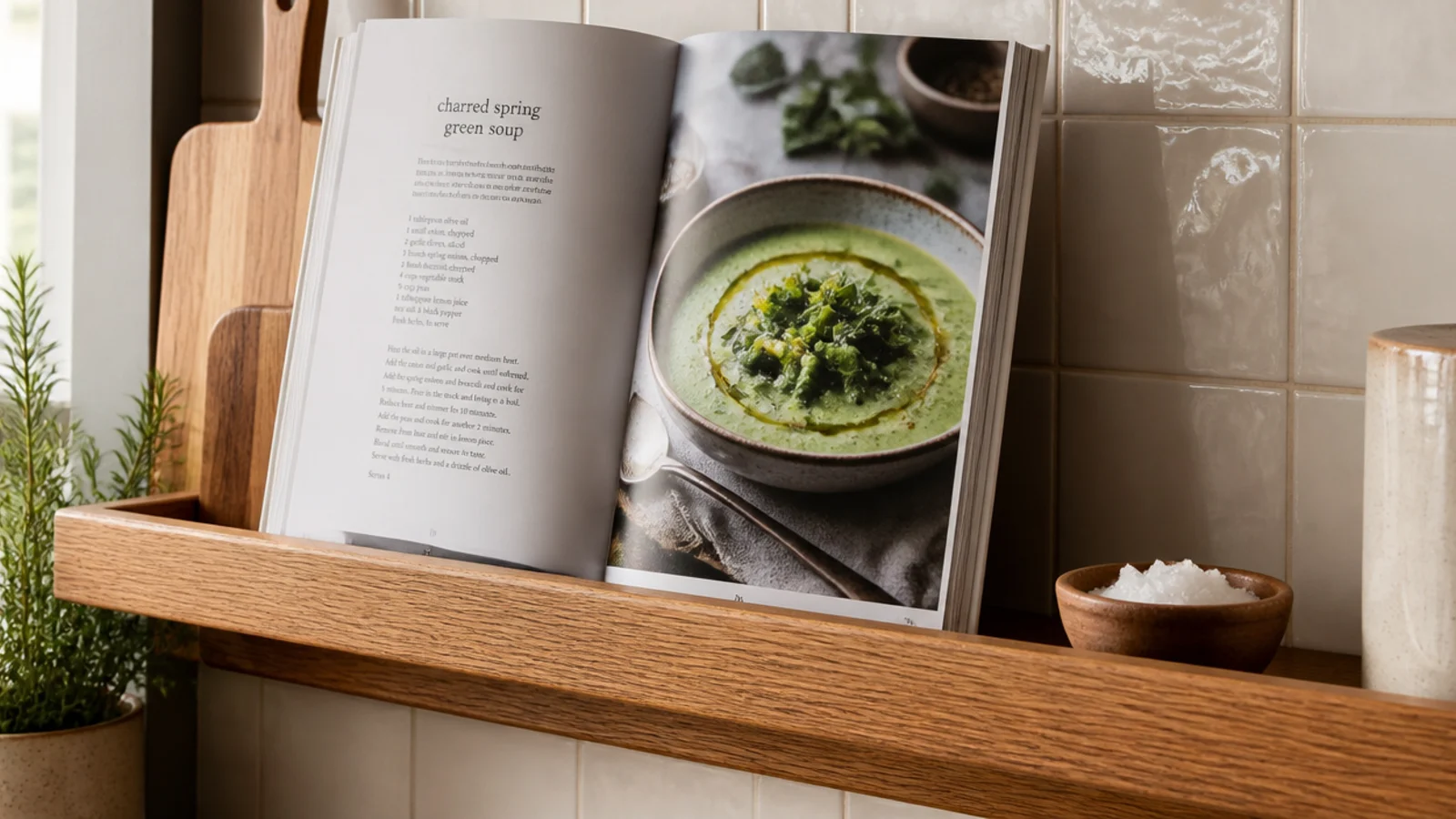
25. A lip that props a cookbook open
A half-inch lip along the front of a shelf turns it into a book rest, which is the one job a small kitchen counter can never spare room for.
Set the shelf at 52 inches so an open book sits at reading angle from standing height. Keep it well away from the stove, since paper absorbs grease permanently and cannot be cleaned.
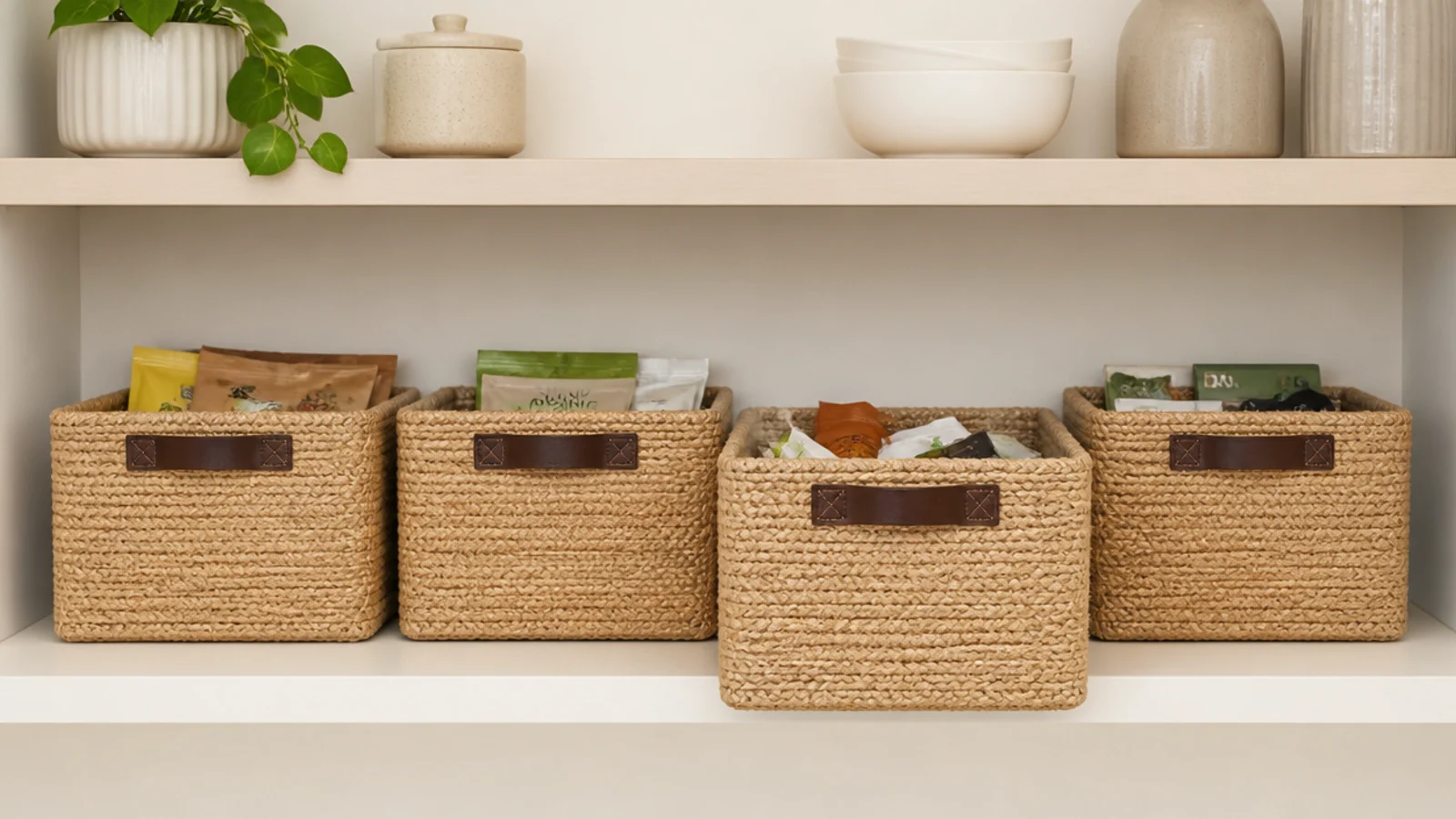
26. Baskets on a shelf instead of loose jars
Four matching baskets in a row turn a shelf of miscellaneous packets into one calm shape.
Measure the shelf and divide by the basket width so they sit edge to edge with no awkward gap. Jute and seagrass at $12 to $20 each; three or four matching beats six mismatched.
27. A shelf painted the wall color to disappear
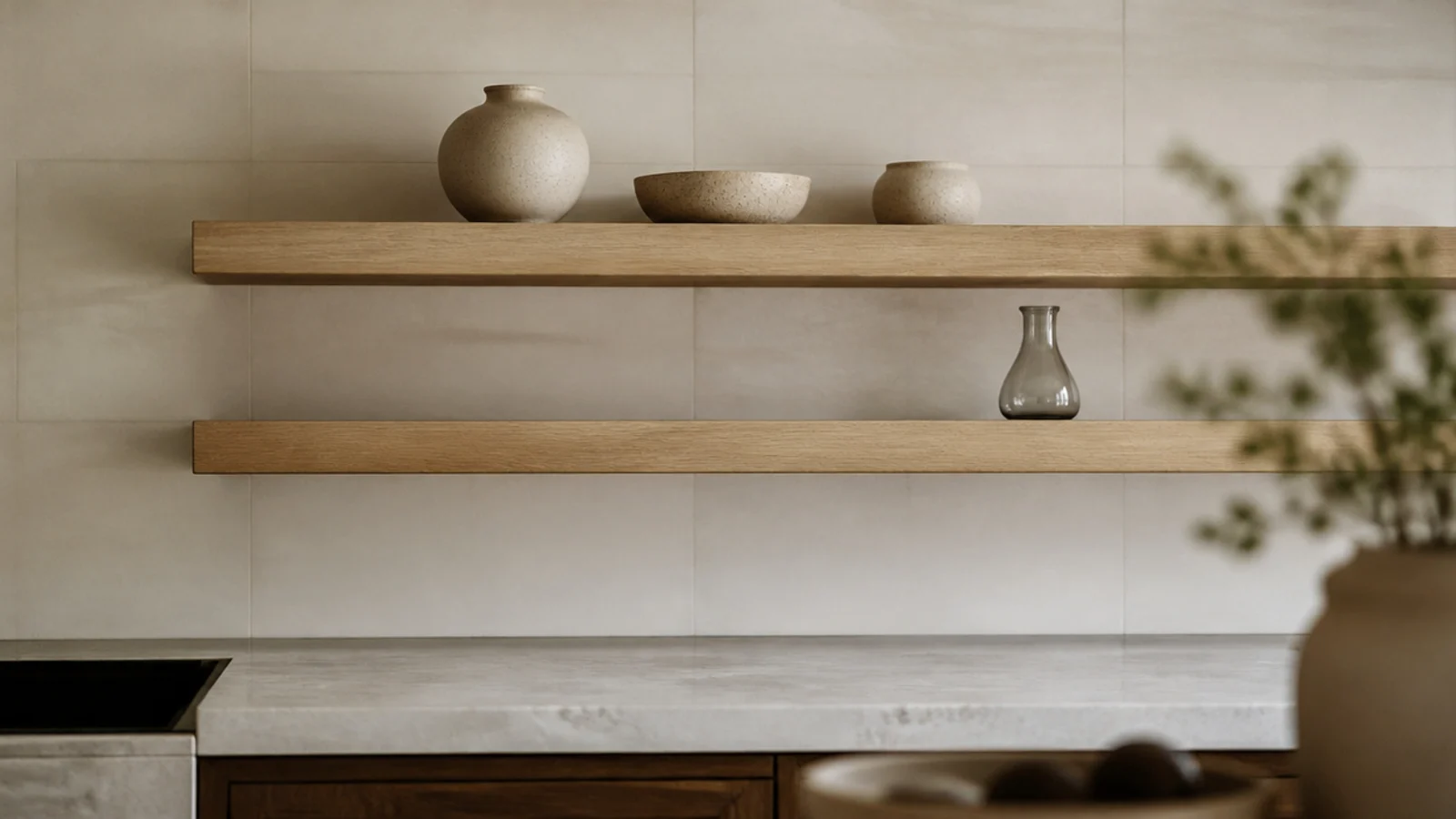
Painting a shelf the exact wall shade makes it recede, so what you see is the objects rather than the board. In a small room that is worth more than any material upgrade.
Use a cabinet-grade eggshell rather than wall emulsion, which marks the first time a plate slides. One sample pot covers a whole run, and it takes an afternoon.

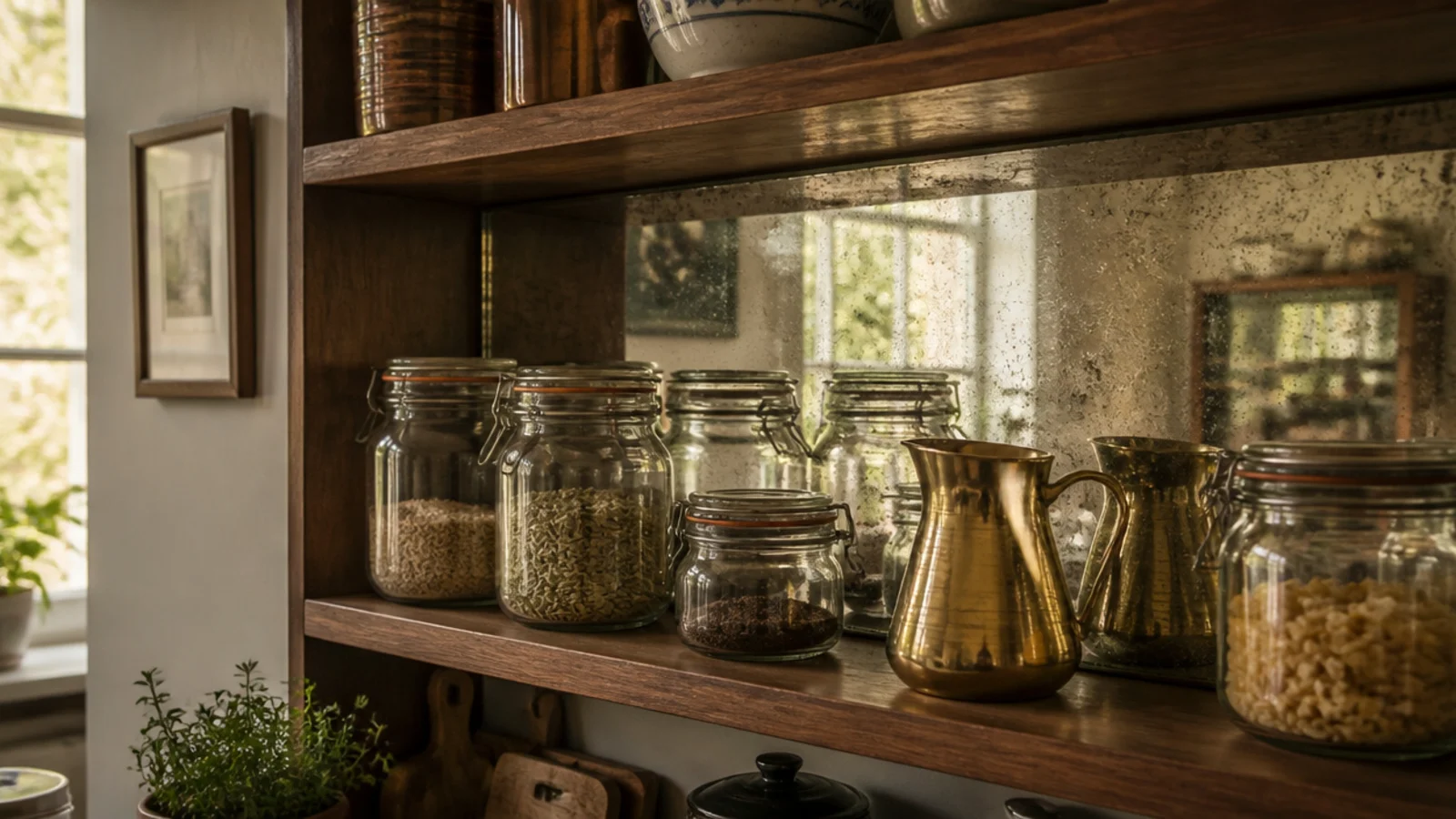
28. A mirrored panel behind a shelf
An antiqued mirror panel behind open shelving bounces daylight back into a dark galley and makes the wall read twice as deep.
Use toughened antique-effect glass rather than plain mirror, which shows every splash. Keep it away from the stove — mirror behind a burner is a cleaning job you will regret weekly.
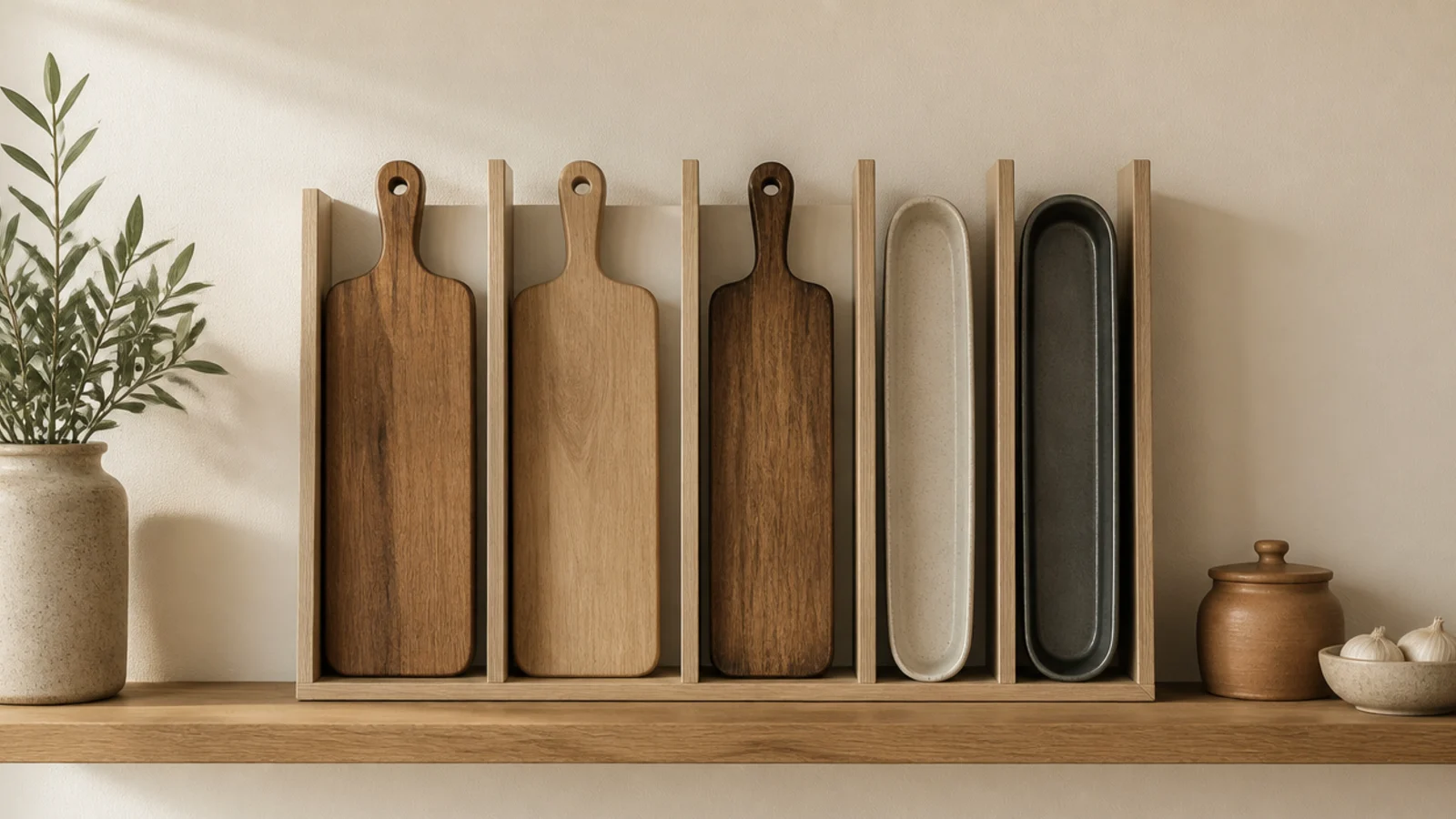
29. A vertical slot for boards and trays
Chopping boards and trays lying flat waste a whole shelf. Two slim dividers turn 4 inches of shelf into upright storage for five of them.
Standing boards on edge also lets them dry properly, which stops the warping that flat storage causes. Cut the dividers from the same board so the finish matches, and space the slots an inch apart.
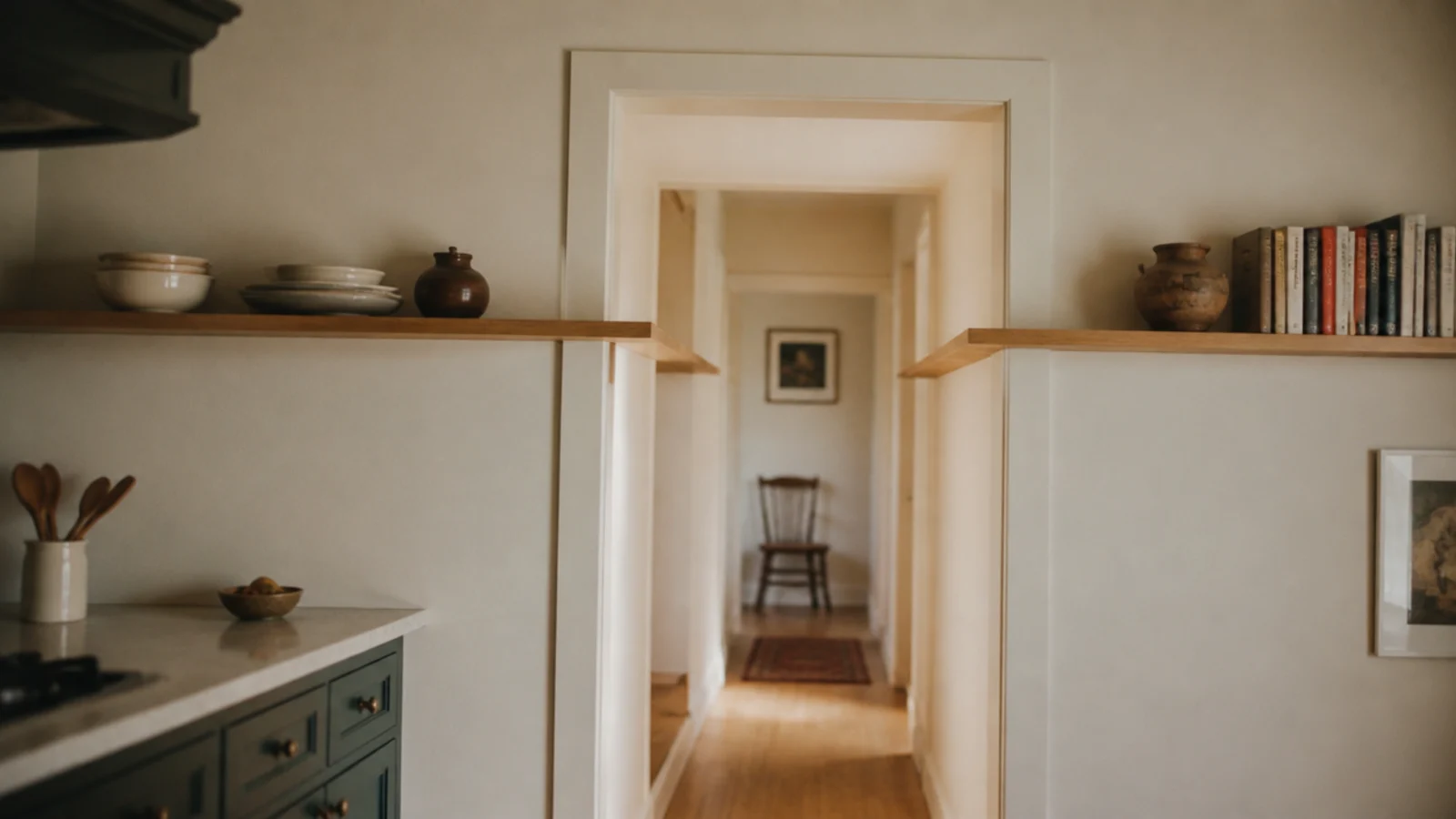
30. A shelf run that continues into the hallway
Carrying a shelf line through a doorway at the same height makes two small rooms read as one larger space, and it costs one extra board.
Keep the height, depth and finish identical on both sides — the continuity is visual, not functional.
Mistakes to Skip
- Choosing ten-inch shelves in a galley under 40 inches wide. You will clip the front edge with your shoulder within a week and keep clipping it for years.
- Spacing every tier the same because it looks neat empty. Nothing you own fits a uniform 10-inch gap, and the shelves end up holding small objects by default.
- Filling a small kitchen wall edge to edge because the space is tight. A crammed open shelf reads busier than the cabinet it replaced, which defeats the entire point.
Frequently asked questions
How deep should kitchen shelves be in a small kitchen?
Six inches is the working number for a galley or any run you pass within arm's reach. It takes dinner plates, mugs, jars and small bowls, which is most of what a kitchen shelf actually holds. Ten to twelve inches only makes sense above a counter you never walk along, since a deep shelf in a narrow room shades the work surface and catches your shoulder.
Do open shelves make a small kitchen look bigger?
They do, because your eye reads the wall behind them rather than stopping at a cabinet door. The effect only holds if the shelves stay edited. A wall of open shelving crammed to every edge reads busier than the cabinets it replaced. Painting the shelves the wall color pushes the effect further for the price of one sample pot.
How high should the first shelf sit above a small counter?
Eighteen inches from the countertop to the underside clears a stand mixer and most appliances, with the second shelf 12 to 14 inches above that. In a small kitchen where nothing tall lives on that stretch, drop the first to 14 inches and you gain useful height for a third shelf above.
What should I put on open shelves in a tiny kitchen?
Only things you use weekly. That single rule is what keeps open shelving in a small kitchen looking lived-in rather than neglected, because constant use keeps it clean. Everything within about 4 feet of the stove picks up a grease film, so that zone belongs to plates, mugs and cooking oils, not to decorative pieces.
Can I put shelves right up to the ceiling in a small kitchen?
Yes, and in a small kitchen you usually should. Running shelves the full height draws the eye up and uses the 18 to 24 inches most kitchens waste above the cabinets. Keep everyday items below 60 inches, store the twice-a-year things above, and keep a step stool somewhere you can actually reach it.
How much weight can a small kitchen shelf hold?
It depends on the fixing, not the shelf. A lag screw into a stud carries 40 to 60 pounds, a toggle bolt in half-inch drywall carries 25 to 35, and the plastic plugs supplied in the box carry roughly 10. A stack of ten dinner plates is around 12 pounds, so dish shelves want a stud and three-quarter-inch stock minimum.
Start with one 6-inch shelf above the counter you use most and live with it for a month before adding a second — small kitchens punish guesses. For more tight-layout thinking see small kitchen shelf ideas, for the open-shelving trade-offs see open kitchen shelves, and for no-drill versions in a rental, floating shelves in a small space covers the same ground. Save the pin before you measure.
Want more like this? Browse all 15 kitchen shelf ideas guides — they all use the same measurements and budget tiers.
Pin it for later
Save this to your Kitchen Shelf Ideas board
Pin it now so it is waiting for you when the tape measure comes out — and so the next person hunting for this idea can find it too.
Save this pinKeep going
More ideas worth saving while you have the tape measure out.