Kitchen Shelf Ideas · UGC
15 Kitchen Shelf Mistakes I Made and Fixed

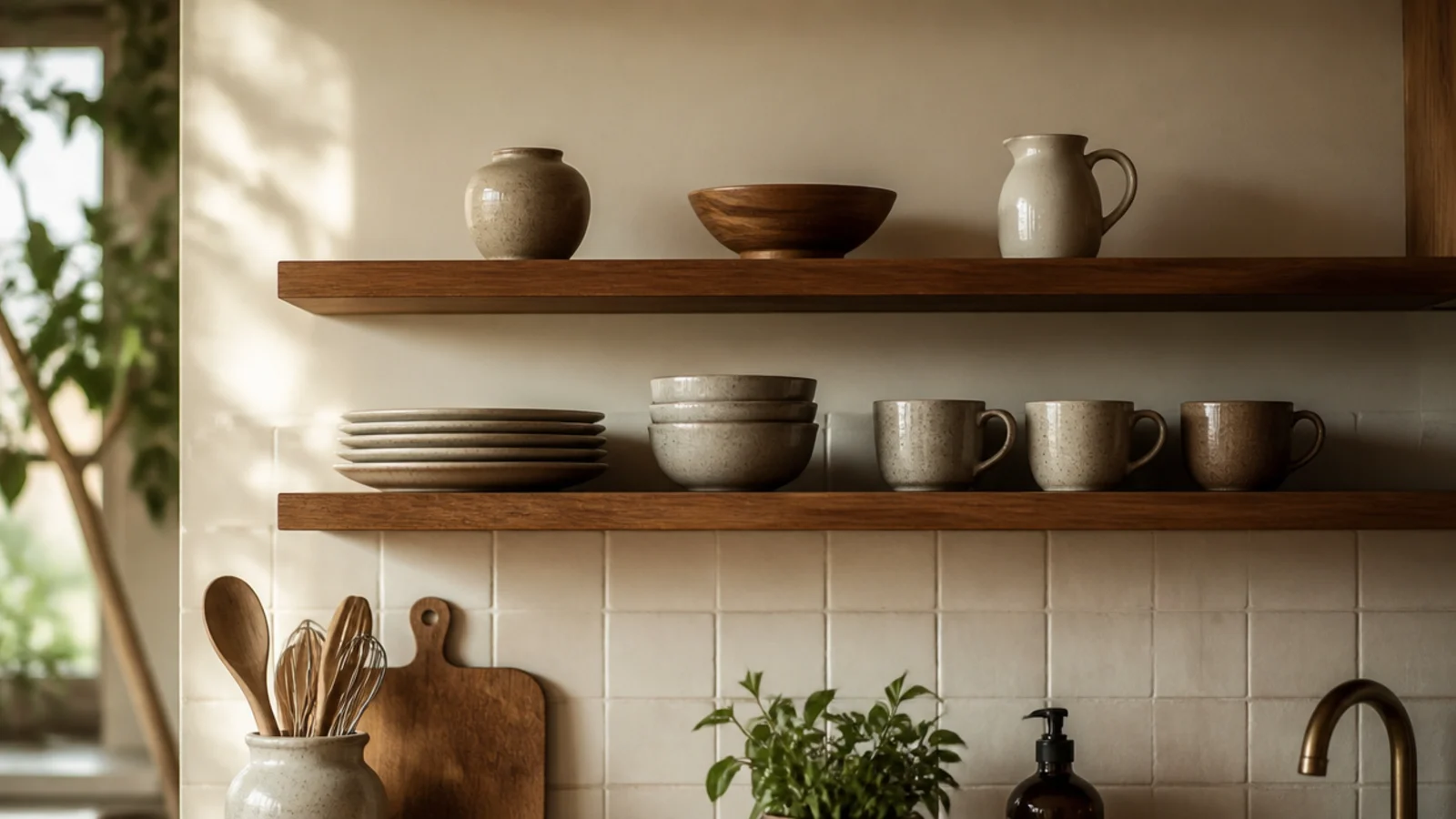
Open shelving mistakes cost me a full set of plates, one cupped oak board and about six months of wiping something that should never have gone near a stove. I have lived with open shelves in three kitchens now — a rental galley, a 1930s house with plaster that crumbled if you looked at it, and the kitchen I cook in today.
The first run went up on a Saturday because I had seen a photograph. Two boards, eight brackets, and everything I owned that looked good in ceramic. Within a month the shelf nearest the stove had a film on it I could feel with a fingertip. Within a year the board had cupped so badly that a plate would not sit flat on it.
None of that was bad luck. Every one of these fifteen has a specific cause and a specific fix, and most of the fixes cost under $20.
In this guide16 sections — tap to openHide
- 1.I put things up there I only used twice a year
- 2.I finished the boards with clear wax
- 3.I sealed the top face and nothing else
- 4.I used half-inch stock under a stack of plates
- 5.I mounted the first shelf at fourteen inches
- 6.I put the cookbooks beside the stove
- 7.I trusted the plastic plugs in the box
- 8.I made the shelf twelve inches deep in a galley
- 9.I put a wooden shelf right above the range hood
- 10.I spaced the tiers evenly at ten inches
- 11.I filled the shelf with props I never touched
- 12.I mounted the shelf before planning the outlets
- 13.I skipped the front lip and lost a plate
- 14.I lit it with a cool white strip
- 15.I took down every upper cabinet at once
- 16.Open Shelving Mistakes: What I'd Do Differently Now
1. I put things up there I only used twice a year
The tureen. The novelty platter. A cake stand used at birthdays. They looked good the day they went up and then sat there quietly collecting an airborne grease film for eleven months a year, because nobody ever had a reason to pick one up and wash it.
The fix: open shelving only works for things used weekly. That single rule sorted more problems for me than anything else here. Everyday plates near the stove genuinely stay clean, because they cycle through the sink constantly. The twice-a-year pieces went into the cupboard above the fridge, and the shelf stopped needing degreaser.
2. I finished the boards with clear wax
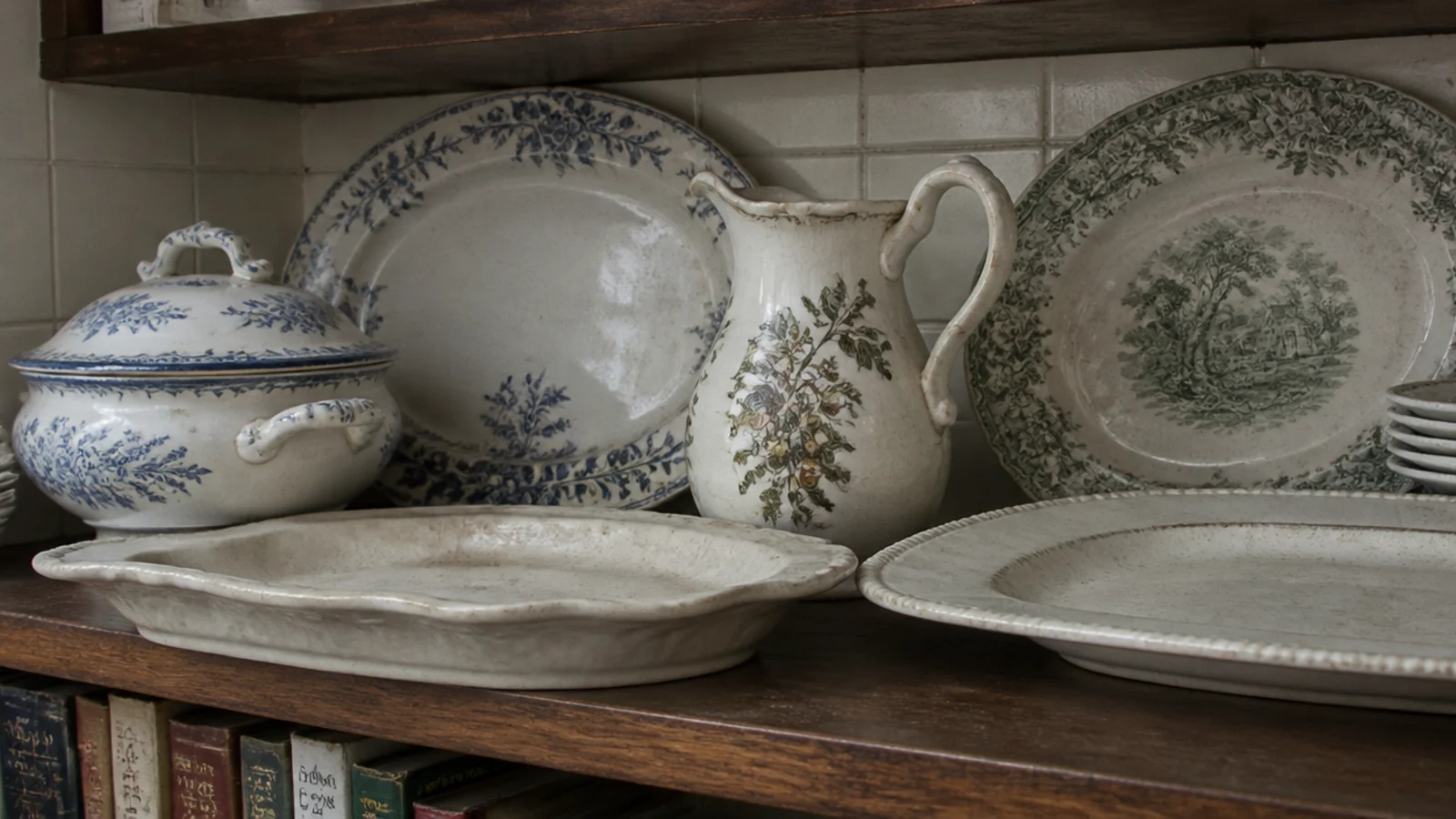
Wax is what everyone reaches for because it smells good and goes on in ten minutes. In a kitchen it is close to useless. It softens near heat, and grease works straight through it into the grain, where you cannot get it out with anything.
The fix: water-based polyurethane or a hardwax oil. Both resist water and grease and wipe down without marking. I stripped and re-finished the surviving boards with three thin coats of water-based poly, sanding lightly between them. Six years later they still wipe clean with a damp cloth.
3. I sealed the top face and nothing else
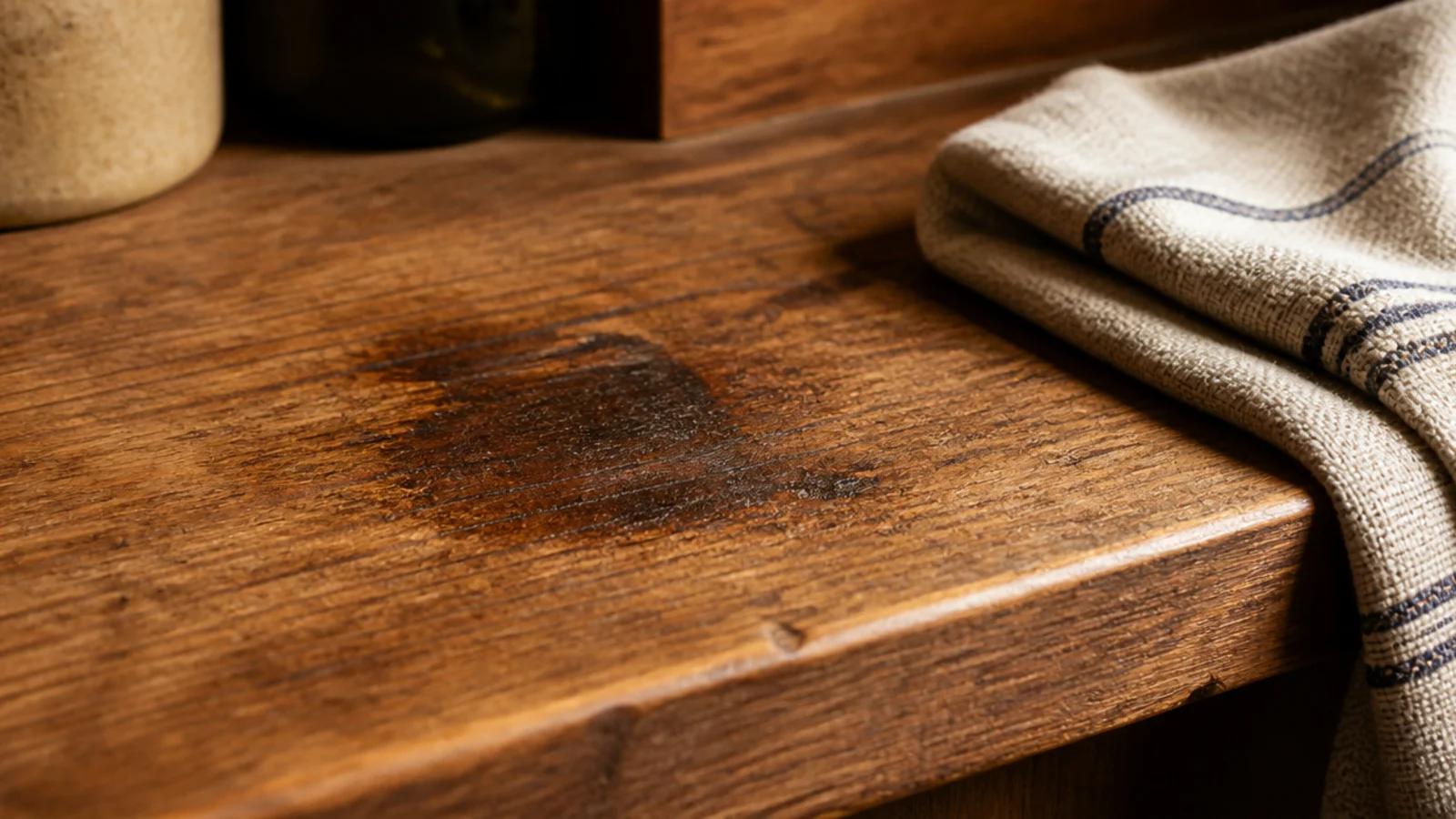
This is the one nobody warns you about. I finished the visible surface beautifully and left the underside and the sawn ends bare, because who looks there.
A kitchen swings from steamy to dry several times a day. A board that can exchange moisture through five faces but not the sixth moves unevenly, and mine cupped toward the wall until a plate rocked on it.
The fix: seal every face before mounting — top, underside, both long edges and both cut ends. It takes one extra hour and it is the difference between a flat shelf and a warped one.
4. I used half-inch stock under a stack of plates
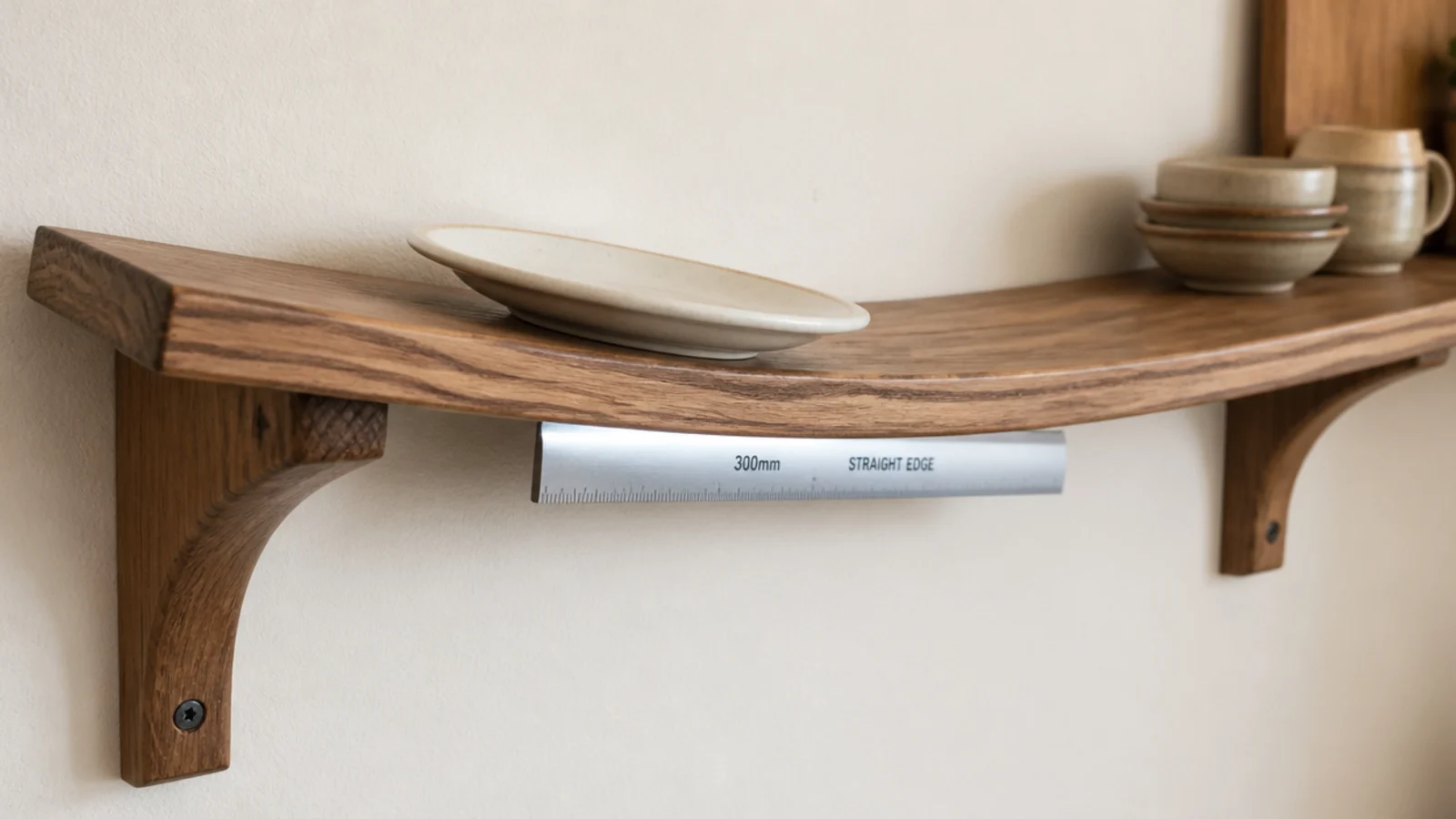
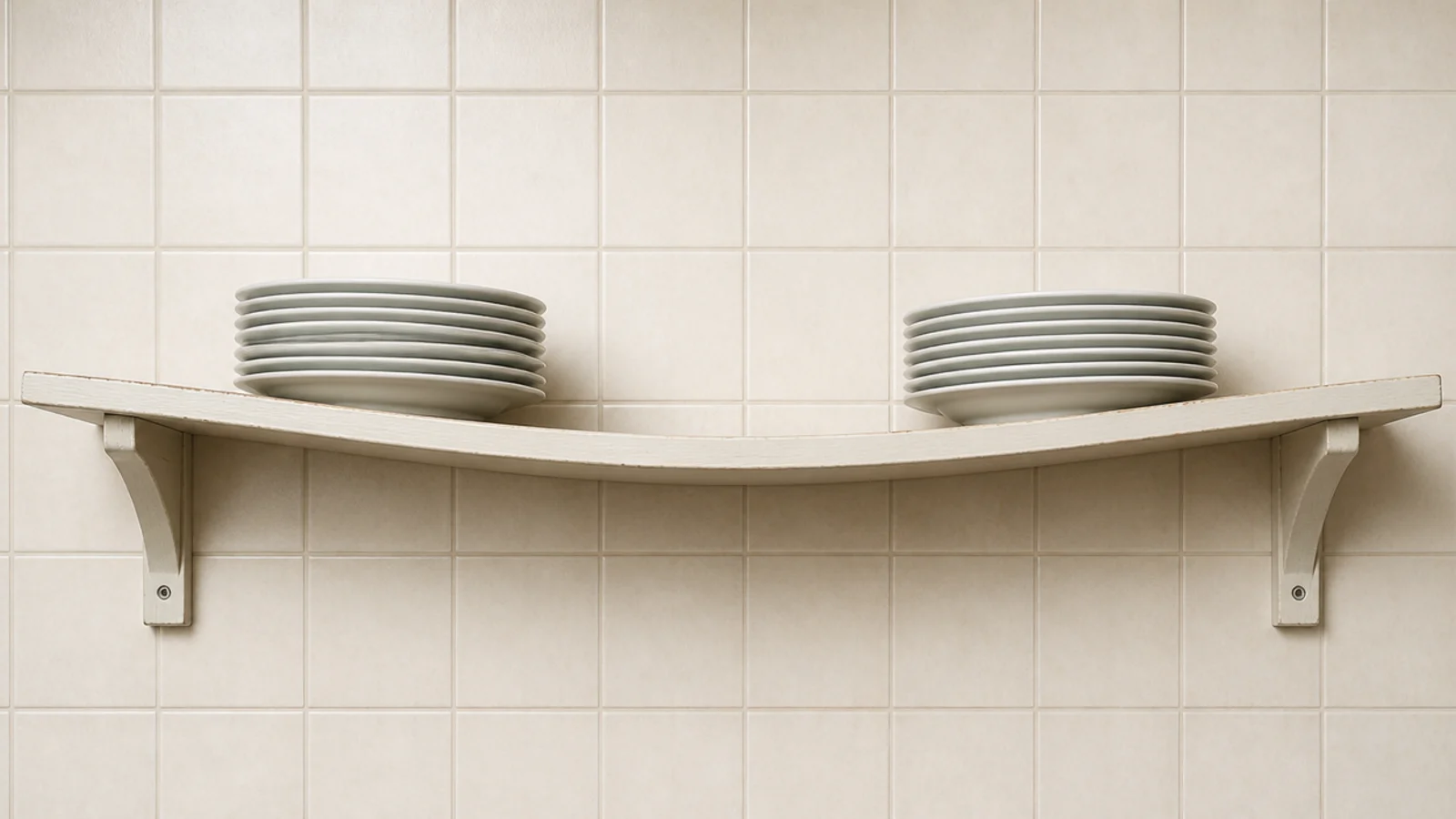
Half-inch board looks elegant and costs less, and I spanned 34 inches with it. A stack of ten dinner plates is about 12 pounds, and two stacks plus bowls is closer to 30. Within four months there was a visible dip in the middle.
The fix: three-quarter-inch stock as an absolute minimum under dishes, with brackets no more than 32 inches apart. For the shelf I already had, I glued and clamped a 1-inch strip under the front edge, which doubled the apparent thickness and stiffened the span for about $6.
5. I mounted the first shelf at fourteen inches
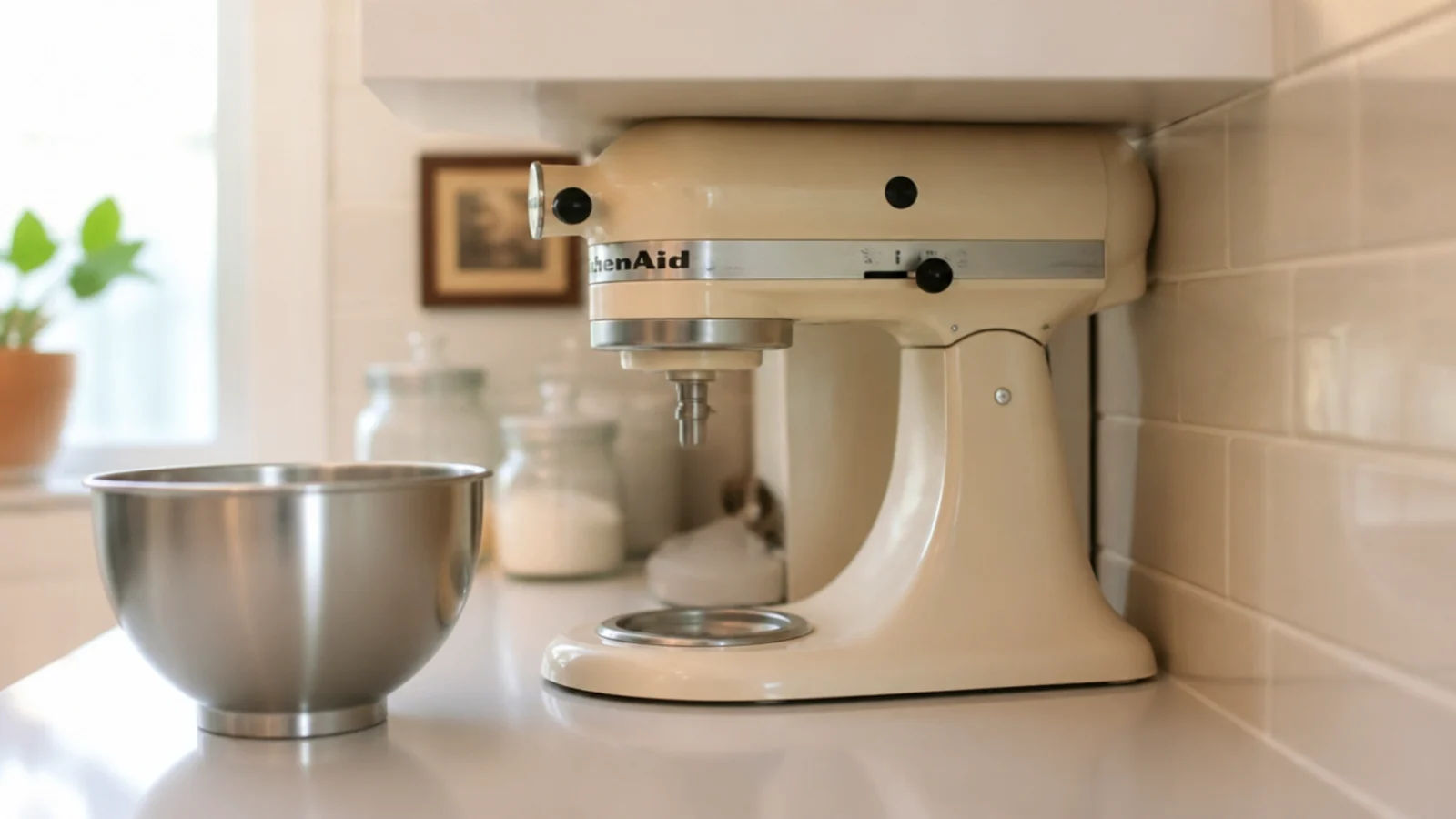
Fourteen inches above the counter looked generous with an empty worktop. Then the stand mixer went back and I discovered that clearing the machine is not the same as clearing the job — I could not lift the bowl out without tipping it sideways.
The fix: 18 inches from the countertop to the underside of the first shelf, which clears a stand mixer and leaves lifting room above it, and 12 to 14 inches to the second. Measure your own tallest counter item first, then add a couple of inches for hands.
6. I put the cookbooks beside the stove
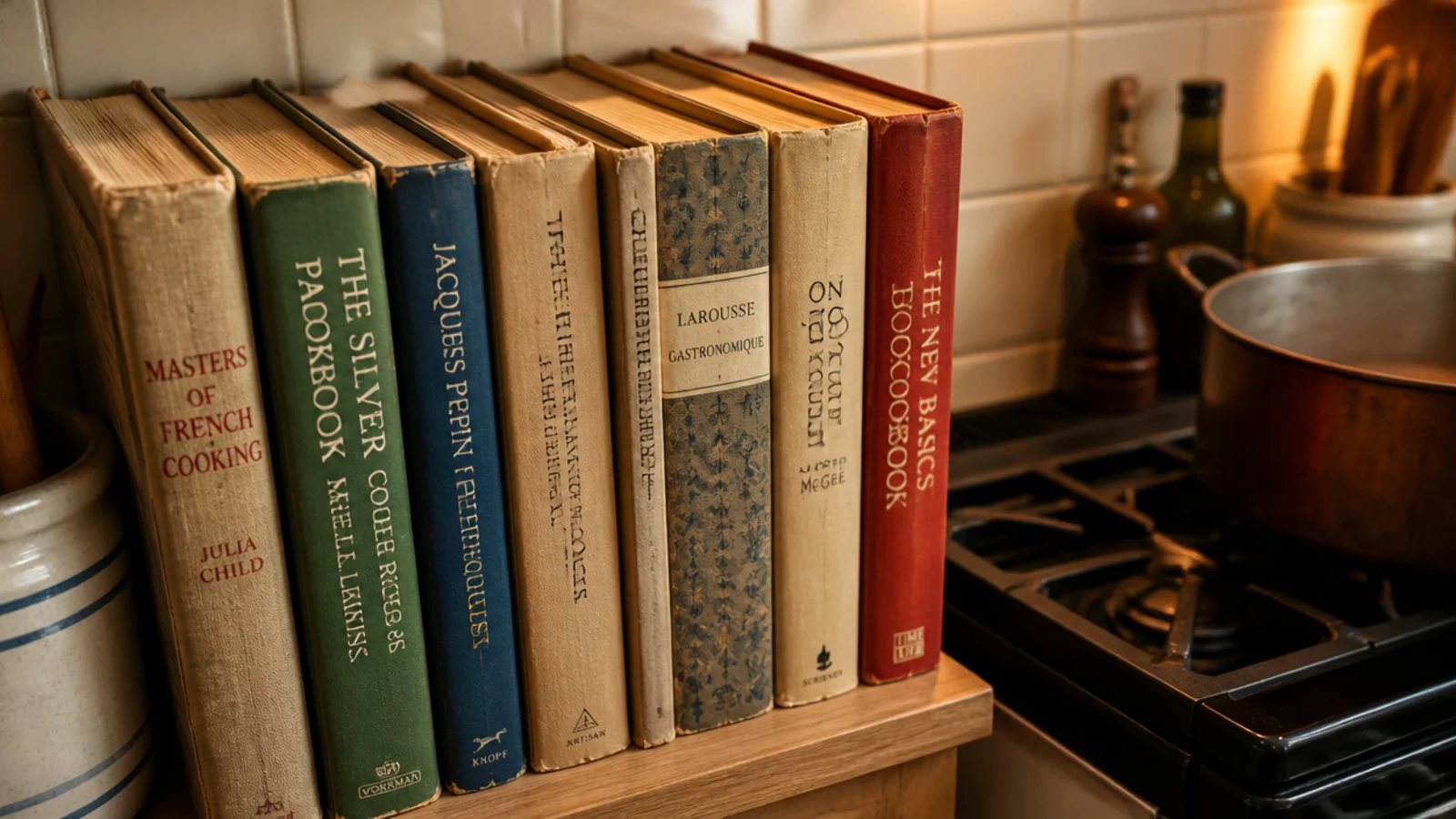
They were the prettiest things I owned and I put them where they would be seen. Paper is the single worst material to place near a burner: it absorbs an airborne grease film permanently, and the page edges yellow in a way that is not reversible.
The fix: cookbooks live at the far end of the run, or on a different wall entirely. Anything within roughly 4 feet of a burner belongs to washable objects. I keep one book at a time on a stand while cooking and put it back afterward.
7. I trusted the plastic plugs in the box
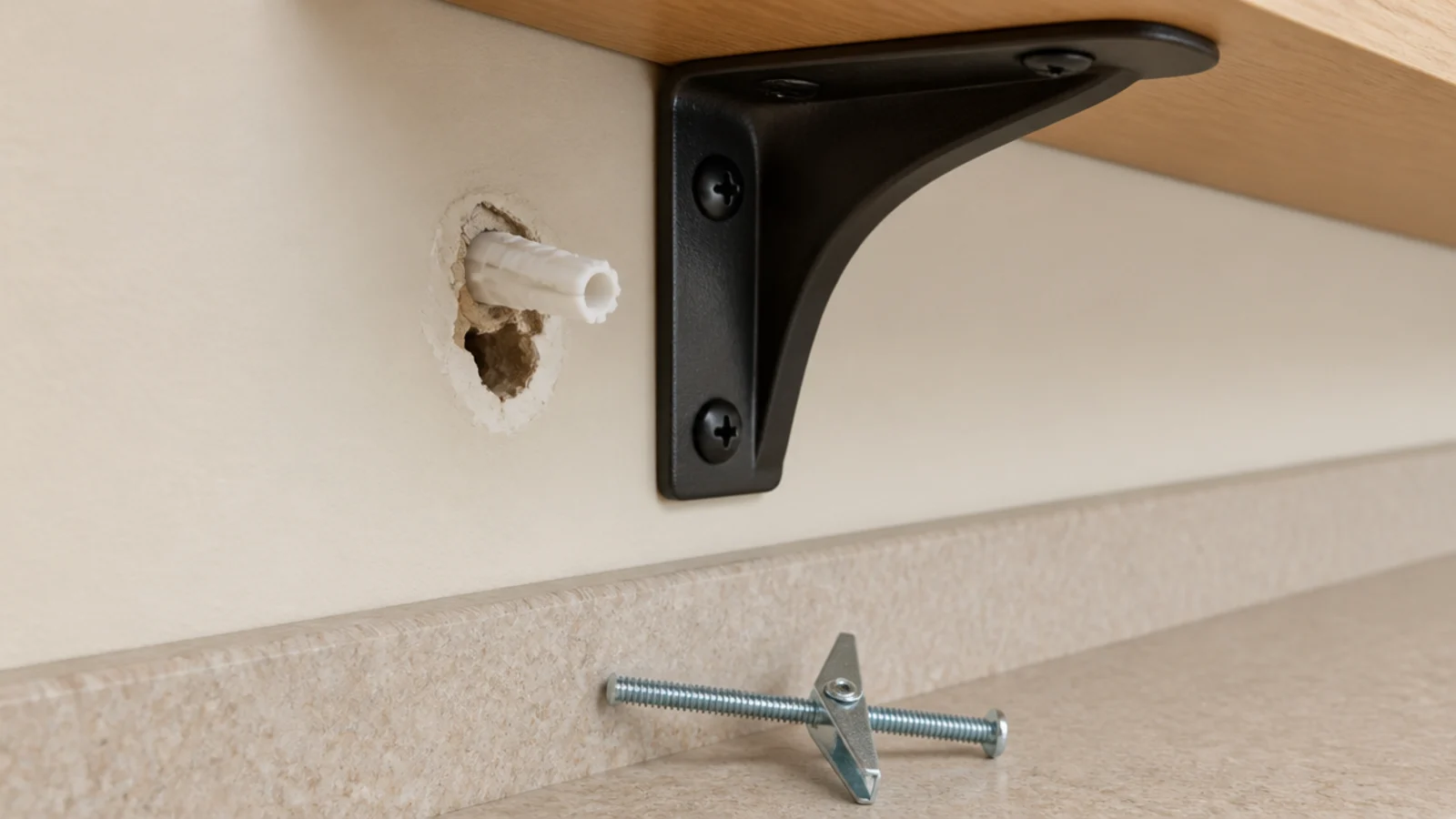
The small white plugs that ship with almost every bracket set are rated at about 10 pounds. My shelf carried a plate stack, two bowls and a heavy crock — comfortably past 30.
They never fail suddenly. They crush the drywall around themselves and creep out over weeks, which is why a shelf looks fine right up until the day it does not.
The fix: toggle bolts, roughly a dollar each, carrying 25 to 35 pounds apiece in half-inch drywall, or a lag screw into a stud for 40 to 60. Anything holding dishes gets at least one bracket in framing.
8. I made the shelf twelve inches deep in a galley
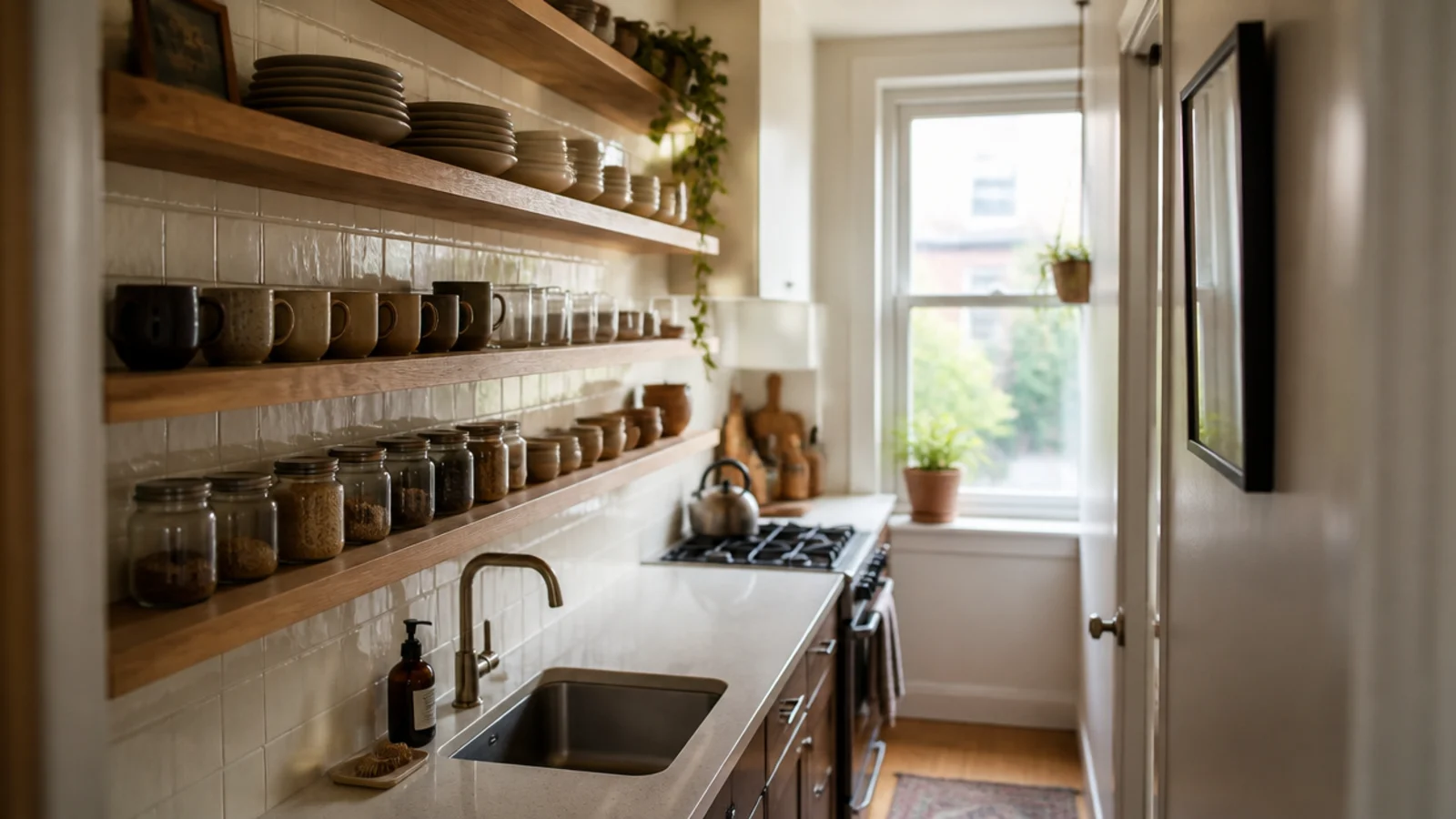
Twelve inches sounded like proper storage. In a galley 38 inches wide, it meant catching the front edge with my shoulder every time I turned from the sink to the stove.
The fix: 6 inches deep in a galley or any run you pass within arm's reach. Six inches holds a dinner plate, a mug, a jar and a small bowl, which is most of what a kitchen shelf carries. I re-cut the board on a table saw and stopped noticing the shelf existed, which is the goal.
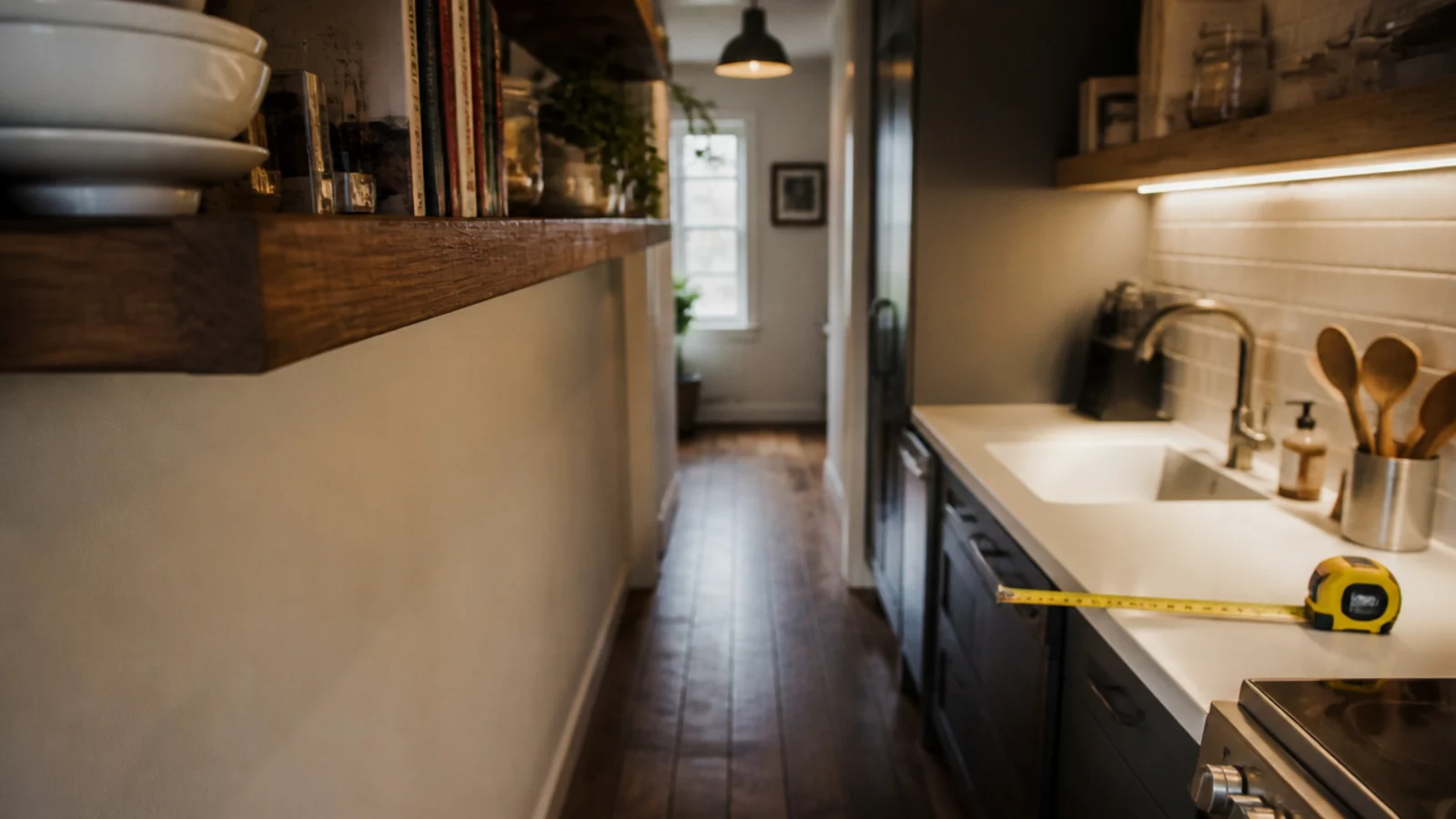
9. I put a wooden shelf right above the range hood
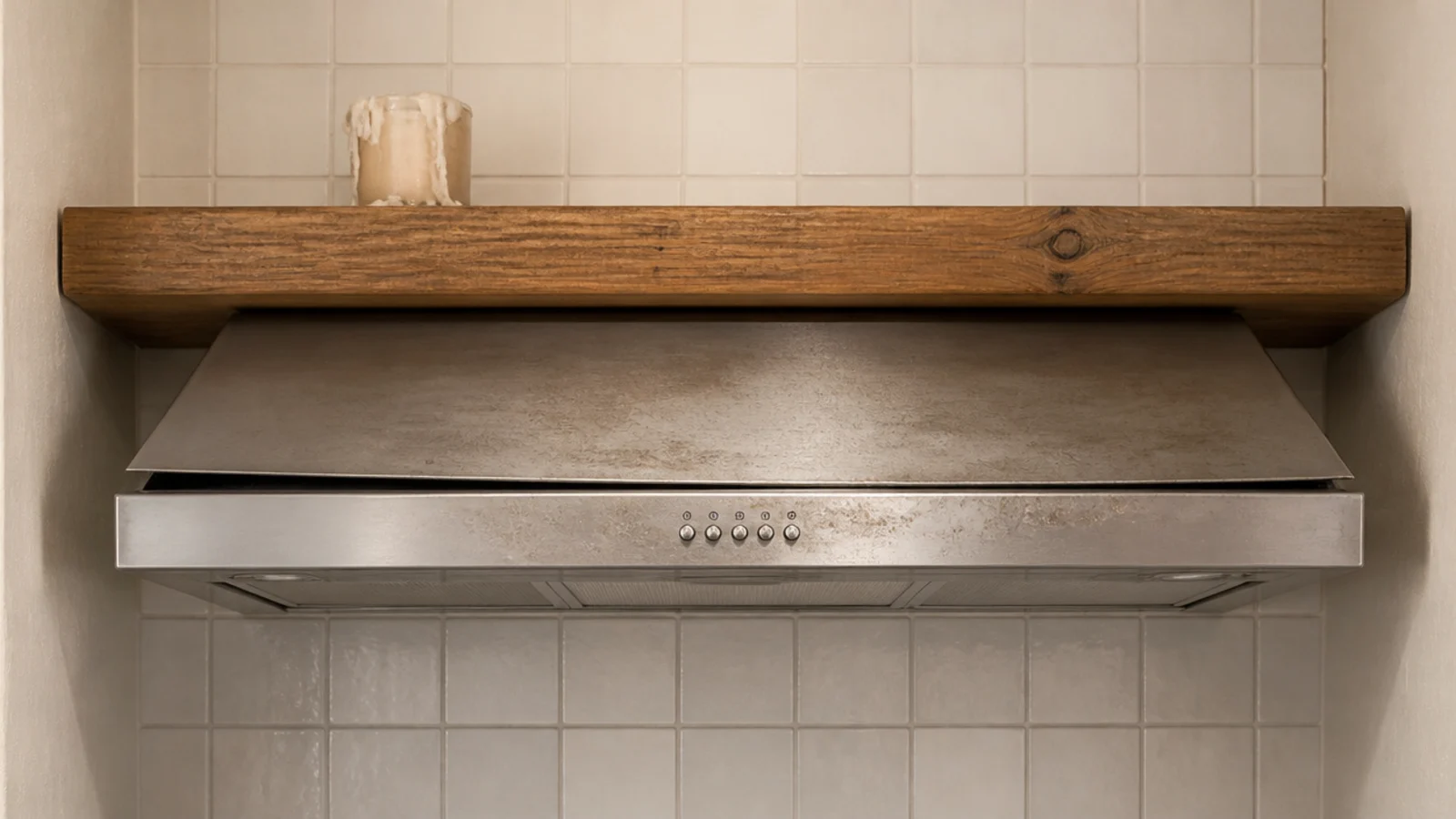
It seemed like reclaimed space. It is actually the harshest spot in the room — heat rises off a hood in a steady column, and everything up there gets a slow bake.
The finish lifted along the front edge in a single winter, and a candle I had left there slumped into a shape I still find funny.
The fix: above a range hood, use ceramic, metal or glass only. No wood, no candles, nothing wax-based. I replaced it with a slim steel shelf holding two ceramic canisters, and I wipe that one more often than any other in the kitchen.
10. I spaced the tiers evenly at ten inches
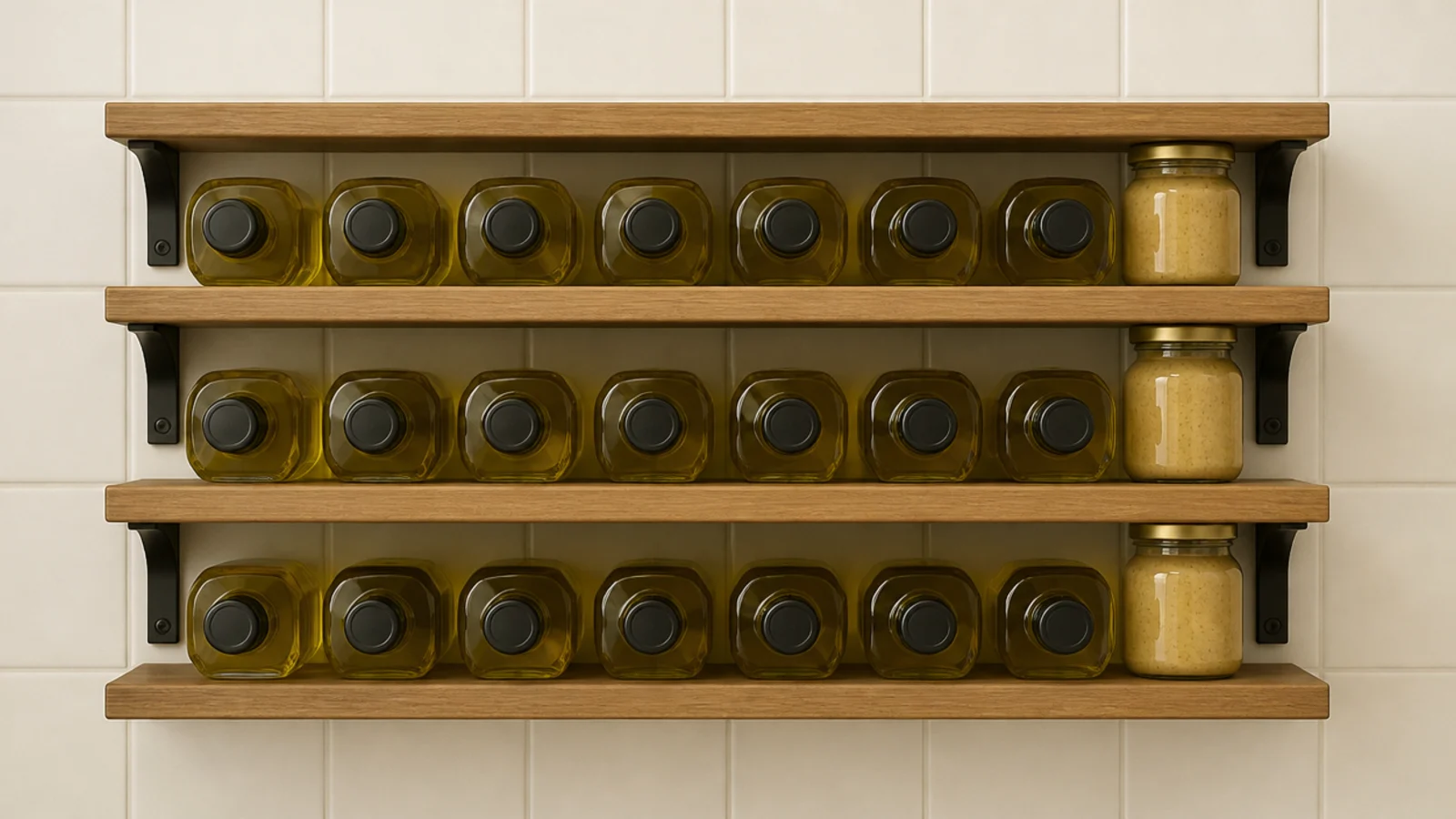
Even spacing looks correct on an empty wall and fits nothing you actually own. Oil bottles went on their sides. Cereal boxes did not fit at all. The shelves quietly filled up with small things by default.
The fix: measure your tallest bottle, your plate stack and your mugs, then space the tiers to those. Mine ended up at 15, 11 and 9 inches, which looks less tidy in a drawing and holds twice as much. Nobody notices uneven spacing once shelves are loaded.
11. I filled the shelf with props I never touched
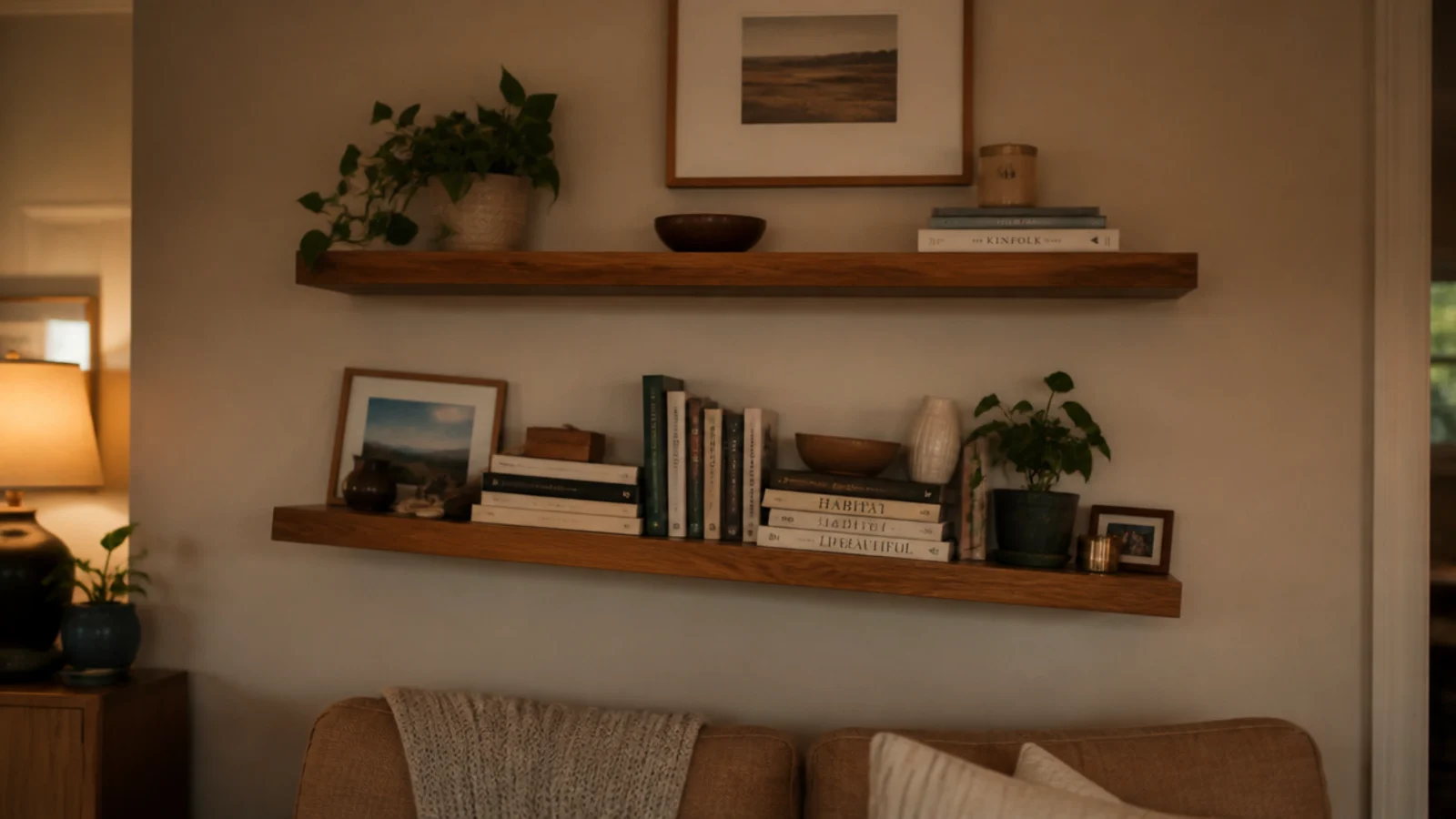
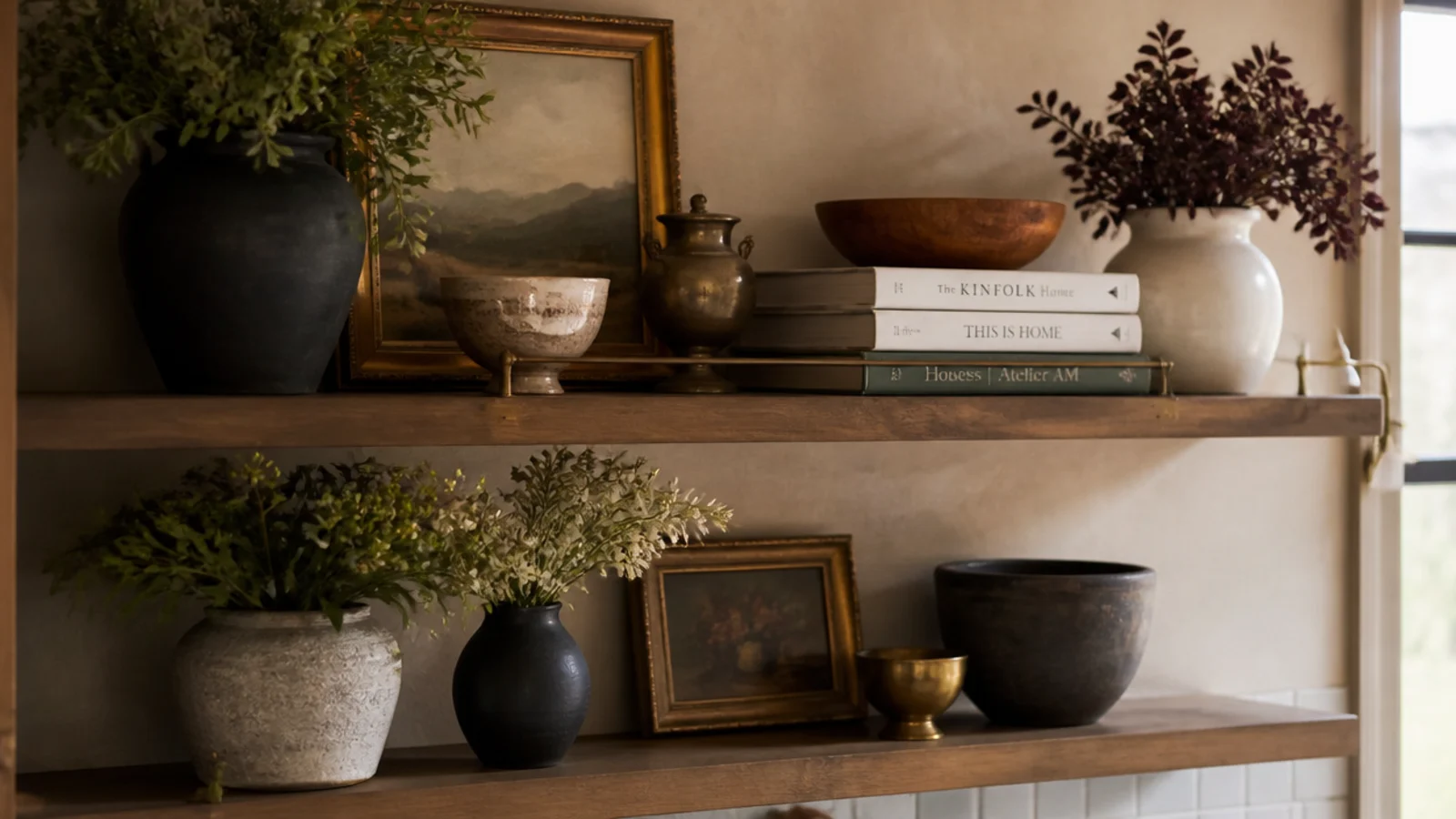
Faux stems, small unused bowls, a stack of books chosen for their spines. It photographed well and it was, functionally, a dust ledge at head height in a room where I cook every day.
The fix: everything on an open shelf should have a job. I now allow myself one purely decorative object per shelf and everything else has to earn the space. It also solved the cleaning problem — objects in daily use get washed as a matter of course.
12. I mounted the shelf before planning the outlets
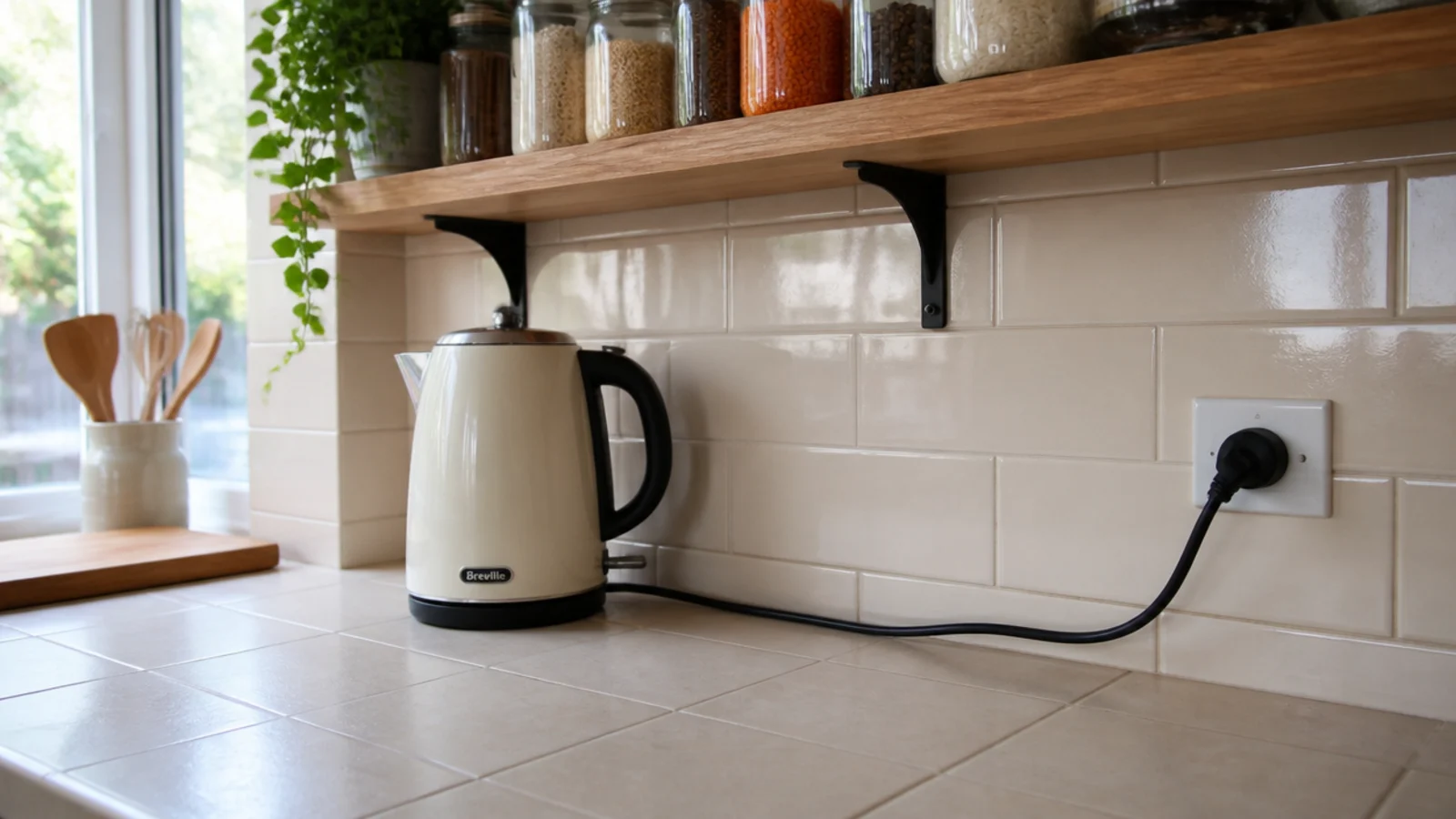
I put the kettle under the new shelf and discovered the nearest outlet was 3 feet sideways, so a white cable ran diagonally across the tile for two years.
The fix: plan power before you plan shelves. Either move the appliance to the outlet or have a slim power track fitted along the shelf underside so plugs drop behind whatever sits on the counter. A paintable cable channel run down the wall costs $8 and is the emergency version.
13. I skipped the front lip and lost a plate
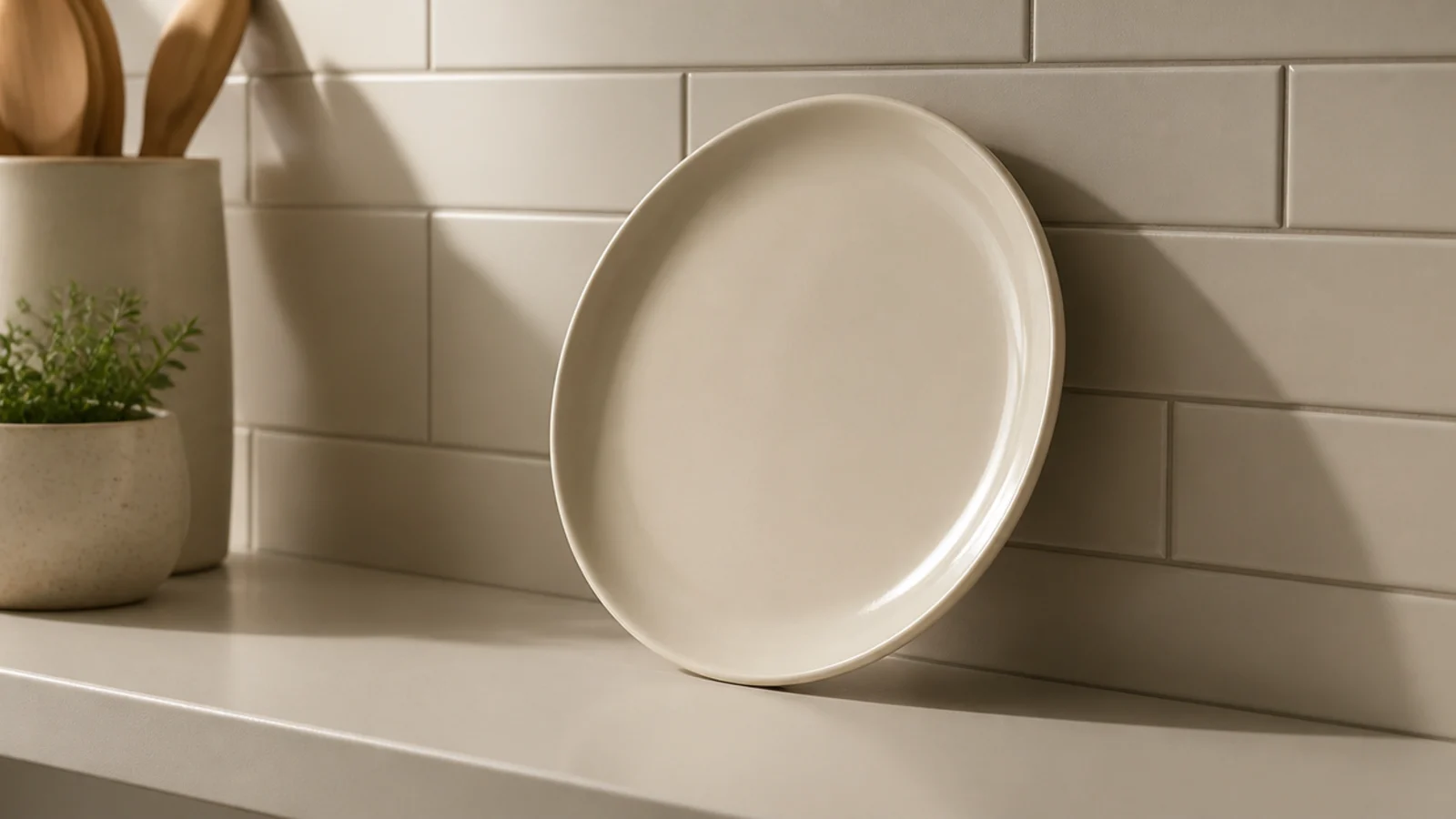
I leaned two serving plates against the tile on a smooth shelf. Every time the dishwasher door slammed, they crept forward half a millimetre. One of them eventually walked off the edge.
The fix: a routed groove a quarter inch deep and an inch from the back edge, or a slim half-inch rail across the front. Either one costs almost nothing and lets you stand plates on edge, which also takes a third of the depth that a flat stack needs.
14. I lit it with a cool white strip
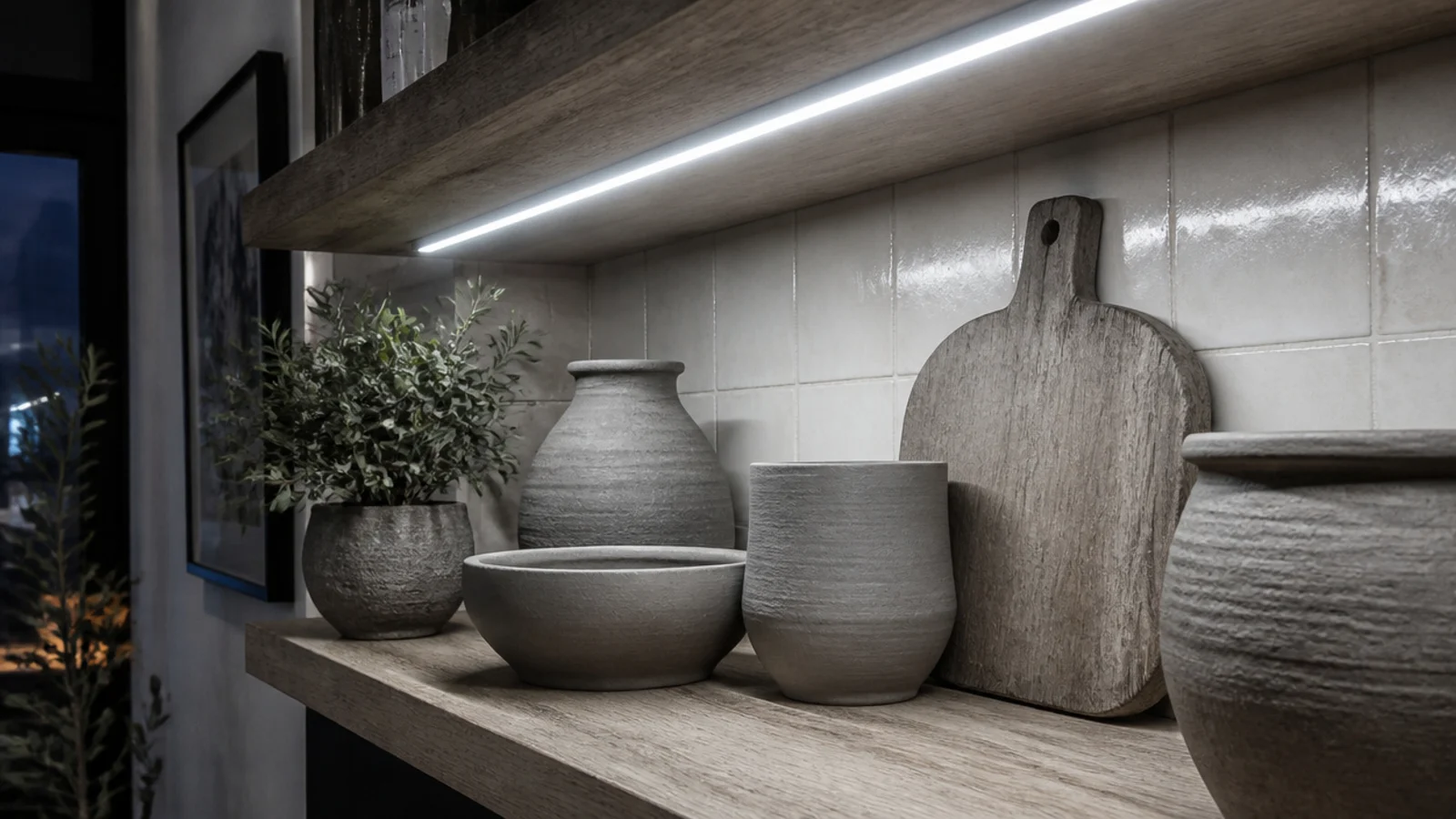
I fitted a 4000K strip under the lower shelf because it was on the shelf at the hardware store. Under it, warm oak looked grey, terracotta looked brown, and I spent a while thinking I had chosen the wrong pottery.
The fix: 2700K to 3000K, in an aluminium channel with a diffuser so you see light rather than a row of dots. The bulb cost $9 and made a room I had been planning to repaint look right again.
15. I took down every upper cabinet at once
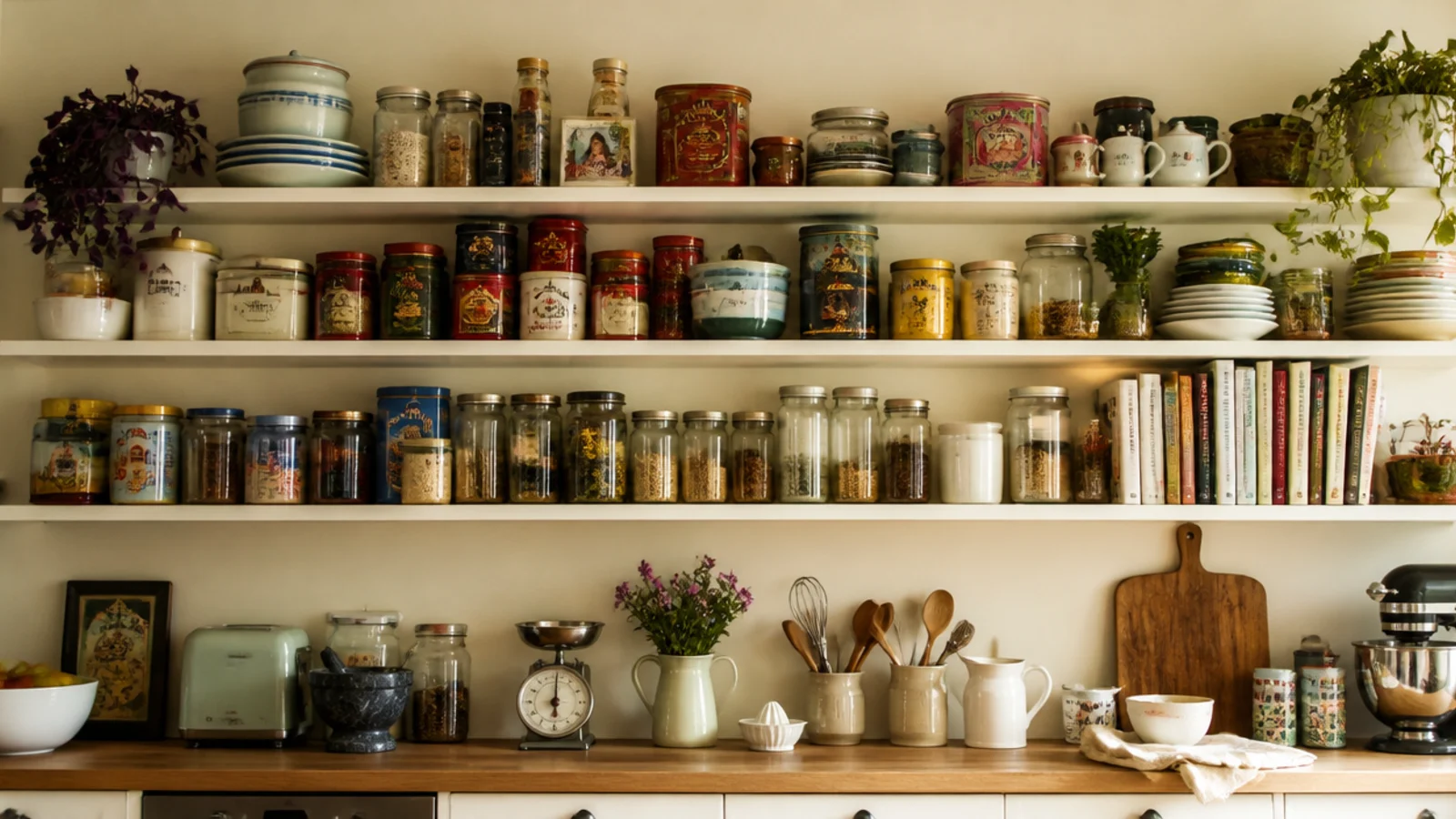
The most expensive mistake, made in a single enthusiastic weekend. Everything that had been behind doors was suddenly on display, including the cereal boxes and the plastic containers, and there was nowhere left to hide any of it.
The fix: take down one cabinet, live with it for six months, then decide. Most kitchens land on a mix — one open run for daily dishes and closed storage for everything else. I put two cabinets back and have never regretted it. There is more on that balance in open kitchen shelves.
Open Shelving Mistakes: What I'd Do Differently Now
If I could hand my younger self one page, it would be four lines long. Seal all six faces before the board goes anywhere near a wall. Put the first shelf 18 inches above the counter. Get one bracket into a stud on anything holding dishes. And only put up there what you use every single week.
The styling would follow on its own after that, because a shelf holding the plates you eat off looks better than a shelf holding objects chosen to look like plates.
The thing I actually regret is the enthusiasm. I took down eight cabinet doors in a weekend because of a photograph, and it took me two years to admit that half of what I owned needed to be behind something. Open shelving is not a look you install — it is a habit you either keep or you do not, and the honest test is whether you still enjoy wiping it in month five.
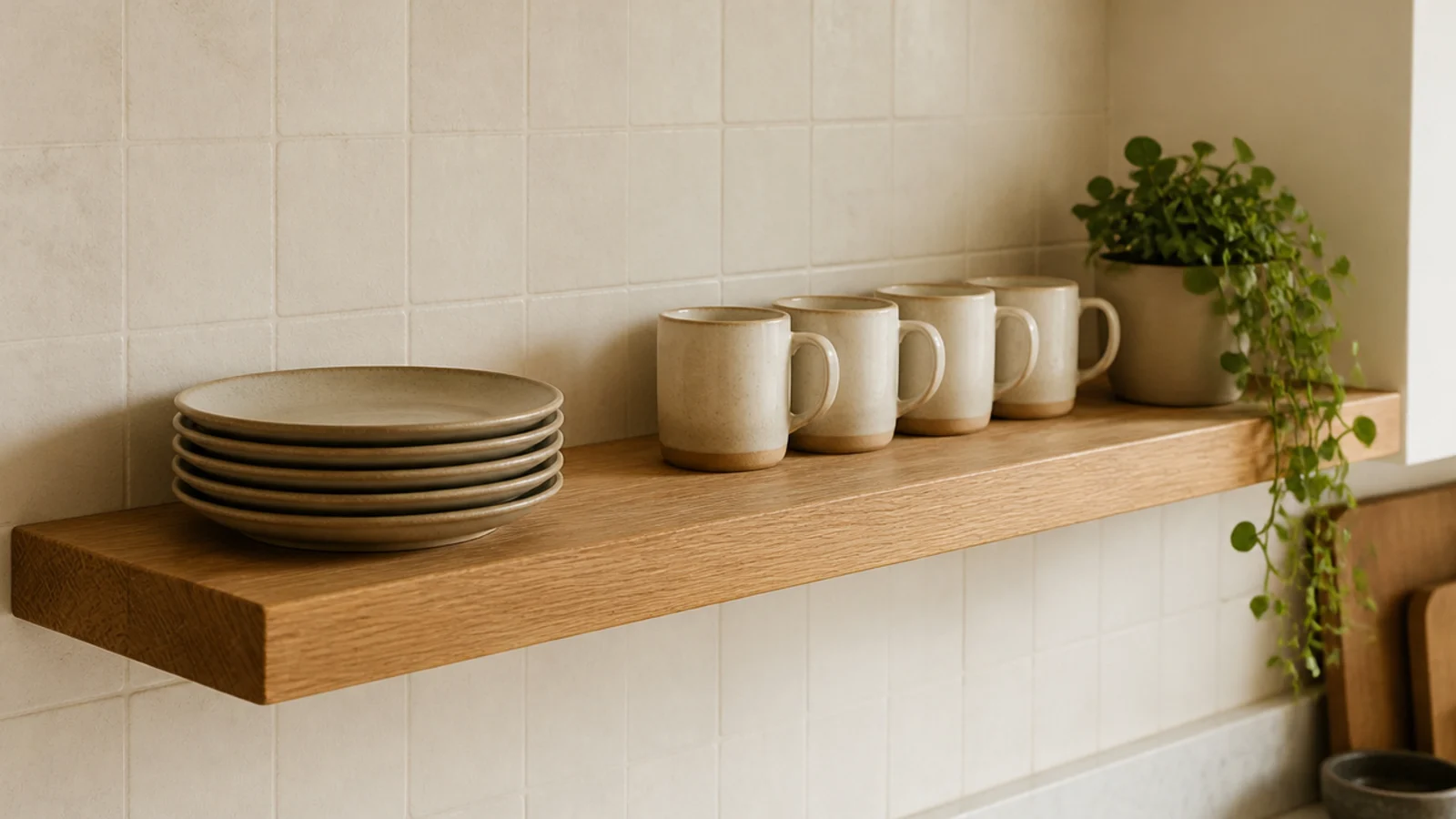
Frequently asked questions
Why do my open kitchen shelves get so greasy?
Anything within about 4 feet of a stove picks up an airborne film of cooking grease, whether you see it or not. The fix is placement rather than avoidance: put things you wash weekly in that zone, since the cycle through the sink keeps them clean, and keep decorative pieces at the far end of the run where nobody has a reason to touch them.
What finish should I use on open kitchen shelving?
Water-based polyurethane or a hardwax oil. Both resist water and grease and wipe down without marking. Clear wax is the wrong choice in a kitchen — it softens near heat and grease soaks straight through it into the timber, where no amount of scrubbing gets it out. Seal every face including the underside and the cut ends.
Why did my kitchen shelf warp or cup?
Almost always because only the top face was sealed. A board that can exchange moisture through the underside and the end grain but not the top will move unevenly and cup toward the wall, and a kitchen swings between steamy and dry several times a day. Seal all six faces before mounting and the problem simply does not arise.
How much weight can open shelves actually hold?
A stack of ten dinner plates is about 12 pounds, which is more than most people plan for. A lag screw into a stud carries 40 to 60 pounds per fixing, a toggle bolt in half-inch drywall carries 25 to 35, and the plastic plugs supplied in the box carry roughly 10. Use three-quarter-inch stock minimum under dishes.
Should I replace all my upper cabinets with open shelves?
Take down one cabinet first and live with it for six months. Open shelving only works for things you use weekly, and the honest test is whether you still like wiping it in month five. Most kitchens land happily on a mix — one open run for daily dishes, closed storage for everything else.
What should never go on an open kitchen shelf?
Anything you use twice a year, anything paper near the stove, and anything wax-based above a range hood. Cookbooks absorb grease permanently and cannot be cleaned. Above a hood, heat rises hard enough to soften candles and lift laminate edges, so keep that shelf to ceramic, metal and glass only.
If you are about to put up a run, start with the finish and the fixings, because those are the two you cannot change later without taking everything down. The kitchen shelf ideas guide covers placement, kitchen shelves before and after shows what the fixes actually look like, and floating shelf mistakes covers the same errors on a straight wall elsewhere in the house. Save the pin so the numbers are with you at the hardware store.
Want more like this? Browse all 15 kitchen shelf ideas guides — they all use the same measurements and budget tiers.
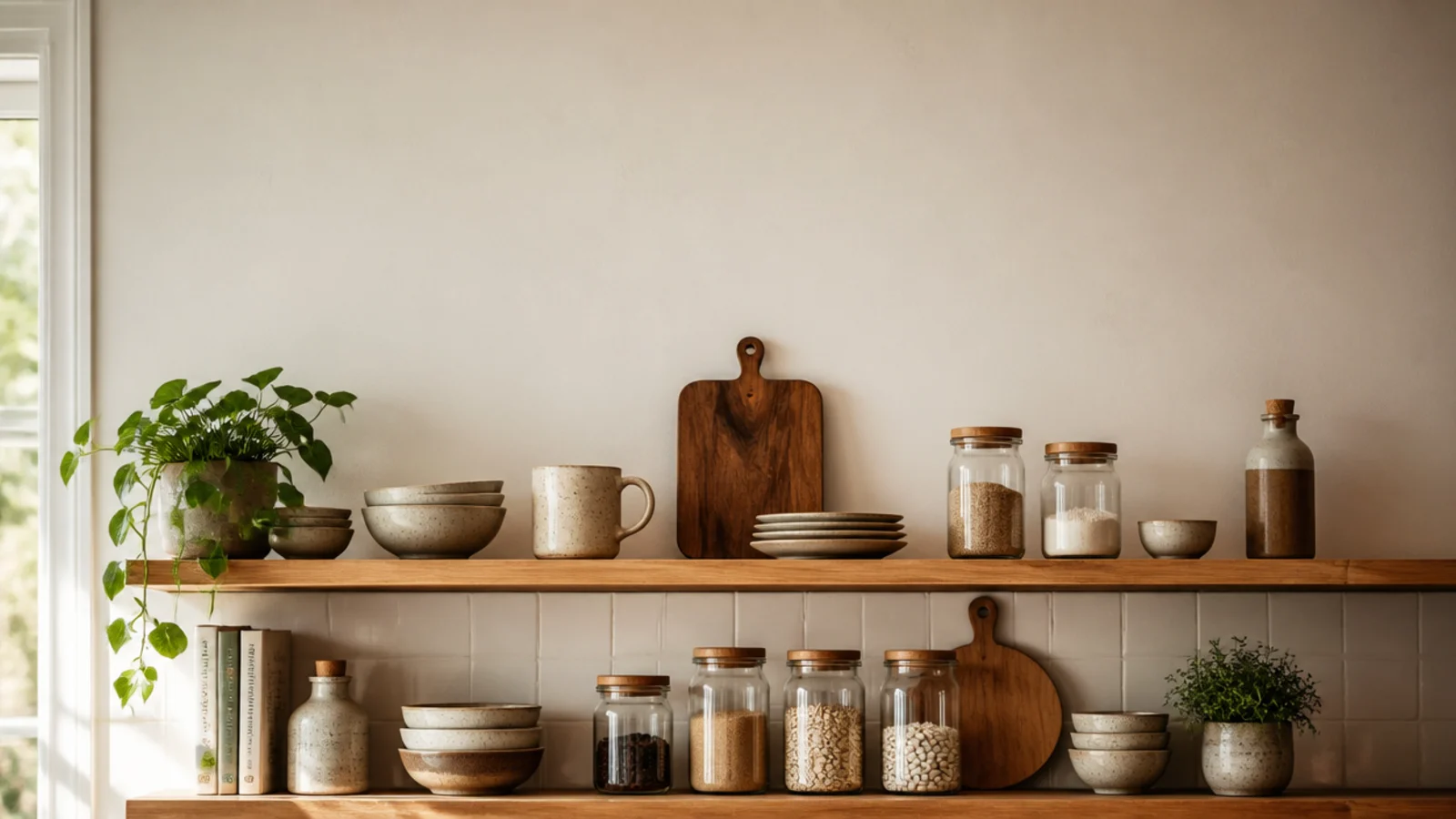
Pin it for later
Save this to your Kitchen Shelf Ideas board
Pin it now so it is waiting for you when the tape measure comes out — and so the next person hunting for this idea can find it too.
Save this pinKeep going
More ideas worth saving while you have the tape measure out.