Coffee Corner Ideas · UGC
15 Coffee Corner Mistakes I Made and Fixed

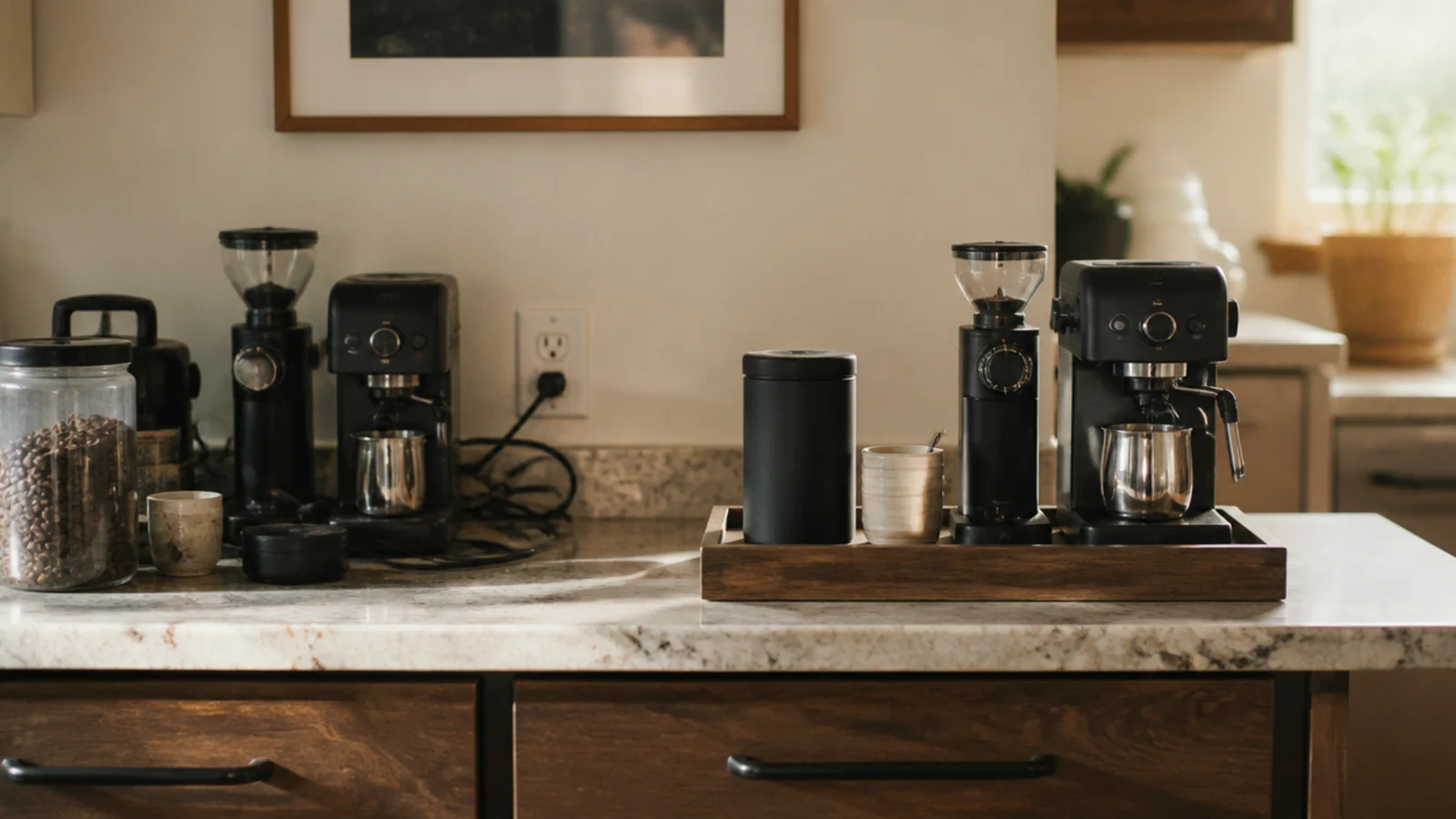
The coffee bar mistakes in this article are all mine, made across four kitchens and about twelve years of drinking too much of the stuff. I have set this corner up in a shared house, two rentals and a house I owned, and I got something wrong in every one of them.
The worst was the second rental. I picked the corner under the window because the morning light was beautiful there, and spent eighteen months running a cord along the backsplash because there was no outlet within six feet. It was a genuinely lovely photograph and a genuinely bad idea, and I only moved the station after a cloth caught on the cord and pulled a full carafe across the counter.
Here are fifteen coffee bar mistakes I actually made, roughly in the order I made them, with the fix for each. Some cost me a Saturday. One cost me a machine I really liked.
In this guide16 sections — tap to openHide
- 1.Mistake 1: I built the station where the light was, not the outlet
- 2.Mistake 2: I gave the machine two inches of headroom
- 3.Mistake 3: I kept the beans in a clear jar on the windowsill
- 4.Mistake 4: I skipped the tray for two years
- 5.Mistake 5: I bought a machine deeper than my counter
- 6.Mistake 6: I hung the shelf at fourteen inches
- 7.Mistake 7: I put the station right beside the sink
- 8.Mistake 8: I owned eleven mugs and used two
- 9.Mistake 9: I let the toaster share the counter
- 10.Mistake 10: I ran an extension cord across the kitchen
- 11.Mistake 11: I bought ground coffee a month at a time
- 12.Mistake 12: I trusted adhesive hooks with four mugs each
- 13.Mistake 13: I ignored descaling until the machine died
- 14.Mistake 14: I lit the corner with cool overhead light only
- 15.Mistake 15: I styled it before I had used it for a week
- 16.Coffee Bar Mistakes: What I'd Do Differently Now
Mistake 1: I built the station where the light was, not the outlet
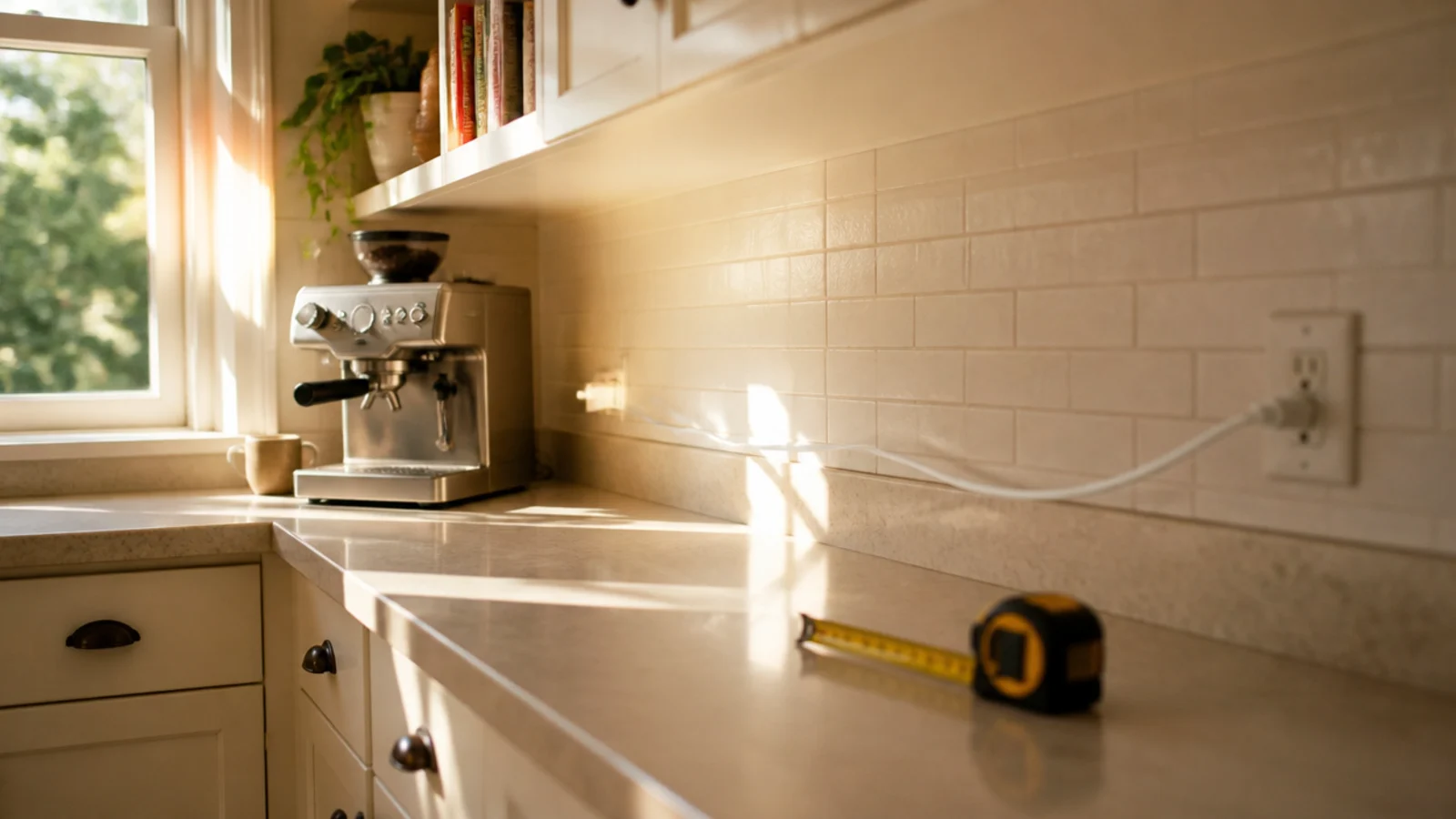
The window corner had the light, the view and no power. So the cord went along the backsplash, behind the kettle, past the sink, to an outlet by the fridge.
I told myself it was temporary for a year and a half. An extension cord run under or near a water source is the wrong answer, and no amount of cable clips makes it a right one.
The fix: find every outlet in the kitchen before choosing anything else, then pick the best station spot from that shortlist. My current corner is objectively less pretty and it has power at the back of the counter, and I have never once thought about the cord.
Mistake 2: I gave the machine two inches of headroom
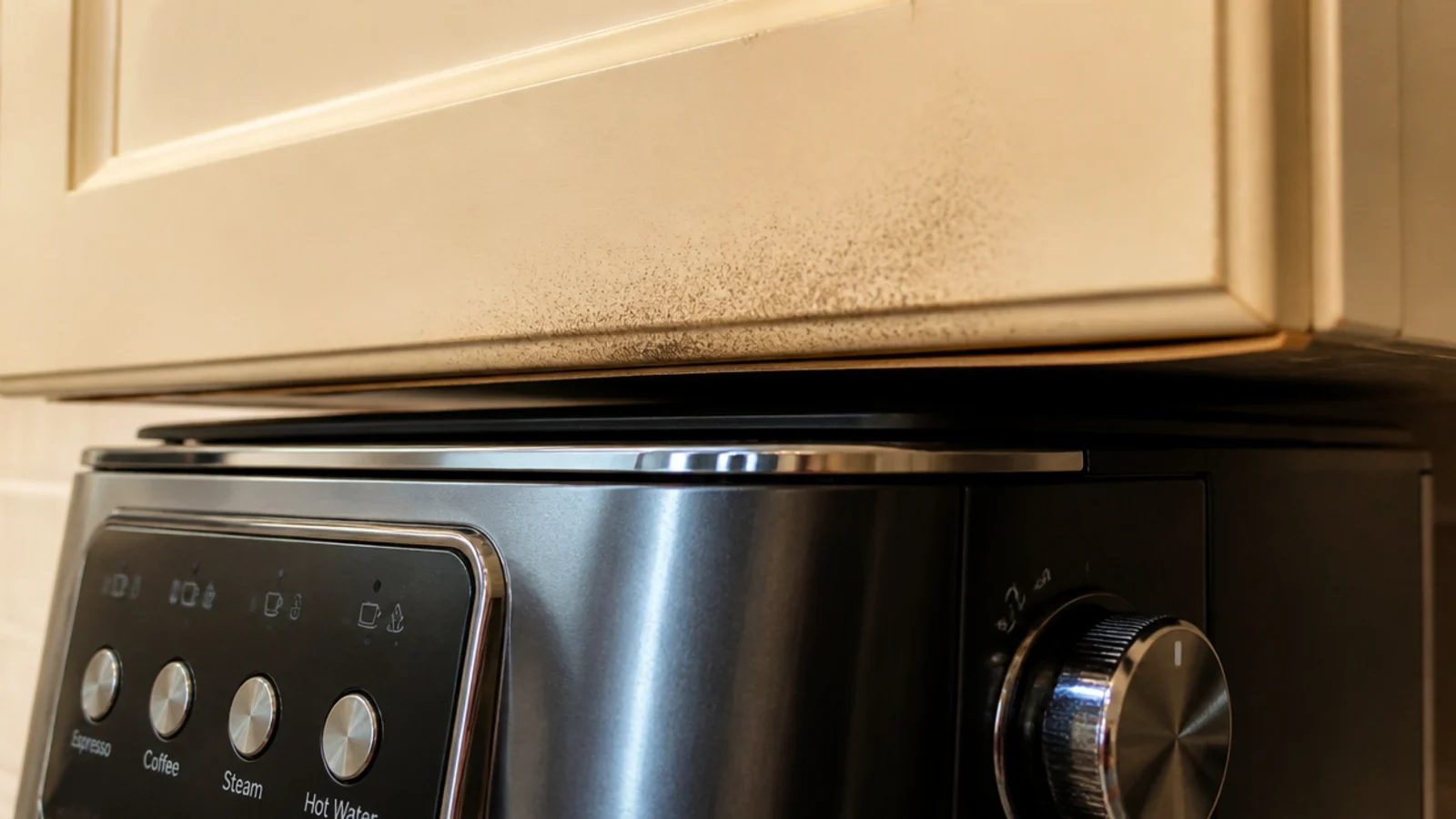
The gap under the upper cabinet looked like exactly enough room. It was, right up until the machine ran and the steam had nowhere to go.
Within a year the cabinet underside had a dark bloom on it and the laminate edge had started to lift. That was a rental, and it was not cheap to put right.
The fix: at least 6 inches of clear air above the tallest point of the machine, and more if the lid lifts or the reservoir fills from the top. Measure with the lid open, not closed — a top-fill machine often wants 10 inches. If the cabinet will not allow it, move the station rather than the cabinet.
Mistake 3: I kept the beans in a clear jar on the windowsill
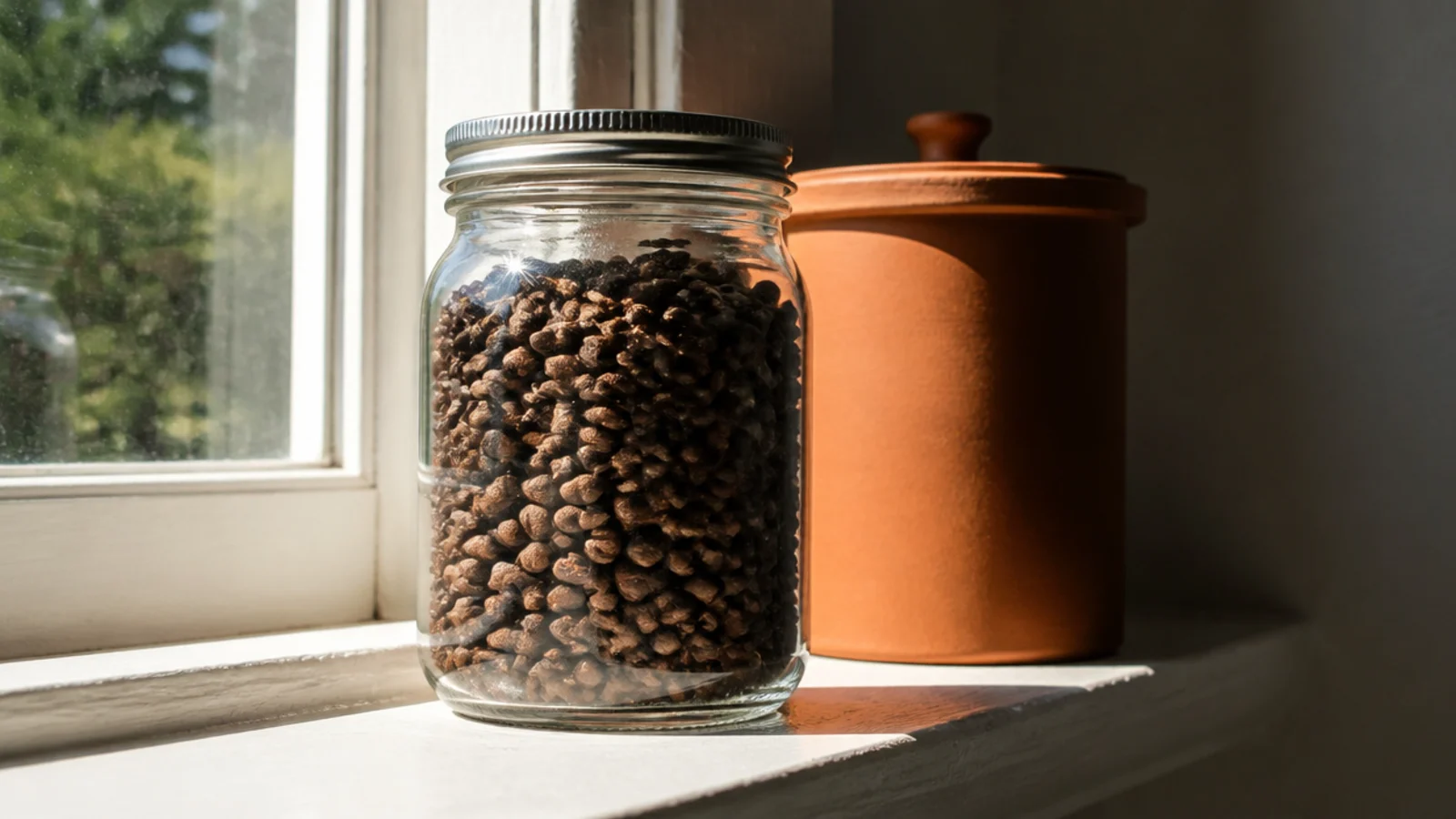
It was the prettiest object in that kitchen. Whole beans, glass jar, morning sun straight through it, and I could not work out why the coffee tasted dull by Wednesday.
Light and warmth flatten beans faster than air does. A sunny windowsill is close to the worst place in a kitchen for them.
The fix: whole beans keep in an opaque airtight container at room temperature — not the fridge, where condensation gets in every time the lid comes off, and not a clear jar in the sun. I buy a quantity I will finish in two weeks and keep a matte clay canister in the shaded end of the counter.
Mistake 4: I skipped the tray for two years
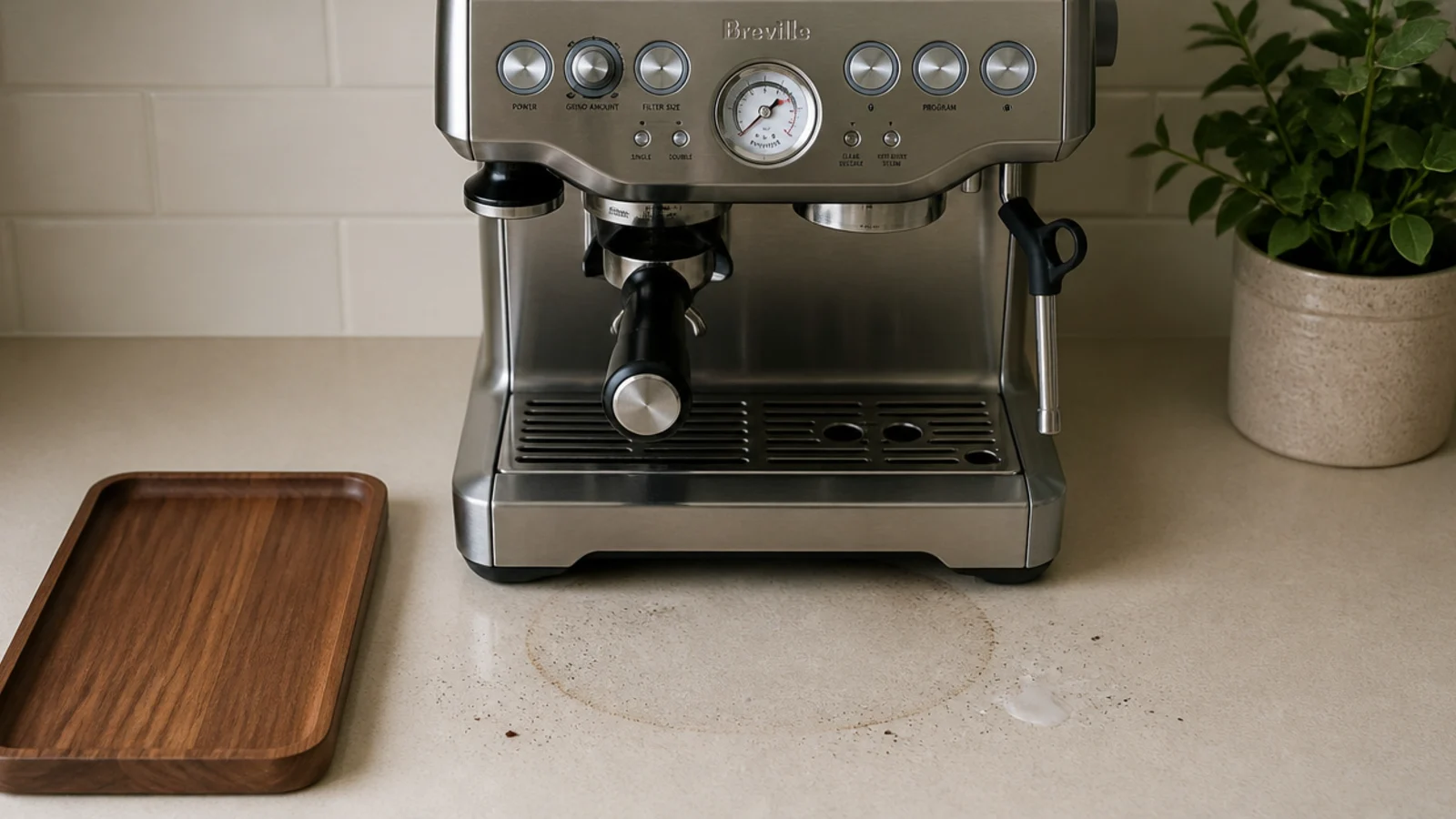
A tray under the machine felt like a decorative extra. Then I moved the machine to clean and found two years of drips, grounds and a dried milk ring on the counter behind it.
Splatter goes backward, which is the one direction you never look.
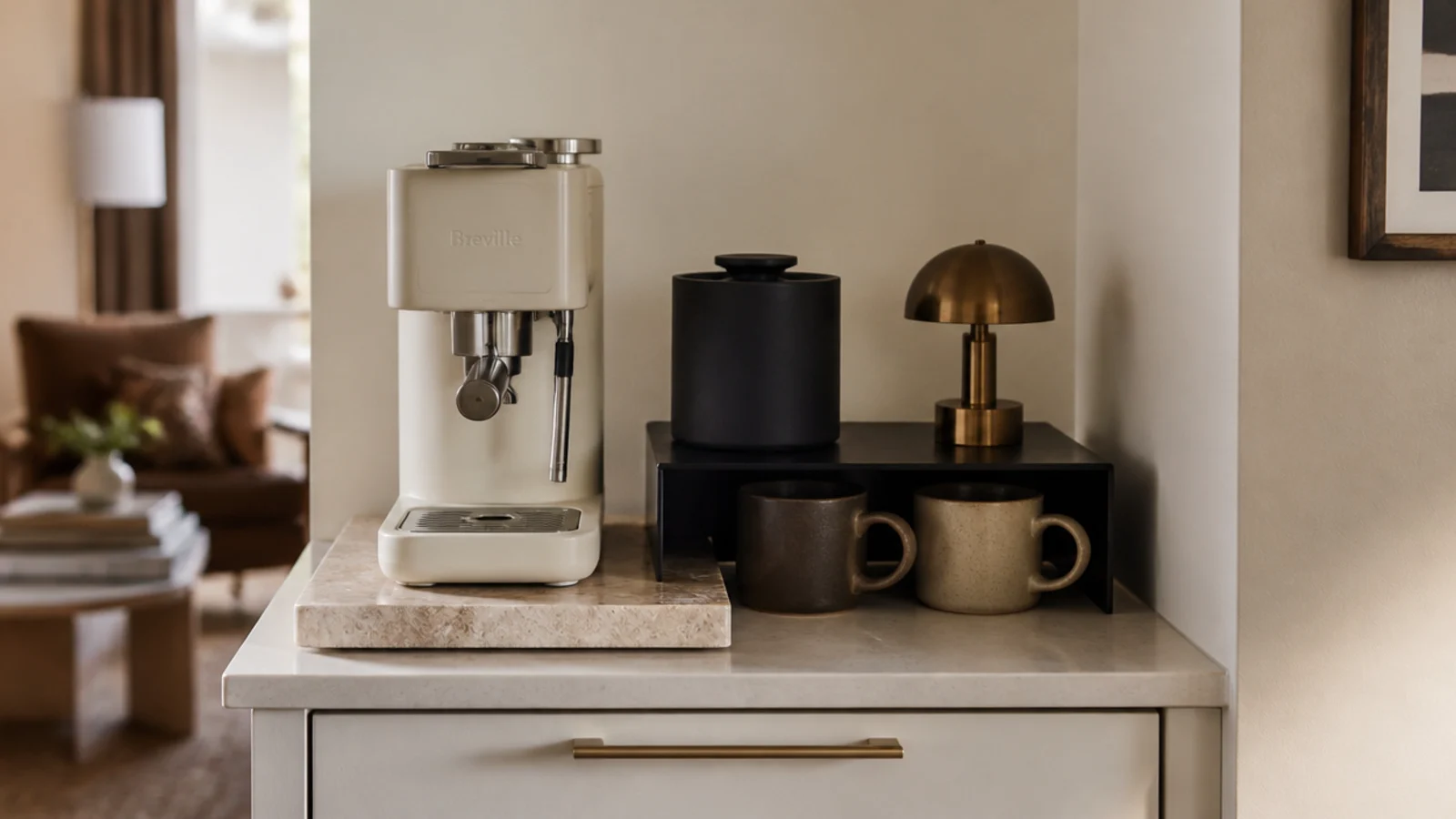
The fix: a 12 by 18 inch tray with a half-inch lip and felt pads underneath. It catches the drips and, more usefully, lets me lift the whole station out in one movement and wipe behind it. It costs about $20 and it is the highest-value object on the counter.
Mistake 5: I bought a machine deeper than my counter
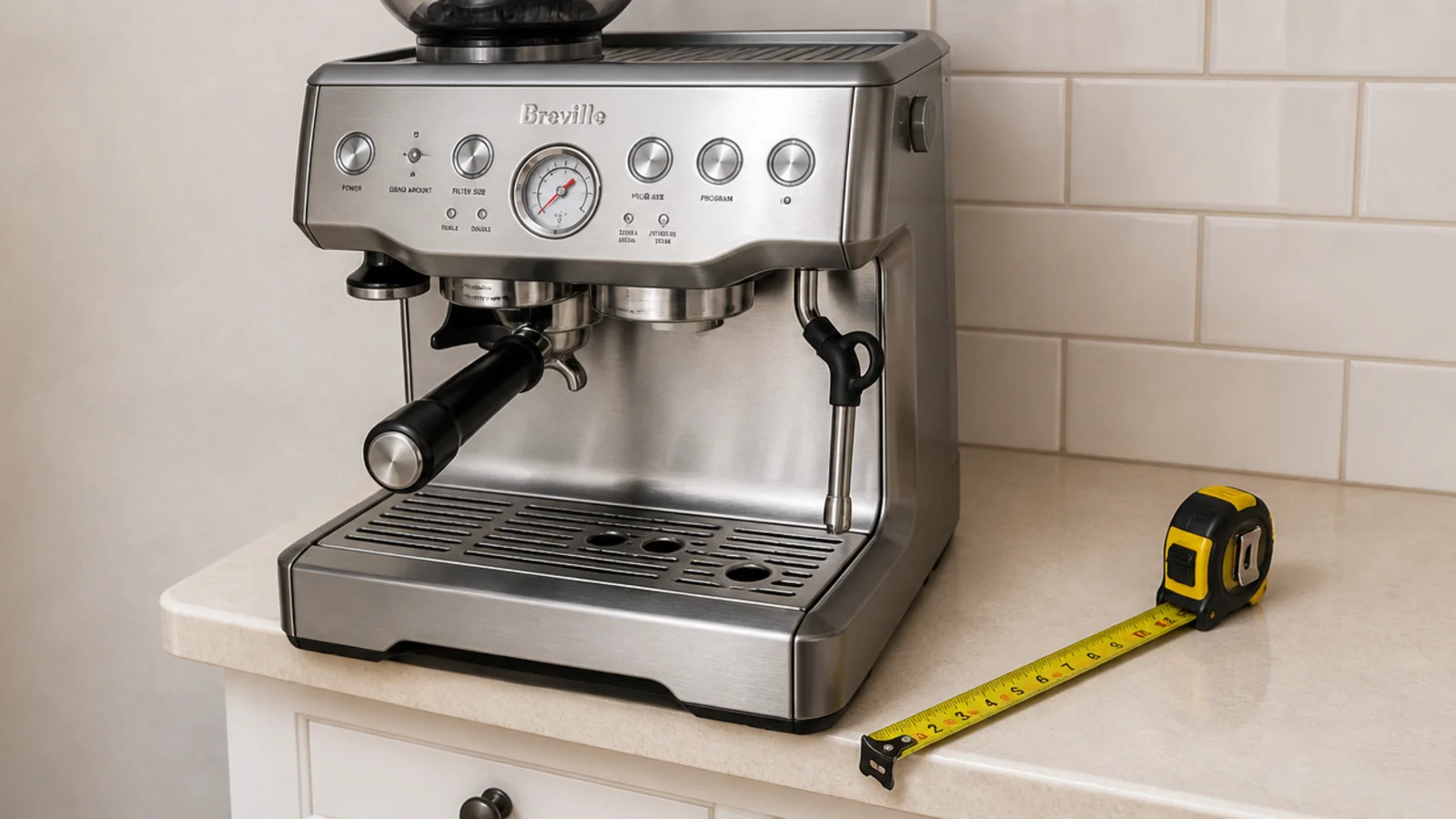
I measured the width. It never occurred to me to measure the depth, and the machine I ordered was 16 inches deep on a 15-inch counter.
It overhung the front edge by an inch, which meant I clipped it with a hip every few days and the whole thing shuffled forward whenever I filled it.
The fix: measure width and depth, then subtract two inches from each for working room. A workable corner needs about 24 to 30 inches of counter width and 15 to 18 inches of depth, and the machine is only one part of what has to fit there.
Mistake 6: I hung the shelf at fourteen inches
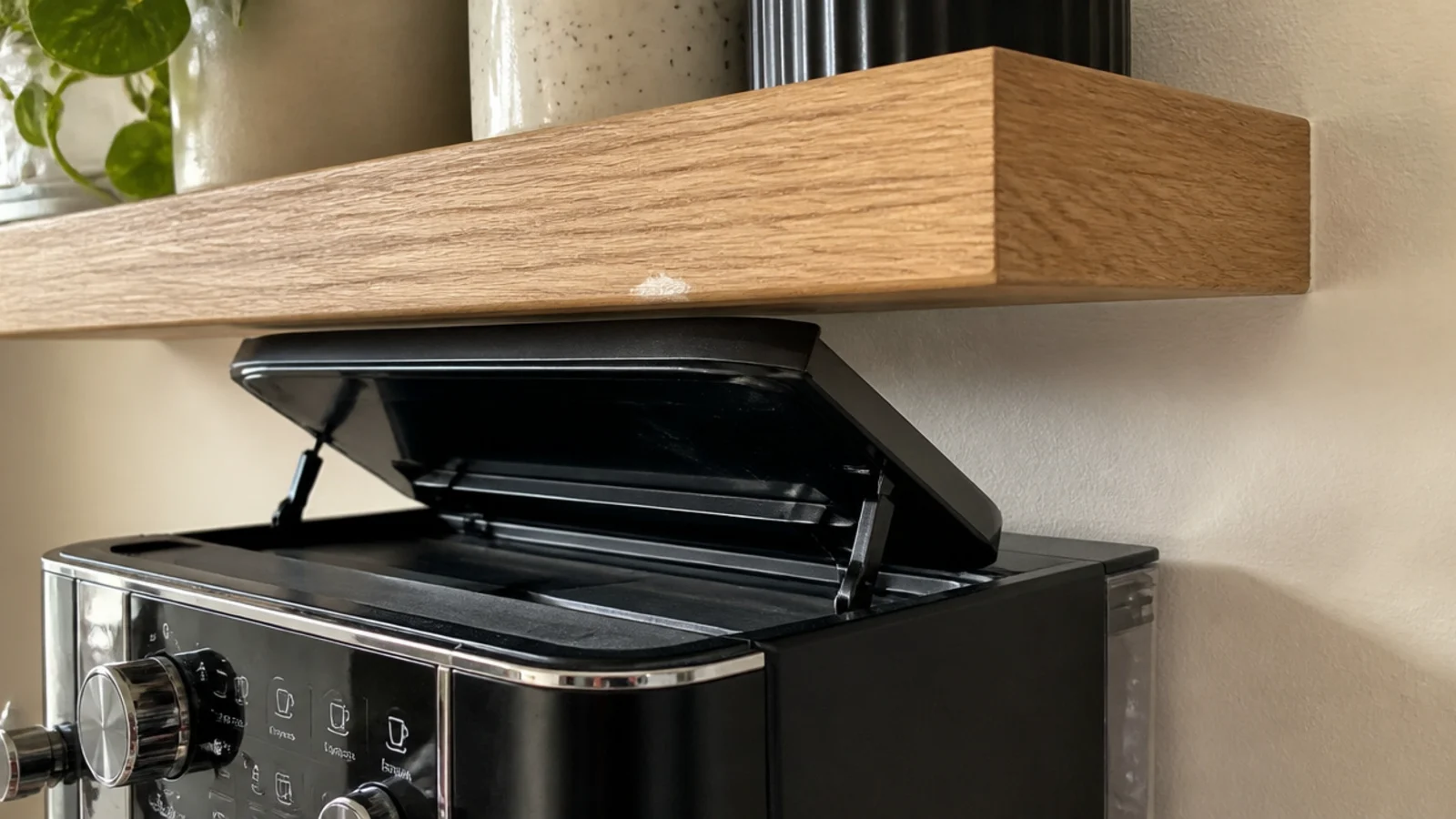
Fourteen inches above the counter looked right against the tile. Then I filled the reservoir for the first time and the lid hit the shelf.
For six months I slid the machine forward, opened the lid, filled it, and slid it back. Every morning.
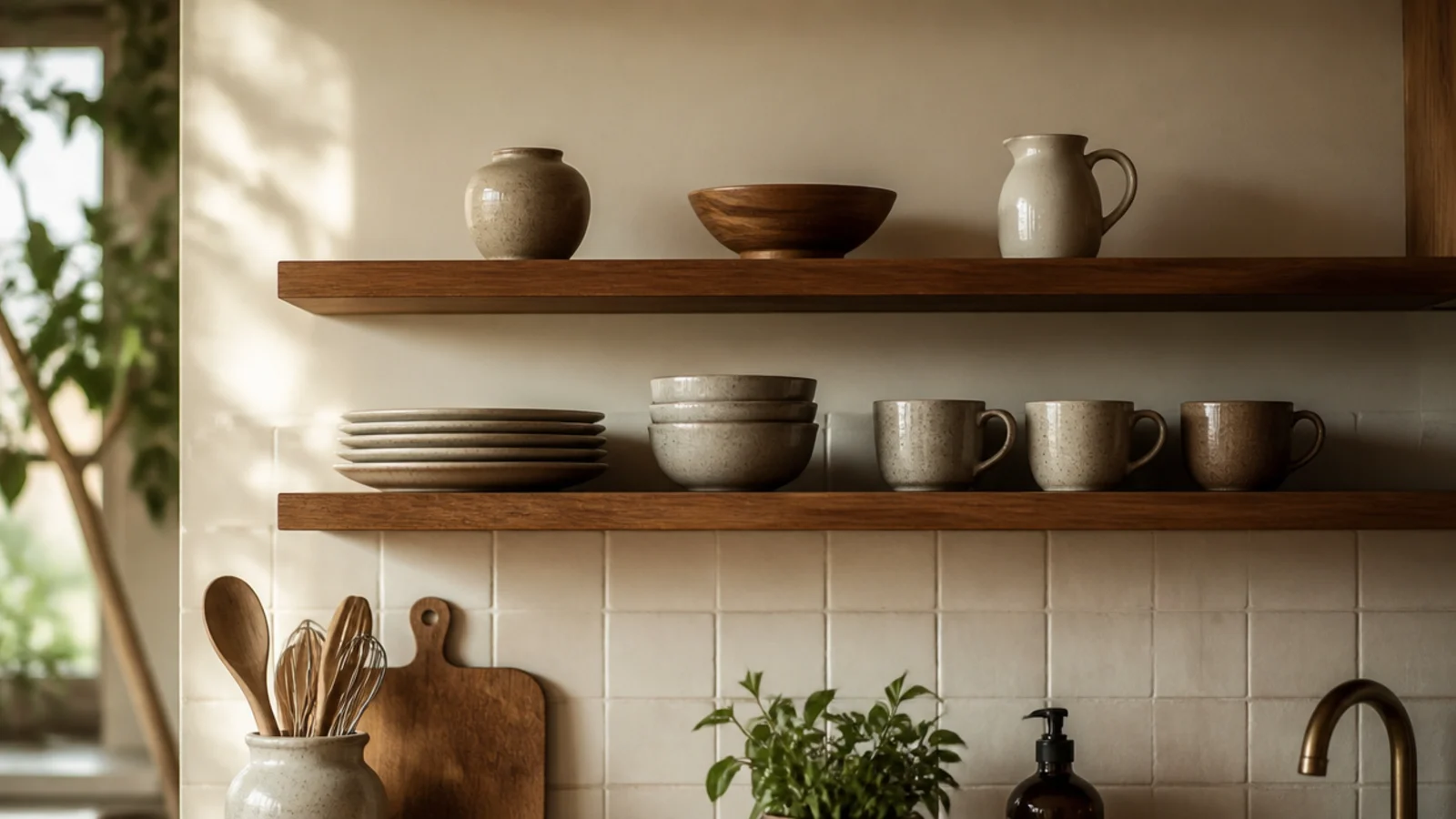
The fix: a shelf above the machine sits 18 inches off the counter. That clears the tallest common machine, leaves room for steam and lets a lifting lid open fully. Re-hanging it took forty minutes and two filled holes, and I should have done it the first week.
Mistake 7: I put the station right beside the sink
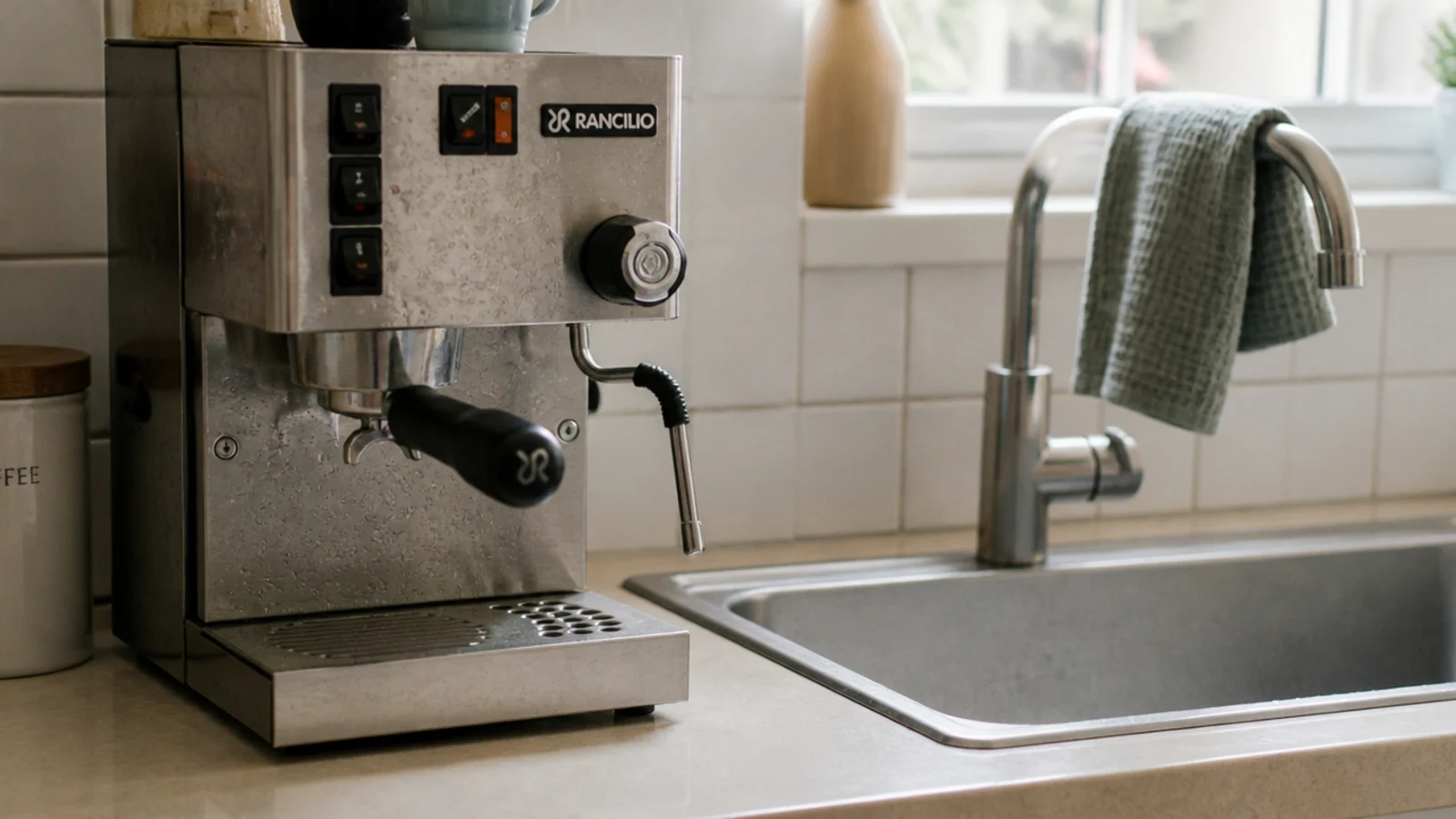
It seemed practical — water on one side, machine on the other. In practice the casing collected water spots, the tray stayed permanently damp, and there was never any clear counter because the drying rack lived there too.
The fix: keep at least 18 inches of clear counter between the machine and the sink. It sounds fussy and it solves three problems at once: splashes, the damp cloth, and the fact that you need somewhere dry to set a hot cup down while you finish making it.
Mistake 8: I owned eleven mugs and used two
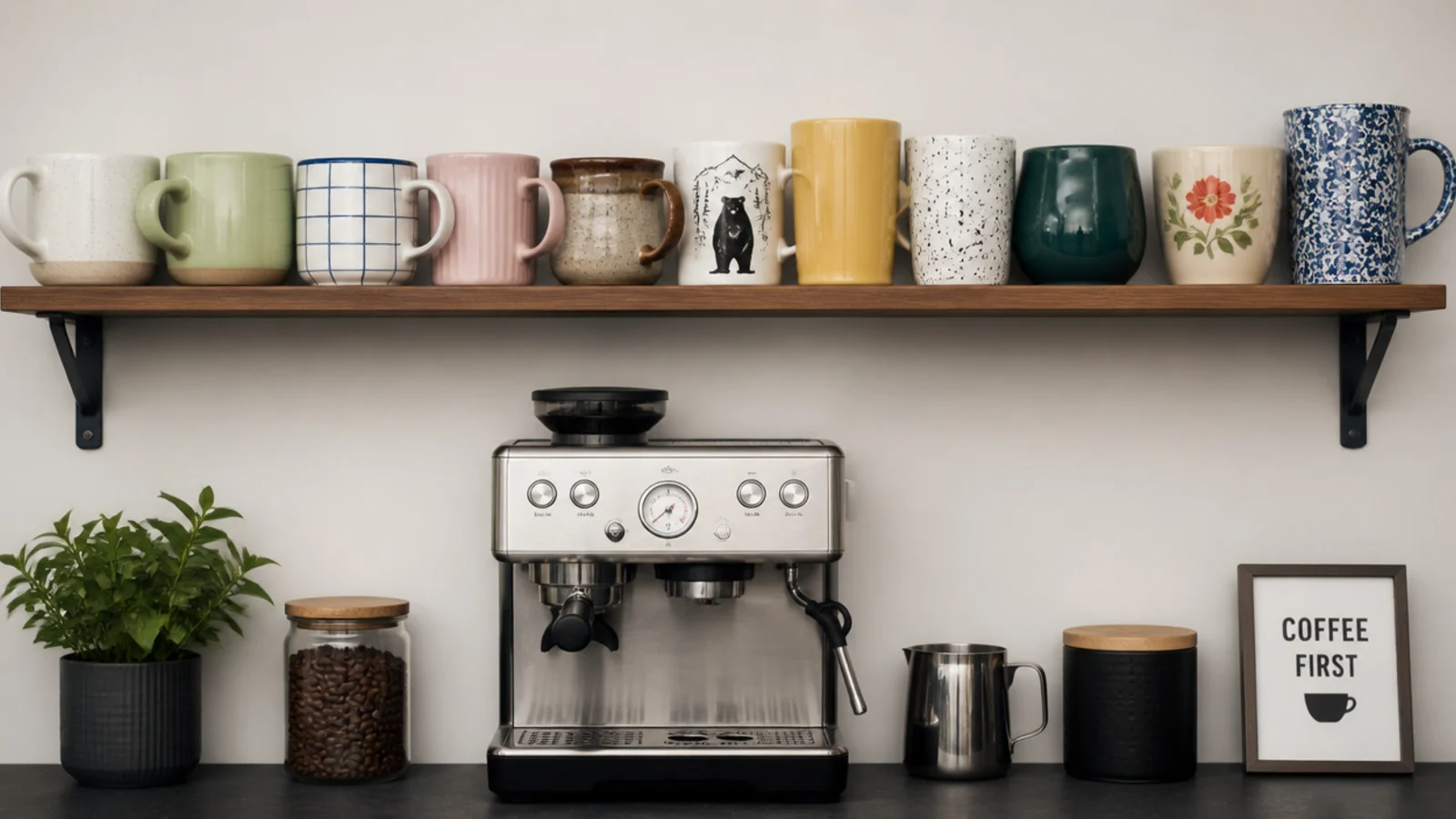
Eleven mugs, all different heights, filling an entire shelf. I used the same two every day and the other nine were a storage problem pretending to be a collection.
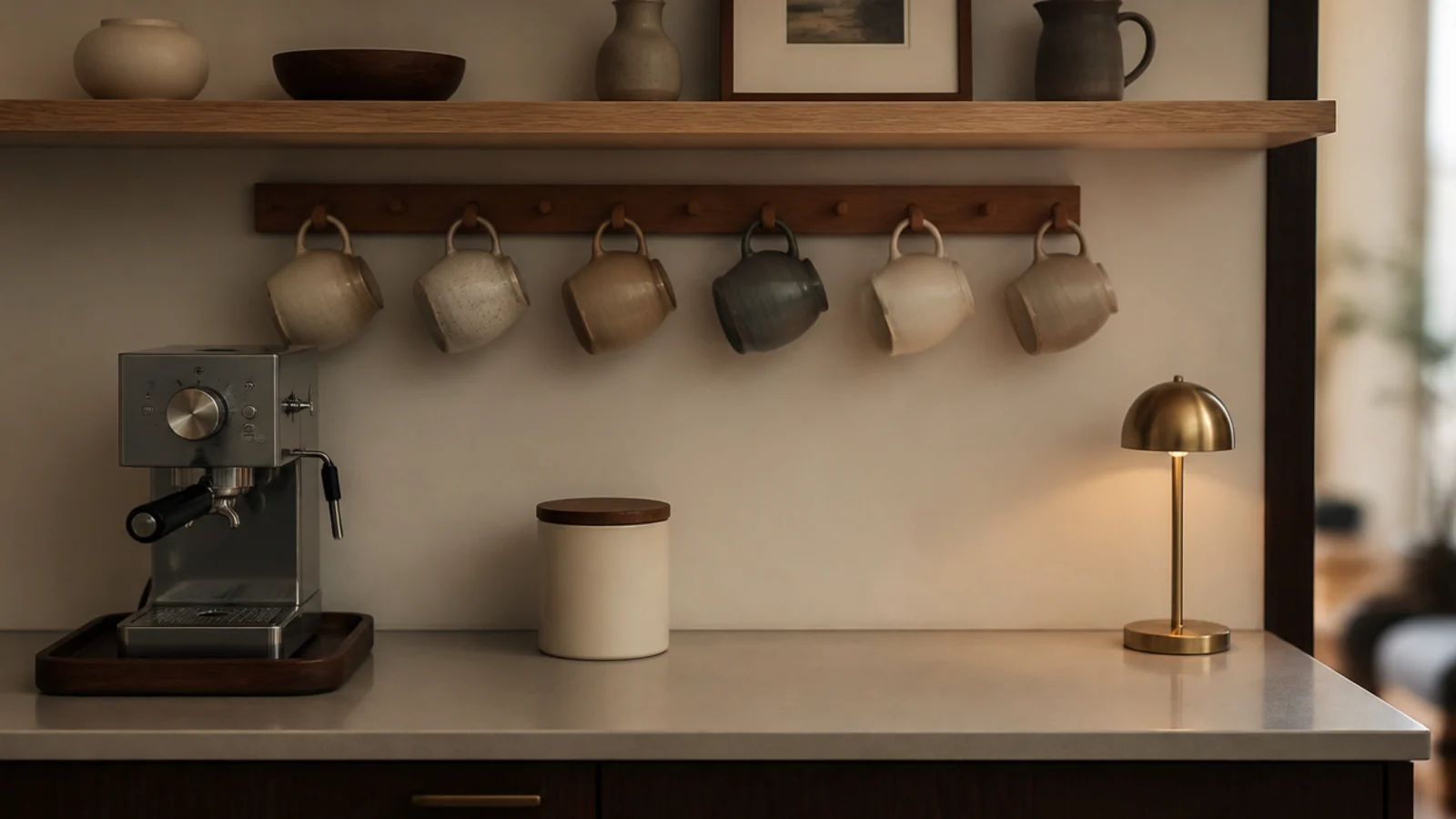
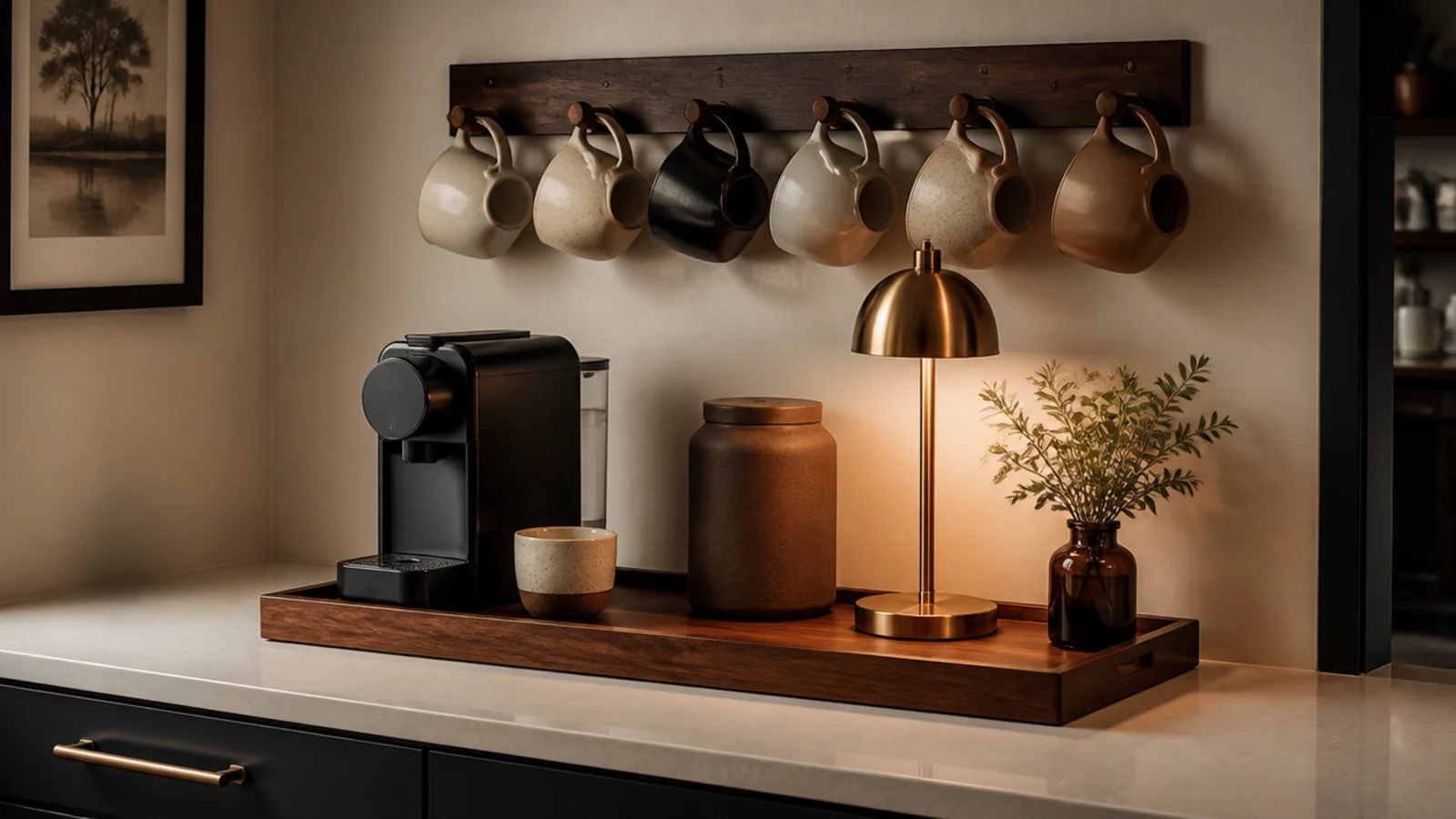
The fix: household count plus two, in one stackable shape, and the sentimental ones boxed rather than displayed. Six matching mugs take about a third of the room that eleven mismatched ones do. A mug peg rail under the shelf then holds six in the width one mug takes standing on the counter, which was the moment my shelf stopped being full.
Mistake 9: I let the toaster share the counter
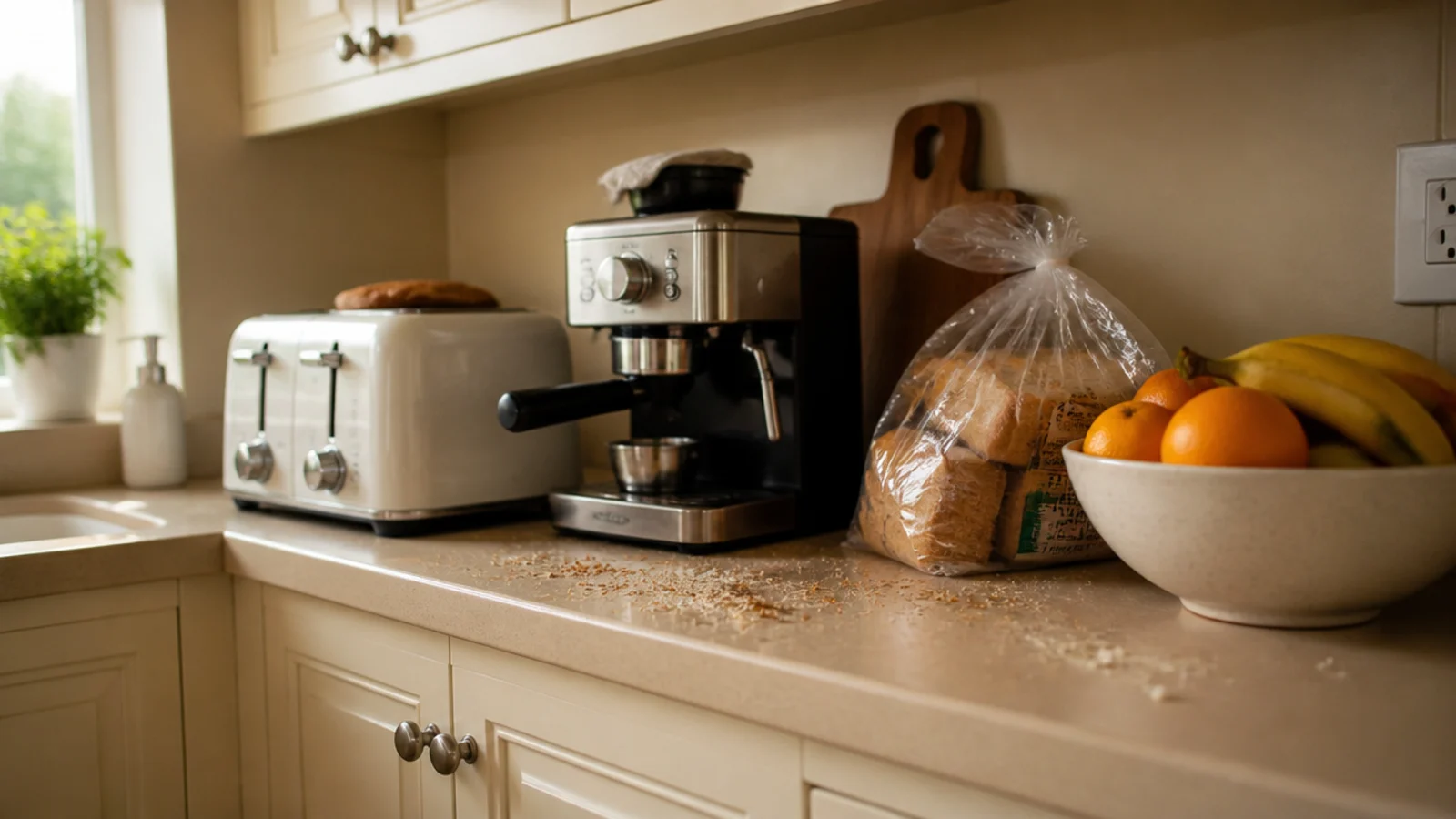
The coffee station had 30 inches. The toaster arrived, then the bread, then a fruit bowl, and within a month I had a general appliance area with a coffee machine in it.
Shared counter always becomes the toaster. Always.
The fix: claim a defined strip and mark the edge with a tray or a runner so the boundary is visible. Twenty-four inches that belong to the coffee corner beats 40 that it shares. There are more layouts that hold their ground in coffee corner before and after.
Mistake 10: I ran an extension cord across the kitchen
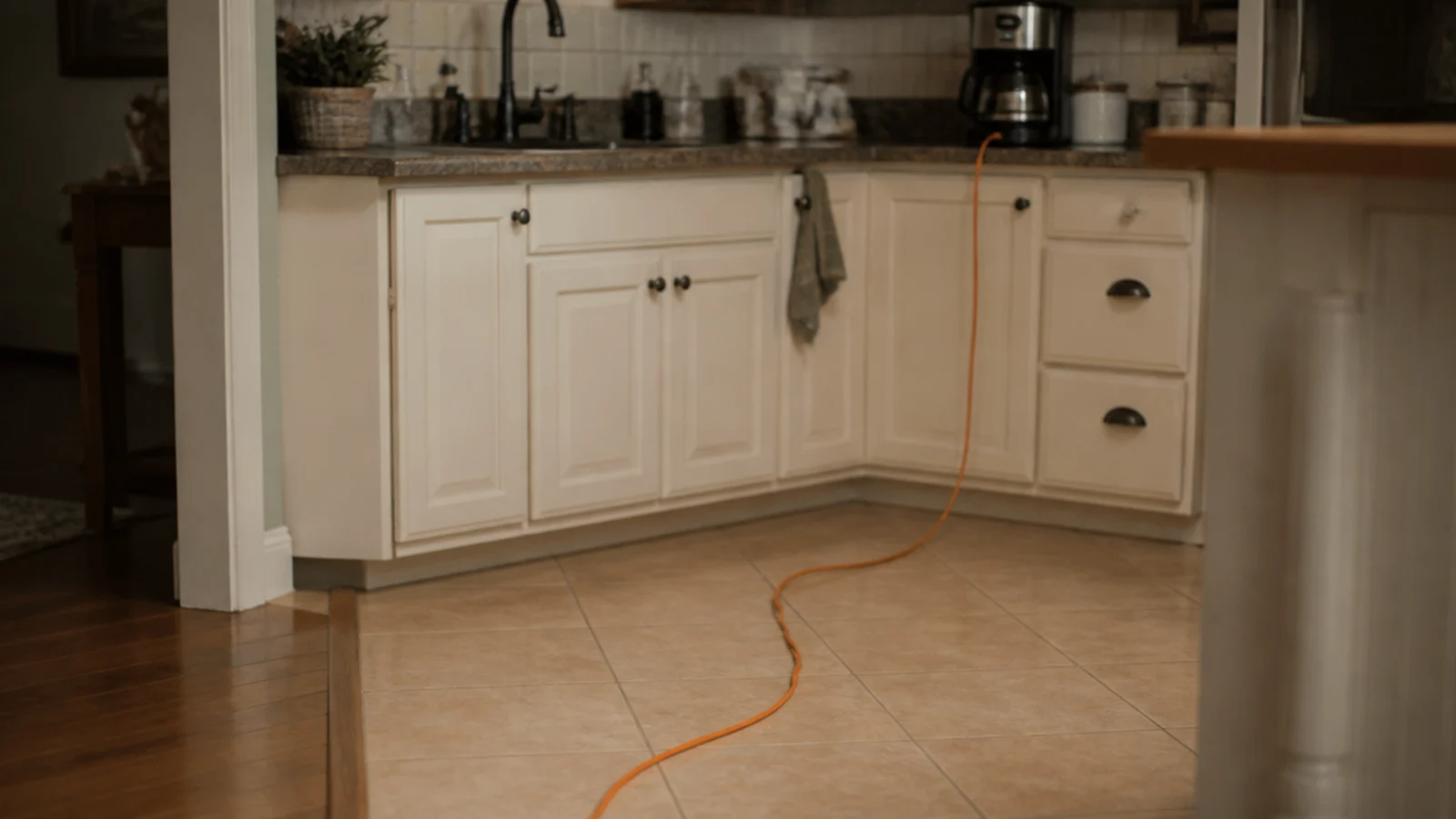
This is Mistake 1 with a worse ending. The cord crossed a walkway, ran near the sink base and got stepped on daily for months.
Nothing dramatic happened, which is exactly why I left it so long. I still think about the pulled carafe.
The fix: move the station to the power, or add a low-profile plug strip mounted on the cabinet side directly beside the station so every cord is short. If neither works, a cart parked beside a different outlet in another room is a better coffee corner than a beautiful one with a cord across the floor.
Mistake 11: I bought ground coffee a month at a time
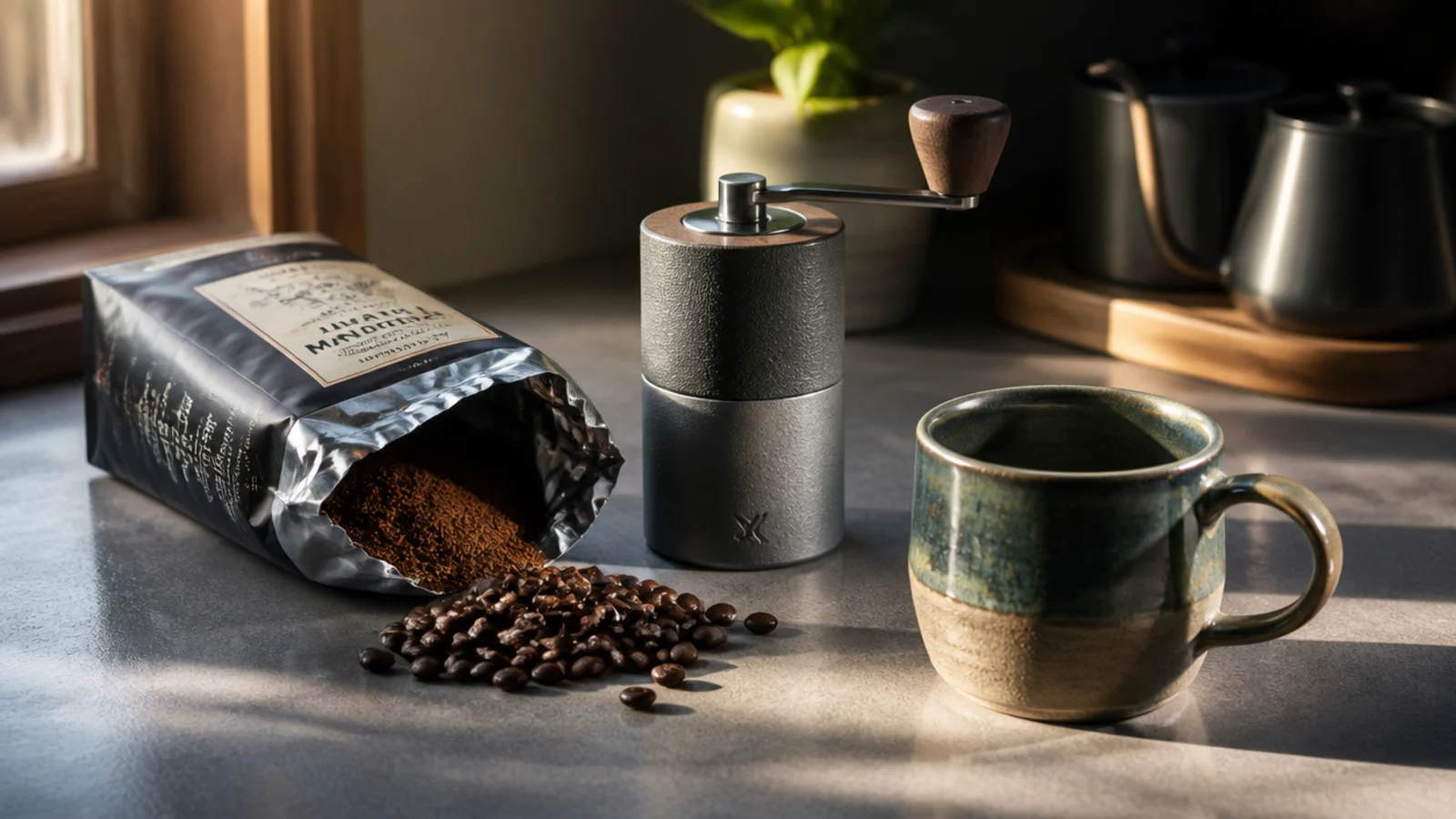
Bulk pre-ground was cheaper per cup and I could not understand why the last week of every bag tasted like paper.
Ground coffee goes flat in about a week. That is not a preference; it is what the surface area does once it is exposed.
The fix: whole beans and a hand burr grinder. The grinder is about the footprint of a large mug, needs no outlet, stores in a drawer and takes 40 seconds of cranking for two cups. It cost me $45 and improved the coffee more than any machine upgrade I have made since.
Mistake 12: I trusted adhesive hooks with four mugs each
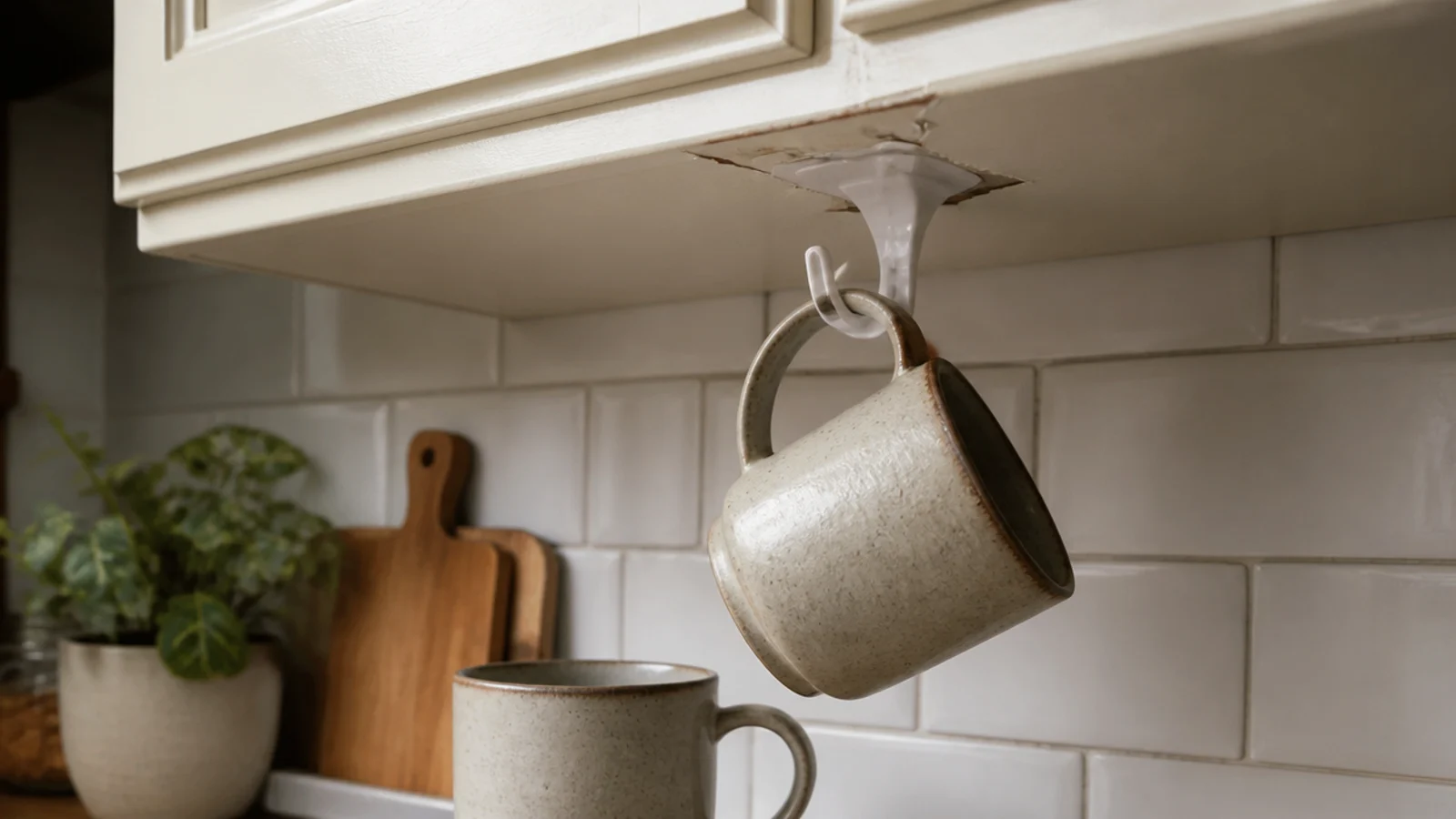
I hung three mugs off one heavy-duty hook under a cabinet because it was rated for seven pounds and the mugs were about a pound each. What I ignored was the leverage of mugs swinging on a hook that was only holding by adhesive.
The hook peeled, took a strip of cabinet paint with it, and one mug did not survive.
The fix: one mug per hook, no stacking, alcohol-wiped surface, 30 seconds of press and an hour before loading. Test on a hidden patch first, because flat builder-grade paint and thermofoil doors both peel.
Mistake 13: I ignored descaling until the machine died
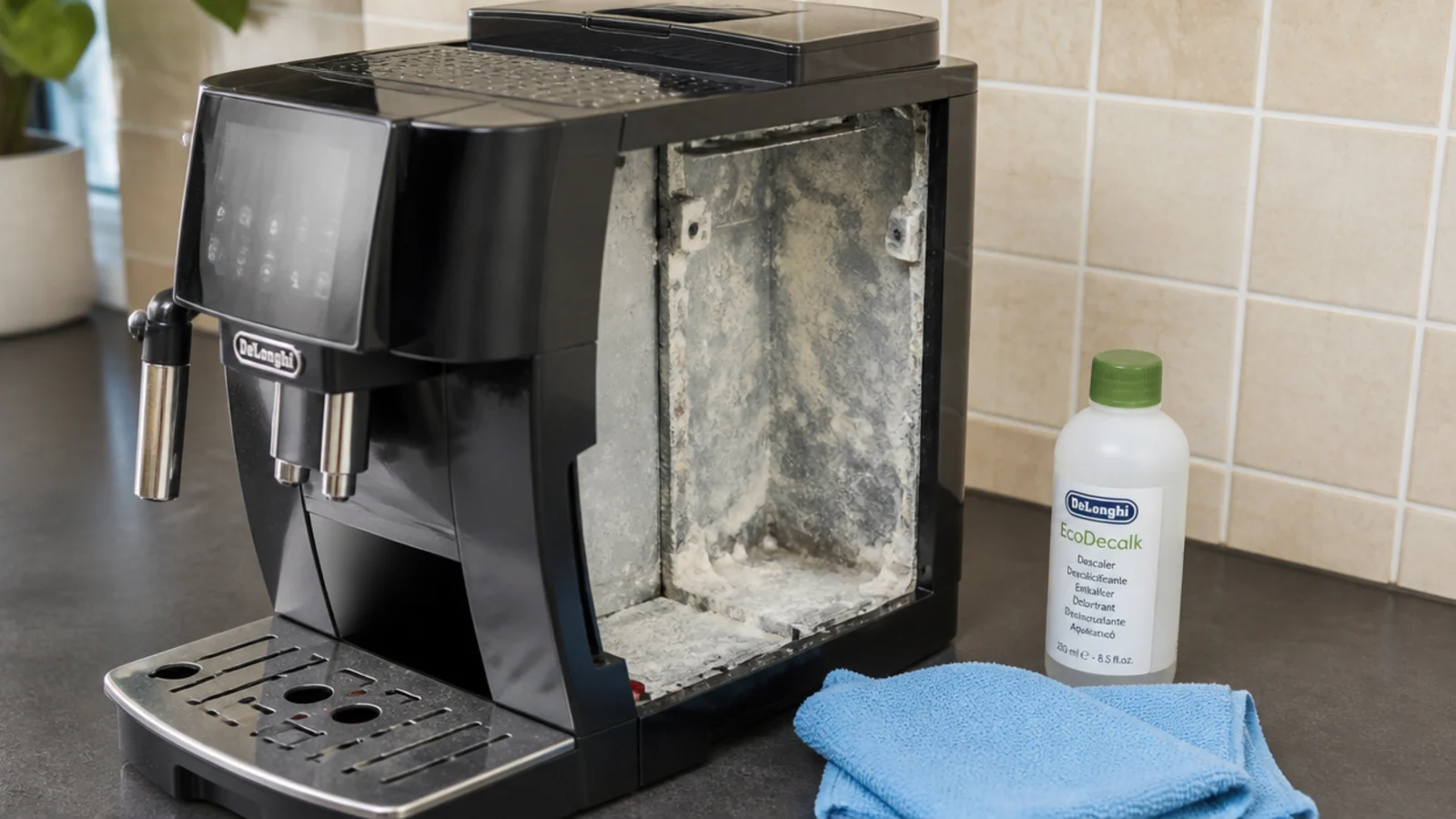
Four years, no descaling, hard water. The coffee got gradually cooler and slower and I blamed the beans, then the grind, then the water.
When I finally pulled the reservoir there was a chalky crust across everything. The heating element gave out about a month later.
The fix: descale every two months in hard water, every three to four in soft, on a fixed date. Keep the solution in the same cupboard as the filters so it is impossible to forget. It costs a few dollars a year, and the machine holds its brew temperature the whole time.
Mistake 14: I lit the corner with cool overhead light only
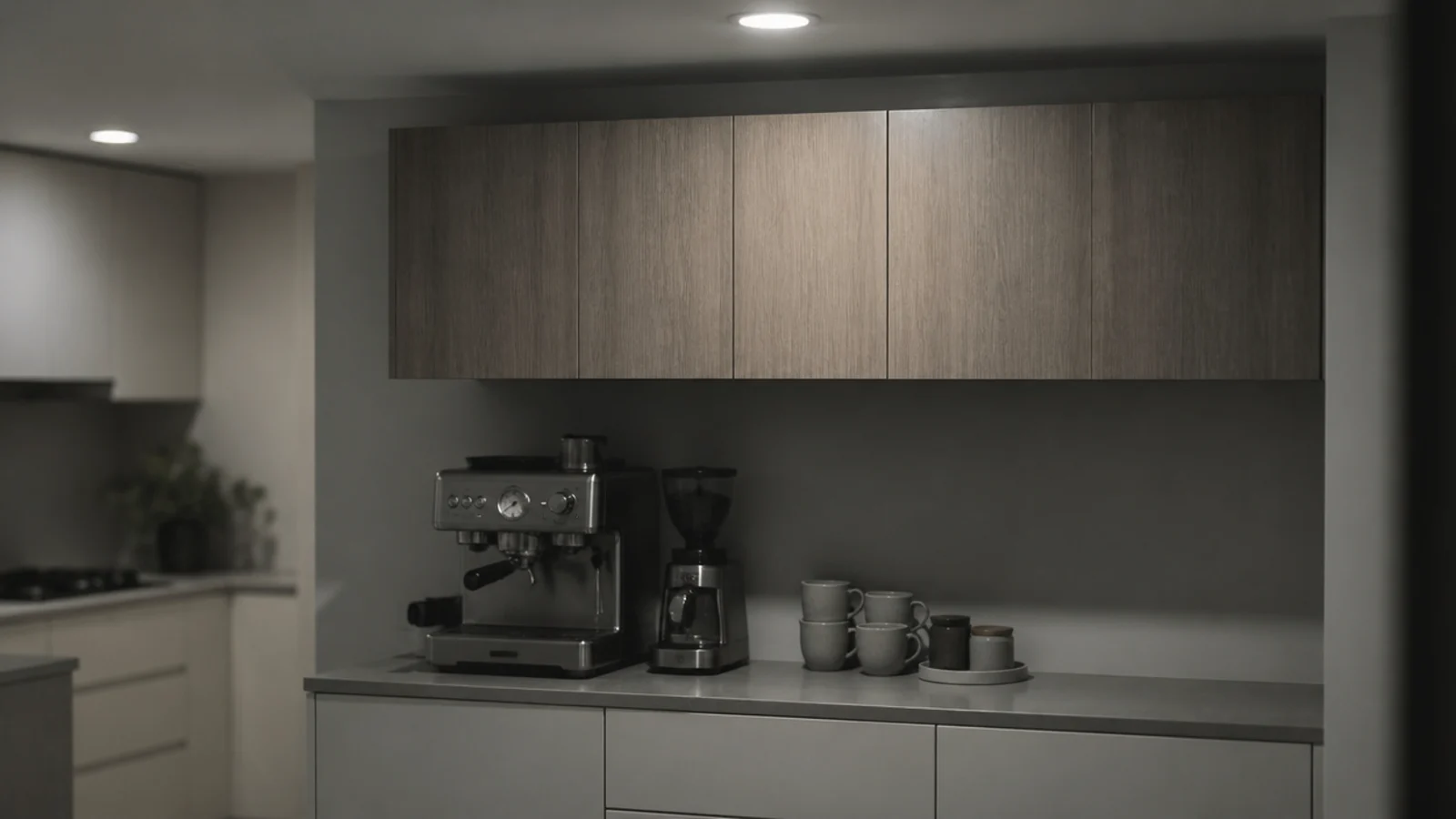
A 4000K ceiling downlight directly above the counter did two things: it drained the colour out of the clay and walnut, and it put my own shadow exactly where I was pouring.
I spent a while thinking I disliked the mugs.
The fix: a small 2700K lamp at counter level, off to one side, or a warm strip under the upper cabinet. It cost $28 and changed the corner more than anything I had bought before it. Side light also stops your hands casting a shadow into the cone.
Mistake 15: I styled it before I had used it for a week
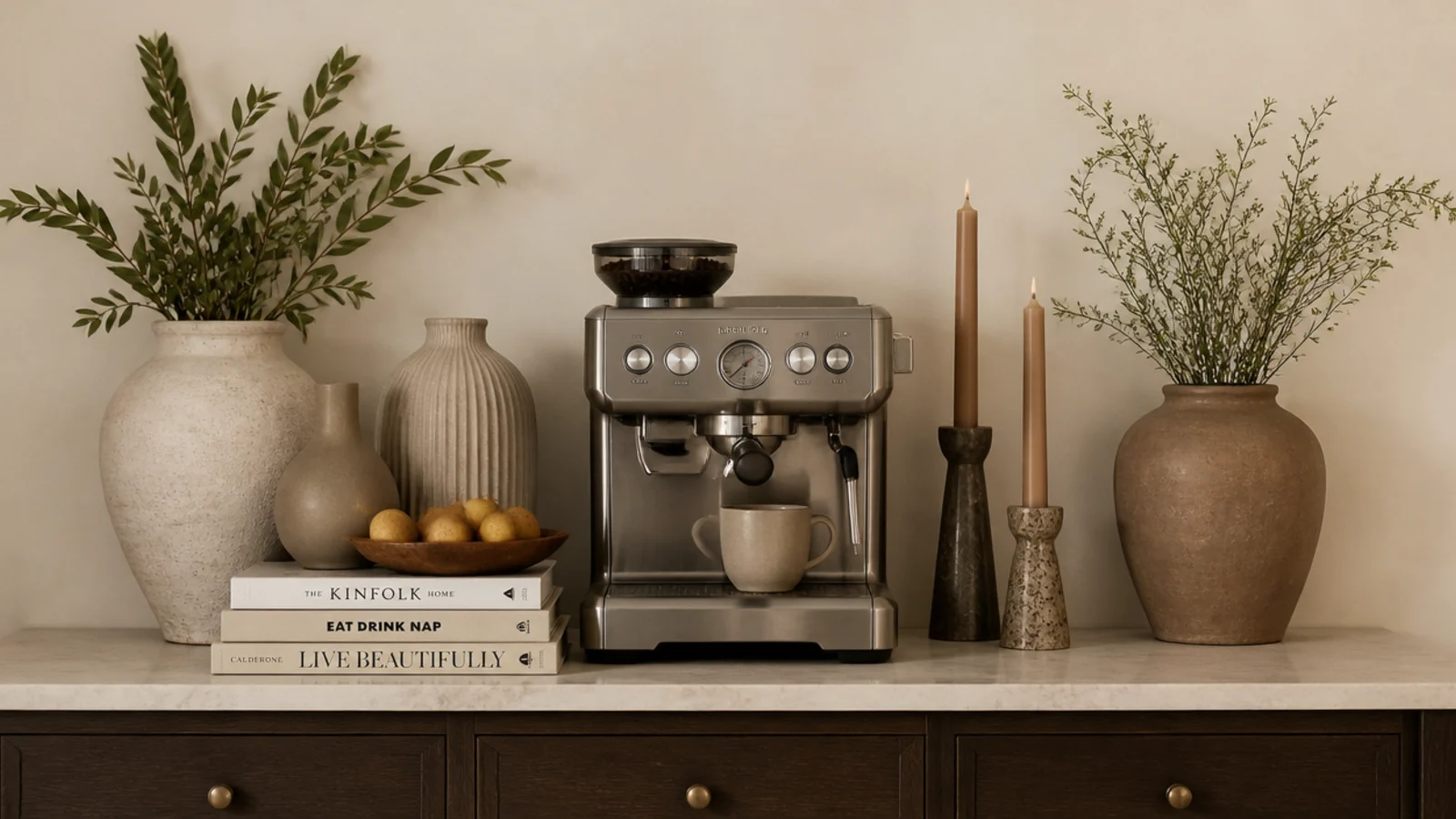
New house, new corner, and I arranged it in an afternoon: vases, a stack of books, two candles, a bowl of fruit. It photographed beautifully and there was nowhere to set a hot cup down.
Within four days everything had been shoved sideways to make room for actual coffee.
The fix: use the corner bare for a week and notice where your hand naturally lands, where the mug waits, where the wet spoon goes. Then style around those spots. The gear guide in best coffee bar accessories is the order I would buy in now, and none of it is decorative.
Coffee Bar Mistakes: What I'd Do Differently Now
If I could hand my younger self one page, it would be four lines long. Find the outlet before you pick the corner. Measure the depth as well as the width. Leave 6 inches above the machine and put the shelf at 18. Buy the tray on the same trip as the machine.
Everything after that is arrangement, and arrangement is easy to change. The four decisions above are the ones that cost money and drywall to undo.
The subtler thing I would tell myself is to use the corner before decorating it. Every station I have loved was styled second, after a week of watching where my hand actually went at six in the morning. The ones I styled first all got taken apart within a month, because a coffee corner is a working surface first and a pretty one second.
And I would descale it. That is a $200 lesson I would happily not repeat.
Frequently asked questions
What is the most common coffee bar mistake?
Choosing the corner for how it looks rather than where the outlet is. Every other problem is fixable with a tray or a shelf, but a station without power beside it either gets an extension cord or quietly stops being used. Find your outlets first, then decide which of them can hold a station comfortably.
How much clearance does a coffee machine need under a cabinet?
At least 6 inches of clear air above the tallest point, measured with the lid open rather than closed. Machines with a lifting lid or a top-fill reservoir often need 10 inches or more. Steam that cannot escape softens cabinet undersides, lifts laminate edges and leaves a permanent dark bloom you cannot clean off.
Why does my home coffee taste worse than it used to?
Usually the beans, not the machine. Ground coffee goes flat within about a week, and whole beans stored in a clear jar in sunlight or in the fridge lose far more than people expect. Keep whole beans in an opaque airtight container at room temperature and buy a quantity you will finish in two weeks.
How often should I descale a home coffee machine?
Every two months in hard water and every three to four in soft, on a fixed date you will actually remember. Scale builds silently, drops the brew temperature, and eventually kills the heating element. A bottle of solution costs a few dollars a year and is far cheaper than the replacement machine I bought.
Is a tray under the coffee machine actually necessary?
It is the single most useful ten dollars in the whole setup. It catches the drips that would otherwise mark the counter, and it lets you lift the entire station out in one movement to clean behind it, which is exactly where grounds and milk splatter end up. Choose one with a half-inch lip.
If you are setting a station up this weekend, do these three in order: check the outlet, measure the depth, and buy a tray. Those cover most of what I got wrong. For layouts by kitchen type, 15 easy coffee corner ideas is the place to start, and if your mugs are going on open shelving above the counter, open shelving mistakes covers the ones I made there too. Save the pin so the numbers are with you at the store.
Want more like this? Browse all 15 coffee corner ideas guides — they all use the same measurements and budget tiers.

Pin it for later
Save this to your Coffee Corner Ideas board
Pin it now so it is waiting for you when the tape measure comes out — and so the next person hunting for this idea can find it too.
Save this pinKeep going
More ideas worth saving while you have the tape measure out.