Coffee Corner Ideas · Review
25 Best Coffee Corner Picks Worth Buying

Some links on this page may become affiliate links in future. I only recommend pieces I would put in my own home — see the affiliate disclosure.
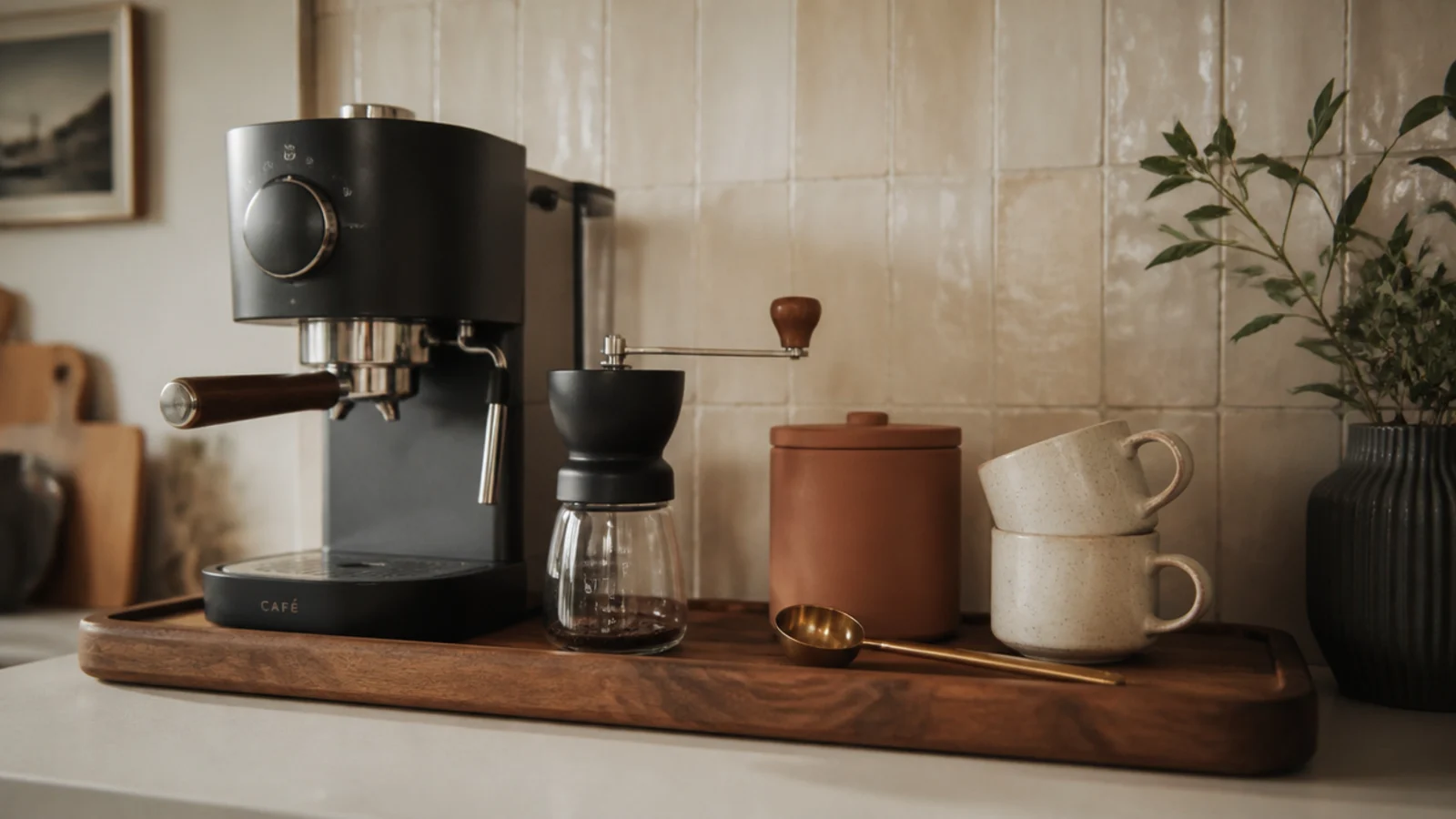
The best coffee bar accessories are the ones that earn their footprint every single morning. Everything else is a nice object taking up counter you needed. I have bought, returned and lived with most of these across four kitchens, and below is every type worth considering, compared on the numbers that decide whether a piece stays — plus the eight I would buy again without thinking.
In this guide11 sections — tap to openHide
- 1.How I Chose the Best Coffee Bar Accessories
- 2.The Full Comparison: 25 Coffee Bar Accessories
- 3.The stepped stoneware mug set
- 4.The opaque airtight bean canister
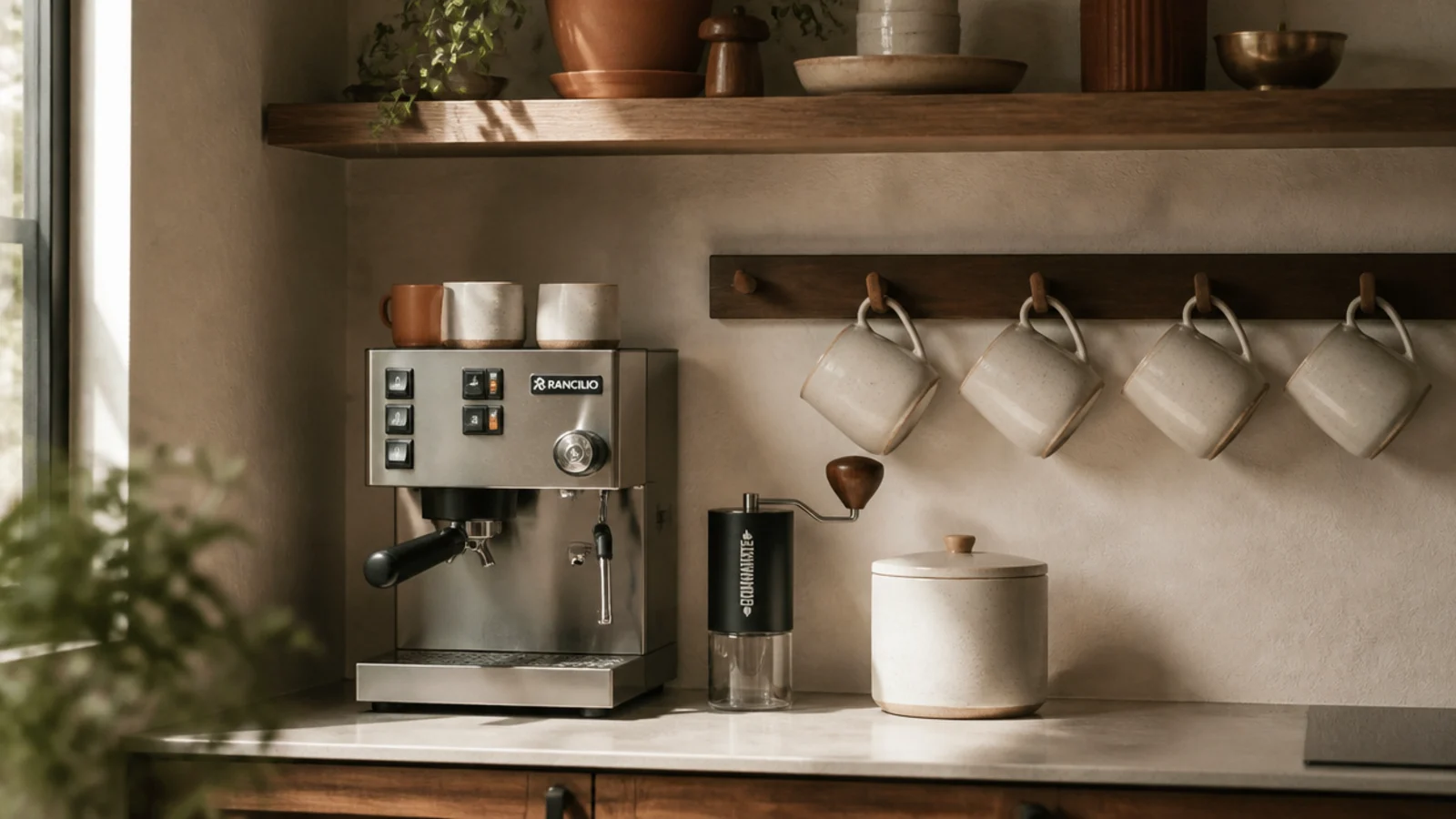
- 5.The hand burr grinder
- 6.The lipped walnut tray
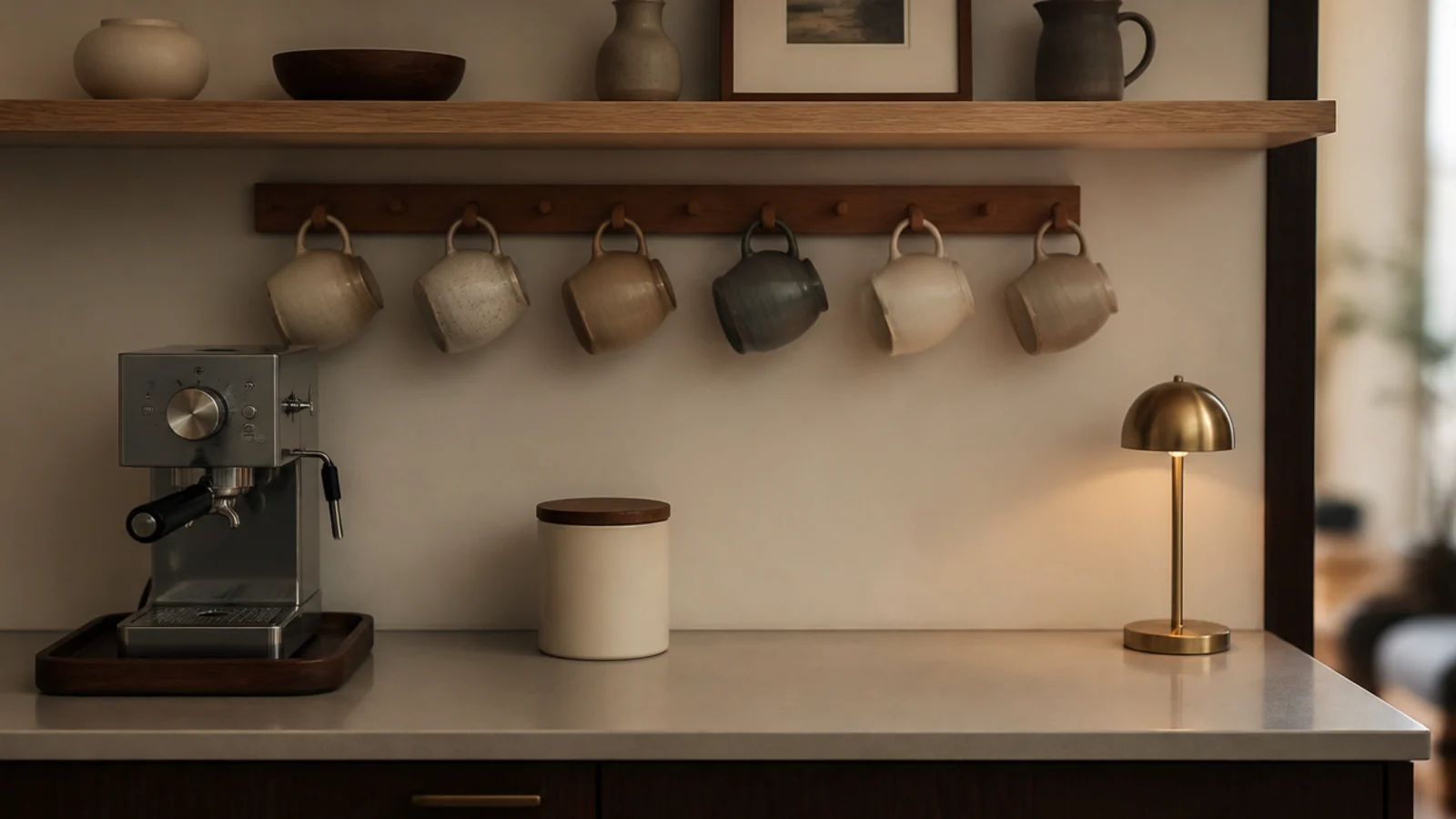
- 7.The wooden mug peg rail
- 8.The powder-coated steel counter riser
- 9.The three-tier rolling cart
- 10.The warm under-cabinet strip light
- 11.What to Check Before You Buy
How I Chose the Best Coffee Bar Accessories
Five things decided the ranking, in this order.
- Footprint per job. A workable corner needs about 24 to 30 inches of counter width and 15 to 18 inches of depth, and everything for one cup should sit inside a single arm sweep, roughly a 30-inch reach zone. Anything that eats that budget without doing daily work loses.
- Material honesty. Solid wood, stoneware, powder-coated steel and stone survive heat, water and a knocked elbow. Thin veneer, unsealed pine and painted particle board do not, and they fail visibly at the front edge where you look every day.
- What it protects. A tray under the machine catches drips and lets you lift the station out to clean behind it, which is where grounds and milk splatter actually end up. Pieces that prevent damage rank above pieces that only look good.
- Renter reversibility. Freestanding beats mounted, and mounted with two screws beats a system with eight. A riser does the job of a shelf with no holes at all, which matters if you move often.
- Whether it survives a bad morning. Anything you have to handle carefully at 6am gets abandoned by week three.
I did not weight brand, finish trends or how something photographs empty. Everything below is described by type and construction, because the same pieces show up under a dozen labels at Target, IKEA, Amazon, Wayfair, HomeGoods and every thrift store, and construction is what you are actually buying.
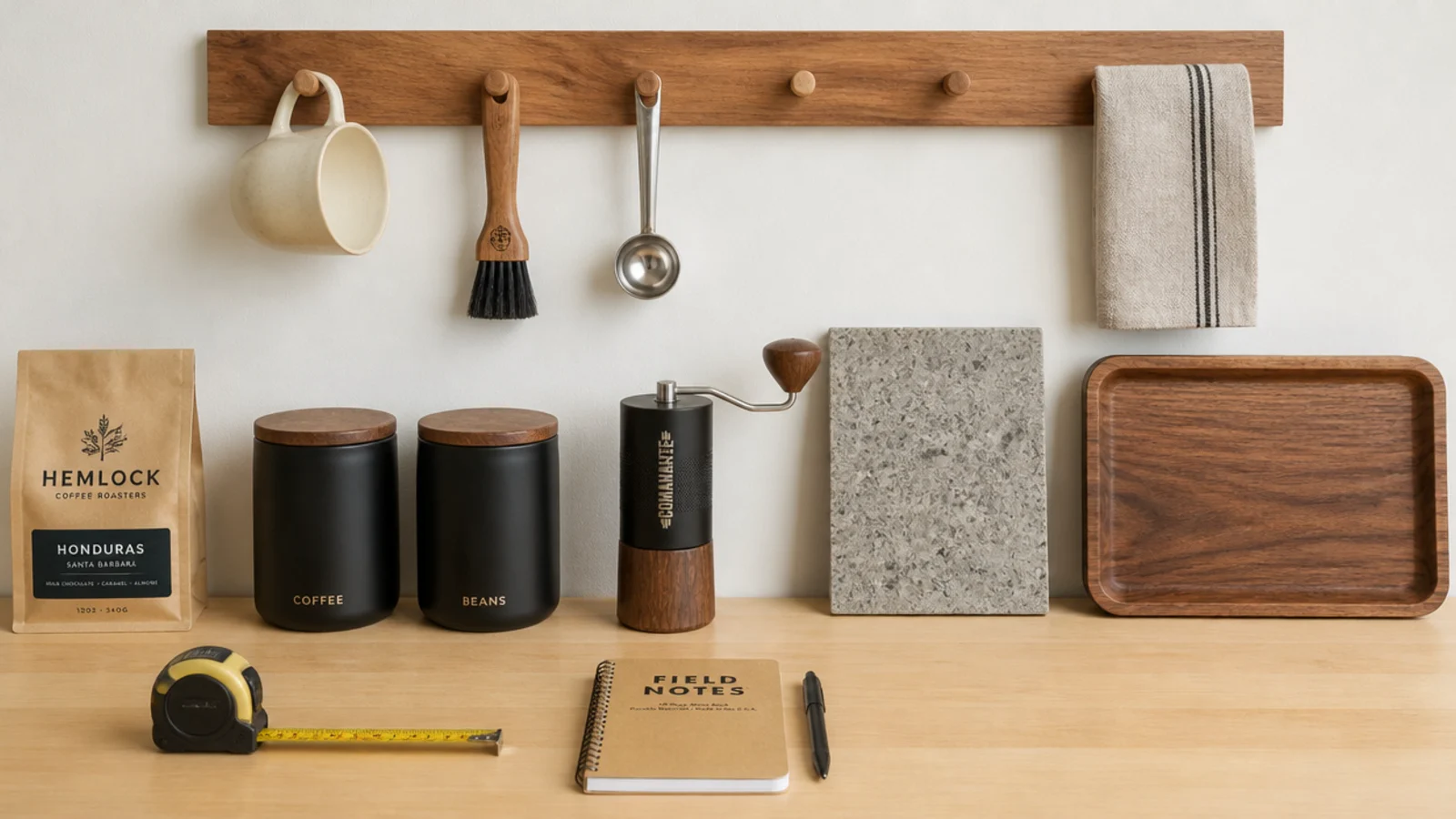
The Full Comparison: 25 Coffee Bar Accessories
Price tiers: $ under $30 · $$ $30 to $90 · $$$ $90 and up.
| Pick | Best for | Price | Why it wins |
|---|---|---|---|
| Stepped stoneware mug set | Every corner, first purchase | $$ | Matching stacks take a third of the shelf |
| Opaque airtight bean canister | Keeping coffee drinkable | $ | Blocks light, seals air, sits at room temperature |
| Hand burr grinder | Small and quiet kitchens | $$ | Mug-sized footprint, no outlet, drawer storage |
| Electric burr grinder | Daily espresso and volume | $$$ | Consistent grind fast, worth the counter it costs |
| Lipped walnut tray | Protecting a rented counter | $$ | Catches drips and lifts the station out |
| Honed stone counter board | Tired laminate counters | $$ | Heatproof, wipeable, upgrades the whole corner |
| Ceramic pour-over cone | The smallest possible setup | $ | Footprint of a cereal bowl, nests in the carafe |
| Borosilicate glass carafe | Brewing two cups at once | $ | Handles thermal shock, shows the level |
| Gooseneck stovetop kettle | Controlled pour, free outlet | $$ | Slow pour control without taking any power |
| Variable-temperature electric kettle | Precise brewing | $$$ | Holds a set temperature while you grind |
| Slim brewing scale with timer | Repeatable pour-over | $$ | Stands on edge, costs almost no counter |
| Wooden mug peg rail | Shelves that are always full | $ | Six mugs in the width of one standing mug |
| Freestanding six-arm mug tree | Renters with no wall rights | $ | Same six mugs in a seven-inch circle |
| Powder-coated steel riser | Counters with no shelf above | $$ | A second level with zero fixings |
| Two-tier painted pine hutch | Deep counters with dead space | $$ | Turns the back six inches into real storage |
| Three-tier rolling cart | Kitchens with no spare counter | $$ | Working height anywhere, locks in place |
| Brass coffee scoop | Small warm metal detail | $ | Ages into a patina no new finish imitates |
| Lidded oak pod box | Pod machines on show | $ | Half the footprint of a spinning carousel |
| Seagrass storage basket | Spare bags and filters | $ | Contains the overflow that re-clutters counters |
| Stainless milk pitcher | Anyone frothing daily | $ | Pours cleanly and survives being dropped |
| Handheld milk frother | Lattes without an espresso machine | $ | Stores in a drawer, costs nothing to run |
| Cork mat set | Loud grinders and hard counters | $ | Kills rattle and protects the surface |
| Warm under-cabinet strip light | Dark or north-facing corners | $ | Warm light does what paint cannot |
| Water filter jug | Hard-water cities | $ | Better cup and far less scale build-up |
| Descaling solution and brush set | Every machine, every owner | $ | Keeps brew temperature and saves the machine |
Eight of those are the ones I keep buying again.
1. The stepped stoneware mug set
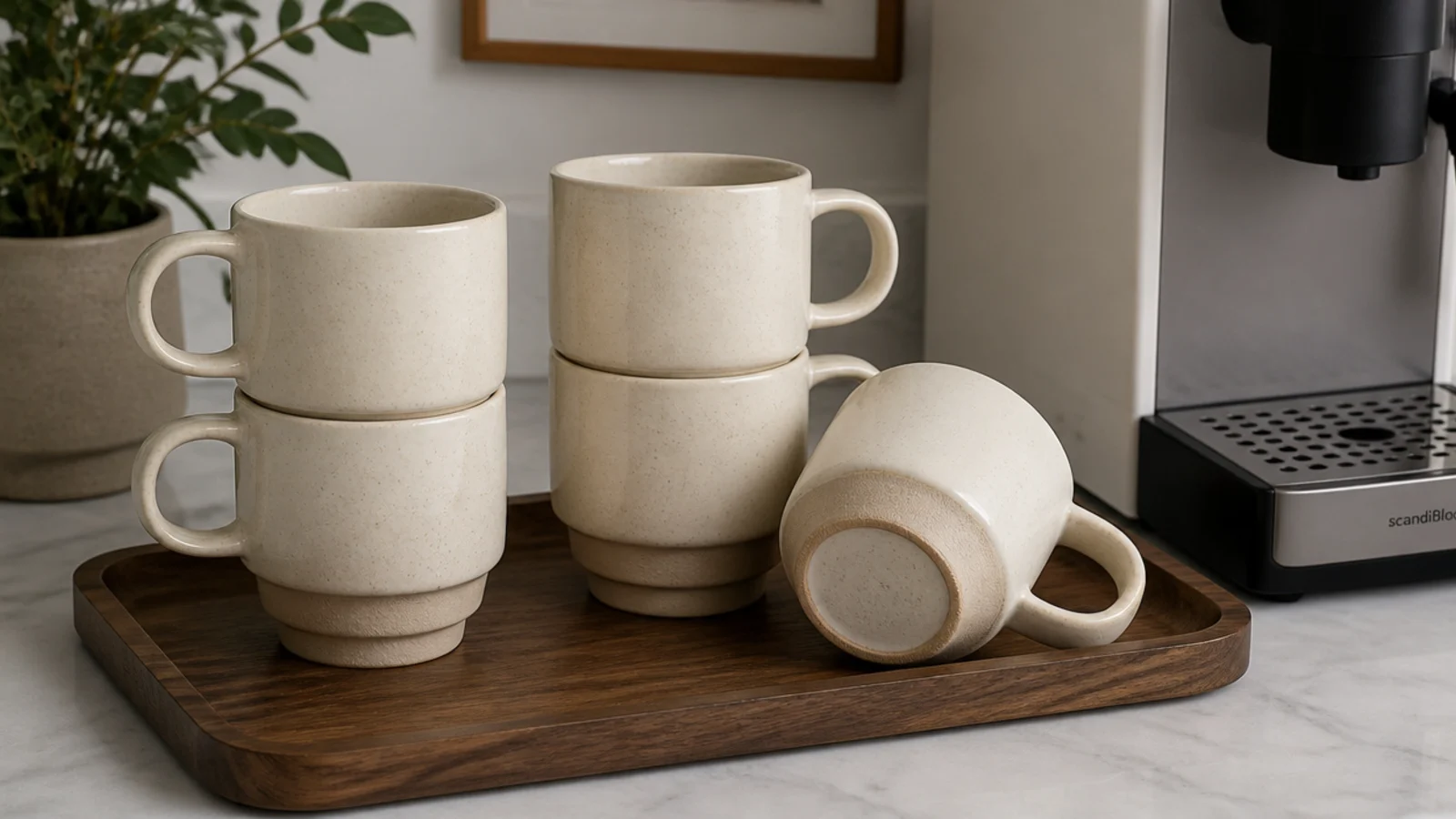
Six matching mugs in one stackable shape is the most useful purchase on this list, and the least exciting. Look for walls around a quarter inch thick, an unglazed foot ring and a stepped profile that stacks three high without the rims touching.
Thick stoneware holds heat far longer than thin porcelain, which matters in a cold kitchen at six in the morning. Six of them take about a third of the shelf that six assorted mugs need. Expect $30 to $60 new, or a dollar or two each for restaurant-weight mugs in a thrift shop.
2. The opaque airtight bean canister
Whole beans keep in an opaque airtight container at room temperature — not the fridge, where condensation gets in every time you open it, and not a clear jar sitting in sunlight.
Look for matte stoneware, unglazed clay or powder-coated steel, with a silicone-gasketed lid you can open one-handed. Size it to two weeks of drinking, which is roughly a pound for most households; a big canister sitting half empty is worse than a small one you refill. $15 to $35, and it improves the cup more than most machine upgrades.

3. The hand burr grinder
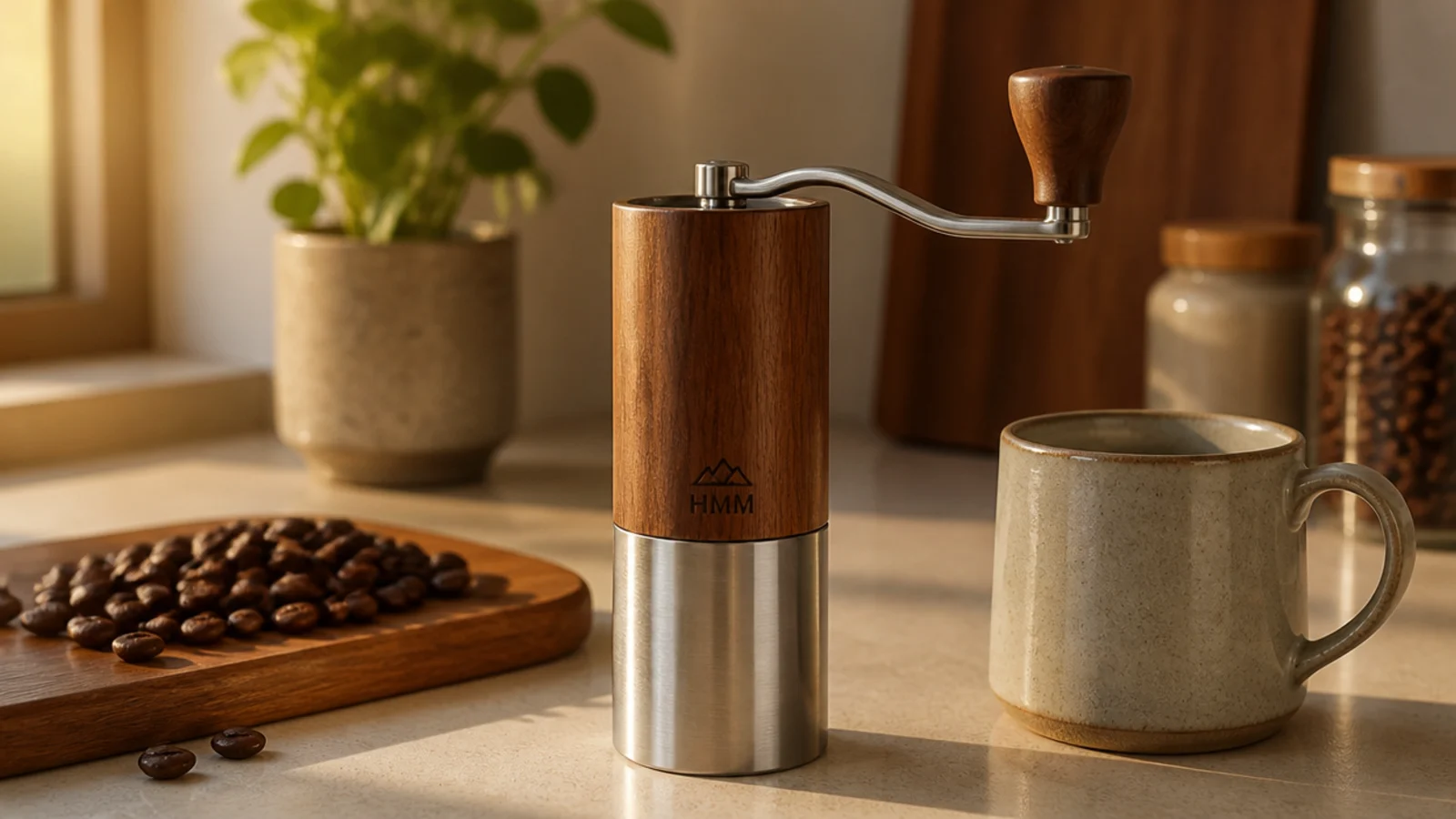
Ground coffee goes flat within about a week, which is why grinding fresh outranks nearly every other upgrade. In a small kitchen, the hand version wins outright.
It is roughly the footprint of a large mug, needs no outlet, makes no noise in a sleeping house and stores in a drawer between uses. About 40 seconds of cranking gives you two cups. Look for steel or ceramic burrs and a shaft supported at both ends, since a wobbly shaft is what makes cheap ones grind unevenly. $35 to $90.
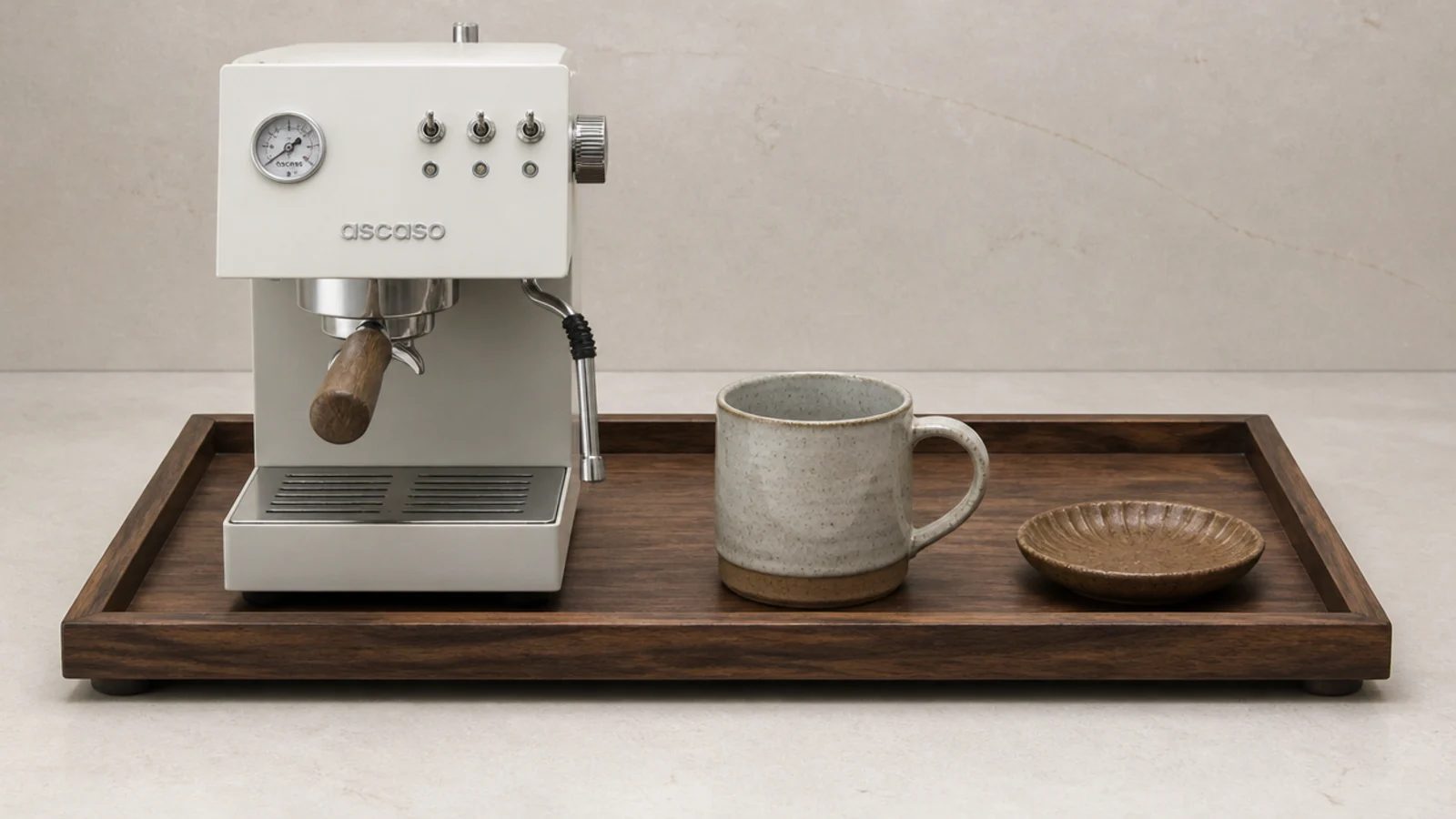
4. The lipped walnut tray
A tray does two jobs no other accessory covers: it catches the drips that stain a counter, and it lets you lift the whole station out in one movement to clean behind it. Splatter travels backward, which is the direction you never look.
Twelve by 18 inches with a half-inch lip and felt pads underneath is the specification. Oiled walnut or oak over painted or laminated versions, because the grain is doing the decorating. Re-oil it twice a year. $20 to $50, and it is the first thing I buy for any corner.
5. The wooden mug peg rail
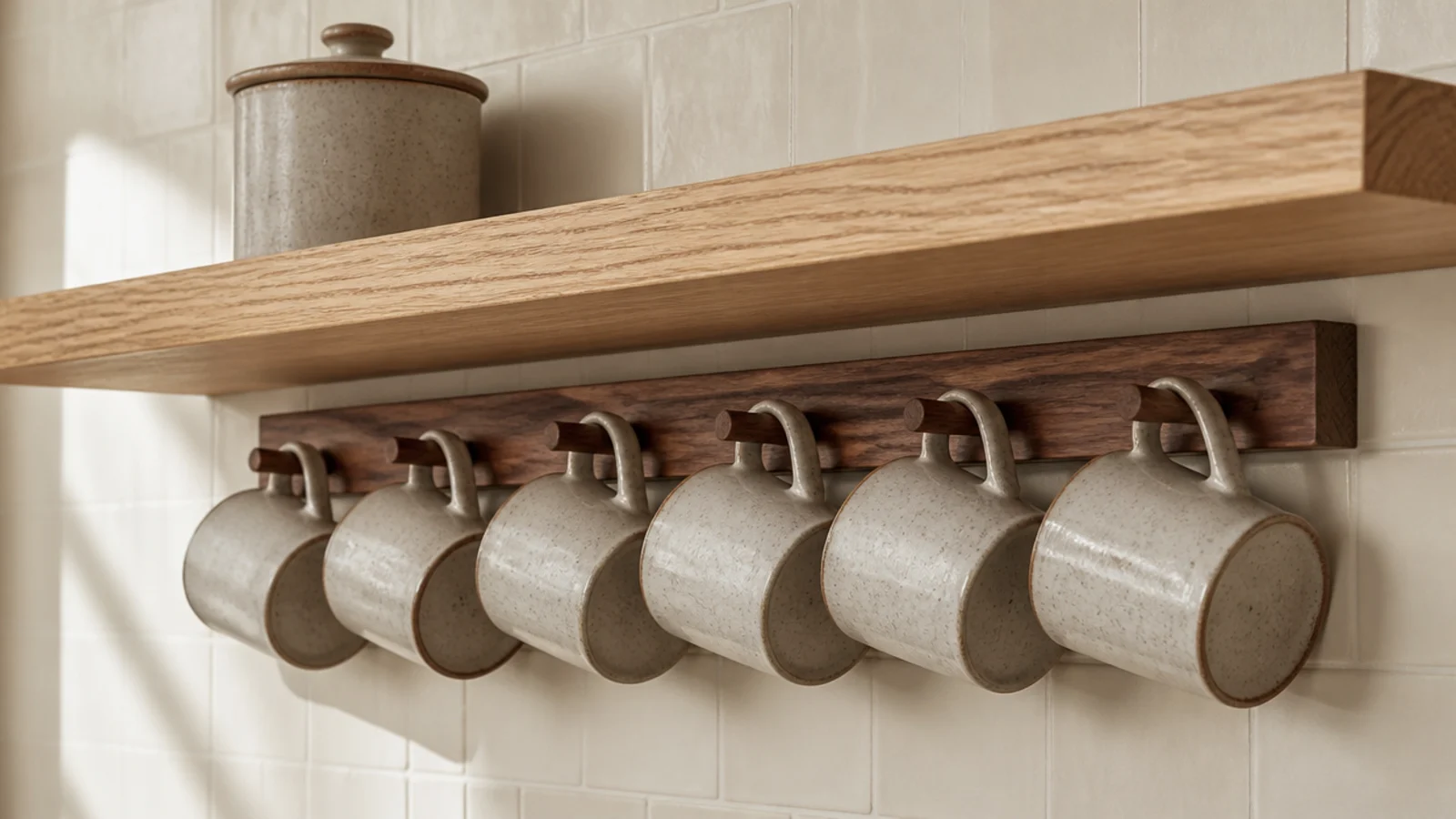
The best storage math in a small kitchen. A peg rail fixed under a shelf holds six mugs in the width one mug takes standing on the counter, and it frees the shelf above for a canister and something living.
Space the pegs about 4 inches apart so handles clear each other, and mount it high enough that a hanging mug never brushes the machine. Solid maple, oak or walnut with through-fitted pegs rather than glued dowels. Two fixings, both patchable in five minutes. $18 to $35.
6. The powder-coated steel counter riser
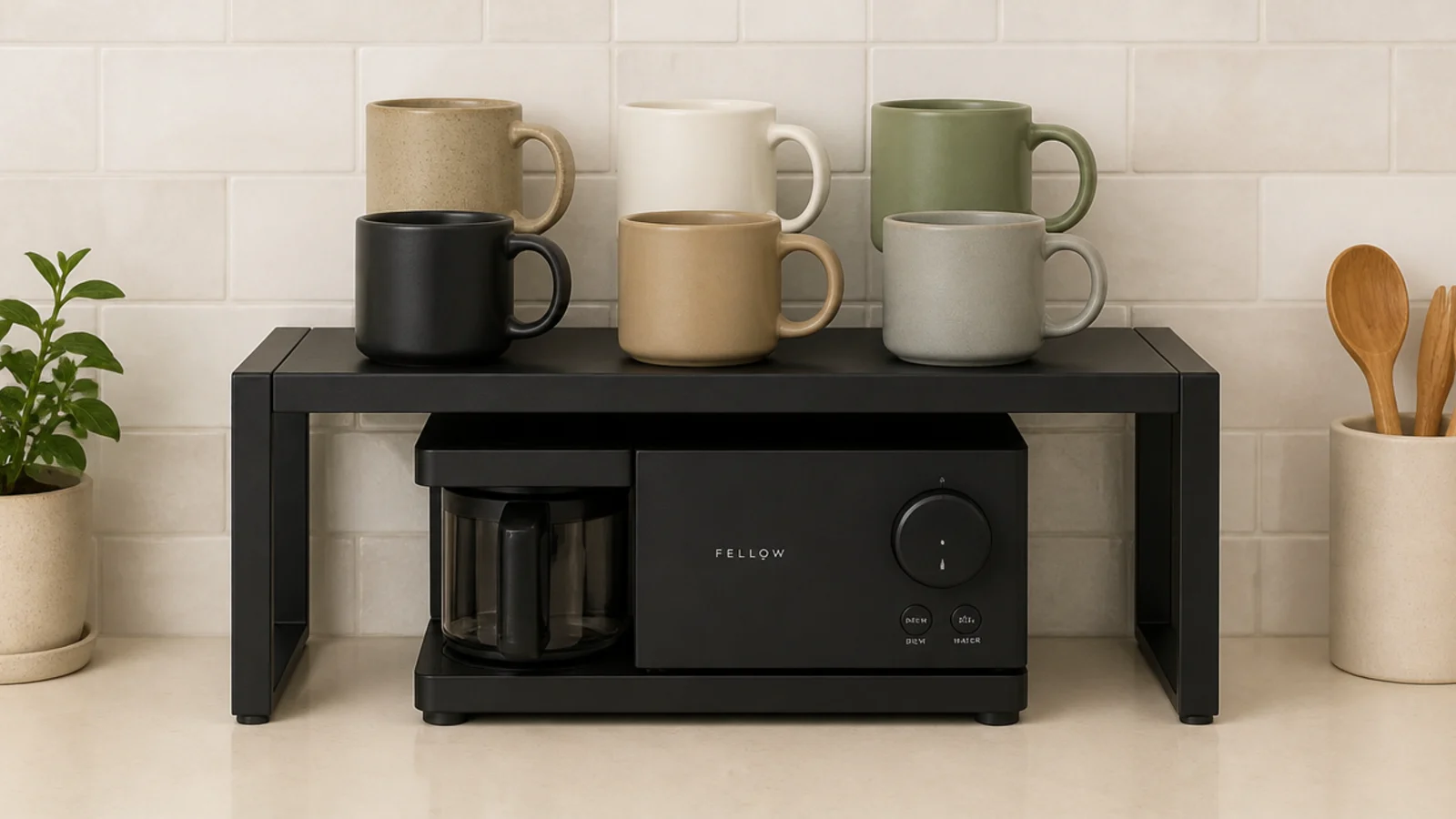
If you cannot drill, this is the shelf substitute that actually works. A riser about 24 inches wide and 6 to 8 inches tall gives you a second level with no fixings at all.
Mugs go on top and the machine underneath, never the reverse. Measure the machine with its lid open before buying, since a top-fill reservoir often needs 10 inches of headroom. Powder-coated steel or solid hardwood; skip anything with a laminate top, which lifts in steam. $20 to $50, and it comes up constantly in coffee corner decor.
7. The three-tier rolling cart
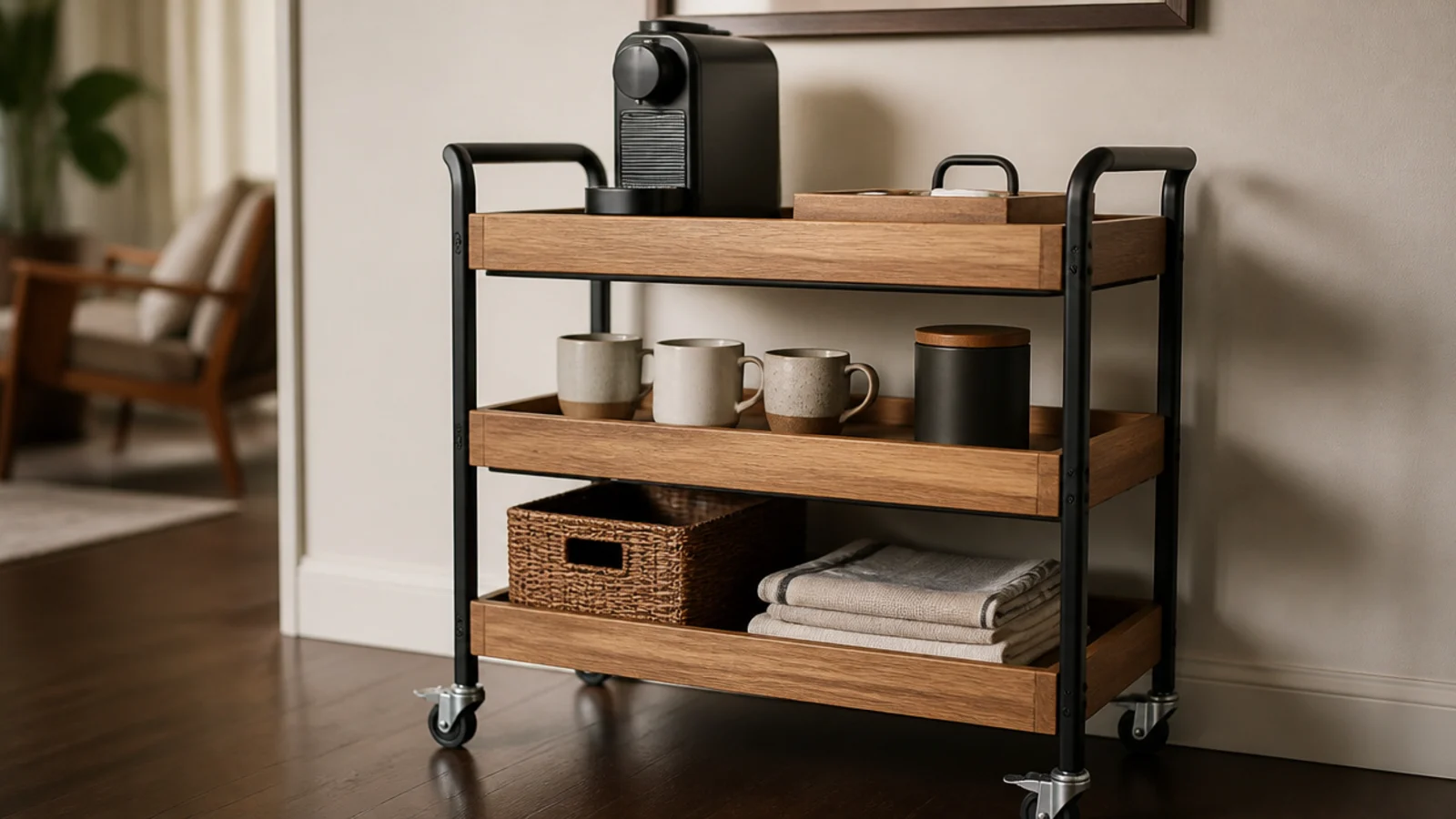
The whole coffee corner in one object, for kitchens with no counter to give. Standard carts run 16 to 18 inches wide and 30 to 34 inches tall, which is working height without a counter at all.
Look for locking casters and a steel frame with solid wood or powder-coated shelves rather than wire, which drops small things through. Machine and tray on top, mugs and canister in the middle, spares below. Lock the casters once it is loaded. $40 to $90 for steel, more for oak.
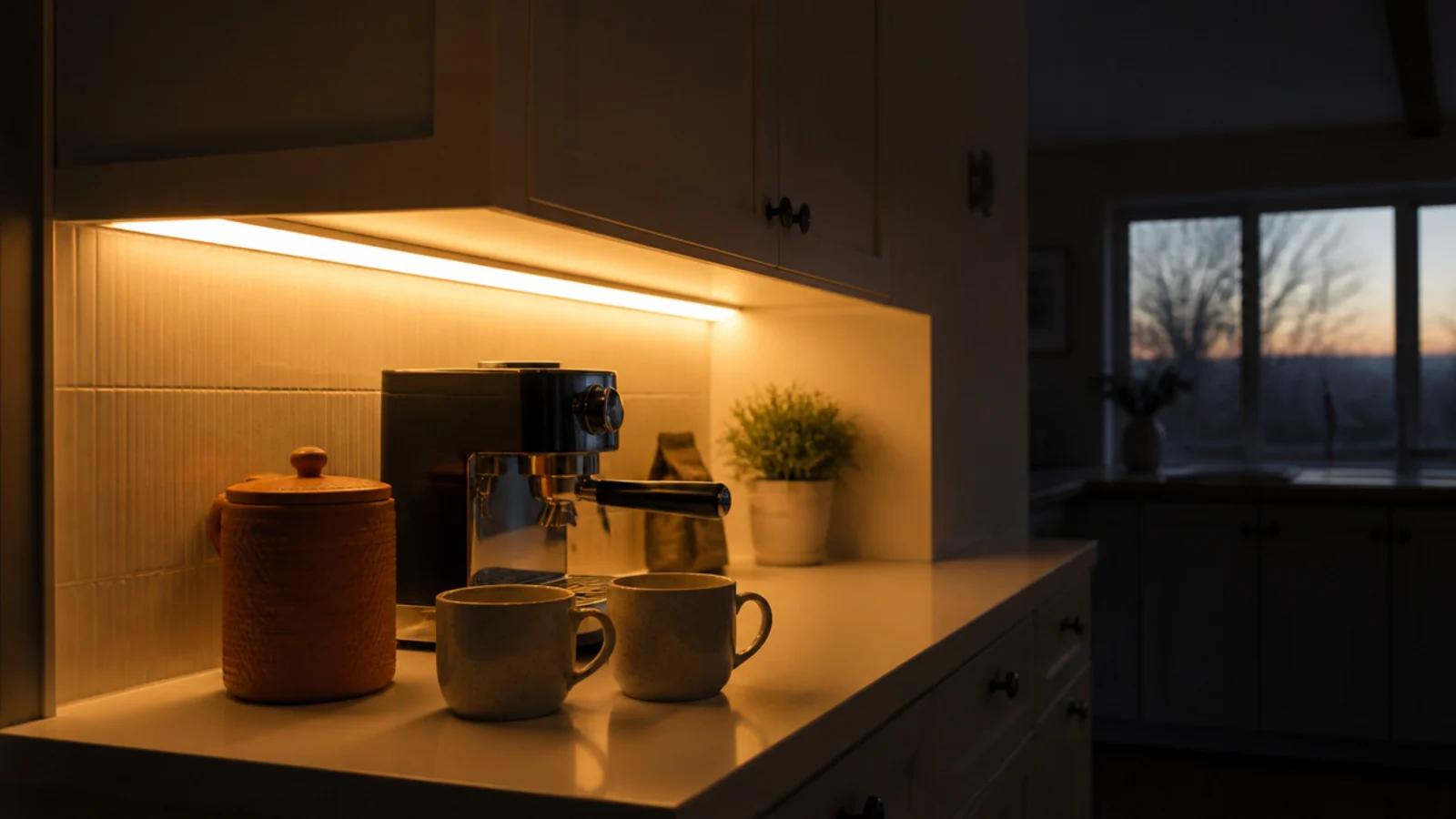
8. The warm under-cabinet strip light
The cheapest thing here and the one people notice most. A 2700K strip under the upper cabinet turns a shadowed counter into somewhere you want to stand before sunrise.
Cool overhead light drains the colour out of stoneware and walnut and puts your own shadow onto the pour. Stick the strip to the front underside edge so the light falls on the counter rather than the backsplash, and choose a dimmable one if the kitchen is near a bedroom. $12 to $40, battery or plug-in.
What to Check Before You Buy
Measure the depth, not just the width. A machine that is 16 inches deep on a 15-inch counter overhangs the edge and gets clipped daily. A workable corner wants 24 to 30 inches of width and 15 to 18 inches of depth, and the machine is only one thing that has to fit.
Measure the headroom with the lid open. Six inches of clear air above the tallest point is the minimum for steam, and a lifting lid or top-fill reservoir often needs 10 or more. This is the number people check last and regret first.
Find the outlet before you choose the corner. An extension cord run under or near a water source is the wrong answer, and no accessory on this list fixes it. Power decides the layout.
Check whether a canister is genuinely opaque. Smoked glass is not opaque, and a tinted jar in a sunny kitchen still flattens beans. Matte ceramic, unglazed clay and coated steel are the safe materials.
Look at the front edge of anything wooden. If you can see a seam where edge banding meets the face, it is veneer over particle board, and it will chip where you brush past it.
For anything freestanding, check the base. Felt pads, a flat foot and a low centre of gravity are what stop a riser or mug tree from walking across the counter every time you pull a mug off it.
Frequently asked questions
What should I buy first for a home coffee bar?
A tray and an opaque canister, in that order, and both for under $50 together. The tray catches drips and lets you lift the station out to clean behind it. The canister keeps whole beans drinkable at room temperature, away from light. Those two fix more daily annoyance than any machine upgrade at the same price.
Is a burr grinder worth it for a small kitchen?
Yes, and the hand version is the small-space answer. A hand burr grinder is roughly the footprint of a large mug, needs no outlet, stores in a drawer and takes about 40 seconds of cranking for two cups. Ground coffee goes flat within a week, so grinding fresh changes the cup more than most equipment upgrades do.
How much should I spend on coffee bar accessories?
Under $30 covers a scoop, a canister, cork mats or a pod box. Thirty to $90 covers a tray, a mug set, a hand grinder, a riser or a peg rail. Above $90 you are into carts, electric grinders and kettles with temperature control. Most corners work beautifully with three items from the middle tier.
What accessories are not worth buying?
Spinning pod carousels, single-shape novelty mugs, and anything that stores something you use twice a year in permanent counter space. Matching decanted jars only pay off if you refill them; if they end up half empty they cost counter and give nothing back. Buy for the thing you do every morning, not the weekend version.
Do I need a scale to make good coffee at home?
Only if you brew by pour-over or espresso and want the same result twice. A slim scale with a built-in timer is genuinely useful there, and models that stand on edge take up almost no counter. For a drip machine or a press, a consistent scoop and a fresh grind matter far more than weighing anything.
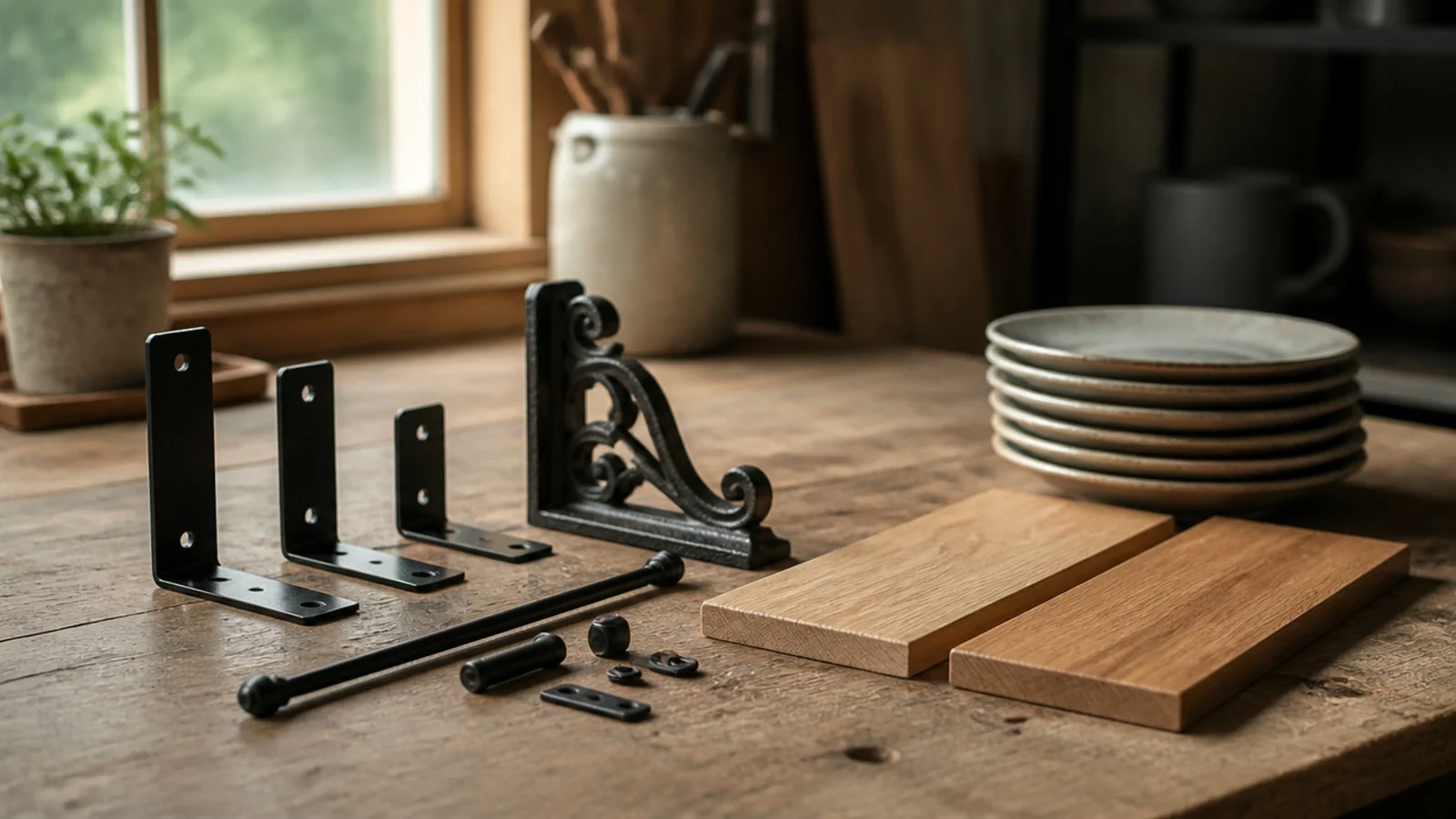
Buy in the order things annoy you: a tray, then a canister, then whatever solves your specific shortage — a riser if you have no shelf, a rail if the shelf is full, a cart if you have no counter at all. Everything else can wait. The setups these pieces go into are laid out in 15 easy coffee corner ideas, the errors to skip are in coffee bar mistakes, and if you are mounting that shelf yourself, the best kitchen shelf brackets covers the hardware. Save the pin for the next shopping trip.
Want more like this? Browse all 15 coffee corner ideas guides — they all use the same measurements and budget tiers.
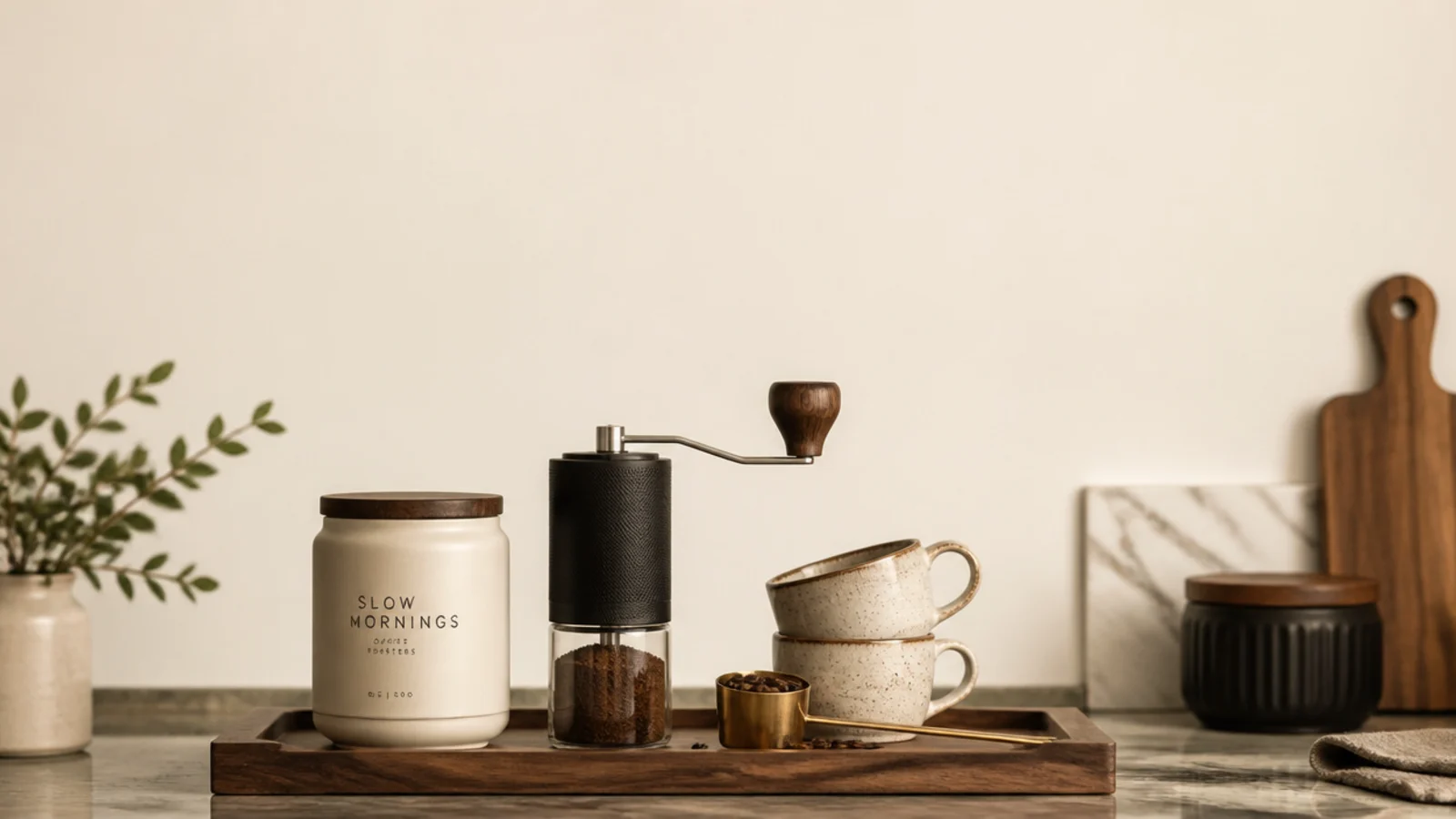
Pin it for later
Save this to your Coffee Corner Ideas board
Pin it now so it is waiting for you when the tape measure comes out — and so the next person hunting for this idea can find it too.
Save this pinKeep going
More ideas worth saving while you have the tape measure out.