Kitchen Shelf Ideas · Review
25 Best Kitchen Shelf Picks Worth Buying

Some links on this page may become affiliate links in future. I only recommend pieces I would put in my own home — see the affiliate disclosure.
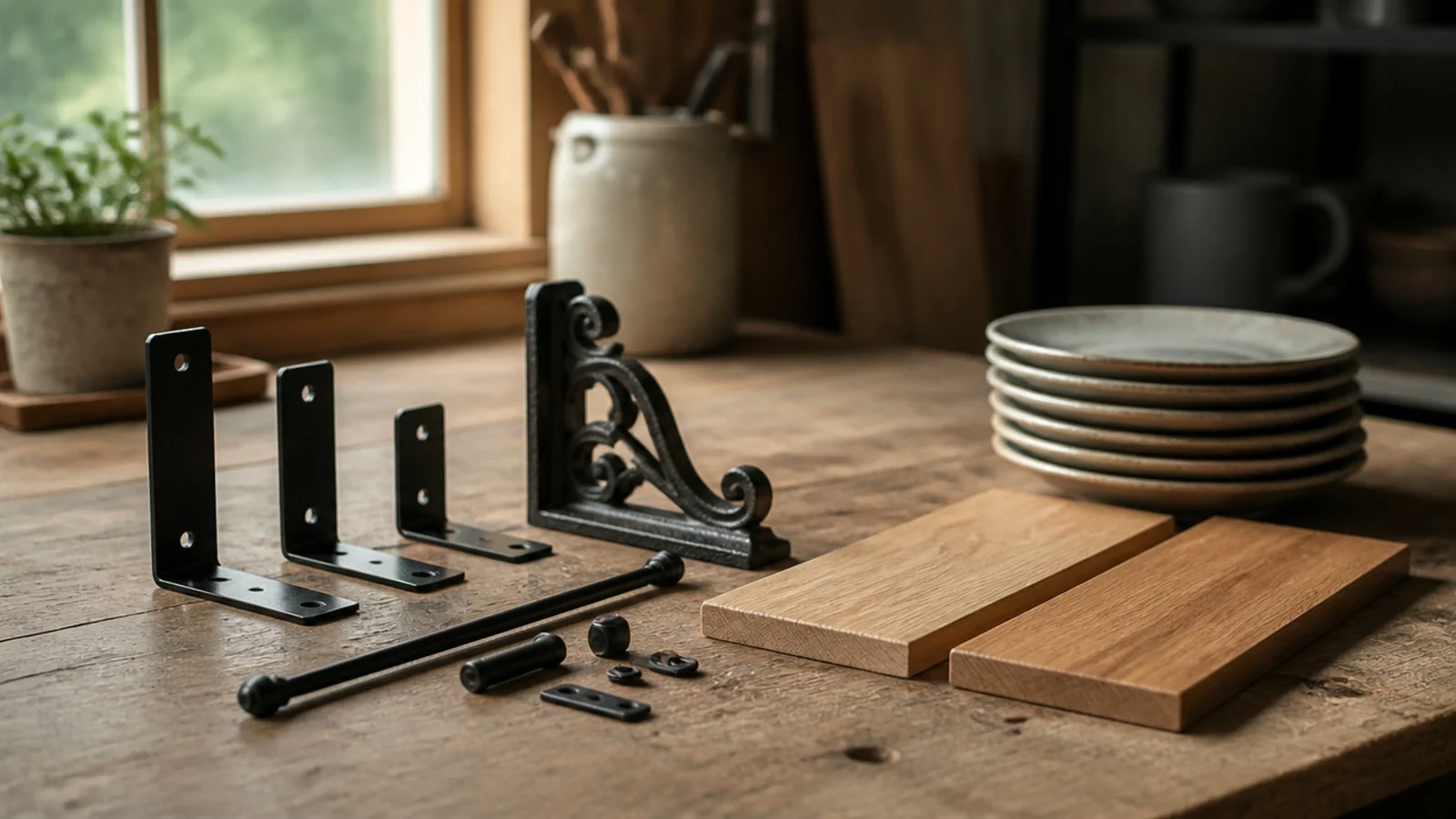
The best kitchen shelf brackets are almost never the prettiest ones. A bracket is only as good as what it screws into, and in a kitchen it also has to survive steam, grease and the slow abuse of things being dropped onto it. Below is every bracket and board type worth considering, compared on load, price and what it actually suits, plus the eight I keep coming back to.
In this guide11 sections — tap to openHide
- 1.How I Chose the Best Kitchen Shelf Brackets
- 2.The Full Comparison: 25 Kitchen Shelf Picks
- 3.The concealed steel rod bracket
- 4.The black powder-coated L bracket
- 5.The cast-iron corbel
- 6.The three-quarter-inch solid oak board
- 7.The reclaimed scaffold board with pipe flanges
- 8.The slotted track and adjustable bracket system
- 9.The three-inch backsplash ledge
- 10.The freestanding countertop riser
- 11.What to Check Before You Buy
How I Chose the Best Kitchen Shelf Brackets
I judged every type on five things, in this order.
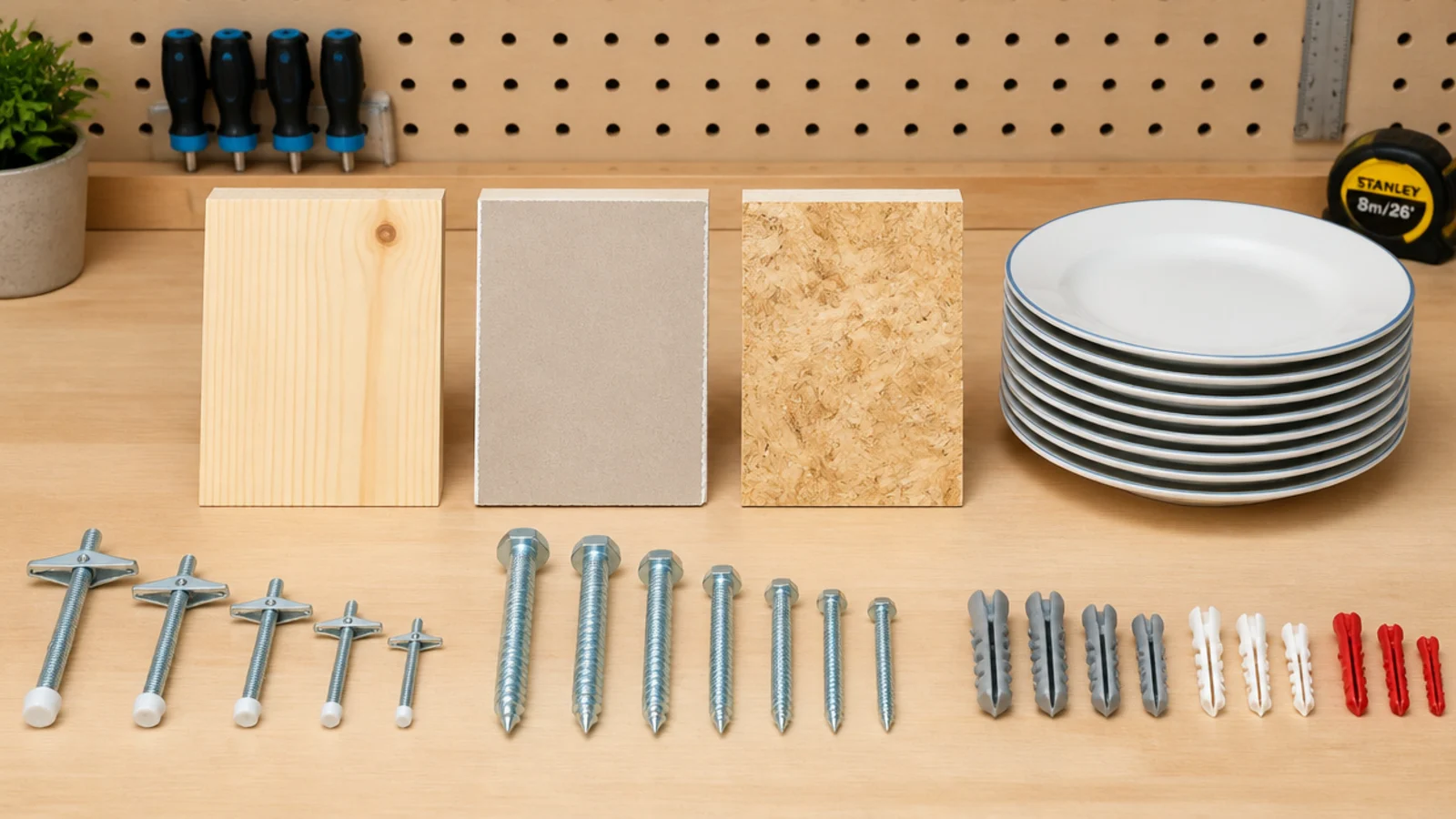
- Load path. Where does the weight actually go? A lag screw into a stud carries 40 to 60 pounds per bracket in standard framing. A toggle bolt in half-inch drywall carries 25 to 35 pounds. The plastic plugs in the box carry roughly 10 and are the single most common reason kitchen shelves sag. Brick and block with a sleeve anchor beat both, at 50 to 75 pounds; plaster and lath is unpredictable enough that I only trust toggles there.
- Honest capacity versus dish weight. Ten dinner plates weigh around 12 pounds, and nobody stops at one stack. Anything I would put dishes on needs a stud and three-quarter-inch stock minimum.
- Kitchen survivability. Powder-coated and painted steel shrug off steam. Raw steel spots within a season above a sink, and unsealed timber absorbs grease permanently.
- Reversibility. How many holes, how big, how easily filled. This decides everything for renters, and it separates a countertop riser from a set of corbels.
- Price per useful pound. A cheap bracket you have to cap at 10 pounds is not cheap.
I did not weight brand or finish trends. Everything below is described by type and construction rather than product name, because the same bracket appears under a dozen labels at Target, IKEA, Amazon, Wayfair and HomeGoods — and the construction is what you are buying.
The Full Comparison: 25 Kitchen Shelf Picks
Price tiers: $ under $40 · $$ $40–$120 · $$$ $120+. Load figures assume the correct fixing for the wall behind.
| Pick | Best for | Price | Why it wins |
|---|---|---|---|
| Concealed steel rod bracket | A clean floating line | $$ | Invisible hardware on thick stock into studs |
| Black powder-coated L bracket | Everyday dish shelves | $ | Cheapest route to a genuine stud-fixed load |
| Cast-iron corbel | Rustic and period kitchens | $$ | Weight and presence a stamped bracket cannot fake |
| Brass gallery-rail bracket | Plates standing on edge | $$ | Rail and support in one piece, no creeping plates |
| Slotted track and standard | Storage that keeps changing | $$ | Shelf heights move in seconds, not weekends |
| Pipe flange and nipple | Industrial and brick walls | $ | Assembles with a wrench, carries serious weight |
| Triangular solid wood bracket | Warm painted kitchens | $ | Paints out to match cabinets and disappears |
| Under-shelf steel strap | Slim modern profiles | $$ | Support hidden beneath a thin visible edge |
| Heavy-duty folding bracket | Fold-down tables and bars | $$ | Locks flat for a surface people lean on |
| Hidden French cleat | Alcoves and full runs | $ | Load spread along the whole back edge |
| Solid oak board, 3/4 in | Plates, bowls and jars | $$ | The working minimum thickness for dishes |
| Reclaimed scaffold board | Rustic runs with real span | $ | Inch-and-a-half stock that never sags |
| Butcher block offcut | Matching a wooden counter | $$ | Ties the shelf to the worktop material |
| Painted poplar or pine | Budget runs and rentals | $ | Cheap stock that ages honestly once painted |
| Blackened steel plate shelf | Thin modern spans | $$$ | Quarter-inch steel holds where timber bows |
| Stainless commercial shelf | Hard-working cook kitchens | $$ | Wipes clean forever, immune to steam |
| Tempered glass with standoffs | Small dark kitchens | $$ | Light passes through, humidity does nothing |
| Doweled plate-rack shelf | Draining and storing plates | $$ | Plates on edge use a third of the depth |
| Three-inch backsplash ledge | Oils and daily spices | $ | Frees counter without shading the work zone |
| Freestanding baker rack | Renters needing real weight | $$ | Thirty to sixty pounds a tier, zero holes |
| Countertop riser shelf | Instant no-drill storage | $ | Second level on the counter you already own |
| Over-the-sink bridging shelf | Tiny kitchens and rentals | $ | Uses the dead space above a basin |
| Tension-pole shelf column | Floor-to-ceiling, no fixings | $$ | Pressure between floor and ceiling, no anchors |
| Over-cabinet basket set | The soffit gap above cabinets | $ | Reclaims a foot of wasted height cheaply |
| Clip-on under-shelf basket | Inside existing cabinets | $ | Adds a layer with no tools whatsoever |
Eight of those are the ones I buy again and again.
1. The concealed steel rod bracket
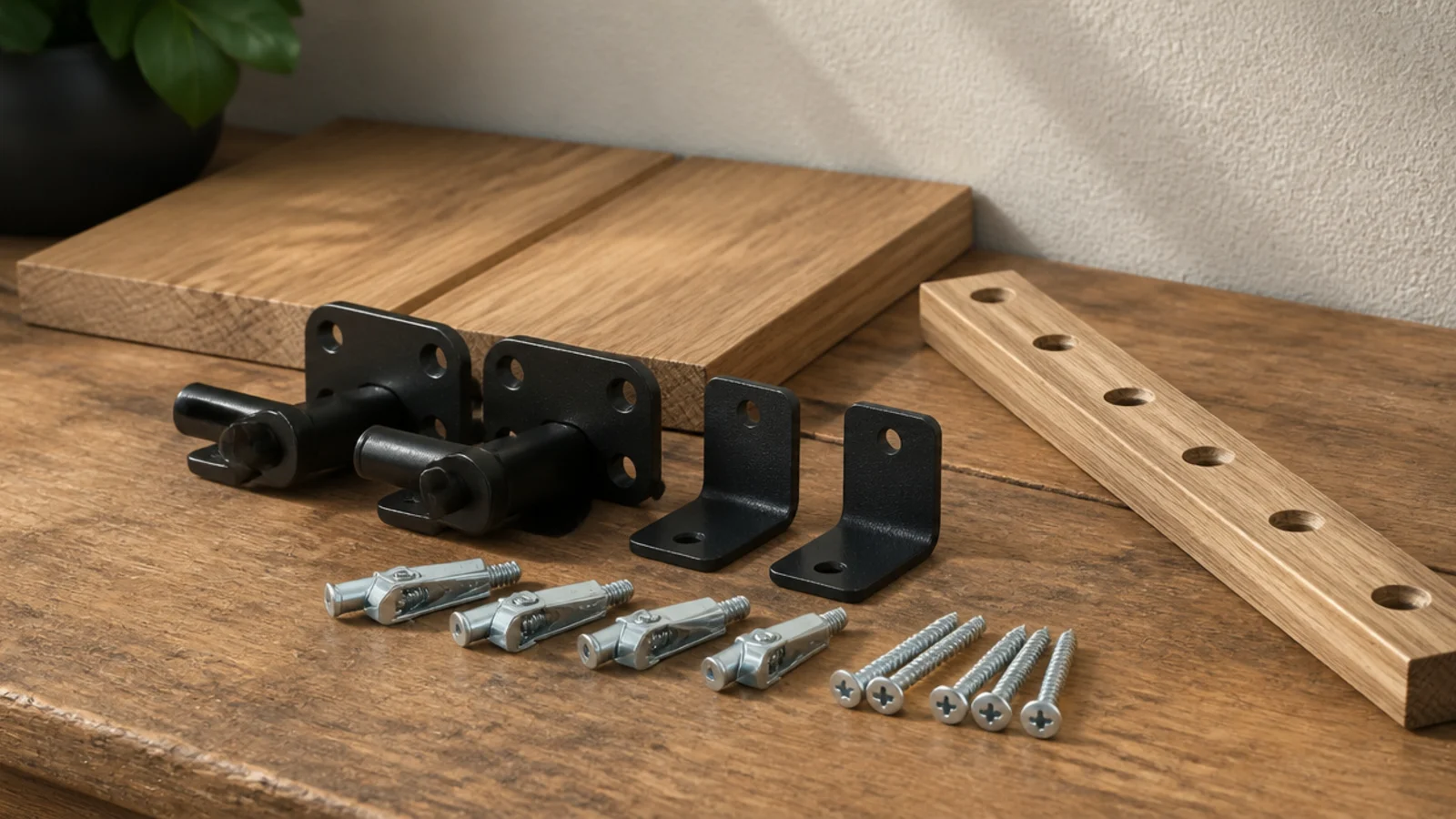
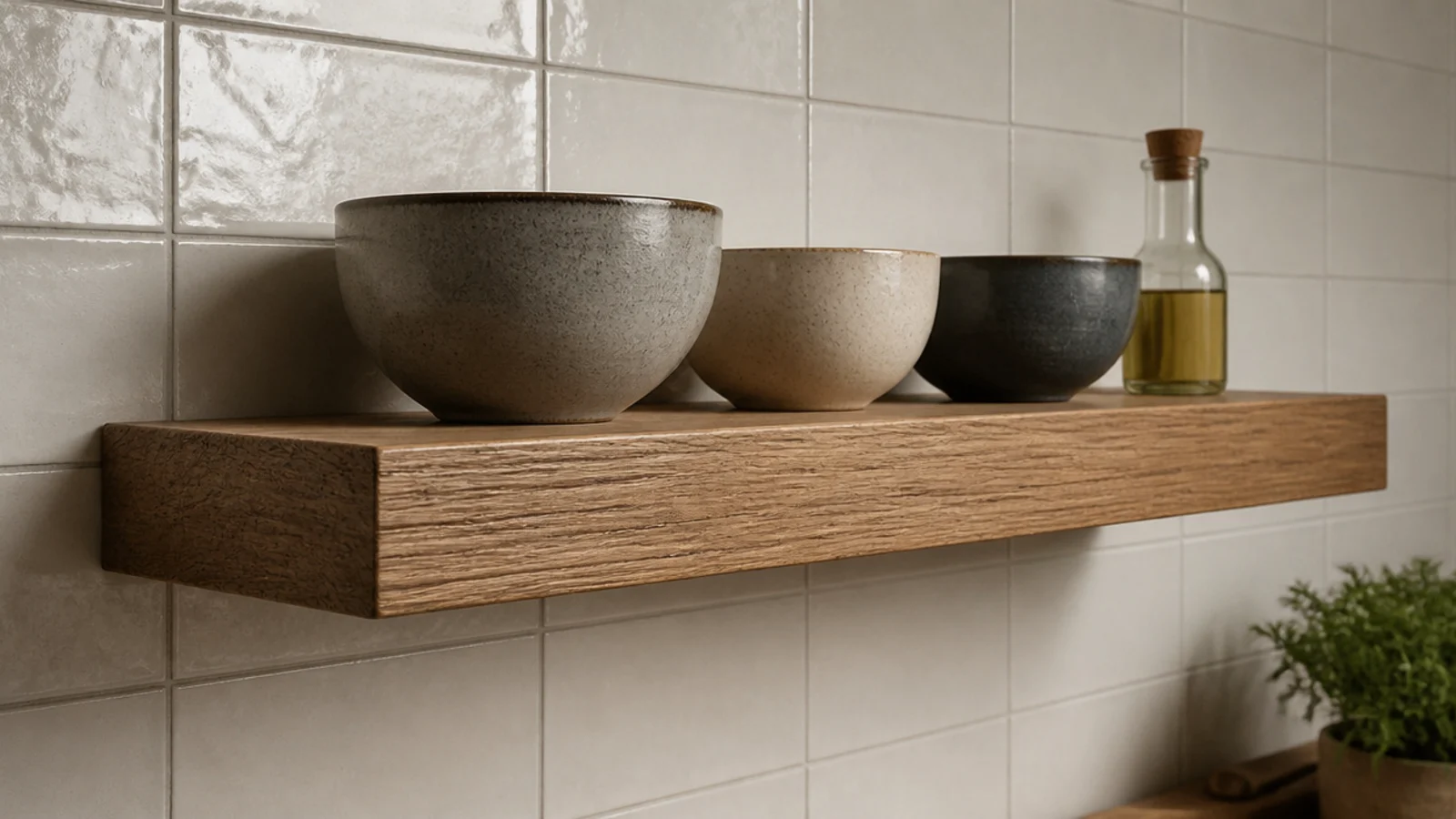
The one everybody wants, and the one most often mounted wrongly. A steel plate screws to the wall and two or three rods project outward into holes drilled in the back edge of the board.
It demands an inch and a half of stock minimum and it demands studs — into drywall alone this is the weakest common configuration in a kitchen. Drill the board with a jig, not freehand, since a rod hole two degrees off means a shelf that will not sit level. Expect $25 to $60 a pair.
2. The black powder-coated L bracket
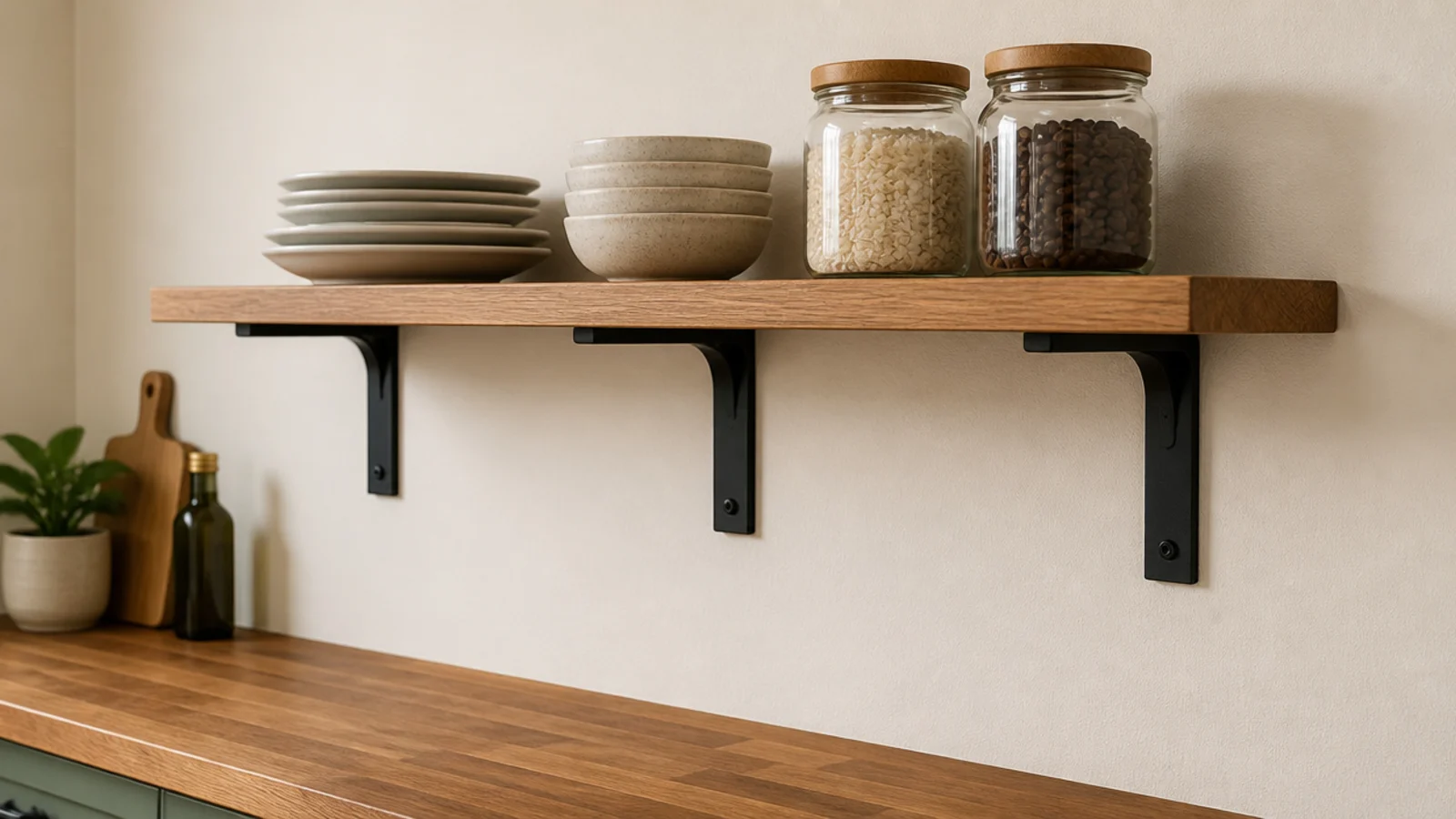
The default answer, and usually the right one. It costs $6 to $14, it takes a lag screw straight into framing, and the visible triangle stops being noticeable the moment it repeats down a wall.
Choose a vertical leg at least two-thirds of the shelf depth — a 10-inch board wants a 7-inch bracket, or the front edge tips under load. Powder coat survives kitchen steam where bare steel spots within a season. Four of these under an 8-foot dish shelf is money extremely well spent.
3. The cast-iron corbel
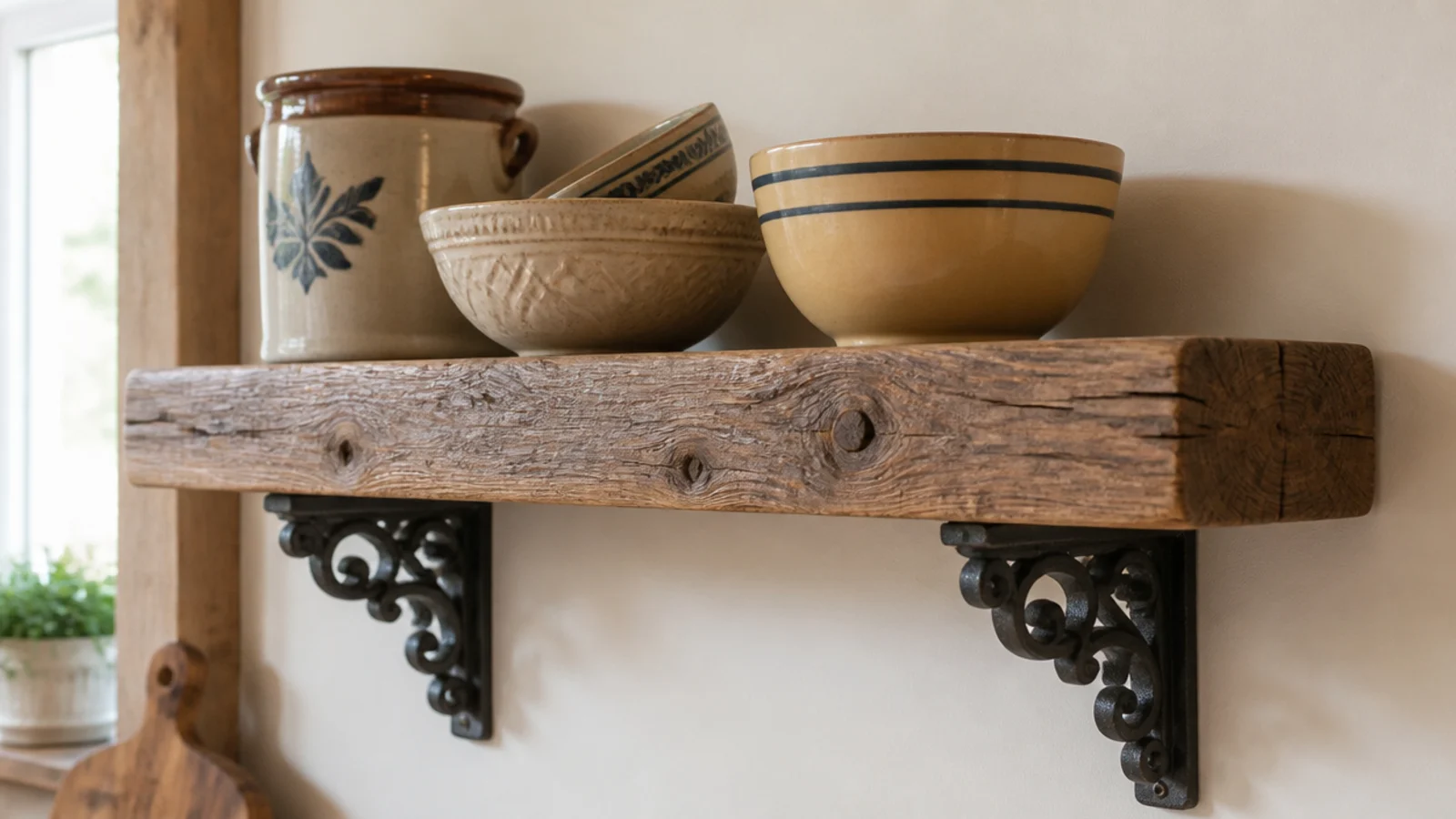
Genuinely heavy, genuinely handsome, and worth it only if the look is what you are buying. A corbel carries plenty, but the limit is still the fixing behind it, so this is a stud-only proposition.
Two corbels under a thick reclaimed board is the whole rustic kitchen shelf in one move. Check the mounting holes are countersunk and pre-drill the timber, because iron will not forgive a split. Expect $18 to $40 each — the priciest way to hold up a board that a $9 bracket also holds.
4. The three-quarter-inch solid oak board
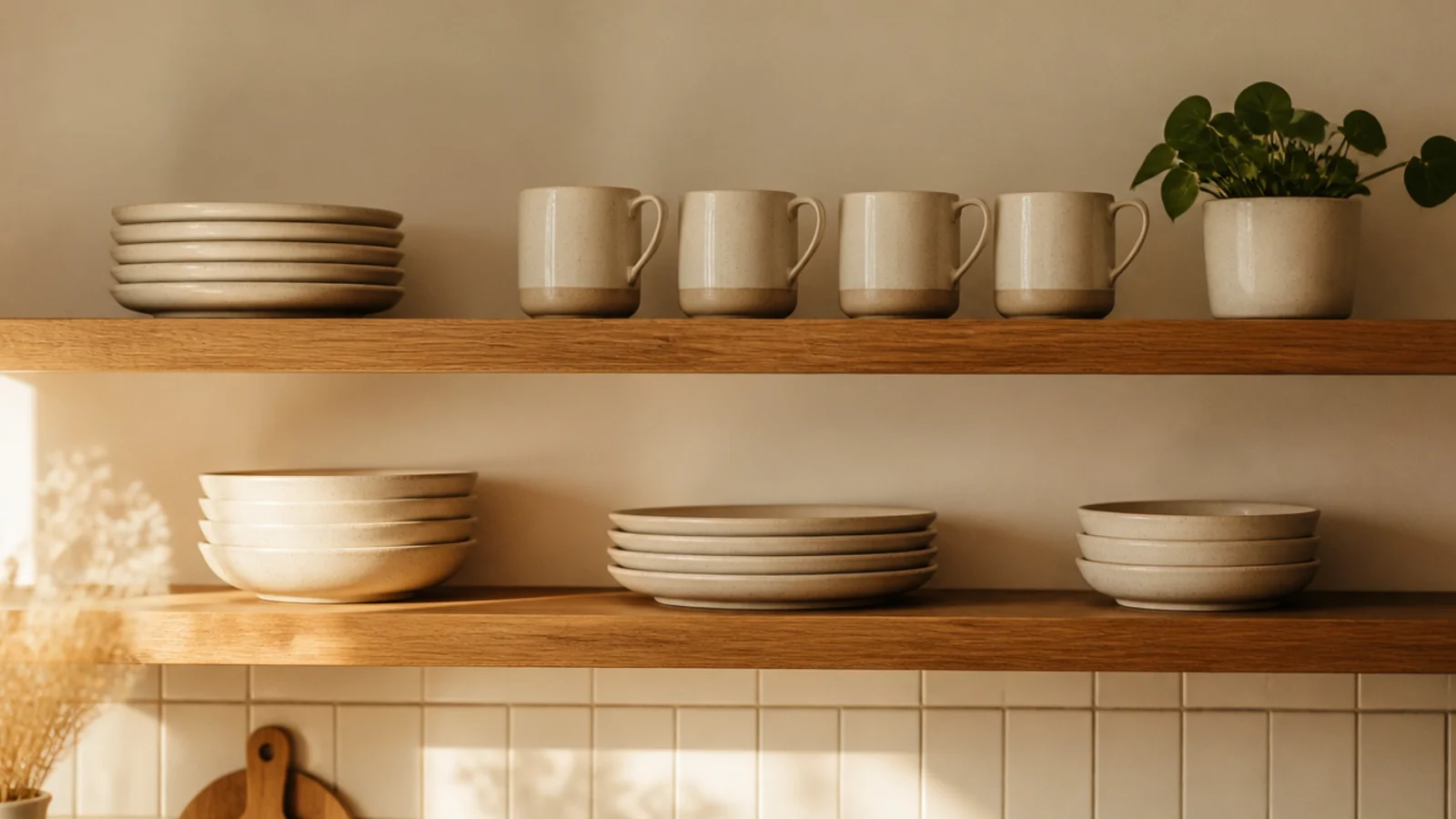
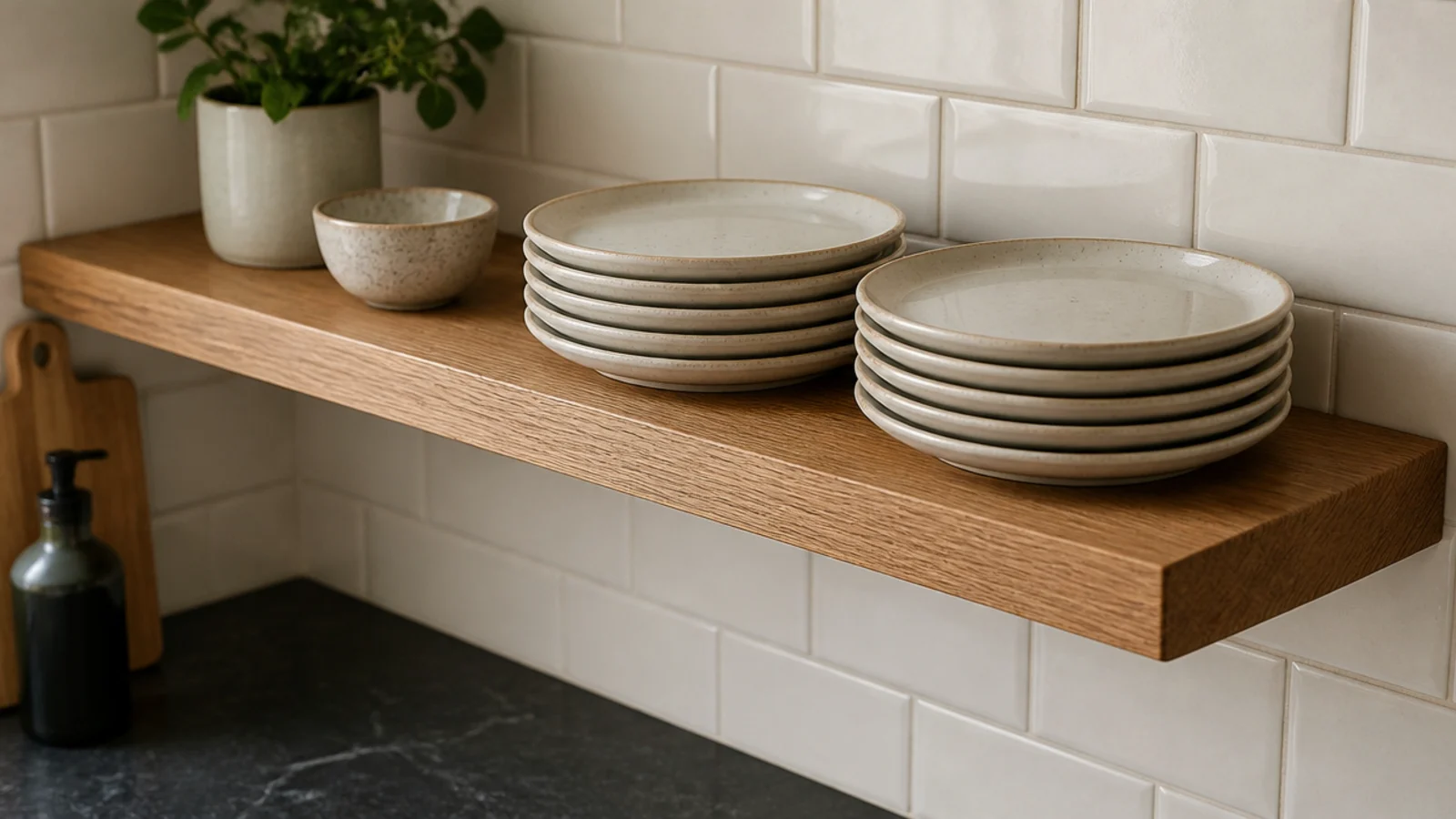
The shelf itself matters more than most bracket debates. Three-quarter-inch solid hardwood is the working floor for anything holding dishes, with brackets no more than 32 inches apart.
Oak and ash take a knock without exposing anything embarrassing, unlike veneered particle board, whose front edge chips within a year of normal kitchen use. Seal all six faces with water-based polyurethane or hardwax oil — never clear wax — including the underside and the cut ends, or the board cups. Budget $30 to $70 for a 6-foot length.
5. The reclaimed scaffold board with pipe flanges
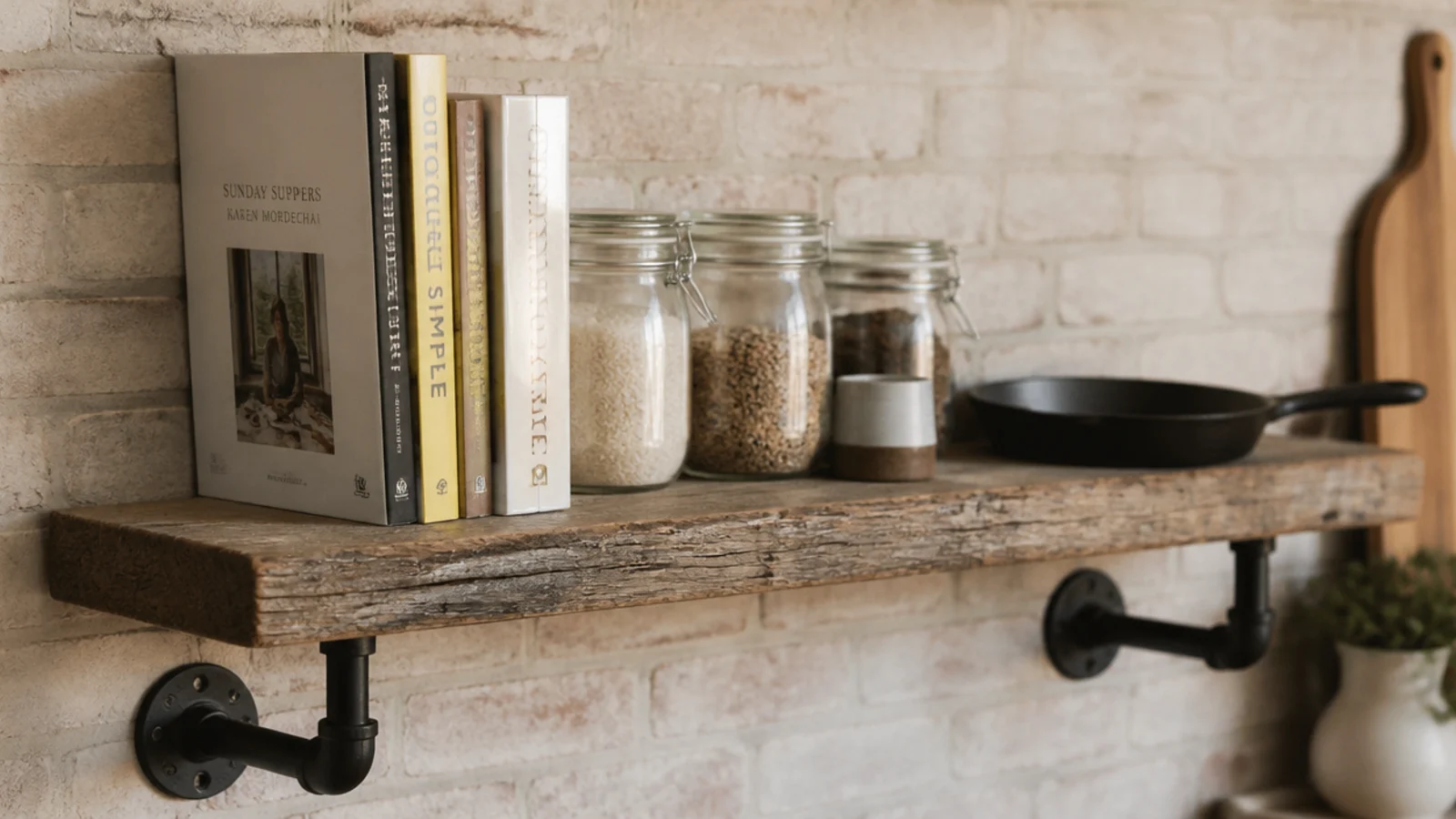
The best value combination in this whole article. Inch-and-a-half reclaimed board spans 48 inches between supports without any visible deflection, and threaded pipe fittings assemble with nothing but a wrench.
Wash the board, sand to 120 grit, and oil every face. Degrease the fittings first — they ship coated in oil that marks everything it touches. Boards run $15 to $30 for 7 feet and flanges about $8 each, which puts a serious shelf on the wall for well under $60.
6. The slotted track and adjustable bracket system
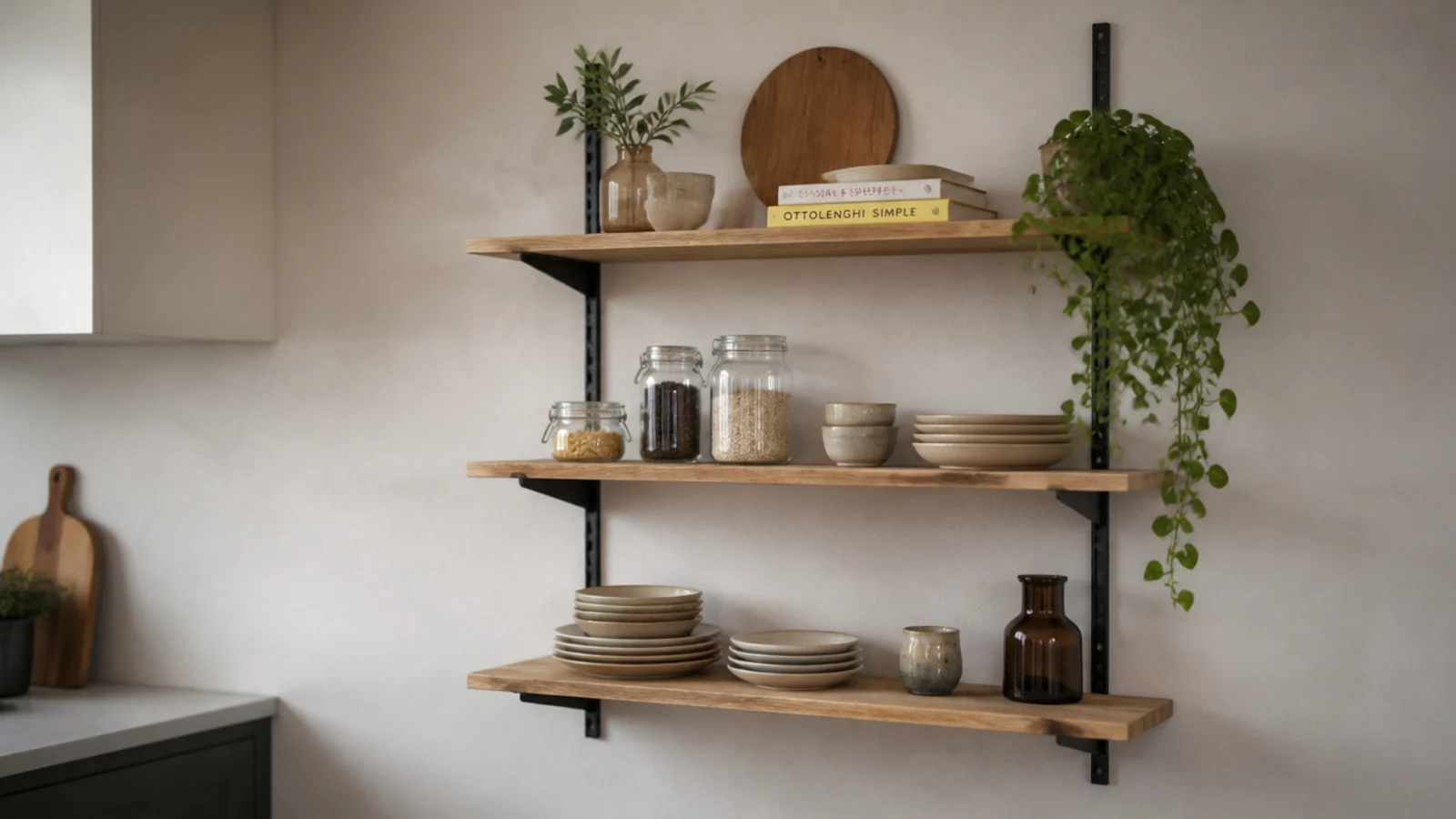
Two vertical tracks fixed into studs, with hooked brackets that drop into slots at any height. Kitchens change more than any other room, and this is the only system that keeps up without new holes.
Two tracks carry 60 pounds or more spread across three shelves, and moving a shelf takes ten seconds. Choose a slim track profile in black or the wall color so the verticals read as a line rather than hardware. Around $60 to $110 for a three-shelf run.
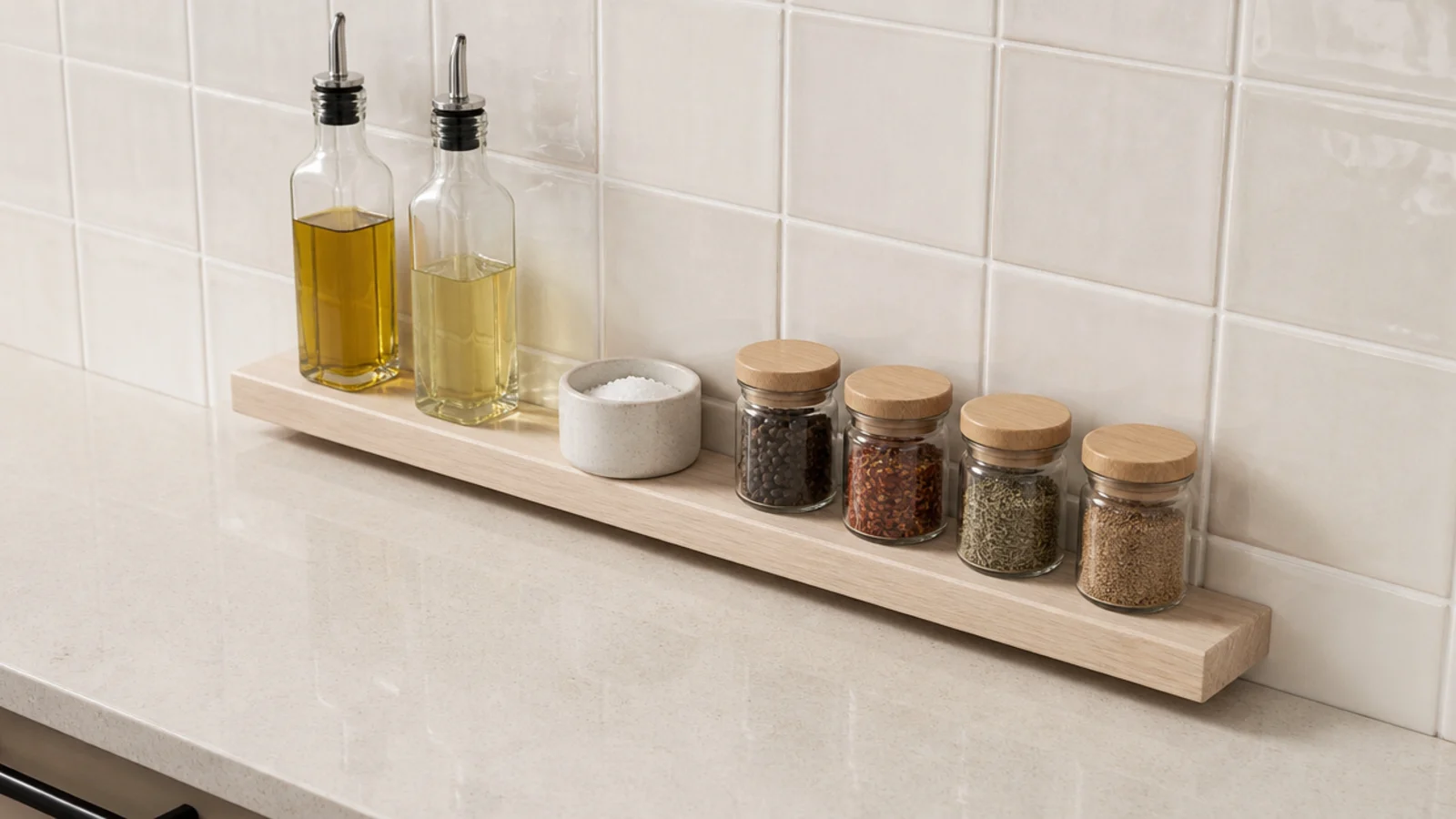
7. The three-inch backsplash ledge
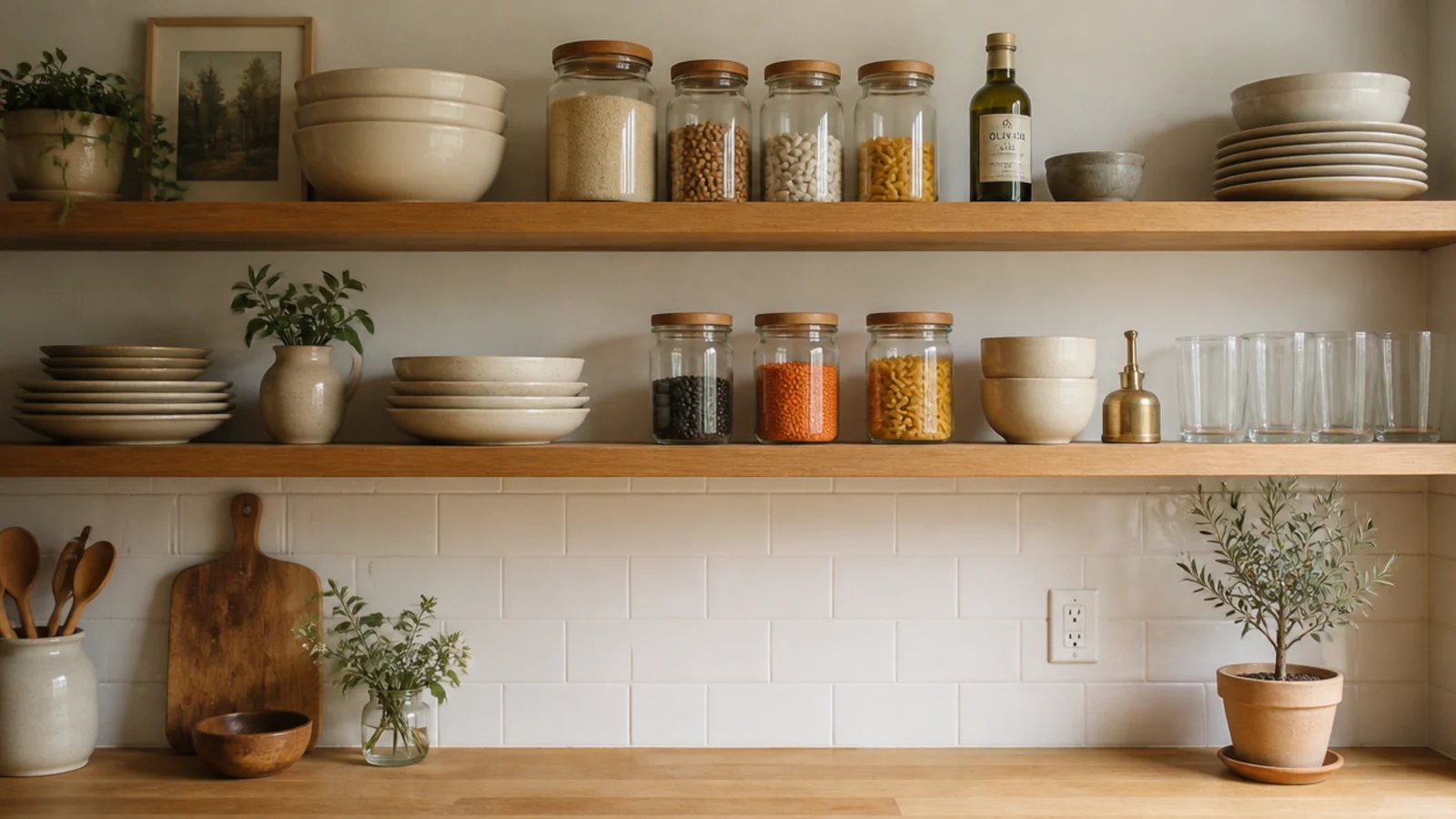
The most useful small purchase in a working kitchen. A 3-inch ledge along the backsplash holds oils and the spices you cook with daily without eating a single inch of counter.
Three inches is deliberate: deep enough for bottles, shallow enough to work and wipe behind them. Choose sealed timber or powder-coated steel rather than raw wood, since this sits inside the splash zone. Small L brackets or hidden cleats both work. Around $20 to $45 for a 4-foot run.
8. The freestanding countertop riser
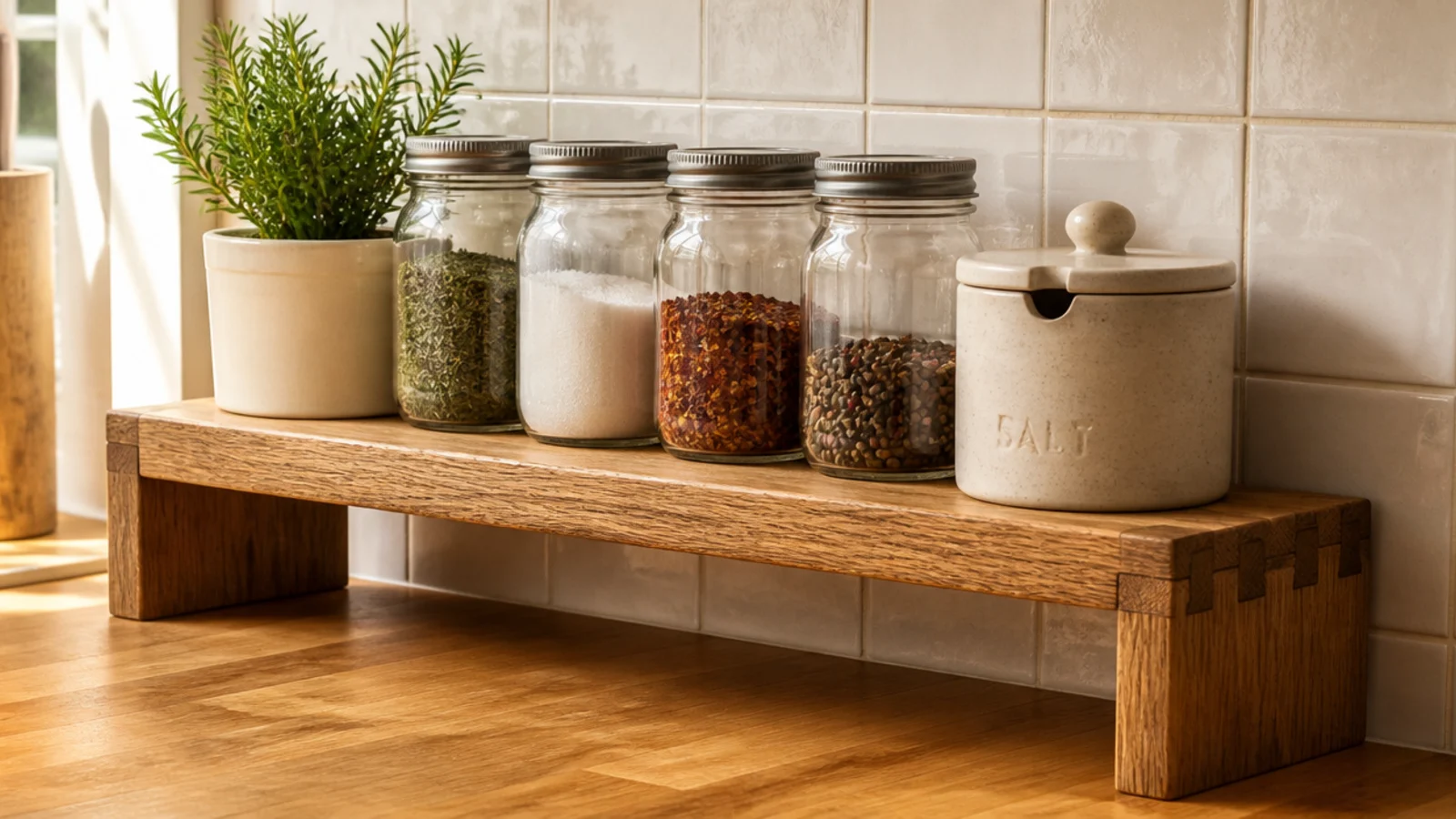
The honest answer for anyone who cannot drill. A riser is a shelf on legs, typically 20 to 30 inches wide and 6 inches deep, that stands on the counter and gives you a second level with zero wall damage.
Solid oak or powder-coated steel rather than hollow bamboo, which bows under a row of jars within a year. Because the load goes straight down, it holds far more than any adhesive ledge, which honestly caps at about 15 pounds per pair of strips. Expect $18 to $35.
What to Check Before You Buy
Find the studs before you choose the bracket. Framing is usually at 16-inch centers, so a shelf holding dishes can be planned around them. If you cannot land a stud, a toggle bolt in half-inch drywall carries 25 to 35 pounds and is the right fallback. Never rely on the plastic plugs in the box.
Know your wall. Drywall, plaster and lath, brick and tile all behave differently. Plaster crumbles around a plug and wants toggles. Brick with a sleeve anchor carries 50 to 75 pounds. Tile is only ever as strong as whatever sits behind it, so drill with a diamond bit, go slowly, and fix into the substrate.
Match bracket depth to board depth. The vertical leg should reach at least two-thirds of the way out. Anything shallower lets the front edge tip once the shelf is loaded, and it is the fault people blame on the wall.
Read the stated shelf depth as the board width. Once the back edge meets a wall that is not quite square, you lose up to an inch of usable surface, so buying a size up is not the mistake it looks like.
Check the front edge in the photos. A visible seam where edge banding meets the face means veneer over particle board, and in a kitchen that edge will chip and then absorb steam.
Plan the height before the hardware. Eighteen inches from the countertop to the underside of the first shelf clears a stand mixer, with the second 12 to 14 inches above that. Above a range hood, buy ceramic, metal or glass only.
Buy the fixings on the same trip. Toggle bolts and lag screws cost a few dollars and are the difference between a shelf that lasts and a slow, quiet failure.
Frequently asked questions
What are the strongest kitchen shelf brackets?
A steel L bracket or a cast-iron corbel lag-screwed into a stud, every time. That combination carries 40 to 60 pounds per bracket, limited by the timber rather than the metal. Concealed rod brackets look better and carry less, because the load sits on a short cantilevered rod. The bracket is rarely the weak link — the fixing and the wall behind it are.
How much weight can a kitchen shelf bracket hold in drywall?
A toggle bolt in half-inch drywall carries roughly 25 to 35 pounds per fixing when the load hangs close to the wall. The plastic plugs supplied in most bracket sets carry about 10 pounds and are the single most common reason kitchen shelves sag. In plaster and lath, treat every published figure as optimistic and use toggles.
Do I need a stud for a kitchen shelf holding plates?
Yes. Ten dinner plates weigh about 12 pounds and nobody stops at one stack, so a dish shelf is routinely carrying 30 pounds or more. Get at least one bracket into framing, use three-quarter-inch stock as a minimum, and keep bracket spacing to 32 inches or less on hardwood.
Are floating shelf brackets strong enough for a kitchen?
They are if the rods reach studs and the board is at least an inch and a half thick. Into drywall alone, concealed brackets are the weakest common configuration and the first to droop at the unsupported end. For a shelf of plates, visible steel brackets into framing outperform any hidden system at the same price.
What is the best kitchen shelf option for renters?
Something that never touches the wall. A countertop riser, a freestanding rack or an over-the-sink bridging shelf all carry real weight because the load goes straight down. Adhesive ledges are the true zero-hole choice but cap out around 15 pounds per pair of strips, and a warm humid kitchen is harder on adhesive than any other room.
How much should I spend on kitchen shelf brackets?
Six to fourteen dollars per bracket buys good powder-coated steel, which is all most kitchens need. Cast-iron corbels run $18 to $40 each and buy looks rather than strength. Concealed rod hardware runs $25 to $60 a pair. Past about $60 a bracket you are paying for finish and brand, not for load.
Choose the fixing first, then the bracket, then the board — that order is the whole job, and it is the one nearly everyone reverses. For placement and run planning see kitchen wall shelves, for the build itself see diy kitchen shelves, and if you want the concealed-hardware version elsewhere in the house, the best floating shelf brackets covers the same ground. Save the pin for the next hardware trip.
Want more like this? Browse all 15 kitchen shelf ideas guides — they all use the same measurements and budget tiers.
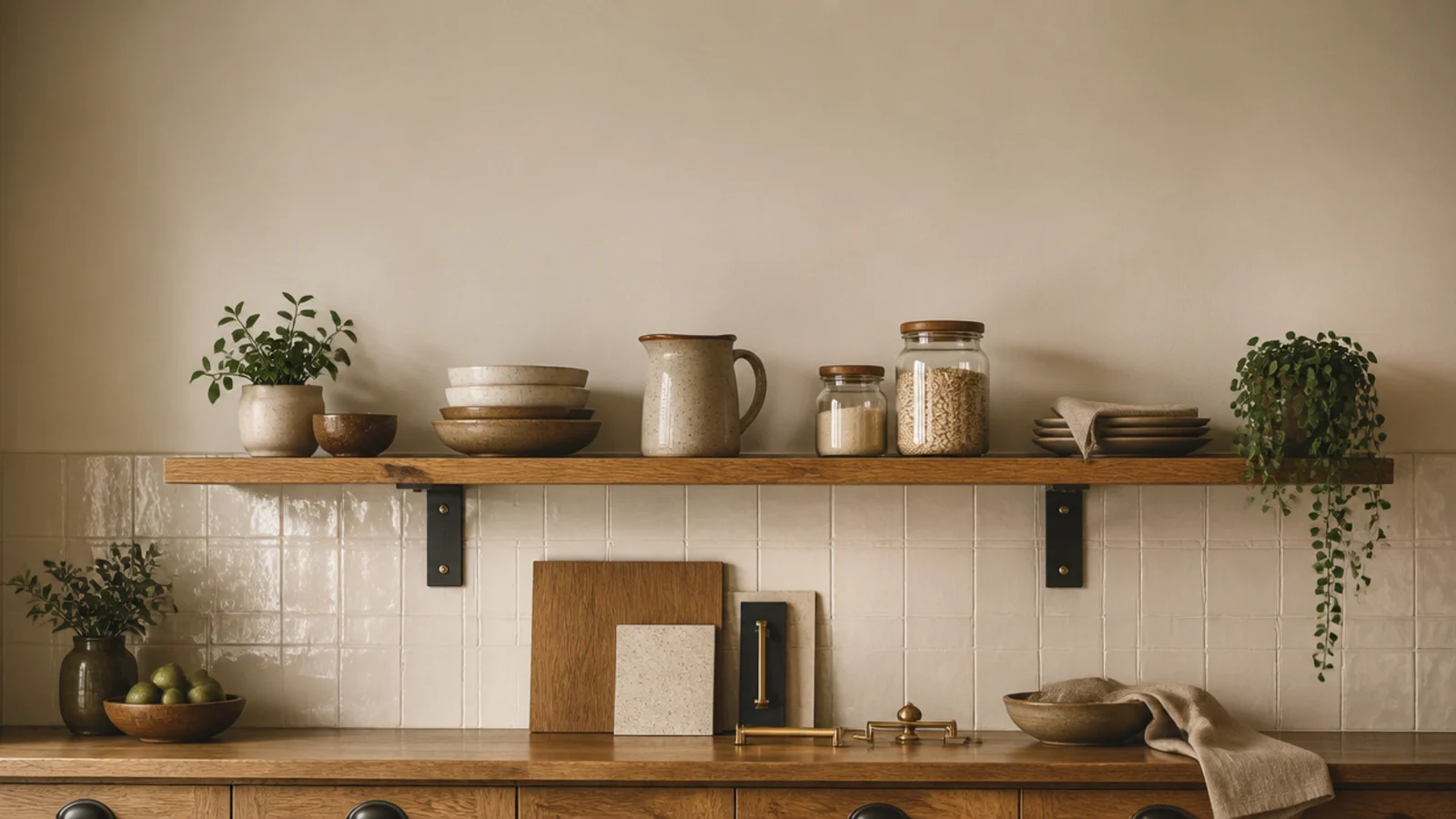
Pin it for later
Save this to your Kitchen Shelf Ideas board
Pin it now so it is waiting for you when the tape measure comes out — and so the next person hunting for this idea can find it too.
Save this pinKeep going
More ideas worth saving while you have the tape measure out.