Floating Shelves · Review
25 Best Floating Shelf Picks Worth Buying

Some links on this page may become affiliate links in future. I only recommend pieces I would put in my own home — see the affiliate disclosure.
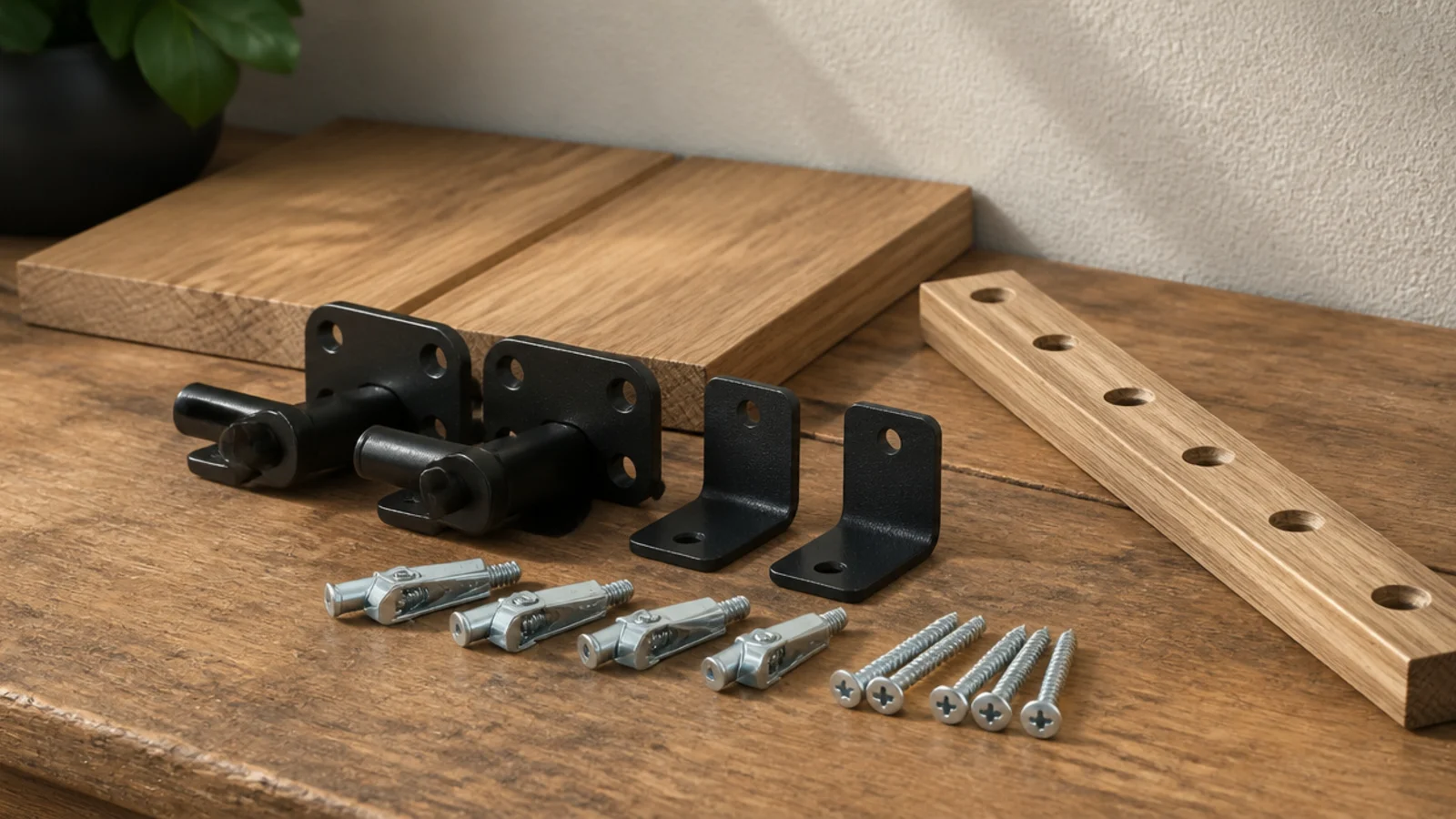
The best floating shelf brackets are almost never the ones with the cleverest product photography — they are the ones that match your wall and your load. A concealed rod in drywall alone will fail where an $8 painted bracket into a stud lasts a decade. Below is every fixing type worth considering, compared on load, substrate and price, plus the eight I keep buying.
In this guide11 sections — tap to openHide
- 1.How I Chose the Best Floating Shelf Brackets
- 2.The Full Comparison: 25 Floating Shelf Support Types
- 3.The concealed steel rod bracket
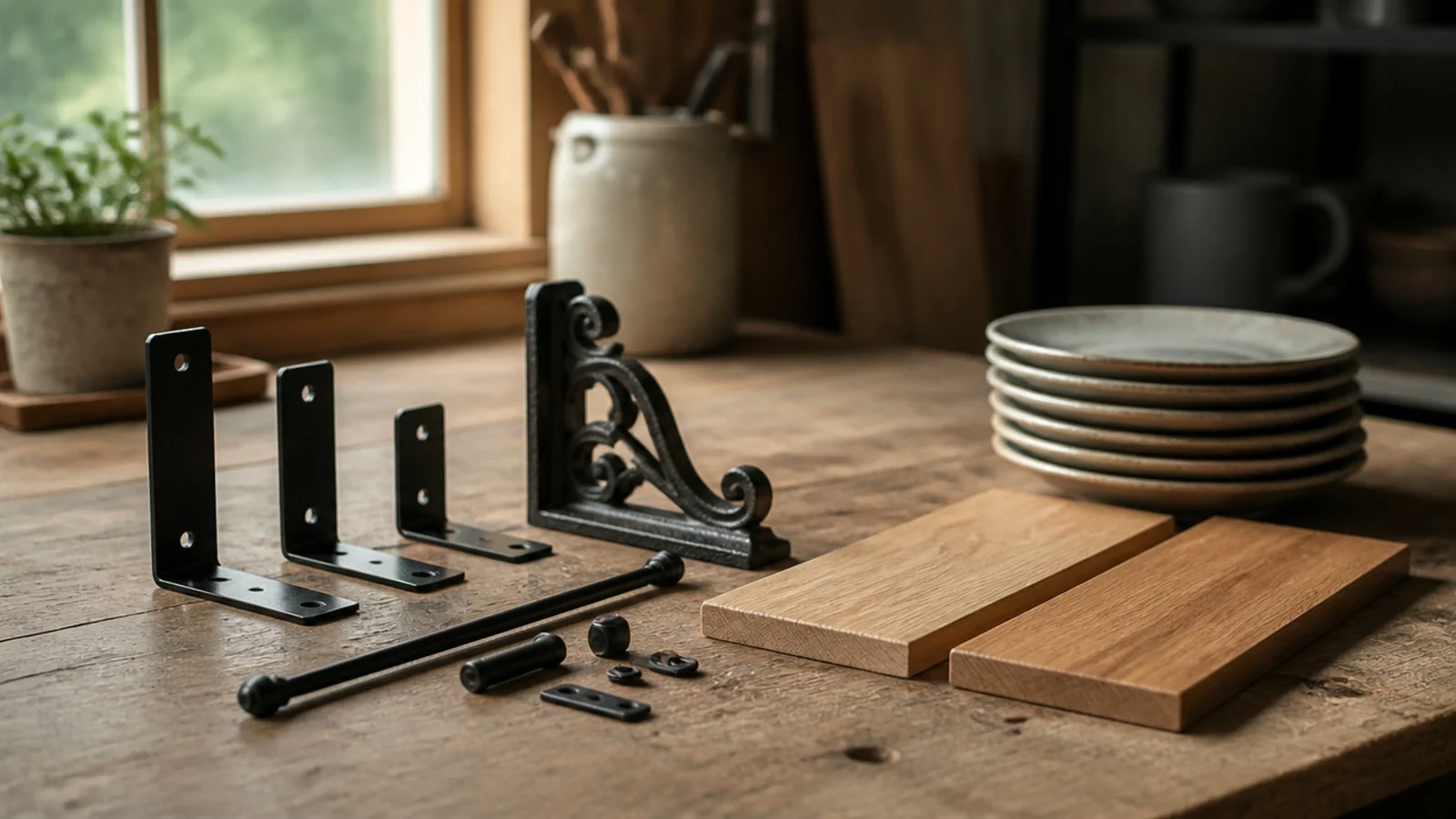
- 4.The powder-coated L bracket
- 5.The spring toggle bolt
- 6.The French cleat strip
- 7.The heavy-duty adhesive strip pair
- 8.The black iron pipe bracket
- 9.The masonry sleeve anchor
- 10.The full-length steel shelf channel
- 11.What to Check Before You Buy
How I Chose the Best Floating Shelf Brackets
I judged every type on five things, in this order.
- Load path. Where does the weight actually end up? A bracket that reaches framing beats a cleverer one relying on paper-faced drywall, every time. This single factor separates shelves that last from shelves that creep downward over a winter.
- Substrate honesty. A rating means nothing without a wall type attached to it. Half-inch drywall, tile over drywall, plaster on lath and solid brick behave completely differently, and I have listed loads by substrate rather than as a single hopeful number.
- Depth support. The bracket arm needs to reach at least two-thirds of the shelf depth. Anything shorter turns the unsupported front into a hinge, which is why so many shelves develop a slight permanent nose-down set.
- Reversibility. How many holes, how wide, and how easily filled. One anti-tip screw is a very different proposition to six half-inch toggle holes in a rental.
- Price per pound held. A cheap fixing you have to cap at 10 pounds is not cheap. I weighted anything under $20 that carries real load very highly.
I did not weight brand, finish trends or how a bracket photographs on a bare wall. Everything below is described by type and construction, because the same fixing shows up under a dozen labels at Target, IKEA, Amazon, Wayfair and any hardware store, and construction is what you are actually buying.
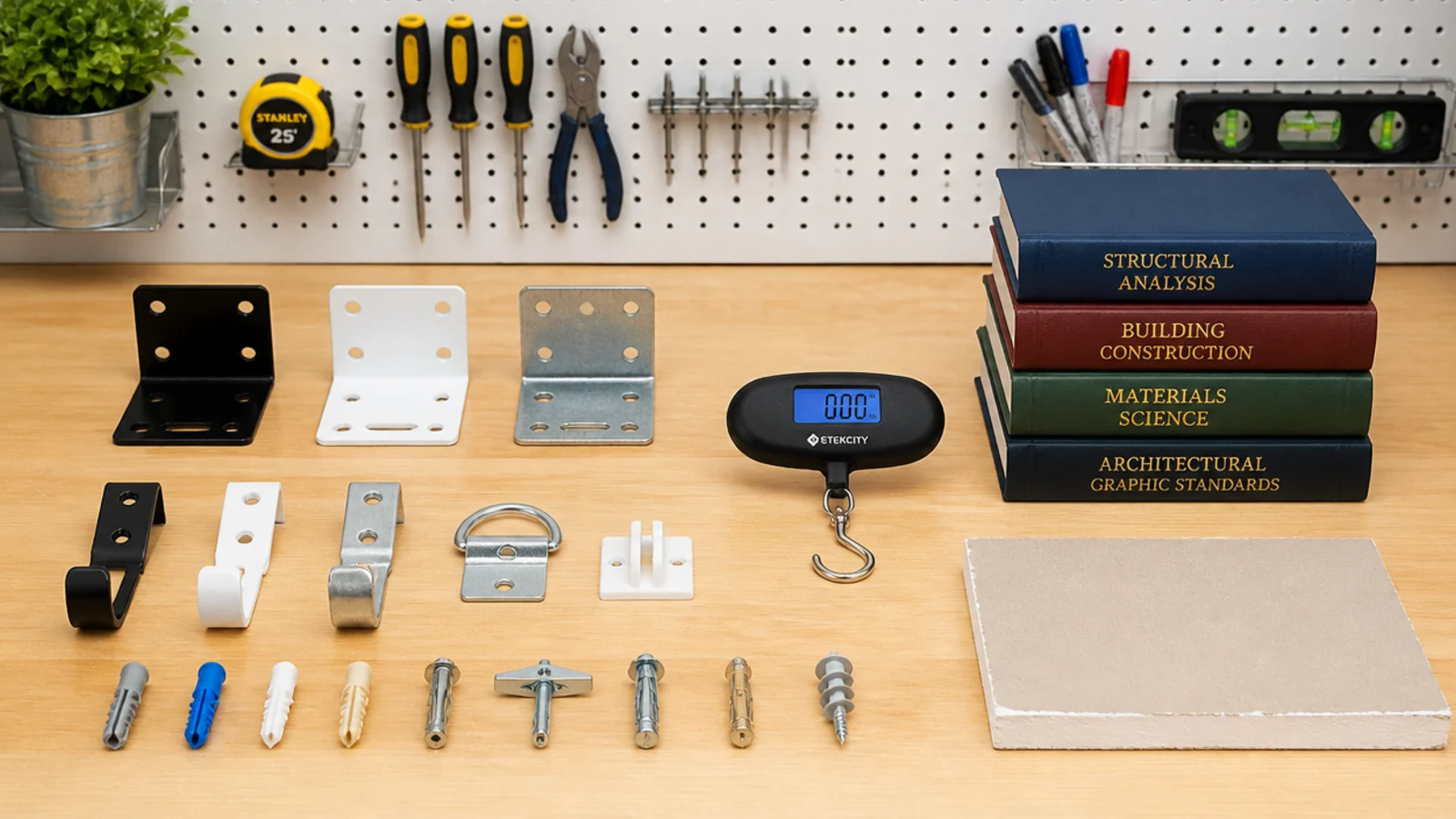
The Full Comparison: 25 Floating Shelf Support Types
Price tiers: $ under $20 · $$ $20–$60 · $$$ $60+ per pair or set. Loads assume correct installation and the substrate named.
| Type | Best for | Load range | Price | Why it wins |
|---|---|---|---|---|
| Concealed steel rod bracket | Clean-look shelves on studs | 30–40 lb on a 24 in shelf into a stud | $$ | No visible hardware, full load into framing |
| Powder-coated L bracket | Everyday shelves on any wall | 40 lb+ per pair on studs | $ | Cheapest real support, paints out invisibly |
| Heavy-duty adhesive strip pair | Zero-hole rentals | Up to 15 lb per pair on sound paint | $ | Genuinely no damage when the paint holds |
| Spring toggle bolt | Drywall with no stud behind | 25–35 lb each in 1/2 in drywall | $ | Turns hollow drywall into a real fixing |
| Snap toggle anchor | Tile and thin panel walls | 25–40 lb each depending on substrate | $ | Fits where a spring toggle cannot open |
| French cleat strip | Heavy shelves you might move | 60–100 lb across two studs | $ | One line of holes, shelf lifts straight off |
| Blind support pin set | Thin light display shelves | 15–25 lb per pair into studs | $ | Slimmest possible look for a light board |
| Flat-bar minimalist bracket | Modern rooms | 30–40 lb per pair on studs | $$ | Thin steel profile with genuine capacity |
| Black iron pipe bracket | Rustic rooms and heavy books | 40–60 lb per pair on studs | $$ | Industrial look that carries real weight |
| Decorative scroll bracket | Period and traditional rooms | 20–30 lb per pair on studs | $ | Character, and plentiful secondhand |
| Solid wood corbel | Deep shelves and mantels | 50 lb+ per pair on studs | $$ | Depth support nothing else quite matches |
| Keyhole hanger plate | Light ledges and box shelves | 10–20 lb per pair in drywall | $ | Recessed, invisible and nearly free |
| Interlocking aluminium Z-clip | Flush-mounted panels and boxes | 20–30 lb per pair into studs | $ | Sits perfectly flat against the wall |
| Full-length steel shelf channel | Long spans that must not dip | 40–60 lb spread across studs | $$$ | Supports the entire back edge at once |
| Adjustable track and bracket system | Storage that keeps changing | 50–75 lb per upright on studs | $$ | Change heights without drilling again |
| Rope and hook suspension kit | Very light decorative shelves | About 10 lb total per shelf | $ | Pencil-thin holes and a lot of character |
| Tension pole shelf unit | Renters banned from fixings | 10–20 lb per tier | $$ | Floor-to-ceiling pressure, zero holes |
| Masonry sleeve anchor | Brick and concrete walls | 60 lb+ into solid brick face | $ | The strongest fixing in this whole table |
| Self-drilling drywall anchor | Quick light fixings | 15–25 lb each in 1/2 in drywall | $ | No pilot hole and far better than a plug |
| Supplied plastic expansion plug | Almost nothing worth hanging | About 10 lb each in drywall | $ | Free in the box, and priced accordingly |
| Under-cabinet ledge bracket | Kitchen backsplash strips | 10–15 lb screwed up into cabinets | $ | No wall holes and no patching later |
| Picture ledge with integrated lip | Leaning art and paperbacks | 15–25 lb on a pair of toggles | $ | Restyle endlessly without new holes |
| Folded steel plate shelf | Minimal modern walls | 25–35 lb into studs | $$$ | Bracket and shelf are a single piece |
| Hollow box shelf kit | A chunky edge on a small budget | Limited by the fixing you choose | $ | A 2 in front edge from thin, cheap stock |
| Anti-tip strap and plate | Anything tall, leaning or loaded | Restraint only, not a load fixing | $ | One small screw buys real peace of mind |
Eight of those are the ones I keep buying.
1. The concealed steel rod bracket
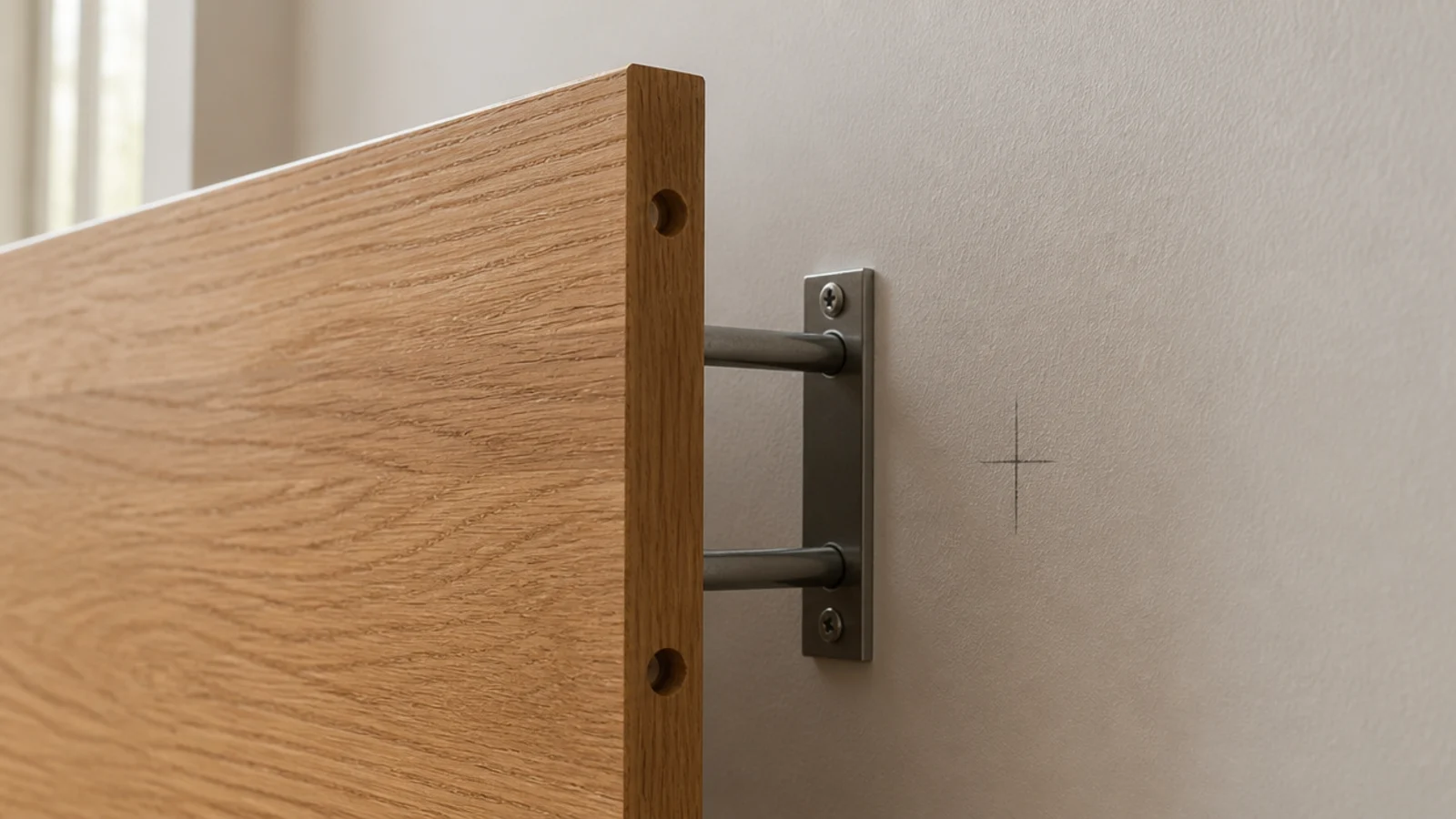
The look everyone wants: a board apparently growing out of the wall. A steel plate screws to the framing and two or three rods slide into holes drilled in the back edge of the shelf.
Into a stud it carries 30 to 40 pounds on a 24-inch shelf, which covers books and a lamp. Into drywall alone it is the weakest common setup in this article, because a rod converts every pound into leverage against a soft board. Check the rod length matches your shelf depth. Expect $25 to $60 a pair.
2. The powder-coated L bracket
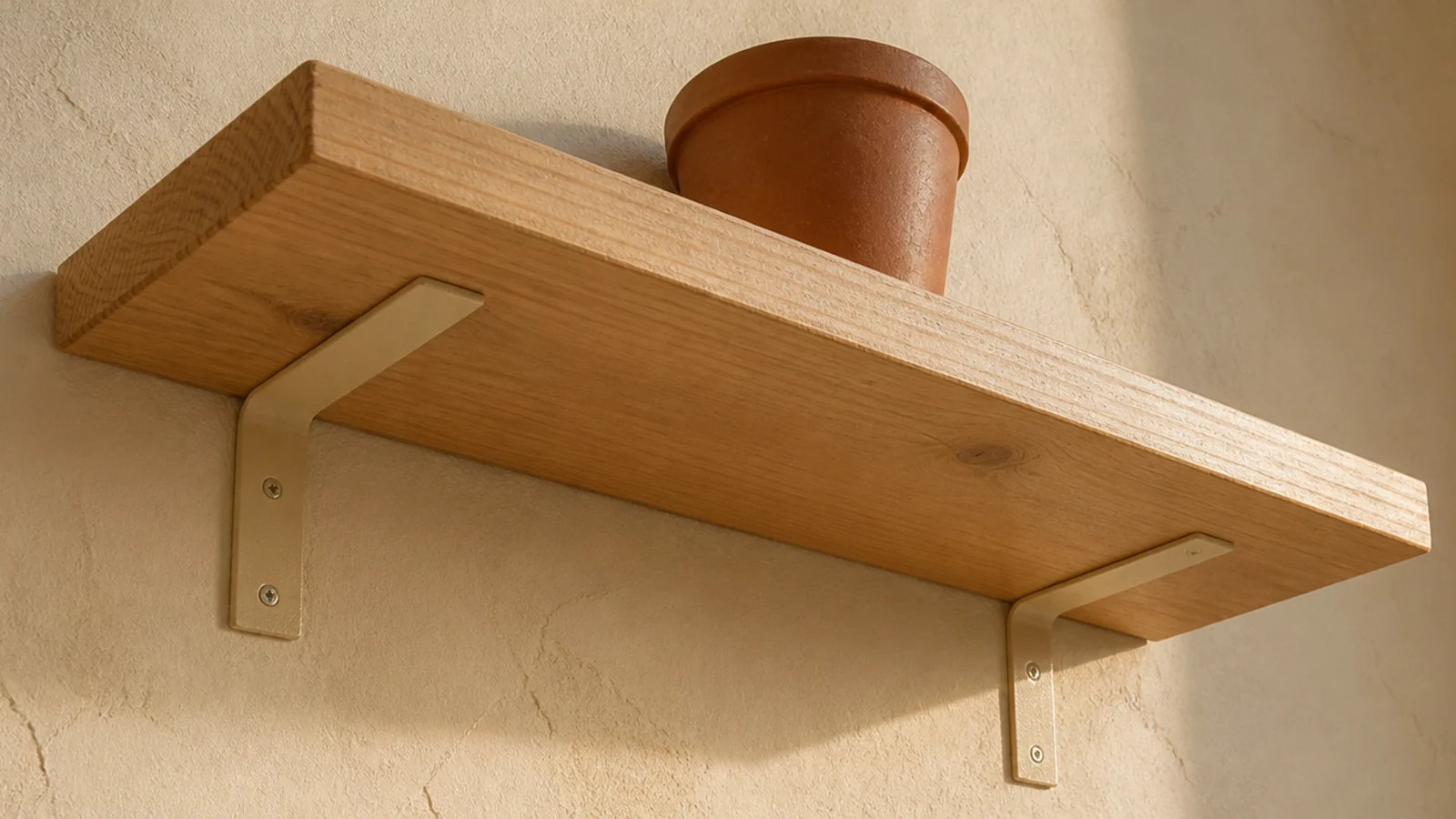
The most underrated fixing on the list and the one I buy most. A pair costs $8 to $18 and carries more than most concealed systems.
The objection is that you can see it, and the answer is two thin coats of the wall color. Painted-out L brackets read as floating from any normal viewing angle, which is the entire promise of hardware costing five times as much. Buy powder-coated rather than painted steel, because the coating survives knocks that paint chips straight off.
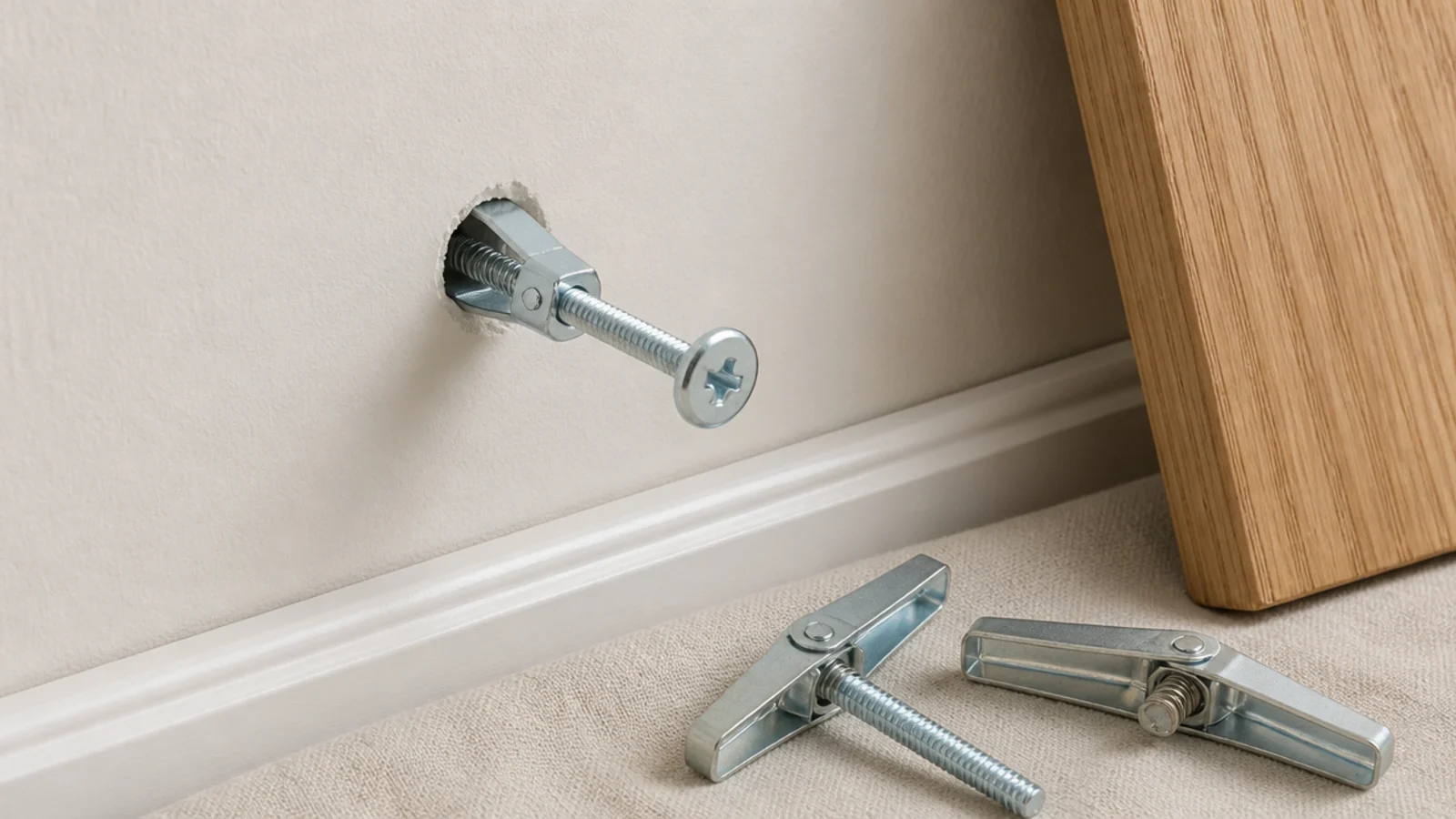
3. The spring toggle bolt
Not a bracket, but the part that decides whether your bracket matters. Each toggle carries 25 to 35 pounds in half-inch drywall, so a pair handles a shelf of hardbacks with margin.
They cost about a dollar each. The trade is a wider hole — roughly half an inch — that needs two thin passes of filler on move-out rather than one thick one. Buy them on the same trip as the shelf, because the second trip is where people give up and use the plugs from the box.
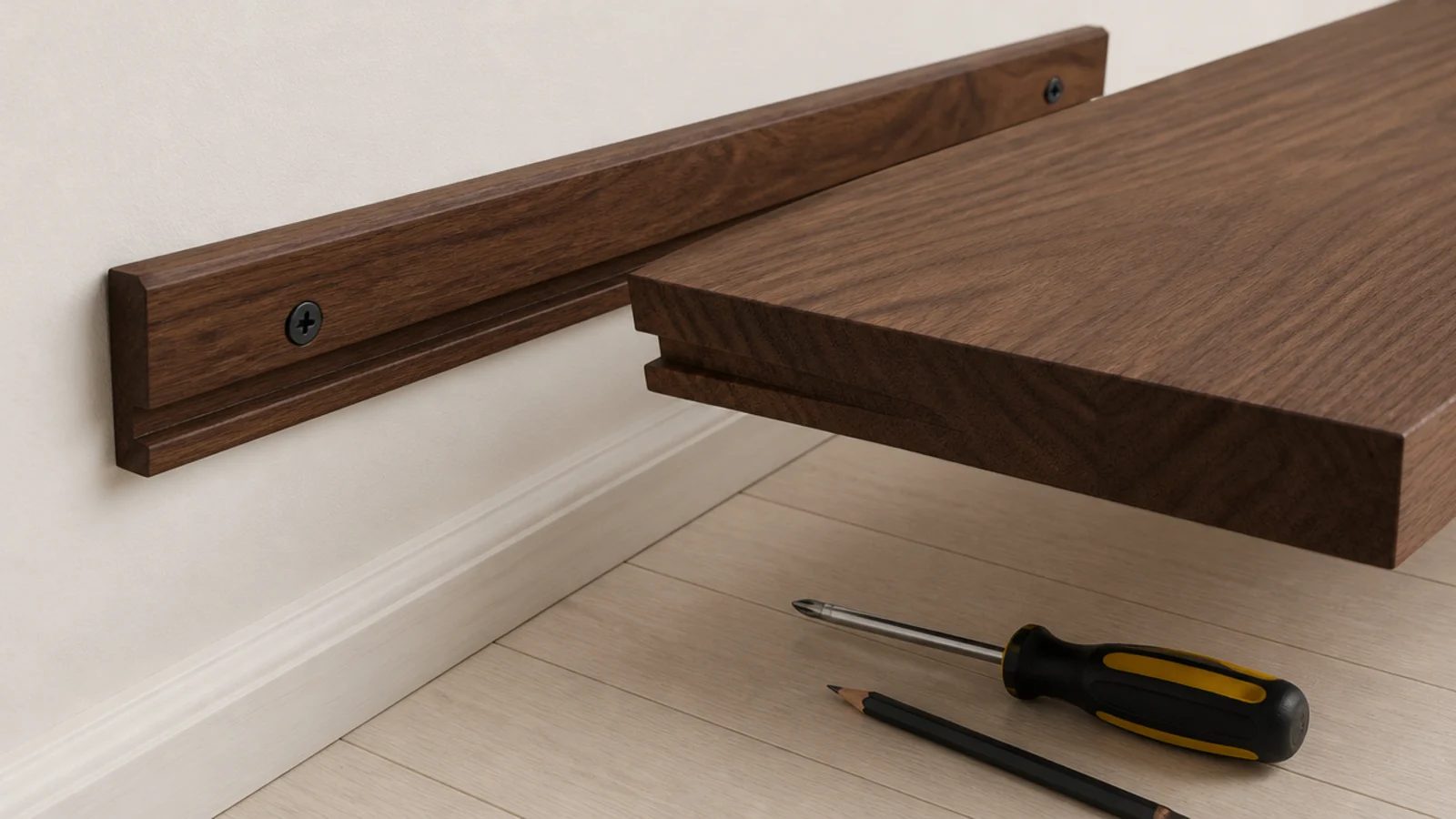
4. The French cleat strip
Two matching 45-degree bevels: one strip screwed to the wall, the other glued under the shelf. The board drops on and lifts straight off.
Across two studs a cleat carries 60 to 100 pounds, which is more than any concealed system here, and it is why commercial kitchens hang heavy open shelving this way. It also concentrates your damage into one neat line of holes. Ask the lumber counter to rip the bevel if you have no saw. Around $10 in materials.
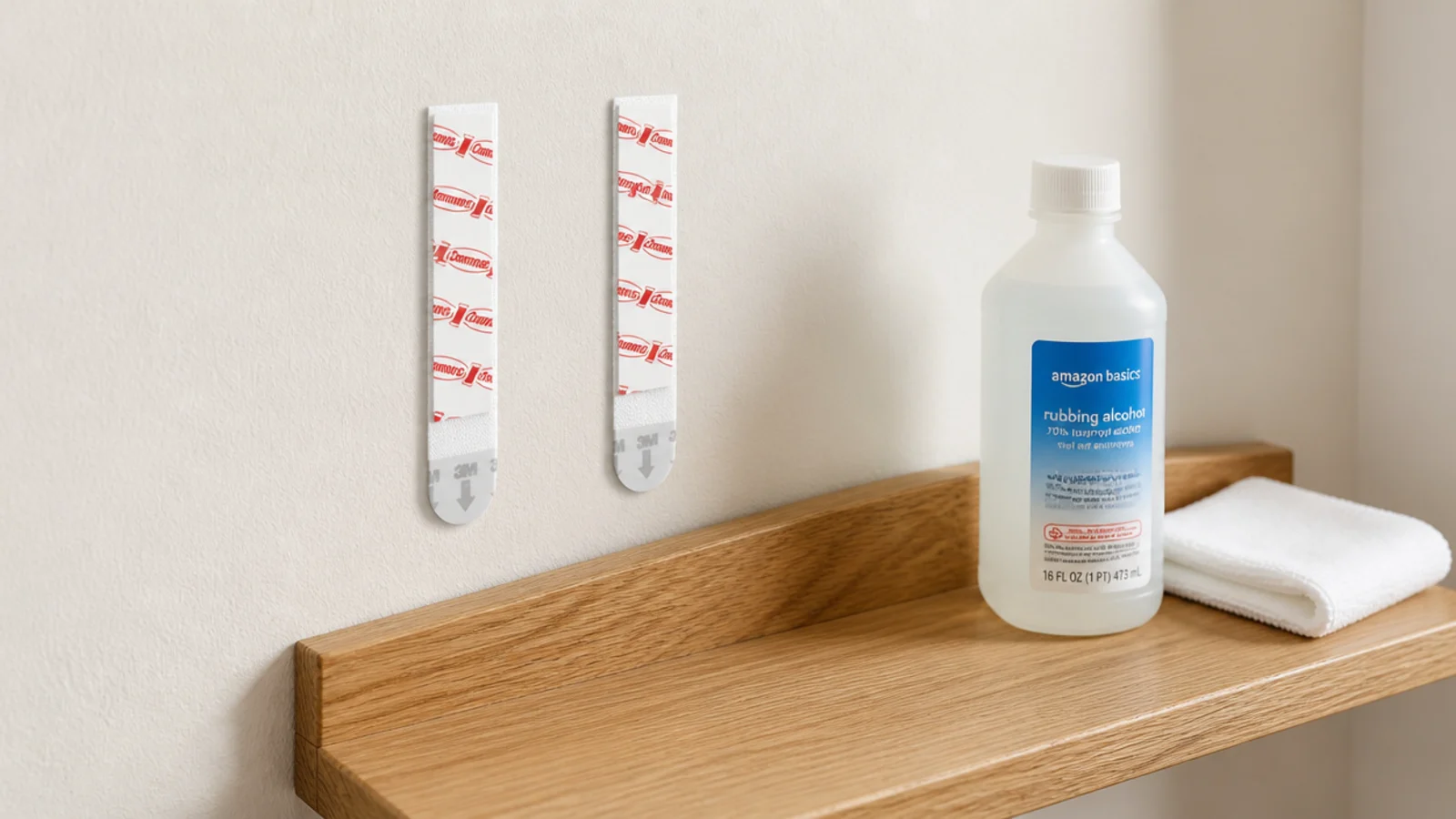
5. The heavy-duty adhesive strip pair
The only true zero-hole option, and the most oversold product in this category. Rated near 15 pounds per pair, which is real — but that is a shallow ledge with two ceramics, never books.
They also fail on flat builder-grade paint, which is what most rentals have. The adhesive does not let go of the paint; the paint lets go of the wall. Test one strip on a hidden patch, pull it after a day, and remove with a hair dryer at a low angle. Around $12 to $25.
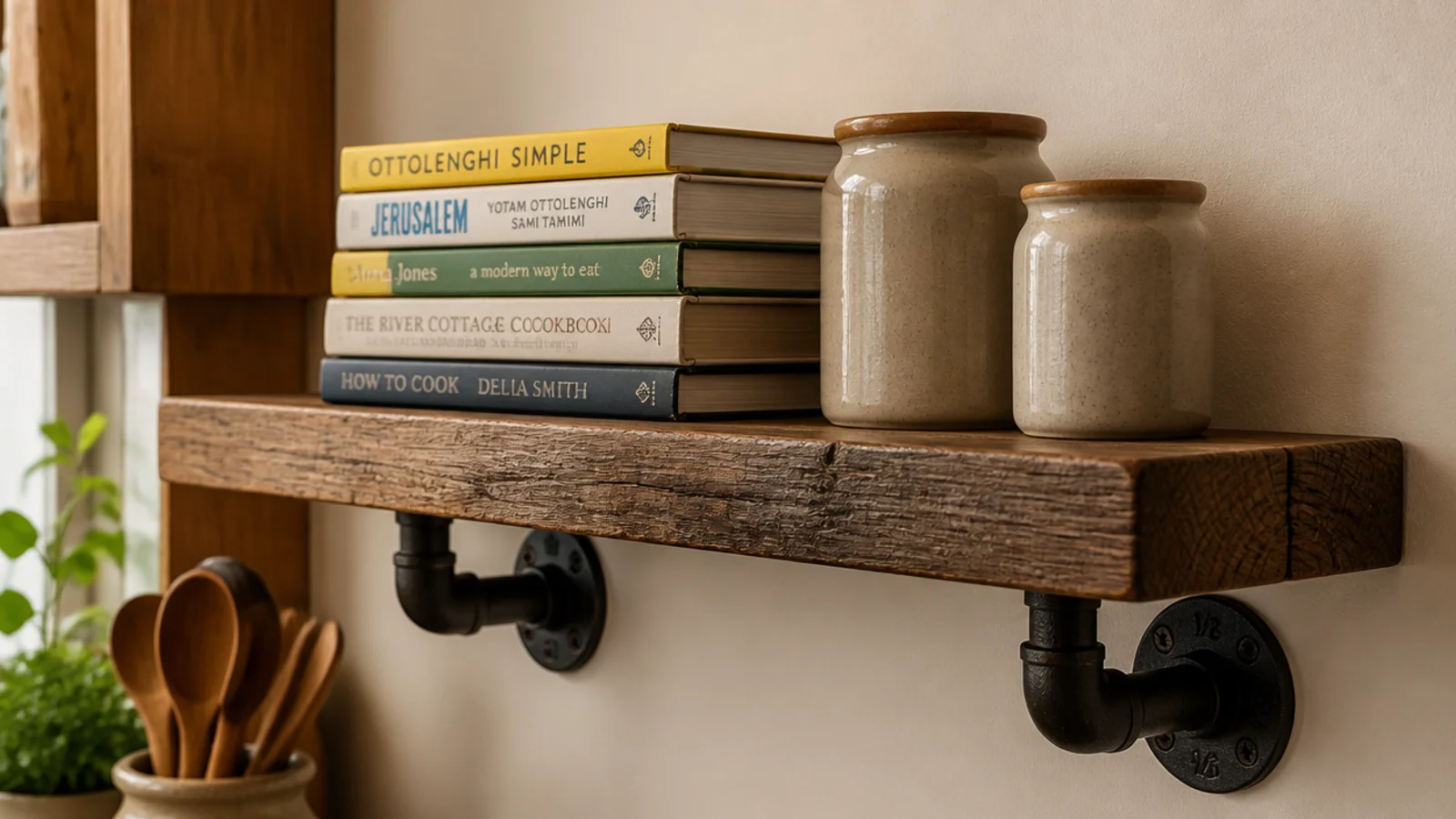
6. The black iron pipe bracket
Flanges, nipples and elbows assembled into a bracket. It looks industrial because it is, and a pair on studs carries 40 to 60 pounds without complaint.
The weight is the catch: the hardware itself is heavy before you add a board, so this is a studs-only fixing. Pair it with a thick reclaimed board or butcher block rather than a thin painted one, which would look underfed beneath it. Expect $20 to $35 a pair, and buy black malleable iron rather than coated steel imitations.
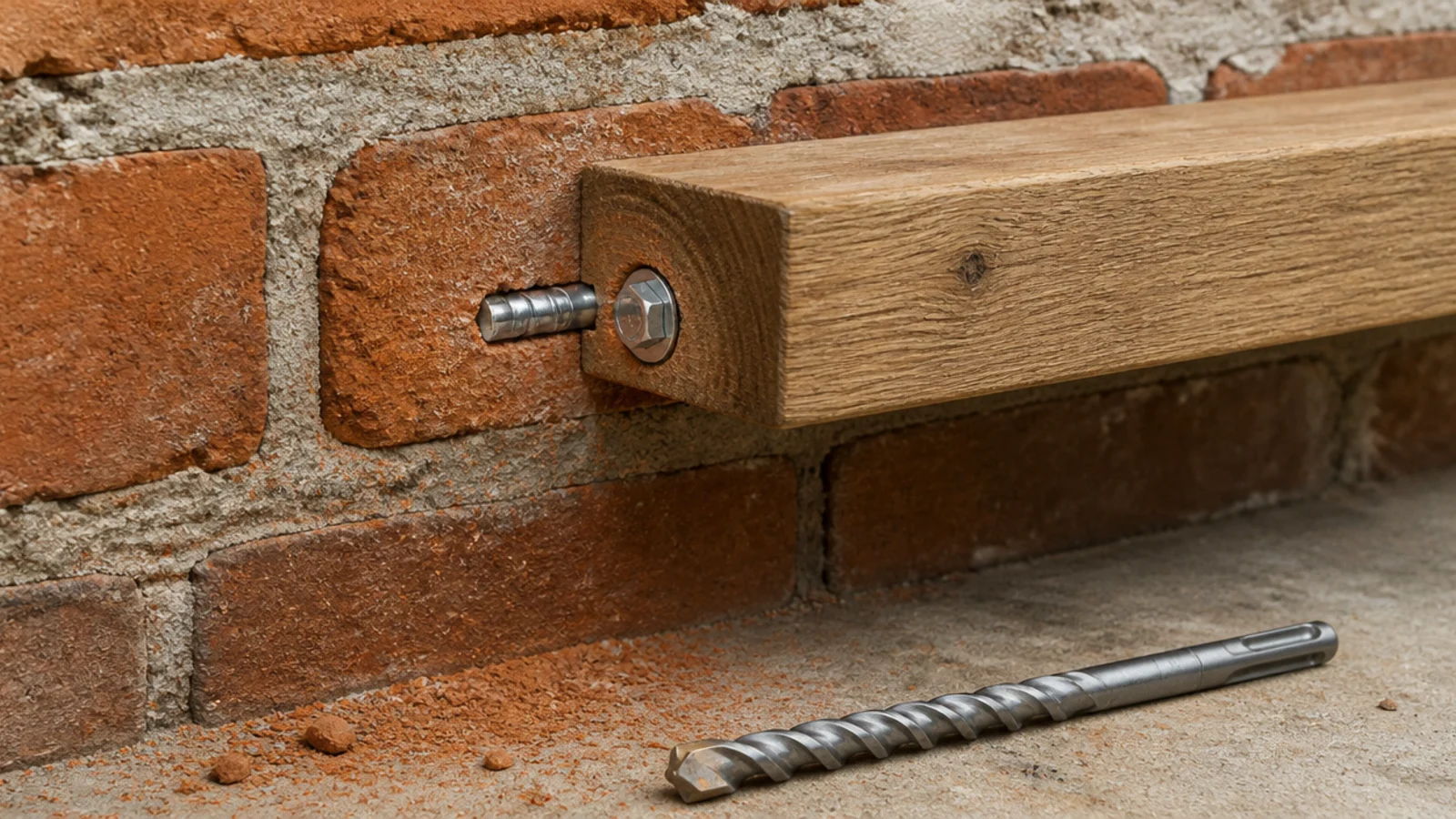
7. The masonry sleeve anchor
If your wall is brick or concrete, this is the strongest thing you can put in it — 60 pounds and up per anchor in a solid brick face.
Drill into the brick itself, never the mortar joints, using a masonry bit at low speed. In an older wall, test one anchor before you commit to a run, because soft Victorian brick crumbles where modern engineering brick does not. Sleeve anchors cost about a dollar each and make a heavy chimney breast shelf genuinely straightforward. There is a full walkthrough in the step-by-step floating shelf build.
8. The full-length steel shelf channel
A continuous channel that supports the entire back edge of the board instead of two points. It is the answer for a long shelf that must not dip.
Spread across studs it carries 40 to 60 pounds, and because the load is distributed, a three-quarter-inch board will span well past its usual 24-inch comfortable limit. It is the most expensive option here at $60 to $120, and the only one that solves sag structurally rather than by adding thickness.
What to Check Before You Buy
Find the studs before you choose anything. A screw into framing beats every anchor sold. Studs generally sit 16 inches apart, and moving a shelf 4 inches sideways to catch one is free. This decision changes your capacity more than any bracket upgrade.
Match the bracket arm to the shelf depth. It should reach at least two-thirds of the way, ideally within an inch of the front edge. An unsupported overhang acts like a hinge and sets the board permanently nose-down.
Read the load rating with a wall type attached. A rating quoted with no substrate is marketing. Half-inch drywall, tile over drywall, plaster on lath and brick behave completely differently, and the same anchor can be excellent in one and useless in another.
Assume you will replace the supplied plugs. Almost every shelf ships with plastic expansion plugs rated around 10 pounds, and they cause most of the sagging blamed on cheap shelves. Toggle bolts cost about a dollar each and carry three times as much.
Check the board before you blame the bracket. Three-quarter-inch stock spans 24 inches without deflection; half-inch bows at about 18 inches. If the dip is in the middle rather than at the ends, no hardware will fix it.
Keep depth down where the wall is hollow. Leverage rises with depth, so a 12-inch shelf doubles the pull-out force of a 6-inch one at the same load. Deep shelves belong on studs, cleats or masonry.
Choose the finish for the room, not the shelf. Bathrooms want sealed teak, bamboo, solid surface or powder-coated steel — raw pine and unsealed MDF swell within a season. There is more on that in floating shelves for the bathroom.
Frequently asked questions
What is the strongest floating shelf bracket?
A French cleat across two studs, or a masonry sleeve anchor in solid brick. Both beat every concealed system because they spread load along a line rather than through a single point. For a normal drywall wall, a concealed rod bracket screwed into a stud is the strongest clean-look option at 30 to 40 pounds on a 24-inch shelf.
How much weight can floating shelf brackets hold in drywall?
Toggle bolts in half-inch drywall carry 25 to 35 pounds each, so a pair handles a shelf of books. Self-drilling anchors manage 15 to 25 pounds. The plastic plugs supplied in most shelf boxes carry about 10 pounds and cause the majority of sagging. None of these match a screw into framing, which is always the better answer.
Do I need a bracket as deep as the shelf?
Close to it. The bracket arm should reach at least two-thirds of the shelf depth and ideally stop within an inch of the front edge. Anything shorter leaves an unsupported overhang that behaves like a hinge and gives the board a permanent nose-down set. On a 10-inch shelf, buy an 8-inch bracket.
Are no-drill floating shelf brackets worth buying?
For a shallow ledge with two ceramics, yes. Heavy-duty adhesive strips cap out near 15 pounds per pair and they fail on flat builder-grade paint, which is what most rentals have. Test one strip on a hidden patch and pull it after a day. For books, a leaning or freestanding unit is the honest no-drill answer.
How much should I spend on shelf brackets?
A pair of powder-coated L brackets runs $8 to $18 and outperforms most of what sits above it. Concealed rod systems run $25 to $60 a pair. Past about $80 you are buying finish and profile rather than capacity. Spend the saving on toggle bolts and a decent board instead, because those decide whether the shelf lasts.
Can floating shelf brackets go into tile or brick?
Yes, with the right anchor. Brick and concrete take sleeve anchors, which are the strongest fixing here at 60 pounds and up in solid masonry — drill into the brick face, never the mortar joints. Tile over drywall needs a snap toggle and a carbide bit at low speed with no hammer action, or you will crack the tile.
Buy the fixing for your wall and the board for your span, and the bracket style becomes the easy decision it should be. If you rent, wood floating shelves for renters covers the minimal-hole versions in detail, and if the wall you are working on turns a corner instead of running straight, the best corner shelves compares that hardware. Save the pin for the next shopping trip.
Want more like this? Browse all 15 floating shelves guides — they all use the same measurements and budget tiers.
Pin it for later
Save this to your Floating Shelves board
Pin it now so it is waiting for you when the tape measure comes out — and so the next person hunting for this idea can find it too.
Save this pinKeep going
More ideas worth saving while you have the tape measure out.