Floating Shelves · Listicle
30 Simple Floating Shelf Ideas on a Budget

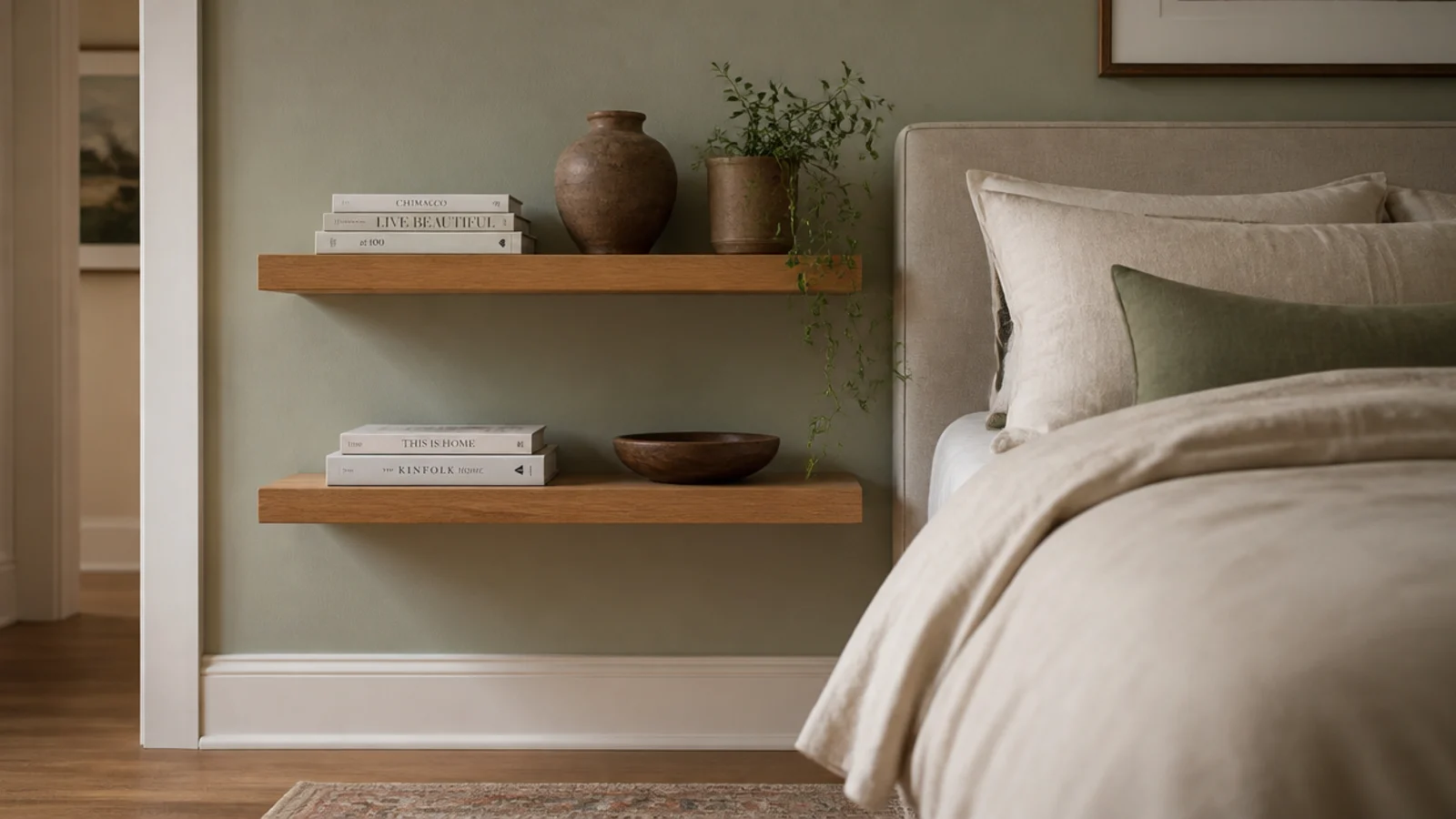
Floating shelves in a bedroom have one rule the rest of the house does not: whatever goes up there ends up above someone sleeping. That single constraint shapes the depth, the fixings and what you allow onto the shelf. These thirty ideas are all budget builds, most under $30 a shelf, and every one names a height, a depth and an honest weight limit.
In this guide32 sections — tap to openHide
- 1.What floating shelves in a bedroom actually need
- 2.A shallow shelf above the headboard
- 3.A bedside shelf level with the mattress top
- 4.A second shelf above the bedside for a plant
- 5.A lamp shelf with a hidden cable run
- 6.Two shelves flanking the bed as nightstands
- 7.A shelf that spans exactly the width of the bed
- 8.A picture ledge above the bed instead of hung art
- 9.A shelf where a headboard should be
- 10.A shelf above the dresser
- 11.A run at door-head height around a small room
- 12.A shallow shelf behind the bedroom door
- 13.A shelf above the closet door for suitcases
- 14.A shelf above the hanging rail inside the closet
- 15.A jewelry shelf with a lip beside the mirror
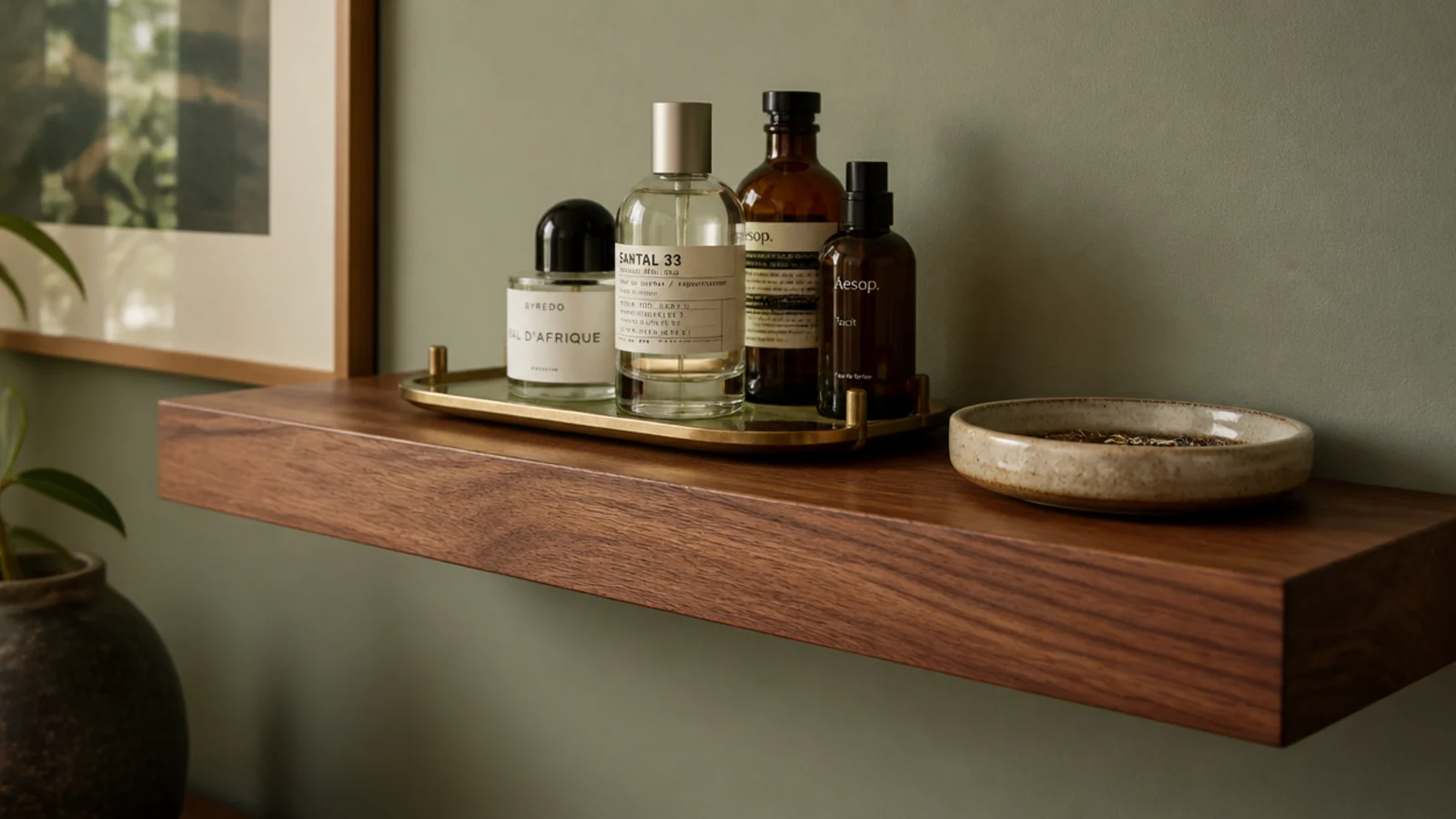
- 16.A perfume shelf at 48 inches
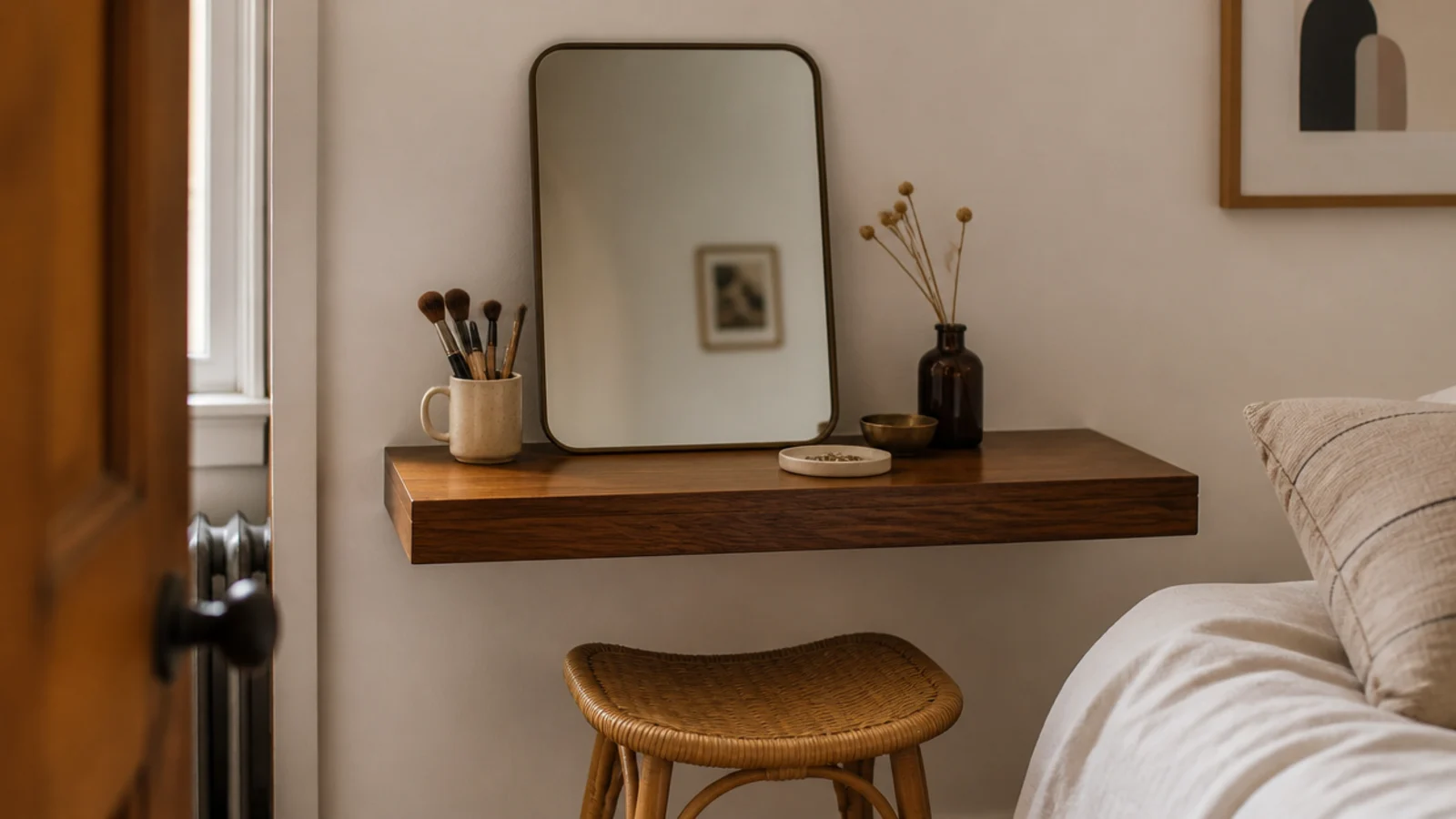
- 17.A dressing-table return at 29 inches
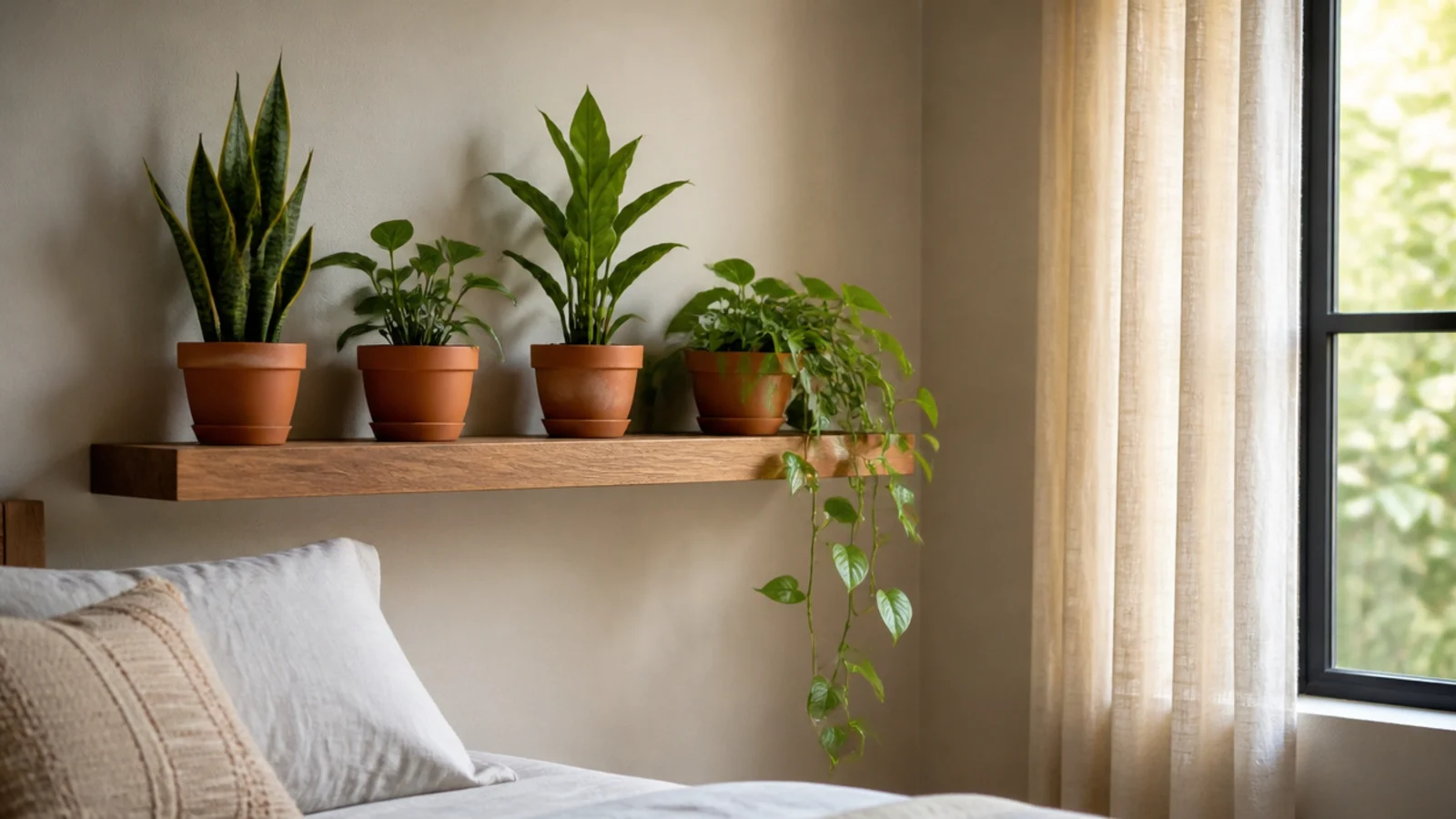
- 18.A plant shelf on the window wall
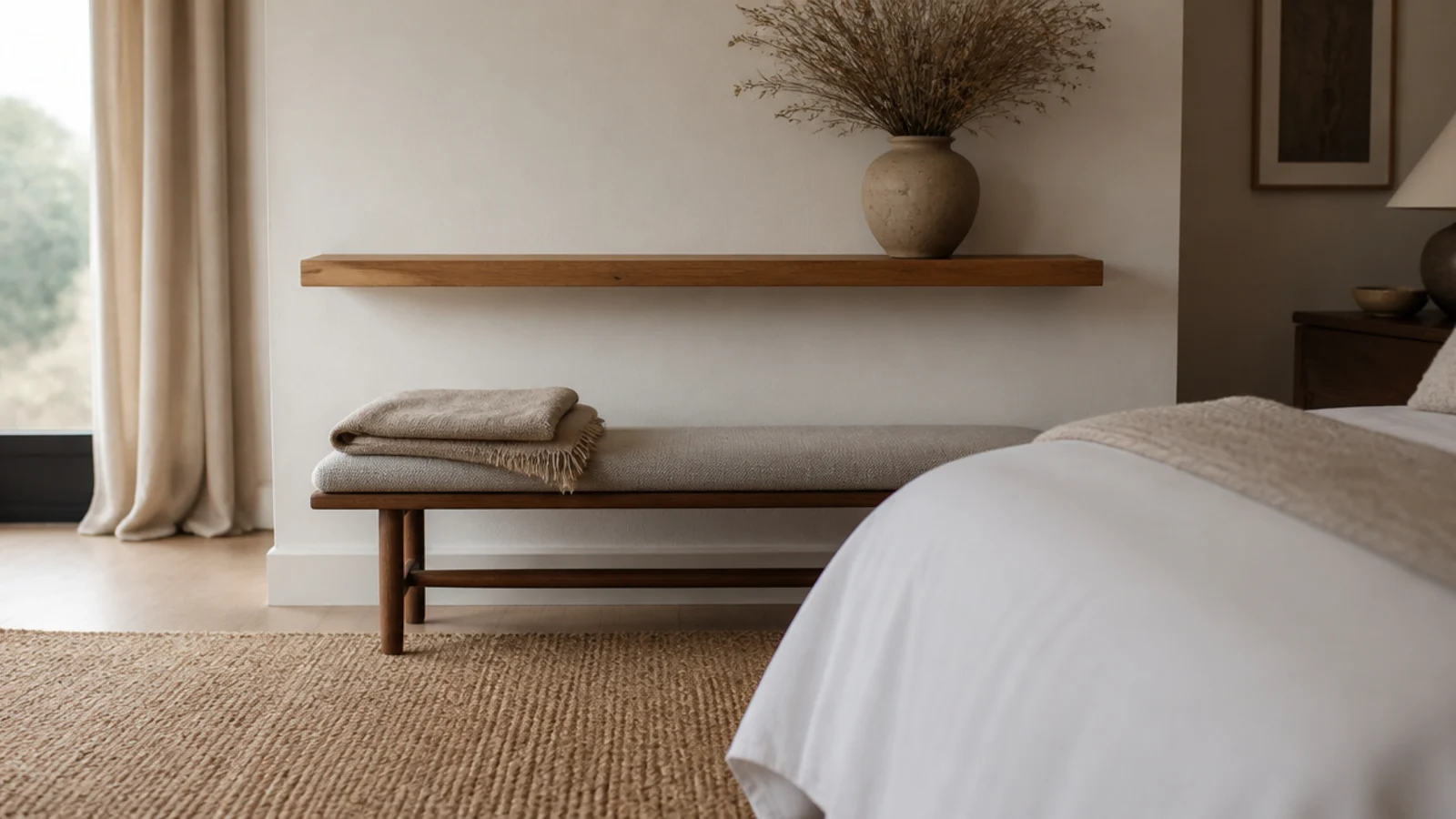
- 19.A shelf above a bench at the foot of the bed
- 20.A reading-stack shelf for books in progress
- 21.A charging shelf by the bedroom door
- 22.A nursery shelf capped at 36 inches
- 23.Forward-facing picture book ledges
- 24.A low basket shelf in a kids room
- 25.One shelf per child in a shared room
- 26.A shelf under a sloped attic ceiling
- 27.Black metal and wood for under $30
- 28.Pine painted the exact wall color
- 29.A thrifted board and six-dollar brackets
- 30.A guest room shelf with towels and water
- 31.A no-drill shelf for a rental bedroom
- 32.Mistakes to Skip
What floating shelves in a bedroom actually need
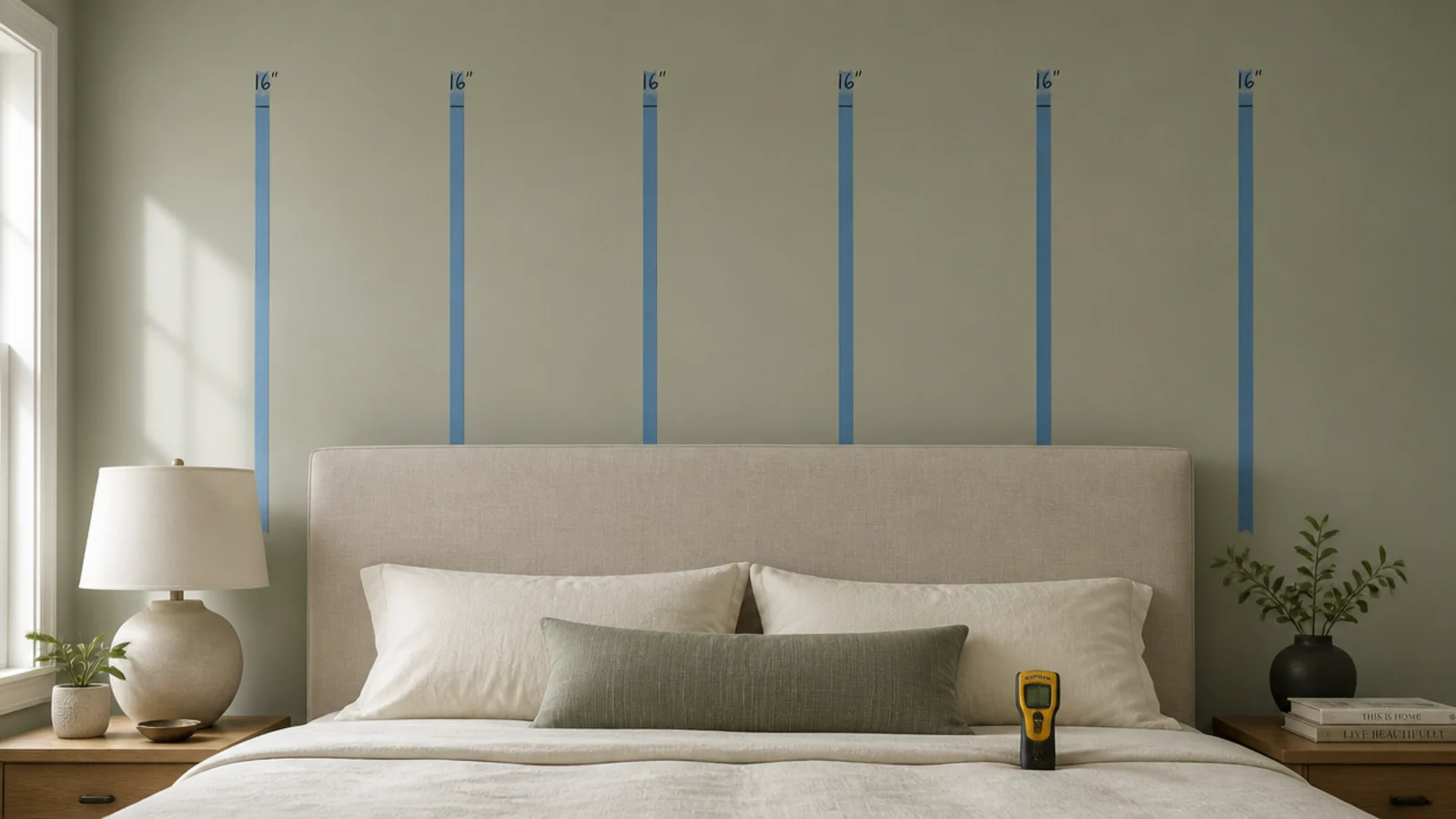
Above a bed, framing is not optional. Every fixing goes into a stud, the shelf stays shallow at six inches, and only soft or light things go on it — framed prints, baskets, a folded throw. No ceramics, no books, nothing hard. If the studs will not line up across the run, put the shelf on the wall beside the bed instead and stop arguing with the framing.
Heights are simple. Twelve to fourteen inches above the headboard top, or about 60 inches from the floor with no headboard. Beside the bed, mount level with the top of the mattress — that is where your hand actually lands in the dark, not at headboard height.
The numbers behind all of it: a concealed rod bracket into a stud carries 30 to 40 pounds on a 24-inch shelf, toggle bolts carry 25 to 35 pounds each in half-inch drywall, and the plastic plugs in the kit carry about 10 pounds and cause most sagging. Three-quarter-inch stock crosses 24 inches without visible deflection; half-inch bows at about 18. Leave 13 inches of clear height between tiers for a standing hardback.
Budget tiers: a pine board on painted-out L brackets runs $15 to $28 ($), a solid oak set on concealed rods runs $55 to $110 ($$), and a built-up box run above the bed starts around $200 ($$$).
1. A shallow shelf above the headboard
One shelf 12 to 14 inches above the headboard top, six inches deep, into studs only. It finishes the wall without the commitment of hanging art.
Keep everything on it soft or light: a leaning print, a basket, a folded throw. This is not the shelf for your pottery collection, however good it would look there.
2. A bedside shelf level with the mattress top
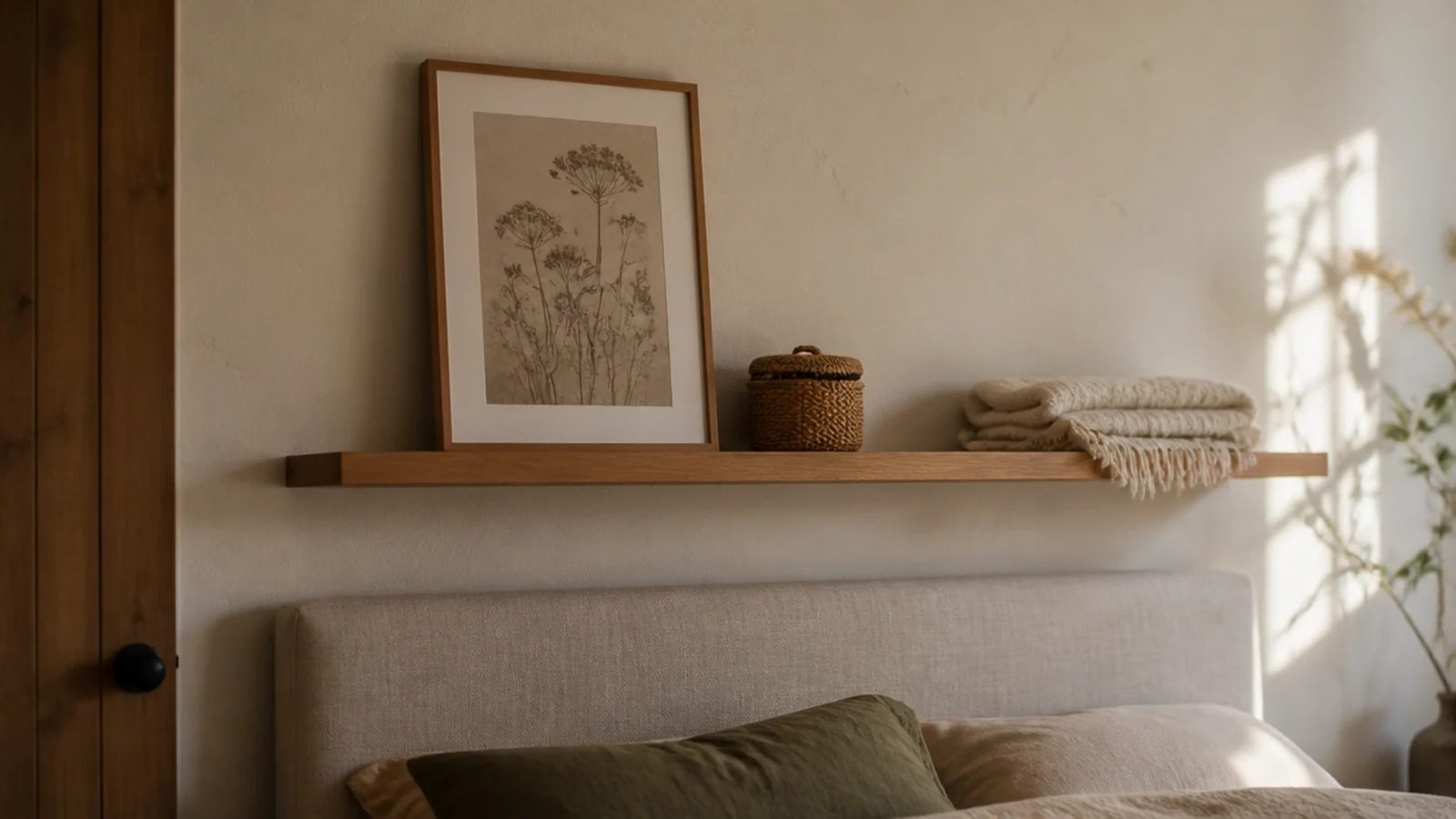
In a bedroom too tight for nightstands, a 12-inch shelf at mattress height does the job and takes no floor.
Seven inches deep holds a lamp, a book, a glass and a small dish. Fix into a stud if there is one within reach, because this shelf gets leaned on when people sit up.
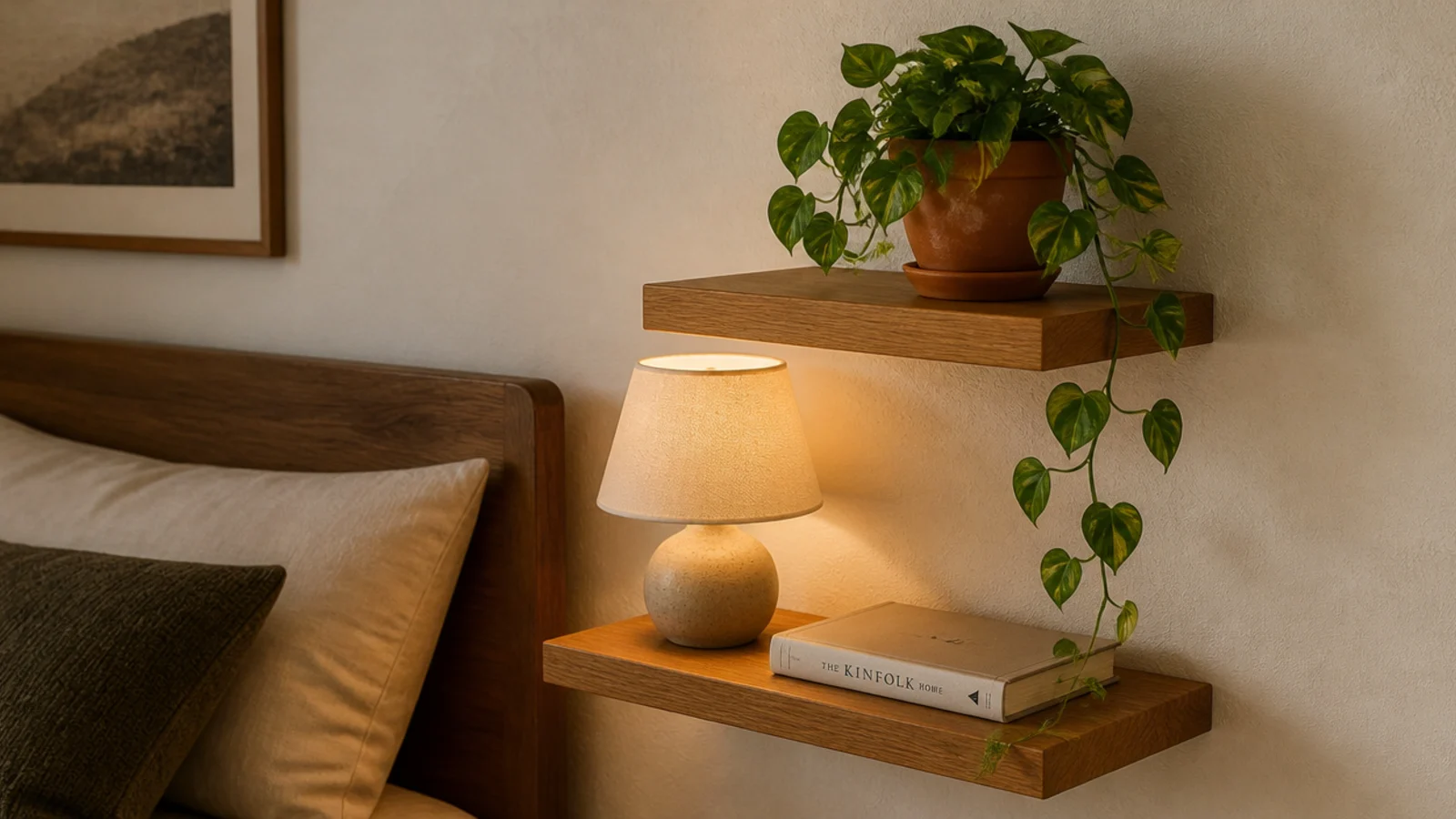
3. A second shelf above the bedside for a plant
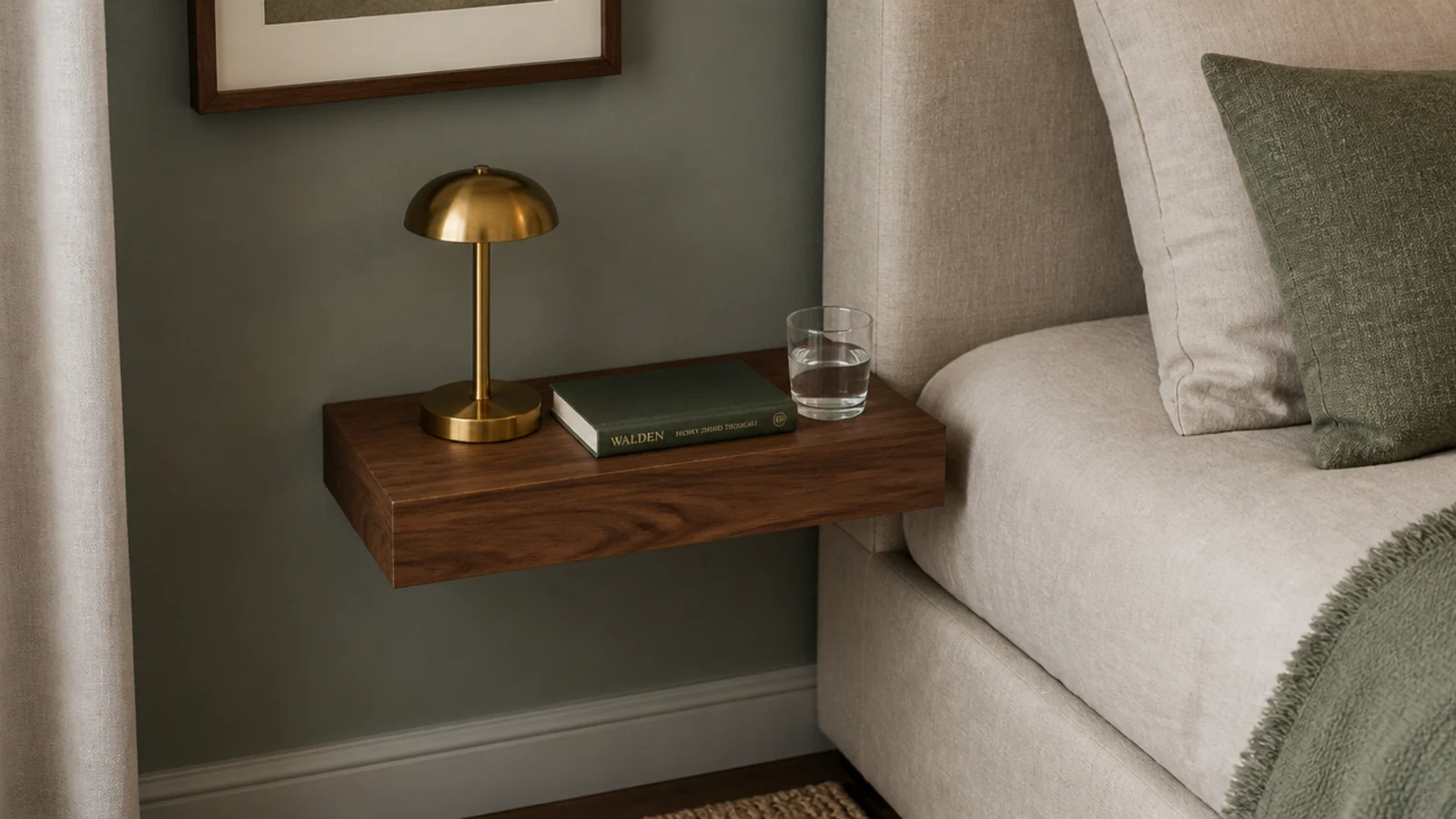
Add a second shelf 14 inches above the first and the bedside stops looking like a stranded board on a wall.
Use the upper one for something soft and green rather than more objects. A trailing pothos costs $10 and does more for a bare bedroom wall than a framed print at three times the price.
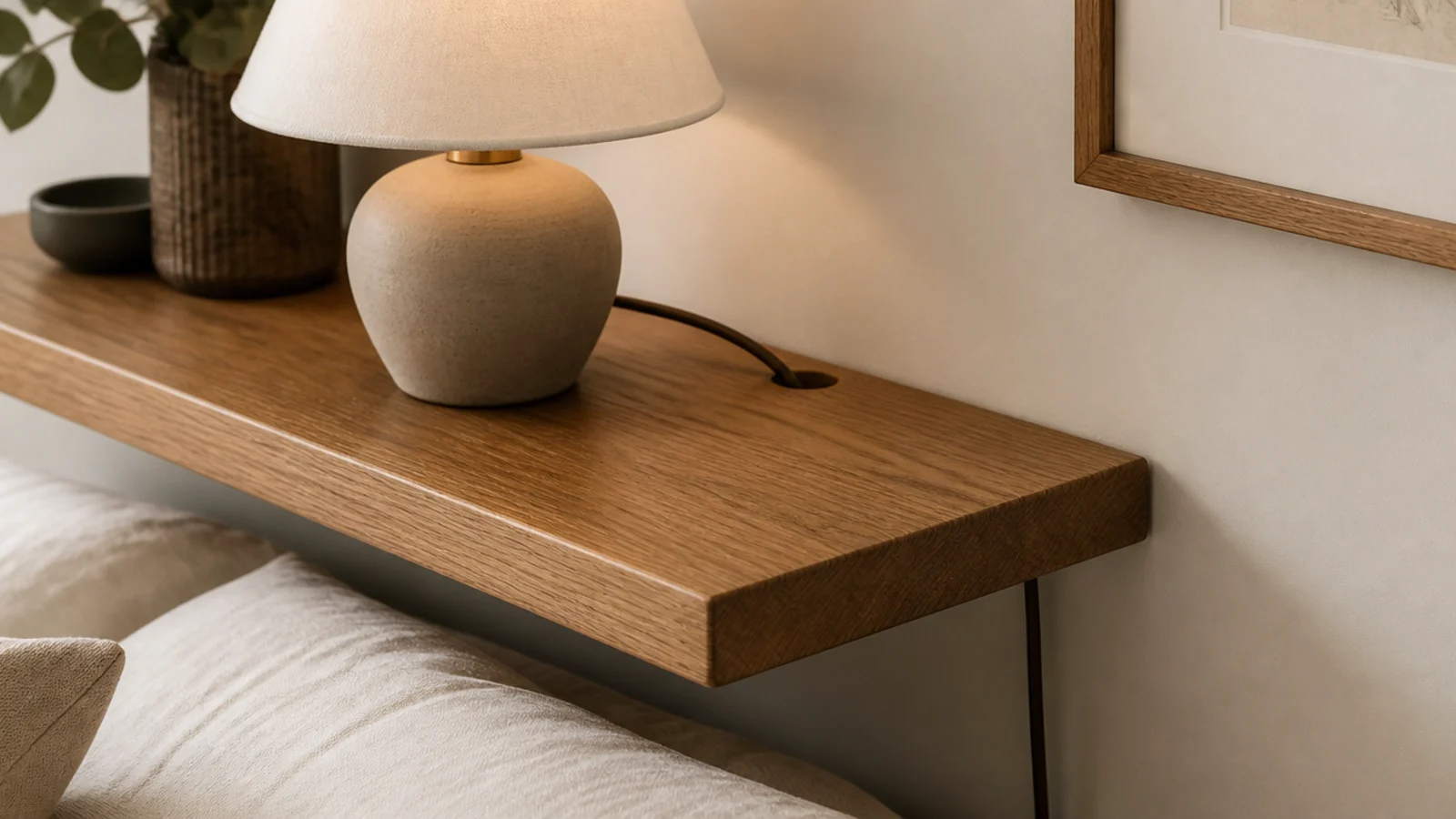
4. A lamp shelf with a hidden cable run
Drill a 1-inch hole near the back edge, feed the lamp cable through it, and the cord runs straight down behind the bed instead of looping over the front.
Sand the hole edge smooth or it scuffs the cable over time. Two minutes with a spade bit, and it is the difference between a styled shelf and a styled shelf with a cable on it.
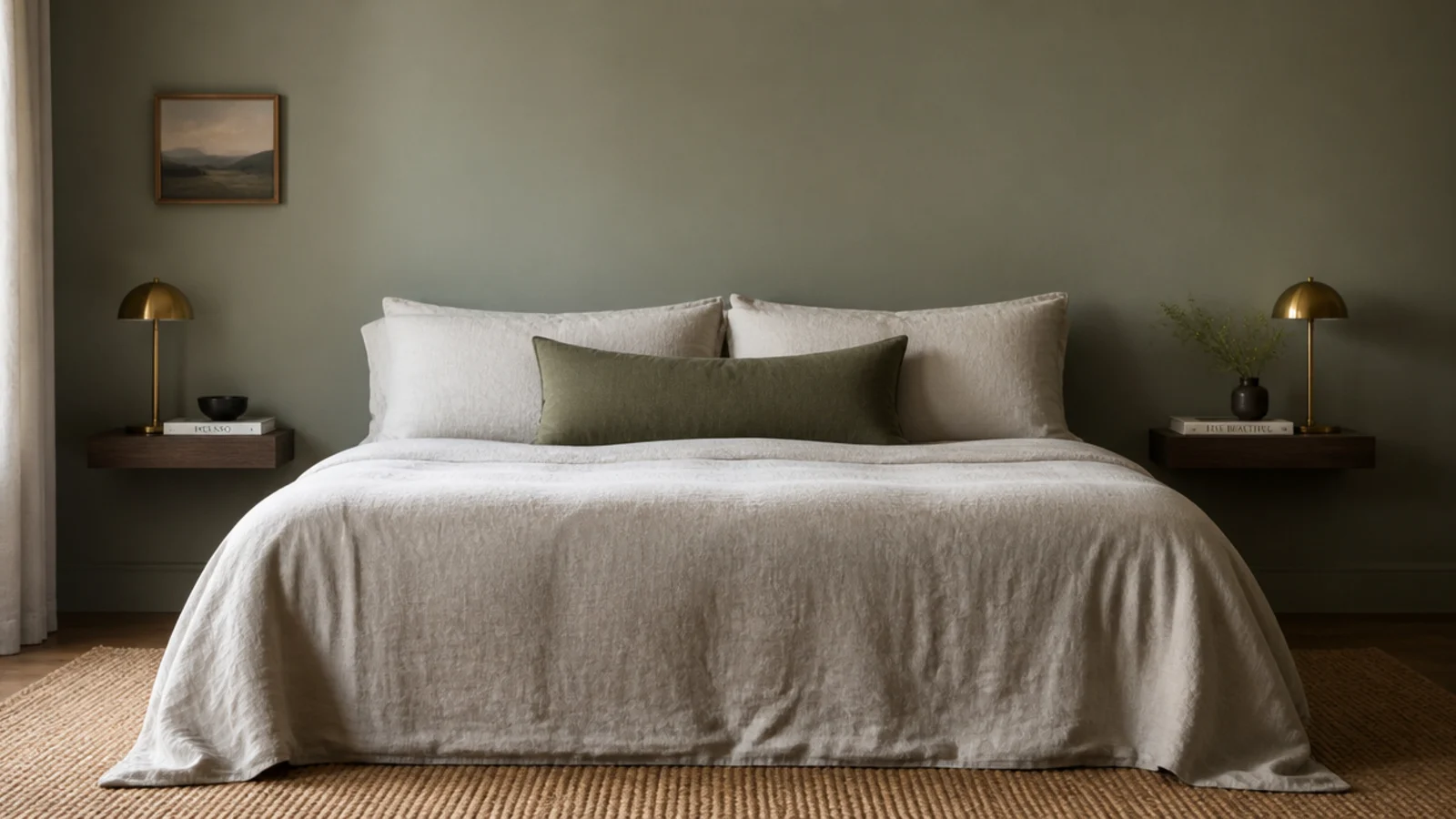
5. Two shelves flanking the bed as nightstands
Two matching shelves, one each side, at exactly the same height, cost less together than a single decent nightstand and make the bed wall symmetrical.
Twelve to 16 inches long, seven deep. Matching lamps on both sides is what completes the effect, and thrifted pairs turn up constantly for around $15 each.
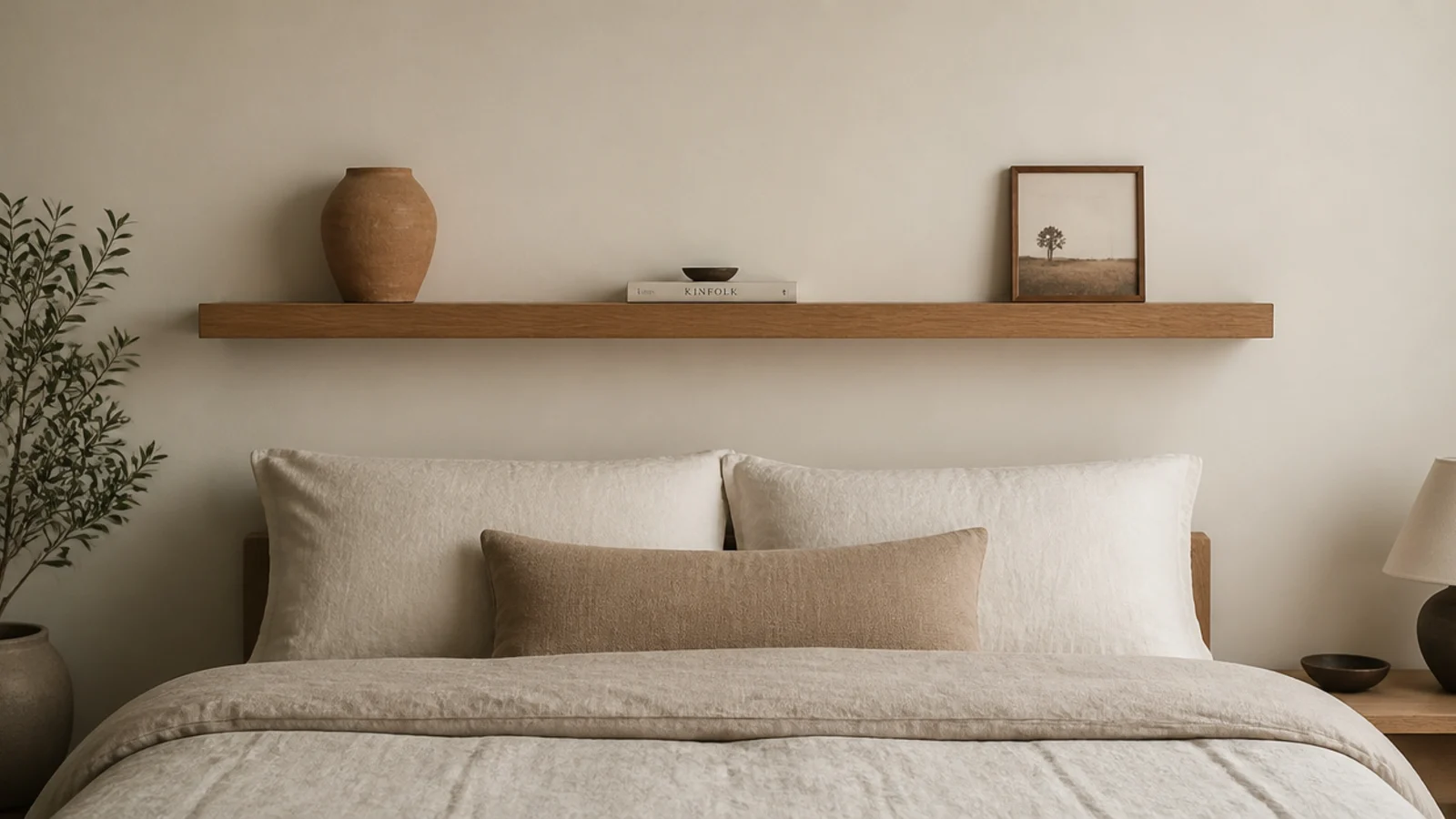
6. A shelf that spans exactly the width of the bed
Sizing a shelf to the bed rather than the wall makes the whole arrangement look intentional. A 60-inch shelf above a queen reads as designed; a 40-inch one reads as leftover.
At that length you will cross three or four studs, which is exactly what a shelf above a bed needs.
7. A picture ledge above the bed instead of hung art
Leaning art is genuinely safer above a bed than hung frames, because a ledge with a half-inch lip holds the frame at an angle rather than on a hook.
Three inches deep, mounted 14 inches above the headboard. You can change the whole wall in five minutes without patching a single hole.
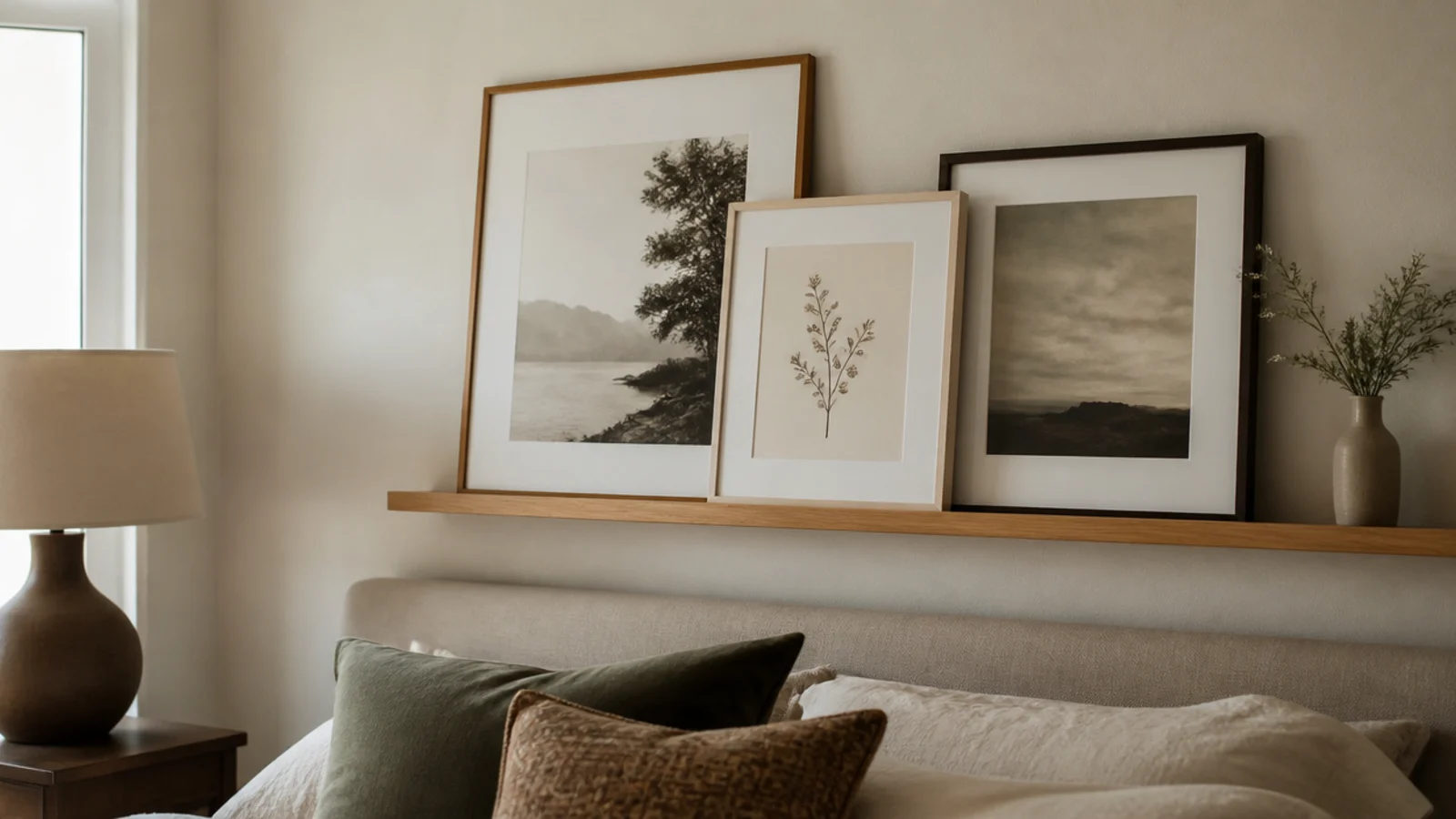
8. A shelf where a headboard should be
If you have no headboard, a deep shelf just above pillow height gives the bed the horizontal line it is missing for about $35.
Set it 40 inches off the floor and 10 inches deep. Add a folded throw over the front edge so nobody knocks their head on the underside.
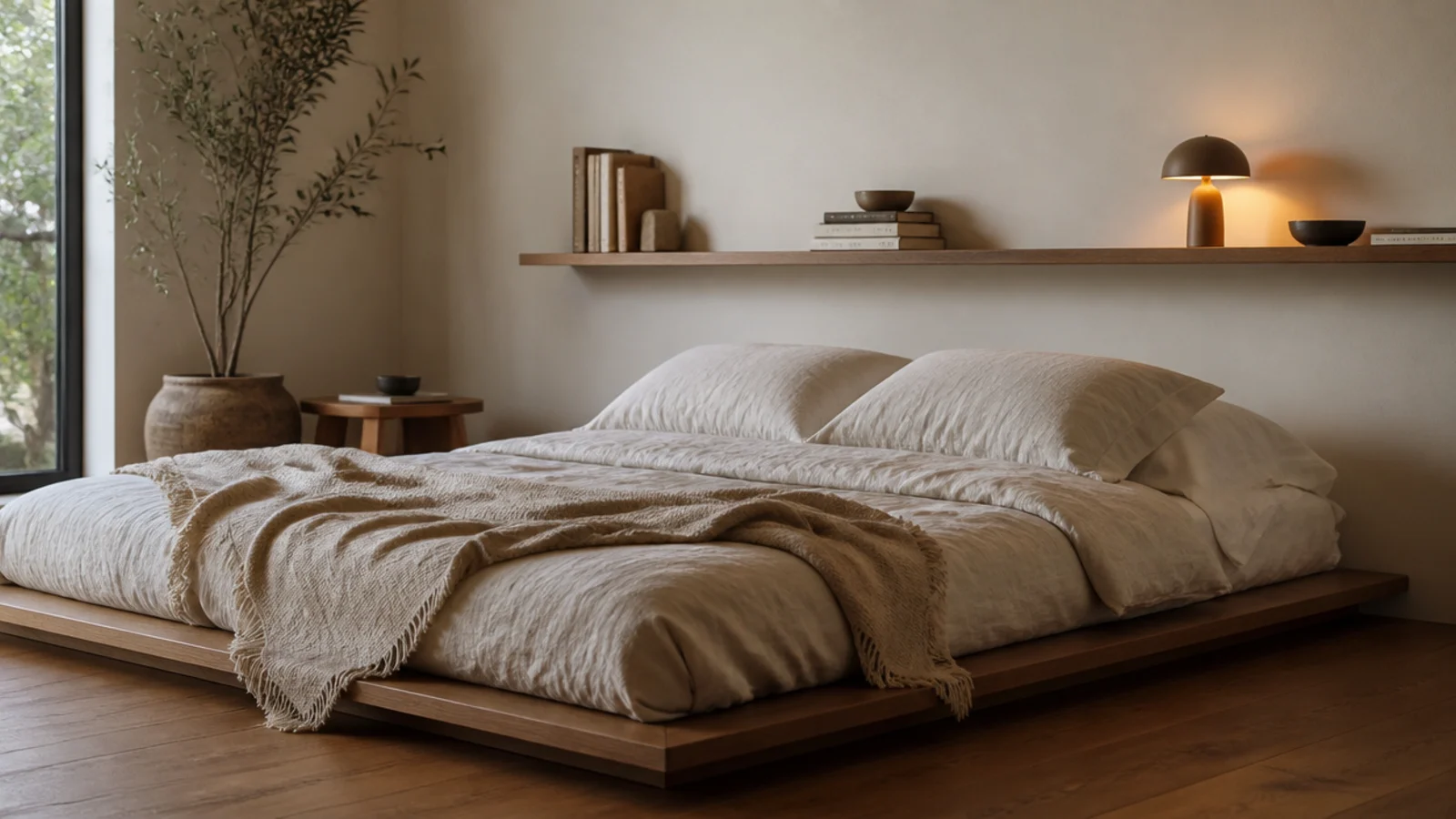
9. A shelf above the dresser
Twenty inches above a dresser top leaves room for a lamp underneath and keeps the shelf inside easy reach.
Size it to the dresser width, not the wall width. Two objects that relate to each other read as a vignette; two that do not read as a mistake, and it is one of those things you feel before you can name it.
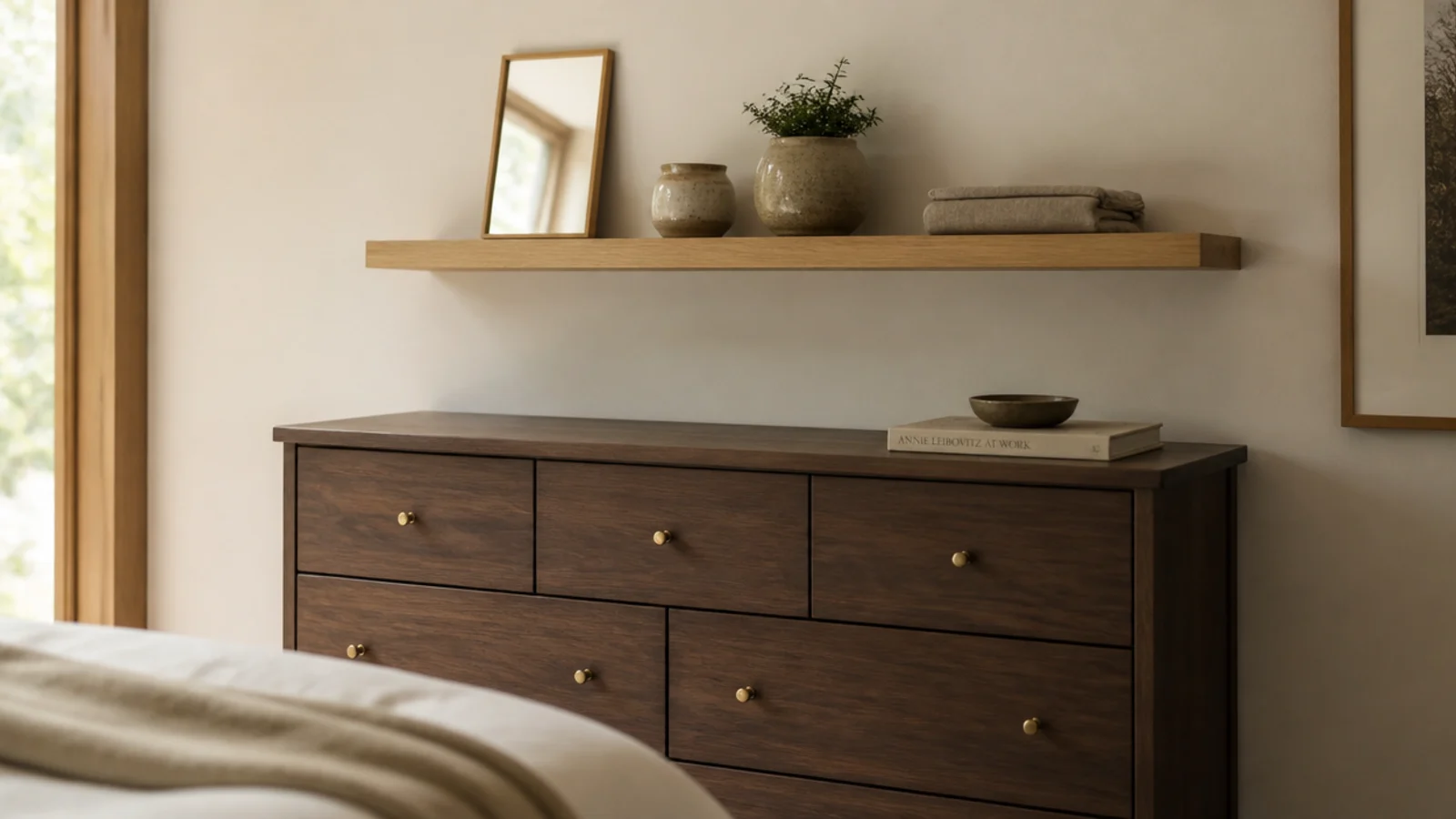
10. A run at door-head height around a small room
In a small bedroom, storage above 78 inches keeps the walls at eye level clear, which is what actually makes a room feel bigger.
Run a shelf at the height of the door casing and use it for baskets and light seasonal things. Nothing you need weekly, because you will be on a chair to reach it.
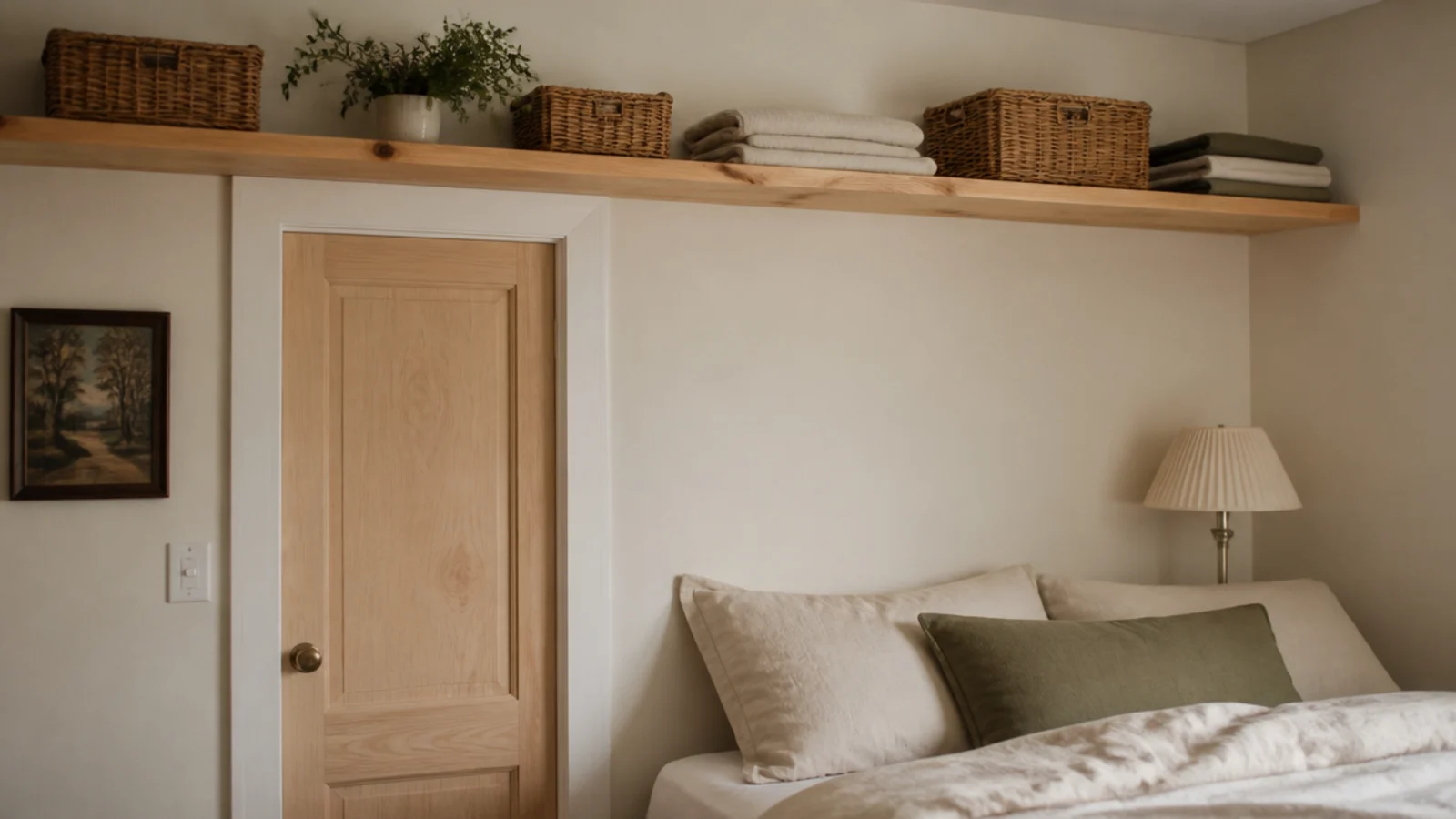
11. A shallow shelf behind the bedroom door
The wall behind an open door is free storage in every bedroom. The door swing sets your maximum depth absolutely.
Open the door fully, measure from wall to door face, subtract two inches. Usually four or five. Use it for folded linens or a basket of chargers, and nothing breakable.
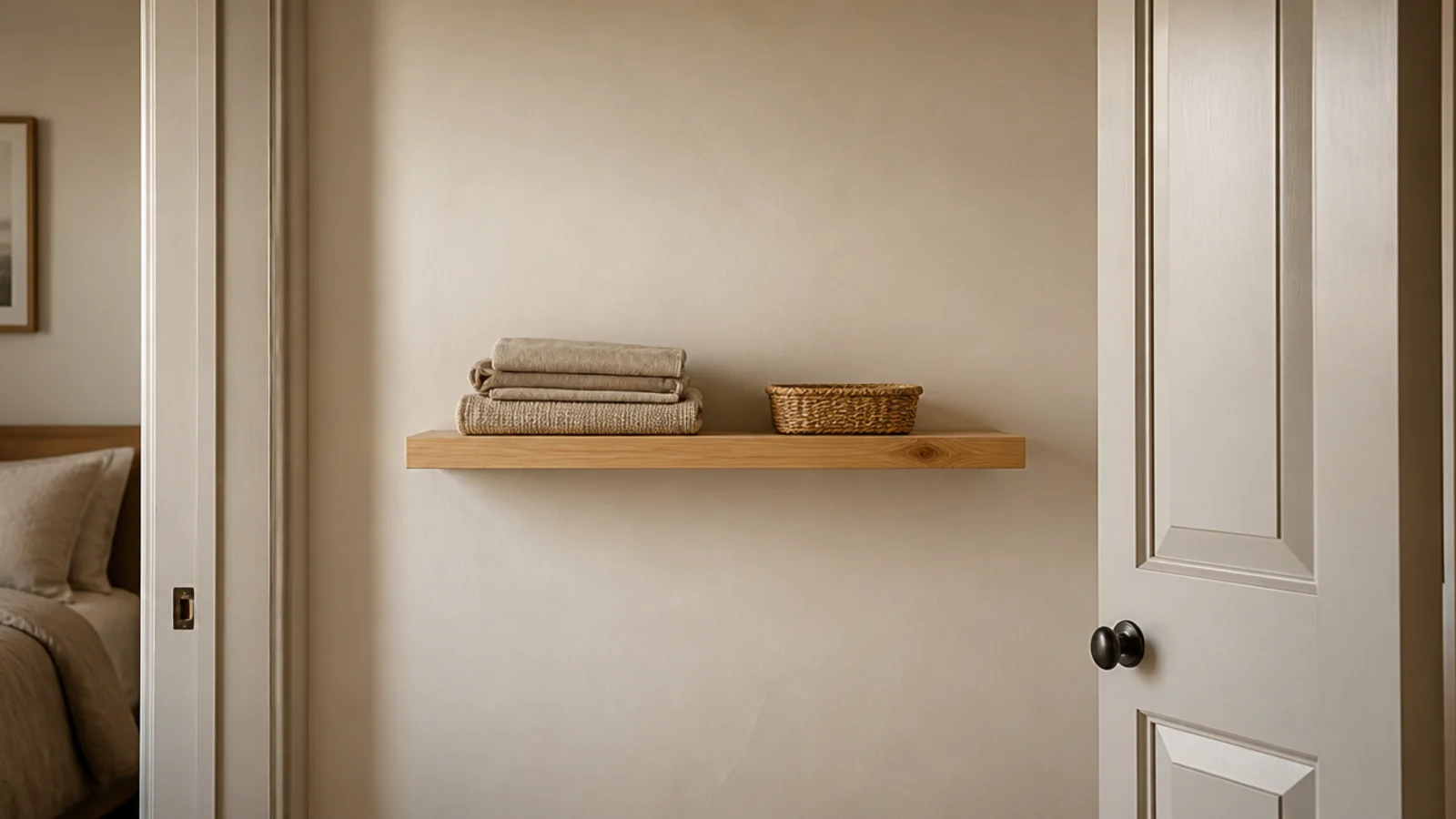
12. A shelf above the closet door for suitcases
Suitcases, spare bedding and the boxes you open twice a year belong above head height, not eating closet floor.
Match the shelf width to the doorframe so it reads as joinery. This one has to be into framing, since a suitcase full of winter coats is heavier than anything else in the room.
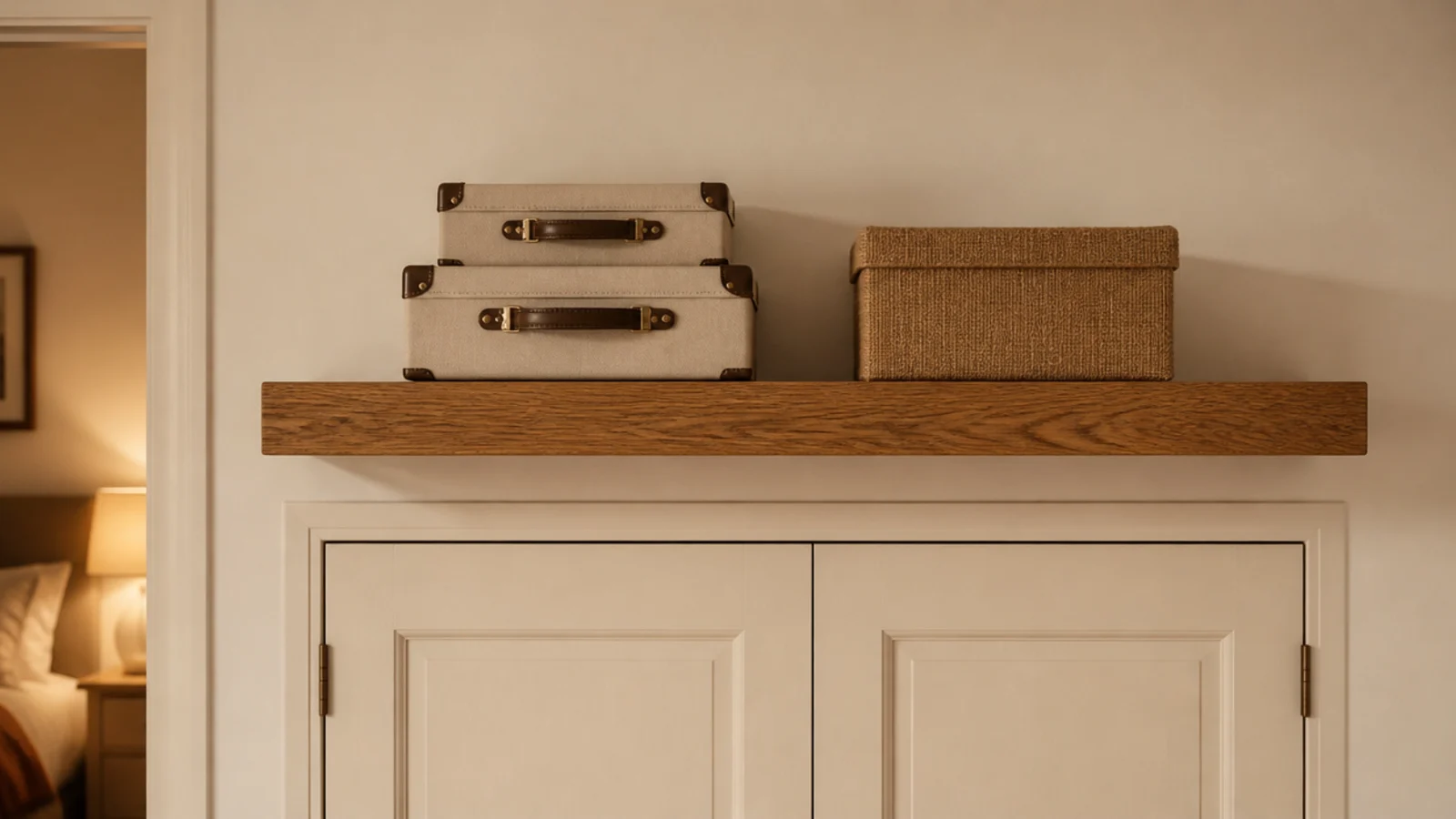
13. A shelf above the hanging rail inside the closet
Most closets waste a foot of height above the rail. A pine shelf 12 inches above it takes folded knitwear, which should never be hung anyway.
Rough pine is fine here — nobody sees it. Two shelves, $25, and a closet suddenly holds a third more.
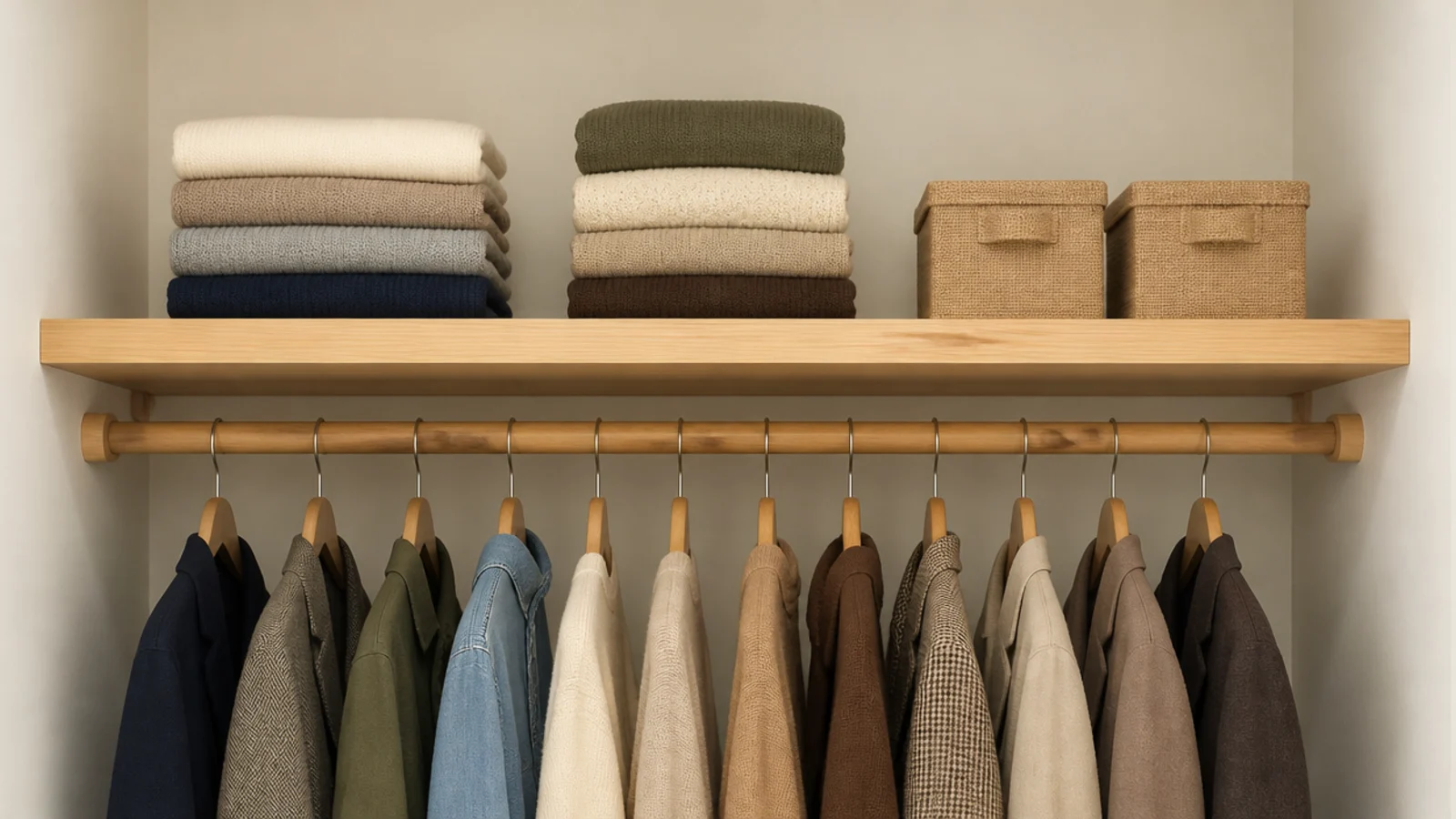
14. A jewelry shelf with a lip beside the mirror
Small things roll. A half-inch lip along the front turns a narrow shelf into somewhere earrings and rings actually stay.
Twelve inches long and three deep at about 52 inches high. Add a small brass tray so the metal has somewhere to land rather than sliding on wood.
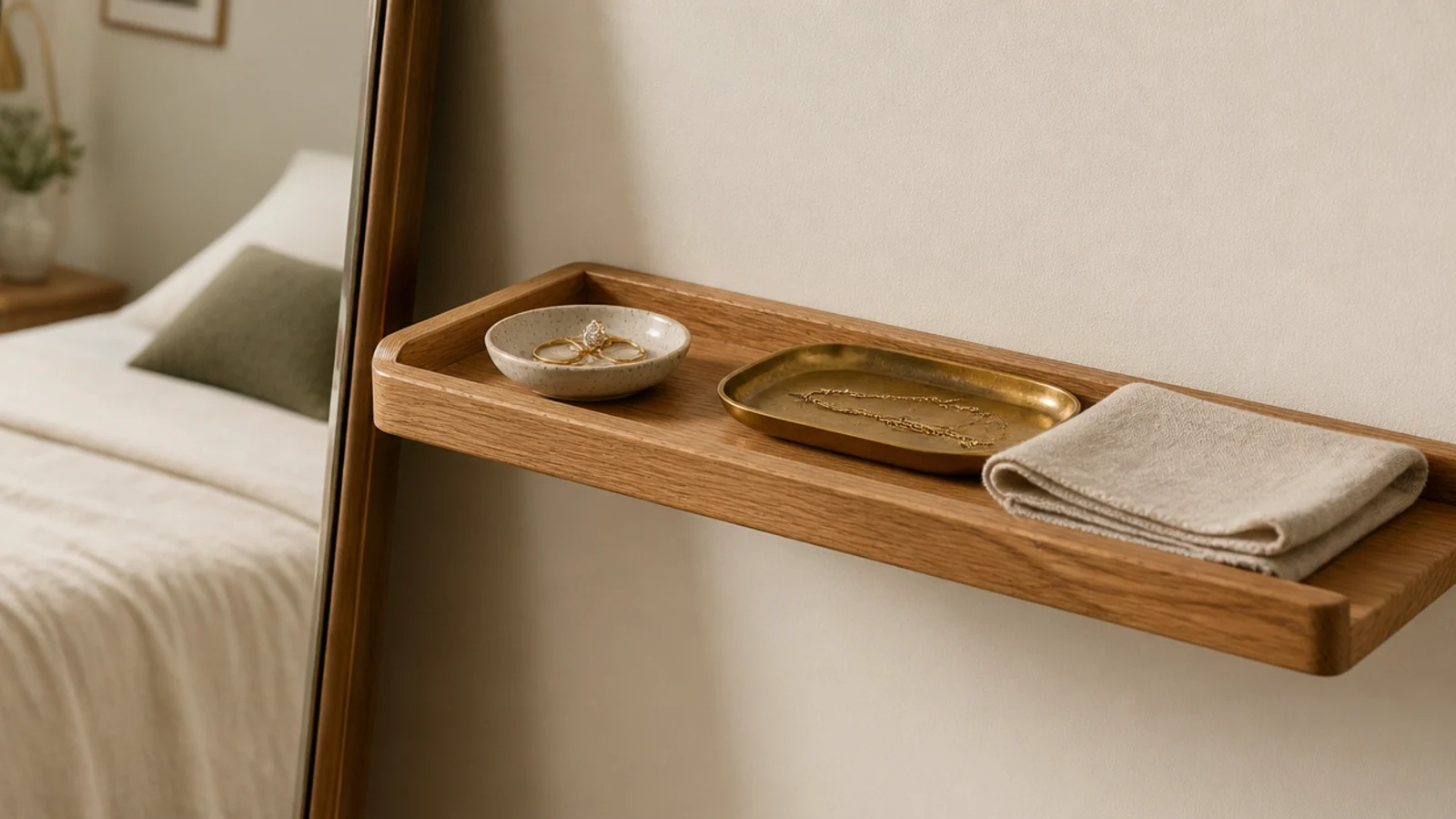
15. A perfume shelf at 48 inches
Perfume keeps far better out of direct sunlight, so pick an interior wall rather than the window one.
Chest height, one row deep, four inches. Bottles are the rare thing that look best lined up rather than grouped, because the glass repeats and reads as a collection instead of clutter.
16. A dressing-table return at 29 inches
A 20-inch-deep shelf at standard desk height gives you a dressing table with no legs for a stool to fight.
Every fixing into studs plus a mid-span support, because people lean on this with their full weight. A leaning mirror on top rather than a hung one keeps it flexible.
17. A plant shelf on the window wall
Set the shelf about two feet back from the glass where light is bright but indirect, and most bedroom plants will be happy year round.
Saucers under everything. A water ring on a finished shelf is permanent, and one repotting accident costs you the whole finish.
18. A shelf above a bench at the foot of the bed
A bench at the end of a bed with a shelf above it turns the foot wall into a proper piece of the room.
Twenty inches of clear height above the seat back so nobody catches their head sitting up, and keep the shelf to six inches deep so it does not hang into shoulder space.
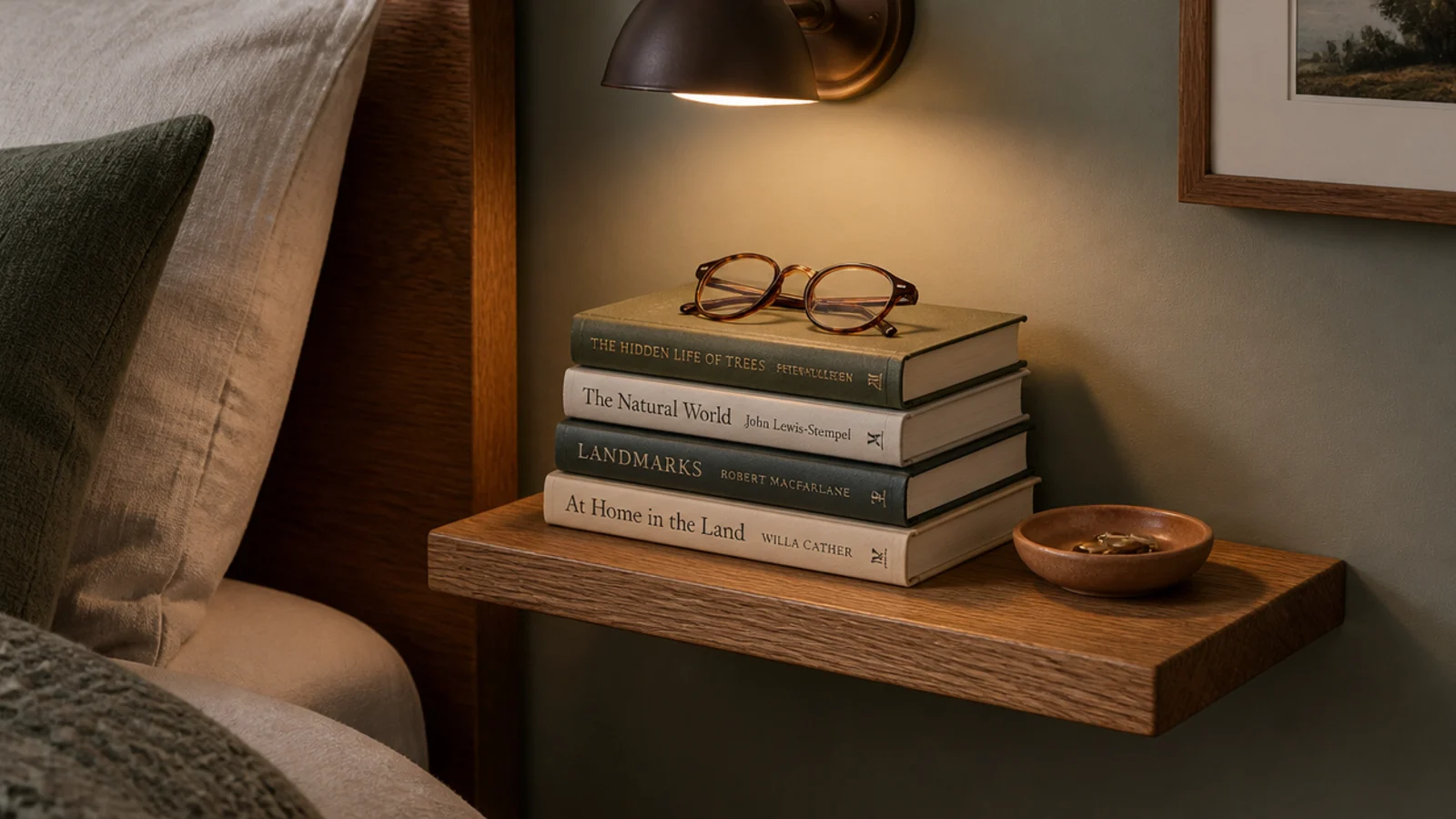
19. A reading-stack shelf for books in progress
A tiny shelf that holds only the books you are actually reading keeps four hardbacks off the floor and off the bed.
Ten inches long and eight deep is enough. The discipline is the point: when a fifth book arrives, one goes back to the shelf in the other room.
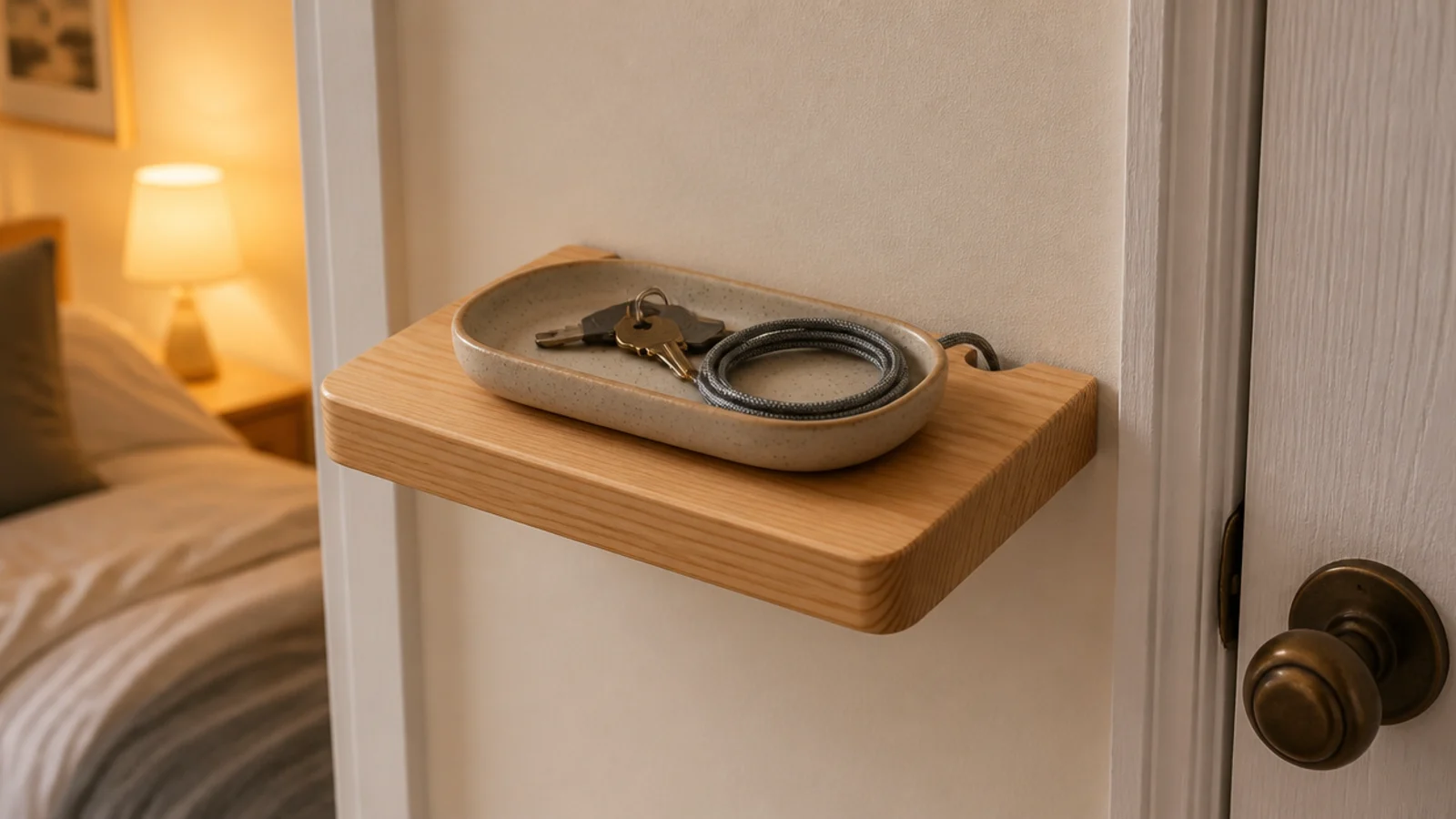
20. A charging shelf by the bedroom door
Putting the charging point by the door rather than the pillow is the cheapest sleep upgrade there is, and a small shelf makes it stick.
A tray, a cable through a 1-inch hole, and a hook underneath for a bag. Six inches deep at 48 inches high, and phones stop migrating to the nightstand.
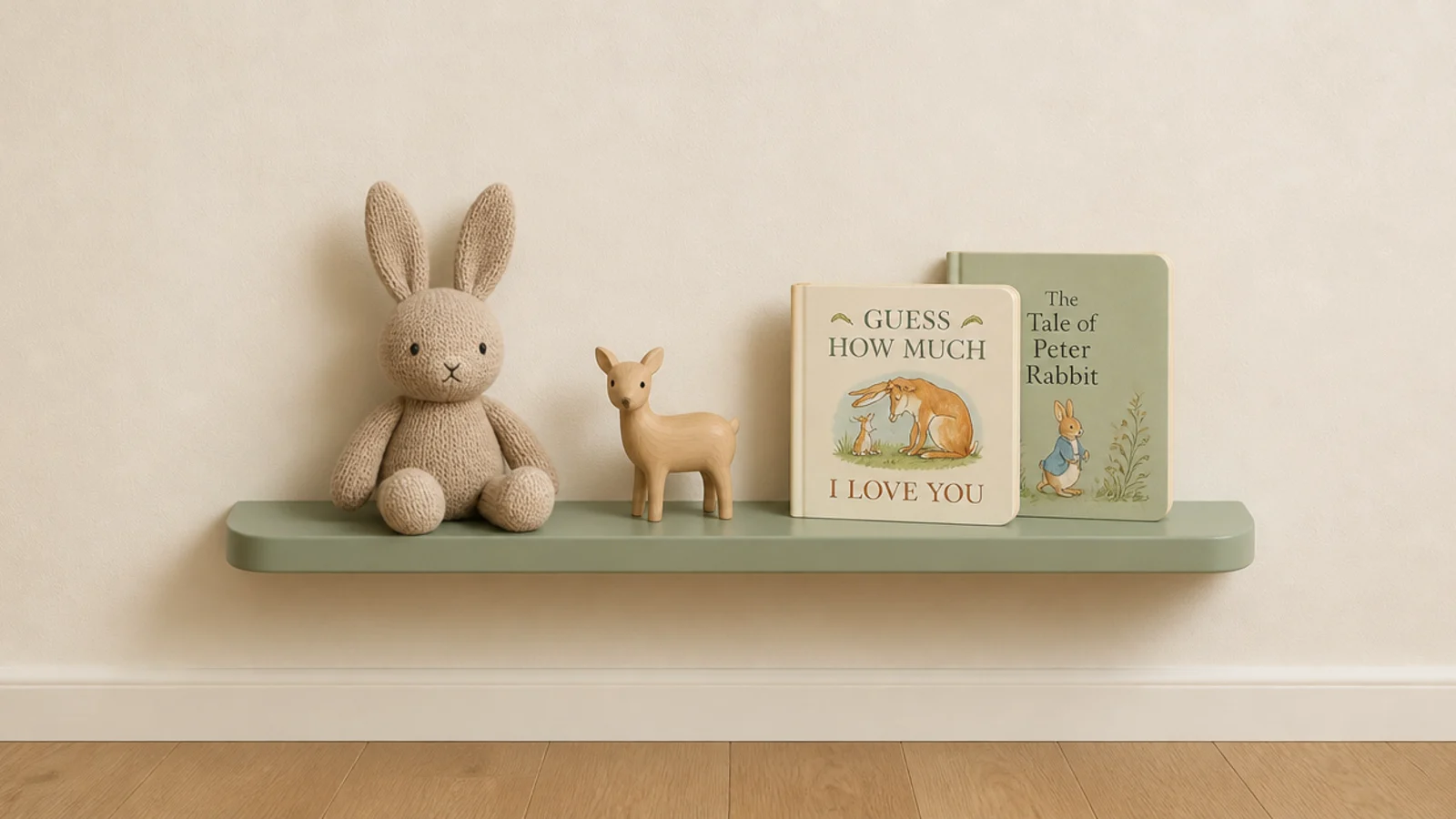
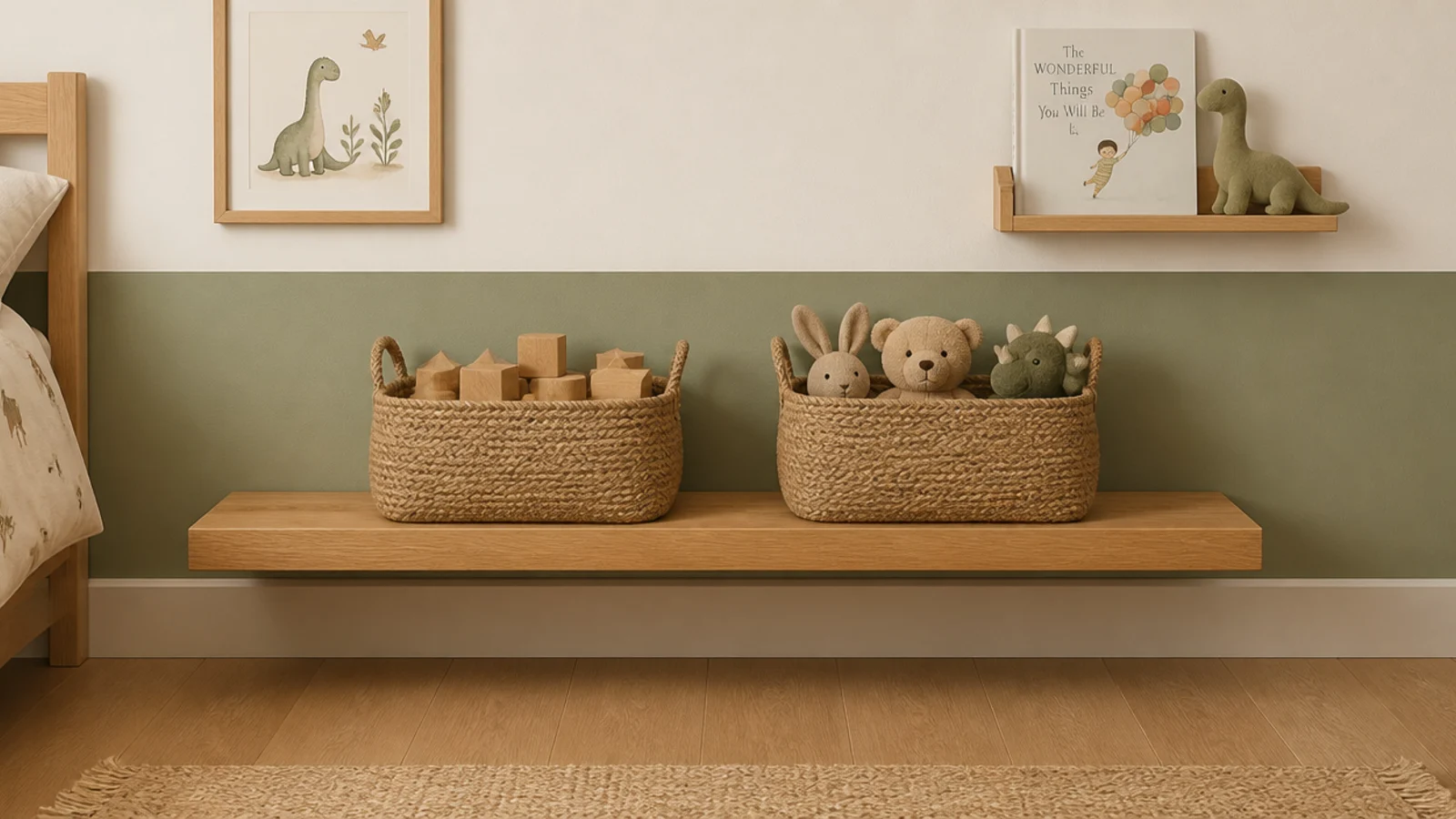
21. A nursery shelf capped at 36 inches
Anything below 40 inches in a room with a small child needs every edge and corner rounded to a radius you can run your palm along.
Cap the top shelf at 36 inches so it can be reached without climbing, and anchor everything into framing. Sage or cream paint hides the knocks that pine shows.
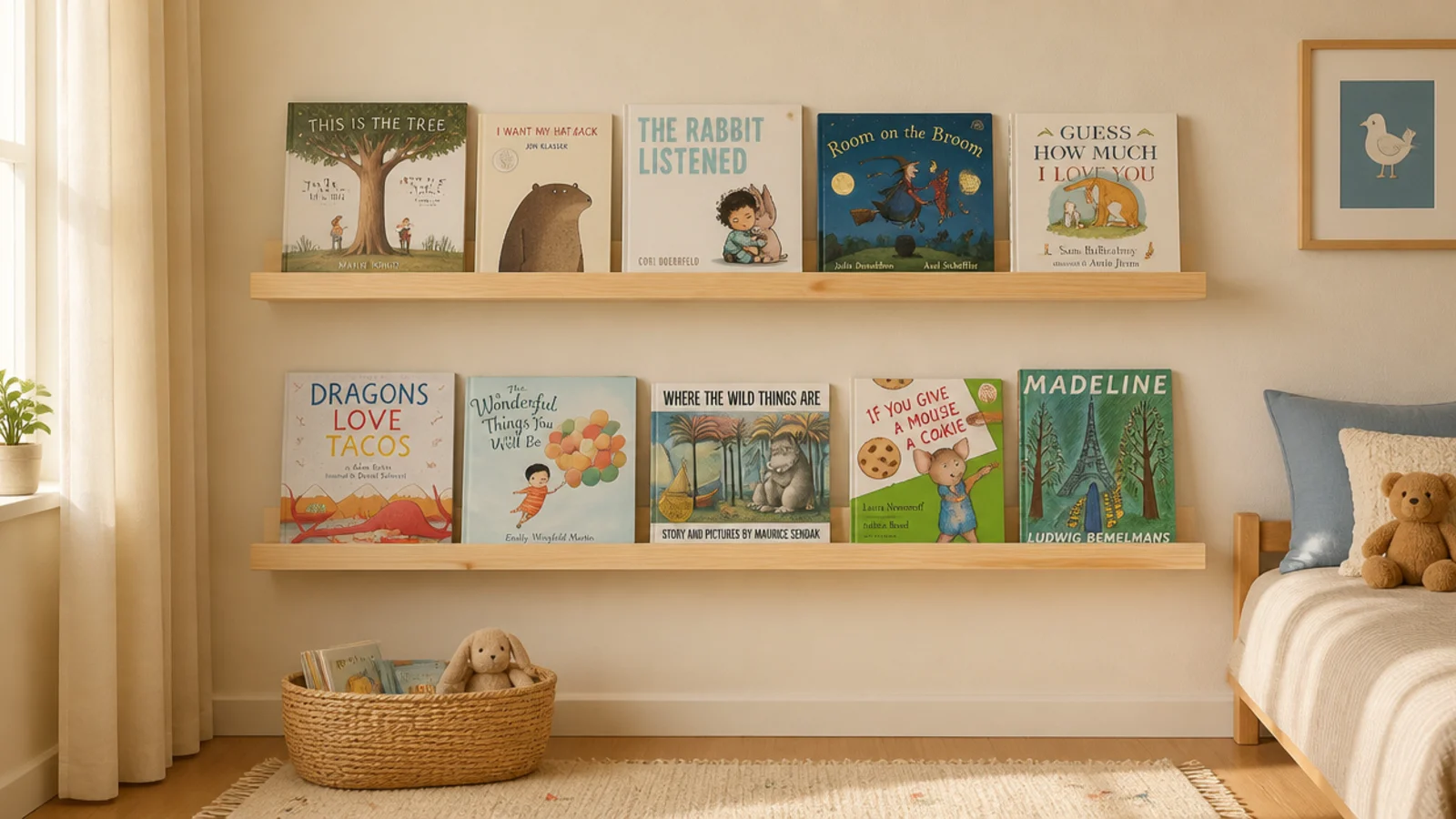
22. Forward-facing picture book ledges
Children choose books by cover, never by spine, so a shallow ledge that displays them face out gets used ten times as often as a bookcase.
Three inches deep with a half-inch lip, mounted at 30 and 42 inches. Two ledges hold about twelve books, which is plenty in rotation.
23. A low basket shelf in a kids room
Open baskets on a low shelf get used; lidded boxes on a high shelf do not. That is the whole rule of tidying with children.
Mount at 24 inches with two open jute baskets. Keep the shelf 10 inches deep so a basket sits fully on it rather than overhanging the front edge.
24. One shelf per child in a shared room
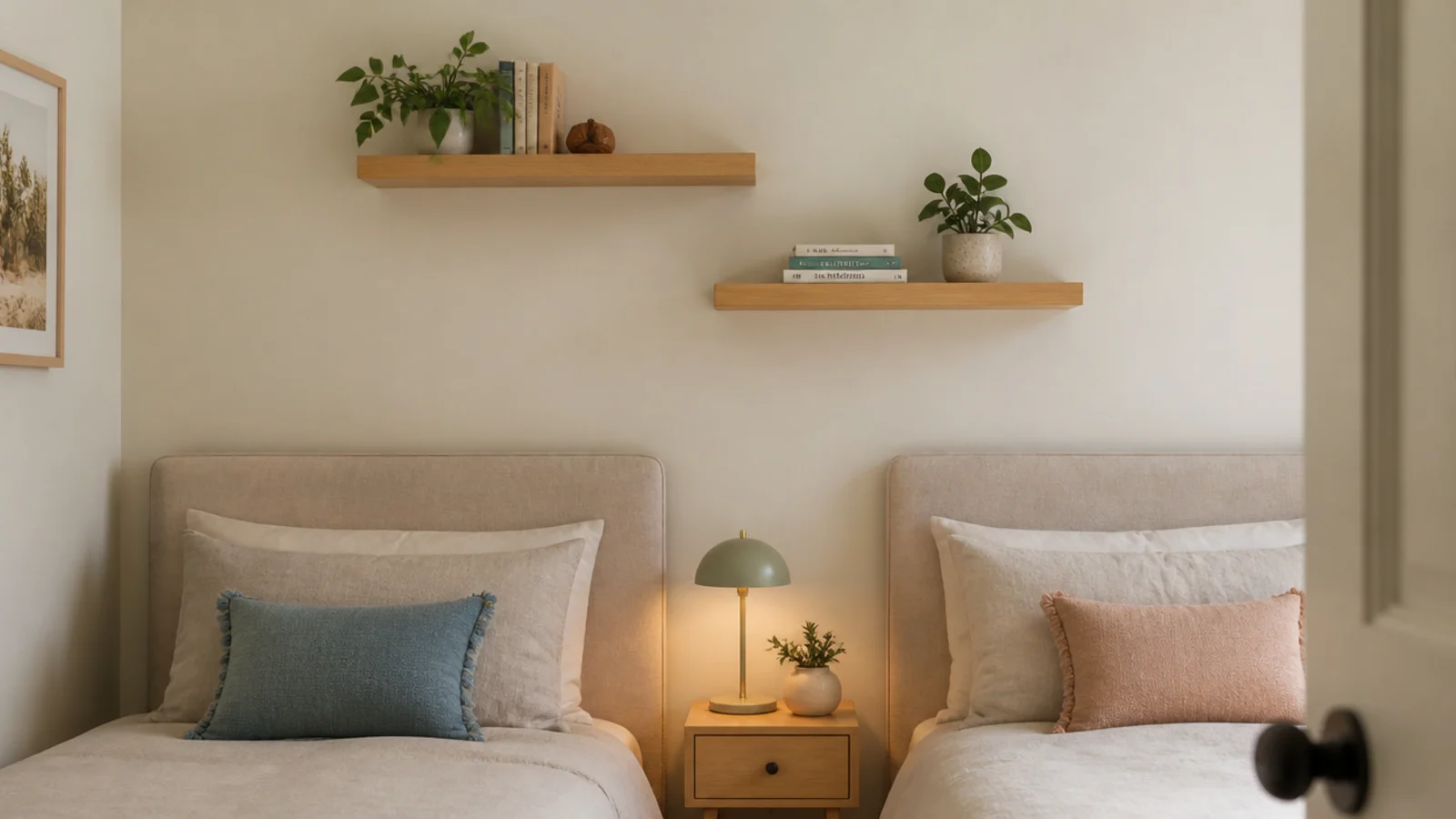
In a shared bedroom, one shelf each at their own height solves more arguments than any amount of negotiating.
Mount them at different heights on the same wall so each reads as personal rather than as a matched set. Same board, same brackets, different height — about $30 for the pair.
25. A shelf under a sloped attic ceiling
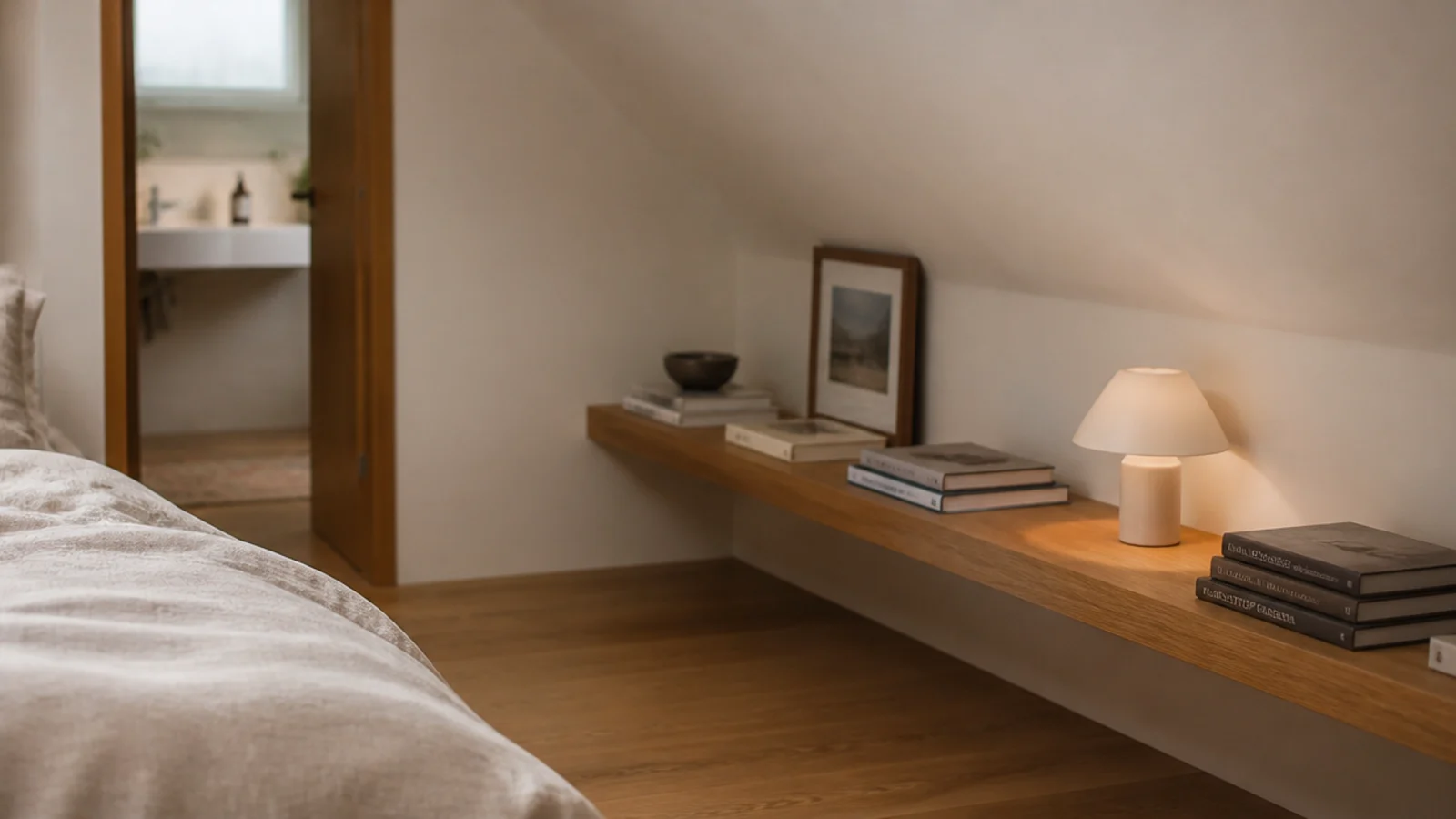
In an attic bedroom the knee wall is often the only wall you can use, and it is usually only 40 inches tall.
Mount at 30 inches and keep the shelf to eight inches deep so it does not run into the slope. Check what is behind it first — knee walls are sometimes lined with thin ply rather than framed properly.
26. Black metal and wood for under $30
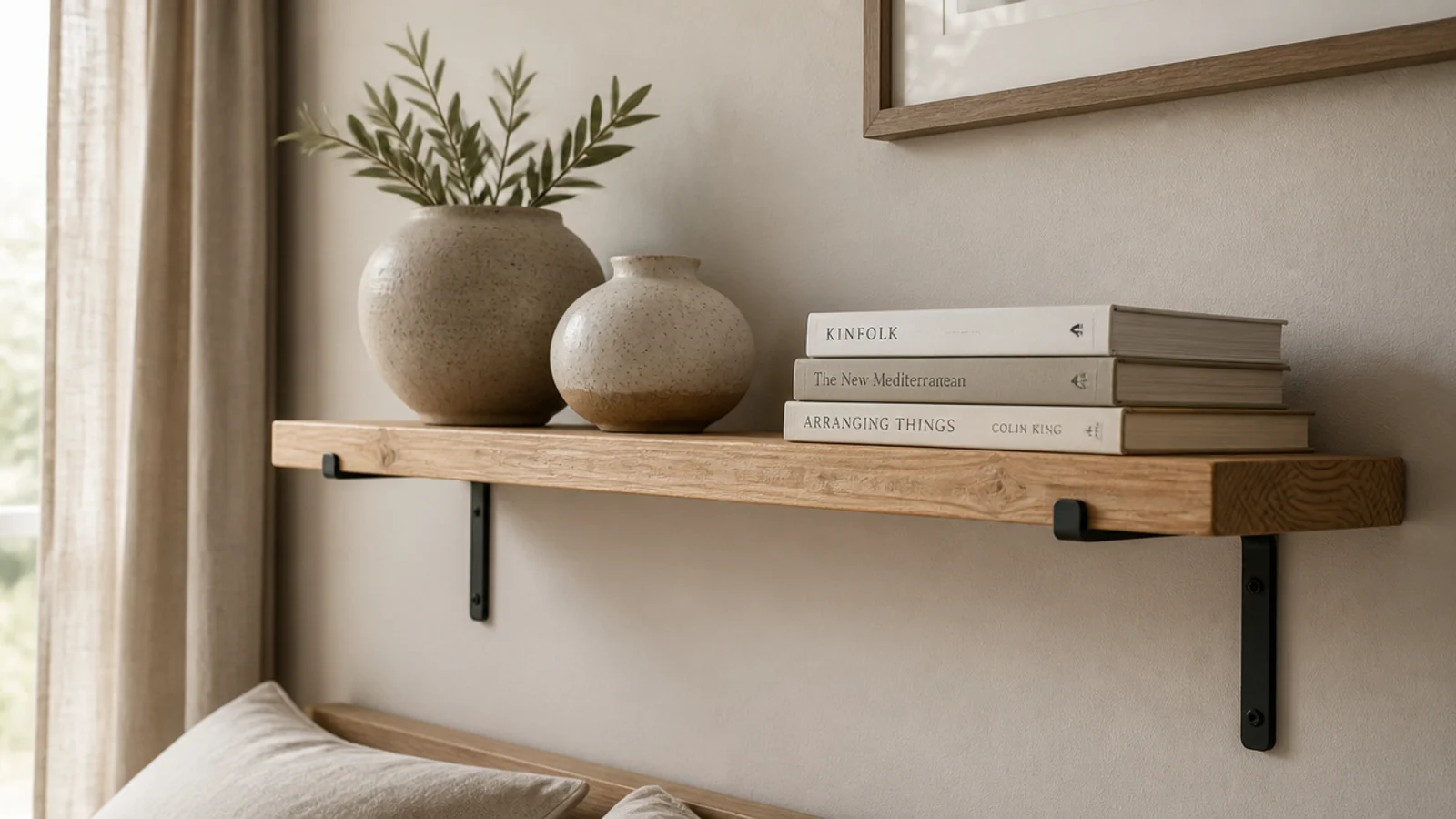
A pine board on slim matte black brackets, left visible on purpose, looks deliberate rather than budget — especially if something else in the room is black.
Choose the smallest bracket rated for the load, usually 30 pounds a pair. Oversized decorative brackets are what make a cheap shelf look cheap.
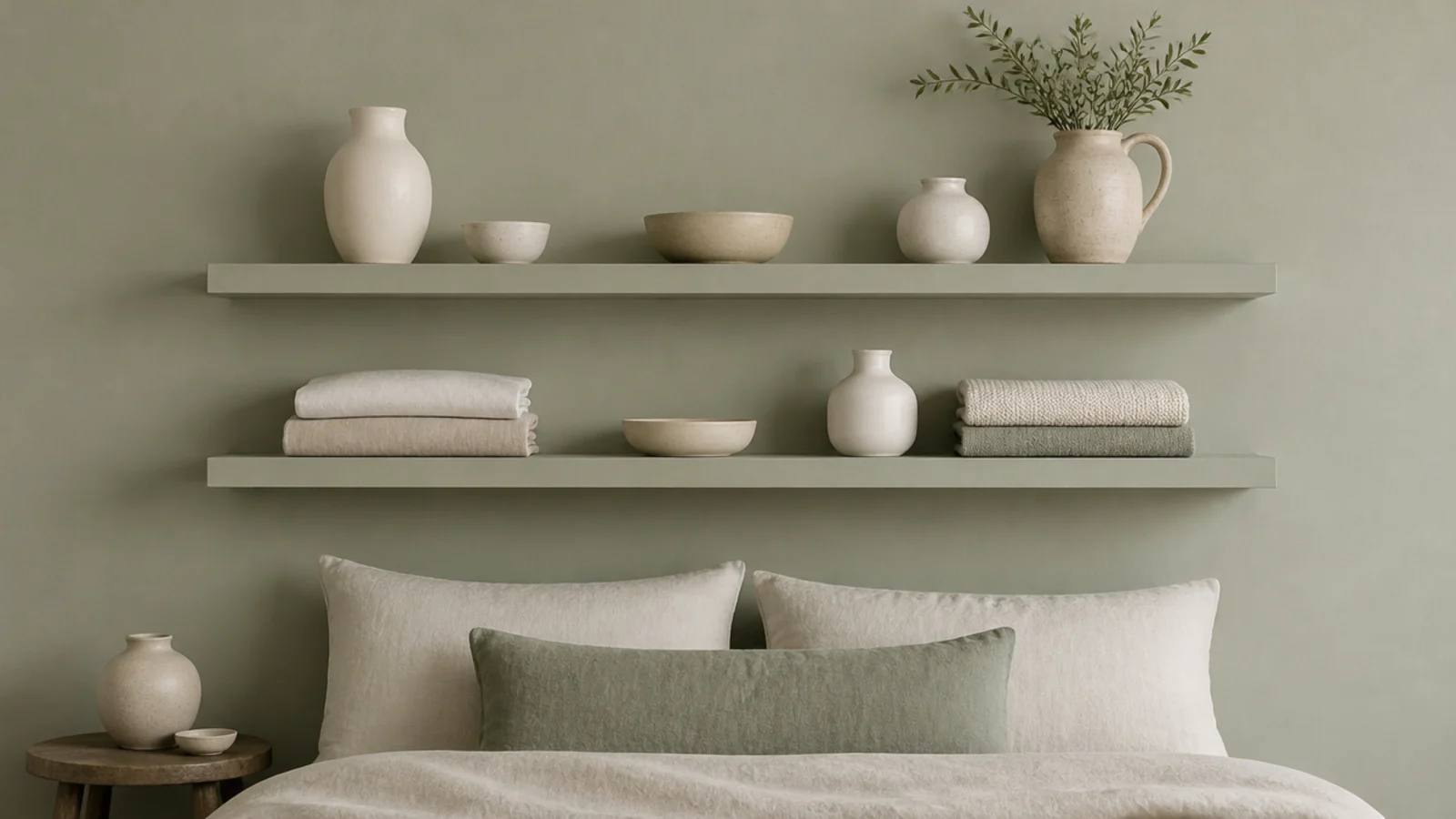
27. Pine painted the exact wall color
Paint a $12 pine board the same shade as the wall and it stops being a board and starts being architecture.
Prime the cut ends first or they drink paint and stay rough. Two thin coats with a light sand between, and the shelf disappears into the wall exactly as intended.
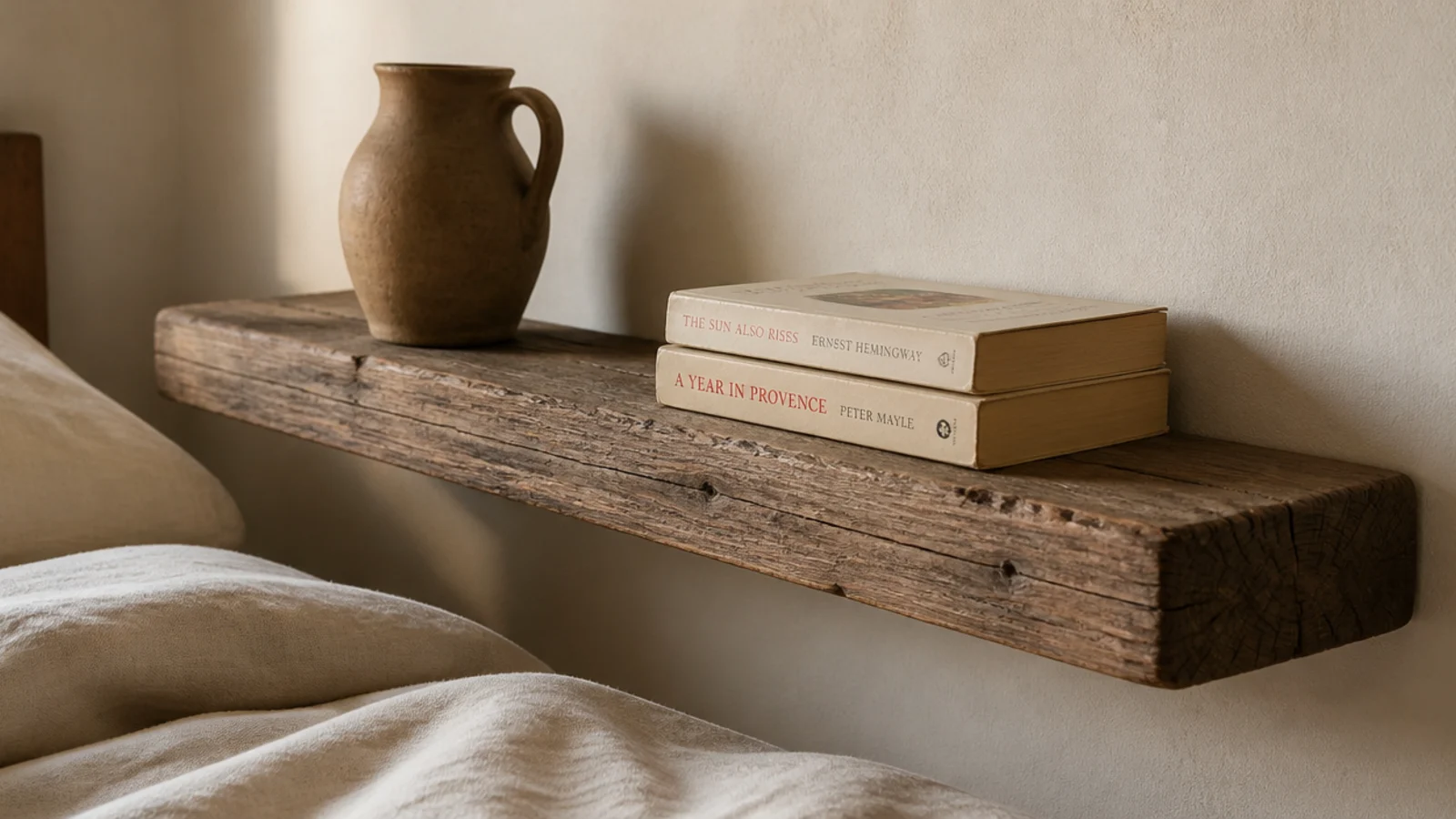
28. A thrifted board and six-dollar brackets
Reclaimed timber, an old scaffold plank or a salvaged shelf from a junk shop gives you thickness and character for a few dollars.
Budget an hour of sanding per board — old timber carries grit that will wreck sandpaper and your finish. Seal it properly and nobody will guess what it cost.
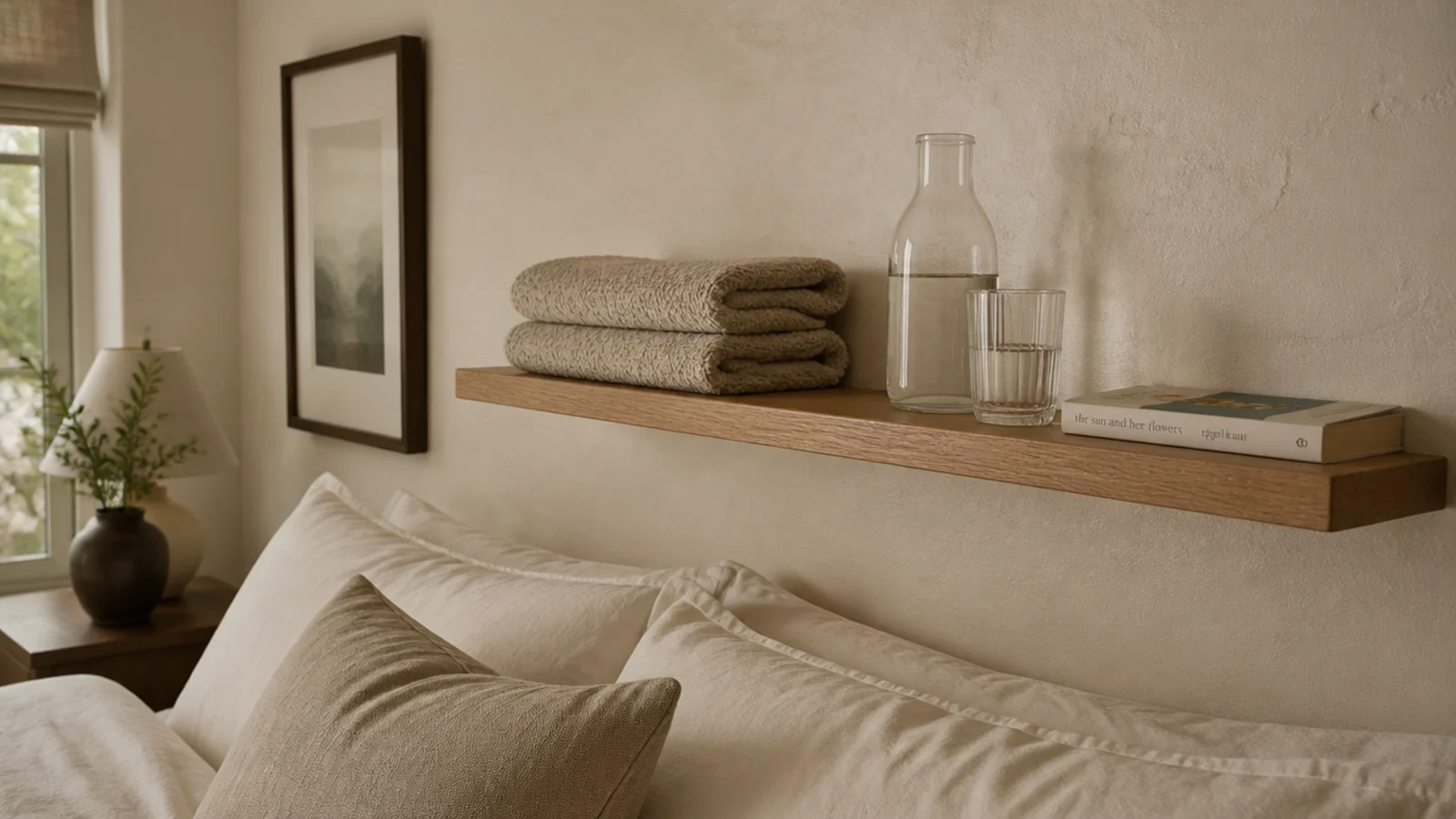
29. A guest room shelf with towels and water
A single shelf in a guest room holding two folded towels, a carafe with a glass and one book covers everything a guest actually needs.
Mount it at 48 inches on the wall opposite the bed. It saves a nightstand, and it means you never have to explain where anything is.
30. A no-drill shelf for a rental bedroom
Adhesive strips carry about 15 pounds per pair, which is two small ceramics and a paperback, not a book row.
Never put one above a pillow. Clean the wall with alcohol, press for 30 seconds and wait an hour before loading. If your lease tolerates pinholes, a properly fixed shelf is safer and easier to repair. There are more rental workarounds in floating shelves for a small space.
Mistakes to Skip
- Putting heavy or hard objects on a shelf above a bed. Framed glass and ceramics belong on a wall nobody sleeps under, whatever the fixing is rated for.
- Mounting the bedside shelf at headboard height. Your hand lands at mattress height in the dark, and a shelf you cannot find is a shelf you will not use.
- Hanging an adhesive shelf over the pillow. Fifteen pounds per pair is the honest ceiling and the failure mode is sudden and silent.
Frequently asked questions
Is it safe to put a floating shelf above a bed?
Only if every fixing lands in a stud, the shelf is shallow at six inches, and nothing hard or heavy goes on it. I use framed prints, baskets and soft objects above a bed and never ceramics or books. If you cannot find framing across the whole run, put the shelf on the wall beside the bed instead.
How high should a shelf be above a bed?
Twelve to fourteen inches above the top of the headboard, or about 60 inches from the floor if there is no headboard. That keeps it clear of anyone sitting up in bed and stops it looming in the eyeline when you are lying down. Any lower and people knock it getting into bed.
Can a floating shelf replace a nightstand?
Yes, and in a small bedroom it usually should. Mount it level with the top of the mattress rather than the headboard, because that is where your hand lands in the dark. Twelve inches long by seven deep holds a lamp, a book, a glass and a small dish, and it takes up no floor at all.
How much weight will a bedroom floating shelf hold?
Into a stud with a concealed rod bracket, 30 to 40 pounds on a 24-inch shelf. Into half-inch drywall with toggle bolts, 25 to 35 pounds per bolt. The plastic plugs supplied in most kits carry about 10 pounds and are the usual cause of a shelf slowly tipping forward over a year.
What is the cheapest bedroom shelf that still looks good?
A pine board on two L brackets painted the wall color, around $15 to $28 a shelf. Painted-out brackets read as floating from every normal viewing angle. Round the front edge with 220 grit before you finish it — that one detail is what separates a homemade shelf from a bought one.
Put up the bedside shelf first — it is the one you will use ten times a day, and it tells you quickly how your walls behave before you commit to the run above the bed. For the build itself, the twenty-step floating shelf project covers the cut list and anchors, floating shelf styling covers what goes on top, and if your bedroom problem is a dead corner, bedroom corner shelf ideas solves that geometry. Save the pin so the heights are with you at the wall.
Want more like this? Browse all 15 floating shelves guides — they all use the same measurements and budget tiers.
Pin it for later
Save this to your Floating Shelves board
Pin it now so it is waiting for you when the tape measure comes out — and so the next person hunting for this idea can find it too.
Save this pinKeep going
More ideas worth saving while you have the tape measure out.