Corner Shelf Ideas · Listicle
25 Gorgeous Corner Shelf Ideas Worth Trying

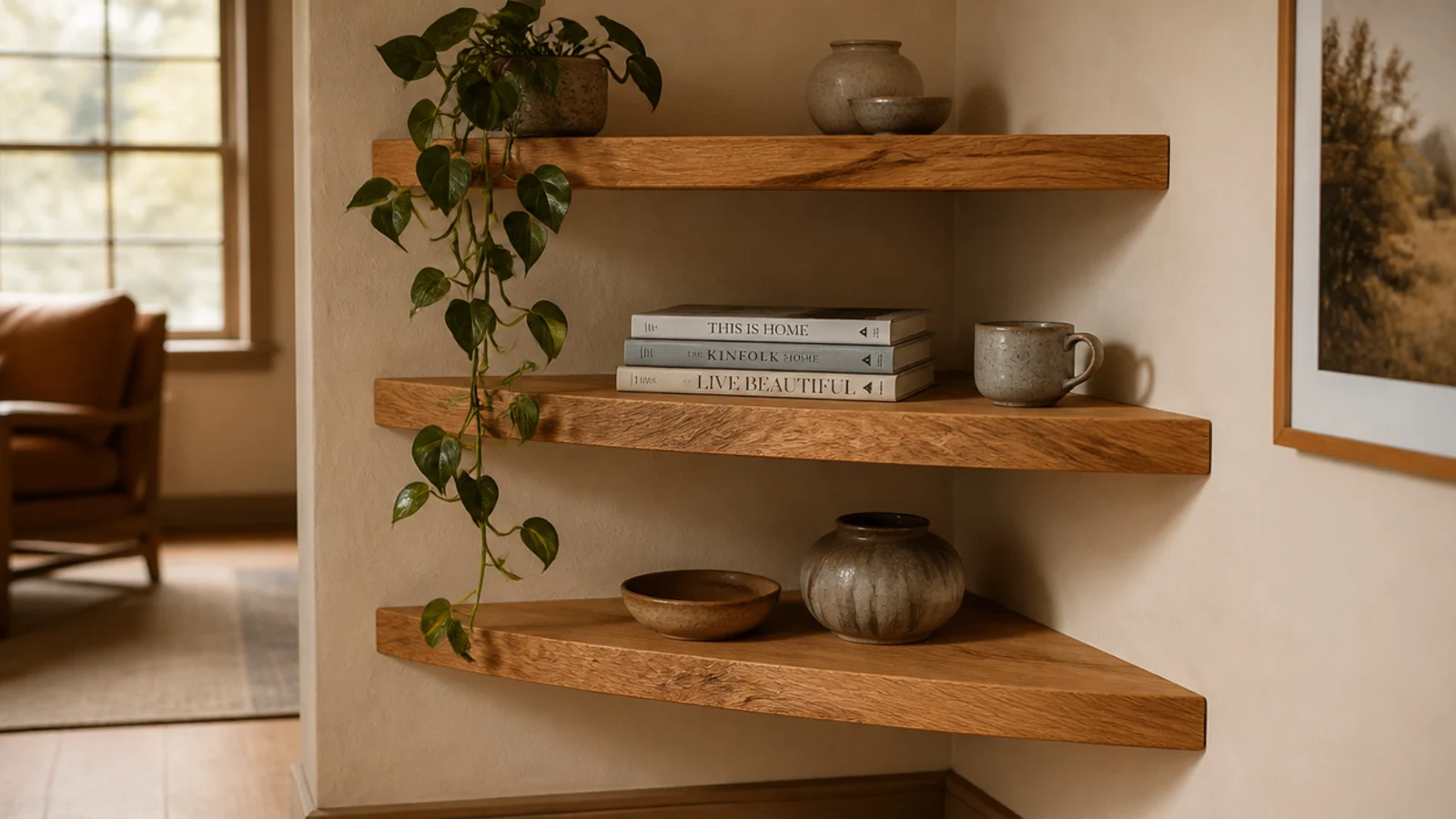
Wooden corner shelves are the version worth spending on, because wood is the one material where the difference between $20 and $50 is visible from across a room and still visible in ten years. These 25 ideas cover species, thickness, finish and construction, with the spans each one holds and the rooms each one survives.
In this guide27 sections — tap to openHide
- 1.Choosing wooden corner shelves that will actually last
- 2.Solid red oak at three-quarter inch
- 3.White oak for a cooler neutral
- 4.Walnut for one statement shelf
- 5.Painted poplar for a flawless finish
- 6.Pine, painted rather than stained
- 7.A reclaimed scaffold board
- 8.A butcher block offcut
- 9.A live-edge slab in the corner
- 10.Bamboo for a humid bathroom
- 11.Sealed teak inside the shower
- 12.Plywood with the edge left exposed
- 13.Birch ply with a hardwood lipping
- 14.A built-up box shelf
- 15.Barn wood with the nail holes left in
- 16.Cedar for a closet corner
- 17.Ash for a pale Scandinavian look
- 18.Cherry that darkens as it ages
- 19.Whitewashed pine for a coastal corner
- 20.Ebonized oak for a dark matte corner
- 21.Danish oil for a soft natural sheen
- 22.Hardwax oil for a repairable finish
- 23.Clear wax over raw wood
- 24.Water-based poly for a kitchen shelf
- 25.Milk paint for a soft chalky rustic corner
- 26.Two-tone: painted body, wood top
- 27.Mistakes to Skip
Choosing wooden corner shelves that will actually last
Three decisions, in this order.
Species. Oak for anything that carries weight and shows grain. Poplar for anything painted. Walnut when you want one shelf to be the point of the corner. Pine only if you are painting it — pine takes stain badly and dents from ordinary use.
Thickness against span. Three-quarters of an inch holds 24 inches with books on it. Past 30 inches you want an inch and a half, either solid or built up. Half-inch stock bows at about 18 inches, which is why so many thin, elegant shelves look wrong within a month.
Finish, and finish everything. Coat both faces and all four edges. Wood exchanges moisture through unfinished surfaces, so a board sealed on the top only will cup upward within a season. This one mistake accounts for more failed DIY shelves than any bracket ever has.
A rough guide to cost per 24-inch shelf: pine $8–$14, poplar $12–$18, ash $18–$26, red oak $20–$32, white oak $28–$45, walnut $40–$70. Prices vary a lot by region, but the ranking almost never does.
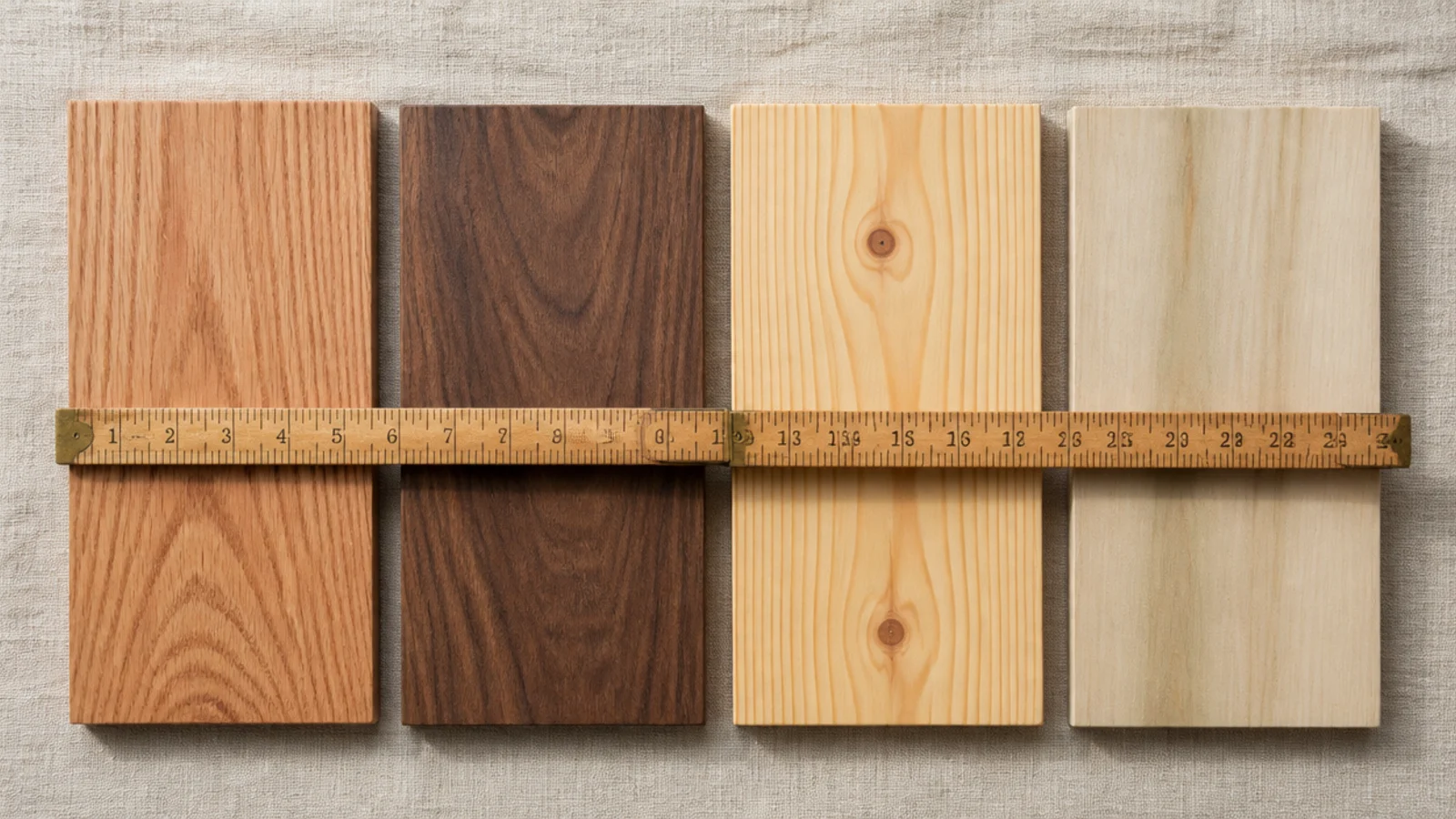
1. Solid red oak at three-quarter inch
The reliable default. Open, obvious grain, hard enough to shrug off knocks, and it spans 24 inches with hardbacks on it without visible deflection.
Red oak has a warm pinkish undertone that suits cream and terracotta rooms. It takes stain evenly, which is unusual — most woods need a conditioner first.
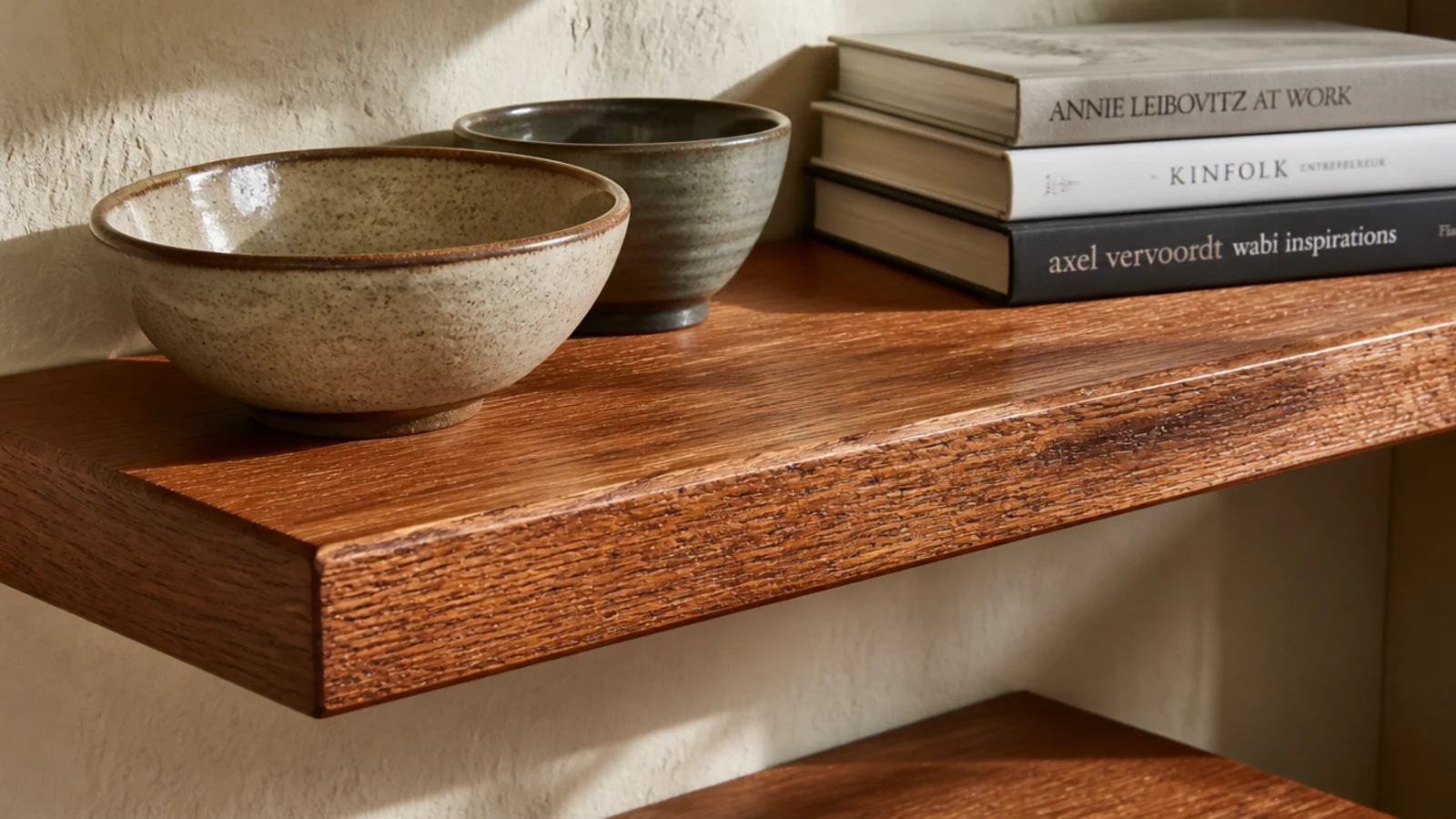
2. White oak for a cooler neutral
Tighter, straighter grain than red oak and a cooler greyish undertone. It costs 20 to 40 percent more and it is worth it in a room with grey or cool-white walls, where red oak reads slightly orange.
White oak is also naturally more water-resistant, which makes it the better hardwood for a kitchen or a bathroom with a window.
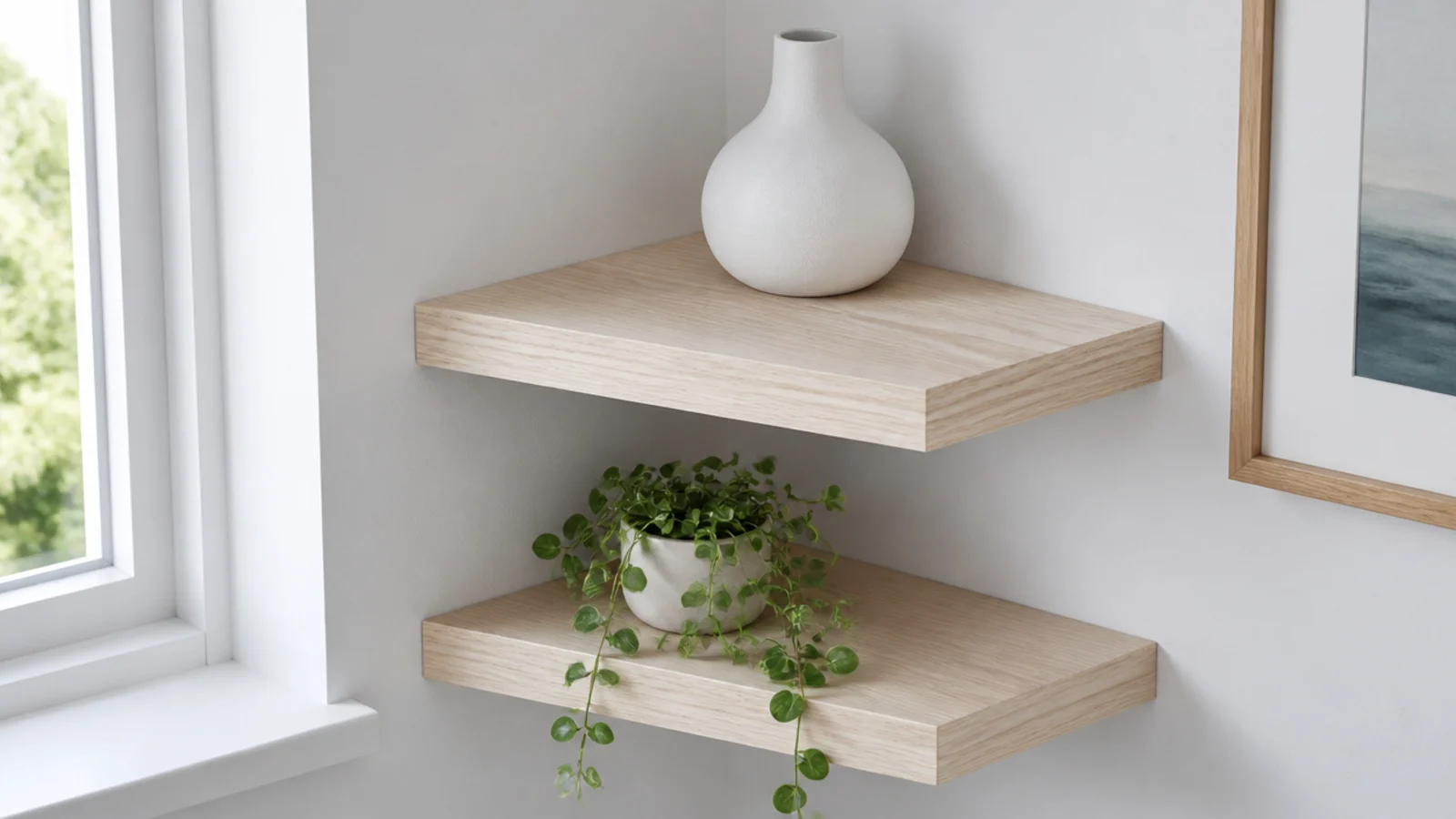
3. Walnut for one statement shelf
Buy one walnut shelf, not three. Its whole value is that the grain is doing visible work, and a full stack of it turns a corner heavy.
A single 24-inch walnut shelf above a chair costs about the same as three pine ones and changes the room considerably more. Finish it with oil, never a glossy film — walnut wants depth.
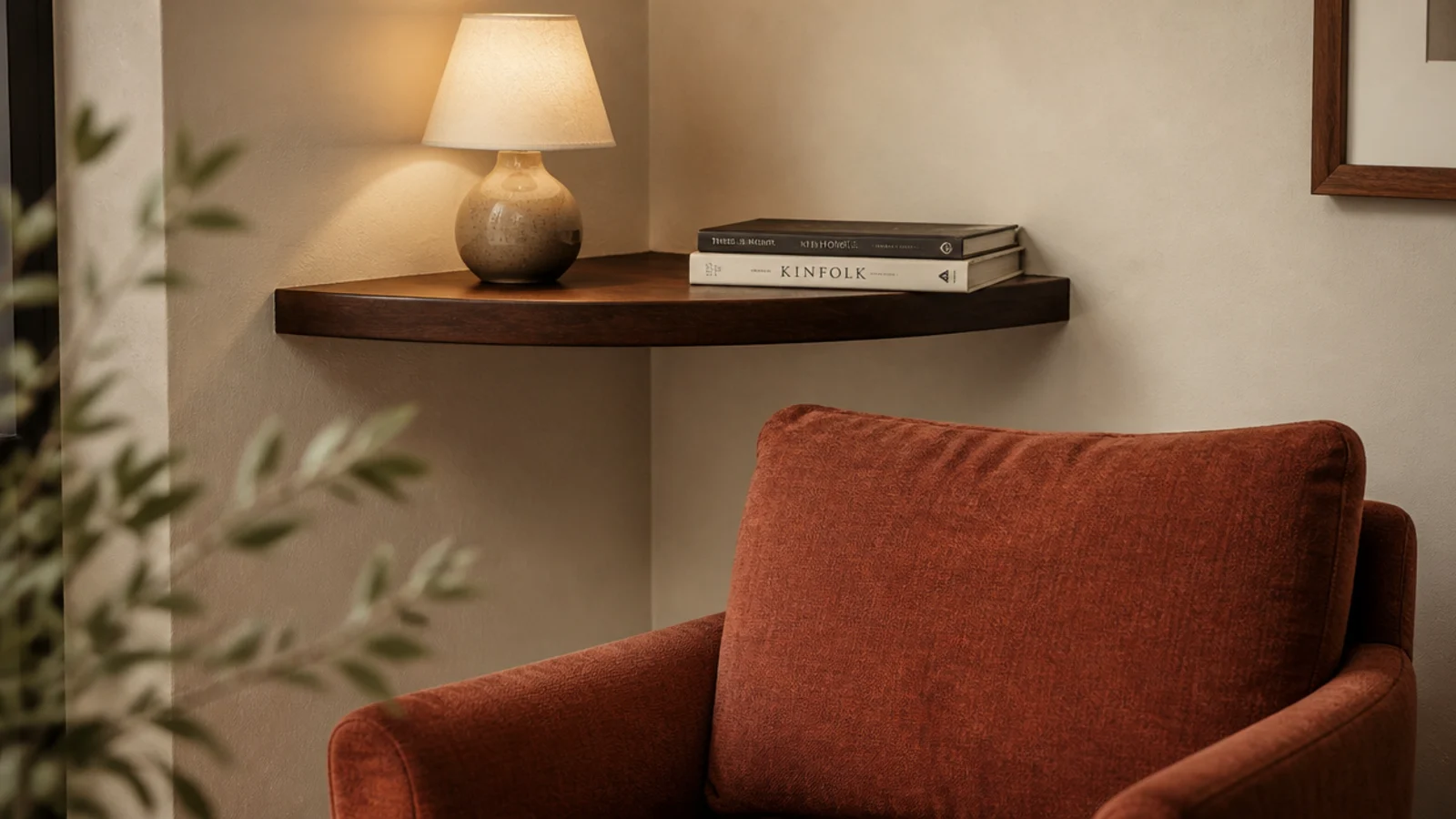
4. Painted poplar for a flawless finish
Poplar is the professional's painted-trim wood: stable, cheap, almost no grain to telegraph through paint, and it machines cleanly.
If you want a shelf painted the wall color to disappear into the room, this is the timber. Prime the end grain first — cut ends drink paint and stay rough otherwise.
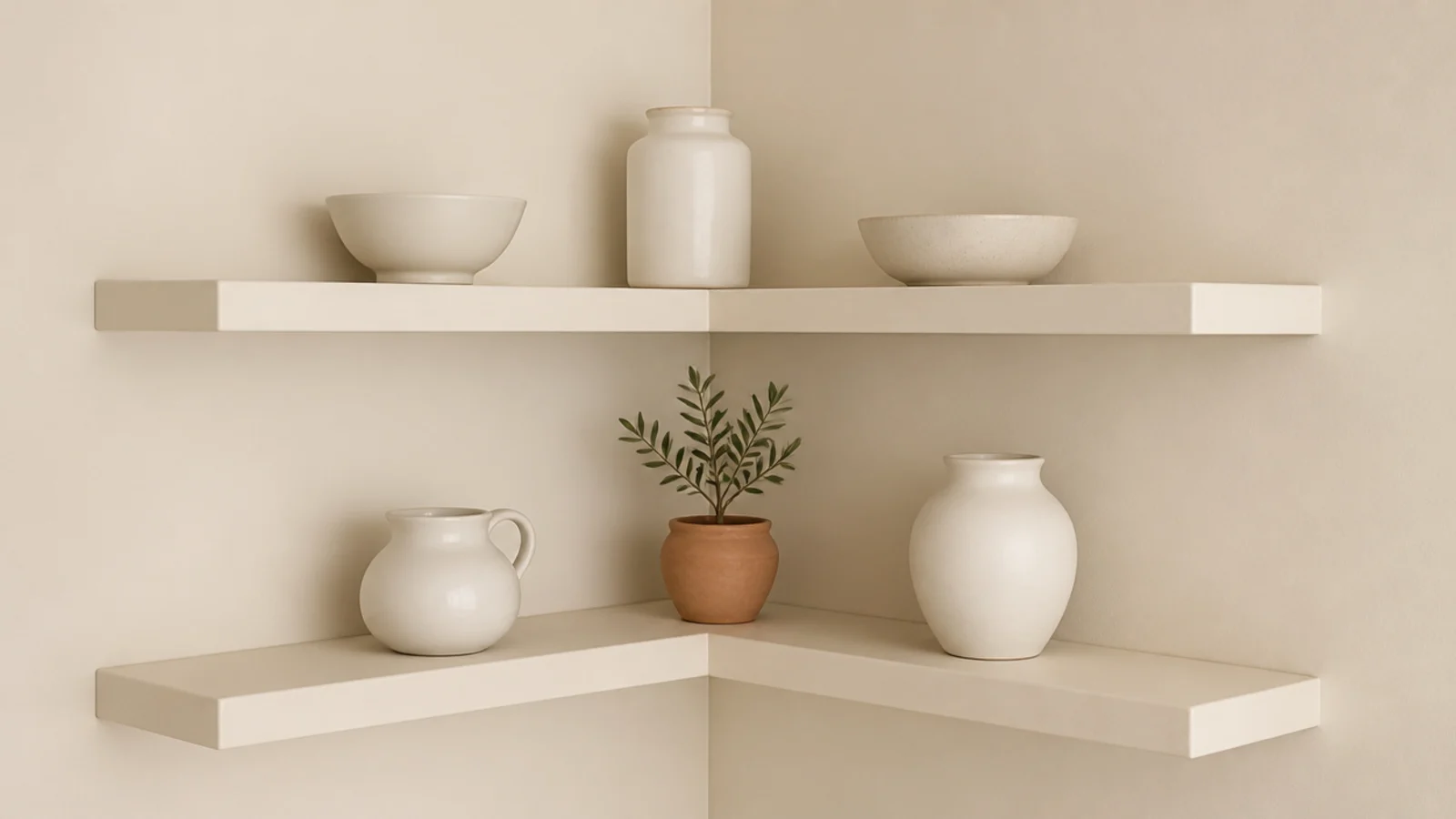
5. Pine, painted rather than stained
Pine and stain genuinely fight each other. It absorbs unevenly and goes blotchy unless you use a pre-stain conditioner, and even then it is a gamble.
Painted, pine is perfectly good and very cheap. Use a satin finish rather than matte on a shelf; matte paint scuffs where objects slide.
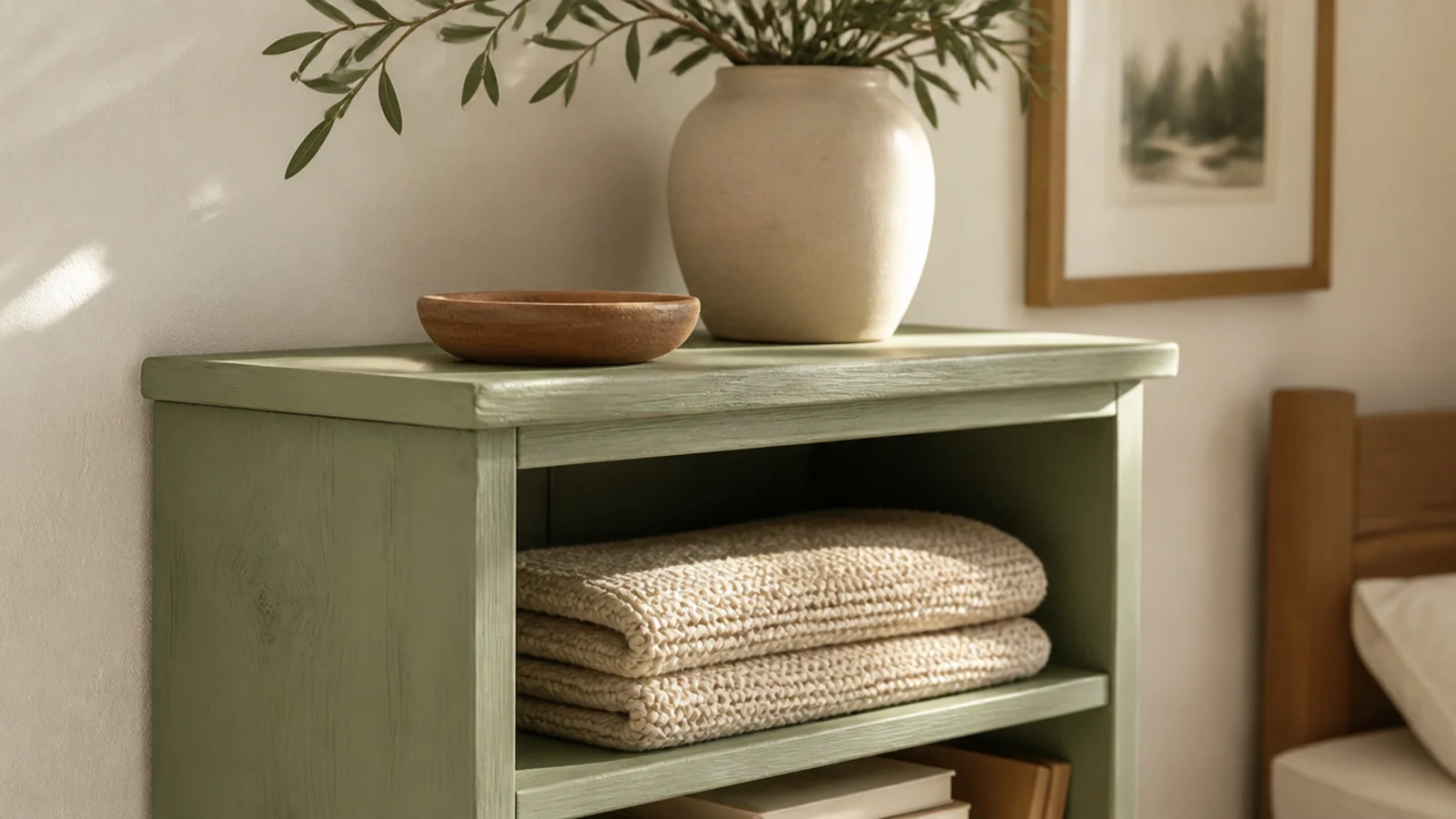
6. A reclaimed scaffold board
Around an inch and a half thick, greyed by weather, and sold secondhand for a fraction of new hardwood. It gives you the expensive chunky edge for very little.
Budget an hour per board for sanding and sealing. That prep time is the real cost, and skipping it means grit and old stains transfer to whatever you put on the shelf. More rustic options in rustic corner shelves.
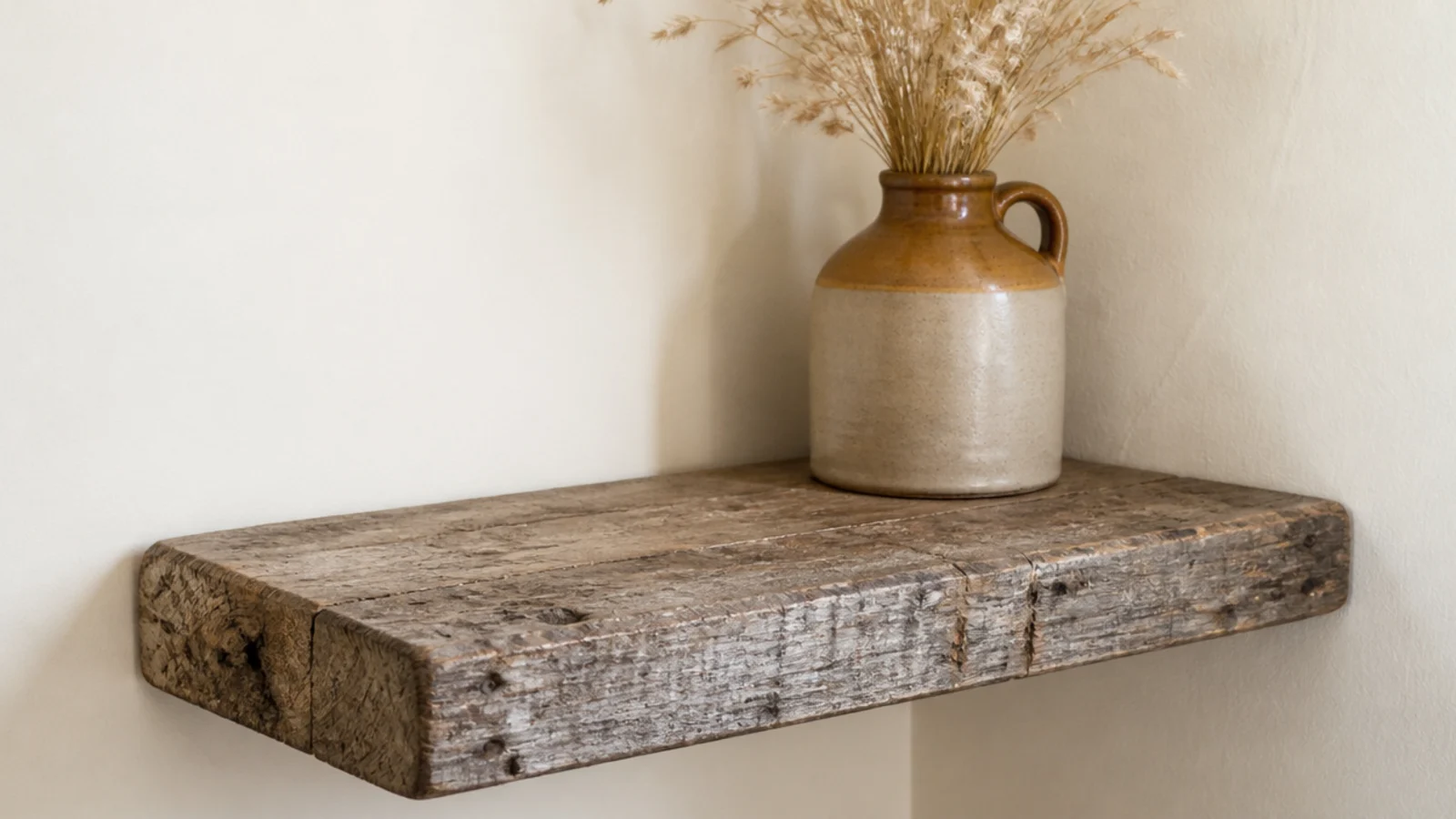
7. A butcher block offcut
Worktop offcuts get sold cheap and arrive already an inch or more thick with a laminated end grain that looks far more expensive than it costs.
Oil it on all faces before mounting, including the underside. Untreated end grain absorbs moisture unevenly and will cup faster than any solid board.
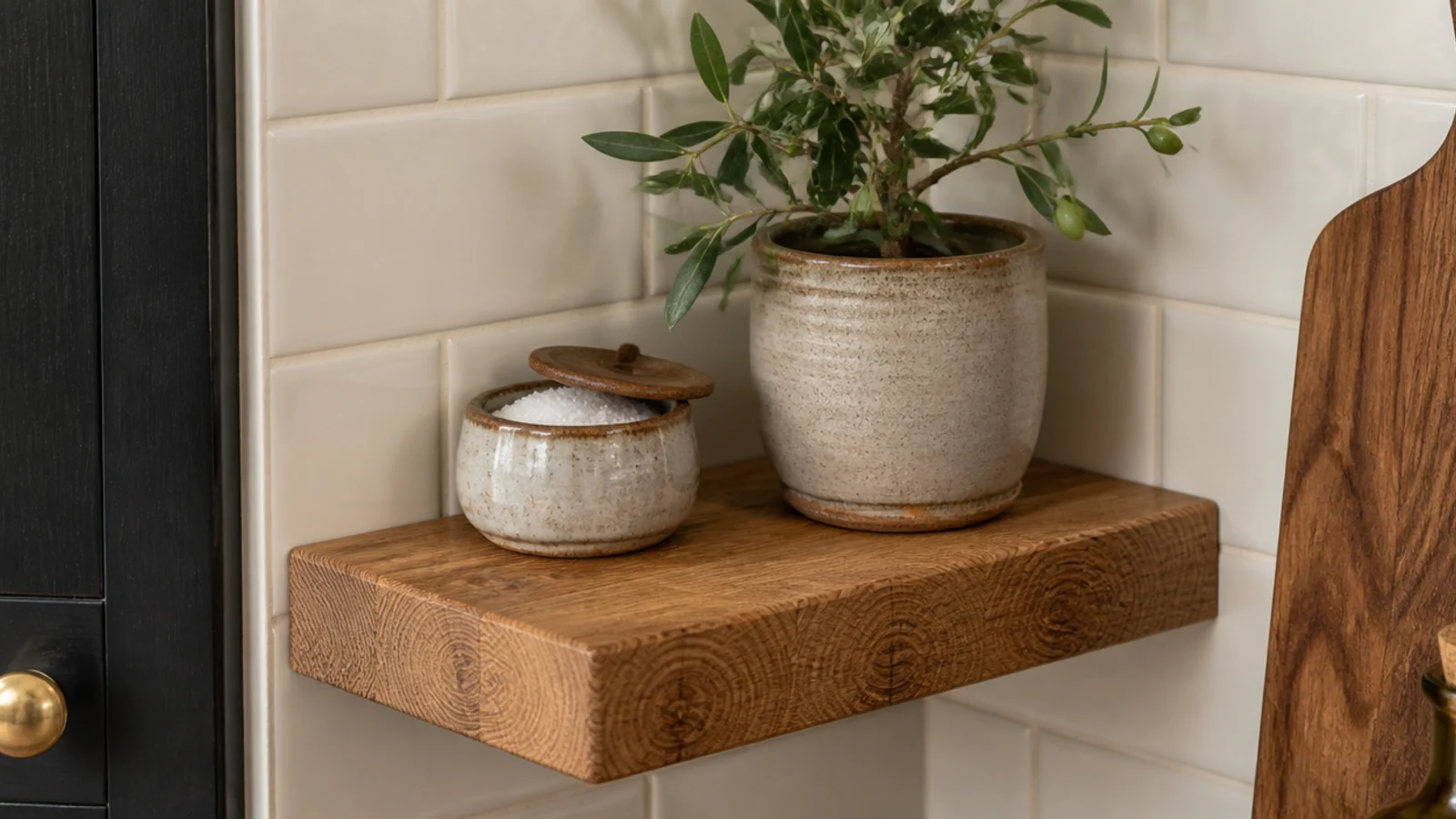
8. A live-edge slab in the corner
One live edge per room. The irregular natural edge is powerful against the straight lines of a corner, and completely loses its effect when repeated.
Look for a slab whose curve is gentle rather than dramatic — an aggressive live edge in a small room reads as a statement piece competing with the furniture.
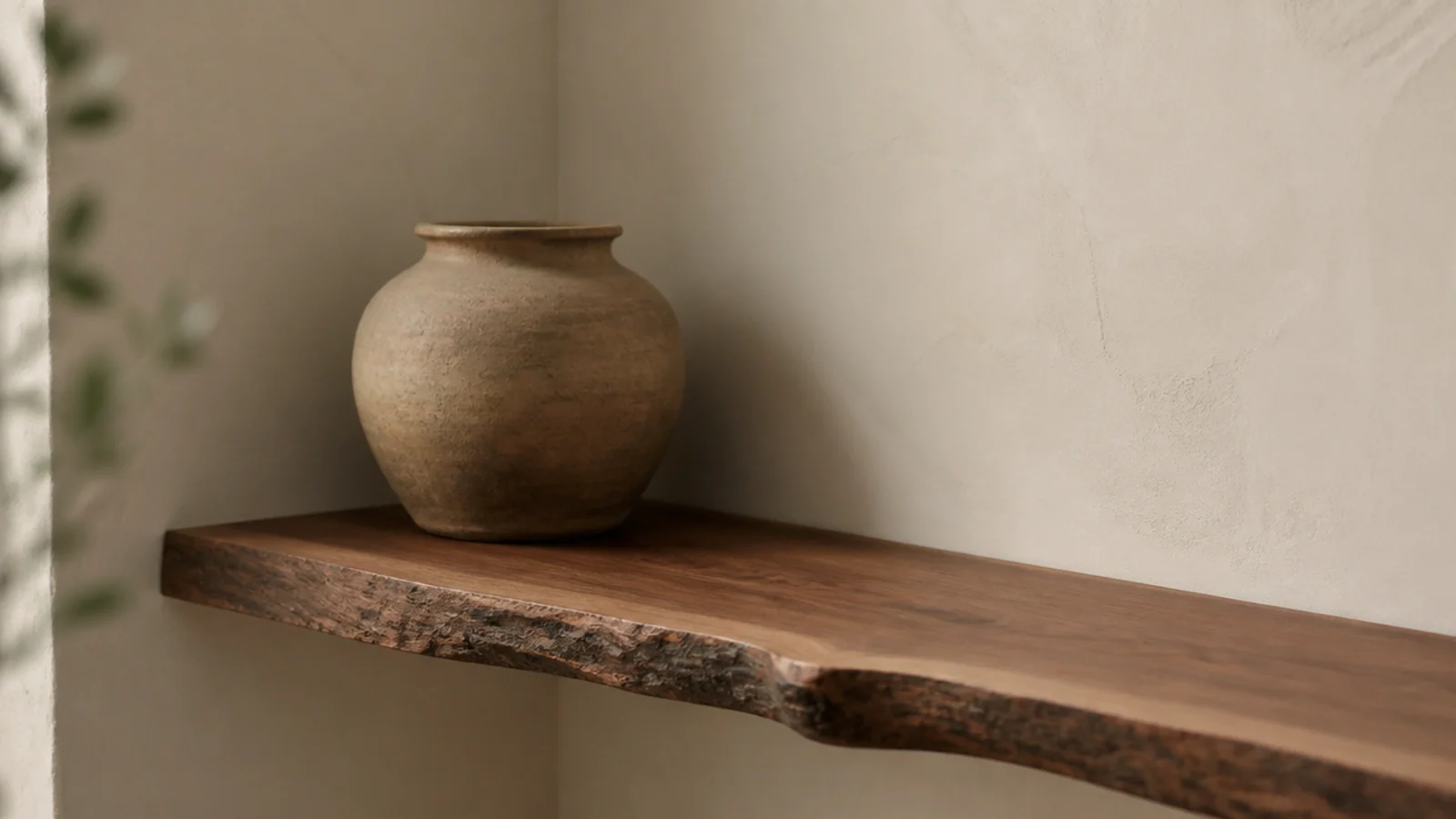
9. Bamboo for a humid bathroom
Technically a grass, and it handles humidity better than most hardwoods because its structure is denser and less porous.
Buy carbonised or laminated bamboo rather than the thin veneered kind. Seal the cut ends, which is where the layers separate if moisture gets in.
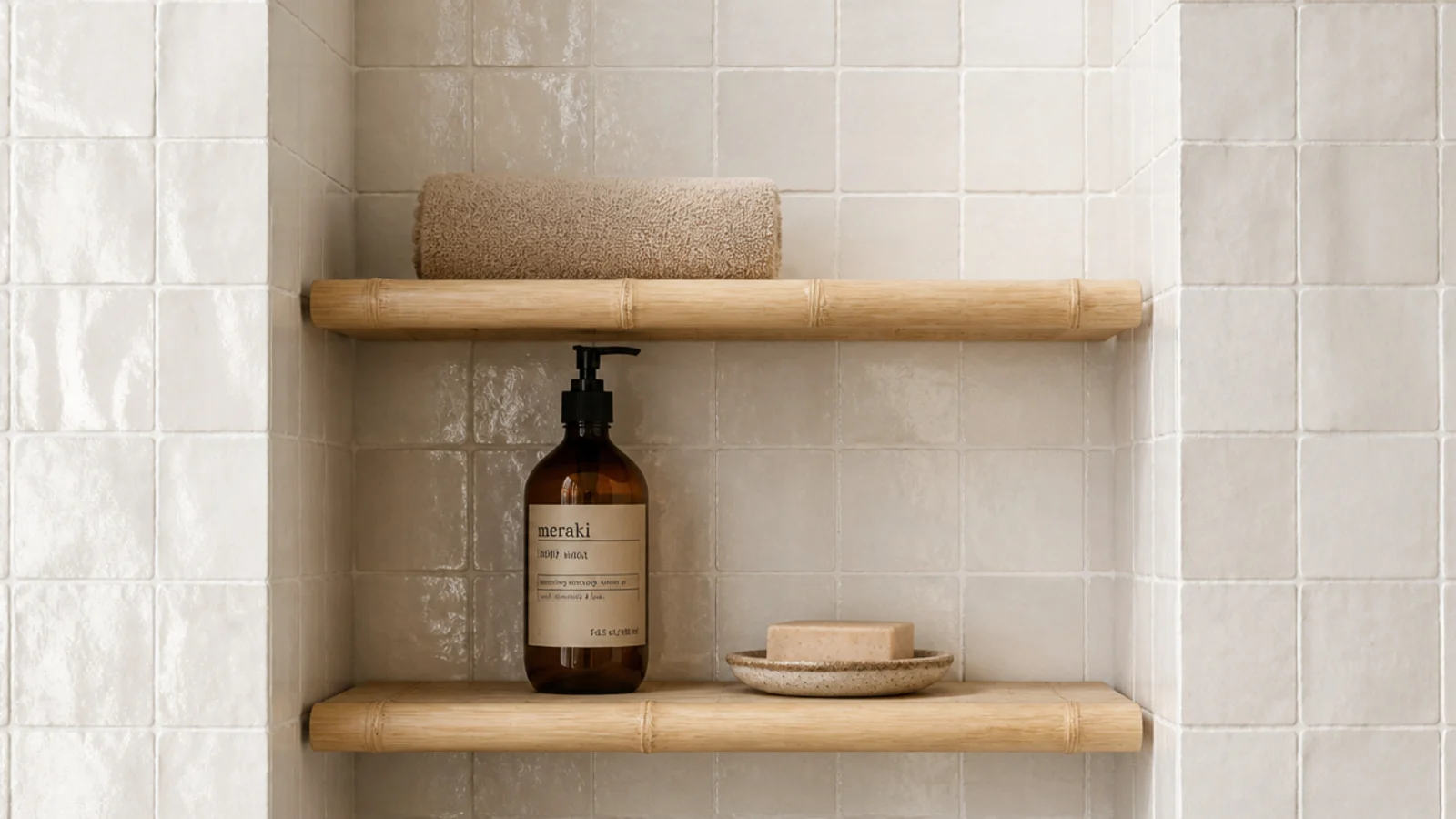
10. Sealed teak inside the shower
Teak has natural oils that let it survive direct water, which is why it is used on boats. It is the only timber I would put inside a shower enclosure.
Sealed, not raw. And silicone the wall joint so water cannot track behind the fixings, which is what actually destroys shower shelves.
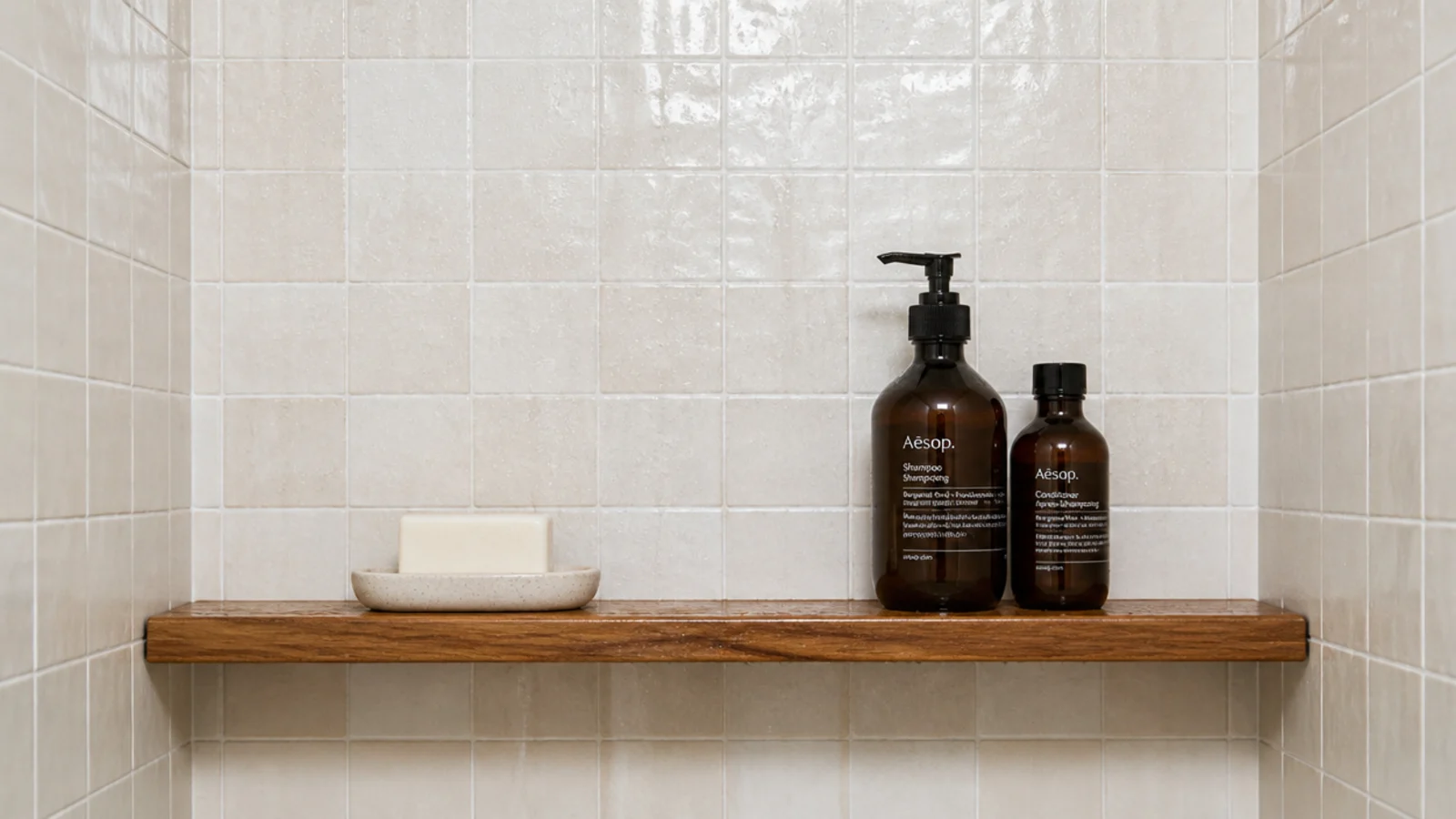
11. Plywood with the edge left exposed
Birch ply has a striped laminated edge that looks deliberate when it is crisp and cheap when it is chipped.
Cut with a fine-tooth blade, sand the edge smooth, and seal it — raw ply edges absorb finish unevenly and go blotchy. Commit to showing it or cover it; halfway is what looks unfinished.
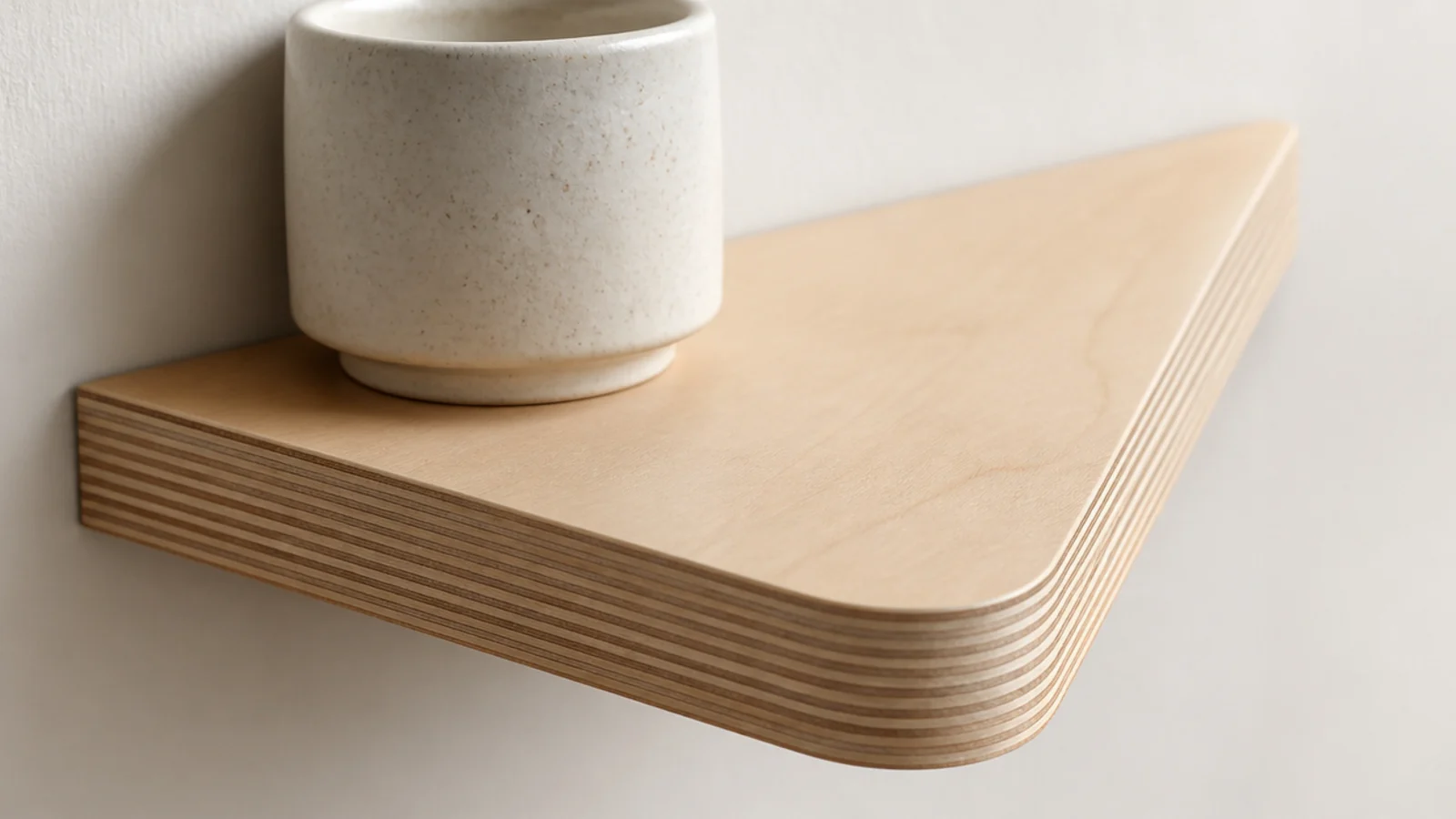
12. Birch ply with a hardwood lipping
Glue a thin strip of solid oak along the front edge of a plywood shelf and you get a hardwood appearance, a stiffer span and a fraction of the material cost.
The lipping also protects the edge, which is the part of any shelf that takes the most abuse. This is how most built-in shelving is actually made.
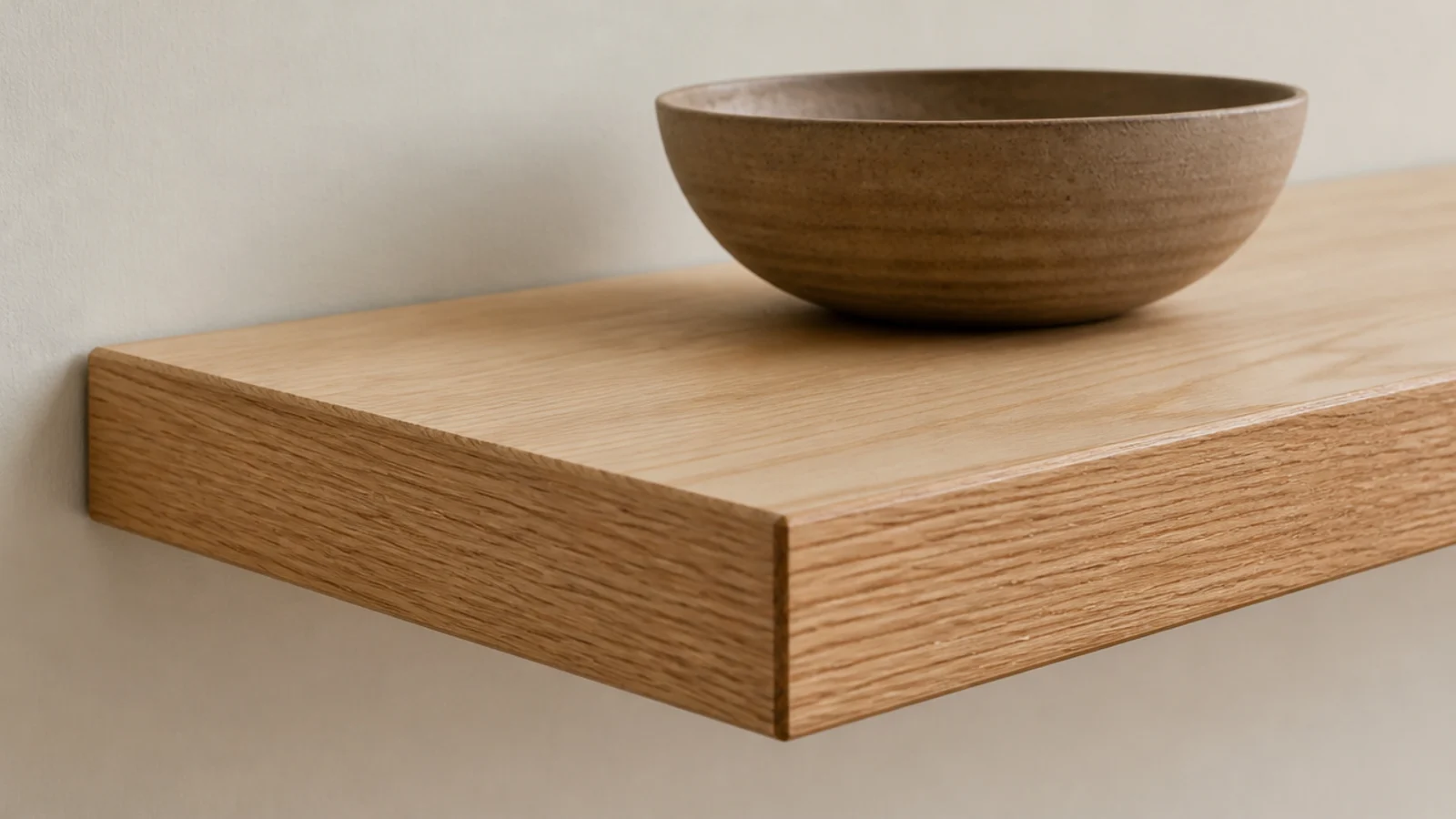
13. A built-up box shelf
Hollow inside, two inches thick where it shows. A plywood core with solid wood faces and a deep front edge gives you a slab appearance at half the weight and cost.
This is also the only realistic way to get a genuinely thick floating shelf, because a solid two-inch board is both expensive and very heavy on a wall fixing.
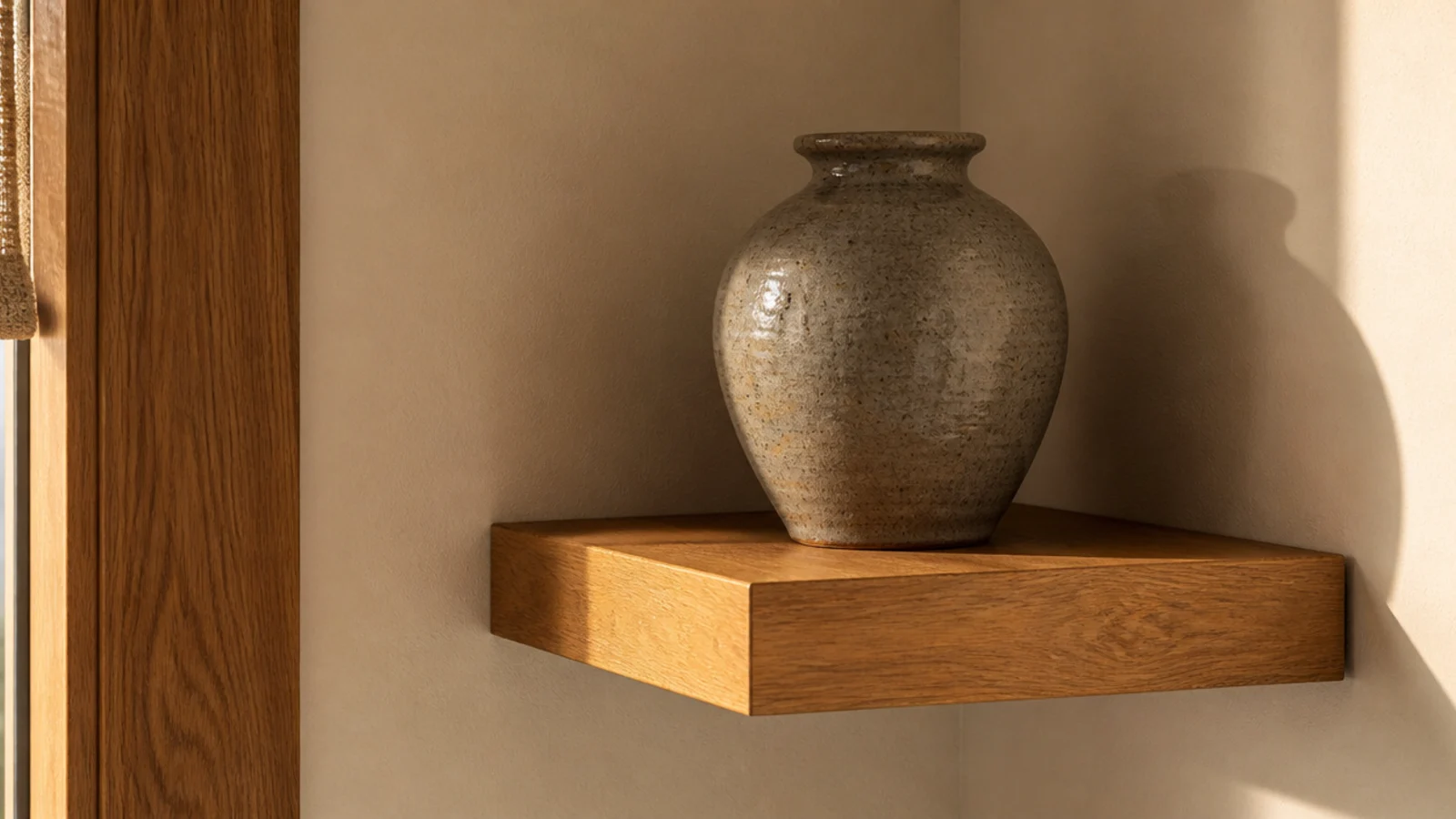
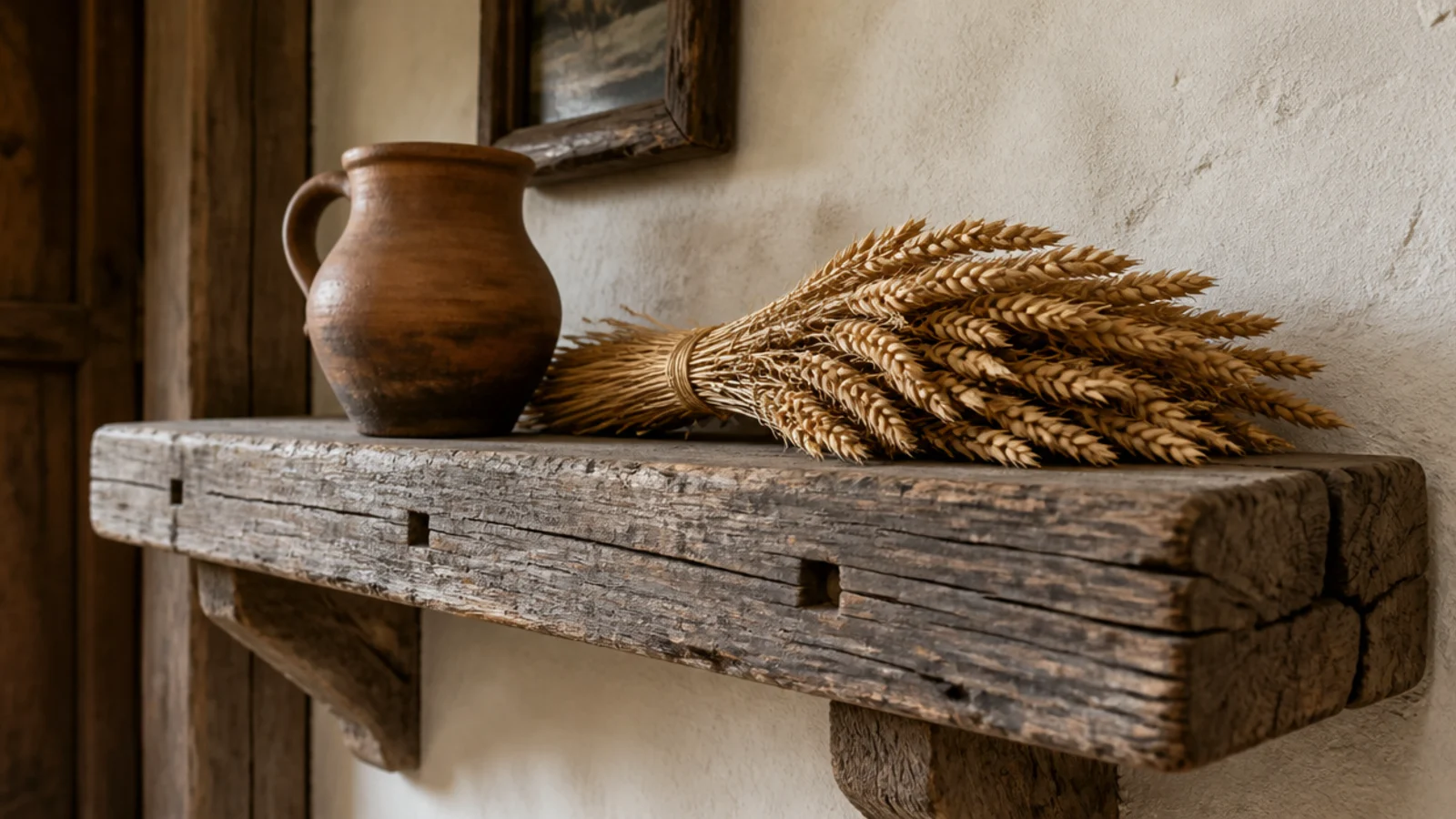
14. Barn wood with the nail holes left in
Leave the holes. Filling them removes the exact thing you paid for, and a filled barn board just reads as damaged new wood.
Clean it thoroughly, seal it, and check for old fasteners with a magnet before cutting. Hidden nails destroy saw blades and are genuinely dangerous.
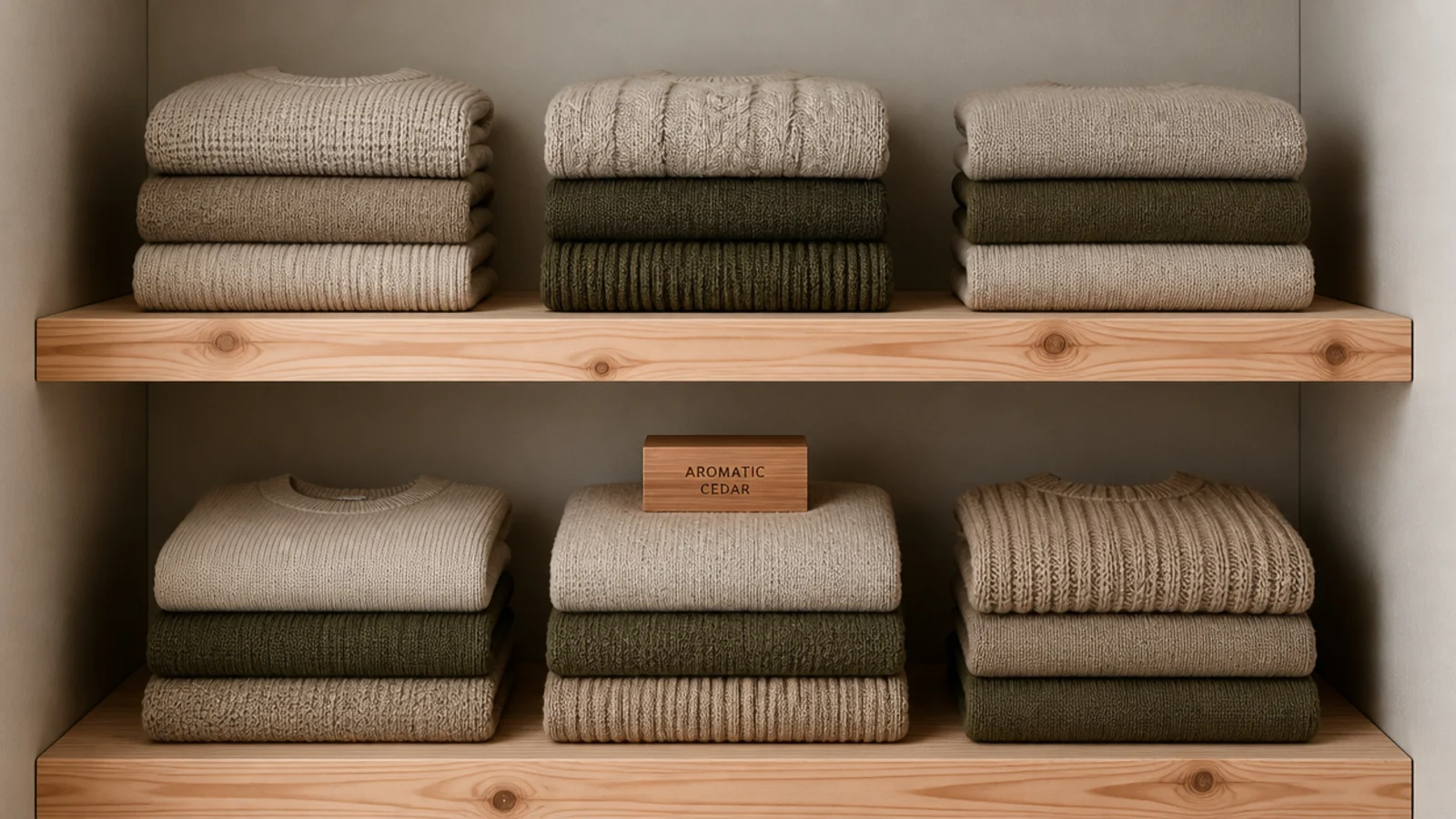
15. Cedar for a closet corner
Aromatic cedar deters moths and smells wonderful, which earns it a place in a closet and almost nowhere else — the scent is overpowering in a living room.
Leave it unfinished. Any film finish seals in the aromatic oils and the whole reason for choosing it disappears. Sand lightly every couple of years to refresh the scent.
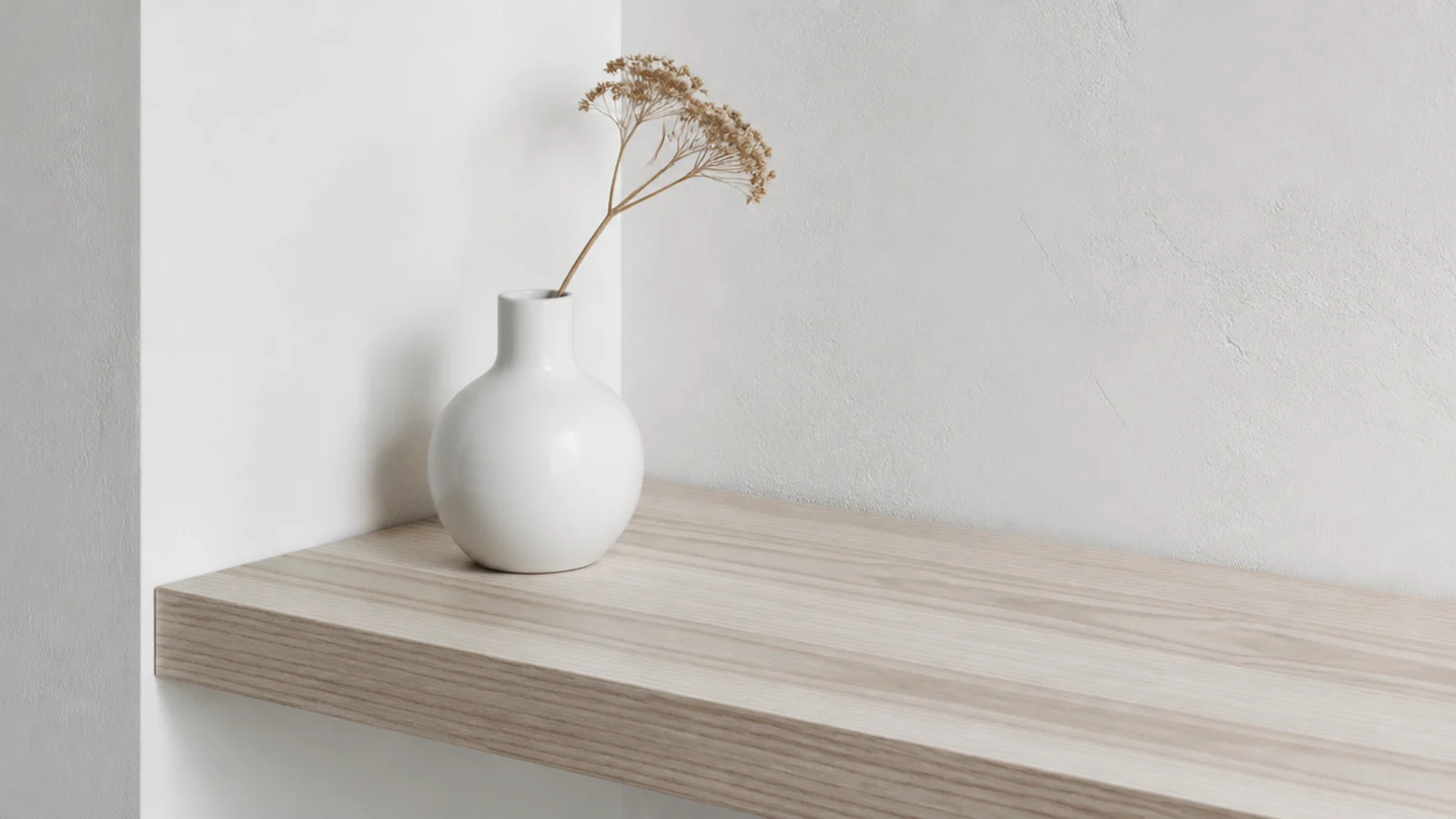
16. Ash for a pale Scandinavian look
Ash gives you oak-like grain at a lower price with a paler, cooler tone. It is strong, it bends rather than snaps, and it suits rooms working in white and pale grey.
It does not take dark stain gracefully — the open grain goes muddy. Keep it pale and let the grain do the work.
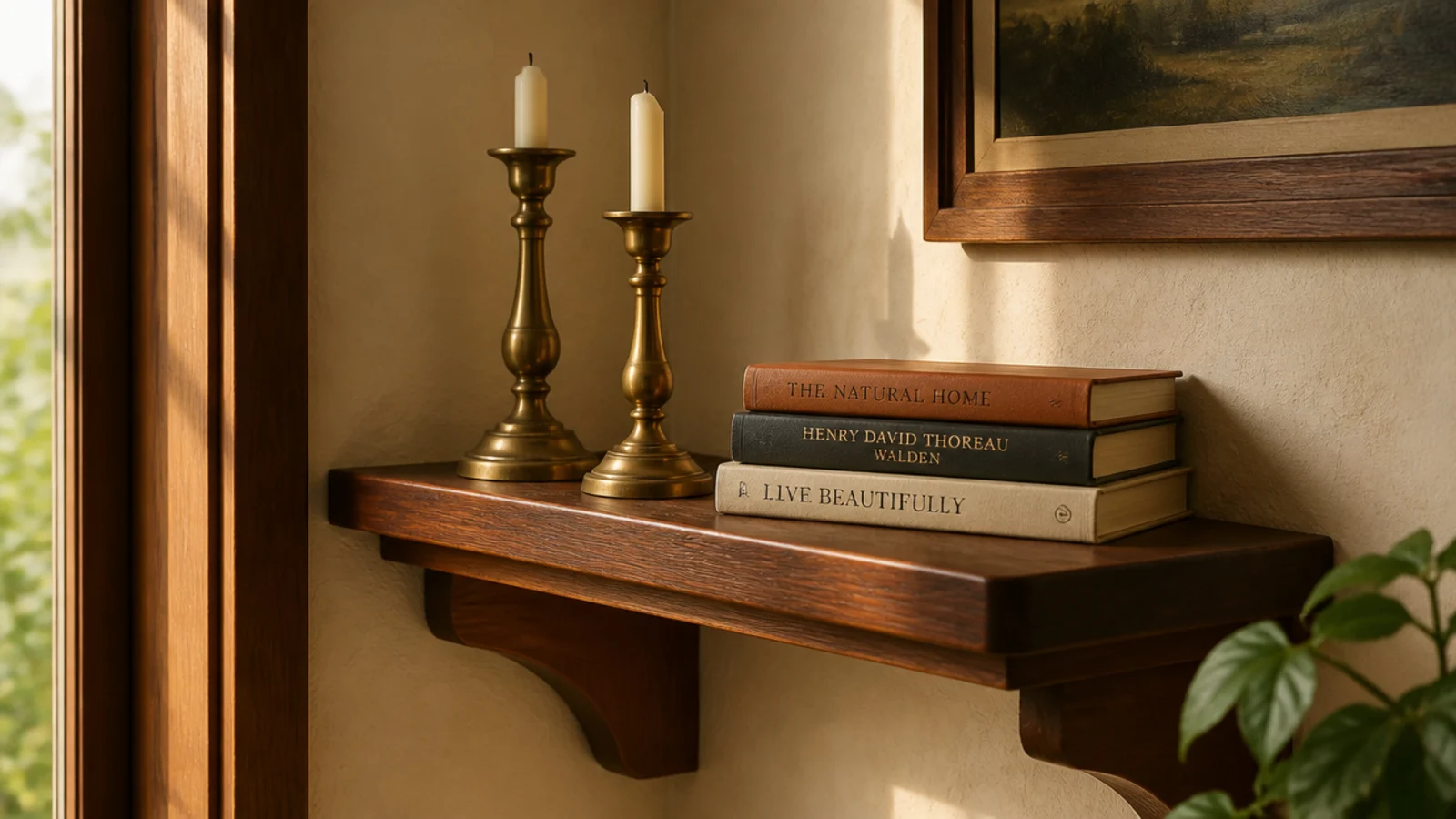
17. Cherry that darkens as it ages
Cherry starts a pale pinkish tan and deepens to a rich reddish brown over several years of light exposure. It is one of the few woods that genuinely improves.
Plan for the future color, not the color in the store, and try to expose it evenly — an object left in one spot for a year leaves a permanent pale shadow.
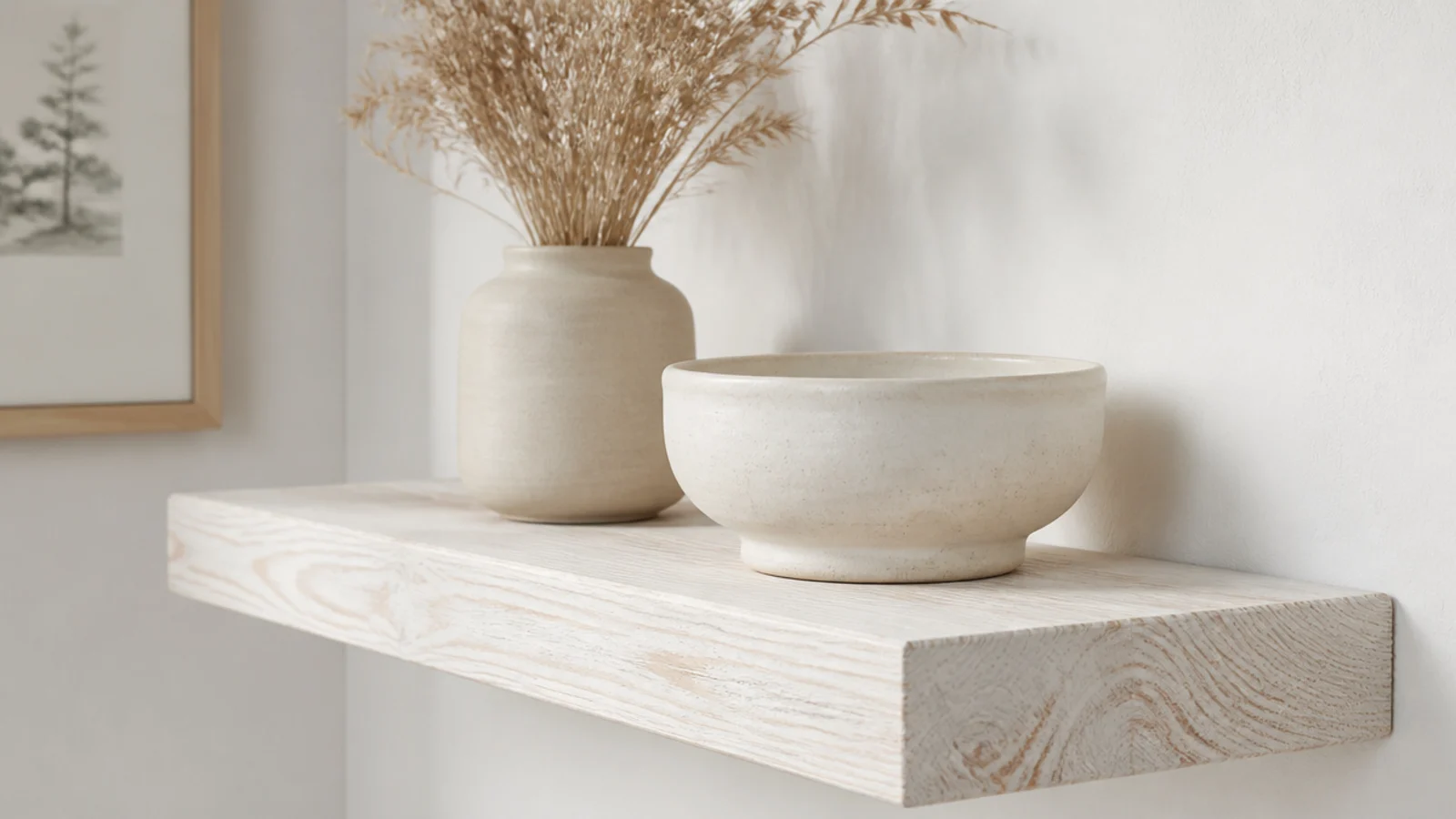
18. Whitewashed pine for a coastal corner
Thin white paint about three parts to one with water, brush it on, and wipe most of it back with a cloth before it dries.
The grain stays visible under a pale haze, which is what separates a whitewash from a paint job. Test on an offcut — pine absorbs unevenly and one board can take more than another.
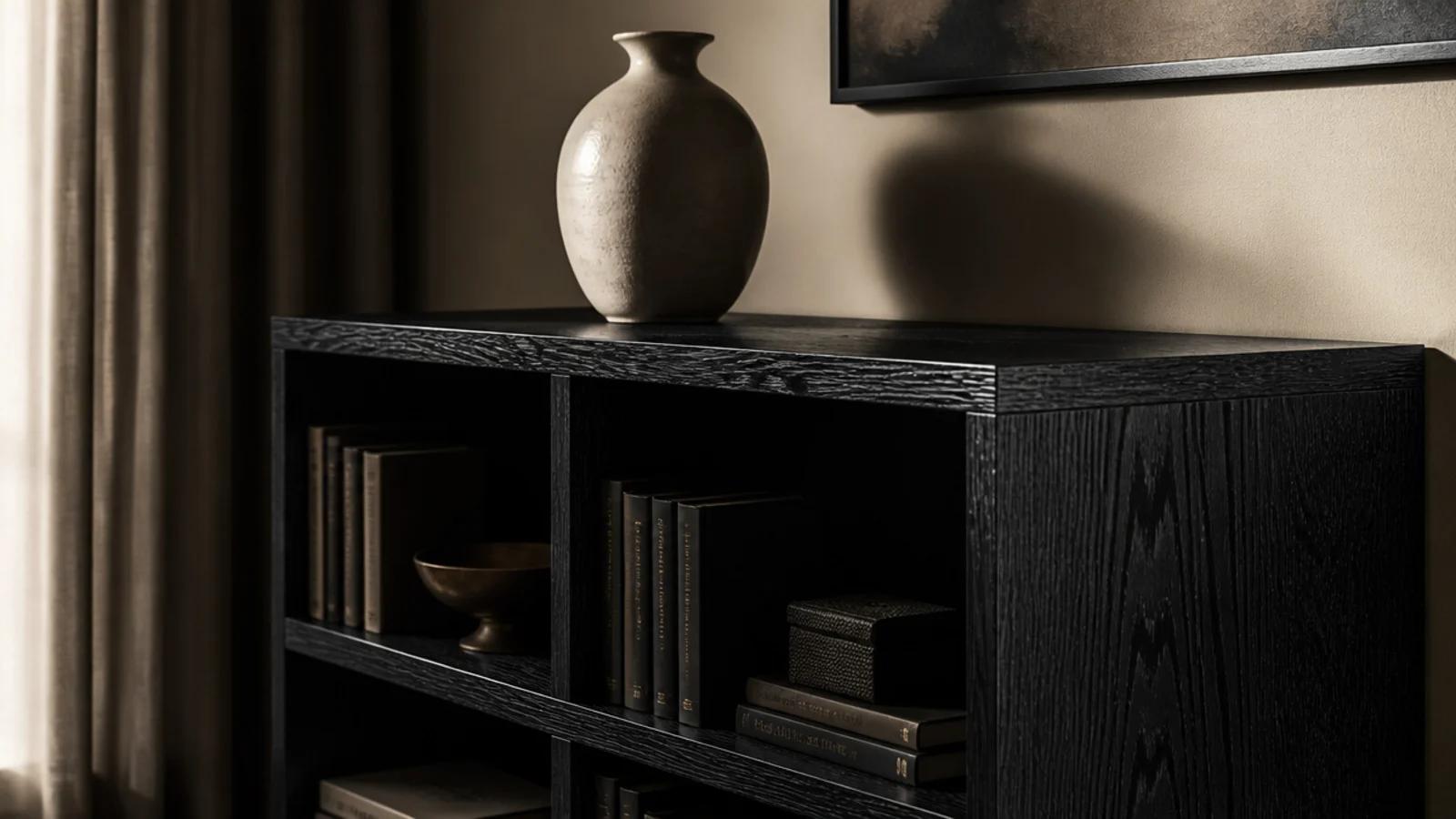
19. Ebonized oak for a dark matte corner
Ebonizing reacts with the tannins in oak to turn it genuinely black while leaving the grain fully visible. Black paint covers grain; ebonizing does not.
It suits a moody corner with pale objects on it. Finish with a matte oil, because any sheen on a black surface shows every fingerprint.
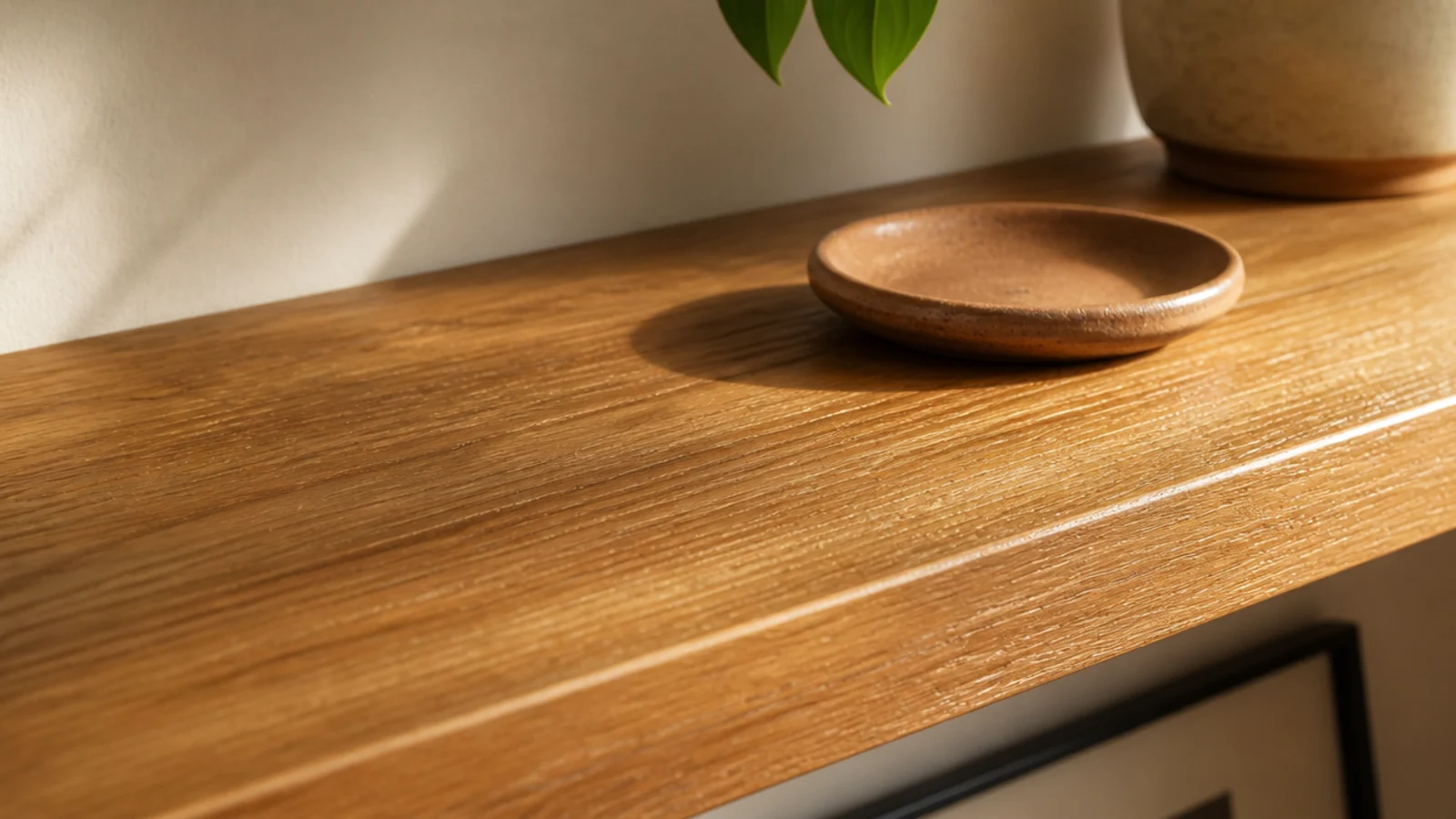
20. Danish oil for a soft natural sheen
Three thin coats, a day apart, wiped on and wiped back. It sits in the wood rather than on it and gives a soft satin depth that no film finish matches.
Never apply it thick. A heavy coat stays tacky for weeks and attracts every piece of dust in the room while it cures.
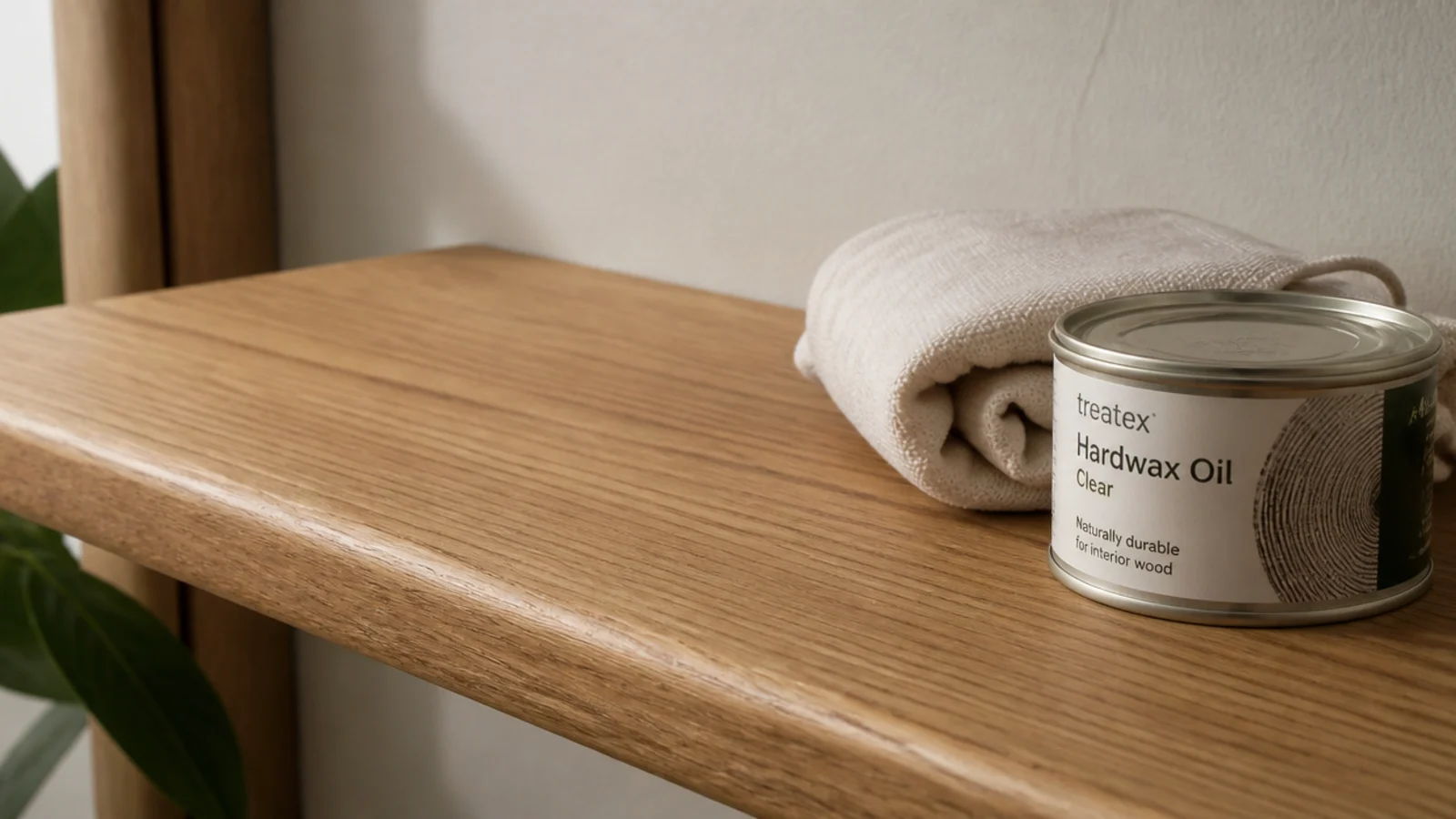
21. Hardwax oil for a repairable finish
The best all-round finish for a shelf that gets used. Durable enough for daily contact, and genuinely spot-repairable — scuff a patch, rub in a little more, blend it out.
Compare that with polyurethane, where fixing one scratch means sanding the entire board back. For anything you expect to live with for years, repairability matters more than initial hardness.
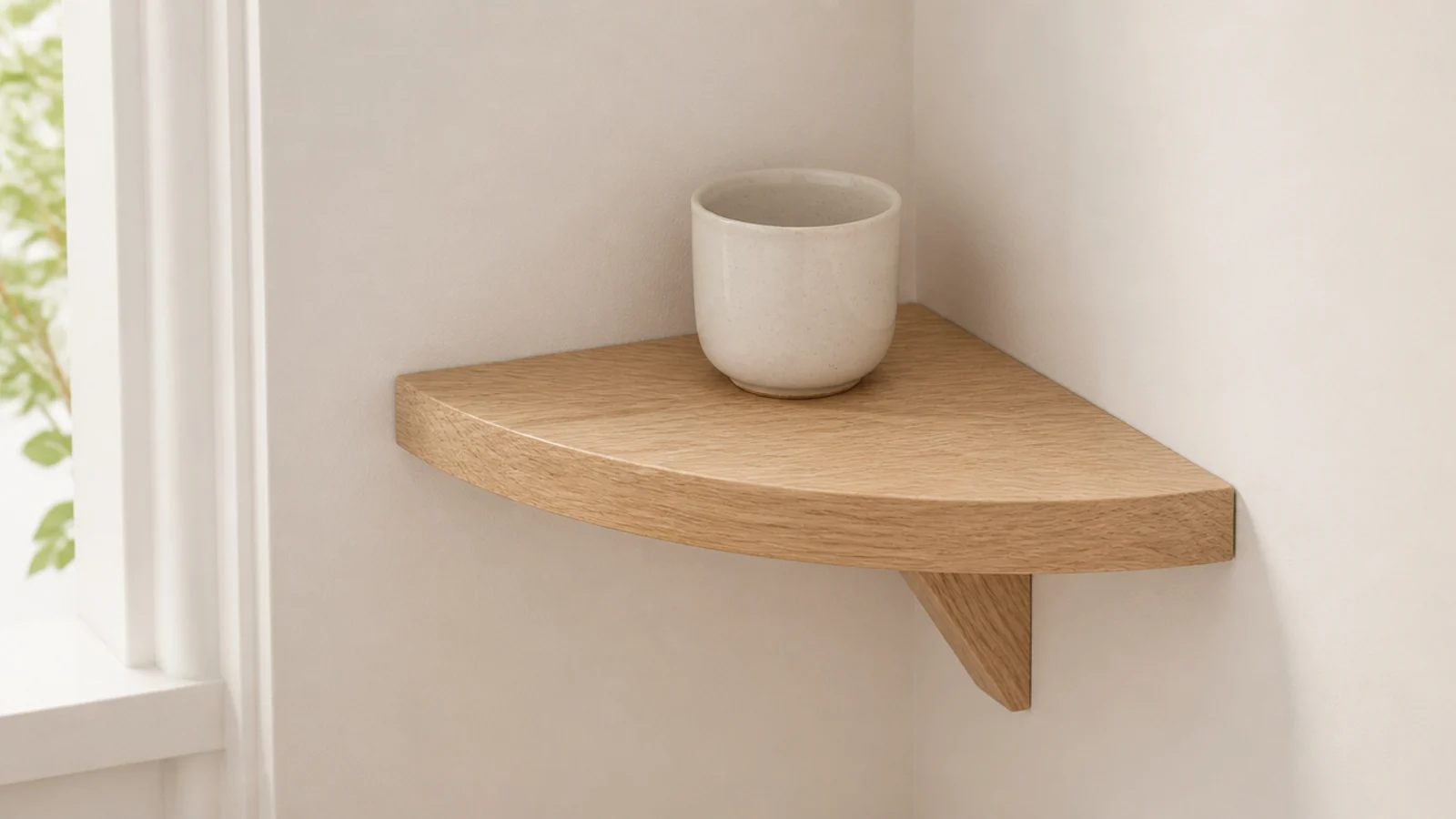
22. Clear wax over raw wood
Wax keeps wood at its raw, untinted color better than any oil, which is why it suits pale ash and white oak in a very light room.
Be honest about the trade-off: wax offers almost no protection against water or scratches, and needs redoing yearly. It is a look, not a finish.
23. Water-based poly for a kitchen shelf
For a shelf that gets wiped down regularly, a water-based polyurethane is the practical answer. It resists water and grease, dries fast and stays clear rather than yellowing.
Two thin coats with a light 320-grit sand between them. It is less beautiful than oil up close and considerably more useful above a stove.
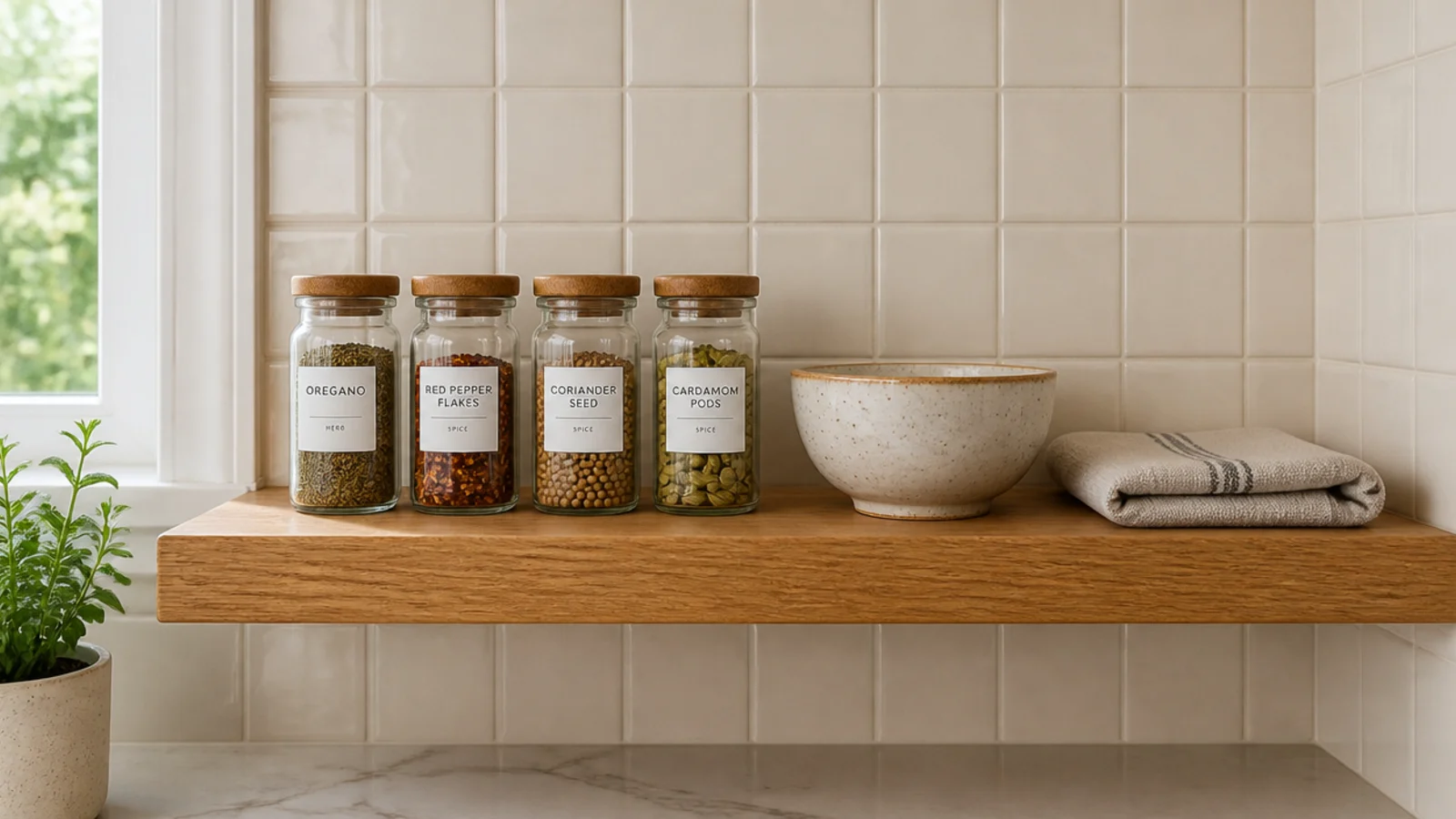
24. Milk paint for a soft chalky rustic corner
Milk paint gives a chalky matte surface that wears at the edges the way genuinely old paint does, rather than chipping like modern paint.
Use it on pine or reclaimed boards. Seal with a clear wax afterwards or it marks from any moisture, including damp hands.
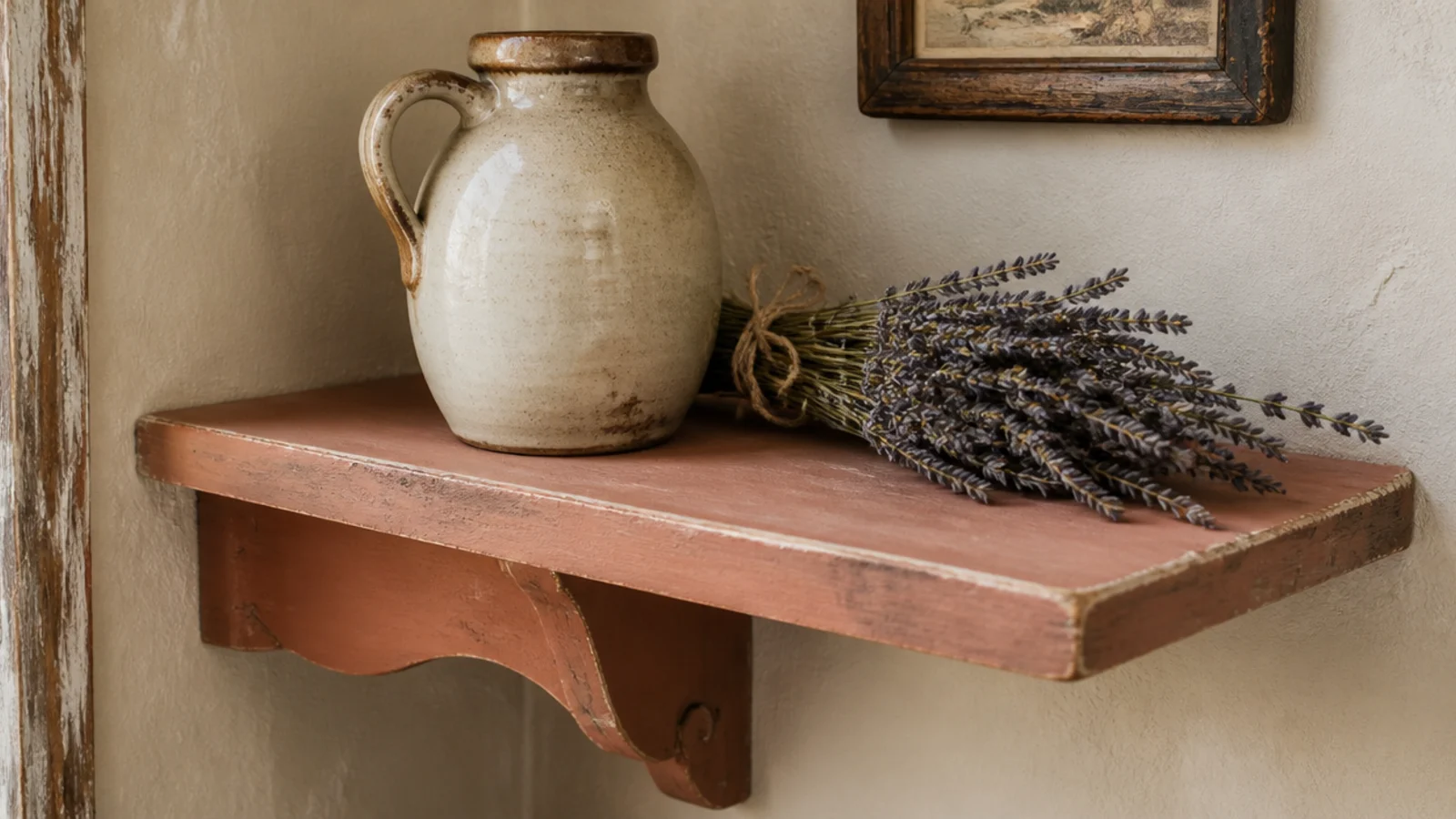
25. Two-tone: painted body, wood top
Paint the underside, edges and brackets the wall color, and leave the top surface natural oiled wood.
From standing height you see wood; from every other angle the shelf recedes into the wall. It is the most effective trick on this list for a small room, and it costs one sample pot of paint. More on this in corner shelf styling.
Mistakes to Skip
- Finishing only the top face. The board cups upward within a season, and by then it is loaded, mounted and much harder to fix.
- Staining pine without a conditioner. It goes blotchy in a way that cannot be sanded out evenly, and the whole board has to be repainted.
- Putting unsealed MDF or raw pine in a bathroom. Both swell and stain within a season in a room without a window, regardless of how good they look on day one.
Frequently asked questions
What is the best wood for corner shelves?
Red or white oak at three-quarters of an inch handles a 24-inch span with books on it, takes stain evenly and resists dents. Poplar is the best painted option because it is stable, cheap and has almost no grain to telegraph through paint. Avoid MDF and veneered particle board anywhere the front edge will be visible.
How thick should wooden corner shelves be?
Three-quarters of an inch for spans up to 24 inches, an inch and a half beyond 30 inches or under heavy pottery. Half-inch stock bows at about 18 inches under books. You can fake thickness by gluing a narrower strip under the front edge, which stiffens the span and reads as solid from every normal angle.
Do wooden corner shelves warp in a bathroom?
Untreated pine and MDF will, within a season in a room with no window. Sealed teak, bamboo and hardwood finished on all six faces with a water-resistant finish hold up fine. The failure is almost always an unsealed underside or a raw cut end, because that is where moisture gets in and cupping starts.
Should I stain or oil wooden corner shelves?
Hardwax oil or Danish oil if you like the natural color, stain if you need to match an existing wood. Oils sit in the wood and can be spot-repaired with a rag; film finishes like polyurethane sit on top and have to be sanded back to fix a scratch. For a kitchen shelf that gets wiped often, water-based poly is the more practical choice.
Is pine good enough for corner shelves?
For painted shelves, yes — pine is cheap, stable and takes paint well. For stained shelves it is a poor choice: it blotches badly without a pre-stain conditioner and dents from ordinary use. If you want visible grain on a budget, poplar or ash costs slightly more and looks considerably better.
How do I stop a wooden corner shelf from cupping?
Finish both faces and all four edges, not just the top. Wood absorbs and releases moisture through unfinished surfaces, so a board sealed on one side only will curl upward within a season. This is the single most common mistake in DIY shelf building and it is completely avoidable.
Pick the species for the job and the finish for the room, and everything else is styling you can change later. For placement room by room see fifteen corner shelf ideas, for the cutting and mounting see the DIY corner shelf build, and the same species logic applies on a straight wall in wood floating shelves. Save the pin for the lumber aisle.
Want more like this? Browse all 15 corner shelf ideas guides — they all use the same measurements and budget tiers.
Pin it for later
Save this to your Corner Shelf Ideas board
Pin it now so it is waiting for you when the tape measure comes out — and so the next person hunting for this idea can find it too.
Save this pinKeep going
More ideas worth saving while you have the tape measure out.