Mirror Wall Decor · Listicle
15 Cozy Mirror Wall Decor Ideas That Look Pricey

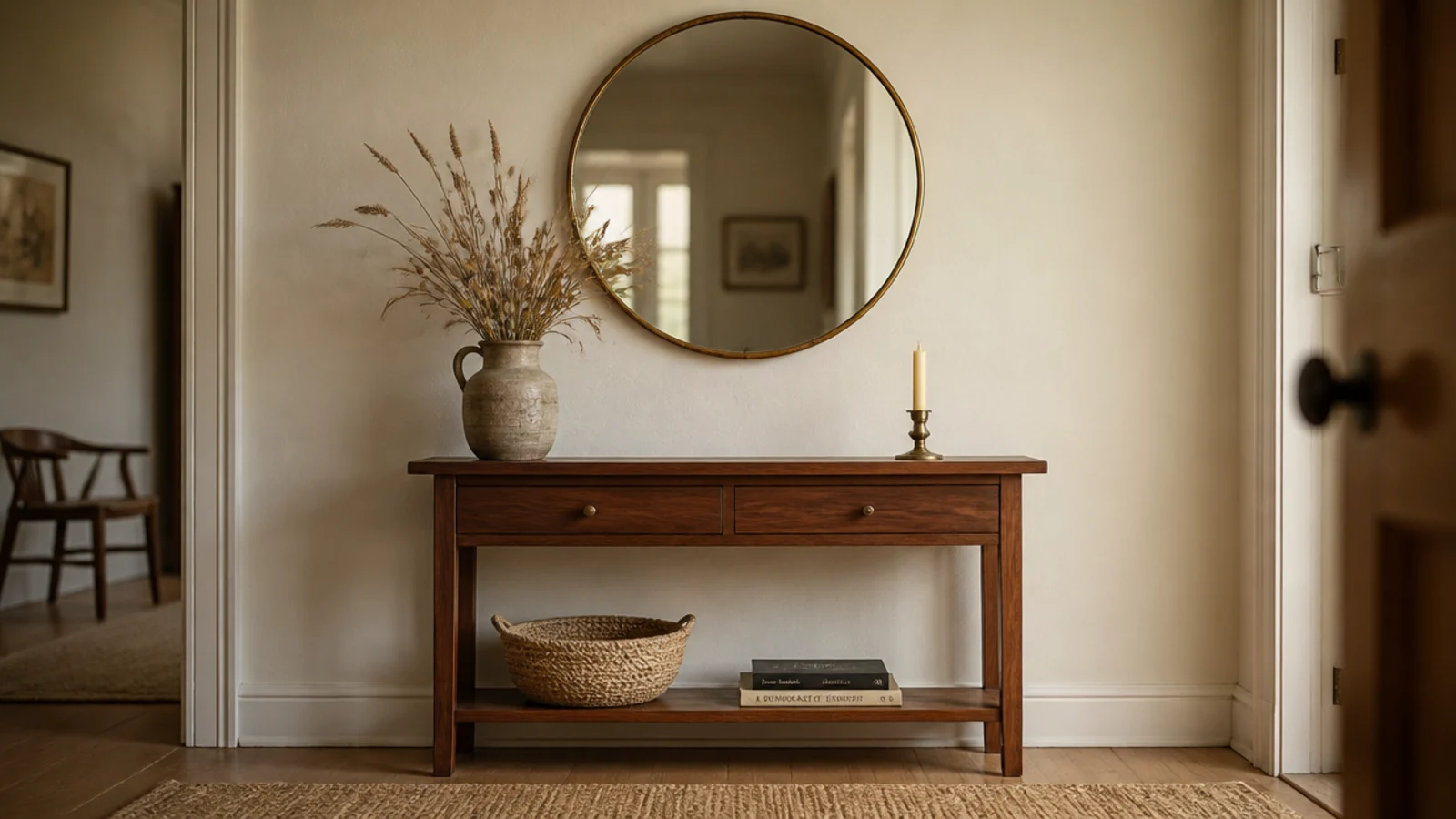
Round mirror wall decor is the shortcut to a room that looks considered, because a circle is usually the only curve in a space full of rectangles. It is also the shape where price and appearance separate most dramatically. A $70 round can read as an antique and a $300 one can read as a bathroom fitting, and the difference is almost never the glass. Here are fifteen ways to land on the expensive side.
In this guide17 sections — tap to openHide
- 1.Why round mirror wall decor reads as expensive
- 2.Oversize it and buy only one
- 3.Choose a frame that projects from the wall
- 4.Pick aged brass over shiny gold
- 5.Use a solid wood frame with visible grain
- 6.Hang a round above a straight-backed bench
- 7.Echo a round table with a round mirror
- 8.Use one convex round as a full stop
- 9.Overlap two rounds of different sizes
- 10.Set a round mirror in a square alcove
- 11.Hang one from a leather strap
- 12.Choose a round with an integrated shelf
- 13.Add texture with rattan or jute
- 14.Backlight a round for evening glow
- 15.Hang from a picture rail with ribbon
- 16.Group three rounds in graduated sizes
- 17.Mistakes to Skip
Why round mirror wall decor reads as expensive
Three things decide it, and none of them is the price tag.
Frame depth comes first. A rim that projects three quarters of an inch or more from the wall throws a soft shadow underneath and reads as substantial. A flat, thin rim sitting tight to the plaster reads as a fixture. Second is finish: aged, brushed or antiqued brass beats bright gold every time, and a dark wax rubbed into pale wood adds depth for about $9. Third is scale — most people buy one size too small.
Budget runs $ at $40 to $90 for plain 24-inch rounds and thrifted frames, $$ at $110 to $260 where most well-made 30 to 36-inch rounds live, and $$$ from $320 upward for oversized 42-inch pieces, antique convex mirrors and solid hardwood frames.
The safety numbers matter as much here as anywhere. A 30-inch round typically weighs 15 to 25 pounds depending on frame material, and a 42-inch can pass 40. Weigh yours on a bathroom scale, then hang into a stud with a 2.5-inch screw or use toggle bolts rated at least double the real weight — never the plastic plugs in the box. Round frames need two hanging points more than any other shape, because a circle has no visual reference for level and one hook lets it rotate. And skip adhesive strips entirely for glass this heavy.
1. Oversize it and buy only one
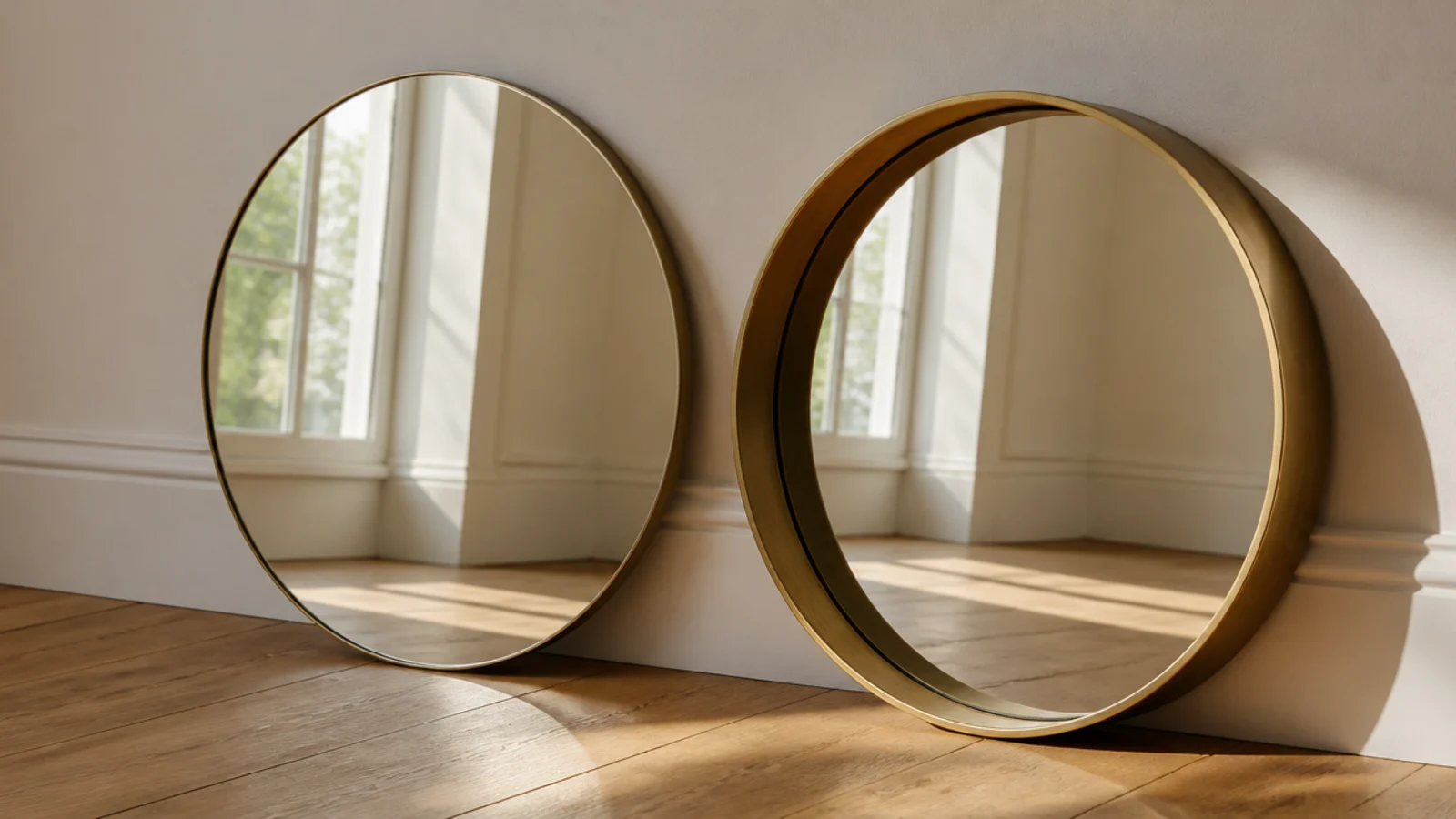
The most common round mirror mistake is buying 24 inches when the wall wanted 36. A small circle on a large wall reads as an accident rather than a decision.
Size it to the furniture beneath: about half the width of a bench, two thirds the width of a console. Over a 60-inch bench that means a 30-inch round; over a 48-inch console, 32 to 36 inches. One large round at $150 ($$) beats three small ones at $50 each, and it needs a third of the anchors.
2. Choose a frame that projects from the wall
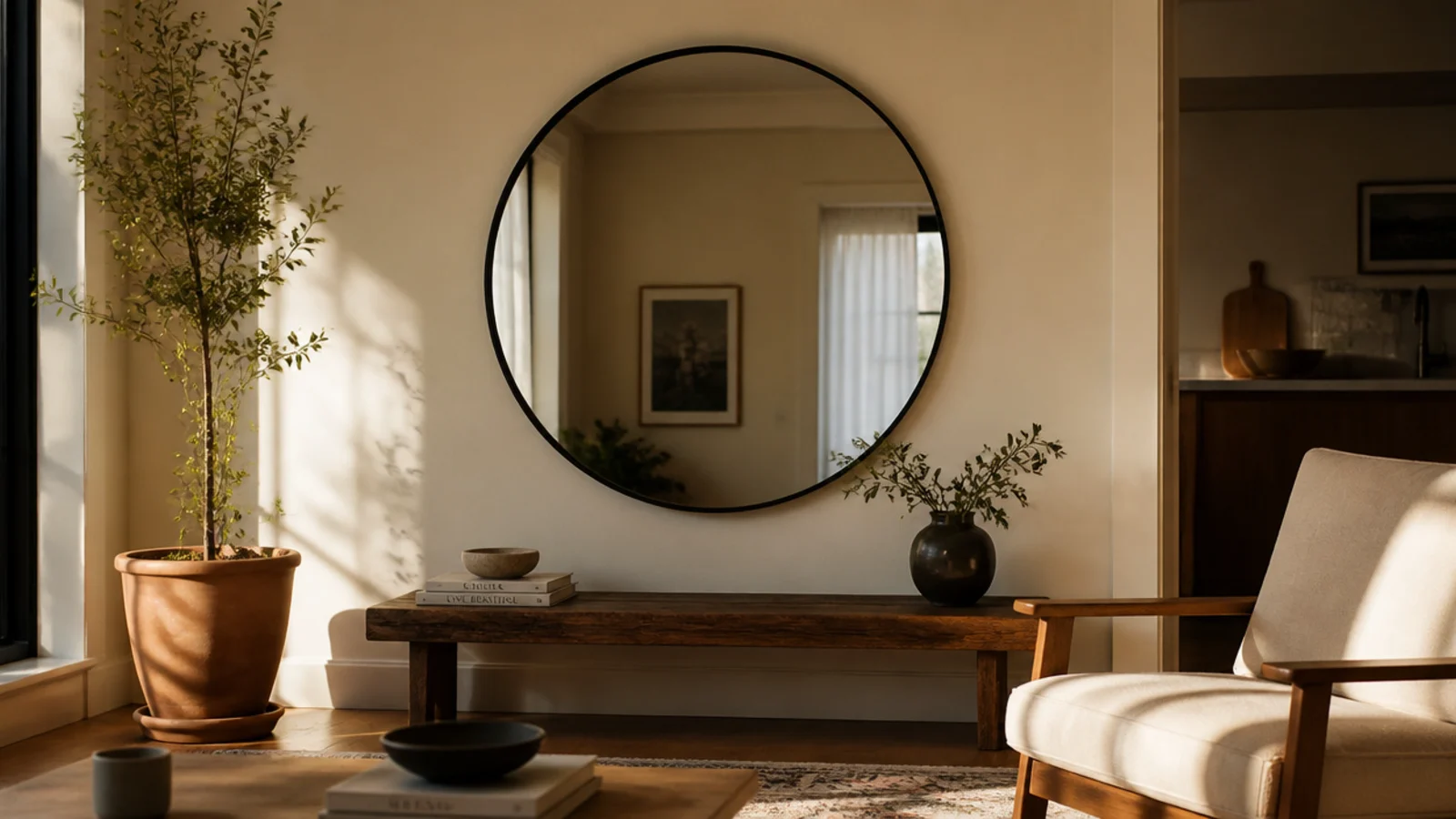
Stand in the shop and look at the mirror from the side. If the rim sits flat against the wall, it will read as a fitting no matter how good the finish is.
You want three quarters of an inch of projection minimum, an inch is better. That depth throws a shadow line beneath the circle that separates it from the plaster, and shadow is what the eye reads as quality. It is the single most reliable thing to check before buying.
3. Pick aged brass over shiny gold
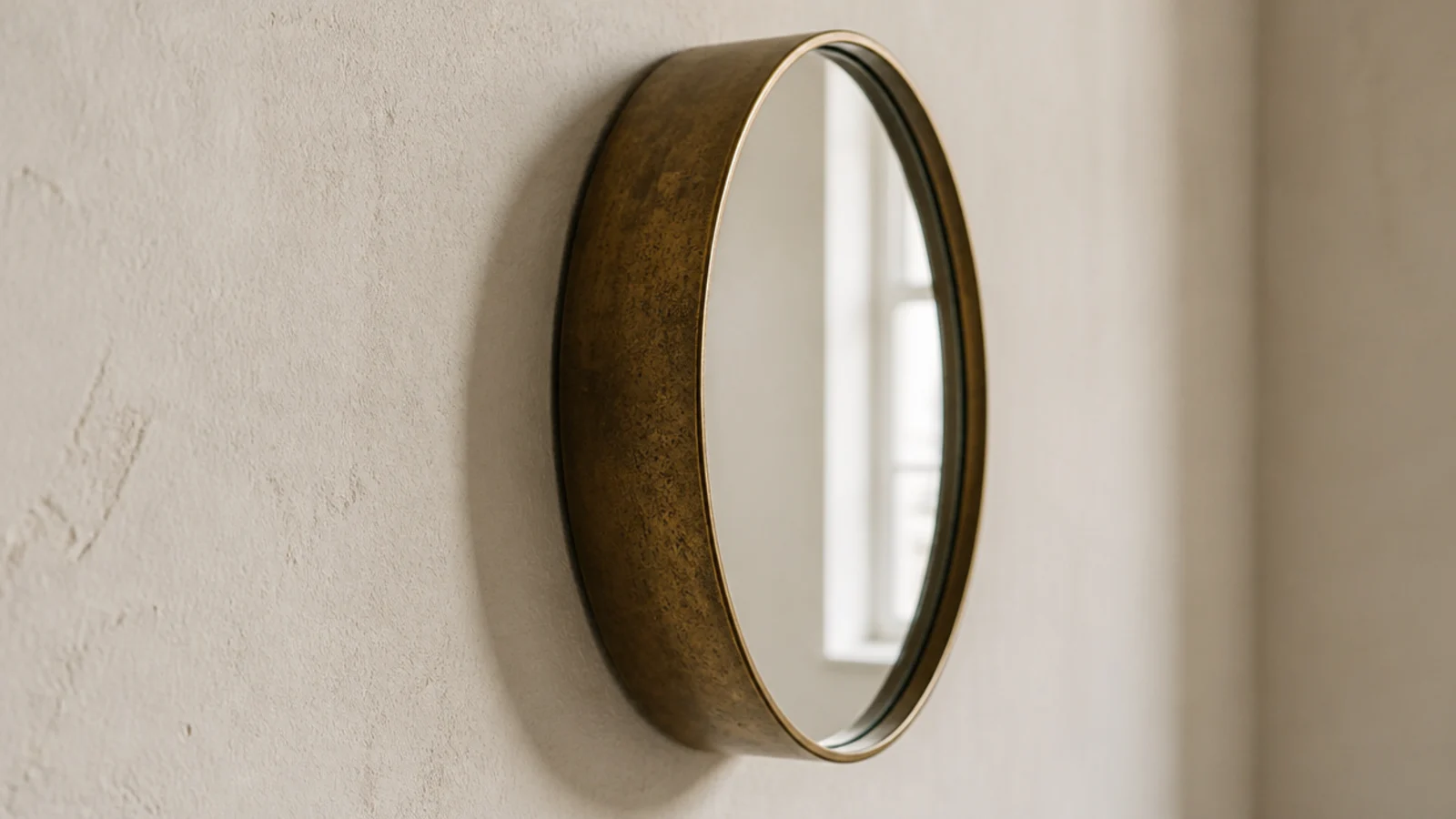
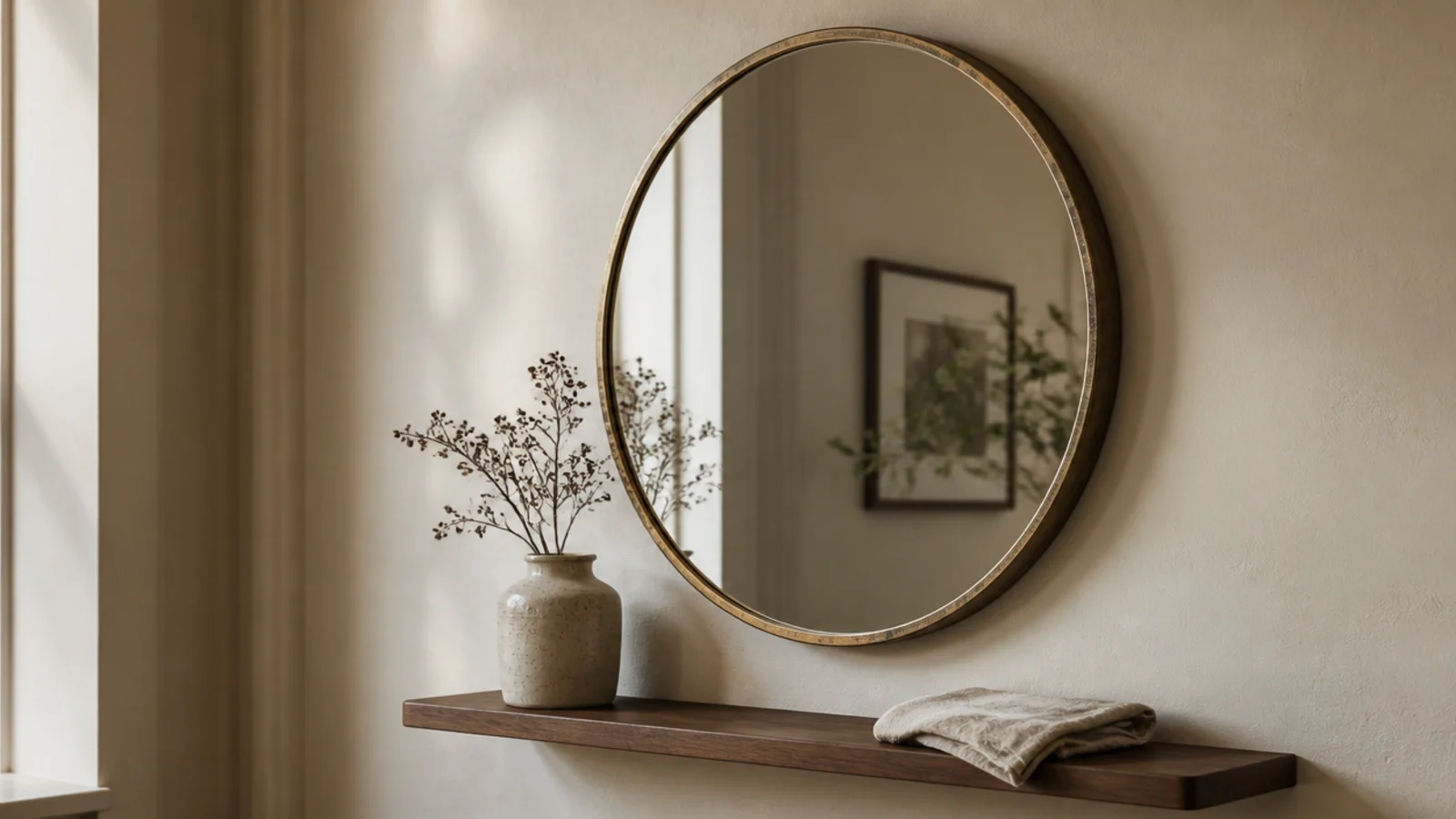
Bright polished gold reads as new, and new is not the same as expensive. Aged, antiqued or brushed brass reads as inherited.
If you already own a shiny one, knock it back with a thin coat of dark wax rubbed on and buffed off, or a light pass of matte clear spray. Ten dollars and twenty minutes takes a $60 mirror somewhere a $200 one often does not go. Vintage brass rounds turn up secondhand at $30 to $80.
4. Use a solid wood frame with visible grain
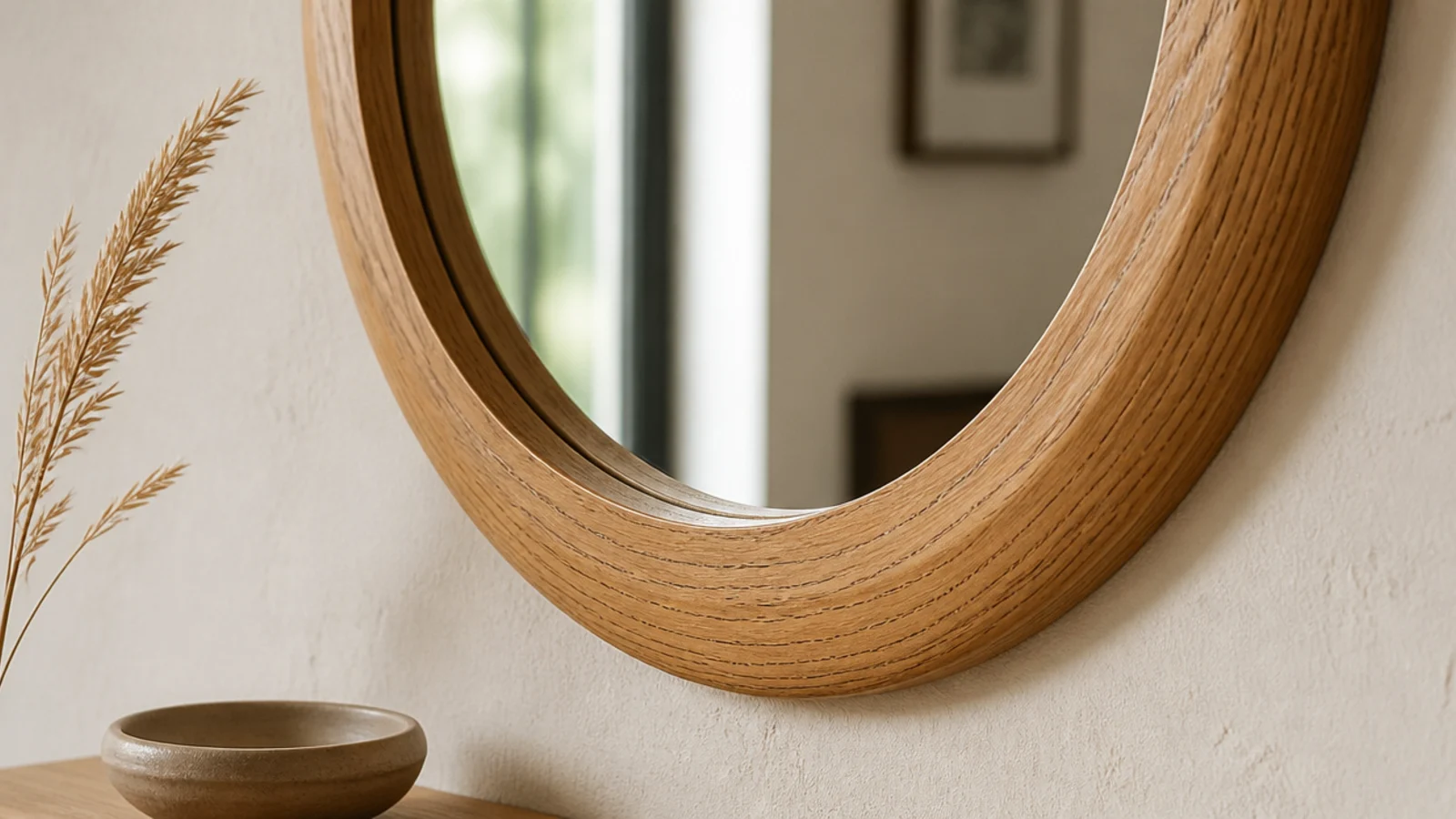
Open grain photographs as expensive because it cannot be faked cheaply. Solid oak, ash and walnut rounds all read as furniture rather than as decor.
Check the edge before buying: veneer over MDF shows a hairline seam where the face meets the profile. A solid oak 30-inch round runs 20 to 28 pounds — heavier than metal — so this one goes into a stud on two points. Expect $140 to $280 ($$).
5. Hang a round above a straight-backed bench
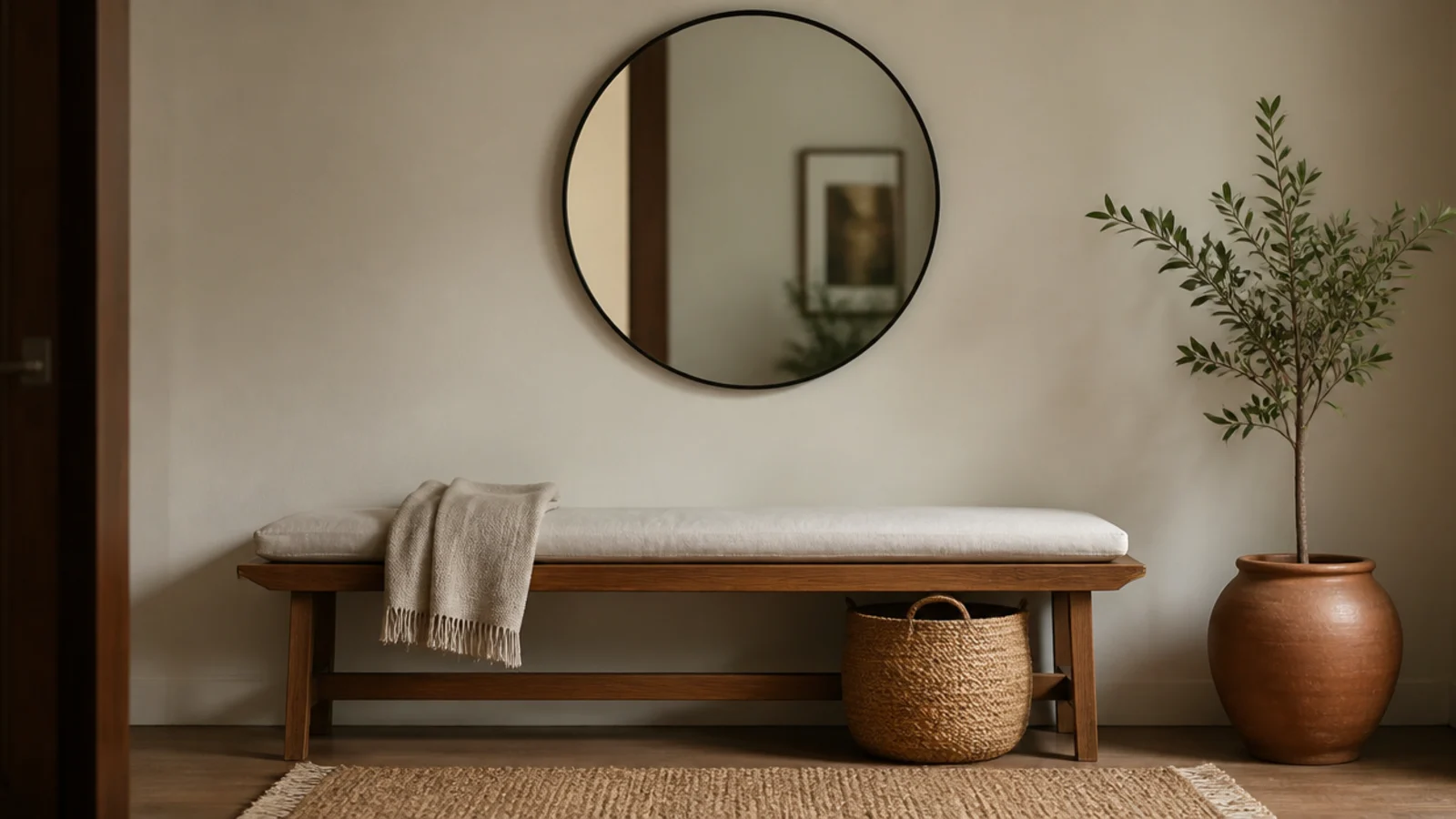
A bench is a long hard horizontal. A circle above it is the contrast that makes both look deliberate.
Centre the mirror on the bench, aiming for roughly half the bench width, with the bottom edge 8 to 10 inches above the seat so nobody knocks their head standing up. On a 60-inch bench that is a 30-inch round at a centre height of about 58 inches, which lands the two measurements in the same place.
6. Echo a round table with a round mirror
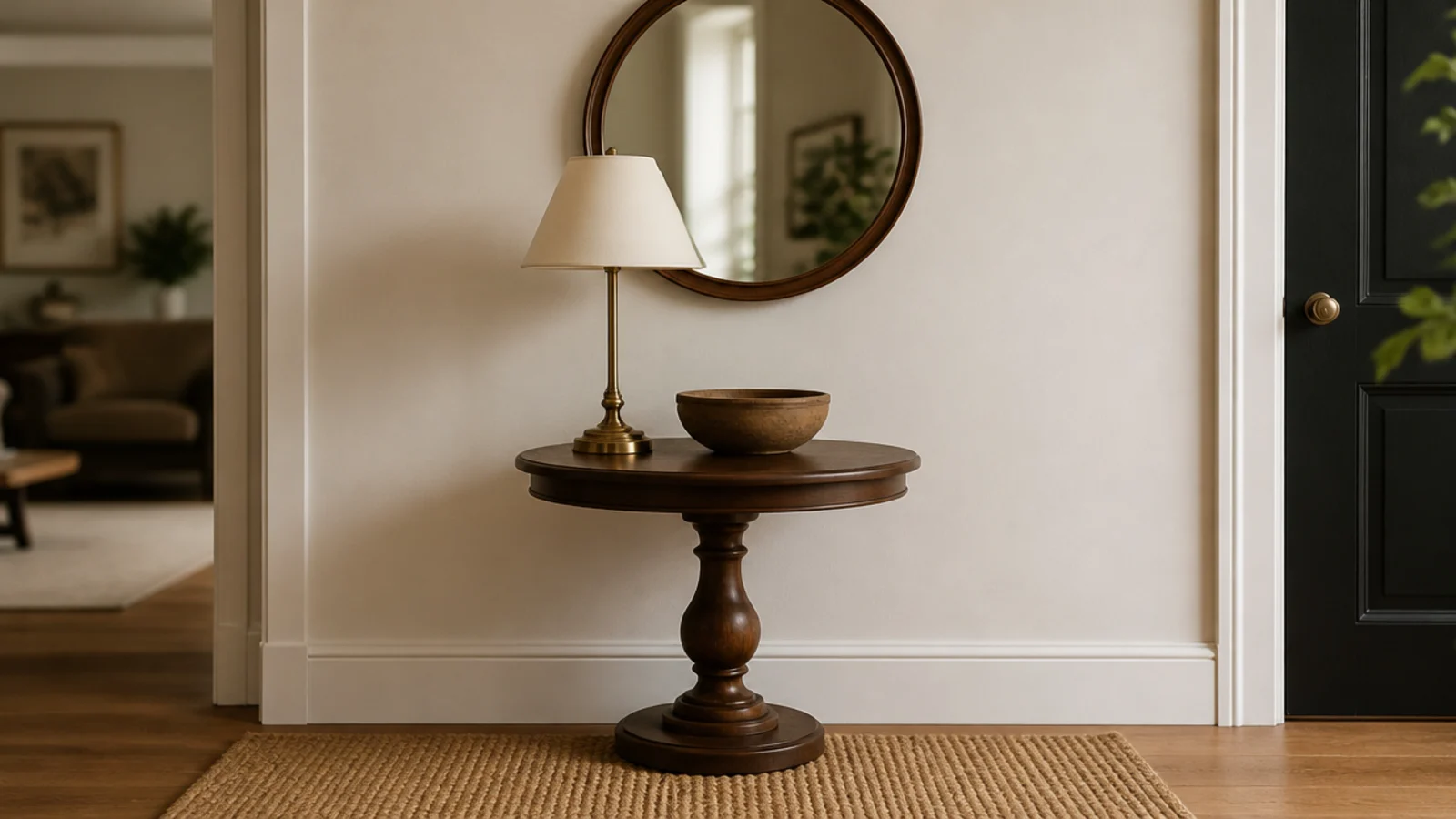
Repeating the circle once creates rhythm. A round pedestal side table with a round mirror directly above it reads as a designed pairing rather than a coincidence.
Keep the diameters within about six inches of each other so neither dominates. And stop at two circles in that corner — a round mirror, a round table and a round rug becomes a theme, which is a different and much less flattering thing.
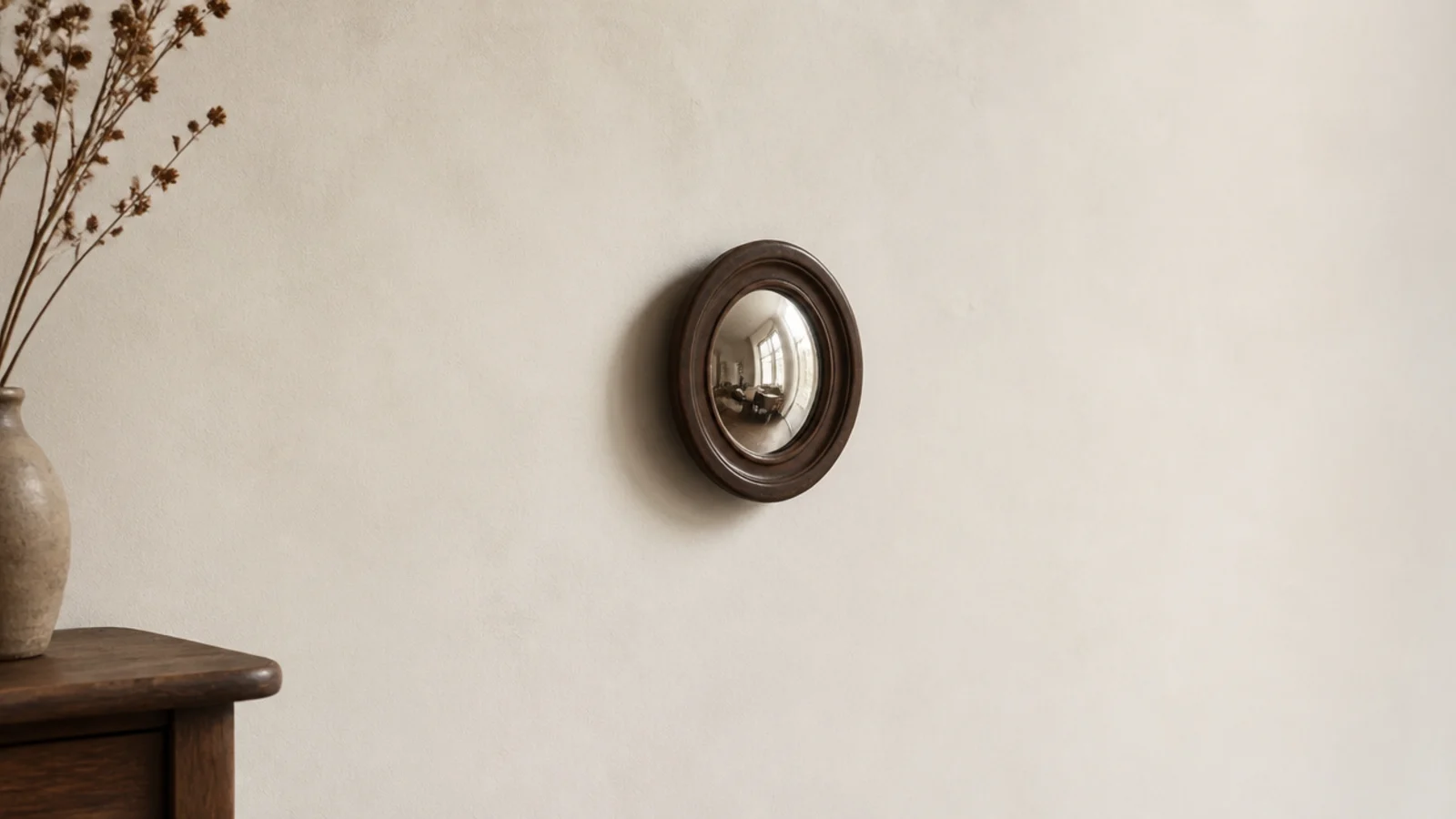
7. Use one convex round as a full stop
A convex round — the small bubble kind — compresses a whole room into one image. It is the highest-impact small mirror there is, and it works alone.
Give it at least 18 inches of clear wall on every side and hang it at 60 inches. Most are 12 to 18 inches across and under 8 pounds, so a single stud screw genuinely suffices. Antique ones run $150 to $400 ($$$), plain modern versions start near $25.
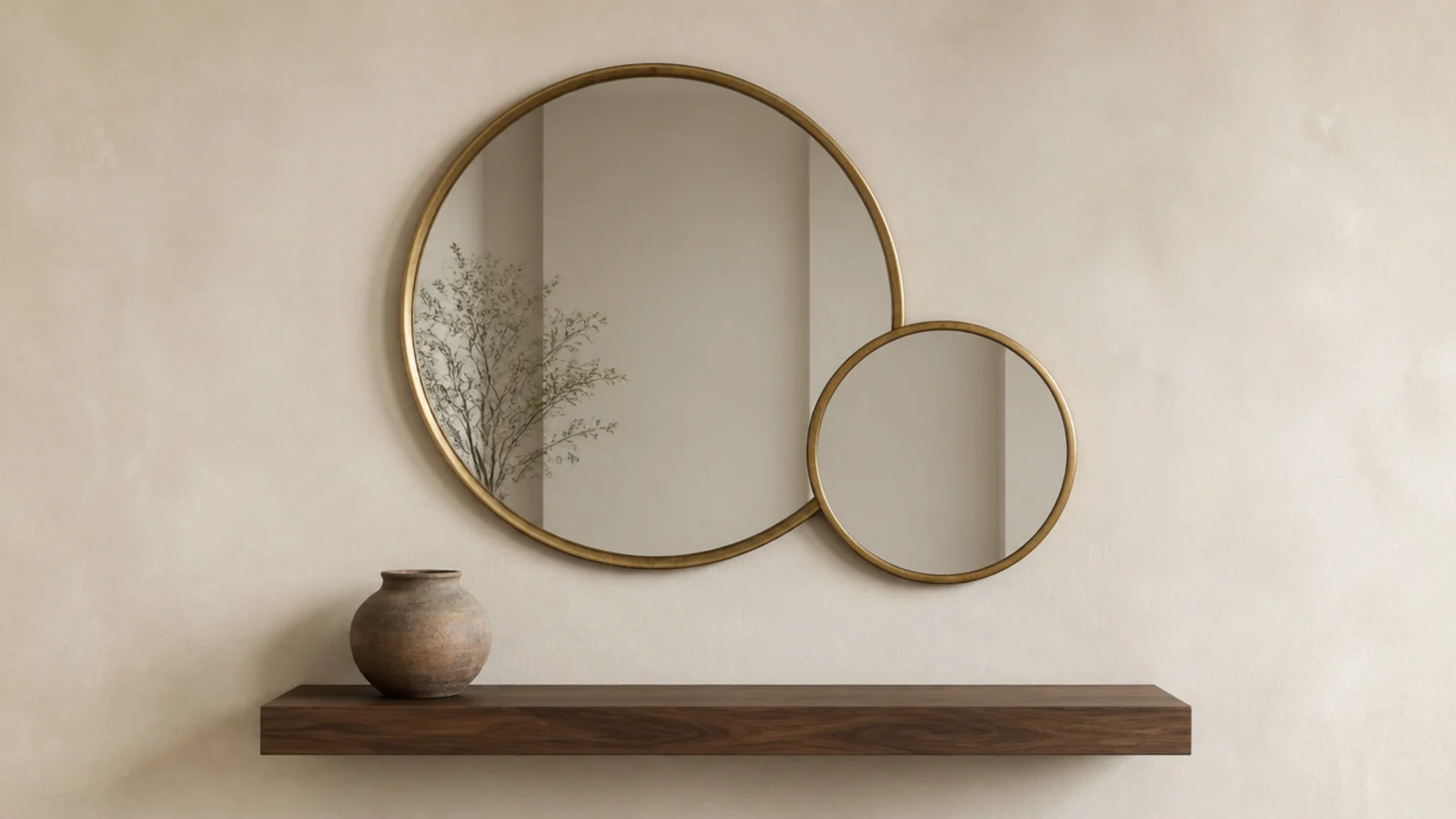
8. Overlap two rounds of different sizes
Two circles of clearly different diameters, hung so their edges just overlap and their centres sit at different heights, look far more expensive than the sum of the two mirrors.
Make the size gap obvious — a 30-inch beside an 18-inch, not beside a 26-inch. Similar-but-not-equal reads as a mistake. Keep both frames the same finish, and hang the larger one lower so the pair feels grounded rather than floating.
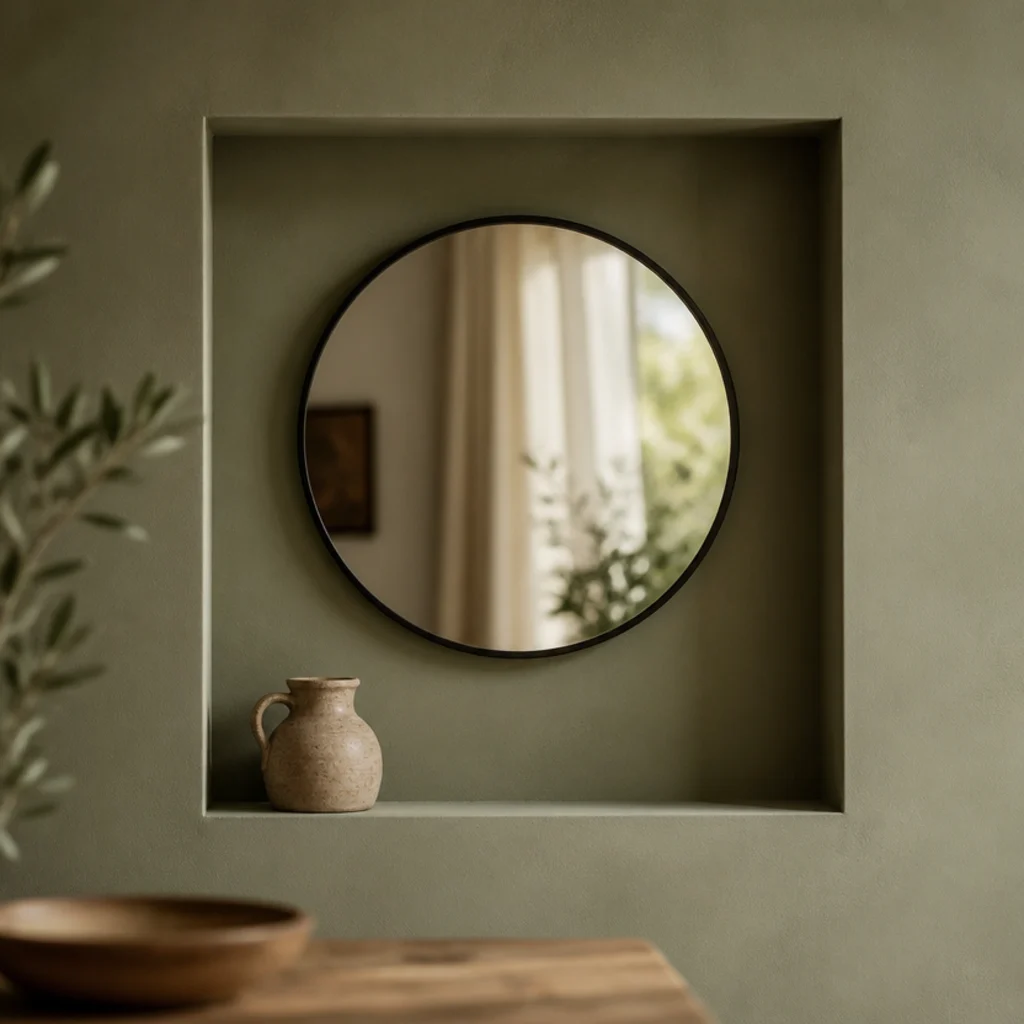
9. Set a round mirror in a square alcove
If you have a square recess, a niche or a boxed-out section of wall, a round mirror centred inside it reads as built-in architecture.
Leave at least 3 inches of visible wall around the circle on all sides so it does not look jammed in. Painting the recess a shade darker than the surrounding wall deepens the effect further, and a quart of paint costs about $25.
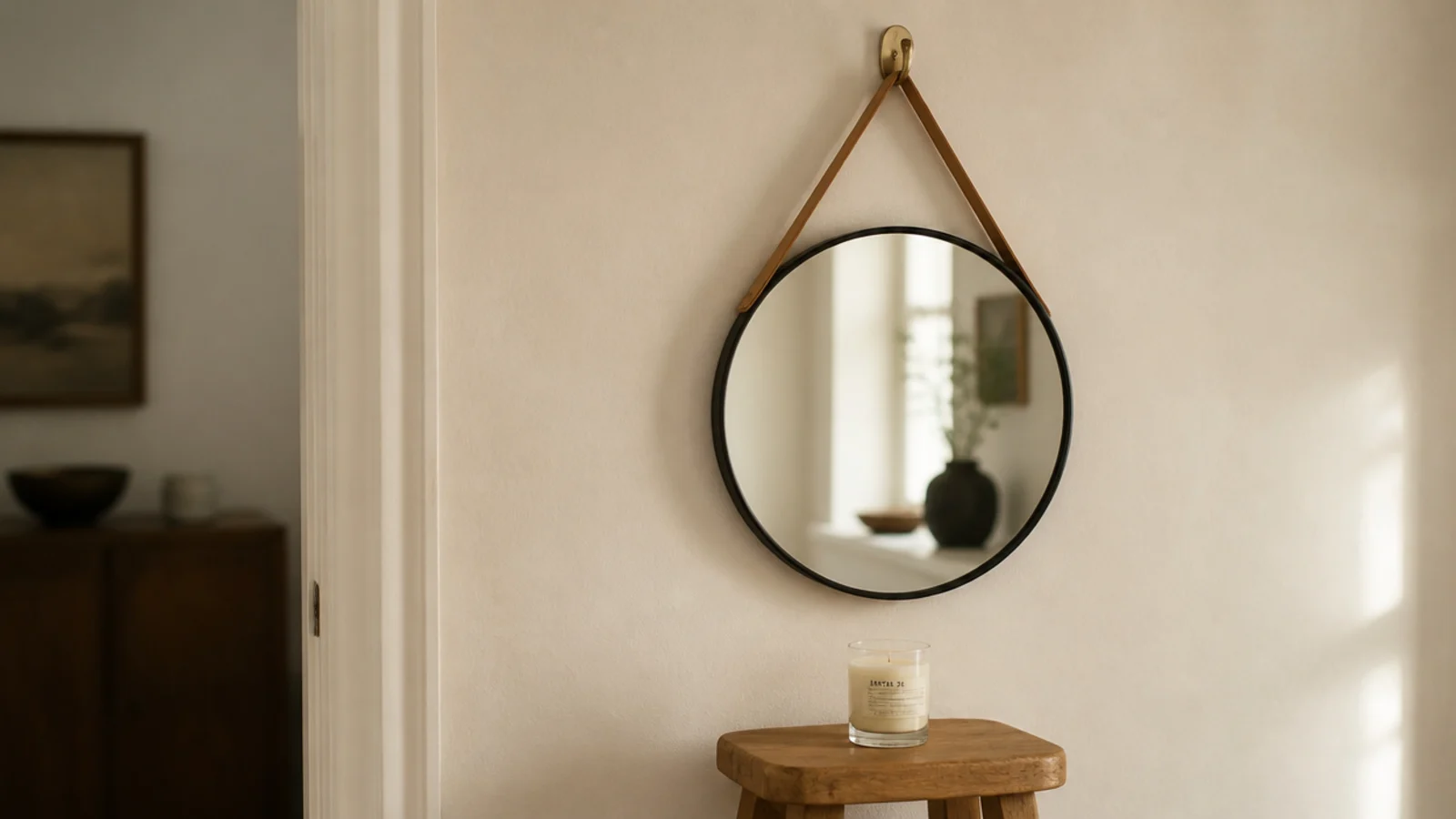
10. Hang one from a leather strap
A round mirror suspended from a tan leather strap looped over a single brass hook is a look worth about four times what it costs.
Buy the strap separately — pre-strapped versions are usually thin and shiny. A 1.5-inch veg-tan leather strap runs $15 to $25. Keep the mirror light, under 12 pounds, since the load lands on one hook; anything heavier needs a proper two-point hang instead.
11. Choose a round with an integrated shelf
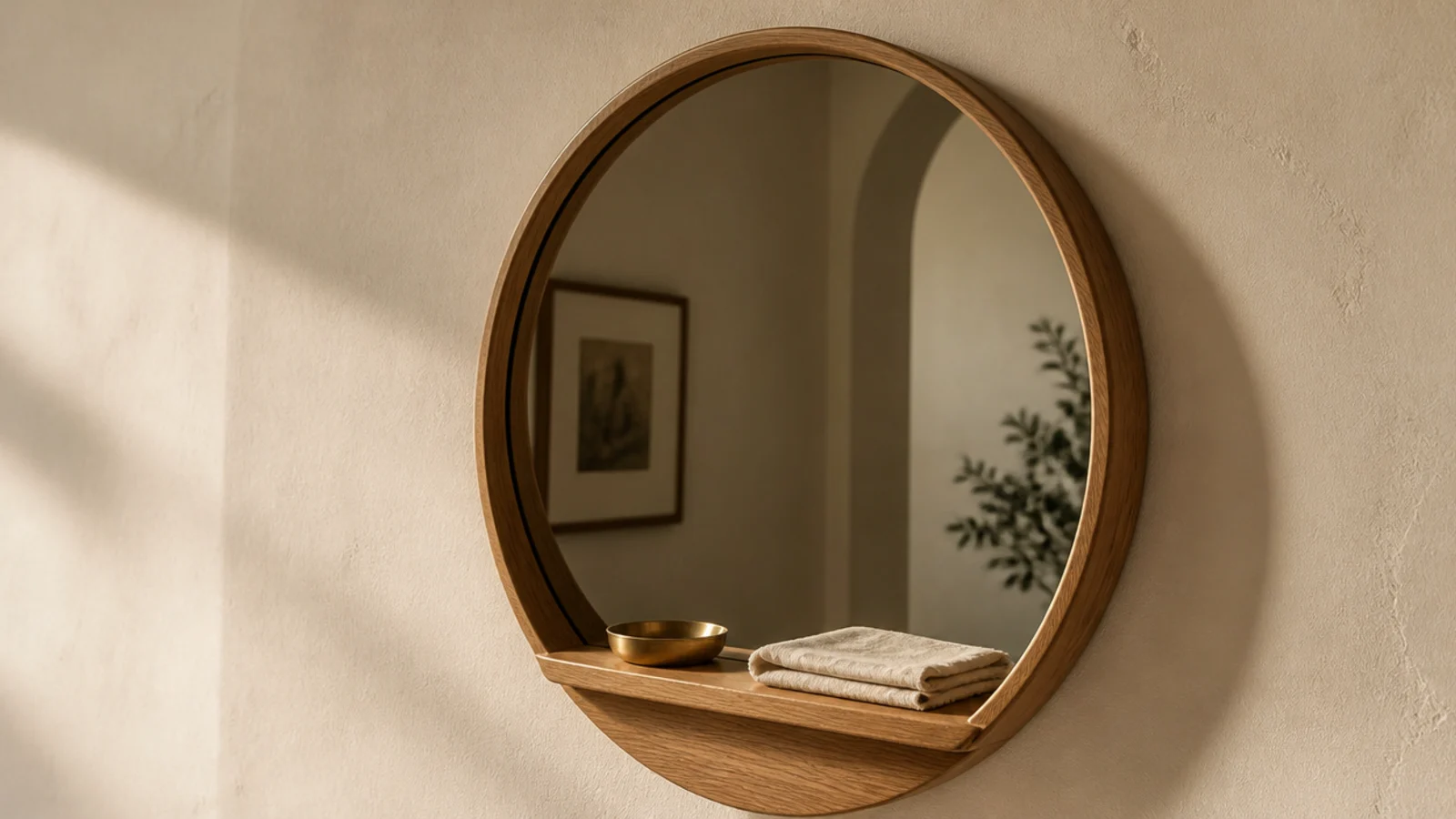
A round with a 3-inch ledge built into the lower frame gives you a drop zone for keys, a candle or a small dish without adding a separate shelf.
It works hardest in an entry or a bedroom. Check the shelf is part of the frame structure rather than glued on, and keep what sits on it to two objects — a loaded ledge under a mirror looks like a bathroom cabinet. Around $80 to $160 ($$).
12. Add texture with rattan or jute
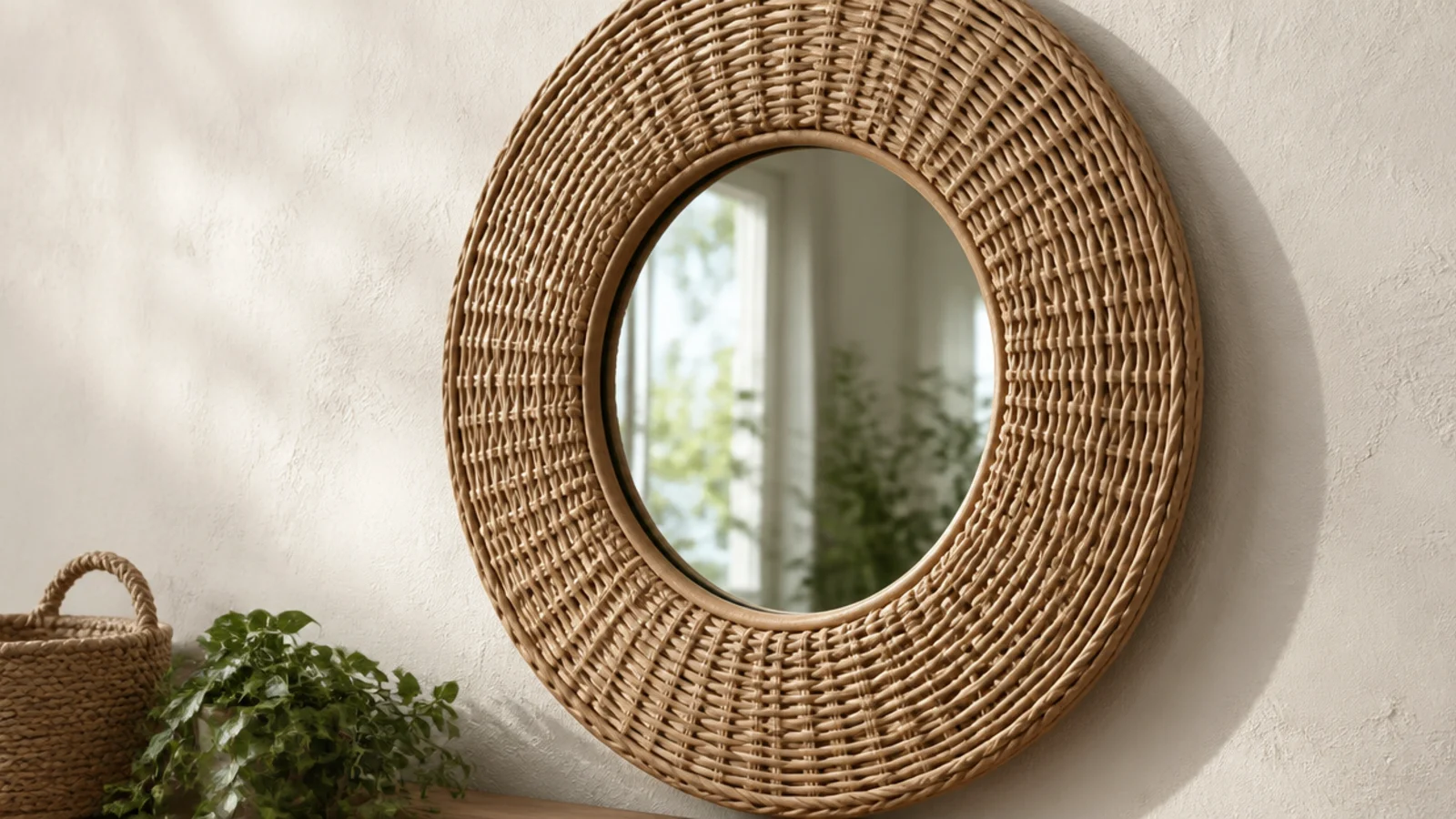
A woven rattan or jute-wrapped round brings warmth that metal and glass cannot, which is exactly what a cozy room needs.
These are also the lightest option here, often 6 to 10 pounds for a 30-inch, so hanging is easy. Keep the rest of the wall very plain, because a textured frame is already doing the work. Expect $50 to $120 ($$), and check the weave is glued and wrapped rather than stapled.
13. Backlight a round for evening glow
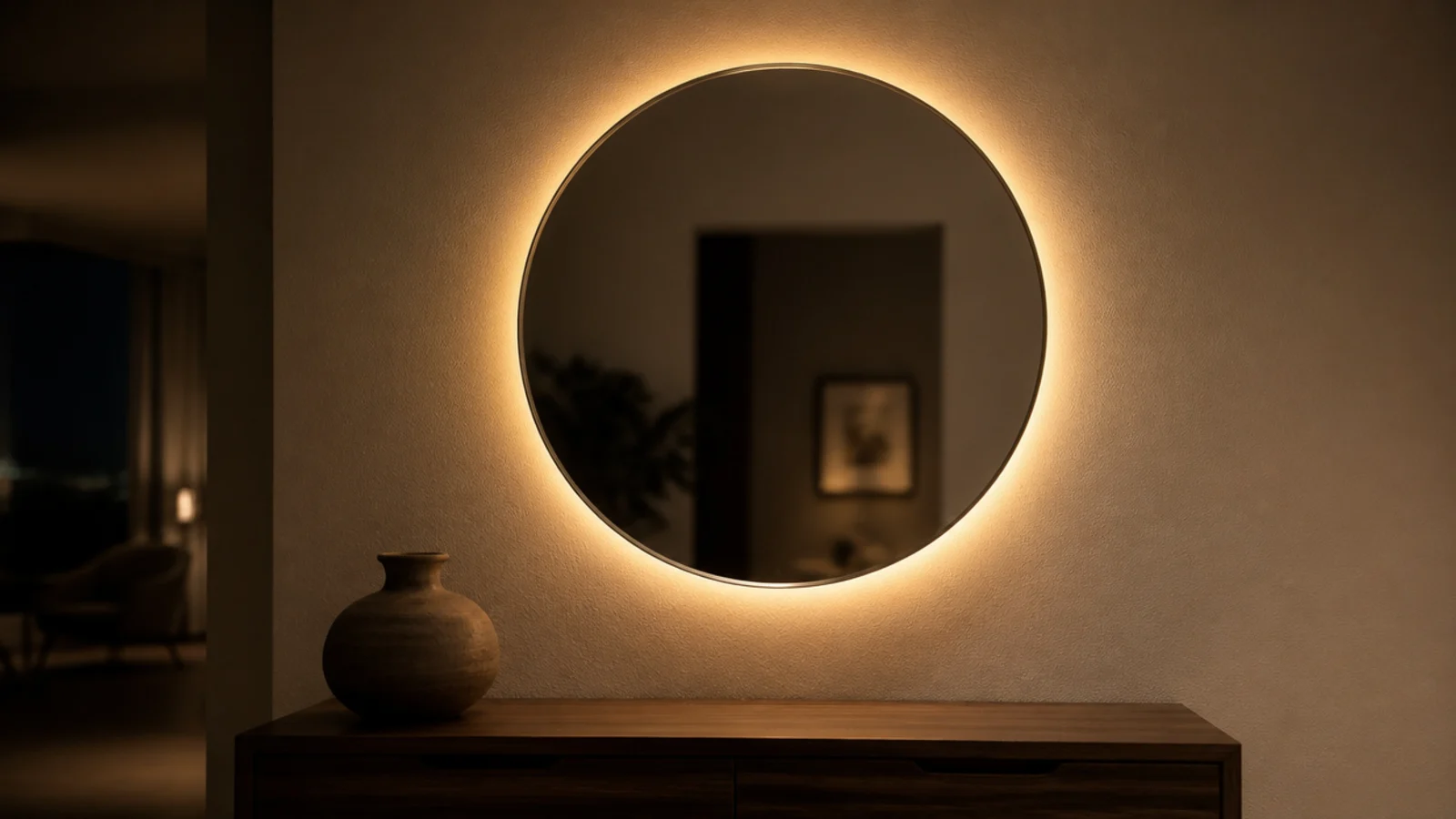
A warm LED strip concealed behind the frame gives a soft halo on the wall, which turns a mirror into the light source in a dim corner.
Plug-in strips avoid any wiring work and cost $15 to $30, which keeps this renter-friendly. Choose a warm temperature, around 2700K, and mount the strip on the frame back rather than the wall so the glow follows the mirror if you move it.
14. Hang from a picture rail with ribbon
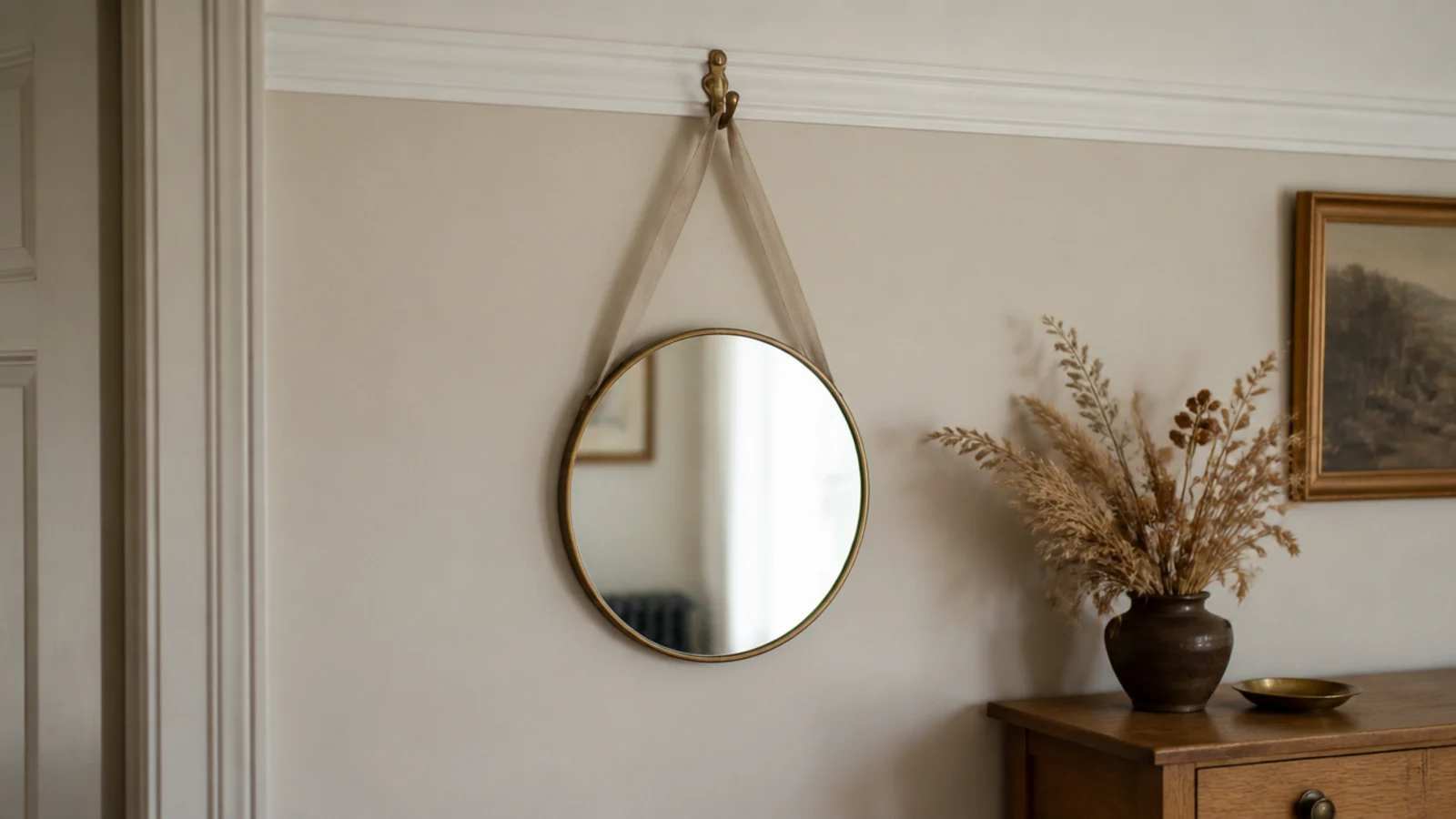
In a period room with a picture rail, a round mirror hung from a wide linen ribbon over a brass rail hook needs no holes at all — the only truly no-drill option on this list.
Rail hooks are rated 20 to 30 pounds each, so keep the mirror under 15 pounds and use two hooks with two ribbon drops. One ribbon on one hook will rotate, and a rotating circle is instantly noticeable.
15. Group three rounds in graduated sizes
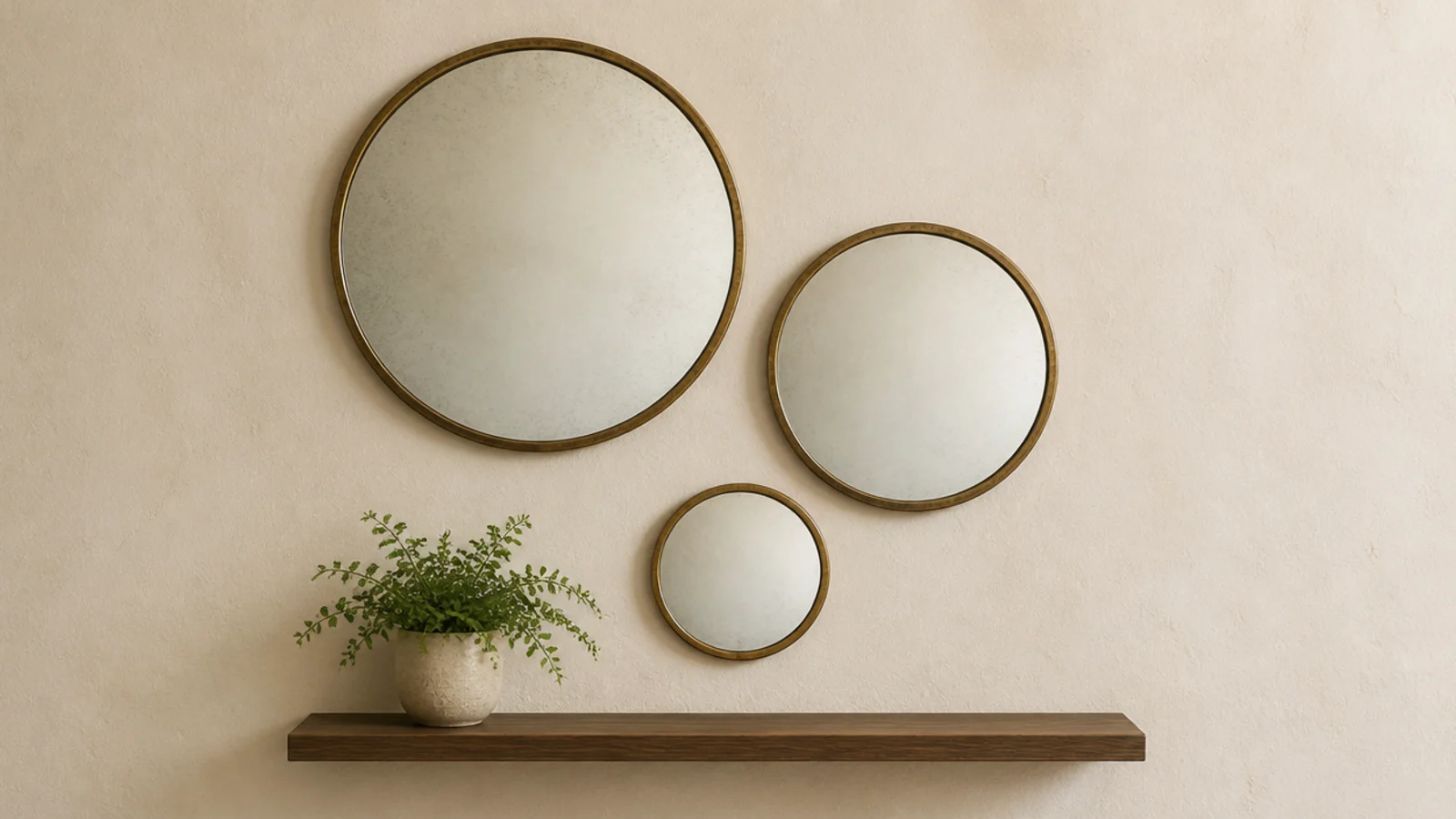
Three circles at clearly graduated diameters — say 24, 16 and 10 inches — in one shared finish, arranged in a loose descending triangle with 3-inch gaps.
Lay the whole thing out on the floor first and cut paper templates before drilling a single hole. Odd numbers, obvious size differences, one finish. There are thirty more arrangements in mirror cluster wall if a group is where you are heading.
Mistakes to Skip
- Hanging a round on a single hook. Circles have no reference for level, so one hook lets it rotate a few degrees and the whole wall reads as subtly wrong.
- Buying 24 inches for a wall that wanted 36. Undersized rounds are the most common error here and no styling fixes the proportion.
- Using adhesive strips because the frame looks light. A 30-inch round is 15 to 25 pounds of glass, and strips creep slowly under that kind of sustained load.
Frequently asked questions
What size round mirror looks best on a wall?
Match the mirror to the furniture below it rather than to the wall. About half the width of a bench or two thirds the width of a console reads correctly from across the room, which usually lands at 28 to 36 inches. On an open wall with no furniture, anything under 24 inches simply disappears and starts looking like a bathroom offcut.
How much does a 30 inch round mirror weigh?
Typically 15 to 25 pounds, and frame material swings that far more than diameter does. A thin powder-coated steel rim sits near the bottom of that range, while solid oak or a chunky plaster-effect frame with thick glass reaches the top of it. Weigh yours on a bathroom scale before choosing anchors rather than trusting the listing.
How do you hang a round mirror straight?
Use two hanging points rather than one. Round frames have no visual reference for level, so a single hook lets the mirror rotate a few degrees and nobody can quite say why the wall looks off. Two D-rings set at equal distance from the top, hooked onto two level anchors, hold the circle fixed permanently.
What makes a cheap round mirror look expensive?
Frame depth first. A rim that projects three quarters of an inch or more from the wall casts a shadow line and reads as substantial, where a flat thin rim reads as a fitting. Then finish: aged or brushed brass beats shiny gold every time, and a coat of dark wax on a pale wood frame adds instant depth.
Where should a round mirror hang in a room?
Centre the glass 57 to 60 inches from the floor on an open wall, or leave 6 to 8 inches between a console top and the bottom of the frame when it sits over furniture. Choose a wall facing your best window if you can, since a round mirror opposite daylight throws a soft pool of light back into the room.
Take one measurement before shopping — the width of the furniture the mirror will sit above — and let it choose the diameter for you. That single number prevents the mistake almost everyone makes with circles. For placement across the rest of the house, mirror wall decor ideas covers fifteen spots, and a round over a console is the backbone of entryway table decor. Save the pin so the diameters are with you when you shop.
Want more like this? Browse all 15 mirror wall decor guides — they all use the same measurements and budget tiers.

Pin it for later
Save this to your Mirror Wall Decor board
Pin it now so it is waiting for you when the tape measure comes out — and so the next person hunting for this idea can find it too.
Save this pinKeep going
More ideas worth saving while you have the tape measure out.