Mirror Wall Decor · Listicle
30 Simple Mirror Wall Decor Ideas on a Budget

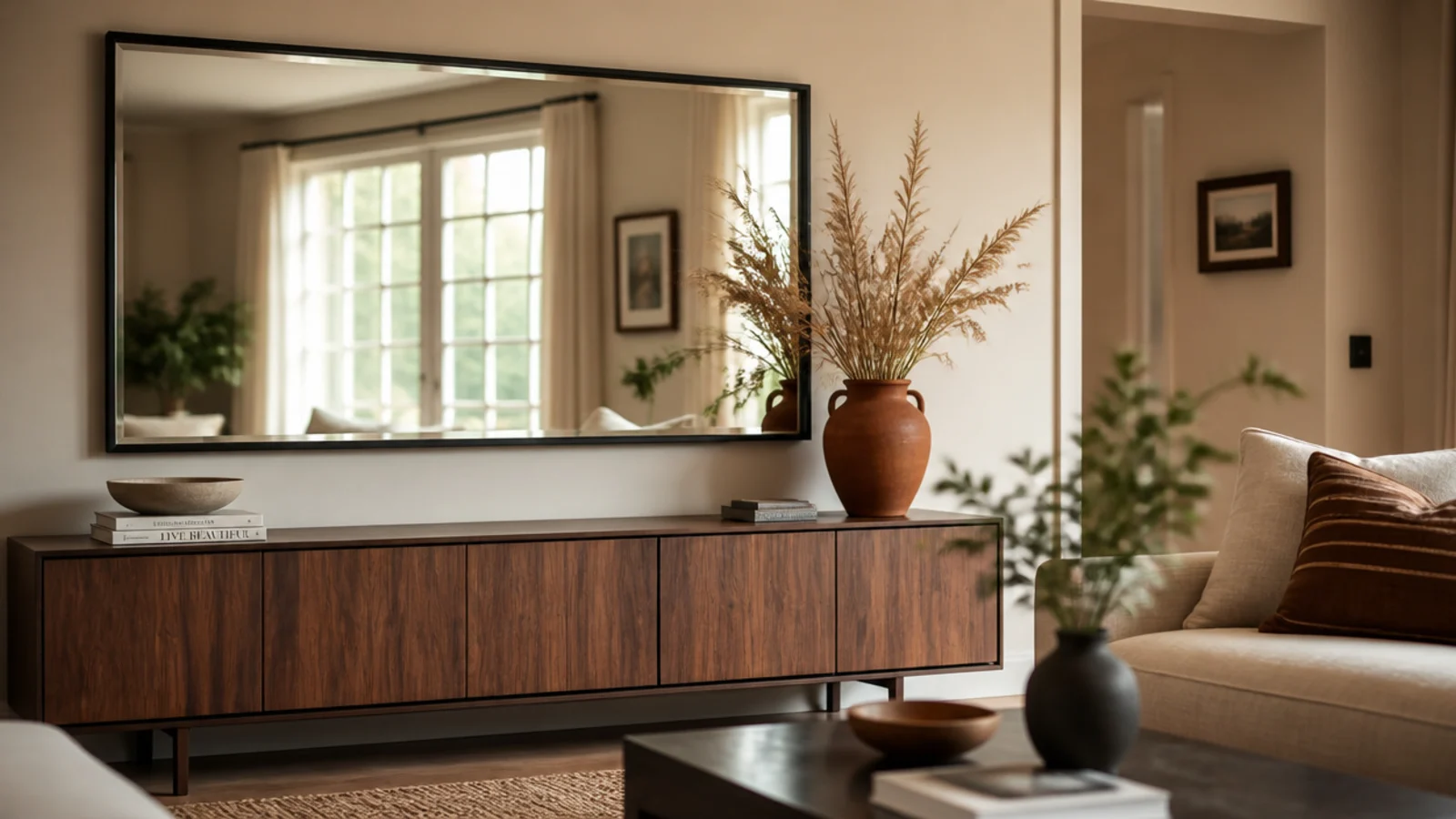
Living room mirror wall decor is where most people overspend and underthink, because the room is big enough that the instinct is to buy a bigger mirror rather than choose a better wall. A thrifted frame on the right wall beats an expensive one on the wrong wall every single time. Here are thirty placements that stay cheap on purpose, with the heights, the clearances and the anchors that keep heavy glass where you put it.
In this guide32 sections — tap to openHide
- 1.What living room mirror wall decor costs and where it belongs
- 2.Put the big mirror opposite the sofa, not above it
- 3.Size the mantel mirror to the shelf
- 4.Lean an oversized mirror in a dead corner
- 5.Hang it directly opposite the window
- 6.Flank the television with two narrow mirrors
- 7.Set a mirror behind the console lamp
- 8.Bridge the gap above a radiator cover
- 9.Fill a chimney alcove with a small cluster
- 10.Lean a mirror inside the built-ins
- 11.Use frameless bevel panels in a rental
- 12.Hang a thrifted gilt frame on painted plaster
- 13.Close a dead corner with an arch
- 14.Run a long horizontal mirror over a credenza
- 15.Put a large plant in front of the glass
- 16.Back the bar cart with a mirror
- 17.Build a second window on a blank wall
- 18.Go dark frame on a dark wall
- 19.Stack a mirror above a floating shelf
- 20.Break a boxy room with one round
- 21.Lean a mirror on the mantel and tether it
- 22.Set candles in front of the glass
- 23.Slot a pier mirror between two windows
- 24.Back an open shelving unit with mirror
- 25.Hang beside the reading chair, never behind it
- 26.Use the space above a doorway
- 27.Mix mirrors into an art wall
- 28.Hang low behind a bench or ottoman
- 29.Paint the wall first, then hang
- 30.Choose antiqued glass for warmth
- 31.End a curtain run with a mirror
- 32.Mistakes to Skip
What living room mirror wall decor costs and where it belongs
Three budget tiers cover almost everything. $ is $20 to $70 — thrifted frames, plain frameless rounds, spray-painted secondhand finds and dollar-store multi-packs. $$ is $90 to $280, where most 30-inch rounds, arched mirrors and decent wide horizontals live. $$$ starts around $350 and runs to $900 for oversized arches, antique giltwood and full-length leaners in solid hardwood.
Placement is the free upgrade. A mirror opposite a window throws real daylight across the room and doubles the view; the same mirror perpendicular to that window mostly reflects the wall across from it. Hold a hand mirror up at each candidate spot before you buy anything at all.
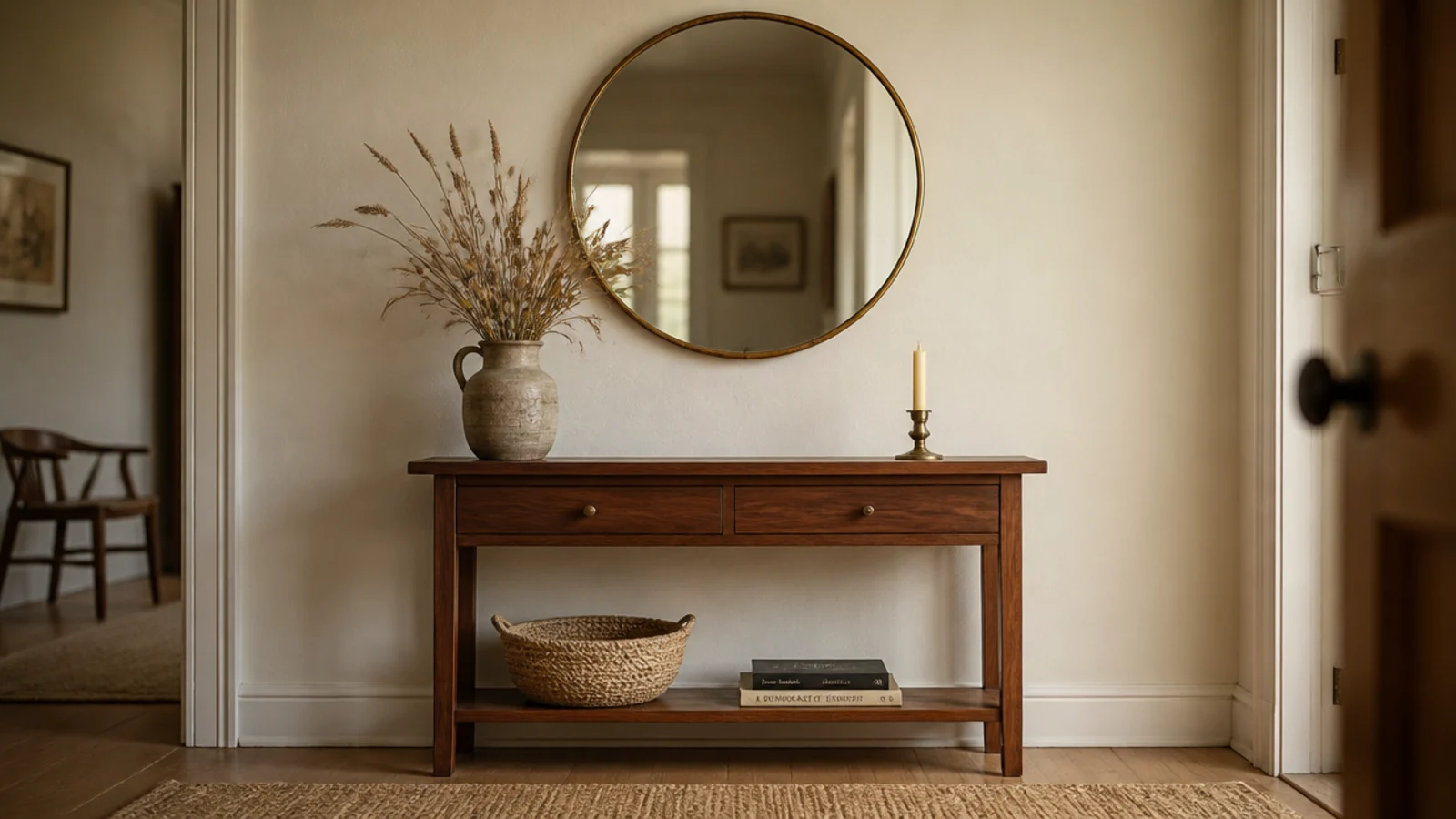
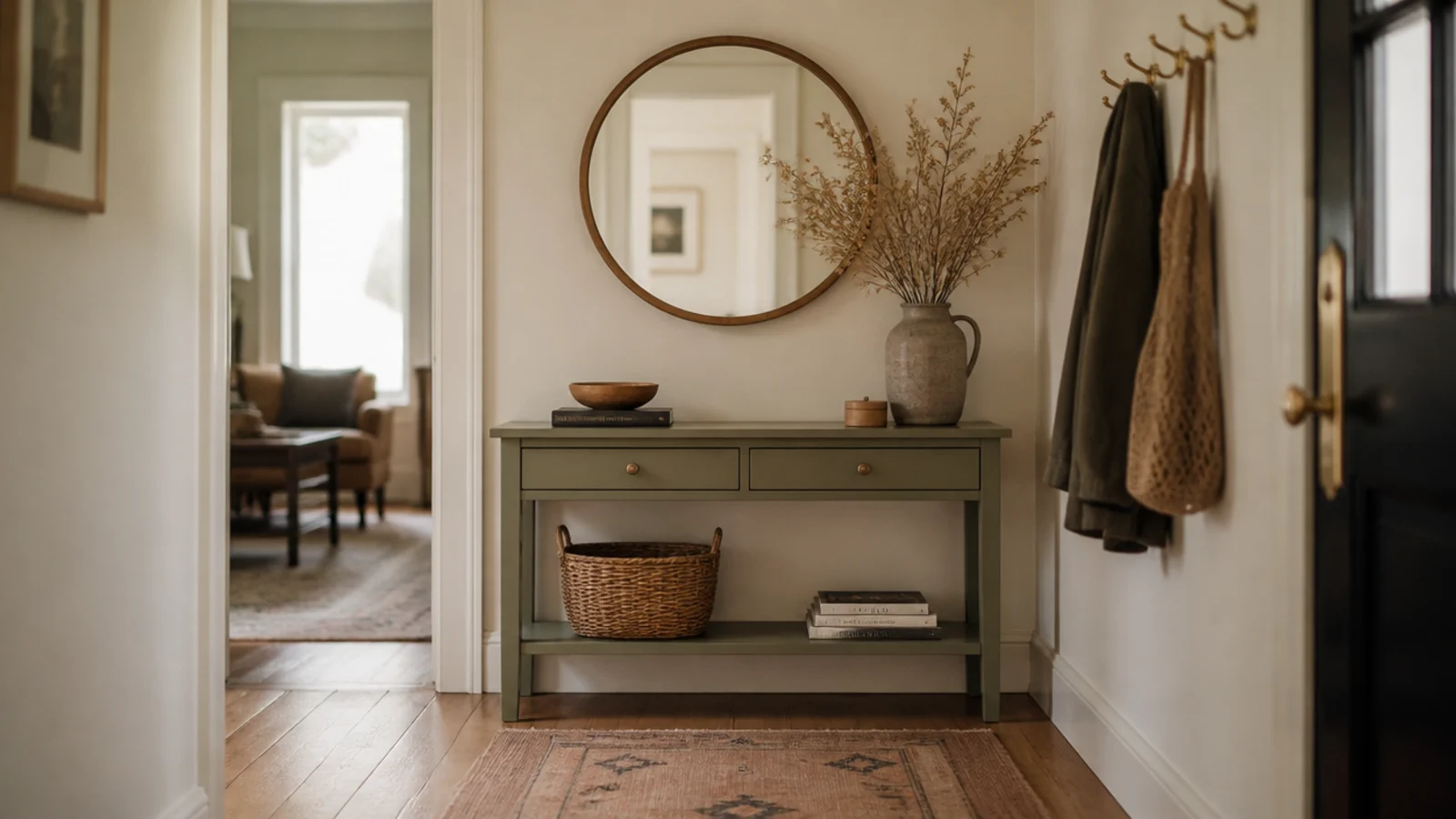
Then the numbers. On an empty wall, centre the glass 57 to 60 inches off the floor. Over a console or credenza, leave 6 to 8 inches between the furniture top and the bottom of the frame instead. Over a mantel, 4 to 6 inches.
The safety rules are short and they are not negotiable. Weigh the mirror — a 30-inch round is typically 15 to 25 pounds and a leaner can pass 60. Hang into studs, or use toggles rated at least double the real weight, never the plastic plugs from the box. Use two hanging points so it cannot pivot. Skip adhesive strips entirely. Never put heavy glass directly behind where a head rests on the sofa. And strap every floor leaner to the wall.
1. Put the big mirror opposite the sofa, not above it
The wall facing the sofa is the one people actually look at for hours. It also keeps heavy glass away from the head end of the seat, which is the placement I refuse in any home. Hang the largest mirror you can afford there, centred at 58 inches, into two stud fixings.
2. Size the mantel mirror to the shelf
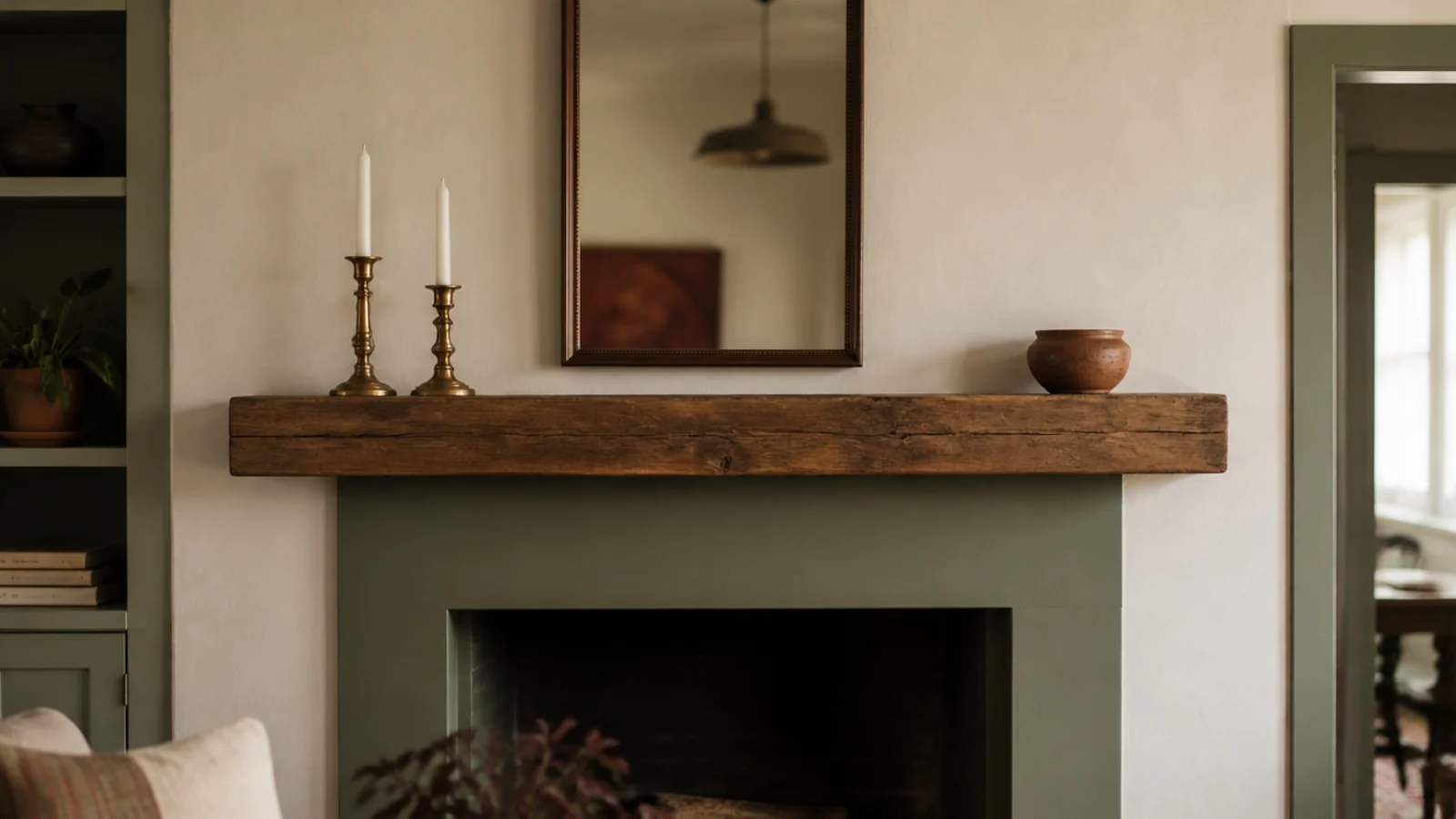
The mantel shelf is the reference, not the chimney breast. Aim for about two thirds of the shelf width and never wider than the shelf itself, sitting 4 to 6 inches above it. On a working fire, check the appliance clearance label before anything goes up.
3. Lean an oversized mirror in a dead corner
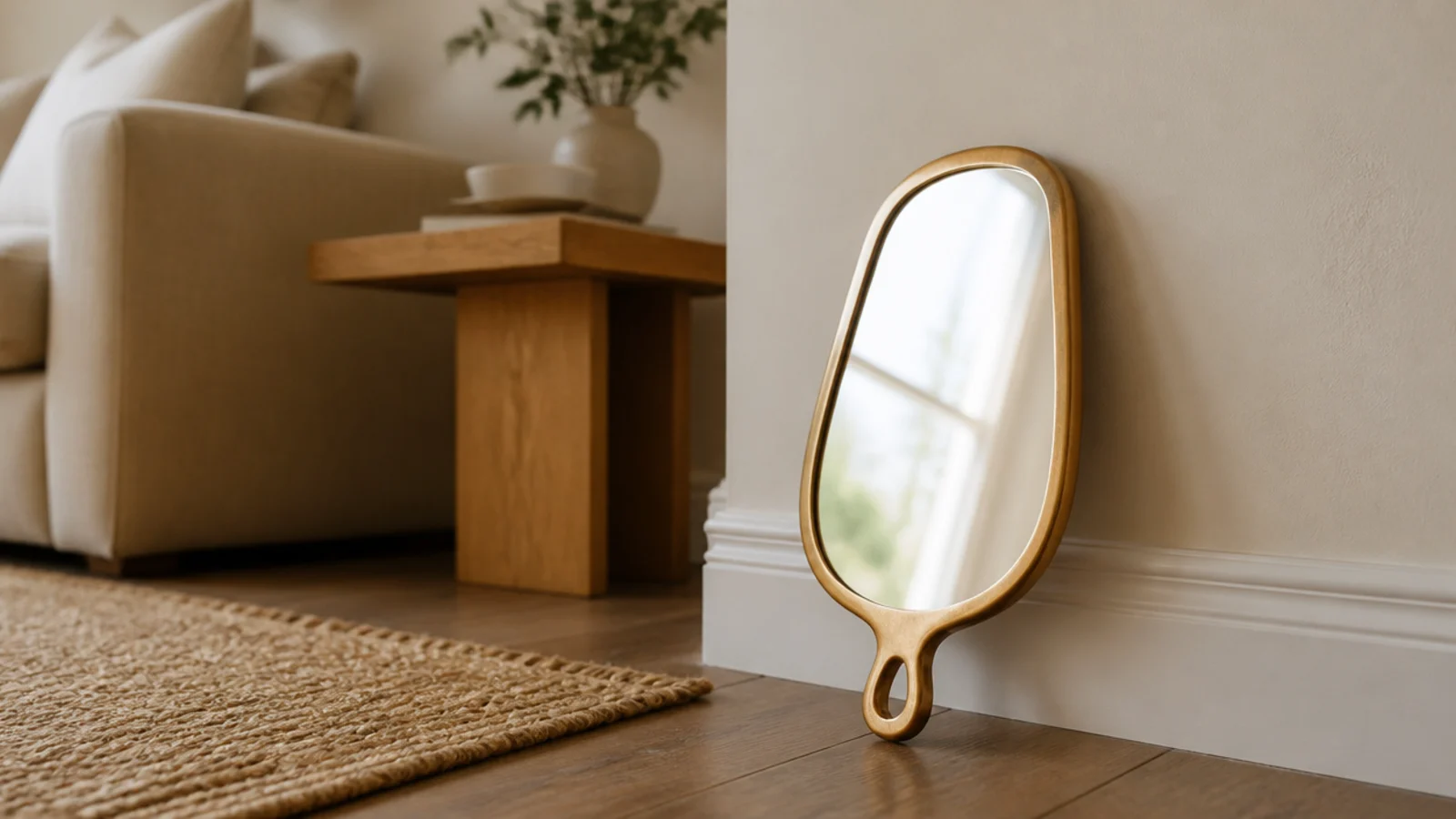
A leaner gives you an enormous mirror for no holes, which makes it the best genuinely renter-safe move here. It is also the heaviest thing in the room at 45 to 70 pounds. A $10 anti-tip strap into one stud is mandatory, especially with children about.
4. Hang it directly opposite the window
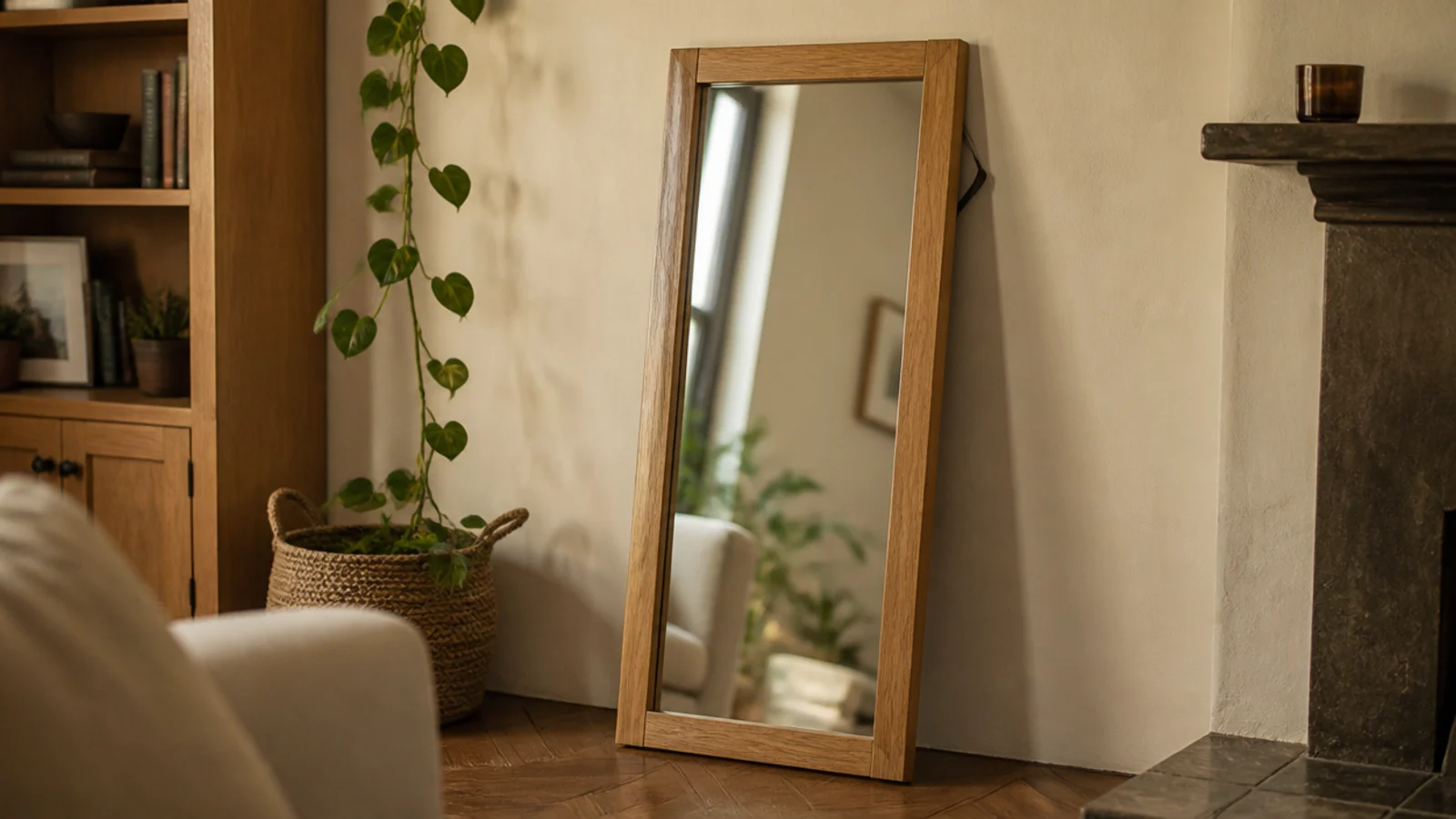
The single highest-value decision on this page and it costs nothing. Directly opposite, you double the daylight and bring the outside view in. Beside the window, you reflect a radiator and a light switch. Stand where you sit most and check before you commit.
5. Flank the television with two narrow mirrors
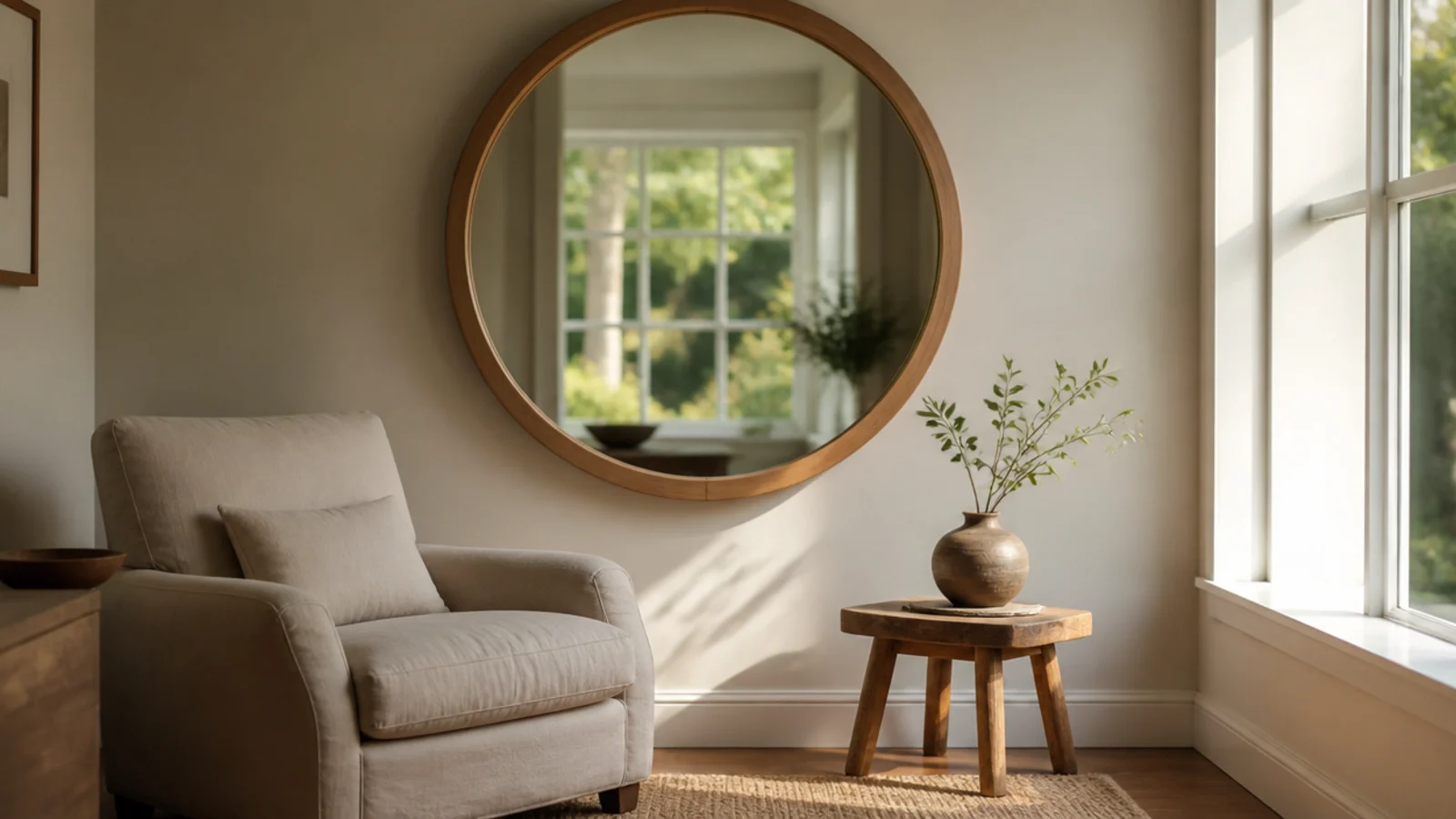
A wall-mounted TV reads as a black hole until something balances it. Two slim mirrors, roughly 12 by 36 inches, hung either side at matching heights, turn the setup into a composition. Small pieces at 6 to 8 pounds each need only a single well-set anchor per point.
6. Set a mirror behind the console lamp
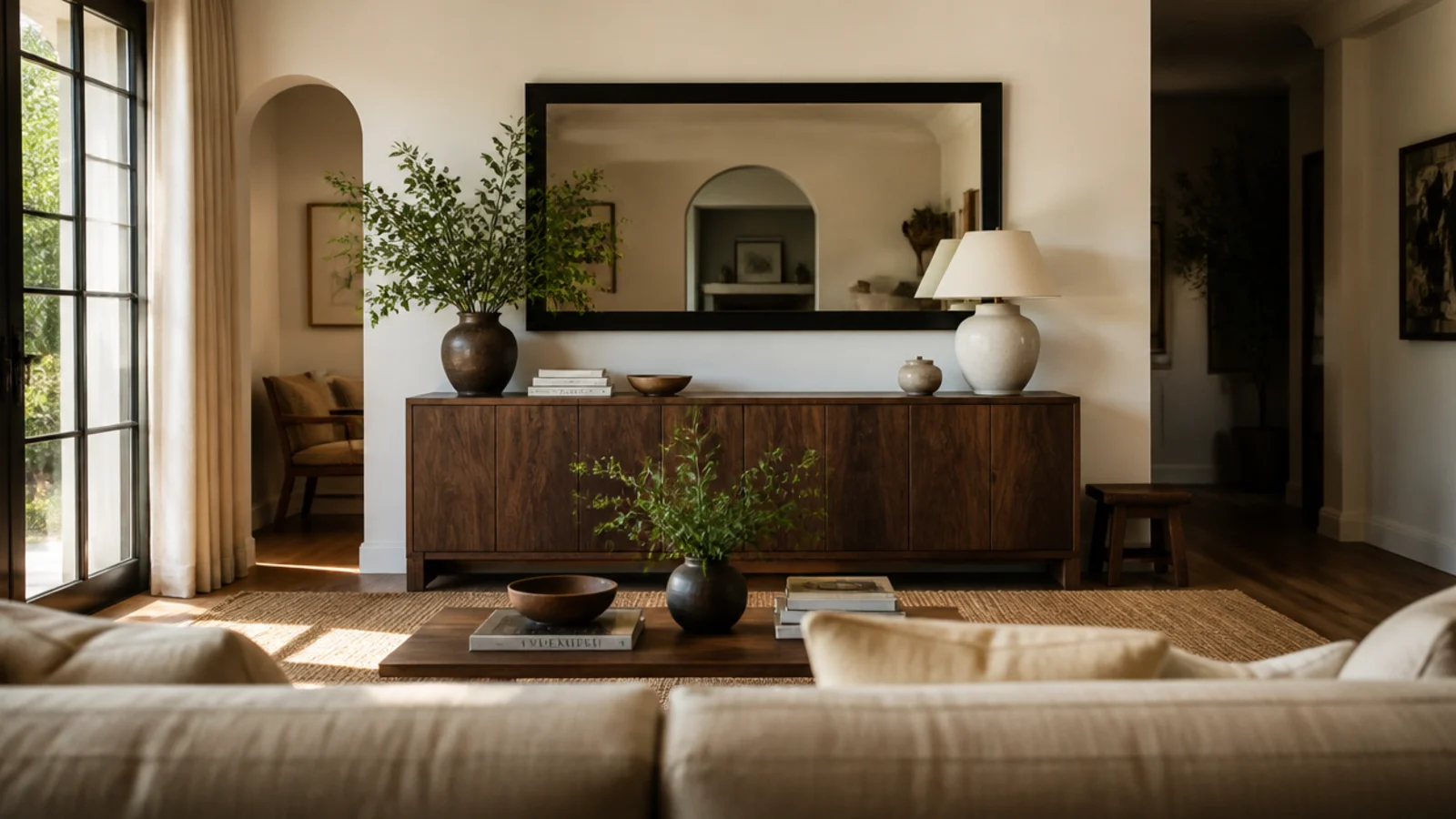
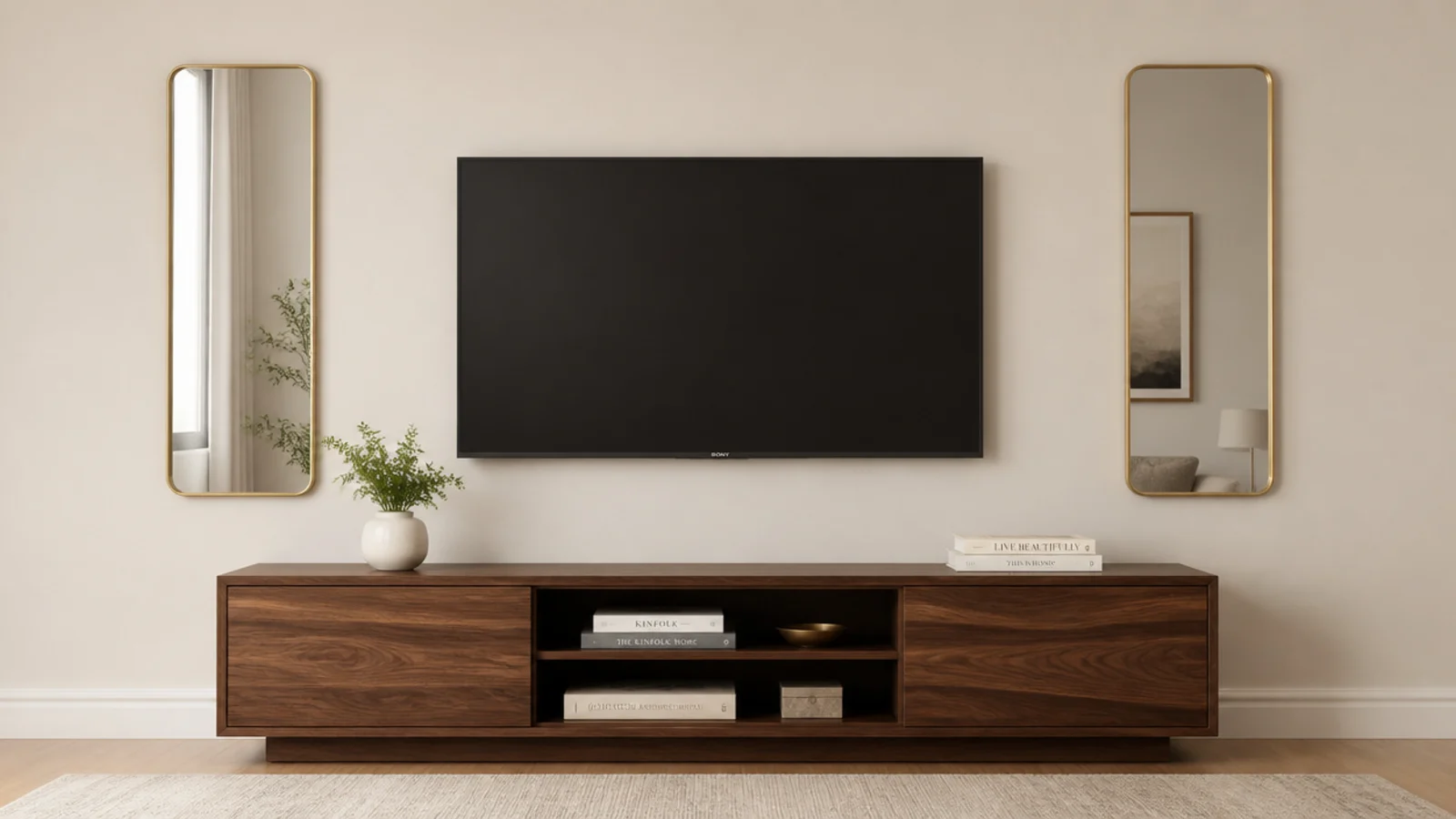
Oldest trick, still the best value. A modest 18 by 24 inch mirror behind a lamp doubles the visible light for about $20 thrifted. It works hardest in a dim corner, and because the light sits in front of the glass, the frame barely matters.
7. Bridge the gap above a radiator cover
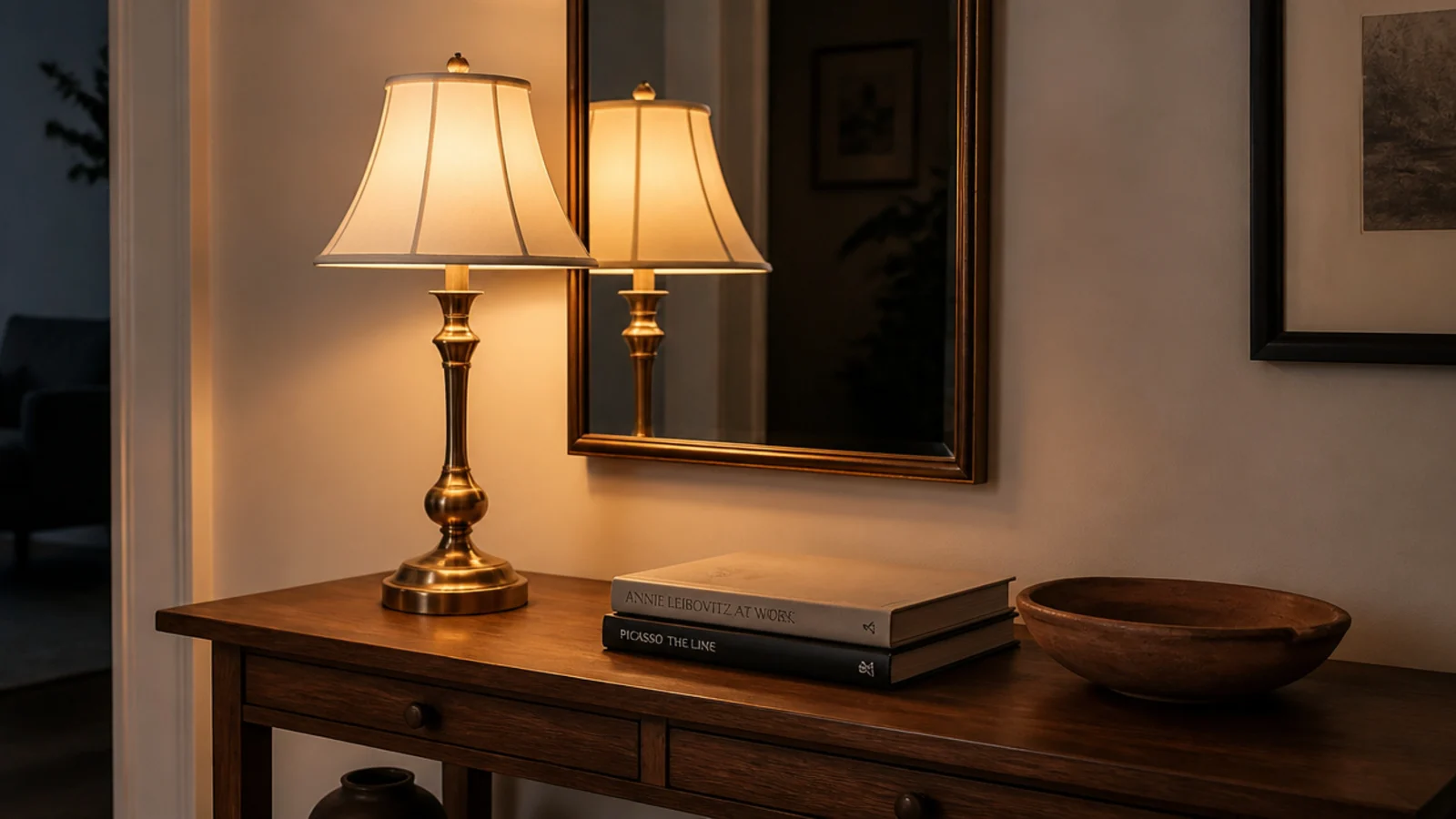
Radiator covers leave a stubby band of wall that suits nothing. A wide, low-profile mirror fills it exactly. Keep the frame shallow, under 1.5 inches deep, and leave 6 inches above the cover so rising heat is not trapped directly against the backing.
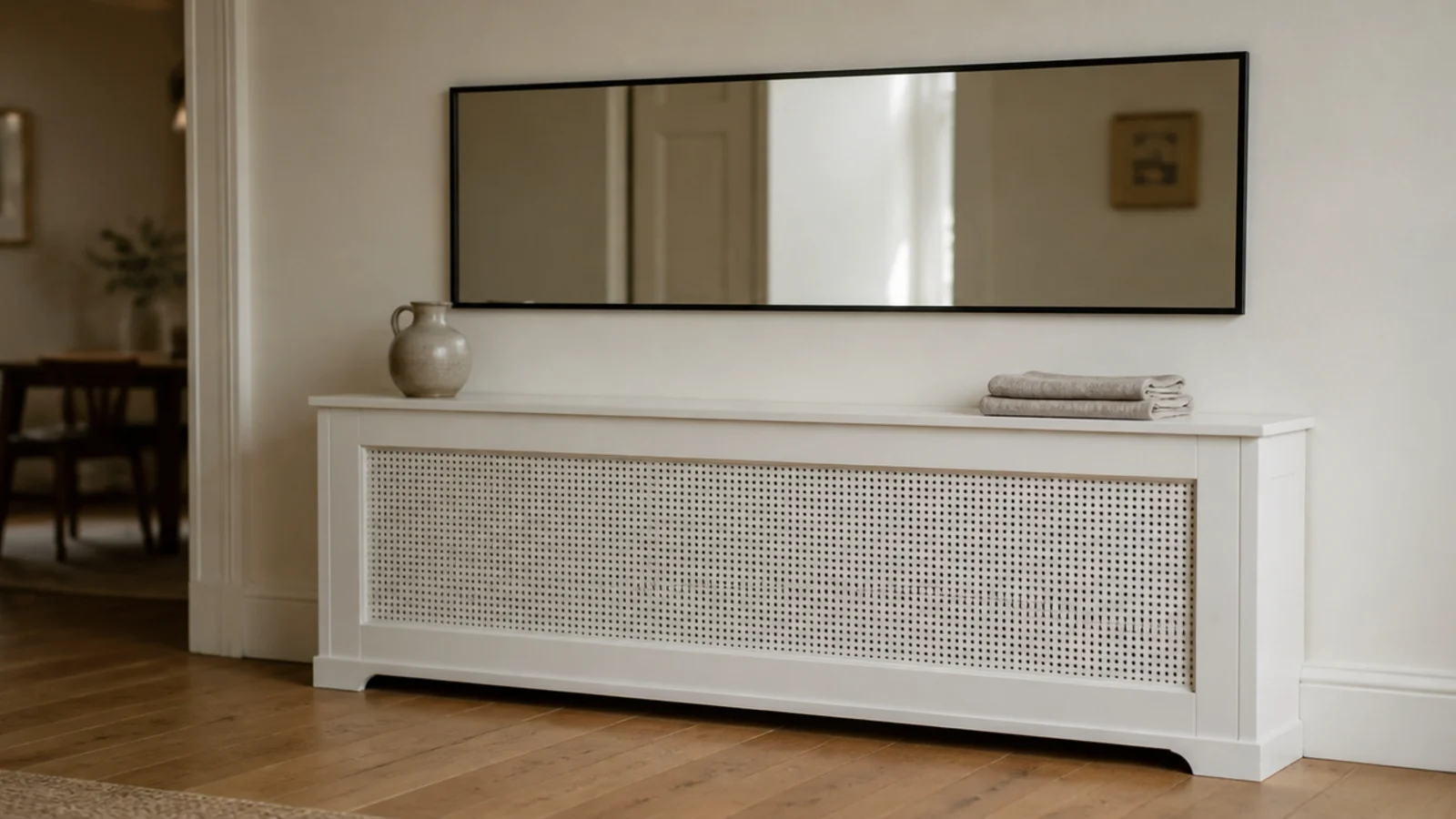
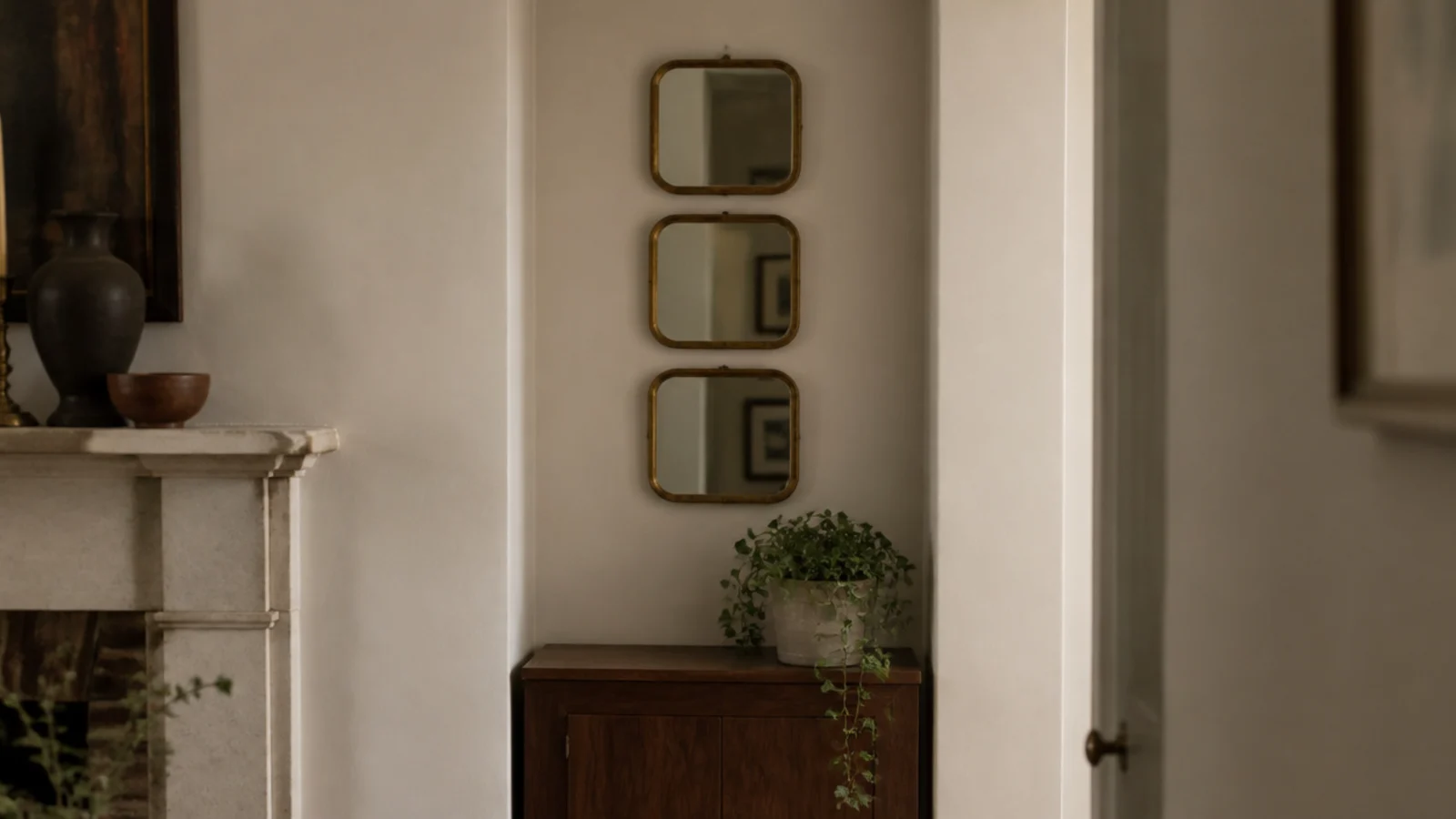
8. Fill a chimney alcove with a small cluster
Alcoves either side of a chimney breast usually run 24 to 40 inches wide, which is too narrow for one good mirror and perfect for three small ones. Stack them vertically with 2 to 3 inch gaps and keep the whole group 4 inches clear of the alcove edges.
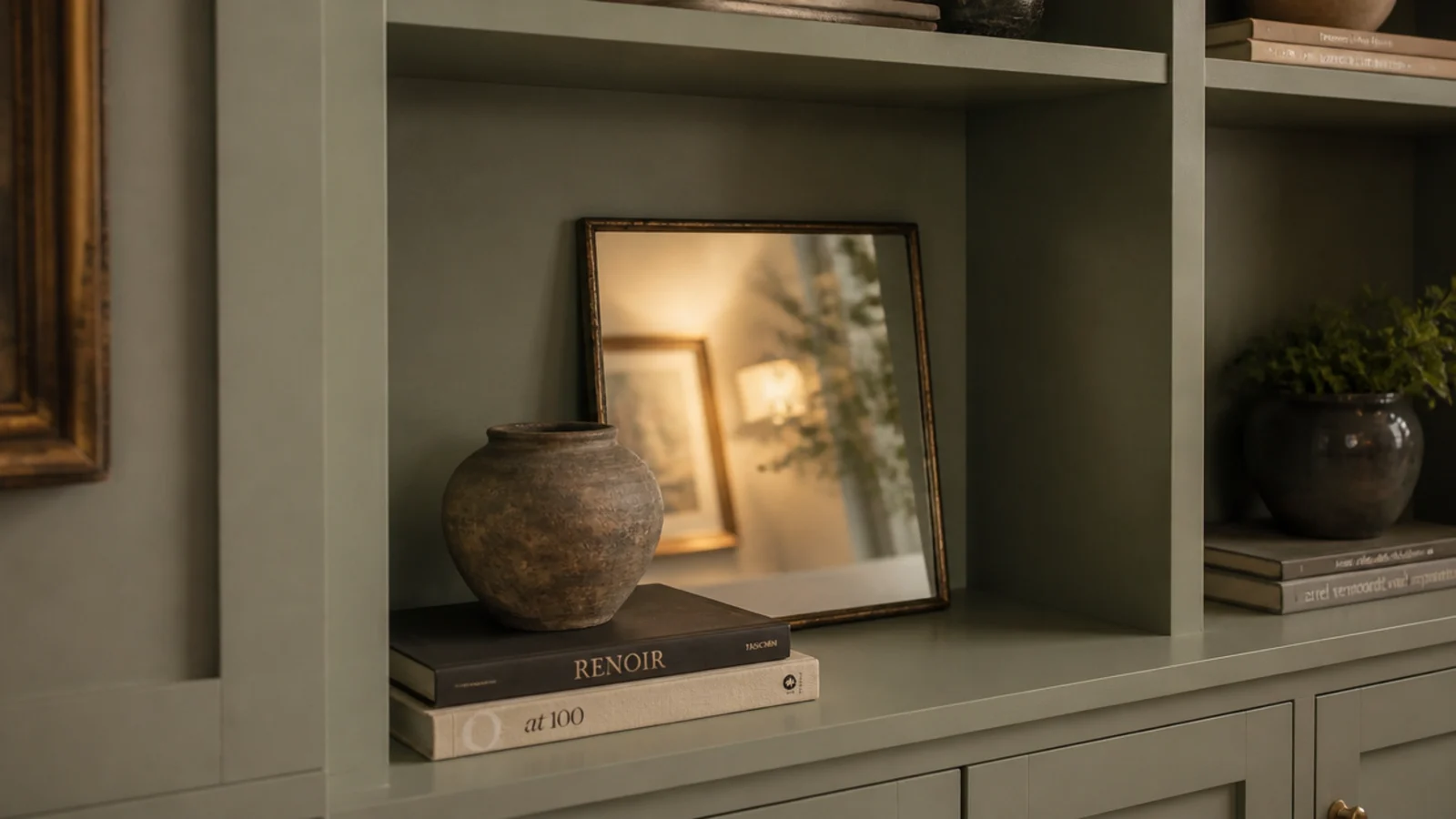
9. Lean a mirror inside the built-ins
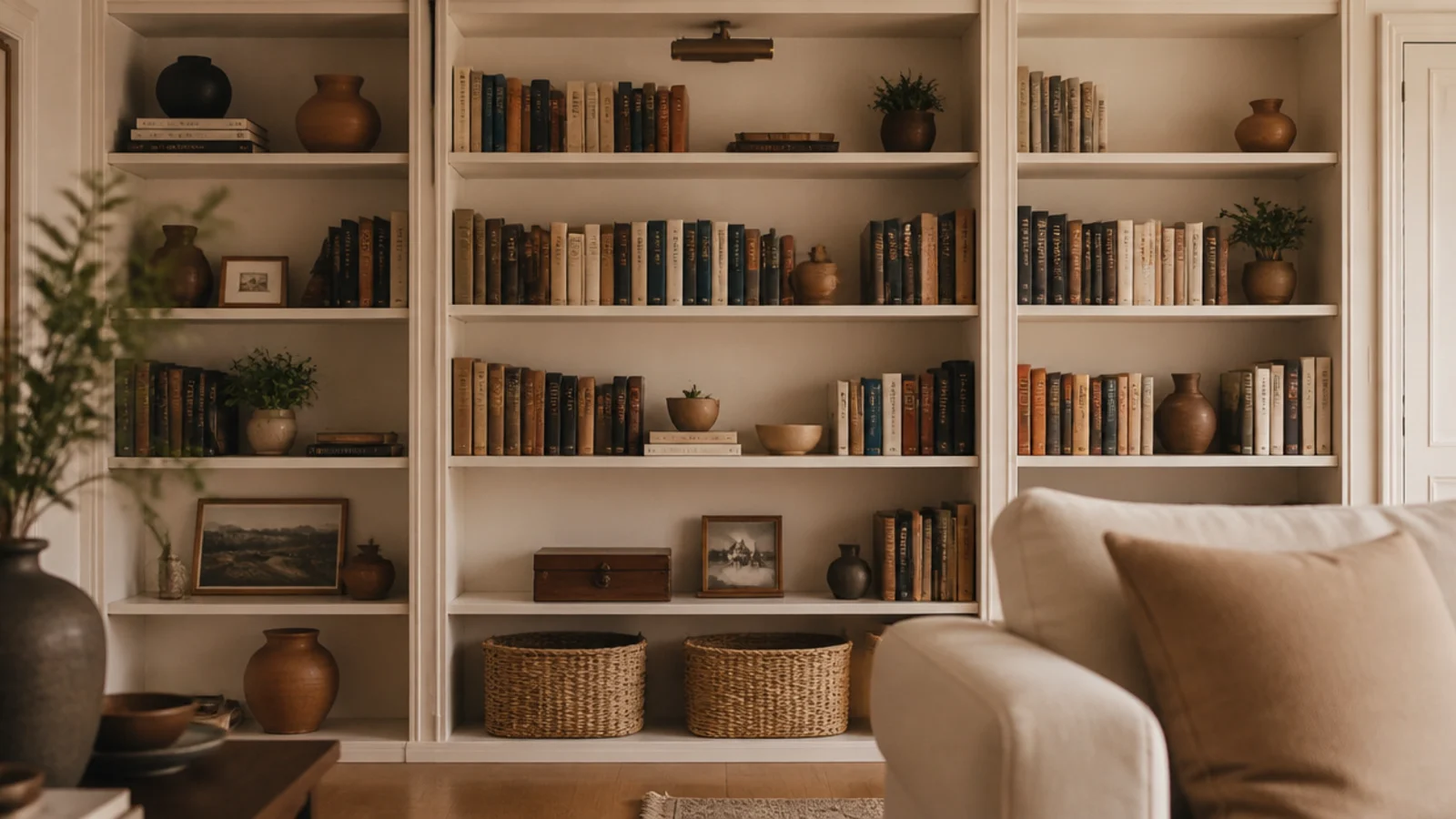
Lean a small mirror against the back panel of one shelf bay, behind a vessel and a couple of books. The bay gains depth and the lamplight in that corner doubles. Use one bay only, at or just below eye level, and choose glass 2 inches narrower than the opening.
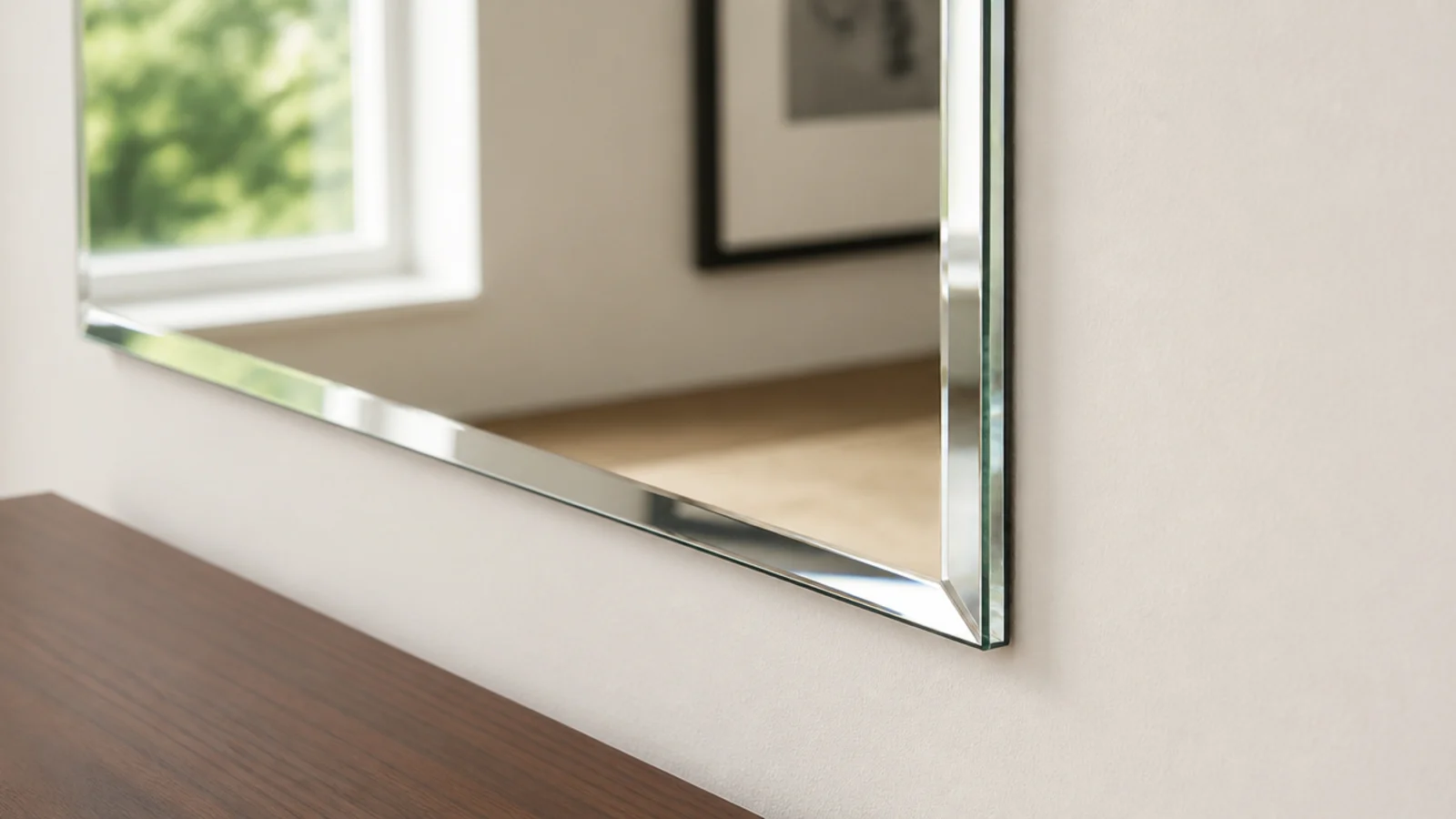
10. Use frameless bevel panels in a rental
A frameless bevelled rectangle, 24 by 36 inches, reads as clean architecture rather than as decor, which suits a beige rental wall. At 12 to 18 pounds it wants two anchors, and the two small patched holes at move-out cost a dab of filler.
11. Hang a thrifted gilt frame on painted plaster
Ornate secondhand gilt frames sell for $20 to $50 because nobody wants brown gold on beige. On a deep clay or olive wall they look like an heirloom. Rub gilding wax into the moulding to knock back any orange, and hang it dead centre.
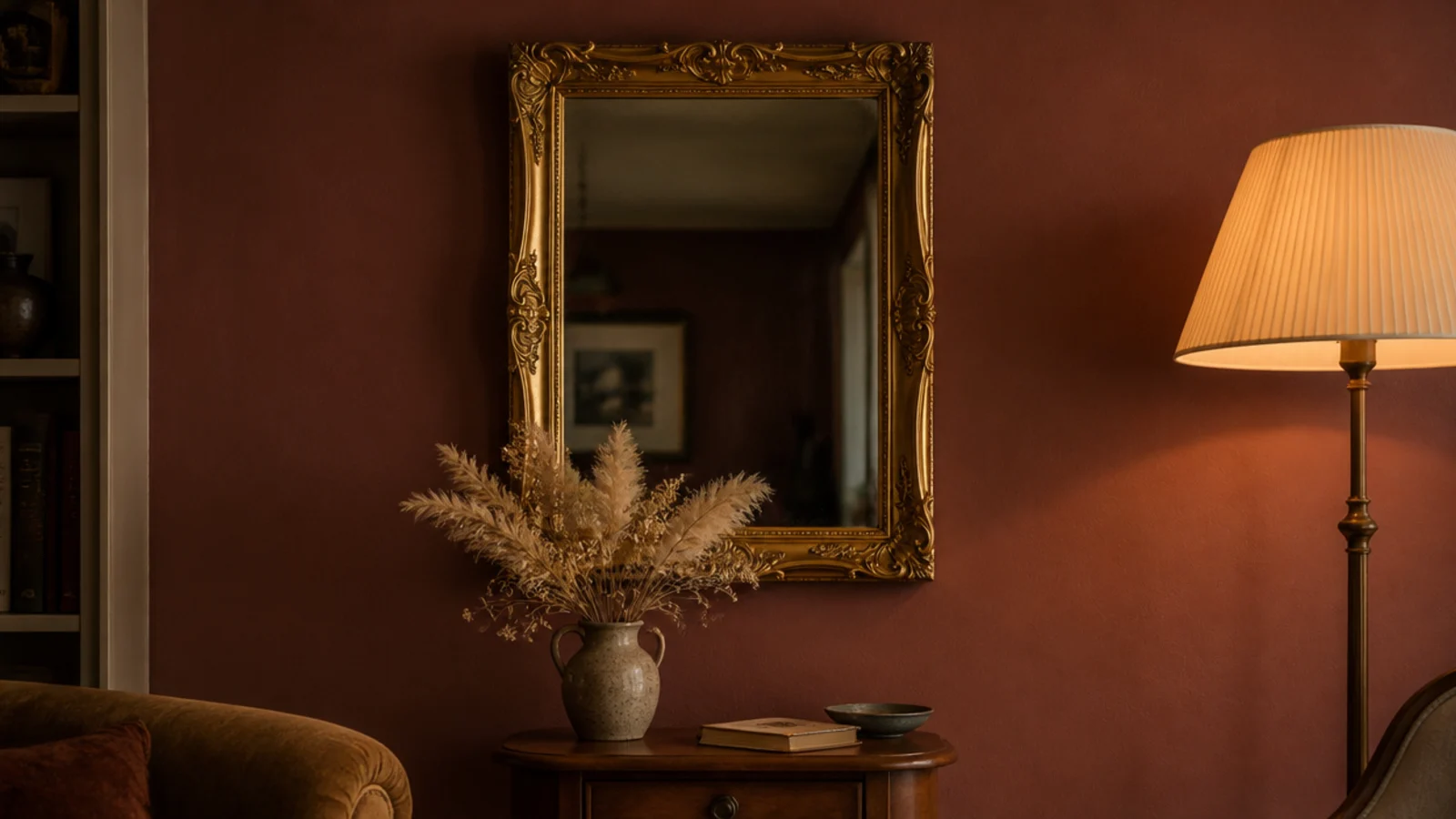
12. Close a dead corner with an arch
Every living room has one corner doing nothing. A tall arched mirror, at least 24 inches wide, gives it a destination. Arches carry more glass than they look — a 24 by 60 inch arch is often 35 to 45 pounds — so two stud fixings or a French cleat.
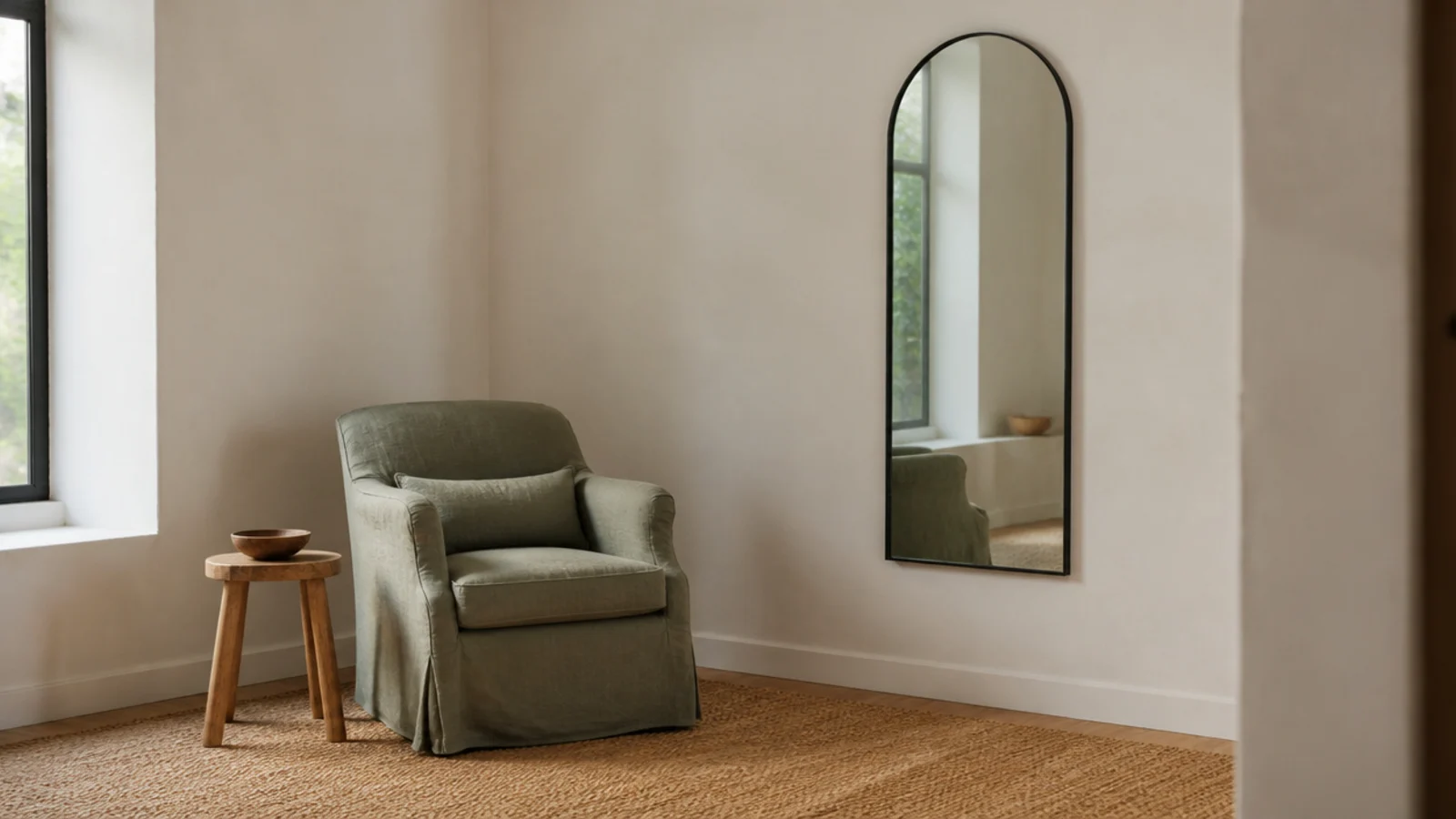
13. Run a long horizontal mirror over a credenza
A wide, shallow mirror stretches a short wall the way nothing vertical can. Match roughly two thirds of the credenza width, leave the 6 to 8 inch gap, and keep the frame slim so the piece reads as a band of light rather than as furniture.
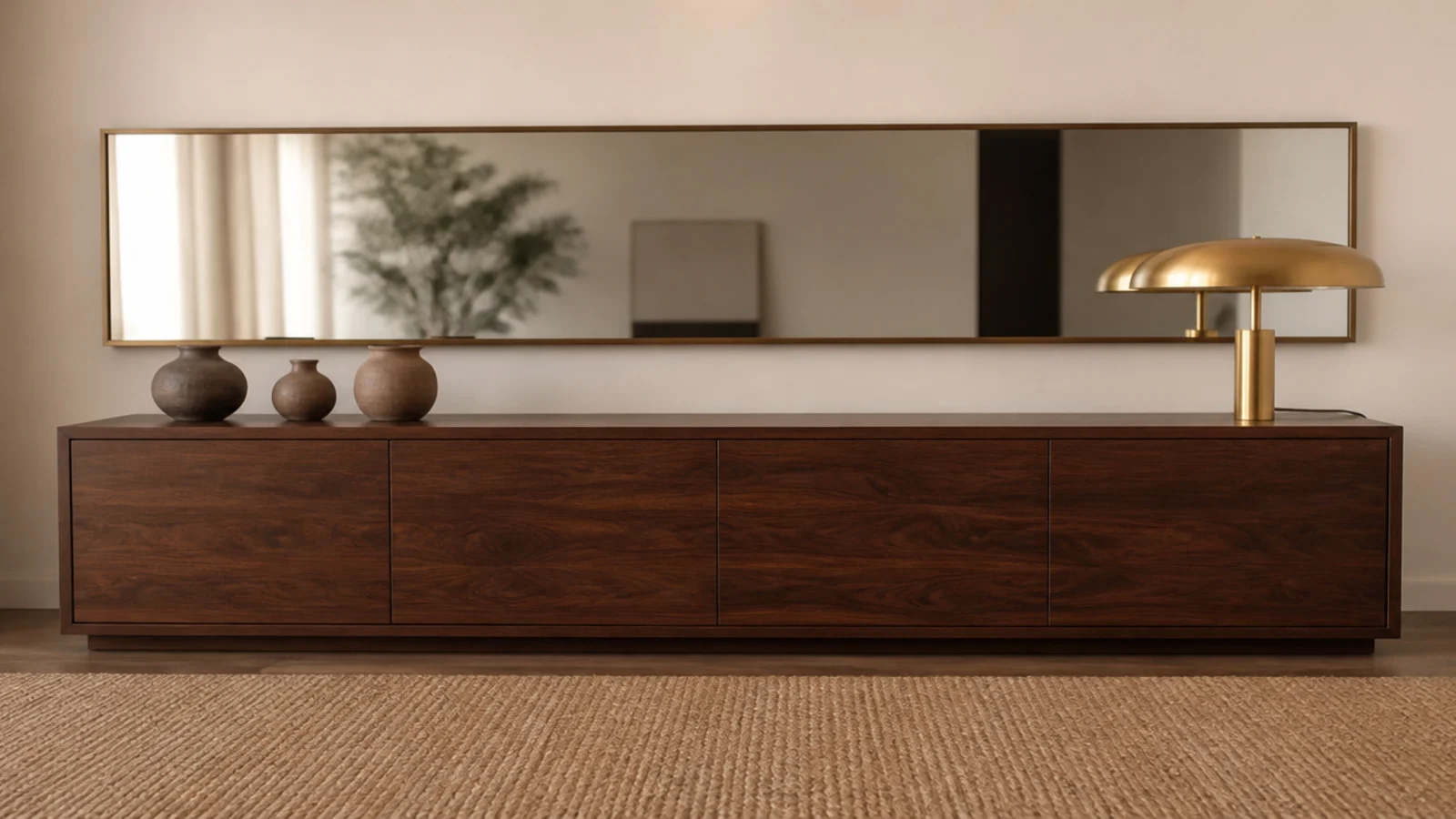
14. Put a large plant in front of the glass
A single fig or a tall palm standing in front of a mirror reflects into a thicket. It also softens a big rectangle of glass, which otherwise reads cold. Set the pot 6 inches off the wall so leaves are not permanently pressed against the surface.
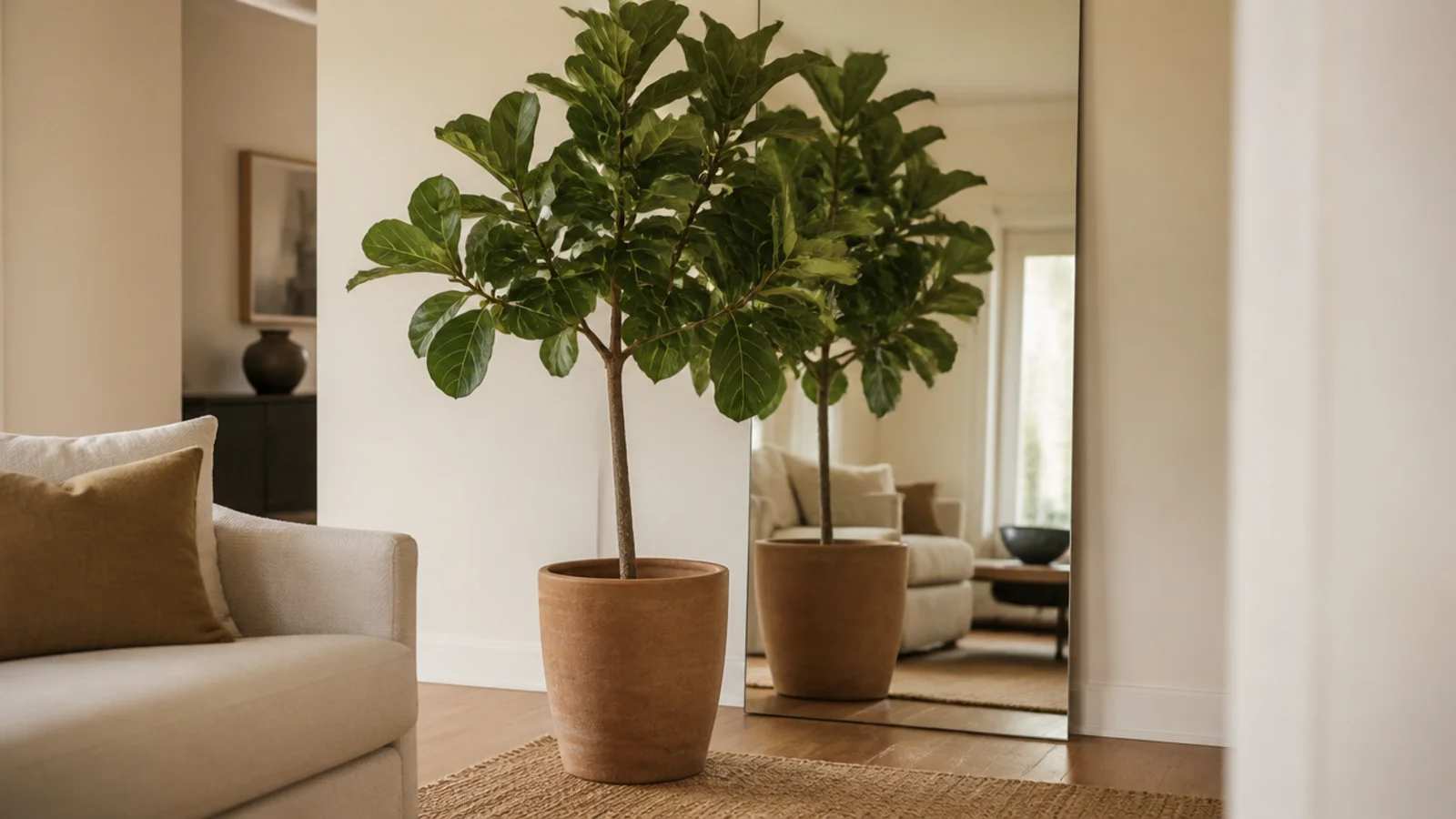
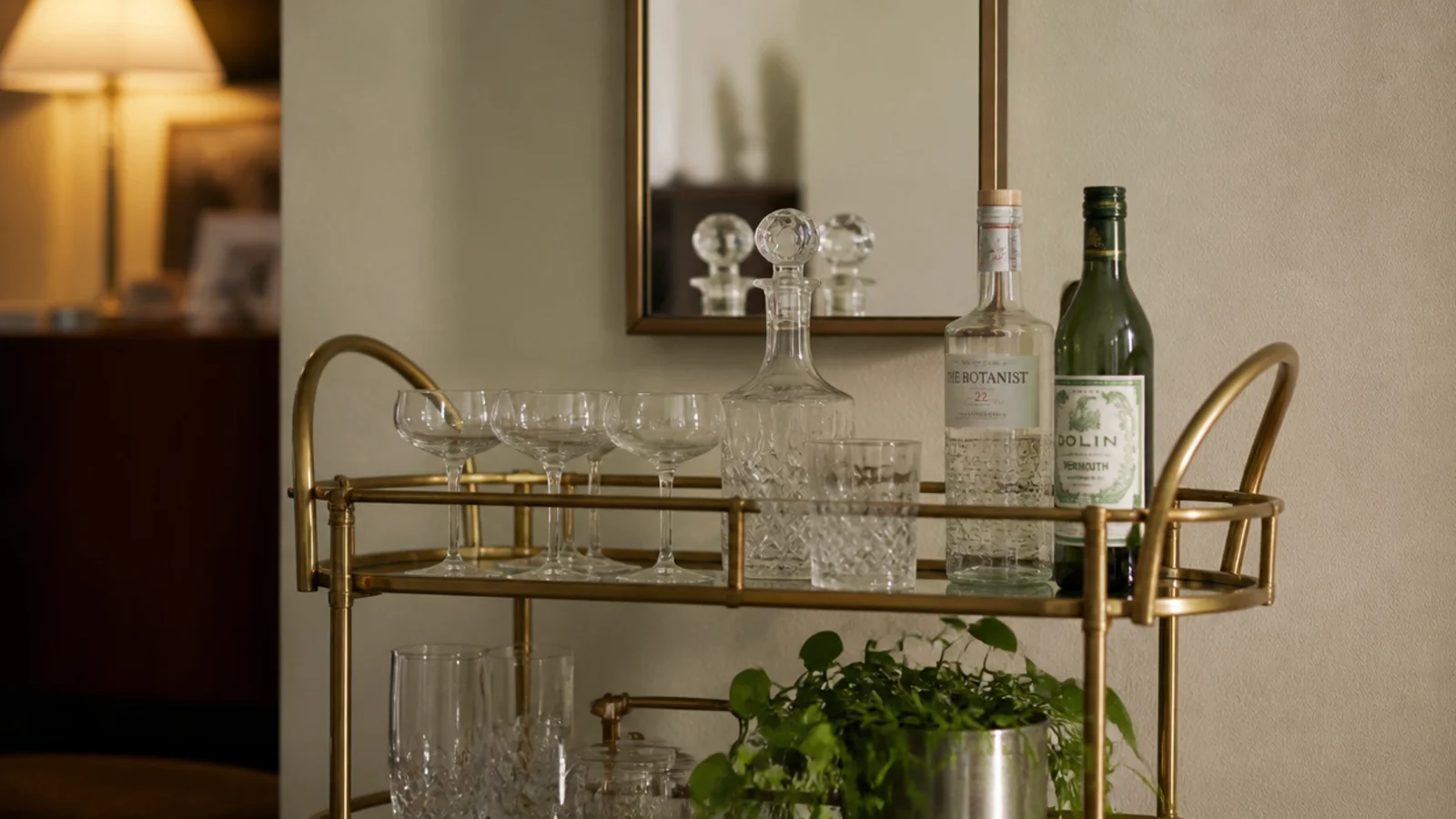
15. Back the bar cart with a mirror
Glassware in front of a mirror doubles and the cart looks properly stocked on three bottles. A small 18-inch square is plenty, hung so the bottom edge sits about 10 inches above the cart top. Thrifted, this whole idea costs about $15.
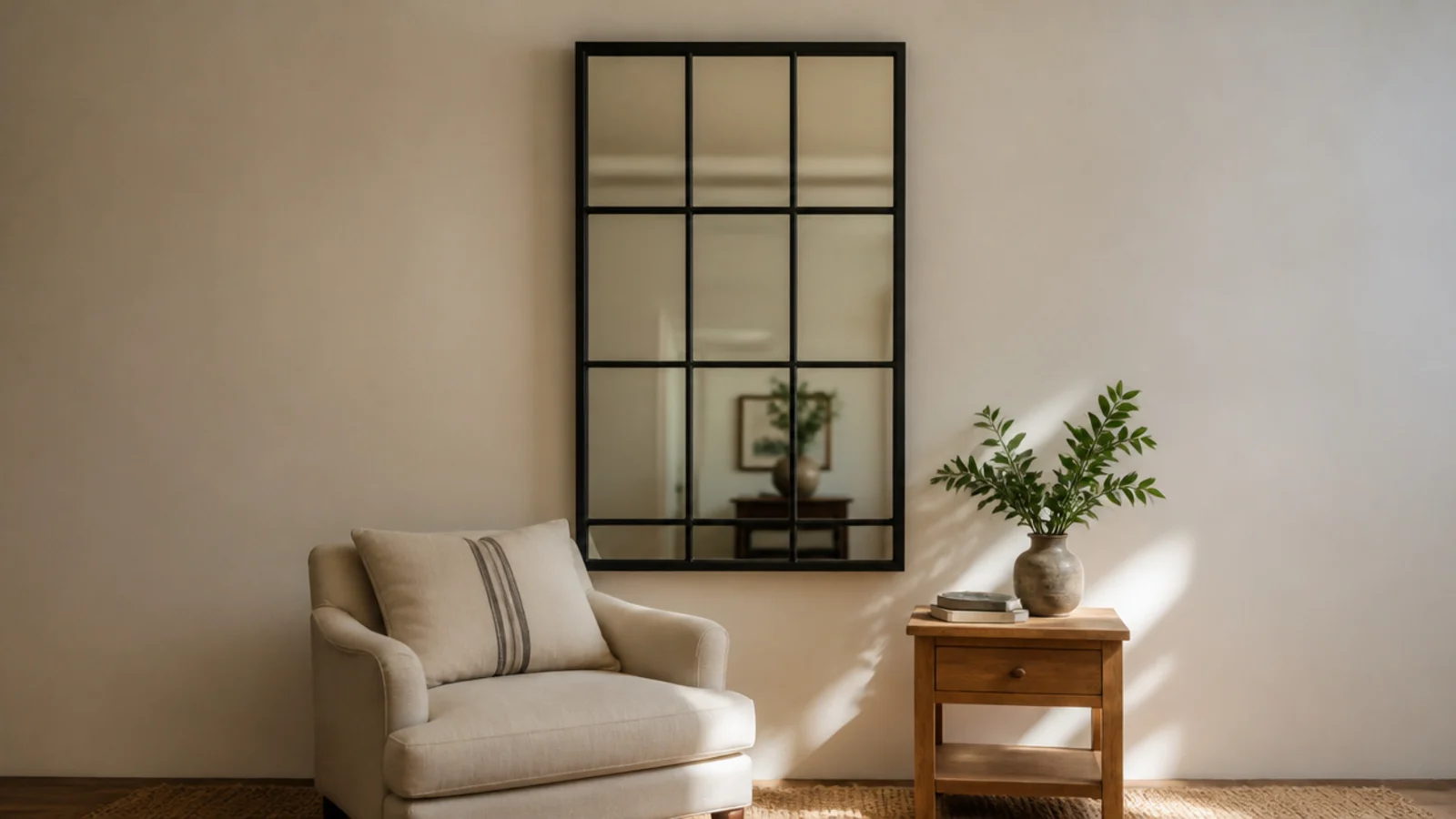
16. Build a second window on a blank wall
A mullioned mirror with black grid bars reads as a sash window from six feet away, which is exactly the distance most people ever stand from it. Hang it at true window height — bottom edge around 36 inches — so the illusion holds.
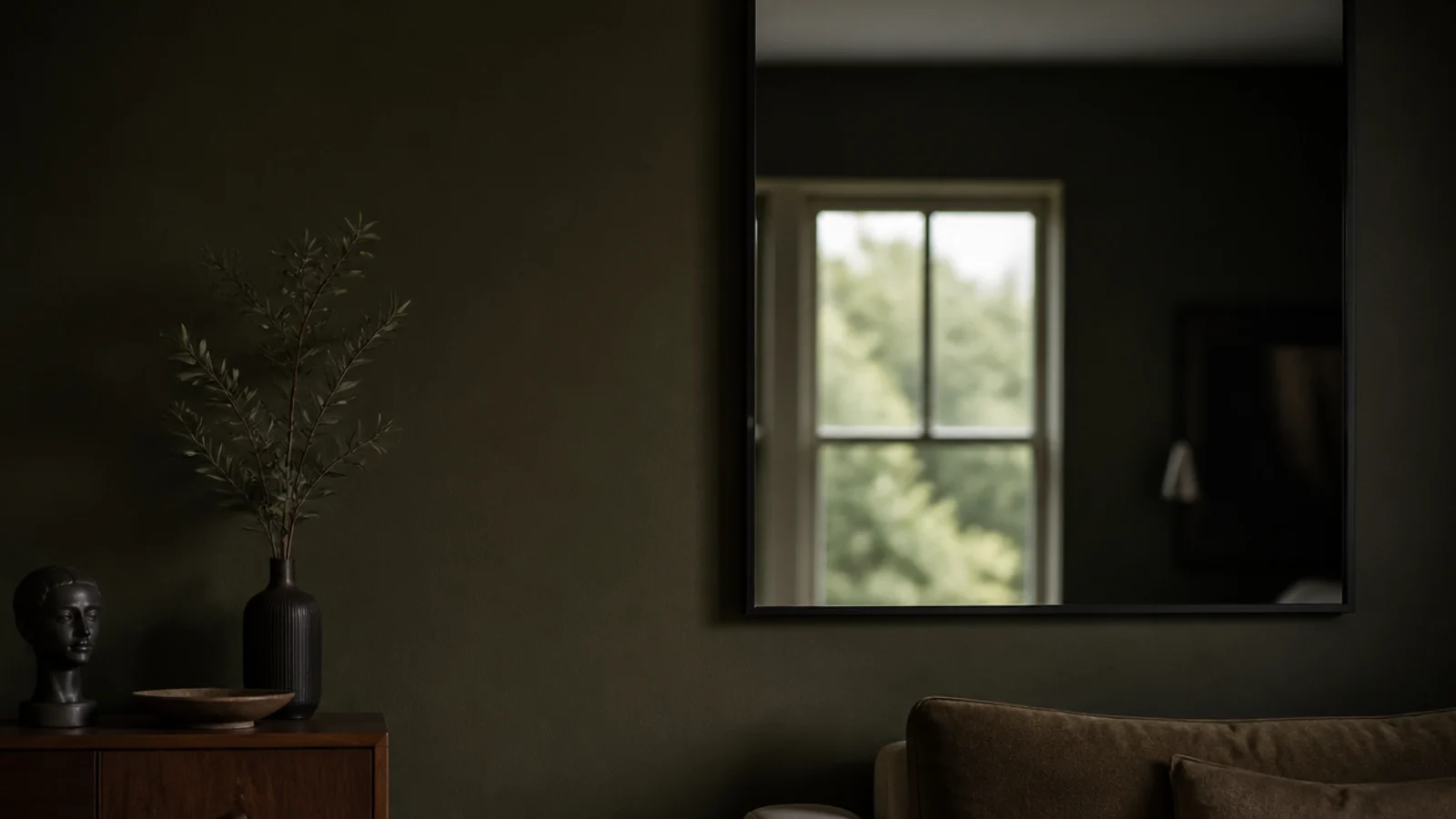
17. Go dark frame on a dark wall
On deep olive, ink blue or clay brown paint, a black frame vanishes and the glass becomes the only bright plane in the room. Keep the mirror at least 30 inches so it reads from across the room, and put a lamp nearby to give it something warm to bounce.
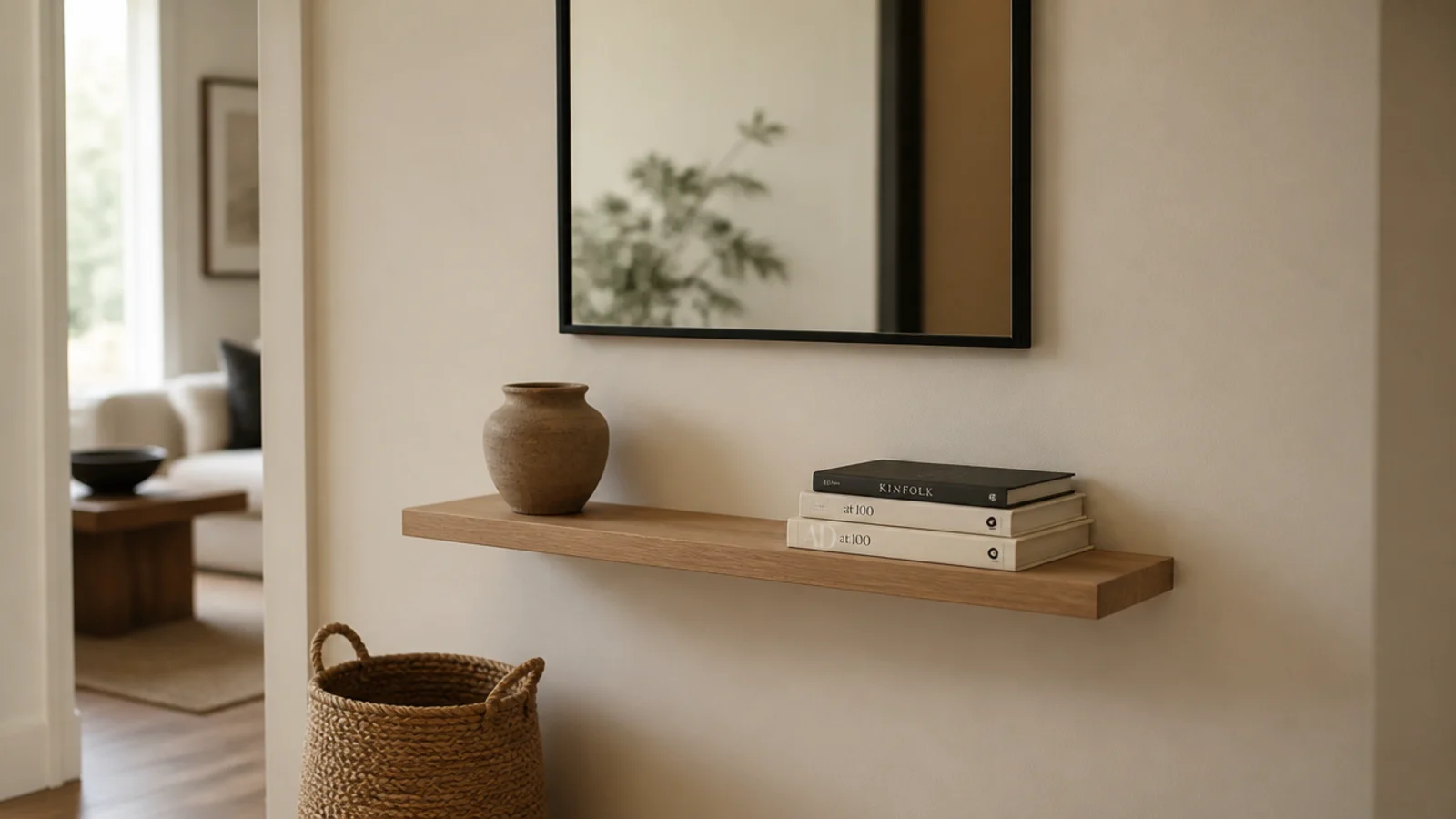
18. Stack a mirror above a floating shelf
A narrow 6-inch shelf with a mirror above it turns two feet of dead wall into a working vignette. Leave 8 to 10 inches between the shelf and the frame, and keep the shelf styling low so nothing blocks the reflection.
19. Break a boxy room with one round
Living rooms are full of rectangles: sofa, TV, rug, coffee table, window. One 30-inch round is often the only curve in the room, and it changes the whole feel for about $100. Centre it at 58 inches on the wall with the least furniture.
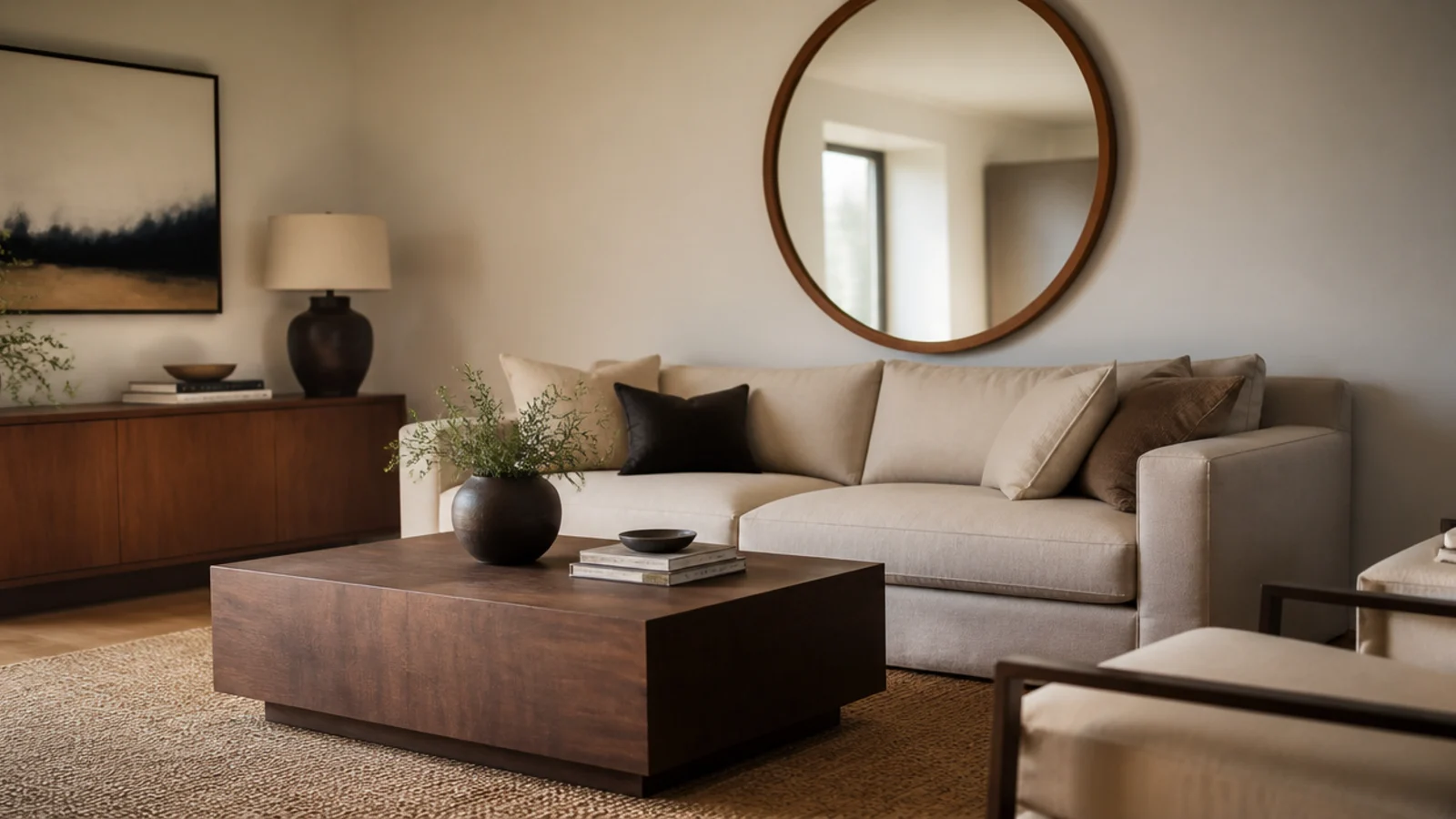
20. Lean a mirror on the mantel and tether it
Leaning reads relaxed where hanging reads formal, and it lets you swap the mirror seasonally. But a leaning mantel mirror walks forward over months of door slams. Fit a screw eye through the frame back into the chimney breast — one screw, invisible, permanent.
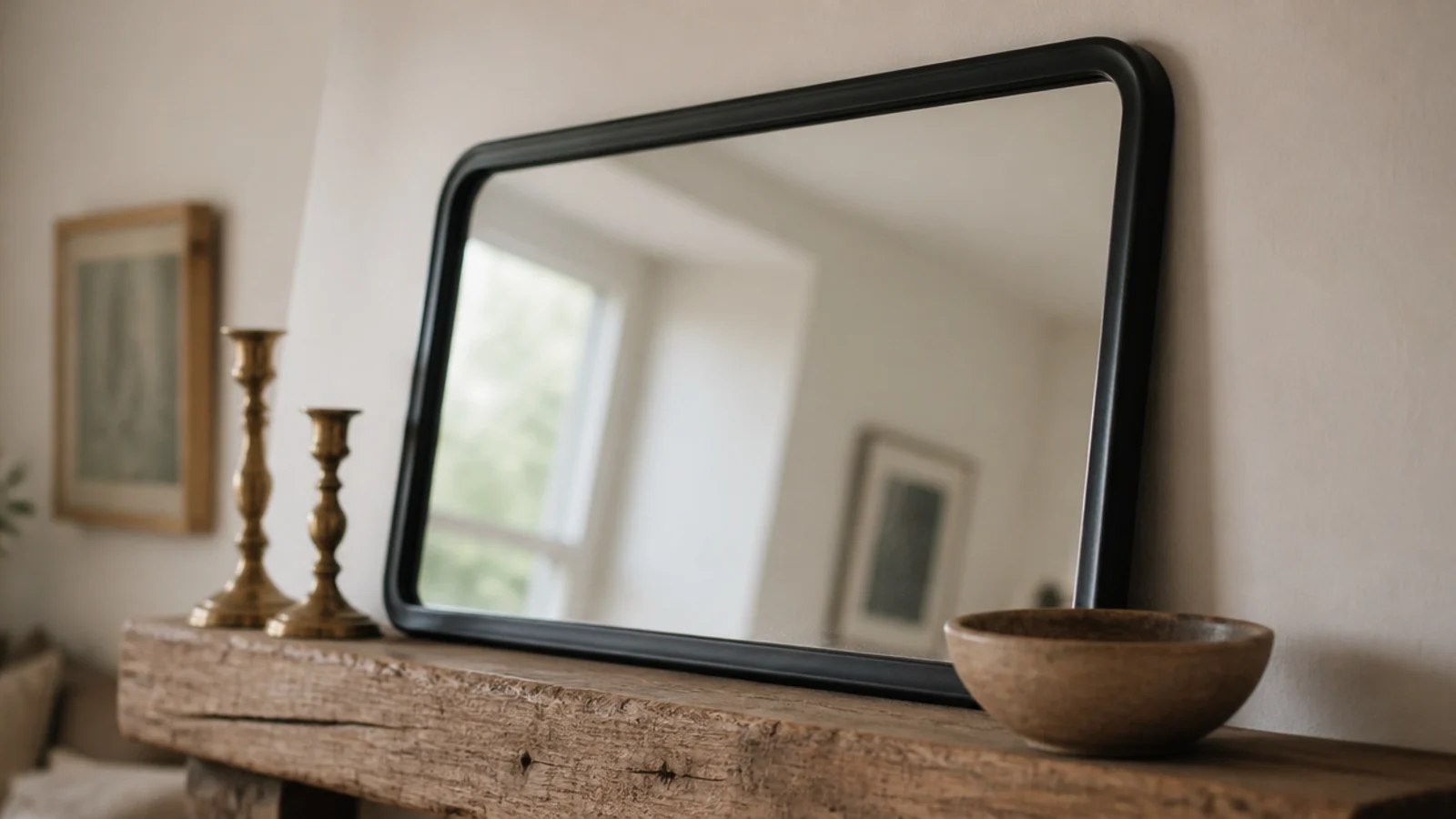
21. Set candles in front of the glass
Five tapers in front of a mirror read as ten. It is the cheapest evening atmosphere available and it works with a $10 thrifted frame. Keep flames at least 4 inches from the glass so heat does not craze the silvering over time.
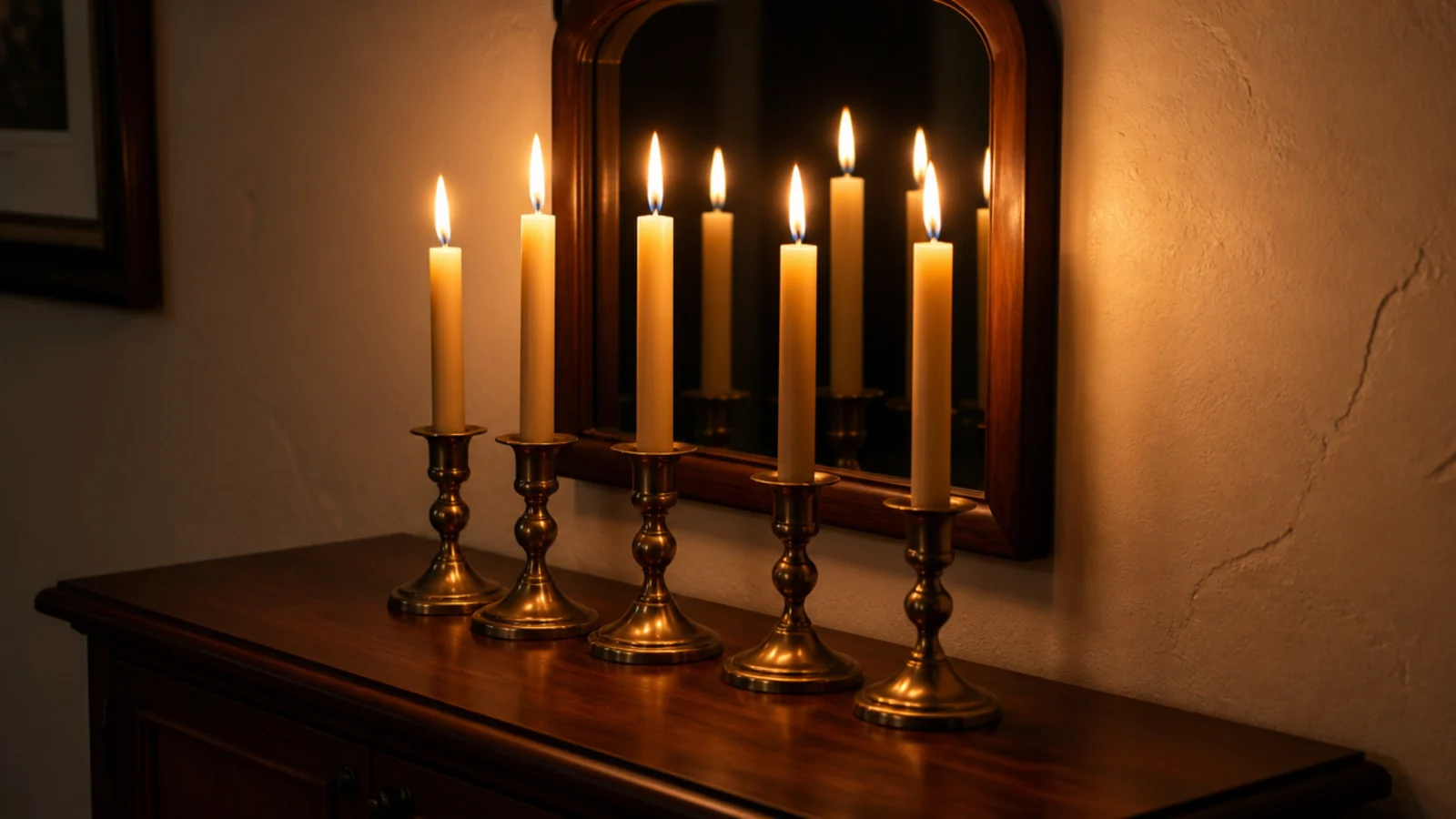
22. Slot a pier mirror between two windows
The strip of wall between two windows is made for a tall narrow mirror. It picks up light from both sides and reads as a third window. Measure the pier and choose a mirror 4 inches narrower, hung with its centre at 60 inches.
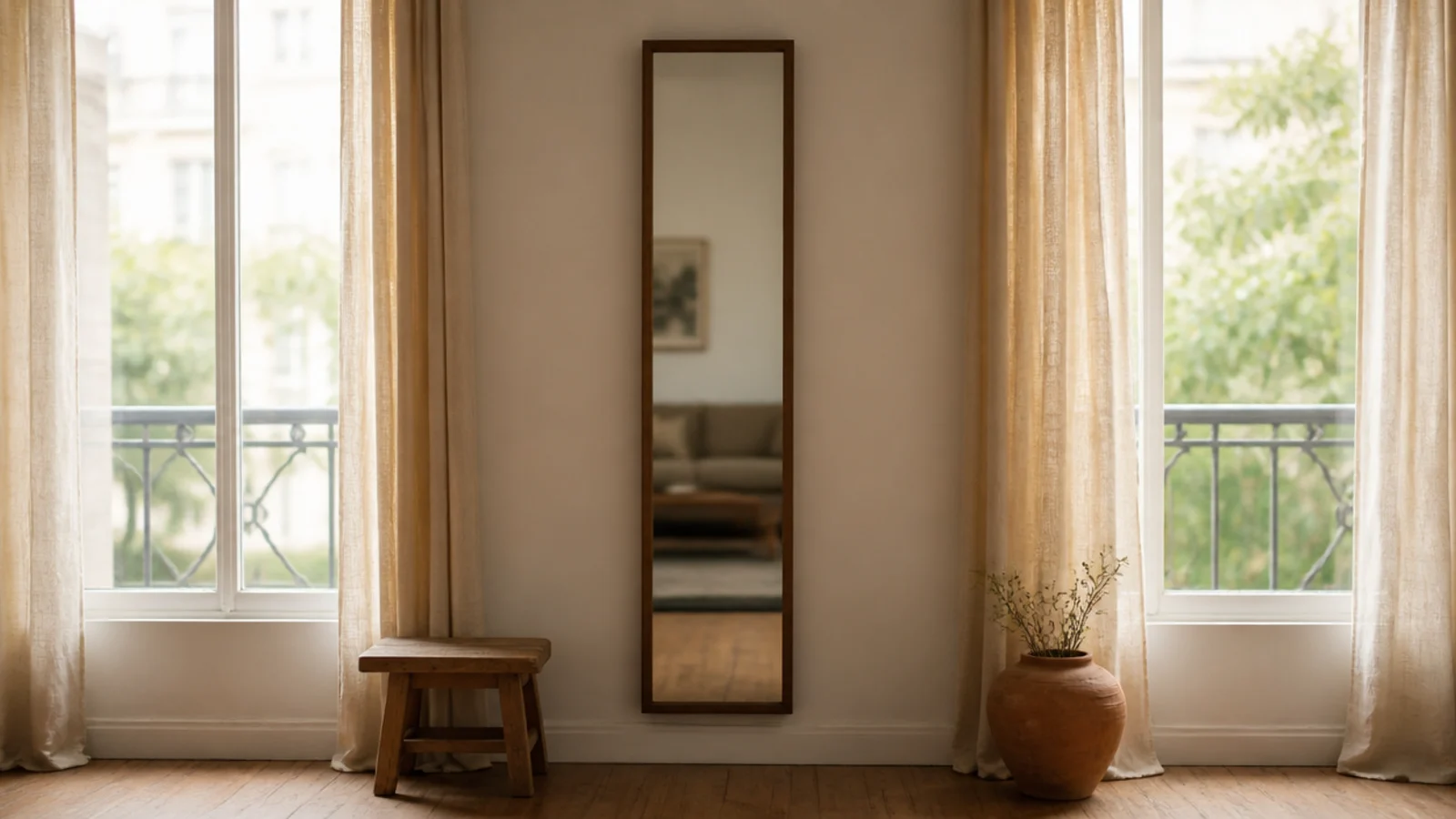
23. Back an open shelving unit with mirror
Mirror panels fitted behind open shelves double every object and push light through a solid-looking unit. Adhesive-backed mirror tiles work here because they carry no hanging load. There is more on shelf composition in built-in shelf styling.
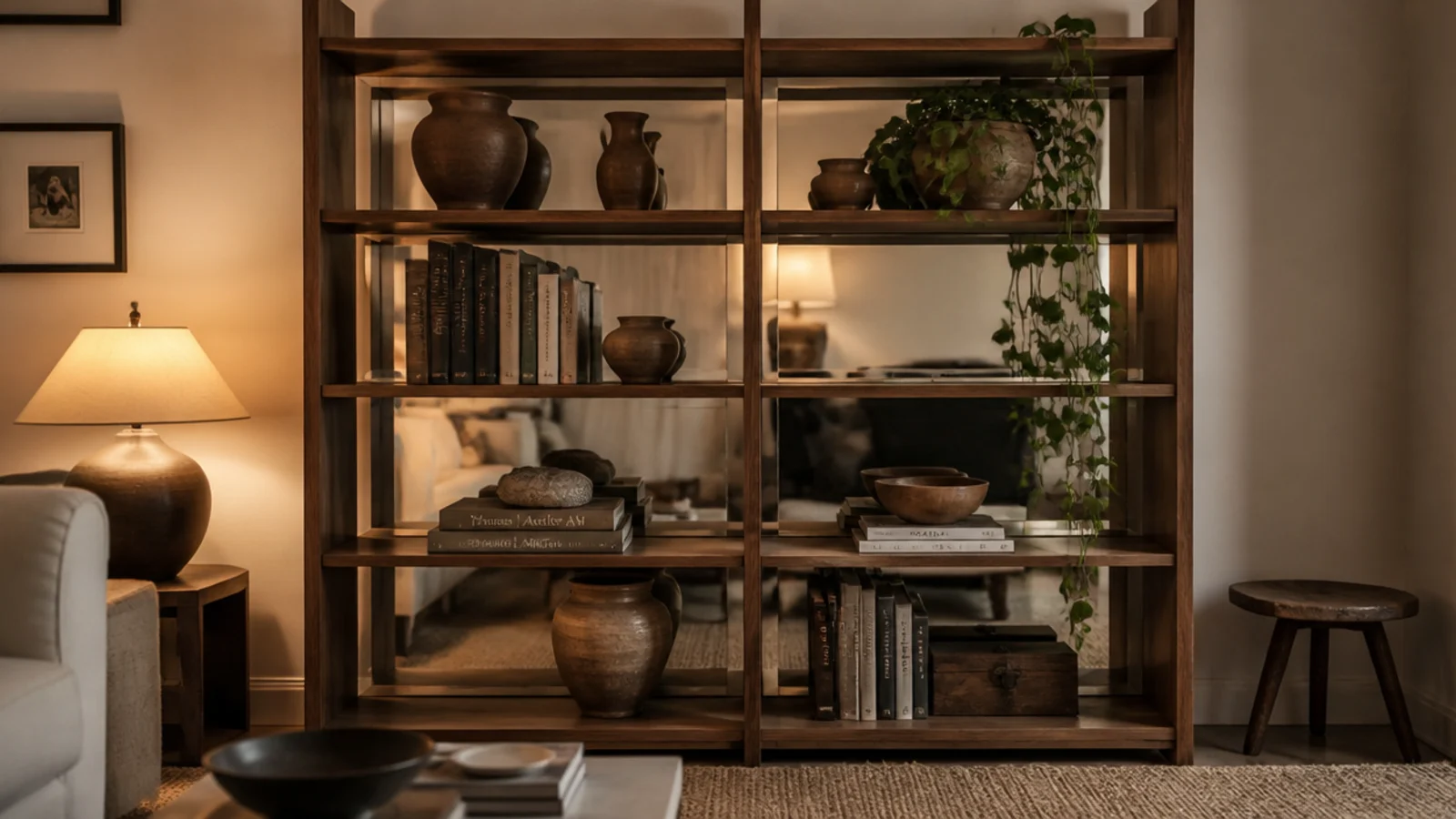
24. Hang beside the reading chair, never behind it
A mirror on the wall beside a chair gives the corner depth without putting glass above a headrest. Set the centre at 55 inches, which reads correctly from a seated position, and keep the piece under 15 pounds on two anchors.
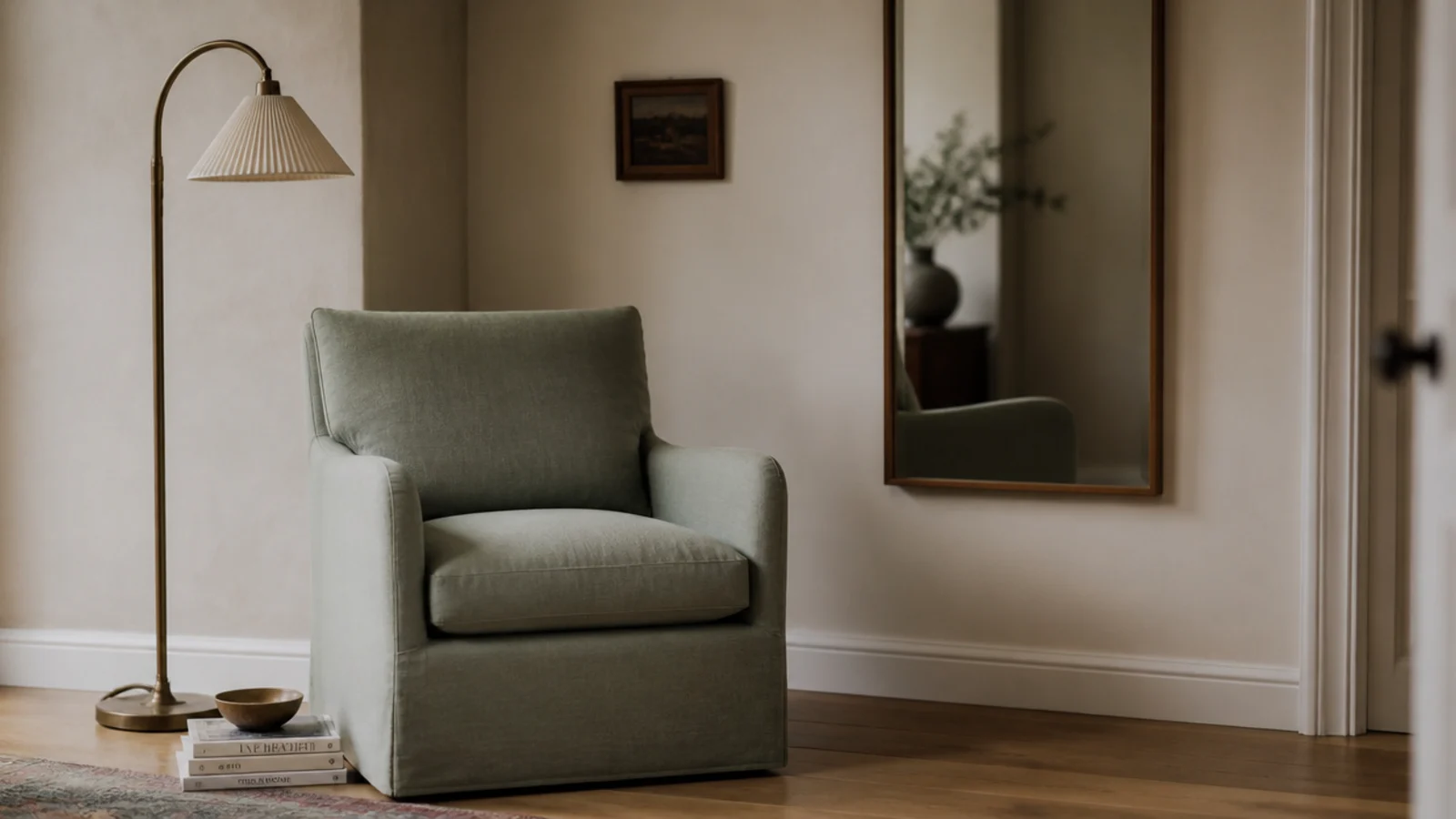
25. Use the space above a doorway
The band between a door head and the ceiling is free wall almost nobody uses. A small horizontal mirror there catches light from the hallway and lifts the eye. Keep it light, under 8 pounds, and fix into the header timber above the casing.
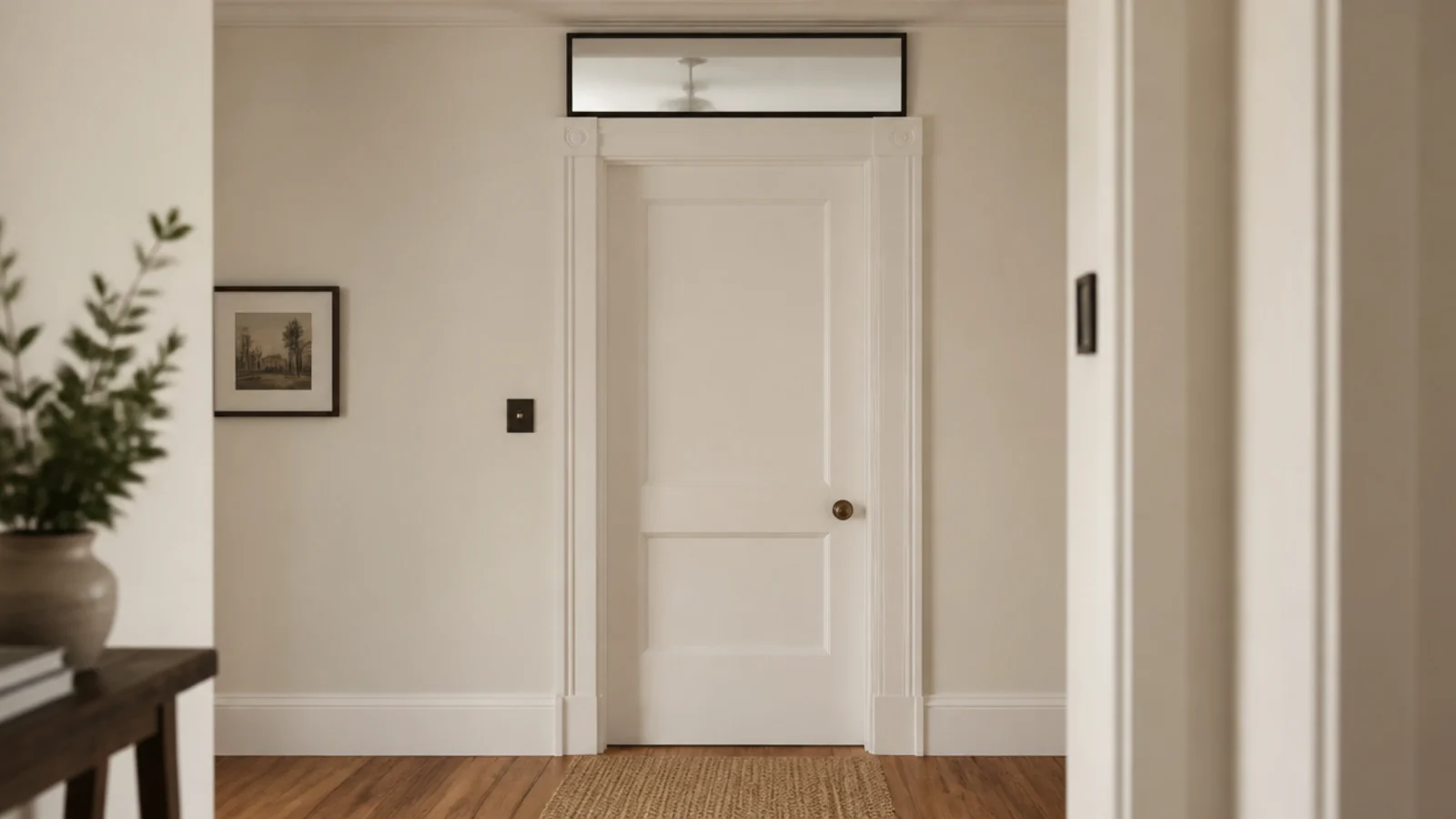
26. Mix mirrors into an art wall
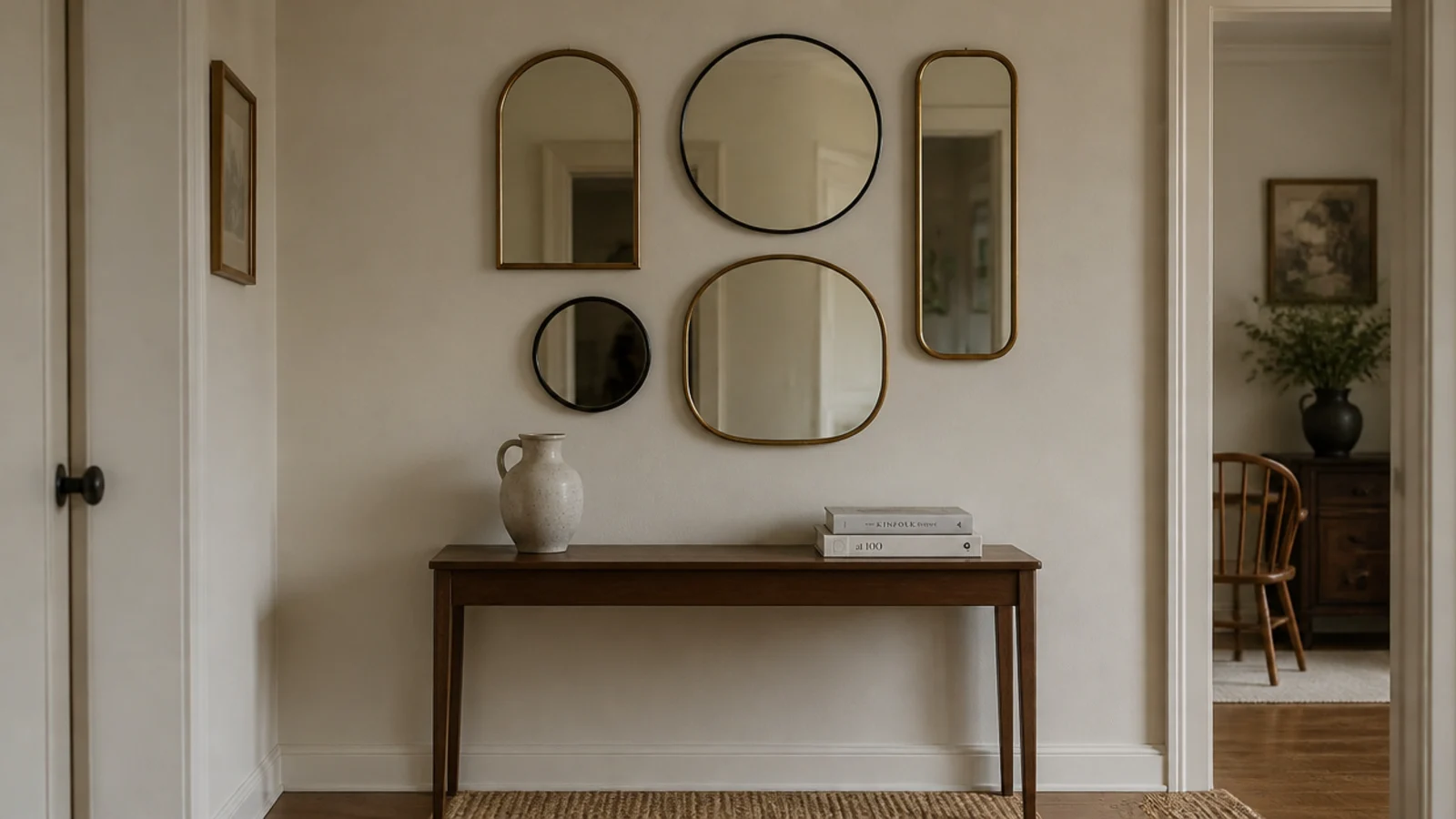
A wall of prints goes flat because every surface is matte. Swap two frames for mirrors of similar size, place them low and off centre, and match the frame finish to at least one other piece. Hold the spacing at the same 2 to 3 inches throughout.
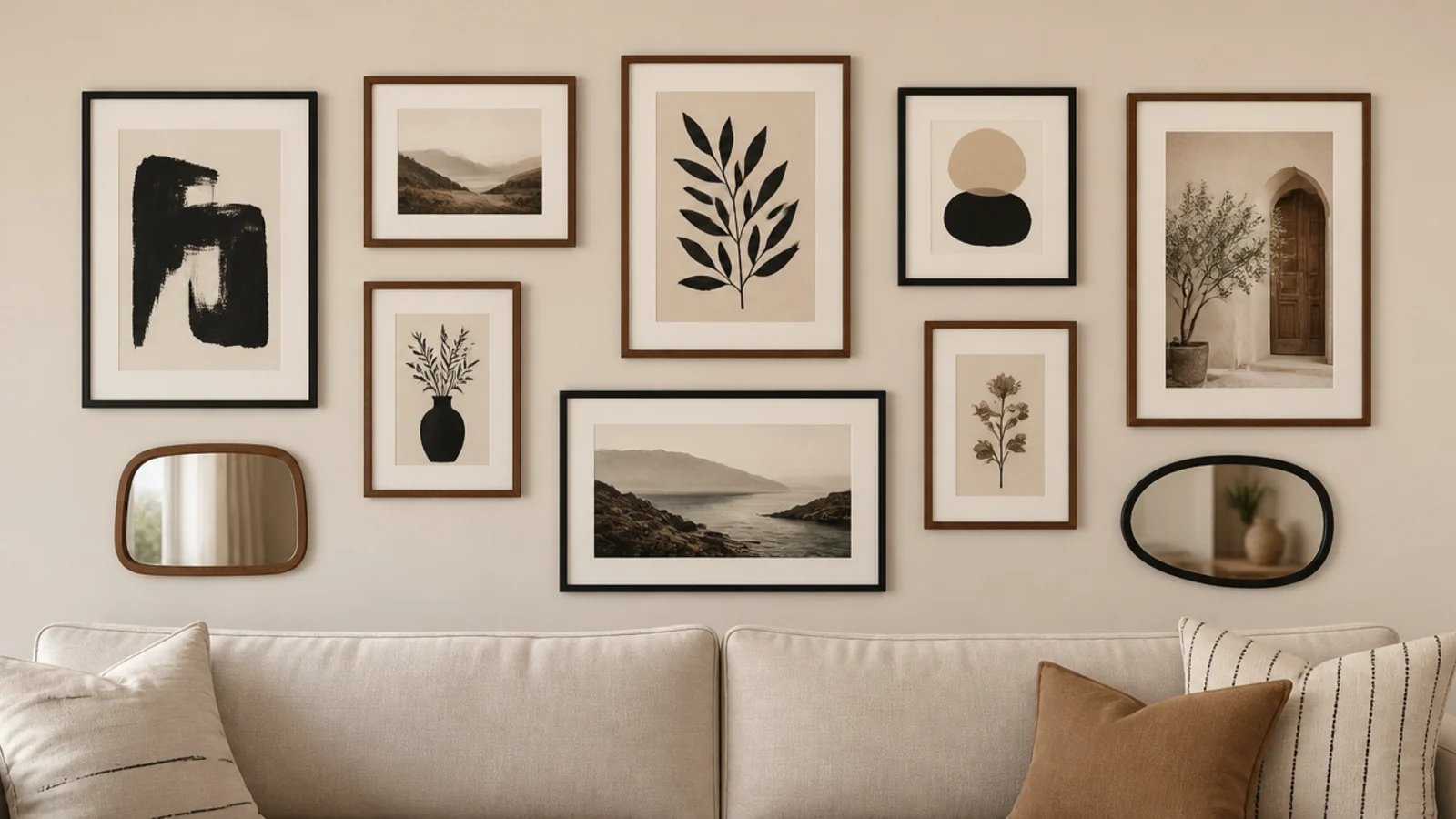
27. Hang low behind a bench or ottoman
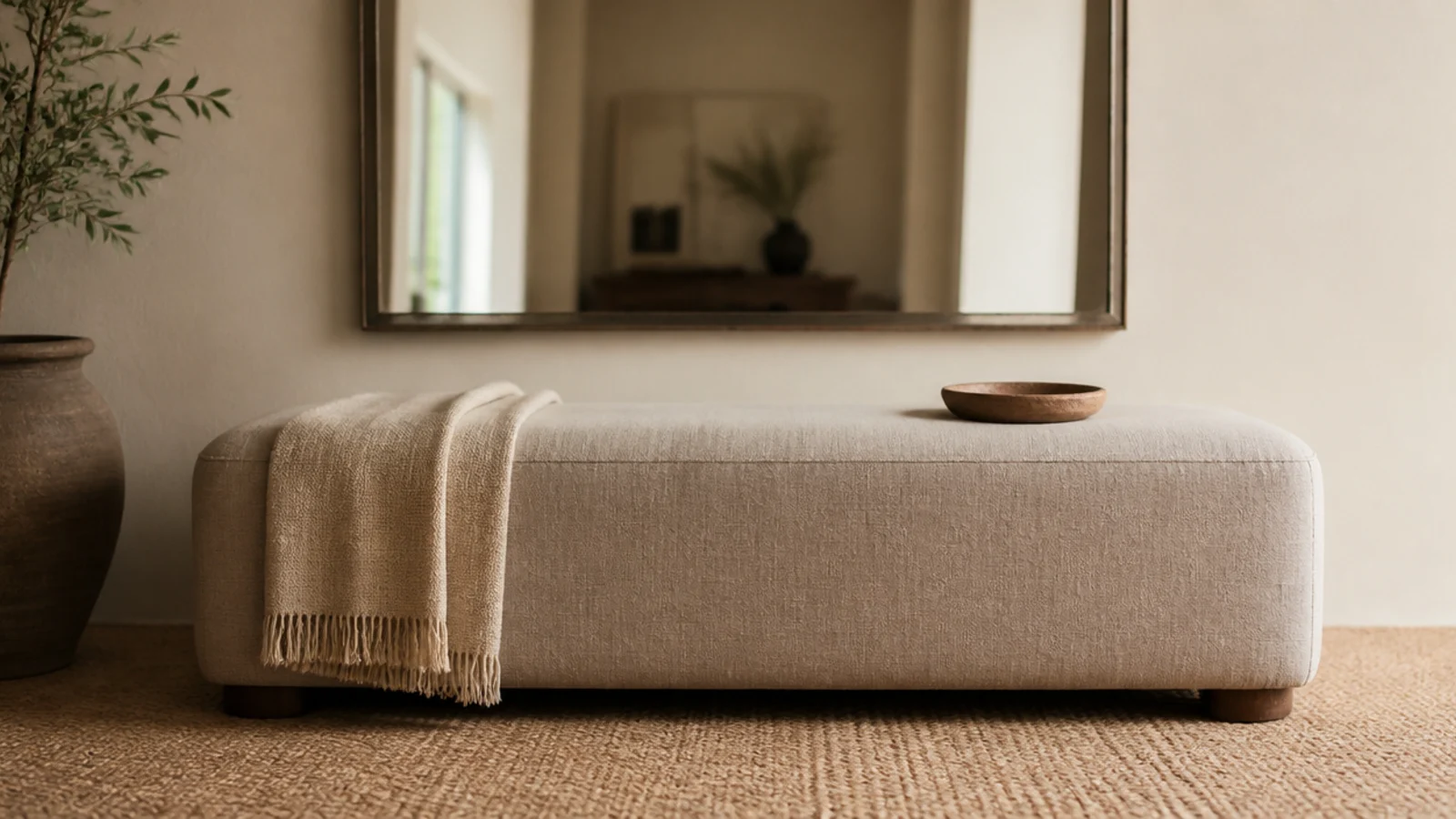
Most living room mirrors are hung four inches too high because people align them to door casings. Behind a low bench, drop the centre to 52 inches so it reads correctly to someone sitting down, which is how the room is actually used.
28. Paint the wall first, then hang
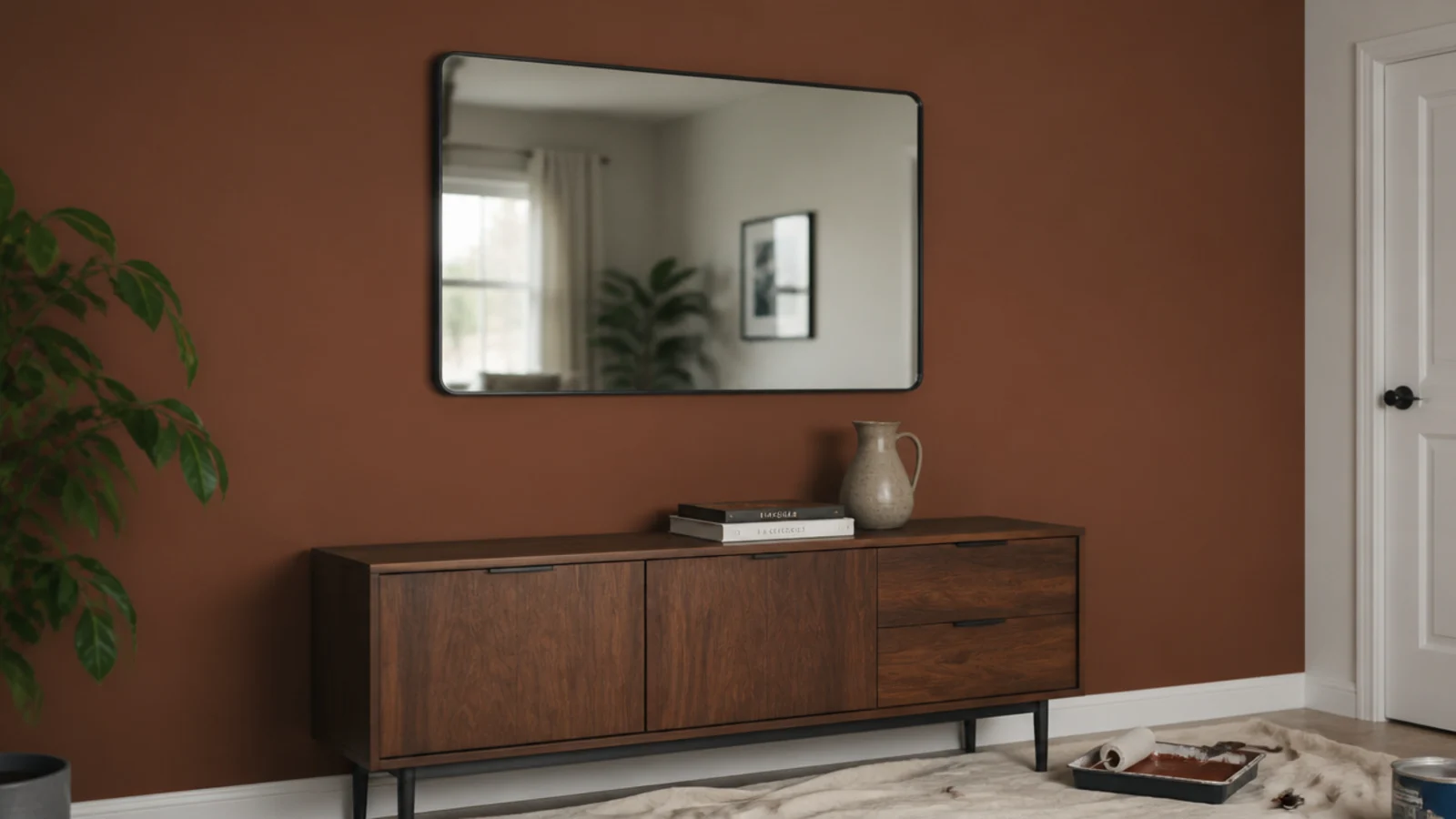
A quart of deep paint costs about $25 and changes a mirror more than a $200 frame upgrade would. Paint the wall, let it cure two days, then hang. Doing it in the other order means masking around a heavy mirror you would rather not take down.
29. Choose antiqued glass for warmth
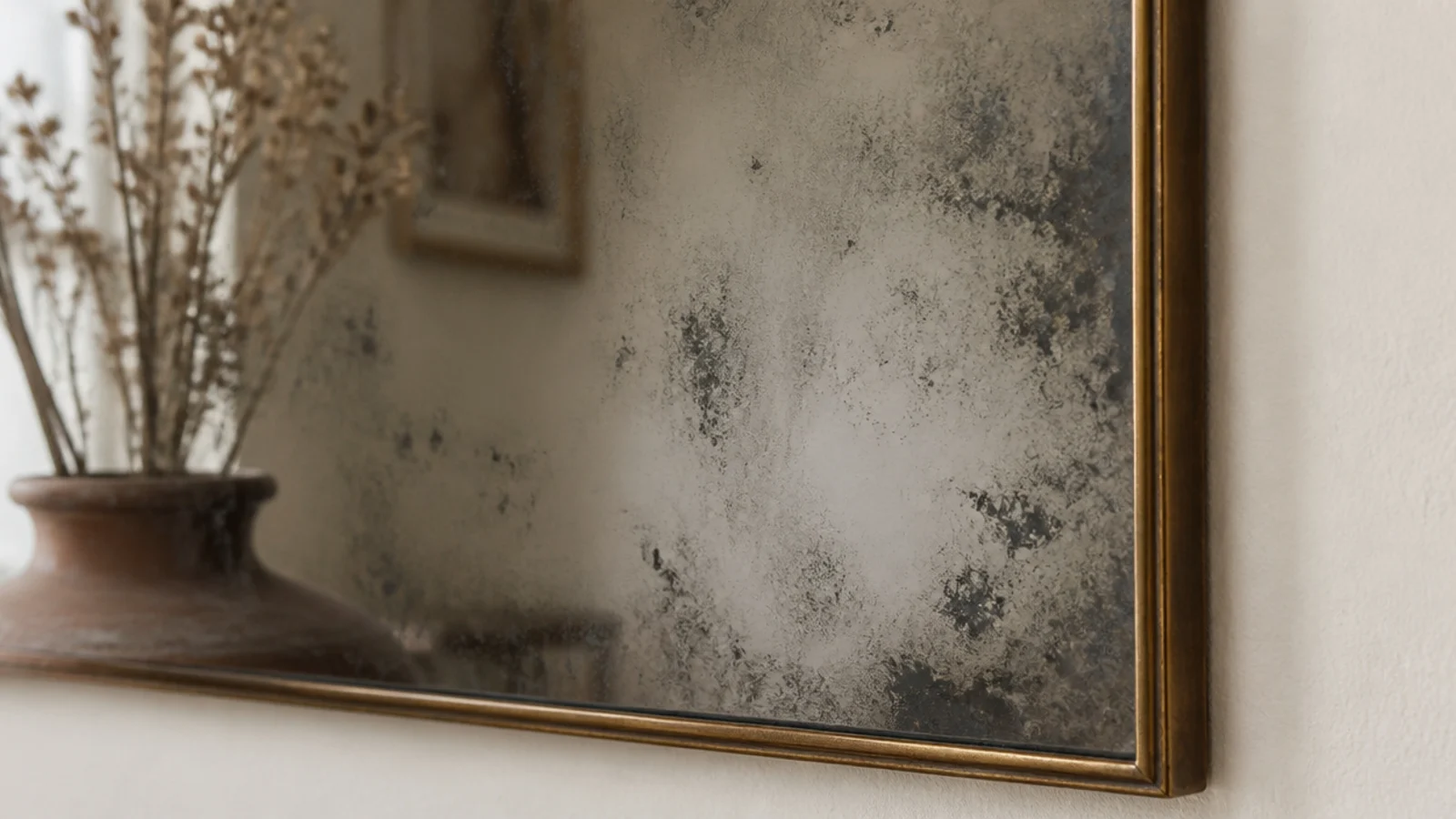
Foxed or antiqued mirror glass has soft grey mottling that reflects gently rather than sharply, which suits a room where a crisp reflection of the TV wall is not the goal. Vintage panels run $80 to $250 ($$), and modern antiqued reproductions start lower.
30. End a curtain run with a mirror
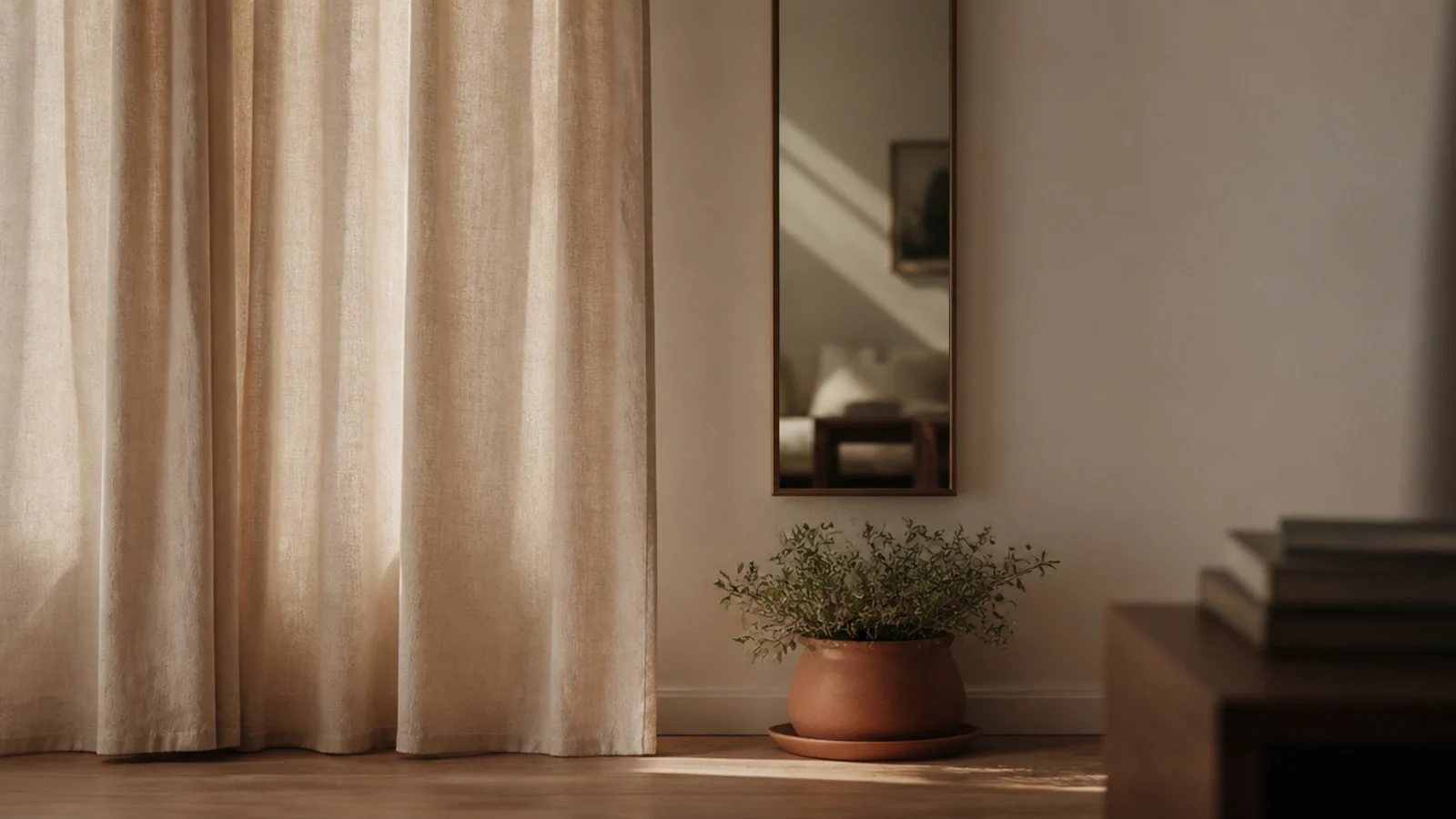
Where floor-length linen curtains stop, a tall narrow mirror hung right beside them catches the side light spilling past the fabric. It also visually widens the window treatment, so a modest window reads as a generous one. Keep 4 inches clear of the curtain edge.
Mistakes to Skip
- Hanging heavy glass above the head end of a sofa. Choose the facing wall instead — no anchor makes that placement worth the risk.
- Trusting adhesive strips or the plastic plugs from the box. Both are rated for a fraction of a real mirror and both fail slowly rather than all at once.
- Buying a bigger mirror when the current one is not working. Nine times out of ten the wall is wrong, not the size, and moving it costs nothing.
Frequently asked questions
Should I hang a mirror above the sofa?
Only a light one, and only with real clearance. Heavy glass directly behind where a head rests is a placement I avoid entirely. If you want a mirror there, keep it under about 15 pounds, choose safety-backed glass, hang it into studs on two points, and leave at least 10 inches between the top of the sofa back and the bottom of the frame.
How big should a living room mirror be?
Size it to the furniture below it rather than the wall. Roughly two thirds the width of a console, sideboard or mantel shelf reads correctly from across the room. On an empty wall, a mirror smaller than about 24 inches simply disappears, so go larger or group several small ones into a single arrangement instead.
Where should a mirror go in a living room?
On the wall that faces your best light or your best view. A mirror opposite a window bounces real daylight deep into the room and doubles the outlook, while the same mirror on a perpendicular wall mostly reflects the wall across from it. Hold a hand mirror at each candidate spot and judge the reflection before you commit.
How do I make a cheap mirror look expensive?
Three things do most of the work: a thicker frame, a darker wall behind it, and correct height. A $30 thrifted frame painted matte black on a deep clay wall, centred at 58 inches, outperforms a $200 mirror hung too high on builder beige. Gilding wax on moulded detail adds age for about $10.
Can I hang a mirror over a fireplace?
Yes, and it is one of the best spots in the room. Size it to about two thirds of the mantel width and never wider than the shelf, and sit it 4 to 6 inches above the mantel. Check the appliance clearance label on any working fire, and tether a leaning mantel mirror so it cannot walk forward.
Do the hand-mirror test on all four walls before you buy anything — it takes five minutes and it decides which of these thirty actually applies to your room. From there, mirror wall decor ideas covers the core placements in more depth, and round mirror wall decor handles sizing for circles. Save the pin so the heights and clearances are with you when you hang.
Want more like this? Browse all 15 mirror wall decor guides — they all use the same measurements and budget tiers.
Pin it for later
Save this to your Mirror Wall Decor board
Pin it now so it is waiting for you when the tape measure comes out — and so the next person hunting for this idea can find it too.
Save this pinKeep going
More ideas worth saving while you have the tape measure out.