Entryway & Foyer Ideas · Listicle
30 Simple Entryway Ideas on a Budget

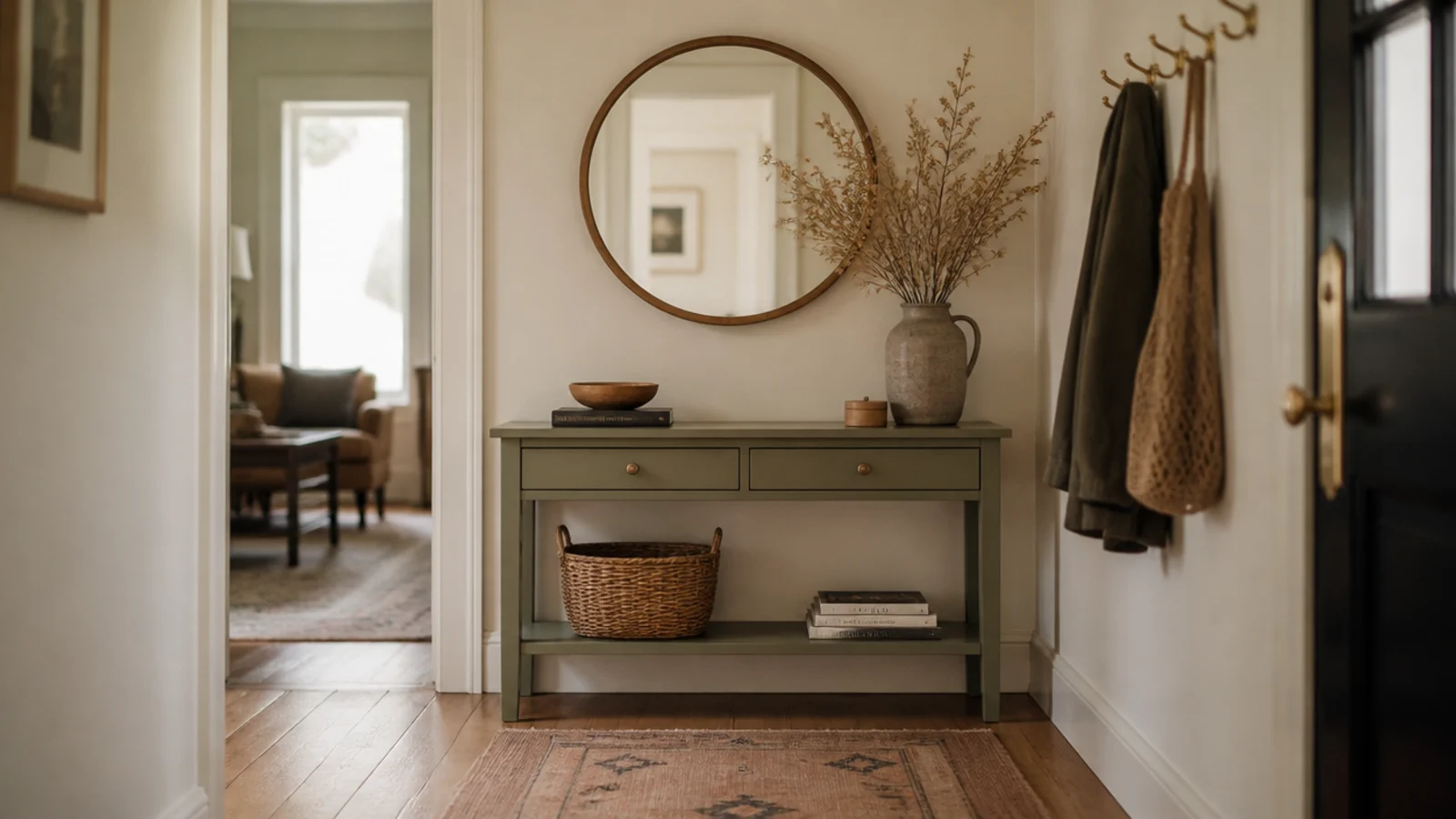
Foyer decorating ideas get expensive when you shop before you paint. A quart of colour and one warm lamp change an entry more than $200 of objects will, and they change all of it at once rather than one corner. Everything below came out of doing my own hall three times on almost nothing. Thirty moves, most of them under $40.
In this guide32 sections — tap to openHide
- 1.Where foyer decorating ideas pay off on a tight budget
- 2.Repaint the inside face of the front door
- 3.Swap the door hardware to one finish
- 4.A quart of deeper paint on the entry walls only
- 5.Paint the trim and baseboard the wall colour
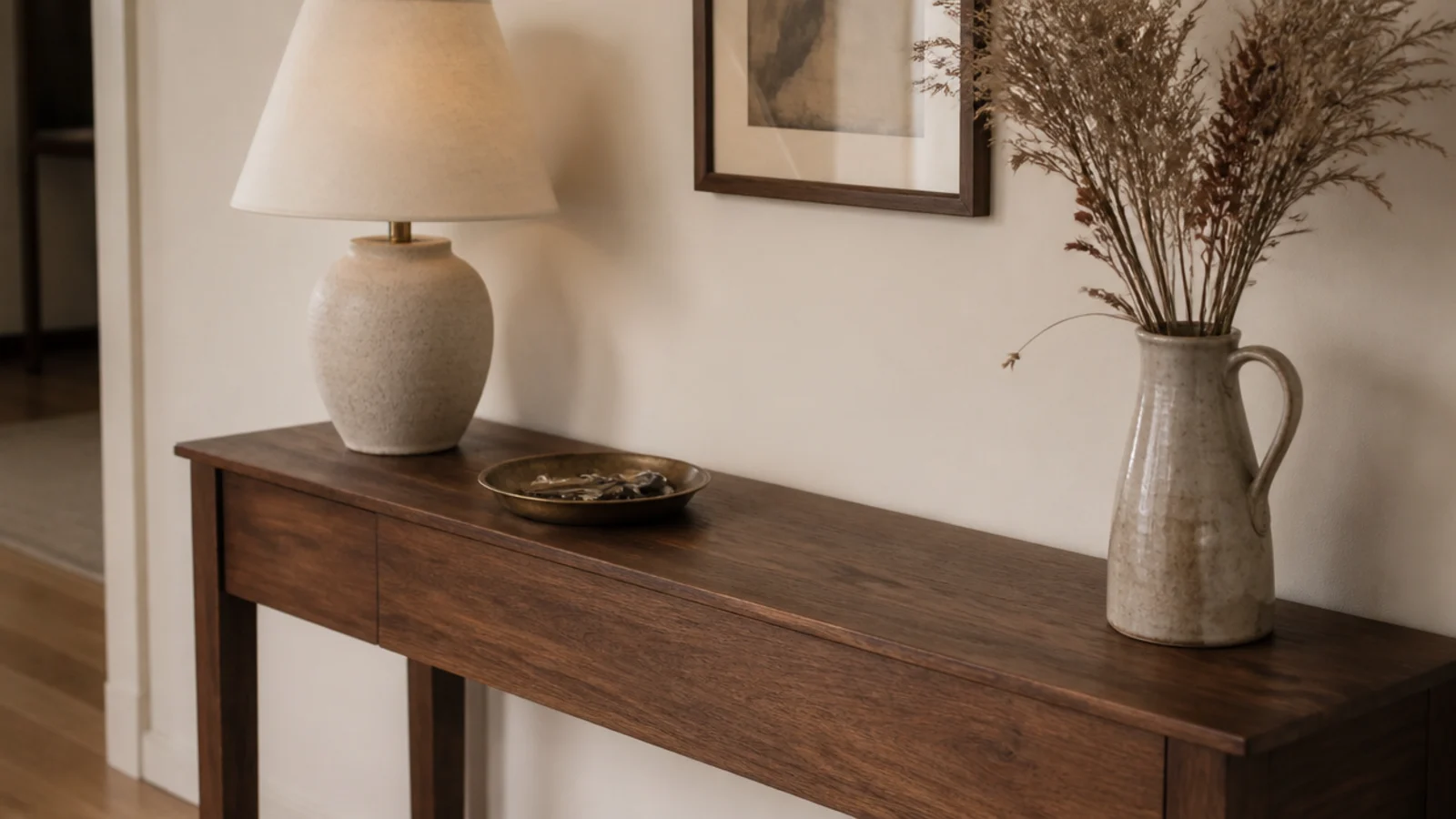
- 6.A thrifted console for under $60
- 7.Repaint the thrifted piece in one flat colour
- 8.New knobs on the old piece
- 9.A linen remnant slipcover for the bench seat
- 10.One tray, and only one
- 11.A stoneware jug as the permanent vessel
- 12.Dried stems instead of fresh flowers
- 13.One plant that tolerates a dim hall
- 14.Two books as a riser
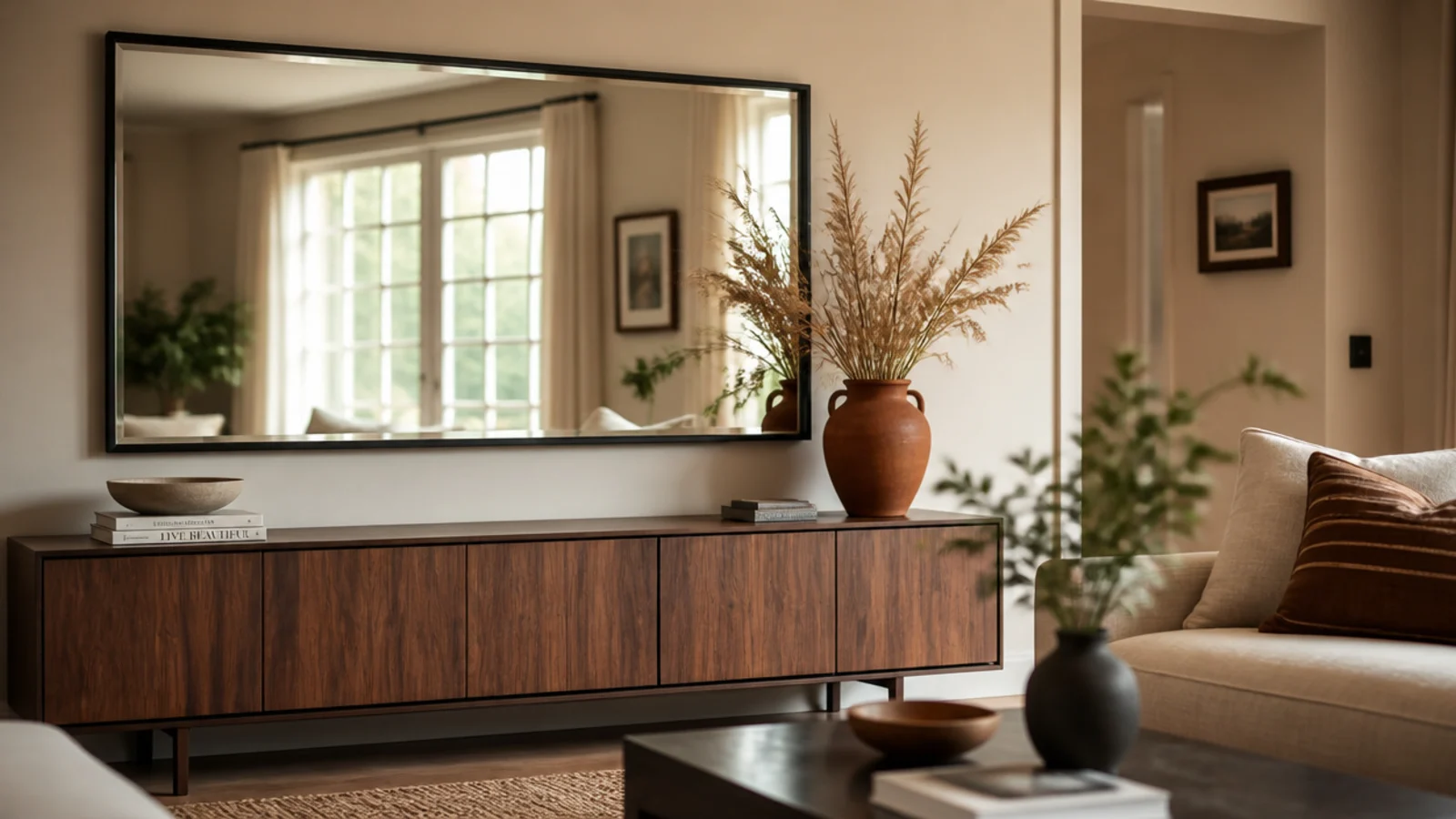
- 15.A charity-shop mirror painted to match
- 16.Lean art instead of hanging it
- 17.A calendar print in a twelve dollar frame
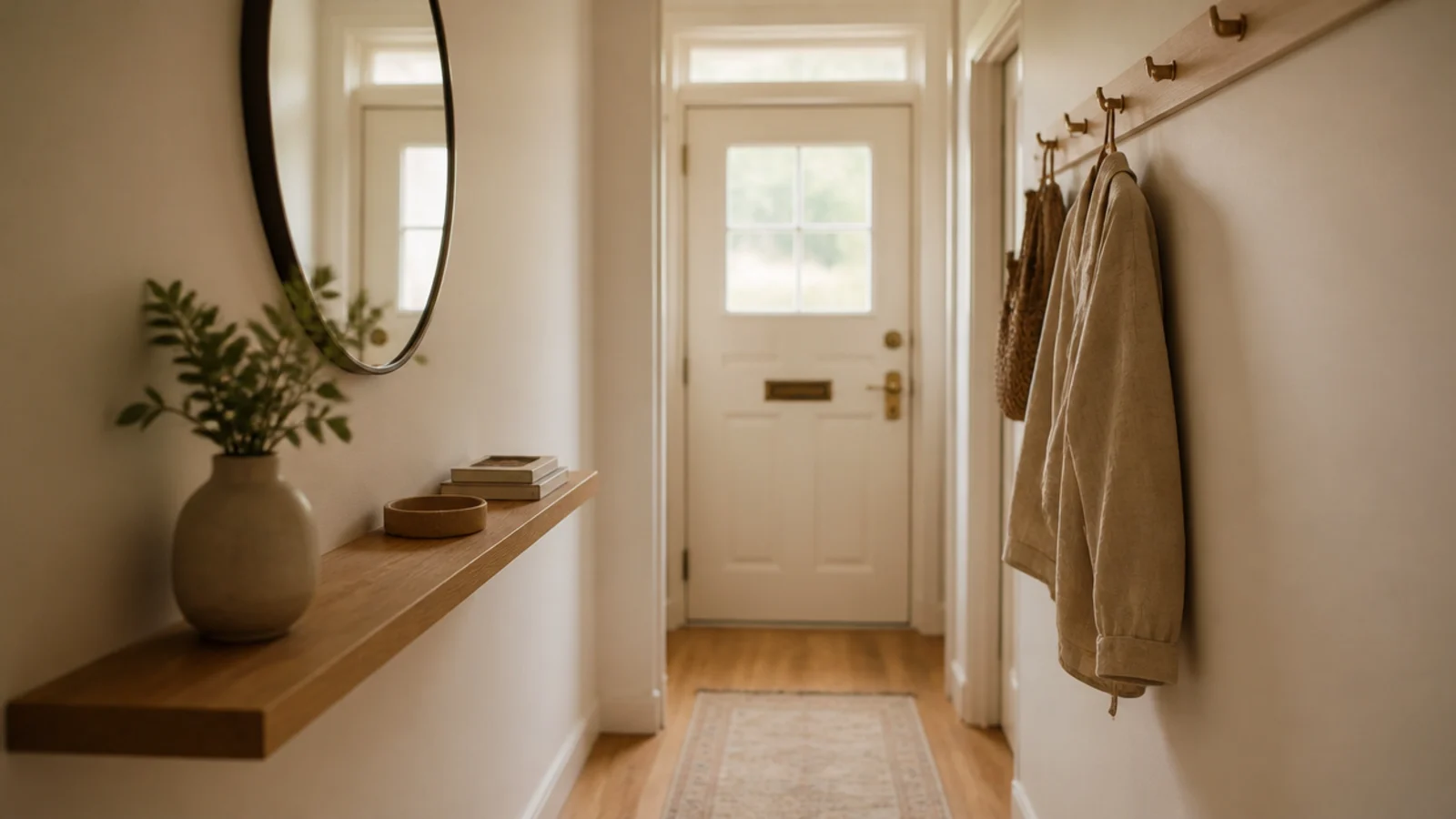
- 18.A peg rail you paint yourself
- 19.Plain hardware-aisle hooks
- 20.A picture ledge for art you change
- 21.A flat-weave washable runner
- 22.Coir outside, washable inside
- 23.Peel-and-stick tile for the landing zone
- 24.Swap the ceiling shade
- 25.A rechargeable cordless lamp
- 26.A battery picture light over the mirror
- 27.A stoneware crock as the umbrella stand
- 28.Garden centre baskets, not storage aisle bins
- 29.Group in odd numbers at three heights
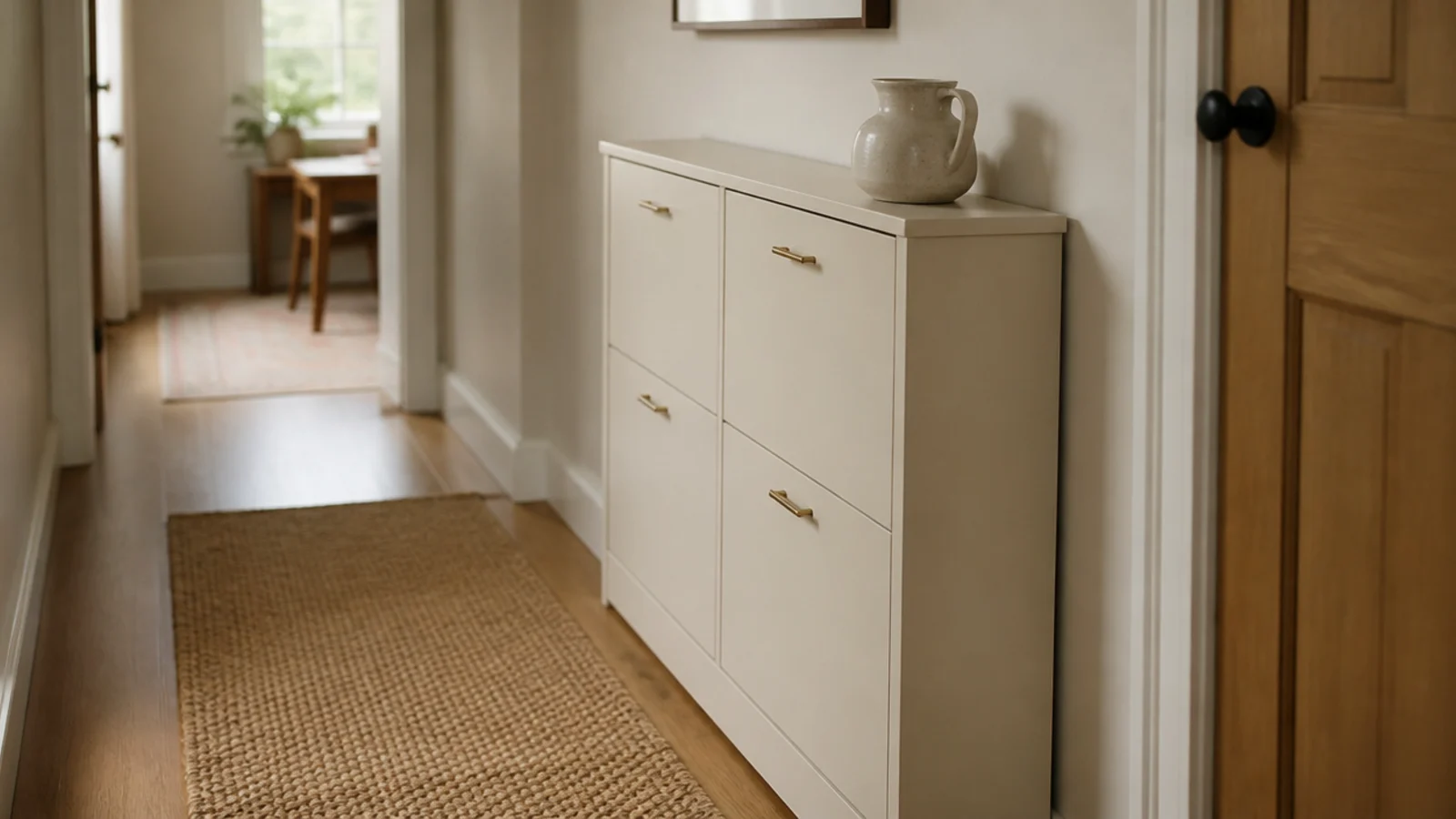
- 30.Keep the cabinet top almost bare
- 31.Set an annual cap and photograph it monthly
- 32.Mistakes to Skip
Where foyer decorating ideas pay off on a tight budget
Spend in this order: paint, light, textiles, furniture, objects. That sequence is the whole trick, because the first two affect every square inch and the last two affect one spot each.
Before you buy, decide which jobs your entry is doing. An entry has five — a place to sit, a place for shoes, a place for coats, a landing surface for small items, and a mirror. A working entry does at least three. Decorating a job your space cannot hold is how budgets disappear.
The heights do not change with the budget. Hooks at 52 inches, a second rail at 40 for children, a console at 30 to 32 inches and no deeper than 12, and a mirror centred at 57 to 60 with 6 to 8 inches of wall between the surface and the frame. Under 36 inches of walkway clearance, skip the console and mount a ledge instead.
Budget tiers below: $ under $60, $$ $60–$150, $$$ $150 and up. Almost everything here is $, and the whole list run end to end comes in around $250.
1. Repaint the inside face of the front door
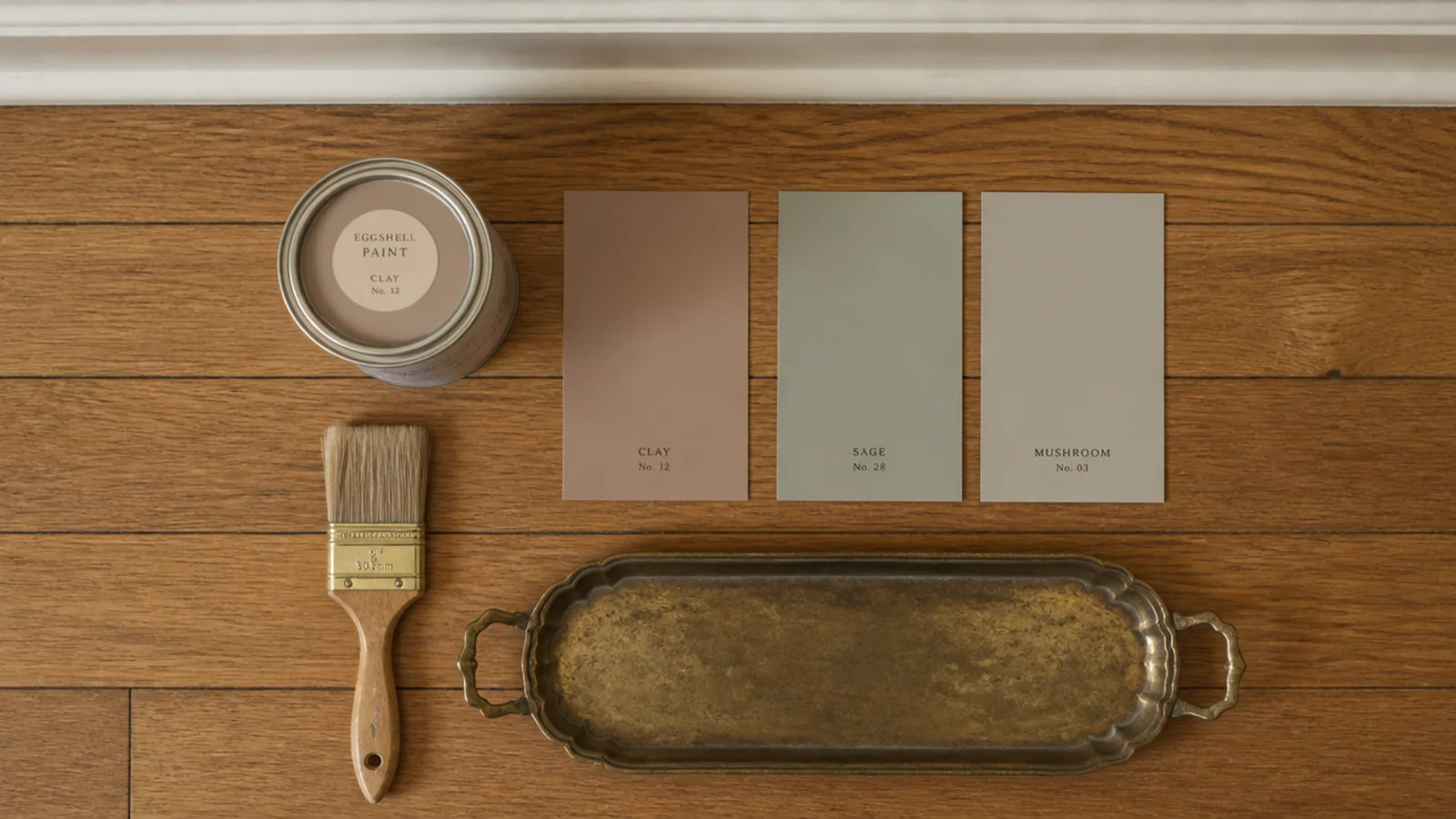
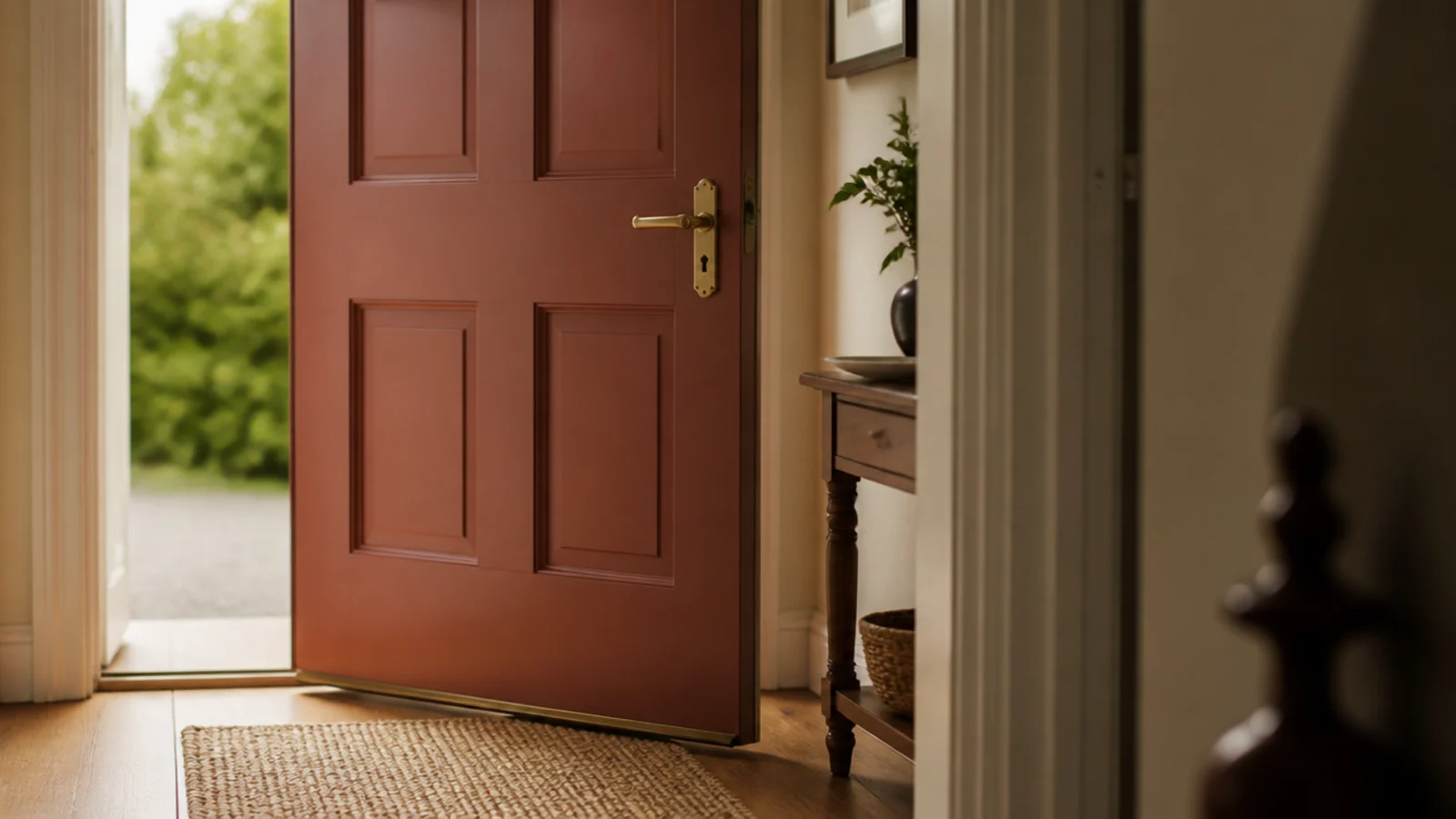
The inside of the front door is often the largest single surface in a foyer and almost nobody paints it. A deep clay, olive or charcoal on that one face makes the whole entry look intentional.
Half a quart does it, about $14. Use eggshell, and pull the hardware off rather than taping around it. $
2. Swap the door hardware to one finish
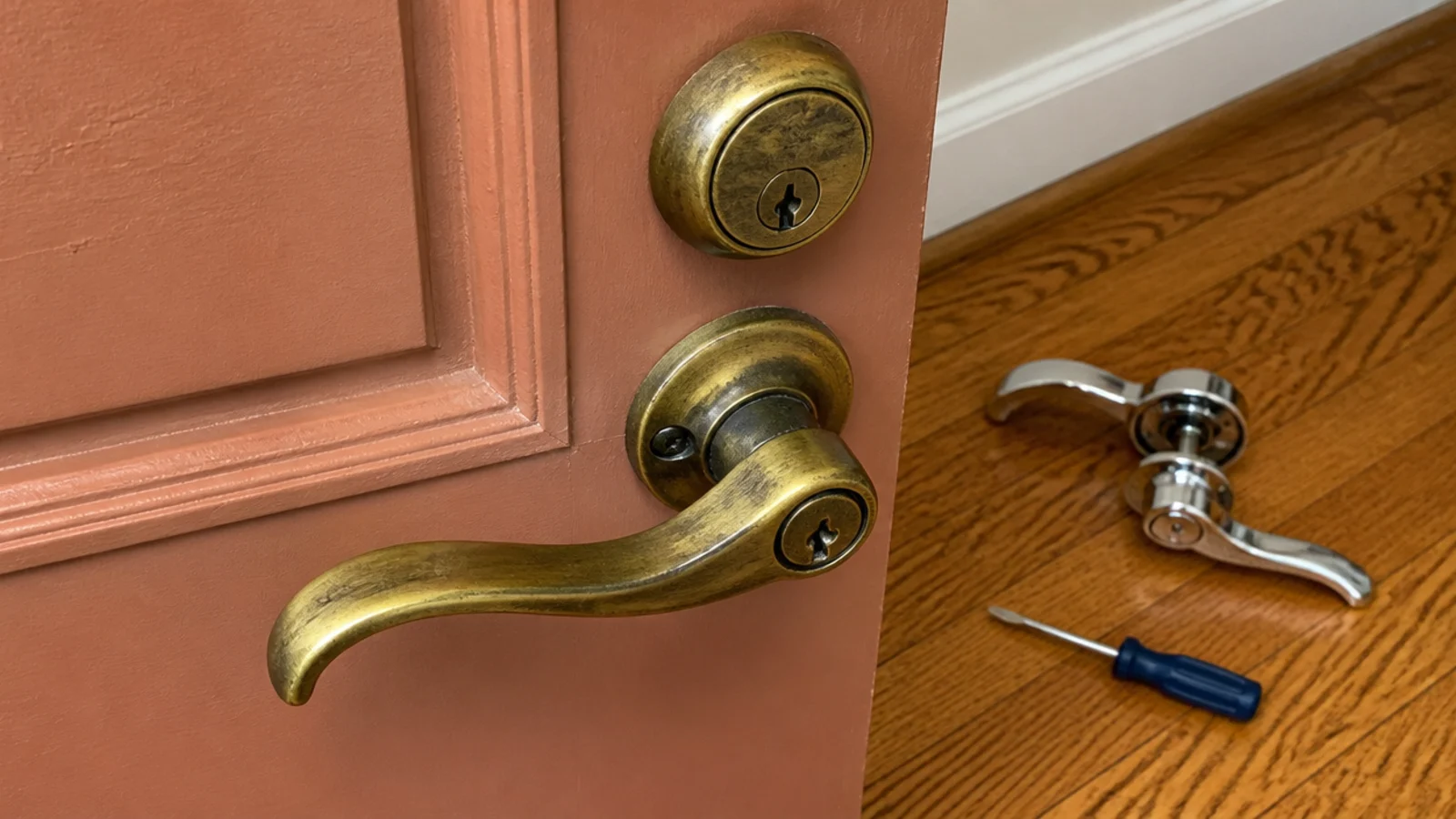
Mixed metals on a front door read as unfinished from six feet away. Match the lever, the deadbolt and the letter plate.
A lever and deadbolt set in aged brass or matte black runs $35 to $60 and takes twenty minutes with a screwdriver. Keep the old set in a bag for move-out if you rent. $
3. A quart of deeper paint on the entry walls only
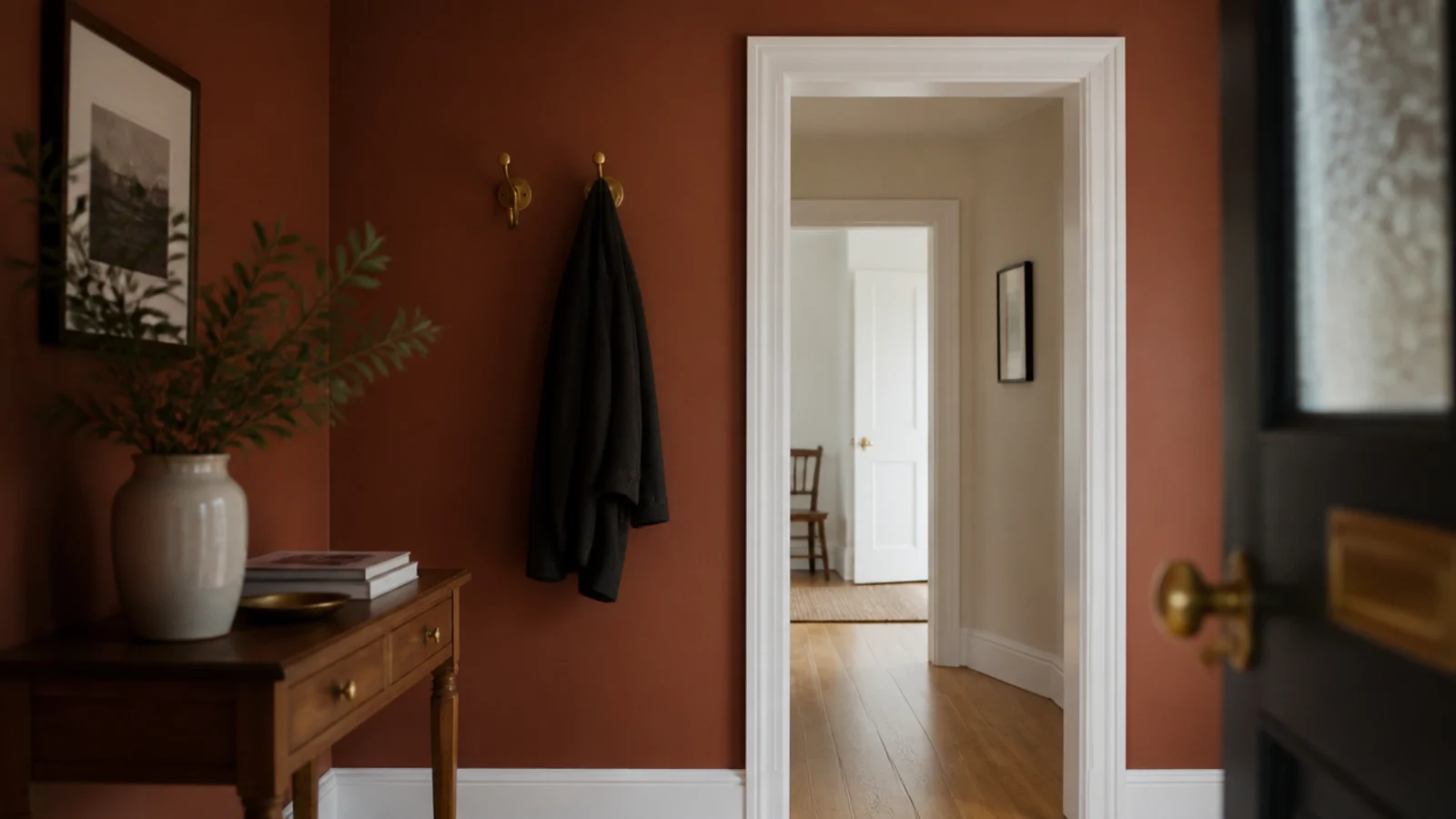
Take the hall colour, go two or three steps deeper on the same strip, and use it on the entry walls only, stopping cleanly at the first doorframe.
The darker pocket makes the space beyond read brighter and larger. A quart covers a small foyer for about $25, and it is the single highest-value thing on this list. $
4. Paint the trim and baseboard the wall colour
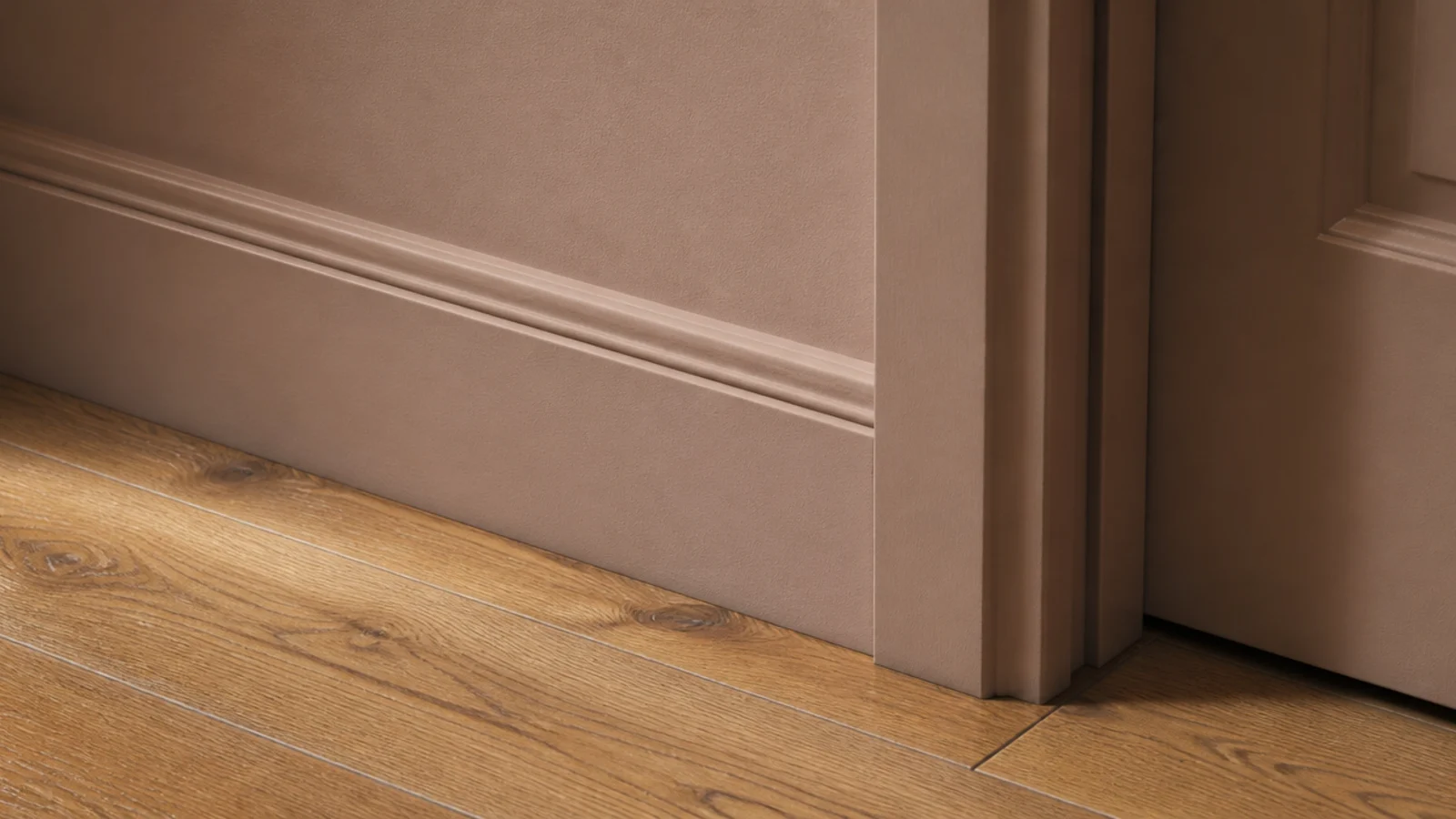
Contrasting white trim chops a small foyer into pieces. Painting the baseboard, doorframe and any picture rail the same colour as the wall removes every horizontal line.
The room reads taller immediately and it costs nothing extra — you are painting anyway. Use satin on trim and eggshell on walls so the sheen difference still gives some definition. $
5. A thrifted console for under $60
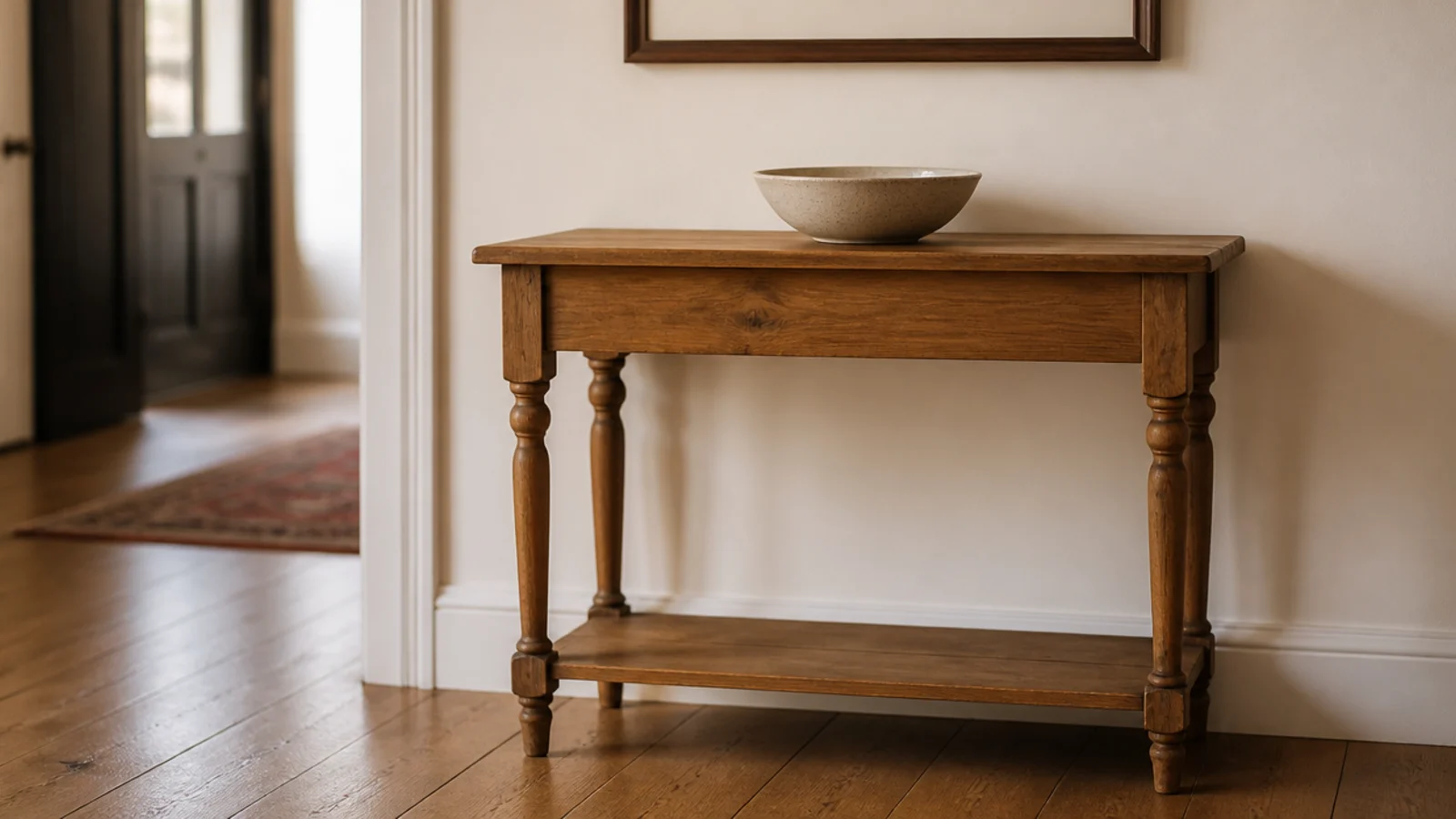
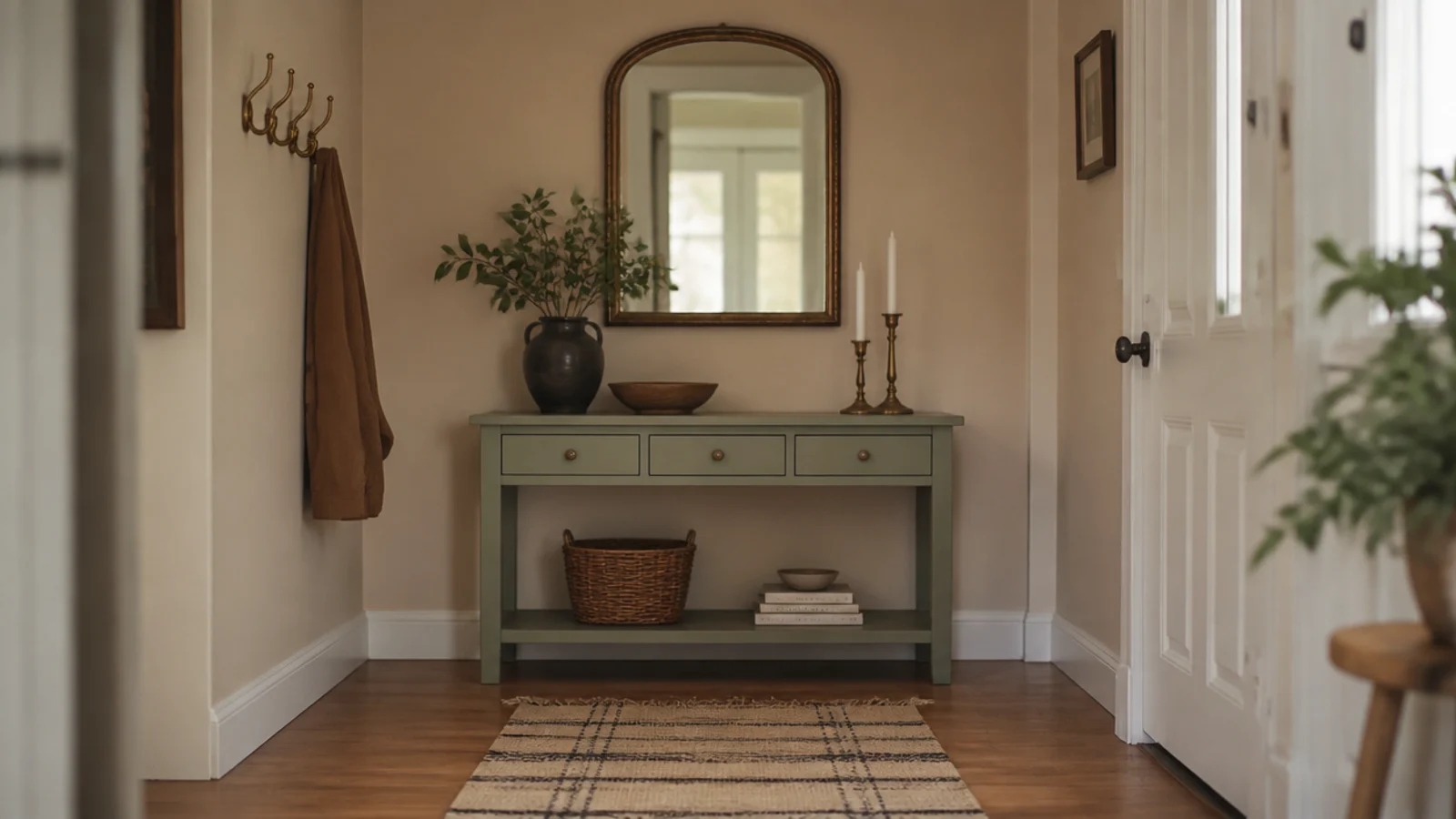
Old console tables are everywhere secondhand, and the proportions are usually better than new budget furniture. Look for solid wood, a lower shelf and a depth of 12 inches or less.
Ignore the finish entirely — that is the fixable part. Check the joints instead, and rock it on a flat floor before you buy. $
6. Repaint the thrifted piece in one flat colour
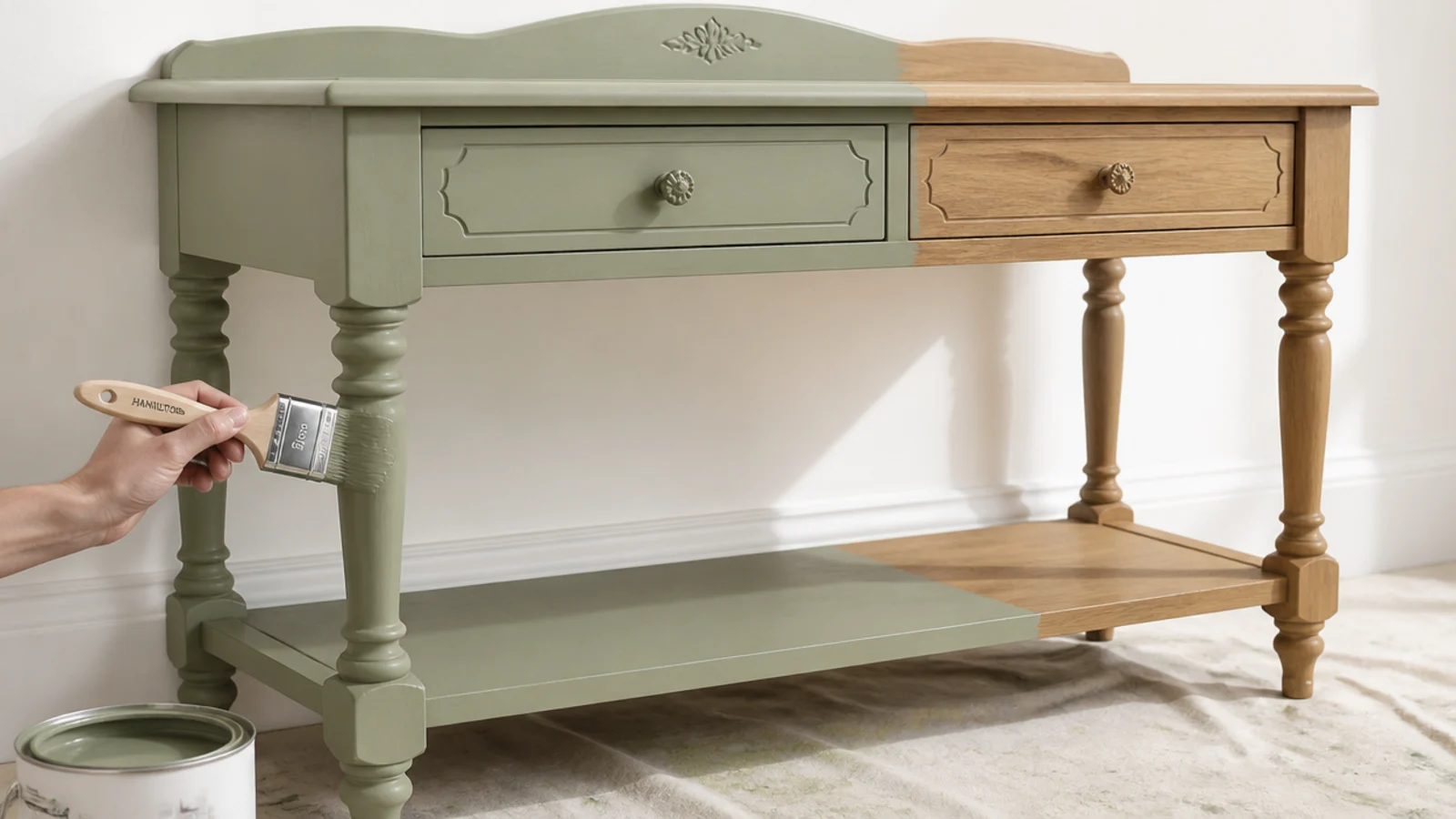
One colour, top included. The two-tone painted base with a stained wood top is the look that instantly dates a secondhand piece.
Clean, scuff-sand with 150 grit, prime, then two thin coats of eggshell. About $18 in materials, and the piece stops reading as thrifted and starts reading as chosen. $
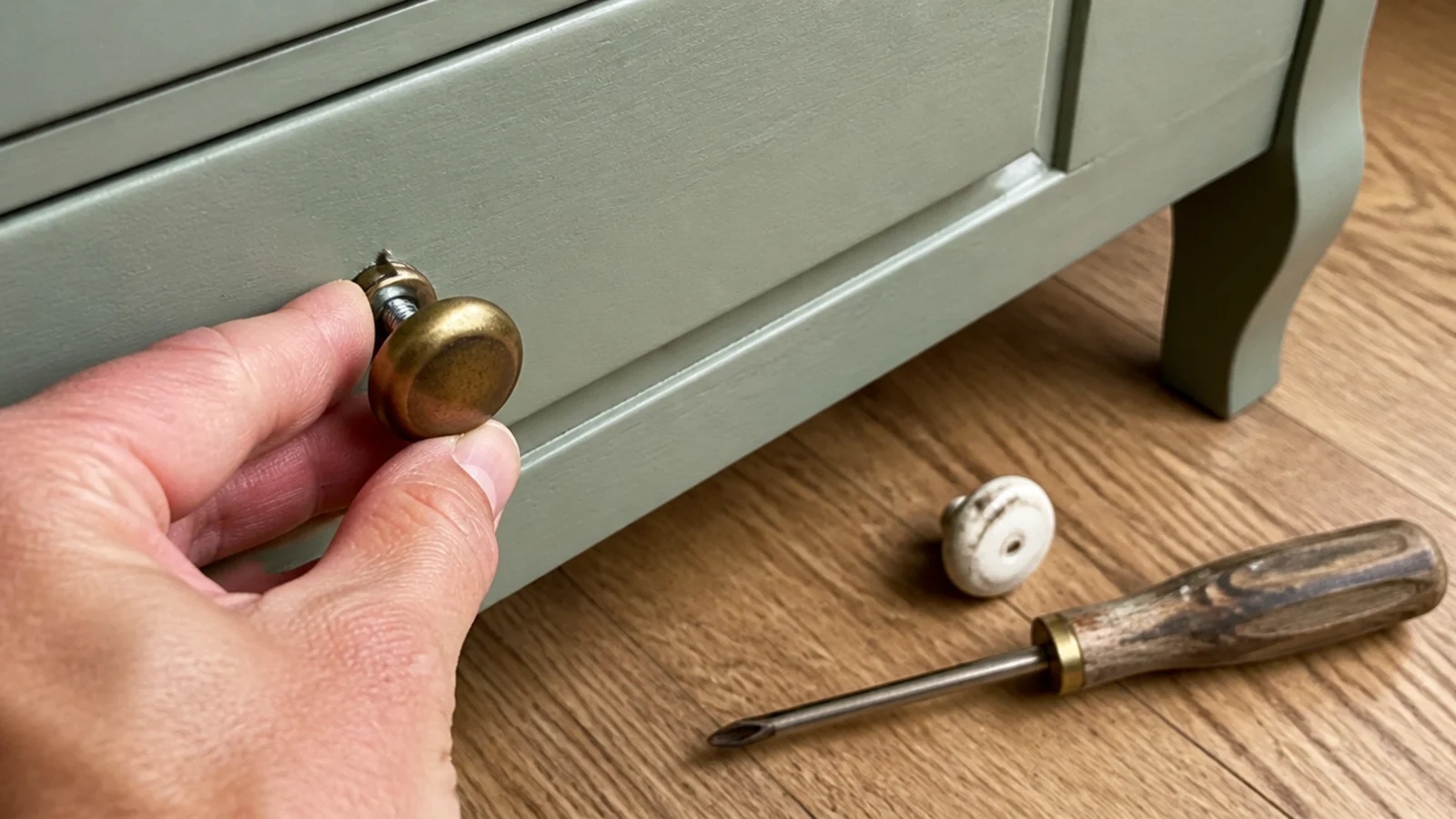
7. New knobs on the old piece
Four small brass or ceramic knobs cost $12 to $20 and take ten minutes. On a repainted console, they are the detail that makes the whole thing look bought rather than rescued.
Measure the existing hole spacing before you shop. Centre-to-centre is the number that matters, and getting it wrong means filling and re-drilling. $
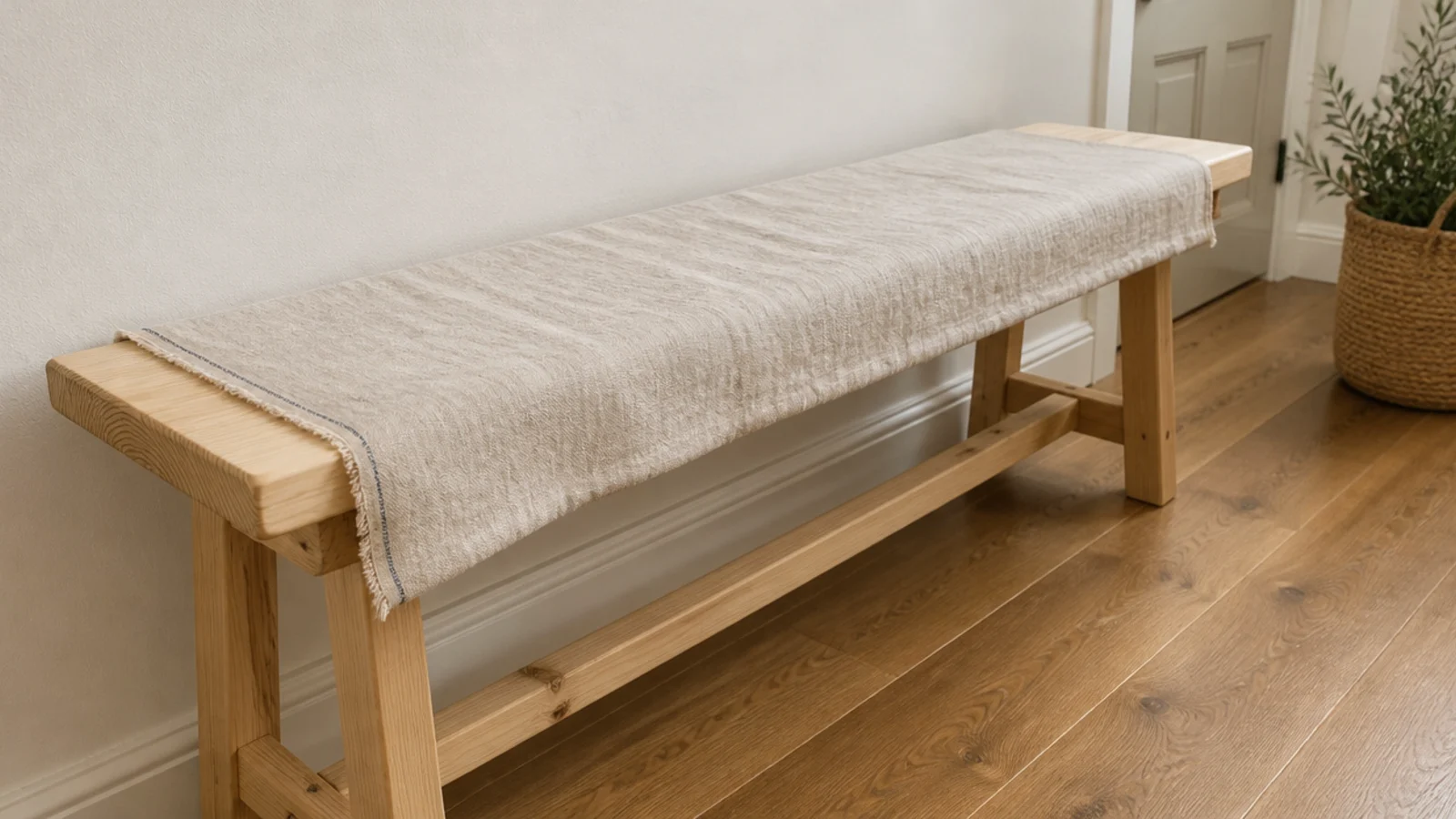
8. A linen remnant slipcover for the bench seat
A yard of washed linen from a remnant bin costs $8 to $15 and turns a plain pine bench into something soft.
No sewing required — a length laid over the seat with the raw selvedge showing looks deliberate. If you want it neater, a single hemmed edge takes ten minutes. Wash it with the runner. $
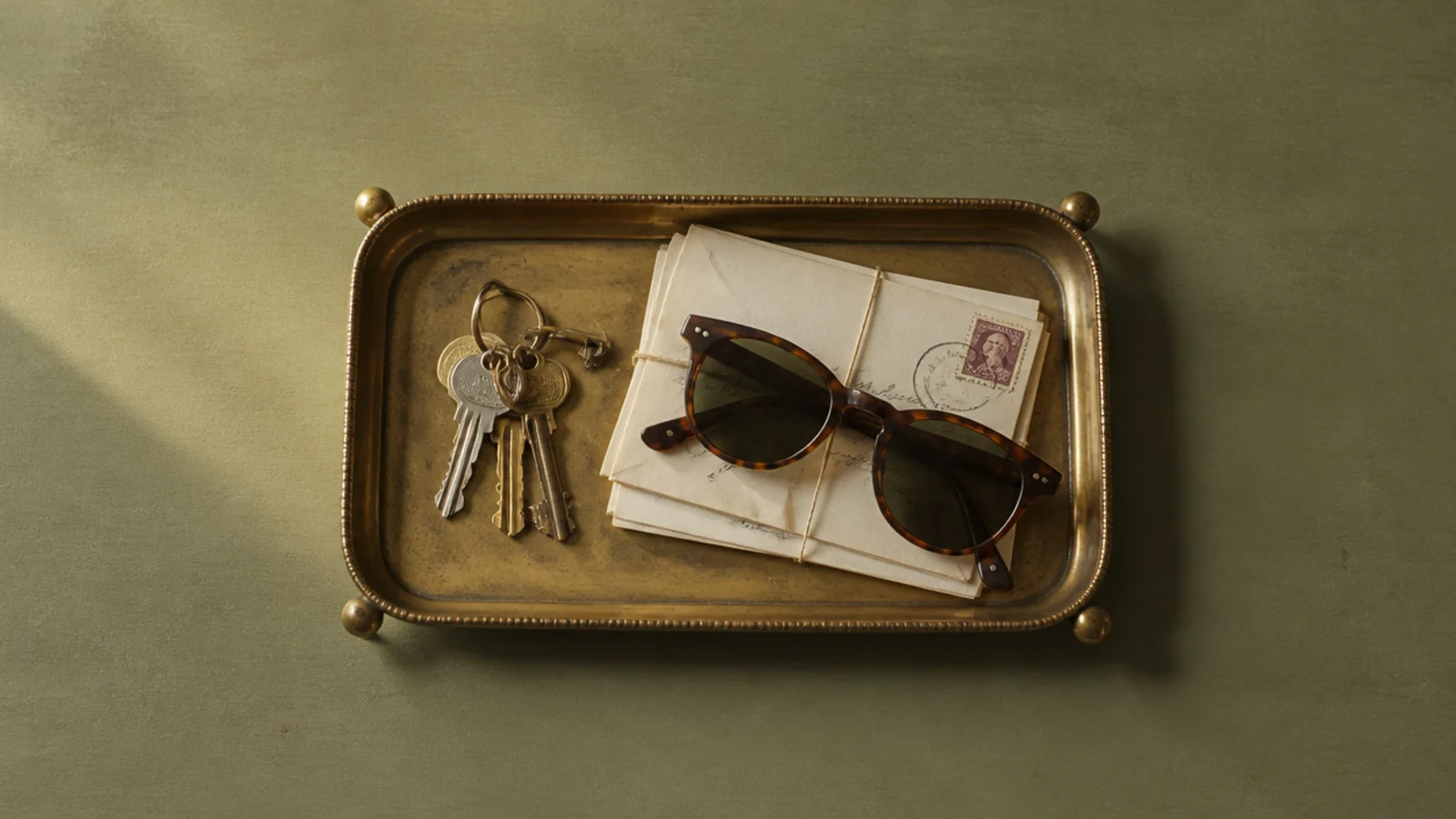
9. One tray, and only one
One tray on the landing surface is what stops mail and keys spreading across it. Everything small goes in the tray; the surface around stays clear.
Roughly 8 by 12 inches is right — small enough that it fills up and forces a weekly edit. Two trays defeat the point, because the overflow just moves next door. $
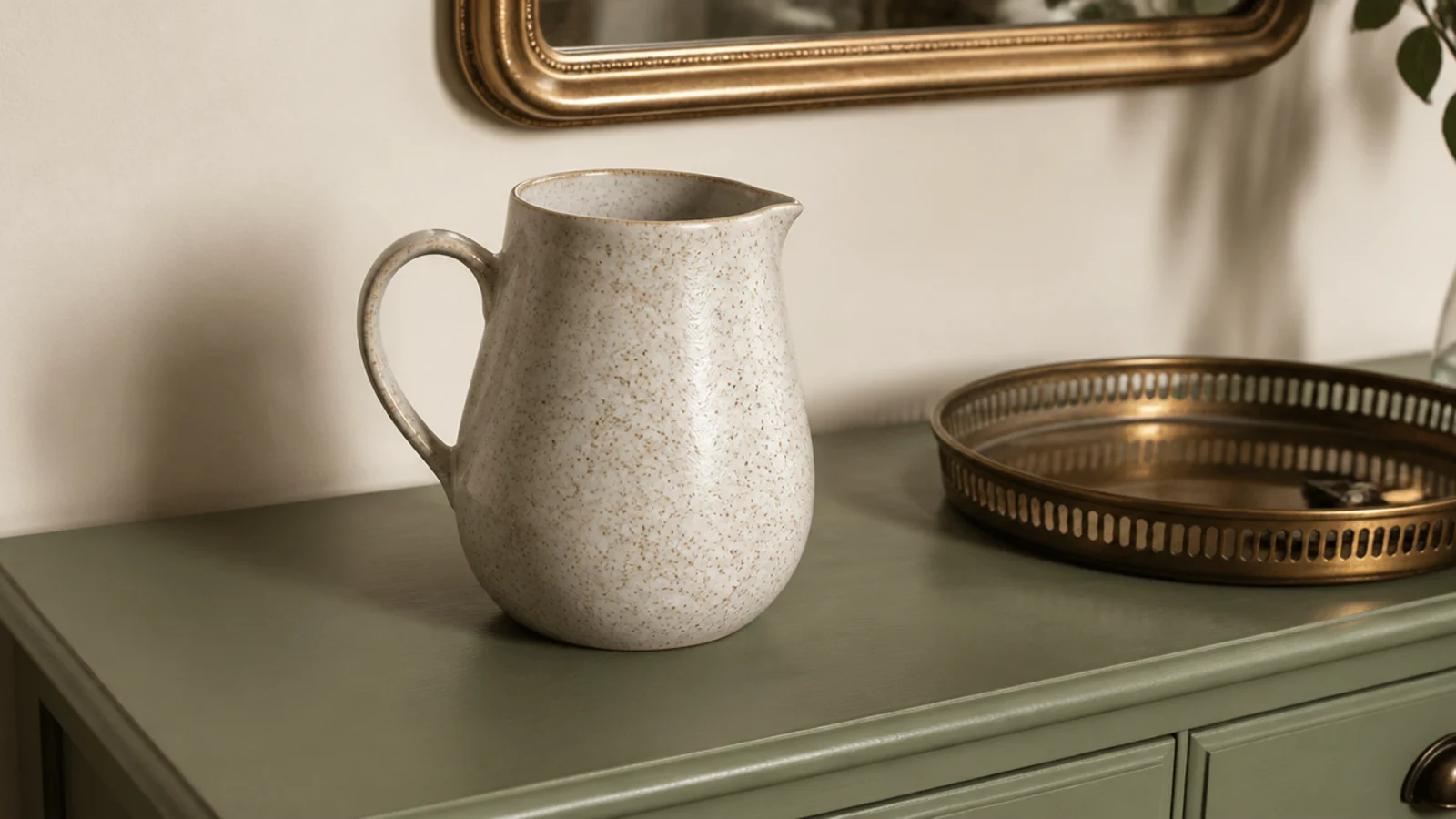
10. A stoneware jug as the permanent vessel
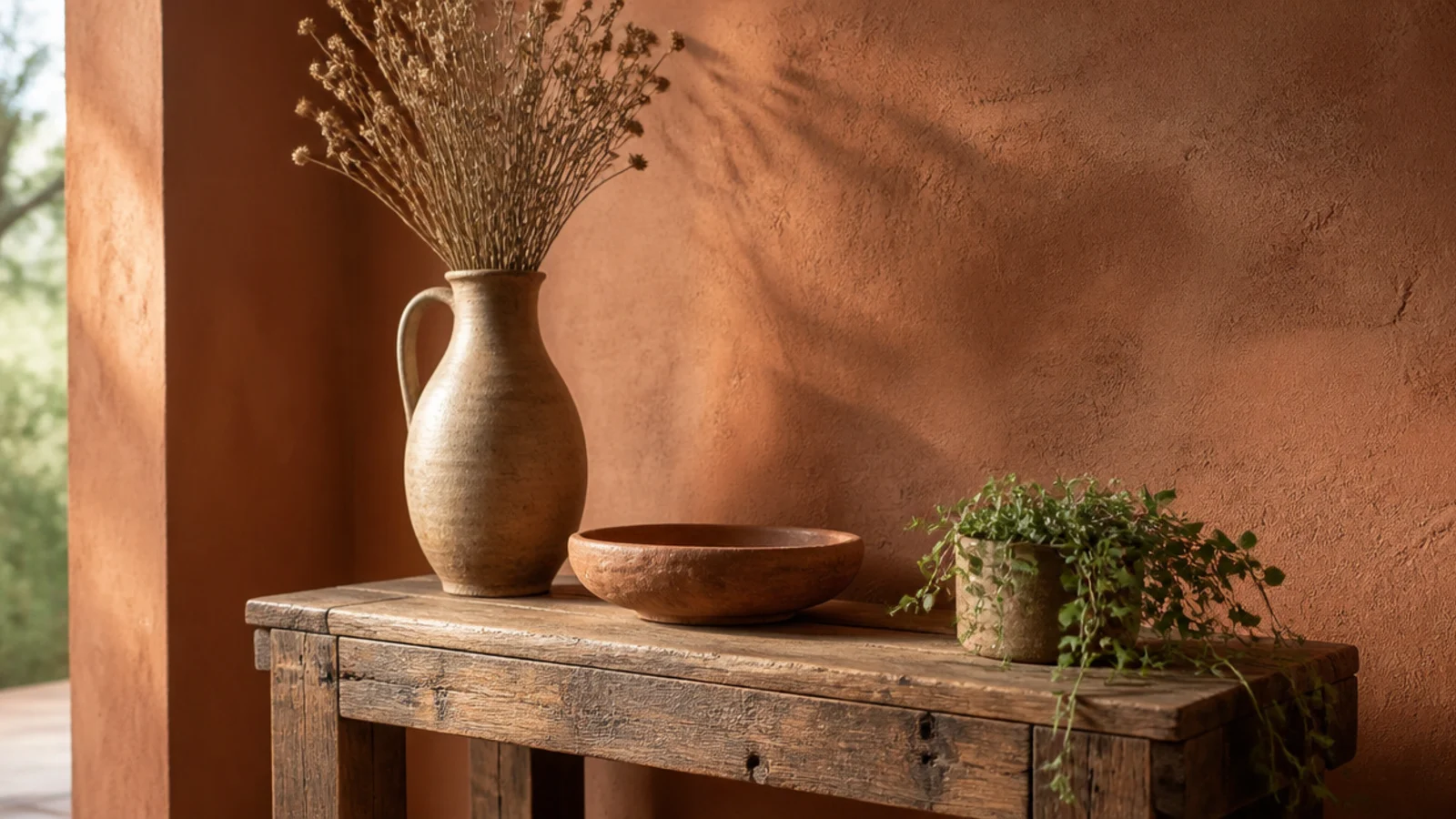
One good vessel that lives on the surface year-round beats a rotating cast of small ceramics. A speckled stoneware jug takes dried stems in winter and branches in spring without ever looking wrong.
Thrift shops are full of them for $6 to $12. Choose one about 8 to 10 inches tall so it reads at standing height. $
11. Dried stems instead of fresh flowers
A bundle of dried wheat, bunny tails or seed heads costs about $12 and lasts two years. Fresh flowers in a dim hall last four days.
Cut them so the tallest stem sits roughly 1.5 times the height of the jug. Give them a shake outside twice a year and they stay looking deliberate rather than dusty. $

12. One plant that tolerates a dim hall
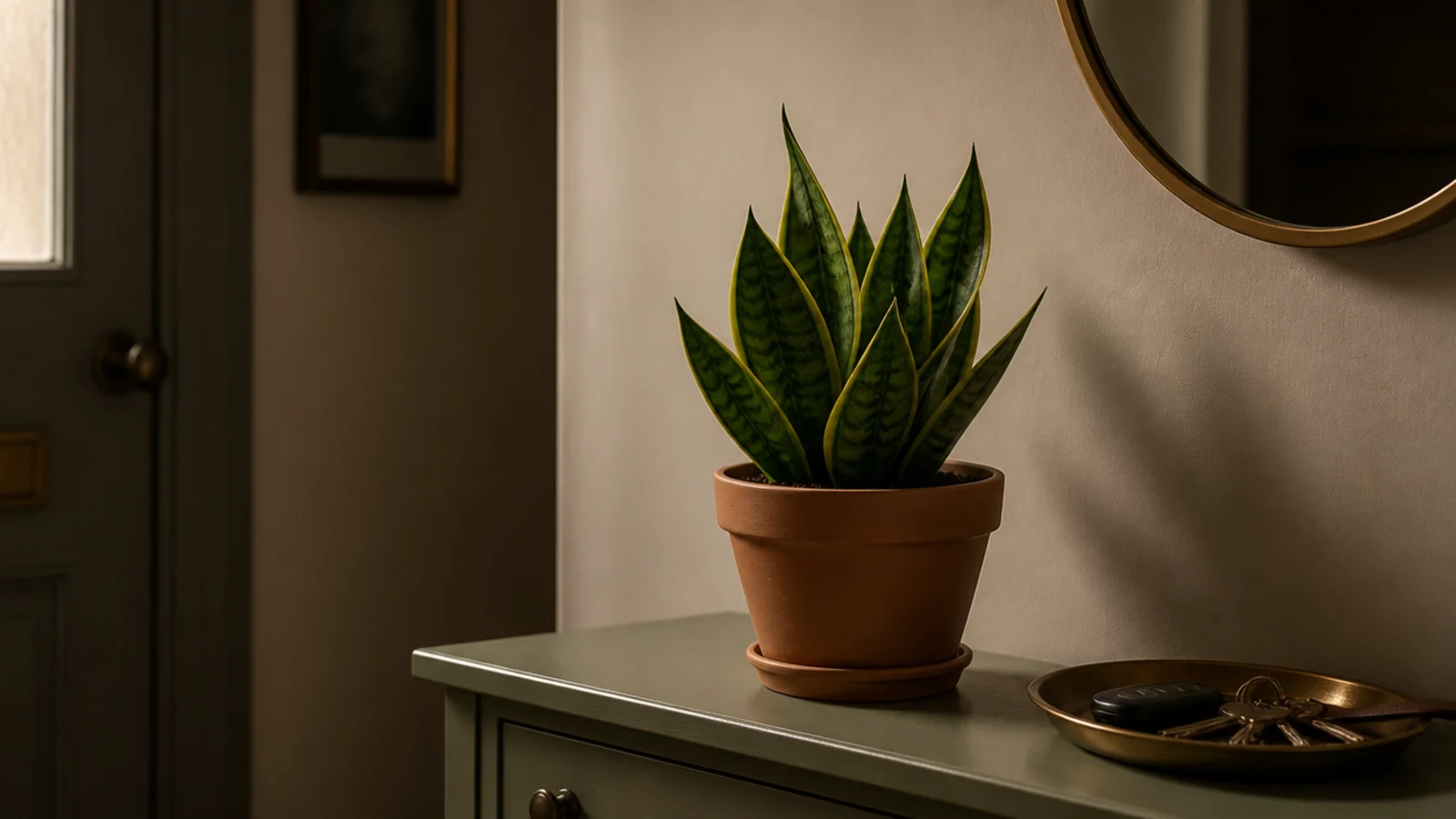
Buy for the light you have. A snake plant, ZZ or pothos survives a foyer with no window; almost nothing else does, and a dying plant reads worse than no plant.
A 6-inch pot runs $10 to $18. One is enough — a foyer is a passage, not a greenhouse. $
13. Two books as a riser
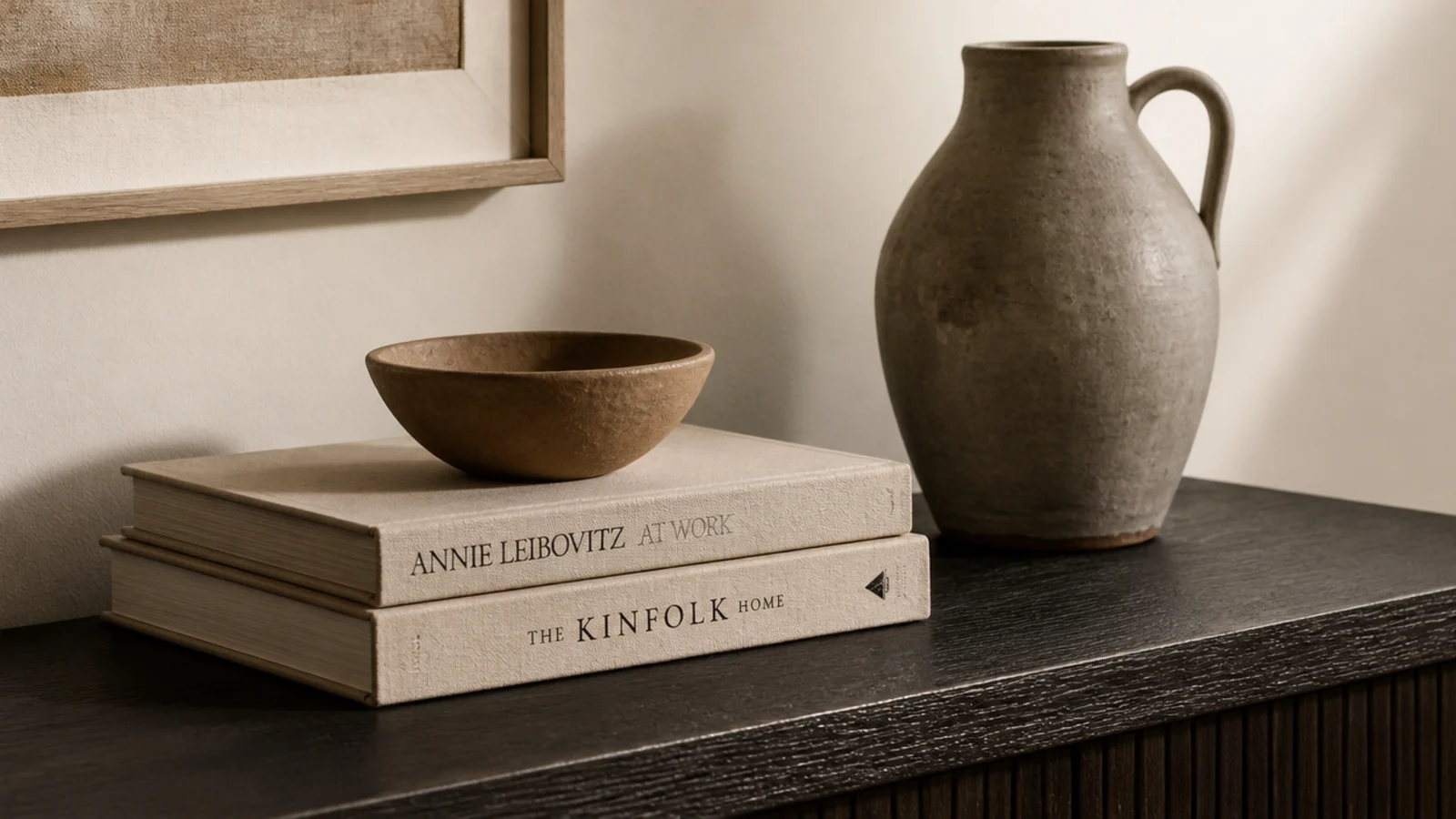
The cheapest styling trick there is. Two hardbacks lying flat under a small bowl or plant lift it two inches, and that height difference is what makes three objects read as a group.
Use books you own with plain cloth spines. Turn the fore-edges out if the covers are loud. Free
14. A charity-shop mirror painted to match
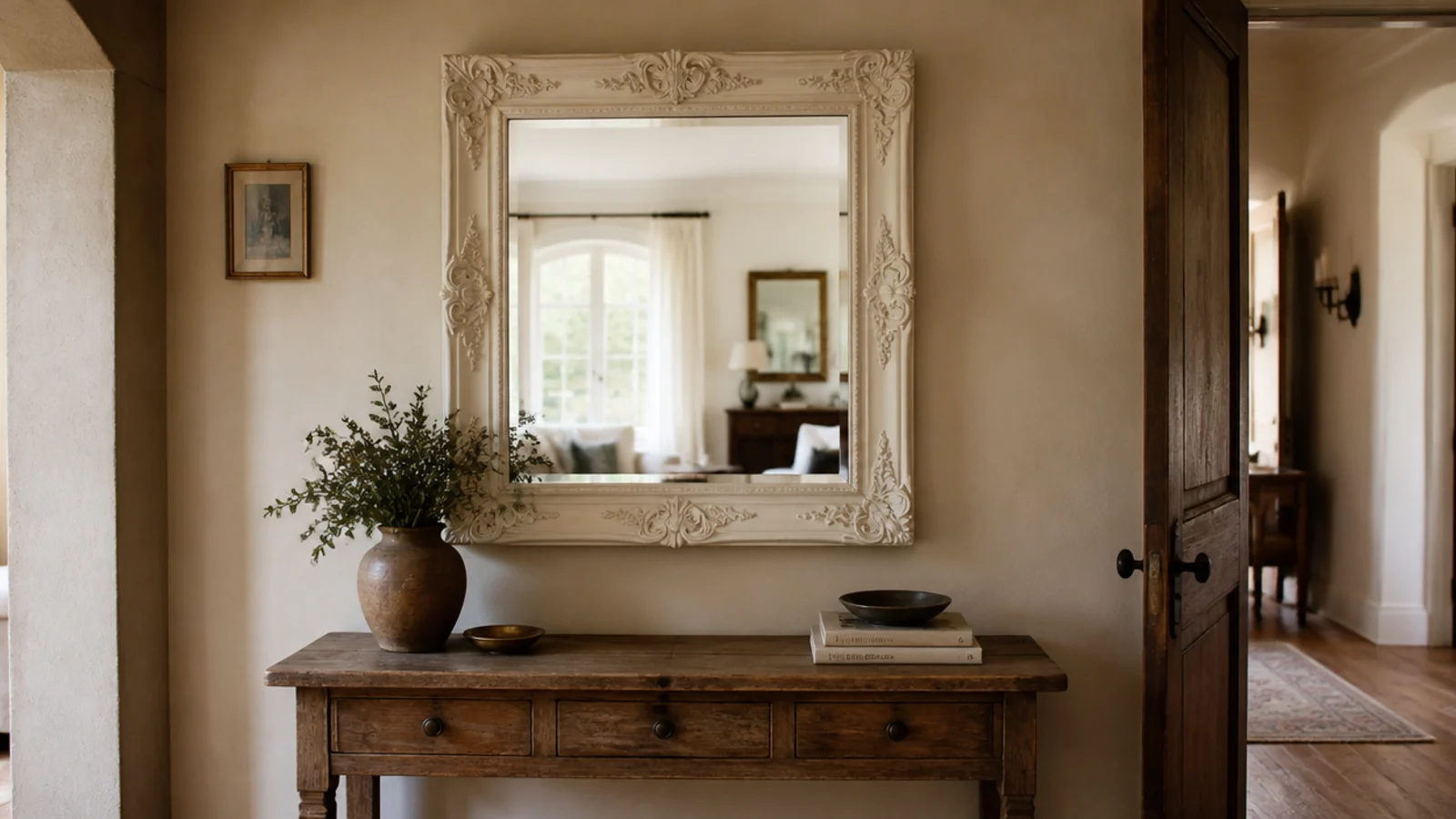
Old mirrors are cheap because the frames are dated, and the frame is the easy part. A carved gilt frame painted flat cream or the wall colour becomes quietly modern.
Tape the glass, two thin coats of chalk paint, done for about $10. Hang it centred at 57 to 60 inches. More framing options in vintage mirror wall decor. $
15. Lean art instead of hanging it
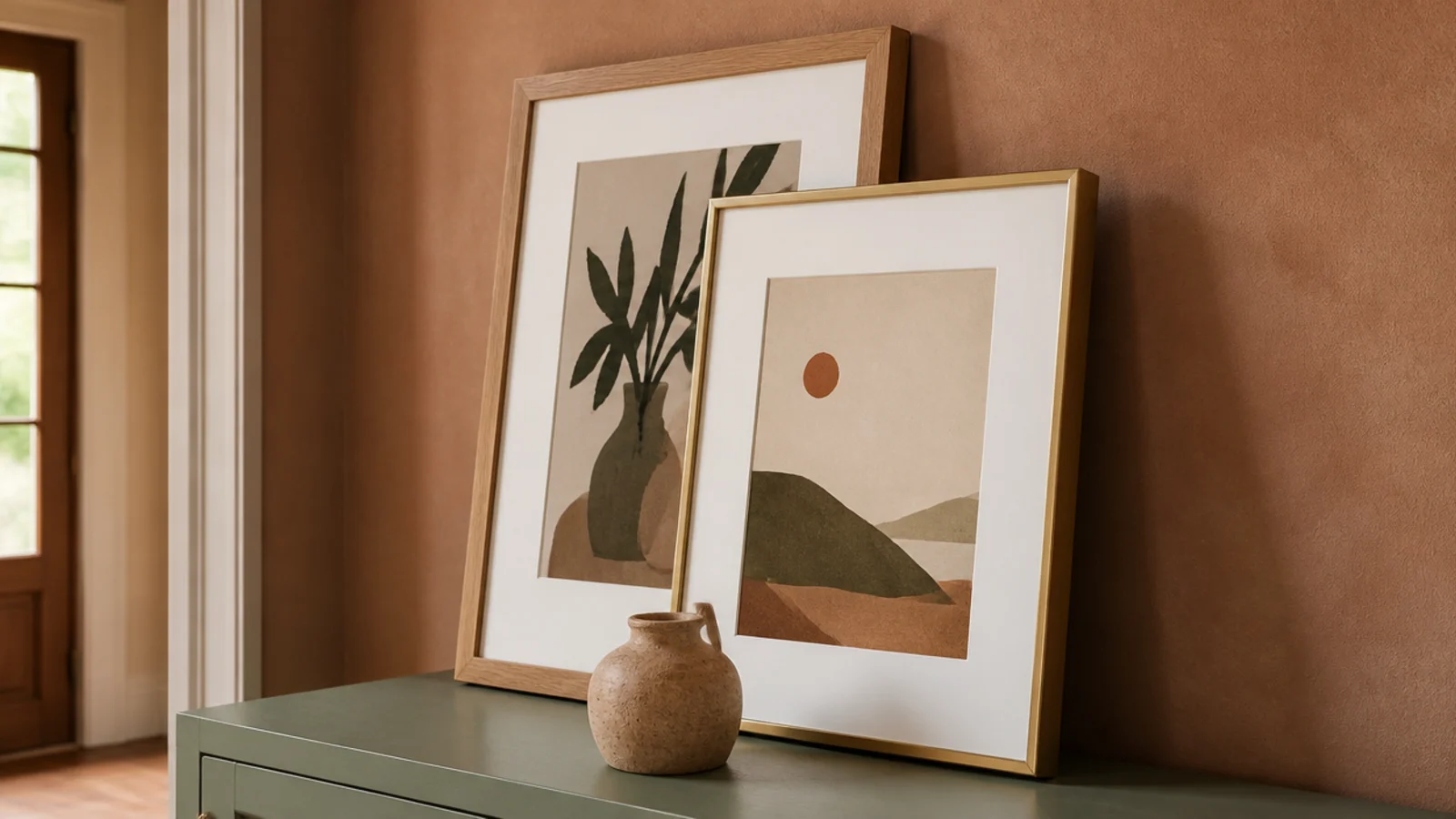
Leaning a framed piece against the wall on a console top costs no holes, no patching and no decisions you have to live with.
Overlap two frames slightly and vary the sizes. Renters especially: this is the version of a gallery wall that leaves your deposit intact and restyles in five minutes. Free–$
16. A calendar print in a twelve dollar frame
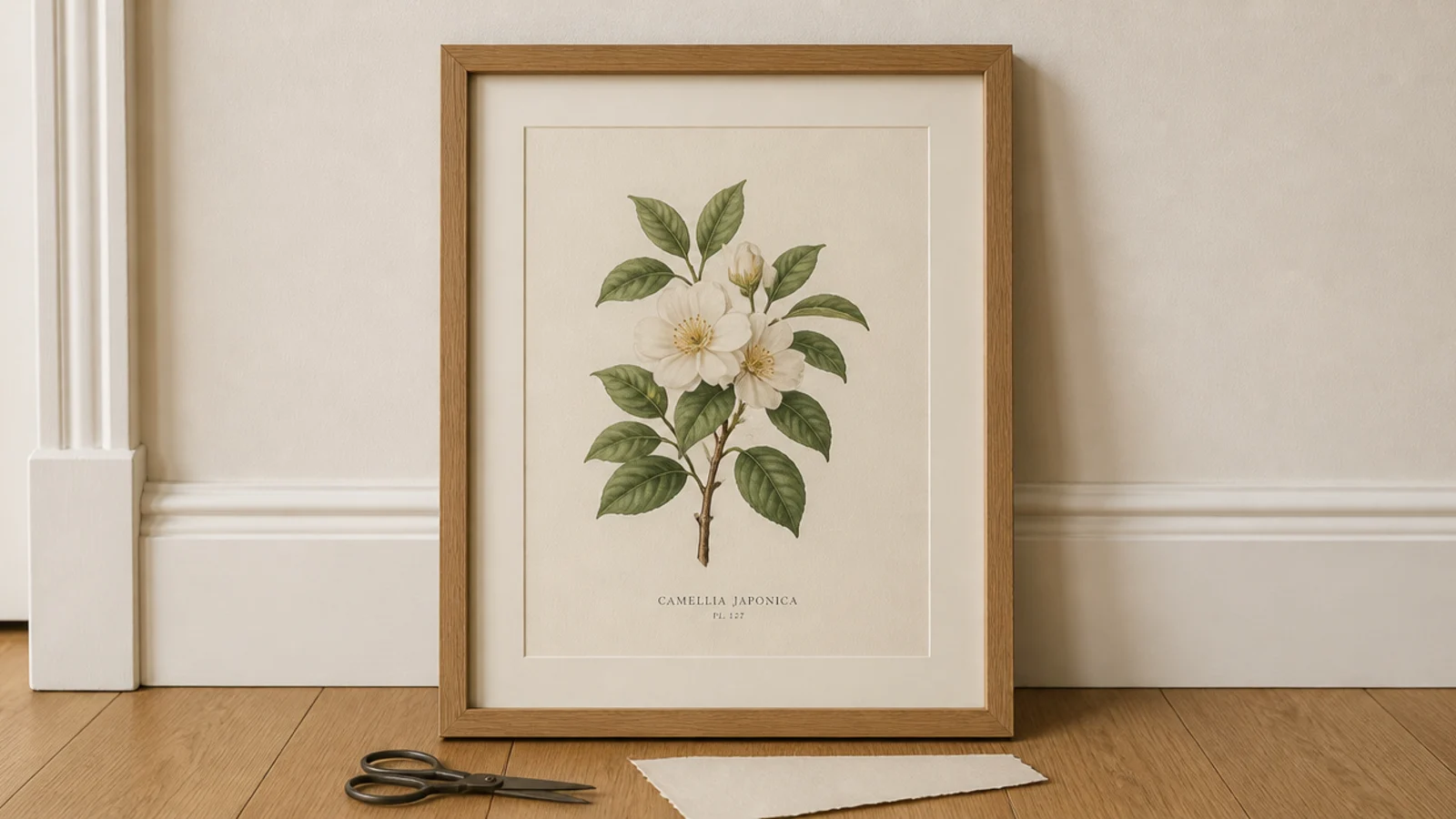
Botanical and archive calendars are printed on genuinely good paper, and a single month cut out and framed reads as real art.
A plain oak frame at $12 to $20 does the rest. Keep the mount generous — a small print in a large frame always looks more expensive than the reverse. $
17. A peg rail you paint yourself
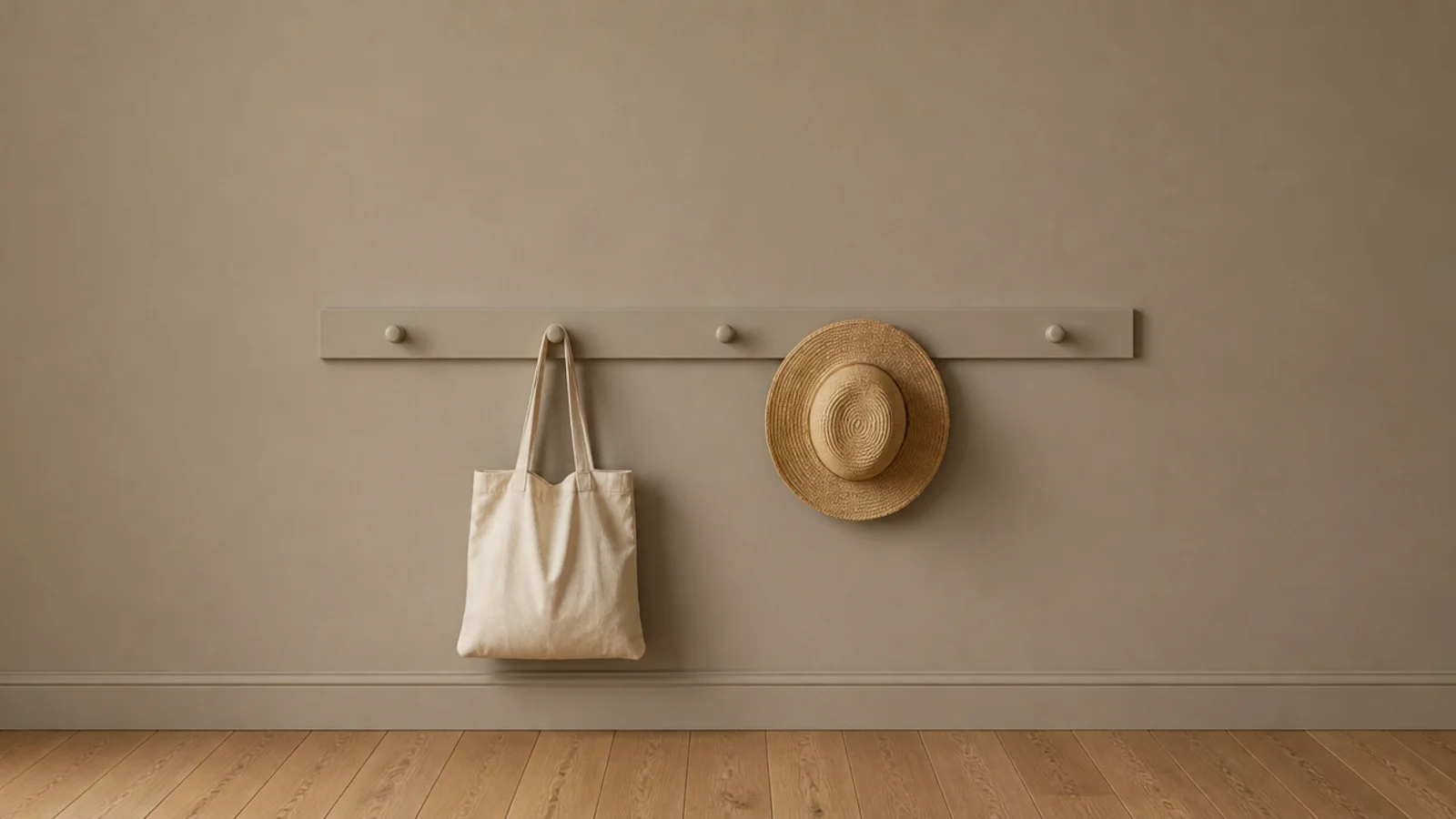
A length of pine peg rail costs about $20 and holds coats, bags and hats. Painted the same colour as the wall, it reads as architecture rather than as a purchase.
Pegs project 2 inches versus 4 for most decorative hooks, which matters in a narrow foyer. Screw into studs — a loaded rail carries 20 to 30 pounds. $
18. Plain hardware-aisle hooks
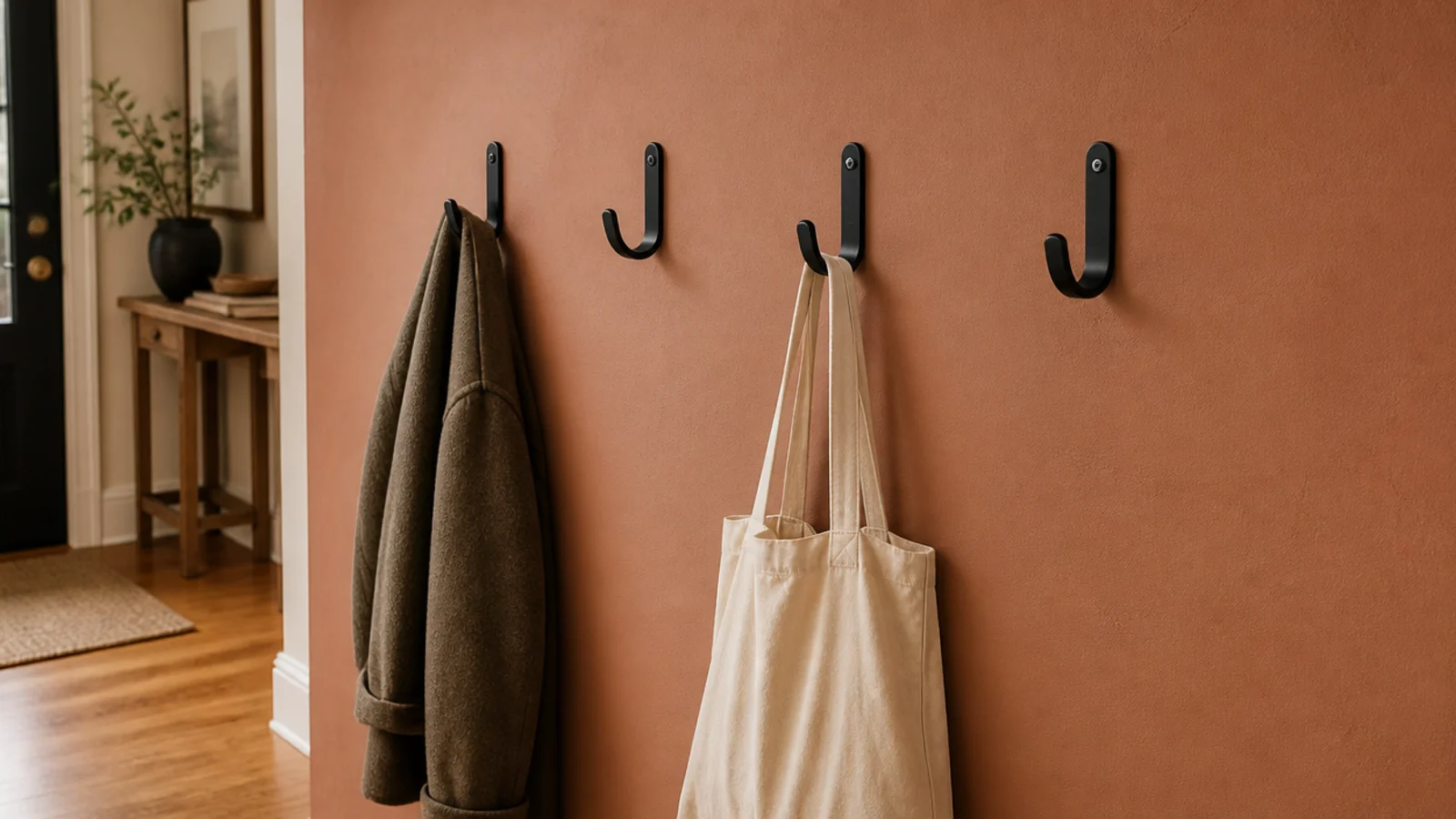
The same hook costs $4 in the hardware aisle and $14 in the decor aisle, and the hardware version usually carries more.
Plain black utility hooks or simple brass coat hooks look better in a row than any novelty shape. Buy one more than you need and leave it empty for a guest coat. $
19. A picture ledge for art you change
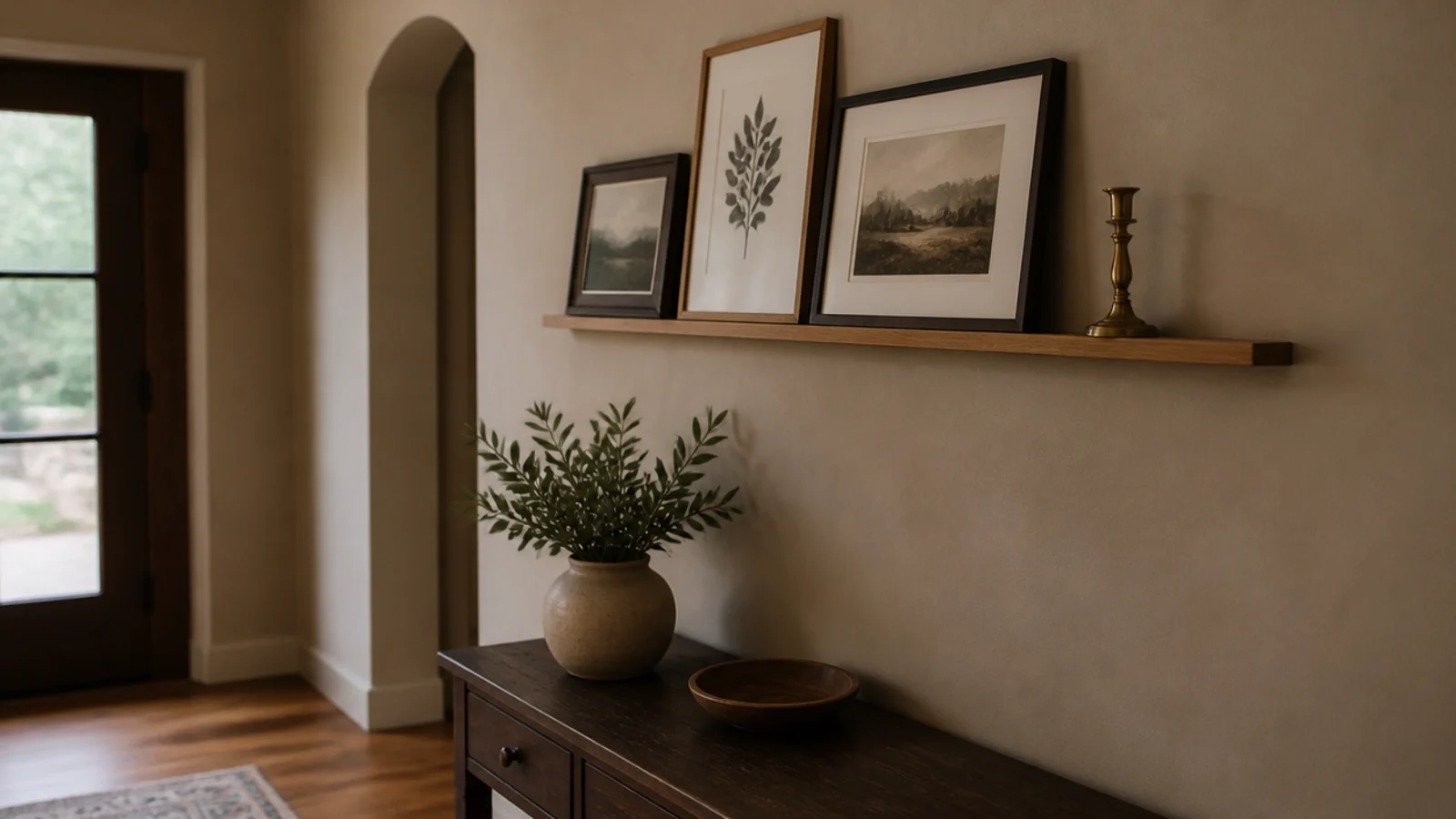
A 3-inch ledge with a lip lets you lean and swap frames forever without another hole. It is the cheapest way to keep a foyer wall from going stale.
Mount it at 60 to 66 inches, above the coat zone. Overlap the frames slightly so the row reads as one composition. $
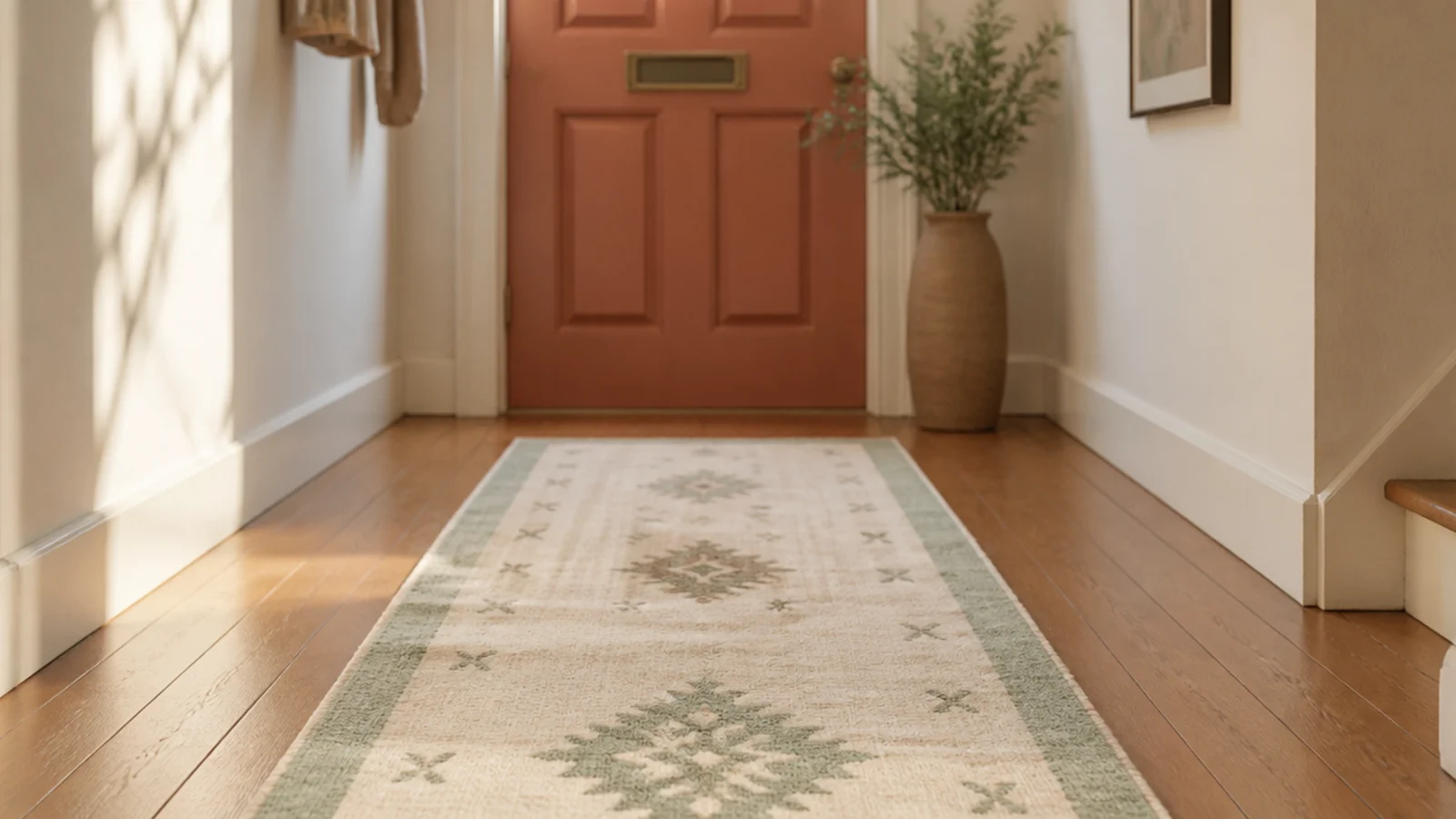
20. A flat-weave washable runner
A flat-weave washable runner catches grit at the door and survives boots. Deep pile traps grit at the base, mats down in the traffic lane and looks tired within a winter.
Leave 4 to 6 inches of bare floor on each side. Jute is the honest budget pick at $40 to $60; wool flat-weave lasts a decade. $–$$
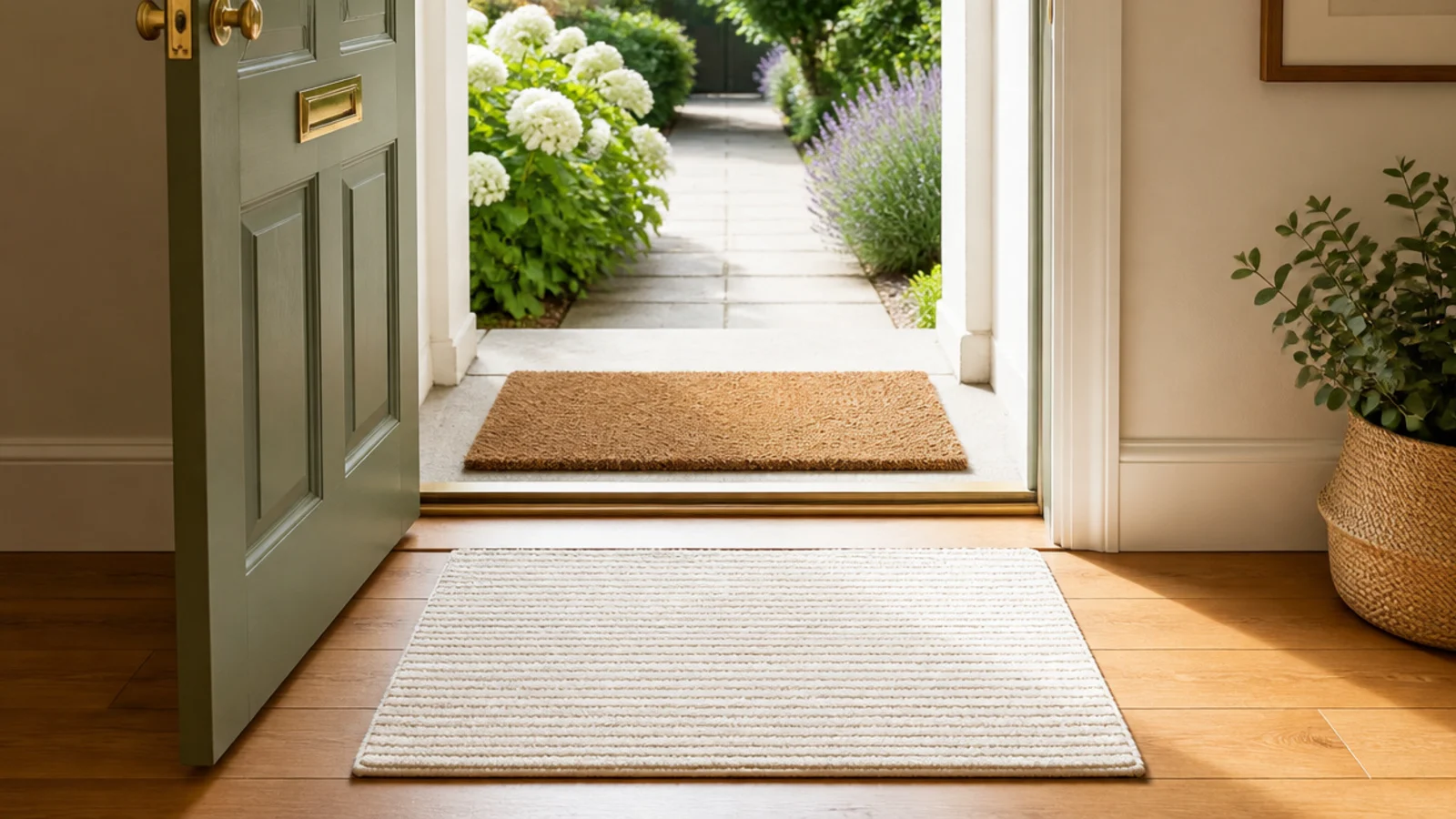
21. Coir outside, washable inside
Two mats, two different jobs. A coarse coir mat outside scrapes mud off soles; a soft washable mat inside catches the fine grit that gets past it.
Together they cost about $35 and they save the runner behind them. The inside mat goes in the machine monthly, which is the whole reason it works. $
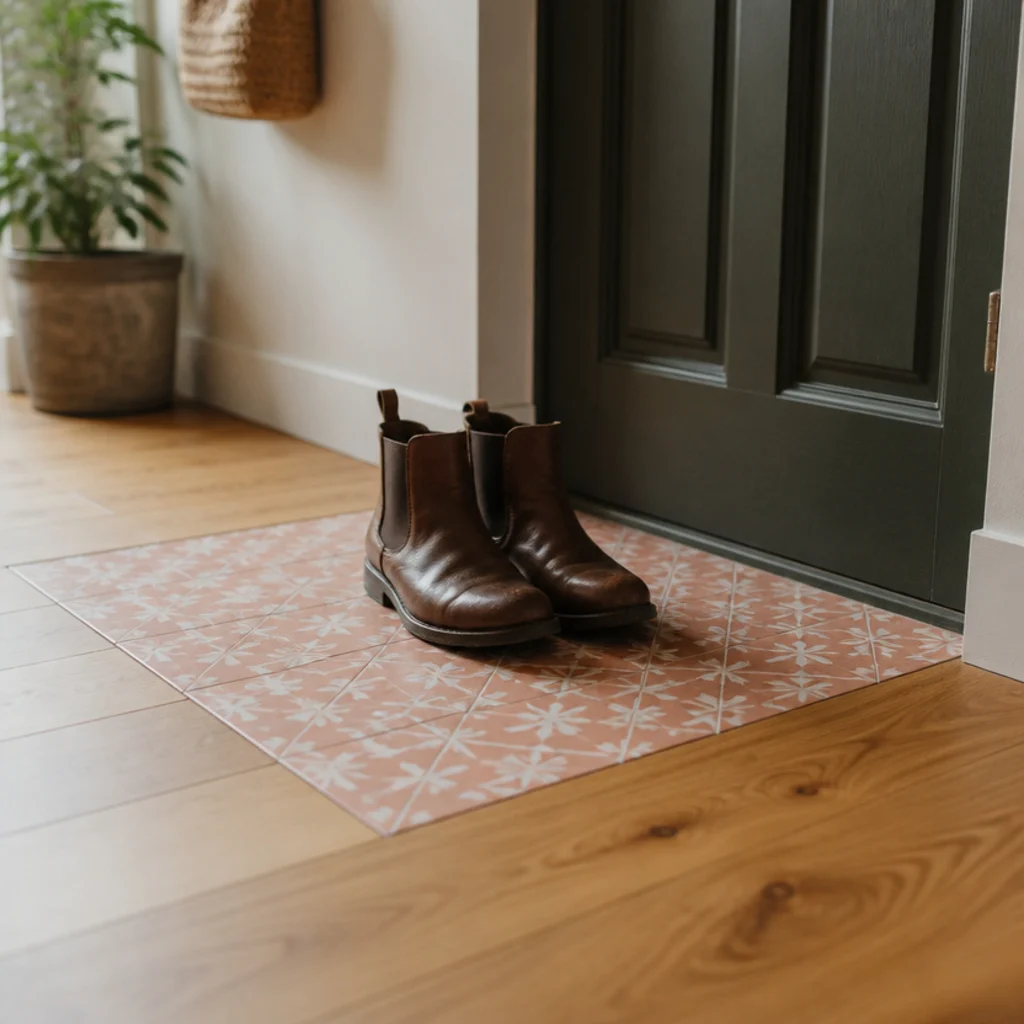
22. Peel-and-stick tile for the landing zone
A 3 by 3 foot square of peel-and-stick tile inside the door gives wet boots somewhere to stand that is not your floor.
Good vinyl versions run $2 to $4 a square foot and lift cleanly in a rental. Cut a straight line where it meets the boards; a ragged join is the only thing that gives it away. $
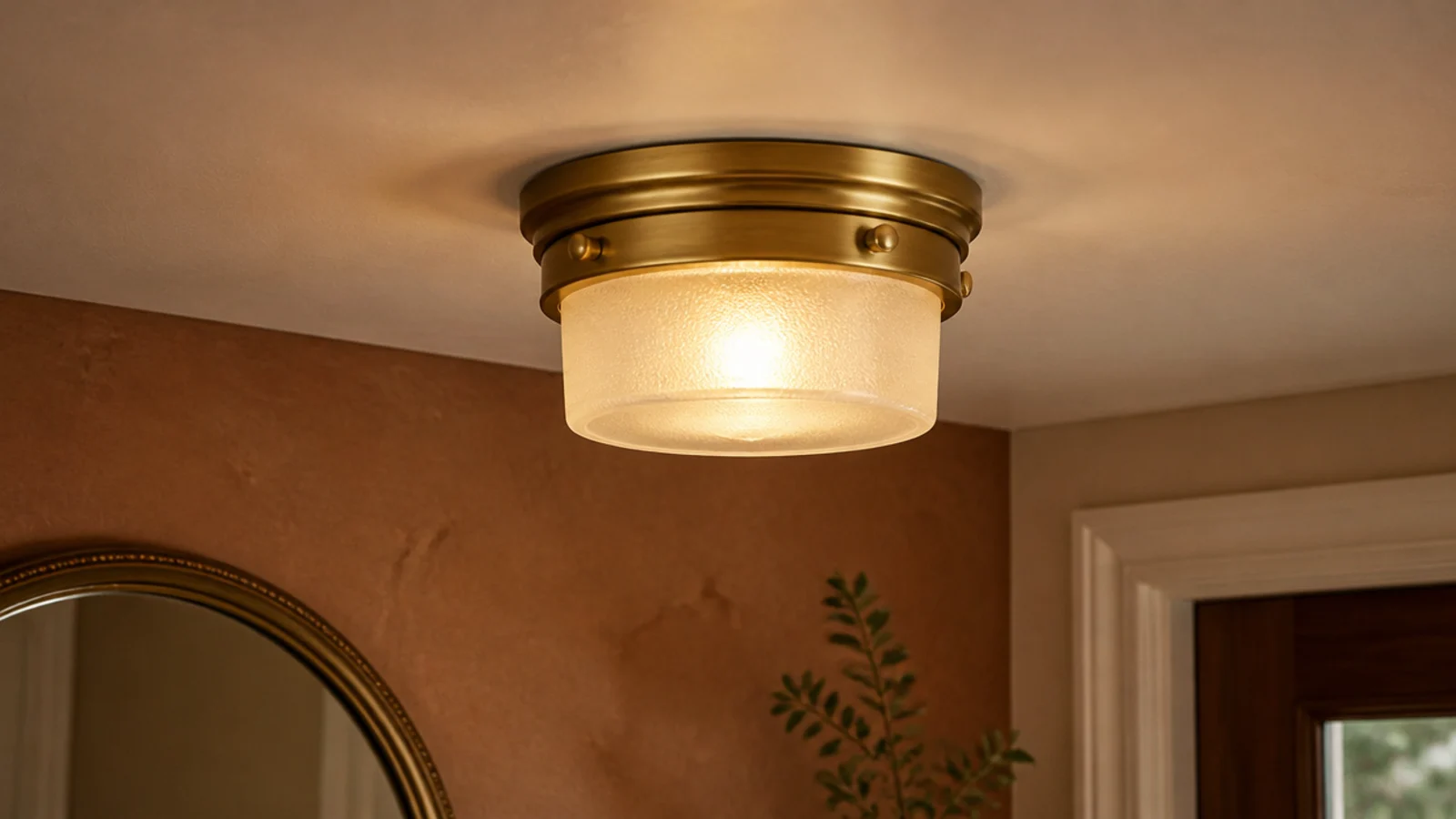
23. Swap the ceiling shade
The builder-grade dome fixture is usually the worst-looking object in a foyer, and a compact frosted glass or brass flush mount replaces it for $40 to $70.
Kill the breaker, not just the switch. Keep the bulb at 2700K — cool white in a foyer reads like an office corridor at night. $–$$
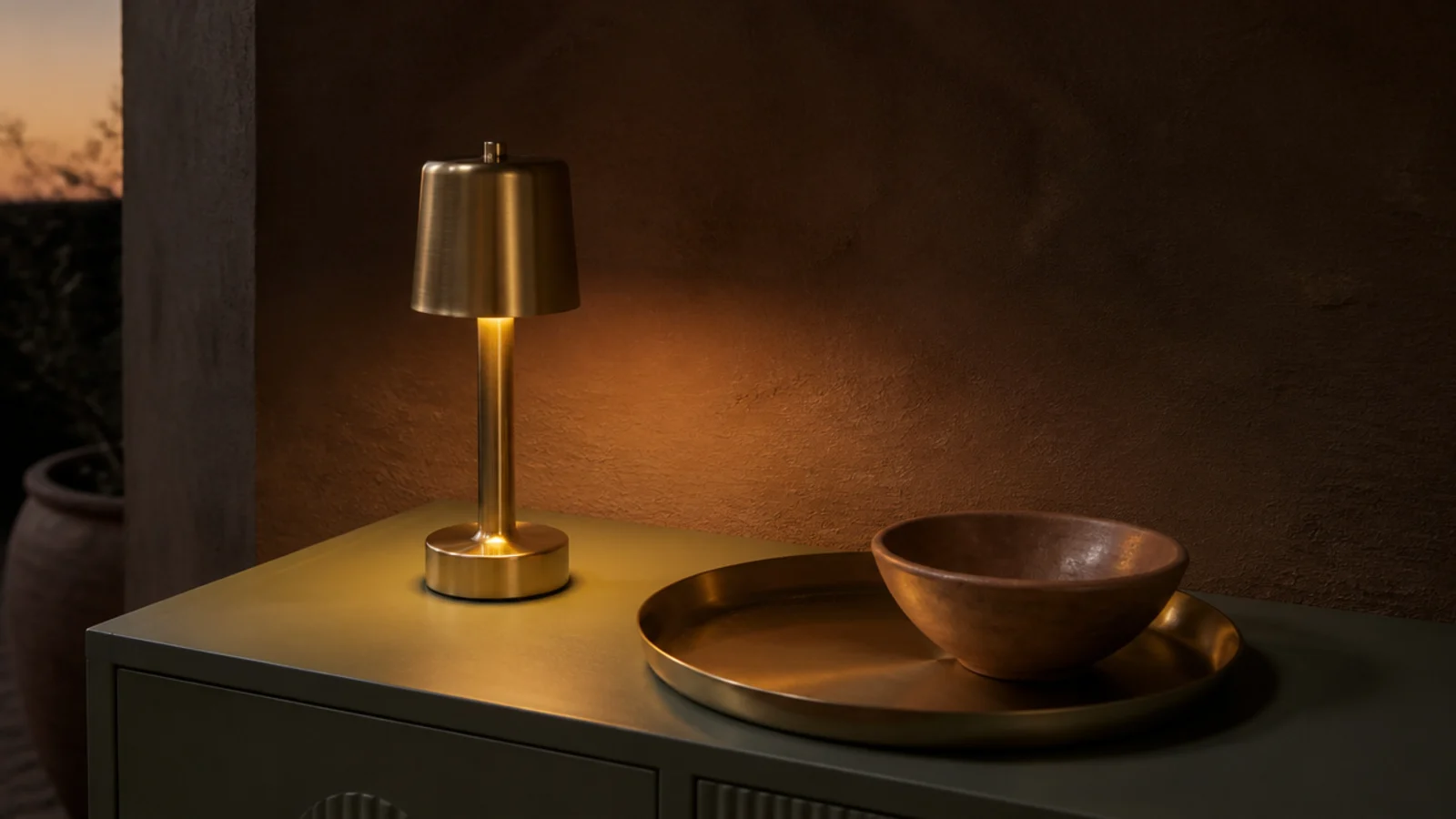
24. A rechargeable cordless lamp
A single ceiling fixture flattens an entry. Most foyers have no outlet, which is exactly what cordless lamps solved.
Twenty hours a charge, warm dimmable light, $30 to $60. Set it on the console and the whole hall stops feeling like a passage after dark. $
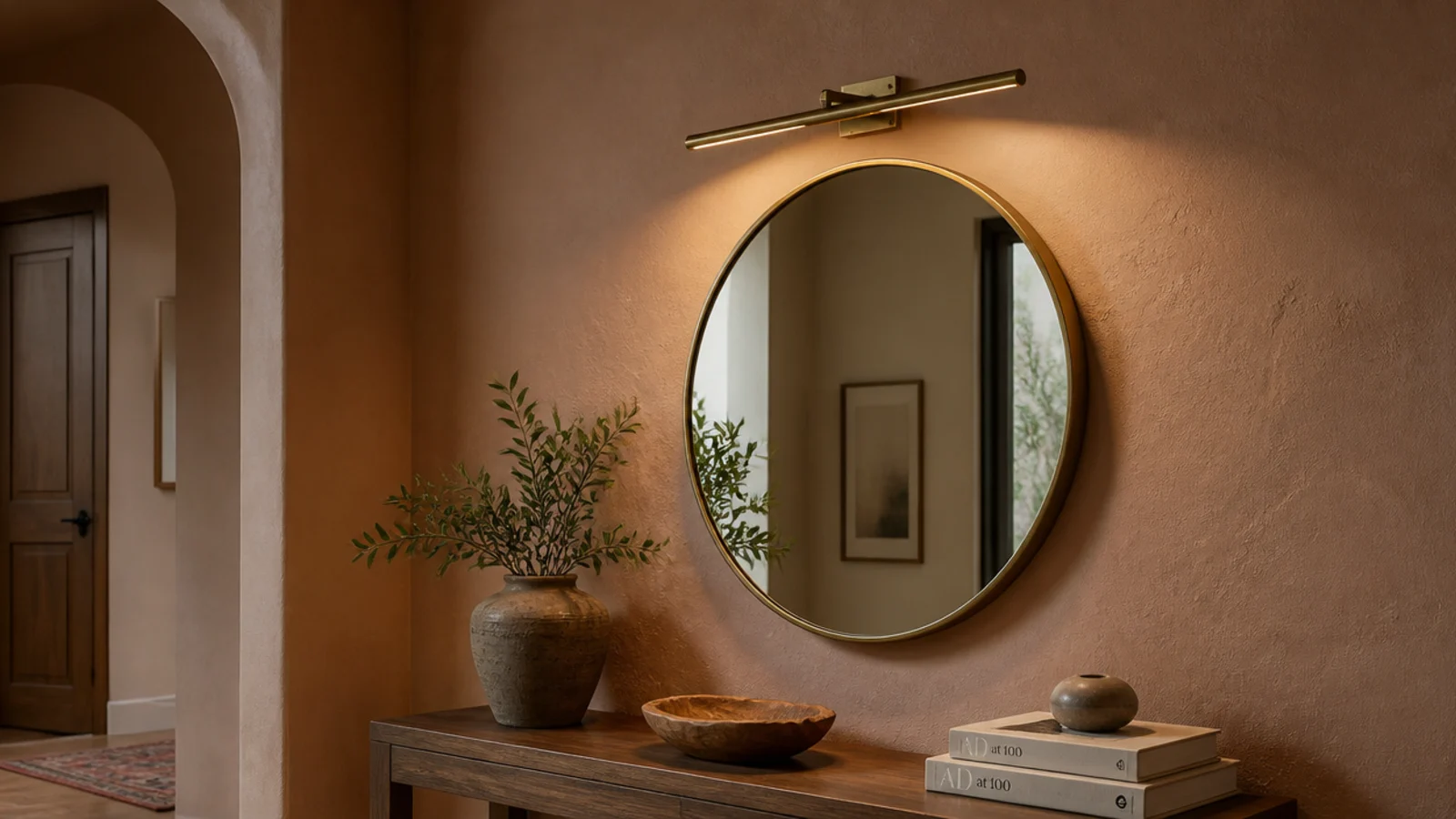
25. A battery picture light over the mirror
Where there is no surface at all, put the light on the wall. A battery picture light above a mirror costs around $30, mounts with two screws and needs no wiring.
Get one with a remote or a timer. Light falling down across the glass is what makes a foyer feel finished at night. $
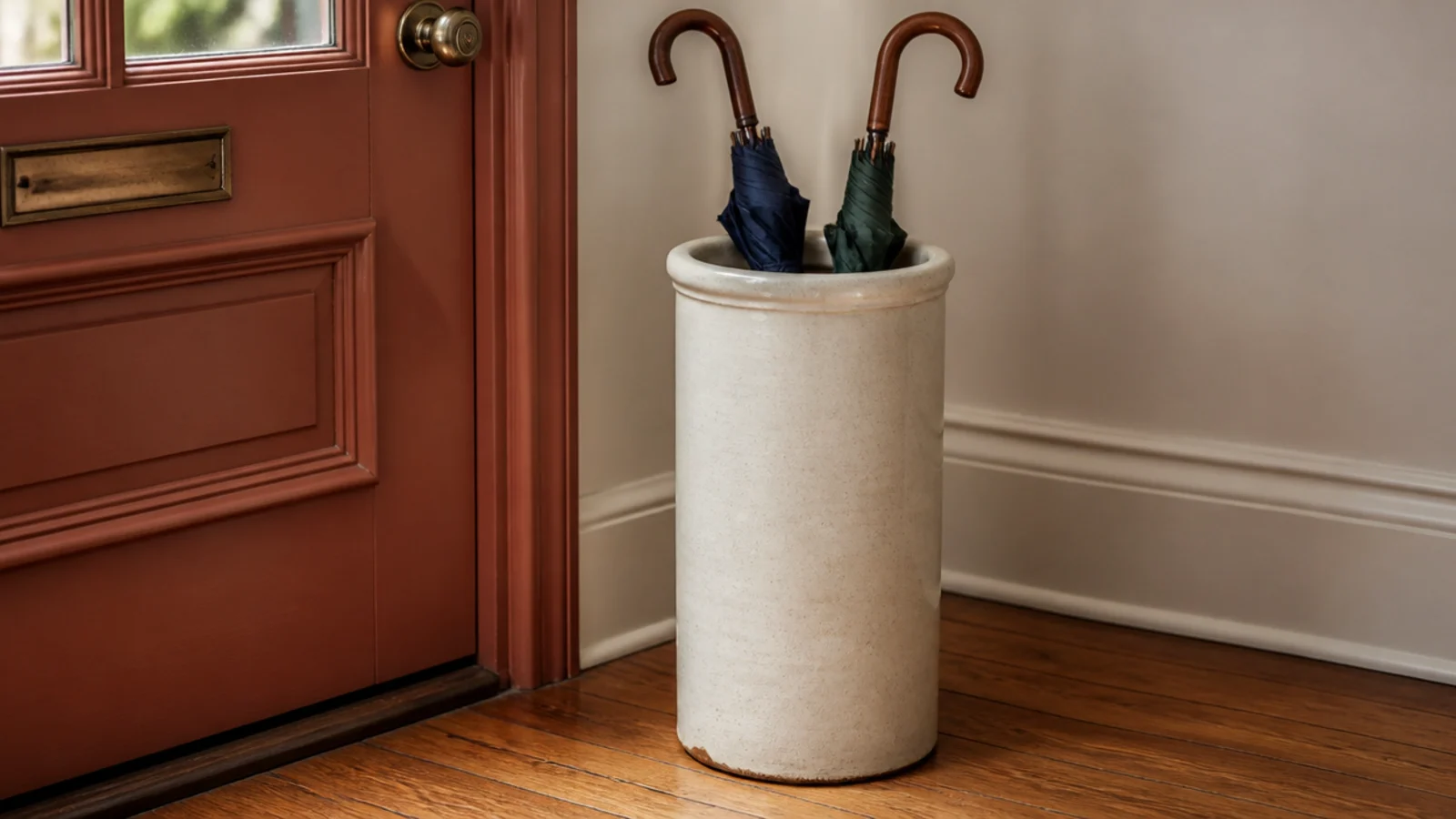
26. A stoneware crock as the umbrella stand
Purpose-made umbrella stands are strangely expensive. A tall stoneware or glazed crock does the same job for half, and looks better empty.
Aim for 14 to 18 inches tall with a heavy base so it does not tip. Put a folded cloth in the bottom to catch drips and swap it out when it is wet. $
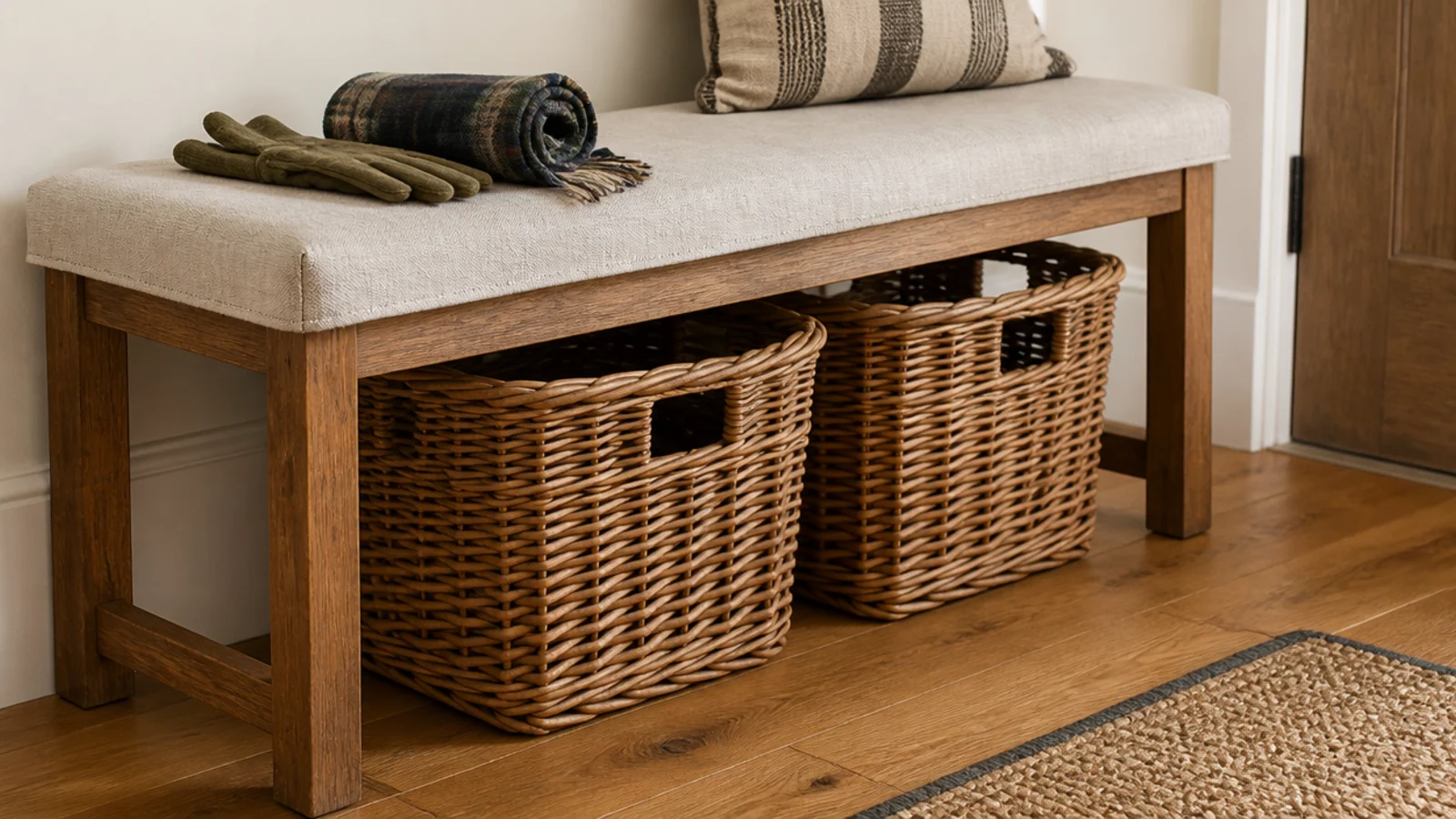
27. Garden centre baskets, not storage aisle bins
Garden centres sell willow and seagrass baskets for roughly half what the home storage aisle charges, and they are usually better made.
Look for ones about 16 by 12 by 10 inches to sit under a bench. Line one with a cloth if it will hold gloves and hats. See more in shoe cabinet decor. $
28. Group in odd numbers at three heights
Three objects, three heights: something tall like a jug of stems, something low and wide like a bowl or books, something soft that trails.
Keep everything but the tall piece under 18 inches so it does not block the mirror. Leave a third of the surface empty for the bag that lands there daily. Free
29. Keep the cabinet top almost bare
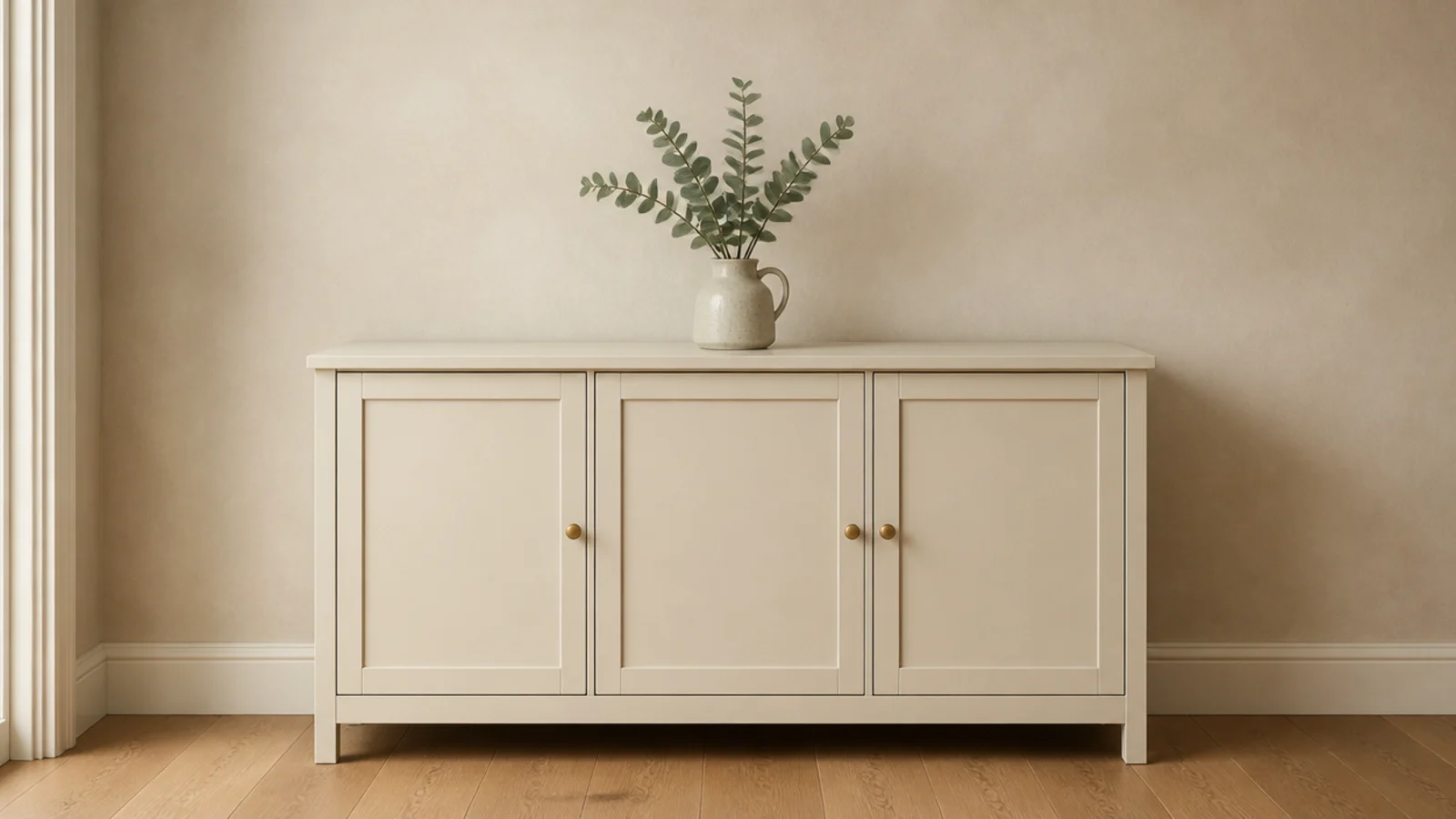
Any hip-height surface with a full styled arrangement on it becomes a mail drop within a fortnight, because there is nowhere left to put anything down.
One jug or one small plant is enough on top of a shoe cabinet. The empty space is doing a job, and it is the job you actually need daily. Free
30. Set an annual cap and photograph it monthly
Give the foyer a budget — mine is $100 a year — and photograph it on your phone at standing height once a month.
The cap stops the slow accumulation of small objects, and the photo shows the clutter your eye has learned to skip. Both cost nothing and keep everything above working. If you want the pared-back version of this list, entryway on a budget is the place to go. Free
Mistakes to Skip
- Buying accessories before painting. Objects fix one corner; a $25 quart of colour fixes every surface in the room at once.
- Repainting a thrifted console two-tone with a stained top. It is the finish that most reliably announces a piece as secondhand, and one flat colour costs the same.
- Filling a dim foyer with plants that need light. A struggling plant looks far worse than a bare surface, and it is $15 you spend again every few months.
Frequently asked questions
How can I decorate a foyer cheaply?
Spend on paint and light first, because both change the whole space rather than one corner of it. A quart of deeper wall colour runs about $25 and a small warm lamp about $30, and together they do more than $200 of accessories. Then thrift the console, and buy only the tray and the runner new.
What should go on a foyer wall on a budget?
A mirror, a hook rail and nothing else in the 18 inches above those hooks. Coats fill that band visually every day, so art placed there disappears from October onward. Hang framed pieces at 66 inches or higher, or lean them on a picture ledge so you can change them without patching a single hole.
How much does it cost to redo a small foyer?
Around $120 to $250 if you paint yourself and thrift the furniture. A quart of paint is $25, a thrifted console $30 to $60, a hook rail $30, a washable runner $40 to $80 and a small lamp $25 to $50. Skipping the console and mounting a $20 board ledge instead saves the biggest single line.
What makes a cheap foyer look expensive?
Repetition and restraint. Repeat one metal three times — the hooks, the tray and the mirror frame — keep the palette to one colour plus wood, and leave a third of every surface empty. Matching the trim colour to the wall costs nothing and does more for a small foyer than any single object you can buy.
Where is the best place to shop for foyer decor cheaply?
Thrift stores for the console, the mirror and any basket, because those are the pieces where age reads as character. Buy the runner, the tray and the light new, since those get used hard and cheap versions fail fast. Garden centres often beat home stores on baskets and crocks by half.
Paint first, light second, and let objects be the last thing you buy — that order is what makes a cheap foyer look considered instead of collected. For the full set of heights and clearances behind all of this, fifteen entryway ideas has the numbers, and entryway wall decor covers what belongs above the hooks. Save the pin so the list is with you at the thrift store.
Want more like this? Browse all 15 entryway & foyer ideas guides — they all use the same measurements and budget tiers.
Pin it for later
Save this to your Entryway & Foyer Ideas board
Pin it now so it is waiting for you when the tape measure comes out — and so the next person hunting for this idea can find it too.
Save this pinKeep going
More ideas worth saving while you have the tape measure out.