Entryway & Foyer Ideas · Listicle
25 Budget-Friendly Entryway Ideas for Small Spaces

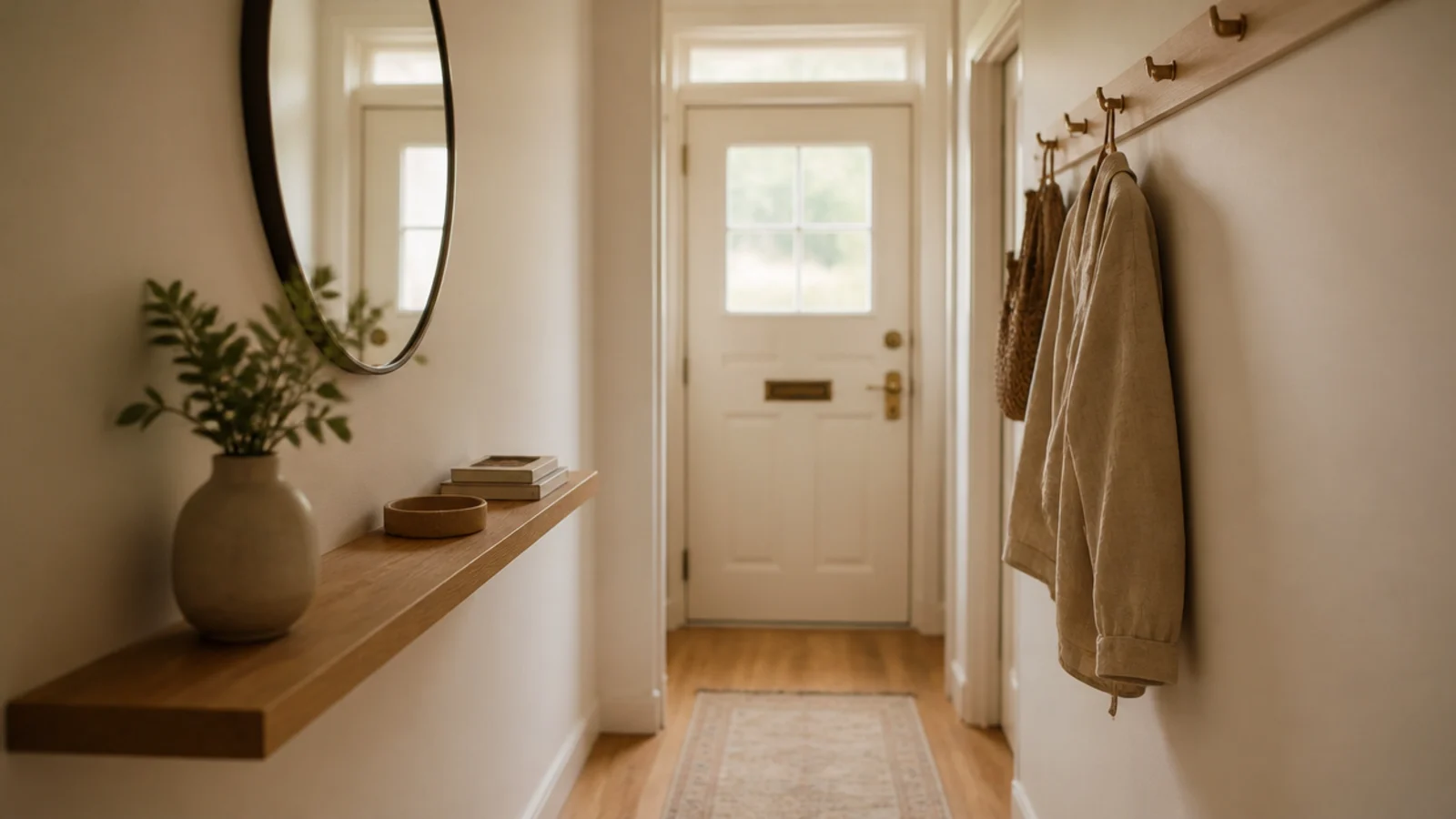
Small entryway ideas usually fail because they are shrunk versions of big-entry advice — a narrower bench, a slimmer console, a smaller basket. The fix is not smaller furniture. It is getting everything off the floor and onto a strip of wall, then being ruthless about how much lands there each day. Here are twenty-five that work in halls under three feet wide and apartments with no entry at all.
In this guide27 sections — tap to openHide
- 1.Measuring first: small entryway ideas that actually fit
- 2.Claim a 30-inch strip of wall and call it the entry
- 3.A 6-inch ledge instead of a console
- 4.A peg rail instead of chunky hooks
- 5.An over-the-door hook bar with no fixings
- 6.A mirror on the long wall, not the door wall
- 7.A stool that tucks fully underneath
- 8.A wall pocket for the post
- 9.Adhesive hooks with honest weight limits
- 10.A 9-inch tilt-out shoe cabinet
- 11.A doormat inside to mark the zone
- 12.Stack the whole entry in one 40-inch column
- 13.Paint a colour block where there is no entry
- 14.Swap the ceiling fixture for something smaller
- 15.A runner sized to the door swing
- 16.A corner shelf where two walls meet
- 17.Back-of-door storage for gloves and hats
- 18.A curtain to hide an open coat nook
- 19.One wall-mounted drawer for keys
- 20.A basket on a hook, not on the floor
- 21.A slim boot tray under the ledge
- 22.A folding wall seat for lace-up mornings
- 23.A bracket ledge built from spare shelf parts
- 24.An adhesive light strip under the ledge
- 25.A leaning mirror with no fixings at all
- 26.Cap it at one bag per person
- 27.Mistakes to Skip
Measuring first: small entryway ideas that actually fit
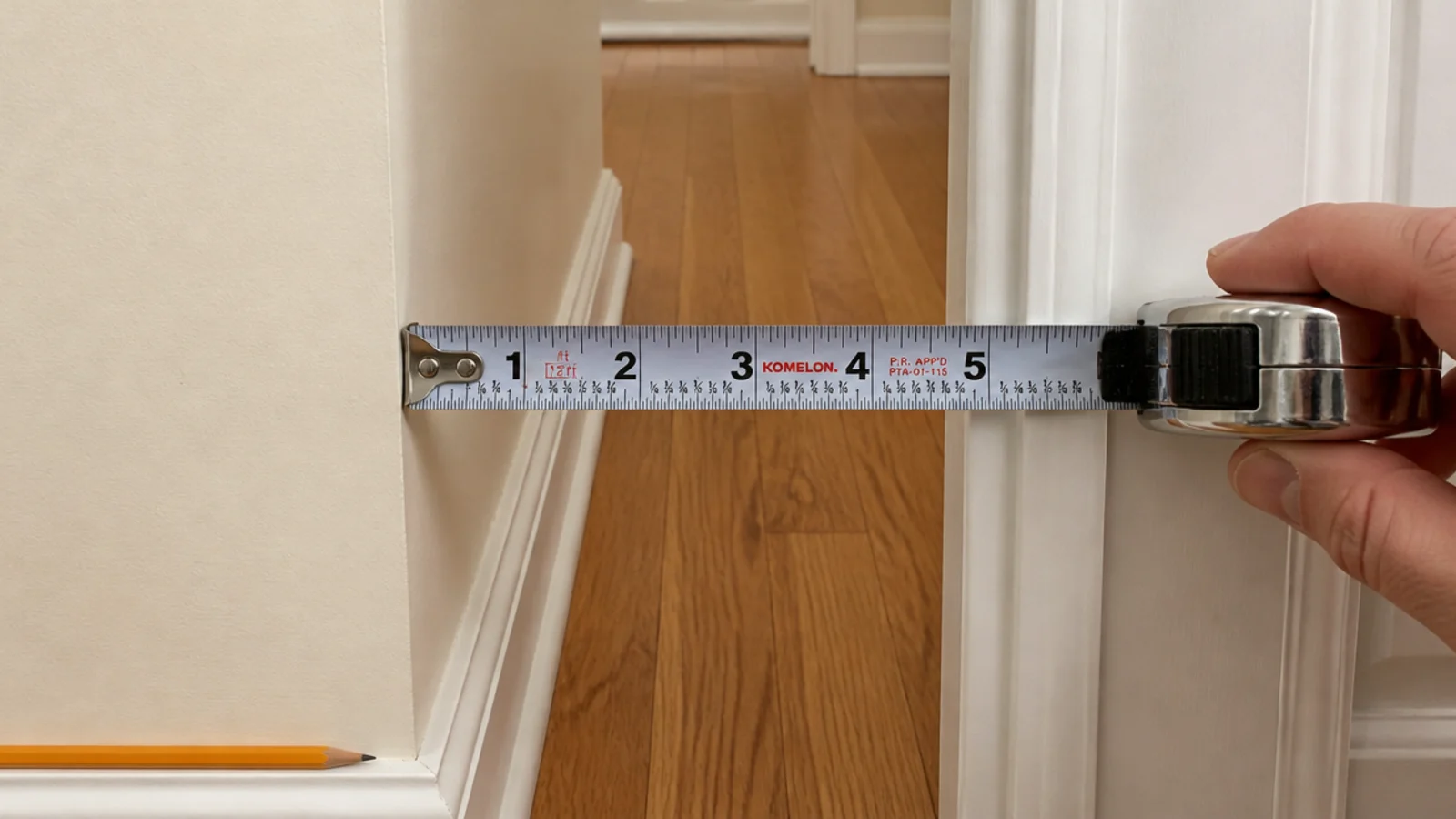
Take one measurement before anything else. Stand with your back to the entry wall and measure to the nearest thing you walk around — a doorframe, a stair newel, the swing of the front door.
Under 36 inches of clearance, nothing sits on the floor. Skip the console entirely and go wall-mounted, with the whole entry living between 30 and 60 inches up the wall. Between 36 and 48 inches, one 12-inch console or a narrow bench fits, but not both.
Then choose your jobs. An entry has five: a place to sit, a place for shoes, a place for coats, a landing surface for small items, and a mirror. A working entry does at least three. In a small space the three that fit are almost always coats, a shallow surface and a mirror — shoes move to a closet and nobody sits down.
The heights stay the same however small the hall is. Hooks at 52 inches, a lower rail at 40 for children, a ledge or console at 30 to 32, and a mirror centred at 57 to 60 with 6 to 8 inches of wall between the surface and the frame.
Budget tiers below: $ under $60, $$ $60–$150, $$$ $150 and up. Most of this list is $.
1. Claim a 30-inch strip of wall and call it the entry
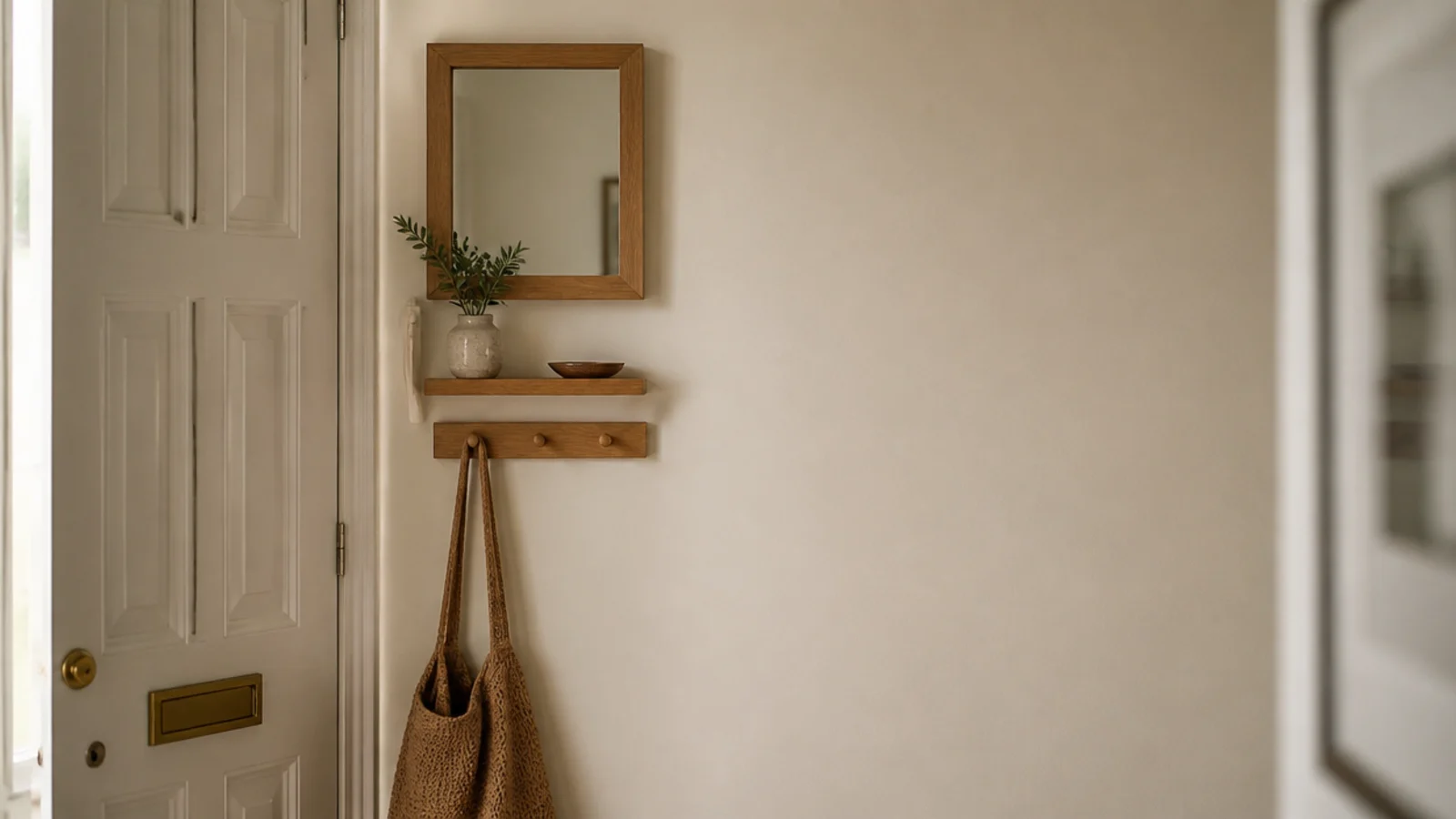
If the front door opens straight into a living room, you do not have an entry — you have to declare one. Thirty inches of wall beside the door is enough.
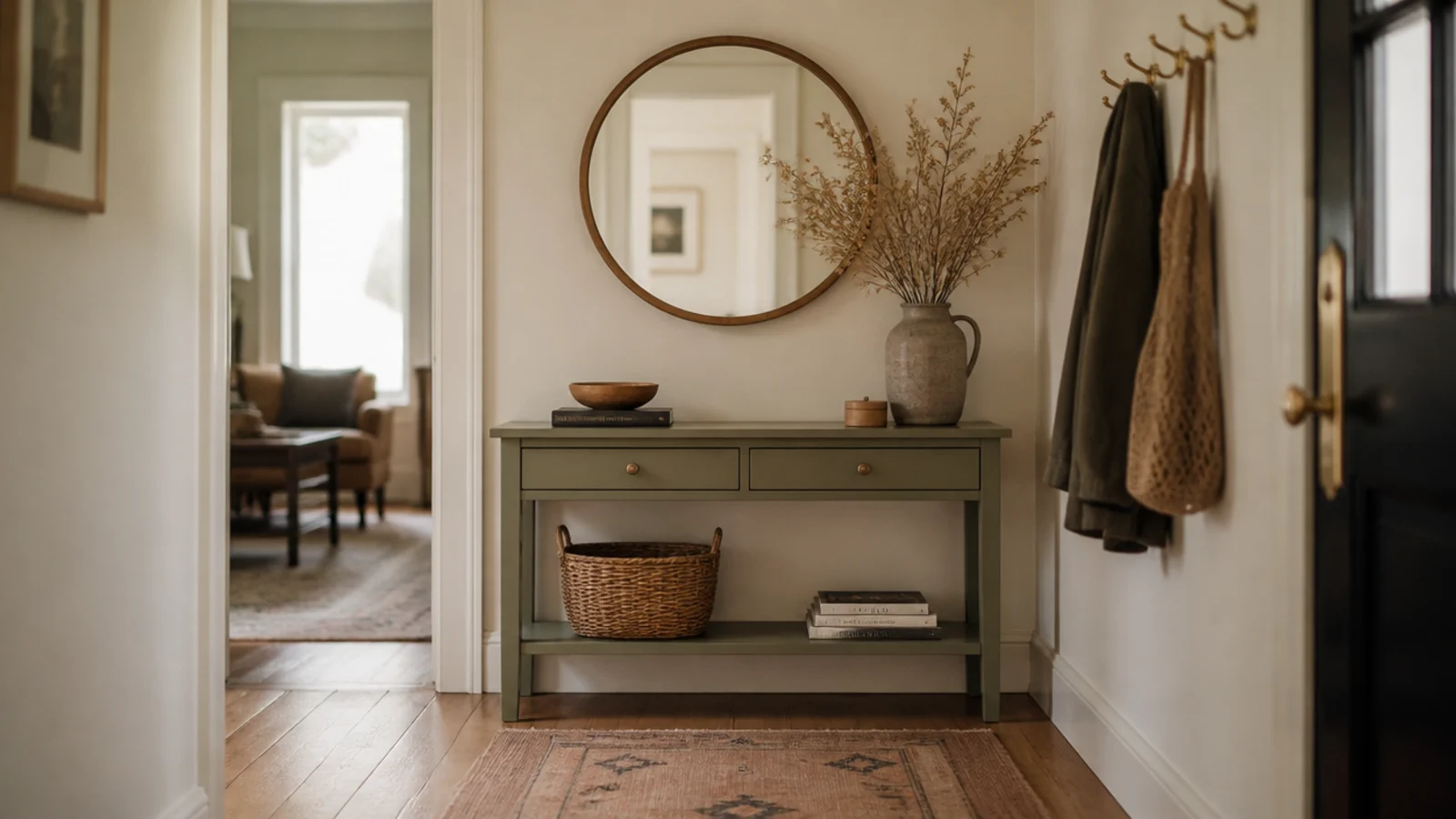
Peg rail at 52 inches, a 6-inch ledge at 32, mirror above. Three fixings and the space reads as deliberate rather than as a corner things collect in. $
2. A 6-inch ledge instead of a console
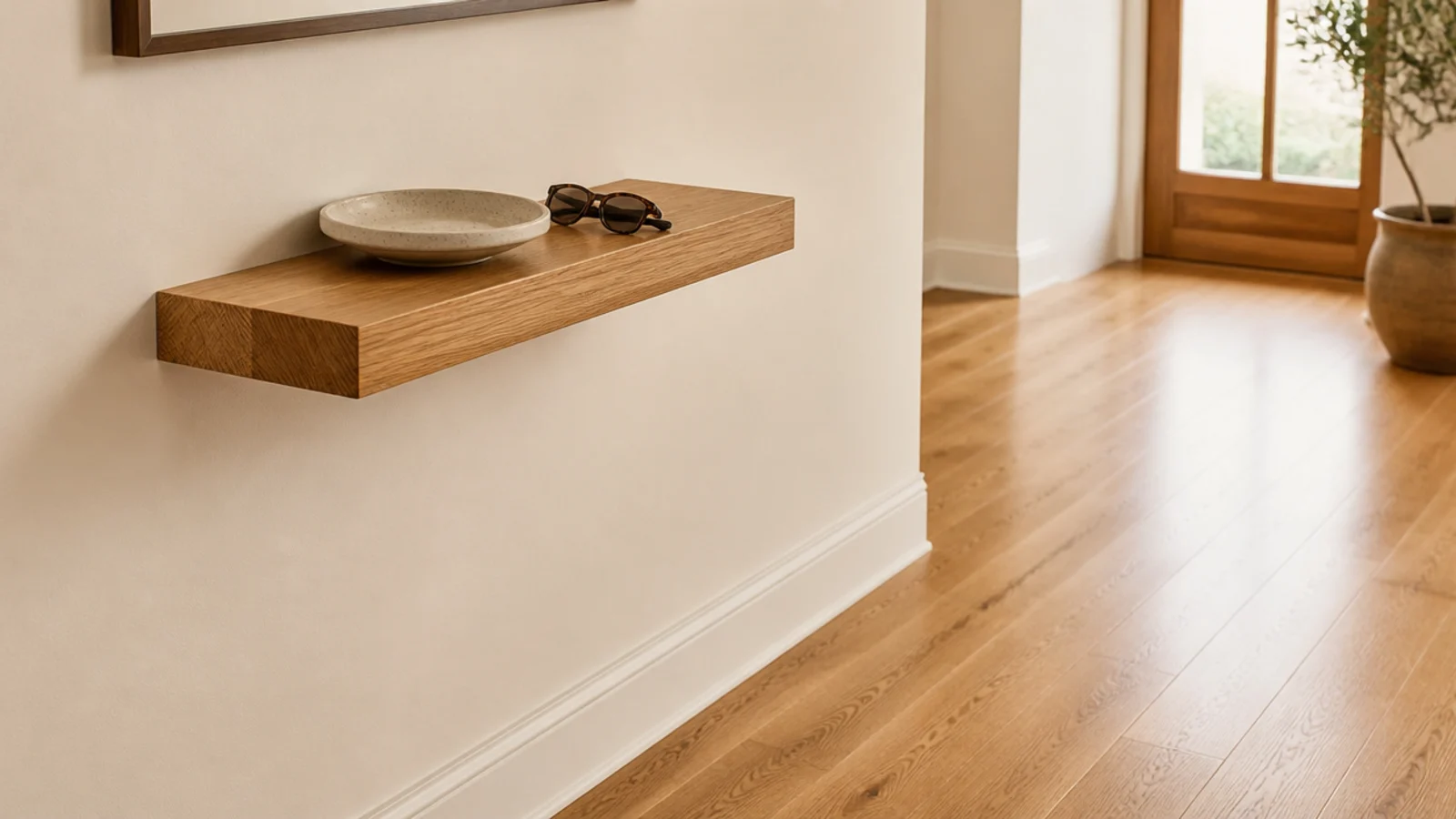
Legs are what make a small entry feel blocked, not the surface. A floating ledge 6 inches deep at 32 inches high does the landing-surface job with zero floor footprint.
Keep it under 36 inches long so it reads as a detail rather than furniture. Two toggle bolts carry a ledge and everything you would ever put on it. $
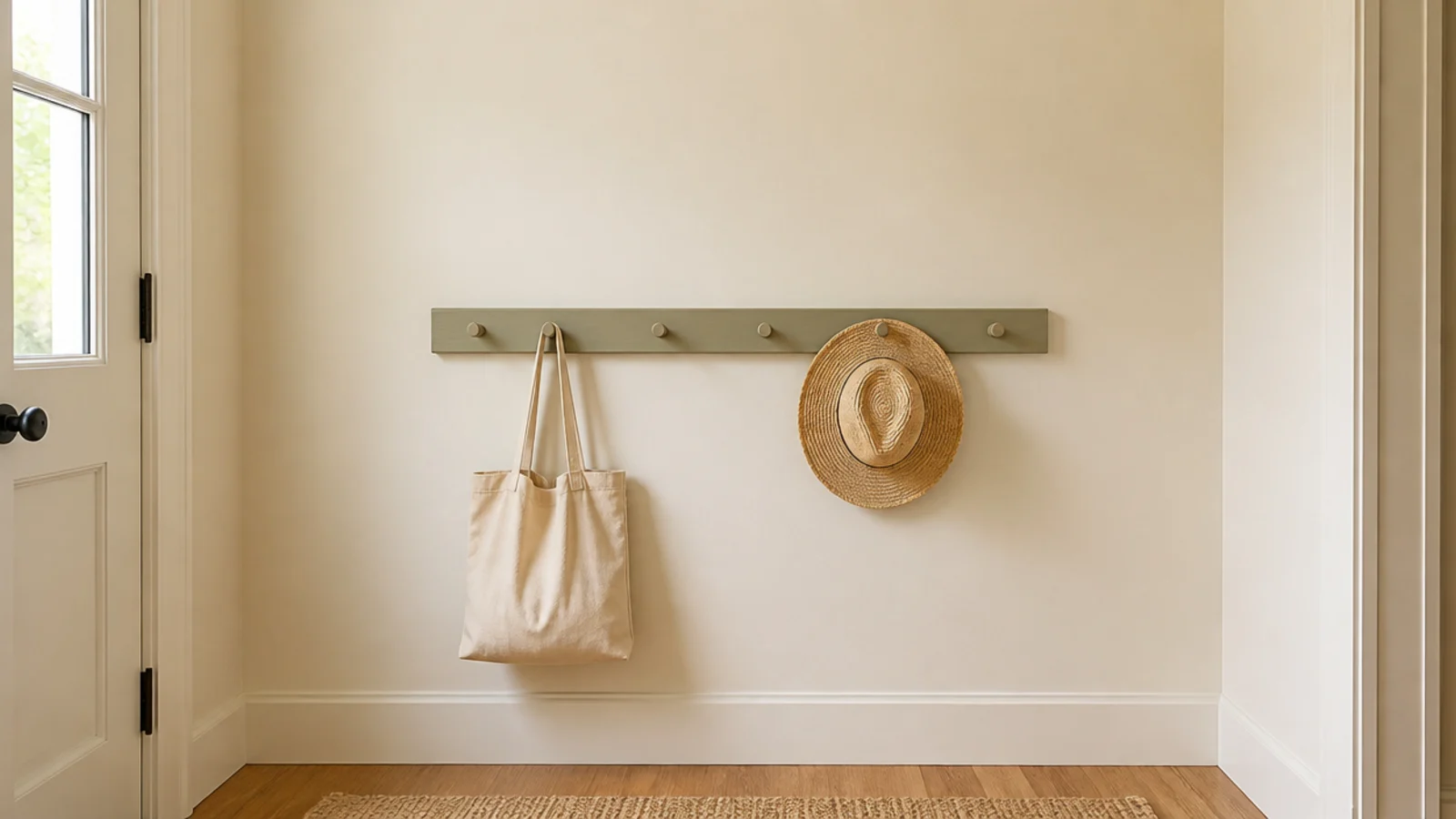
3. A peg rail instead of chunky hooks
A shaker peg rail projects about 2 inches from the wall; most decorative hooks project 4. In a 34-inch hall that difference is the shoulder you keep clipping.
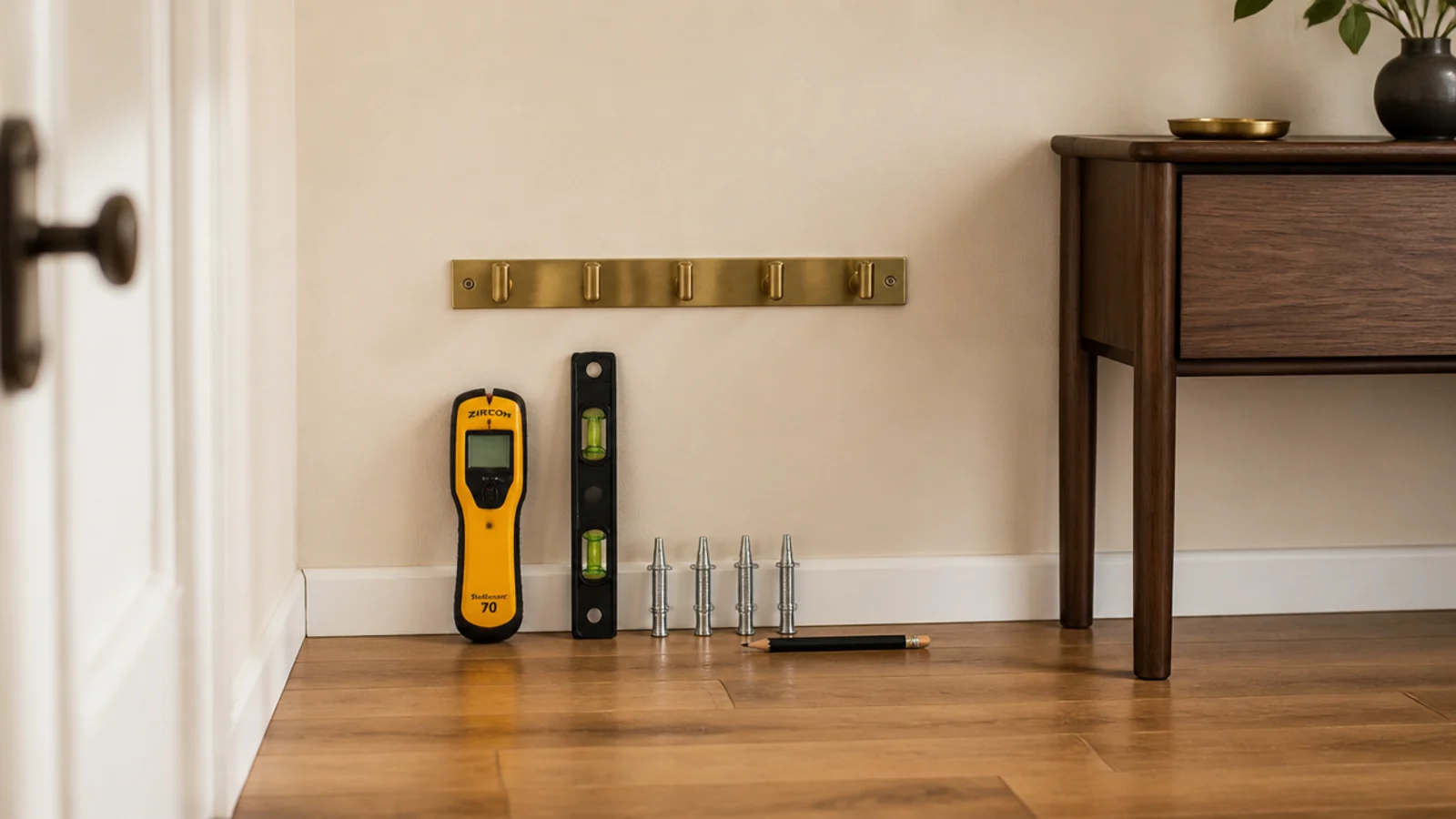
Pegs hold coats, bags and hats, and a painted rail in the wall colour almost disappears. Screw it into studs — pegs carry the same 20 to 30 pounds a hook rail does. $
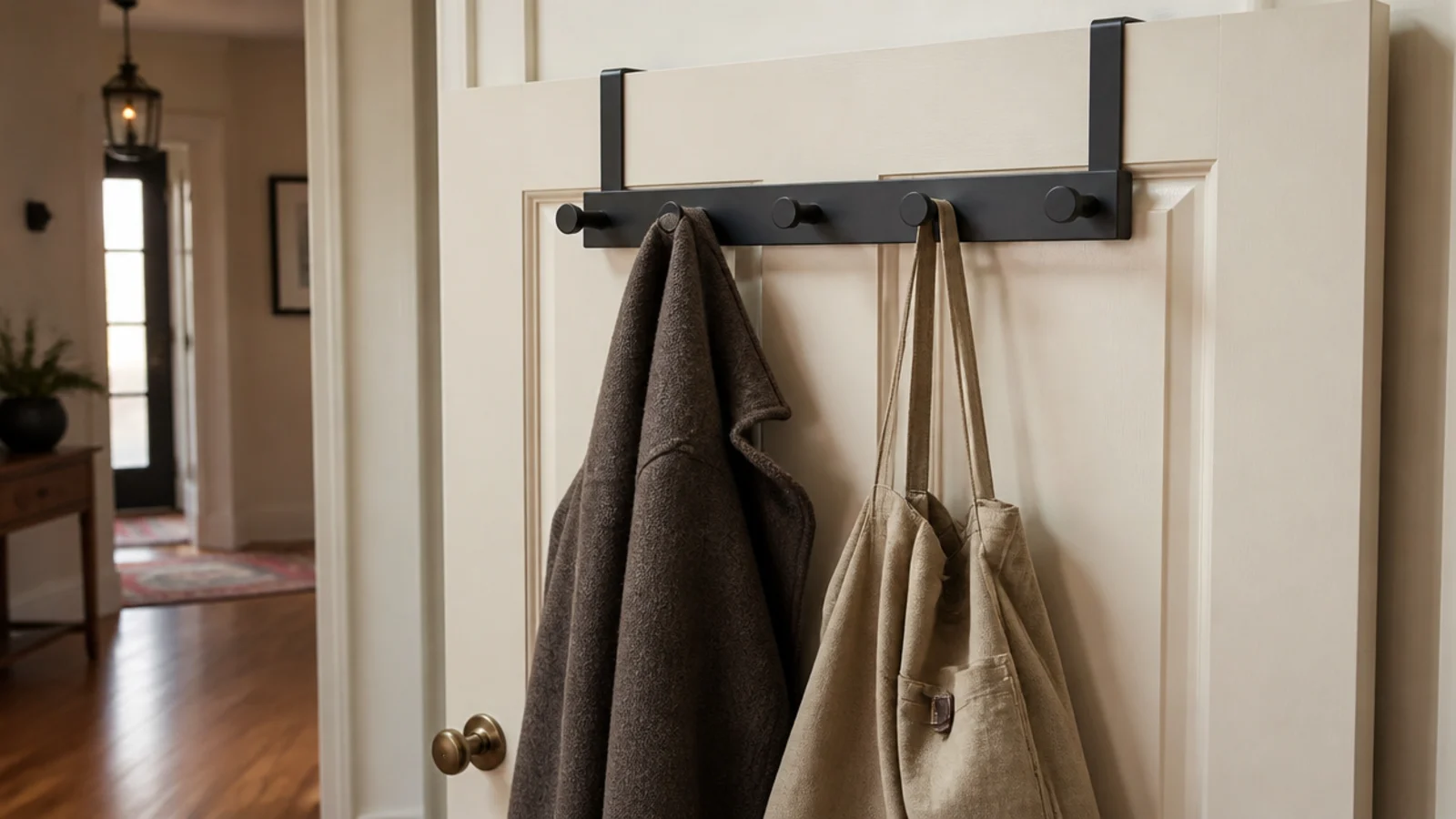
4. An over-the-door hook bar with no fixings
The single best renter move. A metal hook bar hangs over the top of the door, holds four to six coats, and leaves no trace at all.
Check the door still closes cleanly — some interior doors have very little clearance at the top. Use it for daily coats and keep the wall for lighter things. $
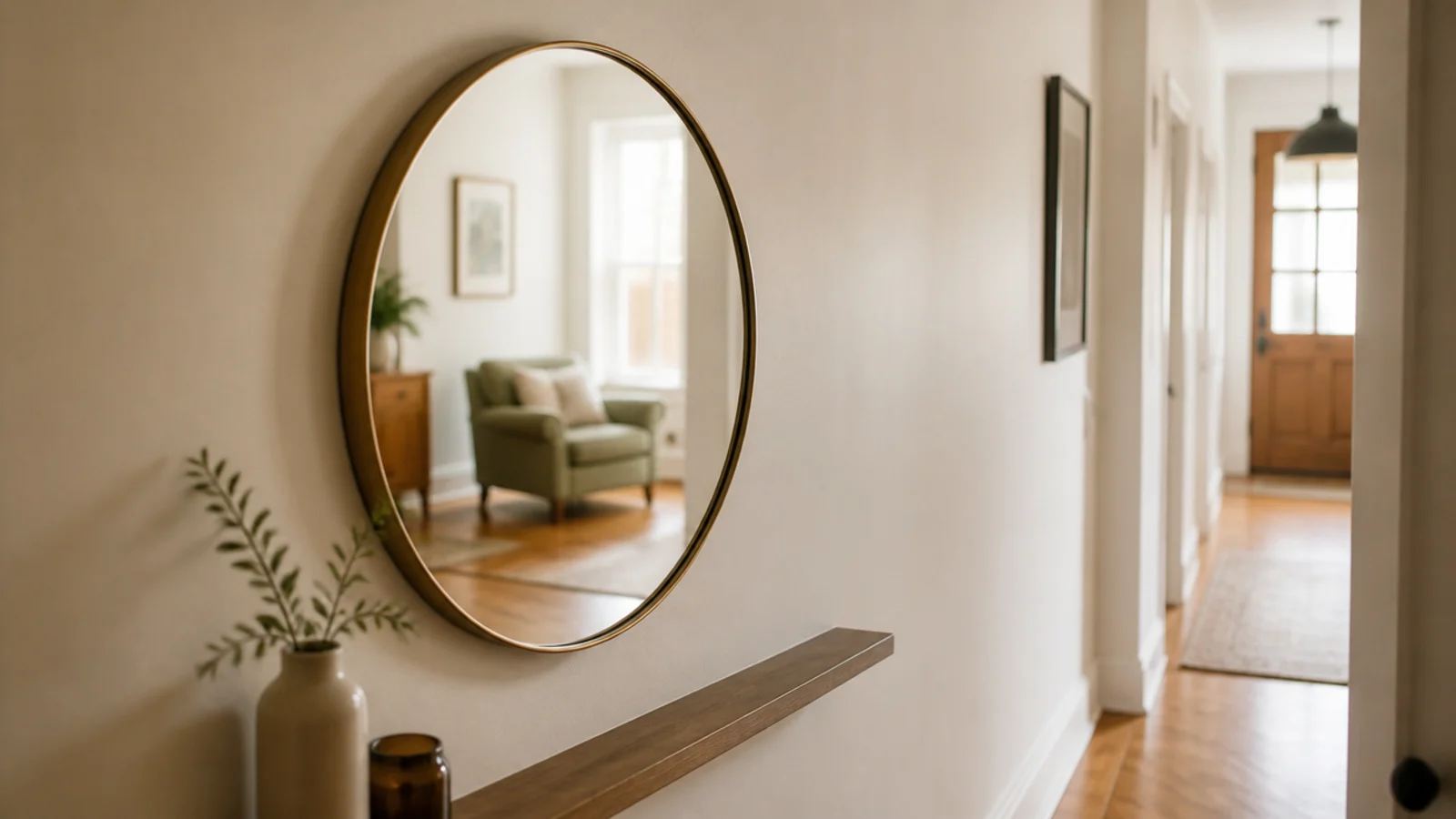
5. A mirror on the long wall, not the door wall
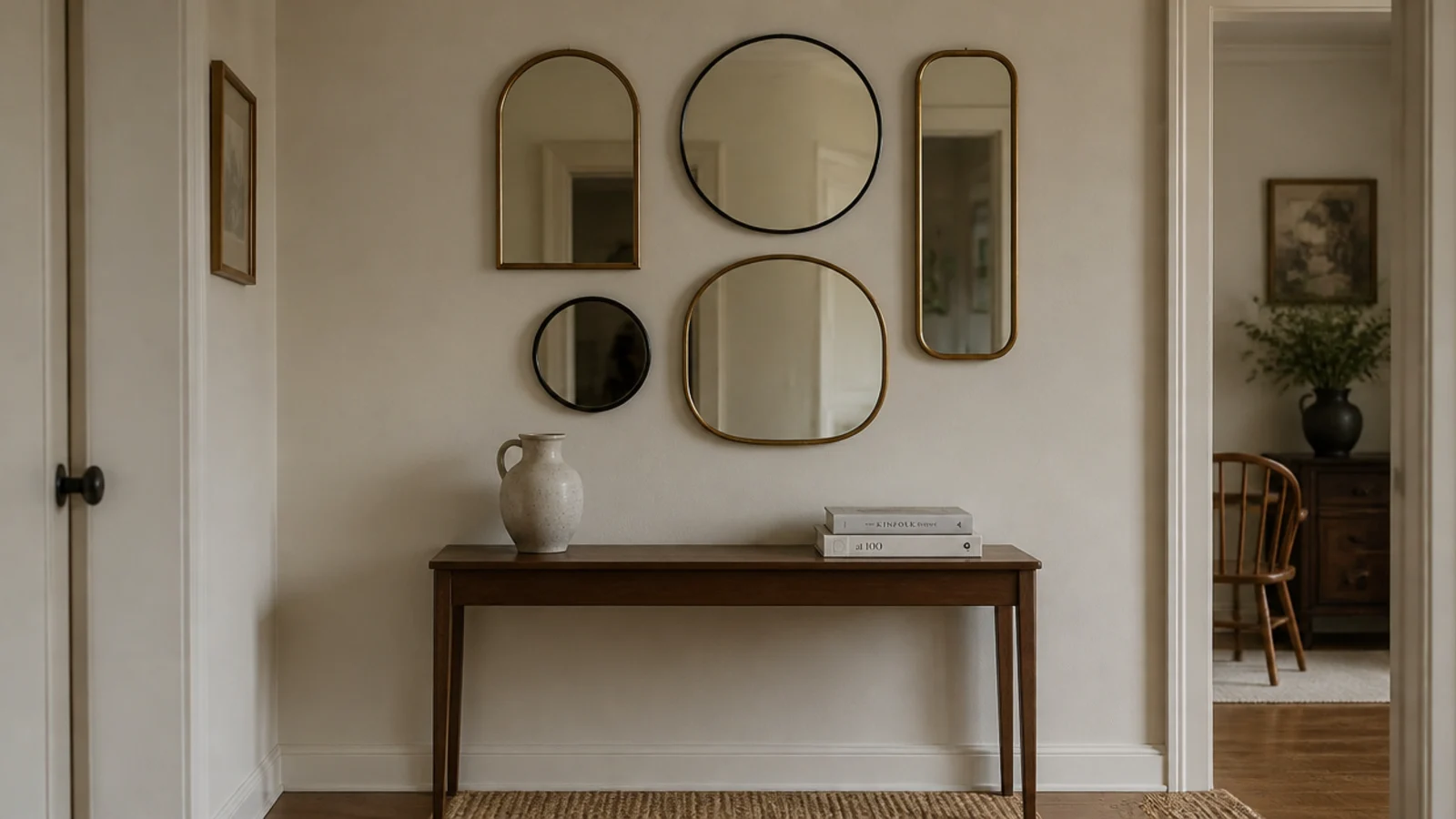
A mirror makes a small entry look wider, which is the dimension it is short of. Hang it on the long wall facing into the room beyond so it reflects depth.
Facing the front door, it just doubles a slab of door. Centre the glass at 57 to 60 inches. Sizing is covered fully in small mirror wall decor. $$
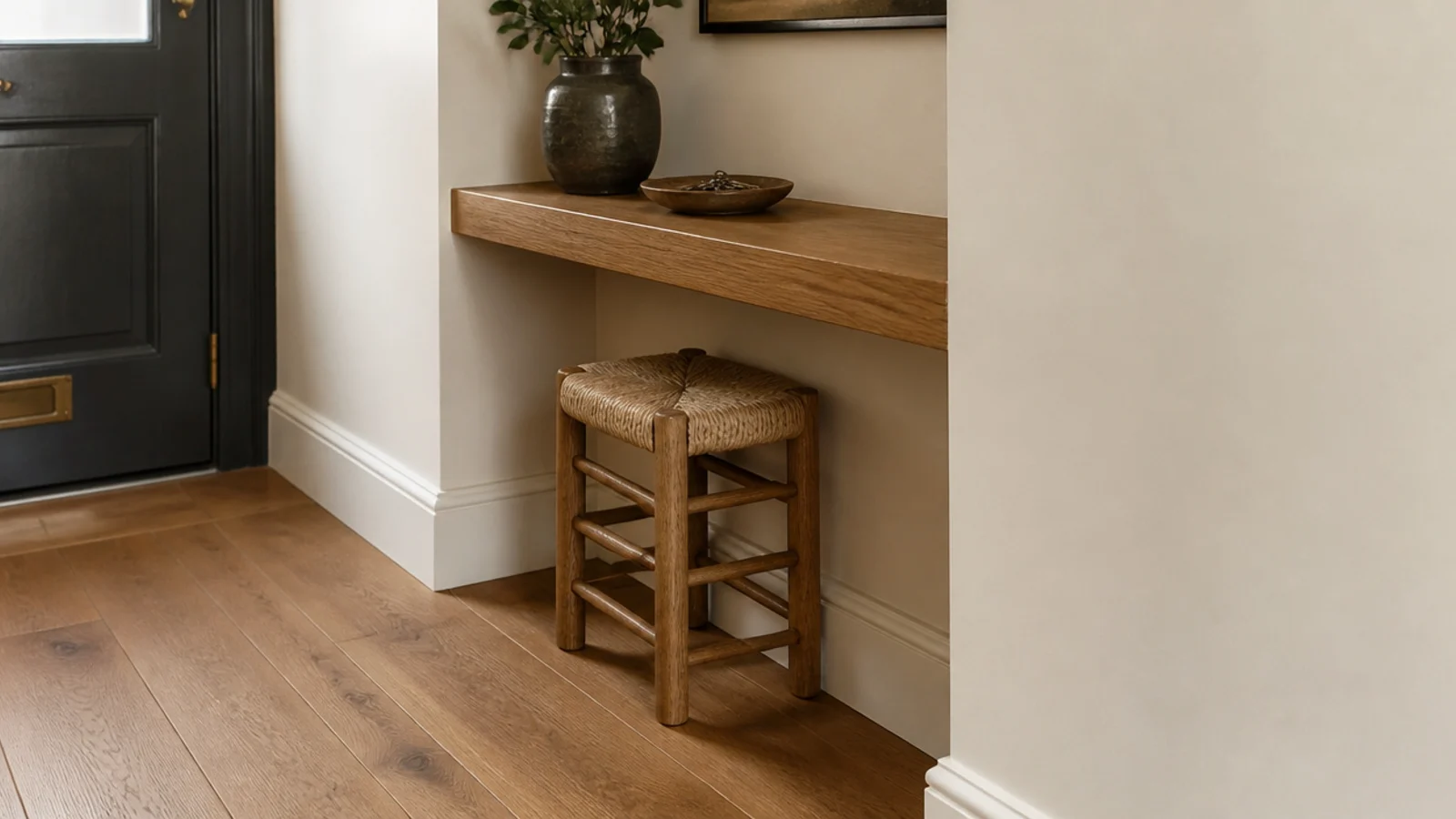
6. A stool that tucks fully underneath
If it does not disappear entirely under the ledge or console, it is too big for the hall. That is the whole test.
A 12 to 13-inch round stool at 18 inches high gives you somewhere to put a foot for laces and vanishes the rest of the day. Round, because there are no corners to catch a hip. $–$$
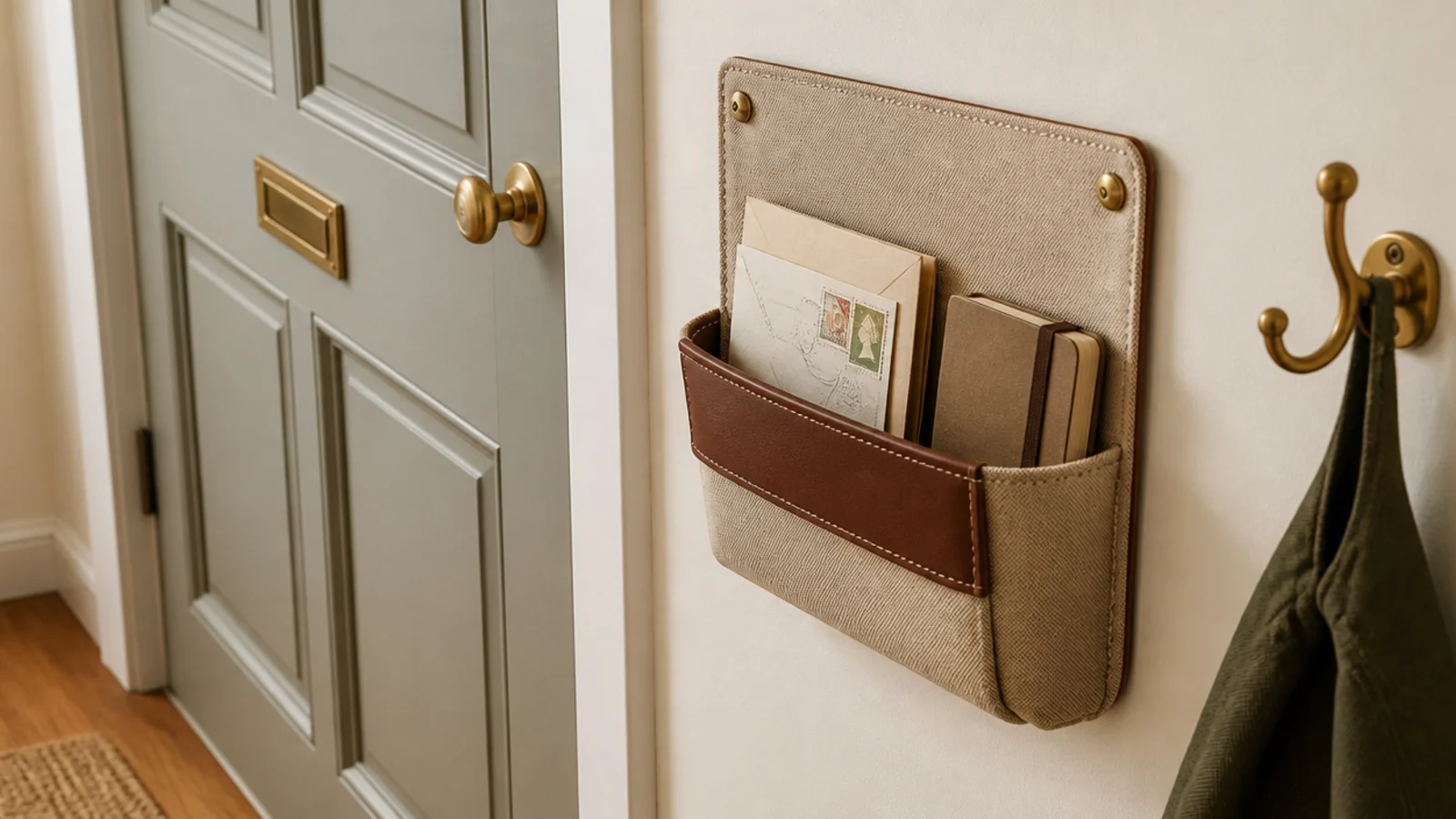
7. A wall pocket for the post
Mail is what turns a shallow ledge into a mess. A canvas or leather wall pocket beside the door takes it vertically instead.
Mount it at 48 inches so it clears the ledge below and stays out of the coat zone. Empty it weekly — a pocket is a queue, not a filing system. $
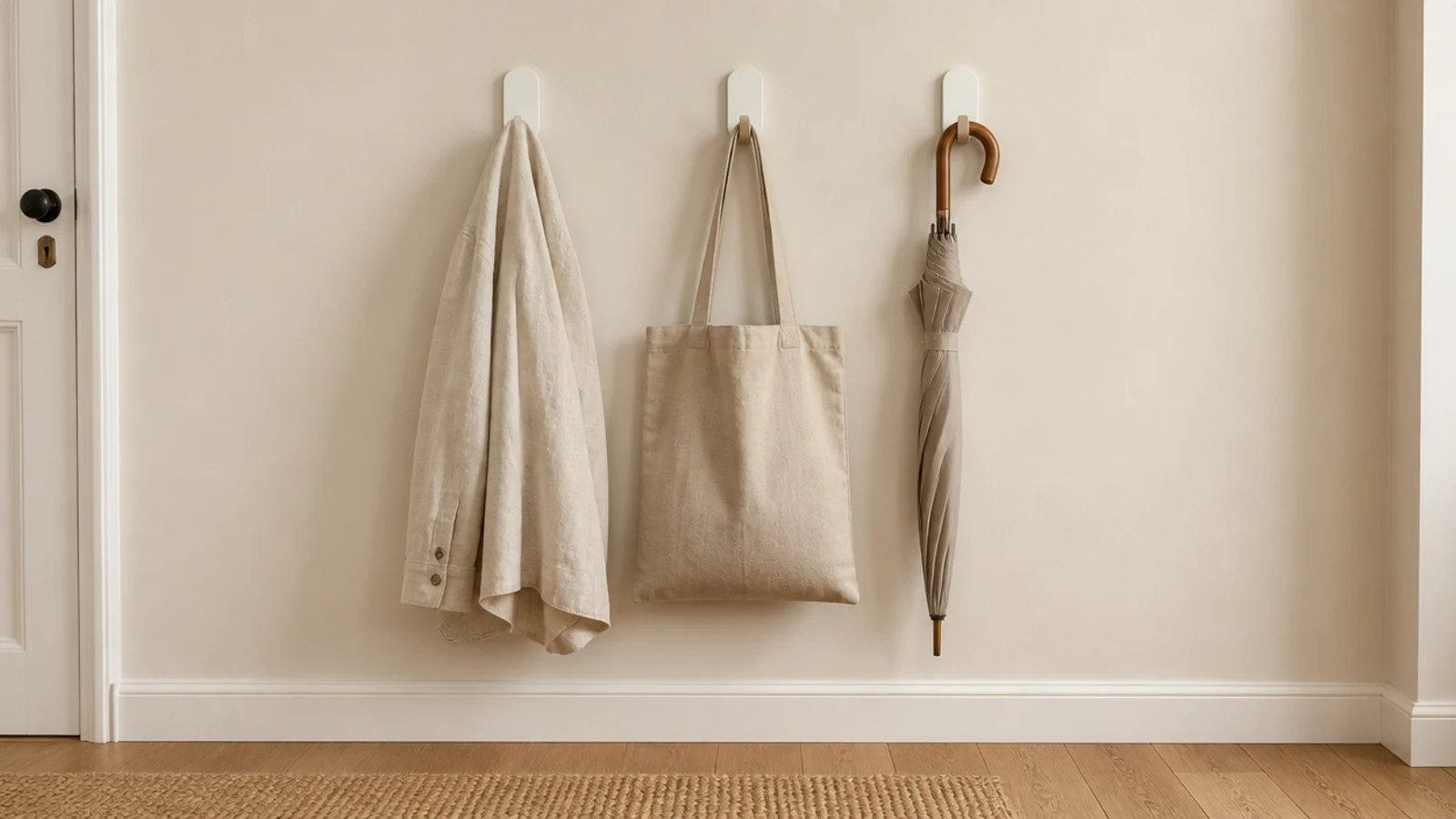
8. Adhesive hooks with honest weight limits
Adhesive hooks rated at 5 pounds each hold a linen jacket, a tote or an umbrella. They do not hold a wet wool coat, and they fail at the worst moment.
Use three spread across 24 inches rather than one doing everything. Test on a hidden patch first, because flat builder-grade paint peels away with the adhesive. $
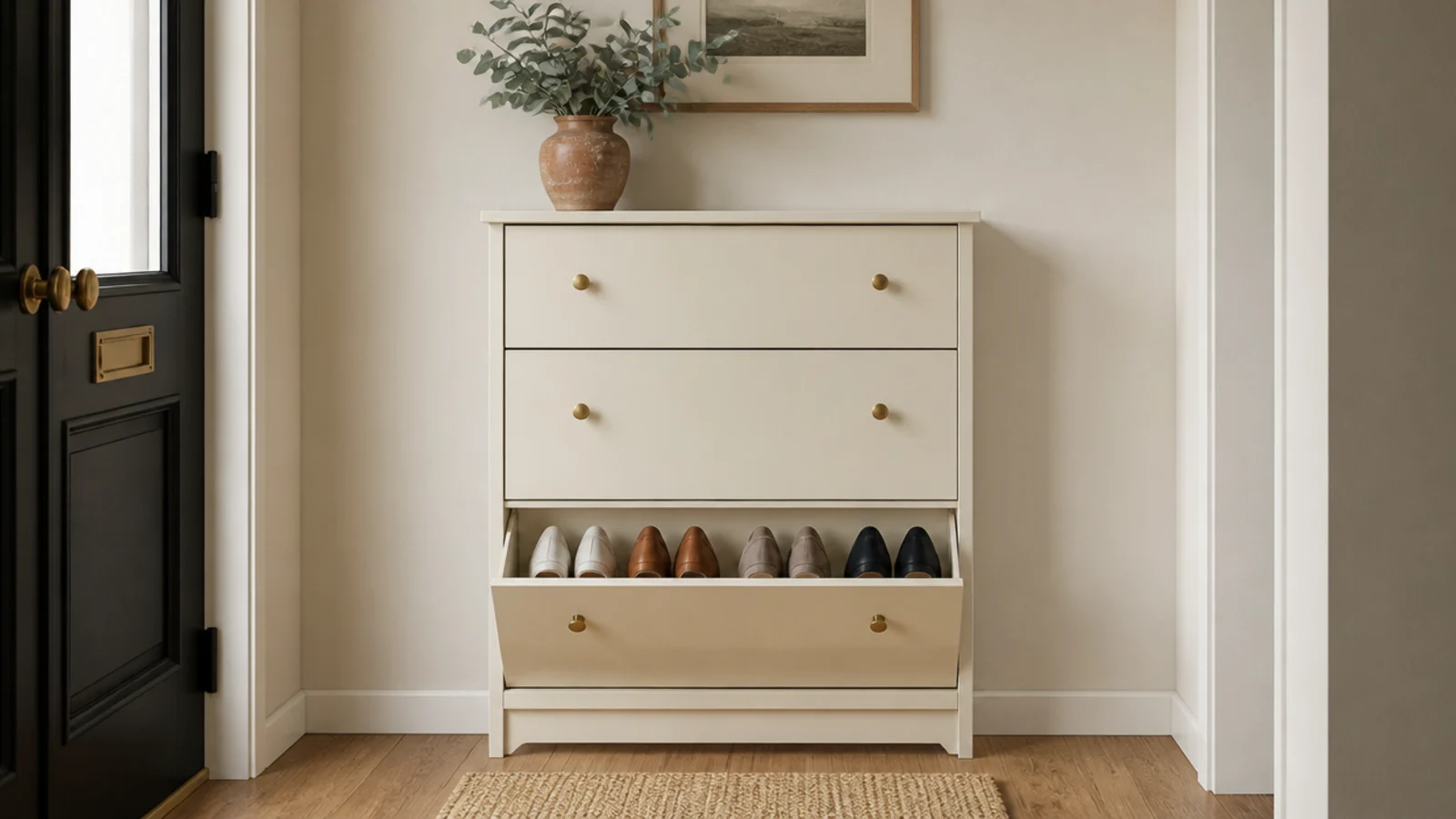
9. A 9-inch tilt-out shoe cabinet
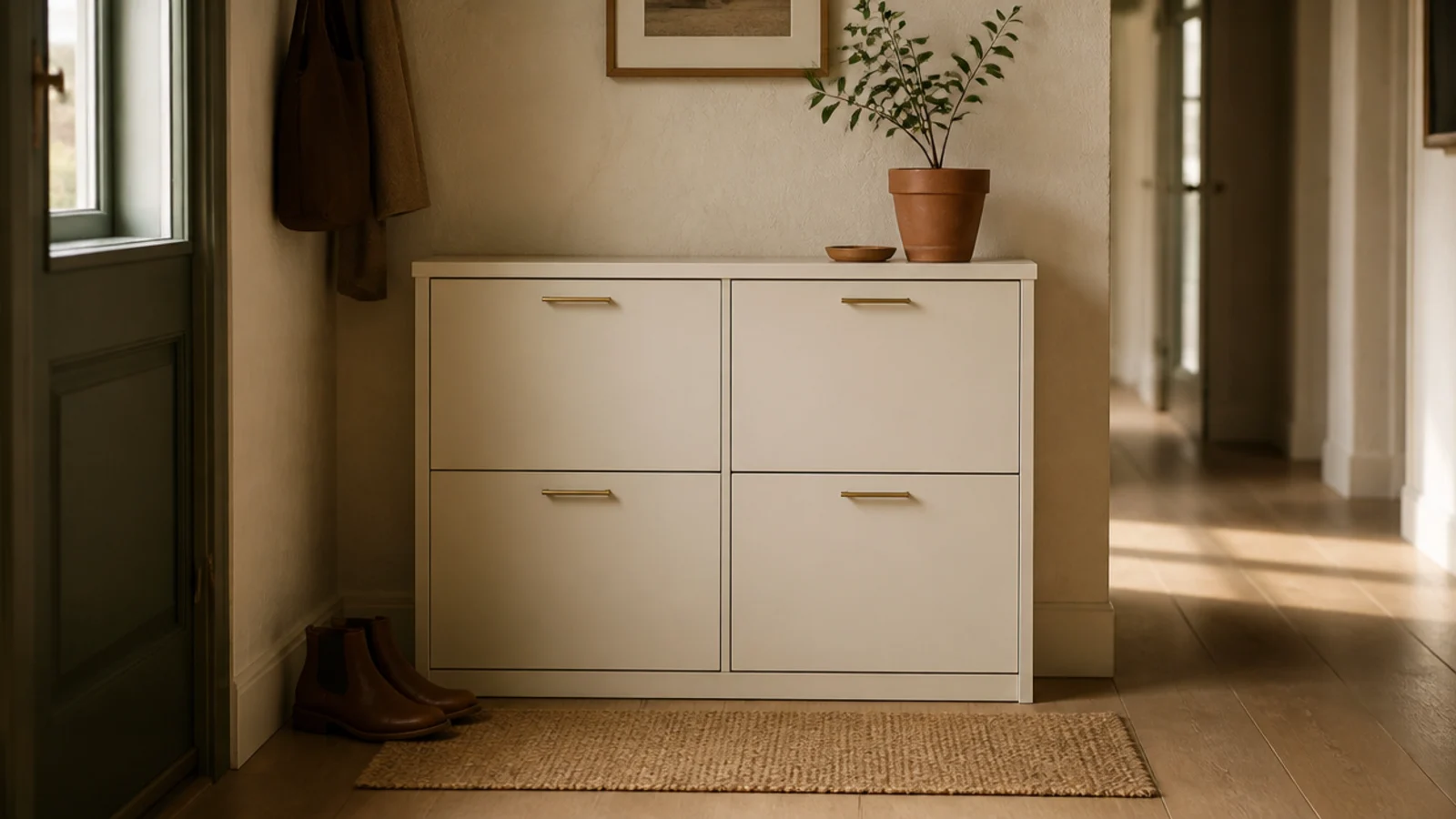
The one piece of floor furniture worth its footprint in a tight entry. Shoes sit tilted at 45 degrees inside, so a 9-inch cabinet swallows a 12.5-inch sneaker.
Two drawers hold six to eight pairs and no boots. Look for soft-close hinges, because these get shut with a foot daily. Shoe cabinets for small entryways covers the sizing. $$
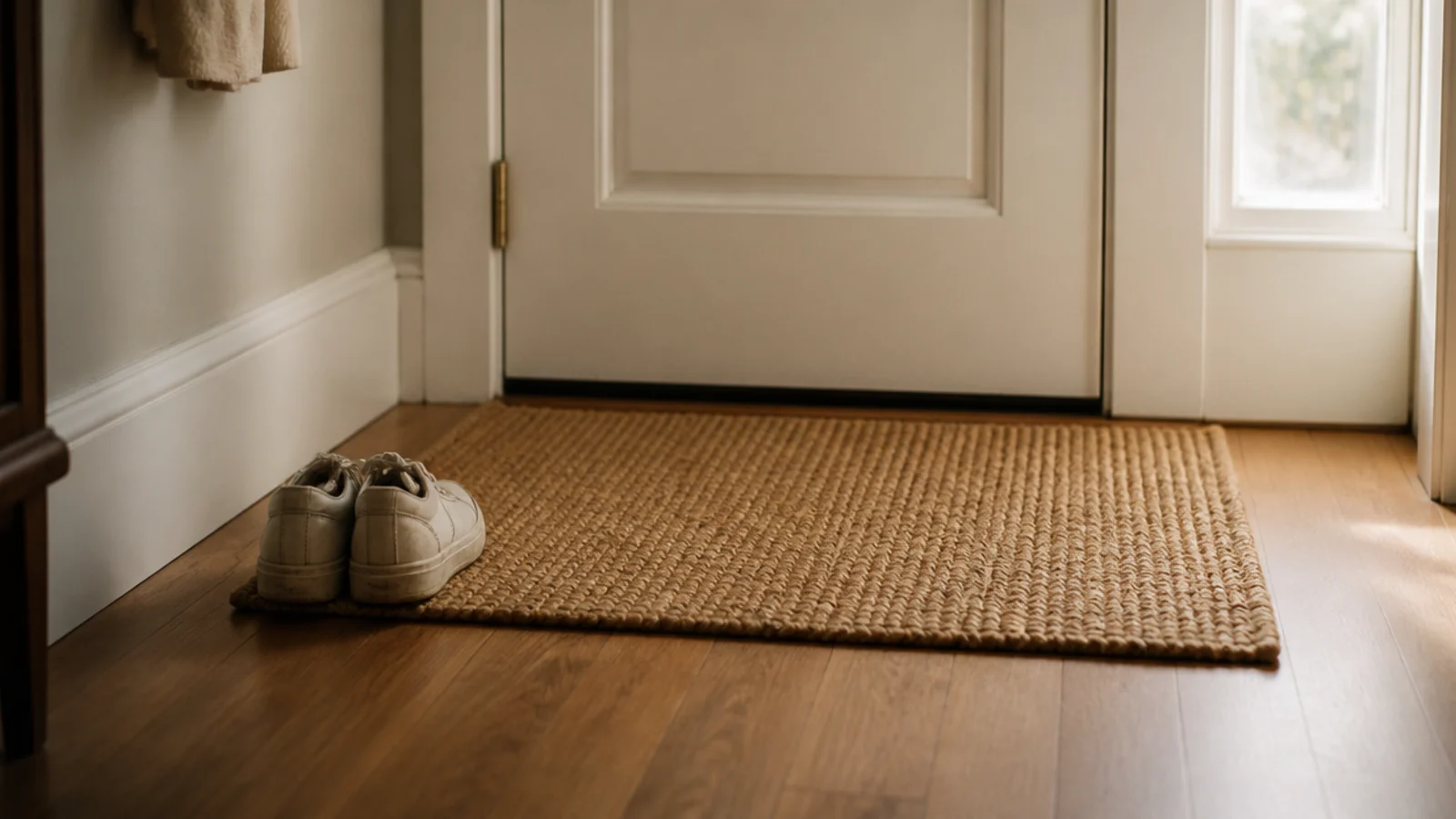
10. A doormat inside to mark the zone
In an apartment with no hall, a mat inside the door draws the boundary the architecture never gave you. People stop on it, which is what an entry is for.
Keep it small, 24 by 36 inches at most, and flat-weave so the door clears it. Anything thicker jams under the door within a week. $
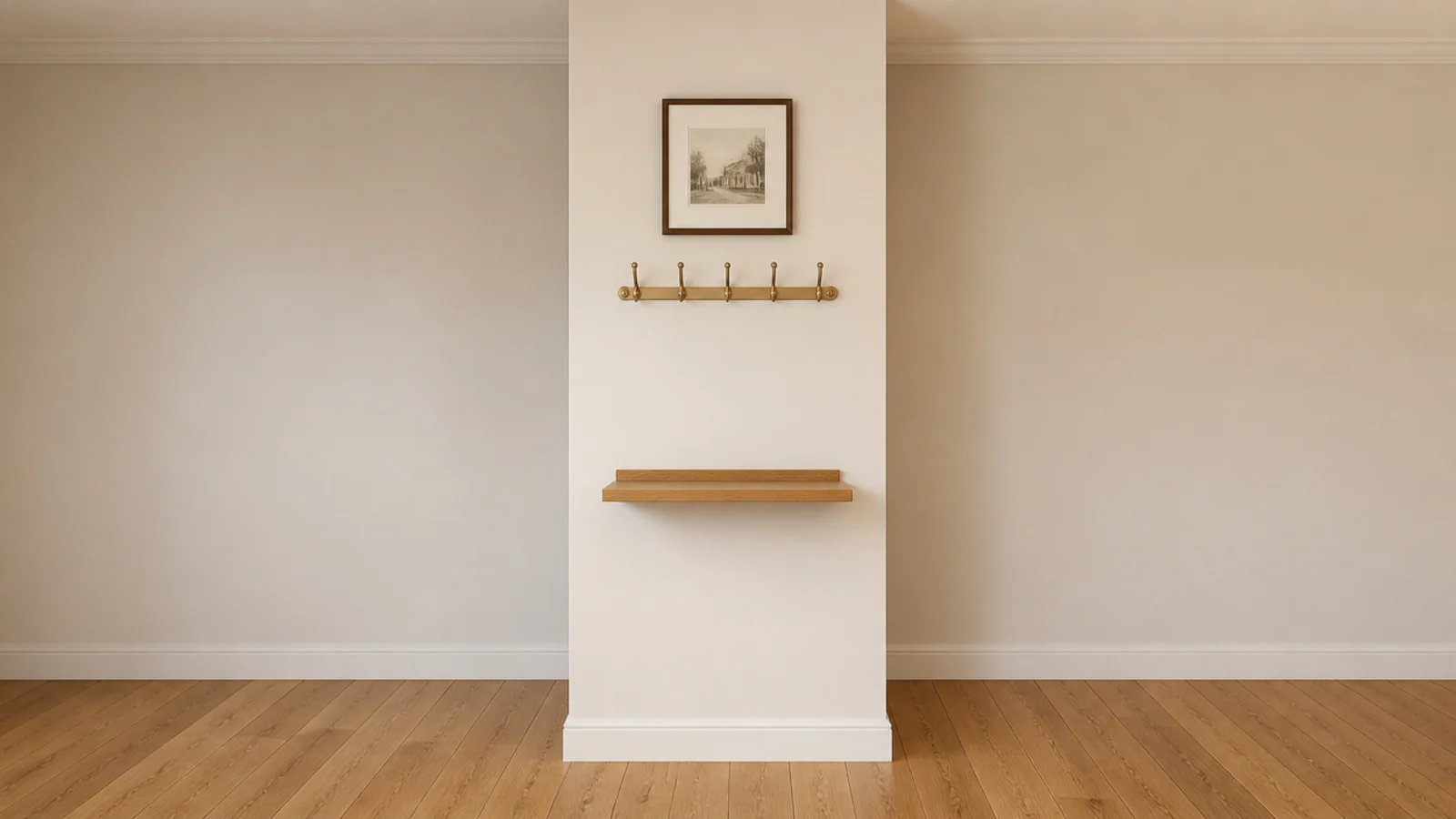
11. Stack the whole entry in one 40-inch column
Small entries fail horizontally and succeed vertically. Put a framed piece at 66 inches, hooks at 52, and a ledge at 32, all within the same 40-inch width.
The column reads as one designed element instead of three scattered objects, and it leaves the rest of the wall genuinely empty, which is what makes the hall feel wider. $–$$
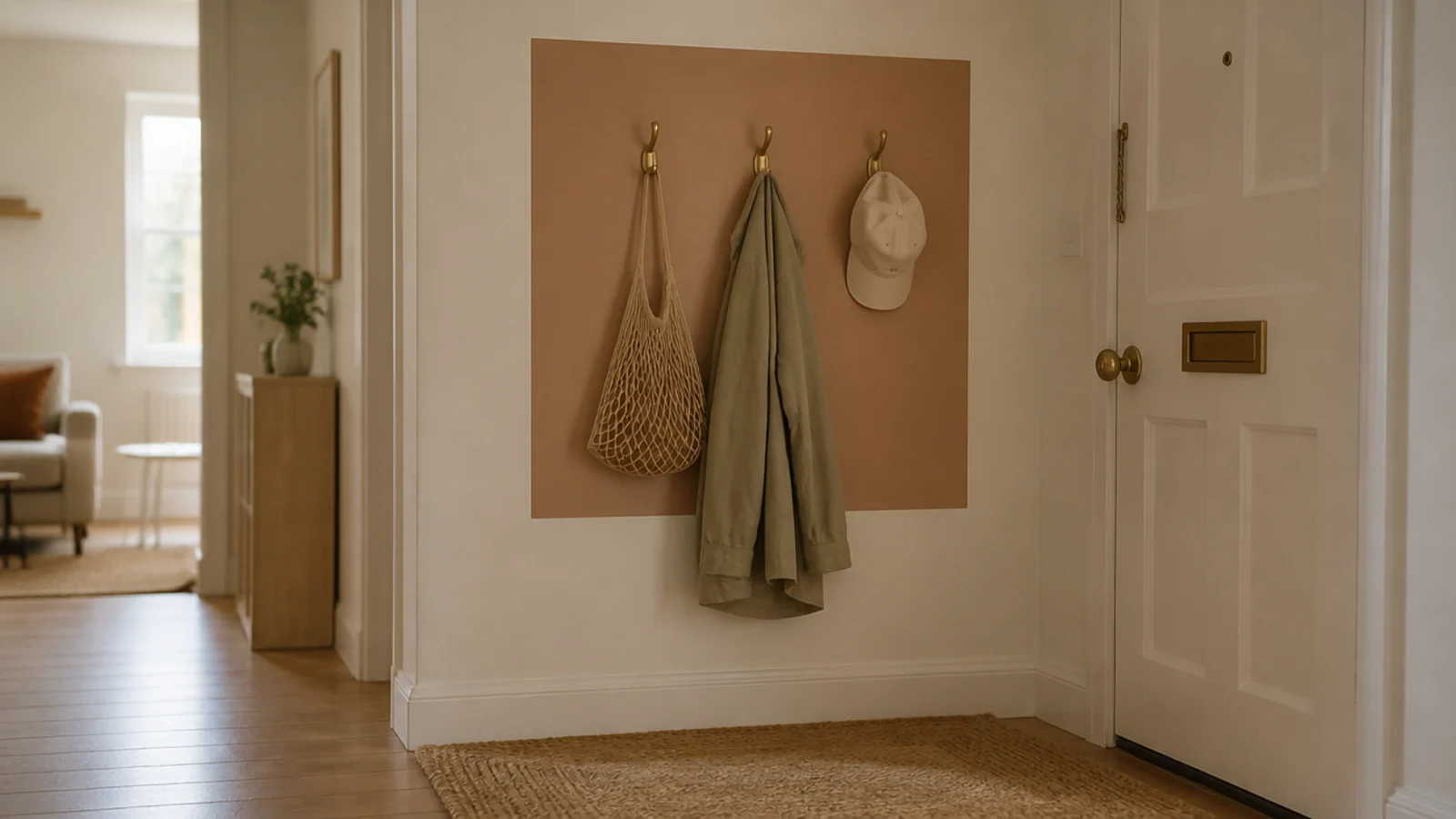
12. Paint a colour block where there is no entry
Where there is no architecture to work with, paint some. A rectangle of deeper colour roughly 40 inches wide and 7 feet tall, with the hooks mounted inside it, invents an entry from nothing.
A sample pot covers it for about $12. Renters: keep the original colour code taped inside a closet door for move-out day. $
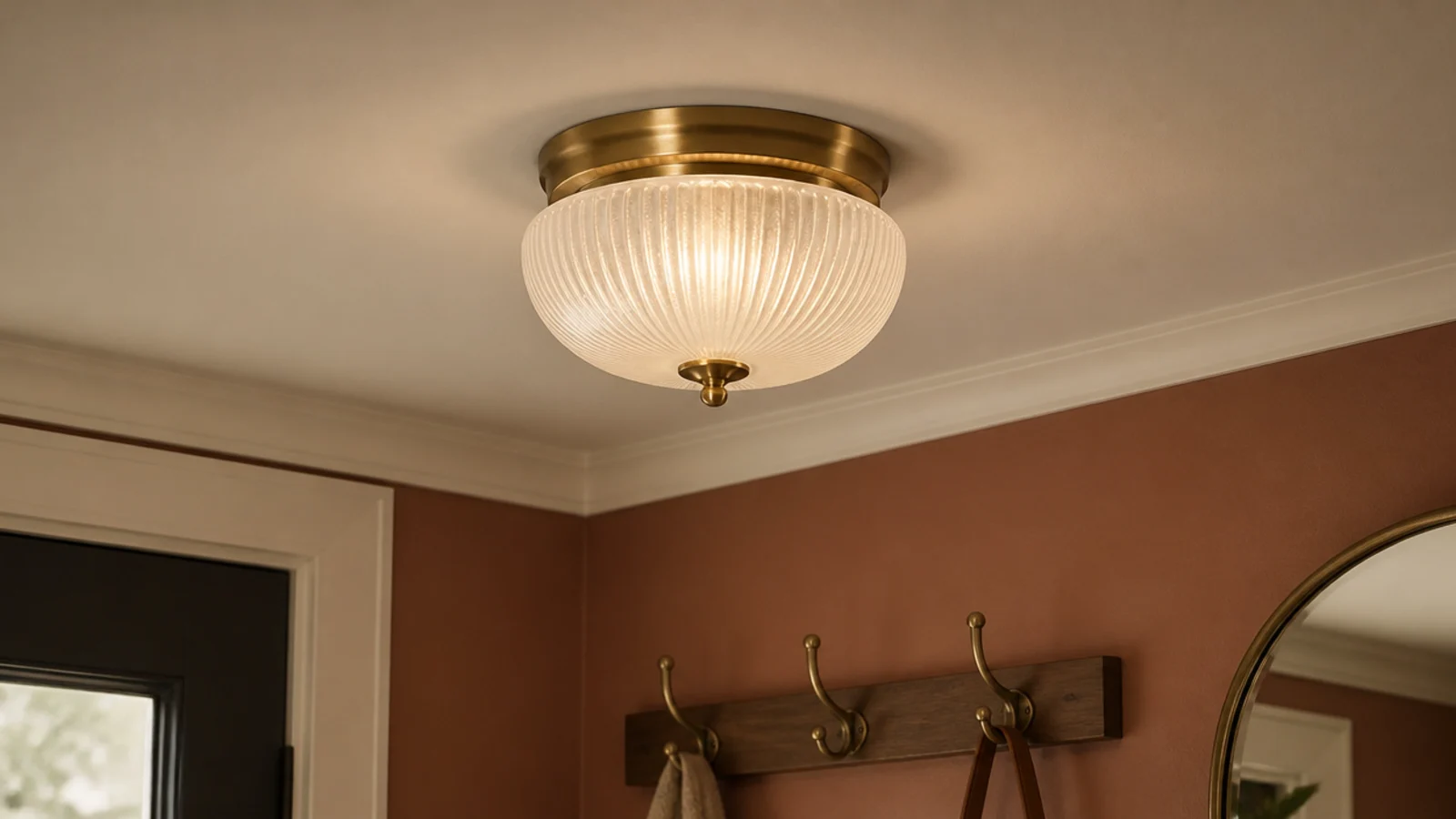
13. Swap the ceiling fixture for something smaller
A builder-grade dome fixture in a small hall is both ugly and unflattering. A compact flush mount in frosted glass and brass costs $40 to $70 and changes the whole space.
Keep the bulb at 2700K. Cool white in a small entry reads as a corridor in an office, every single time. $–$$
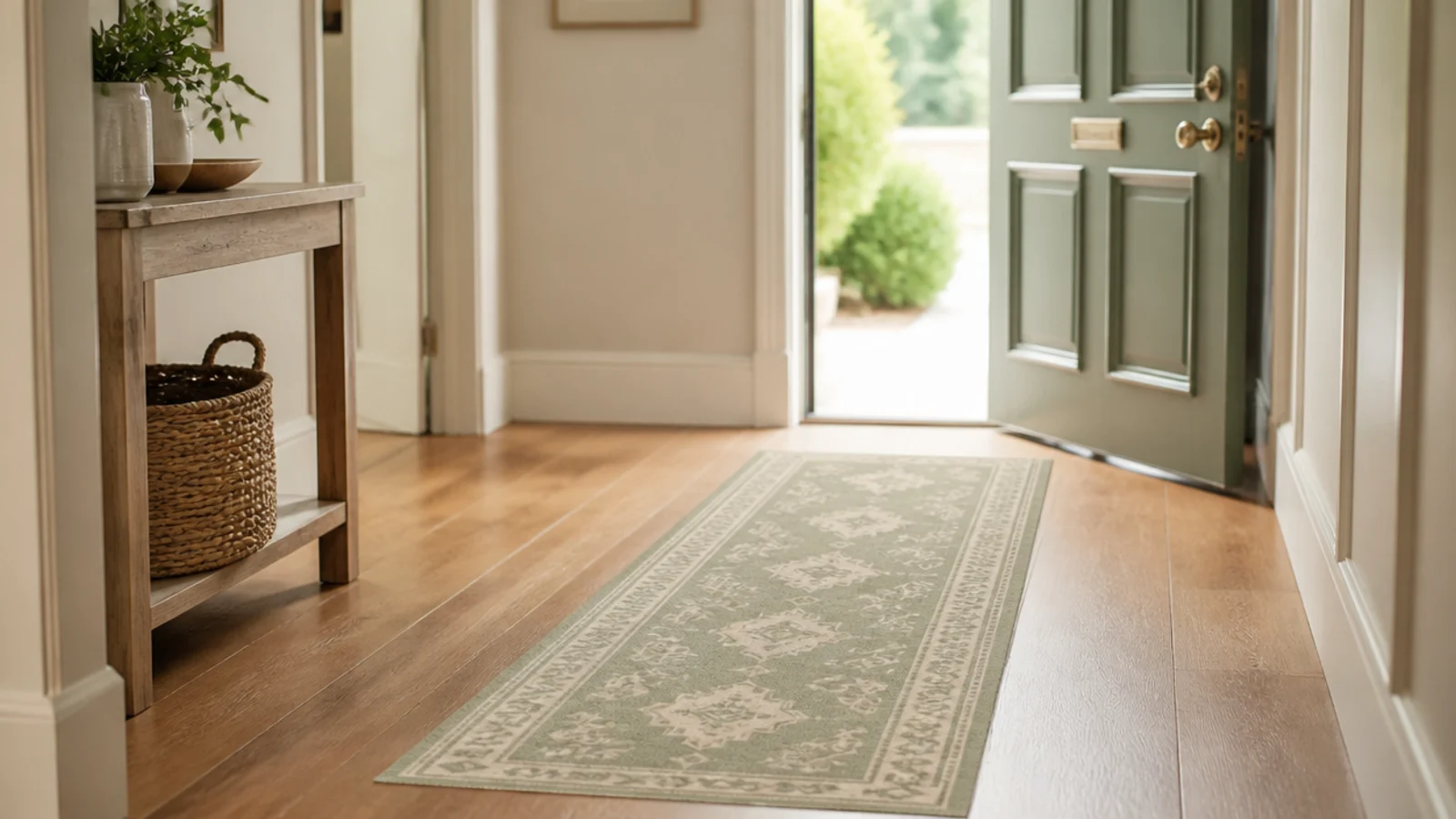
14. A runner sized to the door swing
Measure the arc of the opening door before you buy any runner. The rug has to stop clear of it or you will kick the edge up daily.
Leave 4 to 6 inches of bare floor on each side too. Flat-weave and washable, because a small entry takes the same grit a large one does in less area. $–$$
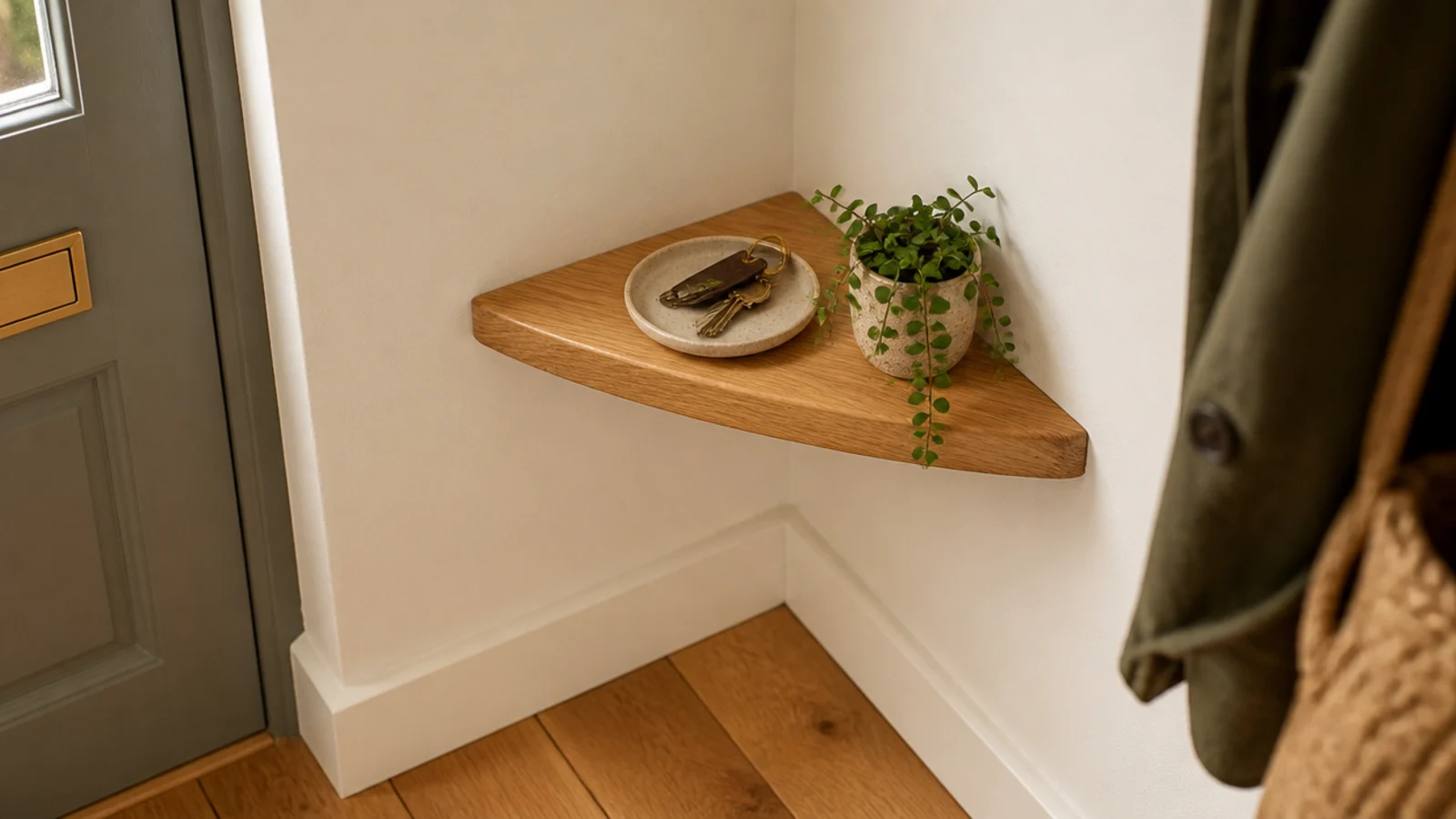
15. A corner shelf where two walls meet
The corner beside a front door is usually dead. A small triangular shelf at 6 inches deep turns it into the key drop without projecting into the walkway at all.
Mount it at 44 inches, above coat height, so nothing hanging below brushes it. Perfect for the household that has no wall for a ledge. $
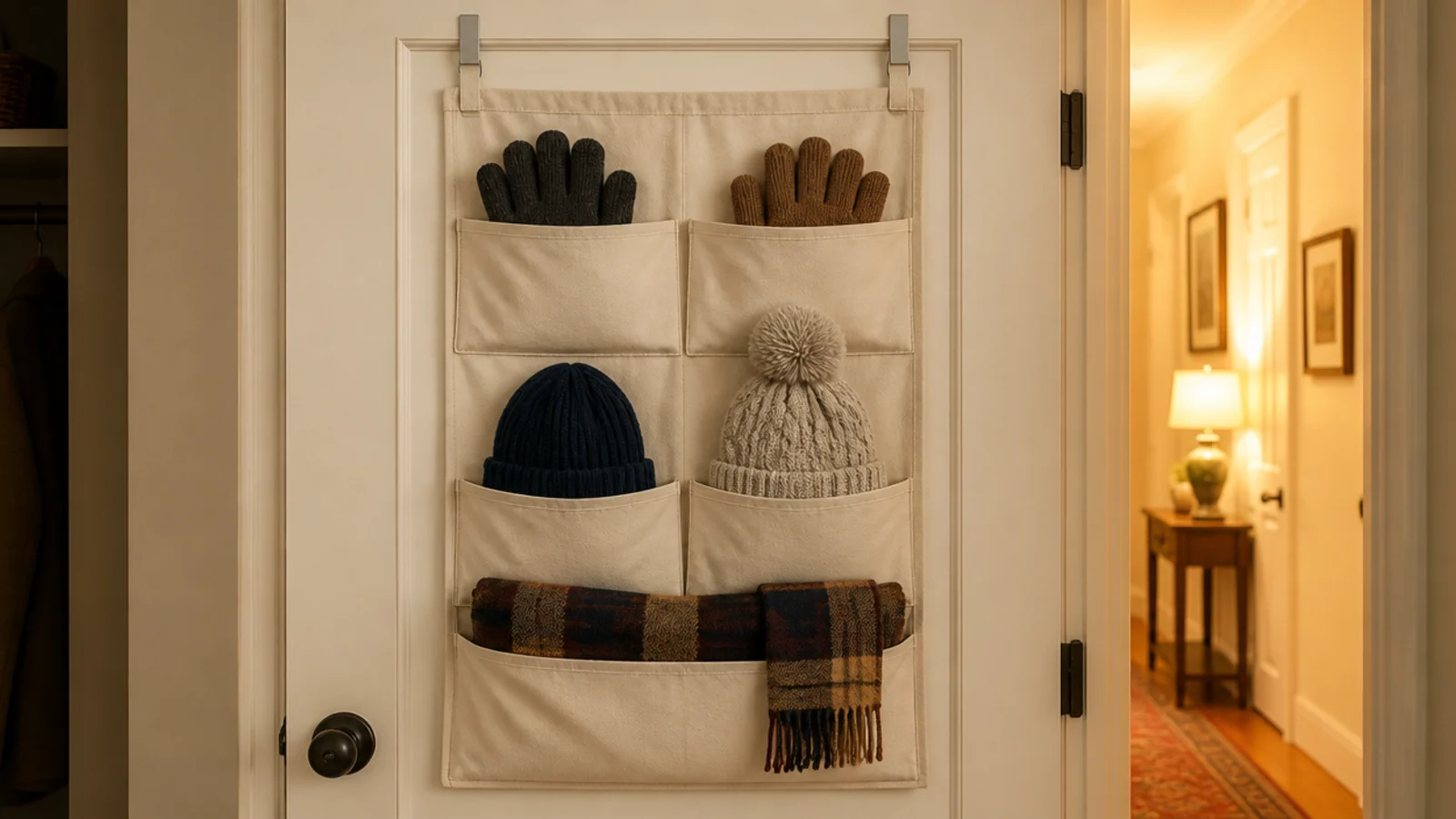
16. Back-of-door storage for gloves and hats
If there is a coat closet, its door is free storage you already own. A canvas pocket organizer takes gloves, hats, scarves and dog leads off every surface in the entry.
Choose canvas or felt over clear vinyl, which yellows and cracks within two winters. Check the door closes with it fitted. $
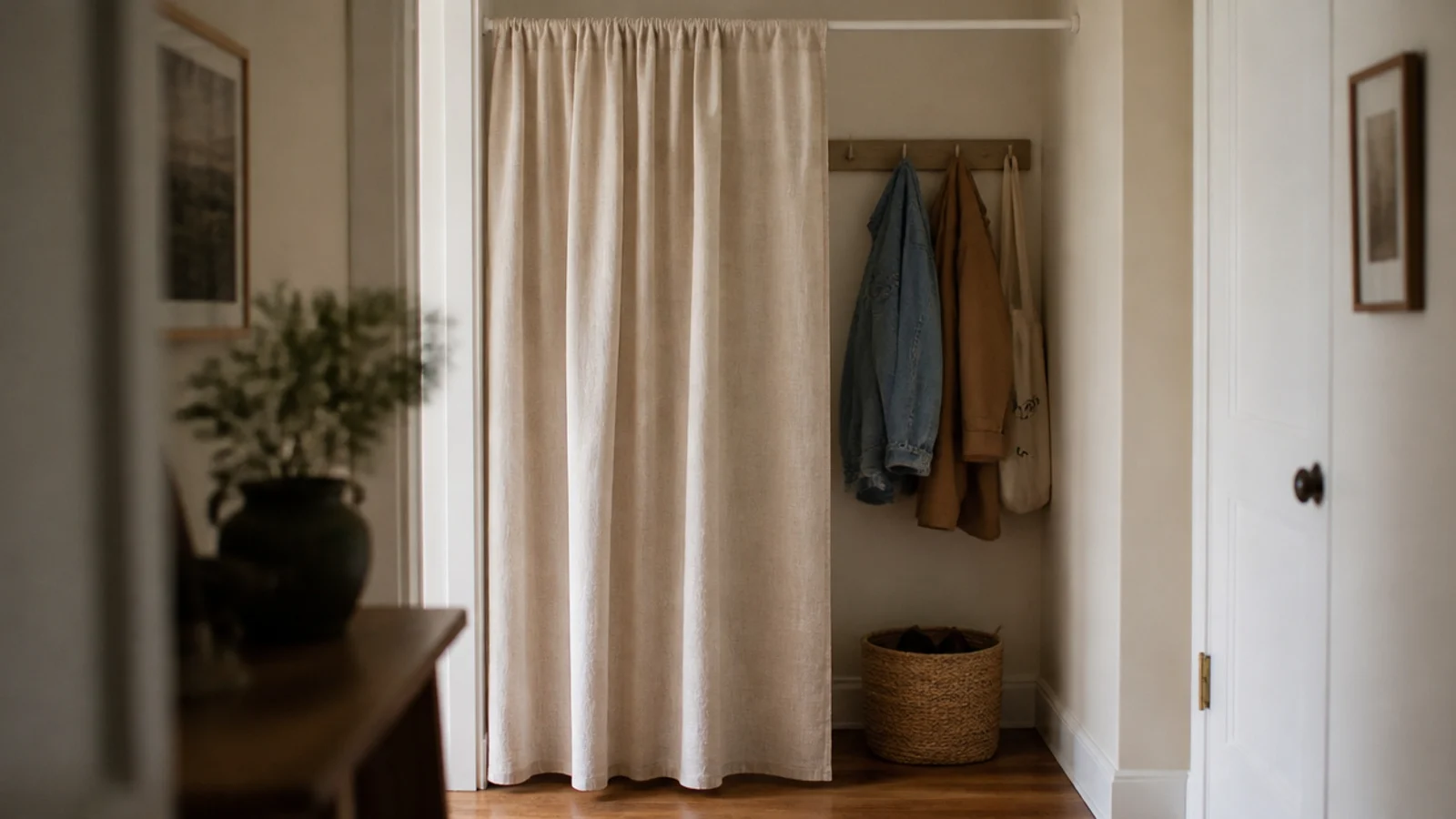
17. A curtain to hide an open coat nook
Open coats are the single biggest visual load in a small entry. A linen curtain on a tension rod across a shallow nook removes all of it in one move.
Rod and curtain run about $30 together, need no fixings and come down in a minute. Hang it to the floor — a short curtain reads as a valance and hides nothing. $
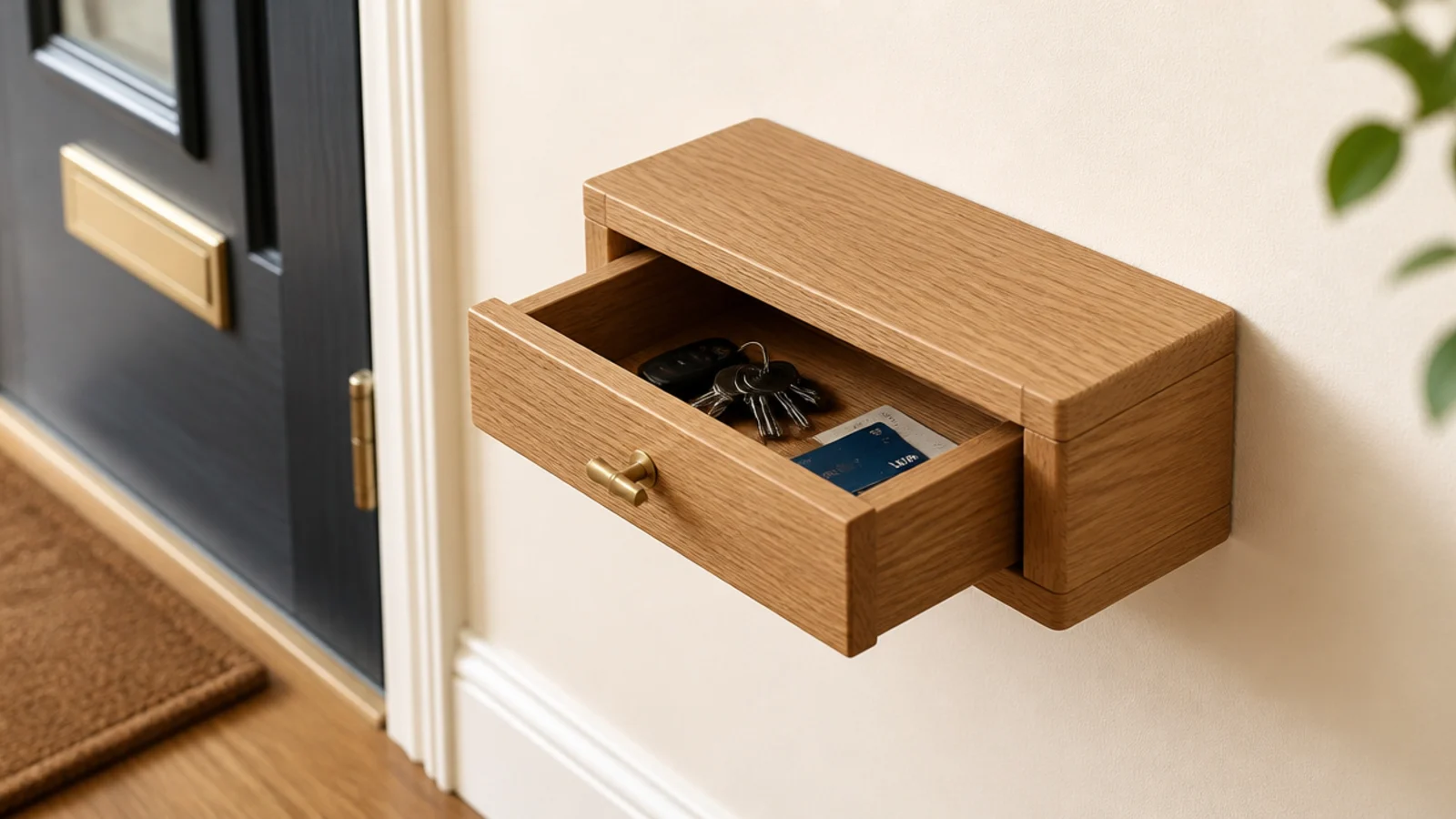
18. One wall-mounted drawer for keys
A tray leaves everything on display, which in a tight entry is visual clutter you see from the sofa. A small wall-mounted drawer at 40 inches hides the same items in the same footprint.
Roughly 12 inches wide and 4 deep is plenty for keys, cards and a spare charger. Two screws and it is up. $
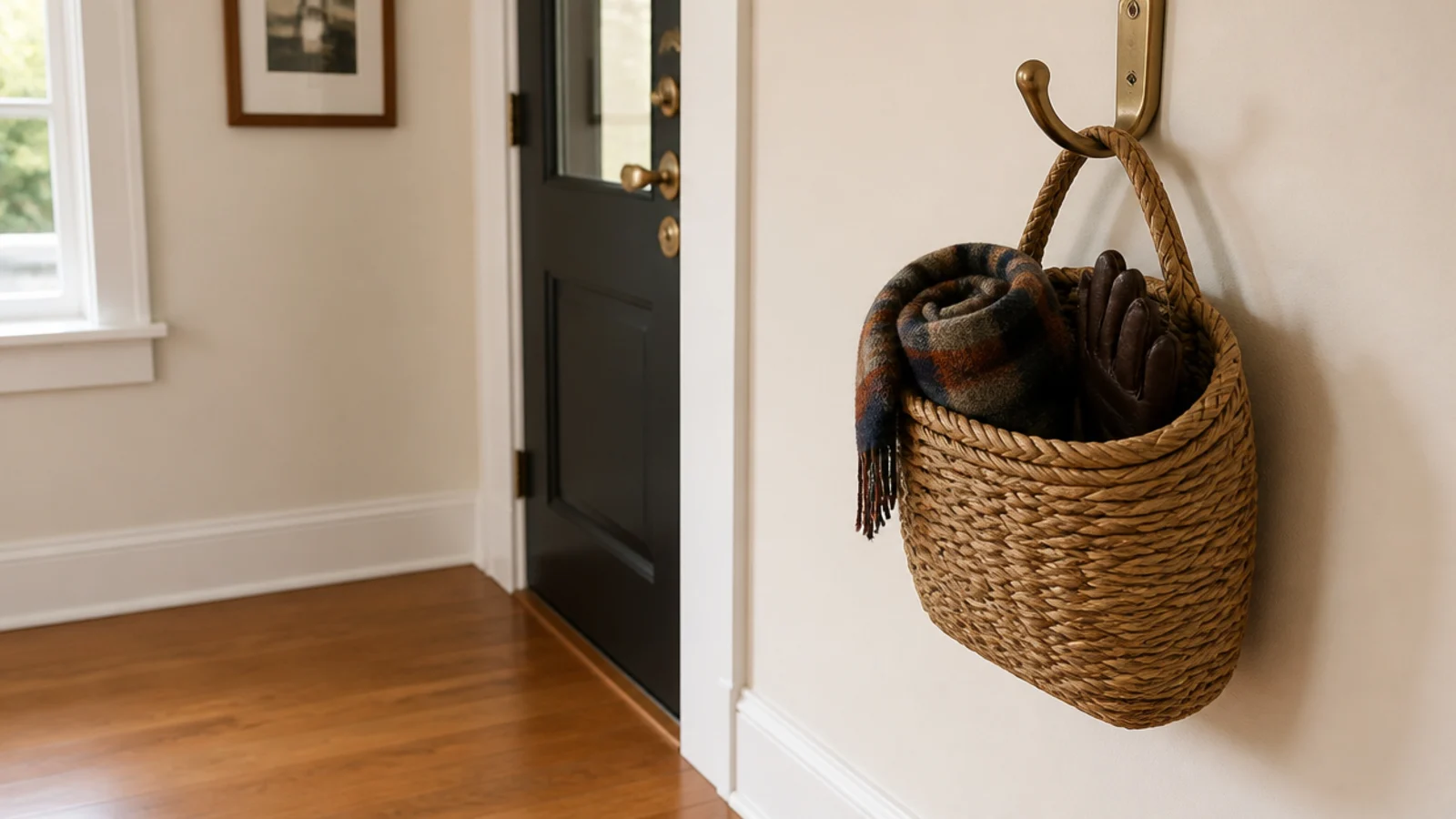
19. A basket on a hook, not on the floor
Floor baskets shrink a small hall more than any other object because they occupy the walkway at ankle height, where you notice it most.
Hang the same basket from an oversized hook at 40 inches instead. It holds gloves, hats and dog things, and the floor stays completely clear. $
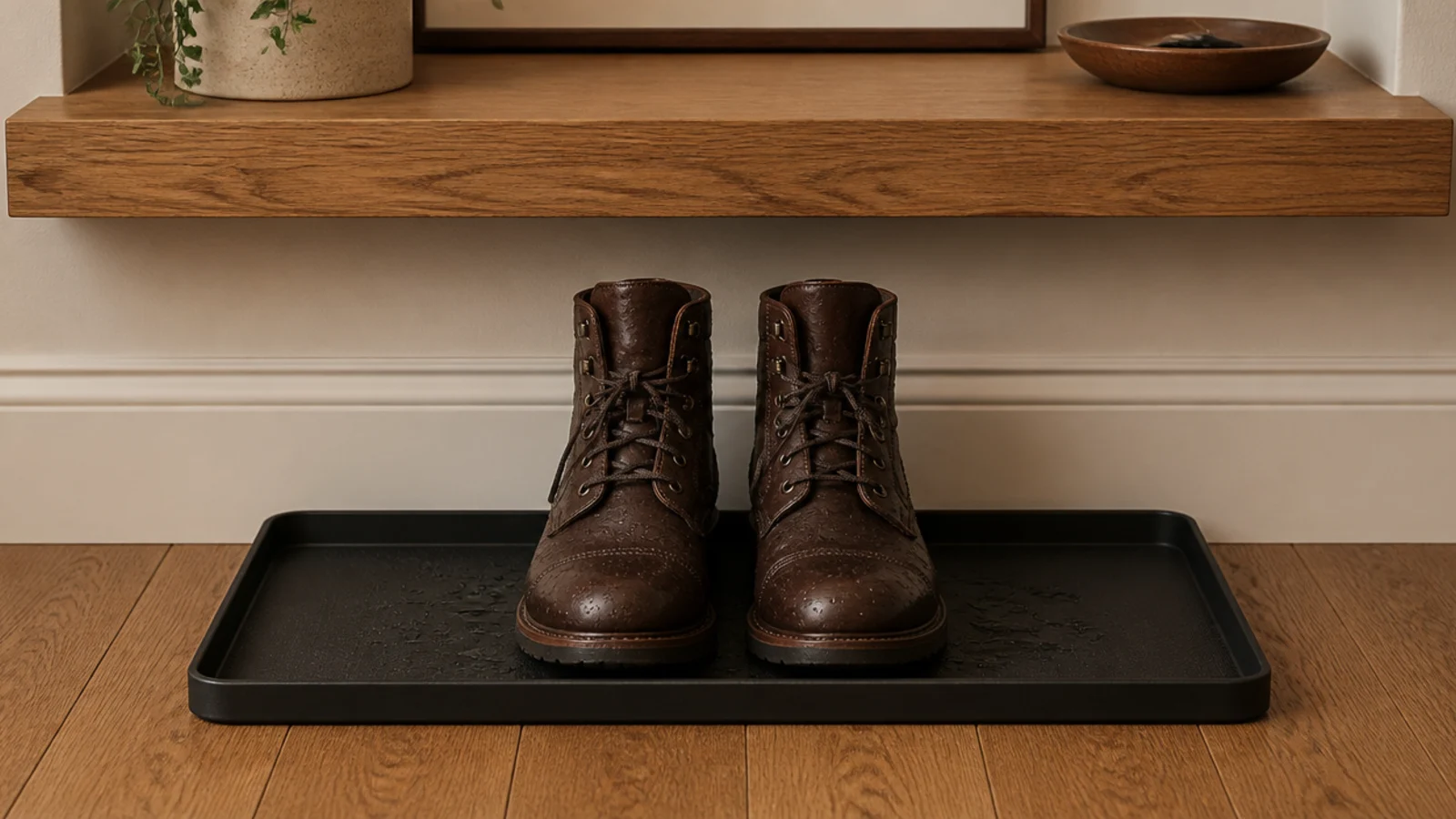
20. A slim boot tray under the ledge
Wet boots need a drip zone on the floor, never inside a closed cabinet where they stay wet and pass the damp on to everything beside them.
A raised-lip tray 15 inches deep tucked under a wall ledge uses space that was already unusable. Metal or heavy rubber, not thin plastic that cracks in cold. $
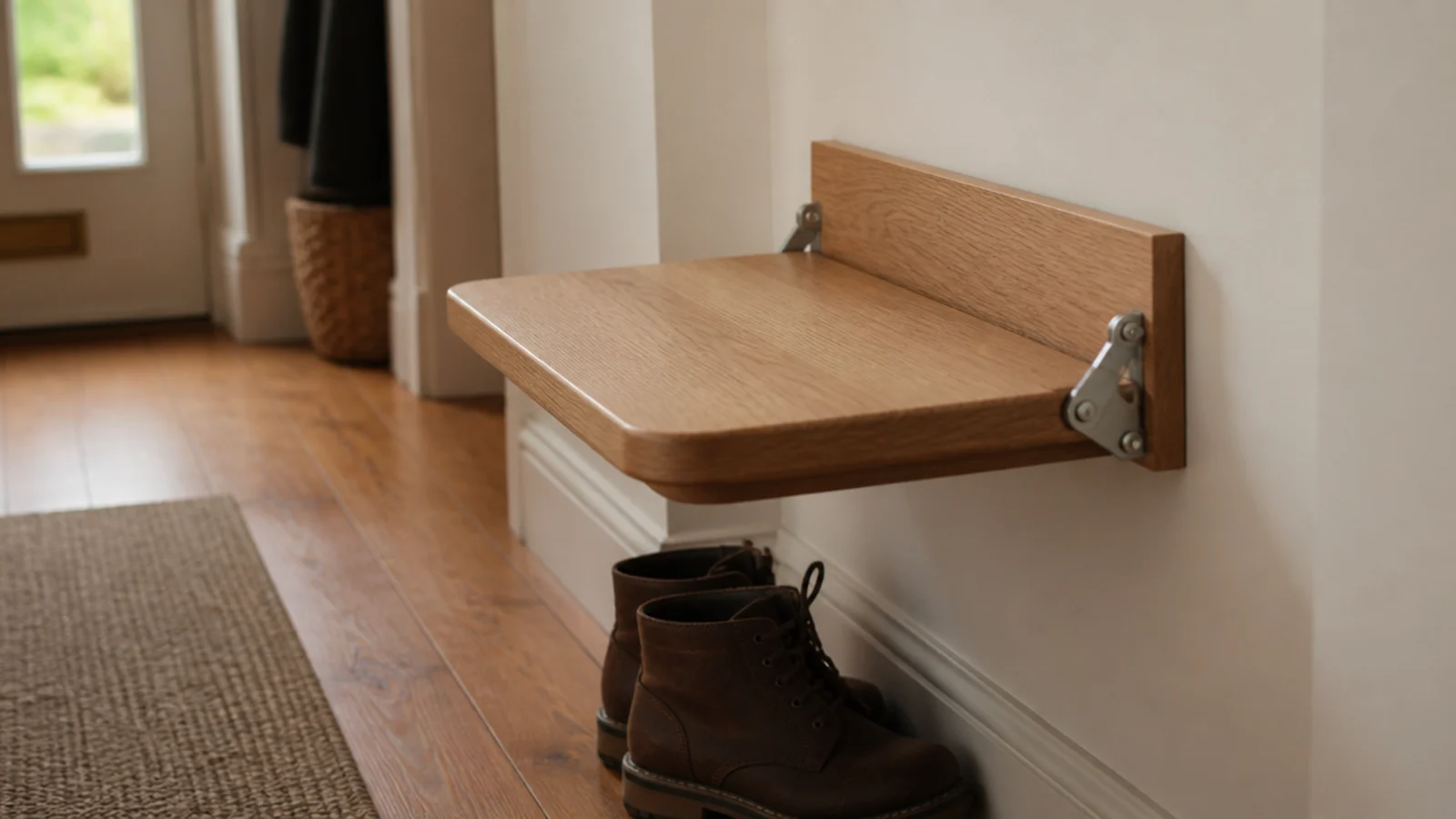
21. A folding wall seat for lace-up mornings
Where a bench will never fit, a folding wall-mounted seat gives you 18 inches of seat height on demand and 3 inches of projection the rest of the day.
Fix it into studs without exception — a folding seat takes the full weight of an adult on two brackets. Around $70 to $130 fitted. $$
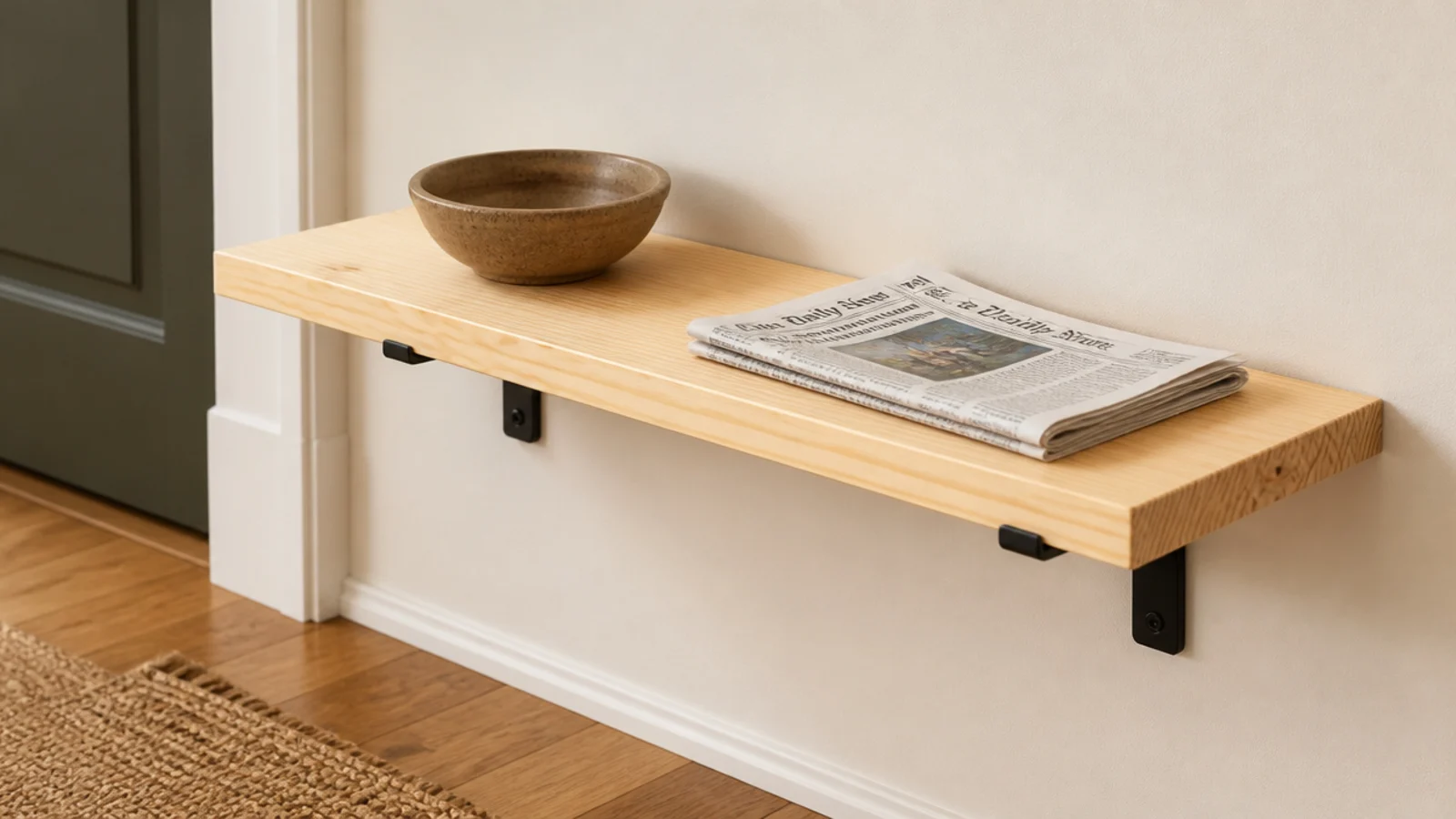
22. A bracket ledge built from spare shelf parts
A pine board and two small brackets make a perfectly good entry ledge for under $20. Paint it the wall colour and it reads as built in.
Round the front edge with 220-grit paper before painting; that single detail is the difference between a shelf that looks homemade and one that looks intended. $
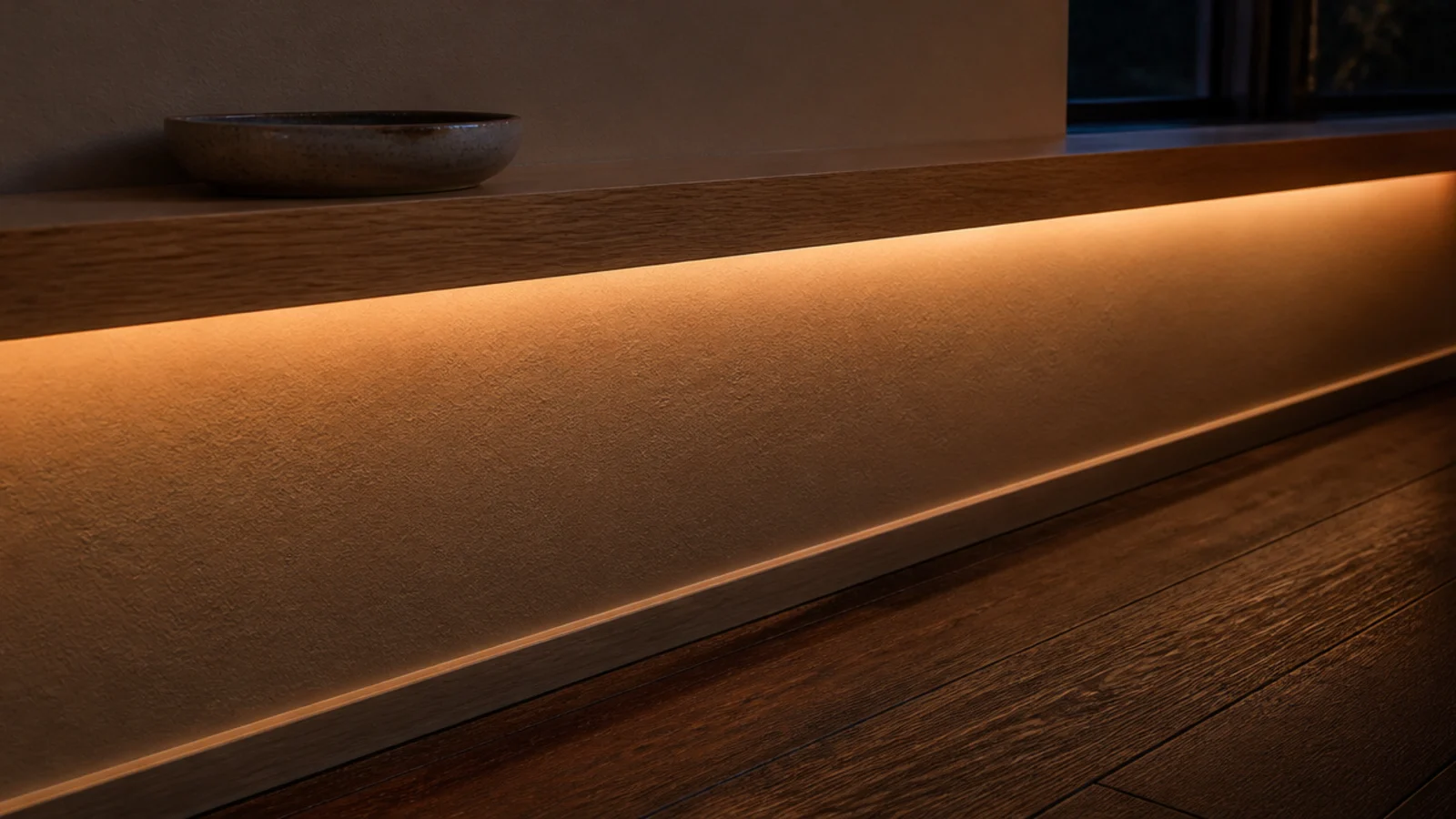
23. An adhesive light strip under the ledge
A single ceiling fixture flattens an entry, and a small hall rarely has room for a lamp. A warm LED strip stuck to the underside of the ledge solves both.
It washes light down the wall, which makes a tight space read taller. USB rechargeable versions cost about $20 and need no wiring at all. $
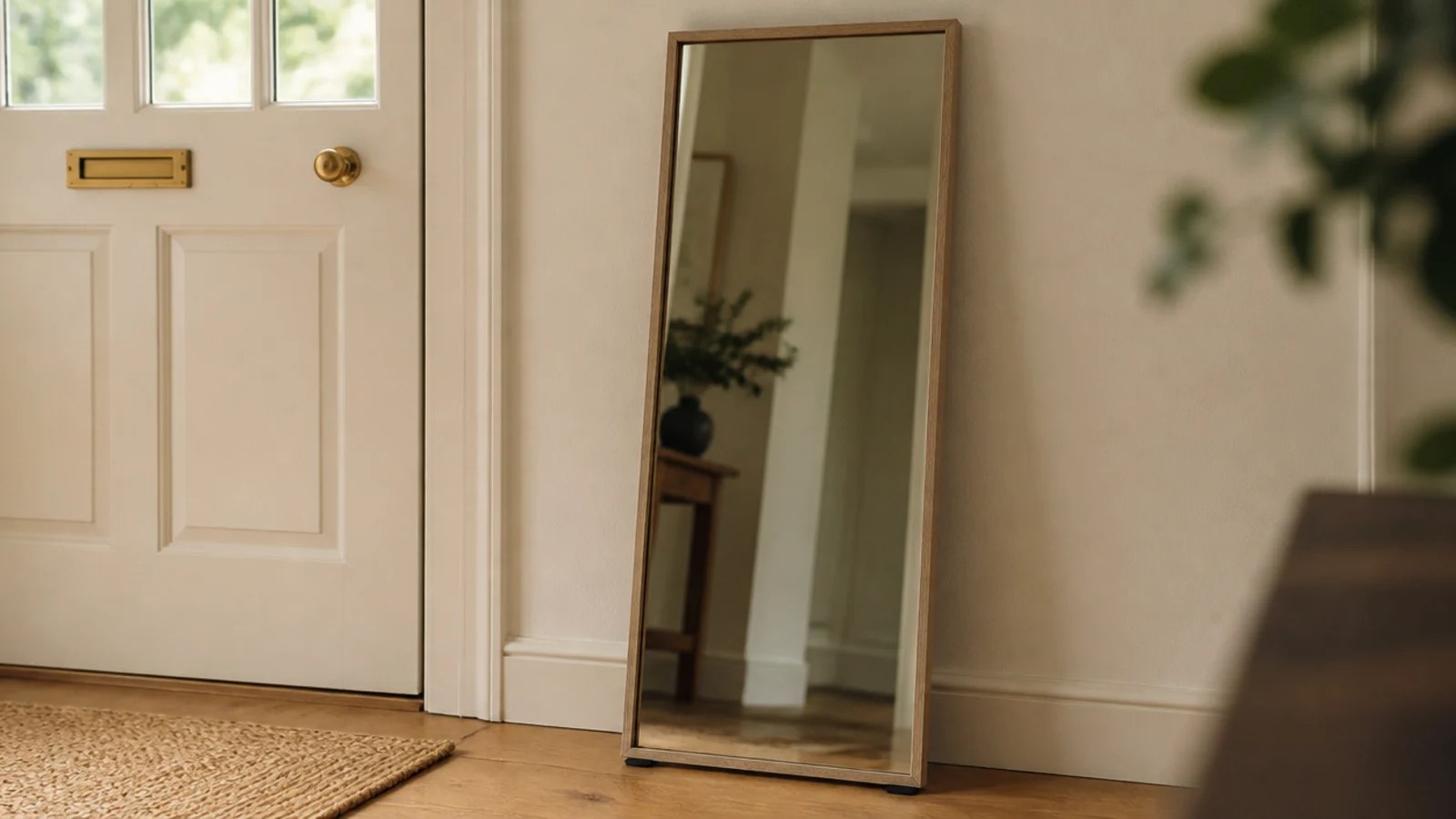
24. A leaning mirror with no fixings at all
A tall mirror leaning against the wall beside the door gives you the full-length check and adds apparent width, with zero holes.
Put felt pads under the feet so it does not creep on a wood floor, and add one anti-tip strap if there are children or a dog. One small hole beats a fallen mirror. $$
25. Cap it at one bag per person
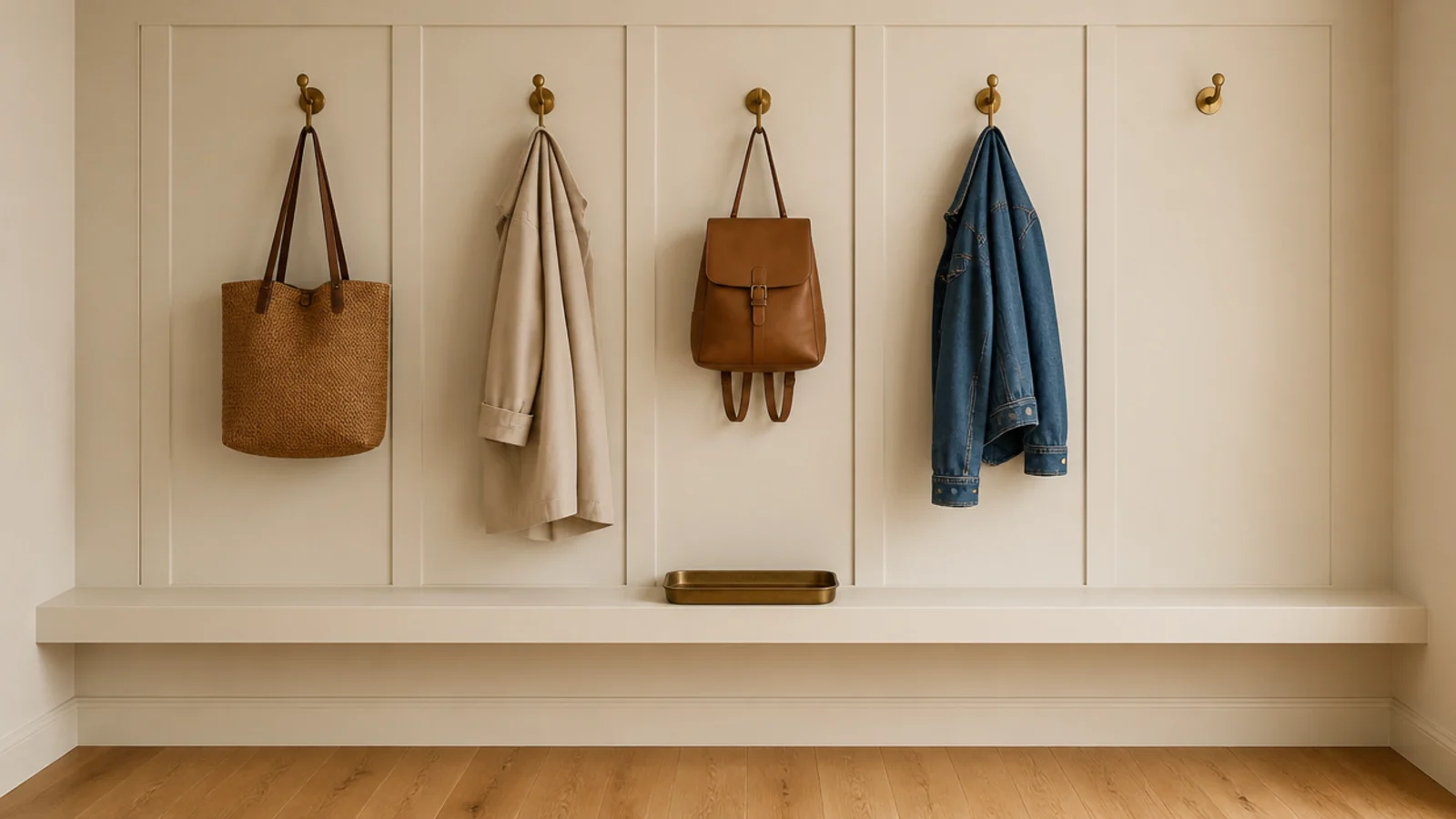
The discipline that keeps all of this working. One hook per person, one bag or coat on it, and the overflow goes to a bedroom.
Small entries do not get gradually messy — they hit capacity in about ninety seconds and then everything after that lands on the floor. If you want the wider system, fifteen entryway ideas covers it. Free
Mistakes to Skip
- Buying a shallow console instead of mounting a ledge. The legs are the problem in a tight hall, not the depth of the surface they hold up.
- Hanging the mirror opposite the front door. It reflects a slab of door instead of the room, and a small entry needs the borrowed depth far more than the symmetry.
- Trusting adhesive hooks with winter coats. They are rated around five pounds, a wet wool coat is heavier, and the paint comes off with them when they let go.
Frequently asked questions
How do you make a small entryway functional?
Pick three of the five entryway jobs and put them all on the wall. An entry has five — a seat, shoes, coats, a landing surface and a mirror — and a working entry does at least three. In a small space, the three that fit are almost always coats, a shallow surface and a mirror, with shoes moved to a closet.
What if my apartment has no entryway at all?
Build one out of a 30-inch strip of wall beside the door. A peg rail at 52 inches, a 6-inch ledge at 32 and a mirror above it read as a deliberate entry even when the front door opens straight into the living room. A runner or a small rug marks the floor boundary that the architecture never gave you.
How narrow can an entryway console be?
Twelve inches deep is the maximum most halls take, and 6 to 8 inches works when clearance is tight. Under 36 inches of walkway between the wall and whatever you walk around, skip the console entirely and mount a ledge instead. Legs are what make a small entry feel blocked, not the surface itself.
What no-drill options actually hold in a rental entryway?
Adhesive hooks rated at five pounds each hold a jacket, a tote or an umbrella, but not a wet winter coat. An over-the-door hook bar carries much more and needs nothing at all. A leaning mirror, a freestanding shoe cabinet and a runner are all zero-fixing. Test adhesive on a hidden patch first, because flat builder paint peels.
Does a mirror really make a small entryway look bigger?
It makes it look wider, which is the dimension a small entry is usually short of. Hang it on the long wall facing into the room beyond, centred at 57 to 60 inches, so it reflects depth rather than the front door. A mirror facing a blank wall just doubles the blank wall.
Measure the clearance, get everything off the floor, and cap what each person can leave behind — those three moves fix a small entry before you spend anything at all. For halls that are long rather than simply small, narrow entryway ideas goes deeper on depth limits, and apartment entryway ideas covers rentals with no entry at all. Save the pin so the heights are with you when you tape out the wall.
Want more like this? Browse all 15 entryway & foyer ideas guides — they all use the same measurements and budget tiers.
Pin it for later
Save this to your Entryway & Foyer Ideas board
Pin it now so it is waiting for you when the tape measure comes out — and so the next person hunting for this idea can find it too.
Save this pinKeep going
More ideas worth saving while you have the tape measure out.