Entryway & Foyer Ideas · Listicle
30 Stylish Entryway Ideas to Copy Now

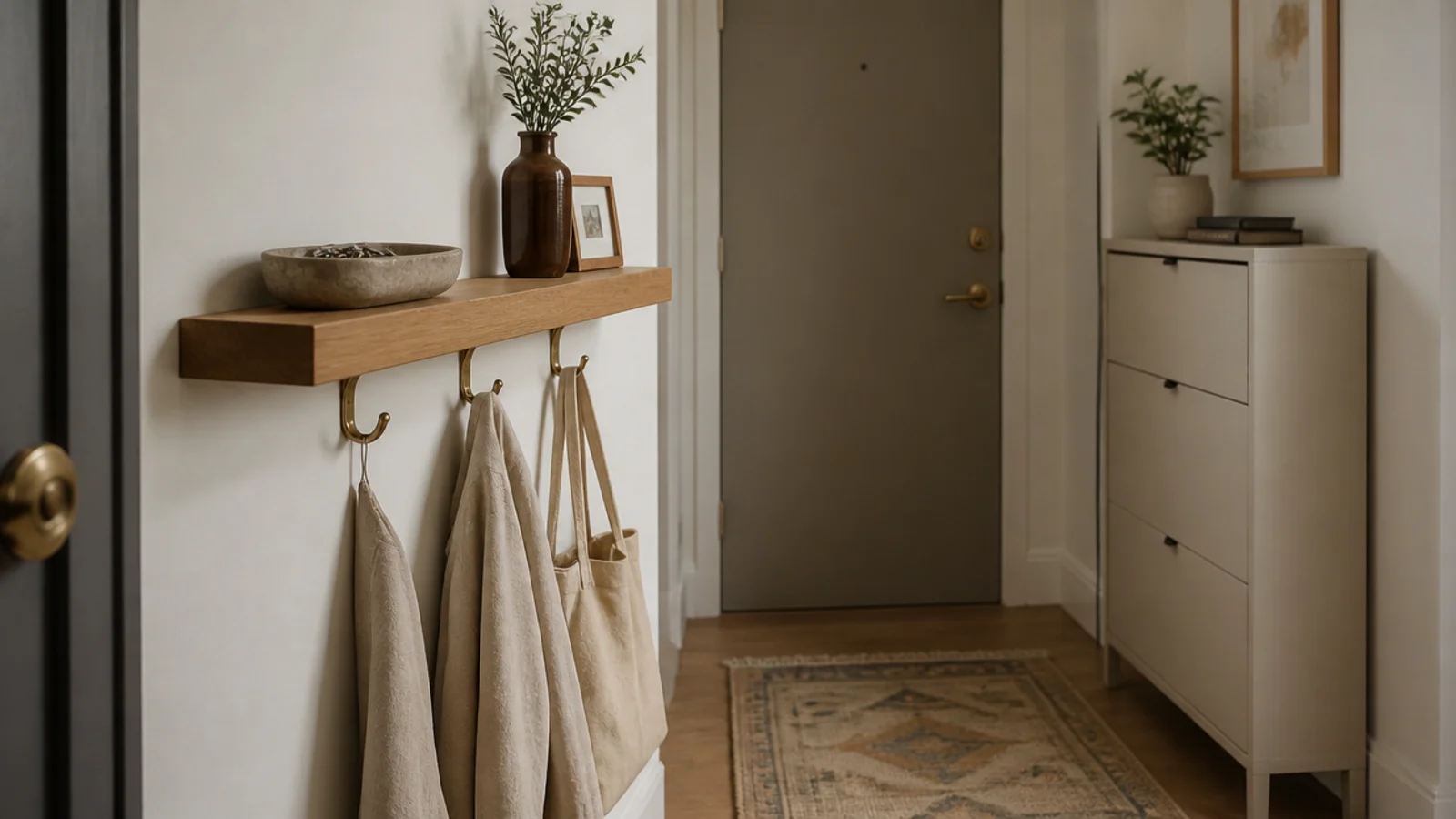
Apartment entryway ideas have to start from an honest problem: most apartments do not have an entryway at all. The door opens into the living room, there is four feet of wall if you are lucky, and every piece of furniture you like is too deep. These 30 setups build a working entry out of a zone rather than a room, with the depths that genuinely fit.
In this guide32 sections — tap to openHide
- 1.How apartment entryway ideas earn their footprint
- 2.Draw the zone with a runner when there is no hallway
- 3.A 10-inch-deep wall-mounted console
- 4.A hook rail at 52 inches, with a child rail at 40
- 5.A round mirror centred at 57 inches
- 6.A slim shoe cabinet at nine inches deep
- 7.A folding stool that hangs on a hook
- 8.A tall narrow cabinet that holds everything
- 9.A bookcase turned perpendicular to make a wall
- 10.A curtain that hides the coat zone in a studio
- 11.Baskets on the lower shelf of the console
- 12.A floating shelf above the light switch
- 13.A wall-mounted mail slot beside the door
- 14.A peel-and-stick tile patch as a faux foyer
- 15.A paint block to draw the entry on the wall
- 16.A plug-in sconce plus a puck light
- 17.A pegboard panel that changes with the season
- 18.A leaning ladder for bags
- 19.A doormat inside the door, not outside
- 20.An umbrella stand and boot tray zone
- 21.A charging drawer with the cables hidden
- 22.A leaning mirror on the console top
- 23.A drop-leaf shelf for halls under 36 inches
- 24.A parcel landing spot for deliveries
- 25.A dog lead hook and treat jar
- 26.A lift-top bench for seasonal gear
- 27.Over-the-door racks on the entry door itself
- 28.A narrow bench at 30 inches long
- 29.A corner shelf where there is no wall
- 30.A second rail at 40 inches inside the closet
- 31.One tray by the door and nothing else
- 32.Mistakes to Skip
How apartment entryway ideas earn their footprint
An entryway has five jobs: somewhere to sit, somewhere for shoes, somewhere for coats, a landing surface, and a mirror. A working entry does at least three of them, and in an apartment you are choosing which three deliberately rather than fitting all five badly.
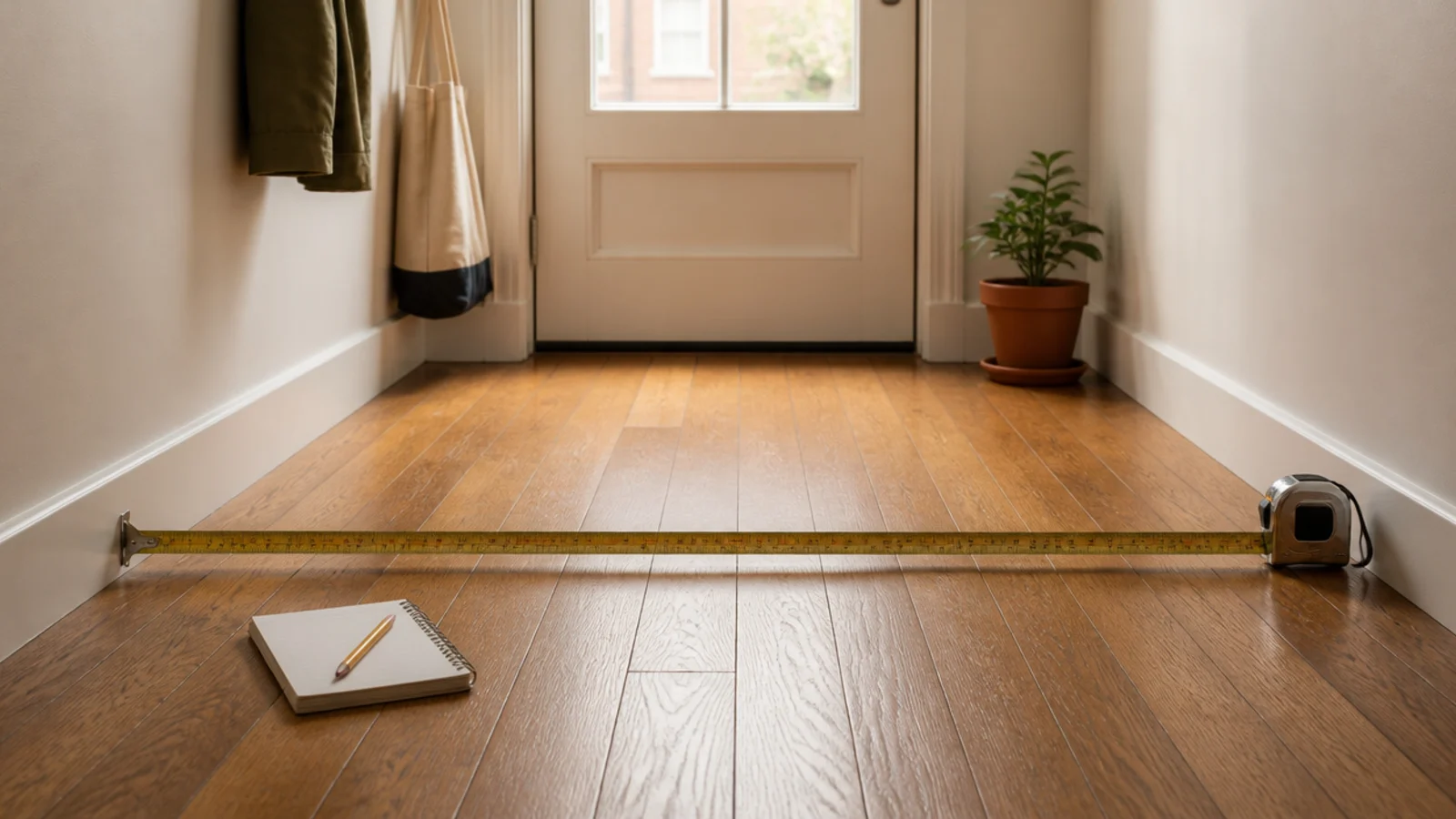
Measure the walkway before anything else. Stand at the door and measure to the nearest thing you walk around. A console sits 30 to 32 inches high and 12 inches deep, which is the maximum most halls take — but under 36 inches of walkway, skip the freestanding console entirely and go wall-mounted at 10 inches instead.
Hooks go at 52 inches for adults, with a second rail at 40 inches if children live here, because a coat hung above a child is a coat on the floor. Centre the mirror at 57 to 60 inches, and leave 6 to 8 inches between a console top and the mirror bottom.
On the floor, flat-weave washable runners survive an apartment entry; deep pile does not. And one tray is what stops mail and keys spreading across every surface in a small home.
Budget tiers below: $ under $30 · $$ $30–$100 · $$$ $100+.
1. Draw the zone with a runner when there is no hallway
Where the door opens straight into the living room, the floor does the defining. A runner about 3 feet long, laid square to the door, tells your eye where the entry ends.
Flat weave, washable, with a thin non-slip pad. That boundary makes everything else you add read as deliberate. $$
2. A 10-inch-deep wall-mounted console
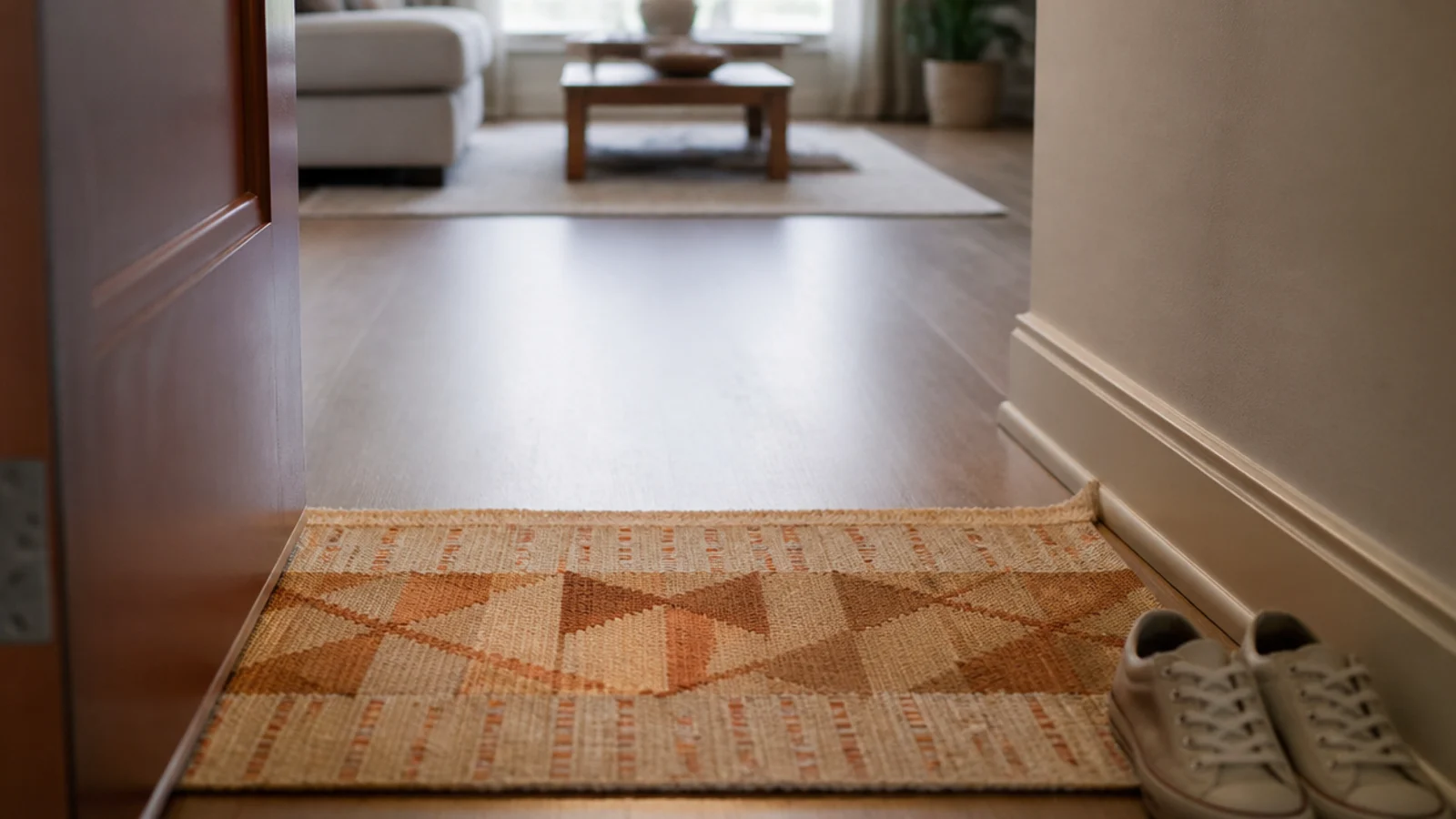
The single best swap in a tight apartment. A floating shelf at 10 inches deep and 30 to 32 inches high gives you the landing surface with no legs eating floor. In the very tightest halls, drop to a 6-inch ledge rather than giving up the surface entirely.
Fix into studs, or toggle bolts rated 25 to 35 pounds each. Bags get dumped on these, so overbuild the anchors. $$
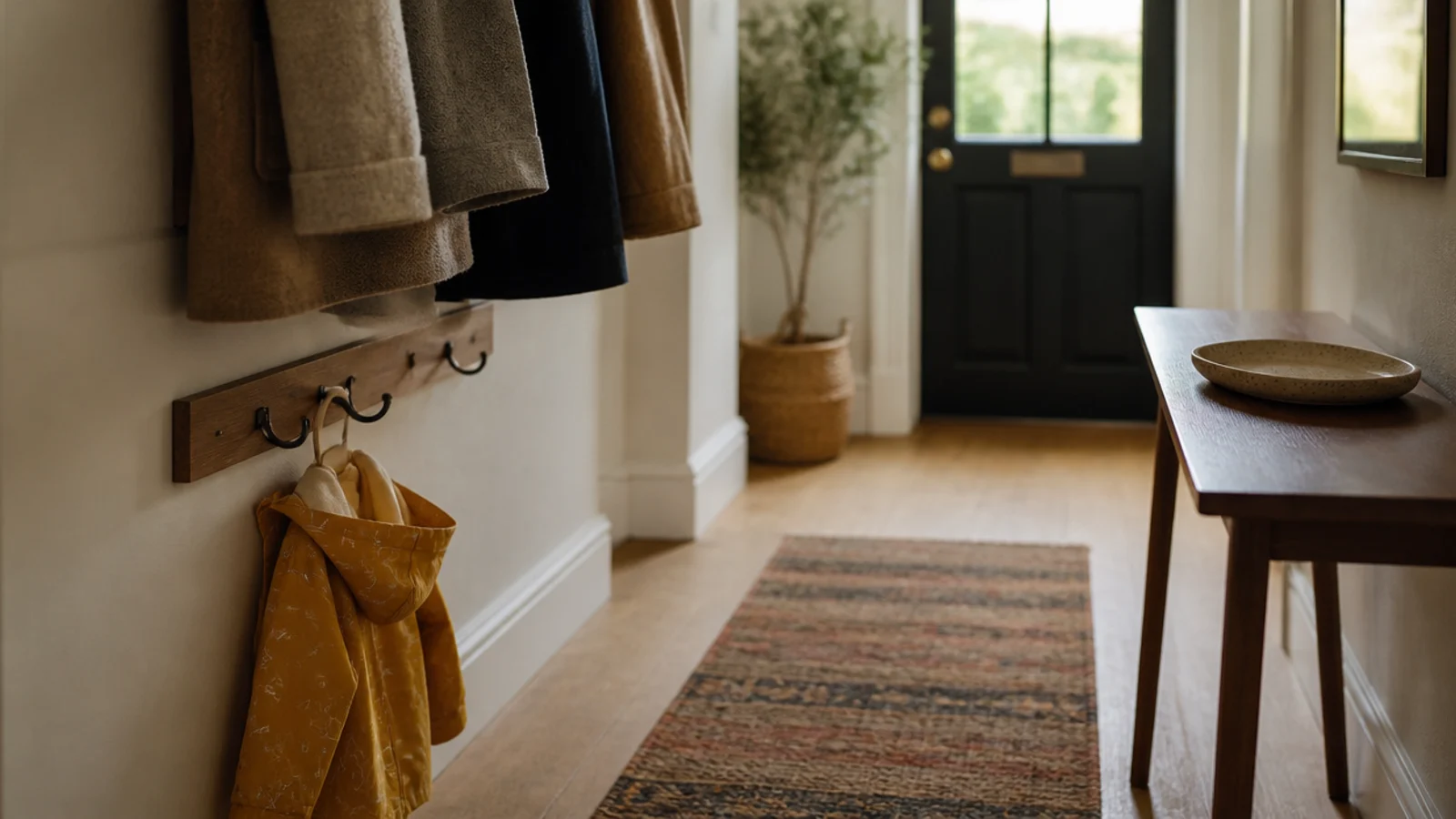
3. A hook rail at 52 inches, with a child rail at 40
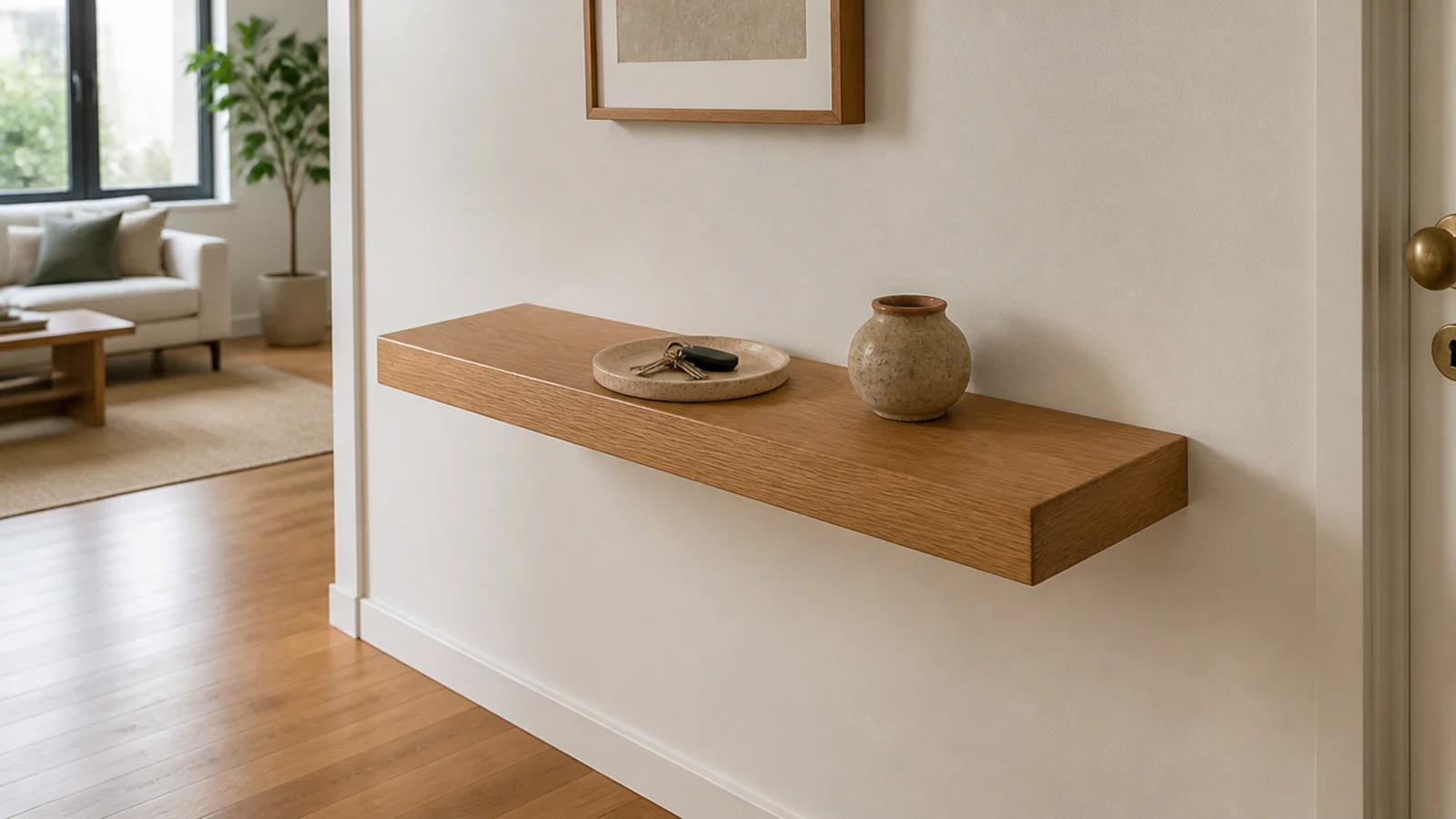
Two rails beat one row of hooks in a family apartment. Adults at 52 inches, children at 40, on the same wall.
Cap it at daily coats. Four hooks in use beat ten hooks buried under a season of outerwear nobody has worn since March. $
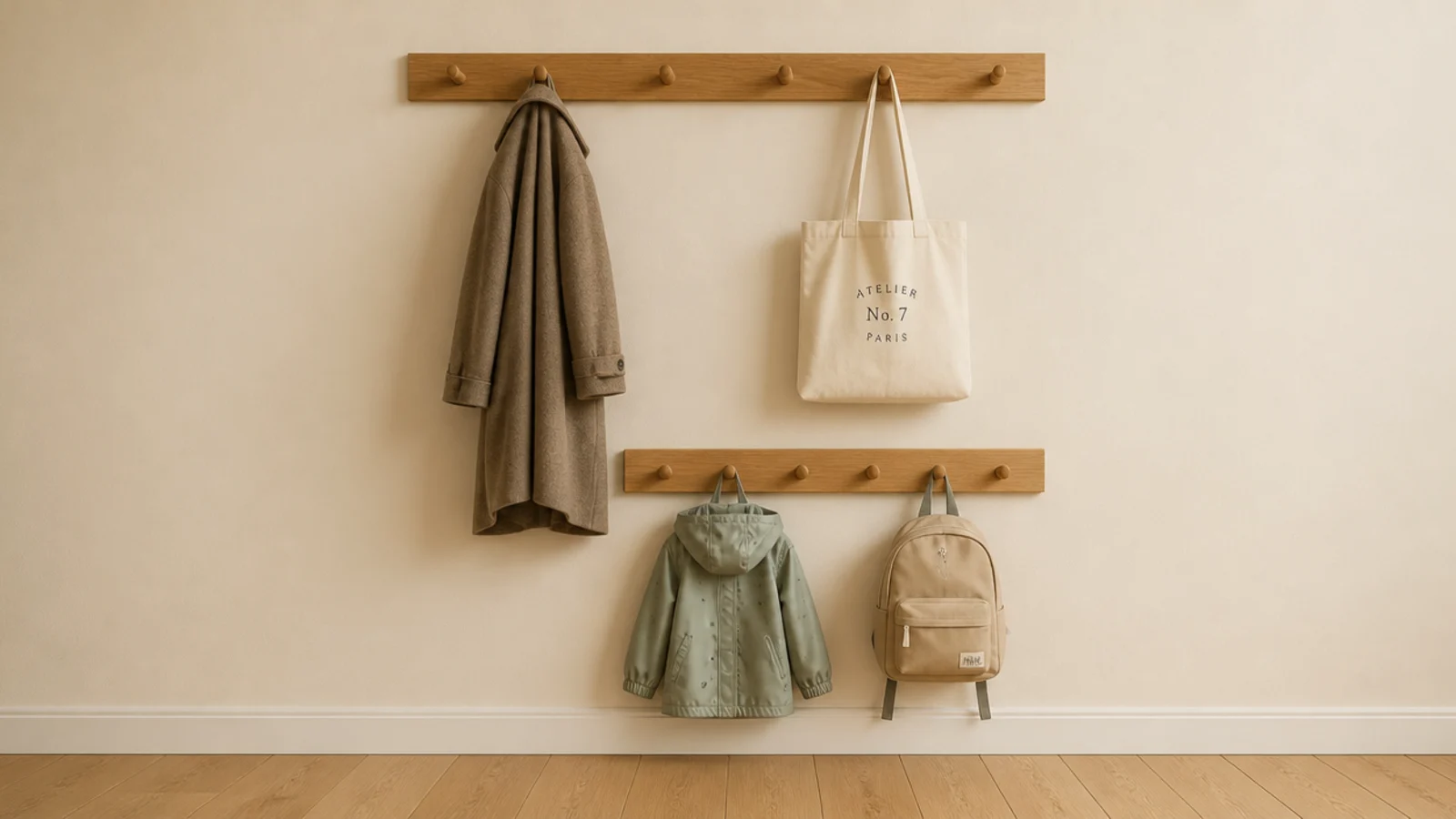
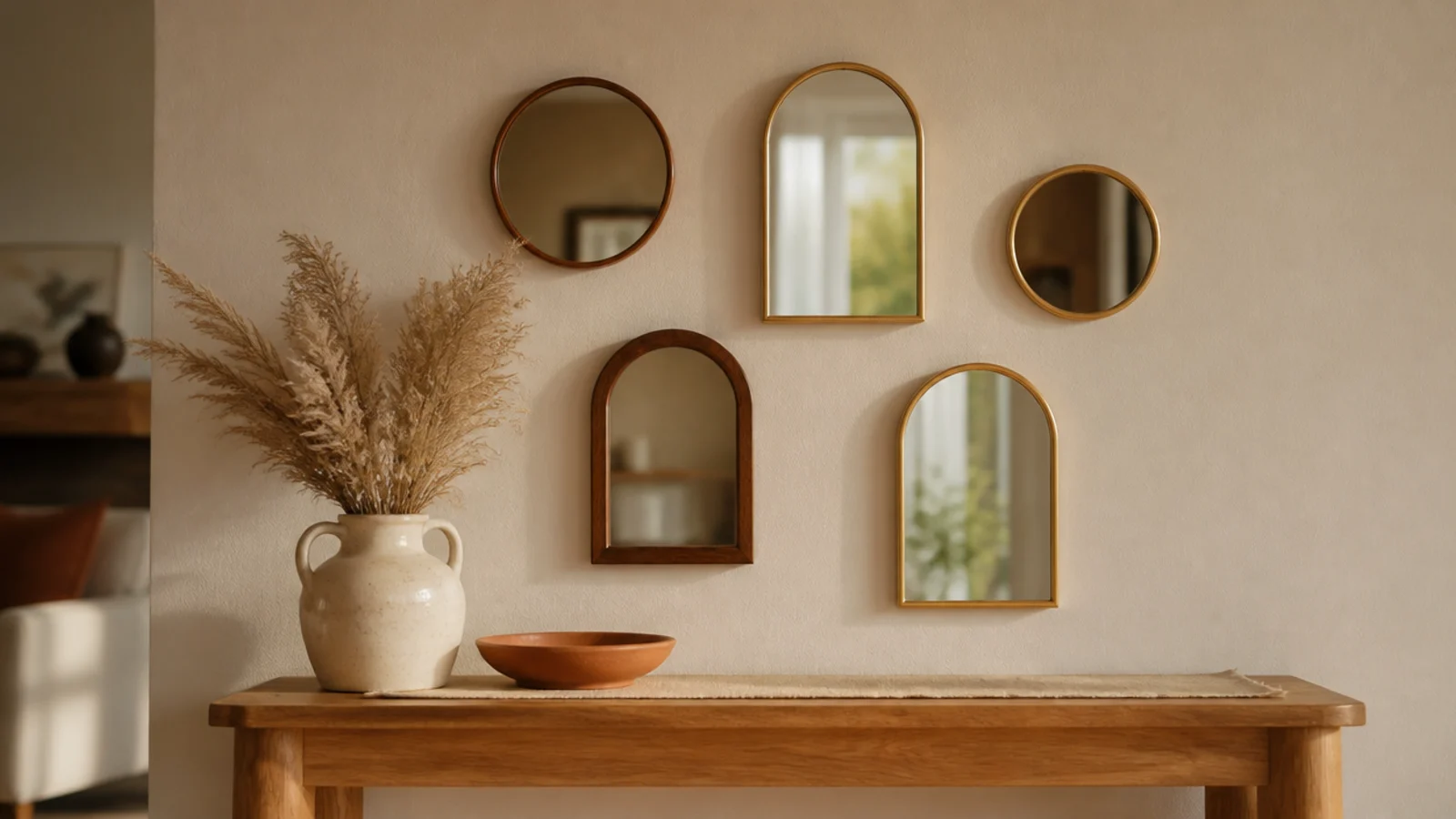
4. A round mirror centred at 57 inches
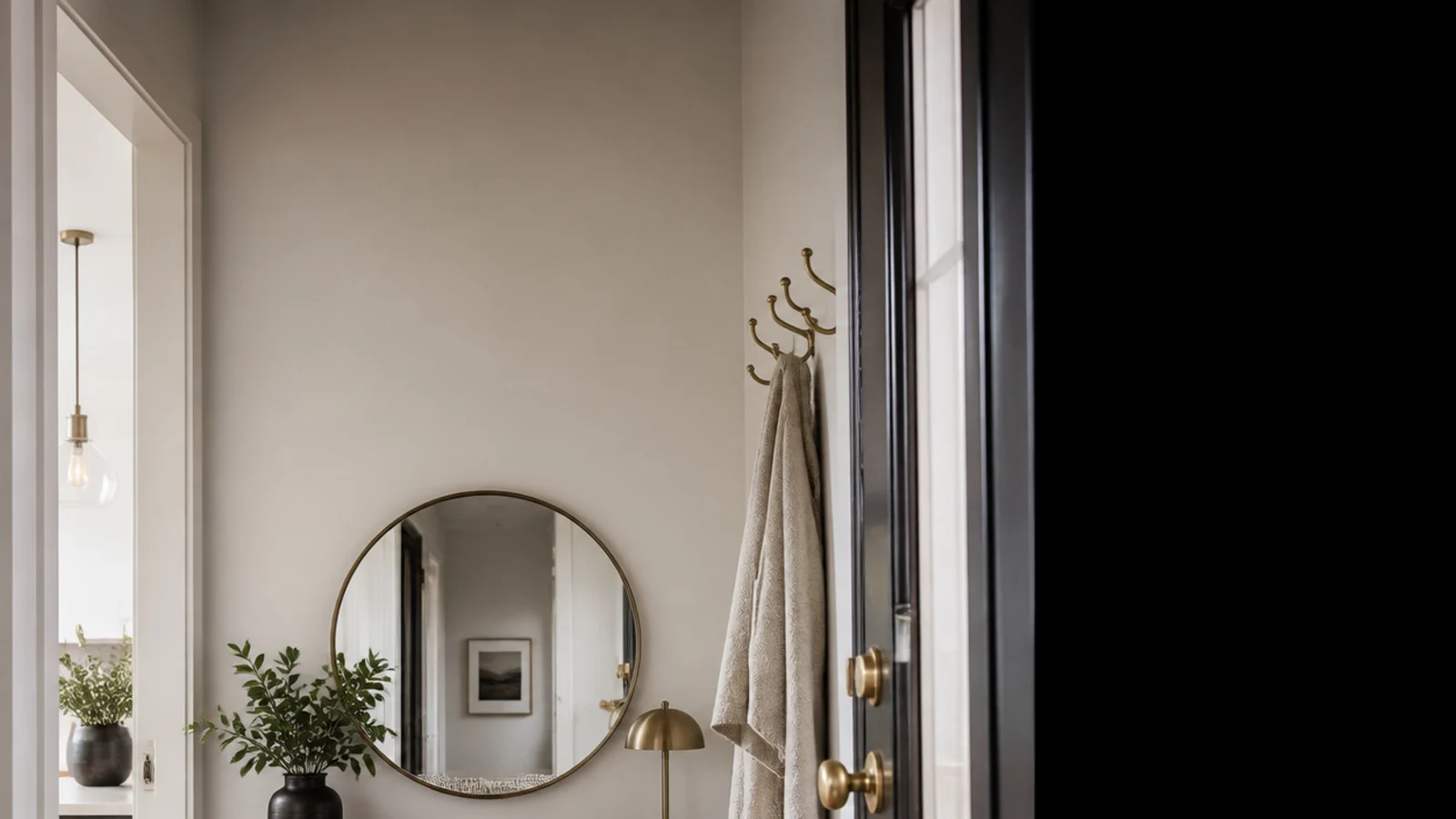
Apartment entries are usually a box of right angles. A round mirror softens that faster than any textile, and it does the mirror job at the same time.
Twenty-four to 30 inches across is right beside a door. Centre the glass at 57 to 60 inches so it shows a face, not a ceiling. $$
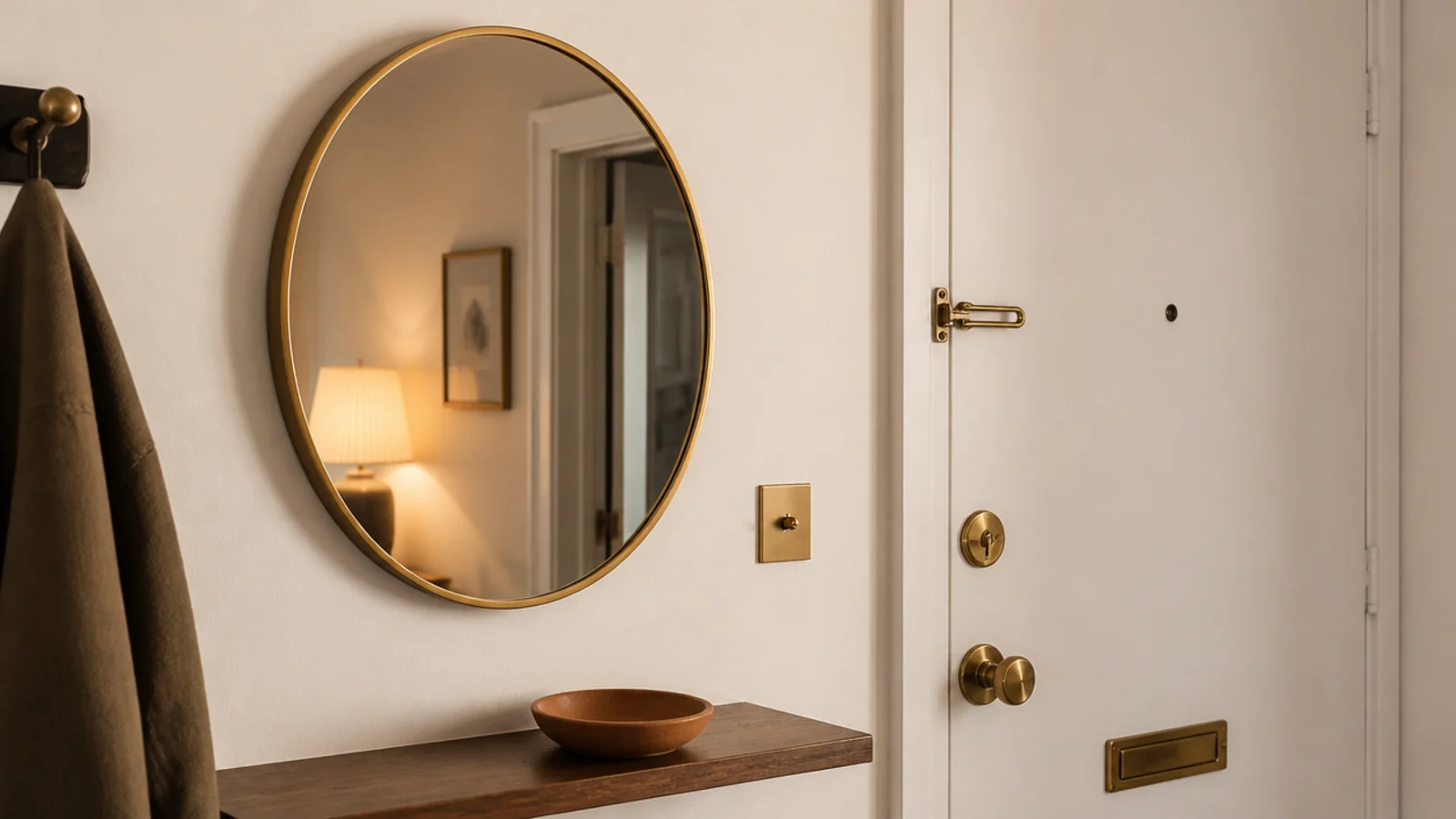
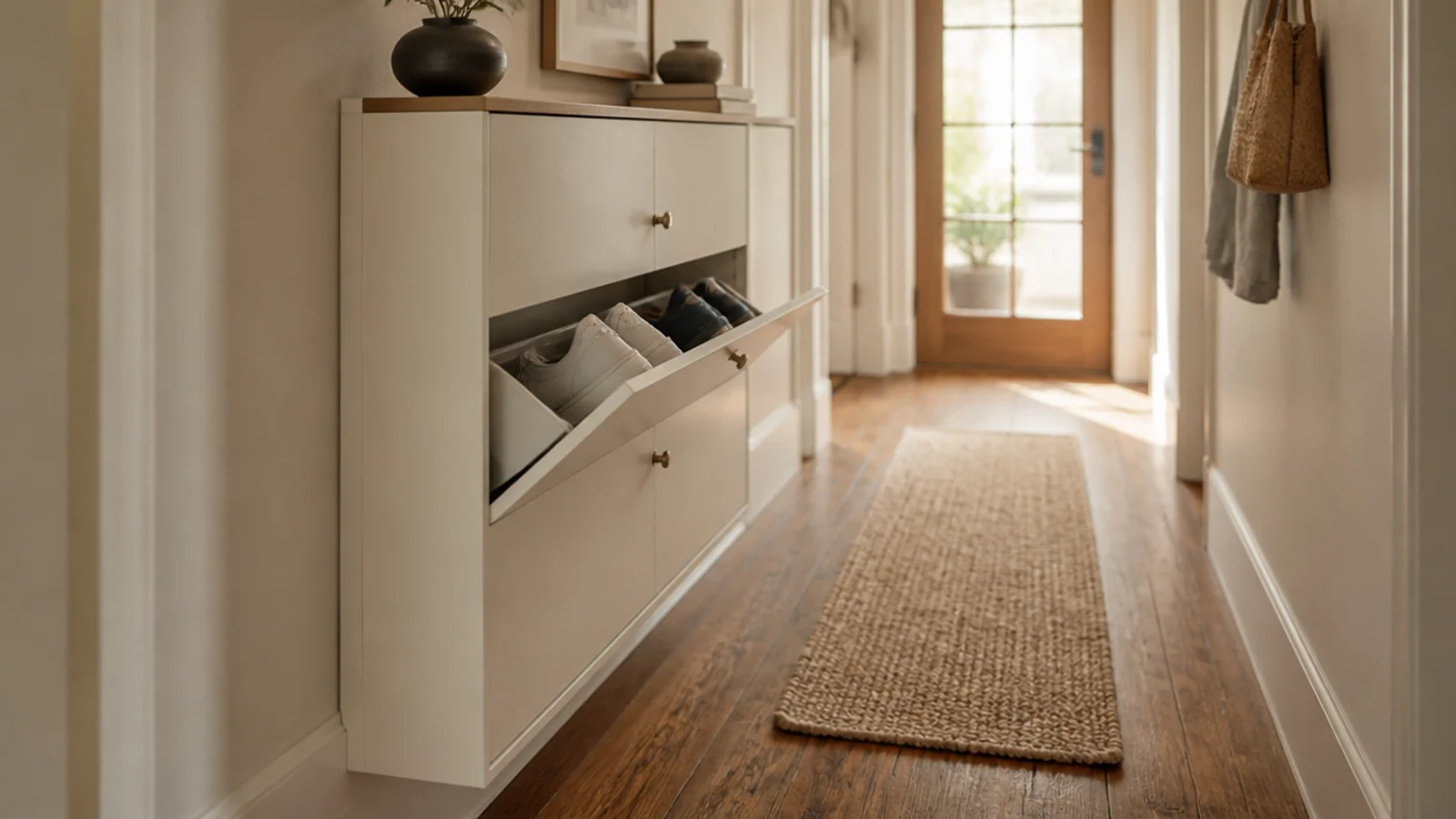
5. A slim shoe cabinet at nine inches deep
Nine inches is the magic depth, because tilt-out drawers hold a 12.5-inch shoe at an angle. It is the only shoe storage that fits a genuine hallway.
Two drawers hold six to eight pairs of flats and sneakers, and no boots. For closed options in detail, shoe cabinets for small entryways compares them properly. $$$
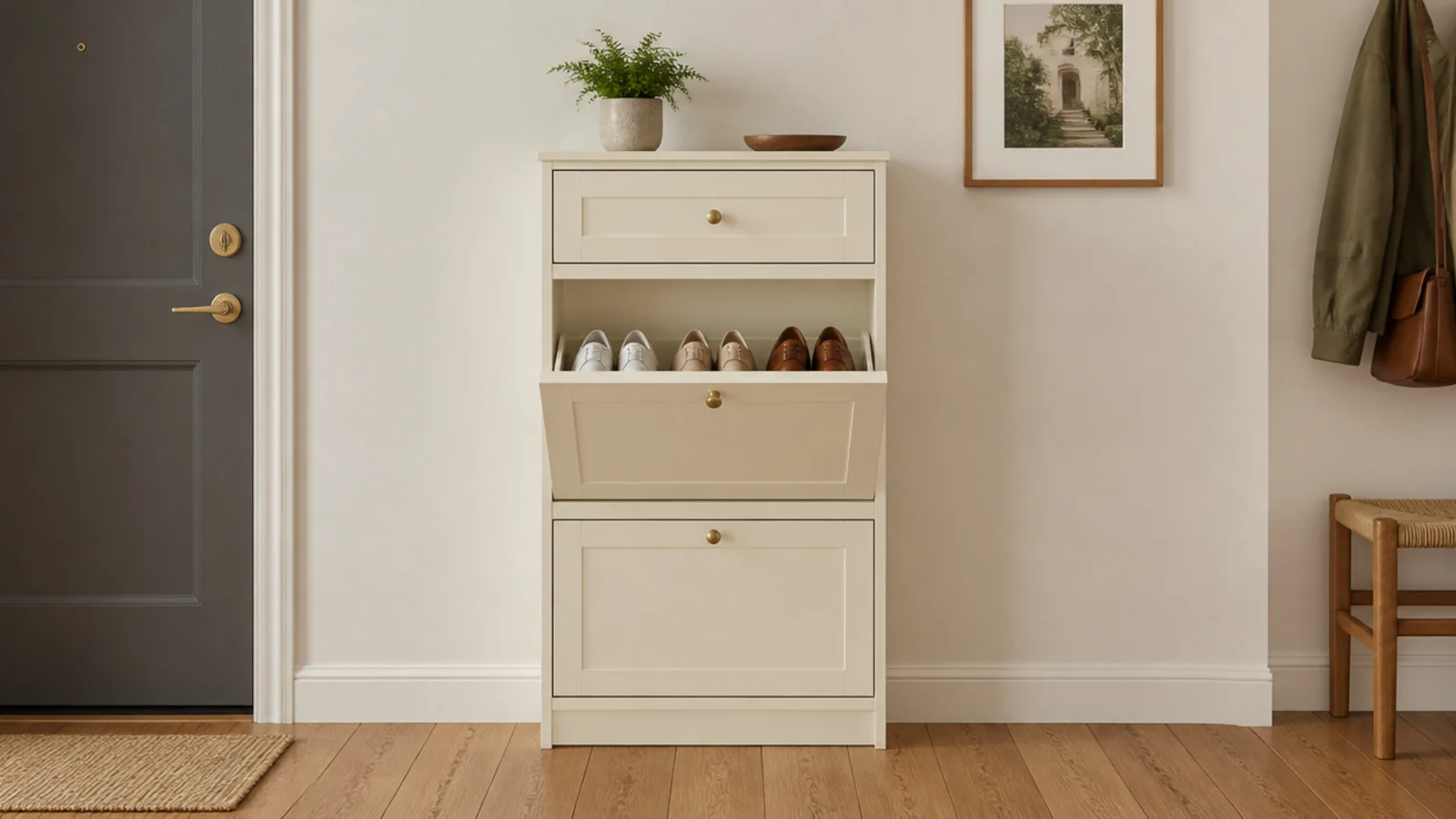
6. A folding stool that hangs on a hook
A seat you can hang on the wall solves the sitting job in a space that has no room for a bench. Beech folding stools weigh about 5 pounds.
Hang it at 40 inches on its own hook so it never blocks the coats. Pull it down to deal with boots, hang it back up. $$
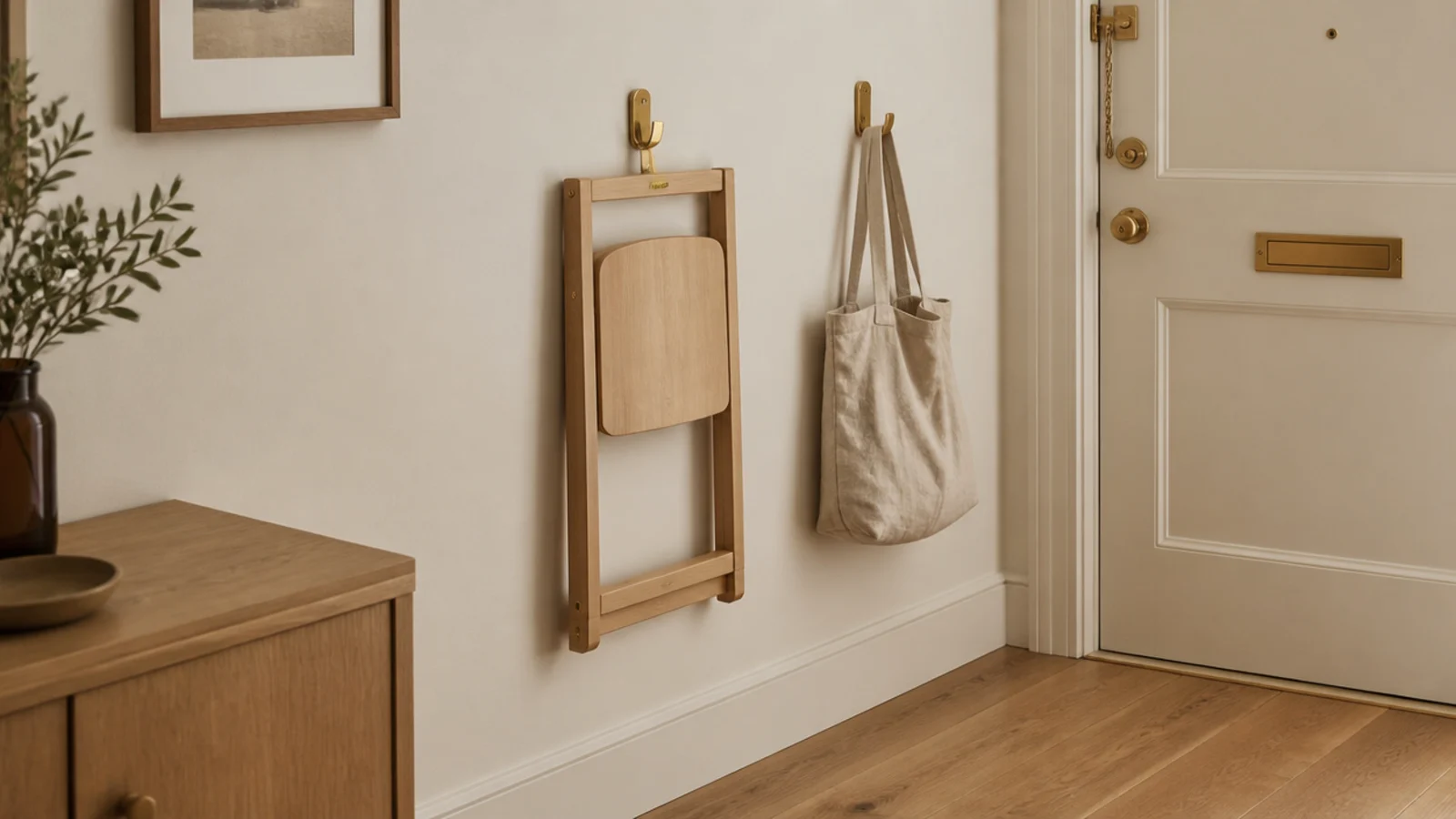
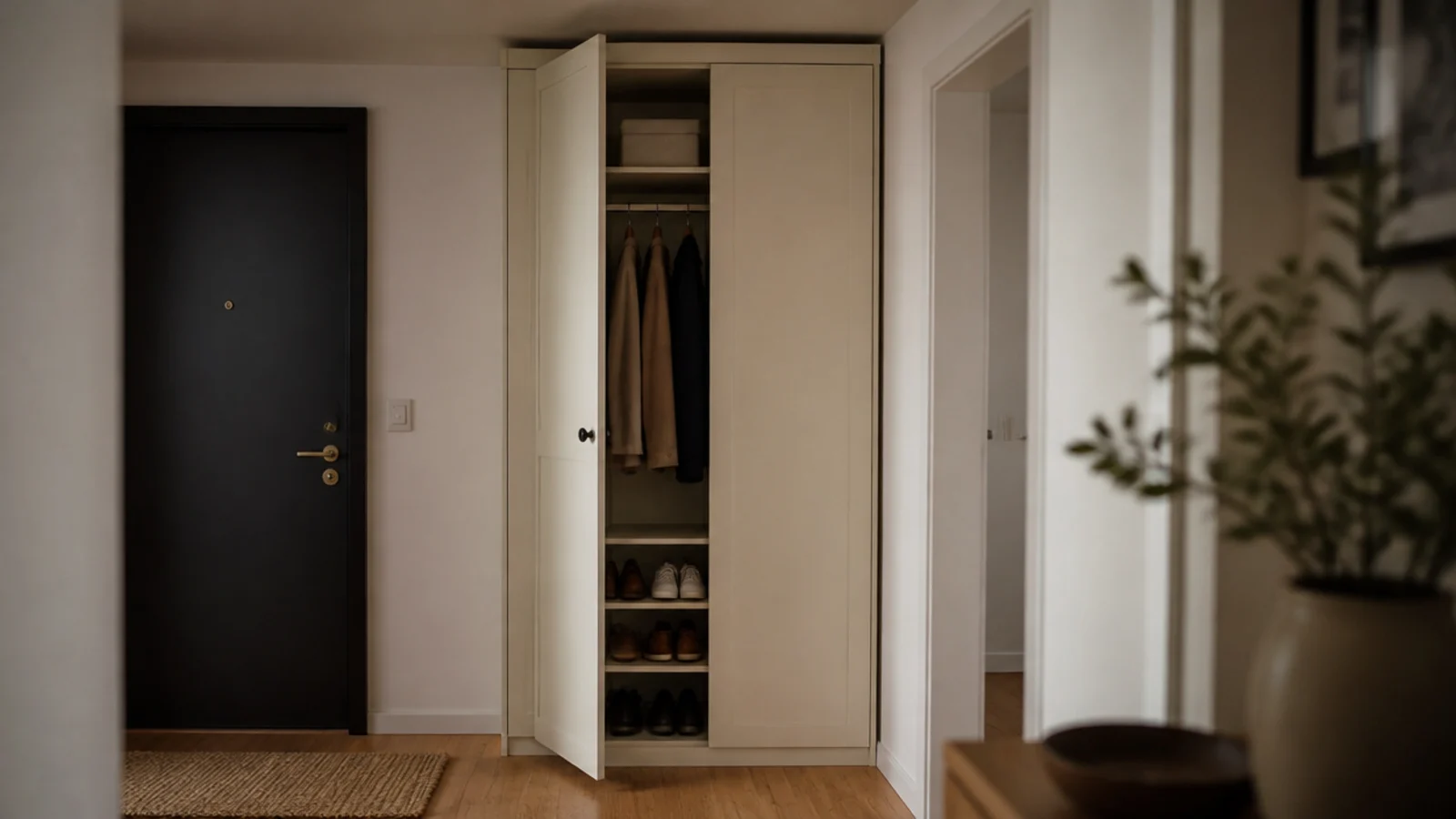
7. A tall narrow cabinet that holds everything
When floor space is fixed, buy height. A cabinet 16 inches wide and 70 inches tall holds coats above and shoes below in the footprint of a chair.
Anchor it to the wall — narrow tall furniture tips easily. Paint it the wall color and it recedes rather than looming. $$$
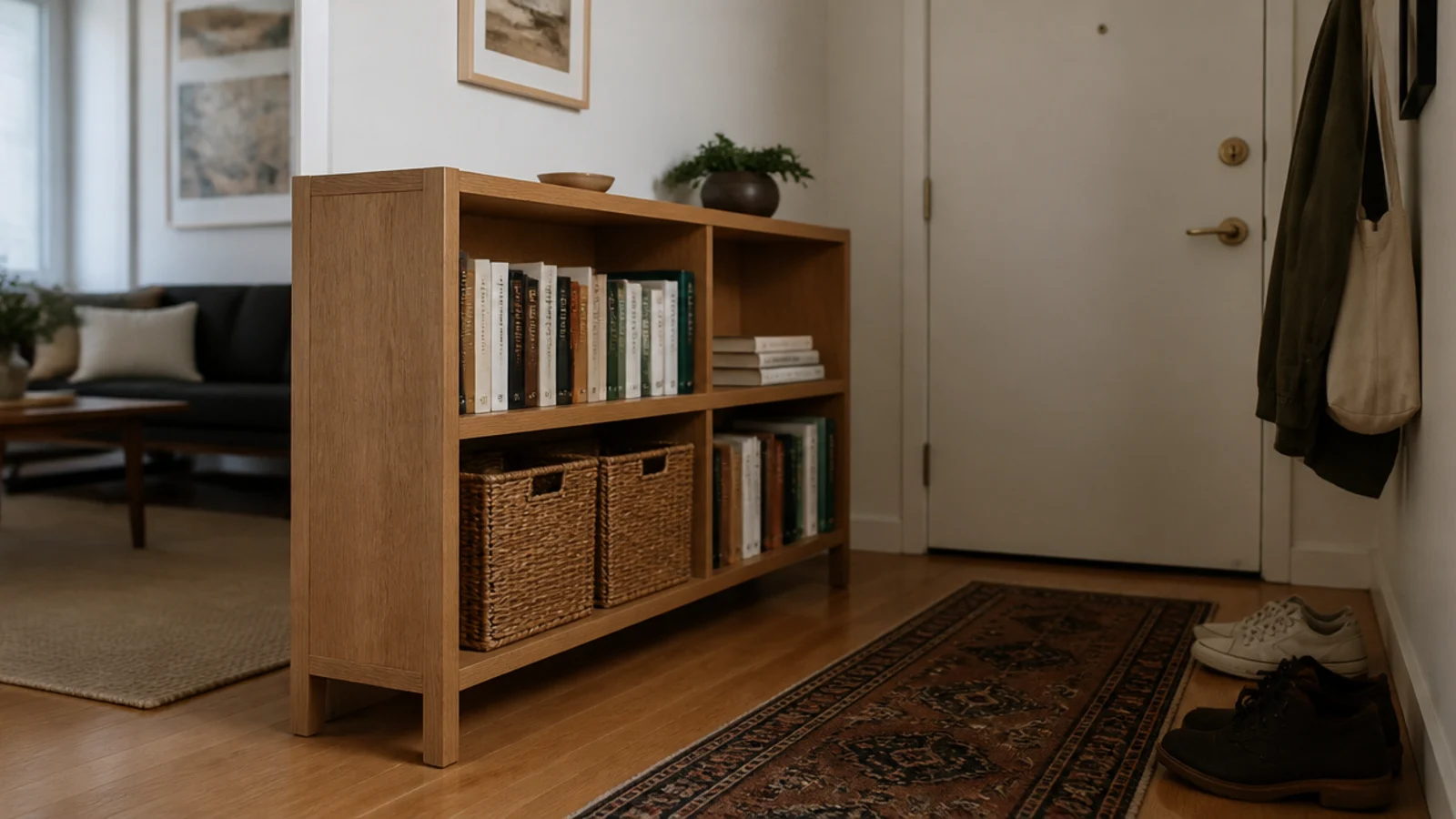
8. A bookcase turned perpendicular to make a wall
In a studio, turn a low open-backed bookcase sideways from the wall to build the entry wall the apartment never had.
Keep it under 42 inches tall so the room still reads open, and leave at least 32 inches of passing space beside it. Books face the room, baskets face the door. $$$
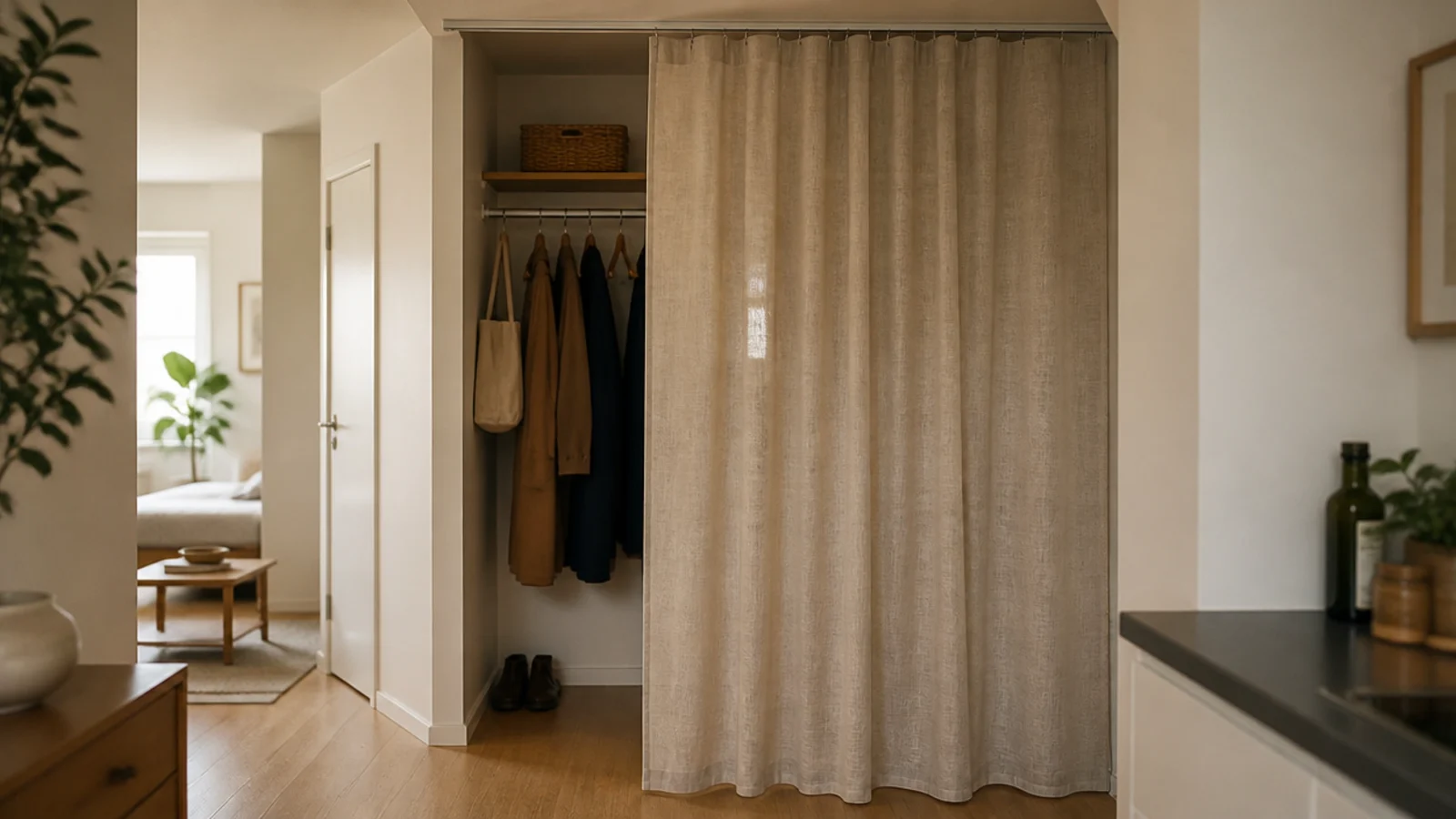
9. A curtain that hides the coat zone in a studio
If your bed can see the coat rail, hang a linen curtain on a ceiling track or tension rod and pull it across.
Natural linen or light cotton only — heavy fabric sags a tension rod within a fortnight. It turns a rail into a closet for about $40. $$
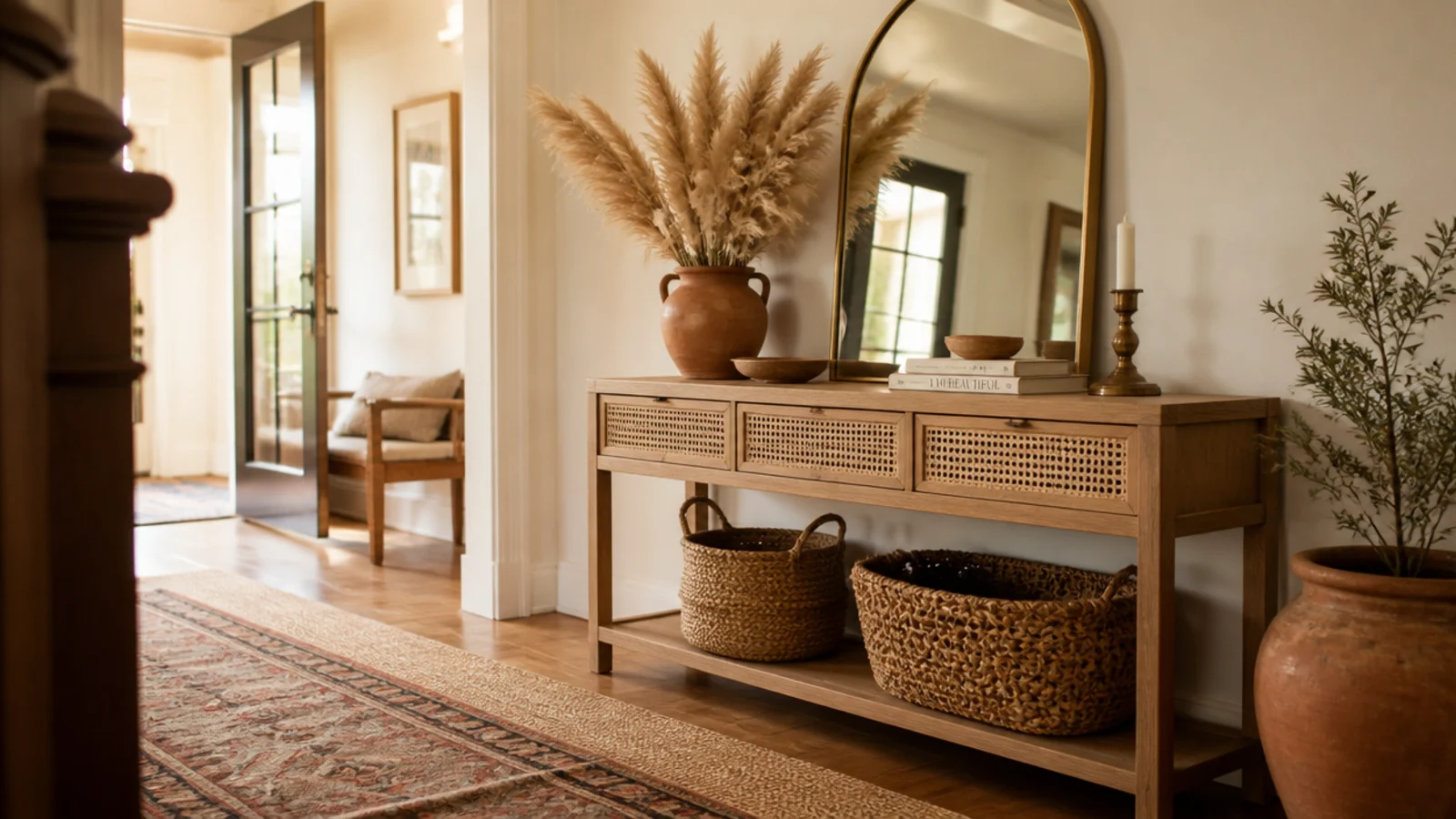
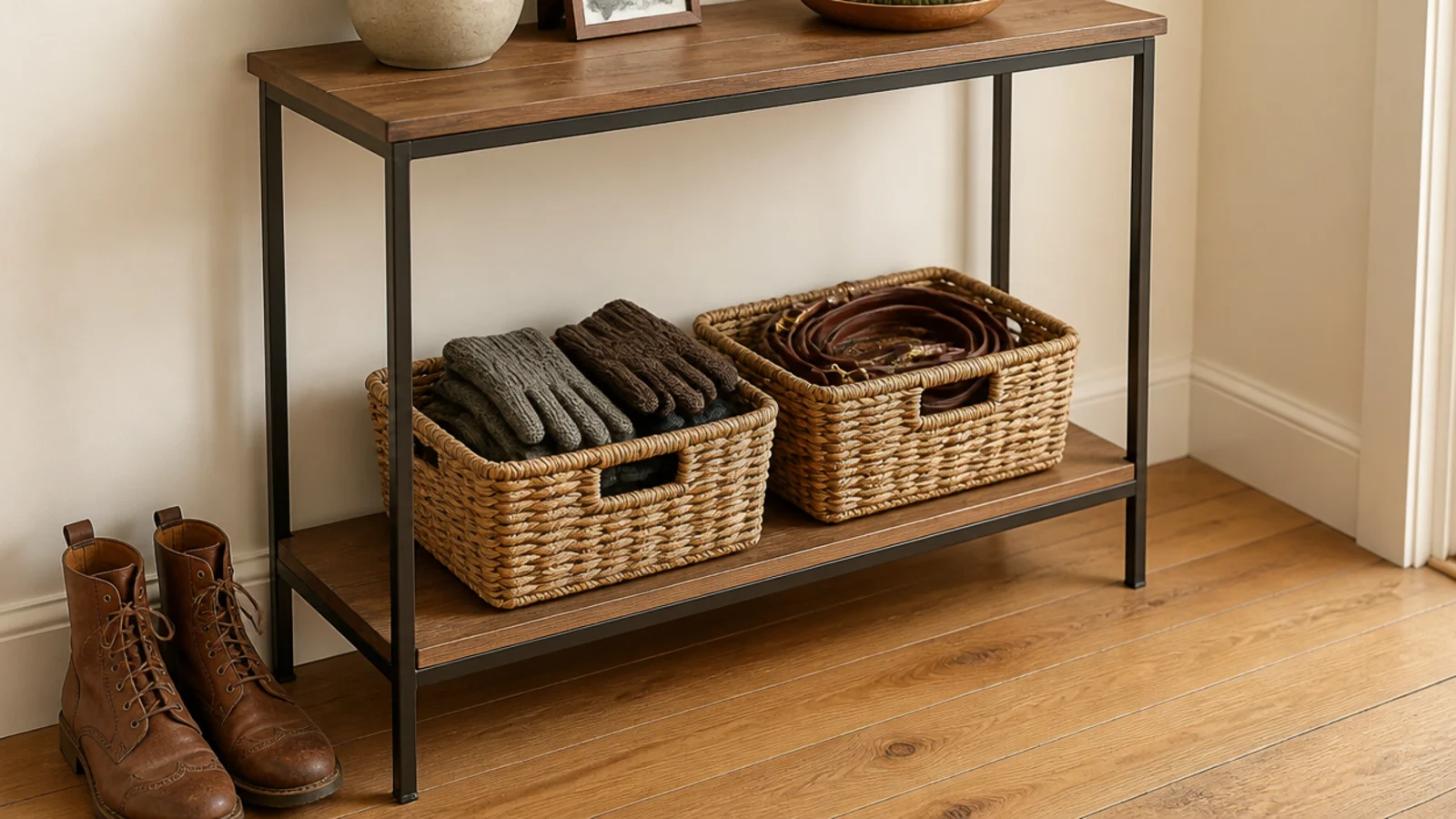
10. Baskets on the lower shelf of the console
The shelf under a console is where the small chaos goes. Two baskets, one per person, sized to fill the shelf width exactly.
Gloves, dog leads, sunscreen. Named baskets work better with children than any amount of asking, because nobody owns shared overflow. $
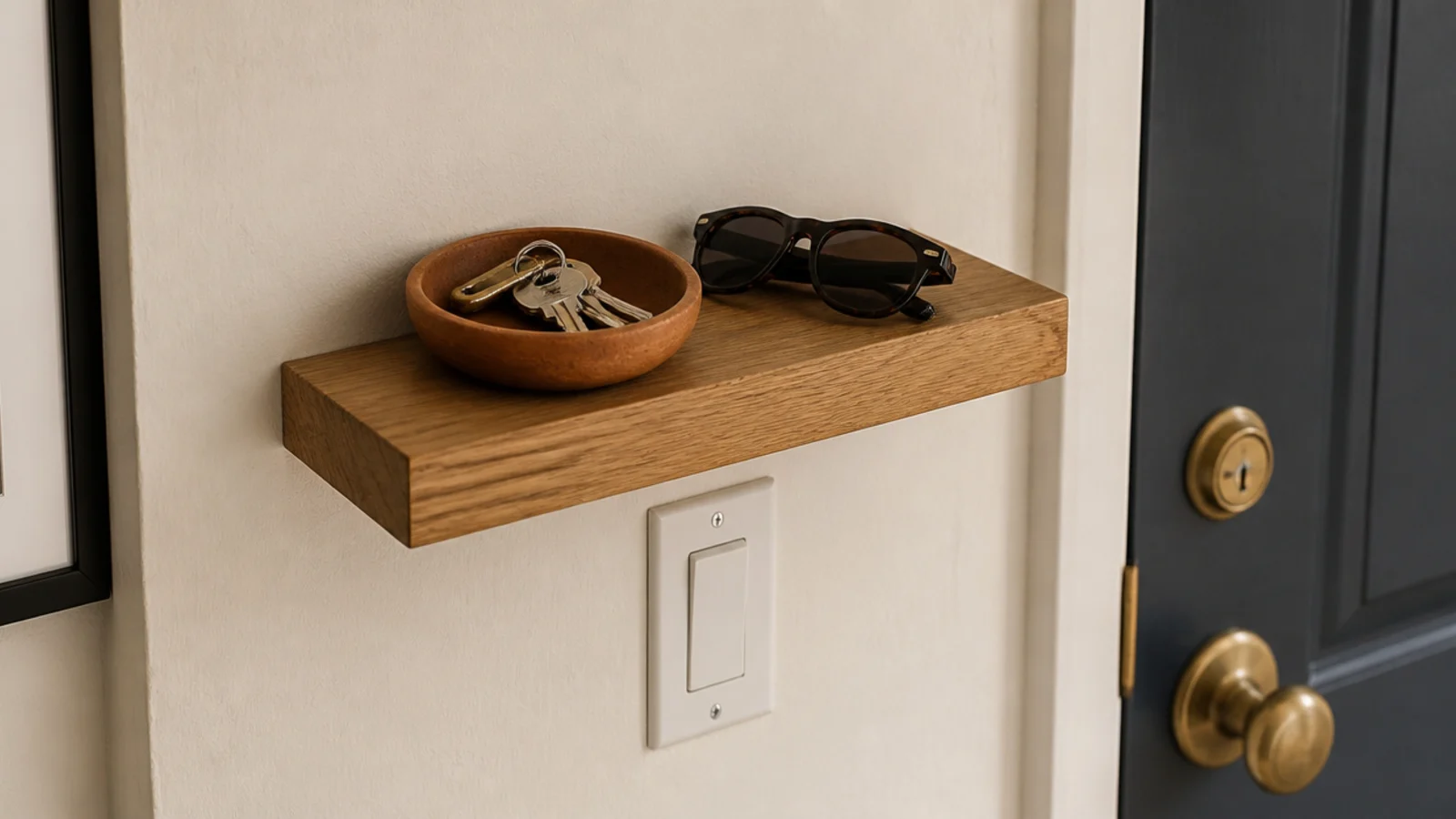
11. A floating shelf above the light switch
The wall you already touch every time you come in is the right wall for keys. A 12-inch shelf mounted just above the switch plate costs about $15.
Keep it to one clay dish and nothing else. Small shelves collect fast, and this one has one job. $
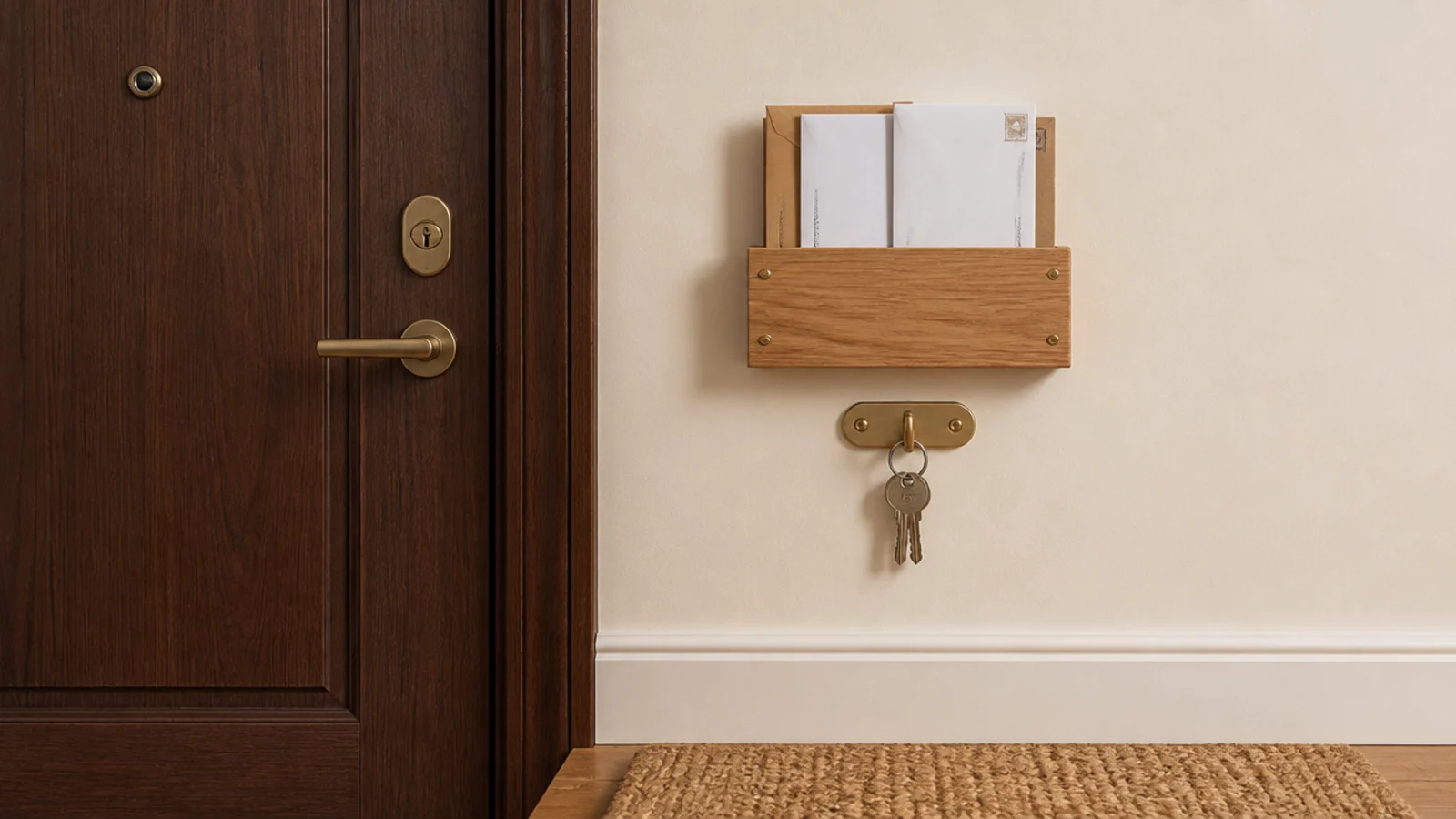
12. A wall-mounted mail slot beside the door
Post stacks horizontally and takes over surfaces. A slim wall rack stores it vertically in about 3 inches of depth.
Mount it at 48 inches with a key hook underneath. Empty it weekly, or it becomes a wall-mounted drawer of unopened guilt. $
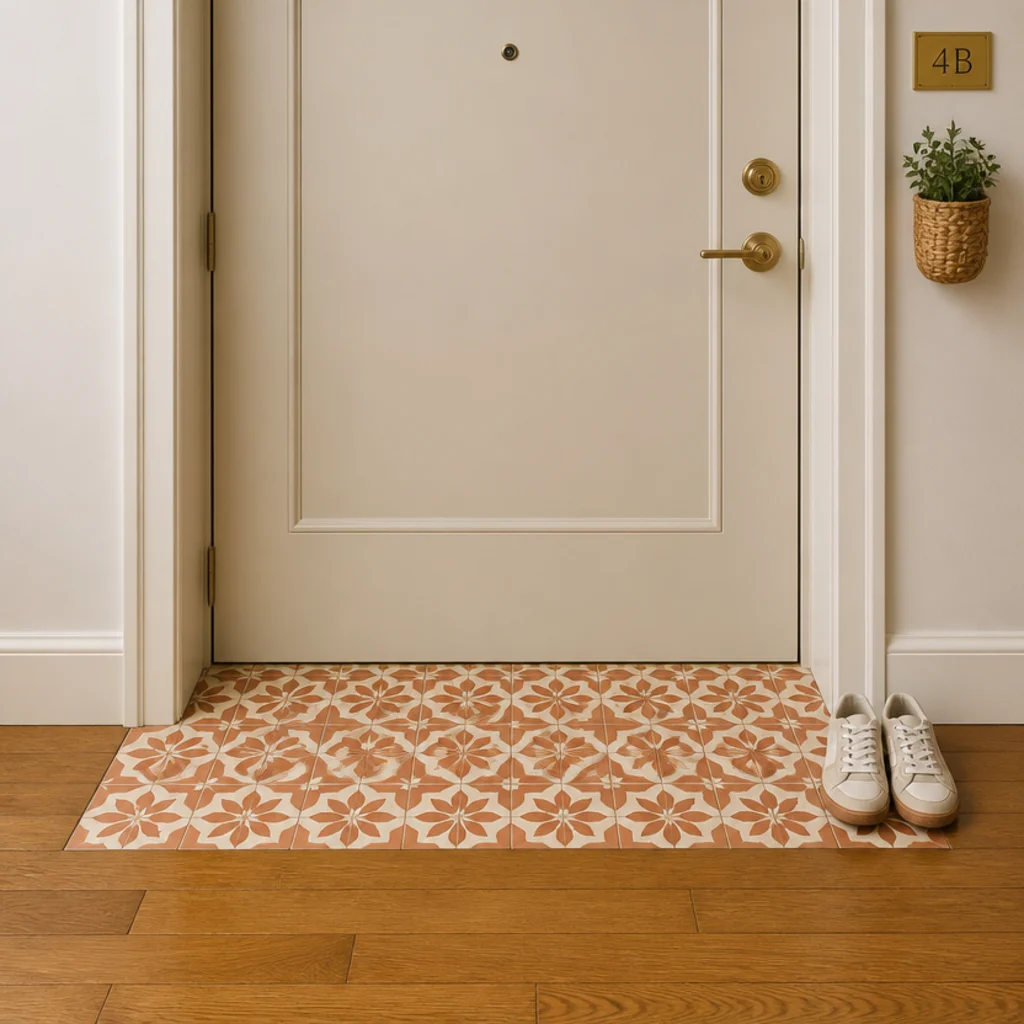
13. A peel-and-stick tile patch as a faux foyer
A small rectangle of patterned floor tile just inside the door reads as architecture that was always there, and it takes an afternoon.
Cut a clean straight edge where tile meets wood. Renters should test lift on a hidden board first. Roughly 6 square feet is plenty. $$
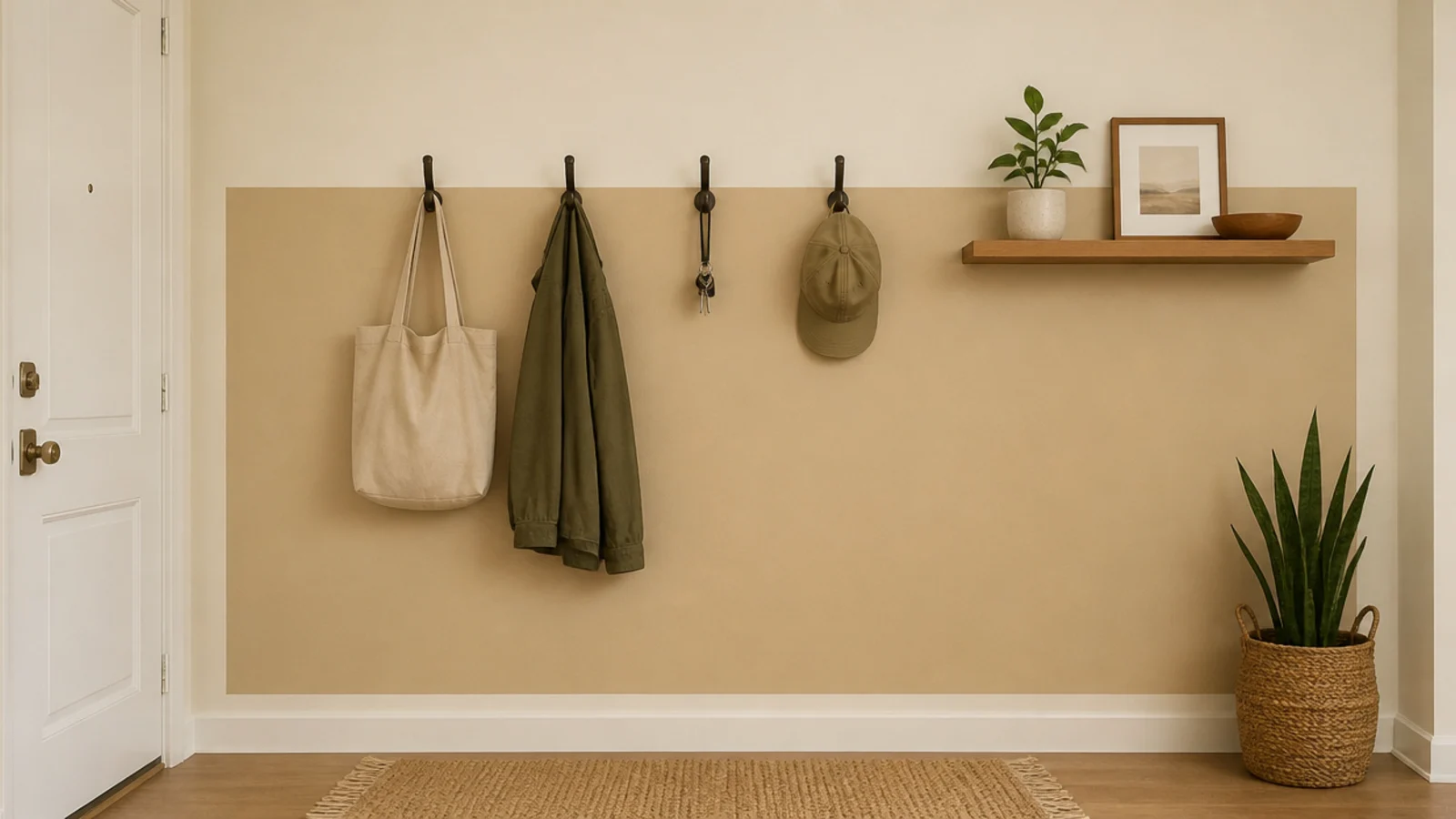
14. A paint block to draw the entry on the wall
The wall version of the runner trick. A painted rectangle from baseboard to about 48 inches, 6 inches wider than the hooks on each side.
Mask carefully and peel the tape while the paint is still slightly wet for a crisp line. One sample pot covers it. $
15. A plug-in sconce plus a puck light
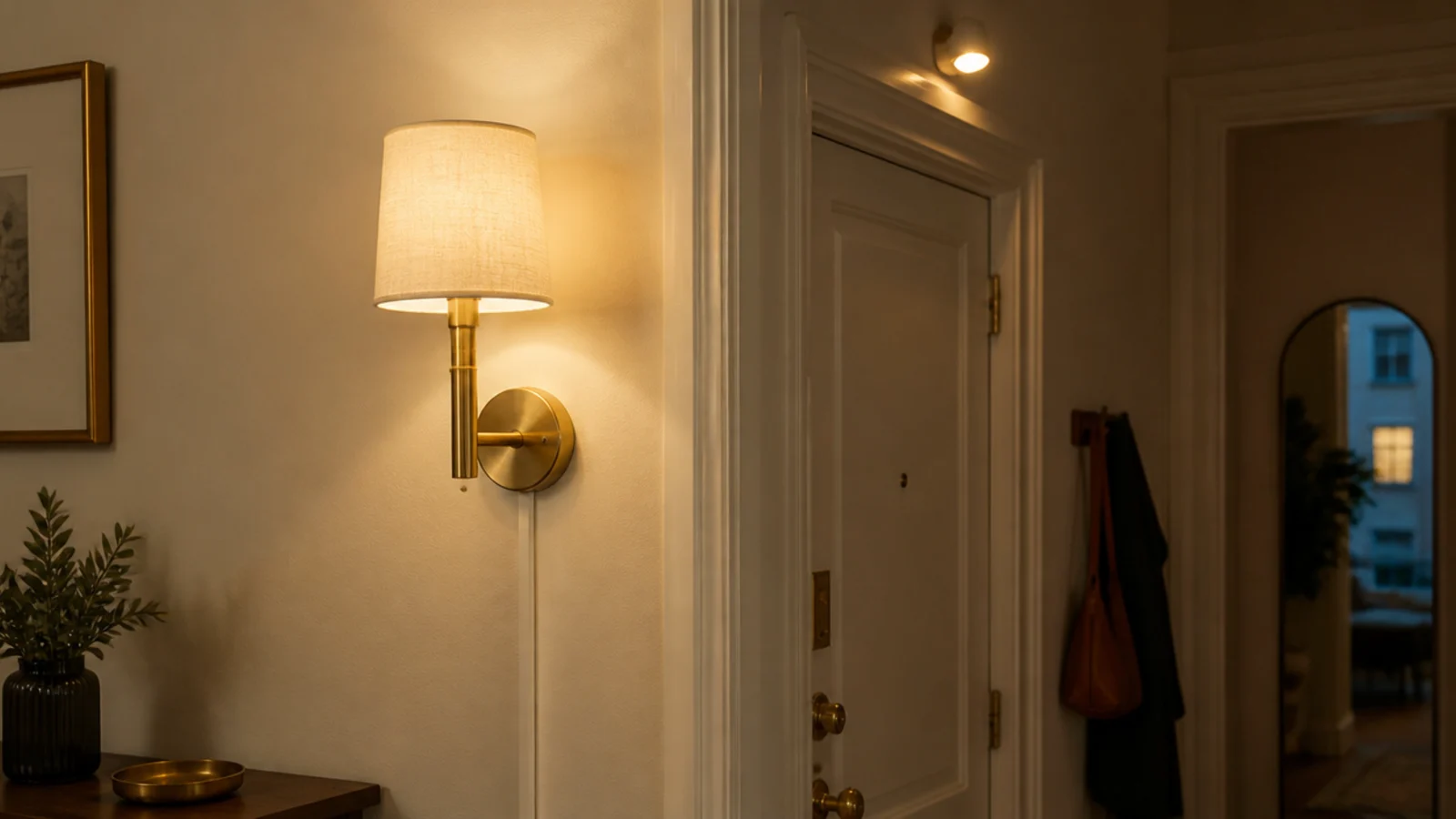
One ceiling fixture flattens an entry completely, and apartment fixtures are usually the worst in the building. Add a plug-in sconce at 60 inches and a puck light above the door.
Run the cord in a paintable channel down the corner line. Everything at 2700K. $$
16. A pegboard panel that changes with the season
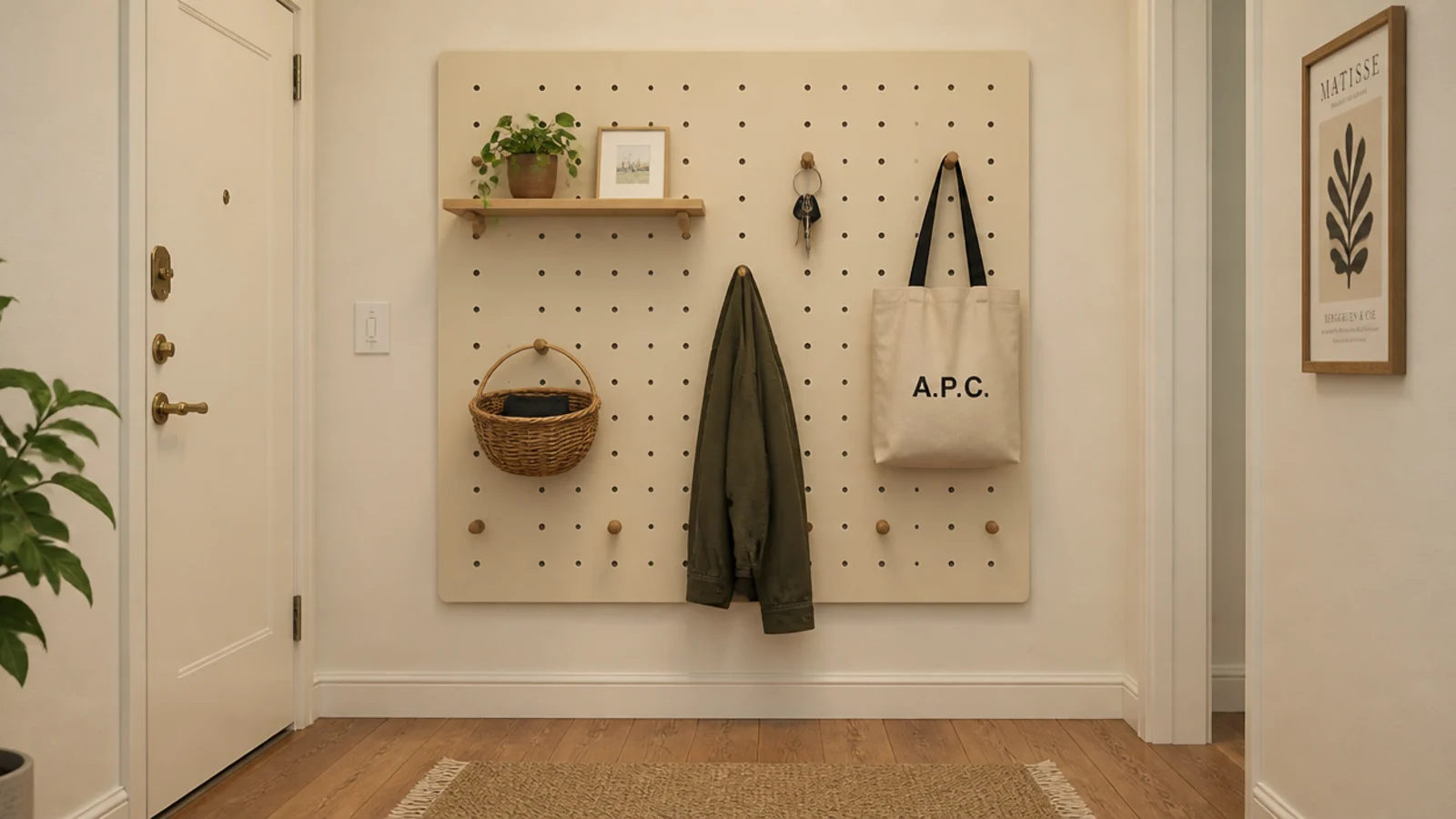
One painted pegboard panel takes four screws and then never needs another hole. Hooks, a small shelf and a hanging basket rearrange in minutes.
Keep the arrangement asymmetric and leave a third of the board empty, or it reads as a garage wall. $$
17. A leaning ladder for bags
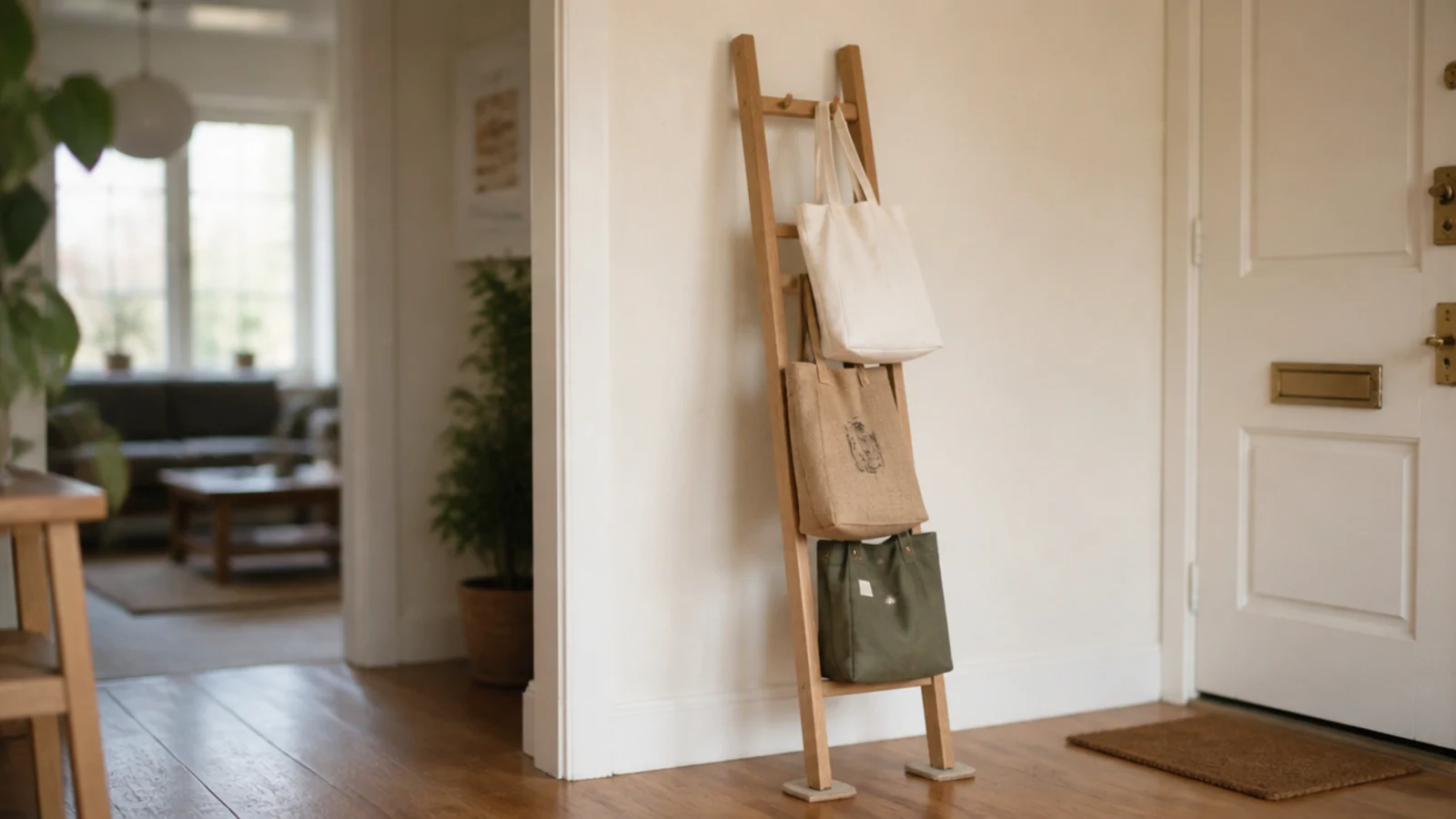
Eleven inches of floor depth, no fixings, and it holds every tote you own. Lean at about 15 degrees with felt pads under the feet.
Bags and scarves only — rungs are poor at carrying weight, and a loaded ladder slowly walks across a wood floor. $
18. A doormat inside the door, not outside
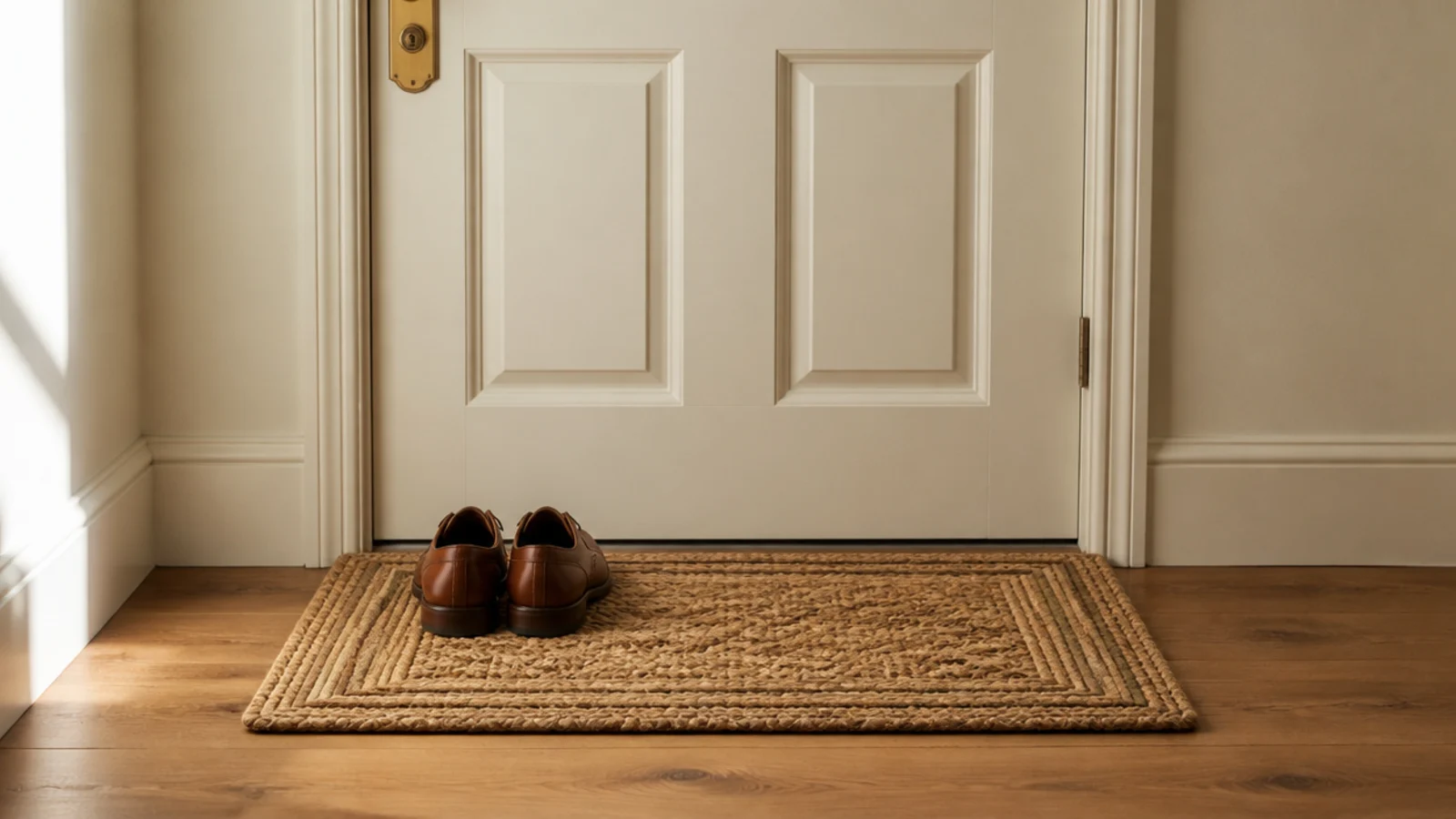
In an apartment building, mats in the corridor get moved, damaged or banned by the lease. Put the mat inside instead.
Coir and jute traps grit best. Size it to the full door width so nobody steps around it, and shake it weekly. $
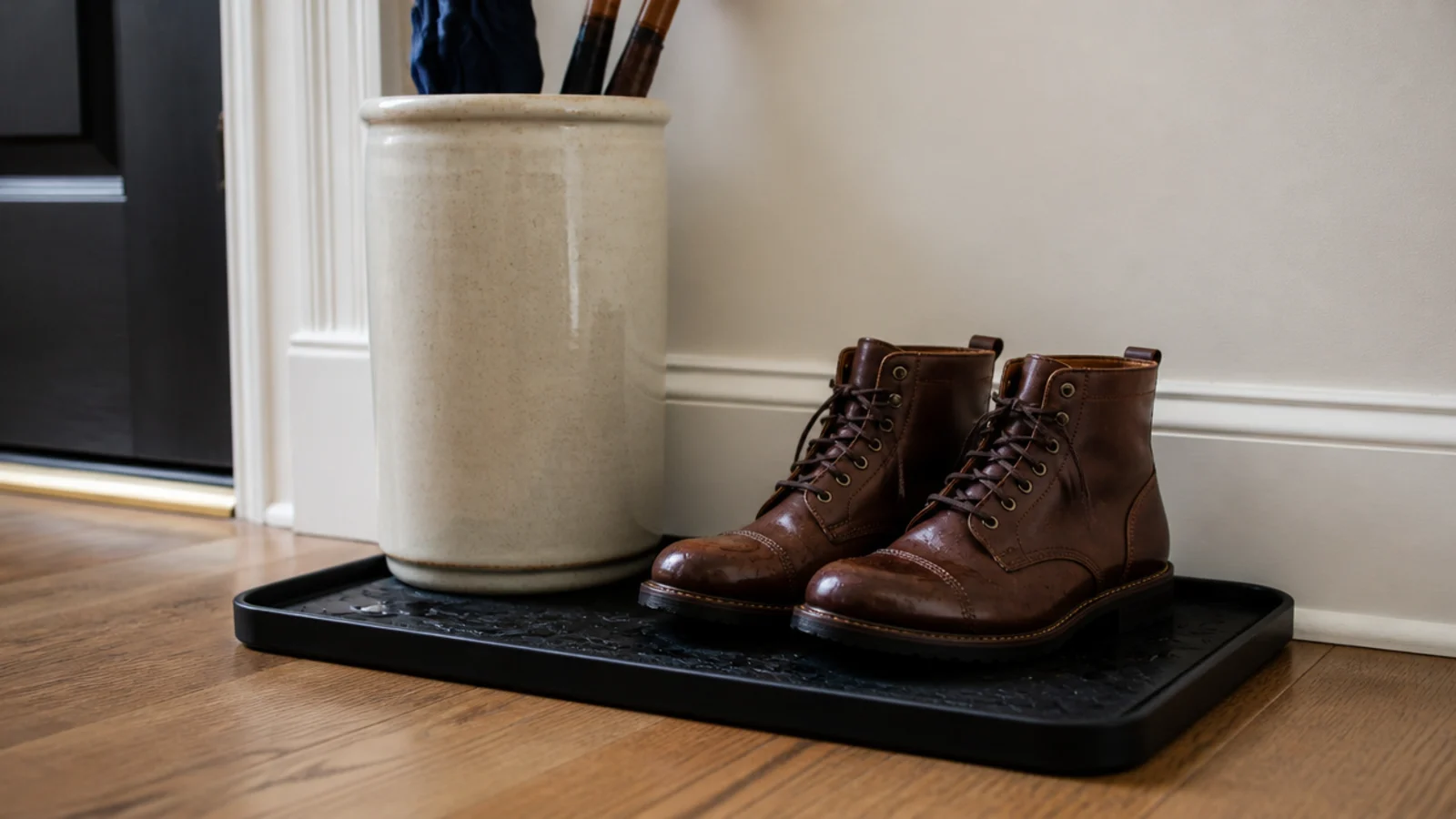
19. An umbrella stand and boot tray zone
Wet things need their own zone or they wreck everything they touch. A raised-lip tray at least 15 inches deep, plus a stoneware crock for umbrellas.
Metal or heavy rubber, not thin plastic that cracks in the cold. Keep both off the runner entirely. $$
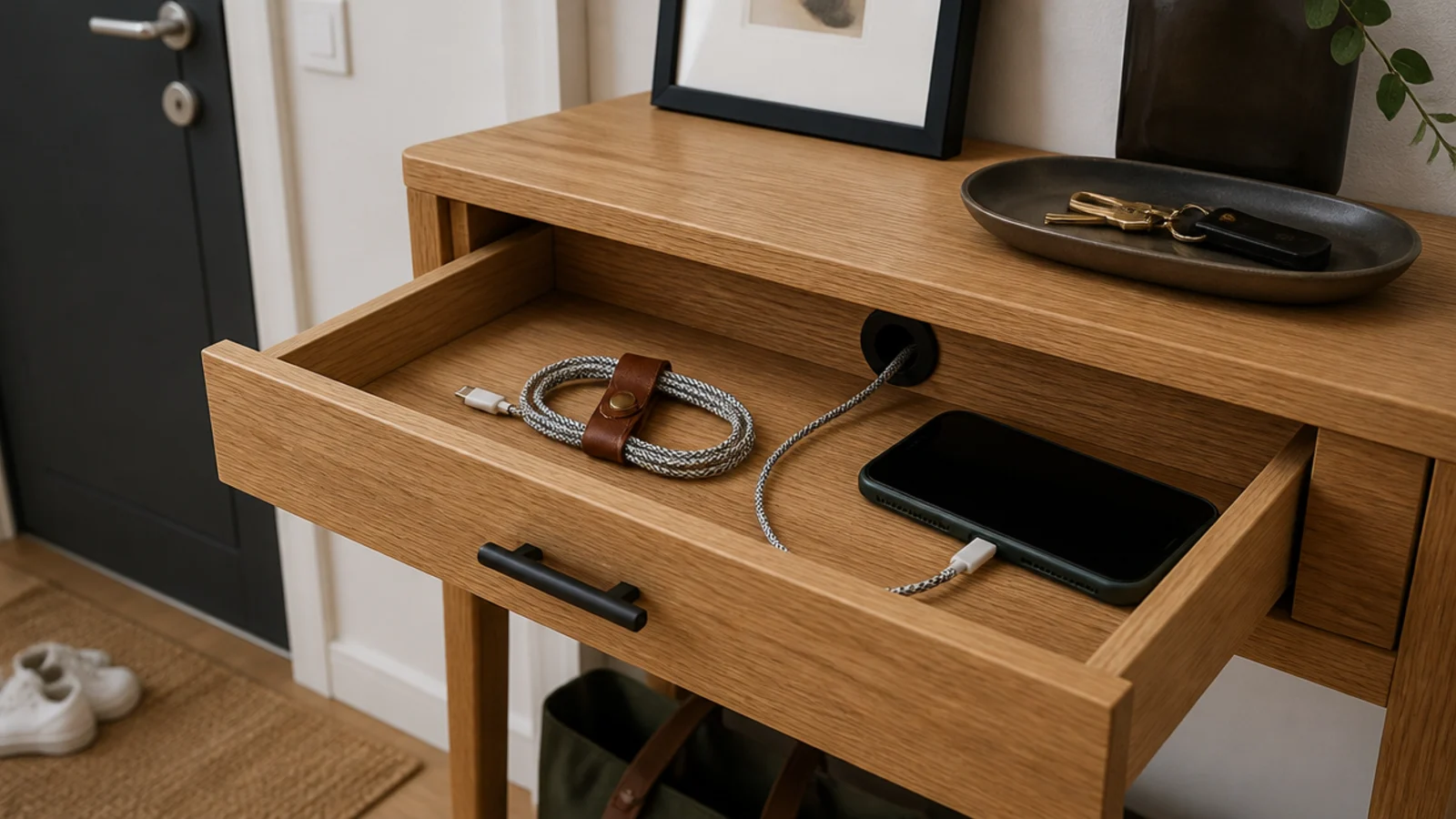
20. A charging drawer with the cables hidden
Entries become charging stations whether you plan for it or not. A shallow drawer with a grommet at the back keeps every cable out of sight.
If there is no drawer, an adhesive cable channel painted the wall color down the corner line does the same job. $–$$
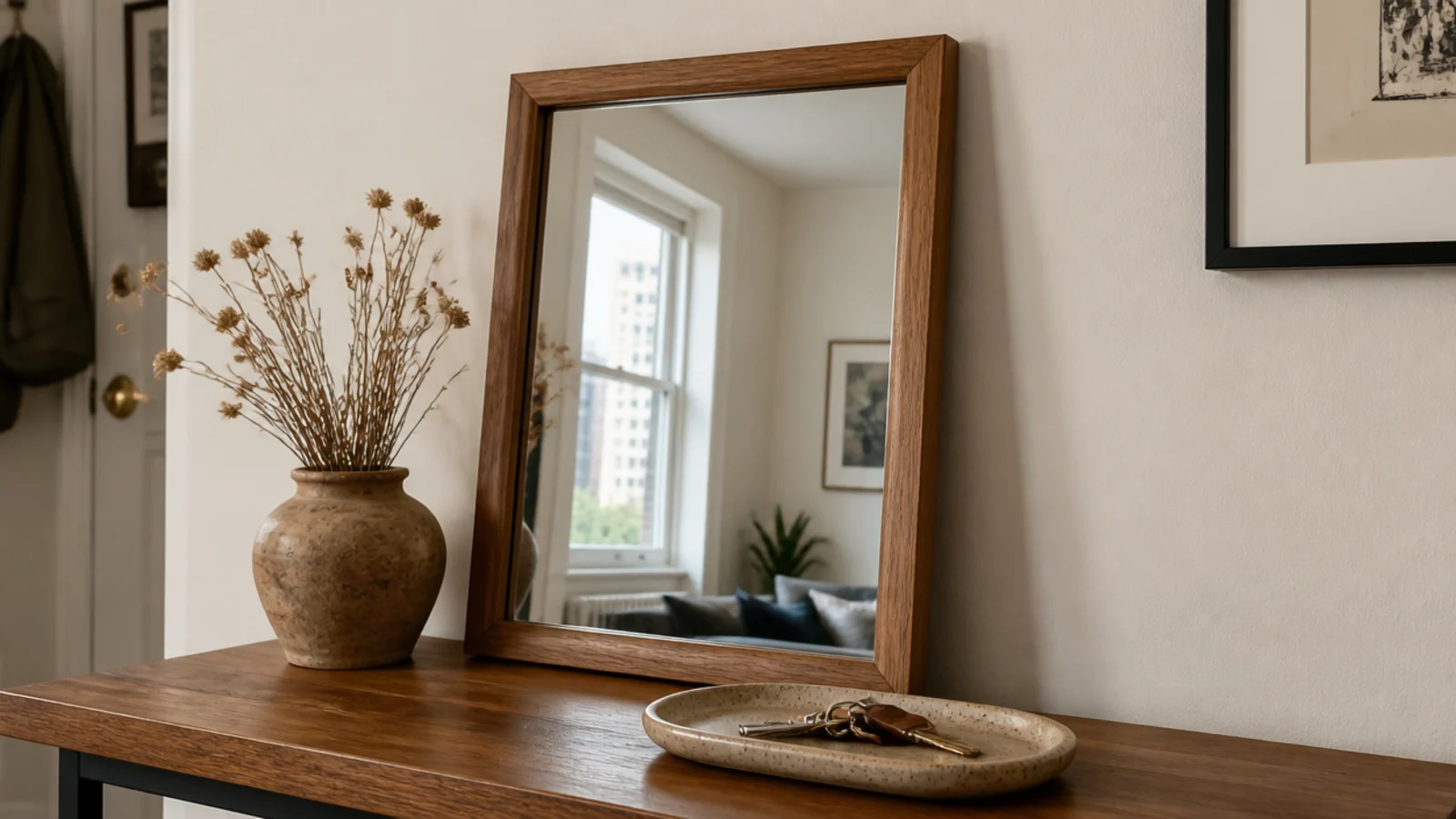
21. A leaning mirror on the console top
The zero-hole mirror. Rest a medium framed mirror on the console and lean it back against the wall.
Push it to one third of the console width rather than dead centre, and put something with height beside it so the arrangement reads intentional. $$
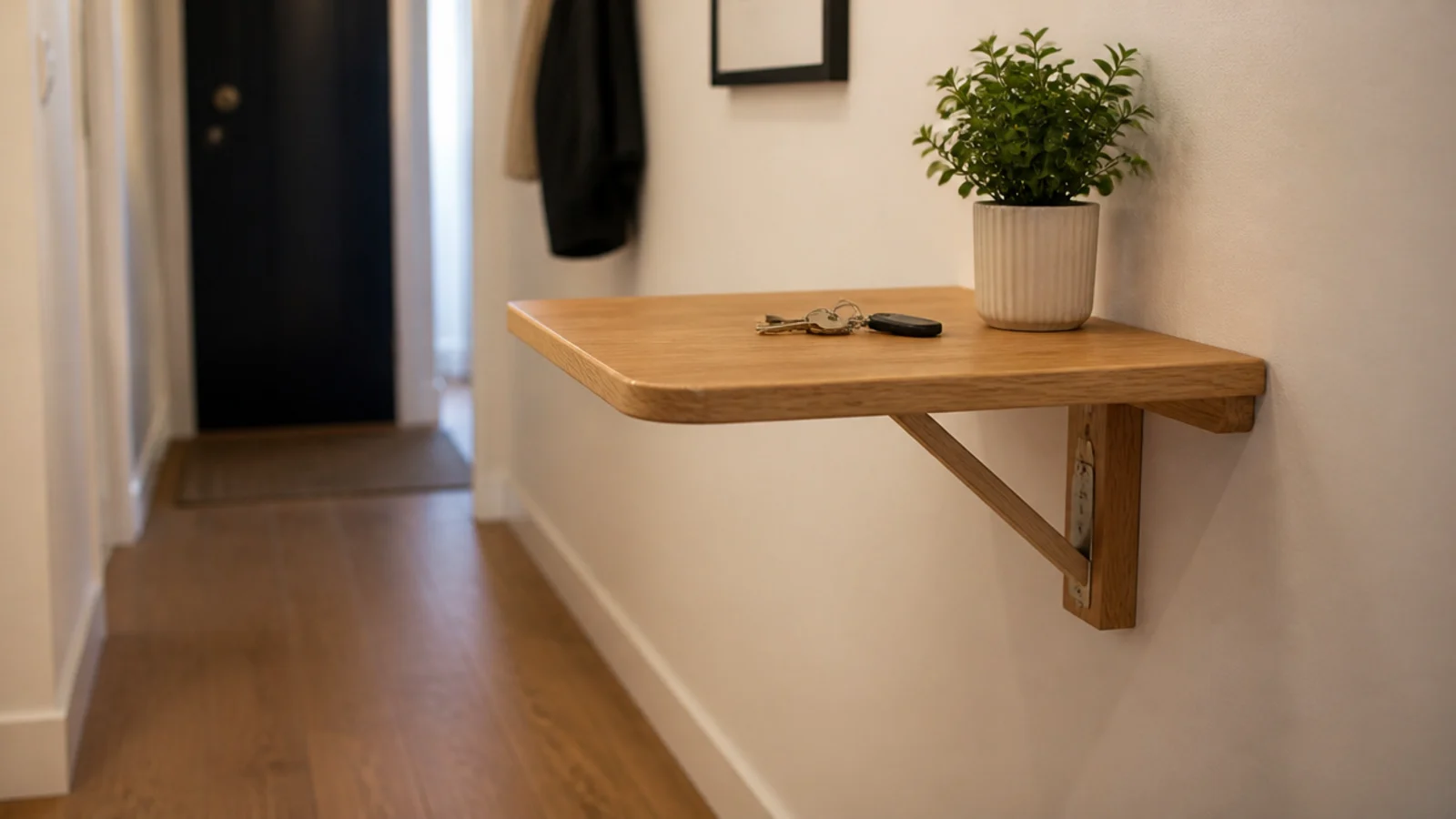
22. A drop-leaf shelf for halls under 36 inches
Under 36 inches of walkway, no console works. A hinged drop-leaf shelf at 30 to 32 inches high, 10 inches deep, folds flat against the wall.
Two brackets into studs. Open for keys and parcels, folded when a suitcase has to come through. $$
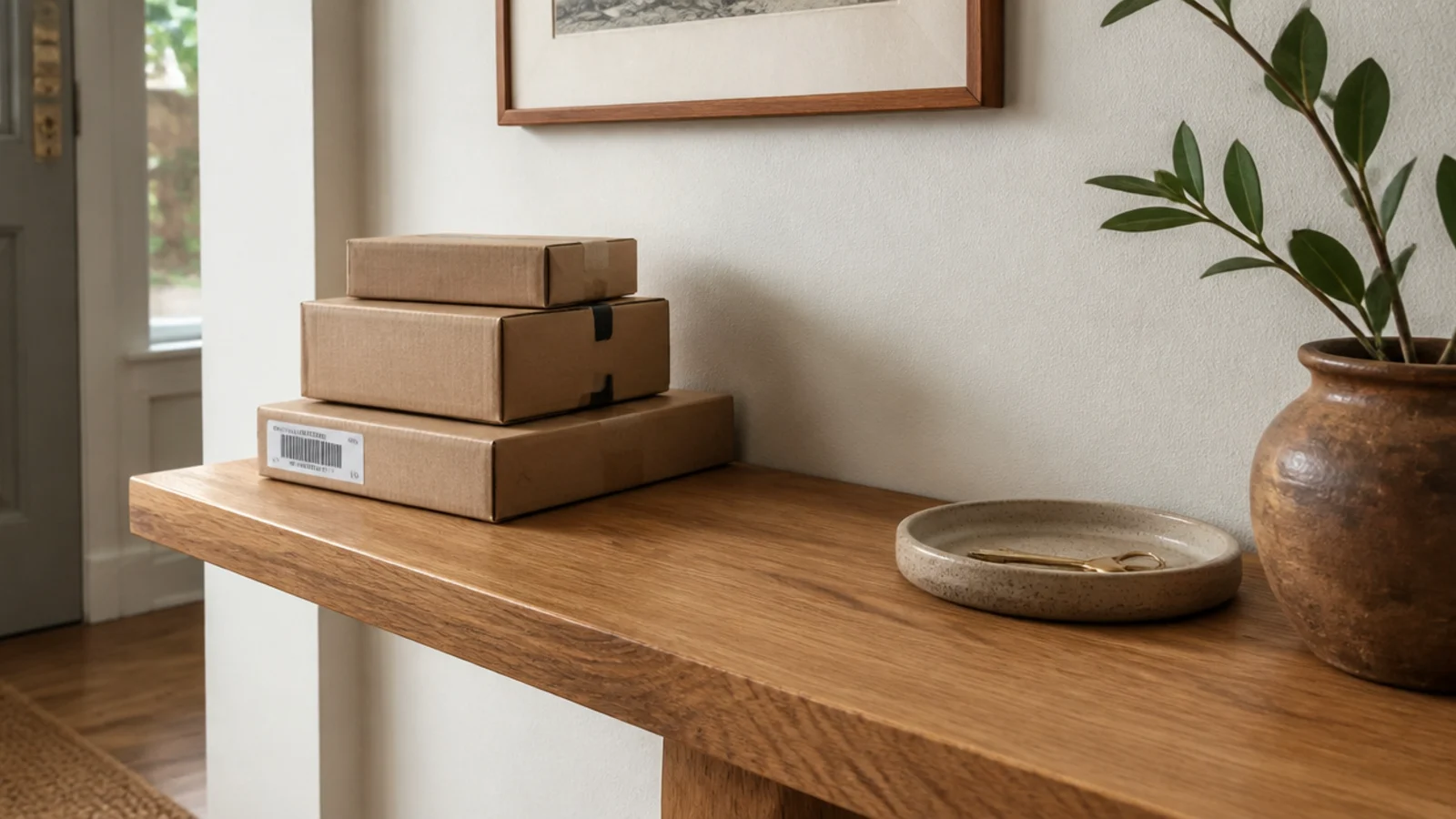
23. A parcel landing spot for deliveries
Apartment life means boxes. Keep the last third of whatever surface you have permanently empty and treat it as the parcel zone.
It is a rule rather than a purchase, and it is the single reason some small entries stay tidy while identical ones do not. Free
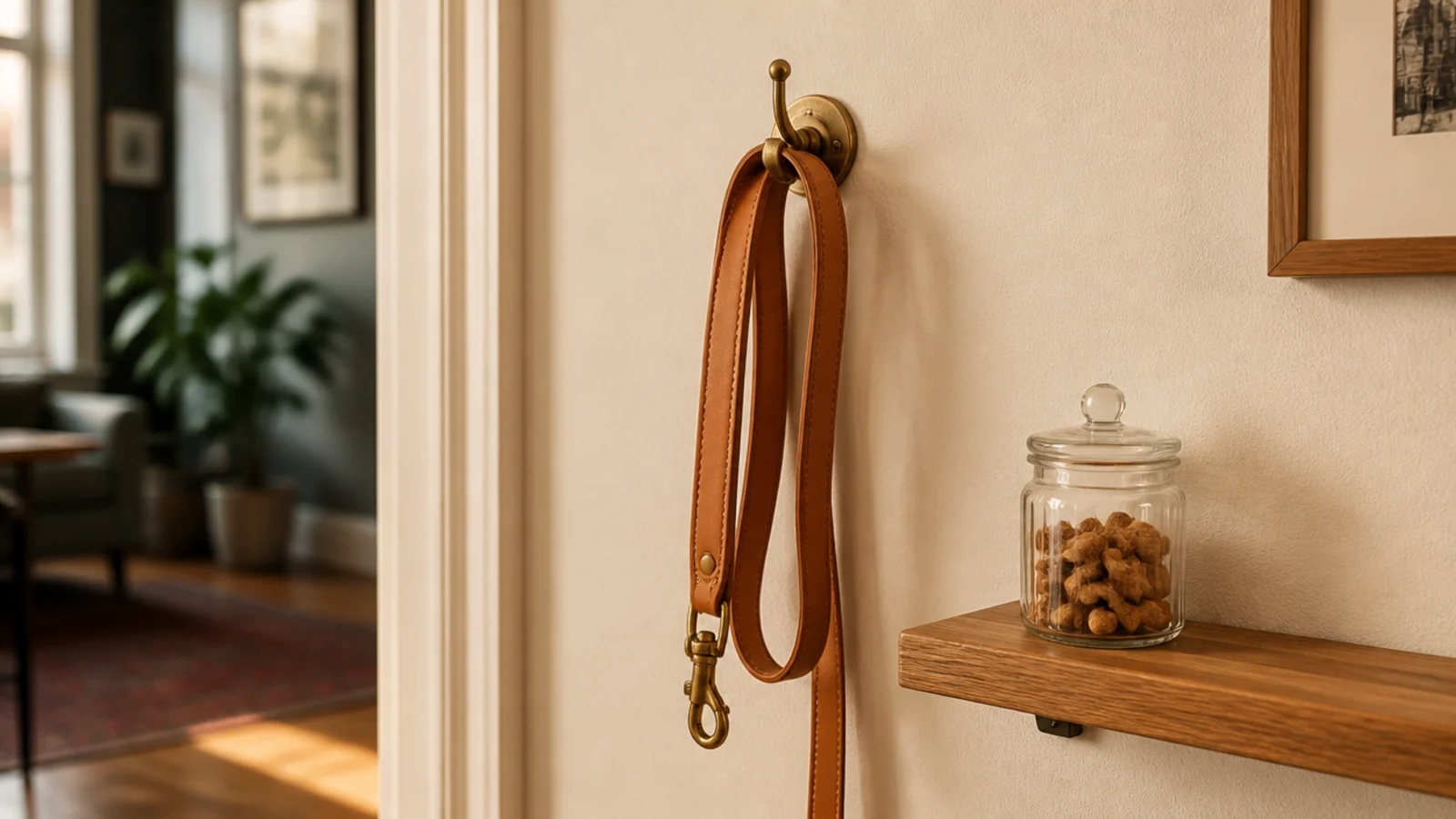
24. A dog lead hook and treat jar
If a dog lives here, the entry is their room too. One hook at 52 inches for the lead and a small lidded jar of treats on the shelf.
Keep the lead hook away from the coat hooks so a wet lead never lands on a wool sleeve. $
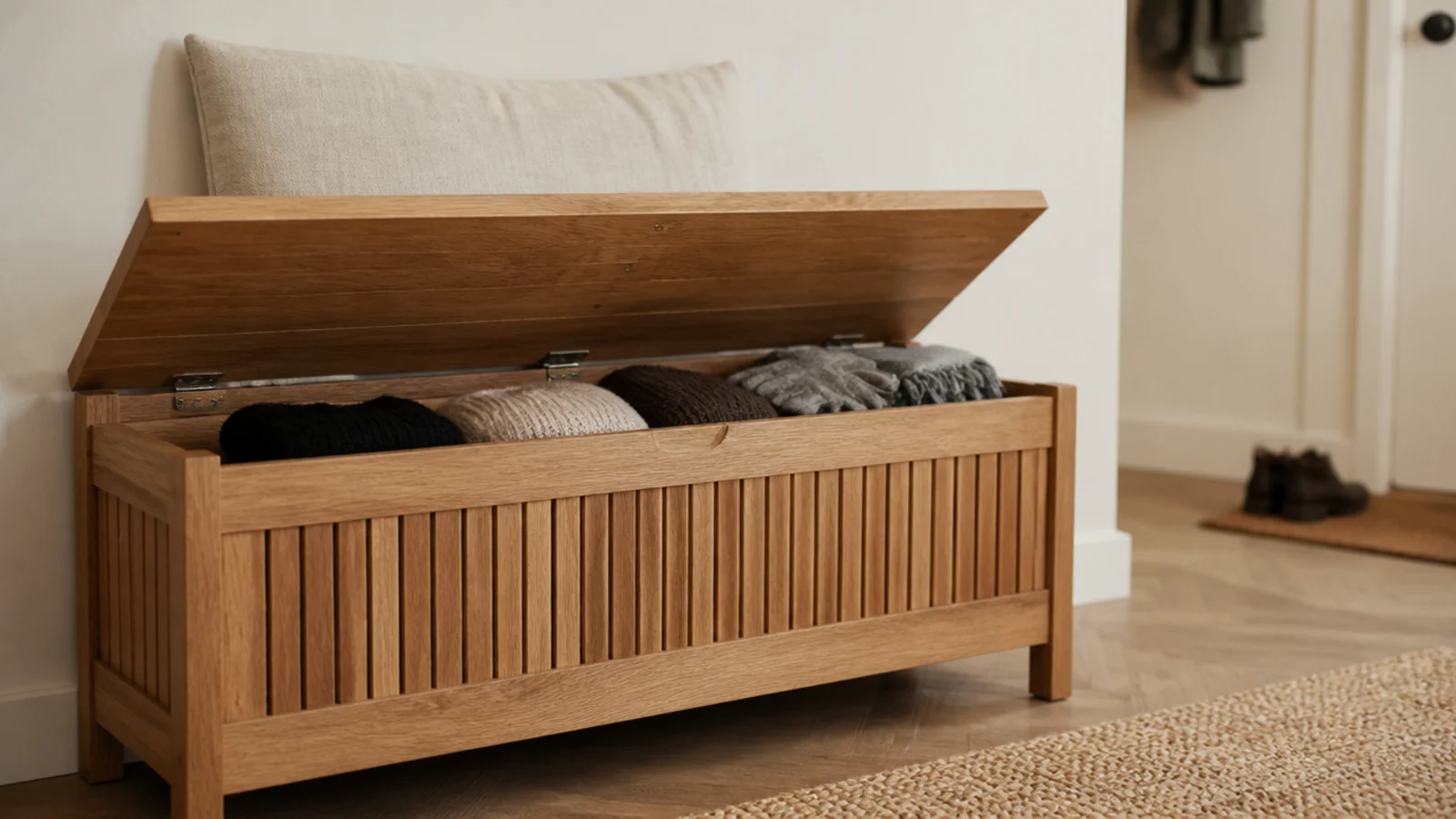
25. A lift-top bench for seasonal gear
Hats, gloves and scarves belong under the seat, not on hooks where they read as clutter for eight months of the year.
Thirty to 40 inches long, 18 inches high, 14 inches deep internally. Soft-close hinges are worth it — these lids get dropped. $$$
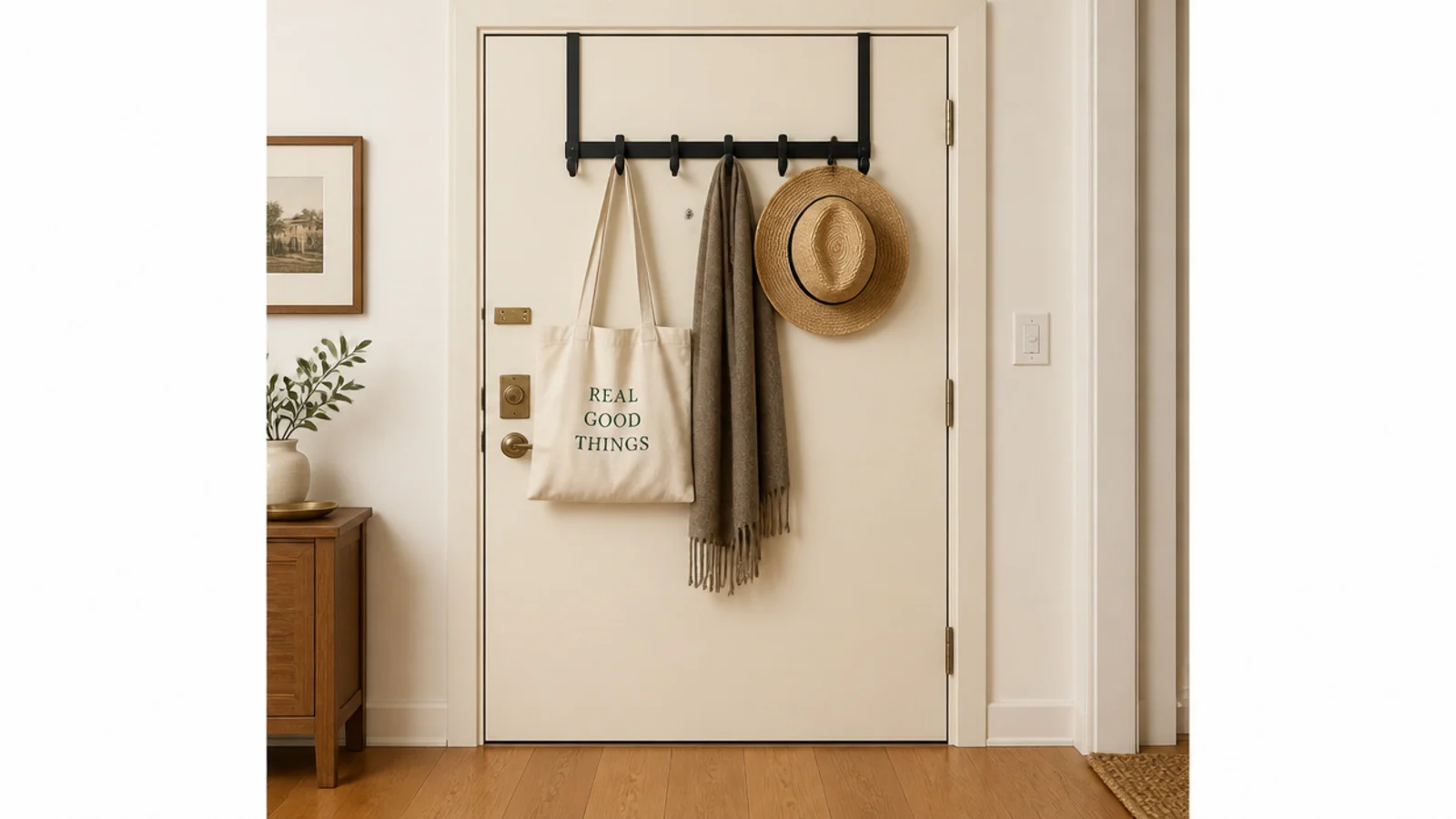
26. Over-the-door racks on the entry door itself
The inside face of the front door is the most wasted surface in an apartment. A slim over-door rack adds six hooks with no holes.
Check the door still latches with it fitted. Bags and hats here, not daily coats, because the door swing carries the load. $
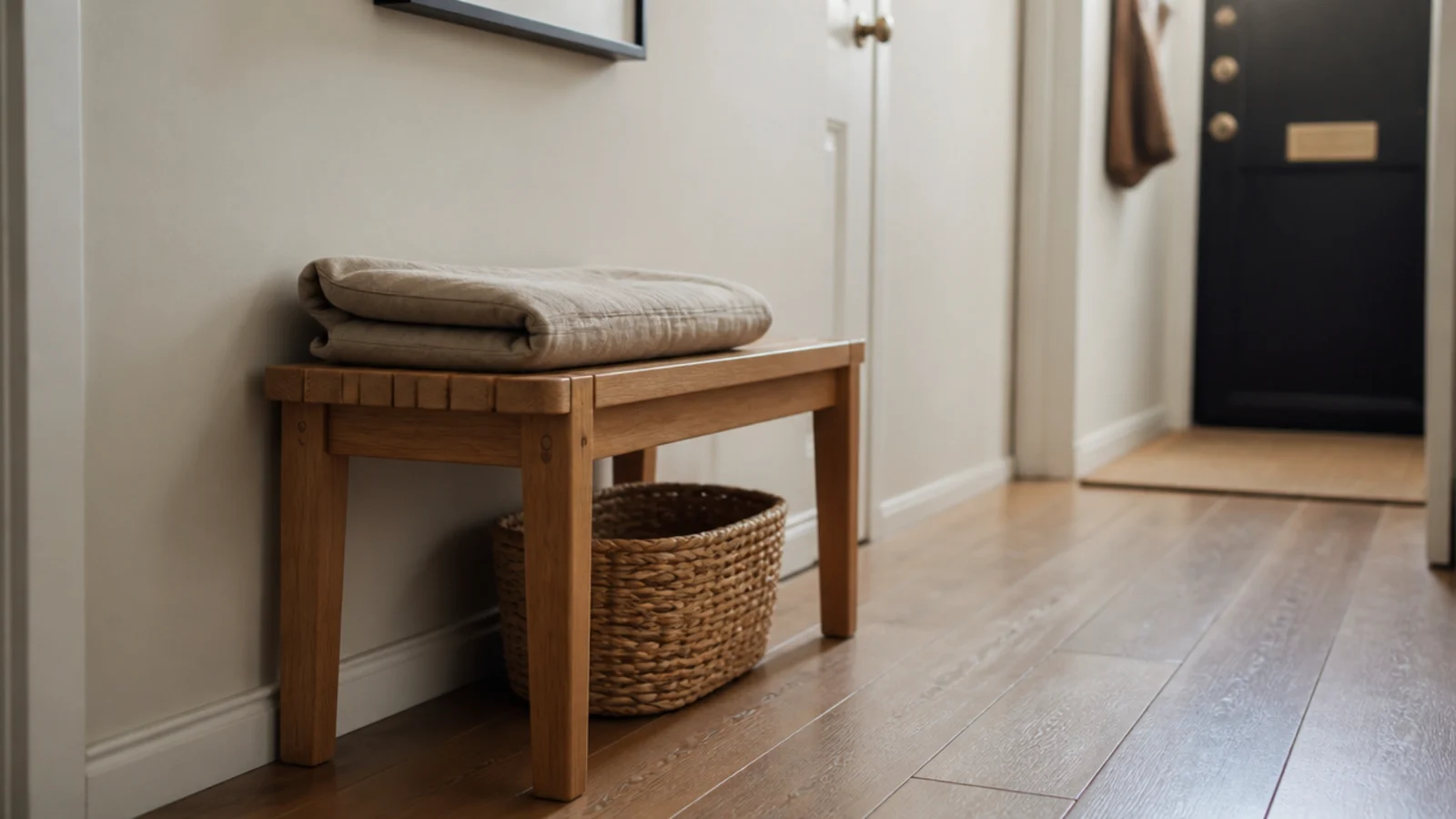
27. A narrow bench at 30 inches long
Thirty inches seats one adult, which is all a small entry needs. Longer benches eat the walkway and start collecting bags.
Slatted rather than upholstered so wet coats do not soak into it, at 18 inches high with one basket underneath. $$
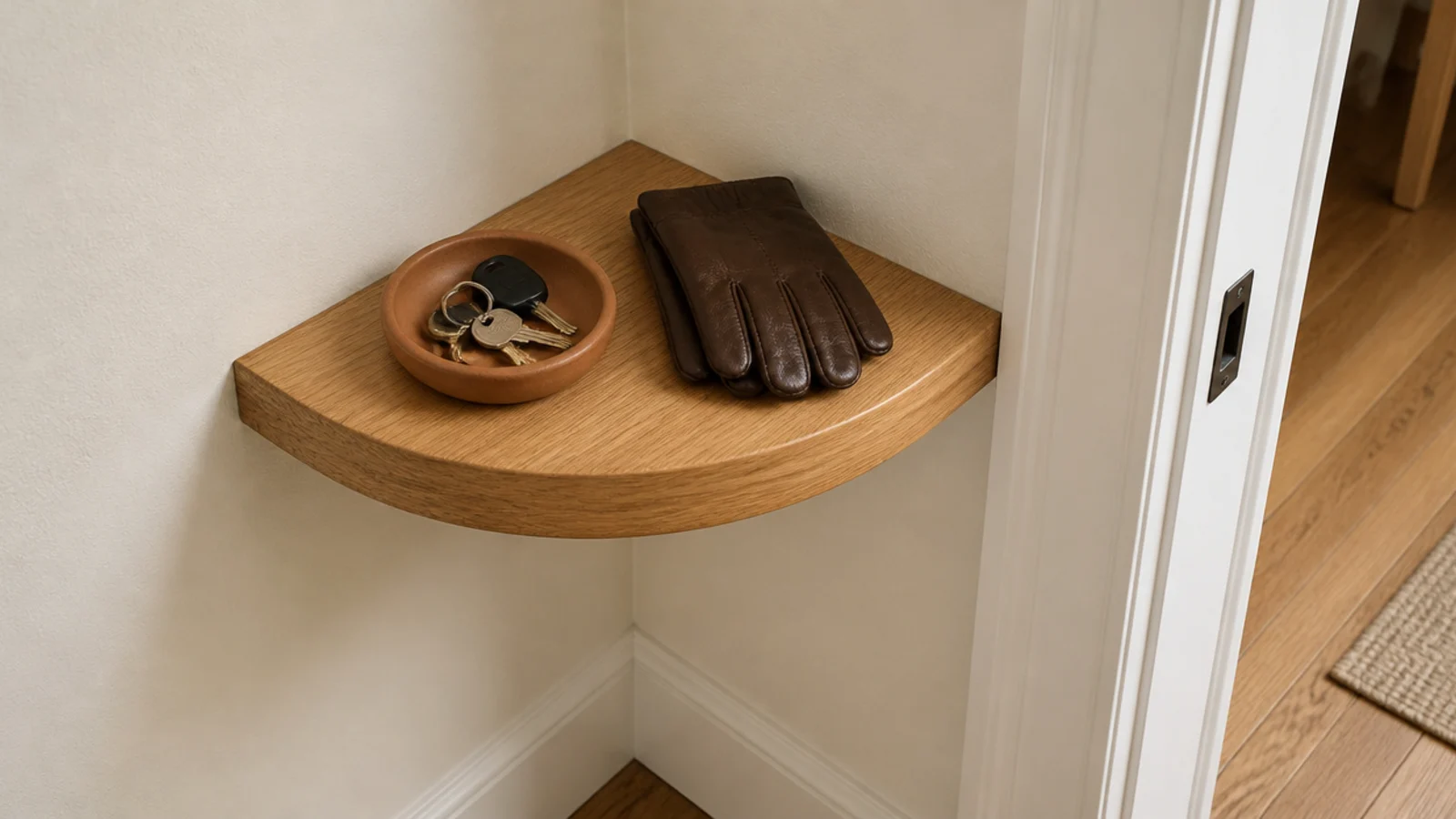
28. A corner shelf where there is no wall
When there is genuinely no flat wall by the door, the corner counts. A small corner shelf at 52 inches holds keys and a dish.
Five to six inches deep so nobody clips it walking past. Paint it the wall color and it disappears entirely. $
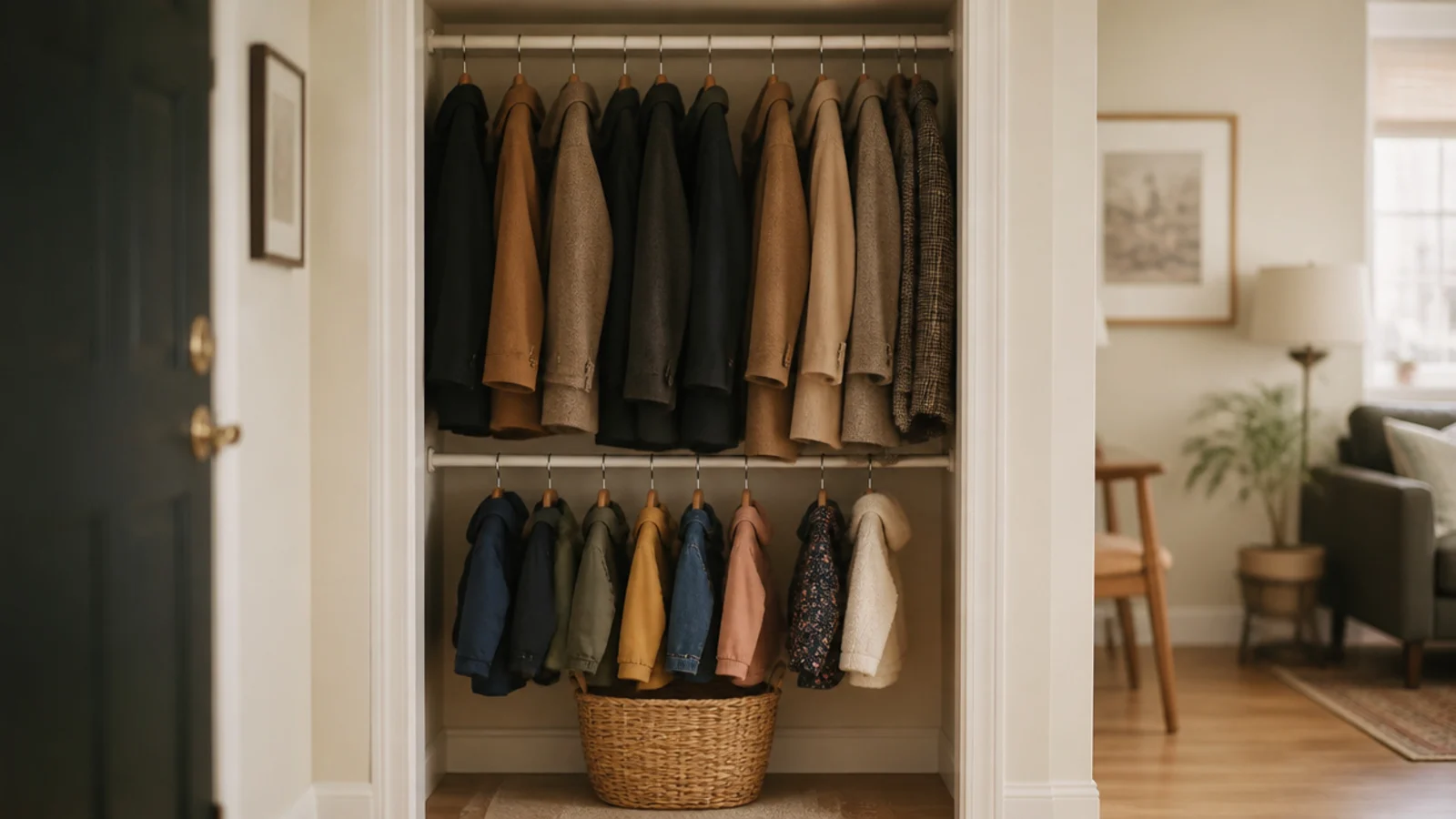
29. A second rail at 40 inches inside the closet
If you have a coat closet, it is almost certainly half empty below the rail. A second rail at 40 inches doubles the hanging space instantly.
Children's coats go on the lower rail, which also means they can hang their own. A cut rail and two brackets runs about $20. $
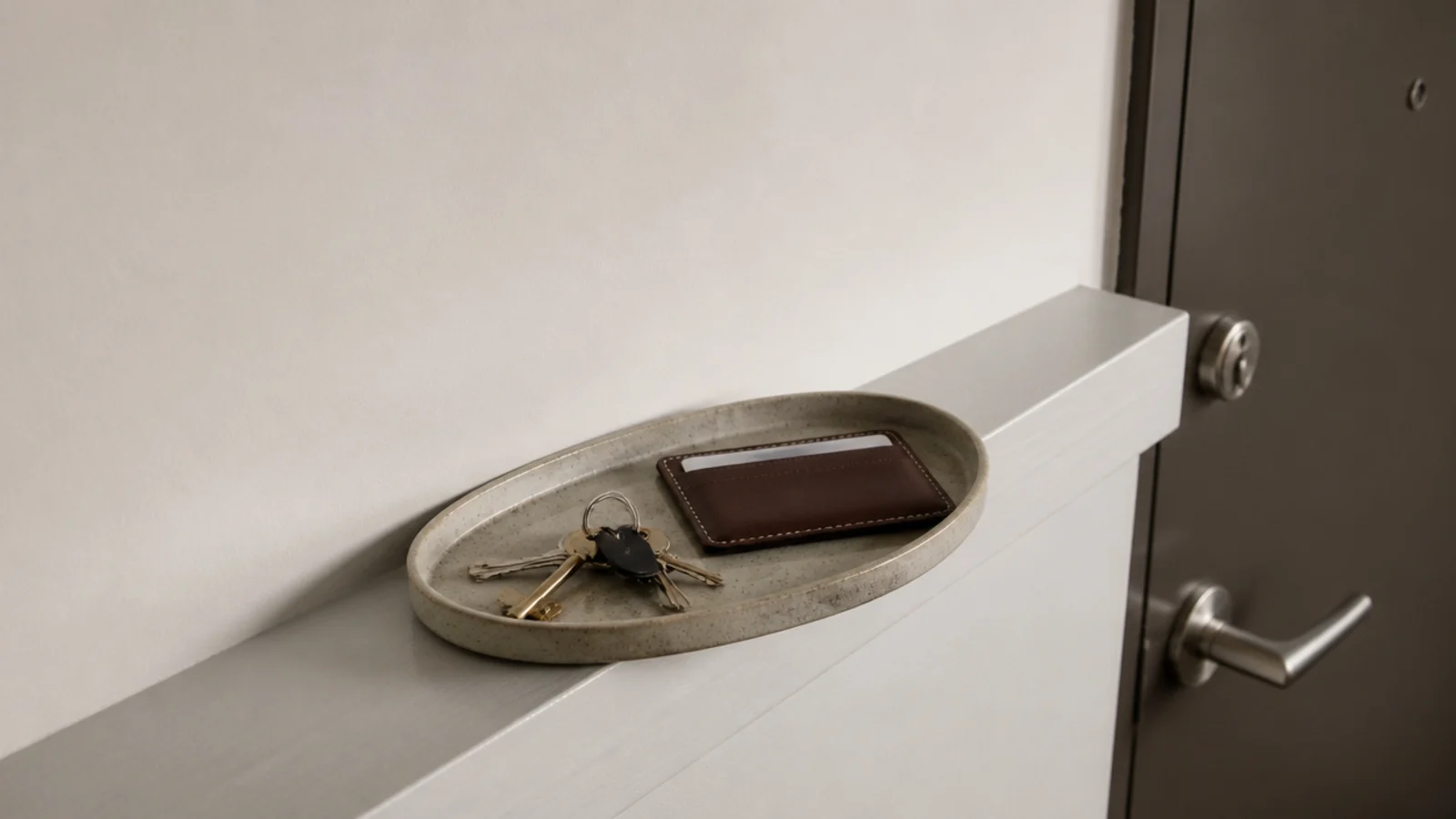
30. One tray by the door and nothing else
The minimum viable entry, and it works. A single tray with a raised edge, on a ledge or shelf beside the door.
The raised edge is the whole mechanism — flat plates let things slide off. If you do one thing from this list, do this one. For more layouts at this scale, small entryway ideas goes further. $
Mistakes to Skip
- Buying a full-depth 16-inch console because it was the only one you liked. In a hallway under 40 inches you will turn sideways past it every day for the length of the lease.
- Hanging ten hooks in a four-foot apartment entry. More hooks pull more coats out of the closet, and the wall ends up looking like a cloakroom.
- Leaving the builder ceiling fixture as the only light. One flat overhead source makes every material in a small entry read grey, whatever you spent on it.
Frequently asked questions
How do you make an entryway when the door opens into the living room?
Draw the zone on the floor and the wall rather than building one. A runner about 3 feet long, a paint block or a single wall-mounted shelf tells your eye where the entry stops and the living room begins. That boundary does most of the work, and it costs less than any piece of furniture you could put there.
What depth works for an apartment entryway console?
Ten to 12 inches, and 12 is the ceiling for most halls. A wall-mounted shelf at 10 inches deep and 30 to 32 inches high gives you the landing surface without legs eating floor space. If your walkway measures under 36 inches from wall to opposite wall, go wall-mounted rather than freestanding every time.
Where do coats go in an apartment with no closet?
On a hook rail at 52 inches, with a second rail at 40 inches if children live there. Cap it at daily coats only — four hooks used beats ten hooks buried. Everything seasonal belongs in a bedroom closet or a lift-top bench, because a hallway rail holding every coat you own always reads as chaos.
How do I stop an apartment entry looking cluttered?
One tray, one basket, one hook per person, and nothing else on the surface. Small entries fail on quantity rather than style. Leave the last third of any shelf permanently empty so parcels and post have a landing spot, and the floor stops being the default surface for everything.
What lighting works in a windowless apartment entry?
Two layers, both warm. One ceiling fixture flattens an entry completely, so add a plug-in sconce at 60 inches or a puck light above the door and run everything at 2700K. Warm light makes oak, jute and clay read rich where a cool 4000K bulb makes the same materials look grey and institutional.
Pick three of the five jobs and do those properly instead of squeezing in all five. In most apartments that means coats, a landing surface and a mirror, with shoes handled just around the corner. For tighter halls, narrow entryway ideas covers the wall-mounted versions, and entryway mirror walls sizes the reflection for a small space. Save the pin before your next rearrange.
Want more like this? Browse all 15 entryway & foyer ideas guides — they all use the same measurements and budget tiers.
Pin it for later
Save this to your Entryway & Foyer Ideas board
Pin it now so it is waiting for you when the tape measure comes out — and so the next person hunting for this idea can find it too.
Save this pinKeep going
More ideas worth saving while you have the tape measure out.