Mirror Wall Decor · Listicle
25 Gorgeous Mirror Wall Decor Ideas Worth Trying

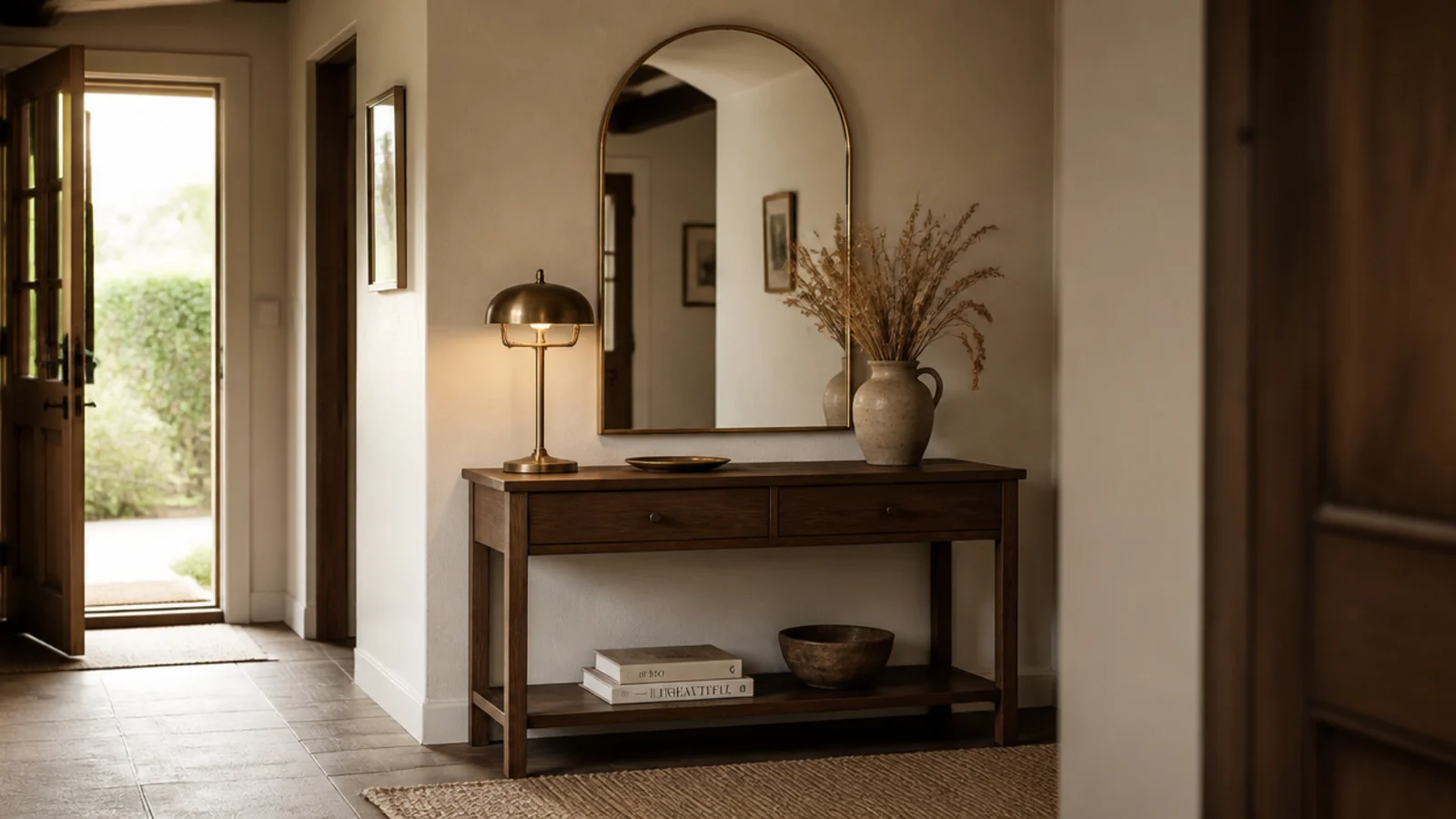
Entryway mirror wall decor has to do a job before it does anything decorative. It is the last-look mirror on the way out, the light source in a hall that usually has none, and the one wall guests read in the first three seconds. Get the height and the gap right and almost any mirror works there. Get them wrong and an expensive one still looks off. Here are twenty-five arrangements that hold up.
In this guide27 sections — tap to openHide
- 1.What entryway mirror wall decor has to do before it looks good
- 2.Centre one mirror over the console
- 3.Hang a round above a bench
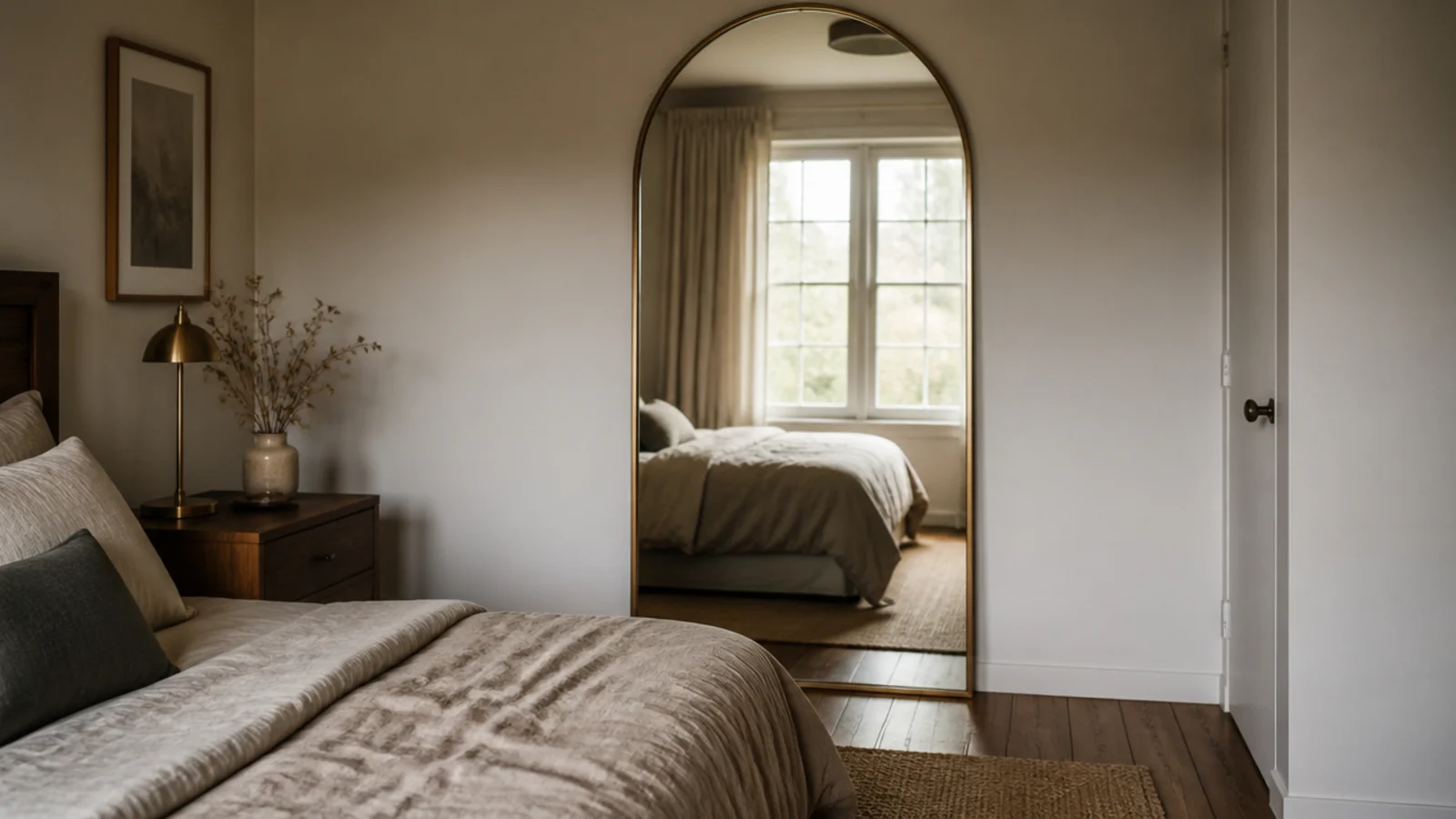
- 4.Put a full-length mirror by the door
- 5.Choose a shallow frame for a narrow hall
- 6.Face a window, not the front door
- 7.Bridge the wall above a shoe cabinet
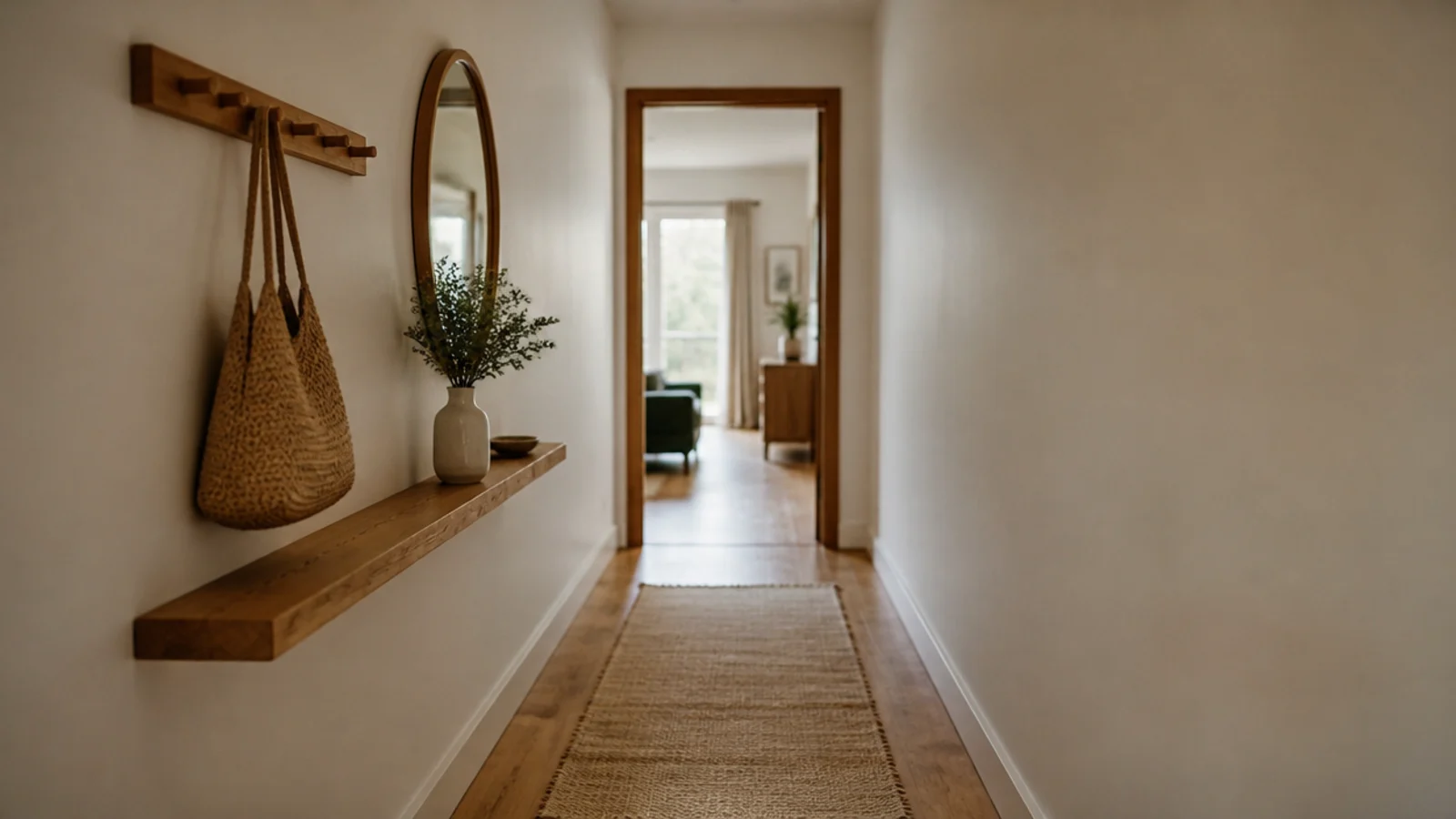
- 8.Put hooks underneath the mirror
- 9.Use a mirror with an integrated shelf
- 10.Fit an arch into a small foyer
- 11.Flank the door with a matching pair
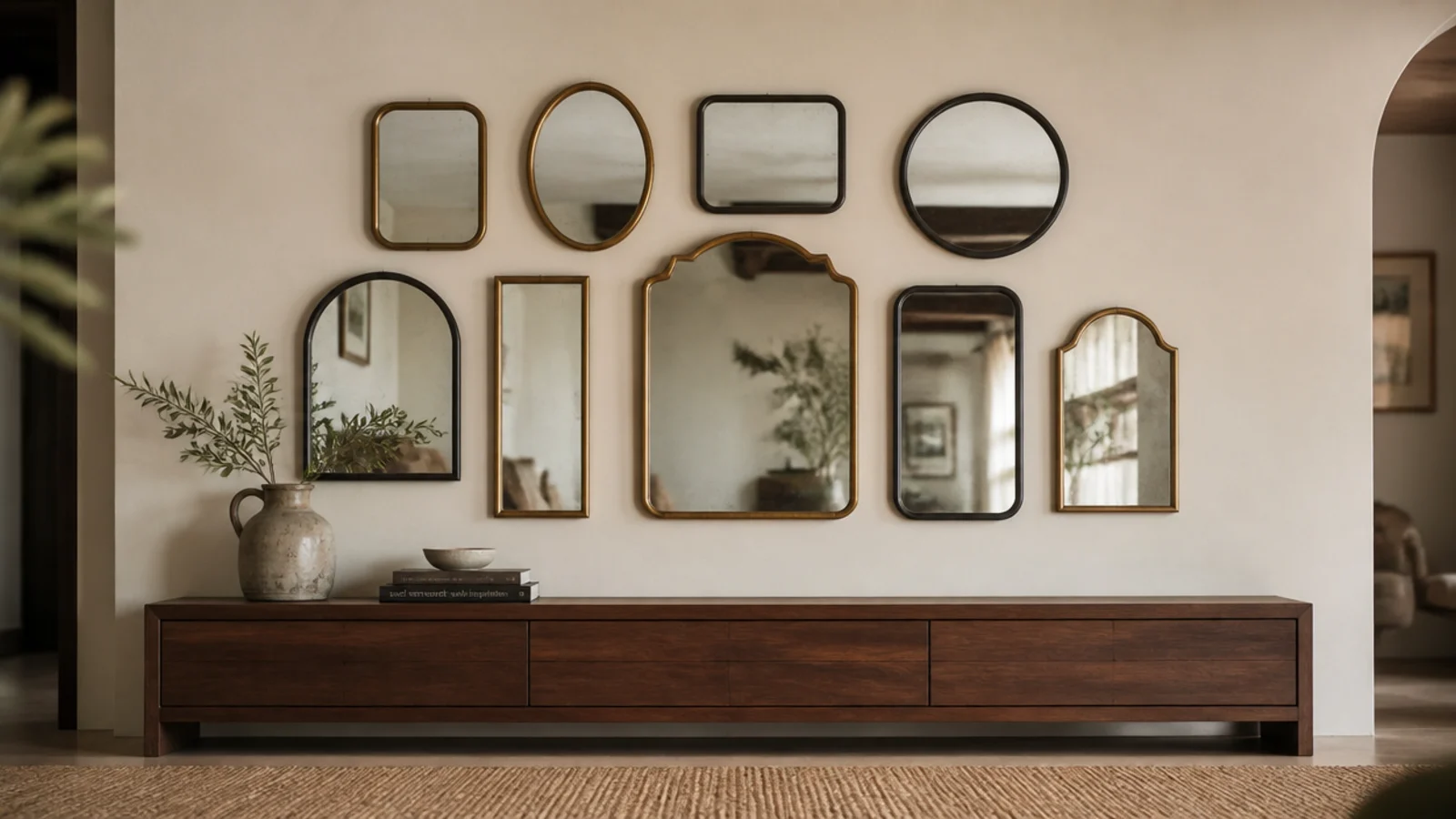
- 12.Cluster small mirrors in a wide foyer
- 13.Stack a mirror above a floating shelf
- 14.Take the stair-side wall
- 15.Lean an oversized mirror in a wide entry
- 16.Reflect the stairwell light
- 17.Hang antique gilt in a period entry
- 18.Use a frameless bevel in a rental
- 19.Keep the glass above 30 inches in a busy hall
- 20.Add a picture light above the frame
- 21.Style the console in an off-centre three
- 22.Go dark on the wall behind it
- 23.Fit a horizontal mirror under a low ceiling
- 24.Match the frame to the door hardware
- 25.Hang from the picture rail in a period hall
- 26.Photograph the hall from the doorstep
- 27.Mistakes to Skip
What entryway mirror wall decor has to do before it looks good
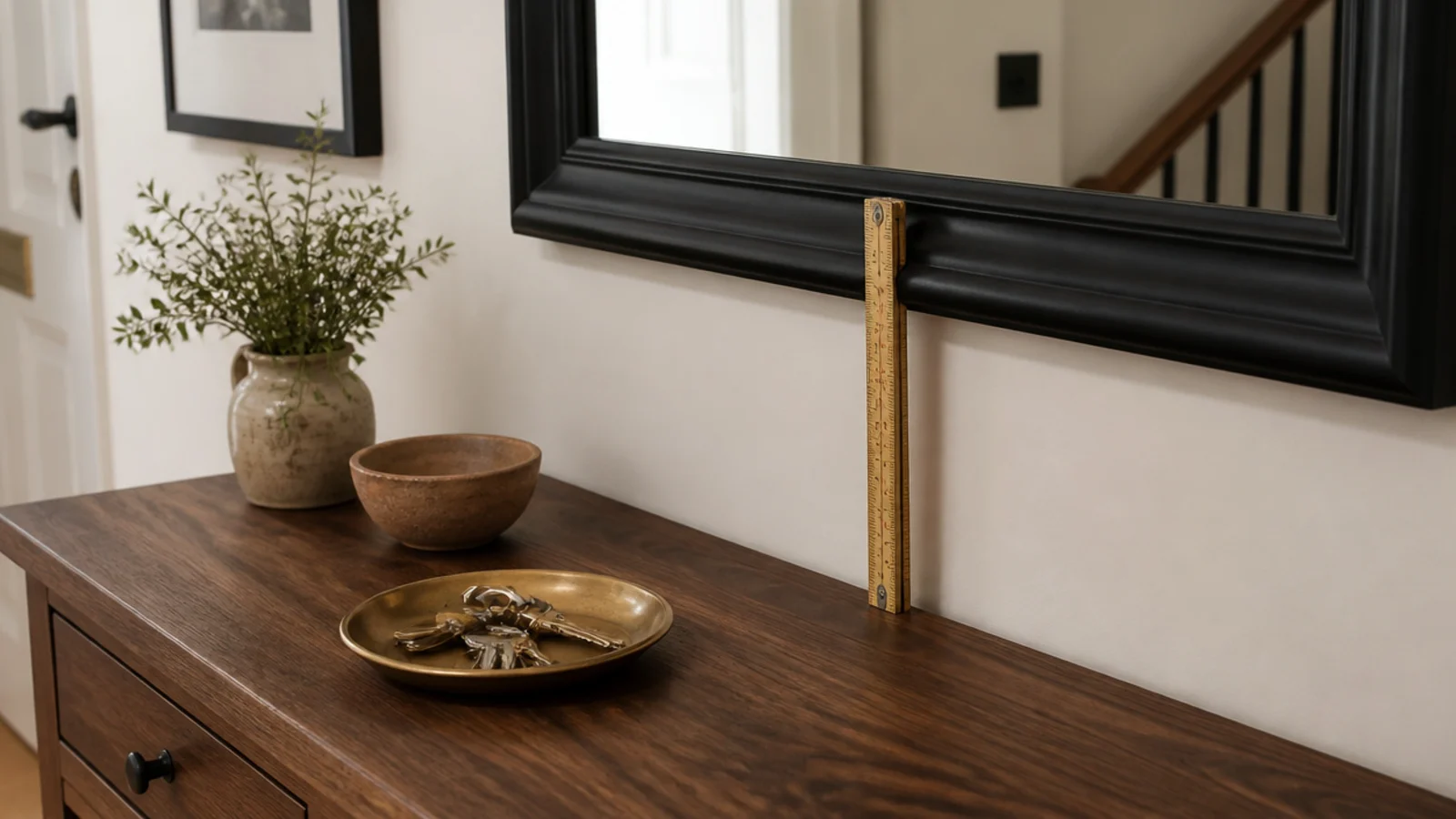
Two measurements carry most of the result. Over a console, leave 6 to 8 inches between the furniture top and the bottom edge of the frame. On a bare wall, centre the glass 57 to 60 inches off the floor. That is it — those two numbers fix the majority of entry mirrors I get asked to look at.
Width comes from the furniture, not the wall: roughly two thirds of the console width. A 30 by 40 inch mirror over a 48-inch console is the proportion I use most often.
Budget is friendly here. $ is $25 to $80 for thrifted frames, frameless bevels and small rounds. $$ is $100 to $260 for good 30-inch rounds and arched mirrors. $$$ starts near $320 for oversized arches, antique gilt and hardwood leaners.
The safety part is short. Weigh the mirror — a 30-inch round runs 15 to 25 pounds, an arch can hit 45, a leaner can pass 60. Hang into a stud with a 2.5-inch screw, or use toggles rated at least double the actual weight, never the plastic plugs from the box and never adhesive strips. Two hanging points rather than one, because an entry door slamming twenty times a day will pivot anything hung on a single hook. And strap every floor leaner to the wall, especially in a hall where children come through at speed.
1. Centre one mirror over the console
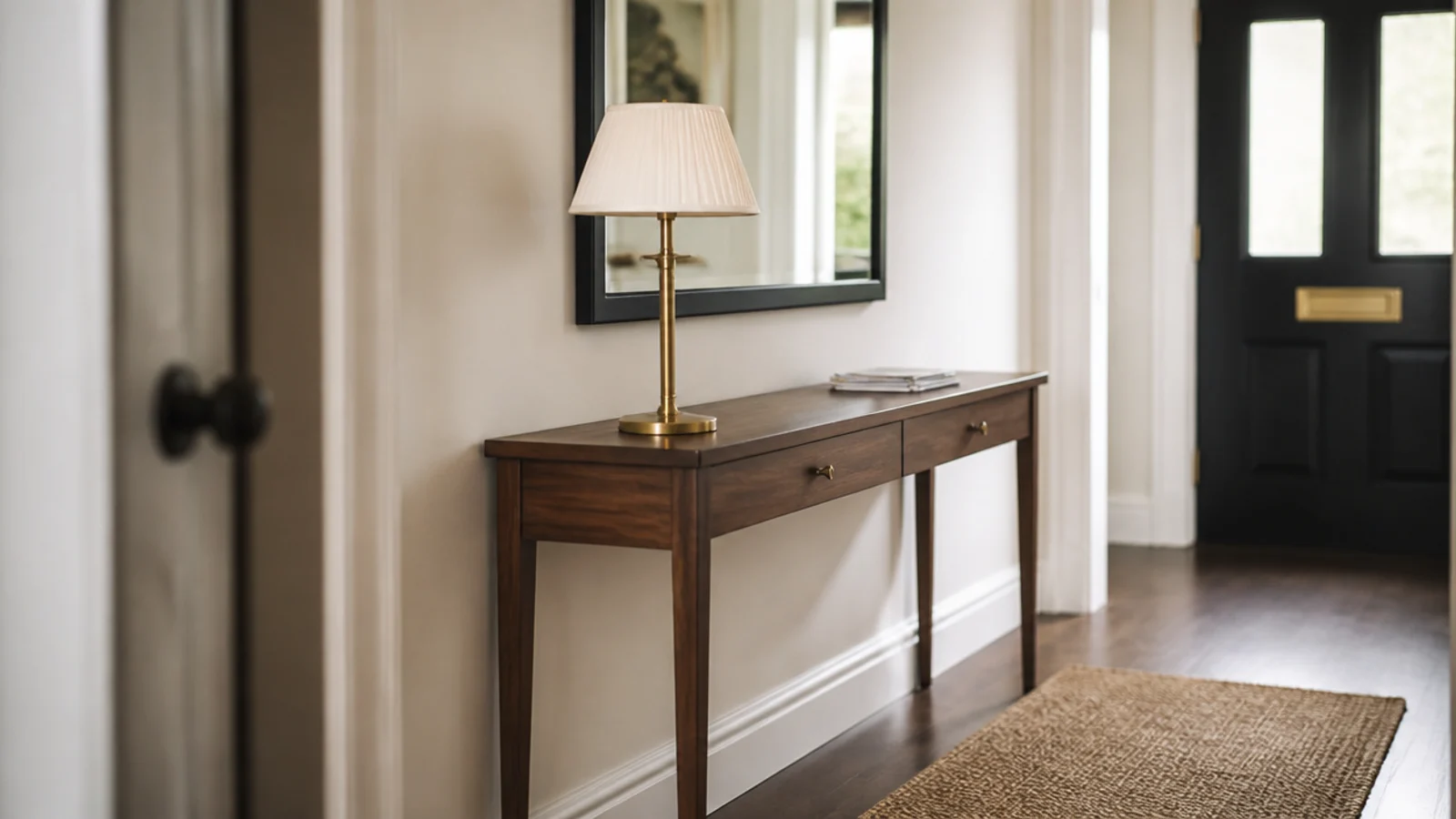
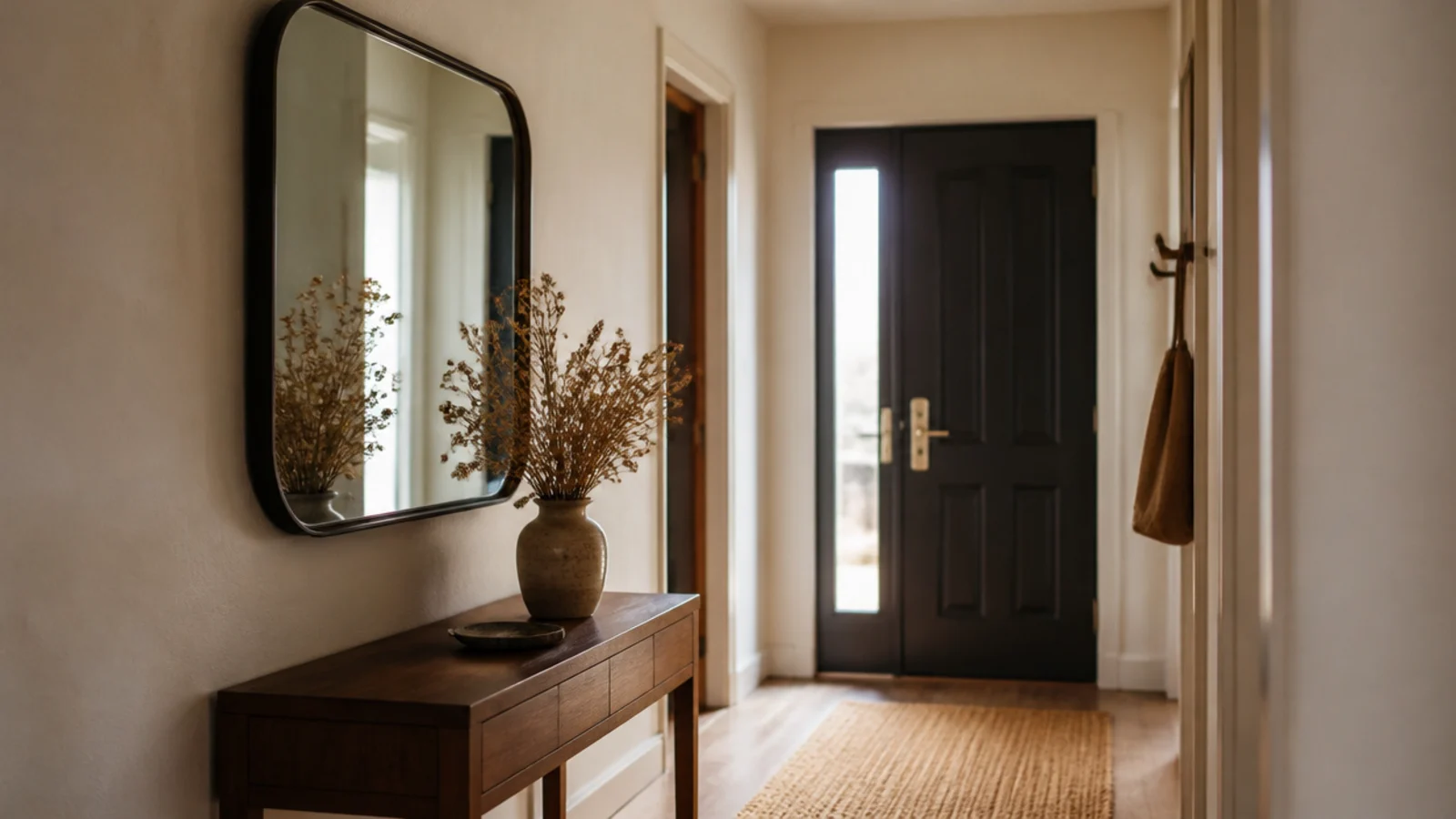
The default entry setup and still the best. Two thirds of the console width, 6 to 8 inches of gap, centred left to right.
Resist hanging it higher to line up with a door casing — that instinct is what puts most entry mirrors four inches too high. Align to the furniture and to people instead.
2. Hang a round above a bench
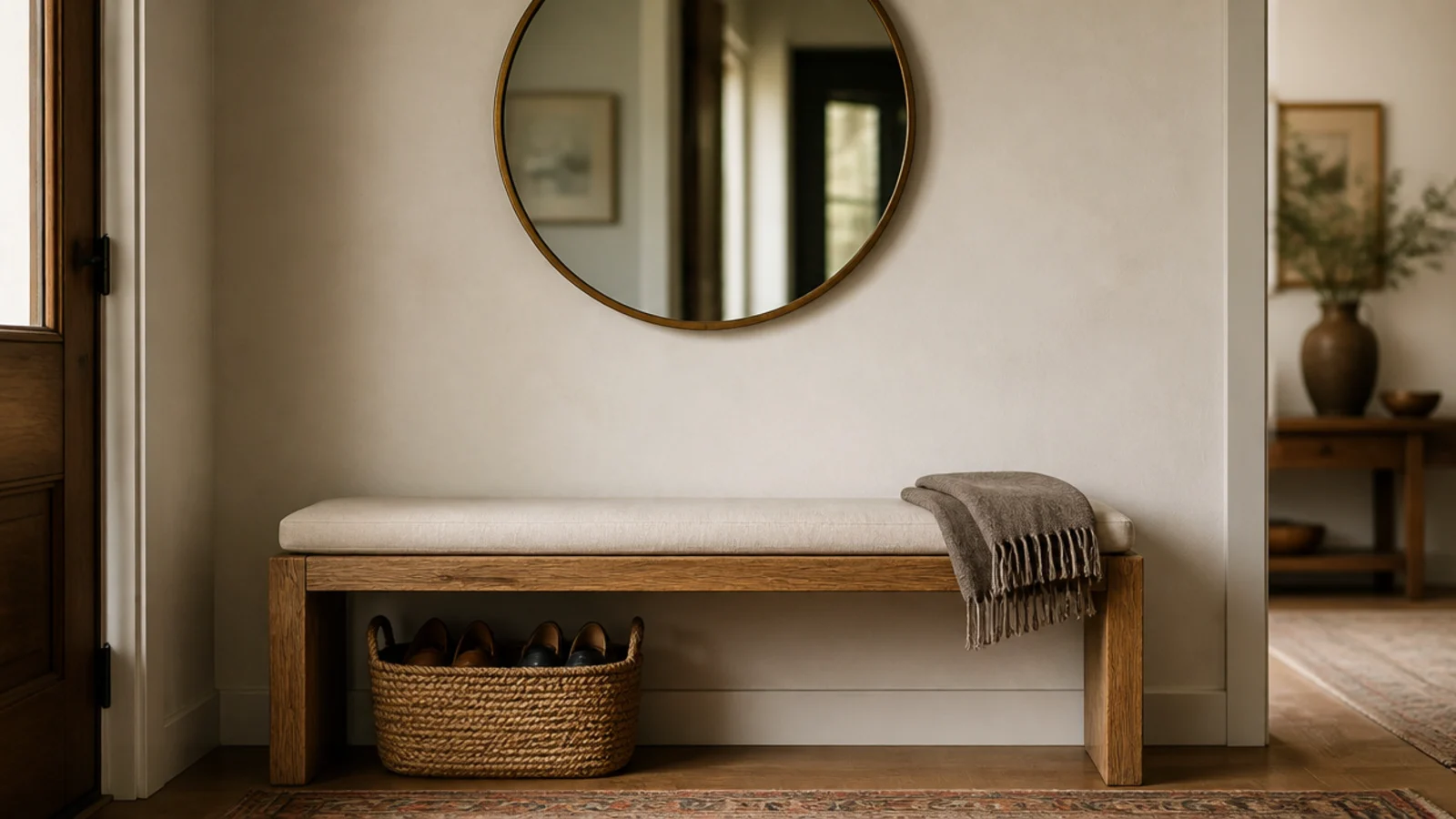
A bench is a hard horizontal line and a circle is the cleanest way to break it. Aim for a diameter around half the bench width.
Keep the bottom edge 8 to 10 inches above the seat so nobody knocks their head standing up with a boot in each hand. A 30-inch round over a 60-inch bench lands almost exactly at a 58-inch centre.
3. Put a full-length mirror by the door
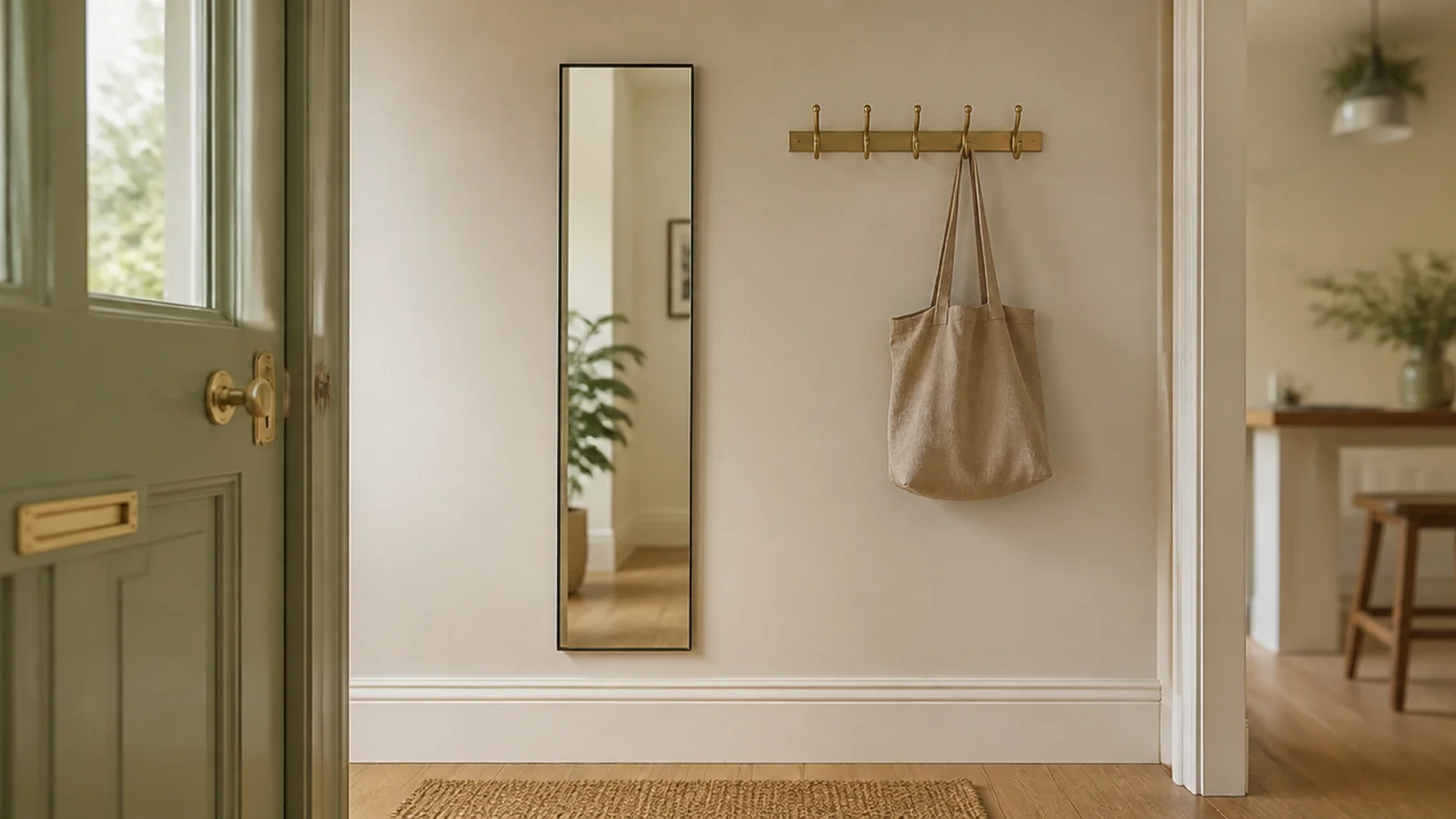
The last-look mirror needs to be within arm's reach of the door or nobody uses it. On the wall directly beside the door is ideal.
Mounted flat, a full-length runs 25 to 40 pounds and wants four fixings into studs. Bottom edge at 12 to 18 inches from the floor shows shoes, which is the whole point of a hall mirror.
4. Choose a shallow frame for a narrow hall
In a hall under 40 inches wide, frame depth matters more than anything else. Under 1.5 inches and nothing catches a coat sleeve or a shoulder.
Deep ornate frames belong on wide walls. In a corridor they become the thing everyone brushes against, and the mirror ends up crooked permanently no matter how well you hung it.
5. Face a window, not the front door
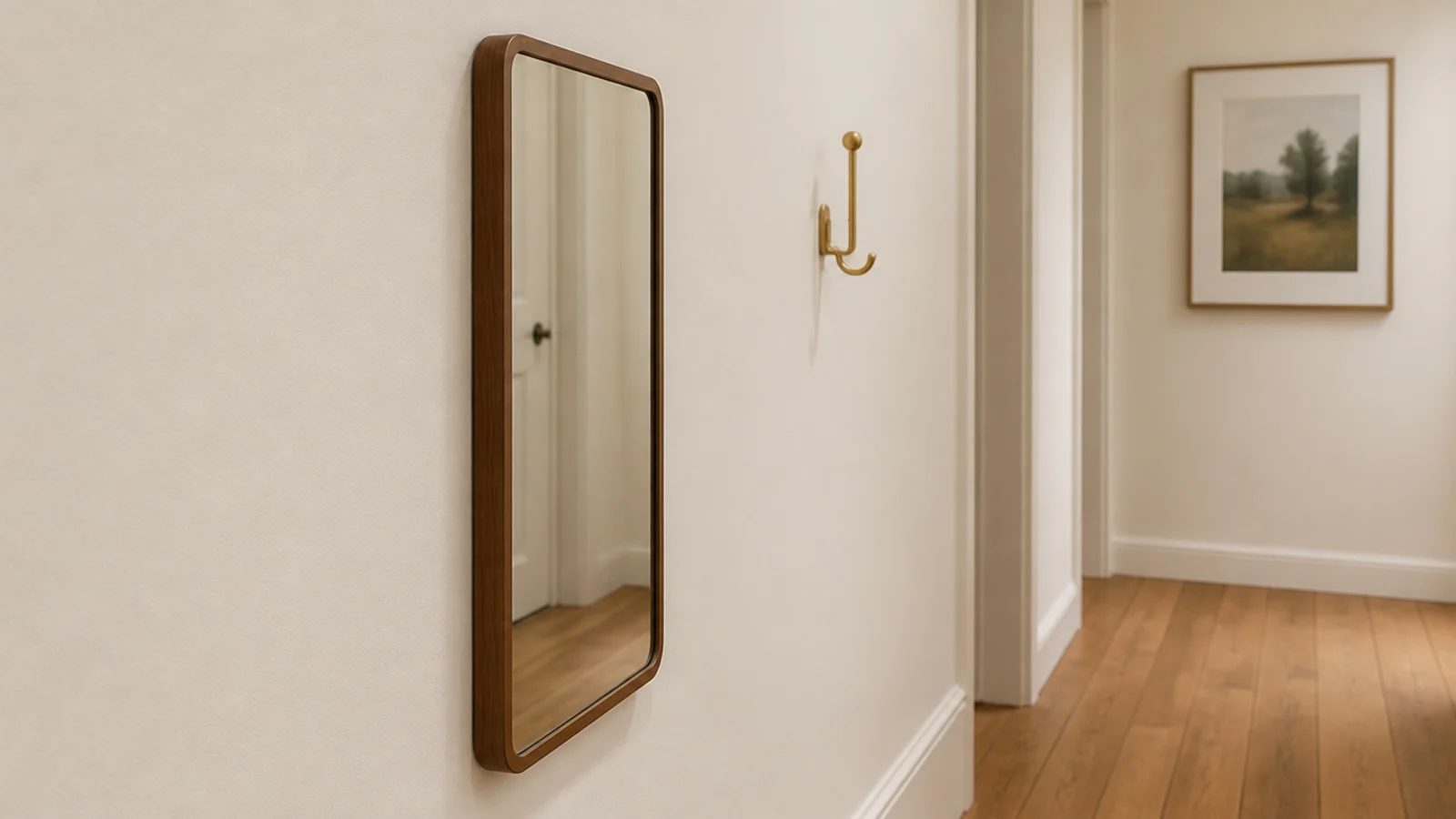
A mirror opposite the front door reflects the front door, which is nobody's favourite view. On a side wall catching a sidelight, a stair window or a doorway to a bright room, the same mirror doubles real daylight.
Hold a hand mirror at each candidate wall and look at the image. It takes two minutes and it decides everything.
6. Bridge the wall above a shoe cabinet
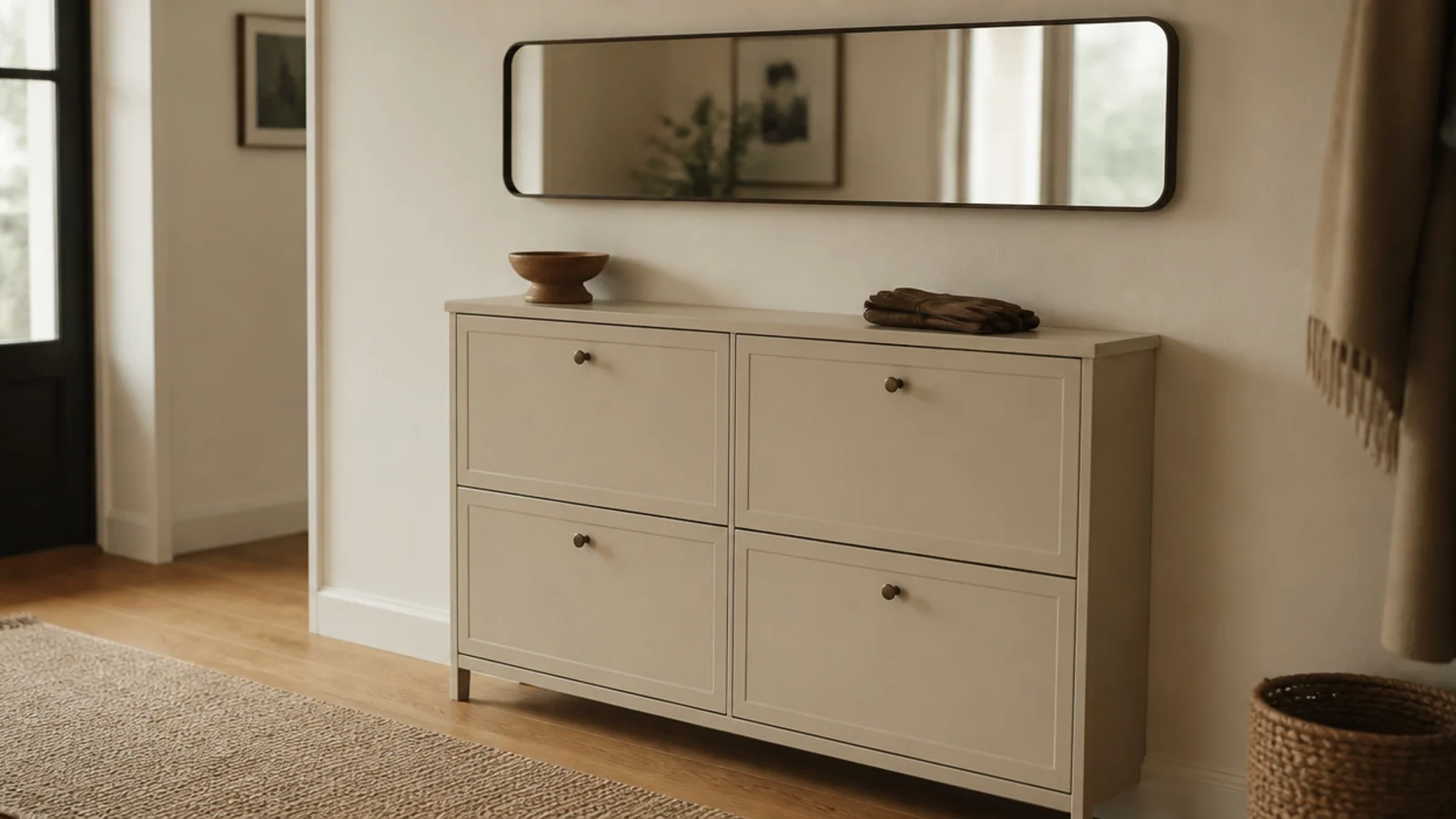
A slim shoe cabinet leaves a band of wall too short for art and perfect for a wide low mirror.
Keep the frame shallow and leave 6 inches above the cabinet top so the doors clear it. This is the single most useful mirror position in a small flat entry, because the cabinet is doing the real work underneath.
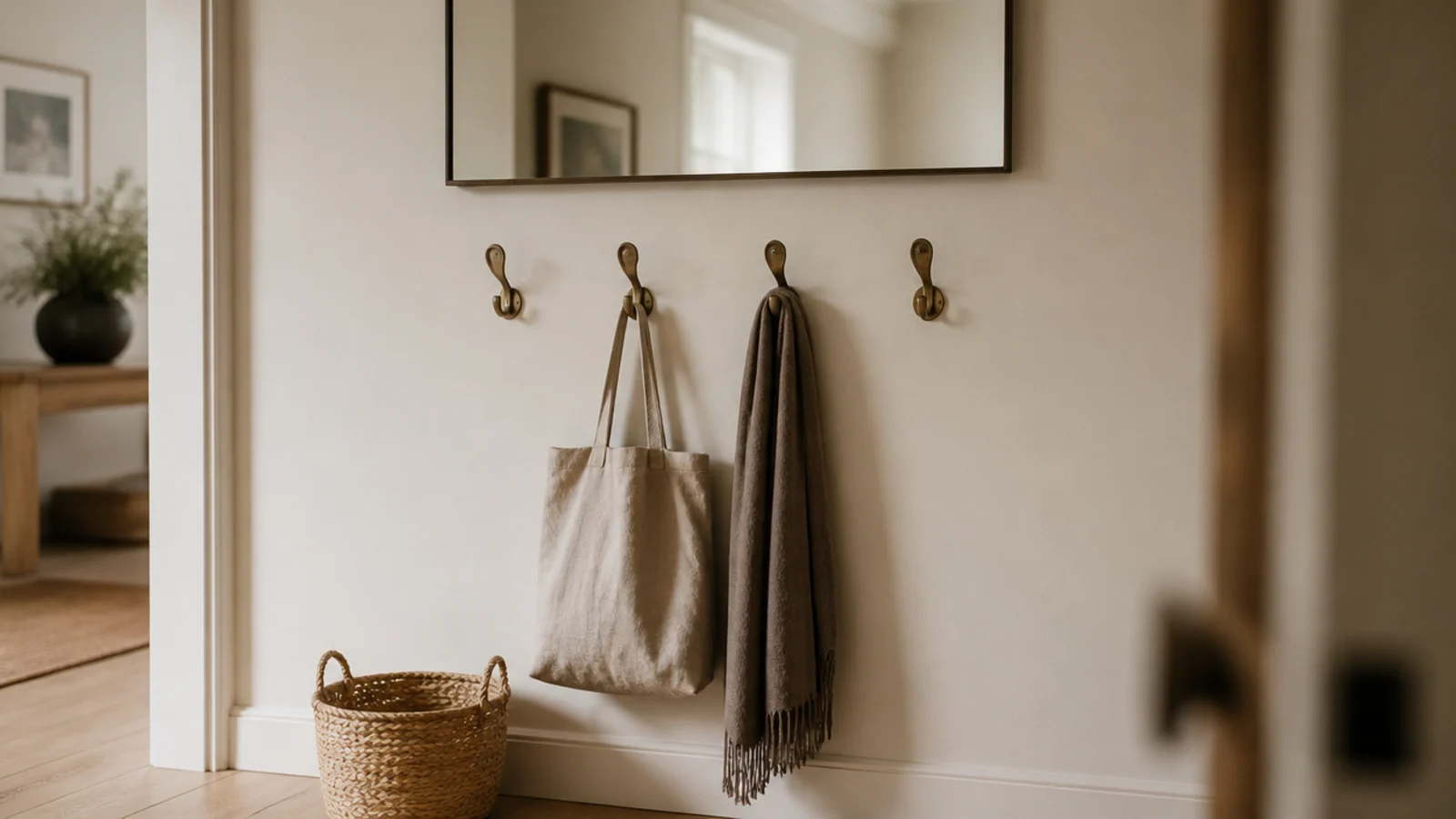
7. Put hooks underneath the mirror
Mirror above, a rail of four hooks below at 60 inches, and one wall does two jobs. It suits a hall too narrow for any furniture at all.
Mount the hook rail into studs — loaded coats pull harder than people expect — and keep 10 inches between the hooks and the bottom of the mirror so hanging bags never touch glass.
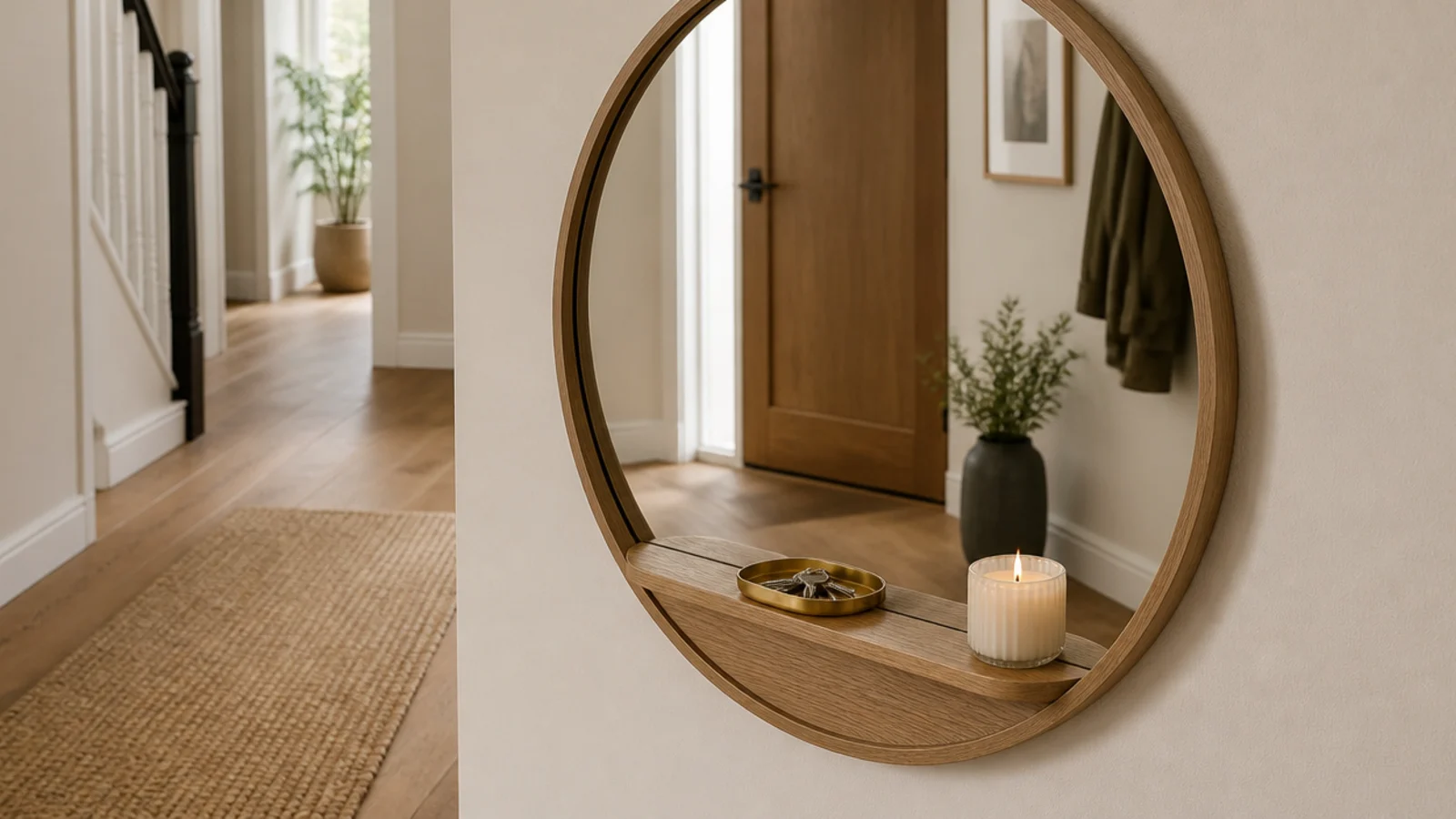
8. Use a mirror with an integrated shelf
A round with a 3-inch ledge built into the lower frame is the entire drop zone in a hall with no room for a console.
Keys, a candle, a small dish. Hang the ledge at about 40 inches so it is comfortable to reach into, and check the shelf is part of the frame structure rather than glued on. Around $80 to $160 ($$).
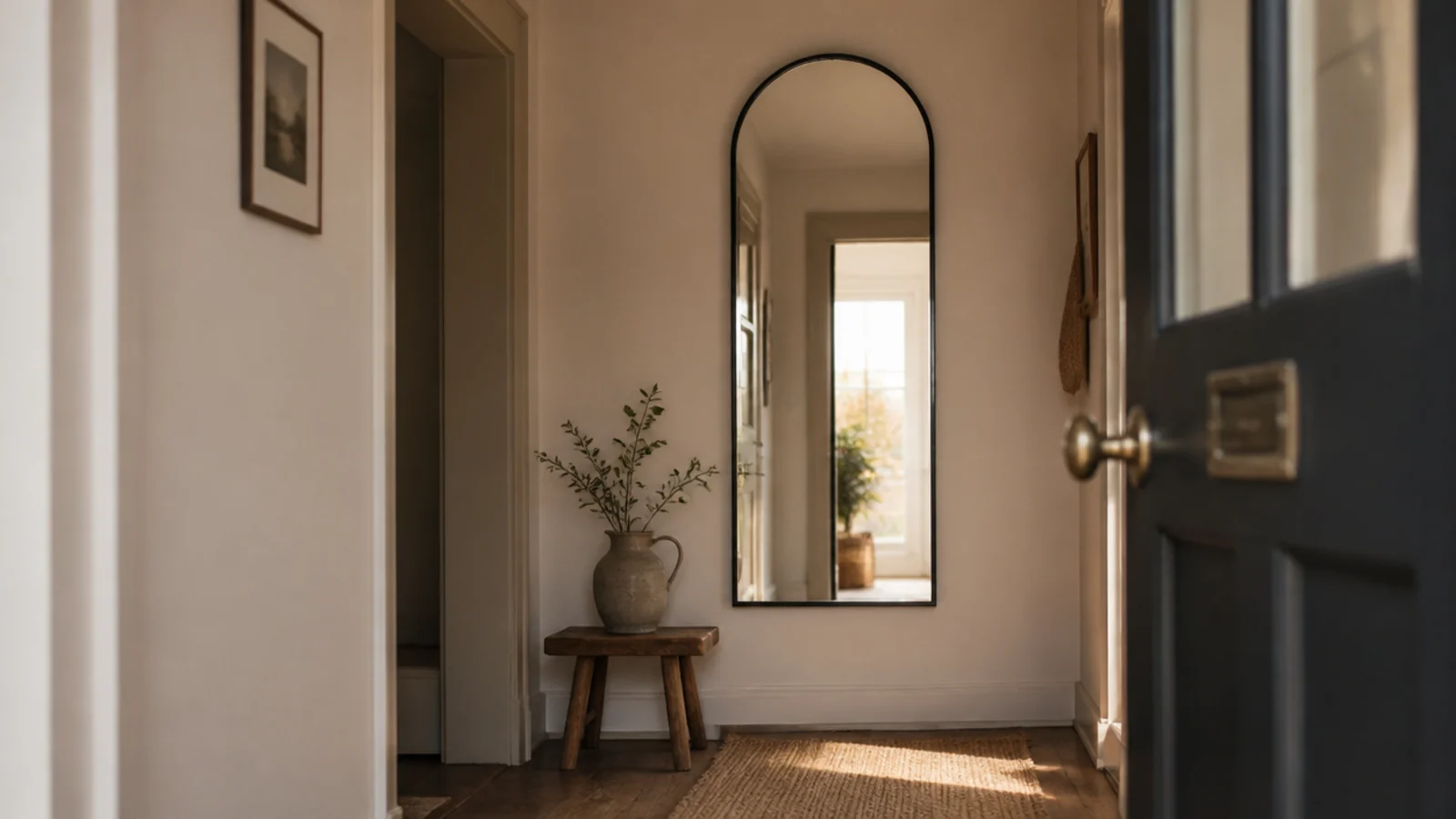
9. Fit an arch into a small foyer
Small foyers need height, and an arched mirror gives it without needing width. A 22 by 55 inch arch fits a wall most people write off as too narrow.
Arches carry more glass than they appear to, often 30 to 45 pounds, so two stud fixings or a French cleat rather than a pair of hopeful hollow anchors.
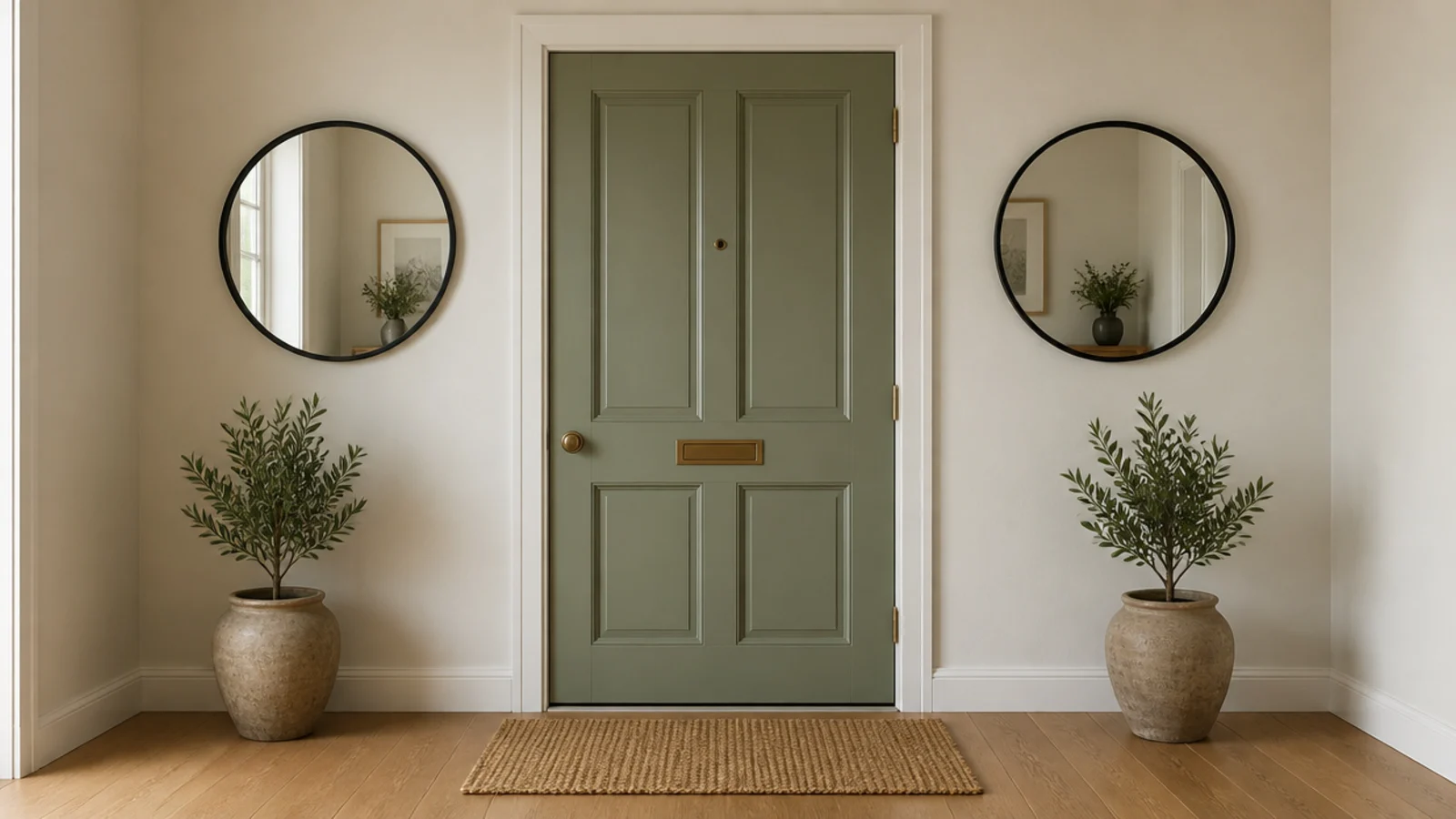
10. Flank the door with a matching pair
Two identical small mirrors either side of the front door make an ordinary opening read as architecture, and the pair costs less than one large mirror.
Keep them 16 to 20 inches and hang both centres at exactly the same height, measured from the floor rather than from the casing. At 6 to 10 pounds each, hanging is straightforward.
11. Cluster small mirrors in a wide foyer
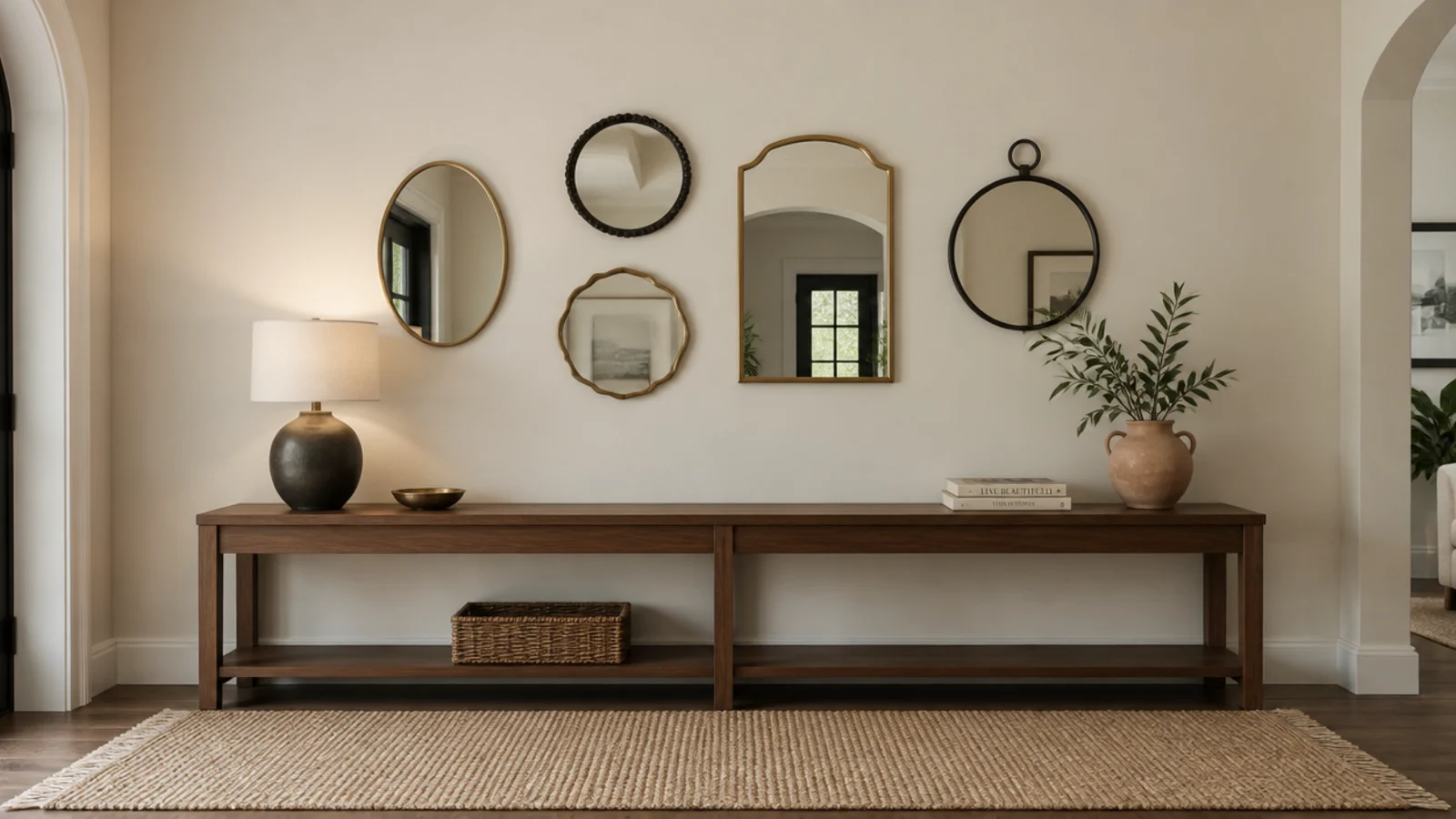
A wide foyer wall can take five small mirrors with 2 to 3 inch gaps far better than one huge piece, and thrifted frames make it cheap.
Odd numbers, obvious size differences, two frame finishes maximum. Lay it out on the floor and cut paper templates first — mirror gallery wall has the full method.
12. Stack a mirror above a floating shelf
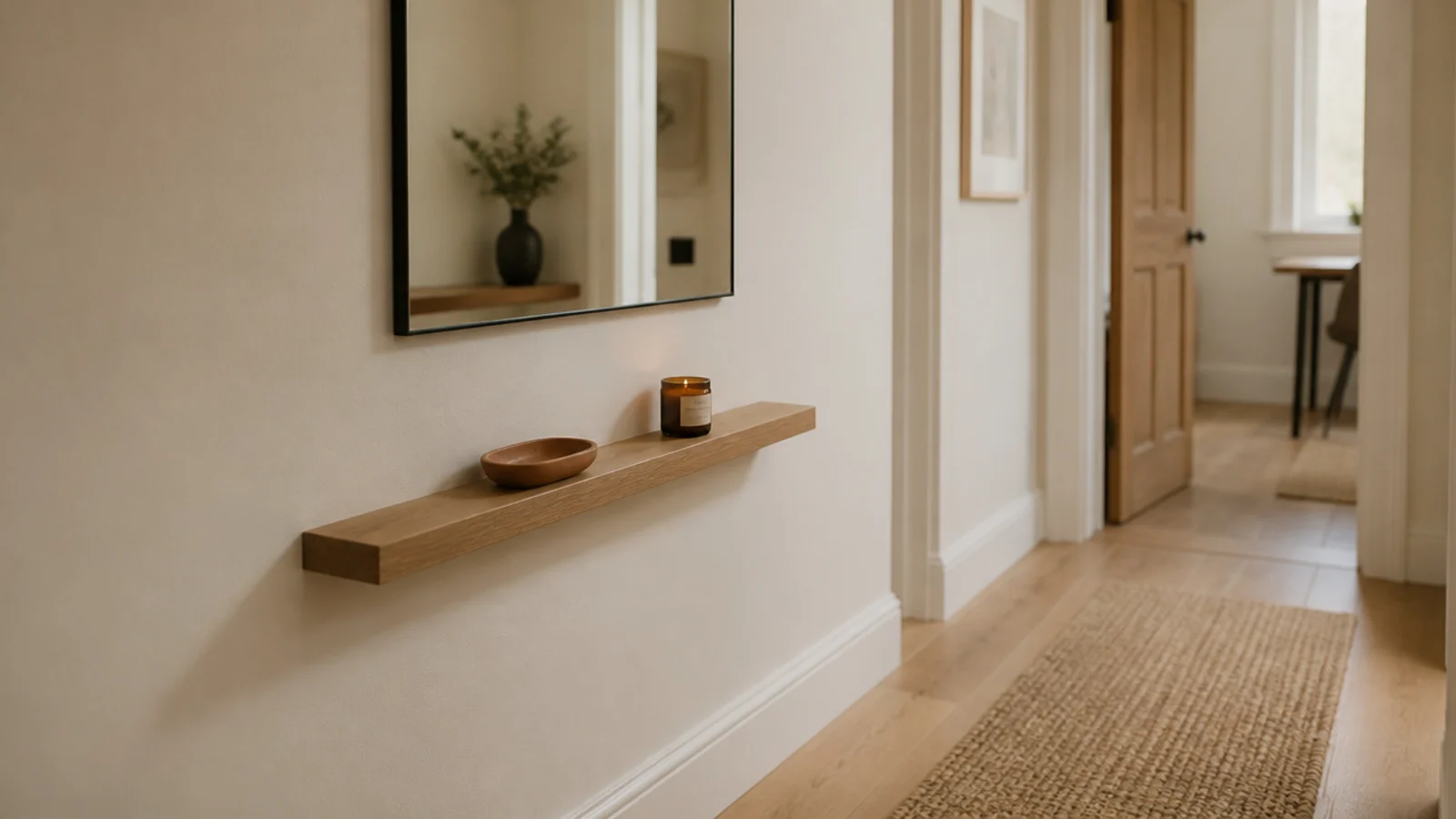
Where a console will not fit, a 6-inch deep floating shelf will. Mirror above, shelf below, 8 to 10 inches between them.
The shelf holds keys and a candle without eating floor space, and the pairing reads as deliberate rather than as a compromise. Total materials for a decent oak shelf run $25 to $50 ($).
13. Take the stair-side wall
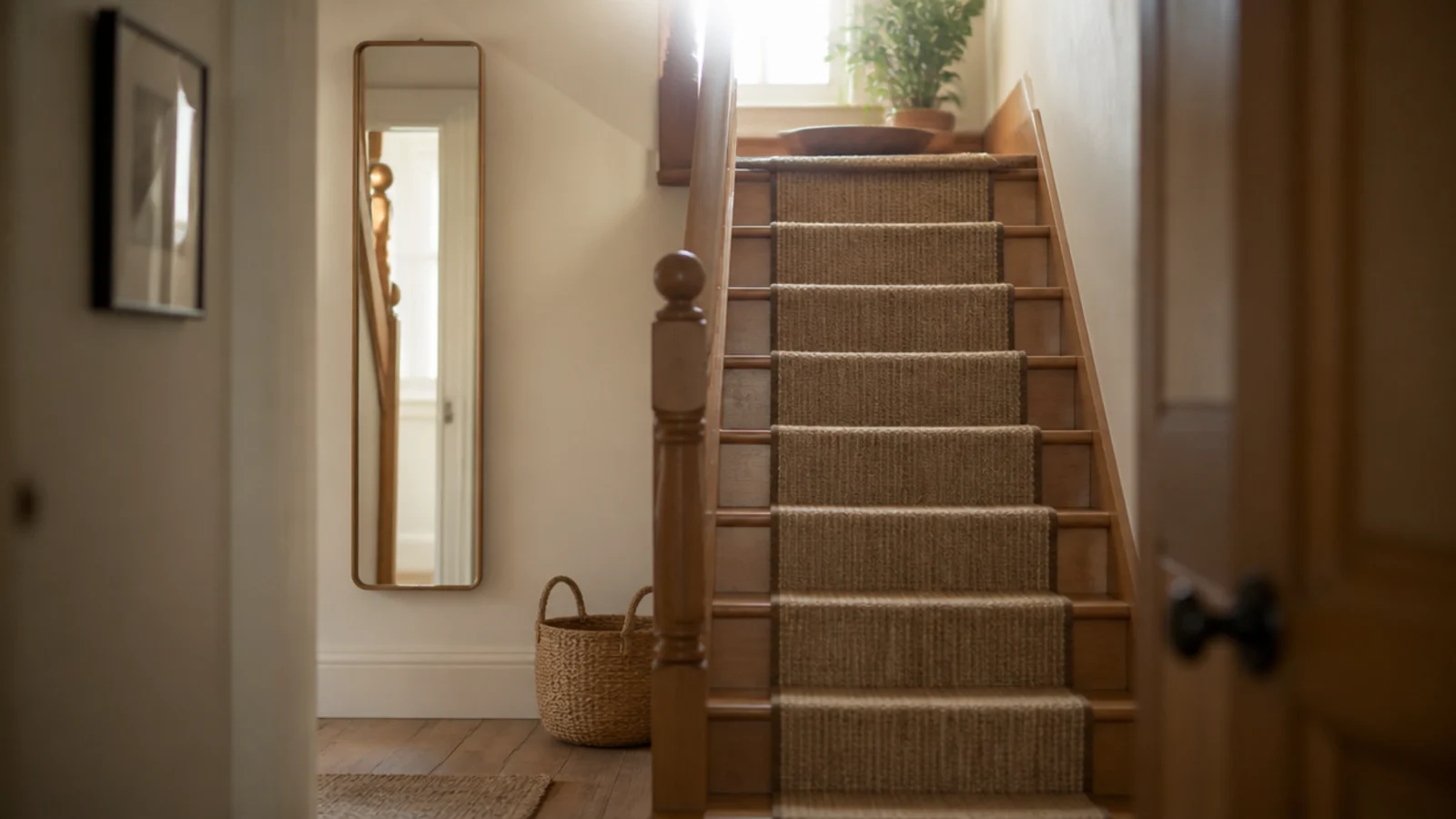
The wall beside a staircase usually catches light from a landing window and is almost always left blank.
A tall narrow mirror there pushes that borrowed light down into the hall. Watch head clearance under the stair line, and keep the frame shallow because it is a wall people brush past constantly.
14. Lean an oversized mirror in a wide entry
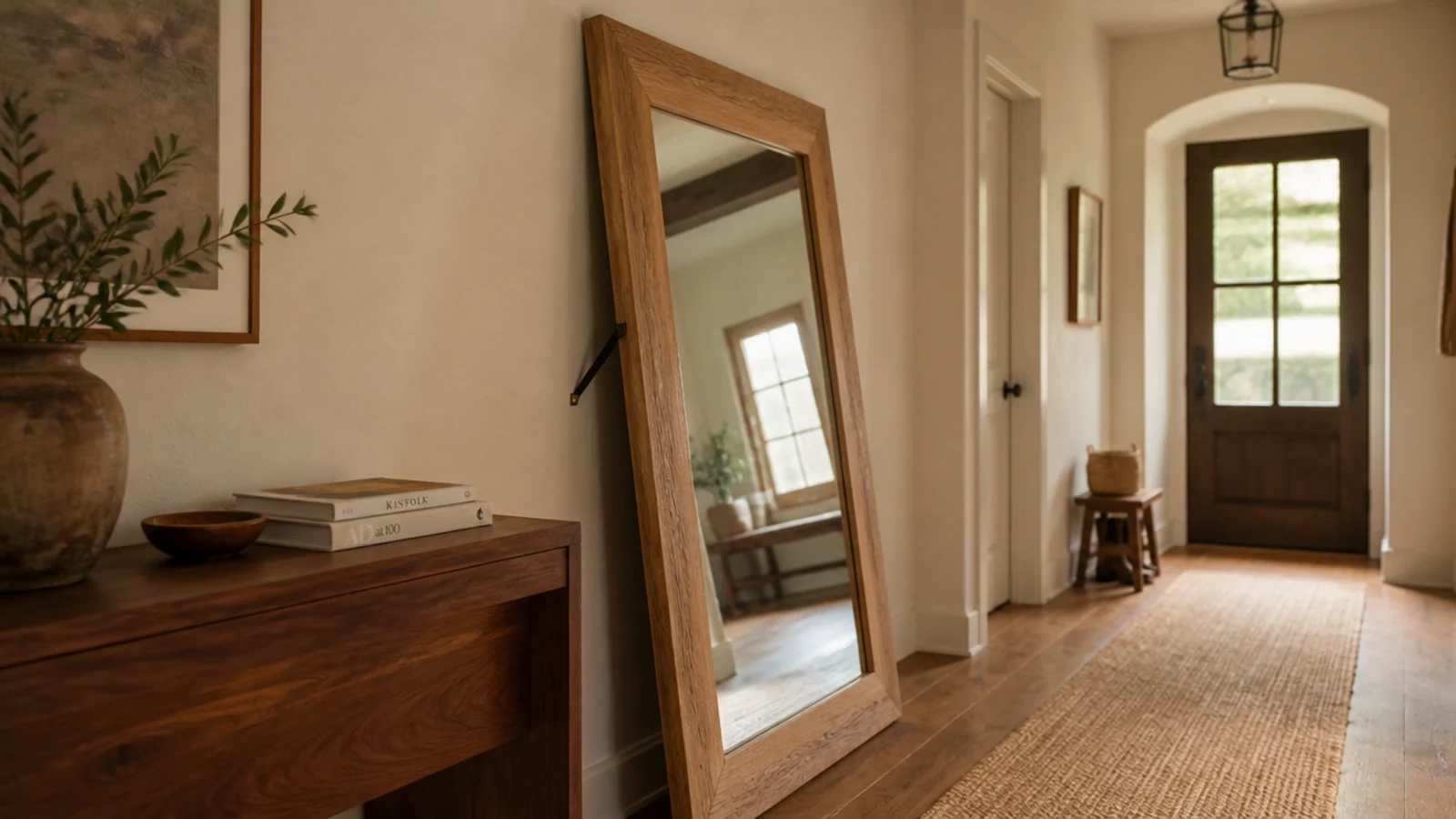
A big leaner against an entry wall reads effortless and needs no holes for the mirror itself. It is the closest thing to a renter-safe statement piece.
It is also 45 to 70 pounds standing on a hard floor in the busiest part of the house. One anti-tip strap into a stud, $10, non-negotiable in any home with children.
15. Reflect the stairwell light
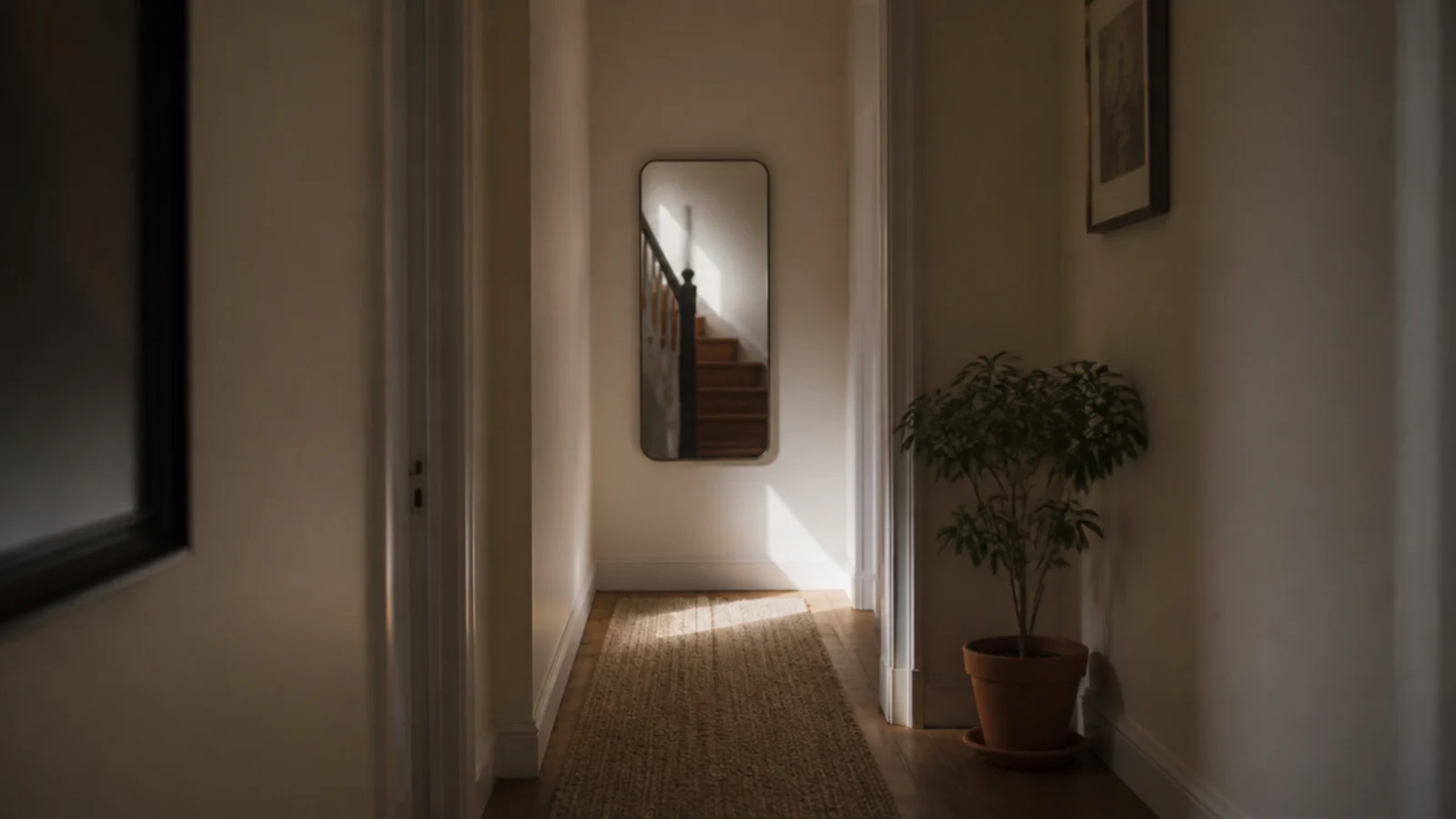
Stand in the hall at the darkest time of day and find the brightest patch — usually a stair window, a sidelight or an open doorway.
Then place the mirror where it can catch and redirect that light along the corridor. Placement beats size here more than anywhere else in the house, because hallways so rarely have windows of their own.
16. Hang antique gilt in a period entry
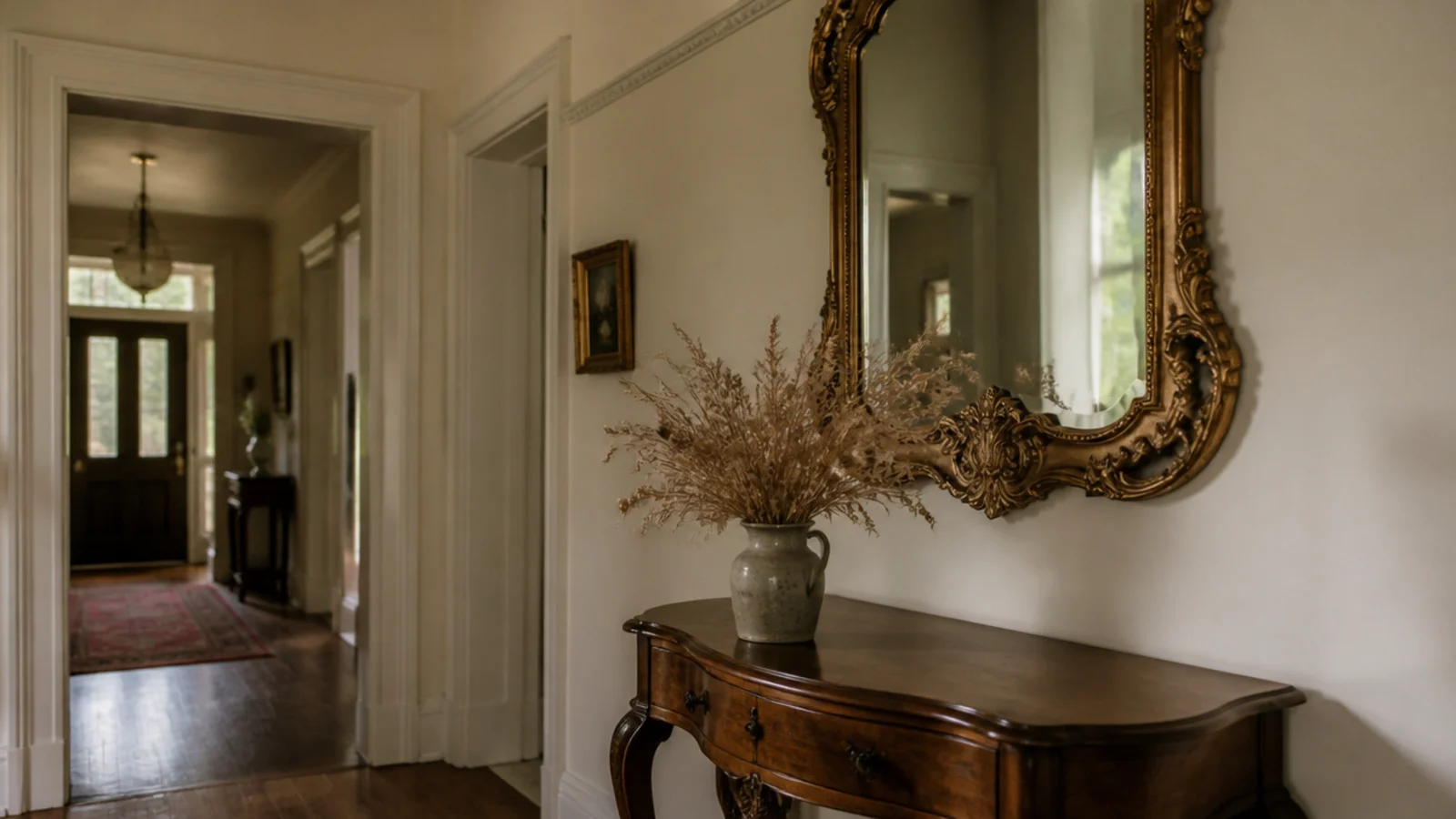
An ornate secondhand gilt frame costs $30 to $80 and looks entirely at home against period plaster, high skirting and a picture rail.
Knock back any orange in the gold with a thin coat of dark wax rubbed on and buffed off. Check the backing board is screwed rather than stapled before it goes anywhere near a wall.
17. Use a frameless bevel in a rental
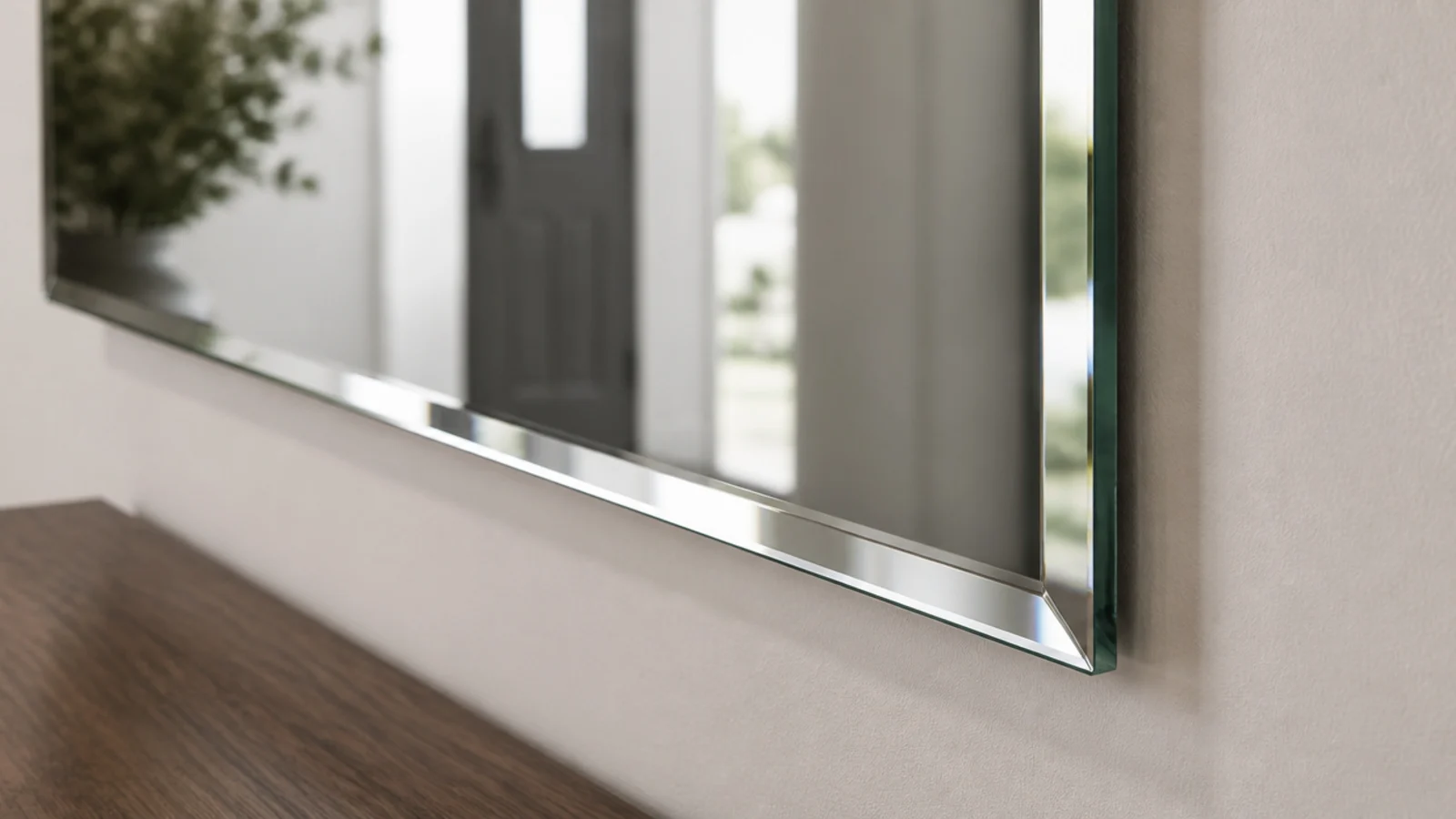
A frameless bevelled rectangle sidesteps every style clash with a landlord's paint colour and reads as clean architecture.
At 24 by 36 inches it weighs 12 to 18 pounds and wants two anchors. Two small patched holes at move-out cost a dab of filler, which is a far better trade than adhesive strips that creep and fail.
18. Keep the glass above 30 inches in a busy hall
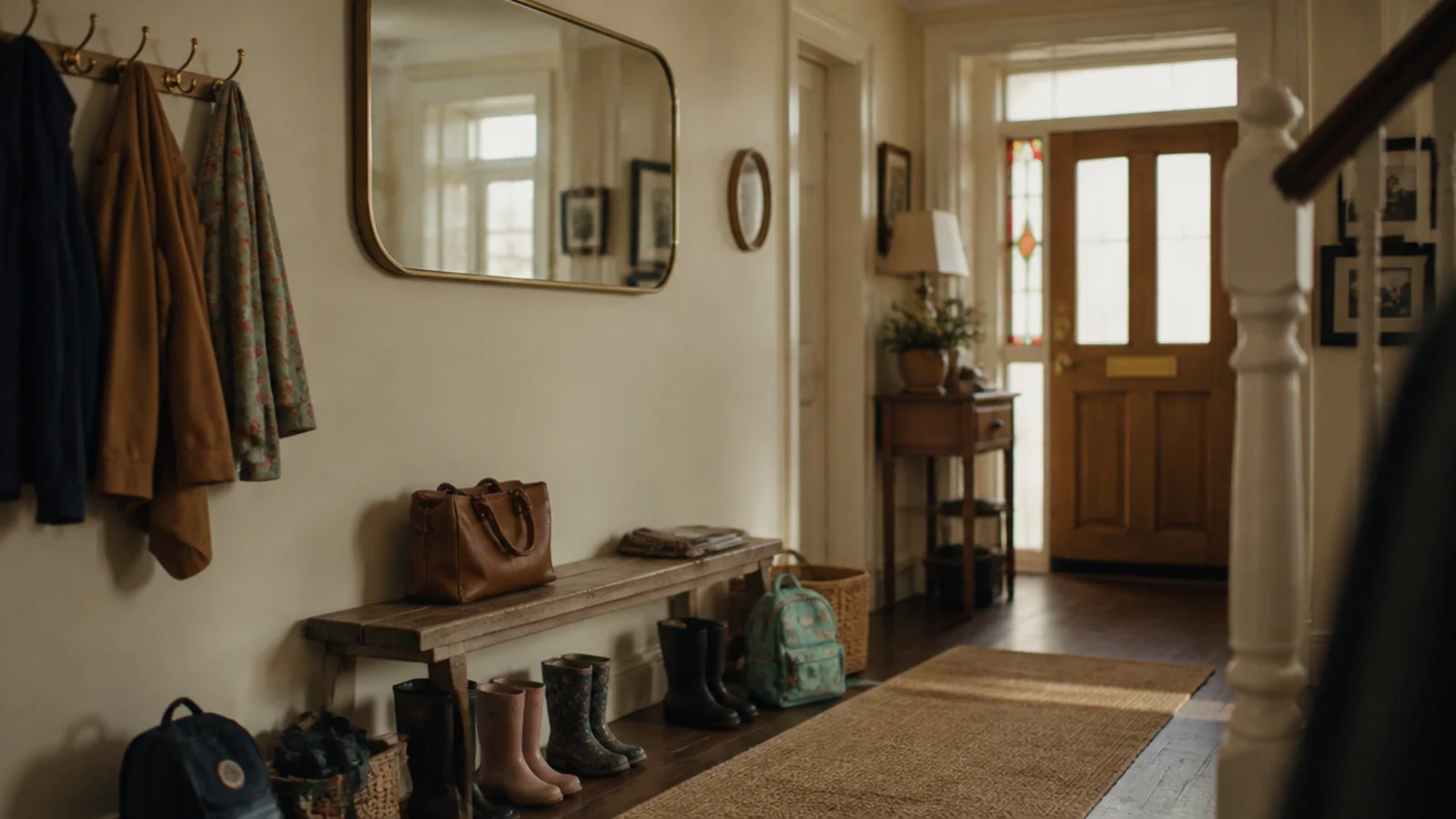
In a family entry, backpacks, scooter handles and hockey sticks all live between 20 and 30 inches off the floor.
Keep the bottom edge of any mirror above that band. It is a small planning decision that prevents the one genuinely likely accident in a hallway, and it costs nothing to design around.
19. Add a picture light above the frame
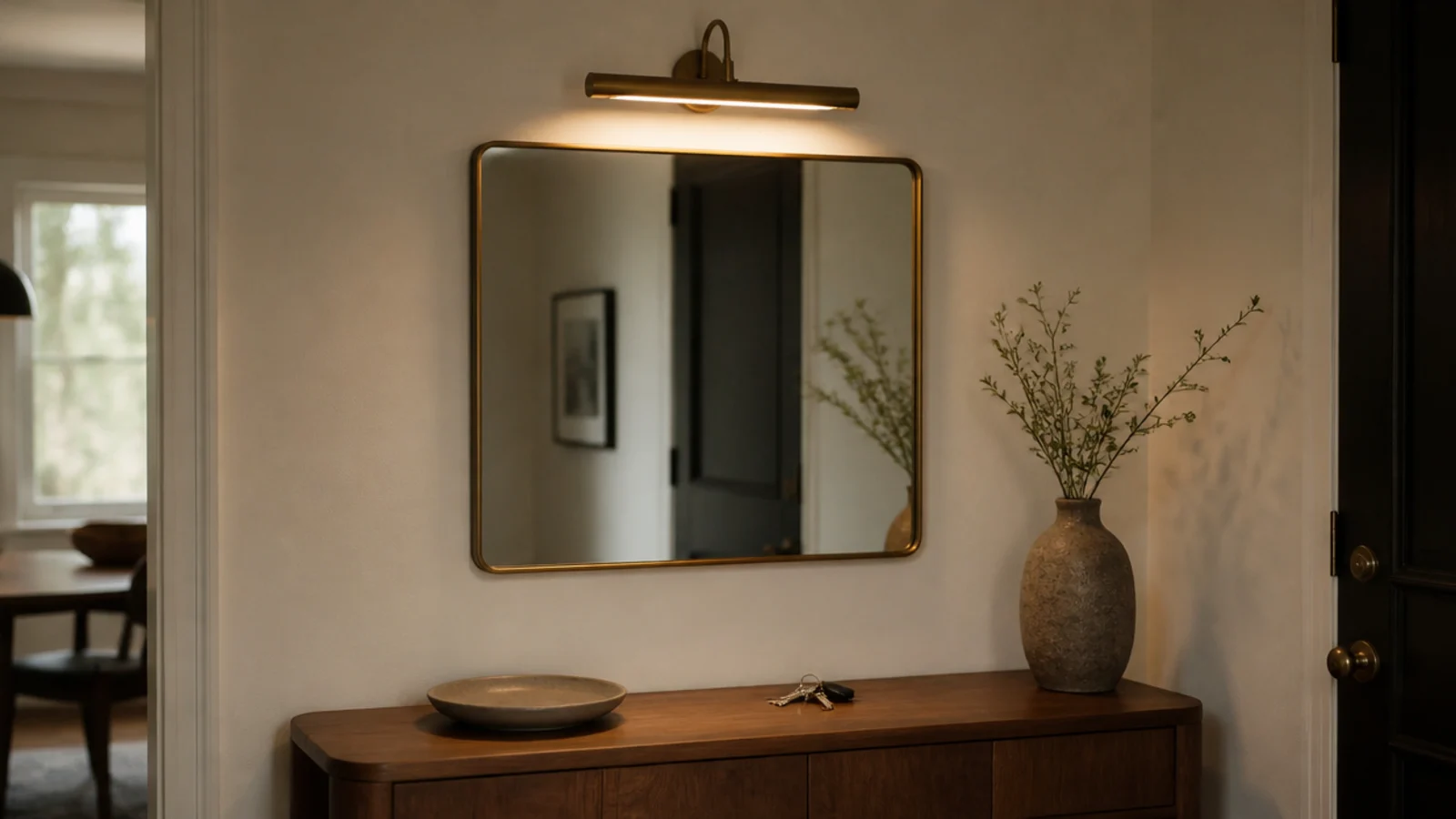
A slim brass picture light over an entry mirror turns a dark hall into a proper welcome, and plug-in versions need no wiring.
Choose warm bulbs around 2700K and mount the light 4 to 6 inches above the frame. Expect $40 to $90 ($$) for one that does not look like an afterthought.
20. Style the console in an off-centre three
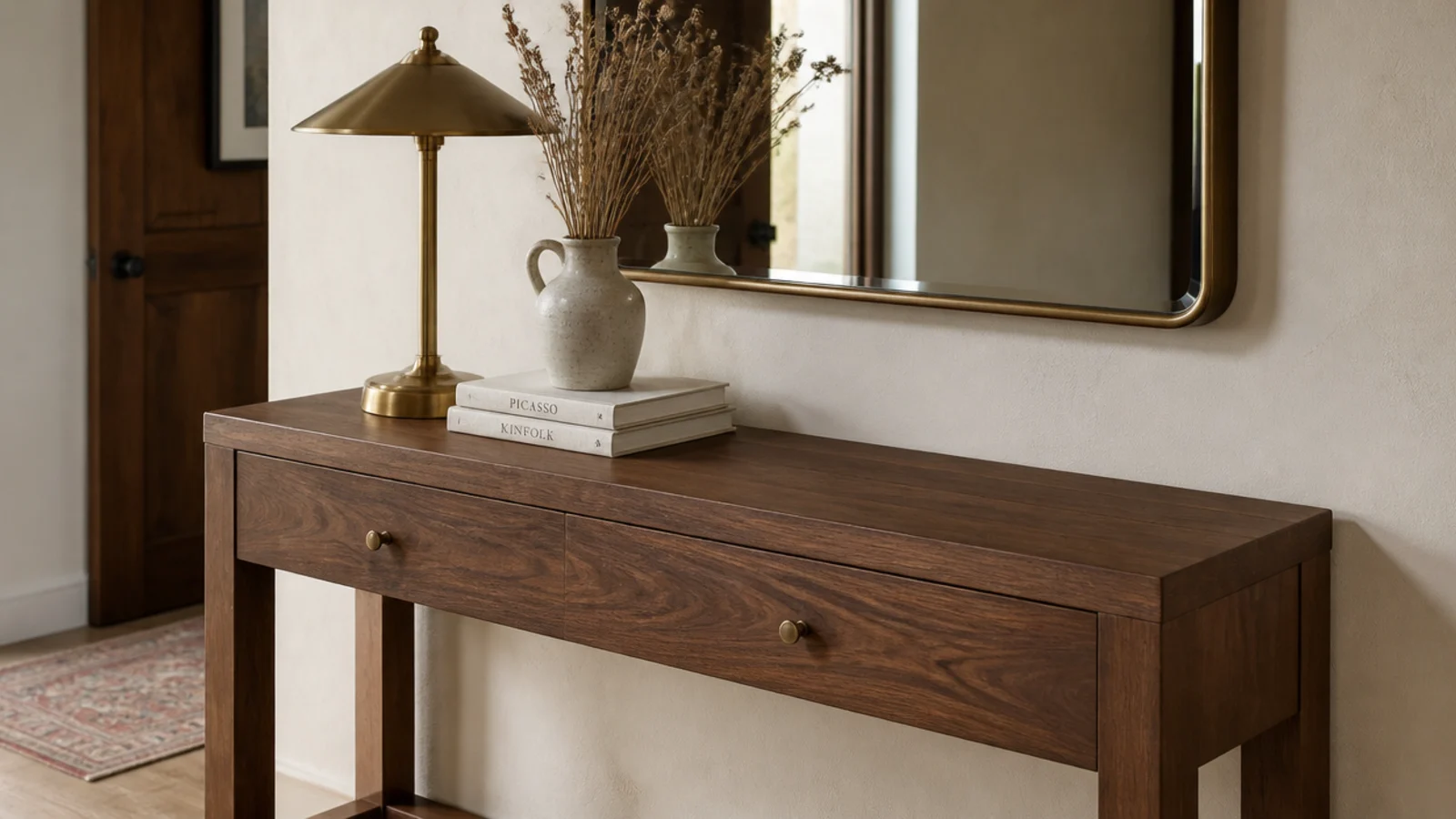
Under the mirror, three objects pushed to one side: something tall like a lamp, something low like stacked books or a tray, something soft like dried stems.
Leave a genuine third of the surface clear, because that clear third is where keys and post actually land. A symmetrical pair of matching lamps looks staged and gives you nowhere to put anything.
21. Go dark on the wall behind it
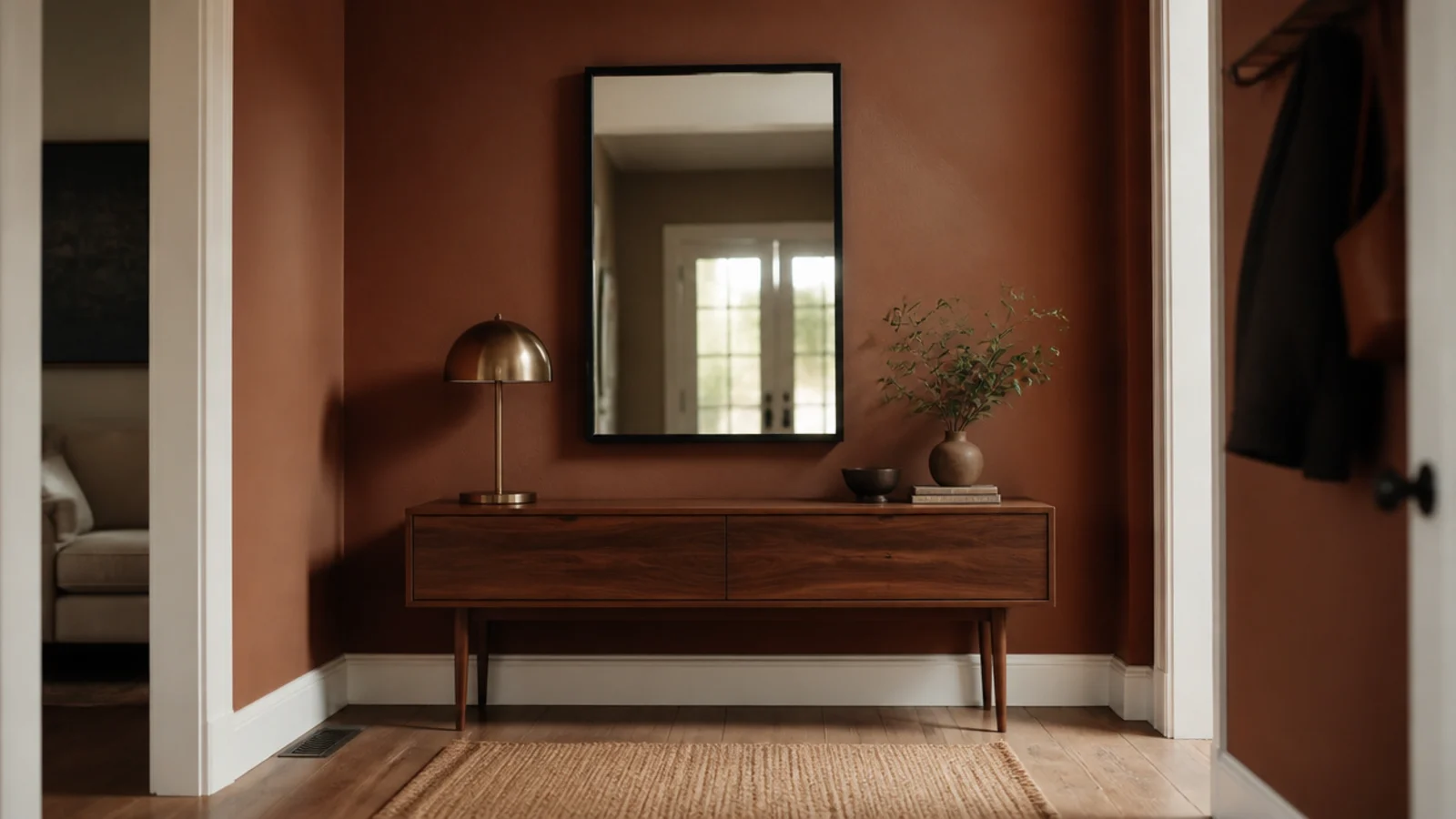
A quart of deep clay, olive or ink blue paint costs about $25 and does more for a mirror than a $200 frame upgrade.
Entries are small, so one wall takes an hour to paint. Paint first, cure for two days, then hang — masking around a mounted mirror is a miserable afternoon nobody needs.
22. Fit a horizontal mirror under a low ceiling
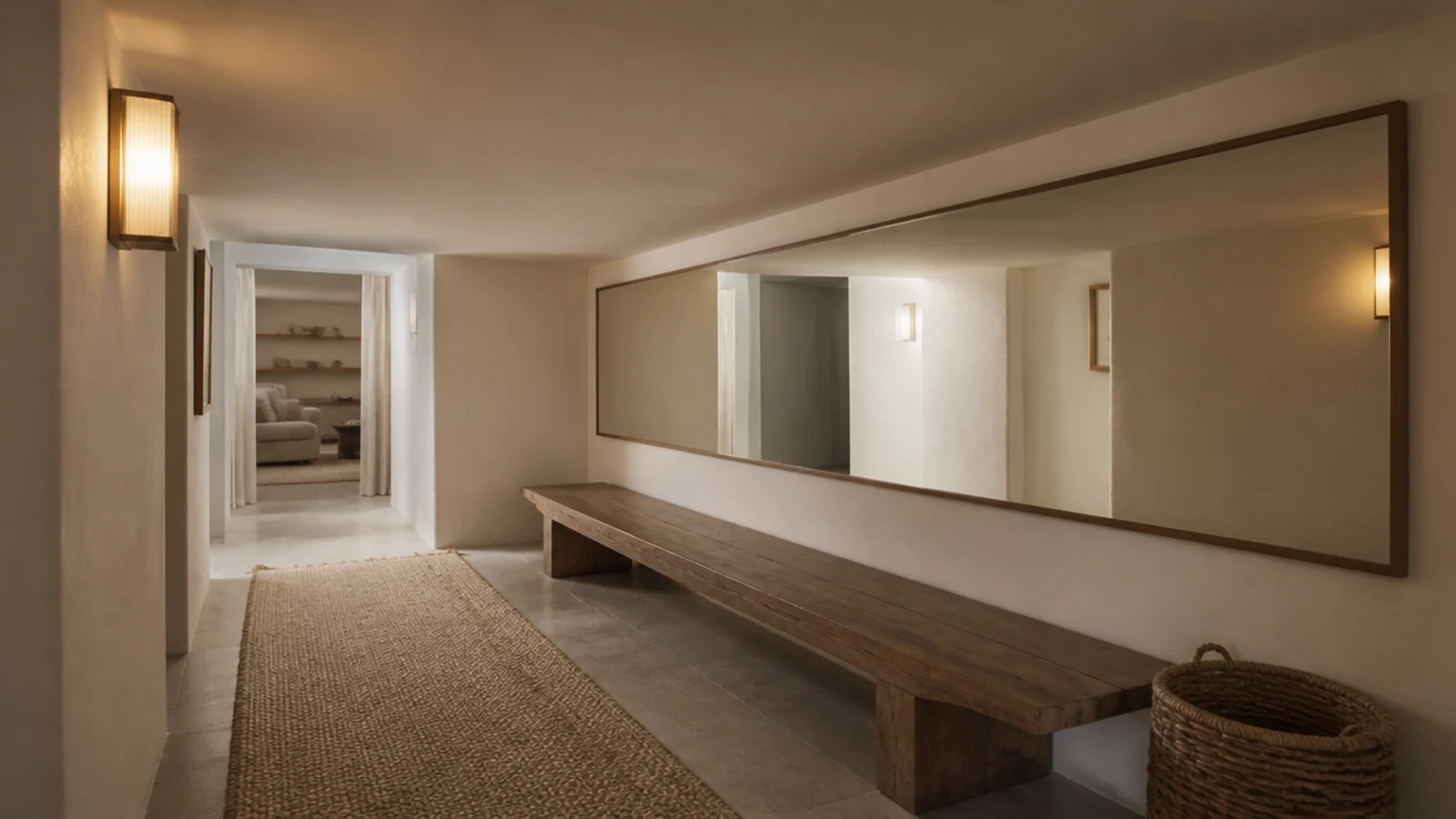
Where the ceiling sits under 8 feet, a wide horizontal mirror above a low bench reads better than anything vertical.
Wide and shallow stretches the wall sideways, which is exactly what a squat hall needs. Keep the frame slim so the piece reads as a band of light rather than as another heavy object.
23. Match the frame to the door hardware
The entry already has a metal finish in it: the door handle, the letter plate, the hooks. Match the mirror frame to that and the hall instantly reads coordinated.
Two finishes is the ceiling for a space this small. Aged brass with black is the pairing I use most, and it forgives almost any existing paint colour.
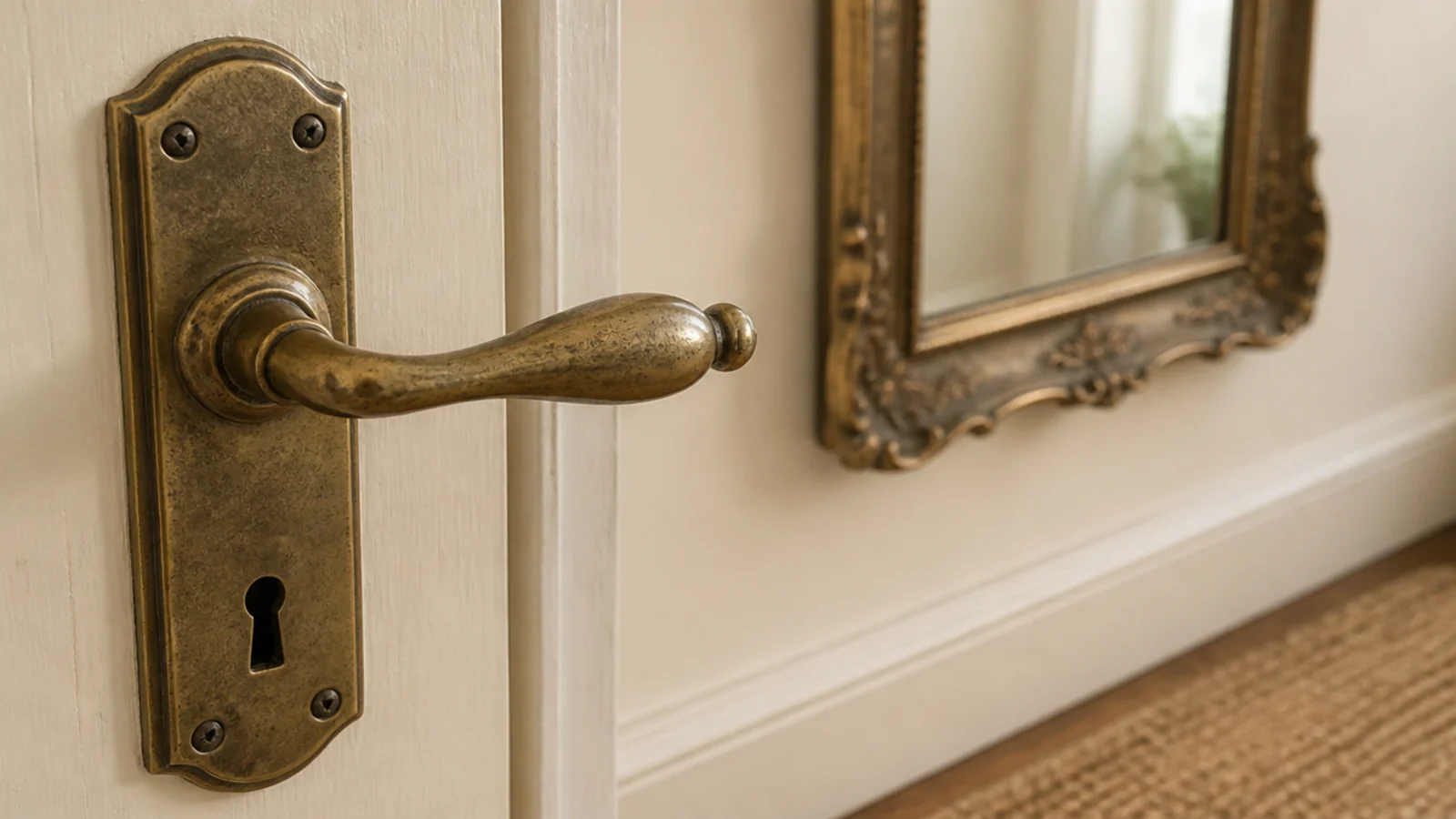
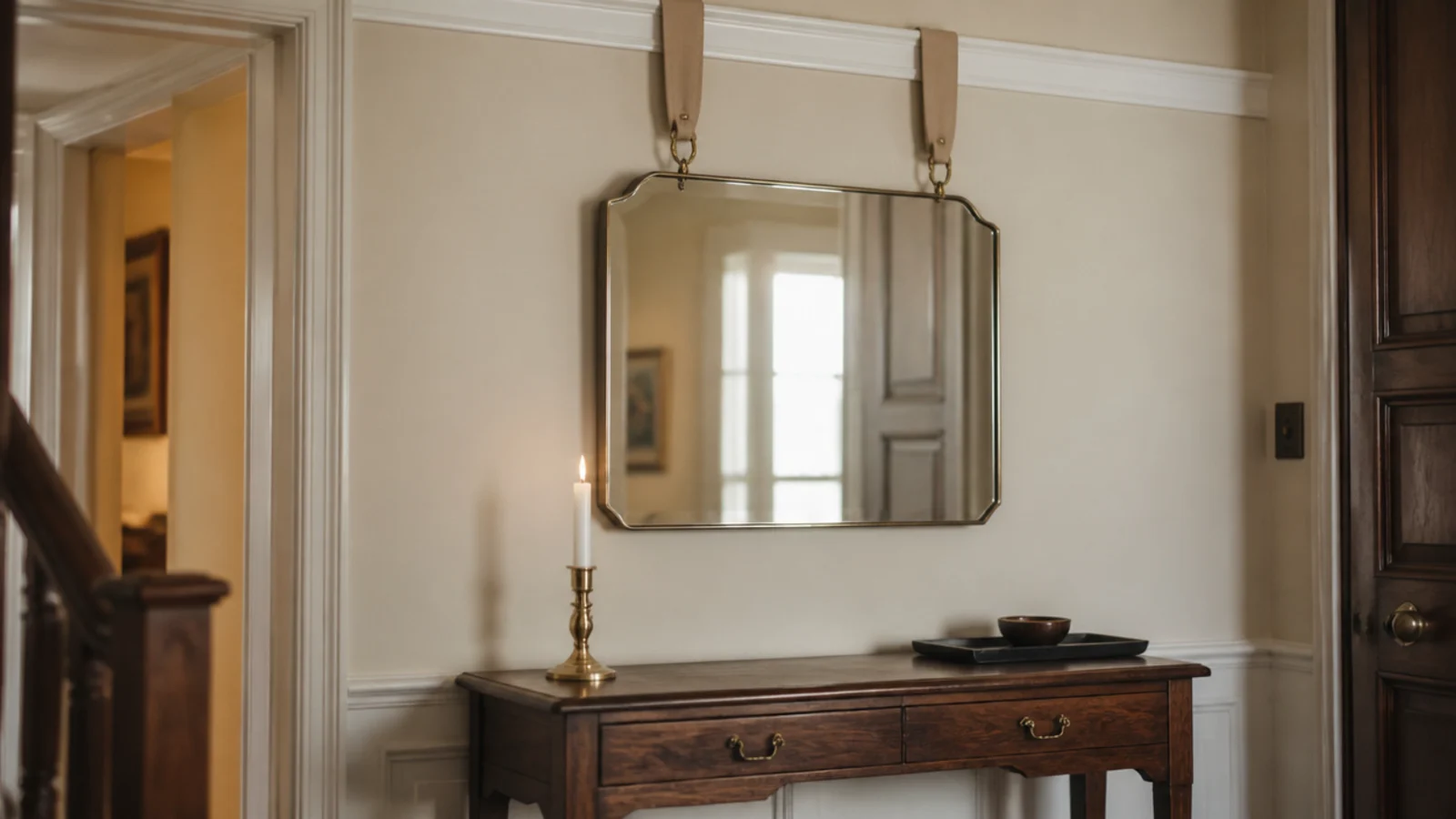
24. Hang from the picture rail in a period hall
Where the plaster is original and you would rather not drill it, two wide linen ribbon drops over brass rail hooks carry a mirror with no holes at all.
Rail hooks take 20 to 30 pounds each, so keep the mirror under 15 pounds and always use two drops. One drop lets the frame rotate and it will, constantly.
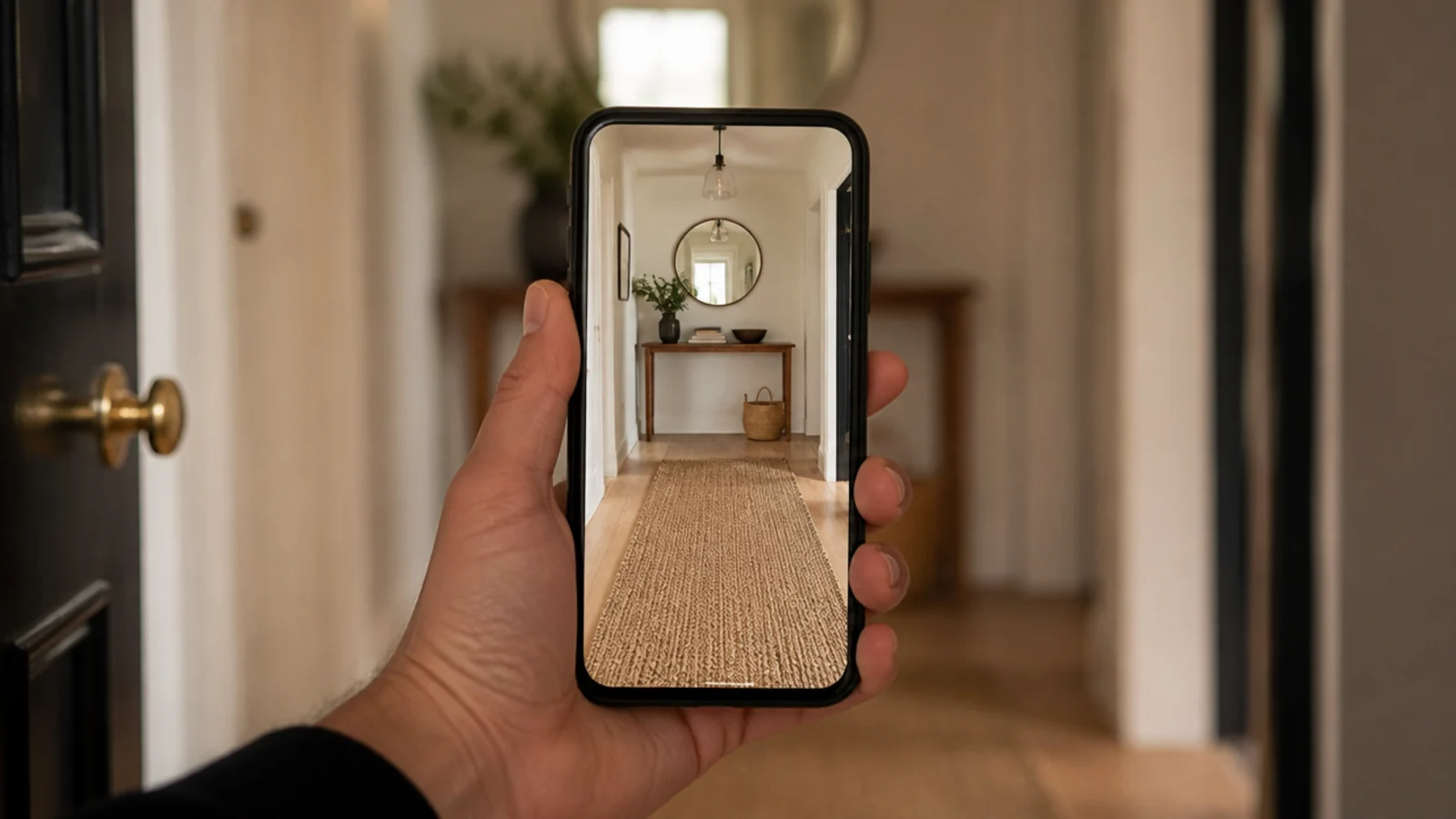
25. Photograph the hall from the doorstep
Stand where a guest stands and take a photo, then look at the photo rather than the hall.
The camera flattens depth and shows you the mirror hung an inch off level, the gap that is not quite consistent, and the console styling that reads as clutter. It reveals in two seconds what standing there takes twenty minutes to notice.
Mistakes to Skip
- Hanging to the door casing instead of to the console. It is why most entry mirrors sit four inches too high, and once you see it you cannot unsee it.
- Choosing a deep ornate frame for a narrow hall. Everyone brushes it, the mirror sits crooked forever, and coat sleeves catch on the moulding.
- Using adhesive strips because the hall is rented. They creep under sustained load, and an entry wall gets shaken by a slamming door every single day.
Frequently asked questions
How high should an entryway mirror hang above a console?
Leave 6 to 8 inches between the console top and the bottom edge of the frame. That gap keeps the two pieces reading as a pair rather than fusing into one lump, and it leaves room for a lamp or a vase underneath. On a standard 30-inch console this usually lands the mirror centre somewhere between 58 and 64 inches.
What size mirror works in a narrow hallway?
Depth matters more than width. Choose a frame under 1.5 inches deep so nothing catches a shoulder or a coat sleeve in a hall under 40 inches wide. A slim vertical mirror around 16 by 48 inches mounted flat on the long wall makes the passage read wider without stealing any of the actual floor space.
Should a mirror face the front door?
Practically speaking, a mirror directly facing the door reflects the door back at you, which is the least interesting view in the house. Put it on a side wall where it catches light from a window, a stairwell or a sidelight instead. You get the brightness without staring at your own coat rack in the glass.
How do I hang a mirror in a rented entryway?
Two small toggle-bolt holes patch with a dab of filler at move-out, which is genuinely the easiest route. If you truly cannot drill, a strapped floor leaner needs one small anchor and a picture rail needs none. Adhesive strips are not a renter workaround for glass; they creep under sustained load and fail without warning.
What goes under an entryway mirror?
A console or a bench, then no more than three objects on it grouped off centre. A lamp or a tall vase, something low like a stacked pair of books or a tray, and something soft like dried stems. Leave a third of the surface genuinely clear so the drop zone still has room for keys and post.
Measure the console width and multiply by two thirds before you shop — that one number picks the mirror for you. For the full hanging method with anchor ratings, diy mirror wall decor covers it step by step, round mirror wall decor handles circles specifically, and the rest of the hall comes together in narrow entryway ideas. Save the pin for the hardware run.
Want more like this? Browse all 15 mirror wall decor guides — they all use the same measurements and budget tiers.
Pin it for later
Save this to your Mirror Wall Decor board
Pin it now so it is waiting for you when the tape measure comes out — and so the next person hunting for this idea can find it too.
Save this pinKeep going
More ideas worth saving while you have the tape measure out.