Mirror Wall Decor · Listicle
20 Genius Mirror Wall Decor Ideas for a Cozy Home

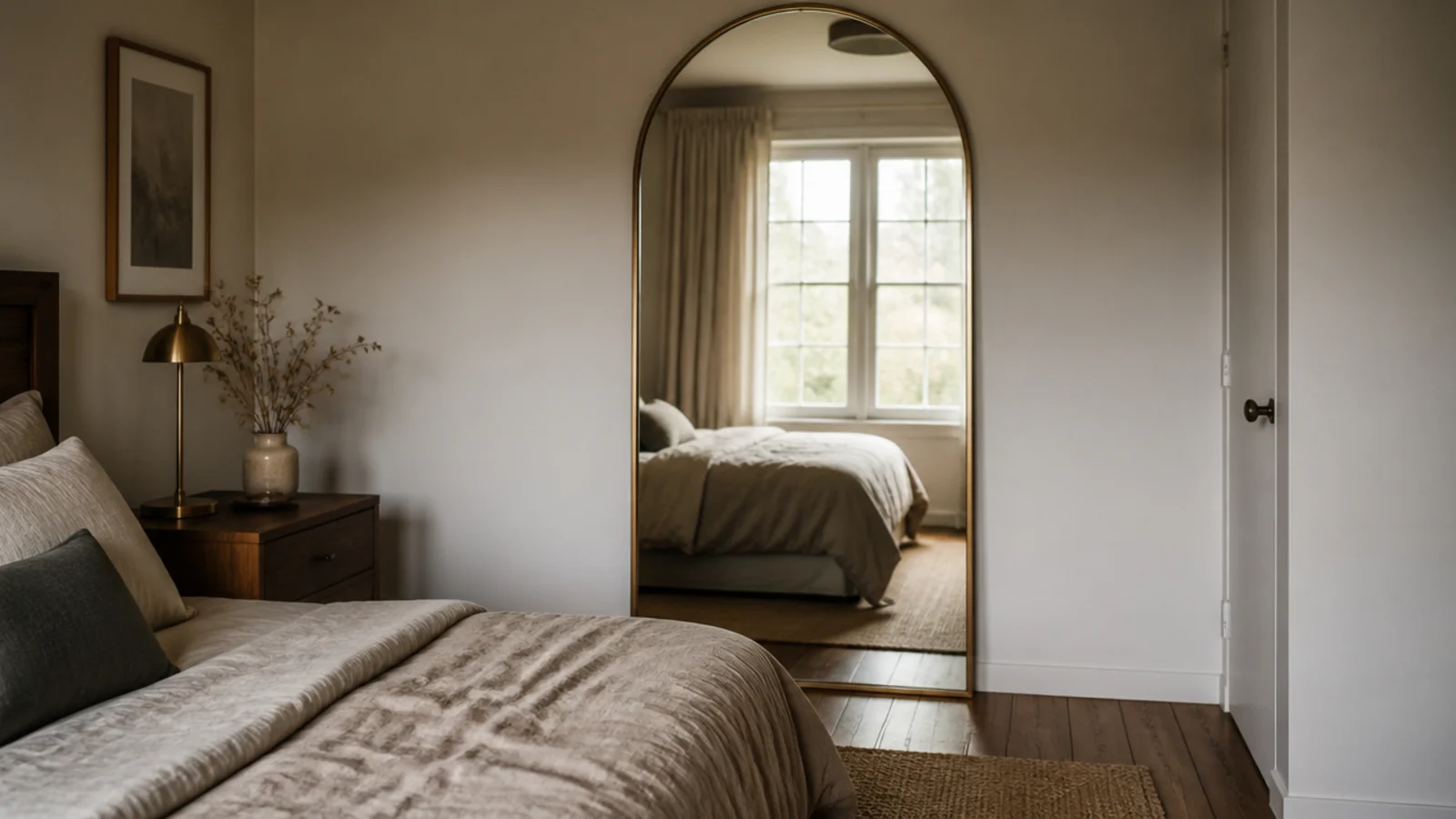
Mirror wall decor in a bedroom has one rule that comes before every styling decision: the glass does not go above the bed. Everything else here is negotiable and that is not. Which is genuinely good news, because the walls that are safe — the one facing the bed, the one beside it, the one you see from the doorway — are also the walls that do the most for light and depth. These twenty placements use them.
In this guide22 sections — tap to openHide
- 1.Where mirror wall decor in a bedroom actually belongs
- 2.Hang it on the wall facing the bed
- 3.Put a small mirror beside the bed instead of art
- 4.Strap a full-length leaner into the corner
- 5.Centre a wide mirror over the dresser
- 6.Flank the bed with two small rounds
- 7.Face the window for morning light
- 8.Mount a mirror on the closet door
- 9.Set a mirror behind the bedside lamp
- 10.Light a vanity mirror from the sides
- 11.Fill the strip between wardrobe and window
- 12.Cluster small mirrors on the doorway wall
- 13.Put a plant in front of the glass
- 14.Close the foot of the bed with an arch
- 15.Hang low above a bed-end bench
- 16.Choose antiqued glass for a softer reflection
- 17.Go dark frame on a moody wall
- 18.Line the back of an alcove or nook
- 19.Use a round with a shelf as a bedside alternative
- 20.Hang from the picture rail with ribbon
- 21.Check what it reflects from lying down
- 22.Mistakes to Skip
Where mirror wall decor in a bedroom actually belongs
Start by ruling walls out. Nothing heavy goes above a headboard, above a crib, or anywhere a sleeping head sits underneath it. A 30-inch round is typically 15 to 25 pounds and a full-length leaner regularly passes 60, and no anchor makes that an appealing thing to sleep beneath.
That leaves three excellent walls. The wall facing the bed is the one you actually look at, for hours, every day. The wall beside the bed takes small mirrors at nightstand height. And the wall you see from the doorway sets the tone for the whole room in the two seconds before you switch a light on.
Budget: $ is $20 to $70 for thrifted frames and plain rounds, $$ is $90 to $250 for good 30-inch rounds, arches and dresser mirrors, and $$$ runs $300 to $800 for oversized arches and hardwood leaners.
Heights are simple. Centre a mirror at 57 to 60 inches on an open wall. Over a dresser, leave 6 to 8 inches between furniture top and frame bottom. Above a nightstand, drop the centre to about 50 inches so it reads correctly sitting up in bed. Hang into studs on two points, or use toggles rated at least double the actual weight — not the plastic plugs in the box, and never adhesive strips. And strap every floor leaner to the wall, without exception, in any home with children.
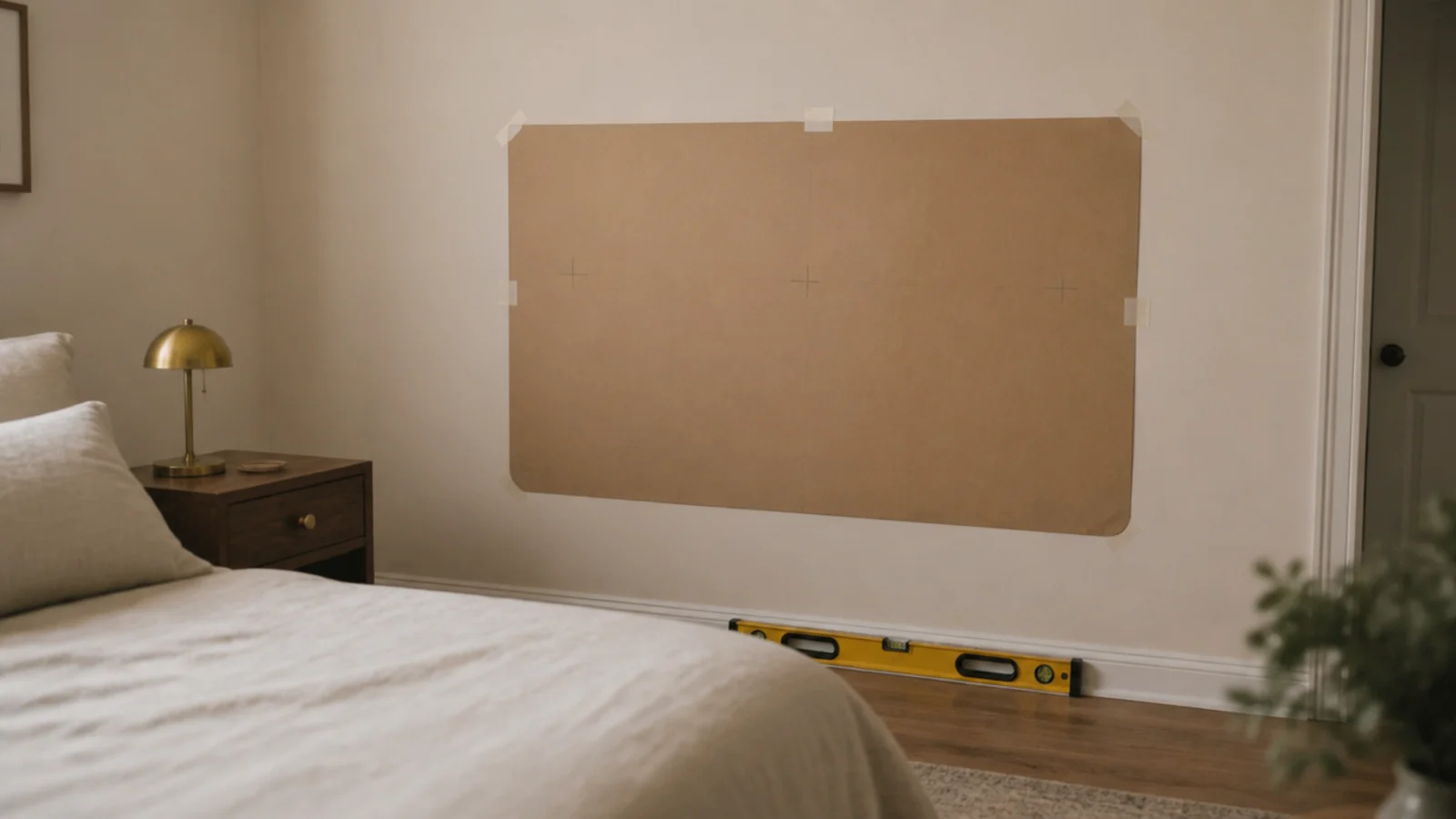
1. Hang it on the wall facing the bed
The best wall in the room and the safest. You look at it every morning and every night, and nothing heavy ends up over anyone.
Go large — 30 to 40 inches — and centre it at 58 inches, or over a dresser if one sits there. This is the one place in a bedroom I would spend the budget, because the payoff is a room that feels twice as open from the pillow.
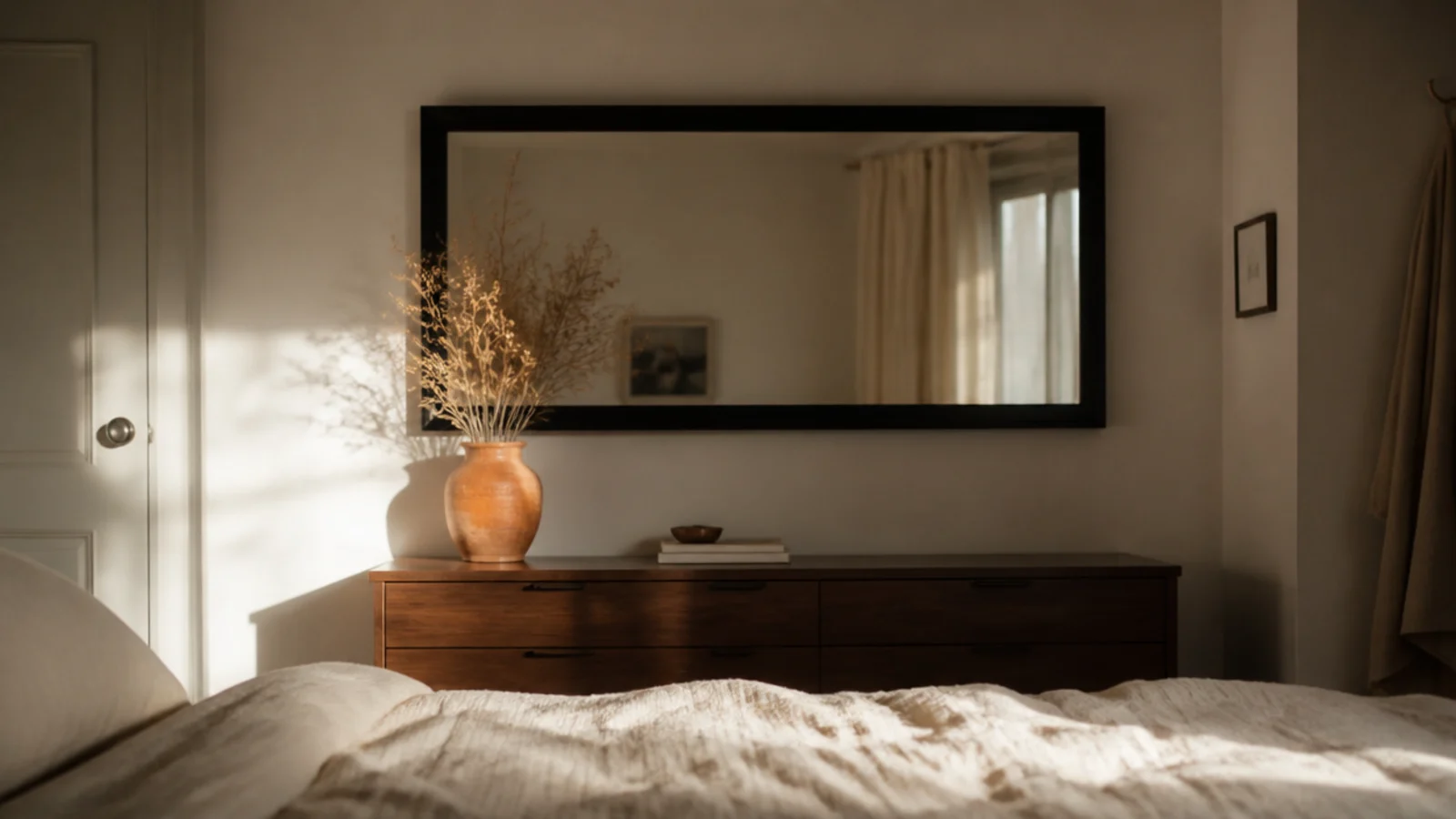
2. Put a small mirror beside the bed instead of art
Above a nightstand rather than above the pillows. It is a small shift and it takes the mirror out of the risk zone entirely.
Keep it modest, 14 to 20 inches, and centre it at about 50 inches so it reads properly to someone sitting up reading. At 5 to 8 pounds, a single well-set anchor per hanging point handles it, and you still want two points so it stays square.
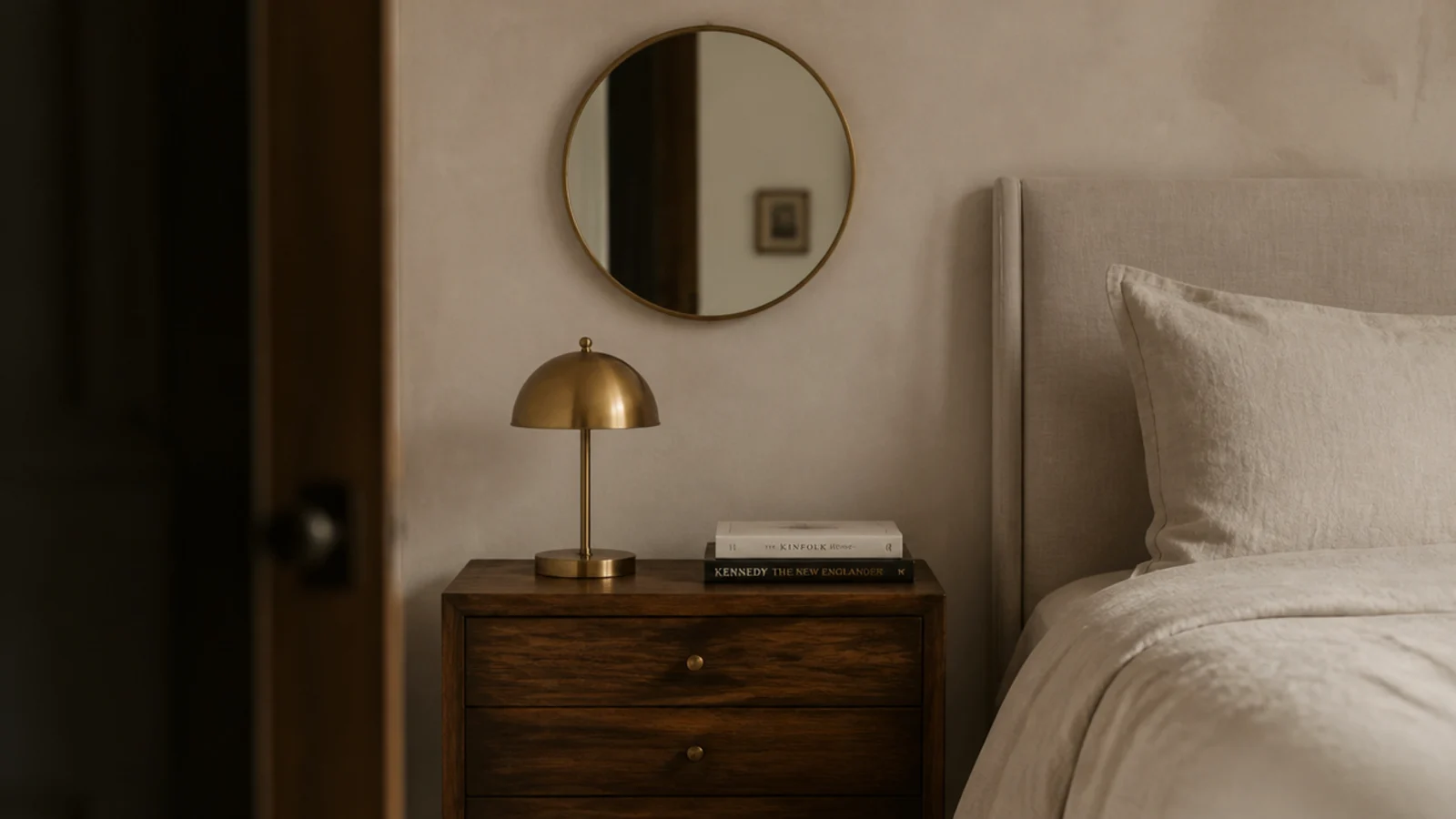
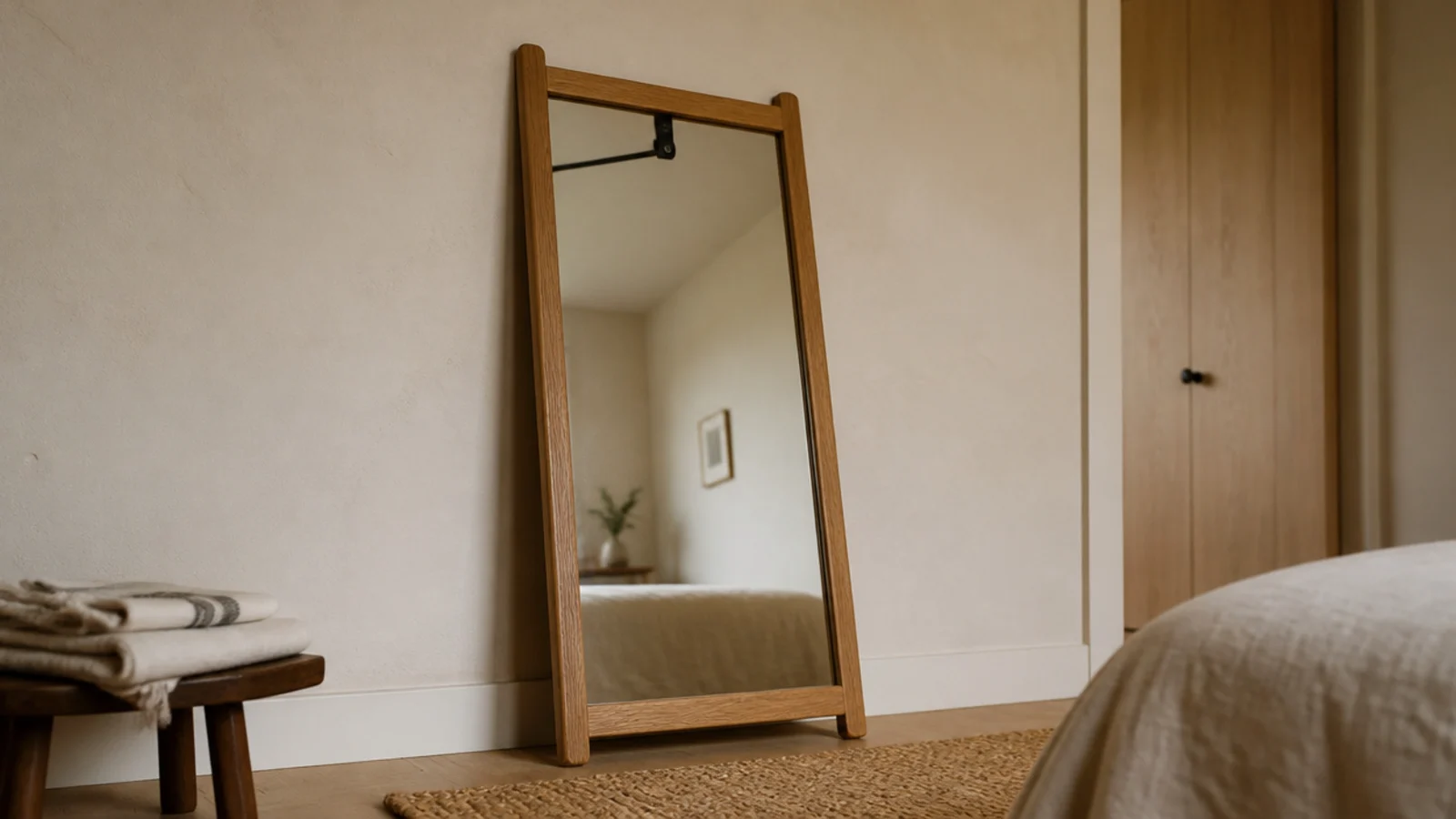
3. Strap a full-length leaner into the corner
A leaner in the corner gives you a dressing mirror with no holes in a rental wall, which makes it the most useful renter move in the room.
It is also 45 to 70 pounds of glass resting on a rug. A $10 anti-tip strap into one stud takes five minutes and disappears behind the frame. In a home with children this is not a preference and there is no version of the argument where it is.
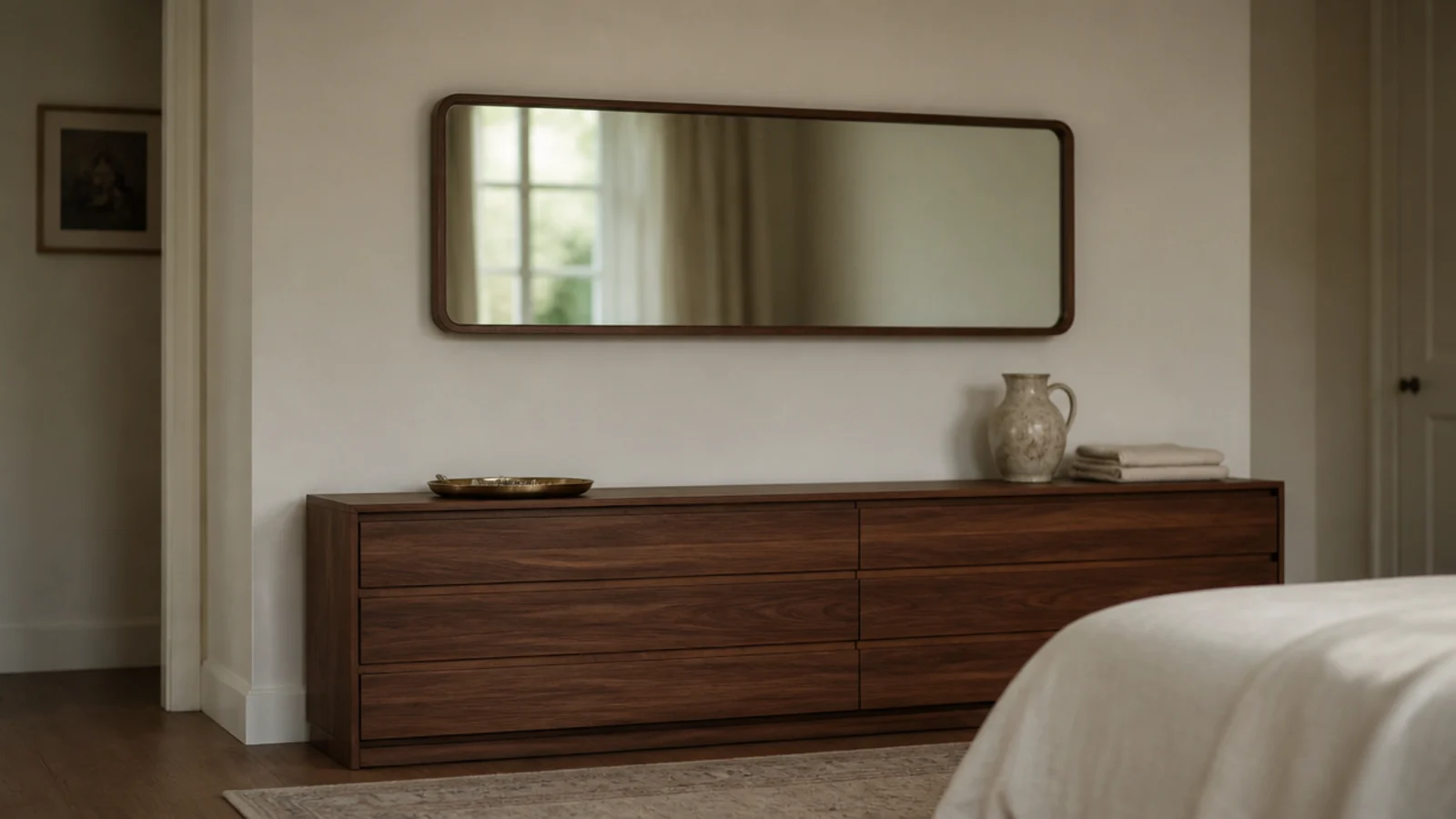
4. Centre a wide mirror over the dresser
The dresser is the natural home for a bedroom mirror and the proportions are easy to get right.
Aim for about two thirds the dresser width — a 36 to 40 inch mirror over a 60-inch dresser — and leave 6 to 8 inches between the dresser top and the frame bottom. Less and the two merge into a block; more and the mirror drifts off on its own.
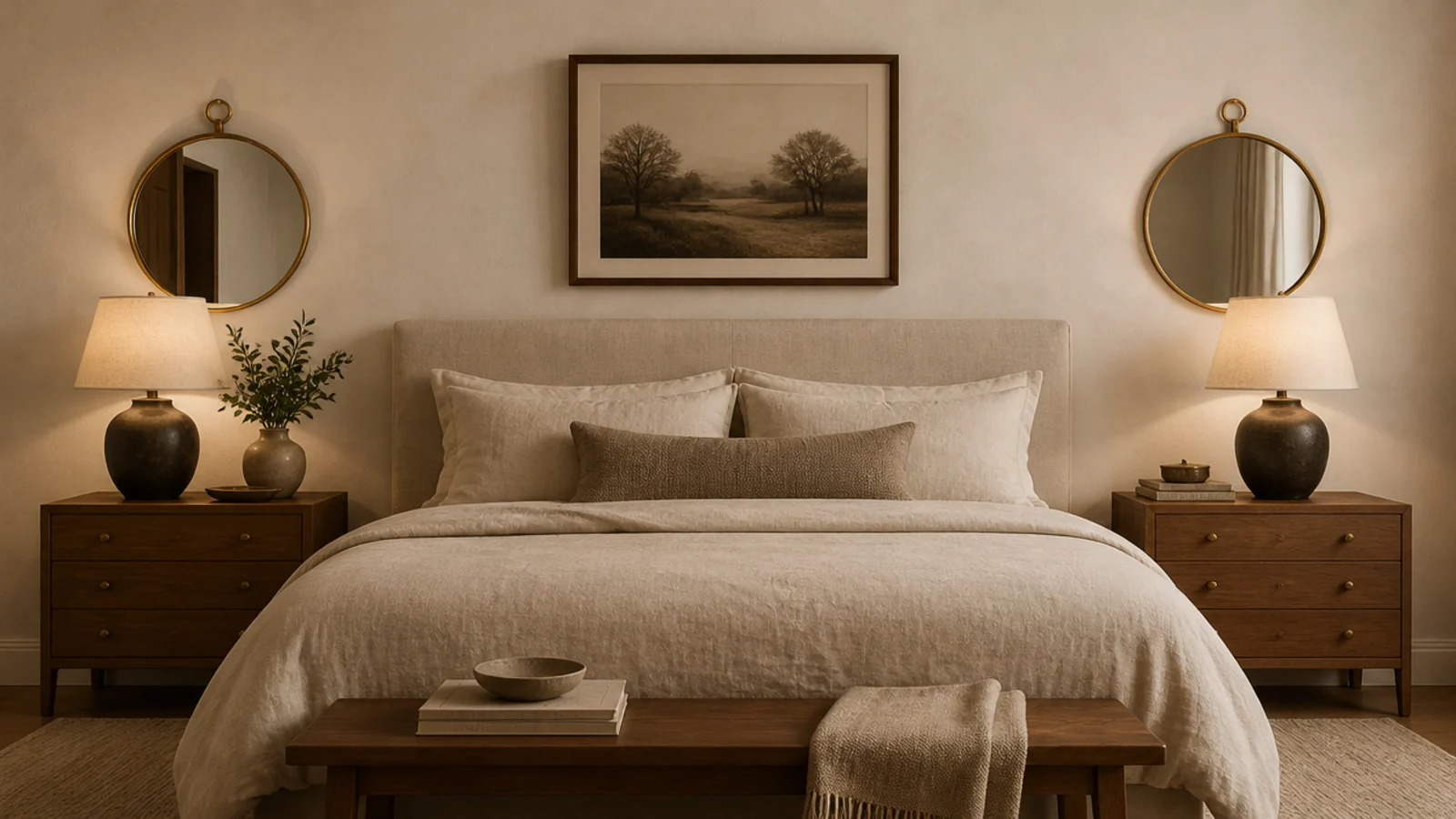
5. Flank the bed with two small rounds
Two identical small rounds above the nightstands frame the bed without putting anything over it. It reads as symmetry, which is exactly what a bedroom wants.
Match the heights precisely — measure both from the floor, not from the nightstand tops, since furniture is rarely identical. Sixteen to 18 inch rounds at 6 to 9 pounds each keep the hardware simple.
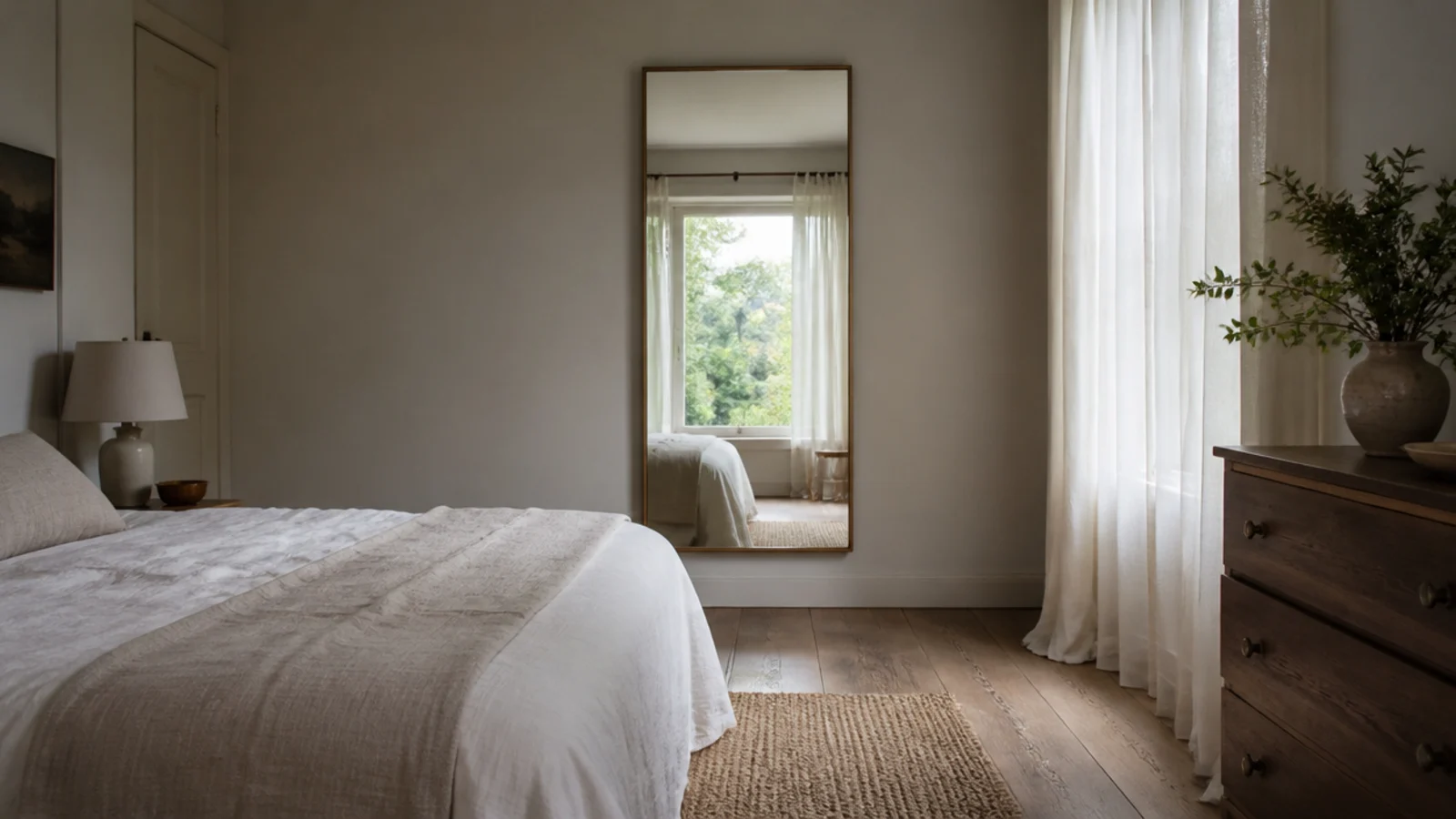
6. Face the window for morning light
If the safe wall happens to face the window, take it. A mirror opposite glass throws real daylight back across the bed and doubles the view.
The same mirror perpendicular to that window mostly reflects the wall opposite and does very little. Hold a hand mirror at each candidate spot and look at what the glass actually catches before committing to any holes.
7. Mount a mirror on the closet door
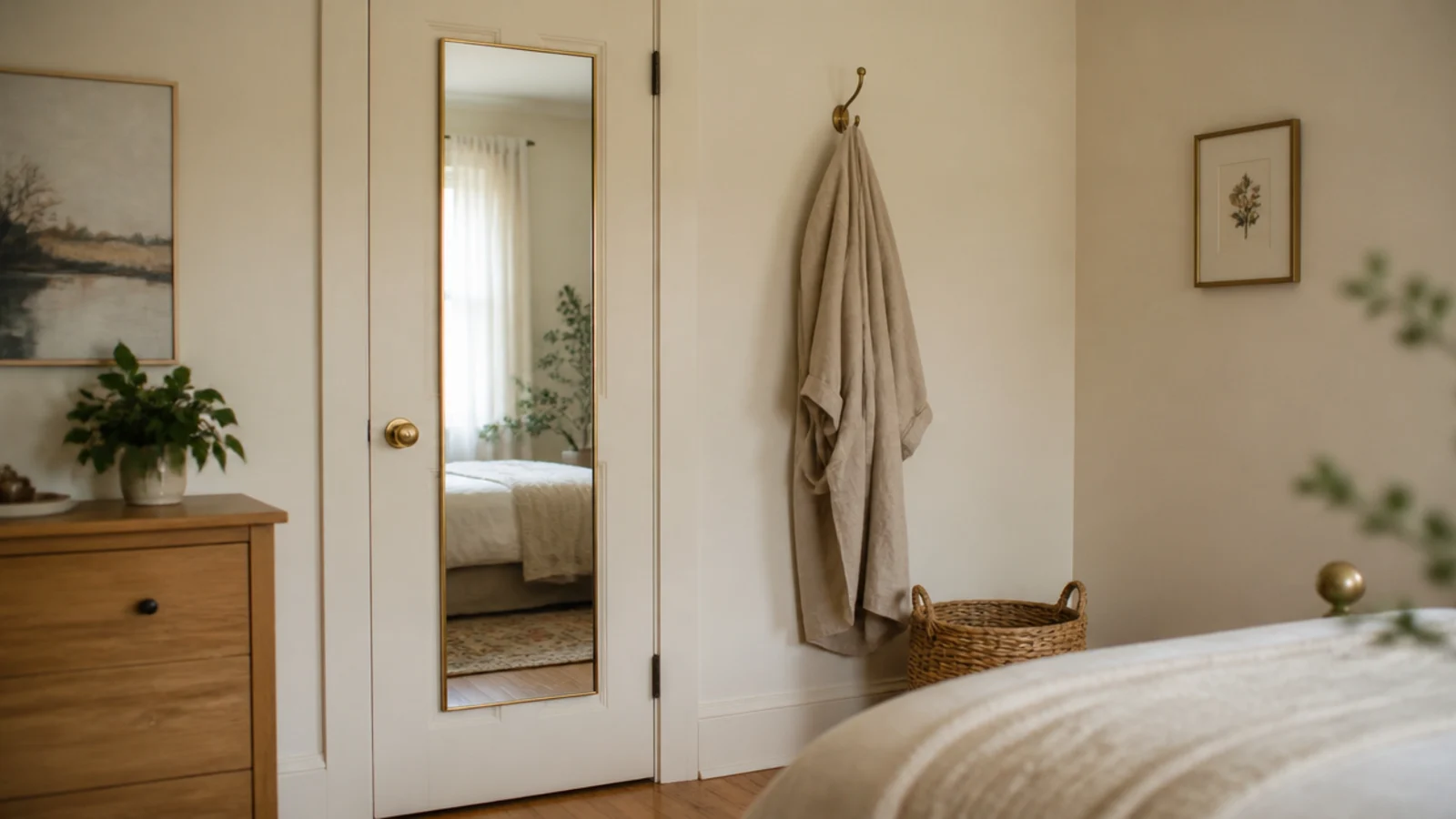
A slim full-length mirror on a closet door gives you a dressing mirror without using any wall at all, which matters in a small bedroom.
Screw into the solid stile at the edge of the door, never the thin centre panel, and use four fixings rather than two because the door slams. Keep the mirror under 20 pounds so the hinges cope. Around $40 to $90 ($).
8. Set a mirror behind the bedside lamp
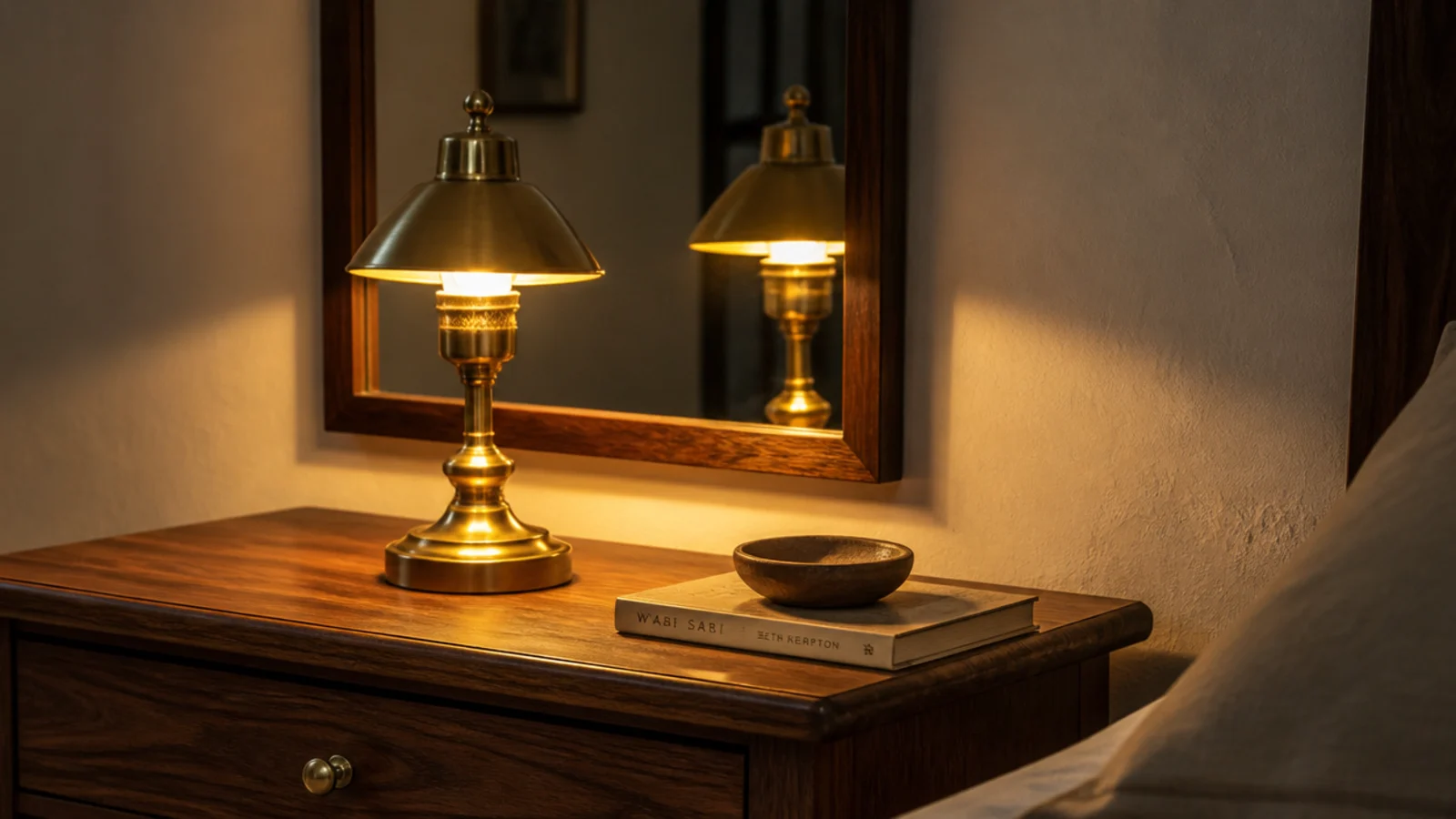
A modest mirror behind a lamp doubles the visible light, which turns a dim corner into a warm one for the price of a thrifted frame.
An 18 by 24 inch piece at 8 to 10 pounds is plenty. Because the light source sits in front of the glass, the frame barely matters — a $15 secondhand find does exactly the same job as a new one.
9. Light a vanity mirror from the sides
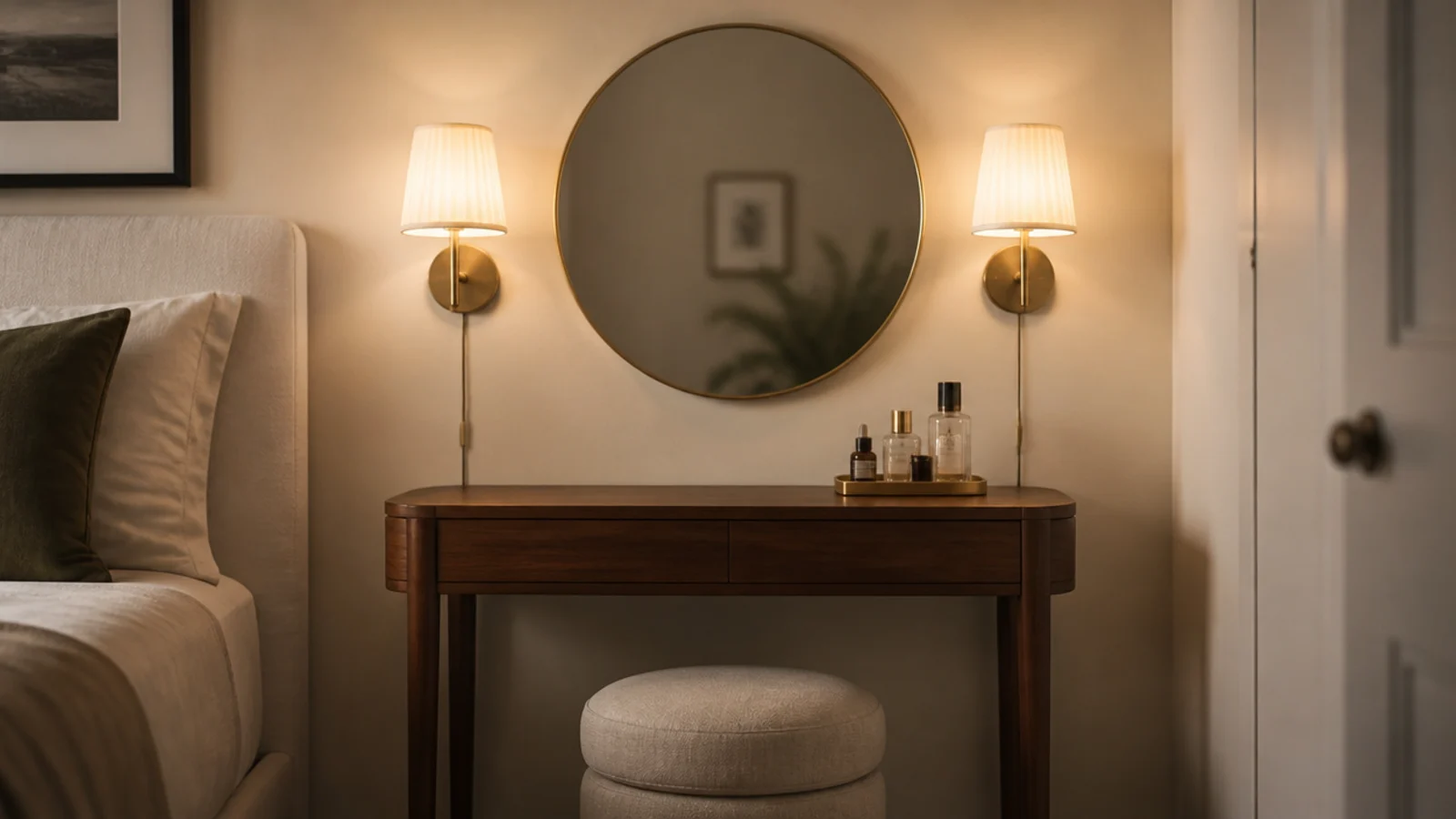
Sconces either side of a vanity mirror at roughly eye height, 62 to 66 inches, light a face evenly. Overhead light does the opposite, casting every shadow downward.
Plug-in sconces avoid any wiring and run $30 to $70 a pair, which keeps this renter-friendly. Choose warm bulbs around 2700K, and set them 30 to 36 inches apart across the mirror.
10. Fill the strip between wardrobe and window
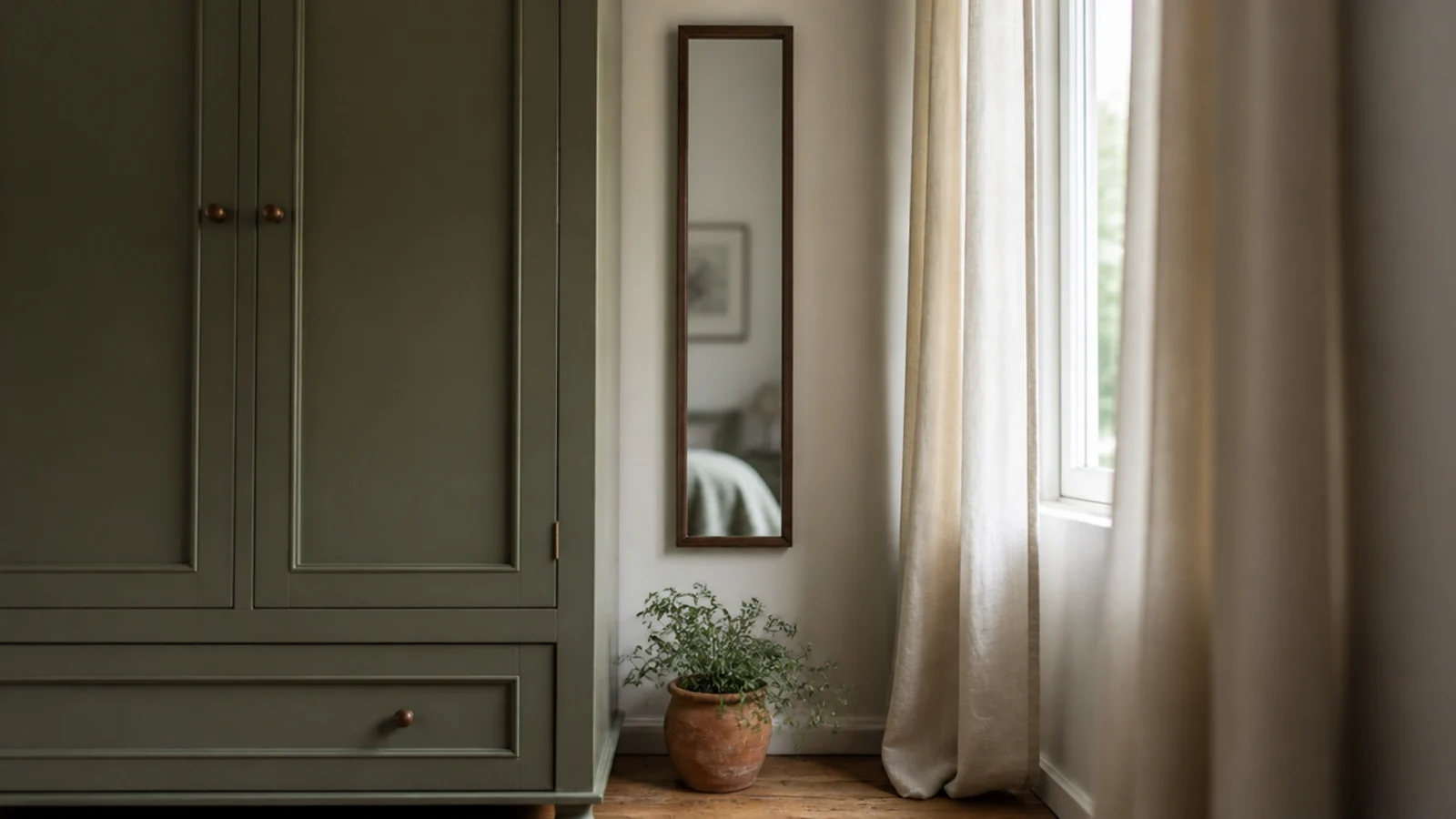
Bedrooms almost always have one awkward strip of wall, usually 12 to 20 inches wide, that suits nothing.
A slim vertical mirror in a shallow frame fits it exactly and picks up light from the window beside it. Keep the frame under 1.5 inches deep so it does not catch a sleeve, and hang the centre at 60 inches.
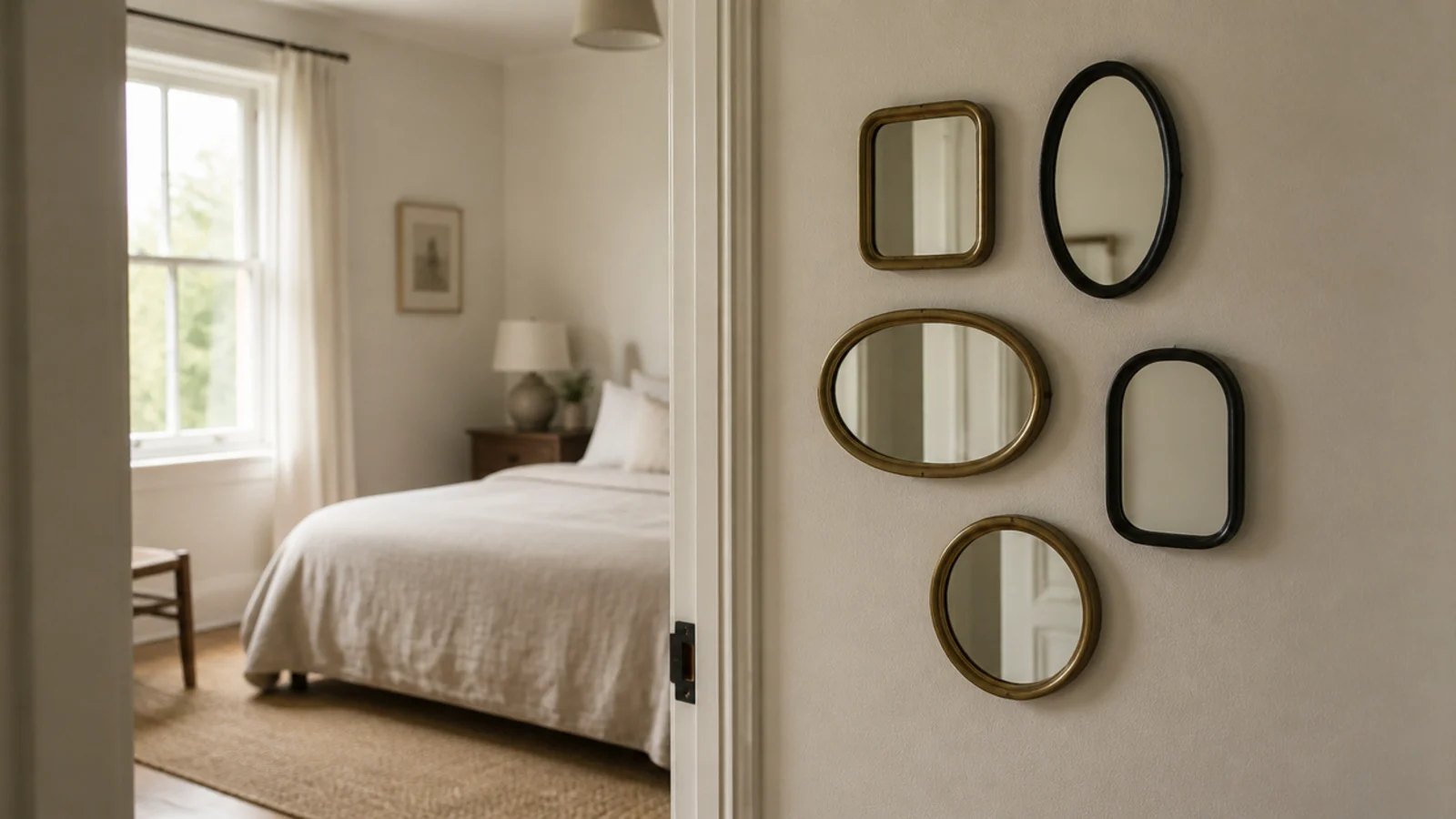
11. Cluster small mirrors on the doorway wall
The wall you see stepping into the room does more for how the bedroom feels than any other, and it is almost always underused.
Five small mirrors with 2 to 3 inch gaps, odd numbers, two finishes maximum. Lay the arrangement on the floor first and cut paper templates before drilling — the full method is in mirror gallery wall.
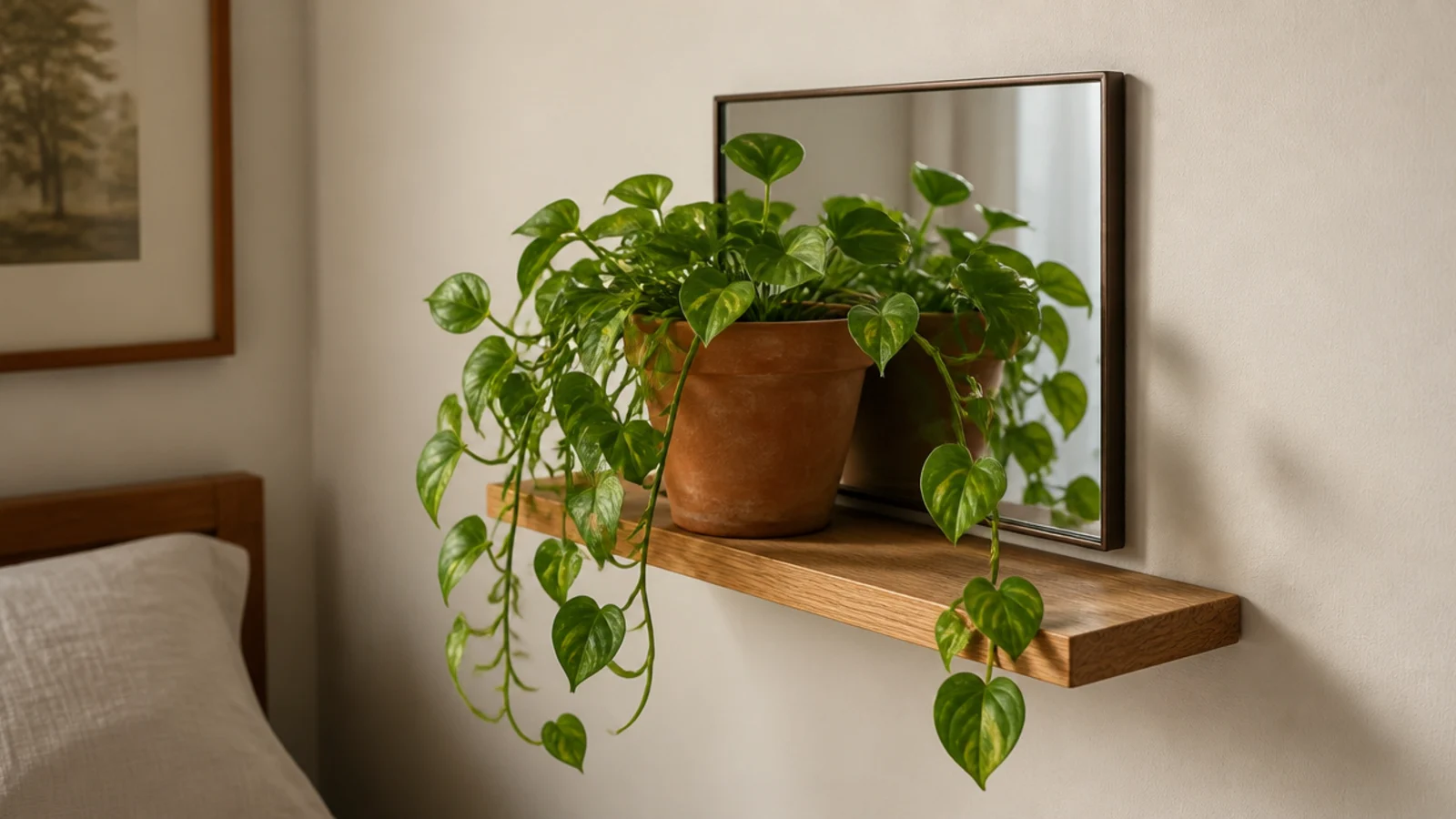
12. Put a plant in front of the glass
A trailing plant on a narrow shelf in front of a small mirror reflects into something twice as full, which is the cheapest greenery upgrade there is.
Set the pot at least 4 inches off the glass so leaves are not permanently pressed against it, and choose something that tolerates the lower light a bedroom usually has — pothos and heartleaf philodendron both do.
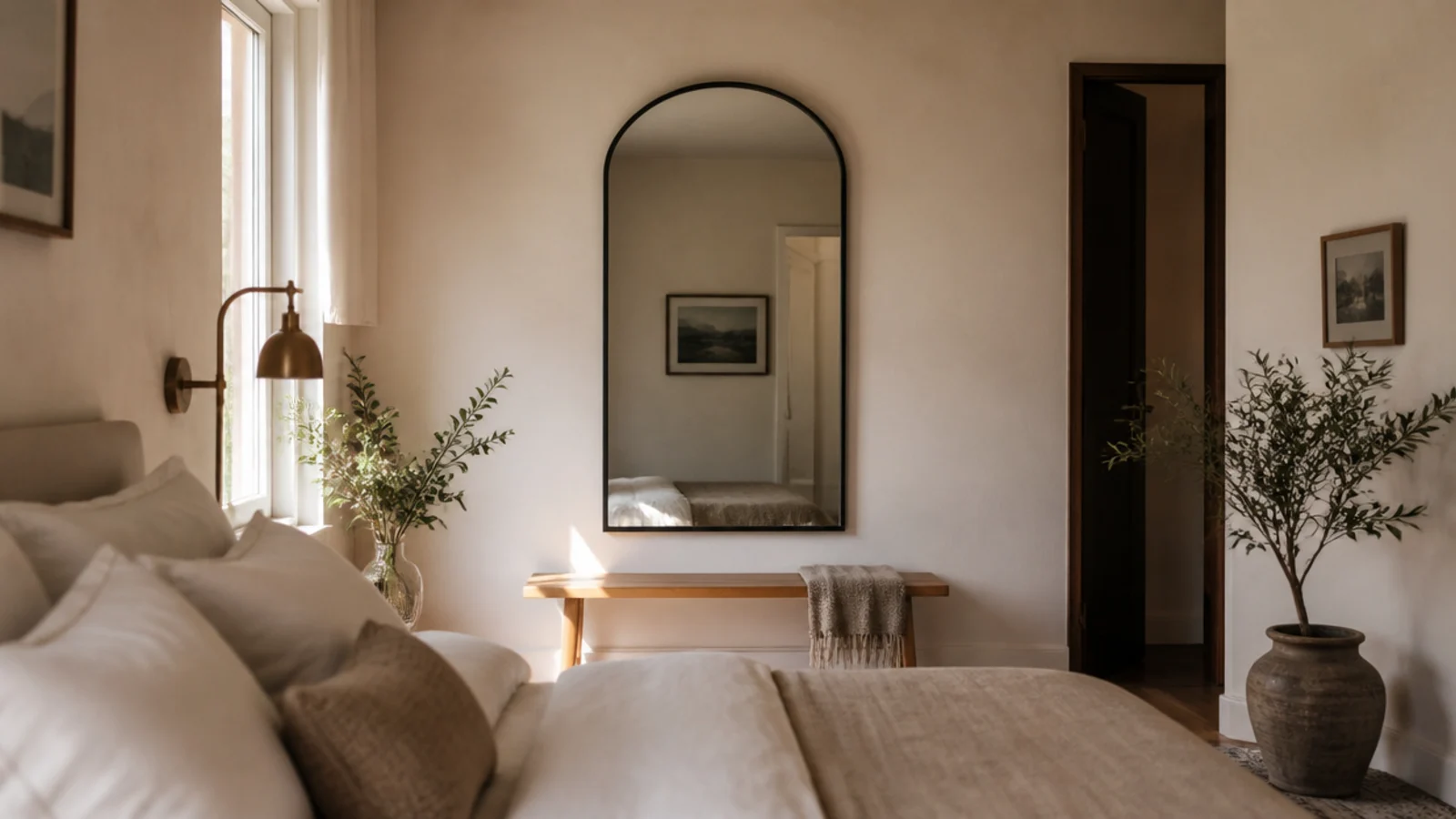
13. Close the foot of the bed with an arch
The wall at the foot end is the one you face lying down, and an arched mirror gives it a proper destination.
Choose at least 24 inches wide so it holds the wall, and remember arches carry more glass than they look: a 24 by 60 inch arch is often 35 to 45 pounds. Two stud fixings, or a French cleat if the studs land badly.
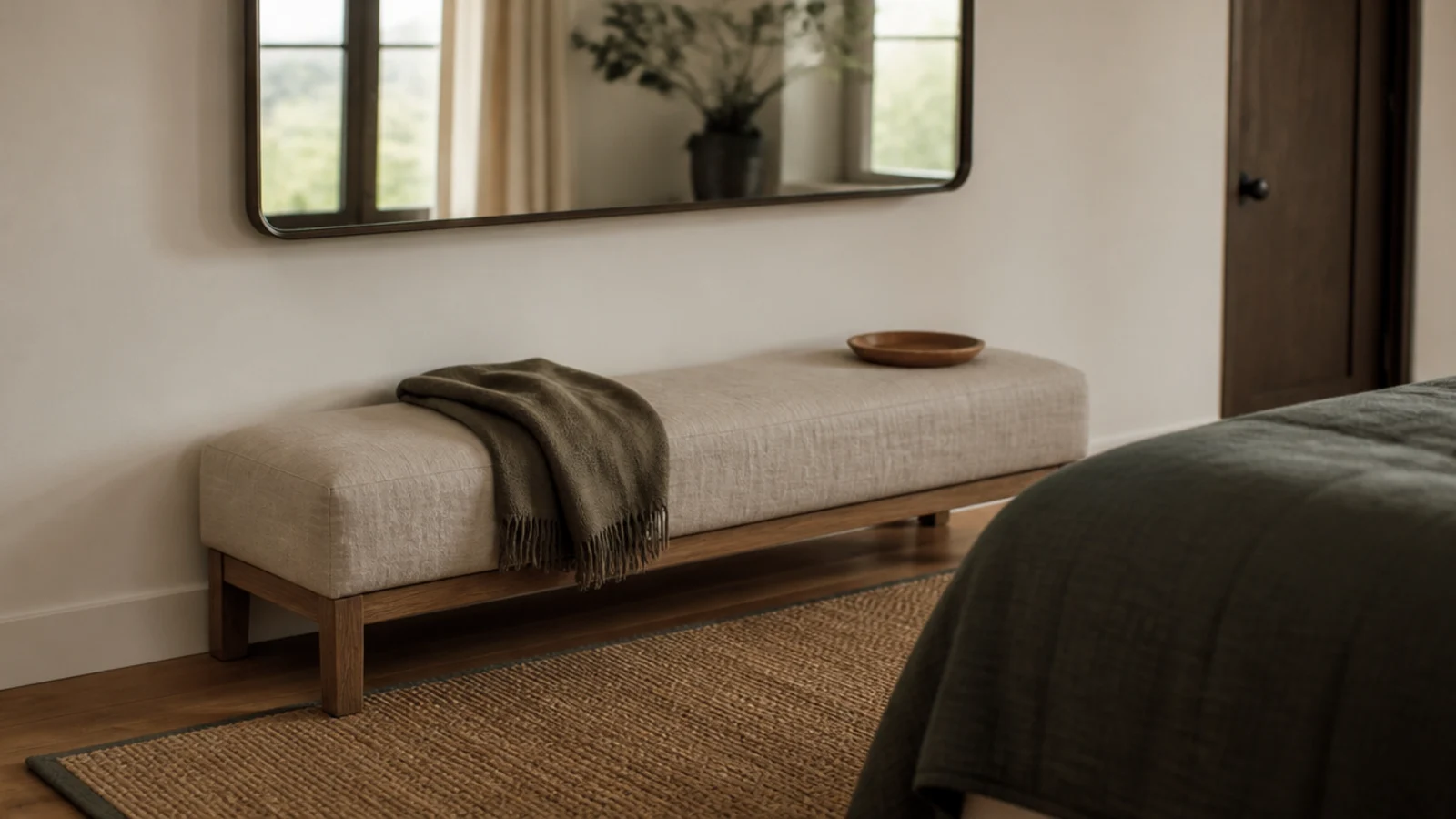
14. Hang low above a bed-end bench
Above a bench at the foot of the bed, drop the mirror centre to about 52 inches rather than 58.
Most bedroom mirrors are hung too high because people align them to door casings instead of to people. Lower reads correctly whether you are sitting on the bench or lying in bed, and it visually connects the mirror to the furniture underneath.
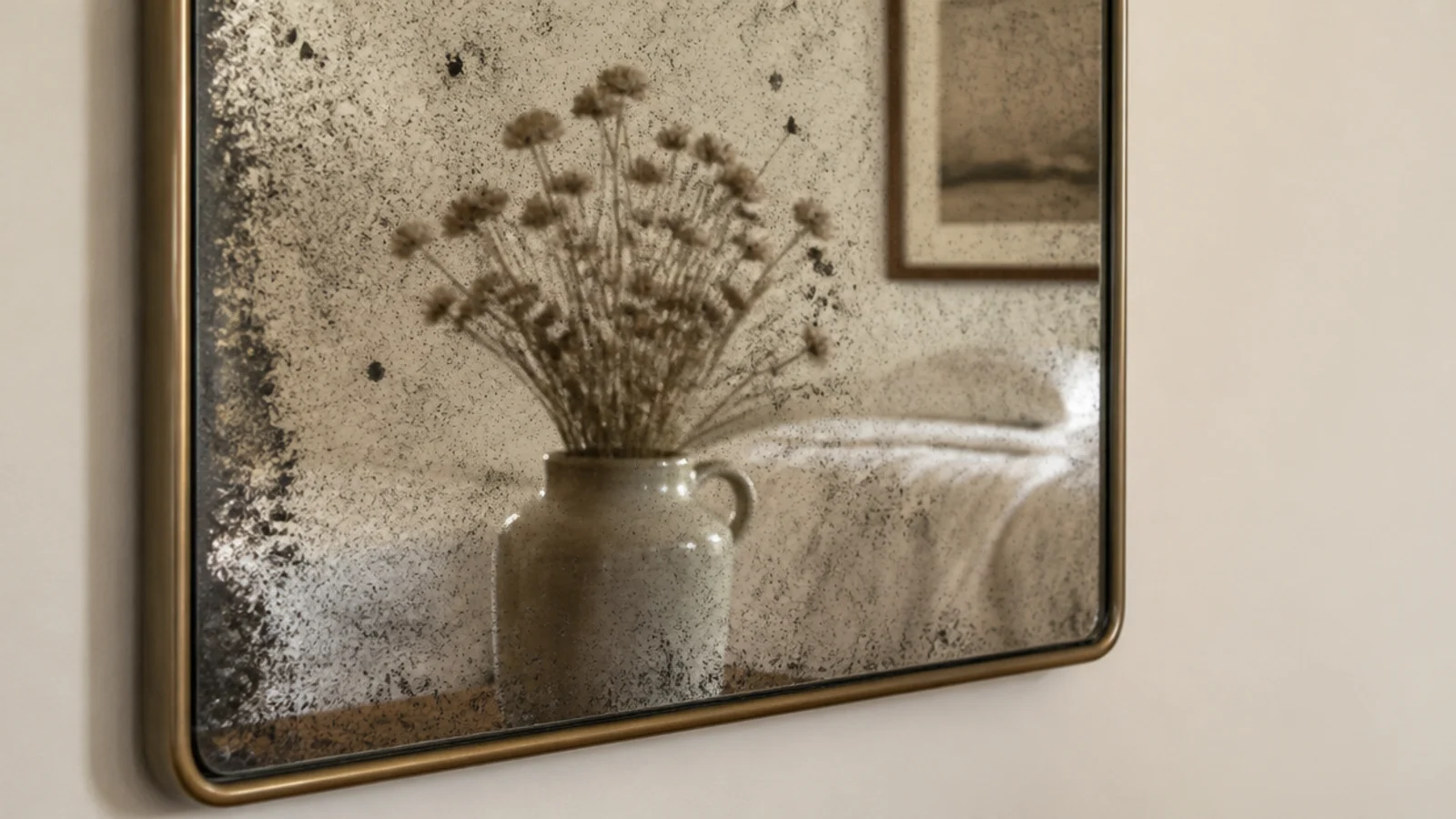
15. Choose antiqued glass for a softer reflection
Foxed or antiqued mirror glass has soft grey mottling that gives back a gentle impression rather than a sharp image, which suits a room you are in at 6am.
It also hides a cluttered dresser far more kindly than clear glass. Vintage panels run $80 to $250 ($$), and modern antiqued reproductions start meaningfully lower.
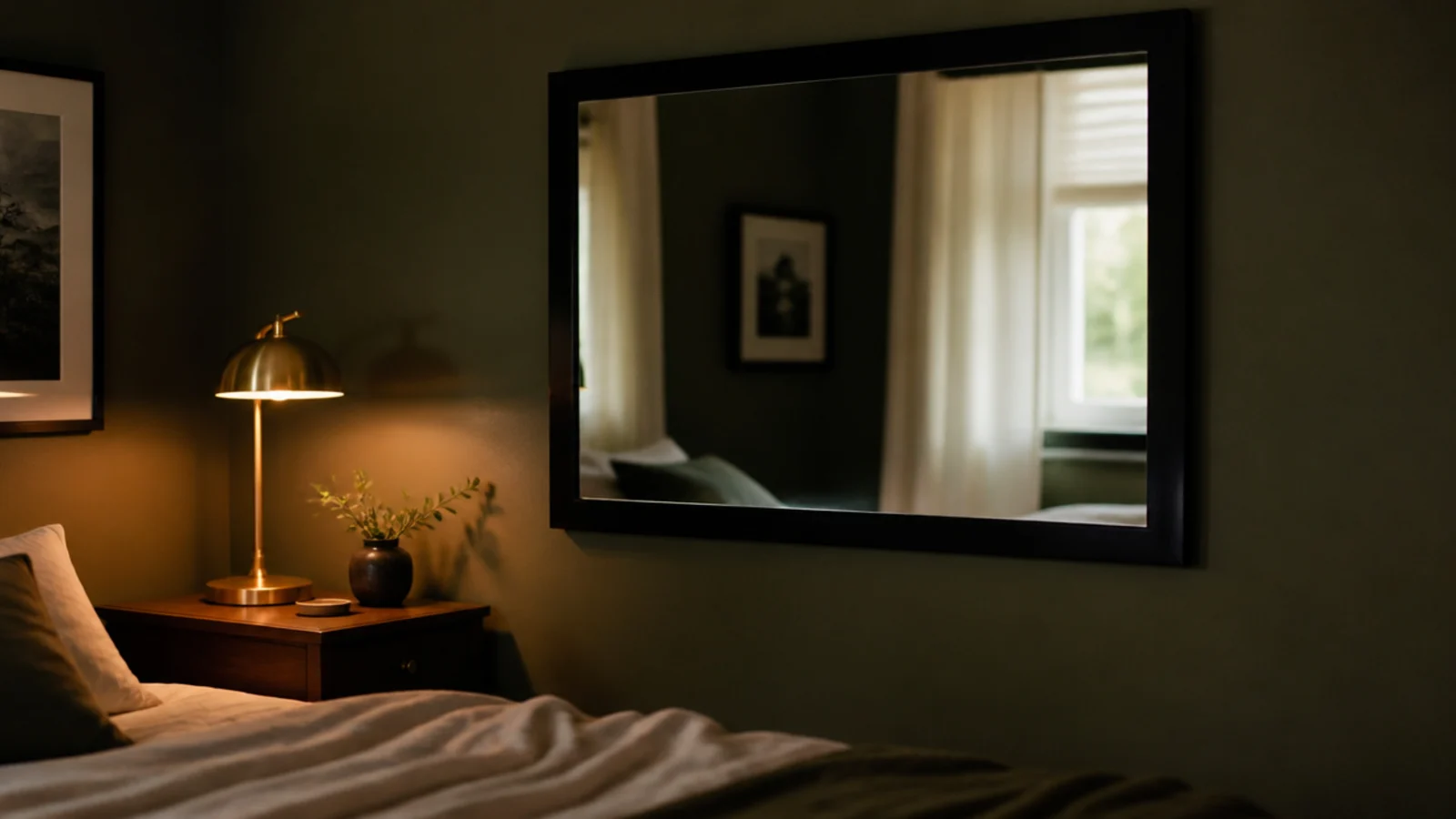
16. Go dark frame on a moody wall
On deep olive, ink blue or clay brown paint, a black frame disappears and the glass becomes the only bright plane in a dark bedroom.
Keep the mirror at least 30 inches so it reads from the doorway, and put a warm lamp near it rather than opposite it. A quart of paint is about $25 and changes the mirror more than a new frame would.
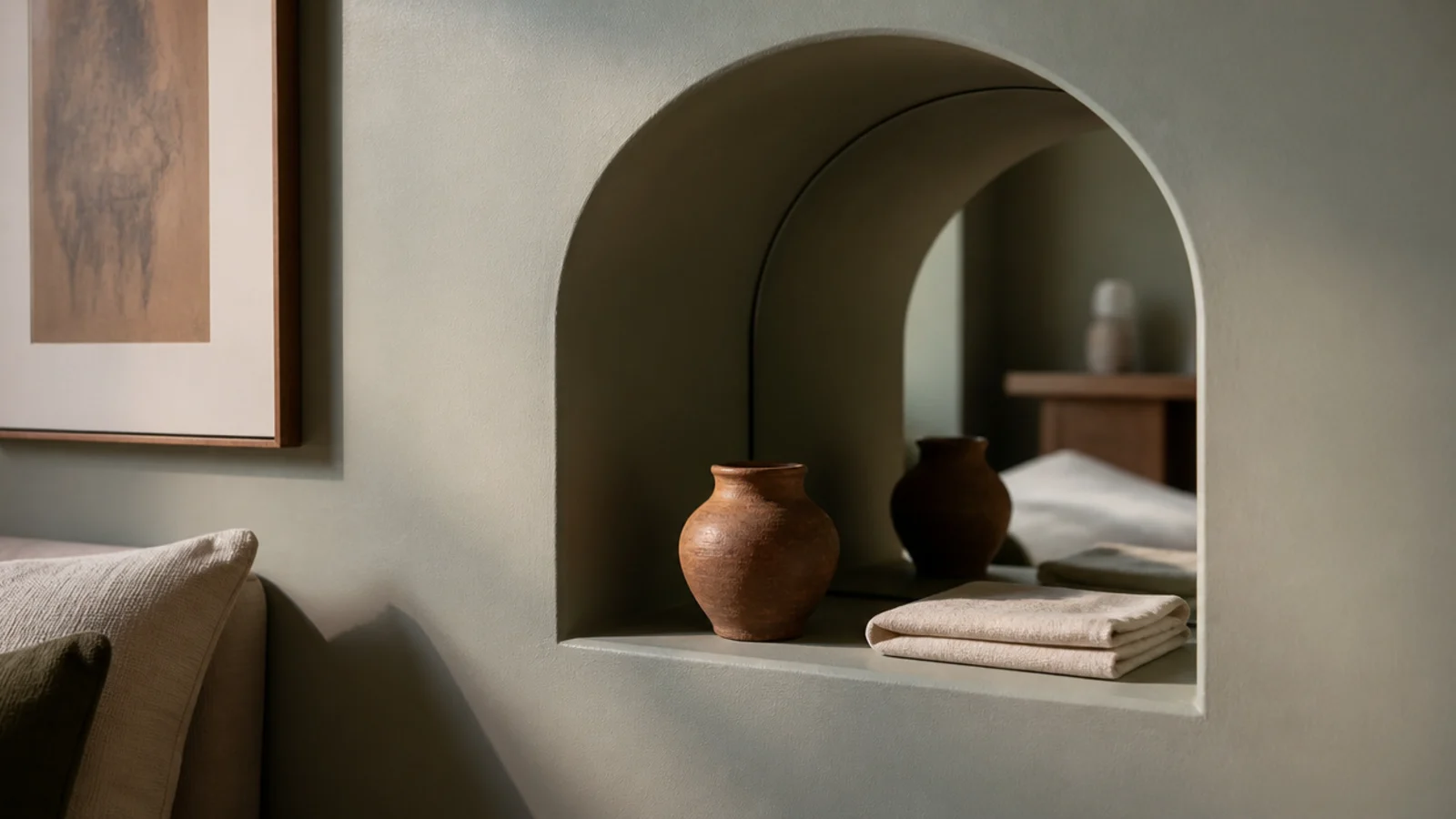
17. Line the back of an alcove or nook
A shallow alcove with a mirror panel fitted at the back reads twice as deep as it is, and the shelf in front gains a lit backdrop.
Adhesive-backed mirror tiles are genuinely fine here because they carry no hanging load — the panel sits flat on a vertical surface with nothing suspended. The same layering logic runs through built-in shelf styling.
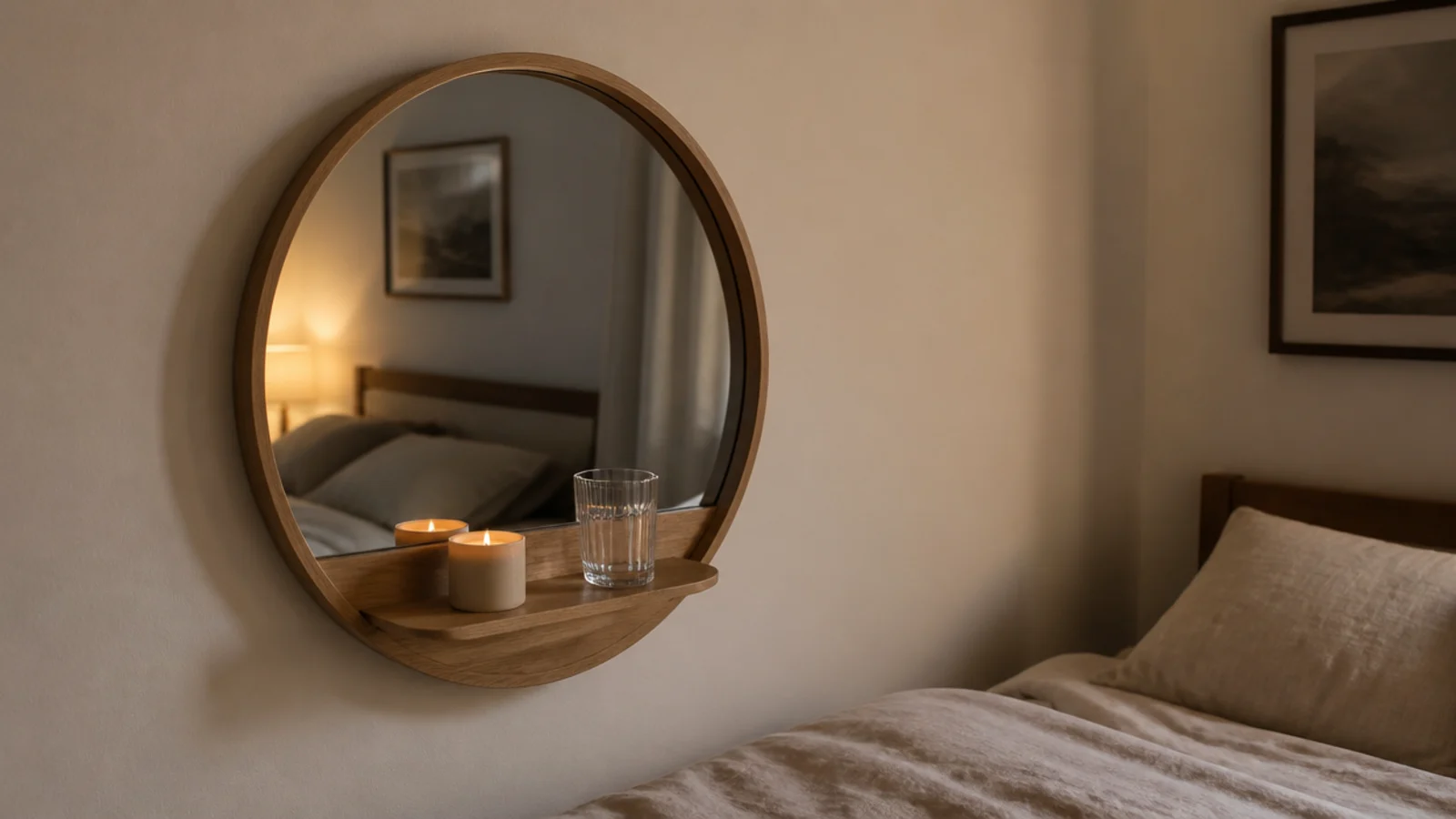
18. Use a round with a shelf as a bedside alternative
In a bedroom too narrow for a nightstand, a round mirror with a 3-inch ledge built into the lower frame holds a candle, a glass of water and a book.
Hang the ledge at about 30 inches — standard nightstand height — rather than at eye level, and check the shelf is part of the frame structure rather than glued on afterwards.
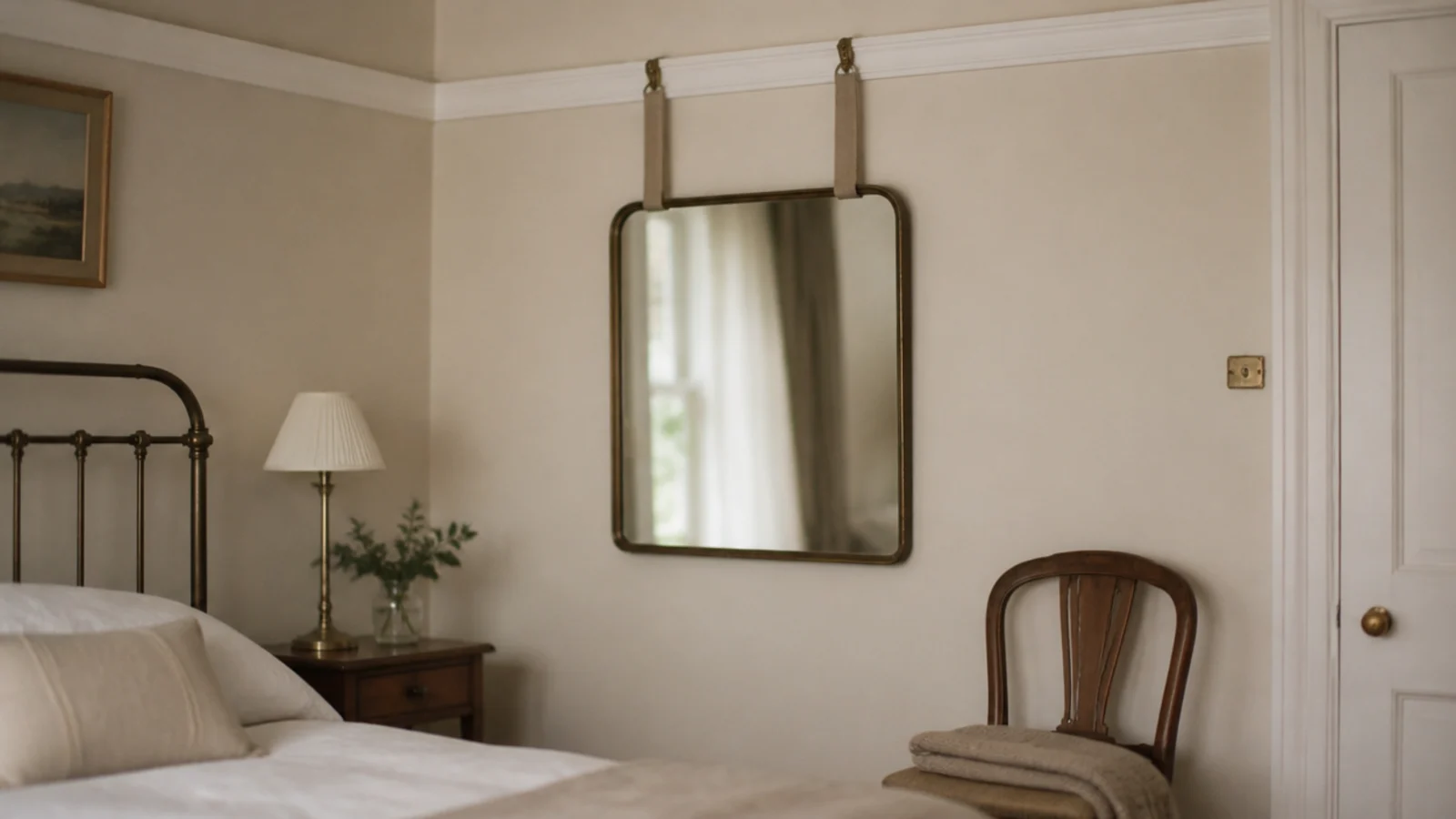
19. Hang from the picture rail with ribbon
In a period bedroom with a picture rail, a mirror on two wide linen ribbon drops needs no holes at all.
Rail hooks carry 20 to 30 pounds each, so keep the mirror under 15 pounds and always use two hooks and two drops. One ribbon on one hook lets the frame rotate, and a mirror hanging slightly crooked is impossible to unsee once you have noticed it.
20. Check what it reflects from lying down
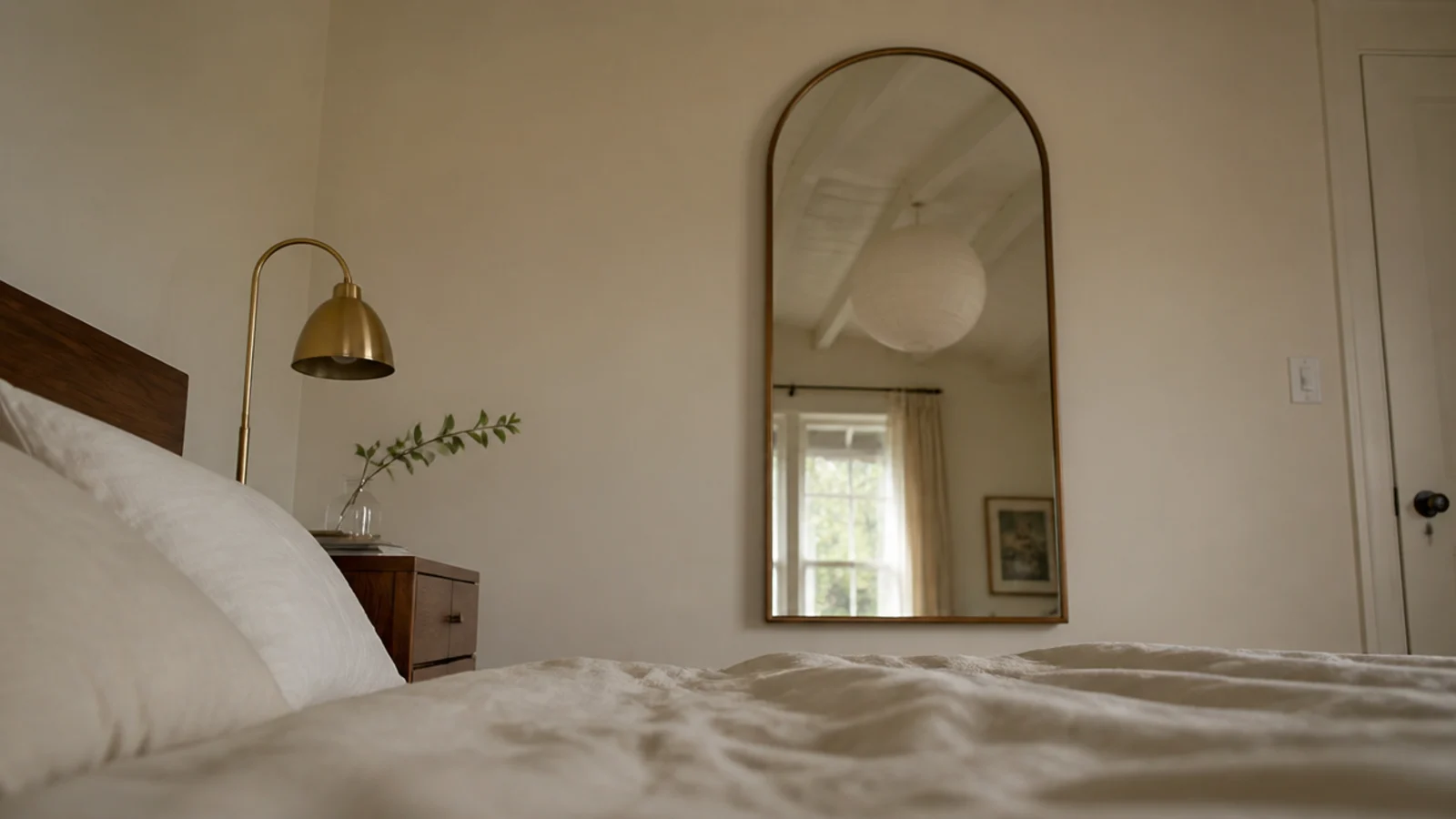
Before you drill, lie on the bed and look at where the mirror will go. That angle is the one you live with, and it is nothing like the standing view you planned from.
Plenty of people dislike catching movement in glass as they fall asleep. If that is you, angle the mirror toward the window instead of the pillows, or move it to the doorway wall.
Mistakes to Skip
- Hanging a mirror above the headboard or over a crib. There is no anchor that makes heavy glass over a sleeping head a good idea, and the facing wall gives you the same result.
- Leaving a floor leaner unstrapped. It weighs more than a toddler, it tips forward easily, and a $10 strap into one stud removes the problem completely.
- Using adhesive strips on bedroom mirrors. They creep slowly under sustained load and fail without warning, usually in the middle of the night.
Frequently asked questions
Is it safe to hang a mirror above a bed?
I do not do it, and I would not advise it. Heavy glass suspended above where someone sleeps is a risk no styling payoff justifies, and it is worse above a crib or a toddler bed. Put the mirror on the wall opposite the bed or beside it instead, where you get the same light and depth with none of the exposure.
Where should a mirror go in a bedroom?
On the wall you see from the doorway, on the wall facing the window, or beside the bed at nightstand height. All three give you light and depth without putting glass over a sleeping head. Avoid pointing a large mirror straight at the pillows if you dislike catching movement in it as you fall asleep.
How do I secure a leaning bedroom mirror?
A furniture anti-tip strap kit, about $10, screwed into one stud behind the frame. It disappears completely and takes five minutes. In any home with children this is not optional, since a full-length leaner often weighs 45 to 70 pounds and a climbing toddler will find it before you do.
Does a mirror make a small bedroom look bigger?
It can, but only where the reflection is worth doubling. Facing a window it brings daylight deep into the room and reads as a second opening. Facing a cluttered dresser or an open closet it simply doubles the mess. Test the view with a hand mirror at the planned spot before you drill anything.
What size mirror should go over a bedroom dresser?
Roughly two thirds the width of the dresser, with 6 to 8 inches between the dresser top and the bottom edge of the frame. Over a standard 60-inch dresser that means a mirror around 36 to 40 inches wide. Anything narrower than half the furniture width looks stranded and makes the dresser feel oversized.
Pick the safe wall first, then choose the mirror — that order prevents every problem on this page. If you want the full hanging method with anchor ratings, diy mirror wall decor walks through it in twenty steps, and round mirror wall decor covers sizing if a circle is what the dresser wants. Save the pin so the heights and clearances are with you when you hang.
Want more like this? Browse all 15 mirror wall decor guides — they all use the same measurements and budget tiers.
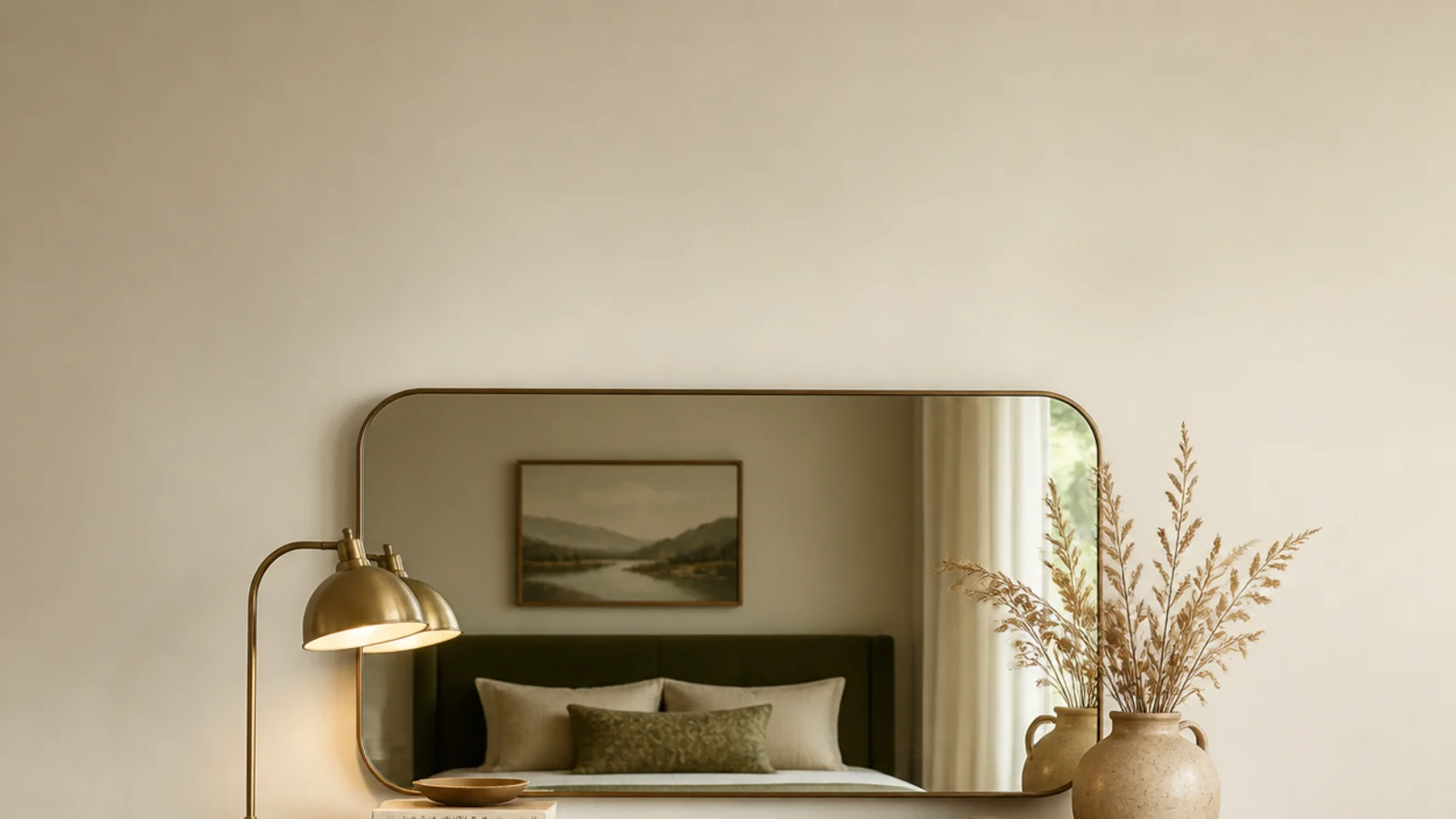
Pin it for later
Save this to your Mirror Wall Decor board
Pin it now so it is waiting for you when the tape measure comes out — and so the next person hunting for this idea can find it too.
Save this pinKeep going
More ideas worth saving while you have the tape measure out.