Entryway & Foyer Ideas · UGC
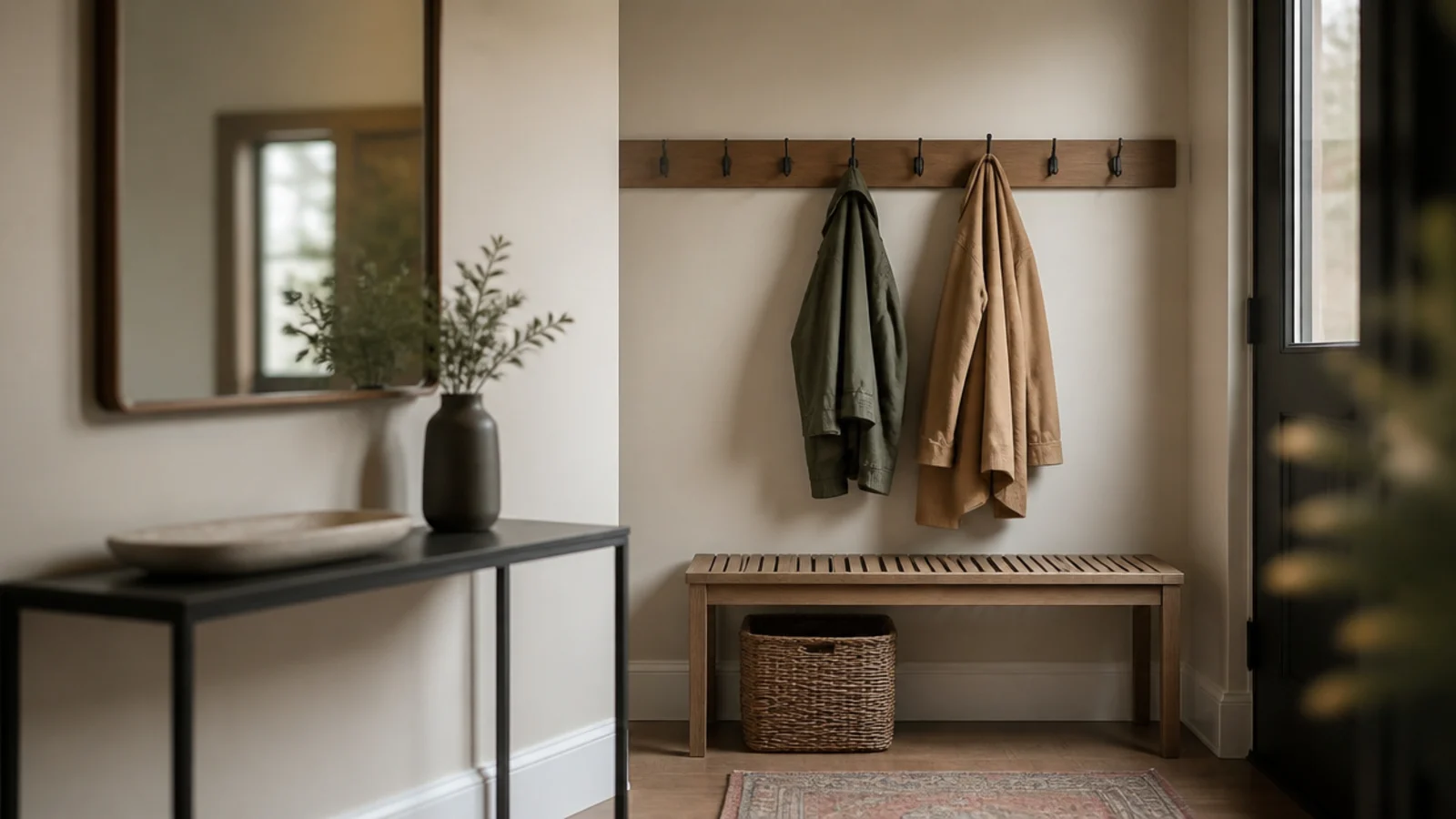
15 Entryway Mistakes I Made and Fixed

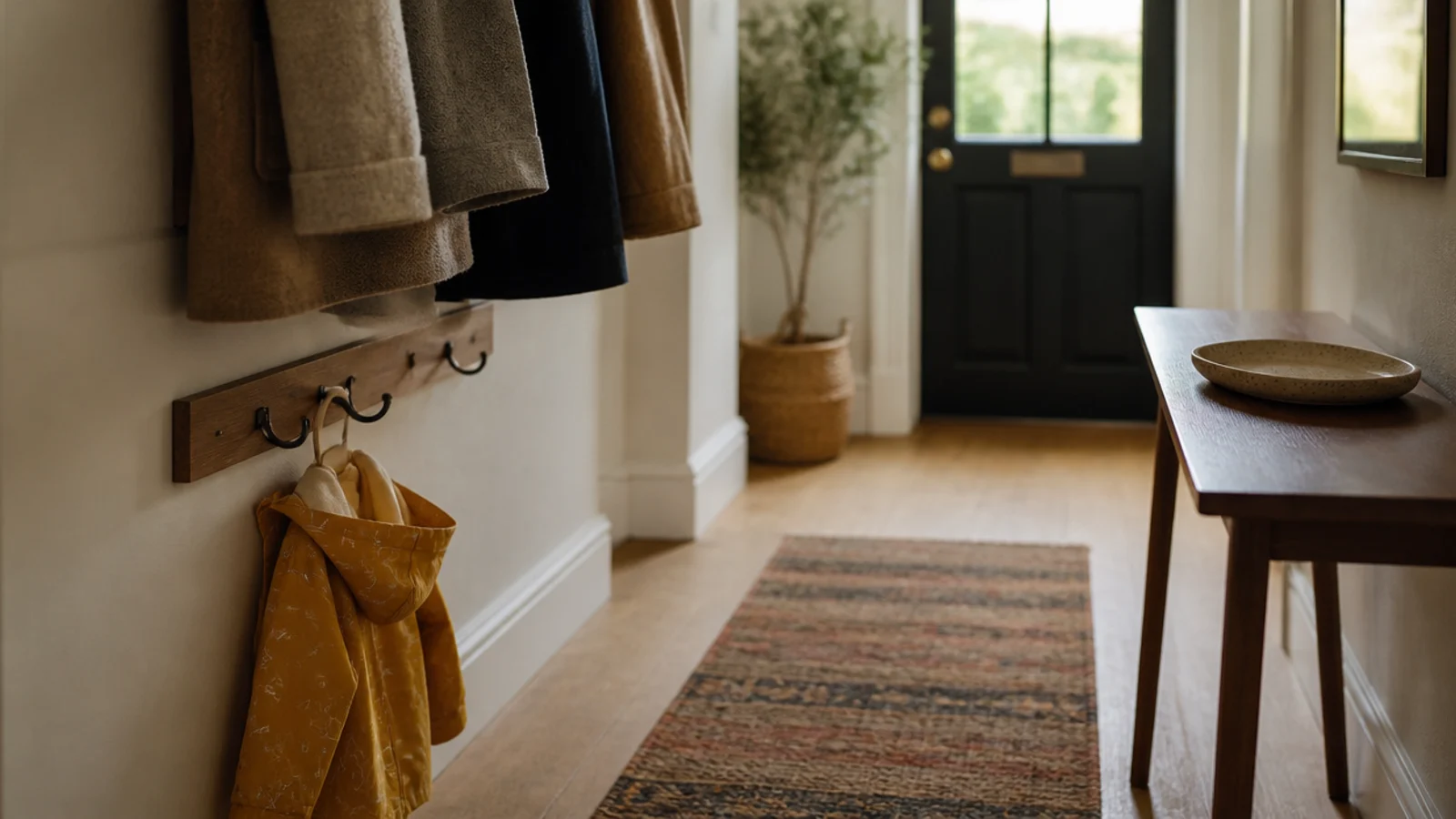
The entryway mistakes in this article are all mine, made across five homes and two genuinely humbling rentals. This is the room I get asked about most and the one I got wrong longest, because it is the only space in a house that has to work while you are already late.
My first real attempt was a hallway in a 1930s flat. I measured nothing. I hung a coat rail where it looked right standing in the doorway with a pencil, bought a console because it was on sale, and put a beautiful wool runner directly in front of a door we came through in wet boots.
Within a season the runner was grey, the console had a permanent bruise on one corner from my hip, and every coat in the house was on the newel post instead of the hooks I had drilled. Here are fifteen things I got wrong, and exactly what I did about each one.
In this guide16 sections — tap to openHide
- 1.Mistake 1: I hung the hooks at 60 inches because it looked balanced
- 2.Mistake 2: I bought a 16-inch console for a 34-inch hallway
- 3.Mistake 3: I hung the mirror above my own eye level
- 4.Mistake 4: I put a plush runner in front of the door
- 5.Mistake 5: I relied on the one ceiling fixture
- 6.Mistake 6: I skipped the tray
- 7.Mistake 7: I hung art directly above the hooks
- 8.Mistake 8: I forced a bench into an entry with no room
- 9.Mistake 9: I gave everyone shared baskets
- 10.Mistake 10: I hung the mirror two inches above the console
- 11.Mistake 11: I made it pretty with nowhere to sit for boots
- 12.Mistake 12: I gave wet boots no drip zone
- 13.Mistake 13: I hung a coat rail on the plugs from the box
- 14.Mistake 14: I chose closed storage for school mornings
- 15.Mistake 15: I decorated before I knew where things landed
- 16.Entryway Mistakes: What I'd Do Differently Now
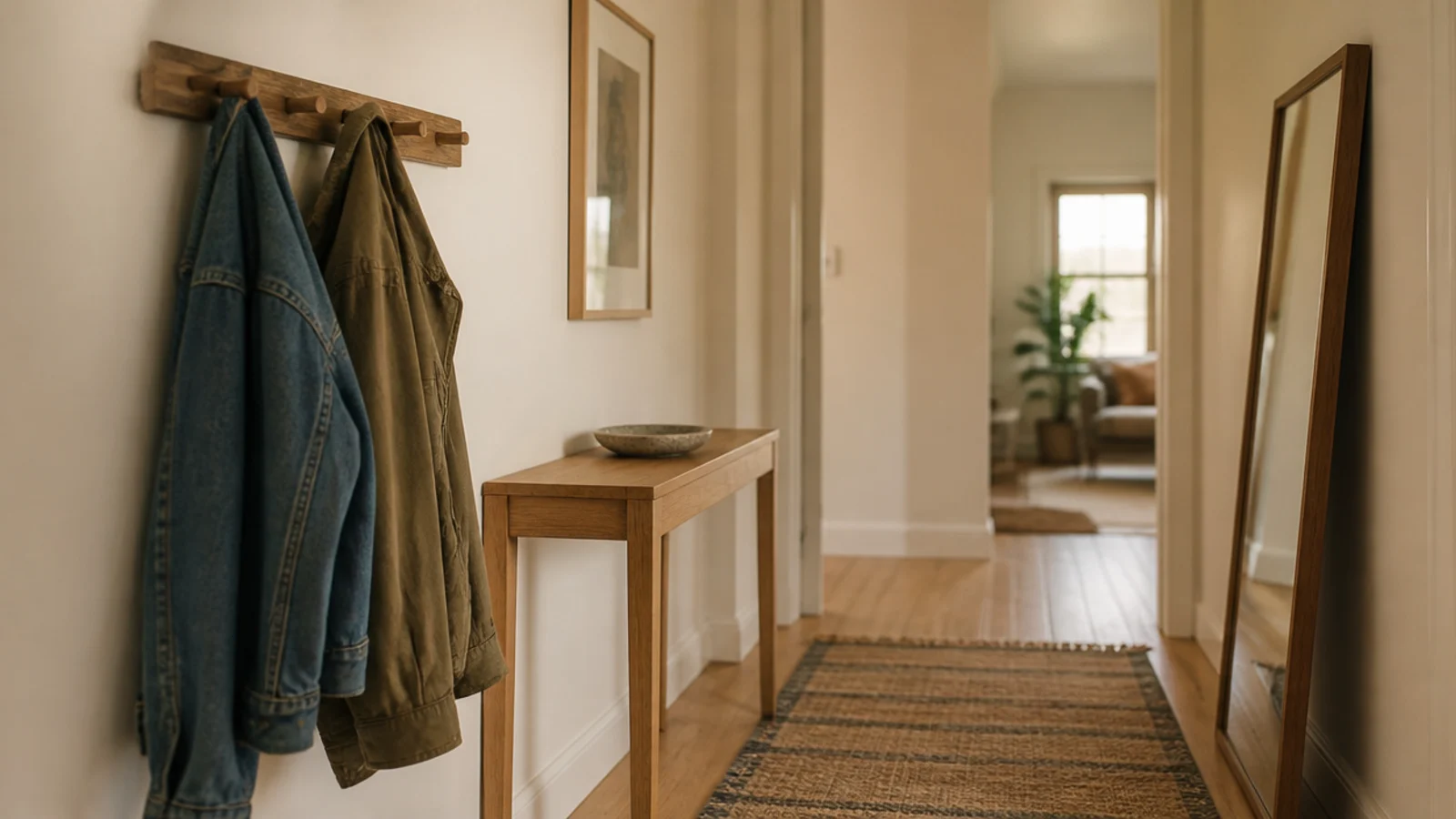
Mistake 1: I hung the hooks at 60 inches because it looked balanced
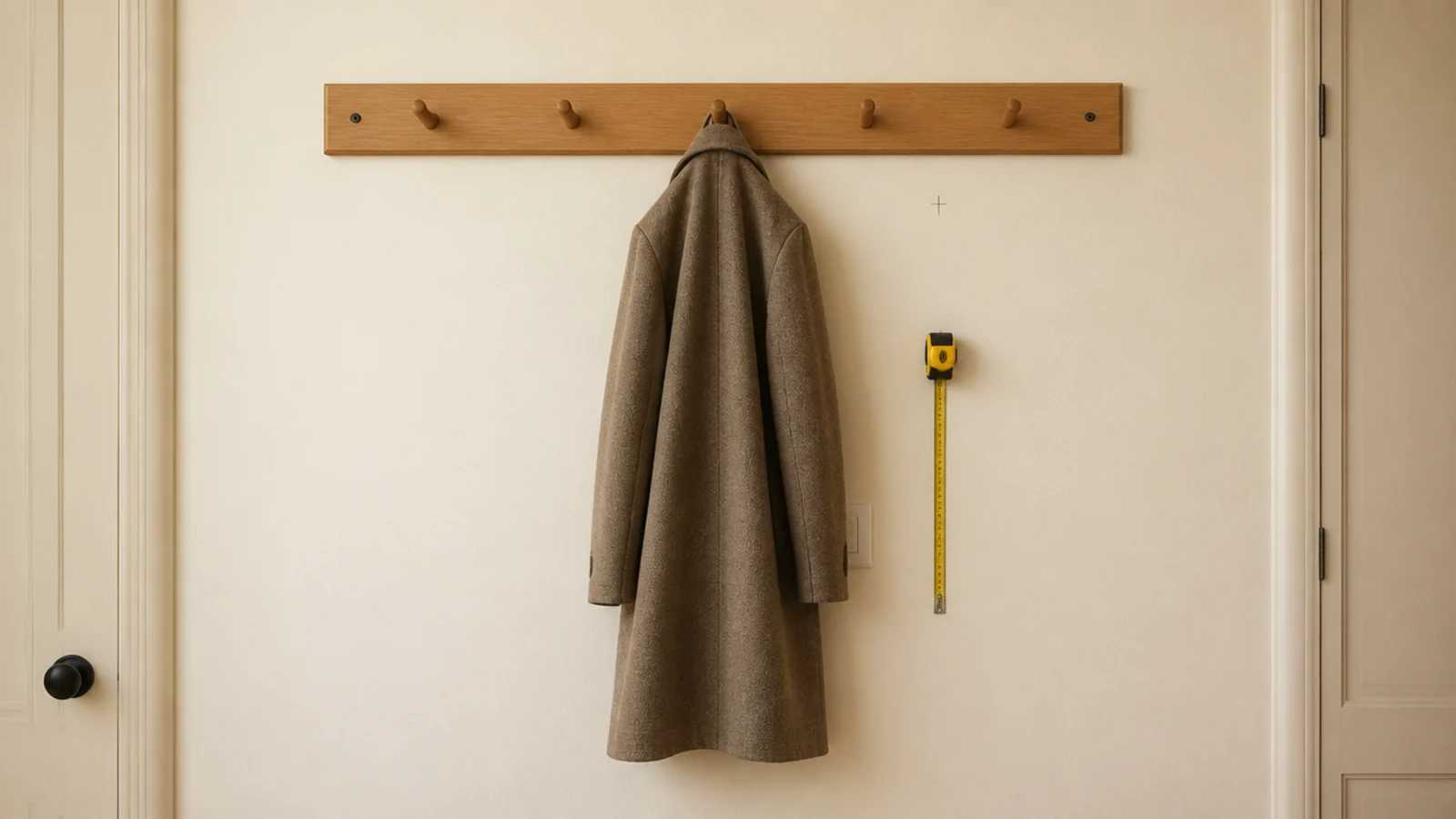
On an empty wall, 60 inches looks beautifully centred. Hang a long wool coat on it and the hem covers the light switch, and everyone under 5 foot 6 gives up and uses the bannister.
The fix: 52 inches to the hook for adults, and a second rail at 40 inches if there are children. A coat hung above a child is a coat on the floor, every single time. Rehanging cost twenty minutes and two filled holes, and the pile on the stairs stopped that week.
Mistake 2: I bought a 16-inch console for a 34-inch hallway
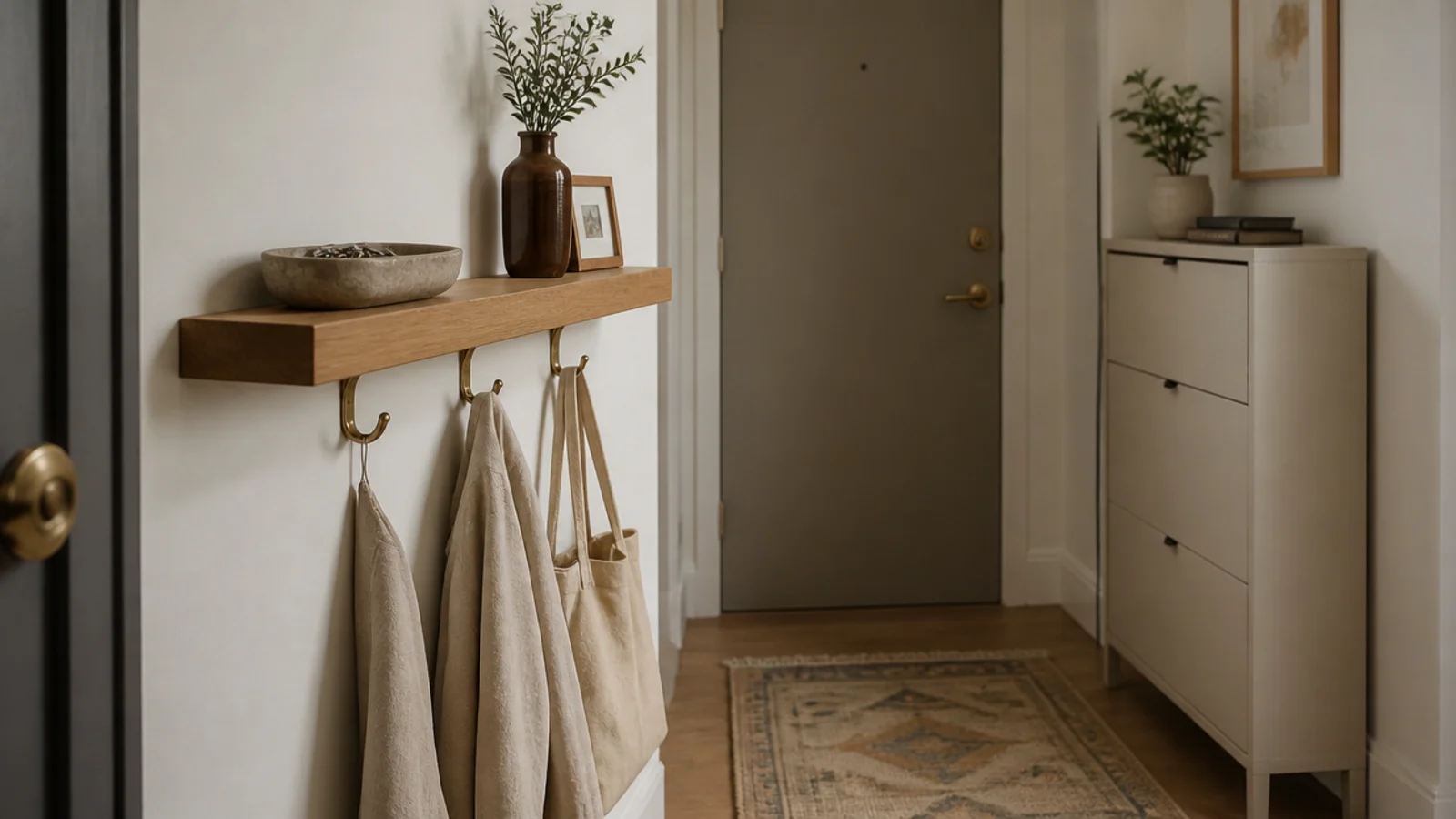
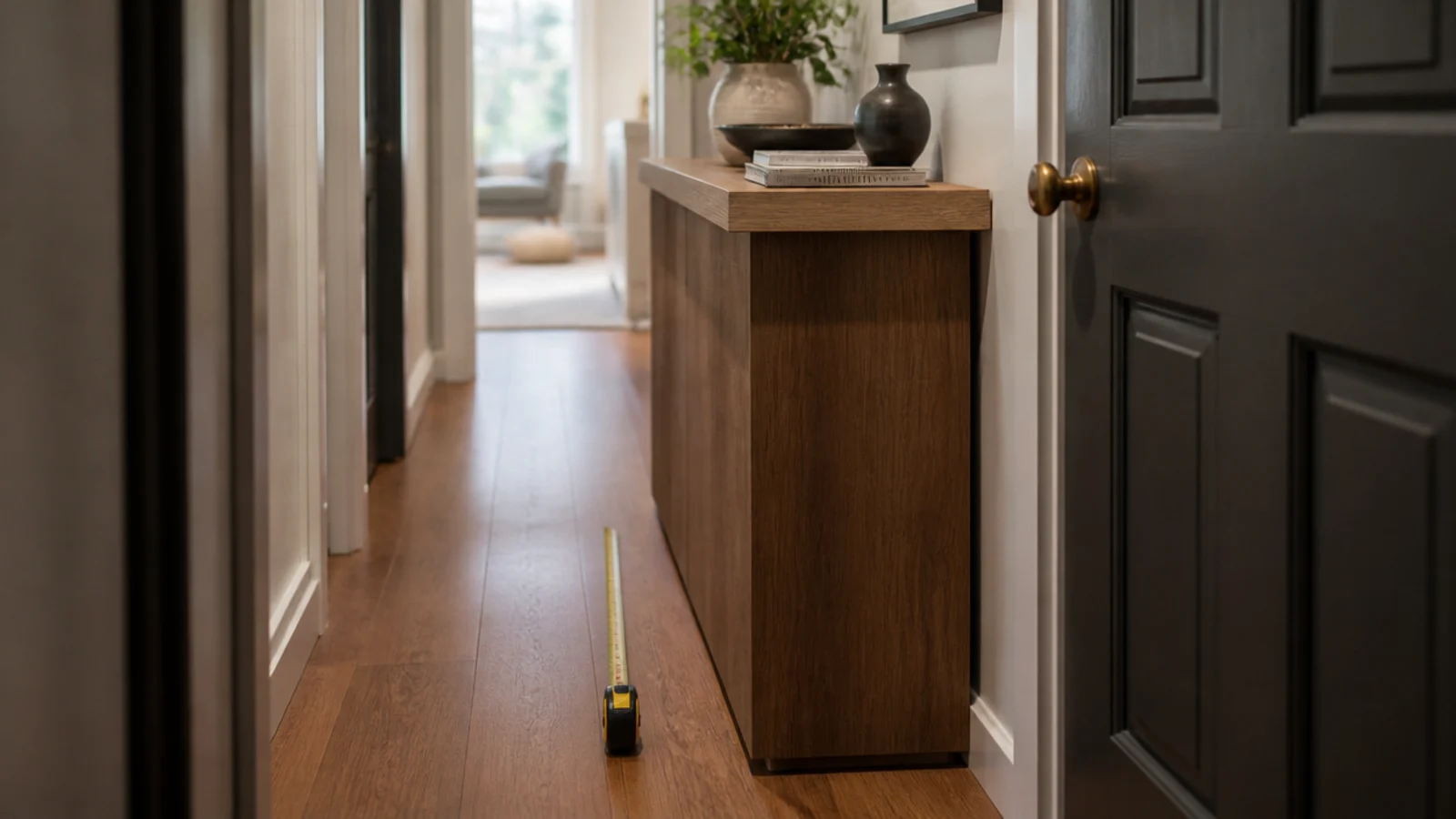
It was the right style, the right price, and completely the wrong depth. With 34 inches of walkway, a 16-inch table leaves 18 inches, which is not enough to pass someone or carry a laundry basket through.
The fix: a console sits 30 to 32 inches high and 12 inches deep, and 12 is the maximum most halls take. Under 36 inches of walkway you go wall-mounted instead. I replaced it with a 10-inch floating shelf and stopped clipping my hip on the corner within a day.
Mistake 3: I hung the mirror above my own eye level
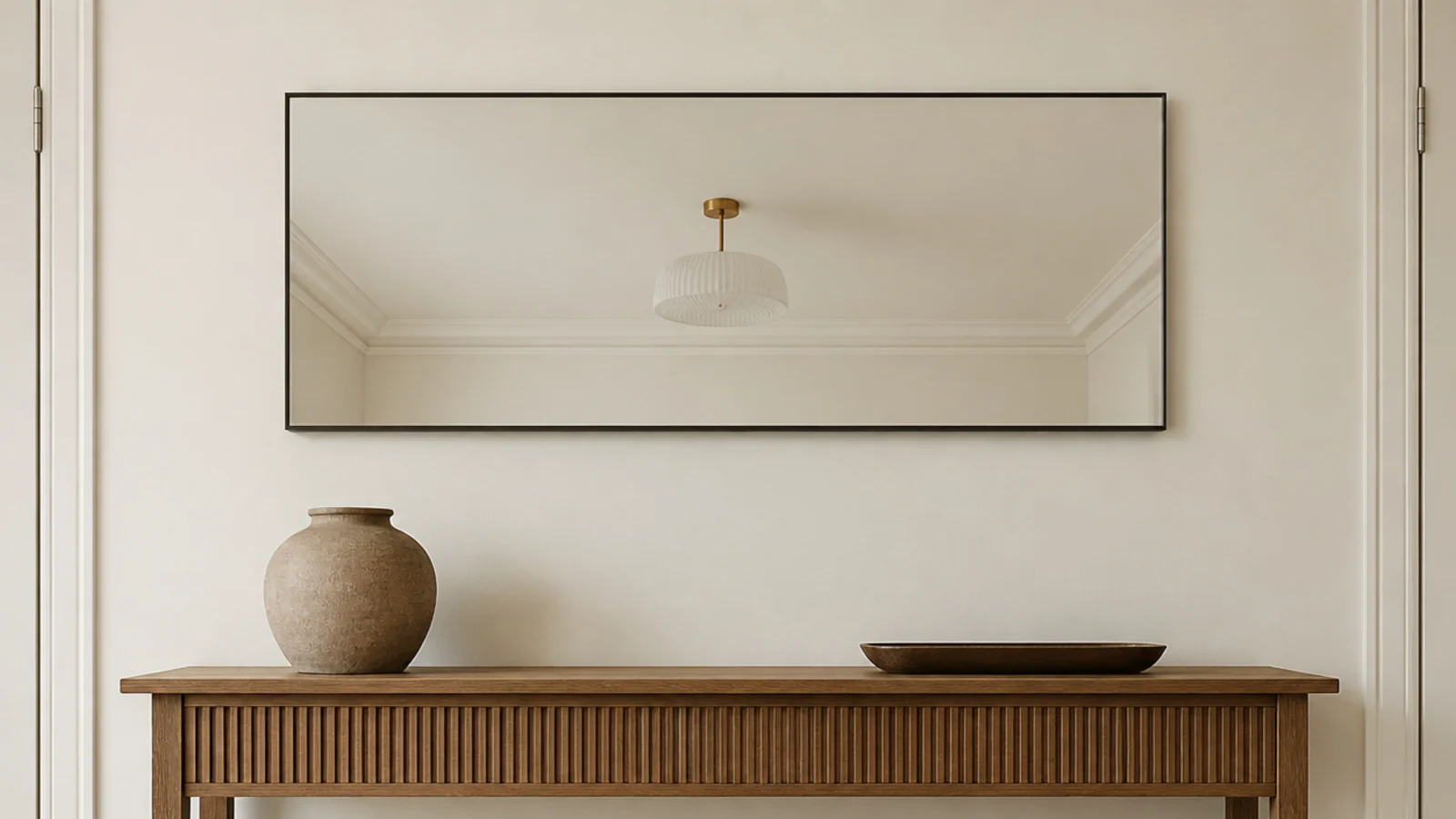
I am 5 foot 9 and I hung it for me, standing there with a hammer. It reflected the ceiling, the light fitting and the top of my head, and it showed my mother nothing at all.
The fix: centre the glass at 57 to 60 inches from the floor. That is the height that works for the range of people who actually walk through a door. There is more on sizing and placement in entryway mirror walls, which I wish I had read first.
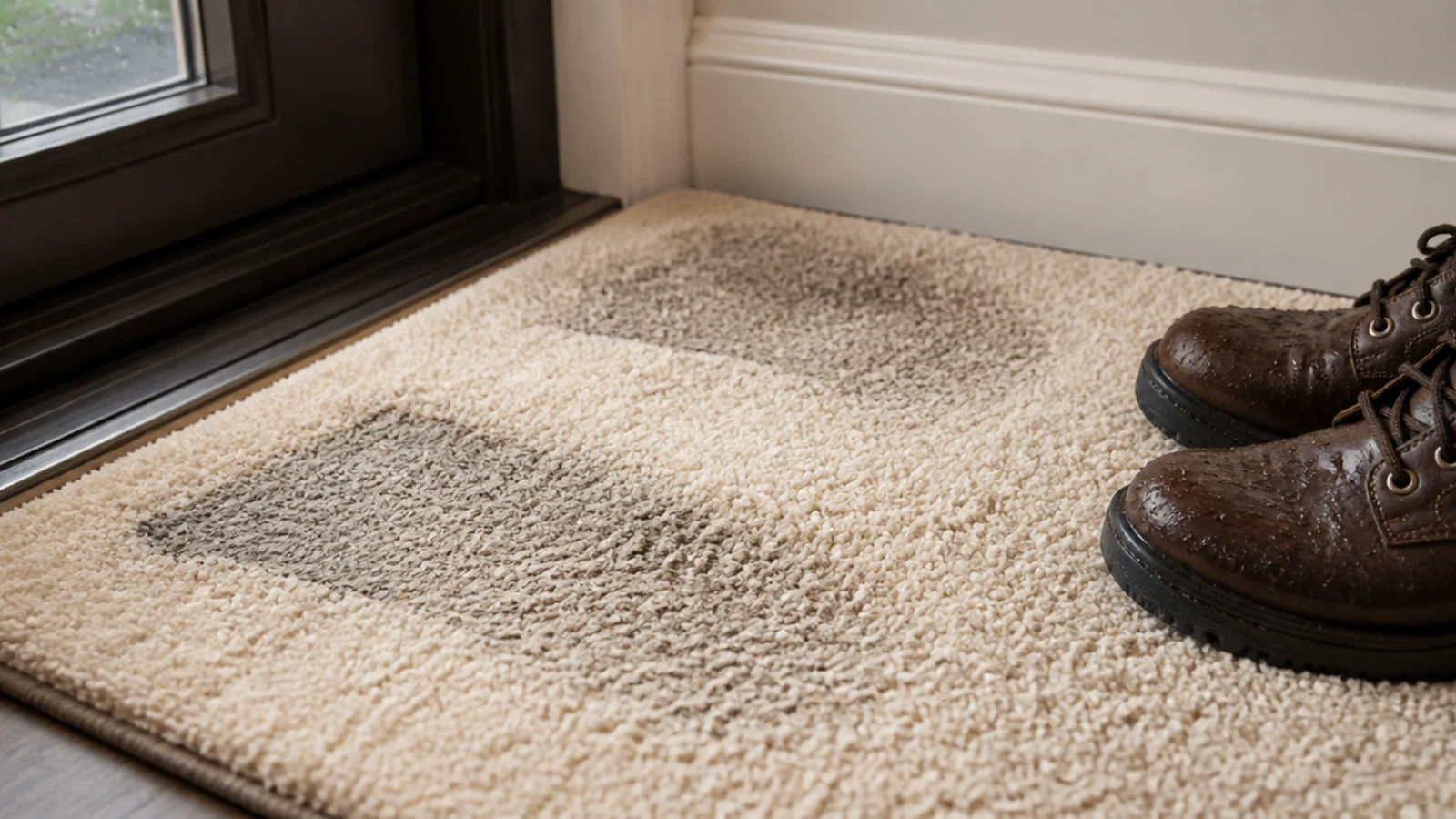
Mistake 4: I put a plush runner in front of the door
A soft high-pile runner in oatmeal wool. It was the nicest thing in the hallway for about six weeks. Then the grit that comes in on shoes worked into the pile and stayed there.
The fix: flat-weave washable runners survive an entry; deep pile does not and never recovers. Flat weave goes in a machine and dries overnight. Sand, terracotta and muted sage hide the most between washes, and a thin non-slip pad underneath stops it sliding while somebody pulls a boot off.
Mistake 5: I relied on the one ceiling fixture
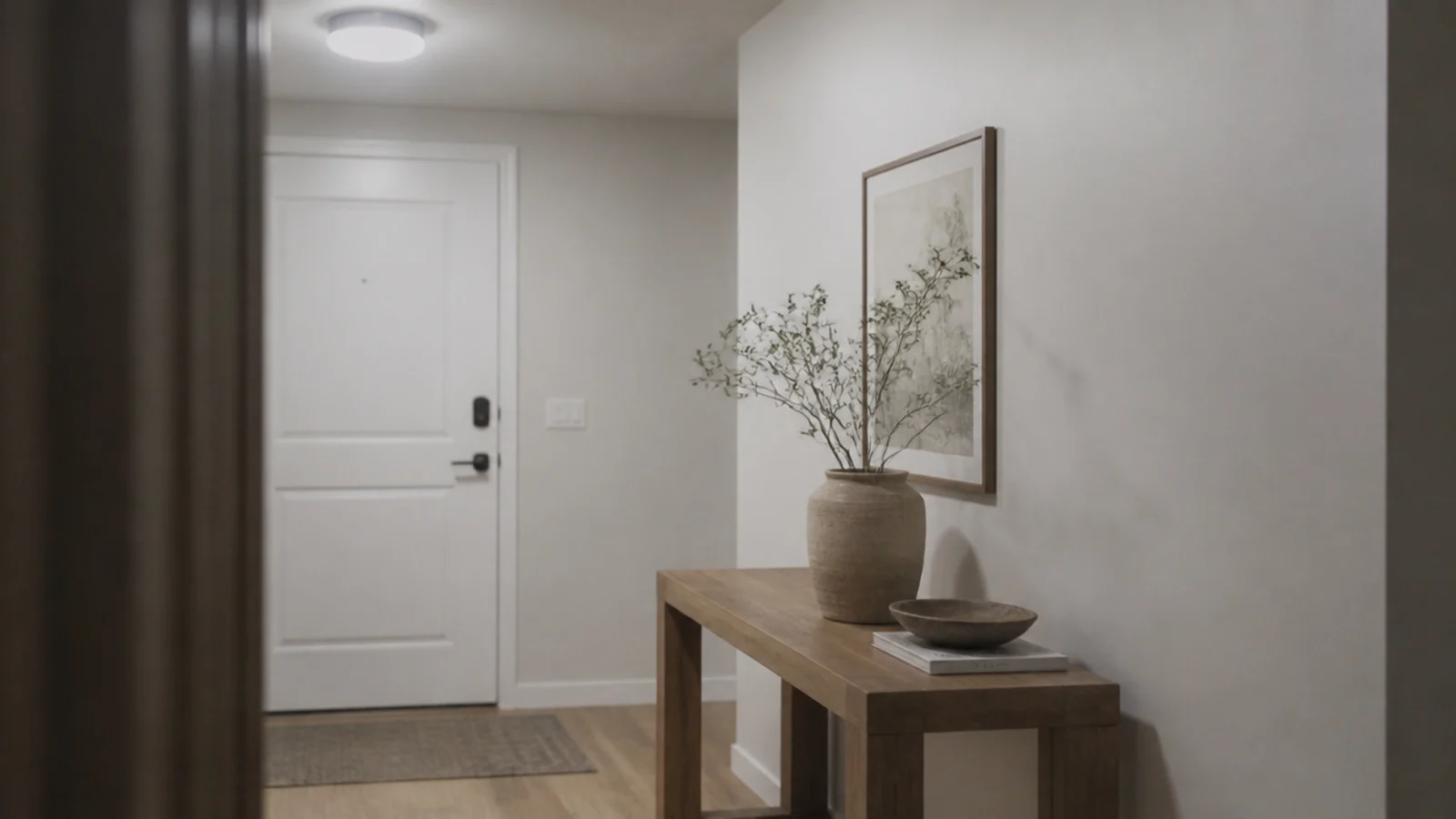
Every rental I have lived in had exactly one flat overhead light in the entry, and I never questioned it. It flattens the space completely — oak looks grey, clay looks dusty, and the whole entry photographs like a corridor.
The fix: layer the lighting. A plug-in sconce at 60 inches, or a lamp on the console, plus a puck light above the door if the closet is dark. Everything at 2700K. Two warm sources cost about $40 and changed how the space felt more than any object I bought.
Mistake 6: I skipped the tray
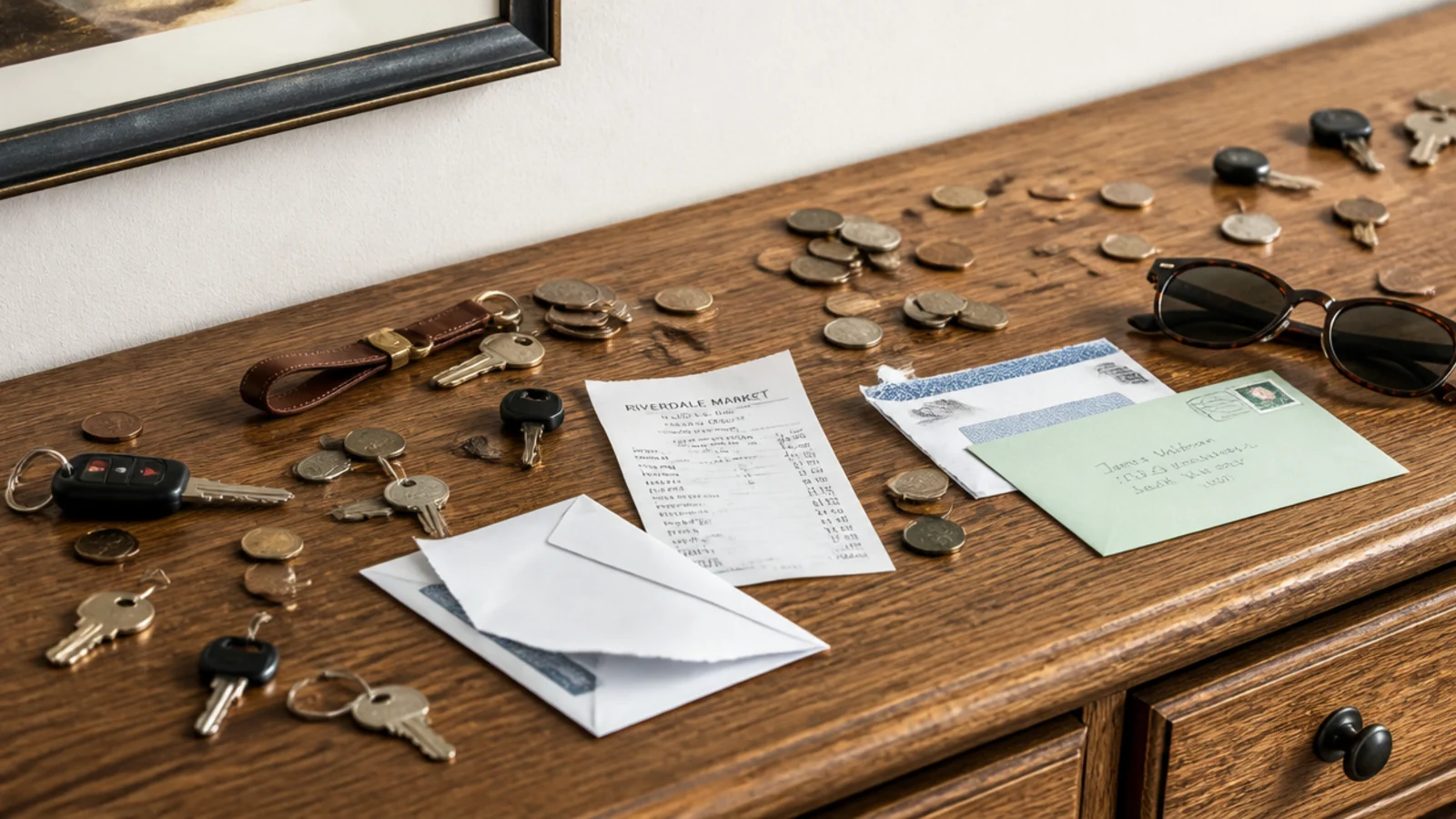
I thought a tray was decorative. Keys, post, receipts, a spare charger and two sets of sunglasses spread across the console and then across the kitchen counter, because nothing was holding them.
The fix: one tray with a raised edge is what stops mail and keys spreading. The raised edge is the whole mechanism; a flat plate lets things slide off. One tray, not three — several containers just distribute the mess more elegantly. It cost $12 and it was the highest-impact object in the room.
Mistake 7: I hung art directly above the hooks
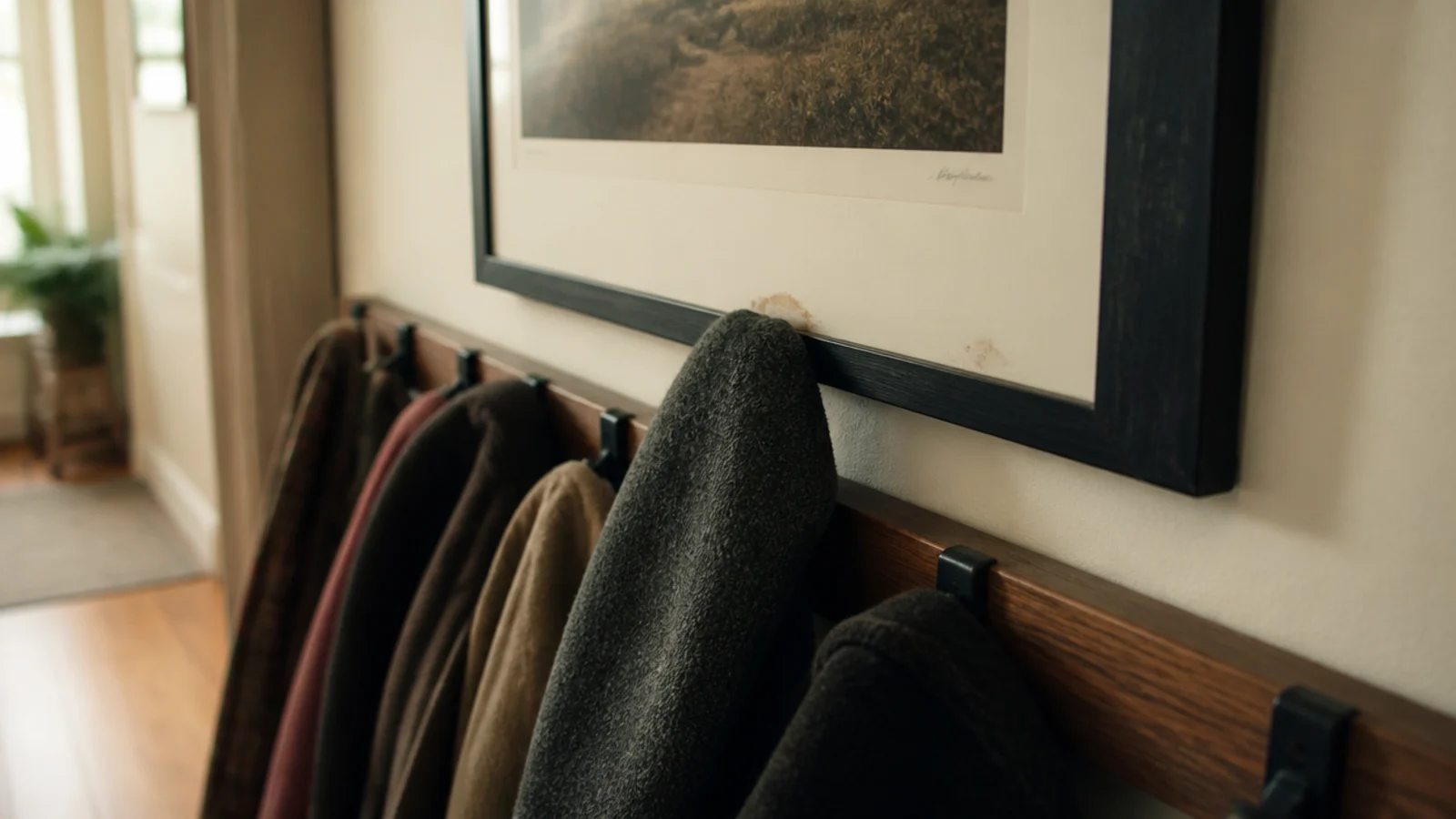
A small framed print, six inches above the coat rail. It looked considered on the day I hung it and was invisible behind coats by October, with a damp wool sleeve brushing the frame every morning.
The fix: leave the wall above the hooks emptier than feels right, because coats fill that space daily. Art belongs on the opposite wall or above a bench where nothing hangs. I moved that print three feet left and it has been fine ever since.
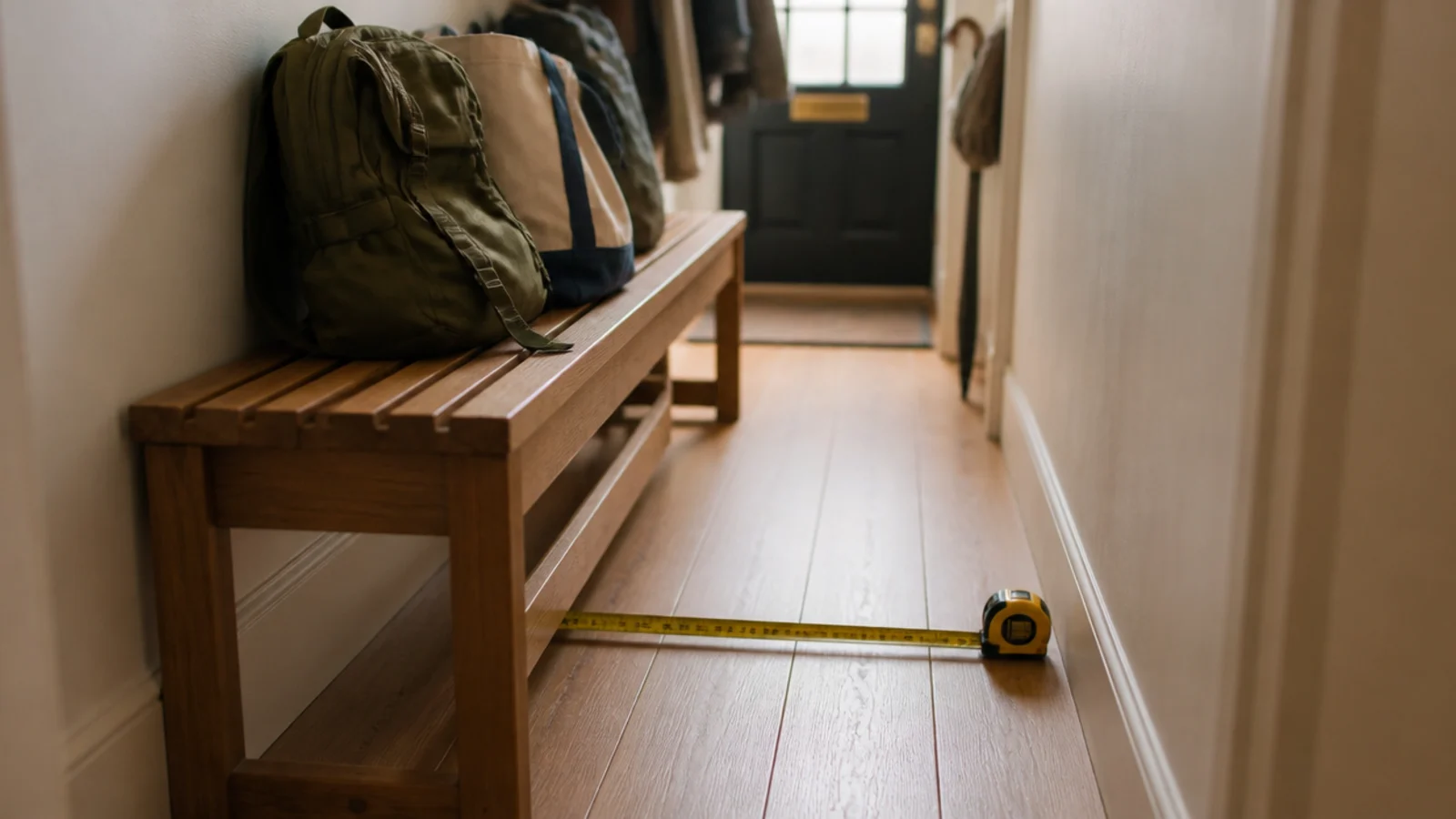
Mistake 8: I forced a bench into an entry with no room
Somewhere to sit is one of the five jobs an entry has, so I bought a 48-inch bench for a hallway that could not take it. We edged past it sideways and it became a shelf for bags within a fortnight.
The fix: under 40 inches of clear walkway, a bench is the wrong call however much you want one. A 30-inch bench seats one, or a folding stool on a hook does the job and disappears. I sold the bench and never missed it.
Mistake 9: I gave everyone shared baskets
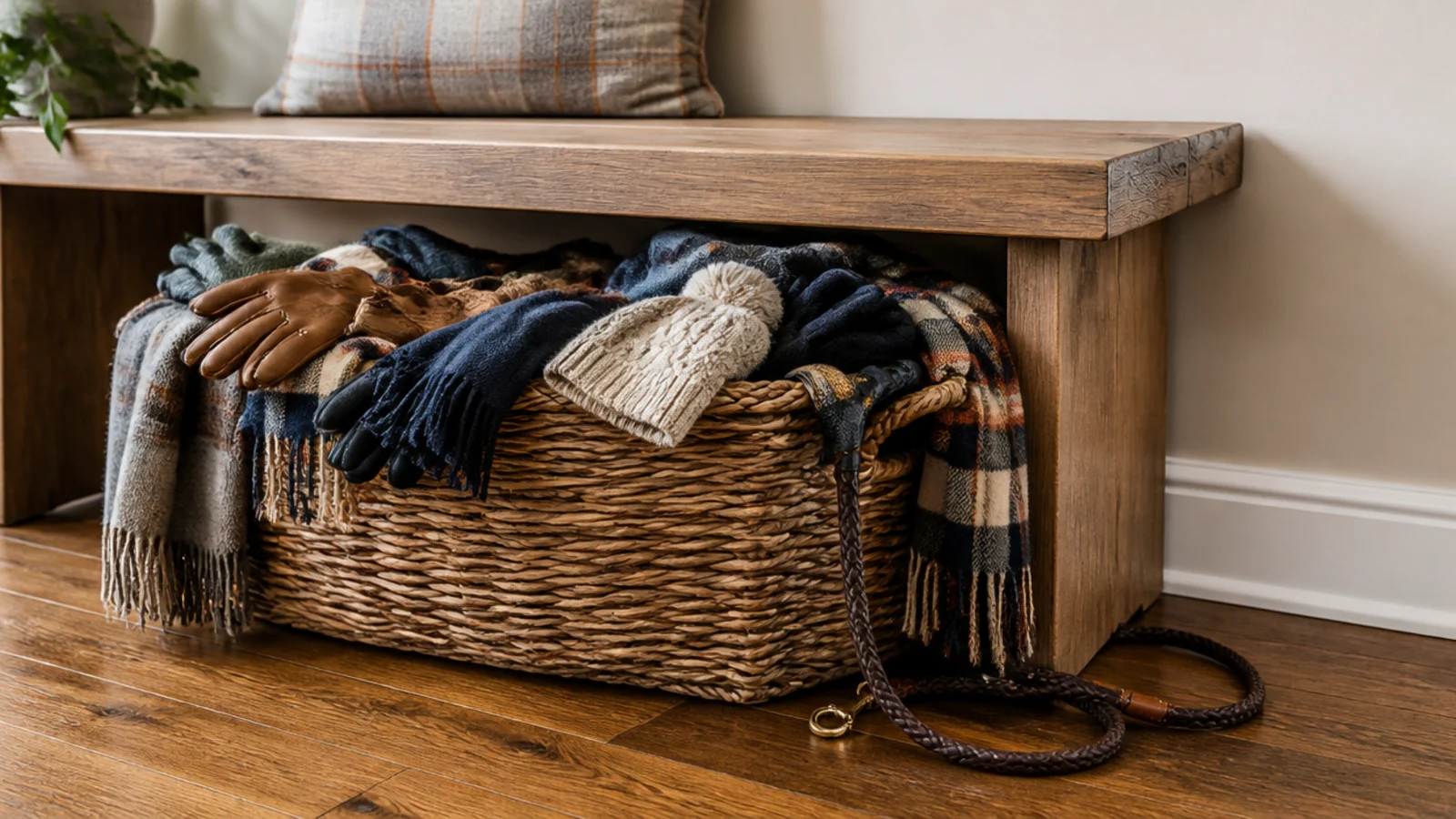
Two big baskets under the bench for gloves, hats and everything else. Both were overflowing by December and neither belonged to anyone, so nobody ever emptied them.
The fix: one named basket per person, capped at what fits. Named individual space is what makes an entry system stick, and it works with children far better than asking does. Same baskets, same cupboard, entirely different result — the only change was a small tag on each rim.
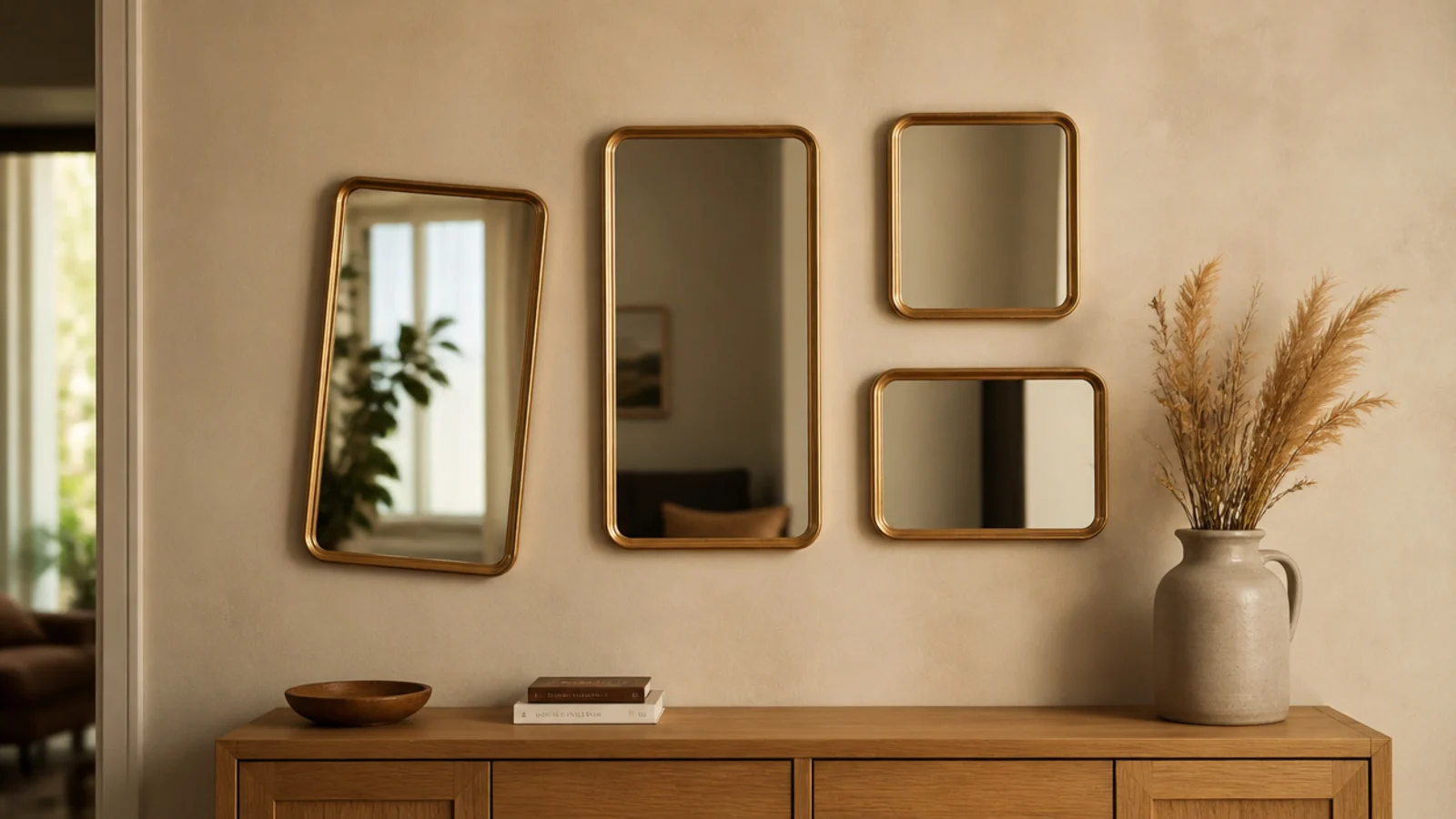
Mistake 10: I hung the mirror two inches above the console
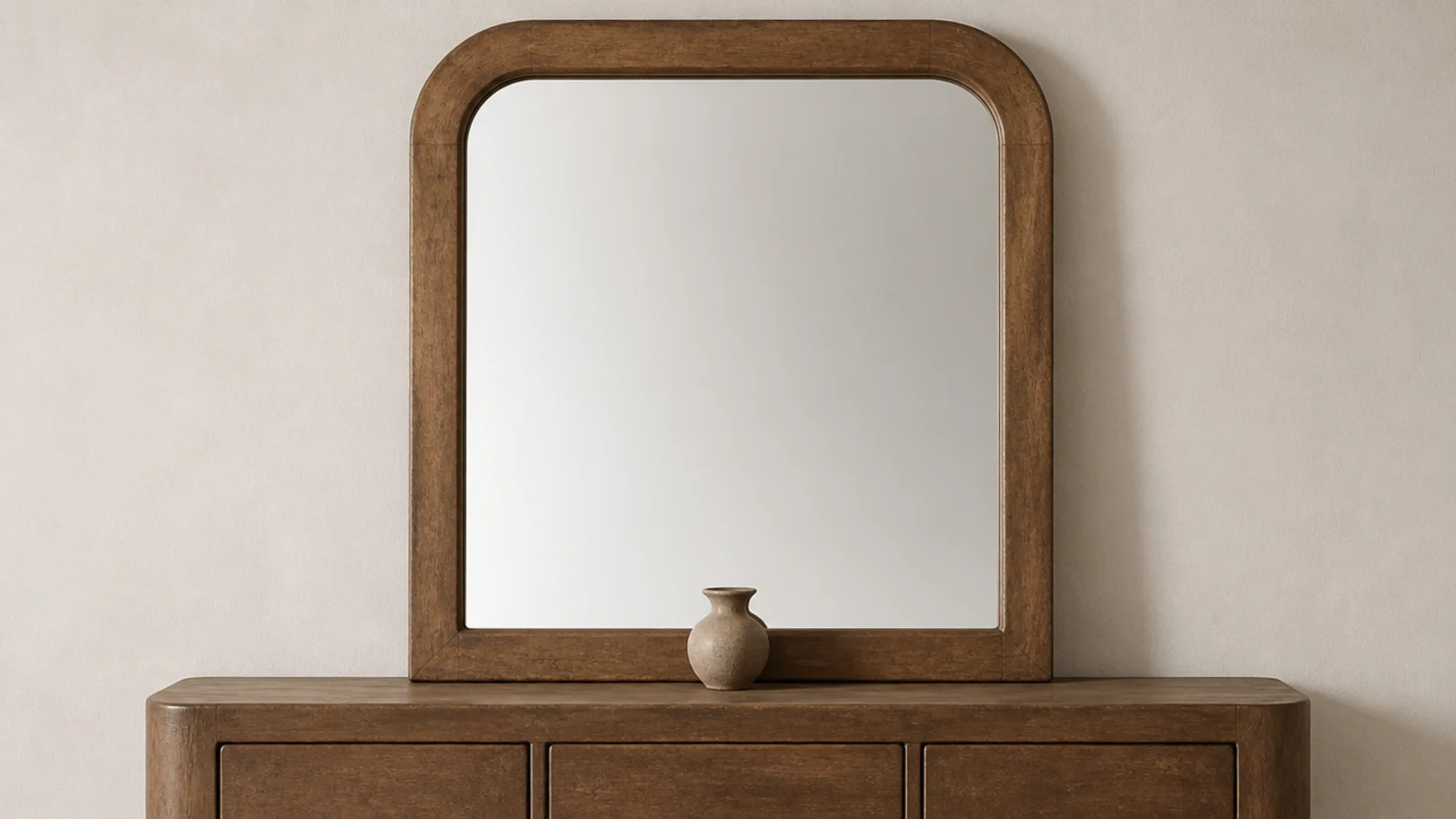
Having finally got the height right in one house, I got the gap wrong in the next. Two inches between the console top and the mirror bottom made the two pieces read as one lumpy object stuck to the wall.
The fix: 6 to 8 inches of clear wall between a console top and a mirror bottom. That gap is what lets each piece read separately, and it leaves room for a lamp or a vase to sit in front without touching the glass.
Mistake 11: I made it pretty with nowhere to sit for boots
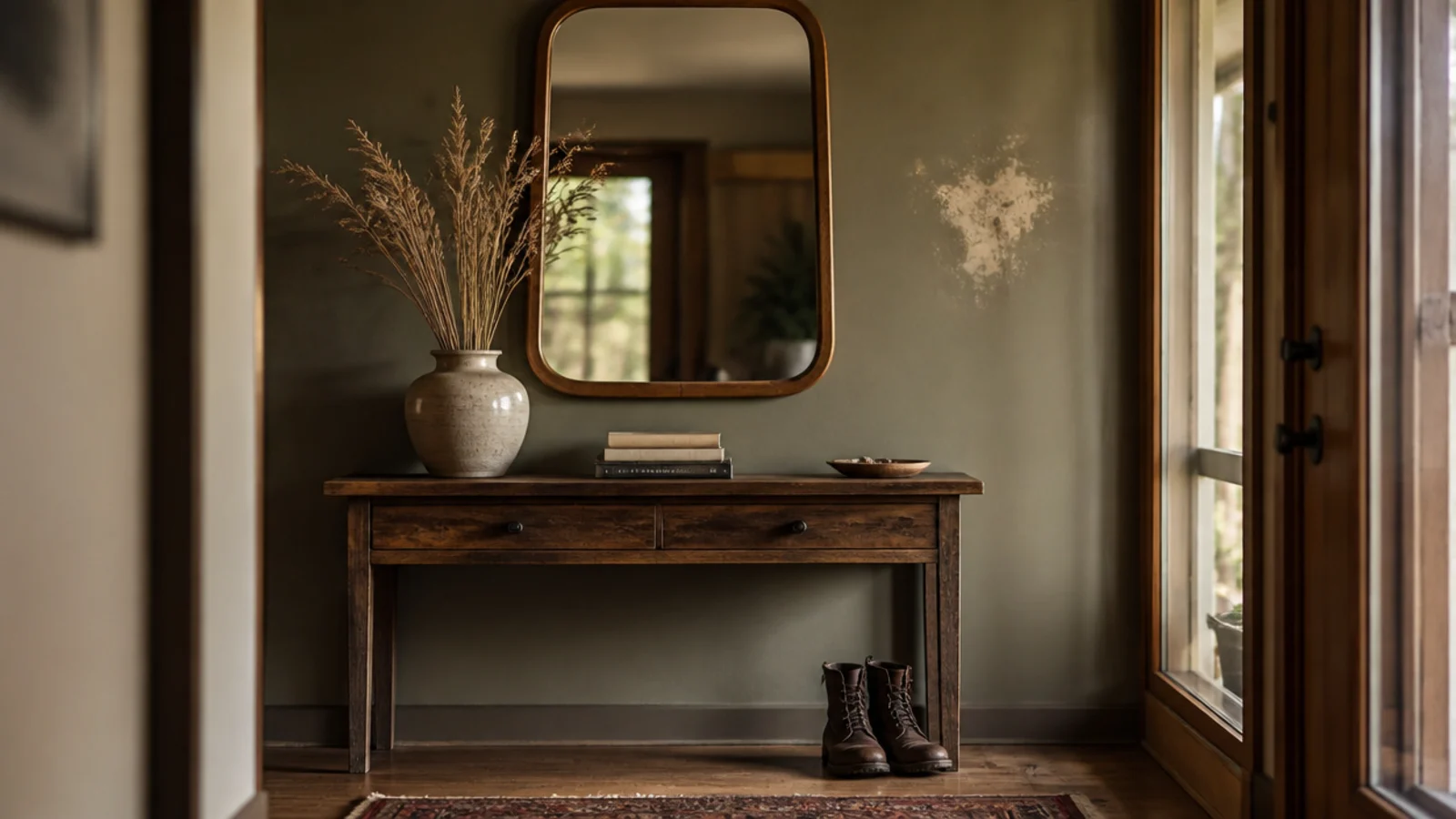
For about two years I had an entry I was genuinely proud of, with a console, dried grasses and a good mirror, and absolutely nothing to sit on. Everyone leaned on the wall to unlace boots and the paint showed it.
The fix: an entry does at least three of its five jobs — sit, shoes, coats, surface, mirror — and I had done two and a half. A stool at 15 to 18 inches fixed it. Pretty is not a job.
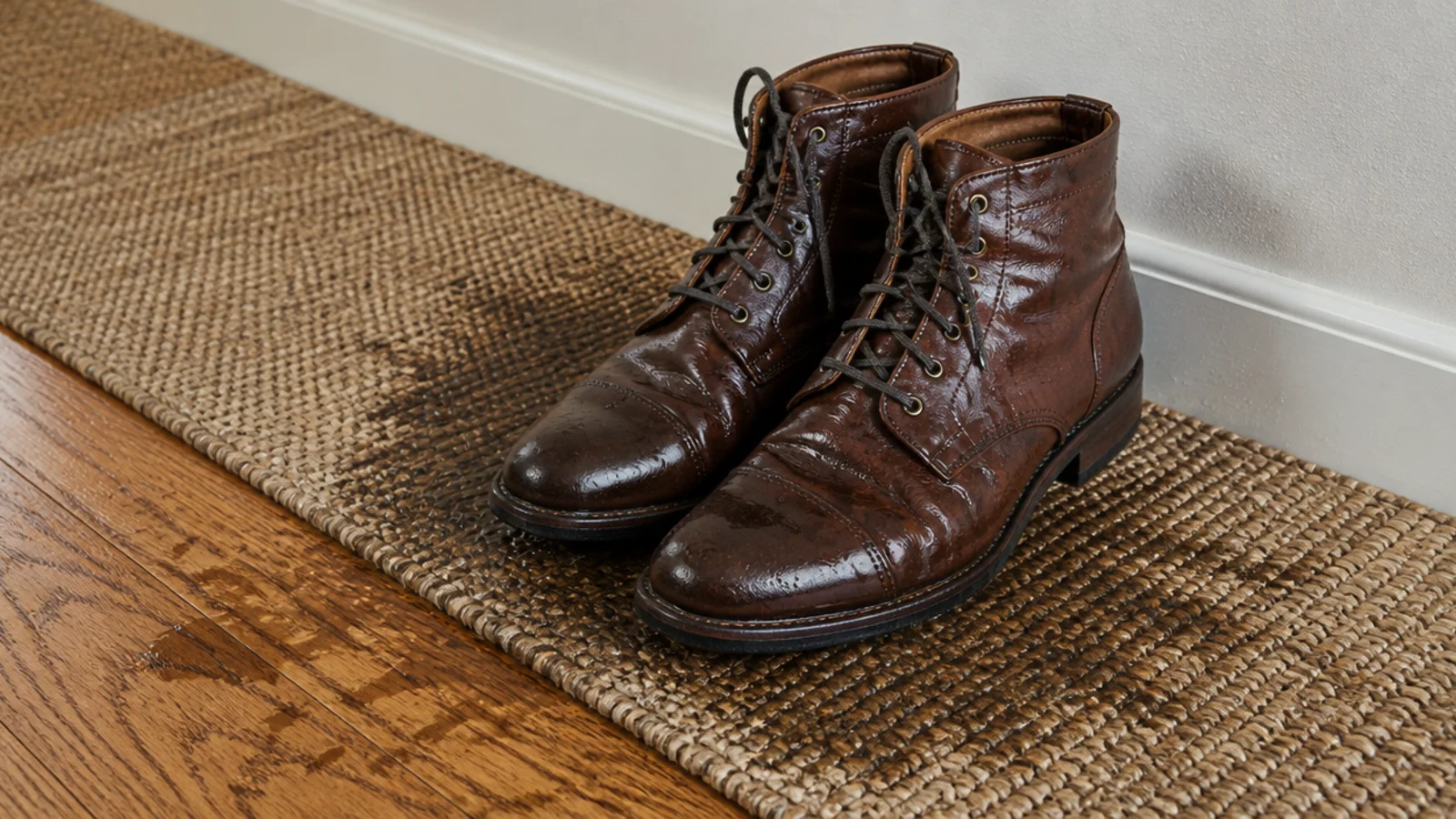
Mistake 12: I gave wet boots no drip zone
Wet boots went wherever they landed, which was usually the runner, occasionally the wooden floor, and once memorably on a stack of post.
The fix: a raised-lip boot tray at least 15 inches deep, on the floor beside the storage rather than inside it. Metal or heavy rubber, not thin plastic that cracks in the cold. It is a $20 object that prevents almost every damp-hallway problem people blame on their storage. The entryway shoe storage guide covers where the dry pairs should go.
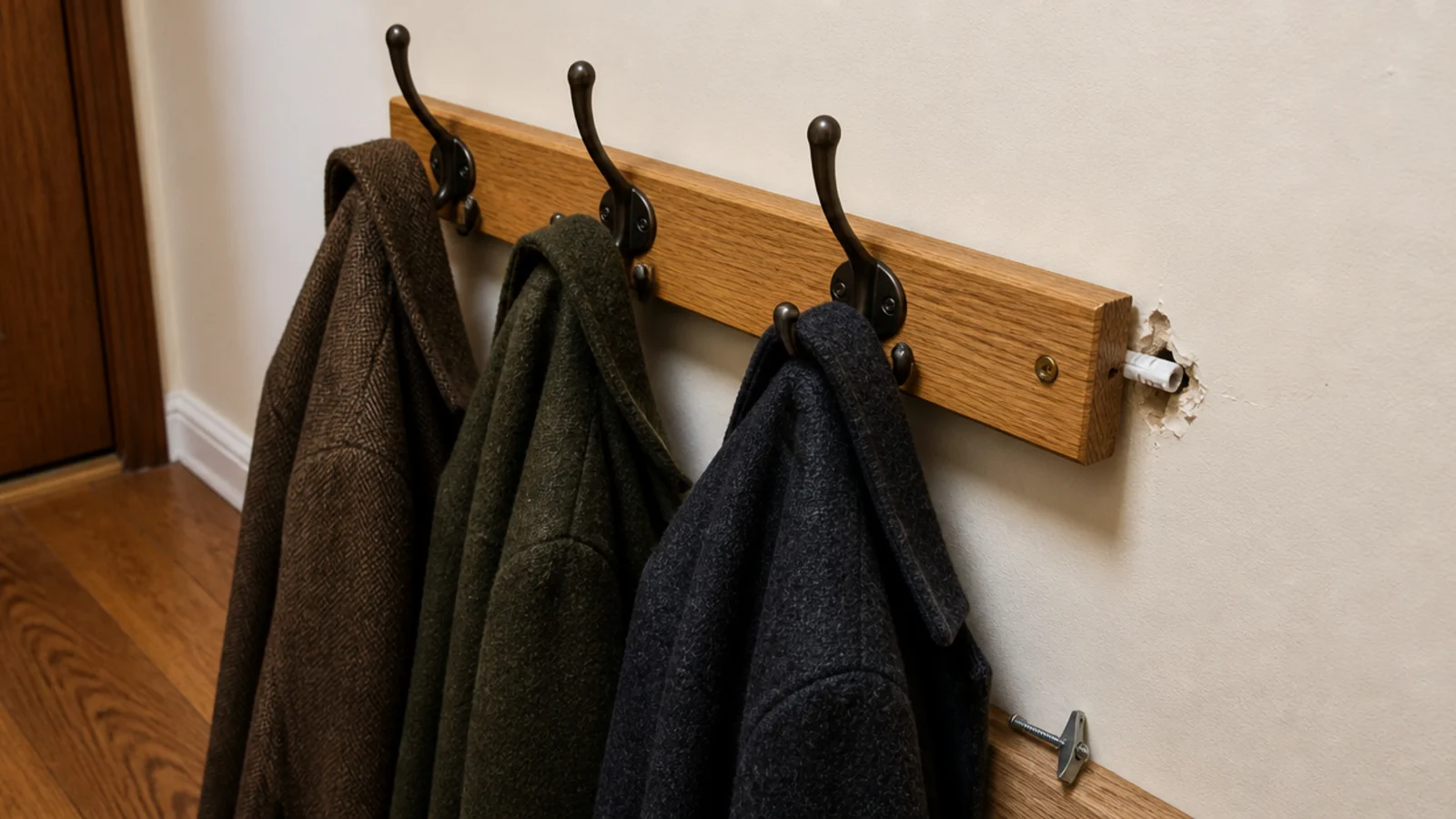
Mistake 13: I hung a coat rail on the plugs from the box
Those small white plugs are rated around 10 pounds. A rail of winter coats is 30 to 40 pounds, and wet wool is heavier again. It did not fail suddenly — it crept out of the drywall over about six weeks and then leaned.
The fix: at least one screw into a stud, or toggle bolts rated 25 to 35 pounds each in half-inch drywall. I now buy the toggles on the same trip as the rail. The plugs in the box go straight in the bin before I open anything else.
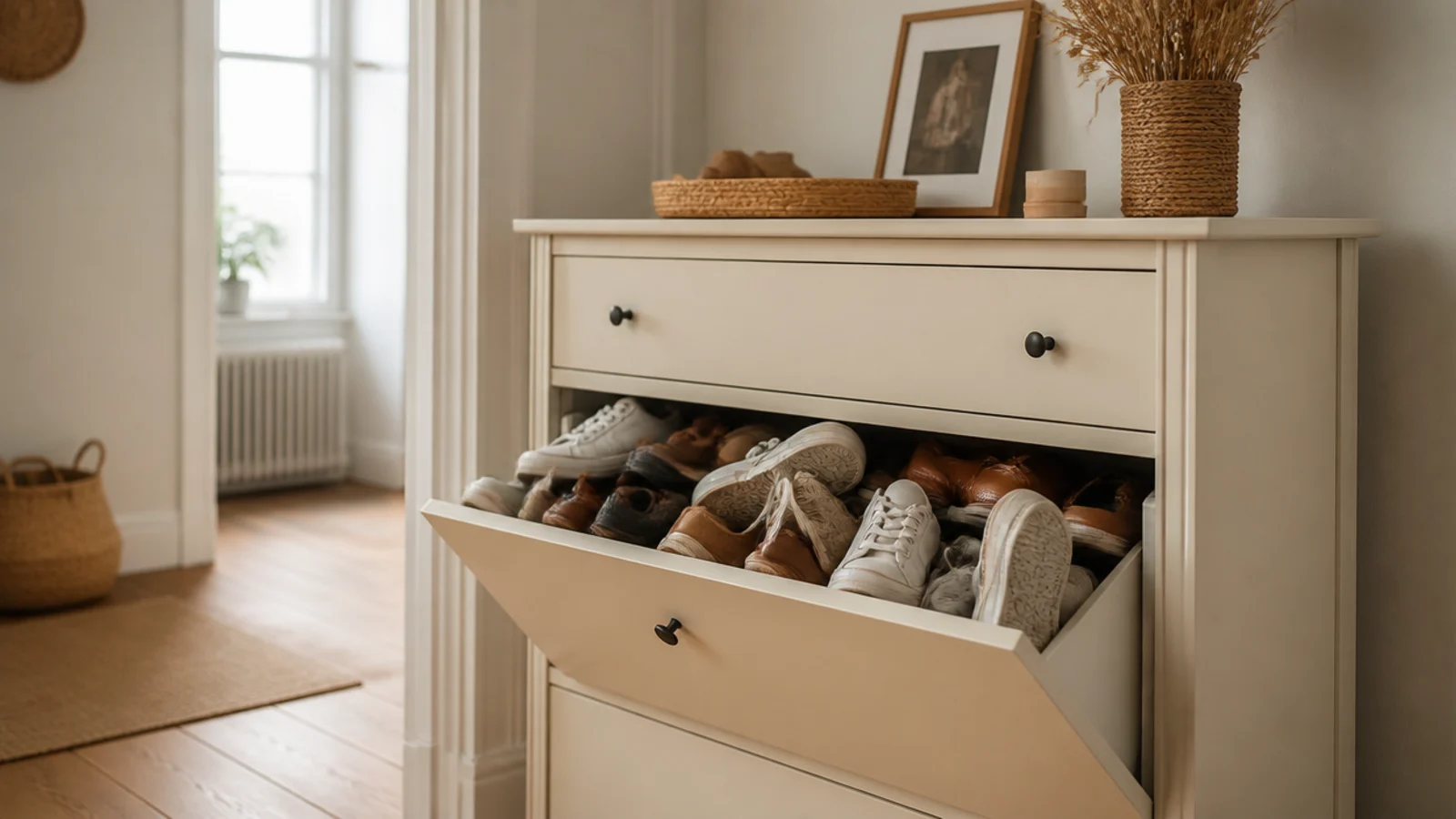
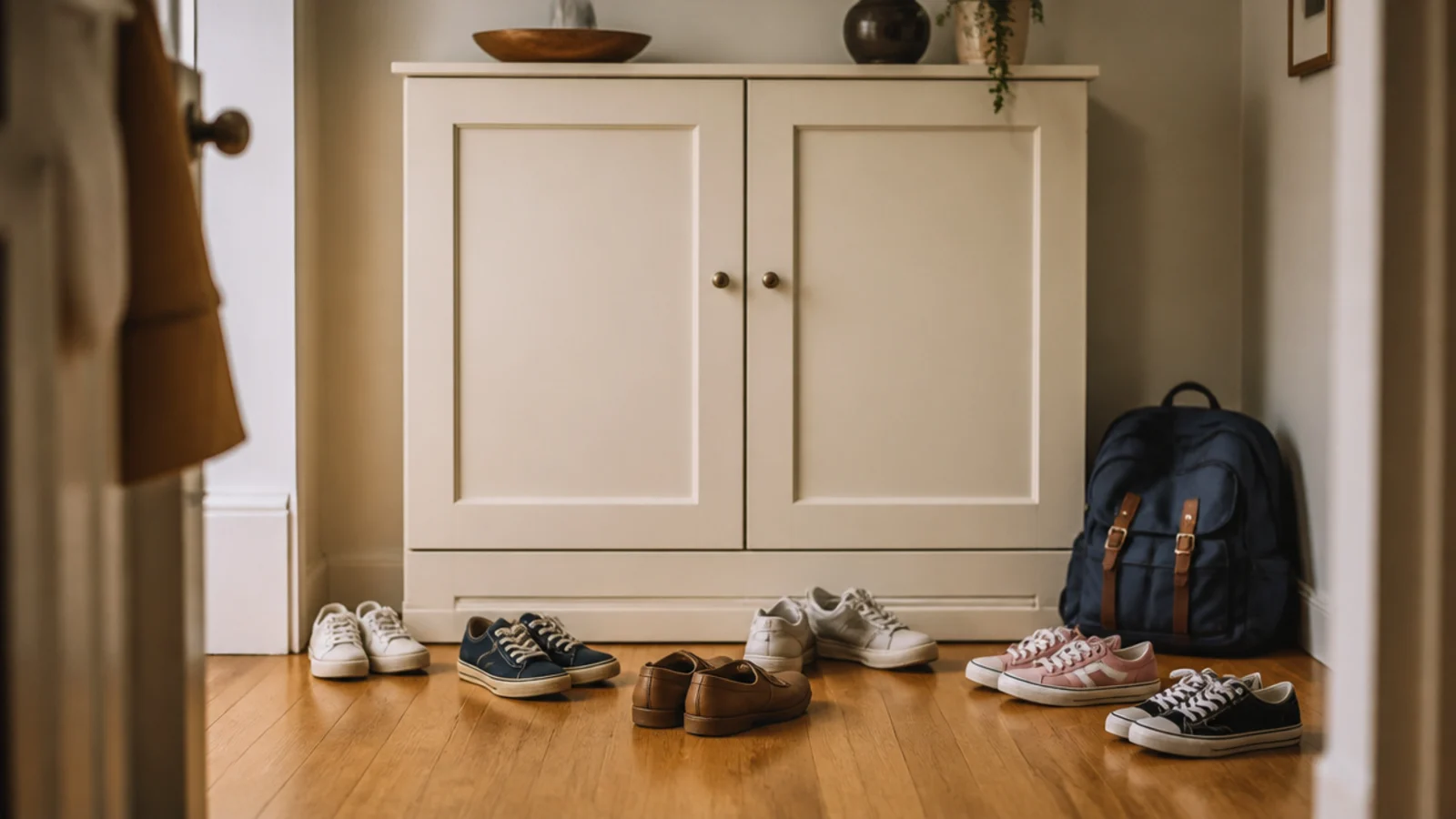
Mistake 14: I chose closed storage for school mornings
A beautiful closed cabinet, doors shut, nothing on show. By the second week of term there were five pairs of shoes on the floor directly in front of it and the cabinet was half empty.
The fix: open storage in any household with children or anyone in a hurry. Every door is a step people skip when their hands are full. Closed storage works when the household is adults who genuinely put things away, and I was not describing my house.
Mistake 15: I decorated before I knew where things landed
The pattern behind most of these. I planned the entry on paper, bought everything at once, and then watched the house use a completely different set of surfaces.
The fix: live with a runner, two hooks and one tray for a month before buying furniture. Where the coats and bags actually land tells you where the storage belongs, and it is rarely where the floor plan said. Every entry I have done that way has needed less stuff and worked better.
Entryway Mistakes: What I'd Do Differently Now
If I could hand my younger self one page, it would be four numbers and one rule. Hooks at 52 inches with a child rail at 40. A console 30 to 32 inches high and no more than 12 inches deep. A mirror centred at 57 to 60 inches with 6 to 8 inches of clear wall above the console. And a flat-weave runner, never pile.
The rule is that an entry has five jobs and only has to do three of them well. I spent years trying to squeeze all five into hallways that could take three, and the result was always a beautiful space you could not walk through.
The thing I genuinely regret is buying first. Almost every fix in this list came from watching how the house behaved rather than from a better purchase — and the two that cost real money, the runner and the console, were both replacements for things I bought before I understood the room.
Frequently asked questions
What height should entryway hooks be?
Fifty-two inches to the hook itself for adults, with a second rail at 40 inches if children live in the house. Higher than 52 and a hanging coat sweeps the floor or blocks a light switch; lower and adults hunch to use it. The child rail matters more than people expect, because a coat hung above a child is a coat on the floor.
How deep should an entryway console be?
Twelve inches is the maximum most halls take, at 30 to 32 inches high. Deeper than that and you turn sideways past it daily, which sounds trivial until you have done it for a year. If your walkway measures under 36 inches from the wall to whatever you walk around, skip the console entirely and mount a shelf instead.
Why does my entryway always look cluttered?
Usually there is nothing containing the small stuff and nowhere to set a parcel down. One tray with a raised edge stops mail and keys spreading across every surface, and leaving the last third of any shelf permanently empty gives deliveries a landing spot. Both are free, and together they fix more than any storage purchase.
What kind of rug survives an entryway?
A flat-weave washable runner, every time. Deep pile traps grit in the first month and never recovers, so it looks tired long before it wears out. Flat weave goes in a machine, dries fast and hides sand and terracotta tones between washes. Add a thin non-slip pad, because people pull boots off standing on it.
How much weight can a coat rail actually hold?
Far more than the plastic plugs in the box, which are rated around 10 pounds. A rail of winter coats is 30 to 40 pounds, and wet wool is heavier still. Get at least one screw into a stud, or use toggle bolts rated 25 to 35 pounds each in half-inch drywall. This is the fixing people skip and regret.
Start with the hooks and the tray, because those two carry the daily load, and give it a month before you buy furniture. The full walkthrough is in entryway ideas, tighter footprints are covered in small entryway ideas, and if you want to see the fixes in place rather than described, entryway before and after makeovers has twenty of them. Save the pin so the measurements are with you at the hardware store.
Want more like this? Browse all 15 entryway & foyer ideas guides — they all use the same measurements and budget tiers.

Pin it for later
Save this to your Entryway & Foyer Ideas board
Pin it now so it is waiting for you when the tape measure comes out — and so the next person hunting for this idea can find it too.
Save this pinKeep going
More ideas worth saving while you have the tape measure out.