Shoe Storage Ideas · Listicle
15 Easy Shoe Storage Ideas for Any Home

Shoe storage ideas for the entryway fail for one reason: they are sized for the shoes in the photograph rather than the shoes in your house. A rack rated for twelve pairs holds about seven once four of them are boots, and the pile by the door survives. These 15 setups all start from an honest pair count and name the depth each one needs.
In this guide17 sections — tap to openHide
- 1.Sizing entryway shoe storage ideas to your actual household
- 2.A slatted bench with a basket for each person
- 3.A slim tilt-out cabinet at nine inches deep
- 4.Open cubbies sized one pair each
- 5.A boot tray for the wet pairs
- 6.Wall-mounted rails that hold shoes vertically
- 7.A narrow console with a lower shelf
- 8.An over-the-door pocket organizer
- 9.Stacked crates turned on their sides
- 10.A drawer built under a bench seat
- 11.A vertical rack behind the door
- 12.A leaning ladder rack for flat shoes
- 13.Under-stairs pull-outs at the entry
- 14.A rolling cart under the console
- 15.A shallow shoe shelf above the baseboard
- 16.A daily-pairs-only landing zone
- 17.Mistakes to Skip
Sizing entryway shoe storage ideas to your actual household
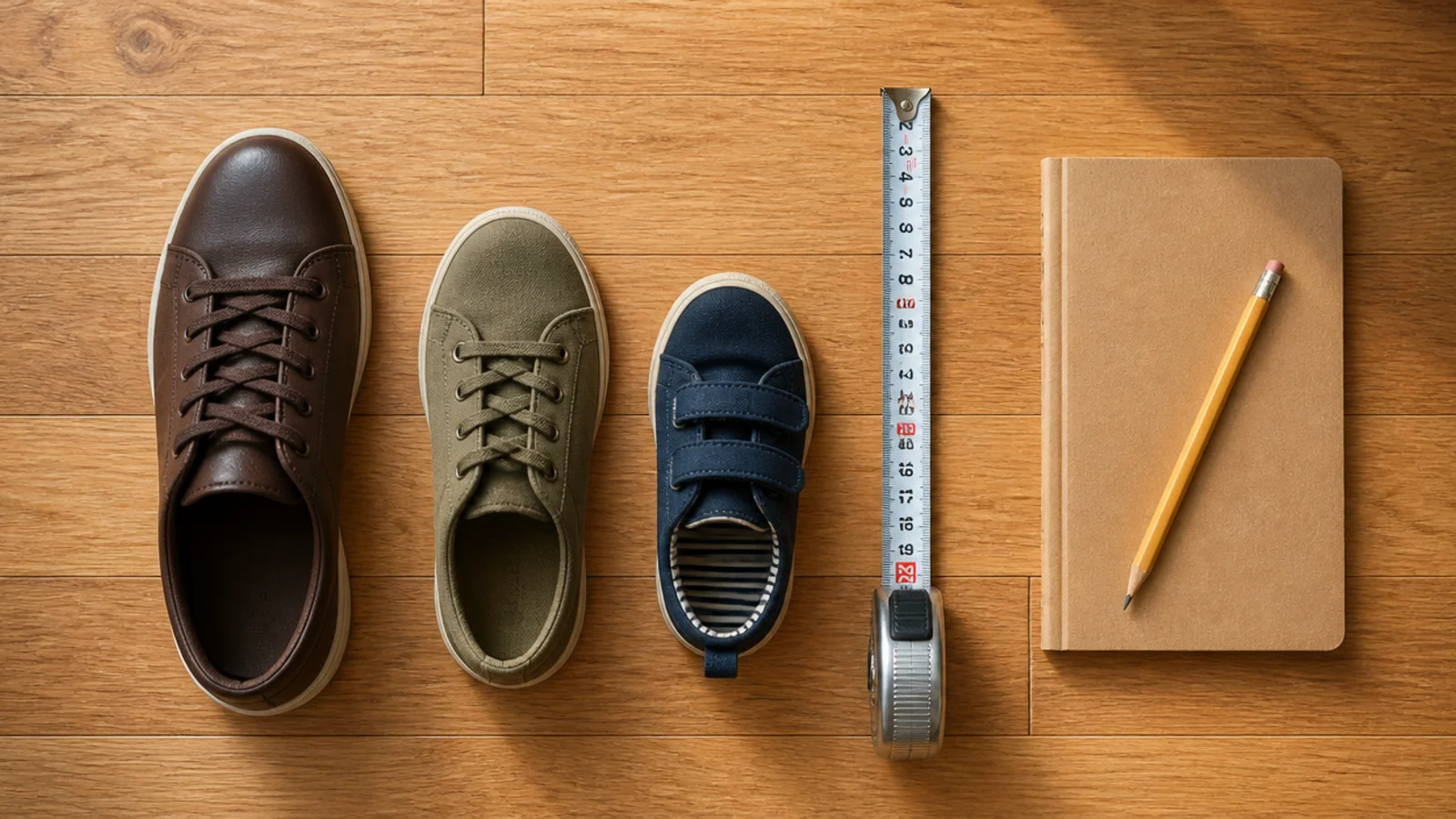
Go and count the pairs currently living within six feet of your front door. Not the ones in closets — the ones at the door, because that is the number the entryway has to solve.
For most households the honest figure is two to three pairs per person plus one seasonal overflow set. A family of four is ten to fourteen pairs in winter and six to eight in summer. Anything beyond that belongs in a closet, and trying to store it at the door is why entryways feel chaotic.
Then take three measurements.
Shoe length. A men's size 12 sneaker is about 12.5 inches. Stored flat, you need 13 inches of depth. Tilted at 45 degrees, nine inches is enough — which is exactly why slim tilt-out cabinets fit hallways where open racks never will.
Tier height. Six inches clears flats and sneakers. Boots need 14 to 16 inches and knee-high boots need 20. Almost every disappointing shoe rack has evenly spaced six-inch tiers and nowhere for boots to go.
Walkway. Measure from the wall to the nearest thing you walk around. Under 40 inches and a bench is usually the wrong call, however much you want somewhere to sit.
Budget tiers below: $ under $60, $$ $60–$150, $$$ $150+.
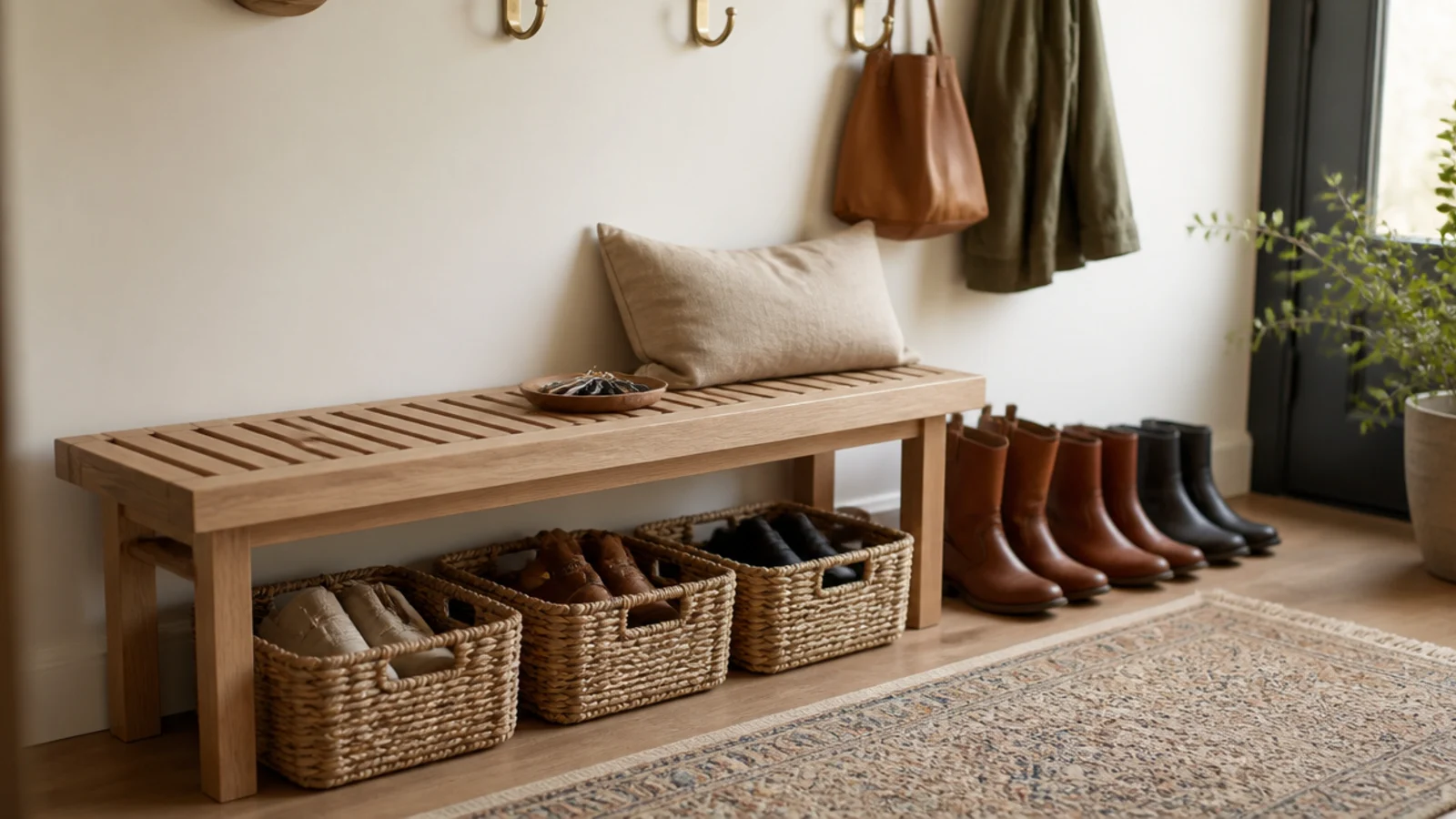
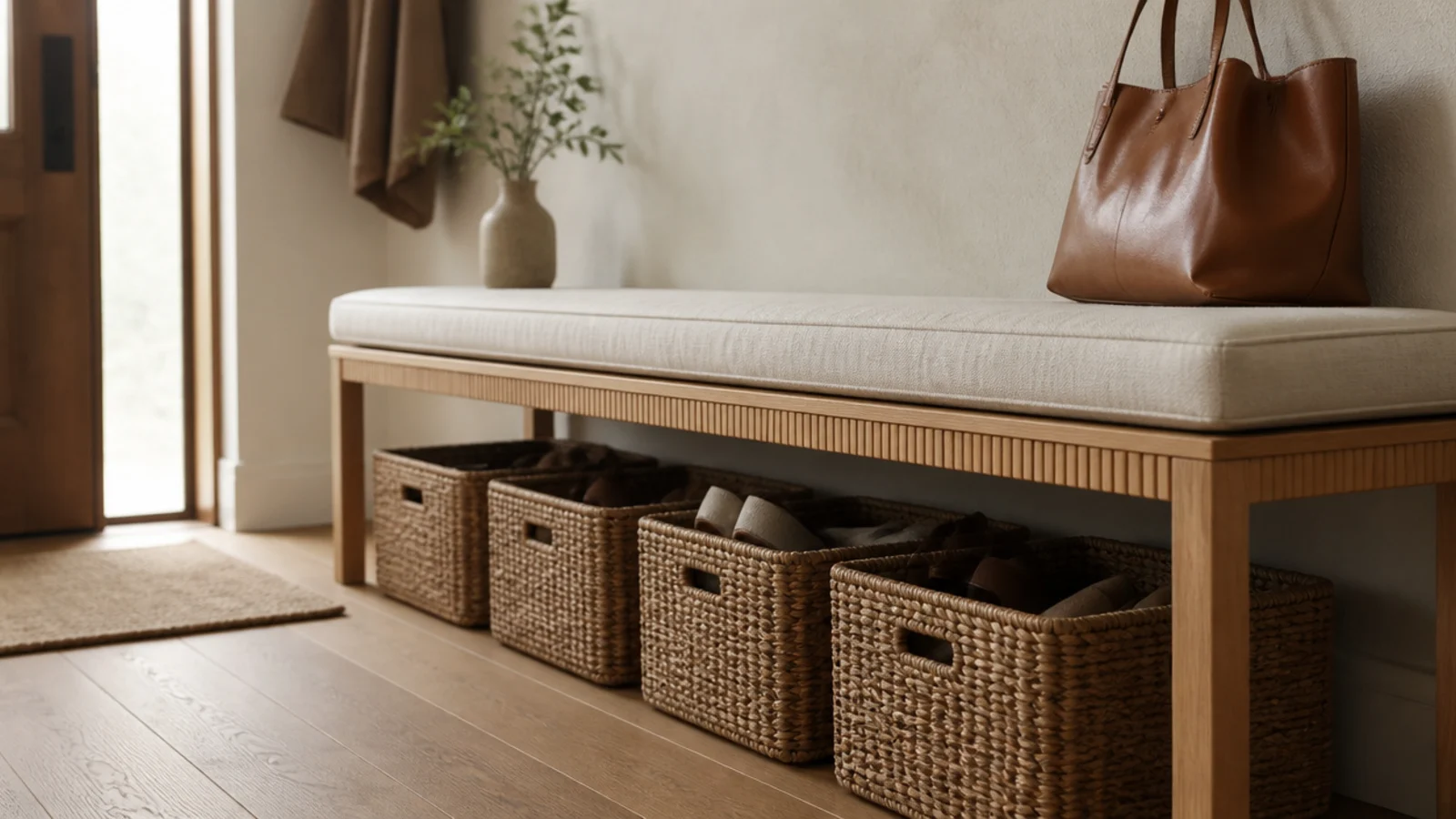
1. A slatted bench with a basket for each person
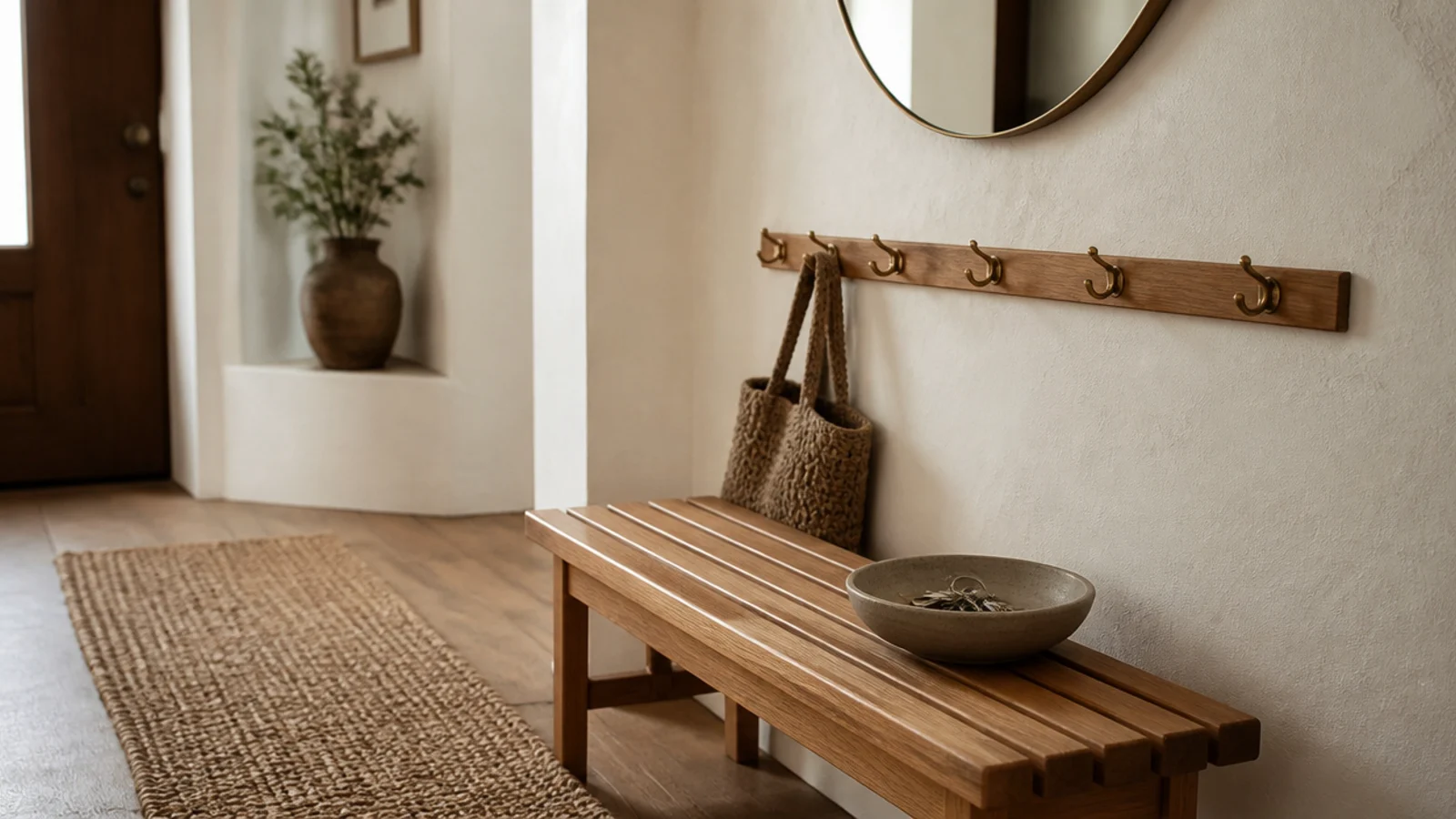
The setup that works in the most households. A bench at 18 inches high with one basket per person underneath, and the rule that when your basket is full, the overflow goes to a closet.
Named individual space is the change that makes shoe storage stick. Shared storage means nobody owns the overflow, which is how piles reappear. Add a small tag to each basket and it works better with children than any amount of asking. $$
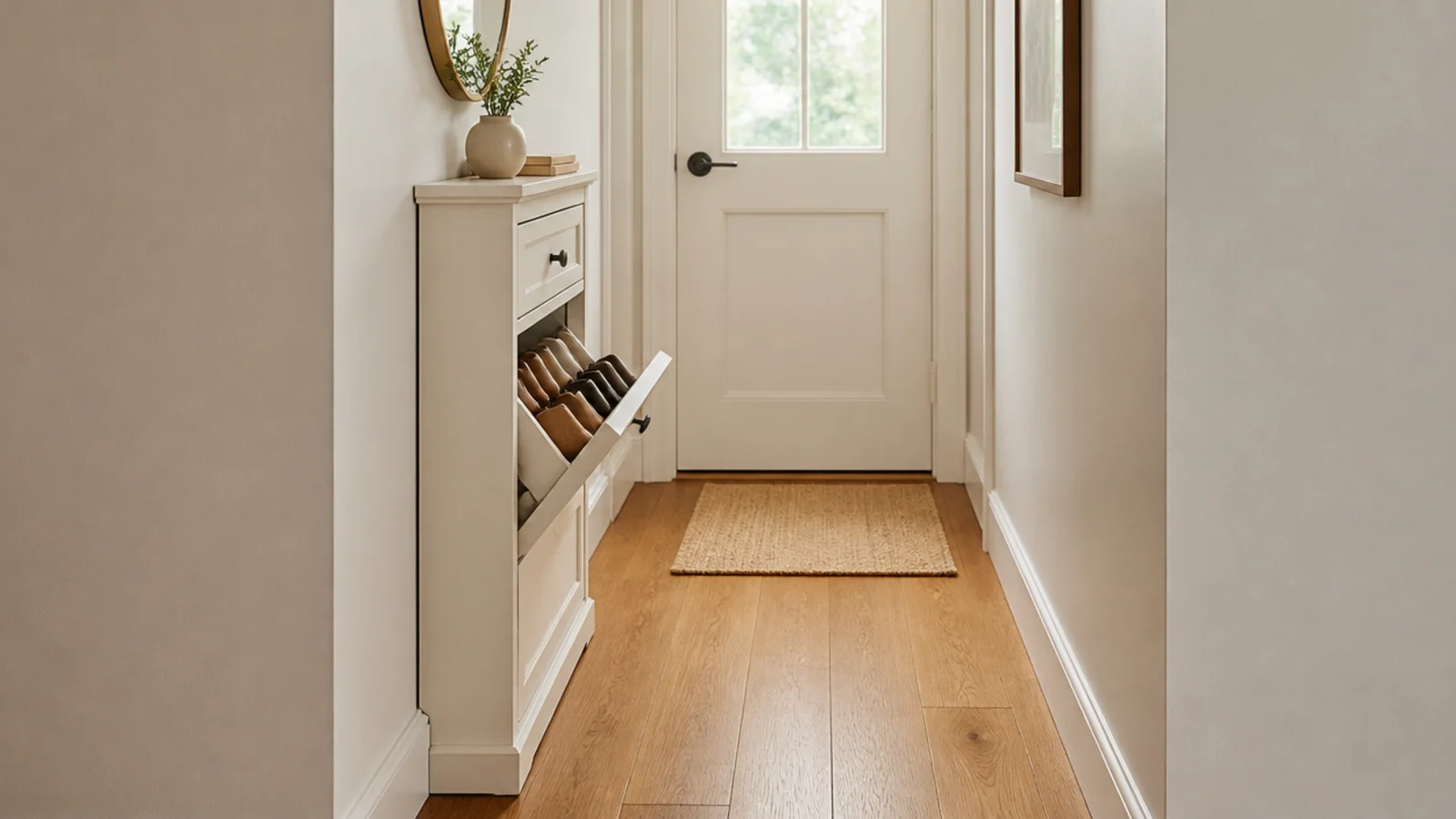
2. A slim tilt-out cabinet at nine inches deep
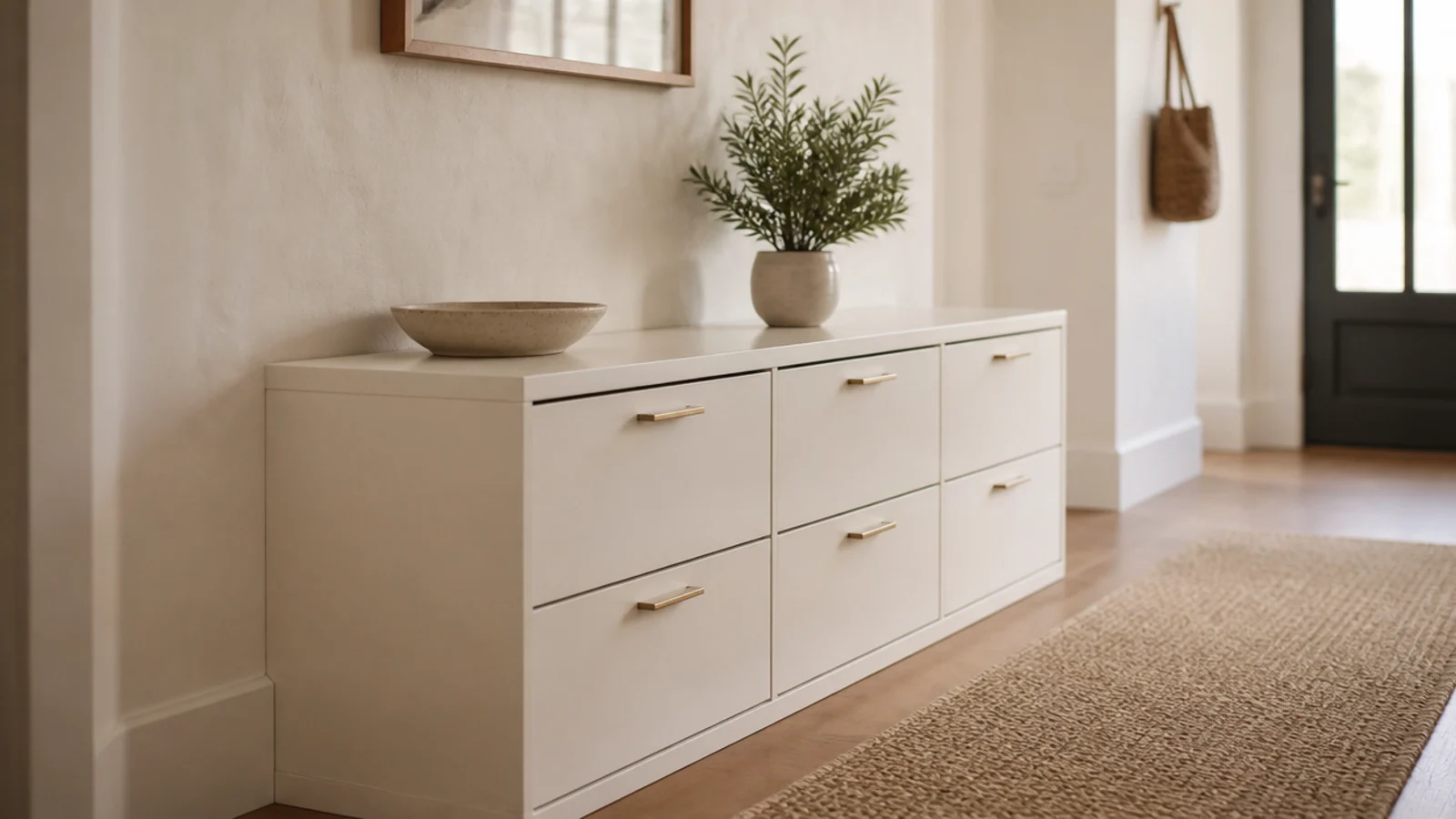
In a hallway, depth is everything and a tilt-out cabinet is the answer. Shoes sit at an angle inside a shallow drawer, so a nine-inch cabinet holds a 12.5-inch shoe.
Two drawers hold six to eight pairs of flats and sneakers. They do not hold boots, so plan somewhere else for those. Look for soft-close hinges — these get slammed shut with a foot daily. $$
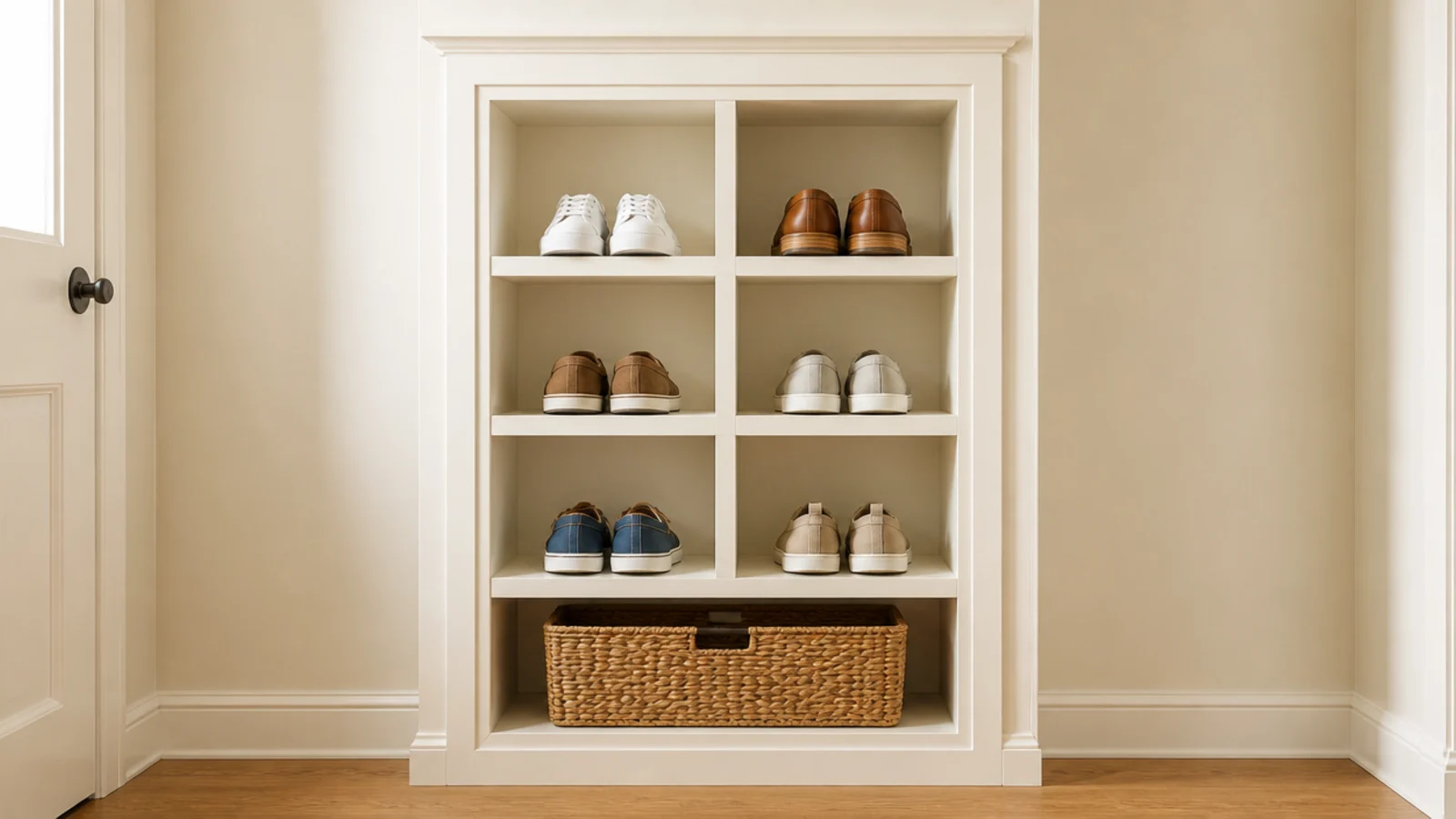
3. Open cubbies sized one pair each
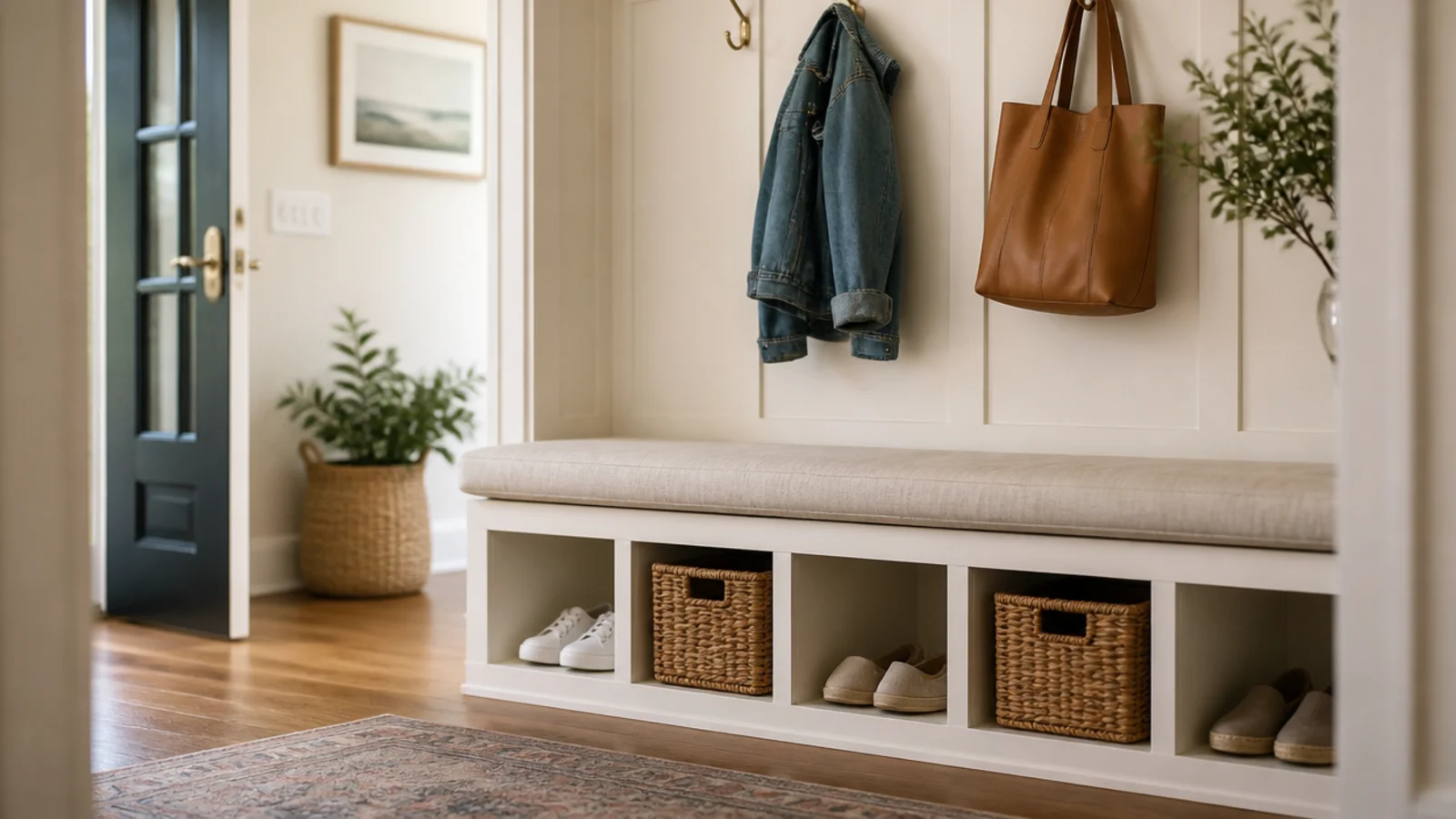
One pair per cubby. The moment a cubby holds two pairs it stops being a cubby and becomes a shelf, and shelves become piles.
Size each opening at 13 inches deep, 12 wide and 8 high for general use, with two taller cubbies at 16 inches for boots. Put the boot cubbies at the bottom where wet soles do the least damage and where the weight belongs. Open storage works because there is no door to skip, which matters enormously with children — the pair count in an open cubby unit stays honest, because you can see the moment it is full. $$–$$$
4. A boot tray for the wet pairs
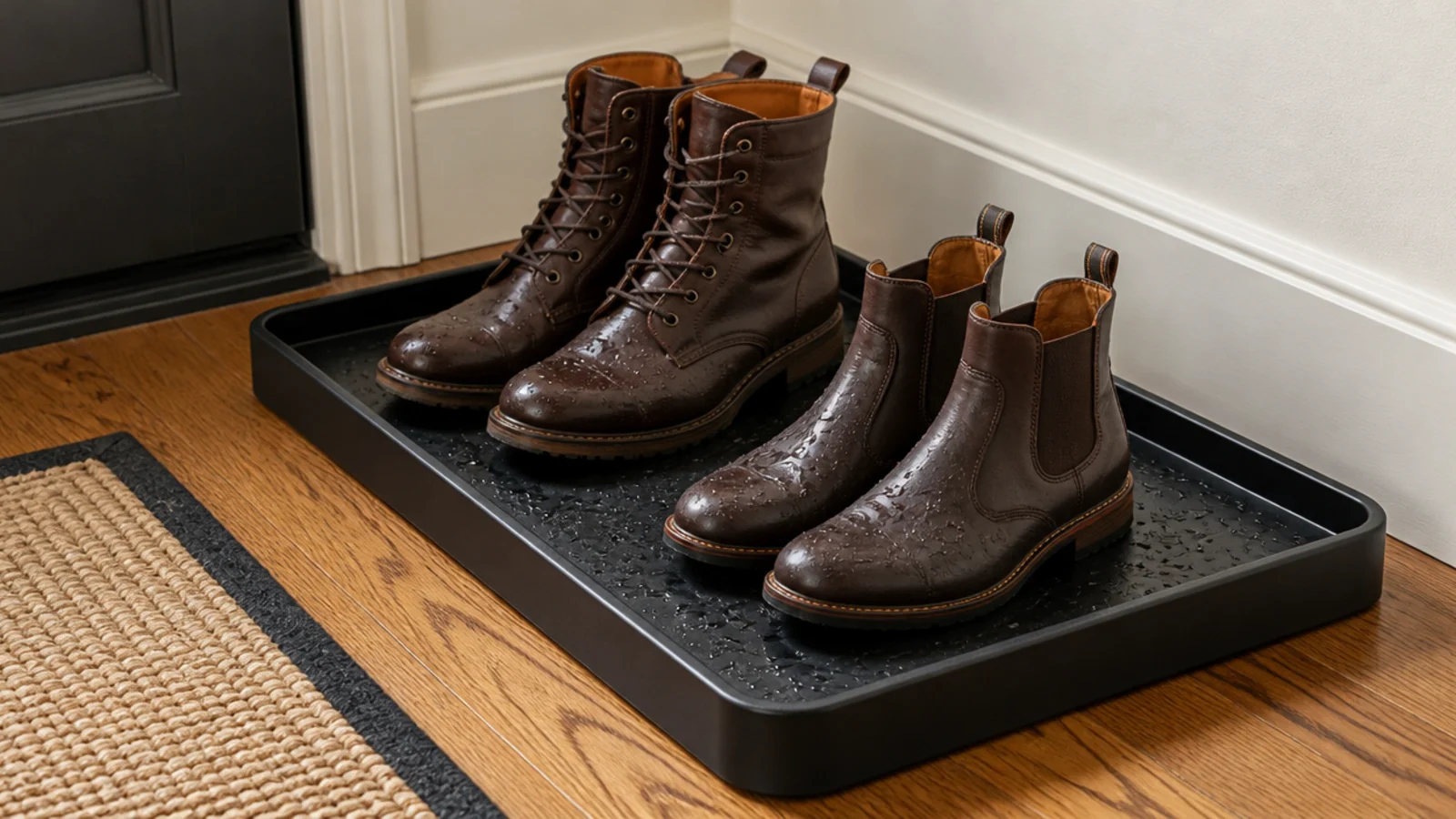
Wet boots need their own drip zone on the floor, never an enclosed cabinet. Boots put away wet stay wet and transfer moisture to everything beside them.
A raised-lip tray at least 15 inches deep holds two adult pairs. Metal or heavy rubber, not plastic that cracks in cold weather. This one item prevents most of the damp-hallway problems people blame on the storage. $
5. Wall-mounted rails that hold shoes vertically
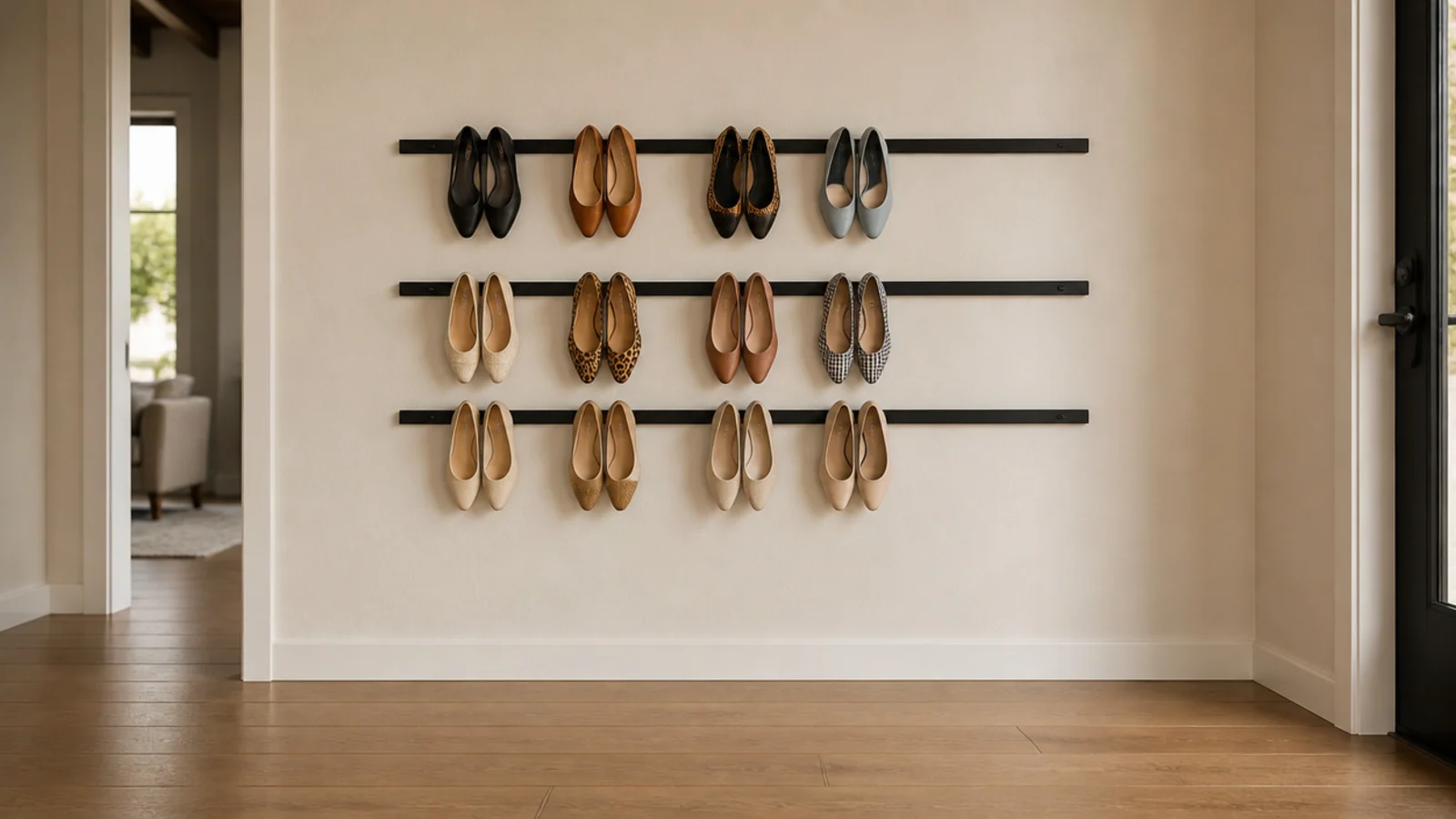
Slim rails that grip shoes by the heel use about four inches of depth and no floor space at all, which makes them the best option in a genuinely narrow entryway.
They only work for flats, sneakers and loafers — heavy boots pull free, and anything with a soft unstructured heel slips off within a day. Mount the lowest rail at 12 inches so a vacuum passes underneath, and space the rails 10 inches apart vertically so shoes on one rail do not brush the pair below. Three rails across a 36-inch wall hold about nine pairs. $
6. A narrow console with a lower shelf
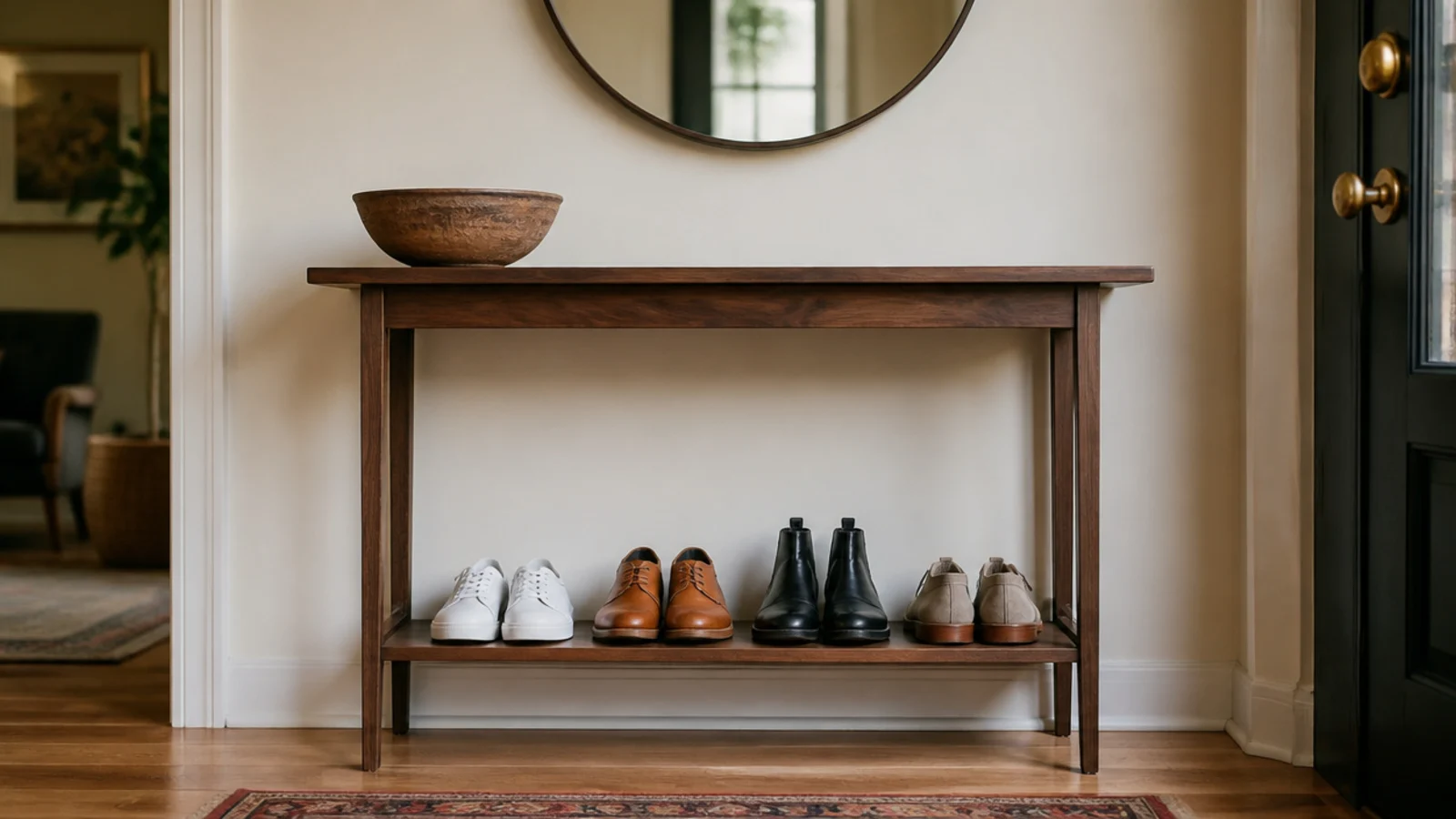
A console table at 12 inches deep gives you a landing surface on top and shoe storage underneath, in the footprint of a shelf.
Keep the lower shelf 6 inches off the floor so it looks deliberate rather than crammed. Four pairs lined up neatly underneath reads as tidy; six pairs jammed in reads as storage overflow. $$
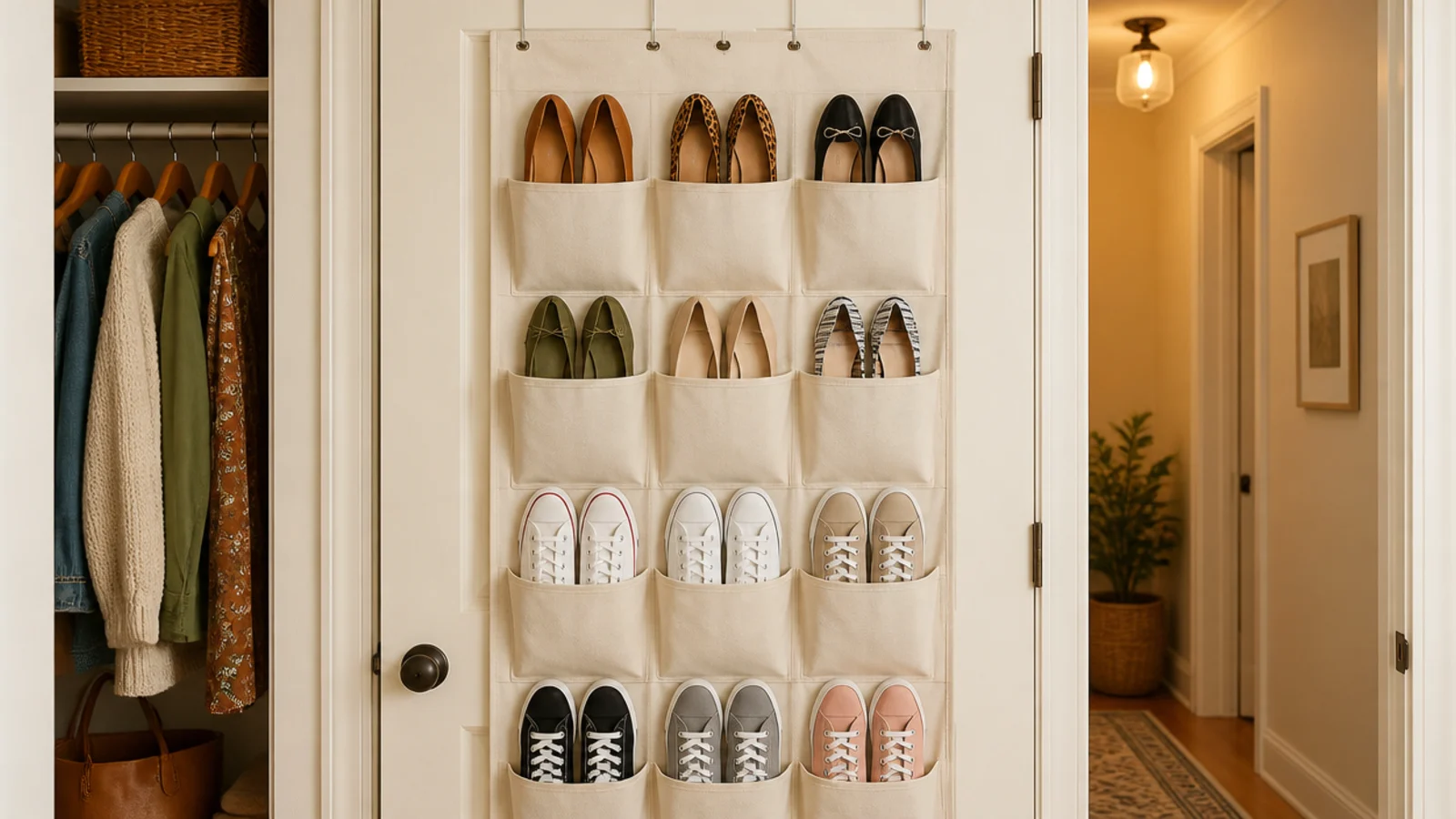
7. An over-the-door pocket organizer
A canvas organizer on the back of a coat closet door holds a dozen pairs of flats on a surface that was doing nothing.
Choose canvas or felt over clear vinyl, which yellows and cracks. Check the door still closes with it fitted — some interior doors have very little clearance. Best for out-of-season and rarely worn pairs. $
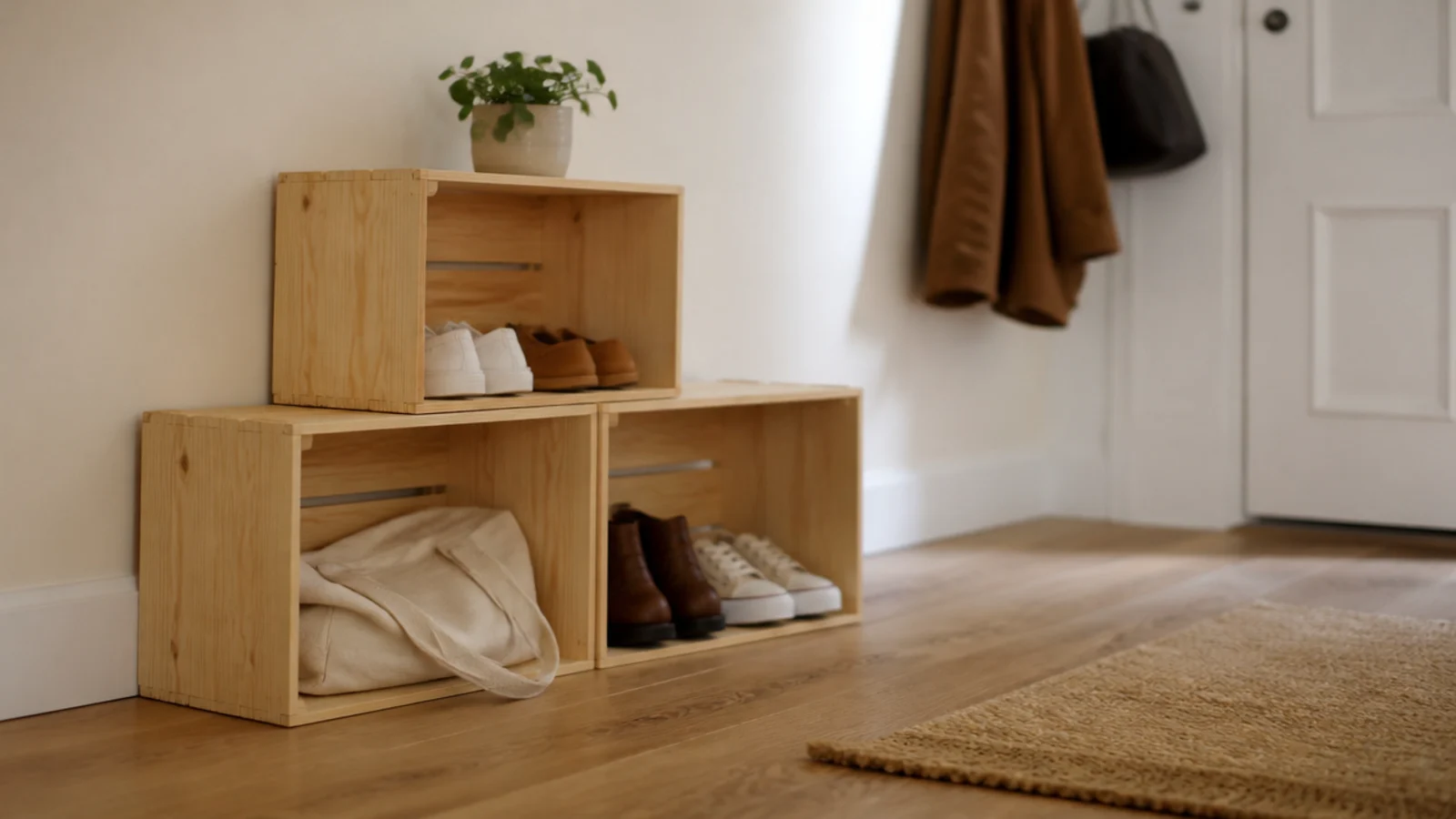
8. Stacked crates turned on their sides
Three crates on their sides, staggered rather than stacked square, give you cubbies for about $25 and come apart flat when you move.
Seal them thoroughly — most crates are raw pine and wet shoes will stain them within a season. Screw the crates to each other and the top one to the wall if there are children around. $
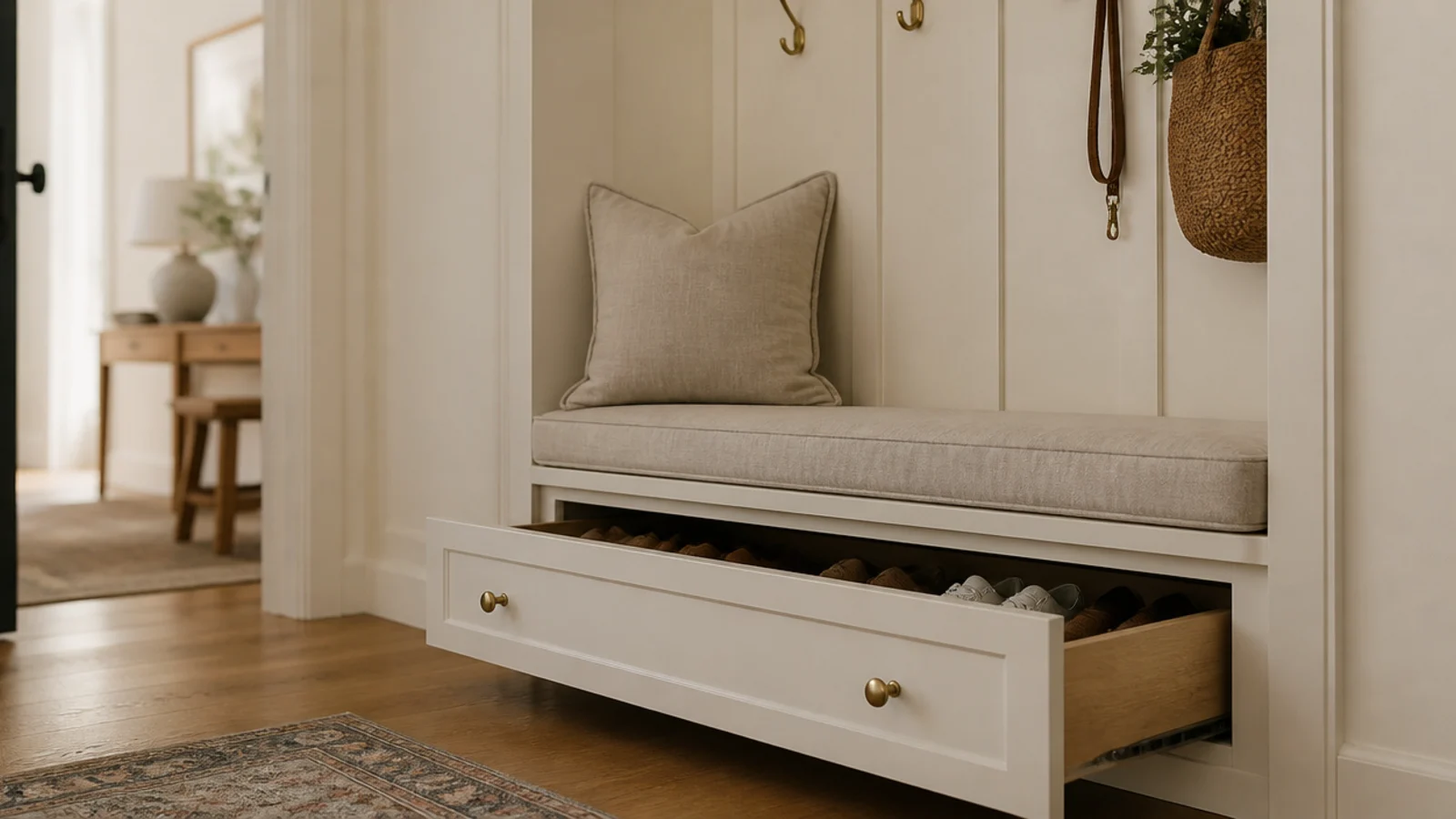
9. A drawer built under a bench seat
Drawers beat doors in an entryway because your hands are usually full. A deep pull-out under a bench holds eight to ten pairs and hides all of them.
Make it 14 inches deep internally so boots fit lying down. Full-extension runners are worth the extra cost here — half-extension drawers mean the back third never gets used. There is a full build in the DIY shoe storage guide. $$$
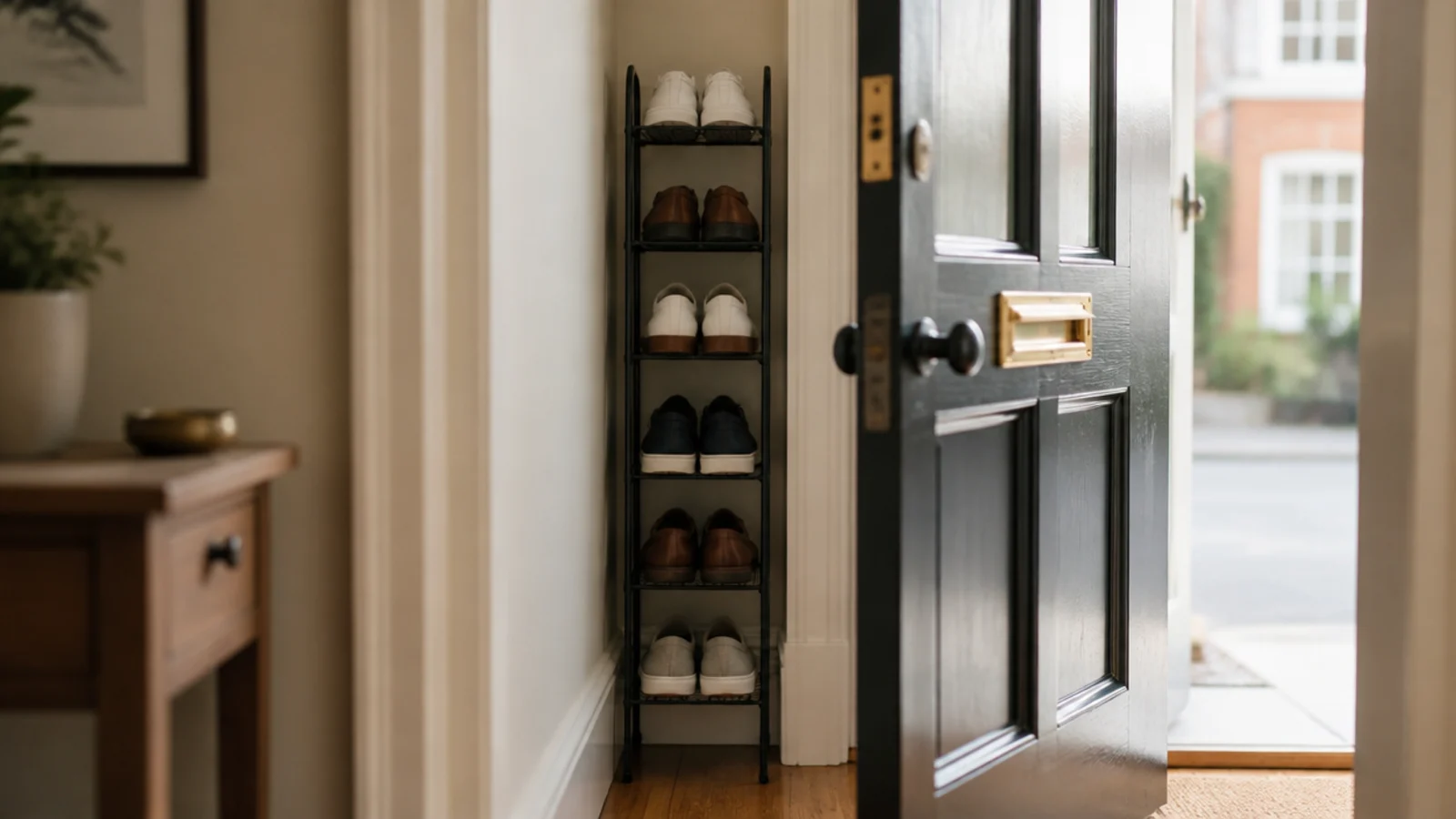
10. A vertical rack behind the door
The wall behind an open front door is free space almost nobody uses. A tall narrow rack there holds six pairs without touching the walkway.
Open the door fully, measure wall to door face, subtract two inches. That is your maximum depth, usually six to eight — enough for a tilted rack but not a flat one. $
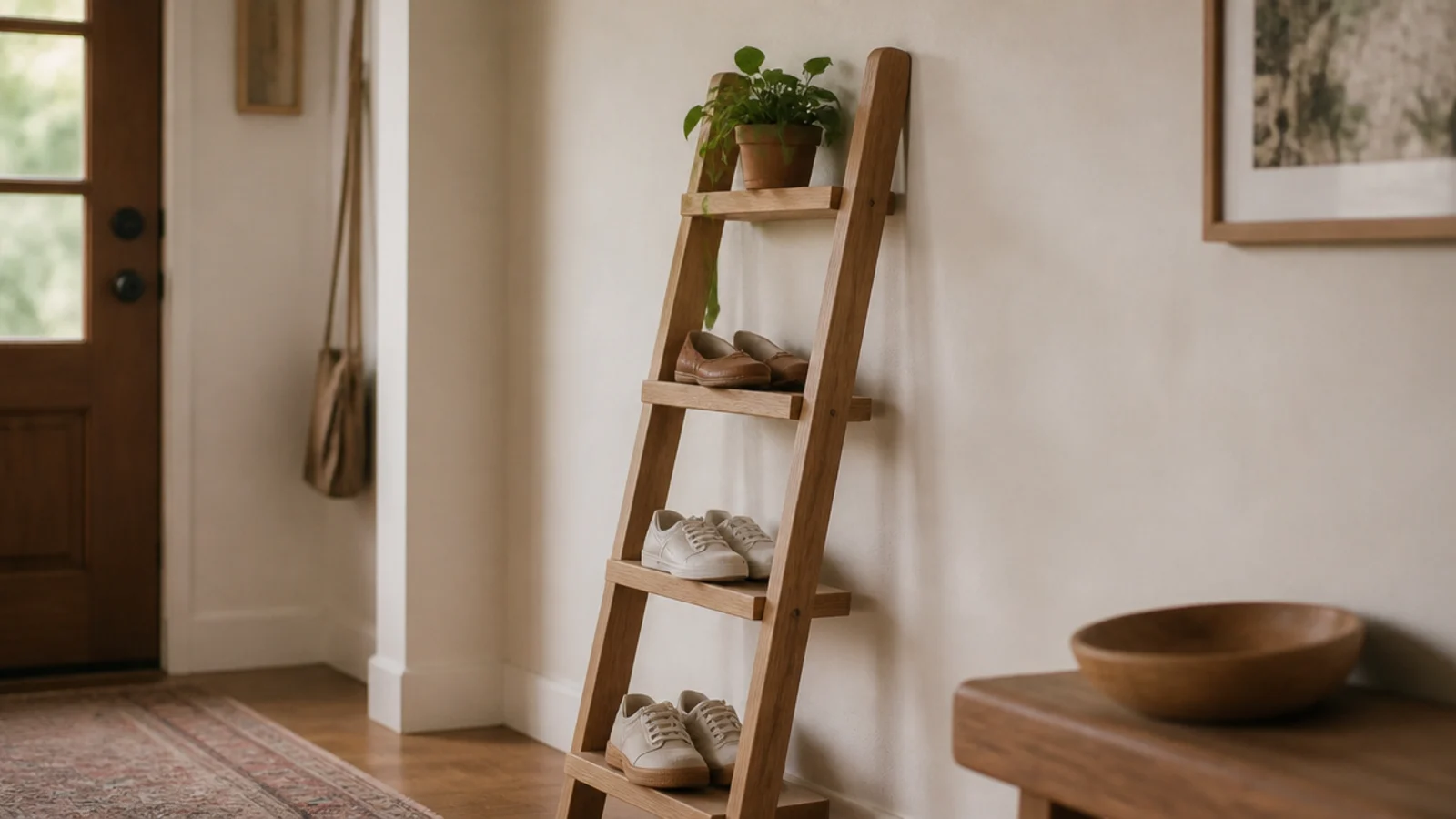
11. A leaning ladder rack for flat shoes
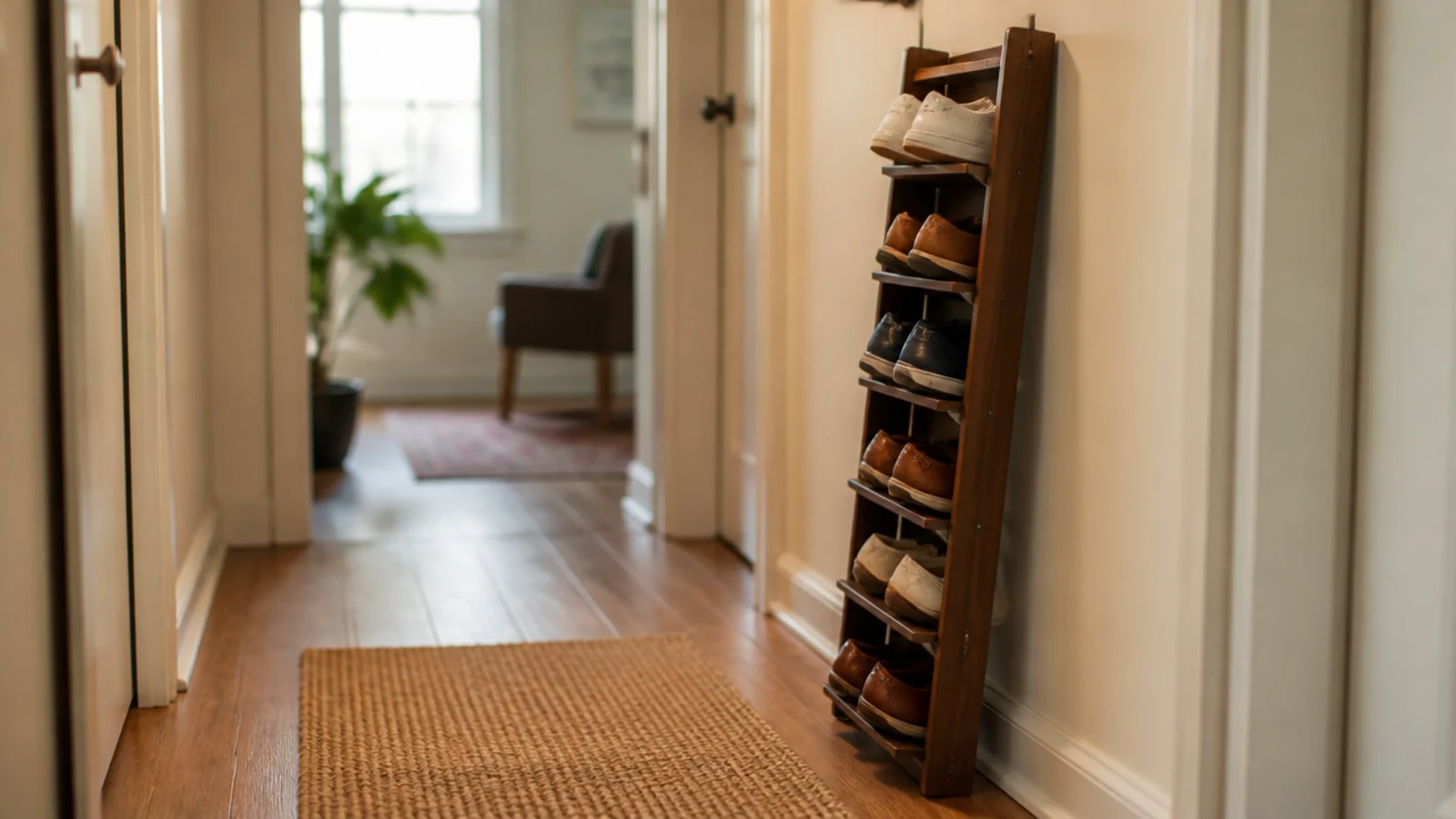
Angled rungs on a leaning ladder hold flats and sneakers without any fixing at all, which makes it the easy renter answer.
Lean at about 15 degrees and put felt pads under the feet so it does not walk on a wood floor over time. Heaviest shoes on the lowest rung, always, or the whole thing gets top-heavy and slides. It holds eight to ten pairs of flat shoes and no boots at all, so treat it as the summer solution rather than the year-round one. $–$$
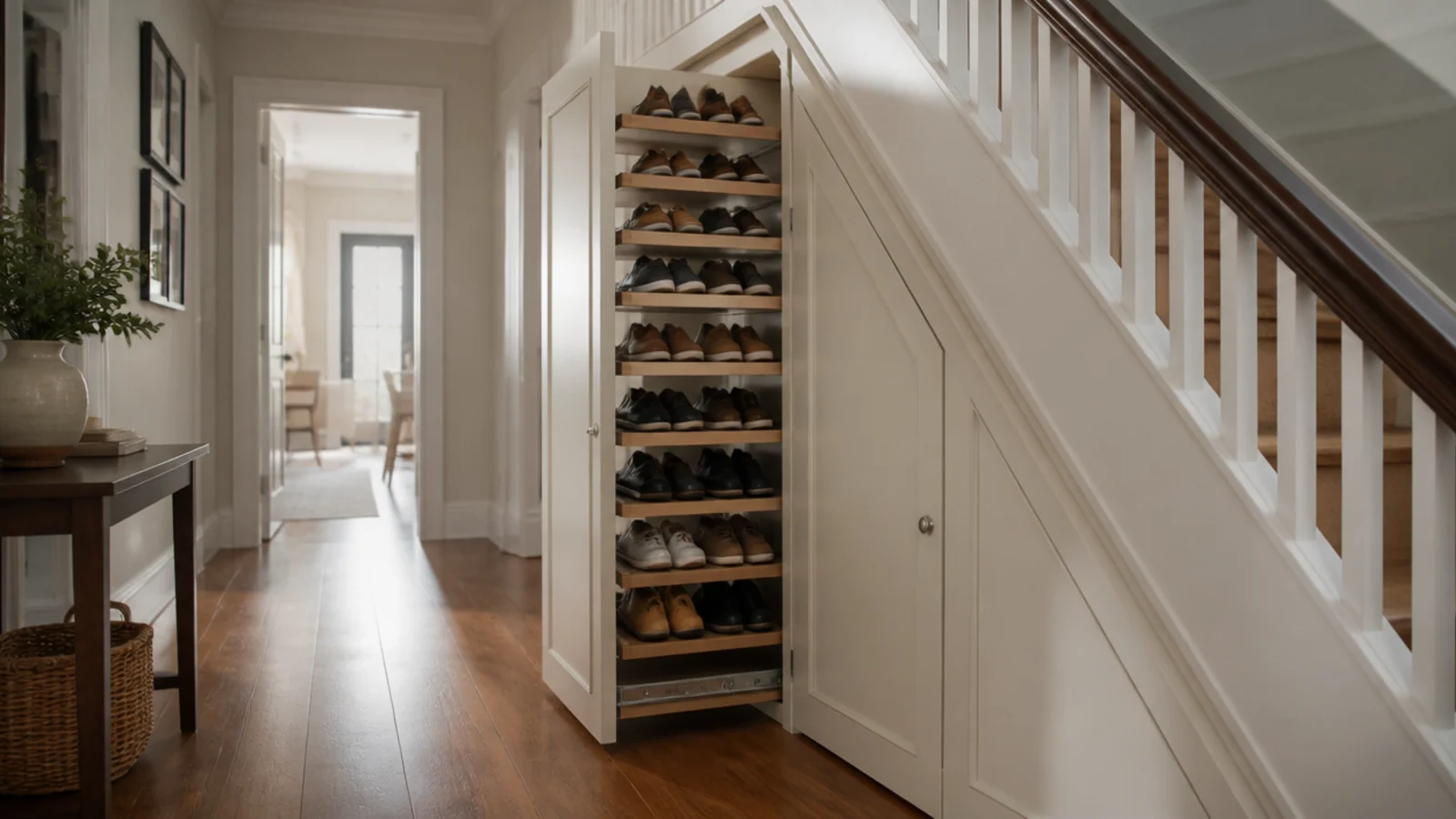
12. Under-stairs pull-outs at the entry
If your entry sits under a staircase, pull-out units are transformative. A tall pull-out stores shoes on both faces and reaches the deep back corner that fixed shelving abandons.
This is the highest-capacity option here — 20 pairs or more in a footprint you were not using. It is also the most expensive and needs carpentry. $$$
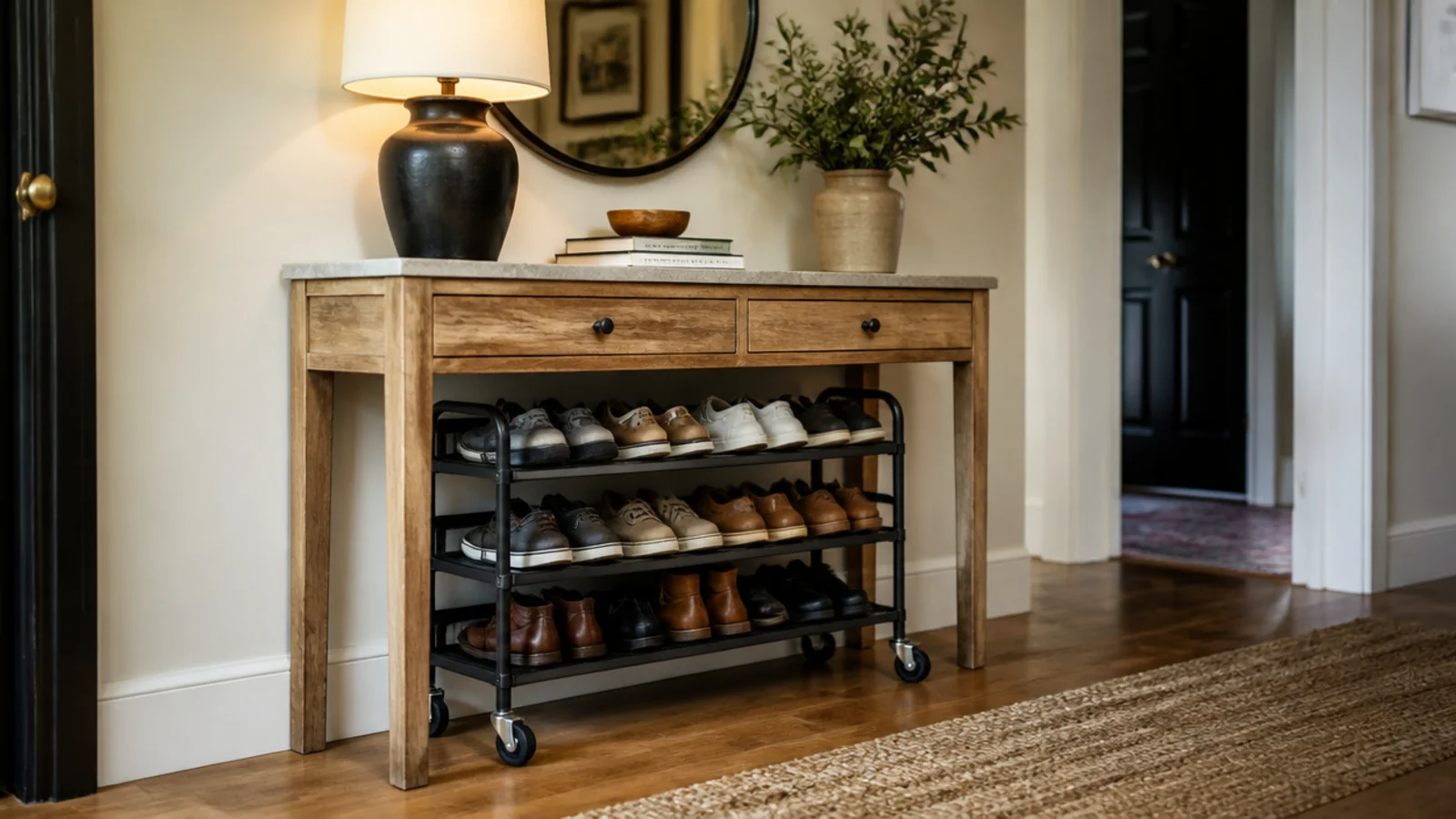
13. A rolling cart under the console
A low three-tier cart on castors tucked under a console holds a dozen pairs and rolls out so you can sweep underneath, which in an entryway matters more than people expect.
Measure the clearance under the console before buying — an inch matters. Powder-coated steel over chrome wire, which rusts where wet shoes sit on it. $$
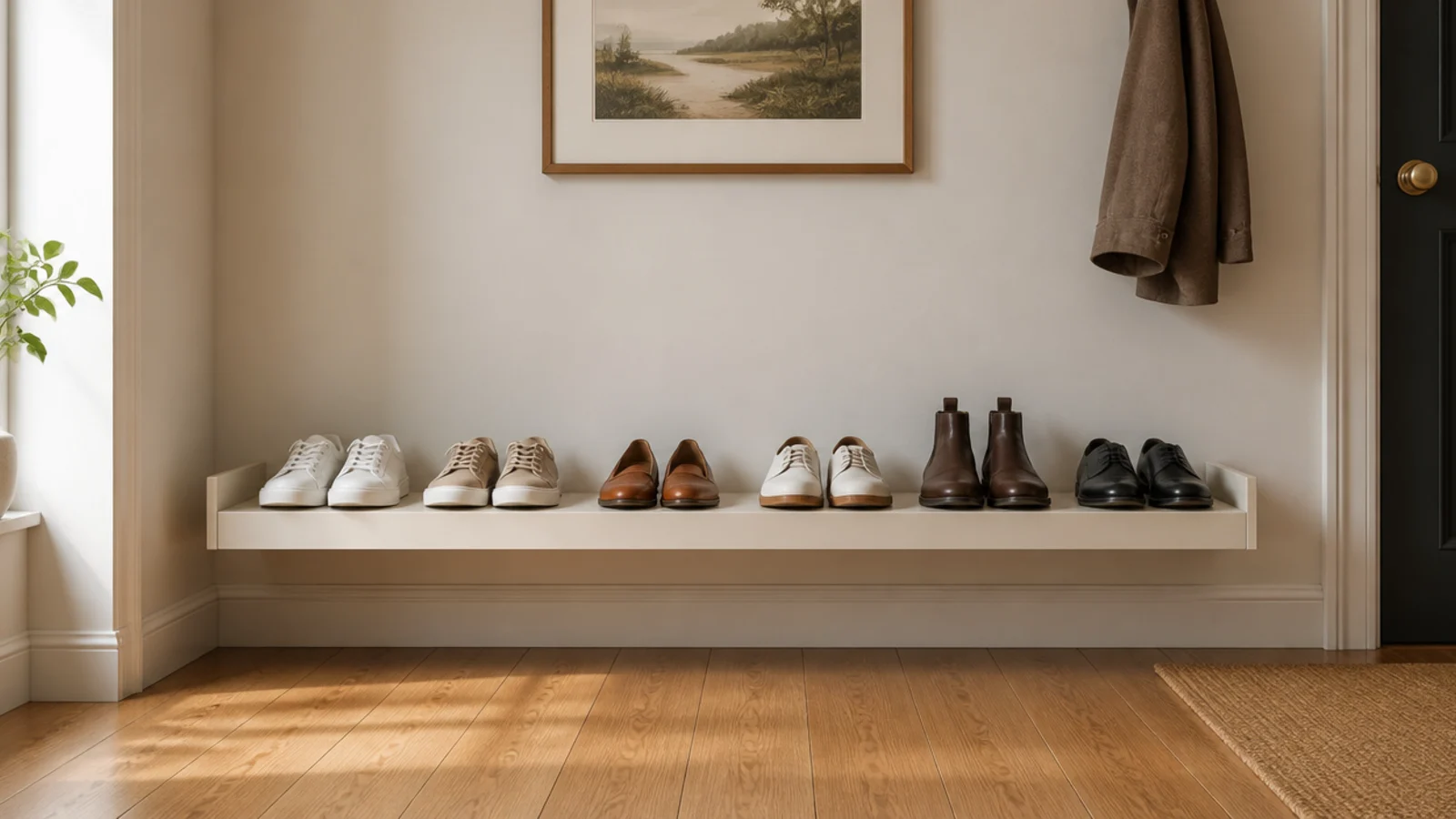
14. A shallow shoe shelf above the baseboard
A single shallow shelf mounted 10 inches off the floor holds six pairs in a row and leaves the floor clear for a vacuum.
Ten inches is the number: high enough to run a vacuum under, low enough that shoes go on with a foot rather than a bend. Keep it shallow at 10 inches deep and let the toes overhang slightly — the shelf reads lighter and you lose no capacity. Paint it the wall color and it disappears into a small entryway entirely. $
15. A daily-pairs-only landing zone
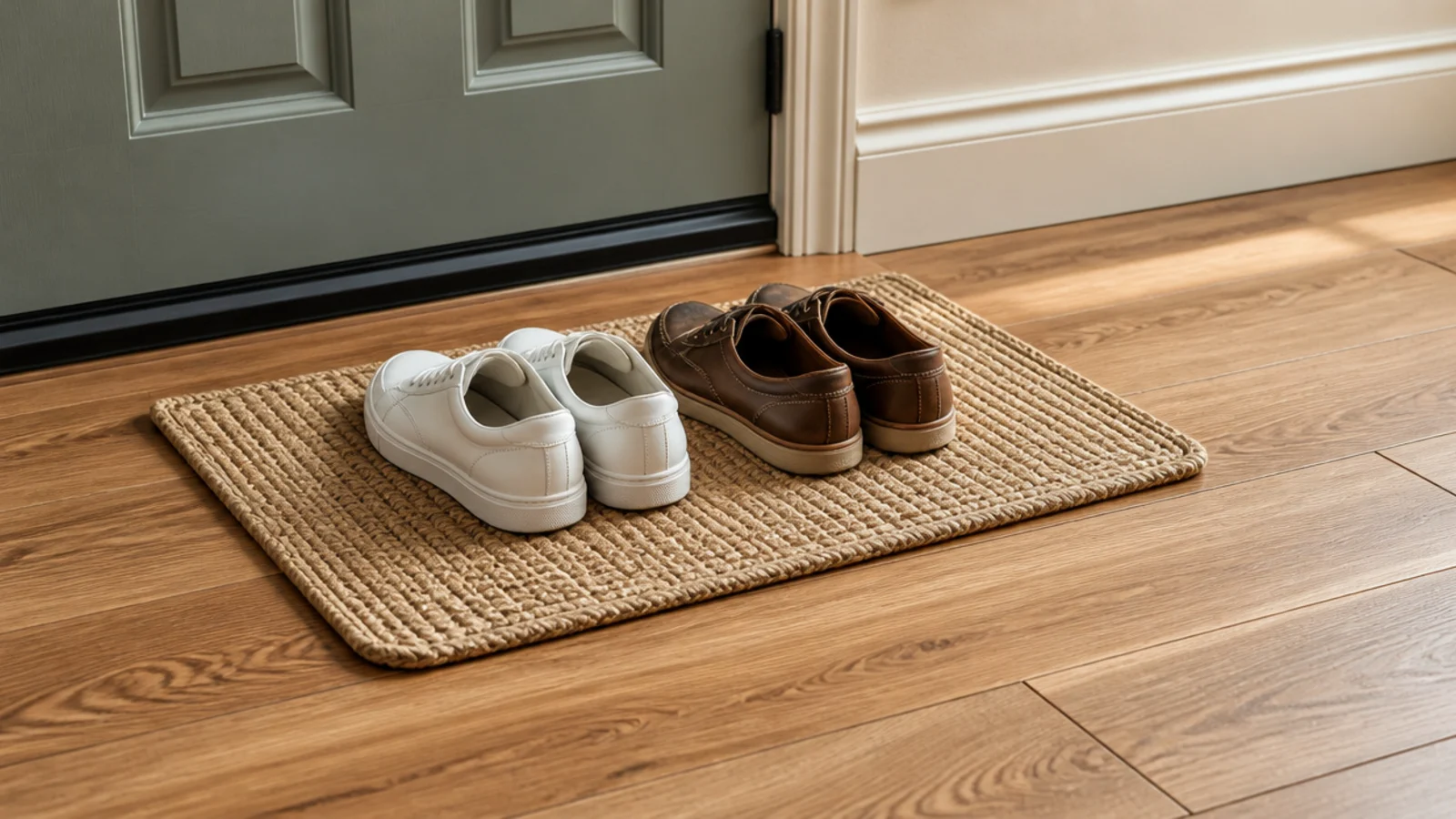
The idea that costs nothing. Put a small jute mat by the door sized for exactly two pairs, and treat everything else as overflow that goes elsewhere.
Constraining the landing zone is what stops it growing. A mat with room for eight pairs will hold eight pairs by Thursday; a mat with room for two holds two. If you want the wider entryway system this fits into, see entryway ideas. Free–$
Mistakes to Skip
- Buying a rack with evenly spaced six-inch tiers. Nothing taller than a sneaker fits, so boots stay on the floor and the pile never actually goes away.
- Choosing closed storage for a household with children. Every door is a step people skip, and shoes end up beside a beautiful empty cabinet.
- Sizing storage for every pair anyone owns. Entryway storage is for daily shoes; sizing it for the whole collection guarantees it will not fit the space.
Frequently asked questions
How deep does entryway shoe storage need to be?
Thirteen inches if shoes lie flat, because a men's size 12 sneaker is about 12.5 inches long. Tilt them at 45 degrees and nine inches is enough, which is why slim tilt-out cabinets fit hallways that open racks never will. Measure your largest household shoe before buying anything — it is the number that decides.
How many pairs should live at the front door?
Two to three per person plus one seasonal overflow set. For a family of four that is ten to fourteen pairs in winter and six to eight in summer. Everything beyond that belongs in a closet or under a bed. Storage sized for every pair anyone owns will always be too big for the space you have.
What is the best shoe storage for a narrow entryway?
A tilt-out cabinet at nine inches deep, or wall-mounted rails that hold shoes vertically against the wall. Both keep the walkway clear, which matters more than capacity in a hallway under 40 inches wide. A bench in a narrow entry is usually the wrong call however much you want somewhere to sit.
How do I stop the entryway shoe pile coming back?
Give every person one designated basket or cubby and cap it at what fits. Piles reappear when storage is shared, because nobody owns the overflow. Named, individual space is the single change that makes shoe storage stick, and it works better with children than any amount of asking.
Should entryway shoe storage be open or closed?
Open, if there are children or if anybody in the house is in a rush most mornings. Every closed door is a step people skip, and shoes end up on the floor beside a beautiful empty cabinet. Closed storage works when the household is adults who genuinely put things away.
How do I handle wet boots by the door?
A boot tray with a raised lip, at least 15 inches deep, on the floor beside the storage rather than inside it. Wet boots put into an enclosed cabinet stay wet, and the moisture transfers to everything next to them. Give them a designated drip zone and the rest of the system stays dry.
Count the pairs first, measure your largest shoe second, and only then choose — that order prevents almost every shoe storage mistake there is. For tight hallways see shoe storage for small spaces, for a seat that stores underneath see shoe storage benches, and if you want a closed unit instead of open cubbies, shoe cabinet ideas covers those properly. Save the pin before the next school-morning pile-up.
Want more like this? Browse all 15 shoe storage ideas guides — they all use the same measurements and budget tiers.

Pin it for later
Save this to your Shoe Storage Ideas board
Pin it now so it is waiting for you when the tape measure comes out — and so the next person hunting for this idea can find it too.
Save this pinKeep going
More ideas worth saving while you have the tape measure out.