Shoe Storage Ideas · Listicle
25 Budget-Friendly Shoe Storage Ideas for Small Spaces

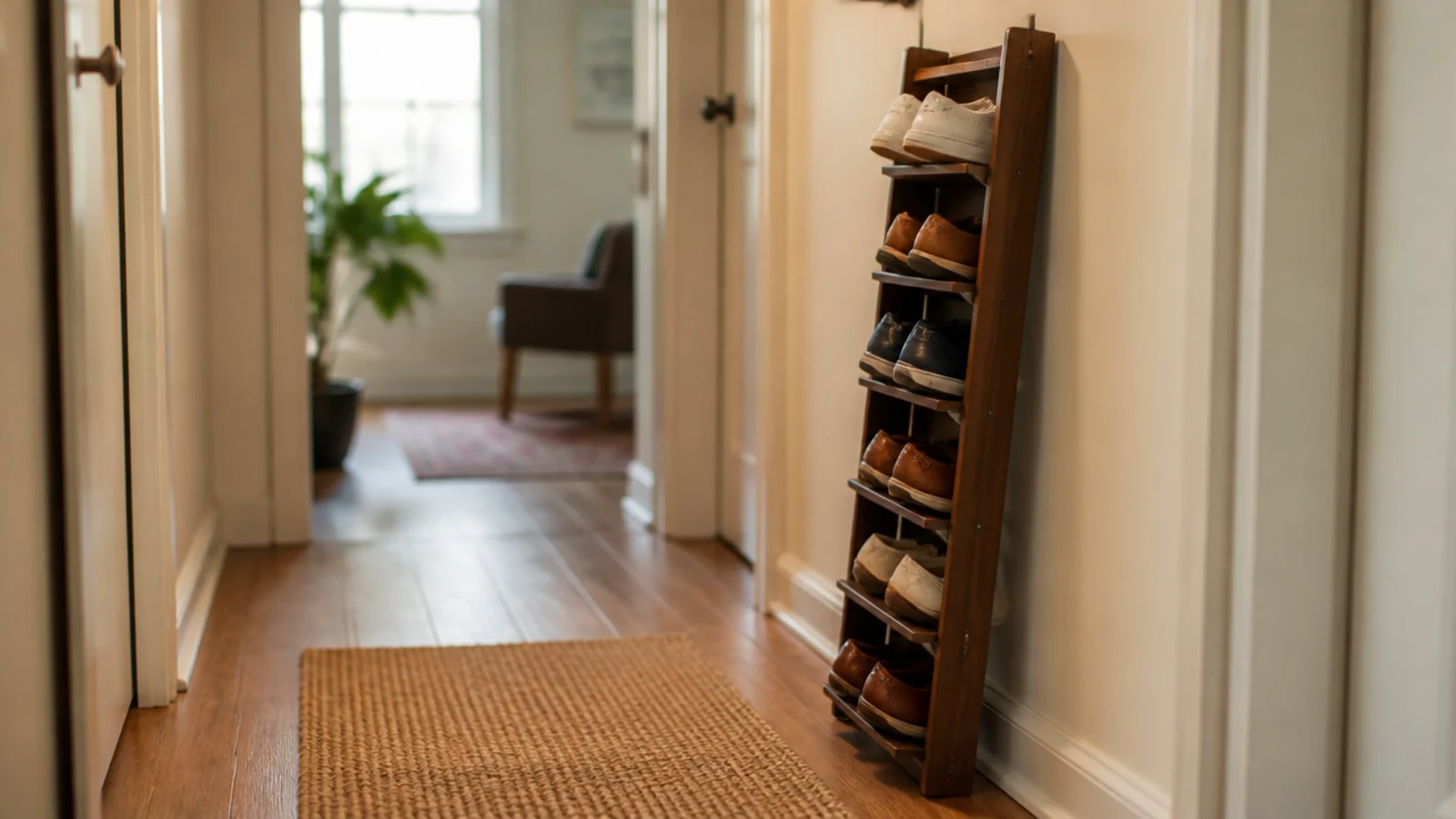
Shoe storage in a small space is a geometry problem before it is a shopping problem. Almost every rack sold is designed for shoes lying flat, which needs 13 inches of depth you probably do not have. Tilt the same shoes and the number drops to nine. These 25 ideas all work in tight rooms, and most of them cost under $25.
In this guide27 sections — tap to openHide
- 1.The two tricks every small-space shoe storage idea depends on
- 2.Tilt every shoe to 45 degrees
- 3.Rolling boxes under the bed
- 4.Store pairs toe-to-heel
- 5.Risers that double a closet floor
- 6.An over-door pocket organizer
- 7.A tension rod along the closet base
- 8.Hooks under an existing shelf
- 9.Crates tucked under a console
- 10.The back of a bedroom door
- 11.Slim boxes under the sofa
- 12.Breathable bags for off-season pairs
- 13.One board ten inches off the floor
- 14.A slim rack in the appliance gap
- 15.Adhesive hooks for flip-flops
- 16.Stackable clear boxes
- 17.A shelf above the doorway
- 18.A magazine file as a heel holder
- 19.A bench with a lift-up seat
- 20.A hanging canvas organizer in the closet
- 21.Under-bed duvet bags for winter boots
- 22.A tilted rack from one board
- 23.One capped basket per person
- 24.The bottom stair as a shoe ledge
- 25.A narrow shelf behind the door
- 26.The one-in-one-out rule
- 27.Mistakes to Skip
The two tricks every small-space shoe storage idea depends on
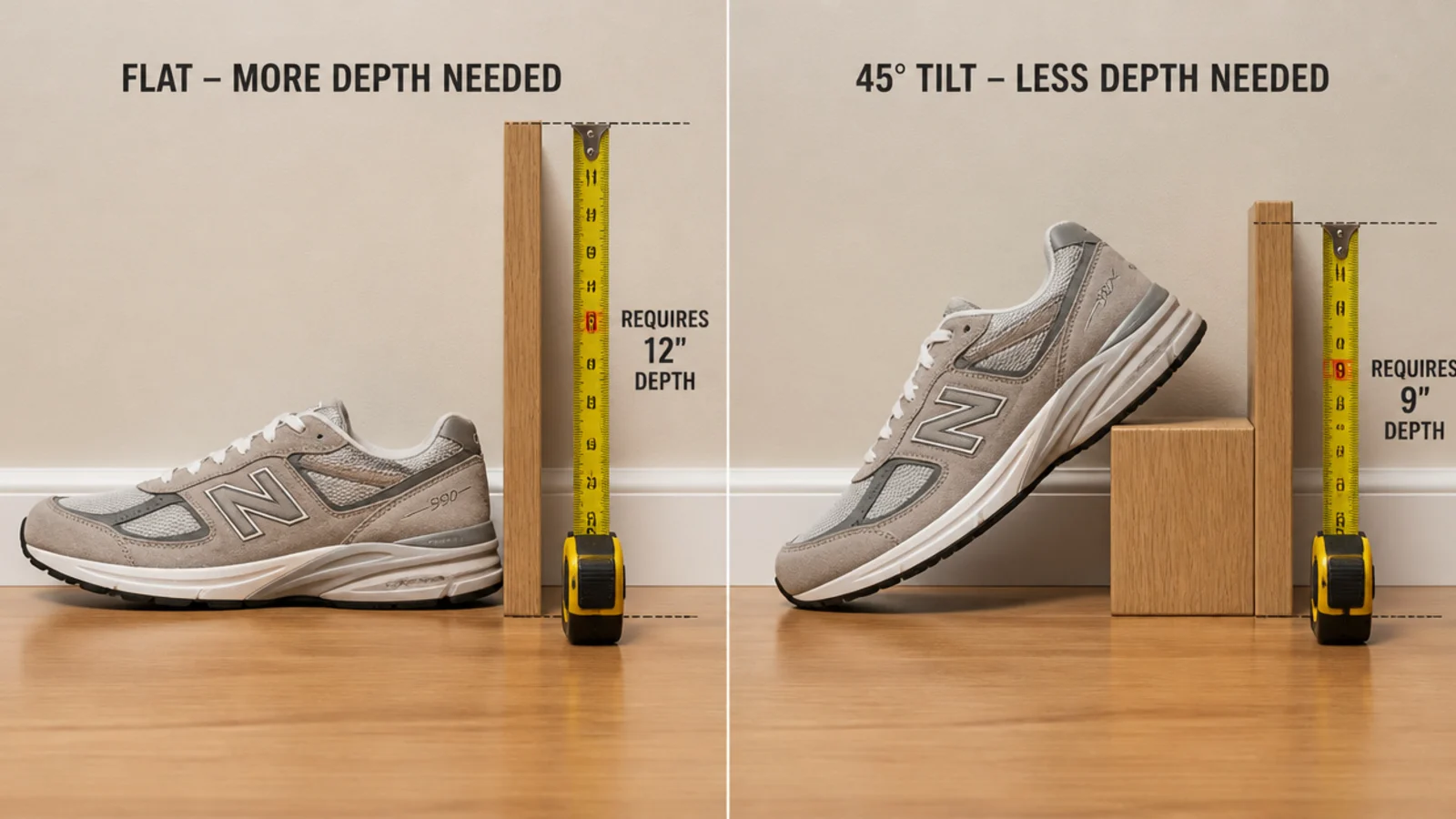
Tilt saves four inches. A men's size 12 sneaker is about 12.5 inches long. Stored flat, you need 13 inches of depth. Tilted at 45 degrees, nine inches is enough. In a hallway that is the difference between a rack you can walk past and one you turn sideways for, and it costs nothing — you can tilt shoes on a shelf you already own by adding a small lip at the front.
Height and hidden space are free. Under a bed, under a sofa, behind a door, above a door, on the back of a door. None of these cost floor area, and between them most people can store an entire collection without giving up a single square foot.
Then the constraint nobody wants to hear: a small entryway realistically holds six to eight pairs. Store the daily shoes at the door and everything else elsewhere. An entry with eight pairs stored neatly works far better than one crammed with sixteen, however clever the storage.
Budget tiers below: $ under $25, $$ $25–$60, $$$ $60+. Fifteen of these are in the lowest tier.
1. Tilt every shoe to 45 degrees
The highest-value change here and it is free. Add a one-inch lip along the front of any existing shelf and rest the shoes against it at an angle.
Nine inches of depth instead of thirteen, on storage you already have. In a narrow hallway this is often the whole solution. Free–$
2. Rolling boxes under the bed
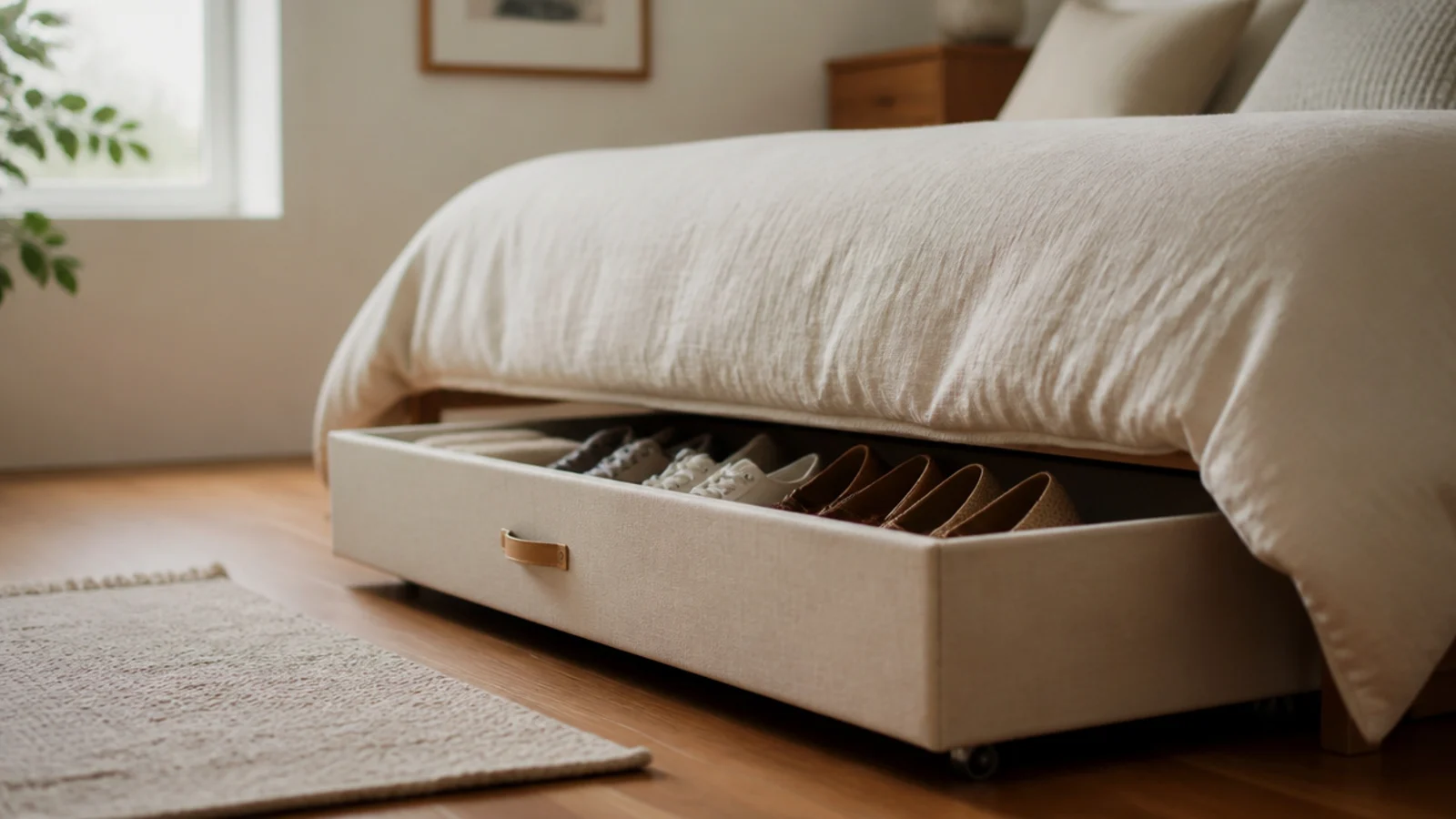
The biggest single volume of dead space in a small home. A low box on castors holds eight to twelve pairs and pulls out with one hand.
Measure your bed clearance first — most frames give four to seven inches. Fabric boxes with a stiffened base slide better than rigid plastic on a rug. $–$$
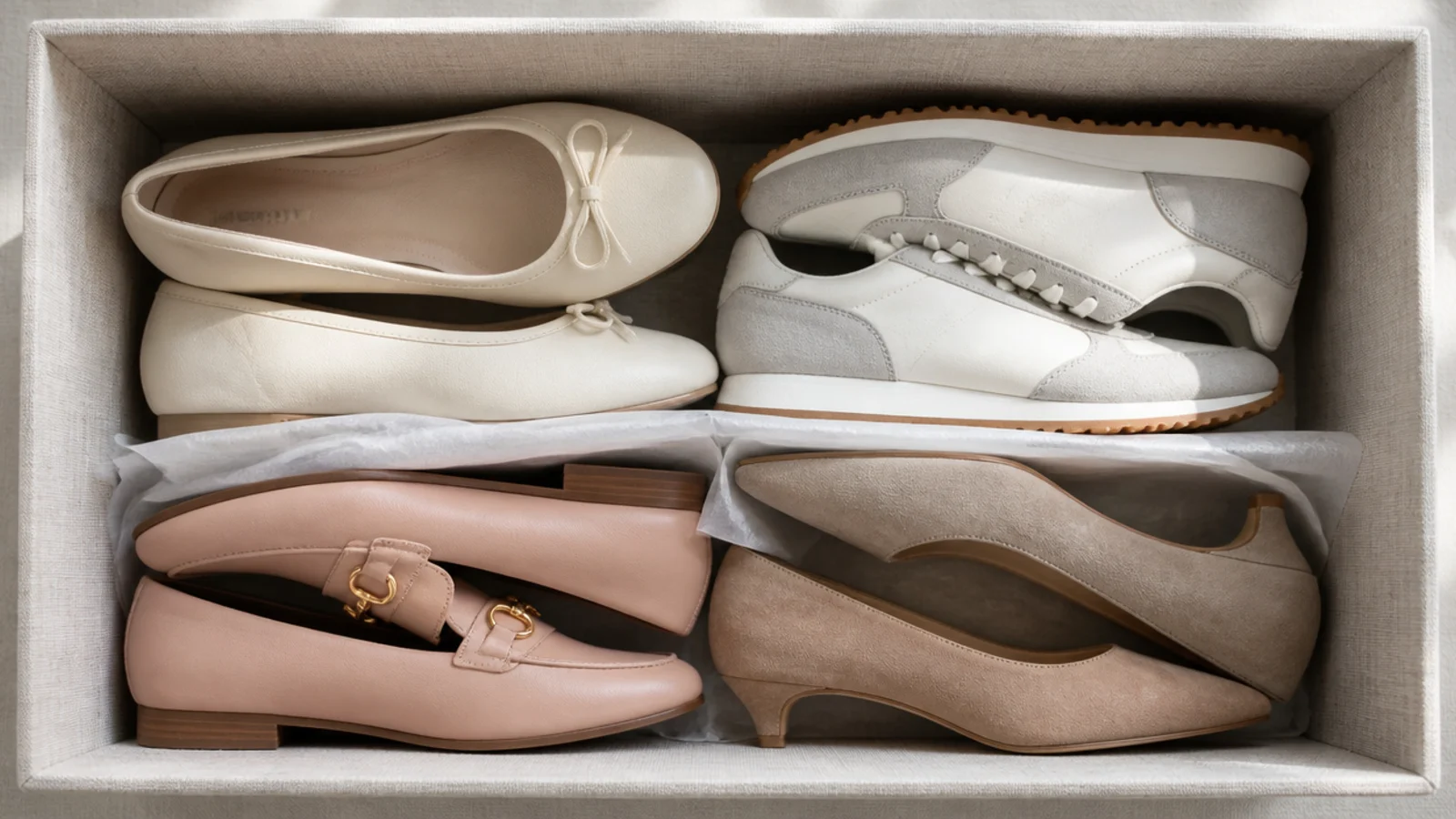
3. Store pairs toe-to-heel
Turn one shoe of each pair around so the toe sits against the other's heel. The shapes nest and you save roughly 30 percent of the width.
It looks slightly odd on an open shelf, so save it for closed cabinets and boxes where nobody sees the arrangement. Free
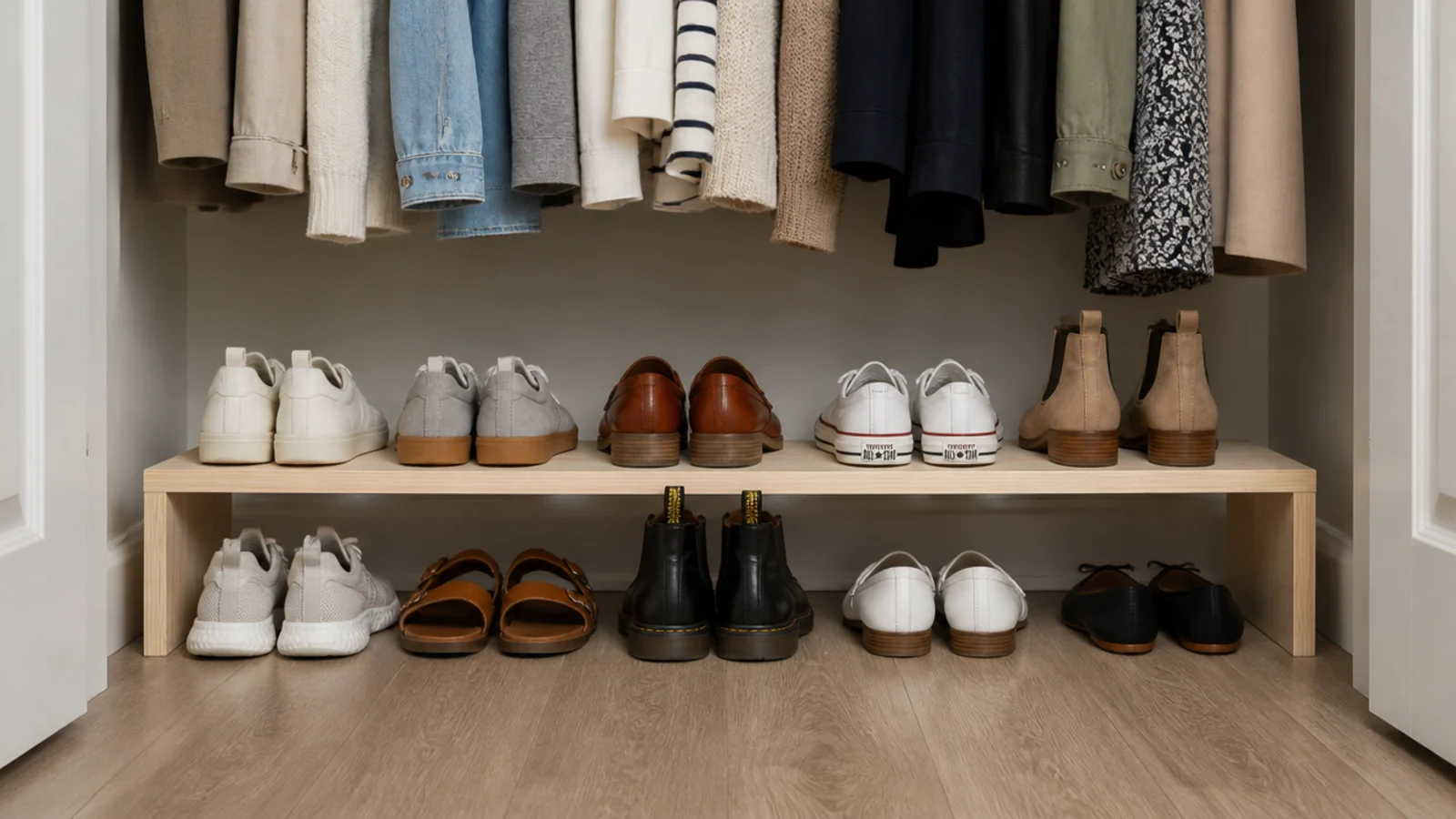
4. Risers that double a closet floor
A simple platform six inches high turns one row of shoes on a closet floor into two.
You can buy them or make one from a scrap board and two blocks. Put flats underneath and taller shoes on top so nothing gets trapped. $
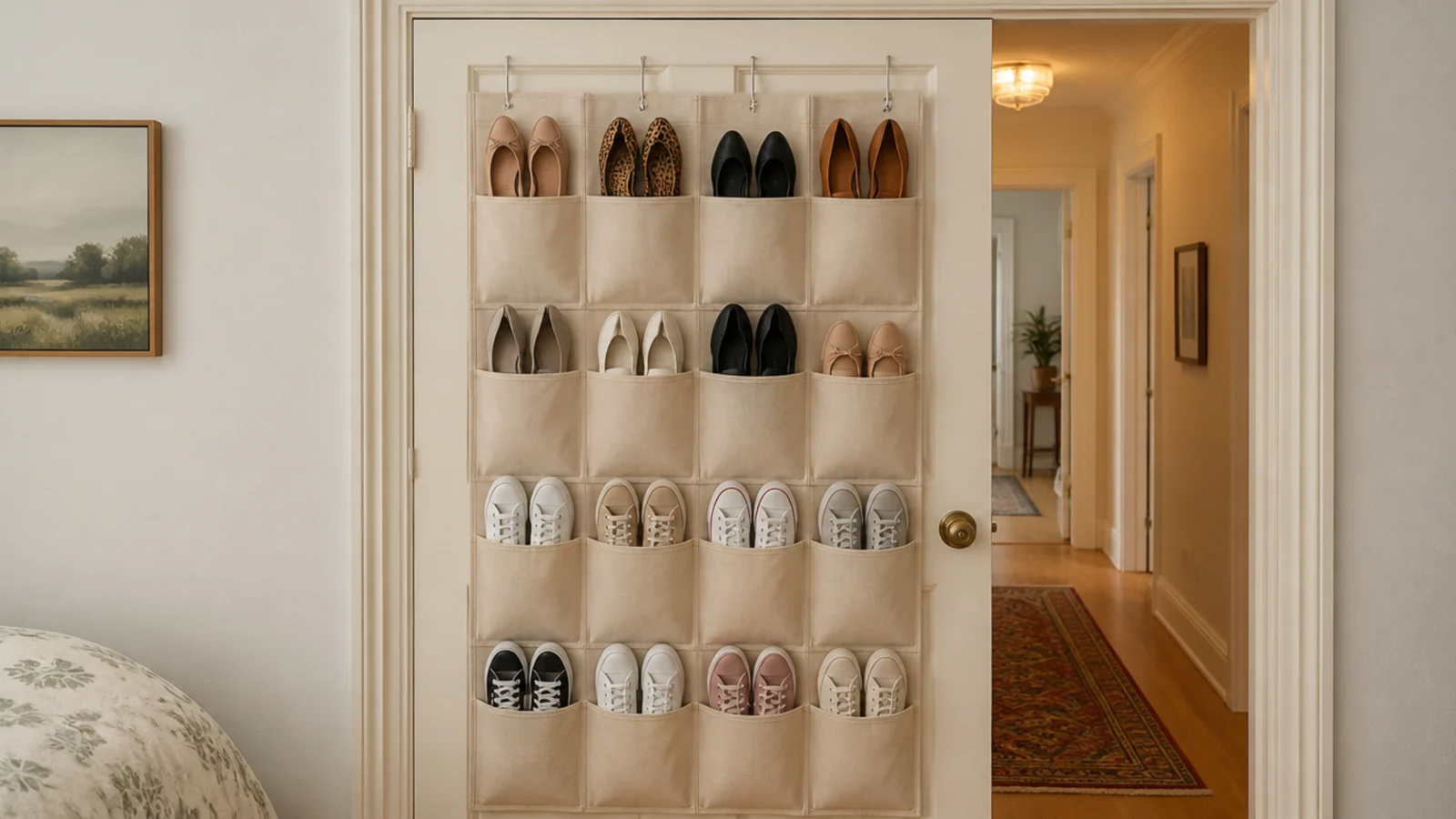
5. An over-door pocket organizer
Twelve pairs of flats on a door that was doing nothing. Canvas or felt rather than clear vinyl, which yellows and splits.
Check the door still closes with it fitted — some interior doors have very little clearance at the top. Best for out-of-season and rarely worn pairs. $
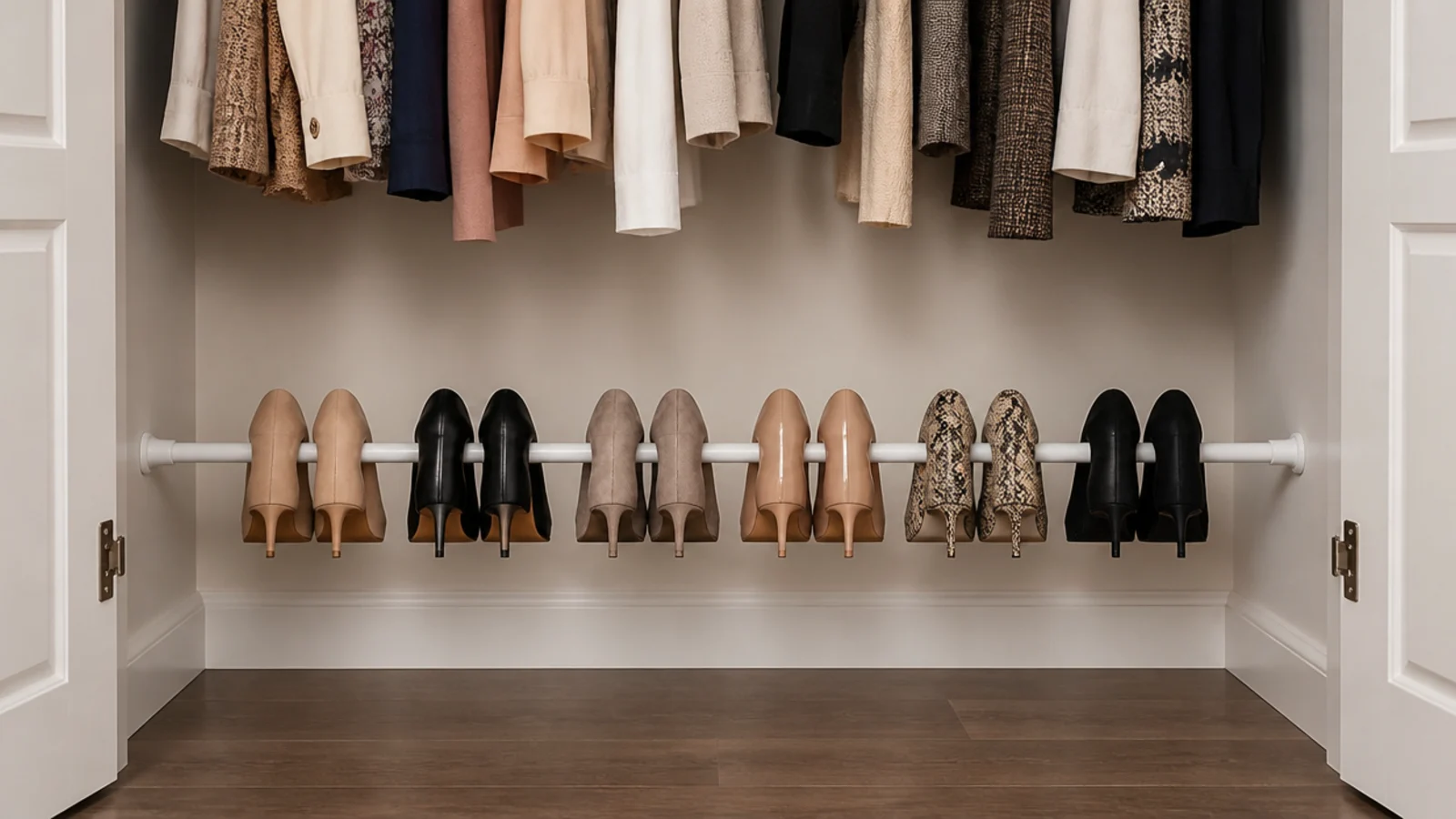
6. A tension rod along the closet base
Fit a slim tension rod low across a closet and hook heeled shoes over it by their heels. The floor underneath stays completely clear.
Only works for shoes with a defined heel, so it suits a dress-shoe collection rather than sneakers. Costs about $8 and leaves no marks. $
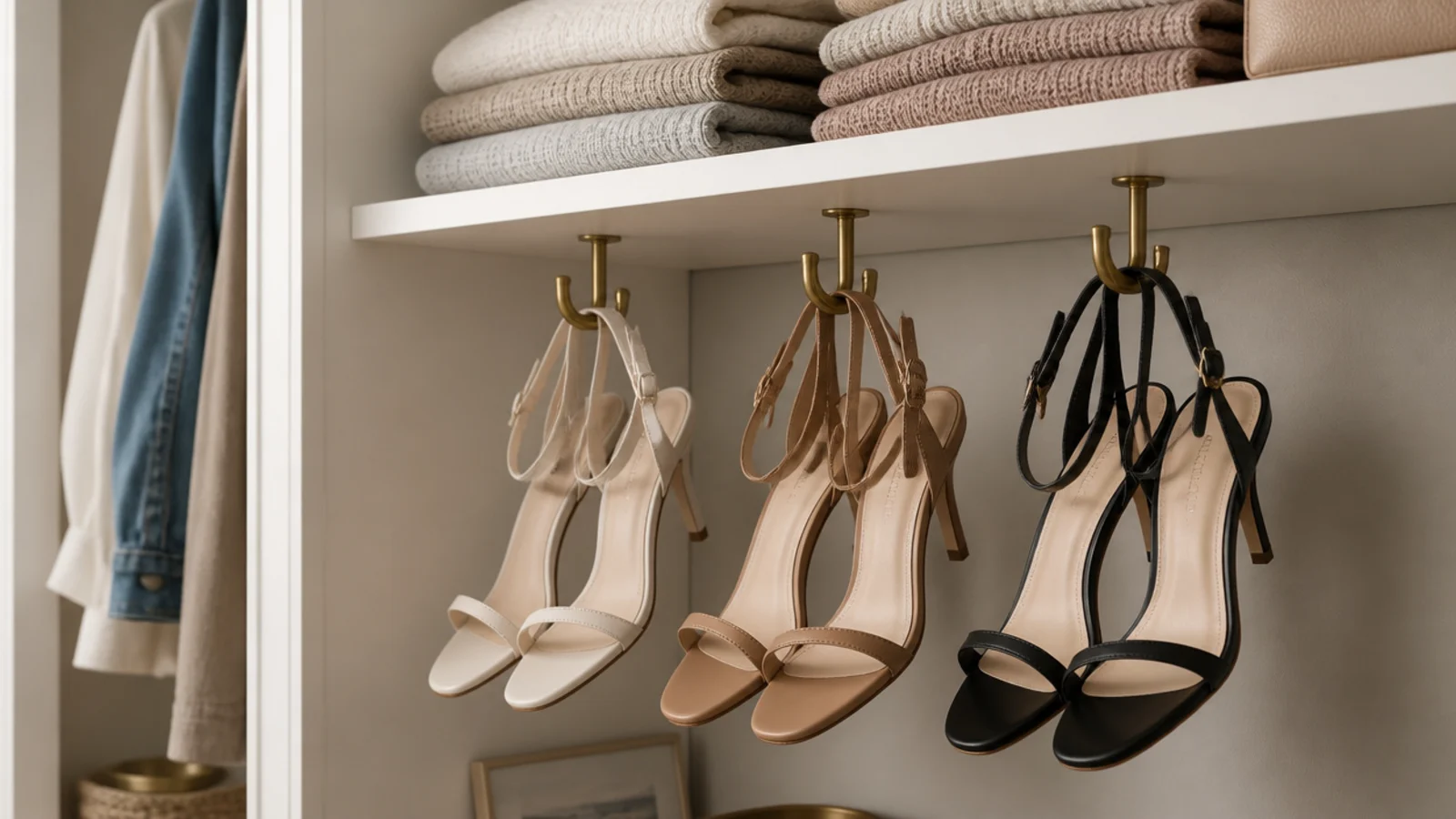
7. Hooks under an existing shelf
The underside of a closet shelf is storage you already own. Small hooks there hold strappy heels and sandals by their straps.
Use short screws so nothing comes through the shelf face, and keep it to genuinely light shoes. Three hooks under one shelf is often enough for a whole summer collection. $
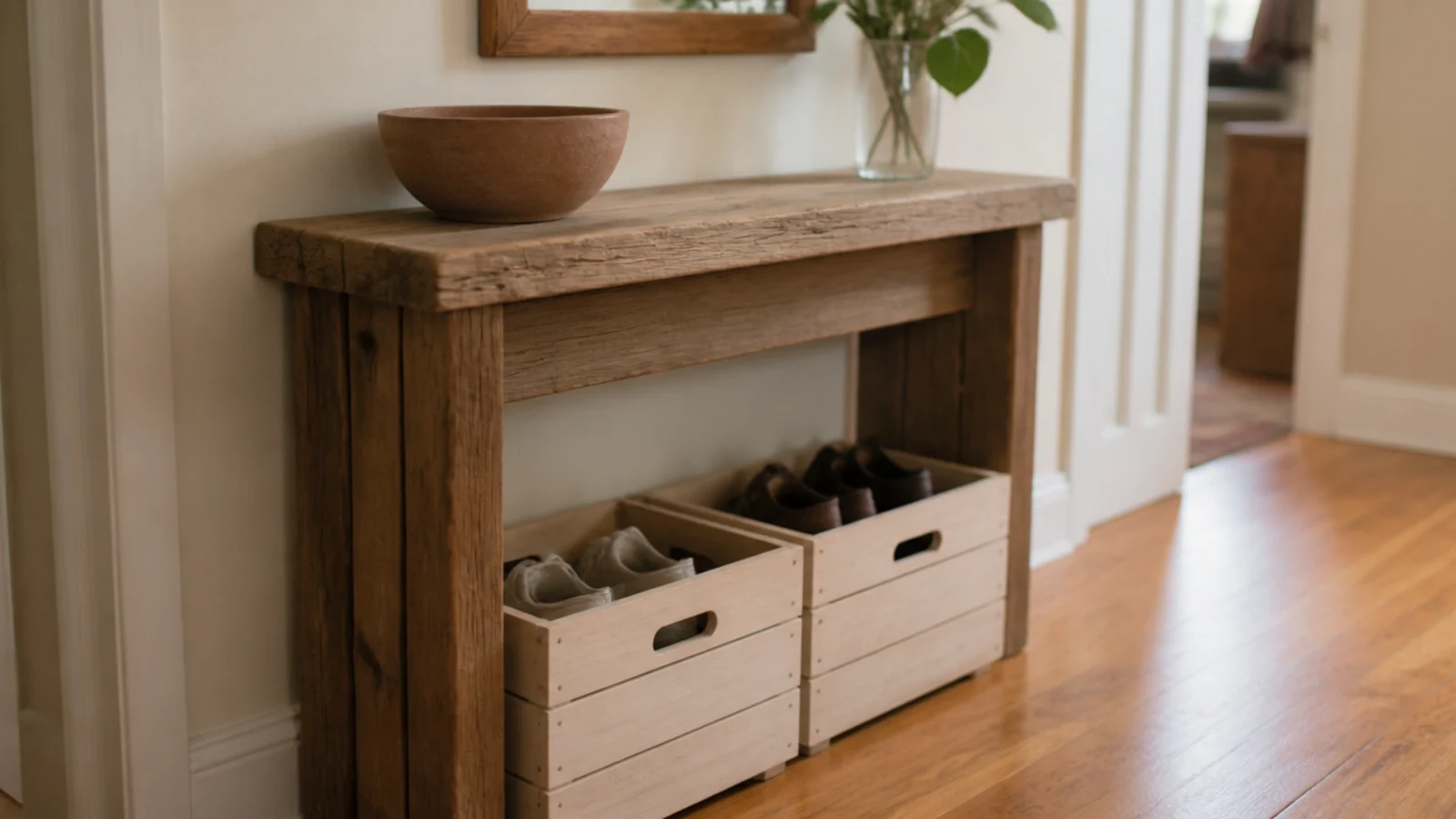
8. Crates tucked under a console
Two wooden crates under a narrow console hold eight pairs, cost about $20, and stack flat when you move.
Seal them if wet shoes will go in — raw pine stains permanently. Screw the crates together so they slide as one unit. $
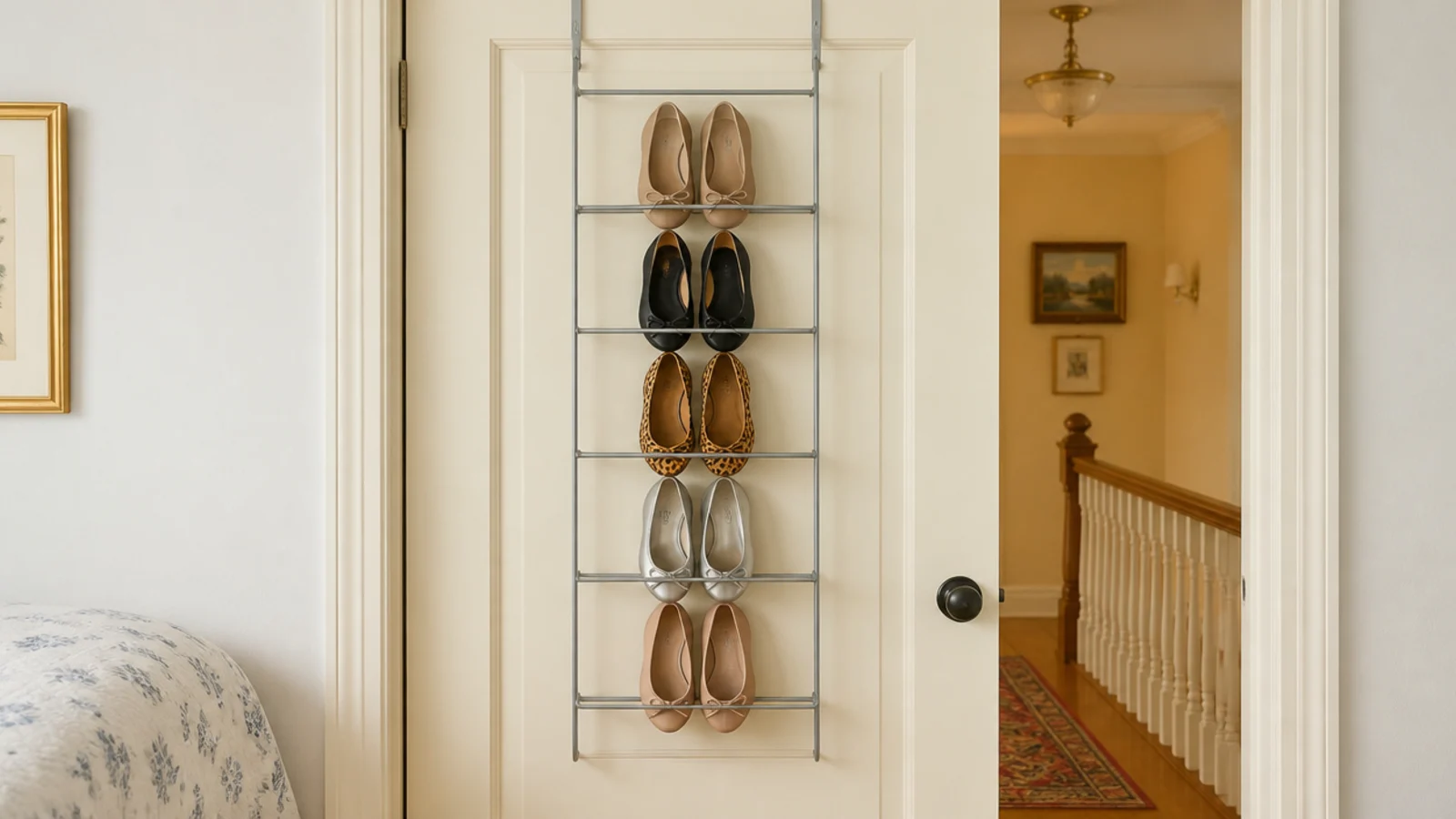
9. The back of a bedroom door
A slim rack on the back of a bedroom door holds five or six pairs on a surface that is otherwise entirely unused.
Measure the gap between the door and the frame when closed. Over-door hooks that are slightly too thick stop the door latching, which is a daily irritation. $
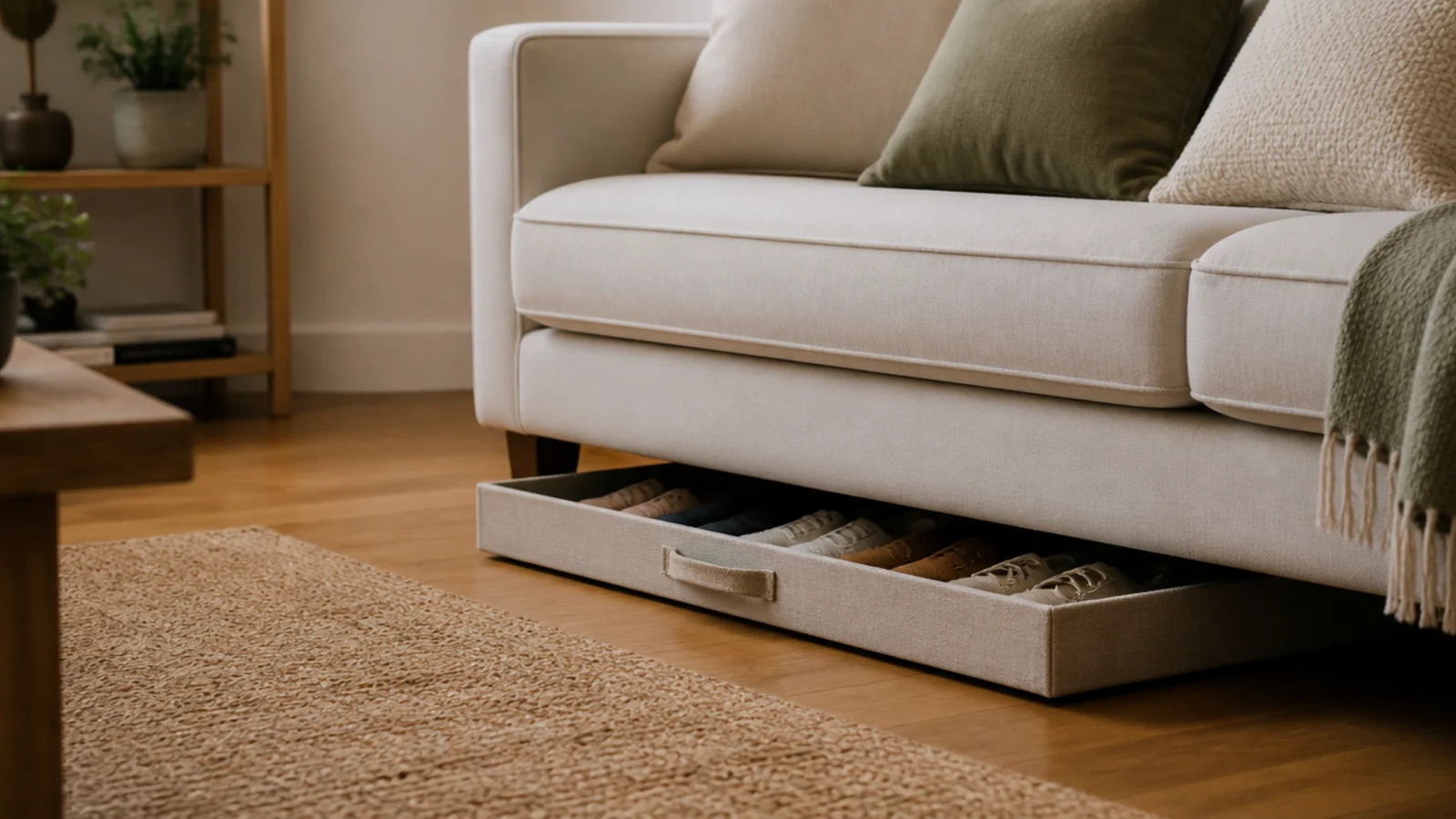
10. Slim boxes under the sofa
Most sofas have four to six inches of clearance underneath, which is a whole storage drawer nobody uses.
Very low fabric boxes with a pull tab work best. Keep this for out-of-season pairs — anything you need daily should not require kneeling. $
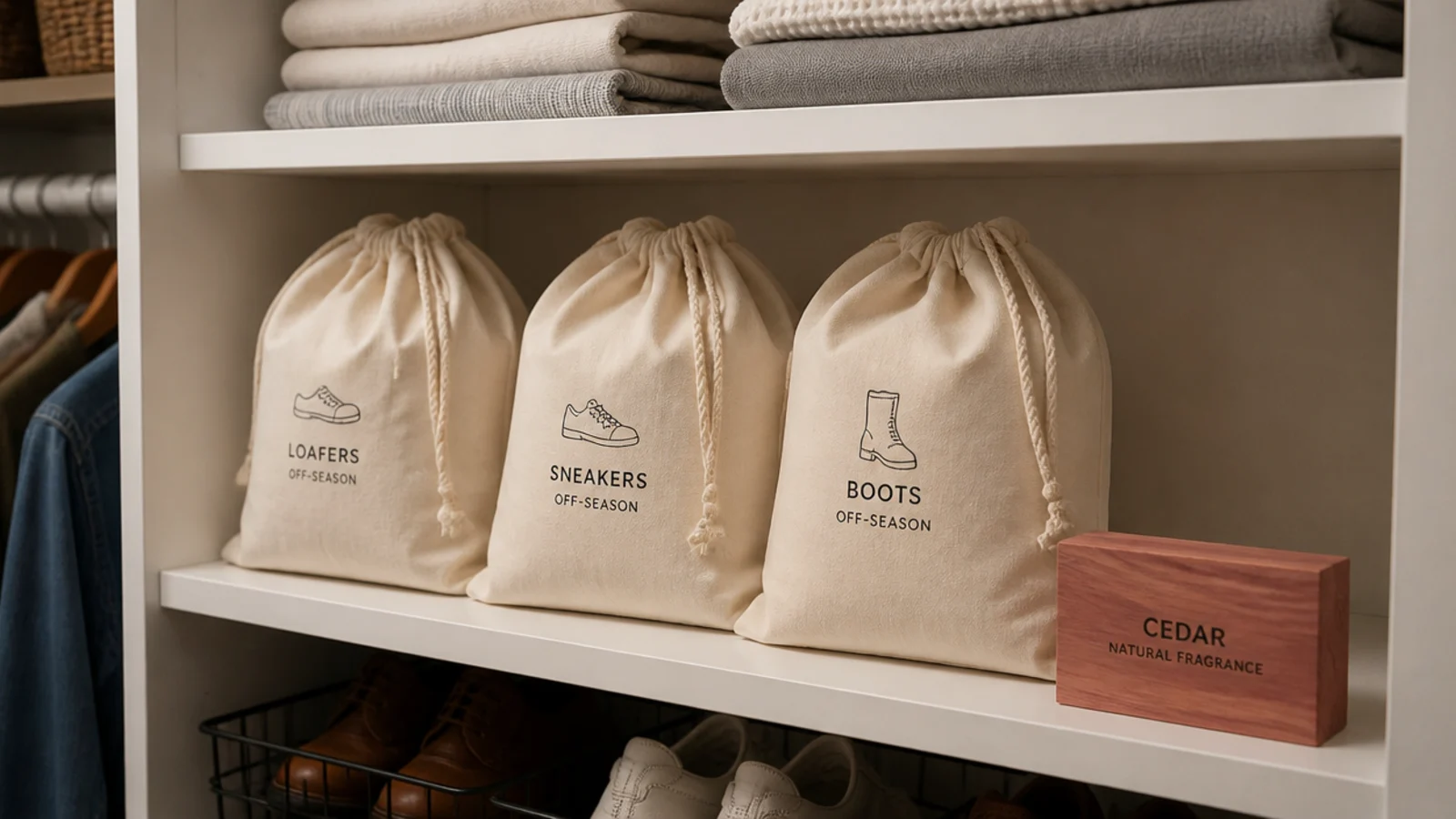
11. Breathable bags for off-season pairs
Clean the shoes, stuff the toes with paper to hold their shape, and store them in natural cotton drawstring bags.
Cotton, not plastic, for leather. Sealed plastic traps residual moisture and you find mildew in spring. Add a cedar block to each bag. $
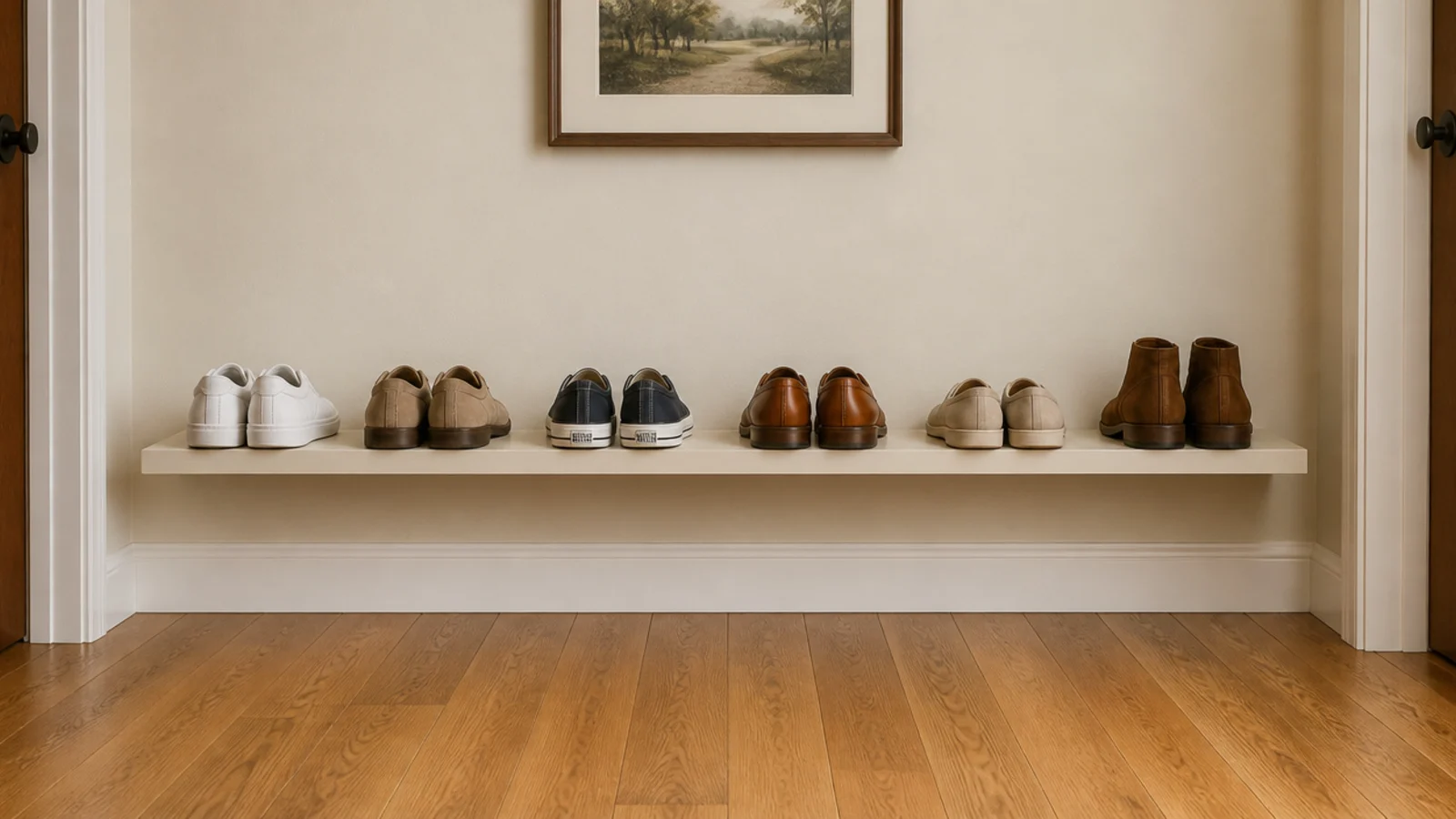
12. One board ten inches off the floor
The cheapest real solution here. A single painted board mounted 10 inches up holds six pairs and leaves the floor clear for a vacuum.
Ten inches is the number: high enough to clean under, low enough to place shoes with a foot. Paint it the wall color and it disappears. $
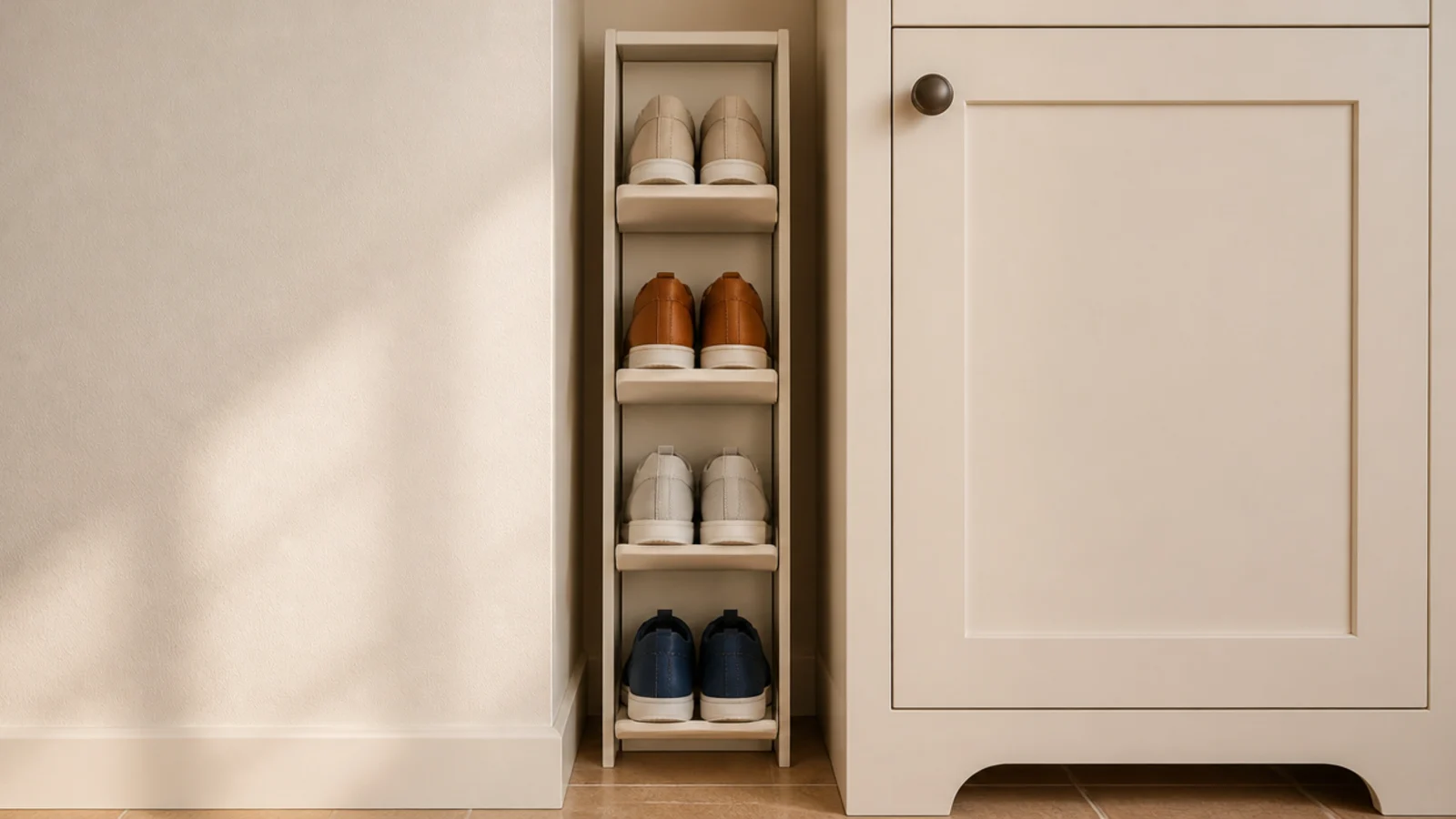
13. A slim rack in the appliance gap
The six-inch gap beside a fridge, a cabinet or a washing machine is usually pure waste. A slim tilted rack fits it exactly.
Measure carefully — an inch matters — and check any appliance door still opens fully before fixing anything. $–$$
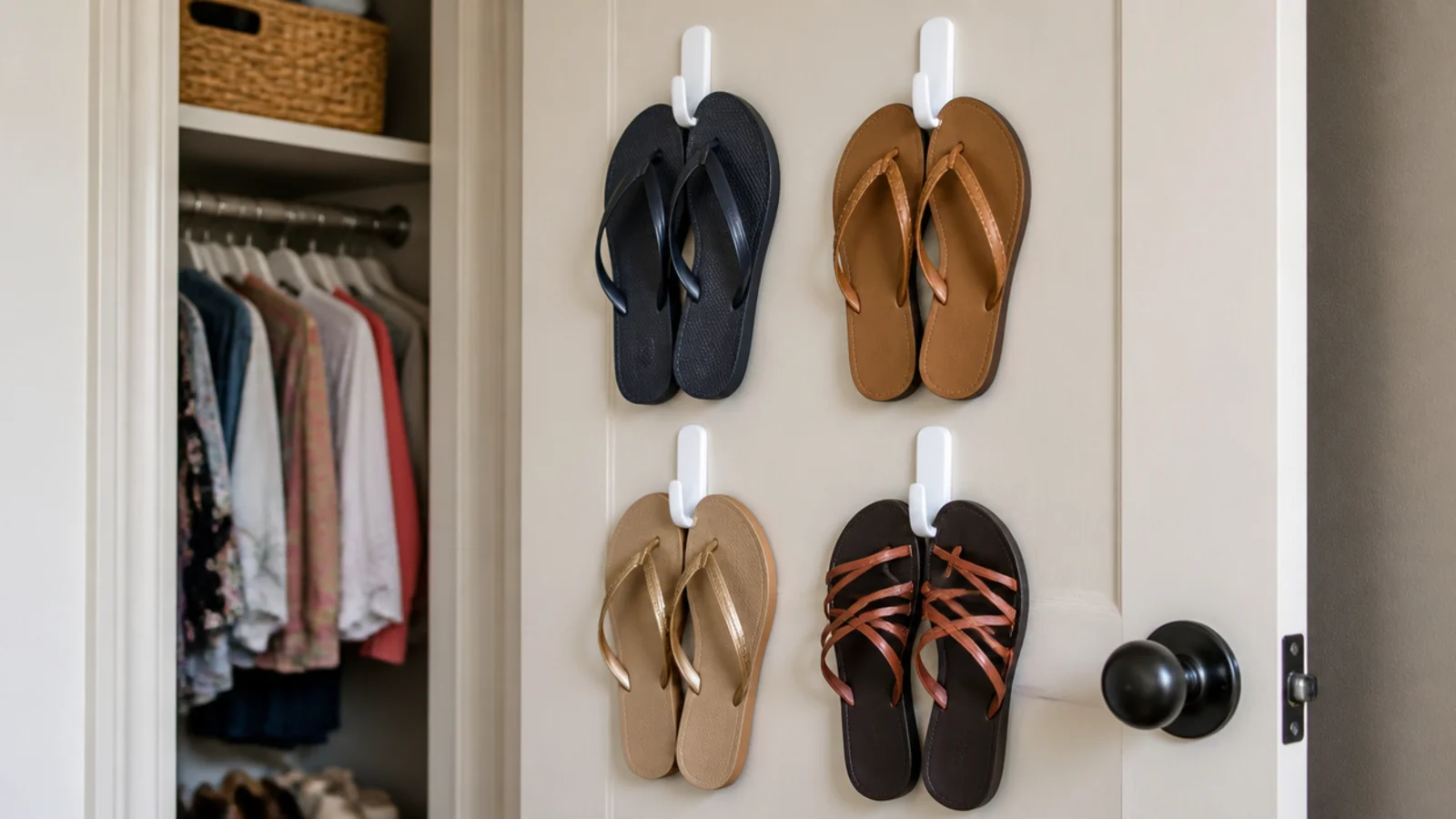
14. Adhesive hooks for flip-flops
Flat summer shoes hang perfectly flat against a door and need no shelf at all. Four small adhesive hooks hold four pairs.
Test the adhesive on hidden paint first — flat builder-grade paint peels. Remove with a hair dryer on low, pulling slowly at an angle. $
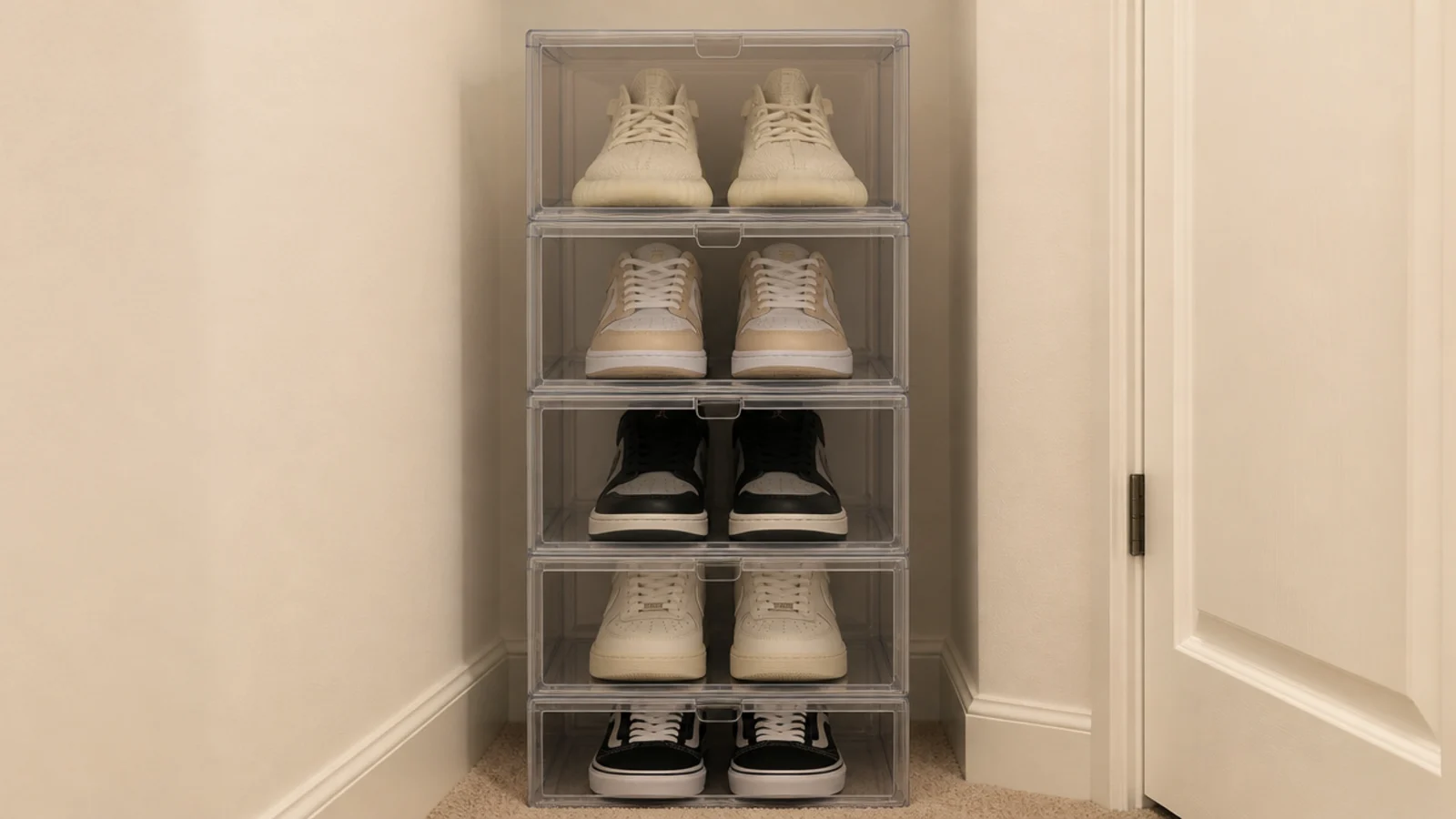
15. Stackable clear boxes
Front-opening clear boxes mean you never unstack a tower to reach the bottom pair, which is what makes ordinary shoeboxes fail.
Buy one size and stick to it so they stack square. Six boxes cost about $25 and hold six pairs in a footprint of one. $–$$
16. A shelf above the doorway
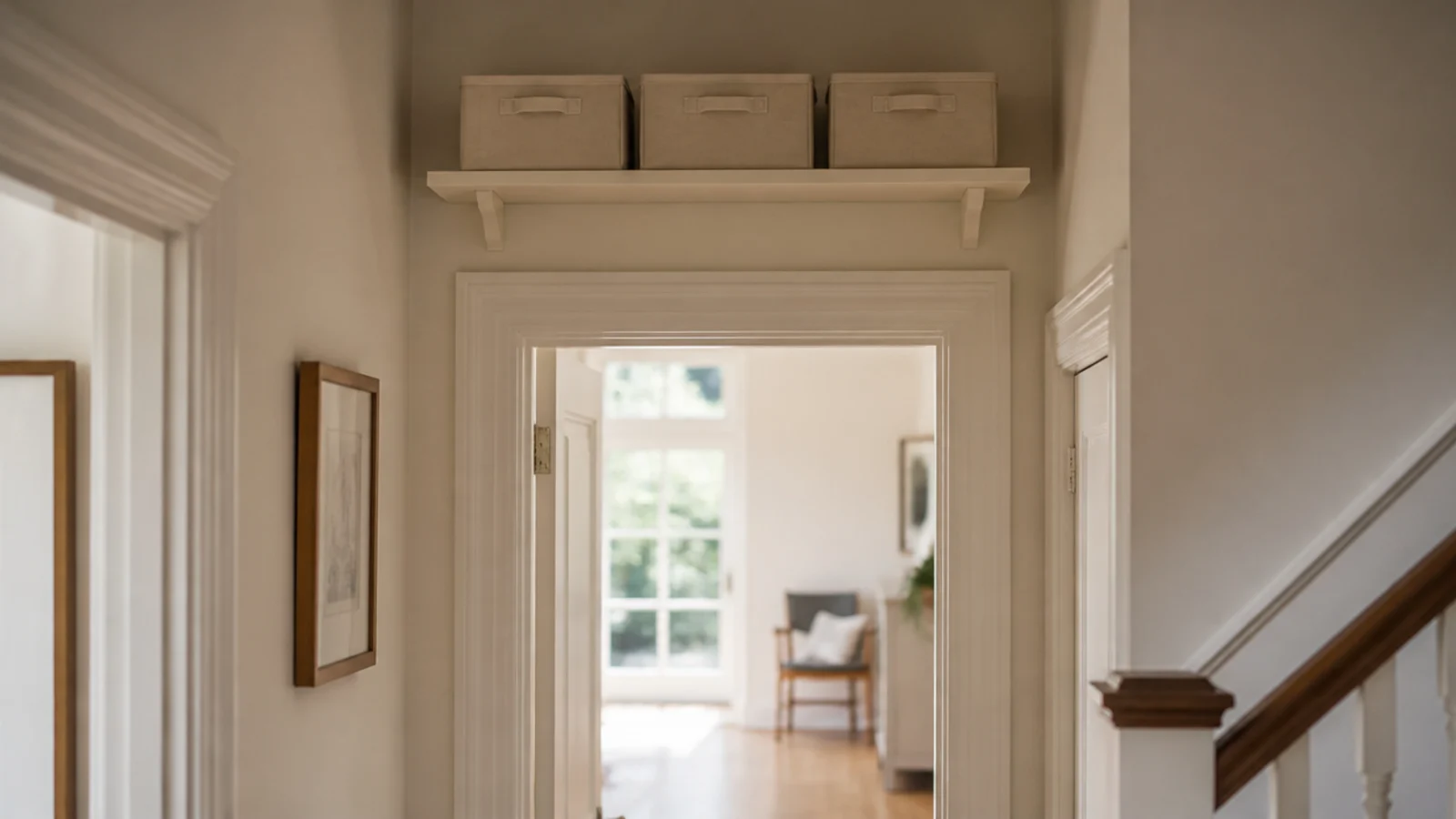
The strip between a doorframe and the ceiling holds boxed shoes nobody needs weekly.
Keep it shallow at eight inches and mount at least four inches above the frame. Use closed boxes rather than open shoes — anything at that height collects dust. $
17. A magazine file as a heel holder
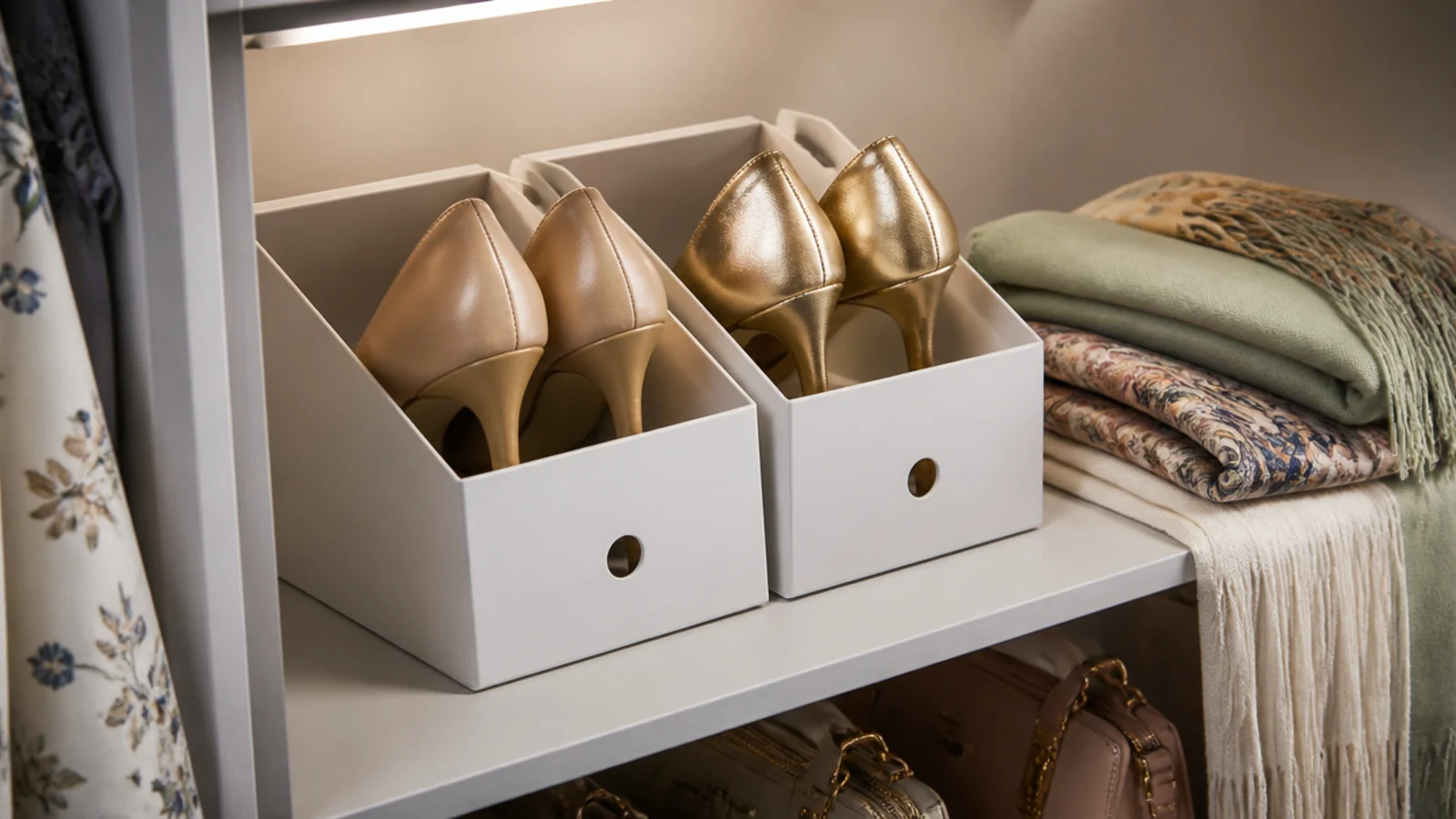
Turn a magazine file on its side and it holds a pair of heels standing upright, keeping the shape and taking half the shelf width.
Cardboard ones cost about $2. It is a genuinely odd-looking trick that works extremely well inside a closed closet. $
18. A bench with a lift-up seat
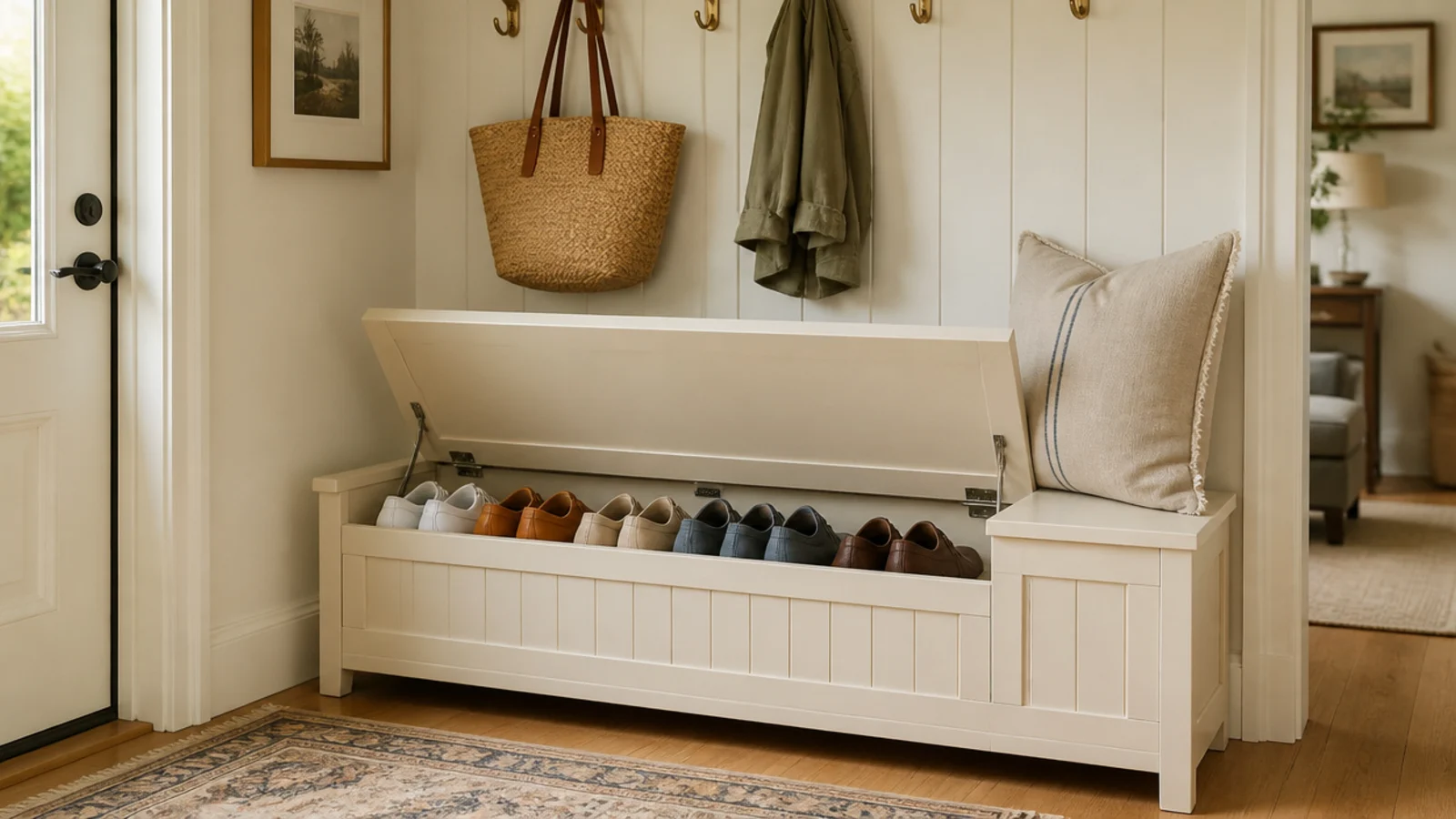
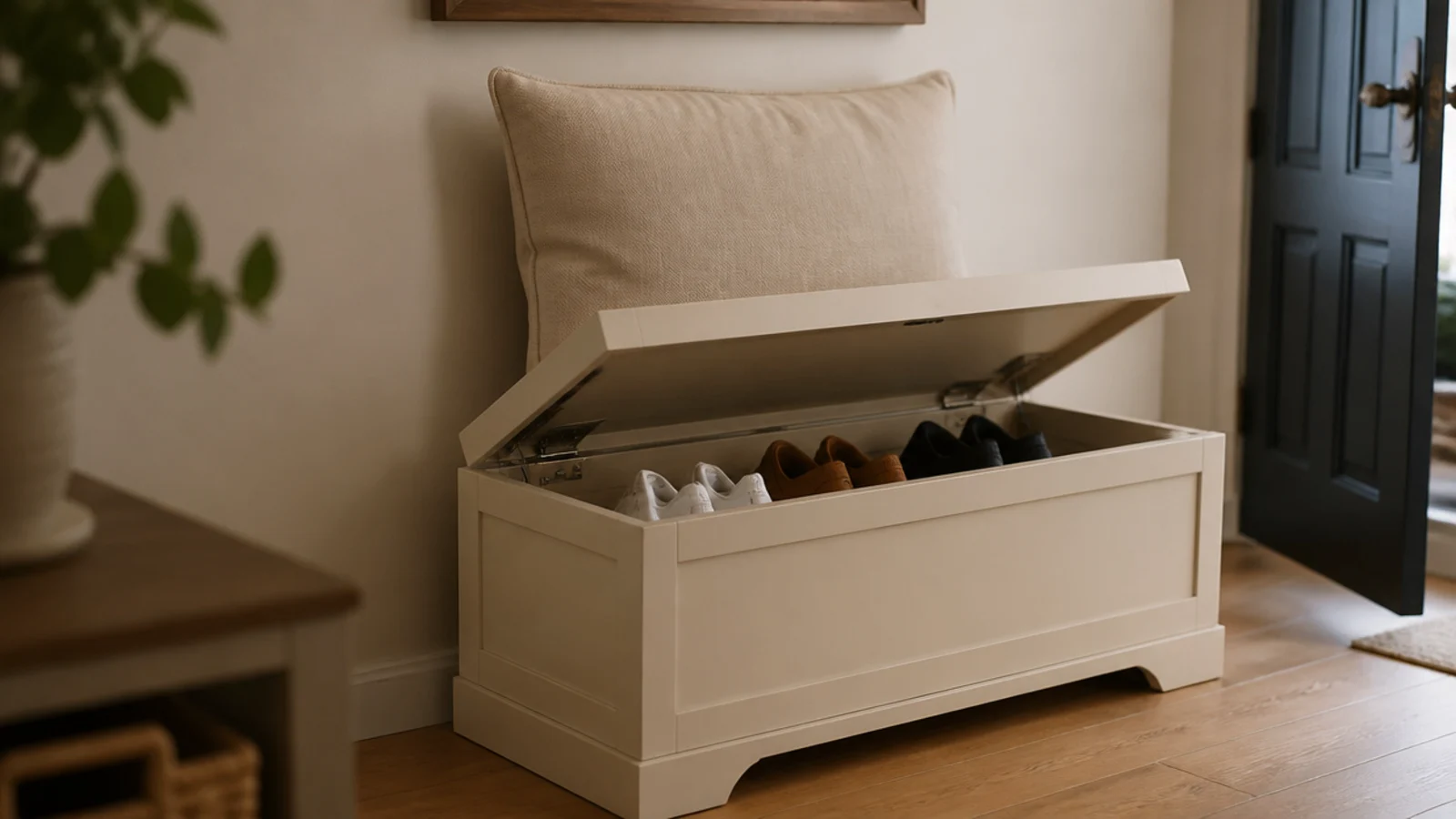
In a small entryway, a bench with a hinged seat gives you somewhere to sit and hides eight pairs underneath.
Check the hinge has a stay so the lid does not drop on fingers. Lift-up seats suit adults; children find them heavy, so pair one with a low open basket. $$–$$$
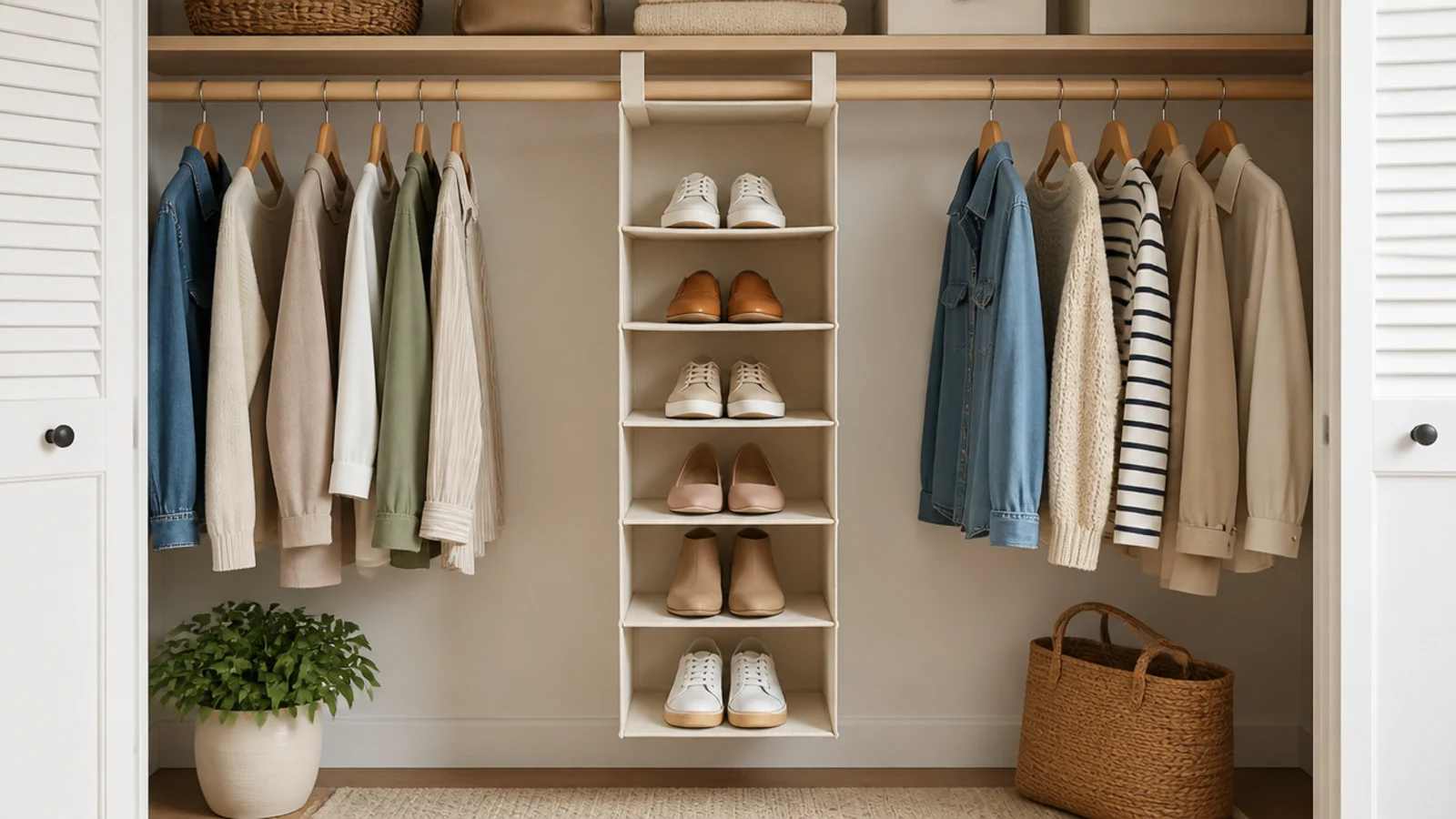
19. A hanging canvas organizer in the closet
Hangs from the existing rail, needs no fixings, and gives you six to ten compartments in the vertical space above the floor.
Choose one with a rigid top so it does not sag. It takes hanging space, so it suits a closet where you have more rail than clothes. $
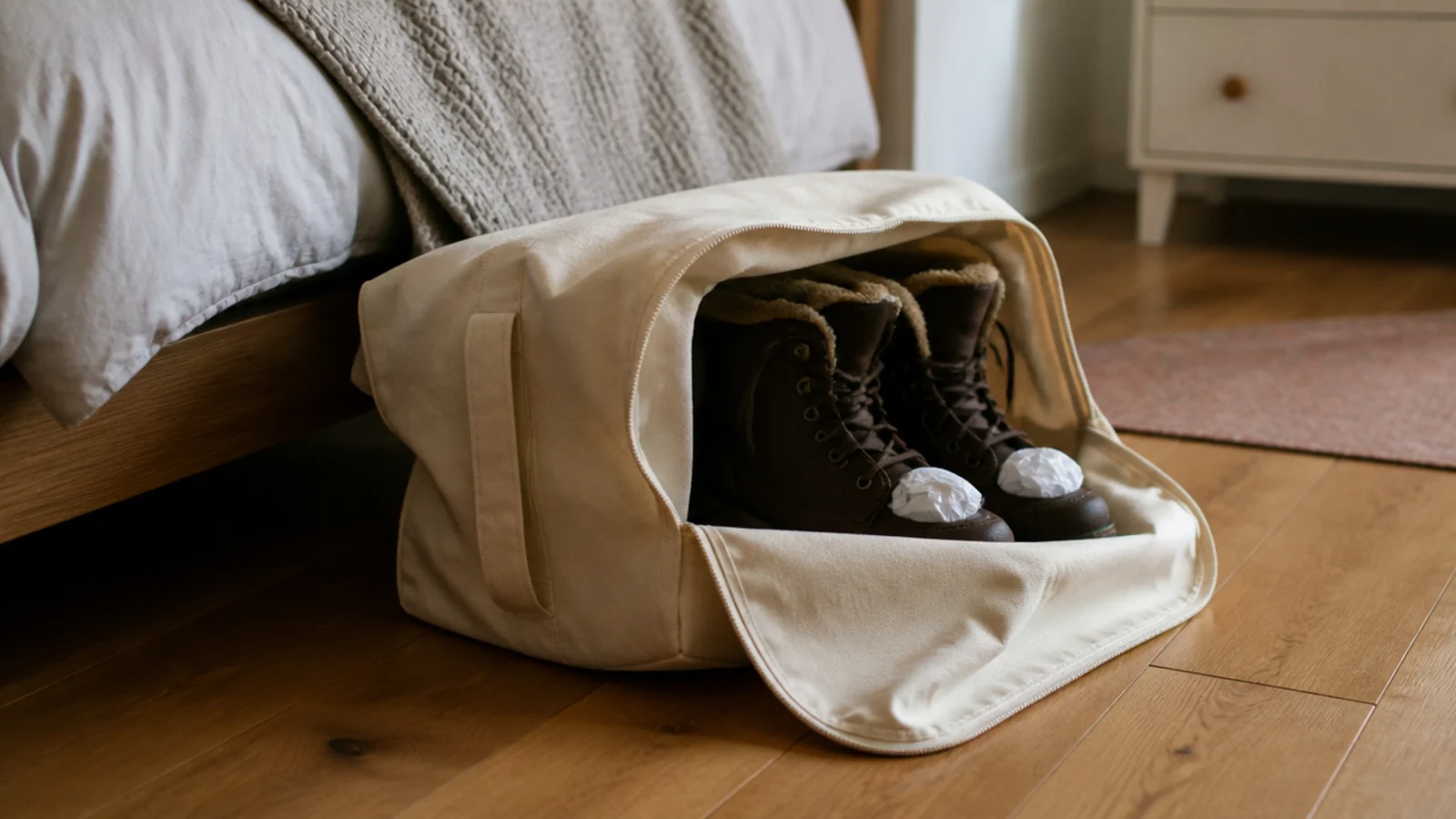
20. Under-bed duvet bags for winter boots
Boots are the shoes that break small-space storage, and they only need storing for half the year.
Clean, dry, stuff the toes with paper, and store in a large breathable bag under the bed from spring to autumn. That frees the tall storage entirely for six months. $
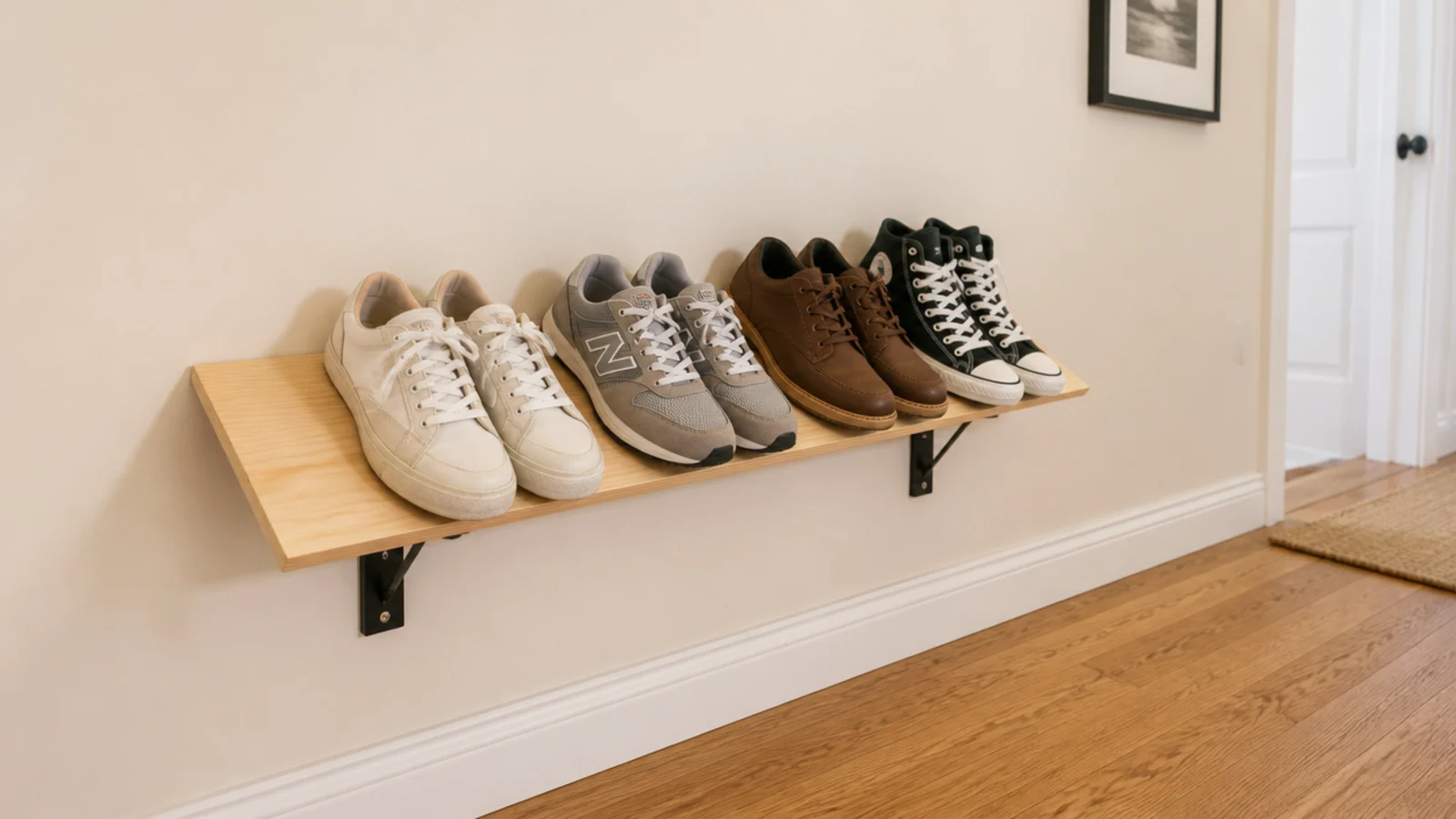
21. A tilted rack from one board
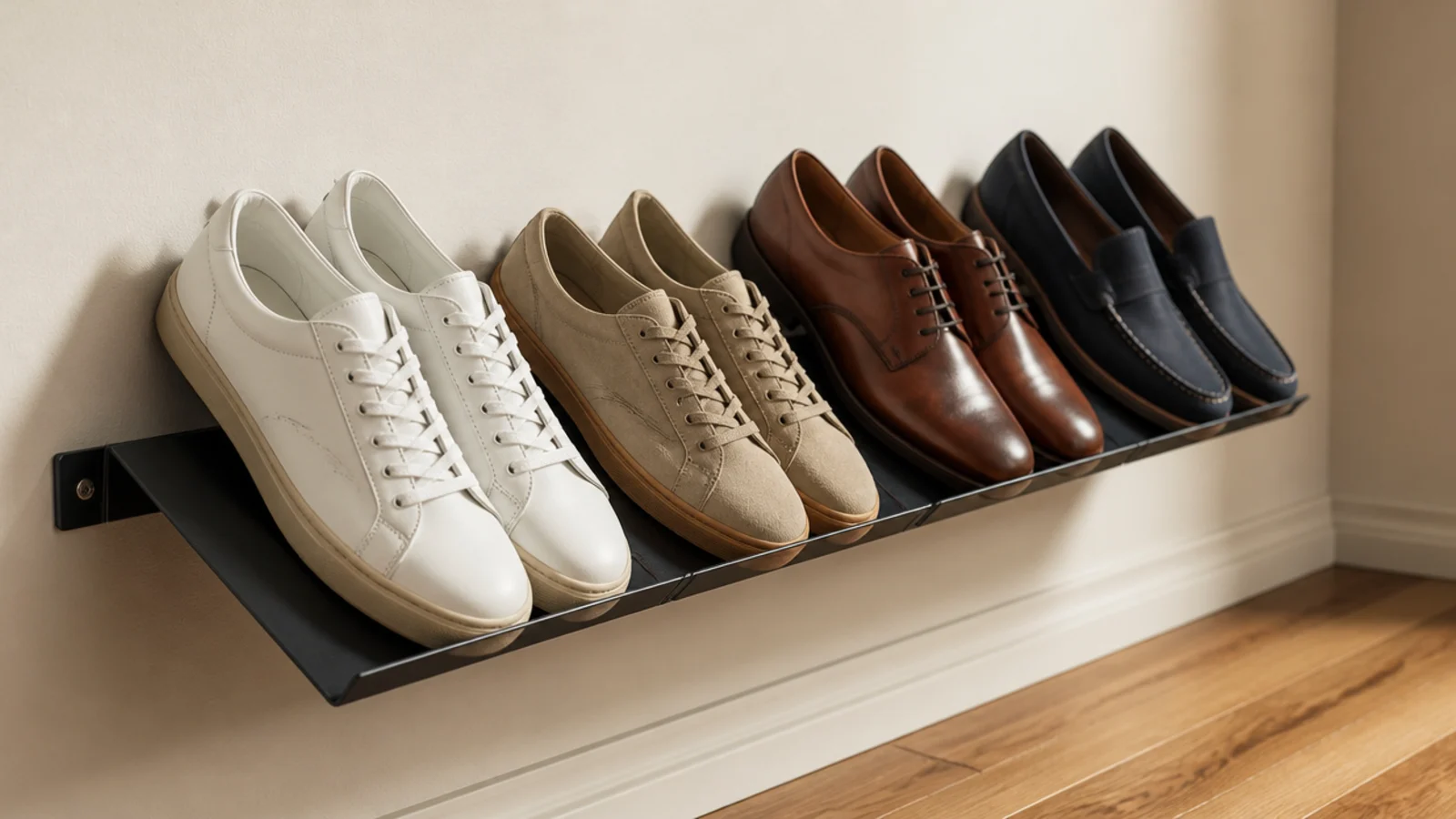
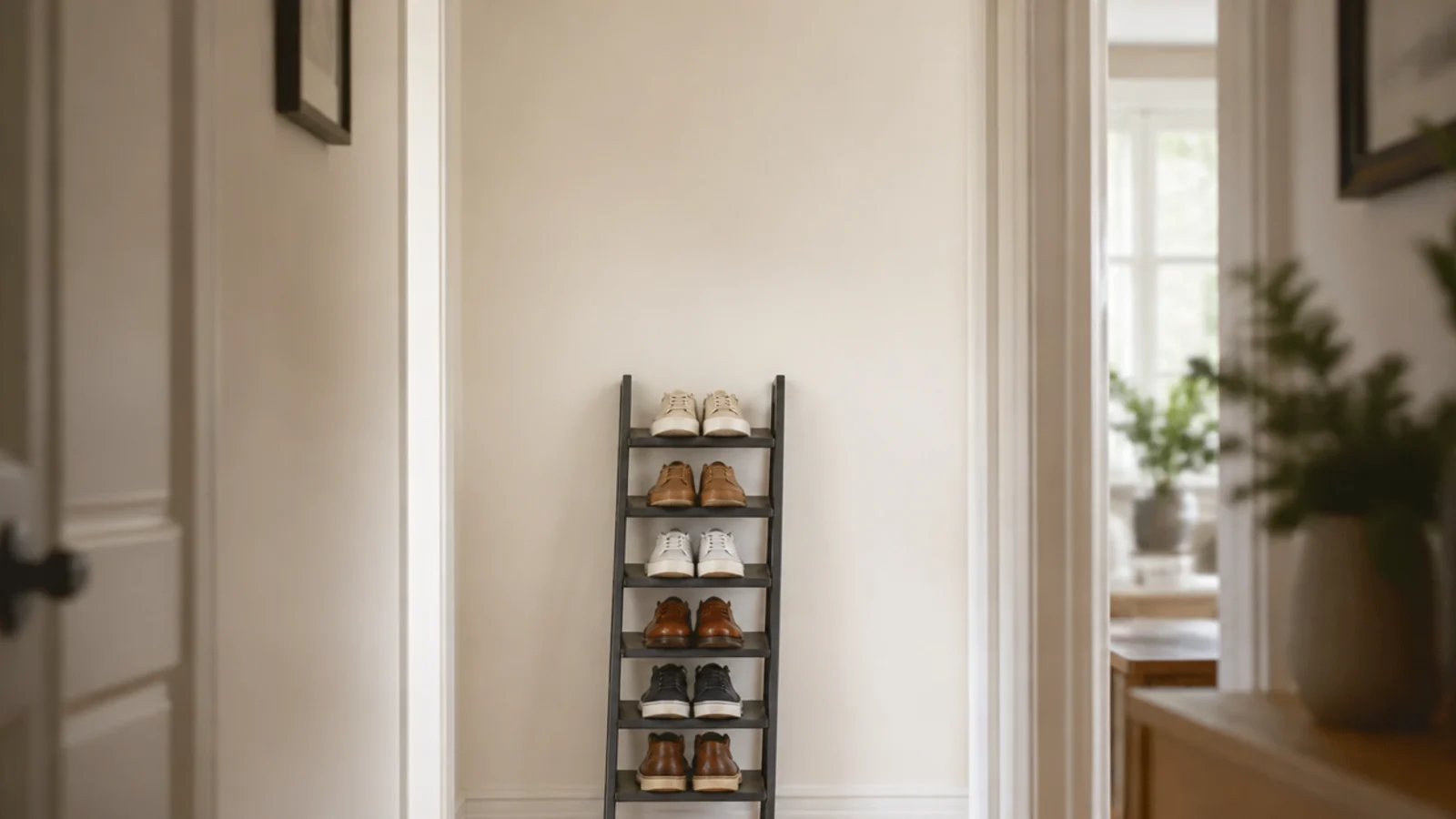
One board mounted on two small brackets at a slight tilt, with a lip along the front. Total cost about $18 and an hour.
Cut the brackets or shim them so the board sits at about 15 degrees. Shoes rest against the lip and take nine inches of depth instead of thirteen. The full build method is in DIY shoe storage. $
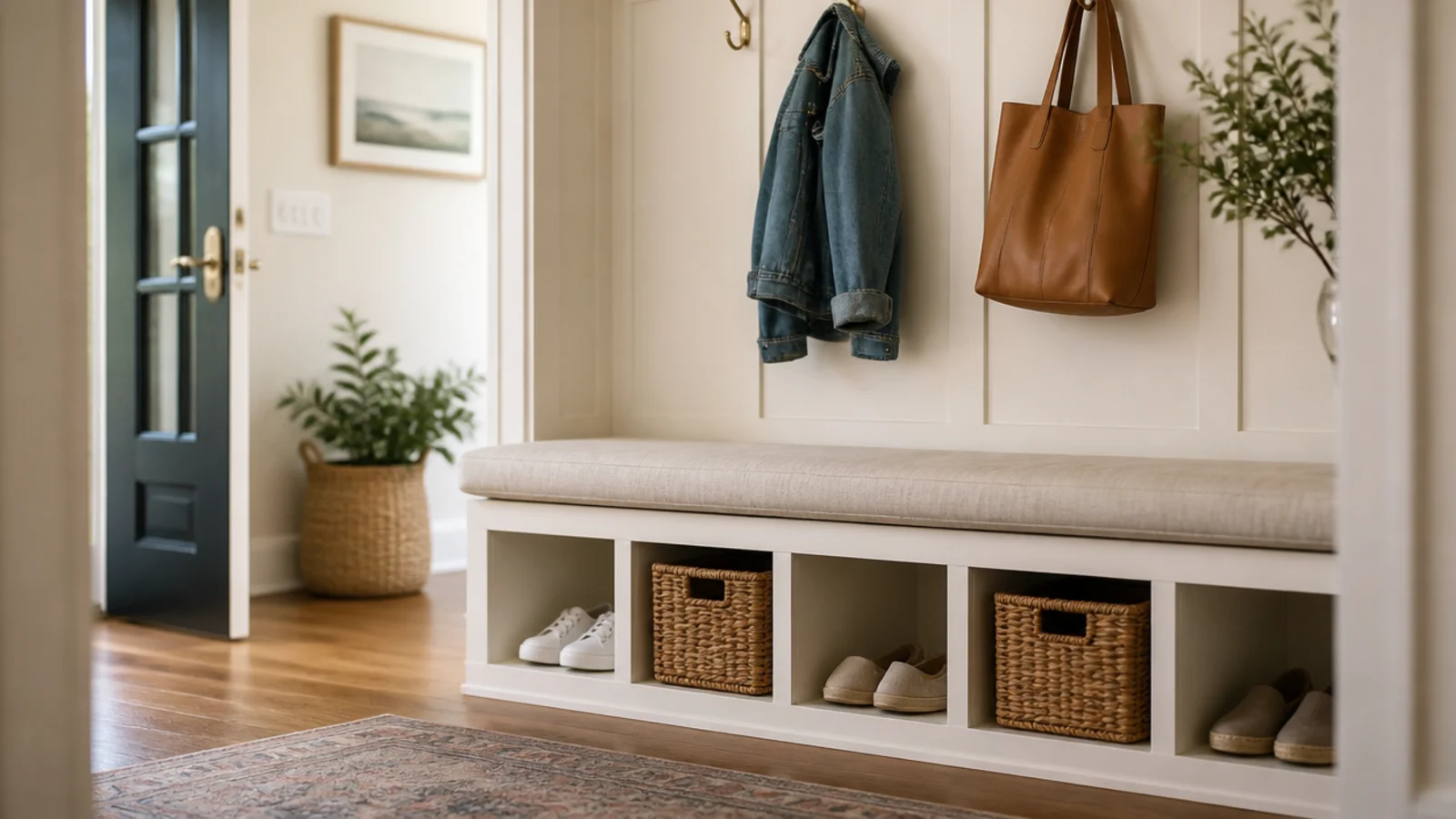
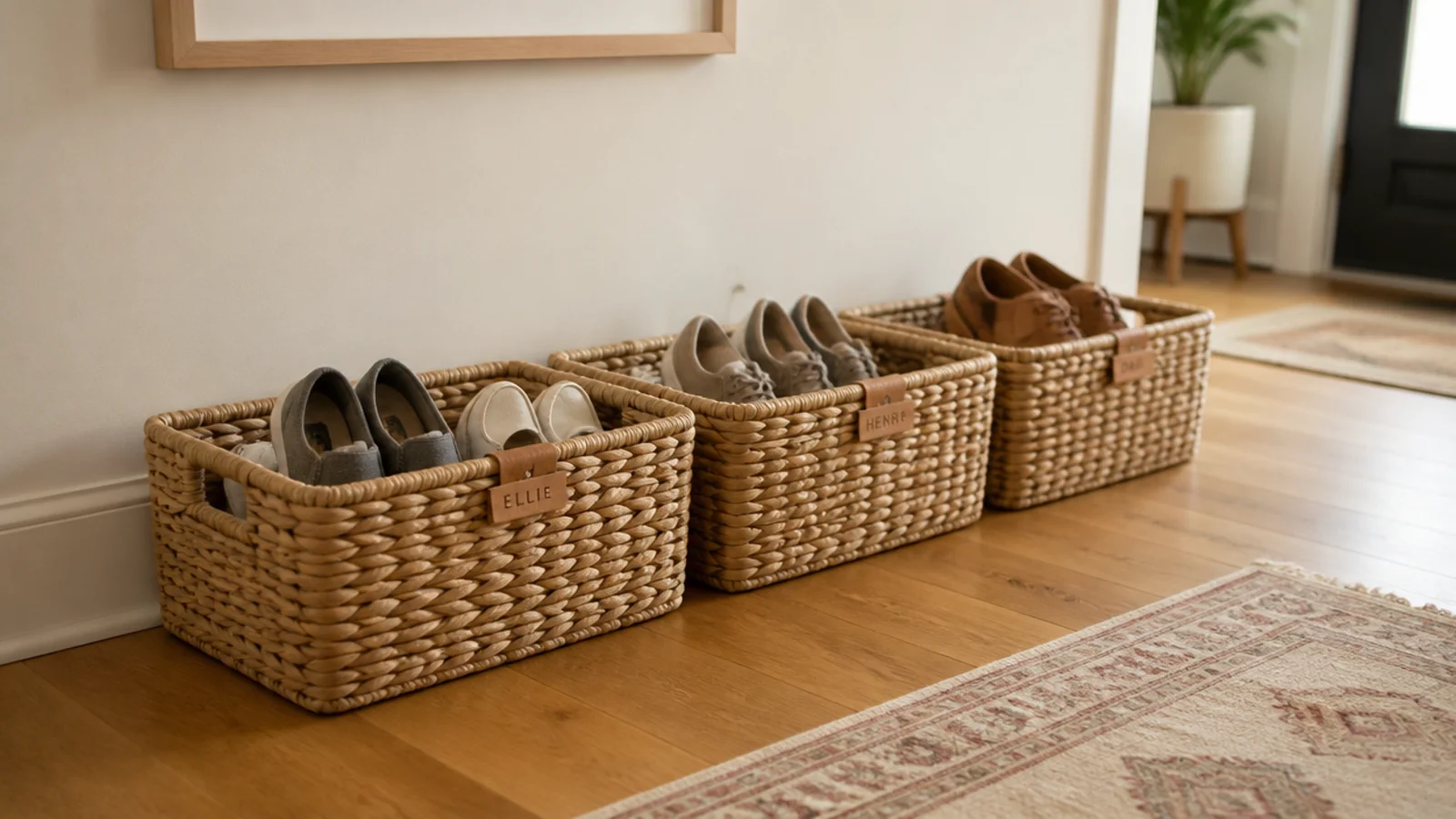
22. One capped basket per person
Give each person one basket and one rule: when your basket is full, the overflow goes to a closet.
Named individual space is what makes shoe storage stick in a small home. Shared storage means nobody owns the overflow, and the pile reappears within a fortnight. $–$$
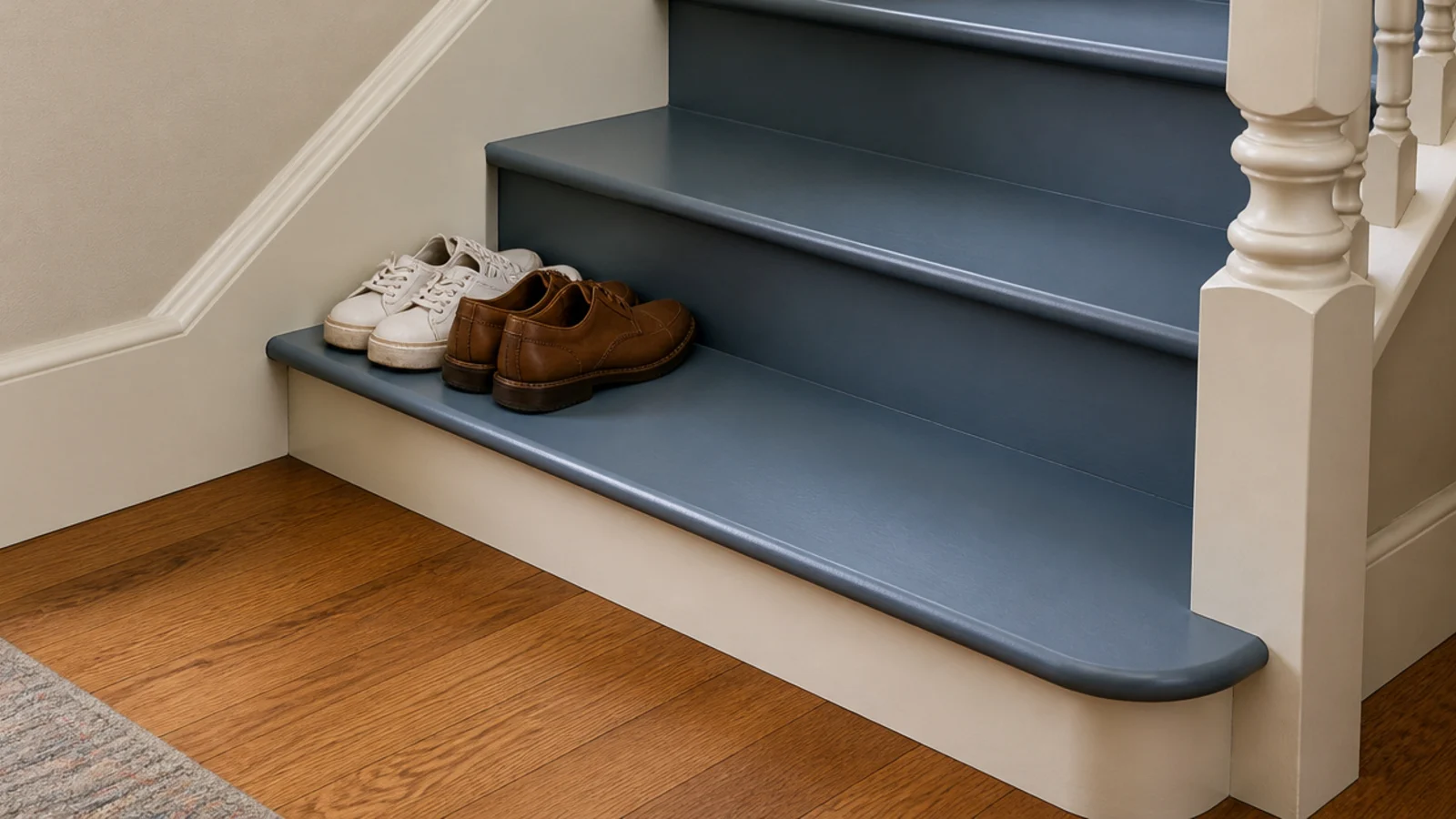
23. The bottom stair as a shoe ledge
The bottom tread of a staircase is already about 10 inches deep and sits at exactly the right height.
Keep two pairs at one end and leave the walking path clear. It is not a permanent system, but in a home with no entry at all it is better than the floor. Free
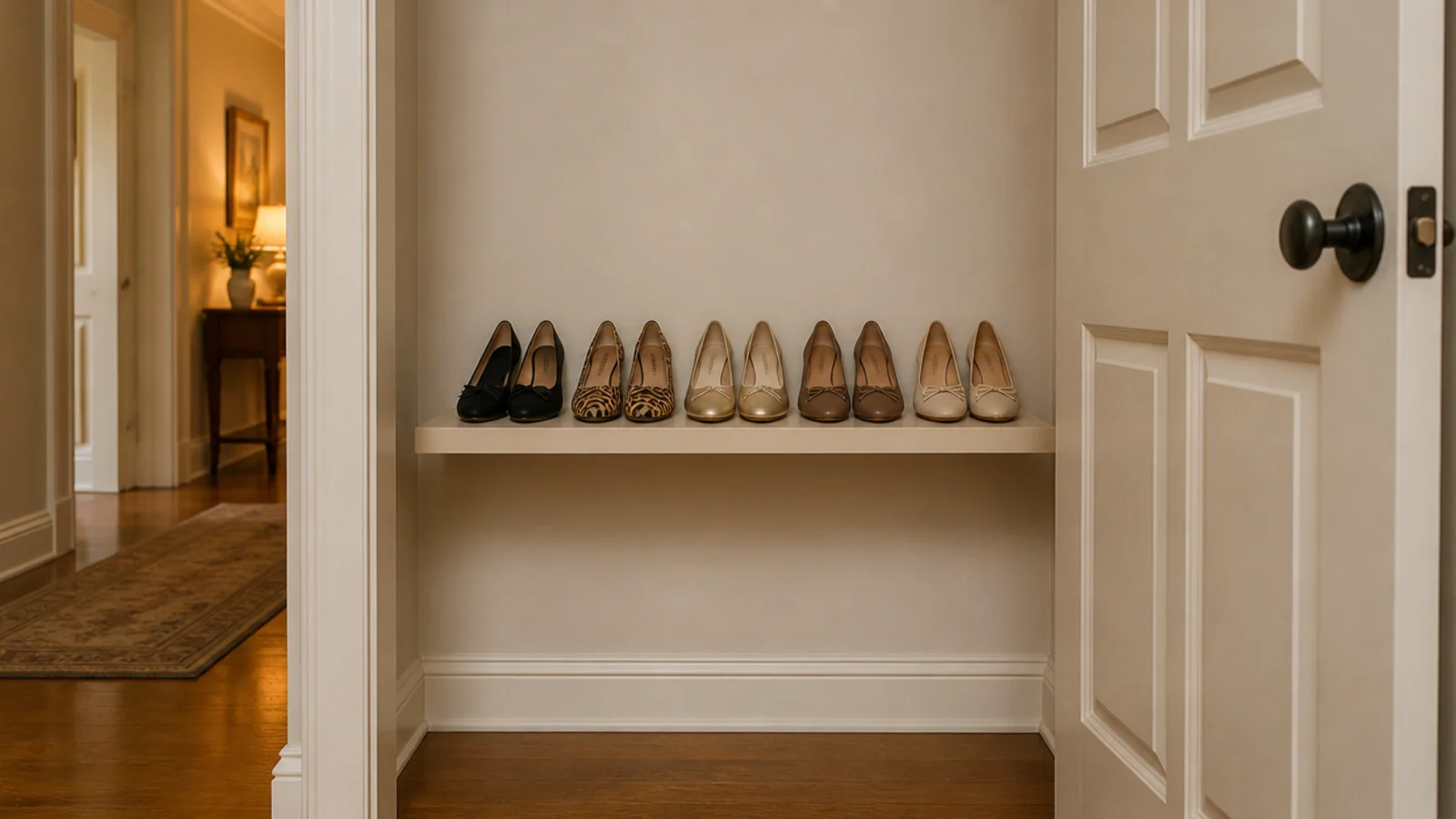
24. A narrow shelf behind the door
Open the door fully, measure wall to door face, subtract two inches — usually leaving four. A shelf that shallow still holds a row of flats.
Nothing with heels, nothing breakable. Doors get pushed harder than anyone plans for and a four-inch shelf has very little margin. $
25. The one-in-one-out rule
The idea that costs nothing and outlasts every product here. Cap the space, then cap the collection to fit it.
A shelf sized for six pairs holds six pairs indefinitely if you commit to the rule. A shelf sized for six pairs with no rule holds nine by December and the extra three live on the floor. Free
Mistakes to Skip
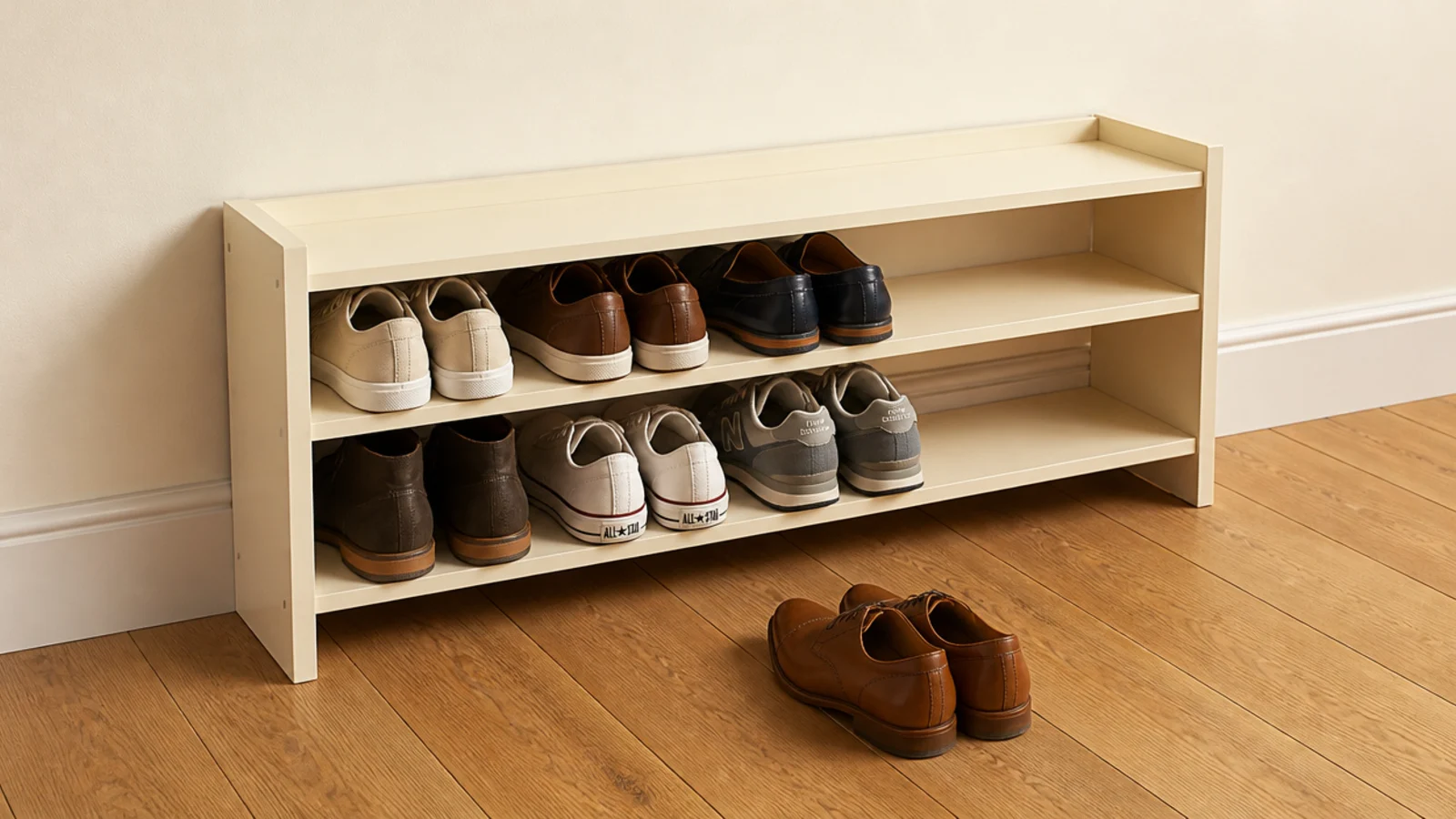
- Buying a rack sized for shoes lying flat. It needs 13 inches of depth, which almost no small hallway has, and the rack ends up half in the walkway.
- Sealing leather shoes in plastic for the off-season. Residual moisture has nowhere to go and you find mildew in spring.
- Storing every pair anyone owns at the door. Small entryways hold six to eight pairs; sizing for the whole collection guarantees it will never fit.
Frequently asked questions
How do I store shoes in a very small space?
Tilt them and go vertical. Shoes stored at a 45-degree angle need nine inches of depth instead of thirteen, which is the single biggest space saving available. After that, use height — the wall above a door, the back of a door, and the space under a bed all hold shoes without taking any floor.
What is the cheapest way to store shoes?
A single board mounted ten inches off the floor, at around $15, holds six pairs and leaves the floor clear for a vacuum. After that, over-door pocket organizers at $12 to $20 hold a dozen pairs of flats on a surface that was doing nothing. Neither needs more than a screwdriver.
How do I store shoes without a closet?
Under the bed and behind doors. Rolling under-bed boxes hold eight to twelve pairs each in space that is otherwise dead, and the back of any door takes a pocket organizer. Between them most people can store an entire shoe collection without a single square foot of floor.
Does storing shoes toe-to-heel really save space?
Yes, roughly 30 percent of the width. Turning one shoe of each pair around so the toe sits against the other's heel lets the shapes nest together. It looks slightly odd on an open shelf but it is genuinely worth doing inside a closed cabinet or a box where nobody sees it.
How should I store off-season shoes in a small apartment?
Clean them, stuff the toes with paper to hold their shape, and put them in a breathable fabric bag under the bed. Avoid vacuum bags for leather — compressing leather creases it permanently. Plastic bins work as long as the shoes go in genuinely dry, or you get mildew by spring.
How many pairs can a small entryway realistically hold?
Six to eight pairs, and trying to fit more is what makes small entryways feel chaotic. Store the daily pairs at the door and everything else elsewhere. A small entry that holds eight pairs neatly works far better than one crammed with sixteen.
Tilt what you already own before buying anything — for most small hallways that single change is the whole fix. For the full door-side system see entryway shoe storage ideas, for closed storage that hides everything see hidden shoe storage, and if a slim closed unit suits you better, shoe cabinet ideas for small entryways covers those. Save the pin before you measure the hallway.
Want more like this? Browse all 15 shoe storage ideas guides — they all use the same measurements and budget tiers.
Pin it for later
Save this to your Shoe Storage Ideas board
Pin it now so it is waiting for you when the tape measure comes out — and so the next person hunting for this idea can find it too.
Save this pinKeep going
More ideas worth saving while you have the tape measure out.