Shoe Storage Ideas · Listicle
30 Simple Shoe Storage Ideas on a Budget

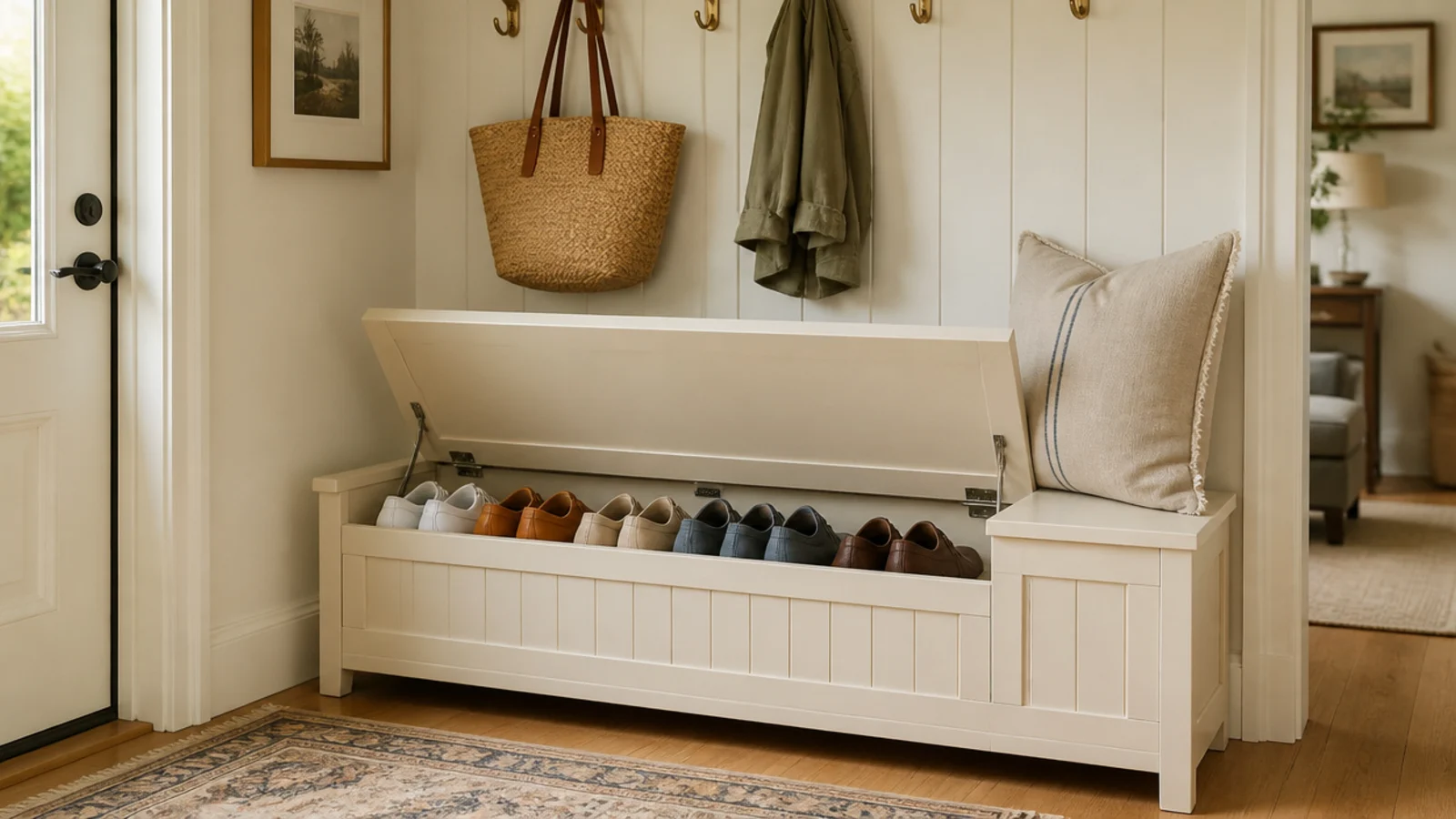
Hidden shoe storage is the answer when the shoes themselves are the problem — not the number of them, but the sight of them. Every idea here gets pairs out of view, and almost all of them cost under $40 or use furniture you already own. One warning first, because it is the thing that ruins closed storage.
In this guide32 sections — tap to openHide
- 1.The one thing hidden shoe storage always gets wrong
- 2.A bench with a lift-up seat
- 3.A storage ottoman by the door
- 4.Rolling drawers under the bed
- 5.Flat boxes under the sofa
- 6.A tilt-out cabinet in the hallway
- 7.A shallow drawer under a console
- 8.Inside a window seat
- 9.Under the stairs behind a door
- 10.Behind a curtain on a rail
- 11.A toe-kick drawer at floor level
- 12.An ottoman coffee table
- 13.Wardrobe base drawers
- 14.Fabric-front cubbies
- 15.Under a built-in banquette
- 16.Behind an entry mirror cabinet
- 17.Inside a vintage trunk
- 18.A wall cabinet above the door
- 19.Under a radiator cover
- 20.Lidded baskets in a row
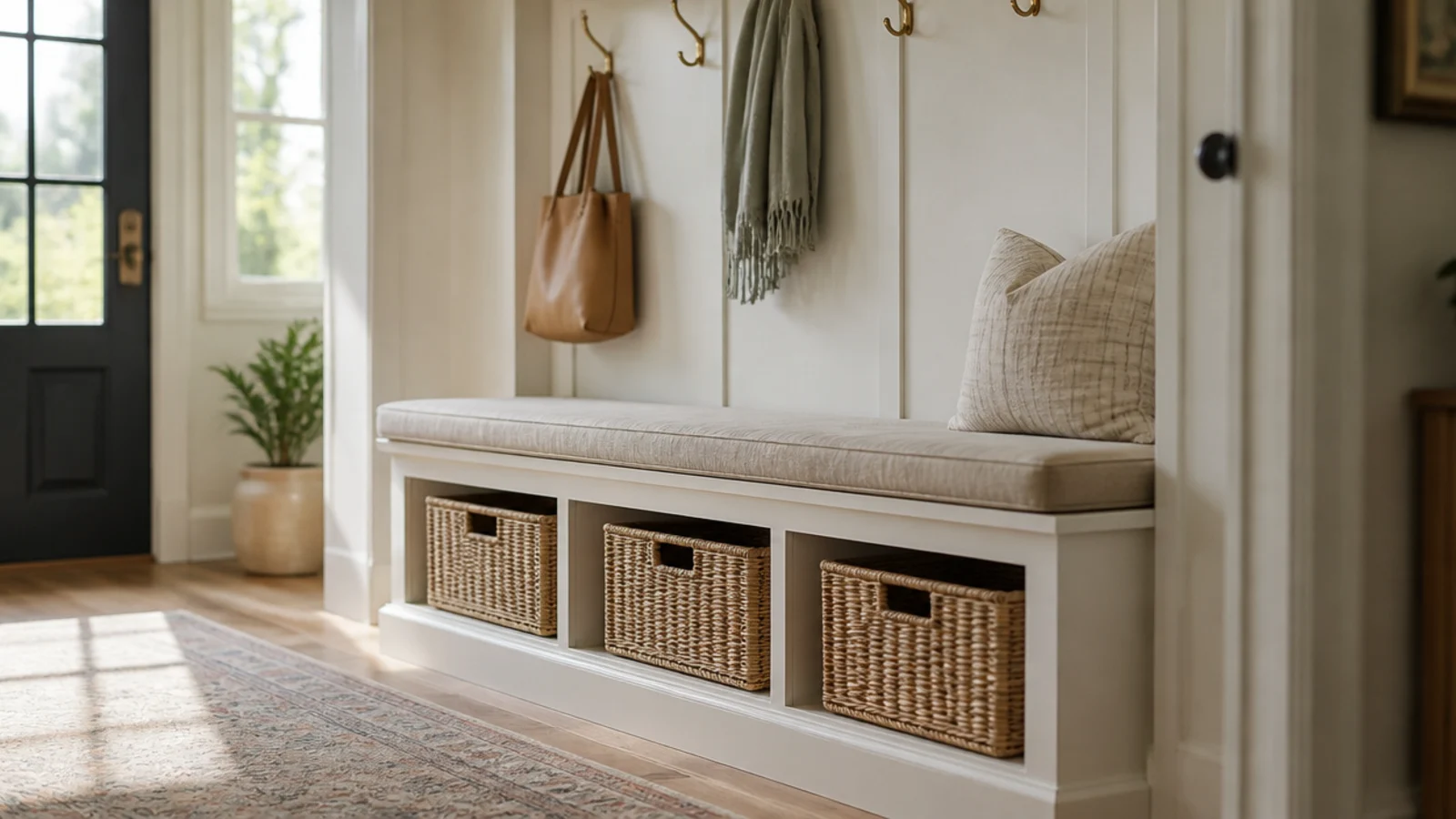
- 21.A shallow closet with bi-fold doors
- 22.Stair-tread drawers
- 23.Under a bay window seat
- 24.In the base of a bookcase
- 25.A hall bench with cabinet doors
- 26.A hanging shoe bag in the wardrobe
- 27.Under a raised platform bed
- 28.A pull-out beside the fridge
- 29.Labelled boxes on a high shelf
- 30.Behind a folding screen
- 31.A repurposed filing cabinet
- 32.Mistakes to Skip
The one thing hidden shoe storage always gets wrong
Closed storage traps moisture, and moisture is what makes shoes smell — not the shoes themselves. A sealed cabinet full of shoes worn that day will develop an odour within a fortnight, and then people blame the shoes.
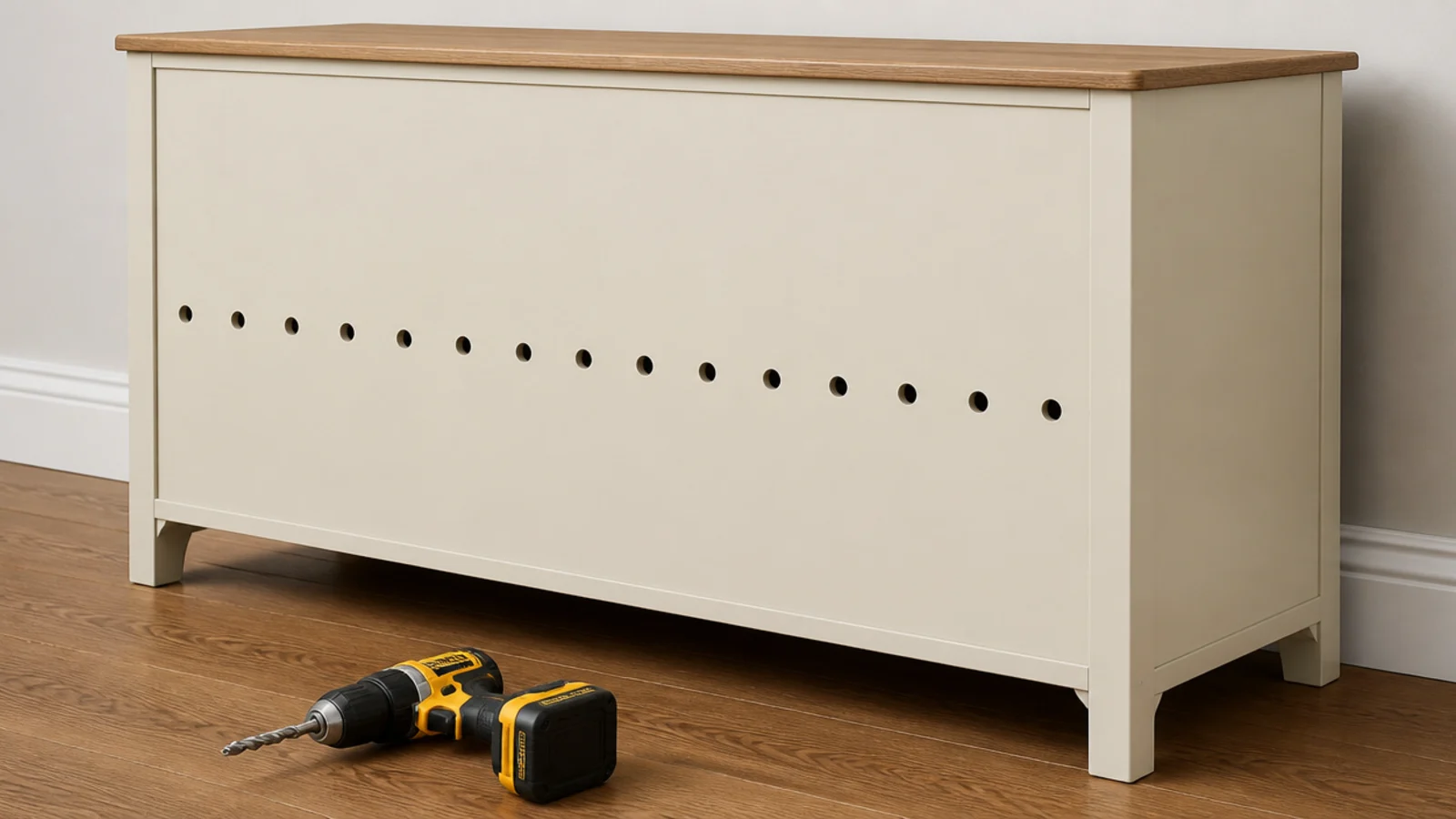
The fix is airflow, and it is easy. Drill a row of half-inch holes across the back panel of any enclosed unit, or mount it with a half-inch gap behind it, or use a slatted base rather than a solid one. Any of the three is enough to keep air moving.
Then a rule: never put a damp shoe into closed storage. Wet pairs get a tray on the floor outside the unit until they are genuinely dry. That single habit solves most of what people dislike about hidden storage.
The second consideration is who uses it. Every door and lid is a step people skip when they are in a hurry, so households with children usually do better hiding the weekly shoes and leaving the daily pairs in open cubbies. Hide the overflow, not the shoes that come off at 8am.
Budget tiers below: $ under $40, $$ $40–$120, $$$ $120+.
1. A bench with a lift-up seat
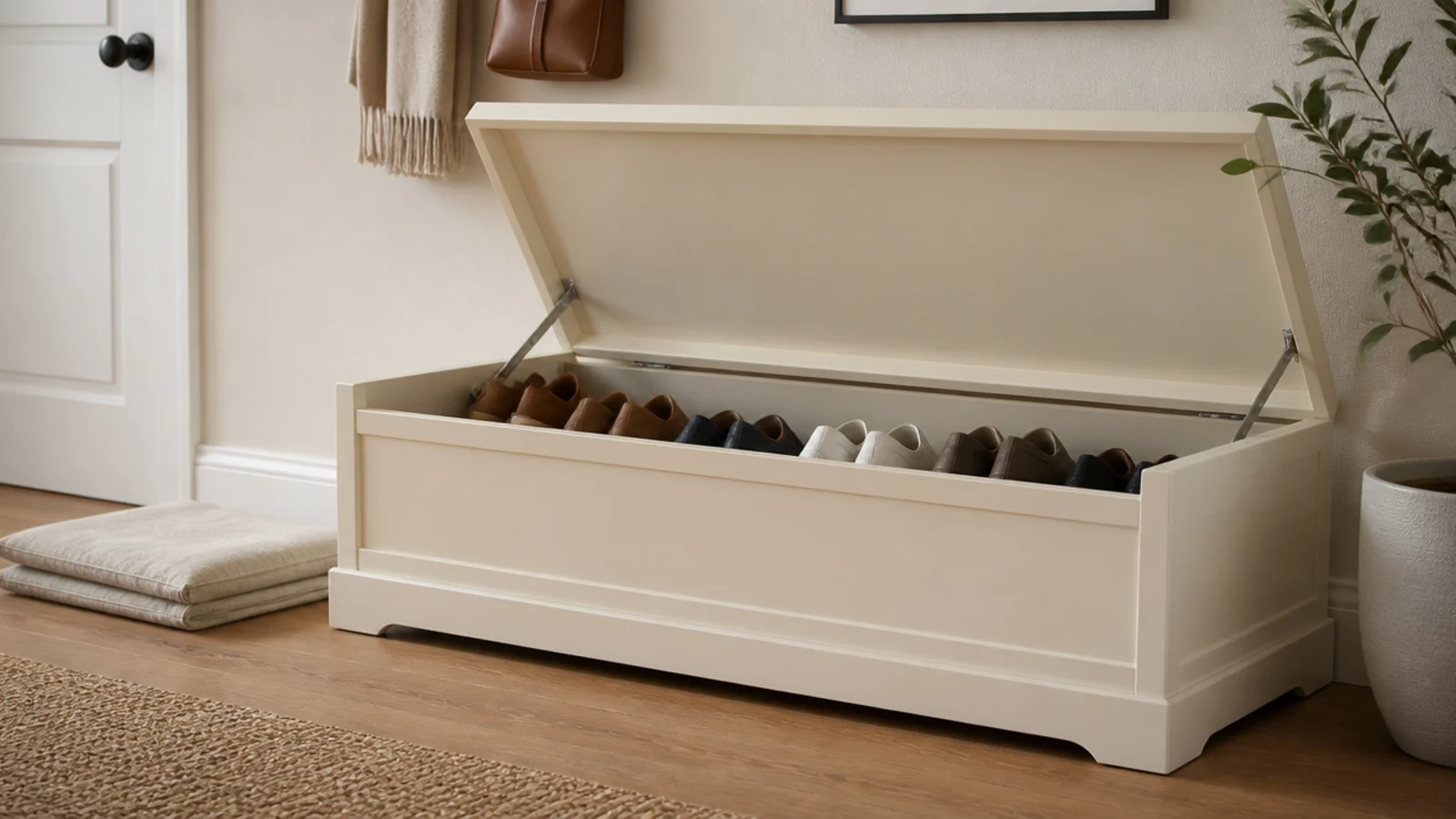
Eight to ten pairs under a seat you actually use. The most useful piece of hidden storage in most entryways.
Check the hinge has a stay so the lid cannot drop on fingers. Drill four ventilation holes in the back. $$–$$$
2. A storage ottoman by the door
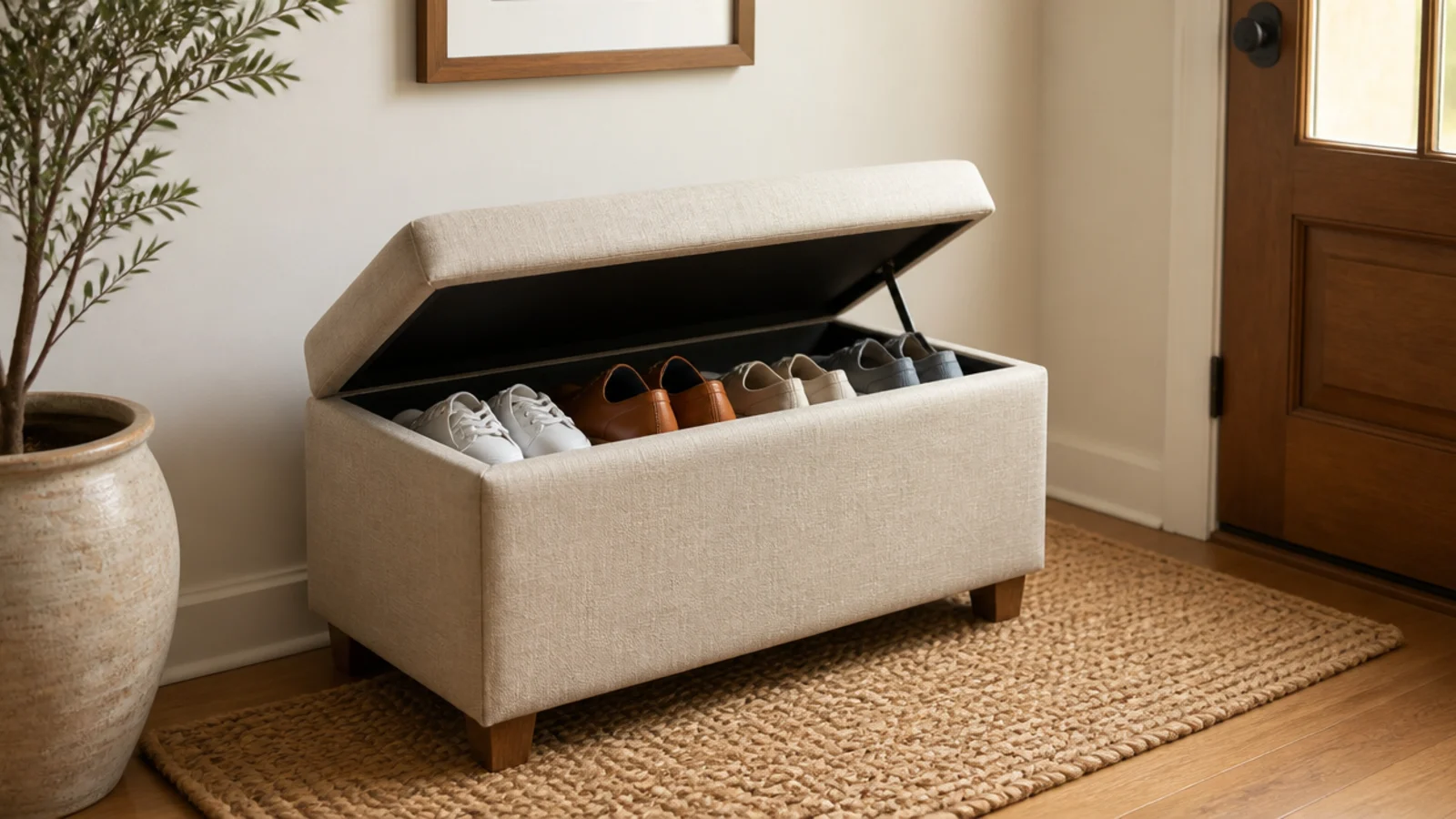
Four to six pairs, no build, no fixings, and it moves house with you — which makes it the easy renter option.
Choose one with a rigid lid rather than a soft top, or it sags within a year and stops closing flat. $$
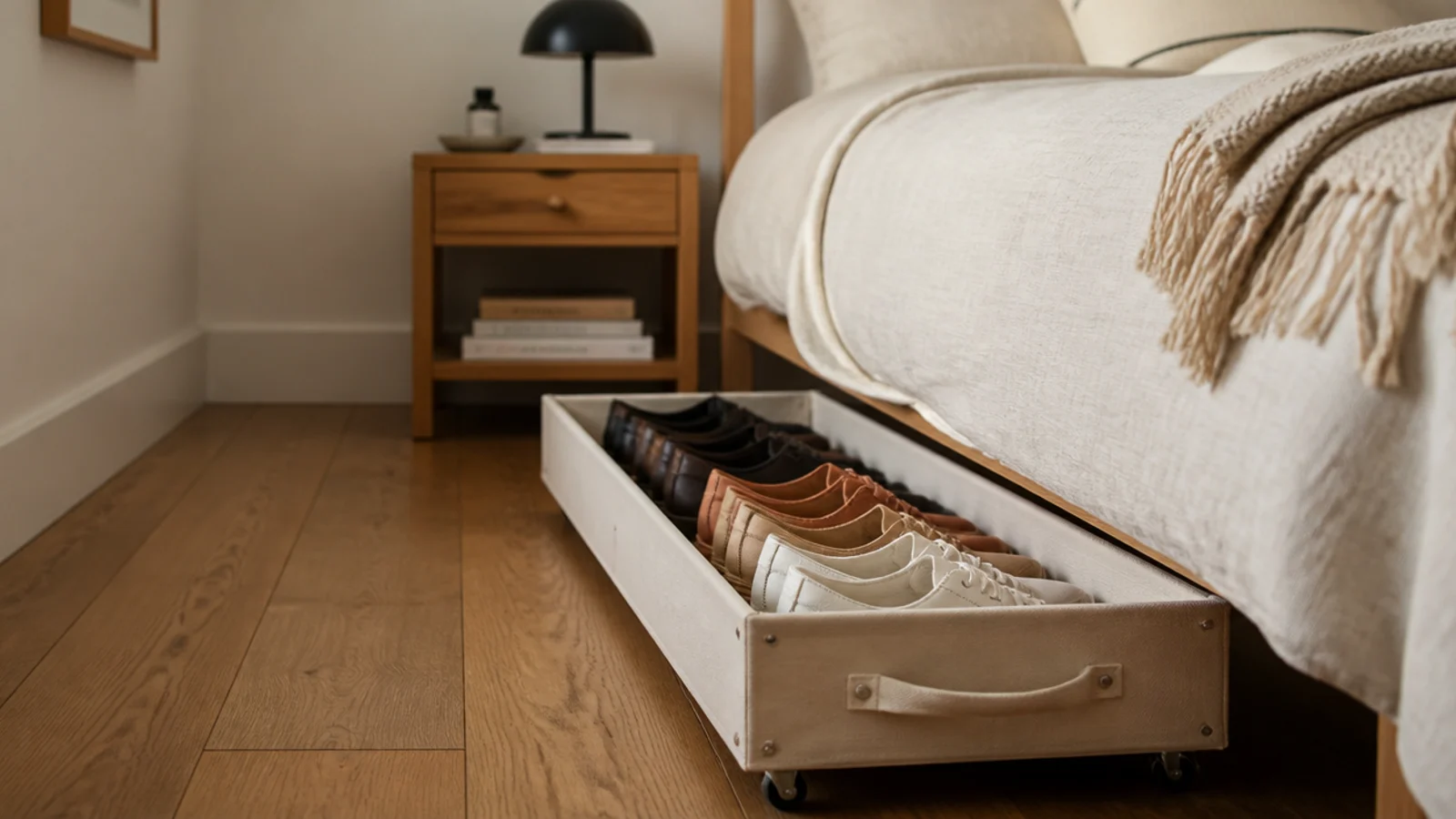
3. Rolling drawers under the bed
Eight to twelve pairs per drawer in the largest dead space in most homes.
Measure your bed clearance first; most frames give four to seven inches. Fabric with a stiffened base rolls better over a rug than rigid plastic. $–$$
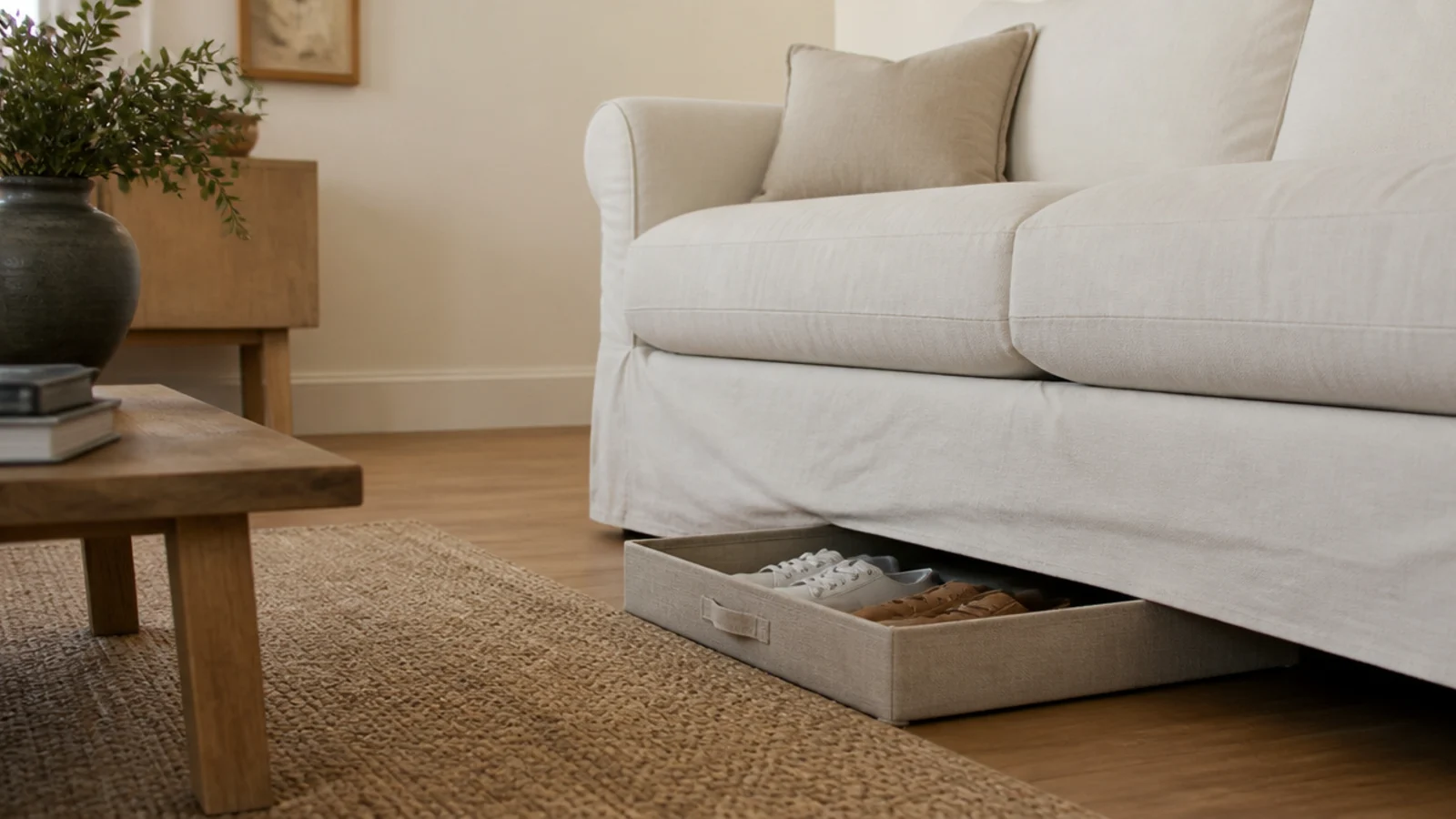
4. Flat boxes under the sofa
Four to six inches of clearance under most sofas is a whole drawer nobody uses.
Keep this for out-of-season pairs, since anything you need daily should not involve kneeling on the floor. A pull tab on the front makes it workable. $
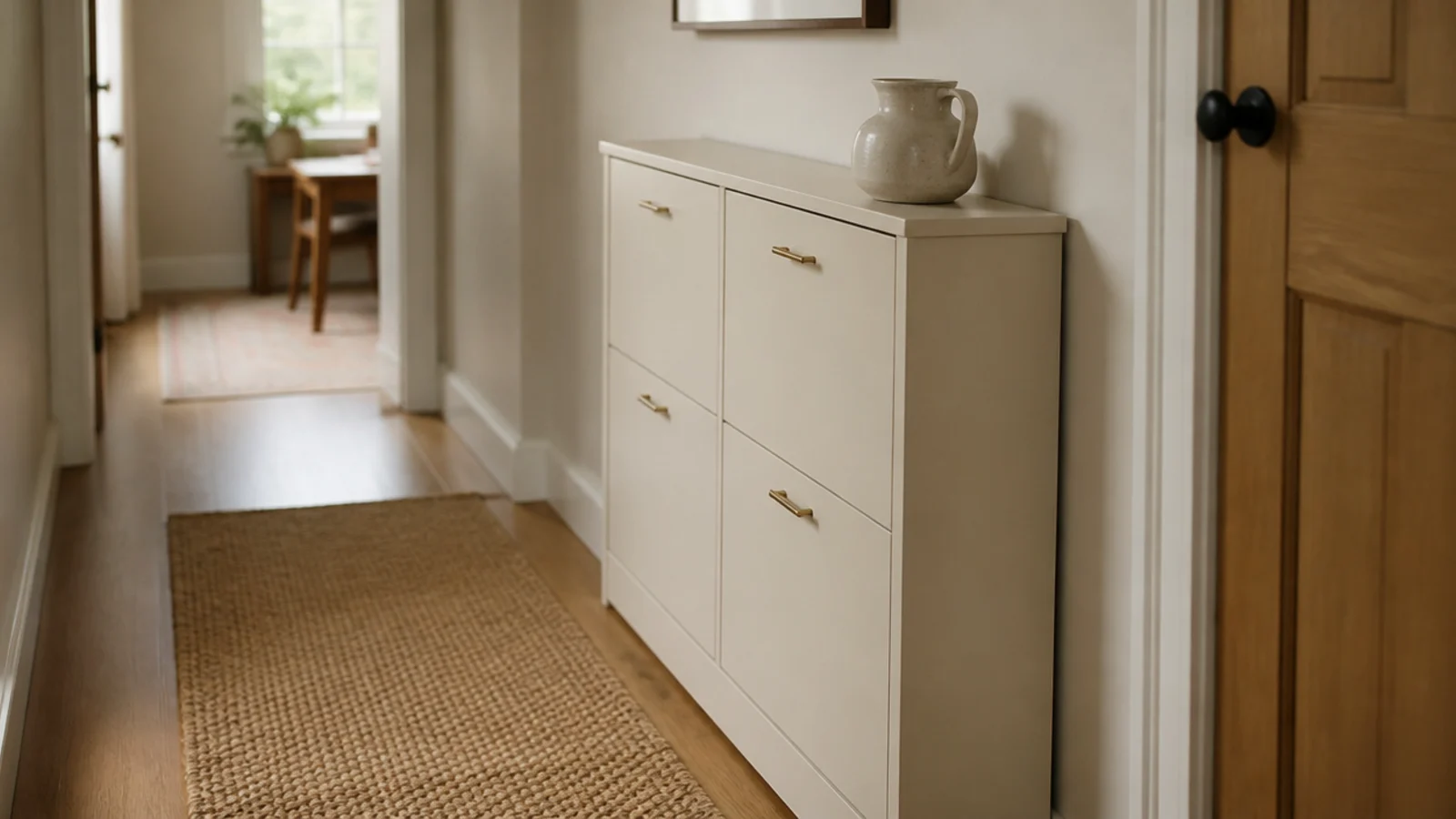
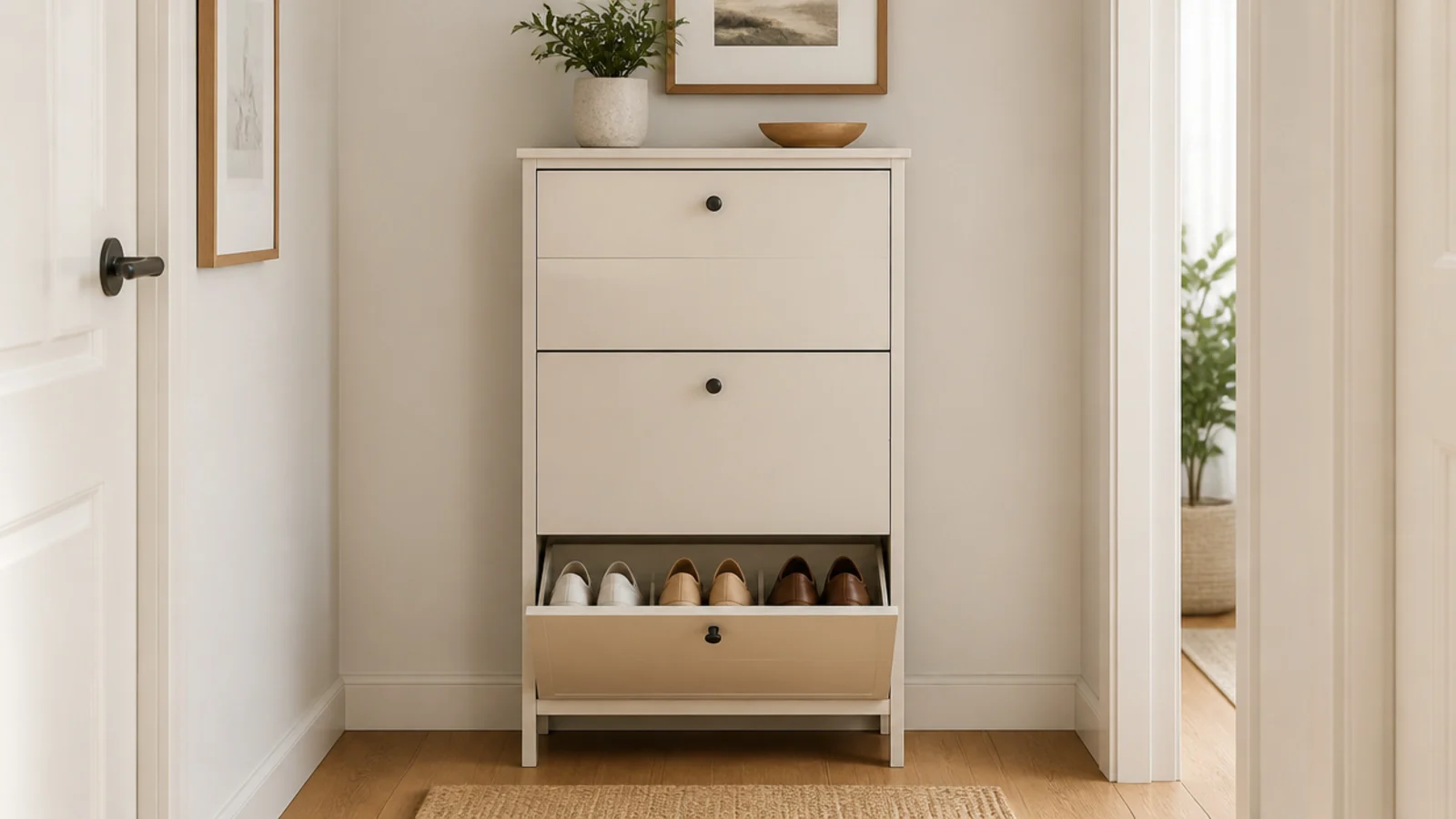
5. A tilt-out cabinet in the hallway
Six to eight pairs per drawer at nine inches of depth, because the shoes sit at an angle inside.
Look for soft-close hinges — these get closed with a foot daily. They do not fit boots, so plan a separate home for those. $$
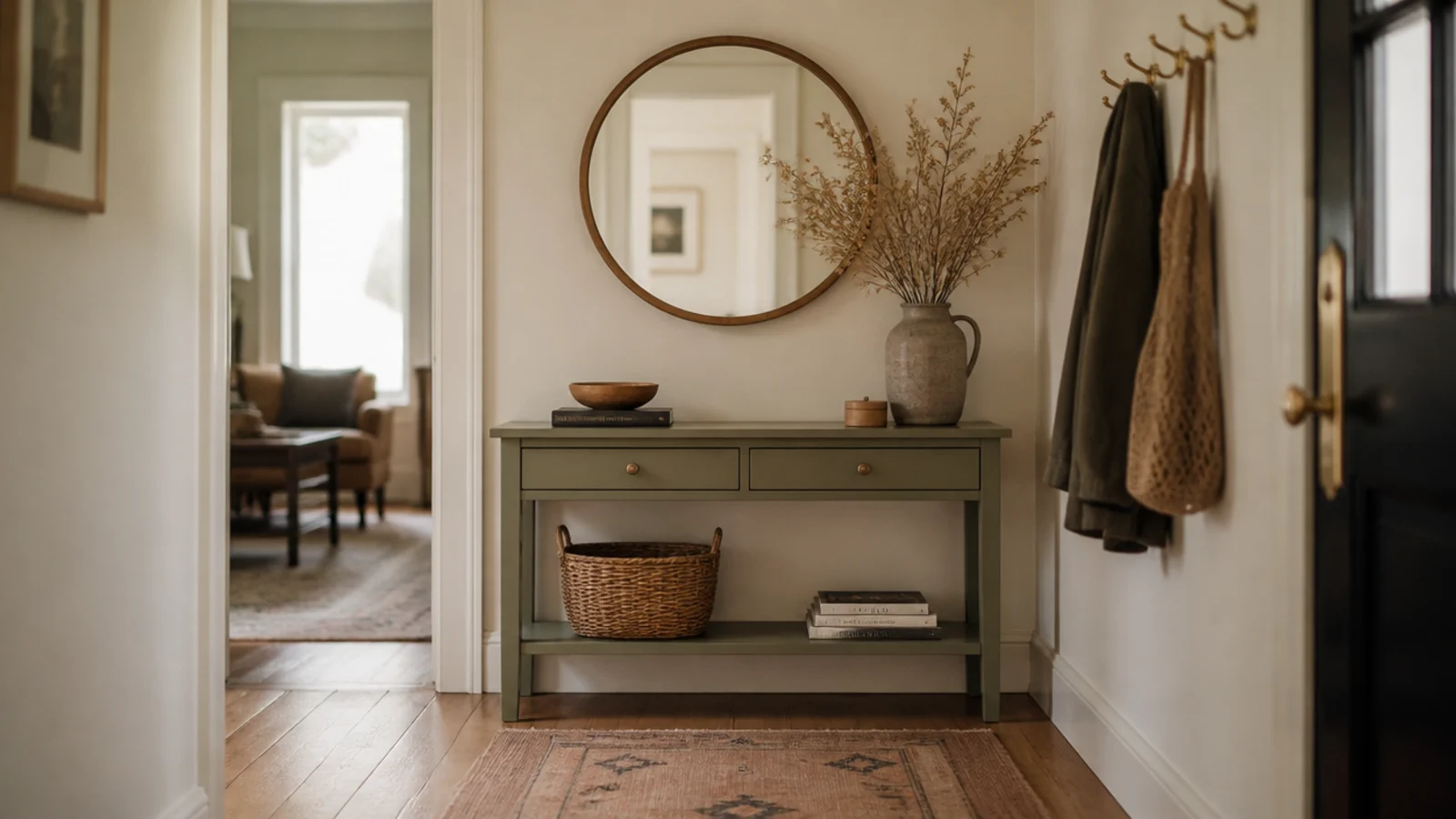
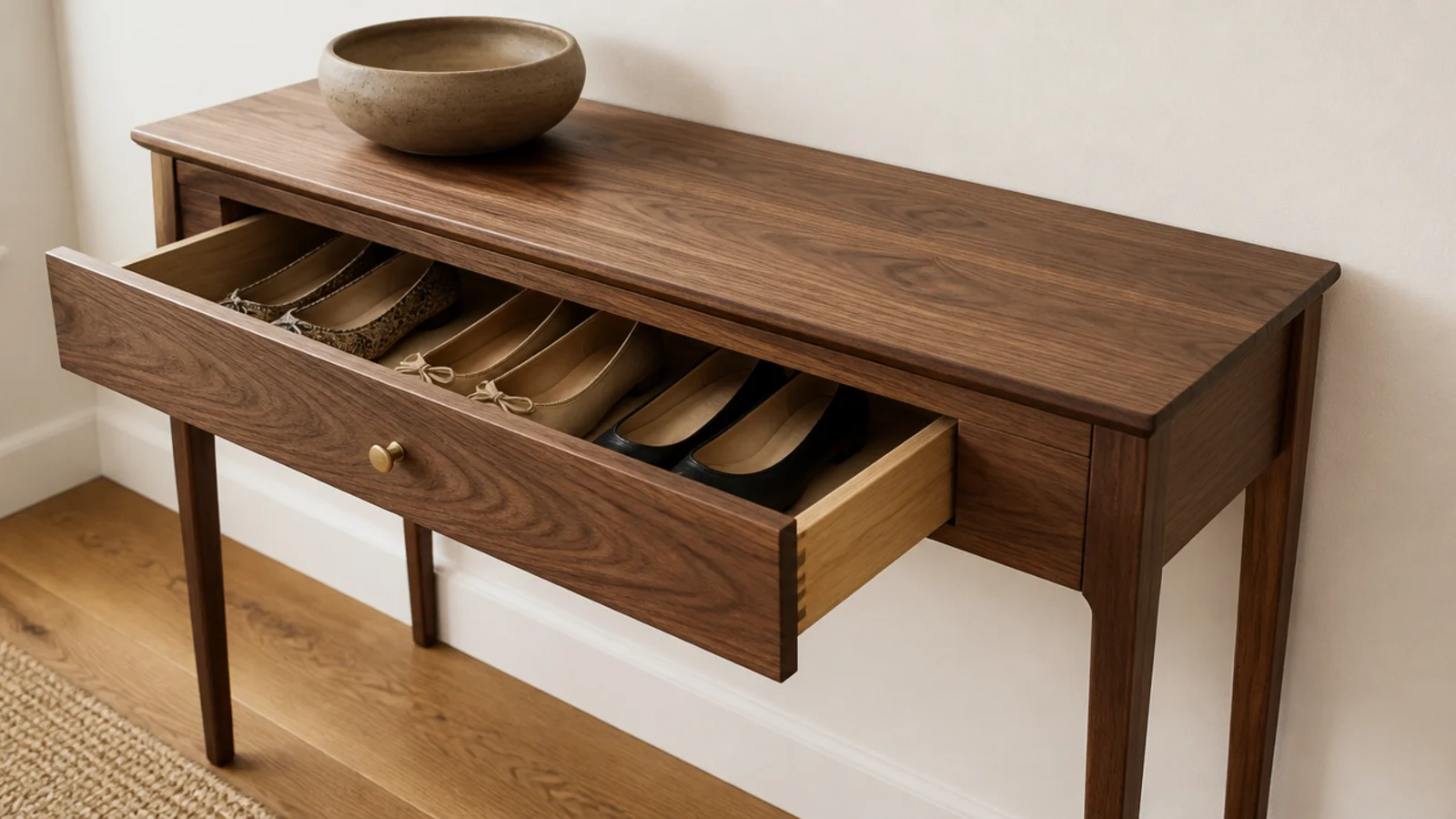
6. A shallow drawer under a console
Adding one drawer under an existing console table is an afternoon's work and considerably cheaper than a dedicated unit.
Four inches of internal height takes flats and loafers. Use full-extension runners so the back of the drawer is actually reachable. $$
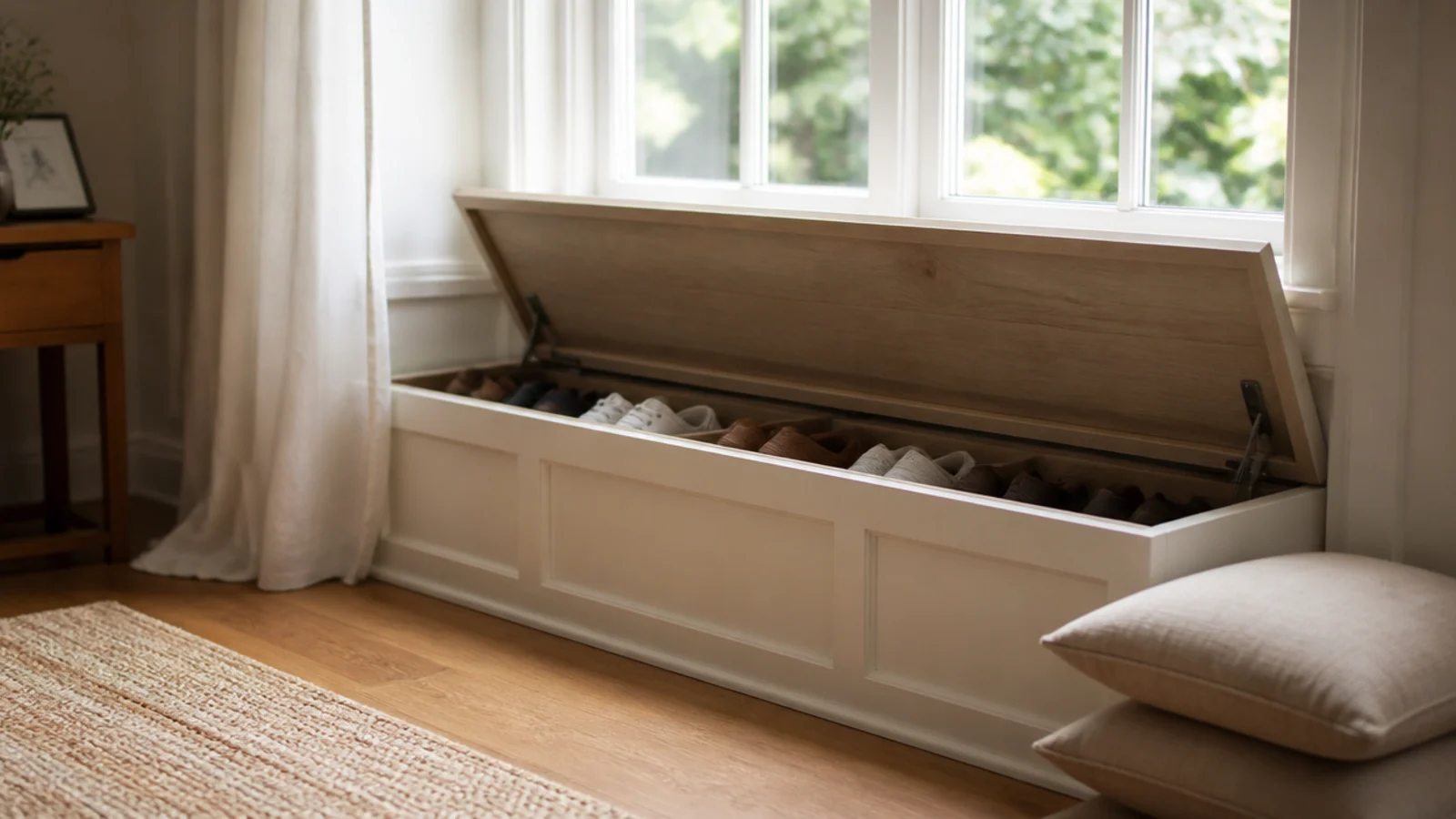
7. Inside a window seat
A window seat is a chest that nobody reads as storage, which makes it the most invisible option here.
Line the base with cotton fabric so leather does not mark against bare wood, and drill discreet vents in the back edge. $$$
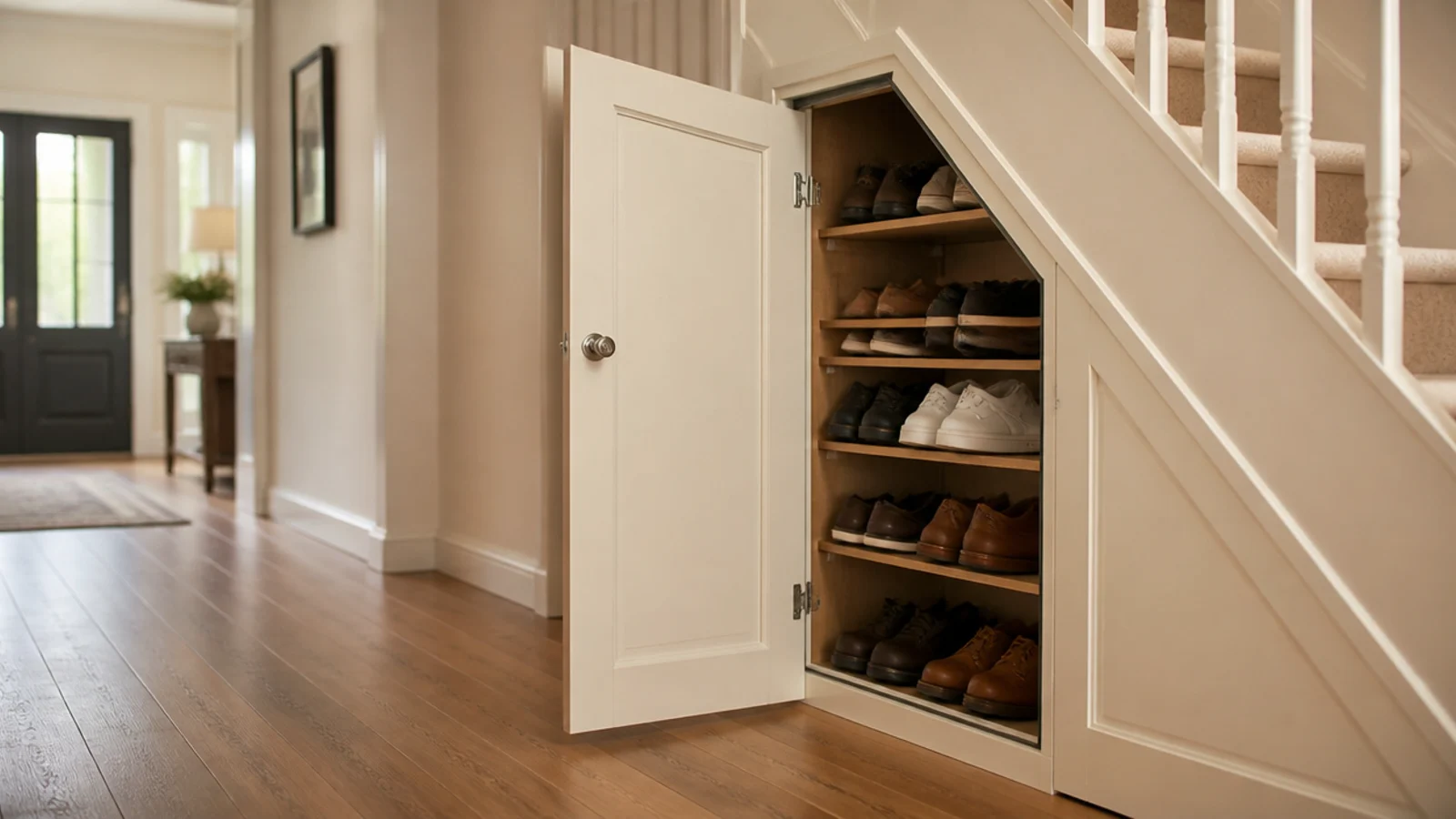
8. Under the stairs behind a door
The highest-capacity option on this list. A doored under-stair cupboard with simple shelving hides twenty pairs or more.
Fit a light on a motion sensor — under-stair spaces are dark, and a dark cupboard becomes an archaeology site within a year. $$$
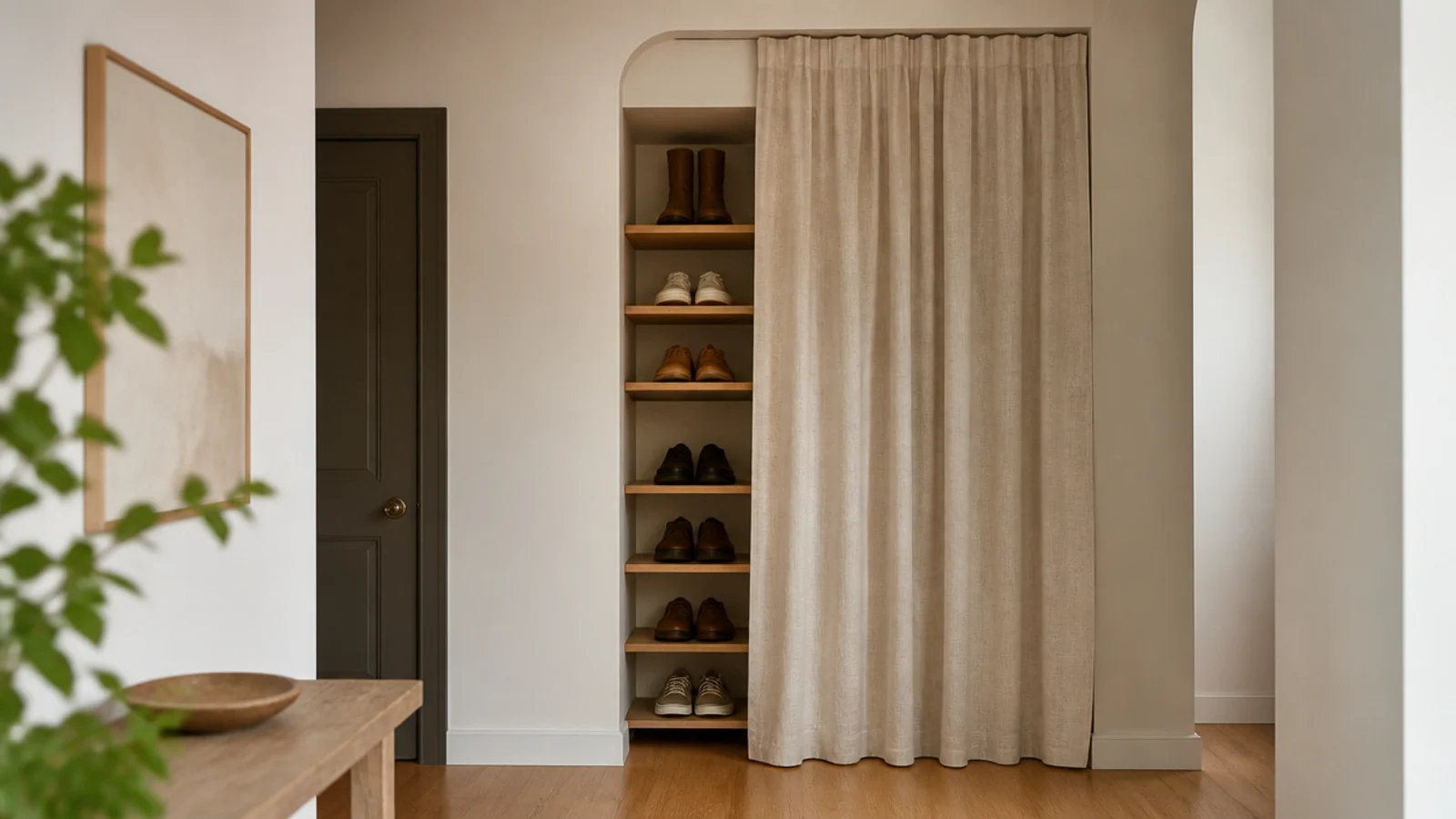
9. Behind a curtain on a rail
A linen curtain across an alcove hides open shelving completely for about $20, needs one rail, and takes ten minutes.
Choose a fabric with some weight so it hangs straight. Curtains also allow far more airflow than doors do, which suits shoes well. $
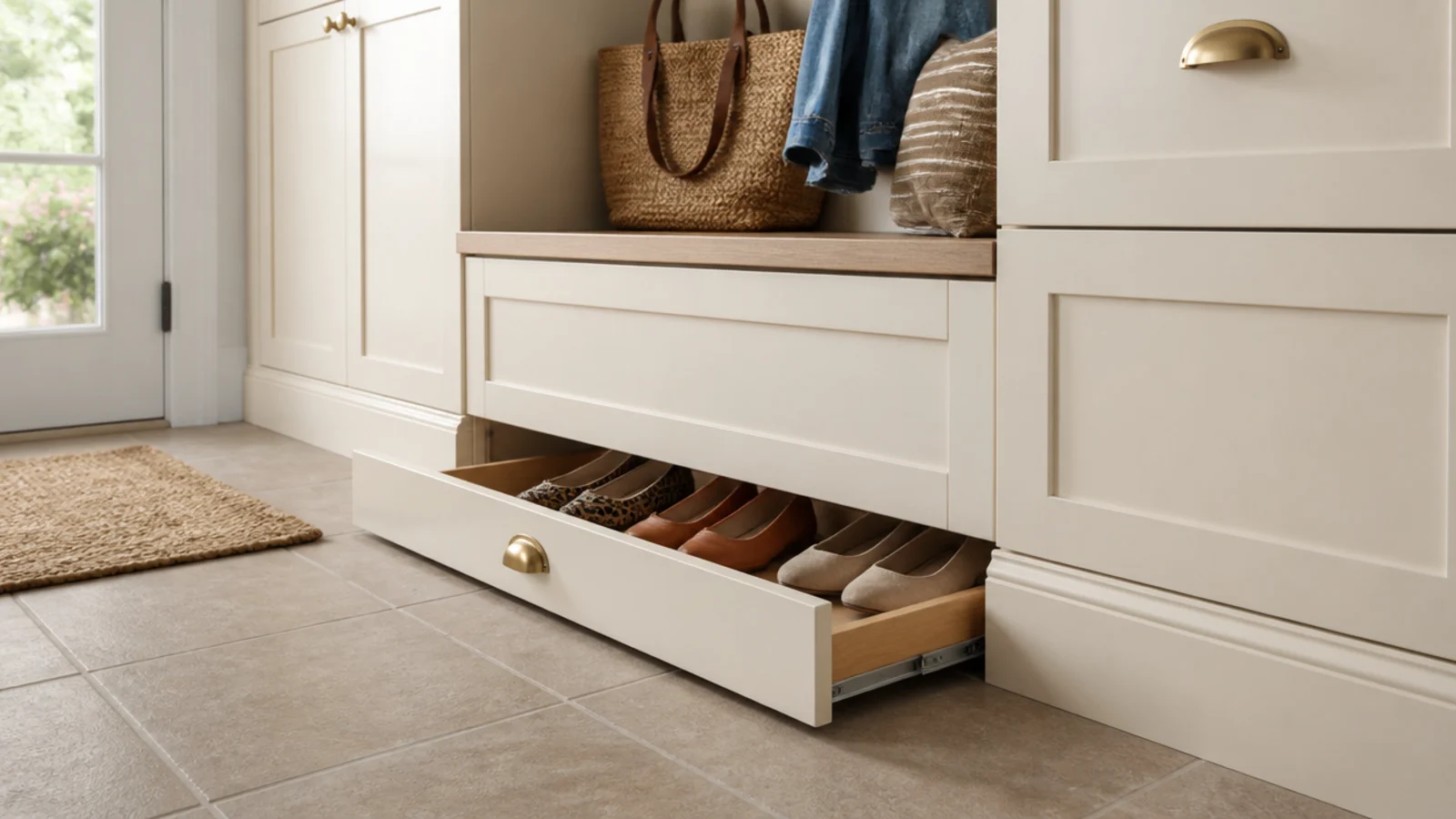
10. A toe-kick drawer at floor level
The recessed space under a cabinet run is about four inches high and universally wasted. A shallow drawer there takes flats and sandals.
It suits a mudroom or utility run rather than a kitchen, for obvious reasons. Push-to-open hardware avoids handles at ankle height. $$
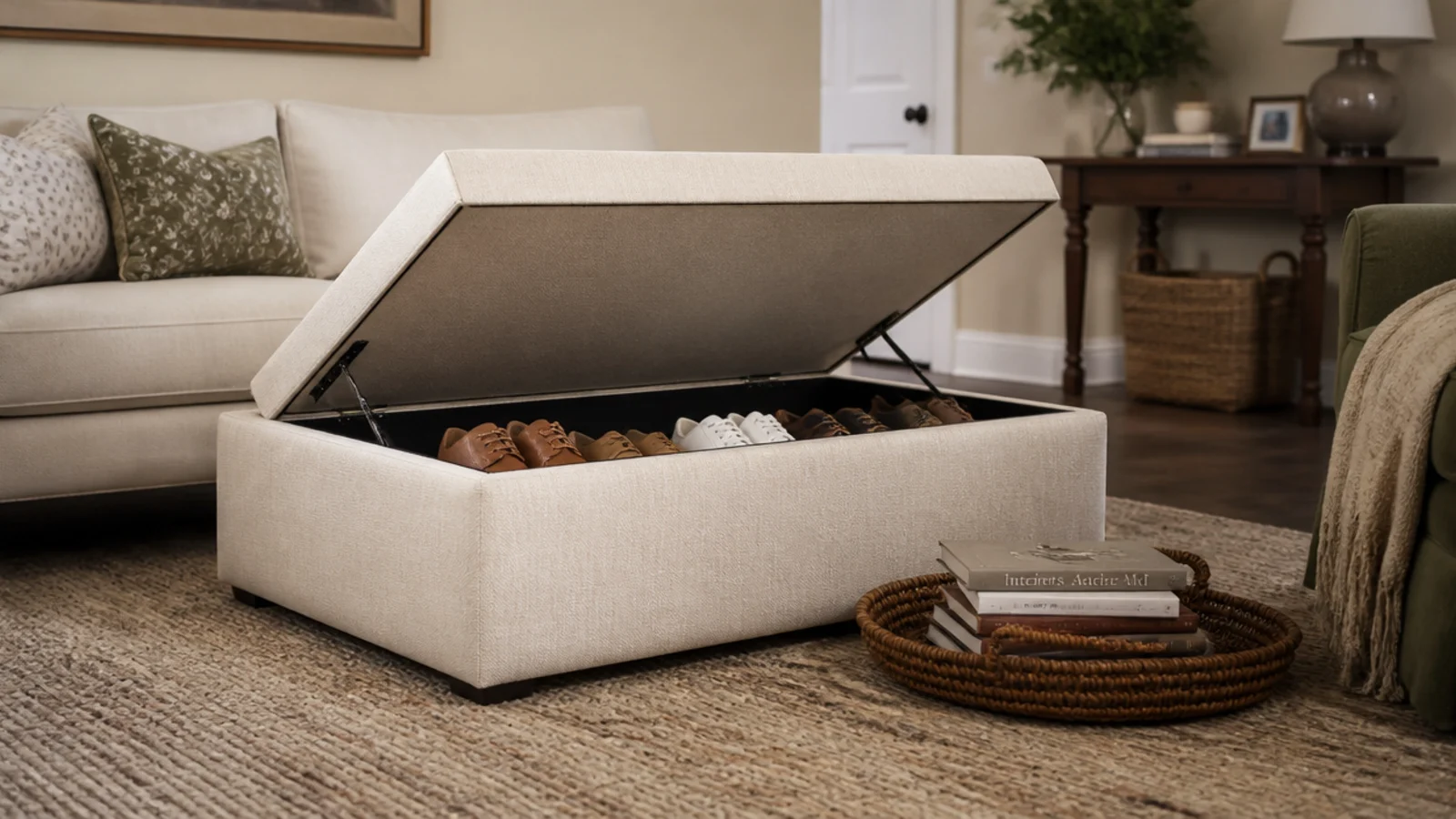
11. An ottoman coffee table
Large capacity, but be realistic: nobody lifts a loaded coffee table daily. This is out-of-season storage.
Put the winter boots in here in April and take them out in October, and it works beautifully. Use it for anything more frequent and it becomes an annoyance. $$–$$$
12. Wardrobe base drawers
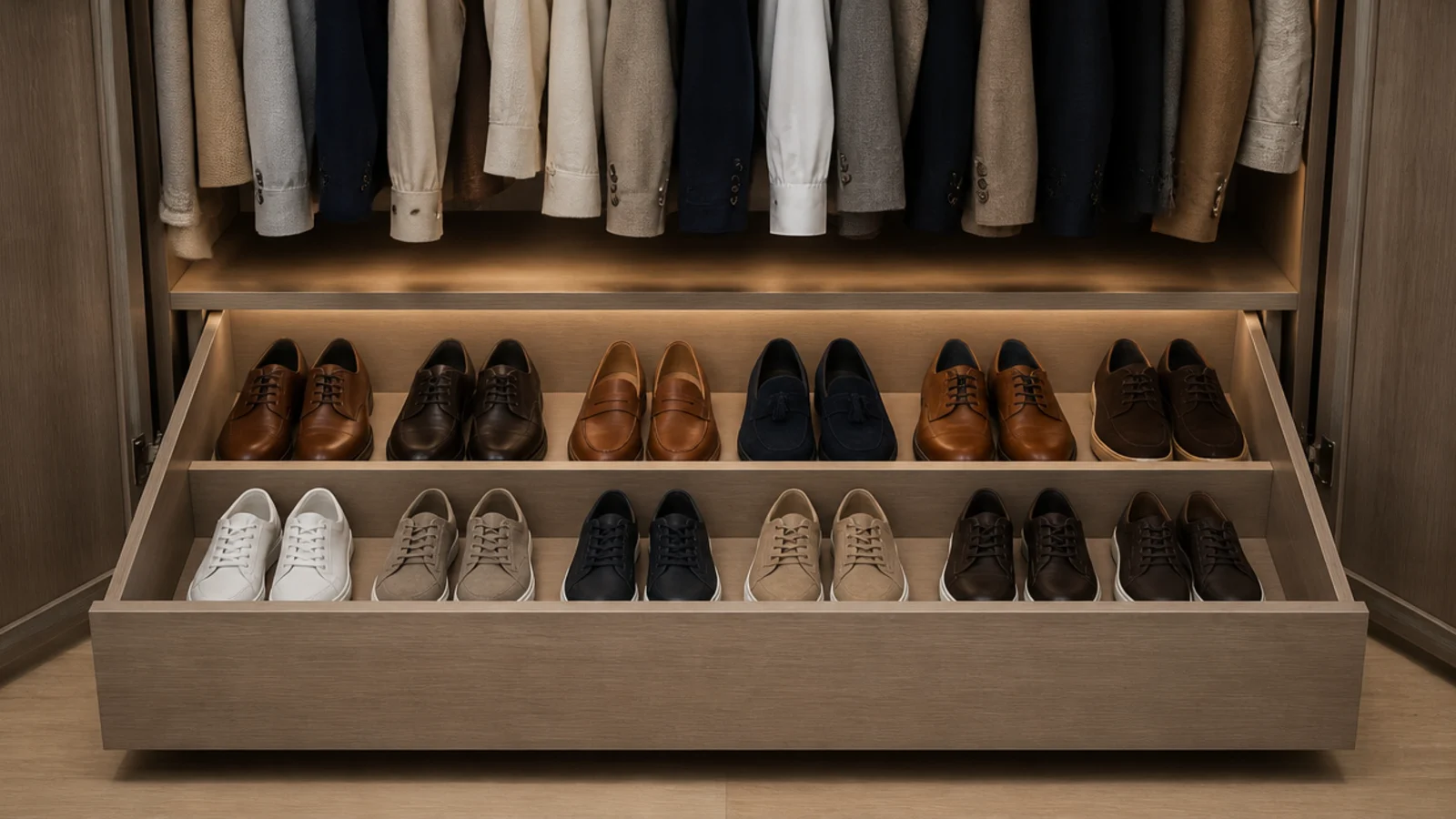
If your wardrobe has a drawer at the base, it is almost certainly the best shoe drawer in the house.
Put a simple divider between rows so shoes are not stacked directly against each other — that is what causes most of the scuffing in drawer storage. Free
13. Fabric-front cubbies
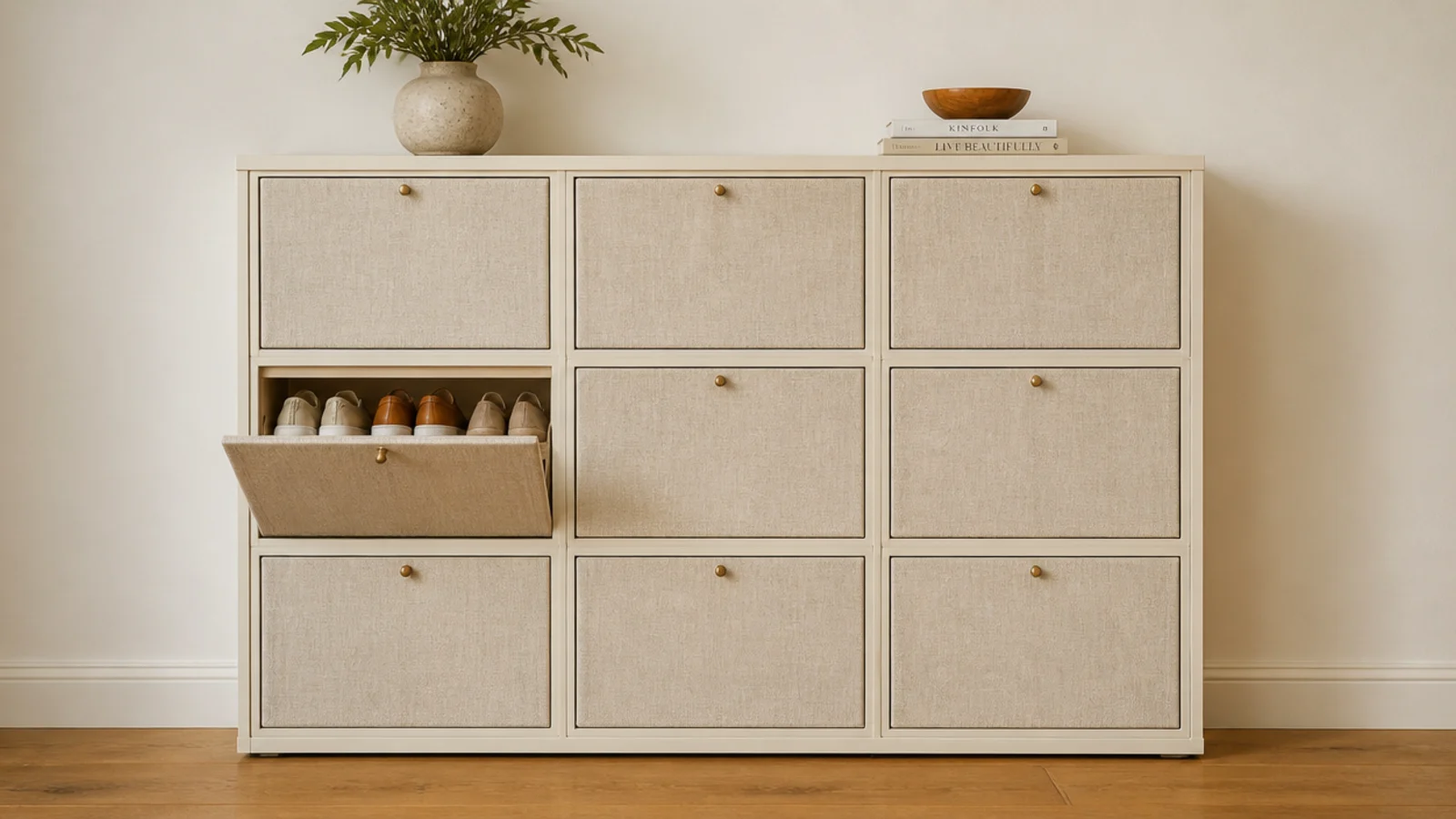
Natural linen drop-fronts over open cubbies cost far less than doors, breathe far better, and can be washed.
Fix them with a slim rod at the top and a small weight in the hem so they hang flat. It turns an open unit into a hidden one for around $30. $
14. Under a built-in banquette
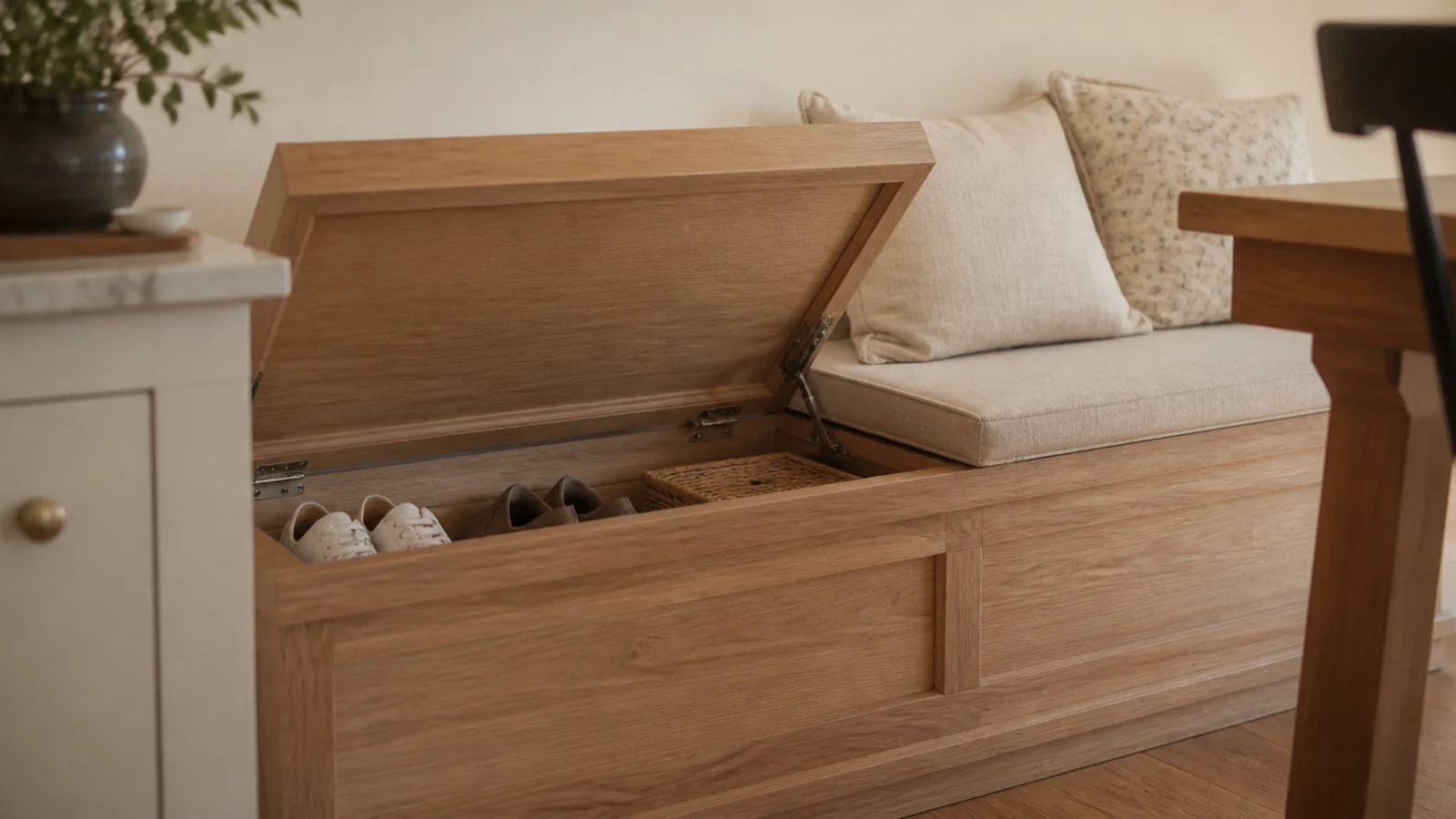
Kitchen and dining banquettes hide more volume than almost any other seat, and the space is usually completely unused.
Hinged seat panels are easier to live with than a single long lid, which is heavy and needs the table pulled out. $$$
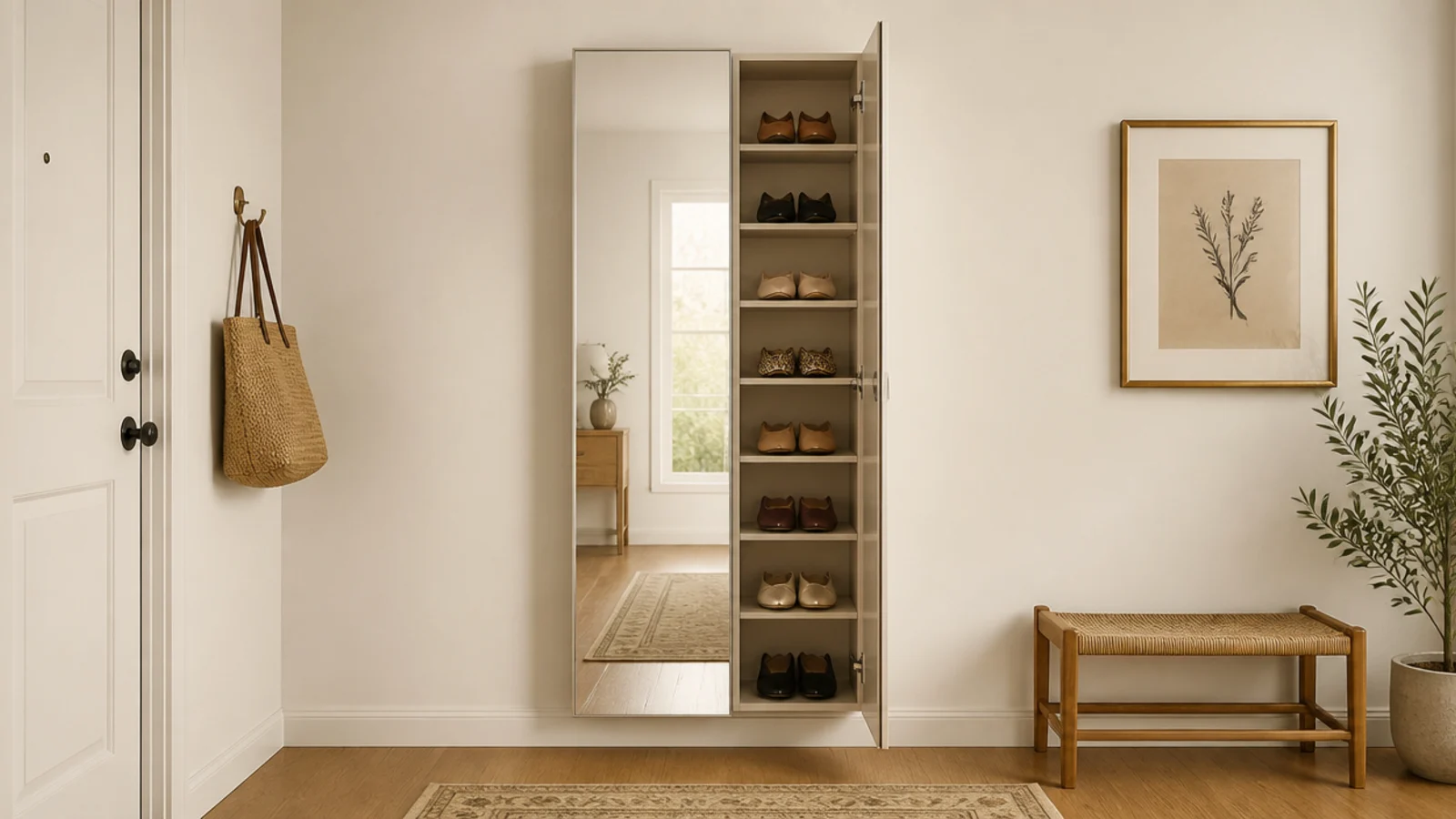
15. Behind an entry mirror cabinet
A shallow mirrored wall cabinet gives you a mirror by the door and slim shoe shelves behind it.
Four to five inches of internal depth takes flats stored on their sides. Not for boots, and not for a large collection — but the mirror alone earns its place. $$
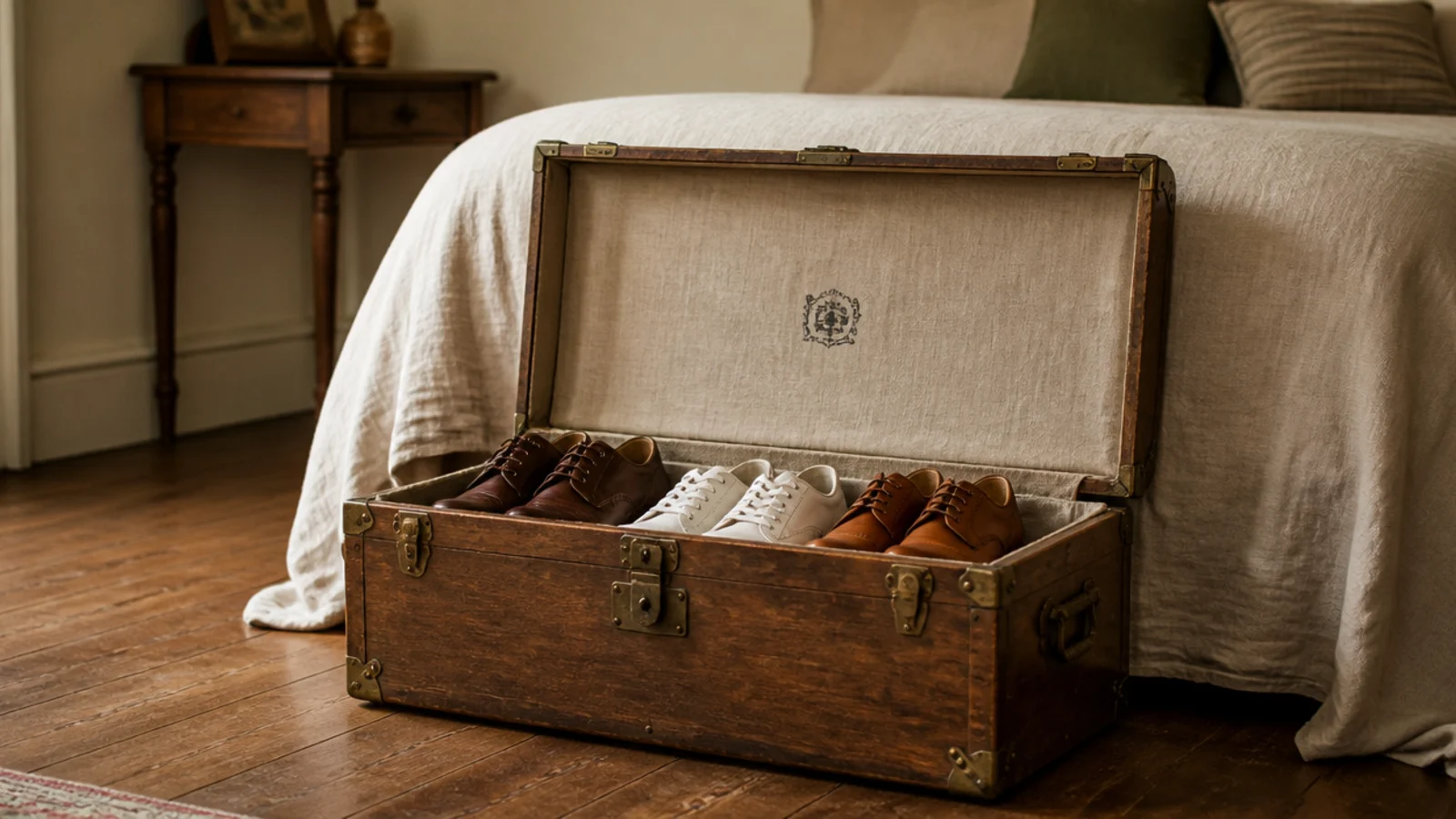
16. Inside a vintage trunk
A trunk at the foot of a bed holds a dozen pairs and looks like furniture rather than storage.
Line it with cotton and check for old varnish or metal edges that could mark leather. Prop the lid occasionally to let it air. $$
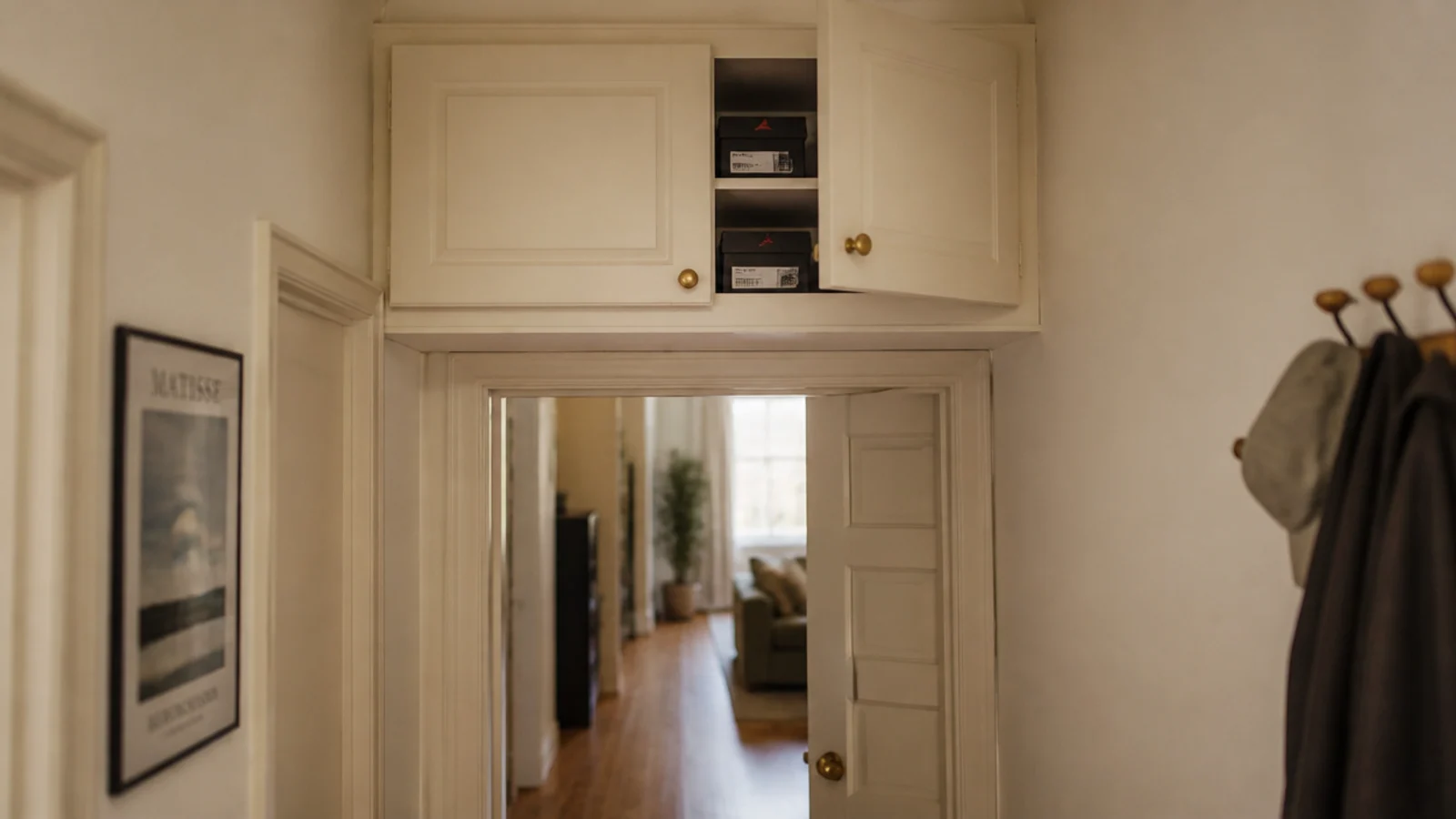
17. A wall cabinet above the door
For the pairs you wear twice a year, the wall above a doorway is dead space that nobody counts.
Use closed doors rather than open shelving at that height, since anything up there collects dust. Keep boxed shoes here, not loose ones. $$
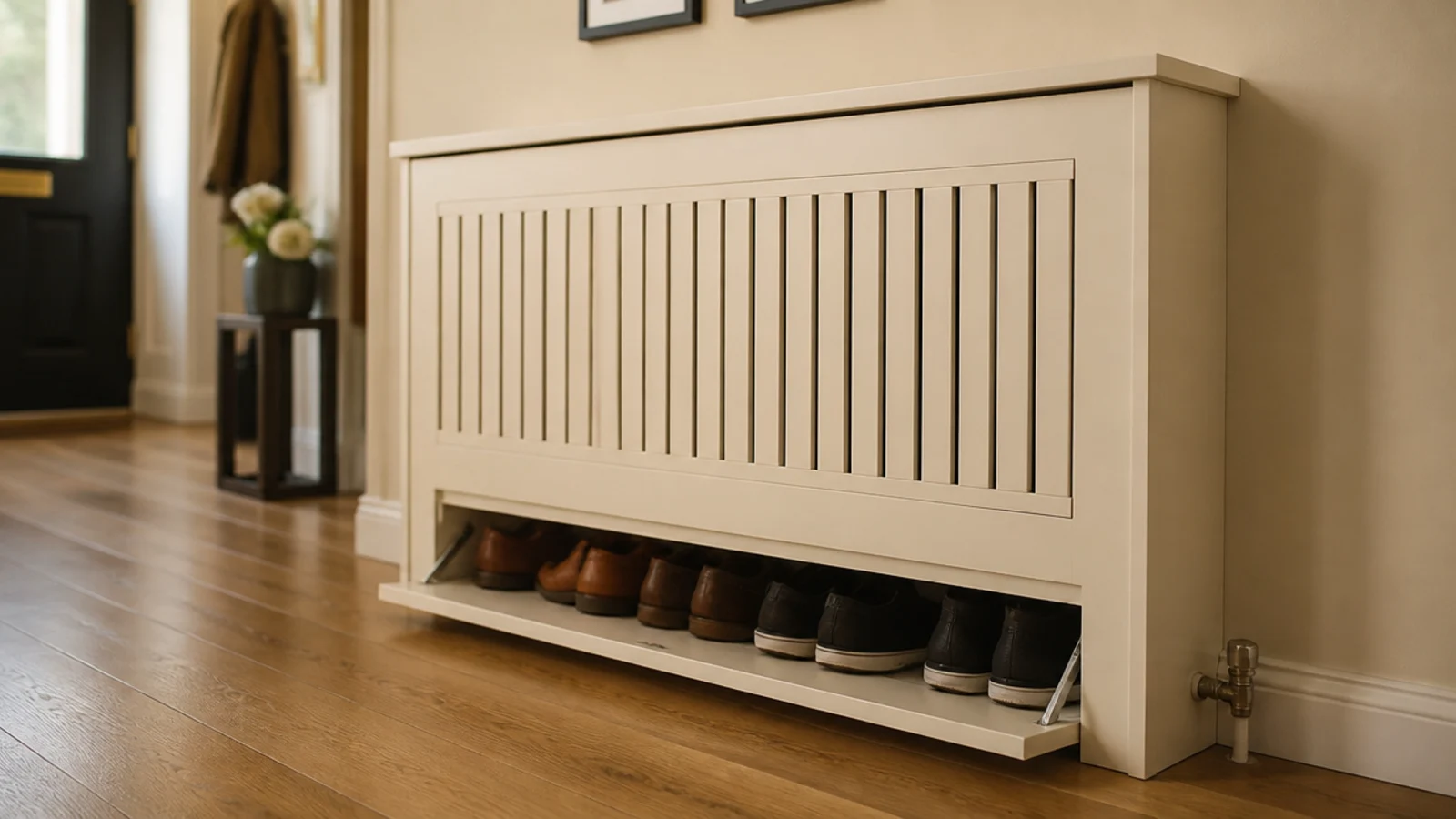
18. Under a radiator cover
A radiator cover with a lower compartment gives you concealed storage in a hallway that had none.
One firm rule: never store leather directly against a hot radiator — heat dries and cracks it. Keep the compartment well below the radiator itself. $$
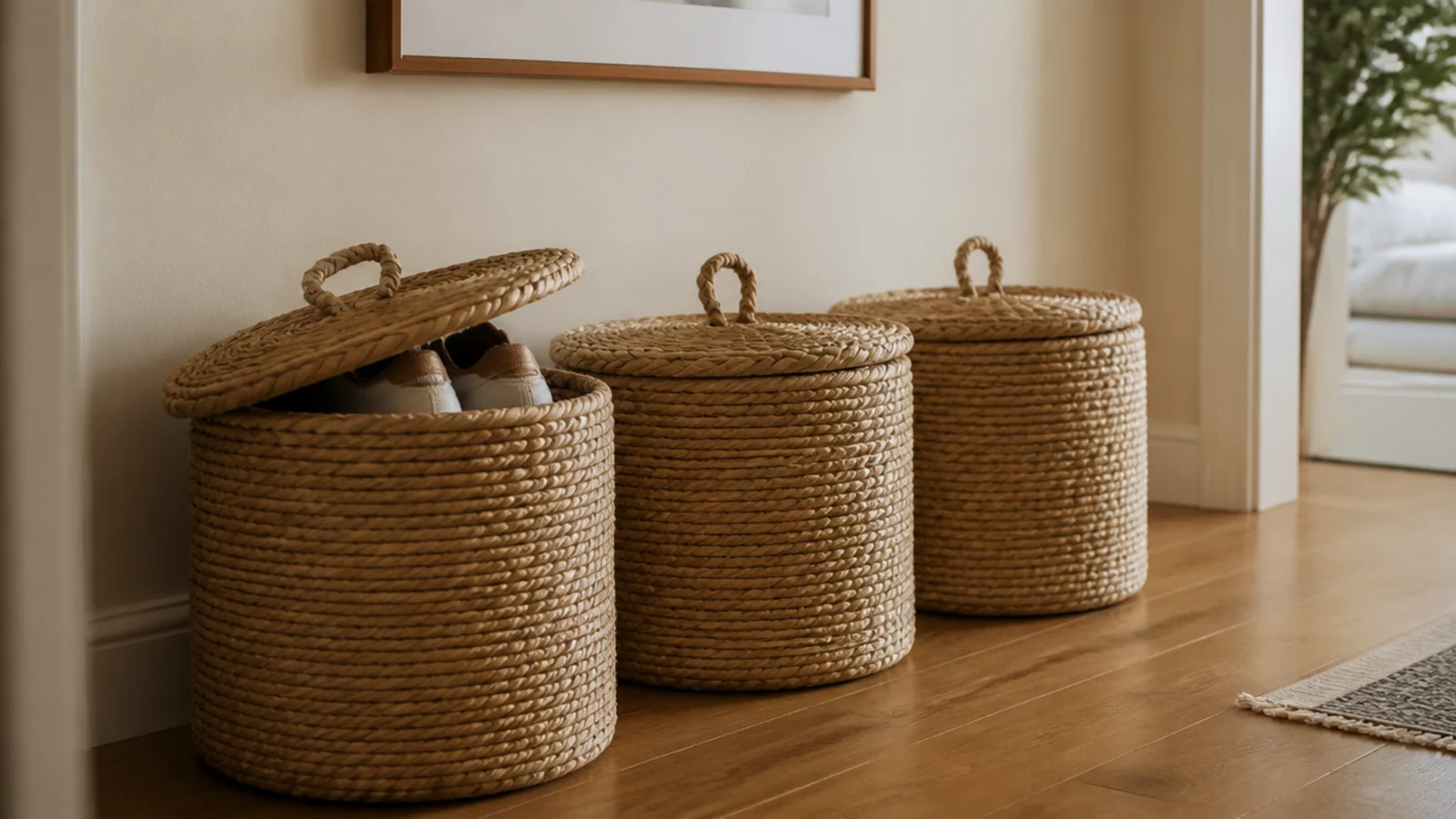
19. Lidded baskets in a row
The simplest conversion available: put lids on baskets you already own and open storage becomes hidden storage.
Three lidded seagrass baskets hold six to nine pairs and need no fixing, no tools and no build. Woven lids also breathe well. $–$$
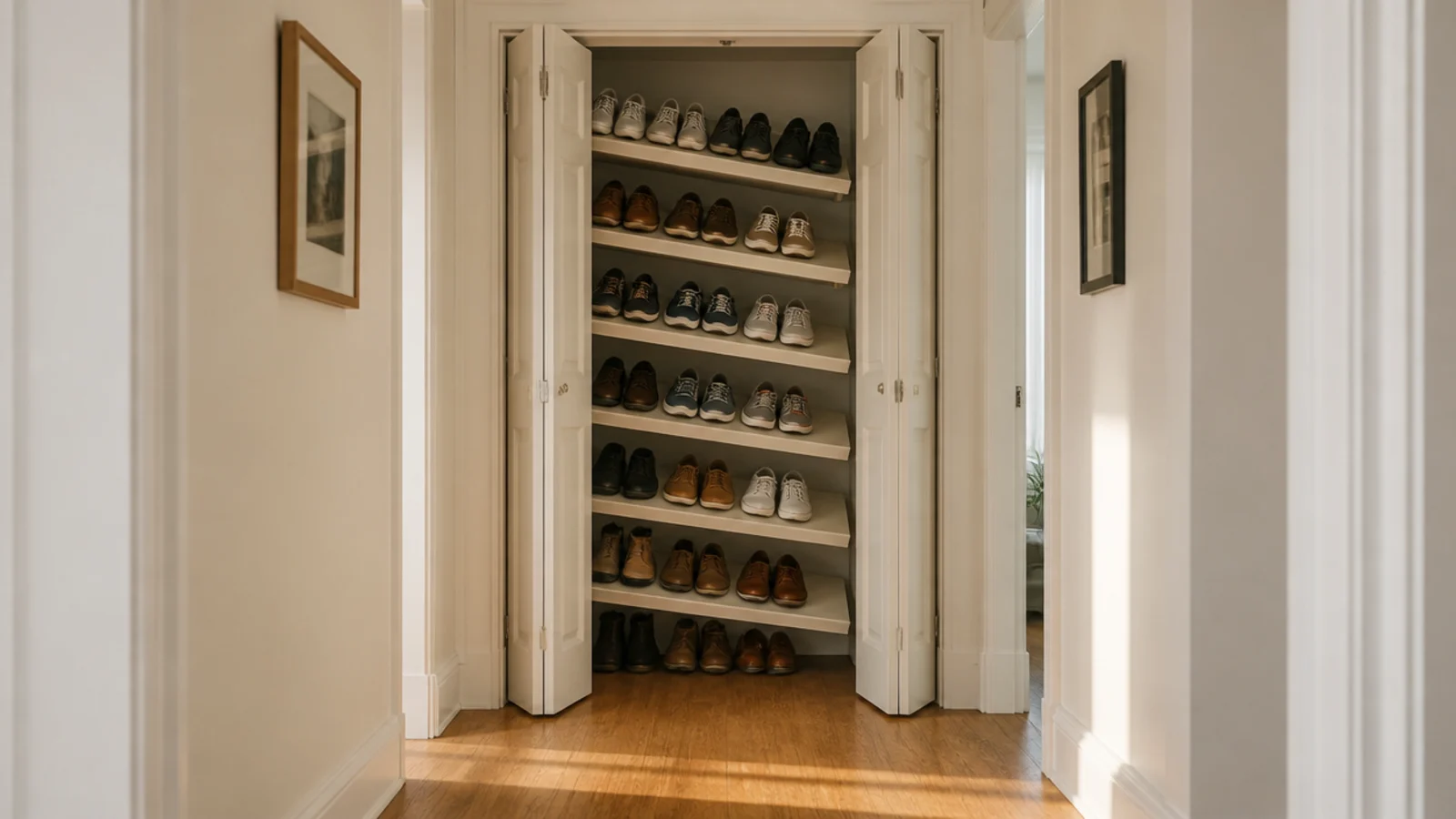
20. A shallow closet with bi-fold doors
Bi-folds need almost no swing space, which makes them the right door for a narrow hallway where a hinged door would block the corridor.
Fit tilted shelves inside at nine inches deep and the closet holds far more than a flat-shelf equivalent. $$$
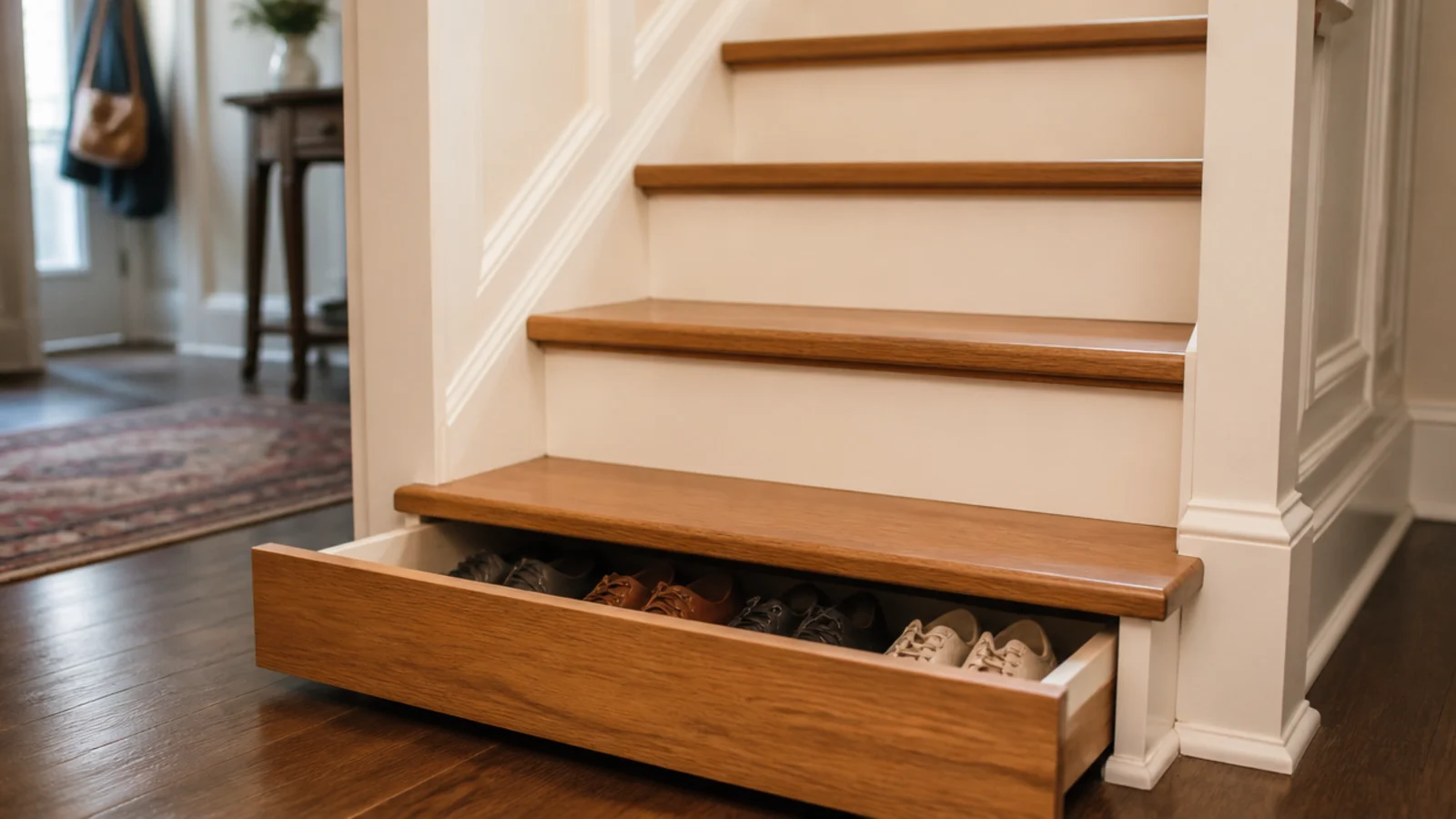
21. Stair-tread drawers
Each bottom tread becomes a drawer. Three treads hold about twelve pairs in space that is structurally already there.
This is real carpentry and needs the stair structure assessed first, so it is the most involved idea here — and the most satisfying. $$$
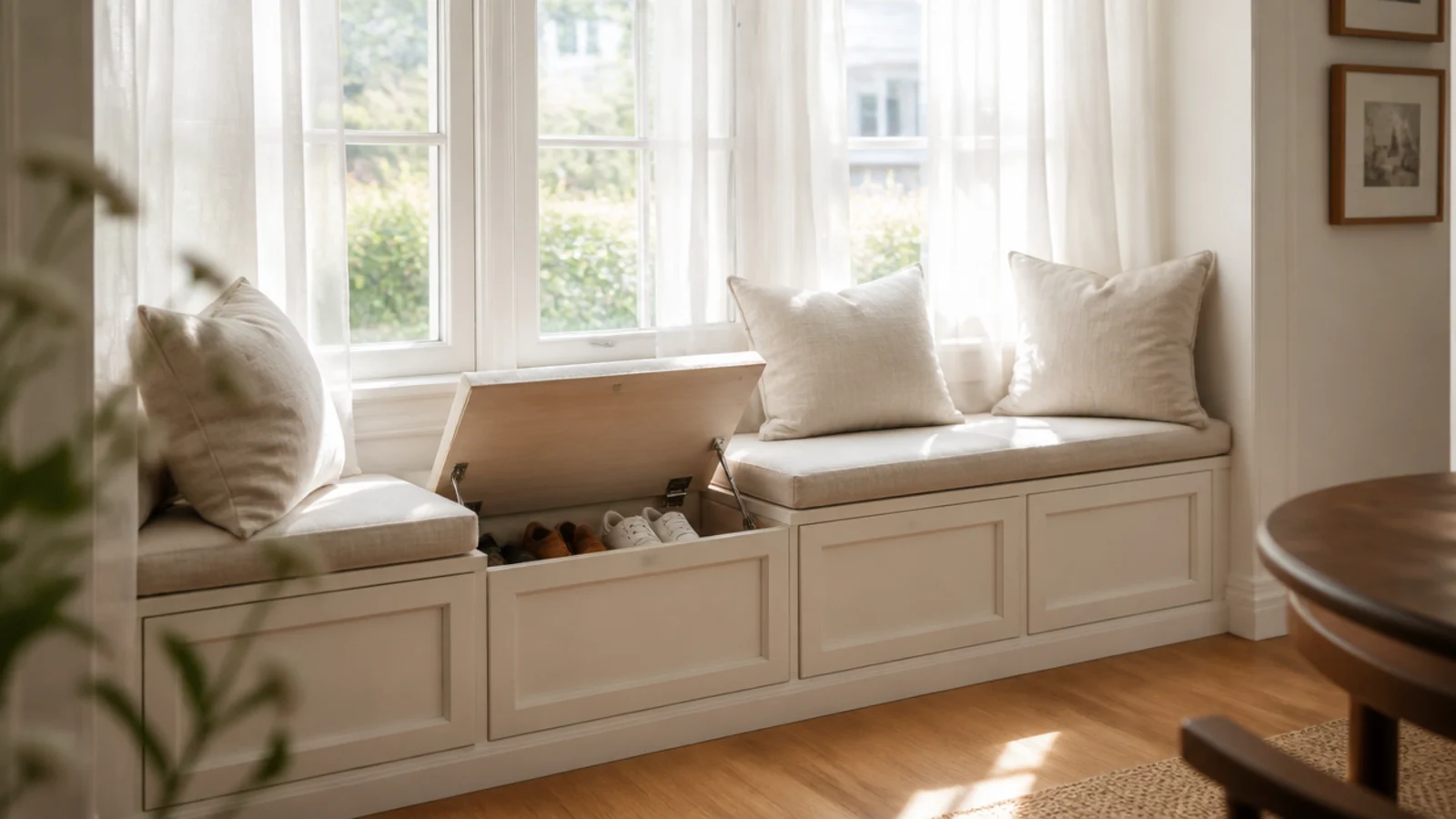
22. Under a bay window seat
Bay windows hide more volume than any other seat because of the depth of the reveal.
Split the lid into two or three hinged sections rather than one long panel, which is heavy and awkward to hold open with one hand. $$$
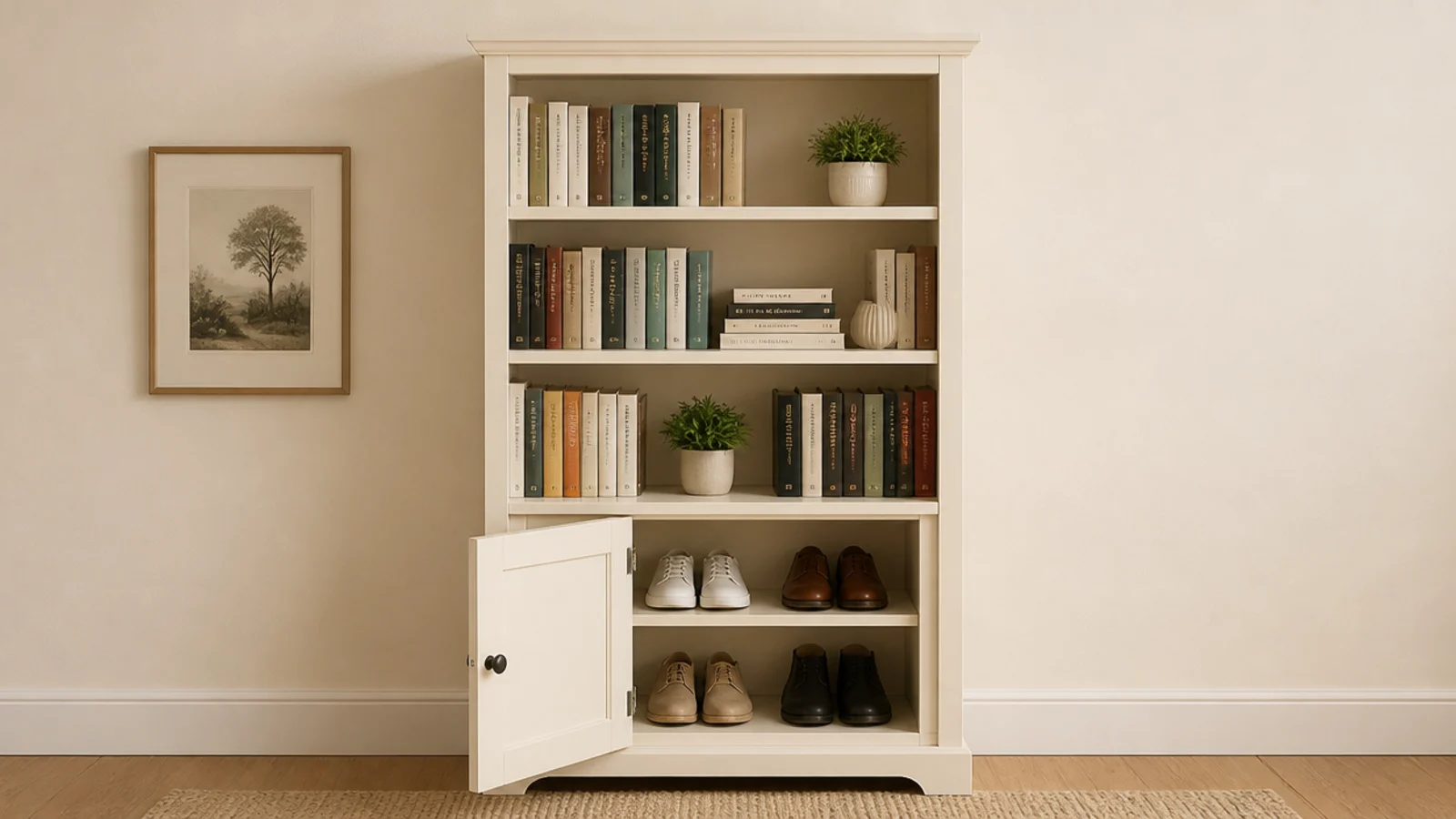
23. In the base of a bookcase
Fit a small door across the bottom 18 inches of an existing bookcase and nobody ever knows there are shoes behind it.
The lowest shelf of a bookcase is usually the least useful anyway, since nobody browses books at ankle height. $
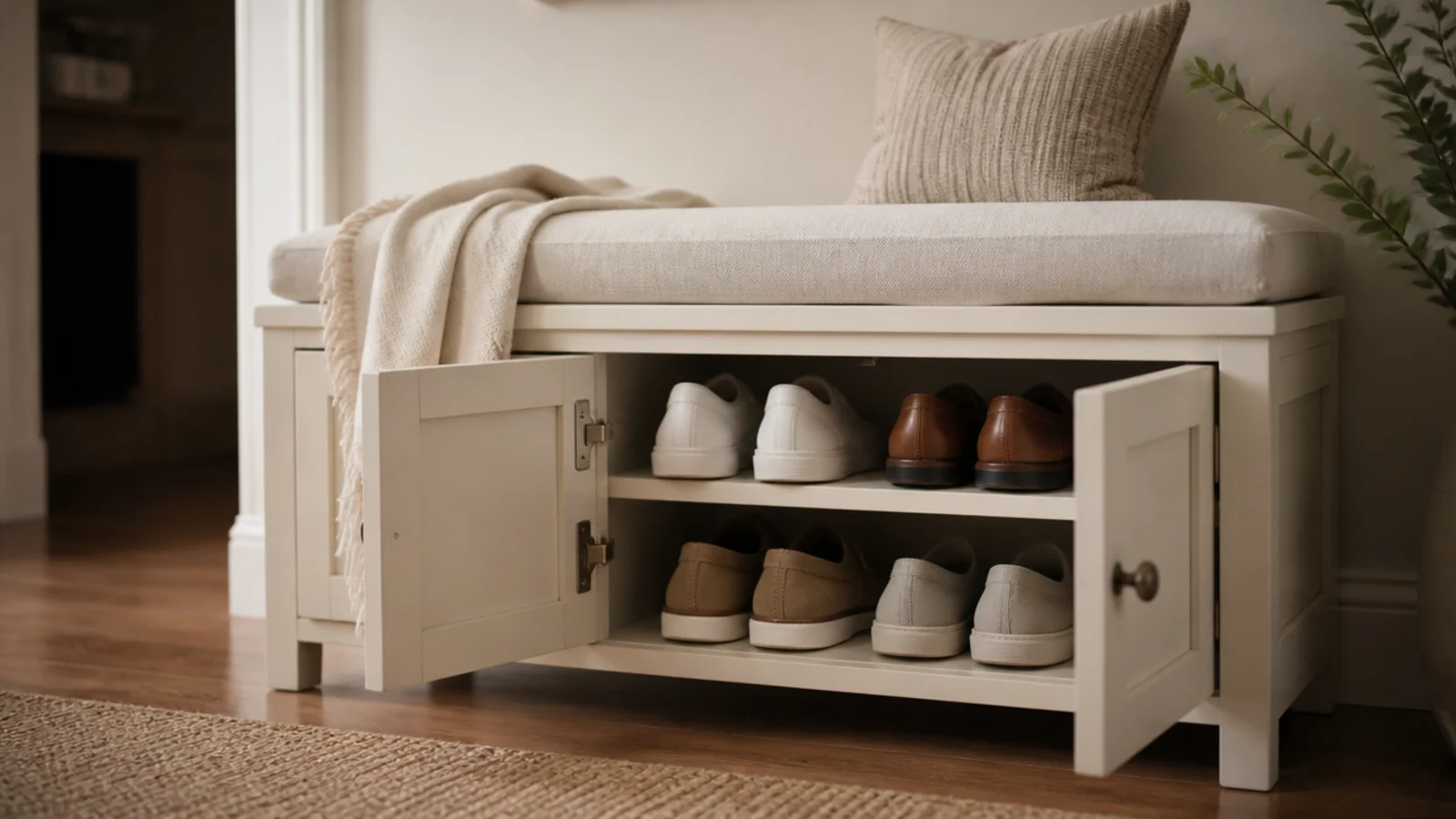
24. A hall bench with cabinet doors
Doors rather than a lift-up lid means you can sit down and open the storage at the same time, which a lift-up seat cannot.
It suits adults. Children skip doors reliably, so pair it with one open basket if there are small people in the house. $$–$$$
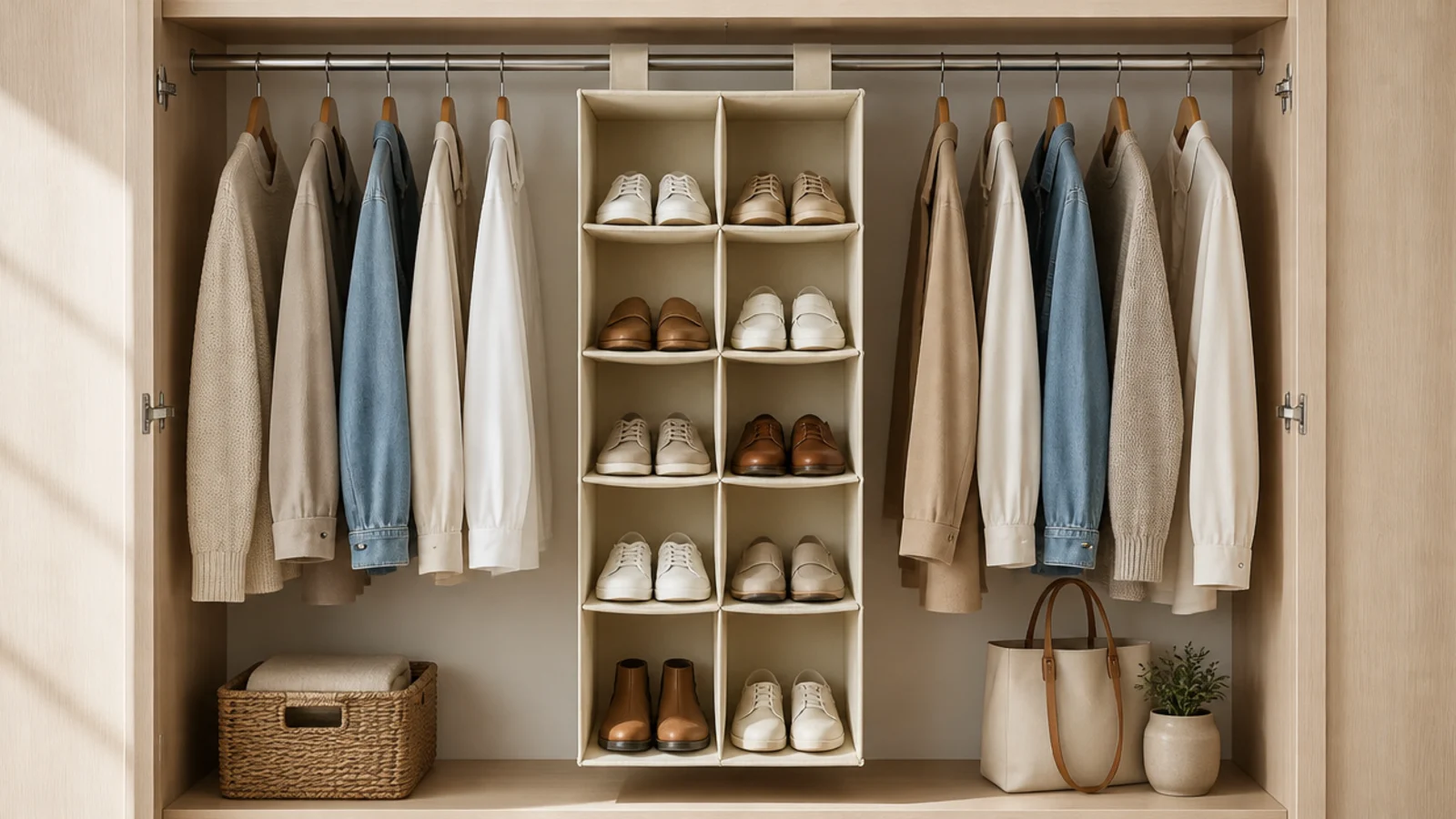
25. A hanging shoe bag in the wardrobe
Hangs from the existing rail, needs no fixings, and disappears entirely when the wardrobe door closes.
It costs hanging space, so it suits a wardrobe with more rail than clothes. Choose one with a rigid top so it does not sag and spill. $
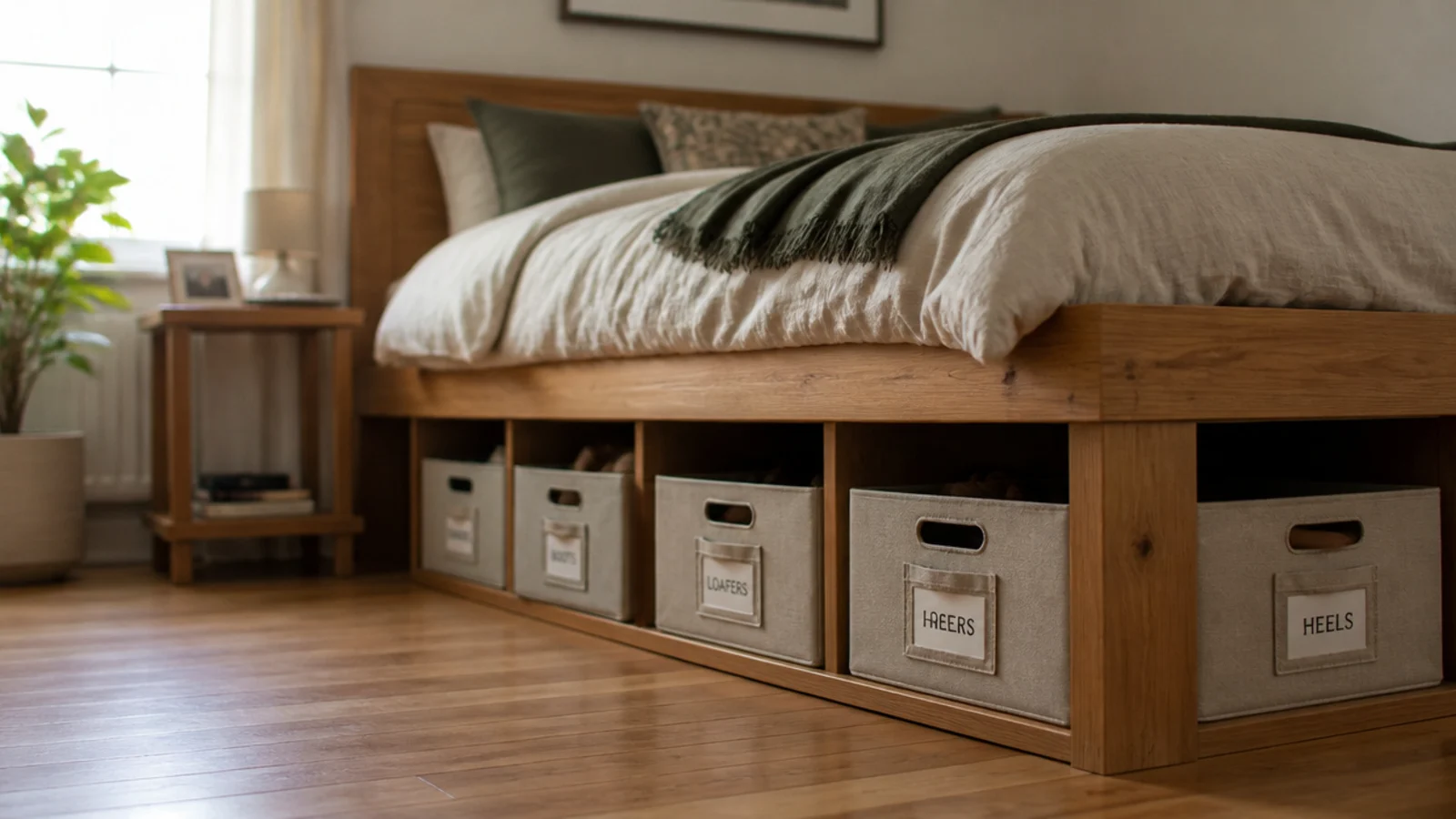
26. Under a raised platform bed
A raised frame gives you 12 to 18 inches of height across the whole bed footprint, which is more storage than most closets.
Use matching labelled boxes rather than loose shoes, both for dust and because you will otherwise never find a specific pair. $–$$
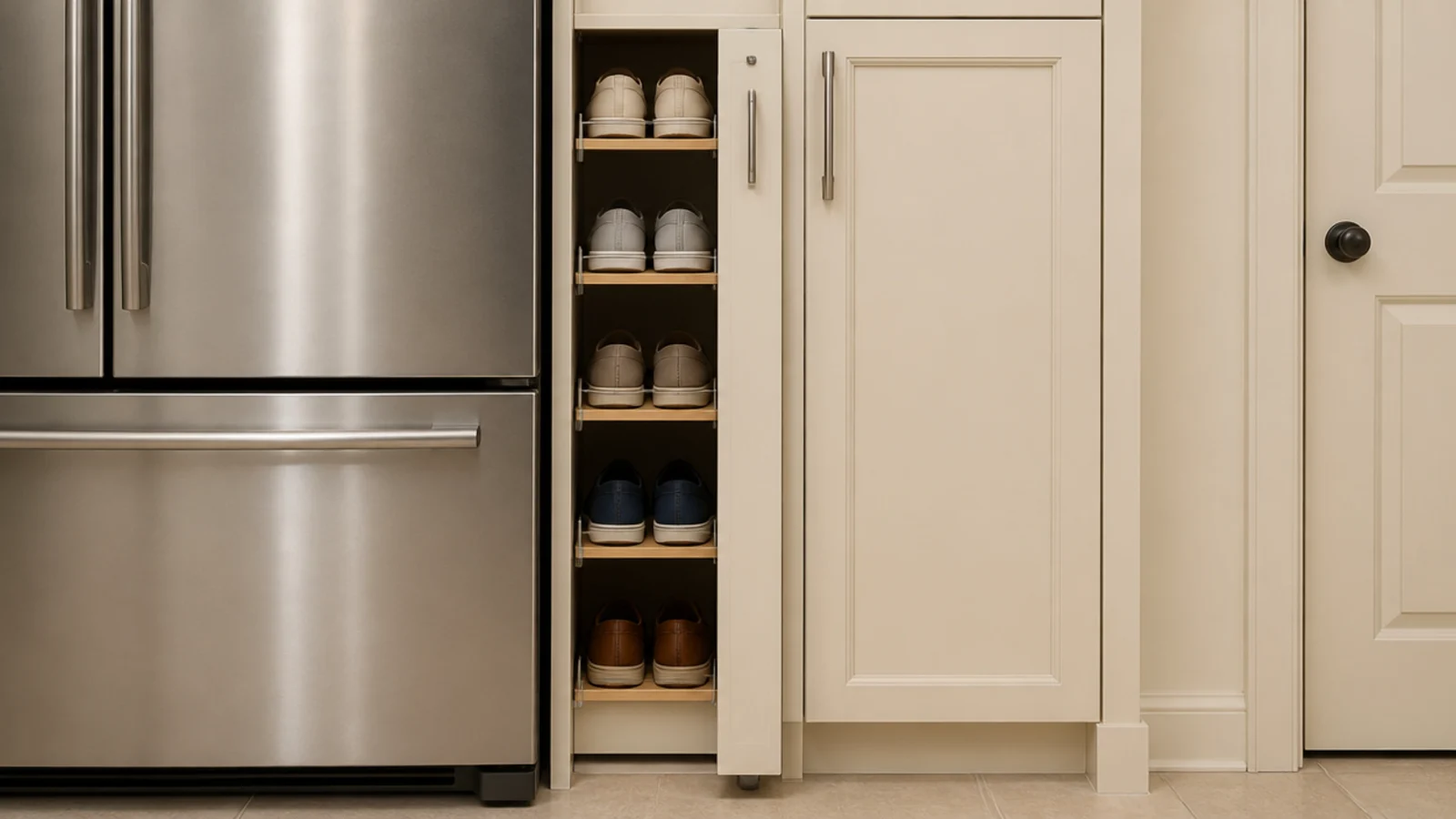
27. A pull-out beside the fridge
The six-inch gap beside a refrigerator takes a narrow pull-out that nobody expects to contain shoes.
Measure carefully and check the appliance door still opens fully. Better suited to a utility or back-door area than a kitchen proper. $$
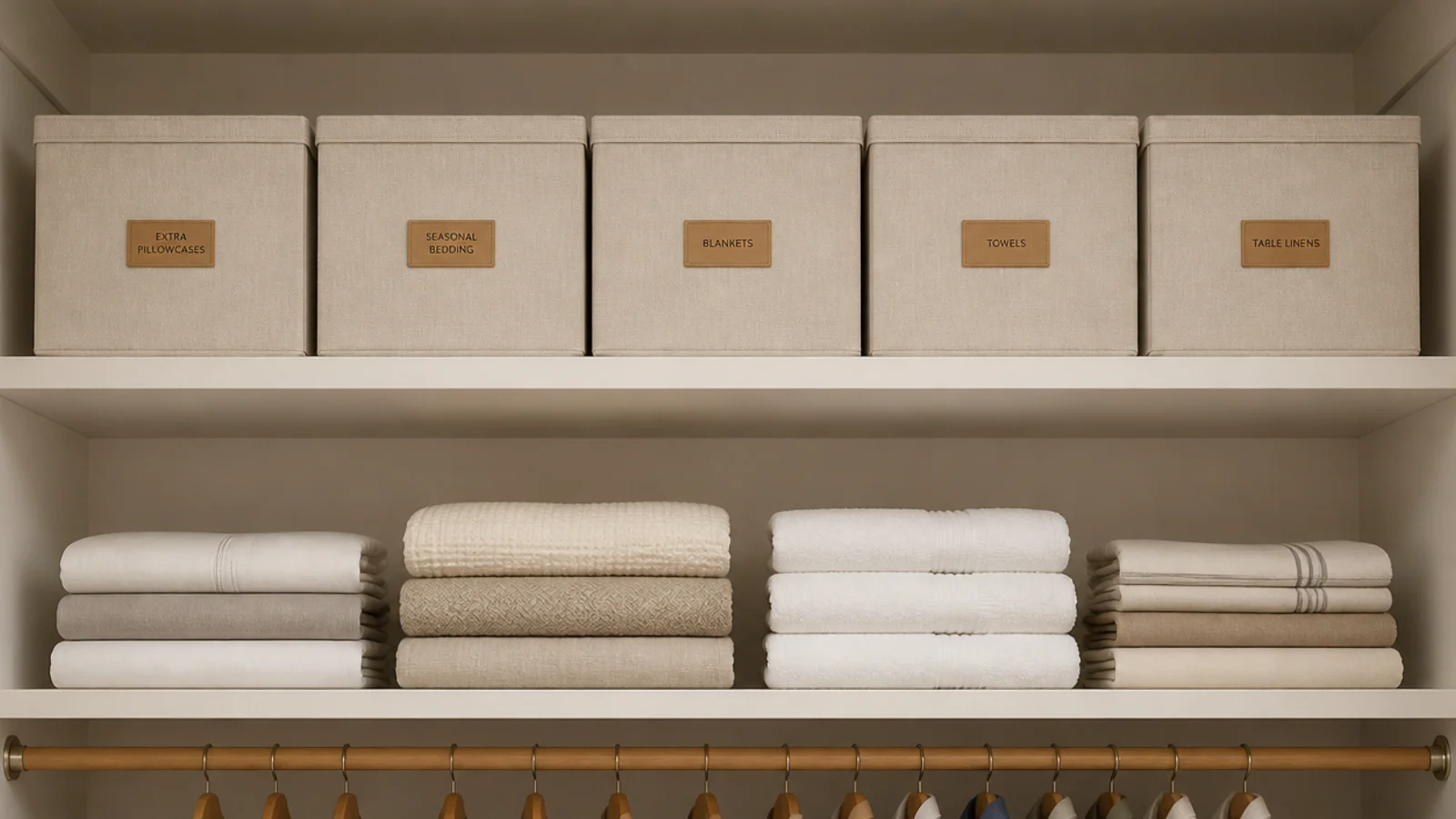
28. Labelled boxes on a high shelf
Matching boxes on a closet top shelf hide everything and look deliberate, which loose shoes at that height never do.
Label the visible end face, not the lid — you will only ever see the end. Photograph the contents and tape the photo to the box if you rotate seasonally. $
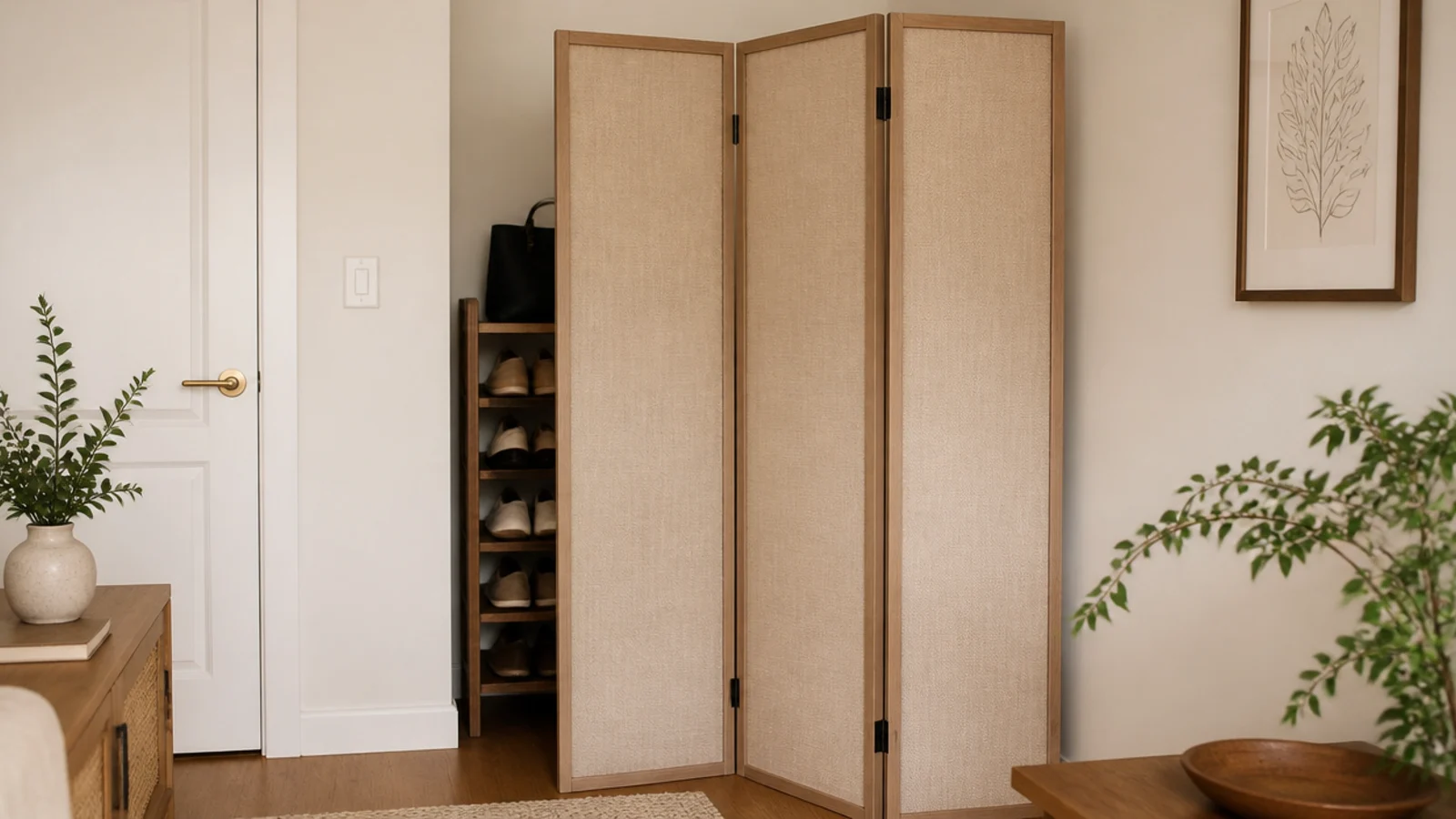
29. Behind a folding screen
A three-panel screen conceals an entire open rack, needs no fixings and folds away when you move.
It suits a bedroom corner or a studio far better than a hallway, where a screen tends to get knocked. $$
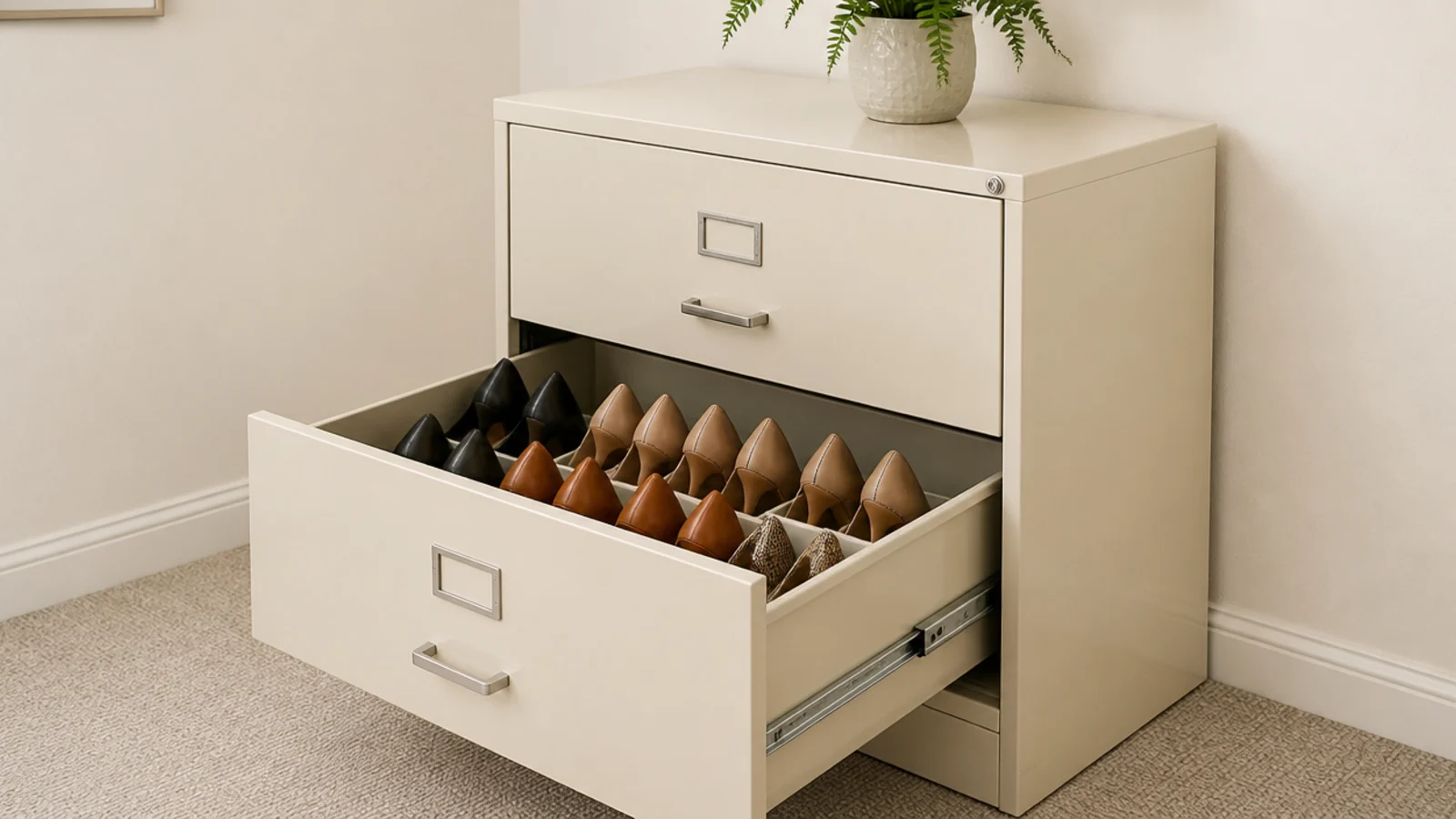
30. A repurposed filing cabinet
A deep file drawer is exactly the right height for heels standing upright, which very little other storage manages.
Painted, with the handles swapped for something simpler, it stops reading as office furniture entirely. Secondhand cabinets are often free. Free–$
Mistakes to Skip
- Sealing a unit with no airflow. Trapped moisture is what causes odour, and a few half-inch holes in the back panel prevent it entirely.
- Hiding the shoes people wear daily. Every door is a step somebody skips in a hurry, and the pile reappears beside a beautiful empty cabinet.
- Storing damp boots in a closed box. They stay damp, and the moisture transfers to everything stored beside them.
Frequently asked questions
Does hidden shoe storage make shoes smell?
Closed storage traps moisture, and moisture is what causes odour, not the shoes themselves. Give any enclosed unit some airflow — drill a row of half-inch holes in the back panel, leave a half-inch gap behind it, or use a slatted rather than solid base. Never put damp shoes into a closed unit; give wet pairs a tray outside it.
How many pairs fit in hidden shoe storage?
A lift-up bench seat holds eight to ten pairs, an under-bed rolling drawer eight to twelve, and a tilt-out cabinet six to eight per drawer. Ottomans hold four to six. Add roughly 30 percent capacity if you nest the pairs toe-to-heel, which nobody sees inside closed storage anyway.
What is the cheapest hidden shoe storage?
A flat fabric box that slides under a bed or sofa, at $12 to $20 for eight pairs. After that, lidded baskets at around $25 each. Both need no tools, no fixings and no build, and both move house with you, which matters if you rent.
Is hidden shoe storage practical for daily shoes?
Only for adults who genuinely put things away. Every door and lid is a step people skip when they are in a hurry, so households with children usually do better with open cubbies at the door plus hidden storage for the overflow. Hide the shoes you wear weekly, not the ones you wear daily.
How do I stop hidden shoes getting damaged?
Stuff the toes of boots and any structured shoe with paper so they hold their shape under the weight of anything stacked above. Keep leather out of sealed plastic. And do not stack shoes directly on each other inside a drawer — a single divider or a sheet of tissue between layers prevents most of the scuffing.
Can I convert existing furniture into hidden shoe storage?
Very often, yes. Ottomans, trunks, window seats, bench seats, wardrobe bases and the space under a raised bed all take shoes with no modification at all. Adding a shallow drawer under an existing console or bench is a straightforward afternoon project and considerably cheaper than buying a dedicated unit.
Hide the overflow and leave the daily pairs where they land — that split is what makes hidden storage last rather than get abandoned by February. For the open half of the system see entryway shoe storage ideas, for tight rooms see shoe storage for small spaces, and for a closed unit built for the job, shoe cabinet ideas covers those properly. Save the pin before the pile takes the hallway.
Want more like this? Browse all 15 shoe storage ideas guides — they all use the same measurements and budget tiers.
Pin it for later
Save this to your Shoe Storage Ideas board
Pin it now so it is waiting for you when the tape measure comes out — and so the next person hunting for this idea can find it too.
Save this pinKeep going
More ideas worth saving while you have the tape measure out.