Shoe Storage Ideas · Listicle
15 Cozy Shoe Storage Ideas That Look Pricey

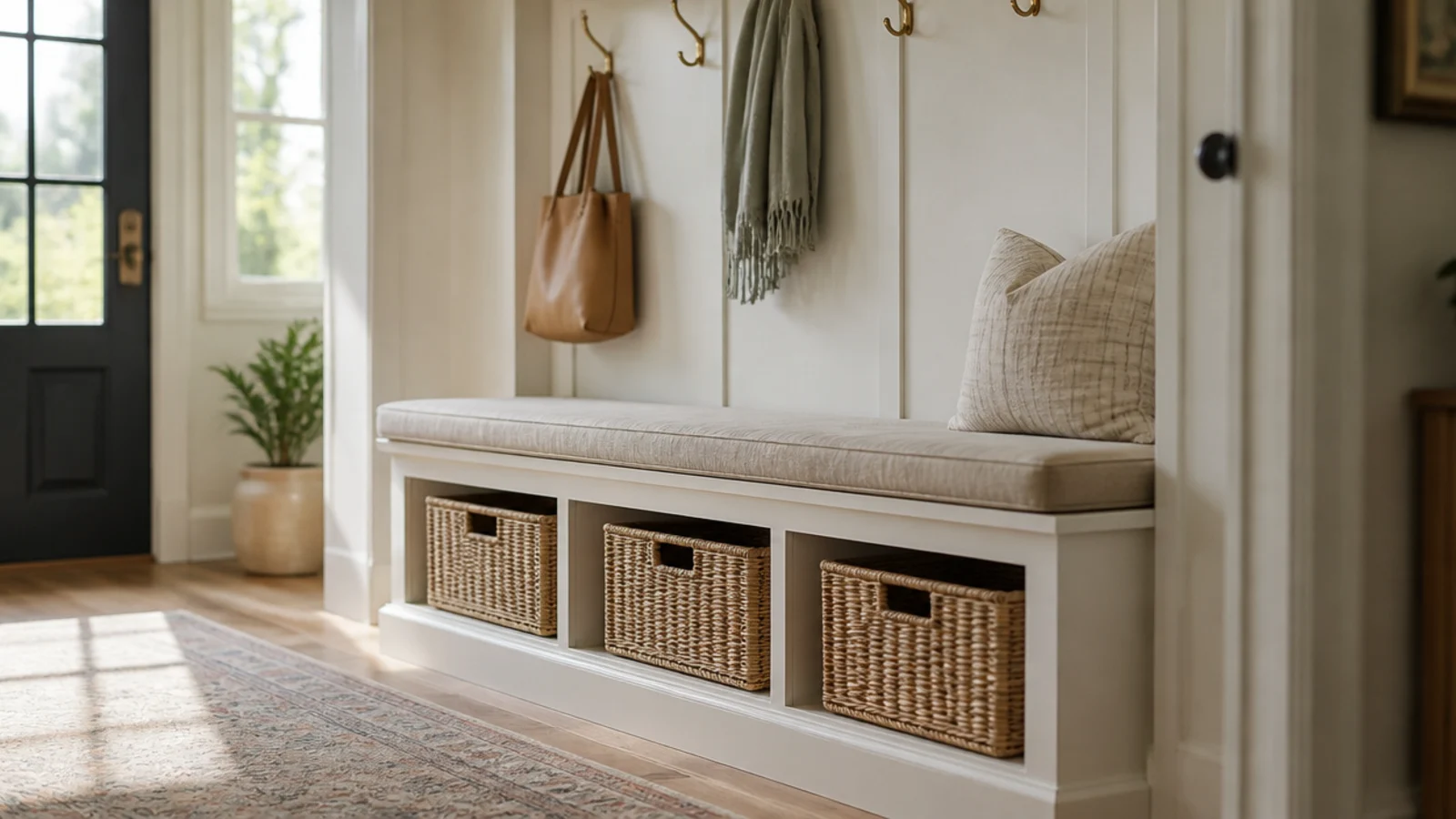
A shoe storage bench is the piece most people buy first and regret fastest, usually because it is the wrong height or because it looks unmistakably like something that arrived flat in a box. These 15 setups fix both — the exact seat height and depth that make a bench usable, plus the finishing details that make an inexpensive one read as built-in joinery.
In this guide17 sections — tap to openHide
- 1.What makes a shoe storage bench look expensive
- 2.Set the seat at exactly 18 inches
- 3.Run the trim all the way to the floor
- 4.Swap the cushion for real linen or wool
- 5.Paint the bench the exact wall color
- 6.Add a back panel with hooks above
- 7.Fit baskets that match the opening exactly
- 8.Choose a slatted seat over a solid one
- 9.Put the bench under a window
- 10.Turn the corner with an L-shaped bench
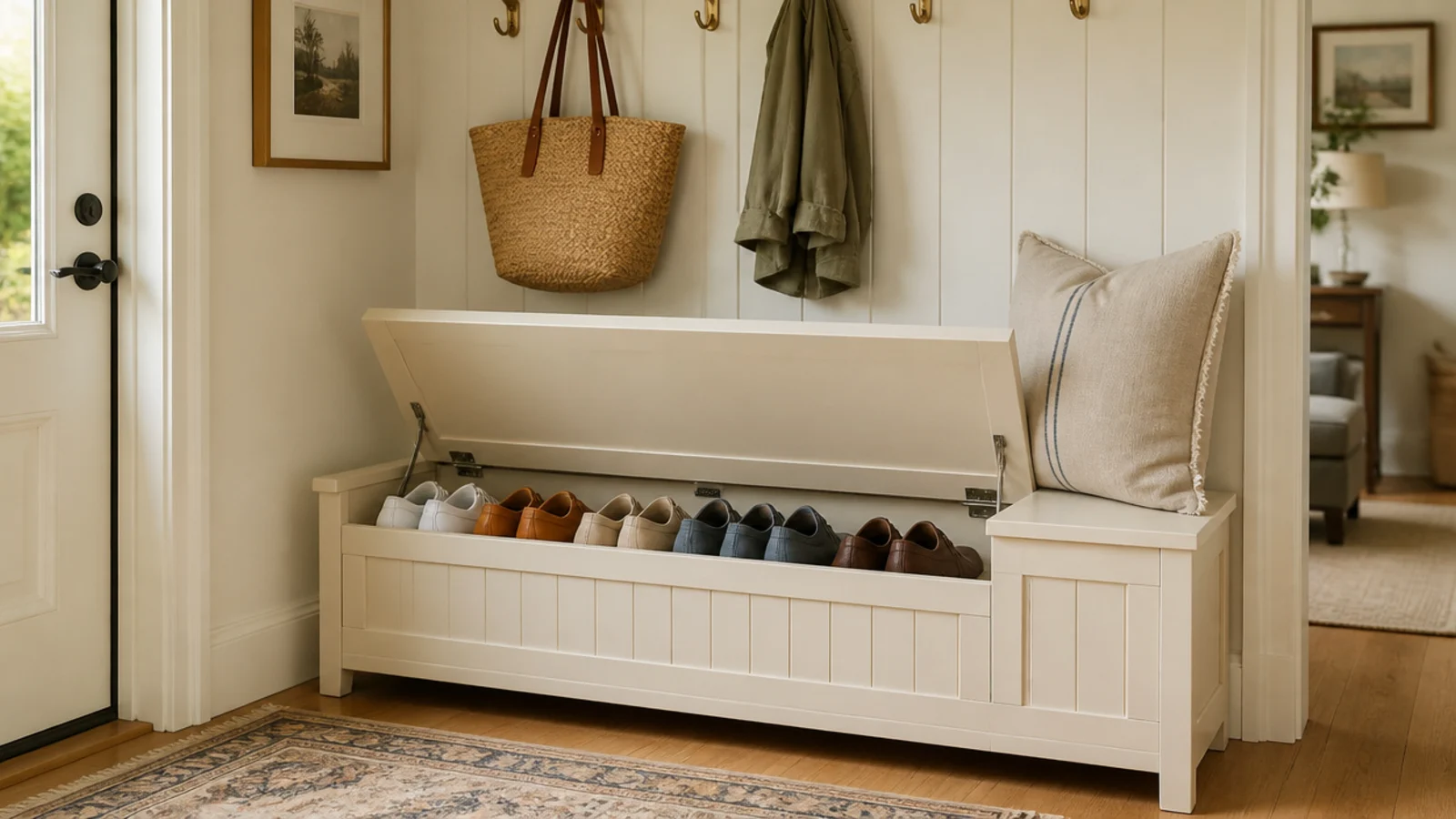
- 11.Use a lift-up seat for the overflow
- 12.Fit drawers instead of open cubbies
- 13.Add a shelf above at 60 inches
- 14.Go 12 inches deep in a narrow hallway
- 15.Give the wet boots a tray beside it
- 16.Anchor the bench with a runner rug
- 17.Mistakes to Skip
What makes a shoe storage bench look expensive
Your eye prices a bench on three things before it registers the wood or the price tag.
Whether it touches the floor. Four thin legs with a gap beneath read as furniture standing in a hallway. Solid trim running down to meet the baseboard reads as joinery that belongs there. This is the single biggest difference and it costs one board.
The cushion. A shiny polyester cushion undoes a good bench instantly. Real linen or wool with visible texture is what the eye reads as expensive, and a cover costs $30 to $50 — far less than upgrading the bench itself.
Whether it fights the wall. A bench painted the wall color becomes part of the room. A contrasting one becomes a large object in a small entry, which is the opposite of what you want in the tightest space in the house.
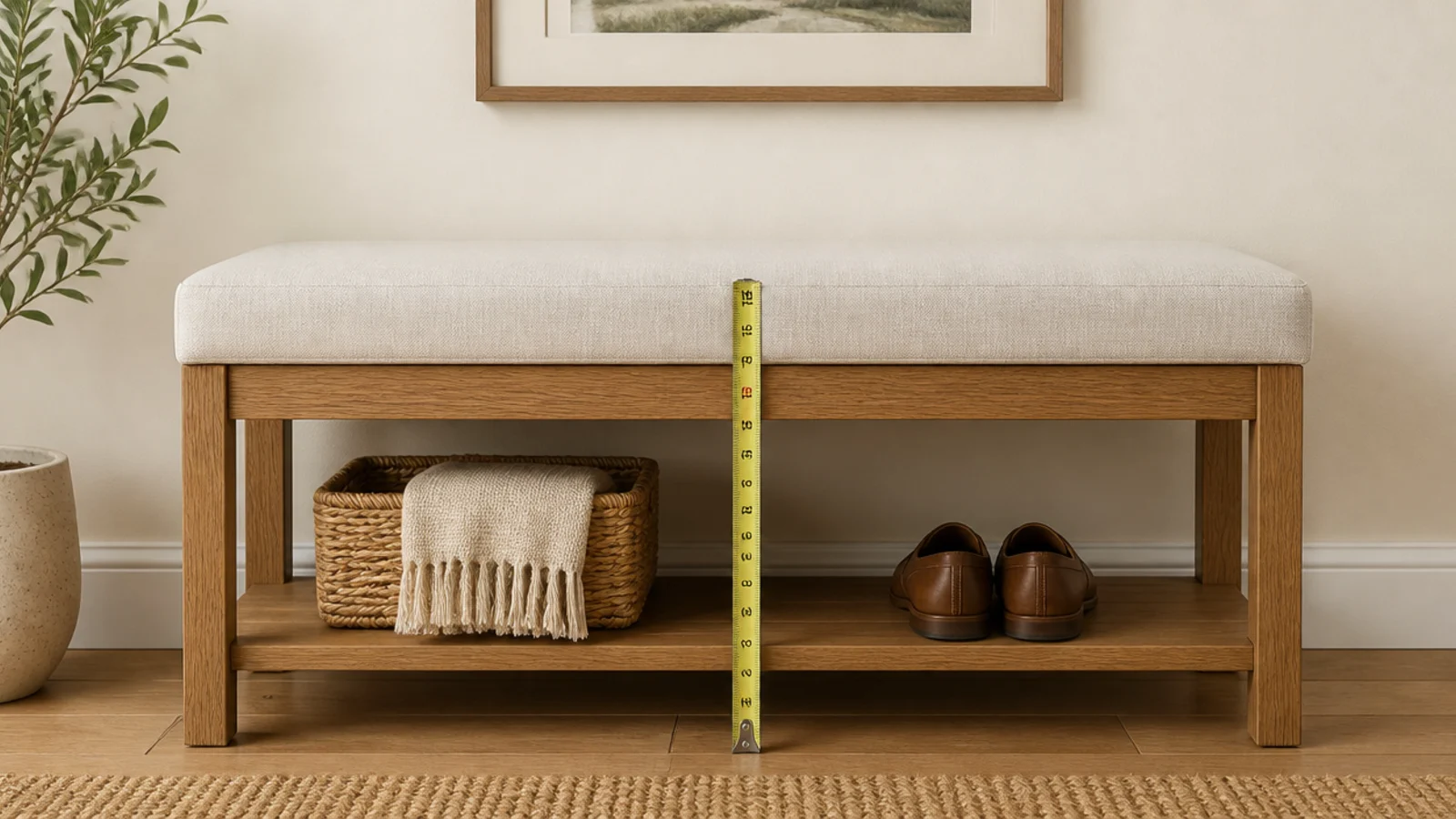
Then the two numbers that decide whether you actually use it. Seat height: 18 inches to the top of the finished cushion — not to the plywood. Seat depth: 14 to 16 inches including the cushion, which is enough to sit on properly rather than perch. And check your walkway: a bench needs about 30 inches of clearance in front of it to be usable, so hallways under 44 inches wide are usually better served by wall storage.
Budget tiers below: $ under $60, $$ $60–$200, $$$ $200+.
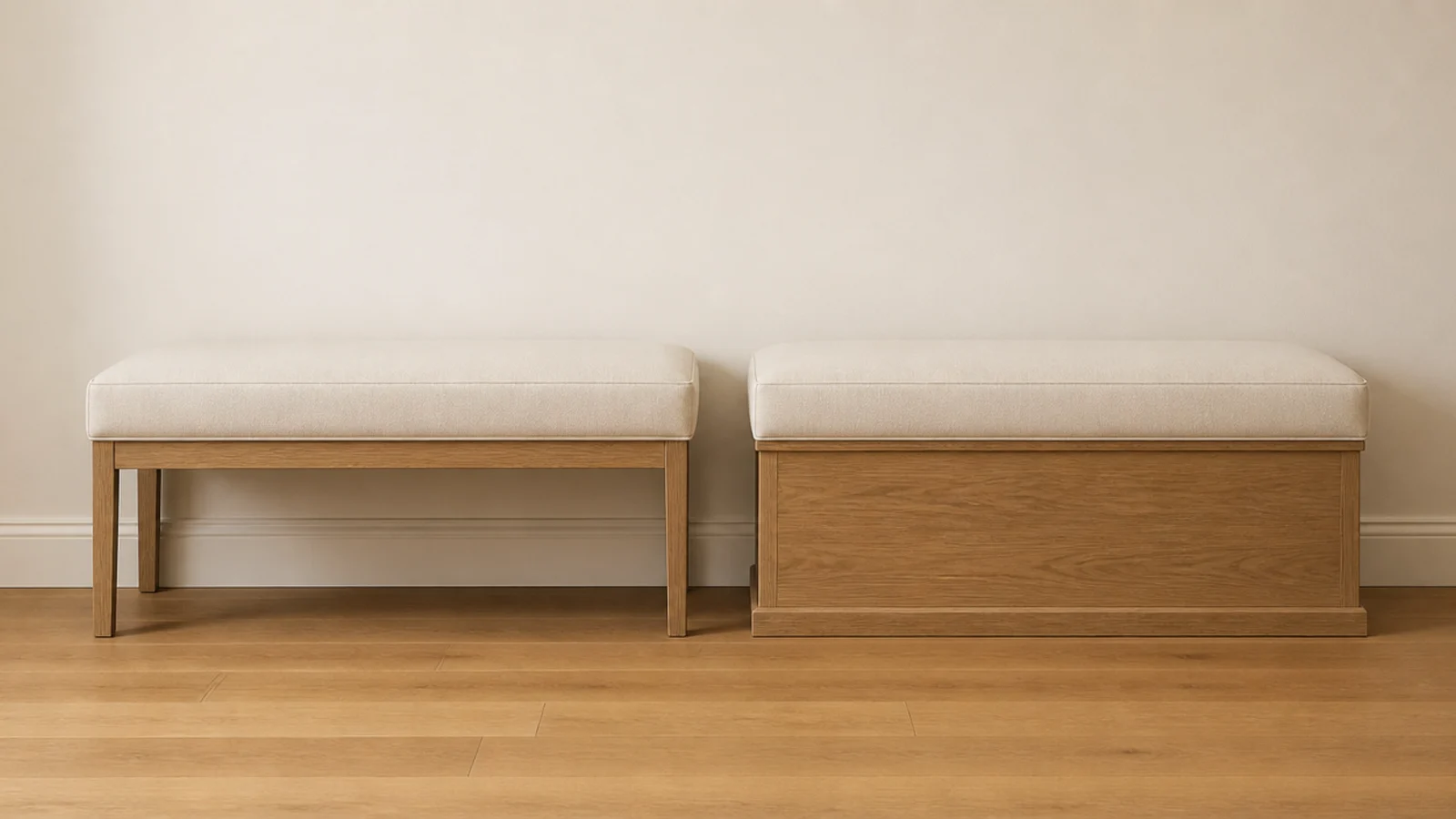
1. Set the seat at exactly 18 inches
Measure to the top of the cushion, not the frame. If you are adding a two-inch cushion, build or buy the bench at 16.
Sixteen inches feels low to stand up from with a boot half on. Twenty leaves shorter legs dangling, which is exactly when children stop sitting down and start balancing on one foot by the door. Standard dining chairs sit at 18 inches for the same reason, so if you want to sanity-check the height before building, pull a kitchen chair into the hallway and put your shoes on from it for a week. —
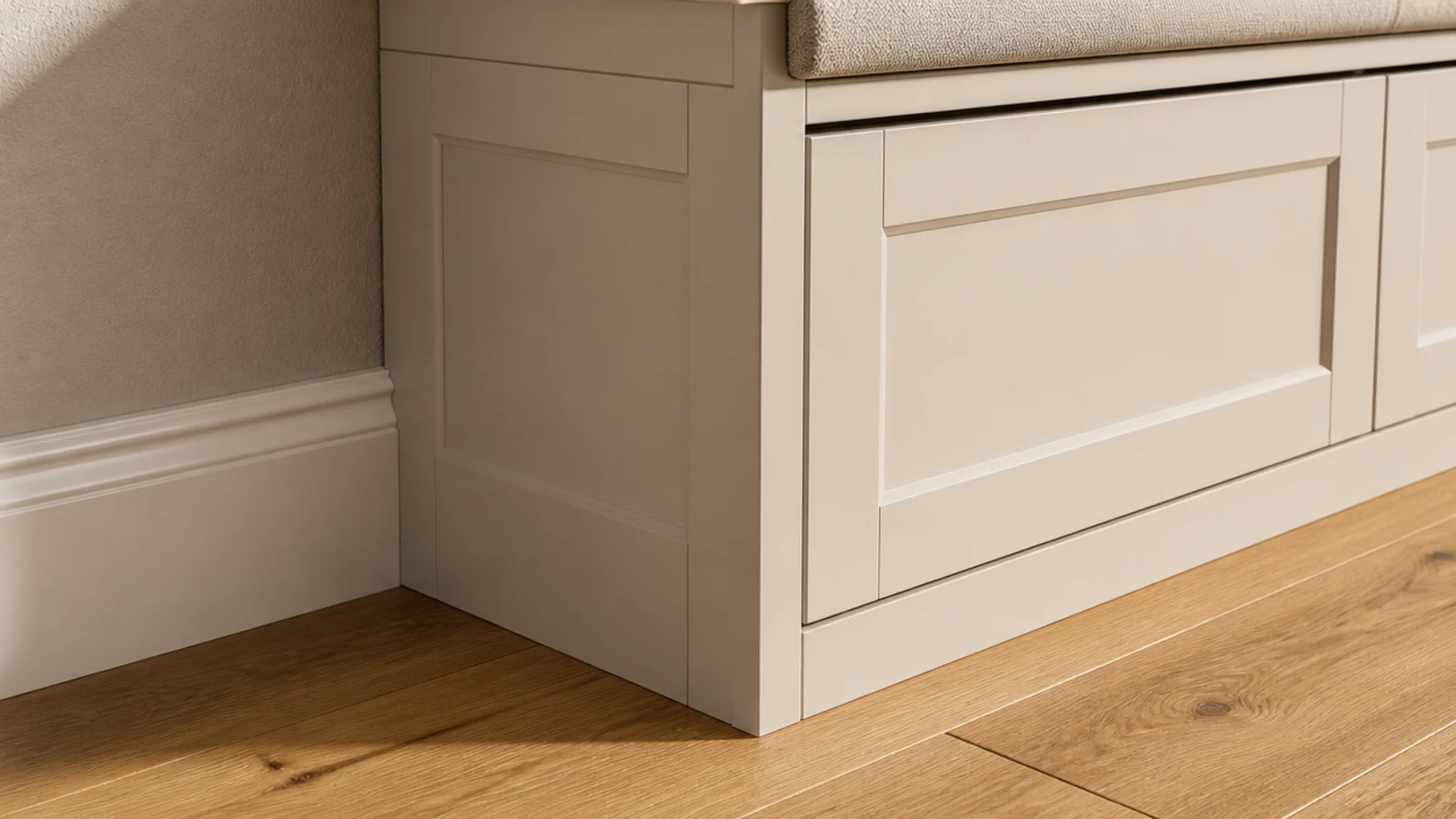
2. Run the trim all the way to the floor
One board fixed across the base, scribed to the baseboard, removes every hint of flat-pack.
It also stops shoes, dust and small toys migrating underneath, which is the other reason legged benches disappoint in an entryway — the gap under a legged bench becomes a place things go to be forgotten. Paint the trim with the bench in one pass and the join disappears entirely. If your baseboard is uneven, scribe the trim to it rather than cutting the baseboard away. $
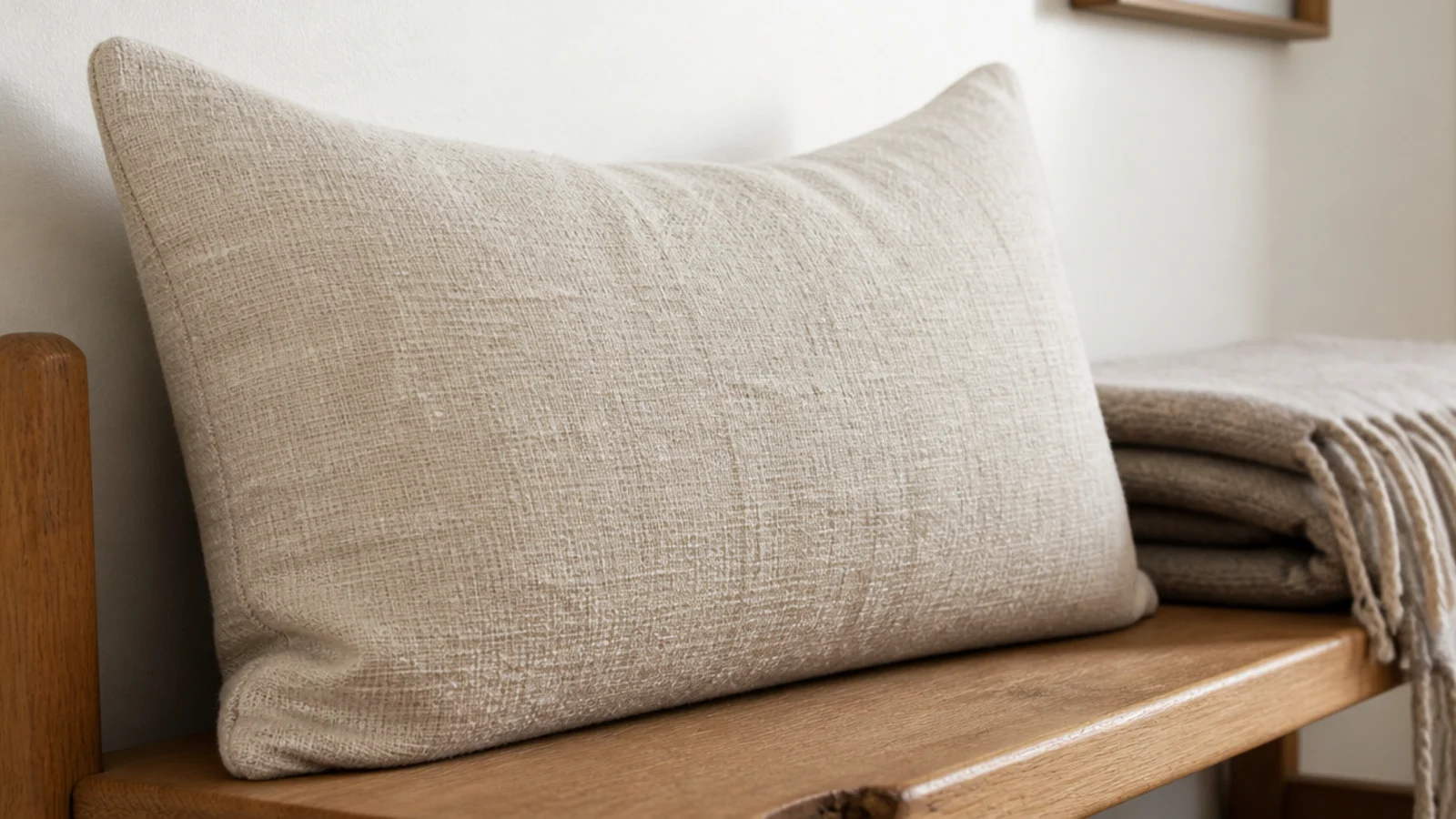
3. Swap the cushion for real linen or wool
Texture is what the eye actually prices. Slubby linen or a flat wool weave reads as considered; polyester reads as supplied.
Two to three inches of high-density foam, with a zipped removable cover. Entryway cushions take wet coats and muddy hands, and a cover you cannot wash will be ruined within a year. $$
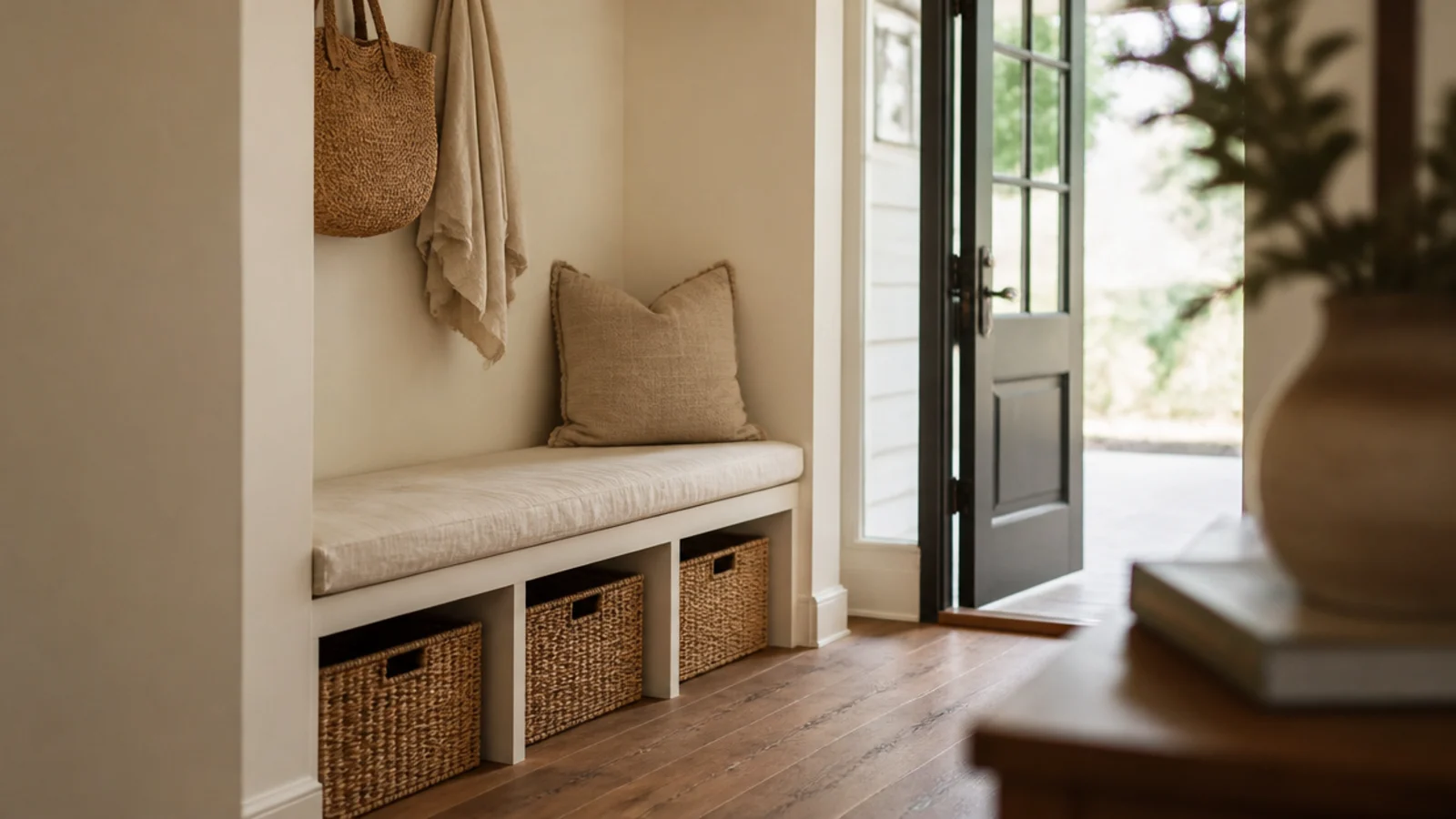
4. Paint the bench the exact wall color
In a small entry this is transformative. A matched bench recedes into the wall and the baskets and cushion come forward.
Color-match a paint chip, or use leftover wall paint in satin rather than matte — an entryway bench gets scuffed by shoes daily and matte marks permanently. $
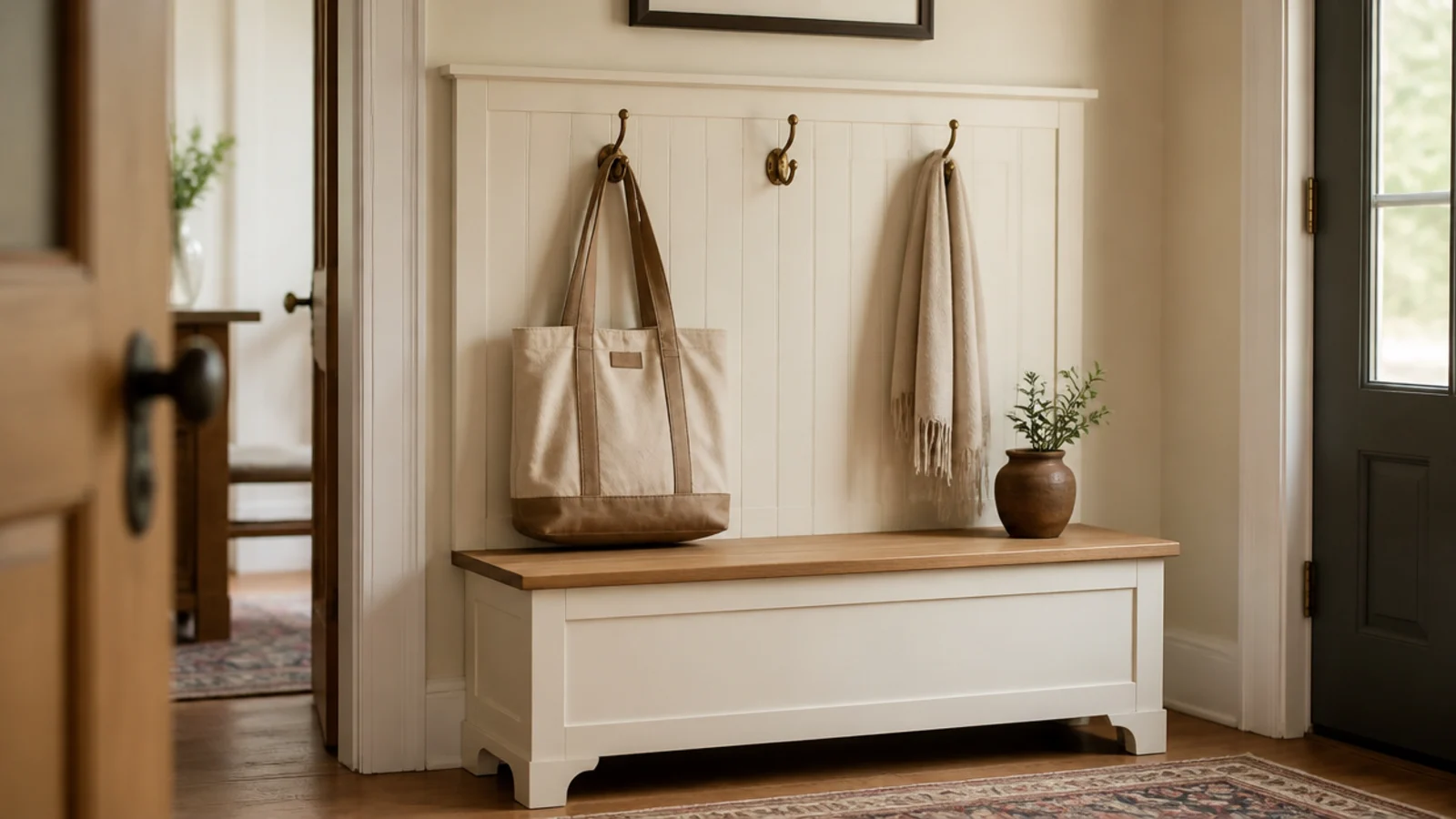
5. Add a back panel with hooks above
A beadboard or panelled back rising above the seat turns a bench into a whole entryway system, and it is what makes a piece look built in rather than placed.
Hooks at 52 inches for adults plus a lower rail at 40 if there are children. The panel also protects the wall from coat backs and wet shoulders, which is the part of an entryway wall that gets grubby first. Beadboard, shiplap or a plain painted MDF panel all work; the material matters far less than the fact that the bench and the wall above it now read as one deliberate piece rather than two.
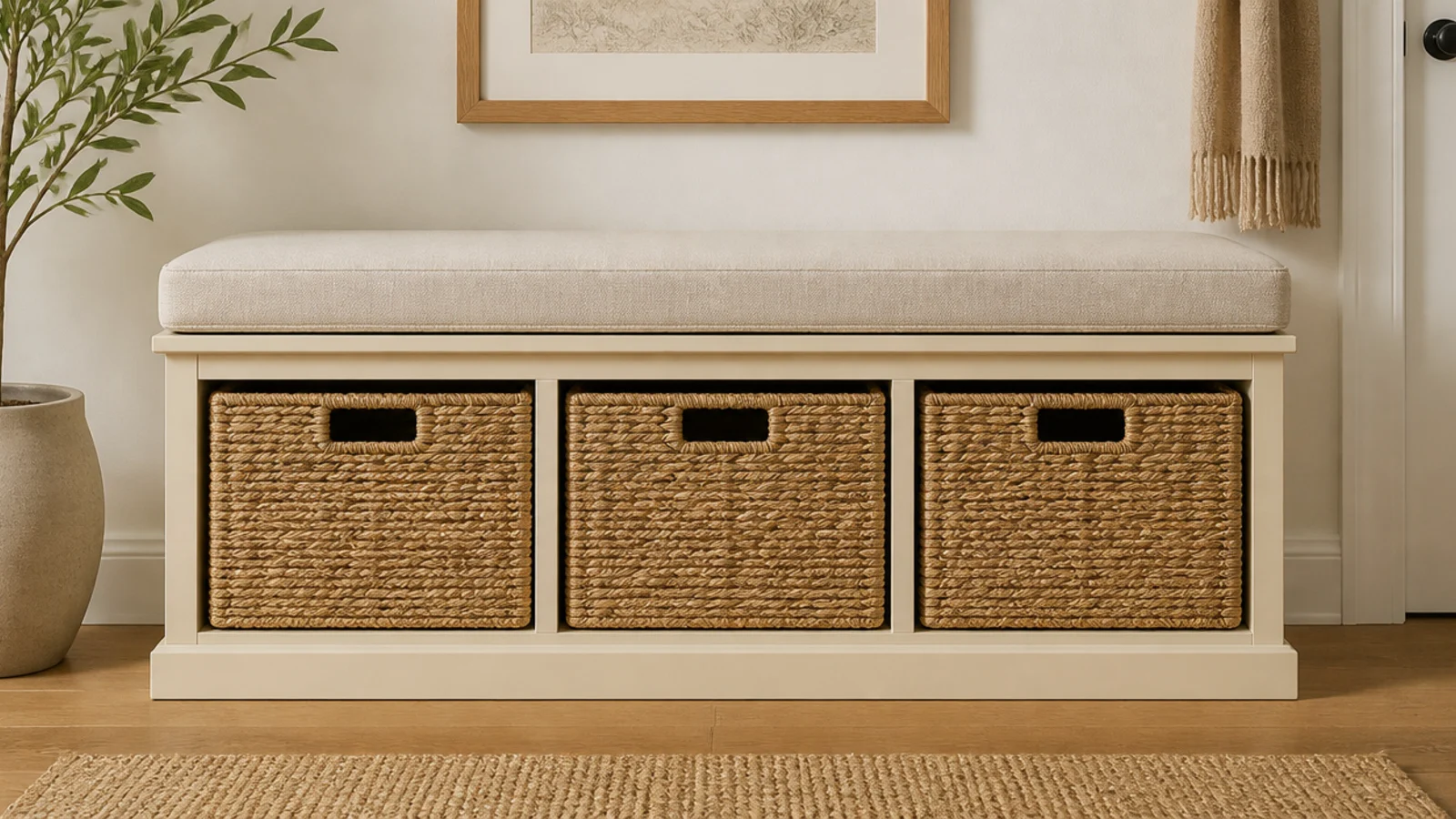
6. Fit baskets that match the opening exactly
Half an inch of clearance each side. Baskets that fit too tightly get yanked and tear; baskets that swim around look untidy no matter how good they are.
Measure the opening and then buy, never the other way round — this is the single most common ordering mistake people make with entryway storage. One basket per person, with a small tag on the rim, is what makes the system stick, because shared baskets mean nobody owns the overflow. Buy them all at once too: three matching baskets read as a system where three different ones read as whatever was in the cupboard. $$
7. Choose a slatted seat over a solid one
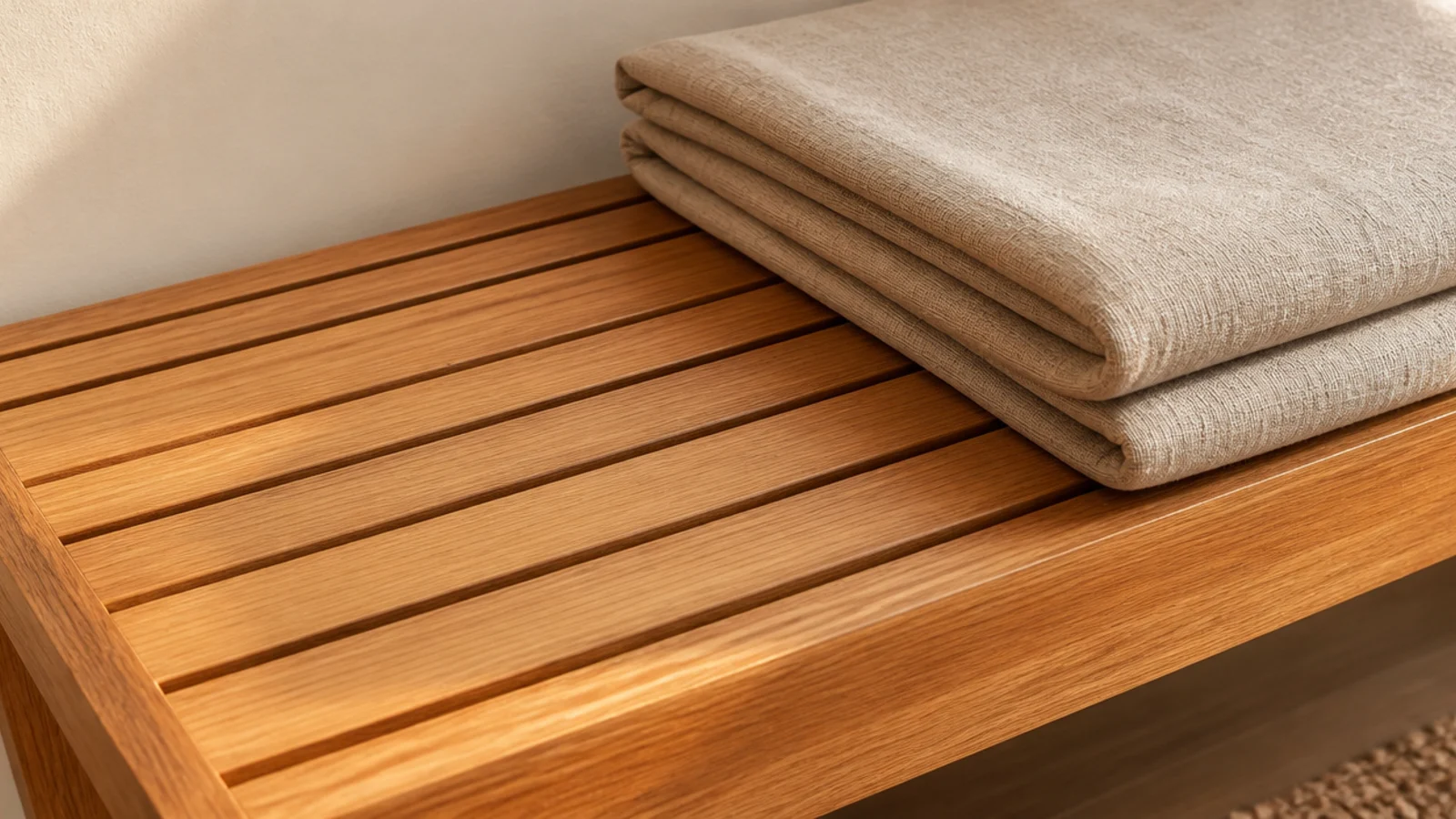
Quarter-inch gaps between seat boards let air move through, which matters when wet coats get dumped on the bench and damp shoes sit underneath.
It costs nothing extra and looks more considered than a solid slab. Add a cushion on top and the slats do their work invisibly. Keep the gaps to a quarter inch — any wider and small items drop through, and a half-inch gap is exactly the width of a child's finger. —
8. Put the bench under a window
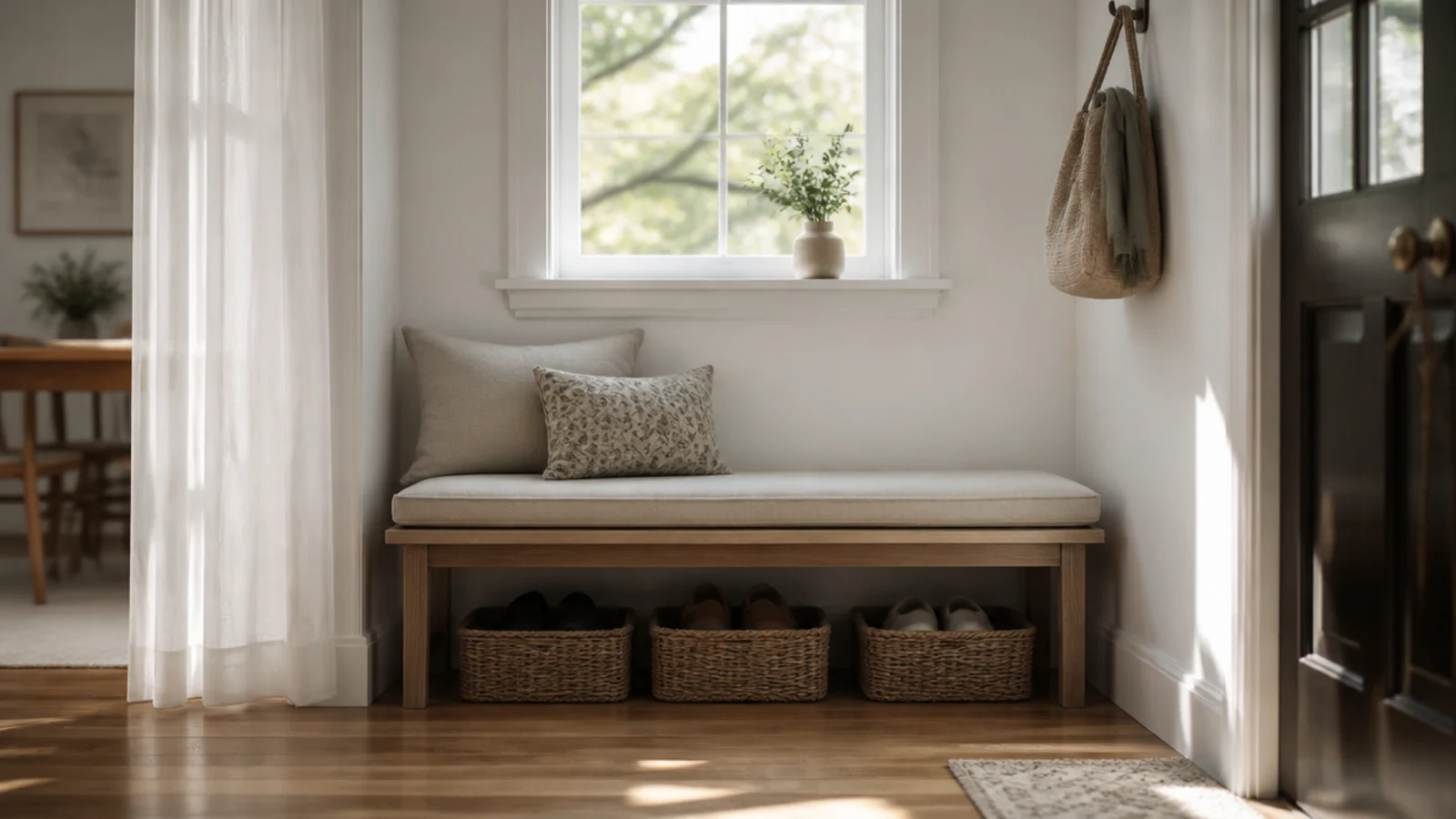
A bench beneath a window stops reading as storage and starts reading as a window seat, which is a completely different piece of furniture.
Add two small pillows and it becomes somewhere people actually sit rather than a shelf they walk past. Keep the cushion pale so it does not fade unevenly in direct light, and rotate it end to end every few months for the same reason. Check the window sill height first: a bench whose seat sits above the sill line looks wrong from outside the house as well as inside. —
9. Turn the corner with an L-shaped bench
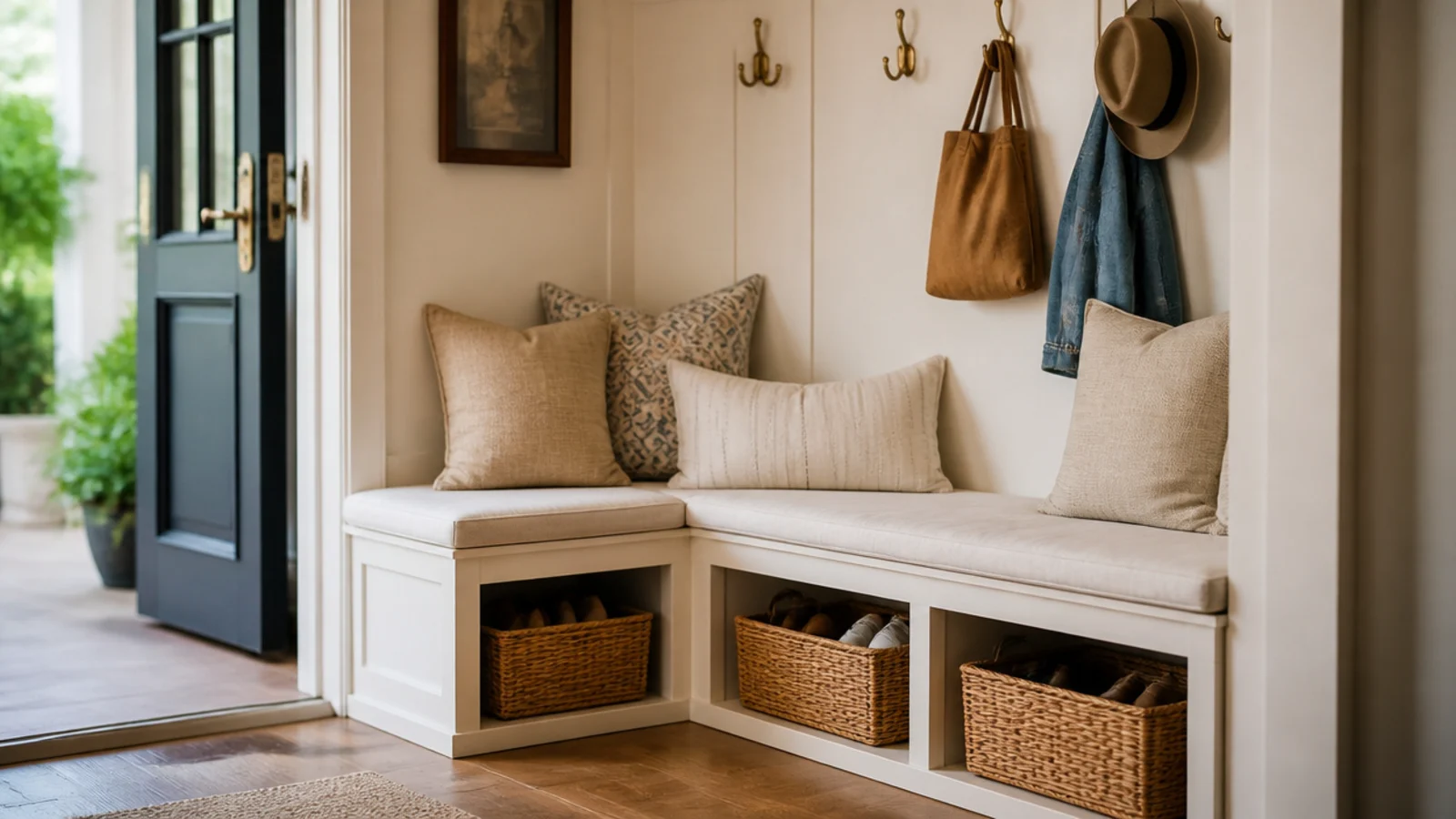
If your entry has a corner, wrapping it doubles both the seat and the storage in a footprint you were not using.
Keep the shorter leg to about 24 inches so it does not intrude on the door swing, and check the swing with the door fully open before you commit to any dimension. This is also the most convincing way to make a bench read as built-in joinery, because a corner is somewhere a free-standing piece of furniture would never naturally sit. Run the cushion as one continuous piece around the corner if you can — a seam at the angle immediately gives it away. $$$
10. Use a lift-up seat for the overflow
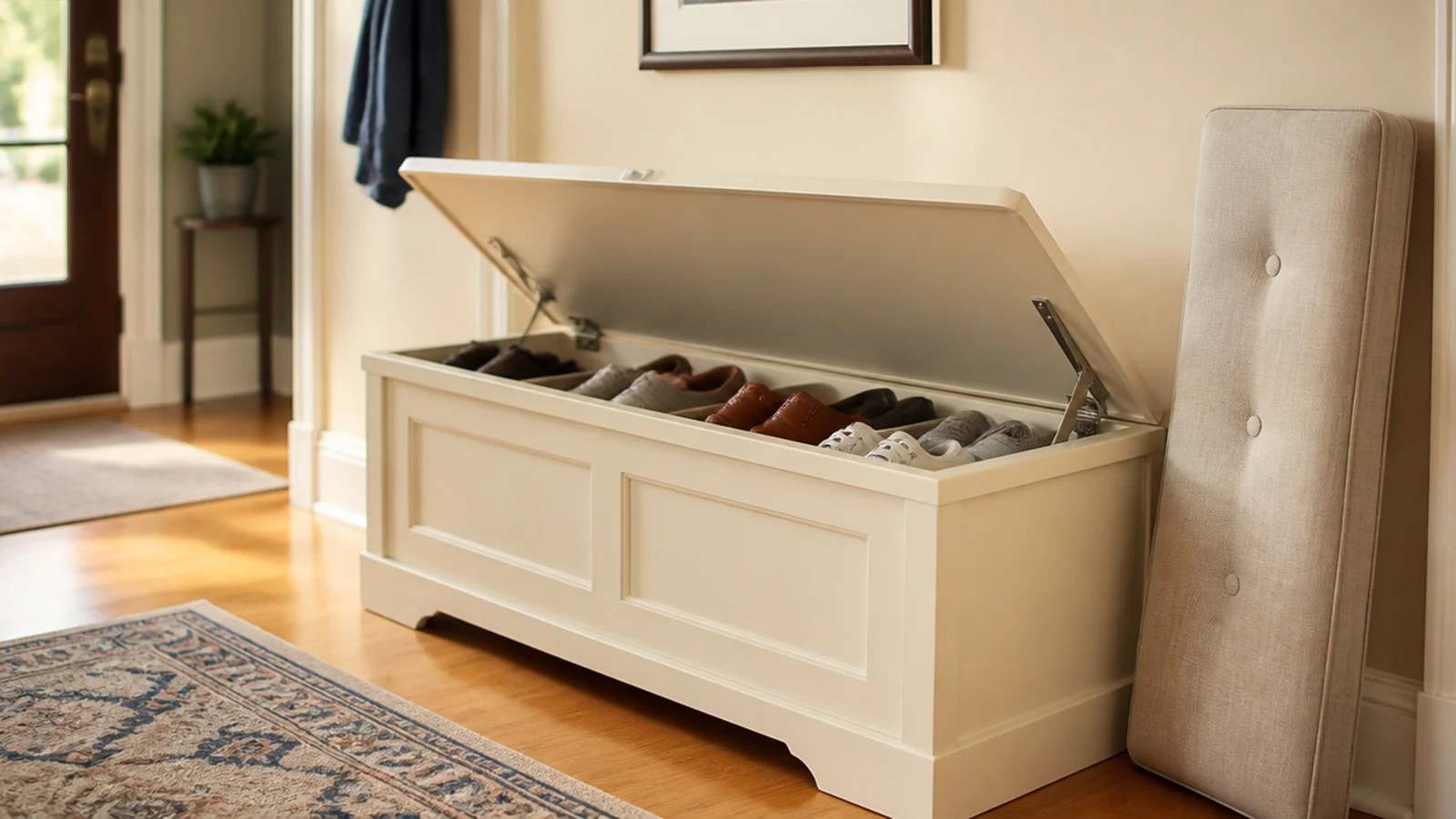
Eight to ten pairs hidden under the seat, with open baskets below for the daily shoes.
That split is the whole trick: hide the seasonal pairs where lifting a lid is fine, and leave the everyday pairs somewhere nobody has to open anything. There is more on this in hidden shoe storage. $$–$$$
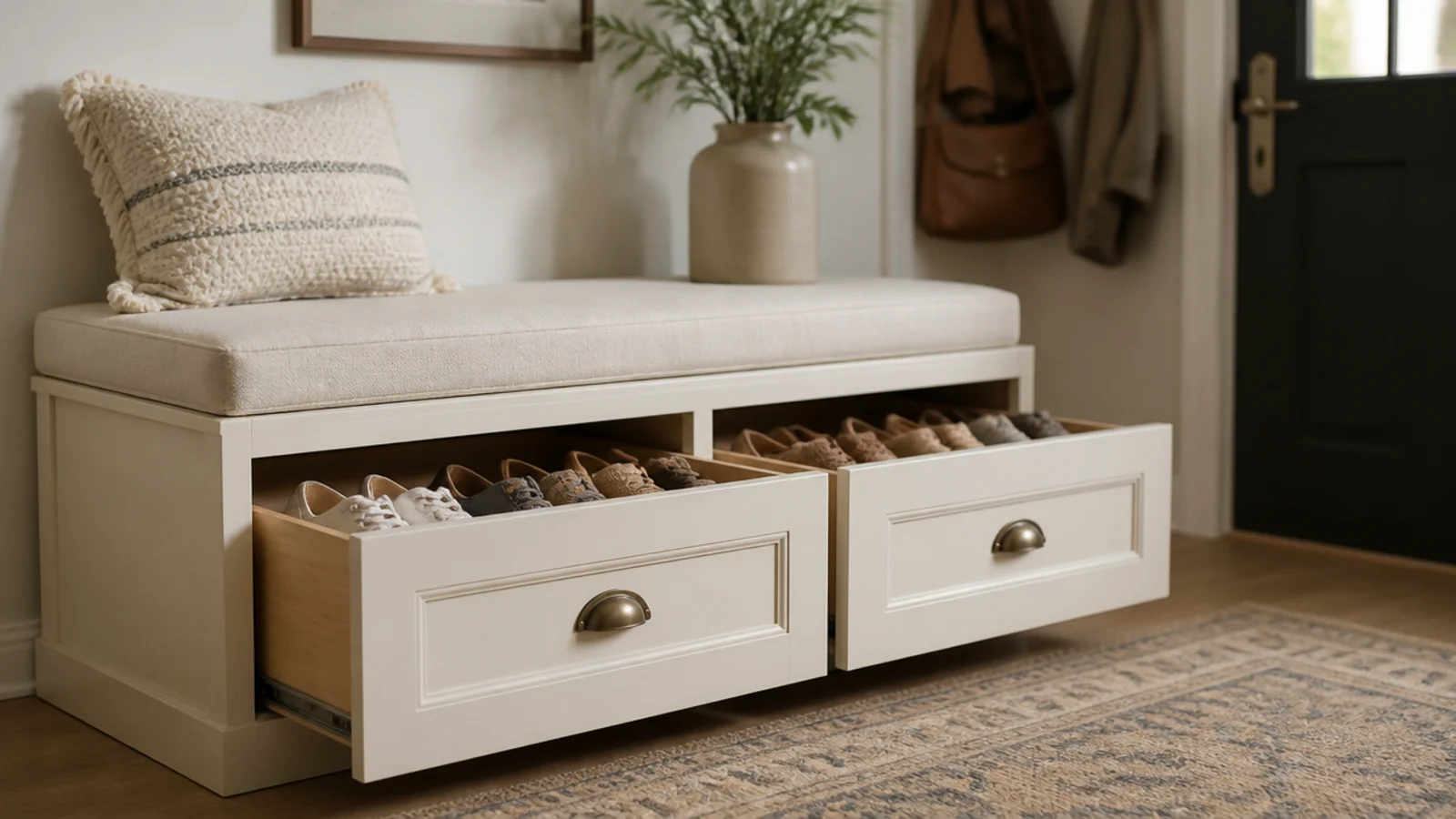
11. Fit drawers instead of open cubbies
Drawers beat doors in an entryway because your hands are usually full and a drawer opens with one finger.
Make them 14 inches deep internally so boots fit lying down, and use full-extension runners — half-extension drawers mean the back third never gets used. $$$
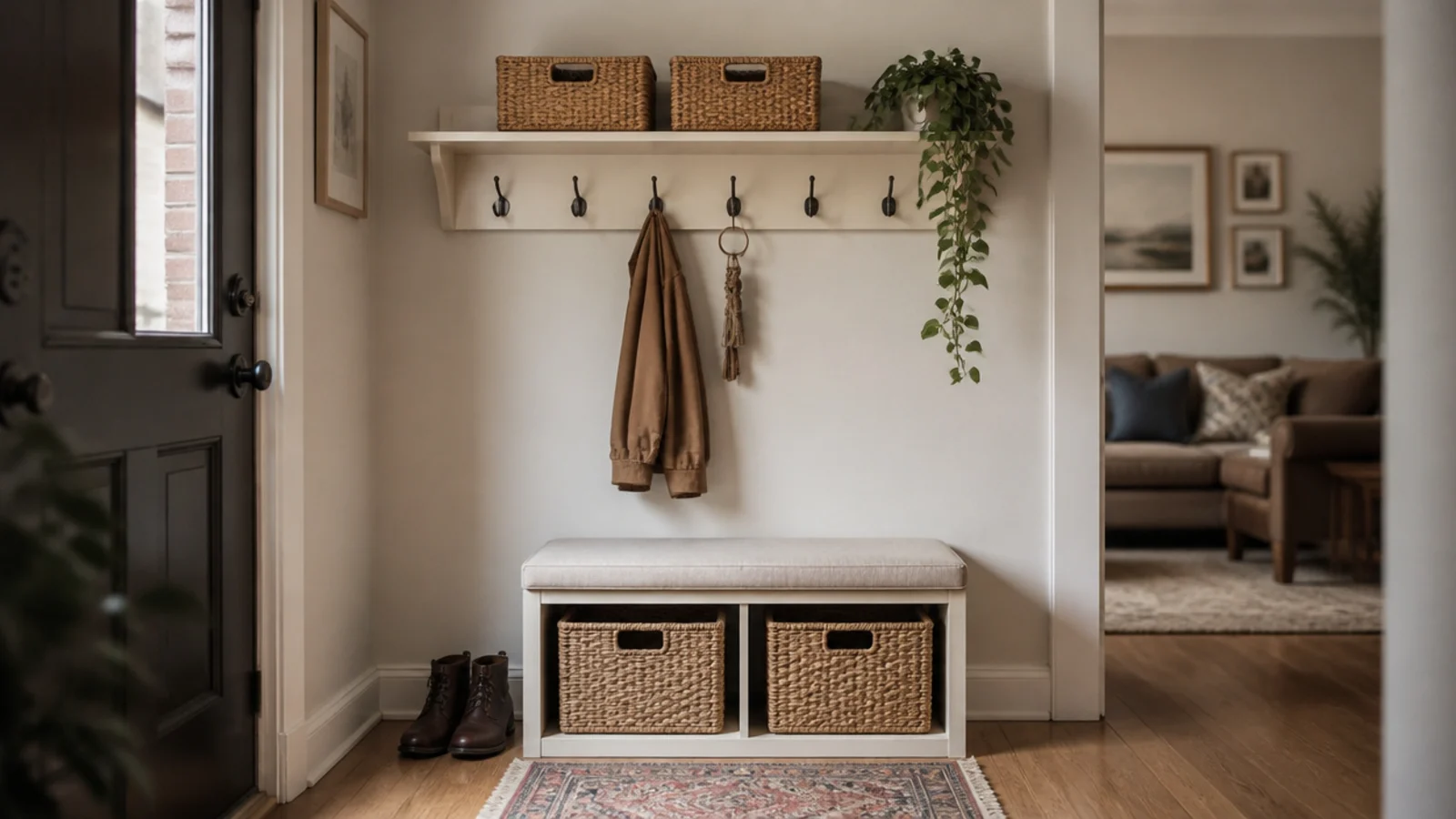
12. Add a shelf above at 60 inches
A shelf at head height above a bench holds baskets of hats, gloves and the seasonal overflow, and it visually caps the whole arrangement.
Sixty inches clears most adults standing up from the seat. Any lower and someone will catch their head, which they will do exactly once and then resent it. $
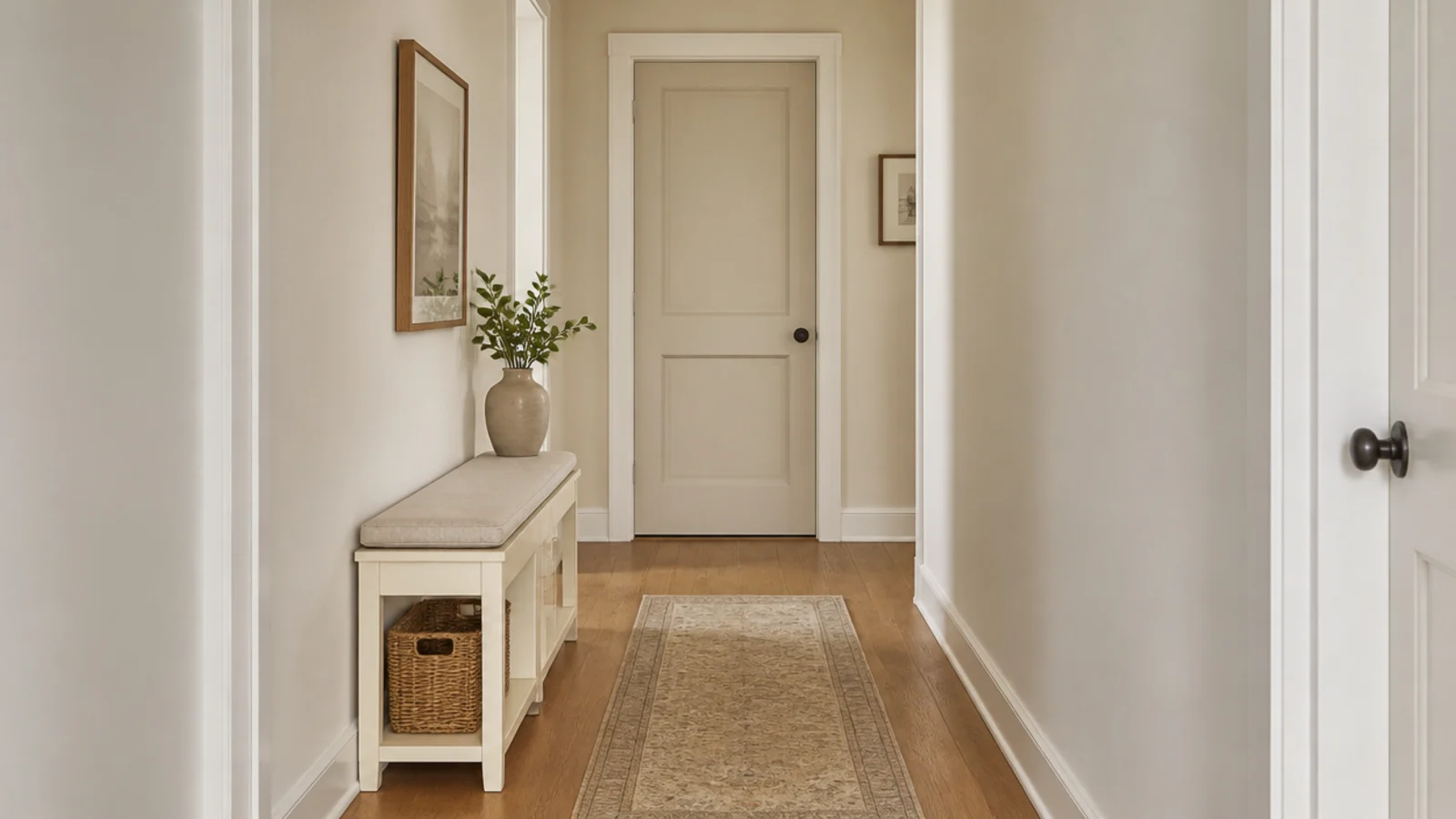
13. Go 12 inches deep in a narrow hallway
A 12-inch bench is a perch rather than a seat, and in a hallway that is often the right compromise.
Be honest about which you need. If people will genuinely sit to pull boots off, you need 16 inches and a wider hallway. If they will lean, 12 works and keeps the corridor passable. $
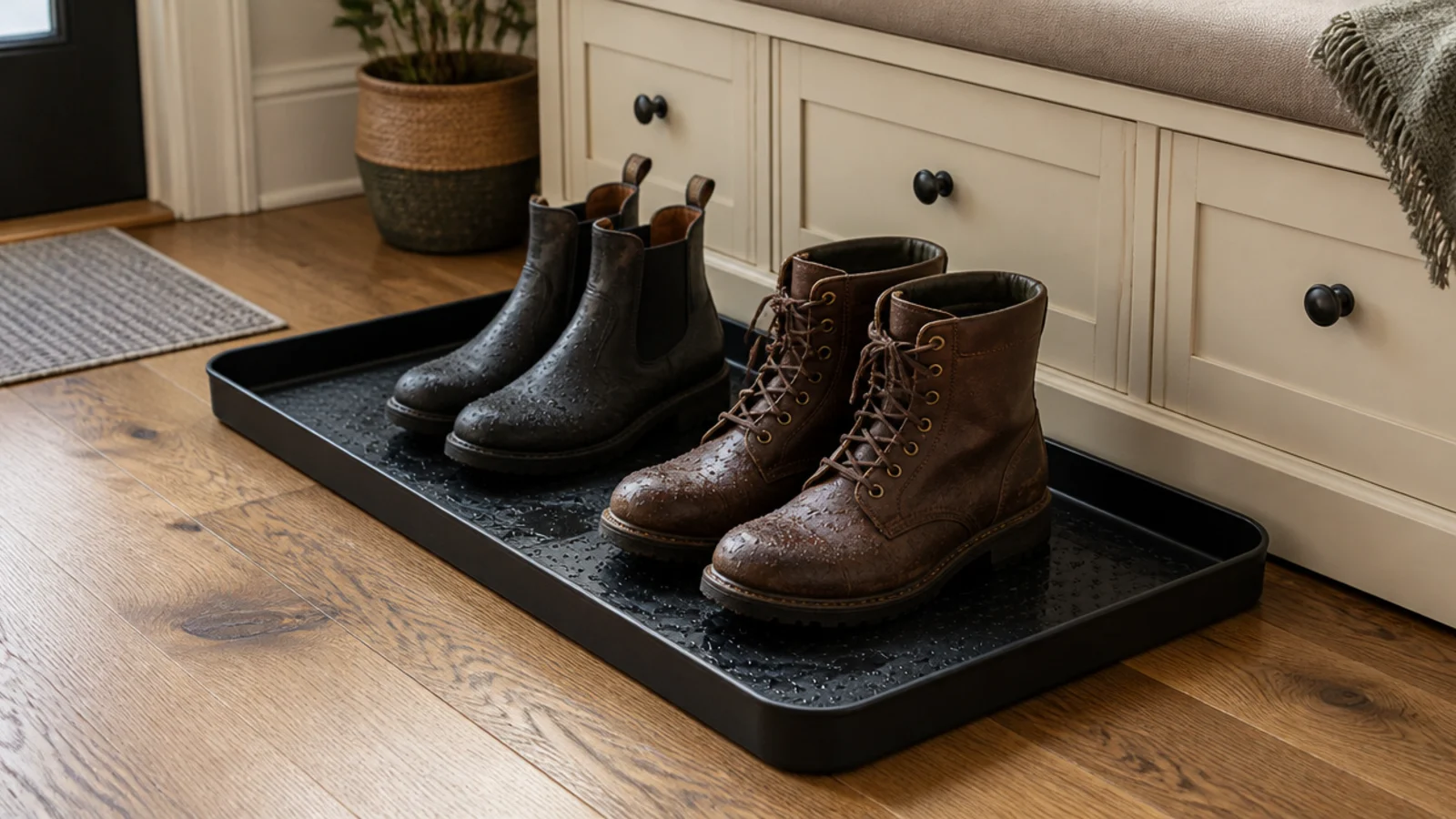
14. Give the wet boots a tray beside it
Wet boots never go into the bench. They go on a raised-lip tray on the floor beside it, at least 15 inches deep.
Boots stored damp inside a bench keep everything around them damp, and that is what makes people conclude that shoe storage smells. One $20 tray prevents it. $
15. Anchor the bench with a runner rug
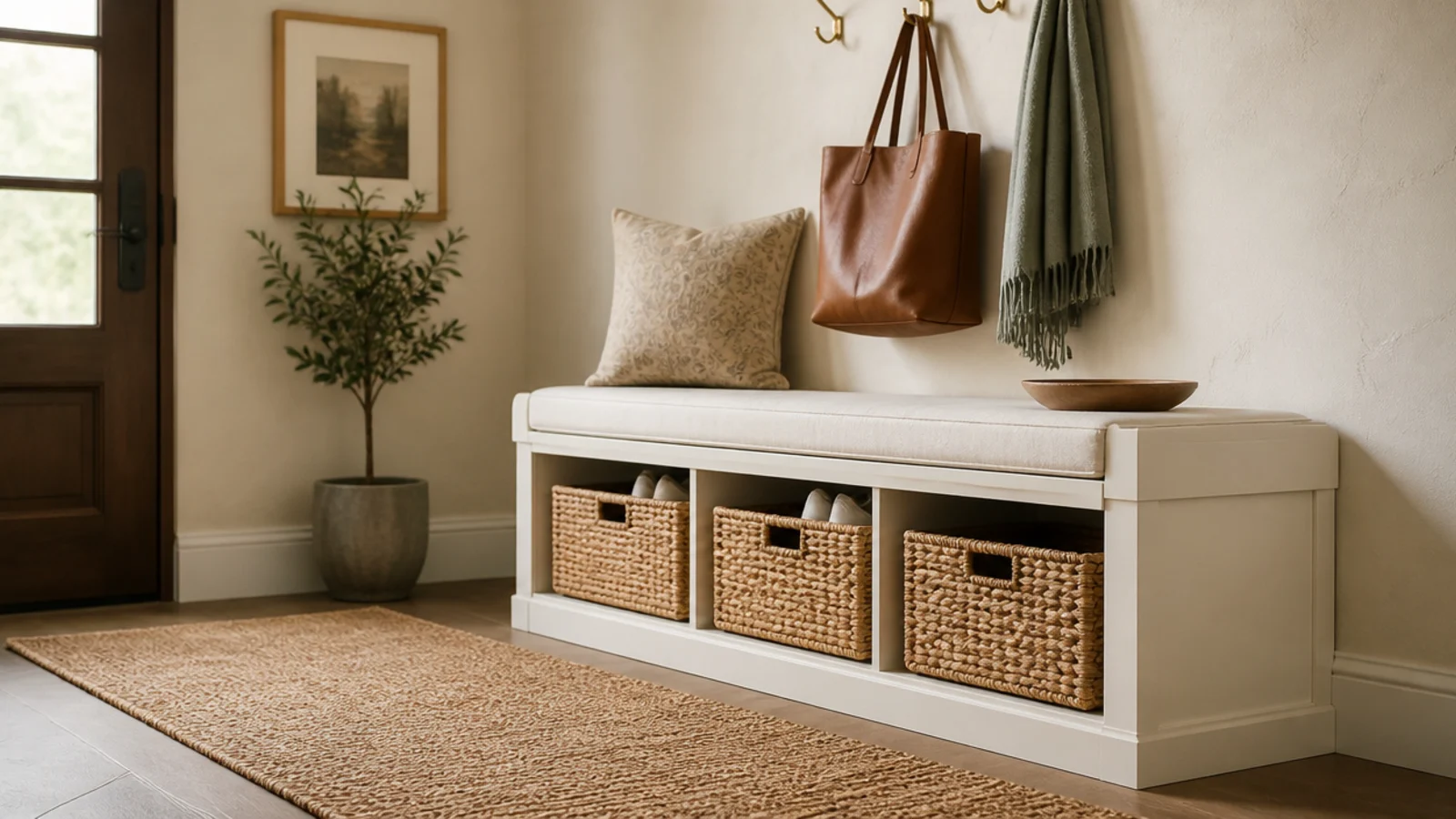
A flat woven runner in front of the bench grounds the piece, catches grit before it travels into the house, and stops the entry feeling like a corridor.
Choose something flat-woven and washable — a deep pile rug in an entryway is a maintenance problem within a month. Run it slightly wider than the bench. $$
Mistakes to Skip
- Measuring seat height to the frame rather than the finished cushion. Two inches of foam is the difference between comfortable and slightly too tall to stand up from.
- Putting a 16-inch bench in a hallway under 44 inches wide. You need about 30 inches of clearance to sit down, and without it the bench becomes something you edge past.
- Choosing closed doors in a house with children. Every door is a step people skip, and the shoes end up beside a beautiful closed cabinet.
Frequently asked questions
How tall should a shoe storage bench be?
Eighteen inches from the floor to the top of the finished cushion. That is the height most adults stand up from easily and most children can climb onto. Sixteen feels low and 20 leaves shorter legs dangling, which is exactly when children stop using it and shoes go back on the floor.
How deep should an entryway bench be?
Fourteen to 16 inches deep including the cushion. That gives you enough seat to actually sit on while leaving the walkway clear. Under 13 inches and you perch rather than sit; over 18 and the bench starts blocking a standard hallway. Measure your walkway before committing to depth.
How do I make a cheap shoe bench look expensive?
Three things: run trim down to the floor so no legs or gaps show, swap the cushion for one in real linen or wool, and paint the bench the same color as the wall. Together they cost under $60 and they change how the piece reads more than any upgrade in the bench itself.
Should a shoe bench have open cubbies or closed doors?
Open, in any household with children or anyone in a hurry. Every door is a step people skip, and shoes end up beside a beautiful closed cabinet. Closed storage suits adults who genuinely put things away, and a mix — open baskets below, closed drawer above — works for most families.
What cushion works best on a shoe storage bench?
Two to three inches of high-density foam in a washable linen or wool cover. Thin cushions compress permanently within a year and thick ones make the seat too tall. Choose a removable cover with a zip — an entryway seat takes wet coats, muddy hands and everything else the outdoors brings in.
Can a shoe bench work in a narrow hallway?
Only if the hallway is at least 44 inches wide, since a 16-inch bench plus a person sitting on it needs about 30 inches of clearance to be usable. In anything narrower, wall-mounted storage or a slim tilt-out cabinet will serve you far better than a bench you have to edge past.
Get the height right first — 18 inches to the top of the cushion — and then spend the remaining budget on trim and a linen cover rather than on the bench itself. For the full door-side system see entryway shoe storage ideas, for building one yourself see DIY shoe storage, and if you are planning the whole entry rather than one piece, entryway ideas covers the wall above it. Save the pin before you buy a flat-pack bench.
Want more like this? Browse all 15 shoe storage ideas guides — they all use the same measurements and budget tiers.
Pin it for later
Save this to your Shoe Storage Ideas board
Pin it now so it is waiting for you when the tape measure comes out — and so the next person hunting for this idea can find it too.
Save this pinKeep going
More ideas worth saving while you have the tape measure out.