Mirror Wall Decor · UGC
15 Mirror Wall Decor Mistakes I Made and Fixed

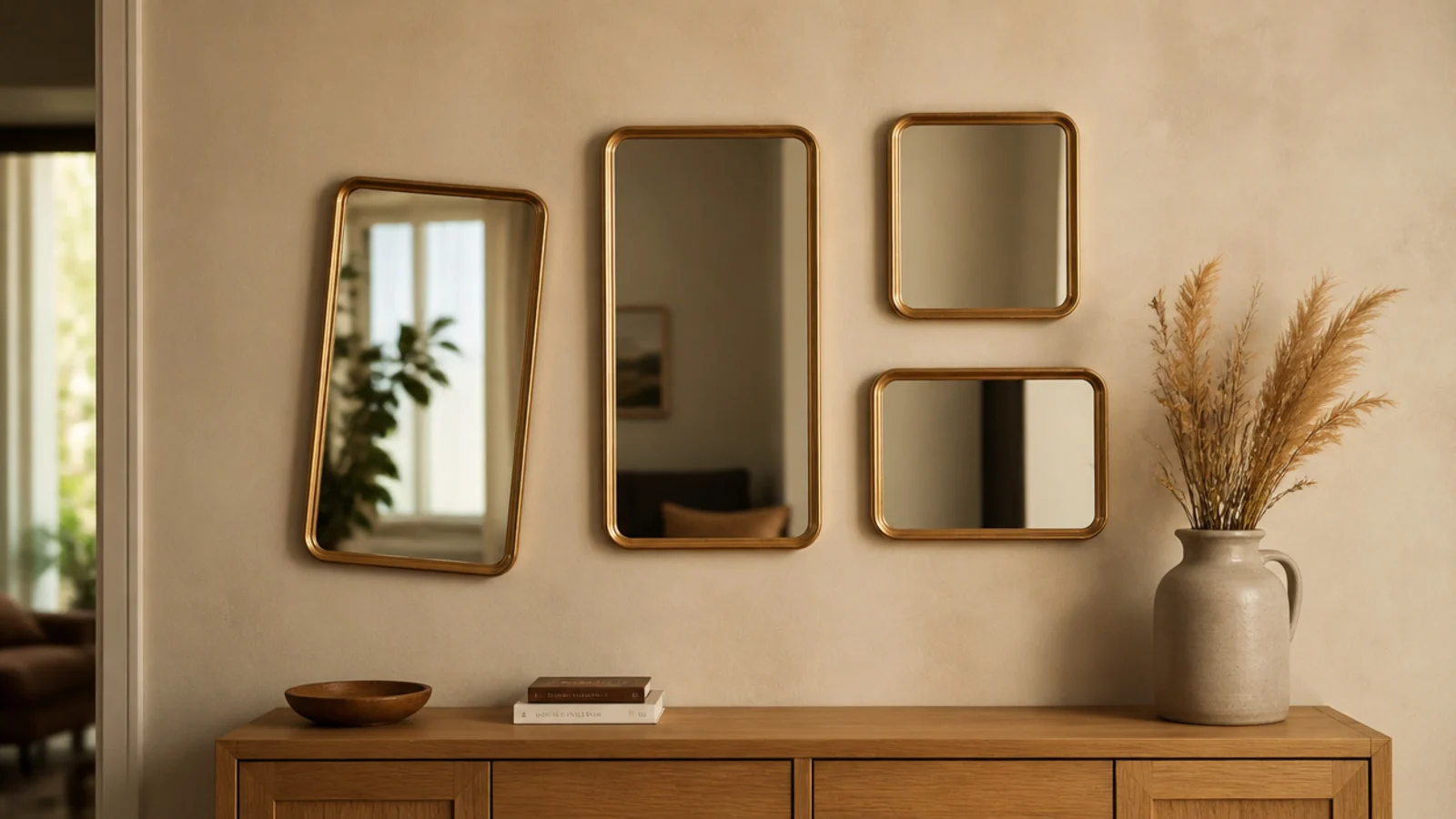
The mirror wall mistakes in this article are all mine, collected across six homes and roughly forty mirrors. Some cost me an afternoon and a tub of spackle. Two of them were genuinely serious, and I have thought about both of those more than I expected to.
The first mirror I ever hung was a 30-inch round in a rental hallway. I used the plastic plugs that came taped to the back, because I assumed the people who sold me a 20-pound mirror had supplied hardware that would hold a 20-pound mirror. Three weeks later I came home to it face down on the floor, still in one piece, with a fist-sized crater in the drywall above it.
Nobody was standing there. That is the only reason that story is a decorating anecdote rather than something else. Here are fifteen mistakes in the order I made them, with what I actually did to fix each one.
In this guide16 sections — tap to openHide
- 1.Mistake 1: I trusted the plugs that came in the box
- 2.Mistake 2: I hung a heavy mirror on one hook
- 3.Mistake 3: I hung heavy glass where a head rests
- 4.Mistake 4: I put a mirror opposite a blank wall
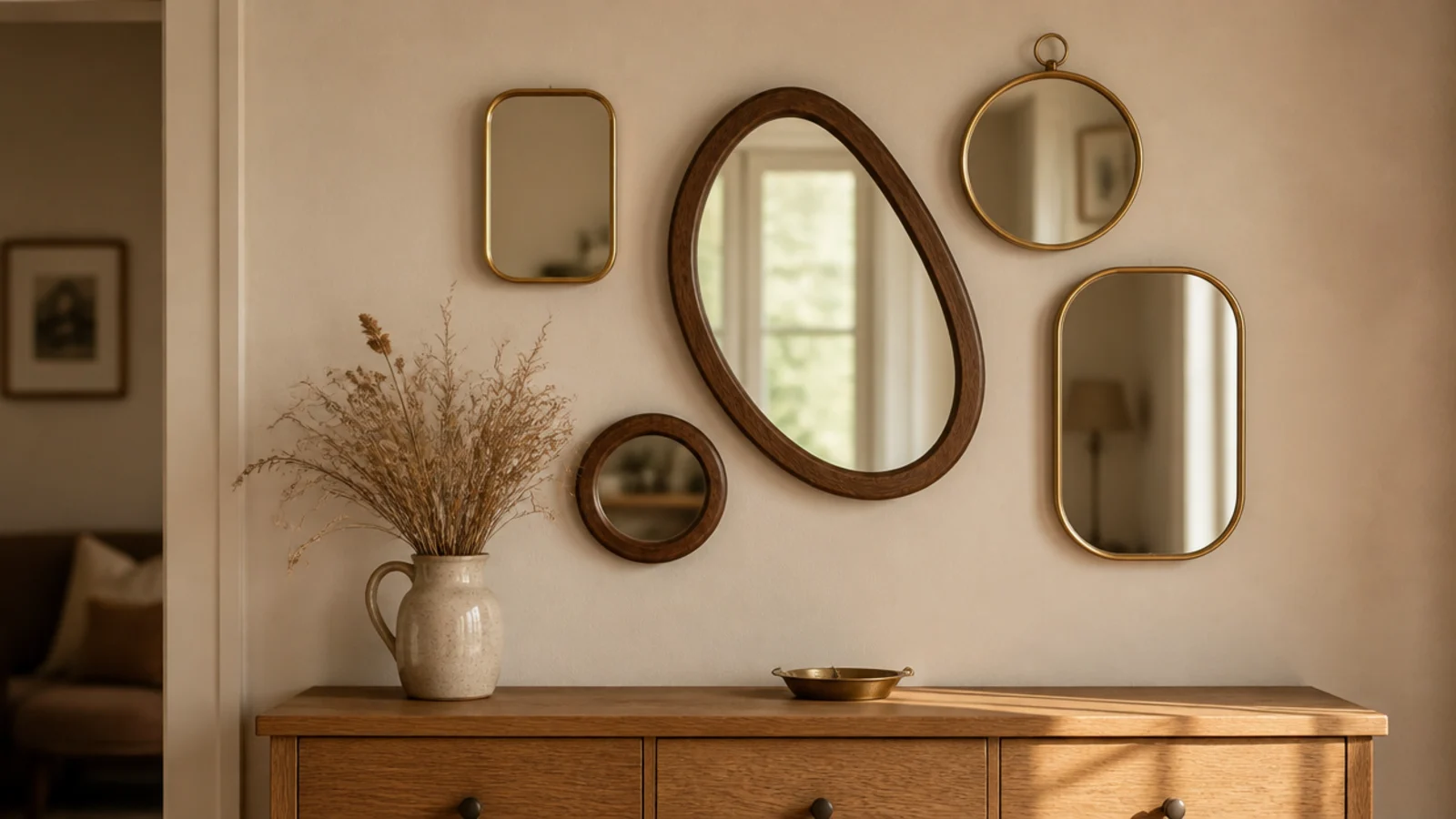
- 5.Mistake 5: I hung it at 66 inches because I am tall
- 6.Mistake 6: I left eighteen inches above the console
- 7.Mistake 7: I sized the mirror to the wall, not the furniture
- 8.Mistake 8: I drilled before laying the cluster out
- 9.Mistake 9: I mixed four frame finishes
- 10.Mistake 10: I used even numbers in matched sizes
- 11.Mistake 11: I did not strap the floor leaner
- 12.Mistake 12: I sprayed cleaner straight at antique glass
- 13.Mistake 13: I hung a mirror in direct afternoon sun
- 14.Mistake 14: I used a raw timber frame in a bathroom
- 15.Mistake 15: I never checked the hanging wire again
- 16.Mirror Wall Mistakes: What I'd Do Differently Now
Mistake 1: I trusted the plugs that came in the box
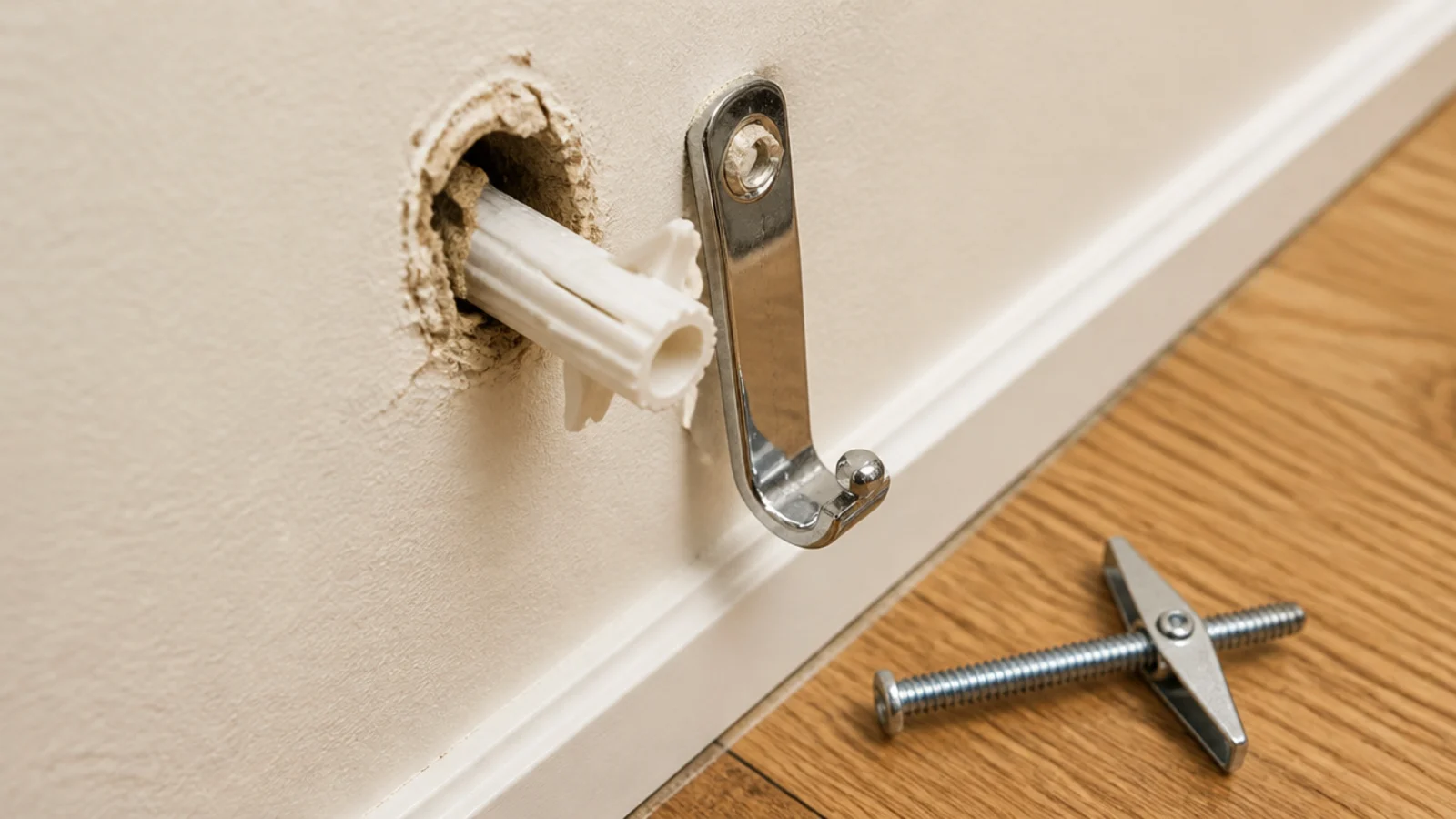
Those small plastic plugs carry around 10 pounds. A 30-inch round mirror is 15 to 25 pounds, and an antique one with thick glass can be 35. The maths was never going to work.
They do not fail suddenly, which is the dangerous part. They crush the drywall around themselves and creep out over weeks, so the mirror looks perfectly fine right up until the moment it is on the floor.
The fix: toggle bolts, about a dollar each, carrying 50 pounds in half-inch drywall. Better still, find a stud and use a 2.5-inch screw. I now throw the supplied plugs away before I open anything else in the box.
Mistake 2: I hung a heavy mirror on one hook
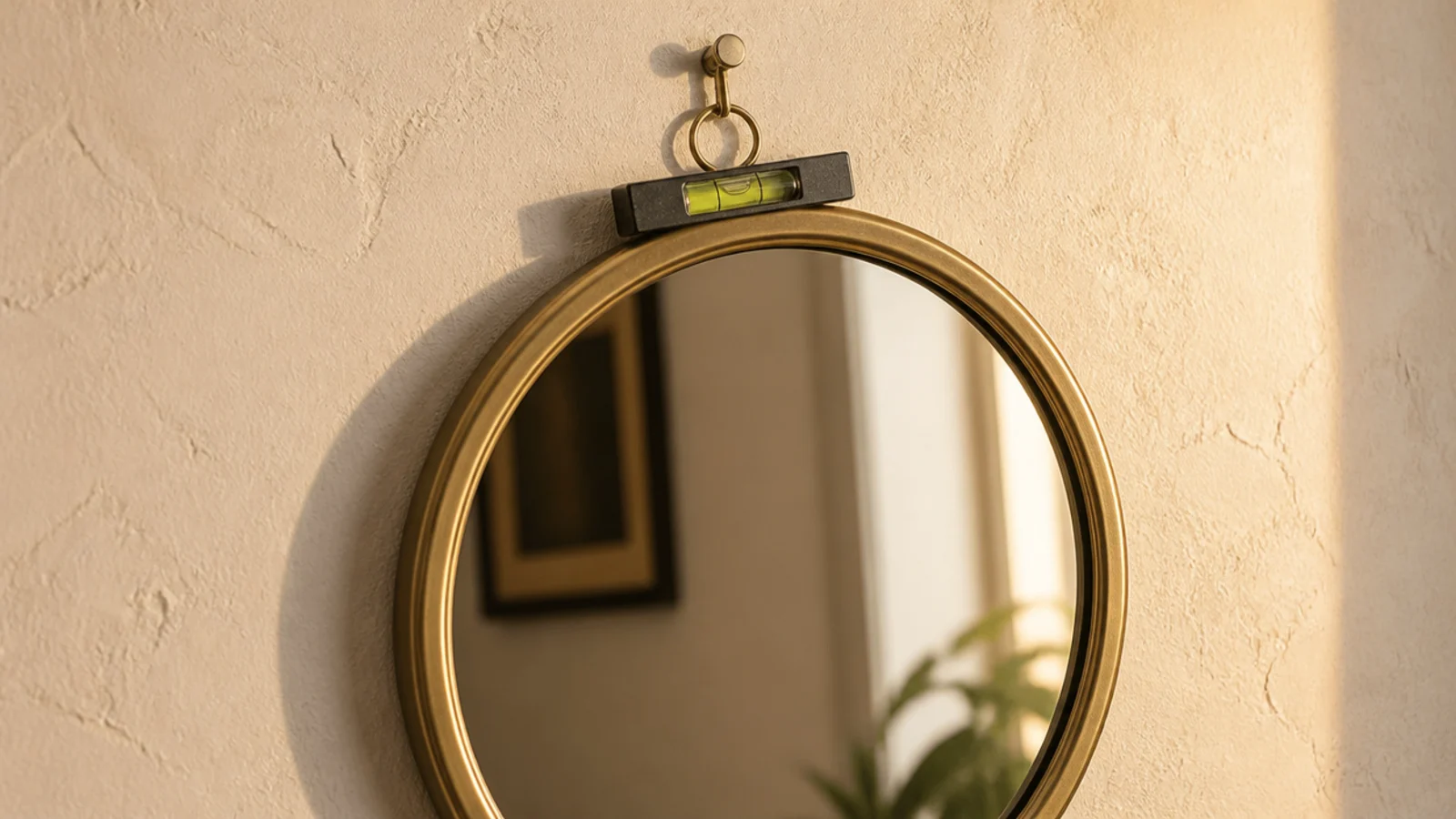
A single central hook does hold the weight if the anchor is right. What it does not do is stop the frame rotating, and a mirror that can rotate will.
Mine sat crooked within a fortnight, and I straightened it roughly twice a week for a year. Every door slam moved it a degree.
The fix: two hanging points, 8 to 12 inches apart and level with each other. Use D-rings screwed into the frame rather than a single braided wire where the mirror allows it. Transfer the spacing by stretching masking tape between the rings and marking through it. One extra anchor, and the problem disappears permanently.
Mistake 3: I hung heavy glass where a head rests
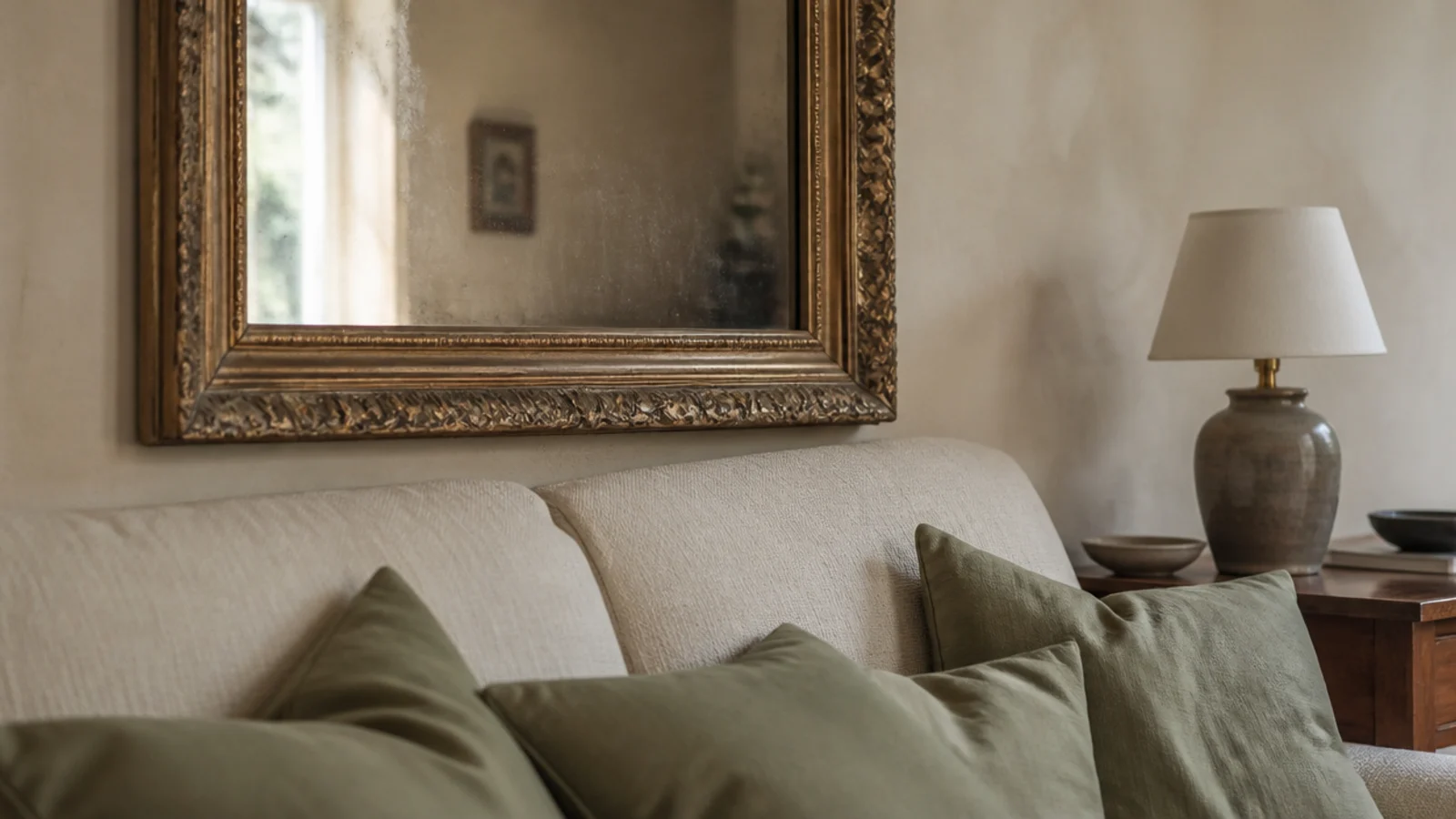
I put a 24-pound framed mirror about six inches above the back of a sofa, in a room where I read every evening with my head against that cushion. It hung there for two years and nothing happened.
That is not the same as it having been fine. I only reconsidered it when I looked properly at the two drywall anchors carrying it and realised I had never once checked them.
The fix: at least 12 inches of clear wall above a sofa back, two fixings into studs rather than drywall, and safety-backed glass on anything large. Above a bed or a crib, I no longer hang mirrors at all. Lighter art does the same job.
Mistake 4: I put a mirror opposite a blank wall
I hung a beautiful arched mirror in a hallway and could not work out why it did nothing for the space. It was reflecting a flat beige wall and the edge of a closed door.
A mirror is only worth what it shows you. Opposite a window it bounces daylight; perpendicular to that window it mostly returns the wall across from it.
The fix: stand where people actually stand and look at what the glass would show before you commit. I moved that mirror nine feet to the wall facing the landing window and it became the brightest spot in the house for the price of two new holes.
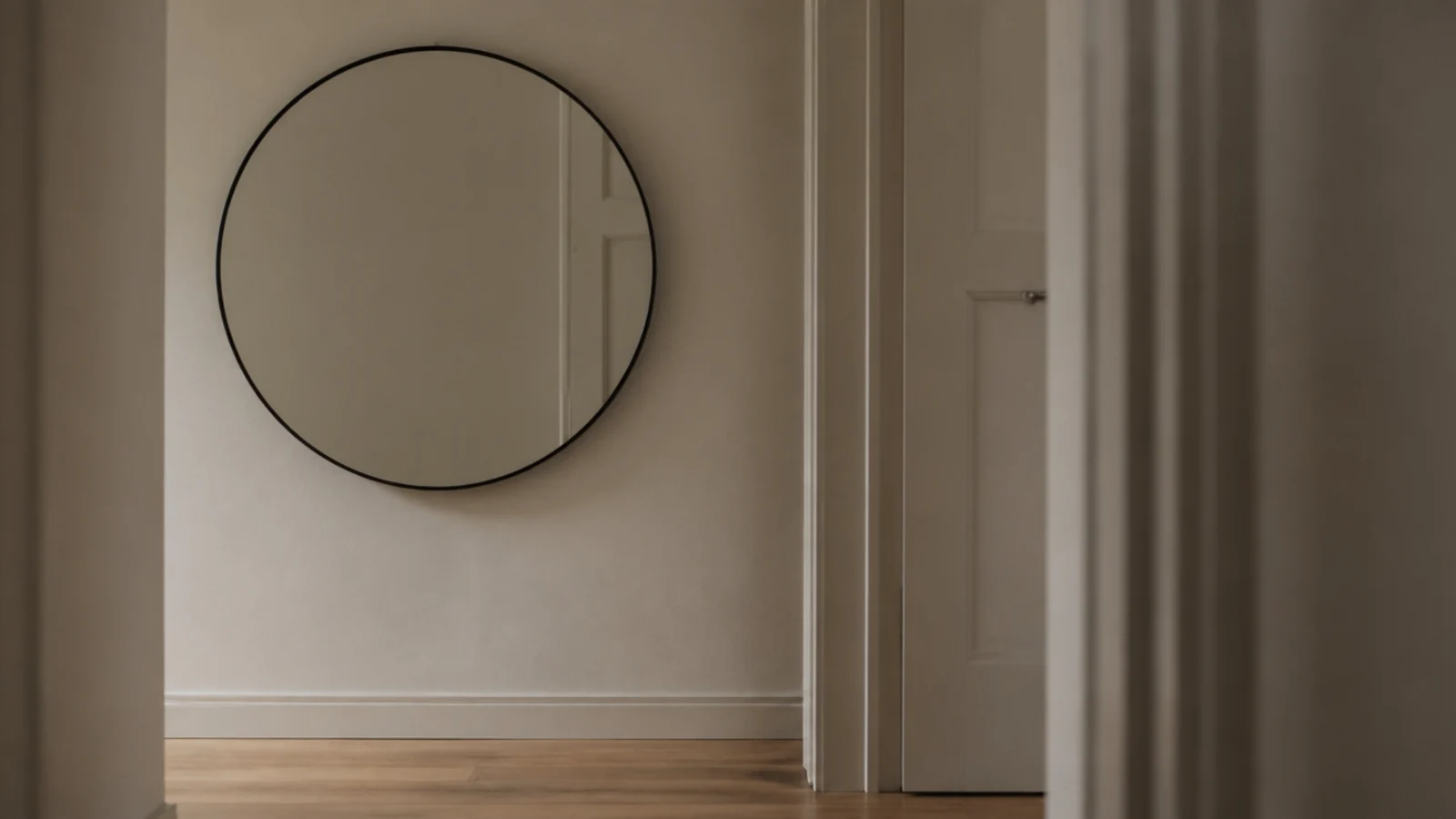
Mistake 5: I hung it at 66 inches because I am tall
I marked the height standing there with a pencil at my own eye level, which is a reasonable way to hang a mirror for exactly one person.
Everyone shorter got a view of their own forehead, and the mirror read as floating too high on the wall even to people not using it.
The fix: centre the glass at 57 to 60 inches from the floor. That is the middle of the mirror, not the top of the frame, and it is the number galleries use for a reason. Re-hanging took twenty minutes and two filled holes, and the whole wall settled down.
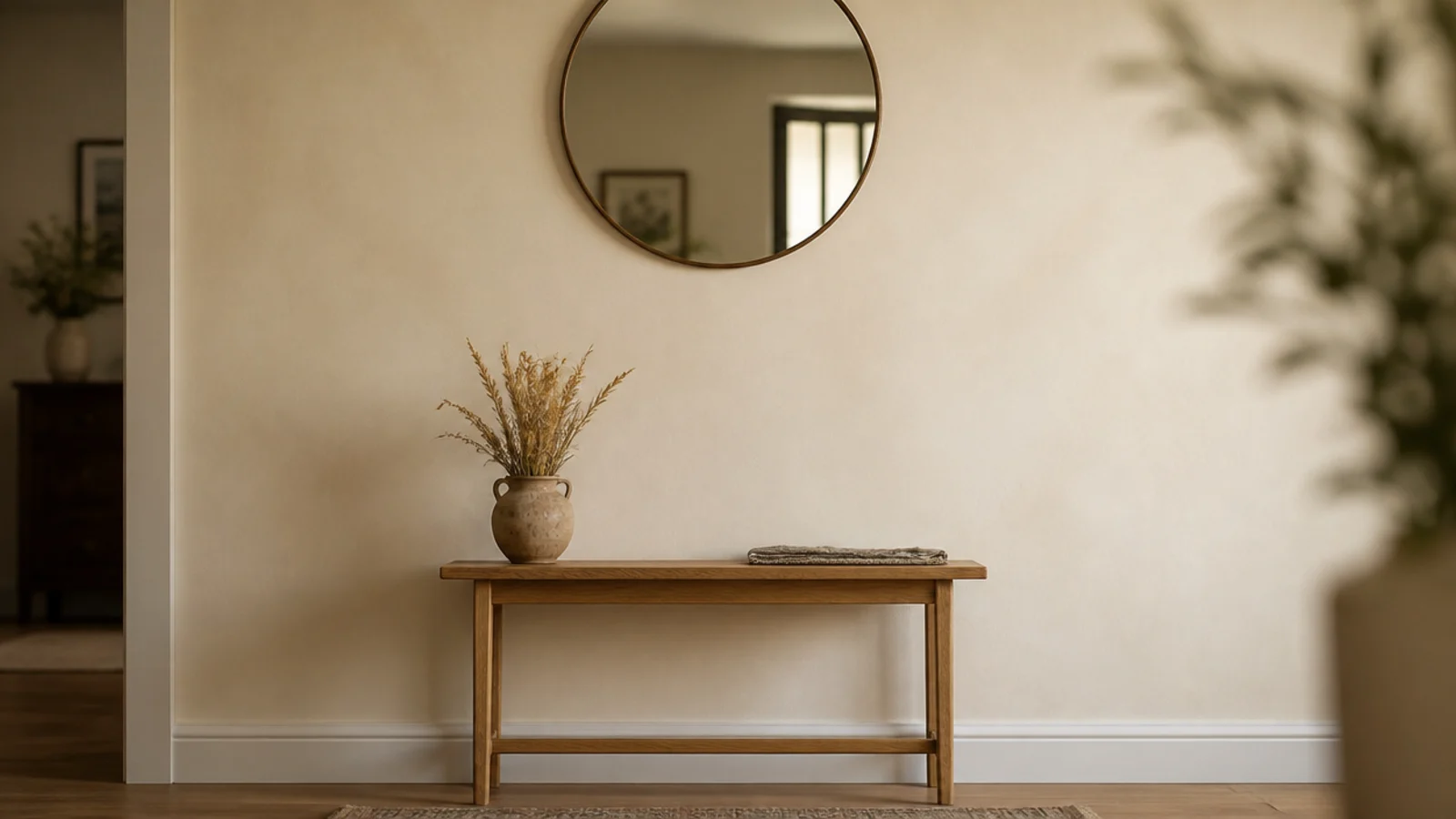
Mistake 6: I left eighteen inches above the console
The 57-inch rule stops applying the moment there is furniture underneath. I did not know that, so I centred a mirror at eye height above a low console and left a wide band of empty plaster between them.
They read as two unrelated objects that happened to share a wall.
The fix: six to eight inches between the console top and the bottom of the frame. That gap is close enough that your eye groups them into one arrangement. It is the single most useful measurement in this entire article, and it applies to sideboards, chests and mantels equally.
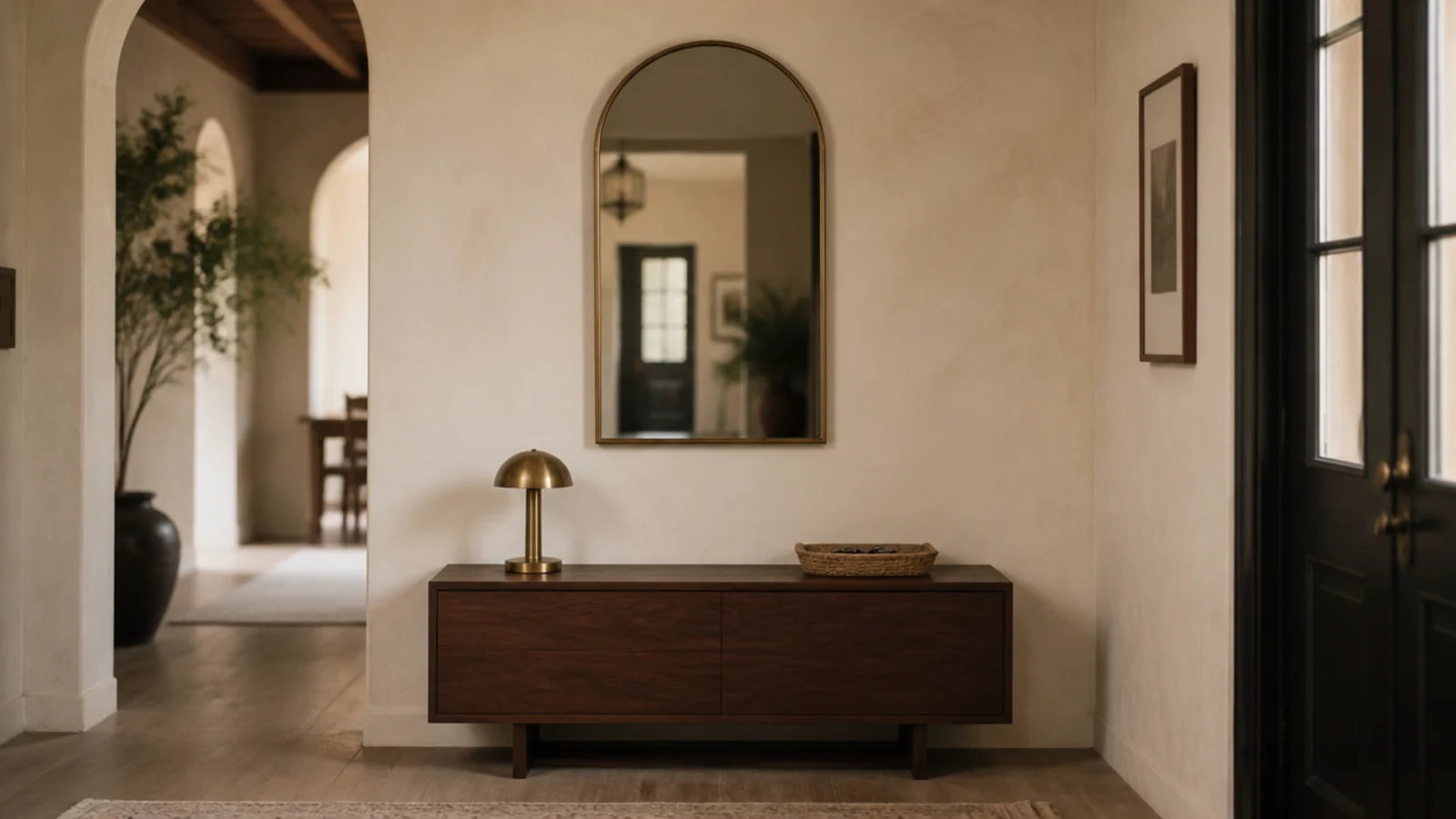
Mistake 7: I sized the mirror to the wall, not the furniture
I bought a 24-inch round for a dining room wall that was eleven feet long, reasoning that the wall was big so the mirror would look reasonable. It looked like a coin taped above a sideboard.
Wall dimensions are the wrong reference. The furniture underneath is the thing your eye compares against.
The fix: two-thirds to three-quarters of the furniture width. On a 60-inch sideboard that means a 40 to 45-inch mirror, or a cluster spanning the same distance. I sold the small round, bought a 42-inch one, and the room finally made sense.
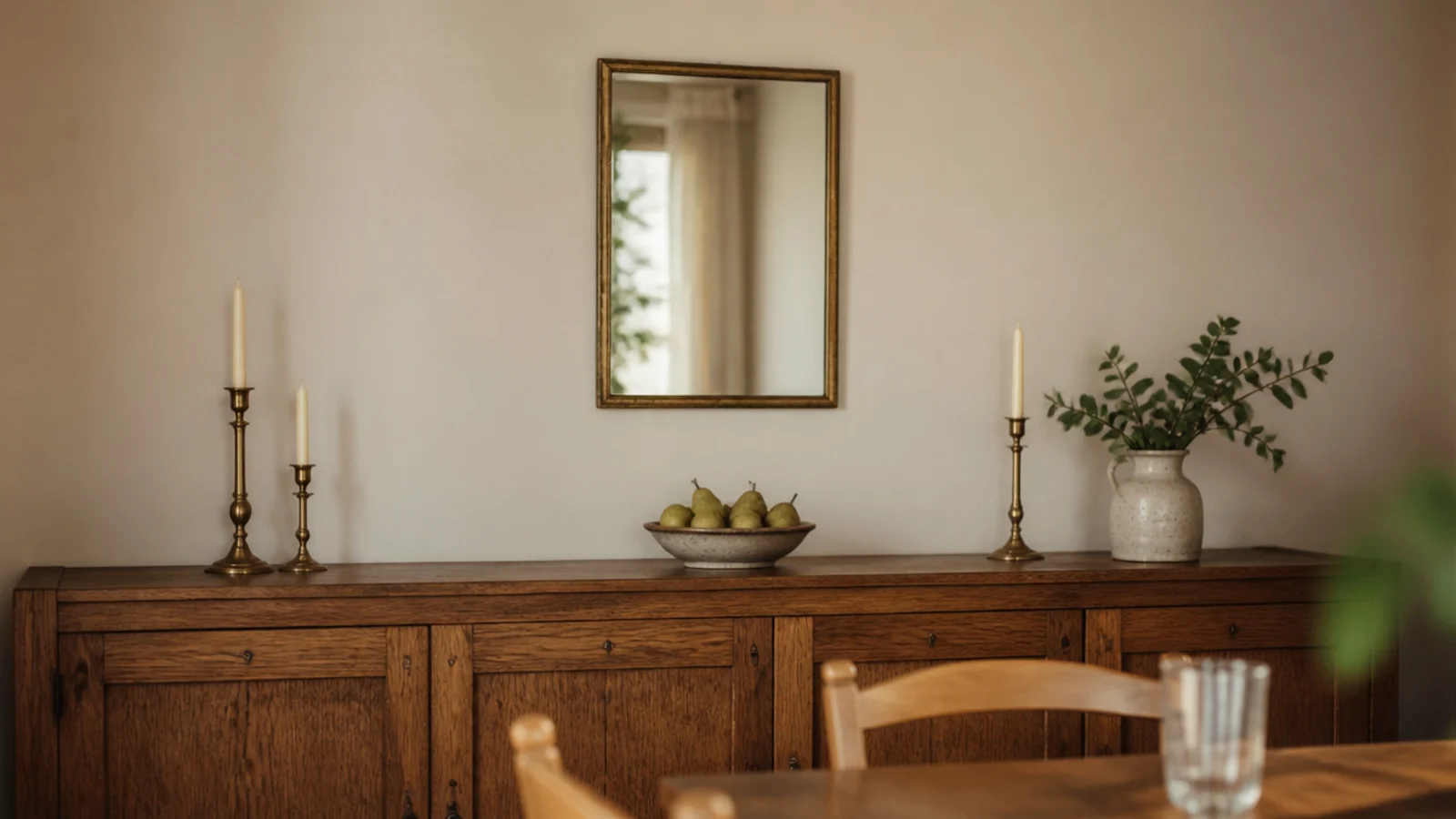
Mistake 8: I drilled before laying the cluster out
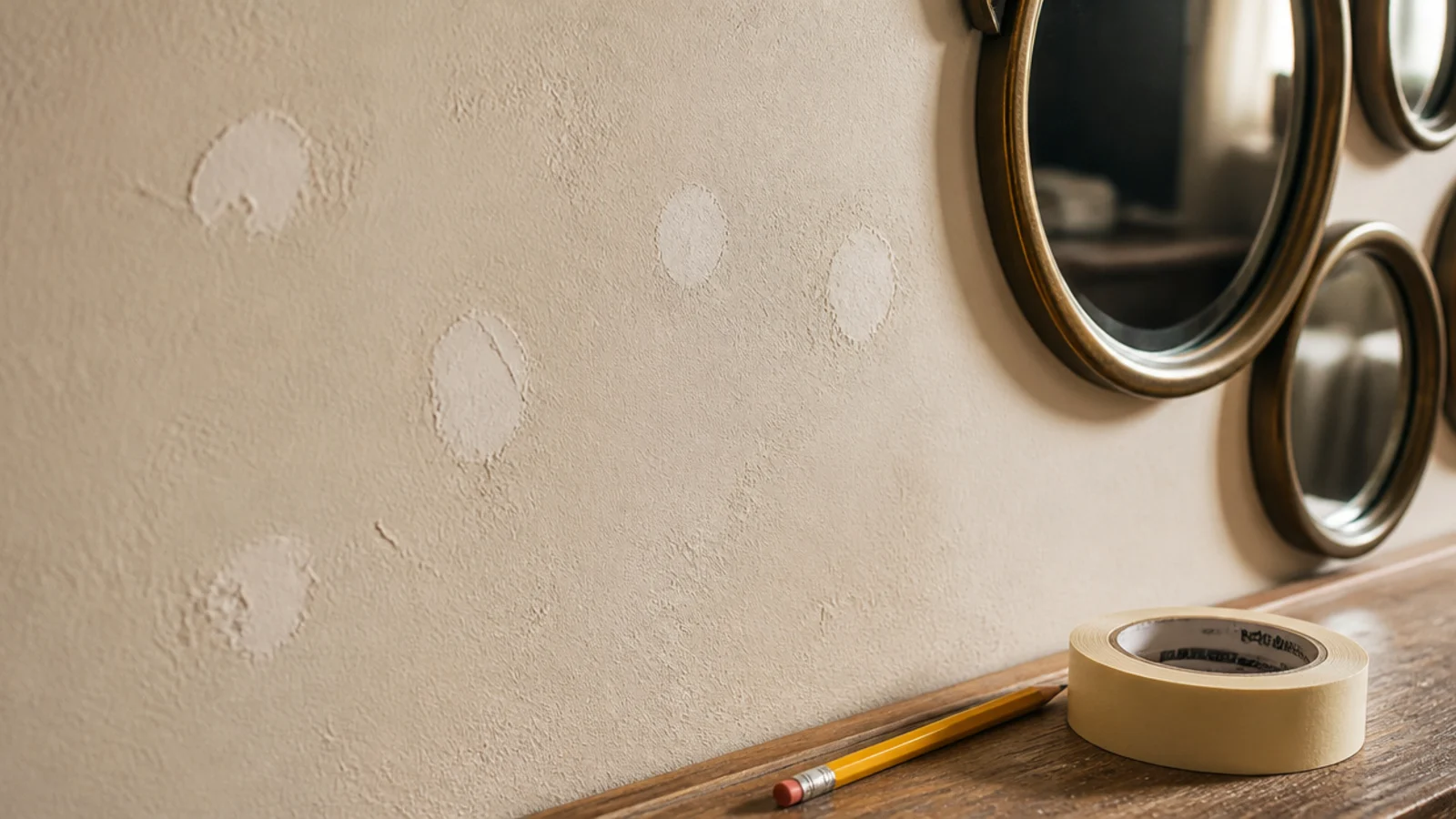
Six mirrors, hung one at a time, adjusting as I went. I ended up with eleven holes in that wall and five of them full of spackle by the end of the afternoon.
Arrangements do not reveal themselves while you are holding a drill.
The fix: lay the whole group on the floor, photograph it from directly overhead, then cut paper templates to the exact frame sizes and tape those up. Live with the paper for a day. I have not wasted a hole since, and the layouts are better because I am choosing rather than committing.
Mistake 9: I mixed four frame finishes
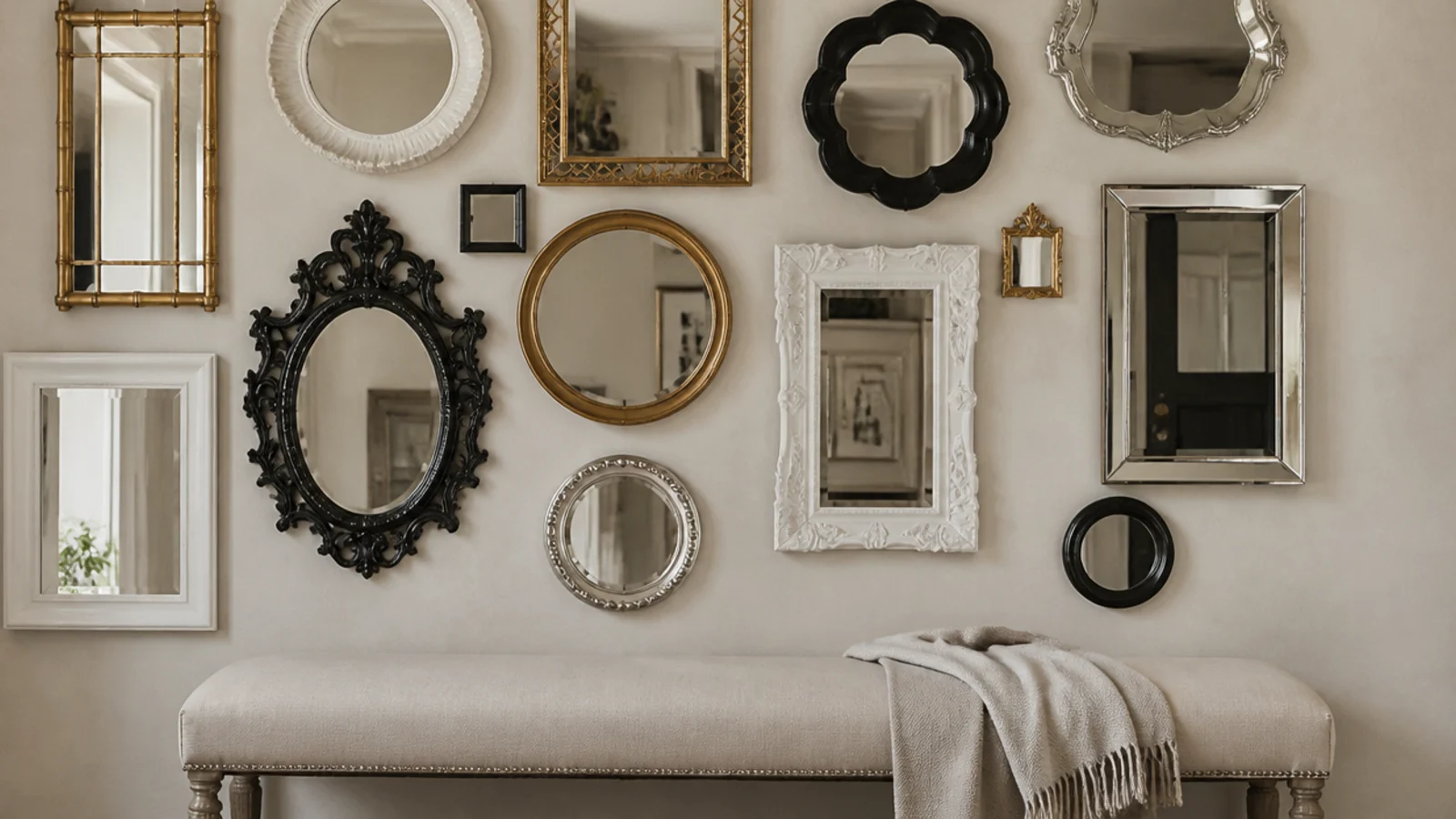
Gilt, chrome, matte black and a white painted frame, all on one wall, each bought separately because each one was lovely on its own.
Together they read as a pile of things rather than a collection. Nothing was wrong with any individual mirror, which is what made the problem so hard to see.
The fix: two frame finishes maximum, across the entire wall. Gilt and walnut, or black and brass. I took down the chrome and the white one, moved them to other rooms, and the remaining four immediately looked deliberate. It cost nothing and took ten minutes.
Mistake 10: I used even numbers in matched sizes
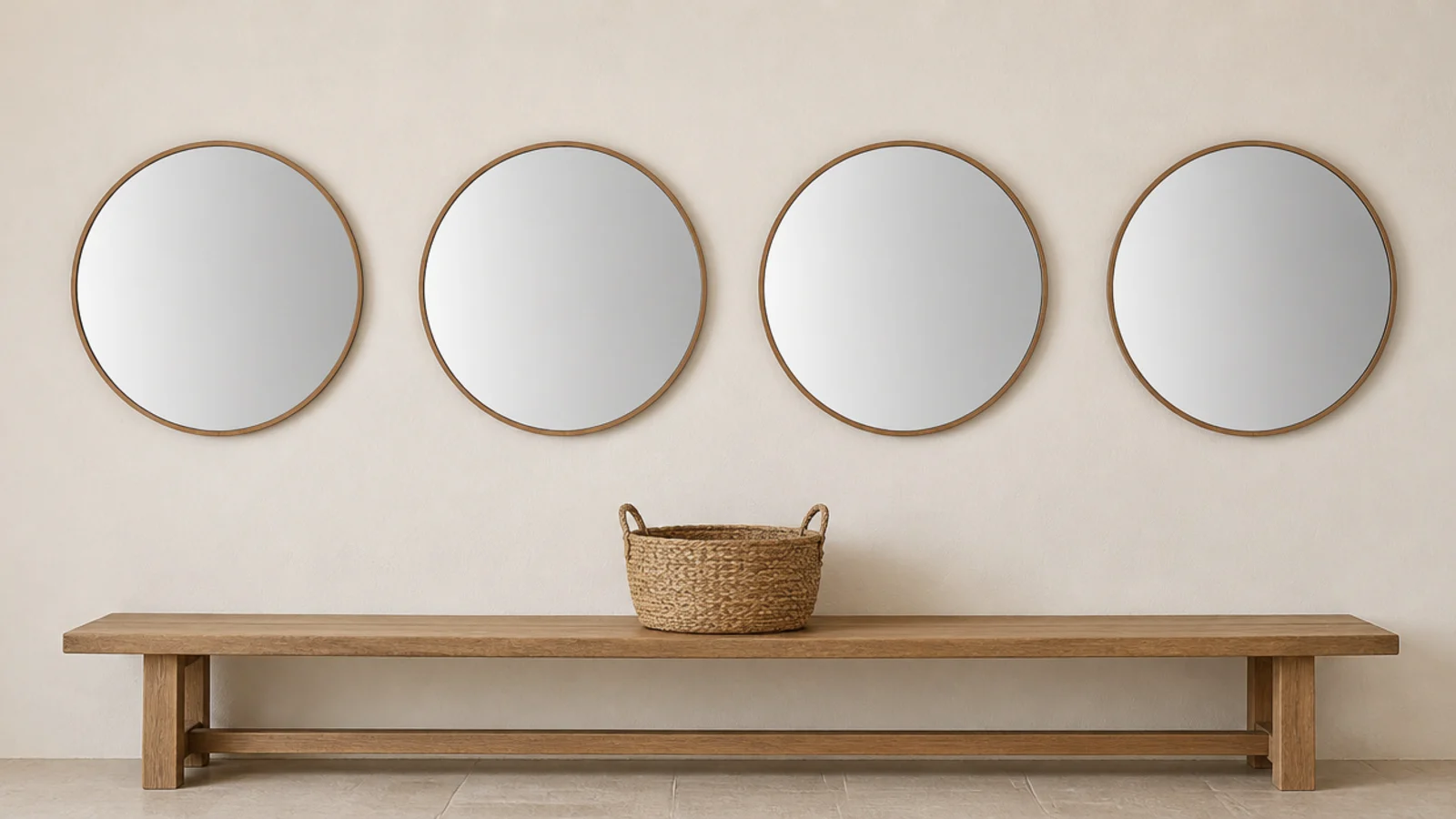
Four identical rounds, evenly spaced in a straight line. I was quite pleased with the precision.
It read as a shop fitting. Even numbers at identical scale give the eye nothing to move between, and the whole point of a group is the rhythm between the pieces.
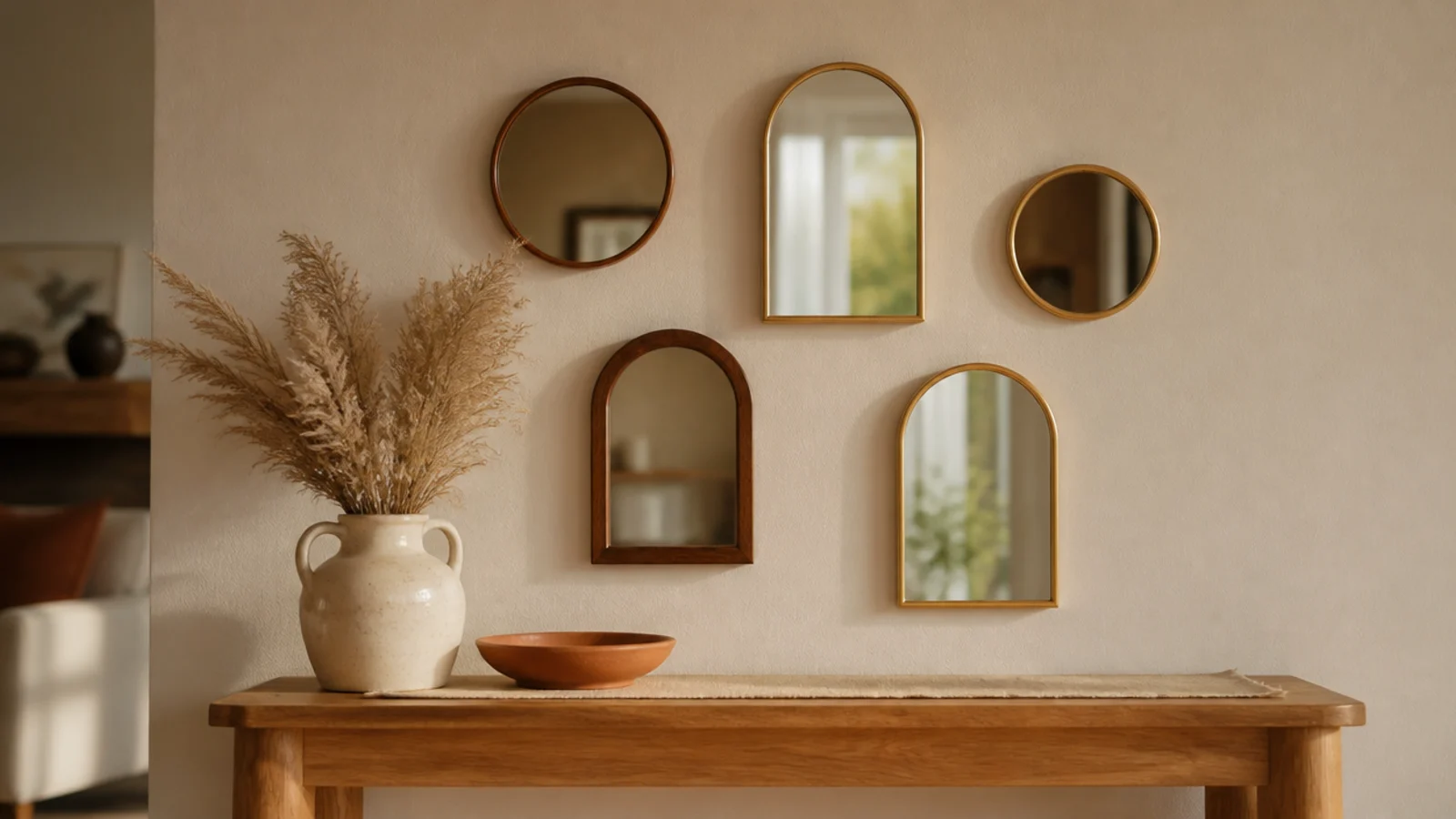
The fix: odd numbers and varied sizes. Three, five or seven, in graduated diameters, with 2 to 3 inches between frames. I swapped one of the four out for a larger piece and moved the group into a loose cluster, and it stopped looking like inventory. The layout method is in mirror cluster wall.
Mistake 11: I did not strap the floor leaner
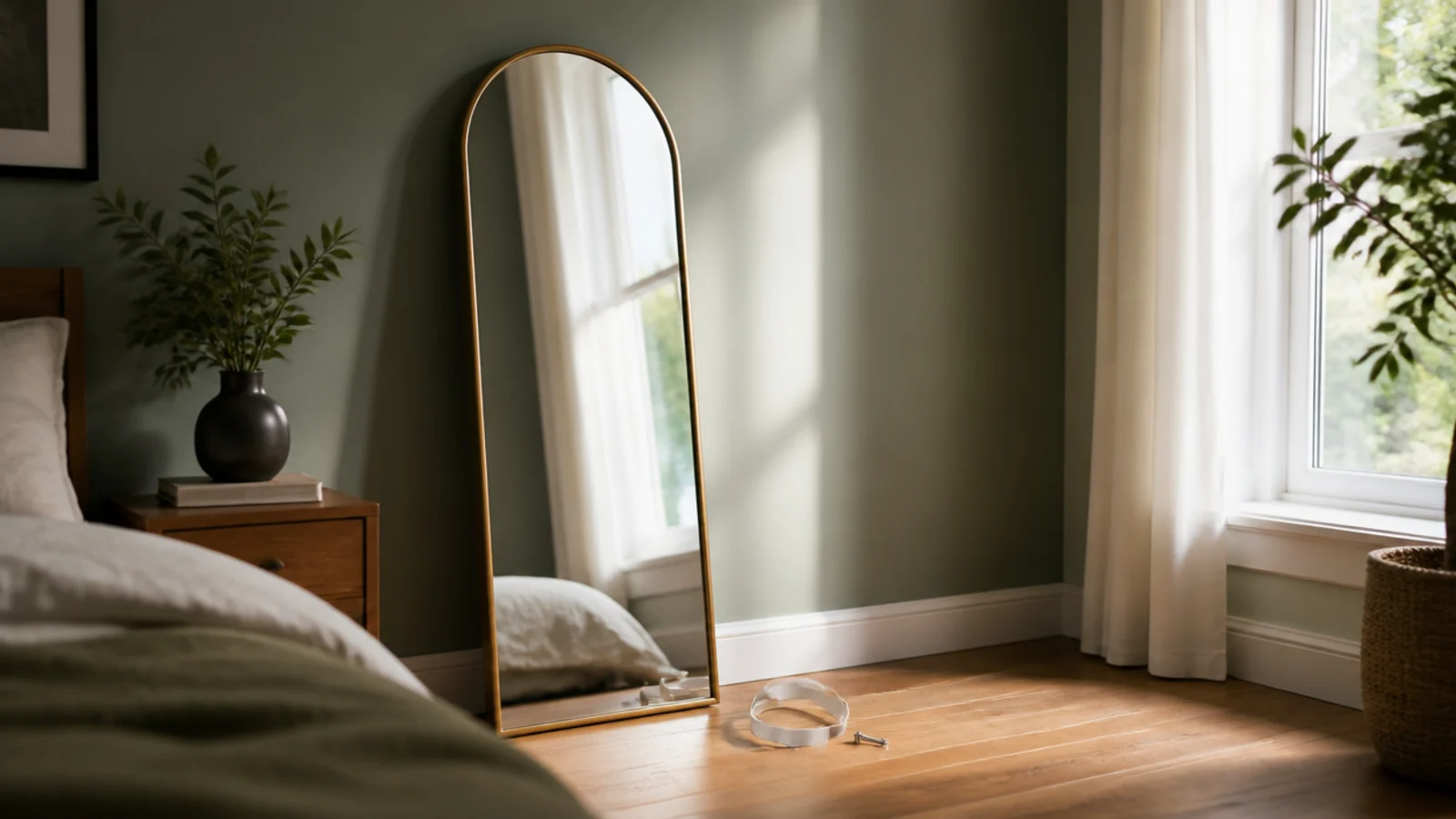
A 62-pound arched mirror leaning against a bedroom wall, on oak boards, in a house with a three-year-old. I had bought the strap. It was in the drawer.
She pulled herself up on the frame and it slid a few inches before I caught it. Nothing broke and nobody was hurt, and I fitted the strap that evening.
The fix: every floor leaner gets anchored to the wall, without exception, in any home with children or pets. One nylon strap and one screw into a stud, hidden behind the frame. It takes five minutes and I no longer think of it as optional.
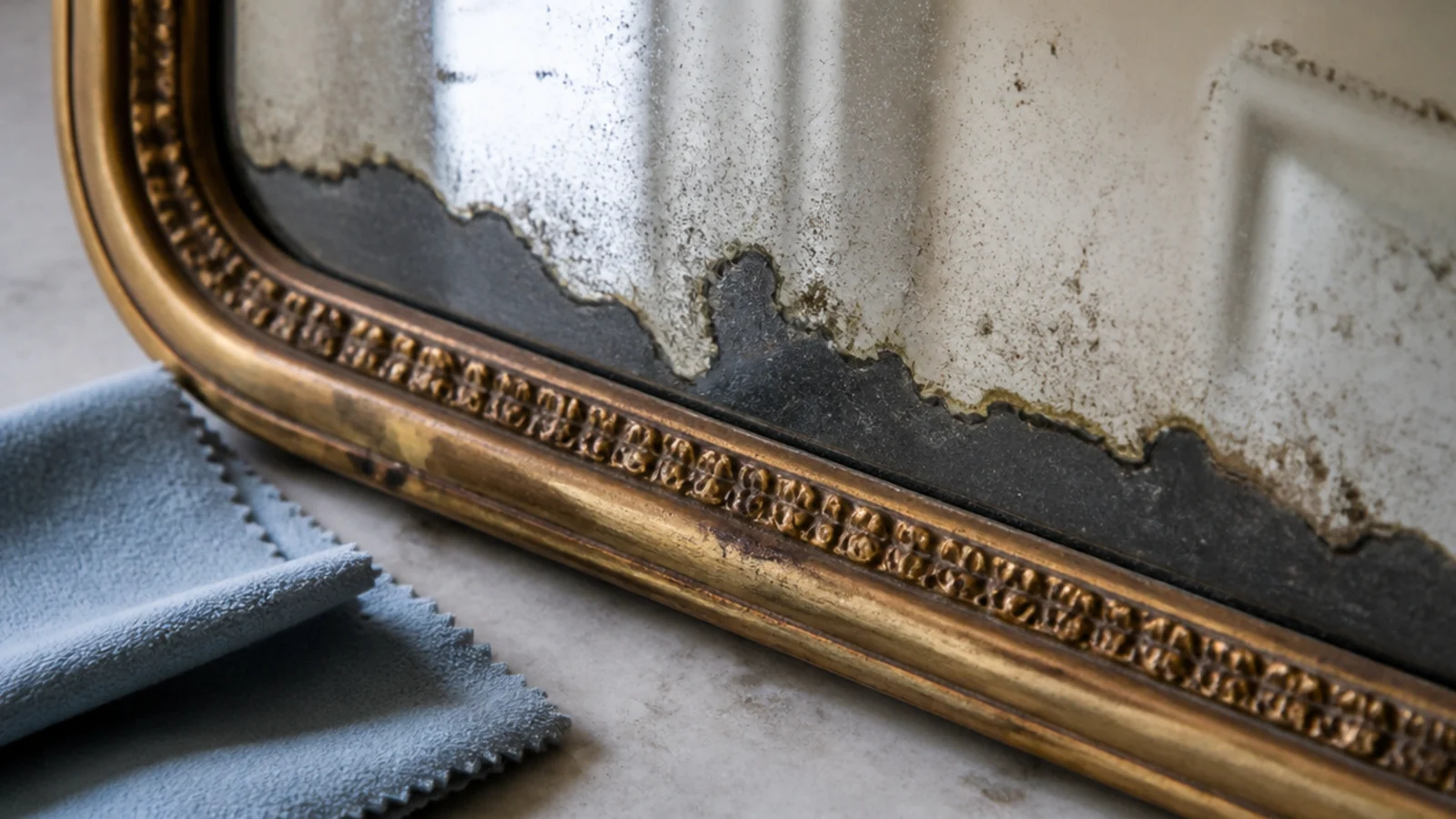
Mistake 12: I sprayed cleaner straight at antique glass
An inherited 1930s mirror, cleaned the way I clean windows. Within a year there was a dark irregular band along the bottom edge where the silvering had lifted.
Liquid wicks under the frame edge by capillary action and gets behind the silver backing, and that damage does not come back.
The fix: a barely damp microfibre cloth, worked from the centre outward, then buffed dry immediately. Never spray at the glass, and never spray near the frame at all. On genuinely old mercury glass, dust dry and leave the surface completely alone.
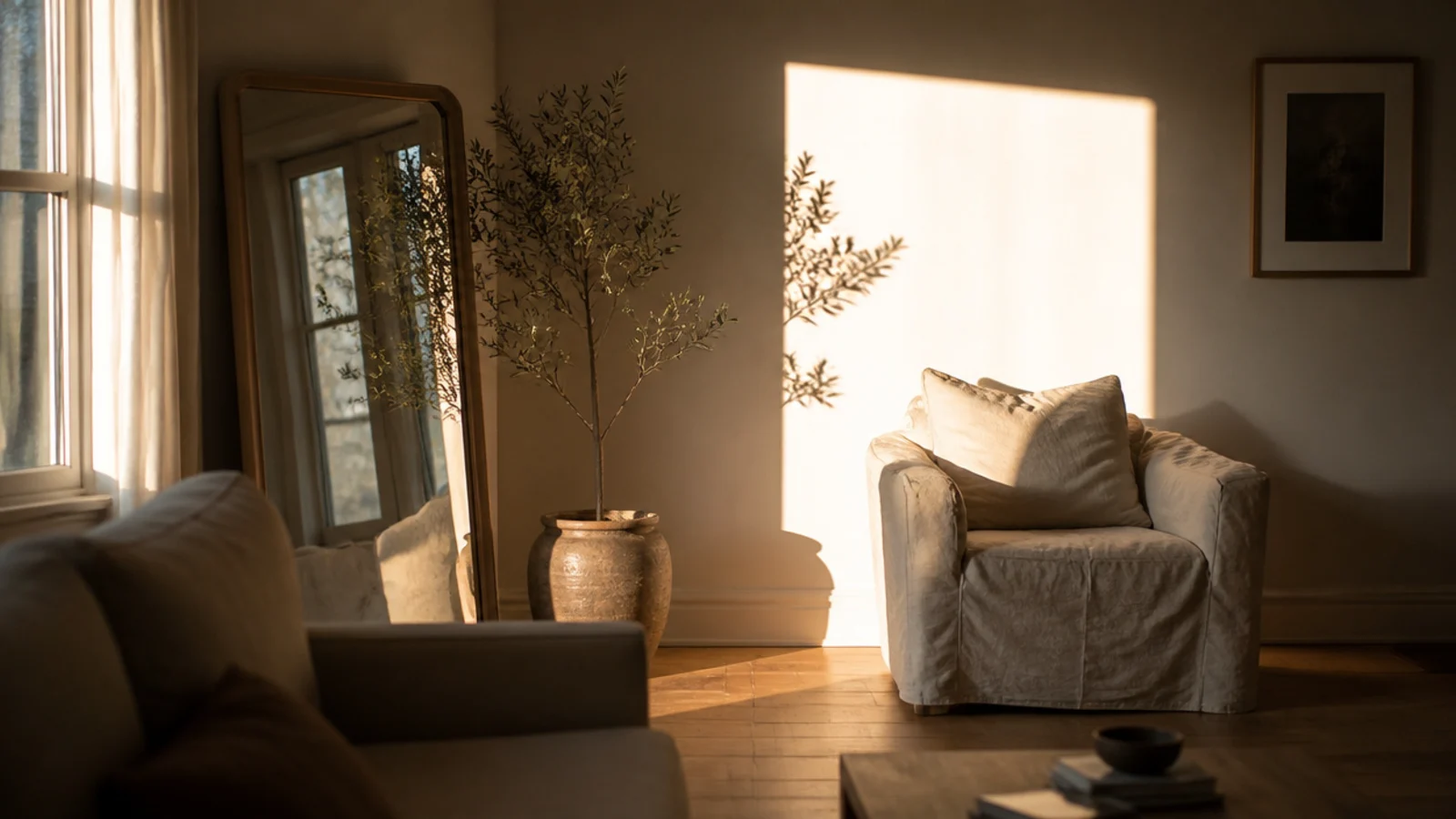
Mistake 13: I hung a mirror in direct afternoon sun
West-facing room, large clear mirror on the wall the sun reached at four. From October to March it threw a hard bright rectangle across the room that made the sofa unusable for an hour a day.
Clear glass amplifies low sun rather than softening it.
The fix: antiqued or foxed glass in any room with strong direct sun, because mottled silvering diffuses light instead of firing it back. It costs more — $120 to $300 for a decent panel — and it is the correct answer for a west wall. Vintage pieces often come with that patina already, as covered in vintage mirror wall decor.
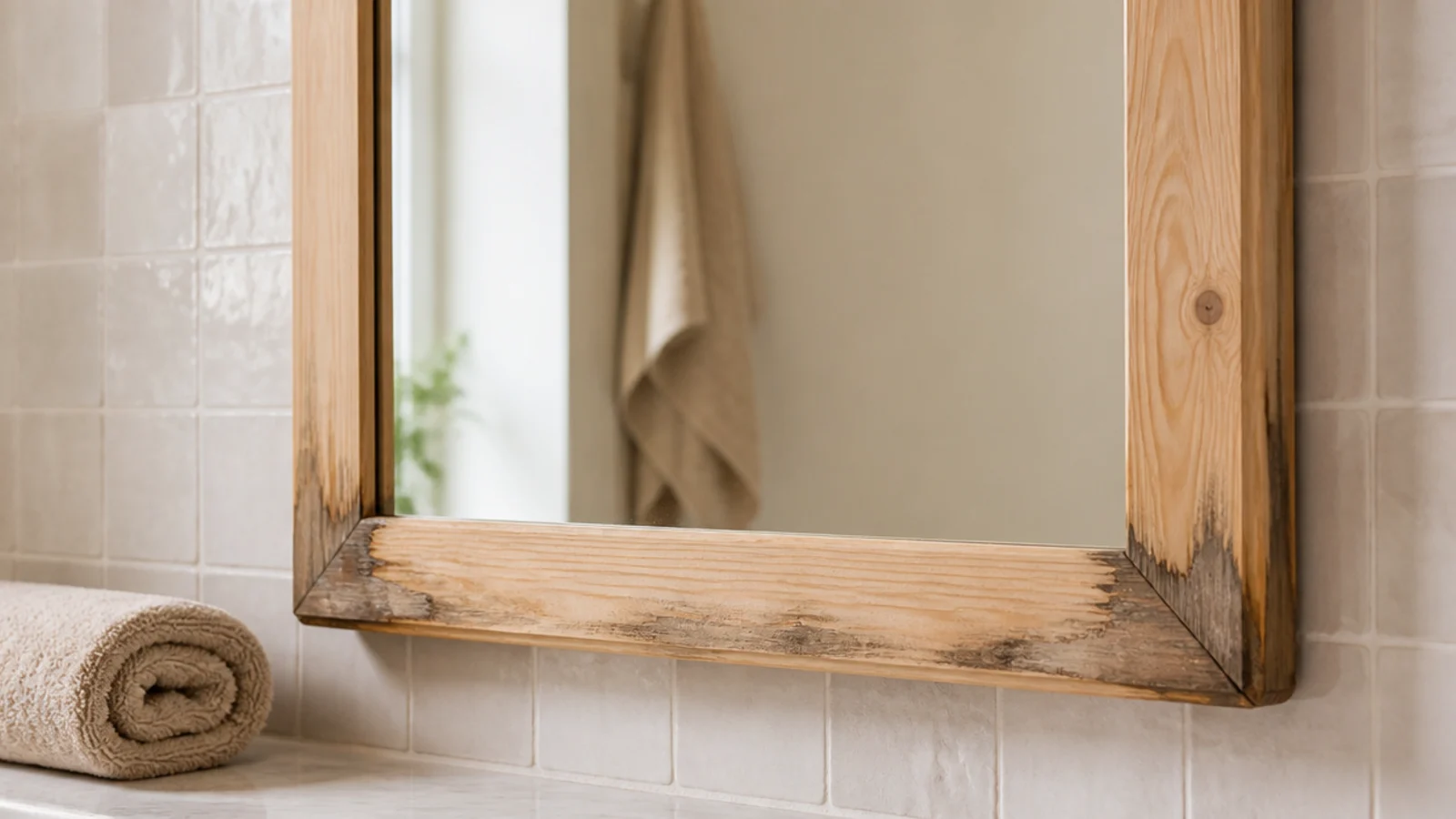
Mistake 14: I used a raw timber frame in a bathroom
A lovely unsealed oak frame in a bathroom with no window. By the end of one winter the bottom rail had swollen, the mitres had opened and there was grey water staining across the lower edge.
Bathrooms punish anything unsealed, and mirrors sit exactly where steam condenses.
The fix: sealed timber, powder-coated metal or a moulded frame in any room without ventilation. If you love a raw frame, seal it thoroughly on all six faces including the back and the mitres before it goes up, and run the extractor for ten minutes after every shower.
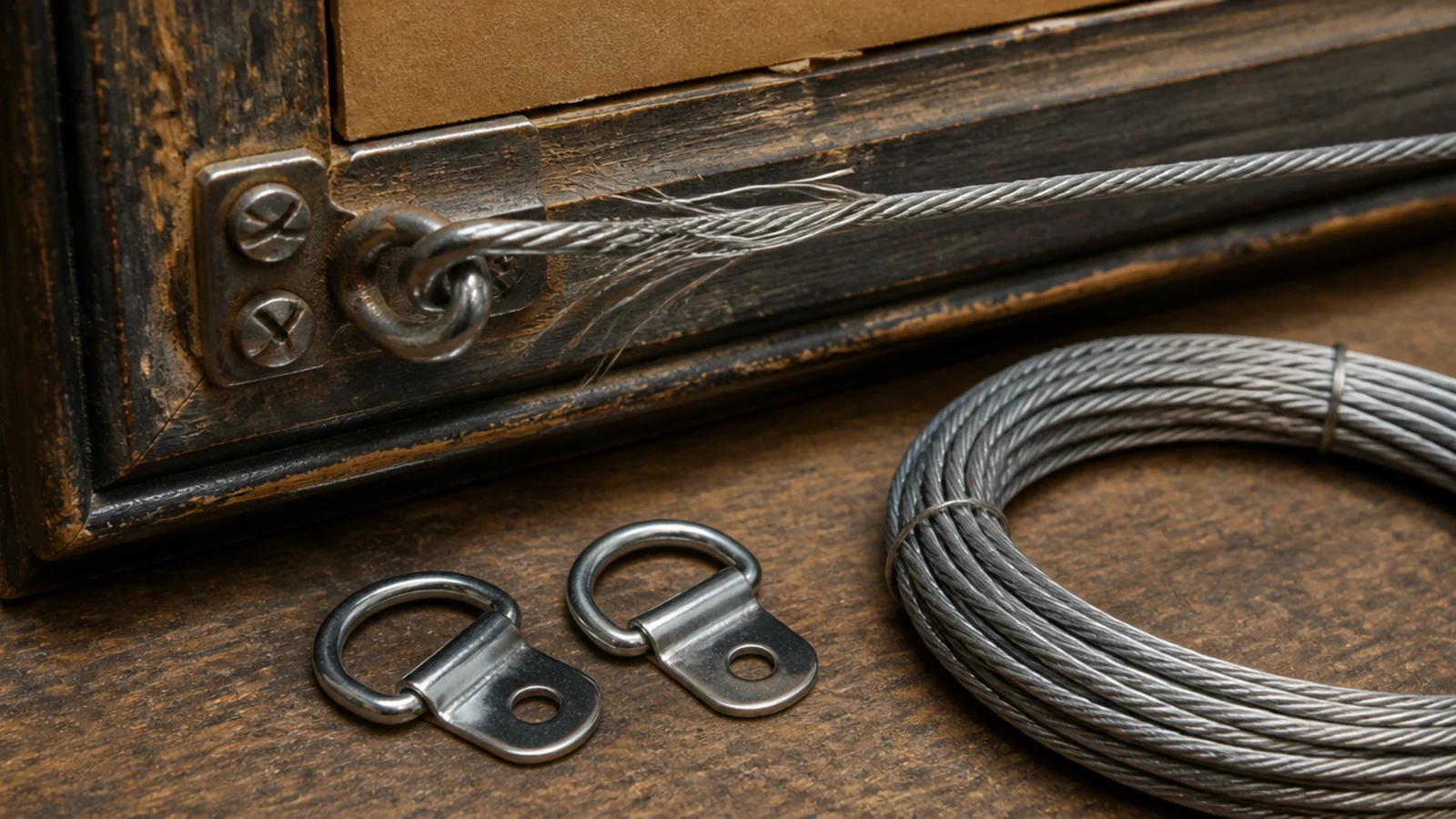
Mistake 15: I never checked the hanging wire again
Braided picture wire work-hardens where it passes over a hook. On a heavy mirror that had been up for four years, mine had worn down to a few strands and I only noticed while repainting.
It had not failed. It was close, and I would never have looked if I had not been moving it anyway.
The fix: lift gently on the bottom edge of every hung mirror twice a year, and look at the wire while you are there. Replace braided wire on anything over 20 pounds with two D-rings hooked directly onto two wall fixings, so there is no wire to wear at all.
Mirror Wall Mistakes: What I'd Do Differently Now
If I could hand my younger self one page, it would be four lines long. Weigh the mirror before you choose an anchor. Use two hanging points into studs. Check what the glass will actually reflect before you commit to a wall. Strap anything that leans.
Everything else on this list is aesthetic and reversible. The heights, the finishes, the spacing — all of those cost a Saturday and a tub of spackle to change, and I have changed most of them more than once without any real consequence.
The two that were not aesthetic are the ones I still think about. A mirror above the spot where my head rested for two years, and a 62-pound leaner I had already bought the strap for. Both were entirely avoidable, and neither one looked like a problem while it was happening.
That is the honest lesson: with mirrors, the styling errors announce themselves and the safety errors do not.
Frequently asked questions
What is the most common mistake when hanging a wall mirror?
Using the anchors that came in the box. Those plastic plugs are rated around 10 pounds and a 30-inch round is 15 to 25, so they crush the drywall around themselves and creep out over weeks. The mirror looks fine right up until it does not. Toggle bolts cost about a dollar each and carry 50 pounds in half-inch drywall.
How high should a mirror hang on a wall?
Centre the glass at 57 to 60 inches from the floor when there is nothing beneath it, which puts the middle at average eye height. Above a console, sideboard or chest, forget that number and leave six to eight inches between the furniture top and the bottom of the frame so the two pieces read as one arrangement.
Is it safe to hang a mirror above a bed or sofa?
Above a bed or a crib, no. There is no anchor rating that makes heavy glass over a sleeping head a good idea, and lighter art is the correct answer there. Above a sofa, keep the bottom edge at least 12 inches clear of the seat back, fix into studs at two points, and choose safety-backed glass.
Why does my mirror keep going crooked?
Because it is hanging on a single point and pivoting on it. One hook lets a frame rotate every time a door slams or someone brushes past. Two hanging points 8 to 12 inches apart, level with each other, lock it in place. D-rings on the frame transfer more reliably than a single braided wire.
How do I fix a mirror wall that looks cluttered?
Take everything down and rebuild with three rules: odd numbers, varied sizes, and two frame finishes maximum. Cluttered mirror walls are almost never badly spaced, they simply have too many finishes competing. Removing the one odd frame usually settles the whole arrangement without moving anything else.
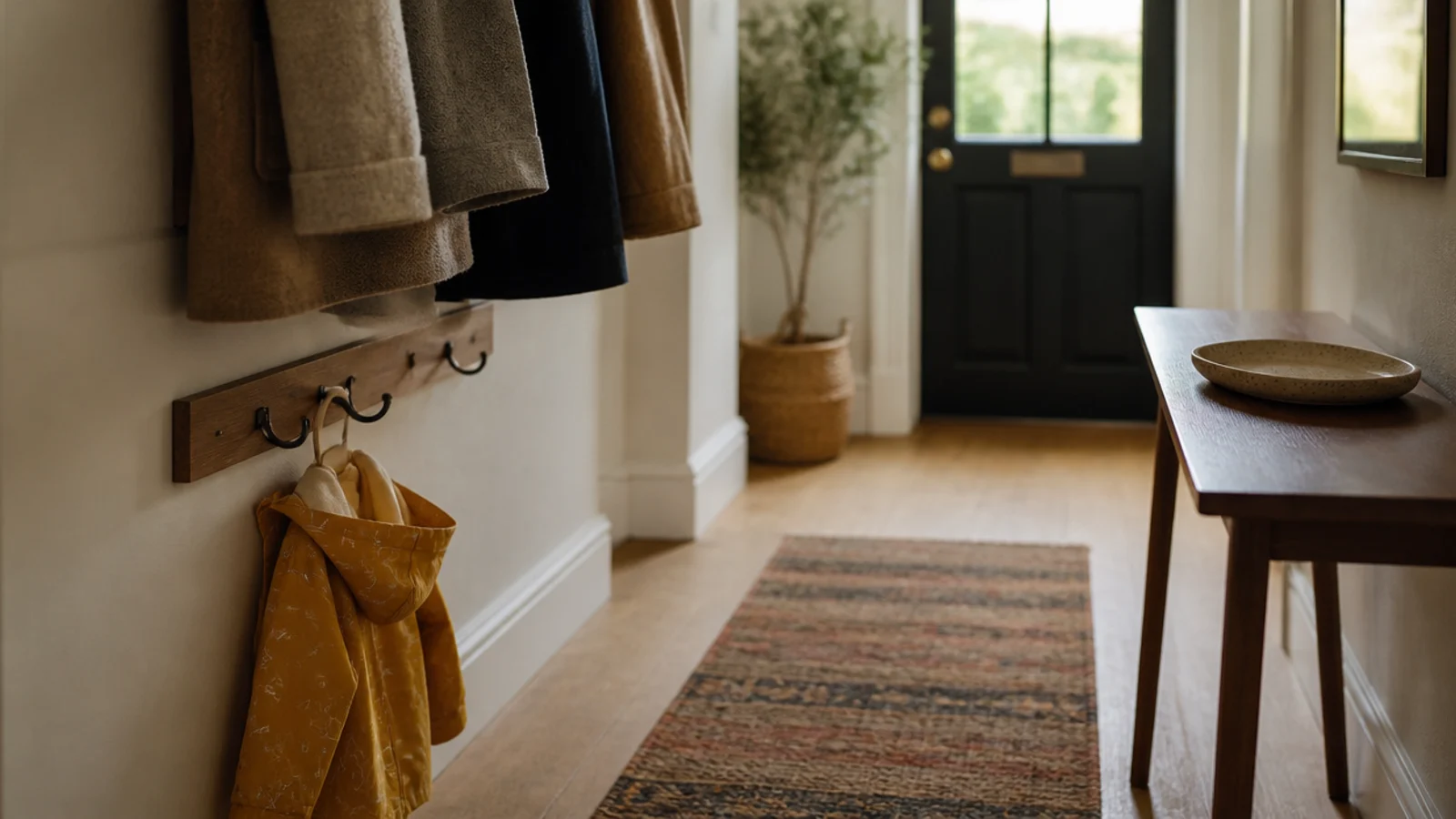
If you are hanging a mirror this weekend, weigh it, find the studs and use two fixings — those three steps prevent nearly everything on this list. The full mirror wall decor guide covers placement room by room, mirror wall before and after shows what the fixes actually look like, and if you are working out the wall beside your front door, entryway wall decor covers that corner properly. Save the pin so the numbers are with you at the hardware store.
Want more like this? Browse all 15 mirror wall decor guides — they all use the same measurements and budget tiers.
Pin it for later
Save this to your Mirror Wall Decor board
Pin it now so it is waiting for you when the tape measure comes out — and so the next person hunting for this idea can find it too.
Save this pinKeep going
More ideas worth saving while you have the tape measure out.