Mirror Wall Decor · Listicle
15 Easy Mirror Wall Decor Ideas for Any Home

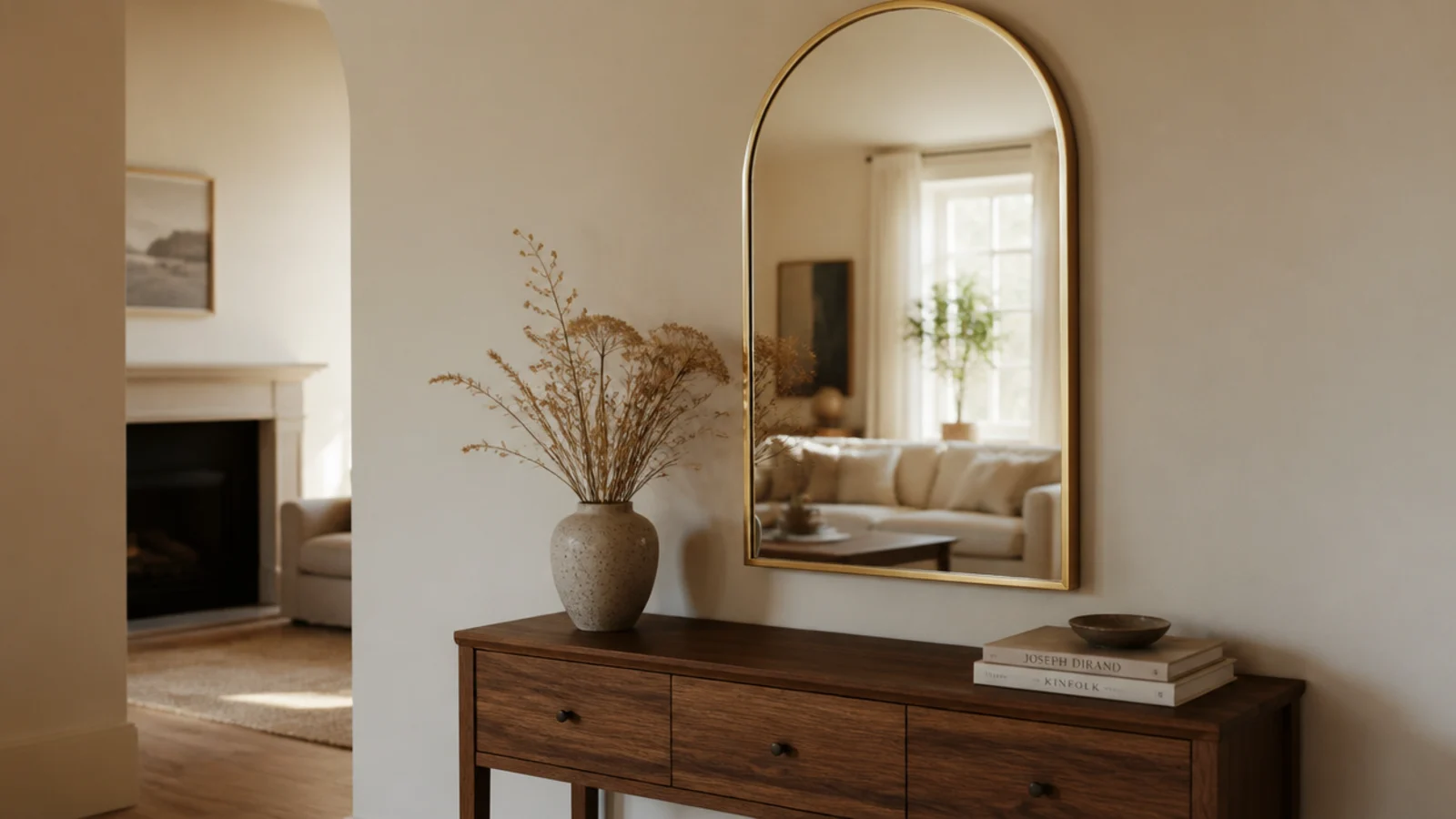
Most mirror wall decor ideas skip the one number that decides everything: what the mirror weighs. A 30-inch round runs 15 to 25 pounds, and a full-length leaner can pass 60. I have hung, re-hung and occasionally rescued a lot of glass in fifteen years of styling rooms. These fifteen placements come with the weight, the height and the anchor, so the pretty part actually stays on the wall.
In this guide17 sections — tap to openHide
- 1.Where mirror wall decor ideas earn their keep
- 2.One oversized mirror above the console
- 3.Hang it opposite the window, not beside it
- 4.A round mirror above a bench or radiator
- 5.Close a hallway with an arched mirror
- 6.Lean a full-length mirror and strap it
- 7.Flank a doorway with a matching pair
- 8.Size the mirror to the mantel, not the wall
- 9.Group three small mirrors instead of one big one
- 10.Put a mirror behind a lamp or candles
- 11.Use one convex mirror as a full stop
- 12.Run a narrow mirror down a tight hallway
- 13.Set a mirror into a bookcase or built-in
- 14.Mix one mirror into an existing gallery wall
- 15.Hang a dark frame on a dark wall
- 16.Float a mirror in front of a window frame
- 17.Mistakes to Skip
Where mirror wall decor ideas earn their keep
A mirror pays you back in three ways: light, depth and a second view. But only in the right spot. Hung opposite a window it throws real daylight across a room. Hung perpendicular to that same window, it mostly reflects the blank wall across from it and does almost nothing. Before you shop for something bigger, stand where you actually sit and picture what each candidate wall would show you.
Budget runs like this. $ is $25 to $70 — a thrifted frame, a plain frameless round, a spray-painted secondhand find. $$ is $80 to $250, where most well-made 30-inch rounds and arched mirrors live. $$$ is $300 to $900 for oversized arches, antique giltwood and full-length leaners with real hardwood frames.
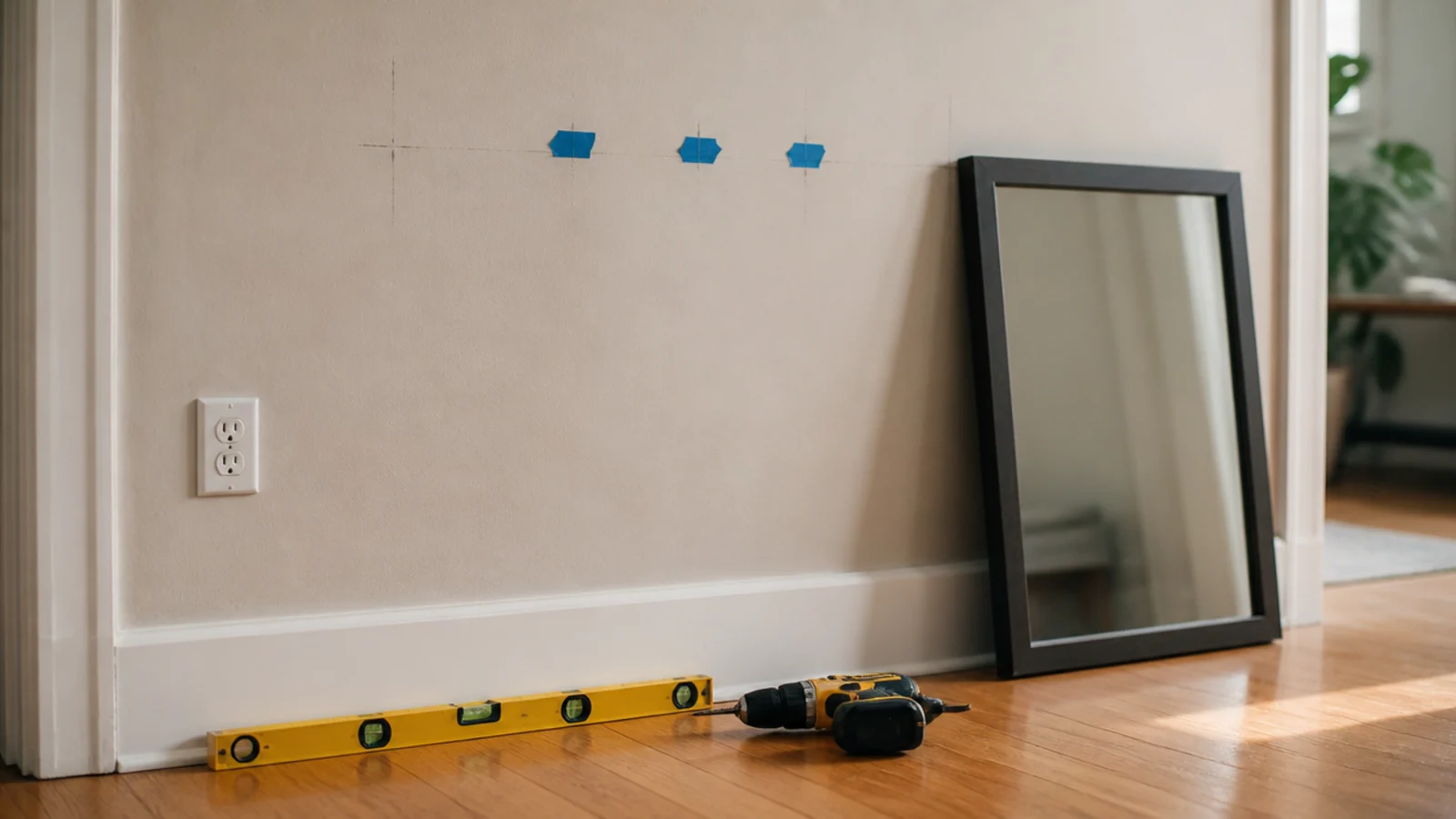
Then the safety numbers, which are not optional with glass. Weigh the mirror on a bathroom scale. Hang into a stud with a 2.5-inch wood screw where you can, and where you cannot, use toggle bolts rated at least double the actual weight — never the small plastic plugs that came in the box. Use two hanging points rather than one, spaced as wide as the frame allows, so the mirror cannot pivot when a door slams. And skip adhesive strips entirely for anything with mirror glass in it.
1. One oversized mirror above the console
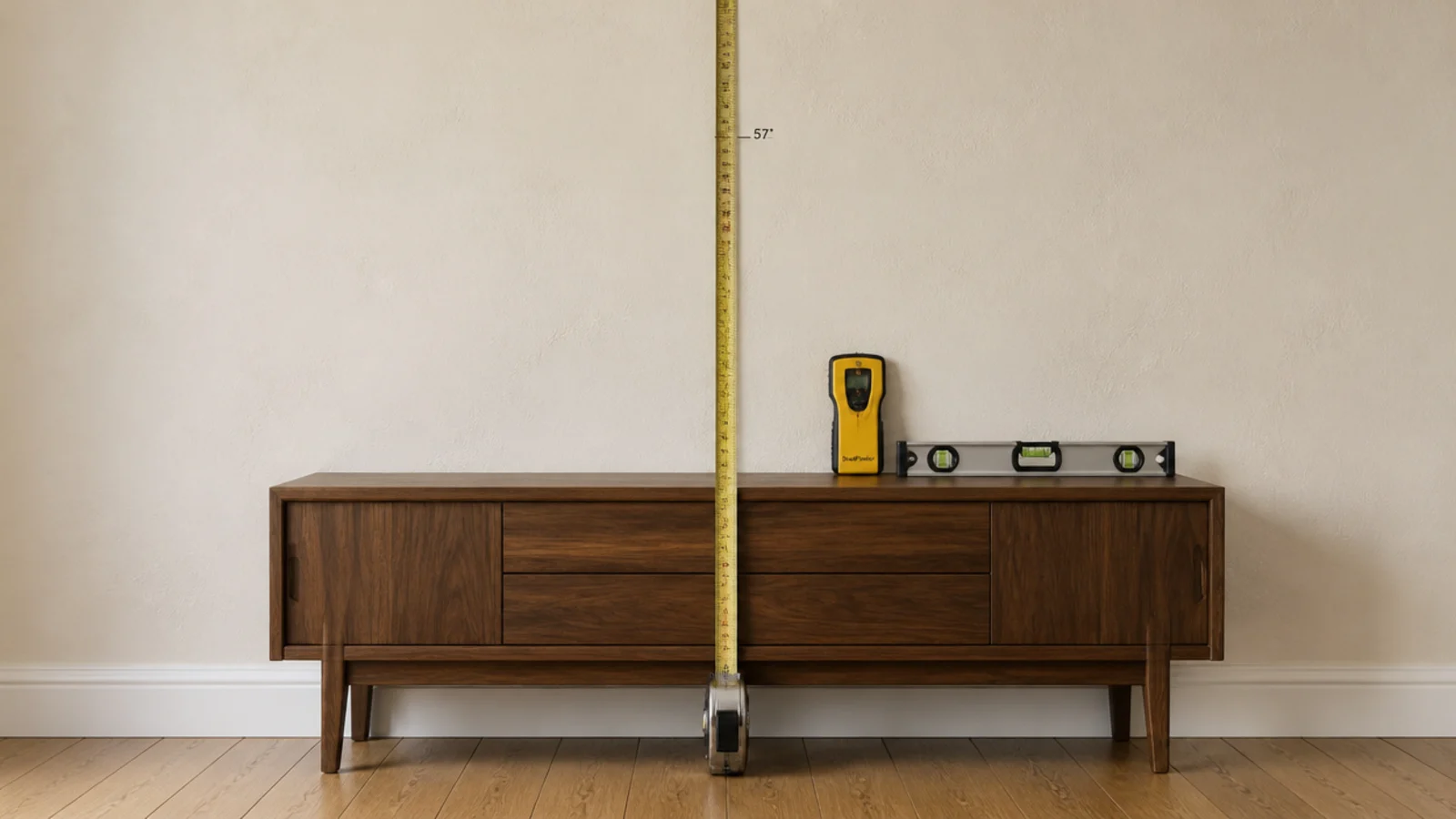
The default that works everywhere. Size the mirror to roughly two thirds the width of the console and leave 6 to 8 inches between the console top and the bottom edge of the frame.
Any less and the two pieces merge into one heavy lump; any more and the mirror looks like it belongs to a different wall. A 30 by 40 inch mirror over a 48-inch console is the proportion I reach for most, and it usually weighs 20 to 30 pounds — two D-rings into a stud, or two toggles rated 50 pounds each.
2. Hang it opposite the window, not beside it
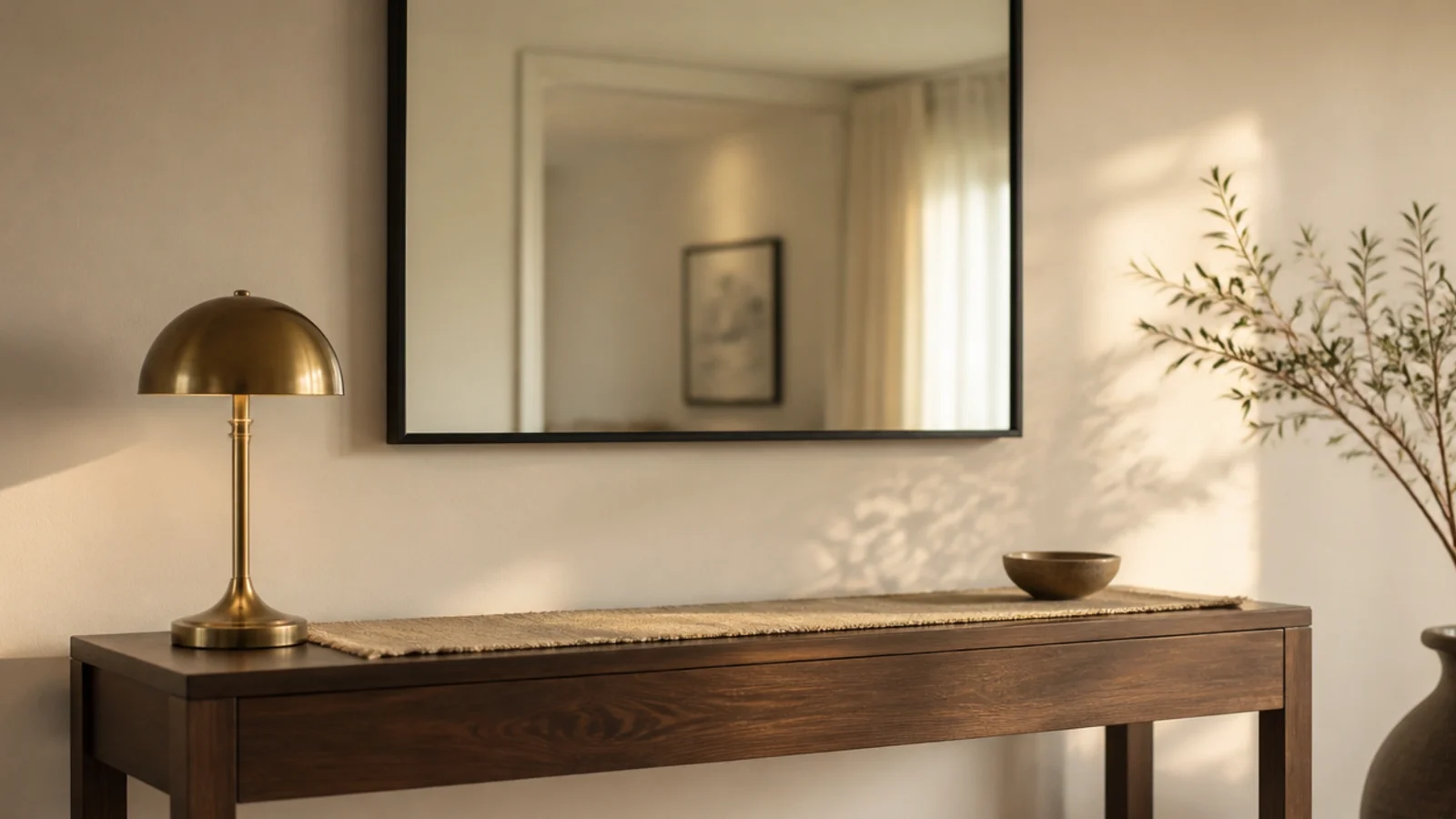
Walk to the wall you are considering and hold up a sheet of cardboard. Whatever you would see in the glass is what you are decorating with.
Directly opposite a window is the jackpot: you double the daylight and bring the view inside. Directly beside it gives you a reflection of the opposite wall, which is usually a radiator and a light switch. This single decision does more than doubling your budget, and it costs nothing.
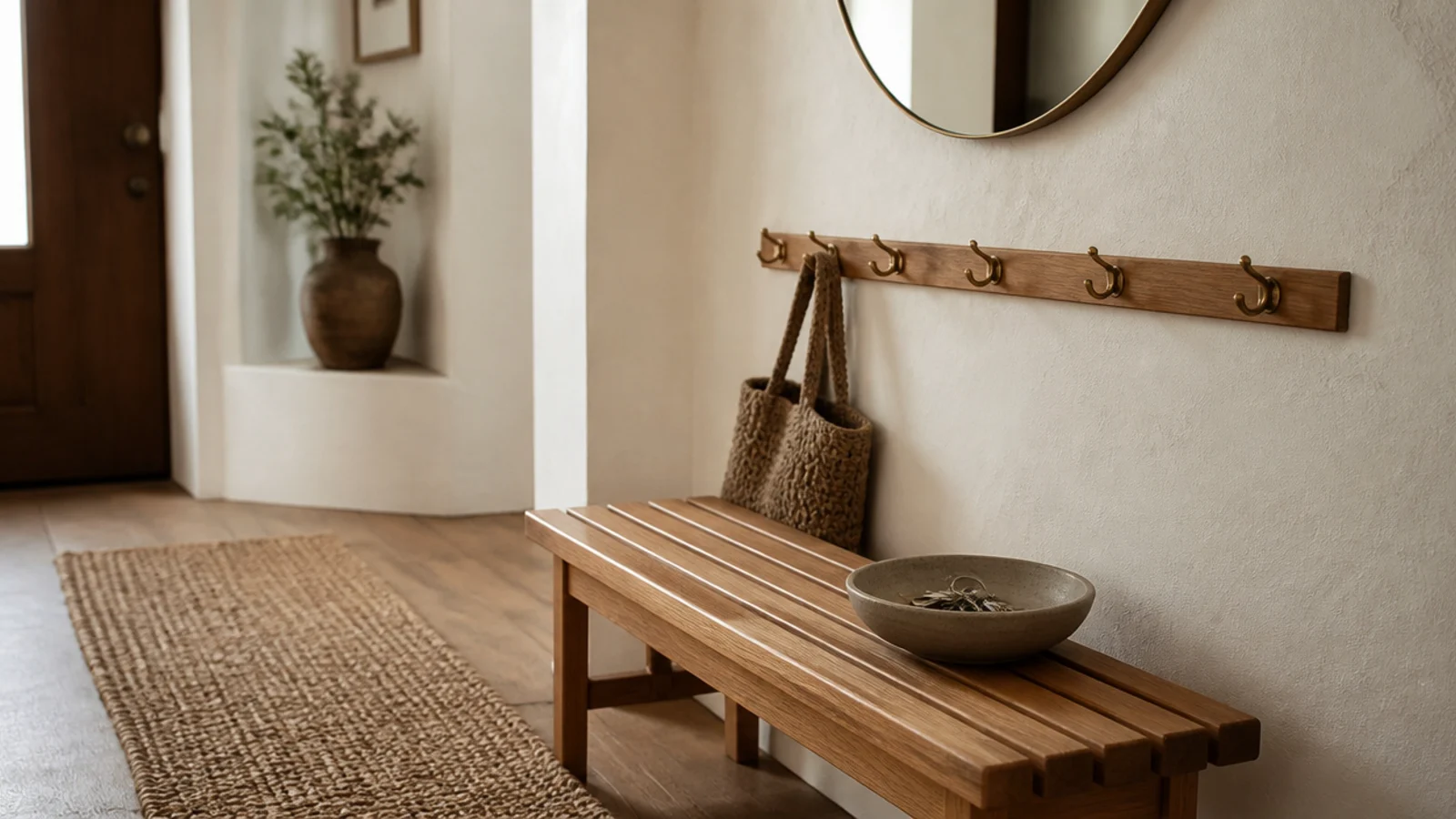
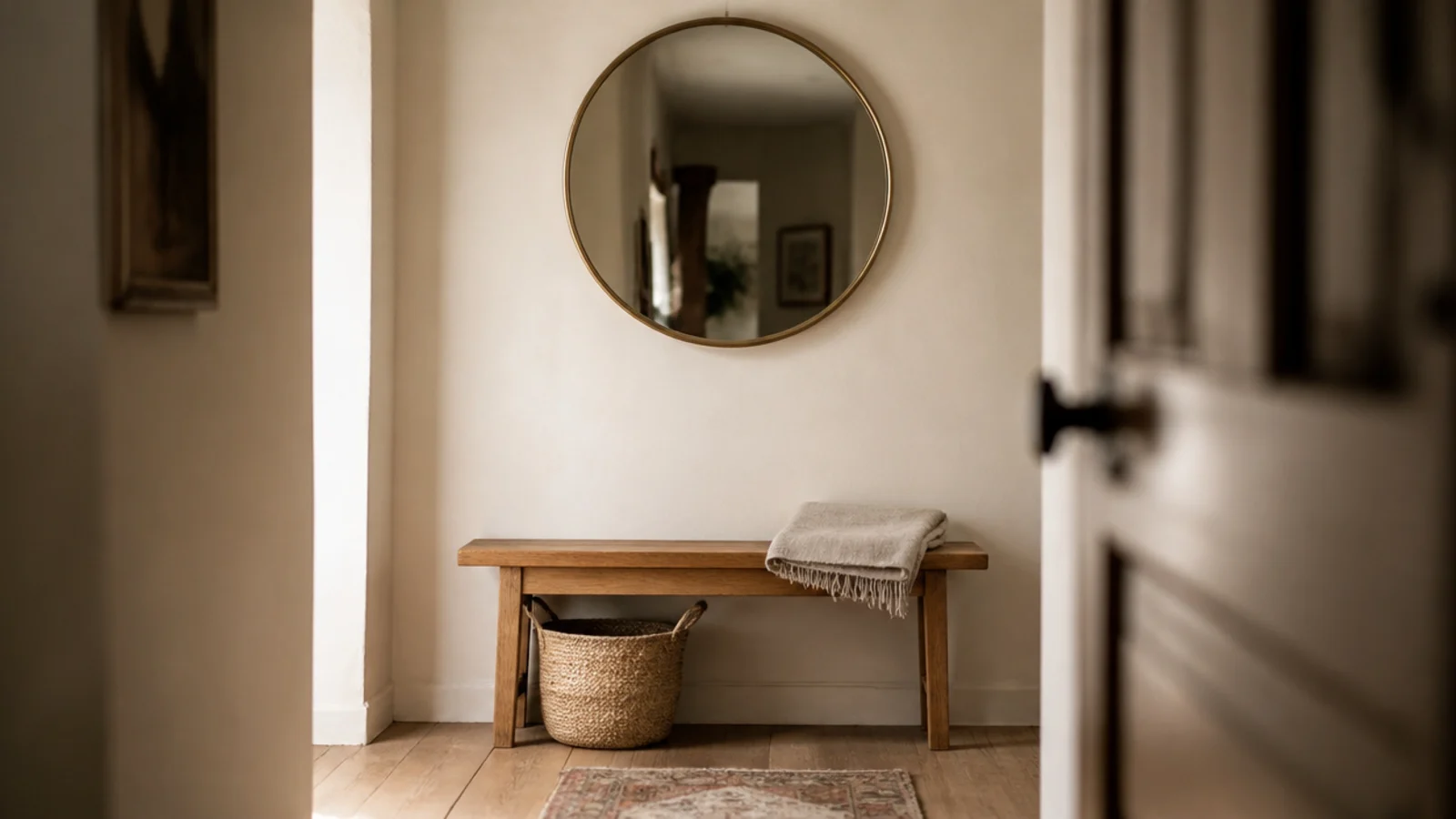
3. A round mirror above a bench or radiator
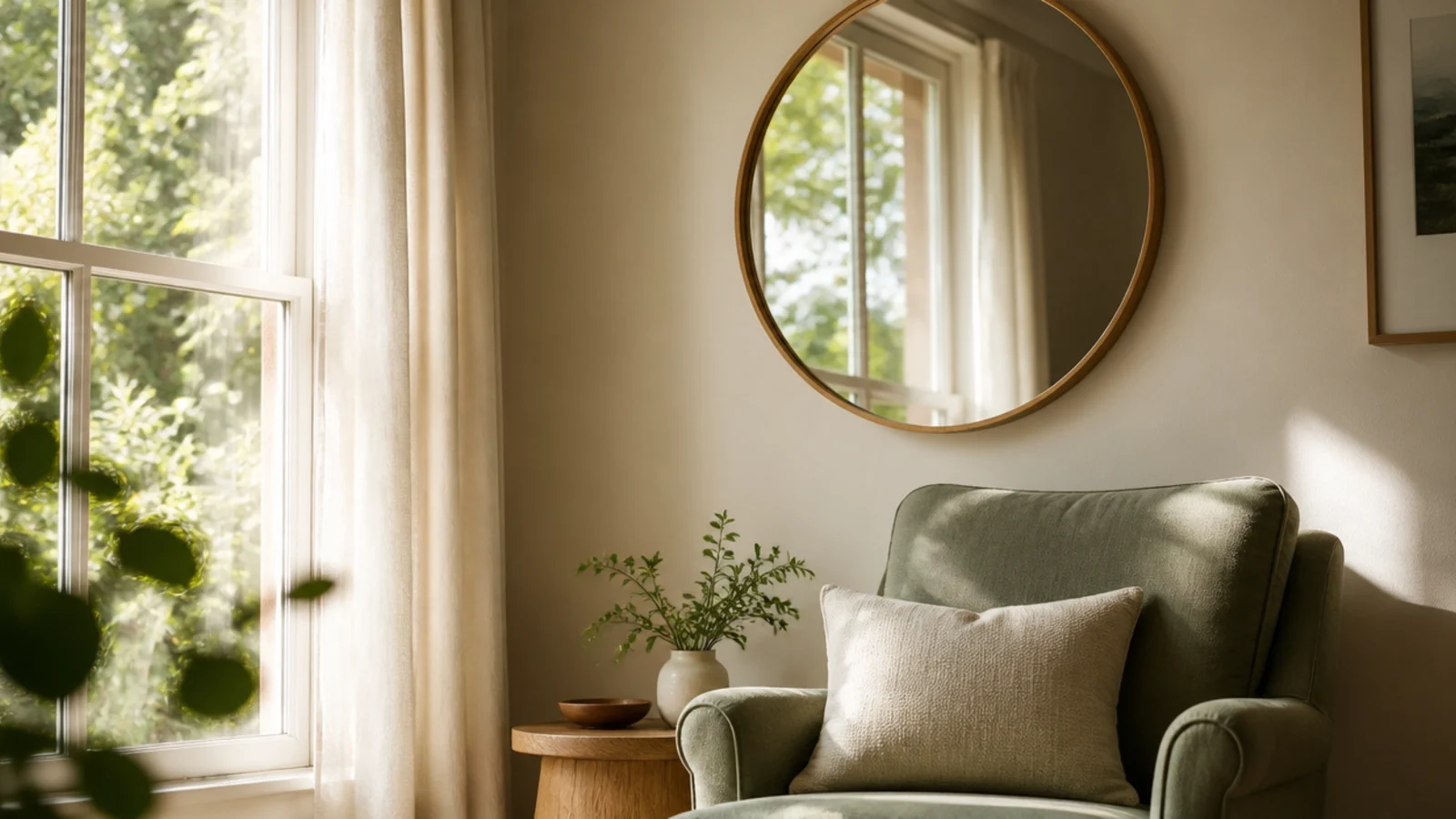
A bench, a radiator cover and a low console are all hard horizontal lines. A round mirror above one breaks that line the way nothing rectangular can.
Go for a diameter of about half the bench width — a 30-inch round over a 60-inch bench — and centre it, with the bottom edge 8 to 10 inches above the seat so heads do not knock it. A 30-inch round with a metal rim sits around 15 to 20 pounds ($$, roughly $90 to $180).
4. Close a hallway with an arched mirror
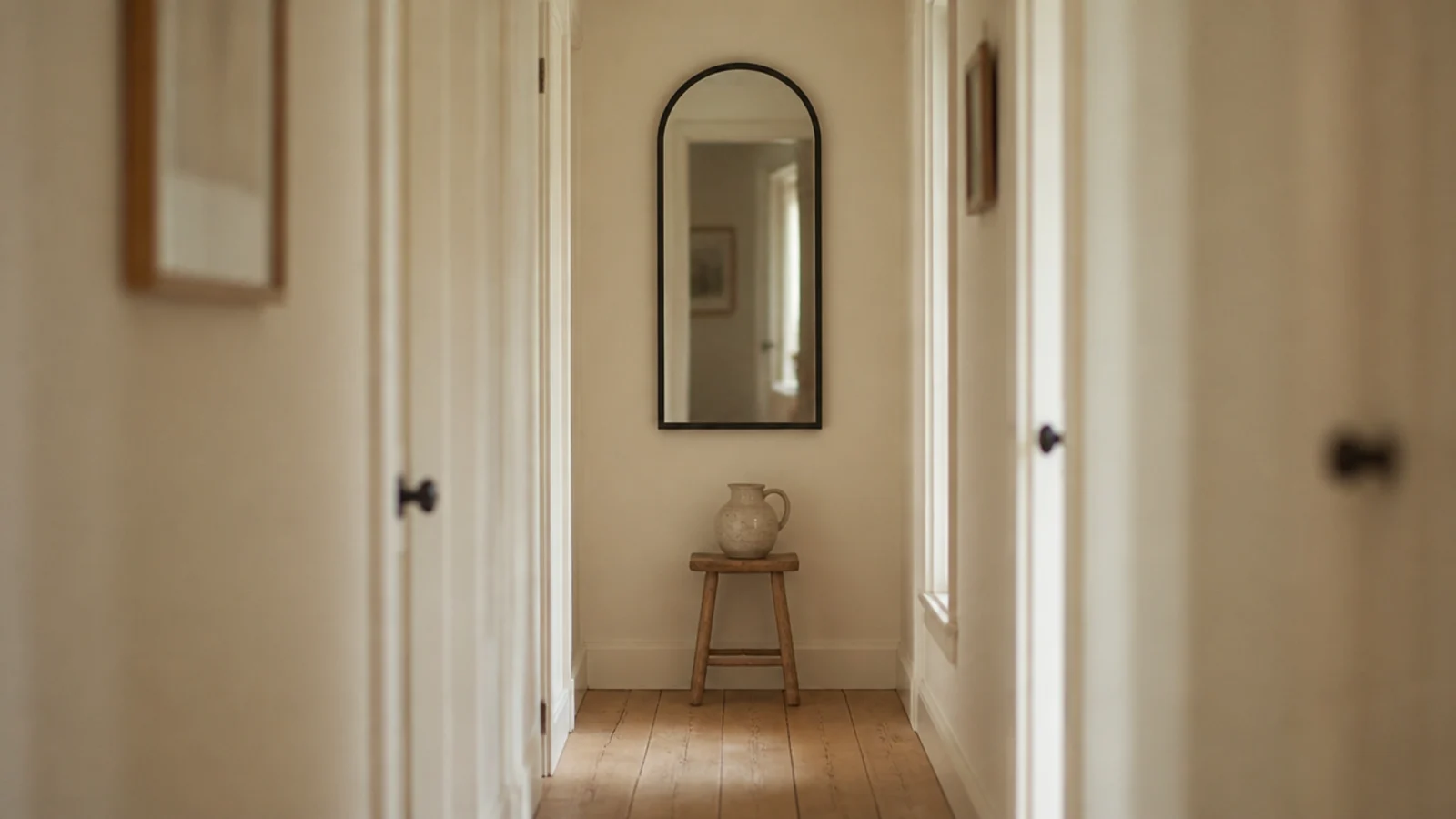
A long hallway wants something at the end of it. An arched mirror gives the eye a destination and reads almost like a doorway into another room.
Choose one at least 24 inches wide so it holds the wall, and centre it 60 inches off the floor. Arched mirrors carry more glass than they appear to — a 24 by 60 inch arch is commonly 35 to 45 pounds — so this is a two-anchor job into studs, or a French cleat if the studs land awkwardly.
5. Lean a full-length mirror and strap it
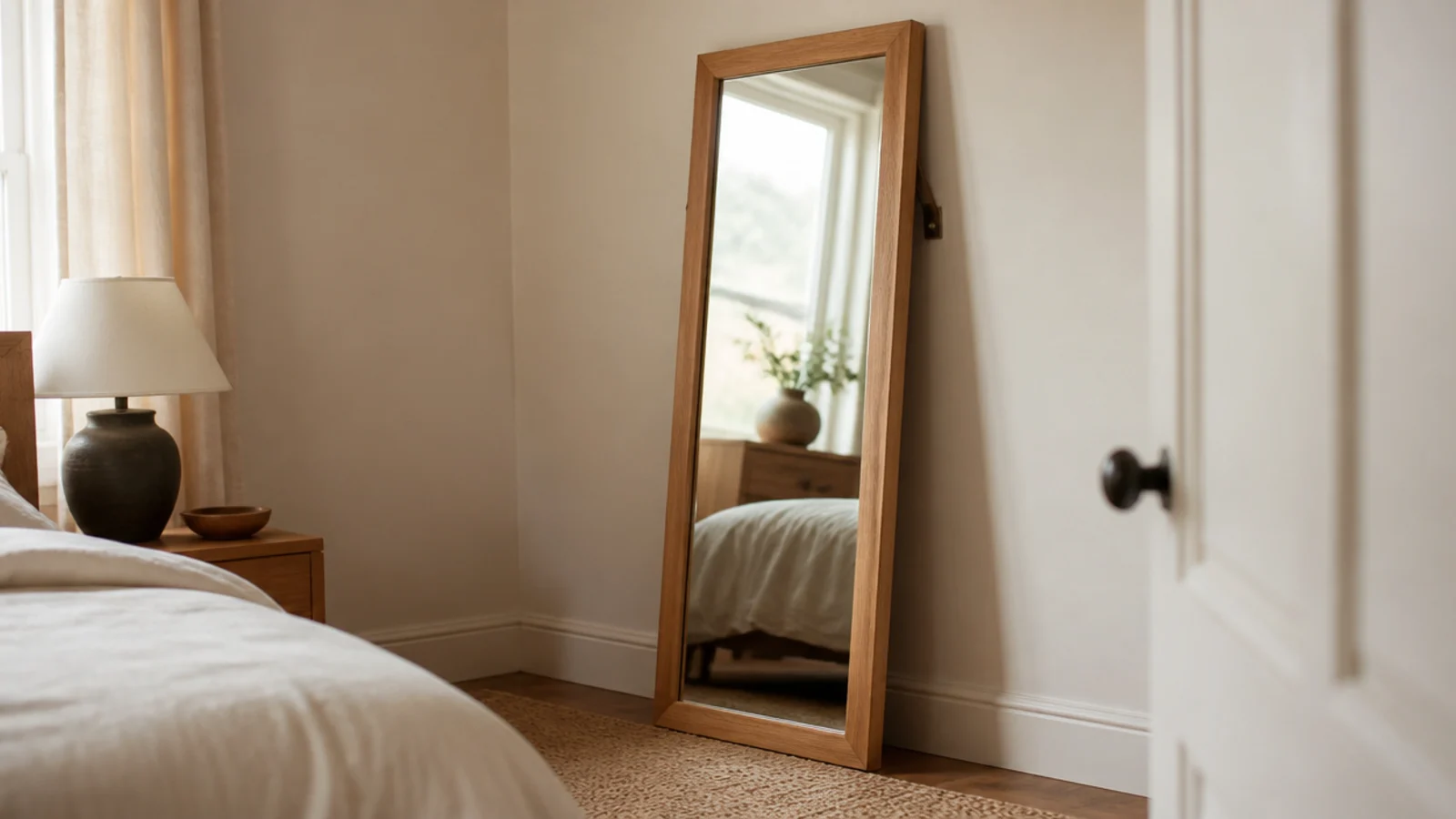
A leaner gives you the look of an oversized mirror with no holes in the plaster, which makes it the best genuinely renter-safe option on this list.
It is also the heaviest thing here, often 45 to 70 pounds. Every leaner gets strapped or anchored to the wall, and in a home with children that is not a preference. A furniture anti-tip strap kit is about $10, takes one screw into a stud, and is completely hidden behind the frame.
6. Flank a doorway with a matching pair
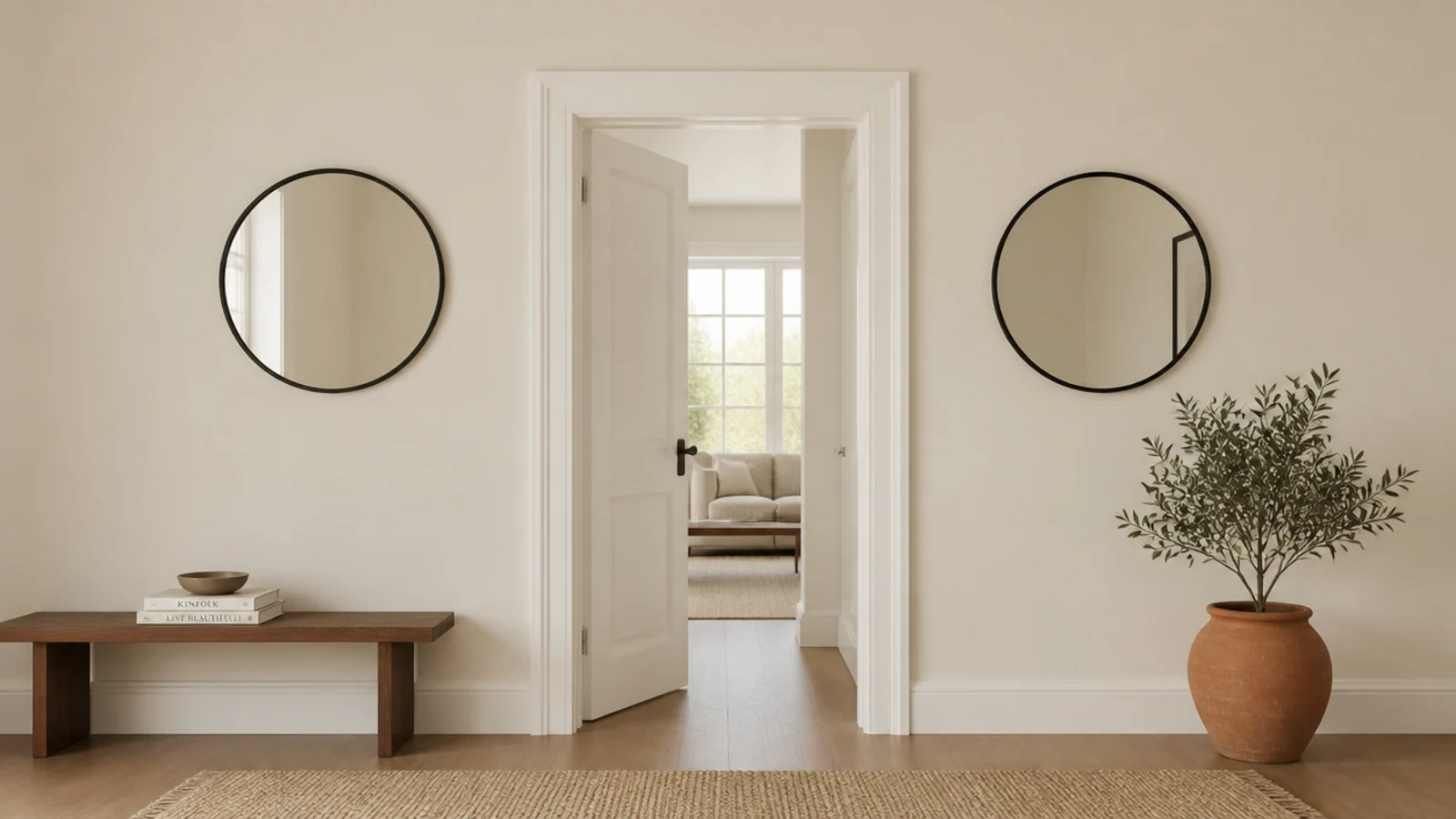
Two small identical mirrors either side of a doorway make an ordinary opening look considered, and they cost less than one large mirror.
Keep them modest — 16 to 20 inches — and hang both centres at exactly the same height, aligned with the top of the door casing or with each other at 60 inches. Small mirrors like these run 6 to 10 pounds each, which a single stud screw or a well-set toggle handles comfortably.
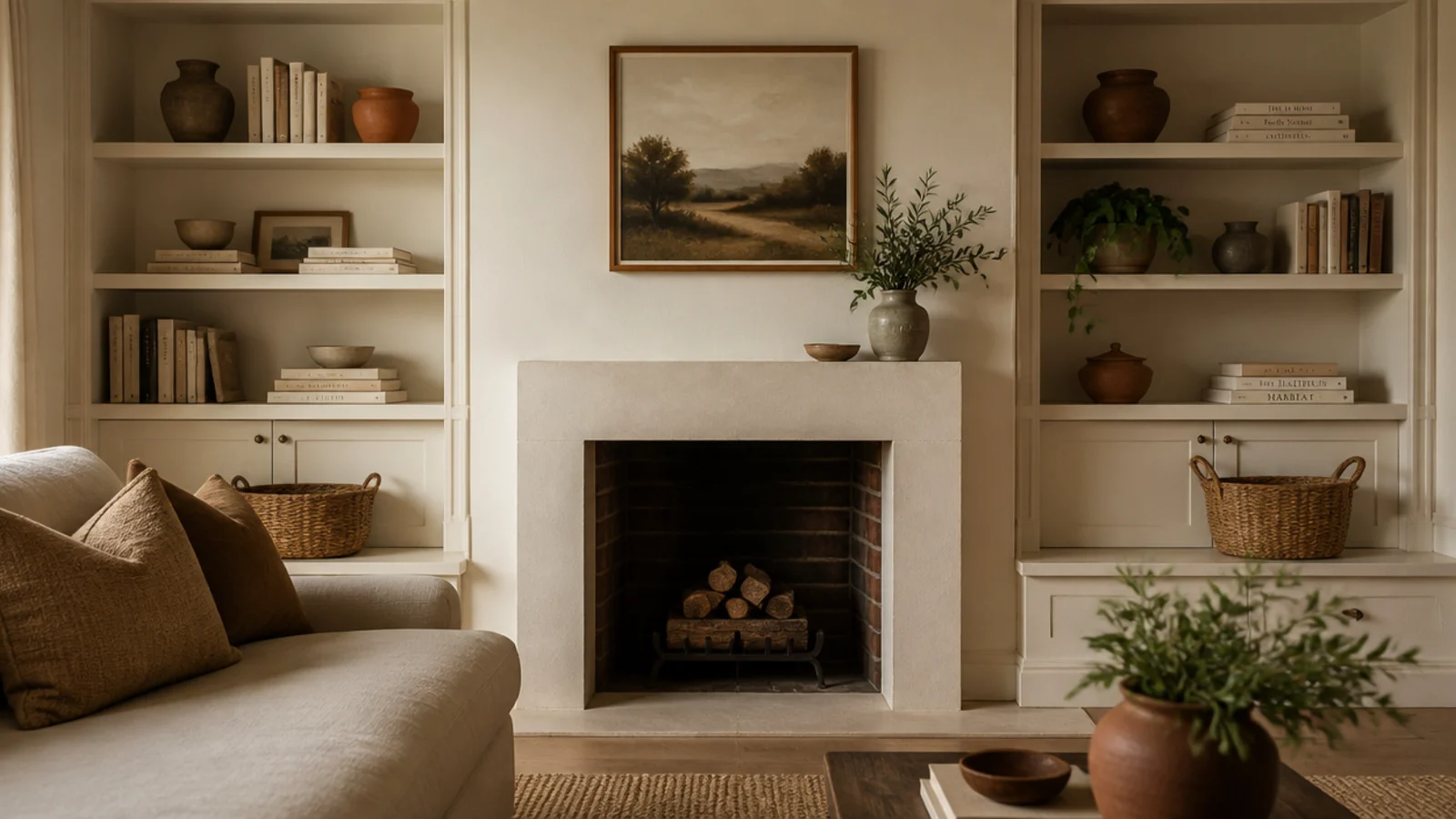
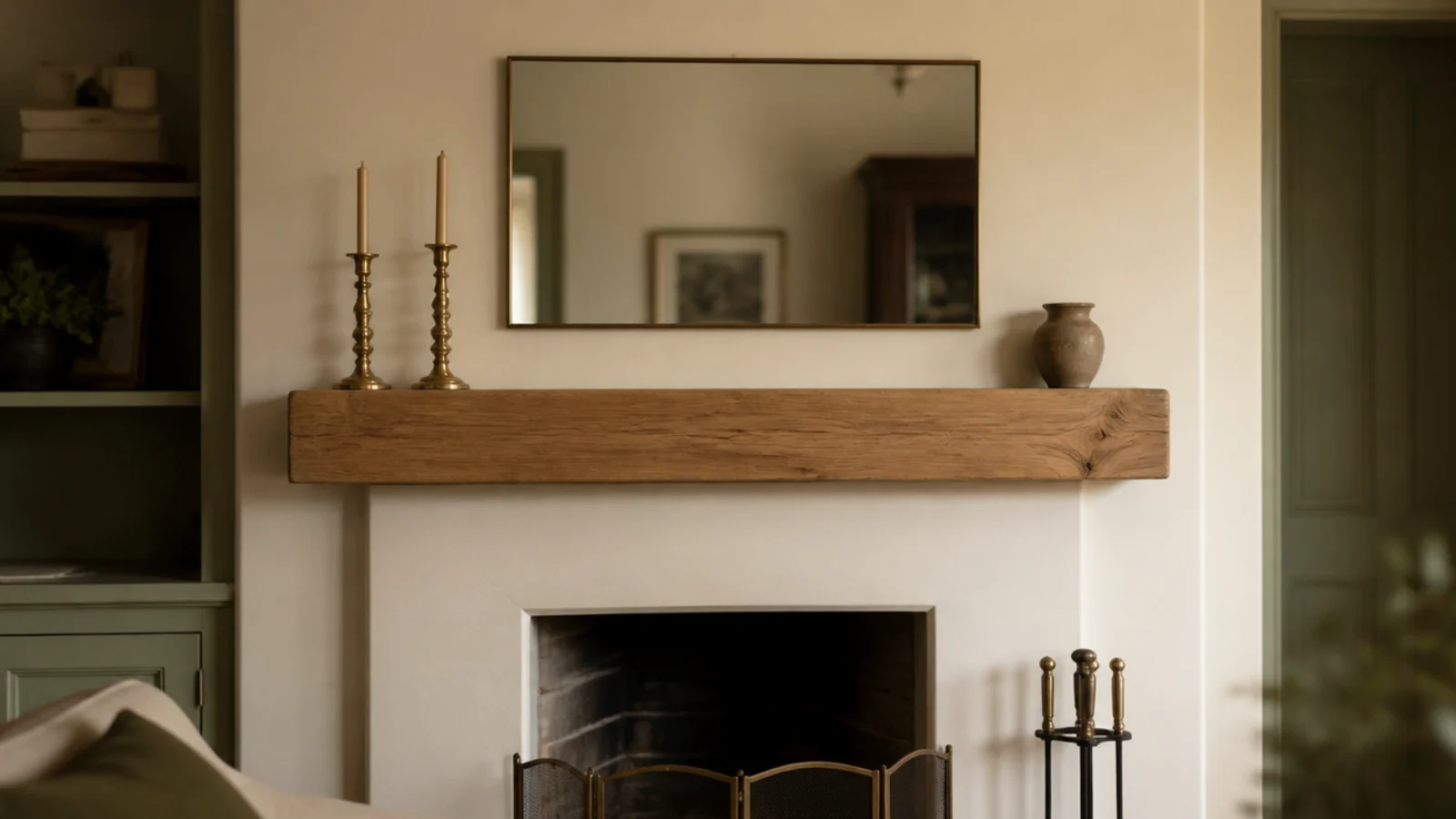
7. Size the mirror to the mantel, not the wall
Over a fireplace, the mantel shelf is the reference line, not the chimney breast. Aim for a mirror about two thirds the width of the shelf and never wider than the shelf itself.
Sit it 4 to 6 inches above the mantel if you are hanging, or lean it directly on the shelf with a strap or a screw eye through the frame back into the wall. A leaning mantel mirror walks forward over months of door slams, so tether it.
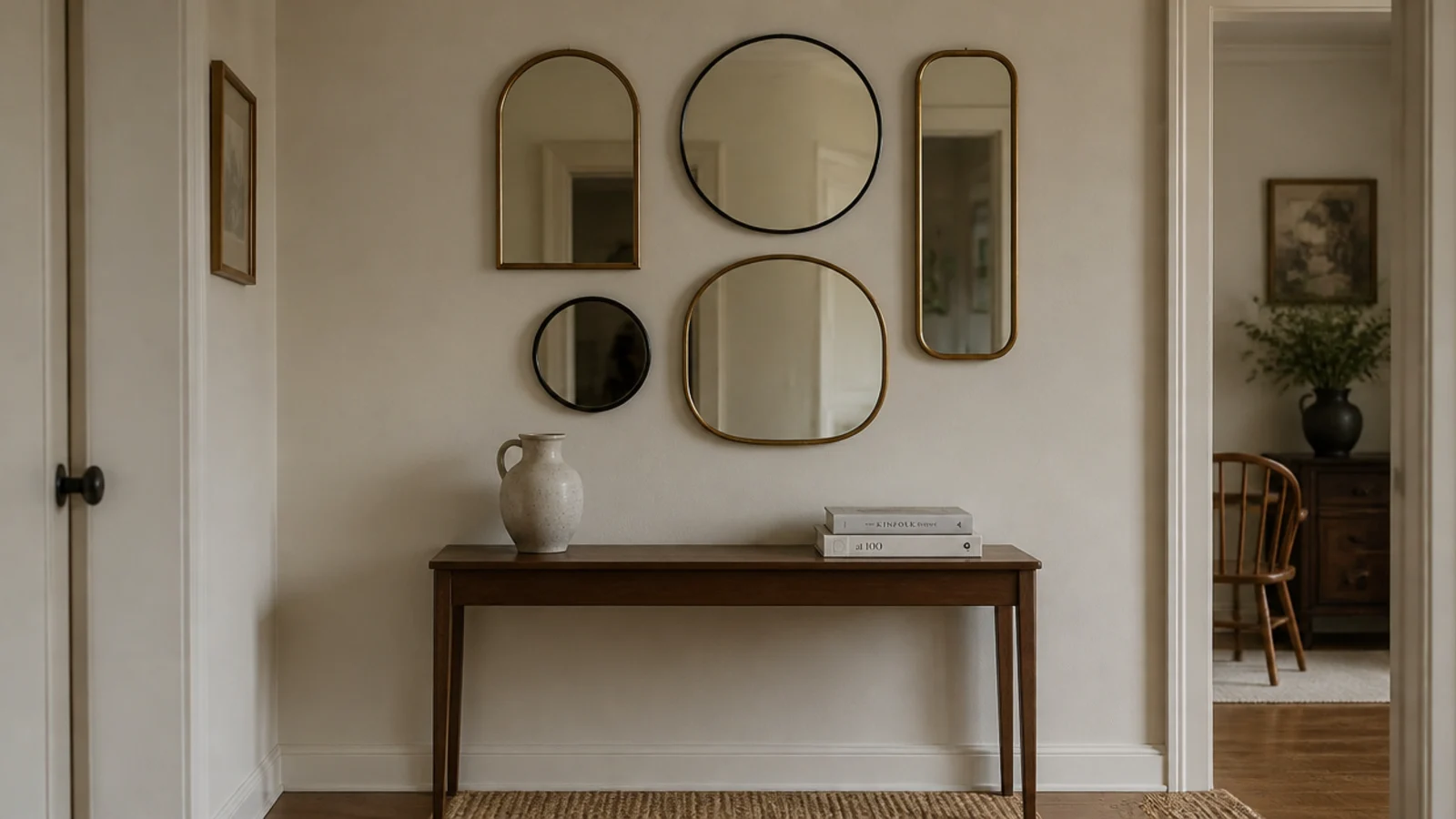
8. Group three small mirrors instead of one big one
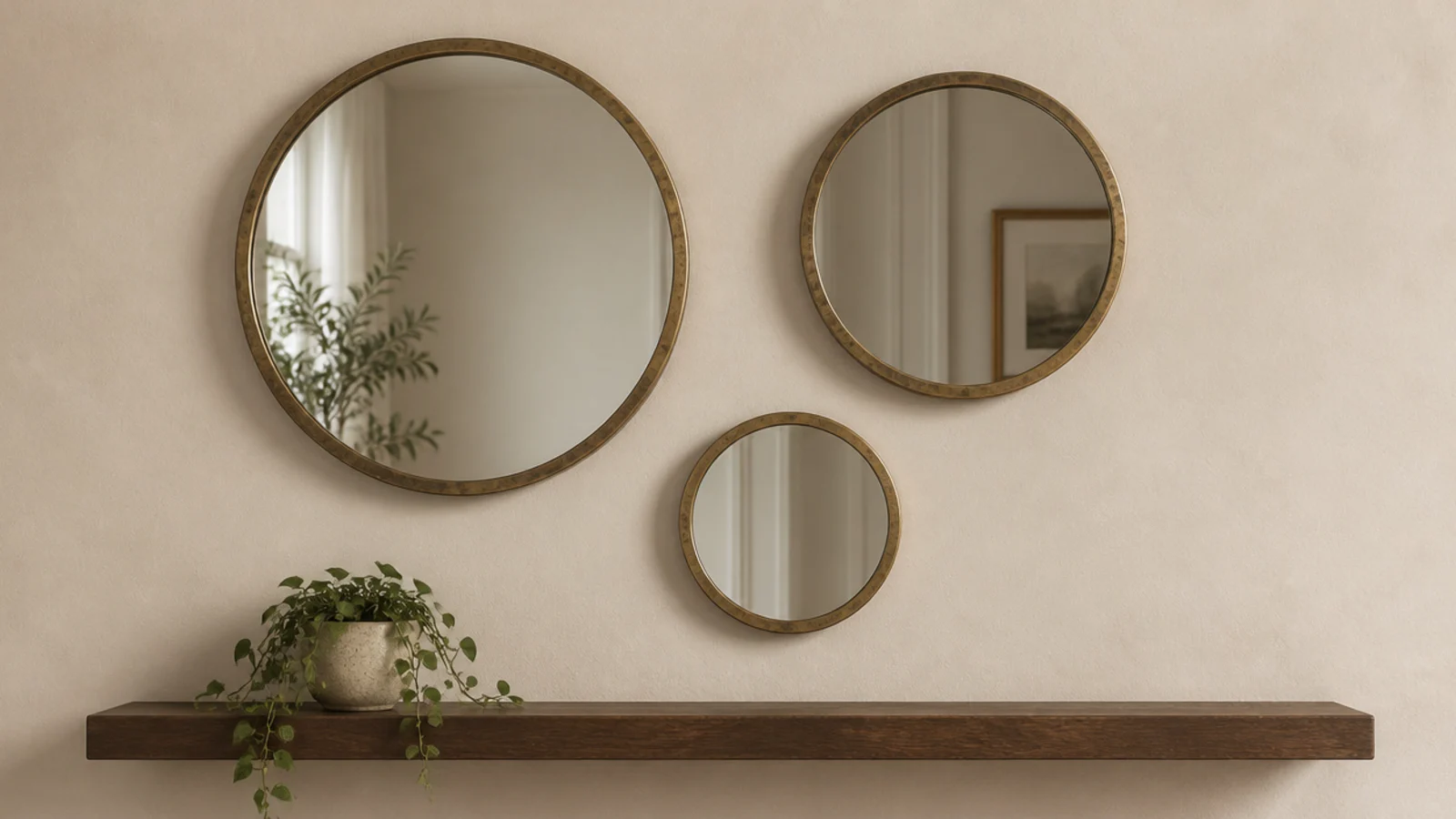
Three modest mirrors are cheaper, lighter and far more forgiving to hang than one large one, and thrifted frames make it nearly free.
Keep it odd-numbered, vary the sizes clearly, and stick to no more than two frame finishes across the group. Leave 2 to 3 inches between frames. Lay the arrangement out on the floor first and photograph it before you drill — there is a full walkthrough in mirror cluster wall.
9. Put a mirror behind a lamp or candles
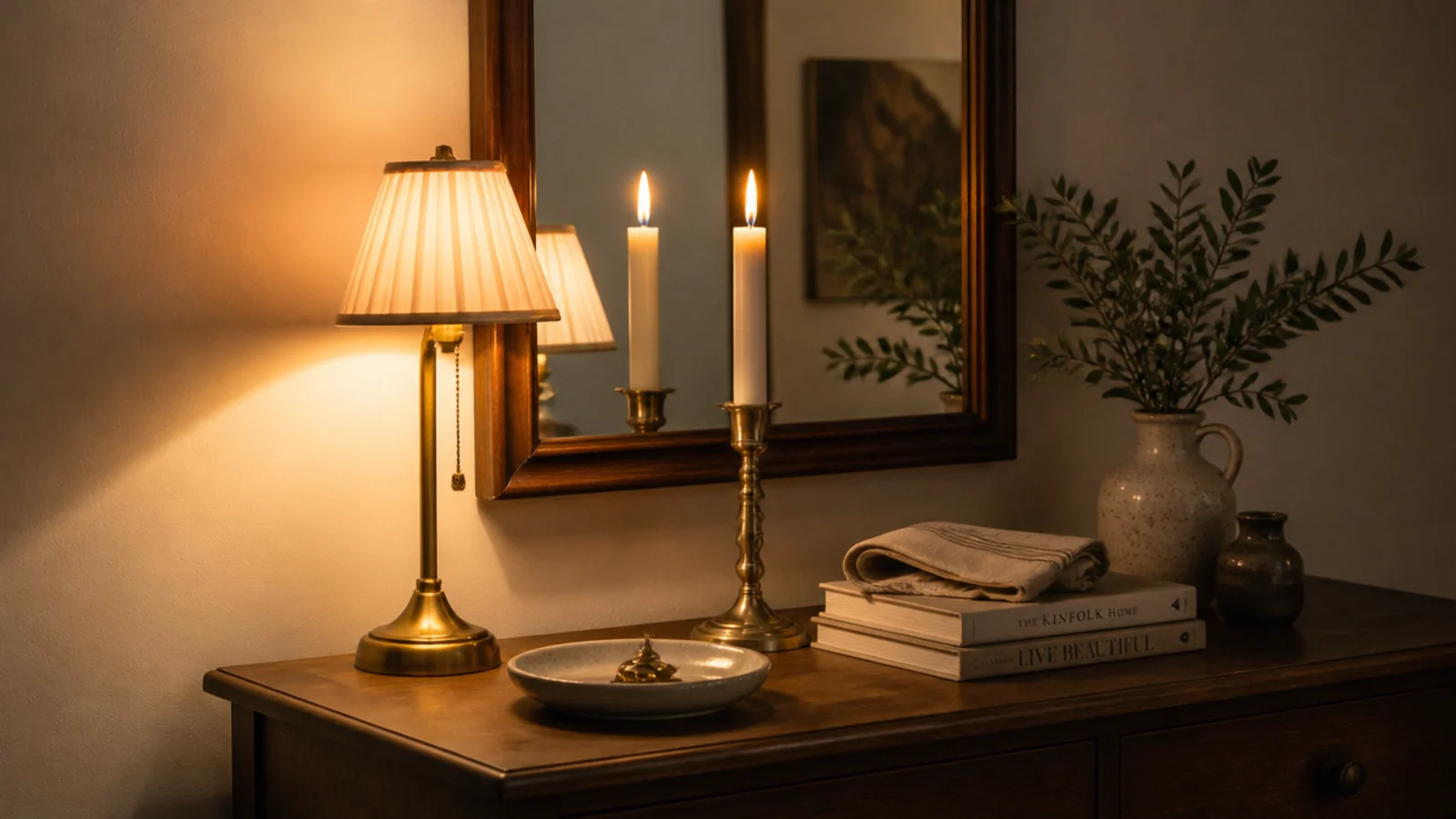
The oldest trick in the book and still the best value in the room. A modest mirror behind a lamp or a pair of tapers doubles the visible light for the price of the mirror.
It works hardest in a dim corner or a windowless hall. An 18 by 24 inch mirror at 8 to 10 pounds is plenty, and because the light source sits in front of it, the frame barely matters. A thrifted one at $15 to $25 ($) does the job perfectly.
10. Use one convex mirror as a full stop
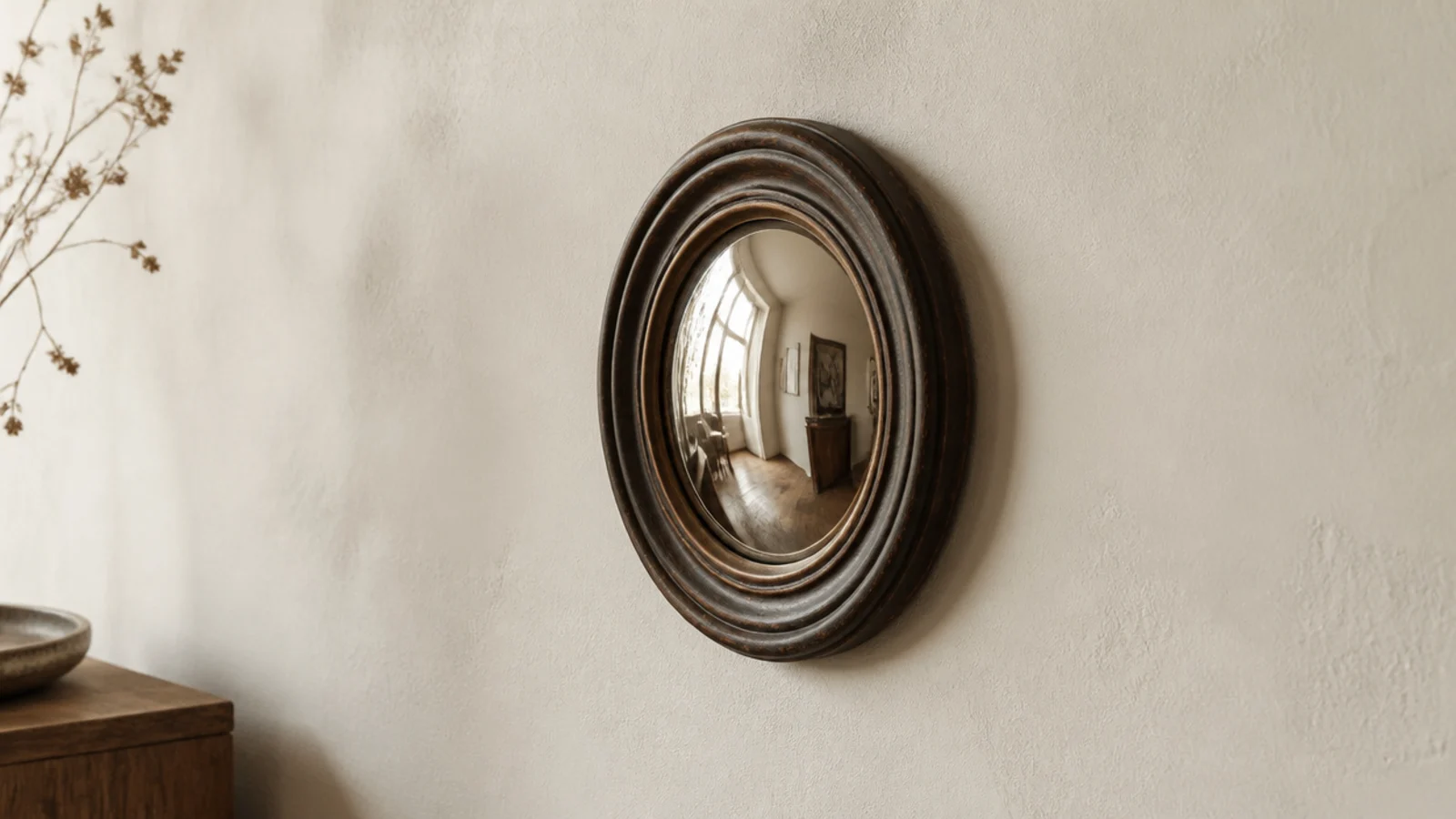
A convex mirror — the small round bubble kind — is a punctuation mark. It pulls a whole room into a compressed image and it works alone, never in a group.
Give it a generous field of empty wall, at least 18 inches clear on every side, and hang it at 60 inches. Most are 12 to 18 inches across and under 8 pounds, so a single stud screw is genuinely fine here. Expect $60 to $200 ($$) for one with a decent frame.
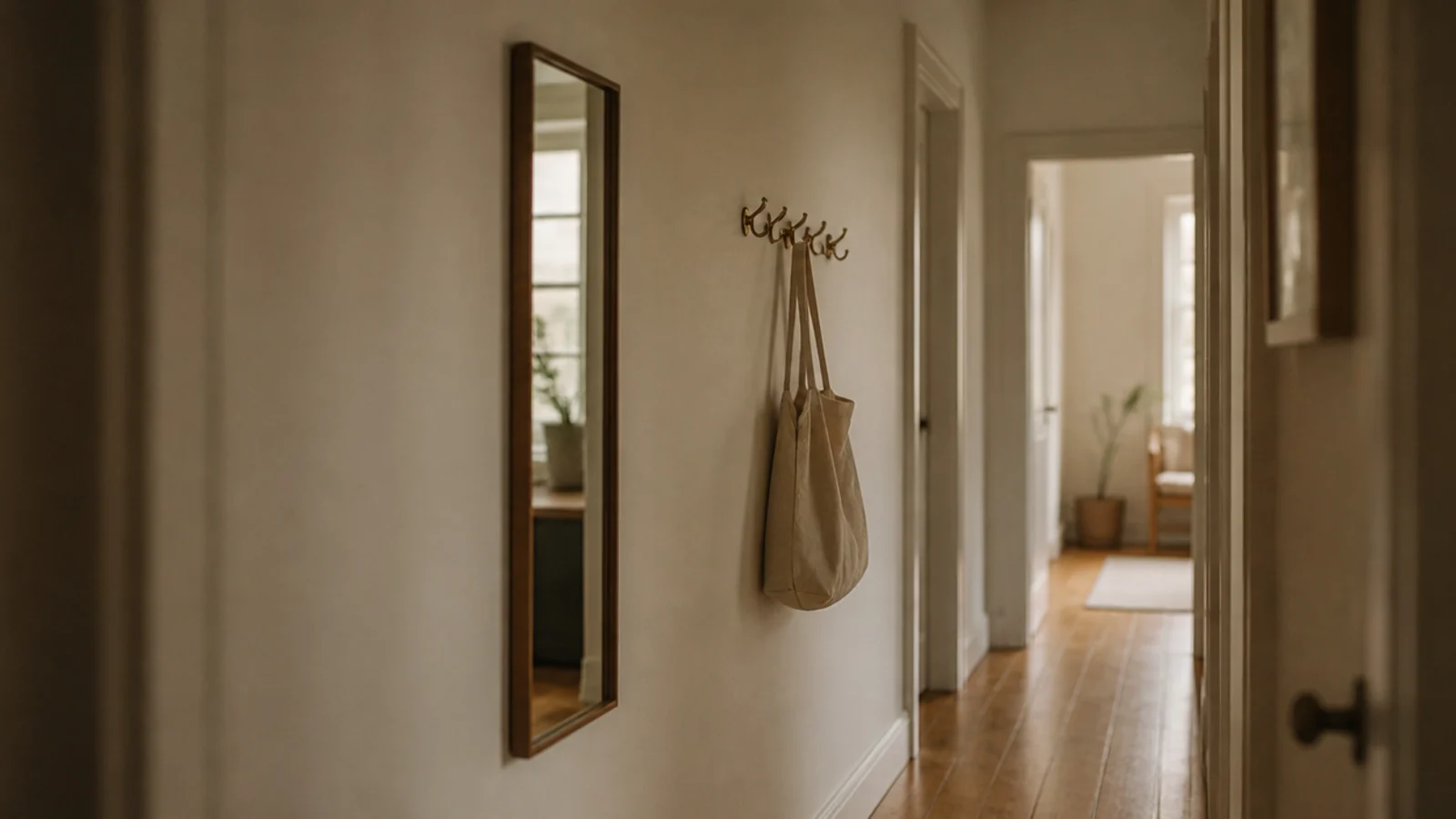
11. Run a narrow mirror down a tight hallway
In a hall under 40 inches wide, depth is the enemy. Choose a mirror with a frame under 1.5 inches deep so nothing catches a shoulder or a coat sleeve.
A slim vertical mirror, roughly 16 by 48 inches, mounted flat on the long wall makes the passage read wider without stealing any of it. Keep the bottom edge above 30 inches so a passing bag does not clip the glass, and mount into studs rather than trusting a single hollow anchor in a high-traffic corridor.
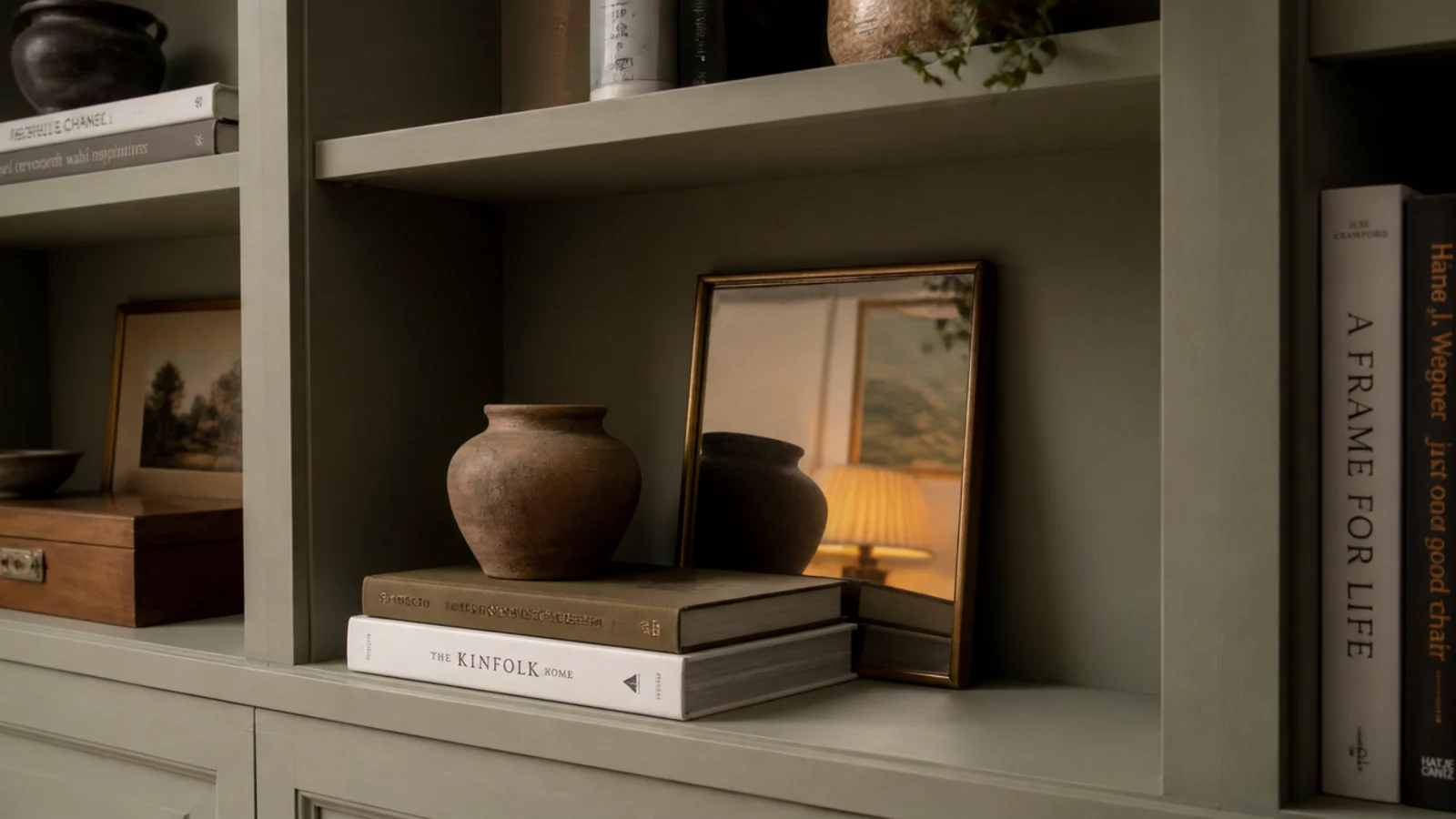
12. Set a mirror into a bookcase or built-in
Lean a small mirror against the back panel of one shelf bay, behind a vessel and a couple of books. The bay suddenly has depth and the lamplight in that corner doubles.
Use one bay only, ideally at or just below eye level, and choose a mirror 2 inches narrower than the bay so it sits back cleanly. The same layering logic runs through built-in shelf styling if you have a whole wall of shelves to work with.
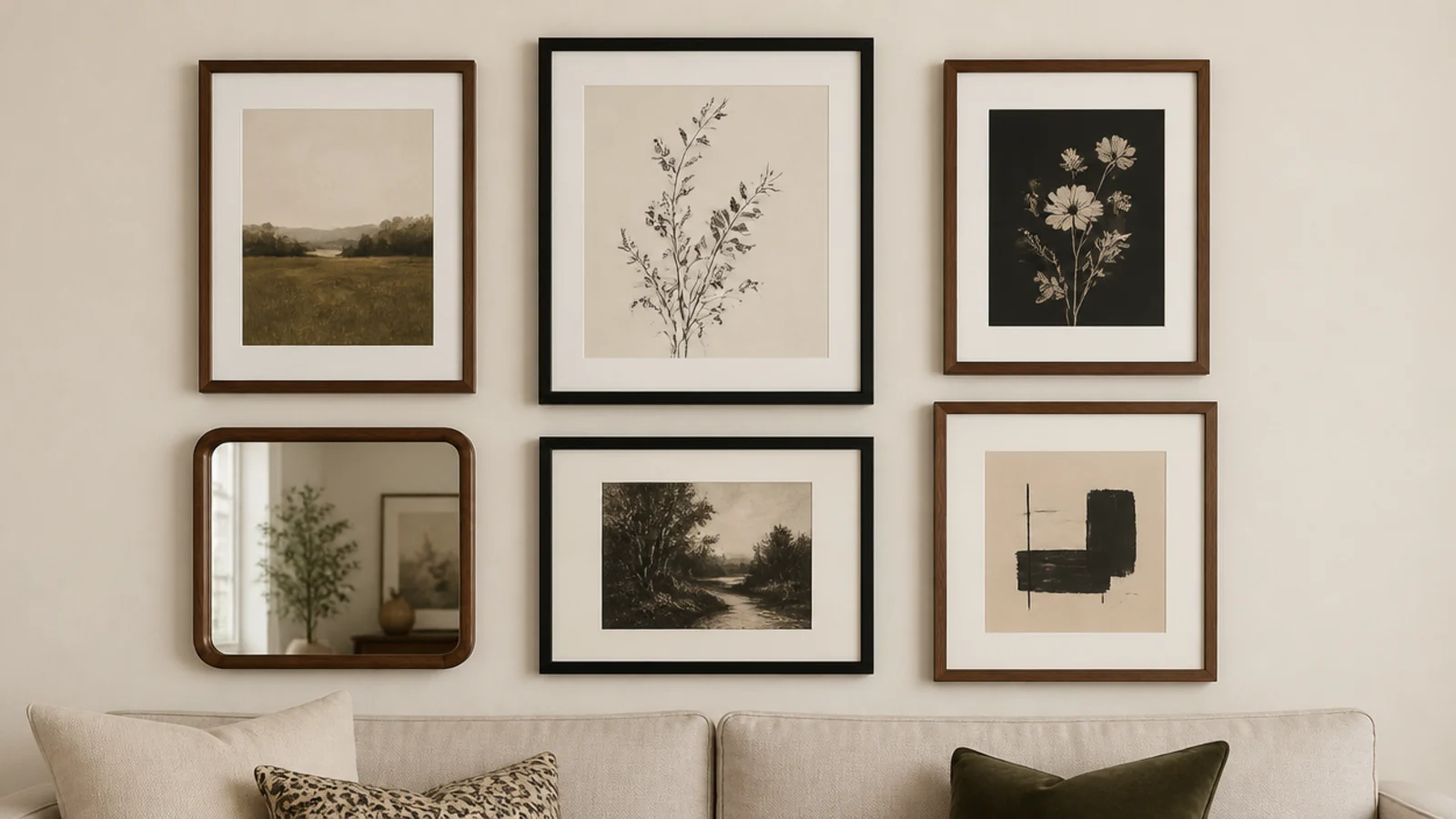
13. Mix one mirror into an existing gallery wall
A wall of prints goes flat because every piece has the same matte surface. Swap one frame for a mirror of similar size and the whole arrangement gains a live element.
Put it slightly off centre and low rather than in the middle, so it reflects the room rather than the ceiling. Match the frame finish to at least one other frame in the group, and keep the spacing identical to everything else — 2 to 3 inches.
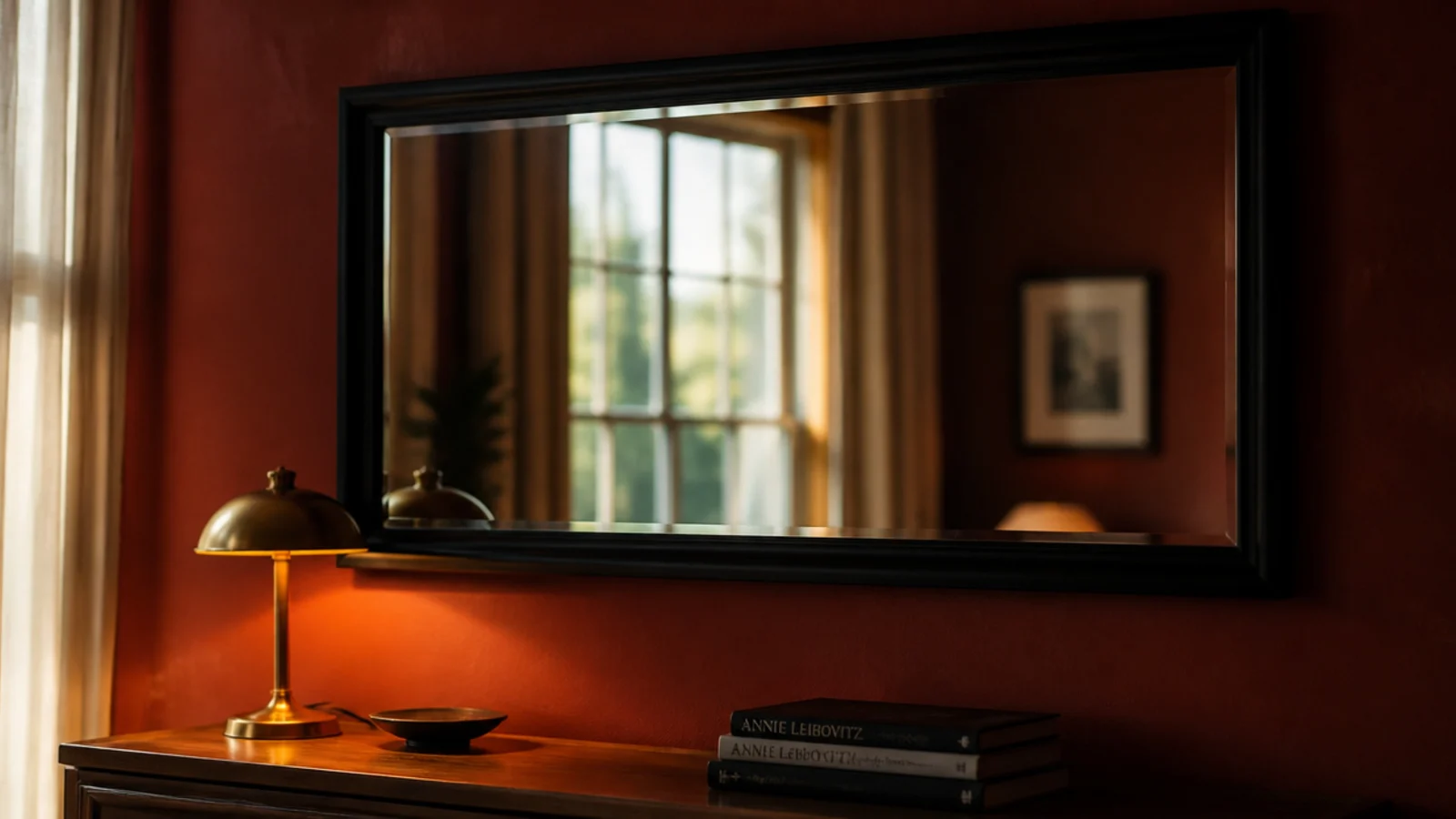
14. Hang a dark frame on a dark wall
On a deeply painted wall, a dark frame disappears and the glass becomes the only bright thing on that whole plane. It is the most dramatic thing you can do with one mirror and a quart of paint.
Black, deep olive and clay brown all work. Keep the mirror large enough to read from across the room — 30 inches minimum — and put a lamp near it, because a dark wall needs a light source to bounce.
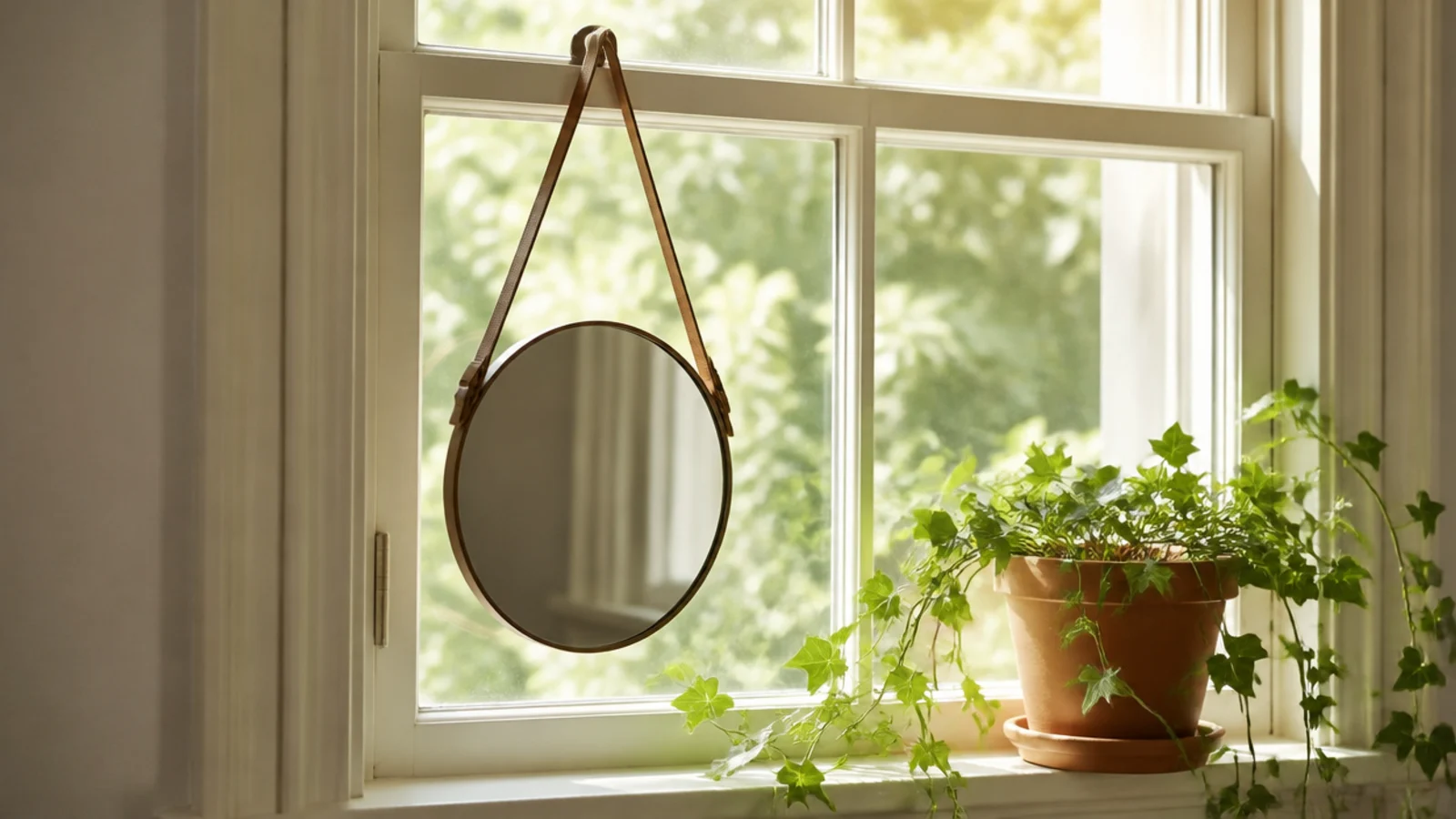
15. Float a mirror in front of a window frame
Hang a small round mirror on a leather strap or a length of jute from a hook in the window reveal, sitting in front of the lower pane.
Backlit, the edges of the glass glow all afternoon, and the mirror picks up whatever is outside. Keep it small and light — 12 to 16 inches, under 6 pounds — and hook it into the window frame timber rather than plaster. Total cost is often under $30 ($), strap included.
Mistakes to Skip
- Hanging heavy glass on adhesive strips or the plastic plugs from the box. Both are rated for a fraction of a real mirror, and both fail slowly rather than all at once.
- Using one hook instead of two. A single point lets the mirror pivot every time a door closes, and you will straighten it weekly for years.
- Hanging a mirror above a bed, a crib or the head end of a sofa. No amount of styling payoff is worth heavy glass over somewhere a head rests.
Frequently asked questions
How high should a mirror be hung on a wall?
Centre the glass 57 to 60 inches off the floor, which is gallery eye level and reads correctly to a standing adult in almost any room. Over furniture the rule changes: leave 6 to 8 inches between the console top and the bottom edge of the mirror instead, even if that pushes the centre slightly higher or lower.
How much does a wall mirror weigh?
A 24-inch round with a thin metal frame runs about 10 pounds. A 30-inch round is usually 15 to 25 pounds depending on frame material and glass thickness. Full-length leaners and large arched mirrors regularly pass 60 pounds. Weigh yours on a bathroom scale before you shop for anchors, because frame material changes the answer far more than size does.
Can I hang a heavy mirror with adhesive strips?
No. Adhesive strips are rated for lightweight frames and posters, not glass, and they fail slowly as the adhesive creeps under sustained load. Anything with real mirror glass in it needs a screw into a stud or a rated hollow-wall anchor. For renters, a leaning mirror strapped to the wall gives you the look with no adhesive involved.
Does a mirror really make a room look bigger?
Only if it reflects something worth seeing. A mirror hung opposite a window bounces real daylight into the room and doubles the view. The same mirror perpendicular to that window mostly reflects the blank wall across from it and does very little. Placement beats size every time, so test the reflection before you commit to a hole in the plaster.
Where should you not hang a mirror?
Not above a bed, not above a crib, and not directly behind where a head rests on a sofa. Heavy glass over a sleeping or seated head is a risk no styling payoff justifies. Also avoid hanging a mirror opposite a cluttered corner or a doorway into a dark hall, because the reflection is what you are actually decorating with.
Start with the reflection test before anything else — it takes five minutes and it decides which of these fifteen actually suits your room. If a cluster is where you are heading, mirror gallery wall covers the layout maths, and round mirror wall decor has the sizing for circles specifically. Save the pin so the heights and anchor ratings are with you at the hardware counter.
Want more like this? Browse all 15 mirror wall decor guides — they all use the same measurements and budget tiers.
Pin it for later
Save this to your Mirror Wall Decor board
Pin it now so it is waiting for you when the tape measure comes out — and so the next person hunting for this idea can find it too.
Save this pinKeep going
More ideas worth saving while you have the tape measure out.