Mirror Wall Decor · Listicle
30 Stylish Mirror Wall Decor Ideas to Copy Now

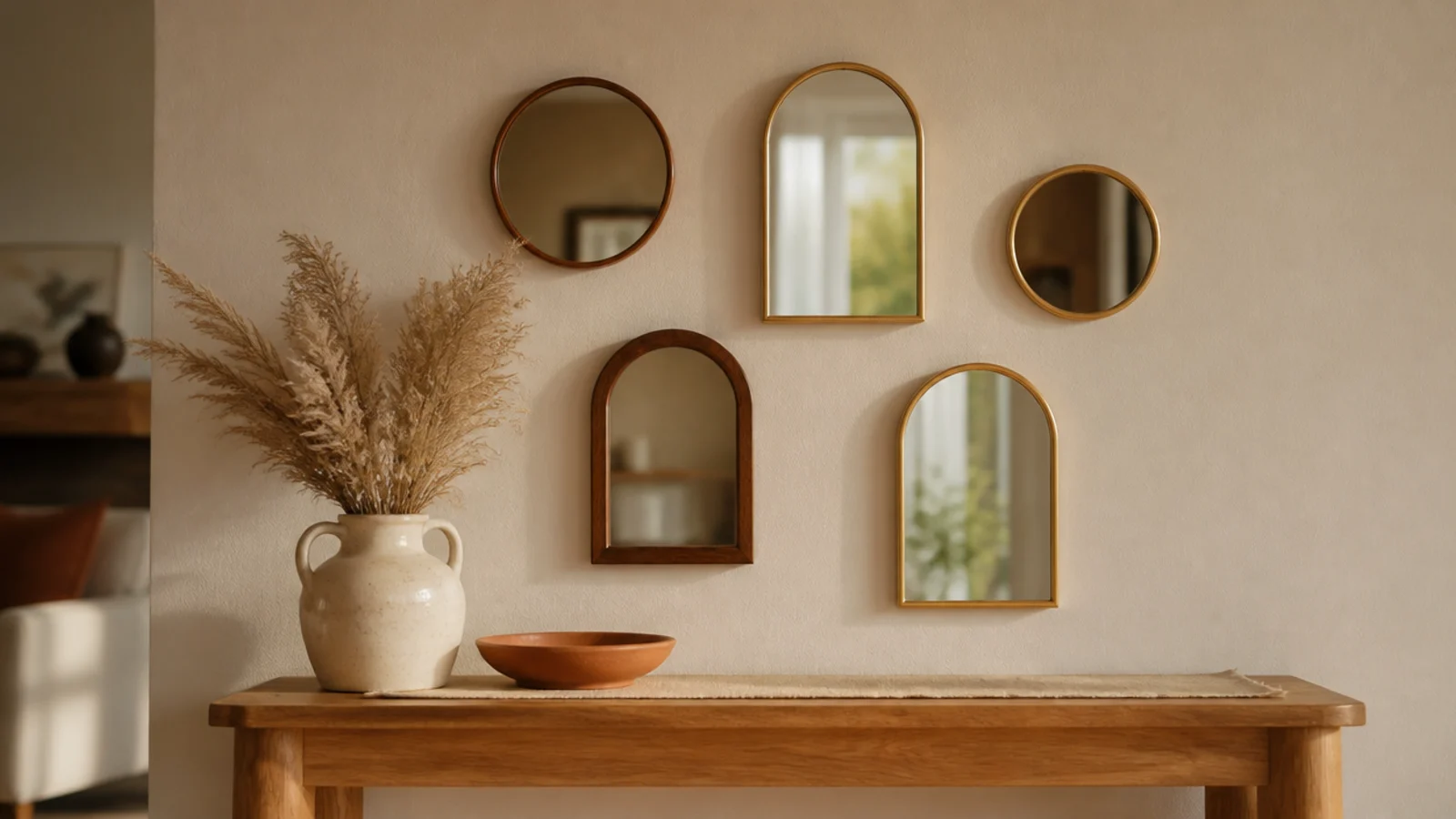
Small mirror wall decor is the answer to every wall that is too narrow, too dark or too awkward for anything else. A 14-inch round weighs three to eight pounds, costs $15 to $45, and hangs on a single anchor — which means you can group them, move them and change your mind without patching a wall full of holes. Here are thirty placements worth copying.
In this guide32 sections — tap to openHide
- 1.Where small mirror wall decor actually works
- 2.A tight trio above a narrow console
- 3.One small round in the darkest corner
- 4.A nine-square grid on a blank wall
- 5.Small ovals climbing a staircase
- 6.Leaned on a picture ledge, three deep
- 7.In the pier between two windows
- 8.The narrow strip beside a door frame
- 9.A mirror inside a bookshelf cube
- 10.A mirrored back panel in a coffee nook
- 11.A small convex above a desk
- 12.Above a radiator cover in a hall
- 13.A vertical column of three in a corridor
- 14.Small mirrors flanking one large artwork
- 15.Tucked into the alcove beside the chimney
- 16.Leaning on an open kitchen shelf
- 17.Above a floating bedside shelf
- 18.A windowless entry at 60 inches
- 19.Layered over patterned wallpaper
- 20.Behind a trailing plant on a shelf
- 21.Mixed into a photo gallery wall
- 22.On a small easel on the mantel
- 23.A stairwell landing cluster
- 24.Adhesive strips, under five pounds only
- 25.Group by shape rather than by size
- 26.Paint the wall behind in a deeper tone
- 27.A bathroom mirror without drilling
- 28.Above a mudroom drop-zone bench
- 29.Along the top of a low bookcase
- 30.One small mirror on a wide chimney breast
- 31.Odd numbers, varied sizes, two finishes
- 32.Mistakes to Skip
Where small mirror wall decor actually works
Small mirrors earn their place in three situations: a narrow strip of wall nothing else fits, a dark spot that needs bounced light more than another object, and a large blank wall where a group can do what one big piece would cost triple to do.
Weight makes them easy. Most pieces under 20 inches run 3 to 10 pounds, so one anchor rated to 25 pounds covers it comfortably. Use two hanging points anyway on anything over about six pounds, because a single hook lets the frame pivot and you will straighten it forever. Skip the plastic plugs in the box regardless of how light the mirror is — they carry around 10 pounds at best and creep out of drywall over months.
For groups, three rules do the work. Odd numbers. Varied sizes rather than one repeated shape. Two frame finishes maximum. Keep 2 to 3 inches between frames, and lay the arrangement out on the floor or in paper templates before anything gets drilled.
Budget: thrift and craft-store frames run $8 to $25 ($), good brass or walnut rounds run $30 to $70 ($$), and antique or bevelled pieces run $90 and up ($$$).
1. A tight trio above a narrow console
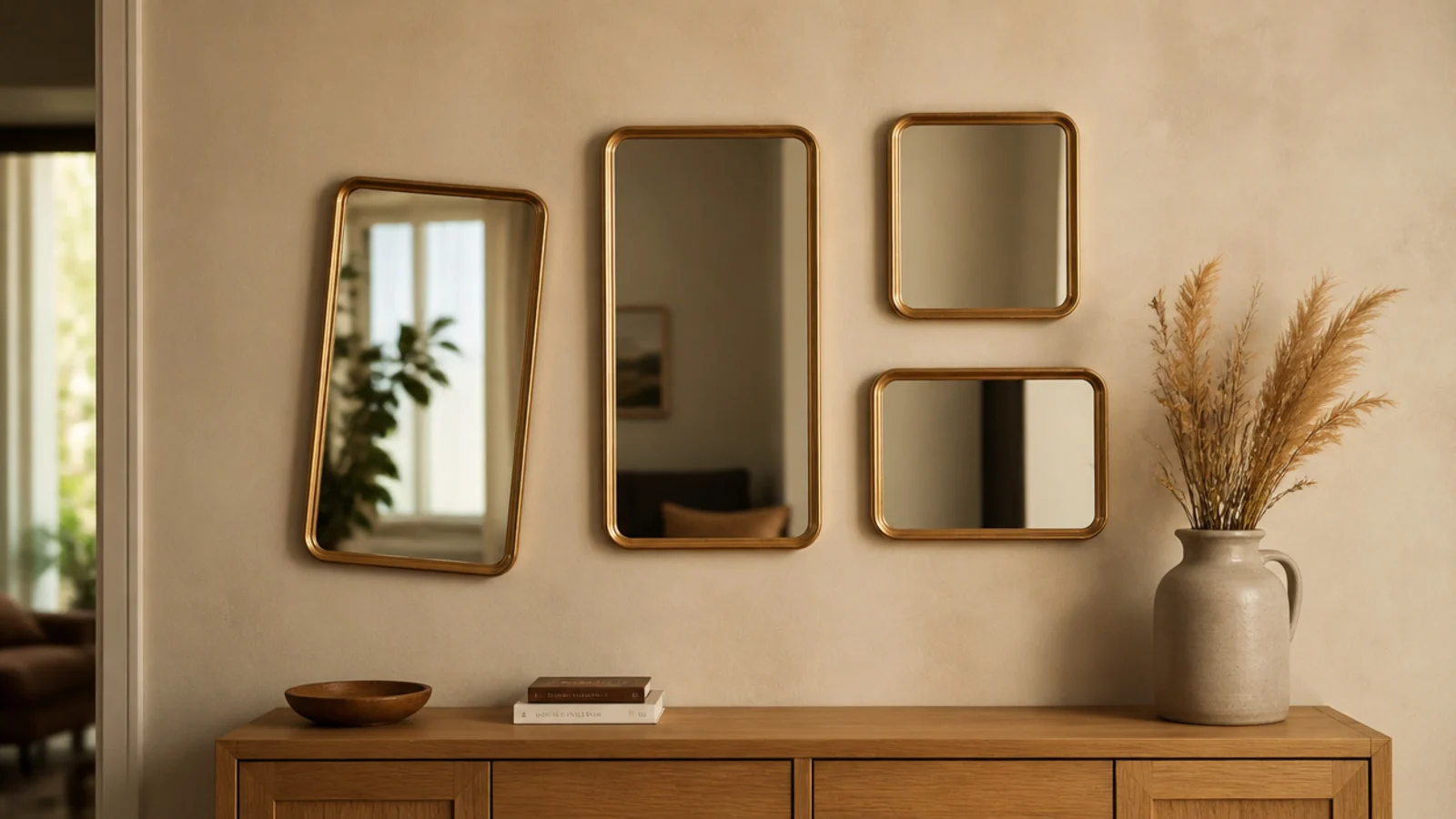
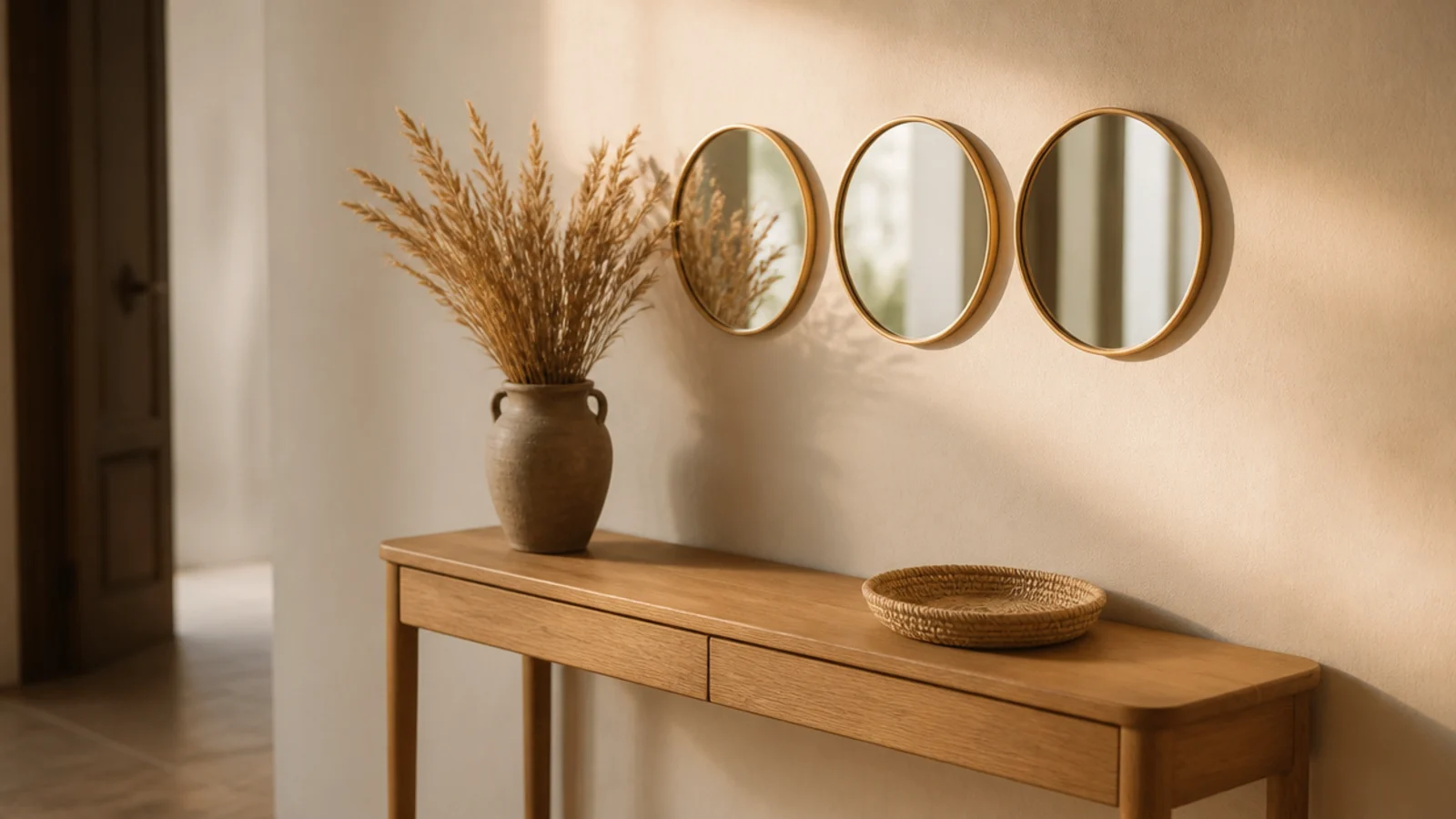
Three small rounds in a row, spaced 3 inches apart, centred on a console that is too slim for one large mirror.
Keep the total span to two-thirds of the console width and leave 6 to 8 inches between the console top and the bottom of the frames. Three matching frames read as deliberate; three mismatched ones read as a cluster, and both work as long as you choose one on purpose.
2. One small round in the darkest corner
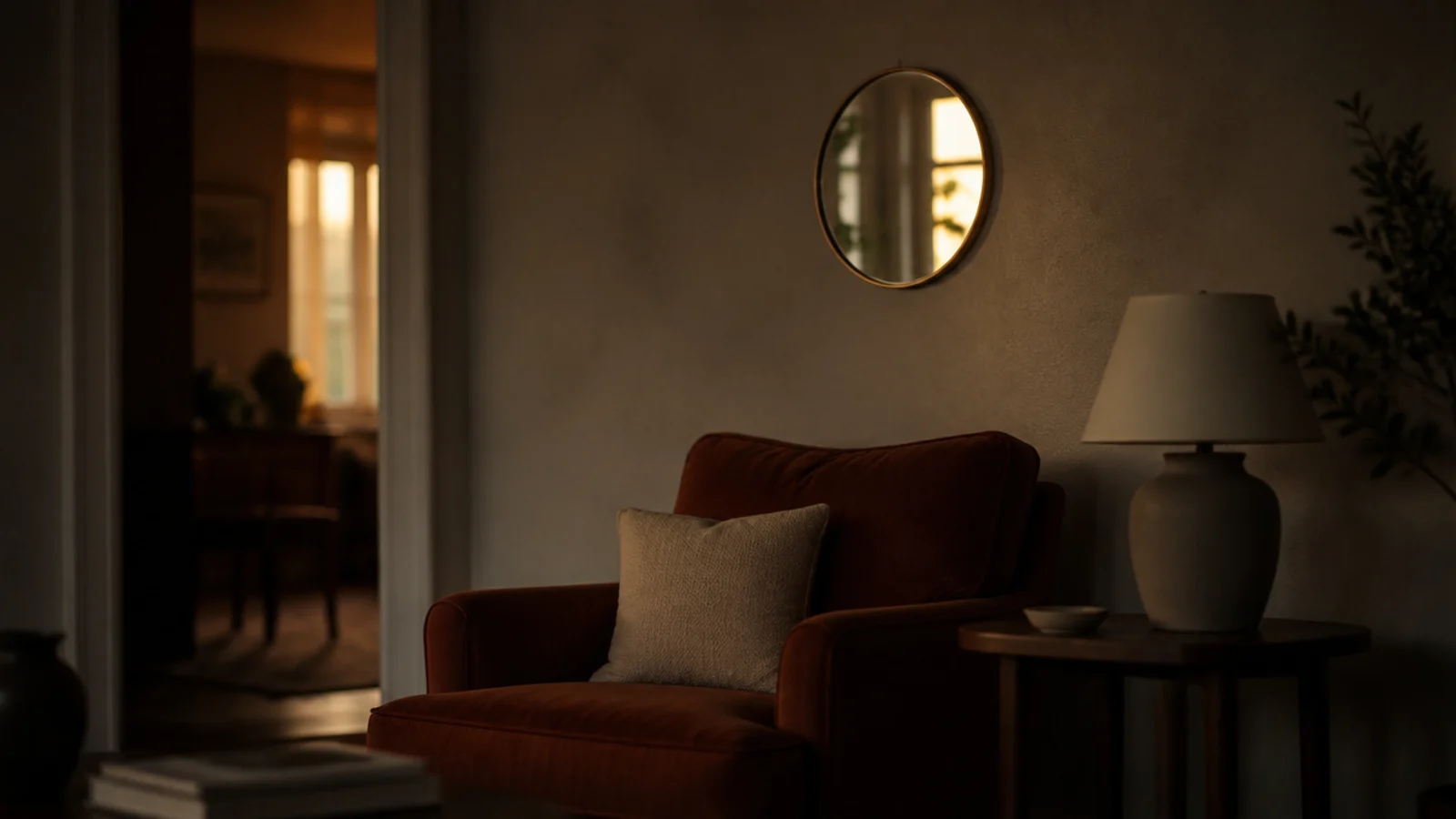
Every room has a corner that goes dead by four in the afternoon. A single 14-inch round hung there catches light from the rest of the room and gives it somewhere to land.
Angle matters more than size. Hold it up and check what it reflects; if the answer is another dark wall, move a foot left and look again. Under $30.
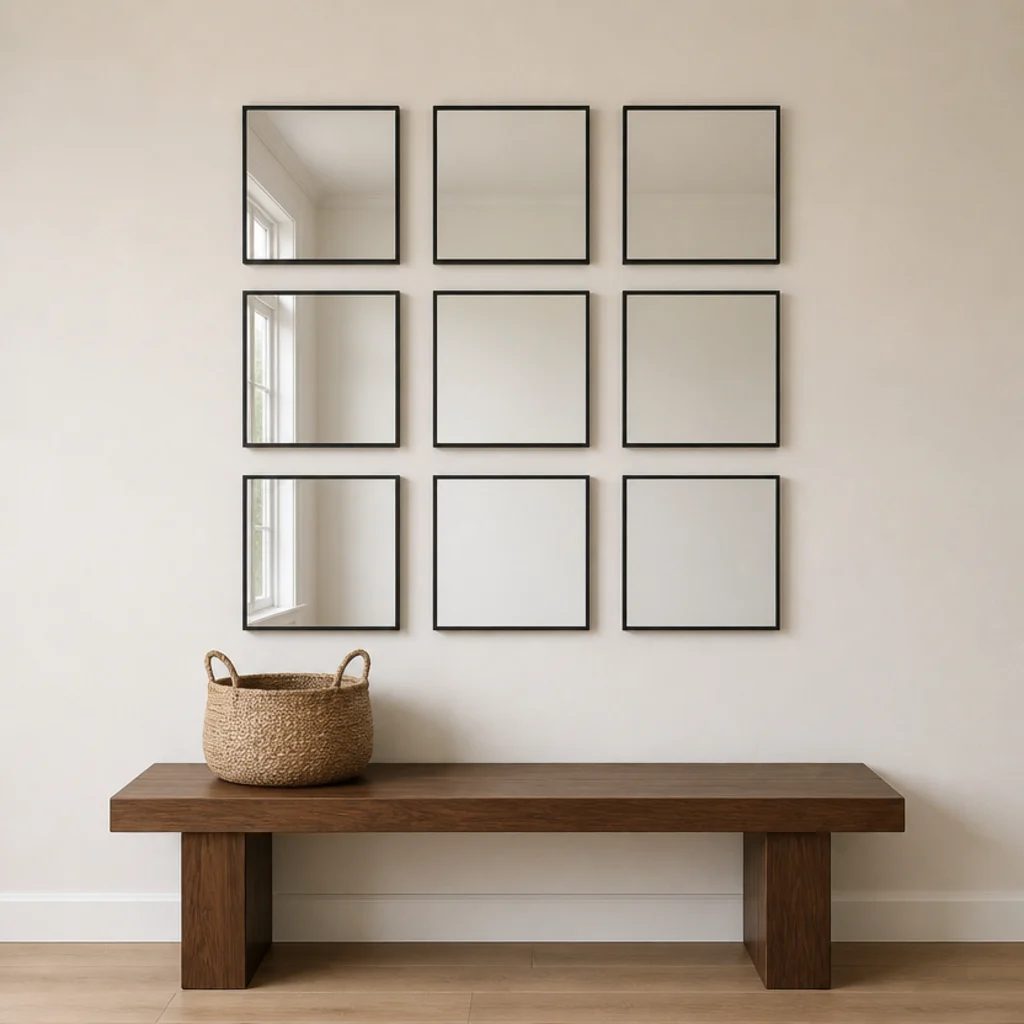
3. A nine-square grid on a blank wall
Nine identical 8-inch square mirrors in a three by three grid read as one graphic panel rather than nine objects. It is the cheapest way to fill a big empty wall convincingly.
Spacing has to be exact here, which is the one time I use a laser level rather than my eye. Craft-store squares run $4 to $8 each, so the whole wall lands under $70 including hardware.
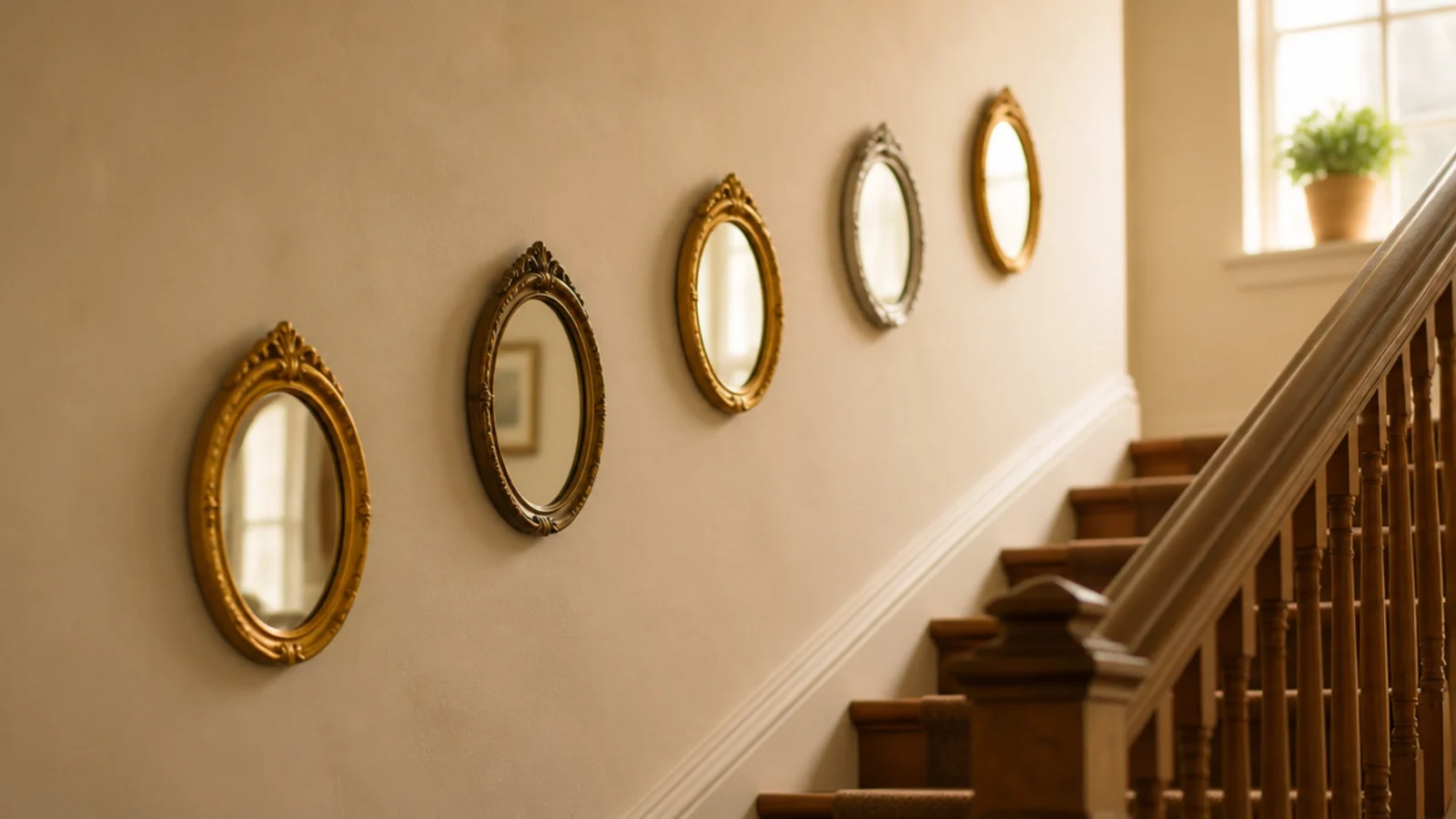
4. Small ovals climbing a staircase
Stair walls defeat most arrangements because nothing is level with anything. Small ovals stepping up parallel to the handrail solve it.
Keep each mirror the same distance above the tread below it, so the group follows the stair angle rather than the ceiling. Five ovals at $10 to $25 each cover a full flight.
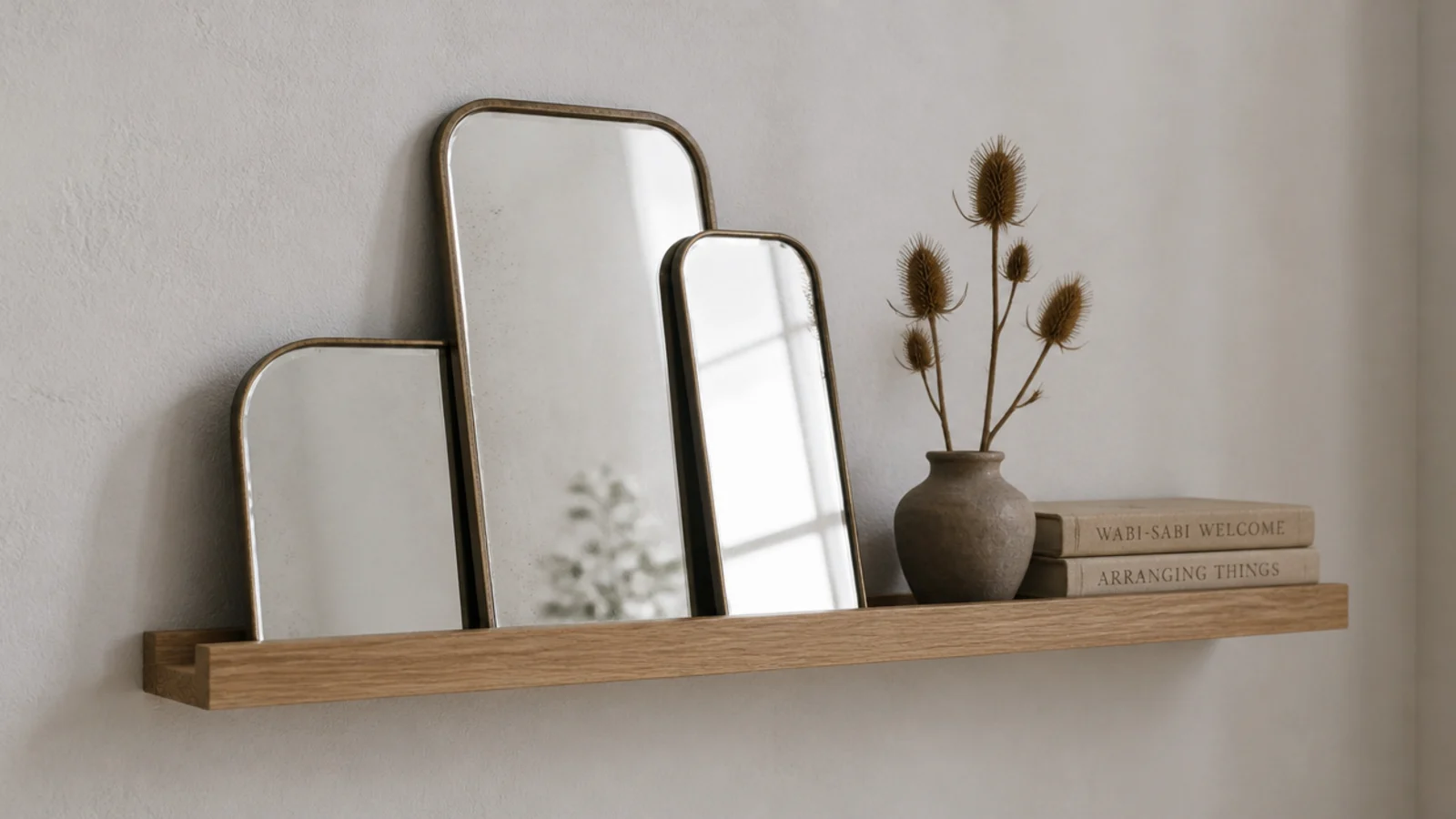
5. Leaned on a picture ledge, three deep
A three-inch picture ledge with a front lip lets you lean three small mirrors of different heights, overlapping slightly, with no wall holes beyond the ledge itself.
The overlap is what makes it read layered rather than lined up. Add one soft object, like a small dried arrangement, so it is not all hard edges.
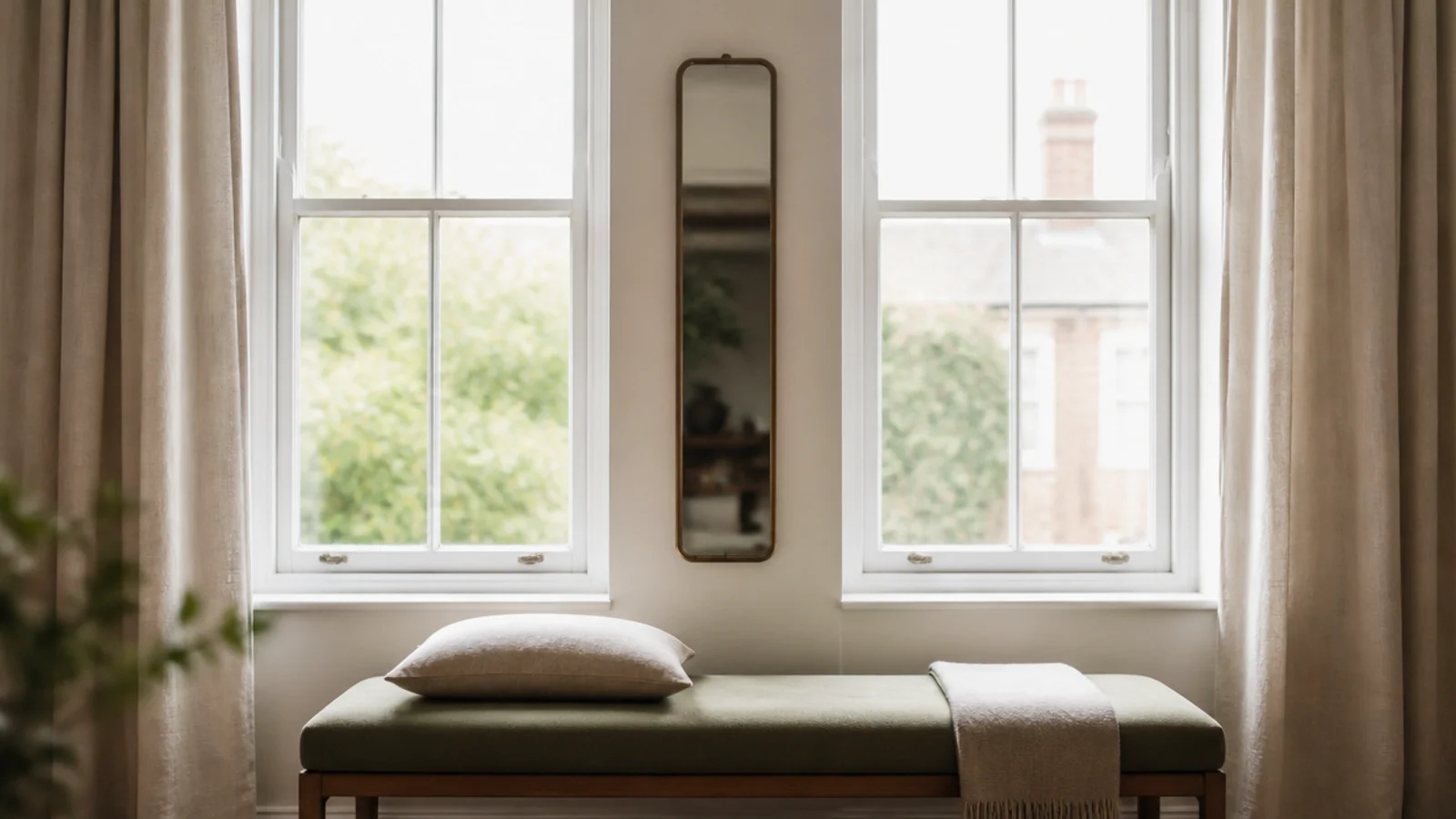
6. In the pier between two windows
The slim strip of wall between two windows is the easiest small mirror win in any house, because the mirror sits in daylight from both sides.
Measure the pier and go 4 inches narrower. Vertical shapes suit it better than round ones, and it brightens the opposite wall too.
7. The narrow strip beside a door frame
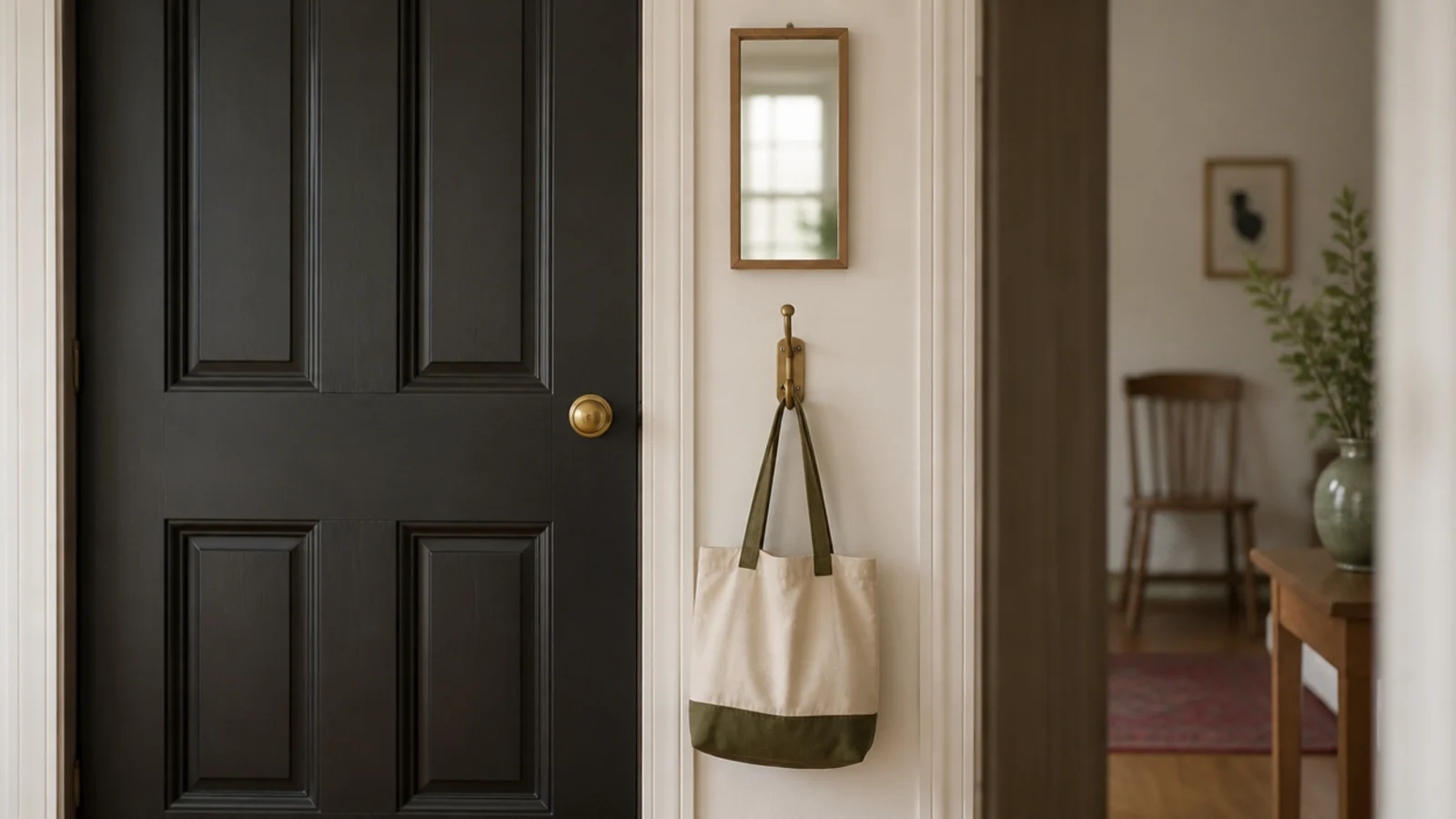
Most homes have a band of wall next to a door that is too narrow for art and too visible to ignore. One small rectangular mirror fits it perfectly.
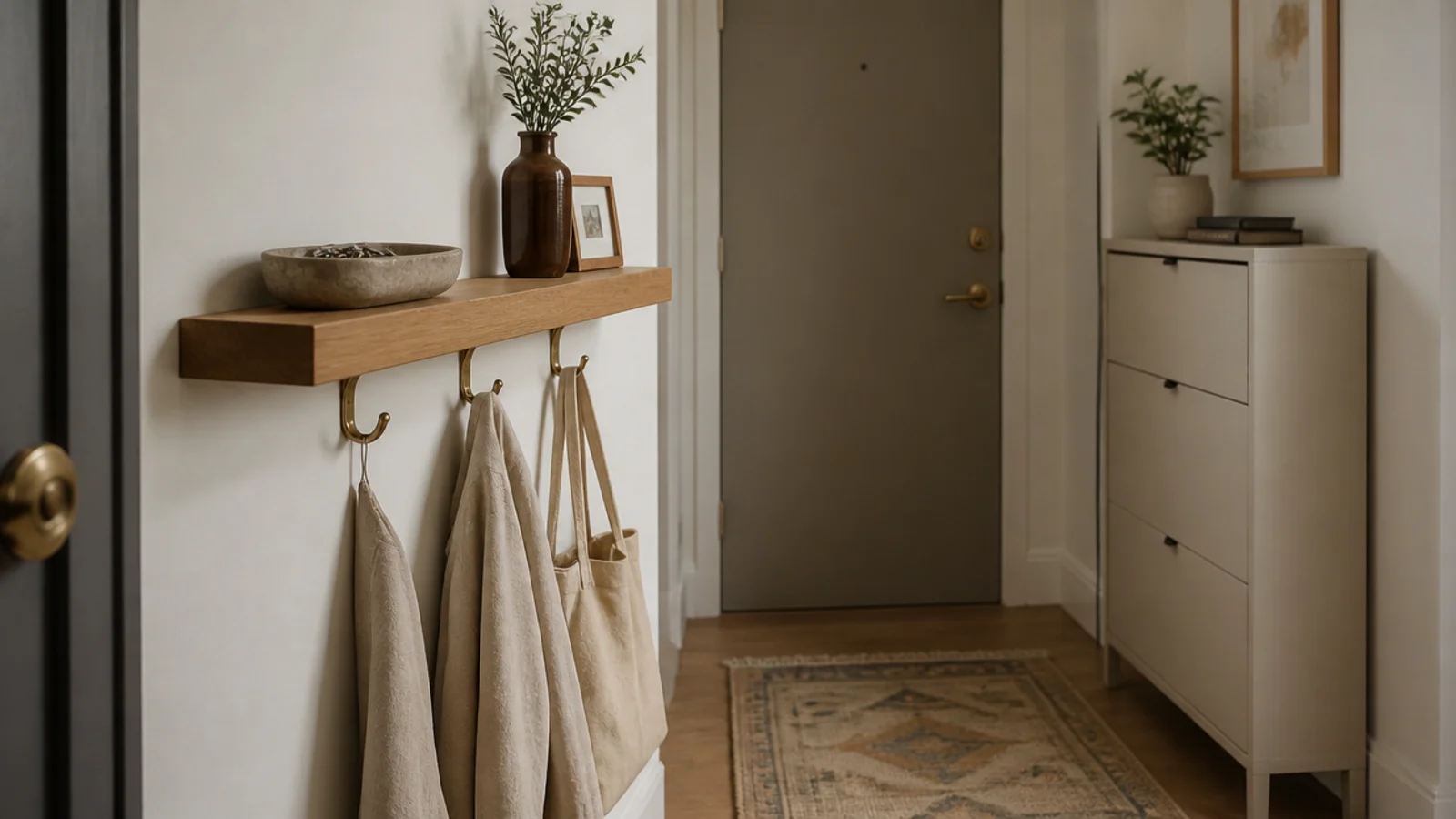
Keep it 3 inches clear of the architrave on both sides, and hang the centre at 57 inches. Add a brass hook below and the strip becomes useful as well as finished, which is the whole point of a hallway.
8. A mirror inside a bookshelf cube
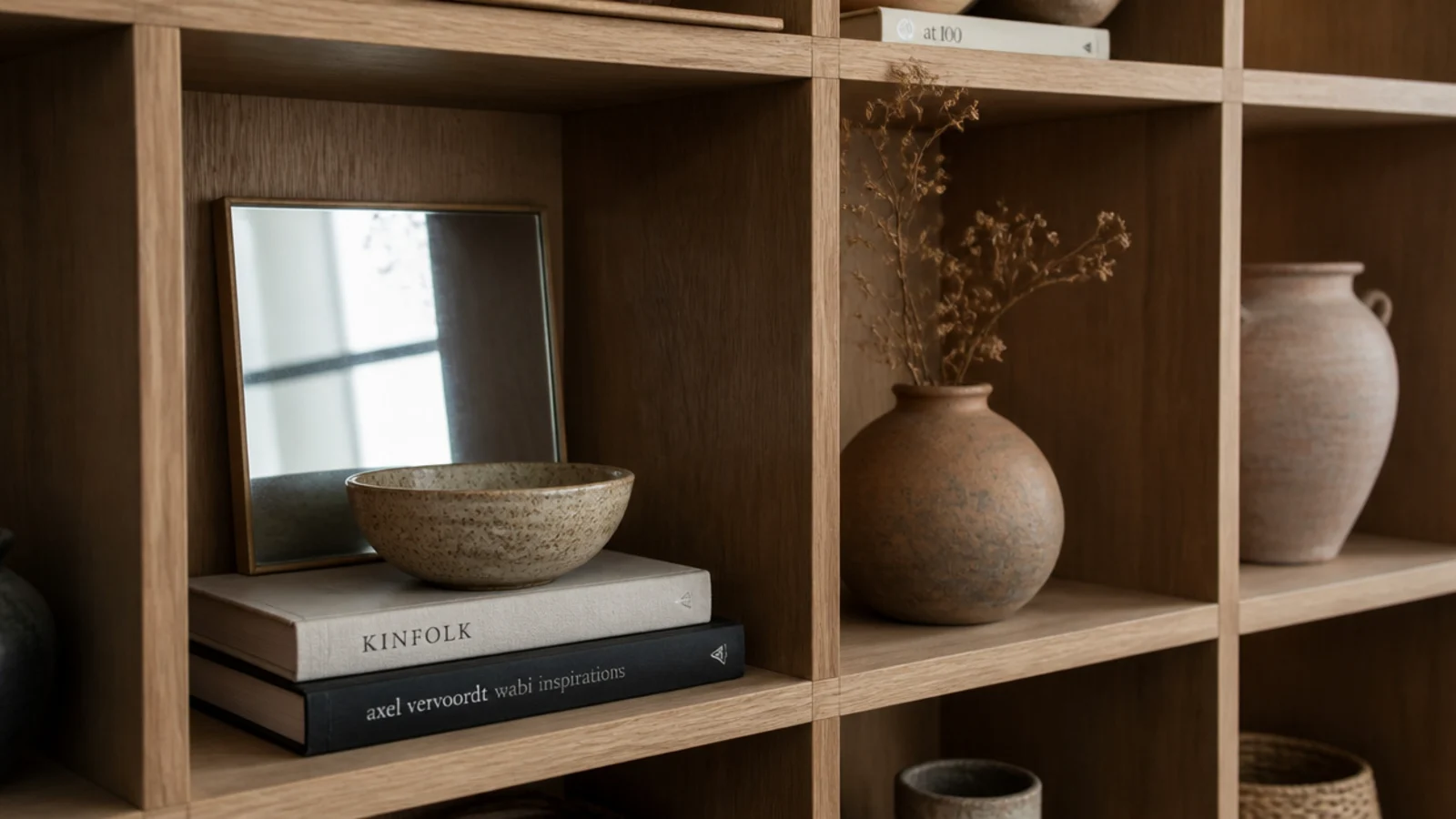
Cube shelving goes flat when every compartment is the same depth of stuff. Propping a small mirror at the back of one cube gives the grid a break.
Choose a frameless or thin-framed piece so it reads as light rather than as another object. Put pottery in front of it, not books — the reflection is doing the work, and a spine blocks it entirely.
9. A mirrored back panel in a coffee nook
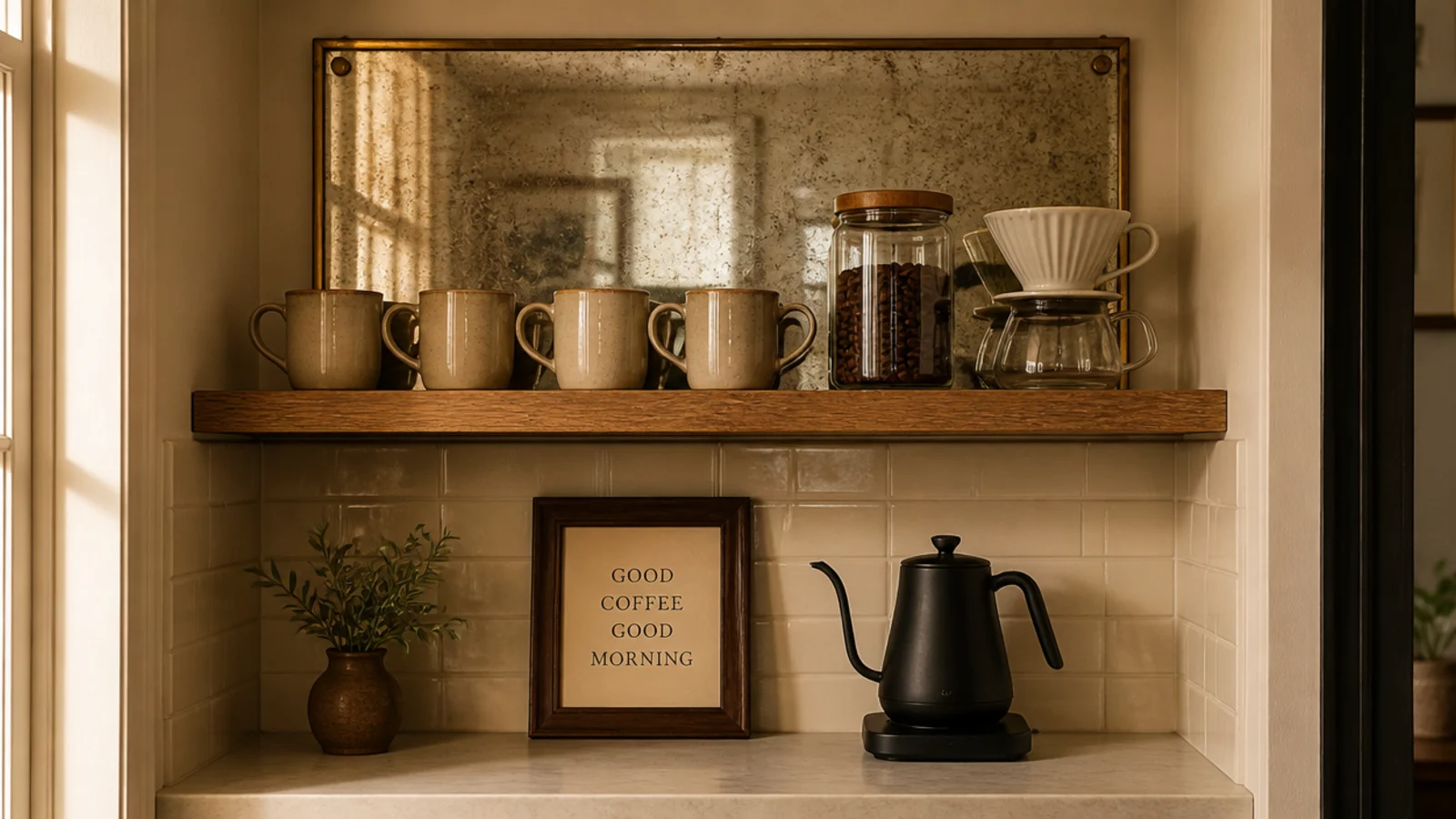
A small antiqued mirror panel behind a coffee shelf makes an eight-inch nook read like a proper bar. Glass merchants cut panels to size for $40 to $90.
The panel carries no weight, so it needs mastic and a couple of clips rather than a structural fixing. Keep the shelf to four or five pieces, because a mirrored back doubles clutter as fast as charm.
10. A small convex above a desk
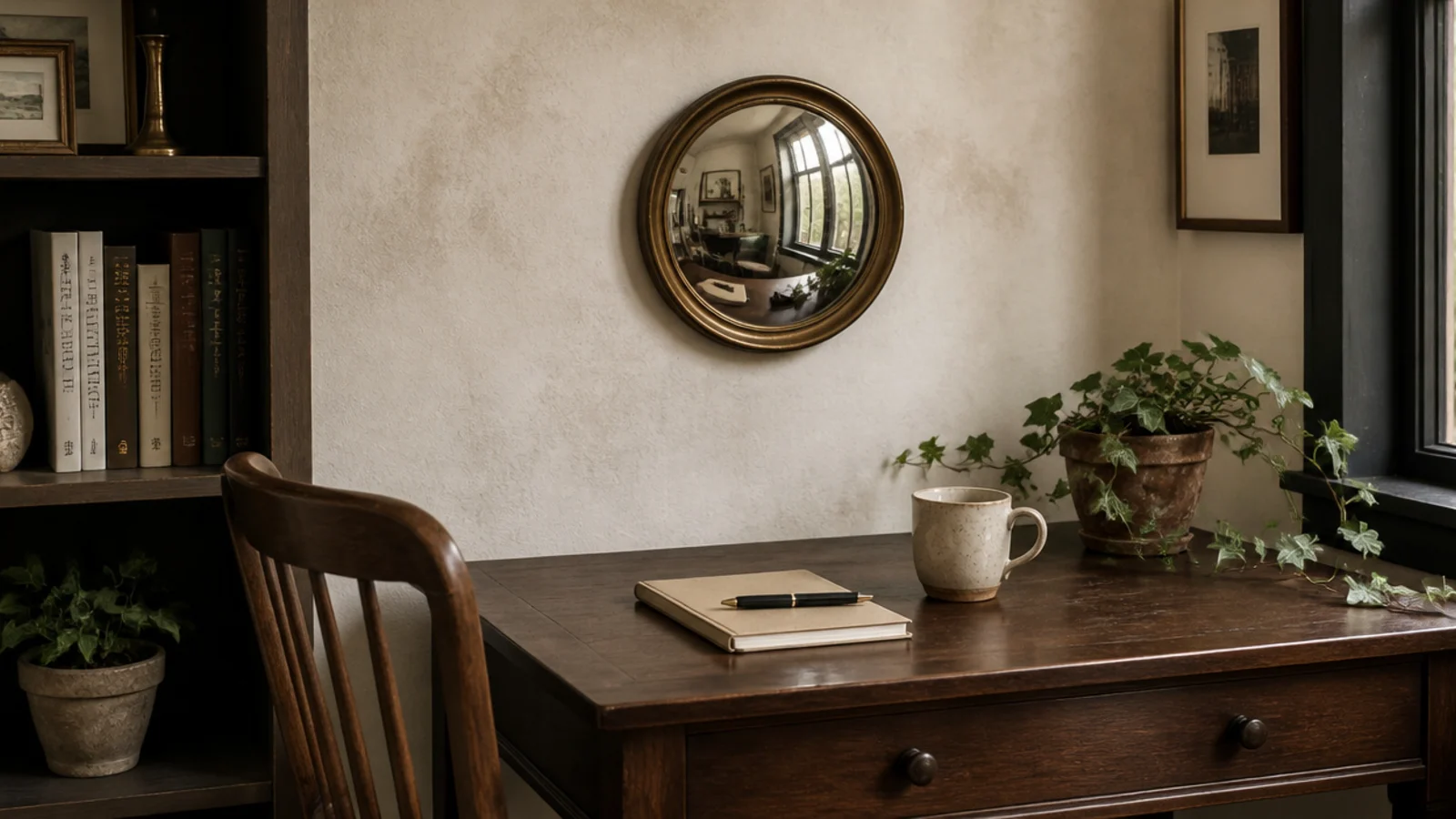
A convex mirror is useless for checking your face and excellent at being interesting, which makes it ideal above a desk where you look up a hundred times a day.
An 18-inch convex in aged brass compresses the whole room into a bubble. They weigh under 12 pounds, so one good anchor does it. Hang the centre roughly 24 inches above the desk surface.
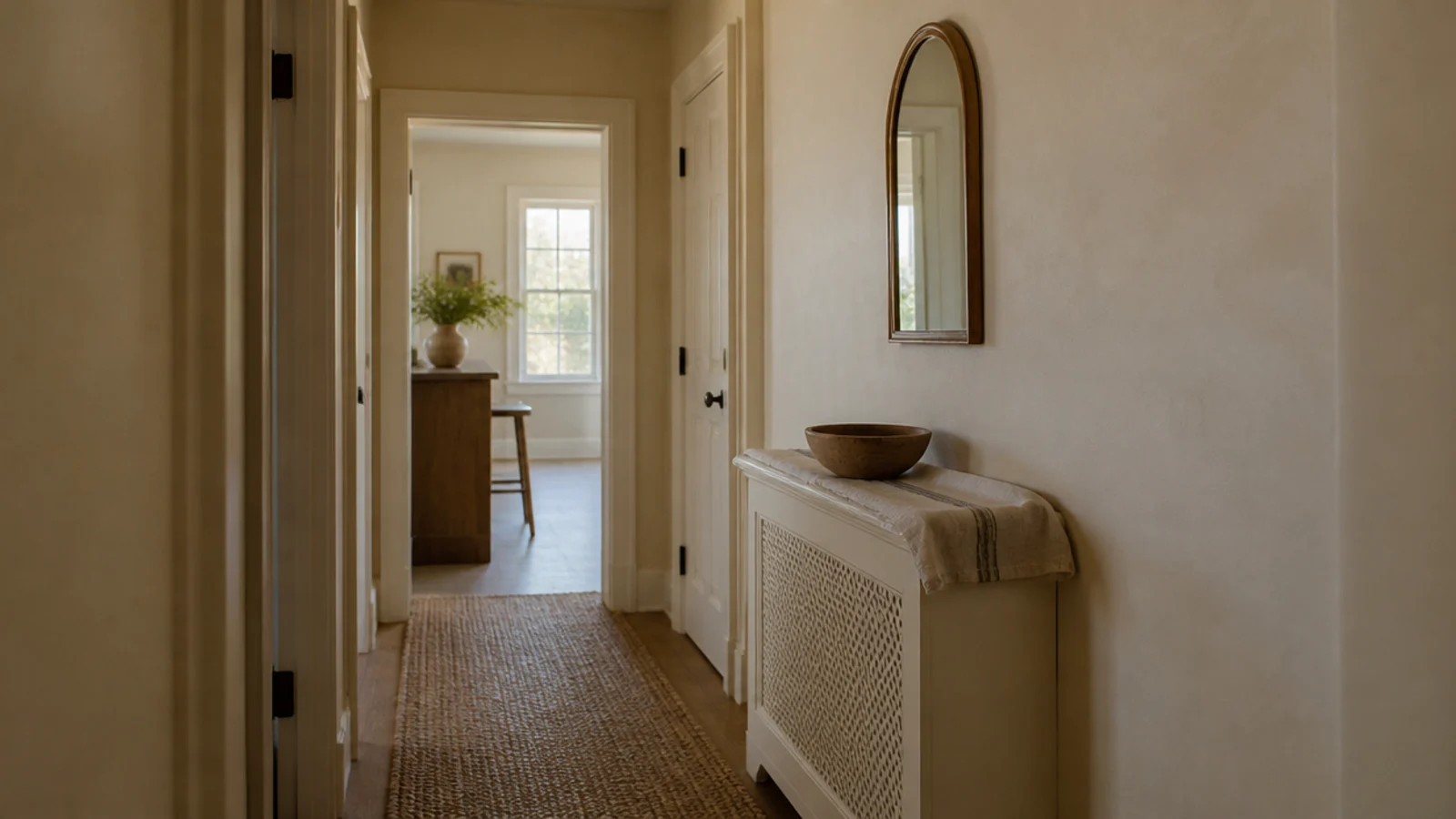
11. Above a radiator cover in a hall
A radiator cover in a hallway is a shelf pretending not to be one. A small arched mirror above it turns the whole thing into a considered vignette.
Leave 4 inches of clear air above the cover so heat can rise, and avoid laminated frames, which lift under repeated heat cycles.
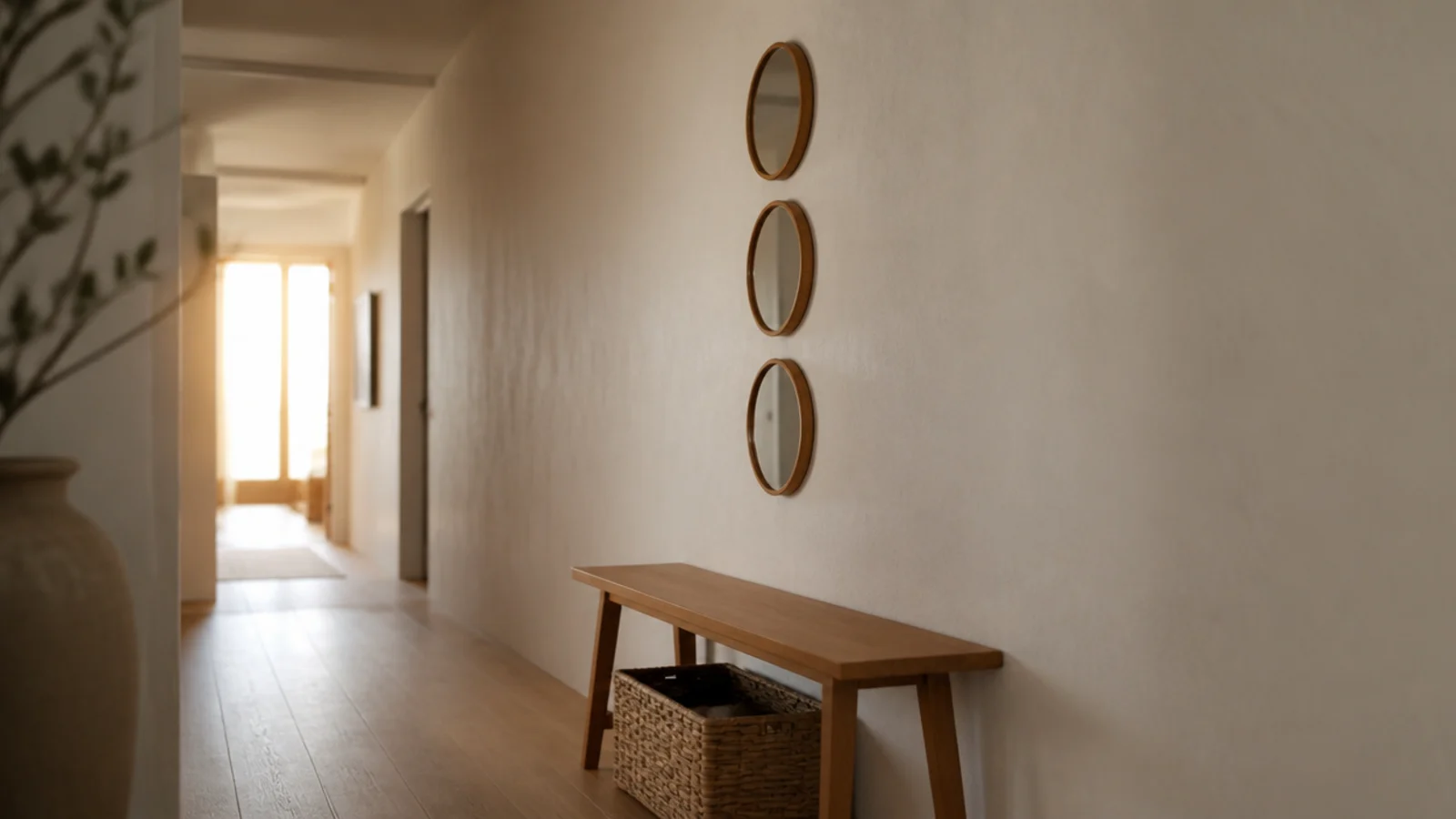
12. A vertical column of three in a corridor
In a corridor under 40 inches wide, a horizontal arrangement crowds you. A vertical column of three small rounds does not.
Space them 3 inches apart with the largest in the middle, centred at 57 inches. All three can share a single stud line, which means three mirrors and three holes rather than six. This layout is covered further in mirror cluster wall.
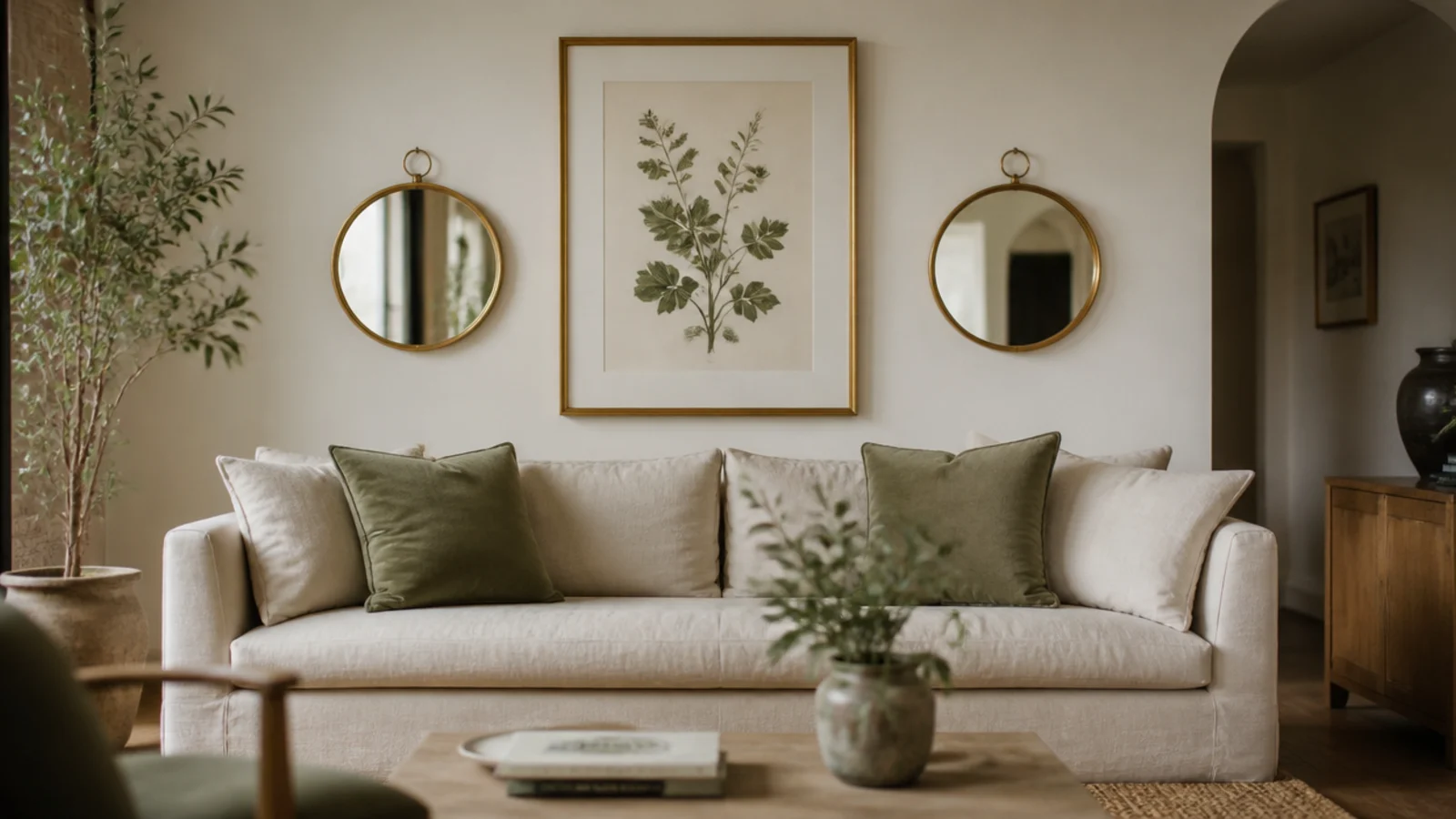
13. Small mirrors flanking one large artwork
A single oversized print above a sofa often needs support. Two small matching mirrors either side, hung at the same centre height, settle the whole wall without competing.
Keep the mirrors under a third of the artwork width and match the art frame finish.
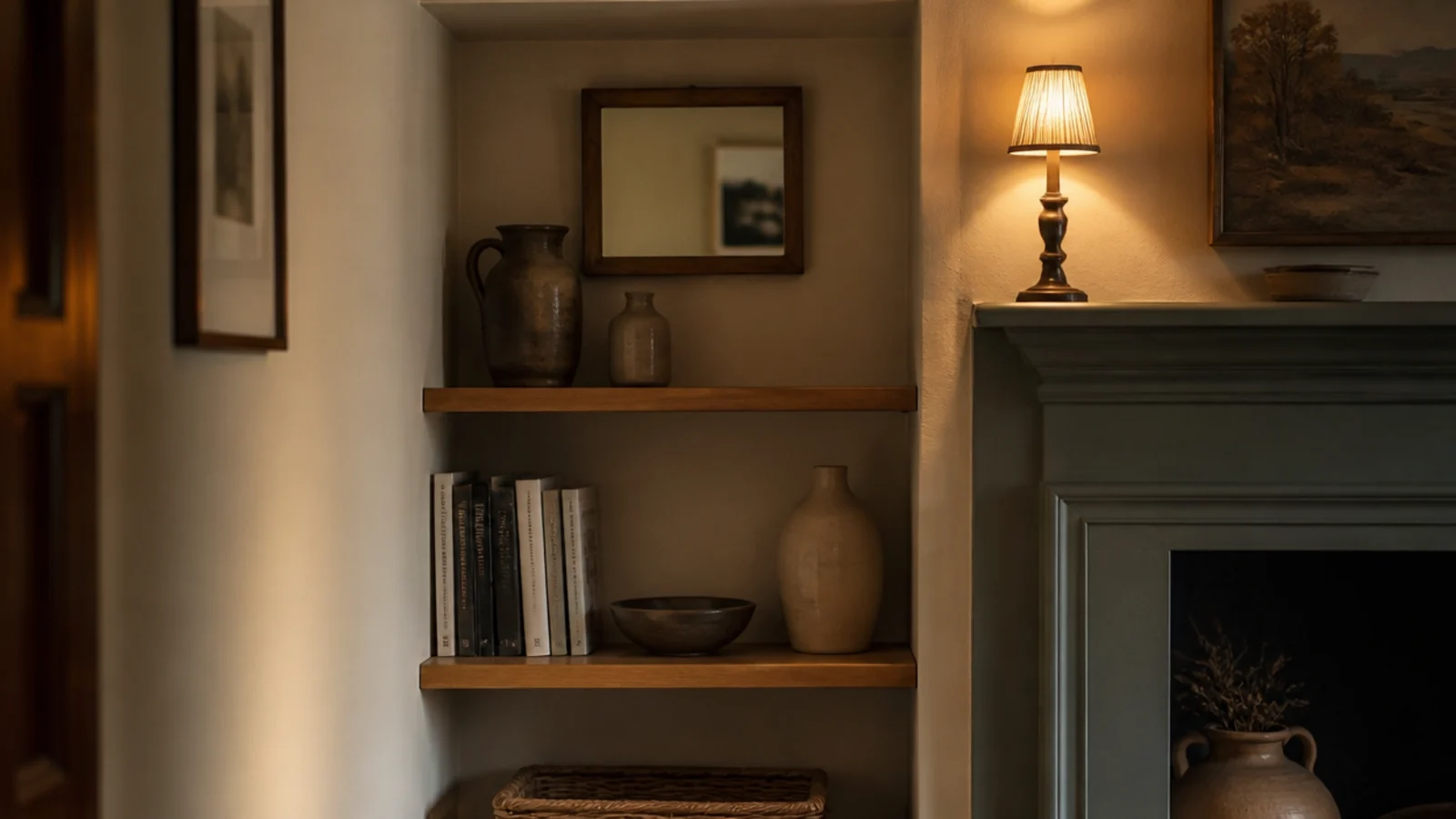
14. Tucked into the alcove beside the chimney
Alcoves are the dimmest square footage in most living rooms, which makes them the highest-return place for a mirror.
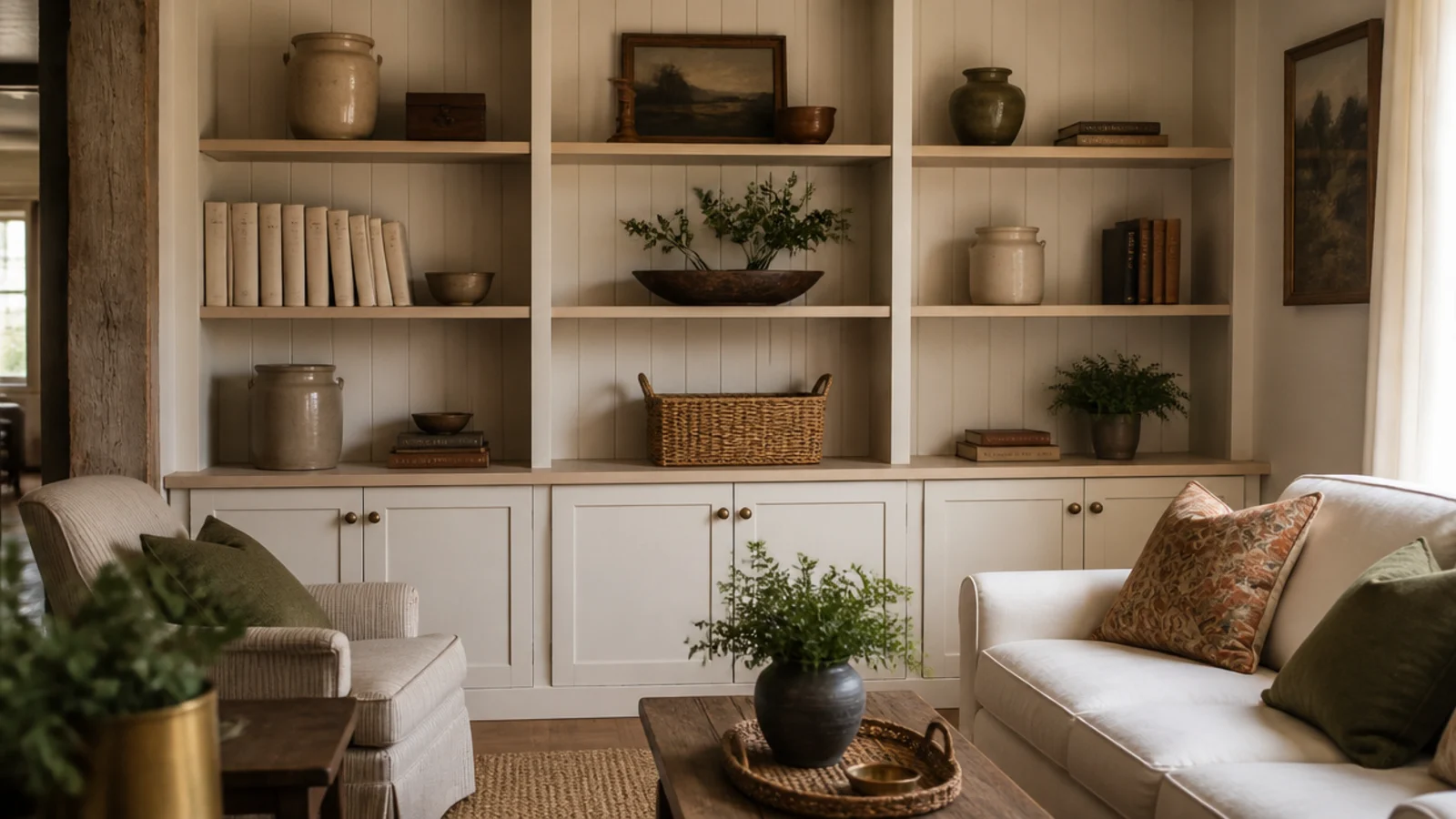
Hang one small rectangular piece above the alcove shelves rather than filling the wall, so the shelving keeps its rhythm. If the alcove holds built-in shelving already, built-ins around a fireplace covers how to balance the two sides.
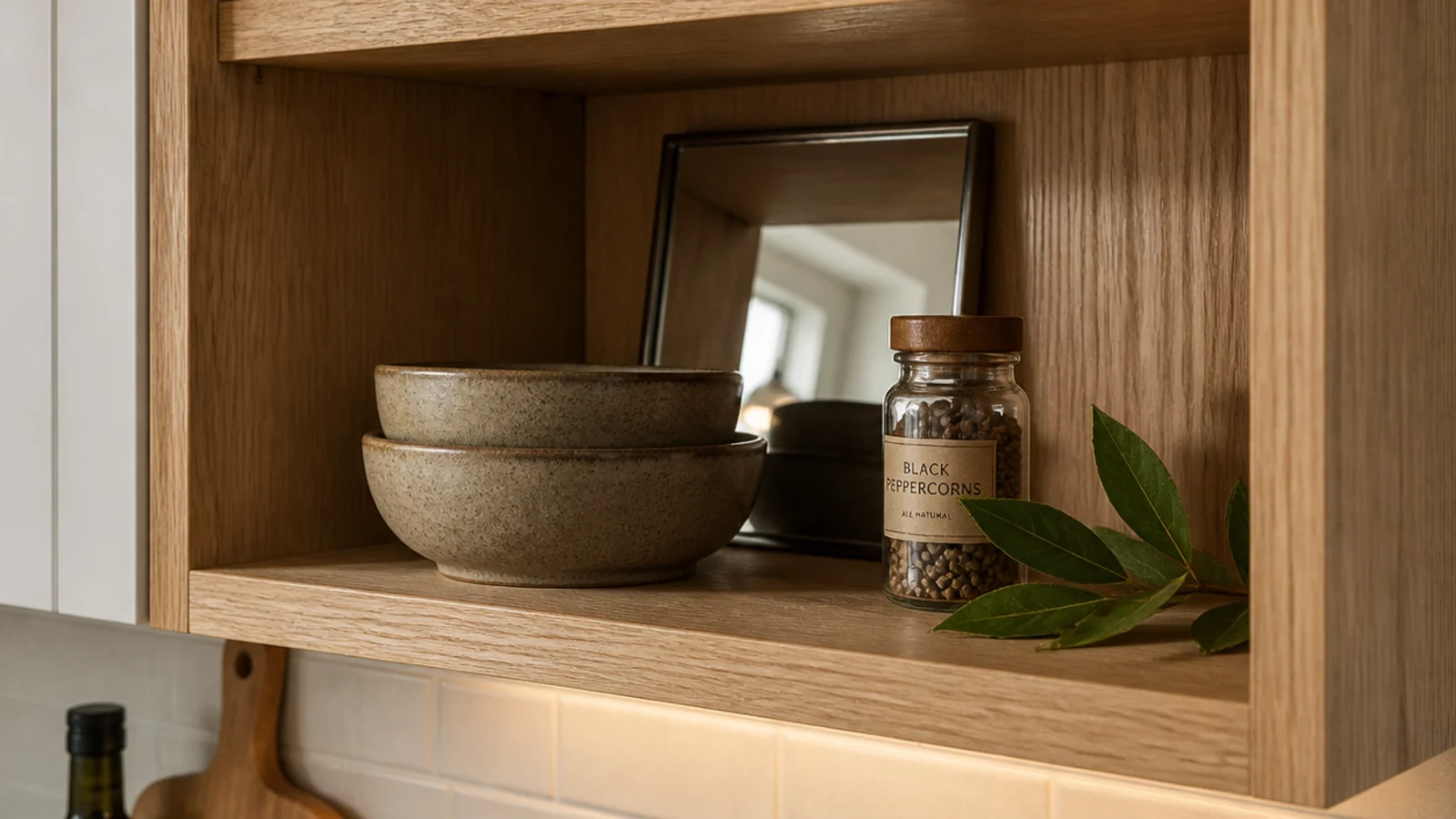
15. Leaning on an open kitchen shelf
A small mirror leaned at the back of an open kitchen shelf adds depth behind bowls and jars, and it wipes clean in seconds.
Choose sealed frames or metal rather than raw timber, since kitchen shelves collect steam. Eight to twelve inches is the useful range.
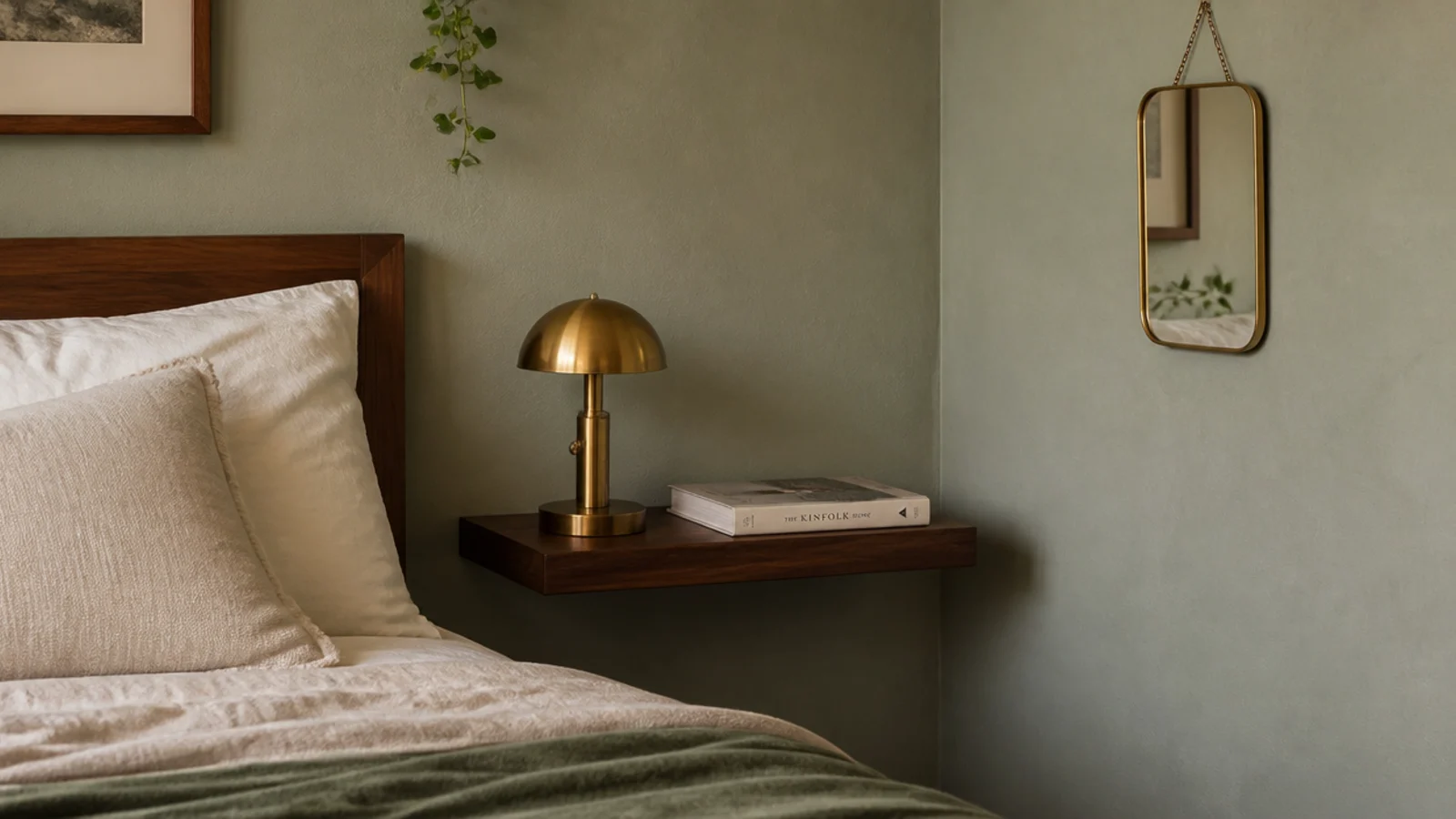
16. Above a floating bedside shelf
Beside a bed, a small mirror lifts a dark corner and gives a floating shelf a backdrop. The placement rule is absolute: never above where a head rests.
Put it on the side wall, or well to the side of the pillow, and keep it genuinely light. Heavy glass belongs nowhere near a bed or a crib, regardless of how good the anchor is.
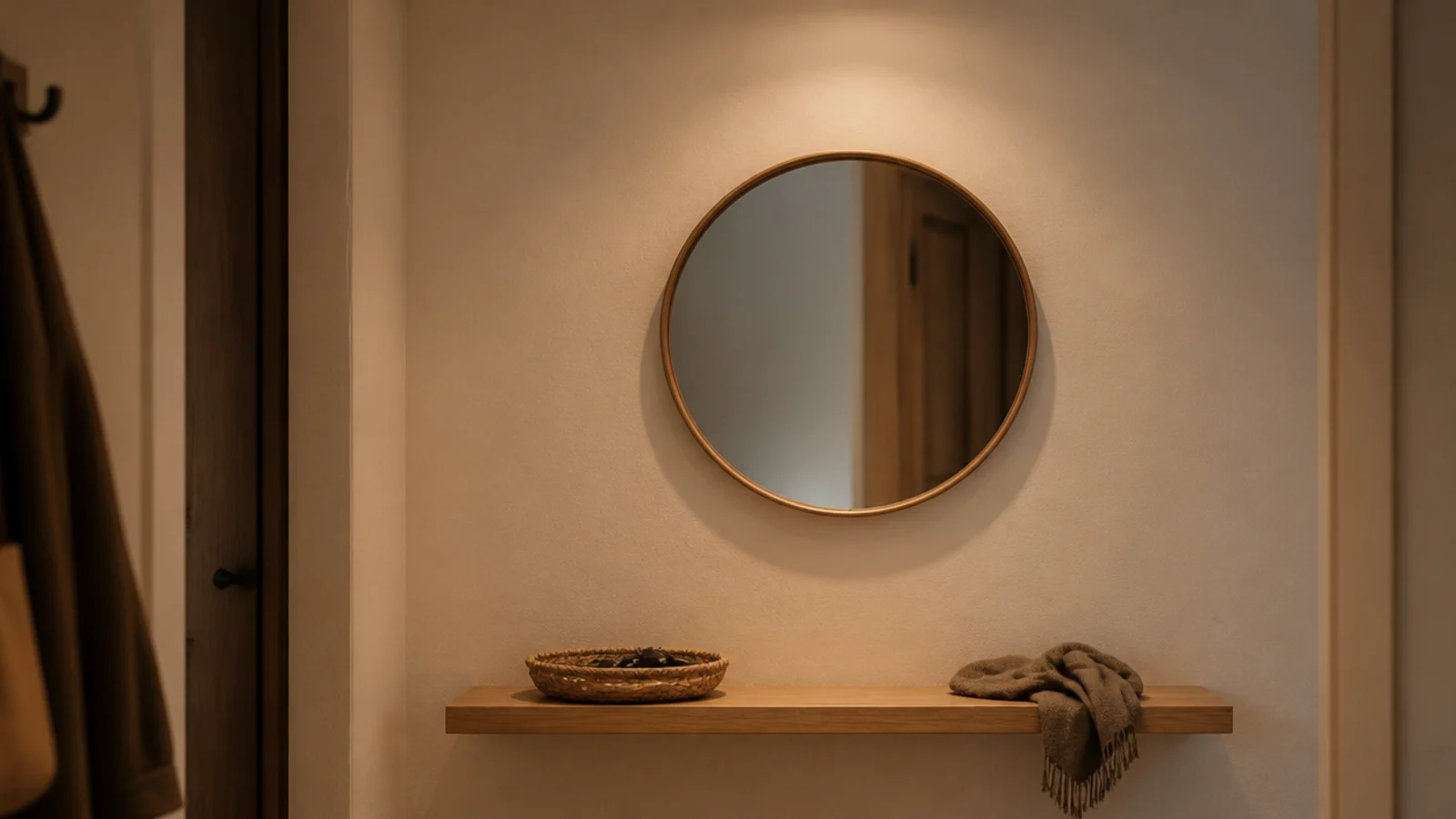
17. A windowless entry at 60 inches
An entry with no window needs one mirror doing two jobs: a last look on the way out and a bounce of whatever light reaches it.
Centre the glass at 60 inches, slightly higher than the living room rule, because people stand close to it. Add a shallow ledge four to six inches deep below with a key tray, and the corner is finished for around $60.
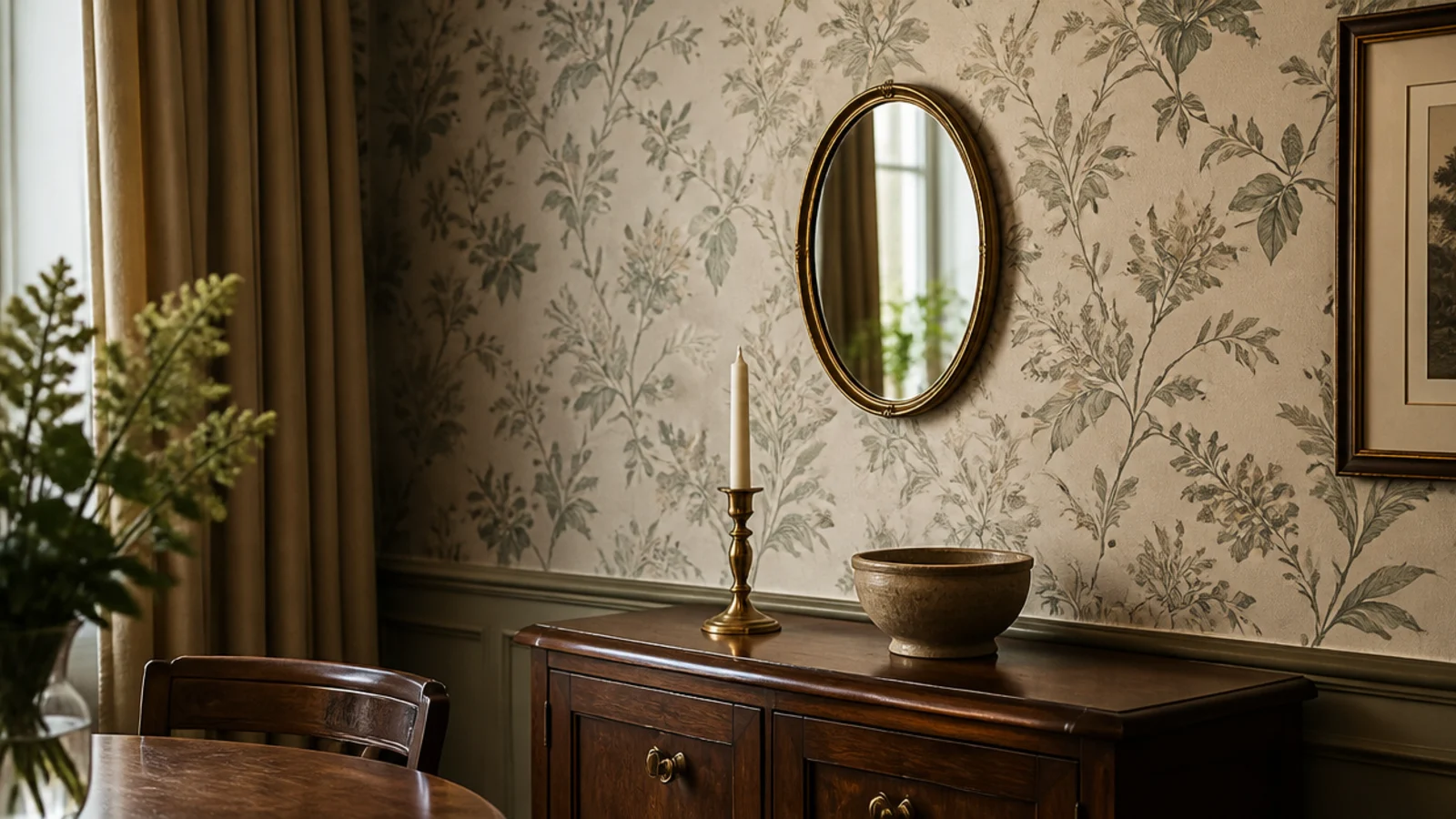
18. Layered over patterned wallpaper
A busy wallpaper needs somewhere for the eye to rest, and a mirror gives it that without introducing another pattern.
Oval or round shapes work best over a botanical or geometric paper, because a curve interrupts a repeat more cleanly than a rectangle. Keep the frame thin and in a finish already in the paper.
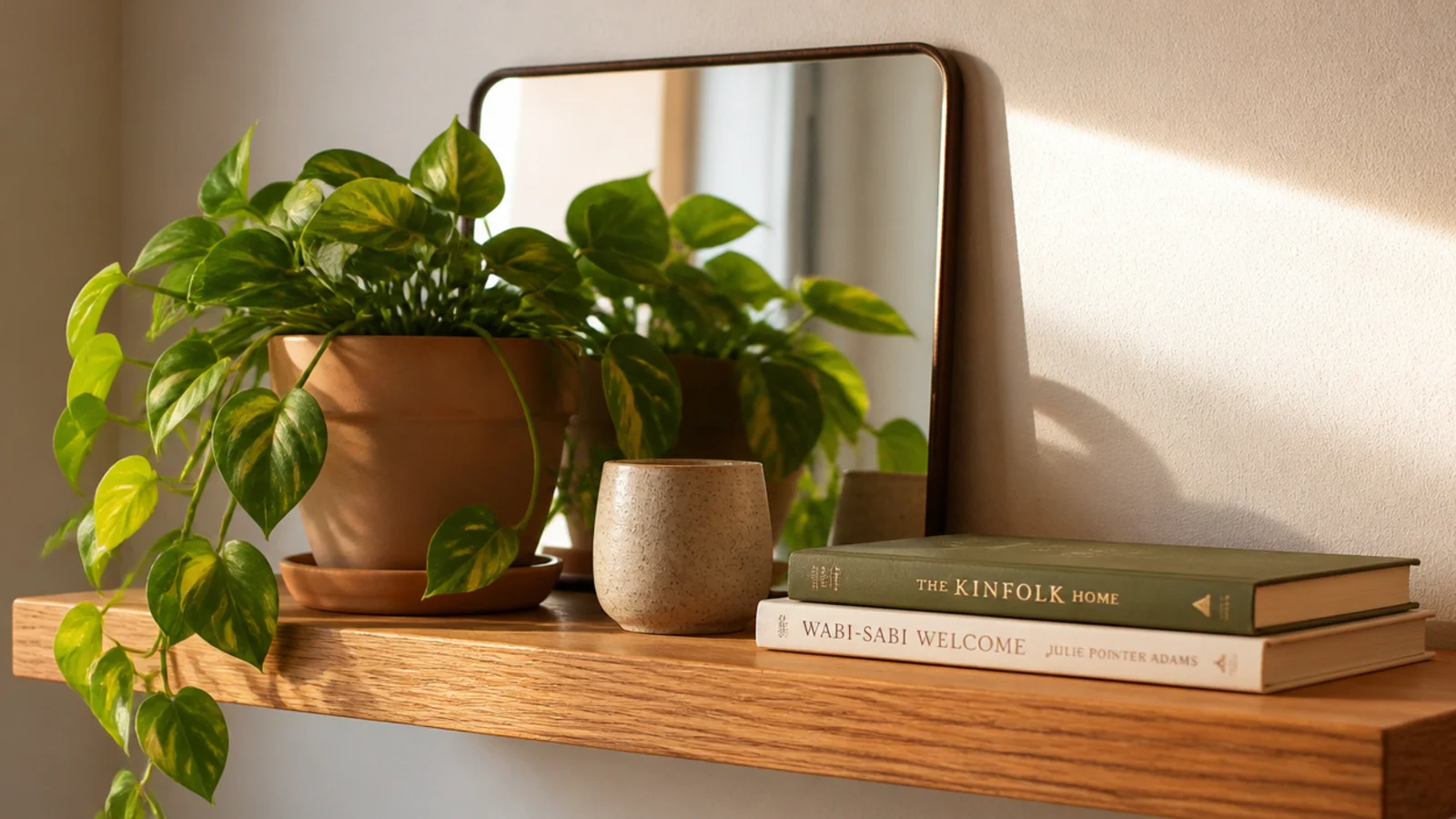
19. Behind a trailing plant on a shelf
Set a small mirror behind a trailing pothos or ivy and the foliage doubles. It is the cheapest way to make one plant look like a collection.
Leave 3 to 4 inches between the pot and the glass so the leaves read separately from their reflection, and wipe the drips once a month.
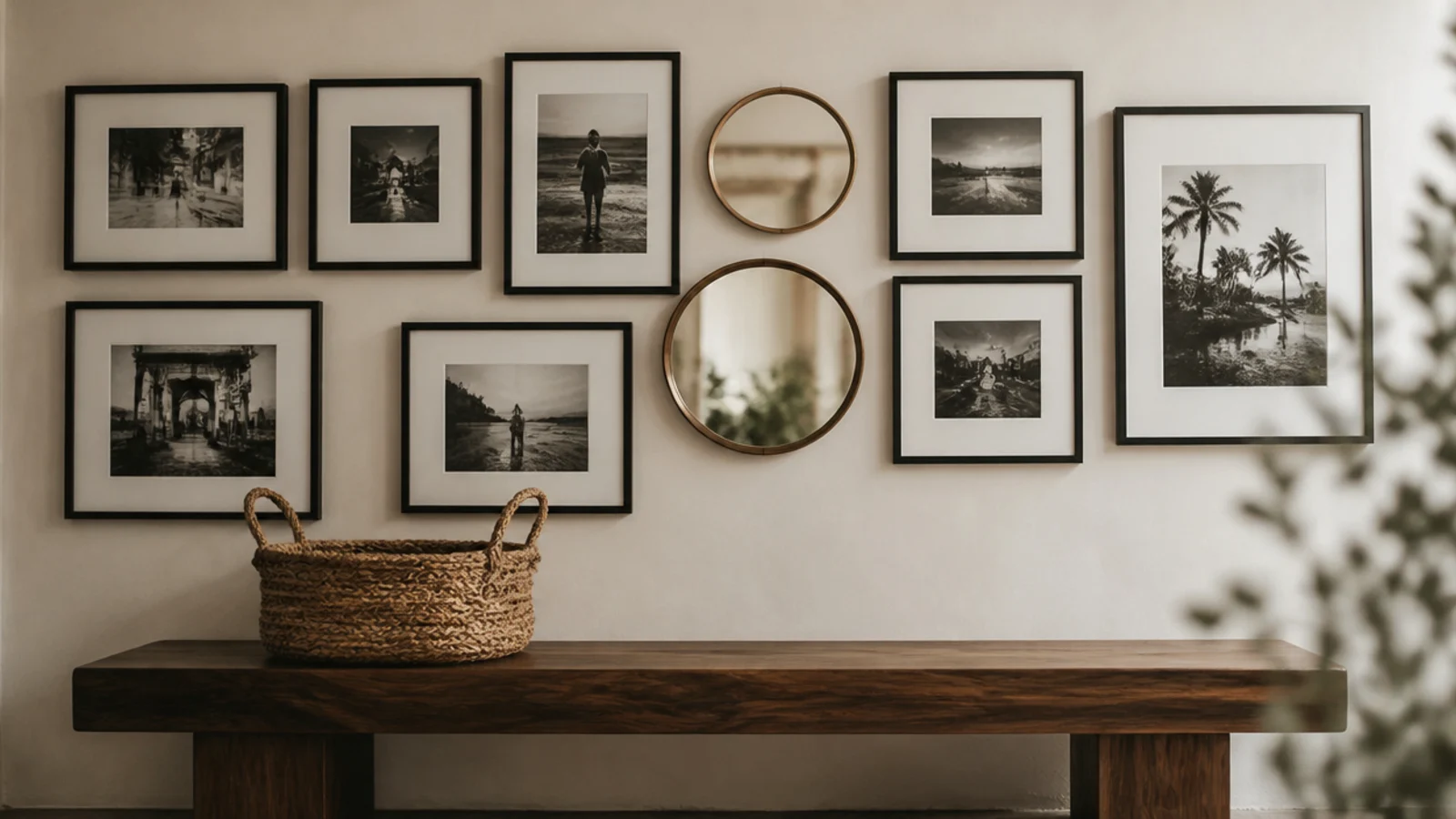
20. Mixed into a photo gallery wall
A gallery wall of only photographs gets dense fast. Swapping two frames for small mirrors gives the group air without losing the shape.
Put the mirrors toward the centre of the arrangement rather than the outer edges, where they mostly reflect ceiling. Match at least one of the mirror finishes to the dominant frame finish so the wall stays one family.
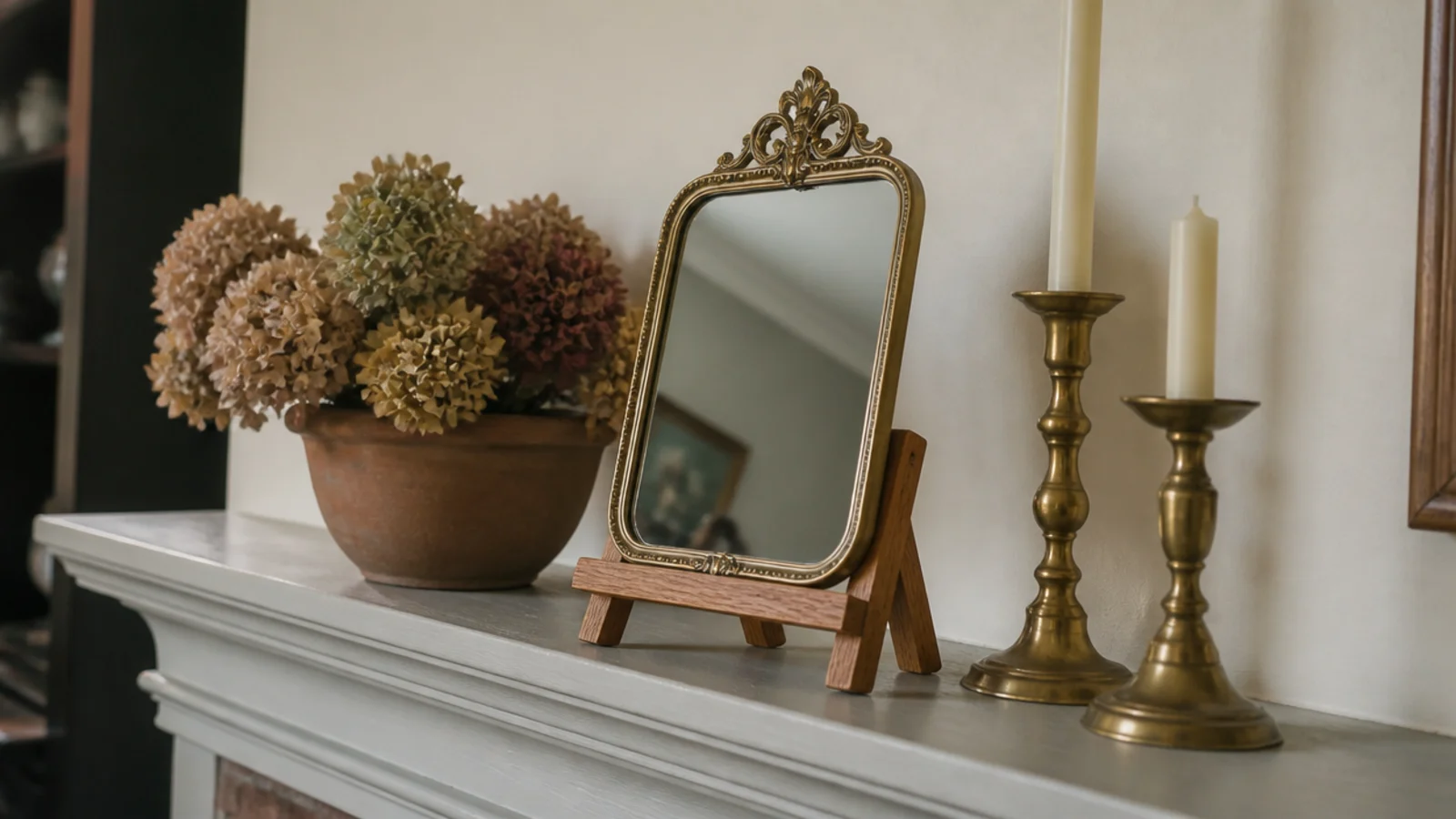
21. On a small easel on the mantel
A tiny ornate mirror on a wooden easel stand reads as art rather than as a fixture, and it needs no wall fixing at all.
Six to nine inches is the right scale on a standard mantel. Group it with two candlesticks at different heights and one low bowl, keeping everything within a third of the mantel length so the shelf does not look loaded.
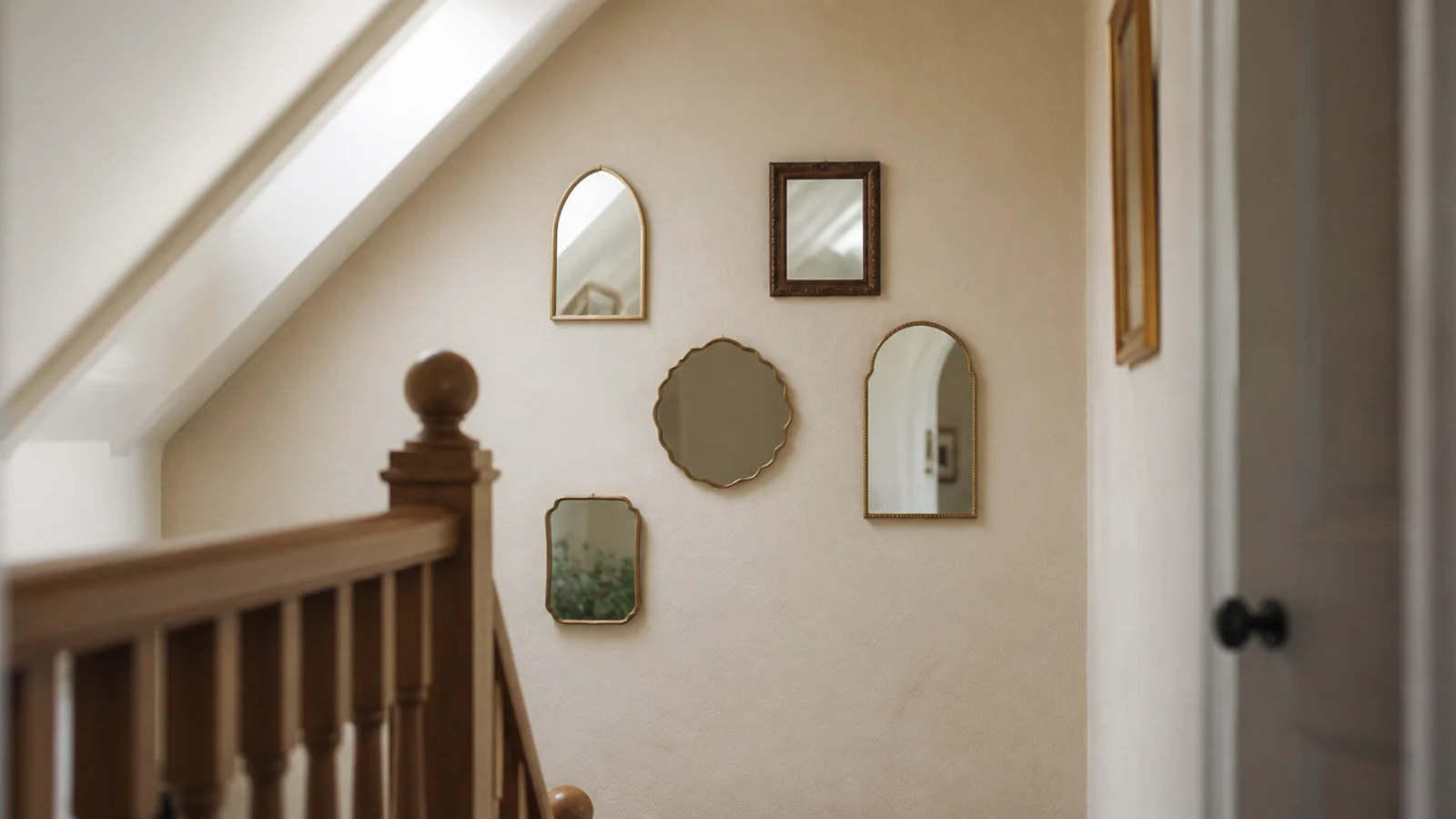
22. A stairwell landing cluster
Tall landing walls are the most under-used real estate in a house. Five small mirrors grouped loosely at eye height from the landing fills the space without the ladder work a large piece requires.
Centre the group on eye level for someone standing on the landing, not halfway up the wall.
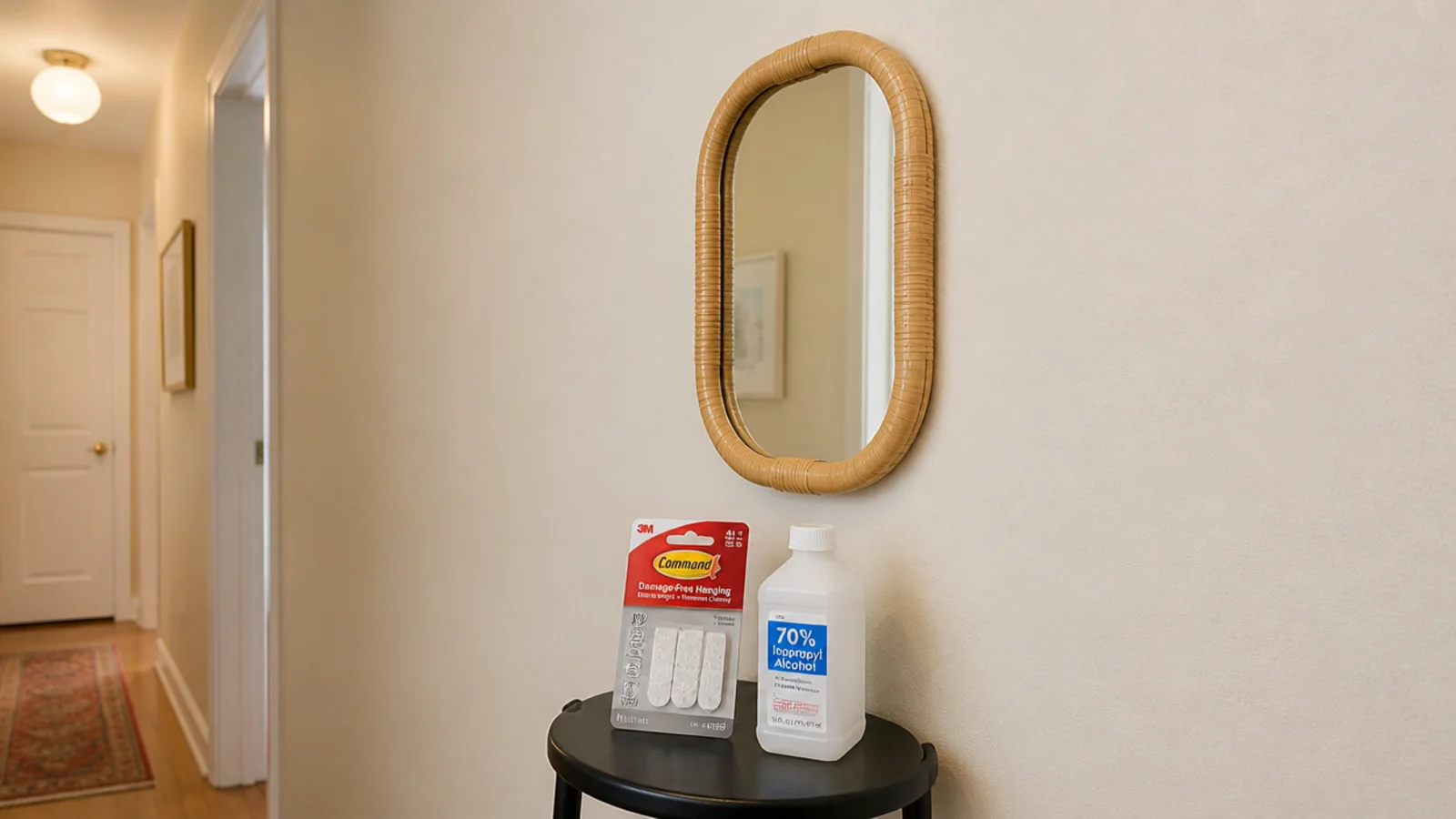
23. Adhesive strips, under five pounds only
This is the renter option and it has a hard ceiling. Heavy-duty strips are rated to about 15 pounds per pair and are not safe for large glass at all.
For a rattan or thin-framed piece under five pounds they are genuinely fine. Clean the wall with rubbing alcohol, press 30 seconds, wait an hour before hanging. Test on hidden paint first, because flat builder-grade paint peels off with the strip.
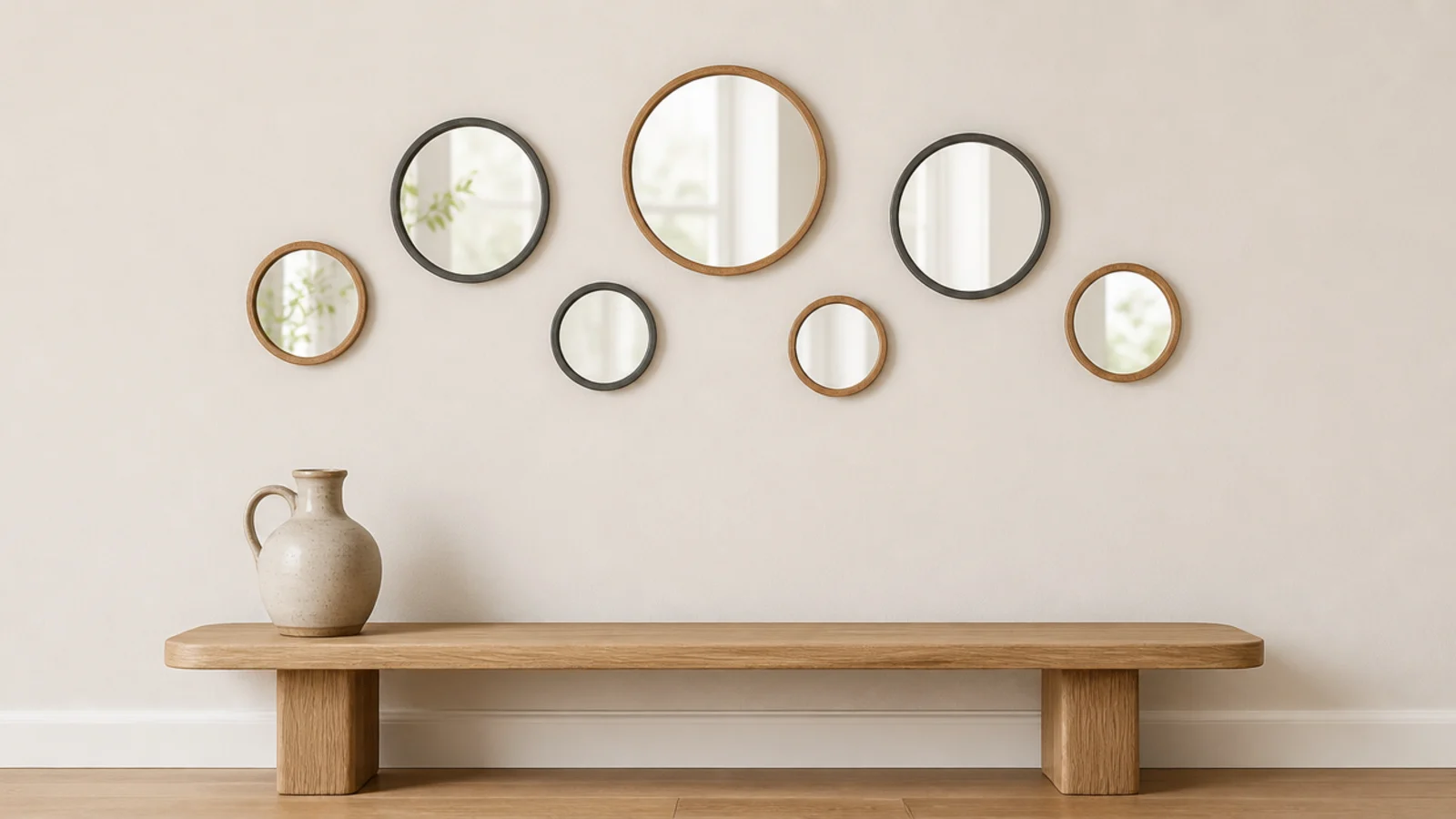
24. Group by shape rather than by size
Seven small rounds in graduated diameters read calmer than seven mixed shapes at the same size. Shared shape carries a group further than shared scale does.
It is the easiest rule when collecting over time: keep buying rounds and the wall keeps working.
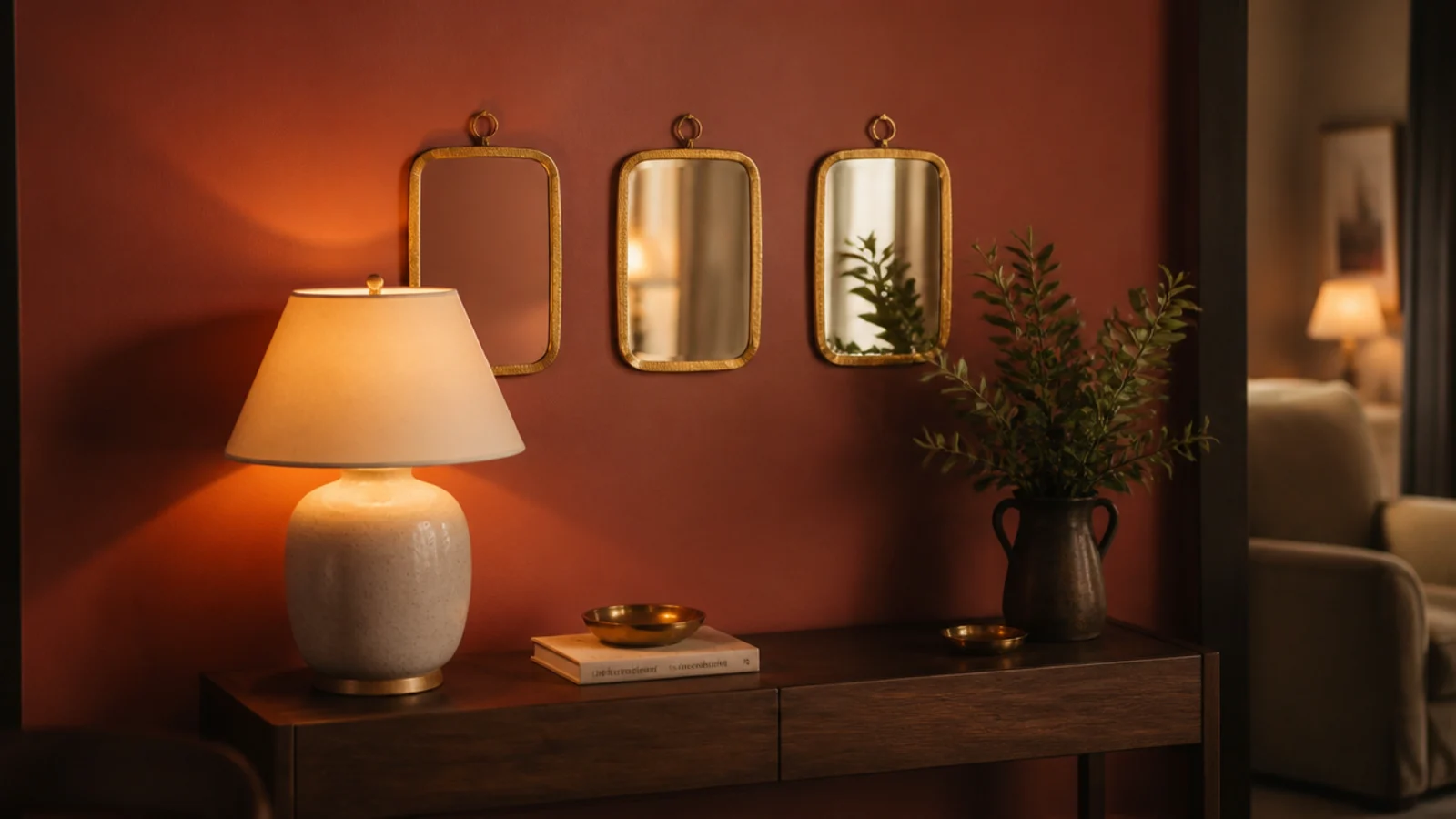
25. Paint the wall behind in a deeper tone
Small mirrors disappear on a pale wall and glow on a deep one. A clay, olive or charcoal wall makes a $20 brass frame read like a much more expensive object.
You do not need the whole room. One painted alcove or the wall behind a console is enough, and a quart runs about $22.
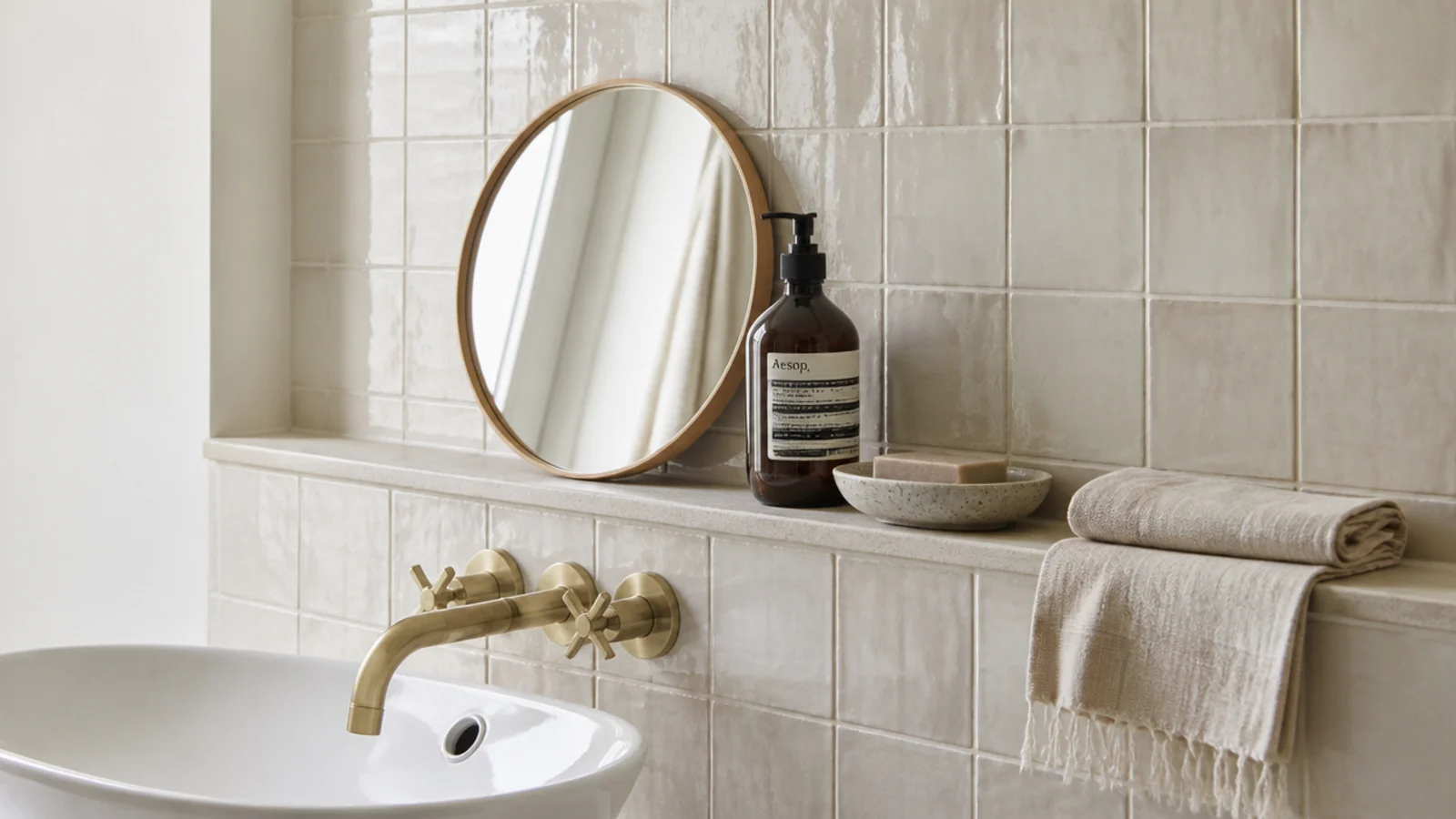
26. A bathroom mirror without drilling
Drilling tile is permanent and awkward, so in a rental bathroom lean rather than hang. A small round resting on a shelf above the basin, against the tile, works perfectly.
Use silicone bumpers under the frame so it cannot slide on a wet surface, and choose a sealed or metal frame that tolerates humidity. Raw timber swells and stains within a season in a room without a window.
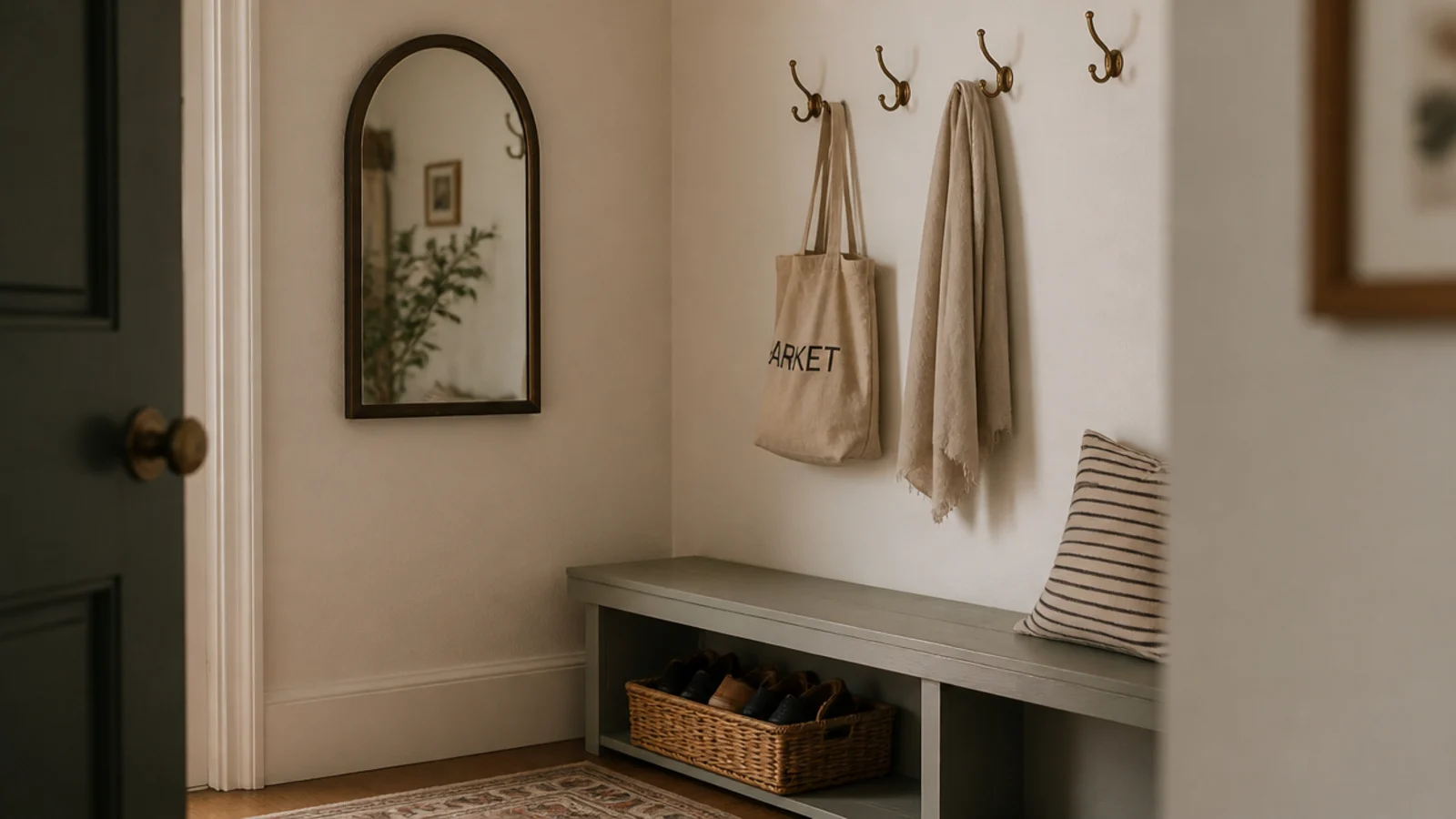
27. Above a mudroom drop-zone bench
A mudroom bench with hooks above it gains a lot from one small arched mirror between the hooks, because that is where a last check actually happens.
Keep it above hook height so coats do not swing into the glass, and pick a robust frame. A basket under the bench finishes the corner, the same logic as any good entryway drop zone.
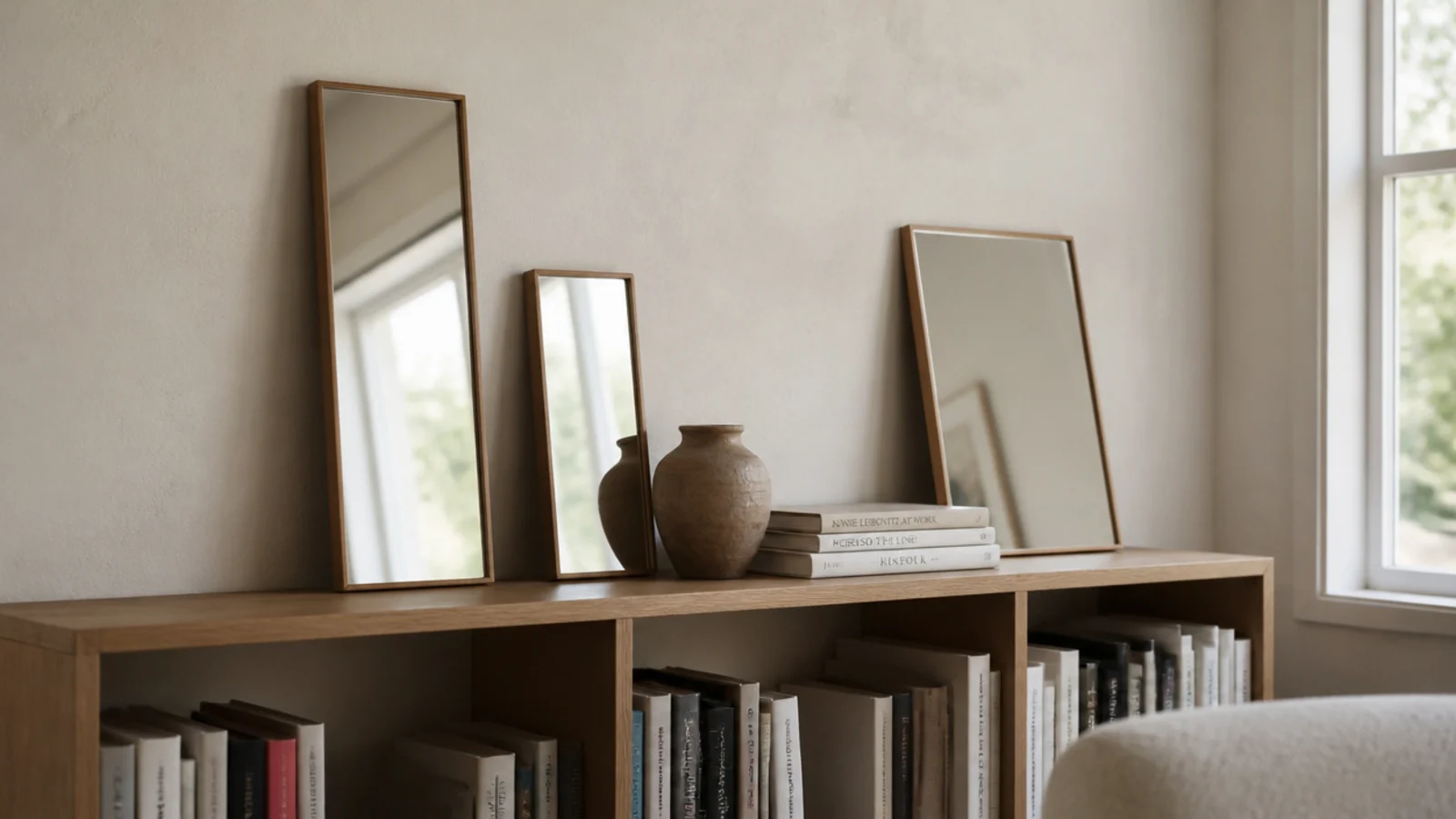
28. Along the top of a low bookcase
Leaning three small mirrors of different heights along the top of a low bookcase gives the piece a back without any wall fixing.
Interleave them with a clay vessel and a stack of books so the row has rhythm. Museum putty under each frame if there are pets.
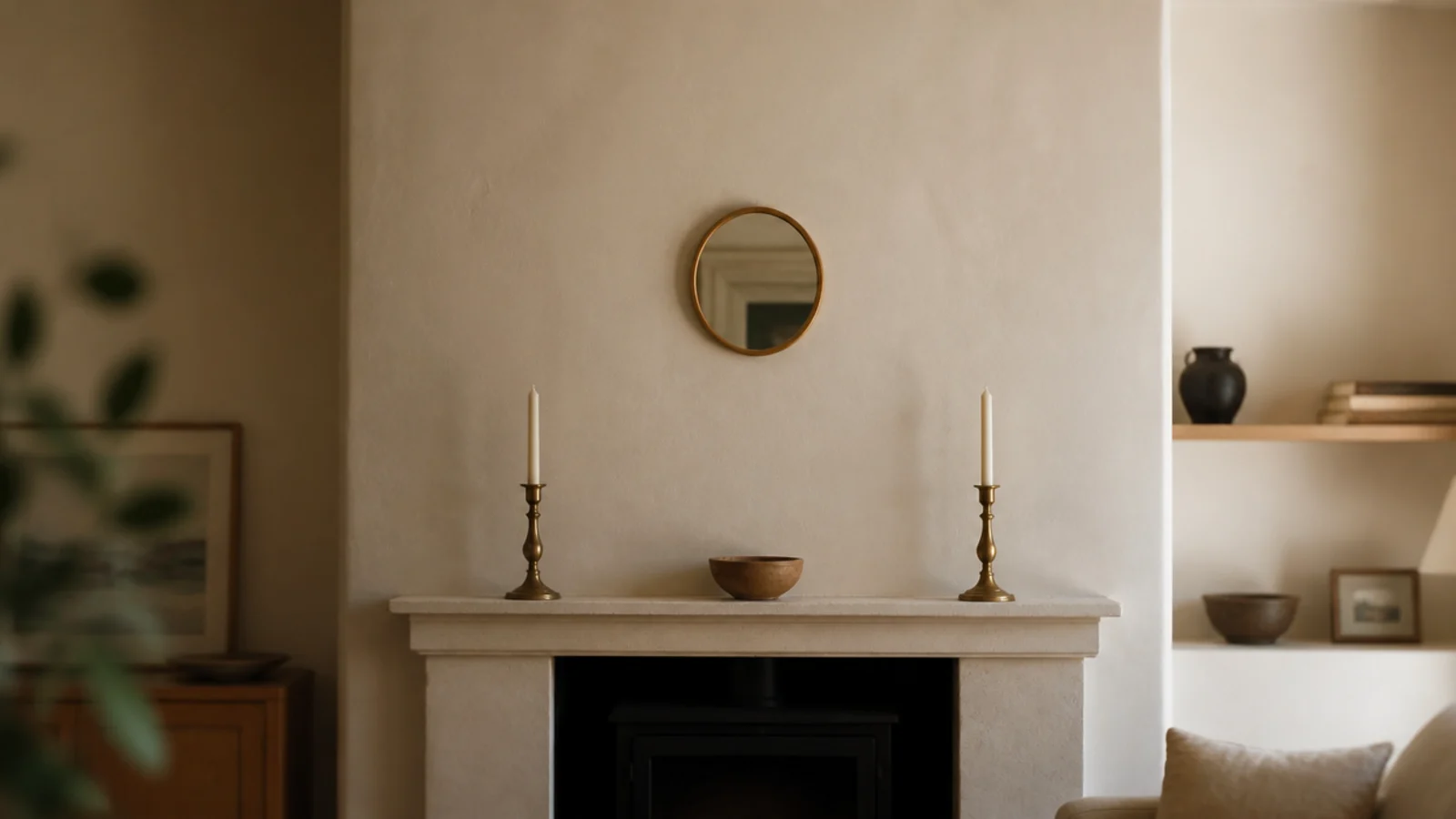
29. One small mirror on a wide chimney breast
The counter-intuitive one. A single small mirror centred high on a wide chimney breast can read more confident than a large piece filling the space.
It only works if the mantel below is styled sparsely and the wall has some depth of colour. Resist adding a second object beside it.
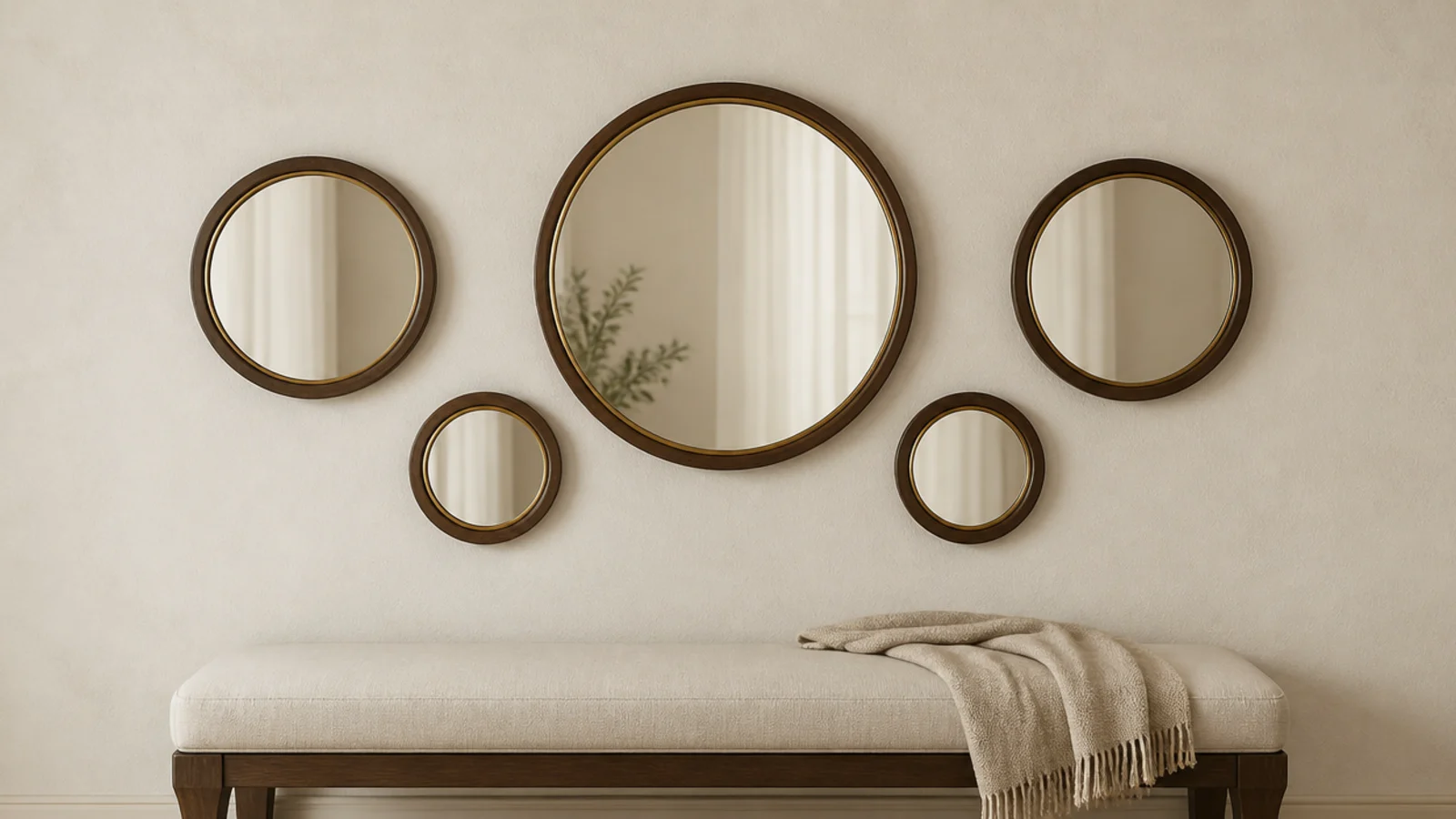
30. Odd numbers, varied sizes, two finishes
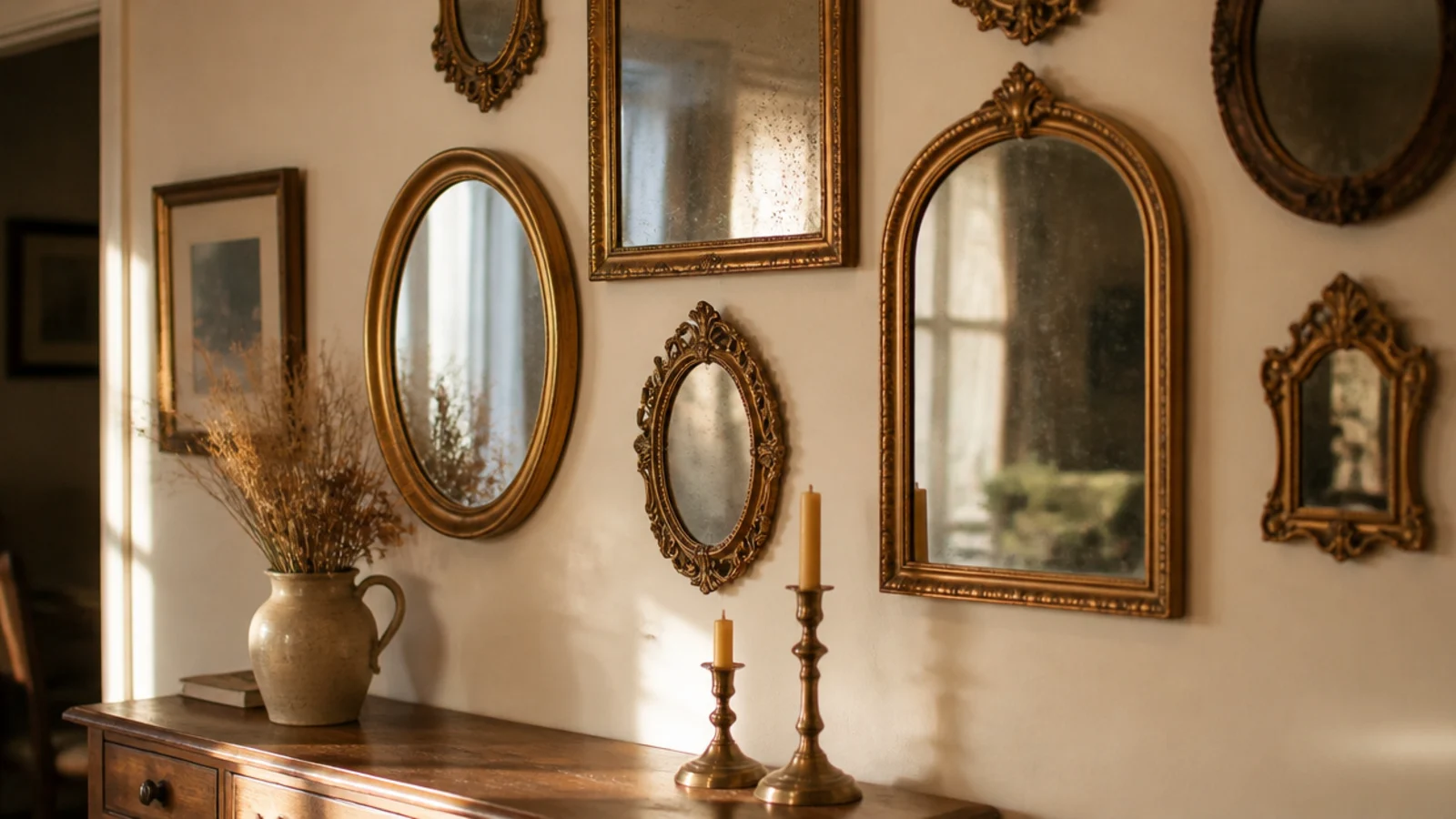
The rule that makes every other idea on this list work. Three, five or seven frames. Graduated sizes rather than repeats. Two finishes across the whole wall and no more.
When a small mirror wall looks wrong, it is almost always because one of those three has slipped — usually the finish count. Take the odd one out, put it in another room, and the wall settles immediately.
Mistakes to Skip
- Scattering small mirrors evenly across a big wall. Spread out they read as spots; grouped tightly with two to three inches between frames they read as one considered piece.
- Using the plastic plug from the box because the mirror is light. It carries about 10 pounds at best and creeps out of drywall slowly, taking a chunk of plaster with it.
- Hanging anything, however small, directly above a bed, a crib or where a head rests on a sofa. Move it to the side wall instead.
Frequently asked questions
What size counts as a small wall mirror?
Anything under about 20 inches across reads as small on a wall, and most decorative pieces in this range weigh 3 to 10 pounds. That weight bracket is what makes them useful, because a single stud screw or a good drywall anchor covers almost every option and clusters become genuinely practical rather than a structural project.
How many small mirrors should I group together?
Odd numbers, so three, five or seven. Three is the easiest to lay out and the hardest to get wrong. Vary the sizes rather than repeating one shape at one scale, keep two to three inches between frames, and stay inside two frame finishes across the whole group so it reads as collected rather than random.
Can small mirrors make a narrow hallway look wider?
Yes, when they go on the long wall rather than the end wall. A mirror facing down a corridor mostly shows you yourself walking toward yourself, which shortens it. On the side wall, small mirrors break the run of blank plaster into rhythm, and a hall reads wider the moment your eye has somewhere to stop.
Do small mirrors need to be hung into studs?
Not usually. Under 10 pounds a single good drywall anchor rated to 25 pounds is plenty, and two points keep the frame from pivoting. Save the stud hunt for anything over 15 pounds. What you should never use is the plastic plug in the box, which carries around 10 pounds at best and creeps out of drywall over months.
How do I hang small mirrors evenly without measuring everything?
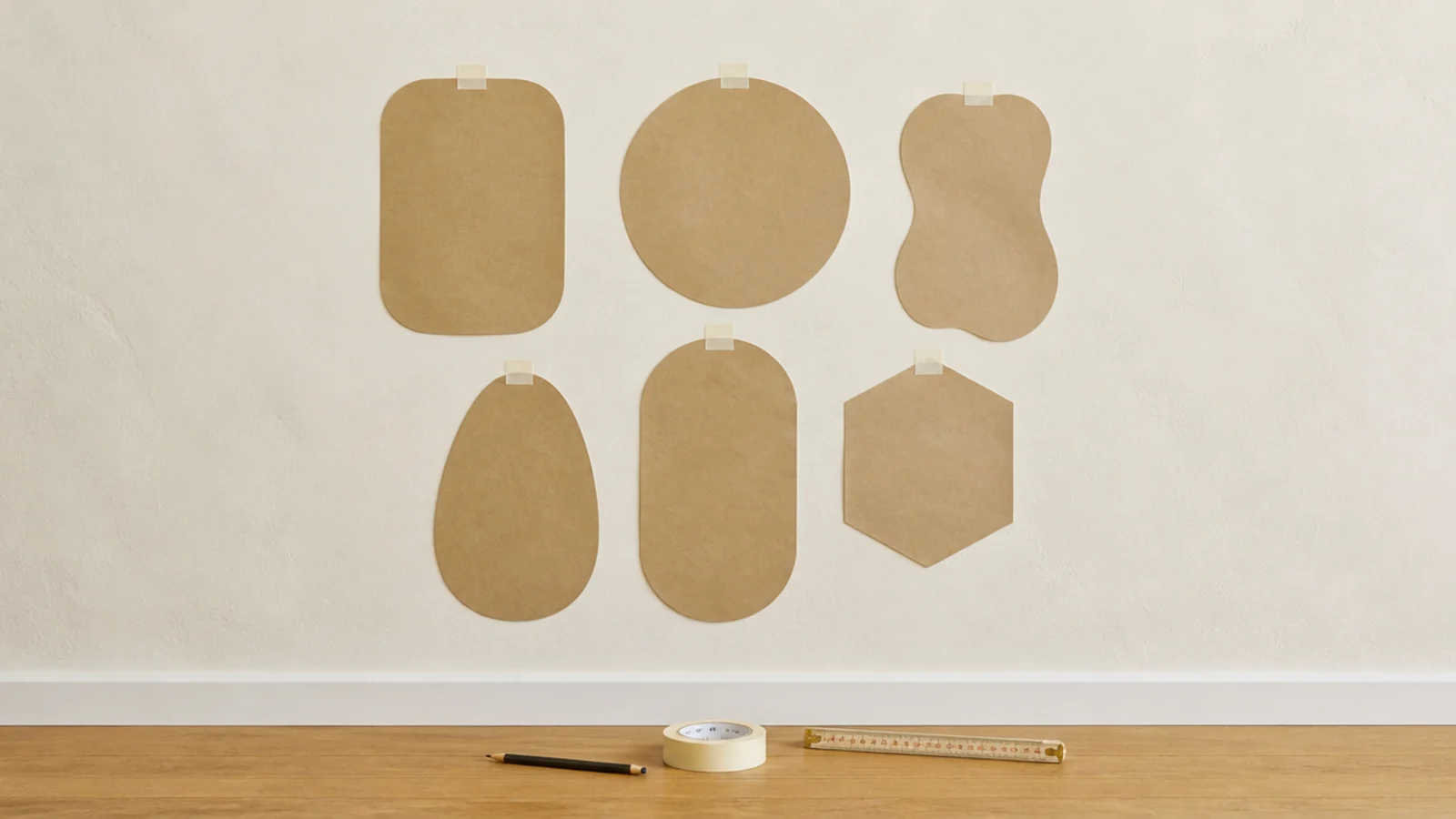
Cut paper templates to the exact frame size, tape them to the wall, and adjust until the gaps look right by eye rather than by ruler. Then mark the hook position through the paper. Walls are rarely square and eyes read spacing better than tape measures do, especially near a ceiling line that slopes.
Start with the wall nobody has decorated yet, because that is usually the one small mirrors were made for. The mirror wall decor ideas guide covers whole-room placement, mirror gallery wall has the layout method step by step, and the mistakes I made first covers what to avoid. Save the pin below before you clear that awkward wall.
Want more like this? Browse all 15 mirror wall decor guides — they all use the same measurements and budget tiers.
Pin it for later
Save this to your Mirror Wall Decor board
Pin it now so it is waiting for you when the tape measure comes out — and so the next person hunting for this idea can find it too.
Save this pinKeep going
More ideas worth saving while you have the tape measure out.