Mirror Wall Decor · Listicle
25 Dreamy Mirror Wall Decor Ideas for Any Home

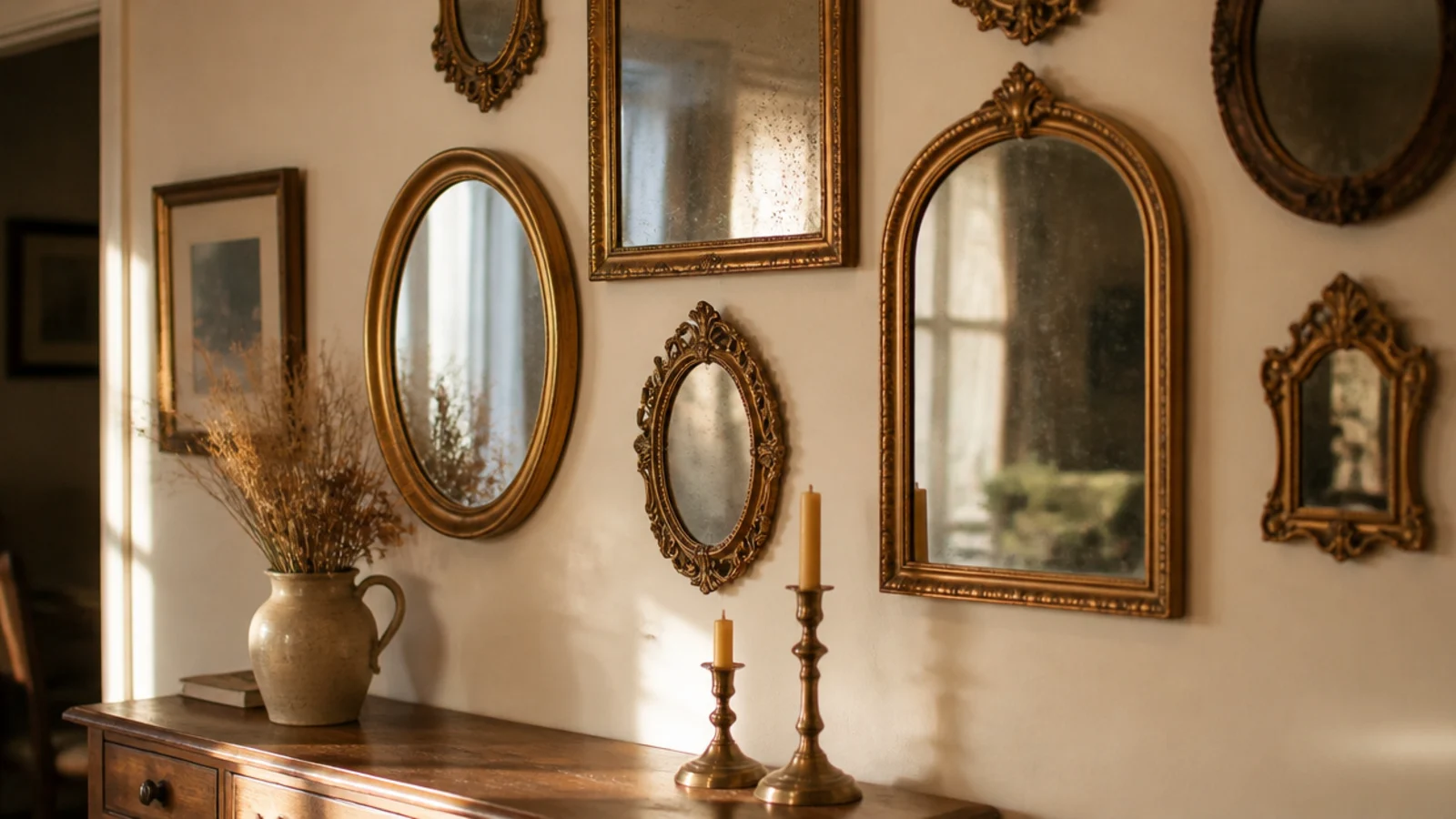
Vintage mirror wall decor is the one category where buying secondhand genuinely gives you a better object than buying new. Old glass has depth that new glass cannot fake, and old frames were built from solid timber rather than moulded resin. What follows is twenty-five ways to use it, plus the checks that tell you whether a beautiful thrift find is safe to hang at all.
In this guide27 sections — tap to openHide
- 1.What makes vintage mirror wall decor read collected
- 2.A single foxed antique mirror over the mantel
- 3.A cluster of gilt frames in mixed sizes
- 4.A thrifted convex bullseye mirror
- 5.A Venetian etched mirror in a hallway
- 6.An old window frame turned mirror
- 7.A carved wood frame stripped back
- 8.A seventies sunburst in real brass
- 9.A pair of gilt sconces flanking the mirror
- 10.Mercury glass patina, handled carefully
- 11.Ornate frames painted flat white
- 12.A leaning antique full-length, strapped
- 13.A stair wall of small oval mirrors
- 14.A vintage barber shop mirror
- 15.An arched ecclesiastical frame
- 16.Rattan and bamboo frames from the seventies
- 17.A brass porthole from a ship chandler
- 18.Antiqued mirror panels in a shallow niche
- 19.A distressed French frame in chalky grey
- 20.Two finishes maximum across the wall
- 21.A picture light above the best piece
- 22.Reframe good old glass in a plain surround
- 23.A vintage mirror above a marble-top console
- 24.When patina is actually damage
- 25.Fixings for old frames and thick glass
- 26.Where to actually find them
- 27.Mistakes to Skip
What makes vintage mirror wall decor read collected
Collected means gathered over time, and there are three ways to fake that convincingly. Vary the sizes so nothing looks like a matched set. Keep the numbers odd — three, five, seven. Hold the whole wall to two frame finishes maximum, because a third finish turns a collection into leftovers.
The second half of the job is structural, and old mirrors make it more important. Antique glass is thicker and antique frames are solid, so a 30-inch antique round often weighs 25 to 35 pounds where a modern one is 15 to 25. Weigh yours on a bathroom scale before choosing hardware, then pick fixings rated at roughly twice that number and go into studs. Two hanging points, never one, so the frame cannot pivot.
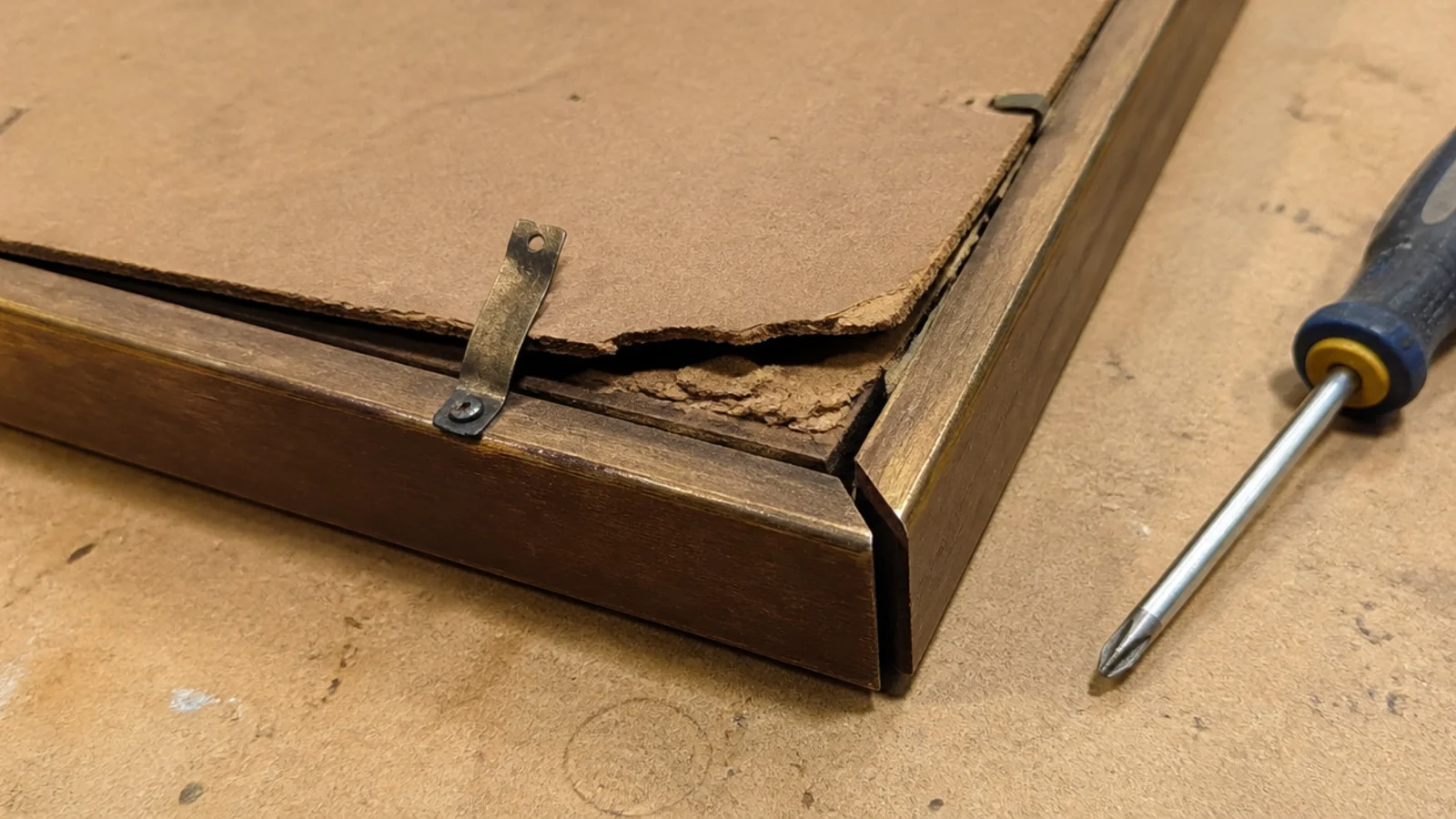
Check the back before the front. Tight clips, a solid backing board and clean mitre joints mean the glass is properly held. A cracked backing means it is not, and that gets fixed first.
Budget tiers here are generous: small thrift frames run $6 to $30 ($), a good gilt or brass statement piece runs $60 to $180 ($$), and a genuine Venetian or large antique is $250 and up ($$$).

1. A single foxed antique mirror over the mantel
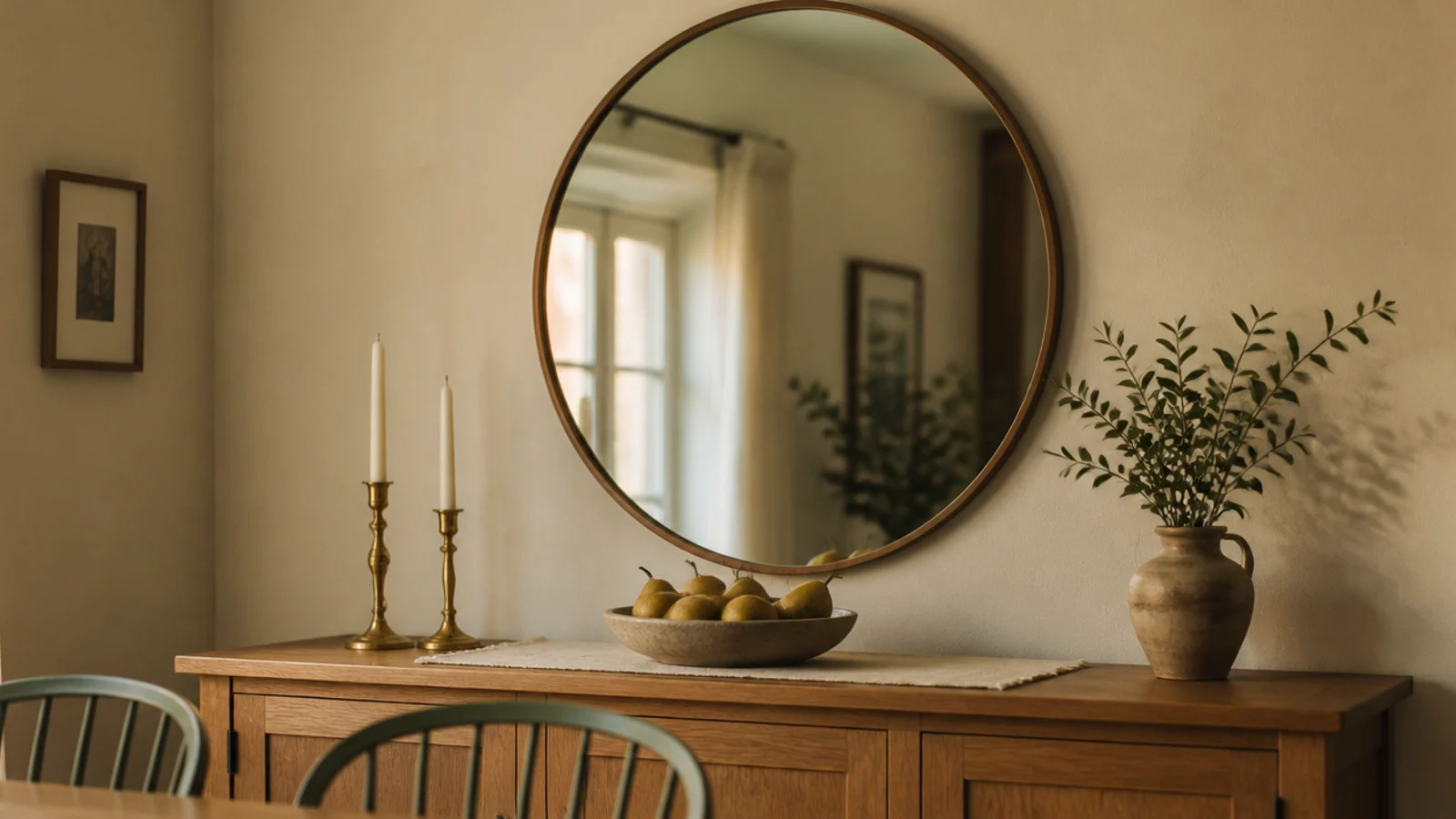
A mantel can carry one large old mirror and nothing else. Foxed glass — the mottled, cloudy silvering that comes from decades of damp — reads as depth rather than damage.
Lean it against the chimney breast rather than hanging it if the mantel shelf is deep enough. Leaning means no holes and lets you slide it left or right until the reflection shows something worth looking at.

2. A cluster of gilt frames in mixed sizes
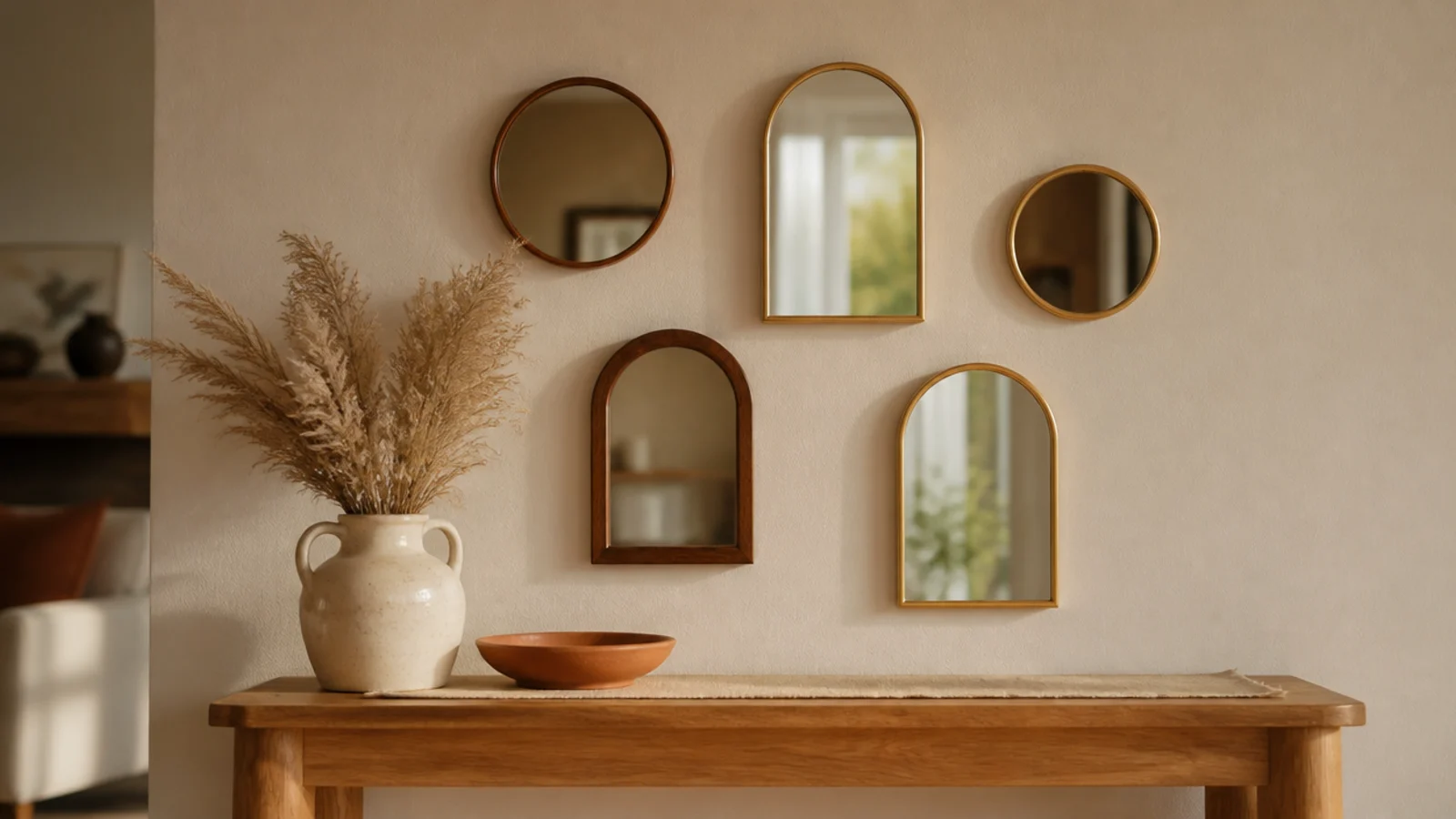
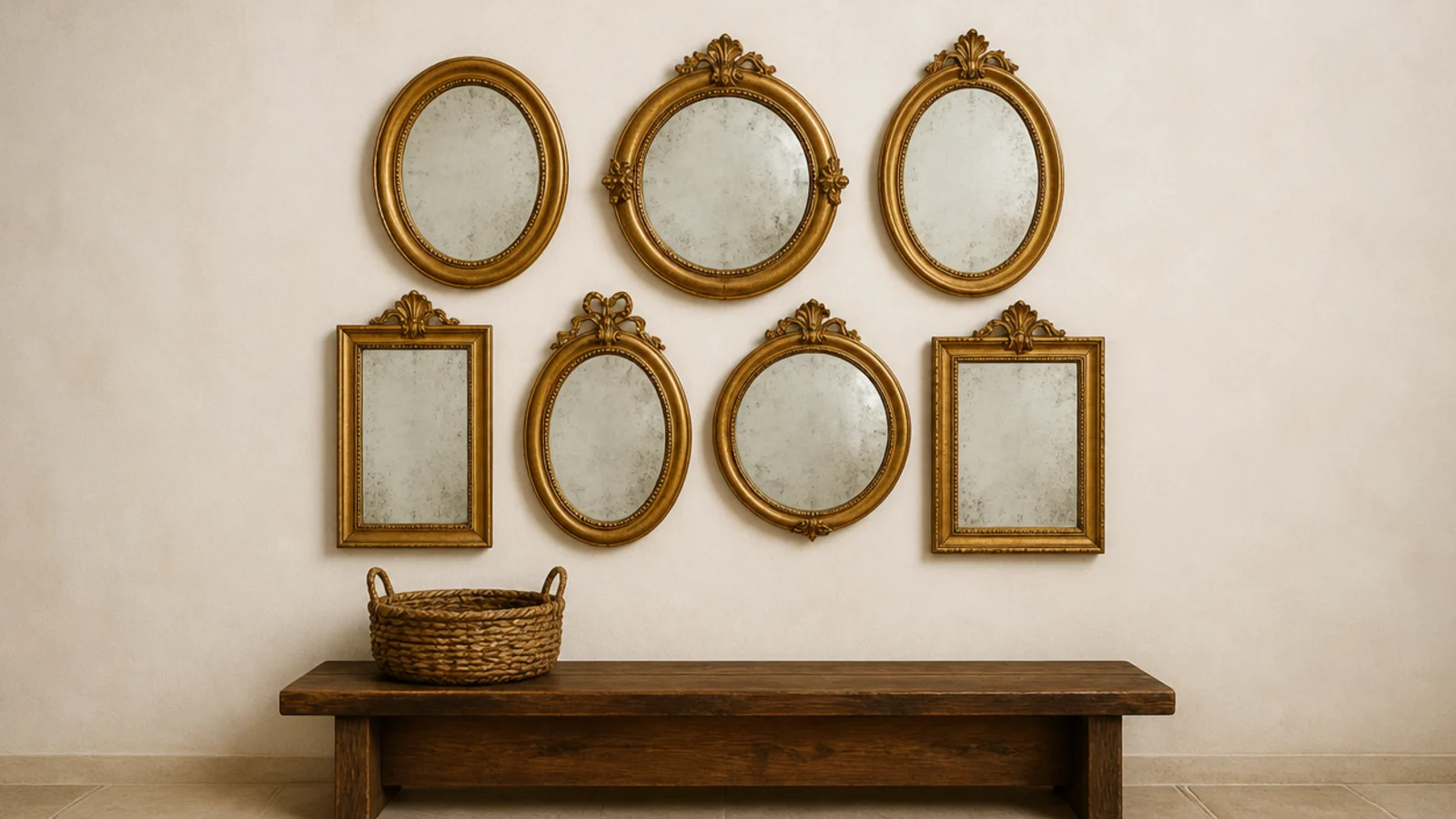
Seven small gilt mirrors grouped tightly read as an heirloom collection. Seven matched ones read as a shop display.
Buy over time from thrift stores at $6 to $20 each, keeping only warm gilt tones together and skipping anything with cool silvering. Space the frames 2 to 3 inches apart and hang the largest slightly below centre, which stops the group floating. Lay it out on the floor first.
3. A thrifted convex bullseye mirror
The Regency bullseye is the most collectible small mirror there is, and reproductions are everywhere for $30 to $80.
Look for a heavy frame, a small ebonised inner slip and glass with slight distortion. It compresses a whole room into one bubble, which makes it far more interesting than a flat mirror at the same size. They are light — usually under 12 pounds — so one good fixing into a stud does it.

4. A Venetian etched mirror in a hallway
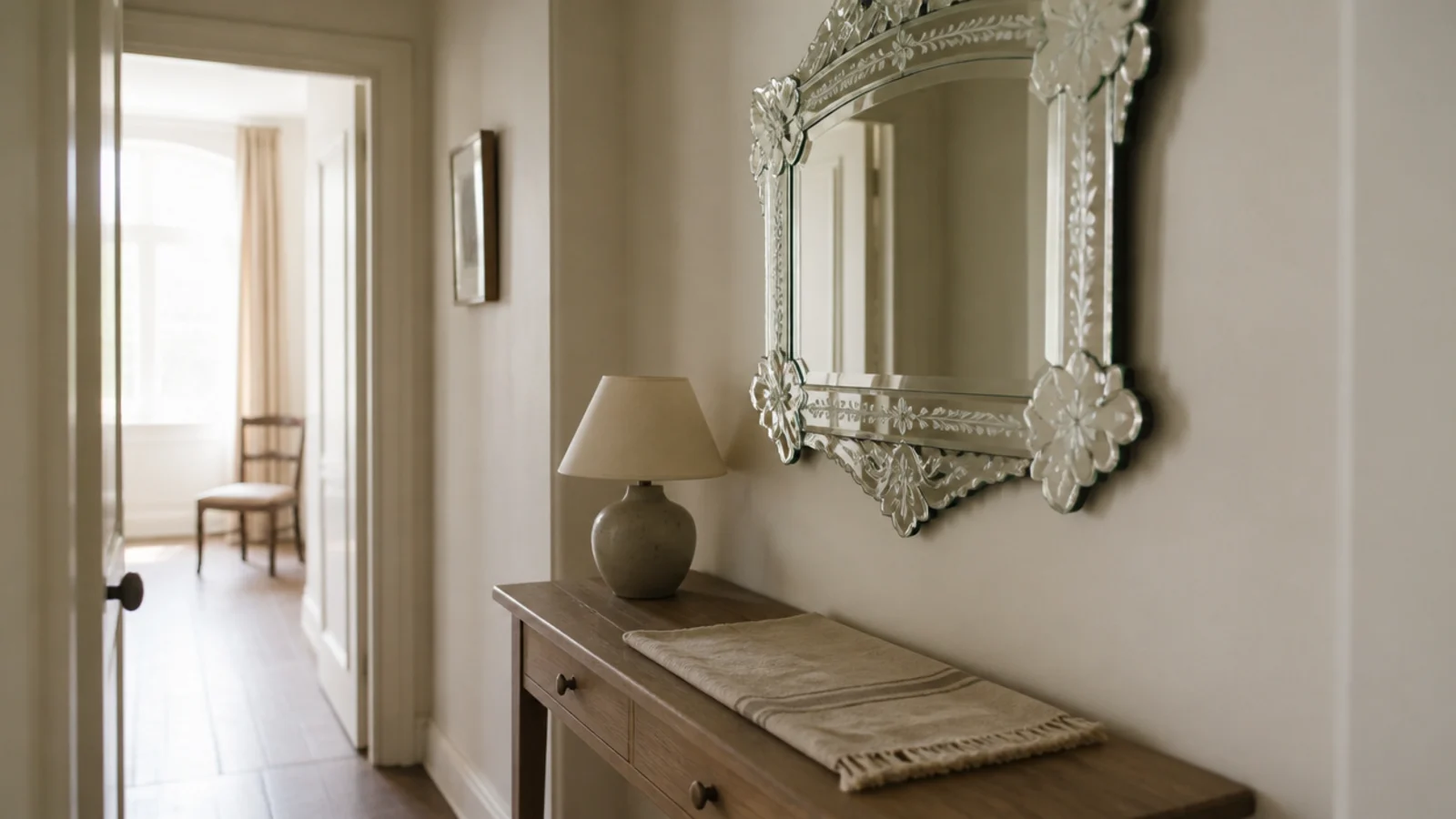
Bevelled and etched glass borders catch daylight in a way no frame can, which is why Venetian pieces work best in dim halls where there is little light to spare.
Genuine antique Venetian runs $300 and up; mid-century reproductions turn up at $80 to $200. Check the border panels for chips at the corners, which is where they fail. Hang the centre at 57 to 60 inches on two fixings.
5. An old window frame turned mirror
Salvaged multi-pane windows fitted with mirror glass are a charity shop staple, and they are much heavier than they look — often 30 to 45 pounds with the glass in.
Treat it as a heavy hang: two D-rings, two screws into studs, and a check that the timber has not gone soft anywhere. Flaking exterior paint on a pre-1978 window may be lead-based, so seal rather than sand it, and keep it out of children's rooms.

6. A carved wood frame stripped back
Ornate gilding is not for everyone. Stripping a carved frame back to bare timber gives you the shape without the shine, and it sits beautifully with linen, clay and oak.
Use a paste stripper rather than sanding, work it into the carving with a stiff brush, then finish with clear wax rather than varnish. Expect an afternoon plus drying, and expect the timber underneath to be softer and paler than you imagined.

7. A seventies sunburst in real brass
Sunbursts came back and never really left. The vintage ones are solid brass with individually soldered spokes, and they age to a warm honey nobody manufactures.
Check the spokes for straightness and the centre disc for loose glass. Real brass responds to a magnet test by ignoring it entirely — plated steel does not. Expect $60 to $200 depending on diameter, and hang it as the only thing on that wall.

8. A pair of gilt sconces flanking the mirror
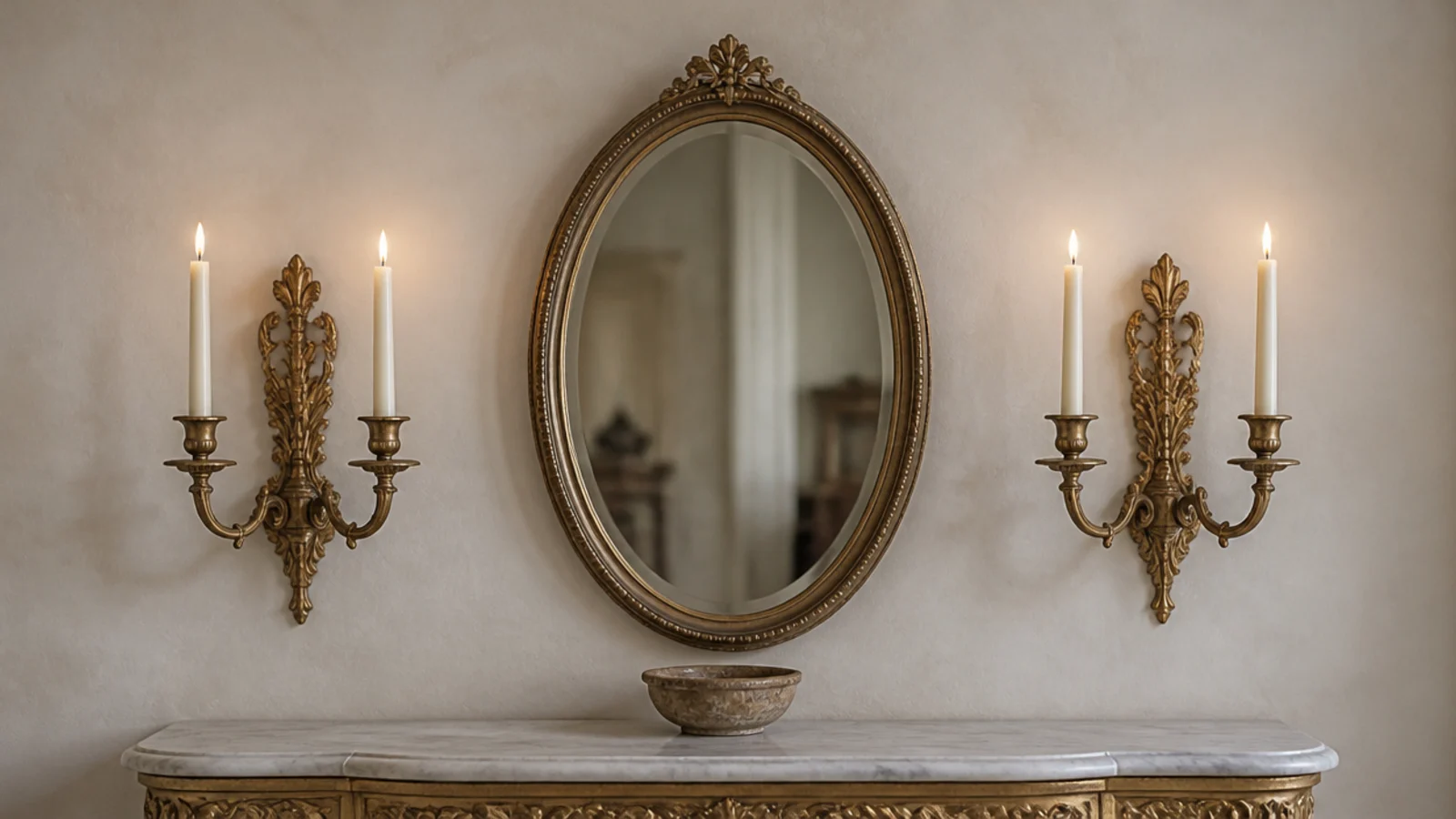
Sconces either side turn a mirror into a composition rather than an object. Antique gilt candle sconces are one of the last genuinely cheap vintage categories at $20 to $50 a pair.
Hang them so the candle cups sit level with the mirror's vertical centre, roughly 8 to 12 inches out from the frame edge. Use them with real tapers or convert to battery — either works, and neither needs an electrician.
9. Mercury glass patina, handled carefully
Genuine mercury glass mirrors have a silvery clouding and dark speckling that is unrepeatable. They are also fragile, and the backing may contain material you do not want to disturb.
Never wet clean one. Dust with a dry microfibre cloth and leave the surface alone entirely. If the silvering is flaking at the back, keep the piece sealed in its frame and do not attempt a repair yourself — that patina is worth more intact than improved.
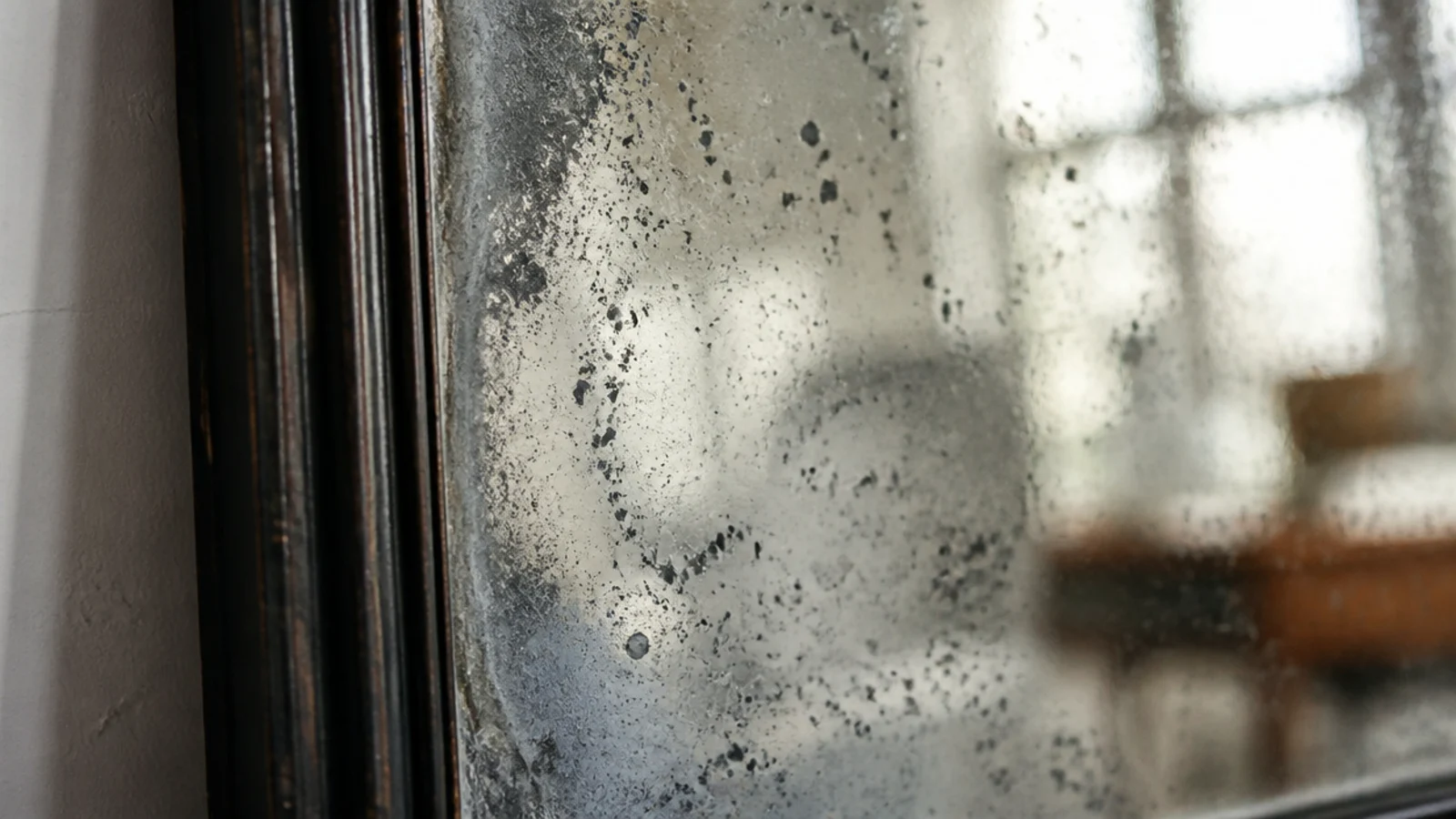
10. Ornate frames painted flat white
A heavily carved gilt frame you half-love becomes lovable in flat chalky white. The carving survives as shadow, the shine goes, and the glass becomes the subject.
Two thin coats of flat or chalk paint, brushed carefully into the detail so it does not pool. Skip primer on old gesso and skip gloss entirely — shine on a moulded frame reads as plastic. A sample pot at $9 does two mirrors.
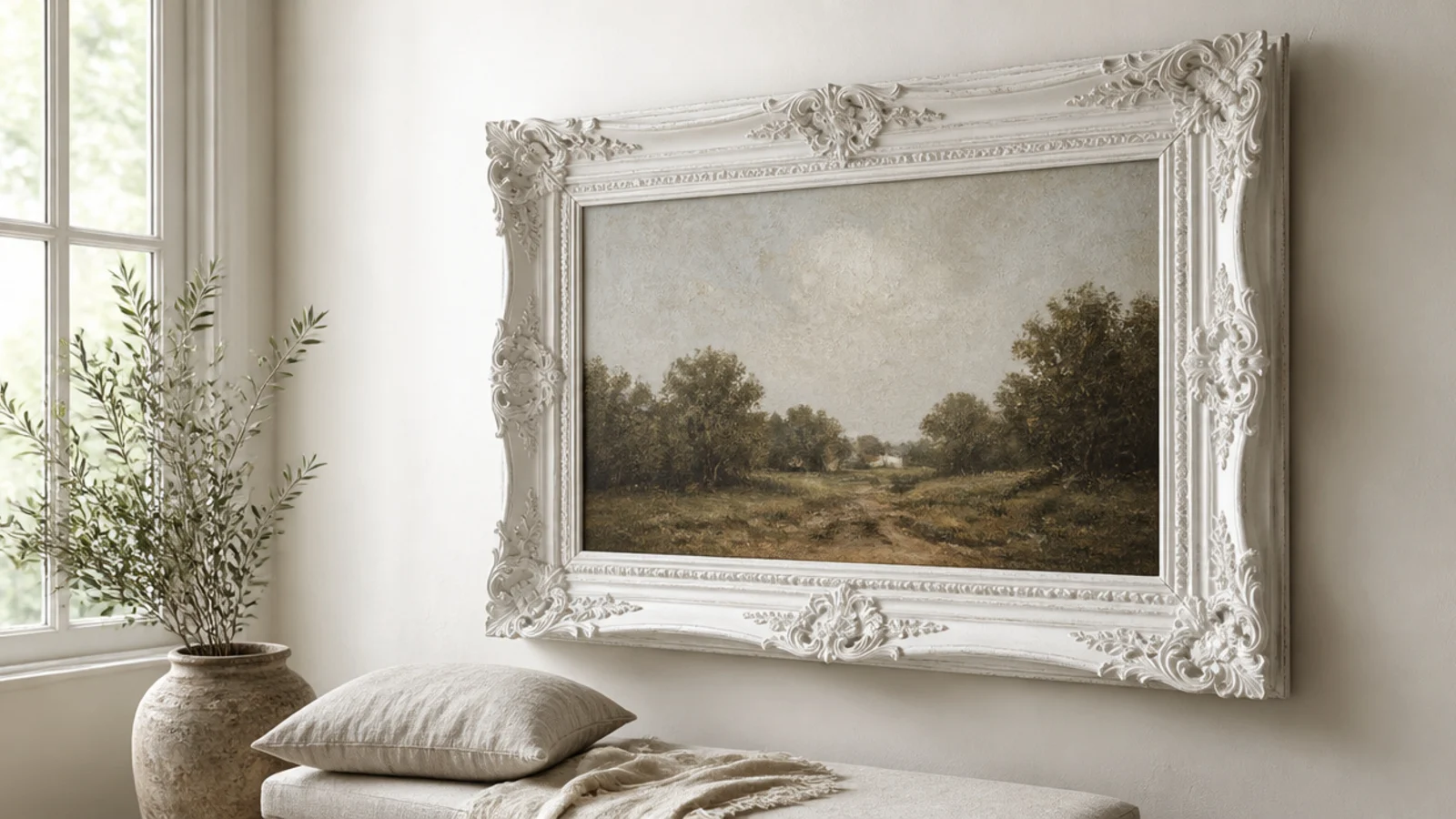
11. A leaning antique full-length, strapped
An old full-length mirror leaned against a bedroom wall is the single dreamiest piece on this list, and the heaviest. These regularly exceed 60 pounds.
Strap it. One nylon furniture strap and one screw into a stud, hidden behind the frame, is the whole job. In a home with children this is not optional under any circumstances — a tipping antique mirror is not a decorating problem, it is an emergency room visit.
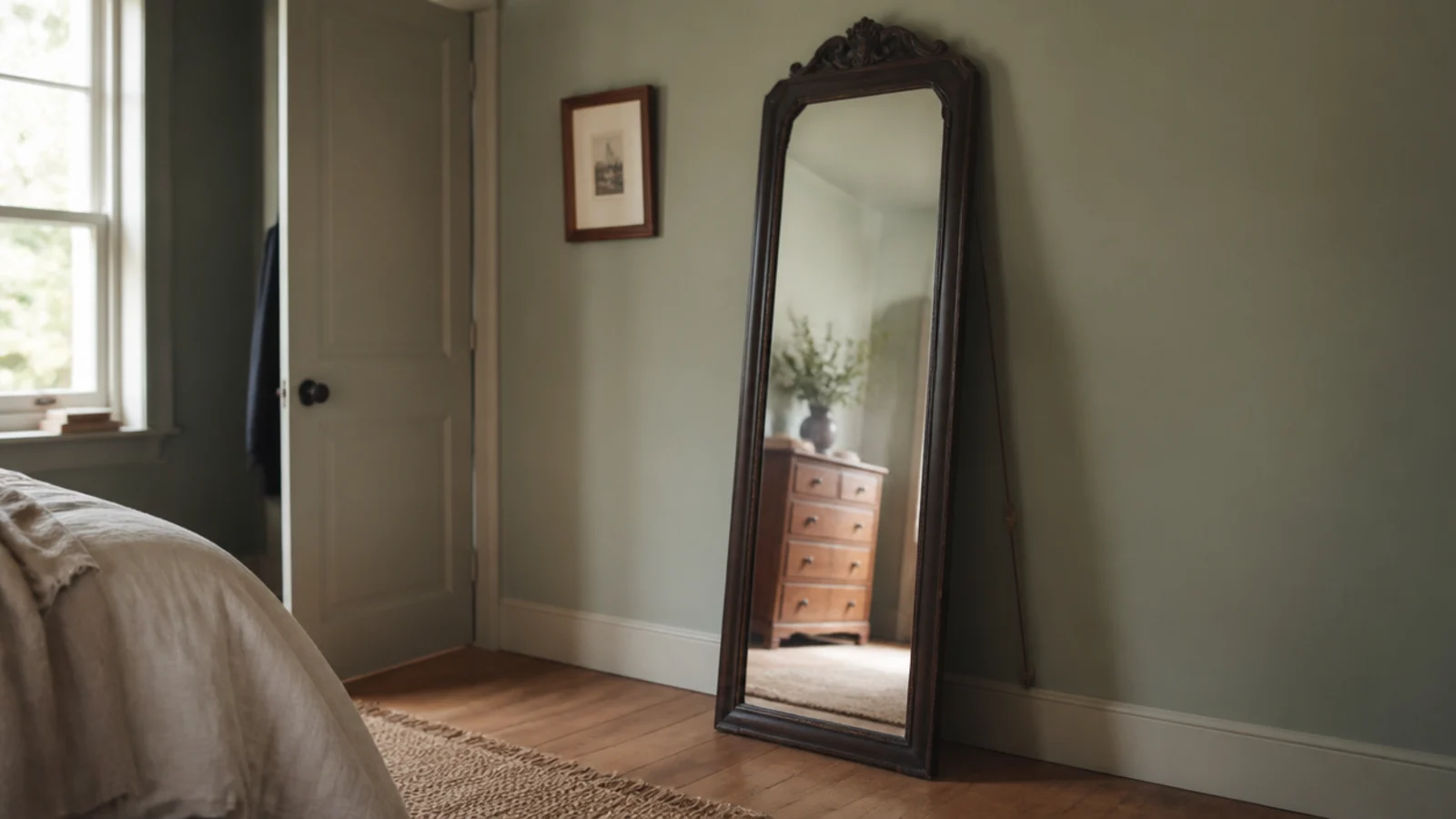
12. A stair wall of small oval mirrors
Staircase walls are hard to decorate because nothing lines up. Small oval mirrors climbing in a stepped rhythm solve it, because the eye reads the angle rather than the alignment.
Follow the handrail line, not the ceiling, keeping each mirror the same distance above the nosing of the tread below it. Six small ovals at $10 to $25 each cover a full flight. Keep them light, since stair walls are awkward to reach for maintenance.
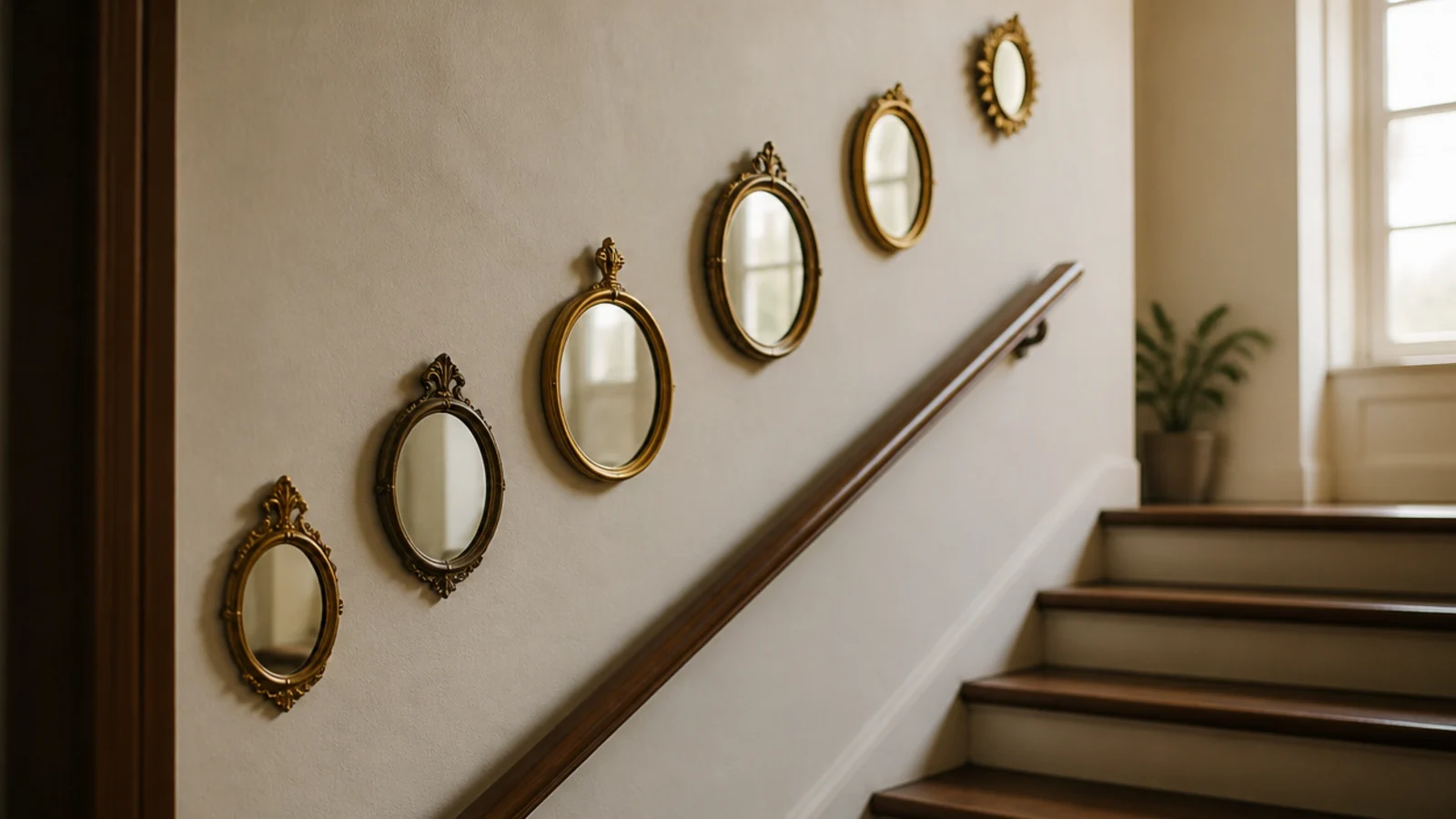
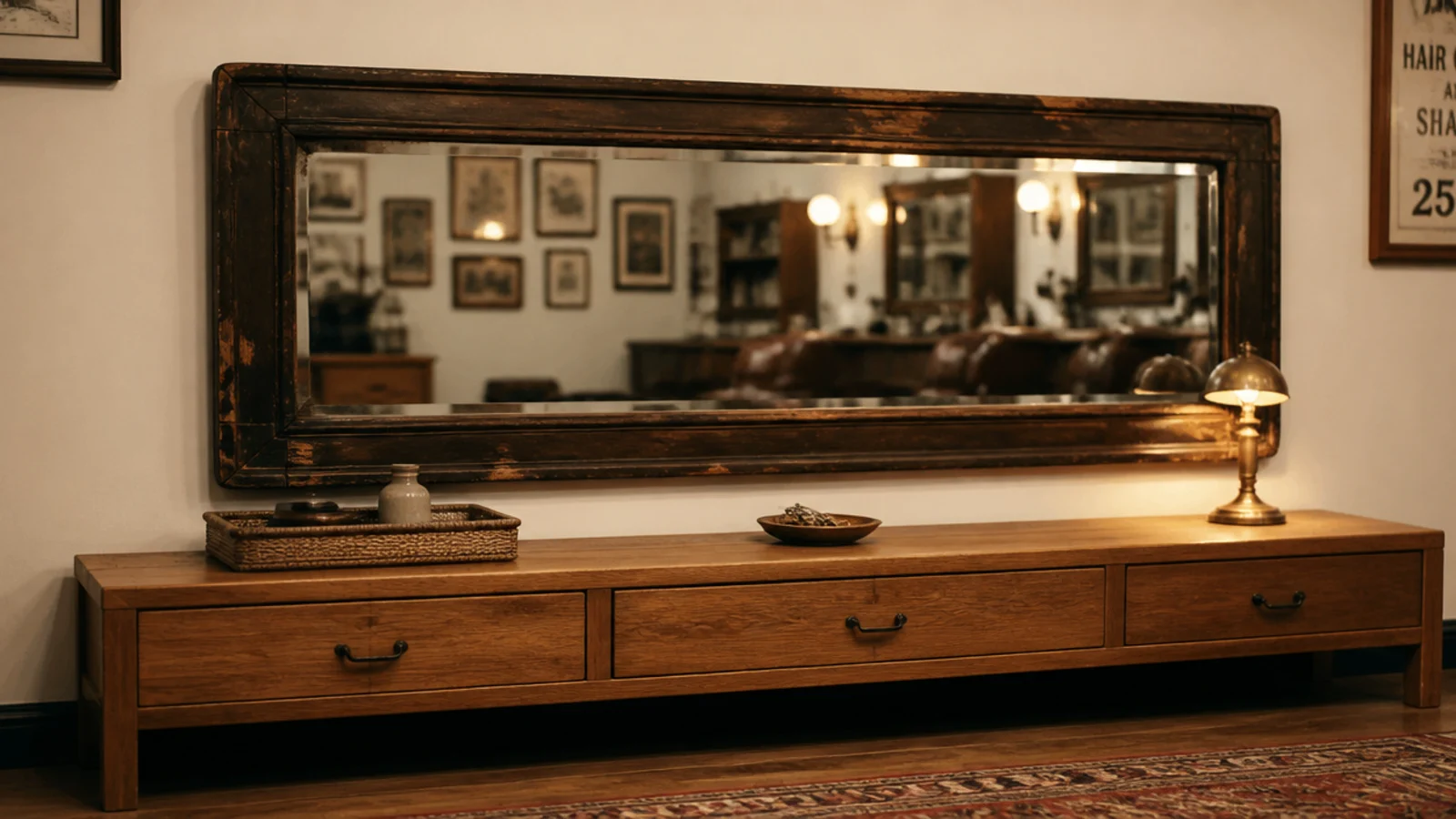
13. A vintage barber shop mirror
Old commercial mirrors are wide, low and unusually well made, because they were built to be looked into a hundred times a day.
They are also heavy, frequently 40 pounds and up, with thick glass. Two fixings into studs, no exceptions. Hung above a long console in a hallway, one of these does more than any three decorative pieces. Expect $80 to $250 at architectural salvage yards.
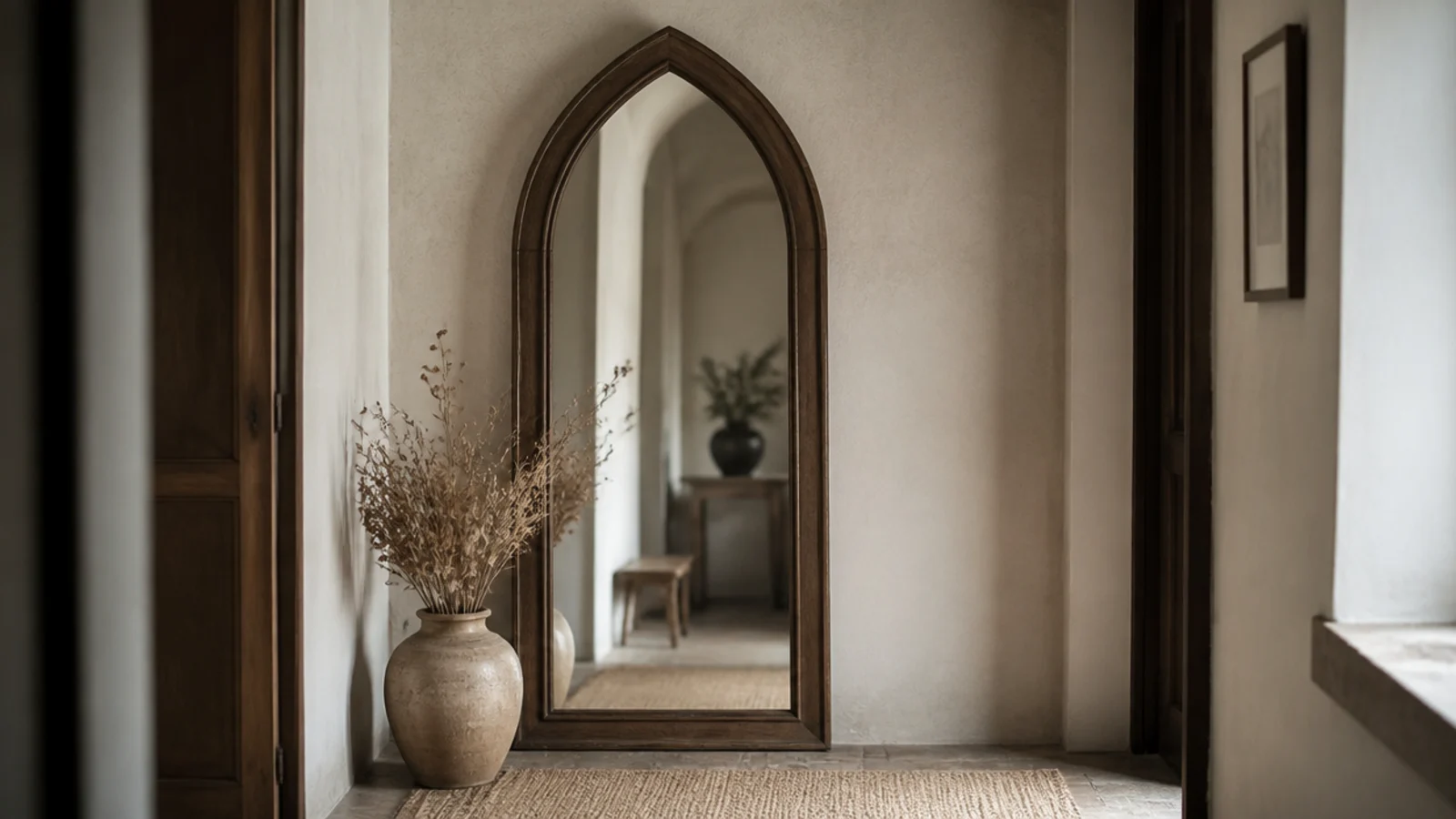
14. An arched ecclesiastical frame
A pointed or arched frame reads considerably taller than a rectangle of the same height, which makes it the best shape for a low-ceilinged room.
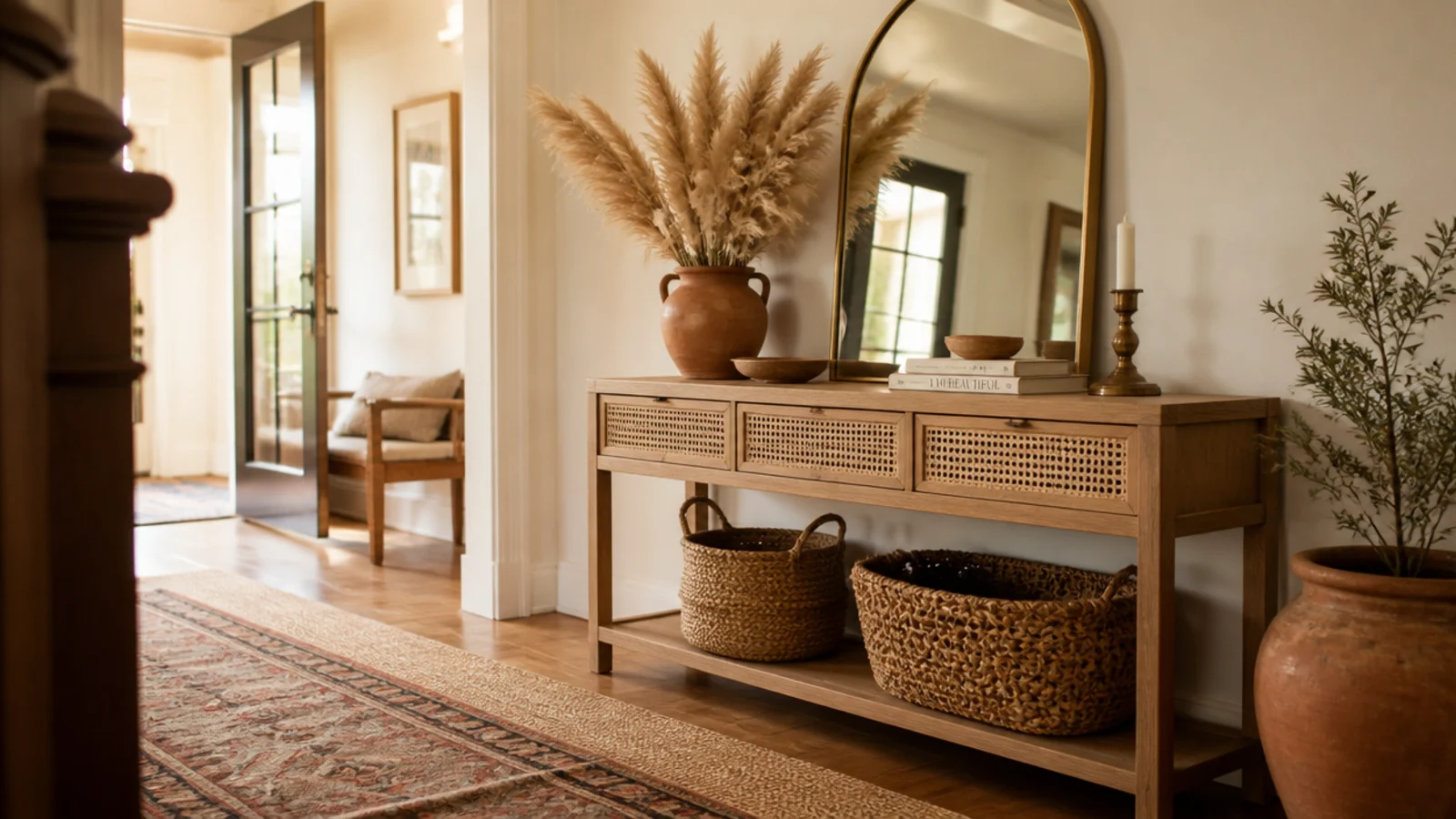
Salvaged church joinery and old door heads get made into mirrors constantly, and the plainer ones are more useful than the carved ones. Stand it on the floor leaning against the wall in a hallway with a stoneware urn at its base and the entry does the rest.
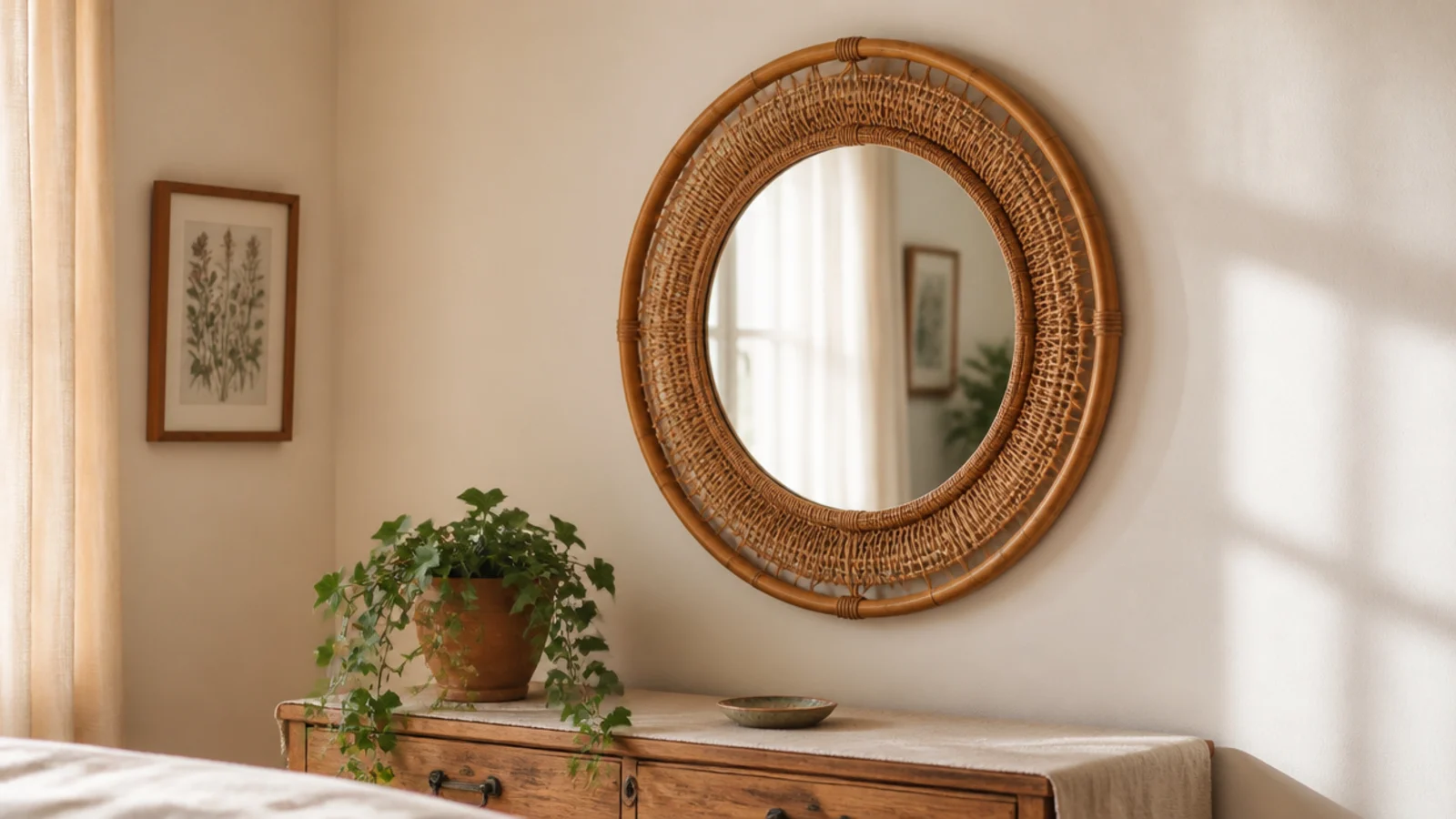
15. Rattan and bamboo frames from the seventies
The lightest vintage category and the friendliest to renters. A woven rattan round weighs three to six pounds, which means an adhesive strip pair is genuinely adequate for once.
They soften a hard wall, sit well with linen and warm oak, and turn up constantly at $10 to $40. Check the weave for breaks at the outer edge and give it a wipe with a barely damp cloth — rattan holds dust in the ridges.
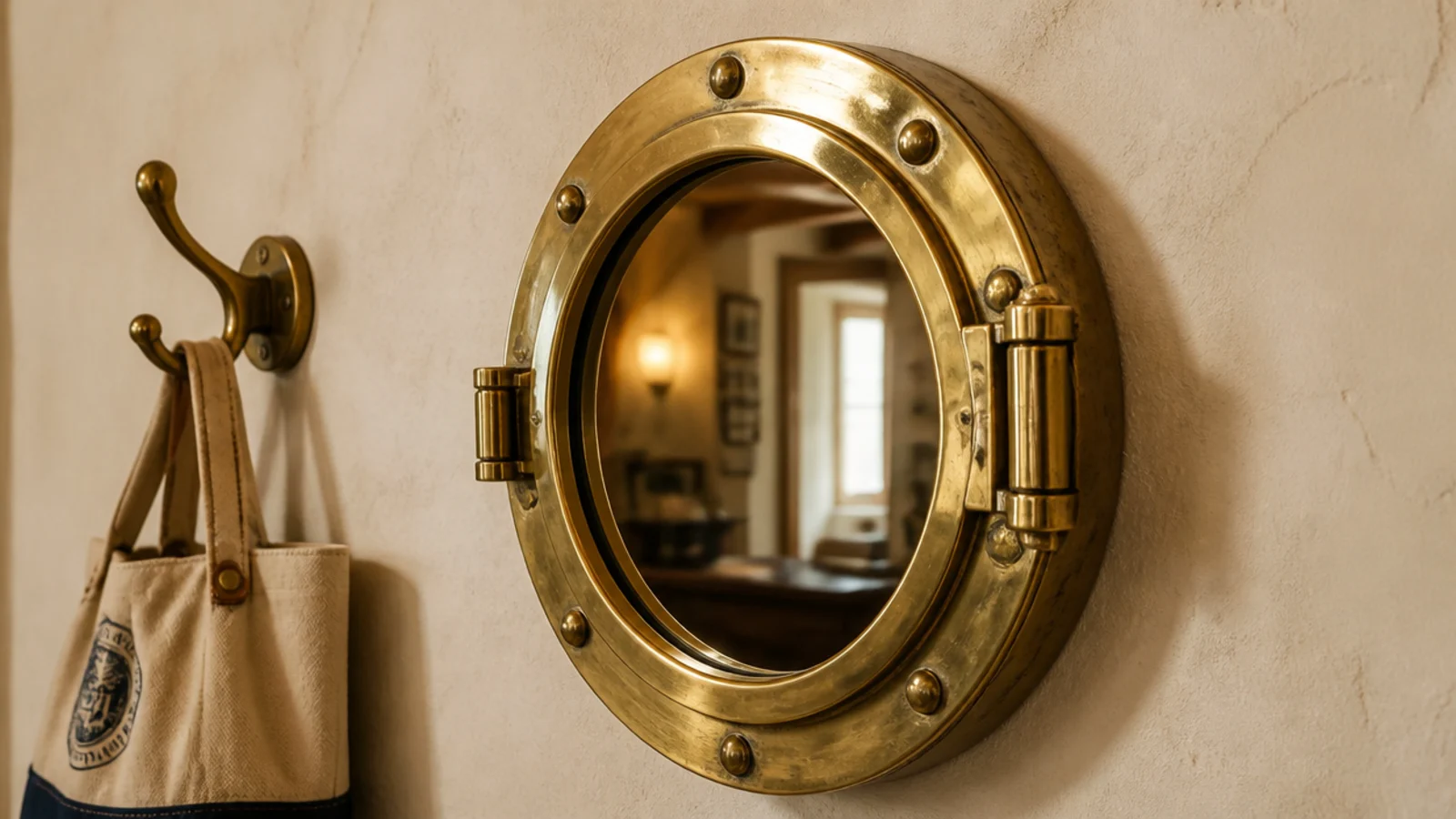
16. A brass porthole from a ship chandler
Small, dense and completely disproportionate to its size in weight. A genuine brass porthole mirror can be 20 pounds at only 14 inches across.
That density is what makes it feel real, and it means finding a stud rather than guessing. Hang it low beside a coat hook or above a bench, where the scale makes sense. Salvage yards want $70 to $200; reproductions are lighter and read exactly as lighter.
17. Antiqued mirror panels in a shallow niche
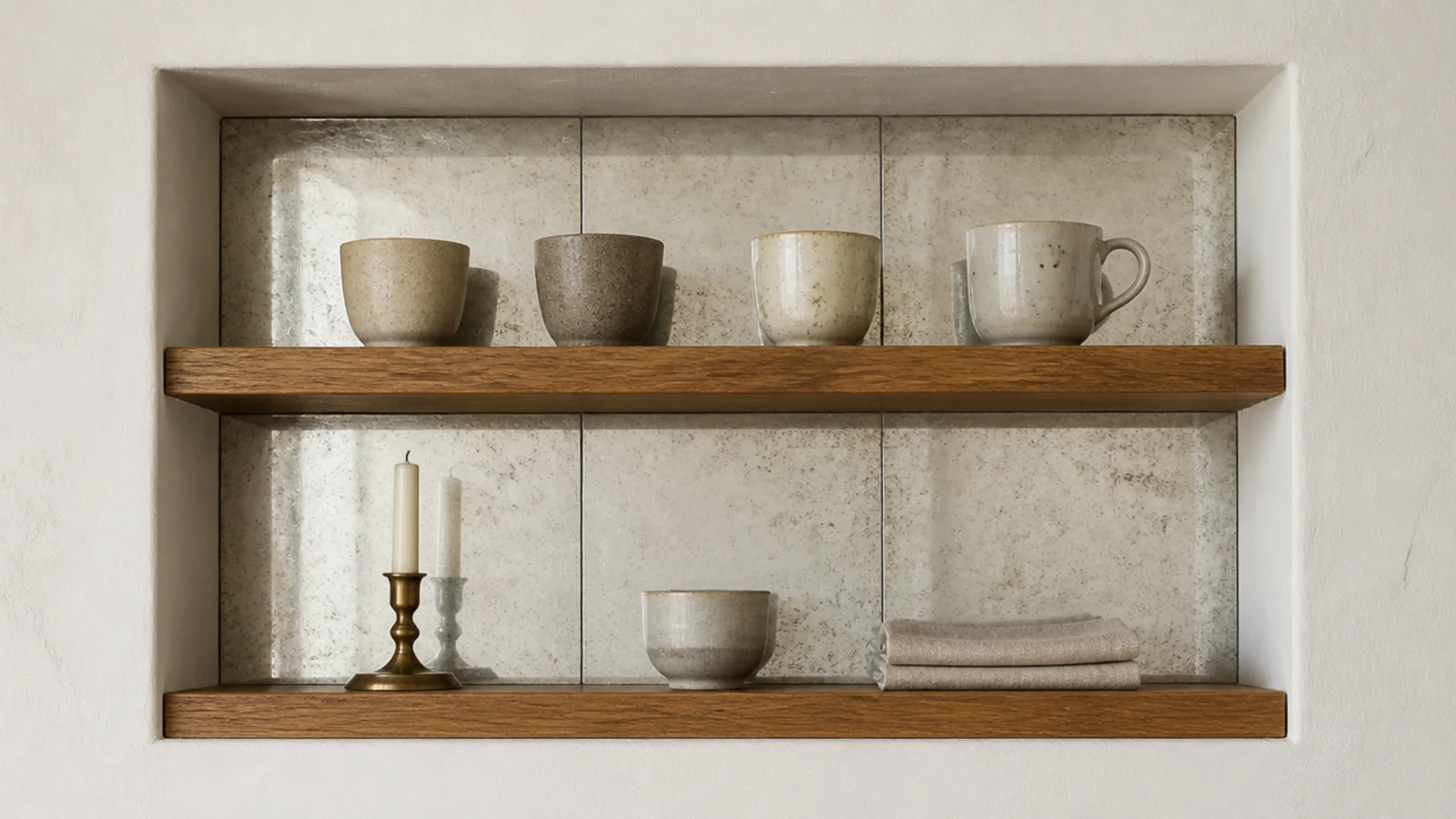
Where a wall already has a niche or an alcove, lining the back with antiqued mirror makes six inches of depth read like sixteen.
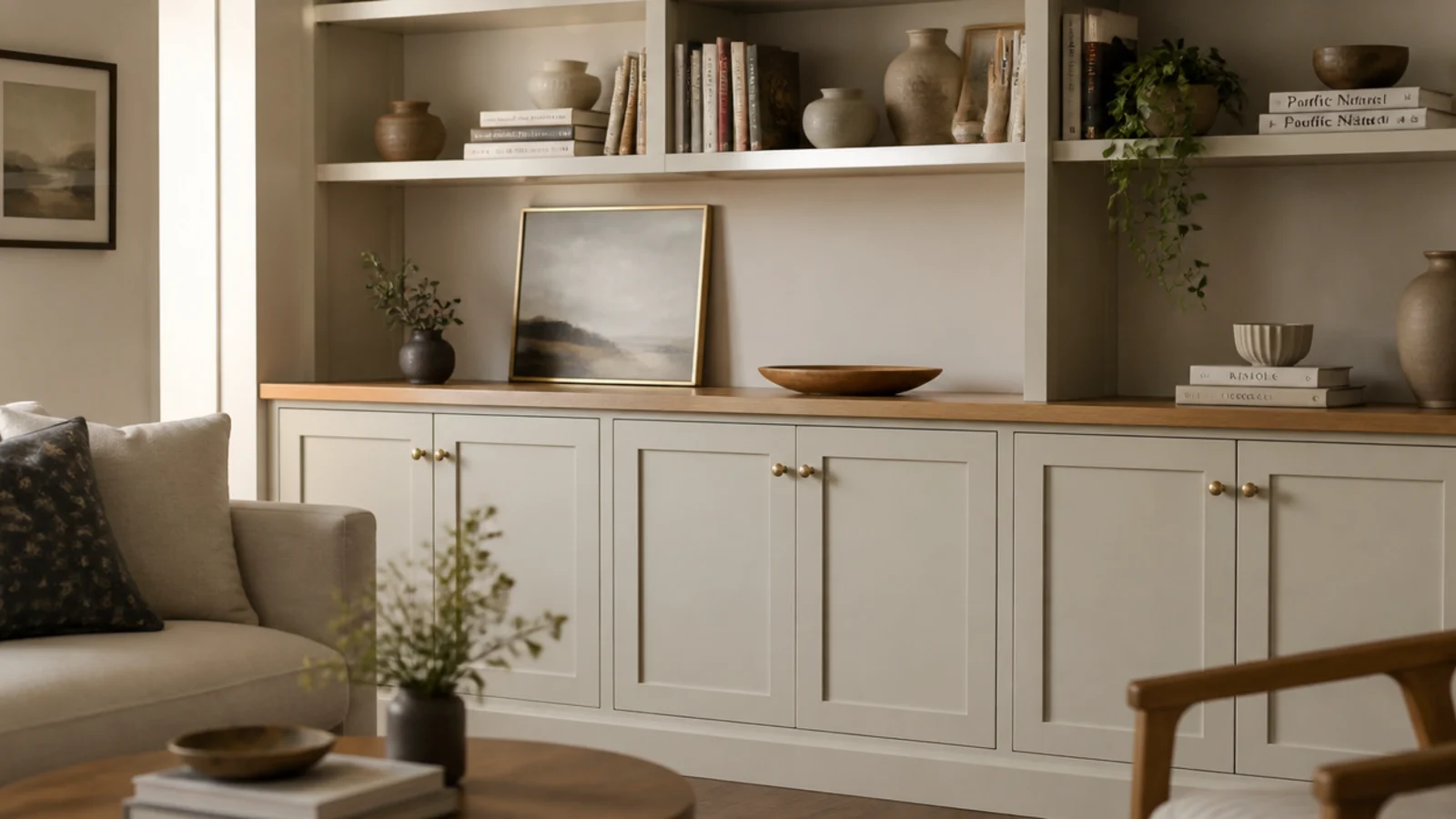
Glass merchants cut antiqued panels to size for $60 to $140, and the panel sits behind the shelves without carrying any load. Style the shelves lightly, because a mirrored back doubles everything including clutter. The same principle applied to shelving is covered in built-in shelf styling.
18. A distressed French frame in chalky grey
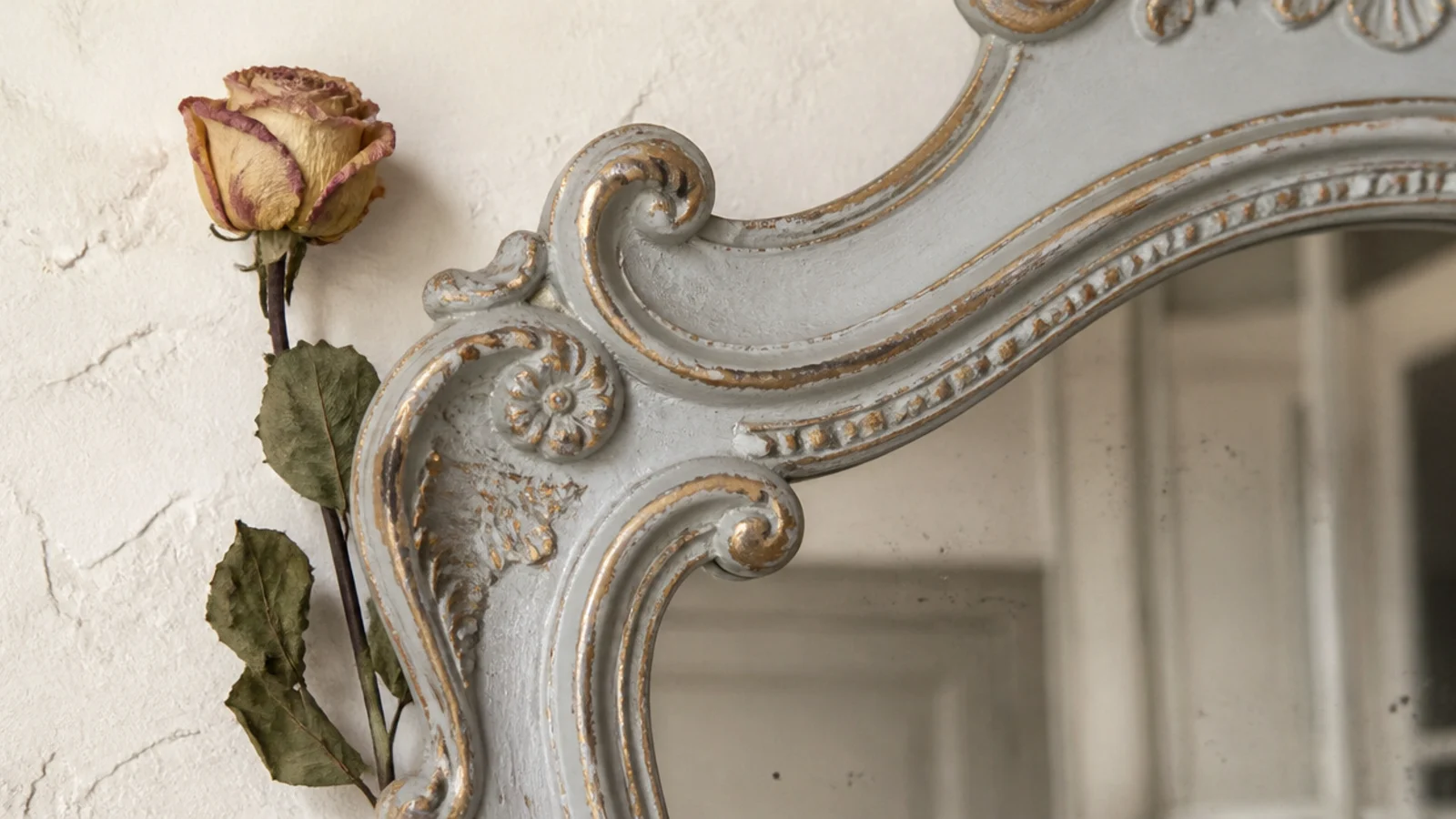
Paint the frame chalky pale grey, let it dry, then sand the raised edges back so the old gilt shows through on the high points only.
This takes twenty minutes and turns a $15 thrift mirror into something that looks like it came from a French farmhouse. Use 220-grit and stop earlier than you think — over-distressing reads as a craft project, while a light touch reads as age.
19. Two finishes maximum across the wall
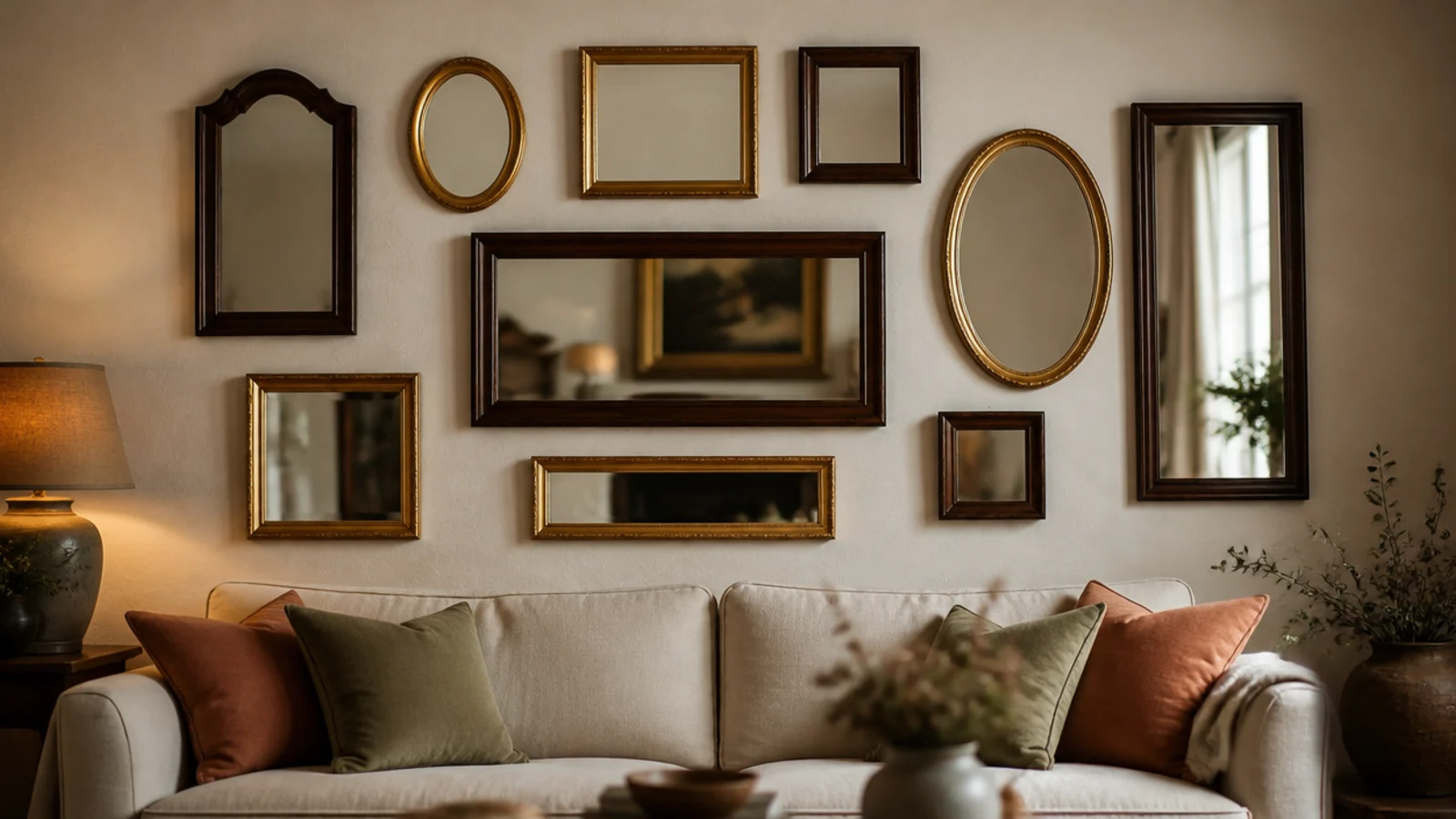
The rule that saves every vintage mirror wall. Pick two frame finishes and refuse the third, no matter how good the third piece is.
Aged gilt with dark walnut is the most forgiving pairing. Painted white with warm brass is the next. What fails every time is gilt plus walnut plus chrome plus painted, which is what happens when you buy one mirror at a time without a rule. Keep the rejected pieces for other rooms.
20. A picture light above the best piece
Old glass goes grey in dim light and glows in warm light. A slim brass picture light above your best mirror is a $40 to $90 upgrade that changes the whole wall after dark.
Use a 2700K bulb and a battery or plug-in fitting rather than hardwiring. Angle it down the frame rather than straight at the glass, so you light the gilding and let the reflection stay soft.

21. Reframe good old glass in a plain surround
Sometimes the glass is wonderful and the frame is not. A local framer will remount antique glass into a simple flat oak or painted surround for $60 to $150.
This is the move for mirrors with beautiful foxing trapped in heavy plaster mouldings that do not suit your room. Keep the original frame if it is period — someone else may want it — and ask the framer to reuse the backing clips rather than gluing anything.

22. A vintage mirror above a marble-top console
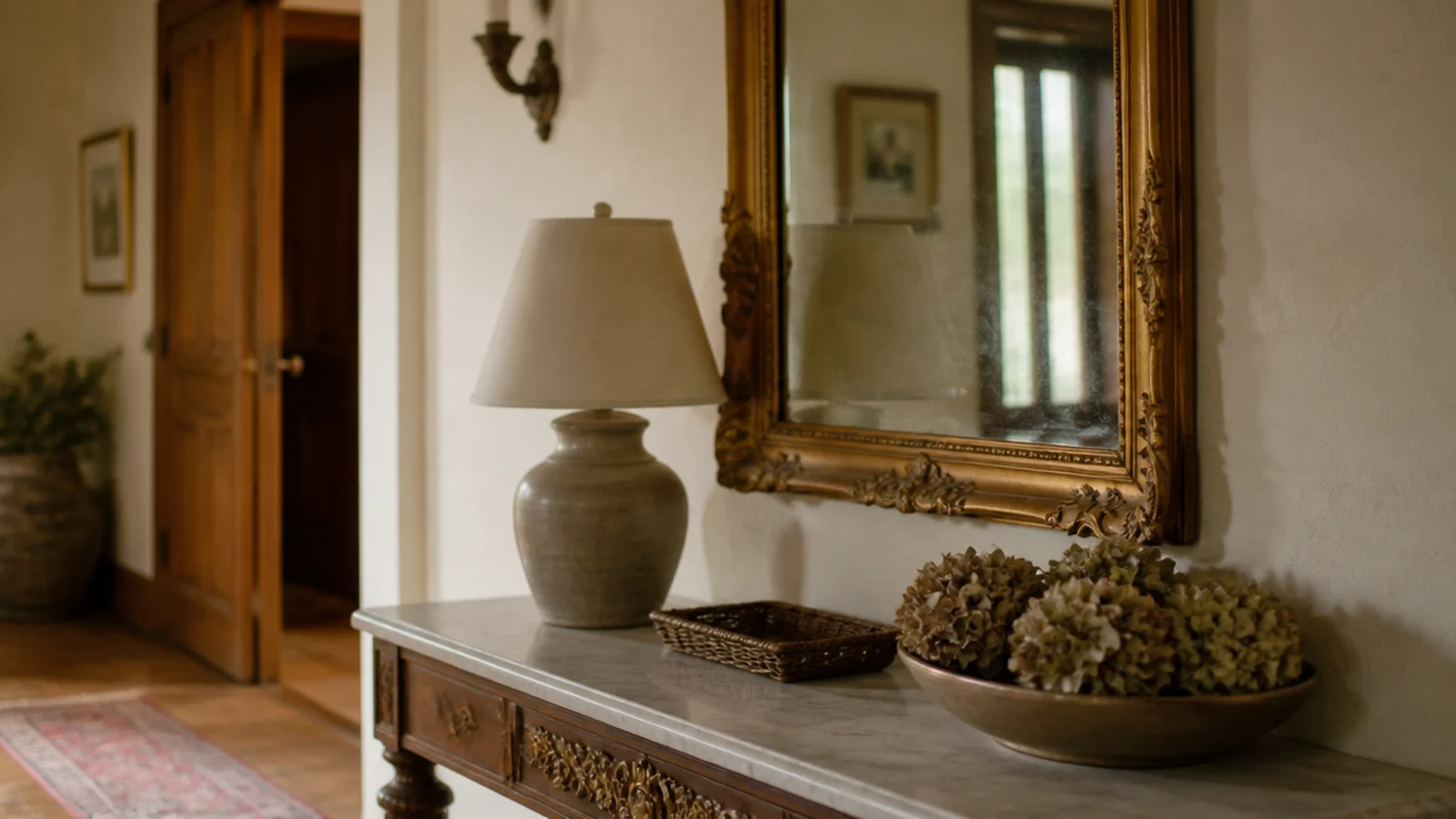
Marble and old gilt were made for each other, and the pairing works in an entry hall better than anywhere else in the house.
Keep six to eight inches between the marble top and the bottom of the frame, and size the mirror to two-thirds of the console width. Put one lamp on the console rather than two, so the reflection has somewhere to catch. More entry combinations live in entryway table decor.
23. When patina is actually damage
Foxing on the glass is patina. Damage is anything structural, and it is easy to tell them apart once you know where to look.
A split or crumbling backing board, a retaining clip that turns freely, a mitre joint you can open with a fingernail, or glass that rattles when you tip the frame — those all mean the glass is not properly held. Fix them with new clips and a fresh backing board before hanging, or leave the piece behind.
24. Fixings for old frames and thick glass
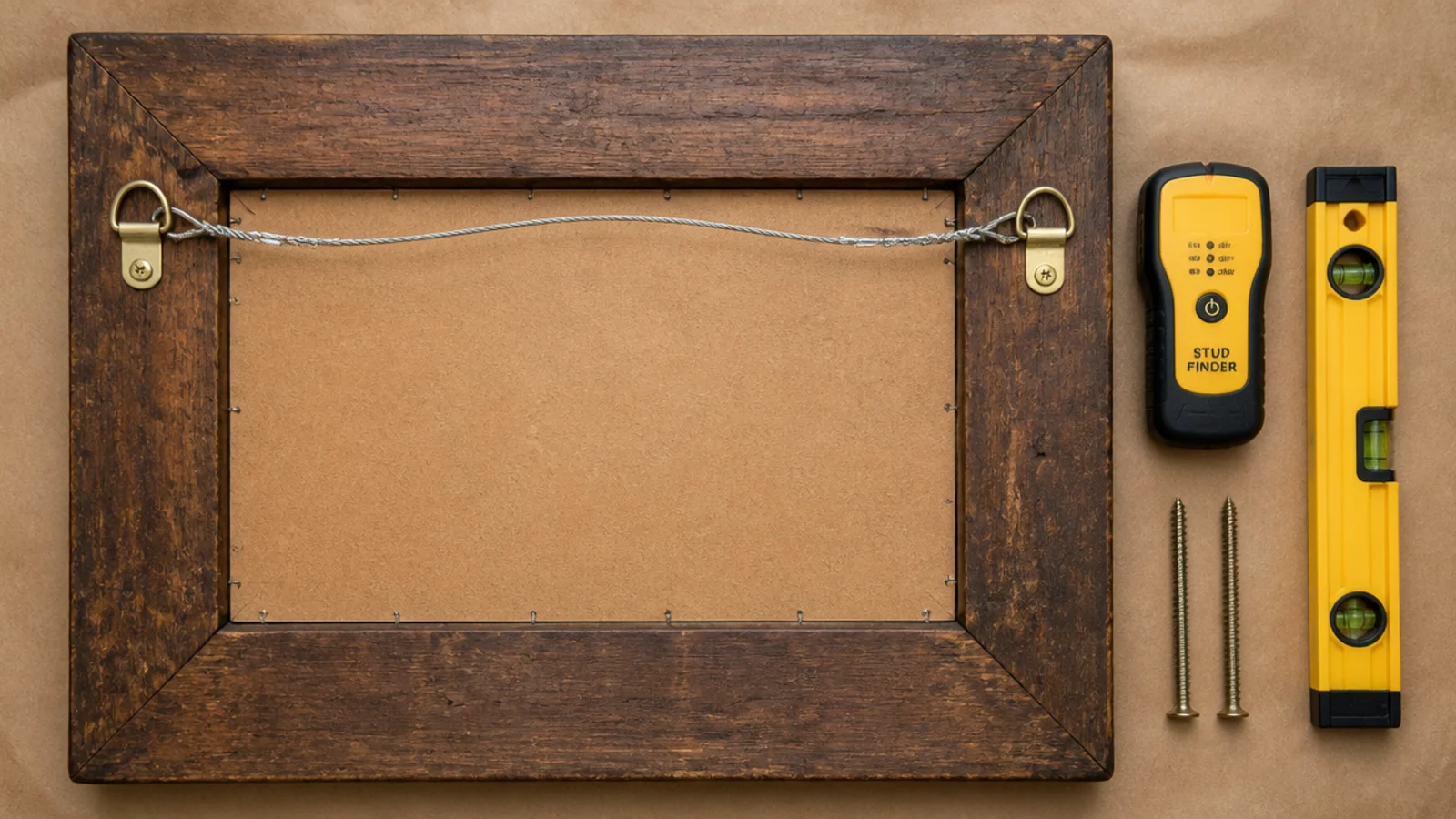
Old frames rarely come with usable hardware. Strip whatever is on there and start again with two D-rings screwed into solid timber, roughly a third of the way down from the top.
Braided picture wire between them, then two hooks on the wall rather than one so the frame cannot pivot. Fix into studs for anything over 20 pounds, and choose anchors rated well above the real weight rather than the number on the box.
25. Where to actually find them
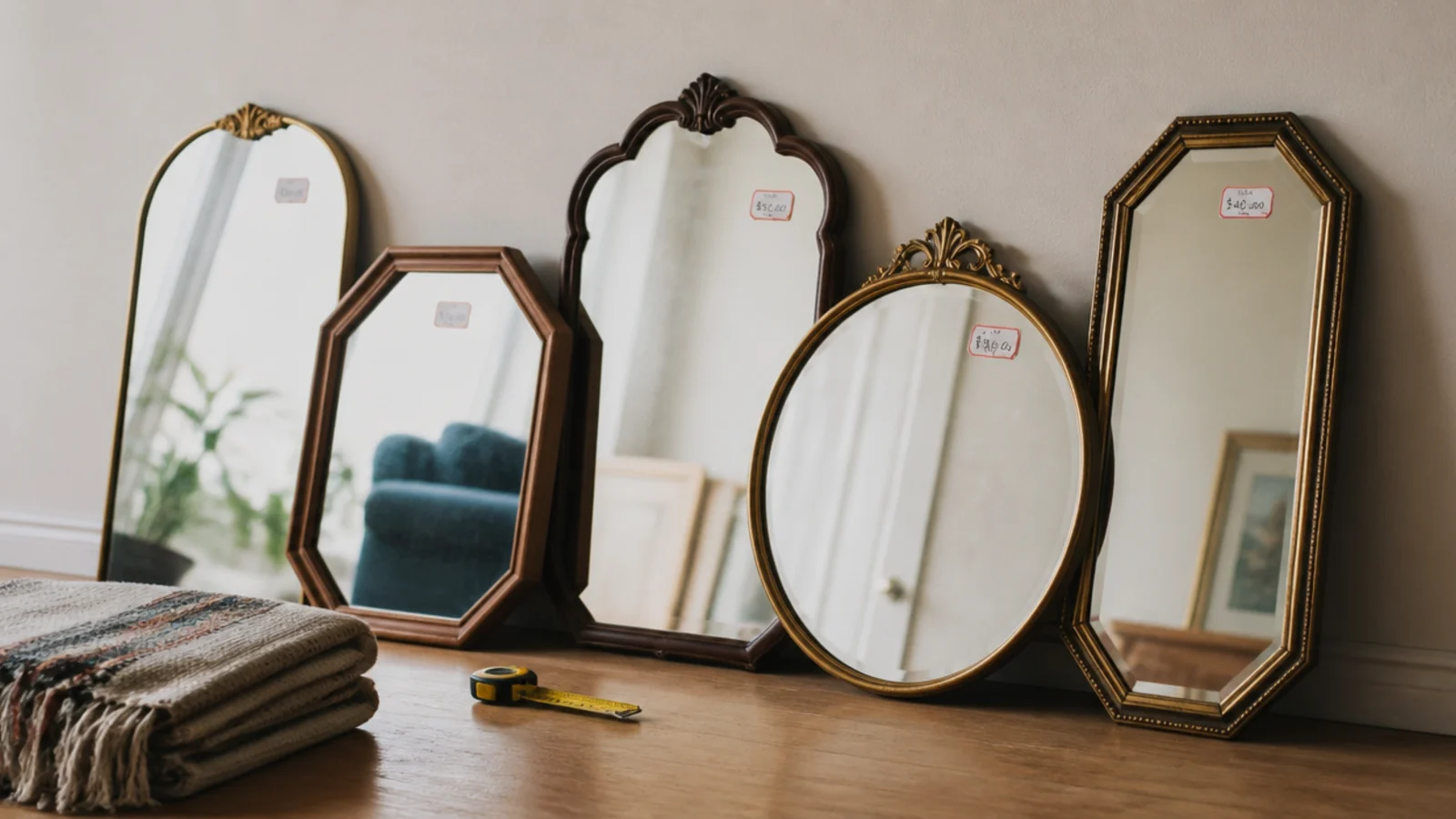
Estate sales on the final afternoon, when prices drop and nobody wants to carry glass. Charity shop furniture sections rather than the homewares aisle. Local marketplace listings for house clearances, searched by the word mirror alone.
Bring a blanket, a tape measure and a torch for checking backings. The best value is always an ornate frame in a finish nobody currently wants, because paint fixes that in an evening for $9.
Mistakes to Skip
- Hanging a thrift find without turning it over. A loose clip or a split backing means the glass is only being held by friction, and that is how old mirrors end up on floors.
- Spraying cleaner directly onto antique glass. Liquid wicks under the edge and lifts silvering permanently. A barely damp cloth from the centre outward, then buff dry.
- Collecting four frame finishes because each individual piece was lovely. Two finishes is the ceiling, and the discipline is what makes the wall read as a collection.
Frequently asked questions
How can I tell if a vintage mirror is worth buying?
Turn it over first. A solid backing board, tight retaining clips and a frame with no separated joints matter far more than the silvering on the front. Foxing and mottled patina on the glass are desirable and cannot be faked convincingly. A cracked backing, loose clips or a wobbling mitre means the glass is not properly held and the piece needs work before it goes on any wall.
How much do antique wall mirrors weigh?
More than modern ones, because old glass is thicker and old frames are solid wood or plaster over wood. A 30-inch antique round often runs 25 to 35 pounds where a modern equivalent is 15 to 25. Weigh yours on a bathroom scale, then choose hardware rated at roughly twice that figure and fix into studs rather than drywall alone.
Can I clean an old mirror without ruining the silvering?
Use a barely damp microfibre cloth and plain warm water, working from the centre outward, then buff dry immediately. Never spray cleaner directly at the glass, because liquid wicks under the edge and lifts old silvering permanently. Leave the mottled areas alone entirely — that patina is the reason the mirror is interesting.
How do I mix vintage mirrors without it looking cluttered?
Vary the sizes, keep the numbers odd, and hold the whole group to two frame finishes at most. Gilt plus dark wood works. Gilt plus dark wood plus chrome plus painted white does not. Leave two to three inches between frames and lay the arrangement on the floor before anything is drilled.
Where is the best place to find vintage mirrors cheaply?
Estate sales late on the final day, charity shops in the furniture section rather than the homewares aisle, and local marketplace listings for house clearances. Expect six to forty dollars for a small framed piece. Ornate gilt frames that nobody wants in their current finish are the best value, because paint solves that in an evening.
Buy for the frame shape and the backing, not the silvering, and almost everything else can be fixed with paint and an evening. The full mirror wall decor guide covers placement room by room, mirror gallery wall has the layout method in detail, and the best decorative wall mirrors compares types if you would rather buy new. Save the pin below for your next thrifting trip.
Want more like this? Browse all 15 mirror wall decor guides — they all use the same measurements and budget tiers.

Pin it for later
Save this to your Mirror Wall Decor board
Pin it now so it is waiting for you when the tape measure comes out — and so the next person hunting for this idea can find it too.
Save this pinKeep going
More ideas worth saving while you have the tape measure out.